‘Paddling with Peter Duck’, John McCarthy’s documentary for BBC Radio 4, portrays the boats owned by the author Arthur Ransome and includes extracts read by Kate Taylor from his classic book Swallows and Amazons.
Peter Willis in the Nancy Blackett with John McCarthy
While the broadcast is a portrayal of Arthur Ransome and his boats, it touches on his friendship with the Altounyan family who inspired him to embark on writing the series of twelve Swallows and Amazons books. It is easy to understand this when looking at their photographs.
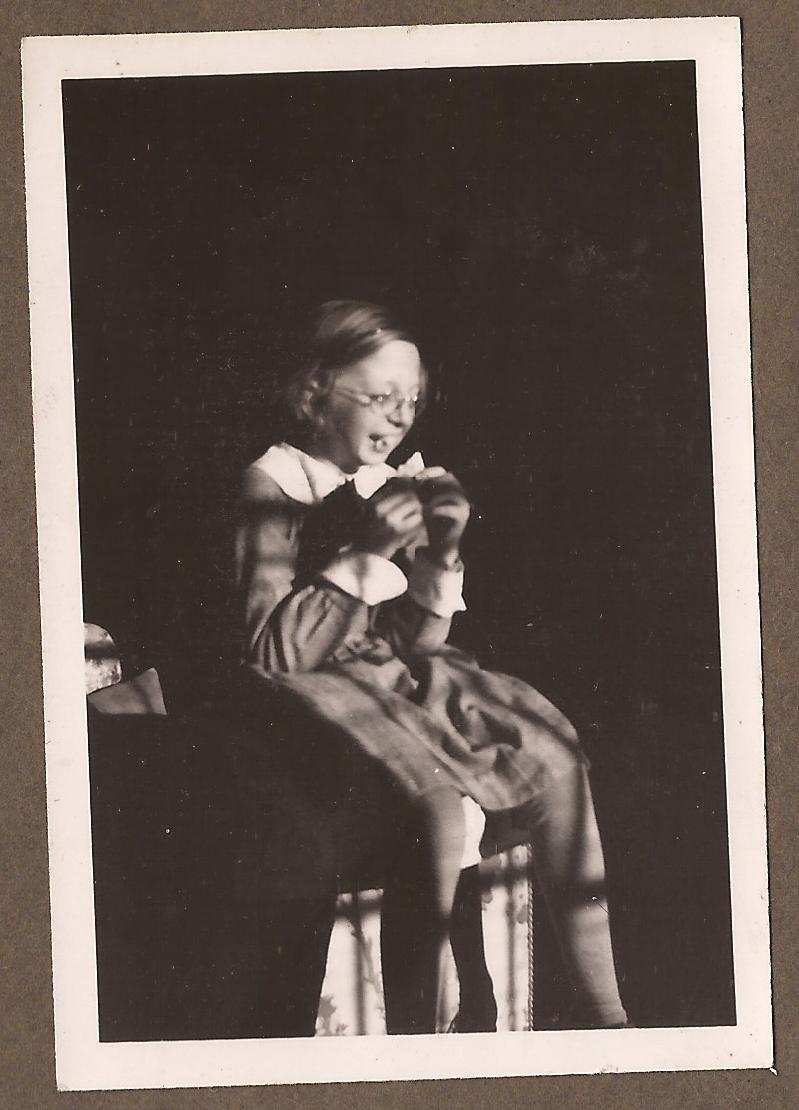
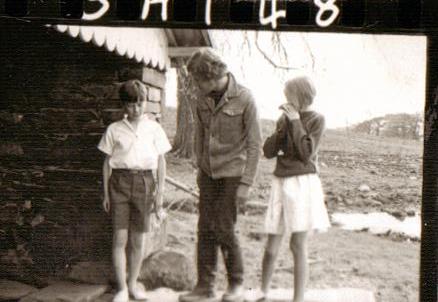
The Altounyan children with friends in Syria.
The girls seem to be Taqui, Brigit and Titty
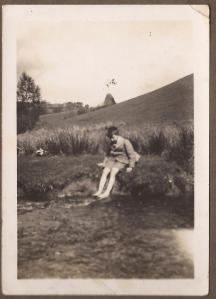
Could it possibly be Arthur Ransome sitting on the right? He visited the family in Syria in 1932, when he must have been about forty-eight, but was never known to have worn shorts, although it would have been exceptionally hot in the Middle East. Click on the photos to enlarge.
Is this Arthur Ransome ? sitting on the bow of Peter Duck in Syria, the chap wearing the same hat and clothes as in the photo above? He took this dinghy out to Syria as a gift for the Altounyan children and wrote his novel Peter Duck while he and his wife Evgenia were staying with the family in Aleppo.
Possibly Arthur Ransome sailing Beetle II the Altounyans’ gunter-rigged dinghy at Amouk in Syria
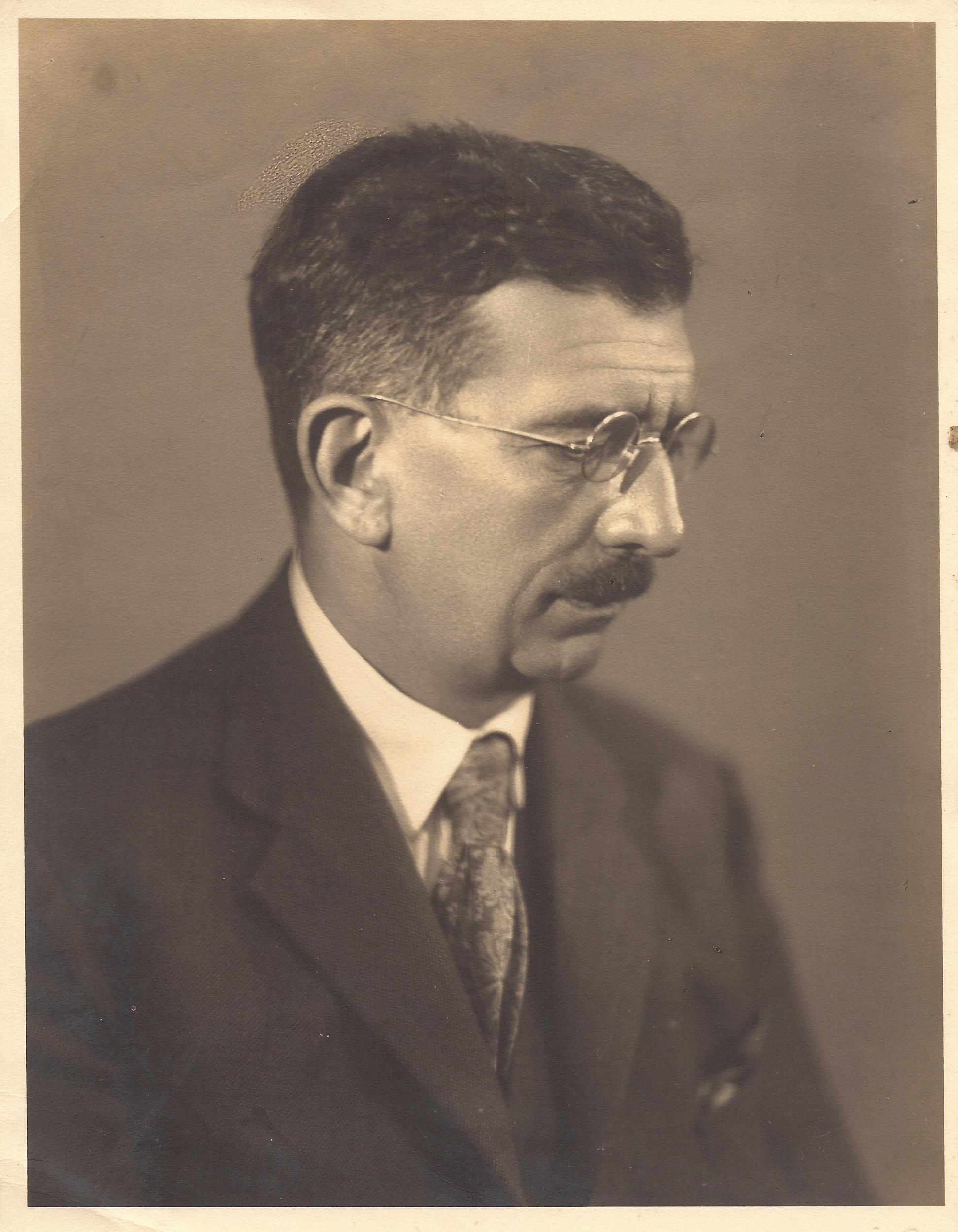
Ransome’s friend Dr Ernest Altounyan in 1935
Dora Altounyan (nee Collingwood) in 1935
Was Dora the model for Mary Walker, the Swallows’ mother who grew up in Australia?
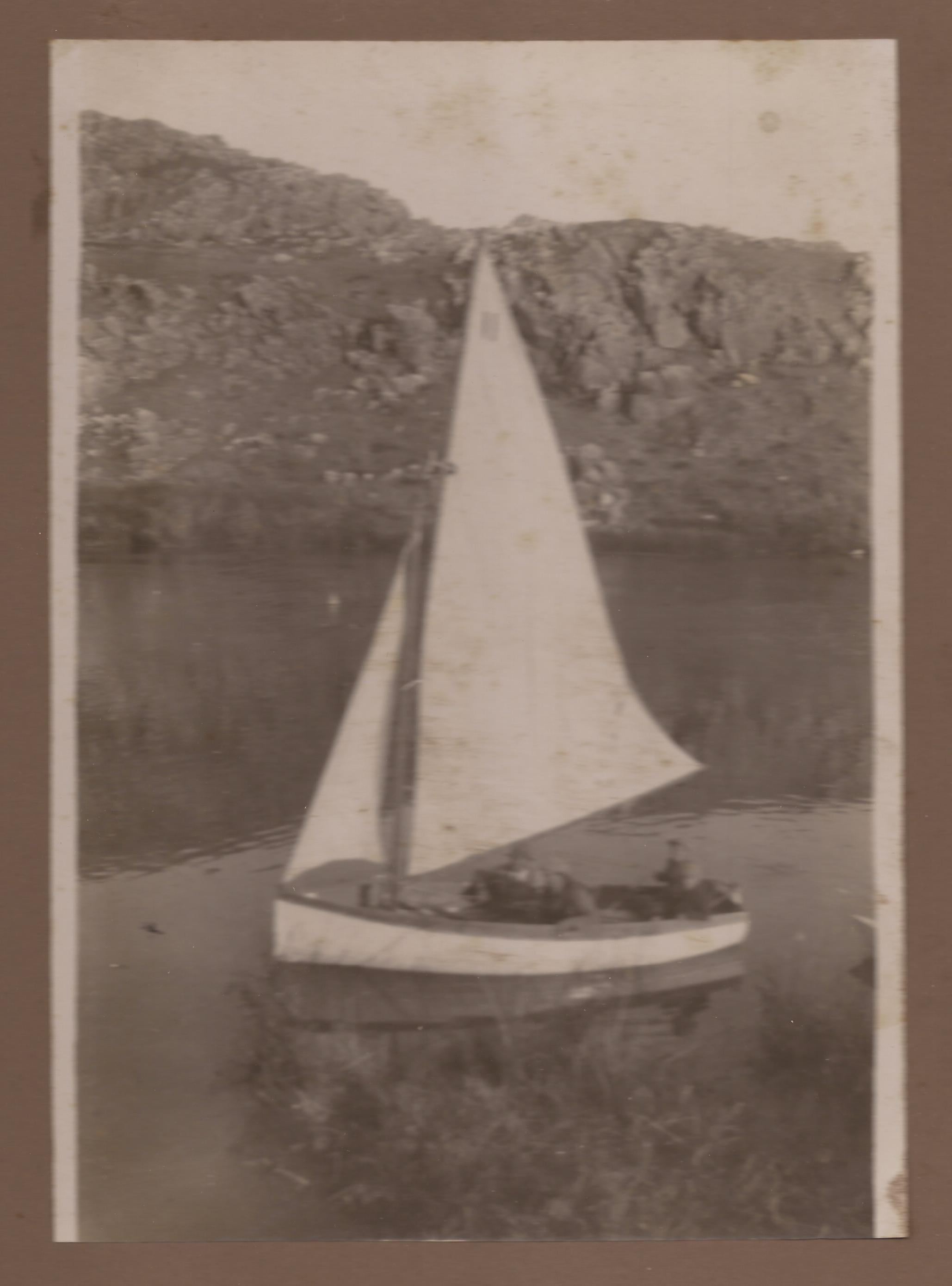
Sadly there is no sign of the original Swallow bought at the same time as Mavis by Arthur Ransome and Ernest Altounyan in Barrow-in-Furness, and later sailed by the Ransomes on Windermere. Mavis was later re-named Amazon by Brigit Altounyan, the youngest of the five Altounyan children, known as The Ship’s Baby.
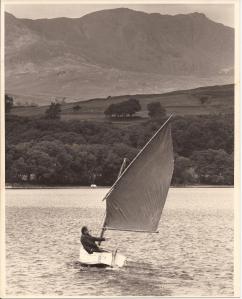
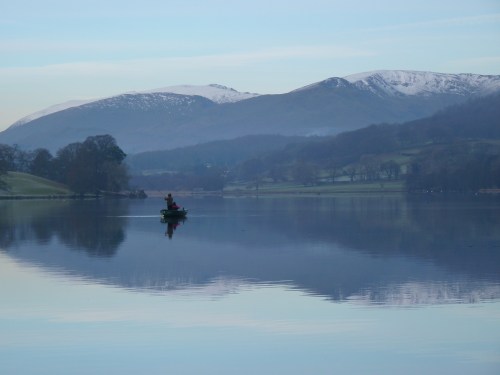
Dr Ernest Altounyan on Coniston Water with ‘Mavis’, one of the dinghies that inspired ‘Swallows and Amazons’
These unique photographs were recently found in Cheshire by the antiques dealer John Jukes who asked me if I could return them to the Altounyan family. This I have done and show them here by kind permission of Roger’s daughter, Barbara Altounyan. Please do not copy these photos.
One of the questions asked by fans of the film Swallows & Amazons, produced by Richard Pilbrow for EMI Films in1974, is, ‘Did any of the scenes written by David Wood ever hit the cutting-room floor?’
Simon West and Sophie Neville on Peel Island in 1973
Although I had a lead part, I wasn’t allowed to read the script as a child, only Arthur Ransome’s book on which the movie was based. I never gave it a thought, and for years, but looking back through the original screenplay I can see that the answer is, ‘Not many.’
The shots of finding Swallow in the boatshed, bringing her out and raising her flag were moved forward and set under the voice-over of the Walker children reading out the letters written to their father. This moved the story along.
Simon West talking to director Claude Whatham with Sophie Neville
There is a scene in the book set at Holly Howe when medical supplies are being packed for the voyage. This was shot with Virginia McKenna at Bank Ground Farm above Coniston Water, but must have slowed down the pace of the film as it was replaced by a more exciting montage of shots, that also progressed what is a pretty gentle start to an adventure story.
Virginia McKenna as Mother with Sophie Neville as Titty making Swallow’s flag
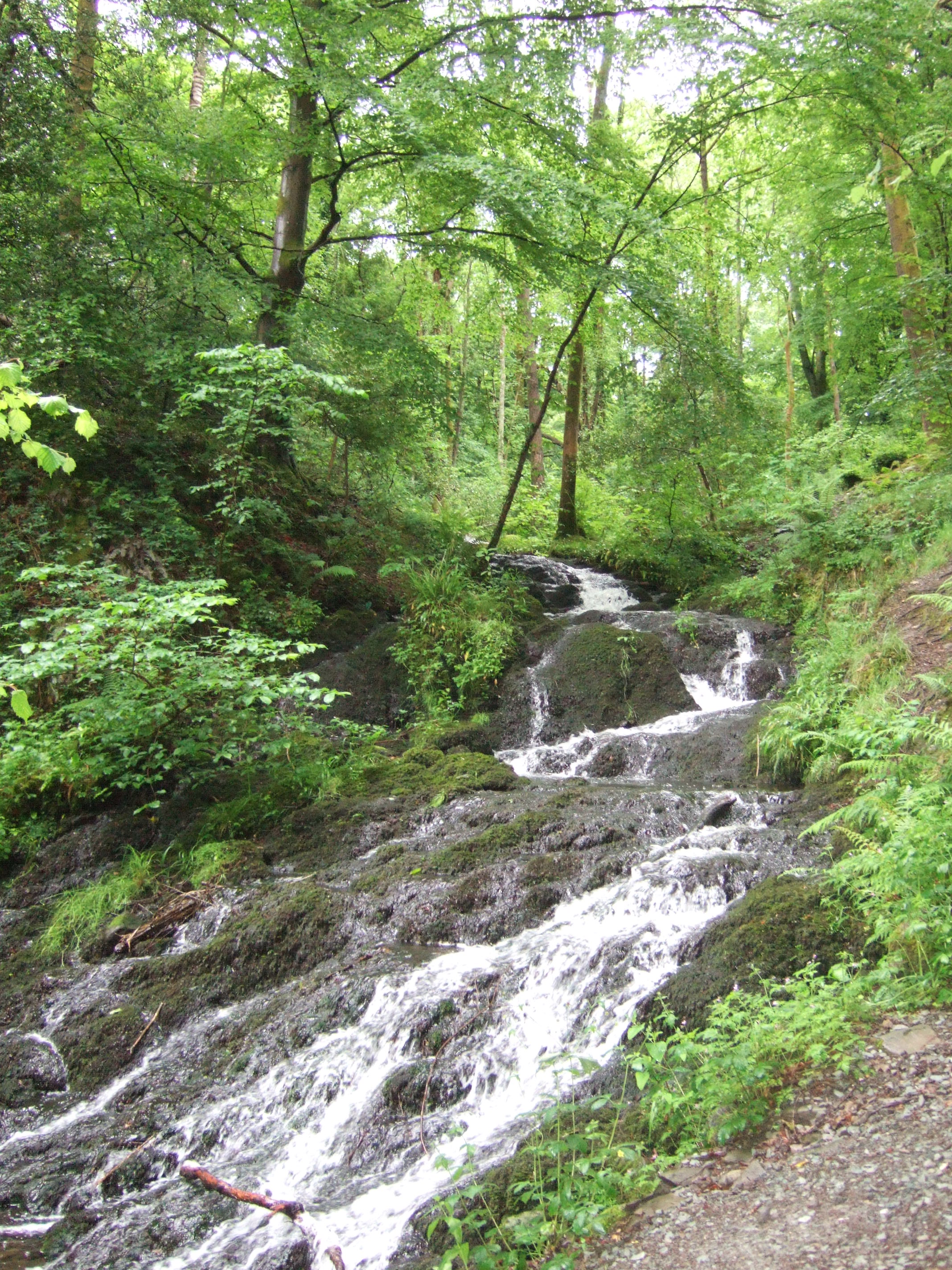
Making patterans on the way to the charcoal burners, was a lovely scene from the book that was recorded but never included in the film. Captain John can been seen explaining how gypsies use them as secret markers in this black and white still.It was shot on a mossy bank in oak woodland so very characteristic of the Lake District and profiled by the Guardian newspaper the author Arthur Ransome had once worked for.
It was at this dramatic location, high above Derwentwater, that my favourite behind-the-scenes shot of the director, Claude Whatham was taken. You can see Cat Bells in the background.
Claude Whatham talking to his cast: Sten Grendon, Simon West, Sophie Neville & Suzanna Hamilton
Mrs Ransome, who worked closely with the screenwriter, had agreed that the storm scene on Wild Cat Island would not to be included in the screenplay. We children thought a great pity. Such a violent gale blew in one day when we were filming on Peel Island that we would have had the right weather conditions, but you can not include everything. It was only a 90 minute movie.
Jane Grendon, whose son Sten played Roger, wrote to tell me that before filming began, ‘…one of the very first things we were asked was, ‘can Sten swim?” ‘I know he could doggy paddle,’ she continued. ‘Neville (Thompson, the online Producer) organised swimming lessons at Pitville Pool, Cheltenham which included jumping off the diving boards. At the time I didn’t know why and I don’t think Sten is a natural in the water and the swimming lessons didn’t prove very successful. Claude (Whatham) told me – at the end of filming I think, when he gave me a copy of he original script – these lessons were because in the original script Roger was to jump in the water after Uncle Jim walked the plank.’ Jane sent me a copy of the page in question. I had not seen it before: It was a page of the script we never had time to shoot. I am so glad. It wasn’t needed. We just made sure Captain Flint had no access to a rope ladder for a while.
I’m often asked if any scenes involving the Amazons were cut, but none were left out. Nancy and Peggy simply do not appear in the book as much as one might remember.
Please leave any questions about the making of ‘Swallows & Amazons’ in the comments below.
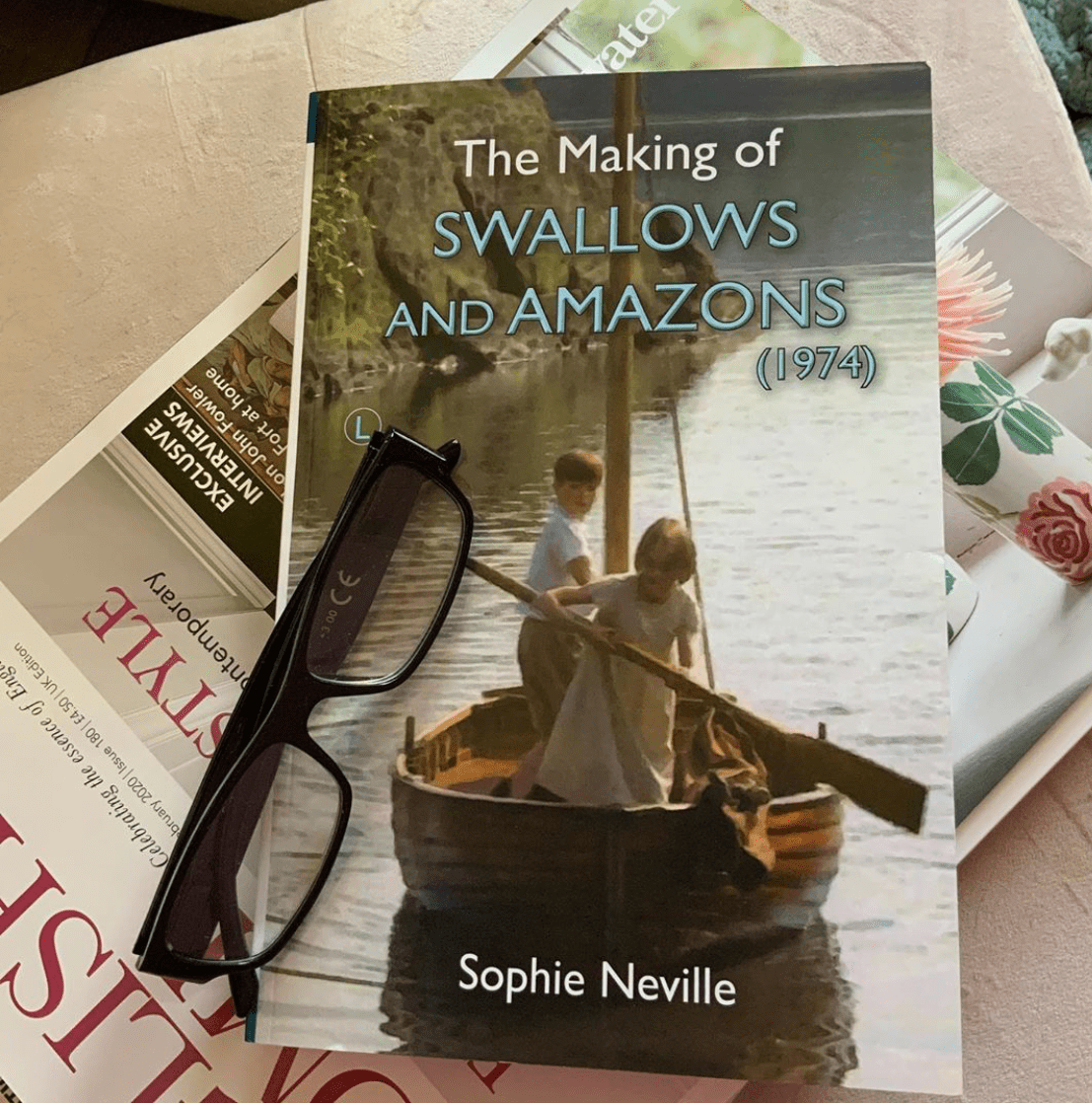
You can read the full story of the making of Swallows and Amazons (1974) in one of the editions listed online here:
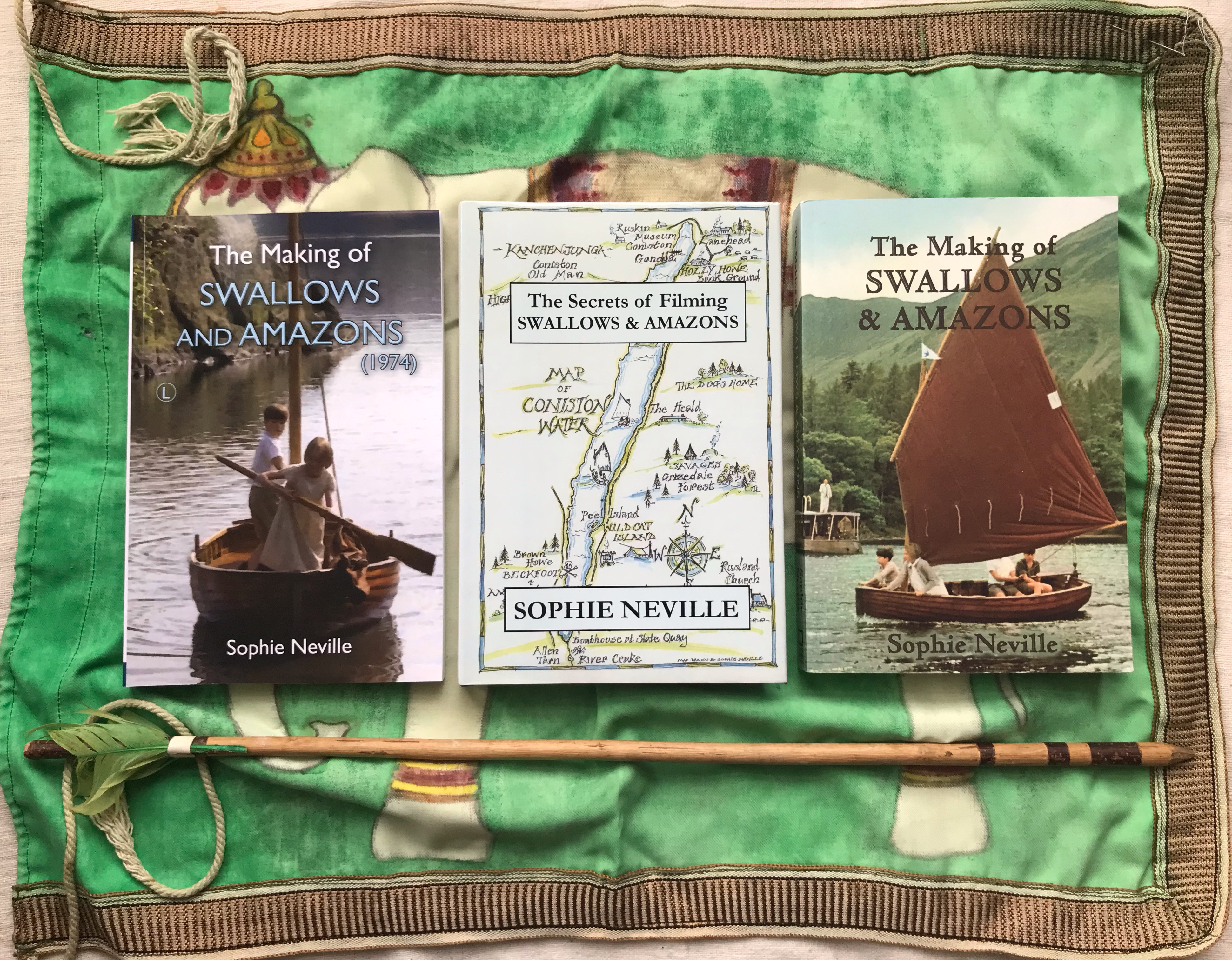
Different editions of ‘The Making of Swallows and Amazons (1974) by Sophie Neville’
‘Forty years after she enchanted film-goers as Titty in Swallows and Amazons, Sophie Neville has found a new audience… telling the behind-the-scenes secrets of the film of Arthur Ransome’s classic novel.’ The Daily Mail The Making of Swallows & Amazons ‘…is based on diaries, letters and old photographs which Sophie has turned into a heart-warming account of making the movie, which starred Virginia McKenna and Ronald Fraser.’
The Telegraph~ Culture: ‘Set in the Lake District in 1929, the film follows four young adventurers who sail a dinghy around Lake Coniston, cook for themselves over campfires and sleep in makeshift campsites.’
‘…The occasional chaos and terrible weather during filming contributed to the eventual popularity of the extraordinary and very much loved film.’ The Times
‘The film Swallows & Amazons is 40 years old, but thanks to its careful period evocation, its respect for Arthur Ransome’s original book and the performances of its child actors, it’s become a timeless classic. One of those children was Sophie Neville, who played Titty, and who kept a diary during the filming. That diary, with her adult recollections, is this book. It’s a fascinating insight into filming on location in the Lake District…’ Classic Boat
‘… The result is compulsive reading as she recalls that cold wet summer, while the camera crew wrapped up warm and she shivered in her skimpy dress as Able Seaman Titty Walker. Sophie brings to life all the many memorable characters who worked on the film and in particular the other children, the Director Claude Whatham who developed a great relationship with his young cast and the stars Virginia McKenna and Ronald Fraser. Nor are the other young actors forgotten for there are diary contributions from Suzanna Hamilton who played Susan, Stephen Grendon who played the Boy Roger and Kit Seymour who played Nancy Blackett. The text is supported by numerous illustrations showing life on and off the set.’ Roger Wardale, author of Arthur Ransome: Master Storytellerand other books
‘You don’t need to be a Swallows & Amazons fan to enjoy this book – it’s universal!’ Winifred Wilson, Librarian of The Arthur Ransome Society
‘This was a most unusual and interesting book. I picked it up expecting to browse through it, and found myself so drawn in to Sophie Neville’s detailed, amusing and insightful description of film making in the 1970’s that I was unable to put her book down. As Arthur Ransome fans, my family and I have always loved the film, and felt that Sophie Neville was ‘just right’ as Titty. What fun it has been to be introduced to the young twelve year old Sophie with her intelligent awareness of the challenges facing the production crew while she shivered in her cotton dresses. The many photographs and illustrations contribute richly to bringing the 1970s setting to life. Sophie recorded her experiences beautifully, and in so doing, added one more valuable book to the cultural heritage of all Arthur Ransome fans.’ Juliet Calcott, English teacher,South Africa
Lots of photos throughout the book bring the scenes to life – a delightful read.’ Celia Lewis author of An Illustrated Country Year
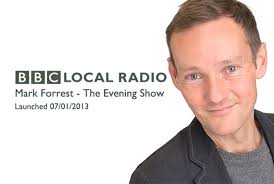
Sophie Neville has been chatting to Mark Forrest on The Evening Show.
The second edition of this paperback is published by The Lutterworth Press, available online here
A comment from someone who worked on the film ‘Swallows & Amazons’ in 1973 ~
l had just finished my three years at college and was at a loose end before l started my working life. I was living in Ambleside at the heart of the English Lake District where Arthur Ransome’s children’s story “Swallows and Amazons” was being filmed at the time. I landed myself a job working for the film unit. I was full of my own importance as l was driving the stars and director of the film.
.
Virginia McKenna as Mrs Walker at Bank Ground Farm above Coniston Water
The stars were Virginia McKenna of “Born Free” fame and Ronald Fraser. I was reminded of this period of my life when l read the headline ‘X-RATED antics of Swallows and Amazons’ in The Times. The title related to the release of an e-book by Sophie Neville one of the child actors in the film. Sophie was 12 at the time and I was 19.
Sophie recalls how Ronnie (Ronald Fraser) was always drunk. Well this is not strictly true. In the morning Ronnie was reasonably sober and for this reason the director Claude Whatham would try and get most of the shooting with Ronnie in the can before the lunch hour came around when I would be summoned to take him to the nearest hostelry. Ronnie would then order his own concoction ‘The Fraser’. I cannot for the life of me remember what it consisted of, but believe you me these disappeared at a rapid rate of knots down Captain Flint’s (his character’s) throat. By the time the liquid lunch came to an end l would have to bundle him into the back of the car and deposit him back on set, much to the dismay of the producer Richard Pilbrow and the director Claude Whatham. Afternoon shooting was often a disaster when Ronnie was involved and I’m sure he frightened the children from time to time.
Well if the children were sometimes scared by Uncle Jim, as Captain Flint is known, then l was scared of the parrot that Uncle Jim had on his boat. The first day that I had to collect the parrot the old lady who owned him travelled with him to the location on Derwent Water. However she soon became bored with all the hanging around and after that she entrusted me with the parrot. Now birds are not really my thing and I really did not like handling him. He would travel to the location in an old shopping bag with a zipper, where l would hand him over and he would be placed in his cage. This was all well and good, then came the day that was so wet they did not use him, but instead he stayed in the production office at the Kirkstone Foot Hotel where the crew were hanging out. I was told he was in the bathroom, l expected him to be in his travel bag, but no he was sat on the edge of the bathtub looking at me. By this time he hated being put in the bag it took me all my time with a towel to catch him, finally after being scratched and bitten I got him home to his Mum.
The hardest thing to stomach was the fact that the parrot was paid more per day than l was.
David Stott
One of the daily unit call sheets issued on ‘Swallows & Amazons’ (1974)
I replied:
Thank you so much for writing in, David. Your story about the green parrot had me roaring with laughter. I am told that he was a male parrot called Beauty, who belonged to Mrs Proctor of Kendal. Her grand-daughter rang in when I was interviewed on Radio Cumbria recently. She told me that her gran, old Mrs Proctor could do anything with him, and was well know for walking around Kendal with him sitting on her arm. I don’t think anyone else dared get close. Since I played the part of Titty, I had to have him sitting on my shoulder in the cabin of the houseboat, while delivering the most important lines in the film. We were then meant to leap about singing, What Shall We Do With the Drunken Sailor? This was a bit ironic since Ronnie was half-plastered by then. He was pretty permanently pickled. In the penultimate shot of the film, while pretending to play the accordion, he was still drunk from the Wrap Party 36 hours before. The parrot was not invited to the party but did receive a fee of £25 for appearing in the film. His owner used this to buy him a bigger cage.
I don’t know who thought up the ‘X-rated’ headline at the Times (which was absurd) but a reporter from the Daily Express provided the receipt for ‘The Fraser’ in 1973 – I have the clipping (above). Geoffrey Mather wrote: ‘A Fraser is a drink of his own invention. It consists of a large vodka with a kiss of lime and a ton of ice, topped up with soda in a large glass’. We all bought the copies of the newspaper in Ambleside. My mother was horrified as instead of being a story about making the film it was a half-page article about Ronnie’s antics in the bar of the Kirkstone Foot Hotel on Windermere.
Sophie Neville, Suzanna Hamilton, Lesley Bennett, Simon West, Sten Grendon and Kit Seymour with Ronald Fraser. Who is operating the boat?
More stories from the making of Swallows and Amazons can be found here:
Thanks to the encouragement and help of my blog followers and Arthur Ransome enthusiasts around the world, I have managed to put my diaries, letters, old photographs and documents together into a 70,000-word memoir.
“Sometimes extraordinary things do happen to ordinary people. Little girls can find themselves becoming film stars. Long ago, and quite unexpectedly, I found myself appearing in the EMI feature film of Arthur Ransome’s book Swallows and Amazons, made for a universal international audience. I played Able-seaman Titty, one of the four Swallows. Perhaps it would be more accurate to say that I became Titty for a while, wearing thin cotton dresses and elasticated navy blue gym knickers, which the camera crew soon referred to as passion killers. The book was written in 1929 and although the film adaptation was made in the early 1970s it had an ageless quality and has been repeated on television year after year, typically on a Bank Holiday between movies starring Rock Hudson or Doris Day.
I got the part of Titty because I could play the piano. Although I had no ambition to be an actress, at the age of ten I was cast in a BBC dramatisation of Cider with Rosie. They needed a little girl to accompany the eleven-year-old Laurie Lee when he played his violin at the village concert. I plodded through Oh, Danny Boy at an agonising pace.
‘Do you think you could play a little faster?’ the Director asked.
‘No,’ I said, flatly. ‘These are crotchets, they don’t go any faster.’
Claude Whatham must have remembered my crotchets, for two years later, in March 1973, my father received a letter. It arrived completely out of the blue, from a company called Theatre Projects.
We are at present casting for a film version of SWALLOWS AND AMAZONS which Mr Whatham is going to direct. We were wondering if you would be interested in your daughter being considered for one of the parts in this film.
Amazing!”
From ‘The Secrets of Filming Swallows & Amazons’ by Sophie Neville
Preview copies of ‘The Secrets of Filming Swallows & Amazons’ at the Cruising Association dinner at the Water’s Edge Bar and Restaurant, Mermaid Marina on the River Hamble.
“This heart-warming memoir is illustrated with colour photographs, most of them taken at the time by Sophie’s family, and contains links to behind-the-scenes home movie footage for readers with browser-enabled tablets. It delivers a double helping of nostalgia for both fans of the era of Arthur Ransome, and the groovy times of the early 70’s.” ~ from the Amazon Kindle description
Also available for other reading devices on Smashwords
Thanks to those of you who contributed comments, questions, and aspects of local history on this blog. I would love to know what you think of the book!
If you would like a copy but don’t have a Kindle, you can download a free Kindle app.
Richard Pilbrow, Denis Lewiston, Claude Whatham, David Cadwallader and Sophie Neville aged 12 playing Titty ~ photo: Daphne Neville
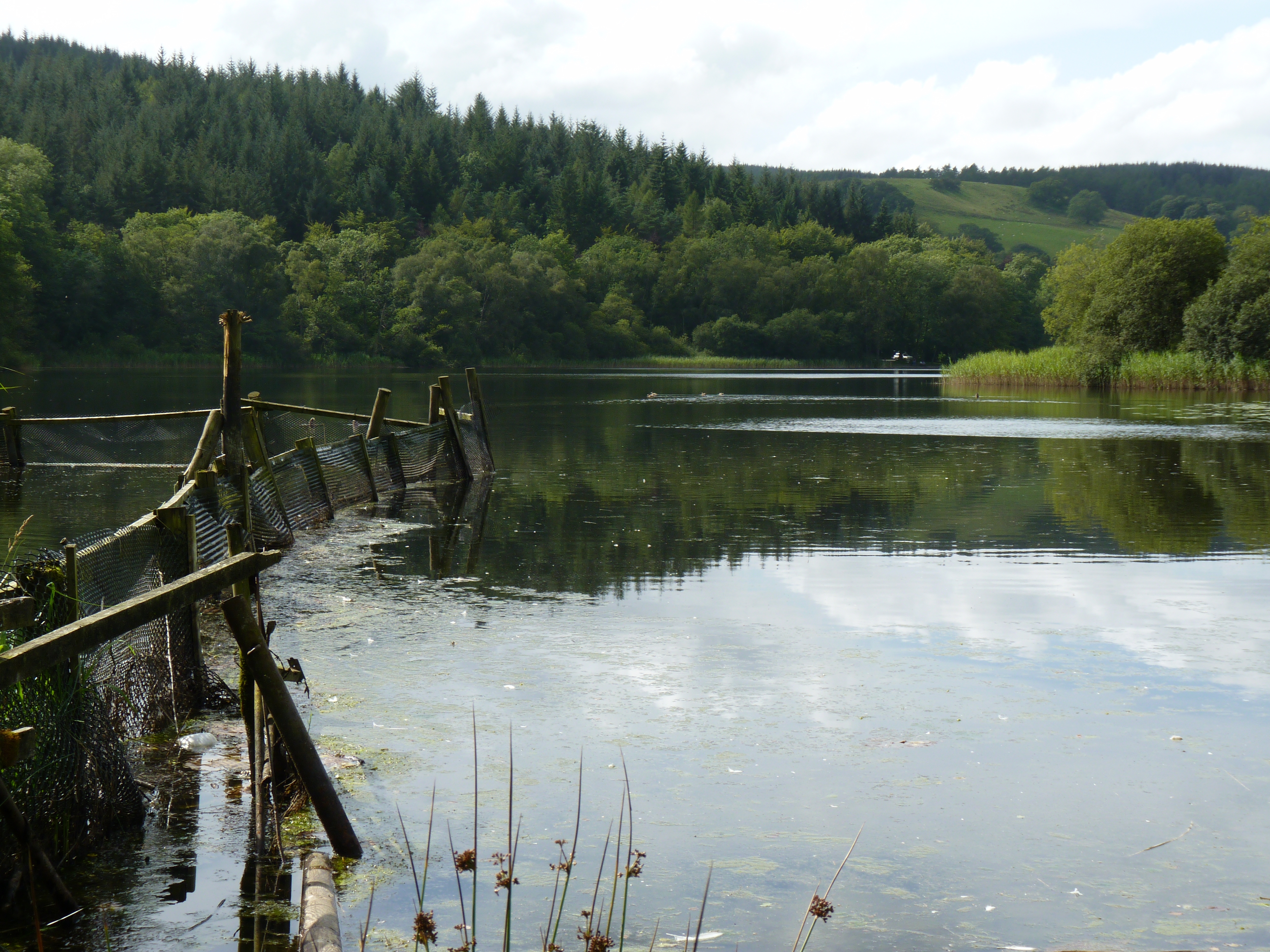
Esthwaite Water in the Lake District where Arthur Ransome loved to fish
When Peter Walker took me on his Swallows and Amazons tour of the Lake District we stopped at Esthwaite Water where Arthur Ransome often went fishing. I wonder if he had it is mind when he wrote about Roger’s great fish, the terrifying pike hooked in Shark Bay.
‘I understand Ransome fished it with his friend the Vicar of Finsthwaite.’ Peter went on to explain that Ransome’s last book Mainly about Fishing is dedicated to Rev. Roland Pedder of Finsthwaite – whose father was the Rev John Wilson Pedder of Garstang.
Peter wrote from Kendal to tell me that Esthwaite Water was up for sale on eBay – for £300,000. This did not seem a great deal as it covers some 280 acres, but this was the price for a 15 year lease. Apparently the trout and pike fishing is excellent. The full details appeared on this lakeforsale site
As I looked out through the reedy habitat I could just imagine Jeremy Fisher frog also in residence. I felt sure that Beatrix Potter must have painted him there. Although originally set on the River Tay in Scotland, Peter tells me that the final illustrations for The Tale of Mr Jeremy Fisher were sketched from the shore of Esthwaite Water in 1906. The original cover for the little book certainly looks as if she must have enjoyed doing this.
Tom Murphy of the Westmorland Gazette said that it was indeed Beatrix Potter’s favorite lake. It is just below Hill Top, the farm where she lived. Please click here for his article.
Jim Searle must have given me this lovely photograph of Titmouse, taken when the boys from Norfolk who played the Death and Glorys were given sailing lessons prior to filming in the summer of 1983.
Titmouse has recently been renovated by Hunter’s Yard at Ludham in Norfolk, which was used as a film location in the series and restored to her sea-worthy condition.
Henry Dimbleby resting between takes in the ‘Dreadnaught’.
Tom Dudgeon’s punt, Dreadnaught can also be found at Hunter’s Yard. Henry Dimbleby can be seen here, sitting on the life jacket he was obliged to wear during rehearsals, despite the fact that he jumped into the water in the action to avoid being spotted by the Hullabaloos, the holiday makers who had hired the Margoletta, in reality the Norfolk cruiser Janca.
Bruce McCaddie, our Designer with Prop Master Ricky King in the ‘Cachalot’
This must be the Catchalot. It looks as if our designer, Bruce McCaddie, is sorting out a fishing rod used by the actor Sam Kelly, who was fishing for pike.
Norfolk teacher Angela Scott with the ‘Catchalot’
This is the only other shot I have of the Catchalot, which looks as if it might have been taken up near Horsey Mere. It shows Angela Scott, the children’s tutor making a funny face at the end of the day. You can just see the make-up artist, Penny Fergusson, and what could be Mary Soan on board. Jill Searle may have been there too. She became a great friend of Liz Mace, our Production Manager who had always been keen on sailing.
Pat Simpson of Stalham Yacht Services said that during the filming they one had to take a boat from Regan to Horning overnight when the film schedule changed. I have a feeling it was the Catchalot.
The Death and Glory at Gay Staithe
One of the jobs Bruce McCaddie gave to his construction team was to build the cabin on the Death and Glory, with its flower pot of a chimney. He transformed the look by adding rigging from the mast.
Our Set Designer, Bruce McCaddie using a dressing boat to approach the ‘Death and Glory’ complete with her cabin. Is the ‘Titmouse’ moored alongside?
In terms of set design ‘Coot Club’ and ‘The Big Six’ were rather unusual productions to work on but Bruce loved boats. Instead of being an extra person on the vessel used by the film crew, he would take a period dinghy to gain access to his sets – which of course were often other boats. This run-around boat could then but used in the back to shot, especially if he needed to hide something modern.
The Death and Glory visiting the Norfolk Broad Yacht Club in 2018
An old German Lifeboat found by Pat Simpson washed up on the beach at Southwold was used for the Death and Glory. After the filming, Pat kept it for his sons until 1989 when Professor John Farrington from the School of Geo-Science at Aberdeen University came across it. He took his two children, a boy and a girl aged ten and eleven, down to the yard one half-term as the loved the books and television serial.
‘Get on,’ he said.
‘But what about the owners?’ they asked.
‘You are the owners.’ He’d bought it for them. One New Year they rowed from Stalham to Sutton and back. John Farrington first visited the Broads on a family holiday in 1956 and wanted his children to have the same experience. They now have children of their own and still treasure the Death and Glory.
The Death and Glory with her newly added cabin
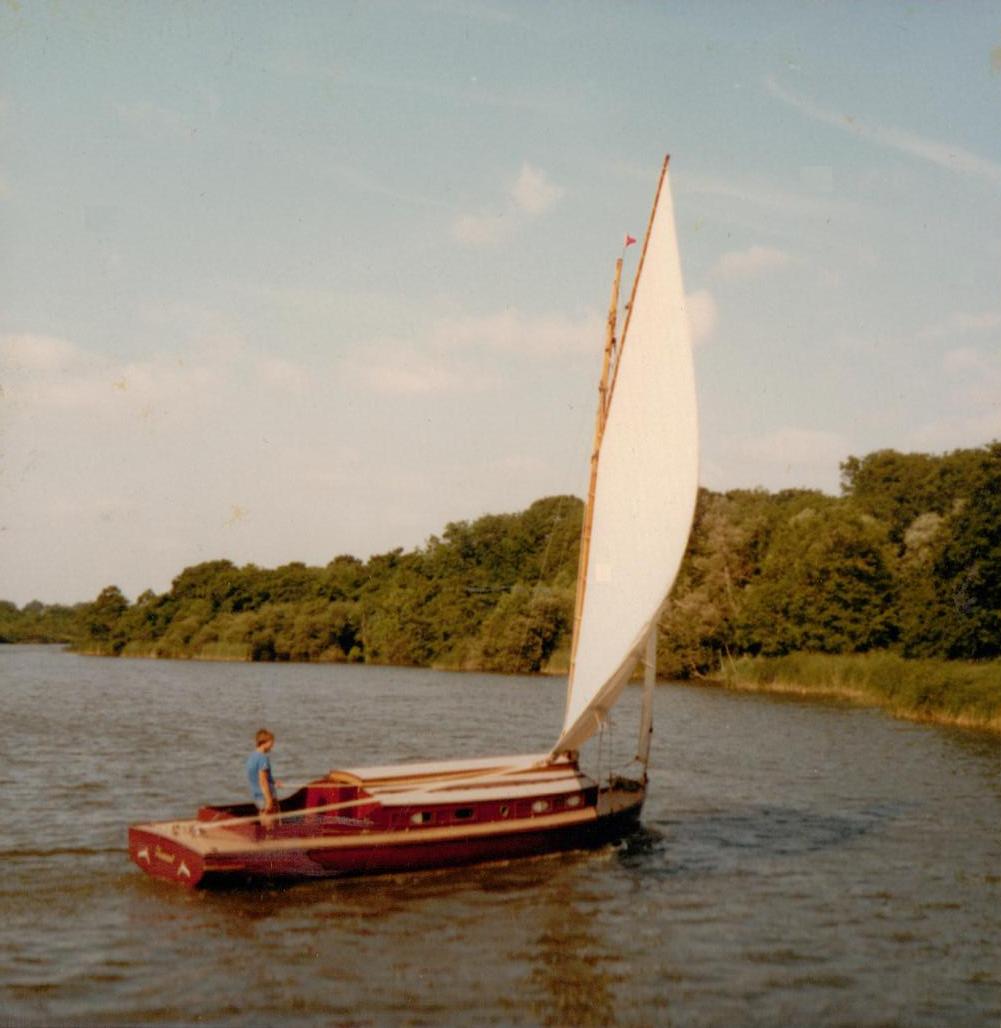
The Teasel was played by Lullaby. Roger Wardale tells me she isa mahogany hulled crusier, a gunter-rigged, 4-berth ‘Lustre’ class yacht built in 1932 and kept at Hunter’s Yard in Ludham, where she is still available for hire.
Lullaby undersail, playing the Teasel with her stage name painted on a false transome
She is similar to the 3-berthed ‘Fairway’ yachts that Arthur Ransome and his wife would hire for holidays on the Broads in the 1930’s.
The Teasel towing the Titmouse – click on this photo to see a close-up of the cockpit
One of the secrets of filming ‘Coot Club’ is that although this looks as if Mrs Barrable is sailing the Teasel, it is not Rosemary Leach but a young man from Hunter’s Yard wearing her costume. Caroline Downer, who played Dorothea Callum, Richard Walton, who played Dick, and Henry Dimbleby who played Tom Dudgeon are in the cockpit, but we also used ‘doubles’ on that day to play Port and Starboard. I found girls two girls from Norwich, Julia Cawdron and Claire Dixon, who played the twins for a day.
The reason for this was that sailing scenes are time-consuming to film and quite tricky to edit together. While our Director, Andrew Morgan, was busy filming the scenes at the Farland’s house with the actor Andrew Burt and the twins, Sarah and Claire Matthews, accompanied by their mother, I was on a second unit headed up by the Producer Joe Waters. Although Joe had directed a huge number of dramas he asked his film editor, Tariq Anwar, up to direct the sequences, knowing that he would be cutting the shots together. He came up to the location with his wife and we took most shots from the camera boat, Camelot.
Tariq Anwar went on to edit Vivaldi, based on Antiono Vivaldi’s early life, starring Elle Fanning, Neve Campbell and Brian Cox. His latest credits include Great Expectations and The King’s Speech as well Down the River featuring Joe Henry, Tom Jones and Hugh Laurie. I haven’t seen the documentary but presume it must include the odd boat.
The great thing is that you can still find some of these vessels today –
Sophie Neville with Titmouse in Norfolk – photo Diana Dicker
Teasel – owned and kept at Hunter’s Yard, Ludham on the Norfolk Broads
Titmouse – owned and kept at Hunter’s Yard, Ludham
Dreadnaught -owned and kept at Hunter’s Yard, Ludham
Death and Glory – owned by the Farringtons – kept at Gerry Hermer’s boat yard on the Norfolk Broads
Sir Gernet – a Norfolk Wherry The Albion
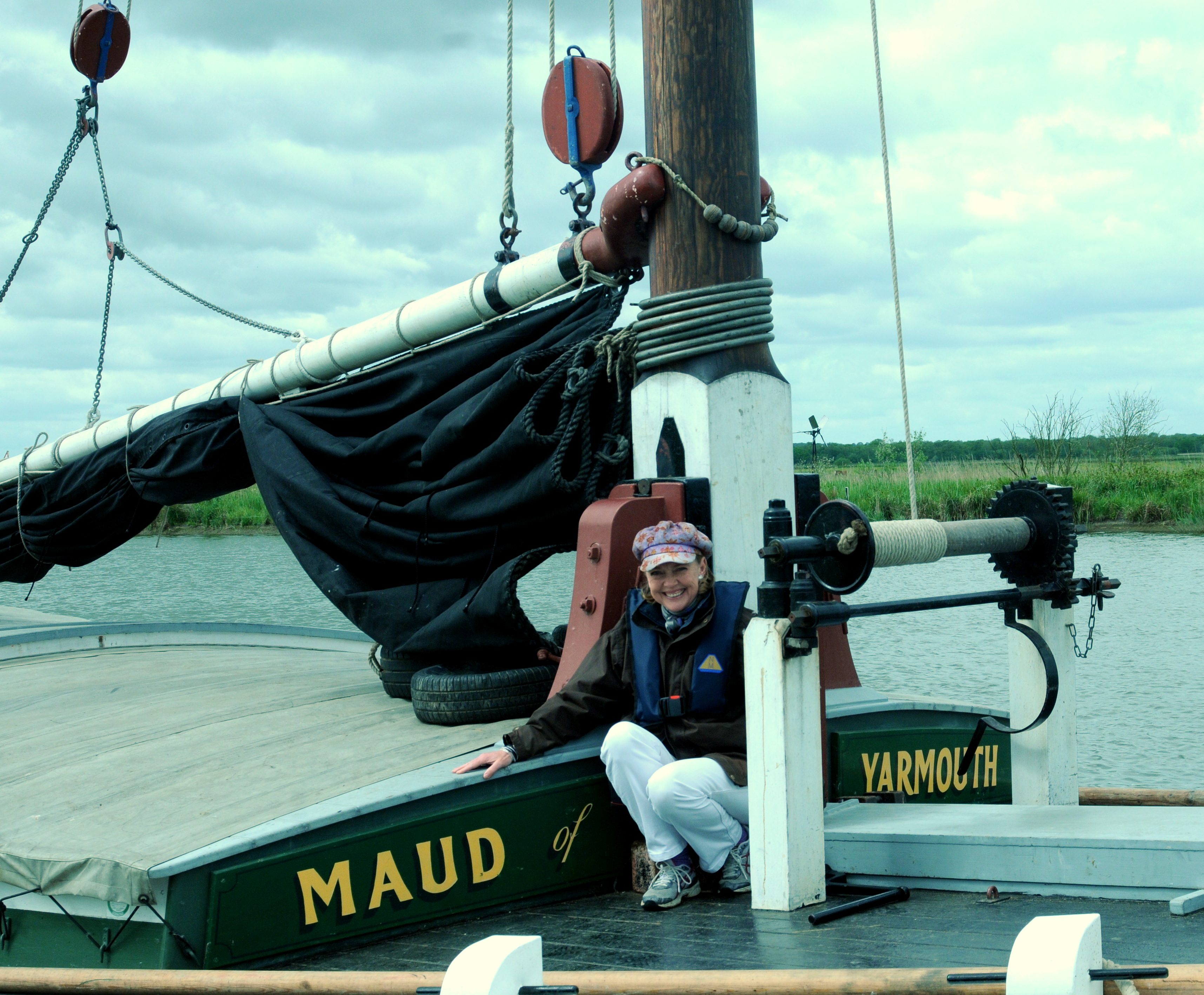
Aboard Wherry Maud – photo Diana Dicker
Other boats featured include:
Water Rail – Herbert Woods Delight Class B owned by Liz Goodyear
Joan B – a skiff set adrift at Horning owned by Pat Simpson
Pippa – yacht set adrift at Horning owned by Geoff Angell kept at the Norfolk Boards Yacht Club.
Goldfish 9 – a one-off yacht
Swallow 4 – a one-off river cruise yacht
Starlight Lady 322
John Boswell’s boat was used at the Catchalot
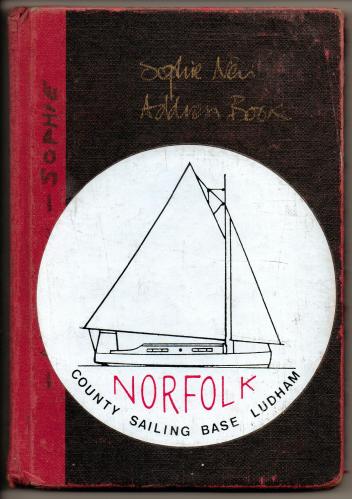
Do write in the comments below if you can fill me in on the names of those who helped us with the boats for the series. My address book lists: Jim and Jill Searle, Rupert Latham, Pat Simpson of Stalham Yacht Services, Richardson’s of Stalham, Lawrence Monkhouse, Keith King of Feny Boatyard and the Steam boat Association. I still have a certain sticker on the front of my BBC address book ~
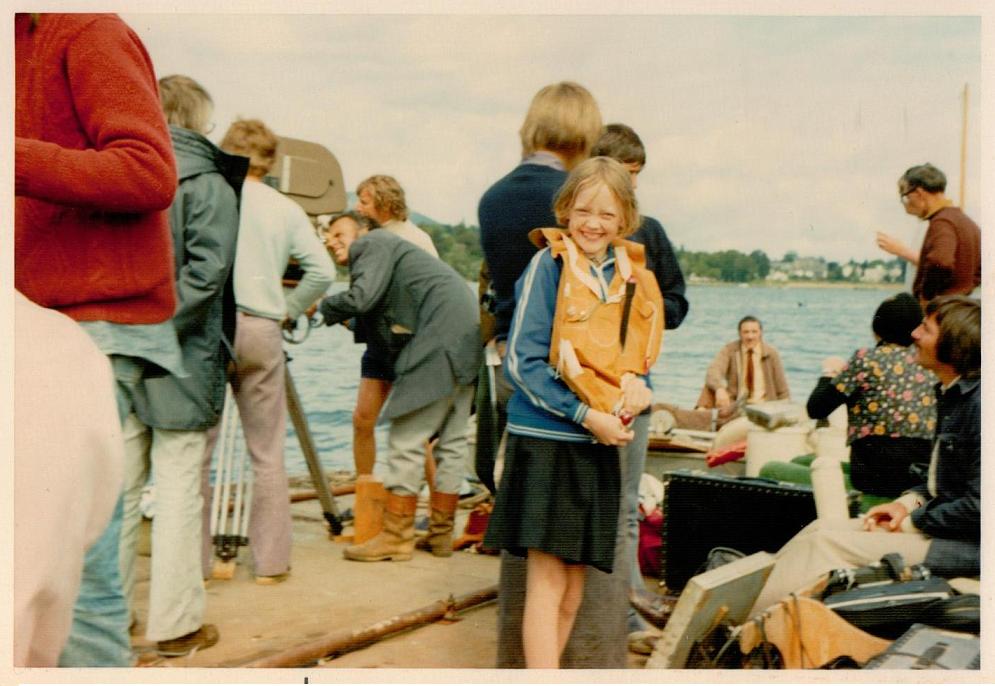
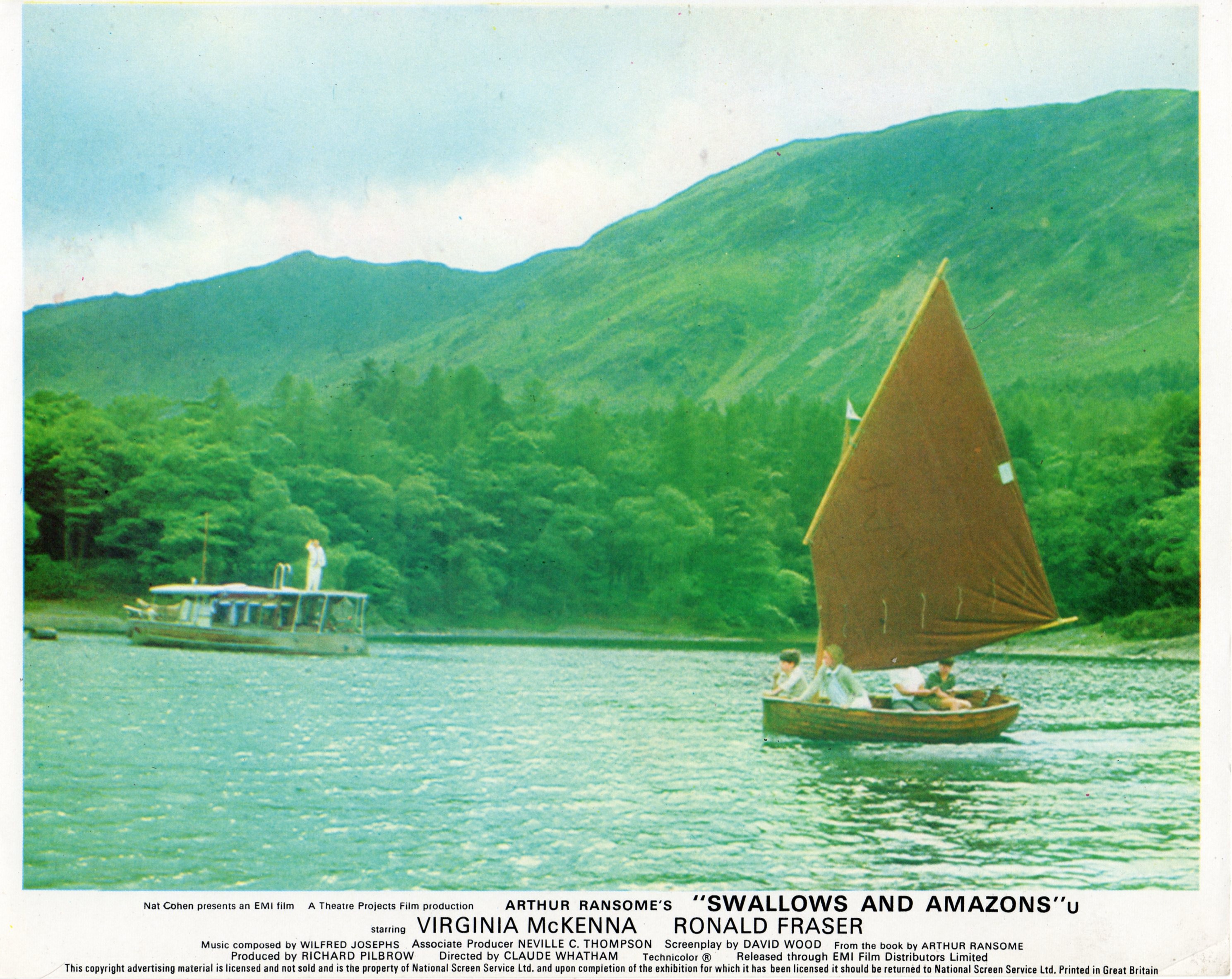
Ronald Fraser as Captain Flint on his houseboat with Stephen Grendon, Sophie Neville, Suzanna Hamilton and Simon West in Swallow on Derwentwater, 1973
It was found on e-bay and brought to Coniston Water when we re-launched Swallow at the Bluebird Cafe in 2011. Everyone was fascinated. I’d never seen this hand-coloured print used to publicise the movie in cinema foyers, but it has memories of a good day, spent not on Coniston but further north on Derwentwater.
Swallow sailing past the houseboat on Derwentwater
When Richard Pilbrow’s movie of Swallows and Amazons was first shown on British television in 1977, ITV made a trailer to advertise it. This started with the shot of me saying, ‘They’re pirates!’ People loved it. Everyone was going around saying, ‘They’re pirates!’
If it was my best performance it was because I had been lying on a red ant’s nest – and they stung us.
The other secret is that that lighthouse tree in this shot is not a tree. Not one that was growing. It was a big log that Bobby Props had stuck in the ground making the ants very angry indeed.
Sophie Neville as Titty Walker in the ITV trailer for the movie of ‘Swallows and Amazons’ when it was first shown on television in 1977
This was the second location that we used for ‘Lookout Point on Wild Cat Island’. It was on a promontory that overlooks the bay where the houseboat was moored on Derwentwater. There were bushes but no sadly big pine trees. The log was planted so that our director Claude Whatham could get what is called a two-shot of the Swallows watching Nancy sail past Captain Flint’s houseboat, while Peggy raises the skull and crossbones. As we were keeping low the height of the lighthouse tree was not an issue.
Simon West, Suzanna Hamilton, Sophie Neville and Stephen Grendon as the Swallows at the Lookout Point on Wild Cat Island
Just prior to this scene when we spot the Amazons for the first time, I was working on the chart while Susan was sewing a button onto Roger’s shirt. The needle stuck into him as he flung himself down on the grass beneath the lighthouse tree.
Stephen Grendon as Roger having a button sewn back on by Suzanna Hamilton playing Susan Walker in the previous scene.
Since needles are small you can hardly see what is happening but I think it is a detail that Arthur Ransome would have appreciated. I wonder if the same sort of thing had happened to him as a child? He used his memories of Annie Swainson throwing boys across her lap to darn their knickerbockers whilst they remained on him, just as Mary Swainson frequently darns Roger’s shorts after sliding down the Knickerbockerbreaker rockface in Swallowdale. Claire Kendall-Price describes this and where it all happened beautifully.
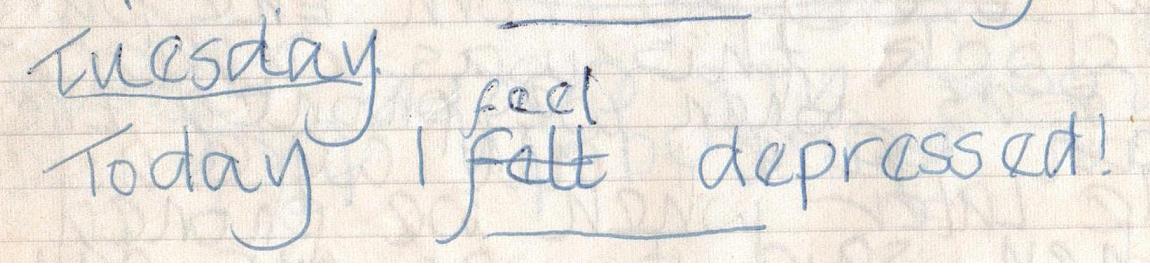
Here is the diary entry I kept for that day in the Lake District ~
Suzanna’s diary is more succinct ~
I don’t know why she felt depressed. Perhaps it was the ants. She was on more of them than me and they were not waving. They were very angry.
So, the secret of Wild Cat Island is that the lighthouse tree sequences were shot in two different places. Although we were mainly on Peel Island on Coniston Water, Rampsholme, an island on Derwentwater is depicted in the opening titles. This is faithful in that Arthur Ransome annotated postcards to show that wanted this view and the fells beyond as a backdrop for his story. In her book, In the footsteps of the ‘Swallows and Amazons’, Claire Kendall-Price provides a wonderful map and guide showing how you can walk from Keswick to find some of the locations.
We didn’t use the island known as Blake Holme on Windermere at all even though Arthur Ransome had envisaged the camp fire as being there. Richard Pilbrow told us it had become a real camp site by 1973 with caravans on the nearest shore.
Sophie Neville in 2011 holding the original photograph in front of the newly restored dinghy at the Bluebird Cafe on Coniston Water. If you look carefully you can see that Swallow is being inspected by a modern day pirate ~ photo: Kitty Faulkner
The “They’re pirates” shot was used in the movie trailer, which you can watch on Amazon Prime here
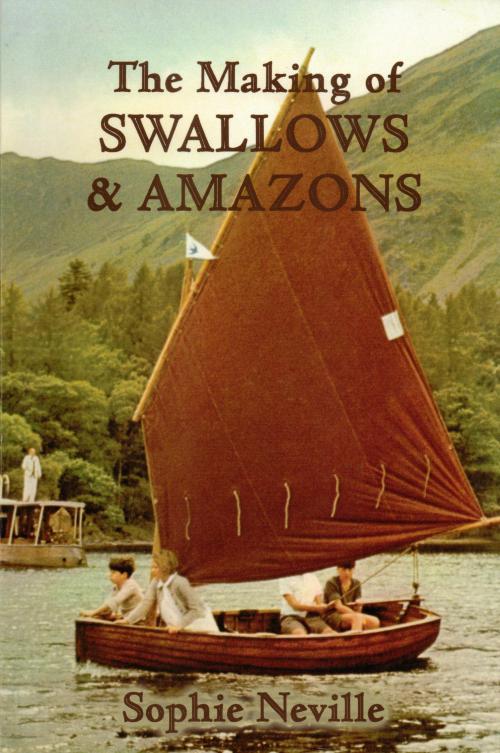
The iconic photograph of Swallow sailing past the houseboat was used on the first edition of ‘The Making of Swallows and Amazons (1974)’ which has become a collector’s item but can still be found online.
The Lutterworth Press bought out an improved 2nd edition and this multi-media ebook is available everywhere for £2.99:
The secret was out; ‘his anecdotes are many, o u t r a g e o u s, and largely unrepeatable.’ Whilst we had been busy filming on a smelly lily pond the ‘joker’s joker’ had been languishing in the bar of the Kirkstone Foot Hotel just outside Ambleside saying that, ‘he was a lousy lover but loved to practice.’ Oh deary me. Worse was to come.
‘…baby, you’ve got to be a bit dotty.’ At least we were described as ‘bright and vivacious’.
We loved going to the cinema in Ambleside. David Blagden, our sailing director, had a small part of a prison officer in the movie Kidnapped, that we went to watch. It starred Michael Caine, Trevor Howard and Lawrence Douglas, with Jack Hawkins, Donald Pleasence and Gordon Jackson, but sadly not Ronald Fraser. He was still in the bar.
Suzanna Hamilton’s perspective on the day is not so very different but it is in purple.
Mediculs. A sure sign that our movie was both over-schedule and over budget, with nothing much anyone could do about it but keep going. We still had to capture the houseboat. And make that splendid gentleman walk the plank.
The distinguished actor Ronald Fraser fishing with Kit Seymour, Lesley Bennett, Suzanna Hamilton, Simon West, Sophie Neville and Stephen Grendon whilst filming on location in the Lake District ~ photo: Daphne Neville
If you would like to read more, Sophie’s diary is included within her ebook of ‘The Secrets of Making Swallows and Amazons (1974)’ available from online retailers and Amazon Kindle for £2.99 here
‘The rain poured down.’ Cumbria was covered in cloud, the Lake District dark and dismal. What a nightmare for Richard Pilbrow and his production team. We were behind schedule, Lesley Bennett who played Peggy was ill in bed and we had run out of ‘rain cover’.
Sten Grendon, Simon West and Suzanna Hamilton in Swallow
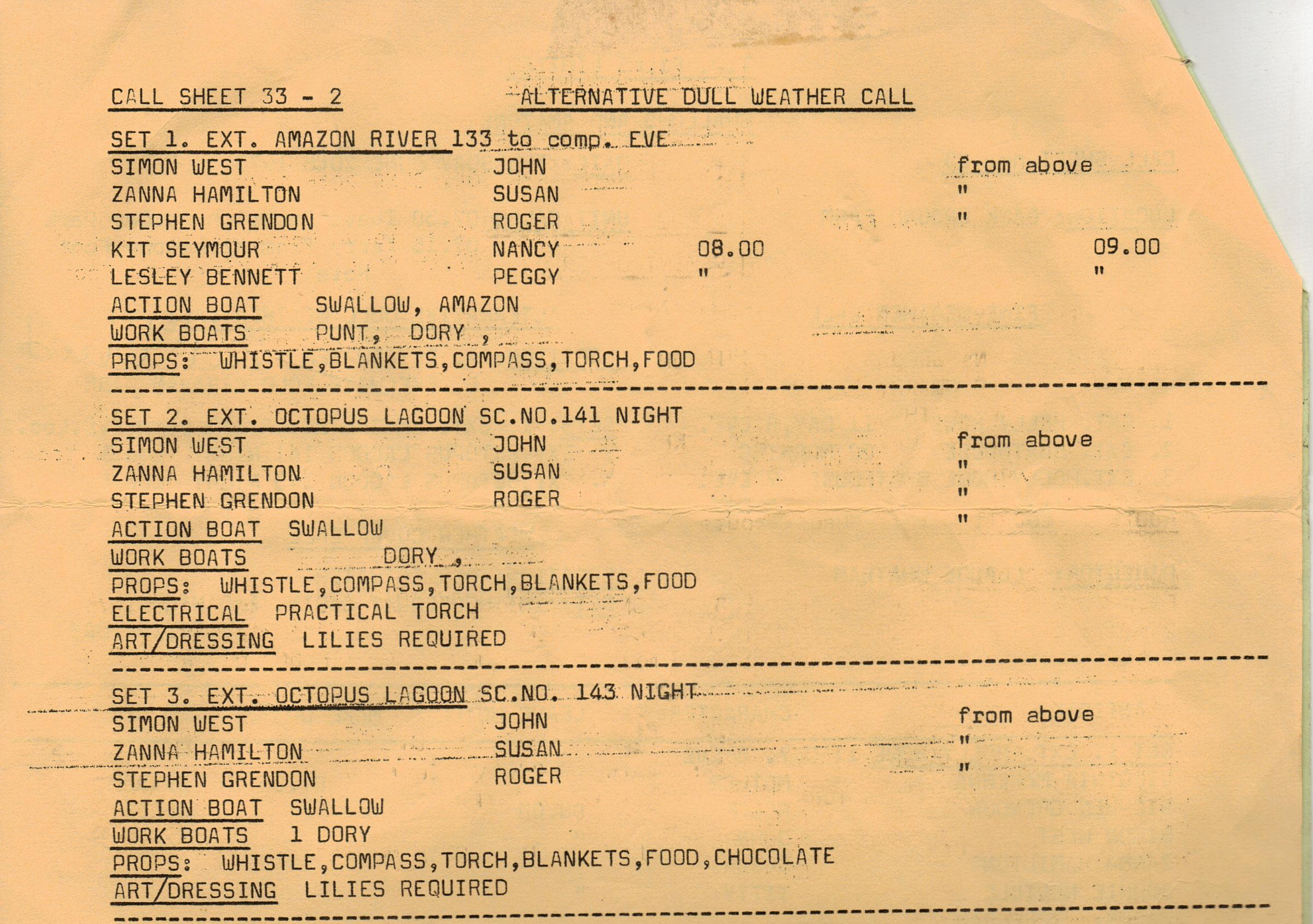
There was one sequence left that could be recorded in dull weather. Today was the day Claude Whatham shot the haunting scenes of Octopus Lagoon. After finishing our school work Kit Seymour and I sat watching the filming from the sloping field above the beautiful but rather smelly lily pond.
I do not have the Call Sheet for 29th June 1973 but have an extract from this earlier one detailing the ‘Alternative Dull Weather Call’:
I can’t say whether the weather allowed for the scene set on the Amazon River to be shot. Lesley had ‘flu so they would have had to somehow manage without her. I think Claude devoted his time to capture the conundrum and challenges faced by Captain John in the lagoon.
I remember looking down on the location, which was on private property near Skelwith Fold Caravan Park – possibly Slew Tarn.
Is this Slew Tran above Skelwith Fold?
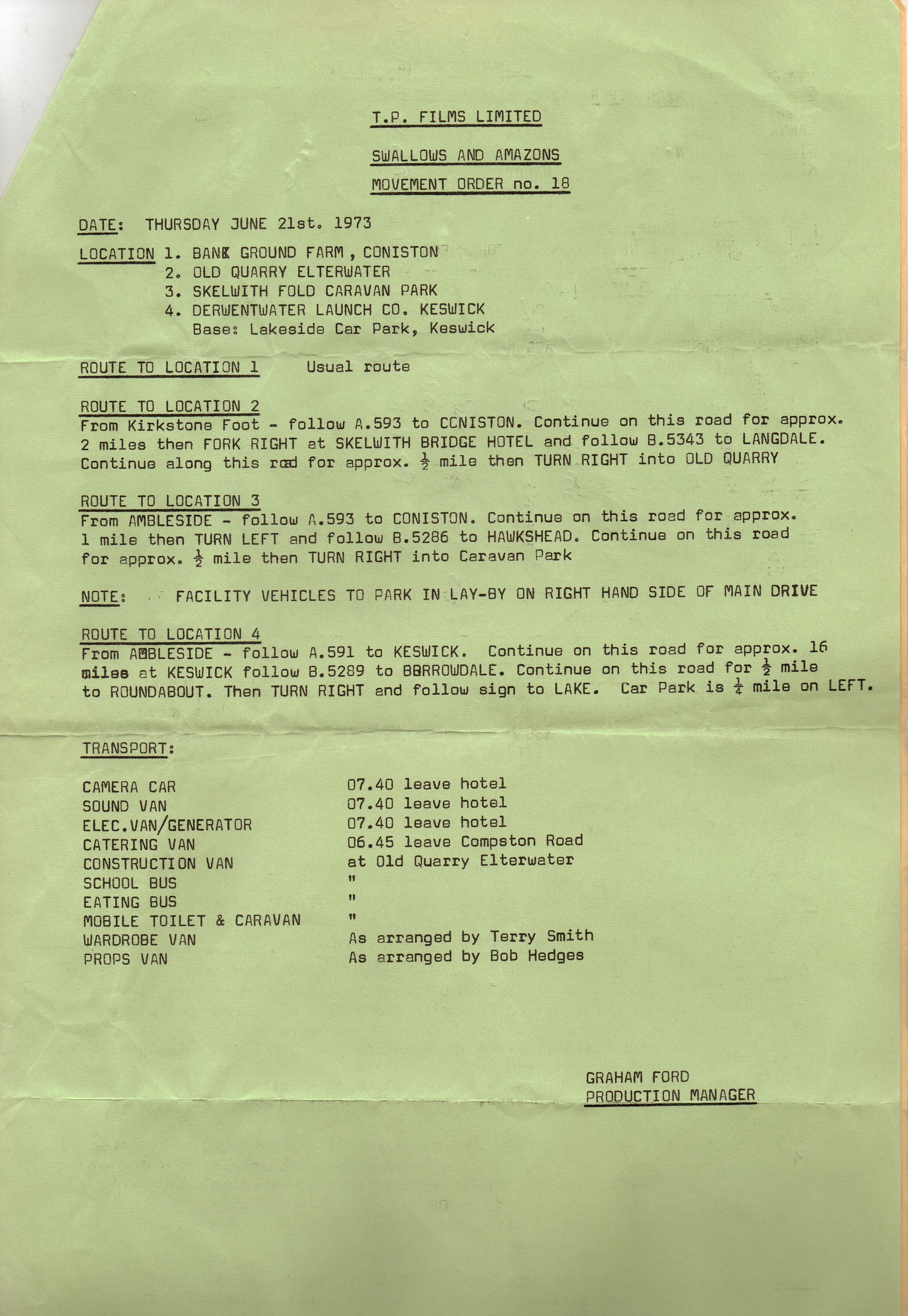
Those who are interested in finding the film locations used might find this old hand-typed ‘Movement Order’ useful:
Roger Wardale sites Octopus Lagoon as being Allan Tarn a short distance up the River Crake at the Southern end of Coniston Water, near High Nibthwaite. This is the place Arthur Ransome had in mind. He spent time there with is brother and sisters as a child when they spent their summers on Swainson’s Farm at Nibthwaite nearby. His father went there to fish for pike. It you have a shallow bottomed boat you can get there but it is not exactly on a footpath. The lily pond we used was in a high sided dip, which made it appropriately dark and gloomy. It was also more accessible for the film crew.
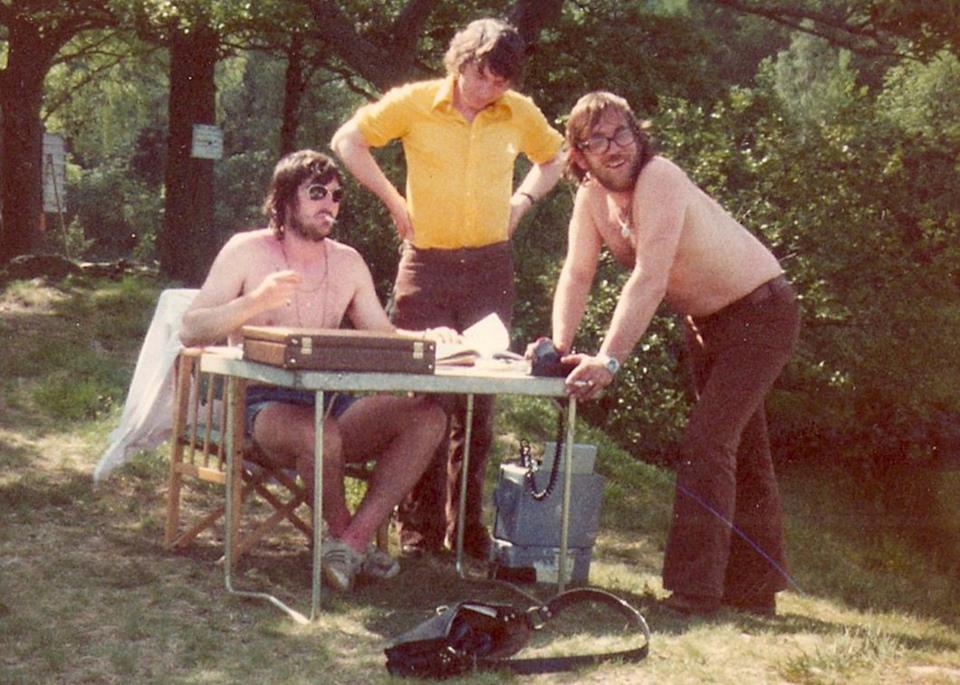
Graham Ford, who signed the Movement Order was our Production Manager. I only have a photograph of him taken on a sunnier day.
Second Assistant Terry Needham, Associate Producer Neville C Thompson and Production Manager Graham Ford with the unit radio on a sunny day in June 1973
Graham Ford would have been responsible for the film schedule, putting together the whole logistical jigsaw puzzle posed by factors such as the availability of leading actors and locations with the movement of vehicles and boats, including the massive camera pontoon. It was Graham who took the stress of problems caused by wet weather. I guess that he also took on the responsibilities of managing the locations, negotiating with owners and the Lake District National Park, something that authors such as Arthur Ransome would not have had to face.
Although young, Graham was pretty experienced. He had previously worked as an assistant director on such classic films as Steptoe and Son and had been the Unit Manager on The Devils, a film that starred Vanessa Redgrave and Oliver Reed. After Swallows he went on to work as Production Manager on S.O.S Titanic, The Honorary Consul and Princess Daisy as well as Time Bandits and Brazil directed by Terry Gilliam starring Jonathan Pryce, Kim Greist and Robert de Niro. Imagine being Terry Gilliam’s right hand man. He was a Location Manager for David Lynch on The Elephant Man and for Richard Attenborough on Ghandi in 1982. Graham’s career progressed. He produced The Nightmare Years and A Connecticut Yankee in King Arthur’s Court in the late 1980s before working on Gettysburg, the massive four hour long movie about the American civil war, in 1993. A life in film. He died in Ontario in 1994 aged only 48.
If you would like to read more, the story of the filming can be read in a paperback entitled ‘The Making of Swallows and Amazons (1976)’ available from libraries worldwide or from online stockist and good bookshops. The Nancy Blackett Trust have signed copies available here with proceeds going to the trust. These are illustrated so cost £15 but make good presents.






 It was shot on a mossy bank in oak woodland so very characteristic of the Lake District and profiled by the Guardian newspaper the author Arthur Ransome had once worked for.






















 Sophie Neville
