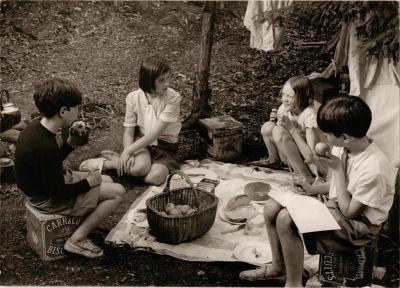
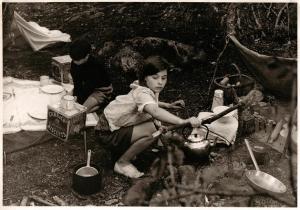
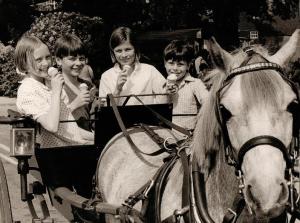
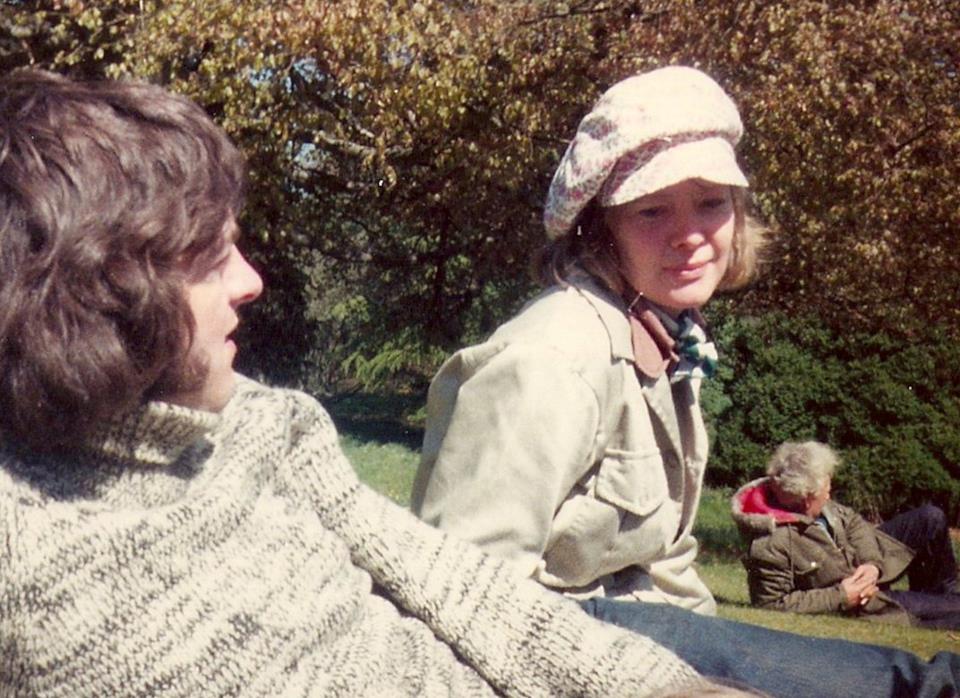
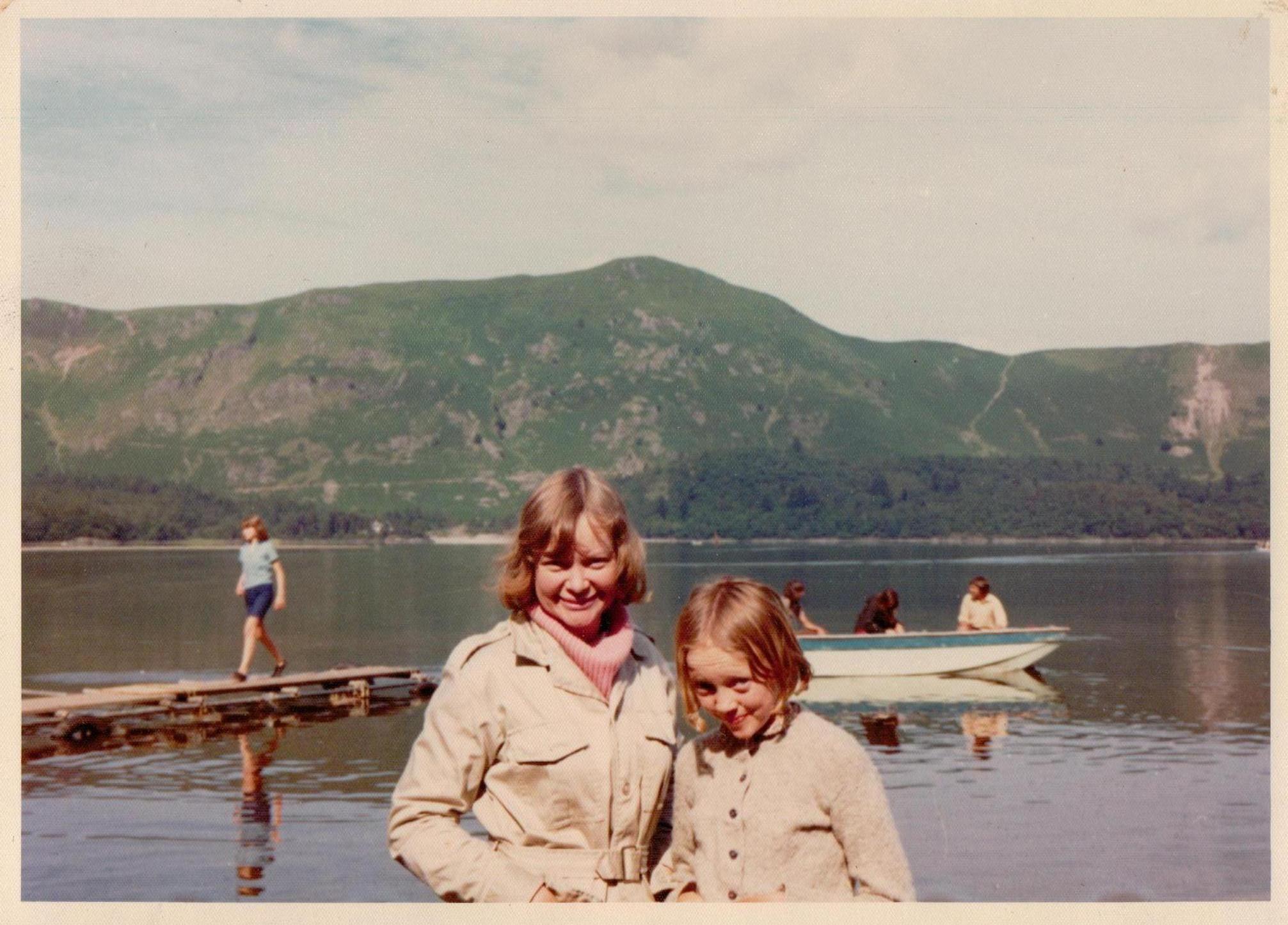
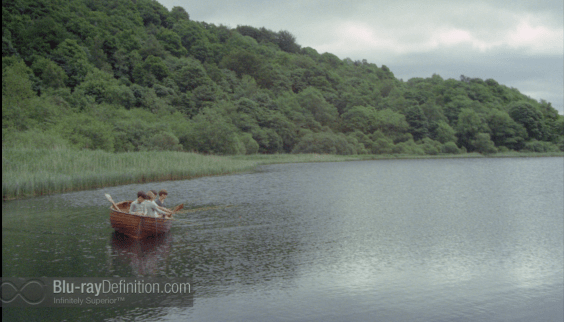
Sten Grendon, Suzanna Hamilton, Sophie Neville & Simon West in 1973, eating apples to fend off scurvy
Food was undoubtedly of considerable importance to Arthur Ransome. He certainly enjoyed describing what explorers and pirates ate when camping. I thought it would be fun to look at typical meals eaten on Wild Cat Island or when sailing.
I have drawn up this list of the food featured in Swallows and Amazons, but I am sure you can add to it. Please use the comments box below where all ideas and contributions are gratefully received.
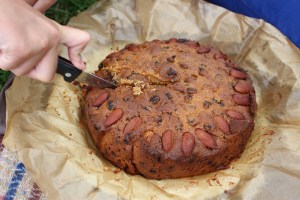
Breakfast ~ Tea, milk from Dixon’s farm and sugar, bread, butter, marmalade and eggs. Then of course Mrs Dixon arrives with a bucket of porridge after a storm.
Elevenses ~ Bananas, apples, molasses (toffees) and chocolate
Lunch ~ Pemmican and peas with Grog (ginger beer or lemonade) to drink
Tea ~ Seed cake, bun loaf with tea or grog to drink, perch fried in butter or pemmican and potato cakes. Susan is clearly one for buttered eggs and in the book Mother arrives with Baby Vicky’s birthday cake.
Jack Ramble writes in to say, “I’ve always said, of events, that the food is what makes it. This is no different for a story, either. Certainly, one of the key parts of my own upcoming books, are the lavish descriptions of what the children ate. These not only excite the mind (and stomach), but help pin down the era in which the stories are set.”
Suzanna Hamilton playing Susan Walker with Stephen Grendon as Roger Walker camping on Peel Island, Conioston Water in Cumbria
In the original film we bought iced buns in Rio, had pork pies to munch on in Swallow, and ate our way through that fabulous pirate feast on Captain Flint’s houseboat, when Jim Turner miraculously produced eclairs and ‘ices’ along with a decorated fruit cake.
Sophie Neville with Lesley Bennett in 1973
I wished the original film had a bunch of bananas hung from a tree in the camp. Gooseberry tart would have been wonderful. (There’s a recipe for this in The Guardian.)
Other books in the series mention Cook’s black cake, Missee Lee’s Oxford Marmalade, Garibaldi biscuits, Force breakfast cereal, bacon, tinned milk, Christmas pudding soaked in methylated spirits, the Death and Glories’ smoke eels, Jackie’s trout, a duck’s egg, ship’s biscuits, fudge, tinned fruit, pears, oranges, blackberry and banana mash, canon balls, tins of sardines, cold roast chicken, hams and Edam cheese, along with other delicacies which Ransome must have relished. He also liked to shock, burdening Dorothea with skinning rabbits and prescribing bacon rinds as a cure for sea-sickness.
Jill Goulder writes, ‘They certainly had coffee at breakfast when living at home (e.g. Cdr Walker in Secret Walker, “ragging John about taking a compass bearing of the coffeepot from the cruet”), but always I think tea when camping.’
There is food mentioned in the books that never gets eaten. Captain Flint says, “Nothing like a good Malay curry when salamanders are fainting from the heat.” in ‘Missee Lee’. Nancy and Peggy hated tapioca. Alec Duncan of The Arthur Ransome Group pointed out, ‘There’s the hotpot mentioned by Mrs Blackett in ‘Winter Holiday’ that melted its way through the ice leaving only a wisp of steam and a hole in the ice. This happened years before, during a previous freezing of the lake.’
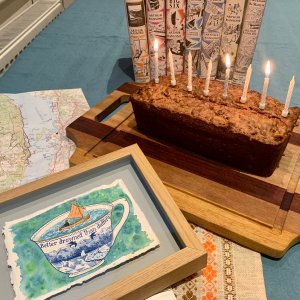
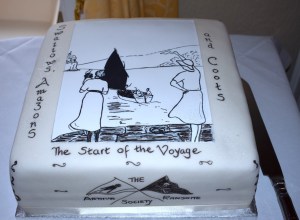
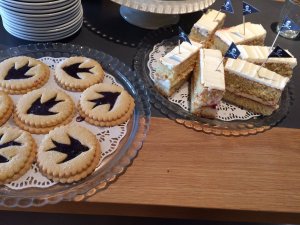
I’ve been collecting photos of wonderful designs for cakes celebrating the series of ‘Swallows and Amazons’ books here.
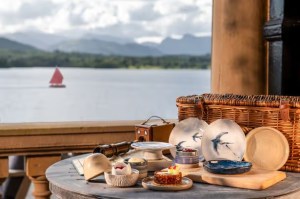
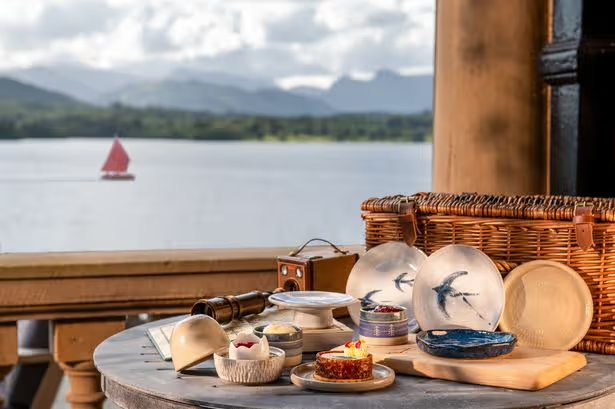
These days you can enjoy a ‘Swallows and Amazons’ afternoon tea at Langdale Chase on Windermere, the hotel where we held the wrap party when we finished filming the original movie in the summer of 1973.
Afternoon tea at Langdale Chase Hotel
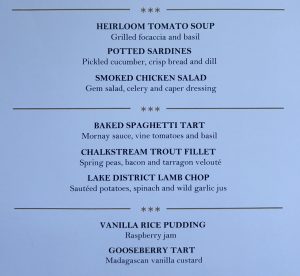
When I was invited to give a talk on ‘The Making of Swallows and Amazons’ at the Royal Thames Yacht Club in London, a Swallows and Amazons Menu was laid on:
To read about the ice creams and food we actually ate when making the film of Swallows & Amazons in 1973, please click here.
Sophie Neville, Simon West, Suzanna Hamilton and Stephen Grendon at Bowness in 1973
There is more in The Making of Swallows and Amazons available from Waterstones and all the usual online outlets, and now available on Aaudible.
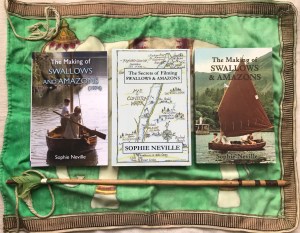
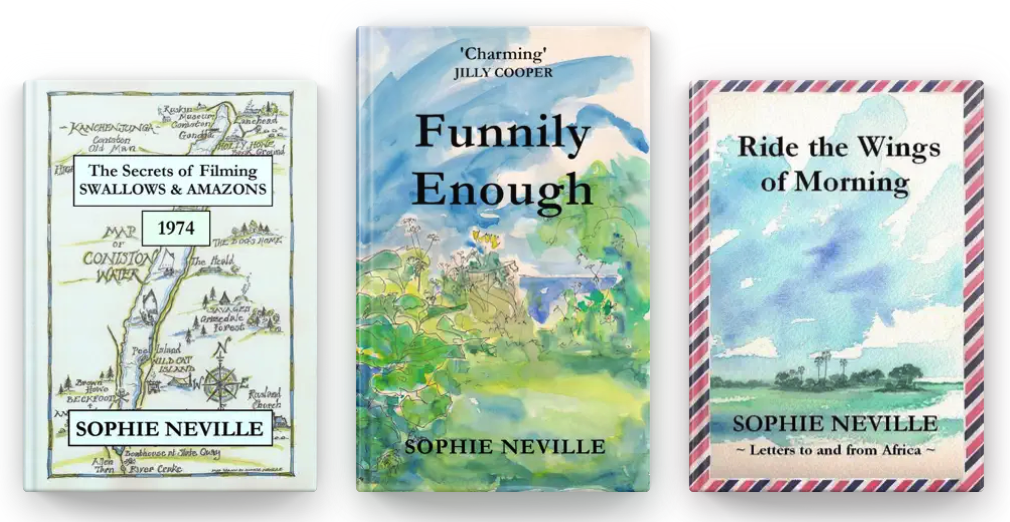
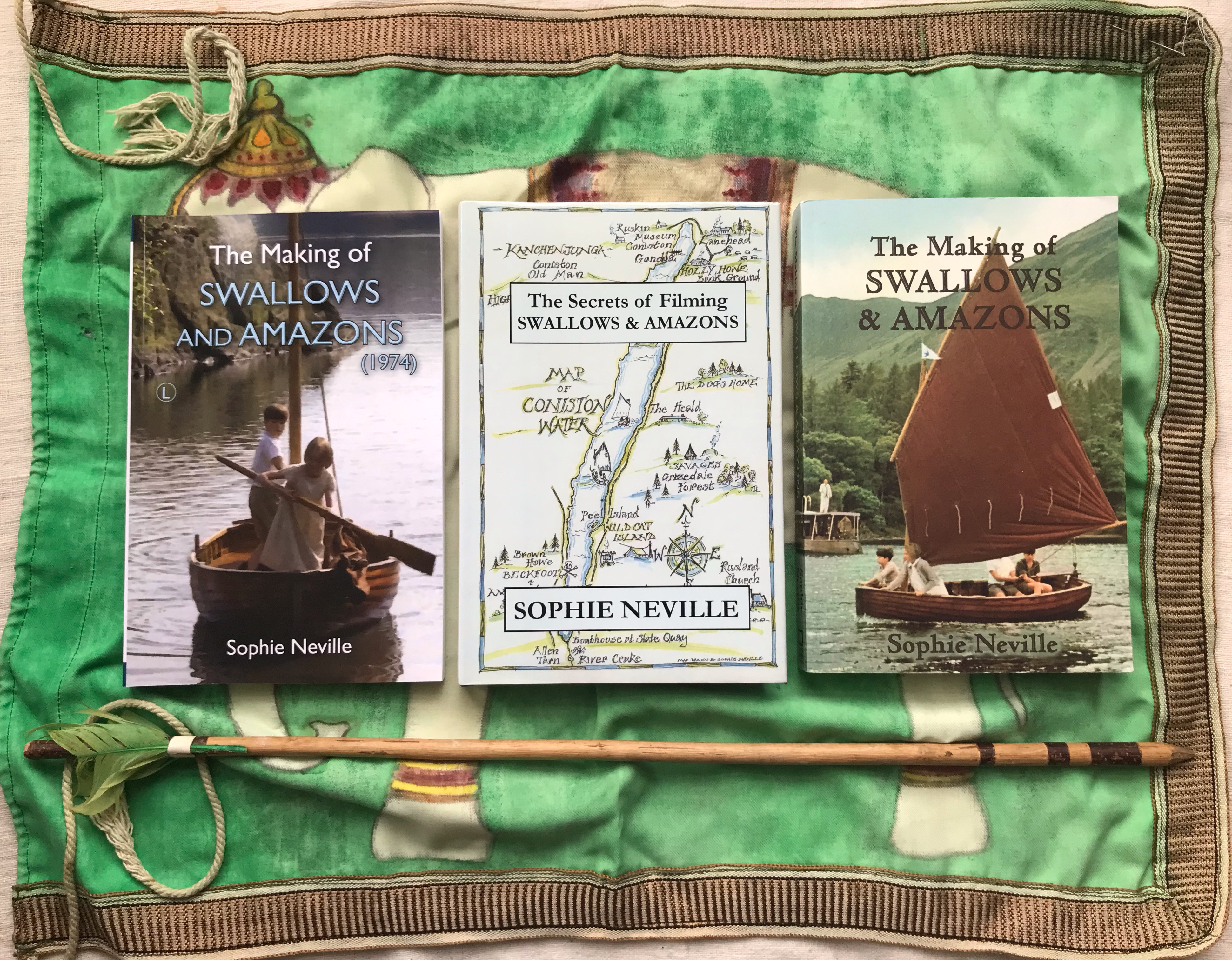
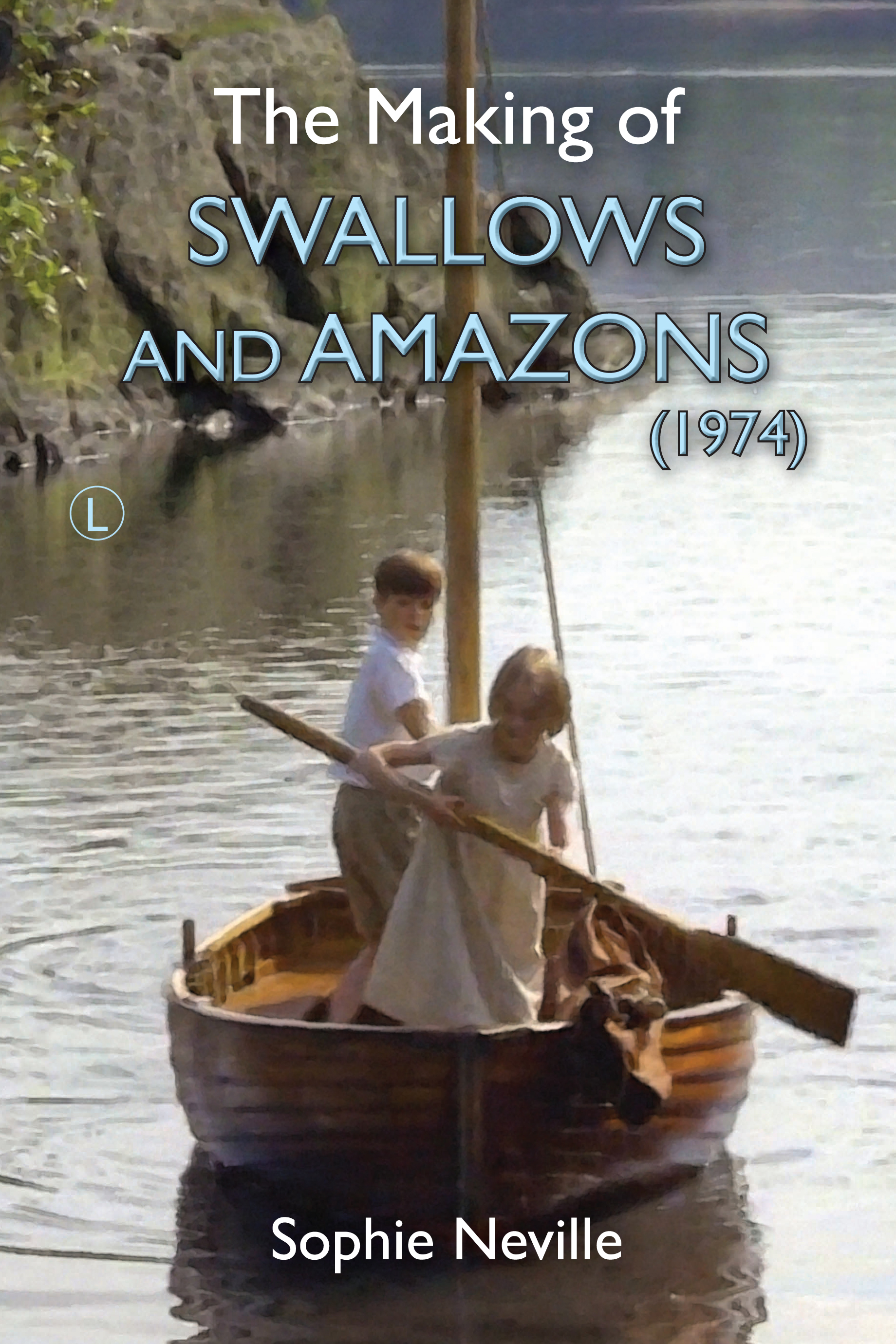
Different editions of ‘The Making of Swallows and Amazons (1974) by Sophie Neville’
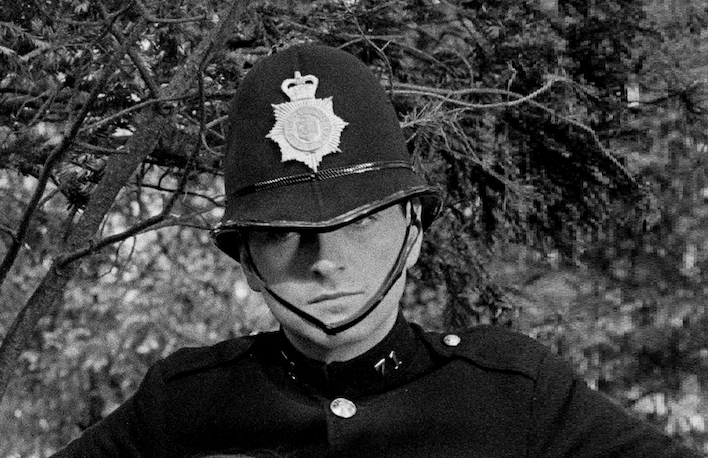
David Blagden as Sammy the Policeman in ‘Swallows and Amazons’
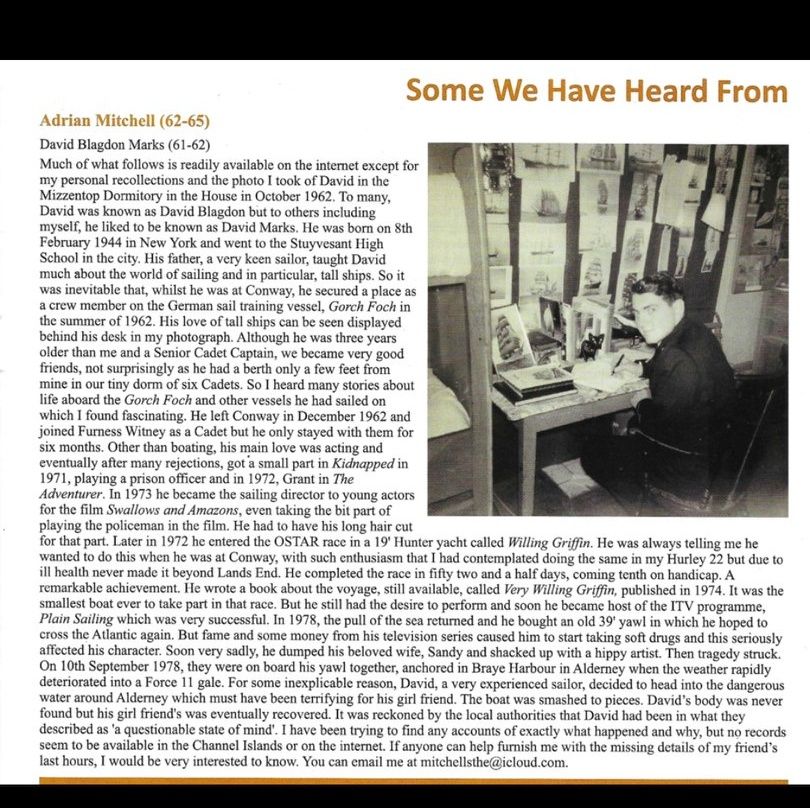
I was interested to learn that David Blagden was born in New York in 1944 and went to school there. He had no hint of an American accent when we knew him in 1973.
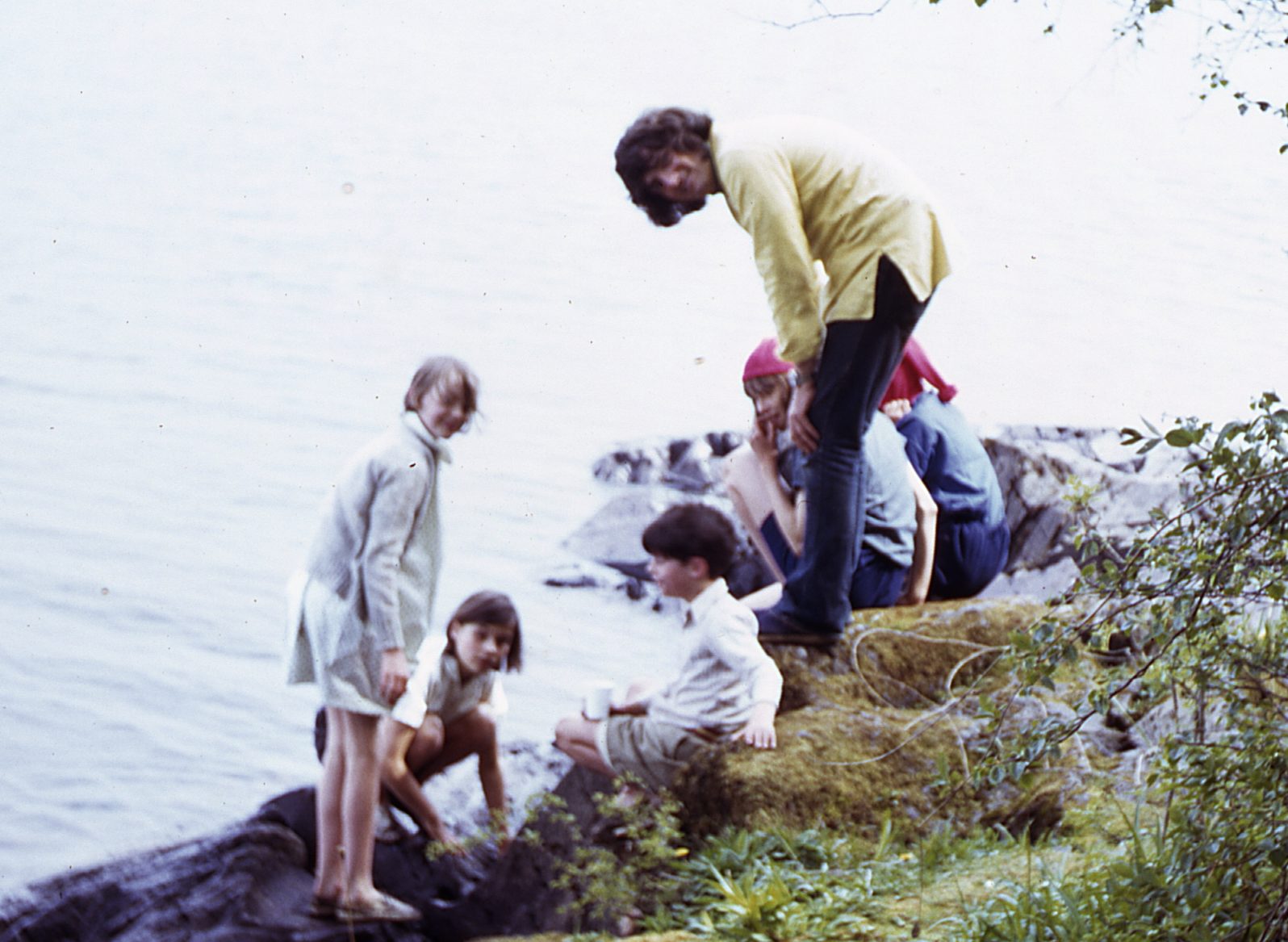
Sophie Neville, Suzanna Hamilton, Stephen Grendon, Lesley Bennett and Kit Seymour with David Blagden on Peel Island Coniston
A young trans-Atlantic sailor, David handled boats with fluency and won the trust of the producer and director of ‘Swallows and Amazons’ who gave him the job of sailing director on the original film. Tall, good looking, and impervious to wet weather, he had an infectious enthusiasm for high adventure out on the water. We children all adored him.
Stephen Grendon and Sophie Neville in Swallow, wired to the camera pontoon with Richard Pilbrow, David Blagden, Calude Whatham, Dennis Lewiston, boatmen and other members of the filmcrew
I now realise that although he could splice a rope and was respected for his experience on high seas, David had never worked in film or television production. He claimed to have read the book of ‘Swallows and Amazons’ forty-two times, but evidently did not breakdown the script. As ‘sailing director’ he should have listed what was needed in each action scene, prepared methodically, and conducted what would now be deemed ‘risk assessments’. I look at the photo above and can only imagine what could have happened out on Derwentwater if we had been hit by a Lakeland squall. When my father eventually tested one of the old BOAC life vests we were equipped with, it failed.
As young actors, we only had two days on Windermere to get used to the boats. David concentrated on sailing with Captain John and Nancy, forgetting that Titty and Roger have quite a bit of tricky rowing in vision. They row back from the charcoal burners and row out to Cormorant Island in Swallow, while Titty needs to row Amazon out of the shelter of Secret Harbour into Coniston Water. It was madness not to have trained for a twelve year-old girl for this. I ended up with the precious 35mm Panavision movie camera onboard. We would have had plenty of time to practice as we were all hanging around at Brown Howe where we could have spent an afternoon rowing Swallow.
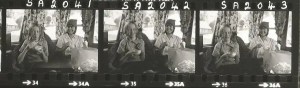
Contact sheet sailing Swallows & Amazon in 1973
One climax of the story is when Titty sails the captured Amazon back to Wild Cat Island, and yet he failed to teach me how to sail her. This was sad in that is was one aspect of Arthur Ransome’s book that could easily have been fulfilled.
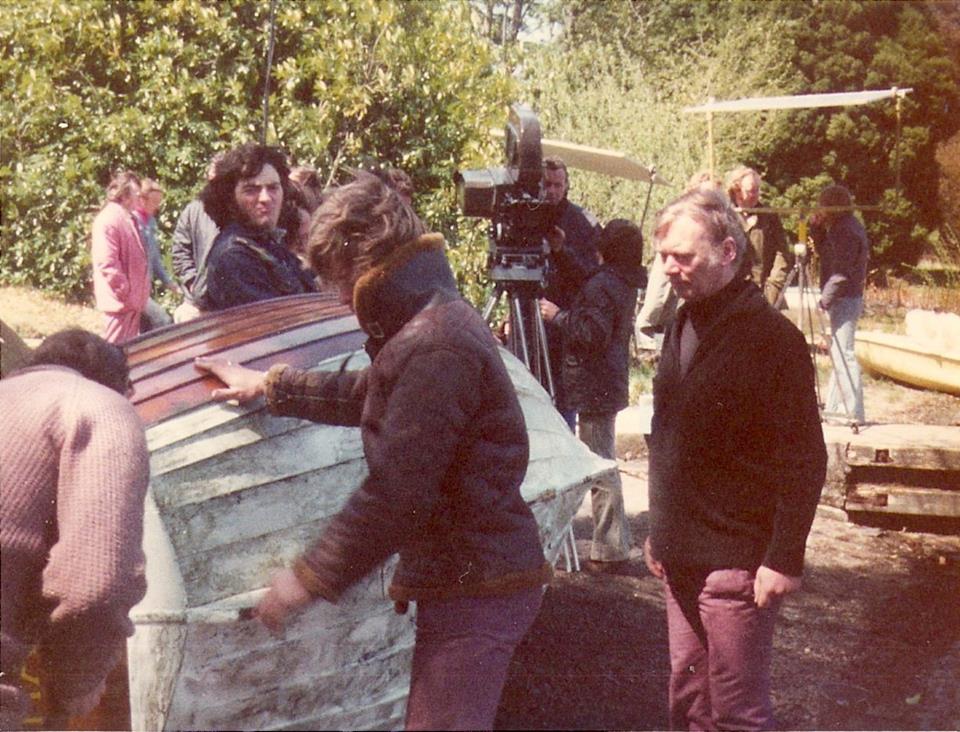
The Amazon on her side with David Blagden (Sailing Director), David Cadwallader (Grip) David Bracknell (First Assistant Director) with Dennis Lewiston (DOP) with the Panasonic in the background ~photo: Richard Pilbrow
Although he was fond of boats, what David wanted was to to act. Claude Whatham, the director, gave him the part of Sammy the Policeman.
David Blagden, the Sailing Director before he had his hair cut to play the Policeman, and my mother Daphne Neville, Chaperone to the six children acting in ‘Swallows and Amazons’
The idea of having his hair cut was challenging but David accepted the fact that a police officer of 1929 would have a short back-and-sides and was shorn at Bank Ground Farm by Ronnie Cogan, the unit hairdresser. Off came his fashionable shaggy locks, which was seen as very brave.
David Blagdon who played Sammy the Policman ~ photo: Daphne Neville
David adopted a Lancashire accent for the part, “Now then Miss Nancy…” and was so proud of his haircut that he removed his policeman’s helmet in vision. This worked well as it gave him appropriate reticence. He remained in character whilst in uniform and his performance was both well timed and convincing. He obviously prepared well for that.
David Blagden as Sammy the Policeman
David had played Grant in The Adventurer, a TV series made about an American government agent made in 1972. He’d also appeared as a prison officer in the 1971 film ‘Kidnapped‘ starring Michael Caine and Jack Hawkins, which we went to see at the cinema in Ambleside on a precious day off from filming ‘Swallows and Amazons’. IMDb lists David as voicing seven episodes of ‘The Water Margin’ and appearing in one episode of ‘Omnibus’ as a talkative actor. He also presented a British television series called ‘Plain Sailing’, which by all accounts did well, and is remembered for his book ‘Very Willing Griffin’ about his remarkable crossing of the Atlantic in a 19′ Hunter, completing the OSTAR race in fifty-two days.
Adrian Mitchell, an old friend of David’s, emailed me to say, ‘Your recollections of David whilst you were filming with him are both interesting and amusing. He was always very strict when he was at Conway and the thought that he would grow his his hair so long is really very funny…. and having it cut off for his policeman’s role in the film even funnier.’
Adrian remembers him from the 1960s as David Blagdon Marks. He might have decided to use Blagden as a surname if there had been another actor called David Marks or David Blagdon registered with Equity at the time.
We are currently unearthing more facts about the misadventyuire that cost David his life. On Sunday morning on 10th September 1978, skipper and his girlfriend Eleanora Murk-Jansen were planning to sail to Fleetwood (near Blackpool) from Ramsey on the Isle of Man, but had engine problems and their departure was delayed. The weather forecast at midday on the 10th for sea area Irish Sea appeared not too bad, as follows….
Pressure. 1015 -1018 hPa, falling steadily.
Wind South West. 4 – 5, increasing to force 6
Sea State. Moderate, becoming rough later.
Weather. Broken cloud, showers, good visibility between showers.
This was probably not seen by David as particularly onerous, especially for someone who had sailed the Atlantic, solo, some years before. However, the coastguard was worried and advised David not to leave the harbour as by evening an Atlantic depression had deepened and was moving east from Ireland across the Irish sea. David might have thought that as he was going to be heading south east, he could cope with the sea conditions. It would only be a sixty mile voyage. This should have taken around 10-14 hrs. They left around 10pm that evening, heading south east to Fleetwood.
But during the night of 10th September, the barometric pressure dropped rapidly with a south west wind blowing Force 7 to 8. By midnight the pressure had dropped to 1000 hPa, a dramatic fall in such a short time would suggest worse weather was to coming, and that was the case, increasing to Force 9 and 10 as the night wore on. This was beyond the limits of a 26ft yacht. It is likely that the wind would have been astern of the boat and large seas could have pitch-poled it (stern over bow), smashing it to bits in shallow water off the nearby coast.
That night a tornado hit the town of Anchorsholme near Blackpool, damaging homes and throwing a large cycle shed through the air. The storm approached the area from the Irish Sea – recorded at Force 9 to 10, west north west.
Meanwhile, early in the morning of the 11th September the coastguard (possibly from Ramsey or Fleetwood) alerted the RNLI that a yacht was overdue and probably in trouble off the Blackpool/Fleetwood coast and the Fleetwood and Lytham lifeboats were launched. They searched through the night and well into the day on Monday 11th without success.
On Tuesday 12th September, the Birmingham Daily Post reported that a 26ft sloop, Jain, on passage from the Isle of Man to Fleetwood with a man and a woman from London on board had been lost on the night of the 11th September. The body of a young woman, along with yacht gear, were washed up on Blackpool beach. Wreckage was retrieved by a trawler, being from the wreck from a depth of just 1.4m close inshore, including a mast with numbered sail and harnesses that were identified as having come from the yacht Jain. David’s body was washed up nearby a week later.
I love hearing from readers and so appreciate letters and emails. Here are a few that arrived recently:
‘I do indeed have your book; it was a gift from my sister (we both love the film and it’s very much part of our childhoods). I found it incredibly evocative and loved the insights, as well as being taken back through your own experiences. It was exactly what inspired me to head to the Lakes and seek out some of the locations. Hearing about which places and items were purely for the film was especially fun….and saved me a great deal of time trying to find them!’ Timothy Joint. He kindly left a book review on the Waterstones site:
“A Nostalgic Journey Behind the Scenes of Swallows and Amazons”
Sophie Neville’s book, The Making of Swallows and Amazons, is an absolute delight for both devoted fans of the film and for anyone curious about the making of cinema in that era.
Written by Sophie Neville, the book brings a wonderfully personal and vivid perspective to the making of the beloved 1974 film Swallows and Amazons. What makes it especially engaging is how she transports you back to that time. You’re not just reading about the production, you feel as though you’re right there on the lakes watching it unfold.
Sophie shares fascinating insights into the realities of filming on location, from the unpredictable weather to the logistical challenges of shooting on water. Equally compelling are her memories of what it was like as a young actor balancing schoolwork with the demands of filming, which adds a lovely human layer to the story.
There’s a warmth and authenticity throughout the book that only someone who lived the experience could provide. Her reflections on friendships formed during filming, the camaraderie of the cast and crew, and the innocence of that era give the book a nostalgic charm that never feels forced.
More than just a “making of,” this book is a heartfelt memoir, a piece of film history, and a tribute to a unique moment in British cinema. Whether you grew up loving Swallows and Amazons or are discovering it for the first time, this is a wonderful book that will be loved by everyone.
‘I recently read The Making of Swallows and Amazons (1974), and I have to say there’s something genuinely special about the way this book captures not just a film, but a moment in time.’
‘What makes your book so engaging is its authenticity. The decision to weave your childhood diary entries with your adult reflections creates a layered narrative that feels both immediate and nostalgic. It’s rare to get such an unfiltered, “in-the-moment” perspective of a film production especially one told through the eyes of a child who was living the adventure rather than simply acting it.’
‘The setting itself–the lakes and mountains of Cumbria–adds a natural richness to the story, but what truly stands out is how the experience mirrors the spirit of Swallows & Amazons. It doesn’t feel like a production account; it feels like an extension of the adventure.’
‘There’s also something deeply charming about the absence of modern filmmaking constraints–no digital interference, no rigid scripting, just immersion, imagination, and discovery. That gives the book a warmth and sincerity that resonates beyond film enthusiasts. This isn’t just a behind-the-scenes account. It’s a memory preserved with remarkable clarity and heart.’ Susan Pouliot
Another reader emailed to say, ‘There’s something rare about The Making of Swallows and Amazons it’s one of those books that doesn’t just document a film but actually preserves a lived experience. The extracts from your childhood diary are what make it irreplaceable; a child’s unfiltered voice set against the backdrop of Cumbria’s lakes and mountains, interspersed with photographs, maps, and newspaper clippings that ground every memory in something real. For readers who love Arthur Ransome or classic British cinema, this is exactly the kind of book they didn’t know they’d been waiting for.’
I’m assured, ‘That child’s eye view of the entire journey from filming to premiere is the kind of detail readers who love film history and nostalgia would truly enjoy.’
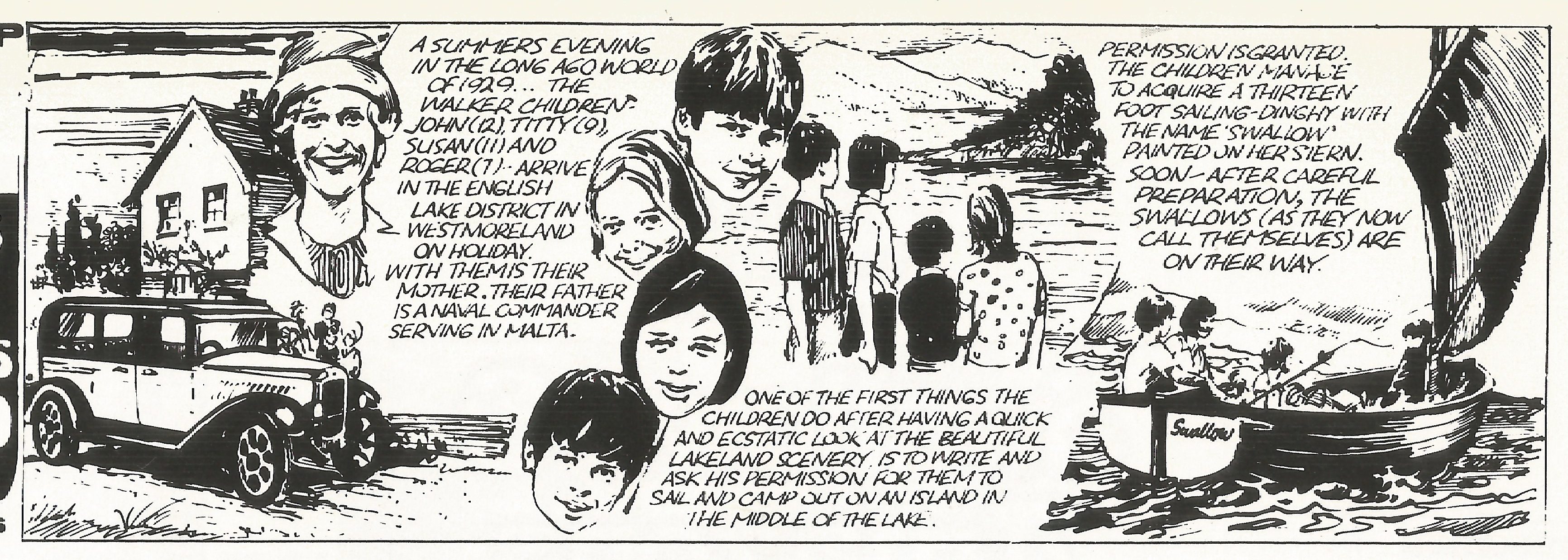
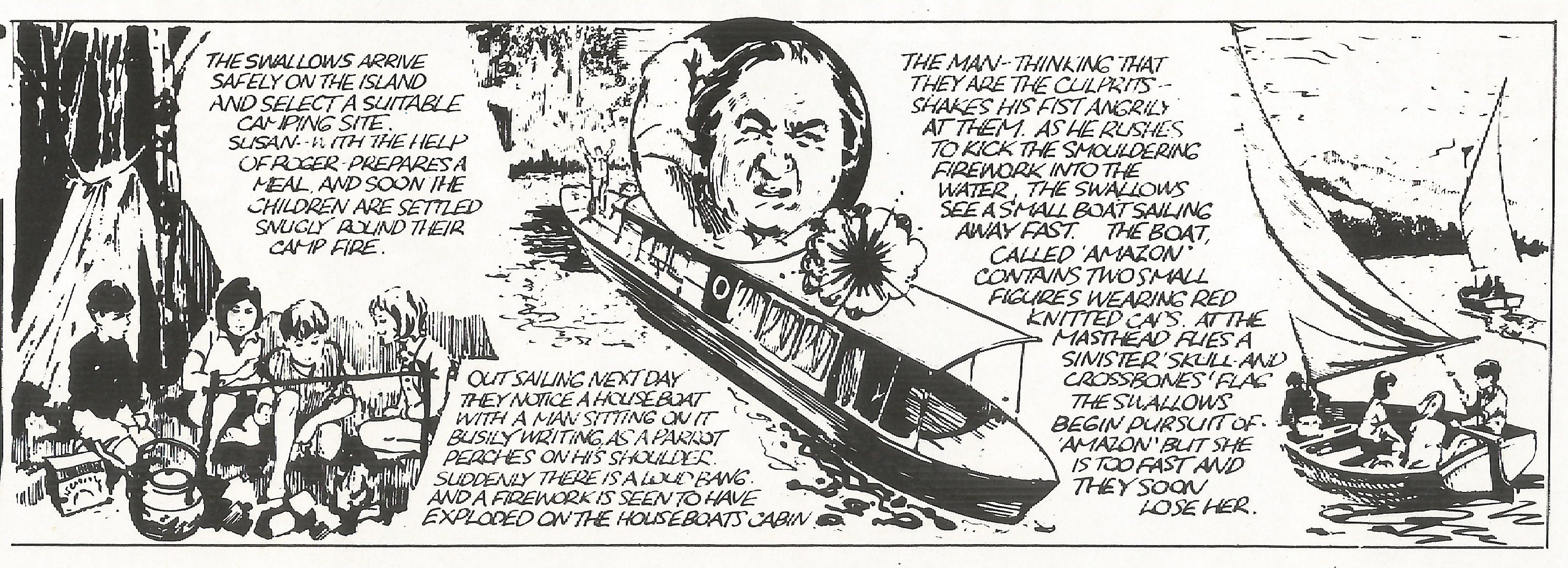
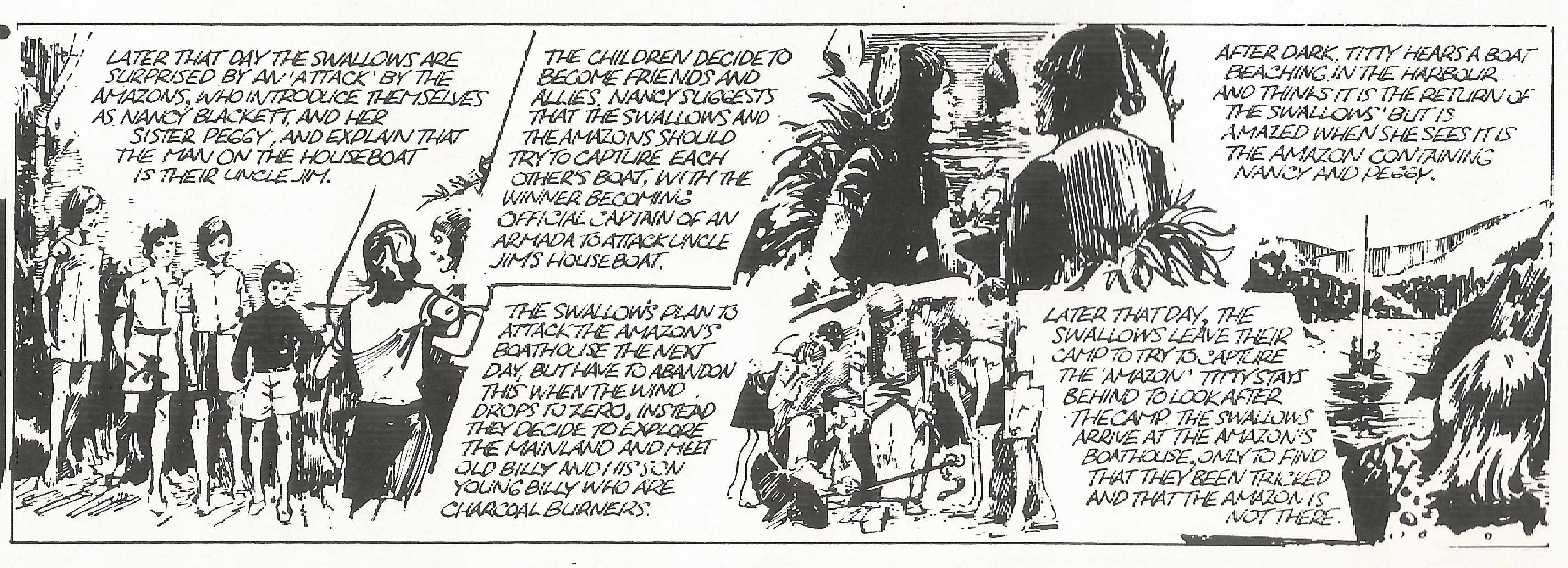
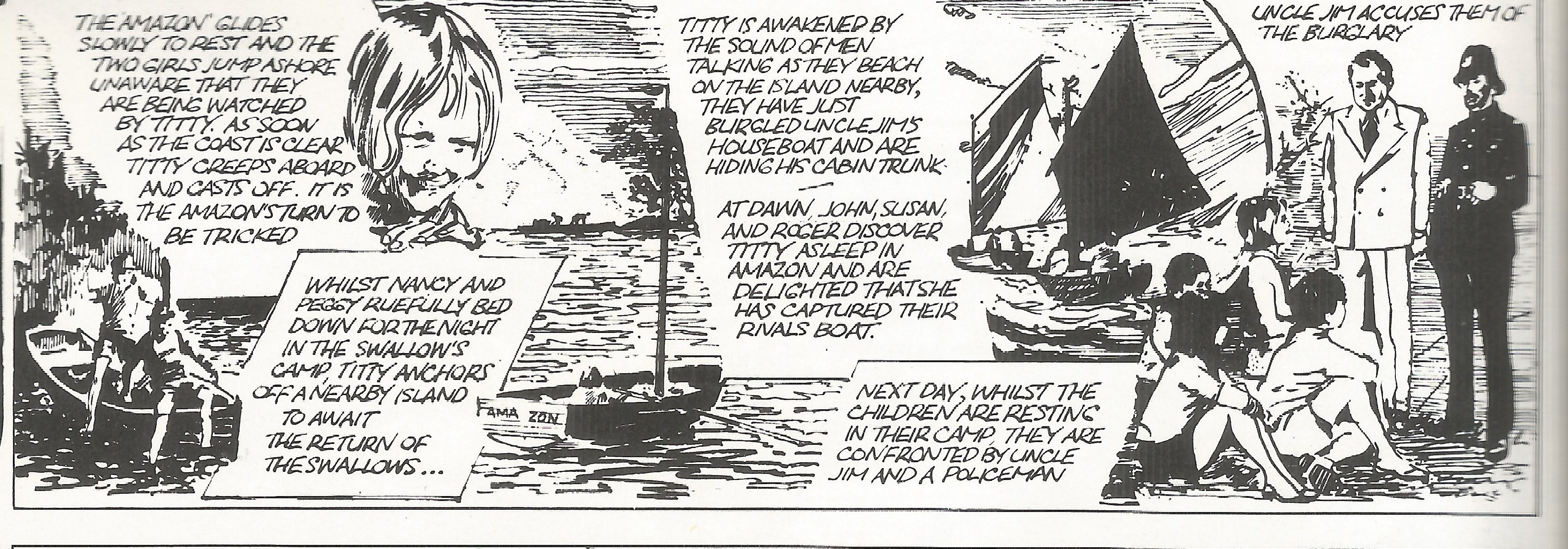
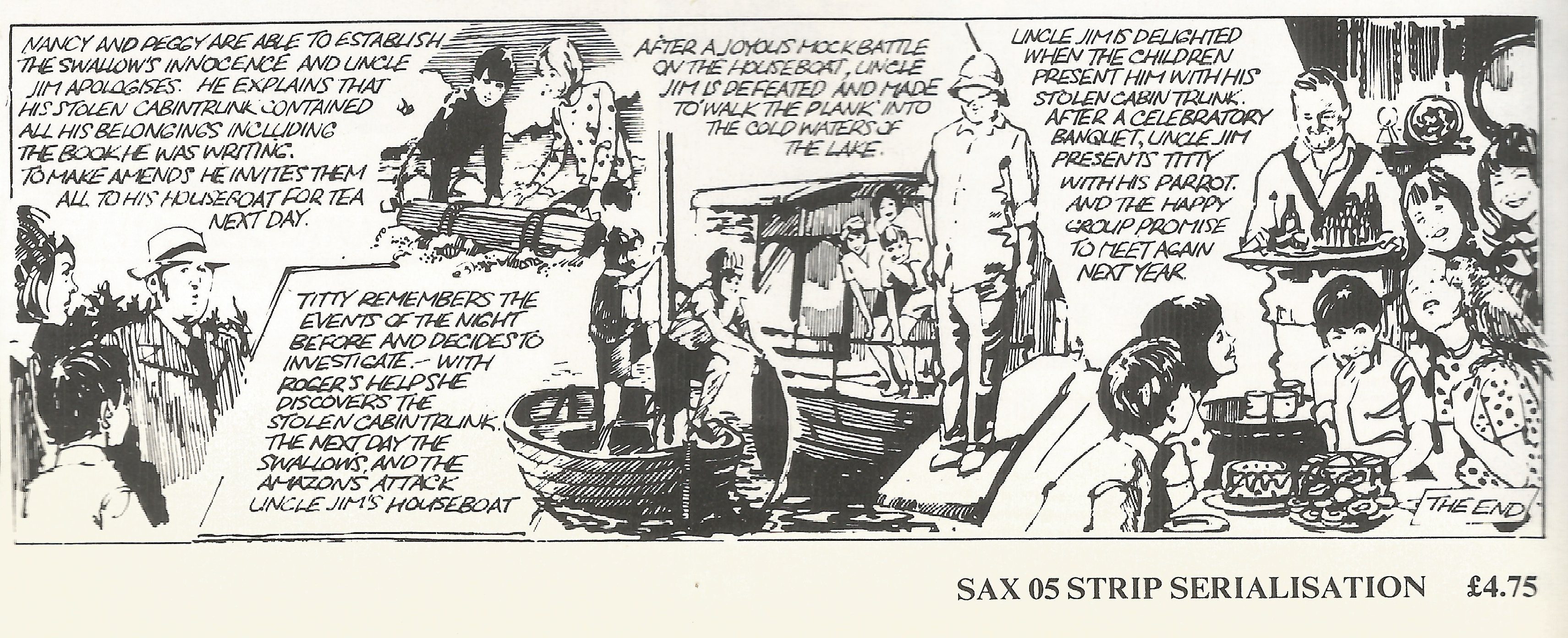
“The graphic novel version of ‘Swallows and Amazons’?” Not exactly. These illustrations made up a five-part “serialisation strip” or “picture strip” provided for cinemas to include in promotional material advertising screenings of the original movie. They were designed to be, “particularly suitable for running on the Children’s Page of your local newspaper for the five days proceeding the film’s premiere.”
These were distributed in April 1974 along with colour photographs, black and white stills and background information on the characters and the actors who played them. The quotes are quite fun: ‘Ronald Fraser has few illusions about either his face or his dramatic abilities. “…it’s the old hooter that does it you know… I read Swallows and Amazons many years ago as a young rip and seem to remember imagining myself as John, leader of the Swallows. Now it turns out that I’m Uncle Jim after all.”‘
Dame Virginia McKenna said how much she loved the books, explaining that she was on a family holiday in Sardinia when she was offered the part of mrs Walker. Her husband, the film actor Bill Travers, accepted on her behalf, knowing she would love working in the Lake District.
The film director, Claude Whatham was also profiled. He had previously made the movie “That’ll Be The Day” with Ringo Starr and David Essex, which was released in cinemas with an LP featuring pop songs of the 1950s.
The LP that accompanied ‘Swallows and Amazons’ was narrated by David Wood, the screenwriter who had adapted Arthur Ransome’s novel. It is rather wonderful to have a recording of Wilfred Joseph’s iconic score. I was amazed to find pictures of myself on the cover.
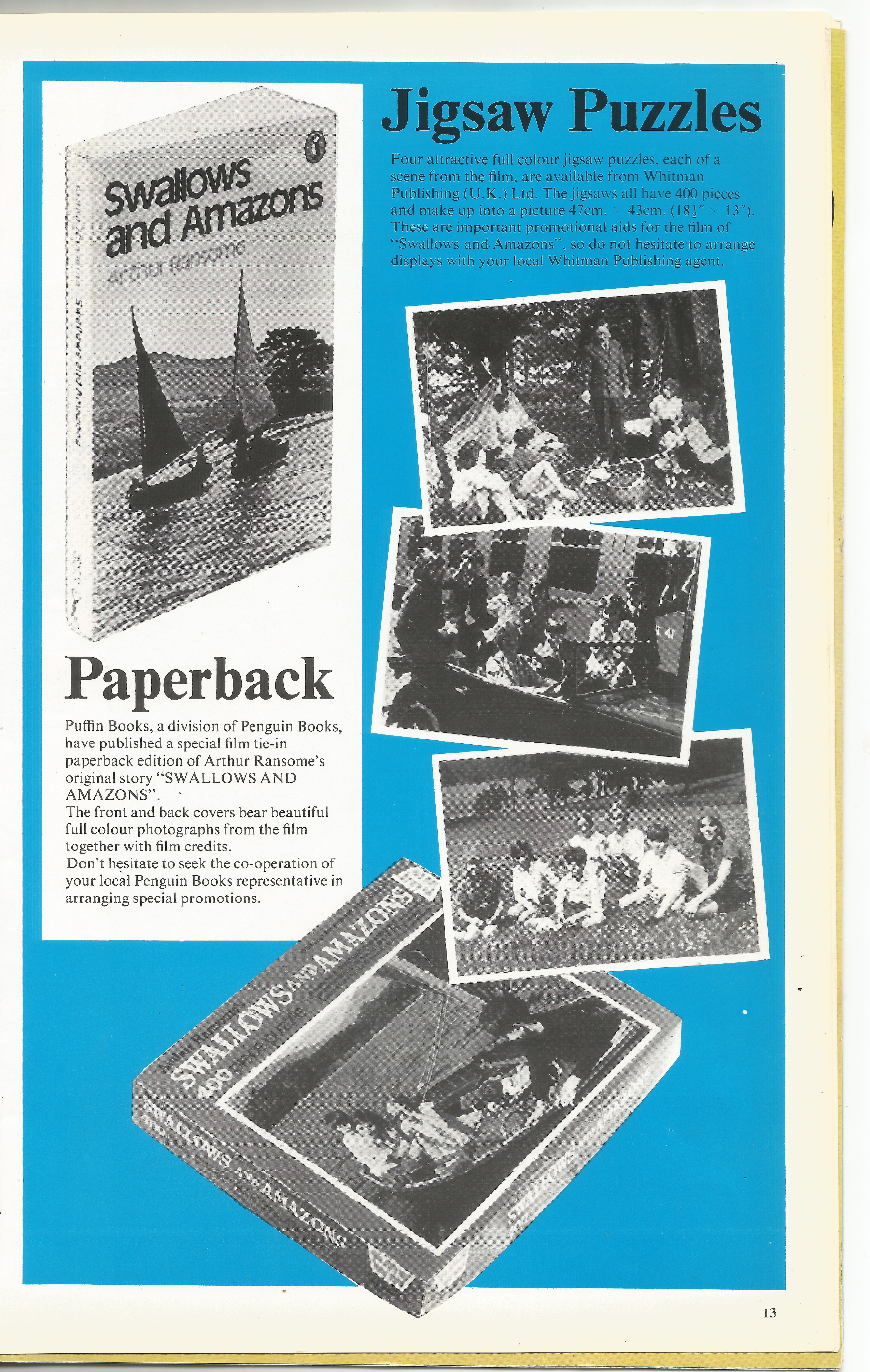
Specialist advertising material such as this, being over fifty years old, is both rare and collectable. Four jigsaw puzzles and the Puffin paperback were produced, featuring film stills taken on location by Albert C Clarke.
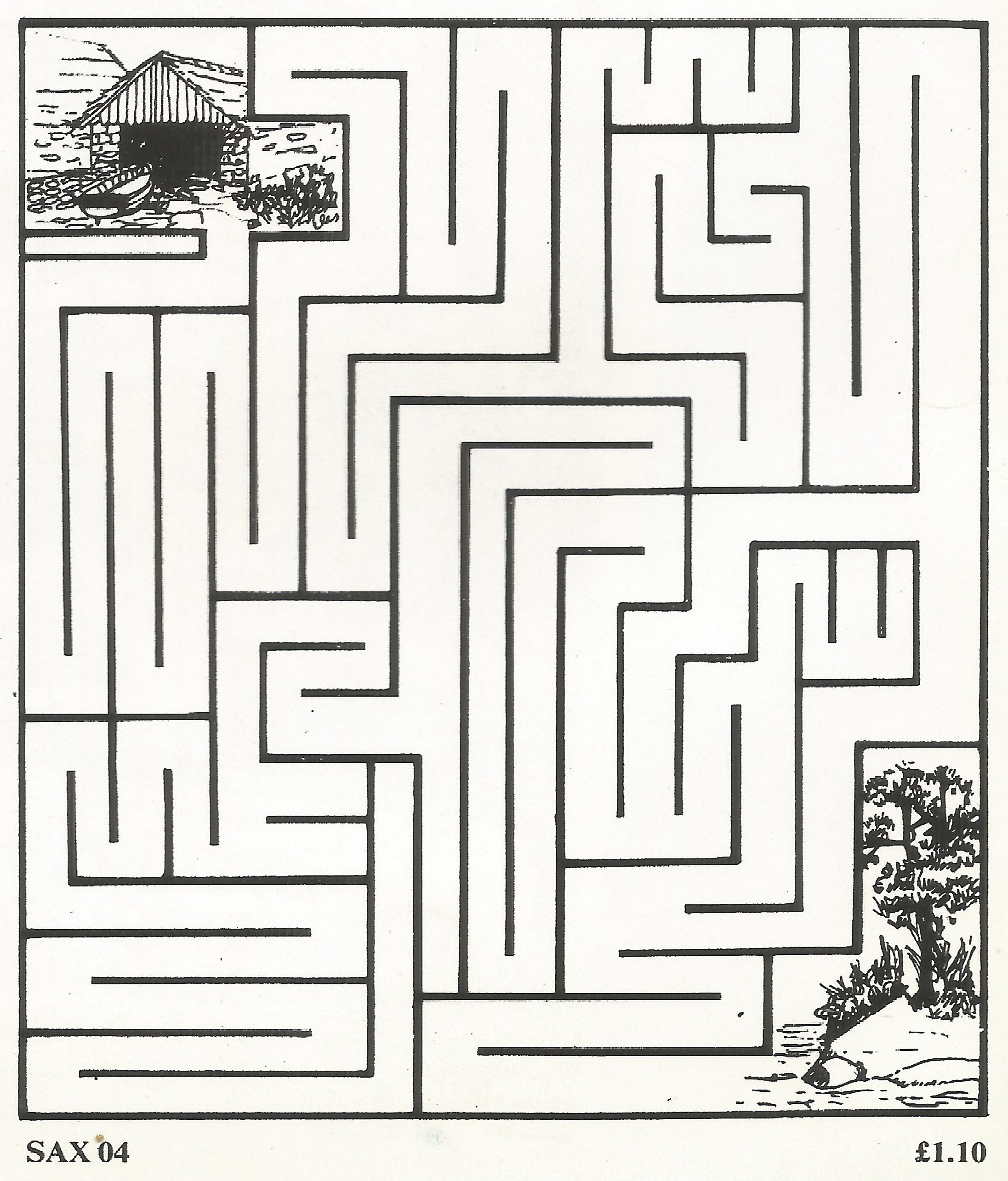
There were puzzels, such as this maze, along with pictures to colour and “spot the difference” blocks, which you can see on an earlier post on this website. All these ideas were probably generated by our wonderful film publicist Brian Doyle. I’ve written about the preview screenings and his work on an eariler post here.
Brian was on location the entire time we were filming, showing around journalists almost every day. You can read the full account of how we made the film in ‘The Making of Swallows and Amazons’, which is now available as an audiobook, narrated by me, Sophie Neville.
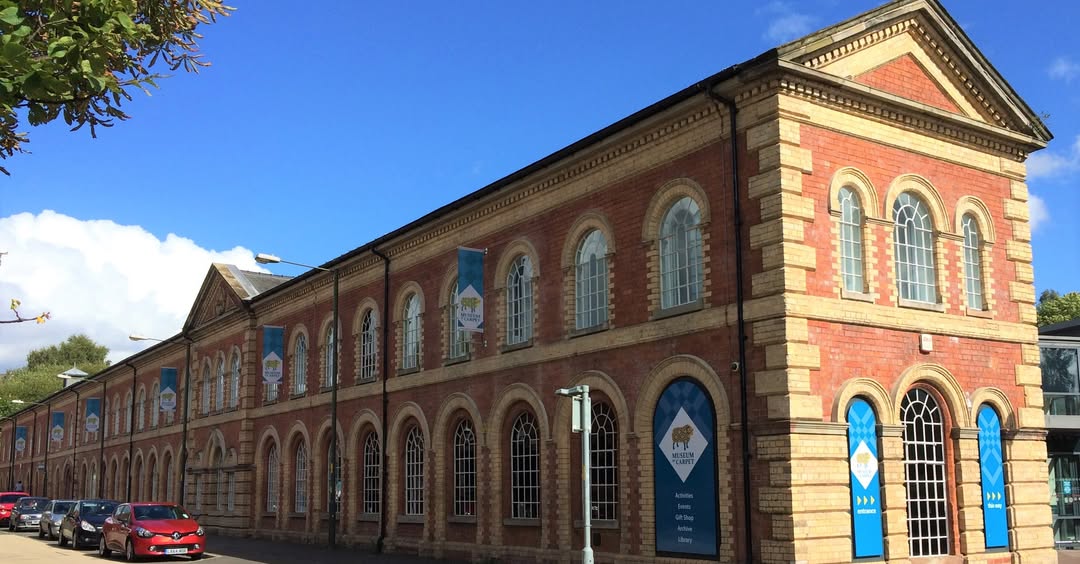
Sophie Neville, who played Titty in the original film ‘Swallows and Amazons’, gave a special talk on what is was like to take the lead part in a feature film at the Museum of Carpet in Kidderminster, on Saturday 21st February.
Richard Pilbrow, who produced the original film ‘Swallows and Amazons’ had been married to Vicky Brinton whose family donated many of the items on display at the former mill, along with a huge poster in the conference room.
Sophie was born in Worcestershire, seven miles from the venue. Her great-grandfather, Canon Hastings Neville, was a curate in Kidderminster and one of his ten sons, the Olympic athlete Dick Neville, pioneered the manufacture of woolen carpets in New Zealand, developing a crossbreed of sheep for the purpose. In 1960, he employed Richard Pugh-Cook who returned to the Midlands and founded the Museum of Carpet thirteen years ago.
About seventy people packed into the conference room to listen to the talk, which enjoyed a great response. “The degree of factual information contained in it is amazing…all those details of 50 years ago conveyed with such clarity and enthusiasm!”
“….such an inspiration to so many people especially younger people who have such different lives these days – another era then, it seems, but one we should not forget.”
“a great success – everyone seemed to have throughly enjoyed your talk, hearing about the other side of filming!”
Sophie signed copies of her books after the talk when she had a chance to meet ‘Swallows and Amazons’ enthusiasts and a little girl hoping to become a film actress. The event was covered in the local news.
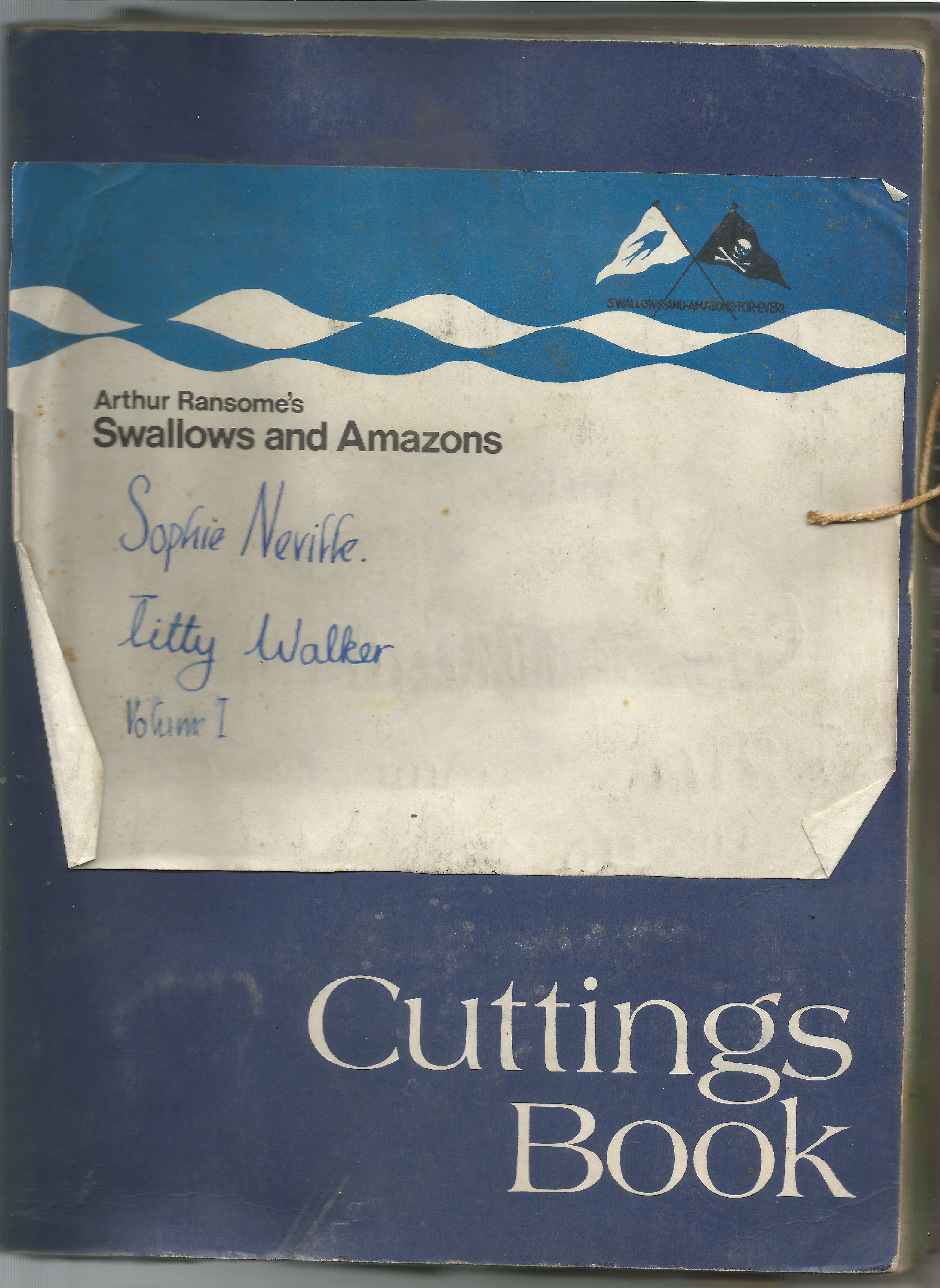
I thought I’d lost it! But, on clearing out our mother’s house, my sister found the cuttings book I kept whilst making the original movie ‘Swallows and Amazons’ in 1973.
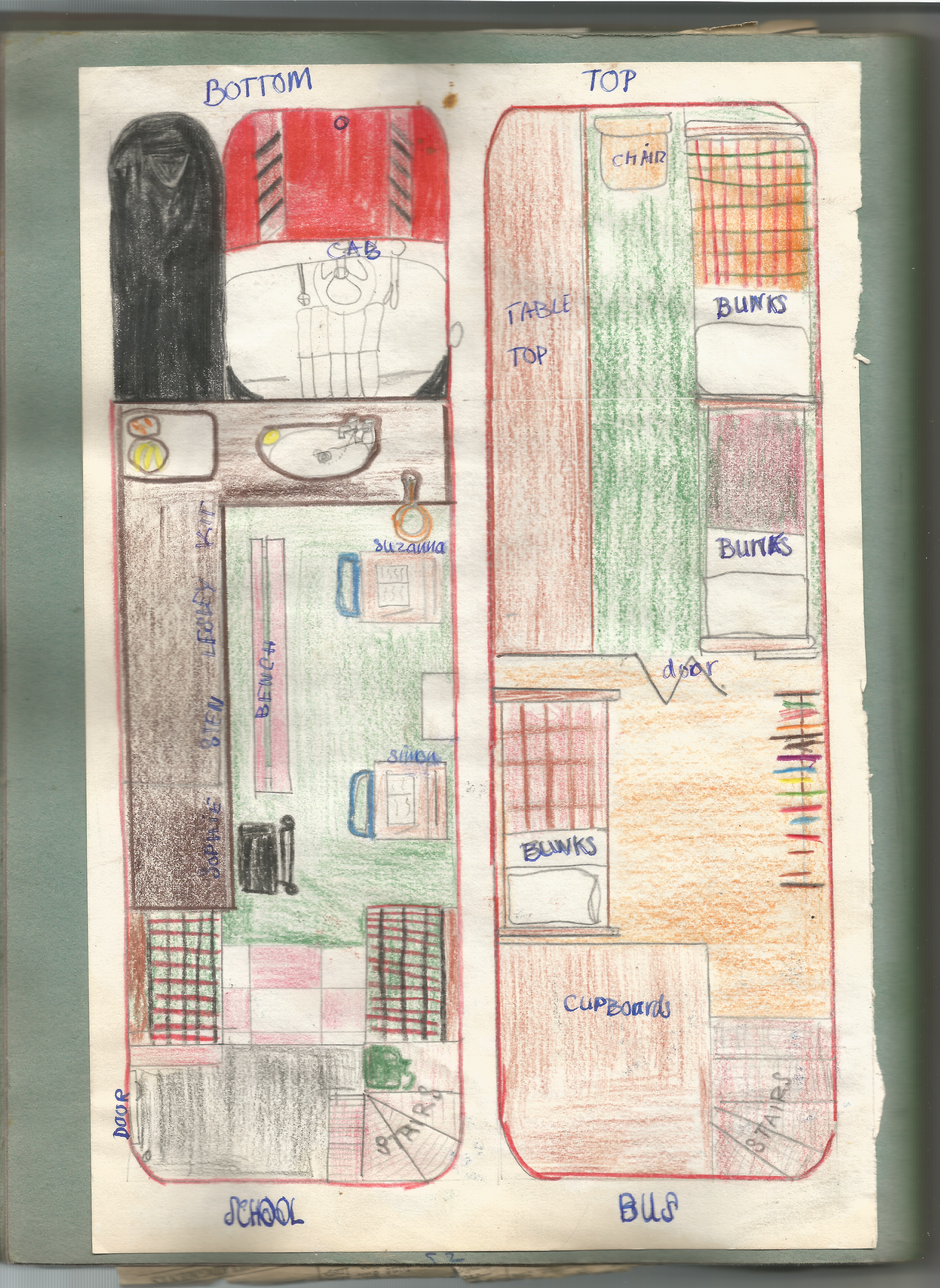
It includes a plan of the London double-decker bus where we received rudimentary lessons on location. Three bunkbeds on the top floor were meant to be used so we could rest after lunch. Mum said she forced me to lie down everyday but I can only remember a couple of occasion, once when I was reluctant, once when I was freezing cold after a swimming scene.
We changed into our costumes at the top of that bus, enjoying warmth from a gas stove that leaked rather alarmingly on one day necessitating an evacuation.
The exterior looked liked a conventional Routemaster with added curtains.
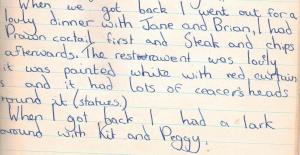
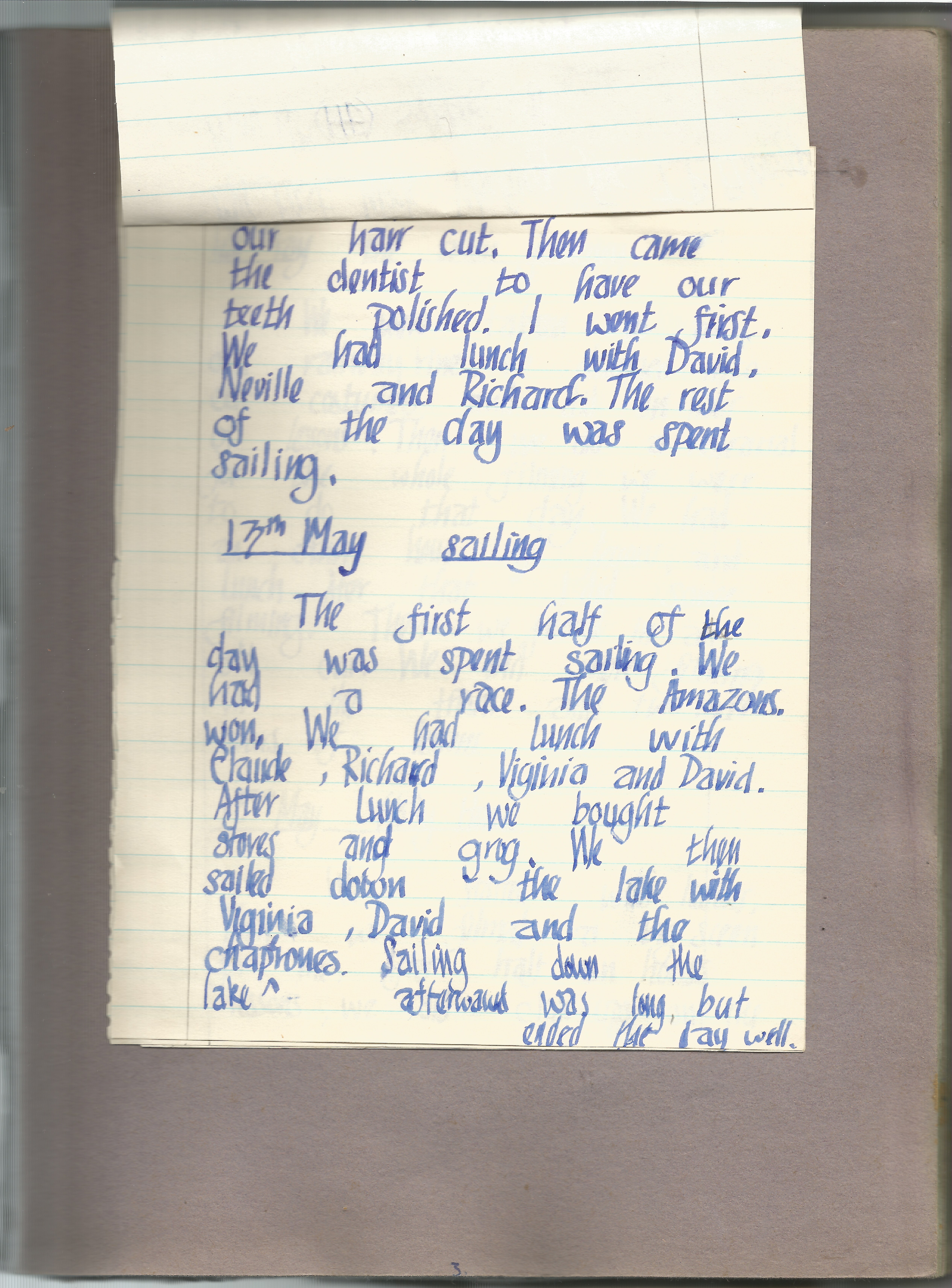
Once sitting at my desk, I found my italic fountain pen and began keeping a diary. One version of the first seven days spent in Cumbria is pasted into the scrap book. I later re-wrote a slightly more detailed and interesting version in a couple of notebooks and wrote about how I got the part of Titty, and the filming from different perspectives.
These pages describe the day spent travelling to Ambleside and a couple of days spent getting to know each other along with Dame Virginia McKenna, who played the Swallows’ mother, the producer Richard Pilbrow, David Blagden who was in charge of the sailing and the film director Cluade Whatham.
Encouraged by my mother, we began pasting in newspaper cuttings.
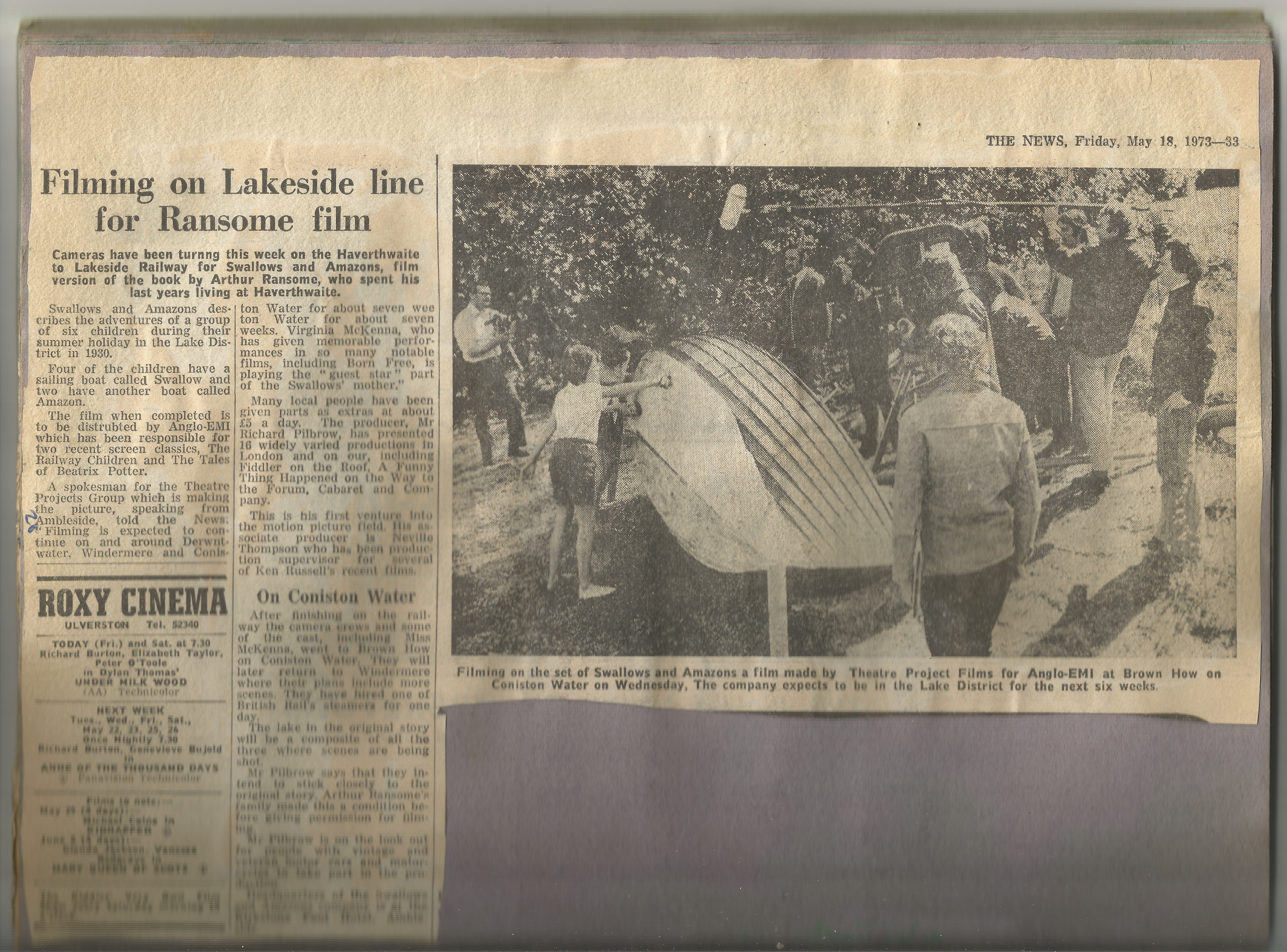
The Times and the Guardian were at Havethwaite Railway Station to take photographs on the first day of filming. The BBC Radio 4 newsreader, Alan Smith, who grew up in Cumbria, was a film extra that day and can be spotted standing in train doorway with his brother. He wrote to me with his memories of the day.
I began adding photos from contact sheets that Albert Clarke, the film’s stills photographer, took of the cast and crew. I wrote about the opening locations here.
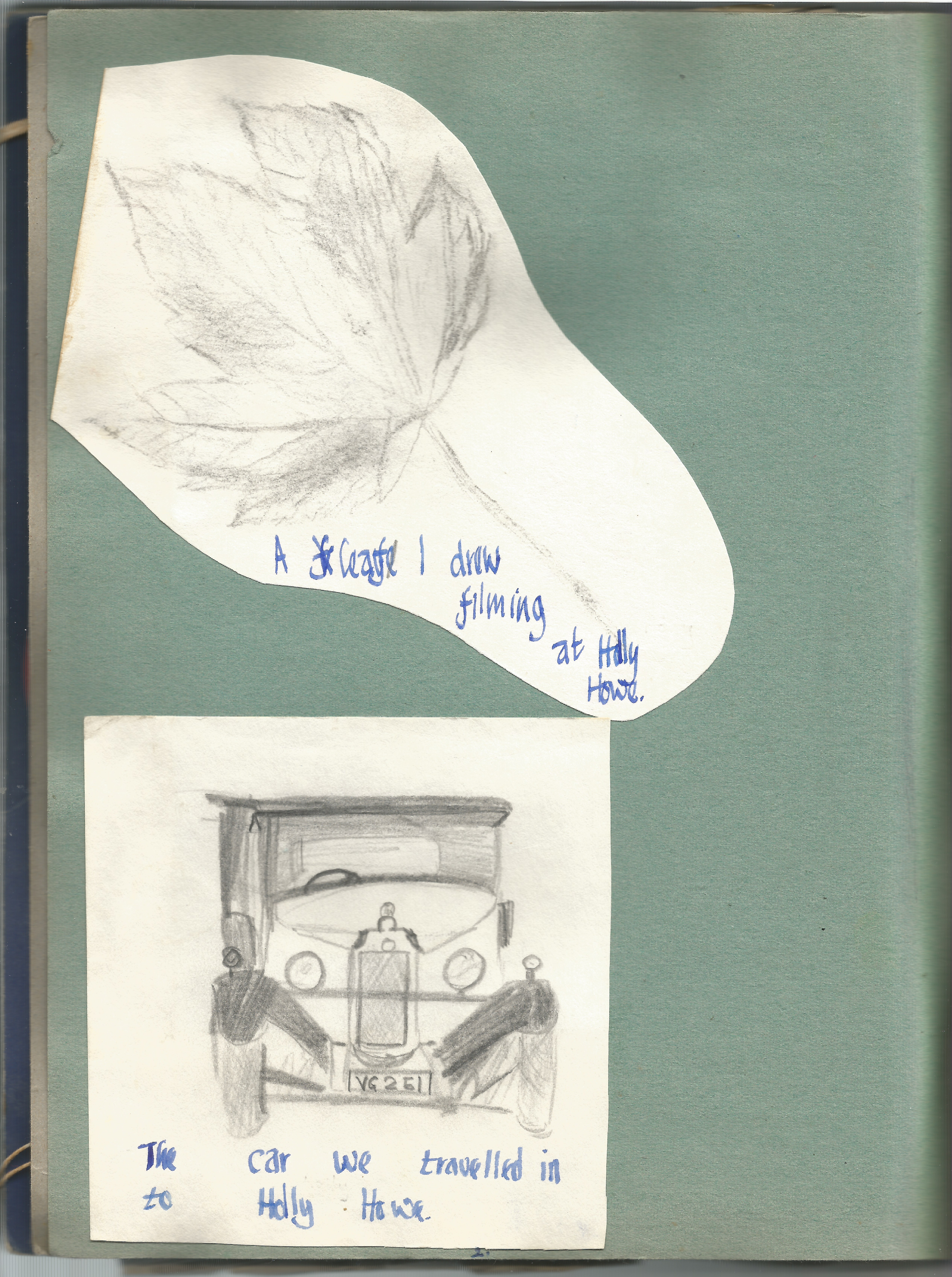
There are pages of dictation and a few sketches of the film props. I drew the yellow Austin ‘taxi’ we drove in at the station.
There were some cuttings that I hadn’t seen for years until until I opened the pages of this mislaid cuttings book. Others can be found on earlier posts.
I took pages of dictation, learning about the plants and geology of the Lake District, about Beatrix Potter and the National Trust, but it’s a wonder any schoolwork was accomplished at all. We spent so much time on set. I fell behind in French and Maths but gained respectable exam grades that summer, gaining 80% in Geography. Perhaps I wrote about glacial lakes.
You can read more about the adventures we had whilst filming ‘Swallows and Amazons’ in books detailed on this website.
Different editions of ‘The Making of Swallows and Amazons (1974) by Sophie Neville’
There is now an audiobook on ‘The Making of Swallows and Amazons’ published by The Lutterworth Press and available on all online platforms including Audible.
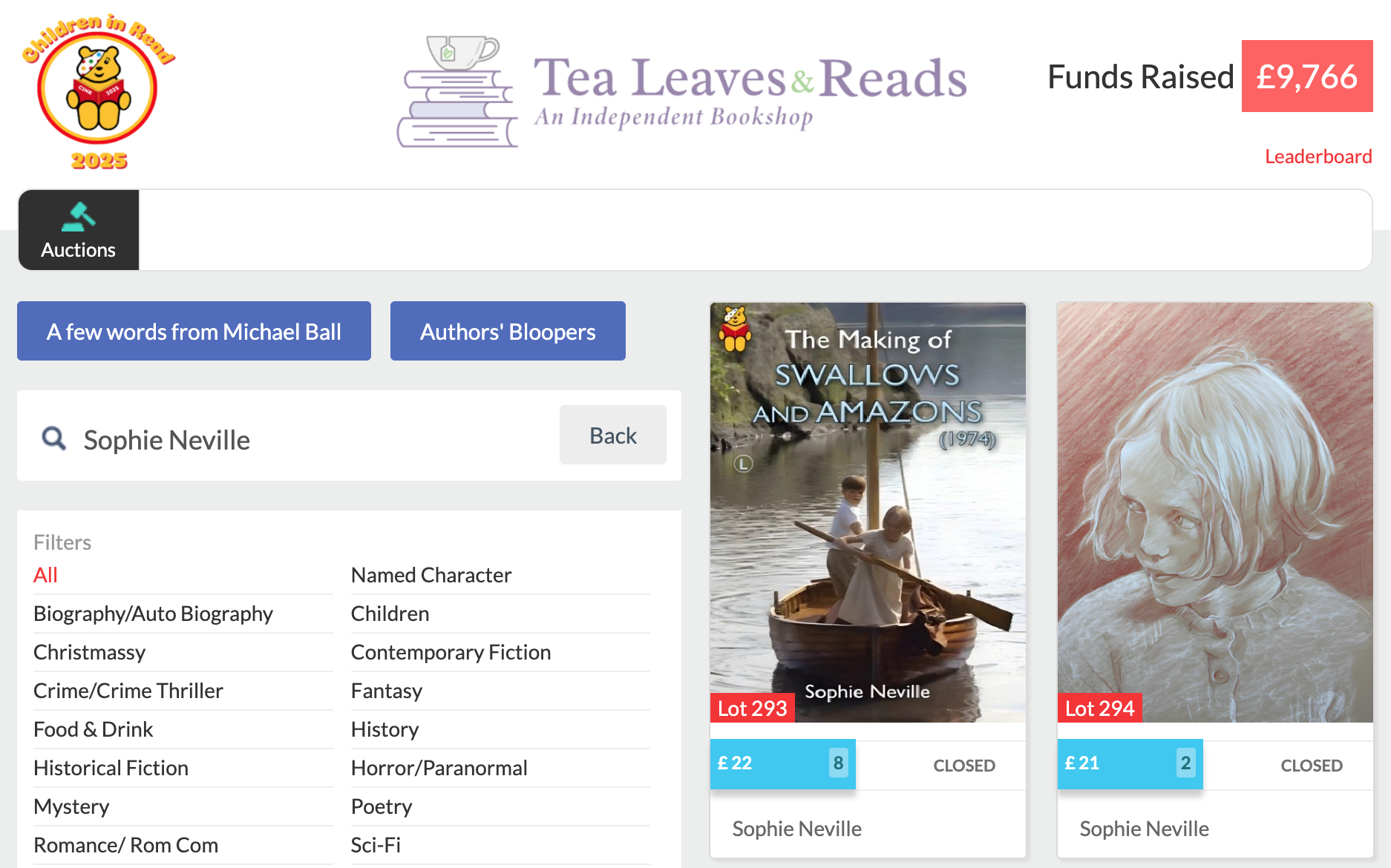
A book signed by the author always makes a good Christmas present. Each year, I take part in an annual online charity auction organised by Children in Read to raise funds for BBC Children in Need.
You can scroll through the site on Jumblebee. co.uk. and choose from an amazing selection of biographies and other books donated by contemporary authors.
Taking part is always great fun and offers authors a bit of publicity whilst presenting readers a choice of signed and dedicated books and illustrations.
In 2023, items in the Authors and Illustrators’ auction, raised a total of £24,061 for BBC Children in Need.
This year, authors and illustrators raised £9,766.
Over the eleven years that the annual event has been running a stunning total of £141,766 has been raised. I joined in 2020 and have raised a total of £616 for this cause.
Bidding has now closed but put the event in your diary for next year.
Daphne Neville with Sophie Neville while filming ‘Swallows and Amazons’ in Cumbria in 1973
It wasn’t until we were making preparations for the 50th Anniversary of the EMI film ‘Swallows and Amazons’ that I began to list all the work my mother, Daphne Neville, accomplished behind-the-scenes.
Daphne Neville accompanying Suzanna Hamilton, Kit seymour, Sten Grendon, Simon West, Sophie Neville, and Lesley Bennett out to the houseboat on Derwent Water
When I was offered the part of Titty Walker, she’d been invited to work as a chaperone, along with Sten Grendon’s mother, Jane Grendon. This proved to be a pretty demanding job. Getting us ready and into the minibus every morning alone must have been challenging. We stayed at the Oaklands Guest House where there were only two bathrooms shared between twenty-three residents – the eight of us, various students from the Charlotte Mason College of Education and the five members of the Price family who owned the house. We had to move out over Whitsun when it had been booked by holiday makers.
Dressed for the Cumbrian weather: Daphne Neville with Liz Lomas ~ photo: Richard Pilbrow
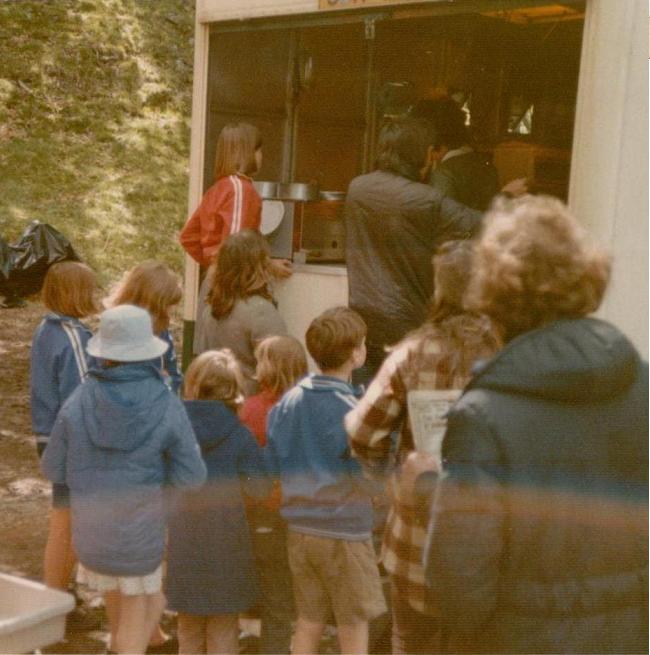
Mum was pretty horrified by the spaghetti hoops, cuppa soups and pasties given to us for supper and asked if we could have a fruit bowl in our school bus. Location catering in 1973 was good but aimed at providing electricians with meat and two veg, rather than food for children. We enjoyed salads and chicken drumsticks but baked beans could ruin a take and sugared food made us over-active and probably annoying.
Suzanna Hamilton, in her red tracksuit top, seeing what the location caterers had for lunch on the set of ‘Swallows and Amazons’ by Coniston Water
On film sets you normally have female costume assistants or dressers to help change actresses into their costumes. On ‘Swallows and Amazons’ we had Terry Smith the wardrobe master and my mother. Whenever there was a scene with film extras, Mum helped him to fit them with shoes and hats, helping the ladies into costumes for the opening scene at the station.
Wardrobe Master Terry Smith with Sophie Neville and her mother Daphne Neville outside the Make-up caravan on location near Keswick in Cumbria
Our hair was cut and looked after by Ronnie Cogan but mine had to be washed every night by Mummy. She moved me into her bedroom, which was tiny, but had a basin. This seems a small thing, but watch the film and you see my hair flying around the whole time indicating the ever-present wind.
Daphne Neville and Richard Pilbrow on Peel Island on Coniston Water in 1973 Amazons
Mum tried to keep us warm on location, getting us into life jackets and sunhats before we were taken off to the set, which was often either a boat or island.
Daphne Neville with Sophie Neville and Simon West on Coniston Water
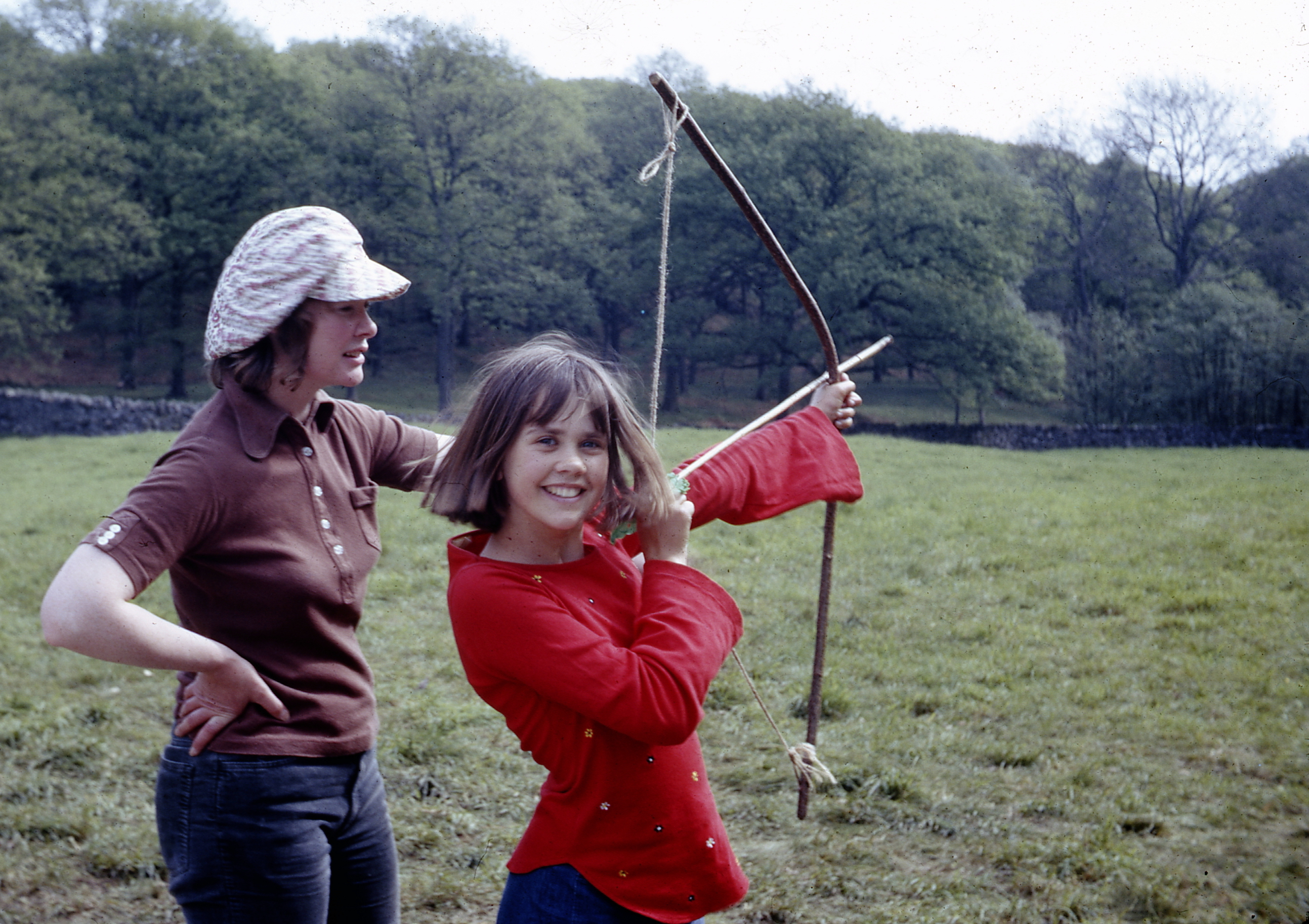
Having won prizes for archery, she taught the Amazons to shoot with a bow and arrow for their scene on Wild Cat Island.
Daphne Neville teaching Lesley Bennet, who played Peggy, how to shot with a long bow
She also took a vast collection of behind the scenes photos, some of which were very good.
Ronald Fraser with Daphne Neville and Sophie Neville on Derwentwater in 1973
I couldn’t bear it when Ronnie Fraser flirted, but Mum enjoyed every moment of being on set. She longed to appear in the film as a supporting artist. My father, Martin, appeared in five different shots but Mum missed the crowd scene at Bowness and sequences taken aboard the MV Tern the next dau.
Jane Grendon with other film extras on the original movie ‘Swallows and Amazons’
Back home, she had a part-time job working for HTV who had given her leave but called her back to Bristol to present an episode of Women Only and promote the channel at the annual Bath and West Show. You can read more about this on her website here.
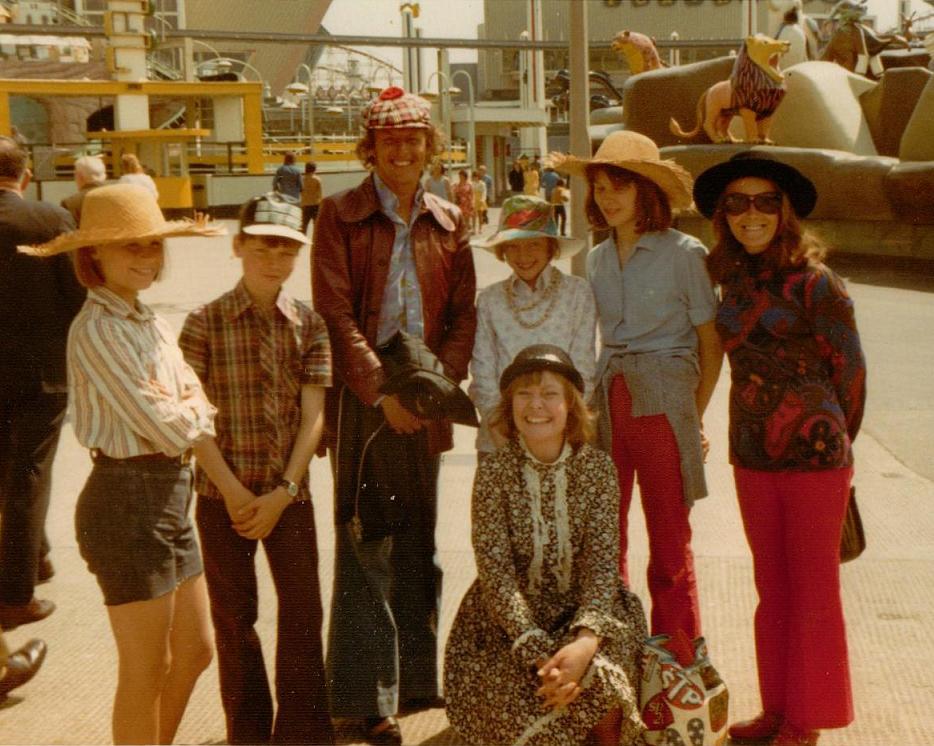
Suzanna Hamliton, Simon West, Claude Whatham Sophie Neville, Kit Seymour, Jean McGill with Daphne Neville kneeling at Blackpool funfair in 1973
While other members of the film crew were given one day off a week, our chaperones’ work never ended. Jane took us shopping or on walks up into the fells. Mum came with us on a trip to Blackpool.
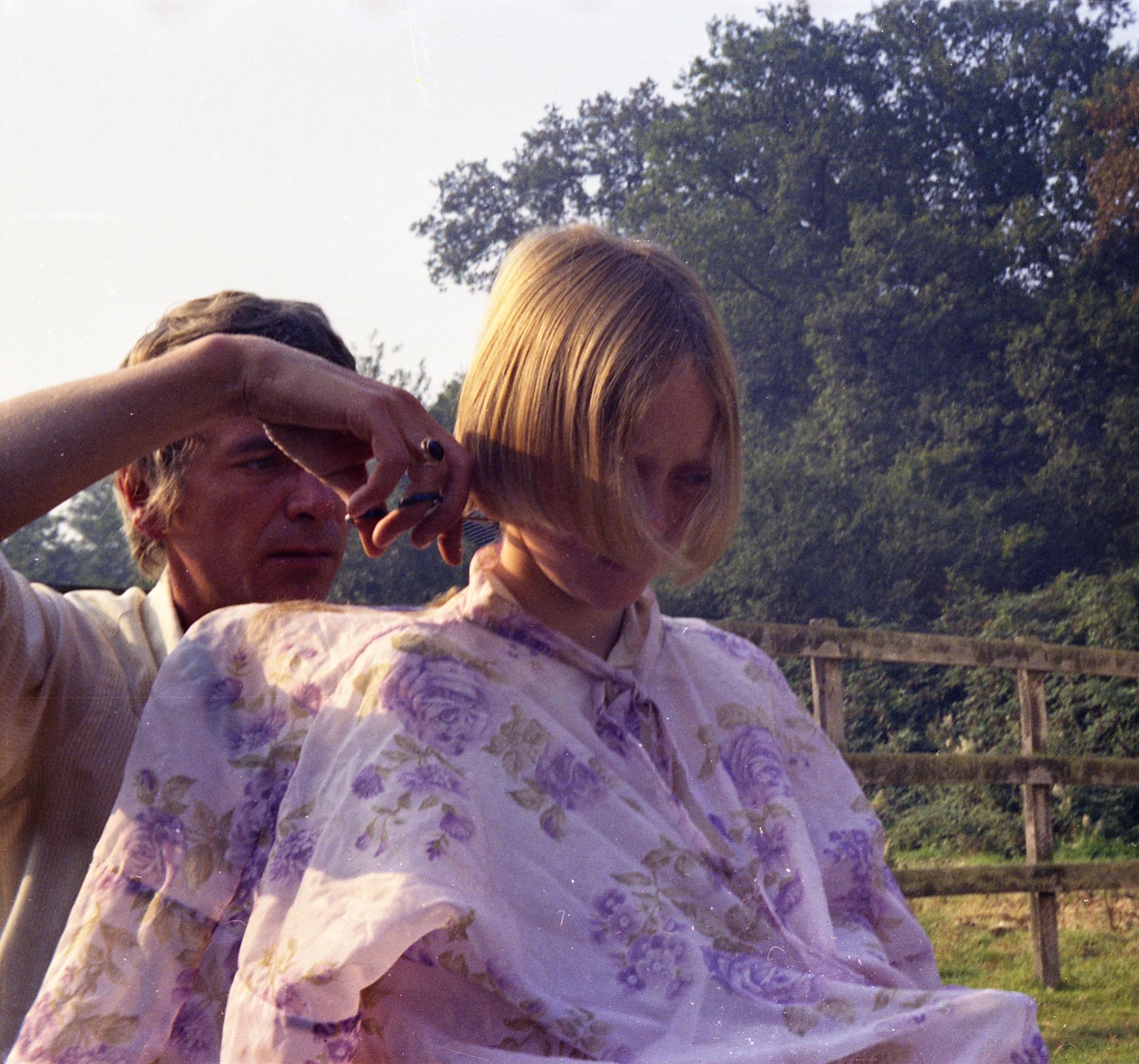
Sophie Neville having her hair cut on location for the part of Titty Walker in 1973
She must have driven me to Epsom for a pick-up shot in September when members of the Walker family had more haircuts and enjoyed being reunited.
Daphne Neville with Stephen Grendon, Suzanna Hamilton, Sophie Neville, Jane Grendon and Simon West
While we hated the publicity that came with marketing the film, Mum embraced it to the full, collecting every newspaper and magazine article.
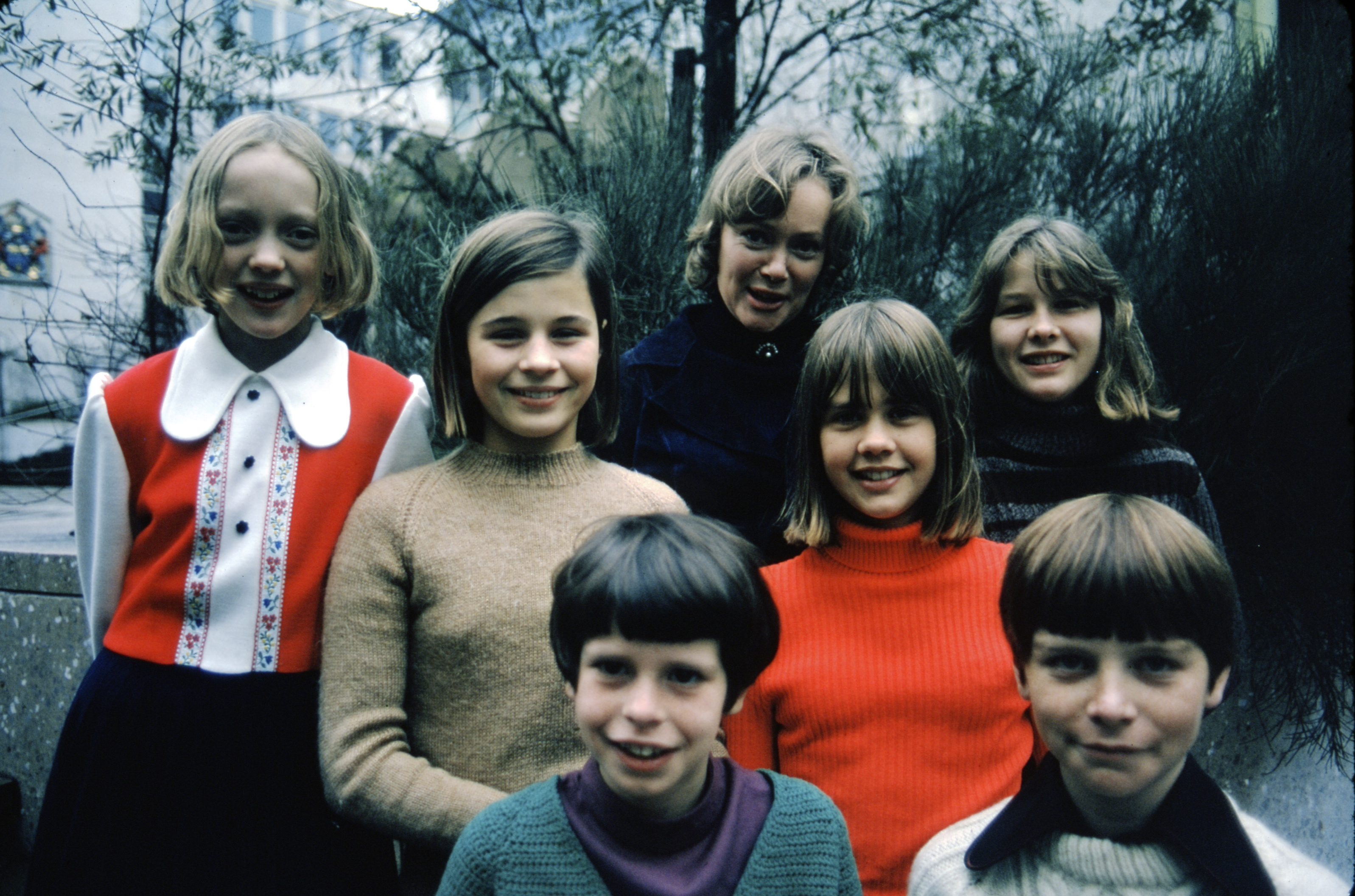
Sophie Neville, Suzanna Hamilton, Daphne Neville, Lesley Bennett, Kit Seymour, Sten Grendon and Simon West off to the Puffin Club Party at the Commonwealth Institute in London
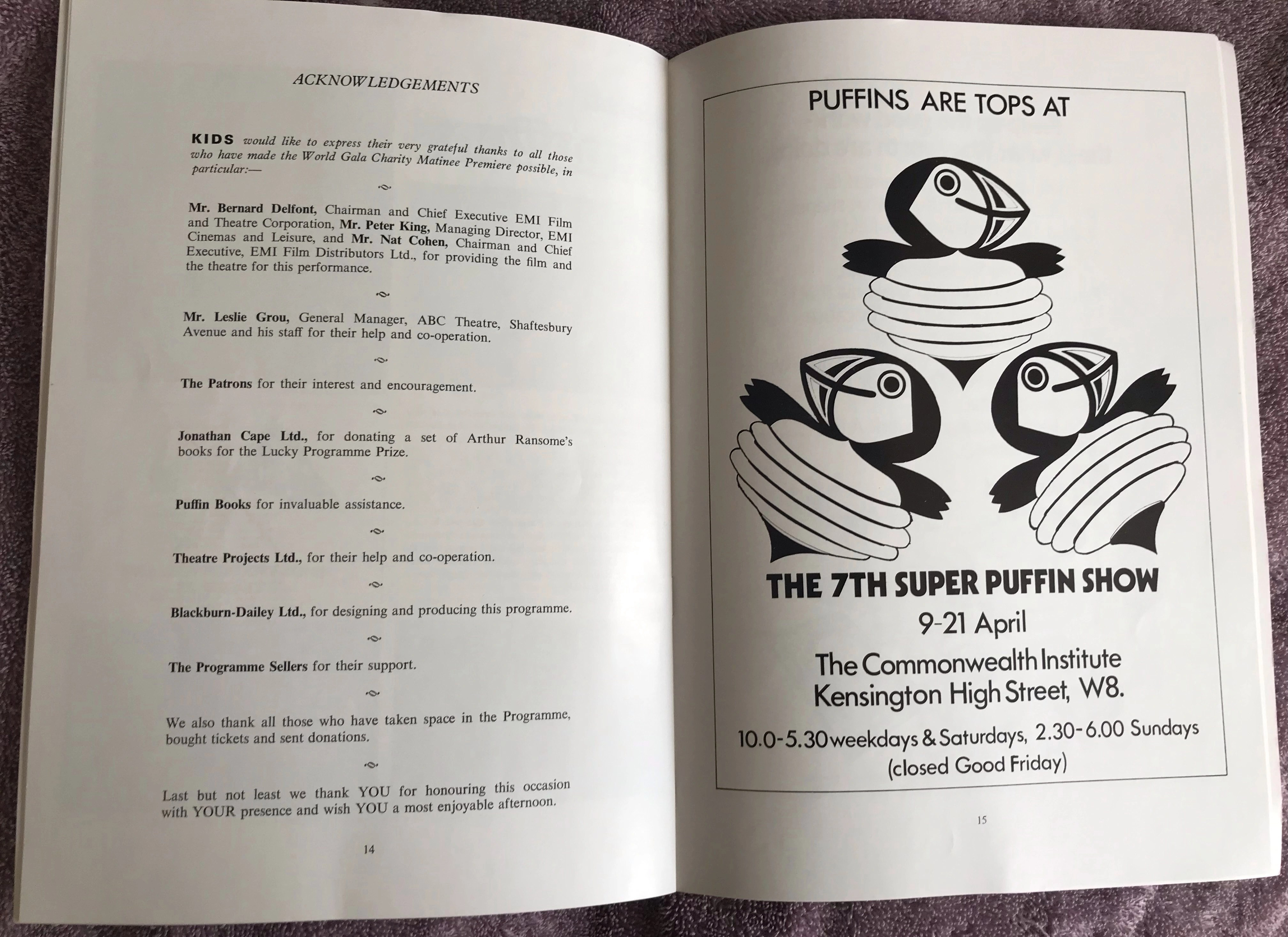
She took us to London for a Puffin Club show at the Commonwealth Institute devised by Kaye Webb,
Kaye Webb’s Puffin Club Show – April 1974
and to the Lord Mayor’s Show when we rode on a float set up by EMI Films.
Suzanna Hamilton, Stephen Grendon, Leslie Bennett, Simon West and Kit Seymour sailing the streets of London in ‘Swallow’
Mum was thrilled when invitations to the film premier arrived and bought me a green dress to wear to the ABC Cinema in Shaftesbury Avenue where it was held.
Daphne Neville at the London premier of ‘Swallows and Amazons’ in Shaftesbury Avenue.
She framed a film poster and kept every photo, every scrap of paper related to the film along with the LP and other items of movie memorabilia.
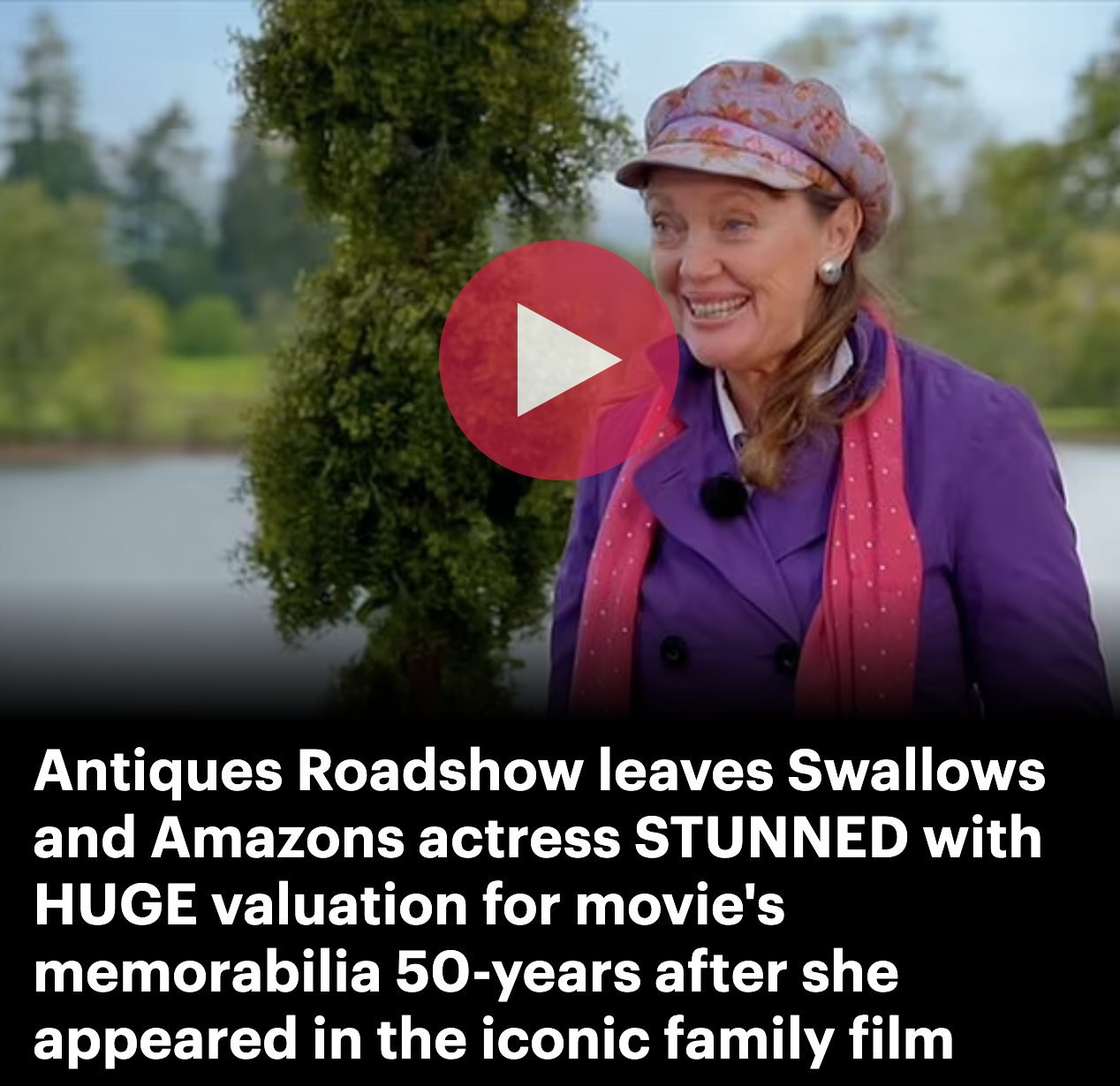
Fifty years later the items were valued on BBC Antiques Roadshow as being worth over £4,000.
To read Daphne Neville’s articles on being a chaperone, please find three earlier posts on this website beginning here.
The Saucepan and her mother on a scenic railway in Cumbria in 1973 ~ photo: Martin Neville
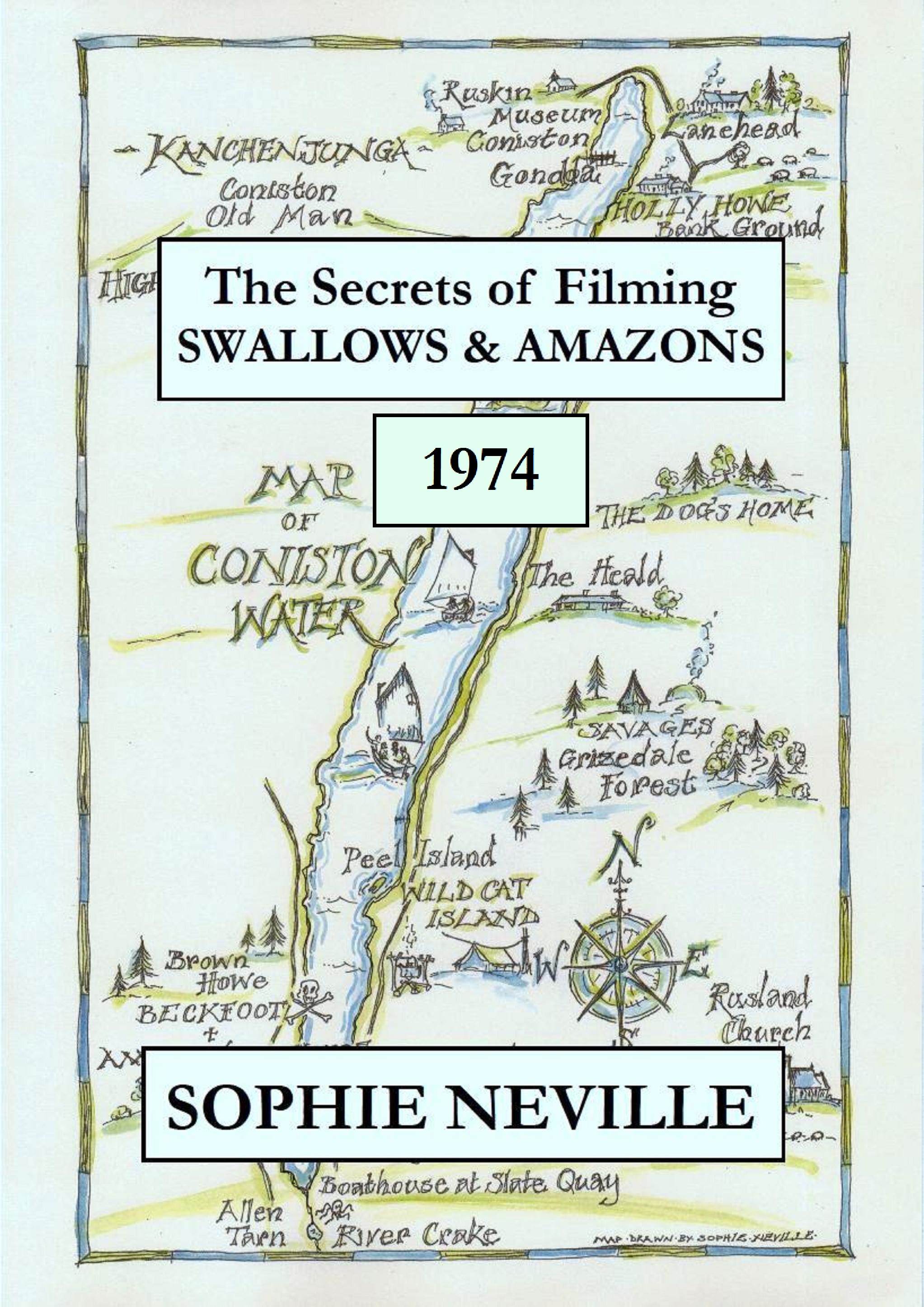
Chloe Williams has just written from Ontario in Canada, to say, “Some books entertain. Some enlighten. And some, like The Making of Swallows and Amazons and The Secrets of Filming Swallows & Amazons, manage to bottle something impossibly rare: the feeling of looking back through a child’s eyes and realizing it was all real; the lake, the sails, the laughter and somehow, you were part of it.”
“These aren’t just behind-the-scenes diaries. They’re sun-dappled time machines. Your voice, both in memory and in your original childhood notes, is a miracle of tone: witty, observant, buoyant, and deeply human.”
Of the original movie, she wrote: “What A Christmas Story is to snowglobes and childhood winters, Swallows and Amazons (1974) is to summers on the water and you’ve preserved that magic with charm, heart, and astonishing detail.
“What makes these books unforgettable isn’t just nostalgia. It’s how alive they are. We feel the smell of old sails and camera tape, the blur of location shoots, the uncertainty and excitement of being a child caught in a grown-up world of filmmaking yet utterly at home in it. We meet legends like Virginia McKenna not as distant stars, but as fellow travelers in the adventure. And it’s a joy.”
The Making of Swallows and Amazons seems to resonate with:
Readers of nostalgic memoirs that celebrate childhood, nature, and storytelling
Adults who are captivated by the lake-country magic of Arthur Ransome
Film lovers who cherish insider views of filmmaking
Educators and parents seeking real-life adventure stories for young readers
Fans of Call the Midwife, The Durrells, and 84, Charing Cross Road
“The joy and authenticity in your books mirror exactly why Swallows & Amazons (1974) still has such a hold on people’s hearts. The memoirs don’t just tell the story of making the film, they recreate it, letting readers smell the lake air and see the magic unfold through a child’s eyes.”
The new audiobook
I’m hoping the audiobook will also amuse readers. It’s now available on all the online platforms including Audible, where isis being offered for free on their membership trial.
I continue to hear amazing stories about how the 1974 film ‘Swallows and Amazons’ has influenced people’s lives. Someone wrote to say, ‘This was my favourite movie growing up in Australia and the main reason I ended up moving to the UK!’
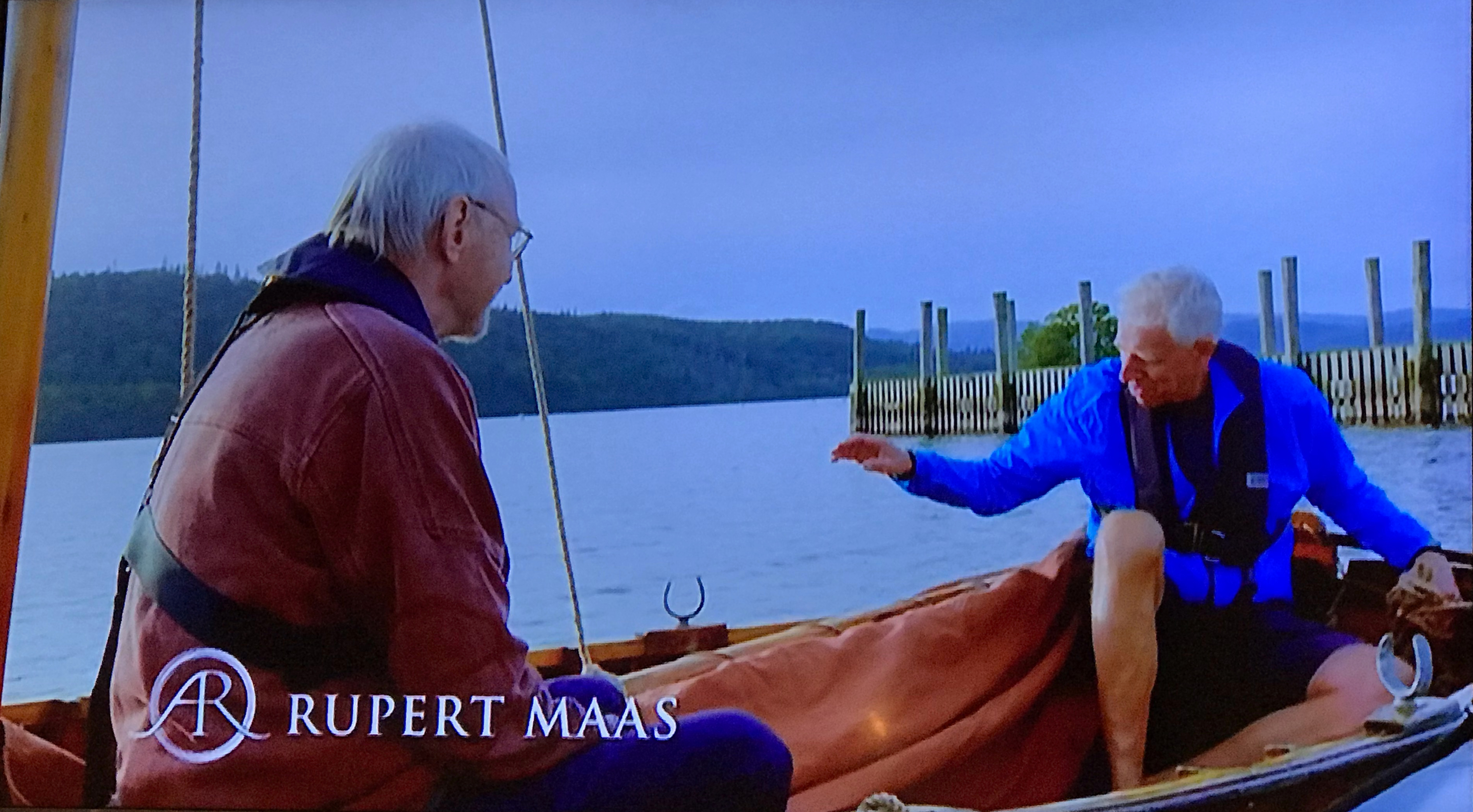
Rob Boden talking to Rupert Maas on BBC Antiques Roadshow.
There has been quite a bit in the popular press about what Rupert Maas, the expert on paintings, said of the movie ‘Swallows and Amazons’ (1974) which he saw aged 14. “It’s fair to say it got me into sailing. Just watching the romantic lives of these children in this wonderful summer. It never seemed to rain, the sun was always out…” He ended up crossing the Atlantic Ocean.
Simon West as Captain John in Swallows and Amazons 1974
Marc Grimston writes, “I was read the books as bedtime stories when I was too young to read them myself… but when I was taken to see the film, the stories became alive to me. I had not seen the Lake District at that point and the film changed everything. I could visualise the landscape every time I read one of the books, that was due to the film. The characters in the stories now had faces I could recognise in my head from that point on. When I read the books now, the characters are still the same 51 years on. The books, the film and the TV series of Coot Club and The Bix Six gave me a love of boats, camping, the Lake District and the Norfolk Broads.
Krista French “Those books were my part of my childhood escape toolkit.”
Simon Leach saw a poster of the 1974 film ‘Swallows and Amazons’ and said that when it came out, “my family was living in South Australia. After watching this, my parents were so homesick, that we returned to the UK.”
Others comment on how it has given them solace during difficult times. One man wrote to say that he watches ‘Swallows and Amazons'(1974) every week.
Fiona Ring said, “It literally shaped my childhood, that was me, I was Titty, the adventures the love for the outdoors. I read and watched it over and over and now it’s even better that I’m reliving it all again with my girls. Travelling up to the lakes each year to find all your secret spots. It’s amazing. Kayaking to wild cat island with our girls in April was a dream come true.”
Sophie Neville with Suzanna Hamilton
Andy Stuart loved Arthur Ransome’s simple book illustrations. “And equally perfect were the the actors in the 1974 film. If I think of the Swallows and Amazons, those are the faces I see when I read the novels in which their characters feature, and my mind’s eye visions of the Norfolk children and the D’s are conjured from who I imagine would have fitted in alongside the original cast. You were all wonderful, Sophie Neville!”
Simon West, Sophie Neville, Suzanna Hamilton and Sten Grendon in Secret Harbour
The author Duncan Hall says, “I can’t remember if I read the books or saw the film first. I don’t remember picturing the Swallows and Amazons differently so I maybe saw the film first? But would have been at a similar time. It sparked a lifetime obsession with the Lakes, boats and stories.”
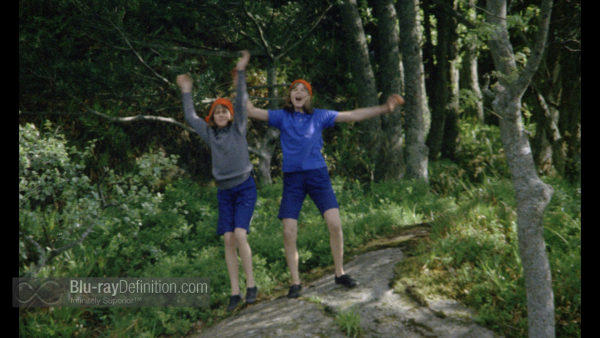
Lesley Bennett and Kit Seymour as the Amazon pirates dancing on Peel Island
Rob Twycross said, “I saw myself in the children in the film. We lived our childhood like that, going off exploring, discovering and learning. Halcyon days that I fear are gone now. It’s lovely to watch it again now and feel young again, if only in my head and heart for a little while!”
Sophie Neville as Able seaman Titty in Swallow
You can now listen to the story of how the 1974 film was made on location in the Lake District on any of the audio-book platforms, including Audible.