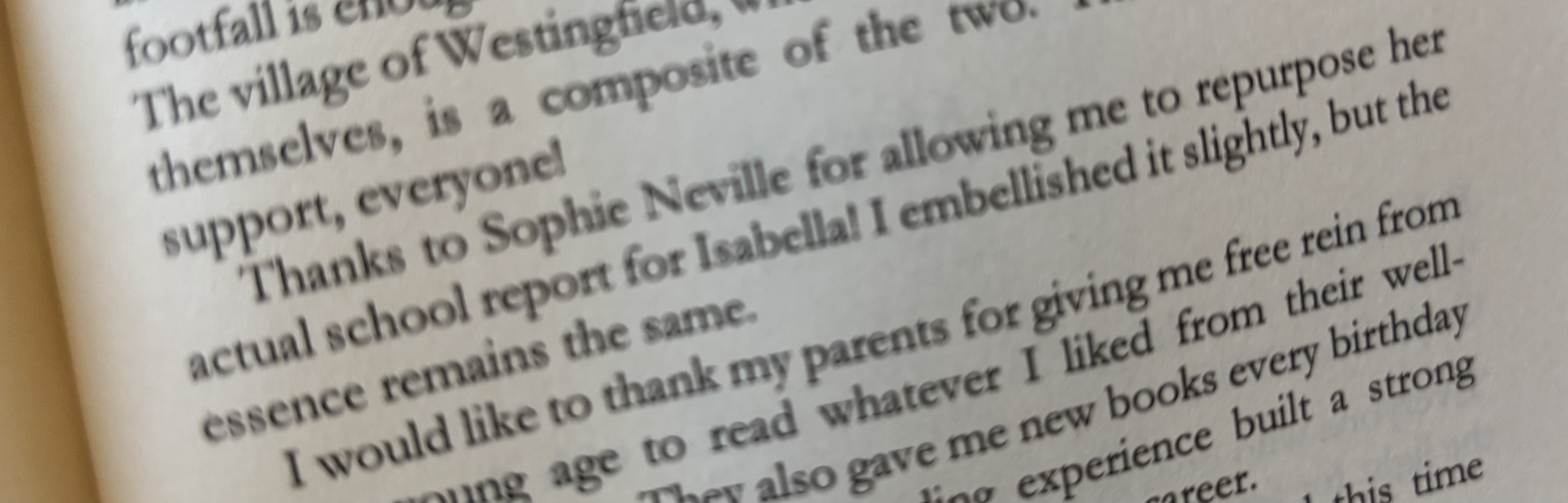
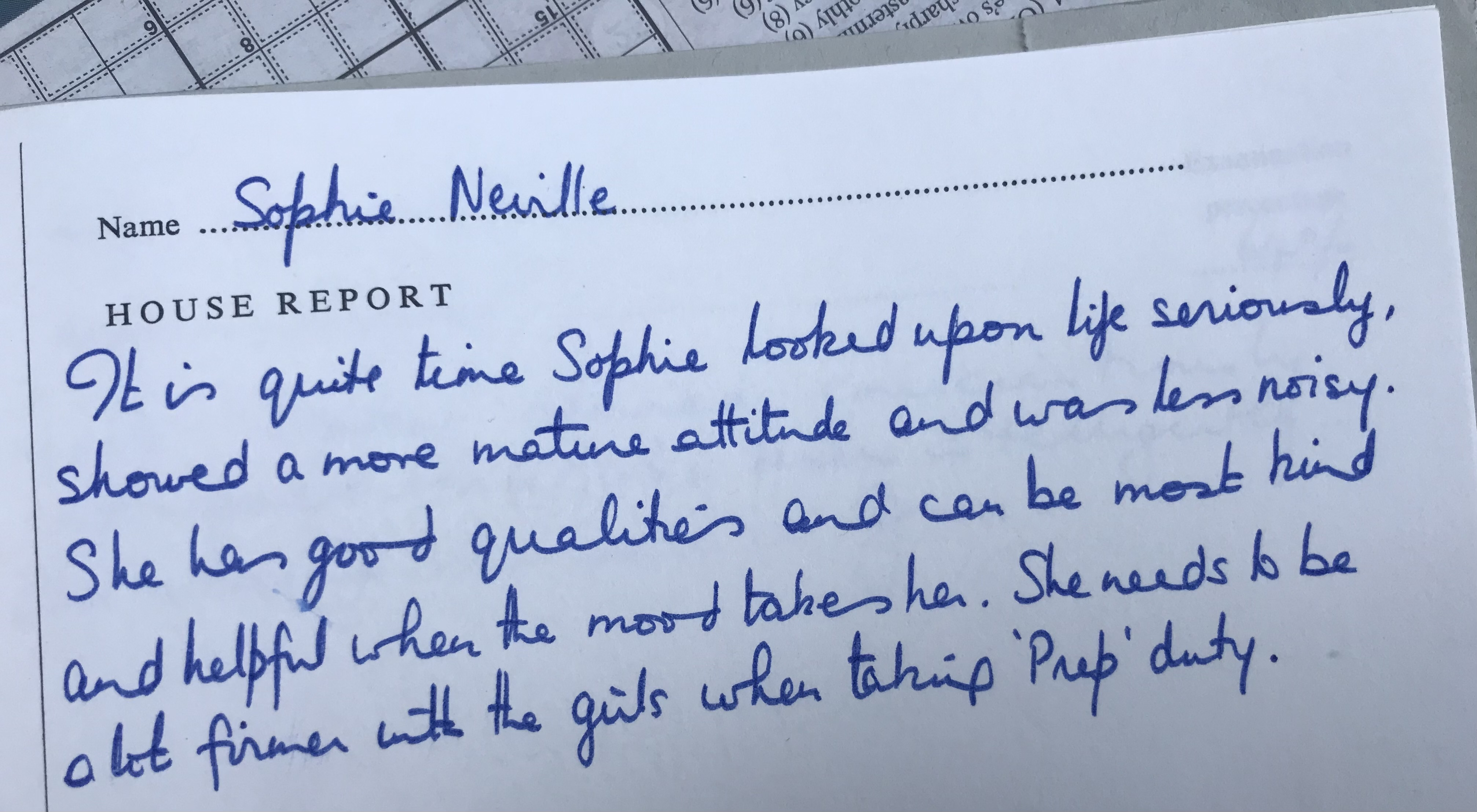
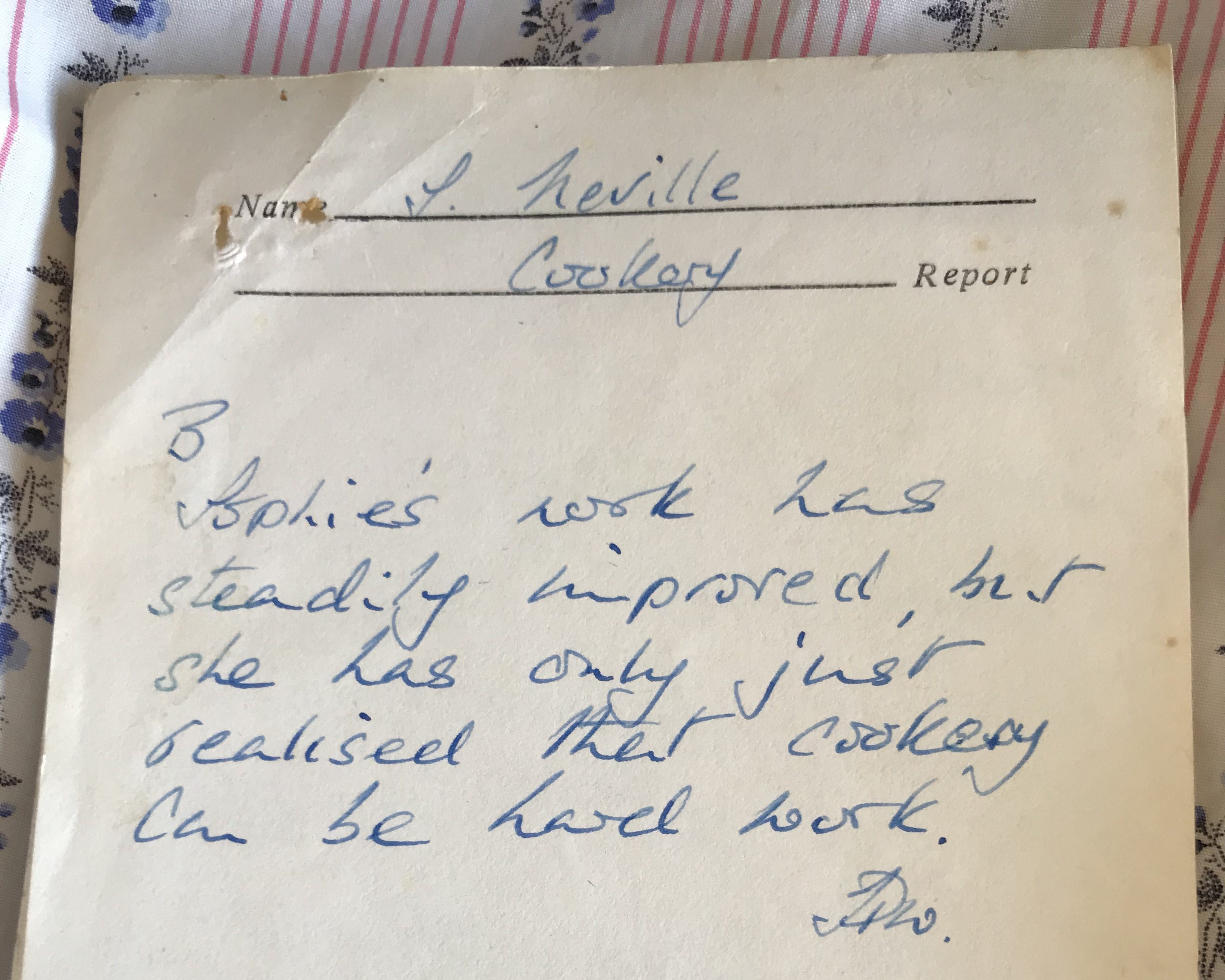
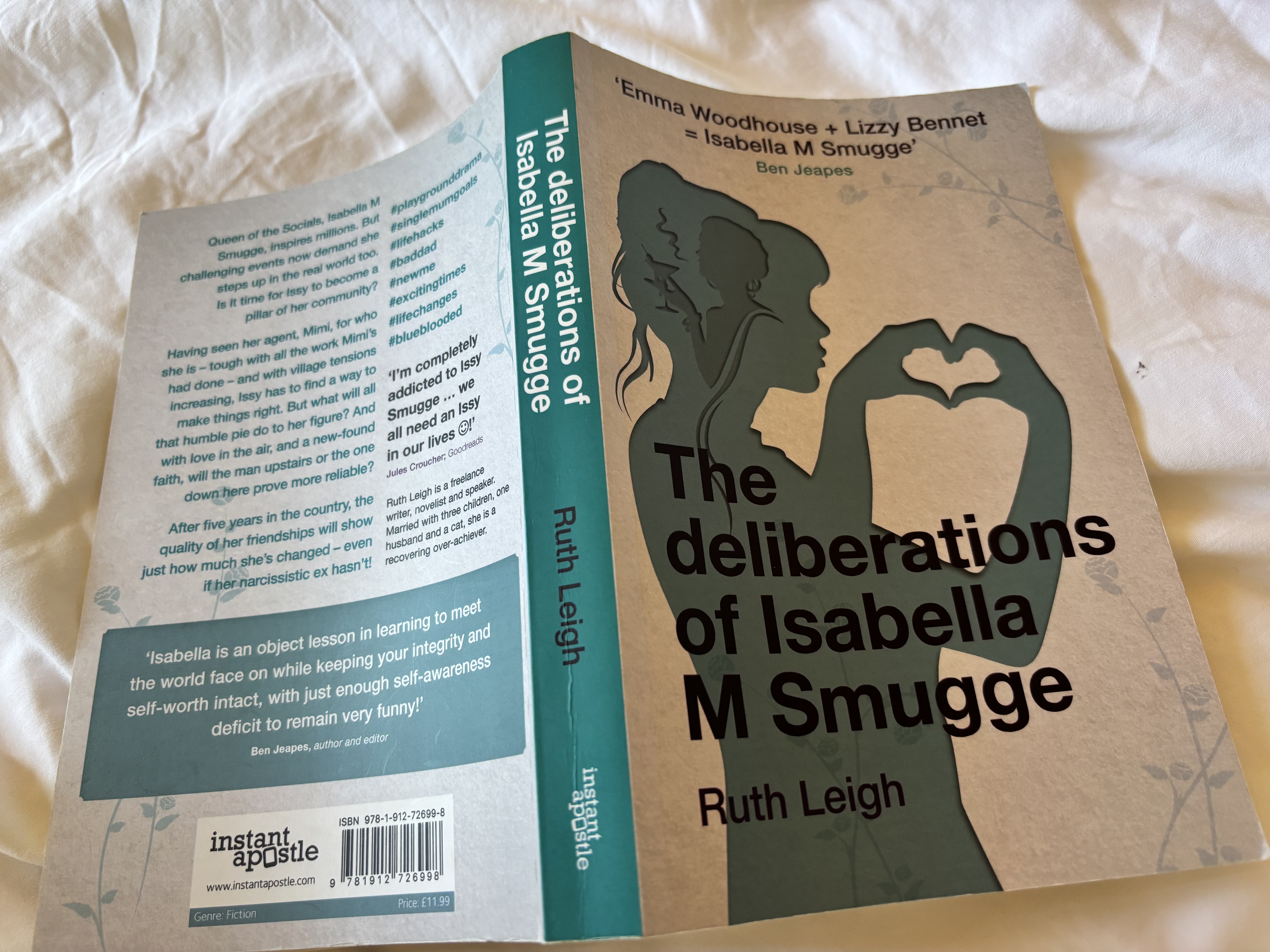
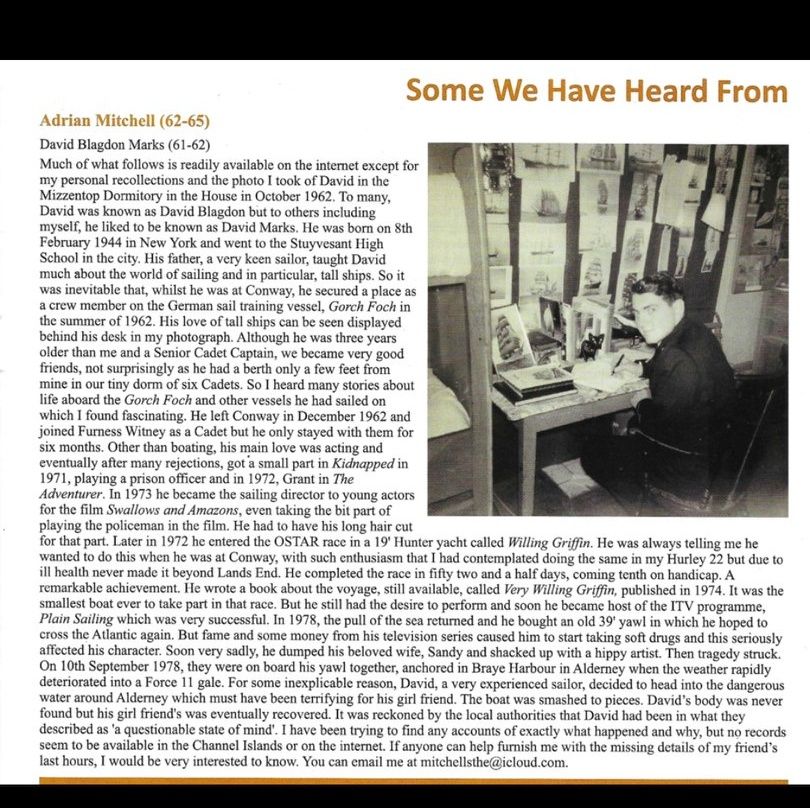
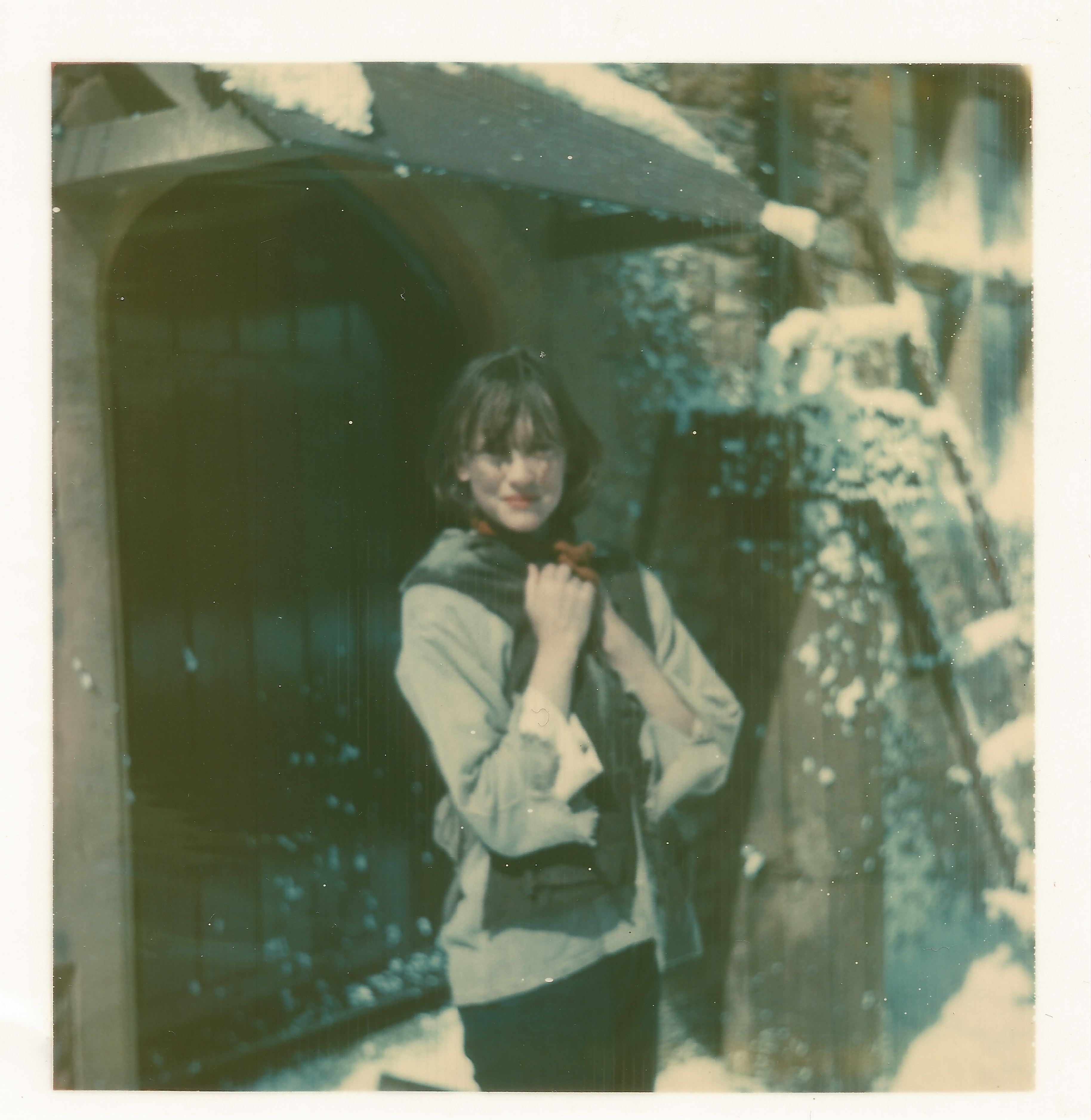
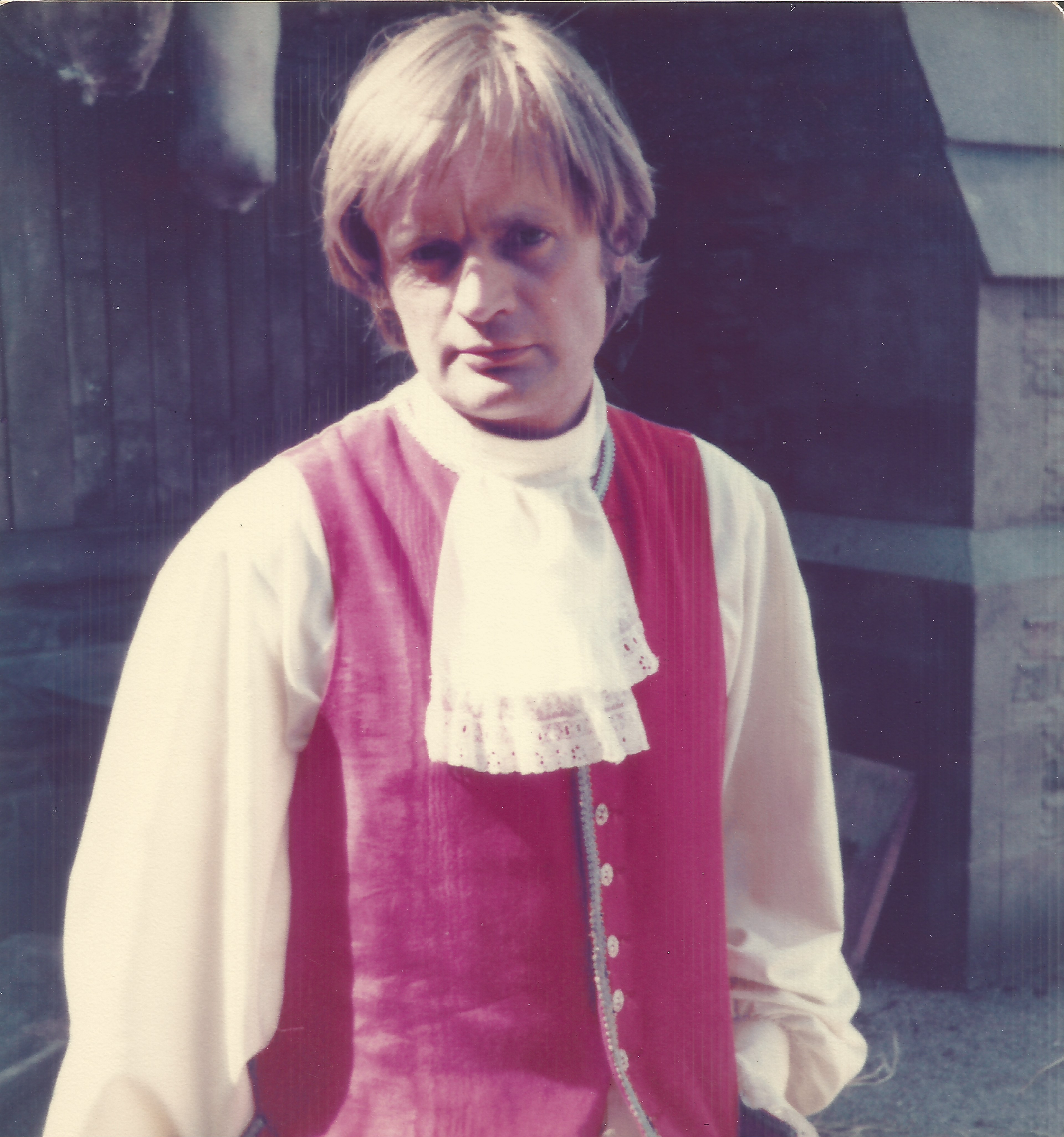
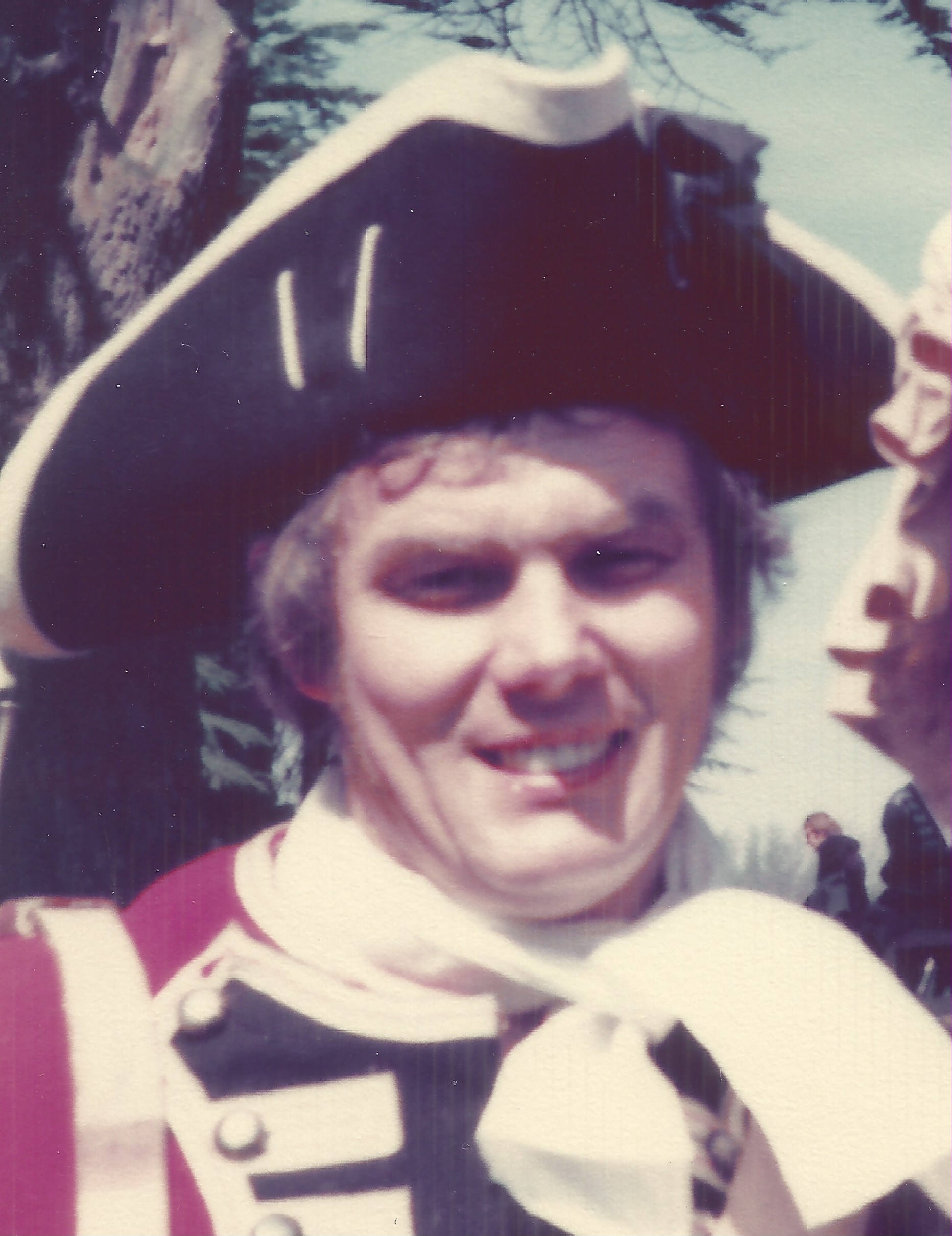
I love a reading holiday. My great weakness is to nosily take a look at the Acknowledgments before getting into the prose, but this time I waited until the end. I received a bit of a jolt. This is me:
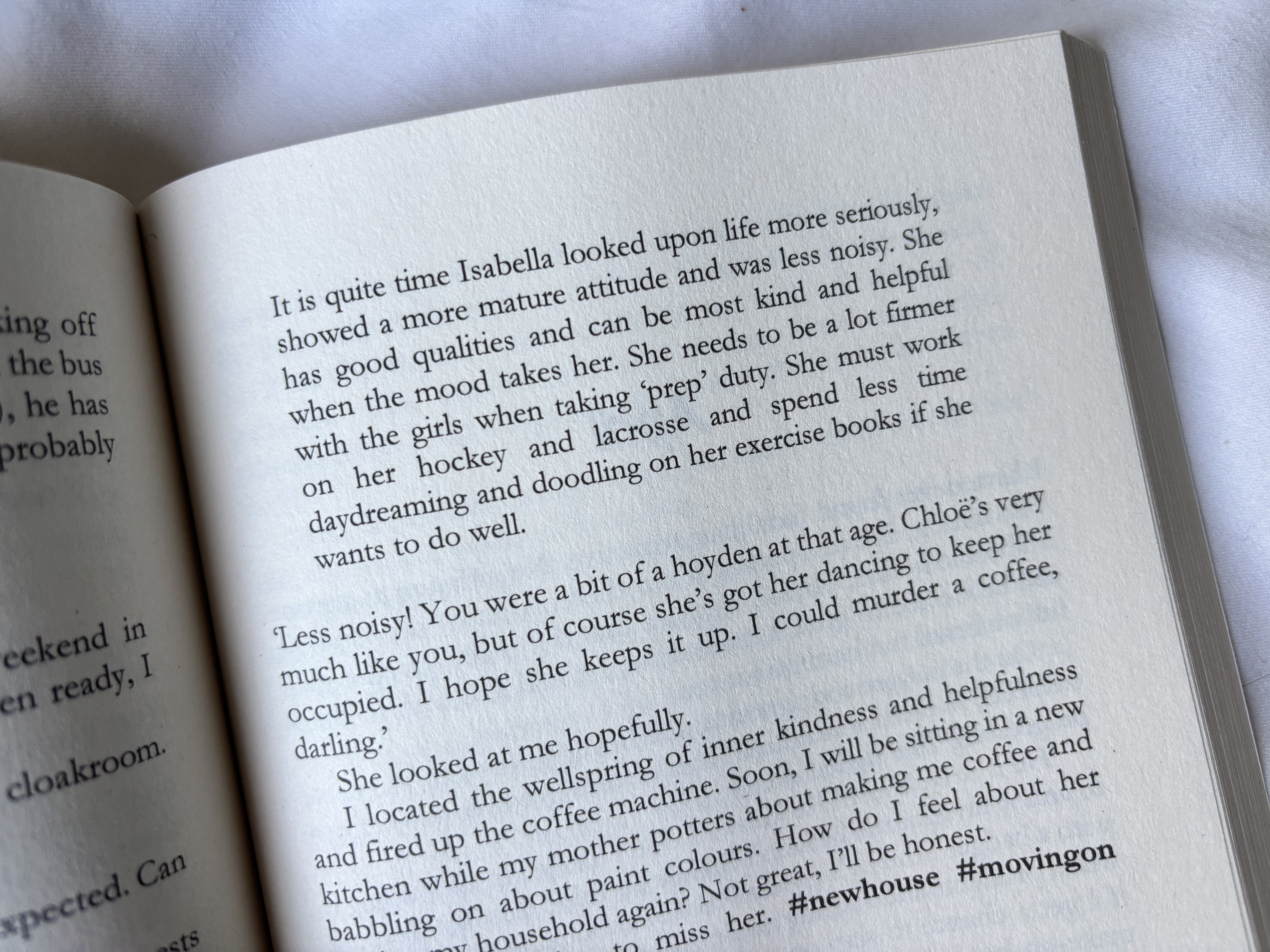
I thought the extract looked familiar, but had been thrown by the reference to hockey:
Here is the original – located by adding the word ‘noisy’ into my photo reel:
Sophie Neville’s school report as featured in ‘The Deliberations of Isabella M. Smugge’ by Ruth Leith
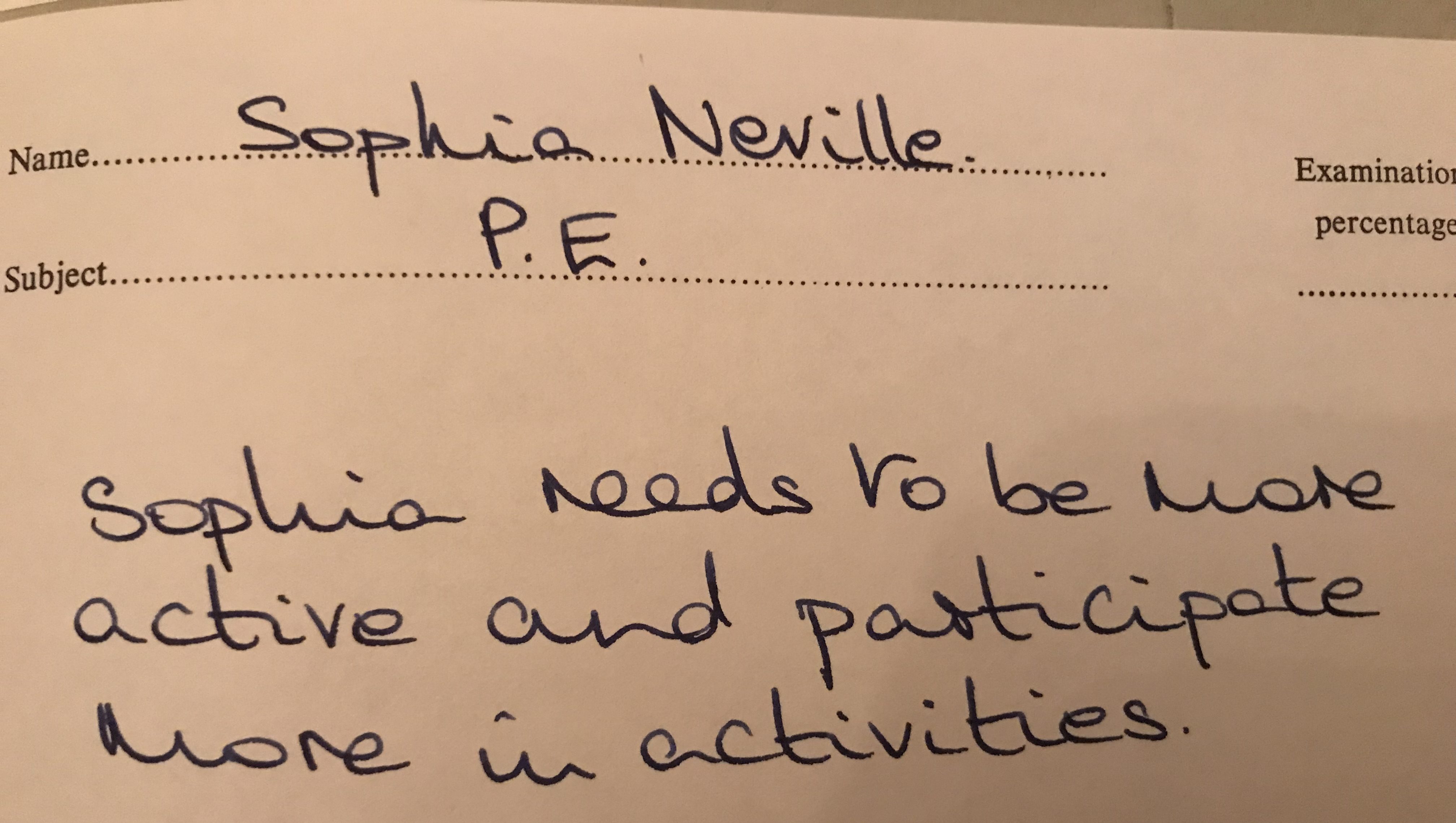
I loathed playing lacrosse and was useless at it. Funnily enough, I grew to enjoy the sport of polocrosse, which is akin to lacrosse on a horse, played at speed. I joined the Waterberg Polocrosse team, was invited to play with the veterans at inter-provincial level, and qualified as an umpire at Morton Morrel College. It was the most difficult exam I’ve ever taken, exceeding any test at school.
My school report for PE – I maintain this would have been different had they taught archery
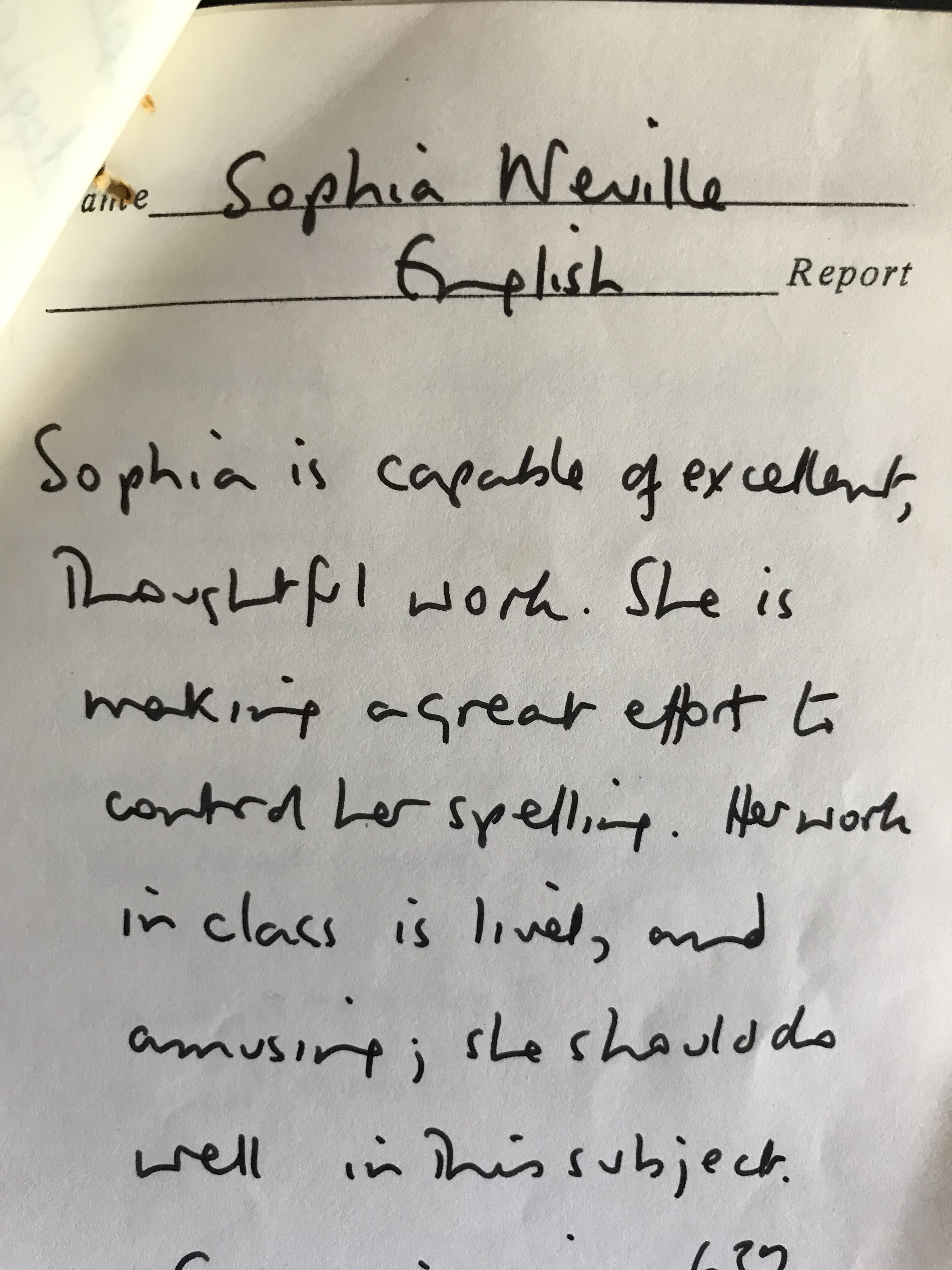
I did better at English.
Sophie Neville’s school report for English Literature from Anthea Bradbury
I sent a copy of one of the first illustrated books I published to Mrs Bradbury, my English teacher before she died. I hope she was able to enjoy it.
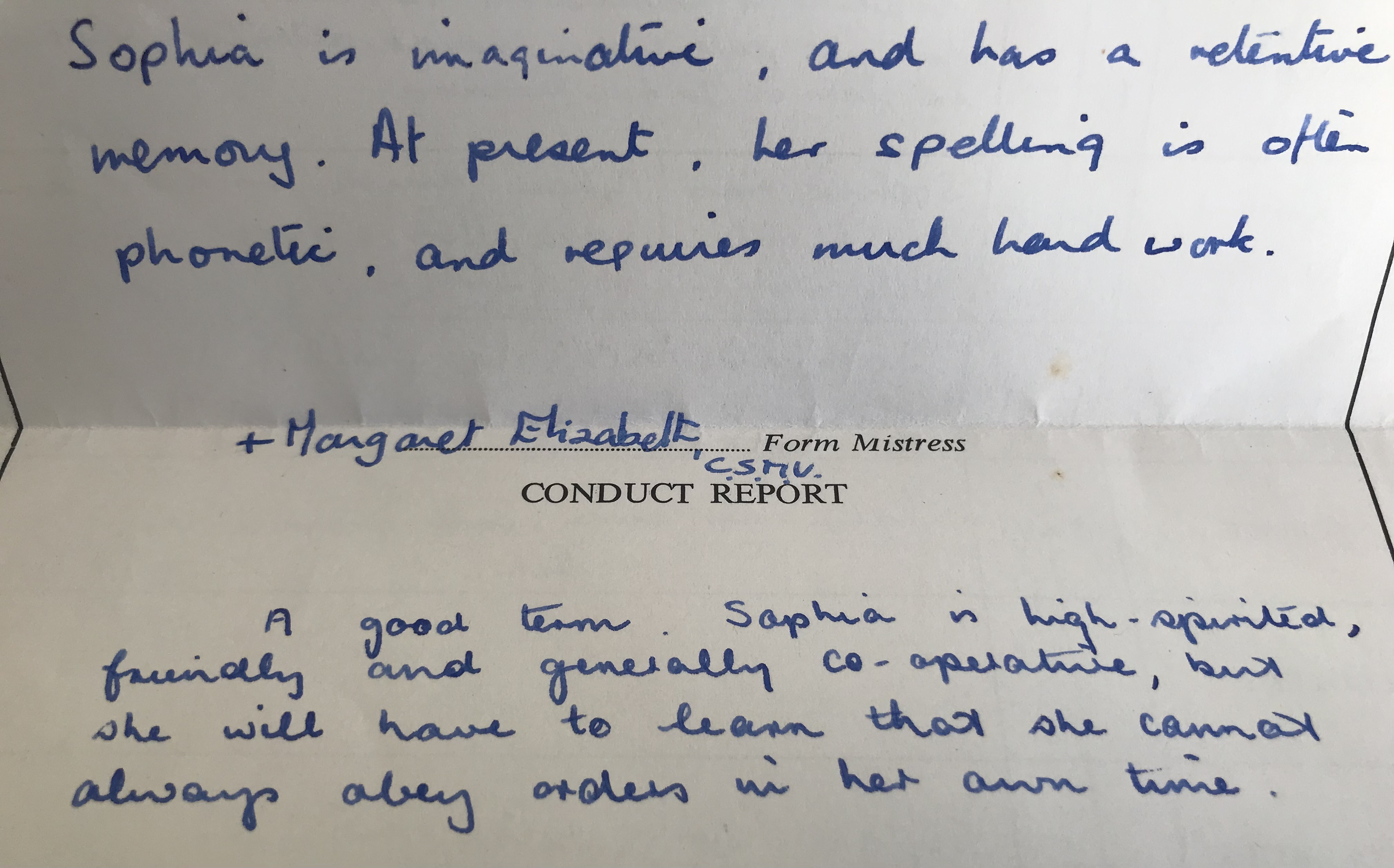
I am yet to write about my own school days, but since I kept bulging diaries through my teenage years, there should be enough material to draw on. I was taught by nuns. Here is an end of term report from my Form Mistress, Sister Margaret Elizabeth, and my House Mistress, Sister Allyne. I must have been aged twelve when this report was delivered to my parents in 1973, possibly the term before I gained the part of Titty in ‘Swallows and Amazons’.
At the age of about fourteen we spent three hours a week in Needlework, three hours in the art room, and three hours learning to cook, which was fun. One of my friends was so naughty that she was excluded from all three, retreating to the library. She later graduated from Oxford University and ended up working as a Director of Communications at the NHS.
A school report from my cookery teacher Mrs Wigmore
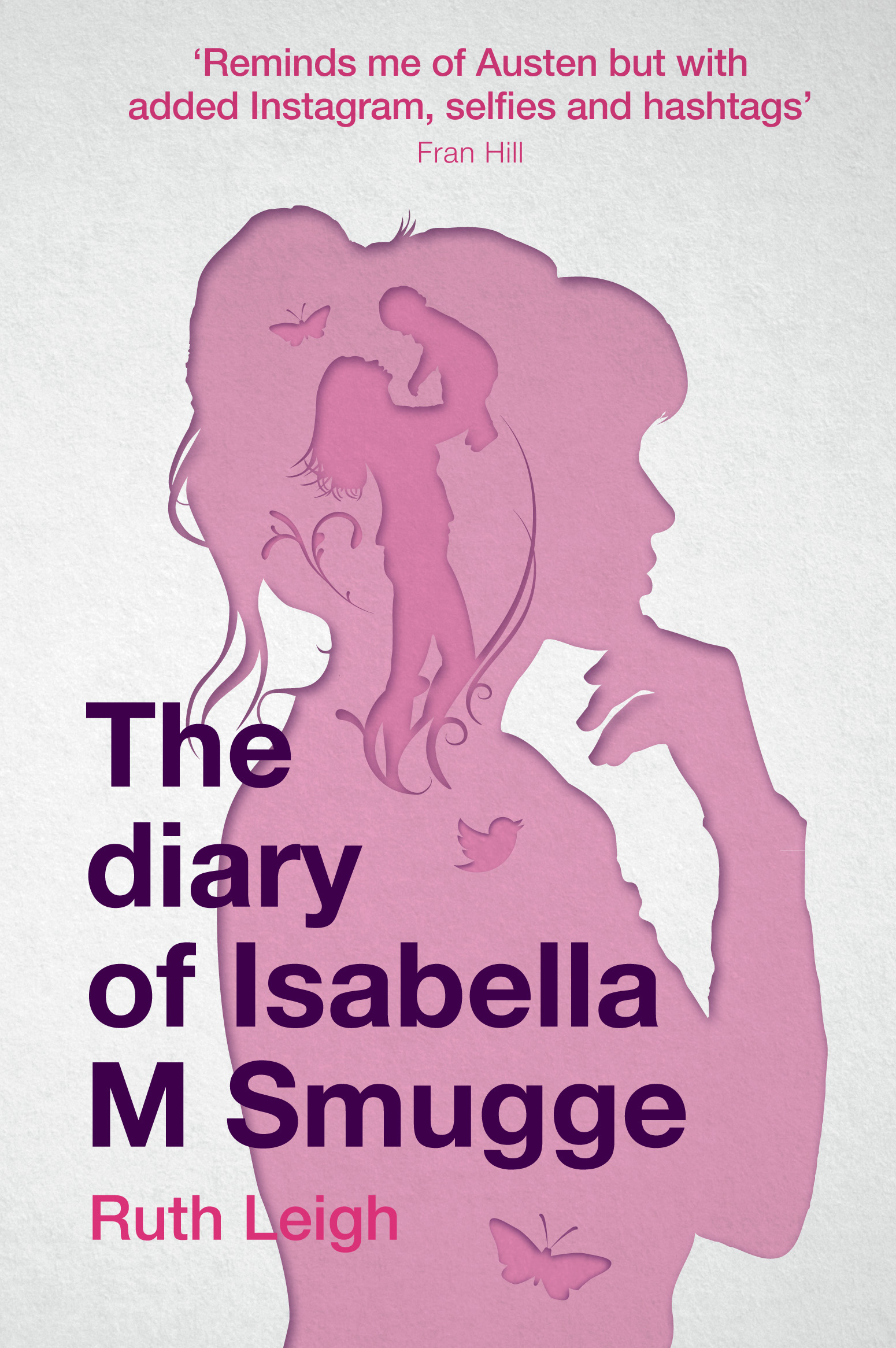
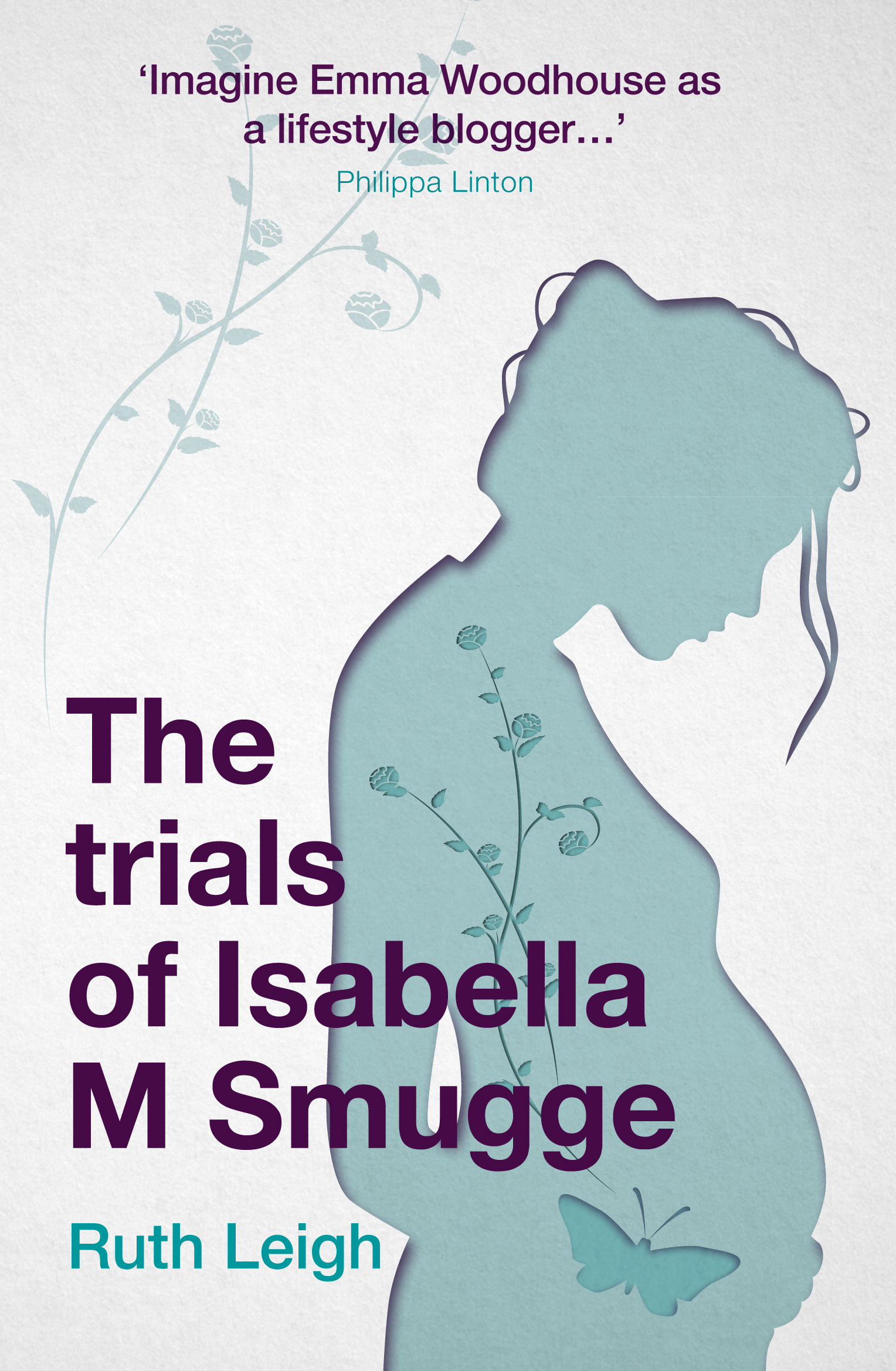
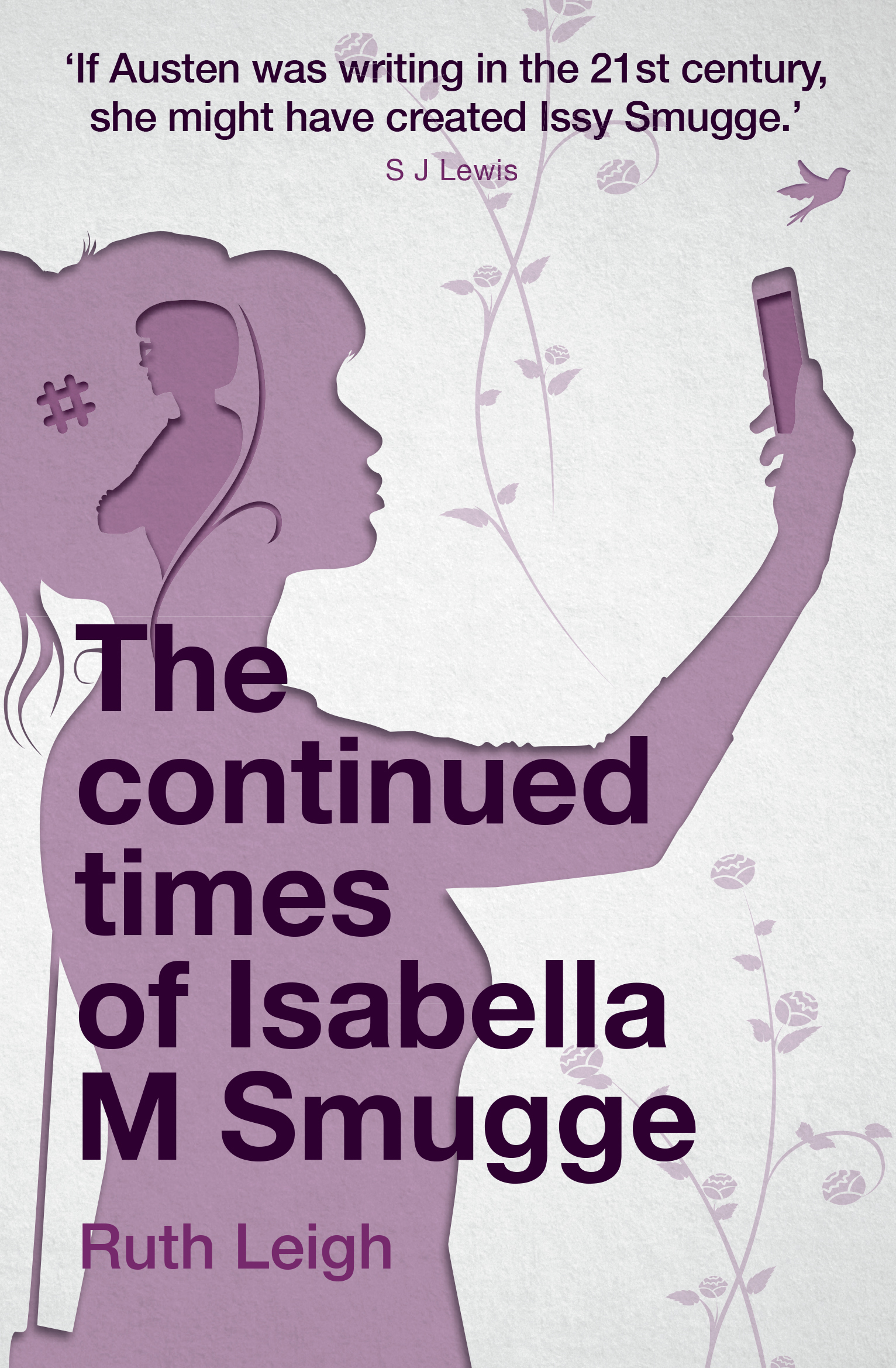
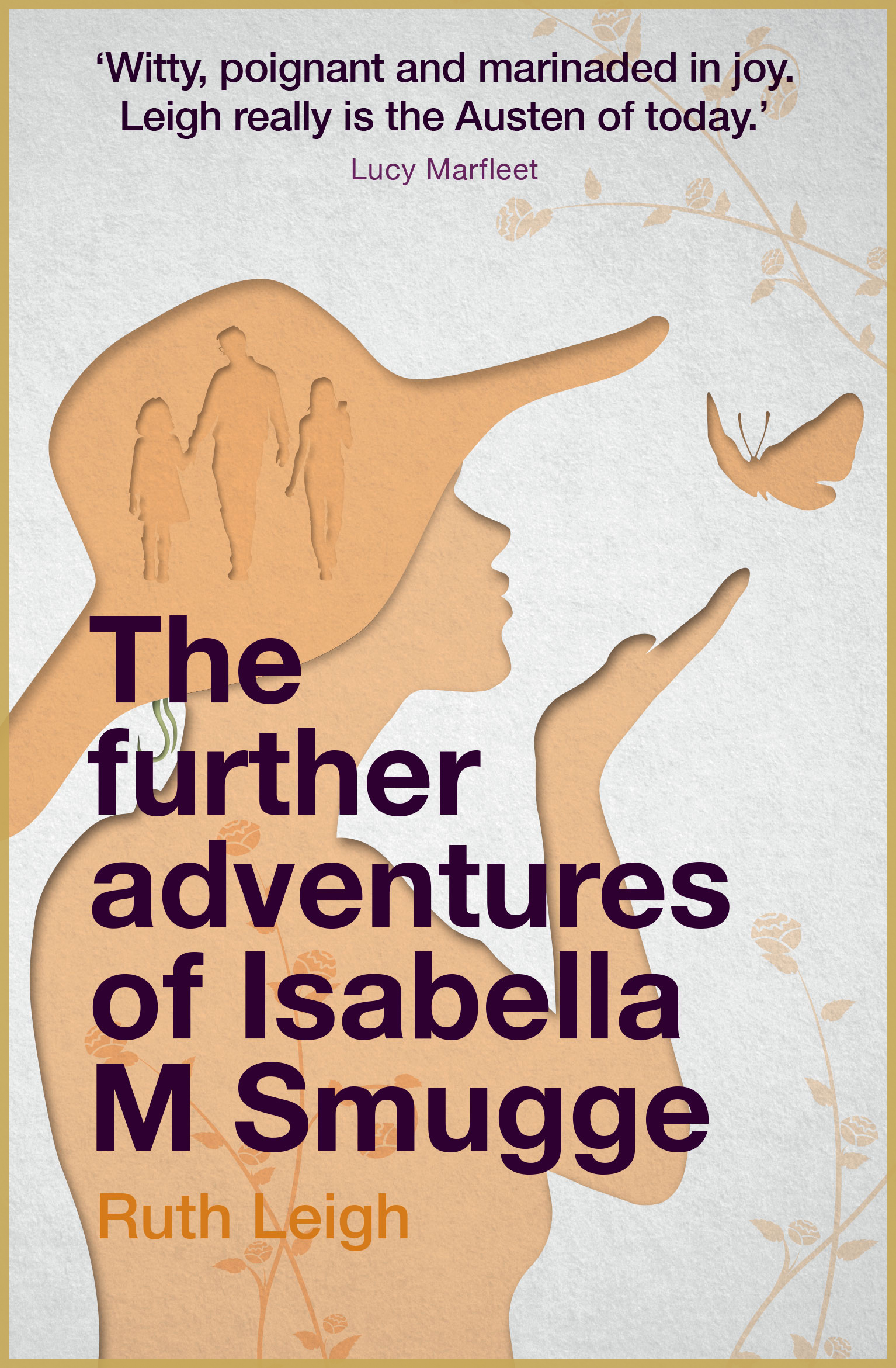
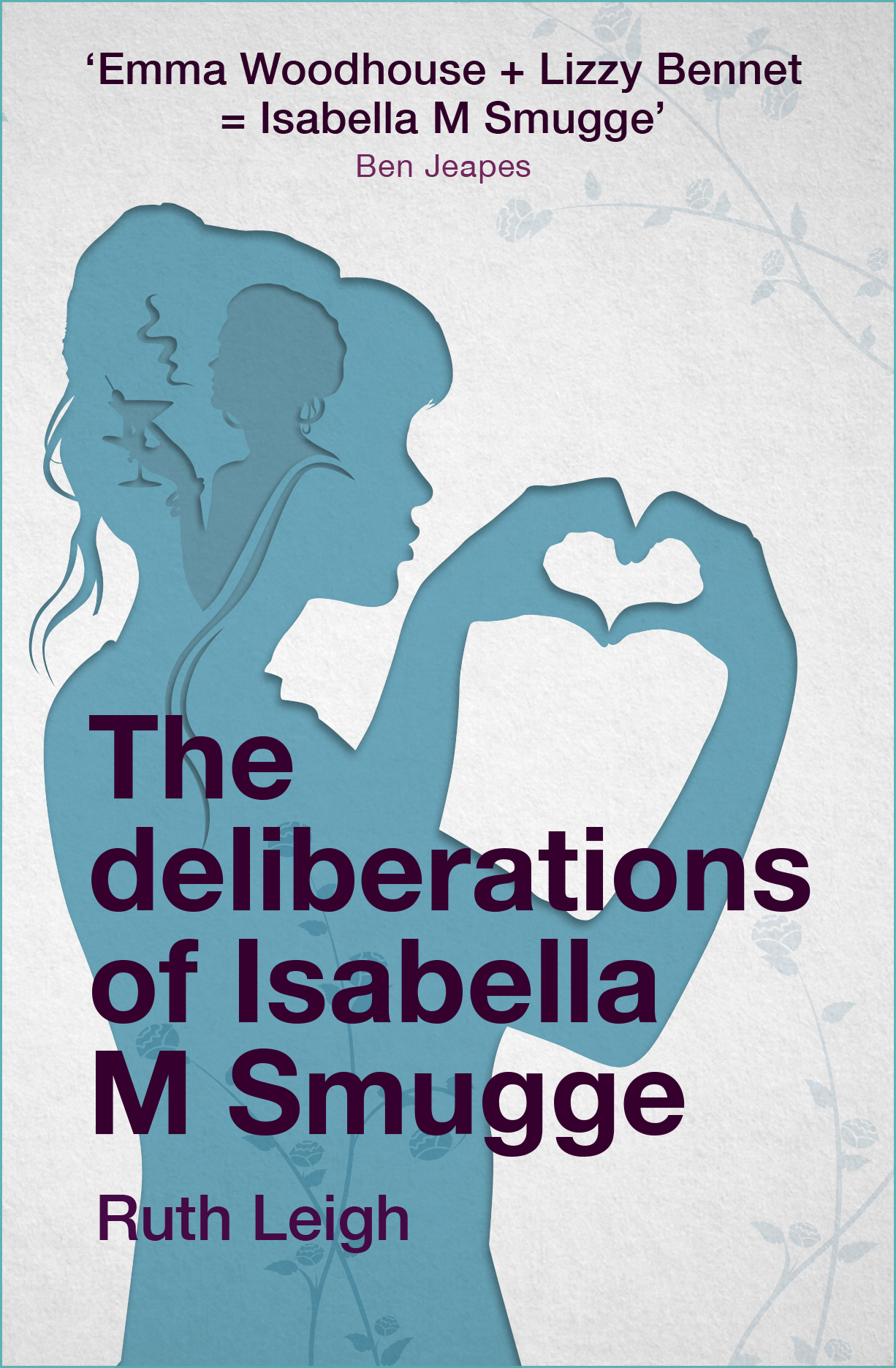
Ruth Leigh writes about her heroine’s time as a similar boarding school in her series of five books on the life of a social media influencer, Isabella M. Smugge. Issy finds herself cooking delicious meals as she negotiates the social scene in rural Suffolk and churns out books on how to embellish your life. The amusing stories, published by Instant Apostle, make for perfect for light holiday reading. Issy’s maiden name is Neville. The author assures me that she has borrowed my family name, which is a great honour.
Queen of the Socials, Isabella M Smugge, inspires millions. But challenging events now demand she steps up in the real world too. Is it time for Issy to become a pillar of her community?
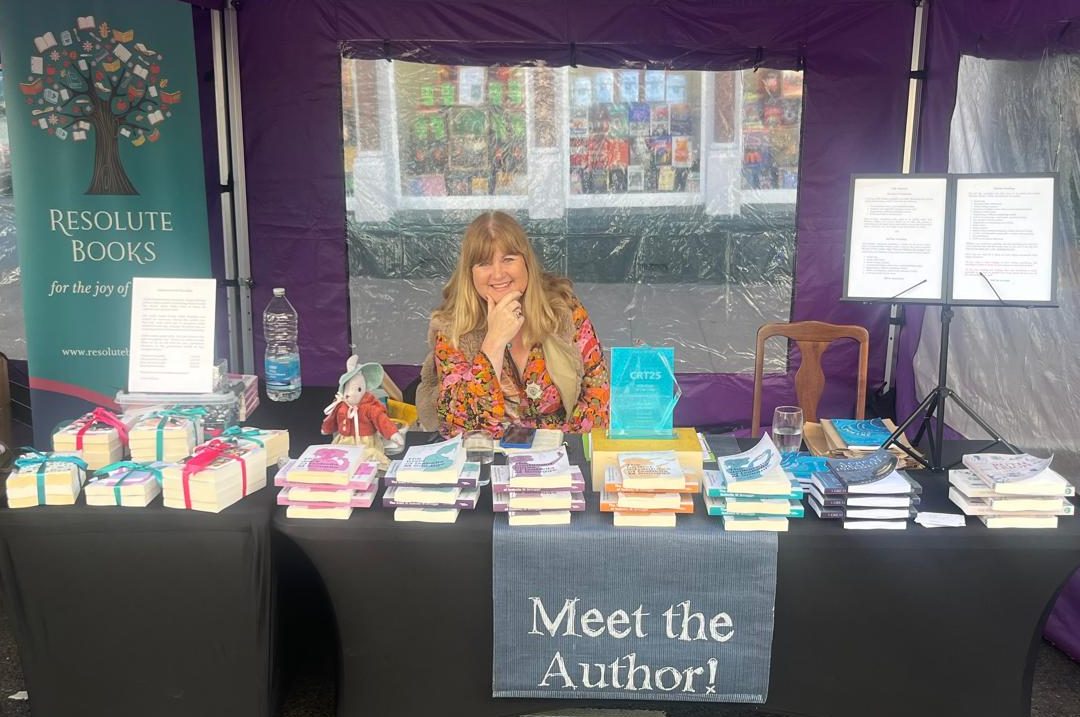
Date for anyone in Suffolk: The author Ruth Leigh will be meeting readers and signing copies of these novels and other books at St Edmundsbury Cathedral Christmas Market 2026 in Bury St Edmunds on 26th, 27th and 28th November from 10.00am to 4.30pm. Do go along to meet the author.
The prolific author, Ruth Leigh
Ruth Leigh’s paperbacks can be ordered from bookshops, online retailers or from her own website.
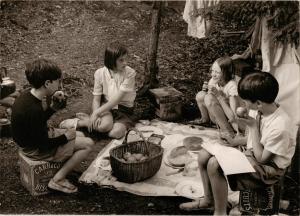
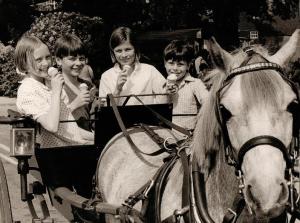
Sten Grendon, Suzanna Hamilton, Sophie Neville & Simon West in 1973, eating apples to fend off scurvy
Food was undoubtedly of considerable importance to Arthur Ransome. He certainly enjoyed describing what explorers and pirates ate when camping. I thought it would be fun to look at typical meals eaten on Wild Cat Island or when sailing.
I have drawn up this list of the food featured in Swallows and Amazons, but I am sure you can add to it. Please use the comments box below where all ideas and contributions are gratefully received.
Breakfast ~ Tea, milk from Dixon’s farm and sugar, bread, butter, marmalade and eggs. Then of course Mrs Dixon arrives with a bucket of porridge after a storm.
Elevenses ~ Bananas, apples, molasses (toffees) and chocolate
Lunch ~ Pemmican and peas with Grog (ginger beer or lemonade) to drink
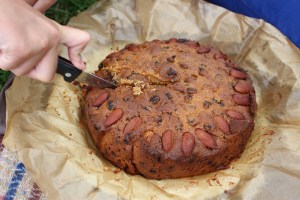
Tea ~ Seed cake, bun loaf with tea or grog to drink, perch fried in butter or pemmican and potato cakes. Susan is clearly one for buttered eggs and in the book Mother arrives with Baby Vicky’s birthday cake.
Jack Ramble writes in to say, “I’ve always said, of events, that the food is what makes it. This is no different for a story, either. Certainly, one of the key parts of my own upcoming books, are the lavish descriptions of what the children ate. These not only excite the mind (and stomach), but help pin down the era in which the stories are set.”
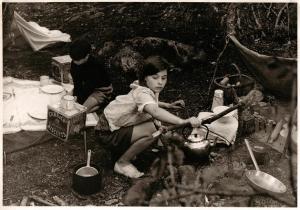
Suzanna Hamilton playing Susan Walker with Stephen Grendon as Roger Walker camping on Peel Island, Conioston Water in Cumbria
In the original film we bought iced buns in Rio, had pork pies to munch on in Swallow, and ate our way through that fabulous pirate feast on Captain Flint’s houseboat, when Jim Turner miraculously produced eclairs and ‘ices’ along with a decorated fruit cake.
Sophie Neville with Lesley Bennett in 1973
I wished the original film had a bunch of bananas hung from a tree in the camp. Gooseberry tart would have been wonderful. (There’s a recipe for this in The Guardian.)
Other books in the series mention Cook’s black cake, Missee Lee’s Oxford Marmalade, Garibaldi biscuits, Force breakfast cereal, bacon, tinned milk, Christmas pudding soaked in methylated spirits, the Death and Glories’ smoke eels, Jackie’s trout, a duck’s egg, ship’s biscuits, fudge, tinned fruit, pears, oranges, blackberry and banana mash, canon balls, tins of sardines, cold roast chicken, hams and Edam cheese, along with other delicacies which Ransome must have relished. He also liked to shock, burdening Dorothea with skinning rabbits and prescribing bacon rinds as a cure for sea-sickness.
Jill Goulder writes, ‘They certainly had coffee at breakfast when living at home (e.g. Cdr Walker in Secret Walker, “ragging John about taking a compass bearing of the coffeepot from the cruet”), but always I think tea when camping.’
There is food mentioned in the books that never gets eaten. Captain Flint says, “Nothing like a good Malay curry when salamanders are fainting from the heat.” in ‘Missee Lee’. Nancy and Peggy hated tapioca. Alec Duncan of The Arthur Ransome Group pointed out, ‘There’s the hotpot mentioned by Mrs Blackett in ‘Winter Holiday’ that melted its way through the ice leaving only a wisp of steam and a hole in the ice. This happened years before, during a previous freezing of the lake.’
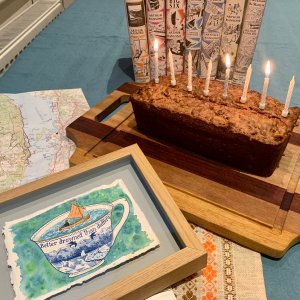
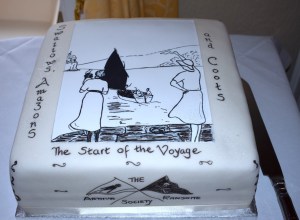
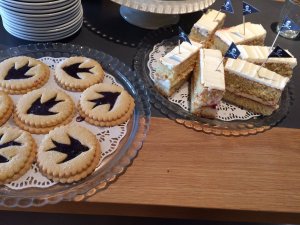
I’ve been collecting photos of wonderful designs for cakes celebrating the series of ‘Swallows and Amazons’ books here.
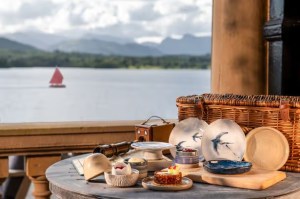
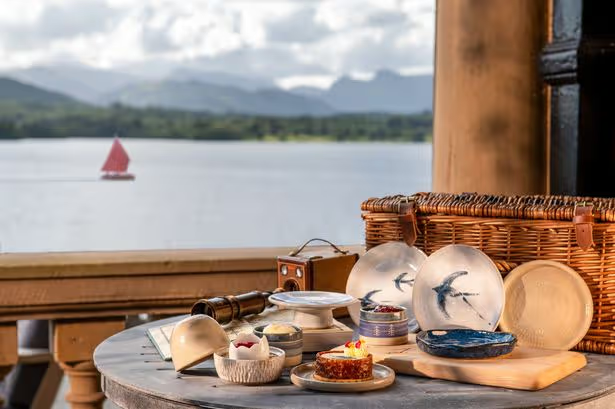
These days you can enjoy a ‘Swallows and Amazons’ afternoon tea at Langdale Chase on Windermere, the hotel where we held the wrap party when we finished filming the original movie in the summer of 1973.
Afternoon tea at Langdale Chase Hotel
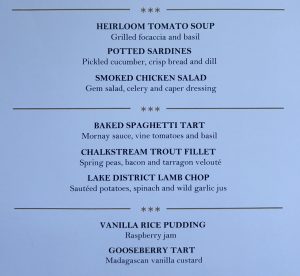
When I was invited to give a talk on ‘The Making of Swallows and Amazons’ at the Royal Thames Yacht Club in London, a Swallows and Amazons Menu was laid on:
To read about the ice creams and food we actually ate when making the film of Swallows & Amazons in 1973, please click here.
Sophie Neville, Simon West, Suzanna Hamilton and Stephen Grendon at Bowness in 1973
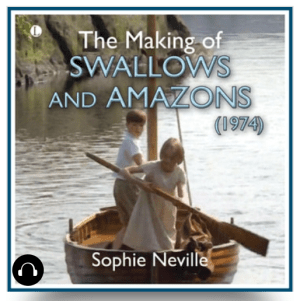
There is more in The Making of Swallows and Amazons available from Waterstones and all the usual online outlets, and now available on Aaudible.
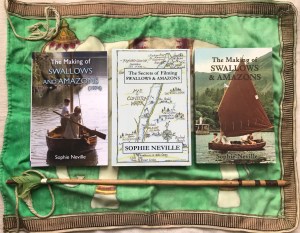
Different editions of ‘The Making of Swallows and Amazons (1974) by Sophie Neville’
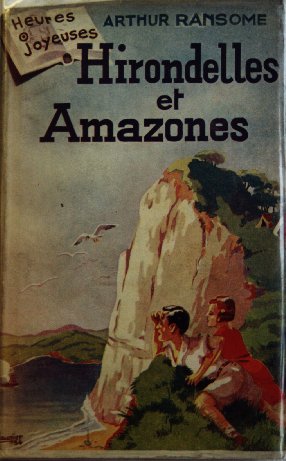
The 7 titles: I read “Hirondelles et Amazones” when I was under 9 years old, and the following books shortly time after I was 10. Now I am an 82 year old man, and I still love them very much! But unfortunately, these French titles have been almost impossible to find for many, many years, as you certainly know. For a long time I was looking for ways to help prevent their total disappearance. I had made digital versions of them, and also paperbacks in print-on-demand, but could not in any way make them known, their public distribution being illegal.
But, since 1st January 2021 things have changed, as they are in the public domain in Canada and in countries with the same copyright protection rules. So I created a small website dedicated to them and if, as I hope, the question interests you, here is its address: => https://livres-ransome.net It is hosted in Canada and offers (with the geographical restrictions of copyright) e-books and paperbacks.
The 8th title: You will also see that I have added a “home-made” translation of “Secret Water” done voluntarily by a friend, under the title “L’Archipel Secret“. He authorized this diffusion on livres-ransome.net on condition of respecting the “Creative Commons” license under which he registered it: free distribution, no modifications, no commercial use. It was easy for me to respect these conditions, because it corresponds to the choices I made for the distribution of the seven previous books: the e-books are free, and the paperbacks are offered at the printer’s price, without any profit. To respect the continuity with the seven previous books, the changes of first names made by the translator Germaine Guillemot-Magitot had to be also adopted in this eighth title. Sorry for Titty, renamed Micky like in other French titles!
The 1974 film “Swallows and Amazons” I bought the DVD as soon as it was available in France, saw it several times (with English dialogue and French subtitles!). It respects the spirit of the book well (unlike the 2016 film) and I was, like many, impressed with the way Sophie Neville “got into” the character of Titty. All her action since then shows how much she loves the universe of Arthur Ransome, which I understand, being a “fan” myself.
The University of Durham was riding at number three on the UK leaderboard when I was taking my A’ levels. I wanted to read Anthropology, looked around Durham Cathedral and immediately felt at home. It contained effigies of my forefathers: Nevilles with their noses cut off by marauding Scotts. My own father had read PPE at Durham in the late 1940s and I was keen on the idea of living in the north east, even though it proved a long drive from where I grew up in Gloucestershire.
What was it like to be a student at Durham? Tell us about college life, the city, your course and any sports or societies you were involved in.
I immediately made great friends at Collingwood College and with others reading Anthropology. Instead of ‘Wednesday Sport’, I took lessons in water-colour painting which stood me in good stead when I turned professional as a wildlife artist in 1993. Although team sports were not my thing, I served as secretary of the Ice Skating Society and rowed in the Collingwood Ladies’ Four under Simon Pelly’s tutorledge, which was fun.
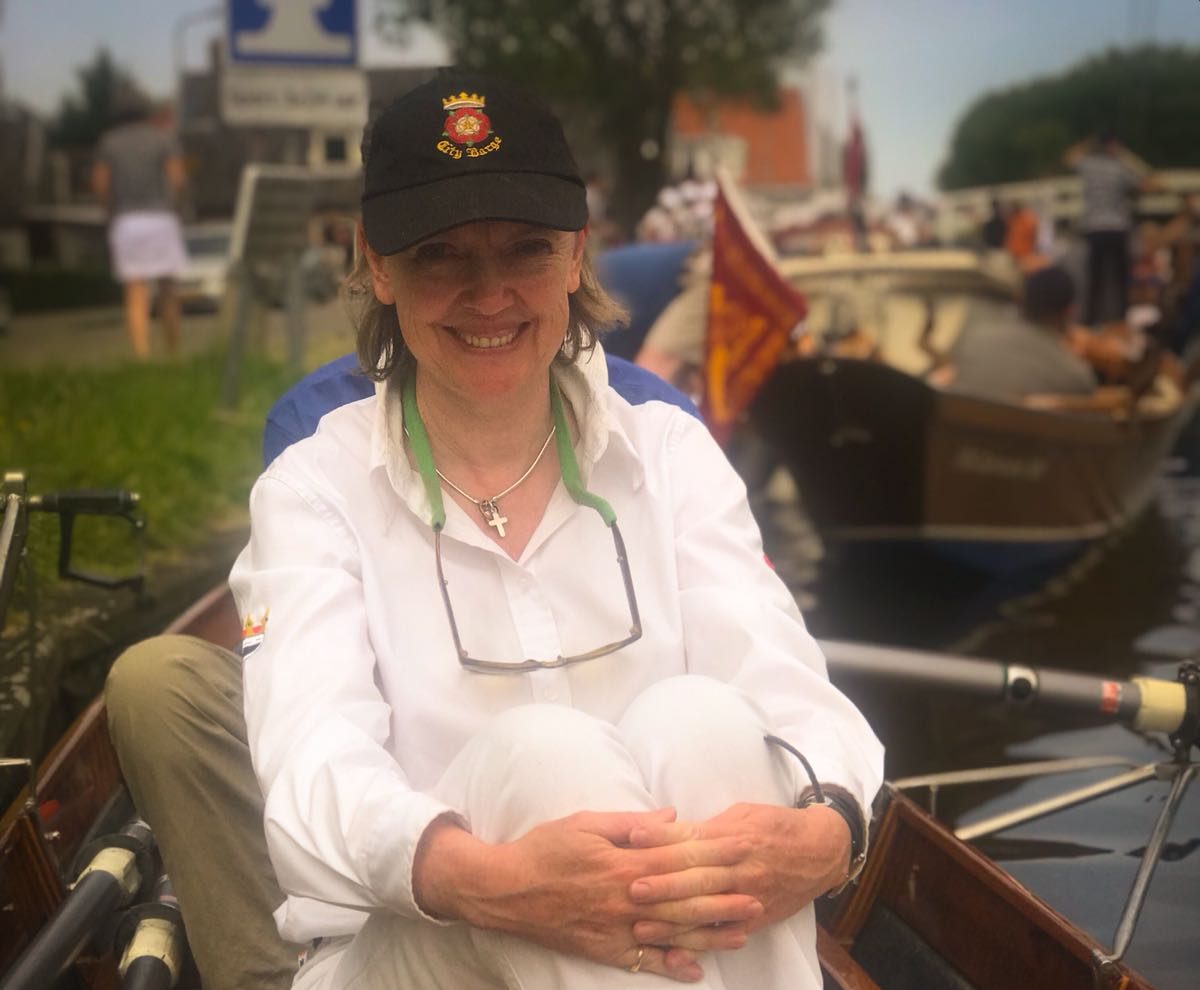
Sophie Neville rowing in the Netherlands
This equipped me to later join the crew of the Drapers Shallop, rowing the Voga Longa in Venice with the Olympic Gold Medalist Ed Coode and for HM Queen Elizabeth at Henley. I have taken part in other long rows and became a long-distance rider crossing the Namib desert and continent of South America on horses.
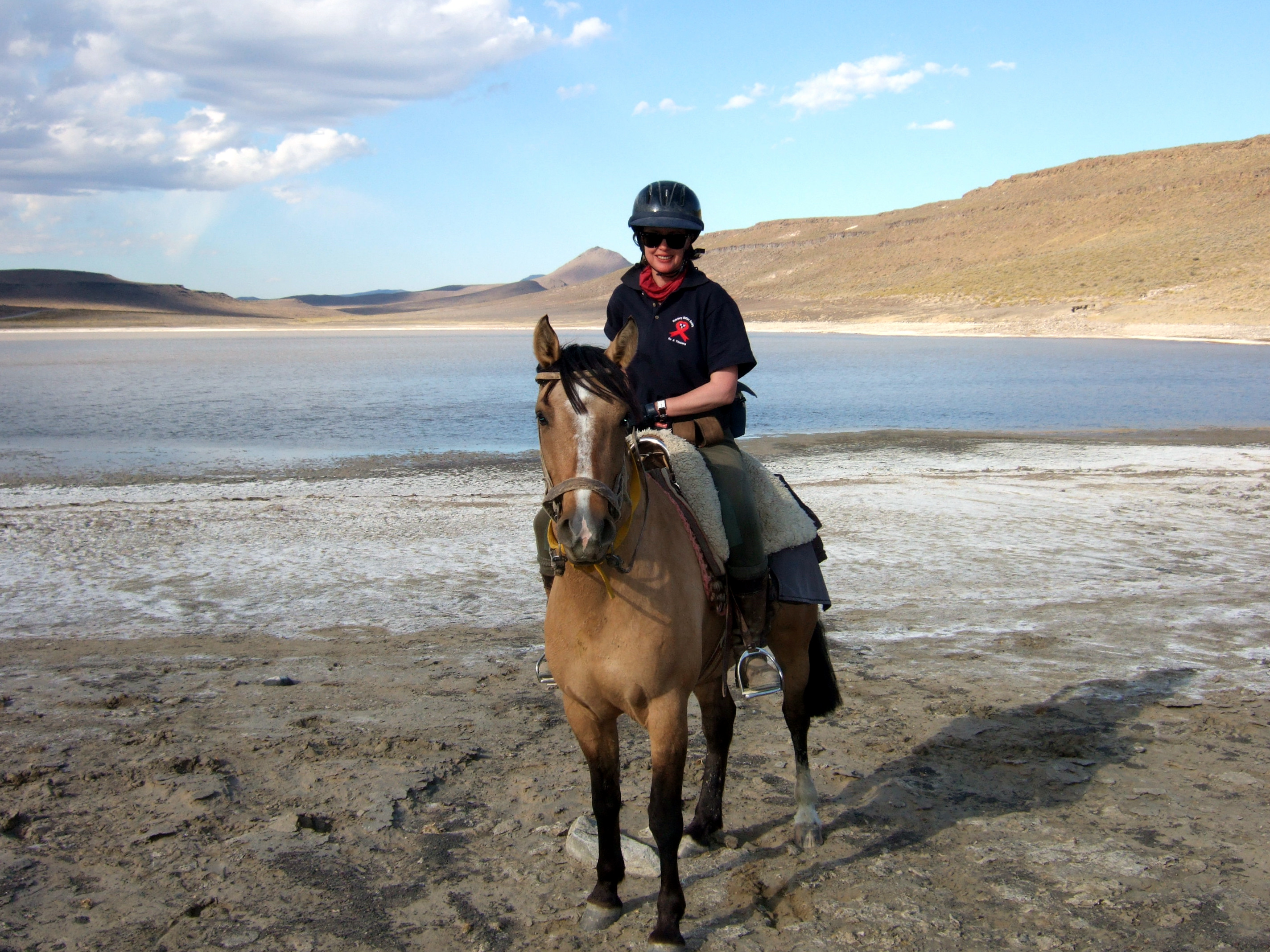
Sophie Neville riding across South America to raise funds for charity
What are your fondest memories of your time here?
I joined the operatic society in my first term and enjoyed acting in DUT’s ‘The Three Sisters’, which we took to the National Student Drama Festival in Hull. I then began directing my own productions: a male beauty contest held in the Union Rooms, the pantomime, ‘Aladdin’, ‘Cold Comfort Farm’, and the musical ‘Oklahoma!’ which launched Charles Johnston’s career as an opera singer. Putting on these comedies was hugely enjoyable and firm friendships were made.
Sophie Neville, Alastair Fothergill and Juliet Maddan who helped me put on plays at university
What have you been up to since you left Durham?
Thanks to grabbing the chance to direct plays at Durham, taking time to write programme ideas, and helping Alastair Fothergill make a couple of wildlife films for Look North, I gained a 6-month contract as a researcher on the BBC’s sought-after Graduate Trainee Scheme. After gaining experience on ‘The Book Show’ and the live chat show ‘Russell Harty’, I began casting children for an adaptation of the Arthur Ransome books set on the Norfolk Broads. I found Henry Dimbleby, then aged 13, to play the hero opposite Julian Fellows, Colin Baker and Rosemary Leach and spent three happy months filming in East Anglia. I remained in BBC Drama working on serials such as ‘Doctor Who’, ‘My Family and Other Animals’, and ‘Eastenders‘ while taking a sabbatical to make a documentary for Channel 4 when driving from London to Johannesburg on an expedition led by Charles Mayhew who later set up TUSK.
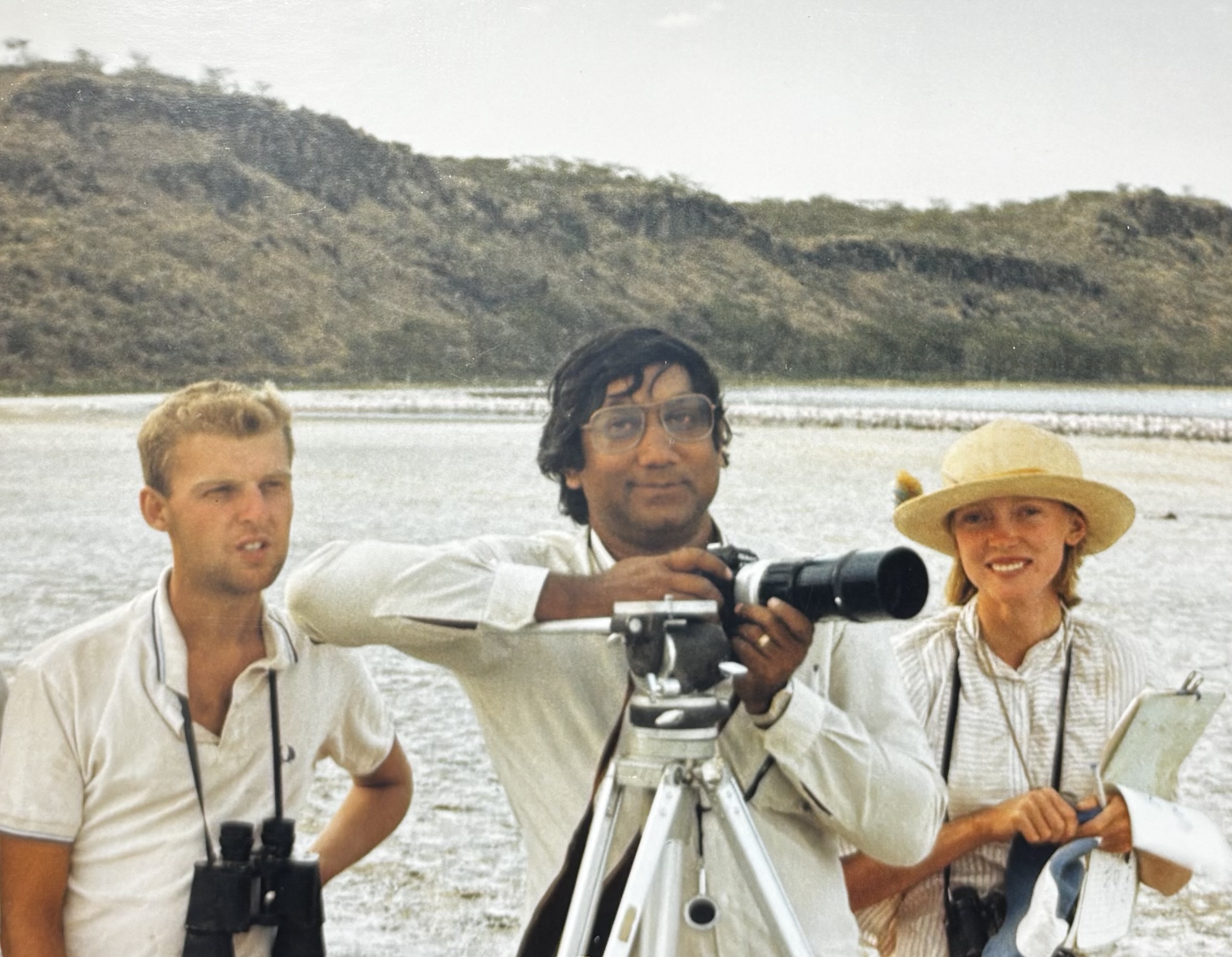
Alex Ruben and Sophie Neville on Lake Nakuru with our Kenyan cameraman
I moved to BBC Schools Television where I worked at Ealing Studios on ‘Through the Dragon’s Eye’, and produced an ‘INSET’ series before directing comedy dramas starring Patsy Byrne.
Not at 10 Downing Street but on the Lot at Elstree Studios for the BBC Drama Directors’ studio course.
Disaster struck when I collapsed in the office suffering from a mixture of tick bite fever and Asian ‘flu. It took me ten months to recover but I wrote the basis for my first book, ‘Funnily Enough’ while in bed and recovered in South Africa where I brought out a second illustrated memoir about running horseback safaris whilst setting up wildlife films for the BBC Natural History Unit and a ‘Blue Peter Summer Special’.
Whilst at Durham, I spent Friday afternoons learning cartography. I used the skills to create more then forty decorative maps of game reserves in Botswana, Namiba, Zimbabwe and South Africa, which I used to illustrate my travel memoir ‘Ride The Wings of Morning’.
After twelve years in southern Africa, I met my husband at an archery match in the Worcestershire village where I was born and started publishing non-fiction books in the UK. I had appeared in movies as a girl, and having played Titty in the original movie Swallows and Amazons, I have been giving talks, tv and radio interviews on my filmography on‘The making of Swallows and Amazons’ and other topics. I’ve spoken at numerous literary weekends, book festivals and a massive Doctor Who convention at Riverside Studios in London.
Stephen Yardley, Sophie Neville and Forbes Collins talking about ‘Doctor Who’
In 2004, I was commissioned to write a WWII feature film set in Tanganyika, Burma and Japan that has won a number of screenwriting awards. I am ready to publish the novel version of this story and the sequel, which is opens on Zanzibar in the heady days before the 1964 revolution. After spending three years researching this historical novel, I discovered the teenage Freddie Mercury was living on the island where his father must have been a prime target for the rebels. I have won ten screenwriting awards for this untold story, which I’m currently polishing.
Sophie filming for Channel 4
How has Durham inspired you to get where you are today? Tell us about any career highlights and achievements.
I used knowledge gained on anthropology and geography courses to establish myself as a horse safari guide in Southern Africa and have drawn on all I learned in ethnography to write my historical novels and screenplays. I began bringing out what I’d hoped were amusing articles at Durham for The Idler magazine, which was launched and edited by Nick Archer, Charles Stewart-Smith and Alastair Fothergill, who have all led stellar careers. They asked me to provide cover illustrations and to help Katie Hawkins with the manual layout. I’ve since had a number of articles in national publications such as the Daily Telegraph, Living, Country Life, and one book serialised in iBelieve magazine.
I became a committed Christian at Durham, am now a volunteer speaker for Bible Society, a member of the Association of Christian Writers and have taken on the PR for our parish church, which gets featured in national papers for its art installations.
What would be your top piece of advice for anyone considering studying at Durham?
A speaker at the Durham Union encouraged anyone wanting to work in television to specialise. I took his advice and specailised in working with children and animals, but should have narrowed this down to horses. My umpire’s certificate in polocrosse (gained at Morton Morrell College, part of WCUC) proved more useful than my Honours degree for gaining a South African visa ! and gave me a lot of fun. I was paid to film a match for SABC and invited to play for the Northern Transvaal, albeit with the veterans. Aquire an umpire’s certificate – in any sport- whilst at Durham!
Why is staying connected to your alumni community important to you? Tell us about anything you have gained from your alumni engagement with Durham.
I have kept up with friends made at Durham easily and naturally. They have been a continual blessing, and appear in my illustrated book Funnily Enoughthat is now available on audio, paperback and ebook platforms.
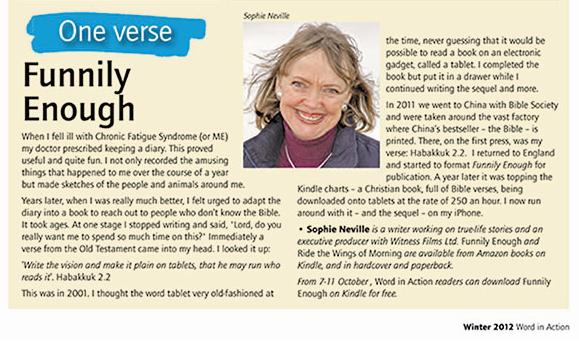
Funnily Enough – the paperback with black and white illustrations
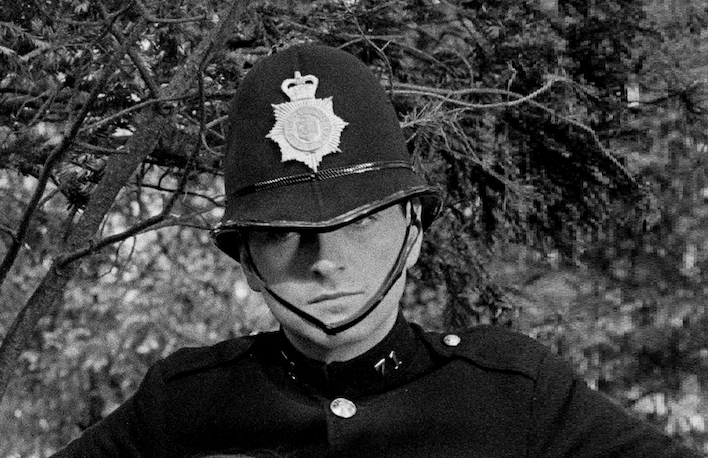
David Blagden as Sammy the Policeman in ‘Swallows and Amazons’
I was interested to learn that David Blagden was born in New York in 1944 and went to school there. He had no hint of an American accent when we knew him in 1973.
Sophie Neville, Suzanna Hamilton, Stephen Grendon, Lesley Bennett and Kit Seymour with David Blagden on Peel Island Coniston
A young trans-Atlantic sailor, David handled boats with fluency and won the trust of the producer and director of ‘Swallows and Amazons’ who gave him the job of sailing director on the original film. Tall, good looking, and impervious to wet weather, he had an infectious enthusiasm for high adventure out on the water. We children all adored him.
Stephen Grendon and Sophie Neville in Swallow, wired to the camera pontoon with Richard Pilbrow, David Blagden, Calude Whatham, Dennis Lewiston, boatmen and other members of the filmcrew
I now realise that although he could splice a rope and was respected for his experience on high seas, David had never worked in film or television production. He claimed to have read the book of ‘Swallows and Amazons’ forty-two times, but evidently did not breakdown the script. As ‘sailing director’ he should have listed what was needed in each action scene, prepared methodically, and conducted what would now be deemed ‘risk assessments’. I look at the photo above and can only imagine what could have happened out on Derwentwater if we had been hit by a Lakeland squall. When my father eventually tested one of the old BOAC life vests we were equipped with, it failed.
As young actors, we only had two days on Windermere to get used to the boats. David concentrated on sailing with Captain John and Nancy, forgetting that Titty and Roger have quite a bit of tricky rowing in vision. They row back from the charcoal burners and row out to Cormorant Island in Swallow, while Titty needs to row Amazon out of the shelter of Secret Harbour into Coniston Water. It was madness not to have trained for a twelve year-old girl for this. I ended up with the precious 35mm Panavision movie camera onboard. We would have had plenty of time to practice as we were all hanging around at Brown Howe where we could have spent an afternoon rowing Swallow.
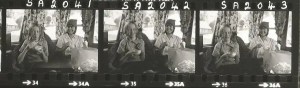
Contact sheet sailing Swallows & Amazon in 1973
One climax of the story is when Titty sails the captured Amazon back to Wild Cat Island, and yet he failed to teach me how to sail her. This was sad in that is was one aspect of Arthur Ransome’s book that could easily have been fulfilled.
The Amazon on her side with David Blagden (Sailing Director), David Cadwallader (Grip) David Bracknell (First Assistant Director) with Dennis Lewiston (DOP) with the Panasonic in the background ~photo: Richard Pilbrow
Although he was fond of boats, what David wanted was to to act. Claude Whatham, the director, gave him the part of Sammy the Policeman.
David Blagden, the Sailing Director before he had his hair cut to play the Policeman, and my mother Daphne Neville, Chaperone to the six children acting in ‘Swallows and Amazons’
The idea of having his hair cut was challenging but David accepted the fact that a police officer of 1929 would have a short back-and-sides and was shorn at Bank Ground Farm by Ronnie Cogan, the unit hairdresser. Off came his fashionable shaggy locks, which was seen as very brave.
David Blagdon who played Sammy the Policman ~ photo: Daphne Neville
David adopted a Lancashire accent for the part, “Now then Miss Nancy…” and was so proud of his haircut that he removed his policeman’s helmet in vision. This worked well as it gave him appropriate reticence. He remained in character whilst in uniform and his performance was both well timed and convincing. He obviously prepared well for that.
David Blagden as Sammy the Policeman
David had played Grant in The Adventurer, a TV series made about an American government agent made in 1972. He’d also appeared as a prison officer in the 1971 film ‘Kidnapped‘ starring Michael Caine and Jack Hawkins, which we went to see at the cinema in Ambleside on a precious day off from filming ‘Swallows and Amazons’. IMDb lists David as voicing seven episodes of ‘The Water Margin’ and appearing in one episode of ‘Omnibus’ as a talkative actor. He also presented a British television series called ‘Plain Sailing’, which by all accounts did well, and is remembered for his book ‘Very Willing Griffin’ about his remarkable crossing of the Atlantic in a 19′ Hunter, completing the OSTAR race in fifty-two days.
Adrian Mitchell, an old friend of David’s, emailed me to say, ‘Your recollections of David whilst you were filming with him are both interesting and amusing. He was always very strict when he was at Conway and the thought that he would grow his his hair so long is really very funny…. and having it cut off for his policeman’s role in the film even funnier.’
Adrian remembers him from the 1960s as David Blagdon Marks. He might have decided to use Blagden as a surname if there had been another actor called David Marks or David Blagdon registered with Equity at the time.
We are currently unearthing more facts about the misadventyuire that cost David his life. On Sunday morning on 10th September 1978, skipper and his girlfriend Eleanora Murk-Jansen were planning to sail to Fleetwood (near Blackpool) from Ramsey on the Isle of Man, but had engine problems and their departure was delayed. The weather forecast at midday on the 10th for sea area Irish Sea appeared not too bad, as follows….
Pressure. 1015 -1018 hPa, falling steadily.
Wind South West. 4 – 5, increasing to force 6
Sea State. Moderate, becoming rough later.
Weather. Broken cloud, showers, good visibility between showers.
This was probably not seen by David as particularly onerous, especially for someone who had sailed the Atlantic, solo, some years before. However, the coastguard was worried and advised David not to leave the harbour as by evening an Atlantic depression had deepened and was moving east from Ireland across the Irish sea. David might have thought that as he was going to be heading south east, he could cope with the sea conditions. It would only be a sixty mile voyage. This should have taken around 10-14 hrs. They left around 10pm that evening, heading south east to Fleetwood.
But during the night of 10th September, the barometric pressure dropped rapidly with a south west wind blowing Force 7 to 8. By midnight the pressure had dropped to 1000 hPa, a dramatic fall in such a short time would suggest worse weather was to coming, and that was the case, increasing to Force 9 and 10 as the night wore on. This was beyond the limits of a 26ft yacht. It is likely that the wind would have been astern of the boat and large seas could have pitch-poled it (stern over bow), smashing it to bits in shallow water off the nearby coast.
That night a tornado hit the town of Anchorsholme near Blackpool, damaging homes and throwing a large cycle shed through the air. The storm approached the area from the Irish Sea – recorded at Force 9 to 10, west north west.
Meanwhile, early in the morning of the 11th September the coastguard (possibly from Ramsey or Fleetwood) alerted the RNLI that a yacht was overdue and probably in trouble off the Blackpool/Fleetwood coast and the Fleetwood and Lytham lifeboats were launched. They searched through the night and well into the day on Monday 11th without success.
On Tuesday 12th September, the Birmingham Daily Post reported that a 26ft sloop, Jain, on passage from the Isle of Man to Fleetwood with a man and a woman from London on board had been lost on the night of the 11th September. The body of a young woman, along with yacht gear, were washed up on Blackpool beach. Wreckage was retrieved by a trawler, being from the wreck from a depth of just 1.4m close inshore, including a mast with numbered sail and harnesses that were identified as having come from the yacht Jain. David’s body was washed up nearby a week later.
I love hearing from readers and so appreciate letters and emails. Here are a few that arrived recently:
‘I do indeed have your book; it was a gift from my sister (we both love the film and it’s very much part of our childhoods). I found it incredibly evocative and loved the insights, as well as being taken back through your own experiences. It was exactly what inspired me to head to the Lakes and seek out some of the locations. Hearing about which places and items were purely for the film was especially fun….and saved me a great deal of time trying to find them!’ Timothy Joint. He kindly left a book review on the Waterstones site:
“A Nostalgic Journey Behind the Scenes of Swallows and Amazons”
Sophie Neville’s book, The Making of Swallows and Amazons, is an absolute delight for both devoted fans of the film and for anyone curious about the making of cinema in that era.
Written by Sophie Neville, the book brings a wonderfully personal and vivid perspective to the making of the beloved 1974 film Swallows and Amazons. What makes it especially engaging is how she transports you back to that time. You’re not just reading about the production, you feel as though you’re right there on the lakes watching it unfold.
Sophie shares fascinating insights into the realities of filming on location, from the unpredictable weather to the logistical challenges of shooting on water. Equally compelling are her memories of what it was like as a young actor balancing schoolwork with the demands of filming, which adds a lovely human layer to the story.
There’s a warmth and authenticity throughout the book that only someone who lived the experience could provide. Her reflections on friendships formed during filming, the camaraderie of the cast and crew, and the innocence of that era give the book a nostalgic charm that never feels forced.
More than just a “making of,” this book is a heartfelt memoir, a piece of film history, and a tribute to a unique moment in British cinema. Whether you grew up loving Swallows and Amazons or are discovering it for the first time, this is a wonderful book that will be loved by everyone.
‘I recently read The Making of Swallows and Amazons (1974), and I have to say there’s something genuinely special about the way this book captures not just a film, but a moment in time.’
‘What makes your book so engaging is its authenticity. The decision to weave your childhood diary entries with your adult reflections creates a layered narrative that feels both immediate and nostalgic. It’s rare to get such an unfiltered, “in-the-moment” perspective of a film production especially one told through the eyes of a child who was living the adventure rather than simply acting it.’
‘The setting itself–the lakes and mountains of Cumbria–adds a natural richness to the story, but what truly stands out is how the experience mirrors the spirit of Swallows & Amazons. It doesn’t feel like a production account; it feels like an extension of the adventure.’
‘There’s also something deeply charming about the absence of modern filmmaking constraints–no digital interference, no rigid scripting, just immersion, imagination, and discovery. That gives the book a warmth and sincerity that resonates beyond film enthusiasts. This isn’t just a behind-the-scenes account. It’s a memory preserved with remarkable clarity and heart.’ Susan Pouliot
Another reader emailed to say, ‘There’s something rare about The Making of Swallows and Amazons it’s one of those books that doesn’t just document a film but actually preserves a lived experience. The extracts from your childhood diary are what make it irreplaceable; a child’s unfiltered voice set against the backdrop of Cumbria’s lakes and mountains, interspersed with photographs, maps, and newspaper clippings that ground every memory in something real. For readers who love Arthur Ransome or classic British cinema, this is exactly the kind of book they didn’t know they’d been waiting for.’
I’m assured, ‘That child’s eye view of the entire journey from filming to premiere is the kind of detail readers who love film history and nostalgia would truly enjoy.’
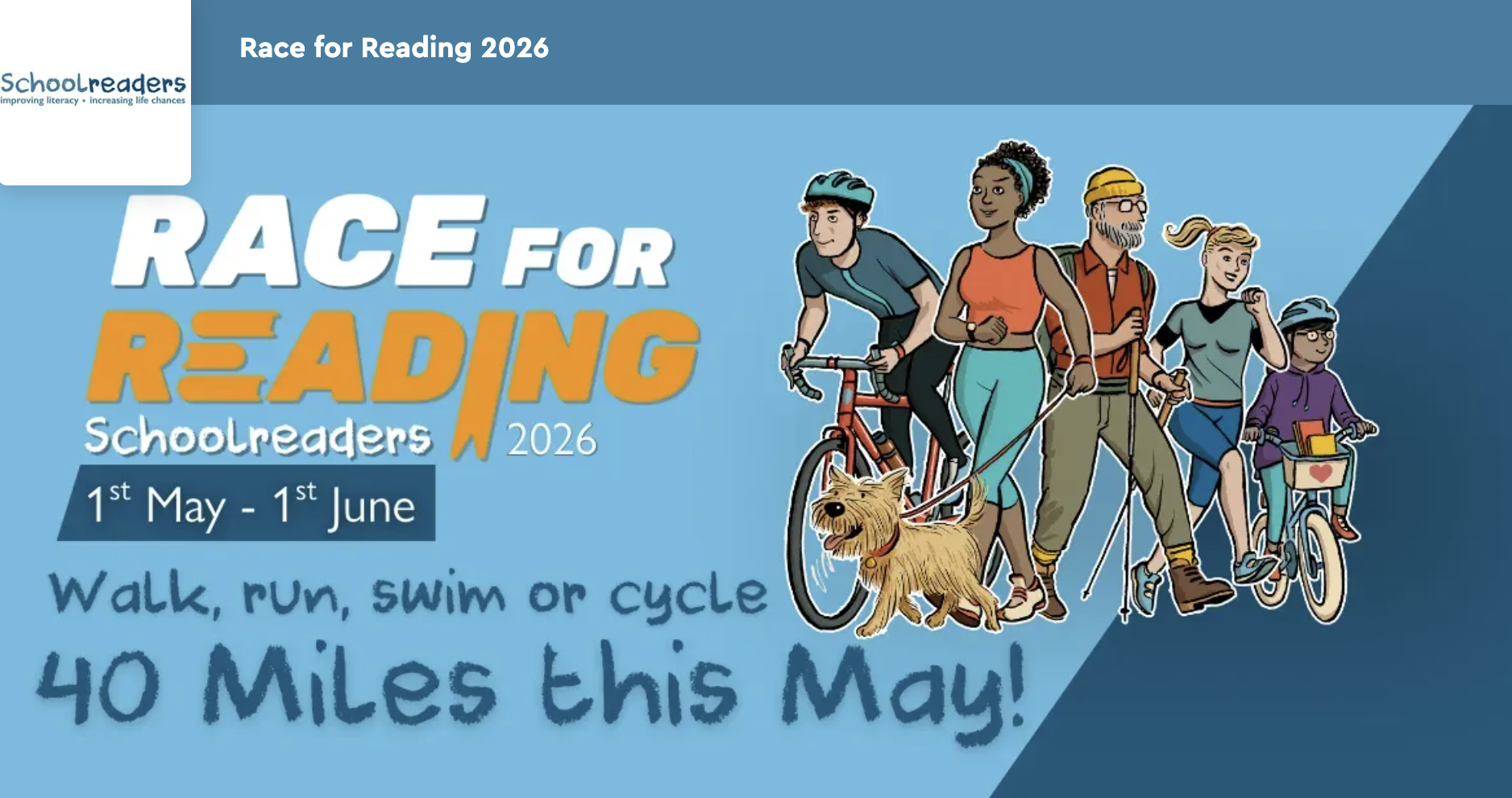
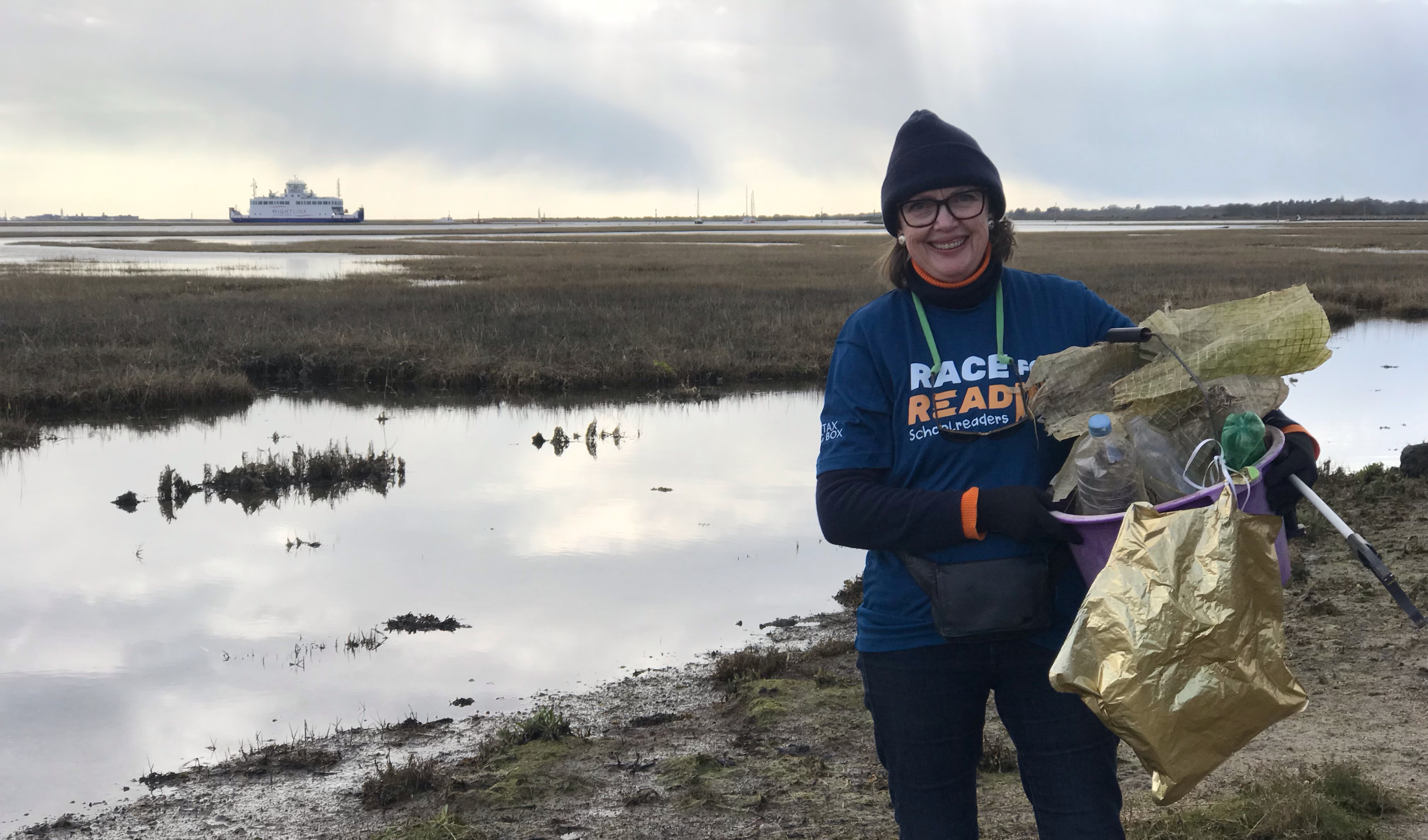
Sophie Neville taking part in Race for Reading in 2023
I’m raising funds for the UK charity Schoolreaders by litter picking as I walk along the South Coast of England this May. Tax efficient donations can be received on my Race for Reading page where I will keep a record of the distance covered. When going onto the event platform we recommend you set the fee for Enthuse as £0. My company will double any amount you can give and make a real difference to providing child literacy whilst fostering a love of reading in the UK.
As an author supporter of SchoolReaders I act as their legacy ambassador and have taken part in a couple of Race for Reading challenges. A £20 note once floated towards a member of my team, which was encouraging.
Raising funds for SchoolReaders
My aim is to walk 40 miles, collecting flotsam and keeping a diary to record anything weird I find along the way. When I took up the challenge in 2022, I came across all kinds of unexpected things.
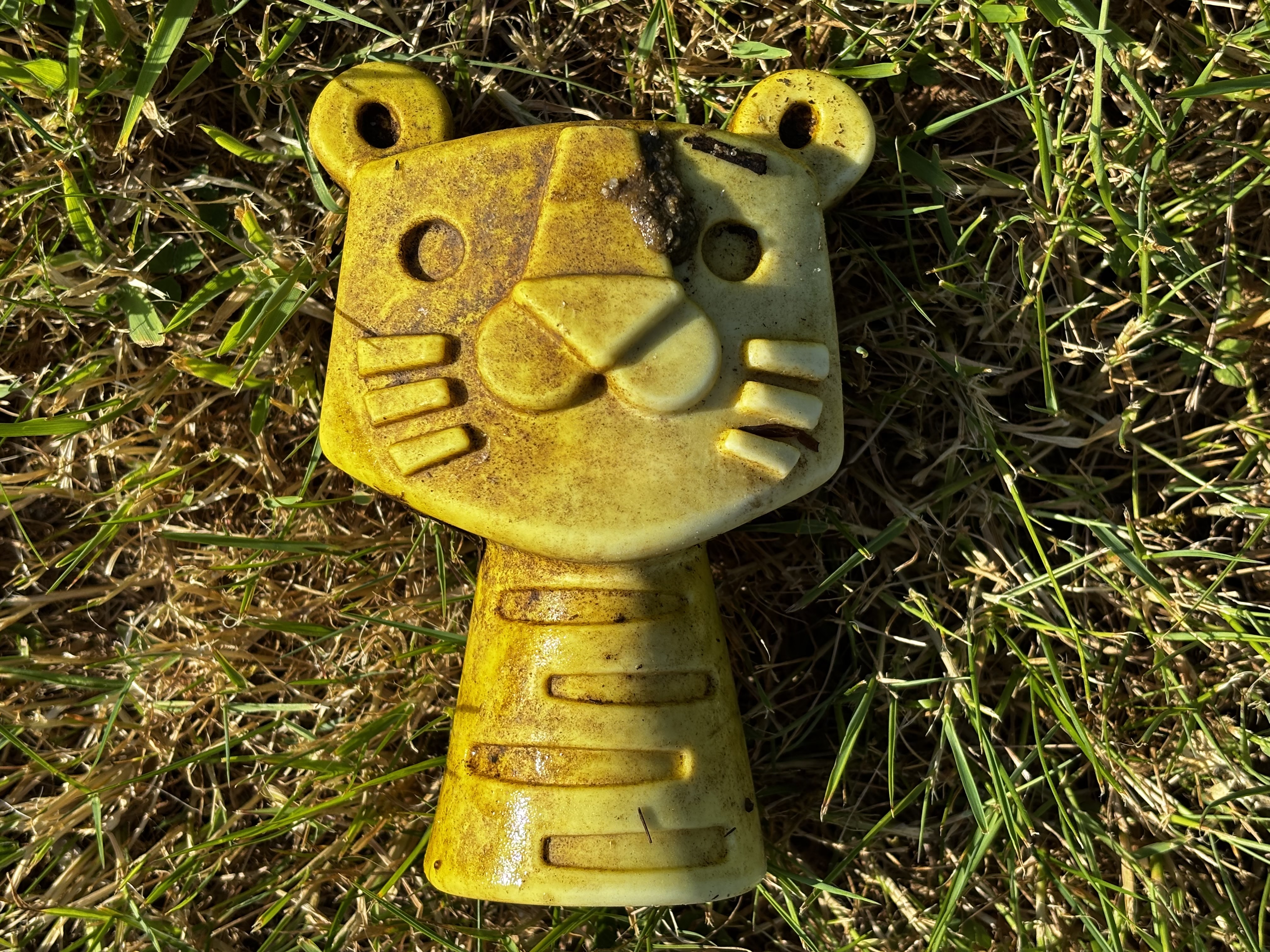
I’ve started my clearing rubbish along the estuary where I love, finding some pretty elderly items. This muddy tiger cheered me up.
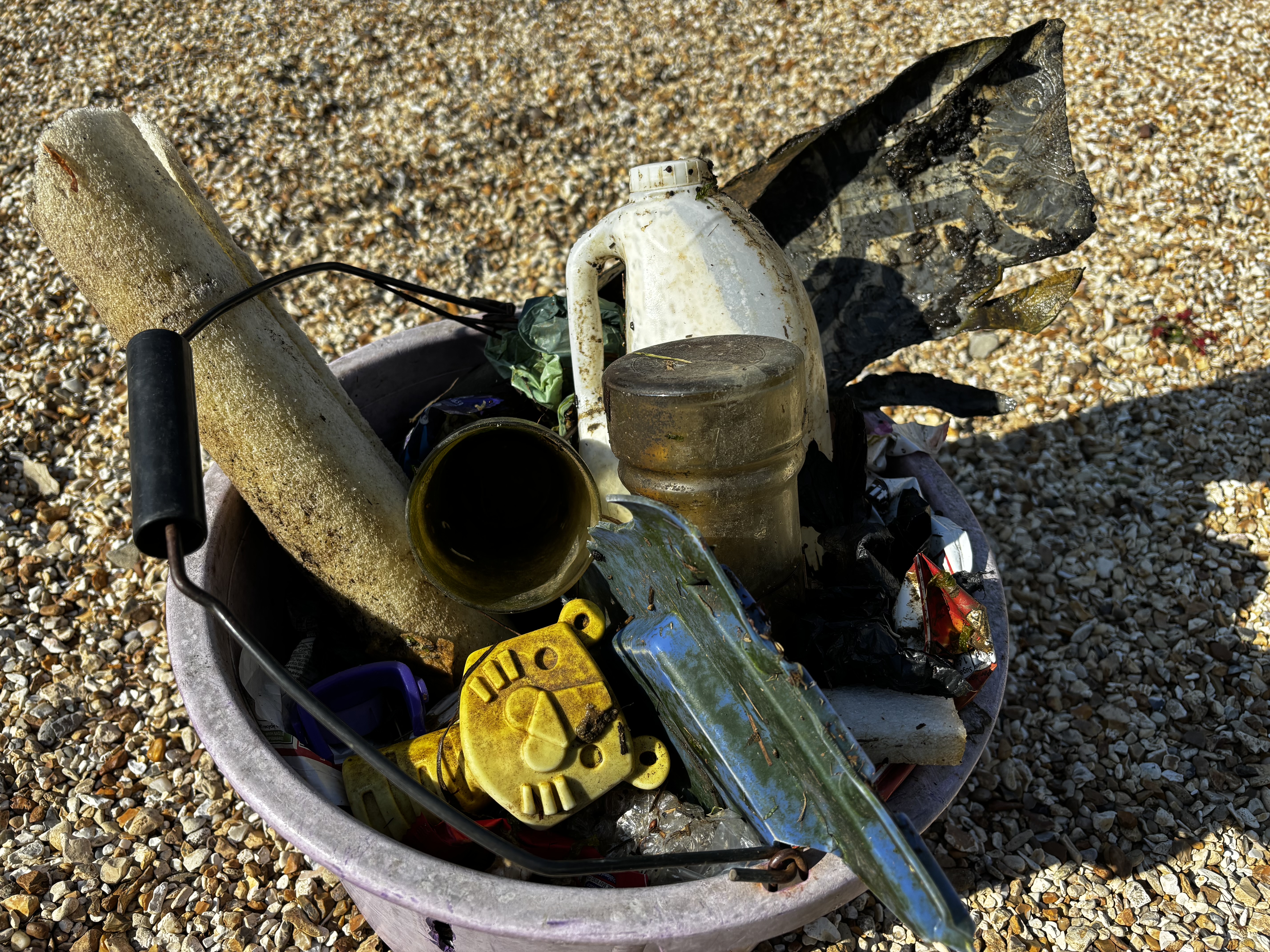
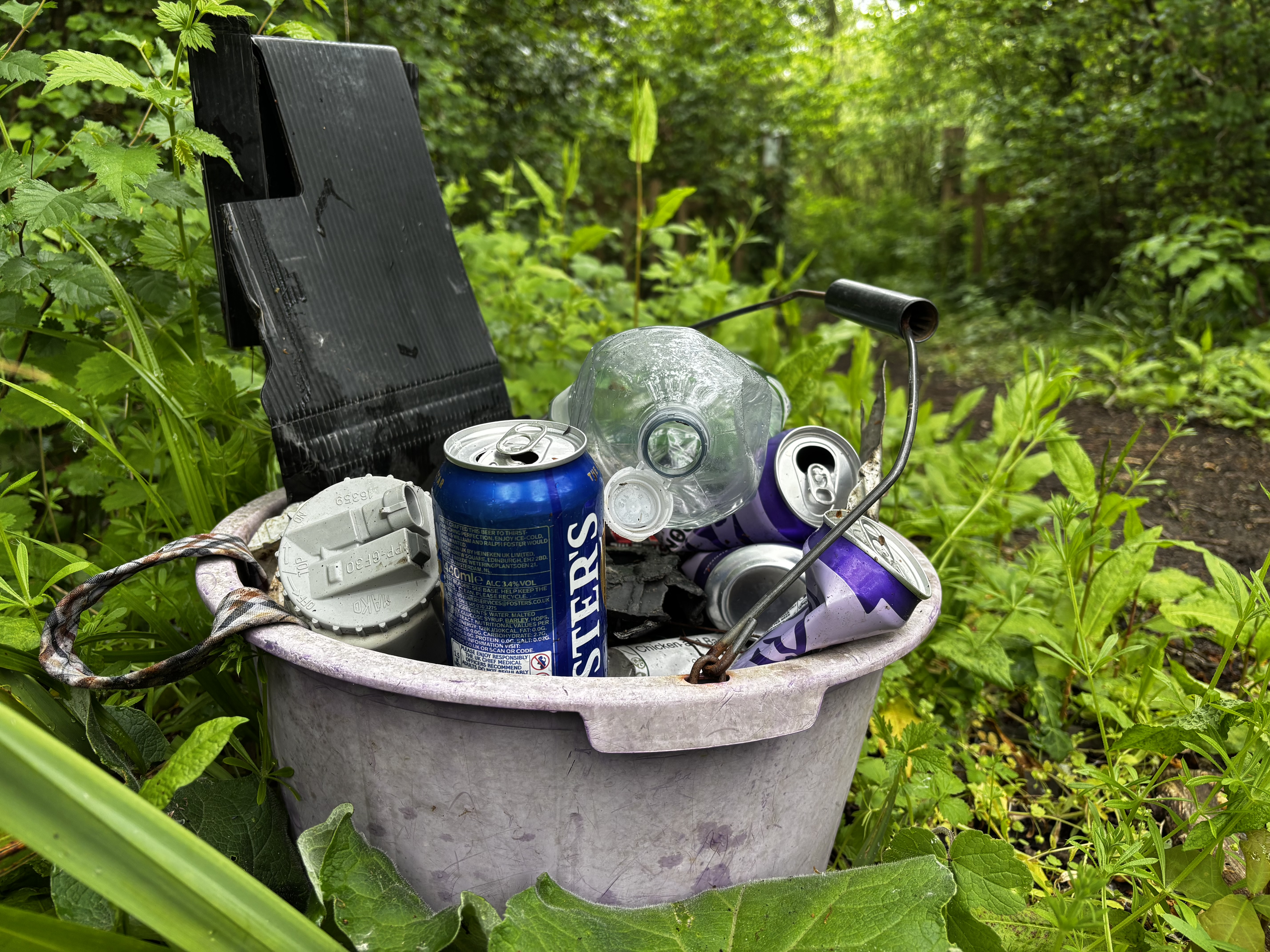
There is so much litter that I progress slowly. Some items can be difficult to reach. My mileage is low but one supporter, Chris Holmes, reckons that one large bucket = a mile of litter picking, which is about right. They can weigh up to 4Kgs and I can’t carry much more.
I can add a buckets-worth of clear plastic bottles that went into a recyling bin enroute.
This bucketful was collected above the tideline but includes items brought down by floodwater that were languishing in out riverine nature reserve posing a threat to wildlife.
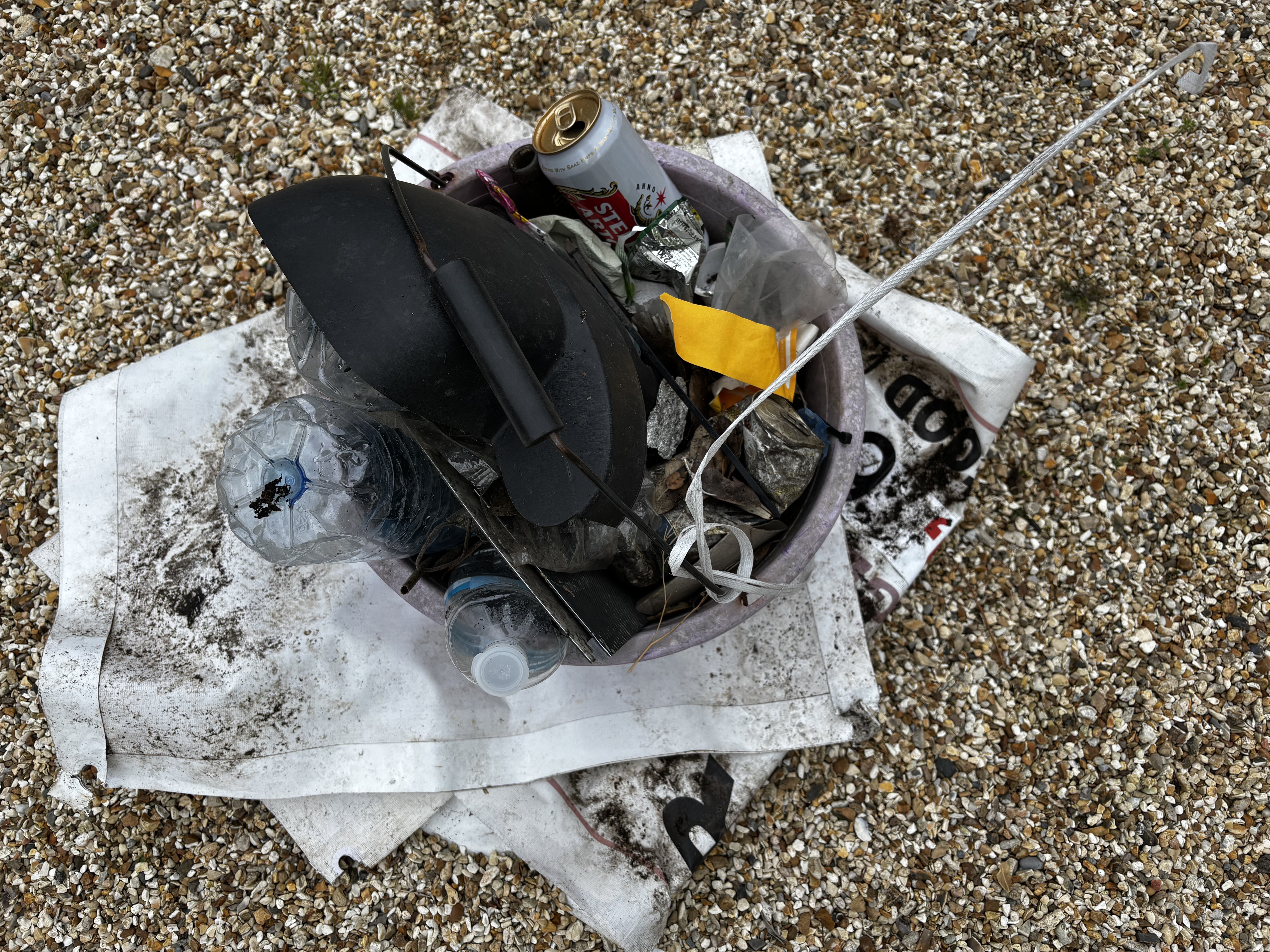
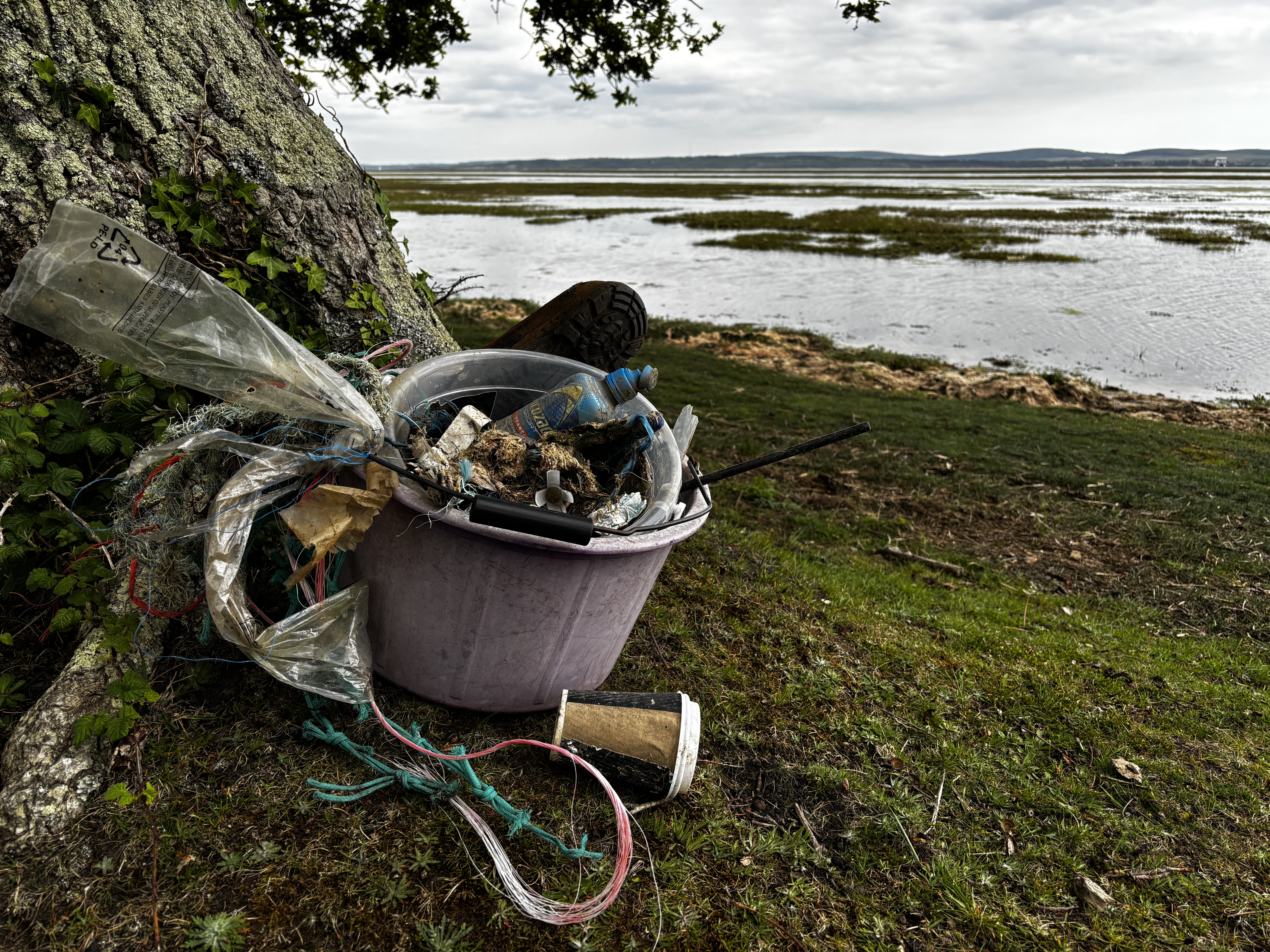
Once on the foreshore I find rope – short lengths of PVC including torn fishing nets and lengths of fishing line. There are so many tiny pieces of plastic flotsam that I begin to count. I filled this bucket with 105 items and tucked in another thirty on the way back. I only covered about 2 miles but was drained of energy.
The disposable cup had a pebble inside. If it’s owner had planned to sink it, they then replaced the lid and it landed on this all but forgotten shore.
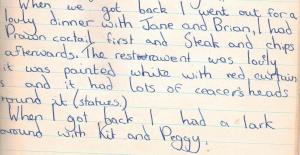
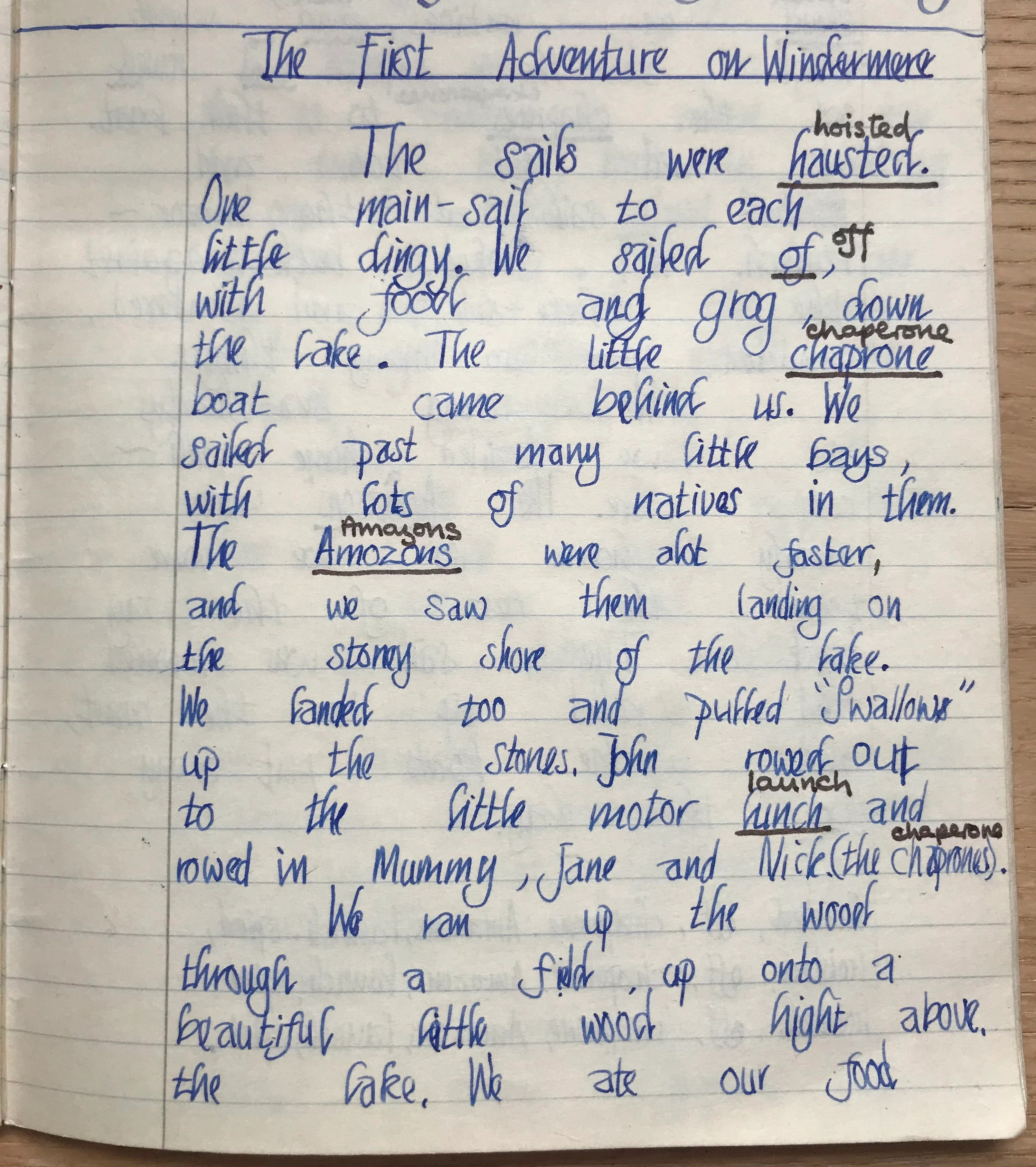
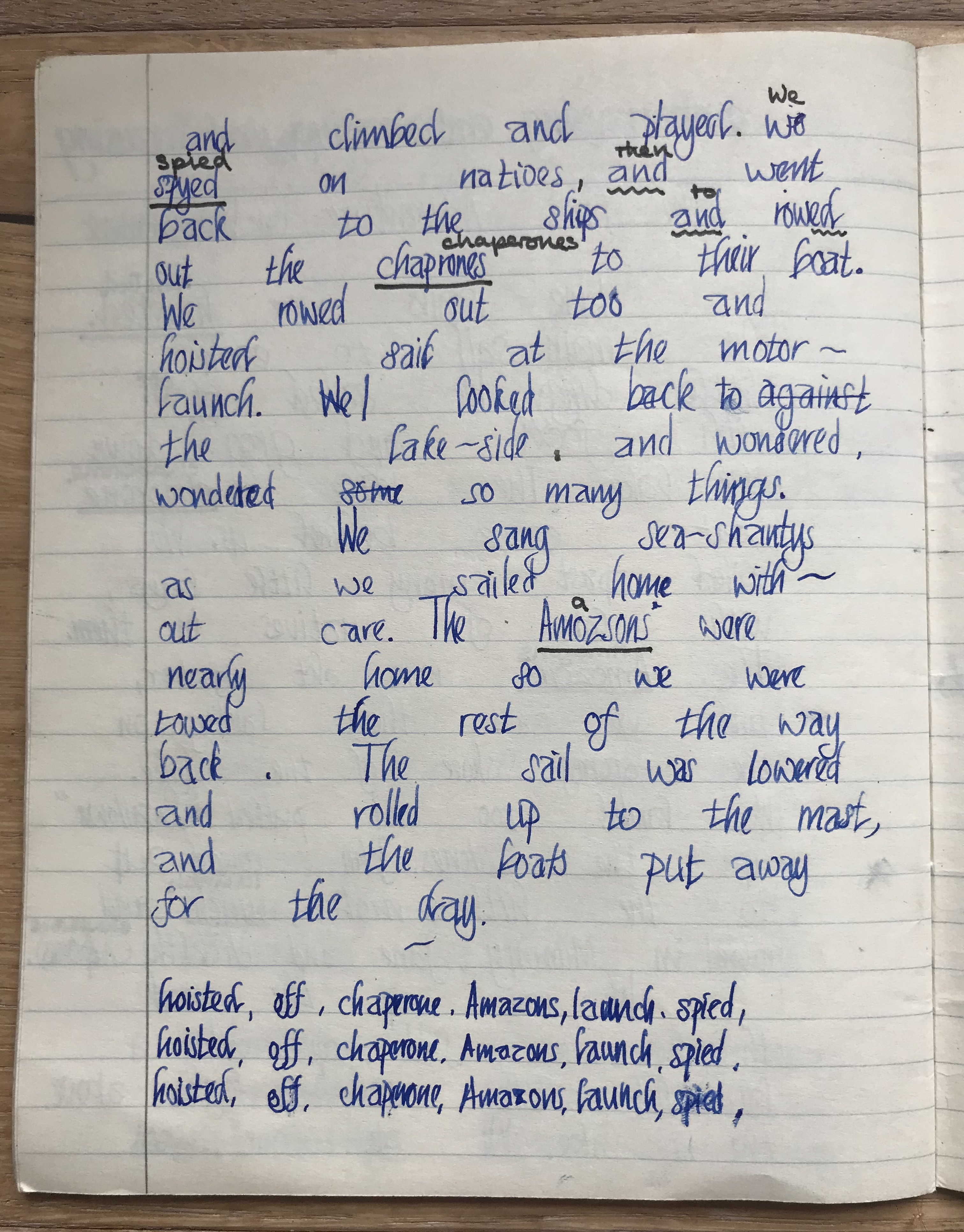
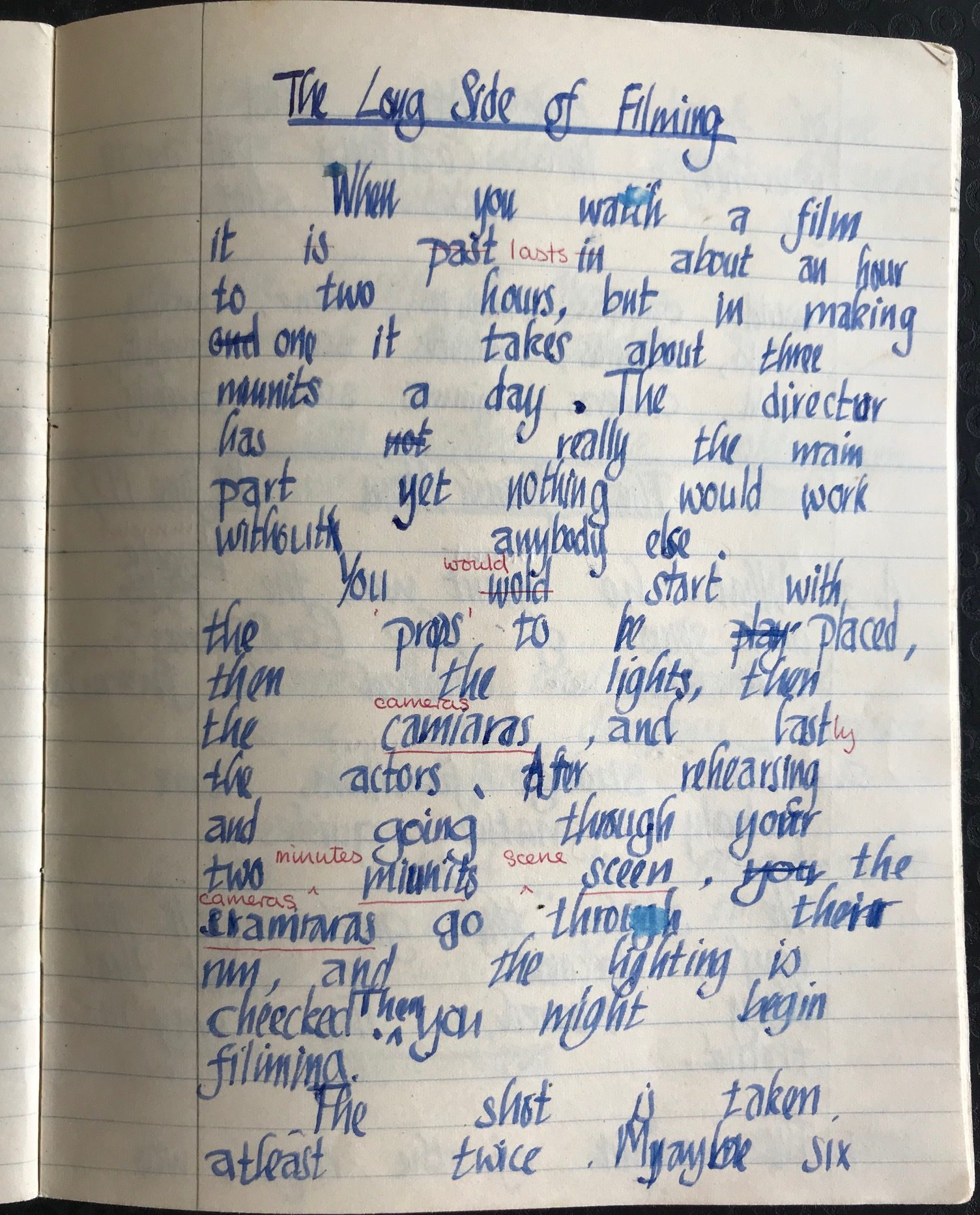
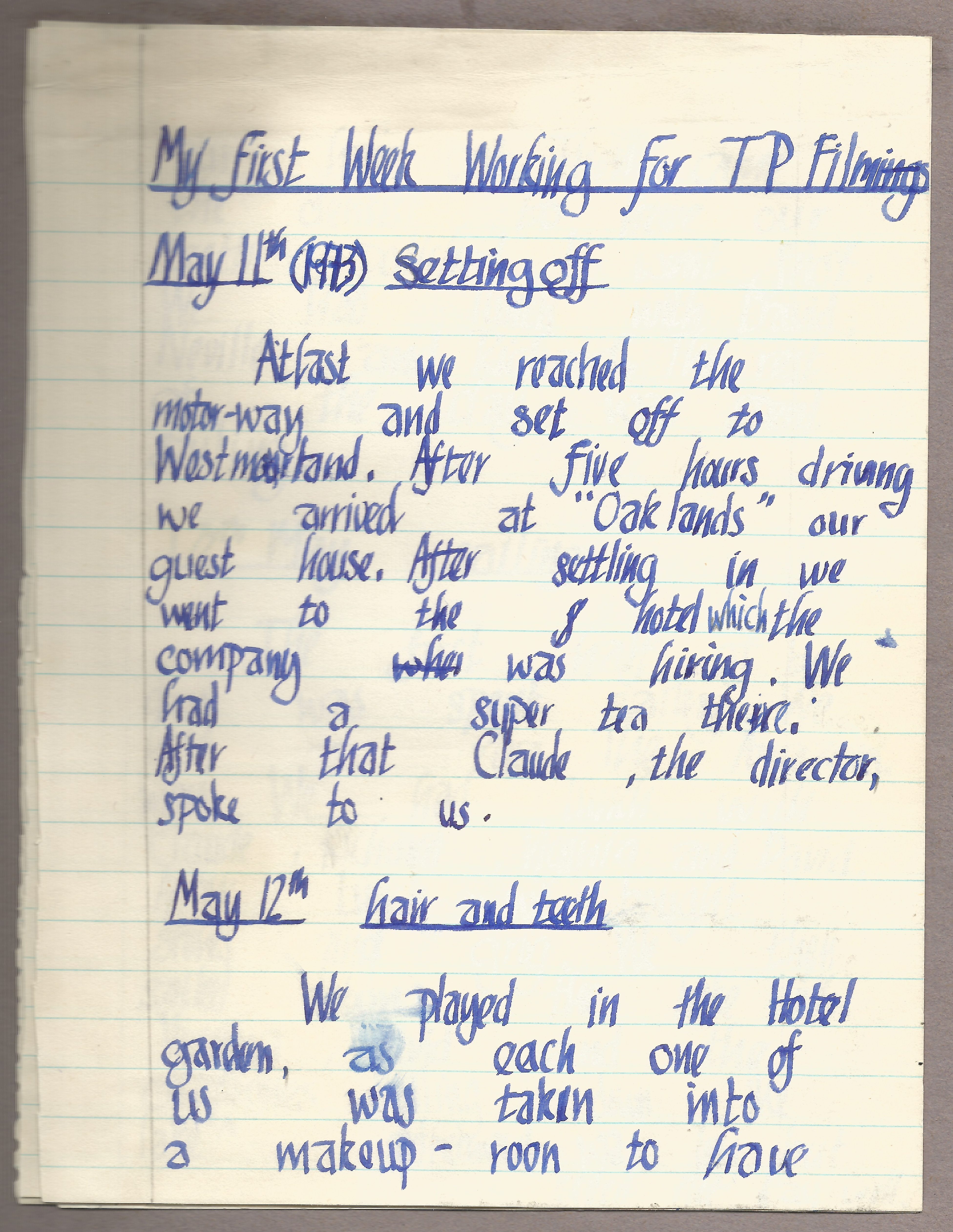
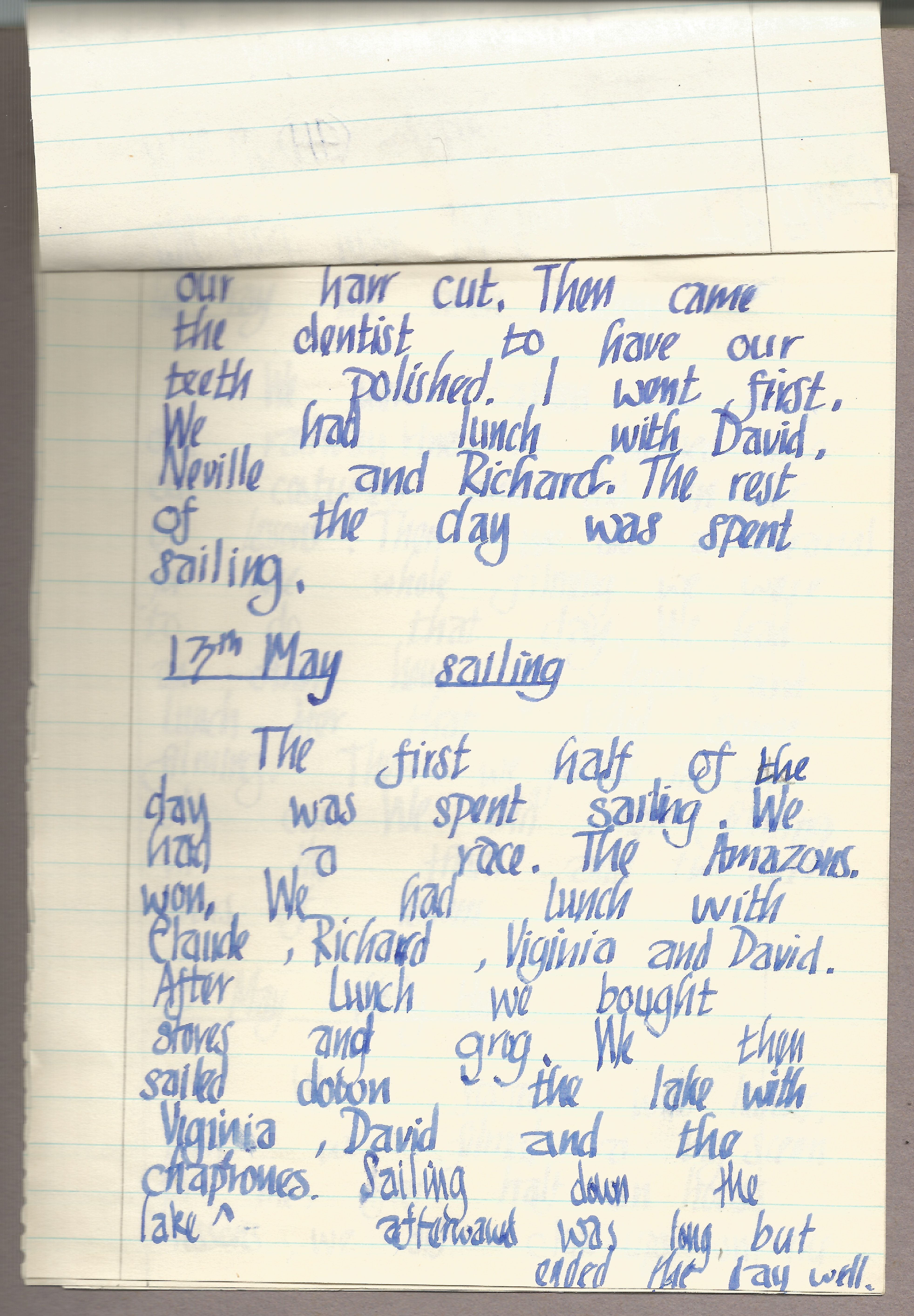
Look what I’ve found! A school exercise book containing essays written whilst we were filming on location in the Lake District making the original movie ‘Swallows and Amazons’ in 1973. I must have been asked to write about the first time we sailed the dinghies on Windermere.
Preparing for filming Swallows and Amazons by sailing on Windermere
I was twelve years old. Whilst the trans-Atlantic sailor David Blagden taught us how to handle Swallow and Amazon, my spelling was neatly corrected by Margaret Causey, a local supply teacher employed as our tutor. Since all six members of the cast were under the age of sixteen, we were legally obliged to complete at least three hours of schooling a day. This was tricky logistically, especially while filming out on the water.
My mother decided it would be acceptable if we completed fifteen hours a week, decided sketching action props would count as Art and that learning to sing sea shanties would do for Music lessons.
Since I was interested in the technical side of movie making, Mrs Causey had me recording my first impressions. I battled to express myself at first.
A school essay written in 1973.
I’m not sure how my composition fitted in with the National Curriculum, but the director asked if we could be taught about a certain aspect of history in line with Arthur Ransome’s story.
Let me know if you’d like to see more.
First draft of a diary kept whilst filming ‘Swallows and Amazons’ 1974
My mother maintained that keeping a diary could replace English lessons.
Preparing for filming ‘Swallows and Amazons’ in 1973
Since this looked promising, journals were purchased and we began to keep daily accounts of who we met, what we did, and indeed what was said at the time, pasting accompanying artwork in to scrapbooks. How this enabled me to write my end of year exams I’m not sure, but I have a school report:
I doubt if the nuns at my convent ever saw the diary I kept but the result was a pretty comprehensive record of how we spent our time on location. I read extracts in the audio book of ‘The Making of Swallows and Amazons’, now available on Audible.
After being lucky enough to play the heroines in both ‘Swallows and Amazons’ and an adventure movie called ‘The Copter Kids’, a transgender role came my way.
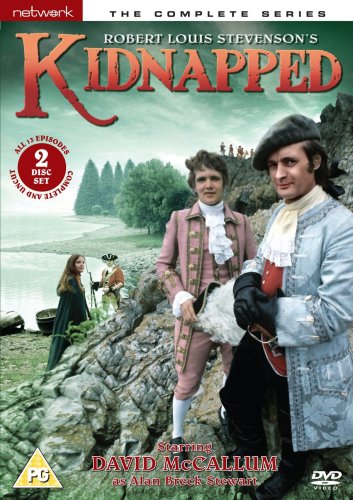
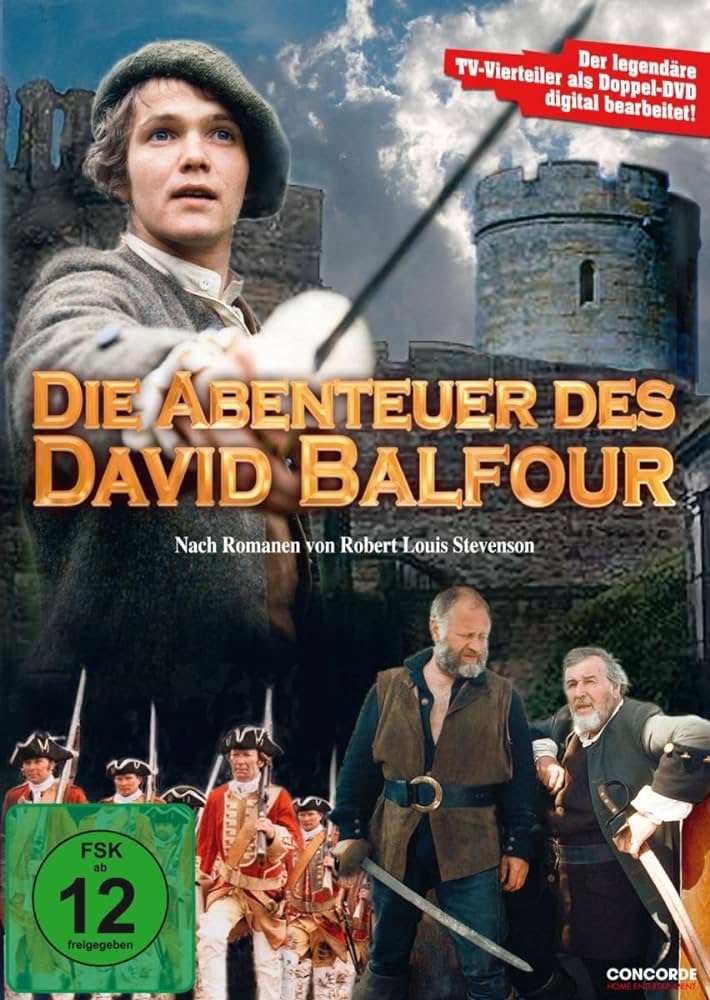
I was asked if I would mind playing a Dutch messenger boy in ‘Kidnapped’ produced by HTV and Tele München Fernseh Produktionsgesellschaft (TMG) in 1978. It was a high profile television series at the time–a TV movie made in glorious locations, but my part was tiny.
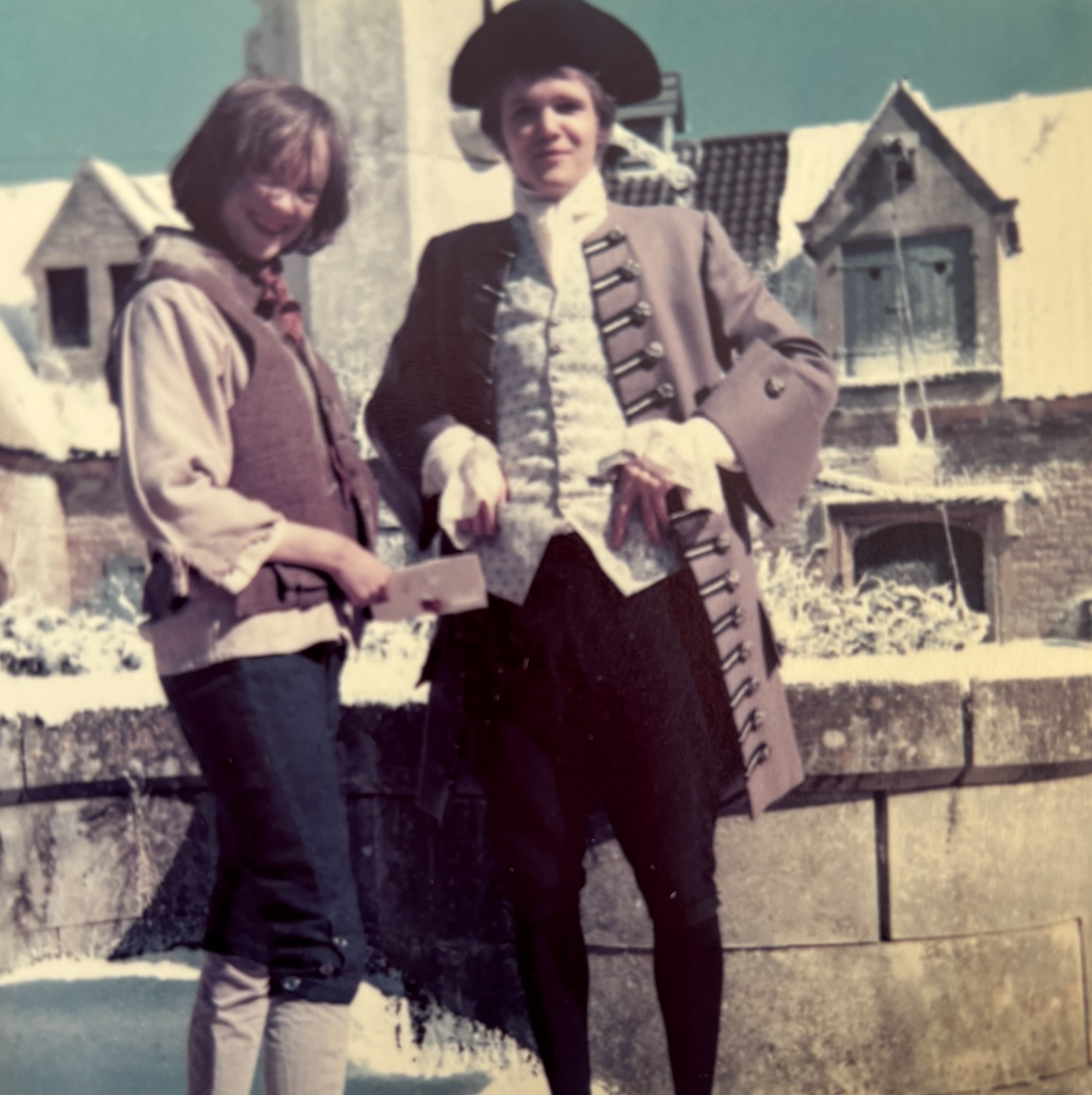
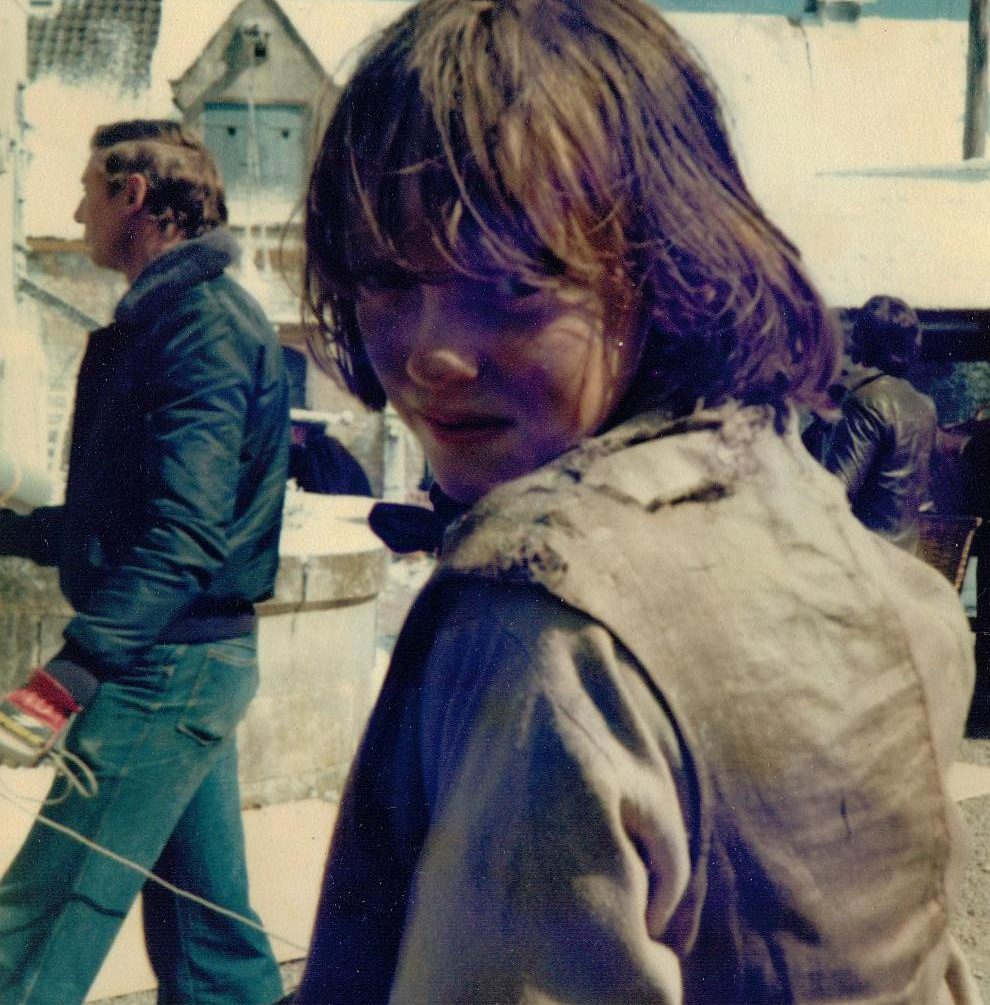
Appearing as a messenger boy in ‘Kidnapped’ produced by Patrick Dromgoole for HTV.
I was literally given five minutes notice. They happened to be using a film location in Bisley, near my home in the Cotswolds, and had forgotten to cast the boy who brought a key message to the hero played by the German actor Ekkehardt Belle.
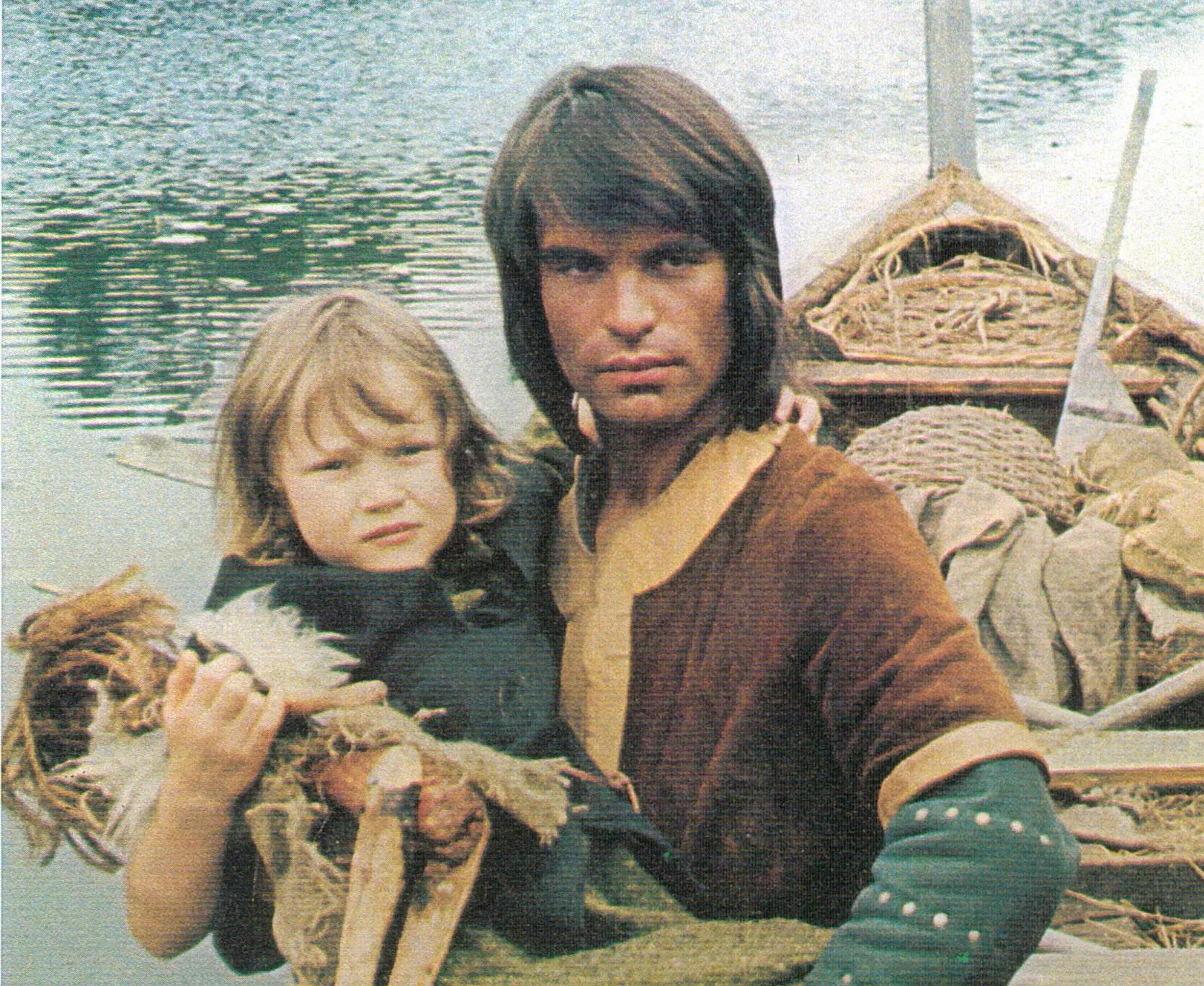
The formidable producer, Patrick Dromgoole, knew my little sister Tamzin had played Elka in ‘Arthur of the Britons’, which he’d produced in 1970. Tamzin had been carried out of a Saxon longboat in Oliver Tobias’s arms and rode over the hills with Michael Gothard.
Tamzin Neville with Oliver Tobias in ‘Arthur of the Britons’
Looking back, Patrick Droomgool may have asked if Tamzin had been available but any child under sixteen, including his own boys, would have needed a licence to act from the Department of Education. These took at least six weeks to come through. Being seventeen I had no need of one and yet was in the rare position of possessing an Equity card. Did my smart London agent broker the deal? No, my mother did. I knew the Robert Louis Stephenson’s story, put down my A’Level revision and agreed to take on the little part. I had nothing to lose.
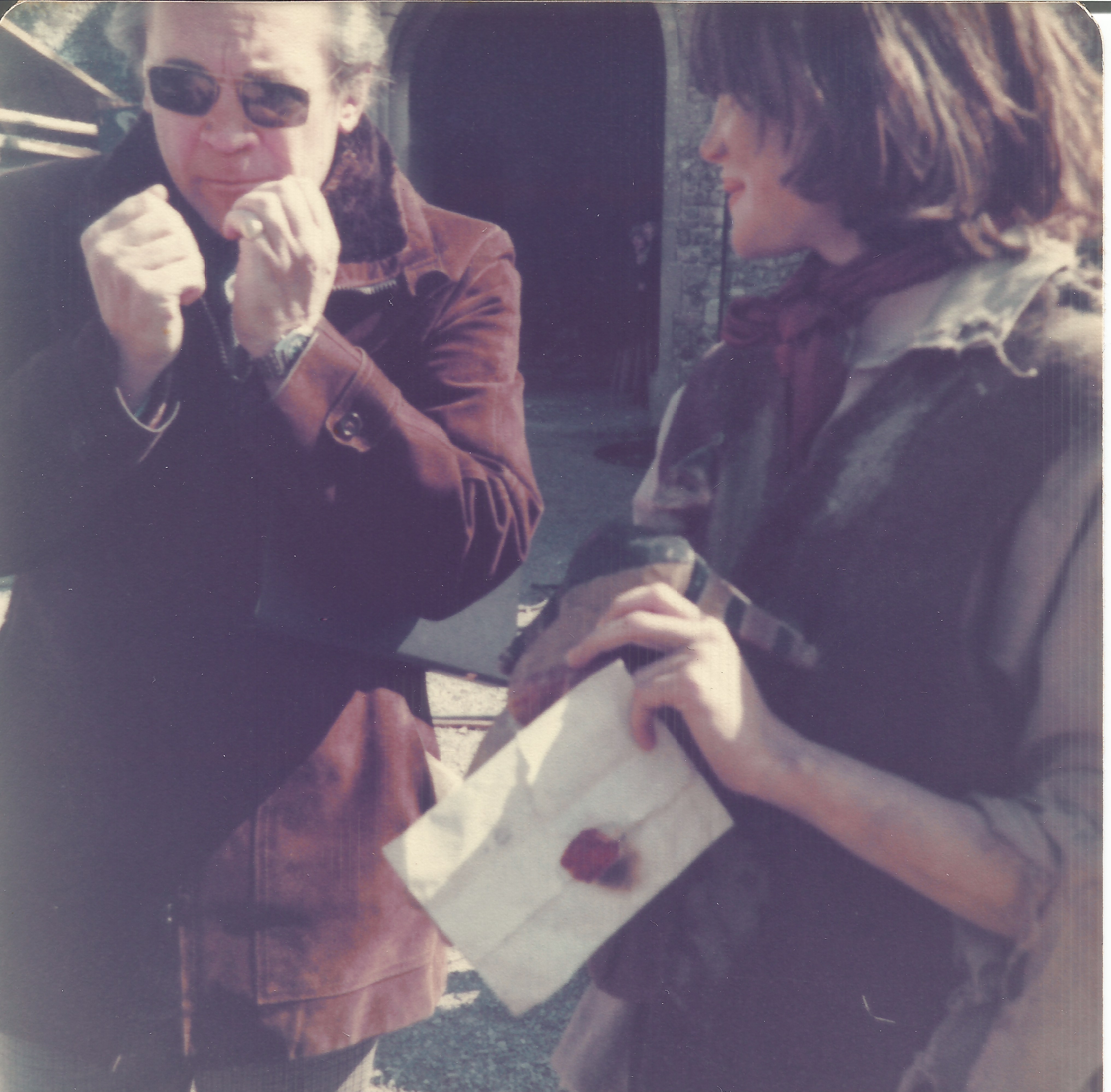
Sophie Neville in ‘Kidnapped'(1978)
The Scottish actor David McCallum was on set, starring in the series as Alan Breck Stewart, the Culloden hero. I had seen ‘The Great Escape’, ‘Colditz’ and knew him as The Invisible Man but had no idea that he had played The Man from U.N.C.L.E., a role that had made him something of a sex symbol in America. He is said to have received more fan mail than any other actor in Metro-Goldwyn-Mayer’s history. He went on to star in ‘Saphire and Steel’ with Joanna Lumley and played the pathologist Dr “Ducky” Mallard in 460 episodes of ‘NICS’, the popular American crime series on CBS-TV. I gather he really disliked being famous. I was surprised to find that at 5’7″ he was shorter than me.
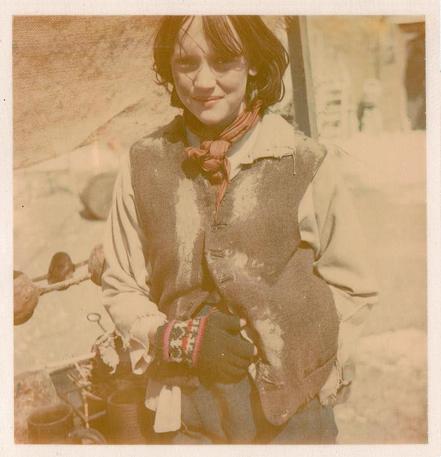
Ekkehardt Belle was only a few years older than me and gorgeous. He played the modest but handsome young David Balfour in search of his rightful inheritance. The ensuing adventure took him to the Netherlands where our scene was set. It was Sophie and the sex symbols – only I was made up to look like a grubby guttersnipe in tattered clothing and looked most unattractive.
My job was to dart across a courtyard and present the hero with an important message sealed with wax and wait for instruction before disappearing down an alley. I had to react to his response but had no lines, nothing to say.
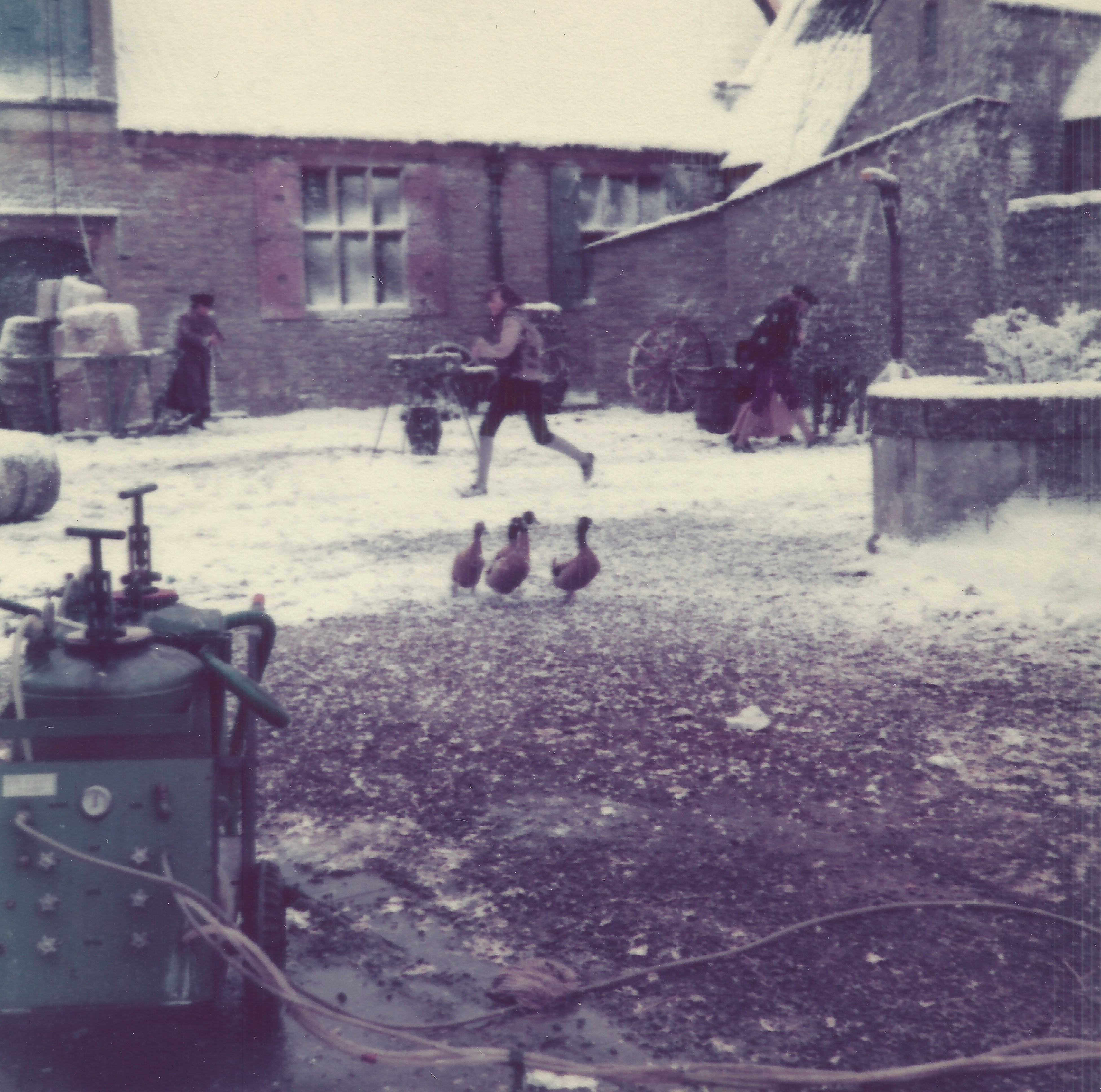
The only difficult thing was coping with the cold. It was freezing and I was dressed in very little. No thermal vest or longjohns were provided. The peculiar item in the left hand side of the photo above is a snow machine. Real snow would not have been unexpected. Patrick Dromgoole was sympathetic and offered moral support as we waited for camera track to be laid.
The scene took a while to shoot thanks to various set ups that included a top shot of me running though the snow as the end credits roll.
Sophie Neville as a messenger boy in ‘Kidnapped’. There were very few female parts in the epic series
‘Kidnapped’ can now be watched on Youtube. It takes you back to the ‘seventies but is pretty clonky. I had to sit through the whole series to find our scenes at the end of the story. You won’t be able to spot me. I recognise the location and can just see myself dashing though an establishing shot . The delivery of the message – once thought so vital – seems to have been cut. I do not appear in close up, I was given no credit. It was all for nothing, apart from the fact that I was paid rather well for a teenager.
The theme music was memorable. You can see me briefly with the ducks in a single shot after Christopher Biggins (playing the Bonnie Prince) sends David McCallum packing. Watch if you dare. It all looks so dated.
To finance my way through university, I registered with an agent in Bournemouth called Lenny and appeared in the background action of about sixty dramas including ‘Tenko’ and ‘Agatha’. You can read a little more about my brief career as a film extra if you scroll down on this website here. It was a good, if humbling, way to gain experience in film and television production, but I never worked with David McCallum again. I can’t remember any more sex symbols but I played a guest at ‘Murder at the Wedding’ with Christopher Biggins, and found myself in Ronnie Barker’s arms. That was fun.
I’ve written more about my adventures in film and television in my book ‘Funnily Enough’, which is now available on Audible and other audio book platforms.
Funnily Enough – the paperback with black and white illustrations
Sophie Neville as Titty – a photo montage of put together by a fan of the film
Google my name and you will come across rather astonishing newspaper headlines ingrained in the internet’s listing system. They are remarkably popular articles. I woke one morning to a comment from Australia alerting me to a peTITTYon in the Daily Telegraph – you could cast your vote online ‘More support for Titty!’ was one cry.
Everyone, it seems, wants to know what it is like to be called Titty.
It is a titualar title in that I have no power. I can do little more than respond with good humour to those who see me as a living representative of ‘Swallows and Amazons’. Like it or not, letters, emails and messages keep arriving addressed to Titty. They are all wonderful, some so enchanting they have been kept along with the old black and white stills taken on location. I attempt to answer each one.
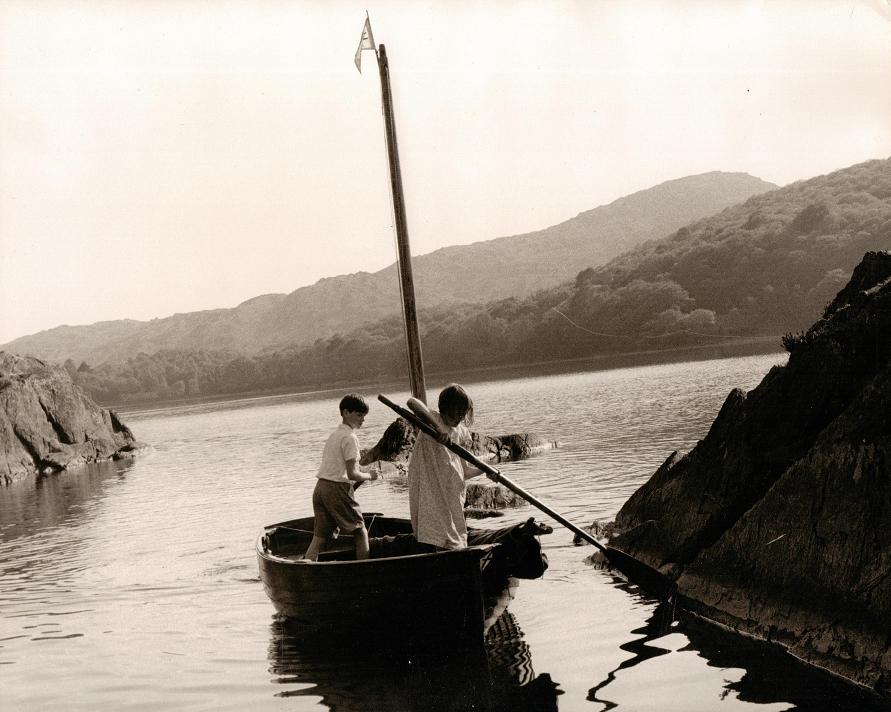
Simon West as John and Sophie Neville as Titty on location on Peel Island, 1973
Having been known as Titty since 1973, I automatically respond when the name is called and wave back, as I’m sure the Able-seaman would. It is quite fun seeing the reaction of passers-by if children call out ‘Titty!’ when they see me coming, but as one church warden pointed out, ‘At least your real name is not John Prescott.’
I found there was a Facebook group called ‘Titty from Swallows & Amazons is one hot cookie.’ When I asked to join the group, all the other members fled. You can see for yourself. It is still there. I am pretty sure they were a group of fashion students – or hope so.
Sophie Neville as Titty Walker
What creepy people don’t seem realise is that I can see the words typed into search engines that bring people to my own website. I’ve had some crackers. It was the navy blue gym knickers I wore to play the part of Titty that attracted quite a bit of unfortunate attention. I had to remove a few photographs featuring this particular item of my costume and talk about the green parrot instead. Children often ask if I still have one.
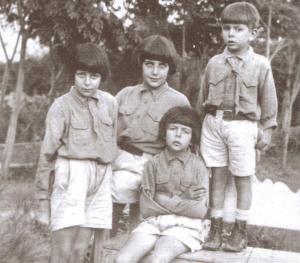
Susie, Taqui, Titty and Roger Altounyan in 1928
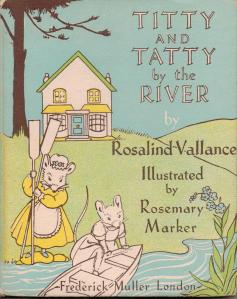
Although Titty Walker is a fictional character, with adventures of her own, she was inspired by a real child known to Arthur Ransome when he was writing ‘Swallows and Amazons’ back in 1929. I have written about her here and have more photos of her on this website. Titty Altounyan’s real name was Norah Mavis Altounyan but she preferred the nickname of Titty. Ransome explained in a note to Miss Joyce Cartmell that ‘Titty is short for Tittymouse which is what she was called when she was a baby. Nobody ever calls her anything but Titty now’. Tittymouse was a character in English folktale Titty Mouse and Tatty Mouse.
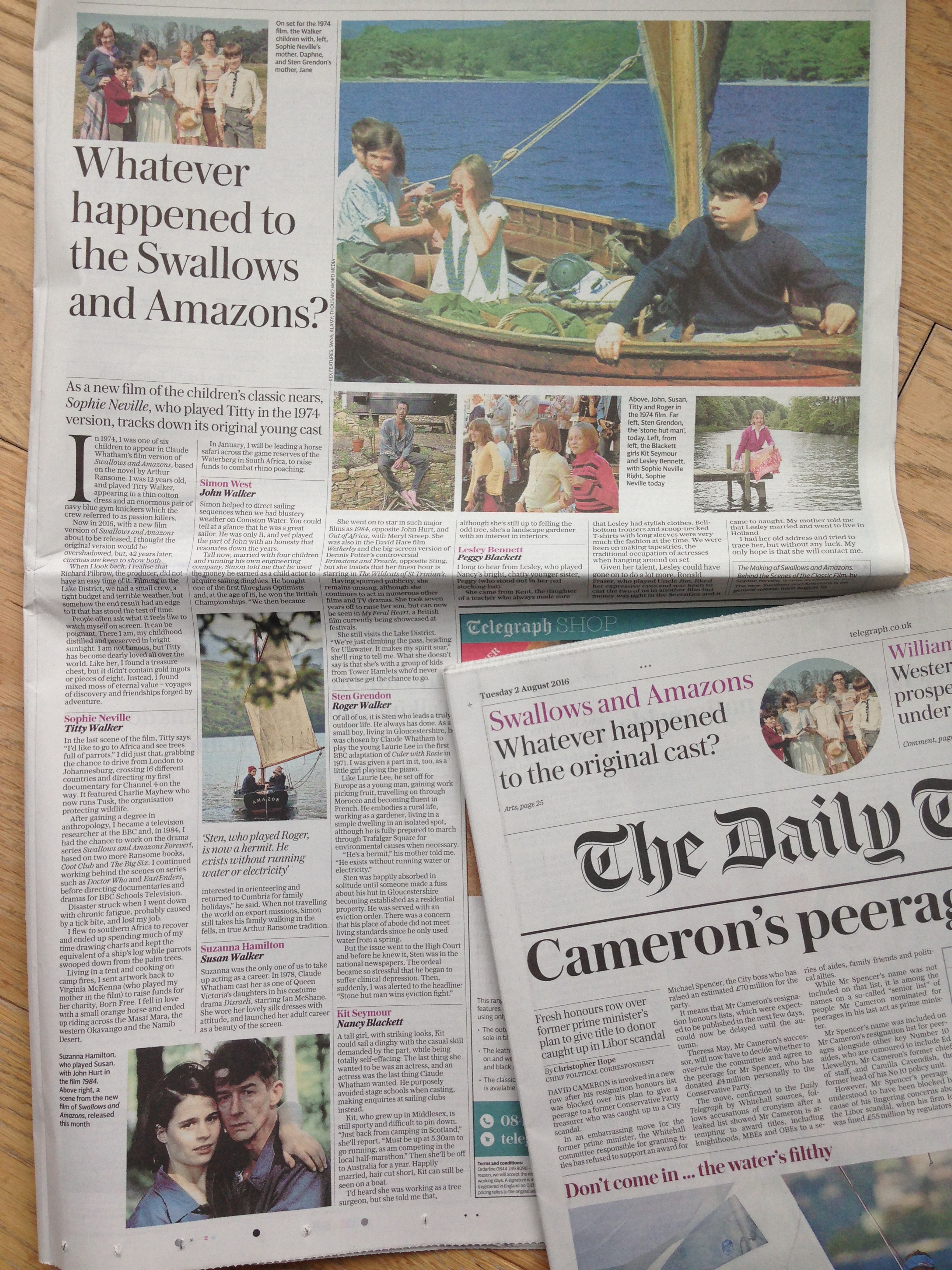
If anything, Titty Altounyan lived rather reluctantly with the fame that came along when the novel became a bestseller. Her descendants were upset to hear that the character’s name was changed to Tatty in the 2016 film adaptation of ‘Swallows and Amazons’. Her daughter was tearful about the lack of consultation and her niece outraged. They saw it as ‘history being re-written’. Ransome was a journalist but what he would have thought of the editor of the Guardian coining the ‘Titty Tatty’ story, which others called ‘Tittle-Tattle’ or the ‘Tittygate debate’, I do not know.
Simon West and Sophie Neville bring Swallow into the Secret Harbour on Wildcat Island
I learned that it wasn’t until after 1929, that the word ‘titty’ took on meaning as a mammary gland. The character’s name was changed to Kitty when the BBC made a black and white television serial of the book back in 1962 when Susan George played the part. Ransome was still living in the Lake District at the time. He seemed to accept the name change, but loathed additions to the story-line and the attitude of the director who had wanted to blast rocks from the entrance to Peel Island on Coniston Water. As you can see from an earlier post, I was contracted to play the part of ‘Titania’ in the movie made in 1973, but the name TITTY was typed throughout the screenplay. Mrs Ransome was the script editor.
Sophie Neville as Titty and Stephen Grendon as Roger rowing to Cormorant Island
Ransome’s brilliance was that he made Able-seaman Titty, the little sister into the heroine of ‘Swallows and Amazons’. CS Lewis did the same by making Lucy Pevensie heroine of ‘The Chronicles of Nania’. It is not surprising that most little girls reading the story want to ‘be Titty’. They find the syllables easy to pronounce and don’t give a second thought to an alternative meaning to the name. It is accepted as genuine, and they tend to regard jokers as immature. ‘May I call you Titty?’ one five-year-old asked. What could I say? She knows that her cat has titties on her tummy but that’s not rude and it’s no reason to change the name in her eyes. I am assured that girls in the US don’t bat an eyelid. Boys may snicker at first but are soon swept away by the story.
The new audiobook
You can read about how I came by the part and what it was like to be on location in ‘The Making of Swallows and Amazons’ now available as an audio book.
The crossed flags my publisher asked me to draw (with permission) that were later used on the call sheet of the 2016 movie.