Since Classic TV Press published ‘The Making of Swallows & Amazons’ in 2014, a number of facts have floated to the surface. The most amazing recollection was one that occurred to my mother.
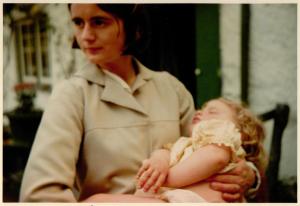
‘The letter inviting you to come for an interview for a part in the film was addressed to your father. He was working abroad when it arrived. I never, ever opened his mail but something urged me to open that one envelope. It was a good thing I did as he was away for three weeks and we would have missed the opportunity altogether.’ She was amazed by the contents and replied at once, sending a photograph to Theatre Projects. I think it was this rather miserable one of me wearing a Laura Ashley dress.
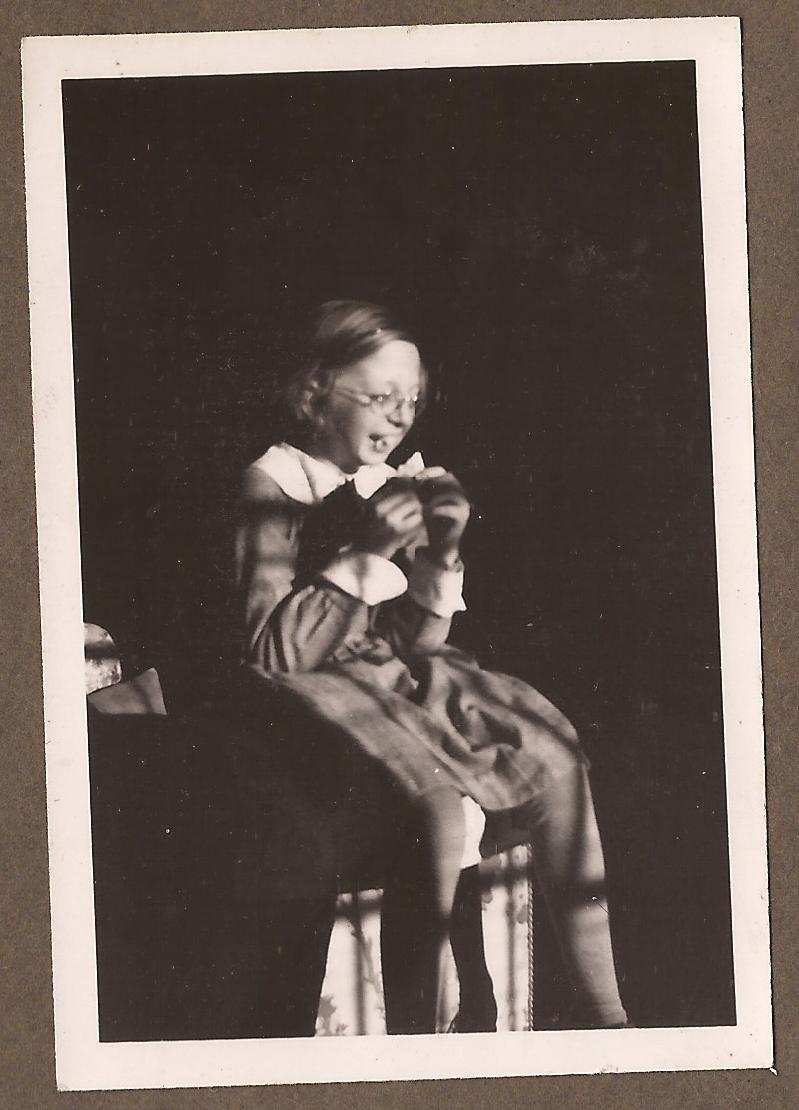
Sophie Neville in 1972
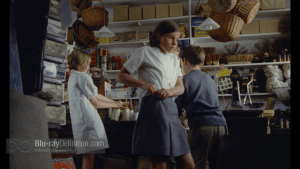
A date was made to meet the director. I now remember that I was taken up to Long Acre in the West End to meet Claude Whatham very soon after Dad arrived back from his business trip. We walked through Soho and visited a Chinese grocery store on the way home.
Daphne Neville on HTV in 1973
‘I was never paid to work on the set as chaperone,’ Mum told me. ‘Neither was Jane. We were just happy that our expenses were covered but it ended up costing me quite a bit as I had to travel back to Bristol to work now and again.’ She was working for HTV as a television presenter alongside Jan Leeming, who is currently appearing on ‘The Real Marigold Hotel’. For the photo of them both on an HTV West show, please click here
Jean McGill said she didn’t get paid for acting as the Unit Nurse, as far as she could remember, ‘But I wouldn’t have missed it for the world.’
Kerry Darbishire playing Nurse
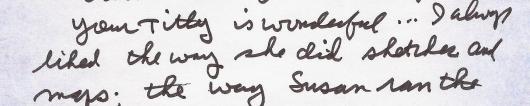
The most exciting thing was meeting Kerry Darbyshire, who played Vicky’s nurse, at Zeffirelli’s cinema in Ambleside for the 40th Anniversary screening of the film. I learnt to my horror that I had mis-spelt her name in the credits I gave the actors. All I had to go on was her signature in the back of my copy of the hardback book of ‘Swallows and Amazons’ where I’d collected autographs.
Kerry Darbishire’s signature
Kerry laughed, telling me, ‘I should have had more legible handwriting.’ She appeared in the film quite a bit. ‘It was a pity I wasn’t able to bring my own child. She was the exact same age and colouring as the little girl they found to play baby Vicky.’ Kerry was with us in the compartment of the train on day one of the shoot. ‘I found it very difficult to laugh with you when the train went into the tunnel.’ I couldn’t think what she meant at first but it was the laughter that followed Virginia McKenna’s line: ‘He’d say, “Just look at that scenery”.’ at the moment the train goes into a dark tunnel. ‘You children found it no problem at all, but I couldn’t laugh. I was too shy.’ Zeffirelli’s are next screening ‘Swallows & Amazons’ (1974) at 7.30pm on 2nd March.
I never knew the name of the snake wrangler – who brought the charcoal burners’ adder along, but Ken Foster wrote in recently to say it was his father, John Foster whose family farmed near Satterthwaite. He was once employed as an assistant at the fresh-water biology research establishment at Windermere and became a biological specimen supplier. You can read more about his unusual occupation here
To read more about the day the adder arrived on location, please click here.
John Foster & the charcoal burners’ adder
Simon West, who played Captain John, remembered that Claude Whatham often used to take us for a quick run before going for a take. It freshened us up and was appropriate when we had to run into shot, slightly out of breath.
One little girl wrote to tell me how she pulls her dress over her knees just as I did when I played Titty, as I got rather cold in a scene when were were first sailing Swallow to the island.
Sophie Neville with Terry Needham
George Marshall, the veteran film accountant, assured me we had a very talented film crew. Mark Birmingham, a film producer currently working on the bio-pic of Noel Coward, knew quite a few of the individuals working on ‘Swallows & Amazons’ and told me of the amazing careers they went on to lead. ‘Your Best Boy, Denis Carrigan, went on to run Sherperton Studios.’ Denis worked closely with Ridley Scott who made many great films there. ‘Sadly one of the other electricians died when he grabbed a live cable.’
Other people have written with interesting stories relating to the film locations.
‘The shop in Woodland Road was my grandfather Tom Kirkbride’s cobblers shop from 1930s to 1956,’ Brian Salisbury wrote. ‘After he retired, the wooden building became Stan Cropper’s sweet shop doing a roaring trade with the boys at St Mary’s Boys School just along the road and the newly built Droomer Estate.’ This was the shop where we bought rope for the Light House Tree that is now a barber’s in Windermere. To read more about this location and others in Windermere, please click here
Is there anything you would like to add?
Daphne Neville, Stephen Grendon, Suzanna Hamilton, Sophie Neville, Jane Grendon and Simon West.
Much of Arthur of the Britonswas shot at Woodchester Mansion where HTV constructed the huge lathe and wattle hall which comprised King Arthur’s seat.
Oliver Tobias as Arthur and Michael Gothard as Kai can just been seen standing outside the doors of the hall
We went to watch the filming soon after the fire scene, which opens the episode entitled ‘The Gift of Life’. My sister Tamzin was cast as Elka, the little Saxon girl who arrived unexpectedly by longboat with her brother Krist.
In the story, this was spotted drifting down the river – which is in reality the lake at Woodchester. Arthur insists they should be returned to their own people by Kai, portrayed by Michael Gothard, who rides off with them on his horse.
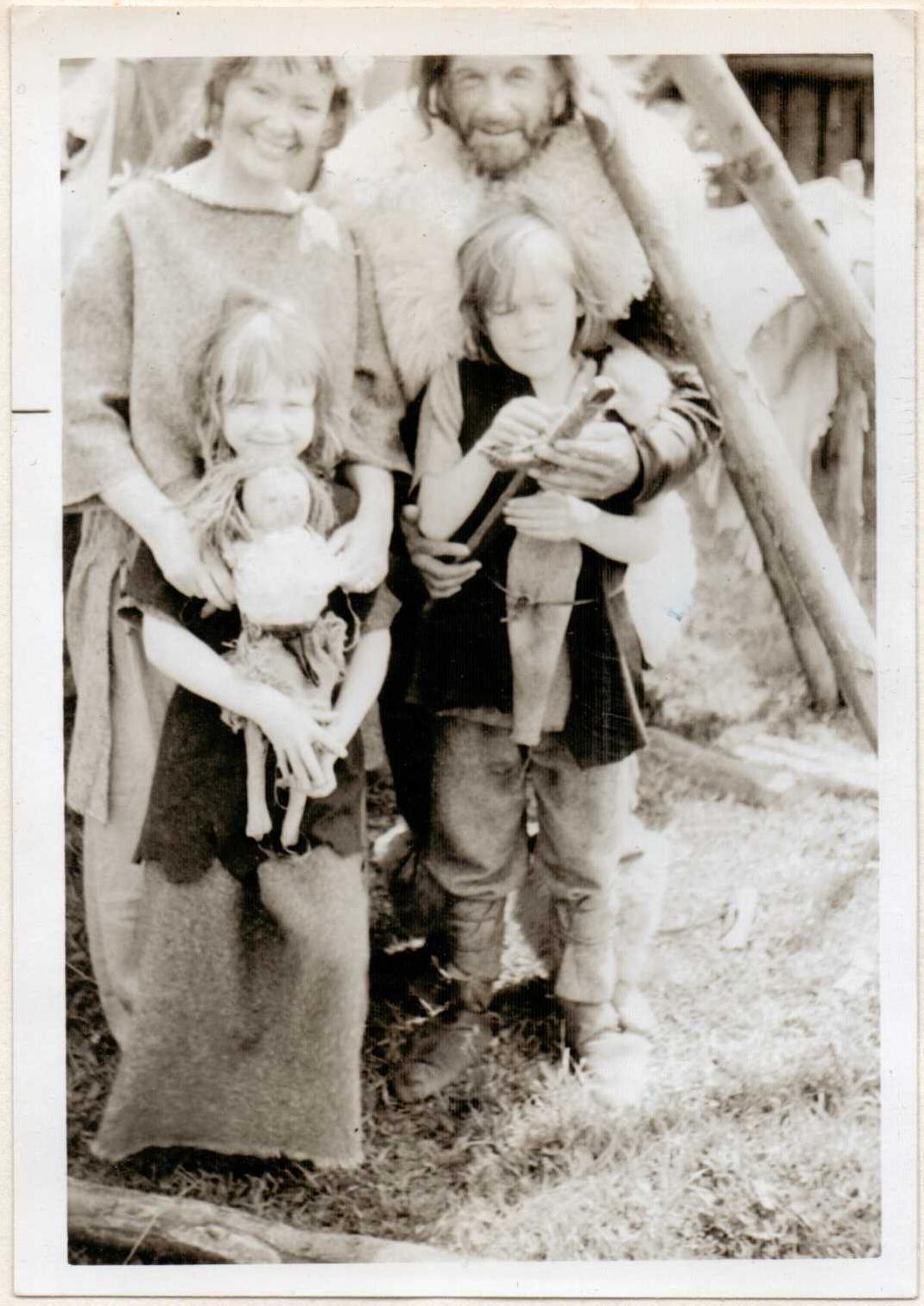
Shaun Fleming as Krist, Micheal Gothard as Kai, Tamzin Neville and Elka and Kerig the hideous doll whose head kept falling off
We were able to watch the episode being shot.
‘I want to feed the squirrels,’ Tamzin declared after they had been riding for a while. It was a line few have forgotten.
‘Oh, no!’
‘Oh, yes.’
‘Why couldn’t you feed the squirrels before you left?’
‘I did, but now I want to feed them again.’
I was fascinated in her costume, including her shoes which were made of hessian sacking.
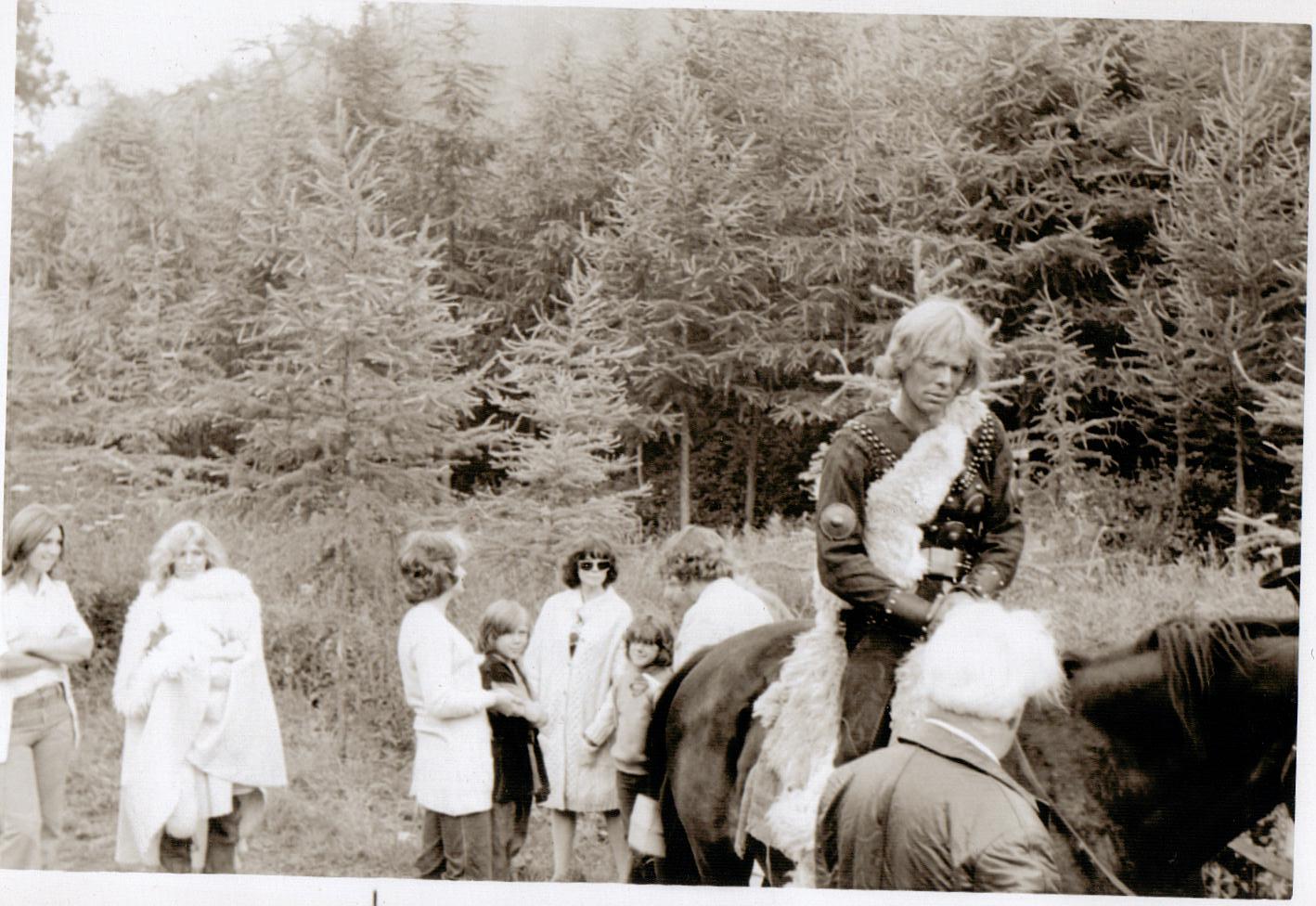
Sophie and Perry Neville watching their sister Tamzin having her dirty face seen to by a make-up artist during the filming of ‘Arthur of the Britons’ being made on location in Gloucestershire in 1972. Michael Gothard waits, seated on his horse.
I am not sure whether Michael Gothard had worked with children before but he seemed able to cope. No one had asked Tamzin if she could ride. It was a good thing she was used to large horses and had a naughty pony of her own. They set off at speed and her hessian dress was not exactly ideal riding wear.
Shaun Fleming was excellent as her brother and managed to cling on behind the saddle as they charged across the hills, which can’t have been easy. The secret was that he acted under his mother’s maiden name instead of his real surname.
Daphne Neville with her daughter Tamzin Neville who played Elka and Geoffrey Adams who played Hald with Shaun Fleming as Krist in ‘The Gift of Life’
Tamzin was then asked if she could whistle while she was ‘feeding the squirrels’, or having a pee as we would say now. It was demanded by the script.
No one had asked her in advance if she could whistle. This was tricky as the tooth fairy had recently visited her in a big way.
‘I couldn’t even whistle when I had all my teeth.’
I appeared as the Saxon girl with blonde curly hair seen working in the fields with Heather Wright when the children returned to the Saxon village. While Heather was in lime green, I wore a gold-ish coloured top and plum skirt with no shoes. You can see me hobbling across the end of the field which was full of thistles.
My other sister, Perry, was barefoot too. My mother, as a Saxon woman with short fair hair, (photographed above) virtually carried her into the village after Tamzin and Shaun.
It had been decided that, on the whole, Saxons were blonde, Celts were dark-haired like Oliver Tobias, who played King Arthur. It wasn’t until I did an Ancestry.com DNA test in 2022 that I discovered my heritage was almost 100% Celtic – Scots/Cornish/Irish/Welsh with a little Danish thrown in.
There were a number of weapons on set that intrigued us as children. We all wanted to learn how to use them. Oliver Tobias began to teach us sword fighting, however there was an accident on set which put a stop to this. One of the actors was having his boots sorted out by a wardrobe assistant when he casually swung his axe. Although it was just a blunt prop, with no edge to the blade, it went into her head, resulting in a four inch gash across her scalp. He was devastated. It was a complete accident. The wardrobe assistant recovered but it was a sobering incident and great care was taken when handling the props afterwards, even though they seemed blunt and harmless.
Fifty years later this series is still treasured by many. It had such a strong cast. Heather Wright went on to star in The Bellstone Fox with Bill Travers and Dennis Waterman and in the 1976 movie Shout at the Devil with Lee Marvin, Roger Moore and Ian Holm.
Geoffrey Adams was terribly well known at the time, as for years he’d played the part of Detective Constable Lauderdale in the long-running BBC Police series Dixon of Dock Green appearing with Jack Warner in nearly 300 episodes.
Shaun (Fleming) Dromgoole went to work in film production on a number of well known movies including American Gothic and The Woman He Loved, about which starred Anthony Andrews and Olivia de Havilland and Jane Seymour as Wallis Simpson.
Woodchester Mansion, the vast house built of cut stone yet left half-finished, was eventually sold for £1 to Stroud District Council. My father became a Trustee of the Board that decided its future.
To read more about Tamzin’s acting career please see this previous post.
Shaun Fleming, Tamzin Neville, Sophie Neville , Jenny Fleming, Kerig the doll and Daphne Neville in 1972
The producer, Patrick Dromgoole was absolutely prolific, producing a huge number of classic television dram serials including The She Wolf of London and The Clifton House Mystery, which my mother appeared in as well as Robin of Sherwood . Her drama pupil Robert Addie played Sir Guy of Gisbourne so convincingly in that series he became hated throughout the UK. For more photographs of Mum please see flick down though various posts on my blog for Funnily Enough.
Do please add additional information or memories in the comments below.
I have been writing about my experiences behind-the-scenes in film and television. There is one series in particular that still has a strong following, particularly those interested in British medieval history.
Dressing up in medieval garb as children at Sudley Castle in about 1970
As children, back in 1971, we were all excited to hear that HTV was planning to film a series about King Arthur near where we lived in Gloucestershire. We were keen on dressing up and I was already interested in medieval history.
The Arthurian legend had always been portrayed with ladies in pointy conical hats and knights in chain mail riding around with lances, however expectations of turreted castles were soon to be dashed.
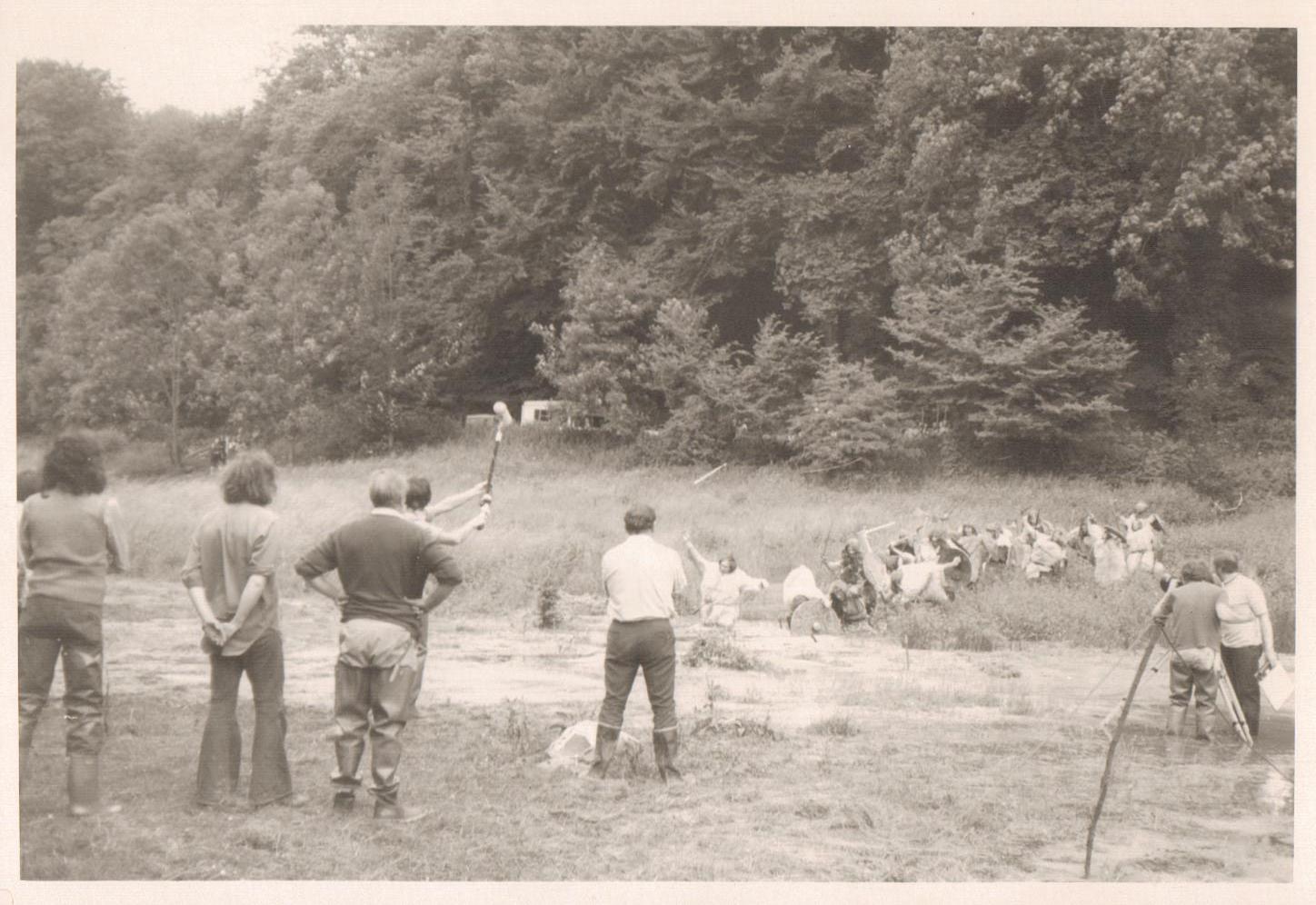
We woke up one morning to find this tent in the field beyond our house, with a full English breakfast being served by location caterers from the back of a two-tone bus. The final scenes of Episode One of the series Arthur of the Britons, entitled Arthur is Dead,starring Oliver Tobias in the title role,was to be filmed on our farm.
The unit base for HTV’s drama serial ‘Arthur of the Britons’ being shot on our farm in the Cotswolds in 1972
We learnt that the drama series, Arthur of the Britions was to be quite different from traditional renditions of the well-loved stories. Apart from anything else the actors had long hair and wore rough hessian garments or sheepskins to reflect the culture of Iron Age England. Everyone was excited about the idea, which seemed more authentic and certainly held more sex-appeal than the Hollywood idyl lodged in our consciousness.
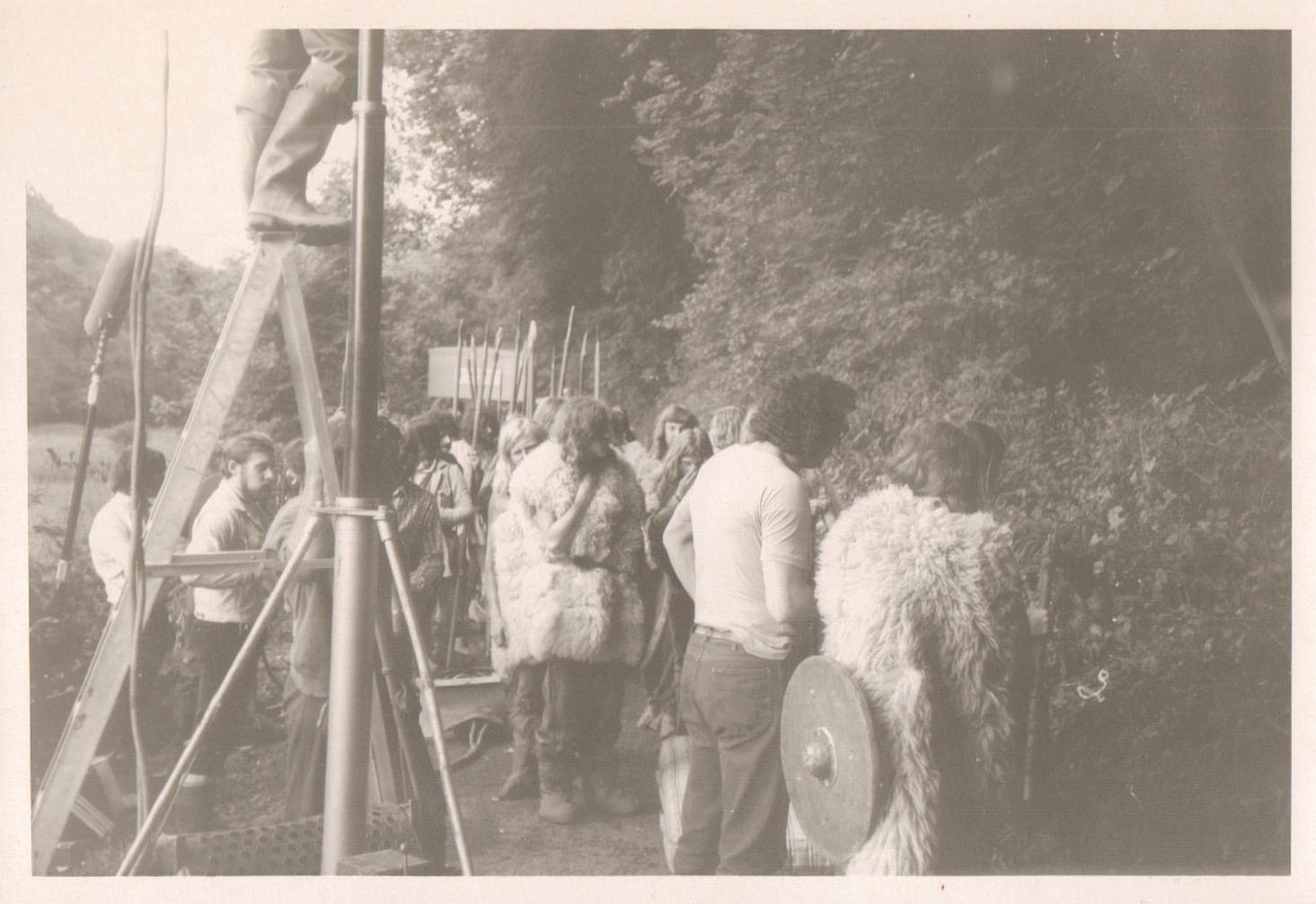
While the lane below the wood that ran along the sides of our valley was closed to traffic, HTV ran cables and moved in with their lights, camera equipment and props amounting to bundles of swords, spears, shields and other weaponry.
Here you can see the Gulliver’s Prop lorry as well as costume and make-up artists with their kit-bags attending to the actors and supporting artistes. Please remind me of the name of the character to the left of shot and who played him. ***
It must have been dark under the trees, as there would have been have been a large 2K light on this tripod. The crew set up carefully and were finally ready to go for a take, recording the battle in the woods on 16mm.
After a short skirmish, Arthur pretends to retreat, leading his men downhill. They are soon followed by the Saxon hordes. The reality was that the wood was much steeper than it came across on television. The actors ended up tumbling down the bank.
We were waiting in the open field in the valley floor. Although naturally marshy, this had been made much wetter by damming the stream that flowed down from the woods. Our local road engineer Percy Baxter dug pits that filled with water and acted as a trap for the Saxons who did not know the secret way through the marshes.
My sisters and our sheepdog with Percy Baxter who dug great holes in the field before allowing them to fill up with spring water. Members of the crew work beyond.
We knew of the legend and were fascinated to see how the sequence would come together.
As the scene was difficult to replicate it was shot with two cameras, seen here set on wooden tripods. The result was exciting.
For photos of the location on the Arthur of the Britons website please click here.
Scroll to 19.50 towards the end of the episode to watch the scene here on Youtube:
***Post script: This email arrived recently. I have been given permission to feature it:
“Browsing the web the other day, I came across your website and photos relating to filming ‘Arthur of the Britons’. One photo in particular interested me, the one in which the request, ‘Please remind me of the name of the character to the left of shot and who played him’ appears.
Looking at that photo stirred many memories…
Back in 60’s Bristol, my old chum Bob Baker was trying his hand at script-writing for the media, somehow he got involved with a BBC Children’s series entitled ‘Pegasus’: of which meager entries appear online and actual footage seems non existent.
Bob and I enlisted as extras for a shoot at Berkeley Castle, much fun, beautifully authentic Napoleonic Infantry costumes, several closeups, a hard in-character slap on the face for Bob and a shot of me firing a rifle at an imaginary ‘Pegasus’, the eponymous hot air balloon, as it took off from the castle courtyard carrying the escapee heroes of the plot. An excellent tight closeup only marred by myself who, having fired and watched the imaginary effect of my bullet, lowered the rifle and stared up intently, for what seemed minutes (at nothing) finally relaxed… as my eye was drawn inexorably towards the huge camera lens inches from my face. ‘Christ! He just looked straight into the camera! Cut!’ I was particularly stung by a co-extras unconcealed schadenfreude as he muttered, ‘Shame about that Rog, they liked the look of you, blown your chances now.’ But it was too good to waste and, edited, made it into the final cut: it was however the last close-up I got.
The final location work called for a night shoot, it was raining intermittently and shooting was sporadic, Bob and I spent most of the night in the canteen, drinking wine with our old mate Keith Floyd who had managed to land the catering job – in many ways, the start of his career and of course he went on to considerable success, fame and several television series of his own. Bob and I ran out of cigarettes so, fully accoutered and armed with cocked hats, swords, rifles and bayonets, we strolled down into Berkeley village and went into The Boar’s Head just at closing time, startling the small group of locals, and ordered two pints and some fags. A stunned silence descended as without a word, Bob and I drained our pints and left as suddenly as we had appeared. I wonder if the legend of the two thirsty apparitions from La Grande Armée is told there still?
Bob and co-writer Dave Martin had written a well-researched film script about King Arthur. They knocked on many doors, Hollywood was mentioned; even Charlton Heston was reported to be interested, but finally, in 1973, it was HTV who eventually picked it up, though I see Bob actually gets credit only for the first episode ‘People of the Plough’. Of course, he went on to write many of the scripts for ‘Dr Who’ and ‘Wallace and Grommit’ but this was his first, if modest, success.
I was on my summer vacation and Bob mentioned HTV were looking for extras for ‘Arthur’ if I was interested. When I arrived on set it seemed that half of Bristol was there including many of my drinking mates from Clifton, most of whom had arrived equipped with cider and beer and it became fairly apparent the direction things would take. A few years ago I was reminiscing about those days with one of them, Mike Dauncey, who went on to become a respected BBC Cameraman, but who sadly, recently died. He told me he spent most of his time in the actors tent, along with a few other reprobates, smoking pot. I recall seeing him at the time but had no idea what was going on, though I remember enjoying plenty of the extraordinary amounts of alcohol that seemed to be around. I’m pretty sure Mike is the guy in the patterned doublet with his back to the camera, extreme right.
Vaguely, I recall lots of nonsense, involving charging down hills waving swords and yelling, mock fighting in in the river and defending a primitive ‘Saxon Village’ that had been constructed on a river bank. As always, shooting was a bit piecemeal, scenes being shot out of sequence and us extras standing around as background whilst Oliver Tobias, Jack Watson and, by the end of the shoot, the Celts, had taken the village. Not terribly dramatic at the time, presumably any attendant pillage and rapine was the subject of a different shoot, though I recall a fair amount of fake blood waiting in readiness. Finally the script called for the Celts to set fire to the village. And thus I got my big starring role, as employing all my acting skills, dressed in a ‘bloody’ sheepskin and in closeup, I was required to play a dead Saxon.
Unfortunately it had been steadily raining all day and the ‘village’, built largely from straw and dummy plastic wickerwork, refused to ignite. I was lying very close to the ‘village’ and began to get a bit concerned as, from my worms eye view, I watched the crew enthusiastically chucking gallons of petrol over the village to get things going. It all seemed to take a long time and as I lay there in the rain, I remember hoping they hadn’t forgotten that the dead Saxon was actually an extra and not a prop. More time went by setting up the shots but eventually the scene was in readiness. Action! shouted the director and with cameras rolling, three ‘Celtic horsemen’ with flaming torches galloped down on the village, narrowly avoiding trampling me, threw the torches at the ‘buildings’ and galloped off. For several seconds nothing happened, then suddenly with a huge WHOOMPH! all that petrol just went off, The heat where I was lying was incredible, the grass between me and the village began to steam then turn yellow and smoke, I began to smell wet, then burning wool, as my sheepskin began to smoulder, fortunately too sodden and thick to actually catch fire, but lying there, I discovered an earnest empathy for those Guy Fawkes dummies I had chucked on bonfires as a kid. The crew were oblivious to my plight as the director called for several takes and the scene took over an hour to shoot until eventually the flames died down and a wrap was called.
Months later the series appeared on TV, I saw very little of it but did see that scene; by modern standards it looked fairly amateurish, obviously phoney as you could see the plastic ‘wickerwork’ melting, but my closeup was excellent, I looked just like a corpse, very realistic, despite gently steaming.
Bob and Dave Martin always referred to the series as ‘Arthur in The Stinging Nettles’ but what struck me about that photo is that it looks more like the set for some fey setting of Lothlórien. What a bunch of fairies!
So back to that plea, who was the character on the left? Well, if it’s the guy having his face touched-up on the extreme left, I’m afraid it was no actor, just an extra that played a corpse. Me.
I seem to have banged on a bit, strange how a photograph brings it all back, apologies if it just seems like some old blokes boring memories – but then again, that’s exactly what it is!
I wanted to thank all those who have sent letters and emails about ‘The Secrets of Making Swallows & Amazons’. These have come in from around the world. Many people have taken the time and trouble to leave a review on Amazon or Goodreads, which is hugely appreciated.
I have been asked to write about other classic dramas I’ve been involved with but before I move on, I thought I could post some of the feedback and comments that have come in:
‘It’s my favourite book!’ a little girl said on spotting ‘The Making of Swallows & Amazons’ on sale at Brantwood
‘It’s wonderful! (almost as great as reading the original book) Carl – USA
“Thank you” for writing that marvellous book, “Secrets of filming Swallows & Amazons”. I purchased it on my Kindle from Amazon thinking it would be my “summer holiday” read – but was truly unable to put it down so it only lasted a day or so! As a devoted Arthur Ransome fan (and proud dad to two daughters – 13 and 10 – who love the books and film also) your words really brought the film to life. Such wonderful stories in the book. How I wish that Claude had also made ‘Pigeon Post’ with the same cast! There are few films (and books) that evoke childhood in this way. ‘Swallows & Amazons’ will always take me back to being ten years old, and your film was one of the truly rare occasions when a film adaptation did justice to the book. I guess it’s because everyone involved truly loved the story – it shows. Thank you again for sharing those few weeks in 1973.’ Paul – To read his review please click here
.
.
‘…I loved the movie when I was young. I only saw it once but was given the LP by my Godmother and played it — on my parents’ radiogram — until I knew it by heart. When I took my own children to see the movie (in the Aldeburgh Cinema a few years ago) I was still word perfect, much to their embarrassment! We now have the DVD and it was the movie of choice for my children a couple of summers ago so they are now pretty word perfect too! It’s great that the old film is going to be re-released at the same time as the new is coming out, though we are looking forward to that too.’ Lucy
.
.
I’ve just read this delightful ebook – thank you so much for writing it! …Many thanks again for giving me such a delightful film to immerse myself in as a child.’ Helena
I have just finished reading ‘The Making of Swallows & Amazons’. Apart from your wonderful narrative, what a task you undertook, I especially enjoyed reading all the amazing credits you’d researched on the film makers! John
‘Paddling with Peter Duck’, John McCarthy’s documentary for BBC Radio 4, portrays the boats owned by the author Arthur Ransome and includes extracts read by Kate Taylor from his classic book Swallows and Amazons.
Peter Willis in the Nancy Blackett with John McCarthy
While the broadcast is a portrayal of Arthur Ransome and his boats, it touches on his friendship with the Altounyan family who inspired him to embark on writing the series of twelve Swallows and Amazons books. It is easy to understand this when looking at their photographs.
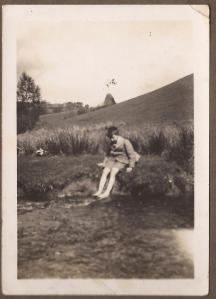
The Altounyan children with friends in Syria.
The girls seem to be Taqui, Brigit and Titty
Could it possibly be Arthur Ransome sitting on the right? He visited the family in Syria in 1932, when he must have been about forty-eight, but was never known to have worn shorts, although it would have been exceptionally hot in the Middle East. Click on the photos to enlarge.
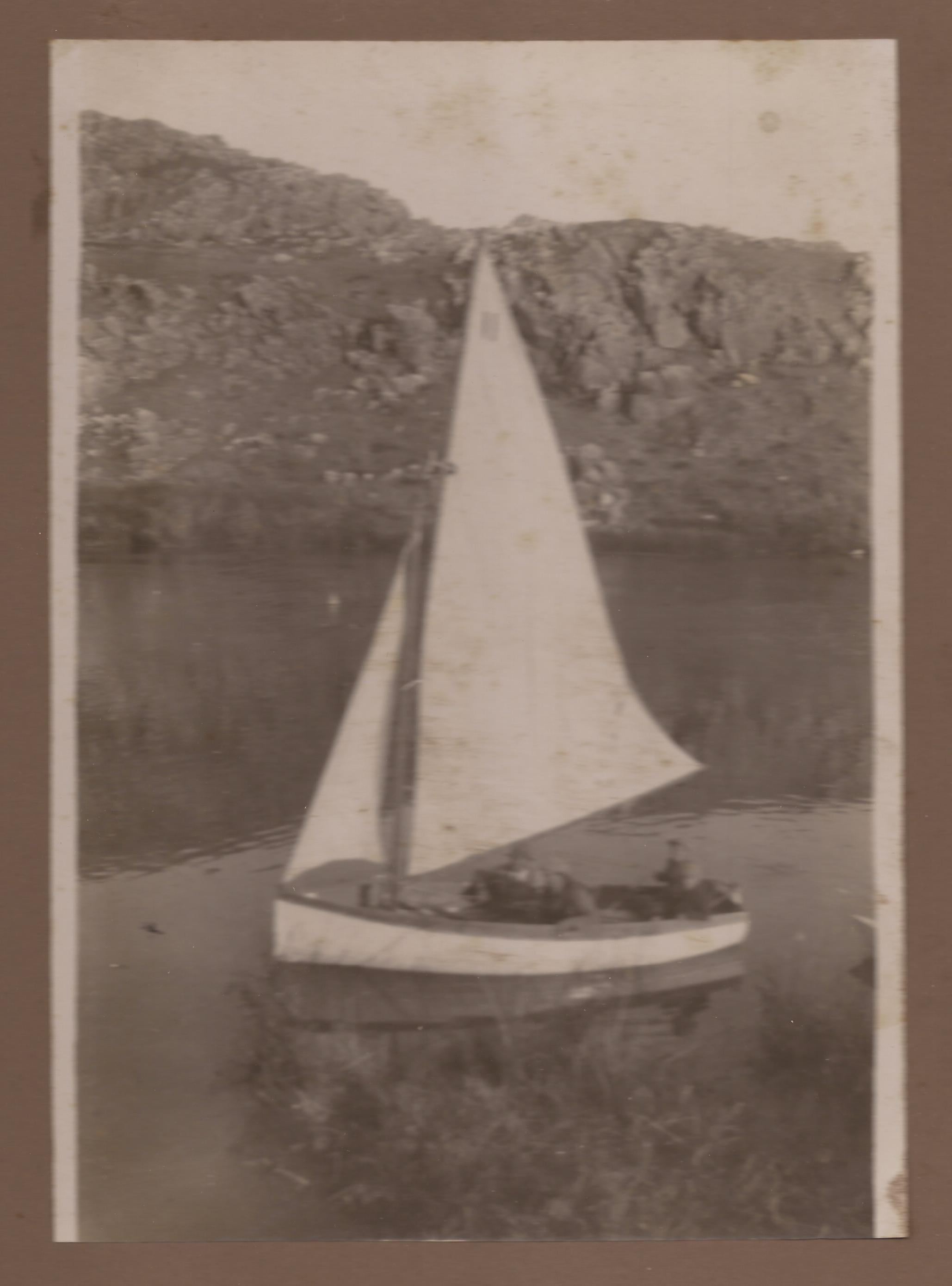
Is this Arthur Ransome ? sitting on the bow of Peter Duck in Syria, the chap wearing the same hat and clothes as in the photo above? He took this dinghy out to Syria as a gift for the Altounyan children and wrote his novel Peter Duck while he and his wife Evgenia were staying with the family in Aleppo.
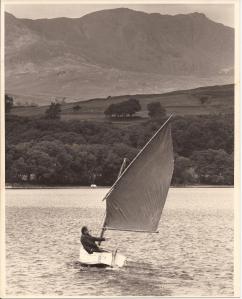
Possibly Arthur Ransome sailing Beetle II the Altounyans’ gunter-rigged dinghy at Amouk in Syria
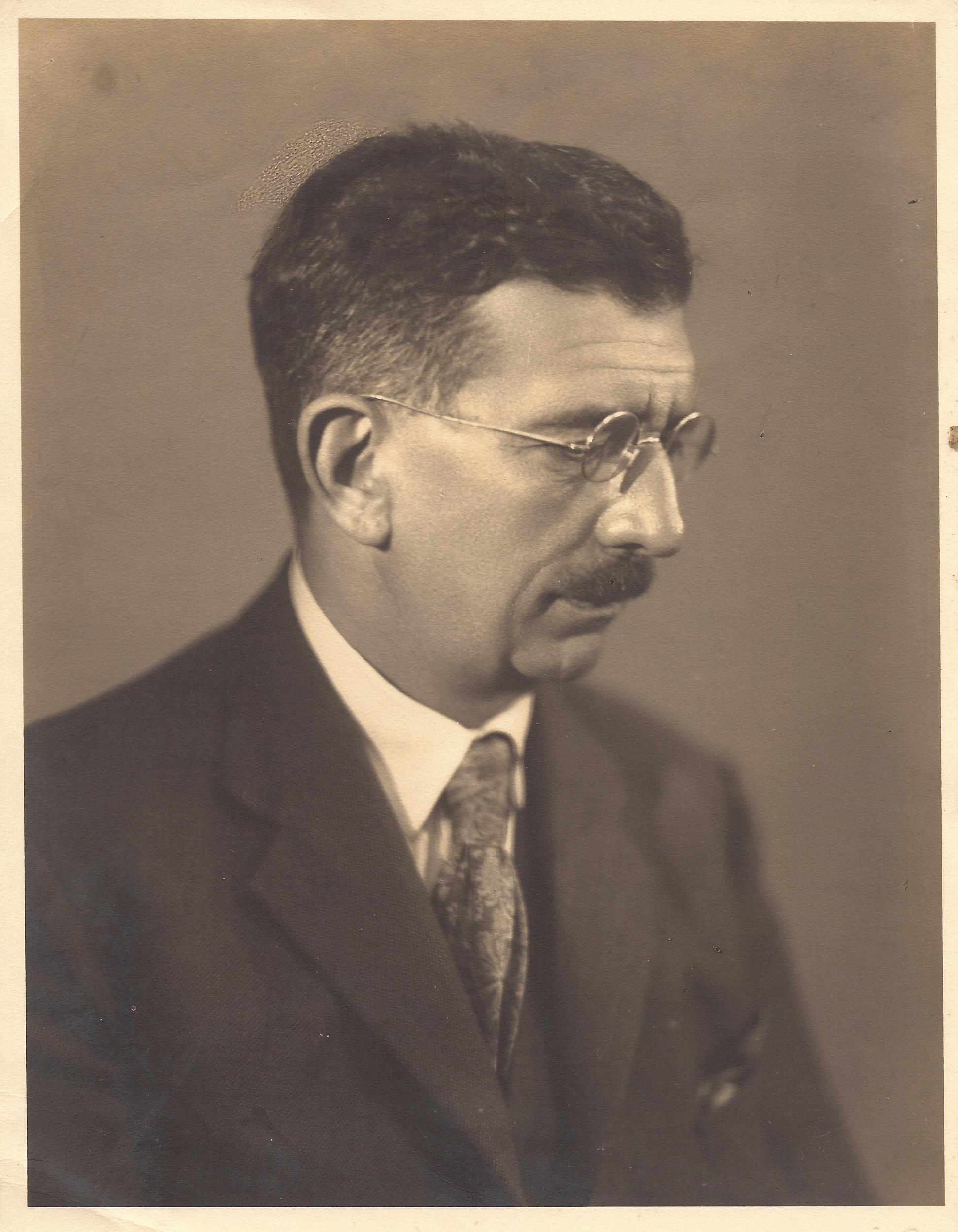
Ransome’s friend Dr Ernest Altounyan in 1935
Dora Altounyan (nee Collingwood) in 1935
Was Dora the model for Mary Walker, the Swallows’ mother who grew up in Australia?
Sadly there is no sign of the original Swallow bought at the same time as Mavis by Arthur Ransome and Ernest Altounyan in Barrow-in-Furness, and later sailed by the Ransomes on Windermere. Mavis was later re-named Amazon by Brigit Altounyan, the youngest of the five Altounyan children, known as The Ship’s Baby.
Dr Ernest Altounyan on Coniston Water with ‘Mavis’, one of the dinghies that inspired ‘Swallows and Amazons’
These unique photographs were recently found in Cheshire by the antiques dealer John Jukes who asked me if I could return them to the Altounyan family. This I have done and show them here by kind permission of Roger’s daughter, Barbara Altounyan. Please do not copy these photos.
Dr Bill Frankland with Sophie Neville at Drapers’ Hall
Once Alexander Fleming’s clinical assistant, Dr Bill Frankland was still working as an allergist at the age of 103, ‘I have my first patient at 9.00am tomorrow morning.’ I gather he was still working on academic papers up until his death from Covid in 2020 at the age of 108.
Dr Frankland and I were both Liverymen of the Worshipful Company of Drapers, so found ourselves seated together in all sorts of places from St Paul’s Cathedral to a bus heading for Romford. Always chatty and full of enthusiasm, Bill was an endless source of interesting stories. He gave me detailed insights on WWII, when he served as a medical officer in the Far East, becoming a PoW to the Japanese after Singapore fell and gallantly agreed to became the historical adviser on my next book, ‘Love is for the Brave’. To my astonishment I found myself noting dialogue used in PoW camps. He could remember the exact words used by the Japanese. I was not be surprised to see he’d been invited to the premiere of ‘The Railway Man’, the movie of Eric Lomax’s wartime experience starring Colin Firth and Nicole Kidman. He also attended the 70th Anniversary VJ Day memorial at Horse Guards Parade with other British and Commonwealth veterans.
Bill grew up in the Lake District with his identical twin brother, who sadly died some time ago. He was a good friend of Roger Altounyan and knew his sister Titty. Along with their other three siblings, Taqui , Susie and Brigit, they had been models for the Walker family in Arthur Ransome’s book ‘Swallows and Amazons’.
After he began working as an allergist, Bill became a colleague of Roger who developed the Intal spin-inhaler to relieve asthmatic symptoms.
Bill was amused by the fact that, as a child of twelve, I played the part of Titty in the 1974 feature film of ‘Swallows & Amazons’, delighted that I was able to introduce him to Nick Barton, the producer of the 2016 movie of ‘Swallows and Amazons’, now on DVD and released in the US by Samuel Goldwyn Meyer.
Bill lost his wife to cancer some time ago but his family were ever around him. At the age of 102, he told me that his doctor insisted that he walked a mile a day but it was quite an experience to accompany him along the crowded London streets as he began to use a walking stick which was twirled in all directions.
Read more:
‘From Hell Island to Hay Fever, The Life of Dr Bill Frankland’, by Paul Watkins.
This beautifully made documentary, presented by Griff Rhys Jones, examines Ransome’s life as a war correspondent in Russia from 1913 to 1919 when he was close to the action and in dialogue both with Lenin and Leon Trotsky. It raises the question as to whether he was a British spy.
Hugh Brogan, Ransome’s biographer explains that Ransome had originally ran off to Russia in 1913 to escape from his melodramatic wife, Ivy Walker. After using his time to record Russian fairy stories, that can be read today in his book, ‘Old Peter’s Russian Tales‘, he was employed by a national British newspaper to report on events leading up to the Russian Revolution. Black and white archive footage, along with photographs Ransome took himself, illustrate this well.
The BBC’s erstwhile political correspondent John Sergeant, explains the significance of certain survival strategies Ransome used, such as using ‘his practical skill to outwit people’, over extracts from the original feature film ‘Swallows & Amazons‘, produced by Richard Pilbrow in 1974.
Suzannah Hamilton, Stephen Grendon, Sophie Neville and Simon West, 1974
The scenes from the movie also show how the story Ransome wrote when back in the Lake District, was in many ways an outworking of feelings accumulated while he was working in Russia. By concentrating on his writing, he neglected his own daughter just as Uncle Jim was not around for the Blackett girls.
In the dramatised documentary, the beautiful actress Alina Karmazina plays Evgenia, the girl Ransome fell in love with while he was filing reports from Petrograd. They later escaped over the border, trading her copper kettle for freedom of passage.
If the BBC had contacted Richard Pilbrow he would have been able to send them this letter. It was written to Neville Thompson, the online producer of the film, by Evgenia, who had become the second Mrs Ransome. It has never been published before. She gives the address as her retirement home near Banbury but it shows what kind of girl she was:
Page two:
When Mrs Ransome saw the finished film in 1974, her only comment was that the kettle was of the wrong period.
Was Susan a portrayal of Evgenia? Here she is played by Suzanna Hamilton.
The story of the Ransome’s escape from Russian has been told by Hugh Lupton, Arthur Ransome’s great nephew, who gave us a rendition at The Arthur Ransome Society meeting near Bungay. It can be listened to on CD, available on CD from Burning Shed.
The 2014 Blu-ray of ‘Swallows & Amazons’ (c) StudioCanal
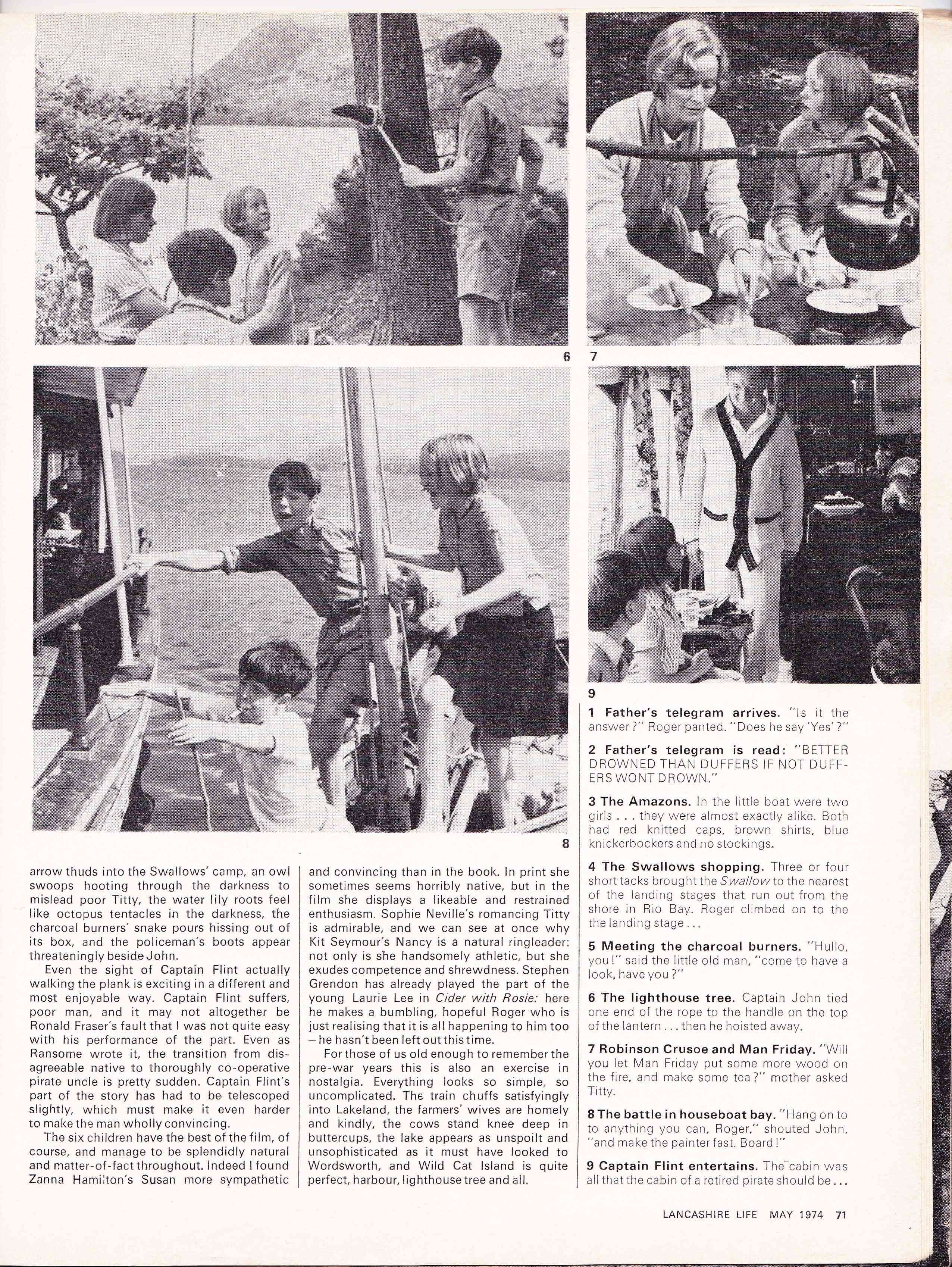
This shot of Virginia McKenna valiantly playing Man Friday, was taken as she rowed away from what I had decided was a desert island. It was 1973 and we were filming on Coniston Water in the Lake District. She was playing my mother, concerned about leaving a small girl alone as the evening drew in. I’ve been set a copy of Lancashire Life, published in 1974, which describes the filming at length. Quite fun. You can see a still of Man Friday and I cooking Pemmican cakes for supper on the camp fire, top right.
Being awarded an OBE in 2004 for services to wildlife and the arts, Virginia has since become a national treasure. She will quickly deny this but you will find photographs of her at the National Gallery, along with Suzanna Hamilton, who played her daughter – and my sister, Susan in Swallows & Amazons (1974).
‘Stars of the British Screen’ by Norman Parkinson. Virginia McKenna sits bottom centre, Suzanna Hamilton bottom right, either side of Susannah York.
Having just celebrated her 84th birthday Virginia has also been heralded as one who inspires others. I concur. ‘Do one thing at a time,’ was her advice to me, ‘Otherwise you can’t do anything well.’
Virginia McKenna with ‘Born Free’ composer John Barry
If you interview her now, Virginia is more likely to talk about wildlife than acting. She uses her name to promote kindness. And to stop the slaughter of elephants. One of her latest missions is to urge schools to teach children about conservation. She has recently become patron of Shropshire Cat Rescue’s Purr project. Arthur Ransome helped finance a similar project himself.
2015 marks the thirty-first anniversary of the Born Free Foundation, which Virginia established with her son Will Travers to help big cats and other large mammals held in captivity. She still travels the world to raise awareness and alleviate suffering, drawing on all she learned from George Adamson whilst filming Born Free in Kenya back in 1966, and An Elephant Called Slowly in 1970. You can read more about her work by clicking here.
Virginia has written about her career and conservation work in a number of books including Into the Blue and an autobiography entitled The Life in My Years available online from the Born Free shop.
Sophie Neville with Virginia McKenna in about 2001
One of the questions asked by fans of the film Swallows & Amazons, produced by Richard Pilbrow for EMI Films in1974, is, ‘Did any of the scenes written by David Wood ever hit the cutting-room floor?’
Simon West and Sophie Neville on Peel Island in 1973
Although I had a lead part, I wasn’t allowed to read the script as a child, only Arthur Ransome’s book on which the movie was based. I never gave it a thought, and for years, but looking back through the original screenplay I can see that the answer is, ‘Not many.’
The shots of finding Swallow in the boatshed, bringing her out and raising her flag were moved forward and set under the voice-over of the Walker children reading out the letters written to their father. This moved the story along.
Simon West talking to director Claude Whatham with Sophie Neville
There is a scene in the book set at Holly Howe when medical supplies are being packed for the voyage. This was shot with Virginia McKenna at Bank Ground Farm above Coniston Water, but must have slowed down the pace of the film as it was replaced by a more exciting montage of shots, that also progressed what is a pretty gentle start to an adventure story.
Virginia McKenna as Mother with Sophie Neville as Titty making Swallow’s flag
Making patterans on the way to the charcoal burners, was a lovely scene from the book that was recorded but never included in the film. Captain John can been seen explaining how gypsies use them as secret markers in this black and white still.It was shot on a mossy bank in oak woodland so very characteristic of the Lake District and profiled by the Guardian newspaper the author Arthur Ransome had once worked for.
It was at this dramatic location, high above Derwentwater, that my favourite behind-the-scenes shot of the director, Claude Whatham was taken. You can see Cat Bells in the background.
Claude Whatham talking to his cast: Sten Grendon, Simon West, Sophie Neville & Suzanna Hamilton
Mrs Ransome, who worked closely with the screenwriter, had agreed that the storm scene on Wild Cat Island would not to be included in the screenplay. We children thought a great pity. Such a violent gale blew in one day when we were filming on Peel Island that we would have had the right weather conditions, but you can not include everything. It was only a 90 minute movie.
Jane Grendon, whose son Sten played Roger, wrote to tell me that before filming began, ‘…one of the very first things we were asked was, ‘can Sten swim?” ‘I know he could doggy paddle,’ she continued. ‘Neville (Thompson, the online Producer) organised swimming lessons at Pitville Pool, Cheltenham which included jumping off the diving boards. At the time I didn’t know why and I don’t think Sten is a natural in the water and the swimming lessons didn’t prove very successful. Claude (Whatham) told me – at the end of filming I think, when he gave me a copy of he original script – these lessons were because in the original script Roger was to jump in the water after Uncle Jim walked the plank.’ Jane sent me a copy of the page in question. I had not seen it before: It was a page of the script we never had time to shoot. I am so glad. It wasn’t needed. We just made sure Captain Flint had no access to a rope ladder for a while.
I’m often asked if any scenes involving the Amazons were cut, but none were left out. Nancy and Peggy simply do not appear in the book as much as one might remember.
Please leave any questions about the making of ‘Swallows & Amazons’ in the comments below.
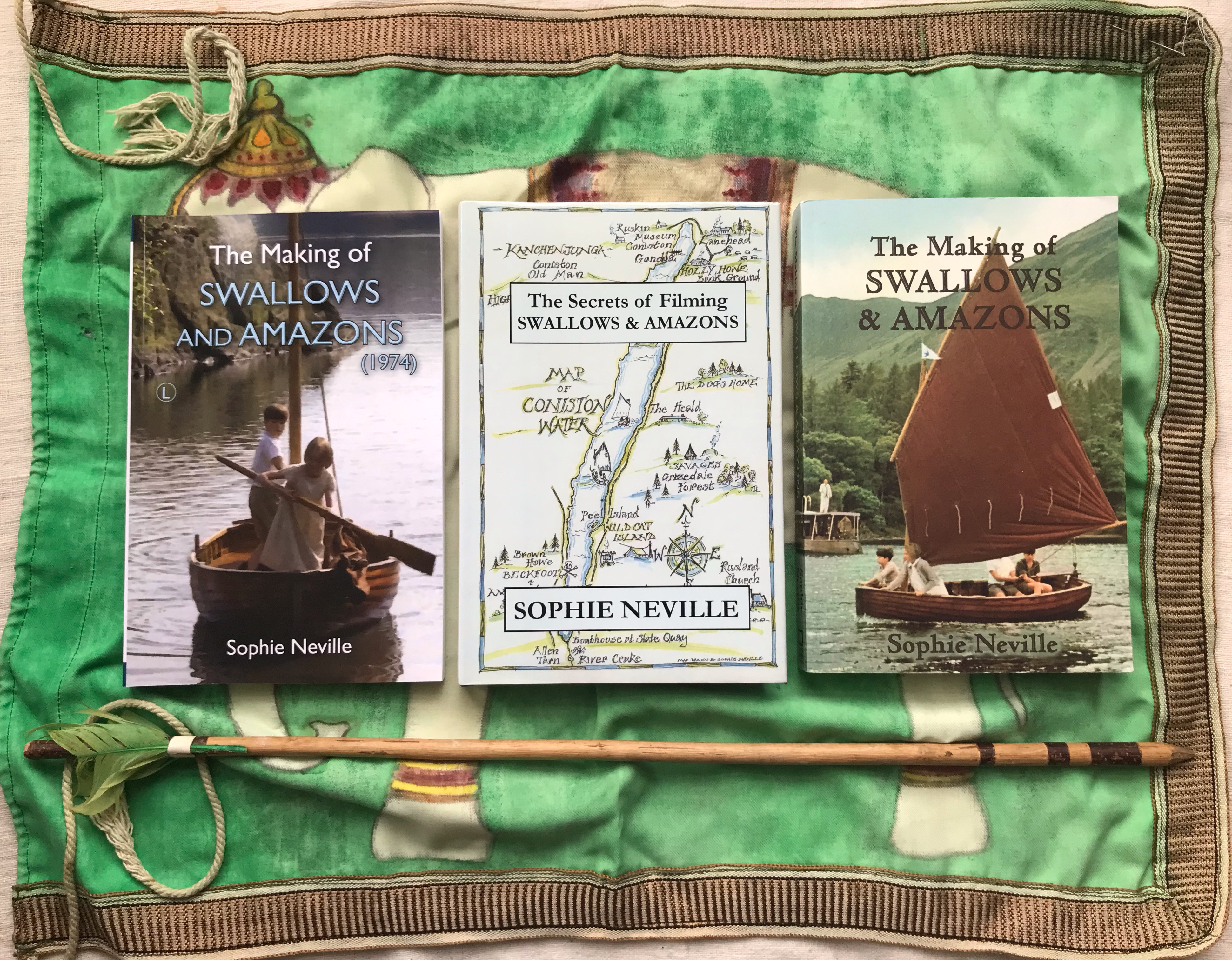
You can read the full story of the making of Swallows and Amazons (1974) in one of the editions listed online here:
Different editions of ‘The Making of Swallows and Amazons (1974) by Sophie Neville’
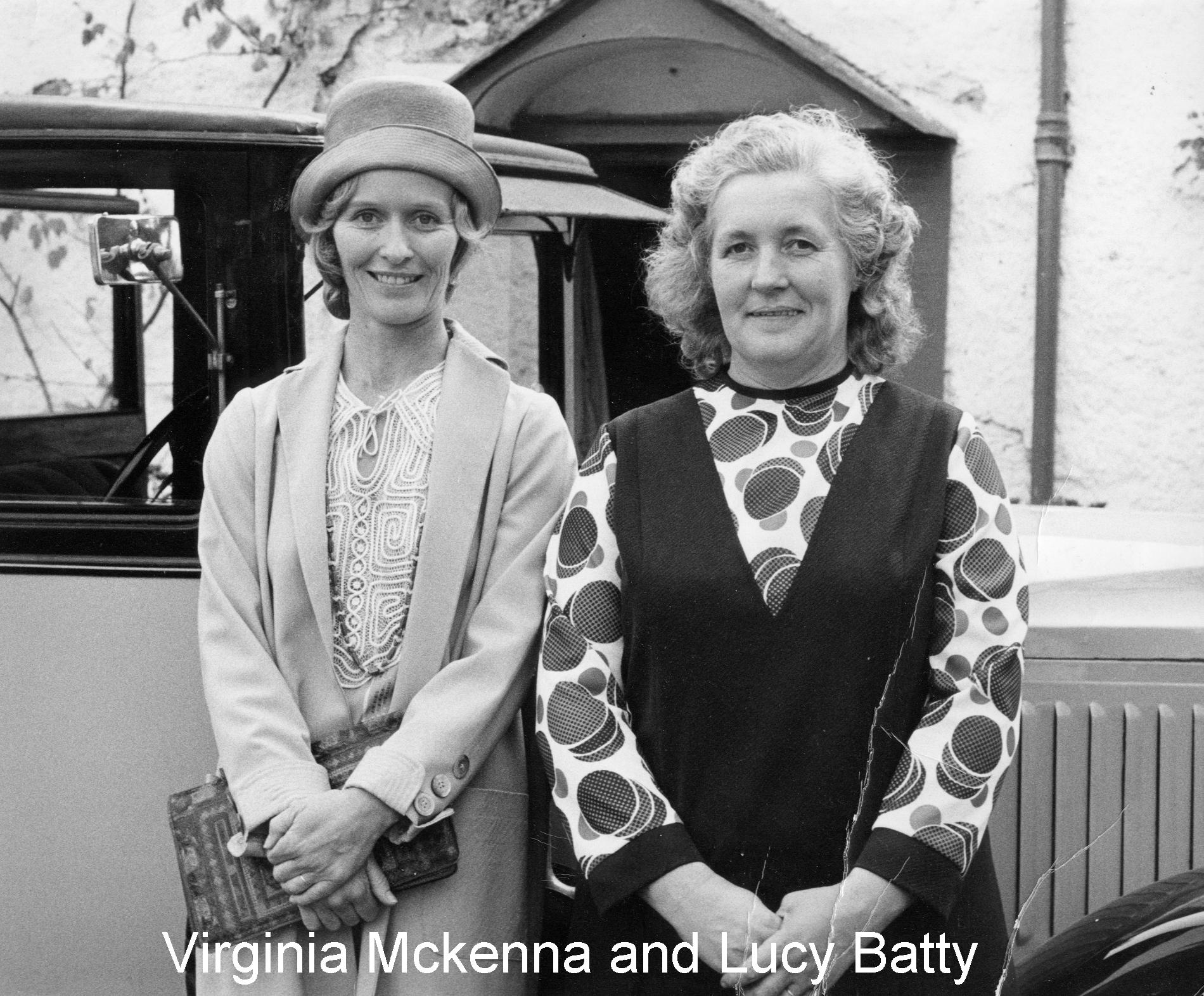
Virginia McKenna with Lucy Batty at Bank Ground Farm on 15th May 1973
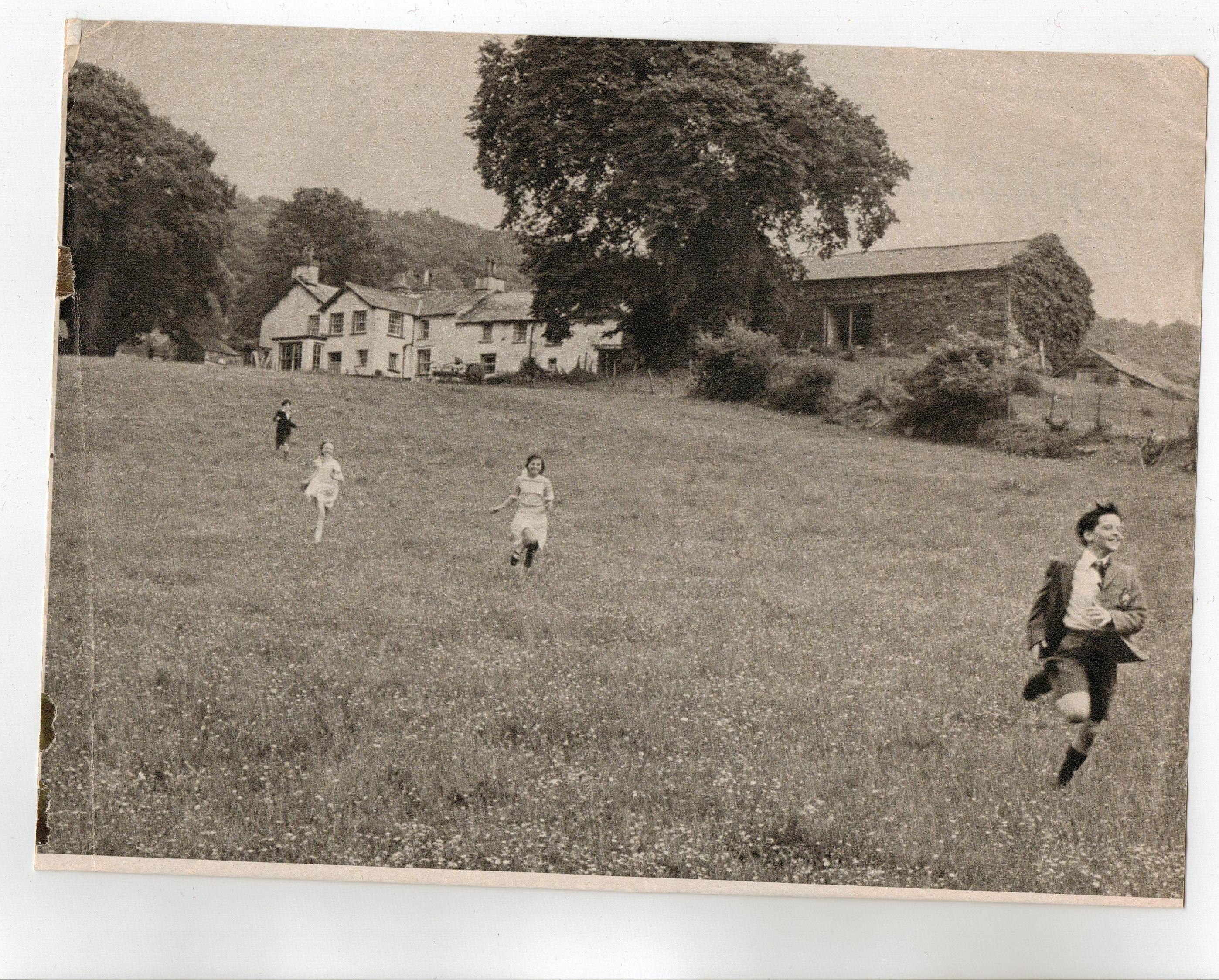
We were sad to hear that Lucy Batty has passed away. She was 87. Our thoughts are with her family. She will be fondly remembered by visitors from all over the world who were made so welcome at Bank Ground Farm above Coniston Water in the Lake District, which she ran as a guest house for many years. It was also used as a film location, becoming known as ‘Holly Howe’ in Richard Pilbrow’s 1974 movie, Swallows & Amazons.
Bank Ground Farm in the Lake District
I first met Mrs Batty when we filmed in her home back in 1973 and returned to stay with her in 2003 when the BBC asked Suzanna Hamilton and myself if we would appear in Countryfile, which they were filming at Bank Ground Farm with Ben Fogle. It was then that she had time to show me her photo albums. What a life she led! She was very proud of having brought up seven children on the farm, “Two of my own and five that came with my husband,” she explained. “Getting them all off to school in the mornings was such hard work that my in-laws came to help on my first day.They all wanted bread and dripping for breakfast, with sugar sprinkled on top.”
~ Sophie Neville with Lucy Batty in 1973~
“A magistrate once asked me what running a B&B entailed. ‘It’s much like looking after cattle,’ I told him. ‘You bring ‘um in, feed ‘um, see they’re bedded down, turn ’em out and muck’um out.’ He flung back his head and roared with laughter.”
She had a great sense of humour. I have a cutting from an article in The News written by Brenda Colton and published on 25th May 1973. It reads:
‘When Mrs Lucy Batty was asked if her house could be used for the setting of the film Swallows and Amazons, with guest star Virginia McKenna, she was delighted. After all, her home, Bank Ground Farm on the east side of Coniston Water, near Brantwood, was the setting chosen by Arthur Ransome for his children’s book Swallows and Amazons.
Mrs Batty thought it a good idea that the story should be filmed in an authentic location, and she felt she should be able to put up with a few cameras and film men for a while. But she just did not realise the scale of a “medium budget” film like this one, or what the production staff could do to her house. It was not the two double-decker buses coming down the path and parking on the farm that she minded, nor the numerous vans, lorries, cars and caravans. It was not even the difficulty of having 80 men and women wandering round the farmhouse carrying equipment here, there and everywhere.But when art director Simon Holland started tearing up her lino and carpet in the kitchen to get to the bare stone floor, she did get a little annoyed. Especially when he removed all the electric sockets, lights and switches, pushed all the kitchen furniture into the larder and whitewashed the newly papered walls.
“Have you seen the kitchen?” Mrs Batty said to me. “The larder is piled high with my furniture; and you would not believe the tip my lounge is in. But they are a funny lot. I asked if I could wash the beams in the kitchen for them, and they said ‘Oh no, we want them to look old.’ I have even had to hunt out a lot of old pottery from the cellar for them.
“But I have given up now. I have just left them to it.”
What I really did not know, until I watched the BBC documentary ‘Country Tracks’, was that Mrs Batty reached the point when she locked out the crew. She explained that when she was originally asked if we could film on her property she did not quite realise the scale of operations and only asked for – or accepted – a location fee of £75. She said that she decided that £75 was not enough, padlocked her front gate and wouldn’t let them back in until they agreed to pay her £1,000. It was a lot of money, more than double the fee I received for acting in the whole movie.
To read a little more about filming of Swallows & Amazons at Bank Ground Farm, please click here.
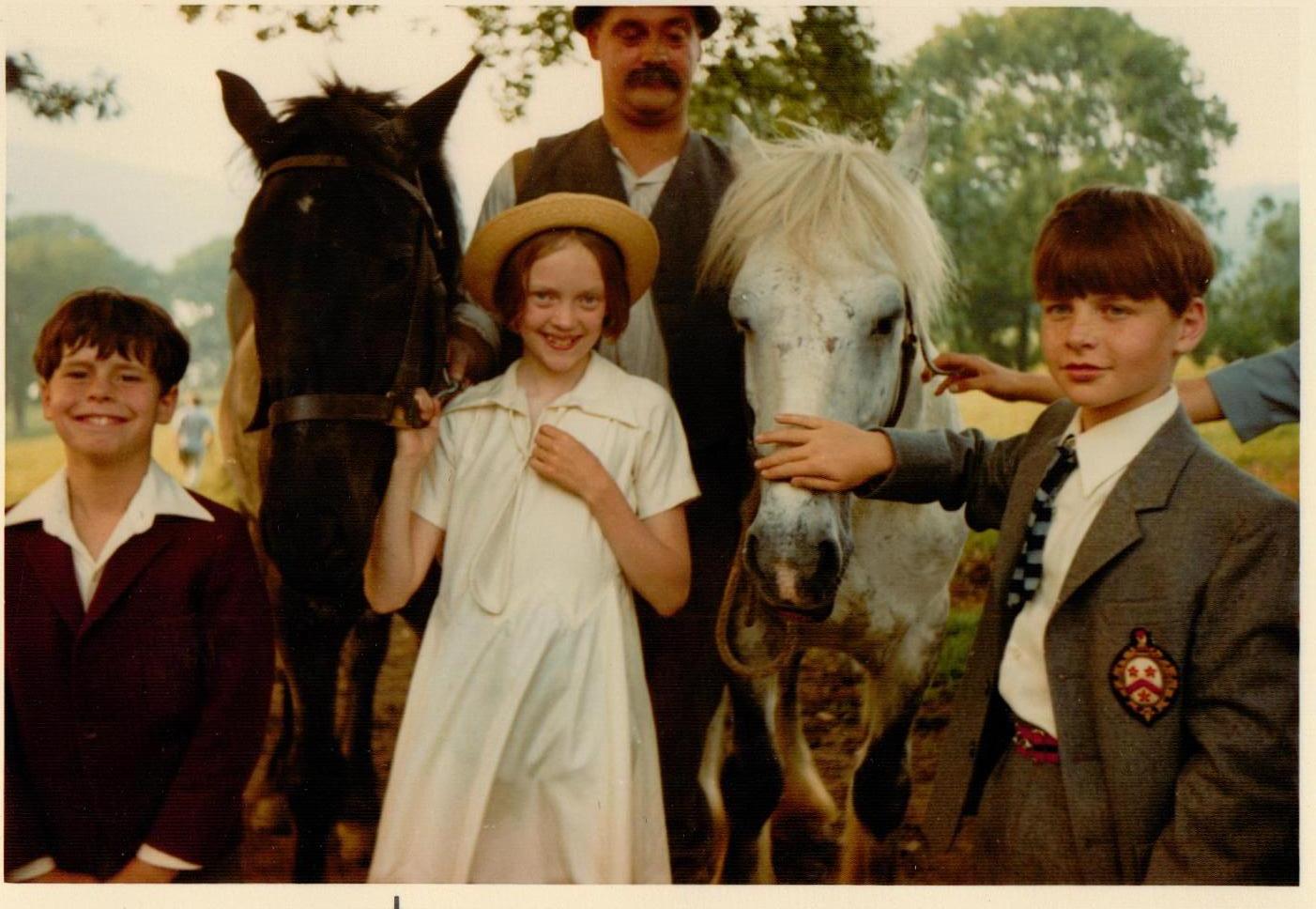
Sten Grendon, Sophie Neville & Simon West with Mr Jackson at Holly Howe
I am sure many people reading this have their own memories of Mrs Batty who was such a great character. Please do add them to the Comments box below. I feel it would be a tribute to all the hard work and love she put into making Bank Ground available over the decades for so many to enjoy.
The farmhouse as Holly Howe in 1973
You can read more about the adventures we had making the original film Swallows and Amazons here:






















 It was shot on a mossy bank in oak woodland so very characteristic of the Lake District and profiled by the Guardian newspaper the author Arthur Ransome had once worked for.






 Sophie Neville
