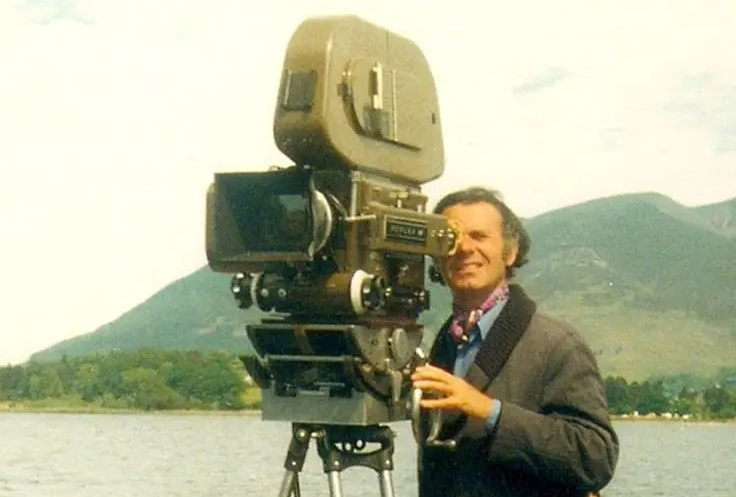
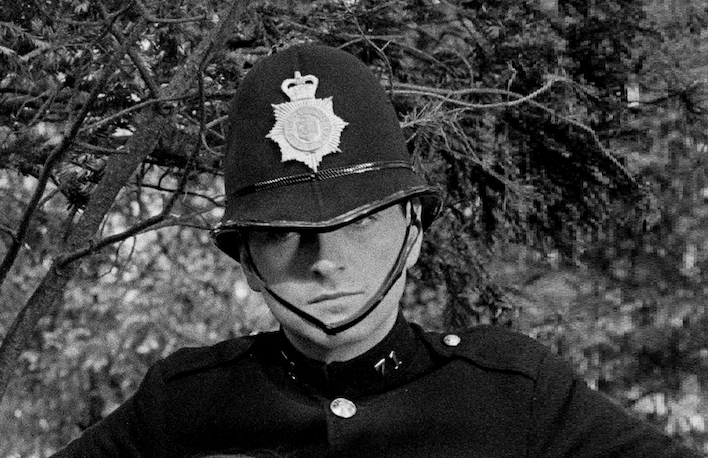
David Blagden as Sammy the Policeman in ‘Swallows and Amazons’
I was interested to learn that David Blagden was born in New York in 1944 and went to school there. He had no hint of an American accent when we knew him in 1973.
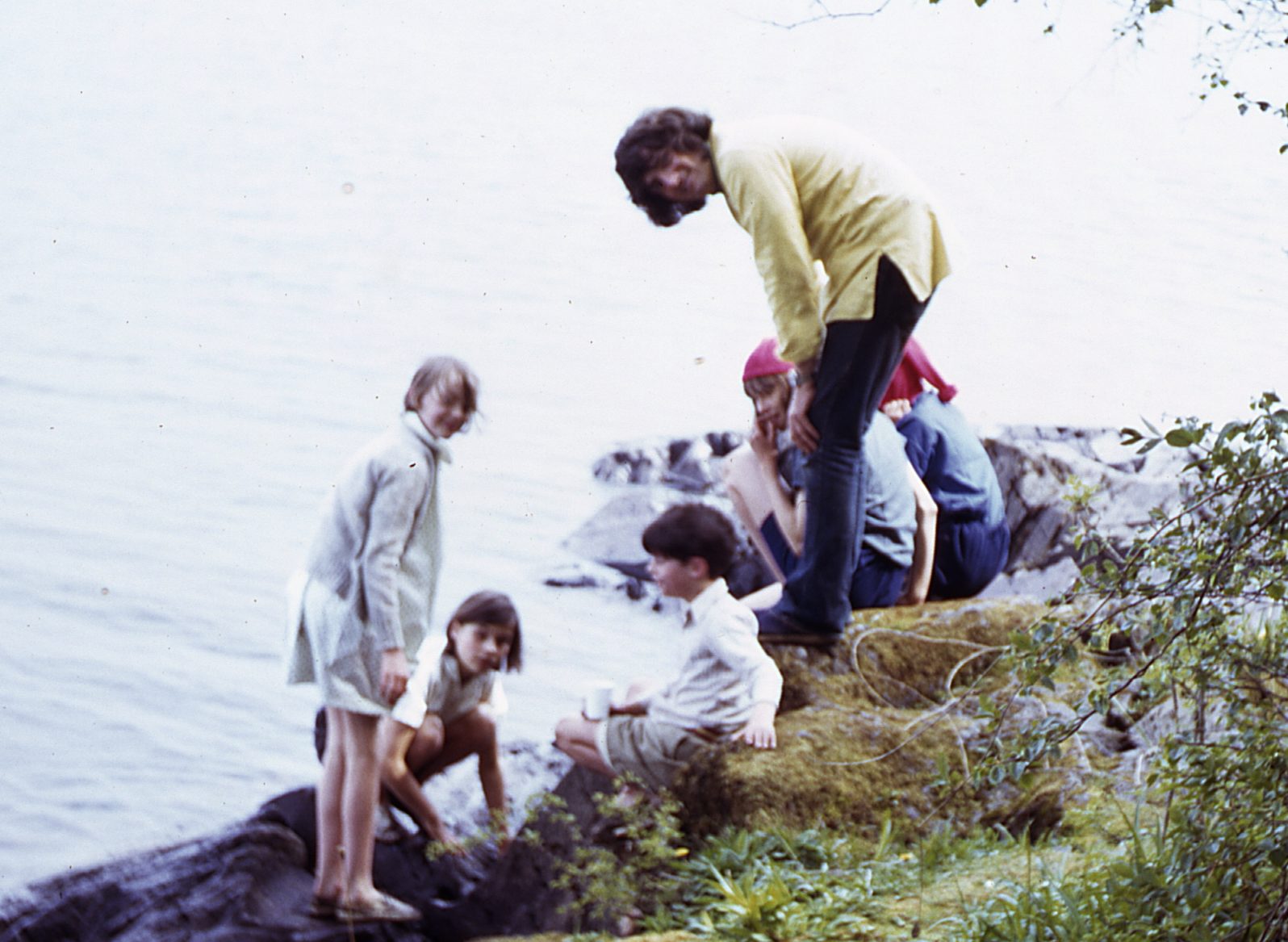
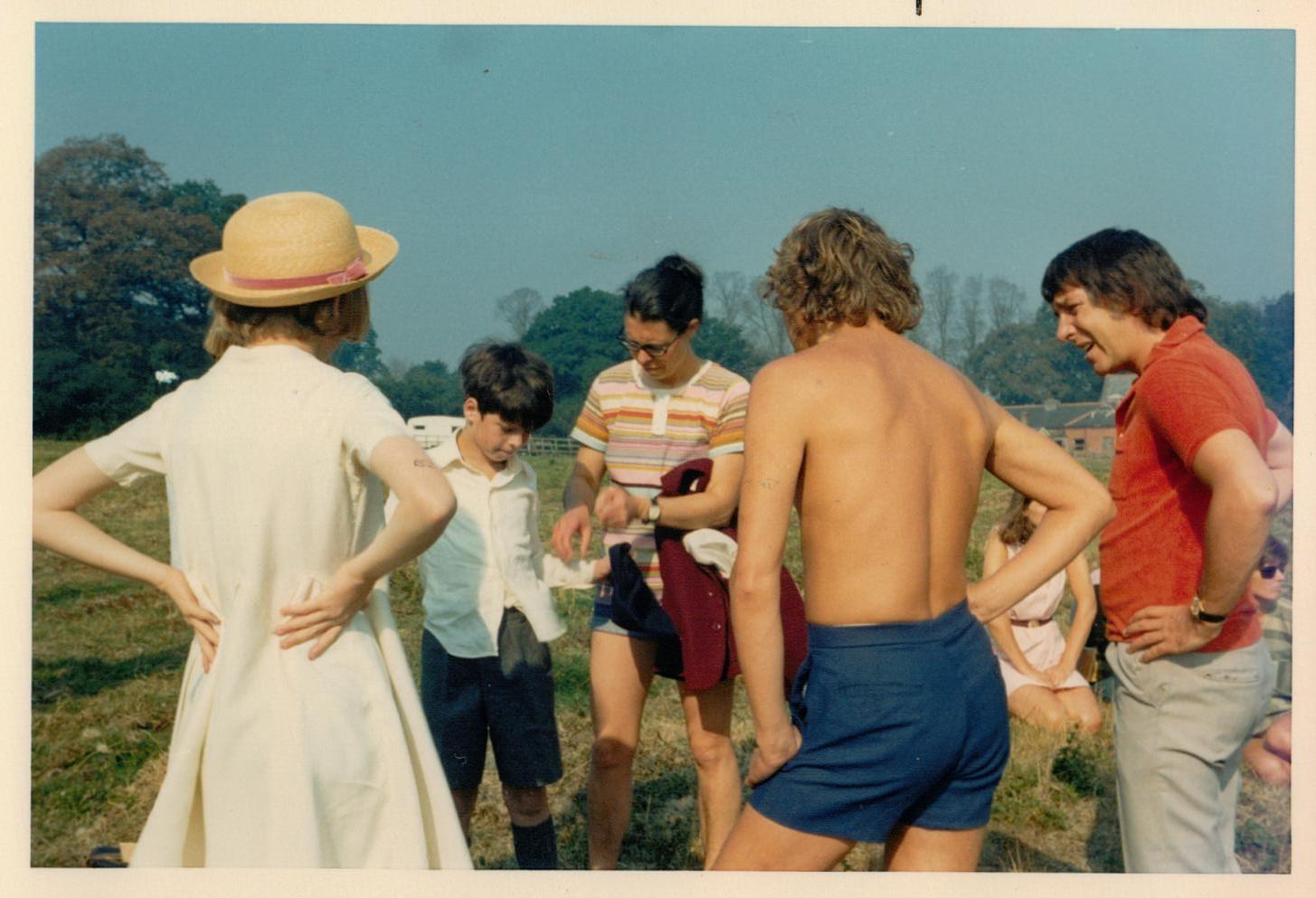
Sophie Neville, Suzanna Hamilton, Stephen Grendon, Lesley Bennett and Kit Seymour with David Blagden on Peel Island Coniston
A young trans-Atlantic sailor, David handled boats with fluency and won the trust of the producer and director of ‘Swallows and Amazons’, along with the cast of children. Tall, good looking, and impervious to wet weather, he had an infectious enthusiasm for high adventure out on the water. We all adored him.
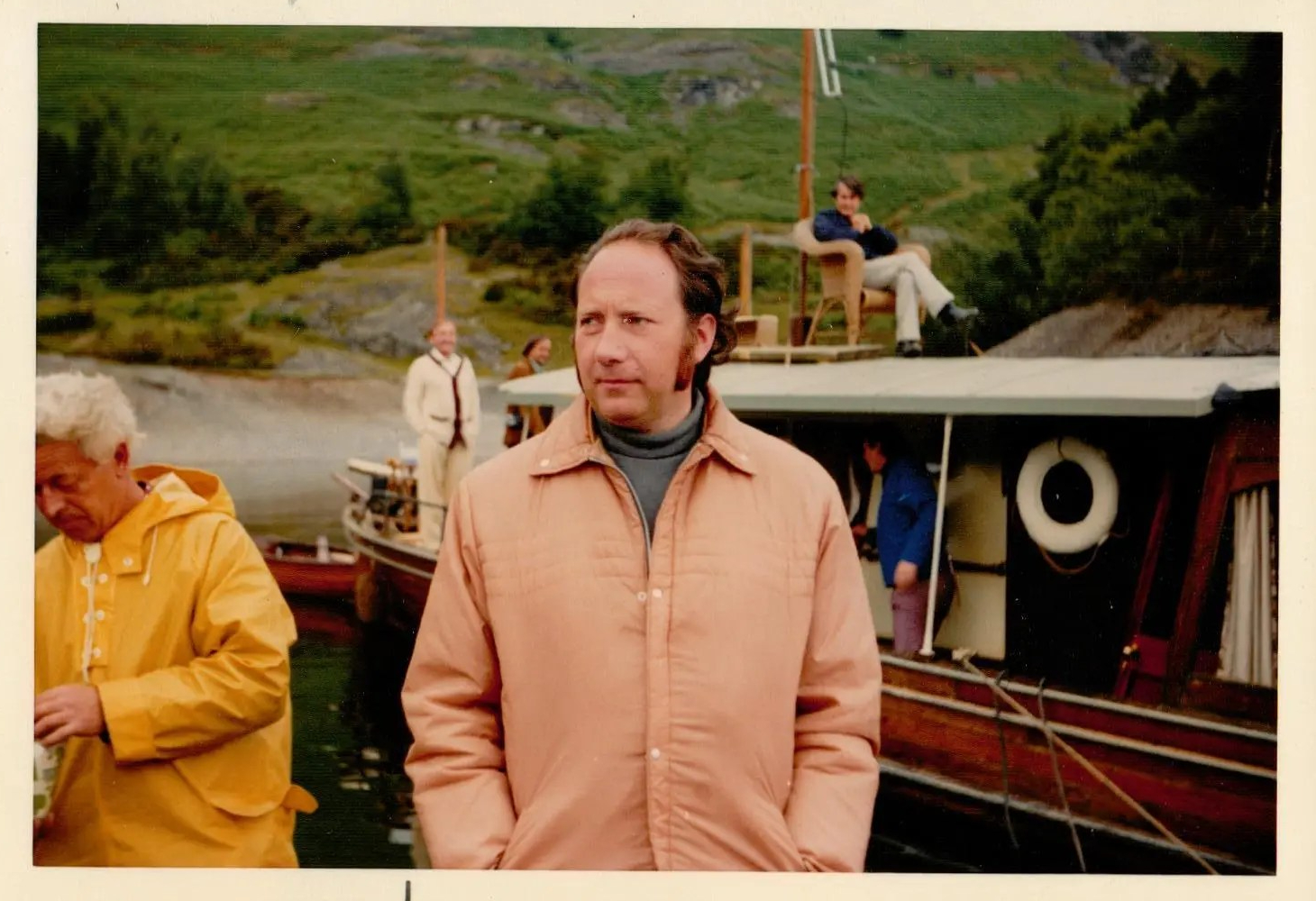
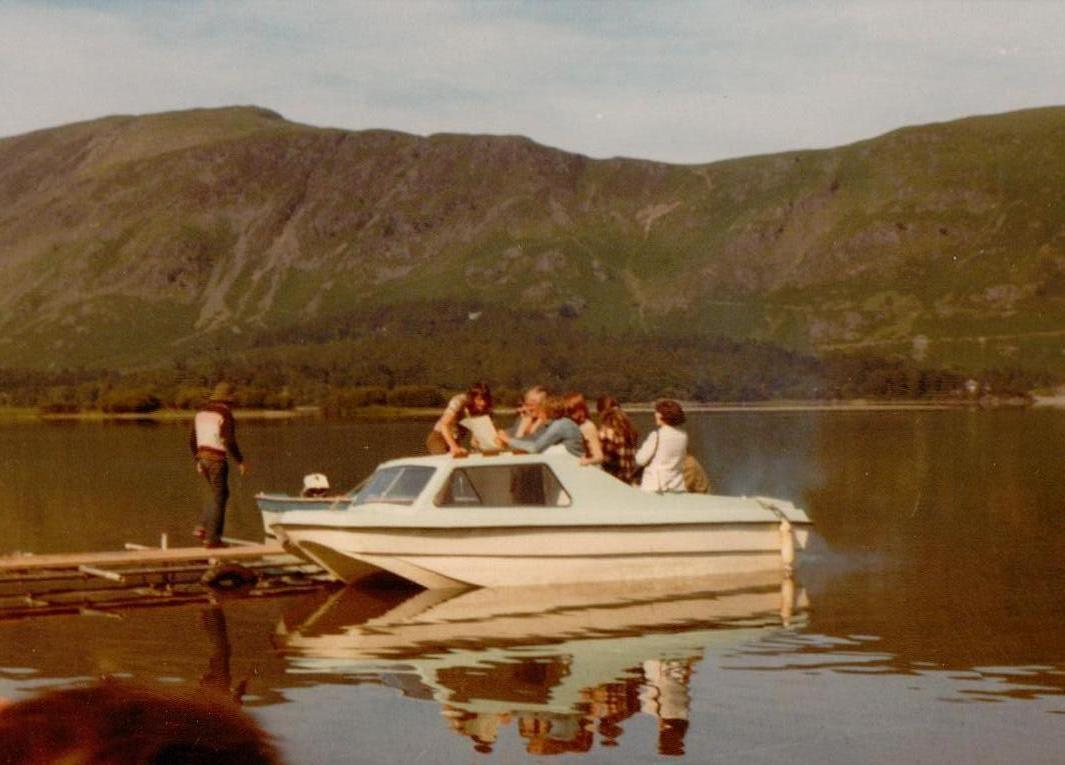
Stephen Grendon and Sophie Neville in Swallow, wired to the camera pontoon with Richard Pilbrow, David Blagden, Calude Whatham, Dennis Lewiston, boatmen and other members of the filmcrew
Although he could splice a rope and was respected for his experience on high seas, David had never worked in film or television production. He claimed to have read the book of ‘Swallows and Amazons’ forty-two times, but evidently did not breakdown the script. As ‘sailing director’ he should have listed what was needed in each action scene, prepared methodically, and conducted risk assessments. I look at the photo above and can only imagine what could have happened out on Derwentwater if we had been hit by a Lakeland squall. When my father eventually tested one of the old BOAC life vests we were equipped with, it failed.
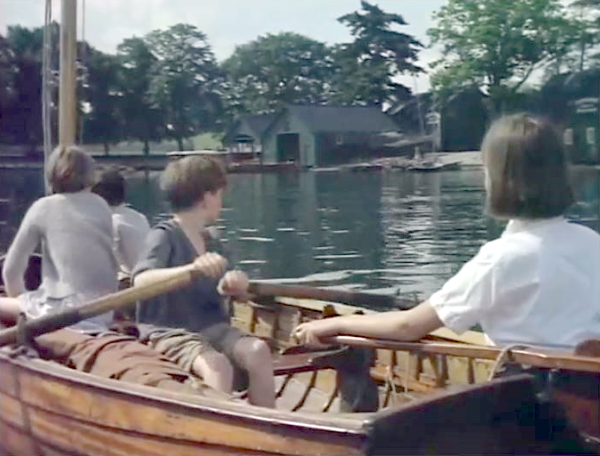
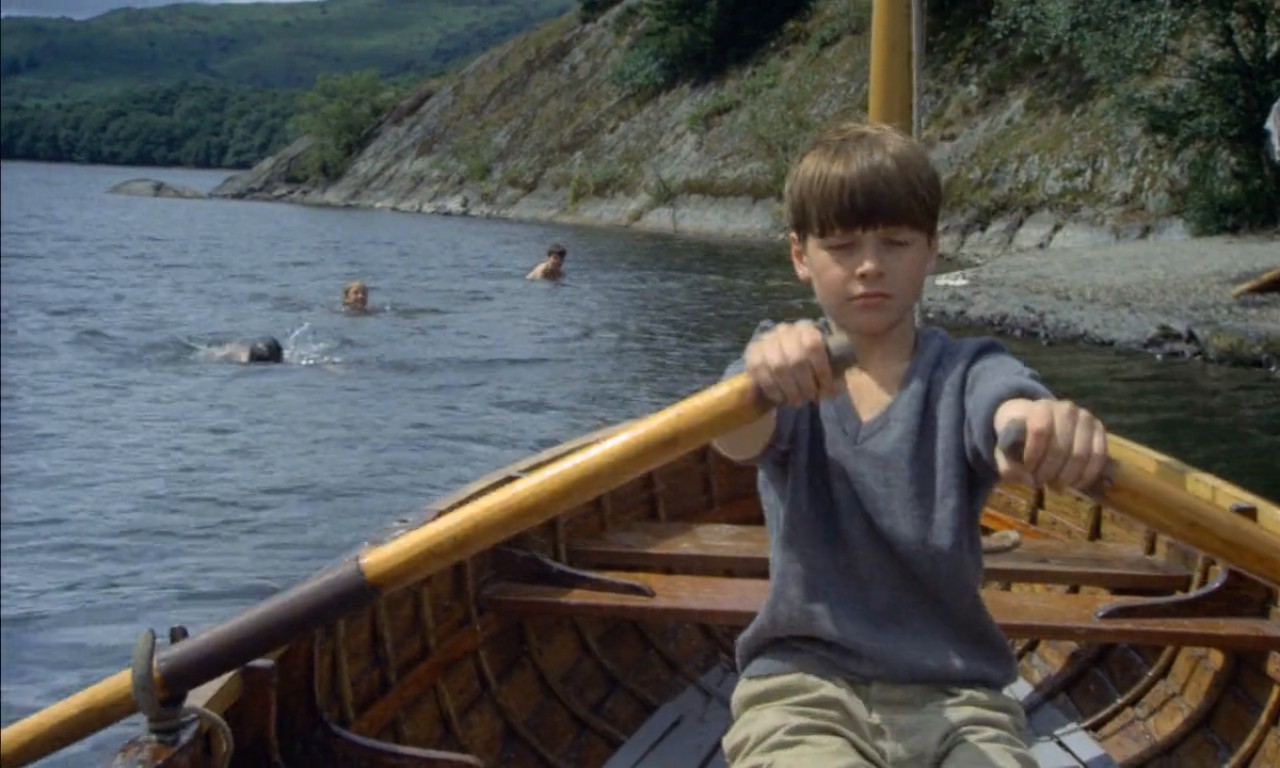
As young actors, we only had two days on Windermere to get used to the boats. David concentrated on sailing with Captain John and Nancy, forgetting that Titty and Roger have quite a bit of tricky rowing in vision. They row back from the charcoal burners and row out to Cormorant Island in Swallow, while Titty needs to row Amazon out of the shelter of Secret Harbour into Coniston Water. It was madness not to have trained for a twelve year-old girl for this. I ended up with the precious 35mm Panavision movie camera onboard. We would have had plenty of time to practice as we were all hanging around at Brown Howe where we could have spent an afternoon rowing Swallow.
Contact sheet sailing Swallows & Amazon in 1973
One climax of the story is when Titty sails the captured Amazon back to Wild Cat Island, and yet he failed to teach me how to sail her. This was sad in that is was one aspect of Arthur Ransome’s book that could easily have been fulfilled.
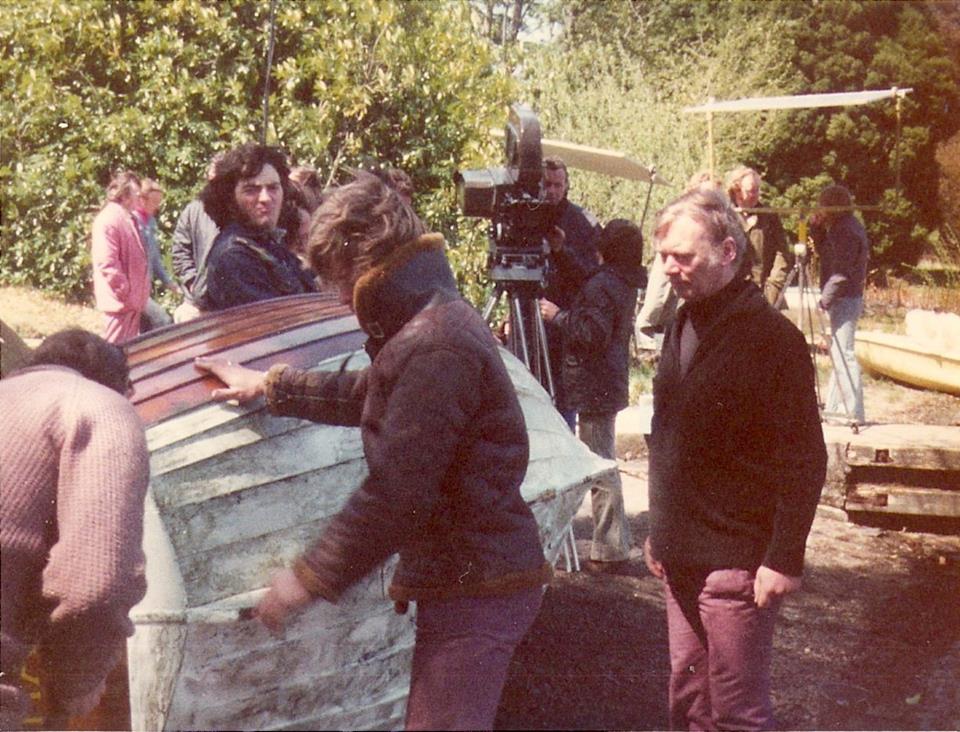
The Amazon on her side with David Blagden (Sailing Director), David Cadwallader (Grip) David Bracknell (First Assistant Director) with Dennis Lewiston (DOP) with the Panasonic in the background ~photo: Richard Pilbrow
Although he was fond of boats, what David wanted was to to act. Claude Whatham, the director, gave him the part of Sammy the Policeman.
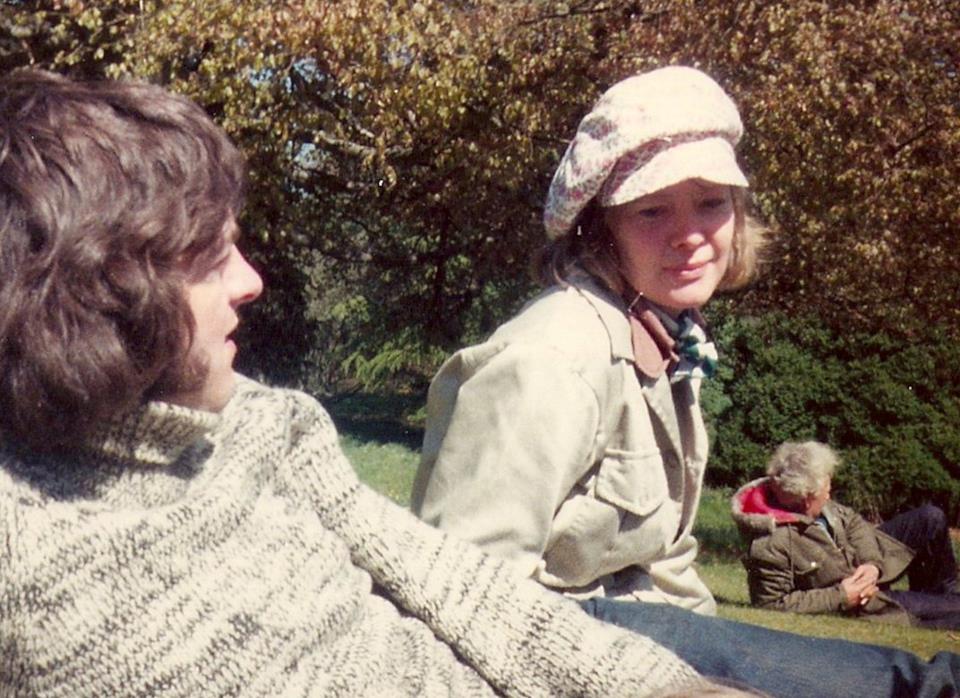
David Blagden, the Sailing Director before he had his hair cut to play the Policeman, and my mother Daphne Neville, Chaperone to the six children acting in ‘Swallows and Amazons’
The idea of having his hair cut was challenging but David accepted the fact that a police officer of 1929 would have a short back-and-sides and was shorn at Bank Ground Farm by Ronnie Cogan, the unit hairdresser. Off came his fashionable shaggy locks, which was seen as very brave.
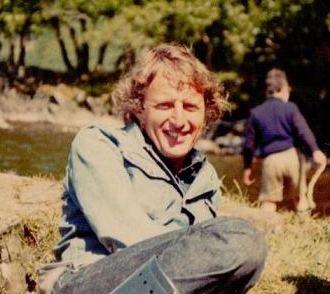
David Blagdon who played Sammy the Policman ~ photo: Daphne Neville
David adopted a Lancashire accent for the part, “Now then Miss Nancy…” and was so proud of his haircut that he removed his policeman’s helmet in vision. This worked well as it gave him appropriate reticence. He remained in character whilst in uniform and his performance was both well timed and convincing. He obviously prepared well for that.
David Blagden as Sammy the Policeman
David had played Grant in The Adventurer, a TV series made about an American government agent made in 1972. He’d also appeared as a prison officer in the 1971 film ‘Kidnapped‘ starring Michael Caine and Jack Hawkins, which we went to see at the cinema in Ambleside on a precious day off from filming ‘Swallows and Amazons’. IMDb lists David as voicing seven episodes of ‘The Water Margin’ and appearing in one episode of ‘Omnibus’ as a talkative actor. He also presented a British television series called ‘Plain Sailing’, which by all accounts did well, and is remembered for his book ‘Very Willing Griffin’ about his crossing remarkable of the Atlantic in a 19′ Hunter, completing the OSTAR race in fifty-two days.
Adrian Mitchell, an old friend of David’s, emailed me to say, ‘Your recollections of David whilst you were filming with him are both interesting and amusing. He was always very strict when he was at Conway and the thought that he would grow his his hair so long is really very funny…. and having it cut off for his policeman’s role in the film even funnier.’
Adrian remembers him from the 1960s as David Marks. He might have decided to use Blagden as a surname it there had been another actor called David Marks registered with Equity at the time.
It was sad that David’s life was cut short in 1978. An alternative account of the tragic shipwreck, that was actually off Blackpool, can be found on the Fleetwood Lifeboat’s site here.
I arrived two weeks early and was born at home, delivered by my great-grandmother in my parents’ cottage, the Old Bakery in the village of Clent in Worcestershire in 1960. Tell Laura I Love Her and Save the Last Dance For Me were top of the charts.
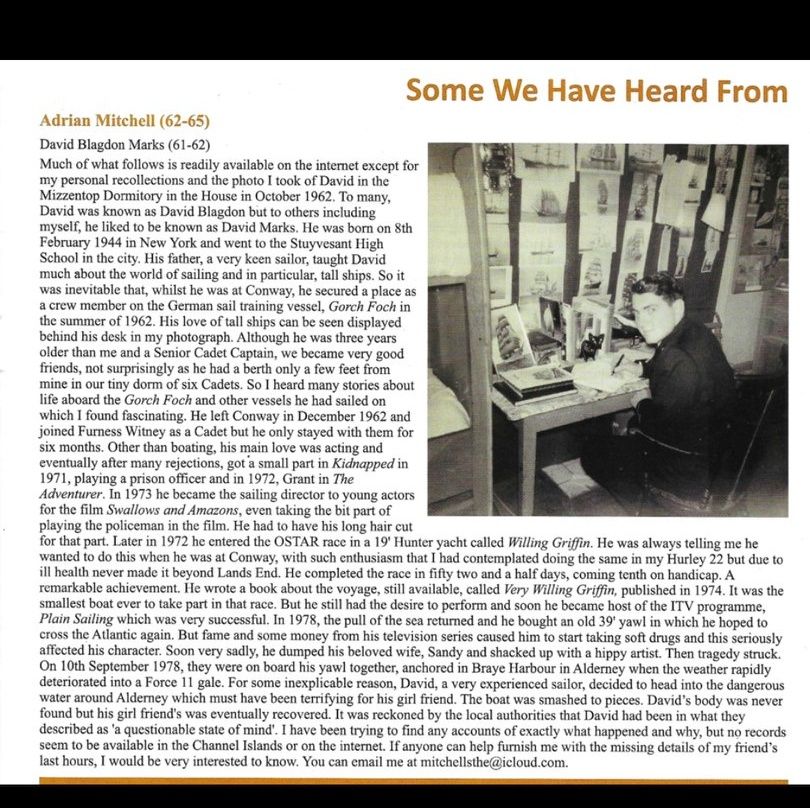
Sophie Neville as a child ~ photo: Martin Neville
Can you give us background on your parents and what they did for a living?
My father worked in Press and Publicity at BIP where he launched fibre glass boat manufacturing by setting up an experimental workshop in Covent Garden. My mother married on her 21st birthday just before graduating from RADA. She was in the same year as Susannah York and the playwright Hugh Whitmore, but took a break in her career to get married and have us children.
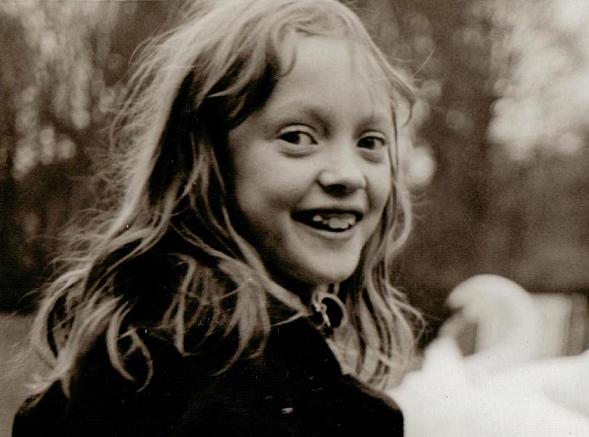
Painting with my father on the shore of Coniston Water
Do you have any siblings?
I have three little sisters, so I was never lonely. Perry had a small part in the classic HTV series Arthur of The Britains and later played the teacher in Bernard’s Watch. Tamzin had leading roles in six television productions playing Elka in Arthur of the Britons, Anthea in The Phoenix and the Carpet and Linda in Love in a Cold Climate with Judi Dench and Michael Aldridge playing her parents.
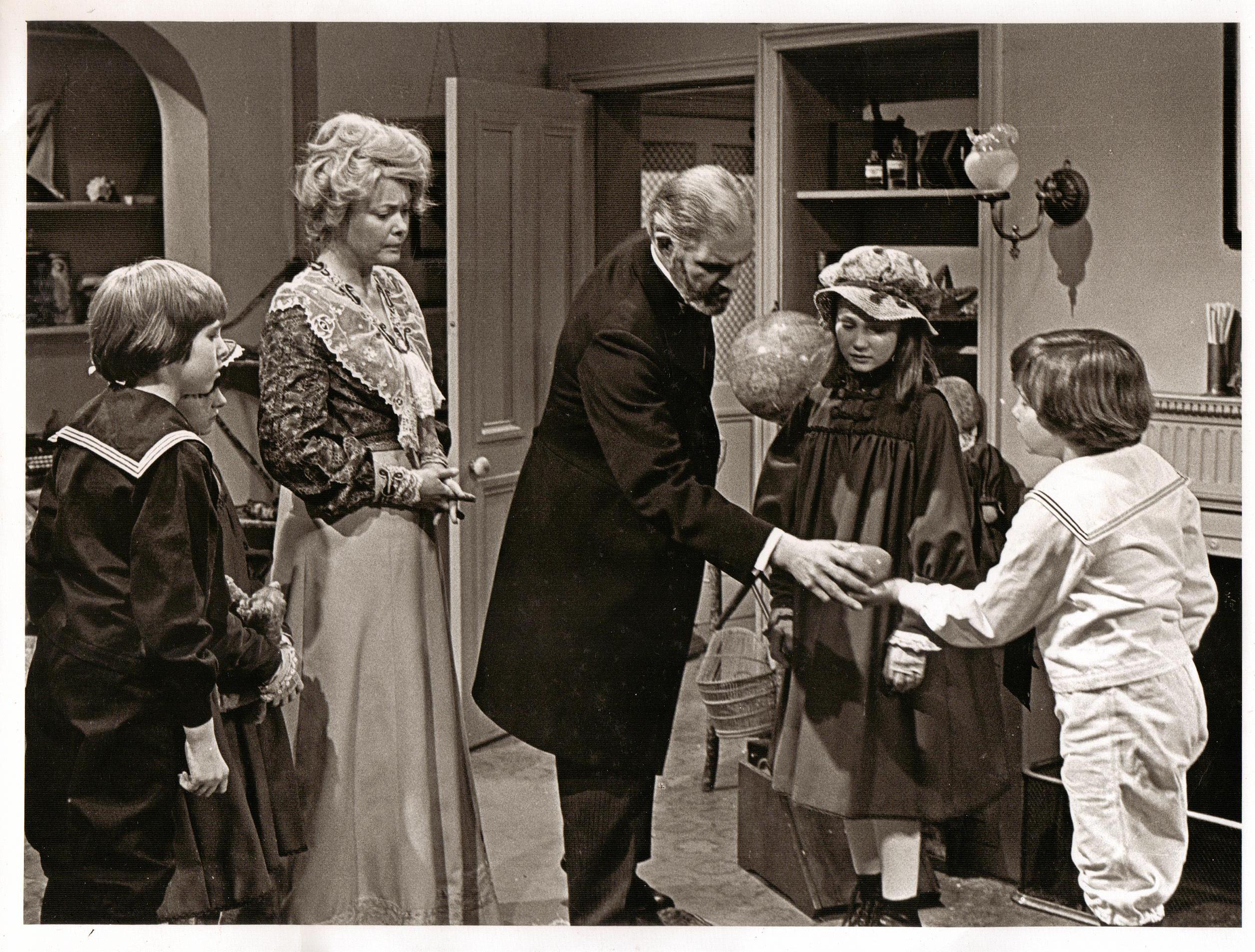
My mother playing mother and Tamzin as Anthea in The Phoenix and the Carpet
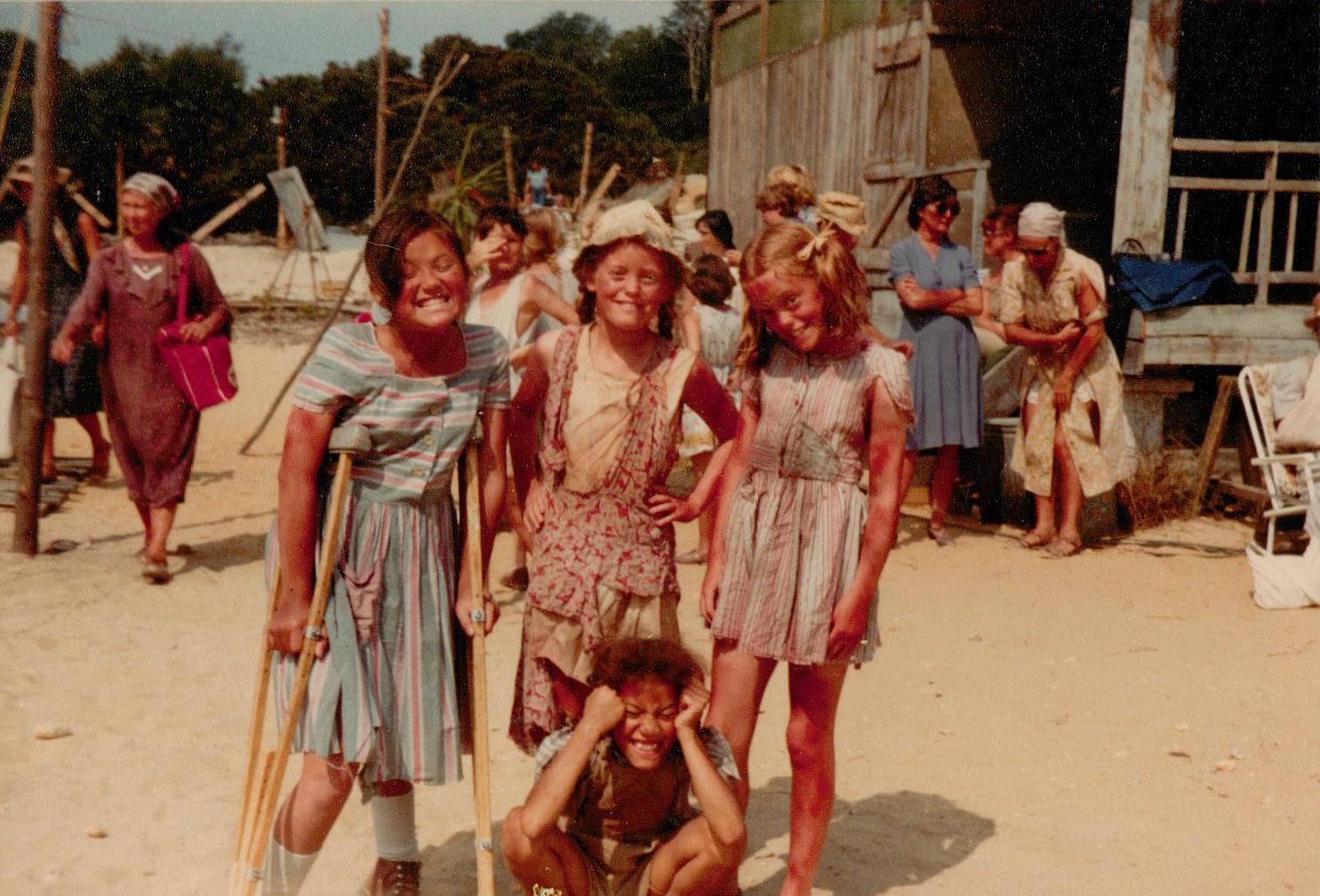
My adopted sister Mary-Dieu suffered from polio as a baby so was in hospital a lot or on crutches, but appeared as a film extra in Abide With Me and the wartime drama Tenko, which she enjoyed.
Appearing in the BBC drama serial Tenko
Where were you schooled and were you academic?
I am a visual learner and could have gone to art college but concentrated on English, history and geography, going on to read anthropology with ethnography and psychology, subjects I draw on continuously as a writer. The most useful subject I took at university was cartography. All the best books contain maps and I draw my own.
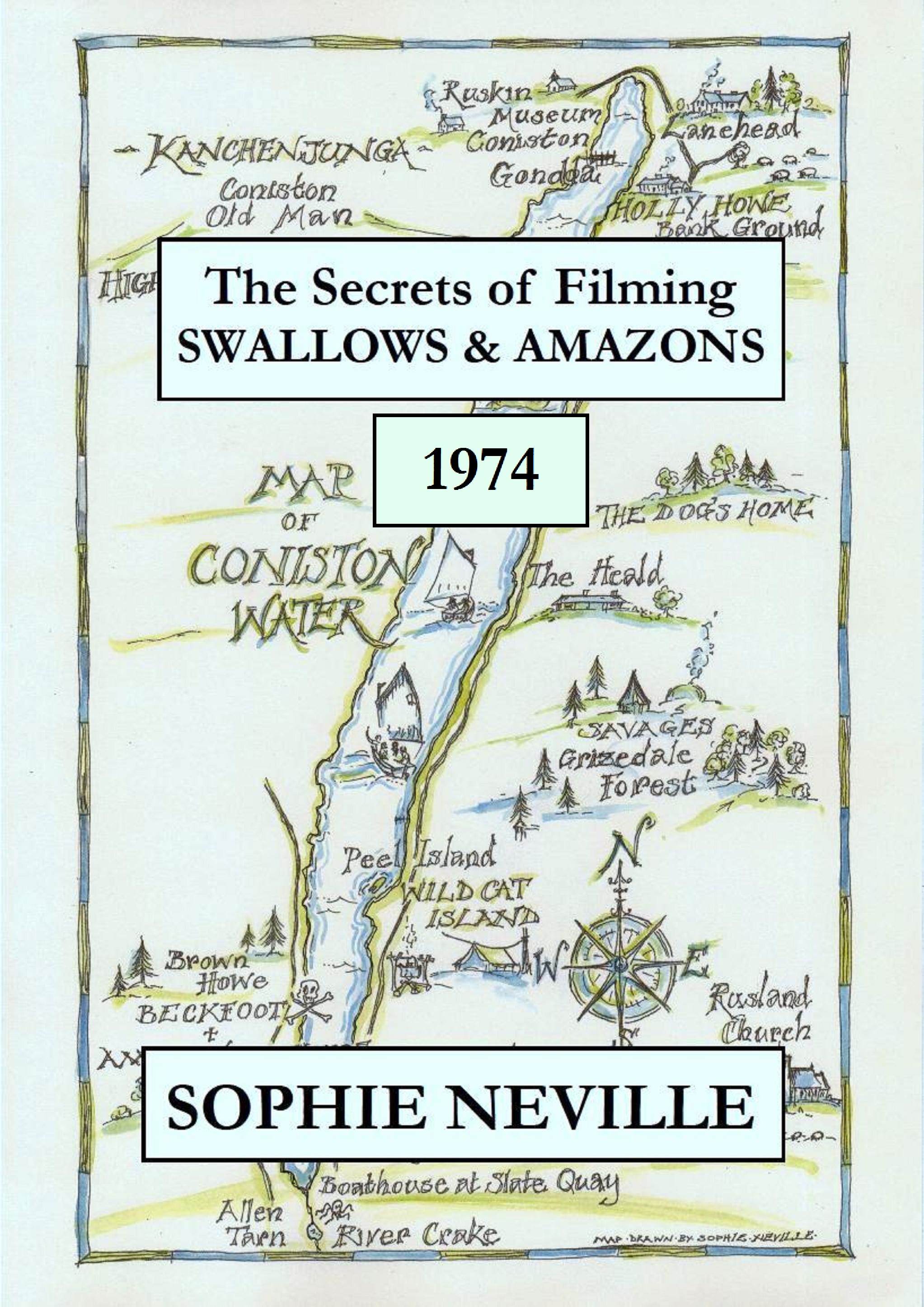
Swallows and Amazons map of Coniston Water
Did you have any early career aspirations and did you go onto further education?
I went to the University of Durham, where I made wonderful friends including Alastair Fothergill who produced Our Planet and most of Sir David Attenborough’s iconic serials, along with a number of wildlife movies for Disney. I missed my viva – an oral aspect of my Finals – because I opted to go filming in the Charmague, but would you turn down that opportunity? We went on to film in Kenya and recce locations in Zaire and Uganda.
Alastair Fothergill making ‘Wildlife on One’ at Lake Nakuru ~ photo: Sophie Neville
Where did your creative flair and love for acting and writing come from?
We are all born to create. There are times when I have been tempted to take a more managerial path but I feel called to write, so that’s what I do.
Sophie Neville with some of the books she has written
Did you come from a creative family?
My father loved design concepts and developed products with his team at work, notably the cable tie. You find them everywhere now. My mother has always held a burning desire to act and brought out a children’s book in the 1980s, which is still in print. I feel she has more talent as a writer than an actress but she loves the social aspect of filming. At the age of 85, she appeared in Top Boy and was involved in filming The Repair Shop when they visited Denville Hall, the actors’ retirement home in November 2025.
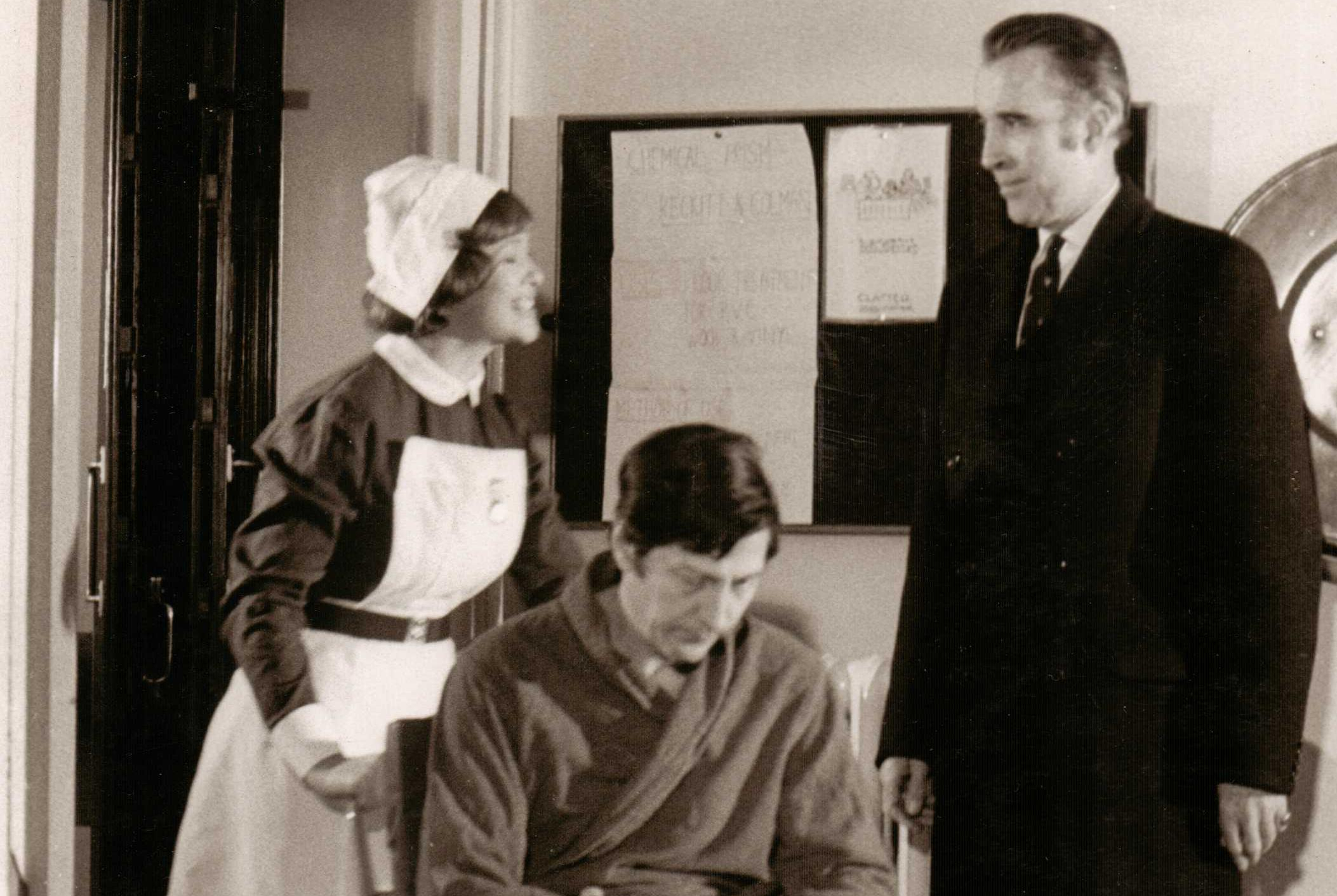
Daphne Neville with Christopher Lee in ‘Diagnosis Murder’
How did you manage to get your lucky break as an actress?
I was able to play the piano. I took my music along, practiced seven or eight hours a day, and did what I was told.
Sophie Neville playing Elieen Brown in the BBC adaptation of ‘Cider with Rosie’
Can you recall your first acting credit?
As a child, I appeared as a film extra in classic drama serials such as The Changes and Arthur of the Britons but gained my first acting credit as Eileen Brown in the BBC play Cider With Rosie, adapted by Hugh Whitmore. I had my hair chopped off for my first movie, and went on to act in a few more productions.
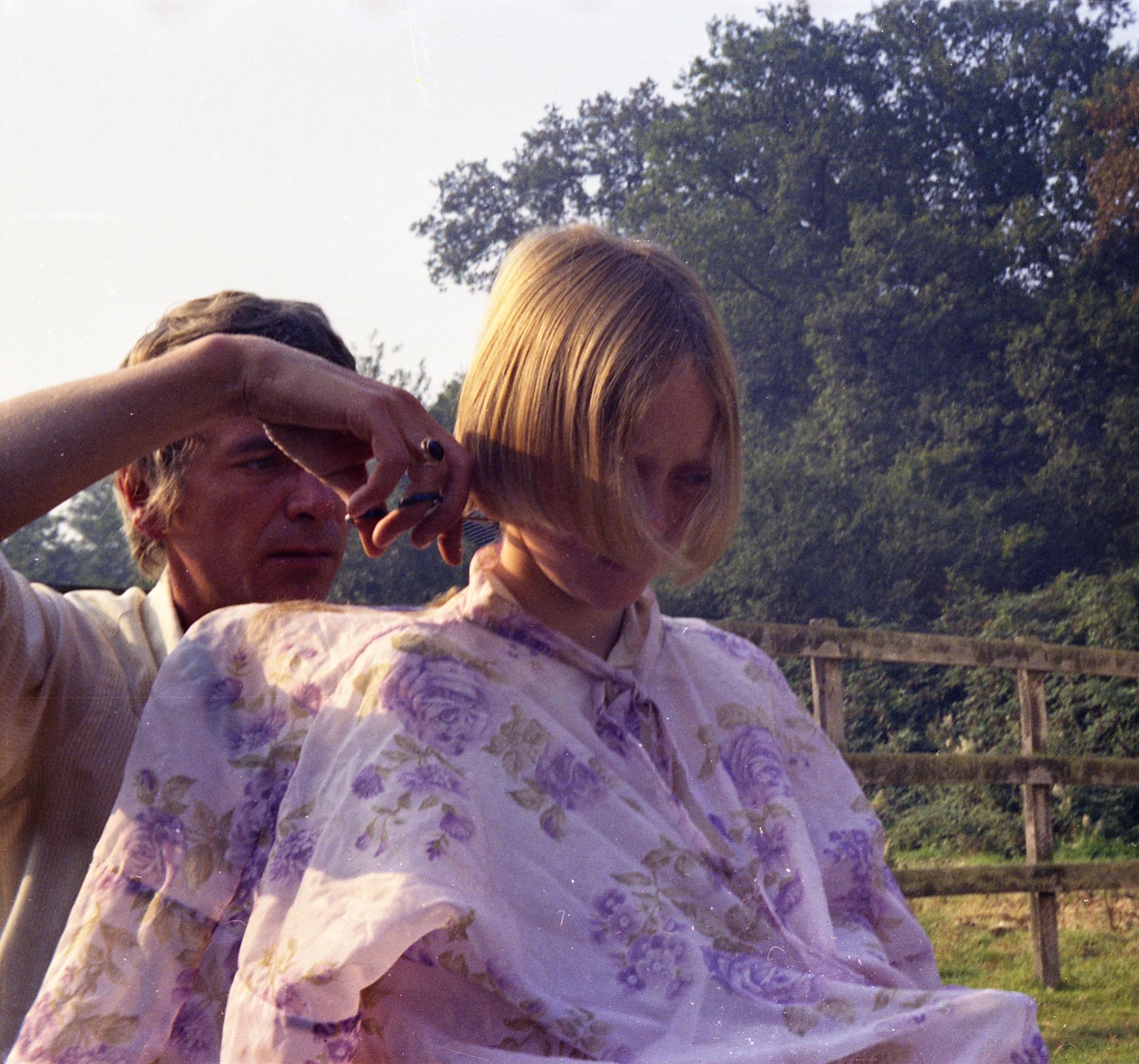
Sophie Neville having her hair cut on location for the part of Titty Walker in 1973
Your C.V. covers several areas including behind the scenes television and film related roles. Let’s start at the beginning of your career and find out what inspired you to become an actress and did you have any early influences?
I wasn’t so much inspired as simply offered an amazing opportunity, which is exceptionally rare. I was invited to an interview to appear in an adaptation of Arthur Ransome’s book, Swallows and Amazons when I was aged twelve. Of all the parts in all the books, I was asked if I would like to play Titty. How could I turn that down? I loved the Lake District, enjoyed camping and was happy in a boat. I did it for fun.
Sophie Neville as Titty
Swallows and Amazons is a classic family film released in 1974. Can you tell us about your experiences working on the film? What are your overriding memories and what does the film mean to you personally?
It proved hard work and involved a lot of hanging around in the cold, but I loved the period aspect and thrived spending time outdoors on location. Filming on Derwentwater was amazing. We had our own desert island, pine trees to climb and a houseboat to attack. Making Ronald Fraser walk the plank was fun. He did it rather well.
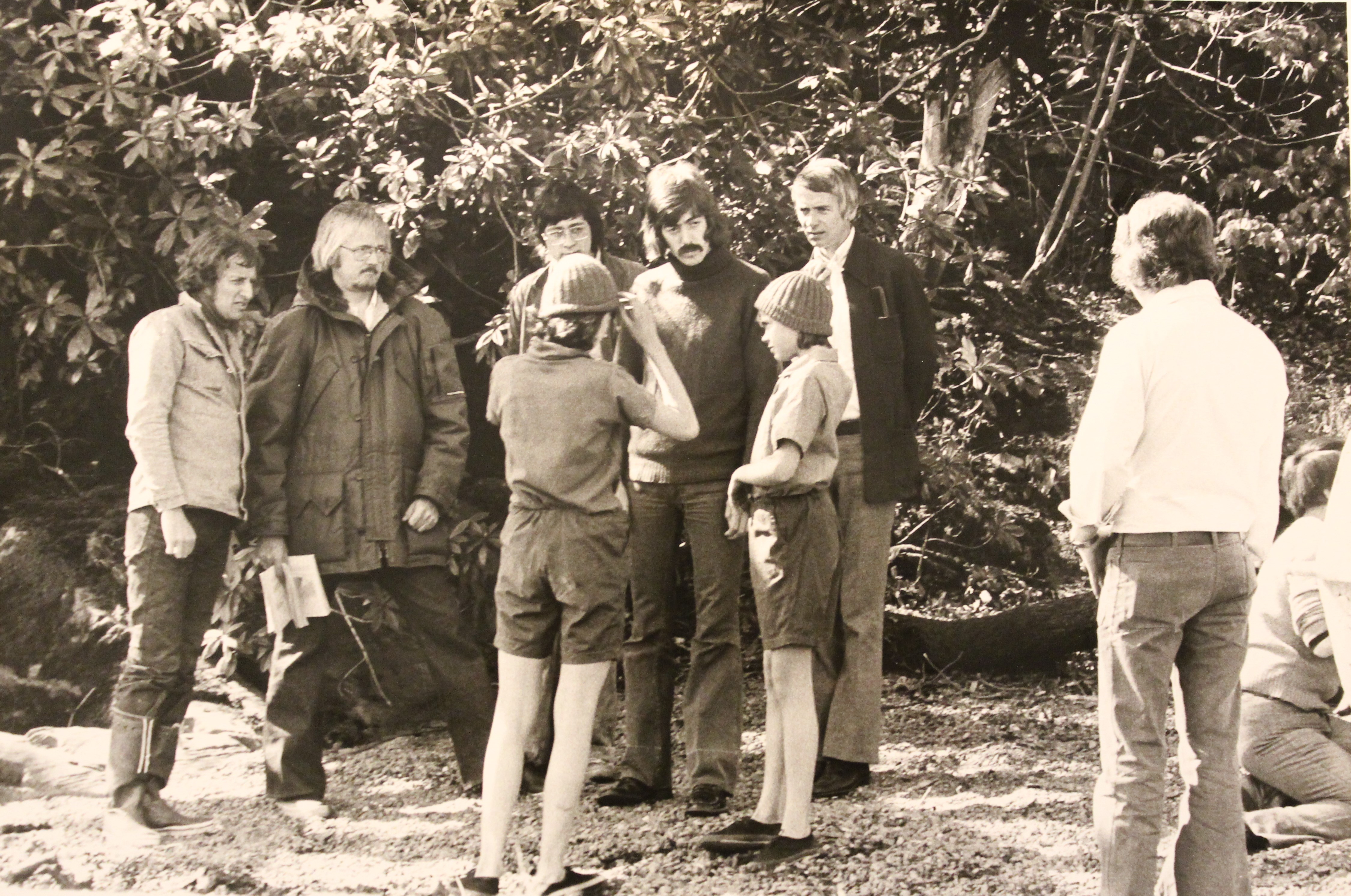
Sophie Neville as Titty on Cormorant Island ~ photo: Daphne Neville
You’ve written two books on your experiences of working on Swallows and Amazons: The Making of Swallows and Amazons and The Secrets of Filming Swallows and Amazons. What made you decide to write two books on the film and were your memories still fresh and vivid when recounting the stories?
I had the amazing cine footage that my parents took behind-the-scenes on location that they BBC put on a DVD when they made Countryfile and Big Screen Britain, presented by Ben Fogle. I’d already set up my own publishing company and was employing a formatter who suggested we brought The Secrets of Filming Swallows and Amazons as a multi-media ebook, including this unique footage and my parents photos (that you would never be allowed to take on location these days). This did so well as an ebook that it was picked up by the publisher Classic TV Press. They gained permission to add official stills from the film and brought it out as a large paperback with colour plates entitled The Making of Swallows and Amazons. It was then bought by The Lutterworth Press who re-designed it in 2017.
How were your books on Swallows and Amazons received by fans and critics?
Each edition had been received with huge enthusiasm. I had terrific publicity in the Times, Telegraph and Daily Mail and am hugely appreciative of all the book reviews left by readers online. I didn’t want to spoil the magic of the film but nearly fifty years have passed since it first came out and fans like to visit the locations. I’ve included maps and all the information needed to find them.
Can I ask your take on the film’s fanbase, how it’s regularly shown and embraced by new audiences? What do you think is the film’s overall appeal?
Being a family classic, as you say, it has become generational. People who originally watched it in the cinema in 1974 want their children and children’s children to see it. When an audience of 250 piles into a cinema to see the re-mastered version, you can appreciate what an amazing landscape movie it is. The humour is drawn out when you watch it with an audience, which is wonderful and you emerge from the auditorium feeling elated.
A recent cinema screening
You’ve appeared in several classic television serials and programmes: Crossroads, The Two Ronnies and Cider With Rosie. What are your memories from working on those shows and did that exposure lead to other opportunities?
I didn’t realise that Ronnie Baker directed the Two Ronnies, or at least the Charley Farley and Piggy Malone serial with in it. He inspired me to direct comedy. I adored working with him and only wish we’d done more together. He had me for an informal interview on location one lunchtime. I blew it, but did end up directing a bit of comedy at the BBC.
Ronnie Corbet with Sophie Neville filming ‘The Two Ronnies’
6. Who have you enjoyed working with the most in front and behind the camera? Have any of your colleagues acted as mentors and have you gained greater knowledge about the industry from any of them?
So many! Suzanna Hamilton and Anthony Calf are the actors I’d want to work with again. They brought out the best in me. Claude Whatham was the mentor who advised me before I went for my first interview to work in television production. He said, ‘Filming is all about using your time well.’ Writers are wonderful about sharing every tiny piece of knowledge but my own formatter Lisa Skullard mentored me on new technology, for which I am grateful.
Claude Whatham ~ photo: Daphne Neville
7. What made you decide to make the transition from an actress to a behind-the scenes member?
Even as a child I was more interested in the logistics and production side of making dramas.
Can you talk about some of the projects you’ve worked on including being an assistant floor manager of EastEnders, My Family and Other Animals, Bluebell, Doctor Who along with your directing and producing credits?
I was very fortunate to work in BBC Drama Series and Serials at the very zenith of production in the 1980s. It was such a privilege to work on My Family and Other Animals as it was made entirely on location in Corfu. I helped cast the little boy and did the research, interviewing Gerald Durrell, who came out on location with his lovely wife Lee Durrell. I carried out the historical and film research on Miss BlueBell’s life and met her in Paris where we filmed one summer. I also worked on the zoo vet series One by One, and became a location manager on Rockcliffe’s Babies. Producing my own series, INSET, shot in Cumbria, Wiltshire and Sheffield was unforgettable. I had such a good team and we were in a position to do ground-breaking work.
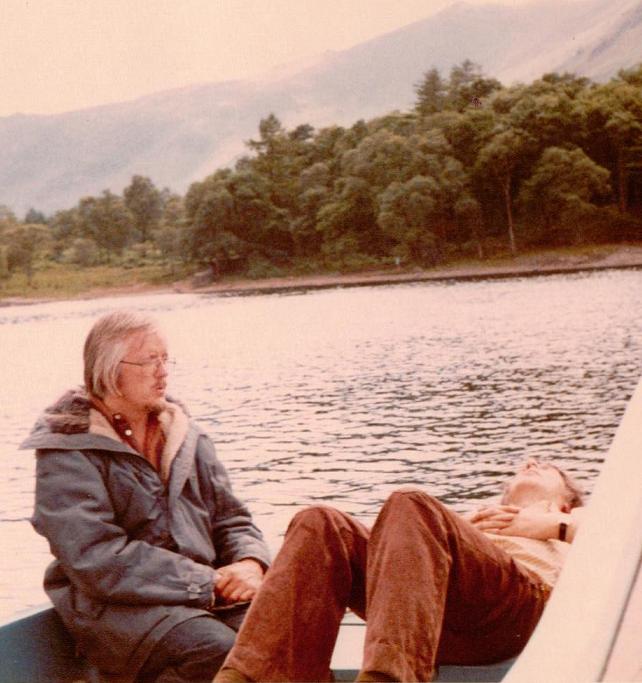
At Elstree Studios for the BBC Drama Directors’ studio course. I am wearing a green sweater.
You are an award-winning writer with several books to your credit. What made you decide to become a published author and of the books you’ve written, which are you most proud of and why?
Writing Funnily Enough was a huge challenge. I felt I was laying my whole life out before the world. It’s a dark comedy. As all the stories expose my friends and family, I opted to self publish so that I could make changes. My brother-in-law was working in Libya and I didn’t want him to be shot. In the end I was only asked to change the name of a town and the names of three characters. I’ve changed them back now. My brother-in-law now regularly talks about his book on Libya on Sky Television.
Funnily Enough – the paperback with black and white illustrations
9. How does the creative writing process work for you? How long does it take you to prepare and plan a book and do you have a set time for writing?
I need at least two years to write, edit and develop a novel, even though I put in about eight hours work a day. I often start at 6.30am and am a complete work-aholic. Only other writing, such as articles, and inevitable admin get in the way. My husband has to do the shopping.
A travel book with a difference
We’ve spoken about the many areas and capacities you’ve worked in: Acting, a floor manager, a researcher, producer, director and a published author. Do you have a favourite discipline and if so, why?
I loved every aspect of directing – felt as if I was flying – but you need huge stamina and total application. My husband needs me at home, so writing is an easier career path to follow although I travel quite a bit giving talks and conducting research.
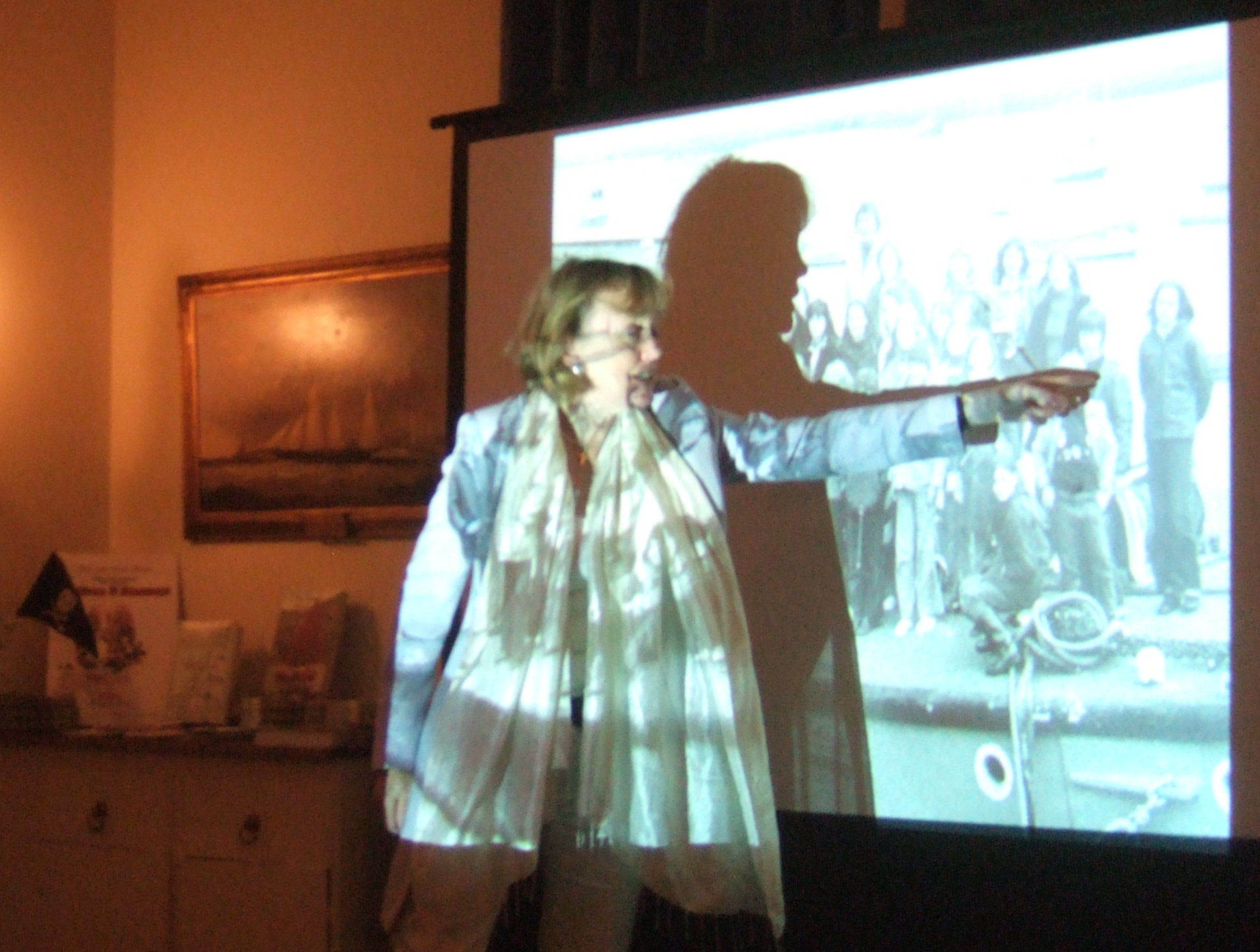
Giving a talk in Cowes
11. Away from your creative endeavours, can we discuss some of your other loves and interests: Anthropology, your love of animals, charity work and archery.
My family have kept tame otters for almost forty years, hand-rearing abandoned babies and lecturing on conservation. I am now Patron of the UK Wild Otter Trust. I emigrated to southern Africa in 1992 and ended up volunteering on a number of projects, helping to set up a charity to combat the HIV/AIDS pandemic. One million people still die from AIDS every year. We continue to run HIV prevention and awareness in schools, employing a nurse to care for those on anti-retrovirals and keep an eye on the orphans, many of whom are in their teens.
I learnt to shoot with a long bow on the set of Swallows and Amazons. This was pivotable as it led to a leading role in an adventure movie, The Copter Kids, with Sophie Ward and Vic Armstrong. The sport also introduced me to my husband. He was Chairman of the archery society my parents belonged to.
Sophie with her husband on the coast of South Africa
Can I also ask you what made you decide to emigrate to South Africa and can you tell us about your 12-years living there?
You’ll have to read my books, ‘Funnily Enough’ and ‘Ride the Wings of Morning’. Every details lies within the pages.
Final Questions to Finish Interview
1. What’s your favourite past time? Walking along beaches
2. What’s your favourite film and why? I have to admit that Swallows and Amazons (1974) is a nostalgia trip for me. It’s been described as ‘mesmerizing’.
3. Who’s your favourite novelist? Karen Rosario Ingerslev
4. If you could have had a different profession what would it have been? Mother
5. Who has been your greatest inspiration in life? Jesus
6. Do you read a newspaper? If so which one? The Telegraph
7. What’s your favourite food? Black cherries
8. Who is your favourite cultural icon? Virginia McKenna
9. What’s your favourite curse word and why? I try not to swear
10. What’s your favourite place or holiday destination? The Okavango Delta
11. Who is your favourite music artist and what’s your favourite album? Cat Stevens greatest hits
12. What’s your greatest achievement to date? Publishing Funnily Enough and finishing my historical novels.
13. How do you wish to be remembered? As an inspiration to others.
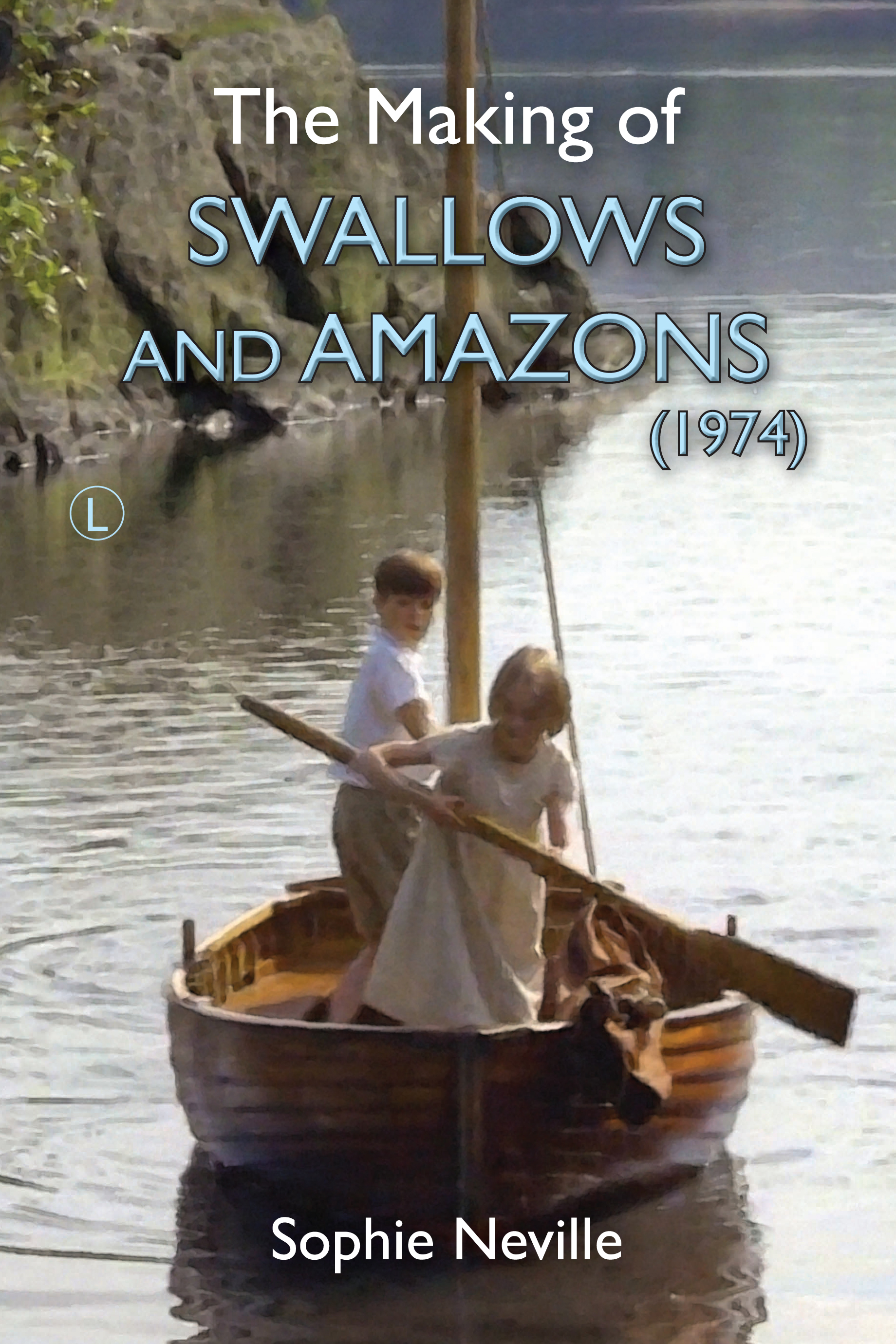
Chloe Williams has just written from Ontario in Canada, to say, “Some books entertain. Some enlighten. And some, like The Making of Swallows and Amazons and The Secrets of Filming Swallows & Amazons, manage to bottle something impossibly rare: the feeling of looking back through a child’s eyes and realizing it was all real; the lake, the sails, the laughter and somehow, you were part of it.”
“These aren’t just behind-the-scenes diaries. They’re sun-dappled time machines. Your voice, both in memory and in your original childhood notes, is a miracle of tone: witty, observant, buoyant, and deeply human.”
Of the original movie, she wrote: “What A Christmas Story is to snowglobes and childhood winters, Swallows and Amazons (1974) is to summers on the water and you’ve preserved that magic with charm, heart, and astonishing detail.
“What makes these books unforgettable isn’t just nostalgia. It’s how alive they are. We feel the smell of old sails and camera tape, the blur of location shoots, the uncertainty and excitement of being a child caught in a grown-up world of filmmaking yet utterly at home in it. We meet legends like Virginia McKenna not as distant stars, but as fellow travelers in the adventure. And it’s a joy.”
The Making of Swallows and Amazons seems to resonate with:
Readers of nostalgic memoirs that celebrate childhood, nature, and storytelling
Adults who are captivated by the lake-country magic of Arthur Ransome
Film lovers who cherish insider views of filmmaking
Educators and parents seeking real-life adventure stories for young readers
Fans of Call the Midwife, The Durrells, and 84, Charing Cross Road
“The joy and authenticity in your books mirror exactly why Swallows & Amazons (1974) still has such a hold on people’s hearts. The memoirs don’t just tell the story of making the film, they recreate it, letting readers smell the lake air and see the magic unfold through a child’s eyes.”
The new audiobook
I’m hoping the audiobook will also amuse readers. It’s now available on all the online platforms including Audible, where isis being offered for free on their membership trial.
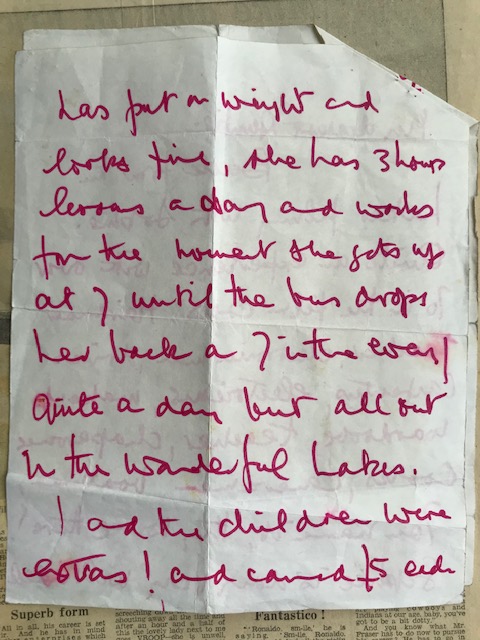
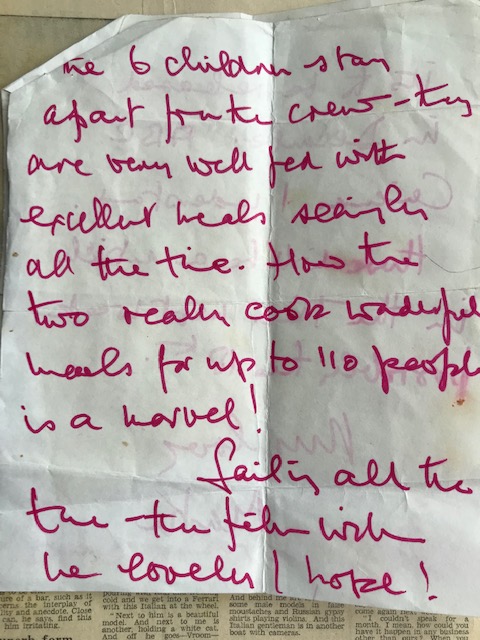
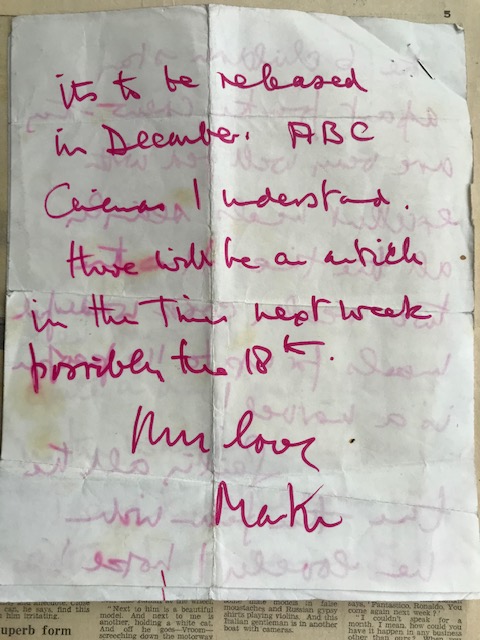
Whilst clearing out my mother’s house recently we found a few letters written by my parents to my great aunt in June 1973. They report on the progress of making the original EMI movie of ‘Swallows and Amazons’ in the Lake District.
Stephen Grendon as the Boy Roger, Sophie Neville as Able-seaman Titty and Simon West playing Captain John Walker beside Derwentwater in 1973 ~ photo: Daphne Neville
My mother had been given headed writing paper designed for members of the production to use on location by Brian Doyle, who managed the film publicity.
It looks as if my father used his children’s felt pens.
It is interesting to learn how much my sisters earned as film extras when they appeared in the scenes shot at Rio (Bowness on Windermere).
Kit Seymour and Jane Grendon watch the filming on the jetty whilst Tamzin and Perry Neville eat ice creams with the one man in Cumbria willing to have a short-back-and-sides. You can just see the period cars parked in the background
They made £5 a day, which was the same amount as the green parrot. I calculated that those of us with leading parts, who he describes as ‘the 6 children’ earned £7.50 a day. This was probably because we were only meant to be on set for a couple of hours. As Dad mentions, I effectively worked twelve-hour days but seemed to be thriving.
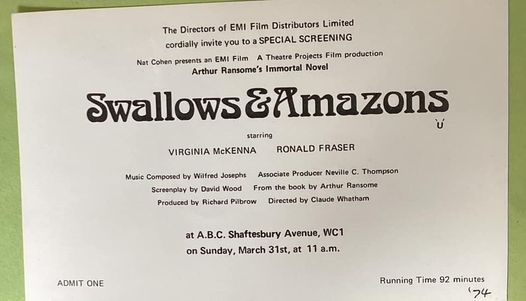
Until reading this letter, I didn’t know that the movie (or ‘picture’ as Mum called it) was originally due to be released in time for the Christmas holidays. It was launched in ABC Cinemas but not until April. You can read about the film’s release and premiere at what was then the ABC in Shaftesbury Avenue on my website here.
Neville Thompson acted as the online producer on the 1974 film of Swallows and Amazons. He choose an excellent crew and took daily responsibility for scheduling the production on location in the Lake District and later at Elstree Studios where the film was edited and post-synced.
Producer Richard Pilbrow and Production Associate Neville C Thompson on Derwentwater in the Lake District in 1973
Neville was born in Ipswich in 1933. Although gregarious at times, he was a quiet man who was once a maths teacher in Scotland. He had five children to support, but decided to go to RADA and become an actor. When a pair of twins came along he moved the family to Croyden and went into film production. He began work as a location manager for Mike Newell and became a production manager for Ken Russell.
Richard Pilbrow gained the rights and film finance for ‘Swallows and Amazons’ but came from a background in theatre and knew nothing about film production. He asked Neville to help set everything up.
Neville C Thomas (top centre) with Richard Pilbrow, Claude Whatham et al
Neville came to Burnham-on-Crouch for our sailing audition when the dinghy ‘Swallow’ must have been purchased from the boatbuilders William King.
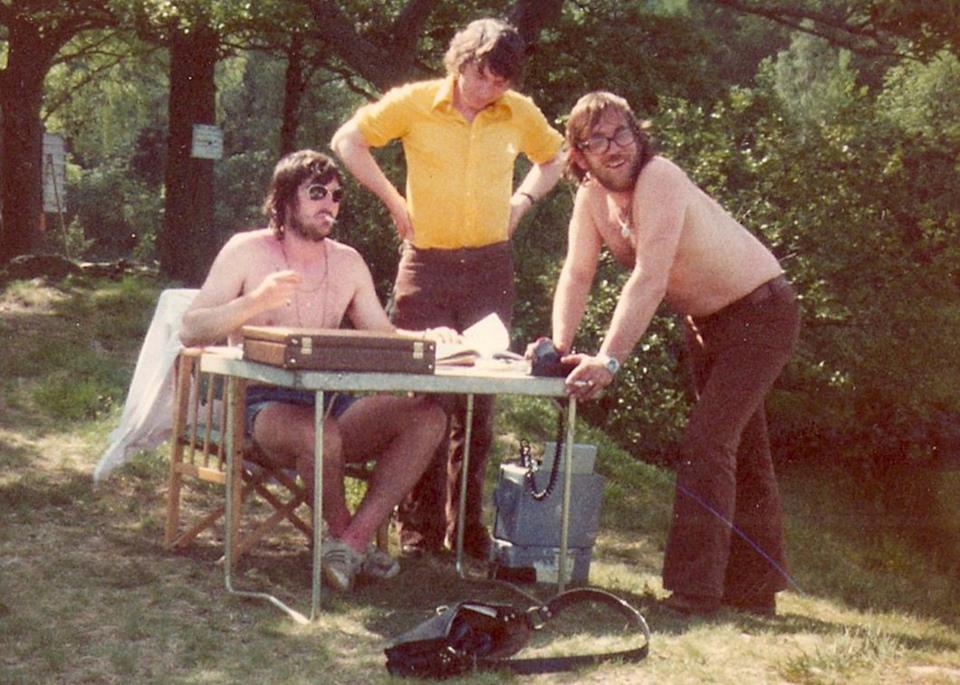
Second Assistant Terry Needham, Associate Producer Neville C Thompson and Production Manager Graham Ford with the unit radio on a sunny day in June 1973
Neville was passionate about film making, becoming known as ‘the last gentleman producer.’ He would have been the one making the executive decisions, the man ultimately in charge of the schedule, personnel, safety, insurance and bringing the film in on budget.
Claude Whatham, Richard Pilbrow, Gareth Tandy, Peter Robb-King, Ronnie Cogan and Neville C Thompson with Kit Seymour and Lesley Bennet trying on hats
His daughter, Mandy, told me that he was a wonderful Dad but had been away a lot. ‘He had eight children in nine years and was keen for them to make their own way in the world.’ Mandy became an occupational therapist, George became a ballet dancer, Chris Thompson went into film making. Neville was diagnosed with Lukemia at the age of 47 but lived another twenty years, ending his days in Woodbridge in Suffolk.
Neville Thompson relaxing on set – photo taken on Sunday 24th July 1973, by Daphne Neville
Neville established a production office at the unit hotel on Windermere. By the time he reached the location he was often exhausted. Everything he’d set up was in motion so, like an experienced parent, he could relax and enjoy the boats.
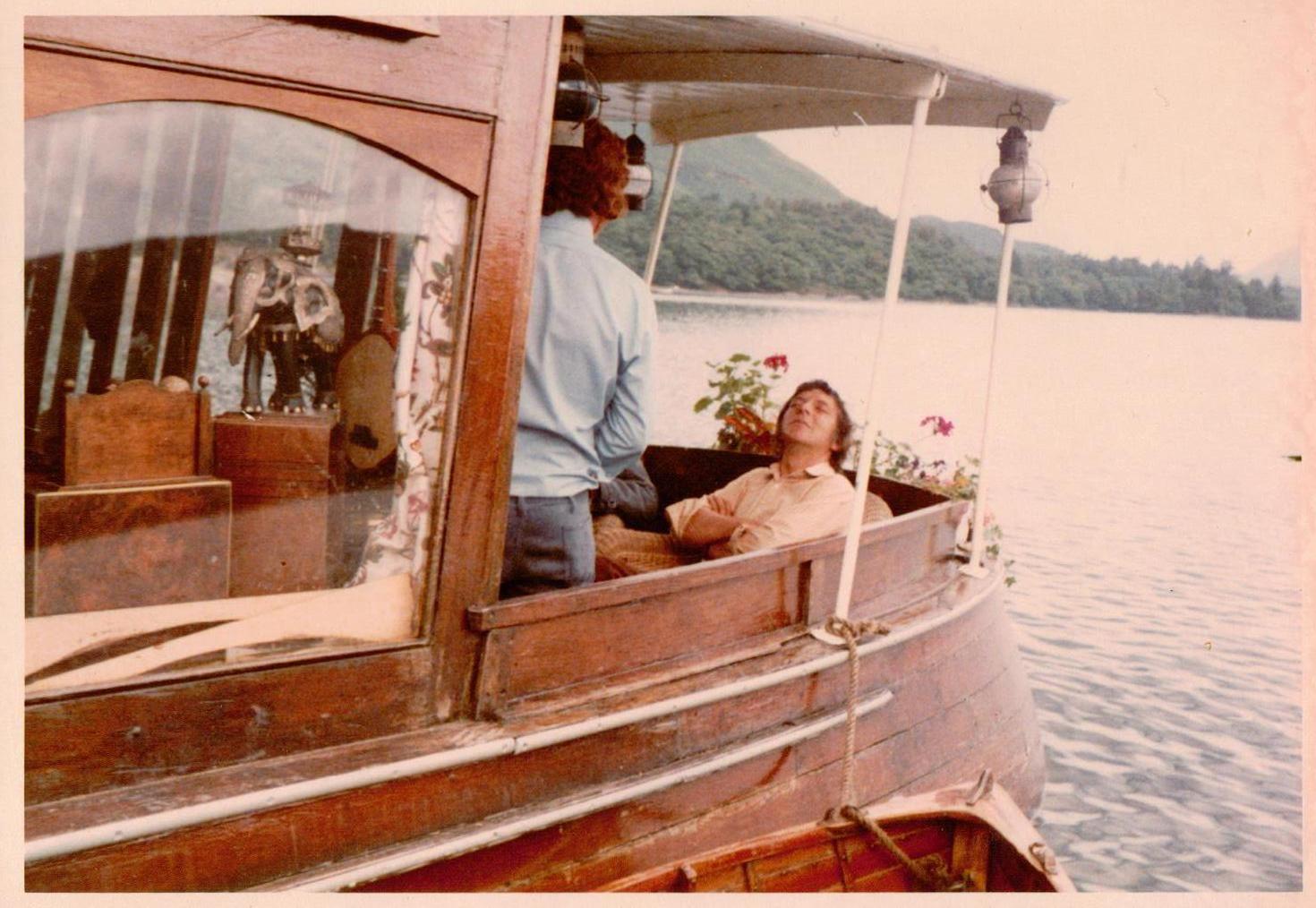
Richard Pilbrow and Neville Thompson ~ photo:Daphne Neville
When Neville died in Woodbridge in Suffolk at the age of sixty-nine in 2002, Richard told me that ‘Swallows and Amazons’ was broadcast on television as if in his honour.
You can find an impressive list of Neville C Thompson’s production credits on IMDb here
Sophie Neville looks on as Stephen Grendon organises his costume helped by Jane Grendon with Claude Whatham and Neville C Thompson when filming pick up shots near Epsom.
You can find details of how to purchase ‘The making of Swallows and Amazons’ here on line or listen to it on audible and other audiobook platforms.
Simon West, Suzanna Hamilton, Sophie Neville & Sten Grendon in ‘Swallows and Amazons'(1974)
Julie Lamming wrote to say, ‘I used to drive my family mad singing “Spanish Ladies” after watching the film for the first time.’ This was the original movie of ‘Swallows and Amazons’ made on location in the Lake District in 1973 and released by EMI Films fifty years ago in 1974.
It took me a while to realise it, but the traditional British naval song Farewell and Adieu to you Fair Spanish Ladies is sung in a number of other feature films from The Buccaneers (1957) to Jaws, which was released in 1975, a year after the original film Swallows and Amazons.
The Buccaneers (1957) and Jaws (1975)
Robert Shaw sings a little more once at sea:
The ships crew come together singing it as a shanty in Master and Commander: The Far Side of the World
A Boston version is also sung in this television drama, Patrick Jane:
Can you think of anymore examples? Please add links to the Comments below.
I classic version of the song can be found here:
I’m afraid I sang it badly and made the mistake of muddling the words, Adieu and Farewell to you Fair Spanish Ladies rendered onto the LP of the film.
You can now listen to the audio book on ‘The Making of Swallows and Amazons’ that explains how the 1974 movie of Swallows and Amazons. It’s available on all the retail platforms and Audible here.
On 6th April 2024, the author and screenwriter Brian Sibley interviewed award-winning writer David Wood OBE at the Cinema Museum for the 50th Anniversary of the release of the classic film ‘Swallows and Amazons’. This can now be viewed on YouTube. I read a special letter from Dame Virginia McKenna towards the end.
Sophie Neville, Suzanna Hamilton & Sten Grendon with David Wood and Claude Whatham in 1973
Until I listened to this interview I didn’t know that Peter Hammond was originally going to direct the film or that Bernard Delfont was behind financing the movie at EMI. He also brought out ‘Murder on the Orient Express’ in 1974 and ‘The Deer Hunter’ in 1978.
Other secrets are revealed. Mrs Ransome (who held the rights) wanted all the Swallows to have blonde hair and blue eyes.
I’ll feature the Q&A with the cast on another blog in a few days time. Do sign up so you don’t miss it.
Brian said he drew his knowledge from ‘The Making of Swallows and Amazons’, which is now available on audible.
The audiobook narrated by Sophie Neville
A copy of the paperback is currently being auctioned to raise funds to help a little boy called Max who is very ill. You can see how the bidding is going on jumblebee
The original film ‘Swallows & Amazons’ was first screened at a preview in London on 31st March 1974.
Brian Doyle, the film publicist, noted it in his diary. This was sent to me by his daughter, Pandora Doyle, who was taken along with her mother Jo and friend Alison.
Brian Doyle, the film publicist on ‘Swallows and Amazons’ (1974)
The cast of ‘Swallows and Amazons’ either joined them there or at an afternoon press screening on 2nd April. We certainly went to one preview. It utterly amazed us. I had not remembered the Lake District being so sunny.
The premiere was also held at the ABC cinema in Shaftesbury Avenue, London, at a Royal Gala Premier on 4th April 1974.
The film has since been dubbed into at least eight different languages and screened all over the world. A number of different titles have been used from ‘Svaler og Amasoner’ to ‘El Capitan Pirata’.
They do not provide a release date for the Czech Republic, but it has been dubbed into Czech twice and is popular there. You can easily buy copies of the French version
Caught shrieking on the cover of the French DVD of ‘Swallows and Amazons'(1974)
It is now screening on Netflix Europe and Amazon Prime.
There was a big splash when ‘Swallows & Amazons’ was first screened in Gloucester. Sten Grendon, who appeared as the Boy Roger, and I were taught to swim at the leisure centre there. Chris Maloney, who was awarded an MBE for his part in founding the Special Olympics, began to coach me when I was ten. I’ve been told that he also taught Sophia Loren to swim for ‘The “Goodness Gracious Me” Heiress’.
As we lived locally, Sten and I were asked to attend the first screening at the newly converted triple screen ABC in Gloucester, which was daunting. They were also screening ‘The Sting’ and ‘The Great Gatsby’ that both starred Robert Redford.
Chris Maloney later got Suzanna Hamilton and I jumping off the high board at Gloucester Leisure Centre. She was far braver than I.
Richard Pilbrow produced the original movie ‘Swallows and Amazons’ (1974) in which I appeared in a as a girl. I’m told that it has been broadcast on television more times than any other British movie and has been an inspiration to many.
Arnaldo Putzu’s poster for the EMI film Swallows and Amazons (1974)
Back in the early 1970s, Richard was busy producing iconic West End musicals such as ‘A Funny Thing Happened On The Way to The Forum’ when he was inspired to make a film adaptation of Arthur Ransome’s novel while taking a break in the Lake District.
Richard Pilbrow on location with his colleague Neville Thompson ~ photo:Daphne Neville
He said the most difficult task he ever took on was persuading Mrs Ransome to grant him the rights. Arthur Ransome had famously disliked a BBC adaptation and passionately did not want a ‘Disneyfication’ of the book based on his own childhood memories.
Richard said that raising the film finance was relatively easy. Nat Cohen of EMI Films happened to be looking for a classic story akin to ‘The Railway Children’, which had been a box office success. He’d never heard of ‘Swallows and Amazons’ but an assistant in his office was wildly enthusiastic and Richard secured a budget of £250,000 to make a ninety minute movie entirely on location in the Lake District.
Producer Richard Pilbrow and Director Claude Whatham discussing the script in the Capri on Derwentwater. Molly Pilbrow is in the boat with them ~ photo: Daphne Neville
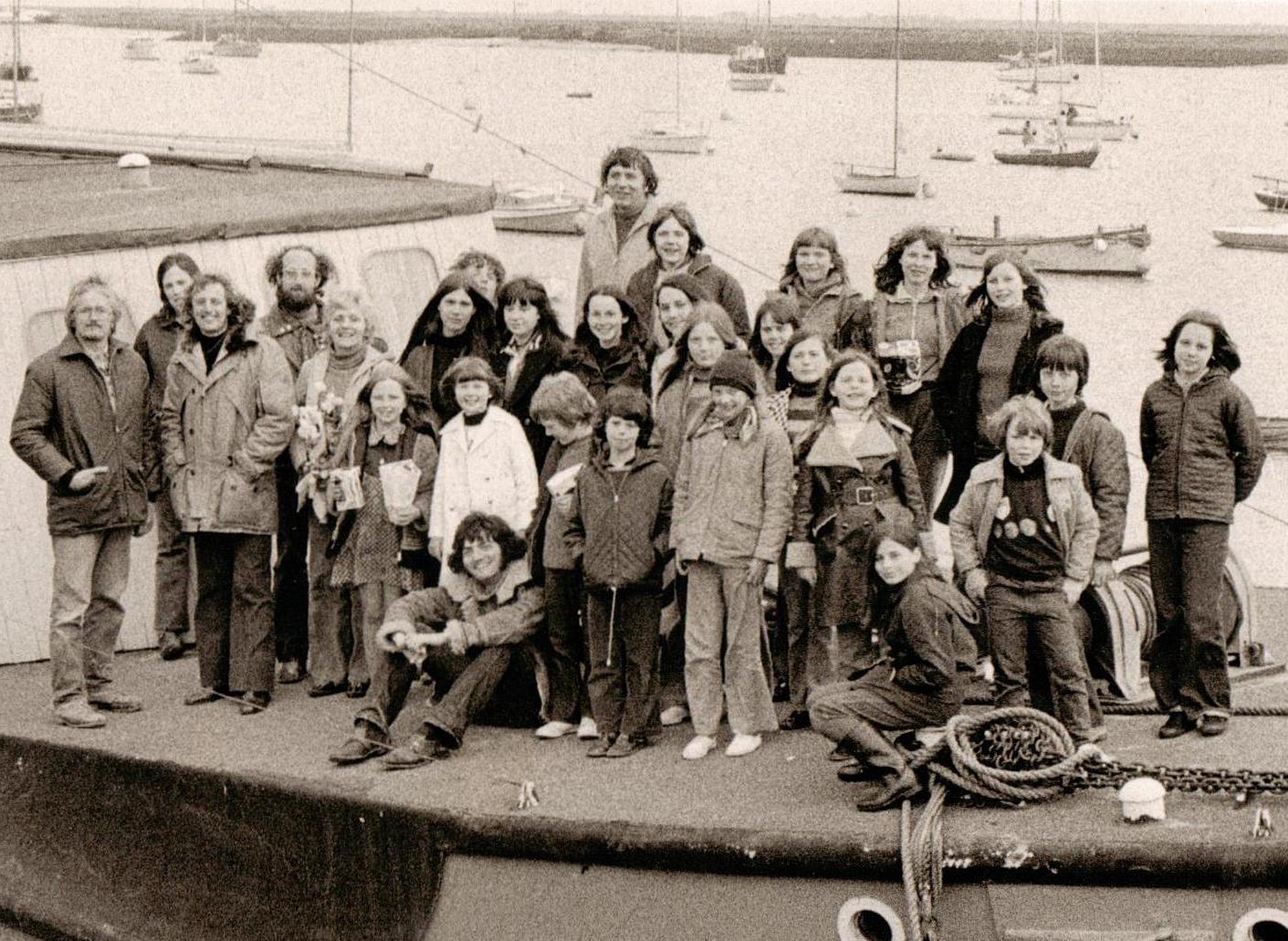
Richard loved being out on the water and took Mrs Ransome to find authentic locations. Being determined that the six children playing the Swallows and the Amazons should be able to sail well, he advertised in yacht clubs and interviewed about 1200 candidates. I met the director at the Theatre Project offices in Shaftesbury Avenue. Those short-listed were taken on a sailing weekend in Burnham-on-Crouch to see how they coped afloat.
Richard Pilbrow, Claude Watham, Fred Pilbrow, Sophie Neville, Suzanna Hamilton
Mrs Ransome kept a close eye on the script, insisting that the part of Titty was played by ‘an English rose’, which must be why I was cast as the heroine.
Sophie Neville as Titty Walker in the ITV trailer for the movie of ‘Swallows and Amazons’ when it was first shown on television in 1977
My mother came up to look after us six children who played the Swallows and Amazons. We landed on Wild Cat Island and began playing out the characters that sprung from the pages of the book.
Daphne Neville and Richard Pilbrow on Peel Island on Coniston Water in 1973
Claude Whatham was actually the second director appointed to work on the film. He had only made one other feature – ‘That’ll Be The Day’, starring David Essex and Ringo Starr, but he was an outdoorsy person and got on well with Richard who gave him a free rein. They embraced the 1929 period and the idea of somehow capturing childhood innocence.
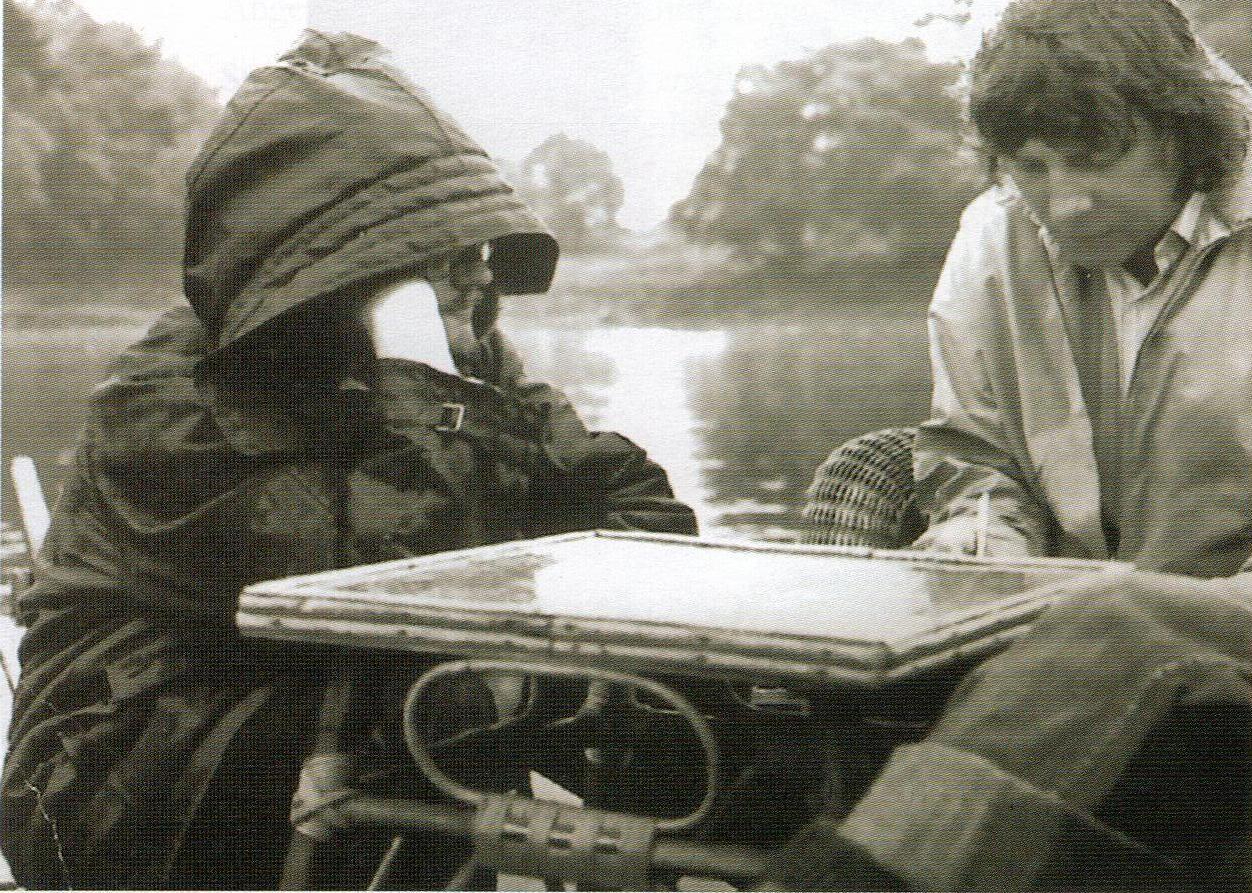
Producer Richard Pilbrow with Director Claude Whatham in their wet weather gear at The Secret Harbour on Peel Island, Coniston Water
Unpredictable Lakeland weather and working out on the water could make scheduling and logistics a nightmare but Richard had the support of an excellent production team working under Neville Thompson who also organised the post-production work at Elstree Studios where the film was post-synced.
Producer Richard Pilbrow and Production Associate Neville C Thompson on Derwentwater
Neville was passionate about film making, becoming known as ‘the last gentleman producer.’ Although gregarious at times, he was a quiet man who had begun working as a location manager for Mike Newell and became a production manager for Ken Russell.
Neville C Thompson, the Associate Producer relaxing on set – to be fare this shot may well have been taken on Sunday 24th July 1973, by Daphne Neville
Neville was diagnosed with Lukemia at the age of 47 but lived another twenty years, ending his days in Woodbridge in Suffolk. you can find his impressive list of production credits here
Director Claude Whatham with Sophie Neville, Stephen Grendon, Suzanna Hamilton and Simon West. Producer Richard Pilbow looks on ~ photo: Daphne Neville
The Pilbrows spent their family holidays on the Isle of Coll, so it was not surprising that Richard wanted to make ‘Great Northern?’ as a sequel even though Mrs Ransome wasn’t keen.
Henry Dimbleby and Rosemary Leach in ‘Coot Club’ and ‘The Big Six’
Sadly it was too difficult in the mid-1970s to raise money for filming and Richard never produced another movie. He sold the rights to adapt ‘Coot Club’ and ‘The Big Six’ to the BBC, and I saw him in Norwich in 1983 when I was setting up the drama series with Joe Waters.
When Richard heard that I was giving talks on ‘The Making of Swallows and Amazons (1974)’ he kindly sent me Swallow’s original burgee and Captain Flint’s white elephant flag, along with a Jolly Roger – all handmade props used in the original film.
We last met up in Covent Garden when he came to London to receive an honour from the Central School of Dramatic Art where he had originally studied Stage Management and Technical Theatre Studies.
Sophie Neville with Suzanna Hamilton
He later wrote to thank me for collecting information on how the film of ‘Swallows and Amazons’ was and writing about the impact it had. He loved hearing about our Q&As at cinemas and admired StudioCanal’s remastered DVD. ‘They really did a beautiful job—a very subtle enhancement.’
Simon West, Sophie Neville, Suzanna Hamilton and Sten Grendon in Secret Harbour
I sent Richard and his family on safari to the Waterberg in South Africa, where he ended up riding a horse past grazing rhinos. He is survived by his three children, grandchildren and his wife Molly who worked as his assistant on ‘Swallows and Amazons’.
Sophie Neville in Swallow
Richard’s obituary in the Telegraph can be found here
The momentous story of his life and work is recorded in his memoir ‘A Theatre Project’ available online here.
Suzanna Hamilton, Richard Pilbrow and Sophie Neville
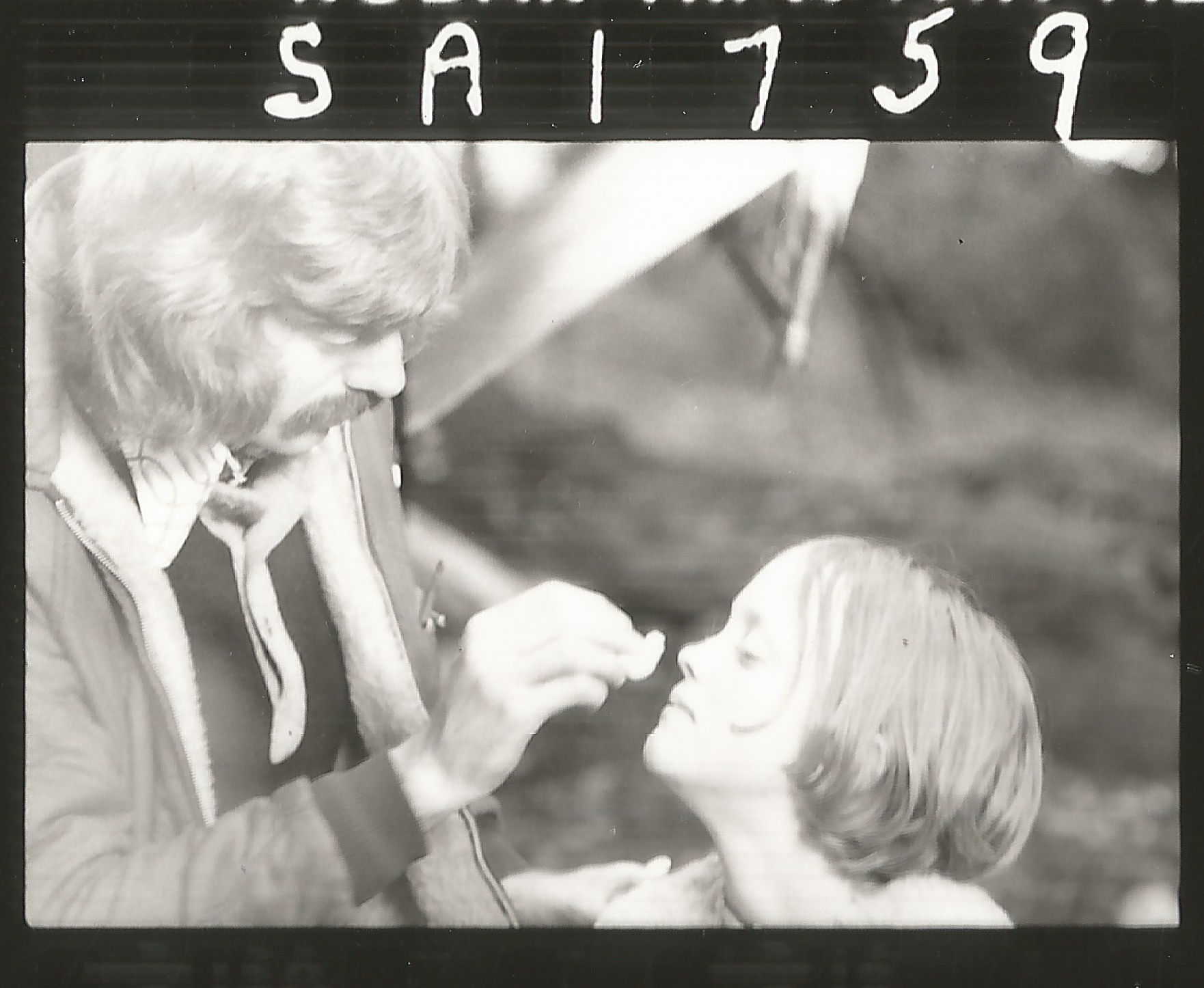
Sophie Neville being made up for the part of Titty by Peter Robb-King in 1973
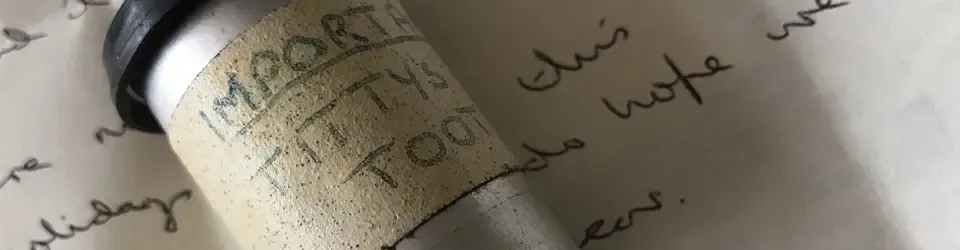
Peter Robb-King, the Make-up Designer on ‘Swallows and Amazons'(1974) rang up to say he had my milk-tooth that had fallen out half-way through a scene with Virginia McKenna. ‘It’s in a metal film canister, which I’d taken to a dentist to try and get a replacement.’
He said that although not his first movie, ‘Swallows and Amazons’ was his first film when he was in charge of Make-Up design. ‘I hoped initially to work at the BBC but was turned down for being a man.’ It just happened that he went on a supernumerary training scheme for feature film make-up in 1968, starting on ‘The Avengers’.
He said the highlight of his career would be impossible to pin point, but he worked on some iconic movies including The Rocky Horror Picture Show, Legend with Tom Cruise and some of the Star Wars, Batman and Indiana Jones pictures. At one time he rescued a parrot while making an Indiana Jones film in Sri Lanka. ‘Three ring-necked parakeet chicks were thrown out of their nest by a crow and rescued by the animal handler. One was adopted by Stephen Spielburg, another by the production manager, while Peter and his wife brought up the third, which lived with them for twenty-five years.
Ronald Fraser as Captain Flint with Daphne Neville and Sophie Neville playing Titty Walker on Derwentwater in 1973
Peter knew Ronnie Fraser’s addiction to alcohol would be difficult for the crew to deal with but managed to get him in and out of the make-up caravan.
‘He wasn’t alone at the time. There were a number of screen actors at the time who you’d think would never be able to say a line but they’d end up word-perfect.’ He didn’t recall any difficult moments with Ronnie. Peter reckoned that one of the reasons why they didn’t make a sequel could have been Ronnie’s problem. ‘He may have damaged his own career. It’s difficult for the other actors.’ He thought it sad that there was never a sequel.
Ronald Fraser, Peter Robb-King (make-up) and Ian Whitaker (set dresser) on the houseboat in 1973
Peter told me that, ‘Denis Lewiston (the director of photography on ‘Swallows and Amazons’) was scared of green. He didn’t like photographing the colour green, which everyone thought hysterical since we were filming in the Lake District.’
Dennis Lewiston, director of Photography on ‘Swallows and Amazons’ ~photo:Richard Pilbrow
Denis Lewiston, the brilliant cinematographer, has died but he was around to approve the remastered version of the BluRay and DVD of ‘Swallows and Amazons’ in 2014. After a long and fulfilling career he will be remembered fondly and admired for the numerous films he made, seeking excellence with every sequence.
To see some of the shots Denis set up for the film of ‘Swallows & Amazons'(1974), please click here for the BFI site. Peter assured me that a recent industry survey of children’s films rated ‘Swallows and Amazons’ (1974) as one of the best ever.
Peter Robb-King was one of the few people to formally retire from the film industry. ‘It’s very rare. Many people don’t retire. They just stop working.’ His daughter sent him a picture of him making me up on the set of Swallows and Amazons. ‘I remember what I looked like then, so it was interesting.’