Diary of a litter-picker: week 1 of the Great British Spring Clean

2,500,000 pieces of litter are dropped in the UK every day. It amounts to 912,500,000 pieces a year. This costs nearly £1 billion to clear up. As we all know, much lies languishing in our lanes and beaches. We need to collect it ourselves.

Keep Britain Tidy ask volunteers to divide rubbish collected into three categories: ‘plastic’, ‘cans’ and ‘general waste’. I decided to add ‘glass’, wondering how many bottles I will find between 22nd March to 23rd April 2019, the period ear-marked for the Great British Spring Clean, 2019.
The diary of a litter picker:

Day 1: Friday 22 March, 2019

I register on-line with Keep Britain Tidy and spend 40 minutes cleaning a footpath leading through a smart housing estate on the way back from hospital. I’m appalled by the stinky litter and glad to be wearing rubber gloves. I’ve never found the need for a grabber or gloves when cleaning beaches. Now it is essential. Numerous plastic bags containing dog poo hang off bushes, more lie under shrubs. I notice packets, wrappers, cans and bottles everywhere, amazed at the amount of rubbish lying in private gardens.
Rubbish unopened can

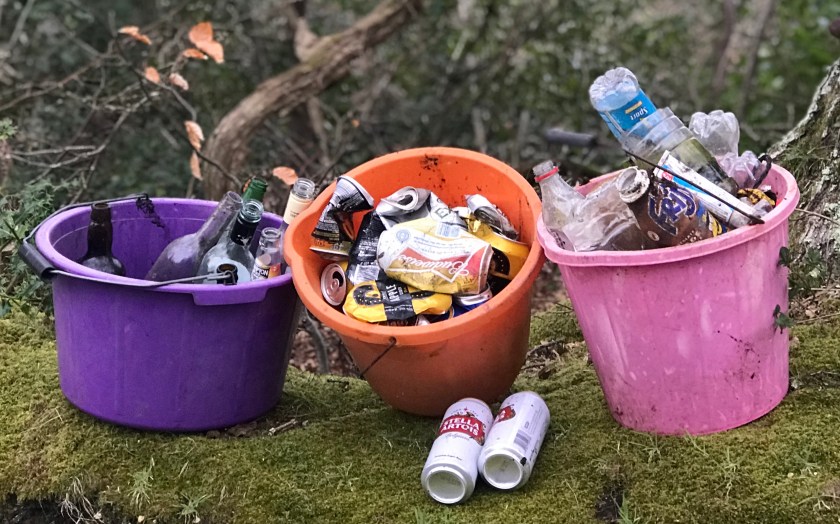
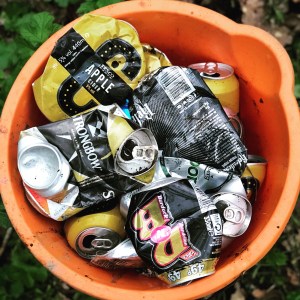
After work, I spend 60 minutes collecting roadside litter from a lane running through the New Forest National Park, taking a pink bucket I once found washed up on the shore as a receptacle for general rubbish. I use a purple one for glass bottles and an orange bucket that soon contains 27 empty alcohol cans. Are motorists drinking whilst driving? I find two unopened cans of Stella, along with a new tube of muscle-relaxant cream, a bike-lock cable and an old milk bottle that had grown into the mossy stream bank. I chatted to BBC Radio Solent, live on air, explaining that I would never have guessed these items were lying by the roadside. They were hidden in the undergrowth, posing a danger to wildlife.

Day 2: Saturday 23 March, 2019

I spend 45 minutes collecting an empty 25 litre tub of bleach, a 5 litre tub of French Elf Diesel, a number of bottles and other plastic pollution from a footpath near the Solent shore, taking all I can carry. I use my large purple bucket, which can take broken glass and doesn’t flap about in the wind.
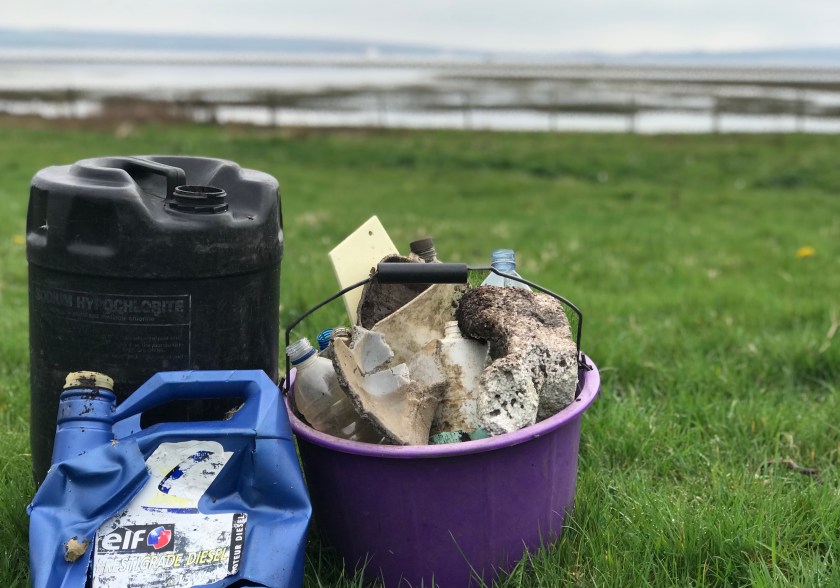
The bucket is easy to lay down while I dig around in the bushes with barbecue tongs. I wonder how old all this stuff is. How long has it been accumulating in the woods? On the way home I stop to pick up an old coat from the verge. It’s been there ages.

Day 3: Sunday 25 March, 2019

I spend about 20 minutes collecting fishing net, bottles, and elderly plastic including flip-flops and a neon pink buoy washed up on a small beach, whilst with a journalist and photographer from the Daily Mail. They are staggered by the age of the packets I am collecting. We find a crisp packet that has been sunbathing on the beach for at least eight years.

I show the journalist and photographer rubbish left by a homeless person who was obviously camping in our local nature reserve. How much of this is a reflection of addiction, poor mental health and homelessness in our society?

rubbish net

I take the photographer a short way along the river where I have cleaned the verges repeatedly but feel more needs to be done. We find a can of diesel and a metal wheelbarrow clogging the ditch which needs to be clear to avert flooding.

Day 4: Monday 26 March, 2019

It takes 80 minutes to collect rubbish from the Solent foreshore. I take an old friend who is amazed to see how much we find on a section of coast that appears clean at first glance. I effectively give her a demo on how scratchy and time-consuming it can be to extract litter from brambles and blackthorn bushes. With her help, I retrieve 3 glass bottles, 9 plastic bottles, one beer tin, a heavy plastic container, cotton bud stalks, a Durex packet, wrappers, polystyrene, gaffer tape, a broken For Sale sign, a domestic scourer, a section of astro turf, fishing rope and micro plastics. It’s a bright sunny day and we enjoy ourselves hugely, encountering wild ponies and seabirds.

Day 5: Tuesday 27 March, 2019

Someone commenting on Facebook said: ‘You’re very lucky to have the free time on your hands.’ I am grateful I can get out and about but it’s not as if I don’t work all day. I multi-task. I normally collect rubbish as I walk the dog or go into town. Anyone can collect litter as they walk to work, or school. If we each picked up three pieces a day it would make a huge difference and surely benefit our quality of life.

Today, 20 minutes are spent collecting litter and 30 minutes reporting what I found to the police. Whilst picking up cans and cartons from the verge in the lane that runs along the river, I spot a leather hold-all behind an electricity substation. I find it open with a large jewellery box inside. Socks – one sign of a break in – are lying near the soaking wet bag.

I ring the police who ask me to take it home. I’m longing to return to the items to their owner. Some of the sentimental things inside will be retrievable. I think I’d better go down to see if there is anything more and discover a silver-topped HP laptop in the undergrowth. I inevitably collected more litter: total for the day 139 items plus an enormous car bumper. Since the Daily Mail have asked if they can photograph all I find, this is lugged home too. My garden is looking like a scrapyard.

Day 6: Wednesday 27 March, 2019

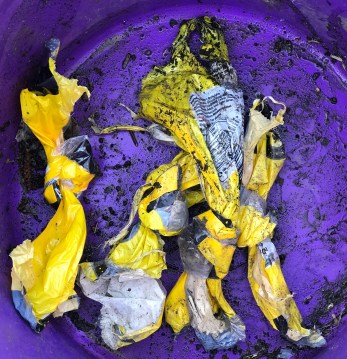
I have a hectic schedule today but pick up a few items as I walk to the railway station. It’s difficult finding somewhere to wash my hands. One person in our town must chuck litter out of their vehicle every day. They knot it neatly in exactly the same way before tossing it into the hedge.
Day 7: Thursday 28 March, 2019

I walk along the South Bank in London where rubbish bins are placed every 50 yards. What is litter doing to national morale? Who wants to live in streets strewn with waste? What impact does it have on tourism and jobs? And how can we solve the problem? Insisting on car bins would help.

Total for week one: 325 minutes
rubbish tins

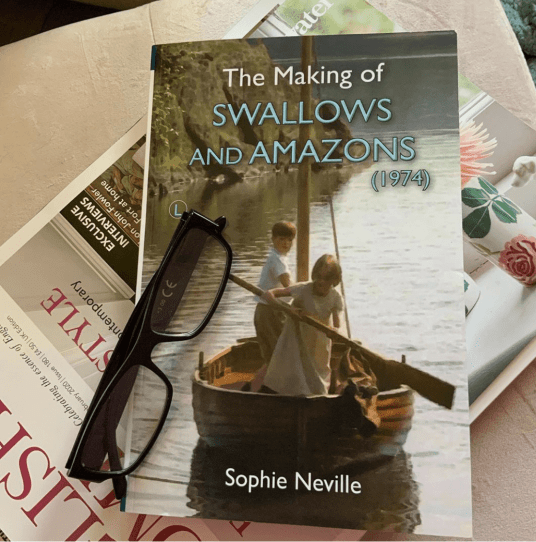
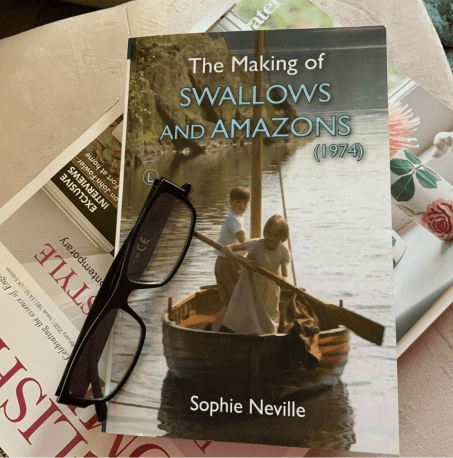
2nd edition of ‘The Making of SWALLOWS and AMAZONS (1974)’ published by The Lutterworth Press

9780718894962_cover Amazons.indd

The long-awaited second edition of ‘The Making of SWALLOWS AND AMAZONS (1974)’ was being published in paperback by The Lutterworth Press in May 2017. It is available from their website here
This memoir of an odd thing that happened in the early 1970s is similar to the first edition but has a new cover and includes a few more stories, photographs and names from the ‘seventies that have floated to the surface. It compliments StudioCanal’s 40th Anniversary DVD and Blu-ray and makes a good present for anyone who has grown up watching the 1974 film.
StudioCanal DVD cover
The new paperback edition will be stocked by the vast majority of book retailers including Amazon, Waterstones, Blackwells, Paperback Bookshop, Books Etc. and is available direct from The Lutterworth Press who also publish ‘Swallows, Amazons and Coots’ by Julian Lovelock that has a foreword by Sophie Neville. Those in North America can order copies from the US distributor Casemate Academic
 Swallows & Amazons flags for book

Sophie will be signing copies at events around the country.

Please click here for details

Roseland Festival 2017

Sophie signed copies of her books at the Tavistock Festival and gave a talk at the Roseland Festival in St Mawes before a screening of ‘Swallows and Amazons’ (1974) at the lovely Hotel Tresanton cinema.

Arthur Ransome Pin Mill Jamboree

Sophie opened the Arthur Ransome Pin Mill Jamboree in Suffolk to celebrate the  20th Anniversary of the Nancy Blackett Trust and Visit England’s Year of Literary Heroes. She gave a talk on the adaptations of Ransome’s books set in East Anglia and the English Lake District.

Map of the Jamboree

My Family Roots in East Africa – Part Two

sophie-neville-at-usa-river-in-tanzania

~Drying coffee beans on our farm at Usa River near Arusha in 1972~

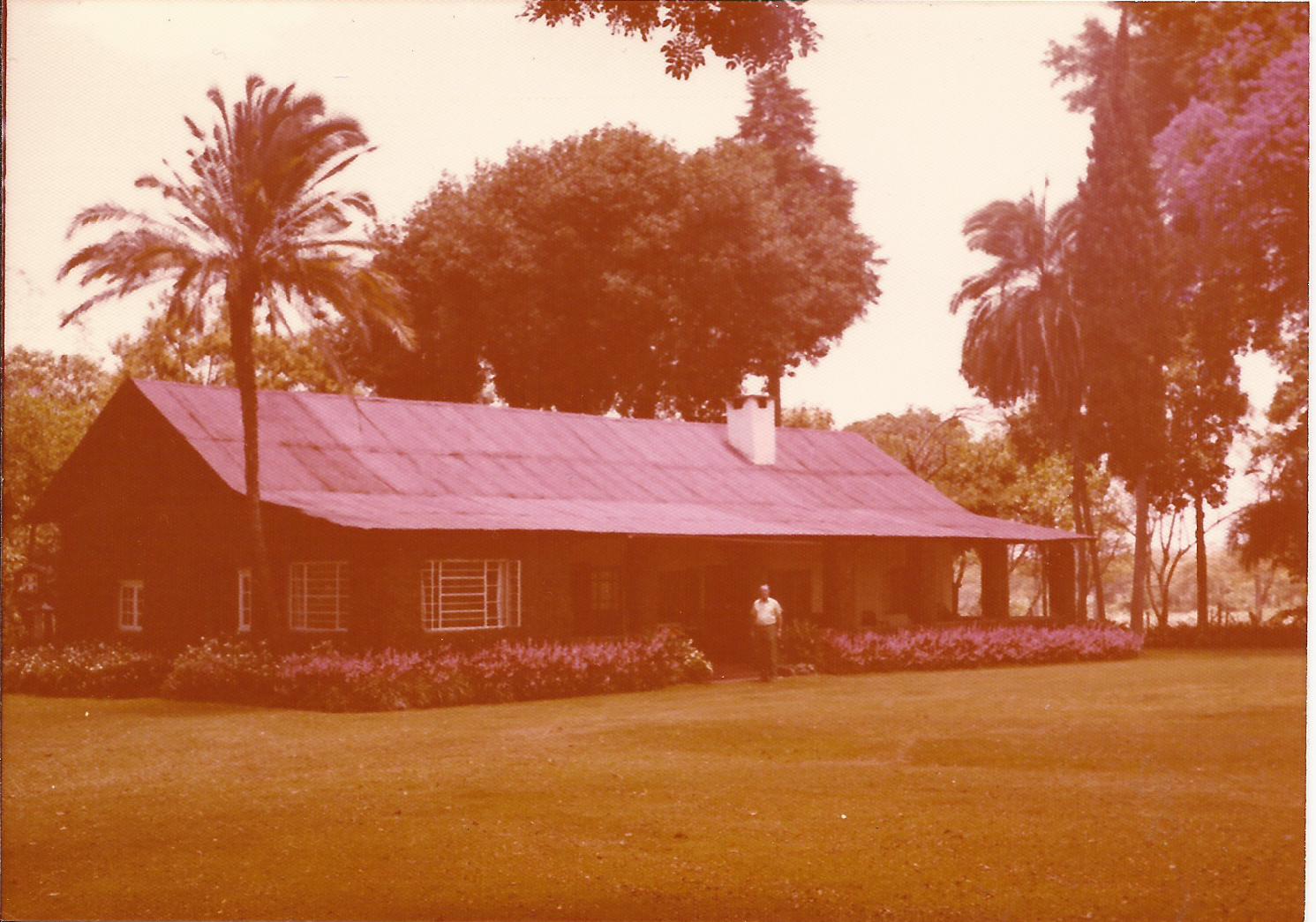
Days spent at our farm in northern Tanzania were full of colourful characters, including a cobra who lived in the trees overshadowing the house. He probably kept down the rodent population quite efficiently.

farmhouse-at-usa-river

My greatuncle Tony was probably more dangerous. He had a very sensitive nose and a legendary temper.

a-walk-in-africa

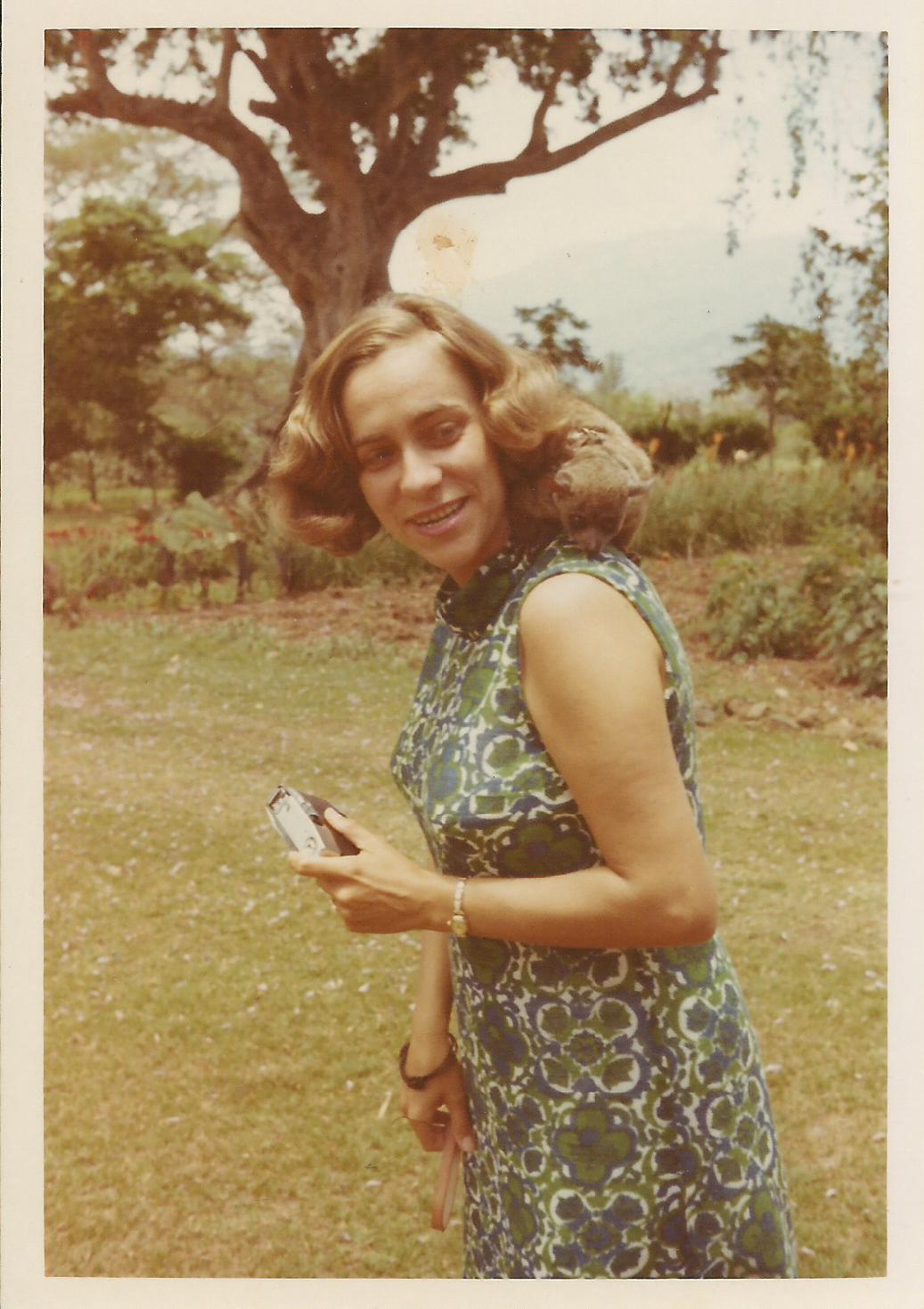
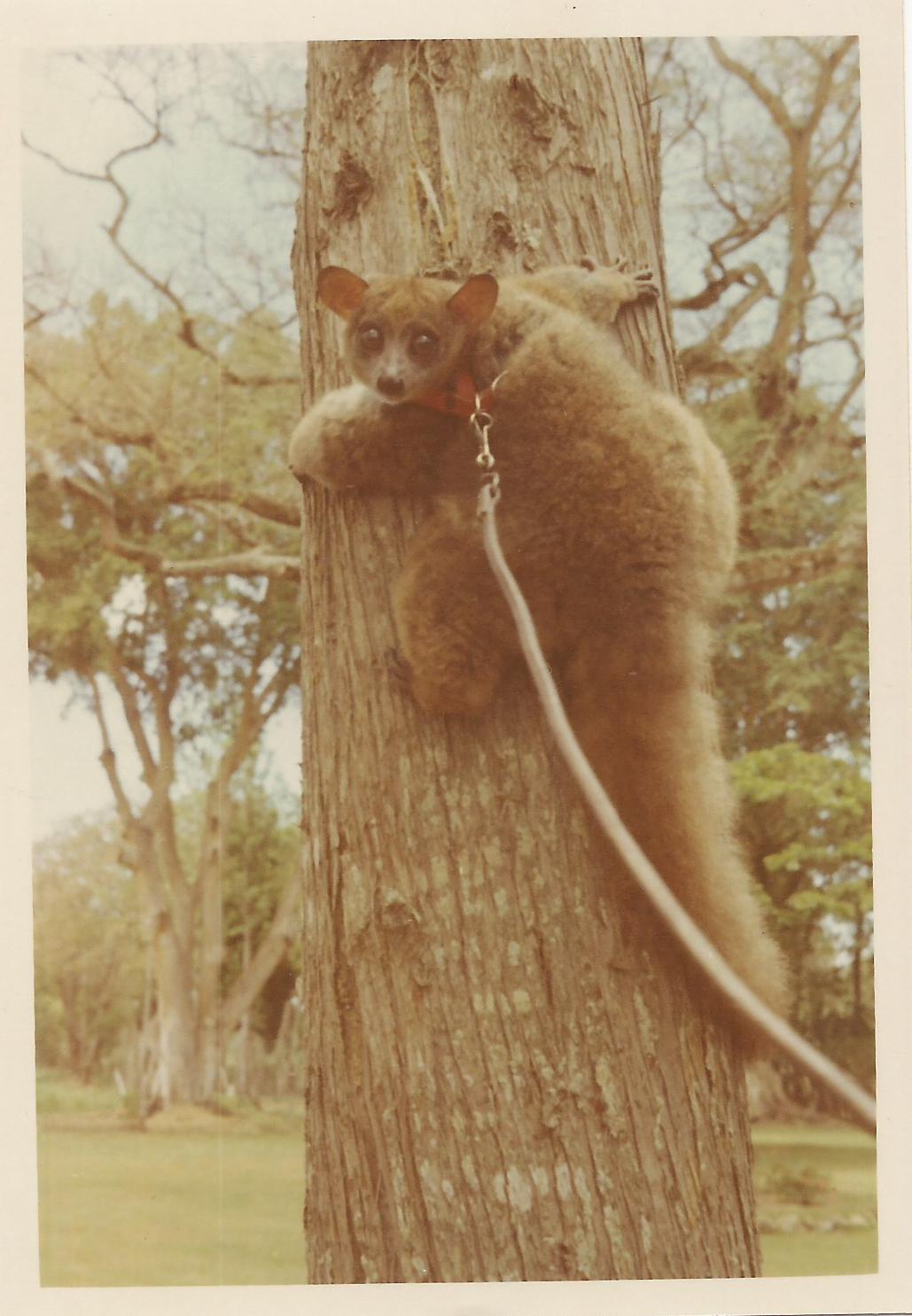
My aunt kept tame lemurs. They marked their territory by peeing on their hands. This was understandable until they decided to climb over your face.

reinhild-with-her-lemur

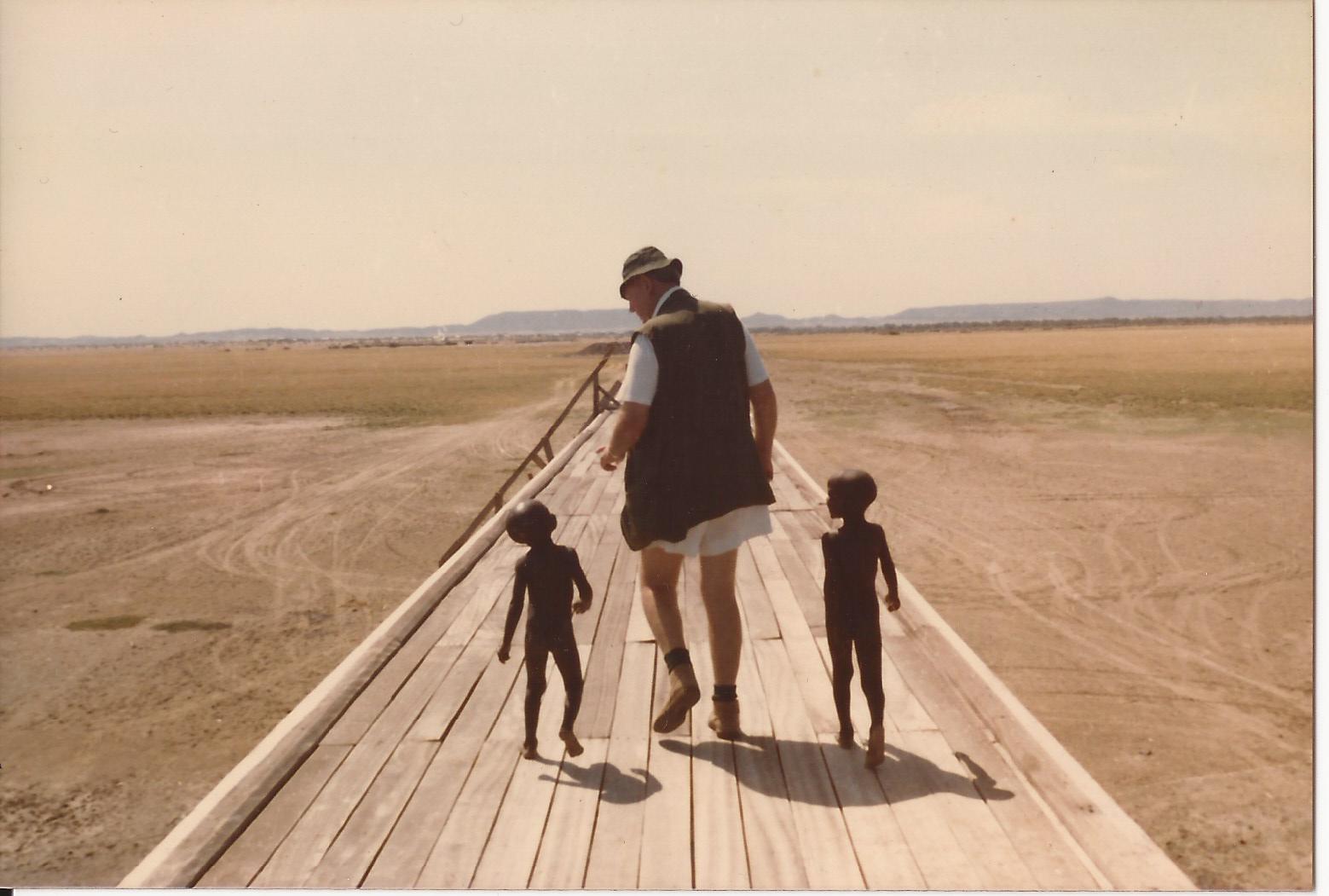
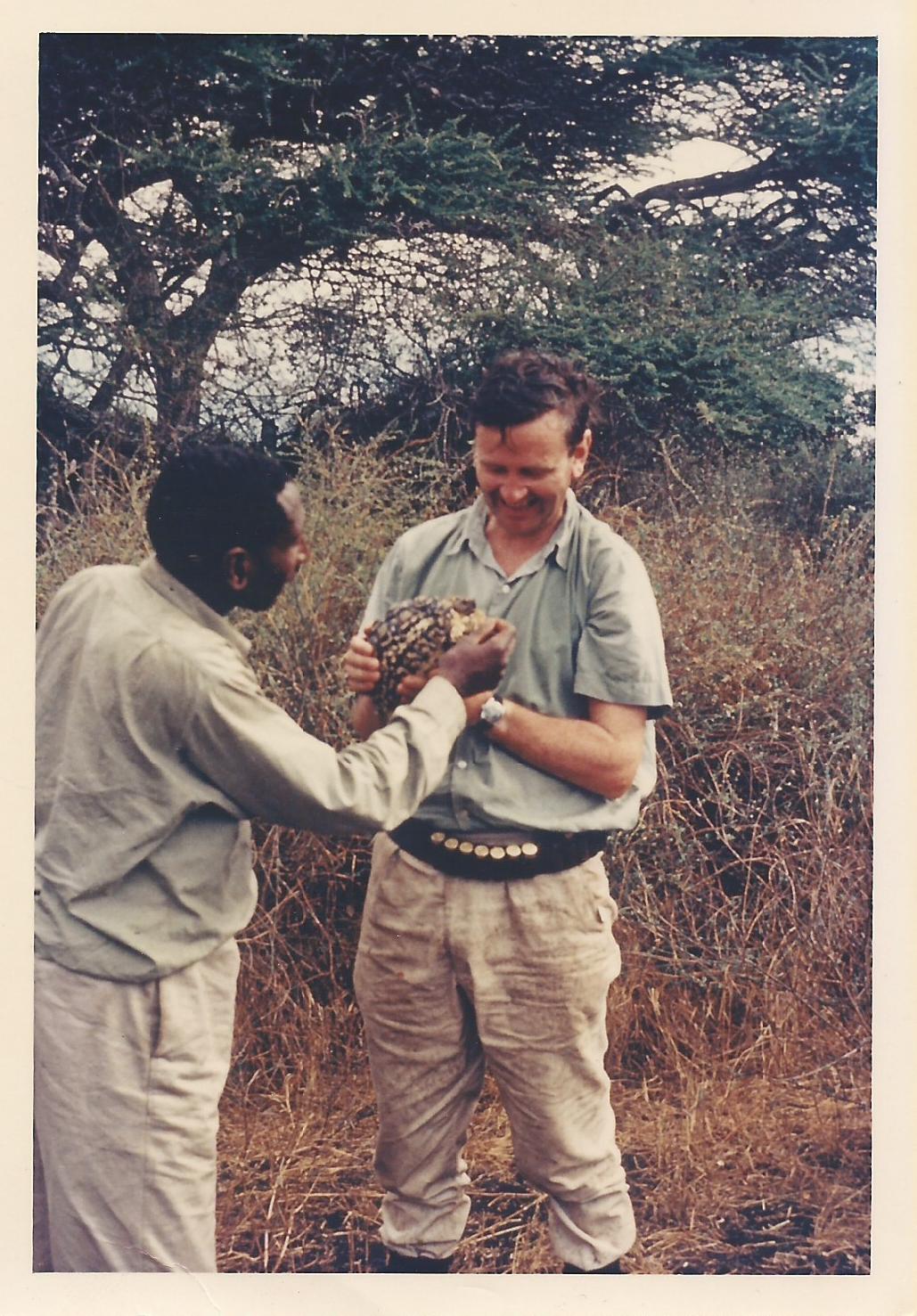
My father loved travelling in northern Tanzania and was intrigued by the wildlife.

april-1969-africa

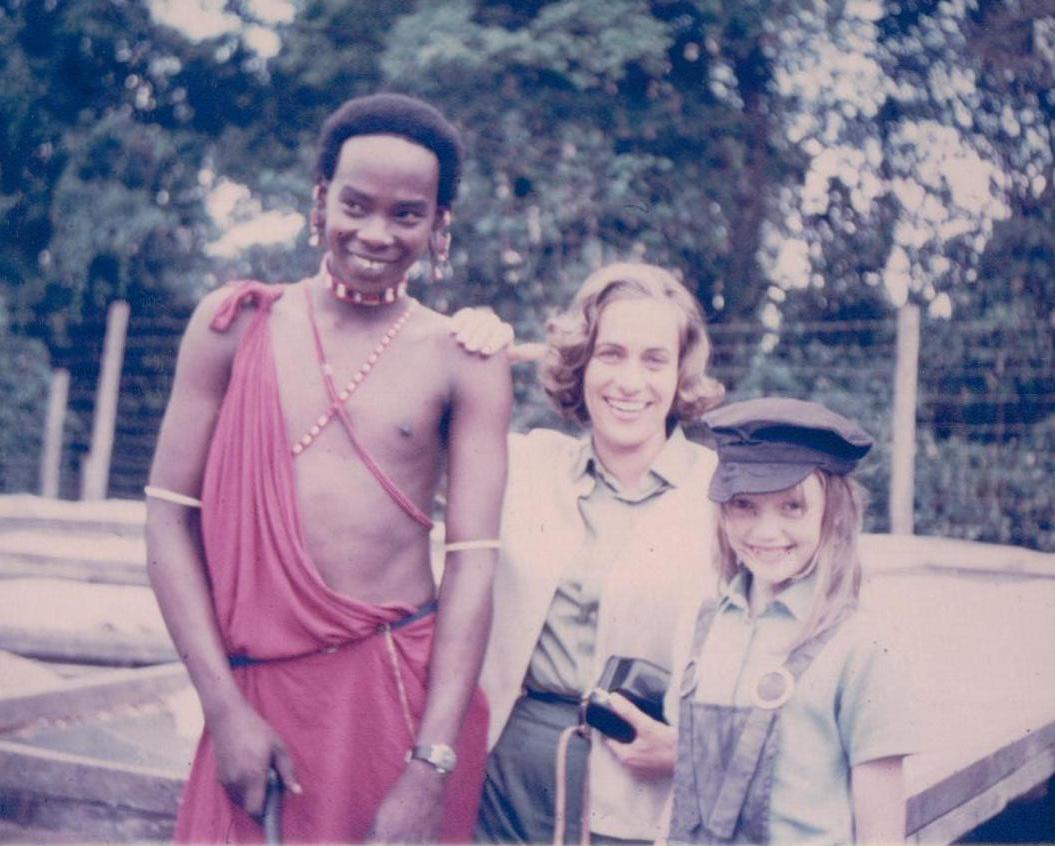
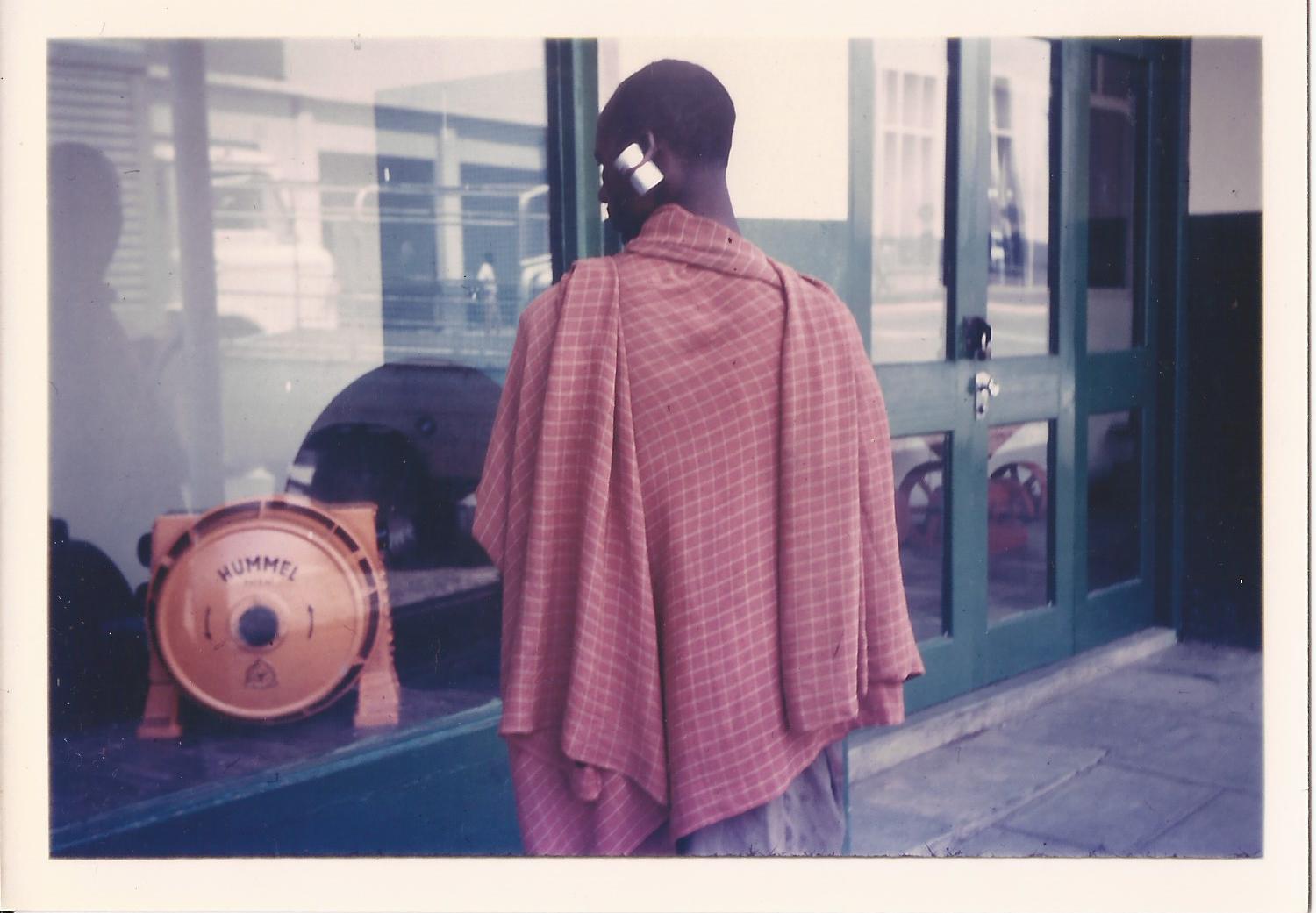
I was fascinated by the people, many of whom wore traditional dress in the early 1970’s.

ear-piercing-and-cloak-at-shop-window

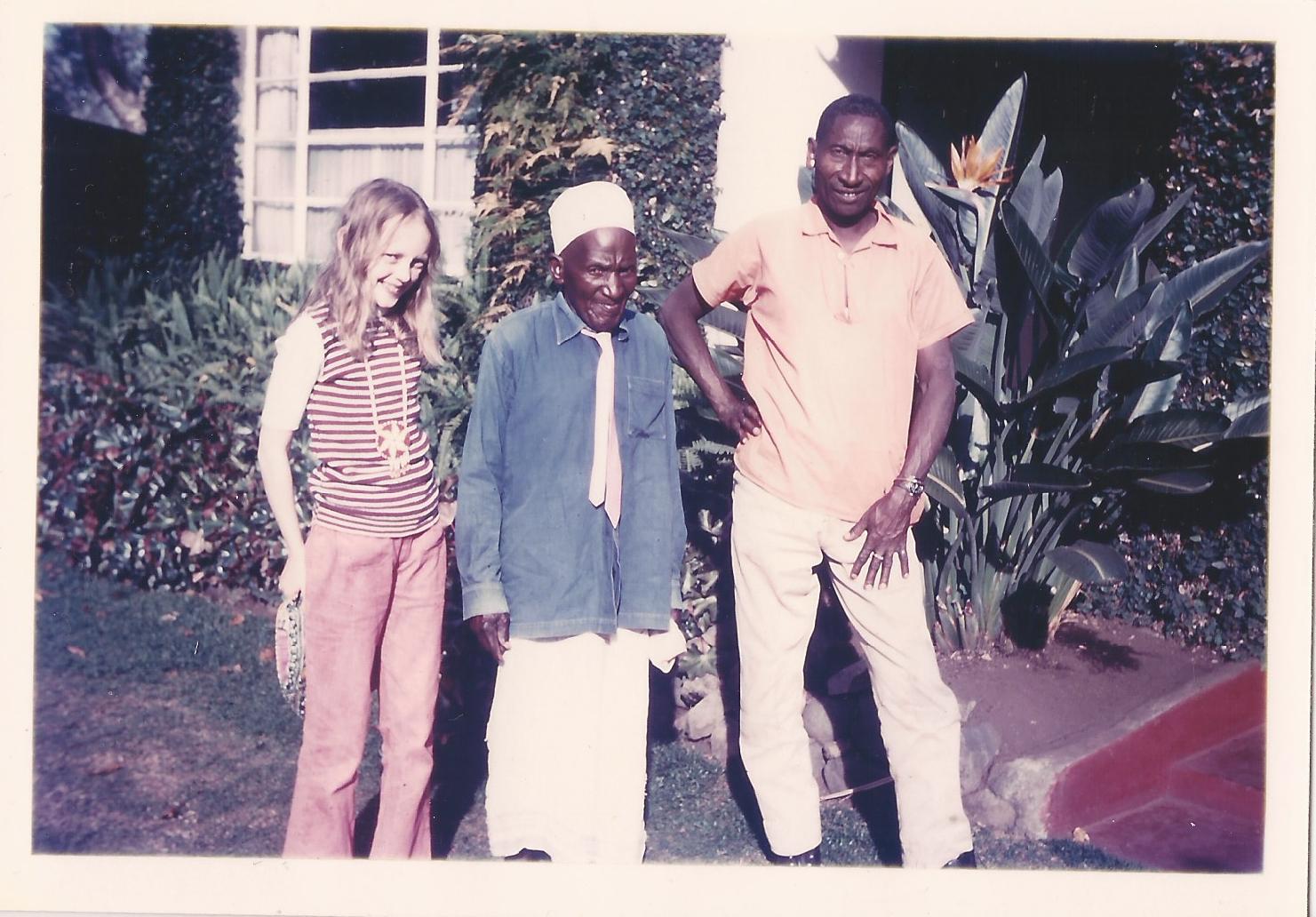
Extended ear-lobes, names such as Libougi and bright beaded jewellery had me squinting into the sunlight.

sophie-at-usa-river

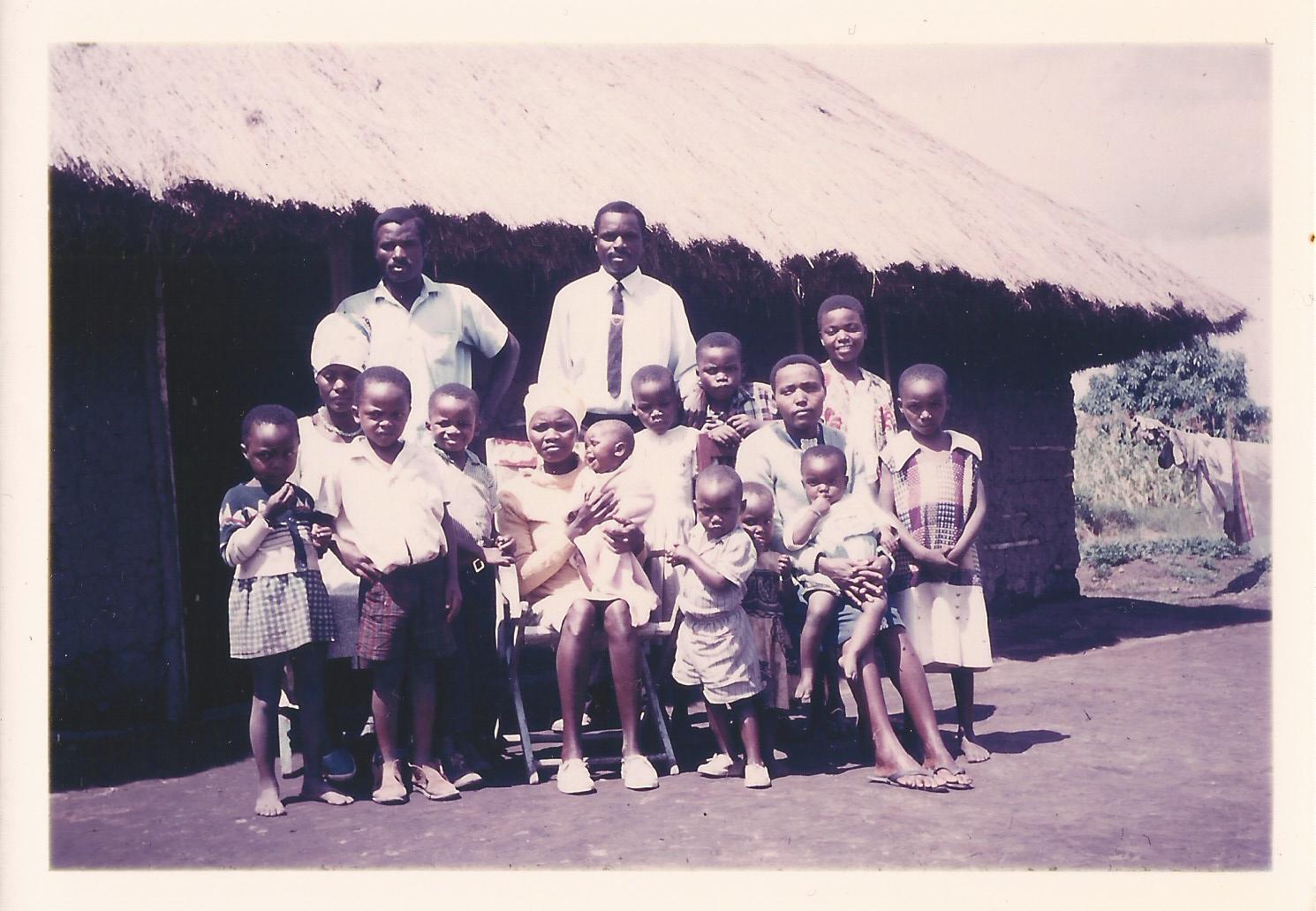
In a country where polygamy was the norm everyone seemed to have rather large families with any number of wives and children.

african-school

Having your photograph taken was quite the thing. What the woolly lemurs thought of this, I do not know.

tame-lemur

There was always talk of the next expedition up-country. Careful packing was a constant preoccupation.

landrover-outside-farmhouse

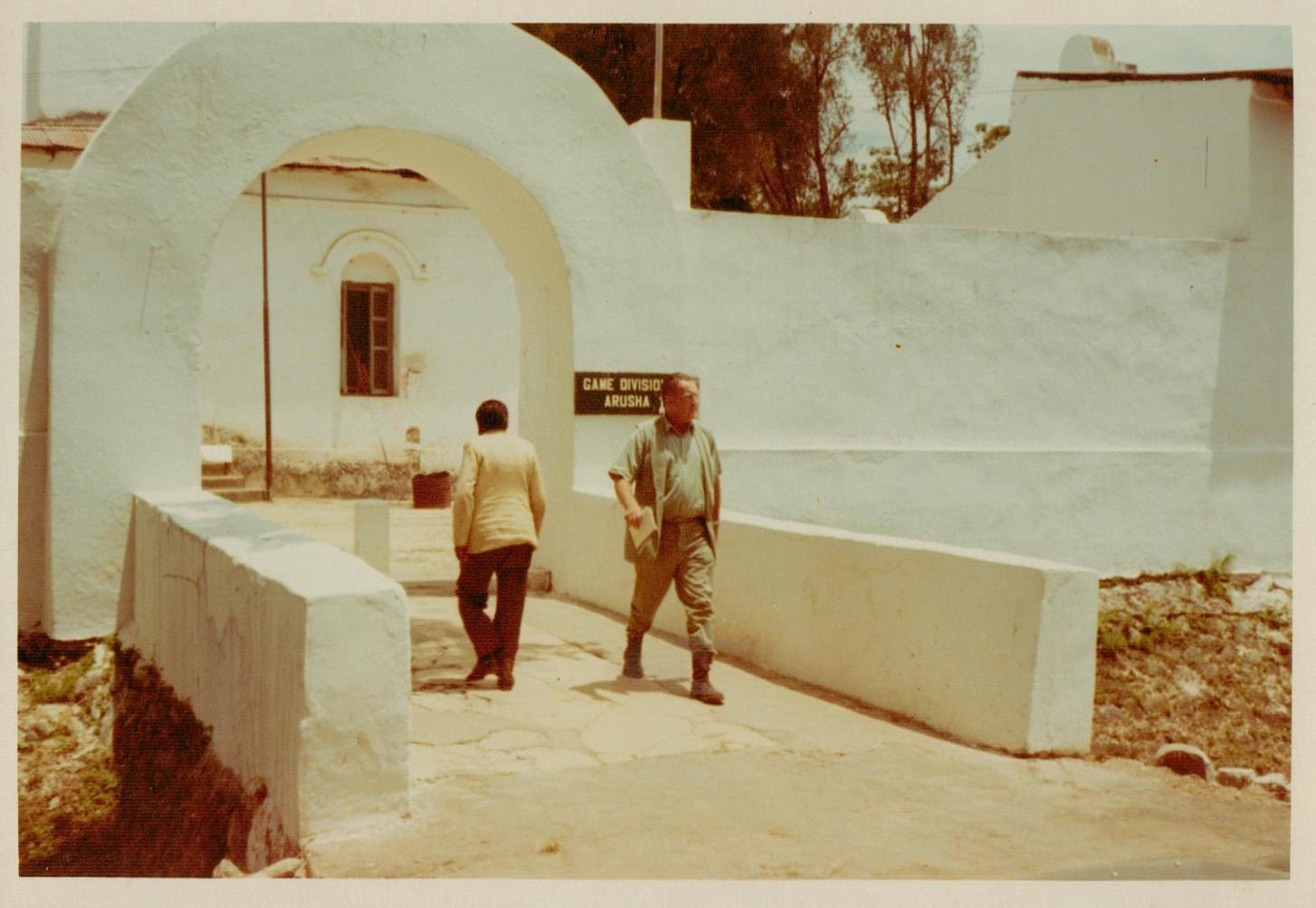
Complicated arrangements were ever being made. Uncle Tony was an honourary game warden, with the power to arrest poachers.

baroness-reinhild-von-bodenhaussen-in-about-1970

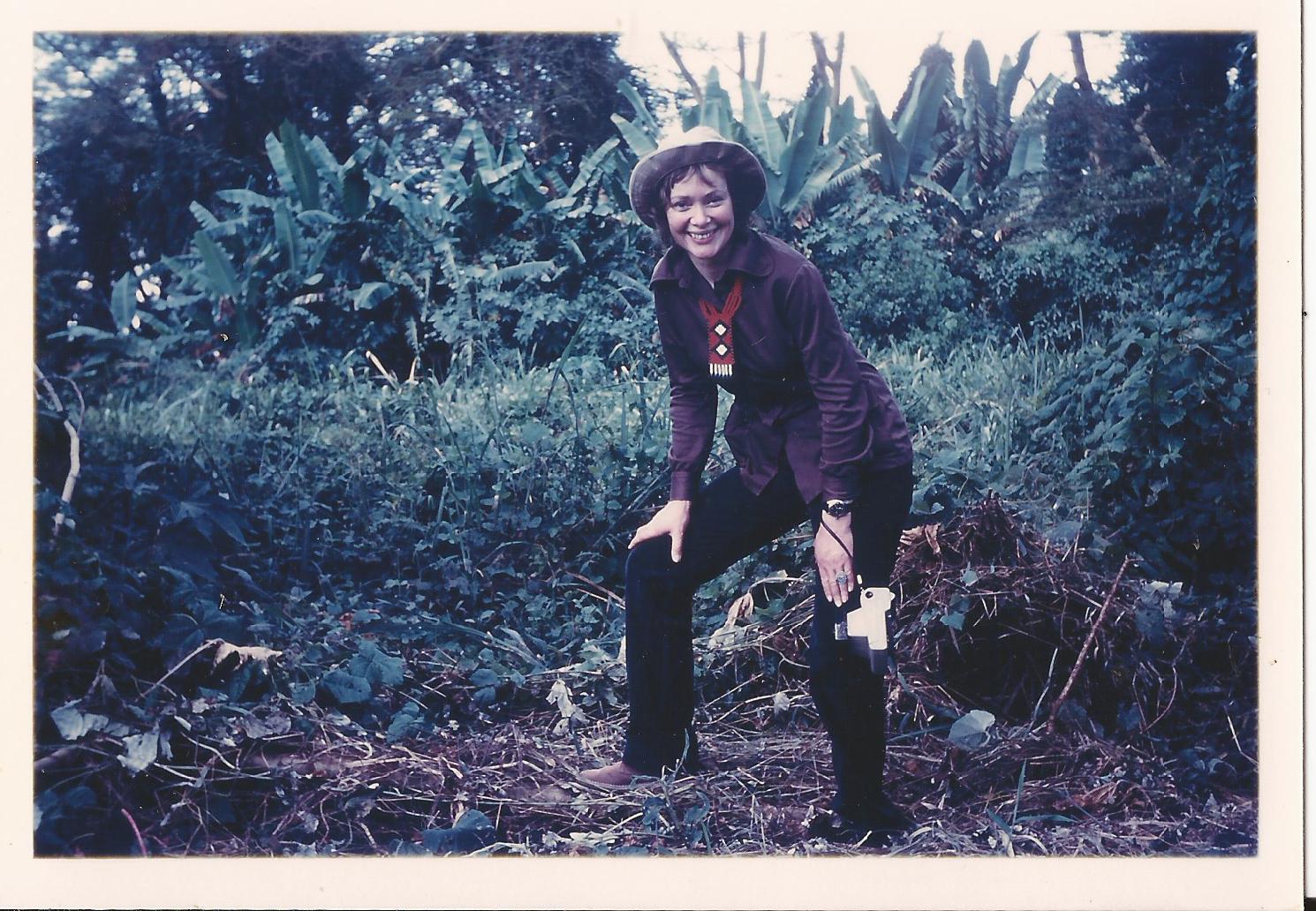
My mother loved the idea of going on safari and urged him to include us as he toured areas where wildlife thrived.

my-mother-on-safari-at-usa-river-in-northern-tanzania-the-early-1970s

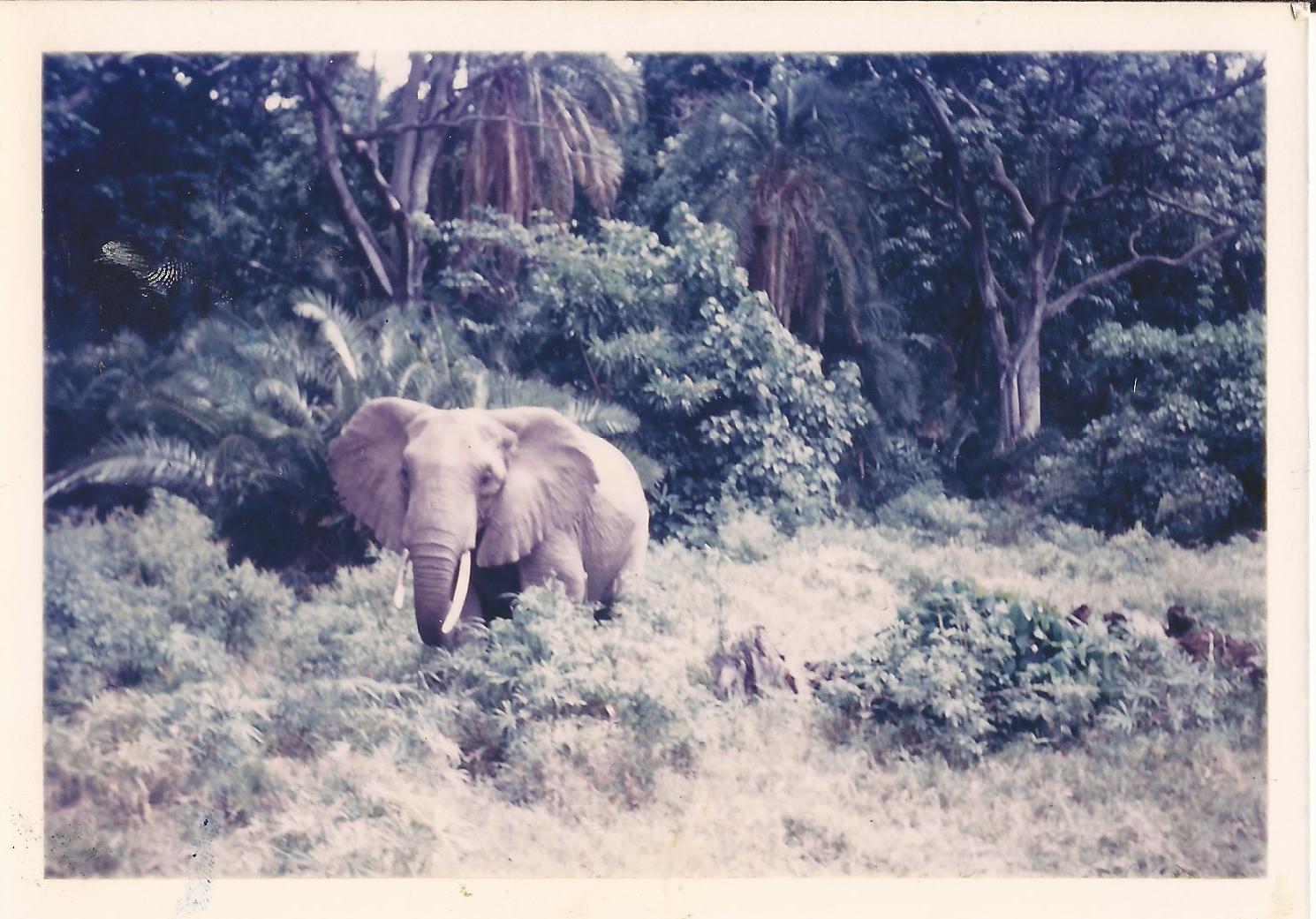
It was a privilege to be taken game viewing as a child by someone with such a depth of knowledge.

elephant

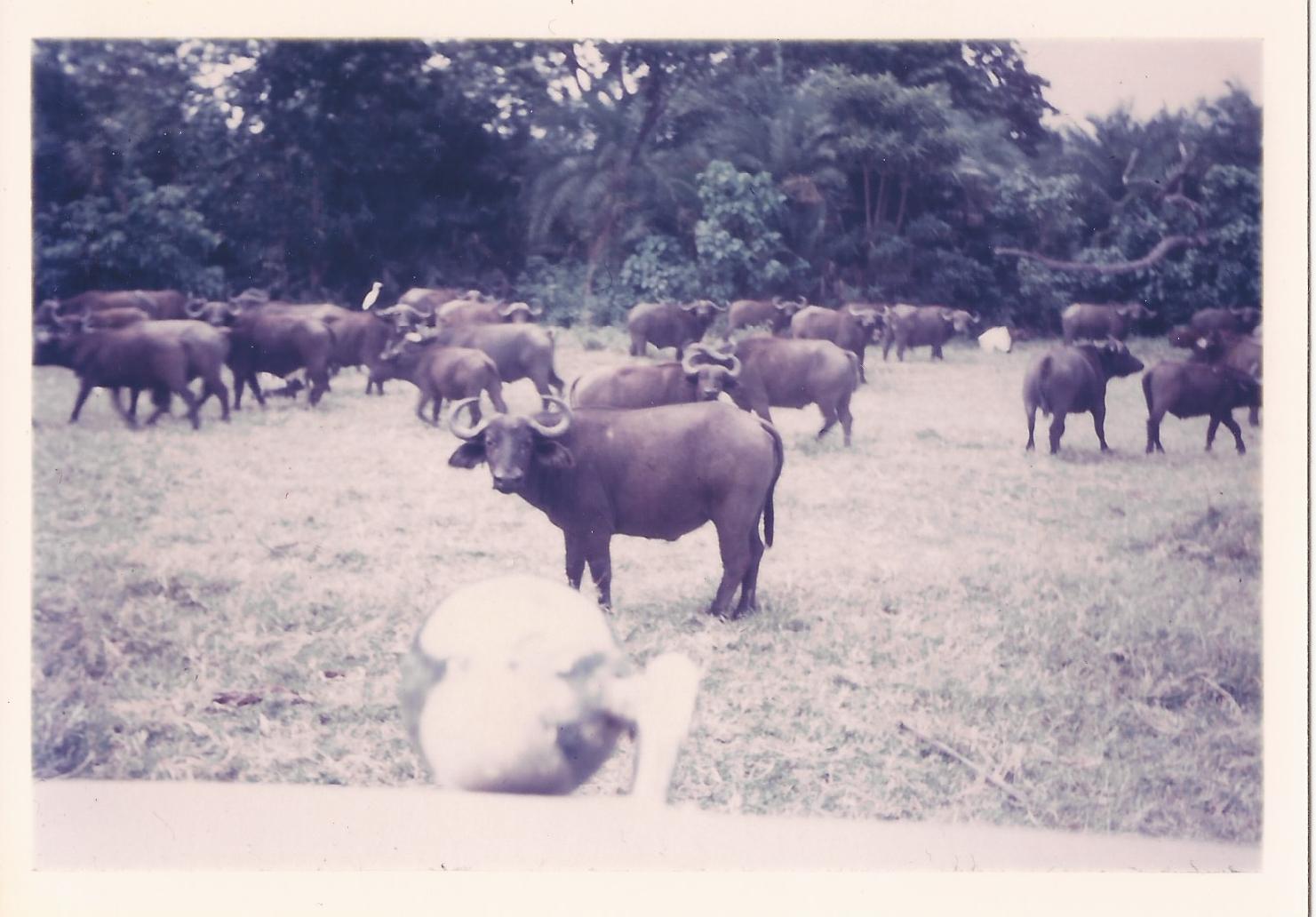
I began to sketch in the back of his Land Rover, while keeping lists of the animals we encountered and trying to learn their Swahili names.

buffalo

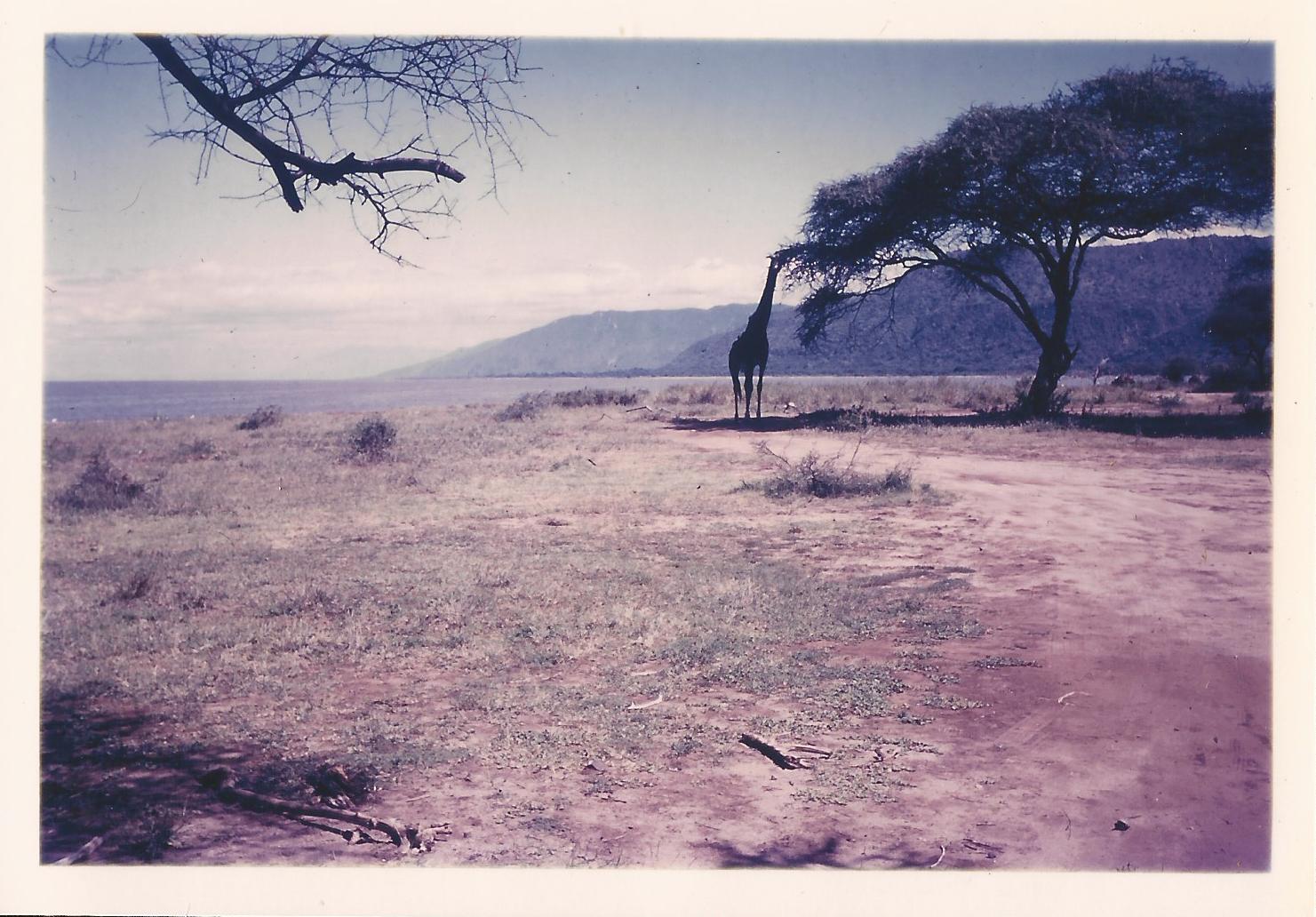
As we drove through the national parks, such as Lake Manyara we rarely saw another vehicle. The reason for packing so carefully was that there was no one around to help if anything went wrong. If you broke down or ran out of fuel you could be in serious trouble.

giraffe-under-tree

But there were always old  friends to visit and they were charming, most hospitable.

hilli-and-woolly

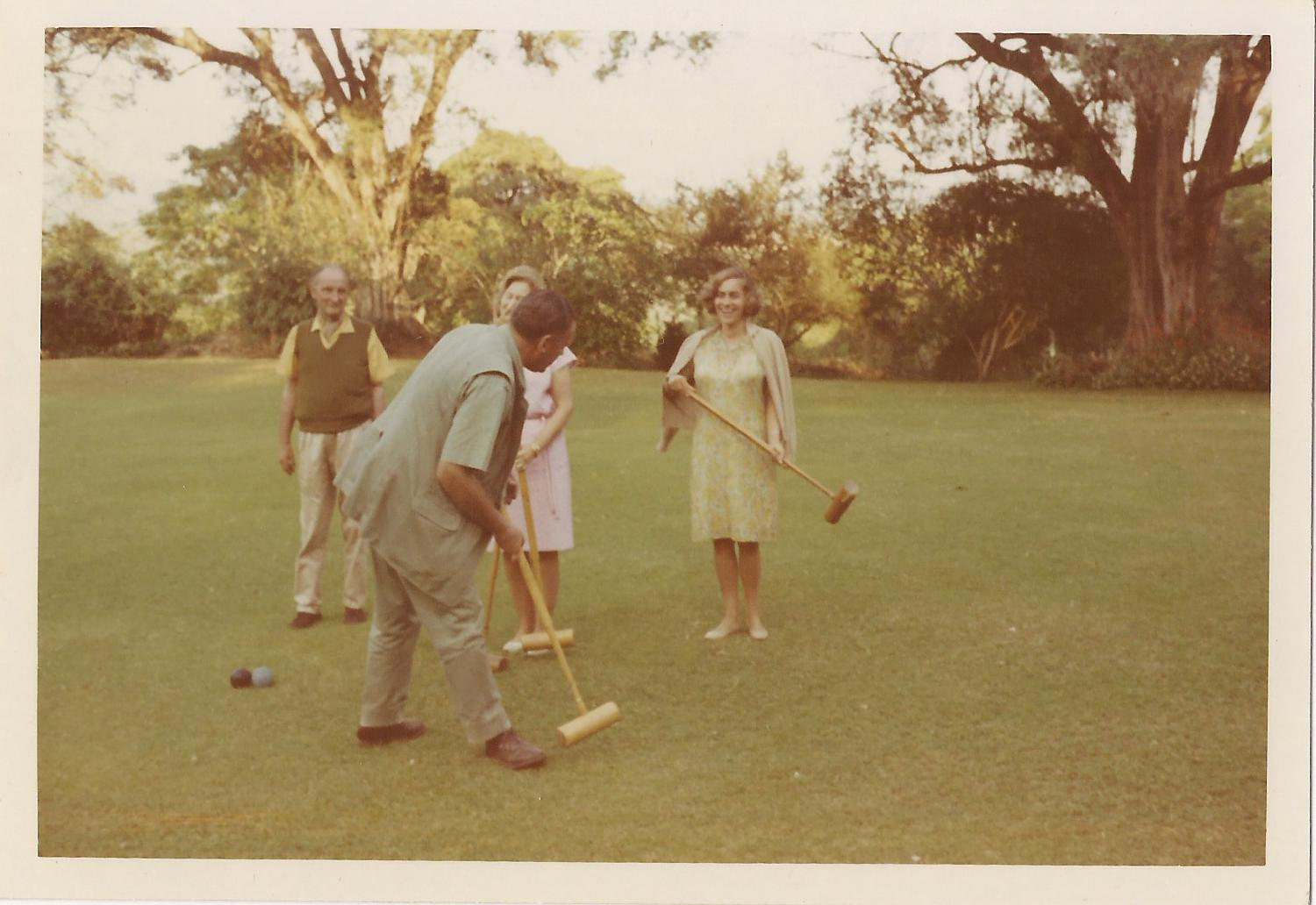
After driving for ages, we’d end up at another farmhouse, playing croquet.

croquet

Nothing but croquet, all afternoon and evening. Somehow I survived. I did so by keeping a diary. It was the first of a whole pile of notebooks that have grown exponentially, forming the basis of quite a few books – with more to come.

croquet-2

To be continued.

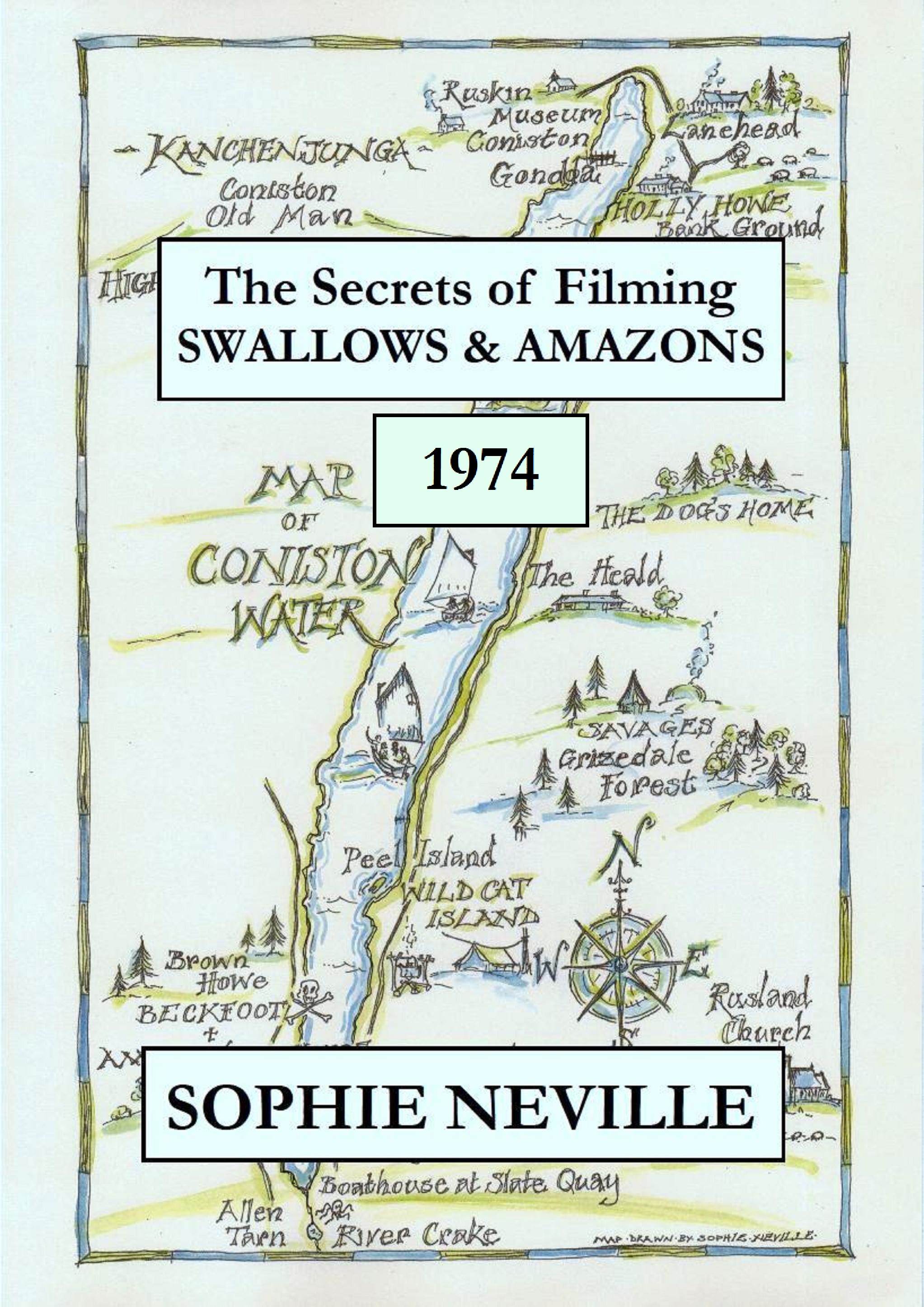
The second edition of ‘The Secrets of Filming ‘Swallows and Amazons'(1974)’ available as an ebook

front-cover-1974

A second edition of the ebook ‘The Secrets of Filming ‘SWALLOWS & AMAZONS'(1974) is now available on Amazon Kindle, Smashwords, itunes, Kobo, and Nook for £2.99 . You can download this free of charge if you already own the first edition.

If you would like a copy but don’t have a Kindle, worry not. We have added a link whereby you can download a free Kindle app. Please go to my Book Page and scroll down for the details.

If you already have a copy of the ebook, contact a Customer Advisor and ask for a free update. You just need to give Kindle the ebook’s ASIN number. The ISBN for all online editions except Kindle is: ISBN 9781311761927

Since being contacted by others who were involved in the filming, I have been able to add a few more anecdotes and images, including this beautiful shot of Virginia McKenna in 1973 kindly sent in by the photographer Philip Hatfield.

virginia-mckenna-photo-by-philip-hatfield

I found a copy of my original contract for the film and when Jean McGill rang from Bowness, a few more secrets floated to the surface.

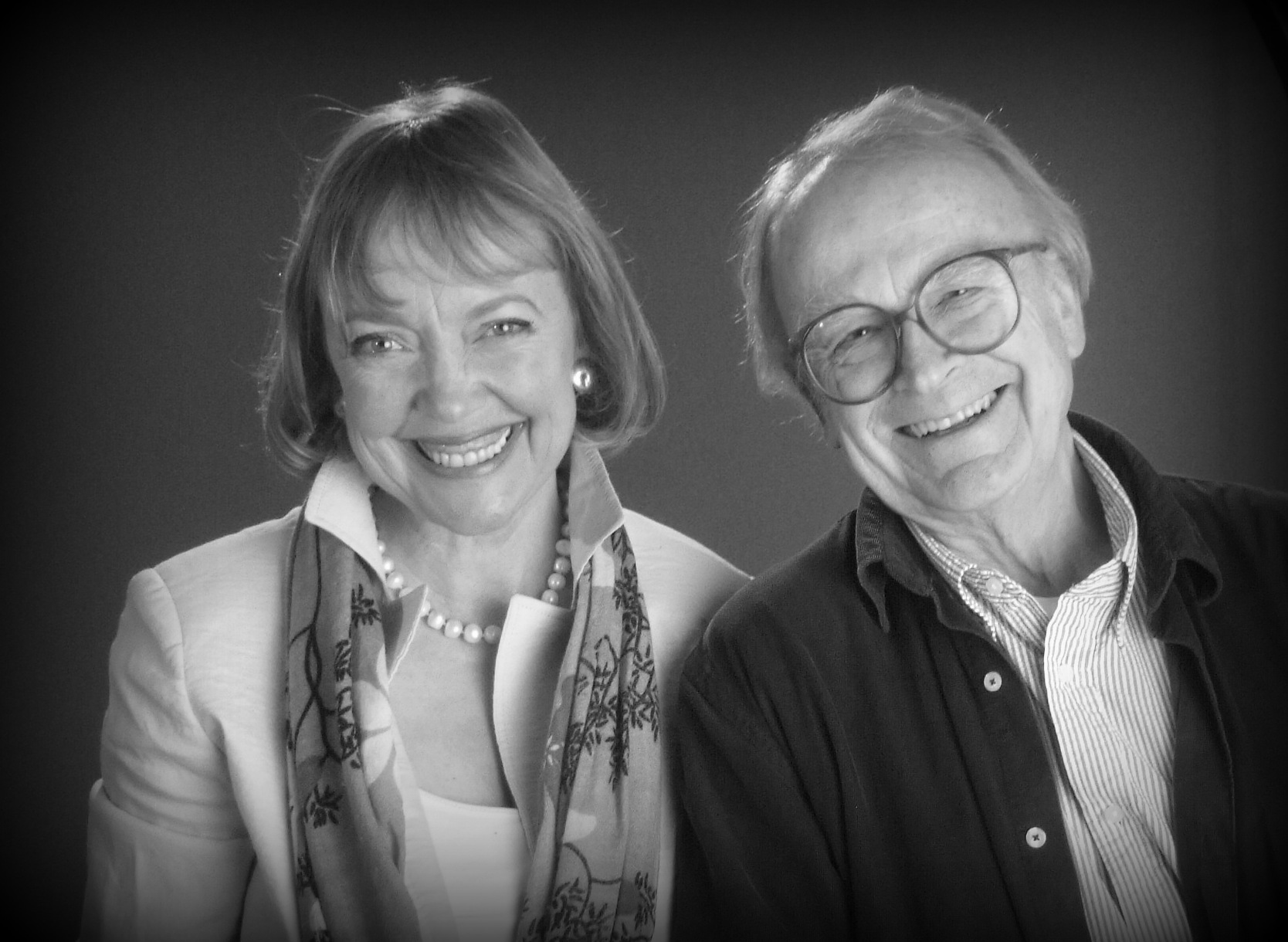
Sophie Neville and David Wood

CBBCTV’s Cinemaniacs  interviewed the screenwriter David Wood and myself on how the original movie of Arthur Ransome’s ‘Swallows and Amazons’ was made back in the summer of 1973.  The idea was to use 30 second clips, so please excuse my over-the-top reactions, but you can watch the whole recording below.

‘This has to be one of the most delightful interviews in my recent memory.’ Tim Lewis, USA

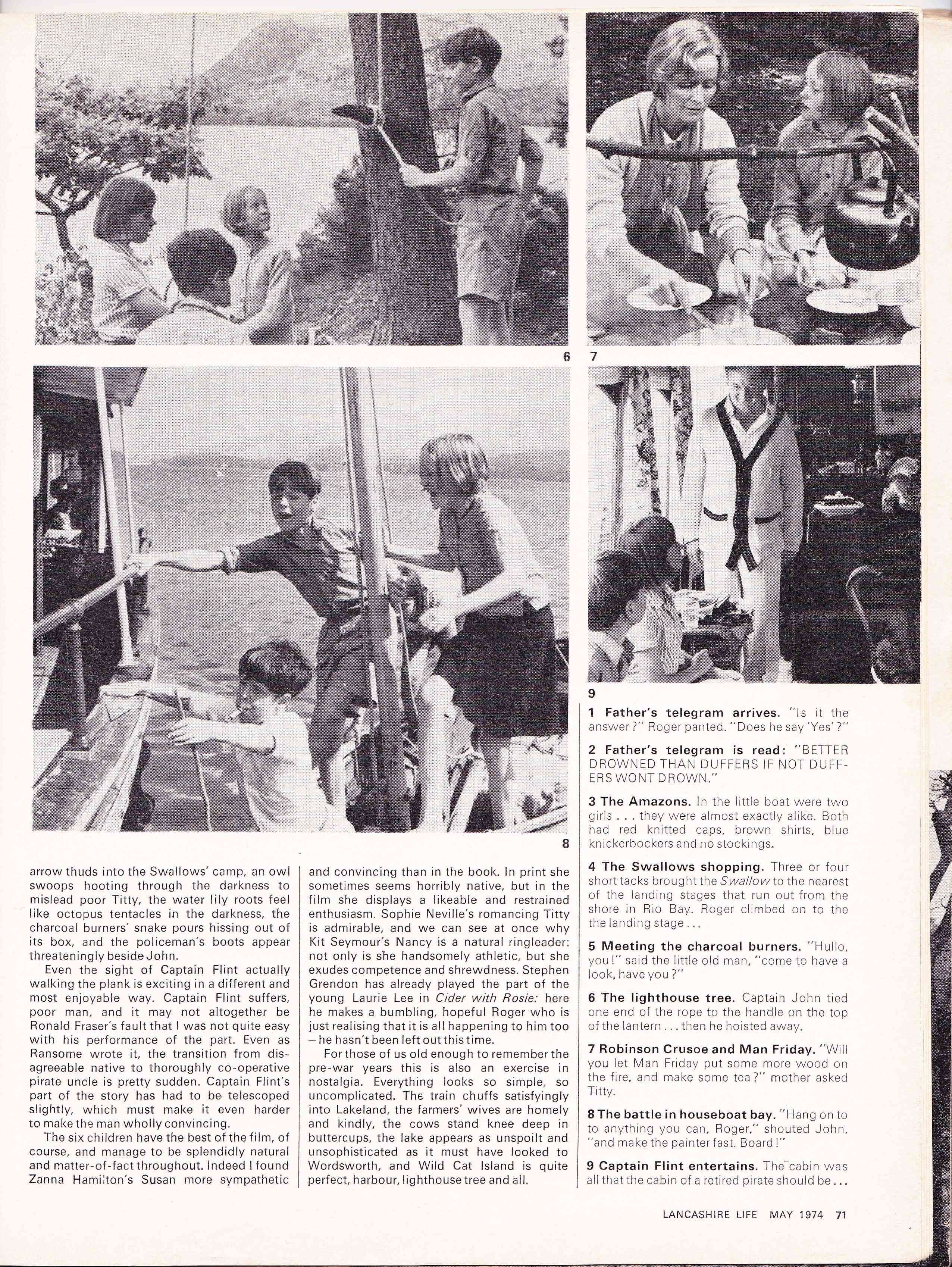
‘Man Friday!’ found in the pages of an old copy of Lancashire Life

Virginia McKenna rowing
The 2014 Blu-ray of  ‘Swallows & Amazons’ (c) StudioCanal

This shot of Virginia McKenna valiantly playing Man Friday, was taken as she rowed away from what I had decided was a desert island. It was 1973 and we were filming on Coniston Water in the Lake District. She was playing my mother, concerned about leaving a small girl alone as the evening drew in. I’ve been set a copy of Lancashire Life, published in 1974, which describes the filming at length. Quite fun. You can see a still of Man Friday and I cooking Pemmican cakes for supper on the camp fire, top right.

Lancashire Life May 1974 - S&A2 - lr

Being awarded an OBE in 2004 for services to wildlife and the arts, Virginia has since become a national treasure. She will quickly deny this but you will find photographs of her at the National Gallery, along with Suzanna Hamilton, who played her daughter – and my sister, Susan in Swallows & Amazons (1974).

NPG x126895; Stars of the British Screen by Norman Parkinson
‘Stars of the British Screen’ by Norman Parkinson. Virginia McKenna sits bottom centre, Suzanna Hamilton bottom right, either side of Susannah York.

Having just celebrated her 84th birthday Virginia has also been heralded as one who inspires others. I concur. ‘Do one thing at a time,’ was her advice to me, ‘Otherwise you can’t do anything well.’

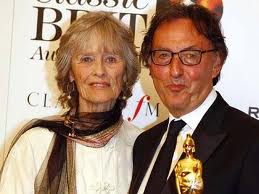
Virginai McKenna with an Oscar

Virginia has appeared in over thirty feature films, numerous television dramas and many fascinating documentaries. She won a  BAFTA Award for Best British Actress in ‘A Town Like Alice’ and was nominated Best Actress by BAFTA for playing Violette Szabo in the WWII story Carve Her Name With Pride.’. She was nominated for a Golden Globe for her portrayal of Joy Adamson inBorn Free’ , which won the composer John Barry two Academy awards. She is still happy to work as an actress, soon to appear in ‘Golden Years’ with Simon Callow and her granddaughter, Lily Travers.

Virginin McKenna with Born Free composer John Barry
Virginia McKenna with ‘Born Free’ composer John Barry

If you interview her now, Virginia is more likely to talk about wildlife than acting. She uses her name to promote kindness. And to stop the slaughter of elephants. One of her latest missions is to urge schools to teach children about conservation. She has recently become patron of  Shropshire Cat Rescue’s Purr project. Arthur Ransome helped finance a similar project himself.

Virginia McKenna in Mail on Saturday 214

2015 marks the thirty-first anniversary of the Born Free Foundation, which Virginia established with her son Will Travers to help big cats and other large mammals held in captivity. She still travels the world to raise awareness and alleviate suffering, drawing on all she learned from George Adamson whilst filming Born Free in Kenya back in 1966, and An Elephant Called Slowly in 1970. You can read more about her work by clicking here.

Virginia McKenna onthe cover of Saga Magazine

Virginia has written about her career and conservation work in a number of books including Into the Blue and an autobiography entitled The Life in My Years available online from the Born Free shop.

Sophie Neville with Virginia McKenna in about 2001

42 years ago we were filming with Virginia McKenna at Bank Ground Farm in the Lake District.

To read the sections of my diary on filming Swallows & Amazons please see:

Fifty years ago in Bowness-on-Windermere in the Lake District

The Guardian 8th June 1973The Guardian published this photograph, taken on the set of ‘Swallows & Amazons’ when the original film of Arthur Ransome’s well-known book was being shot at Bowness-on-Windermere in the Lake District on 7th June 1973.

Newspaper article on Rio 31

The story was set in 1929. The production team battled to find local men to appear as film extras. None of them wanted a short-back-and-sides hair cut. The ladies of the Lake District found this most amusing. Many of them wore their hair shorter than the men.

Rio Bay ~ newspaper article

To see more photographs and footage taken behind-the-scenes on this day, with diary extracts, please click here

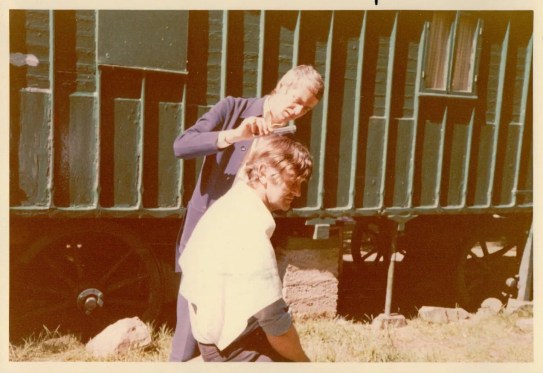
Ronnie Cogan cutting Martin Neville's hair
Ronnie Cogan cutting Martin Neville’s hair for ‘Swallows and Amazons’

For more photographs and a description of what happened please click here

Rio Bay ~ donkeys and rowing skiffs
Jane Price, Perry Neville, Jane Grendon, Tamzin Neville and Pandora Doyle in 1929 costumes at Bowness in 1973

It was Pandora Doyle, seen in this photo as a little girl in a blue dress on the right, who sent me the newspaper clipping from the Guardian pasted above. Her father Brian Doyle was the Publicity Manager on the film. She kept all his files with notes from all the film stars he’d worked with. Do leave a comment below to let us know what you were doing in June 1973.

Brian Doyle, the publicity manager on 'Swallows and Amazons'
Brian Doyle, the film publicist on ‘Swallows and Amazons’ (1974)

You can read the whole story about how the film was made in Cumbria in ‘The Making of Swallows and Amazons (1974)’ available to order from libraries or online retailers worldwide.

Screenshot of The Making of Swallows and Amazons book cover on Instagram

*********

The publication of ‘The Making of SWALLOW & AMAZONS’

The Making of SWALLOWS & AMAZONS

The paperback

Sophie Neville at home with the S&A flags

by Sophie Neville who played Titty Walker

‘Forty years after she enchanted film-goers as Titty in Swallows and Amazons, Sophie Neville has found a new audience… telling the behind-the-scenes secrets of the film of Arthur Ransome’s classic novel.’ The Daily Mail  The Making of  Swallows & Amazons ‘…is based on diaries, letters and old photographs which Sophie has turned into a heart-warming account of making the movie, which starred Virginia McKenna and Ronald Fraser.’

Swallows & Amazons flags for book

The Telegraph ~ Culture:  ‘Set in the Lake District in 1929, the film follows four young adventurers who sail a dinghy around Lake Coniston, cook for themselves over campfires and sleep in makeshift campsites.’

‘…The occasional chaos and terrible weather during filming contributed to the eventual popularity of the extraordinary and very much loved film.’ The Times

‘The film Swallows & Amazons is 40 years old, but thanks to its careful period evocation, its respect for Arthur Ransome’s original book and the performances of its child actors, it’s become a timeless classic. One of those children was Sophie Neville, who played Titty, and who kept a diary during the filming. That diary, with her adult recollections, is this book. It’s a fascinating insight into filming on location in the Lake District…’ Classic Boat

Sophie Suzanna and Sten

‘… The result is compulsive reading as she recalls that cold wet summer, while the camera crew wrapped up warm and she shivered in her skimpy dress as Able Seaman Titty Walker. Sophie brings to life all the many memorable characters who worked on the film and in particular the other children, the Director Claude Whatham who developed a great relationship with his young cast and the stars Virginia McKenna and Ronald Fraser. Nor are the other young actors forgotten for there are diary contributions from Suzanna Hamilton who played Susan, Stephen Grendon who played the Boy Roger and Kit Seymour who played Nancy Blackett. The text is supported by numerous illustrations showing life on and off the set.’ Roger Wardale, author of Arthur Ransome: Master Storyteller and other books

‘You don’t need to be a Swallows & Amazons fan to enjoy this book – it’s universal!’ Winifred Wilson, Librarian of The Arthur Ransome Society

‘This was a most unusual and interesting book. I picked it up expecting to browse through it, and found myself so drawn in to Sophie Neville’s detailed, amusing and insightful description of film making in the 1970’s that I was unable to put her book down. As Arthur Ransome fans, my family and I have always loved the film, and felt that Sophie Neville was ‘just right’ as Titty. What fun it has been to be introduced to the young twelve year old Sophie with her intelligent awareness of the challenges facing the production crew while she shivered in her cotton dresses. The many photographs and illustrations contribute richly to bringing the 1970s setting to life. Sophie recorded her experiences beautifully, and in so doing, added one more valuable book to the cultural heritage of all Arthur Ransome fans.’ Juliet Calcott, English teacher, South Africa

Lots of photos throughout the book bring the scenes to life – a delightful read.’ Celia Lewis author of An Illustrated Country Year

Mark Forrest Evening Show

Sophie Neville has been chatting to Mark Forrest on The Evening Show.

Screenshot of The Making of Swallows and Amazons book cover on Instagram

The second edition of this paperback is published by The Lutterworth Press, available online here

**********

The cutting room floor

Many people asked what ‘fell onto the cutting room floor’ after we shot the movie ‘Swallows & Amazons’ in the English Lake District in 1973.

The answer is that there were few scenes excluded from the film.

BW Virginia McKenna and Sophie Neville

Virginia McKenna as Mrs Walker with Sophie Neville as Titty

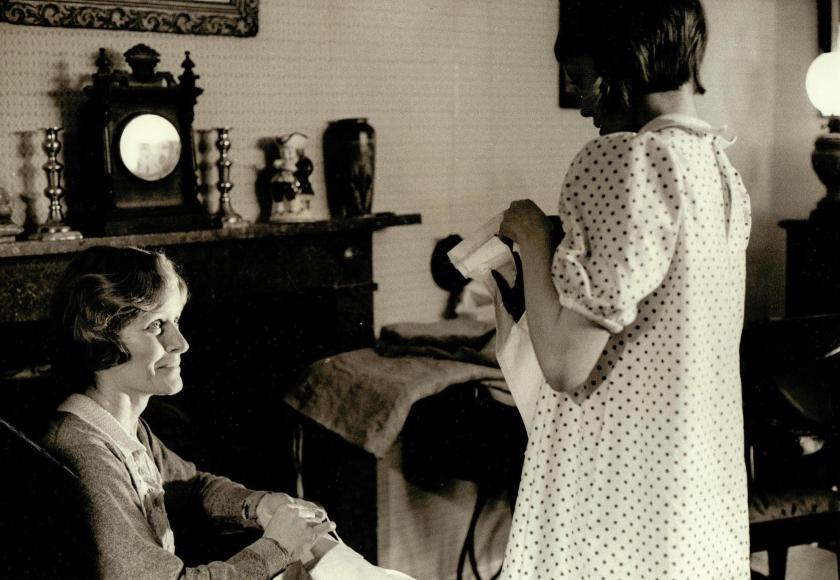
One featured Virginia McKenna and Mrs Batty’s clock, which can still be found at Bank Ground Farm, our location used for Holly Howe. It was shot on the second morning and I fear that our director Claude Whatham might have taken it out because my own performance was rather stilted. I had quite a bit to say, most of which was really rather bizarre:

15th May deatil of outtake
The pages of my diary written on 15th May 1973

15th May detail  page two

The only other scene from Swallows & Amazons that I know was excluded was when the Swallows lay patterans on their way to visit the charcoal burners. The location was in a beautiful spot up above Derwentwater, the dialogue was straight from Arthur Ransome’s book and our performances would have been fluent by the time we shot the sequence. BW The Swallows make Patterans

 Suzanna Hamilton, Sten Grendon, Sophie Neville and Simon West as the Swallows

I can only expect that when the movie came in over-length, these scenes were cut as the action had no influence on the plot.

‘I have always had the feeling that the Amazon’s role in the 1974 film was very much secondary to the Swallows.’ Stephen O’Brien posted. ‘This was probably down to much of the Amazon’s footage ending up on the cutting room floor. What do you think?’

In the original script, the Amazons do not really appear until page 41 – which would equate to nearly half-way into the the film. I thought that there might have been one or two shots of the Amazons sailing that were never used, but I’ve checked the script and nothing that they said was excluded. Not one word. Perhaps David Wood who dramatized the book could somehow have increased the Amazons’ parts. However, as Janet Means points out:

‘…in the book we find out more about what the Swallows think but only about what the Amazons do. There is little about the Amazons except when the Swallows are present too (hiding Amazon in the reeds and Nancy berating Peggy for losing Amazon when Titty’s made off with her). There’s lots about the Swallows without the Amazons.’ 

Nancy and Peggy Blackett
Kit Seymour with Lesley Bennett

One scene in the DVD of the film used to be cut out of the television version. The clue is that it comes just before this photo was taken in Bowness-on-Windermere for Lancashire Life kindly sent to be by Stephen Sykes of Hill Top near Haverthwaite.

Lancashire Life May 1974 - S&A - Contents photo only Sten Grendon, Simon West, Suzanna Hamilton and Sophie Neville as the Swallows in Rio, an official still from the film published in Lancashire Life in 1974

There are a few scenes in the screenplay that were never actually shot, but that takes us on a different tack. To read more, please see: The Secrets of Filming Swallows & Amazons.

Dennis Lewiston, director of Photography on 'Swallows and Amazons'  ~photo:Richard Pilbrow
Denis Lewiston, director of Photography on ‘Swallows and Amazons’ ~ photo: Richard Pilbrow, taken on Derwentwater in Cumbria, 1973

The illustrated paperback entitled ‘The Making of Swallows and Amazons (1974) can be ordered from libraries worldwide or purchased online.

'The Making of Swallows and Amazons (1974) by Sophie Neville'
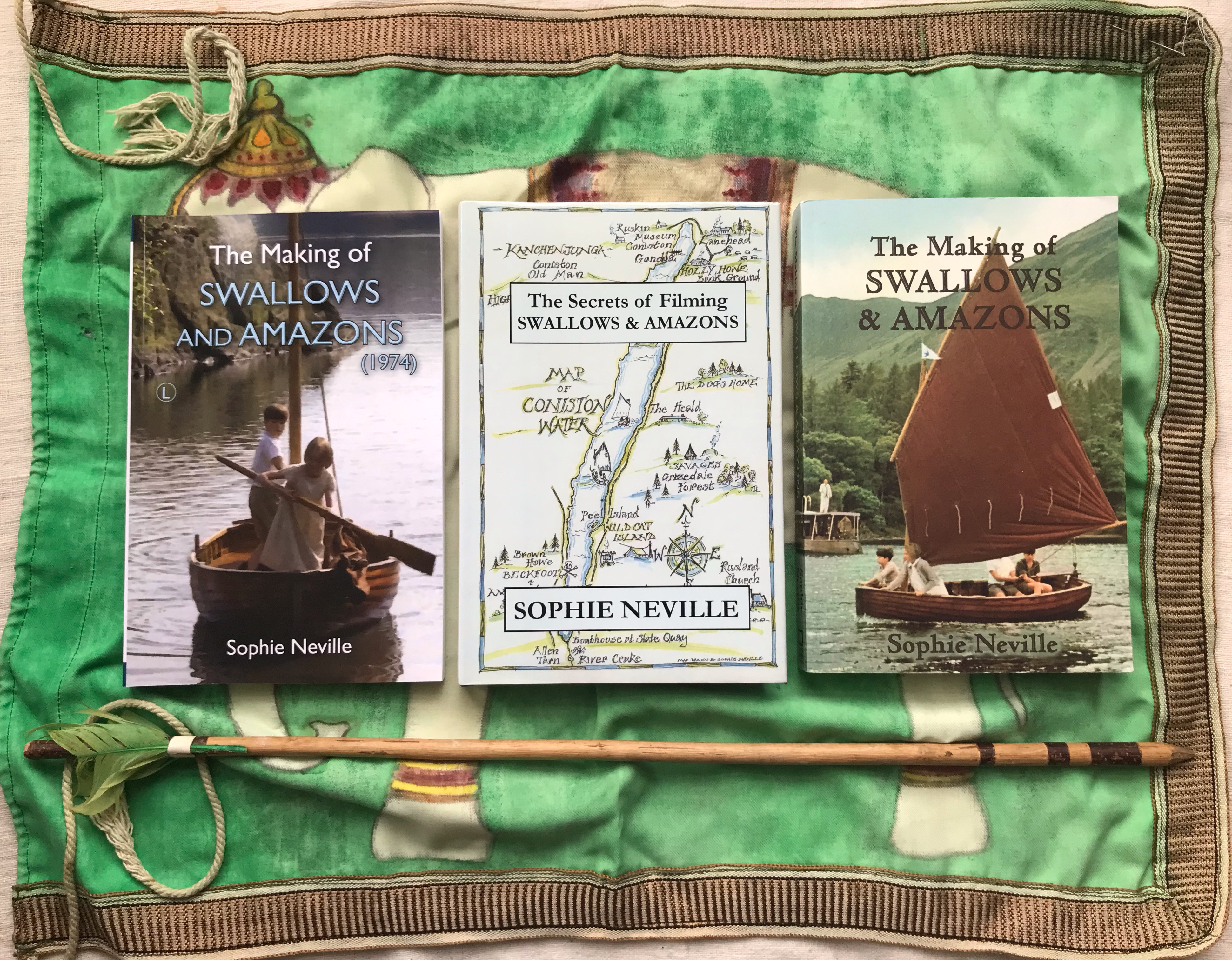
Different editions of ‘The Making of Swallows and Amazons (1974) by Sophie Neville’

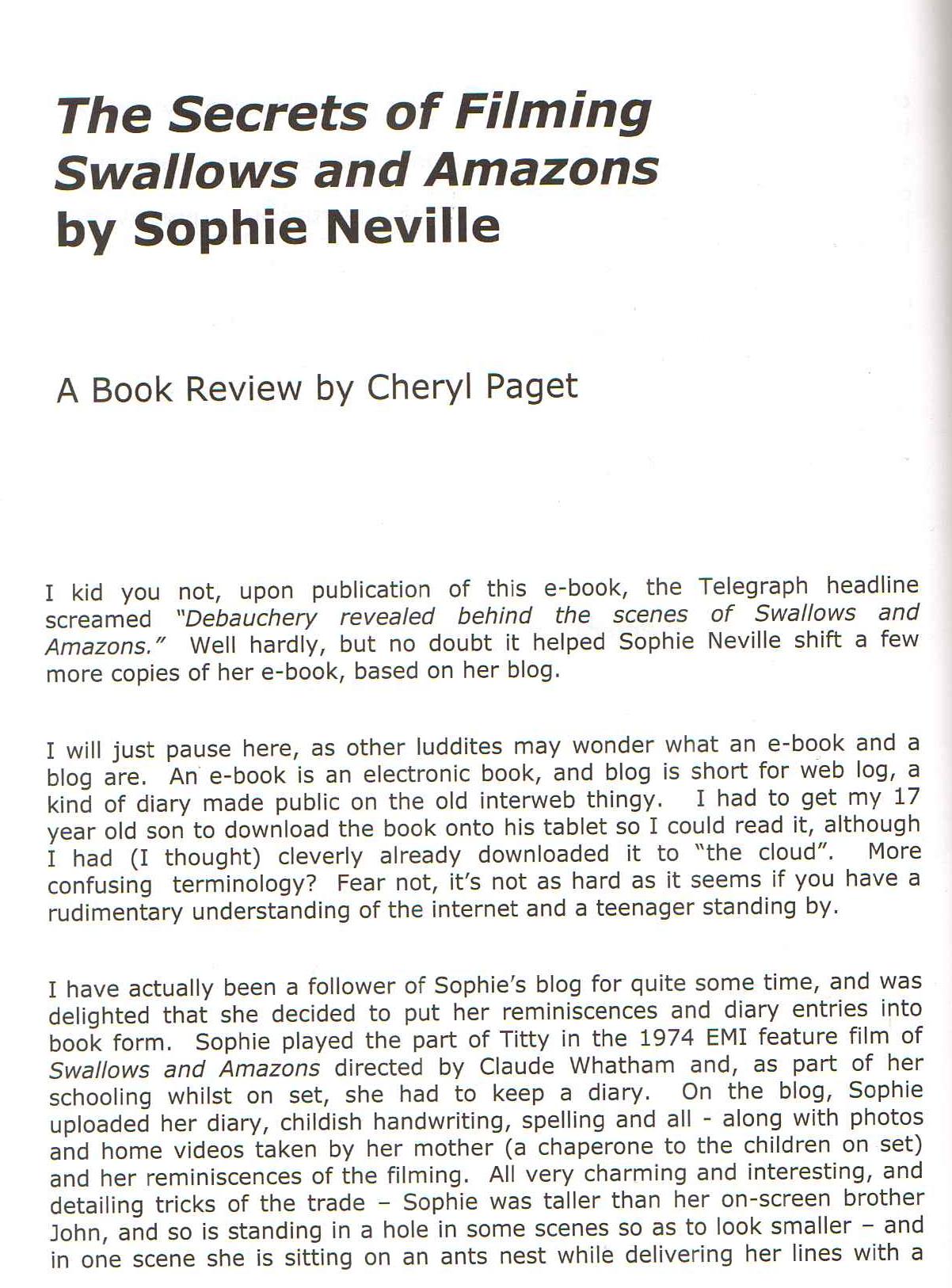
News and Reviews of ‘The Secrets of Filming Swallows & Amazons (1974)’

Have you received the same despatches as me?

I opened my post to find not one but three reviews of my books, including this article published in The Outlaw and another in Signals, for which I am very grateful. I have pasted them here for fans of the film who do not yet subscribe to these literary magazines.

Review by Jack Parker in The Outlaw

This review was followed by by a comment from Winifred Wilson, librarian of The Arthur Ransome Society:

Review by Winifred Wilson1

The Library Supplement in The magazine of The Arthur Ransome Society gives a full description of all three books:

Review in Signals Library Supplement

Review in Signals

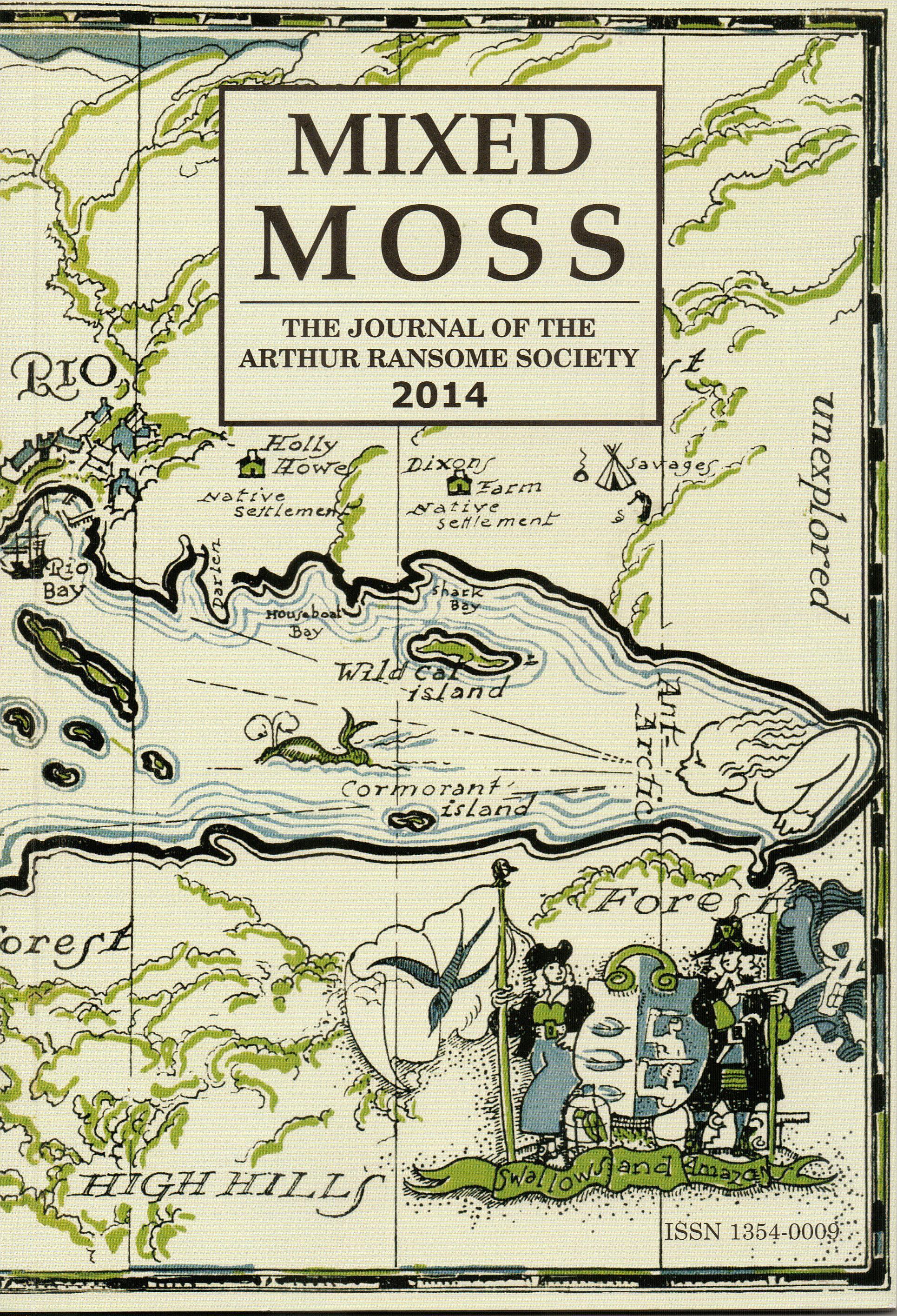
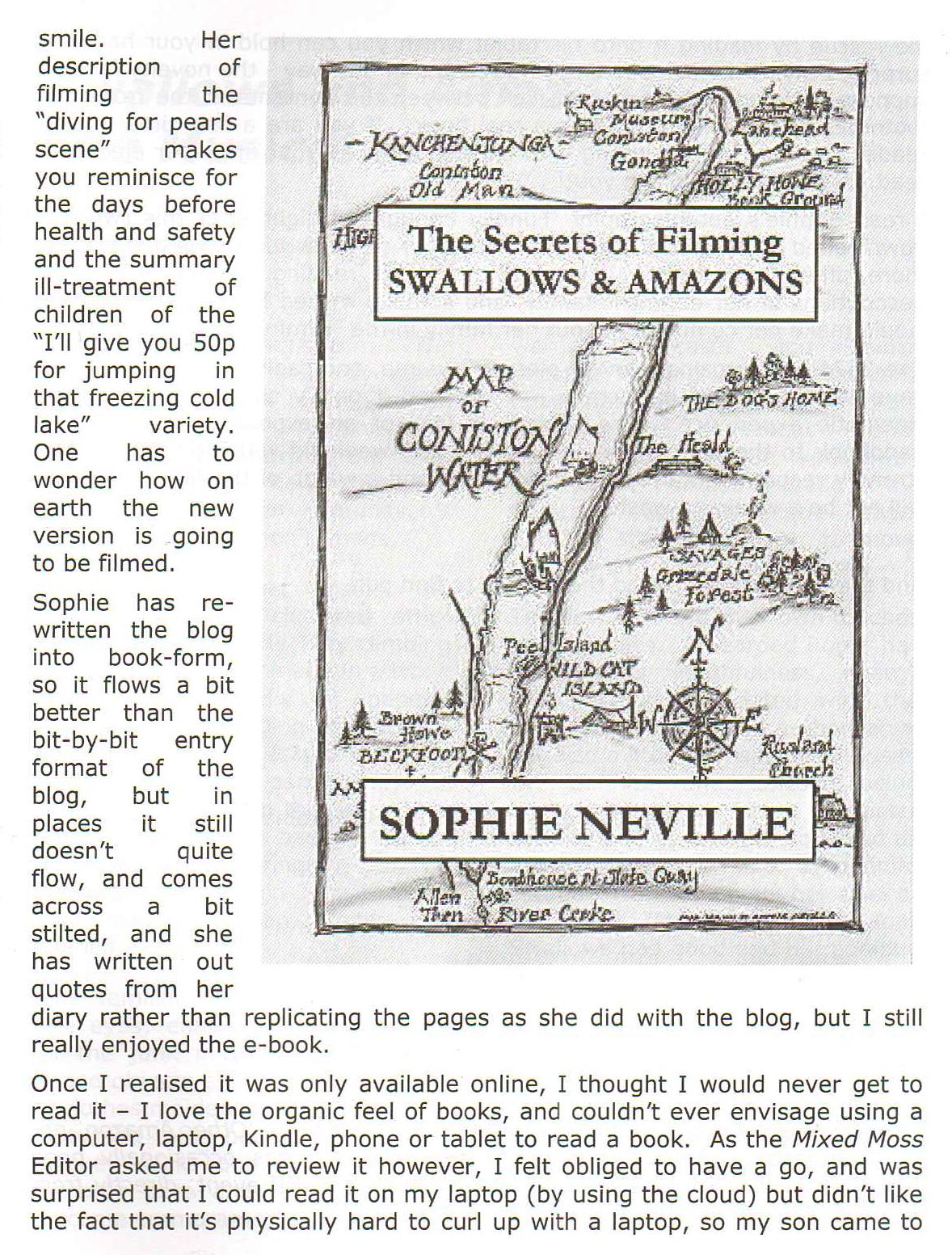
Mixed Moss  arrived before Easter with Spurrier’s map on the cover:

Mixed Moss 2014

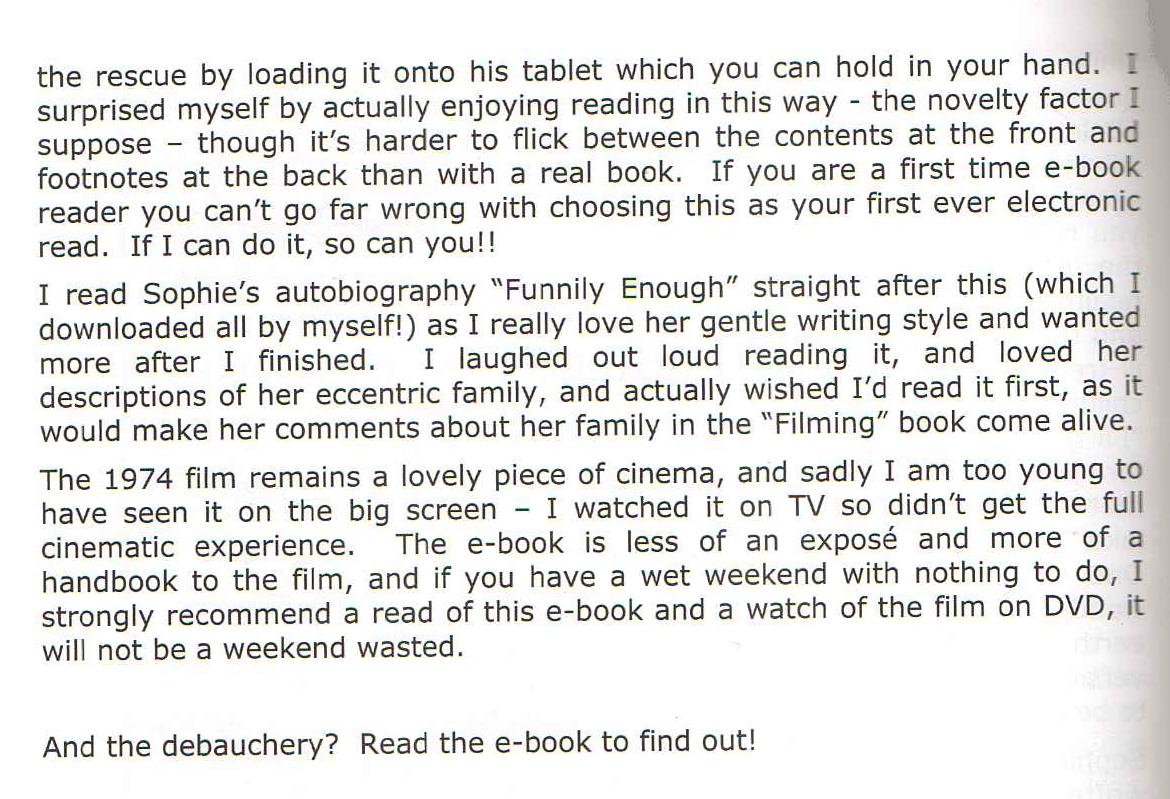
I found another review inside, this time from New Zealand:

Mixed Moss1

Mixed Moss2

Mixed Moss3

The News is that The Secrets of Filming Swallows & Amazons has been signed up by the publisher Classic TV Press who plan to bring out a new edition in paperback this July. It will include glossy photographs and additional points of interest. If you would like to order a signed copy please email: classictvpress@live.co.uk

If you are interested in joining the Arthur Ransome Society please click here.

Here is a shot from 1973, capturing some of the deb-archery:

Sophie Neville watching the Amazons practicing with bows and arrows

Sophie Neville with Peter Robb-King (Make-Up) and Ronnie Cogan (Hair) watching Lesley Bennett and Kit Seymour trying out their bows and arrows with Terry Smith (Wardrobe) while on location near Peel Island on Coniston Water in the Lake District.

We now have a second edition of ‘The Secrets of Filming Swallows and Amazons’ out as an ebook and two versions of the paperback, which is almost identical but includes film stills and can be ordered from libraries as well as the usual online outlets.

'The Making of Swallows and Amazons (1974) by Sophie Neville'
Different editions of ‘The Making of Swallows and Amazons (1974) by Sophie Neville’

If you enjoyed watching ‘Swallows and Amazons'(1974) on television

The Secrets of Filming Swallows & Amazons

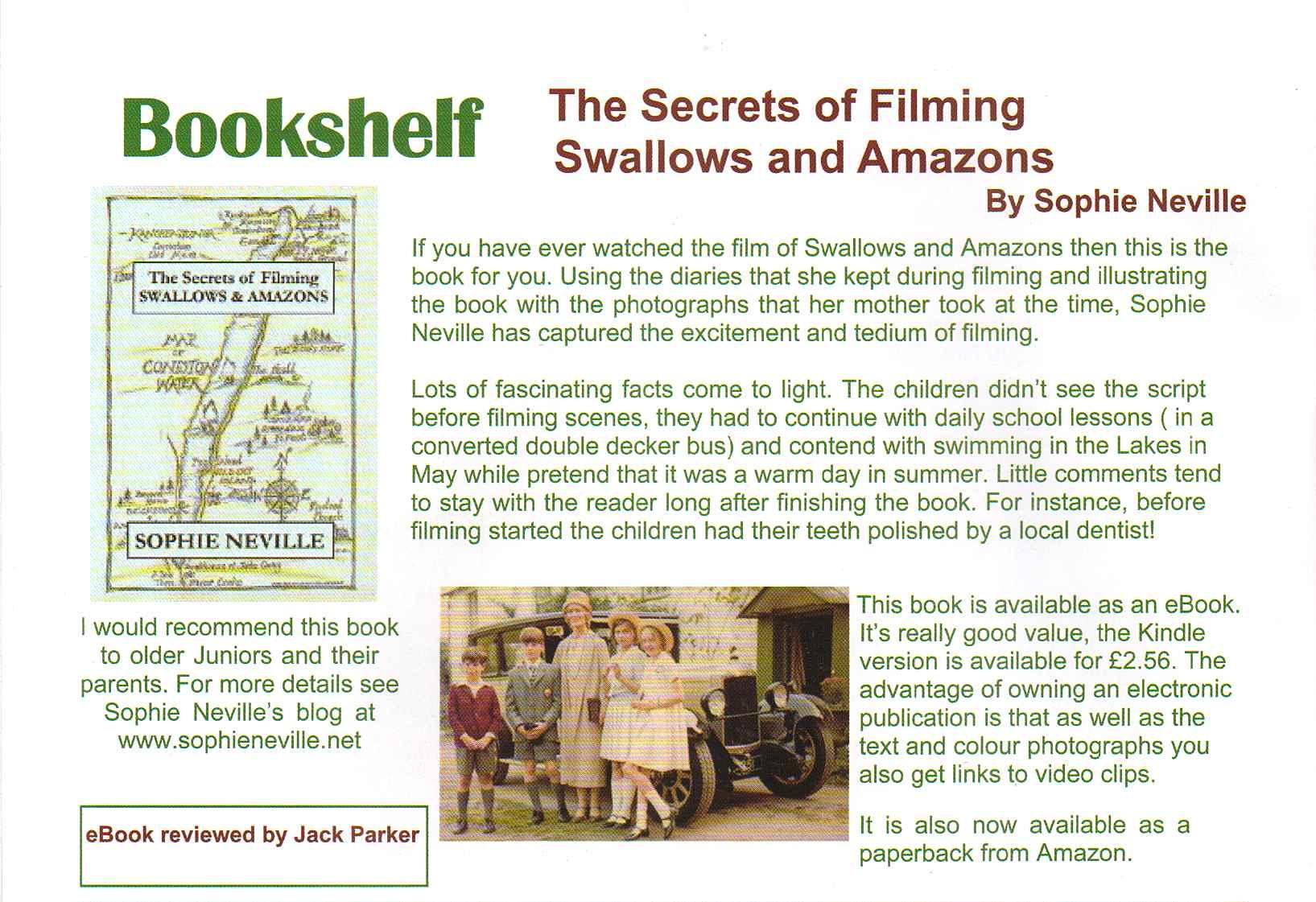
If you would like to know how the movie of Swallows & Amazons (1974) was made and know where the real locations can be found, ‘The Secrets of Filming Swallows & Amazons(1974)’ is currently available as an ebook on Amazon and Smashwords for £2.99.  The paperback was launched to mark the 40th anniversary of the film’s release and is available online here.

Do you know where the Peak of Darien can be found? photo: Roger Wardale
Do you know where the Peak of Darien can be found?

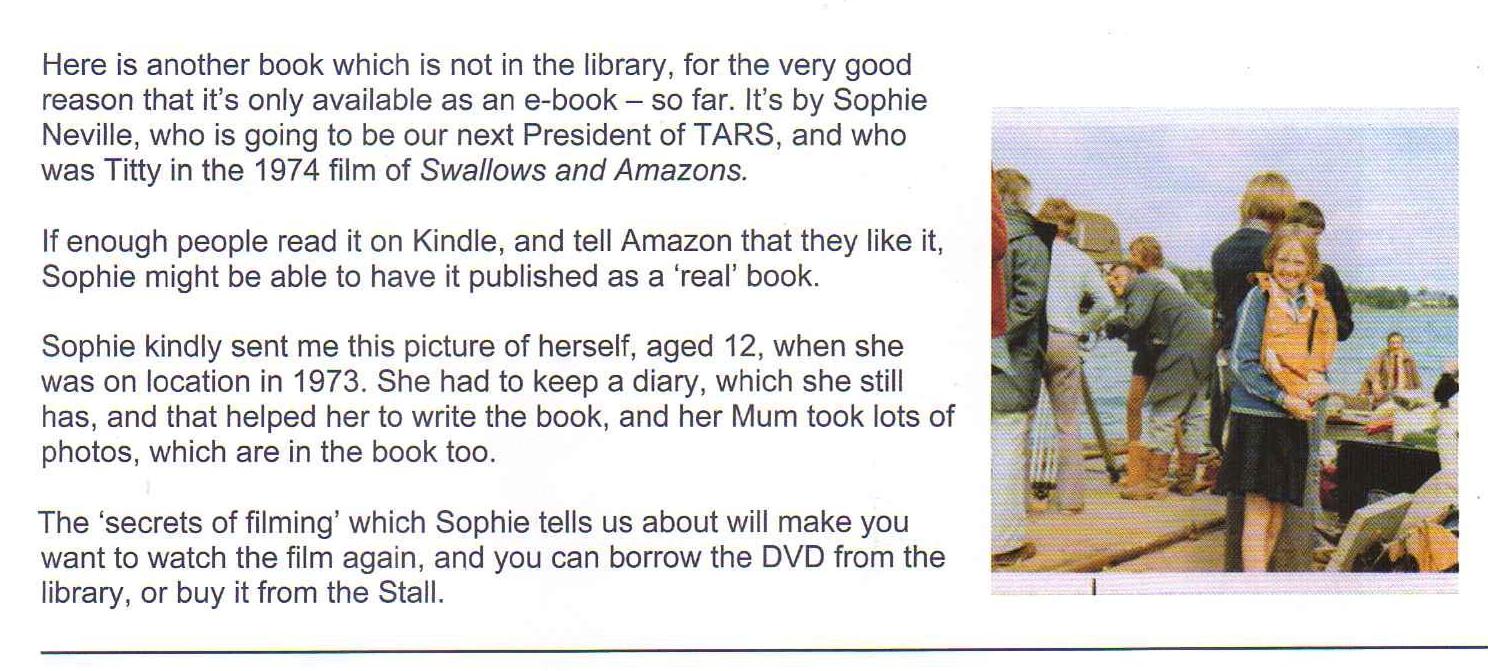
The paperback, which is suitable for any age group, is based on the diary that I kept when I played the part of Titty Walker in 1973. It is illustrated with behind-the-scenes photographs and memorabilia such as one of the tickets to the Royal Gala premier in Shaftesbury Avenue held on 4th April 1974. You will also find out what the actors who played the Walker family ~ the Swallows ~ are doing now.

The joy of the ebook is that it includes a number of home-movie clips that my parents took of life behind the scenes that you can play wherever you have internet access.

Classi Boat magazine Books ~ Feb 2014
A review of the ebook in Classic Boat magazine ~ Feburary 2014

If you have any questions about making the film, please add them to the comments below, and I will get back to you.

Richard Kay's column in Daily Mail Friday Nov 22nd1
A review of ‘the Secrets of Filming Swallows & Amazons’ in Richard Kay’s column in the Daily Mail ~

There were rather over-excited headlines in the Times and Telegraph when the ebook was launched but they only spoke of the legendary drinking of Ronald Fraser. Please don’t worry – there is nothing X-rated about the book – it is just the price one pays for half a page in a daily newspaper, especially since it came out on a Saturday.

The Times Sat 23 Nov 20131

The ebook has been doing well in the Amazon charts and hit Number 1 in the category ‘Stage and Theatre’.

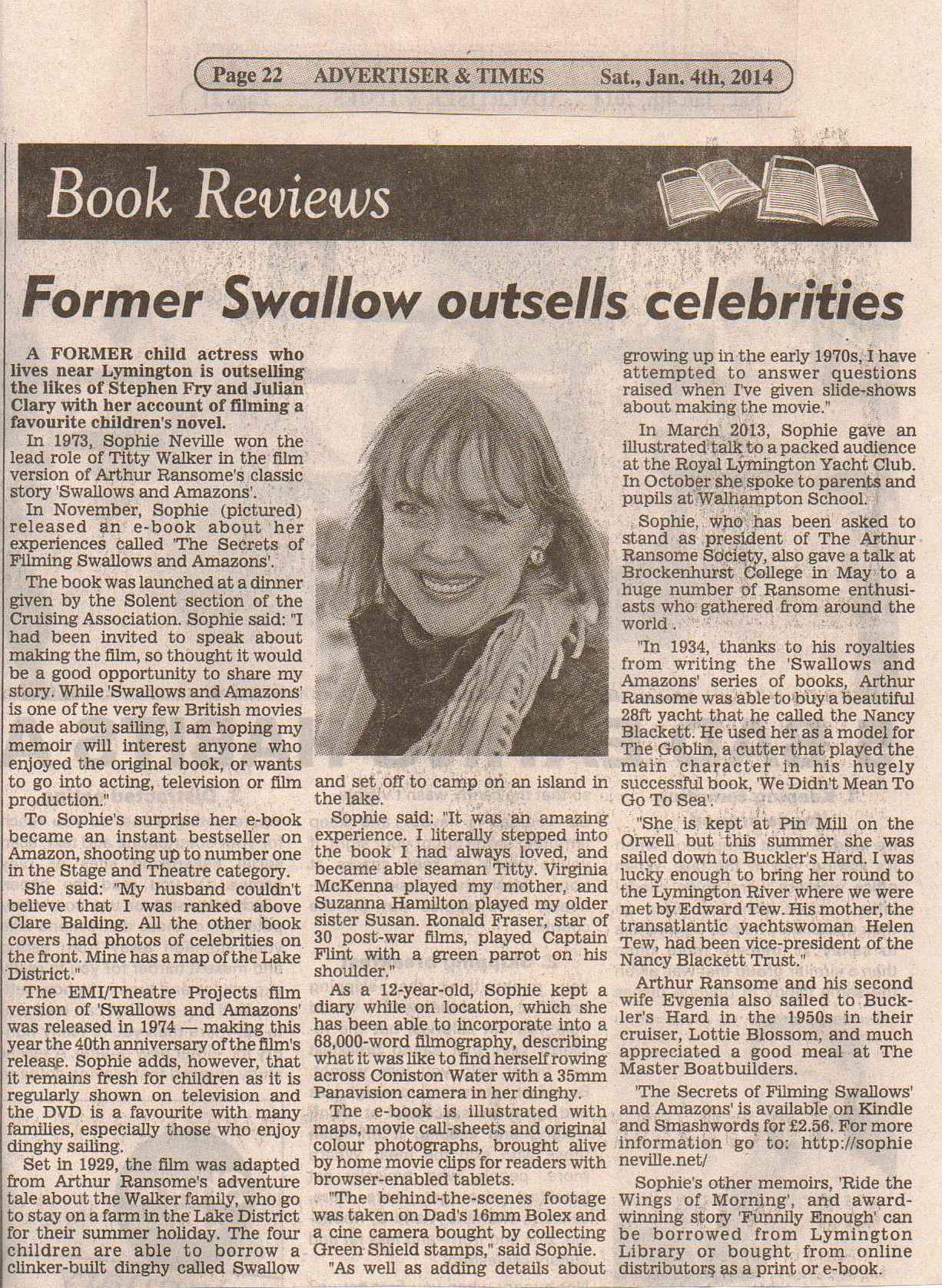
Lymington Times 4th Jan 2014

A preview of what the book holds in store can be watched here:

‘The Secrets of Filming Swallows & Amazons’ – the book trailer

Very many thanks to all those who have left customer reviews on Amazon. It is always exciting to find out how the book has impacted others, especially those who love the Arthur Ransome books.

To read more reviews please click here

'The Making of Swallows and Amazons (1974) by Sophie Neville'
Different editions of ‘The Making of Swallows and Amazons (1974) by Sophie Neville’