Life in 1973 – Part One

I have been writing about life in England fifty years ago, reflecting on how our lives have changed. Can you help me?

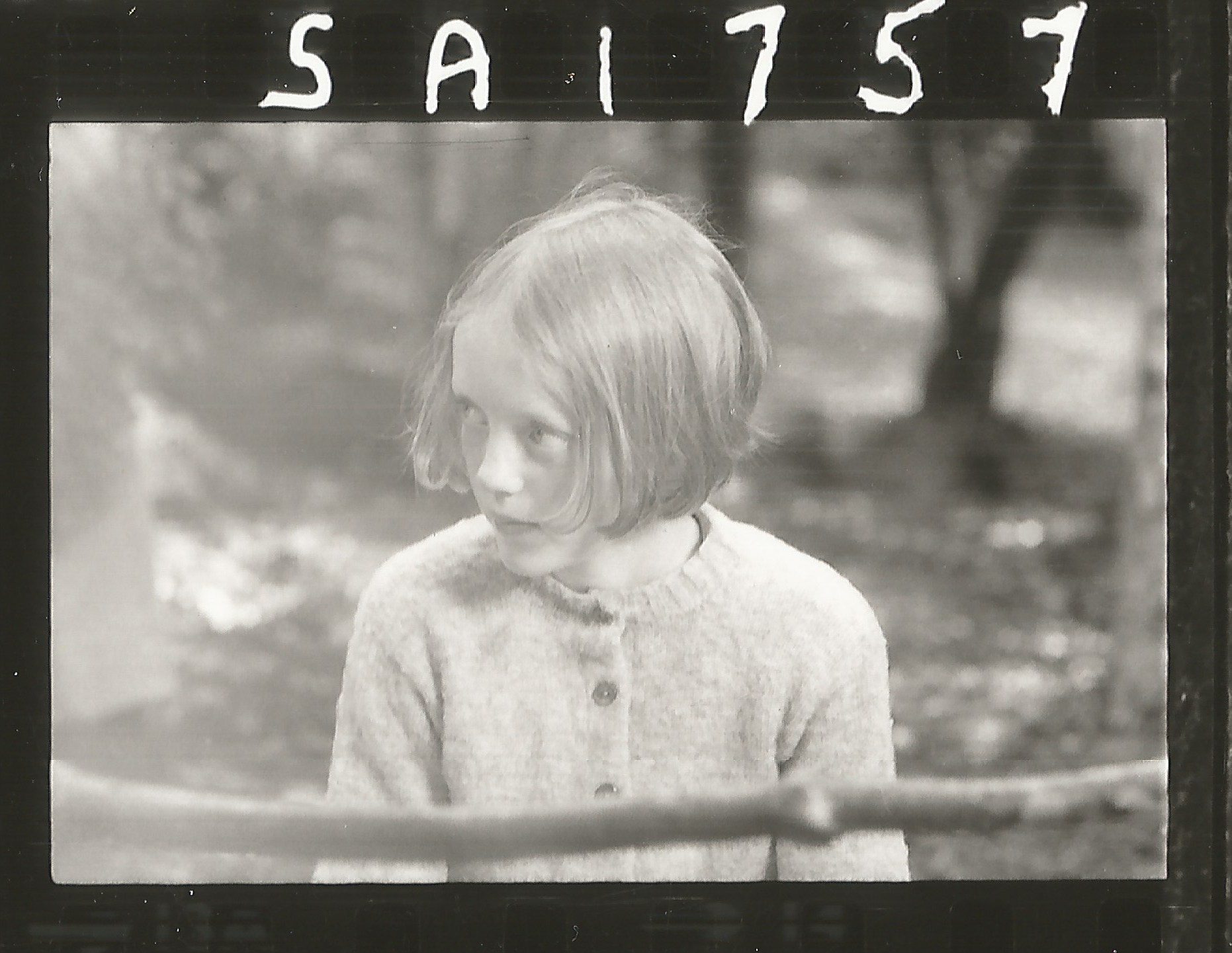
Sophie Neville at Elstree Studios in 1973
Sophie Neville at the EMI Elstree Studios in 1973

The big change seems to be in communications. In 1973 we were still queuing up to using coin operated telephone boxes in the street, asking the operator for Ambleside 2232. Letters and notes were written by hand. I learnt italic writing, so as to be clear. Manual type-writers used black and red stripped tape. Mistakes were obvious.

A fan letter

I’d love to receive comments (below) on how you remember aspects of growing up in the early 1970s. What did you eat then? Where did you go on holiday? What was it about 1973 that impacted you?

Jean McGill, Jane Grendon, Stephen Grendon, Kit Seymour, Sophie Neville, Claude Whatham, Simon West, Lesley Bennett, Suzanna Hamilton, Ronnie Cogan~ photo: Daphne Neville
Jean McGill, Jane Grendon, Stephen Grendon, Kit Seymour, Sophie Neville, Claude Whatham, Simon West, Lesley Bennett, Suzanna Hamilton, Ronnie Cogan in 1973

My husband remembers long hair, flared trousers and shirts with massive curved collars. I always longed for an embroidered t-shirt with wide sleeves or a cheese-cloth shirt but loathed the feel of acrylic jumpers and ribbed polo-necks. Stripy ones. The fabric could be so vile, we didn’t feel each other as much as we do now. There was much less hugging.

1973
Mum wearing a fluffy Donny Osmond hat

The food was pretty applauding. My friend Suzanna has just reminded me about the innovation of Italian cooking. Spaghetti was the highlight of our lives; a treat that we might have on Saturdays or for a party when red candles would be pushed into wine bottles and checked paper table cloths could enhance a Bistro image. However prawn cocktail was the pinnacle of popular aspiration, although us children preferred picking of the shells off prawns ourselves.

Daphne Neville in 1973

At parties you’d be offered chunks of cheese and pineapple on cocktail sticks stuck into a half a melon that had been covered in tin foil. I always rather longed for the melon.  Homemade beer was regrettably all the rage, along with freezing your own runner beans. The process was quite fun (we enjoyed sucking air out of the freezer bags with a straw) but the beans were stringy and disgusting.

My family thought having to bring-a-bottle to parties was a great idea but we loathed the fact that cigarettes were smoked everywhere you went. Unless you were in the garden where abysmal furniture design spoilt the view.

Dick Emery

Colour televisions were only just beginning to invade people’s homes. They were terribly expensive. We had to make do with our crackly black and white screen, watching Blue Peter, Animal Magic and Tony Hart  presenting Vision On with cartoons such as Marine Boy until Childrens’ Television ended with The Magic Roundabout just before Daddy came home from the Works in time for the 6 O’Clock News. I then bored myself rigid watching Points West and Nationwide before It’s A Knockout.

We were allowed to stay up to watch  Dick Emery , Benny Hill, and ‘Titter ye not’, Frankie Howerd along with dramas such as The Onedin Line.  There was one sit com starring Wendy Craig entitled Not in front of the Children, which of course we all wanted to watch. What influence did this have on our young minds?

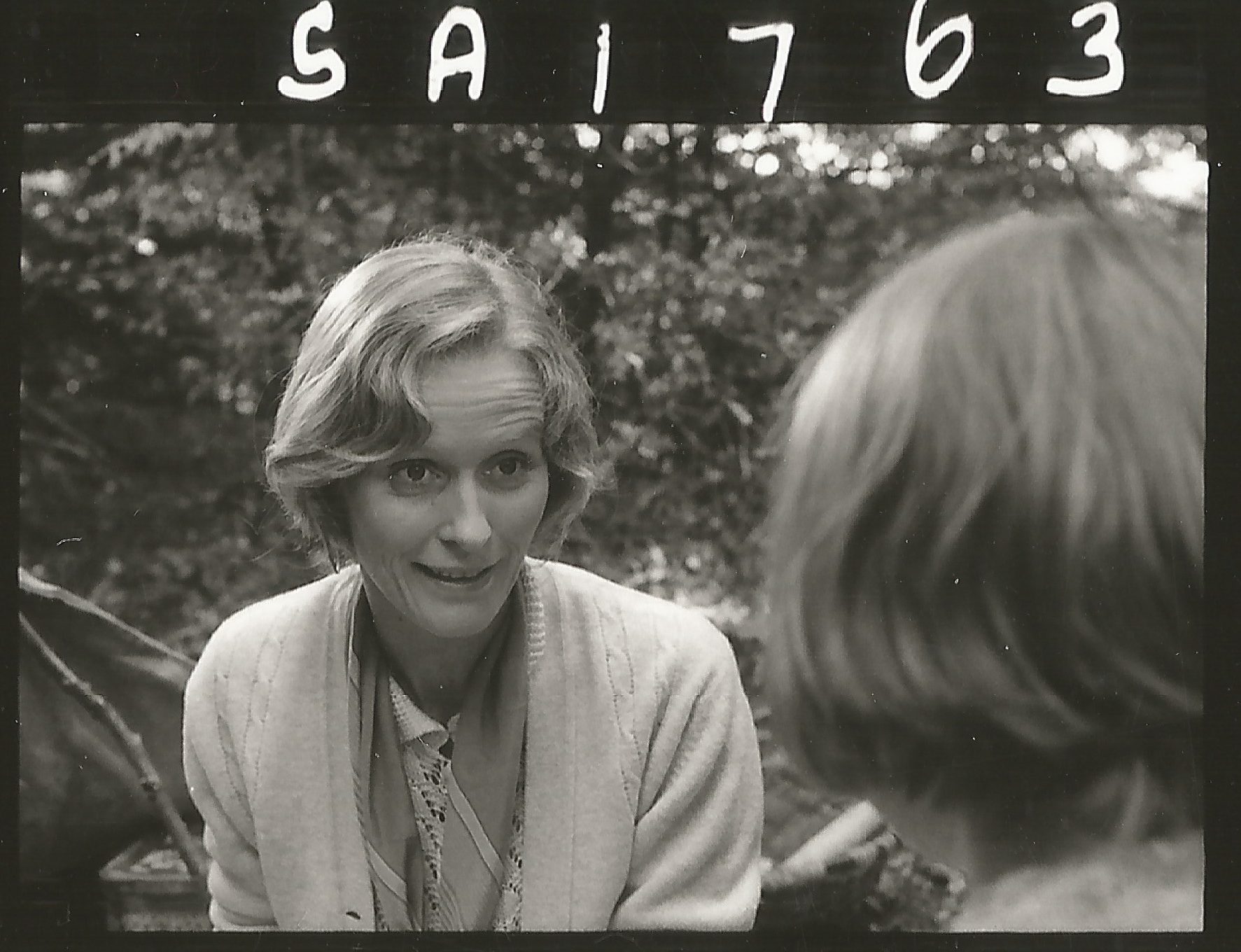
Daphne Neville with Dick Emery 1973
Mum appearing as a member of the Salvation Army on ‘The Dick Emery Show’

Mummy worked for HTV West presenting an afternoon programme called Women Only with Jan Jeeming. She also read the letters on Any Answers?, which was produced by BBC Radio Bristol by Carole Stone. I was so impressed – amazed – to meet a female radio producer. Carole was one of the few who worked her way up from being a BBC secretary to producing Any Questions.
Women Only
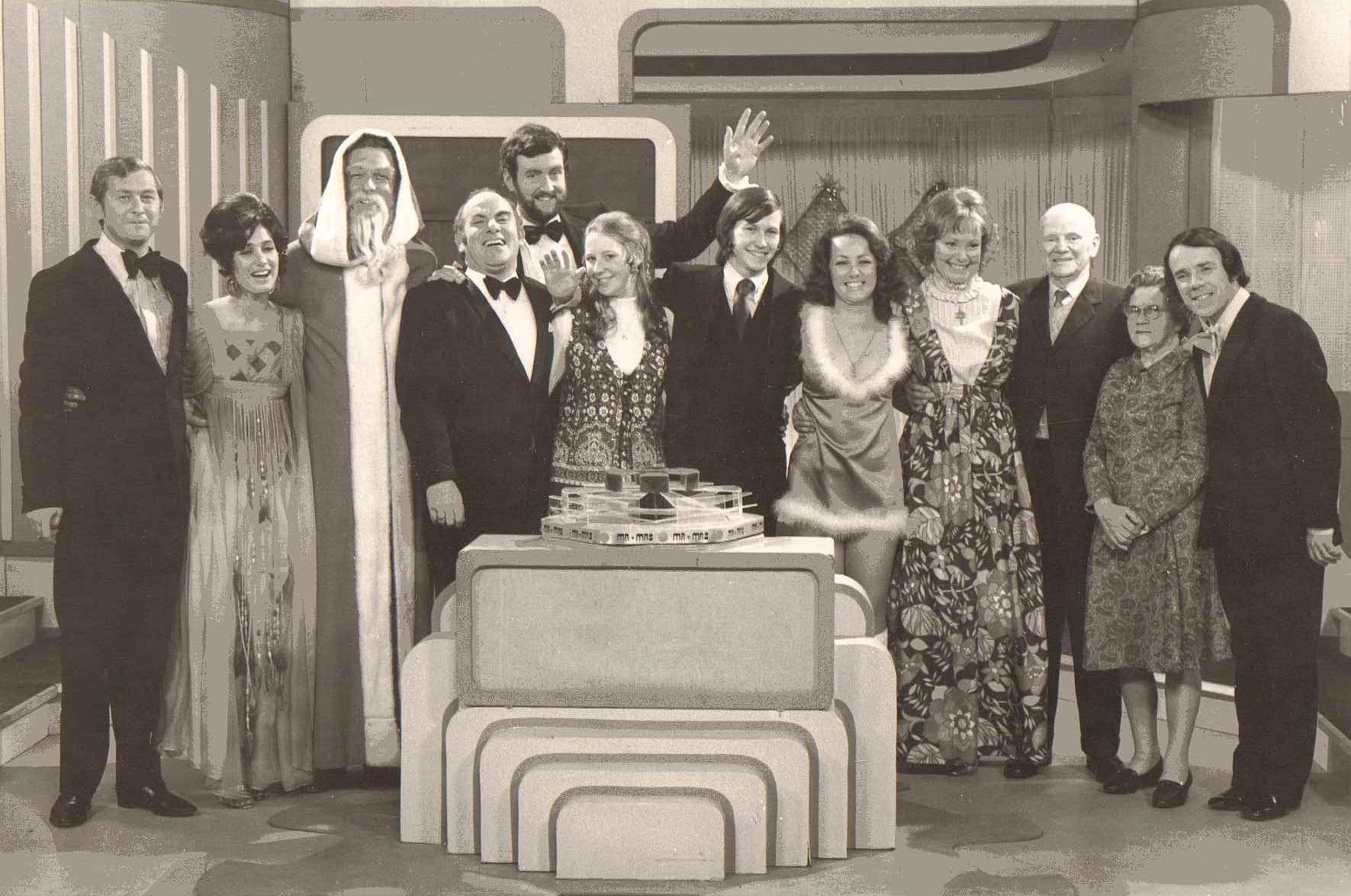
HTV West Christmas Show presented by Bruce Hocking, Jan Leeming & Daphne Neville

Our holidays were spent camping in Wales. Packing for this took two weeks. We used drag an orange dome tent out of the airing cupboard and  slept on fold-up sun-loungers from the garden.

Sailing was all about Mirror dinghies, which you could buy in kit form and make out of plywood in the diningroom. We couldn’t afford one, but in the late 1970’s Dad bought a fibre-glass  Topper, which was the height of cool. He called it Earwig.

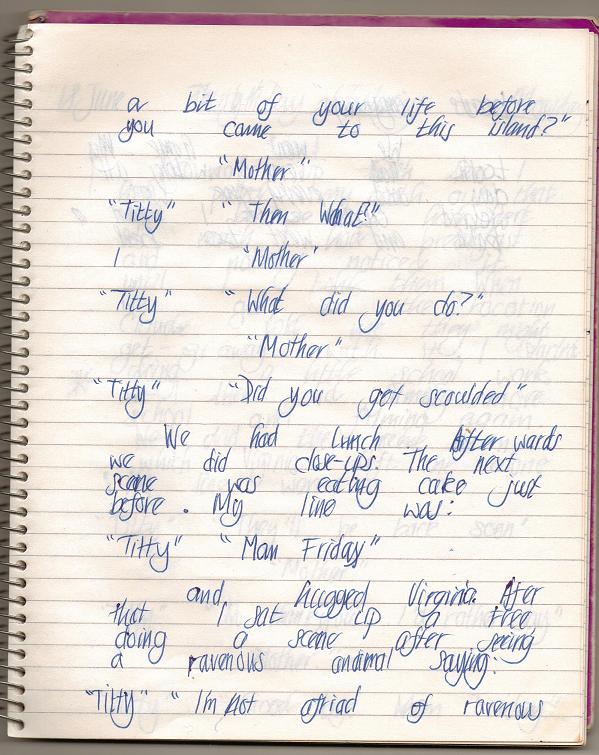
We had our photos developed at the chemist or sent them off to Tripleprint, so we could share the small version with others. Although they were bought by Bonusprint in 1979, I was a loyal customer until well into the 1990s and remain plagued by small photos I can’t quite bring myself to chuck away. We stuck them in scrapbooks made of green and blue paper. Here is a page of mine from the making of Swallows and Amazons.

Photographs in a child's scrapbook

My family were very keen on taking home movies. Dad usually took slides when we went on holiday, which were viewed along with the supper-8 footage at Christmas time when he pushed the furniture back, took down a painting and projected our memories onto the wall.

What have I forgotten? Do post your own recollections, especially of sailing and camping in the early seventies, in the comments below.

Dick Emery ~ walking social history

.

The Princess of Wales experienced the ‘Swallows and Amazons’ life style in Cumbria

The Duchess of Cambridge cooking on a campfire in Cumbria

The Duchess of Cambridge,” as she was known in March 2013, “showed she was fully prepared when she braved the snowy weather to visit a Scout camp in the Lake District today.”

“Her Royal Highness, who is a volunteer in the Scout Association, joined fellow adult volunteers as they trained to work with Beaver and Cub Scouts at the Great Tower Scout Camp near Newby Bridge in Cumbria. She used her training to help look after a group of Cub Scouts from Cumbria and Manchester taking part in a pack holiday event at the 250-acre activity centre close to Lake Windermere. As part of their programme, the Cub Scouts will get a chance to try outdoor cooking, fire-lighting and tree-climbing under the guidance of The Duchess and the other volunteers.”

To read more, visit princehenryofwales.org

According to Claudia Joseph’s biography of Kate ‘Princess in Waiting’, the Duchess is distantly related both to Beatrix Potter and Arthur Ransome. The link is explained by the Daily Mail here

My mother, Daphne Neville wearing a Donny Osmond hat in 1973 on location for SWALLOWS & AMAZONS
My mother, Daphne Neville wearing a Donny Osmond hat in 1973 on location in the Lake District  filming Richard Pilbrow’s movie  SWALLOWS & AMAZONS

The Duchess is obviously fond of Donny Osmond hats. My mother wore one on location in the Lake District whilst filming SWALLOWS & AMAZONS  (1974) . She can be seen here teaching Lesley Bennett, who played Peggy Blackett, to shoot with a bow and arrow for the scene on Wild Cat Island when the Amazons attack the Swallows who are occupying their camp.
Claude Whatham in Mum's hat with Brenda Bruce
Claude Whatham in Mum’s hat with Brenda Bruce

Our Director, Claude Whatham took a shine to it and would put it on to amuse us, although in this instance he was wearing it for warmth, probably like the Duchess on Friday. Click on the photo above to see me wearing the original purple velvet, 1973 winter season designer version, bought in Carnaby Street. I wear it all the time. It is very useful in this weather.

Peter Walker has found more photos of the Duchess in Cumbria in the Westmorland Gazette ~ she was visiting a scout camp next door to Low Ludderburn where Arthur Ransome wrote ‘Swallows and Amazons’ about a mile above Blakeholme, the island on Windermere he originally envisaged as Wild Cat Island.

Is the Duchess a ‘Swallows and Amazons’ fan?

Boats of the Norfolk Broads ~

Sailing on the Norfolk Broads

I recently found a family photograph album with pages illustrating holidays spent under sail in the 1930’s.

Breakfast on the Norfolk Broads ~ Easter 1939
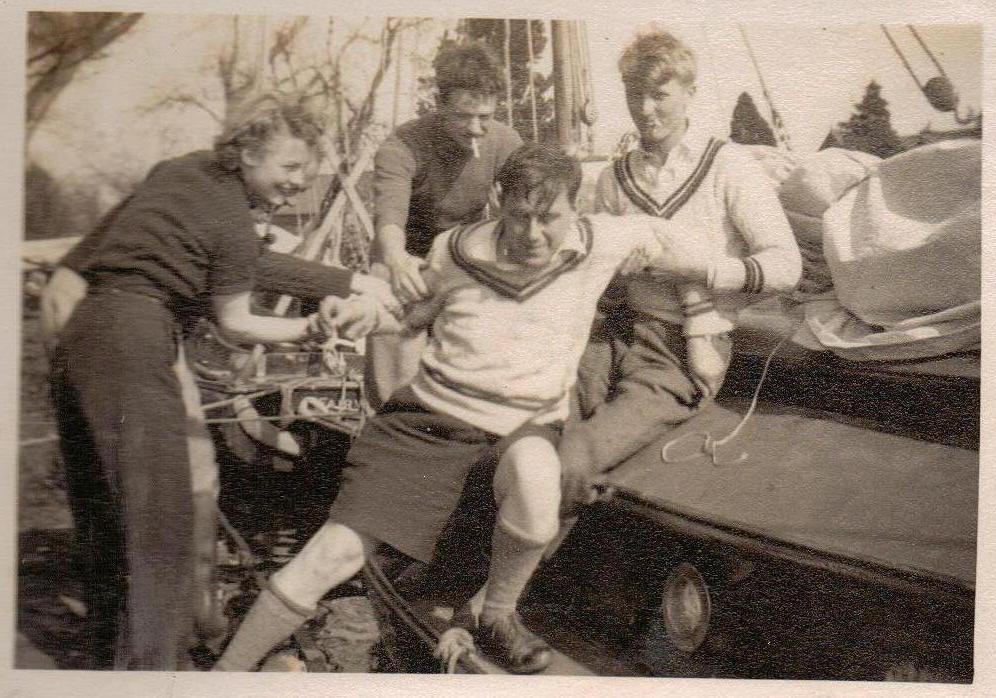
Joan with her friends having breakfast on the Norfolk Broads ~ Easter 1939

Not all the black and white photographs are as horizontal or as sharply in focus as one might wish but they show the glorious boats available for hire.

Sailing on the Norfolk Broads - Easter 1939

They also reflect what fun was had out on the water.

Joan Hampton - Norfolk Broads - Friends1

We were rather shocked by the cigarettes held in the mouths of the young men but Joan, who is pictured with them, was still agile at the age of ninety-nine.

Martin Neville on the Norfolk Broads
Martin Neville sailing on the Norfolk Broads with friends in the early 1950s

Having sailed up to Horsey Mere with friends, my father hired a Hullabaloo boat to take us out on the Boards when we were little.

Sophie Neville with her sisters on the Norfolk Broads

We went out of season, when boat hire was cheaper. As there was no one on the water my father let me take the helm mile after mile, despite the fact that I was only about seven years old.

Sophie Neville on the Norfolk Broads
Sophie Neville wearing a life jacket c. 1968

 We loved living aboard and were often surrounded by wild geese.

Sophie Neville on the Norfolk Broads

It seems Arthur Ransome, who had fished on the Broads with Titty’s father, Ernest Altounyan, in 1923, also enjoyed cruising in the spring. His biographer, Roger Wardale, said that ‘Both the Ransomes liked to visit the Broads just after Easter, before most of the motor cruisers had started the season and it was the best time of year for birdlife.’ He went on to describe how Arthur Ransome kept a log of his three weeks spent in a Fairway yacht, the essence of which he used to write Coot Club in 1933/34. ‘As well as visiting Roy’s of Wroxham, tying up at Horning Hall Farm and watching the racing boats go by, towing through bridges, mooring beside a Thames barge at Beccles and watching a fisherman catching eels with a bab, there are numerous details that combine to make Coot Club a valuable account of the social and natural history of the Broads as they were more than 70 years ago.’ 

Roger Wardale illustrated his book Arthur Ransome Master Stroyteller, using wonderful photographs and sketches by Arthur Ransome, including a very jolly one of the Hullabaloos that had not been published before. Do get hold of a copy of the book, to read the chapter on Coot Club for yourself.

I’ve written a little about working on the BBC adaptation of ‘Coot Club’ and the ‘Big Six’ for the DVD Extras for re-mastered 30th Anniversary DVD of the series which has this cover: 

Swallows and Amazons Forever
Swallows And Amazons Forever! (Coot Club & The Big Six) SPECIAL EDITION [DVD]

I have written about appearing in the original film of Swallows and Amazons here, where you can read the first section free of charge:

Bestsellers from Sophie Neville ~

 Since promoting my books at the London Book Fair, great things have been happening ~ we have made it into the rank of ‘Bestselling Books’.

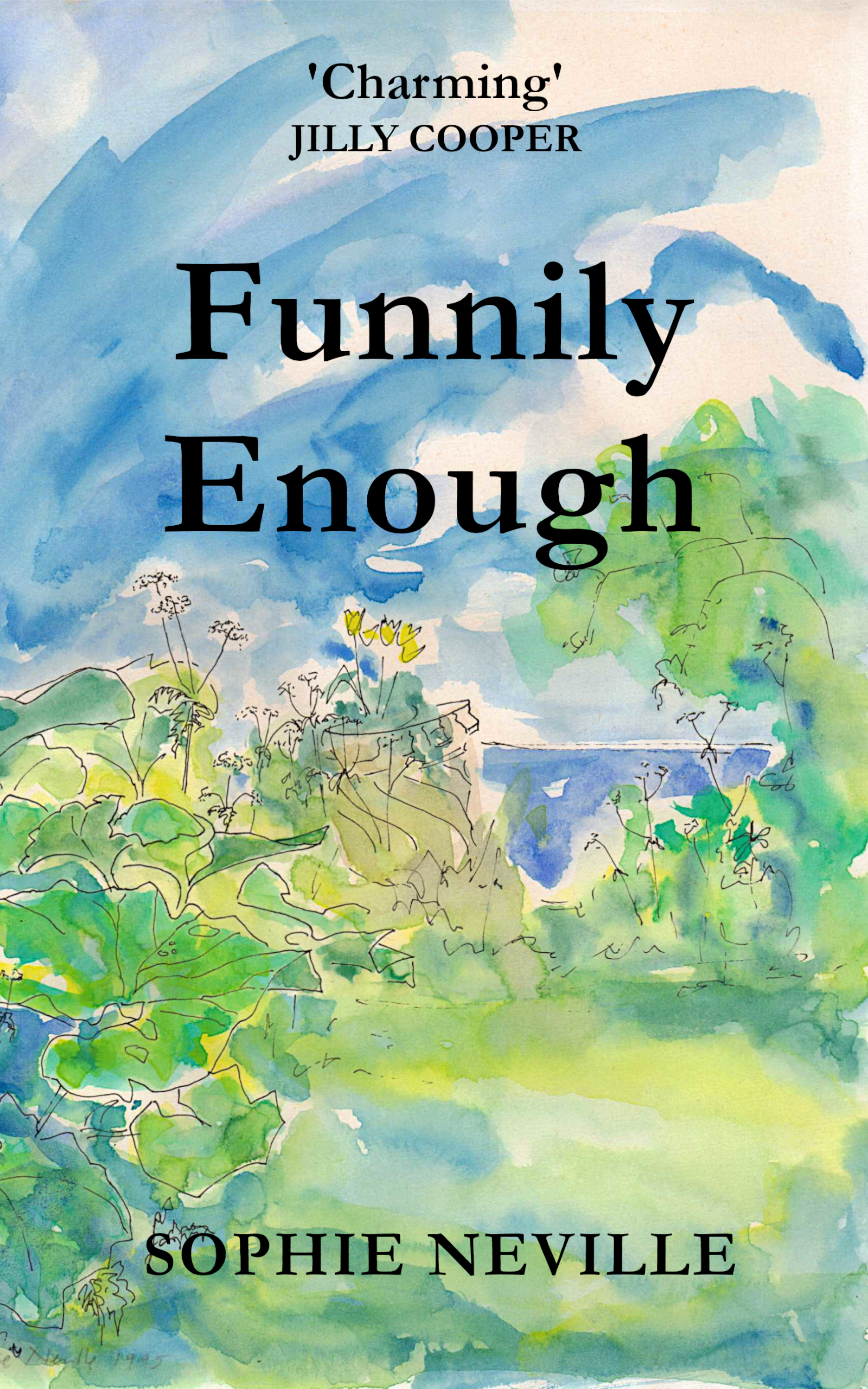
Funnily Enough has raced up the charts, and at the time of writing is in the upper Top Ten for Humour.

ebook cover

~ Please see my ‘News’ page for stories ~

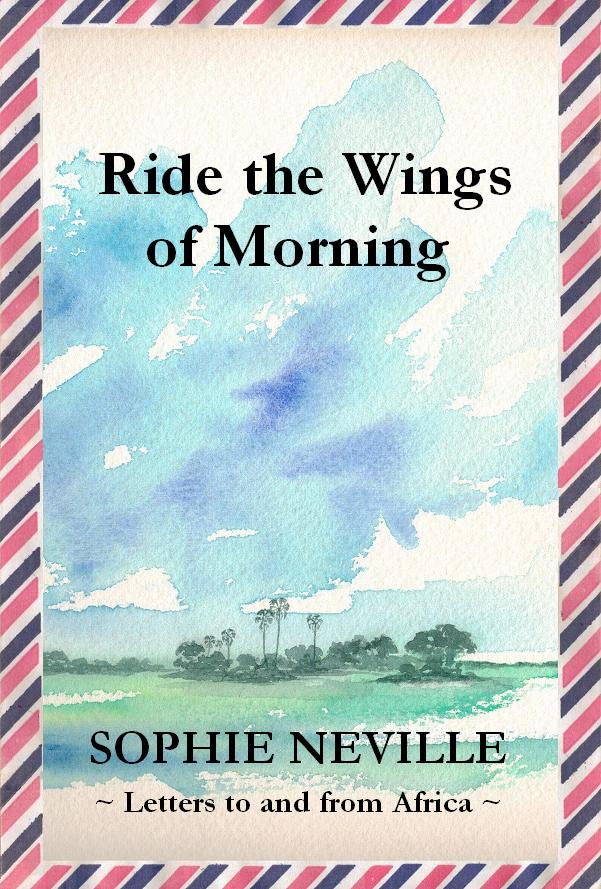
Ride the Wings of Morning is selling well. It is about the ‘Swallows and Amazons’ type of lifestyle that I led in Southern Africa after leaving the BBC. It is a book of letters, illustrated with sketches and maps that are in keeping with the inheritance Titty left me. Richard Pilbrow, the Producer of the movie Swallows and Amazons has kindly reviewed it ~ please see Reviews page

Ride the Wings of Morning by Sophie Neville

NOW AVAILABLE IN HARDBACK AND PAPERBACK FROM LULU.COM

My memoir about working in film and television is now out as an ebook on amazon Kindle and all online retailers for £2.99

‘Man Friday!’ ~ filming ‘Swallows and Amazons’ with Dame Virginia McKenna on Wild Cat Island, 17th June 1973

Virginia McKenna and Sophie Neville on Peel Island
Dame Virginia McKenna and Sophie Neville on Peel Island in Cumbria, during the filming of ‘Swallows and Amazons’ in 1973 ~ photo: Daphne Neville

I didn’t know that Virginia McKenna was in the Lake District.

Virginia McKenna with Sophie Neville
‘They were very savage savages’ ~ Dame Virginia McKenna with Sophie Neville ~ photo: Daphne Neville

I didn’t know that we would spend that Sunday cooking on the camp fire.

Bill Travers watching Virginia McKenna
Bill Travers watching the scene featuring his wife Dame Virginia McKenna who is talking to Director Claude Whatham ~ photo: Daphne Neville

I didn’t know that Virginia had come up with her husband Bill Travers.

Virginia McKenna and Bill Travers as Joy and George Adamson in ‘Born Free’, Kenya 1964. Virginia later devoted her life to The Born Free Foundation.

Sophie Neville as Titty on Peel island
Sophie Neville as Robinson Crusoe the shipwrecked sailor

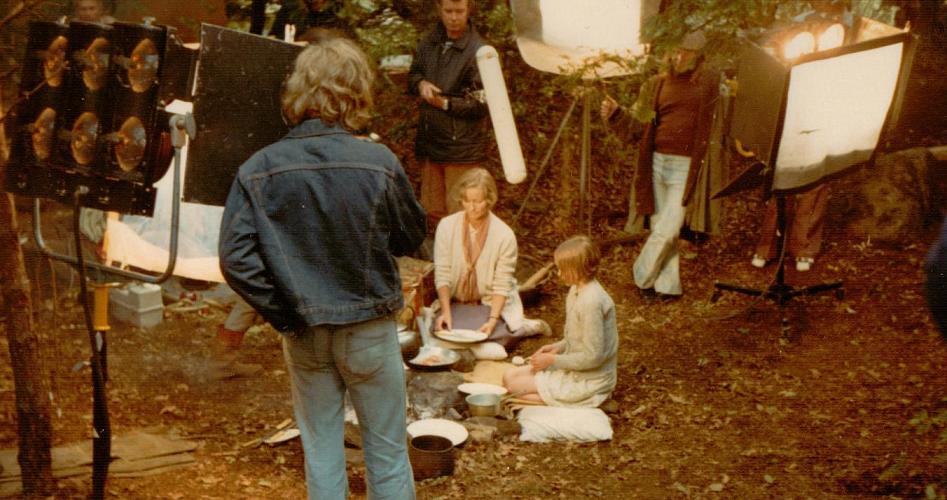
I still don’t know how Lee Electric managed to get so many lights working out on Peel Island. I can’t remember having them for any other scene. They must have had the generator on the bank and run cables under the water. It looks as if it was a pretty dark day. It was wonderful having the flood lights – they kept us warm.

Virginia McKenna as mother in Swallows and Amazons
Dame Virginia McKenna as Man Friday in Swallows and Amazons 1974

There was a hushed reverence when Virginia McKenna was on set. Gone were the saucepan jokes. Funny really, as it was frying-pan scene. ‘I waited til no-one was looking and jumped out of the pot and escaped!’ The pemmican potato cakes she made me were delicious. And very hot.

Virginia McKenna with Sophie Neville in Swallows and Amazons

Working with Virginia and Arthur Ransome’s dialogue was altogether an exercise in charm, or managing charm. I hope I didn’t over-cook it. I was rather pre-occupied by my loose tooth but loved being involved in a proper scene around the camp fire.

Sophie Neville as Titty getting her makeup done
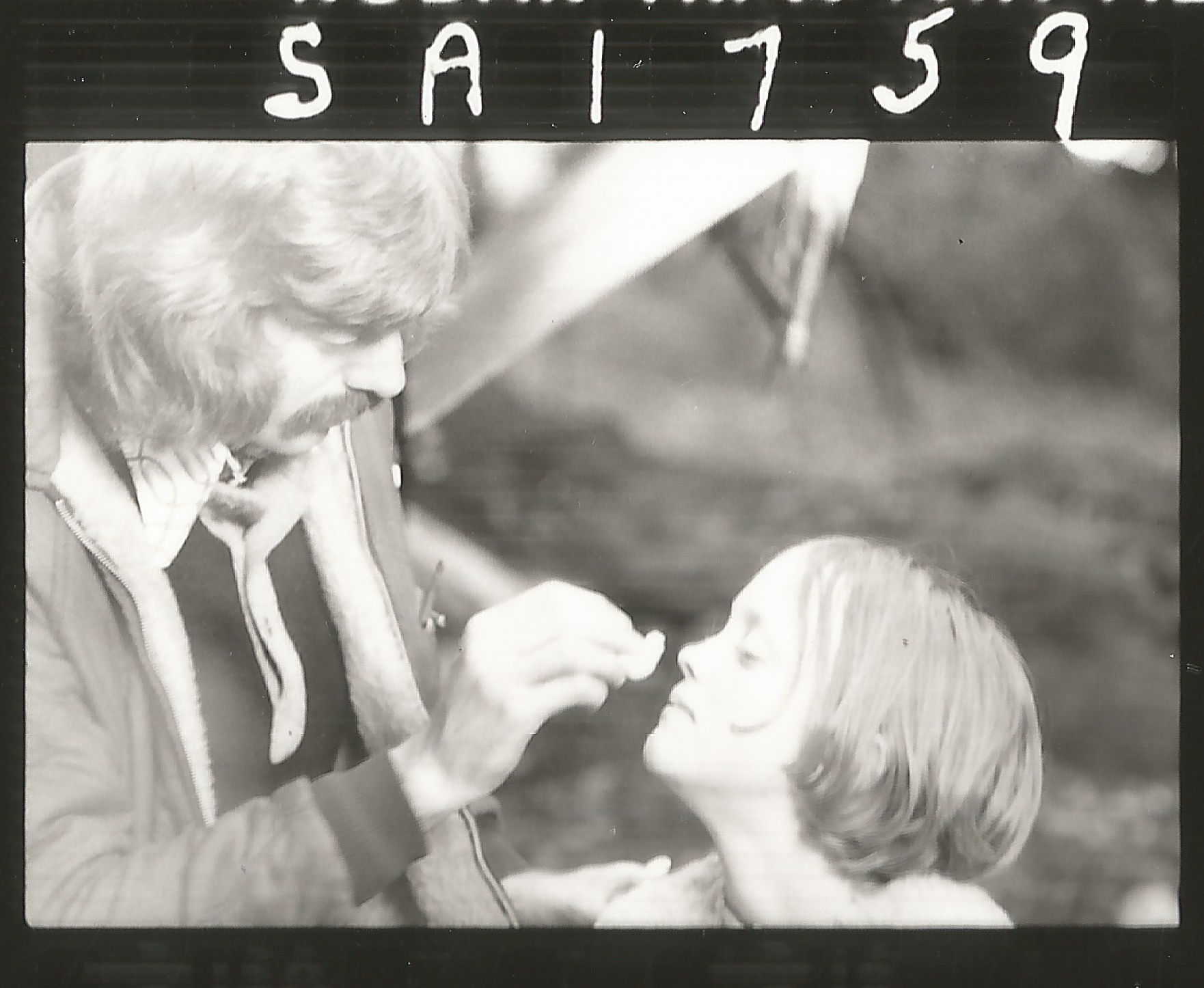
Sophie Neville being made up for the part of Titty by Peter Robb-King in 1973

Then Virginia was gone and I was a saucepan once more. A saucepan now with a very wiggly tooth indeed. Saucepan-lid, kid. No more lights. I was sitting up a tree above Coniston Water in my navy blue knickers, and descended feeling a bit like Pooh Bear.

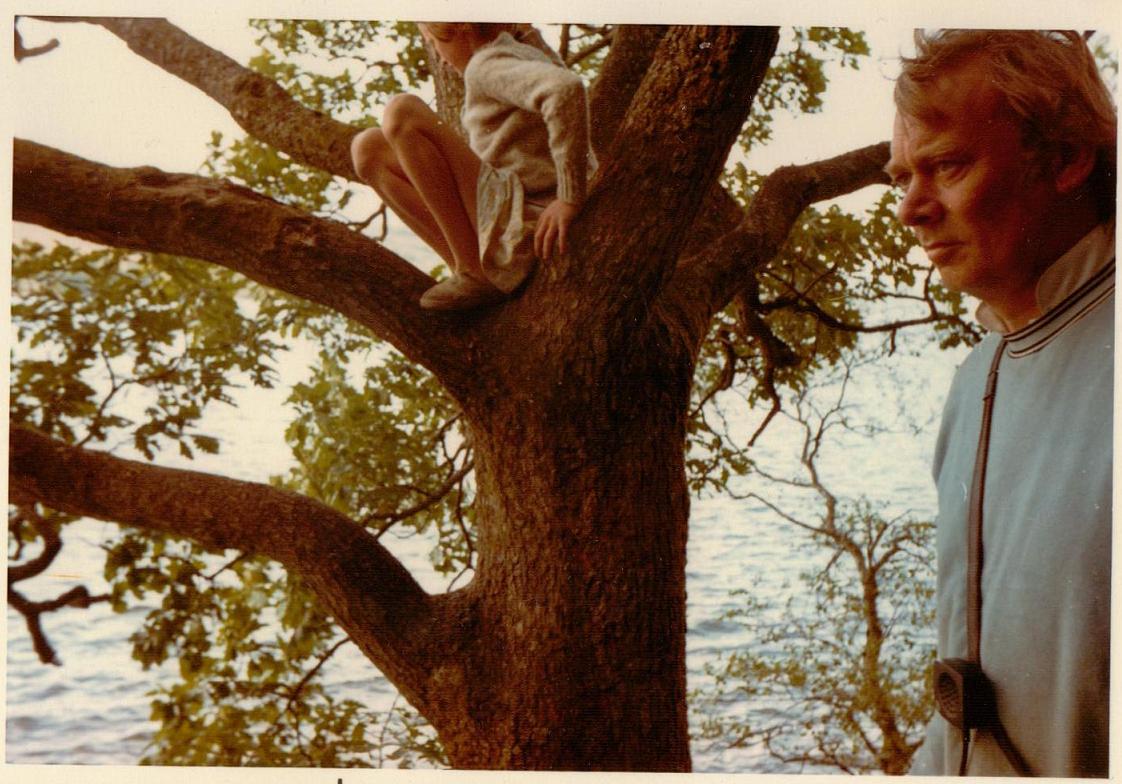
me up a tree
‘Up a tree for fear of ravenous beasts’ with David Bracknell the First Assistant Director ~ photo: Daphne Neville

It is still there, the mossy tree. You can climb it.

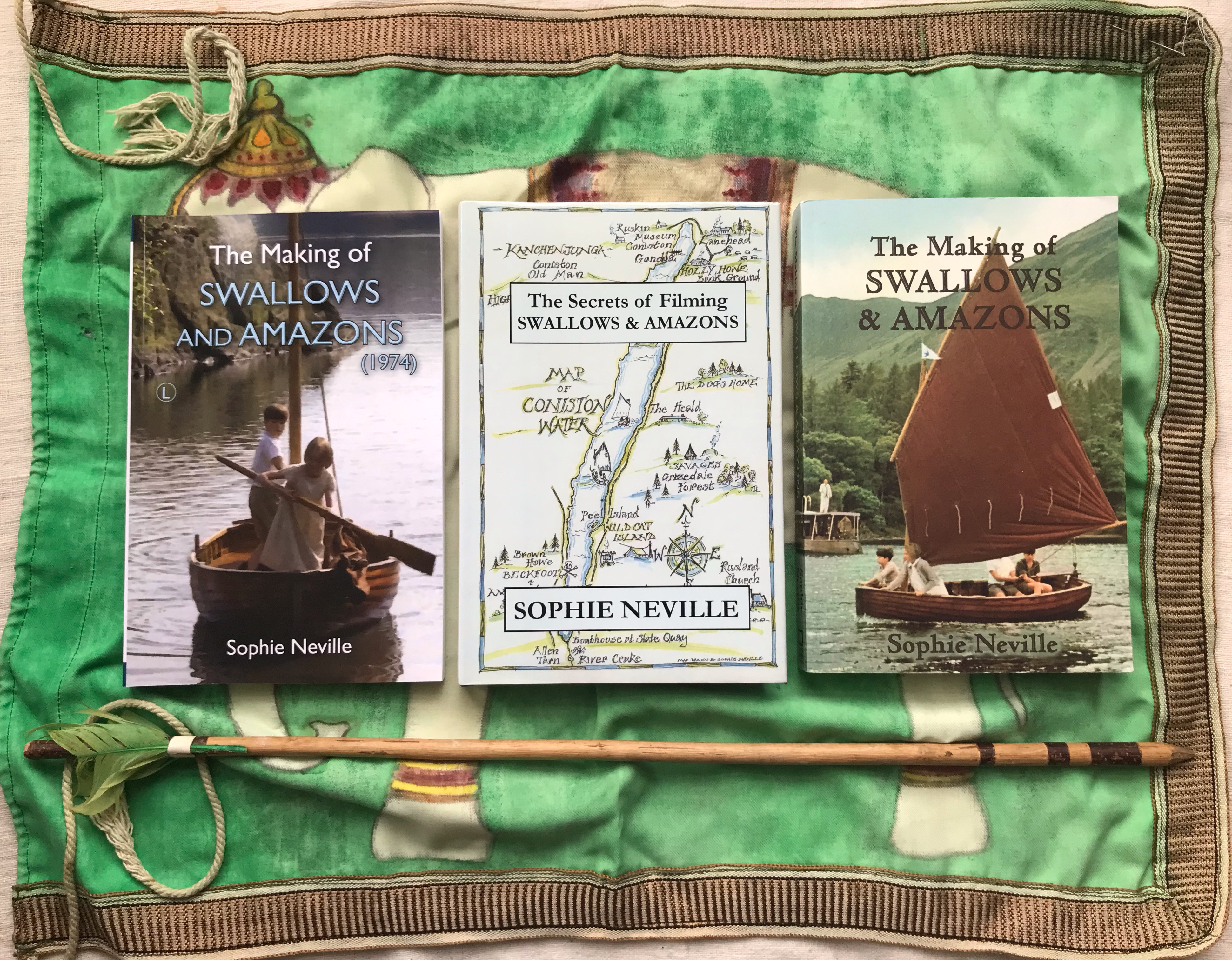
You can read more in the ebook ‘The Secrets of Filming Swallows and Amazons’or the paperback on ‘The Making of Swallows and Amazons’ now available as an audiobook.

'The Making of Swallows and Amazons (1974) by Sophie Neville'
Different editions of ‘The Making of Swallows and Amazons (1974) by Sophie Neville’

The diary I kept whilst filming ‘Swallows and Amazons’ on the 3rd June 1973, when I spent a day off exploring Cumbria with my family

It was Sunday and a much needed, formal day off for the crew of Swallows and Amazons. It was also a day of rest for the ‘Artistes’ as Claude Whatham, the Director called us.  The crew called us ‘Saucepans’. Saucepan lids : kids.  It is Cockney rhyming slang. There was a lot of that about in Ambleside that year.

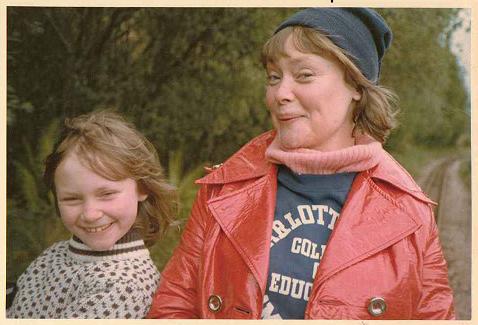
Sophie Neville with her mother on a scenic railway in Cumbria during a break in the filming of Swallows and Amazons in 1973 ~ photo: Martin Neville

My parents were still in bed, exhausted on that Sunday morning.  To keep me busy, Mum had me writing letters to my Headmistress, Sister Ann-Julian and to my Housemistress, Sister Allyne. Amazingly I wrote them.

My father’s idea of a day out in Westmorland was to drive up the Hard Knott Pass taking car rugs, a picnic and his volcano. This is a brilliant item of equipment with which you can boil enough water to make a cup of tea using an old newspaper. I’ve read that Arthur Ransome had one…  I think my mother just pulled on her Charlotte Mason College of Education sweatshirt and came too.

The highlight of the day was a trip on the Ravenglass and Eskdale Railway, through the National Park to the coast and back. You can still do this today. The historic line was opened in 1875 to ferry iron ore from the mine near Boot to the coast at Ravensglass by steam locomotive. They say that nowadays:

“Four steam locomotives are currently in regular service, ranging from River Irt, the oldest working 15″ gauge locomotive in the world, to Northern Rock, one of the most powerful. The locomotives names, with one obvious exception, are those of the local rivers, the Esk, Mite and Irt, the last mentioned flowing from Wastwater just a few miles away from the railway.”

My father has always loved steam.  He’s also rather enjoyed using the self-timer on his new camera.

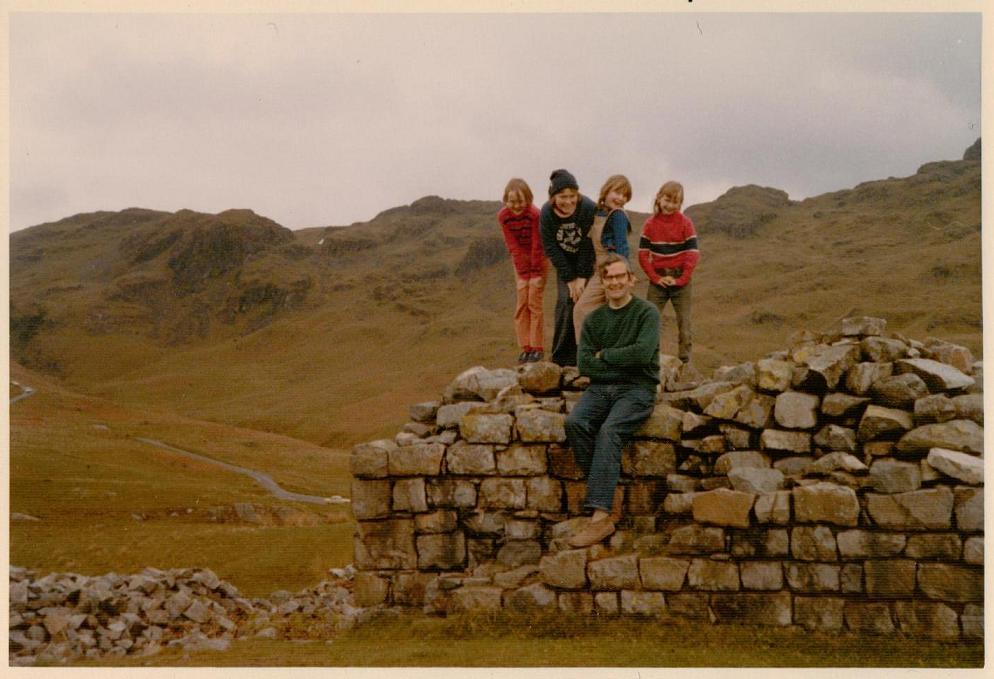
The Nevilles in the Lake District in 1973

We were standing on part of the Hard Knott Roman Fort near Boot with the fells behind. Built between AD120 and AD138 at the Eskdale end of the Hard Knott Pass it must have been one of the furthermost outposts of the Roman Empire. It had been studied and excavated by Arthur Ransome’s mentor WG Collingwood, whose novel Thorstein of the Mere is set on Peel Island where we had just spent the week. The fort was known to the Romans as Mediobogdum, which has to be one of the all-time great names. If only the film crew had known.

As children we had grown up watching Frankie Howerd on television when he was dressed in a Roman tunic, assuring us that ‘A Funny Thing Happened on the Way to the Forum’.  We didn’t know at the time, but the producer of ‘Swallows and Amazons’, Richard Pilbrow, had brought the theatre production from New York to the West End, where it ran for two years.

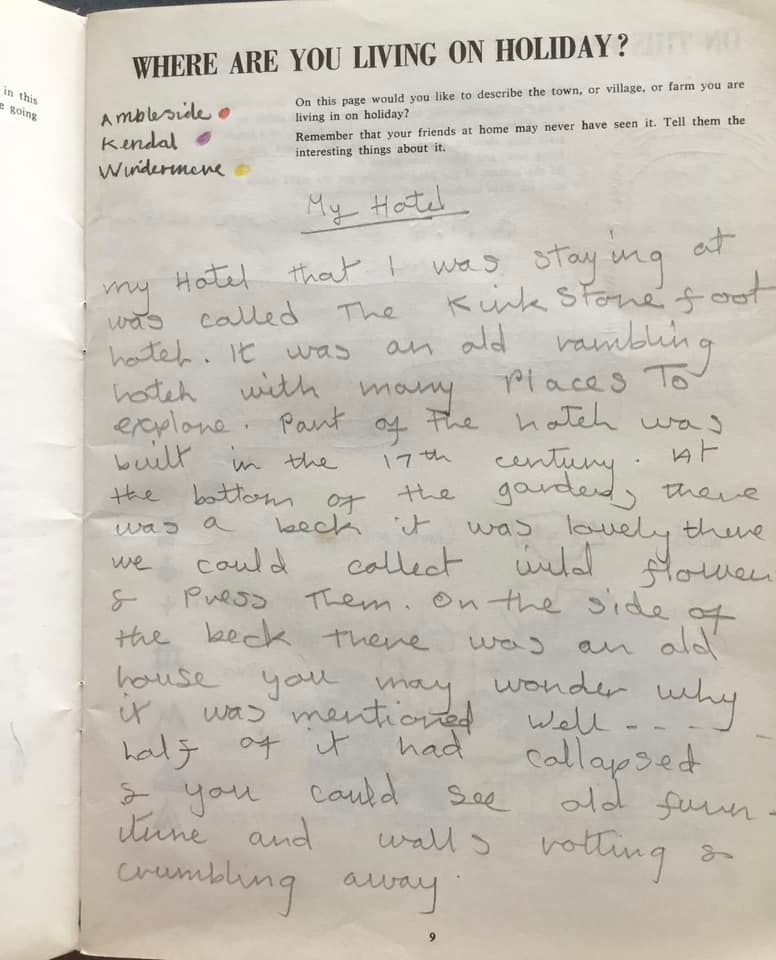
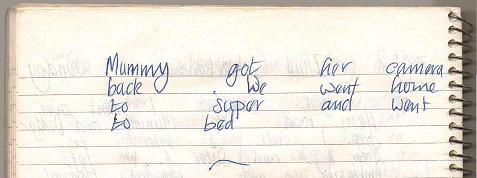
The hotel I mention was the Kirkstone Foot Hotel, at the top of Windermere, in Ambleside where Richard Pilbrow and the senior members of the film crew were staying. Mum must have left her camera there.

The Kirkstone Foot Hotel Ambleside in 1973
The Kirkstone Foot Hotel, Ambleside in 1973

Pandora Doyle, whose father Brian Doyle was handling the publicity for Swallows and Amazons, kept a record of her half-term holiday, marking her room at the Kirkstone Foot (telephone: Ambleside 2232). She wrote about it quite beautifully:

Pandora on the unit hotel

I’m pretty sure the film company used the coach-house block for their production office. The green parrot was once released in the bathroom where it spent a day waiting to be used in a scene, presumably on the houseboat. Pandora pointed out the hole-protector she had added when filing her scrapbook. I’d totally forgotten about such things and yet I must have stuck on hundreds. ‘Ring-binders’ were the thing but I never had red ones.

We didn’t know it, but Arthur Ransome had died on this day, 3rd June in 1967, six years previously. I feel he would have enjoyed our day out.

Tamzin Neville and Daphne Neville in 1973

You can read the full account of making the film here:

Father loves the Lakes. He’d say, ‘Just look at that scenery…’ He joined us to take part in filming ‘Swallows and Amazons’ on 27th May 1973

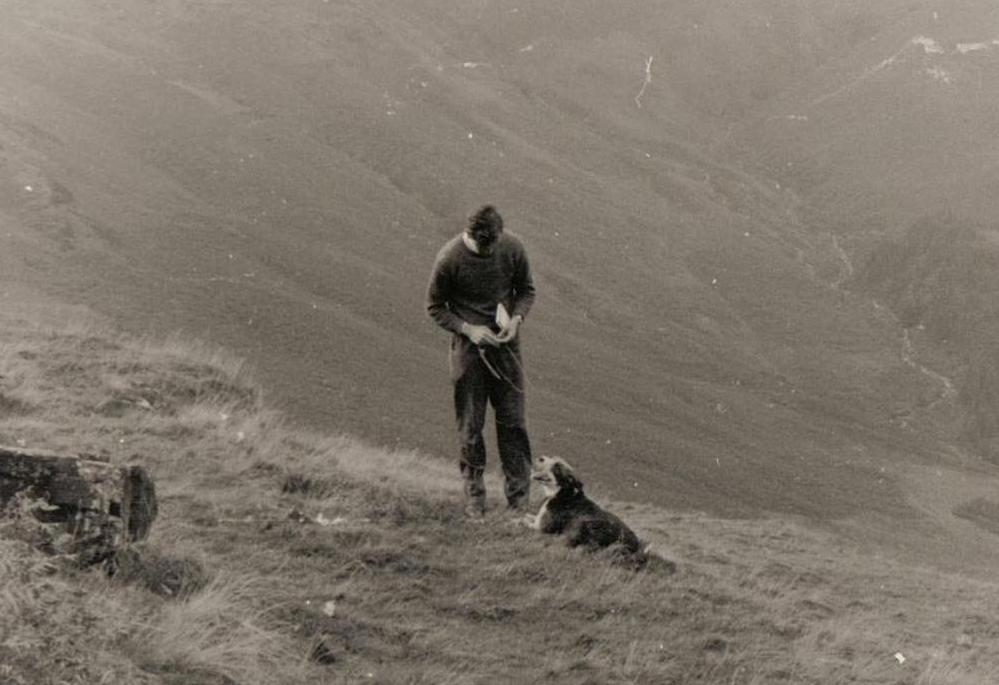
My father has always grabbed a chance to visit the Lake District.  As a young man he once took advantage of a military travel warrant to climb the fells and later made it his job to visit the Colfast Button factory in Maryport every month, when he worked for BIP. He would stay at the Pheasant Inn at Bassenthwaite Lake, latching visits onto a weekend, so he could explore Cumbria.

Martin Neville in Cumbria with his dog

This was in the late 1950s.  When I came along he took us to stay at Goosemead Farm. We climbed Castle Crag and you only have to glance at the photographs to see how happy I was to be there. We had a sheepdog called Luppy who came too. She was a great character and much loved. Found as a stray before I was born she was still around when I left home to be in Swallows and Amazons.

Sophie Neville aged three in the Lake District
Sophie Neville aged three in the Lake District with Luppy the sheepdog

Arthur Ransome had been Dad’s favourite author as a boy. He said that he would wait in anticipation for another book to be published. He’d bought me the set of twelve, collecting them from various secondhand shops. I had read seven  by the time I was twelve.  He set my destiny.

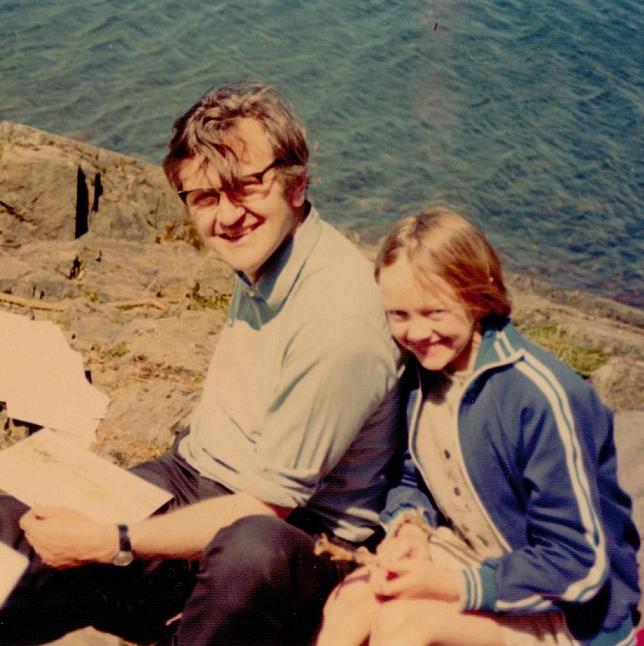
Painting with Dad the shore of Coniston Water
Finding my father Martin Neville the shore of Coniston Water

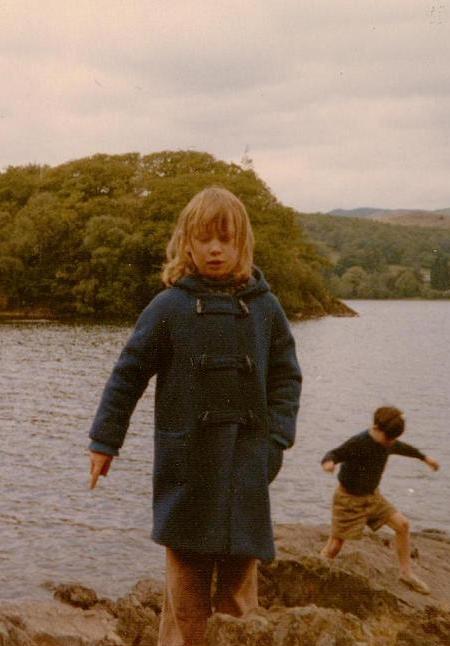
My father left the dogs at home on 26th May so that he could drive my younger sisters up to join us for two weeks and watch the filming. He found Peel Island on Coniston Water and was there to meet us when the boat came in at the end of the day. My sisters stood smiling on the rocks, dressed for the weather in matching red jerseys, duffle coats and gumboots.

My sisters Perry Neville and Tamzin waiting for me on the shore of  Coniston Water

My parents had booked a Bed and Breakfast in Ambleside across the road from the Oaklands Guest House. I immediately noticed a sign declaring that you had to pay 10p to have a bath. ”Ten pee!’  Mum glared at me, furious. ‘Do be quiet, they’ll hear you’.  I had moved to share Suzanna’s room, since Mrs Price had a long-standing booking for the back room Mum and I had been using. Her guesthouse was full to bursting since she had students from the Charlotte Mason College of Education lodging with her as well as all of us and her own three children. There were only two bathrooms for the twenty-two people living  in the house but there were basins in some of the bedrooms. Nylon sheets were provided but the bedding was apt to slide off in the middle of the night.

Perry Neville by Coniston Water near Peel Island
My sister  with Sten Grendon, Peel Island behind them

My sisters, Tamzin and Perry, who must have been about eight and nine, struck up an instant rapport with Suzanna Hamilton. She asked them to baby-sit her pet slow-worms. These had come up from London with her in a small glass aquarium, which she had put in the fire place in our room. I don’t know what Mrs Price thought. I wasn’t very keen on handling them, and have no idea how they were fed, but Perry was intrigued. Suzanna had also brought her ukulele. She would sit on her bed playing Ain’t She Sweet, Sunny side of the Street, Playing on my Banjo and other Norman Wisdom numbers, fluently and with great gusto. My sisters were entranced. They may have even shared the room with us and the slow-worms. Mum can’t remember.

Dad had already made plans for sailing that first Bank Holiday, when Richard Pilbrow had scheduled a break.

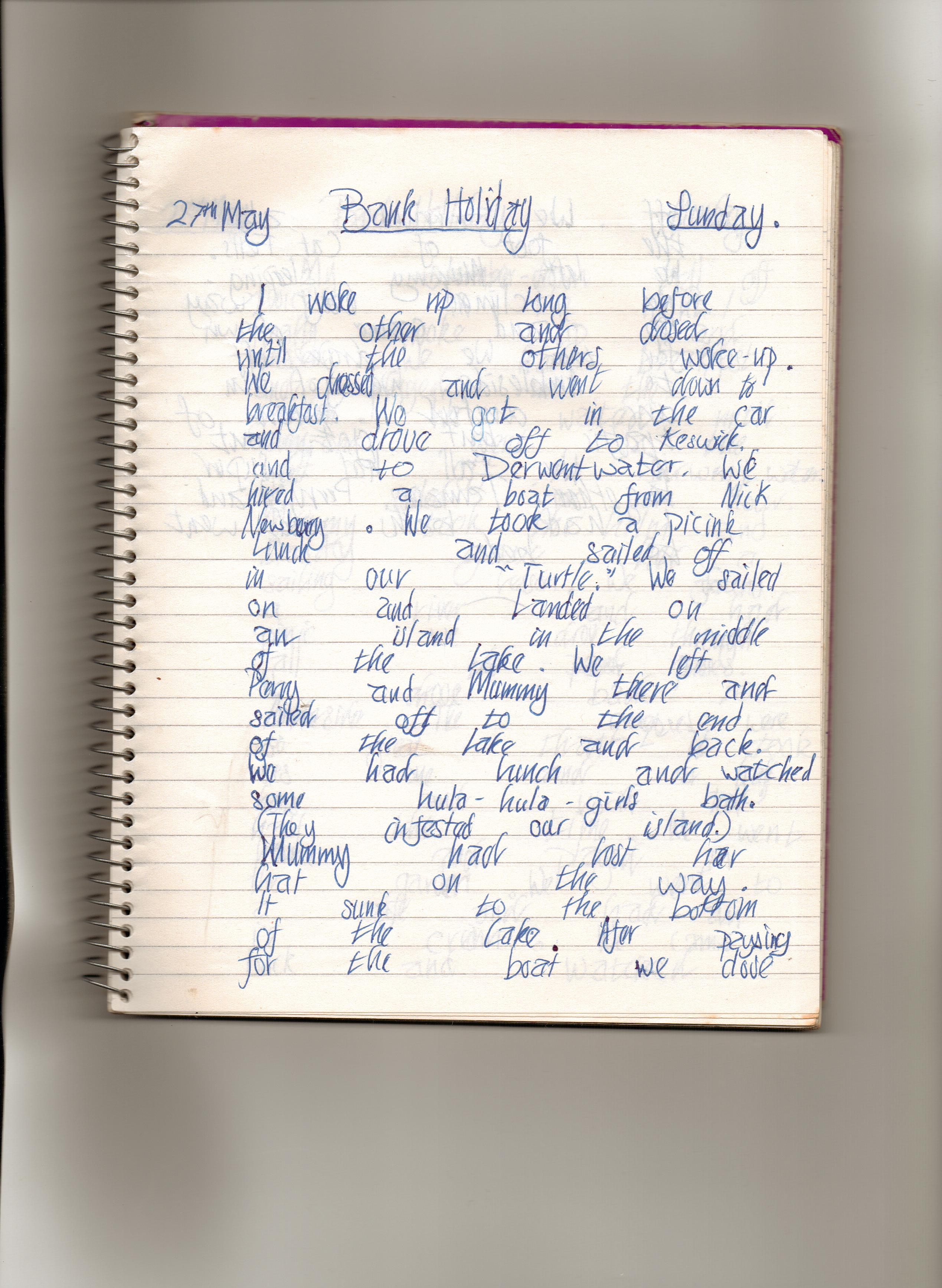
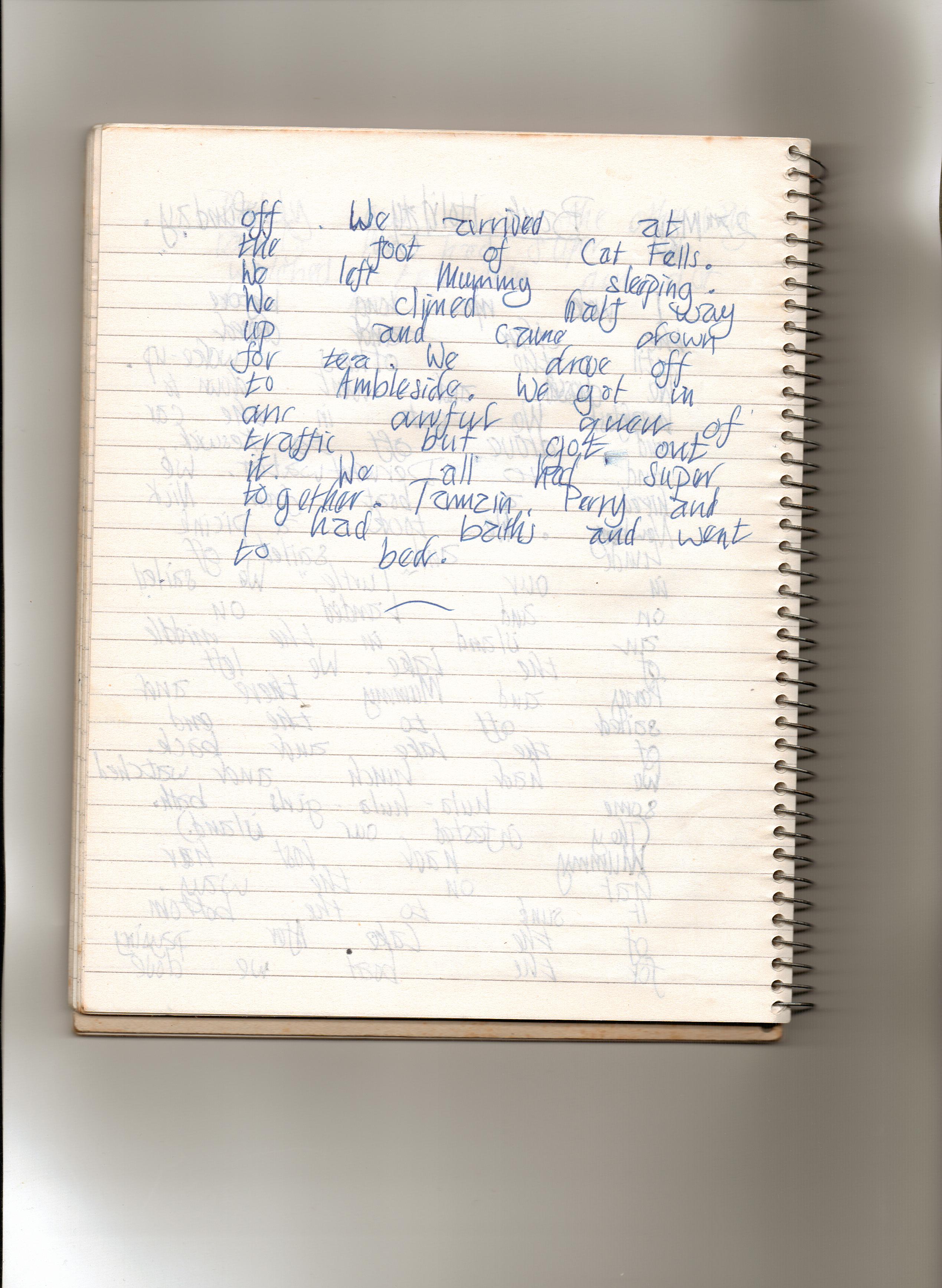
27th May page 2

I remember the Hula-hula girls well. Although it was only May they suddenly appeared on what seemed to be a remote, inaccessible island, clad in garish, brightly coloured bikinis – the kind that had little frilly skirts to them. We watched them splash about and swim in complete wonder as, although it was sunny, we knew how cold the water was.

We had seen something of the same kind of savage the day before. I can remember the dismay on the First Assistant’s face when he realised it really was the Saturday of the Bank Holiday. We had had Peel Island to ourselves, indeed it had become ours – our special place, our magical camp, our home. And suddenly it was being invaded by brash women from Manchester who certainly had no respect for anyone making a film.  I don’t know how they got out there. they seemed to arrive from no where when we were in the secret harbour, which was suddenly a secret no more. It was their holiday and there was no stopping them or their over-weight and noisy children. They were quite frightening.

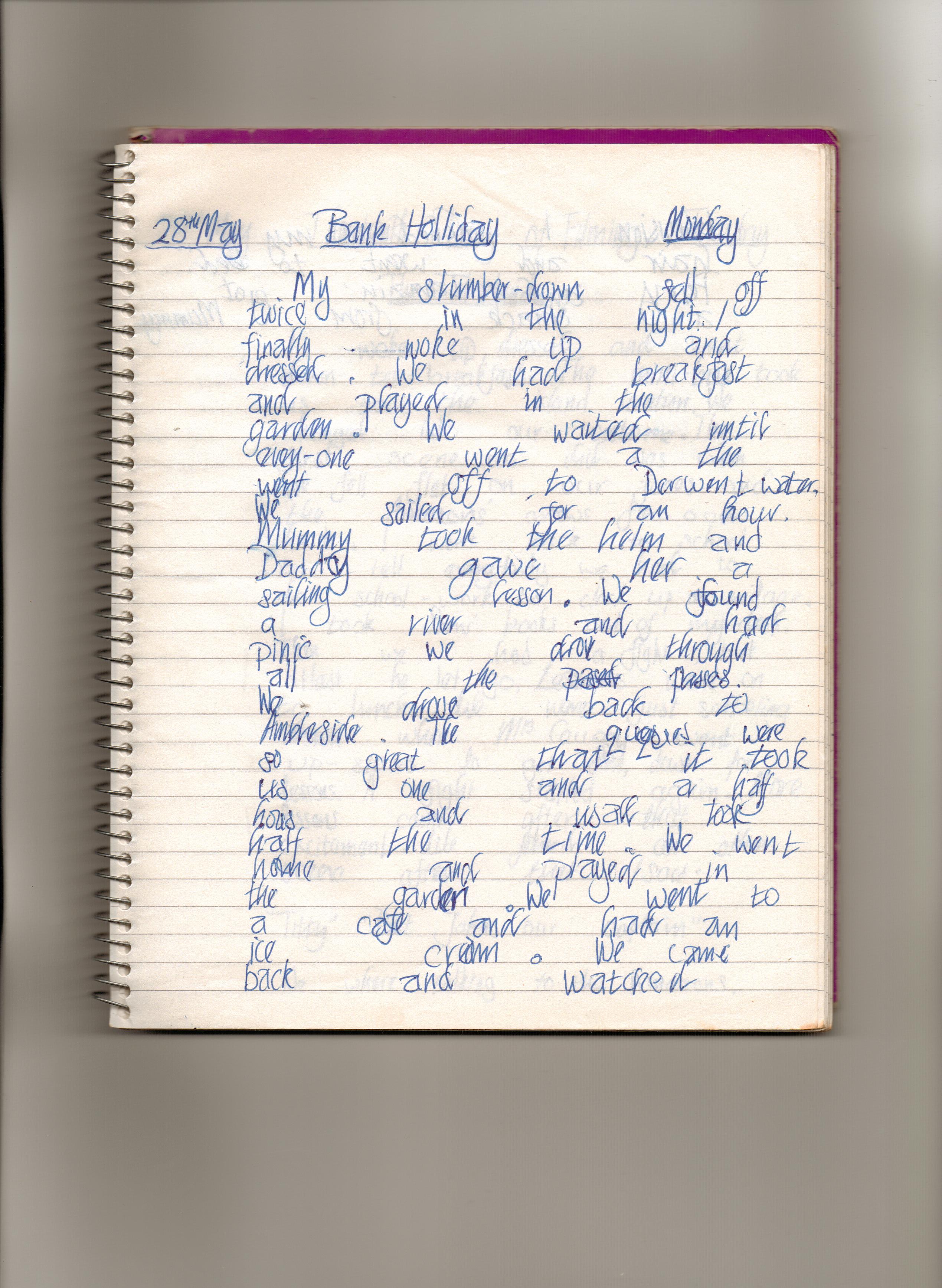
The horrific Bank Holiday traffic queues were also unexpected, but my father took us up into the mountains and out on Derwent Water. He must have been trying to teach my mother to sail for decades but she has never begun to get the hang of it.

Mum and David Blagden
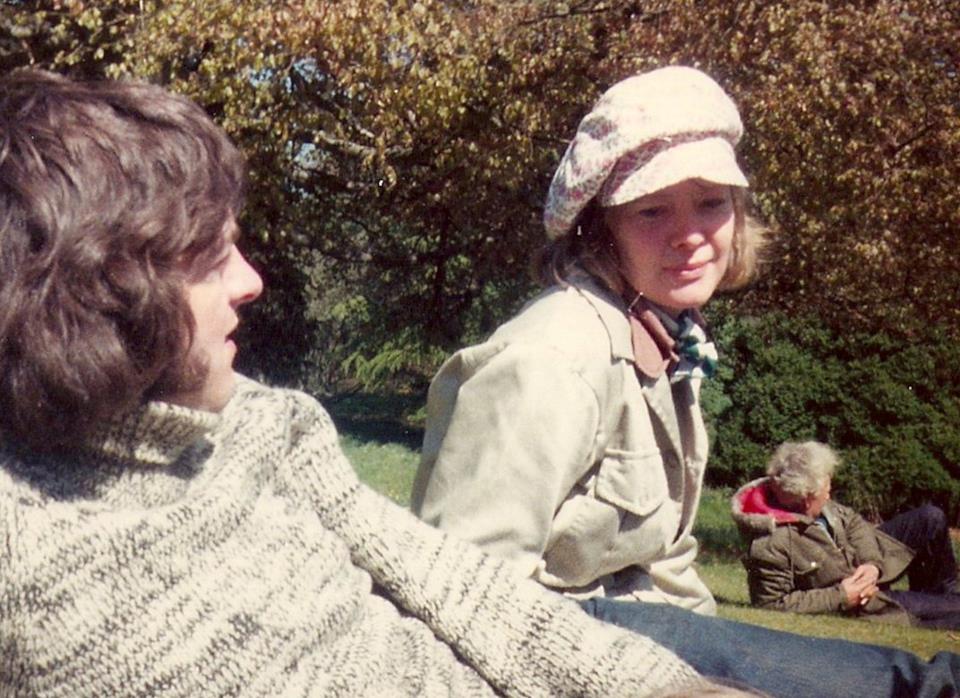
David Blagden and my mother Daphne Neville in her Donny Osmond cap

Mum was in mourning that weekend as she had watched her favourite hat blow across the water and sink to the bottom of the lake. It was a bulbous pink and white Donny Osmond cap that Claude Whatham had enjoyed wearing on set to amuse us. She was able to find a yellow and white one to replace it but he never liked it as much. Said it didn’t suit his colouring.

You can read more about our adventures making the film here:

Filming ‘Swallows and Amazons’ at Bank Ground Farm in Cumbria in 1973

If you take the East of the Lake road along Coniston Water you will find Bank Ground Farm. It lies between Brantwood,  John Ruskin’s former home, and Lanehead where Arthur Ransome’s friends the Collingwoods lived. Ransome was particularly good friends of Dora Collingwood, who married an Irish-Armenian doctor keen on sailing called Ernest Altounyan. They went to live in Syria but every five years or so would bring their children to visit their Grandparents for the holidays, once staying at Bank Ground Farm next door. Ernest bought two 14 foot sailing dinghies called Swallow and Mavis in which his family learnt to sail.

It was for the five Altounyan children, Taqui, Susie, Titty , Roger – and Bridget, the ships’s baby, that Arthur Ransome wrote Swallows and Amazons after they gave him a pair of bright scarlet Turkish slippers as a birthday present. I don’t think I knew that Titty was a real girl when I played her in the film, but I did know her character in the books and felt rather bad that I didn’t have her thick dark hair evident in Ransome’s illustrations.

Arriving at Holly Howe
Claude Whatham with Virginia McKenna ~ photo: Daphne Neville

Bank Ground Farm is much smarter now. Lucy Batty, who let us take over her home in 1973, has passed on but the farm is run by her grandson Jonathan. You can stay in the main house, where there is a lovely corner bedroom with views down Langdale, or take a self-catering flat, since they have been able to convert the barn and stables into further accommodation.

Bank Ground Farm the location used for Holly Howe

I’ve just received post from Peter Willis of The Nancy Blackett Trust who said, “I stayed at Bank Ground in the summer – it was utterly lovely, exactly as it ought to be – Jonathan Batty and his wife are really hospitable, and one of the great pleasures was the friendliness and interstingness of the other guests, who included a Japanese Ransome fan. Do have dinner if they’re doing it. Food’s great, but so’s the sociable atmosphere.”

16th May 1973

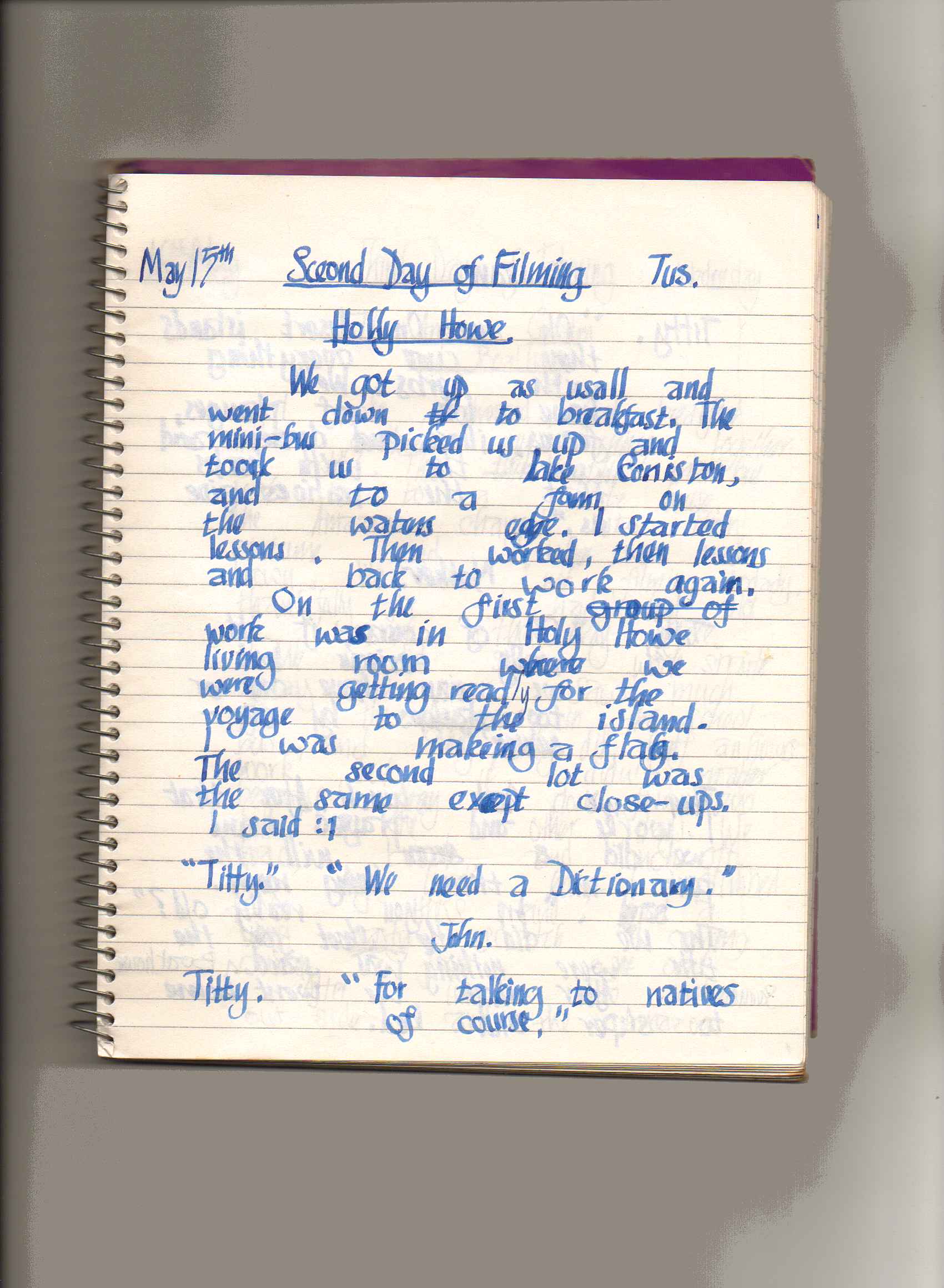
15th May 1973

Int: Holly Howe ~ Bank Ground Farm near Coniston

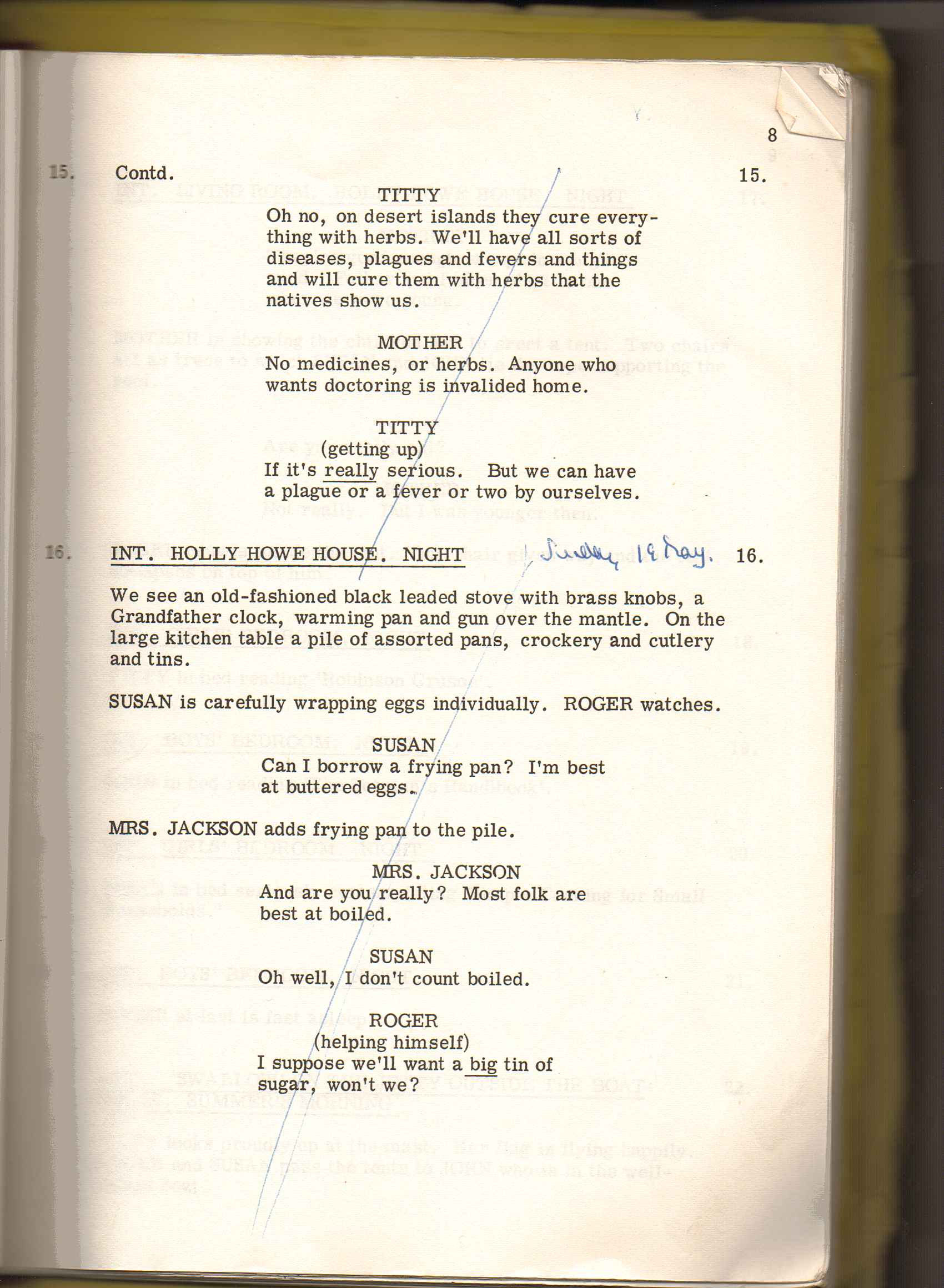
It was grey and raining in the Lake District on 15th May 1973. Instead of filming the scene when Roger tacks up the field, Denis Lewiston, the Director of Photography, lit Mrs Batty’s living room at Bank Ground Farm for an evening scene. Simon Holland, the art director, had dressed the room in the style of a Cumbrian farmhouse in the 192os with working oil lamps. Bob Hedges, the prop master, brought in all the camping gear we were to be packing while Virginia McKenna was having her hair done up and we had lessons in our red double-decker bus. Then we recorded a scene, the dialogue of which was never used in the finished film.

Int/Ext: Holly Howe

Int/Ext Holly Howe
The Screenplay: David Wood’s adaptation of Arthur Ransome’s book ‘Swallows and Amazons’

You do see Susan packing bars of soap and me making heavy weather of sewing our flag, my hair pinned back in a hideous way, with rather a modern reel of white cotton lying on the desk.  John packed the telescope in a biscuit tin, which now seems a mistake as we used it on the voyage, very much not in a tin, but then one always re-packs many times before an important trip.

Virginia McKenna with Sophie Neville in 1973
Virginia McKenna, as Mary Walker with Sophie Neville playing her daughter Titty Walker busy stiching Swallow’s new flag in preparation for the voyage to the island

After lunch, we shot the scene when Mother is teaching us how to erect a tent on rocky ground, as she did with Father when they were young. Titty asks if she is really old.

‘Not really. But I was younger then,’ Virginia McKenna replied looking dubious.

This is rather how I feel now, all these years later, especially when I walk into a room when people are expecting me as Titty. I’m not really old, but I do look different from when I was only twelve. This always happens when I return to Bank Ground Farm. Everyone is a bit taken back by my height but say I sound just the same. And I am married now with a family of my own. It is a bit like when Peter Pan flew back to see Wendy and found she looked just like her mother – not least because in the play the adult Wendy is always played by the actress who formerly takes the role of Mrs Darling.

Sophie Neville
Simon West, Sophie Neville and Suzanna Hamilton in the 1974 film of ‘Swallows and Amazons’

I was standing outside the front door of Bank Ground once, talking to Lucy Batty, when two Japanese girls arrived to stay at the farm. Fans of the film, they looked up at me and declared, ‘Ooo Titty!’ clasping their hands together in greeting. They had come from the other side of the world and yet recognised me immediately. Perhaps I haven’t changed that much after all.

The Walker family finding Swallow at Holly Howe

The weather must have cleared up a bit by teatime on 15th May as we recorded the scenes in the boat house when John discovers Swallow, brings her out to the stone jetty and steps the mast. They must have had to take the generator down to the lakeside as I’m pretty sure that the sunlight comes from an arc-lamp. Suzanna got her shorts wet as she pushed out the clinker-built dinghy but we loved being by the water.

You can read more in ‘The Making of Swallows and Amazons’ available online and to order from bookshops and libraries. It is now available as an audiobook.

'The Making of Swallows and Amazons (1974) by Sophie Neville'
Different editions of ‘The Making of Swallows and Amazons (1974) by Sophie Neville’