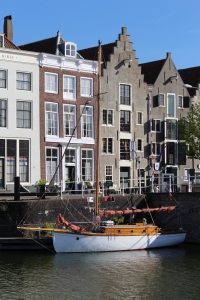
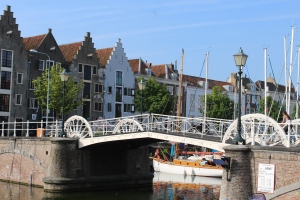
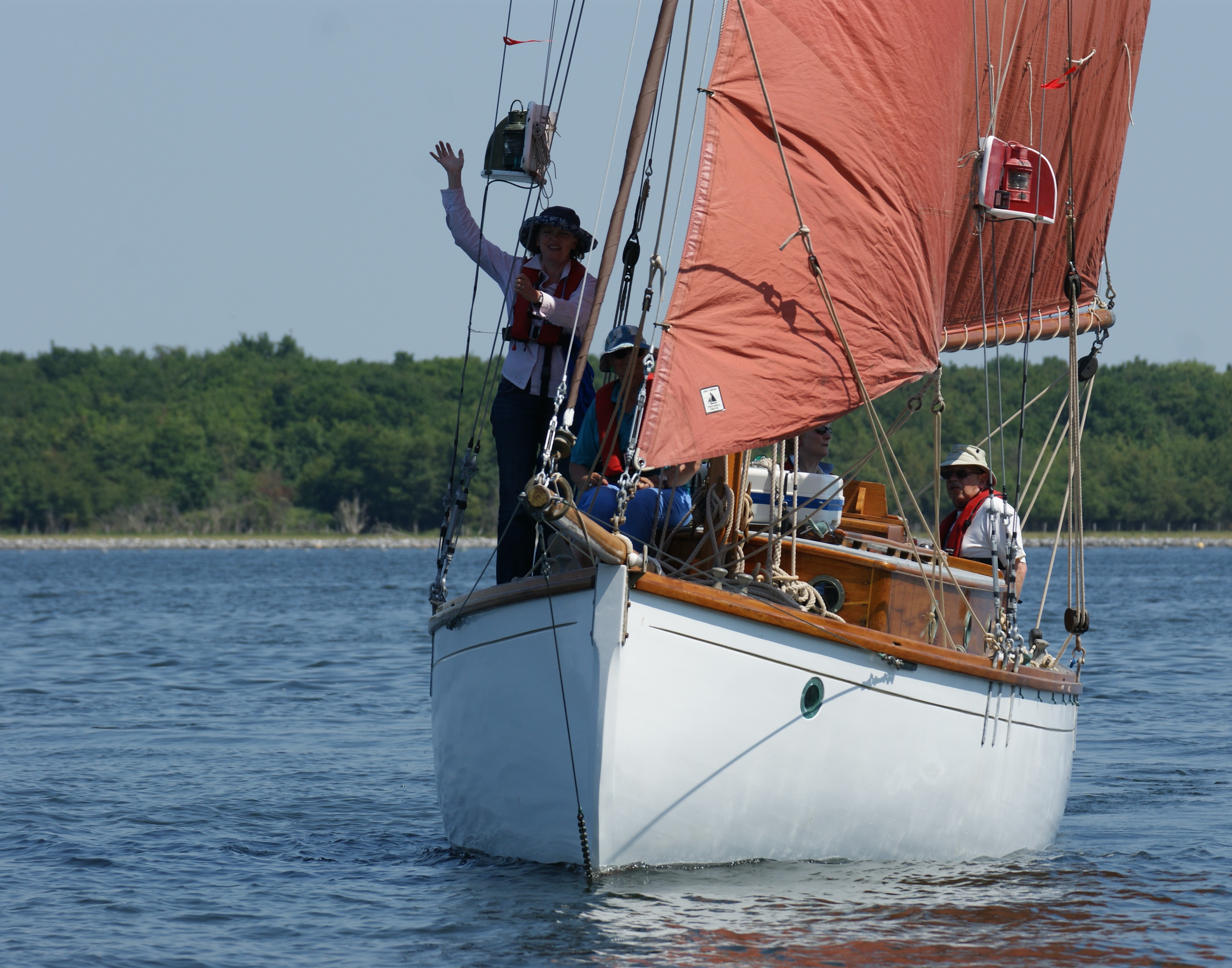
One summer, I grabbed the chance to sail Arthur Ransome’s favourite little ship, the Nancy Blackett.

If you recognise her, it might be because she was his model for the Goblin in ‘We Didn’t Mean To Go To Sea‘, possibly the most exciting and touching of the Swallows and Amazons series of books. I re-read it while we were in Dutch waters aboard the main character herself.
~ Beach End Buoy at the mouth of the River Orwell in Suffolk ~
In the story, the Swallows – John, Susan, Titty and Roger Walker – promise their mother that they will not go to sea, but disaster strikes when the Goblin slips her anchor in thick fog, while her owner is ashore, and gets swept out past the Beach End Buoy at Harwich. The wind rises and the children find themselves sailing across the North Sea in a terrific storm before a friendly Dutch pilot guides them into Flushing.
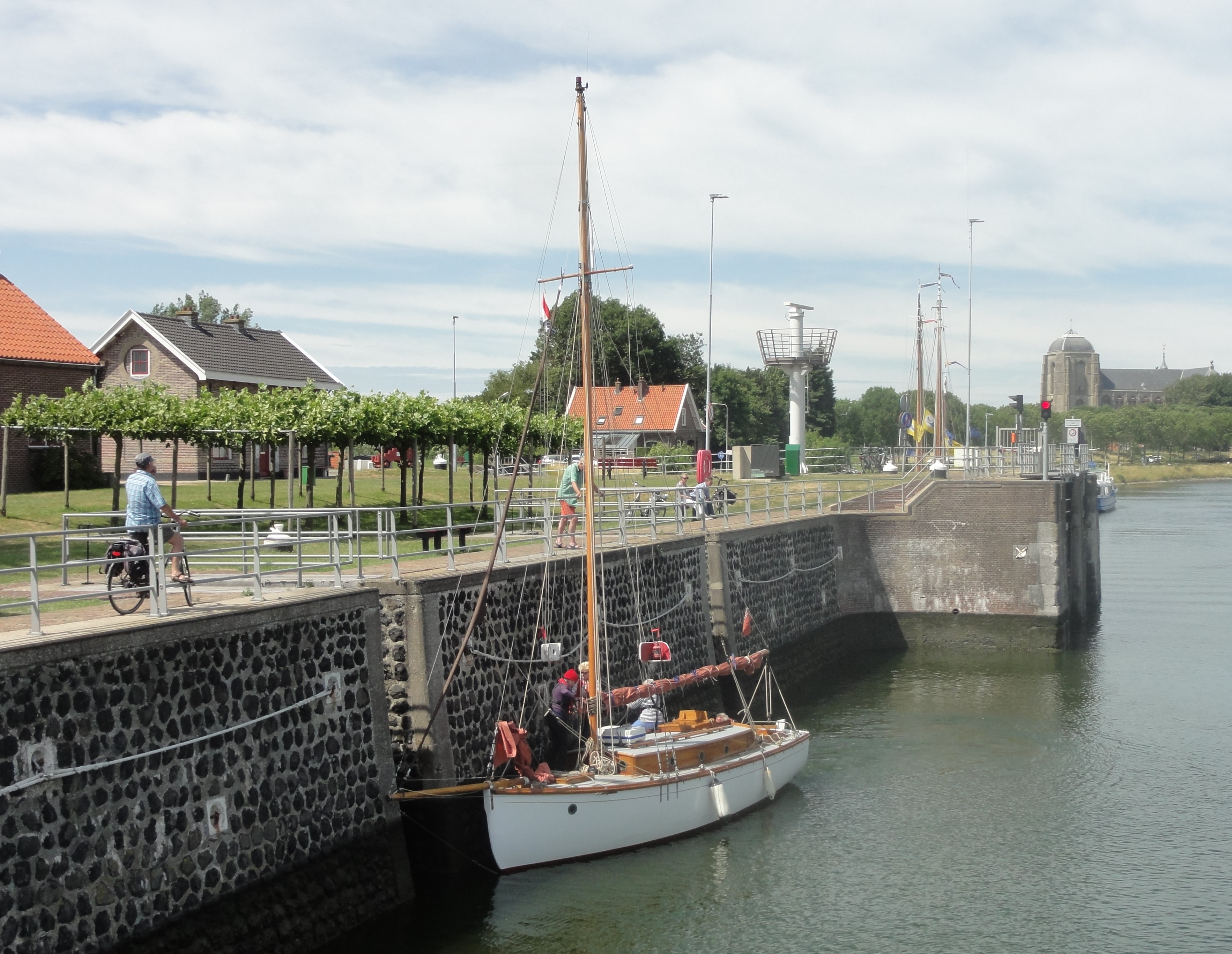
~ Nancy in the old lock at near the medieval port of Veere ~
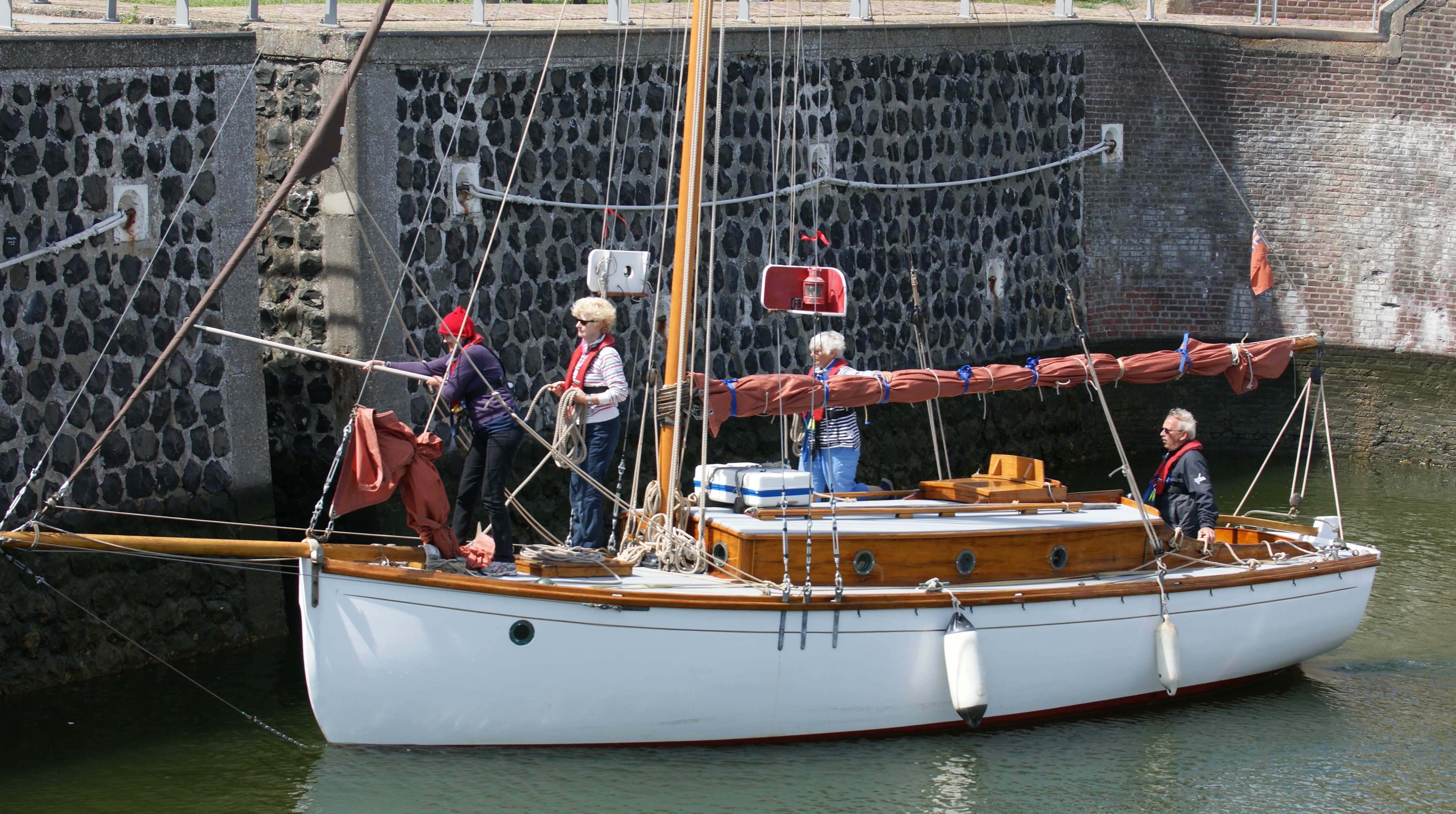
I was able to join Nancy when she had already made the crossing to the Netherlands but did take her through an old lock built in the same style as the one the Swallows encountered, all be it at the other end of the Dutch canal. It was as if we had sailed into the pages of the book and lived out the adventure ourselves, learning about ropes and reefing each nautical mile.
Mooring up could be tricky, especially since Nancy is an old lady with a bow-sprit, but unlike Susan and Titty, I never felt sea-sick for a moment.
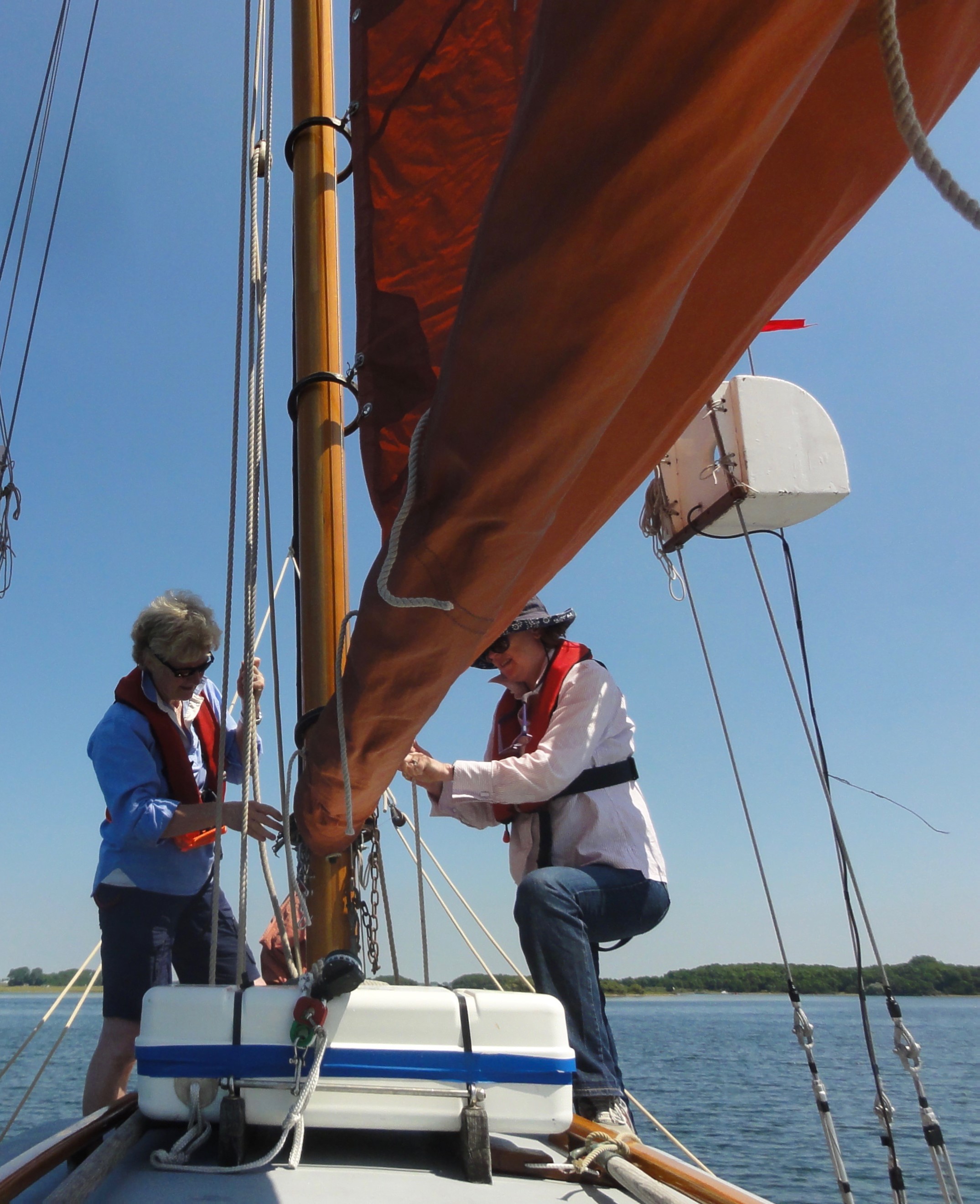
~ Learning how to hoist the mainsail ~

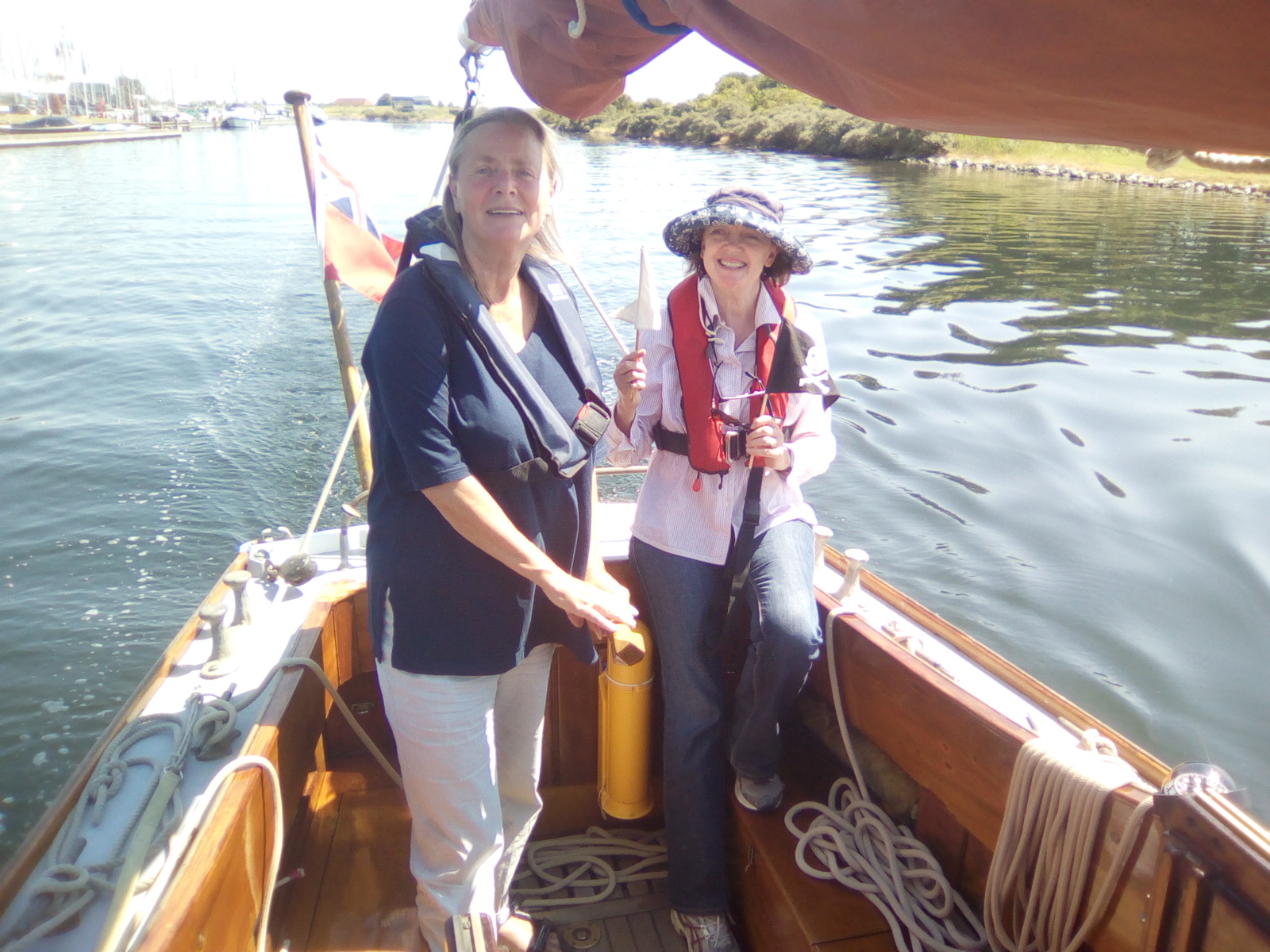
~ Sophie sailing in salt water ~
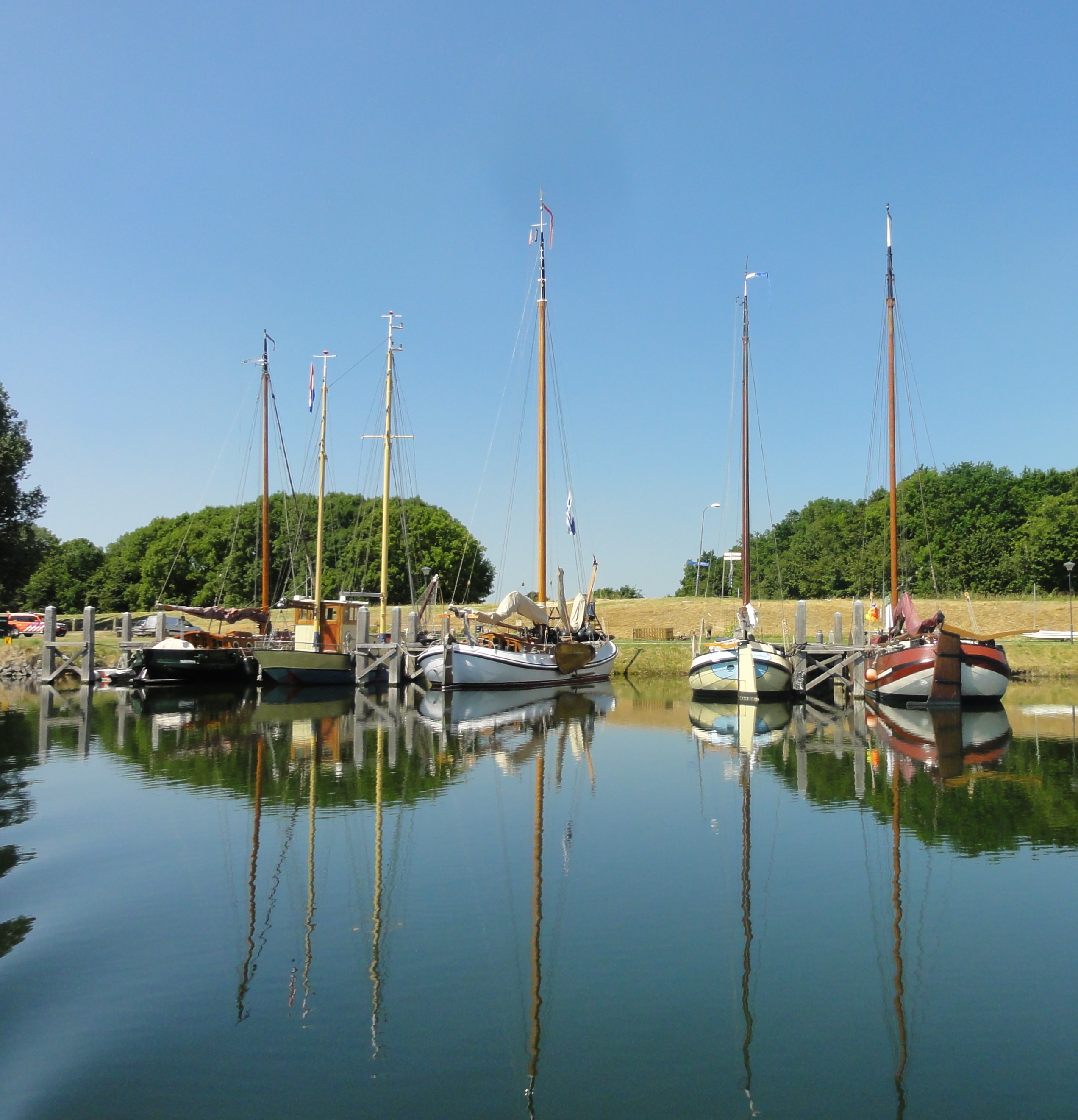
~ Keeping a look out for Dutch barges ~
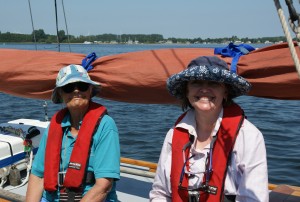
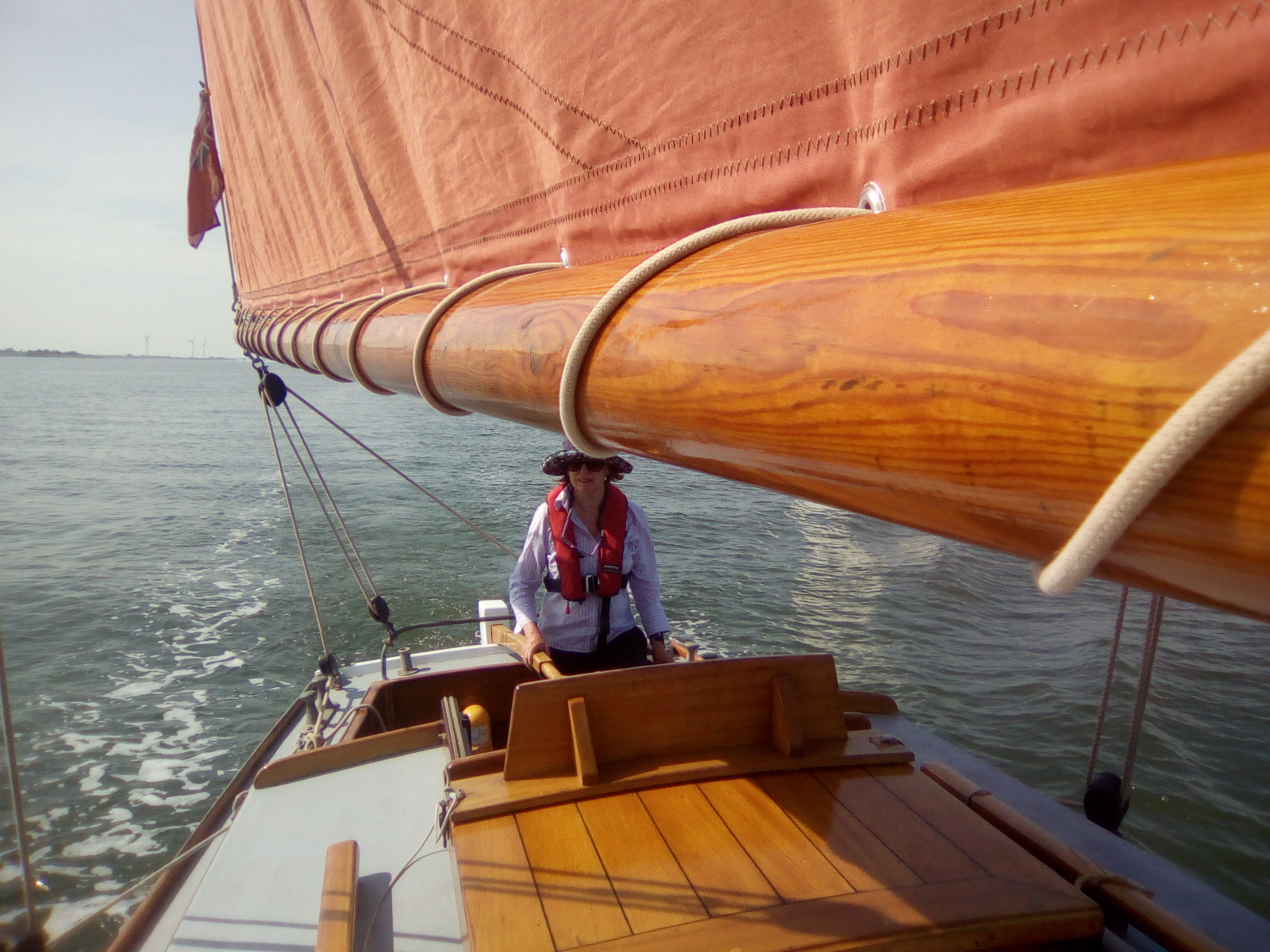
Local author Veronica Frenks came out one morning, taking us up a creek to see the traditional Dutch barges and historic ships that she often writes about. She soon made plans to write about Arthur Ransome for Spiegel der Zeilvaart, a Dutch periodical. Here she is with me, at the helm:
To read about sailing Nancy on the River Orwell in Suffolk, where she is based. please click here.
To read about sailing Nancy on the Beaulieu River and the Solent, please click here
If you would like to grab a chance to sail Nancy or find out more about the Nancy Blackett Trust, please click here


~ Titty with Amazon’s anchor ~
When I first posted an extract from ‘The Secrets of filming Swallows and Amazons’ on a literary website, someone wrote a review assuming it to be a novel. They must have thought that I was some poor creature who had imagined the whole thing. The reviewer considered the plot too far-fetched and fantastical – as you might if it had not been true.
‘You must have been dreaming.’
‘But Captain Flint, there were burglars, you’ve got to believe me.’
Poor Titty! No one ever believed her. Fortunately quite a bit of documentary evidence exists to support the fact that a certain feature film was made in the Lake District in 1973. I do wish I’d kept a copy of the book review though.

~ The Swallows find Titty sleeping in Amazon near Cormorant Island ~

~ Titty and Susan sail Amazon back to Wild Cat Island ~

~ Sailing Swallow and Amazon on Derwentwater ~

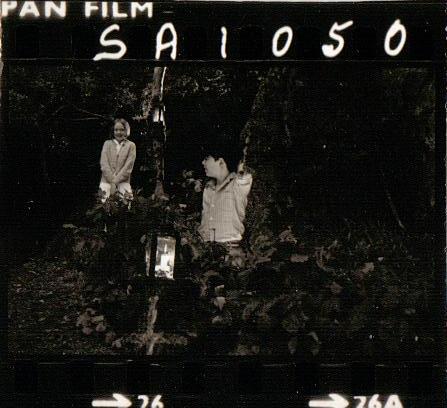
I was encouraged to collect things as a child, in case they might one day be of value. Back in 1973, I was given a number of black and white photographs and contact sheets of stills taken by Albert Clarke on the set of ‘Swallows & Amazons'(1974) – if you can call Derwentwater a movie set. I pasted some of these in a scrapbook but others remained in a roll that has only recently been returned to me. Each sheet looks roughly like this:

The eye is easily tired by looking at the whole set but scanning and editing reveals a little bit of film history in every shot. I can see here that Titty wasn’t letting Amazon’s anchor down, she was hauling it in while Susan was at the helm, with a fair wind in her sails. This must have been quite tricky.

You can tell by the numbers above each shot how many were taken and in what sequence. presumably 2003 photographs had been snapped by the time the Swallows found Titty moored near Cormorant Island.

~ These bizarre shots show the film crew afloat on their pontoon ~
The photographs below show Virginia McKenna rowing away from Peel Island on Coniston Water in a native canoe with DoP Denis Lewiston and his 35mm camera, which is pretty unique.
One thing is certain, if these contact sheets had not been given to me they would have been thrown out and yet, over time, they have become precious. Do add a comment below if you would like to see more.
It is quite interesting to see which shots were chosen for the press. You can see a few of the action shots used in magazines of the time by clicking here. Newspapers tended to chose photographs akin to portraits as you can see here.
Recent newspaper articles tend to use a black and white film still that was clumsily tinted giving the lake water an unreal and bright blue hue as you find here.
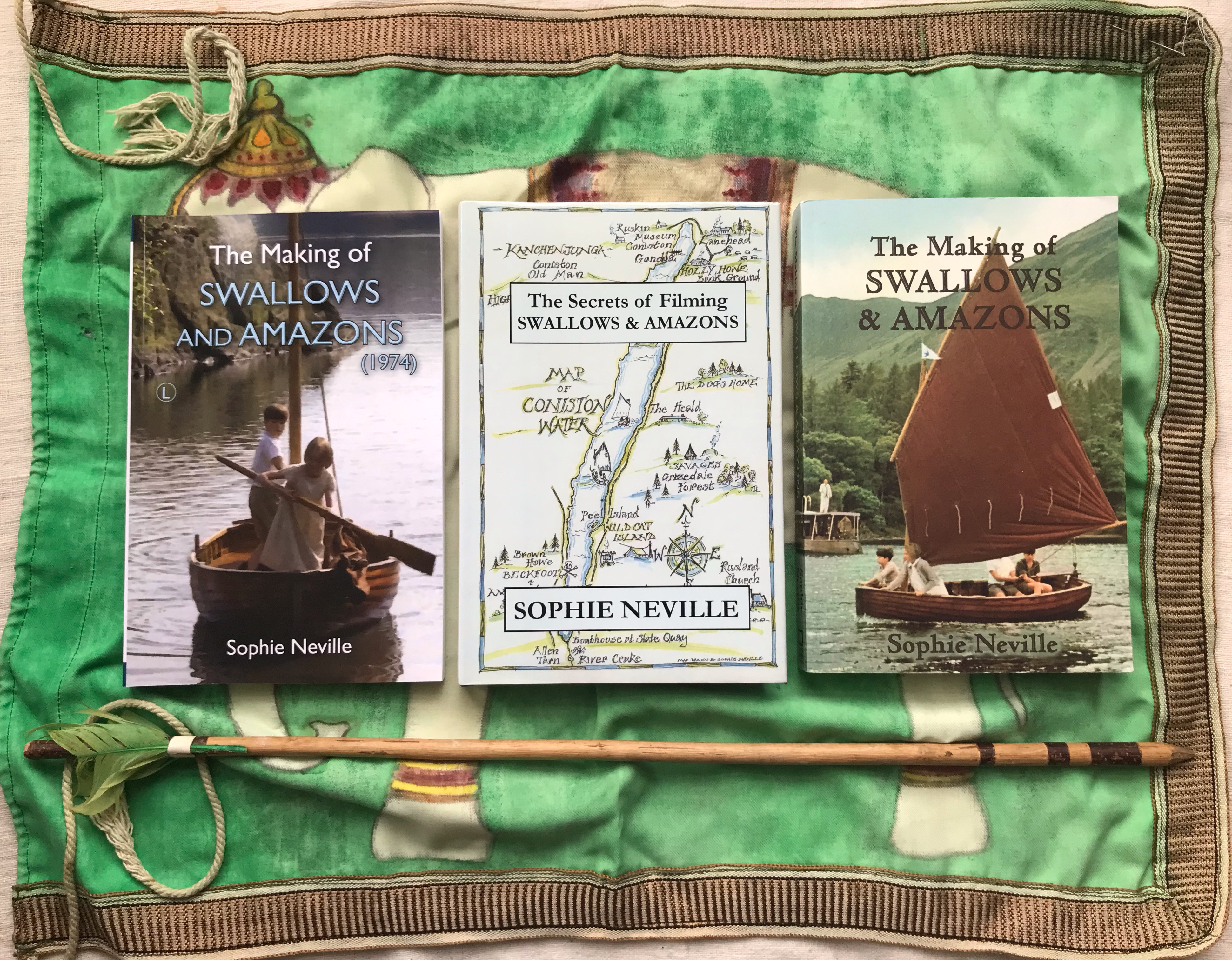
Some of the black and white prints are now held at BFI. StudioCanal hold a vast selection of the best photos in their library and have an on-line shop here. I have included about a hundred behind-the-scenes snaps taken by my parents in the latest edition of ‘The Making of Swallows and Amazons’ recently published by The Lutterworth Press, available from libraries, bookshops and online stockists including The Nancy Blackett shop, where proceeds go towards the upkeep of Arthur Ransome’s favourite little ship.


One year, not so very long ago, members of the Nancy Blackett Trust hosted an Arthur Ransome Jamboree at Pin Mill in Suffolk. It was a day to remember.

Although Ransome is remembered for his ‘Swallows and Amazons’ books set in the Lake District, he moved to the east coast of Suffolk in 1935 where he set a number of other books in the series. It seemed fitting to mark the 80th anniversary of the publication of his inspirational sailing book ‘We Didn’t Mean to Go to Sea’ that begins at Pin Mill.

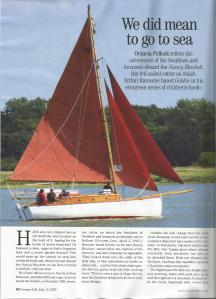
It is possible go aboard the Goblin, since she was modelled on Ransome’s own favourite little yacht, the Nancy Blackett. I joined her at The Royal Harwich Yacht Club where she was moored alongside Peter Duck one of his other much-loved yachts, named after the adventurous book he wrote that begins in Lowestoft. I met up with Octavia Pollock, a feature writer from Country Life, and walked down the riverside to enjoy supper at the Butt and Oyster in Pin Mill where Ransome himself often ate.

Soon after leaving university, I worked behind the camera on the BBC TV adaptations of ‘Coot Club’ and ‘The Big Six’, Ransome’s two books set on the Norfolk Broads, in which the Coots also visit Beccles in Suffolk.
It was the Swallows who made it to Pin Mill. I first went there when The Arthur Ransome Society asked me to give a talk about making the BBC TV serial entitled, ‘Swallows and Amazons Forever!’ and signed copies of ‘The Making of SWALLOWS and AMAZONS – 1974’.

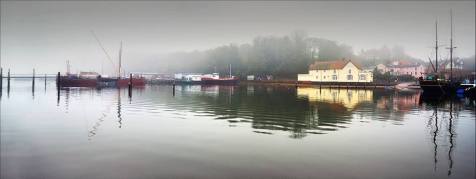
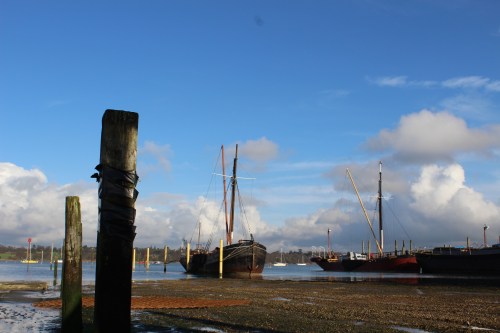
~The Orwell at Low tide~
During the Jamboree celebrations, Arthur Ransome’s biographer Professor Hugh Brogan was interviewed by erstwhile BBC reporter Tim Fenton at the Pin Mill Sailing Club.
Hugh spoke eloquently, telling me that he was motivated by rage to write The Life of Arthur Ransome after a Fleet Street reviewer of the original film ‘Swallows & Amazons’ described him as ‘right-wing’.
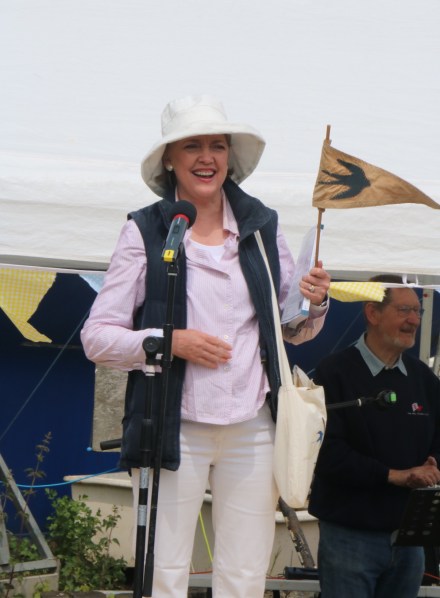
~ Sophie Neville ~
This VisitEngland event was great fun. There was a geo-caching route along the footpath from Shotley to Pin Mill. Marine artists Claudia Myatt and Christine Bryant hosted drop-in sessions on the riverside where visitors could also find the Rabble Chorus singing, while the author Julia Jones spoke about her children’s books set on the Orwell at the sailing club.

~Mugs with artwork by Claudia Myatt sold in aid of the Nancy Blackett Trust~
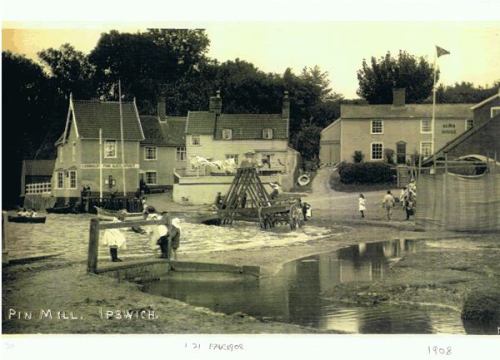
There was an outdoor installation of old Pin Mill images enabling you to look back in time. These were taken by Arthur Ransome himself of the building of his boat Selina King at King’s boatyard nearby. It was the first public exhibition of these pictures ever seen and was appreciate by the hundreds of visitors who turned up.

The Pin Mill Studio also hosted an exhibition of photographs from the restoration of Melissa, a barge restored to her former glory by Webb’s boatyard, with additional archive images of Pin Mill from the early 1900’s.
The Vintage Mobile Cinema, as seen on BBC Television’s Reel History of Britain, screened unique archive film of Pin Mill and Shotley.

~The Nancy Blackett in her 85th year~
A Pin Mill ‘Wooden Boat’ race was held along the stream leading down to the river and you could take a ride on the Victorian swing boats on the Common as in years gone by. There was a ‘pirates and seafarers’ fancy dress competition for children and an Arthur Ransome lookalike competition (pipe and moustache) along with stalls and sideshows from local groups, charities and organisations.
Live music, including shanties from Pin Mill favourites, High Water Mark and a performance of We Didn’t Mean to go to Sea by pupils from Holbrook Academy who entertained visitors while cream teas, a barbecue and refreshments were served at the Butt and Oyster and Pin Mill Sailing Club.
T-shirts celebrating this special anniversary were sold along with gifts to generate funds for The Nancy Blackett Trust, who celebrate their 20th anniversary this year.
Do let us know if you came along by leaving a comment!
To read more please visit the Nancy Blackett website by clicking here.

You can read about the making of the original film of Swallows and Amazons here:

‘Unlike other films, ‘Swallows and Amazons’ is within children’s reach,’ I’ve been told. It’s true. Any child can pretend that their bed is a sailing dinghy taking them to a deserted island. And when you are a little bit older – it’s not impossible to join a sailing club or go camping.
We took Swallow to join the Aldeburgh Junior Lapwings on the River Alde in Suffolk.

One intrepid sailor had bought her own Lapwing for £100, raising the money by busking in Aldeburgh High Street. Tilly renovated and varnished the clinker-built dinghy herself.

She can be seen here teaching the younger children how to owl hoot, playing ‘What Shall We Do With The Drunken Sailor’ on her thumbs.

The children went fishing for crabs, which they later raced down the slipway.

They went in search of treasure – if that is what you call a scavenger hunt –
before sailing back to camp by the mud flats, cooking out in the open and sleeping in tents.
They launched their dinghies, raised their red sails

and headed off, catching the tide.

Swallow, the dinghy used in the 1974 film ‘Swallows & Amazons’ acted as flag ship.
You can find ideas for Swallows and Amazons themed parties and presents here.

You can read about the adventures we had making the original movie of ‘Swallows and Amazons’ in these illustrated publications available online:

Lovely Aldeburgh on the Suffolk Coast
StudioCanal’s special re-mastered version of the classic film ‘Swallows & Amazons’ (1974)

was shown at the Aldeburgh cinema with a Q&A afterwards with Sophie Neville who played Titty speaking to the actress Diana Quick.

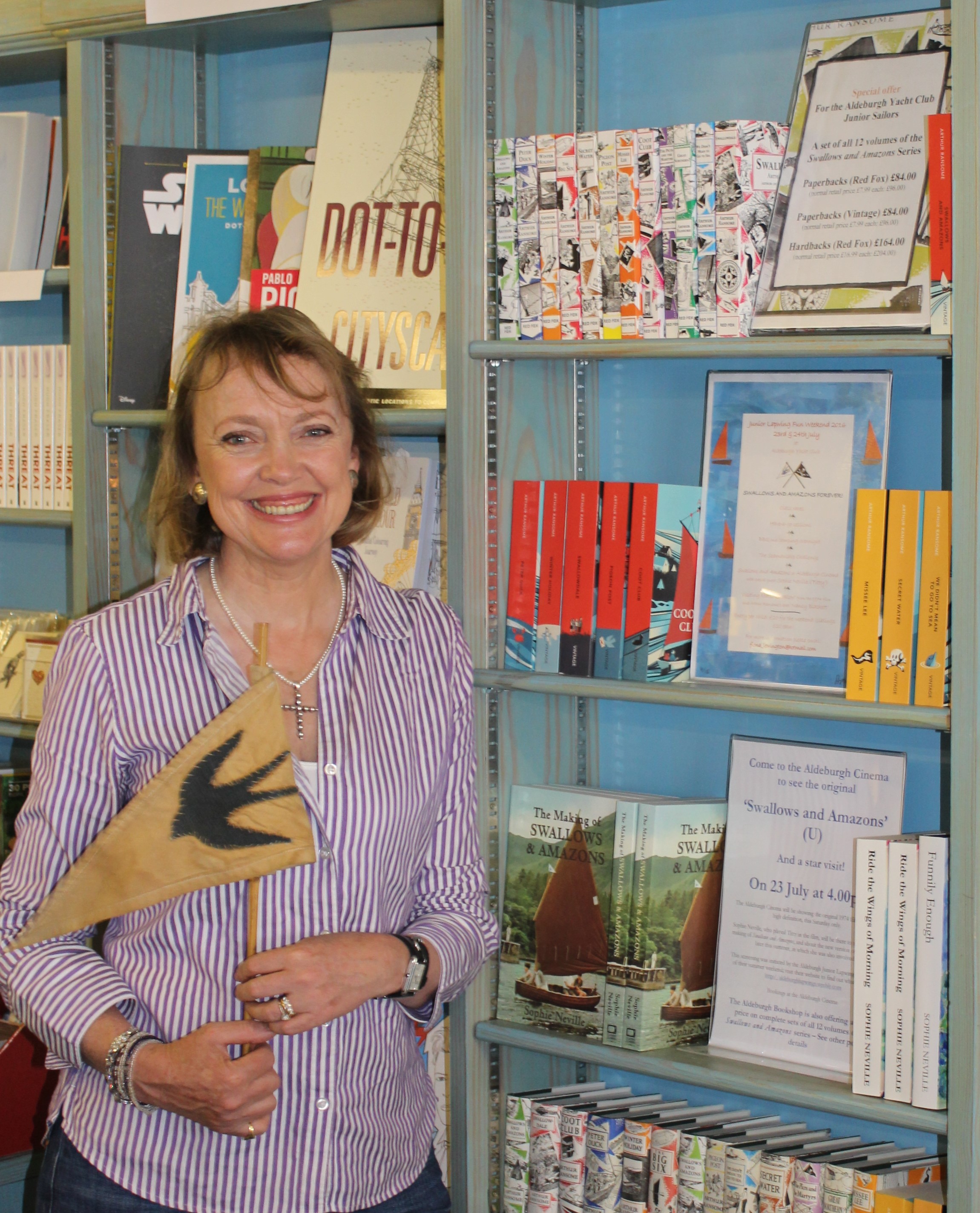
Sophie was signing the last first edition copies of ‘The Making of Swallows & Amazons’.

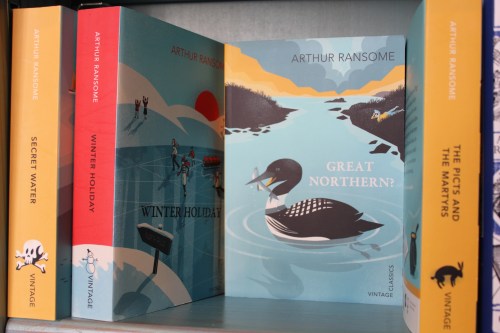
Opposite the cinema, books by Arthur Ransome, who once lived in Suffolk
adorn the shelves of the award-wining Aldeburgh Bookshop
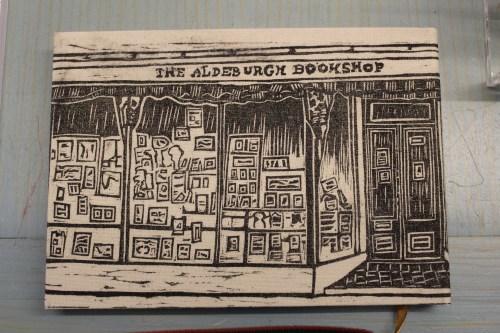
The sun shone and holiday makers enjoyed the beach

where you can buy fresh seafood and chat to the fisherman.

Swallow, the lugsail dingy that starred in the 1974 film

was sailing with the Aldeburgh Junior Lapwings who had a Swallows and Amazons regatta that weekend. You can read about what they got up to here.

Thanks go to The Aldeburgh Bookshop for their sponsorship

They stock ‘The Making of Swallows and Amazons (1974)’ published by The Lutterworth Press
Swallows and Amazons – the new film trailer: where adventure meets danger
Please click here to view of the film trailer
If you experience problems watching it – first make sure ‘Flash’ is enabled on your computer
To get a behind-the-scenes look of the classic film, take a look at the book ‘The Making Of Swallows and Amazons’
‘Where are they now – the cast of ‘Swallows and Amazons’?’
I can see from my admin page that this question is often typed into search engines – three times before 8am this morning. An awful lot of people seem to want to know what the children who played the Swallows and the Amazons back in 1974 are doing now they are all grown up. For this little Swallow it really has been ‘Swallows and Amazons Forever’. I’m still wading out to the island.

‘Titty the Isrealite’ photo of Sophie Neville taken by Hilary Weston
Now a writer, I am officially President of The Arthur Ransome Society, one of the largest literary societies in the United Kingdom with six branches and quite a number of overseas members. They even have association with the Arthur Ransome Club in Japan.

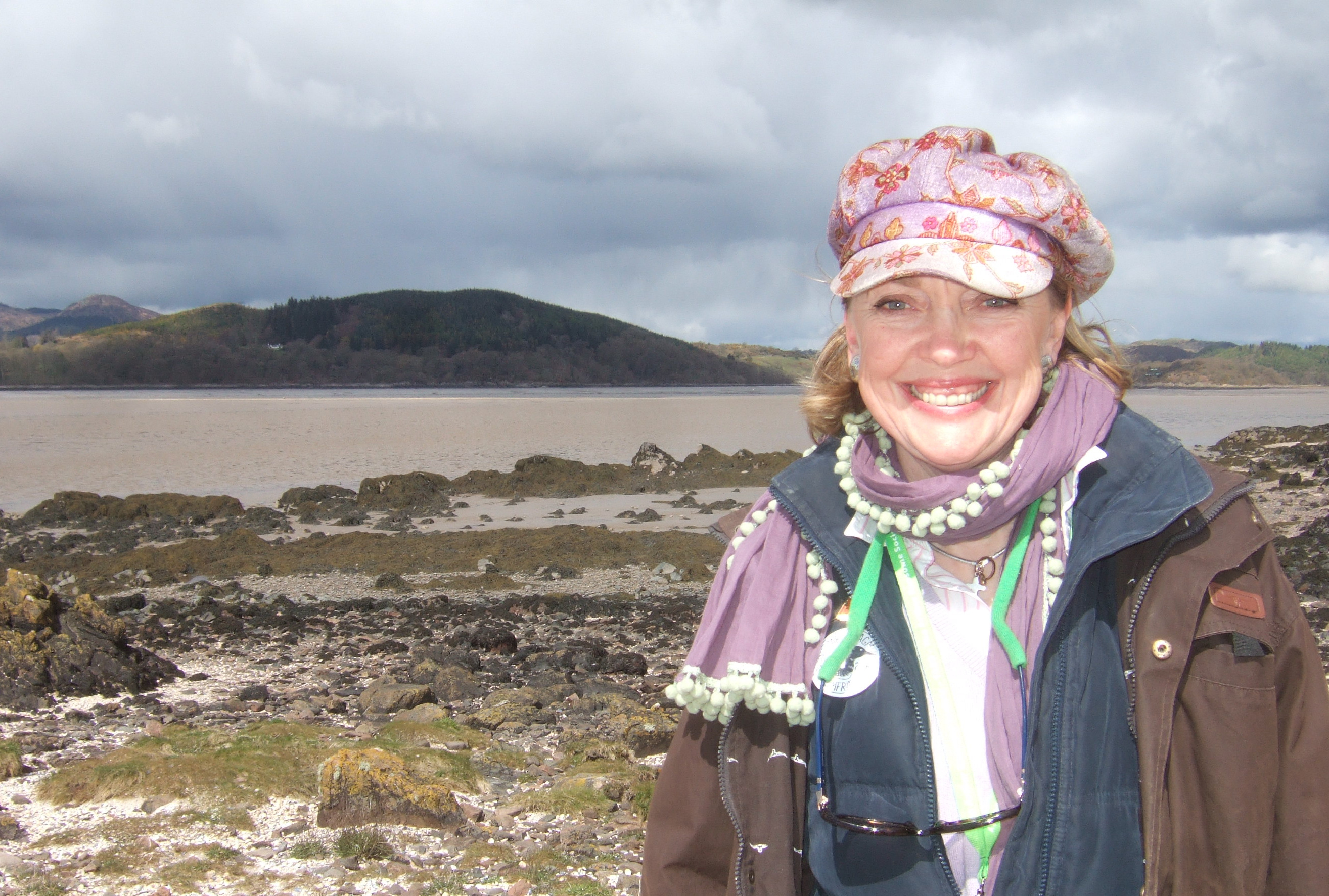
This year we held our International AGM weekend in Dumfries in the lowlands of Scotland, when we much enjoyed walking along the Solway and across the wade to Rough Island, just as Titty walked out across the mud in Arthur Ransome’s book ‘Secret Water’. There seems little difference except that I have a dog called Flint rather than a kitten called Simbad.
Sophie Neville who in 1973 played Titty Walker in the EMI movie of ‘Swallows & Amazons’ dressed up to face the Scottish weather
The great excitement at our IAGM this year was that Nick Barton, the CEO of Harbour Pictures came up to Dumfries with his screenwriter Angela Gibb to tell us about their new adaption of ‘Swallows and Amazons’ released in cinemas on 19th August 2016. I helped him to carry a huge plasma screen up to the hotel where the conference was taking place so that members could watch the thrilling new promo. We were sworn to secrecy, but you can read all Nick told us in a feature article in the Saturday Telegraph. This online version has more photos than the print version and mentions The Arthur Ransome Society. There is additional comment in the Sunday Telegraph.
You can read more about how we made the original 1974 film of Swallows and Amazons here


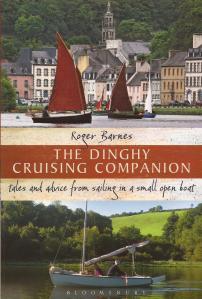
If you are keen on dinghy sailing and looking for adventure, this is a book to accompany you through the summer months ahead. It is full of sound advice from Roger Barnes who learnt to sail on Windermere in Cumbria and is now President of the Dinghy Cruising Association. He has written for Classic Boat, Watercraft, Dinghy Sailing Magazine and currently writes for Classic Sailor.
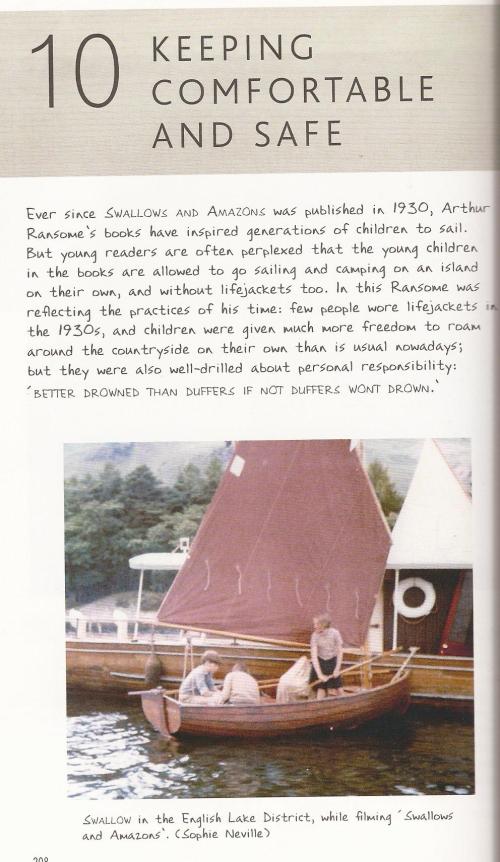
Roger emailed me to ask if I had a photograph of us sailing Swallow without life jackets. I supplied him with this shot my mother took in 1973 since I am standing in the dinghy. I am not sure how we managed to go about when we sailed off, as it also contained the parrot’s cage.
I will certainly take The Dinghy Cruising Companion with me if I manage to get Swallow to Brittany in the near future. As you can see from the cover Roger often takes his own boat to regattas in France.

I bought my copy of Roger’s paperback online but it’s available from all good bookshops. To find out about sailing Swallow, the dinghy used in the 1974 film of Swallows and Amazons, please click here for Sail Ransome.
Last weekend we had the IAGM of The Arthur Ransome Society in Dumfries. Why not join this literary society who organise great events and summer camps. If you are not able to get out and about there is a wonderful Arthur Ransome Group on Facebook
To read my own article for Classic Sailor please click here
This post comes with a huge thank you to readers who have taken the trouble to write in, send emails or add reviews on Amazon about ‘The Making of Swallows & Amazons’

‘I very much enjoyed reading about all the background and stories of what is one of mine and my children’s favourite films.’ David Hambelton, Oxford

‘…an absolutely fascinating account…about a film we all thought we knew so well. Like so many members of The Arthur Ransome Society I am an utter devotee… I’m finding the background to filming quite fascinating, and if I had thought it possible, yours is the book I have always longed for to exist. I’ve been absorbed in it ever since it arrived, forcing myself to take it slowly and not gobble it up in one go. Of course I’ll be back to it soon, dodging back and forth in tune with your narrative, indenifying particular scenes.’ Jeremy Gibson, Witney

‘If you liked the film, you MUST read this book. “Titty” is enthralling, and the story of the film is almost as exciting as the real story by Arthur Ransome. Essential reading for devotees.’ Chloe Randall, Scotland

Children still ask me questions that never occurred to me:
‘How did it feel to be on the island by yourself?’ Alex aged 7. The truth of course is that I was never on the island by myself. Perhaps I should have been left there for a while so I could experience it. I would have relished the chance.

Another boy asked, ‘How did you do the water?’
This took my breath away for a second. ‘How did we do the water? The water was real, and it was very cold,’ I replied, explaining that we actually shot the film on four different lakes in Cumbria, all of which you can discover for yourself.
Have your children any questions? I’d love to hear them.

For more reviews of The Making of Swallows & Amazons on Amazon, please click here.
To see more still from the film that can be purchased as framed prints or on mugs etc please click here for StudioCanal’s website.
To find out more about The Arthur Ransome Society please click here