The school term is over, ‘Swallows and Amazons’ is on BBC iPlayer and Christmas missives are arriving in the post. I have just been sent this homemade card from someone who came to the premier of the original film in 1974, when I was fortunate enough to play Able seaman Titty.
~Captain Flint hanging Christmas decorations around his houseboat on a card made from a Puffin book cover~
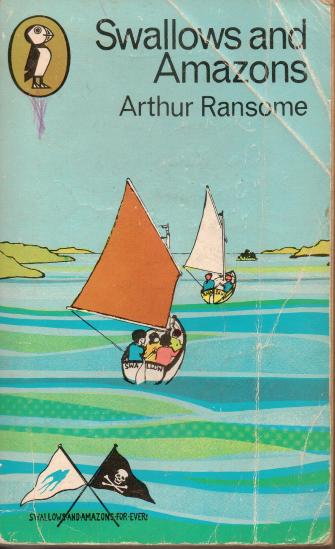
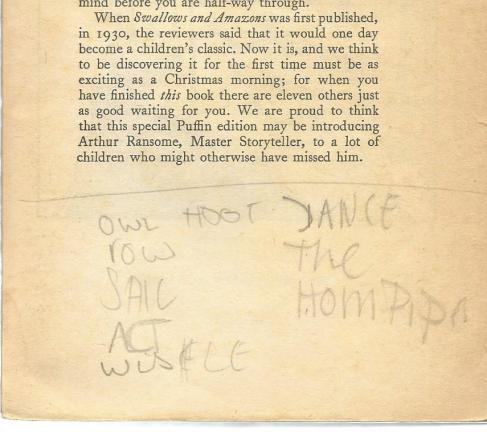
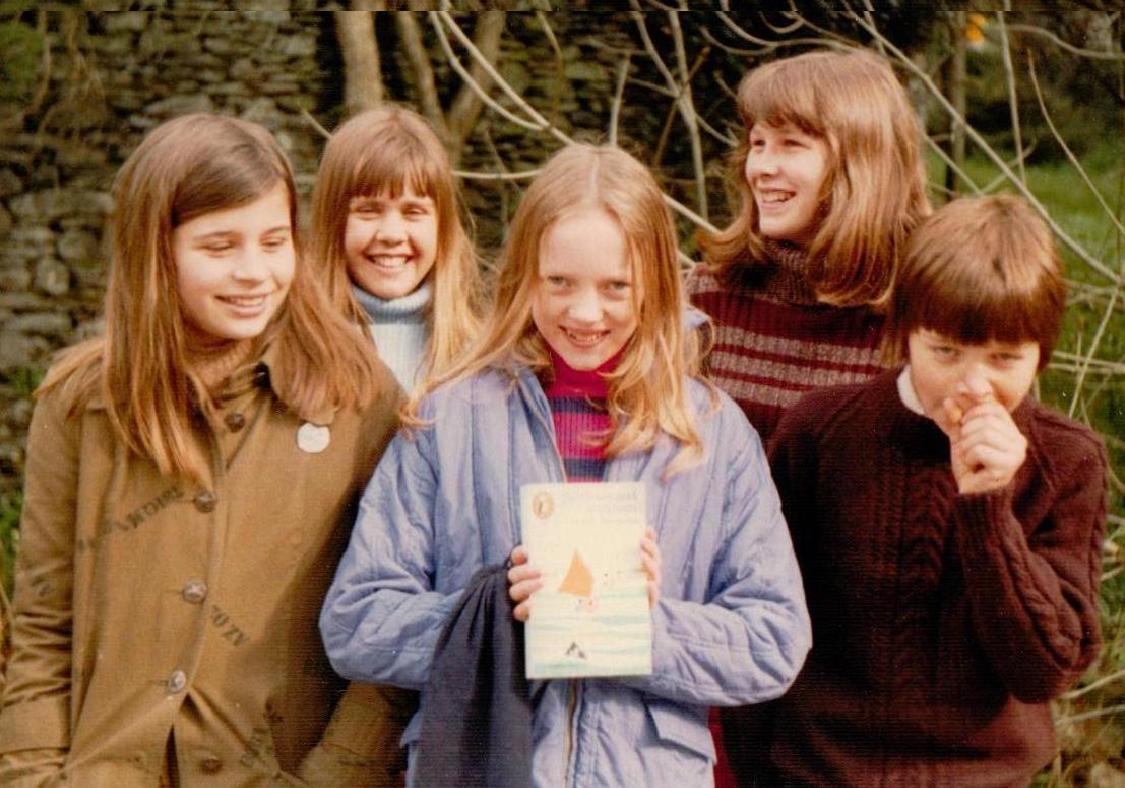
I dug out the Puffin paperback of Swallows and Amazons my father gave me when I was a girl and read avidly, along with other books in the series, by the time I was eleven years-old. It is a 1970’s edition in which I’d underlined everything Titty said. I must have re-read this copy when busy preparing for filming the 1974 movie financed by EMI.
Kaye Webb, the editor, had written an introduction saying, ‘This book is about sailing, fishing, swimming, camping, and piratical exploits.’ She wanted to make it available to children, thinking that discovering Swallows and Amazons ‘for the first time must be as exciting as a Christmas morning.’
Underneath, I’d noted down the skills I would need to acquire before playing the part of Titty. ‘Owl Hoot’, was one item, ‘wisle’ (sic) another. I was somewhat apprehensive about dancing the Hornpipe but excited about ‘being a cormorant’, having no idea how cold this experience would prove.
According to Trade News, 75,000 copies of a new Puffin paperback were brought out to accompany the original film. A still was used from the scene where the Swallows sail both dinghies from Cormorant Island. It retailed for 35p. Meanwhile Jonathan Cape printed 12,500 copies with the original dust jacket to accompany the release on 4th April 1974.
Today, I am most interested in Ransome’s prose, amused to find the phrase ‘X marks the spot where they ate six missionaries’ does not appear within the pages of the book. It was given to Titty in 1973 by the screenwriter David Wood. However, there are words of wisdom a-plenty that were not used in the film adaptations:
‘I like cooking,’ said mate Susan.
‘If you want to go on liking it, take my advice and get someone else to do the washing up’, is Mother’s reply. (I wonder who might have said this in reality.)
‘You can be wide awake and not see a thing when you aren’t looking’ is one of Roger’s observations.
John was able to look back to ‘a different, distant life’, which is exactly how it feels when the excitement of Ransome’s world spoils you for the ordinary. It’s true: those involved in outdoor activities develop in leaps and bounds ending up, ‘not at all what they had been.’
What is it about Arthur Ransome’s writing that captures your imagination? Rowing? Sailing? Cooking over a camp fire? Which book has most influenced your life?
Article on Swallows and Amazons on Puffin Magazine
You can read about the adventures we had bringing out the original film in different versions of ‘The Making of Swallows and Amazons (1974)’, which is now available as an audiobook.
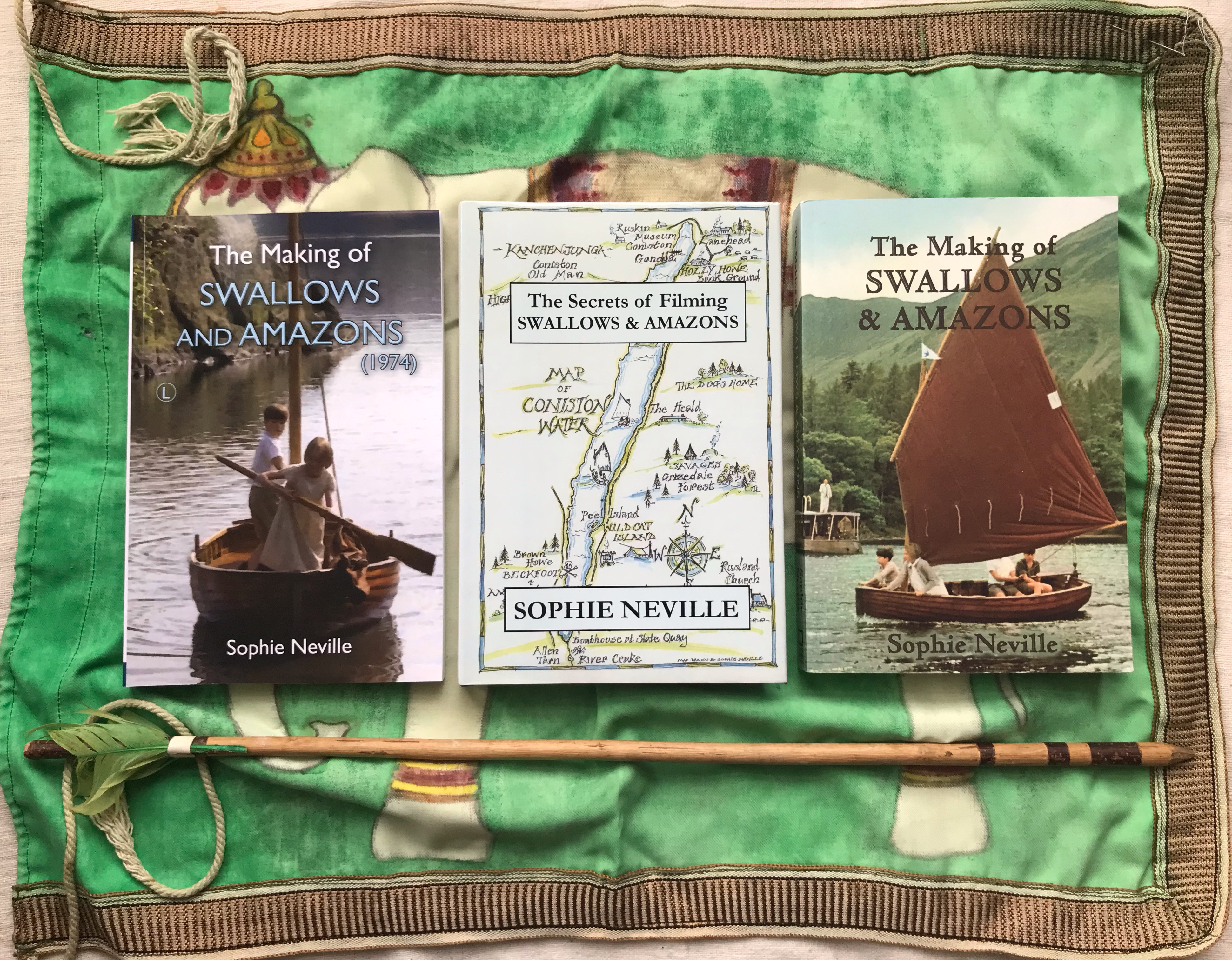
Different editions of ‘The Making of Swallows and Amazons (1974) by Sophie Neville’
An article first published in Mixed Moss, the journal of The Arthur Ransome Society:
Sophie Neville who played Titty Walker in ‘Swallows and Amazons’ (1974)
‘I can’t see it.’ The man was standing in the rain outside the cinema. ‘You said Swallows and Amazons has parallels to missionary life but I don’t get it.’ He was a vicar, camping with his family in the Lake District. After spending a week at the Keswick Convention, he’d brought his children to see the original film Swallows and Amazons (1974) at the Alhambra cinema where I was giving a Q&A after a screening of the movie.
‘I once went on a short-term mission to Australia,’ I told him. ‘People would ask me if I was going to convert the natives.’ The archaic idea of berating aboriginal people almost filled me with horror but use of the word ‘natives’ reminded me of Swallows and Amazons. This led me to consider how deeply Arthur Ransome was influenced by missionary journeys of the early 1900s. As the author, Julian Lovelock points out, ‘exploring, trading and being a missionary were, in Victorian times, all shades of the same colonial activity. Dr Livingstone is often described as an ‘explorer-missionary’. This is the 80th Anniversary year of the publication of Secret Water where ‘missionaries’ enter Ransome’s world in their ‘mission ship’ Lapwing.
‘Would’t Titty like this?’
Linda Hendry, of The Arthur Ransome Society (TARS), observed that as a boy of ten, Arthur envied his Aunt Edith and Aunt Jessie who were going off to China as missionaries. Did this idea of adventures last with him?
Although his father, Cyril Ransome, came from a clerical background and ensured Arthur received a biblical education in Windermere, Margaret Ratcliffe of TARS reports that ‘there is never a hint of spirituality’ in his letters and diaries. ‘Arthur and Genia were not of an active religious persuasion; Christmas and Easter were ordinary days for them.’ The only time he went to church on a regular basis was when he lived in Finsthwaite and his closest fishing friend was the vicar, the Rev. Roland Pedder. ‘Arthur Ransome never mentions that they discuss spiritual matters, rather hooks, bait and water levels.’ I agree with Margaret’s view that any analogy ‘would have been subliminal on his part, rather than conscious’ but it is embedded in the story, all the more interesting for being unintended.
The reality of going on overseas missions does have parallels with Swallows and Amazons. You tend to set off as a group or family, like the Walker children, and usually end up helping people who need a bit of support, even if it is not what you might expect. Those once wounded often make the best doctors.
One of the key themes, perhaps driving force behind Swallows and Amazons is fatherlessness. Is the story an out-working of Arthur Ransome’s grief for his own father, who died when Arthur was thirteen? Was he desperate to prove himself as reliable and resourceful as Captain John, planning the expedition while Commander Walker was in Malta preparing to sail to Hong Kong? As it is, the Swallows gain Daddy’s permission while remaining under the umbrella of their mother’s care, making sensible preparations before setting sail. This is very like missionary groups who usually need permission from the church with back-up and support from their mission organisation.
Peter Wright, chairman of The Arthur Ransome Society, added, ‘The Amazons seek out the Swallows in much the same way as indigenous people came to find out about early explorers.’ Any number of missionaries have had arrows fired at them. The Swallows discover that Nancy and Peggy not only prove to be the same age but share their terminology and outlook on life. They too have no father around and have recently been rejected by their uncle who is busy writing. As a result, they are being rebellious and let off a firework on the roof of his houseboat. The Swallows make friends with the Amazons and end up helping Uncle Jim to see sense.
Everyone’s moral values are tested in Swallows and Amazons. Uncle Jim realises he has been neglecting his relationship with his nieces and sees what ‘a cross-grained curmudgeonly idiot’ he’d been to ever doubt John Walker’s integrity. Although this casts a shadow on idyllic island days, it almost visibly builds John’s character before his leadership skills are stretched by challenges set by Nancy. The other characters use their gifts to the full, Susan becoming the practical facilitator and Roger learning to be helpful. Titty is the one keen on diving for fish like a cormorant. She keeps the journal or ‘ship’s log’ and takes guidance from the Christian novel Robinson Crusoe that, ‘tells you what to do on an island’, being well-aware that missionaries could be eaten by cannibals. Although her active imagination is undervalued at first, she comes up with ideas that prove vital.
When the Swallows meet indigenous people of the area such as the charcoal burners, they are both polite and respectful, taking an interest in traditional beliefs, such as keeping an adder under the bed for luck. Although Roger makes a bit of a gaff, saying Old Billy ‘doesn’t look much like a son’, the others take an interest in ‘savage’ language and culture.
The Swallow’s mother looks out for them constantly. She reprimands John and sets rules when he goes too far, ‘No more sailing at night’, but continually ensures they are provisioned and their needs met. It might not be expected, but there are battles to be won on the mission field. They are usually tricky, demanding timely action and often involving discomfort akin to sleeping in a dinghy moored by Cormorant Island. Interestingly, it is Titty, the littlest girl, who finds the strength and courage to also unearth the buried treasure and bring restitution.
‘What did the burglars do when they found the treasure had gone?’ one little girl at the cinema asked?
Quick as a flash, Marc Grimston of TARS EAST, who was in the audience, said, ‘Captain Flint carves a fish for them to find instead of the trunk.’ Repentant and forgiven himself, Jim Turner opts to convince the thieves of their guilt rather than report the burglars to the police.
The great thing is, that whilst fishing from boats and weathering the storm, firm friendships are forged that take the Swallows and the Amazons on further adventures, even to the ends of the Earth. There is something inspirational about these that stories lead others to extend themselves, hoist their sails and live life to the full.
~ Sophie Neville supporting an adult literacy programme in rural China ~
You can’t go out as a missionary expecting to convert the natives. You need to come alongside people who are hurting, find the key to their needs and help them use their God-given ability to fulfil their dreams. It can be scary and things won’t always go smoothly but you are usually warned of danger. There will be a need for strong leadership when times become testing but it should be fun. If you can gain people’s trust and hold on to the unity there will be celebration and feasting in the end.
~ Sophie Neville on a Bible Society mission of encouragement to China ~
The vicar, standing in the rain beside his bicycle, began to appreciate the parallels. You may find more. One thing is certain: there is something about the Swallows and Amazons series of books that enables adults to enjoy them as much as children. We can escape pressures of contemporary life and are inspired to fulfill our dreams, becoming all the good Lord wants us to be, doing all the things He has prepared us to do.
You may disagree completely, you may can find parallels in other Arthur Ransome books. Please write in, using the comments box below.
Duncan Hall of the Arthur Ransome Group on Facebook wrote: ‘Of course, throughout (the series of Swallows and Amazons books) there are references to fictional and non-fictional adventures of exploration and discovery which historically sat with Empire, missions and trade as well as with piracy, etc. They do contrast with a political outlook that is clearly oppositional to those traditions. We always end up being impressed by savages (in the Lakes or the Walton backwaters) rather than hoping to civilise them. In Missee Lee, we obviously want to protect the location of the Three Islands, rather than send Daddy’s gunboats over there (despite the pretty monstrous business that Miss Lee presided over, we are convinced that the Brits destroying their way of life would be more monstrous still).
Much has been written of the legacy left by Arthur Ransome who inspired so many go camping, fell walking or sail the seven seas. I hope he would be amused to learn it has been the arrow, fletched with green parrot feathers, that has flown through the pages of my life.
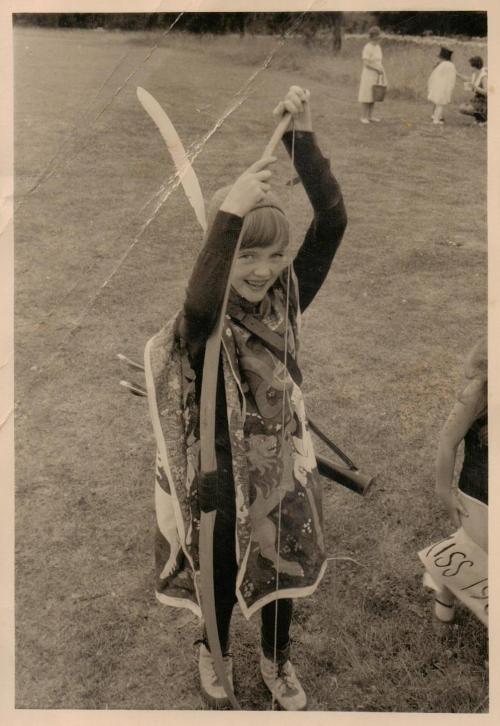
~Sophie Neville dressed as a medieval archer in 1969~
Archery became a popular sport for ladies in Victorian England. The influence was not lost on Arthur Ransome who writes in his autobiography that his Great-aunt Susan was a keen toxophilite who attended bow meetings at Belle Isle, the long island on Windermere. Another great-aunt was shot in the bonnet by an arrow when the Boxer Rising reached Peking. She was serving as a missionary.
I gather it was Arthur Ransome’s sister, Joyce, who owned a green parrot whose feathers made good pipe cleaners. Did they ever get used for flighting arrows? Arthur doesn’t seem to have taken up a bow beyond, perhaps, playing Red Indians as a child with his friend Ric Eddison.
Titty Walker may not have known that the real Queen Bess was a proficient archer, but Roger certainly expected savages to be armed with poison-tipped arrows as he took dispatches across the Peak at Darien. Did Nancy and Peggy ever don Red Indian head-dresses? Since they are described as wearing red caps when the Swallows first encounter them, I assume this idea was instigated by Helen Edmundson’s musical and reinforced by the 2016 film of Swallows and Amazons. Although far from nautical, this is akin to certain antics in Secret Water and certainly adds visual drama to the confrontation.
~Sophie Neville with Peter Robb-King, Ronnie Cogan, Lesley Bennett, Kit Seymour and Terry Smith~
I learnt how to shoot in 1973 when the Amazons were being taught how to pull a bow made of Lakeland hazel for the original movie of Swallows and Amazons. As children, we all wanted a go. I still have a practice bow and a couple of arrows whittled on location by Bob Hedges, our property master. I remember one hitting the campfire. ‘Don’t touch the point – it might be poisonous!’ Please note that the shot of the arrows zooming over our heads looks so dangerous on screen that it was cut from the television version of the feature film. This was no snazzy visual effect. The arrows were genuine, however they were strung on taut nylon fishing line rigged over our heads to ensure we would not get hit. They were fired by the prop men and not the Amazons.
~Daphne Neville who won many archery prizes teaching Lesley Bennett (Peggy Blackett)~
As female Amazon warriors were redoubtable archers it is easy to imagine Captain Nancy bent a sapling to her will and had Peggy making arrows. It is reasonable to assume they used longbows on Wild Cat Island, but in Swallowdale it is a crossbow that graces Ransome’s illustration. How Nancy got her hands on one is unknown but it must have been simpler to use in a boat with discretion and accuracy. Did Ransome ever try this out?
~Sophie Neville shooting with a compound bow in the Emirates~
What happened to the bows and arrows after Swallowdale? Archery is something you usually grow into, rather than out of. By the age of fifteen, I’d gained the part of an archery champion in an adventure movie called The Copter Kids. This necessitated target practice with a modern re-curve bow and ended with me shooting from a helicopter.
I now belong to a number of archery societies and, like Great-aunt Susan, set out with my tabs and tassel, quiver and longbow. Luckily the skill, much like an appreciation of Arthur Ransome’s writing, is something that tends to improve with age. I met my husband at one bow meeting, have held three Ladies’ Championship titles and managed to reach a distance of 145 yards when we celebrated the 600th Anniversary of Agincourt.
I have never fired a crossbow. Since they are potentially lethal weapons, Nancy could have been detained for firing hers even if the tip was not deemed poisonous.
~Sophie Neville at a West Berks bow meeting~
A version of this article was originally published in Mixed Moss, the journal of The Arthur Ransome Society.
You can read more in ‘The Secrets of Filming Swallows and Amazons’ available online:
I spoke on BBC Radio Cumbria, asking if I could meet anyone involved in filming the original film of ‘Swallows and Amazons’ (1974). It was made on location in the Lake District with a young crew.
~Nick Newby of Nicole End Marine~
Nick Newby of Nichol End Marine in Portinscale came to find me while I was in the Keswick. As a young man in the 1970s, he provided boats for a number of films and was contacted by Graham Ford, the production manager of Swallows and Amazons in the Spring of 1973. Graham had began working with Mike Turk who had started building boats for TV and films at his family firm, Turk’s Launches, but this was based on the Thames in London. They needed help from someone in the Lake District who knew about traditional boats.
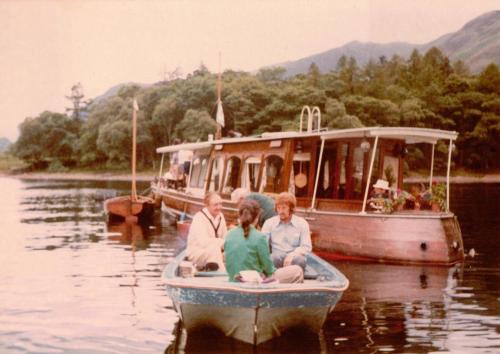
~Ronald Fraser being trransported by Dory to The Lady Derwentwater in 1973~
Arthur Ransome had clearly based Captain Flint’s houseboat on the Esperance, originally a steam launch cruising on Windermere. You can read more about her and see photos here.
‘Since she was sitting on the bottom of Whitecross Bay at the time,’ Nick told me, ‘the film crew decided to use the Lady Derwentwater.’ This was a launch licensed to carry 90 passengers that Nick had worked on and knew well. ‘She is about 58 foot long and quite a rigid boat, having four full length steel RSJs set inside her. She was built the Lakes in 1928. We moored her at Brandelhowe in Great Bay for the filming. You need to be careful getting in, as there is a rock shelf.’ Unlike the Esperance you could see the view over the lake from her large cabin windows, which enhanced interior scenes. The Lady Derwentwater, whose nick-name is Dishy, has since been re-built with a different stern, but you can book a passage and go out on the lake in her yourself.
~The Lady Derwentwater today~
Nick told me that Captain Flint’s eight foot Wright’s dinghy, the houseboat’s tender, had been made by Wright’s Brothers of Ipswich. The Jackson’s ‘native canoe’, rowed out to Peel Island by Virginia McKenna was ‘a family fourteen’ Wright’s sailing dinghy with a centre case. He knew many of the traditional boats in the Lakes. ‘I served me time as a yacht and boat builder at Shepherd’s in Bowness Bay.’ This company was based the green double-story boat sheds featured in the ‘Rio’ scenes. ‘During the winter we used to have to break the ice on the buckets of water when we were rubbing down boats. The sail lofts had a square panel in the apex so we could poke the 8 to 10 metre masts inside. A boom could go up the stairs but a mast certainly couldn’t. ‘
~Virginia McKenna with Sophie Neville and DoP Denis Lewiston~
‘Amazon belonged to a chap called Vosey who was rather reluctant to let her be used for the filming,’ Nick said. ‘We did her up a bit after the filming.’ I gather she had been used in the black and white BBC serial of Swallows and Amazons made in 1962 when Susan George played the party of Kitty.
~Swallow sailing towards the filming pontoon in 1973~
I believe Swallow had been found at Burnham-on-Crouch as she was built by Williams King and Sons. Mike Turk, who had built a shallop for the 1966 movie ‘A Man For All Seasons’, purchased her for the film and brought her up to the Lakes. She had no added buoyancy. Nick claims that being a wooden boat she would never sink but I reminded him that we came close to hitting the MV Tern on Windermere when loaded with camping gear, which was a bit scary.
~MV Tern on Windermere today~
Swallow was later used at Elstree Studios when the sound was dubbed onto the finished film. Mike kept her out of the water in his store at Chatham until SailRansome bought her at auction in 2010. She was sensitively restored by Pattersons, has a new sail, added buoyancy bags and is now available for anyone to sail in Cumbria.
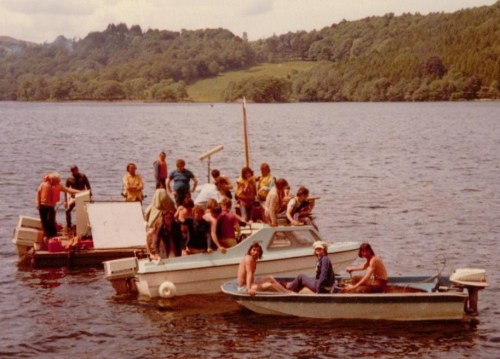
~Mike Turk’s filming pontoon with Swallow attached in 1973~
‘Mike already had the flat-bottomed filming pontoon. It had originally been used for carrying a vehicle. We added twin outboard engines and rigged scaffold under the water so that either Swallow or Amazon could be attached to it but still keel over naturally as they sailed. When the dinghy went about, I would turn one outboard and thrust the other into reverse so that the pontoon went about with them.’ I remembered that the first time they tried this Swallow’s mast footing broke. Amazon’s mast-gate broke on another occasion. Nick had to persuade a friend to let him borrow his welding workshop and managed to mend it over night, so that she could be ready on set first thing the next day.
~The camera pontoon, Capri and one of the Dorys used behind-the-scenes~
Nick went on to say the pontoon leaked a bit. ‘We would have to pump out hull every morning.’ The Capri used behind the scenes was Nick’s equivalent of a marine Land Rover. ‘It had a reinforced glass fibre hull for increased capability and a 55-horse power engine that had been used for the Olympics. We used it for Ken Russell’s film ‘Tommy‘, the rock opera with Roger Daltry and The Who. Once, when we were using it for Swallows and Amazons, Clive Stuart shoved it into gear with rather too much gusto. Someone only just managed to grab the director, Claude Whatham, before he was flung over the back. ‘Claude was spitting feathers after that.’
~Suzanna Hamilton, Simon West, Sophie Neville & Sten Grendon with David Stanger at the helm of the Dory in 1973~
Mike Turk provided two Dorys, built at his yard, to use as run-around boats. One was driven by David Stanger who is now skipper of a launch on Ullswater. It was a stable boat but you needed to watch how it was not overloaded. Water came over the bows one day giving my mother rather a shock.
‘The boating world is a small world,’ Nick assured me. This July, forty-five years after making the film, he brought his grand-daughter to watch ‘Swallows and Amazons’ at the Alhambra Cinema in Keswick and gamely came up on stage for a Q&A to explain how some of the sailing scenes were achieved.
Mike Turk, Swan Upper and Queen’s Waterman, who provided boats for numerous films from Moonraker to Hornblower, sadly passed away aged 78. You can read his obituary here. He went on to work on a number of James Bond movie. You can see his film credits here.
A group of Arthur Ransome enthusiasts clubbed together to buy Swallow from Mike’s collection in 2010. She is currently kept on a trailer at Kendal in the Lake District. If you would like to sail her, please visit SailRansome.com
For Nicol End Marine, about two miles outside Keswick on Derwentwater please click here
You can see Swallow – and learn of her value – on BBC Antiques Roadshow, towards the end of the first episode recorded at Windermere Jetty museum in September 2020. It is on BBC iplayer here
You can read more about making the 1974 film Swallows and Amazonshere
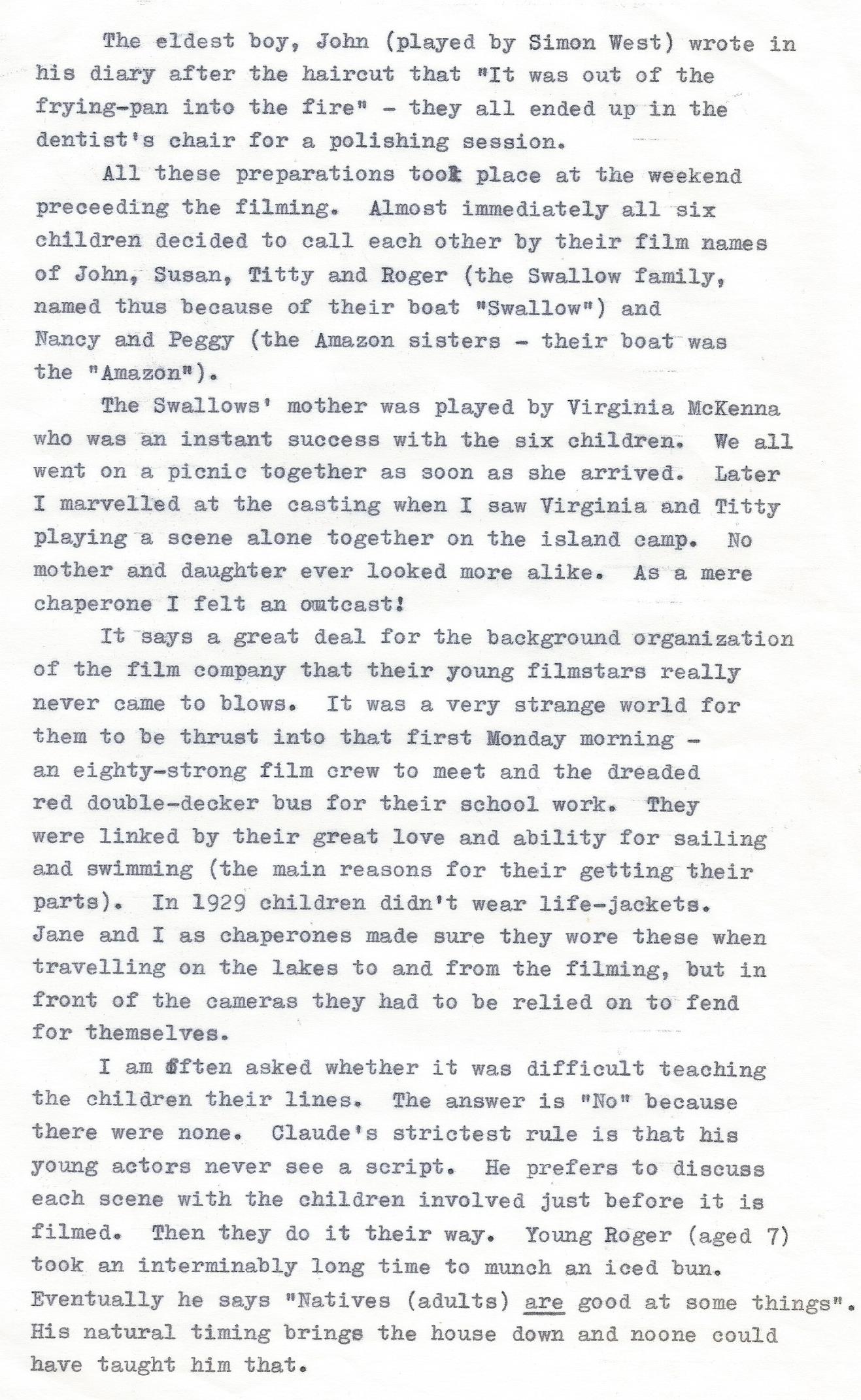
My mother is a squirrel. She arrived at my house, not with nuts, but a large envelope. Amongst other things, this contained the transcript of a piece she wrote almost forty-nine years ago for BBC Radio Bristol, when she presented a programme called ‘Come Alive’. The four flimsy sheets of copy paper have only just been unearthed, along with a similar article for Woman magazine.
Daphne Neville was commissioned to write about her experience working on the original feature film, Swallows and Amazons, filmed on location in the Lake District in the summer of 1973 and brought to cinemas in 1974. Sold worldwide, has been broadcast on television for the last forty years and was last shown on TV in Australia on Boxing Day.
Daphne Neville with Sophie Neville while filming ‘Swallows and Amazons'(1974)
It is interesting to have Mum’s perspective. Some of the details are new to me. She timed this piece for BBC Radio as taking ‘8 minutes’ to read:
Suzanna Hamilton, Lesley Bennett, Sophie Neville, Kit Seymour and Simon West before their hair was cut for the film ‘Swallows and Amazons’ in 1973
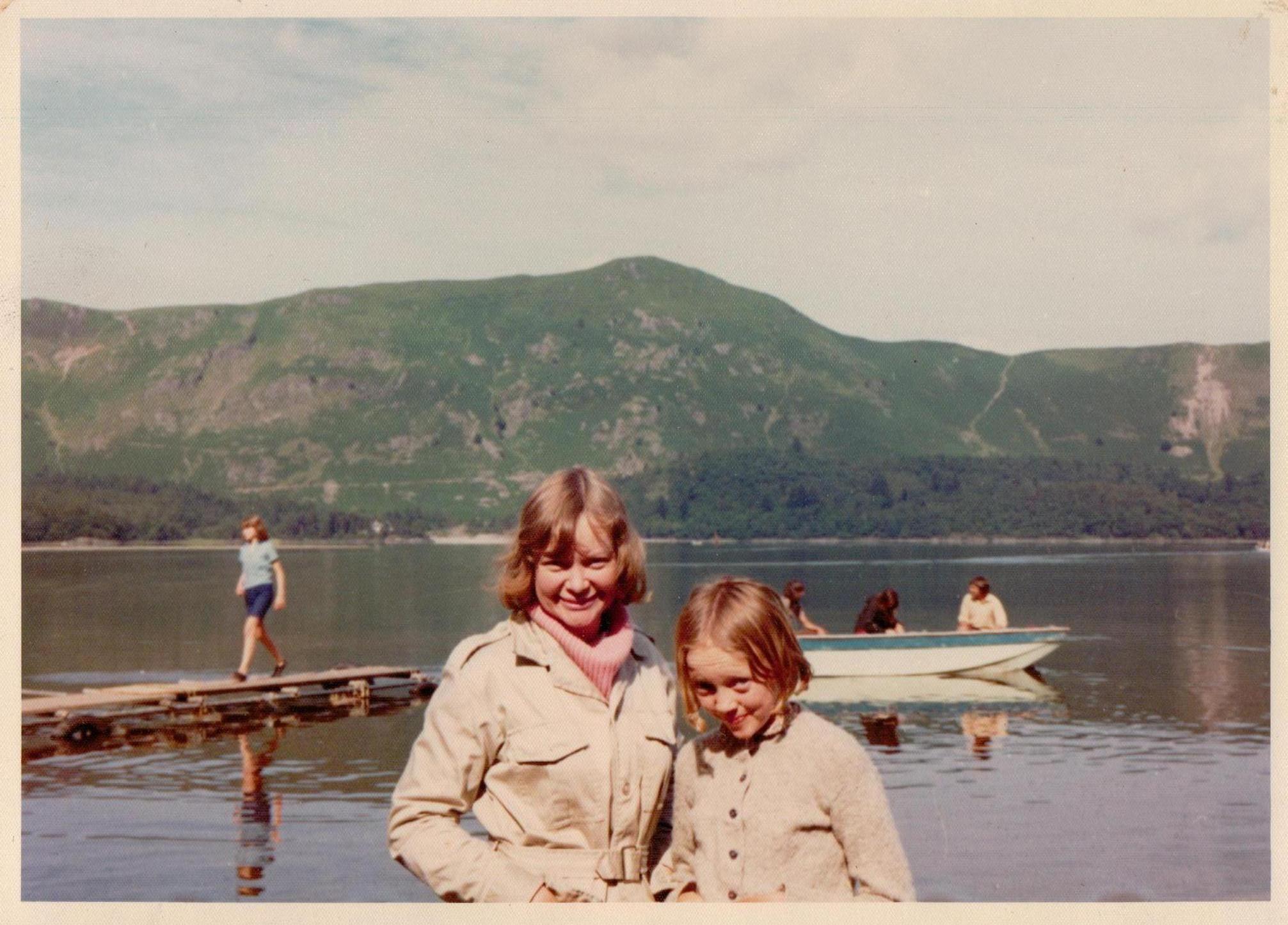
~ On Derwentwater in 1973: Suzannah Hamilton, Kit Seymour, Daphne Neville, Sten Grendon, Simon West, Sophie Neville & Lesley Bennett ~ photo: Martin Neville
Daphne Neville with Stephen Grendon, Suzanna Hamilton, Sophie Neville, fellow chaperone, Jane Grendon and Simon West on location in 1973
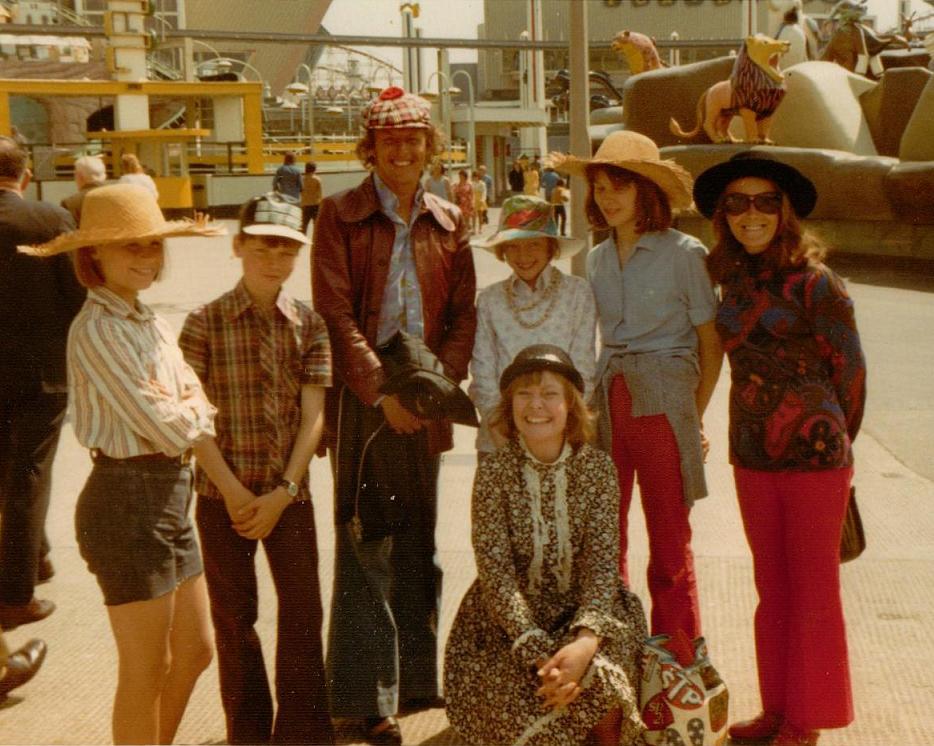
Suzanna Hamilton, Simon West, Claude Whatham Sophie Neville, Kit Seymour, Jean McGill with Daphne Neville kneeling at Blackpool fun fair in 1973
But Mum, were we ever ‘Film Stars’?
We scowled at the terminology at the time. Ten years later and I thought of us a merely puppets, marionettes of the director who carefully honed our performances. I can now see the contribution we made when I watch the film, but we were never film stars.
What do I wish? I wish that we’d been able to make a sequel and develop our work more fully. The flip-side of this would have been that any more success, or more publicity, might have stripped us of our anonymity, which is the bain of real film stars. We’d have had to go around wearing sunglasses.
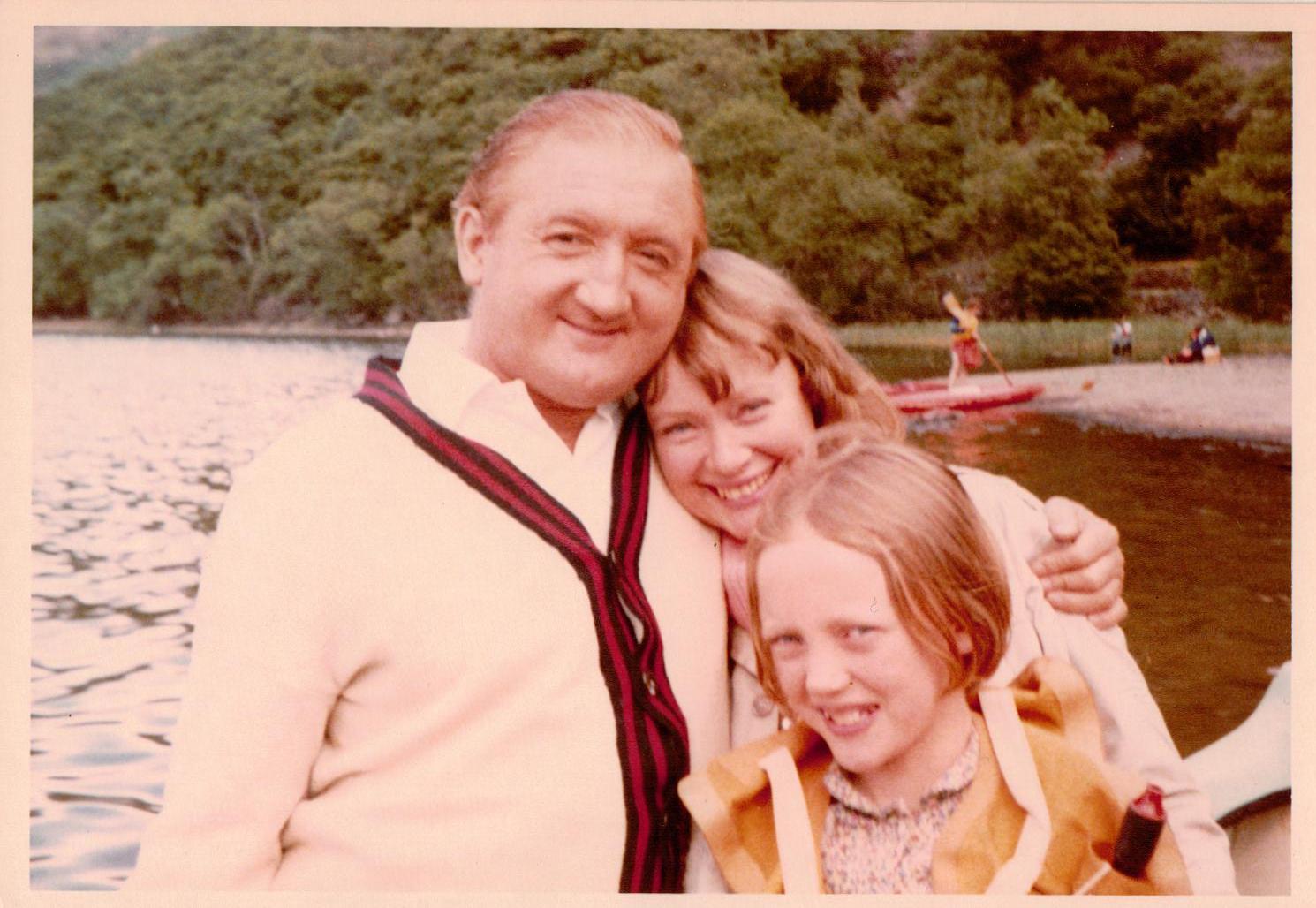
The film star Ronald Fraser with Daphne Neville and Sophie Neville in 1973
If you would like to see what we were filming 49 years ago, on 1st July 1973, please click here.
Do let me know, via the comments below, if you would like to see more archive material. I have the draft of my mother’s article for Woman magazine – it’s a different version of the same but with added detail. She needed permission from Anglo EMI Film Distributors before it could be published. There is also a draft of another radio script and a number of letters. If you would like to see vintage photos of Mum appearing on television herself, please click here
If you would like to read more about our adventures filming ‘Swallows and Amazons’, please click here
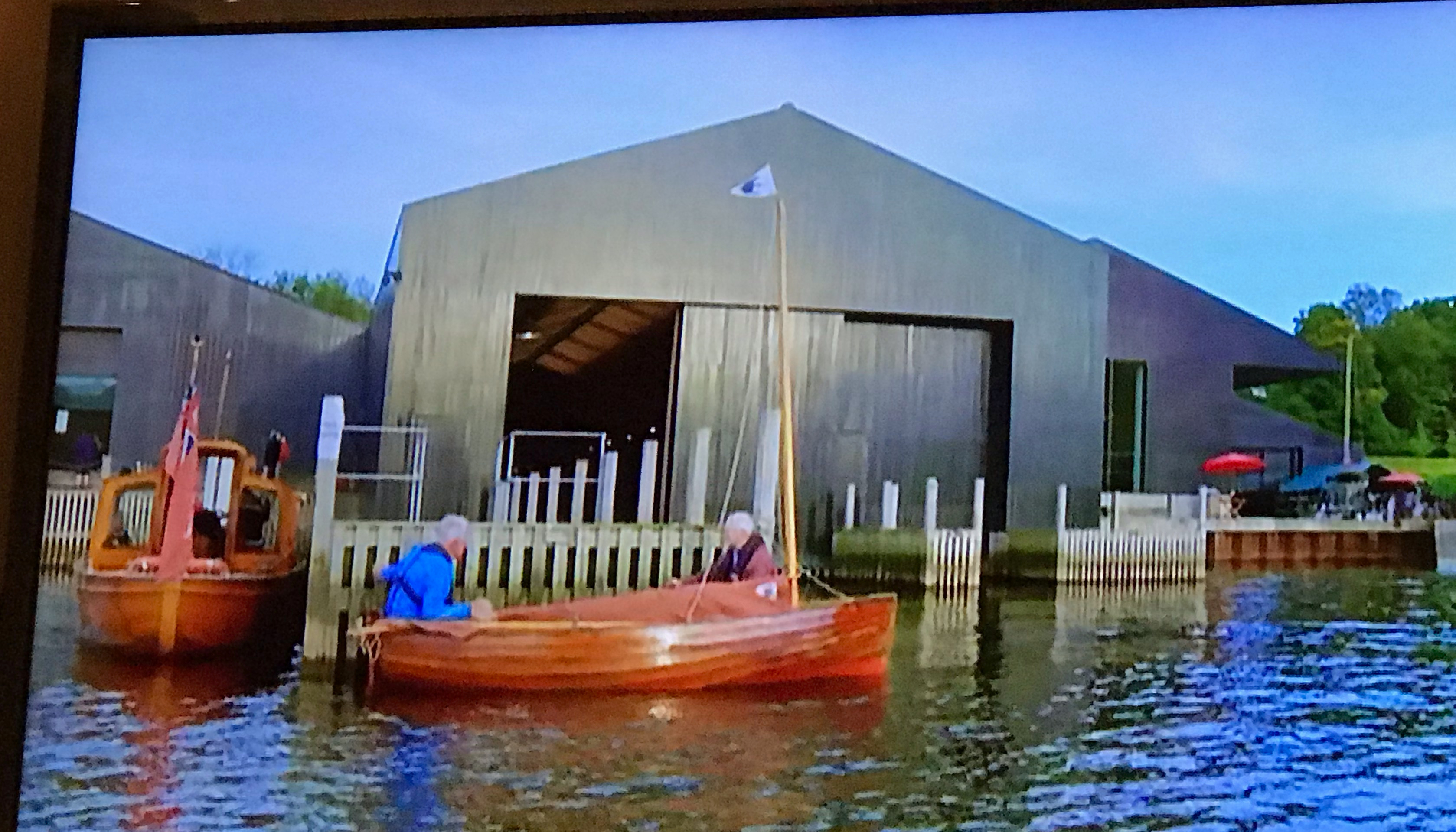
I was invited to talk about making the BBC TV classic serial ‘Coot Club’ and ‘The Big Six’ at the Norfolk Broads Yacht Club to help celebrate their 80th Anniversary. Titmouse, then 1930s dinghy owned by Hunter’s Yard had been brought down from Ludham for the occasion. The bonus was that I was able to go sailing in one of the classic boats gathered at the club for their Open Day.
Geoff and Rose Angell kindly took me out on Pippa, their beautiful yacht with brown sails that appeared in ‘The Big Six’. I am sure Arthur Ransome would have loved her.
Back in 1983, I spent nine months working on the BBC production when it had been my job to cast the children and teenagers who appear in the drama, many of whom needed genuine Norfolk accents.
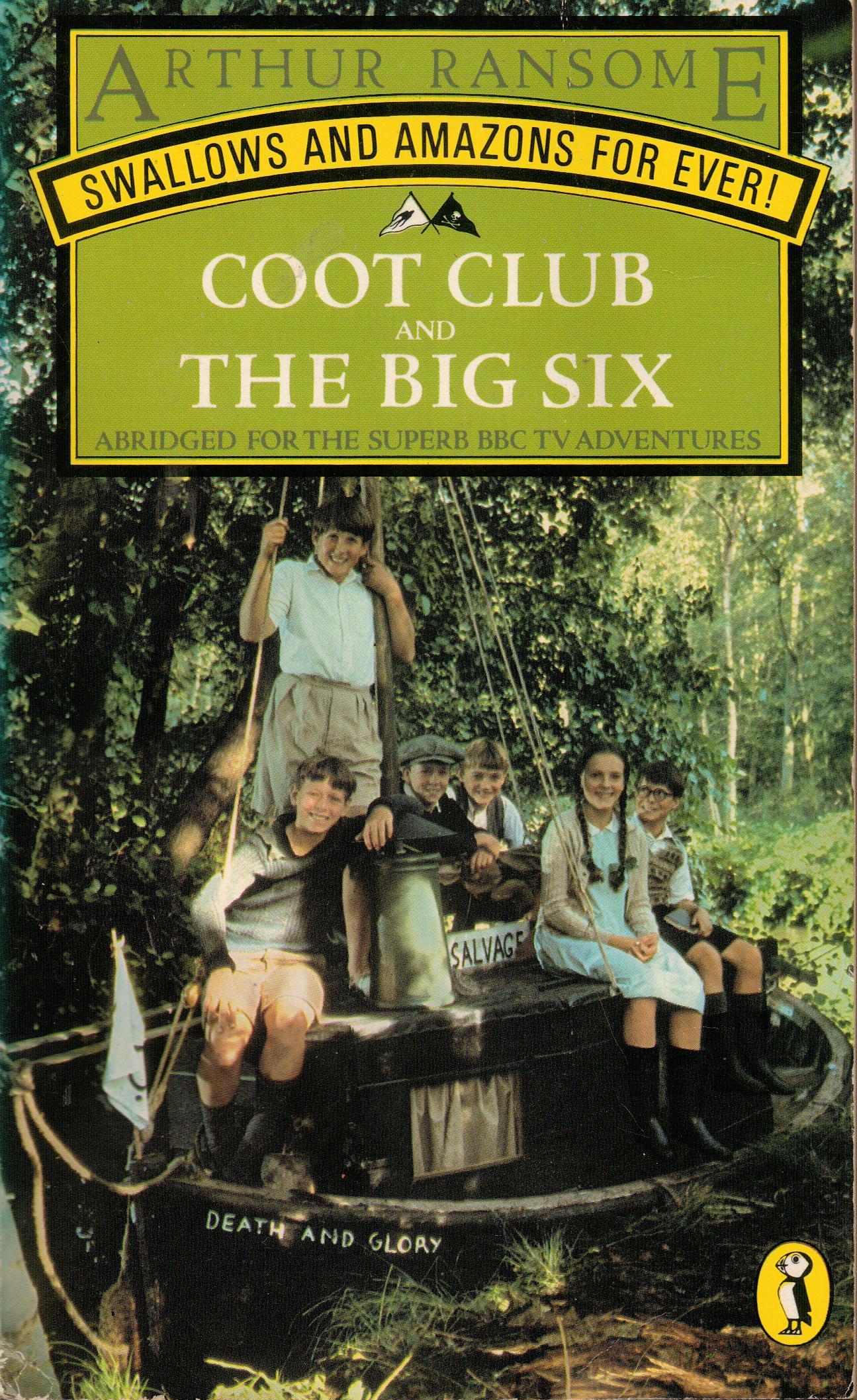
We had been looking for young actors who could swim well and were able handle boats. We then spent three months filming in East Anglia when I looked after the children and helped rehearse their lines. I set up this shot for the cover of the Puffin paperback that accompanied the series.
~Author Sophie Neville giving a talk at the Norfolk Broads Yacht Club~
At a forum organised after my talk, Pat Simpson from Stalham Yacht Services explained how he found one of the stars of the series – an old lifeboat suitable to play the Death and Glory. She had been brought from where she is kept at Belaugh for the evening. You can see more photographs of her in the previous blog post here.
Pat provided a number of other vessels for the series including Buttercup and support boats such as the safely boat, a large modern cruiser used as a school room along with another for the costume and make up personnel. He explained that this came as a god-send as boat rentals had not been good that summer. Working on the series was harder than he imagined, ‘We once had to take a boat from Regan to Horning Hall overnight’ but he was pleased that ‘after three months of concentrated work, we got it all done.’
~Robin Richardson~
Robin Richardson, who co-owned Pippa back in 1983, explained how the shot of her being cast adrift was achieved. This wasn’t as easy as first thought as even when Simon Hawes, who was playing George Owdon, flung her stem line on the deck, a gentle breeze was blowing her back against the staithe. ‘Pippa didn’t want to go anywhere’. Robin had to stage the action by throwing out a mud anchor, climbing under her awning and pulling on the line to create the effect of a boat drifting out of control into potential danger. Pippa’s white canvas cover is pulled back here, but you can imagine the scene.
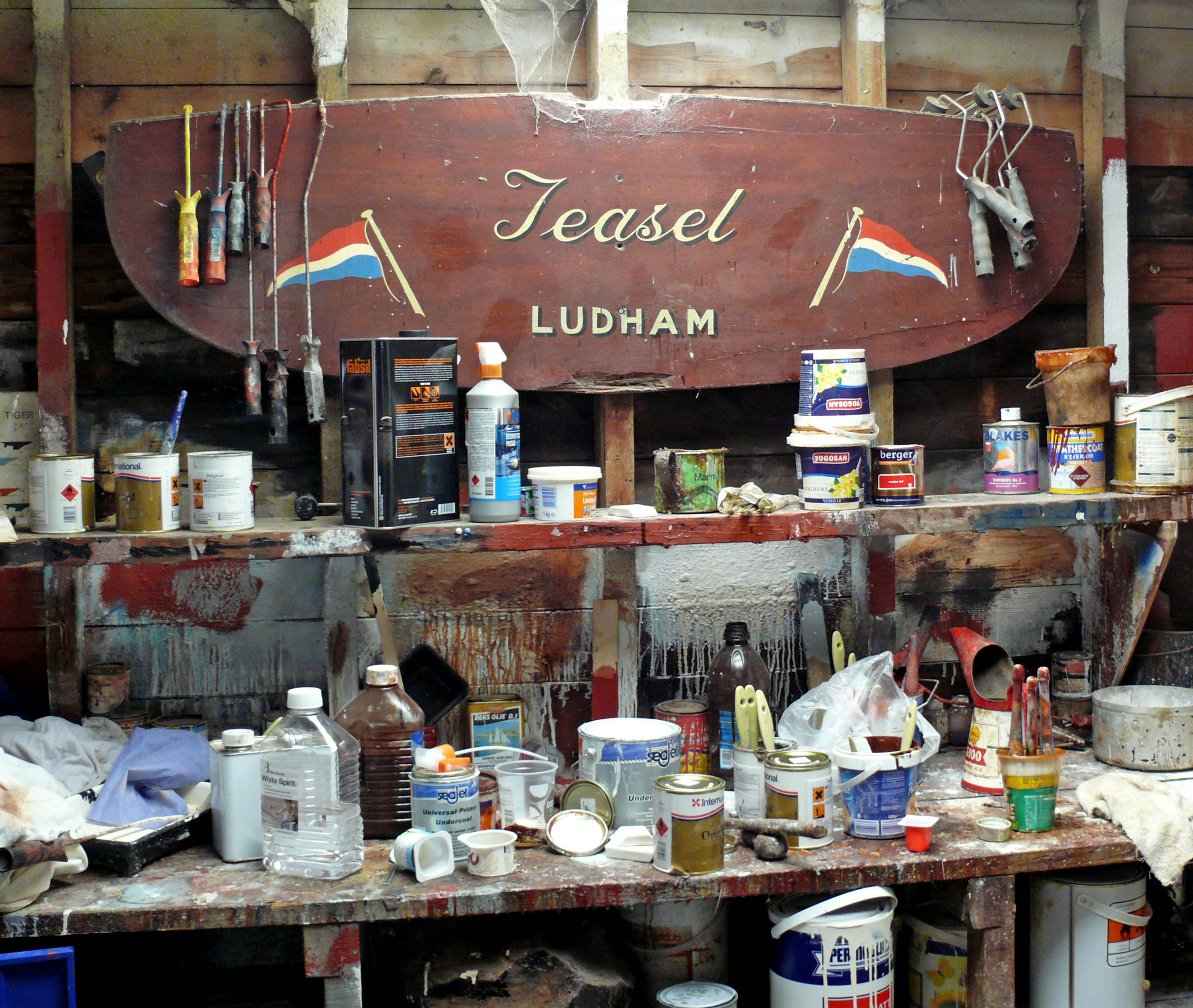
He was on location when Henry Dimbleby, who played Tom Dudgeon, was attempting to tow the Teasel under Potter Heigham bridge. He was rowing Titmouse, pulling hard on the oars but nothing was happening. ‘Stop for lunch,’ Robin advised the director, ‘and the tide will turn.’ This they did, and Henry we able to row under the bridge, towing the Teasel quite easily. Hunter’s Yard, who own Lullaby, who played the Teasle, could not bring her down for the weekend as she had been leased out with other boats, but they sent her transom, painted with her stage name.
Robin Richardson owns the ‘Slipstream’ class dinghy called Spindrift who played Shooting Star in the serial. She was built by her father but couldn’t be with us as they were not able to complete her winter maintenance in time but Richard Hattersley said she came tenth in this year’s Three Rivers race when only 15 of the 98 entries actually finished. It’s a 24 hour endurance challenge, which they completed despite light winds. He sent me this shot, ‘of her battling it out with much larger Thames A Raters.’
I was shown a wonderful black and white photograph of the vessel used to play the Cachalot. She was skippered in the series by the film actor Sam Kelly in the role of the unnamed pike fishermen who the Death and Glory boys simply called ‘Sir’. She is seen here with John Boswell, her real owner who has sadly passed away. His son, the artist Patrick Boswell, brought along an album of behind-the-scenes photos.
The theme of the weekend was ‘Boats of the 1930s’. I explained how Swallow, the dinghy used in the original film ‘Swallows and Amazons’ originally came from Burnham-on-Sea where she was made by W. King and Sons to be used as a run-a-round boat. She was stabilised by a keel that ran the length of the hull, as Ransome described. It makes her rather difficult to turn. You can sail her today and is in the Lake District right now. Please see Sailransome for details.
There was quite a bit of interest in memorabilia from the original movie ‘Swallows and Amazons’. I bought along the white elephant flag captured from Captain Flint’s houseboat in the 1974 film, which was approved by a young Amazon pirate.
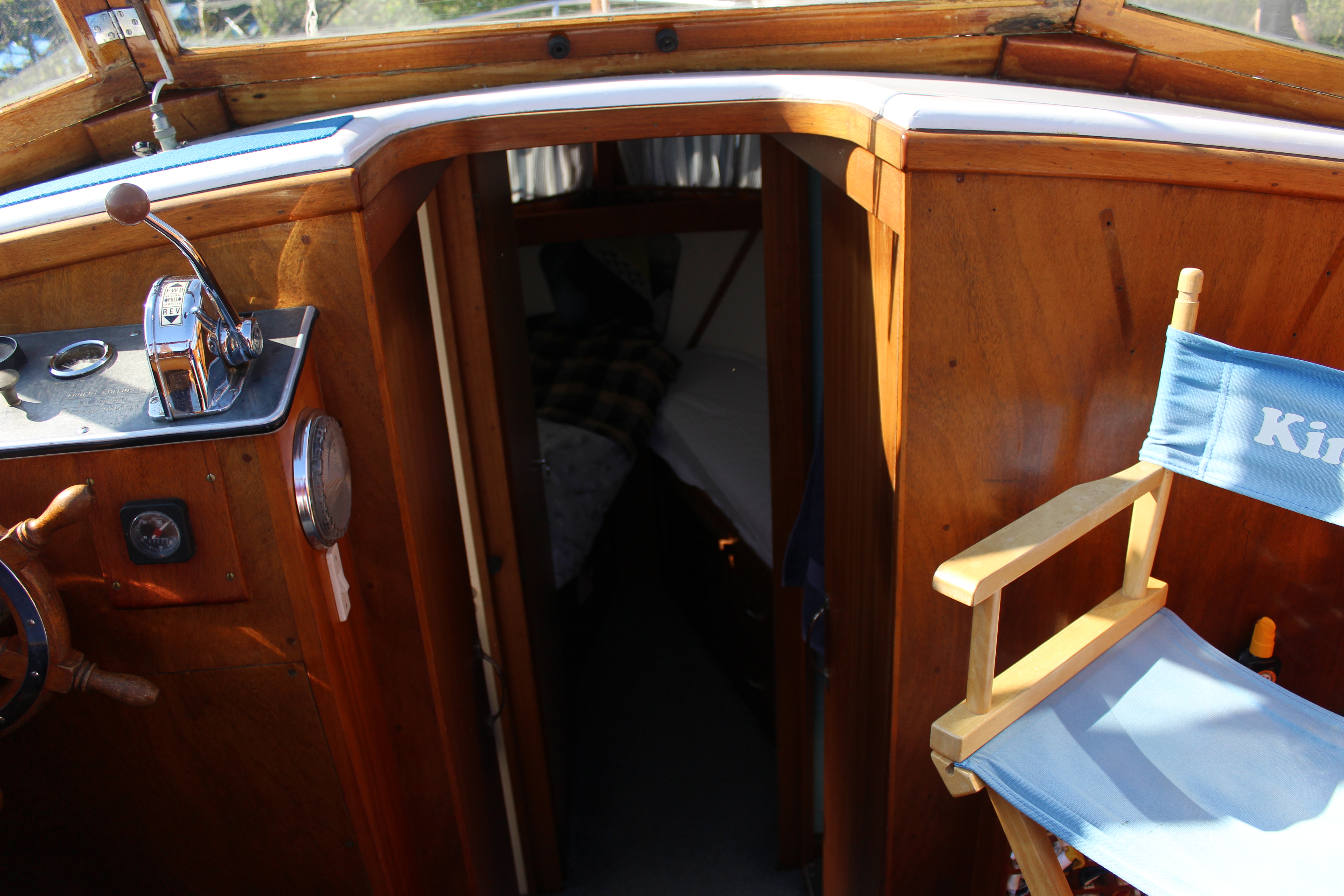
After a celebratory dinner, David and Nicky Talbot invited me to spend the night in the comfortable for’ard cabin of Kingfisher, a 1970’s motor yacht moored at the club.
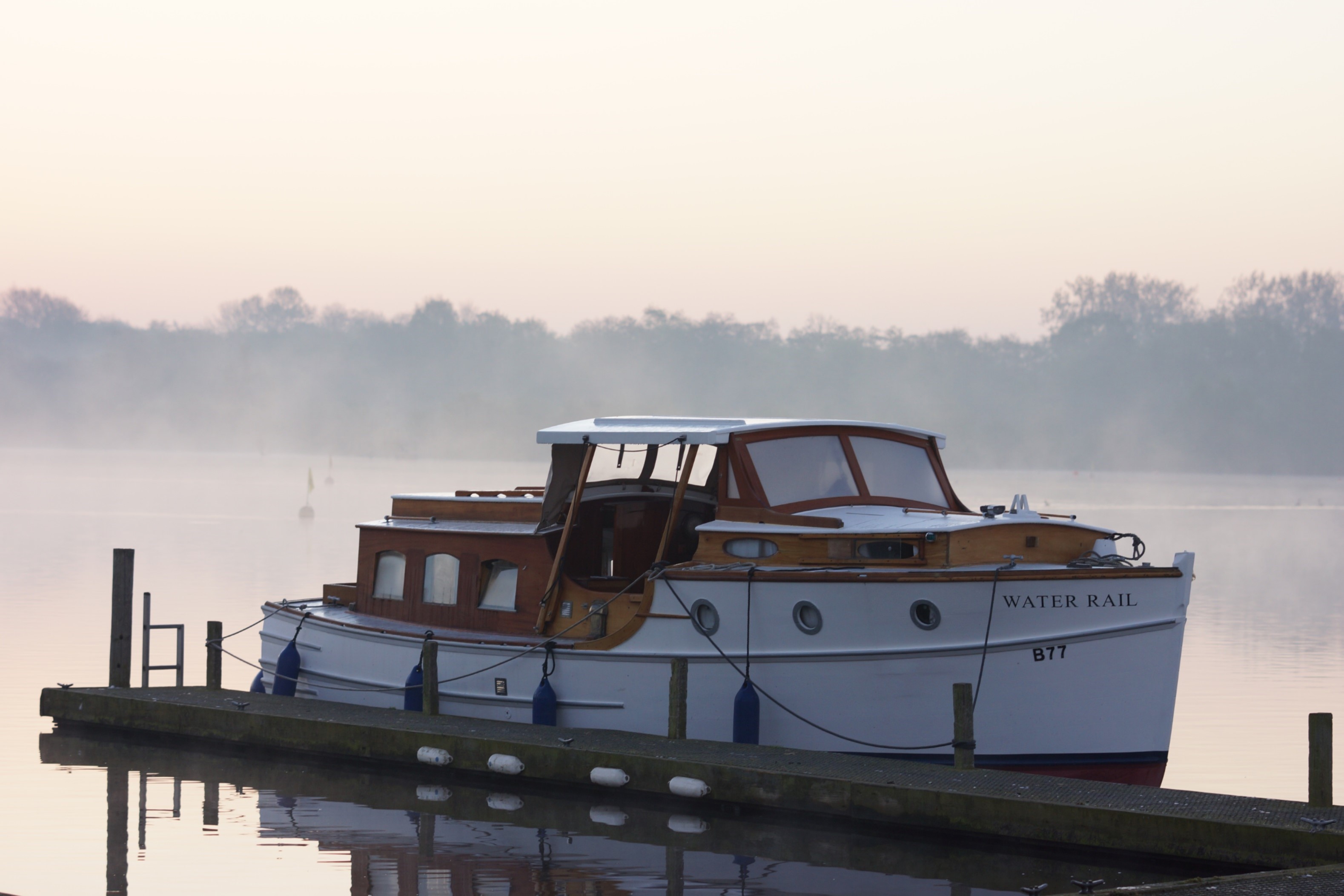
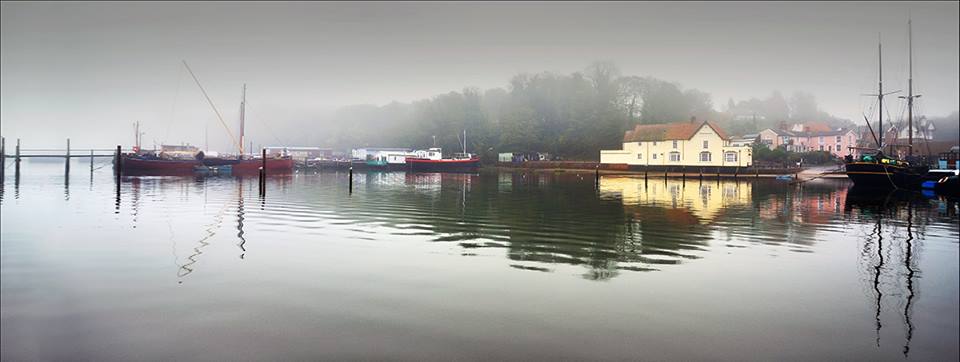
I woke early on the Sunday morning to find mist hanging above the water as the sun was rising on what proved to be another sunny day with a fair wind for sailing.
After breakfast aboard, I was invited out in the 1930s river cruiser ‘Water Rail’, who had also appeared in the serial. We took her down the River Bure to her mooring in Horning where she is still part of the scene.
It was wonderful to be out on the waterways of Norfolk, passing traditional buildings. This was a stretch of river never featured in the television drama as Rosemary Leach, who played Mrs Barrable, took Dick and Dorothea from Wroxham to Horning in a trap pulled by Rufus the pony. One reason for this was that in 1983 we had to use the North Norfolk Steam Railway, since Wroxham Station had been modernised but Joe Waters, the producer, said he wanted to add variety by featuring a pony rather than a motorboat.
We encountered a number of period cruisers, although Janca, who we used to play the Hullabaloos’ Margoletta, sadly could not be with us, as she is still under repair.
However, by motoring into Horning ourselves, we passed The Swan Inn and Horning Staithe where a number of scenes had been shot, including some that featured Julian Fellowes and Sarah Crowden, playing the hated Hullabaloos. You can see photographs of them in an earlier post here.
~Horning Staithe in Norfolk showing The Swan Inn~
Another vessel that interested me was a river launch that reminded me of the 1901 steamboat Daffodil, which I renovated with my father in 1978. I have photographs of her here.
You can read more about the traditional boats used in the series by clicking here.
Gerry Spiller, has written from Woodbridge in Suffolk, to say that she has found an oar labelled TITMOUSE, bought at a boat jumble. Could this date from the early 1930? Does anyone have the pair?
The DVD of the serial is now available on a re-mastered DVD, available from Amazon here
(Do not be tempted by the old version with a more colourful cover as the image quality is very poor)
Swallows And Amazons Forever! (Coot Club & The Big Six) SPECIAL EDITION [DVD]Additional photographs by Richard Hattersly
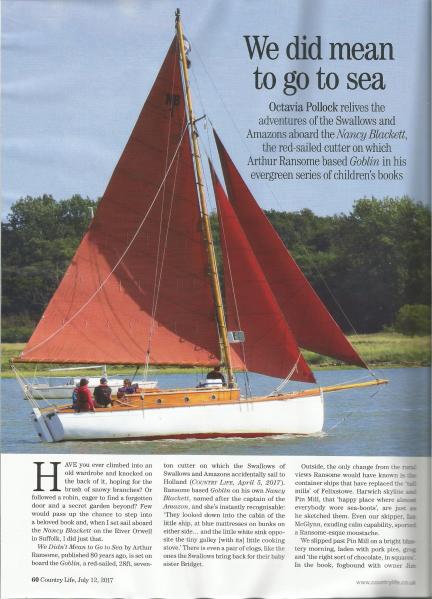
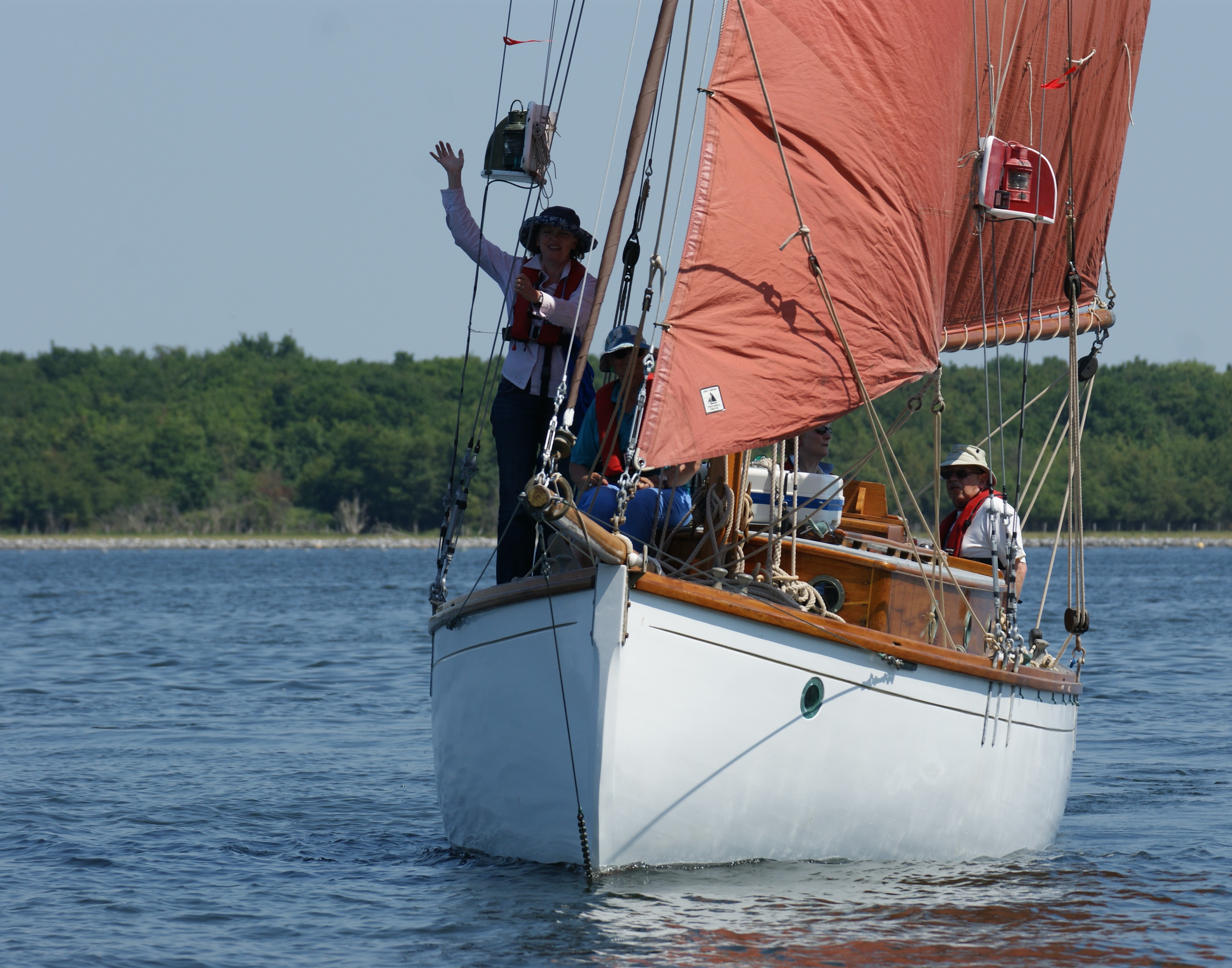
Nancy Blackett, the 28 foot cutter that Arthur Ransome bought with Spanish gold, as he called his royalties from ‘Swallows and Amazons’, is an old lady now. Built by Hillyards of Littlehampton in 1931, she turns eighty-five this year and yet looks pristine. If you ever wanted to sail the Goblin in ‘We Did Mean To Go To Sea’ you must know that it was Nancy who took this starring role in Ransome’s novel, first published eighty years ago.
Nancy Blackett
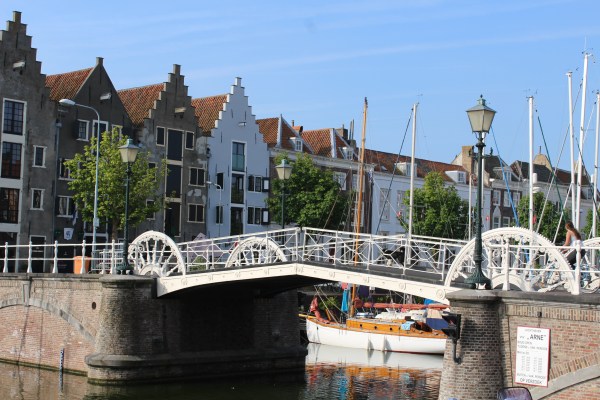
I arrived in the Netherlands this summer to find Nancy receiving visitors at a nautical festival in Midddleburg, while a jazz band played on the quay. She was moored by a lifting bridge in the centre of town, neatly rigged and ready for anything. After taking a look at a number of old gaffers, her crew enjoyed a cold beer and walked down the canal to vittel-up at a supermarket before having dinner in what was once a packing house for silks and spices imported from the East Indies.
Nancy seen through the swing bridge in Middleburg
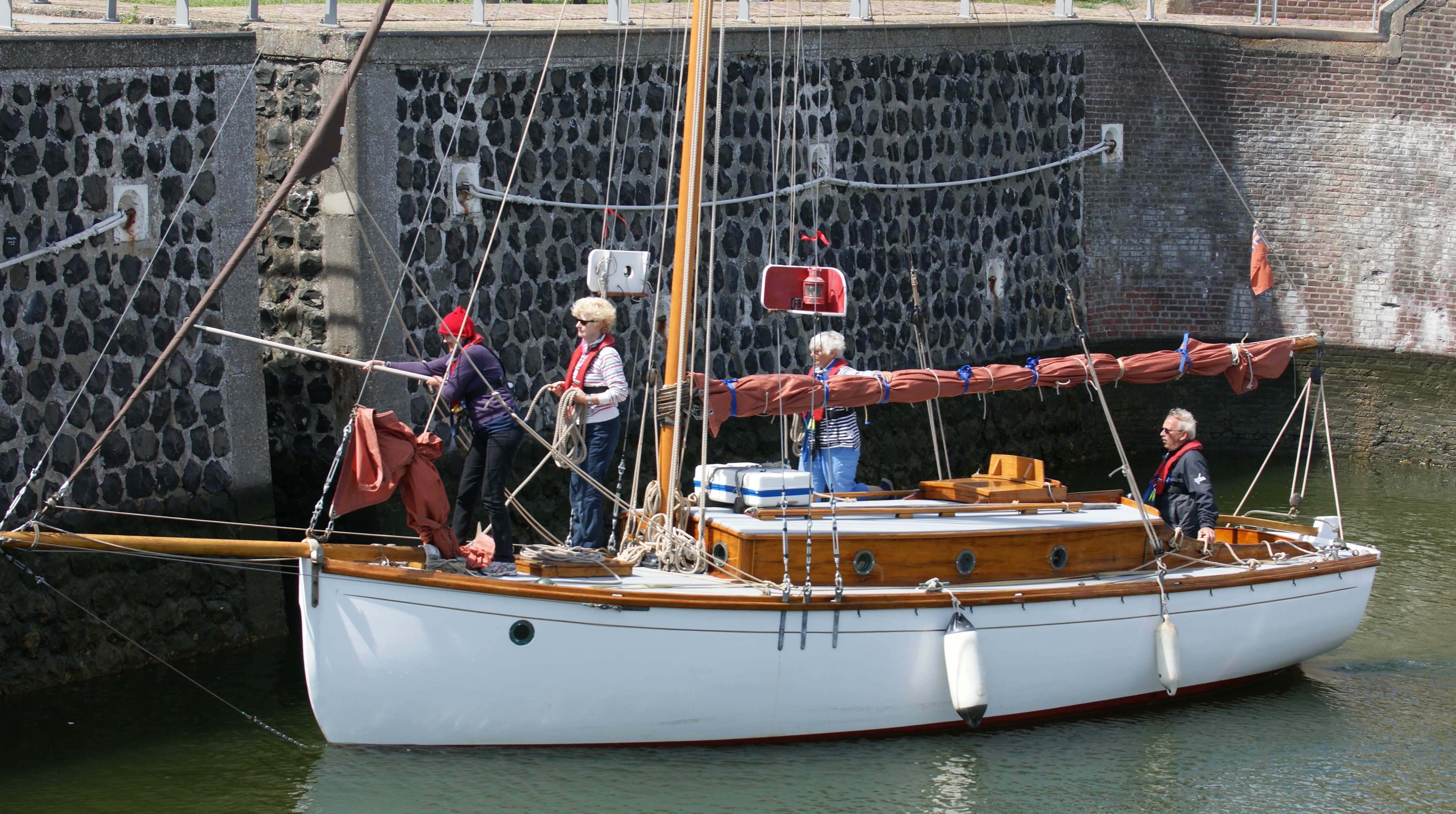
As the swing bridge rose the next morning, we made way and motored down the wide canal to Veere, mooring up by the grassy port bank.
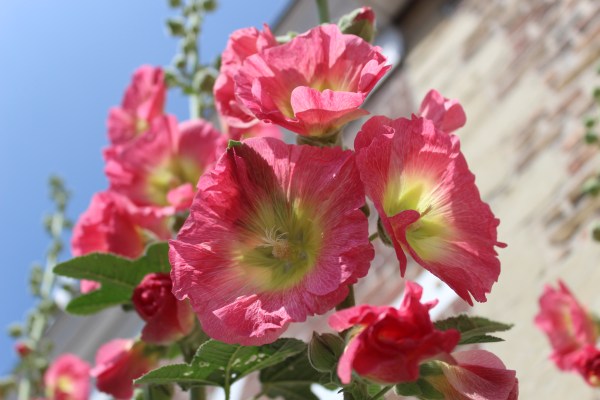
Hollyhocks of Veere
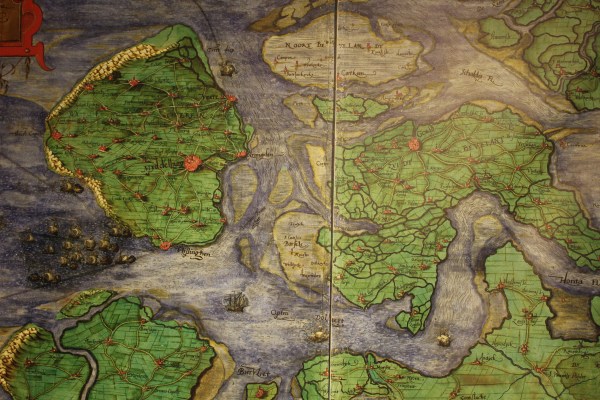
After being granted permission to go ashore, I passed the historic town well and walked down lanes bordered by hollyhocks to visit the museums of this ancient port. They house a number of charts and medieval maps that would have delighted the Swallows, along with old photographs of Dutch natives in traditional dress. I was tempted to buy a pair of clogs to take home for Bridget.
The waterways of Zeeland
We left Veere to explore the islands and creeks of the Veersemeer before sailing down-channel and through a modern lock into the Oosterschelde estuary formed by the River Scheldt. It was once an important shipping route that bought wealth to the Netherlands but is quieter now. I spotted a seal and watched a cormorant swallow a large eel, that wriggled and jiggled inside its gullet.
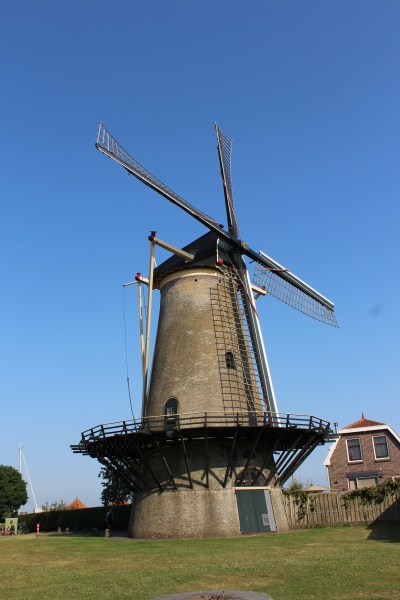
A windmill of Zierikzee
After negotiating the impressive Zeelandbrug that spans the delta, we sailed down to Zierikzee where you can climb the church tower, if you dare, and look out across the once fortified town. The windmills, ornate spires and ancient buildings help one to imagine what life must have been like in the 1500s when it became famous as a trading centre for salt and madder. I found scold’s stones and a whaler’s kayak from Greenland at the Stadhuis Museum in Zierikzee where Veronica Frenks was once the curator.
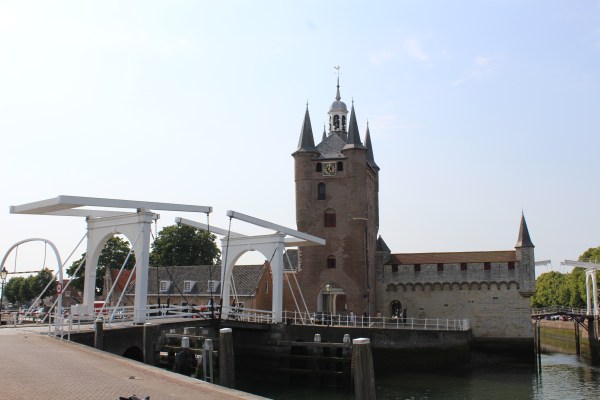
The lock gates of Zierikzee
Our skipper, Ian McGlynn, wondered if we could sail back under an arch of the Zeelandbrug instead of waiting for one section of the road to lift. Built between 1963 and 1965 the Zeeland Bridge is more than five kilometres long and hardly comparable to the arch of Potter Heigham but Mate Judy Taylor didn’t want to take any risks. We had Nancy’s new mast to consider.
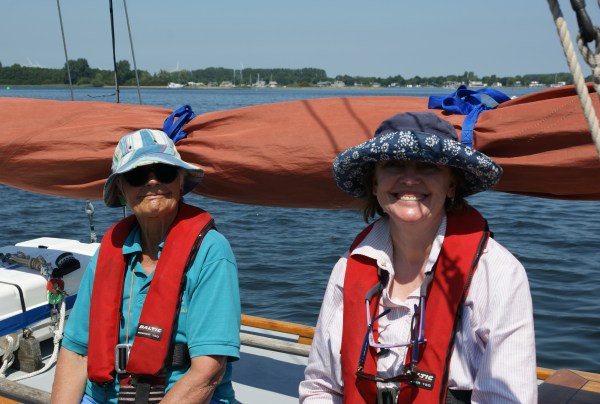
Crewing the Nancy Blackett
It was only on our last evening-but-one that rain hit us. We’d had blue skies and sunshine all week. As the salt water was washed away from Nancy’s portholes I opened the pages of ‘We Didn’t Mean To Go To Sea’ to find Ransome’s illustrations and read the final passages of the Swallows’ unplanned voyage to Holland. The book is eighty years old this year and yet moves me still. There is Nancy, portrayed as the Goblin moored up in a foreign port, which is where we left her to be enjoyed by other members of the Nancy Blackett Trust.
Nancy Blackett in Zeeland
A marathon reading of ‘We Didn’t Mean To Go To Sea’ is planned, to celebrate the 80 year anniversary of its publication, at Pin Mill Sailing Club on the Orwell in Suffolk on Saturday 21st October 2017.
To read more about Nancy or join the Nancy Blackett Trust please click here
Nancy has been featured by Country Life in a July issue you can read here
One summer, I grabbed the chance to sail Arthur Ransome’s favourite little ship, the Nancy Blackett.
~ Nancy Blackett under sail on the Veersemeer in Zeeland this June ~
If you recognise her, it might be because she was his model for the Goblin in ‘We Didn’t Mean To Go To Sea‘, possibly the most exciting and touching of the Swallows and Amazons series of books. I re-read it while we were in Dutch waters aboard the main character herself.
~ Beach End Buoy at the mouth of the River Orwell in Suffolk ~
In the story, the Swallows – John, Susan, Titty and Roger Walker – promise their mother that they will not go to sea, but disaster strikes when the Goblin slips her anchor in thick fog, while her owner is ashore, and gets swept out past the Beach End Buoy at Harwich. The wind rises and the children find themselves sailing across the North Sea in a terrific storm before a friendly Dutch pilot guides them into Flushing.
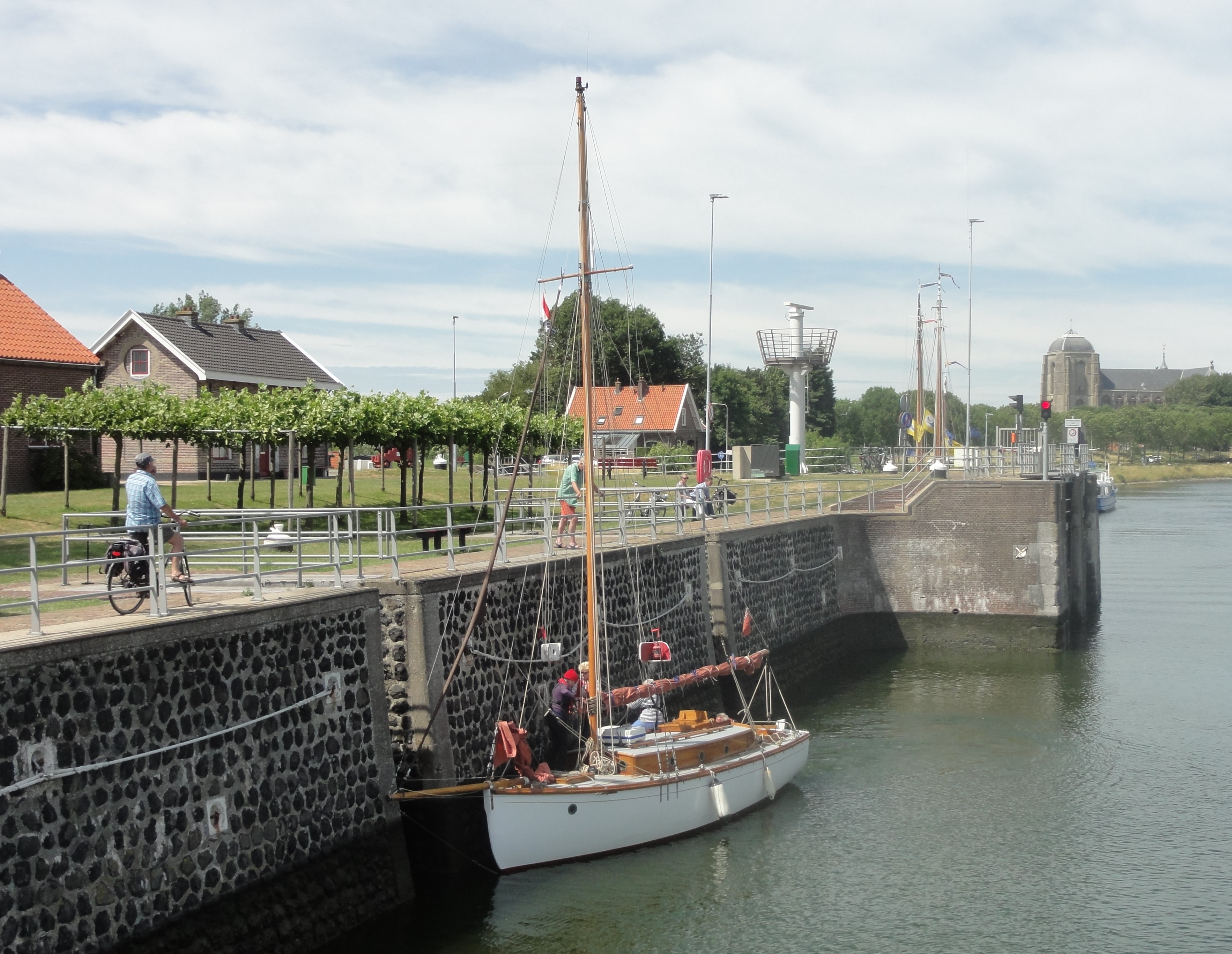
~ Nancy in the old lock at near the medieval port of Veere ~
I was able to join Nancy when she had already made the crossing to the Netherlands but did take her through an old lock built in the same style as the one the Swallows encountered, all be it at the other end of the Dutch canal. It was as if we had sailed into the pages of the book and lived out the adventure ourselves, learning about ropes and reefing each nautical mile.
Mooring up could be tricky, especially since Nancy is an old lady with a bow-sprit, but unlike Susan and Titty, I never felt sea-sick for a moment.
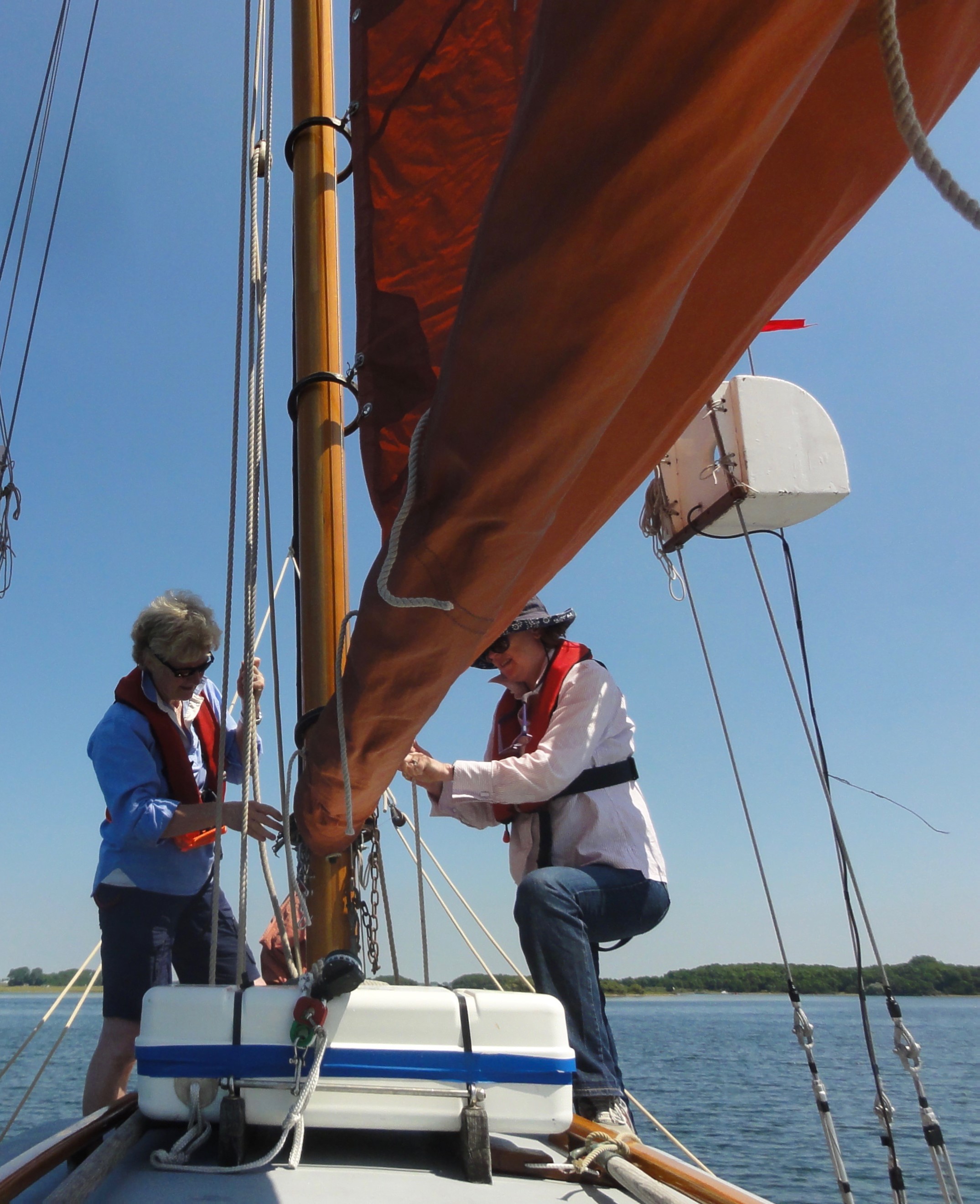
~ Learning how to hoist the mainsail ~
~ The Nancy Balckett undersail on the Veersemeer in the Netherlands ~
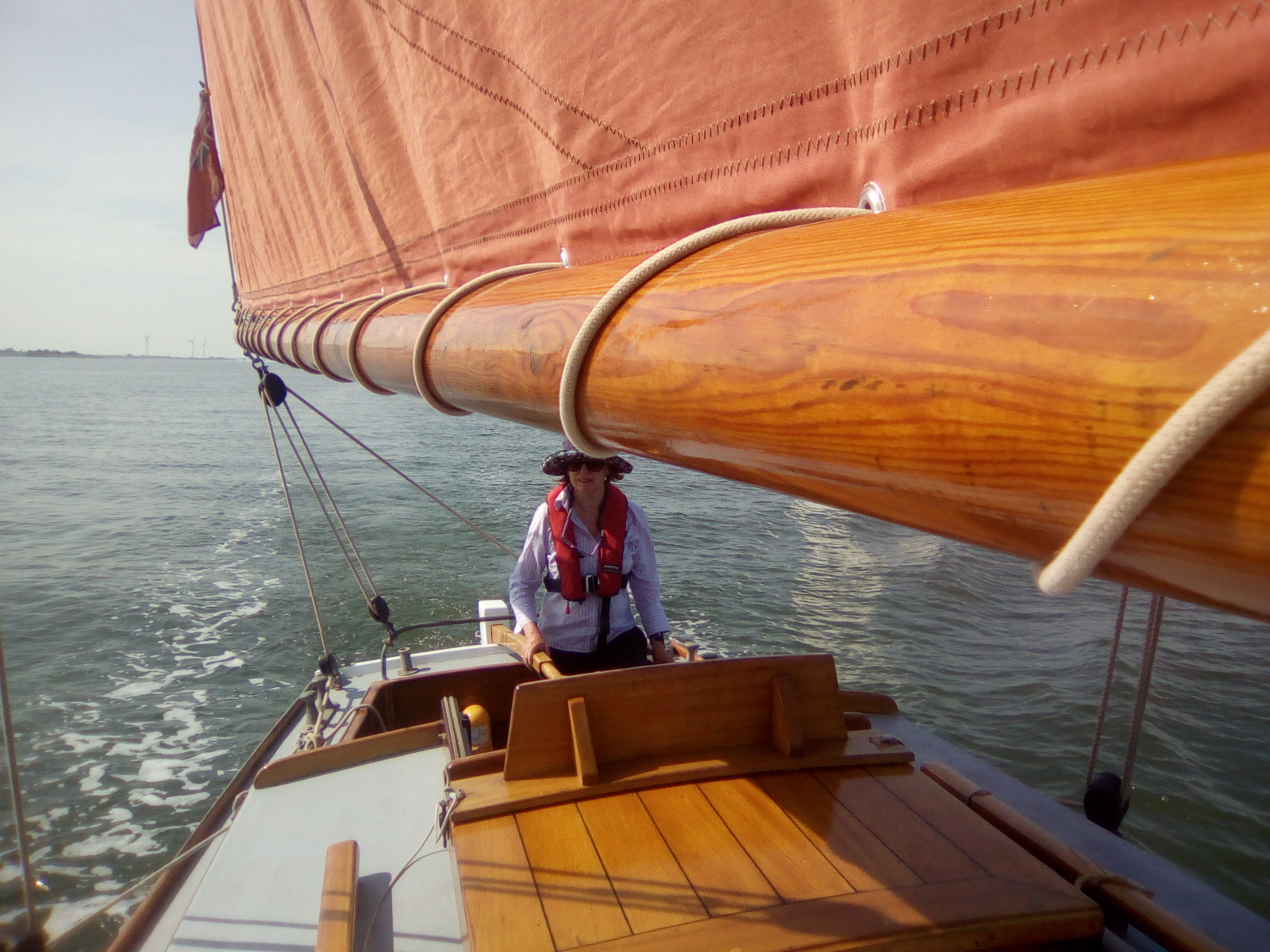
~ Sophie sailing in salt water ~
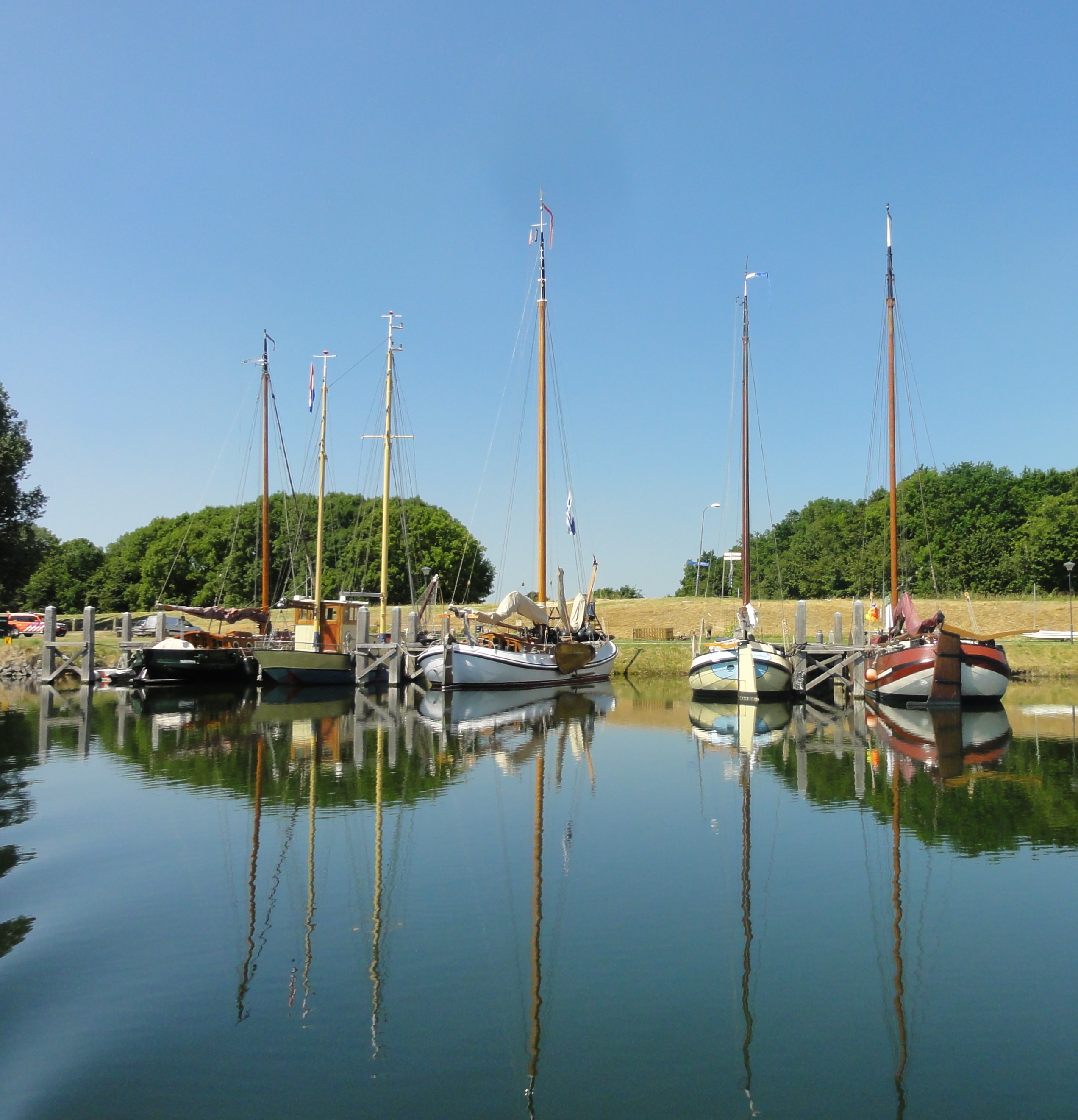
~ Keeping a look out for Dutch barges ~
Local author Veronica Frenks came out one morning, taking us up a creek to see the traditional Dutch barges and historic ships that she often writes about. She soon made plans to write about Arthur Ransome for Spiegel der Zeilvaart, a Dutch periodical. Here she is with me, at the helm:
To read about sailing Nancy on the River Orwell in Suffolk, where she is based. please click here.
To read about sailing Nancy on the Beaulieu River and the Solent, please click here
If you would like to grab a chance to sail Nancy or find out more about the Nancy Blackett Trust, please click here
photographs by Veronica Frenks of Ma Plume, Judy Taylor and Sophie Neville
One year, not so very long ago, members of the Nancy Blackett Trust hosted an Arthur Ransome Jamboree at Pin Mill in Suffolk. It was a day to remember.
Although Ransome is remembered for his ‘Swallows and Amazons’ books set in the Lake District, he moved to the east coast of Suffolk in 1935 where he set a number of other books in the series. It seemed fitting to mark the 80th anniversary of the publication of his inspirational sailing book ‘We Didn’t Mean to Go to Sea’ that begins at Pin Mill.
It is possible go aboard the Goblin, since she was modelled on Ransome’s own favourite little yacht, the Nancy Blackett. I joined her at The Royal Harwich Yacht Club where she was moored alongside Peter Duck one of his other much-loved yachts, named after the adventurous book he wrote that begins in Lowestoft. I met up with Octavia Pollock, a feature writer from Country Life, and walked down the riverside to enjoy supper at the Butt and Oyster in Pin Mill where Ransome himself often ate.
Soon after leaving university, I worked behind the camera on the BBC TV adaptations of ‘Coot Club’ and ‘The Big Six’, Ransome’s two books set on the Norfolk Broads, in which the Coots also visit Beccles in Suffolk.
It was the Swallows who made it to Pin Mill. I first went there when The Arthur Ransome Society asked me to give a talk about making the BBC TV serial entitled, ‘Swallows and Amazons Forever!’ and signed copies of ‘The Making of SWALLOWS and AMAZONS – 1974’.
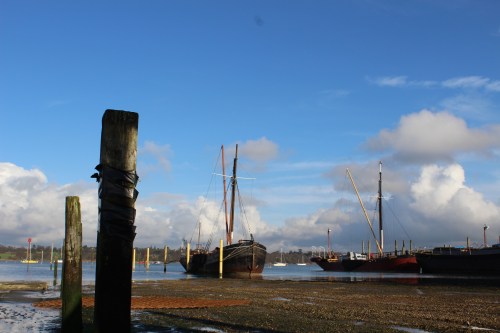
~The Orwell at Low tide~
During the Jamboree celebrations, Arthur Ransome’s biographer Professor Hugh Brogan was interviewed by erstwhile BBC reporter Tim Fenton at the Pin Mill Sailing Club.
Hugh spoke eloquently, telling me that he was motivated by rage to write The Life of Arthur Ransome after a Fleet Street reviewer of the original film ‘Swallows & Amazons’ described him as ‘right-wing’.
~ Sophie Neville ~
This VisitEngland event was great fun. There was a geo-caching route along the footpath from Shotley to Pin Mill. Marine artists Claudia Myatt and Christine Bryant hosted drop-in sessions on the riverside where visitors could also find the Rabble Chorus singing, while the author Julia Jones spoke about her children’s books set on the Orwell at the sailing club.
~Mugs with artwork by Claudia Myatt sold in aid of the Nancy Blackett Trust~
There was an outdoor installation of old Pin Mill images enabling you to look back in time. These were taken by Arthur Ransome himself of the building of his boat Selina King at King’s boatyard nearby. It was the first public exhibition of these pictures ever seen and was appreciate by the hundreds of visitors who turned up.
The Pin Mill Studio also hosted an exhibition of photographs from the restoration of Melissa, a barge restored to her former glory by Webb’s boatyard, with additional archive images of Pin Mill from the early 1900’s.
The Vintage Mobile Cinema, as seen on BBC Television’s Reel History of Britain, screened unique archive film of Pin Mill and Shotley.
~The Nancy Blackett in her 85th year~
A Pin Mill ‘Wooden Boat’ race was held along the stream leading down to the river and you could take a ride on the Victorian swing boats on the Common as in years gone by. There was a ‘pirates and seafarers’ fancy dress competition for children and an Arthur Ransome lookalike competition (pipe and moustache) along with stalls and sideshows from local groups, charities and organisations.
Live music, including shanties from Pin Mill favourites, High Water Mark and a performance of We Didn’t Mean to go to Sea by pupils from Holbrook Academy who entertained visitors while cream teas, a barbecue and refreshments were served at the Butt and Oyster and Pin Mill Sailing Club.
T-shirts celebrating this special anniversary were sold along with gifts to generate funds for The Nancy Blackett Trust, who celebrate their 20th anniversary this year.
Do let us know if you came along by leaving a comment!
To read more please visit the Nancy Blackett website by clicking here.
You can read about the making of the original film of Swallows and Amazons here:
‘Unlike other films, ‘Swallows and Amazons’ is within children’s reach,’ I’ve been told. It’s true. Any child can pretend that their bed is a sailing dinghy taking them to a deserted island. And when you are a little bit older – it’s not impossible to join a sailing club or go camping.
We took Swallow to join the Aldeburgh Junior Lapwings on the River Alde in Suffolk.
One intrepid sailor had bought her own Lapwing for £100, raising the money by busking in Aldeburgh High Street. Tilly renovated and varnished the clinker-built dinghy herself.
She can be seen here teaching the younger children how to owl hoot, playing ‘What Shall We Do With The Drunken Sailor’ on her thumbs.
The children went fishing for crabs, which they later raced down the slipway.
They went in search of treasure – if that is what you call a scavenger hunt –
before sailing back to camp by the mud flats, cooking out in the open and sleeping in tents.
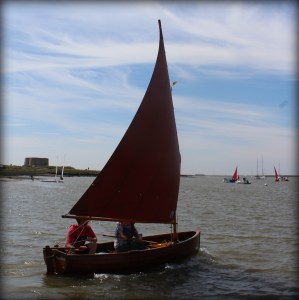
They launched their dinghies, raised their red sails
and headed off, catching the tide.
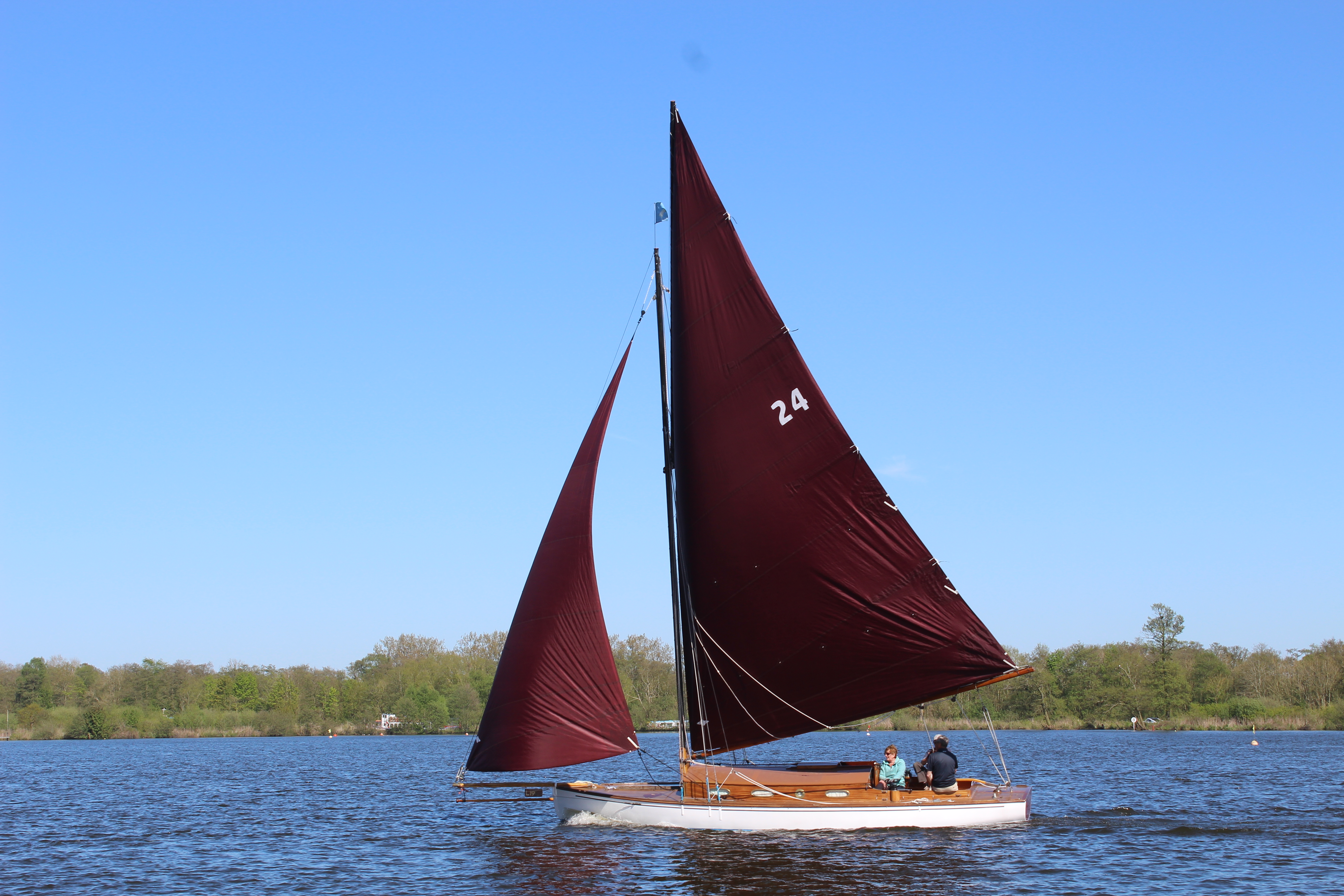
Swallow, the dinghy used in the 1974 film ‘Swallows & Amazons’ acted as flag ship.






 ~Sophie Neville dressed as a medieval archer in 1969~






















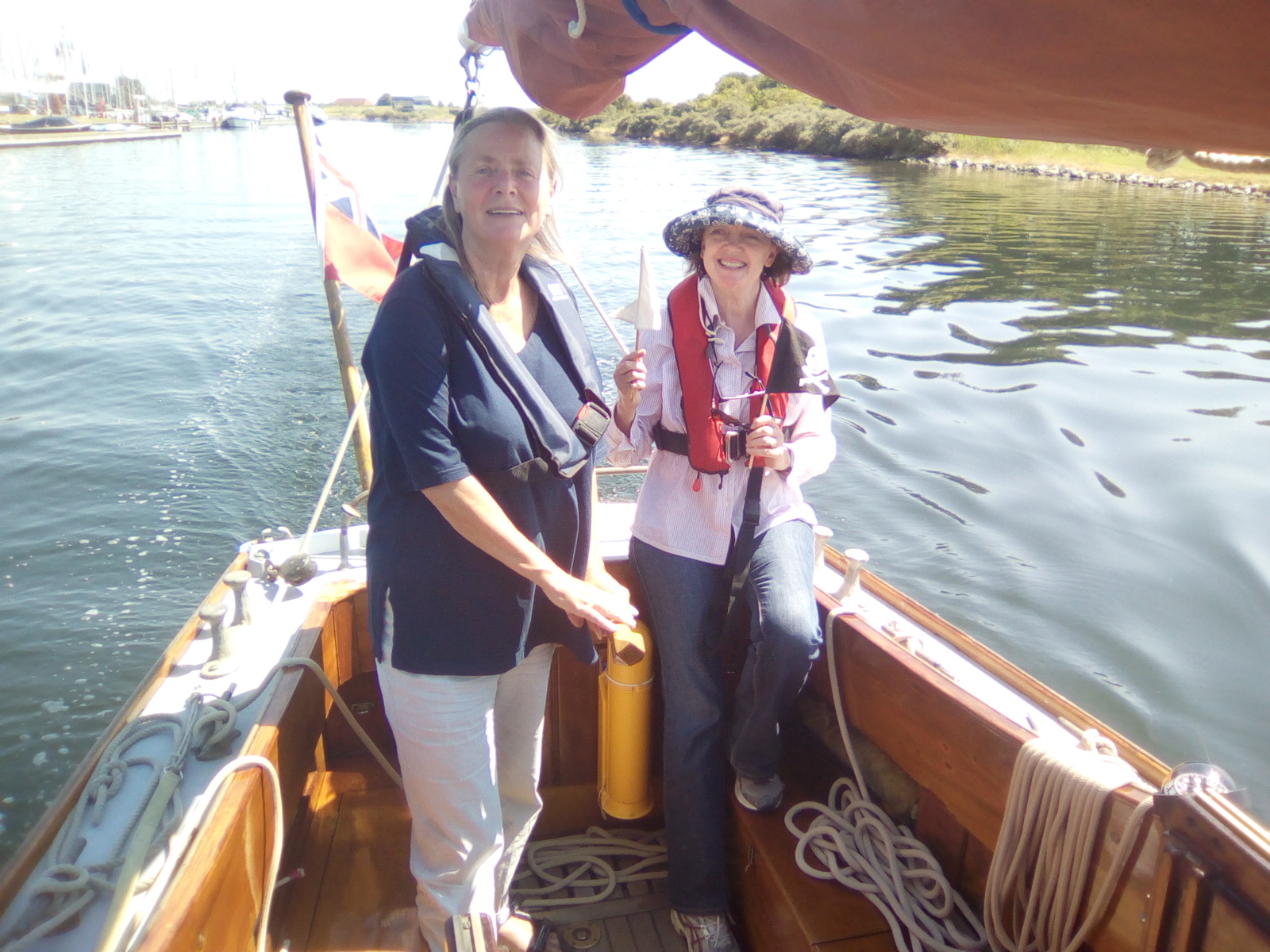


 Hugh spoke eloquently, telling me that he was motivated by rage to write The Life of Arthur Ransome after a Fleet Street reviewer of the original film ‘Swallows & Amazons’ described him as ‘right-wing’.
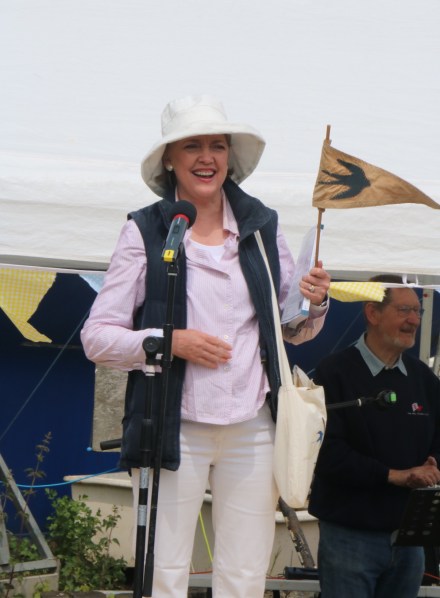 ~ Sophie Neville ~
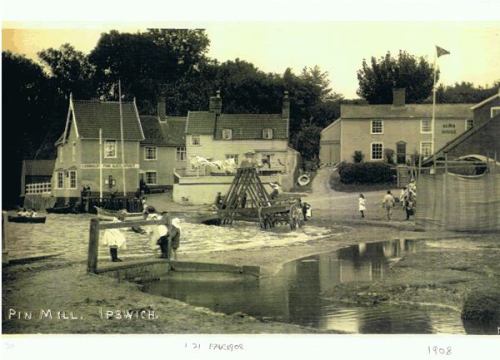


 We took Swallow to join the Aldeburgh Junior Lapwings on the River Alde in Suffolk.


 before sailing back to camp by the mud flats, cooking out in the open and sleeping in tents.
 They launched their dinghies, raised their red sails