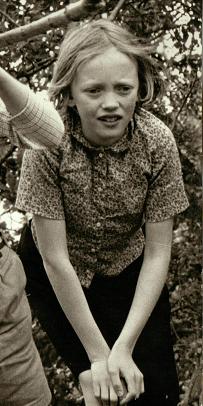
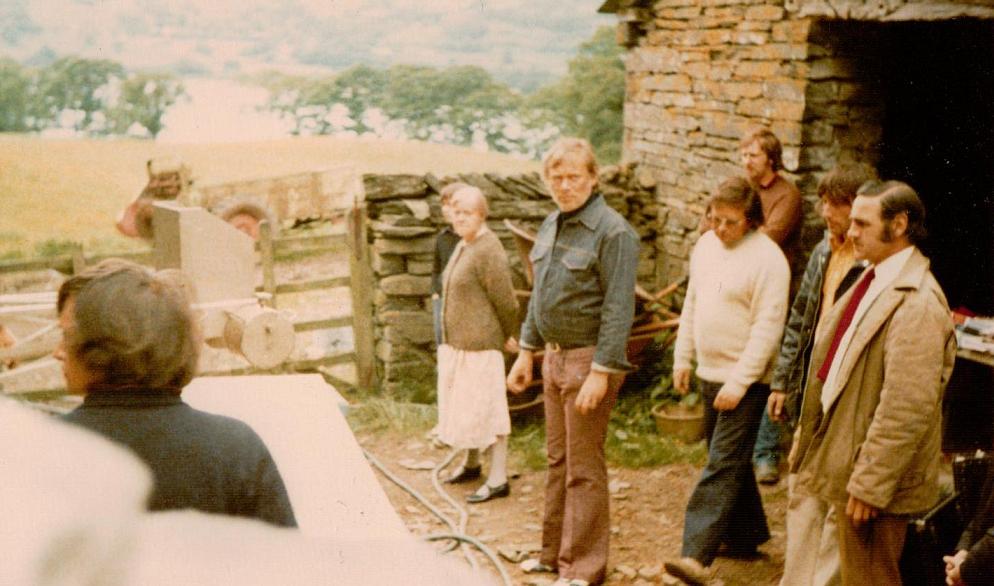
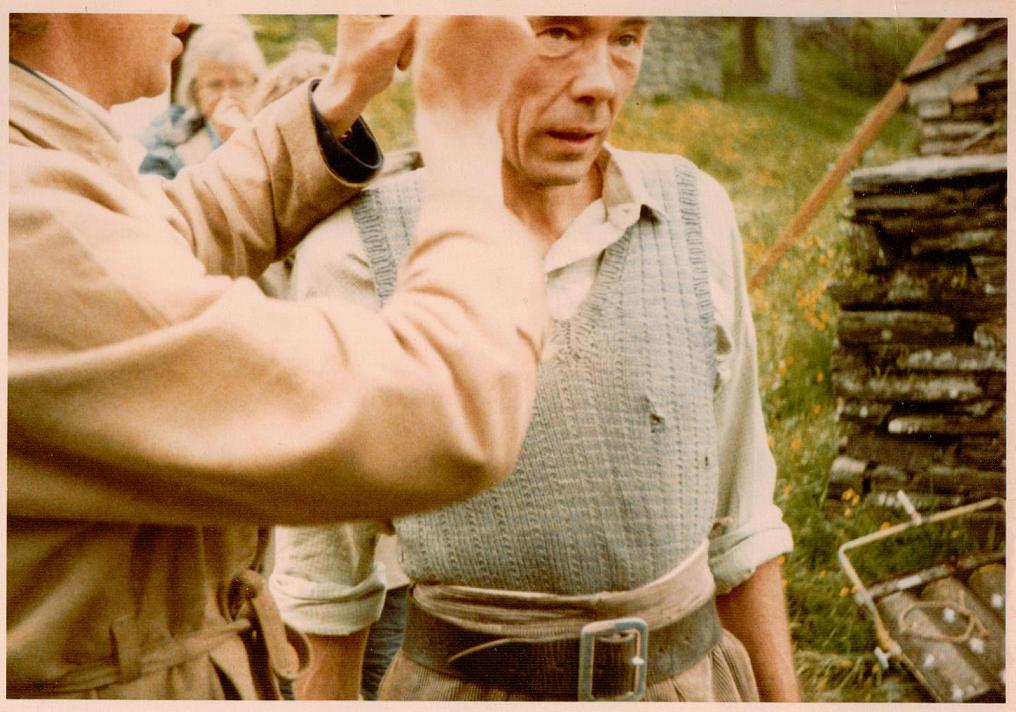
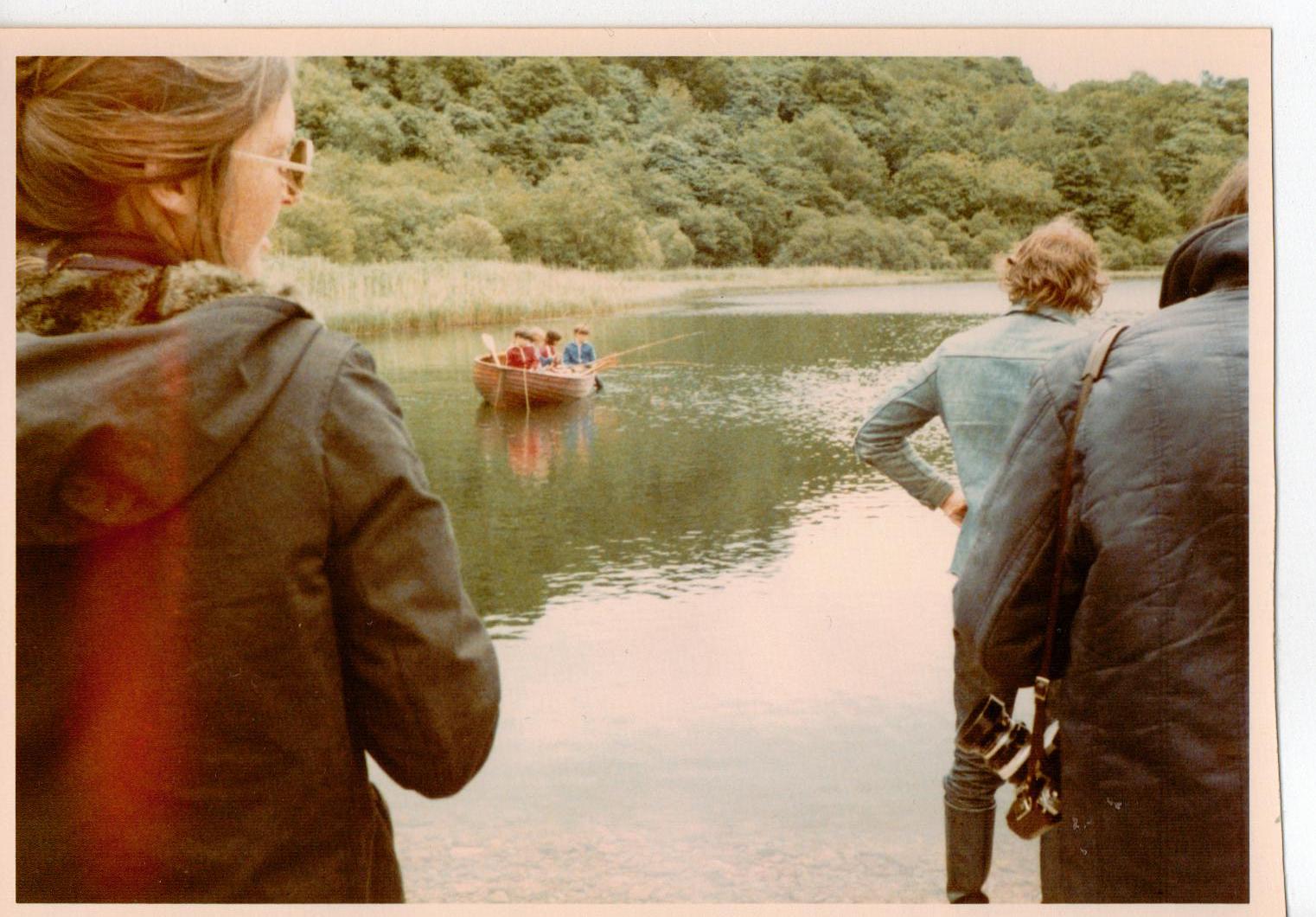
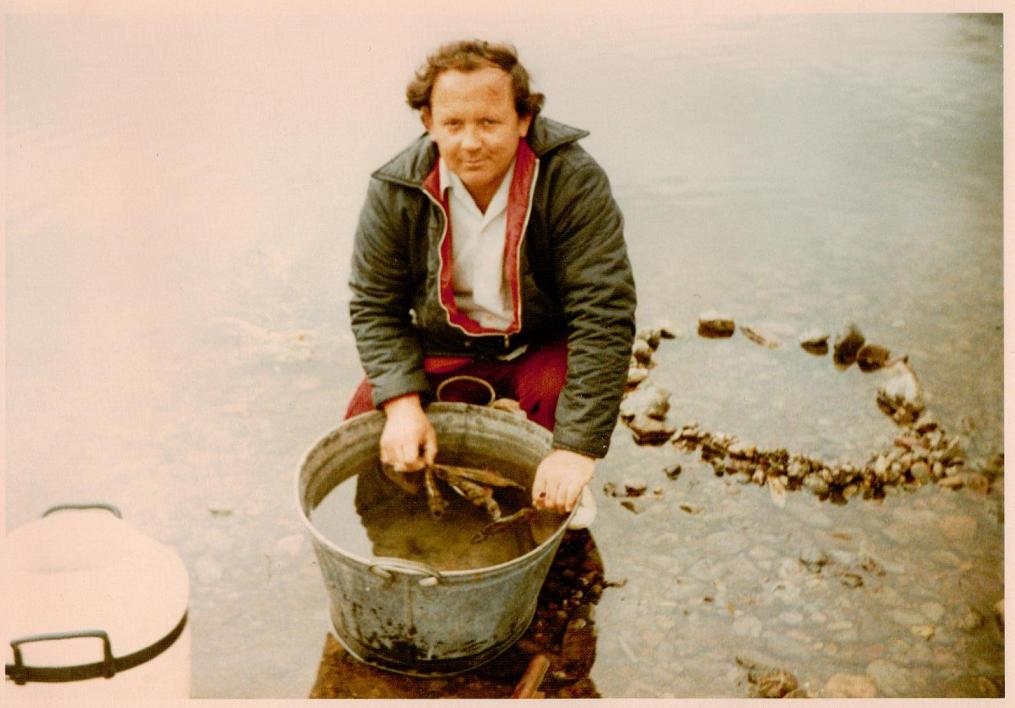
Sten Gredon as Roger Walker being taught to swim by Suzanna Hamilton playing his sister Susan Walker on location at Peel Island on Coniston in 1973
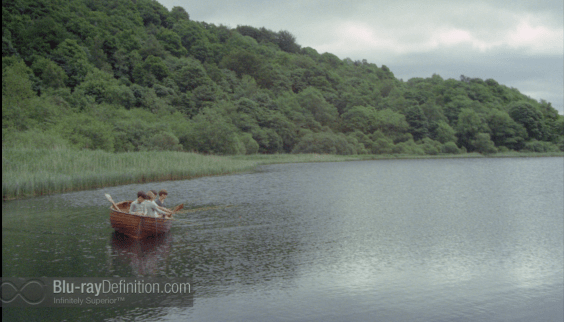
Roger still couldn’t swim, but he was trying to. Very hard. The production manager had kindly scheduled the second of our swimming scenes as late in the summer as possible. The weather was warmer – we’d elected to go bathing in a river up near Rydal Water on our day off – but it was still pretty chilly out on Coniston.
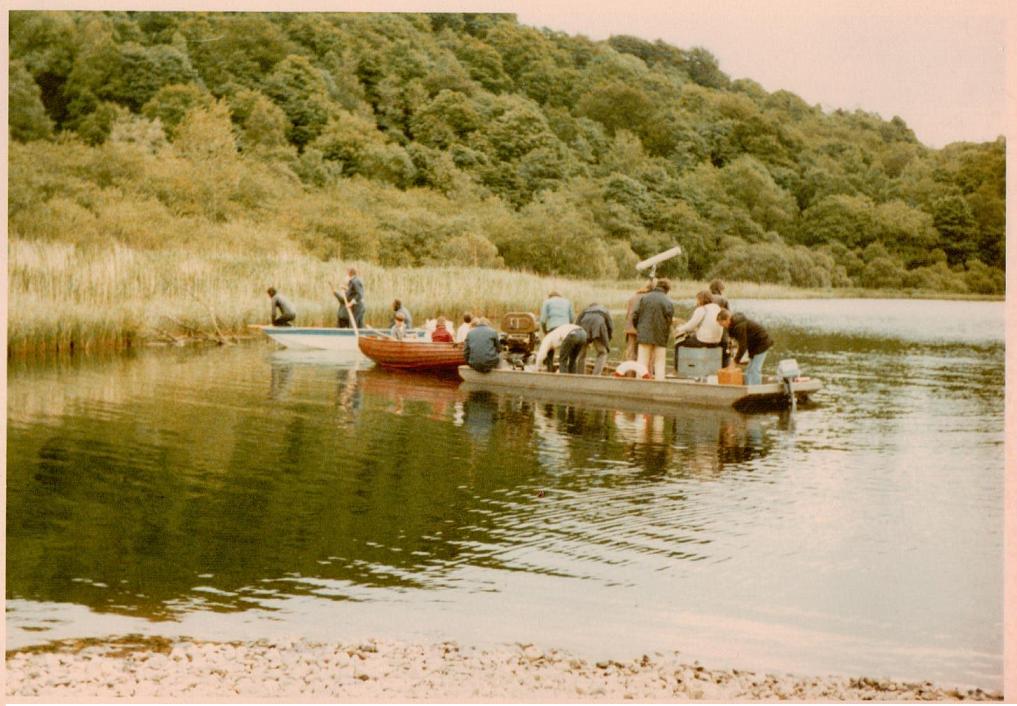
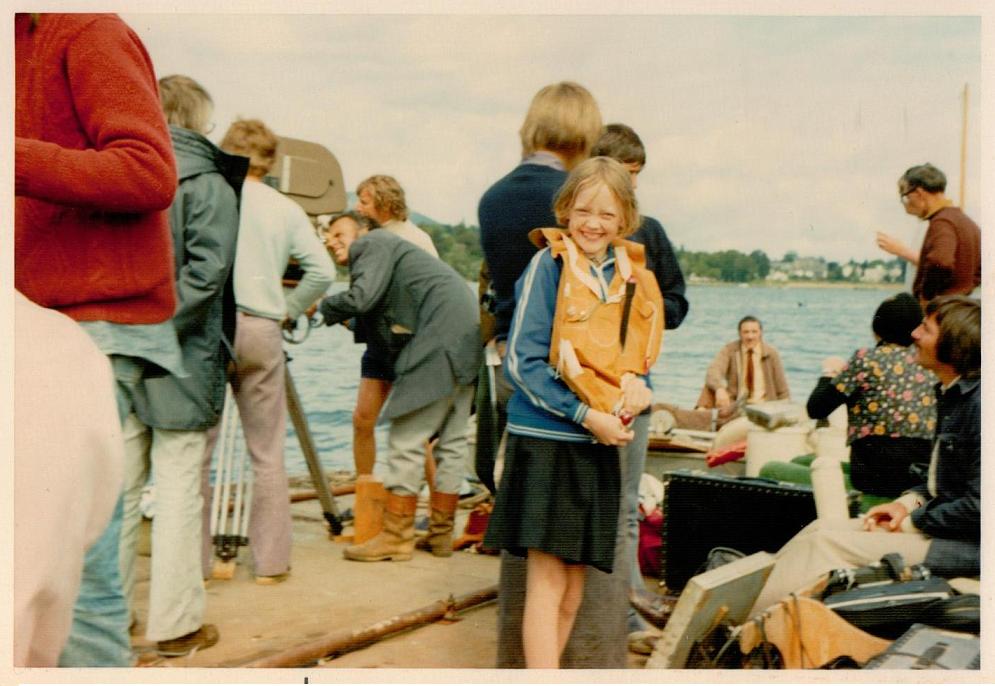
Whilst we tried to acclimatise by running around in our swimming costumes the crew were all in their thick coats as you can see from this home movie footage shot by my mother. We had bought her 8mm camera by saving up Green Shield stamps. (Can you remember collecting Green Shield stamps from petrol stations? They were an icon of the early 1970s all by themselves.) I remember someone on the crew calling out ‘Second unit!’ as Mum lifted what looked like a grey and white toy to her face. It was a bit noisy so she was not able to record during a take. You only see us before and after the sequences in the film, but her footage shows quite a few of the members of the crew – all smoking away, even when they were trying to warm us up after each sequence. You can watch Jean McGill, from Cumbria, our unit nurse who was dressed in red, popping Dextrose into our mouths and giving us hot drinks to warm us up. Jean made Gareth Tandy, the third assistant, who was aged about 18, wear a sun hat because he had previously suffered from sun stroke. David Blagden can be glimpsed as the one other man with short hair.
The camera pontoon must have been left up on Derwentwater. Claude was obliged to shoot these scenes from what we called the camera punt, which was smaller but quite useful. Richard Pilbrow sent me a picture. He has included others in a book that he has written about his career, including a section on the making of ‘Swallows and Amazons’ called ‘A Theatre Project’
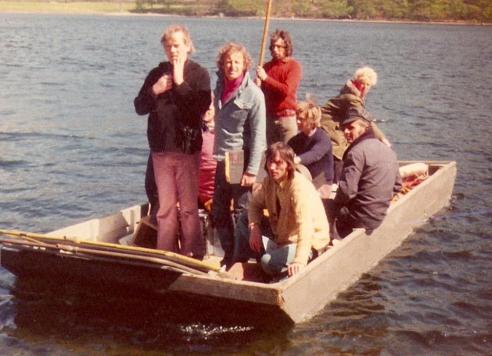
First assistant David Bracknell, director Claude Whatham, grip David Cadwallader and DoP Dennis Lewiston (seated) with three local boatmen ~ photo: Richard Pilbrow
Do please let me know if you can tell me the names of the three Cumbrian boatmen featured in this photograph who helped us. Others are featured in the home-movie footage. They all look like pirates. Real ones.
Goodness knows that Health and Safety would say about that punt today. The DoP managed to get two sizeable electric lights, on stands, into a boat already overloaded with personnel and expensive equipment. You can see for yourself. Were these ‘Filler’ lights powered by portable batteries? The Lee Electric generator was on the shore. I was in the water. Busy being a cormorant.
We had an interesting afternoon filming with both dinghies. At one point we had the camera with us in Swallow. I found these photographs of us on the internet.
Sophie Neville, Simon West and Suzanna Hamilton
I was given the honour of clapping the clapper-board and calling out, ‘Shot 600, Take one!’ for a close-up of Suzanna Hamilton.
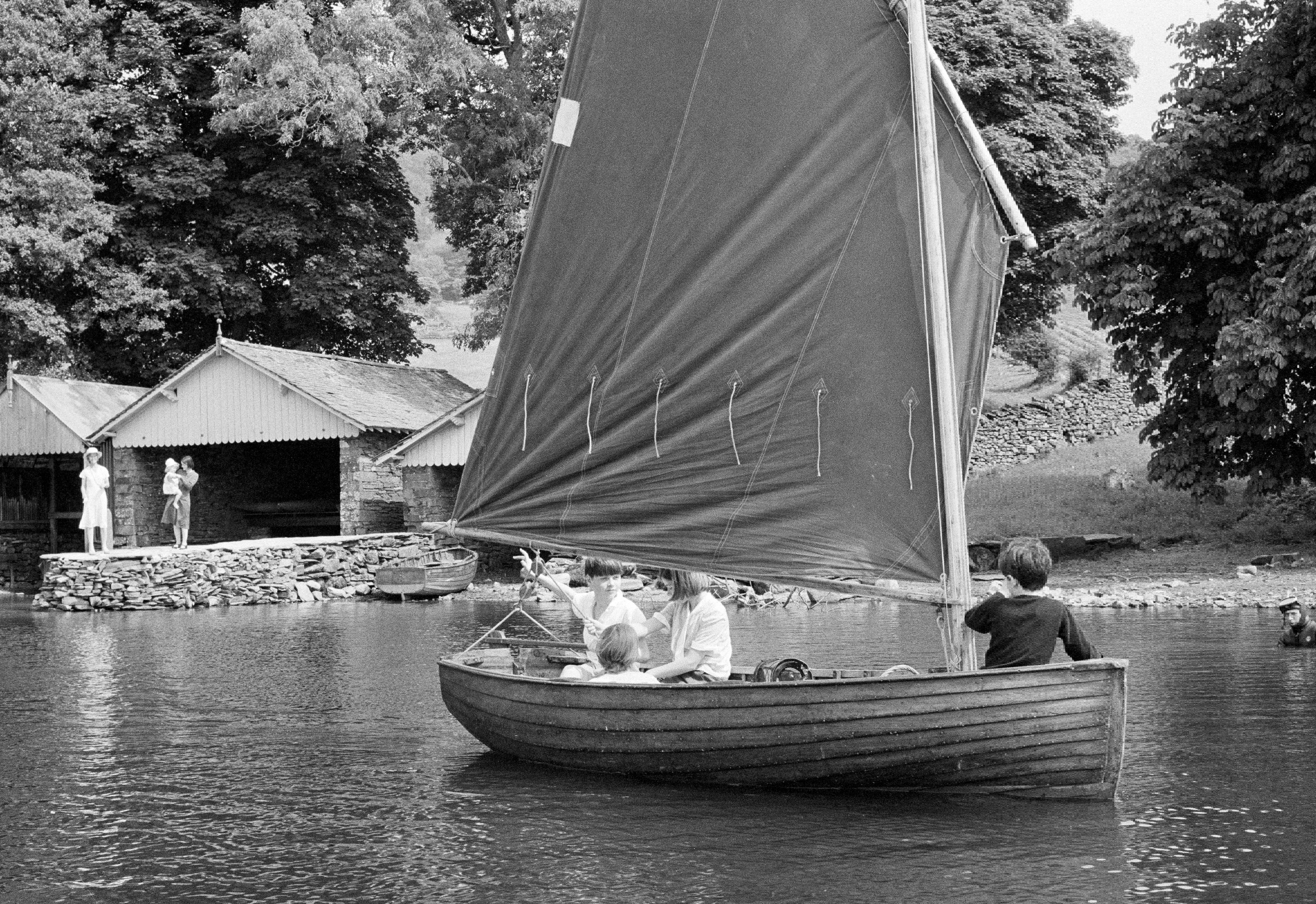
Suzanna Hamilton as Susan Walker sailing Swallow on Coniston Water in 1973
‘The worse possible kinds of natives’… Tourists were beginning to arrive for their summer holidays in the Lake District and we still had quite a bit more to film.
Sophie Neville, Suzanna Hamilton and Simon West sailing Swallow in 1973
You can read more about the adventures we had making the original film of Swallows and Amazons here:
Ronald Fraser as Captain Flint with Daphne Neville and Sophie Neville playing Titty Walker on Derwentwater in 1973
Suzanna Hamilton’s first impression of Ronald Fraser was that, ‘he was quite nice but v.fussy.’ It seems to me that he loved three things: acting, ladies and laughter. Whilst he had a small mouth his capacity for alcohol of almost any kind was legendary. Funnily enough this was the day that we all had a drink on set. The clapperboard or slate had snapped shut on the 500th shot of the movie and in, line with tradition, a bottle of champagne was cracked open. Somehow I managed to end up with the dregs. I thought them utterly delicious.
Sophie Neville with director Claude Whatham, Ronald Fraser and DOP Denis Lewiston outside the catering bus at Derwentwater in the Lake District ~ photo: Daphne Neville
I’m not sure exactly what was going through Ronnie Fraser’s mind at this point but Denis Lewiston has a call sheet in one hand, so must have still had his mind on work. I think we’d reached the end of a pretty good day.
The fishing rod was such an excitement. Simon West was very generous and let us all catch fish with it. Arthur Ransome would have been proud of him.
Suzanna added another story ~
Suzanna refers to the 500th take, but she was mistaken. We rarely took more that 3 takes of each shot. It was the 500th slate. I now know that we happened half-way through the filming, since the total came to 1003 slates.
It doesn’t seem much to me now. I went on to work on drama serials with so many episodes that they would have amounted to films four or five hours long.
Sophie Neville on the set of ‘My Family and Other Animals’ shot on Corfu in 1987
I remember operating the clapper-board on this occasion because the entire camera crew were involved in pulling off a 360 degree shot, the cameraman Andrew Dunn up on a crane while a stiff wind was blowing, but that’s another story. I was just the girl saying, ‘Shot one thousand and forty-nine, take three.’ Quite fun.
Did appearing in ‘Swallows and Amazons’ inspire me towards working on a film crew? No, at the time the hanging around aspect of filming bored and frustrated us children. Later, when I did work on productions, any time I was able to relax on set was treasured, absolutely relished. I was an assistant director with a Motorola on my hip and rarely had a chance to take the weight off my feet. And never had to cope with a green parrot.
Sophie Neville as Titty with her parrot
I have just watched the scene shot in the cabin of the houseboat and have noticed an odd thing. We have a travelling chest of drawers exactly like Captain Flint’s and I set a mirror on top of it just as Ian Whittaker the set-dresser had.
Kit Seymour as Nancy, Sophie Neville as Titty and Beauty Proctor the green parrot
One secret of the scene is that, once we start to clap and sing, ‘What shall we do with the drunken sailor?’ Claude Whatham, the director shouted, ‘Go round’, not once but twice. If you listen very carefully you can just hear him the second time. He wanted us to dance around the room. I knew this but couldn’t move much with the parrot, so went up and down. Kit Seymour was absolutely boiling in her red bobble hat and no on else could move much for fear of knocking the furniture. It was left to Suzanna to dance about – a tricky thing to do without seeming self conscious. All in all I think we needed a glass of champagne by the end of that day.
Ronnie Fraser and DoP Denis Lewiston with paper cups of champagne and the call sheet for the next day ~ photo: Daphne Neville
If you are enjoying this blog, please think of buying an updated version of the story, available as a paperback or ebook from all online retailers including Amazon here
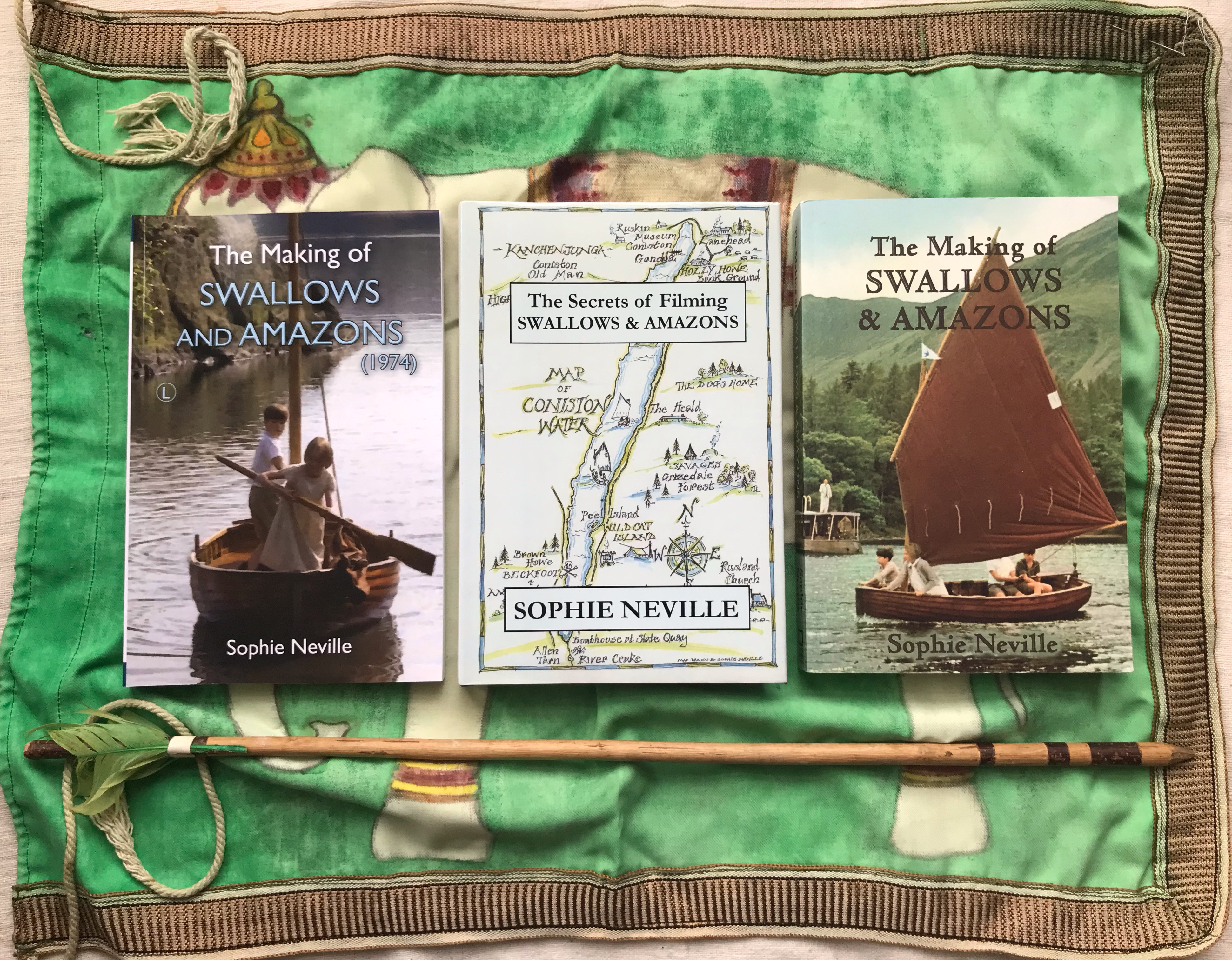
Different editions of ‘The Making of Swallows and Amazons’ by Sophie Neville
Ronald Fraser with Wardrobe Master Terry Smith being transported to the Houseboat played by The Lady Derwentwater
Ronald Fraser being transported to the Houseboat with Terry Smith
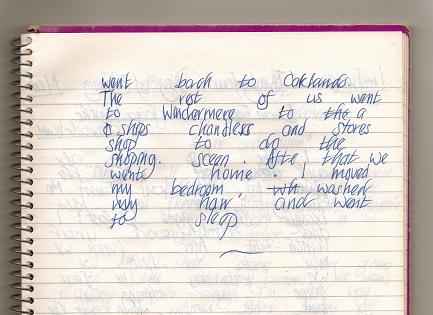
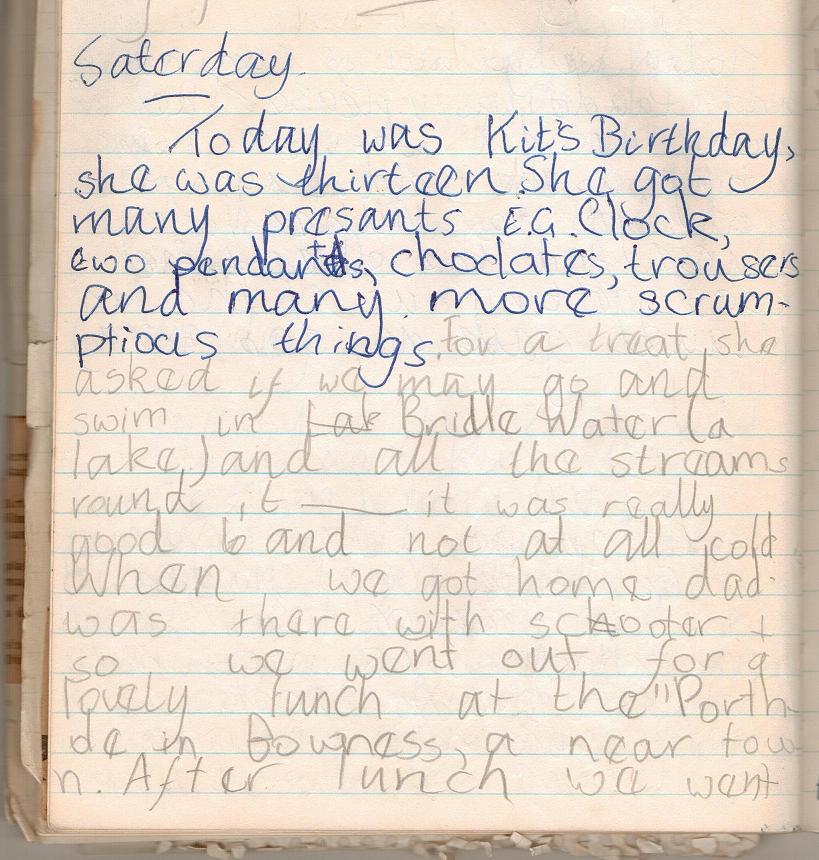
My diary entry for 24th June 1973 is not exactly revealing. As it was raining steadily in the Lake District, I was given a second day off. ‘We had a quirte (sic) morning,’ I wrote. I am sure I needed one. After a heavy week’s filming I’d spent the official ‘Unit Day Off’ writing five end-of-year exam papers, answering correspondence from school friends and going to Kit Seymour’s thirteenth Birthday party. I must have been exhausted. Legally children are meant to have two days off a week while filming. This was the first time it had been possible.
Suzanna Hamilton’s diary adds little more, but my mother was on set, as was a journalist from The Guardian, so I can tell you what happened. I can even tell you what the location caterers from Pinewood cooked that day: Melon, followed by roast beef with Yorkshire pudding, boiled or roast potatoes, peas and carrots with apple crumble or tinned peaches served with custard or evaporated milk. It was a Sunday. Suzanna noted that we had ‘salad for super’, her favorite food.
Set dresser Ian Whittaker, Ronald Fraser and one of the Prop Men on the houseboat ~ photo: Daphne Neville
“The houseboat has been converted from a pleasure steamer,” wrote Michael McNay in the Features section of The Guardian, “the whole of the superstructure fore faked up by props, the cabin aft converted into a retired colonist’s sittingroom – African rug, flowery curtains, assegais on the walls, an ebony elephant with silver howdah and trappings, a walnut wireless cabinet, tall brass oil lamps, a pile of 78rpm records, a silver mounted cricket ball (presented to G.Gumbleton, 1899, for the highest individual score of the season), a chest, a writing desk and an ancient upright Imperial.” I have typed this up exactly as it was published on 7th July 1973.
By props, I don’t think Michael McNay meant pit-props. He was talking about the work of the design team headed by Simon Holland. Ian Whittaker, who later won an Oscar for set dressing, helped Simon to create Captain Flint’s cabin with one of the Prop men who is photographed here. Does anyone know his name? I think it might be Terry Wells. I expect the cane chairs and side table were being temporally stored on the roof when this snap shot was taken so as to make space for camera and lights. The gaffer and camera crew would have been in the process of setting up inside the cabin. Sound would not have settled in yet. How do I know that after all these years? I can see the recordist’s arm at the left of the photograph. I still remember his coat.
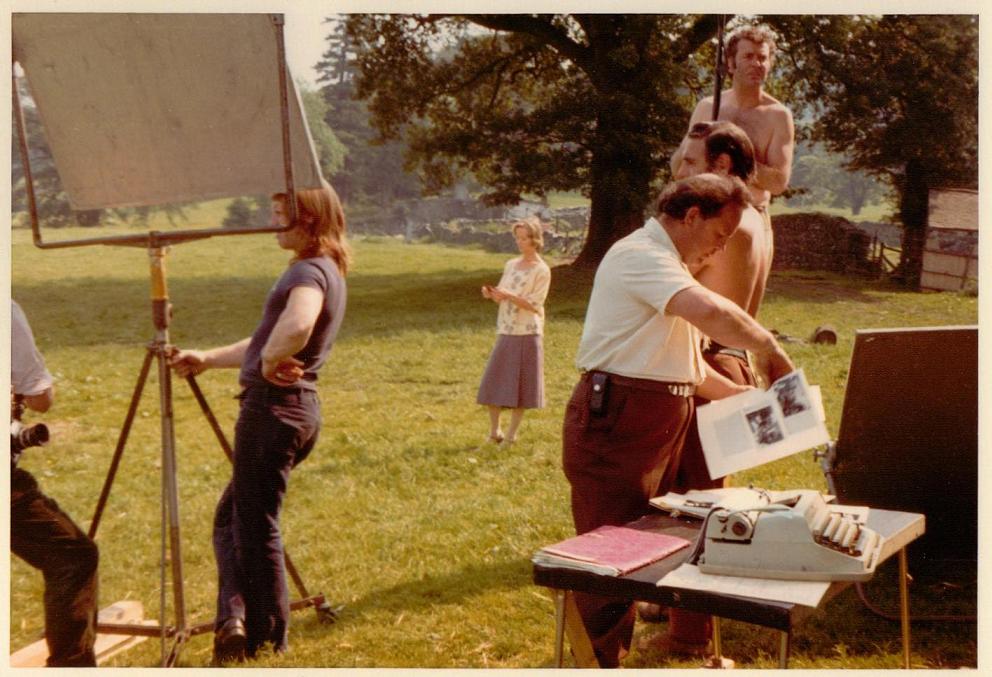
“Ronald Fraser, alias Uncle Jim, is tapping away at a book.” Michael continues. “Last minute panic: who can type out quickly a folio of copy to leave nonchantly in the roller?” That would have been Sue Merry, the continuity girl. The first scene was probably the one in which Uncle Jim is typing with the green parrot on his shoulder when a firework goes off on his cabin roof. I wonder if Arthur Ransome had ever been disturbed by the Altounyan children in such a way. Did he use an Imperial typewriter?
The film crew were on location on Derwentwater. “By now, the houseboat has been moved and moored to the western shore just off a promontory that is being faked up as one end of Wild Cat Island.” The houseboat, really one of the stars of the movie, was being played by a long-time resident of Cumbria, The Lady Derwentwater. A 56 foot motor launch, owned by the Keswick Launch Company since 1935, she returned to real life after the filming, rather like I did. She still carries up to 90 passengers. You can go out on her today.
Was this the houseboat Arthur Ransome had in mind? The photograph was taken by Martin Neville in 1973
My father, who is keen on steamboats, had been off to find the real houseboat that Arthur Ransome had in mind. Am I right in thinking this must have been the original Gondola? I expect she was too un-seaworthy for the production team to contemplate using in 1973. A reliable, water-tight boat that could be towed into the location used for Houseboat Bay was needed. Last year we went to see TSSY Esperance at the Windermere Steamboat Museum in Cumbria, which is another Victorian steam yacht envisaged by Ransome as a possible model for Captain Flint’s houseboat. It is a beauty but we did get a better view of the lake from of the cabin windows in the Lady Derwentwater.
TSSY Esperance, the 1869 Steam Yacht, at the Windermere Steamboat Museum, Cumbria in Apirl 2011
“The rain has stopped, the mist is lifting from the 1,500 foot ridge of Cat Bells. Fraser climbs gingerly aboard, awkward in co-respondent’s brown and white shoes, rosy make-up and moves into the aft cabin.” McNay continues. He is describing the main scene to be shot that day. “John, alias Simon West, is in a rowing boat 15 feet away… The problem this time is that the rowing boat has to remain anchored but look as though Simon is pulling steadily in towards the houseboat and the anchor rope has to remain hidden.” This must have been so that Swallow could be lined up accurately and remain in focus for the camera. It is one of the secrets of making the film that I have been asked about directly.
“Simon shows Claude Whatham how he’ll manage it. Quick rehearsal inside the cabin. Ronald Fraser on his knees by the chest folding a white pullover, catches sight of approaching boat, mimes angry surprise. Told not to jerk head so far back. Instead jerks eyebrows up. The cabin is no more than eight foot by ten and contains besides Fraser and the props, four men on a camera, one on lights, and the continuity girl.” McNay had not included Claude the director, who I know would have squeezed in since these were the days before monitors from the camera feed. And he was small. The sound recordist was bigger but may have just planted a microphone on the desk.
“On the small aft deck Pilbrow is for the next few minutes going to be redundant.” This is Richard Pilbrow, who now lives in Conneticut and I am sure will read this post. “He is a mild, inoffensive looking man producing his first film. He is 40… looks like your friendly local antiques dealer. He and Whatham are a good team: Whatham is slight, energetic and calm. He has time, even as a sequence is being set up, to ask the Press if they can see enough of what’s going on from the crampt aft deck of the houseboat. It’s a cheerful crew, (Denis Lewiston the DOP) watching clouds overhead with benign suspicion, taking light meter readings inside and out-side the cabin every 30 seconds.
‘Stand-by Simon.’
‘Action,’ said quietly into the cabin.
‘ACTION,’ across the lake to Simon. The clapperboard shows 461 take 1. Fraser folds the pullover, looks up, jerks eyebrows in angry surprise, camera swings round to follow Fraser’s gaze through the window, Simon pulls on left oar, keeps the rope hidden.
‘Once more please. Stand by. Action. ACTION (461 take 3) …. CUT.’
There’s a consensus that the third take was best. Ten minute break while the succeeding sequence is prepared: Fraser rushes out on deck and tells Simon to clear off. That too is filmed in triplicate. The time is 12.45. They started work at 6.30, began filming at 12.25 and they’ve got maybe 45 seconds in the can. Everybody seems pleased.”
The Gondola on Coniston Water today, re-built and restored by the National Trust, powered by steam and taking passengers down the lake from April to November.
You can read more about the adventures had making the original film of Swallows and Amazons in any one of these editions of Sophie Neville’s filmography available from Amazon and all the other usual places. You can read a little more about them on this website here.
Different editions of ‘The Making of Swallows and Amazons (1974) by Sophie Neville’
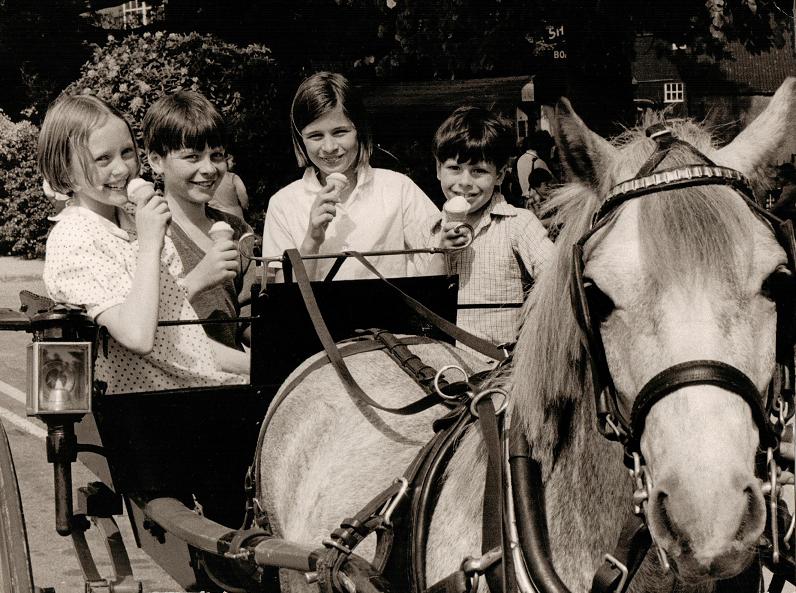
Sophie Neville, Simon West, Suzanna Hamilton and Stephen Grendon in Bowness in the summer of 1973
When I see press photographs like this one, I sigh with resignation. Why were our lives presented to the world thus? It was of course just because they asked us to pose in a pony and trap to add interest, but the ice-creams? It must have been taken the day we went exploring Rio. Our real time off from filming was spent quite differently. I was obliged to take five school exams.
Why did they make me write exams, when I had the responsibility for a feature film on my shoulders? My friends later wrote to assure me that they were quite easy, but I was tired and they were an added stress and a bore.
The letters, these little notes scrawled by friends at school, were a great support. It’s funny that Catherine wrote to me as Titty – none of the others did, but nicknames were a great thing, as was the fact that they were thinking of me that long summer term.
Suzanna had a blast of a day. Her diary is, as ever, quite different from mine.
One of the secrets of the film is Lesley Bennett, who played Peggy, was actually older than Kit Seymour, who played her elder sister Nancy Blackett. I don’t think it mattered in the least. Claude Whatham, Ronnie Cogan and Gareth Tandy came to Kit’s Birthday tea with the actor Ronald Fraser, who as Suzanna noted, was a little bit drunk. This can only mean he’d been drinking all day. It was a foreshadow of things to come.
Kit Seymour with Claude Whatham, 1973
Kit had a twin sister, who we had met at the sailing audition at Burnham on Crouch. Her mother sent up half a Birthday cake, which was quite fun, or so my mother thought.
Suzanna Hamilton playing Susan with Sophie Neville as Titty busy writing the ship’s log
Meanwhile I had more letters to reply to. My friends were wonderful, but it was up to me to keep my relationships in the best possible order. Returning to school after the filming was slightly daunting – but I had so much to catch up with that I was soon busy and fully integrated.
I made a point of not talking about the film at all unless I was specifically asked. This wasn’t easy, as I was bubbling over with stories, but I knew that it wasn’t on. Almost anything that I said about ‘Swallows and Amazons’ or even the Lake District, could have been construed as braggish. I did not care to imagine the consequences of this. As it happened I didn’t have to.
You can read more about what we got up to whilst making the movie in these books available from all the usual places. There is now also an audiobook on ‘The Making of Swallows and Amazons’.
Different editions of ‘The Making of Swallows and Amazons (1974) by Sophie Neville’
Sophie Neville as Titty about to discover the Captain Flint’s trunk hidden on Cormorant Island ~ photo: Daphne Neville
Stephen Grendon on Derwent Water looking out to ‘Cormorant Island’ ~ photo: Daphne Neville
What a day!
A bright sunny day on Derwentwater. I wore what was my favourite costume, not least because I had the option of wearing a vest beneath the blouse and I didn’t have to worry about the divided skirt. I went to such an old fashioned school that I owned a pair of grey flannel culottes myself, to wear on the games field, and thought them very much the sort of thing Titty would have worn.
My mother in a skirt with her sister wearing a divided skirt in 1953
The cotton dress and buttoned up grey cardigan were a bit crumpled by the time I dropped Amazon’s anchor off Cormortant Island.
Roger, meanwhile was in long shorts or knickerbockers as the real Altounyan children would have called them, kept up with a snake belt. His even longer underwear was an item requested by Claude Whatham the director who, being born in the 1920s himself, had worn exactly the same sort of underpants as a child. As the day warmed up Claude stripped down to a pair of navy blue tailored shorts and sailing shoes. We were on a desert island after all. Even if it was a desert island in the Lake District.
Amazon moored near Cormortant Island on Derwentwater with the pontoon and safety boats. What is the real name of the island used for the location?
In Arthur Ransome’s book of ‘Swallows and Amazons’ the hunt for the treasure is slightly different and Captain Flint’s trunk lies buried under rocks. I wasn’t expecting the set-up with the tree trunk, although I think it works well and looks good, giving movement to the sequence. The only hesitation was that Claude didn’t want me to get hit by the rocks as they slid off. This was a pity as I would have jumped aside.
Long shots of sailing Swallows and Amazon on Derwentwater in 1973
I am not sure why the Amazon had not been bailed out. I can remember having to lie in the bilge water, which proved cold and uncomfortable. Perhaps it gave my performance an edge. Titty would have been cold and stiff after a night wrapped in the sail. Great grey clouds were gathering by then and we were all getting tired.
Sophie Neville playing Titty Walker in the captured Amazon, with David Cadwallader, Bobby Sitwell, Eddie Collins, Claude Whatham and two electricians holding reflector boards on the camera punt: Photo ~ Daphne Neville
Being together in a confined space becomes difficult to endure after while, not least when the space is a pontoon on a lake with not much to sit on. Small boys tend to muck about and become annoying when they are bored. The time had come when someone was going to crack – and they did. The result was silence. A sobering moment. And one very wet pair of knickerbockers.
In the end three of us went home in wet underwear. Gareth Tandy, the third assistant director – who I think was only about 18 – was pushed in to the lake, this time to great hilarity.
John and Susan find Titty has moored the Amazon off Cormorant Island
The big question, of course, it what is the name of the island on Derwentwater that we used as the location for Cormorant Island? Duncan Hall has written in to suggest it is called Lingholm Island (or possibly One Tree Island). What is the name of the larger island, seen in the background of shots, that represents Wildcat Island? Is it Rampsholme Island?
The pontoon on Derwentwater with Richard Pilbrow, Bobby Sitwell, Denis Lewiston, Claude Whatham, David Cadwalader and Sophie Neville aged 12 playing Titty. Cameraman Eddie Collins looks on ~ photo: Daphne Neville
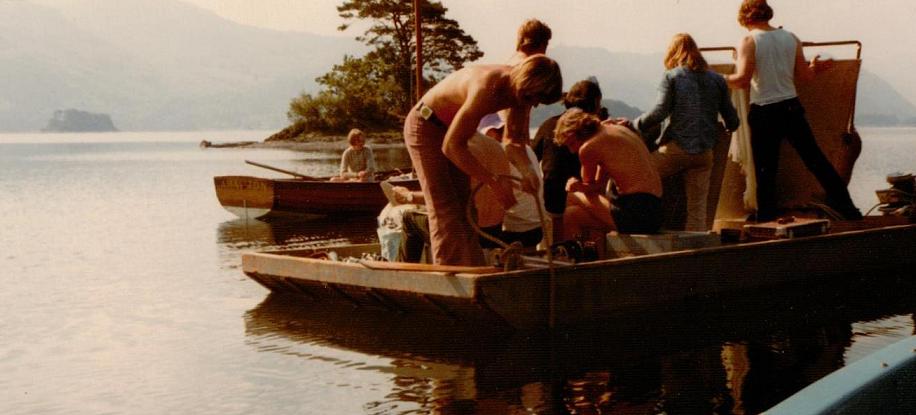
I have one behind-the-scenes clip of the crew on the pontoon – shot on a sunny day. It looks most bizarre. It was. You can see how cramped and overloaded we were and guess at the patience demanded of us all. Imagine how long it took to set up shots, while exposed to the elements. It was quite a stable raft but when we went for a take it was vital that everyone kept completely still or there would have been camera wobble. We used a conventional boat with a cabin when we filmed ‘Coot Club’ and ‘The Big Six’ on the Norfolk Broads ten years later in 1983. It proved much easier – but had more wobble.
The ebook on ‘The Secrets of Filming Swallows and Amazons (1974)’ is available on Amazon Kindle and other platforms. You can read the first section for free here:
Fifty one years ago this day, we were filming with Dame Virginia McKenna at the location used for Arthur Ransome’s Holly Howe above Coniston Water. It was a day of days – the sunshiny day that we had all be waiting for.
Dame Virginia McKenna at the other side of the boat houses at Bank Ground Farm in 1973 ~ photo: Daphne Neville (c)
First Assistant Director David Bracknell standing-in (or kneeling-in) for Roger with Dame Virginia McKenna at Bank Ground Farm. The great trees in the background are sadly no longer there ~ photo: Daphne Neville (c)
The gift of a day when buttercups and daisies were still out in the field that flows from Holly Howe to the lake. Roger was able to tack up the meadow to receive the ‘despatches’ from Mrs Walker, described in the opening pages of Arthur Ransome’s book.
Dame Virginia McKenna reading the IF NOT DUFFERS telegram to Sten Grendon as Roger
‘…Each crossing of the field brought him nearer to the farm. The wind was against him, and he was tacking up against it to the farm, where at the gate his patient mother was awaiting him.’
Dame Virginia McKenna having her hair adjusted by Ronnie Cogan ~ photo:Daphne Neville (c)
I don’t think you can tell that this section of the scene was recorded seven whole days later than the sequence that runs directly on from this when the Boy Roger delivers the very same ‘If not duffers’ telegram to Captain John.
The hole that had been dug for the camera alongside our picnic had been filled in. You can see this from Mother’s perspective when I was milling about near the lake looking towards the island I couldn’t actually see.
Dame Virginia McKenna on location at Bank Ground Farm (Holly Howe) in the Lake District. Property Master Bob Hedges is working in the foreground. Lee Electric lighting assistants stand-by with reflector boards while Assistant Sound Recordist Gay Lawley-Wakelin waits on a box with the boom ~ photo: Daphne Neville (c)
Poor Sten, he had to run up the field on what proved to be our hottest day in a sleeveless sweater. I remember Jean McGill, the Unit Nurse ministering cool drinks and a flannel soaked in cool eau de Cologne to make sure he did not get dehydrated. We all wanted a go with the cool cloth on the back of our necks at lunch time.
The Walker Family ~ Suzanna Hamilton playing Susan, Stephen Grendon as Roger, Sophie Neville as Titty, Dame Virginia McKenna as Mother and Simon West as John. photo: Daphne Neville (c)
It was good to escape the heat by getting out on the water. We shot the scene set on the old stone jetty at the boat houses below the farm when Titty leads ‘Good Queen Bess’ down to the harbour to inspect her ship. I didn’t realise she had a large box of matches in her hand. Virginia kept it a surprise from us in real life. I was excited to find out that Simon Holland, the Designer had painted the branded cover by hand.
Farewell and adieu to you fair Spanish ladies
As the call sheet specifies, our dinghy Swallow had been loaded with all the tents and camping equipment that had been on Peel Island the day before. I didn’t realise at the time quite how often the design team had struck camp and made it up again. I just sat on top of the equipment singing Adieu and Farewell, not very well, as we sailed out onto Coniston Water, waving goodbye to our Fair Spanish Ladies.
Claude Whatham with Dame Virginia McKenna. Mrs Jackson stands patinetly at the door ~ photo: Daphne Neville (c)
I am sure that we had already recorded the scene in David Wood’s screenplay when the Walker family arrive at Holly Howe, but Claude decided to take advantage of the golden light and shoot it again. I am sure this was a good decision. It had been a long day and we were tired but the excitement of our arrival is tangible.
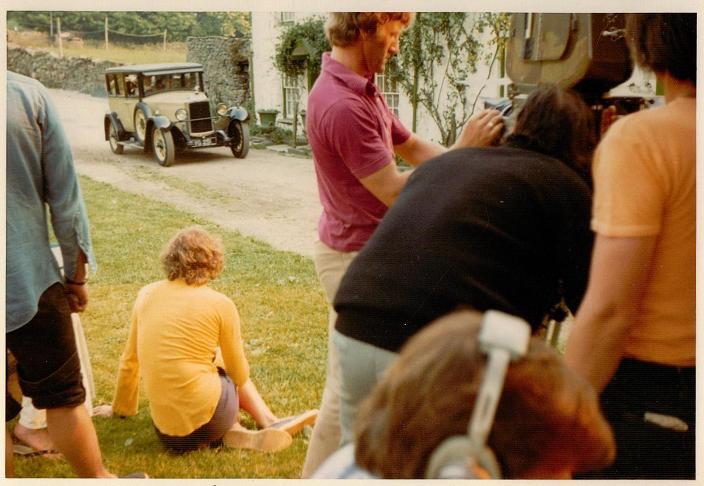
Director Claude Whatham, in a 1970s yellow long-sleeved t-shirt, watching the taxi drive up to Mrs Jackson’s front door in 1929. DoP Dennis Lewiston sets up the shot with Focus-puller Bobby Sitwell ~ photo: Daphne Neville (c)
Nurse with Baby Vicky, the ship’s baby at Holly Howe ~ photo: Daphne Neville(c)
My mother observed that Mrs and Mrs Jackson, Mrs Walker’s nurse and Vicky the ship’s baby, who were listed as Extras on the call sheet, were particularly well cast. Kerry Darbishire, who played the nurse, told me later that she had a daughter of the same age as Tiffany Smith seen here as Vicky. She could have brought her along. It was important they were there, playing ‘The stay-at-homes.’ Vicky anchored Mrs Walker to the farm, making it impossible for her to sail to the island with the Swallows.
Stephen Grendon, Sophie Neville and Simon West with Mr Jackson at Holly Howe~ photo: Daphne Neville
It must have been a long day for the little girl. It was a long hot day for all of us, but a happy day.
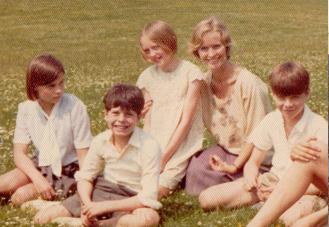
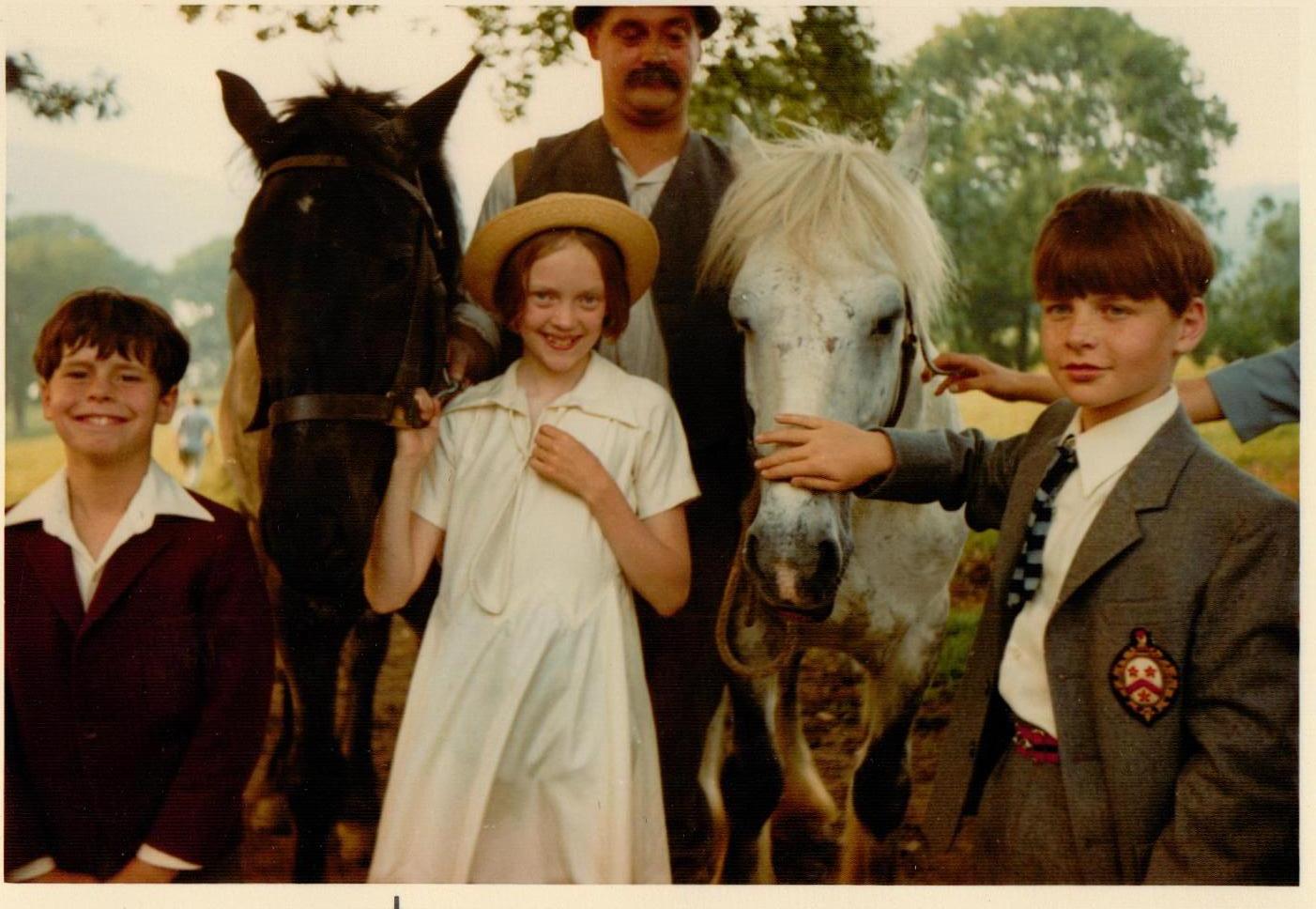
Simon West, Stephen Grendon, Suzanna Hamilton & Sophie Neville playing the Walker children in ‘Swallows and Amazons’ 1973 ~photo: Daphne Neville(c)
The women who had been taken on as our stand-ins the day before did not seem to be around to help limit the hours we spent on set. David Bracknell, the first assistant director stood in for Roger. One of the women later claimed that she played Virginia McKenna in long-shots but the only long shot was taken of the Spanish Ladies on the jetty and I’m pretty sure that is Dame Virginia herself.
Stephen Grendon, Simon West, Dame Virginia McKenna, Suzanna Hamilton and Sophie Neville, trying not to look as tall as she was in 1973 ~ photo: Daphne Neville(c)
What I really did not know, until I watched the documentary broadcast last Sunday, was that Mrs Batty, who held the lease on Bank Ground Farm, had locked out the crew. She explained that when she was originally asked if we could film on her property she did not quite realise the scale of operations and only asked for – or accepted – a location fee of £75.
Lesley Bennett’s photo of the double decker buses at Bank Ground Farm in 1973
The arrival of the two red double-decker buses, the Lee Electric van, the generator and other lorries, not to mention the Make-up caravan rather daunted her, as did the furniture moving activities involved at the start of the filming when we shot the interior scenes. The idea that the film would bless her Bed & Breakfast and Tearoom business for the next fifty years alluded her. She said that she decided that £75 was not enough, padlocked her front gate and wouldn’t let the crew back in until they agreed to pay her £1,000. It was a lot of money, more than double the fee I received.
Sophie Neville with Lucy Batty at Bank Ground Farm in 1973 ~ photo: Daphne Neville(c)
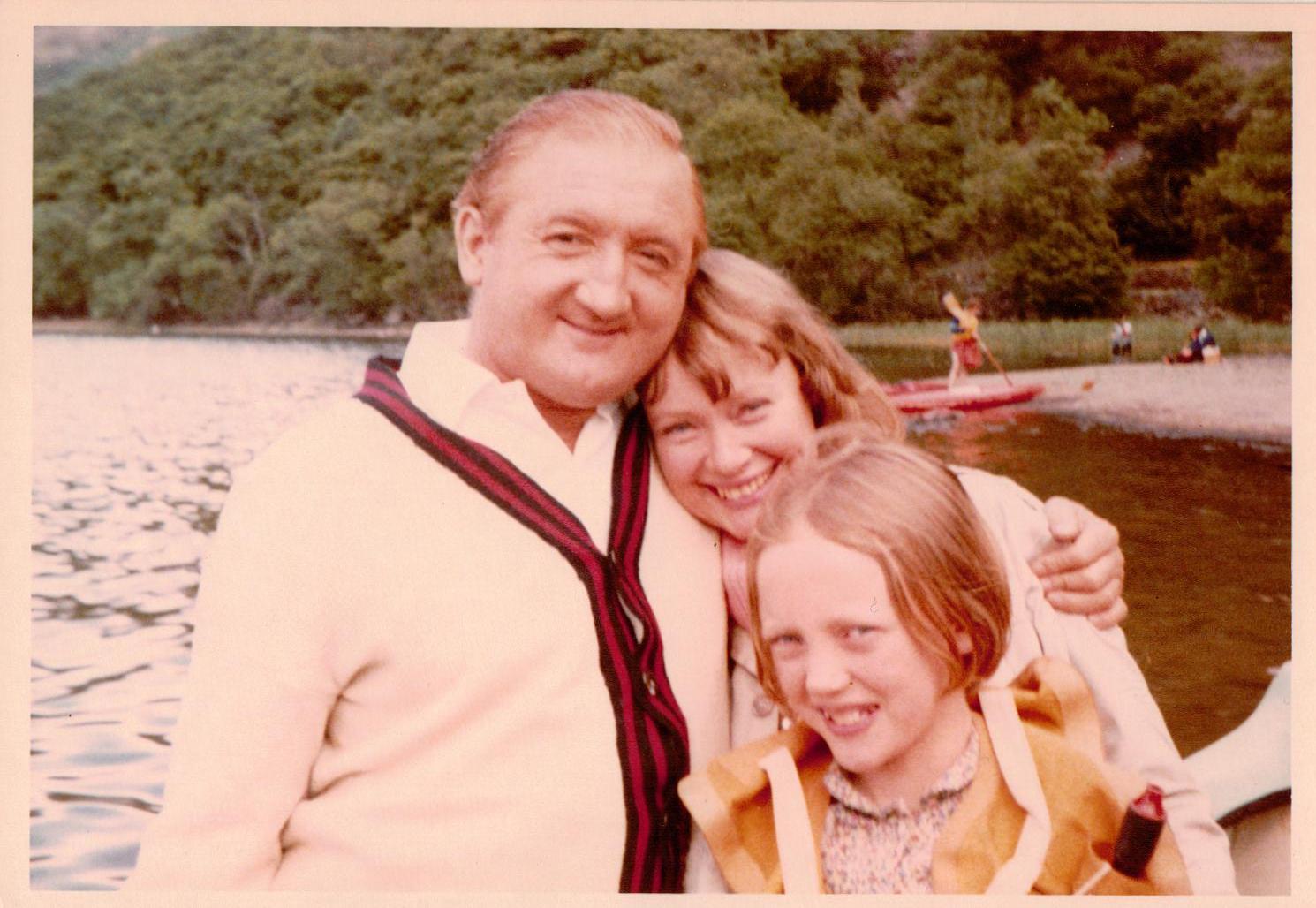
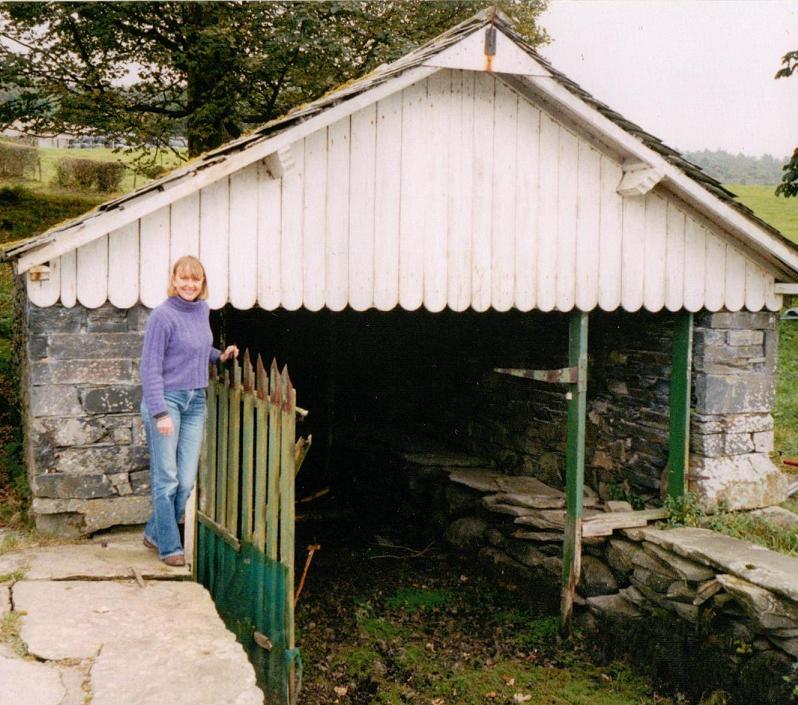
You may have seen the BBC documentary about the making of Swallows and Amazons, when Ben Fogle interviewed Suzanna Hamiltonand myself at Bank Ground Farm for ‘Big Screen Britain’. This was re-packaged on a programme called Country Tracks. My father’s 16mm footage had been skillfully inter-cut with an interview with our Director, Claude Whatham.I did not know that it was being broadcast but was able to watch on-line.~The Author Sophie Neville at the boatshed in 2013~
If you would like to read more, ‘The Secrets of Filming Swallows and Amazons (1974)’ is available on Amazon Kindle and all ebook platforms and the paperback on ‘The Making of Swallows and Amazons’ can be found in Waterstones from all online stockists.
Sophie Neville, Simon West and Suzanna Hamilton with Ronald Fraser playing Captain Flint in the 1973 film of Arthur Ransome’s ‘Swallows and Amazons’
Ronald Fraser! veteran of World War II movies who had won an award for playing Basil Allenby-Johnson in The Misfits, had arrived on the shore of Coniston Water in two-tone shoes. Curiously so had two stand-ins. A short lady for me, who had dark hair, and a lady with blonde hair for Suzanna Hamilton. I have blonde hair and Suzanna is dark, but that is how it was.
The other four actors didn’t have stand-ins, which seemed odd. Kit Seymour, who played Nancy Blackett, and Lesley Bennett in the role of Peggy, rehearsed as usual. The two boys, Simon West and Sten Grendon, were younger than us but never had stand-ins, so that seemed odder. We didn’t think the ladies would be very comfortable on Peel Island. There wasn’t exactly a powder room there.
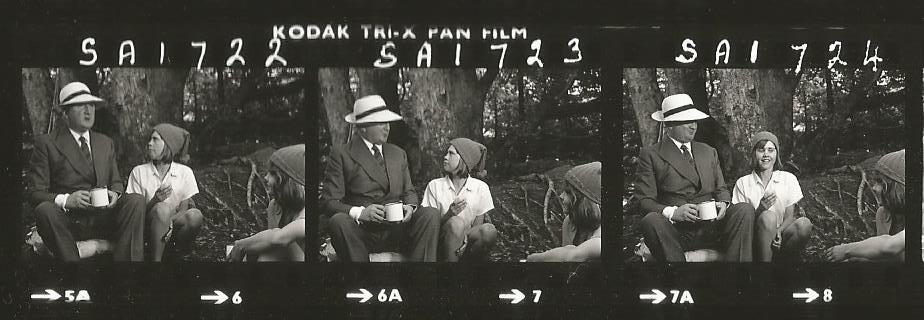
Director Claude Whatham and Bobby Sitwell with Suzanna Hamilton playing Susan Walker and Ronald Fraser as Jim Turner aka Captain Flint
And we were some way into the filming, used to handling props that the stand-ins found alien. However they were very excited about coming over to Peel Island. They sat in our positions and read our lines back to Ronald Fraser whilst the scene at the camp site was lit, and returned to stand-in for us later when his close-ups were shot. Somehow they managed to do this in scanty summer clothing despite a brewing storm.
My stand-in. I liked her very much and was most interested in her tapestry, since I was doing one myself. Lots of the men in the crew were interested in her tapestry too. They hadn’t noticed mine.
Our stand-ins got a lot of help from the crew as they went from ship to shore. We didn’t, but then we were agile and wore life-jackets. Mummy didn’t wear a life-jacket, but she has always been surprising good at getting in and out of boats. Her comment on the matter of my stand-in was, ‘Most unsuitable for a children’s film.’ Mum became increasingly concise: ‘I don’t think that woman was invited. She just turned up.’
Enthused by our Stand-in, Lesley Bennett and I went into Ambleside that evening to buy more wool for our own tapestries.
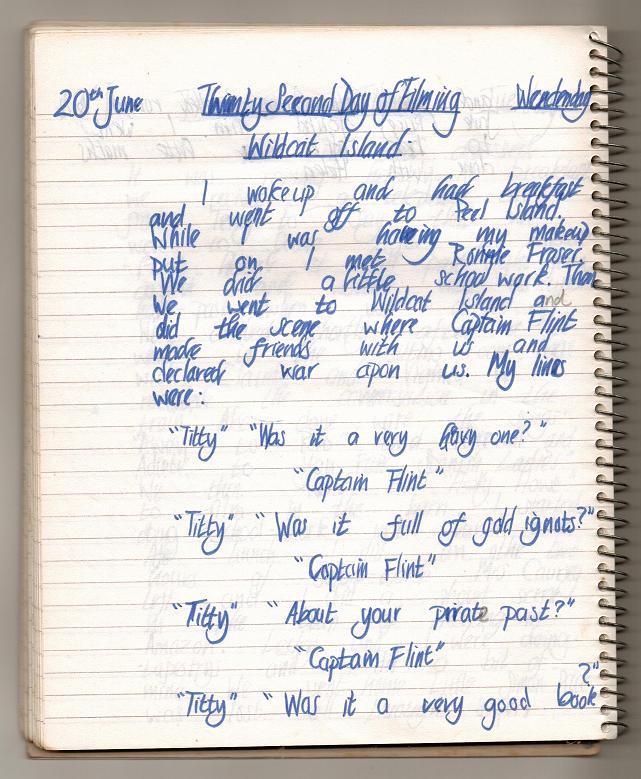
The recording of our scene with Captain Flint on Peel Island went smoothly, and Claude Whatham the Director was happy with the result, but my diary reports that a Force 8 gale blew in. This spun the poor production team into a quandary.
The call sheet for Thursday 20th June documents how truly unpredictable the weather could be. We had a ‘Fine Weather Call’, an ‘Alternative Dull Weather Call’, ‘Rain Cover’ in the Houseboat cabin, and a pencilled-in end-plan entitled ‘Peel Island’, which is where we’d ended up. Richard Pilbrow, the Producer, had a 1970s embroidered patch sewn to his jeans which read: THE DECISION IS MAYBE AND THAT’S FINAL.
The Call Sheet that never-was for 20th June 1973. We ended up on Peel Island.
In Arthur Ransome’s book Swallows and Amazons there is a dramatic storm with lashing rain. We were rather disappointed that it was not included in David Wood’s screenplay. It could have been shot that afternoon, but this was not to be. I can remember Mum saying, ‘You can’t have everything.’
What had been good about the 20th June was that we, the Swallows and the
Amazons, were all together, not sailing but on Wild Cat Island, with the novelty of working with Captain Flint for the first time. Kit and Lesley had been so patient, waiting day after day for their scenes to come up. They were stuck having lessons with our tutor Mrs Causey in the red double-decker bus most of the time. But the fact that they were on stand-by was helpful to the production manager who had to wrestle with the film schedule and call sheets.
As it was, the storm blew hard but cleared the dull-weather clouds and the next day was glorious, one to remember forever…
You can read more in the paperback or ebook here. There is also an audiobook narrated by me, Sophie Neville.
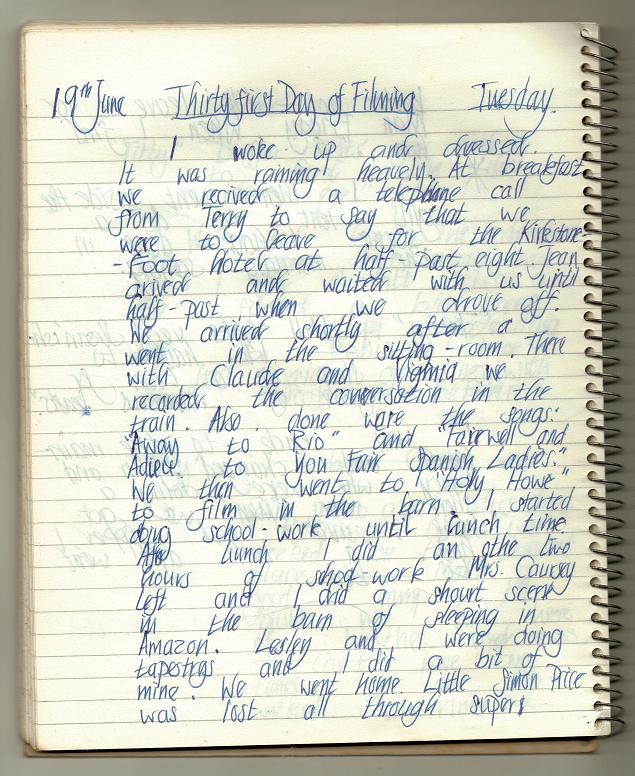
The Lake District is very beautiful. The problem about filming there is that it can rain quite hard – ‘heavily’ – was the word I used in 1973.
By this stage in the filming of Swallows and Amazons Claude Whatham only had one ‘rain cover’ option. We were kept busy recording sea shanties with Virginia McKenna at the Kirkstone Foot Hotel by Lake Windermere while Dennis Lewiston, the DOP, lit Mrs Batty’s barn at Bank Ground Farm above Coniston Water.
Arthur Ransome must have done much to revive the songs of the sea:
Farewell and adieu to you, fair Spanish ladies, Farewell and adieu to you, ladies of Spain; For we’ve under orders for to sail for old England, And we may never see you fair ladies again.
We never got as far as the ranting and roaring bit in the film.
No one really knows how old this naval song is. The Oxford Book of Sea Songs, mentions it in the logbook of the Nellie of 1796, long before shanties really came established as a genre. All I know is that Titty loved it and was still singing it in Peter Duck when the song became quite useful for navigating the English Channel.
‘The first land we sighted was called the Dodman, Next Rame Head off Plymouth, Start, Portland and Wight; We sailed by Beachy, by Fairlight and Dover, And then we bore up for the South Foreland light,’ or sort of.
Walking into Mrs Batty’s barn that day was hugely exciting. Simon Holland, the art director or set designer, had rebuilt the camp there, lighting a real fire.
Sophie Neville as Titty
Swallow was nmounted on a cradle so that she could be rocked, as if by water, as the scenes of her sailing at night were shot. It was brilliant, she even went about. Moonlight wasn’t not a problem. Richard Pilbrow can correct me, but I think it was produced by a lamp called a ‘tall blonde’. I don’t think we had a wind machine. The Prop Men used a large sheet of cardboard to produce a breeze.
‘Wouldn’t Titty have liked this?’
‘Liked what?’
‘Sailing like this in the dark.’
’57, 58, 60, 61…’
‘What’s the matter?’
‘Can’t you hear it? The wind in the trees? We must be near the bank. Quick, Susan lower the sail! Roger, catch the yard as it comes down!’ Then there is a crunch as the Swallows hit a landing stage. All mocked up. Quite fun.
‘What about Titty?’
Amazon was placed on the same mounting. I climbed aboard and started wrapping myself up in her white sail.
Children always love the irony of John saying, ‘She’s at the camp. She’ll be alright. She’s got a tent,’ when the shot cuts to me looking damp and uncomfortable about sleeping in Amazon, anchored out on the water.
Later I wake up and come out from under the sail to hear the burglars heaving Captain Flint’s trunk across Cormorant Island. All in all we achieved quite a bit on that wet day in Westmorland. Much safer and easier than being out on the water. Because the cradle was at waist height Claude was able to get lower angle shots than when out on the camera pontoon. Simon West, who played John, did really well. He managed to convince me that he was really sailing when I watched the film and I knew he wasn’t.
I’m pretty sure this scene of us inside a tent at night was actually shot on Peel Island but I may be wrong. We had a fire in the barn. If you look closely you can see an electric cable going into the lantern to boost light from the candle. The night scenes were tricky to light and shoot, but there was something about them that was intimate and exciting for children. I assume they would normally be in bed but it was the summer holiday and excitement was afoot.
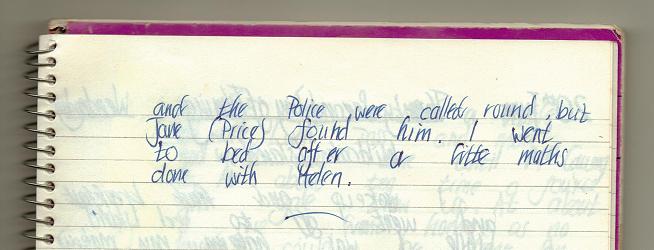
Back at our guest house in Ambleside there was a real life drama. Little Simon Price had gone missing. He was the small boy last seen on the beach at Rio, having his shorts pulled up by his sister. The Police were called and everything. But as in a lot of real life situations, things were sorted out, and we returned to the mundane world of maths lessons. I was tutored by Helen, one of the students at the Charlotte Mason College of Education who was also lodging at Oaklands as Mrs Causey, our teacher, could not ‘do modern Maths.’
Sophie Neville by Elterwater in 1973 ~ photo: DJ Neville
My mother was very excited about meeting the actress Brenda Bruce who Claude had engaged to play Mrs Dixon. She had arrived on 10th June whilst we were filming the fishing scene at Elterwater where she found Claude keeping up our moral by wearing my mother’s Donny Osmond hat. I think he needed it for warmth. It was unexpectedly cold.
I can remember being worried that Brenda Bruce would be chilly as she was only wearing a blouse and flip-flops. Now I understand that she ‘was of a certain age’ and didn’t feel the cold quite so much as skinny twelve-year-olds with opinions.
Brenda Bruce had been born in Prestwich in Lancashire. I’d had no idea that she was so well-known, that BAFTA ~ the British Academy for Television Awards had named her Best Actress in 1963. “Yes, you do!” Mum said. “She was the White Queen in Alice Through the Looking Glass.” She’d actually worked for Claude quite a bit and he trusted her to play a small part well. brought her son with her.
I shouldn’t have been worried about Mrs Dixon. She looked wonderful in the film – was wonderful – and very comfortable in her nice clean dairy.
When I look back on Swallows and Amazons, I can see that Claude made sure it didn’t become chocolate-boxy. You can tell by glancing at Mike Pratt’s costume.
Mike Pratt who played Mr Dixon the provider of worms for our fishing bait, the lovely Lakeland colours of his garments contrasting with the harsh blues and reds of the 1970’s clothes worn by the crew.
Brenda Bruce as Mrs Dixon with Claude Whatham
I can’t remember exactly where Dixon’s Farm was filmed. The scenes set at Jackson’s Farm, Arthur Ransome’s ‘Holly Howe’ were shot at Bank Ground Farm by Coniston Water, but all I know about the location for Dixon’s Farm is that our tutor got terribly lost trying to find it…
Geraint Lewis of the Arthur Ransome Trust wrote to confirm Kevin Burn’s theory about the location we used for Mrs Dixon’s dairy. ‘I had a long conversation once with Lucy Batty about her recollections of filming at Bank Ground in the house, barn, etc. She confirmed that they used the buildings shown as Tent Lodge Cottages on Google Maps – as Dixon’s Farm. That certainly seems to fit from the view of the lake and shoreline trees in the background.’
What Richard Pilbrow and Claude Whatham did want to make the most of was the Westmorland scenery. In many ways they were making a landscape movie. I think what they most enjoyed was finding all the locations to put together Arthur Ransome’s imaginary lake as depicted in the end pages of Swallows and Amazons and I am often asked where the waterfall is.
“It must be Niagara!” No, Sophie. It’s somewhere near Elterwater.
‘It’s Niagra!’ Titty declared. Stephen Grendon, Suzanna Hamilton, Simon West and Sophie Neville as the Swallows on their way to visit the charcoal burners
Kevin Burn sent me some suggestions with photos which made me feel pretty sure the actual waterfall is Skelwith Force. But Roger Wardale, who is an expert on Arthur Ransome’s locations, thinks not. “I don’t think it’s Skelwith Force which is more a series of rocky rapids in fairly level ground. I watched the film again yesterday and was reminded of the waterfall at Glen Mary (otherwise known as Tom Gill) the outlet for Tarn Hows dropping down to the Coniston-Ambleside road 4 miles from Skelwith Bridge.” So – any ideas most welcome!
You can read more about the film locations and our antics in ‘The Secrets of Filming Swallows and Amazons’ available on Amazon Kindle and from all ebook providers:
Sophie Neville and Simon West on the cover of ‘Swallows and Amazons’ pub by the Daily Mail
Of all the wonderful days we spent filming Swallows and Amazons in 1973, the fishing scene, shot in a reedy bay on Elterwater was one I enjoyed most. It was a cold, rather wet morning but the Third Assistant, Gareth Tandy, taught us how to use our rods and we were soon absorbed in a way that Arthur Ransome would have understood well.
Our fragile bamboo fishing rods, one with a wooden reel, were supplied by a keen fisherman called Leslie Borwick, who brought up his own daughter and grandchildren on Arthur Ransome’s books. He kept the rods, which still belong to the family, who now lived near Sedburgh.
Filming the fishing scene from the camera punt on Elterwater
The only problem we had that day was keeping the fish alive. Bob Hedges our property master, the designer Simon Holland and Ian Whittaker, the set dresser, took it upon themselves to keep the perch as happy as they could, until they were – very carefully – attached to our hooks. Titty doesn’t catch one but Captain John did. Despite everyone’s best efforts it wasn’t a very lively perch.
Property Master Bob Hedges keeping the perch alive ~ photo: Daphne Neville
The big challenge was Roger’s great fish – a massive pike that meant to be snapping and ferocious. I’ve been told that it ended up being resuscitated in Keswick Hospital ICU – the Intensive Care Unit.
The local fisherman, Ian Whittaker, Simon Holland and Gareth Tandy with the fish photo: Daphne Neville
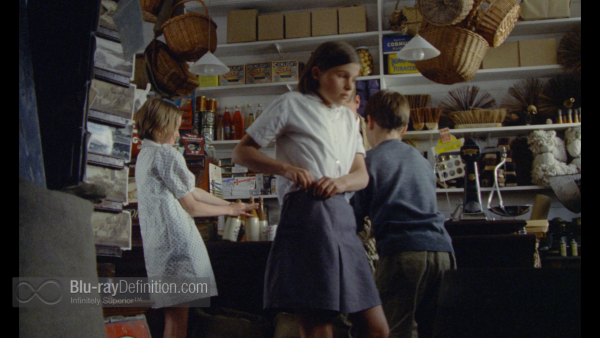
Sadly this is the only photograph we have of the set designers at work together. Later that afternoon we went to one of the few interiors of the film – the general store in Rio or Bowness-on-Windermere where we bought the rope for the lighthouse tree and four bottles of grog. In reality it was a sweet shop in the ‘seventies. It was later a barber shop and became a showroom for wood-burning stoves. Pigs were once kept around the back.
The Swallows in Woodland Road, Windermere in 1973
Back in 1973, Ian dressed the interior with boxes of wooden dolly pegs and other things you’d buy in brown paper bags. A wonderful 1920’s radio set and two purring cats really made the scene come alive, especially since, being in reticent explorer mode, we were a bit gruff in our communications with Mr Turner, the native shop keeper.
Sophie Neville in Rio with four bottles of grog ~ photo: Daphne Neville
Ian Whittaker struck me as being rather different from everyone else on the crew. He was a very nice looking man and a gentleman of the old school. I remember him telling me that he’d originally set out to be an actor but had found it so difficult to get work that he grabbed a chance to become a set-dresser or designer’s assistant. He found he rather enjoyed it, and stuck to the job despite his family thinking it was not much of a career. He proved them wrong. By 1971 he was working for Ken Russell on The Boy Friend – a musical about a musical starring Twiggy with Christopher Gable and Max Adian that I’d seen at school.
Woodland Road, Windermere
After Swallows and Amazons Ian worked on Ridley Scott’s film Alien with Sigourney Weaver, Tom Skerritt and John Hurt and was nominated for an Oscar with the others on the design team. Eventually he won an Oscar for Best Art Direction-Set Decoration with the designer Luciana Arrighi for Howards End – the movie of EM Forster’s book starring Anthony Hopkins, Vanessa Redgrave, Emma Thompson and Helena Bonham-Carter.
In 1994 Ian was nominated again, this time for Remains of the Day directed by James Ivory. After that he worked on Sense and Sensibility, Emma Thompson’s movie of the Jane Austen classic that launched Kate Winslet’s career, some of which was shot at Montacute in Somerset where my great-grandmother once lived. Ian Whittaker received another Oscar nomination for Anna and the King in 2000 and a nomination for an Emmy Award for the TV movie Into the Storm in 2009.
So, it was rather a waste that Ian spent his time just building little stone walls in the lake to keep the perch alive on our set, but I think he enjoyed the fishing scene as much as I.
You can read more in ‘The Making of Swallows and Amazons (1974)’ available online, from Waterstones and your local library. It is suitable for all ages of readers.

























 ~The Author Sophie Neville at the boatshed in 2013~



 The recording of our scene with Captain Flint on Peel Island went smoothly, and Claude Whatham the Director was happy with the result, but my diary reports that a Force 8 gale blew in. This spun the poor production team into a quandary.
 Amazons, were all together, not sailing but on Wild Cat Island, with the novelty of working with Captain Flint for the first time. Kit and Lesley had been so patient, waiting day after day for their scenes to come up. They were stuck having lessons with our tutor Mrs Causey in the red double-decker bus most of the time. But the fact that they were on stand-by was helpful to the production manager who had to wrestle with the film schedule and call sheets.