

Have you received the same despatches as me?
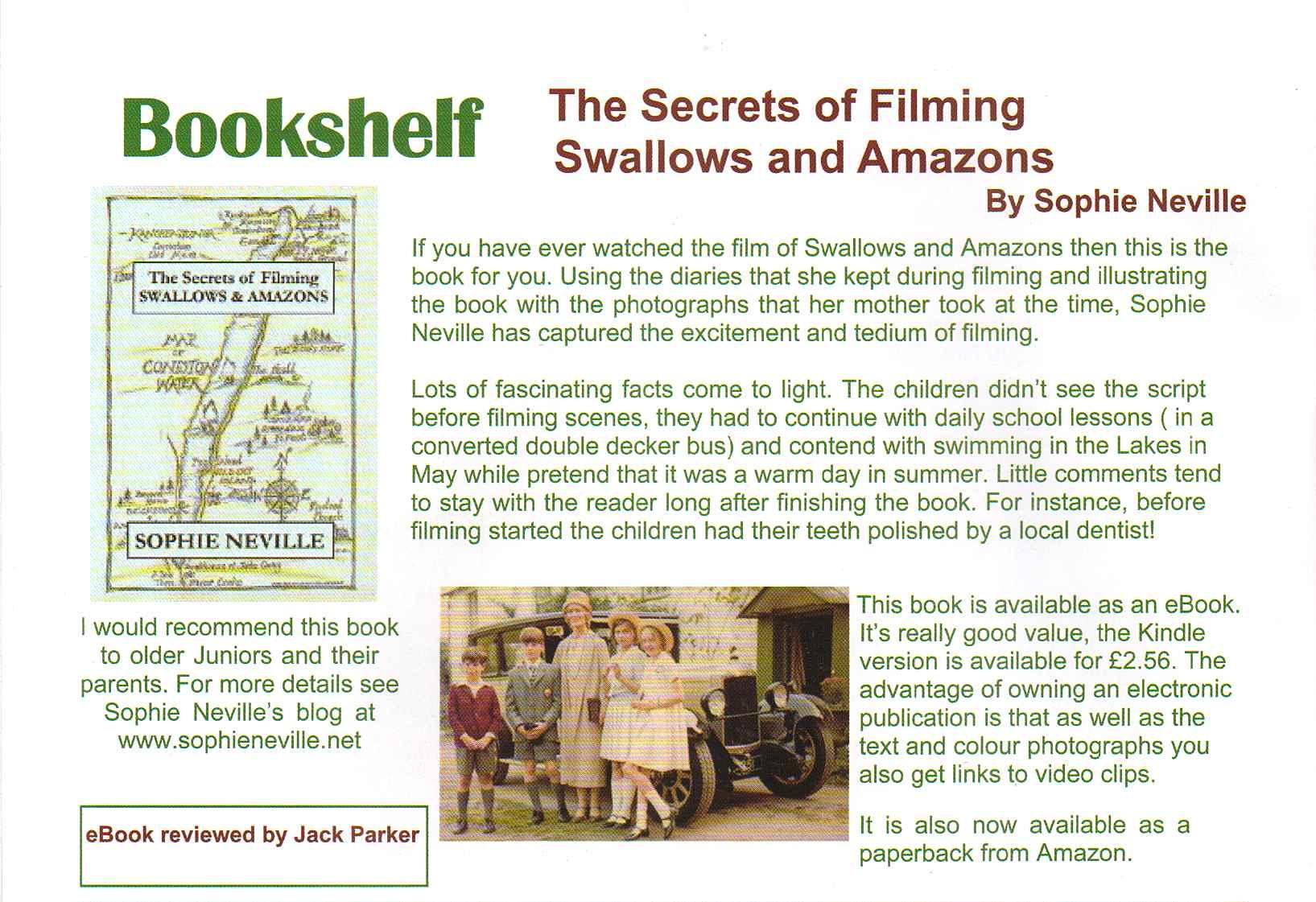
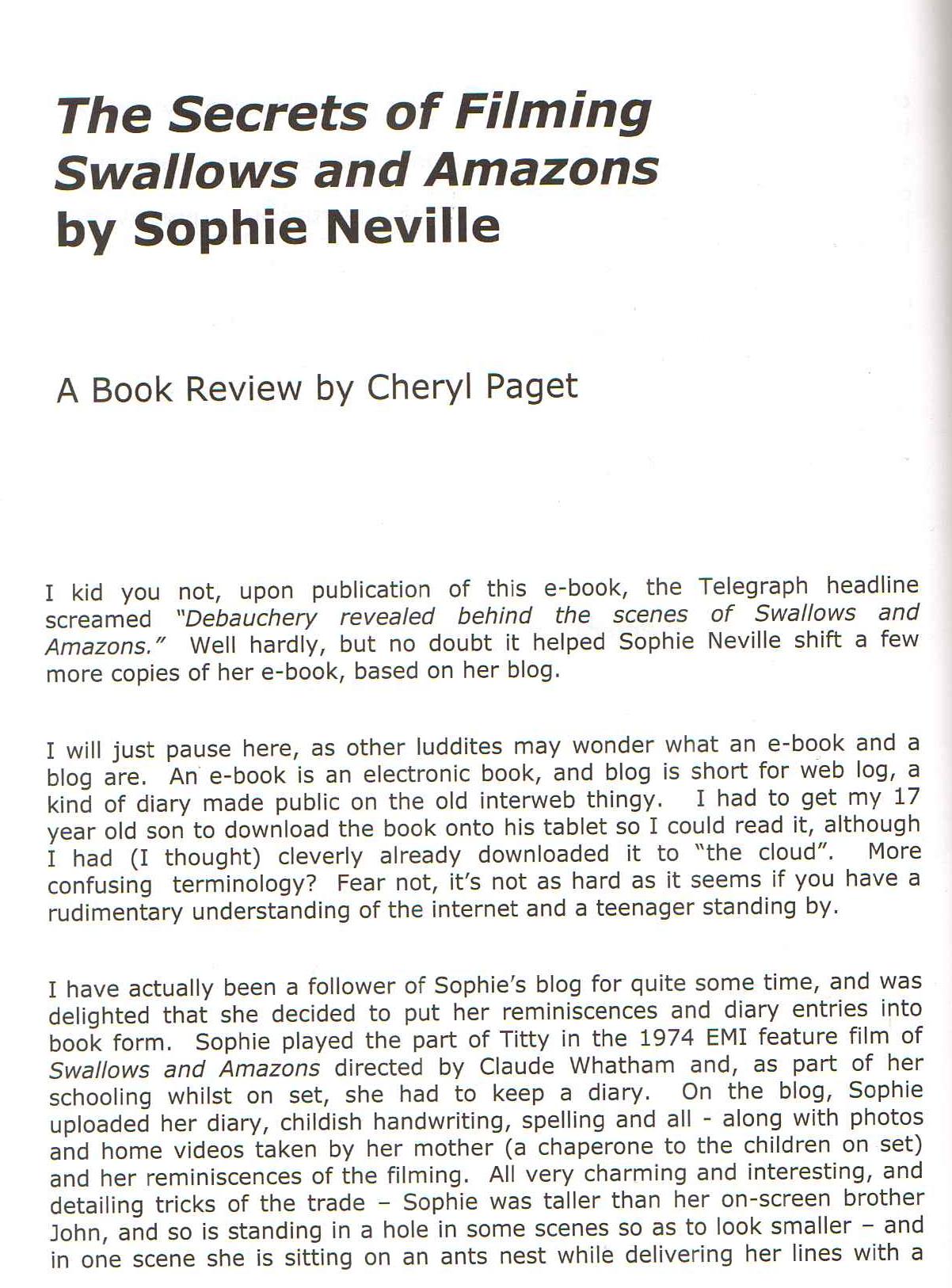
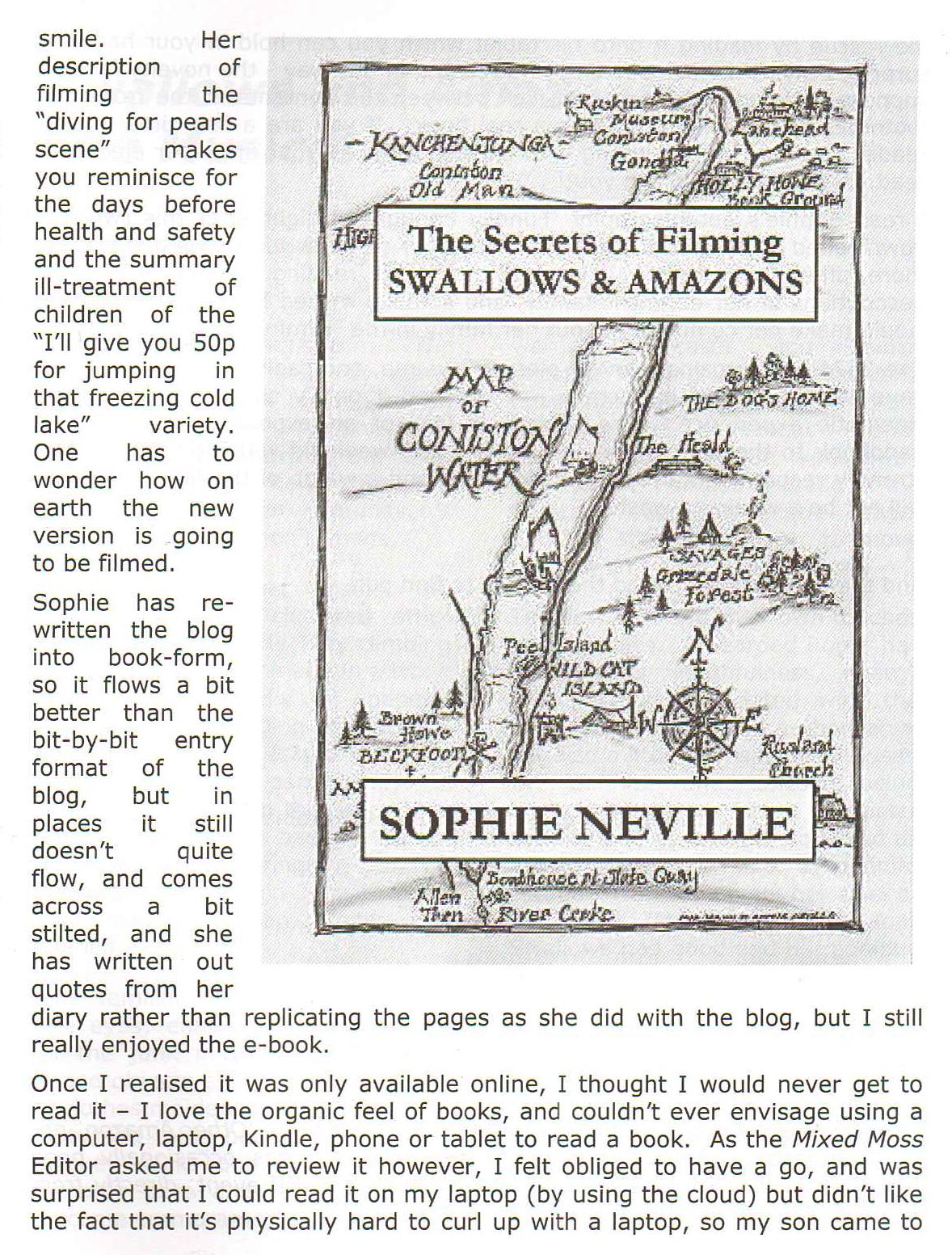
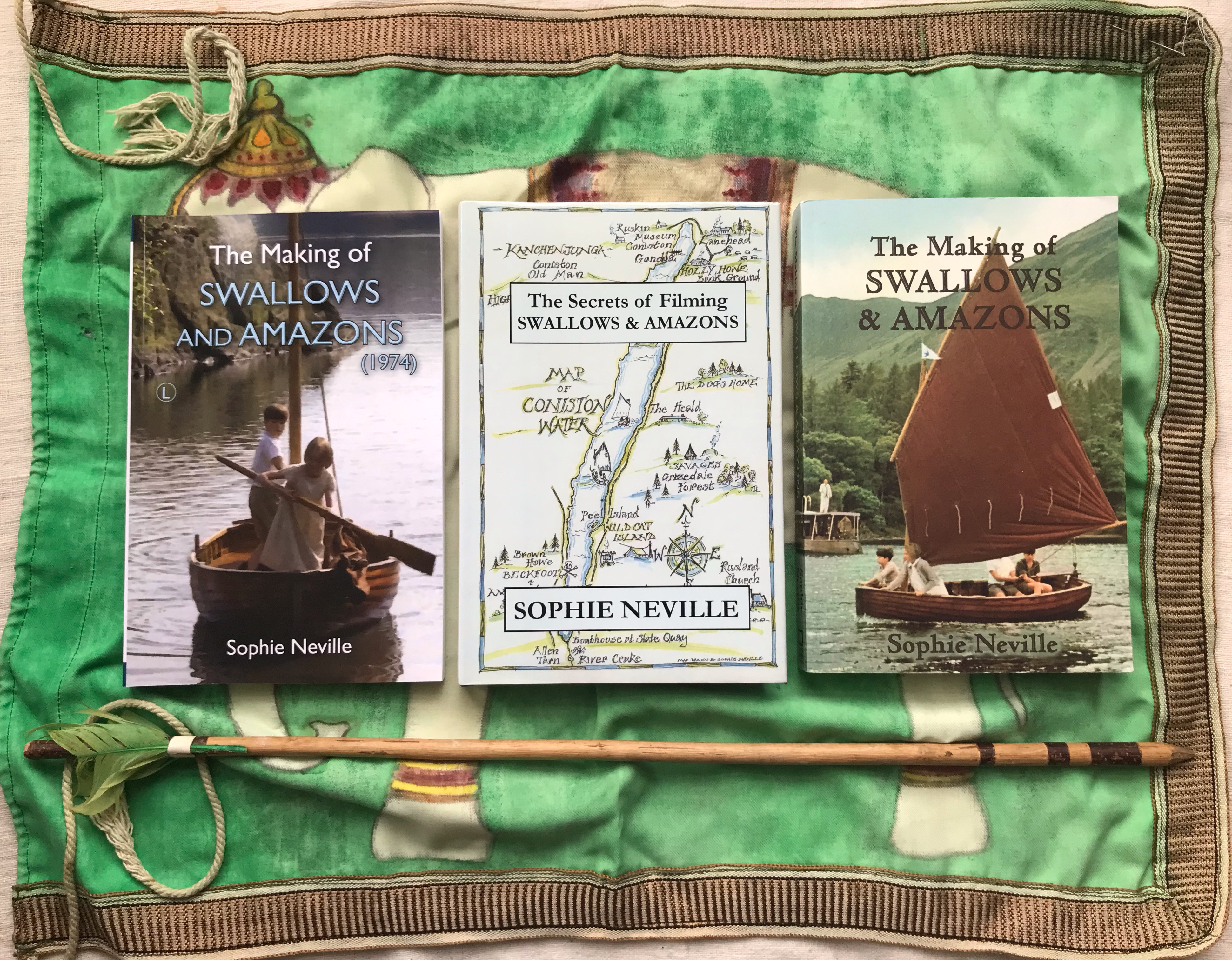
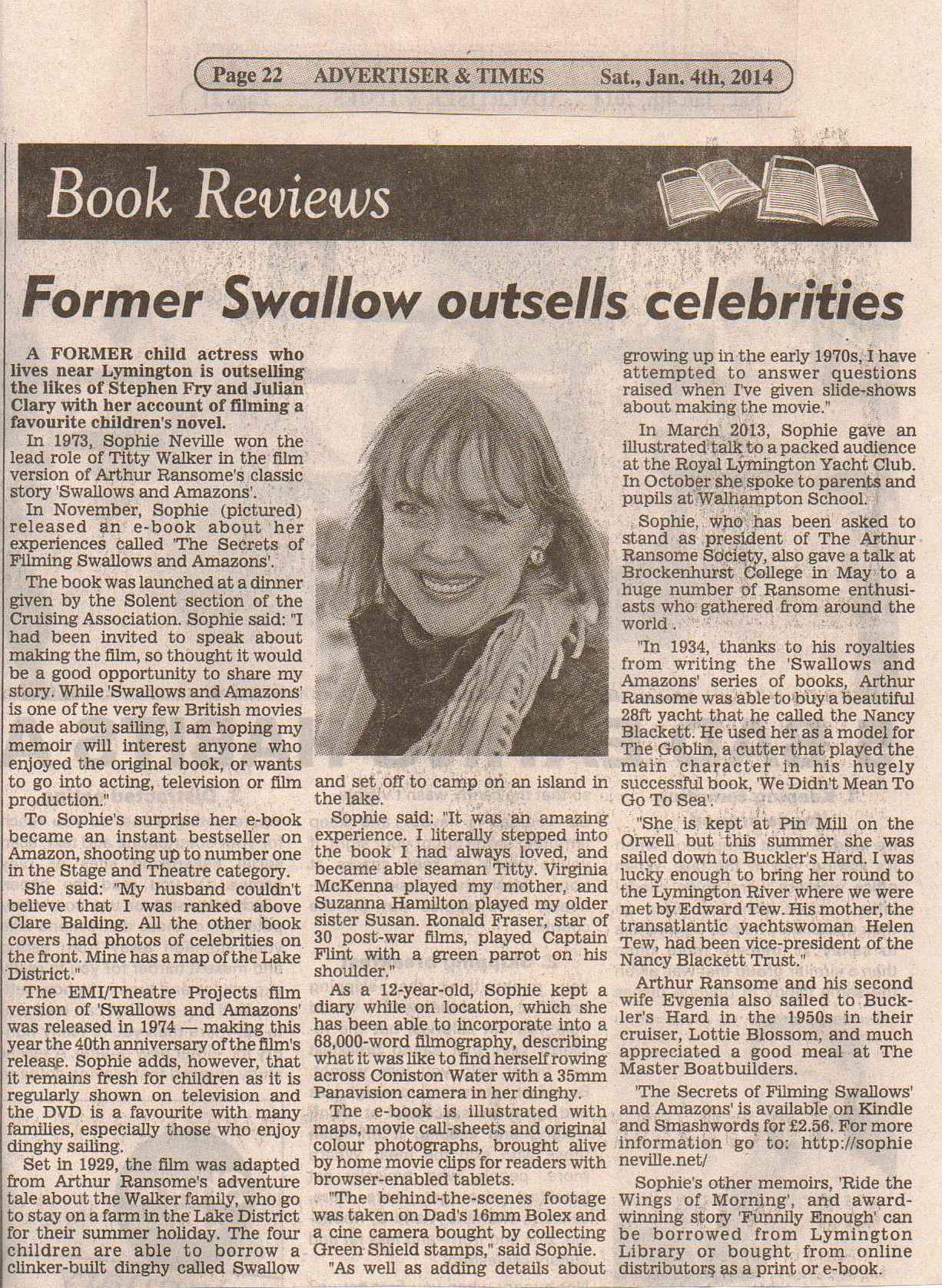
I opened my post to find not one but three reviews of my books, including this article published in The Outlaw and another in Signals, for which I am very grateful. I have pasted them here for fans of the film who do not yet subscribe to these literary magazines.
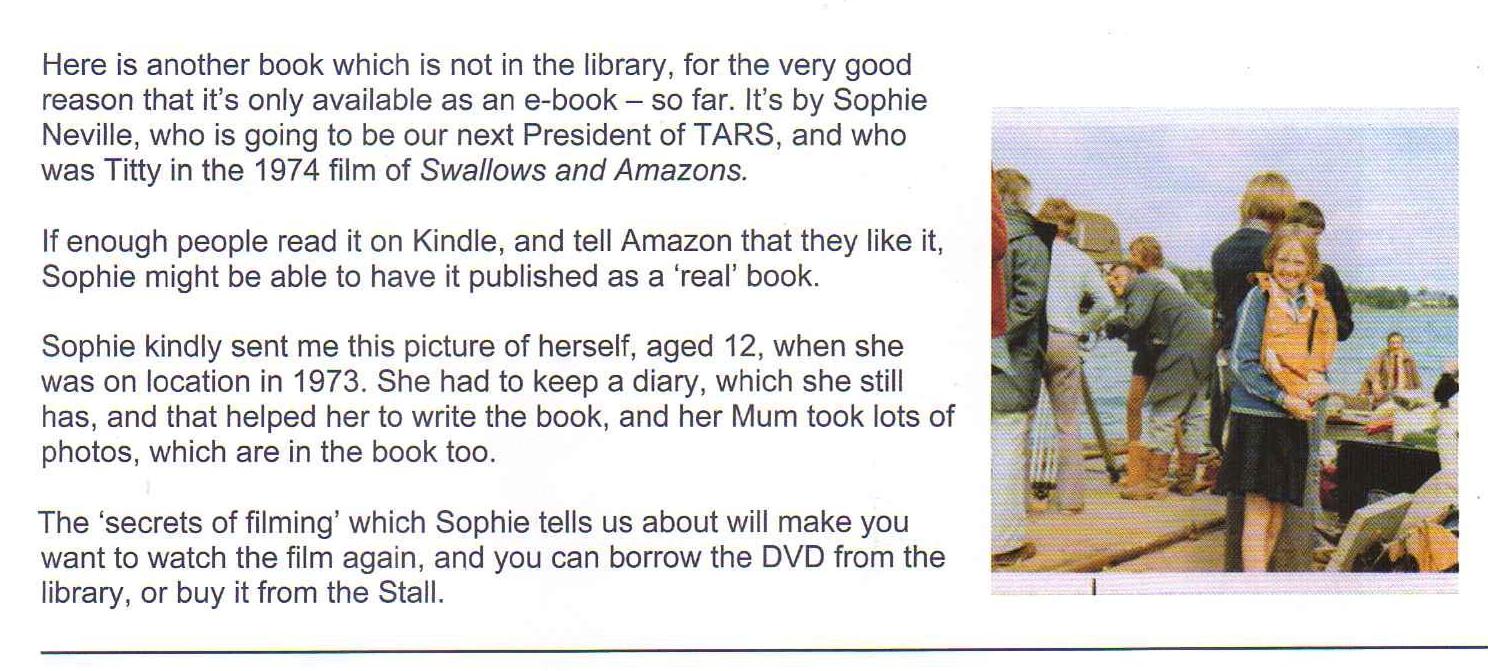
This review was followed by by a comment from Winifred Wilson, librarian of The Arthur Ransome Society:
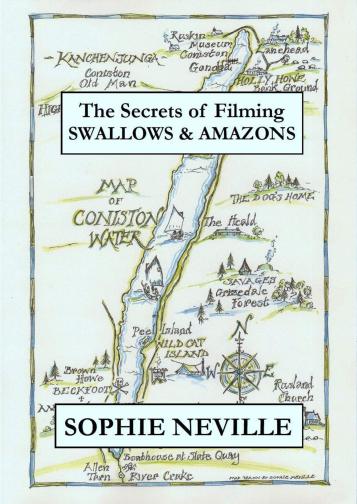
The Library Supplement in The magazine of The Arthur Ransome Society gives a full description of all three books:
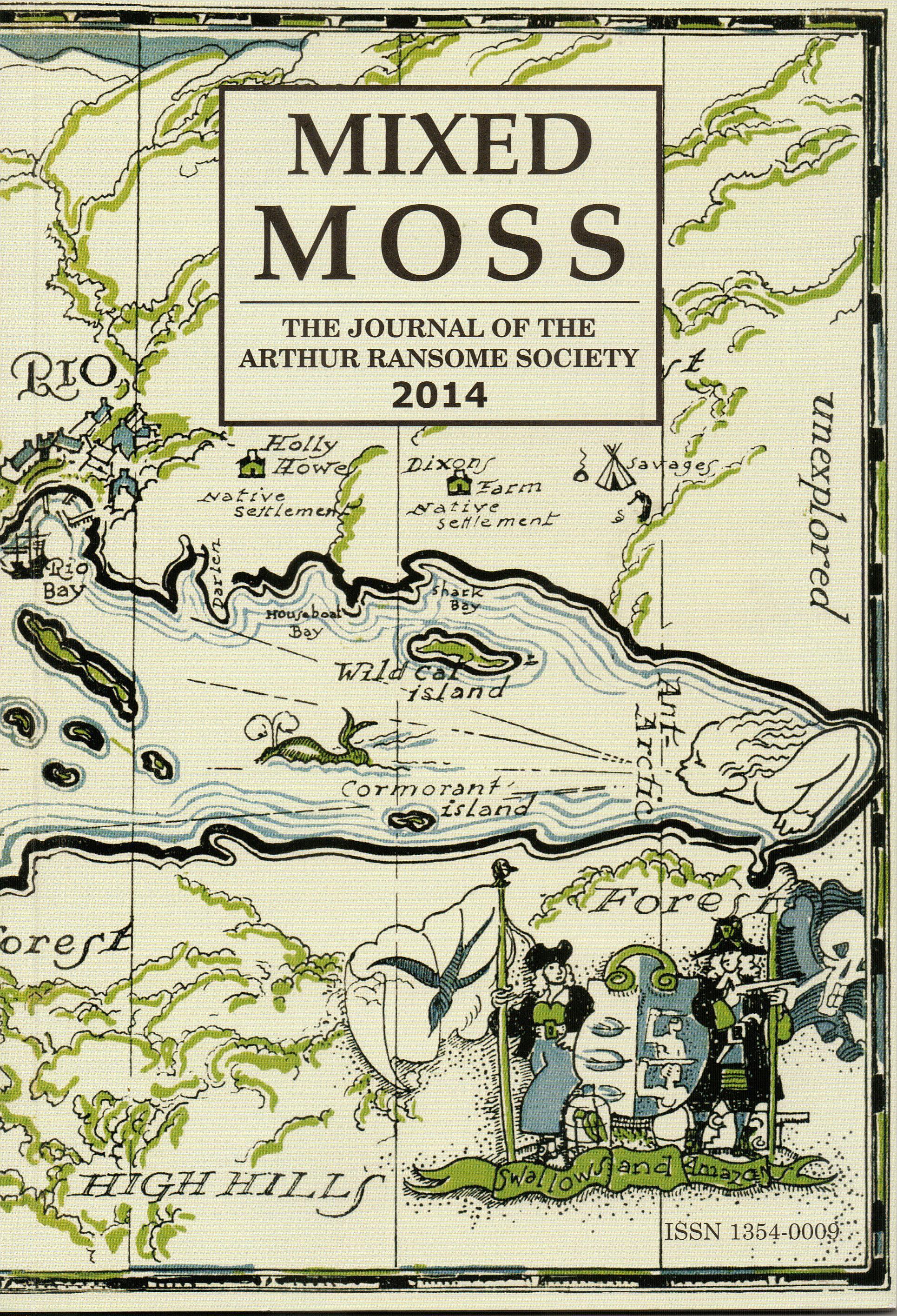
Mixed Moss arrived before Easter with Spurrier’s map on the cover:
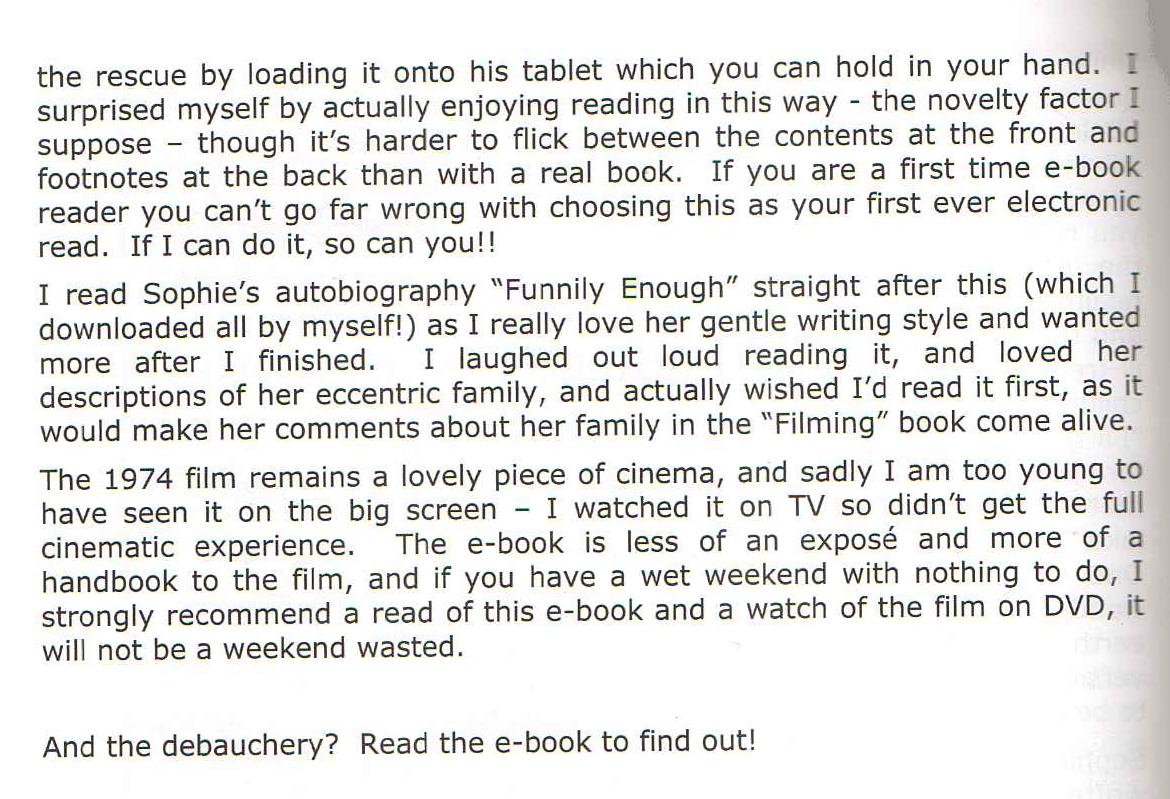
I found another review inside, this time from New Zealand:
The News is that The Secrets of Filming Swallows & Amazons has been signed up by the publisher Classic TV Press who plan to bring out a new edition in paperback this July. It will include glossy photographs and additional points of interest. If you would like to order a signed copy please email: classictvpress@live.co.uk
If you are interested in joining the Arthur Ransome Society please click here.
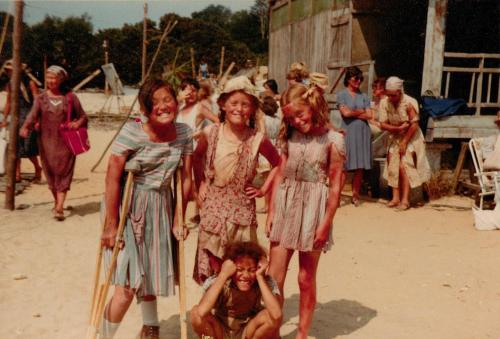
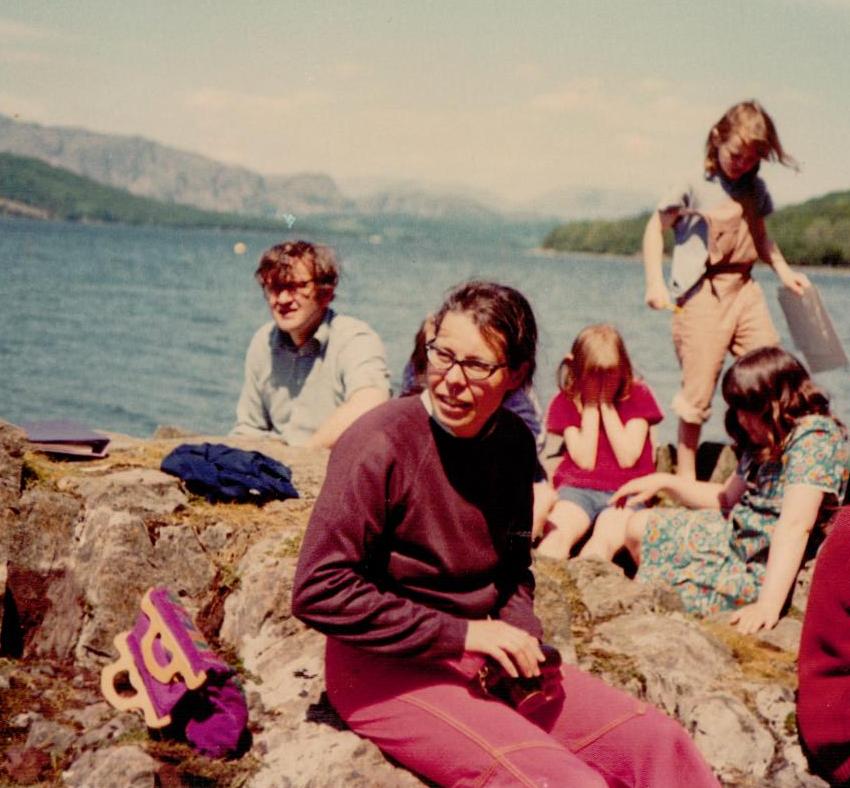
Here is a shot from 1973, capturing some of the deb-archery:
Sophie Neville with Peter Robb-King (Make-Up) and Ronnie Cogan (Hair) watching Lesley Bennett and Kit Seymour trying out their bows and arrows with Terry Smith (Wardrobe) while on location near Peel Island on Coniston Water in the Lake District.
We now have a second edition of ‘The Secrets of Filming Swallows and Amazons’ out as an ebook and two versions of the paperback, which is almost identical but includes film stills and can be ordered from libraries as well as the usual online outlets.
If you would like to know how the movie of Swallows & Amazons (1974) was made and know where the real locations can be found, ‘The Secrets of Filming Swallows & Amazons(1974)’ is currently available as an ebook on Amazon and Smashwords for £2.99. The paperback was launched to mark the 40th anniversary of the film’s release and is available online here.

The paperback, which is suitable for any age group, is based on the diary that I kept when I played the part of Titty Walker in 1973. It is illustrated with behind-the-scenes photographs and memorabilia such as one of the tickets to the Royal Gala premier in Shaftesbury Avenue held on 4th April 1974. You will also find out what the actors who played the Walker family ~ the Swallows ~ are doing now.
The joy of the ebook is that it includes a number of home-movie clips that my parents took of life behind the scenes that you can play wherever you have internet access.

If you have any questions about making the film, please add them to the comments below, and I will get back to you.

There were rather over-excited headlines in the Times and Telegraph when the ebook was launched but they only spoke of the legendary drinking of Ronald Fraser. Please don’t worry – there is nothing X-rated about the book – it is just the price one pays for half a page in a daily newspaper, especially since it came out on a Saturday.
The ebook has been doing well in the Amazon charts and hit Number 1 in the category ‘Stage and Theatre’.
A preview of what the book holds in store can be watched here:
‘The Secrets of Filming Swallows & Amazons’ – the book trailer
Very many thanks to all those who have left customer reviews on Amazon. It is always exciting to find out how the book has impacted others, especially those who love the Arthur Ransome books.
To read more reviews please click here


One way or another, much of my childhood and teenage years were spent hanging around on film sets. When I was fifteen I had the opportunity to work as a film editor’s assistant for Tony Woollard when he was editing Abide With Me, an adaptation of Winifred Foley’s childhood memoir, which was directed for BBC Television by Moira Armstrong.
At the age of nineteen I found myself working for a prop buyer on a Saturday Night Thriller called Dark Secret that LWT, London Weekend Television, were making at my parents’ house. I was struck by how nice the technicians were.

Our house was often used as a film location. You can’t hear the noise of traffic there. For some reason this always involved hose pipes (to provide water for the location caterers) and parking a huge number of vehicles. Our house was turned into a restaurant for Dark Secret, and then became known as a love nest, for the BBC costume drama House of Elliot which amused my father.

My mother thought the best way to occupy us children during school holidays was to send us filming. I was forever driving my little sisters to one location or another. Call times could be hideously early.

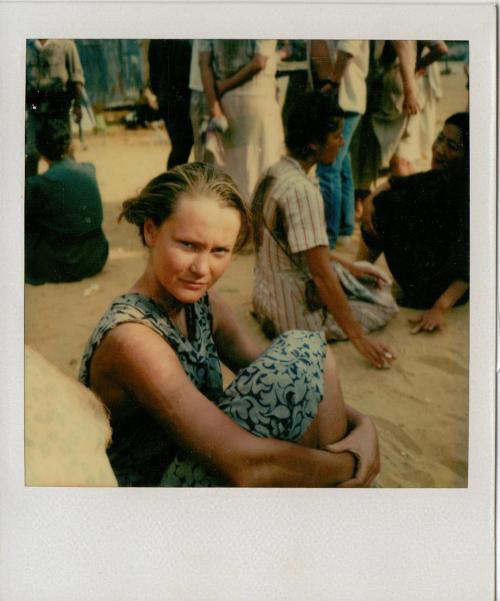
My sisters weren’t always so sure about this but they were well paid, which was one thing. Appearing as supporting artists in Tenko, the BBC serial about female internees in the Far East during WWII, gave us an appreciation of what was like to be held captive. Apart from the fact that the location catering was good, it made one feel exactly like a prisoner of war, or rather a female civilian internee.

Dressed in rags with our hair filled with grease, we were unable to move far or even sit down anywhere except in the filthy sand of the prison camp. The only good thing was that we were allowed to sunbathe, albeit in costume. What I did gain was the opportunity to watch a film crew in action day after day. It was all good experience for a girl who was soon to become a film runner herself.

Although I knew Claude Whatham well, I had no idea how prolific he was until I read his obituary.
As an art student, in 1940, he was commissioned to paint murals by the young Princess Elizabeth and Princess Margaret in their rooms at Windsor Castle after their paintings had been removed for safe-keeping during the Blitz. They couldn’t bear the idea of bare walls and asked if he could paint something cheerful.

-The pantomime pictures at Windsor Castle (The Royal Collection Trust)-
As Claude was born in 1927, I thought he must have been too young but he was an evacuee in his first year at art college. You can see more images of the murals and read his own version of how this came to pass if you click here.

All I can tell you is that Claude Whatham simply had the self-confidence to succeed. We all adored him.

After working for a short time as a production designer he became a television director at the age of about thirty – evolving his craft in the early years of Granada Television.

Being both a craftsman and artist he loved innovation and being avant guard.

Single-minded and determined, yet usually coming across as relaxed, he moved into directing movies in 1972 with That’ll Be The Day starring David Essex, Ringo Starr and Robert Lindsay, followed by Swallows & Amazons when he was forty-six.

I’d met him in 1971 when he directed the first BBC adaptation of Laurie Lee’s memoir, Cider with Rosie, for which he received a BAFTA nomination. It was made where the book is set at the village of Slad in the Cotswolds, about seven miles from where I grew up.

Claude lived at 37 Belgrave Gardens, London NW8 but had a Cotswold stone cottage in the hamlet of Camp, also near Stroud in Gloucestershire. After casting me as Eileen Brown, Laurie Lee’s first love, he invited me to play Titty in Swallows and Amazons (1974) and appear as a girl in a Wheatbix advertisement.

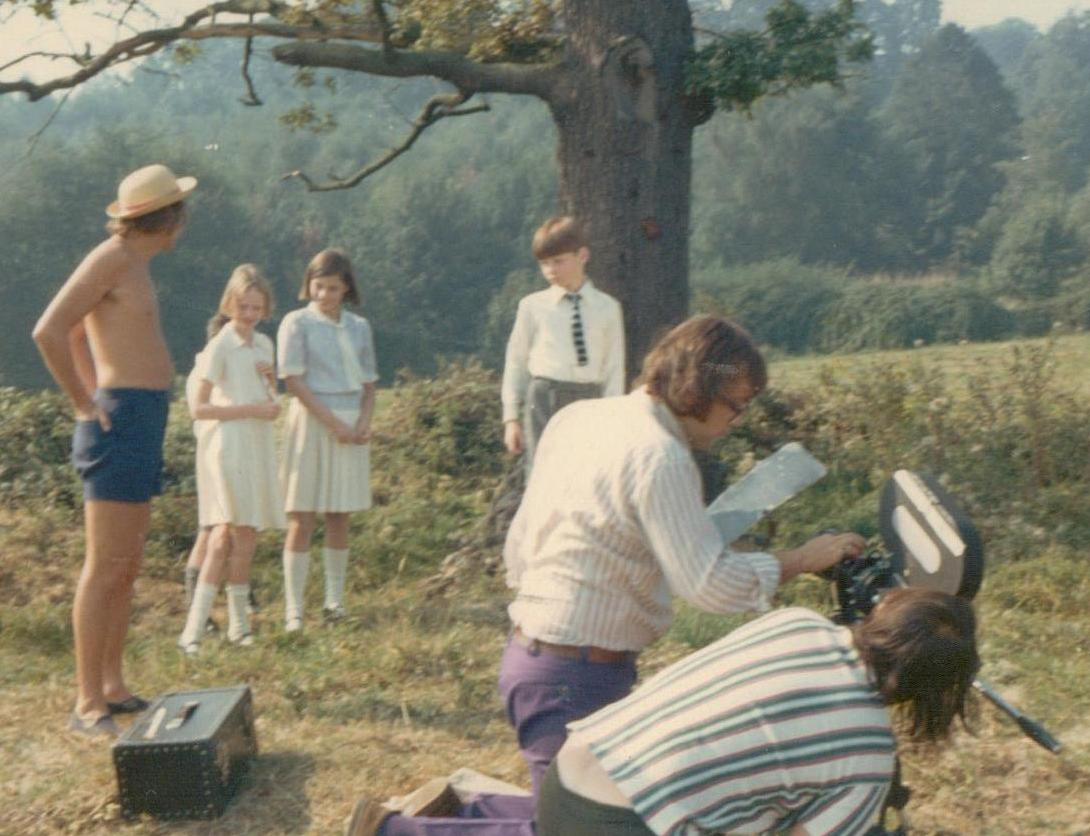
Claude loved taking his clothes off. It was almost indicative of his style. He wasn’t shy. If you look at what he was wearing you will see that his clothes were both on trend at the time and would still be fashionable today. He would wear Levi jeans, deck shoes or sailing boots and a Parka coat with a fur-lined hood in wet weather. As for headgear, I only ever saw him wearing other people’s hats.

Claude was always happy working outside. Problems did not seem to phase him. I worked with him on location in Gloucestershire, Surrey and Cumbria, visiting him on set in the Yorkshire Dales when he was filming the movie All Creatures Great and Small based on the life of the vet James Herriot, starring Anthony Hopkins and Simon Ward. I was sorry when I heard that he gained a reputation at the BBC for being too detailed and pernickety in the studio. I expect it frustrated him.
Claude’s period films are marked by their enduring quality, they have not dated.

For a full list of Claude’s film and television credits please click here

He was a major contributor to a new book about ‘Play for Today: The First Year’ by Simon Farquhar, which is dedicated to Claude. You can find it here.

I was glad to read that he had happy memories of filming Swallows and Amazons. You can read more about this in ‘The Making of Swallows and Amazons, 1974’

David Stott, the Ambleside lad who worked as a unit driver on the film of Swallows & Amazons in 1973 after he left college at the age of 19, has written from America:
‘I really enjoyed reliving Swallows & Amazons through your book.’
‘Oh my, what a trip down memory lane it was for me – so much that l had forgotten was rekindled. I cannot believe that it was forty years ago.
‘I think that I started work mid-June, which would fit in with finishing college. From your daily schedule it was when you went back to Coniston with Virginia McKenna on her second visit.’

David remembers the problem of being locked out of Bank Ground Farm by Mrs. Batty. ‘I really could not blame her as the whole place had been turned into a circus and her house ripped apart.’
‘The first morning I met Richard Pilbrow was in his bedroom for some strange reason and remember thinking, ‘What a total mess. How can anybody live like this?’
‘My main contacts were Neville Thompson (the On-line Producer) and Graham Ford (the Production Manager). They were all based at Kirkstone Foot Hotel that was owned by friends of my parents, Simon and Jane Bateman. Others stayed at the Waterhead Hotel down by the lake, where I would pick them up and take them to the location.
‘On arrival at the location I remember well the catering van and the breakfast that awaited us. Having just competed three years studying hotel management at college I was amazed how two people with very limited equipment could produce the number of meals they did. The washing up was done on a trestle table outside the van with bowls of water carried to location in large milk churns.

‘I did not have much contact with you and the other children, as you were under the watchful eye of your Mum and Jean McGill. Jean’s Mum was called Girly McGill and used to run a nursing home in Ambleside. As a child I used to deliver eggs to the home with my Dad. Jean had a brother who I think everybody called Blondie.
‘Sten was a bit of a handful at times and held up shooting on a number of occasions while he was calmed down. I rather envied Simon West; I wished I had the chance he did to act in a film. To this day I’m a frustrated actor.
‘Dennis Lewiston (the Director of Photography) always seemed to be holding a light meter in the air or perhaps he was warding off the clouds. I found him a little unapproachable.
‘My recollection of Sue Merry the continuity girl was setting up her folding table and tapping away on a portable typewriter.
‘Ronnie Cogan the hairdresser and I spent hours chatting. Once the shooting started, we had nothing else to do. He was such a nice man.

‘I was thrilled when I met Virginia McKenna and had to drive her around. One day I had to drive her to Grange railway station. I was so fascinated by her tales of working with lions in Born Free that I drove slowly to maximise her story-telling time. We almost missed the train and had to run from the car park.
‘One of the wettest days I remember is when the scene of Octopus Lagoon was filmed above Skelwith Fold Caravan Site. I don’t remember the support buses being around that day, but I do remember having to sit in the car for hours on end. Maybe the buses were somewhere else.
‘I know I was invited to the wrap party but cannot remember a thing about it.’
You can read more about the adventures had making Swallows and Amazons here

This Christmas has been marked by a number of amusing cards, emails and comments that have come in from people who remember making the film of Swallows & Amazons in 1973.
David Stott has already sent in his memories of working as Ronald Fraser’s driver at the age of 19 while Peter Walker remembers literally bumping into him in a pub in Ambleside. Various journalists added their recollections online below an article in the Telegraph. I hope to have gathered enough photographs to post a few more in the new year.
If you can remember anything about the filming of Swallows & Amazons, can recollect going to see it in the cinema when it was first released, or have memories about anyone connected to the movie, add a comment below or contact me on sophie@sophieneville.co.uk.

I have a list of those who appeared as supporting artists in the film that I would love to add to. Can you help me with more details and full names? It would be awful if I had incorrect spellings.
Kerry Dartisnine ~ Nurse
Tiffany Smith ~ Baby Vicky
Moira Late ~ Mrs Jackson
Brian Robey Jones ~ Mr Jackson
Mr Turner ~ Shopkeeper
Mr Price ~ Native on the Rio jetty
Mrs Price ~ Visitor at Haverthwaite Railway Station
Martin Neville ~ Native on the steamer
George Pattinson ~ Steamboat owner
Stanley Wright ~ Motorboat mechanic
James Stelfox ~ Boat mechanic
Herbert Barton ~ Casual holiday-maker
L. Lucas Dews ~ Man just returned from abroad
Jane Price ~ Girl at Rio
Simon Price ~ Boy at Rio
Tamzin Neville ~ Girl at Rio
Perry Neville ~ Girl at Rio
Pandora Doyle ~ Girl at Rio
Alan Smith ~ Boy at Rio
Jane Grendon ~ Rio visitor
Janet Hadwin ~ Rio visitor
Peggy Drake ~ Rio visitor
William Drake ~ Rio visitor
Mrs Jill Jackson ~ Rio visitor
Lindsay Jackson ~ Rio visitor
Nicola Jackson ~ Rio visitor
Fiona Jackson ~ Rio visitor
Shane Jackson ~ Rio visitor
Zena Khan ~ Rio Visitor
Lorna Khan ~ Lady on the Tern
Sarah Boom ~ Cyclist at Rio
Jack Hadwin ~ Motorcyclist
Kendal Borough Band
Beauty Proctor ~ Polly, the green parrot
The following people worked on the crew of Swallows & Amazons but I am not sure of their exact job titles:
Gay Lawley-Wakelin, Richard Daniel, John Slater, Lee Apsey, Craig Hillier, Les Philips, Ron Baker, John Pullen, Harry Heeks, Graham Orange, Mike Henley, Joe Ballerino, Ted Elliot, Eddie Cook, John Engelman, John Mills, Ernie Russell, Clive Stewart, Toni Turner, Phyllis B, Pinewood Caterers John and Margaret ……, Robert Wakeling, David Stott. and other Drivers: Browns of Ambleside
Have I left anybody Out?

When Sten Grendon was given the part of Roger in Swallows & Amazons (1974), his mother Jane Grendon came up to the Lake District with him to work as a chaperone, looking after all the children appearing in the movie.

Jane said that before filming began,
‘…one of the very first things we were asked was, ‘can Sten swim?”
‘I know he could doggy paddle. Neville organised swimming lessons at Pitville Pool, Cheltenham which included jumping off the diving boards. At the time I didn’t know why and I don’t think Sten is a natural in the water and the swimming lessons didn’t prove very successful. Claude told me – at the end of filming I think, when he gave me a copy of he original script – these lessons were because in the original script Roger was to jump in the water after Uncle Jim walked the plank.’
Jane sent me a copy of the page in question. I had not seen it before:

‘There are some personal memories. An aunt gave me the book for my birthday and I tried reading it but I hated all the technical boating details and I thought the children rather priggish so I didn’t enjoy it one bit and so was rather downhearted for Sten to be part of a story I hadn’t liked.’
Jane and her husband lived deep in the Cotswold countryside, at the rural Whiteway community, near Stroud in Gloucestershire. As I recollect, they had both qualified as teachers.
‘At the time of casting and during all the arrangements we had no phone at home and had to rely on a neighbour and the production team used to hold on while Ros came and fetched me! They must have really been fed up as it must have taken 10 minutes or so sometimes for me to get to the phone!’
Jane hadn’t imagined that she would end up in costume herself, if only for a day. She looked wonderful.

‘…. so there I was – a naïve, country girl flung into this alien world of a film unit. I was like a fish out of water! But I think it came out in your account that I related to you children better than I did to the adults around.’
Jane’s husband Michael was able to bring Sten’s sister, their little daughter Jo, up to watch the filming over half-term.

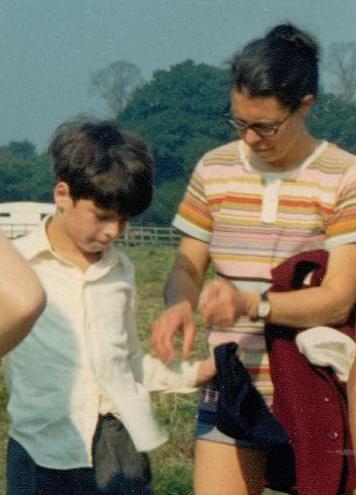
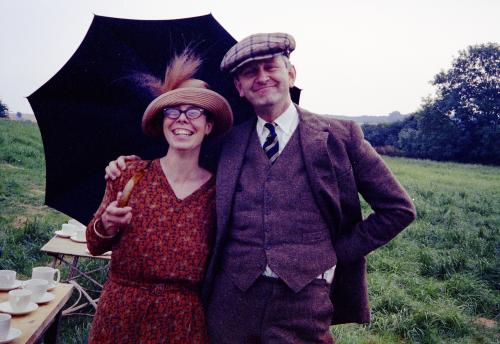
That summer Jane appeared in costume once more when Claude Whatham asked if Sten Grendon could also appear in a commercial he was directing for Weetabix, back in Gloucestershire at harvest time. This time she found herself on location not far from her own home and was always smiling.
Jane still lives the same house. Her husband Michael has retired from teaching and they have just celebrated their 50th wedding anniversary.

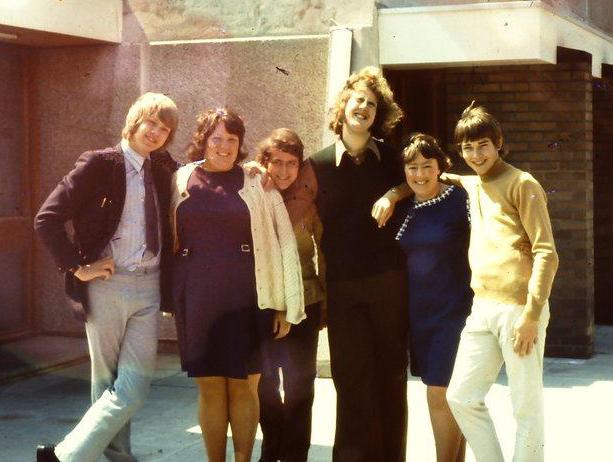
~ David Stott aged 19, far right ~
David Stott has emailed me, sending a photo of himself with his friends in the summer of 1973:
‘It was taken at college just before l started work on Swallows and Amazons… I am the one on the right with the yellow sweater. Love the hairstyles. Fashion-wise it was the era of Crimplene, as evident in my friend Pauline’s dress. I remember I wore a brown Crimplene jacket when I was driving the unit car.’
For the last twenty-six years David has been the resident proprietor at the Crossways Hotel near Willmington, a beautiful Georgian restaurant with rooms in East Sussex near Glynebourne, which makes the perfect place to stay if you are lucky enough to get tickets for the opera.
David recently added more tales of impro-parrot-y to the comments:
‘I also remember the incident when Ronnie Fraser sang “Drunken Sailor”. I delivered him back to location from a very drunken session at The Lodore Swiss Hotel, dragging him from the bar. He was not a pretty sight. Was it that the same afternoon that he had to fall into the lake? My memory is a little sketchy, but l seem to remember he was pretty far gone on that occasion as well.’

‘My neighbour Mrs. Dora Capstick was employed to show Captain Flint how to play the accordion. Of course I think the music was dubbed at a later date.’ I can only suppose that she taught him how to play the sea shanty, What shall we do with the drunken sailor? since that is what he was playing in the shot at the end of the film.
‘I had forgotten the name of the parrot lady, Mrs. Proctor, she lived in a cottage in one of the old yards in Kendal. I was scared to death of Beauty and I don’t know how you could bear to have him on your shoulder.
‘I vaguely remember your mother and I was friendly with Jean McGill the unit nurse who was another local Ambleside Girl.’

‘I was friendly with some of the production assistants but cannot remember their names. Quiet a few hours were spent on the double-decker buses that were used on location.
‘Another memory I have is having to wait for the London train to collect the rushes then get them back to the Kirkstone Foot Hotel for an evening screening and felt very privileged when l was allowed to stay and watch them.’

Does anyone else remember helping to make the movie Swallows & Amazons, or coming to watch the filming in 1973? Please do add your memories in the comments box below.

I added David’s stories to the second edition of ‘The Making of Swallows and Amazons’ available in paperback and this ebook where you can read more about what happened when filming in Cumbria:
The stars were Virginia McKenna of “Born Free” fame and Ronald Fraser. I was reminded of this period of my life when l read the headline ‘X-RATED antics of Swallows and Amazons’ in The Times. The title related to the release of an e-book by Sophie Neville one of the child actors in the film. Sophie was 12 at the time and I was 19.
Sophie recalls how Ronnie (Ronald Fraser) was always drunk. Well this is not strictly true. In the morning Ronnie was reasonably sober and for this reason the director Claude Whatham would try and get most of the shooting with Ronnie in the can before the lunch hour came around when I would be summoned to take him to the nearest hostelry. Ronnie would then order his own concoction ‘The Fraser’. I cannot for the life of me remember what it consisted of, but believe you me these disappeared at a rapid rate of knots down Captain Flint’s (his character’s) throat. By the time the liquid lunch came to an end l would have to bundle him into the back of the car and deposit him back on set, much to the dismay of the producer Richard Pilbrow and the director Claude Whatham. Afternoon shooting was often a disaster when Ronnie was involved and I’m sure he frightened the children from time to time.
Well if the children were sometimes scared by Uncle Jim, as Captain Flint is known, then l was scared of the parrot that Uncle Jim had on his boat. The first day that I had to collect the parrot the old lady who owned him travelled with him to the location on Derwent Water. However she soon became bored with all the hanging around and after that she entrusted me with the parrot. Now birds are not really my thing and I really did not like handling him. He would travel to the location in an old shopping bag with a zipper, where l would hand him over and he would be placed in his cage. This was all well and good, then came the day that was so wet they did not use him, but instead he stayed in the production office at the Kirkstone Foot Hotel where the crew were hanging out. I was told he was in the bathroom, l expected him to be in his travel bag, but no he was sat on the edge of the bathtub looking at me. By this time he hated being put in the bag it took me all my time with a towel to catch him, finally after being scratched and bitten I got him home to his Mum.
The hardest thing to stomach was the fact that the parrot was paid more per day than l was.
David Stott

I replied:
Thank you so much for writing in, David. Your story about the green parrot had me roaring with laughter. I am told that he was a male parrot called Beauty, who belonged to Mrs Proctor of Kendal. Her grand-daughter rang in when I was interviewed on Radio Cumbria recently. She told me that her gran, old Mrs Proctor could do anything with him, and was well know for walking around Kendal with him sitting on her arm. I don’t think anyone else dared get close. Since I played the part of Titty, I had to have him sitting on my shoulder in the cabin of the houseboat, while delivering the most important lines in the film. We were then meant to leap about singing, What Shall We Do With the Drunken Sailor? This was a bit ironic since Ronnie was half-plastered by then. He was pretty permanently pickled. In the penultimate shot of the film, while pretending to play the accordion, he was still drunk from the Wrap Party 36 hours before. The parrot was not invited to the party but did receive a fee of £25 for appearing in the film. His owner used this to buy him a bigger cage.
I don’t know who thought up the ‘X-rated’ headline at the Times (which was absurd) but a reporter from the Daily Express provided the receipt for ‘The Fraser’ in 1973 – I have the clipping (above). Geoffrey Mather wrote: ‘A Fraser is a drink of his own invention. It consists of a large vodka with a kiss of lime and a ton of ice, topped up with soda in a large glass’. We all bought the copies of the newspaper in Ambleside. My mother was horrified as instead of being a story about making the film it was a half-page article about Ronnie’s antics in the bar of the Kirkstone Foot Hotel on Windermere.

More stories from the making of Swallows and Amazons can be found here: