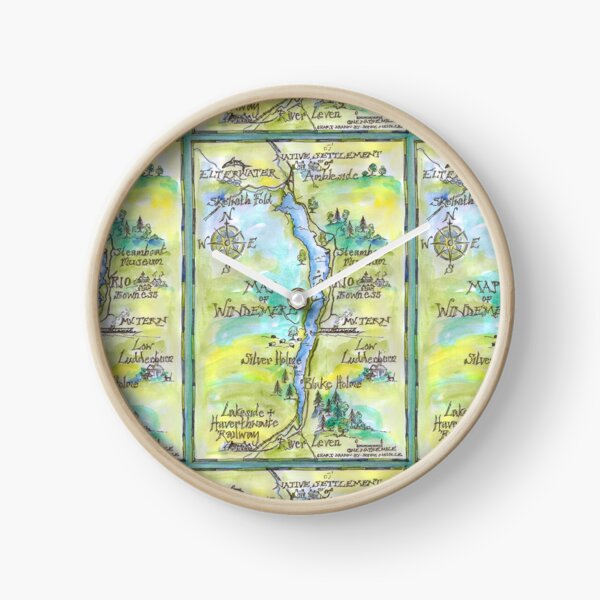
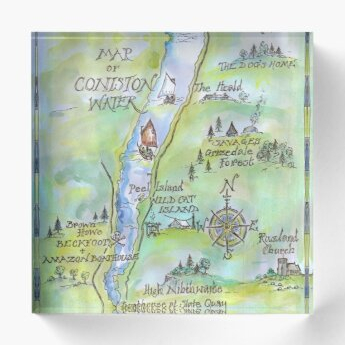
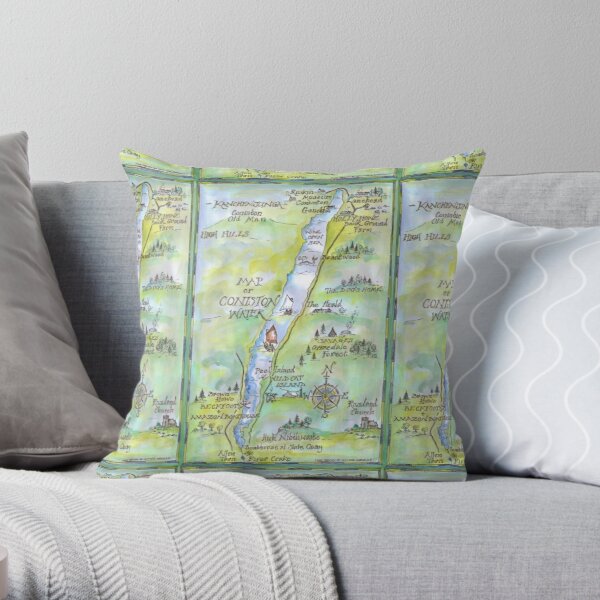
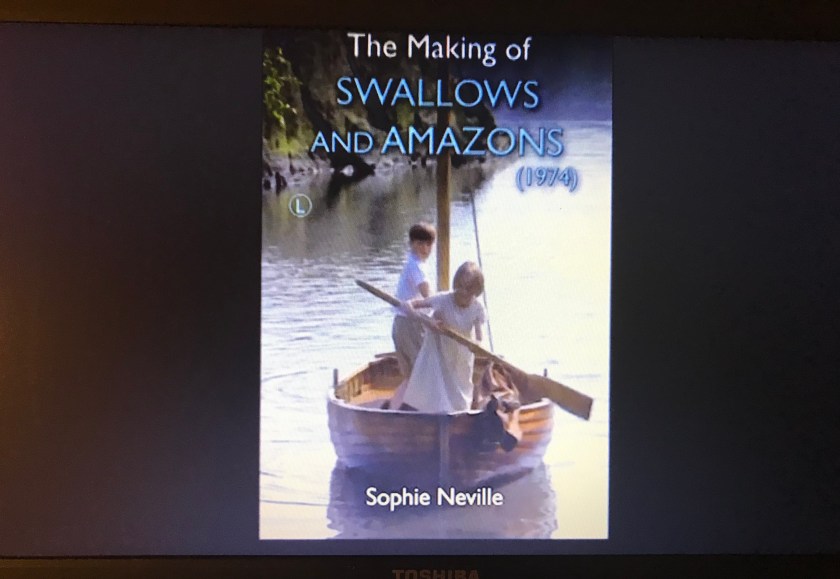
I’ve used the maps I drew to illustrate my book on ‘The Making of Swallows and Amazons, 1974’ to bring out a ‘Sophie Neville collection’ of gifts.
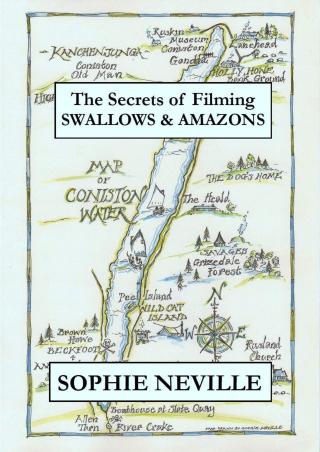
Map showing film locations around Coniston Water
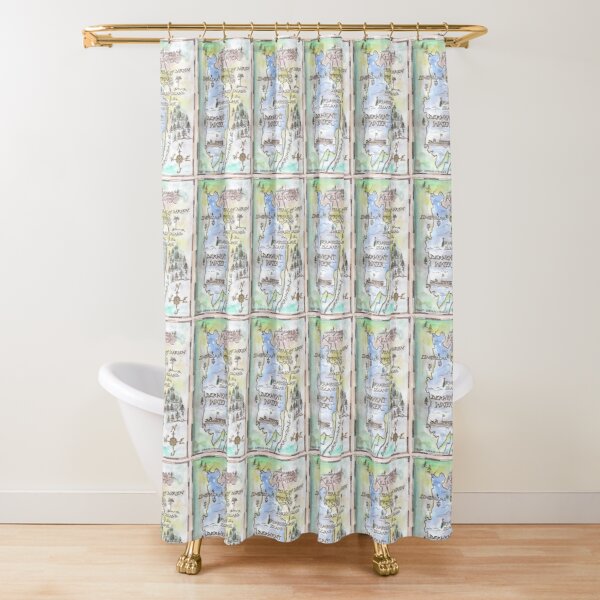
Map of film locations on Derwentwater in the Lake District
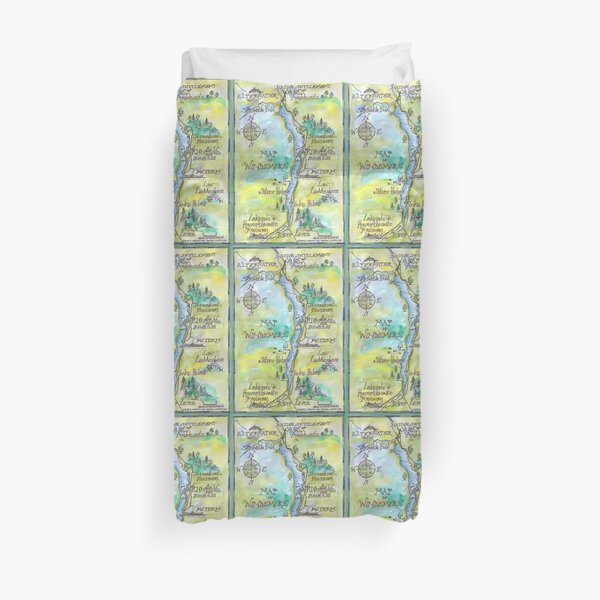
Map showing some of the film locations around Windermere
Each of the three different maps, seen above, have been printed on cushions, bedding, bath mats, shower curtains, coasters and items of clothing that make perfect presents for Swallows and Amazons enthusiasts.
To view the collection that feature Coniston Water, Windermere and Derwentwater, please click here.
Find a copy of the Blu-ray of ‘Swallows and Amazons’ in French – ‘Hirondelle et Amazones’ – and see if it helps you pick up the language. You could have a go at writing an online review in French, even if it was a short one. There is a French critique you can read here.
2. Watch the DVD of ‘Swallows and Amazons Forever!’- the BBC TV adaptation of ‘Coot Club’ and ‘The Big Six’ and write (or little ones can dictate) an online review – here’s a link to the Amazon site. You can read about the children who appeared in the serial, for free, on this website.
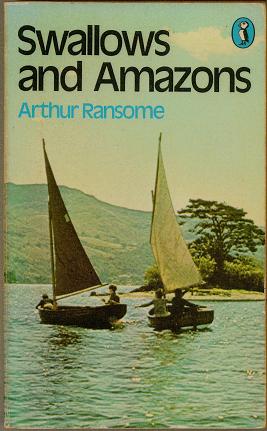
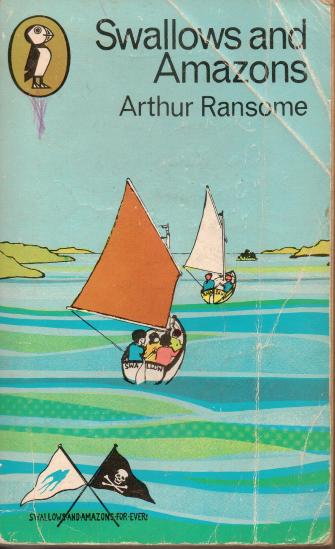
Puffin edition of ‘Swallows and Amazons’
3. Log on to Goodreads and write reviews of any Arthur Ransome books you have read. You could also post your review on other online sites such as Amazon.
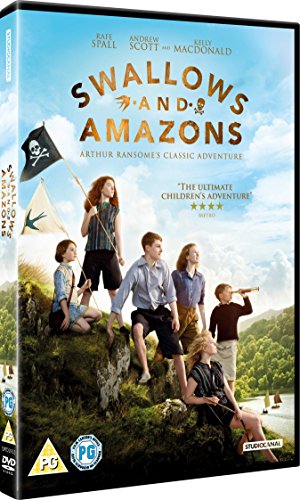
7. If you are interested in filmography or eager to understand the behind-the-scenes workings of a film set, you can compare the making of Swallows and Amazons (1974) as detailed in ‘The Secrets of Filming Swallows and Amazons‘ with the making of the 2016 movie, which has a DVD Extras package. See if you can identify technical aspects of film-making that have evolved over the last forty years, such as CGI and the use of green screens.
Sophie Neville
Do think of joining The Arthur Ransome Society. You could submit a book or film review for publication in one of their magazines. They run competitions and offer grants for young people keen on taking part in activities that would be dear to Arthur Ransome’s heart, from learning how to sail to story-telling.
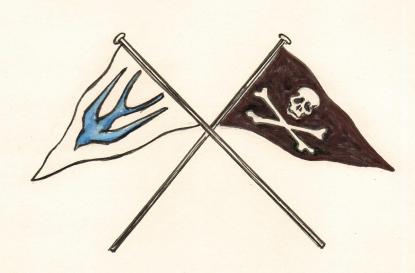
The school term is over, ‘Swallows and Amazons’ is on BBC iPlayer and Christmas missives are arriving in the post. I have just been sent this homemade card from someone who came to the premier of the original film in 1974, when I was fortunate enough to play Able seaman Titty.
~Captain Flint hanging Christmas decorations around his houseboat on a card made from a Puffin book cover~
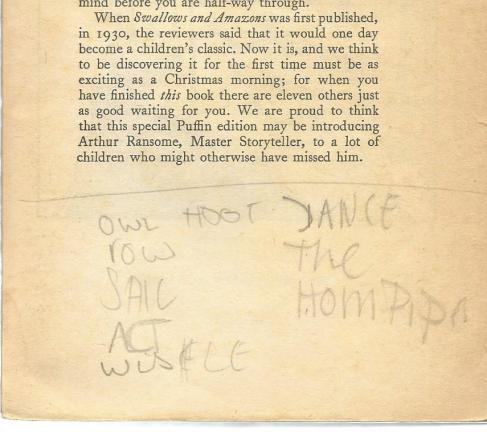
I dug out the Puffin paperback of Swallows and Amazons my father gave me when I was a girl and read avidly, along with other books in the series, by the time I was eleven years-old. It is a 1970’s edition in which I’d underlined everything Titty said. I must have re-read this copy when busy preparing for filming the 1974 movie financed by EMI.
Kaye Webb, the editor, had written an introduction saying, ‘This book is about sailing, fishing, swimming, camping, and piratical exploits.’ She wanted to make it available to children, thinking that discovering Swallows and Amazons ‘for the first time must be as exciting as a Christmas morning.’
Underneath, I’d noted down the skills I would need to acquire before playing the part of Titty. ‘Owl Hoot’, was one item, ‘wisle’ (sic) another. I was somewhat apprehensive about dancing the Hornpipe but excited about ‘being a cormorant’, having no idea how cold this experience would prove.
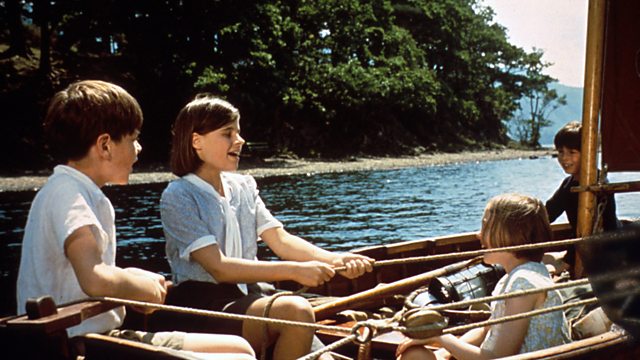
According to Trade News, 75,000 copies of a new Puffin paperback were brought out to accompany the original film. A still was used from the scene where the Swallows sail both dinghies from Cormorant Island. It retailed for 35p. Meanwhile Jonathan Cape printed 12,500 copies with the original dust jacket to accompany the release on 4th April 1974.
Today, I am most interested in Ransome’s prose, amused to find the phrase ‘X marks the spot where they ate six missionaries’ does not appear within the pages of the book. It was given to Titty in 1973 by the screenwriter David Wood. However, there are words of wisdom a-plenty that were not used in the film adaptations:
‘I like cooking,’ said mate Susan.
‘If you want to go on liking it, take my advice and get someone else to do the washing up’, is Mother’s reply. (I wonder who might have said this in reality.)
‘You can be wide awake and not see a thing when you aren’t looking’ is one of Roger’s observations.
John was able to look back to ‘a different, distant life’, which is exactly how it feels when the excitement of Ransome’s world spoils you for the ordinary. It’s true: those involved in outdoor activities develop in leaps and bounds ending up, ‘not at all what they had been.’
What is it about Arthur Ransome’s writing that captures your imagination? Rowing? Sailing? Cooking over a camp fire? Which book has most influenced your life?
Article on Swallows and Amazons on Puffin Magazine
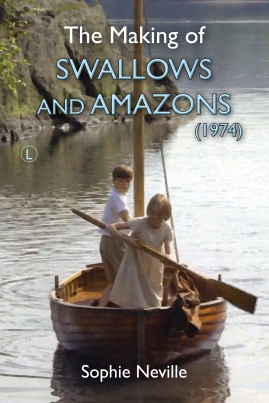
You can read about the adventures we had bringing out the original film in different versions of ‘The Making of Swallows and Amazons (1974)’, which is now available as an audiobook.
Different editions of ‘The Making of Swallows and Amazons (1974) by Sophie Neville’
If you enjoy ‘Swallows and Amazons’ do think of joining The Arthur Ransome Society who often visit the film locations or the Arthur Ransome Group on Facebook where you will meet like-minded people – of all ages. Most are dinghy sailors who love the books.
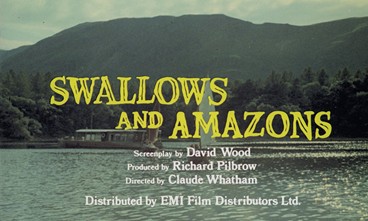
Lat time ‘Swallows and Amazons'(1974) was screened on BBC Two, at least one film fan held a TV party with a 1930’s theme. Others ‘stoked up the wood-burner and settled down to spend an afternoon re-living summer in the Lake District’, adding, ‘It is as if Christmas wouldn’t be Christmas without ‘Swallows and Amazons’ – a timeless classic to watch again and again.’
For the latest edition of the paperback on ‘The Making of Swallows and Amazons(1974)’ with details of where the film was made and what those who appeared in it are doing now, Please click here
The ebook, entitled ‘The secrets of filming Swallows & Amazons (1974)’ is similar with a few more stories for adult readers and has links to behind-the-scenes cine footage. It can be downloaded from iTunes, Smashwords,Kobo and Amazon Kindle
It would be lovely to hear from anyone who saw it in the cinema when it first came out in cinemas in the summer of 1974 – more than forty-five years ago.
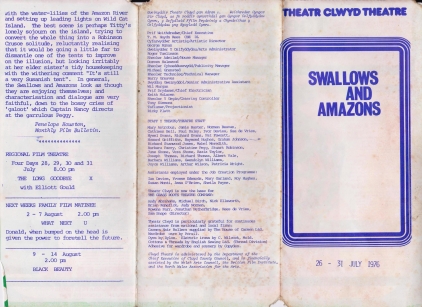
Simon Hodkin kindly sent in this cinema programme that he has kept since watching the movie when he was a boy growing up in North Wales.
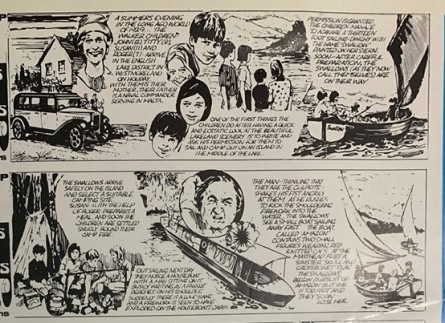
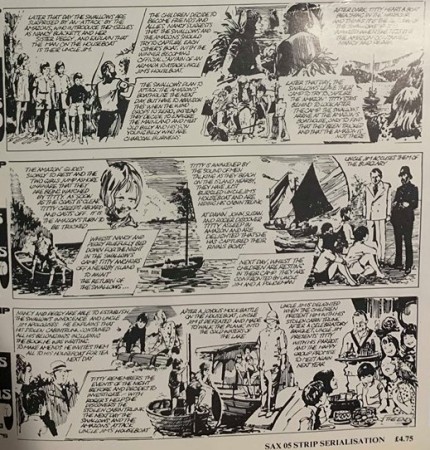
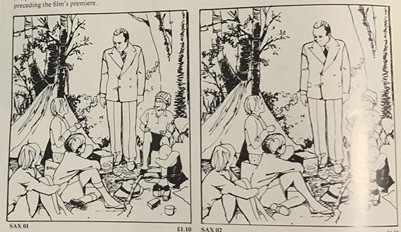
Arthur Herbertson managed to track down these rare publicity sheets for ‘Swallows and Amazons’ typical of movie games of the period:
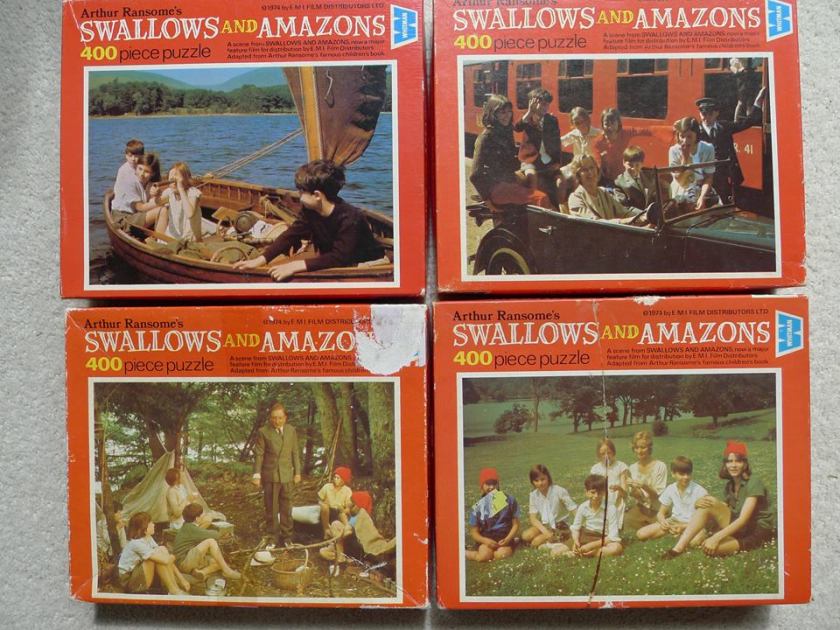
Arthur has a collection of the four jigsaw puzzles and the Puffin paperback that came out with the film.
There was a vinyl LP narrated by the screenwriter David Wood that you can still purchase.
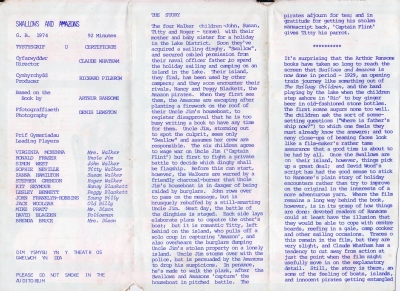
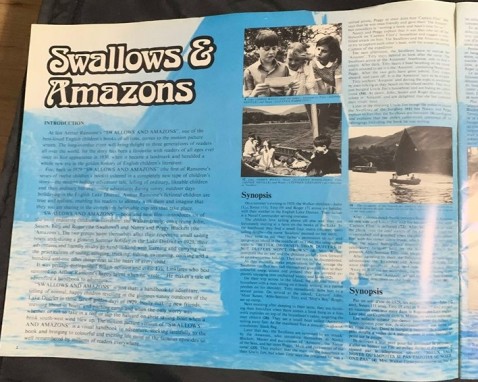
Arthur found a publicity brochure that I had never seen before.
To read comments from people who saw the film at the cinema in 1974, please click here
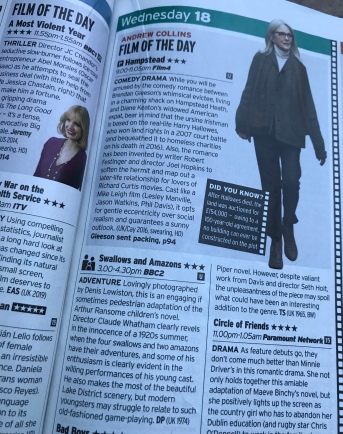
The original story was written by Arthur Ransome in 1929 ninety years ago, so the film hits the half-way mark between the original readers and today’s audience. It’s funny, the critics in 1974 are asking the same question as raised in the billing this week: Do ‘modern youngsters struggle to relate to such old-fashioned game playing’?
Do add your thoughts to the comments below.
~Billing in the Christmas edition of the Radio Times 2019~
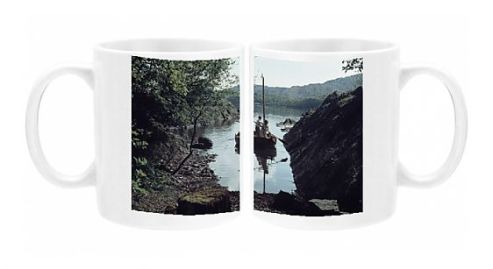
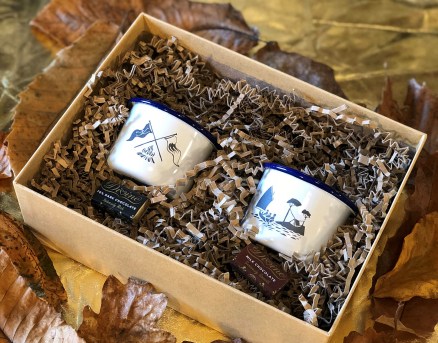
Everyone uses mugs – if only to store pens and pencils. These bone china cups depicting Ransome’s yachts Peter Duck and the Nancy Blackett should be available from The Nancy Blackett Trust. They cost £19.99 for a pair. The trust also sells a selection of books, audio books and videos for Arthur Ransome enthusiasts with any profits going towards the upkeep of the historic vessel.
Here are some of their other useful mugs that could be bought as a set of three, easily sent through the post:
– Mugs depicting scenes from the 1974 film ‘Swallows and Amazons’ –
Some of my favourite things the Nancy Blackett Trust stock in their online shop are tea towels, including this one that depicts Spurrier’s map of the lake in the north
Claudia Myatt’s design featuring three of Arthur Ransome’s yachts called, ‘I saw three ships’, makes a good gift. Mugs and tea towels make great presents for sailors.
The Little Boathouse can make up coastal map cufflinks, personalised especially for you.
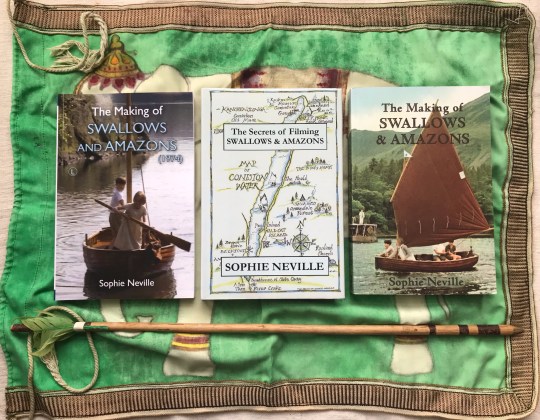
We have designs for cakes and party ideas with a few gifts here. And then there are books. Here are different editions of one I wrote, available on eBay and Amazon or to order from Waterstones:
Different editions of ‘The Making of Swallows and Amazons (1974) by Sophie Neville’
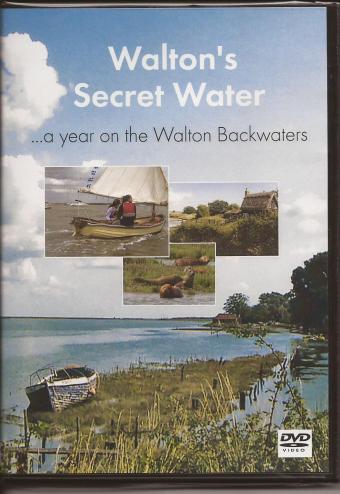
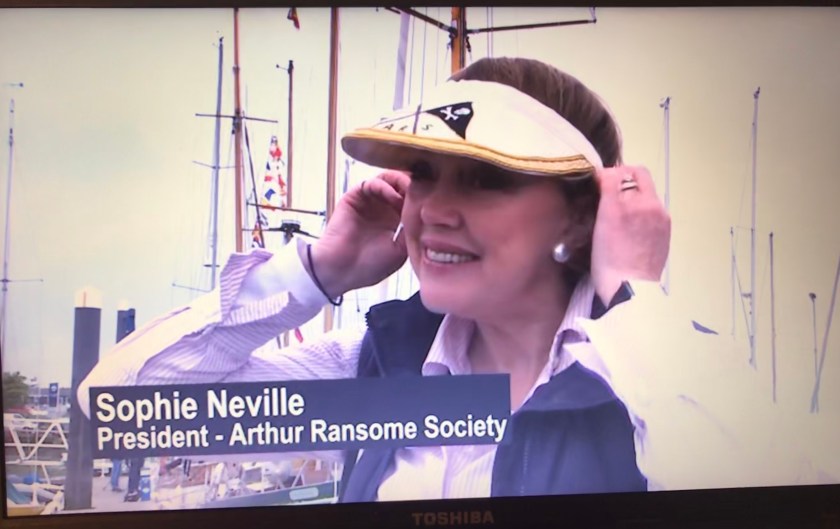
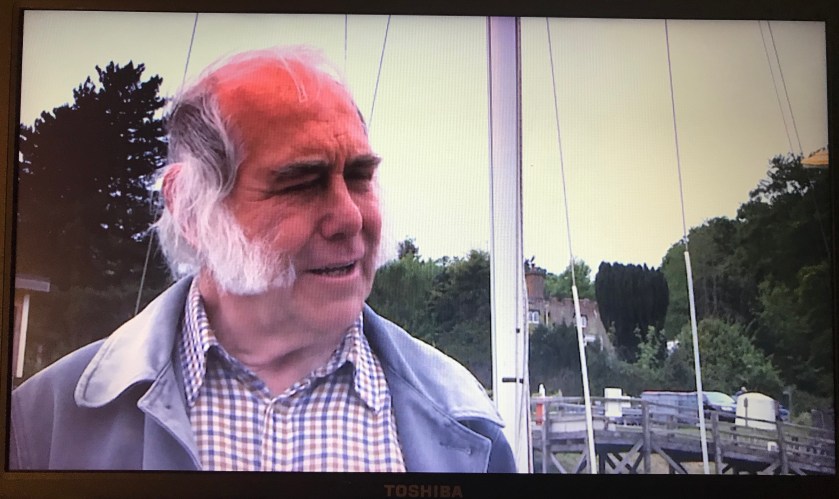
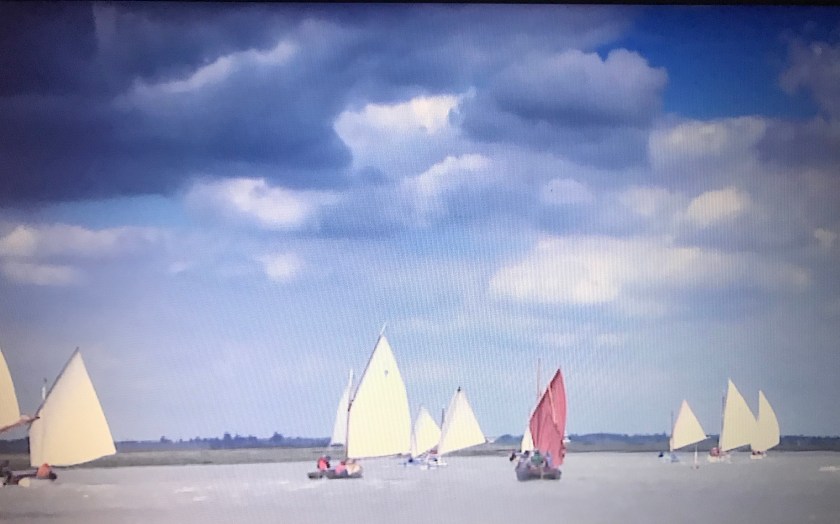
In my role as President of The Arthur Ransome Society, I was interviewed by Chris Opperman for a new documentary produced by David Webb on the Walton Backwaters, known by Arthur Ransome enthusiasts as ‘Secret Water’.
The 75 min DVD entitled ‘Walton’s Secret Backwaters’ is compatible with all DVD players displaying the DVD Video & PAL logo. It can be purchased online here
Chris Opperman, who chatted to me at the Royal Harwich Yacht Club on the Orwell, has sailed in the area for years. After a career in newspapers, he produced programmes for Radio 4 and the World Service before presenting the breakfast News and countryside documentaries on BBC Radio Suffolk.
As President of The Arthur Ransome Society, I represent the 1,000 or so members of the literary society devoted to the Swallows and Amazons books, including those set in East Anglia. There is usually a lot of flag flying since many members also sail. Swallow, the dinghy used in the original film ‘Swallows and Amazons’ has taken part in Swamazons events on the Walton Backwaters since she was renovated in 2011.
We celebrated the fact that Arthur Ransome’s book ‘Secret Water’ was published eighty years ago at the Essex Book Festival when I was joined by authors Julia Jones and Peter Willis in Harwich on Sunday 3rd March.
I signed copies of ‘The Making of Swallows and Amazons (1974)’ afterwards. It was great to see it featured in the DVD.
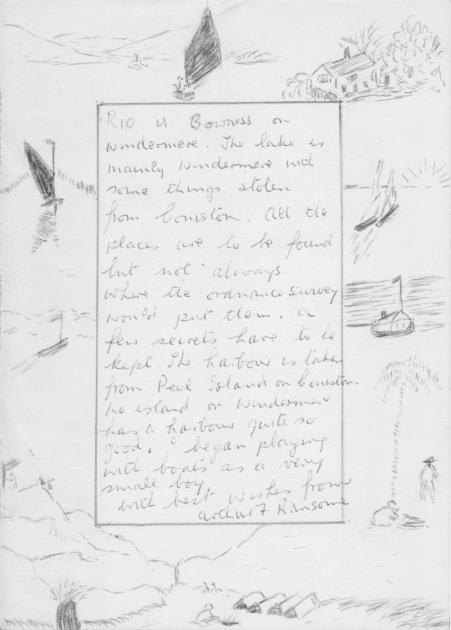
I have been sent a copy of a letter written to a reader by Arthur Ransome in June 1955 revealing where some of his ‘Swallows and Amazons’ locations can be found. I was interested to read that, ‘the lake is mainly Windermere with some things stolen from Coniston.’
One summer, we spent a long weekend with The Arthur Ransome Society when we managed to find quite a few locations around Coniston Water that are featured in Ransome’s books.
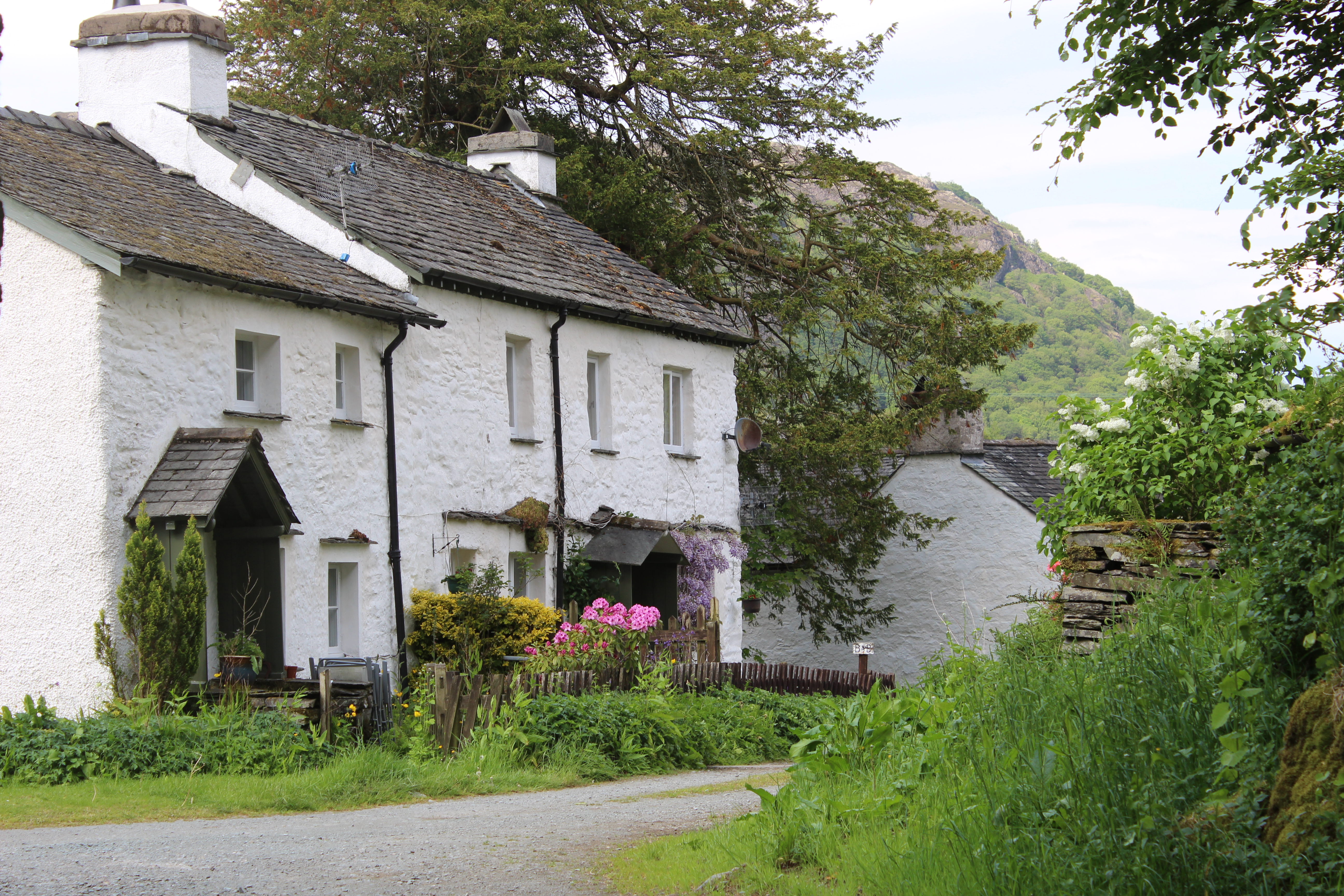
~Low Yewdale Farm, near Coniston ~
The curator of the John Ruskin Museum took us on a walk around the village of Coniston and under the Yewdale Crags towards Tarn Howes. We passed Low Yewdale Farm where Arthur Ransome stayed as a young man. It is just as I imagined Swainson’s Farm in the book ‘Swallowdale’. The footpath takes you down to the beck where Ransome fished for brown trout. I could imagine Roger attempting to tickle trout there.
If you follow the path on south, then branch left up the East of Lake Road around Coniston Water, you will find another footpath leading to Bank Ground Farm.
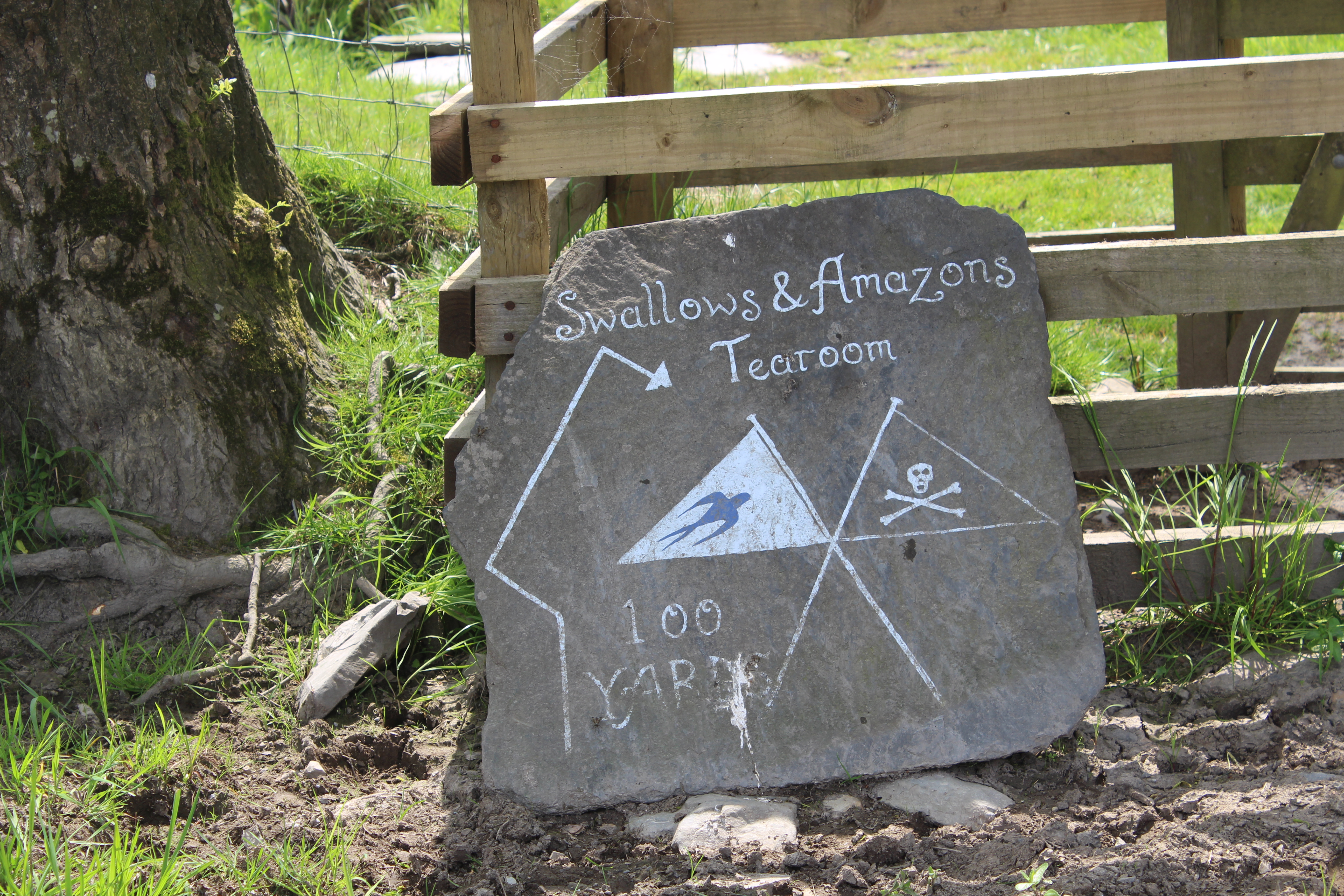
A hand-painted sign guides you through fields, where Galloway cows maybe grazing. Look up and you will literally find yourself at Holly Howe, the long white farmhouse where Mr and Mrs Jackson live in ‘Swallows and Amazons’. You can imagine the Walker children running down the meadow to the Peak of Darien.
~ Dr Ernest Altounyan rigging Mavis on Coniston Water~
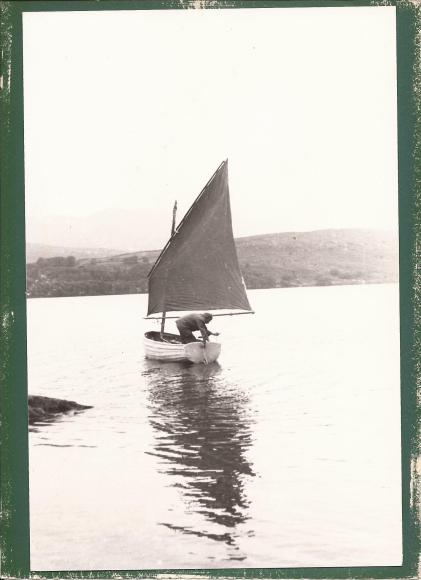
It was here that the Altounyan children, Taqui, Susie, Titty, Roger and Brigit spent one summer holiday in 1928, while visiting their grandparents who lived next door at Lane Head. They learned to sail on the lake in two dinghies: Swallow and Mavis, later re-named Amazon, who can be visited at the John Ruskin Museum in Coniston.
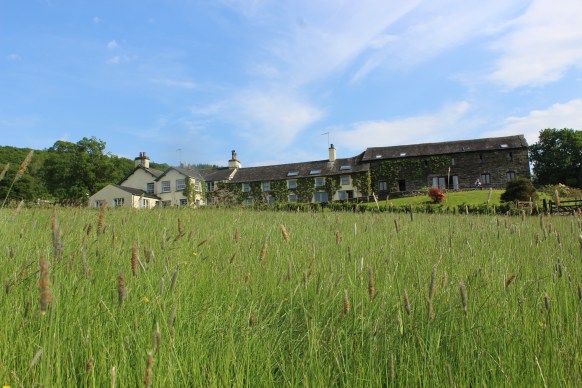
~Bank Ground Farm in Cumbria where the movie ‘Swallows and Amazons’ (1974) was made~
The barn, inside which we filmed some of the night sequences for the original movie of ‘Swallows & Amazons’, has been converted into self-catering holiday accommodation that can house a number of families quite easily. From here you can run down to the boatshed where John, Susan, Titty and Roger found Swallow and imagine them setting off on their voyage to Wild Cat Island leaving the Fair Spanish Ladies on the stone quay.
~The boatsheds below Bank Ground Farm, on Coniston Water~
Wooden jetties have been added recently and it is possible to either launch your own boat or hire a kyak from Bank Ground Farm.
~The northern end of Coniston Water~
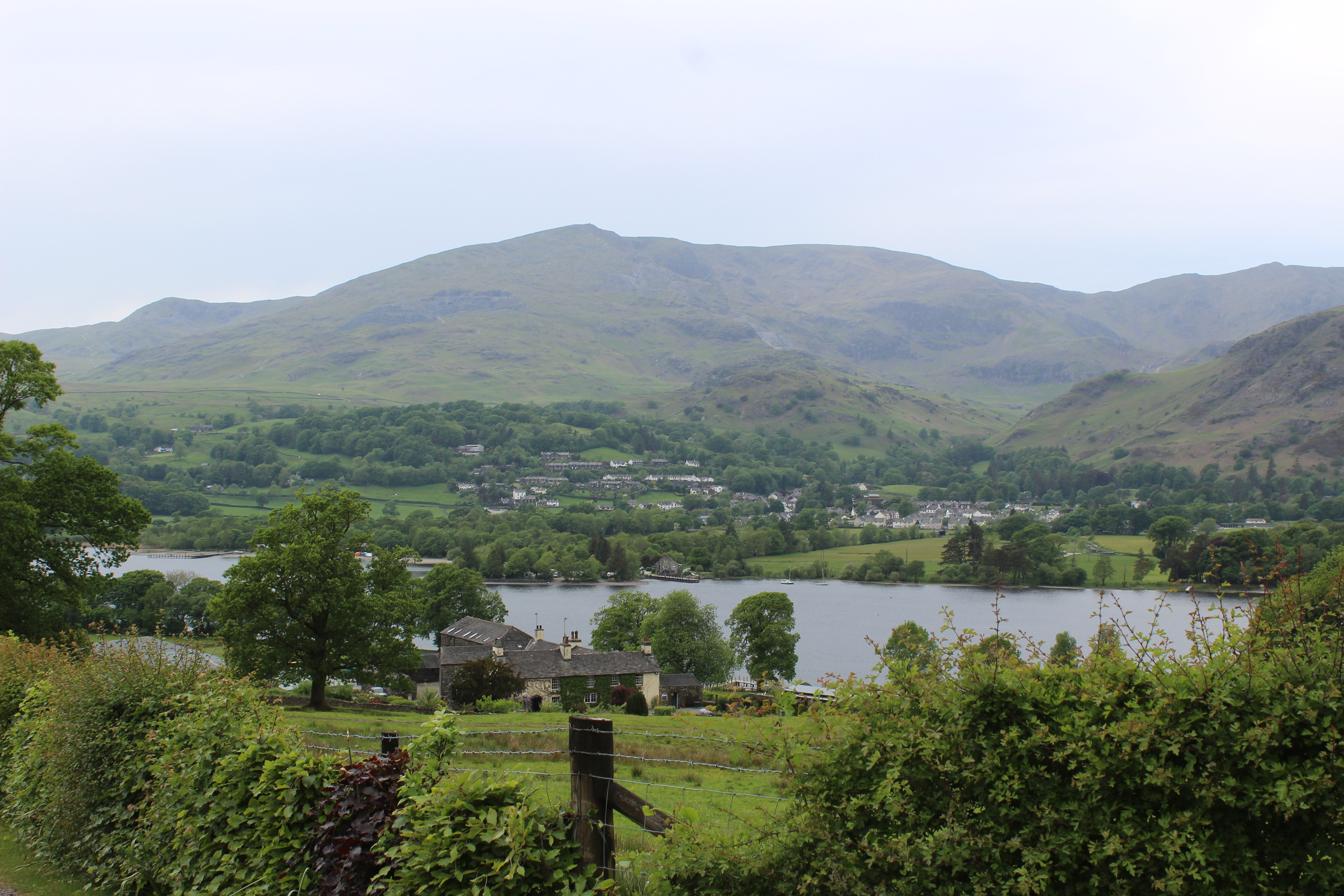
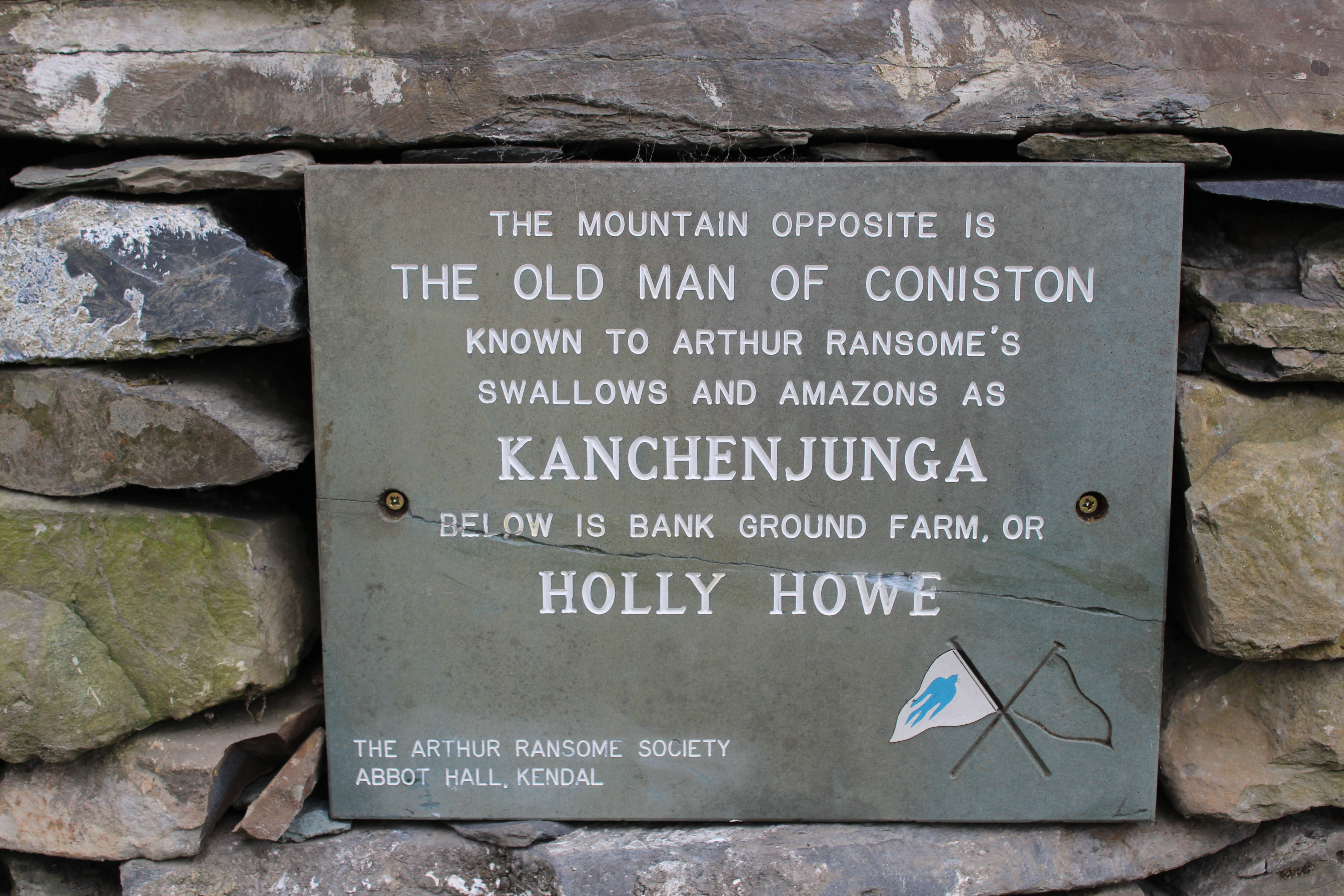
We had a bedroom in the barn that looked north towards the Langdales. If you walk up the farm drive, you can look back towards Coniston Old Man, or ‘Kanchenjunga’, as the Walkers and Blacketts call it in ‘Swallowdale’.
~Bank Ground Farm with the village of Coniston beyond~
Arthur Ransome was taken up the Old Man of Coniston as a tiny baby. You can climb it today but wear more than sand shoes. Stout walking boots are called for. The task of reaching the summit should not be underestimated.
We were able to get out on the lake to find a few more locations. This red-sailed dinghy, named Peggy Blackett, is a copy of Arthur Ransome’s Cochybundhu, used as the model for Dick and Dorothea’s boat Scarab.
~Sailing on Coniston Water towards the village of Coniston~
It is a long way down Coniston Water to Peel Island but it is there that you will spot the Secret Harbour, instantly recognisable as belonging to Wild Cat Island. We travelled there in the SL Gondola, that also now belongs to the National Trust. Ransome knew the steam launch as a boy when he made friends with the captain who let him take the helm.
~ Secret Harbour on the southern end of Peel Island, Coniston Water ~
In the cemetery of Coniston village we found the grave of Titty Altounyan, the girl who inspired Arthur Ransome’s well-loved character. I never met her but was with her niece Barbara that long weekend in Coniston, when we both thoroughly enjoyed walking, sailing and steaming along in Ransome’s footsteps.
~ Sophie Neville visiting Titty Altounyan’s grave in Coniston ~
For details of more locations at the southern end of Coniston Water that are featured in the Swallows and Amazons series of books, please click here.
Think of joining The Arthur Ransome Society and come looking for locations described in his books. You will find the details here.
There is an alternative walk in search of Arthur Ransome’s locations tying in with the Gondola’s timetable described here.
You can find illustrated maps and a chapter guiding you to some of the locations in ‘The Making of Swallows and Amazons’ and this less expensive ebook:
I spoke on BBC Radio Cumbria, asking if I could meet anyone involved in filming the original film of ‘Swallows and Amazons’ (1974). It was made on location in the Lake District with a young crew.
~Nick Newby of Nicole End Marine~
Nick Newby of Nichol End Marine in Portinscale came to find me while I was in the Keswick. As a young man in the 1970s, he provided boats for a number of films and was contacted by Graham Ford, the production manager of Swallows and Amazons in the Spring of 1973. Graham had began working with Mike Turk who had started building boats for TV and films at his family firm, Turk’s Launches, but this was based on the Thames in London. They needed help from someone in the Lake District who knew about traditional boats.
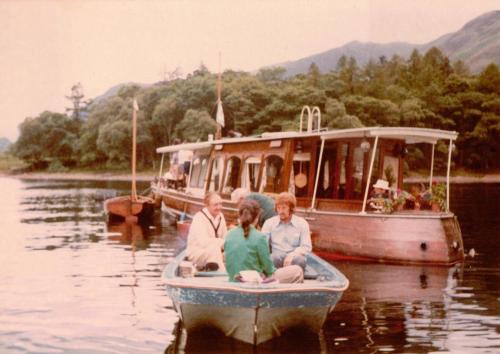
~Ronald Fraser being trransported by Dory to The Lady Derwentwater in 1973~
Arthur Ransome had clearly based Captain Flint’s houseboat on the Esperance, originally a steam launch cruising on Windermere. You can read more about her and see photos here.
‘Since she was sitting on the bottom of Whitecross Bay at the time,’ Nick told me, ‘the film crew decided to use the Lady Derwentwater.’ This was a launch licensed to carry 90 passengers that Nick had worked on and knew well. ‘She is about 58 foot long and quite a rigid boat, having four full length steel RSJs set inside her. She was built the Lakes in 1928. We moored her at Brandelhowe in Great Bay for the filming. You need to be careful getting in, as there is a rock shelf.’ Unlike the Esperance you could see the view over the lake from her large cabin windows, which enhanced interior scenes. The Lady Derwentwater, whose nick-name is Dishy, has since been re-built with a different stern, but you can book a passage and go out on the lake in her yourself.
~The Lady Derwentwater today~
Nick told me that Captain Flint’s eight foot Wright’s dinghy, the houseboat’s tender, had been made by Wright’s Brothers of Ipswich. The Jackson’s ‘native canoe’, rowed out to Peel Island by Virginia McKenna was ‘a family fourteen’ Wright’s sailing dinghy with a centre case. He knew many of the traditional boats in the Lakes. ‘I served me time as a yacht and boat builder at Shepherd’s in Bowness Bay.’ This company was based the green double-story boat sheds featured in the ‘Rio’ scenes. ‘During the winter we used to have to break the ice on the buckets of water when we were rubbing down boats. The sail lofts had a square panel in the apex so we could poke the 8 to 10 metre masts inside. A boom could go up the stairs but a mast certainly couldn’t. ‘
~Virginia McKenna with Sophie Neville and DoP Denis Lewiston~
‘Amazon belonged to a chap called Vosey who was rather reluctant to let her be used for the filming,’ Nick said. ‘We did her up a bit after the filming.’ I gather she had been used in the black and white BBC serial of Swallows and Amazons made in 1962 when Susan George played the party of Kitty.
~Swallow sailing towards the filming pontoon in 1973~
I believe Swallow had been found at Burnham-on-Crouch as she was built by Williams King and Sons. Mike Turk, who had built a shallop for the 1966 movie ‘A Man For All Seasons’, purchased her for the film and brought her up to the Lakes. She had no added buoyancy. Nick claims that being a wooden boat she would never sink but I reminded him that we came close to hitting the MV Tern on Windermere when loaded with camping gear, which was a bit scary.
~MV Tern on Windermere today~
Swallow was later used at Elstree Studios when the sound was dubbed onto the finished film. Mike kept her out of the water in his store at Chatham until SailRansome bought her at auction in 2010. She was sensitively restored by Pattersons, has a new sail, added buoyancy bags and is now available for anyone to sail in Cumbria.
~Mike Turk’s filming pontoon with Swallow attached in 1973~
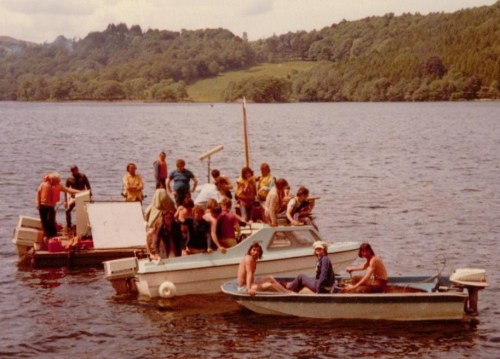
‘Mike already had the flat-bottomed filming pontoon. It had originally been used for carrying a vehicle. We added twin outboard engines and rigged scaffold under the water so that either Swallow or Amazon could be attached to it but still keel over naturally as they sailed. When the dinghy went about, I would turn one outboard and thrust the other into reverse so that the pontoon went about with them.’ I remembered that the first time they tried this Swallow’s mast footing broke. Amazon’s mast-gate broke on another occasion. Nick had to persuade a friend to let him borrow his welding workshop and managed to mend it over night, so that she could be ready on set first thing the next day.
~The camera pontoon, Capri and one of the Dorys used behind-the-scenes~
Nick went on to say the pontoon leaked a bit. ‘We would have to pump out hull every morning.’ The Capri used behind the scenes was Nick’s equivalent of a marine Land Rover. ‘It had a reinforced glass fibre hull for increased capability and a 55-horse power engine that had been used for the Olympics. We used it for Ken Russell’s film ‘Tommy‘, the rock opera with Roger Daltry and The Who. Once, when we were using it for Swallows and Amazons, Clive Stuart shoved it into gear with rather too much gusto. Someone only just managed to grab the director, Claude Whatham, before he was flung over the back. ‘Claude was spitting feathers after that.’
~Suzanna Hamilton, Simon West, Sophie Neville & Sten Grendon with David Stanger at the helm of the Dory in 1973~
Mike Turk provided two Dorys, built at his yard, to use as run-around boats. One was driven by David Stanger who is now skipper of a launch on Ullswater. It was a stable boat but you needed to watch how it was not overloaded. Water came over the bows one day giving my mother rather a shock.
‘The boating world is a small world,’ Nick assured me. This July, forty-five years after making the film, he brought his grand-daughter to watch ‘Swallows and Amazons’ at the Alhambra Cinema in Keswick and gamely came up on stage for a Q&A to explain how some of the sailing scenes were achieved.
Mike Turk, Swan Upper and Queen’s Waterman, who provided boats for numerous films from Moonraker to Hornblower, sadly passed away aged 78. You can read his obituary here. He went on to work on a number of James Bond movie. You can see his film credits here.
A group of Arthur Ransome enthusiasts clubbed together to buy Swallow from Mike’s collection in 2010. She is currently kept on a trailer at Kendal in the Lake District. If you would like to sail her, please visit SailRansome.com
For Nicol End Marine, about two miles outside Keswick on Derwentwater please click here
You can see Swallow – and learn of her value – on BBC Antiques Roadshow, towards the end of the first episode recorded at Windermere Jetty museum in September 2020. It is on BBC iplayer here
You can read more about making the 1974 film Swallows and Amazonshere
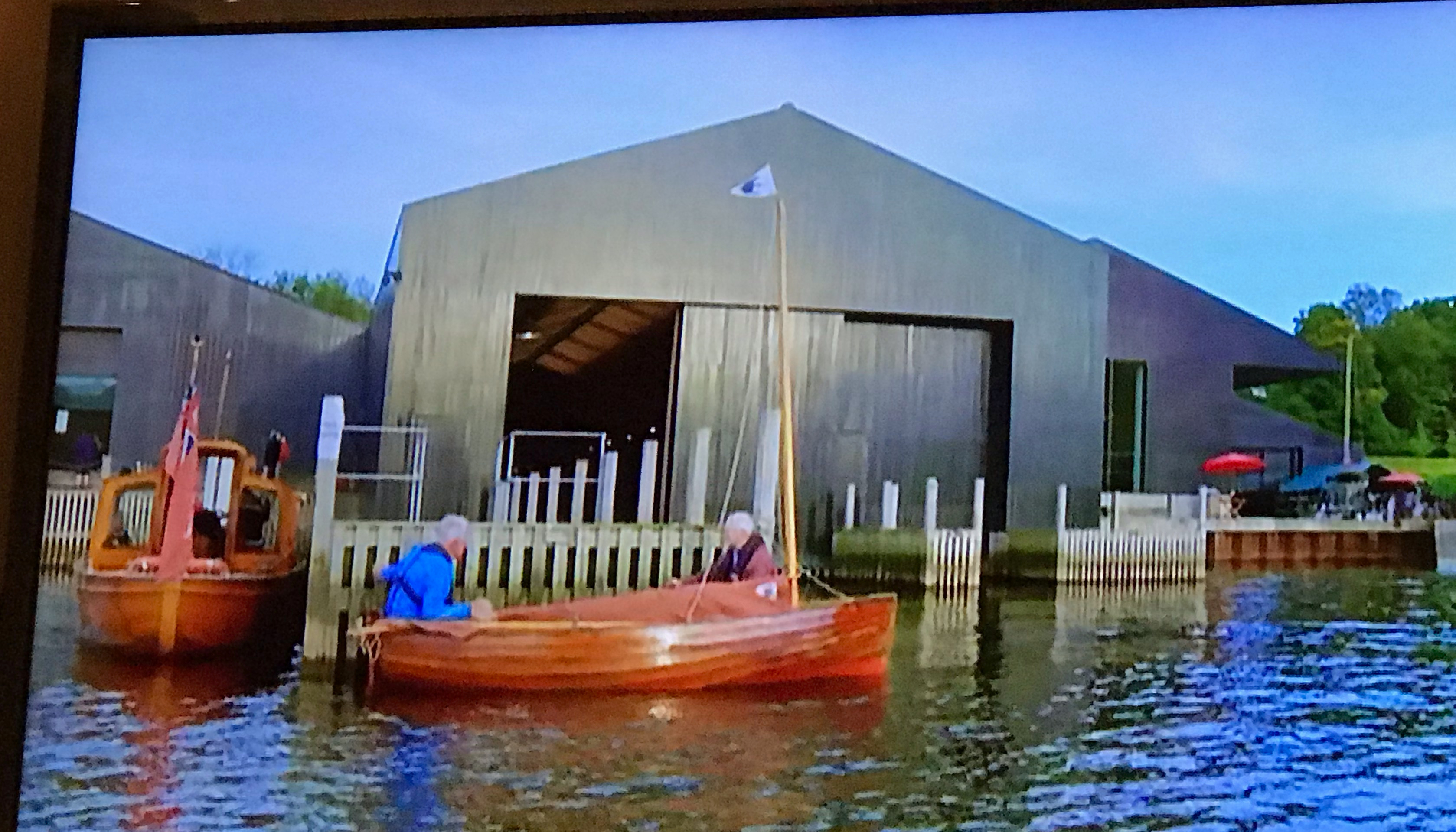
I was invited to talk about making the BBC TV classic serial ‘Coot Club’ and ‘The Big Six’ at the Norfolk Broads Yacht Club to help celebrate their 80th Anniversary. Titmouse, then 1930s dinghy owned by Hunter’s Yard had been brought down from Ludham for the occasion. The bonus was that I was able to go sailing in one of the classic boats gathered at the club for their Open Day.
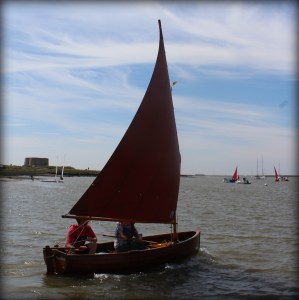
Geoff and Rose Angell kindly took me out on Pippa, their beautiful yacht with brown sails that appeared in ‘The Big Six’. I am sure Arthur Ransome would have loved her.
Back in 1983, I spent nine months working on the BBC production when it had been my job to cast the children and teenagers who appear in the drama, many of whom needed genuine Norfolk accents.
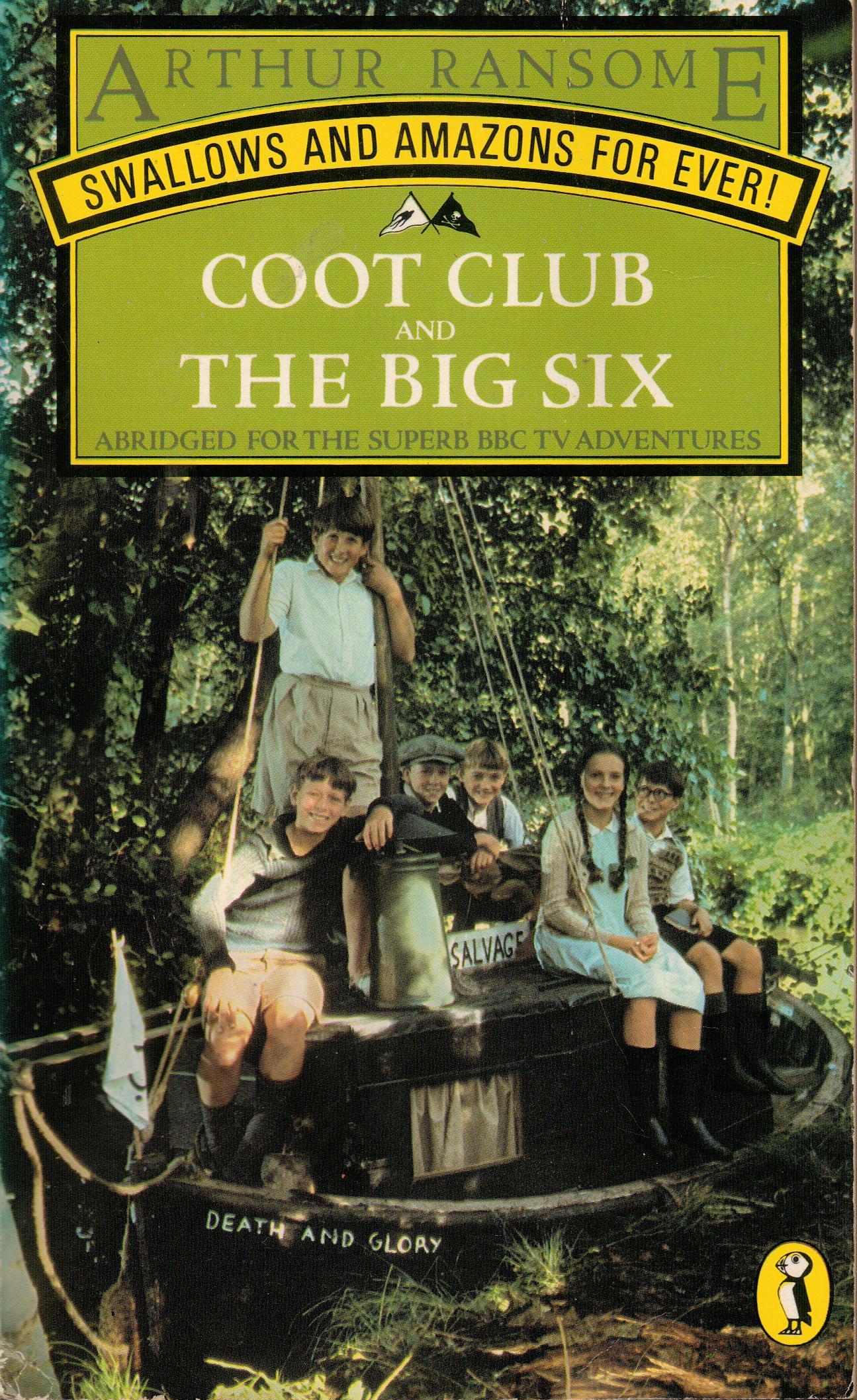
We had been looking for young actors who could swim well and were able handle boats. We then spent three months filming in East Anglia when I looked after the children and helped rehearse their lines. I set up this shot for the cover of the Puffin paperback that accompanied the series.
~Author Sophie Neville giving a talk at the Norfolk Broads Yacht Club~
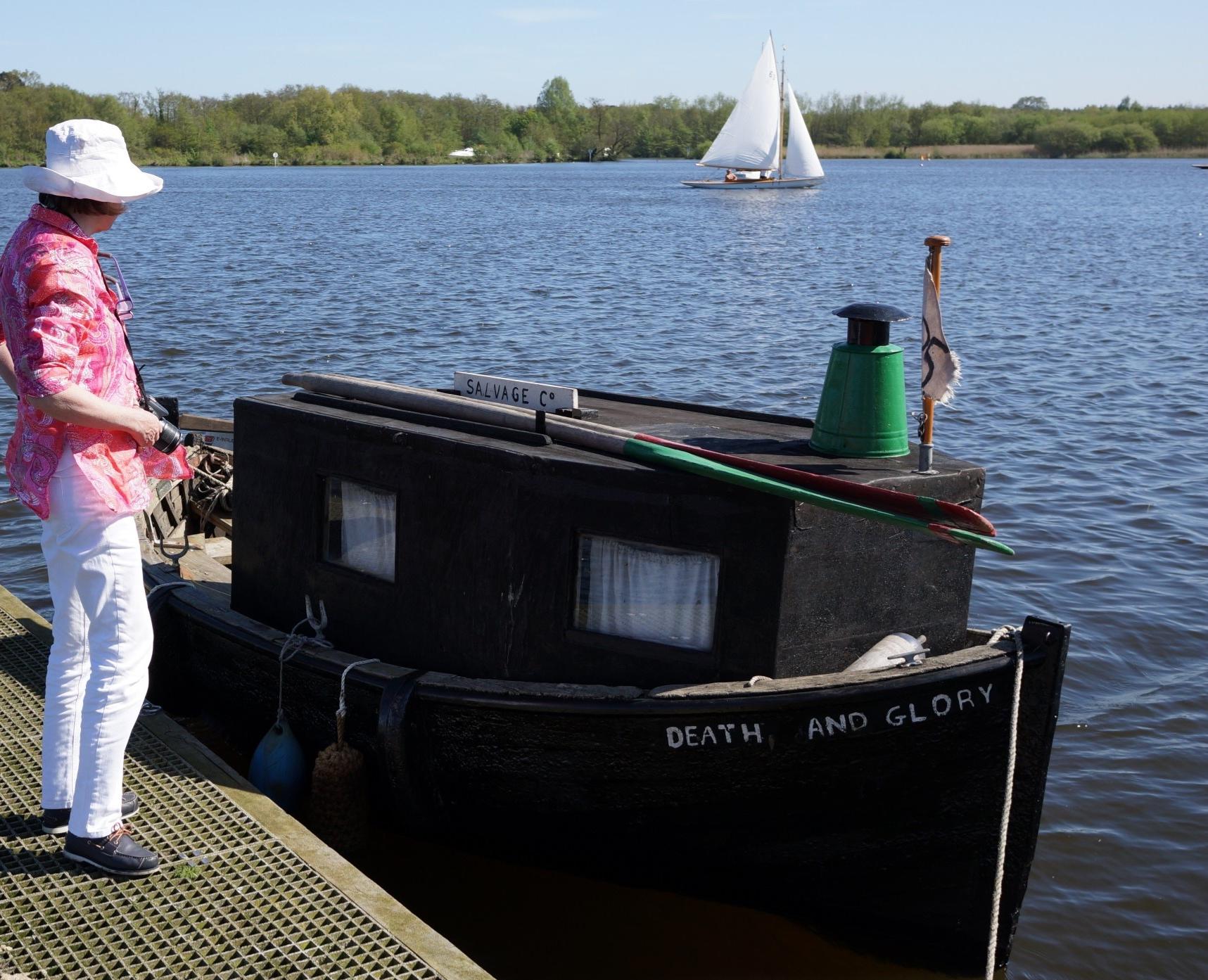
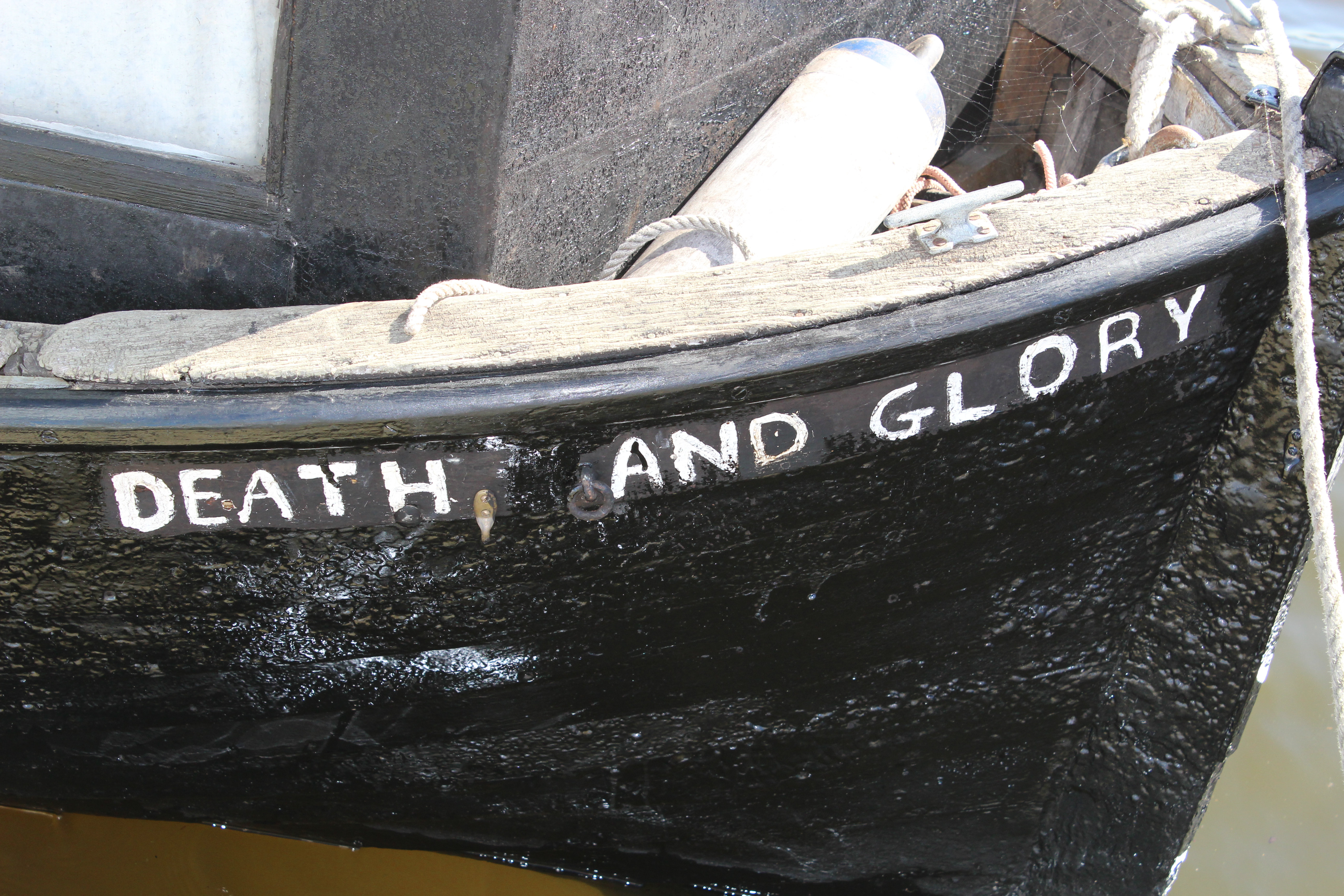
At a forum organised after my talk, Pat Simpson from Stalham Yacht Services explained how he found one of the stars of the series – an old lifeboat suitable to play the Death and Glory. She had been brought from where she is kept at Belaugh for the evening. You can see more photographs of her in the previous blog post here.
Pat provided a number of other vessels for the series including Buttercup and support boats such as the safely boat, a large modern cruiser used as a school room along with another for the costume and make up personnel. He explained that this came as a god-send as boat rentals had not been good that summer. Working on the series was harder than he imagined, ‘We once had to take a boat from Regan to Horning Hall overnight’ but he was pleased that ‘after three months of concentrated work, we got it all done.’
~Robin Richardson~
Robin Richardson, who co-owned Pippa back in 1983, explained how the shot of her being cast adrift was achieved. This wasn’t as easy as first thought as even when Simon Hawes, who was playing George Owdon, flung her stem line on the deck, a gentle breeze was blowing her back against the staithe. ‘Pippa didn’t want to go anywhere’. Robin had to stage the action by throwing out a mud anchor, climbing under her awning and pulling on the line to create the effect of a boat drifting out of control into potential danger. Pippa’s white canvas cover is pulled back here, but you can imagine the scene.
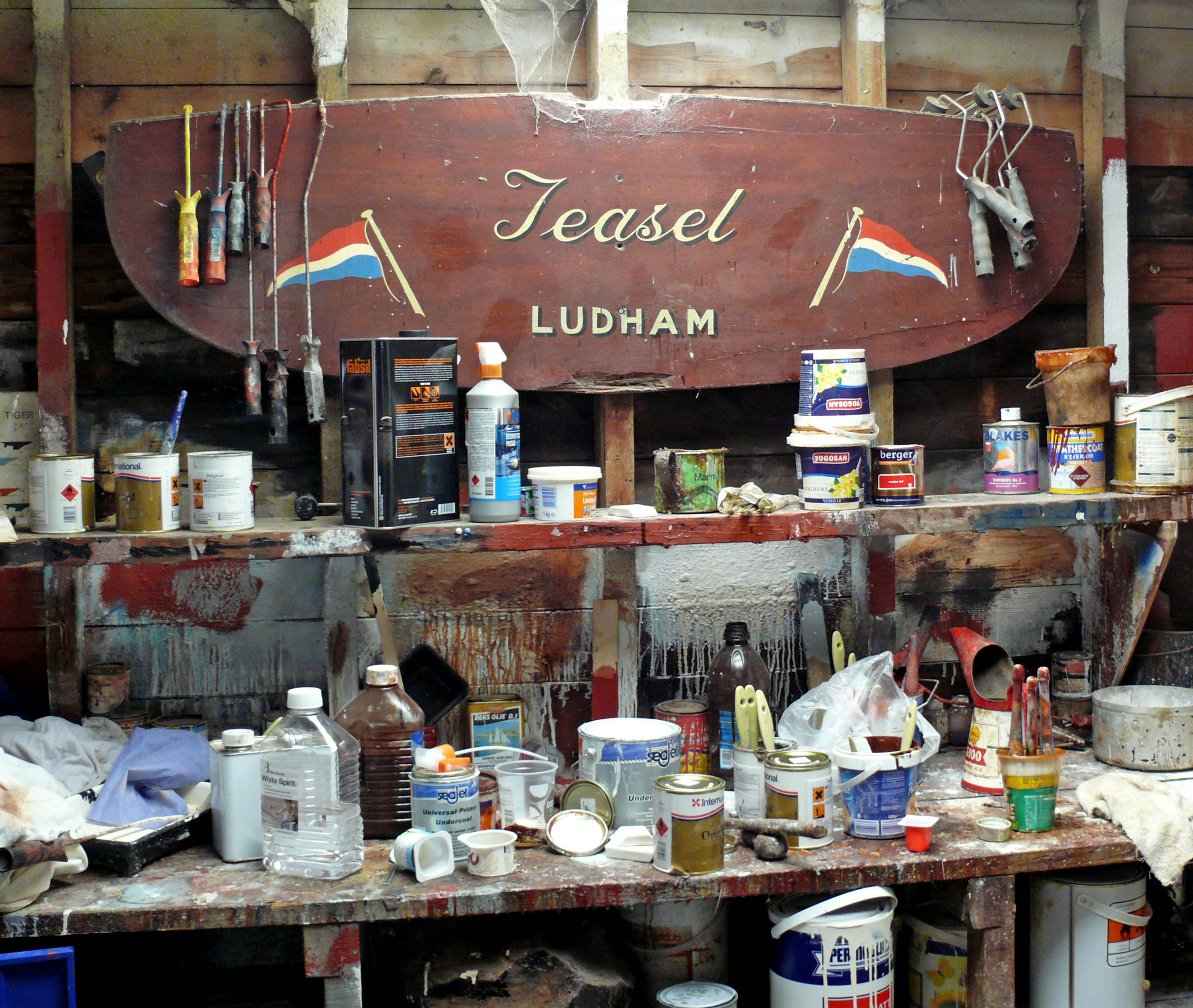
He was on location when Henry Dimbleby, who played Tom Dudgeon, was attempting to tow the Teasel under Potter Heigham bridge. He was rowing Titmouse, pulling hard on the oars but nothing was happening. ‘Stop for lunch,’ Robin advised the director, ‘and the tide will turn.’ This they did, and Henry we able to row under the bridge, towing the Teasel quite easily. Hunter’s Yard, who own Lullaby, who played the Teasle, could not bring her down for the weekend as she had been leased out with other boats, but they sent her transom, painted with her stage name.
Robin Richardson owns the ‘Slipstream’ class dinghy called Spindrift who played Shooting Star in the serial. She was built by her father but couldn’t be with us as they were not able to complete her winter maintenance in time but Richard Hattersley said she came tenth in this year’s Three Rivers race when only 15 of the 98 entries actually finished. It’s a 24 hour endurance challenge, which they completed despite light winds. He sent me this shot, ‘of her battling it out with much larger Thames A Raters.’
I was shown a wonderful black and white photograph of the vessel used to play the Cachalot. She was skippered in the series by the film actor Sam Kelly in the role of the unnamed pike fishermen who the Death and Glory boys simply called ‘Sir’. She is seen here with John Boswell, her real owner who has sadly passed away. His son, the artist Patrick Boswell, brought along an album of behind-the-scenes photos.
The theme of the weekend was ‘Boats of the 1930s’. I explained how Swallow, the dinghy used in the original film ‘Swallows and Amazons’ originally came from Burnham-on-Sea where she was made by W. King and Sons to be used as a run-a-round boat. She was stabilised by a keel that ran the length of the hull, as Ransome described. It makes her rather difficult to turn. You can sail her today and is in the Lake District right now. Please see Sailransome for details.
There was quite a bit of interest in memorabilia from the original movie ‘Swallows and Amazons’. I bought along the white elephant flag captured from Captain Flint’s houseboat in the 1974 film, which was approved by a young Amazon pirate.
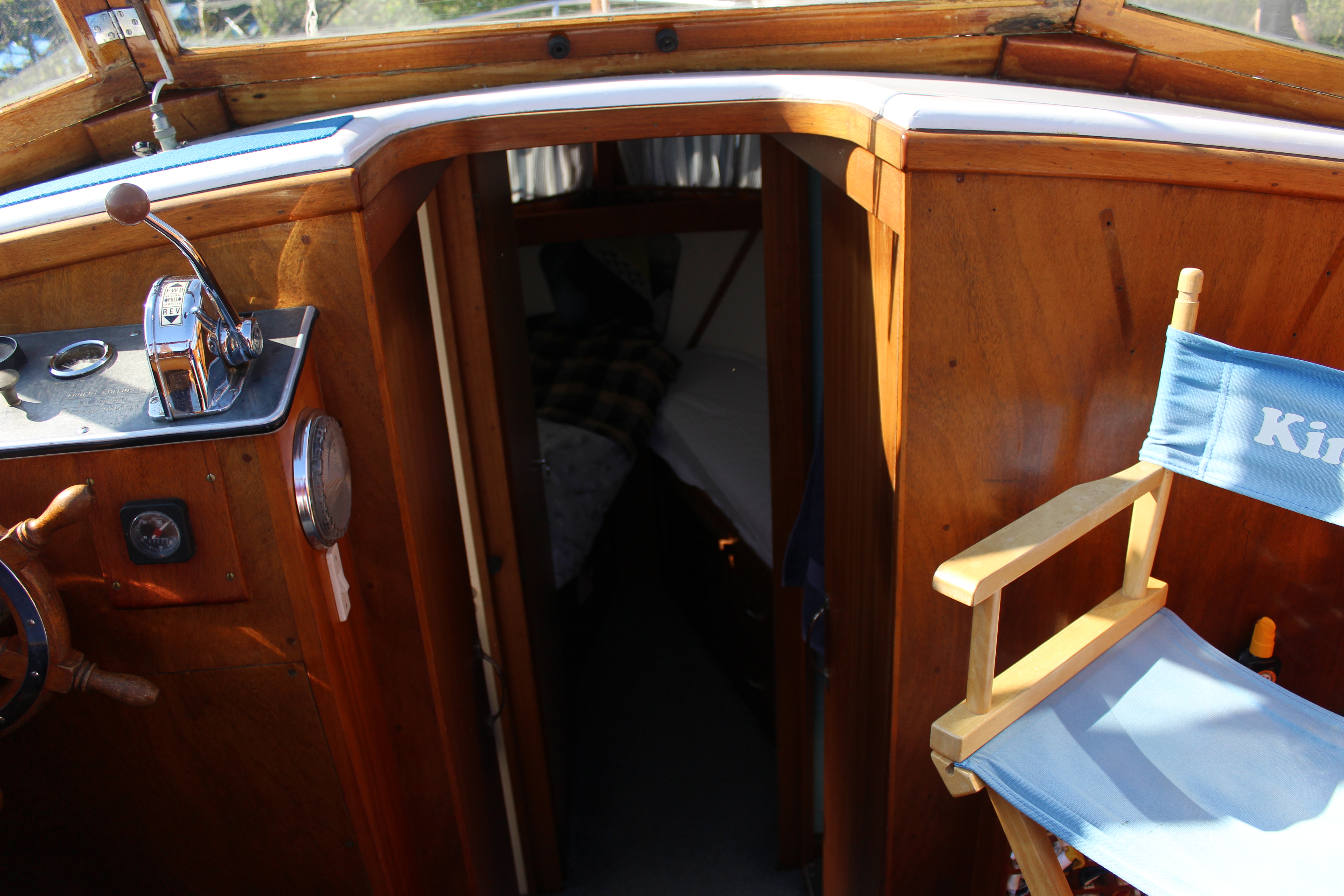
After a celebratory dinner, David and Nicky Talbot invited me to spend the night in the comfortable for’ard cabin of Kingfisher, a 1970’s motor yacht moored at the club.
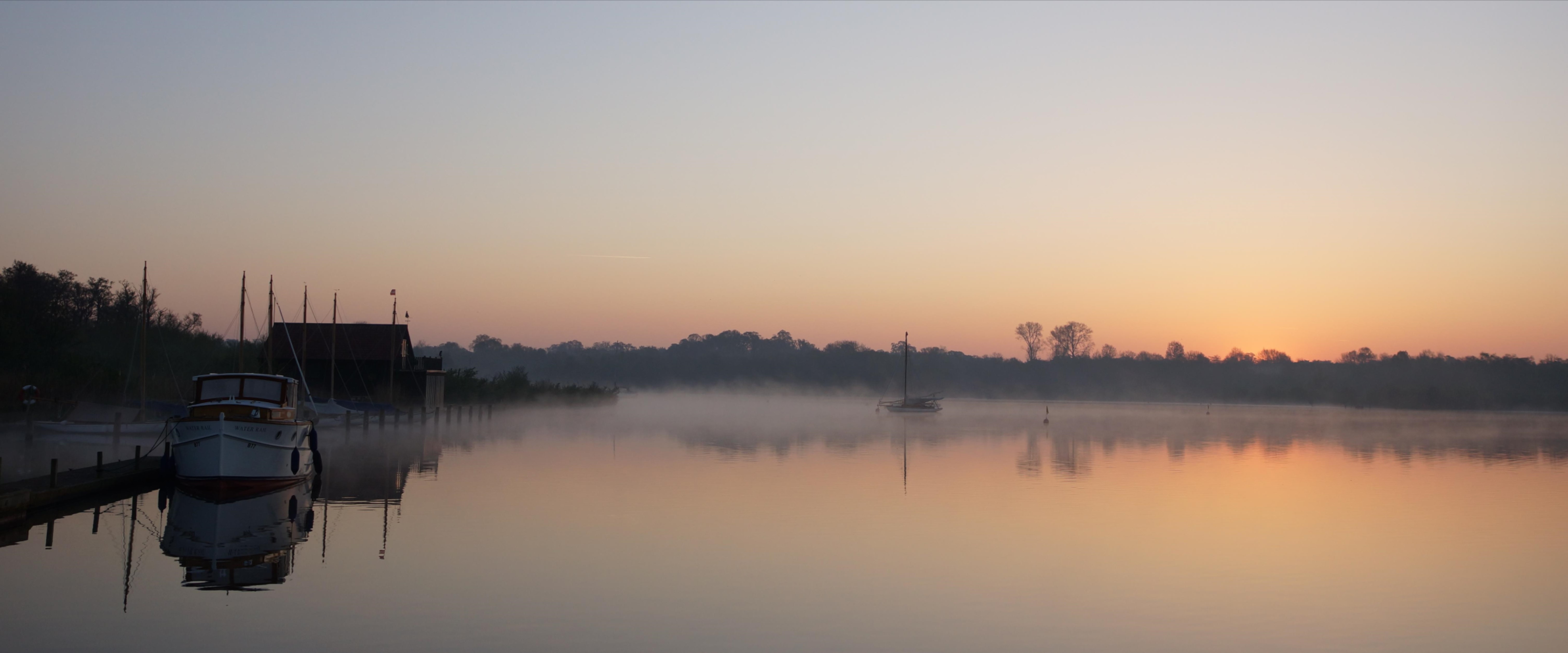
I woke early on the Sunday morning to find mist hanging above the water as the sun was rising on what proved to be another sunny day with a fair wind for sailing.
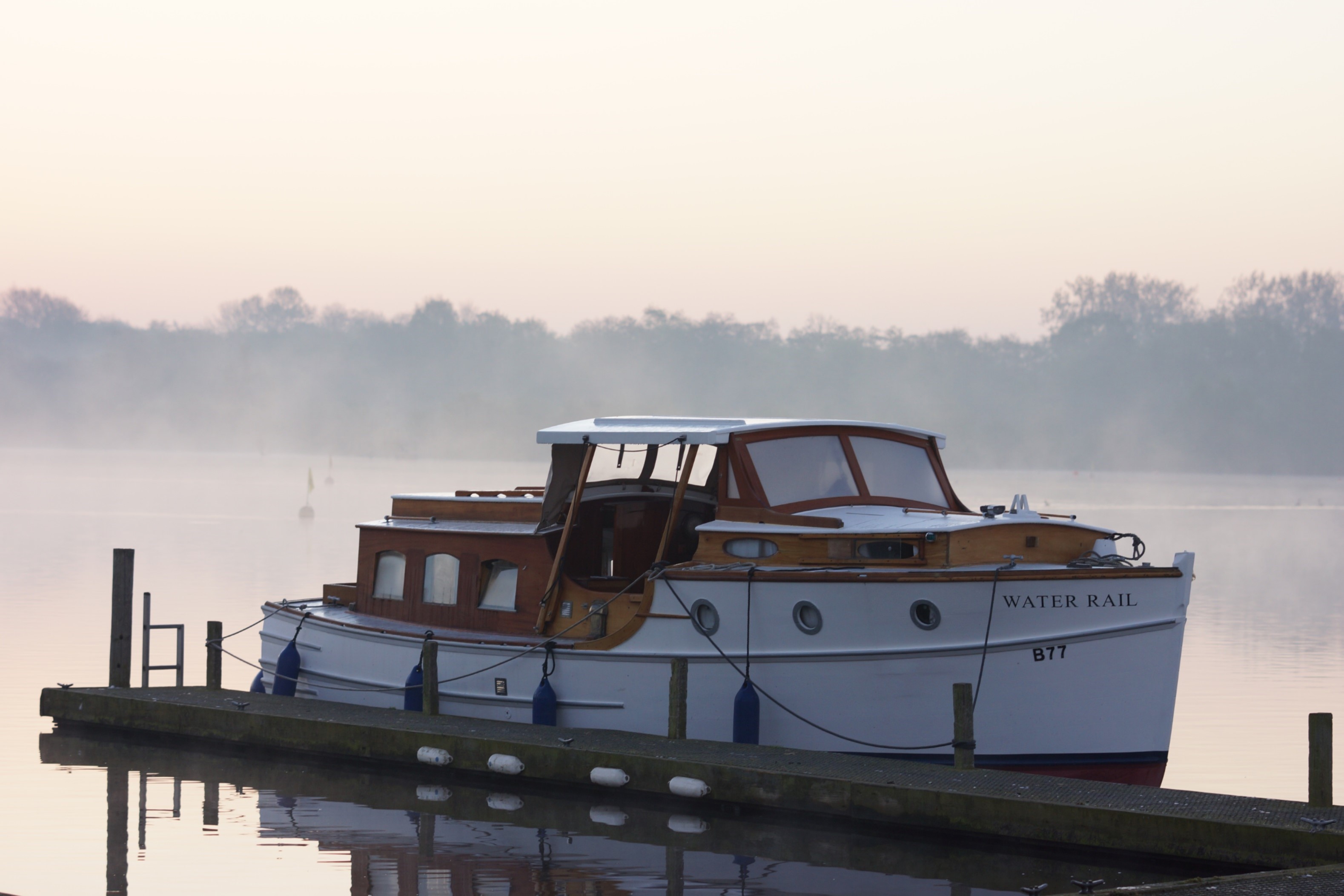
After breakfast aboard, I was invited out in the 1930s river cruiser ‘Water Rail’, who had also appeared in the serial. We took her down the River Bure to her mooring in Horning where she is still part of the scene.
It was wonderful to be out on the waterways of Norfolk, passing traditional buildings. This was a stretch of river never featured in the television drama as Rosemary Leach, who played Mrs Barrable, took Dick and Dorothea from Wroxham to Horning in a trap pulled by Rufus the pony. One reason for this was that in 1983 we had to use the North Norfolk Steam Railway, since Wroxham Station had been modernised but Joe Waters, the producer, said he wanted to add variety by featuring a pony rather than a motorboat.
We encountered a number of period cruisers, although Janca, who we used to play the Hullabaloos’ Margoletta, sadly could not be with us, as she is still under repair.
However, by motoring into Horning ourselves, we passed The Swan Inn and Horning Staithe where a number of scenes had been shot, including some that featured Julian Fellowes and Sarah Crowden, playing the hated Hullabaloos. You can see photographs of them in an earlier post here.
~Horning Staithe in Norfolk showing The Swan Inn~
Another vessel that interested me was a river launch that reminded me of the 1901 steamboat Daffodil, which I renovated with my father in 1978. I have photographs of her here.
You can read more about the traditional boats used in the series by clicking here.
Gerry Spiller, has written from Woodbridge in Suffolk, to say that she has found an oar labelled TITMOUSE, bought at a boat jumble. Could this date from the early 1930? Does anyone have the pair?
The DVD of the serial is now available on a re-mastered DVD, available from Amazon here
(Do not be tempted by the old version with a more colourful cover as the image quality is very poor)
Swallows And Amazons Forever! (Coot Club & The Big Six) SPECIAL EDITION [DVD]Additional photographs by Richard Hattersly
~Sophie Neville with the yacht ‘Goldfish’ sailing on Wroxham Broad~
The Norfolk Broads Yacht Club have been celebrating life on the Broads in the 1930s, along with the books by Arthur Ransome that are set in East Anglia.
A number of vessels that appeared in the BBC TV adaptations of ‘Coot Club’ and ‘The Big Six’ entitled ‘Swallows and Amazons Forever!’ were on display when I paid them a visit, including Titmouse, the dinghy belonging to Tom Dudgeon, hero of the story that normally resides at Hunter’s Yard in Norfolk.
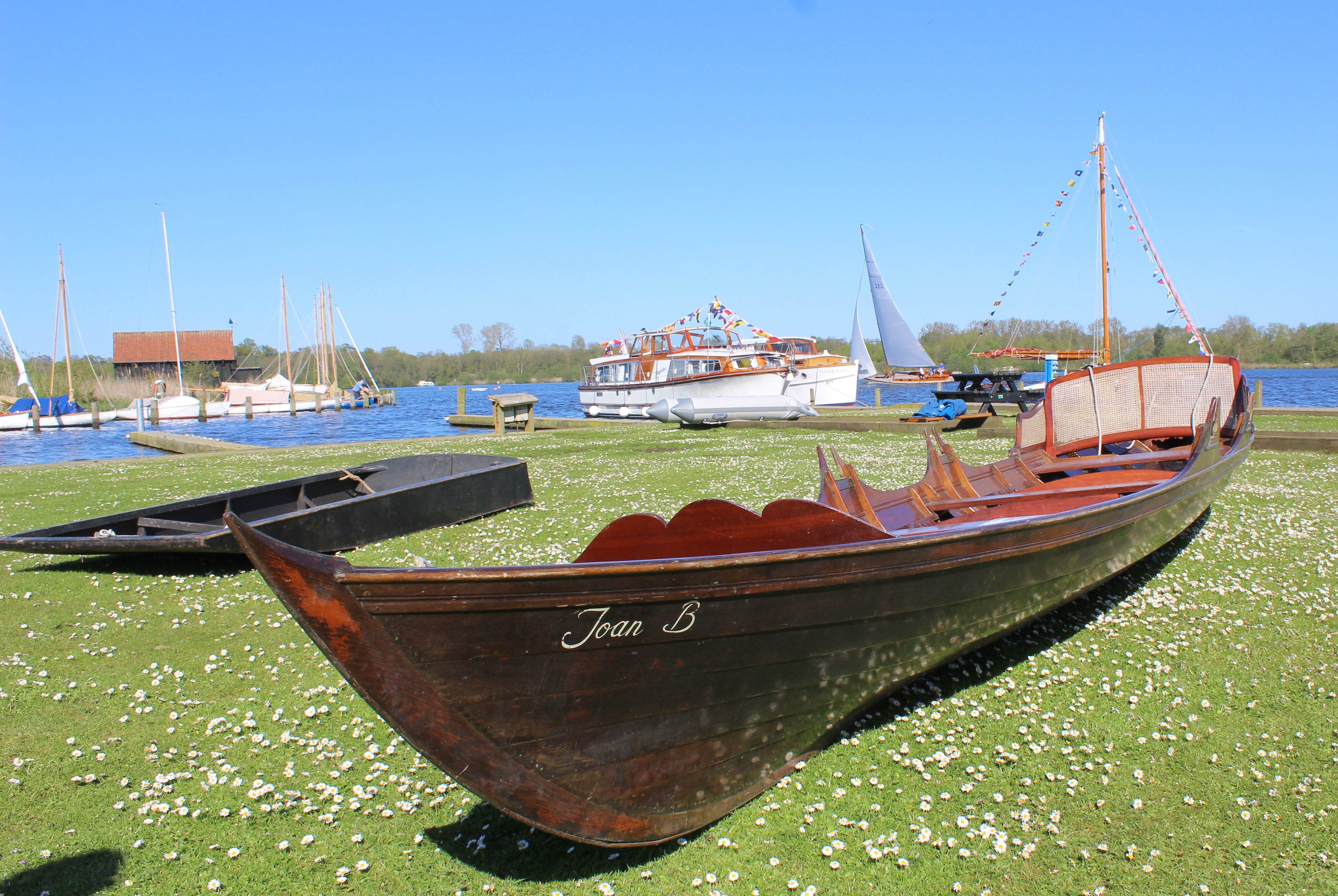
Tom’s punt, the Dreadnaught was pulled up alongside an elegant Edwardian skiff called Joan B that was once set adrift at Horning by George Owden. She had been brought along by Pat Simpson, a member of the Norfolk Broads Yacht Club.
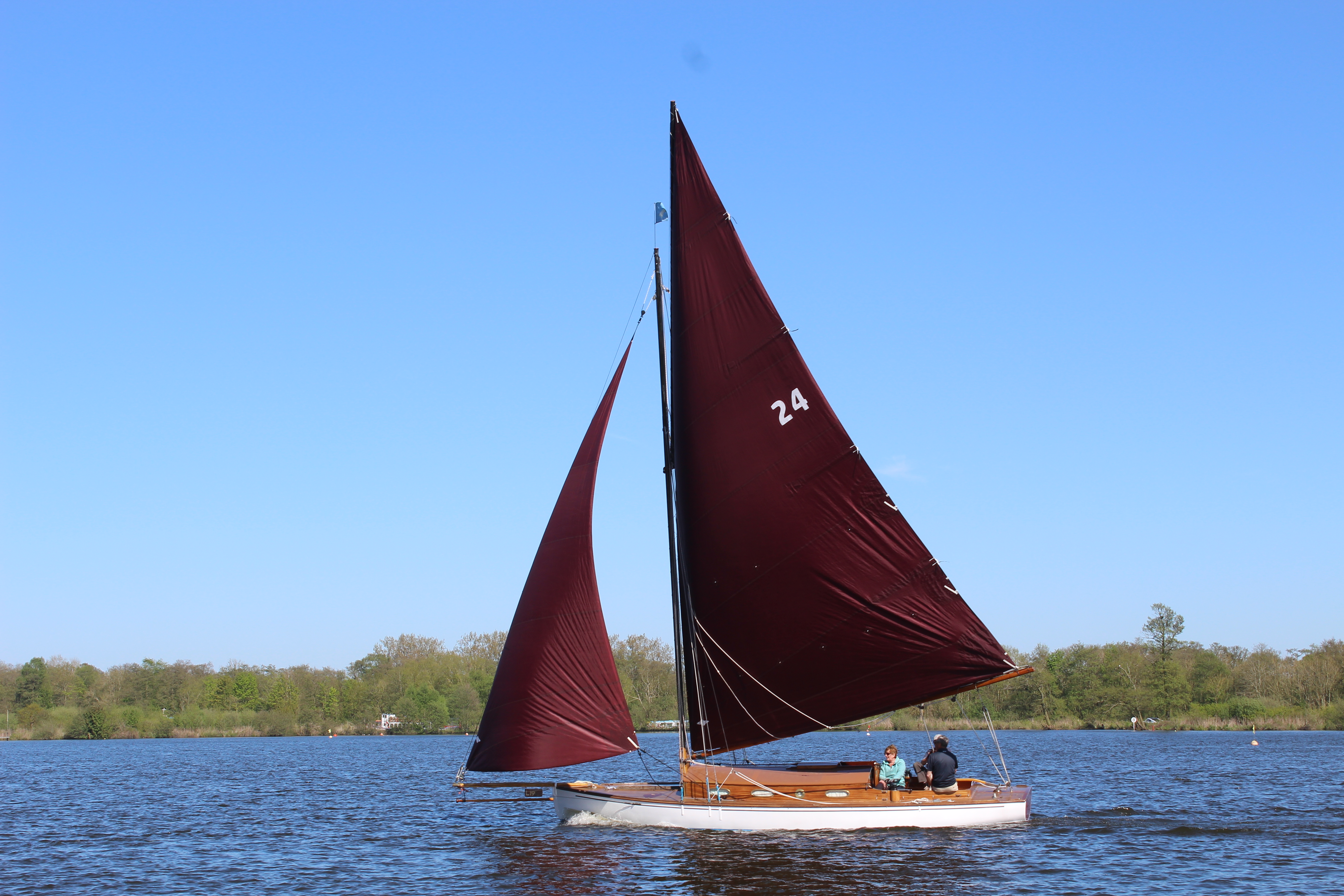
Pippa, a classic broads river-cruiser with dark sails belonging to Geoff and Rose Angell, was cast adrift at Horning in the dark of night. She came to no harm and was now out on the water, racing against a 1904 yacht with white sails, number 4, called Swallow.
‘White Boats’ or ‘Yare and Bure one-designs’ originally brought out in 1908, were also racing as they have been since the Farland twins, Port and Starboard, crewed for their father in ‘Coot Club’. Ransome refereed to a white boat called Grizzled Skipper who belonged to Chris Shallcross, but no one could remember which of the 140-odd White Boats registered was used in the series. Many members of this class of 20 foot half-deckers are named after moths or butterflies. You can see a fleet of White Boats here racing at Horning, the Swan Inn in the background:
I spotted ‘Brown Boats’, a Broads’ one-design with a distinctive counter stern and spoon bow, which would also have been seen racing in the 1930s. They were first built in 1907 and although a few were lost during the war there are still 88 in existence, although some now have fibre glass hulls. Number 61, called Hanser, is owned by Danny Tyrrell.
Lullaby, who played the Teasel in the series, was up at Horsey Mere with other from her fleet but we had her costume on display. It is a varnished transom painted with the name Teasel.
Janca, the motorboat who played the infamous Margoletta, hired by the Hullabaloos, was unable to come as she is currently being renovated, but Water Rail, a Herbert Woods Delight Class B 1930s cruiser belonging to Liz Goodyear was safely moored alongside other classic boats. She appeared in the back ground of several scenes in the television drama.
I then spotted a distinctive burgee that took me back thirty-five years:
Bird Preservation Society – it was the flag belonging to the Death and Glory, flying next to ‘the little old chimney’ made from a galvanised bucket.
Originally a German lifeboat washed up on the beach at Southwold, she had been bought for the series by Pat Simpson of Stalham Yacht Services, who found her moored at Snape in Suffolk.
Pat kept her for his sons to take out on the Norfolk Broads and it has been operated by children as Death and Glory, ever since.
It must have taken a bit of work to make her sea-worthy but tarred and fitted-out correctly, she closely resembles Arthur Ransome’s illustrations, the homemade cabin mysteriously larger inside than out.
I was asked to sign a copy of ‘The Big Six’ bought along by Professor John Farrington from Aberdeen, who acquired the Death and Glory for his own children in 1989.
‘I took them to the boatyard and suggested they climbed aboard. “Get on!” ‘They were aged ten and eleven.’
‘”But what about the owners?” they asked.
“You are the owners,” I told them.’ He had just bought it for them as an unexpected present. ‘Before long, they rowed it from Stalham to Sutton and back.’
~Sophie Neville signing books for Professor John Farrington~
We were gathered the 80th Anniversary of The Norfolk Broads Yacht Club, which is why they had a 1930’s theme running through their calendar. The day proved a true celebration of traditional boats that would have been seen back then.
I had been asked to give a talk about filming the series, which I will relate in my next blog post. The re-mastered DVD, for which I wrote the DVD extras, is available on Amazon here:
Swallows And Amazons Forever! (Coot Club & The Big Six) SPECIAL EDITION [DVD]You can read more about how these boats were used in the series here






















![Grab A Chance Greetings Card by Claudia Myatt[4614]](https://sophieneville.net/wp-content/uploads/2019/11/grab-a-chance-greetings-card-by-claudia-myatt4614.png?w=251&h=350)
























 Sophie Neville