Memories of sailing Swallow and Amazon more than fifty years ago

“The smell is just the same.” Suzanna Hamilton began rowing me across Coniston Water from Bank Ground Farm, taking us back to childhood days.

“It sounds the same.” The colours, the landscape, the feeling of being out on the water was still magical.

Suzanna Hamilton and Sophie Neville at Coniston Water in the Lake District

As girls, Suzanna and I had appeared as Mate Susan and Able seaman Titty in Richard Pilbrow’s original film of Swallows and Amazons, adapted by David Wood and released in cinemas on 4th April 1974. It starred Dame Virginia McKenna and Ronald Fraser but it was the two of us who were invited to return to the film locations in 2003 to be interviewed by Ben Fogle for an episode of the long-running BBC series Country File. Thanks to sunshiny weather and the support of Geraint and Helen Lewis, his report proved so successful that it was repeated on Country Tracks and featured in the series Big Screen Britain alongside iconic landscape movies such as The Dam Busters and Whistle Down the Wind.

We had been talking about swimming off Peel Island soon after we began filming Swallows and Amazons in the Lake District in May 1973. The director, Claude Whatham, was fresh from making a BAFTA nominated adaptation of Cider With Rosie when he cast Sten Grendon as young Laurie Lee, and the rock-and-roll movie That’ll Be The Day starring David Essex and Ringo Starr. Although happy out on the water, he knew little about boats. The producer, Richard Pilbrow, had insisted on finding children who could sail well rather than audition young actors and teach them to sail, and advertised the opportunity in sailing clubs. This was pivotal. Simon West (who played John), Kit Seymour (Nancy) and Lesley Bennett (Peggy) all had experience with a natural feeling for the wind and emanated confidence. They were only given a couple of days to get used to sailing the little boats used as Swallow and Amazon before filming began and yet their skill ended up making the film a classic.
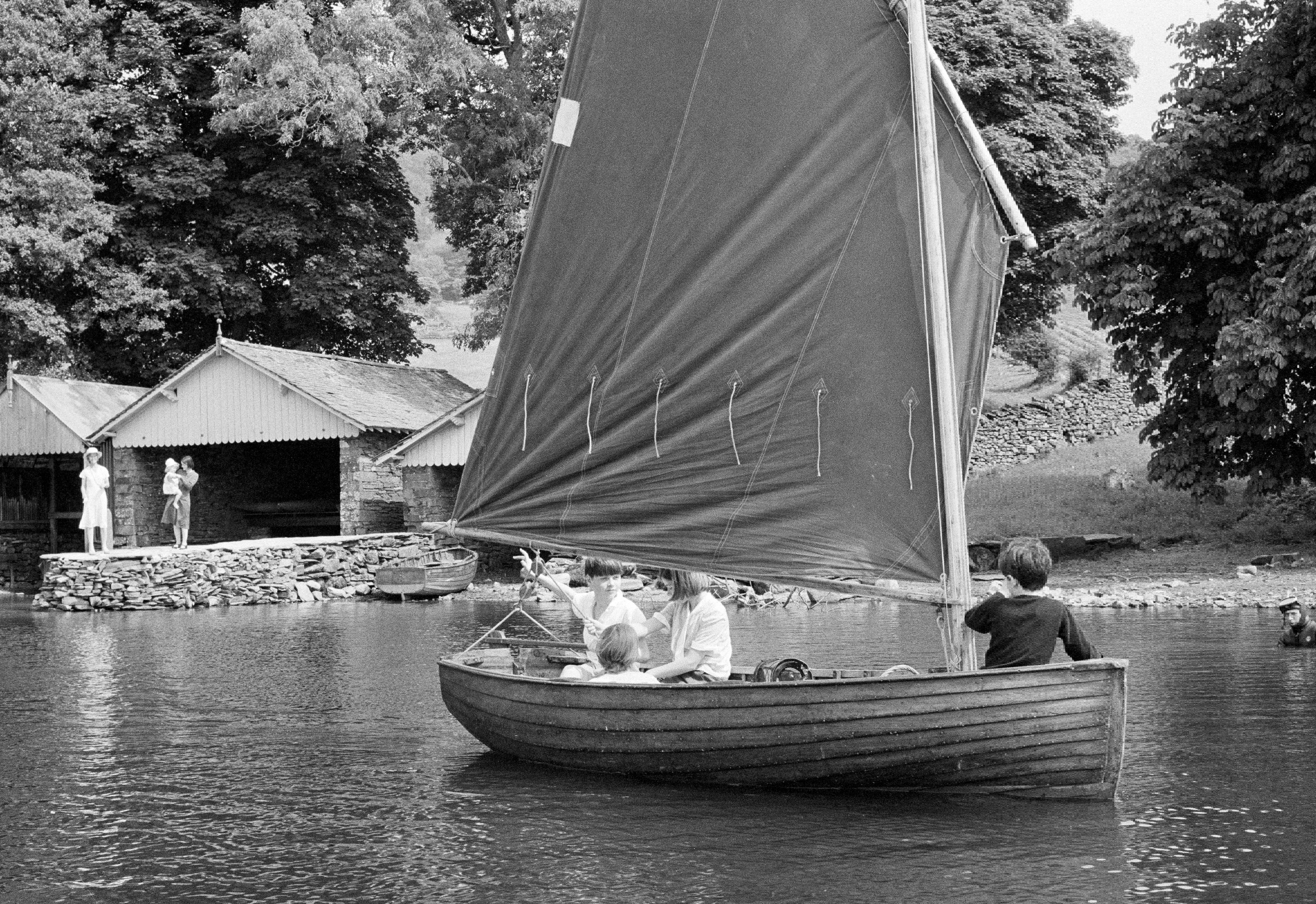
Dame Virginia McKenna bids the Swallows farewell
Farewell and adieu to you fair Spanish ladies

We had instruction from a sailing director in the form of a good looking actor called David Blagden. He’d recently crossed the Atlantic in a nineteen foot yacht called Willing Griffin but was unfamiliar with blustery Lakeland winds and did not know how to break down a script. Simon, aged eleven, ended up explaining to Claude how to get a decent shot. Suzanna took her lead from him and I clung to the gunwales, trying hard not to shiver in a costume designed by Emma Porteous that consisted of no more than a short yellow dress and enormous pair of navy blue gym knickers.
It was unusual for a movie to feature so many scenes set in two small boats. Mike Turk, whose family had been building boats since 1295, and Nick Newby of Nicol End Marine on Derwentwater, took up the challenge of constructing Claude a cross-shaped pontoon to act as a mobile camera mount so that our dialogue could be captured. This extraordinary vessel had two outboards but wasn’t easy to handle. The dinghies were wired to it with underwater cables but tended to pull away. The base to Swallow’s mast broke, proving safety was an issue, but the idea eventually worked.
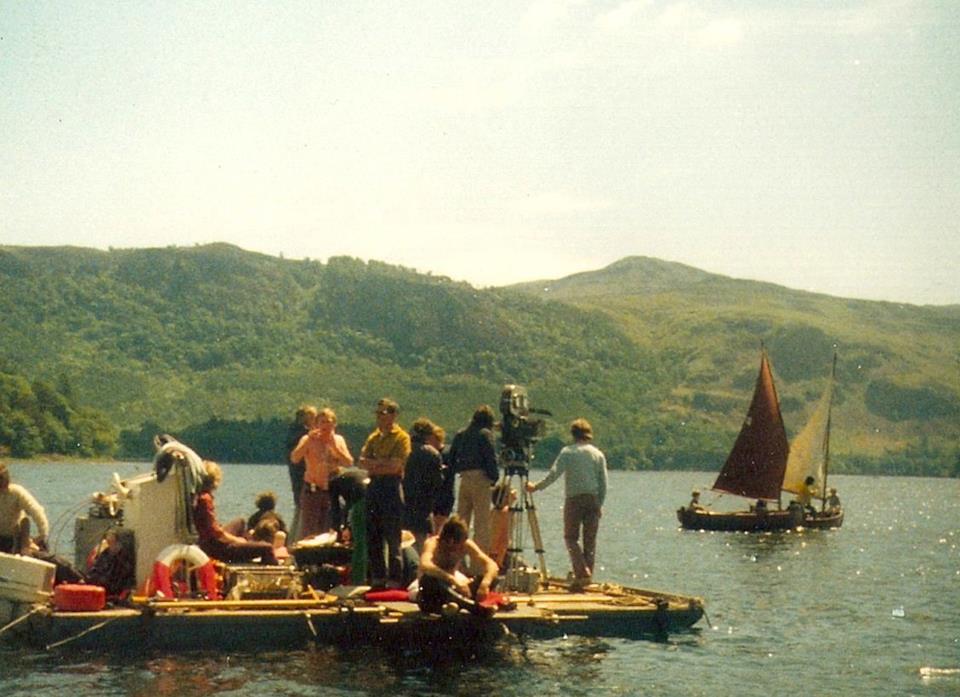
Richard Pilbrow and his film crew on the camera pontoon

A grey punt was also used. I remember Simon West towing it as he rowed us into Rio. It was easy to transport from one lake to another but must have been tippy. Somehow David Cadwallader, the grip, managed to keep the horizon horizontal using no more than a spirit level. Shadows were lifted from our faces by using huge reflector boards apt to catch the wind. It must have been impossible to use filler lights out on the water, although they somehow managed to power a number of sets on Peel Island.
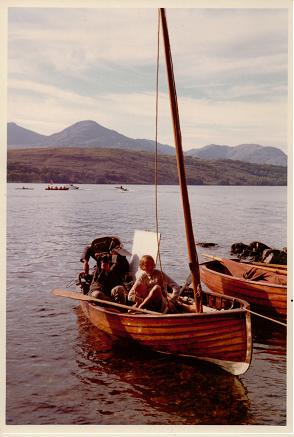
Sophie Neville in the Amazon with DOP Denis Lewiston, his 16mm camera and a reflector board ~ photo: Martin Neville

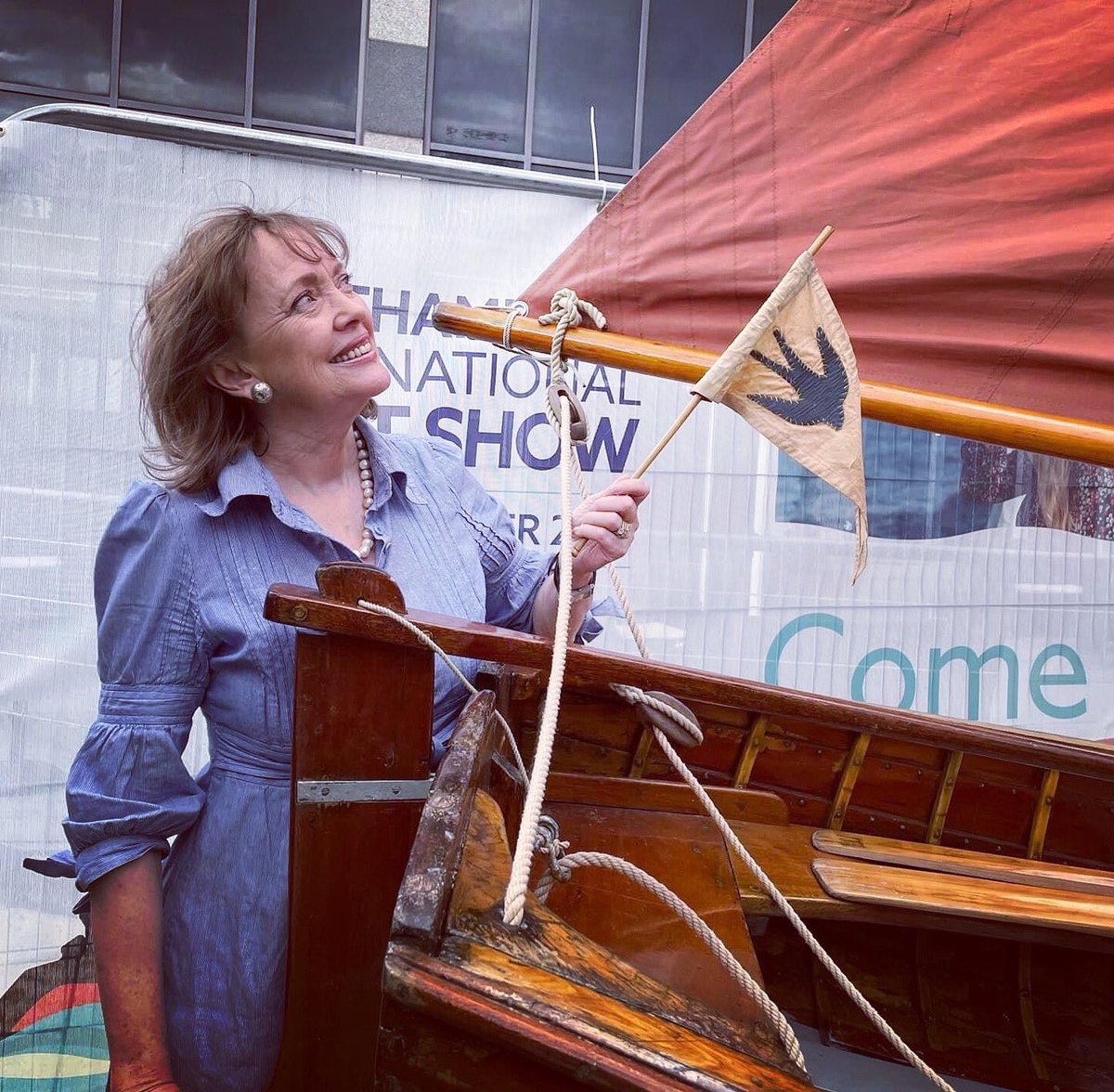
Richard Pilbrow kindly sent me Swallow’s pennant from his home in America. Unlike Ransome’s original sketch of the crossed flags, the bird flies away from the mast, which is technically incorrect, but I was thrilled to receive the genuine film prop used in vision. If you look closely you can see some of the stitches I made whilst in conversation with Mother, played by Virginia McKenna.

It would have been good if Swallow’s hull had been painted white in line with illustrations in the books. Her varnished planks are a nod to the 1970’s when everyone was busy stripping pine, but the important detail is that she has a keel rather than a centerboard. It makes her difficult to turn, and markedly slower than Amazon, but grants her stability. This feature may have saved us when we really did just miss colliding with the MV Tern on Windermere, which alarmed my father who was on the Tern’s deck. He knew how difficult Swallow would be to turn with the larger vessel taking our wind. We were fully laden with camping gear and yet totally lacking buoyancy of any kind.
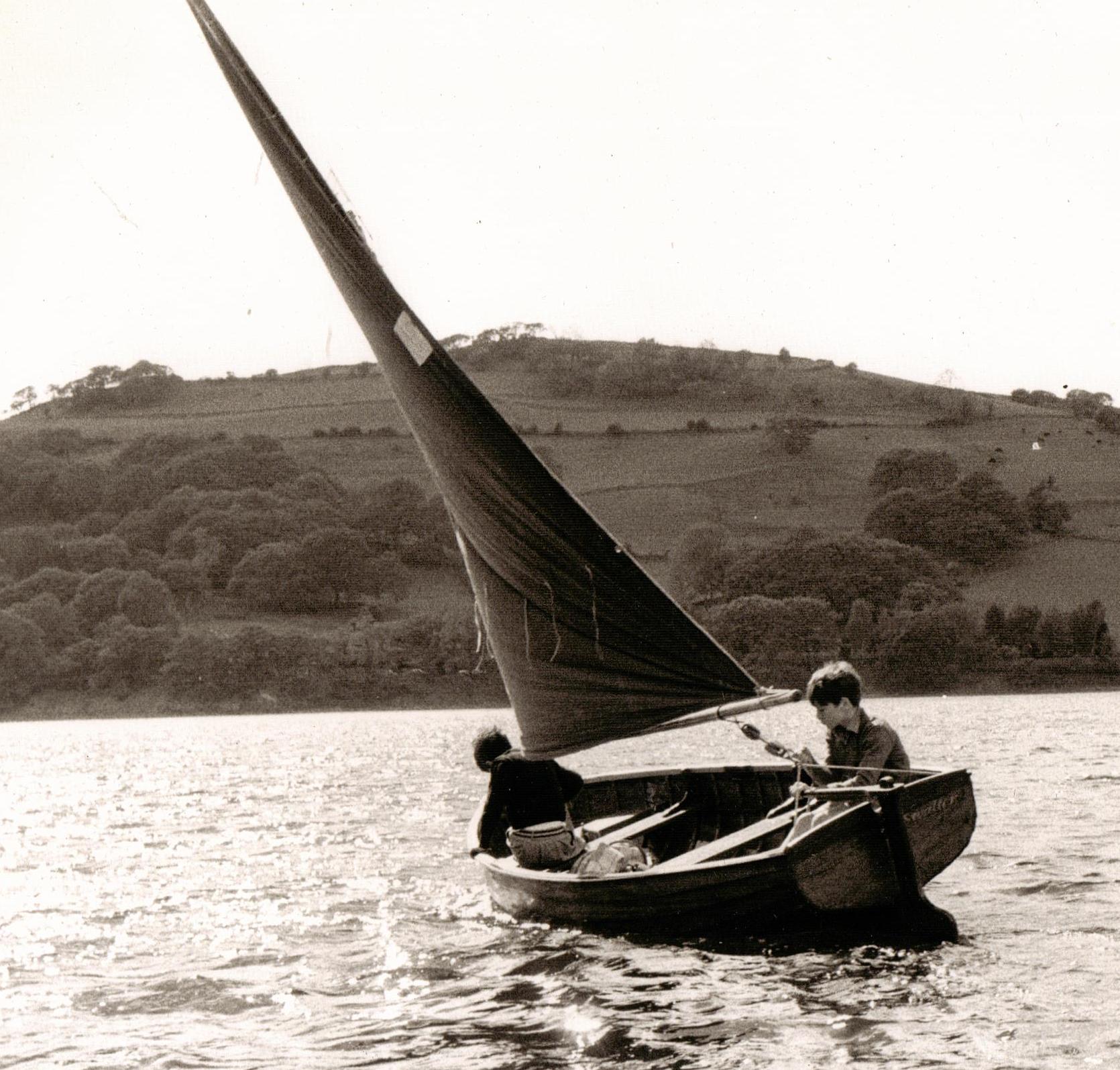
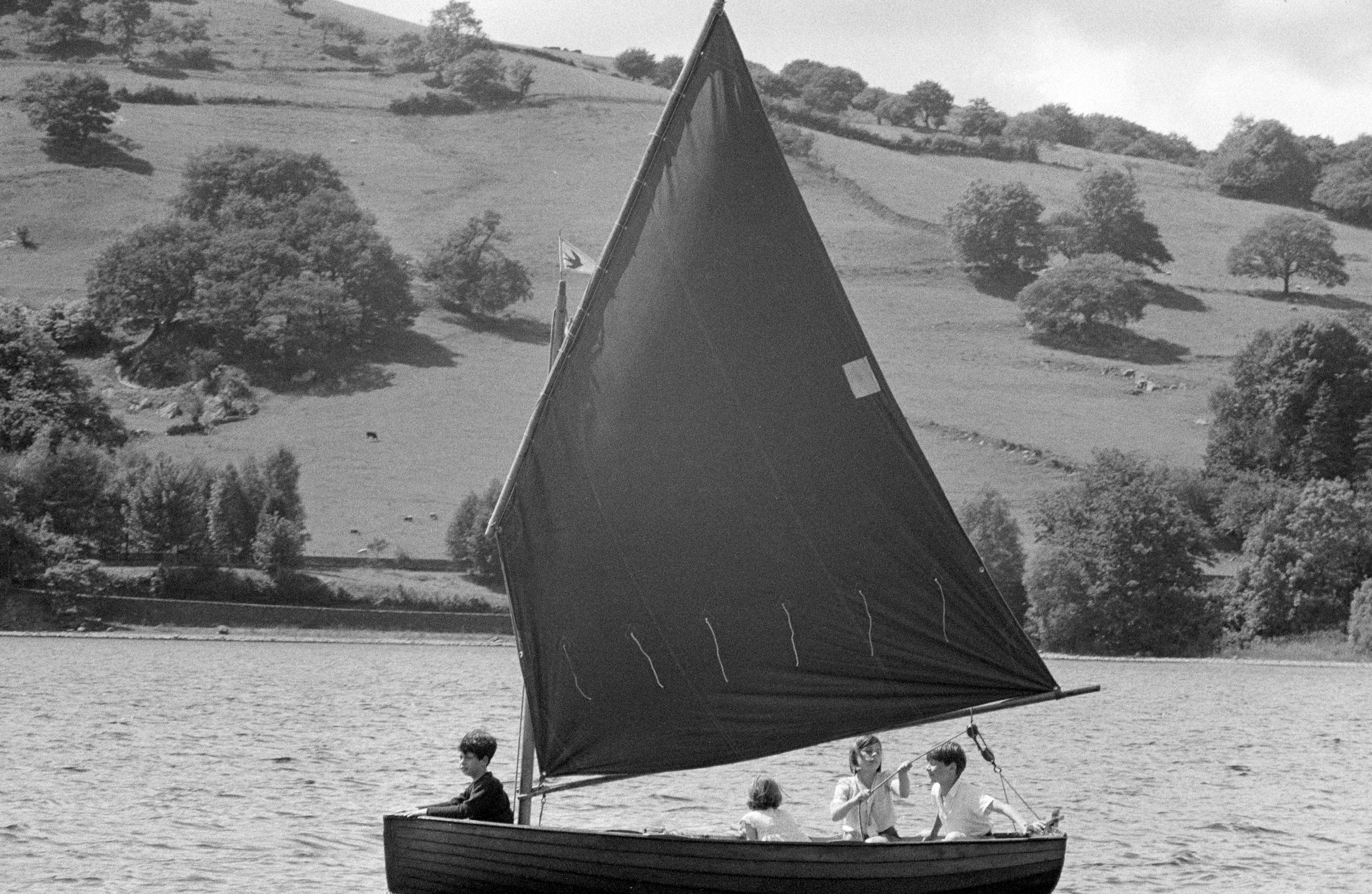
Simon West as Captain John sailing Swallow. Sten Grendon plays the Boy Roger

One secret of filming Swallows and Amazons is that it was set on four different lakes, a smelly lily pond that served as Octopus Lagoon, and Mrs Batty’s barn where night sailing sequences were shot with Swallow mounted on a cradle. One challenging scene was when the Swallows were cast off from Wild Cat Island to sail north to the Amazon River, leaving Titty behind to light the lanterns. I slipped underwater whilst pushing her free of branches overhanging the landing place but regained my footing and waved them off. Simon caught ‘a fair wind’ but the boom swung so far out that Suzanna held the mainsheet by the figure-of-eight knot and Swallow sped up Coniston Water like a ‘pea in a peashooter’, as Ransome wrote in Winter Holiday. A gust hit them broadside as they cleared the island and Swallow gybed, but Simon calmly stood to catch the boom, scarified the wind and took her on up the lake. Watching the sequence still brings tears to my eyes.

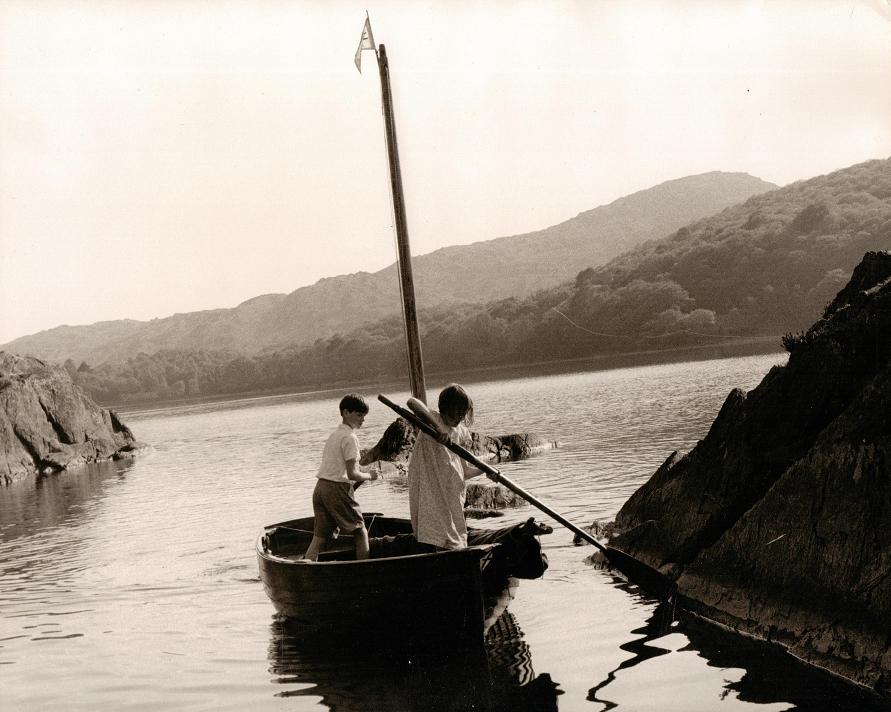
Simon West and Suzanna Hamilton at the helm of Swallow with Stephen Grendon in the bows, while Sophie Neville looks on from the shore of Peel Island

No one had given much consideration to the rowing involved in the story. Built as a run-about boat by William King of Burnham-on-Crouch, Swallow has two sets of rowlocks but it was tricky to keep time when she was wired to the camera pontoon. The first scene attempted was when the Boy Roger and I had to row her back from the charcoal burners with Susan at the tiller.

Sophie Neville rowing to Cormorant Island
Sophie Neville as Titty and Stephen Grendon as Roger rowing to Cormorant Island

We rowed again on Derwentwater, making our way out to Cormorant Island to look for the treasure. It took everything in me, but I later managed to row Amazon out of Secret Harbour in one take at the end of a long day filming. The action was repeated with Denis Lewiston, the lighting-cameraman, and his 35mm Panavision camera in the stern. Cold, with wet feet, I completed the scene but had to be carried ashore by a frogman acting as the safety officer. Titty later anchors Amazon off Cormorant Island on Derwentwater, but the shot of her wrapped in the sail, sleeping aboard, was taken in the darkened barn at Bank Ground Farm. The fishing scenes were recorded on Elterwater with Swallow moored near the reedbeds.
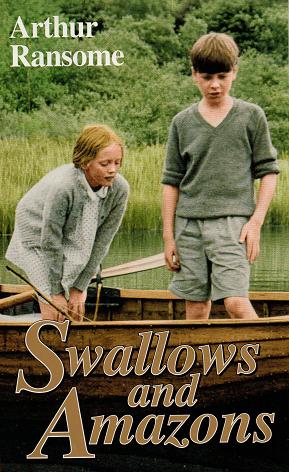
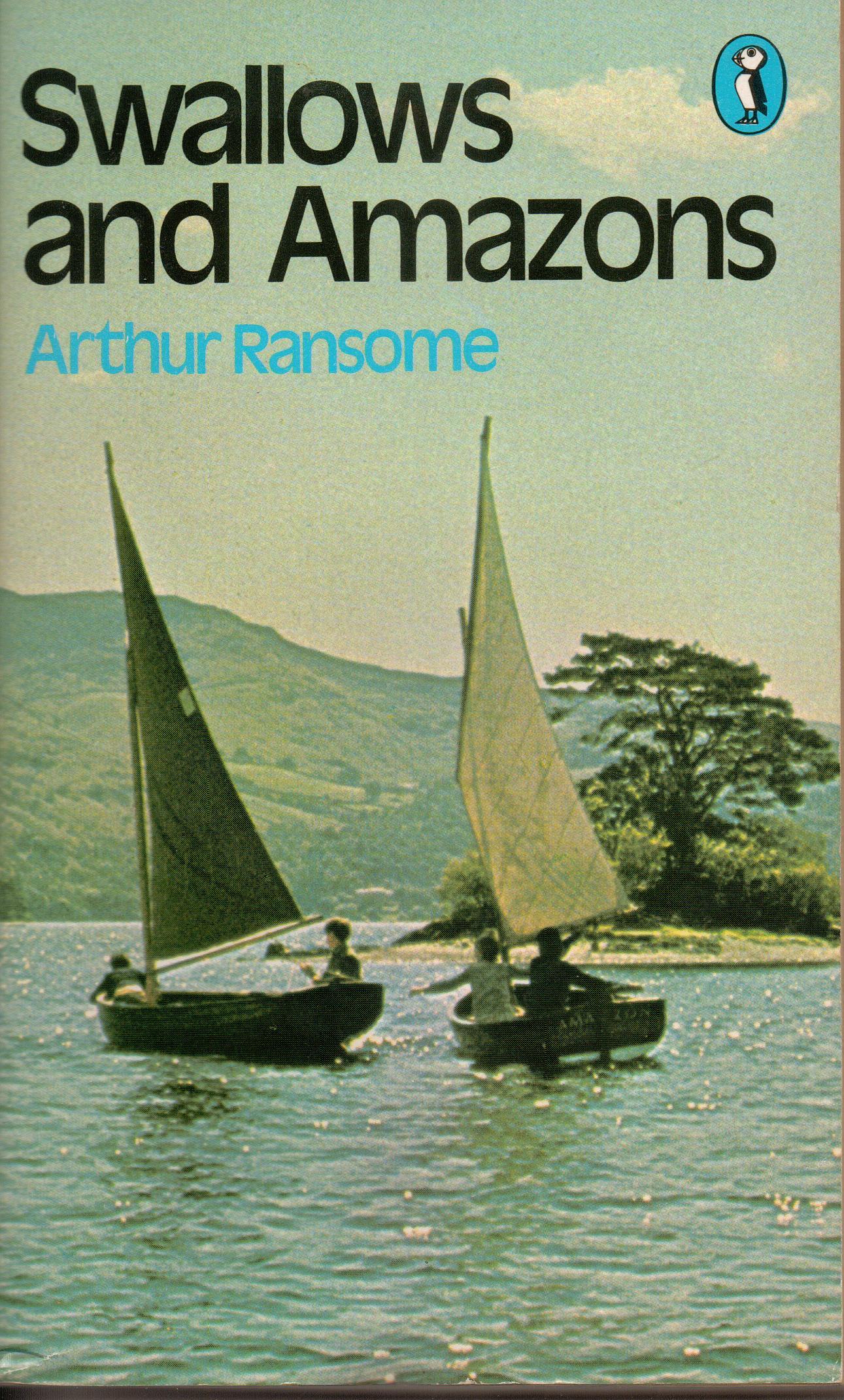
Sophie Neville as Titty and Simon West as John appearing on the cover of 'Swallows and Amazons'
Sophie Neville as Titty and Simon West as John

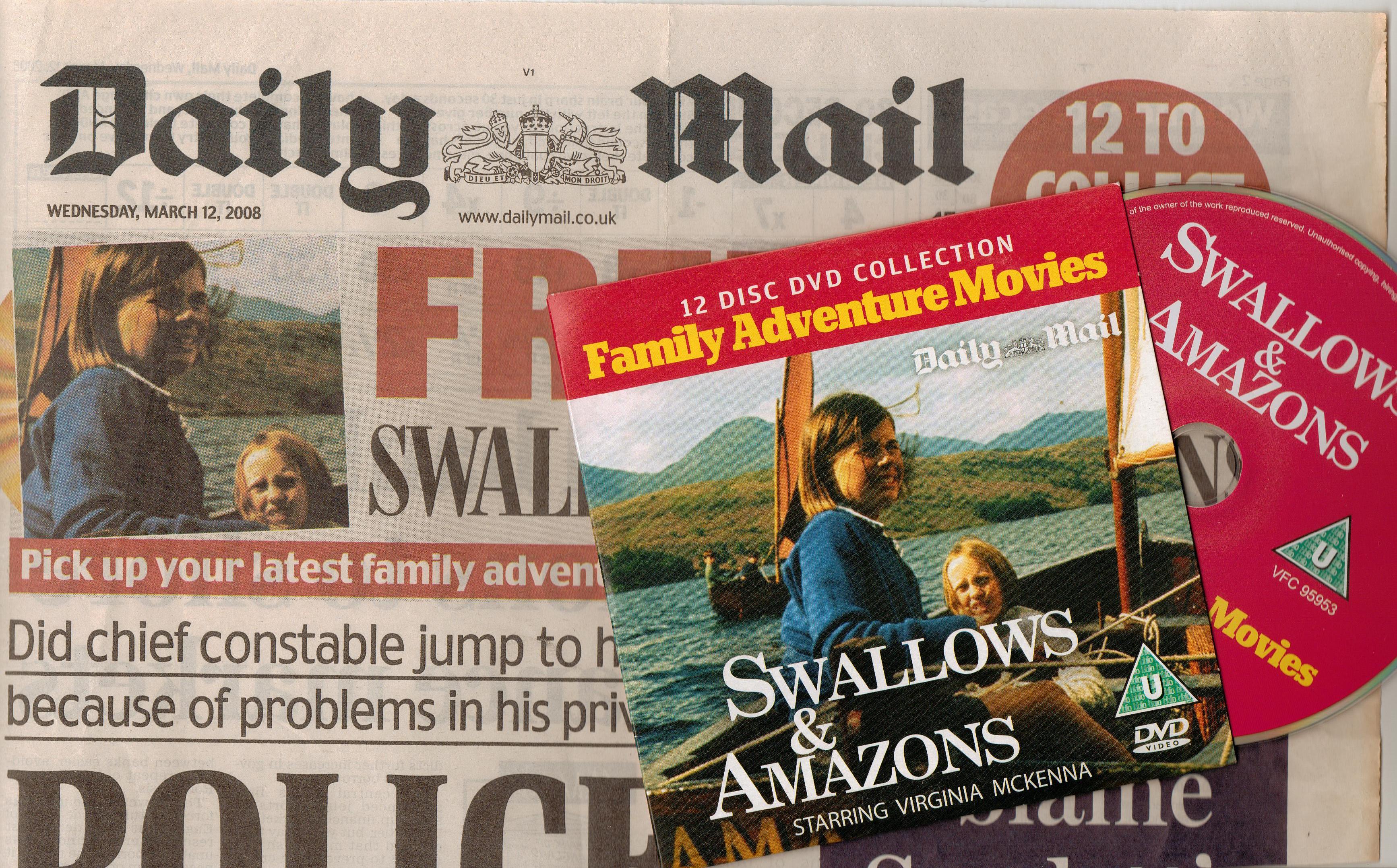
My one regret is that we didn’t follow the book when sailing the captured Amazon back to Wild Cat Island. The wind was up and Claude Whatham needed Simon to sail Swallow ahead of the Amazon which was lashed to the pontoon. I originally took the tiller as Titty is urged to in the story, but had trouble with the rudder and Susan is at the helm on the cover of the paperbacks brought out to accompany the film and a DVD distributed by the Daily Mail.
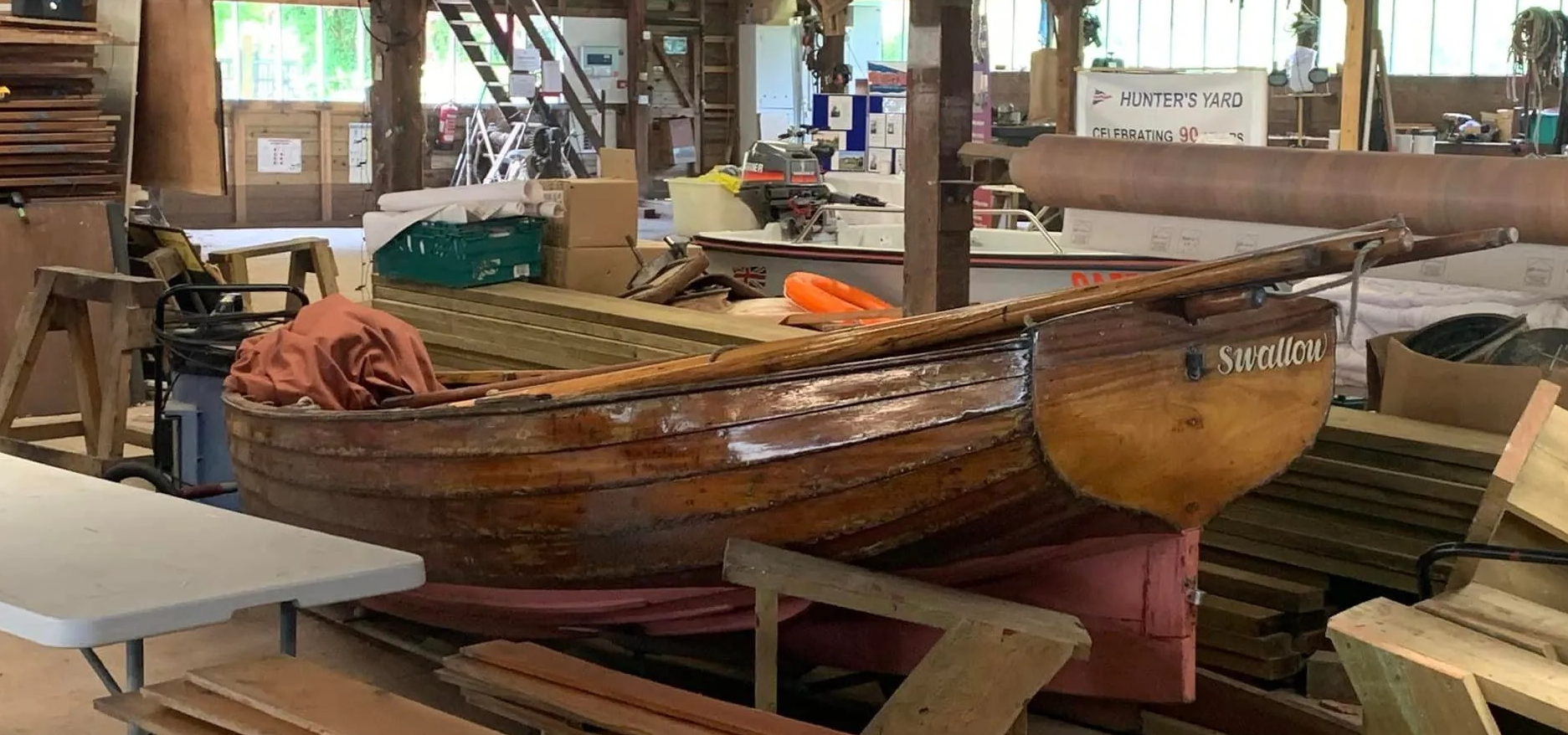
I was somewhat surprised to see Swallow outside Elstree Studios where we went to post-sync the film. They set up a tank on the sound stage so that Bill Rowe, the dubbing editor who was to win an Oscar for The Last Emperor, could capture the sounds so taken for granted and yet so evocative of handling wooden boats. I was concerned that she’d been given away (and she nearly was) but, as Richard Pilbrow made plans to adapt other Ransome books, she was sent to Mike Turk’s warehouse in Twickenham and stored with maritime props such as the Grand Turk, a replica of HMS Indefatigable, built in 1996 in Turkey for Hornblower.

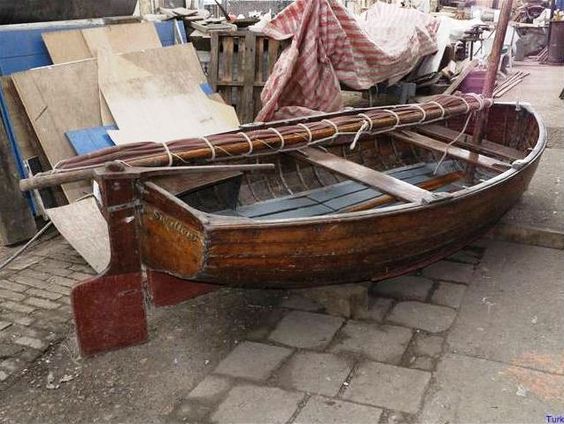
Swallow at Mike Turk's warehouse

When Mike’s collection was eventually auctioned in 2010 I was alerted, first by my father, then by Magnus Smith. We found Swallow’s details online, took one look at the photos and clubbed together to purchase her, launching SailRansome at the 2011 London Boat Show. The idea that others could go out in her with an experienced skipper was greeted by John McCarthy who recorded the sounds of sailing Swallow for Paddling With Peter Duck, his programme made for BBC Radio 4.
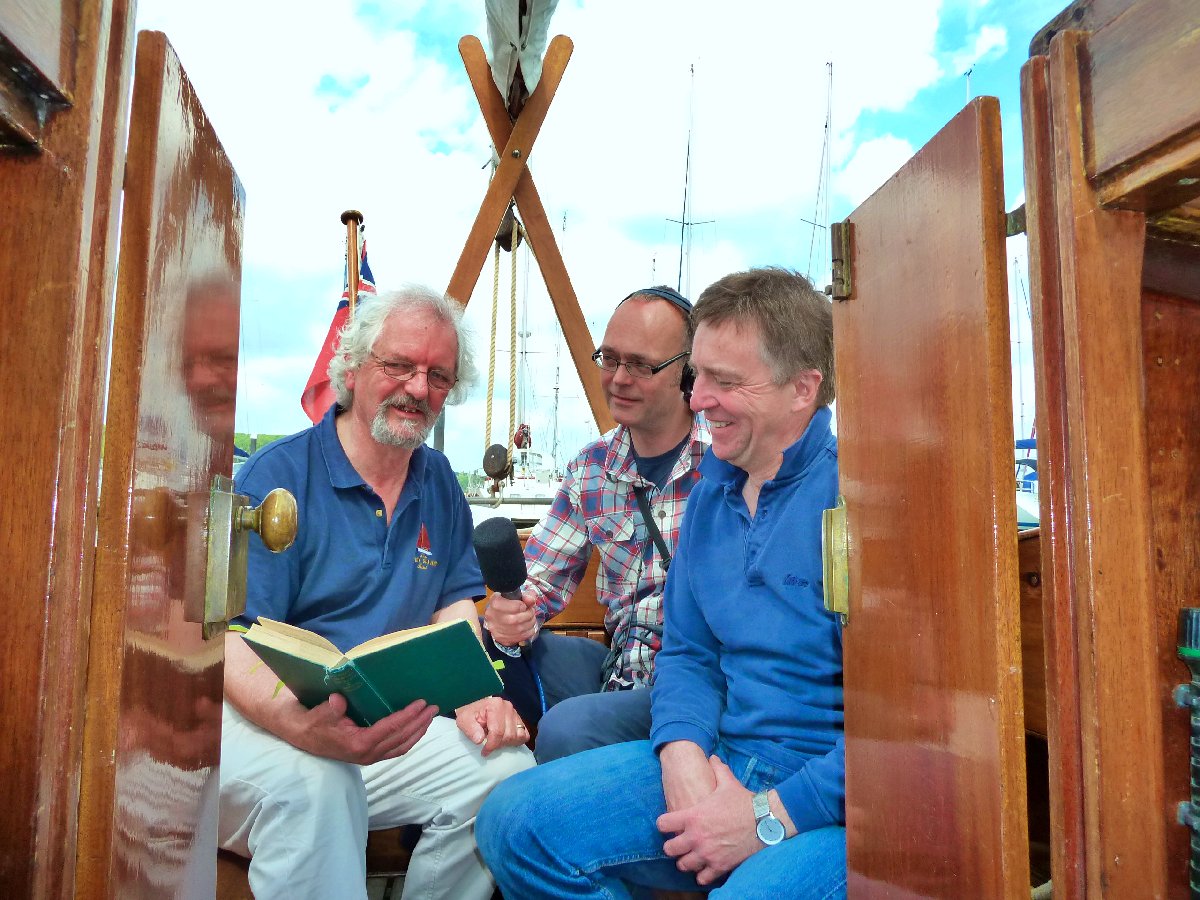
Peter Willis in the Nancy Blackett with John McCarthy

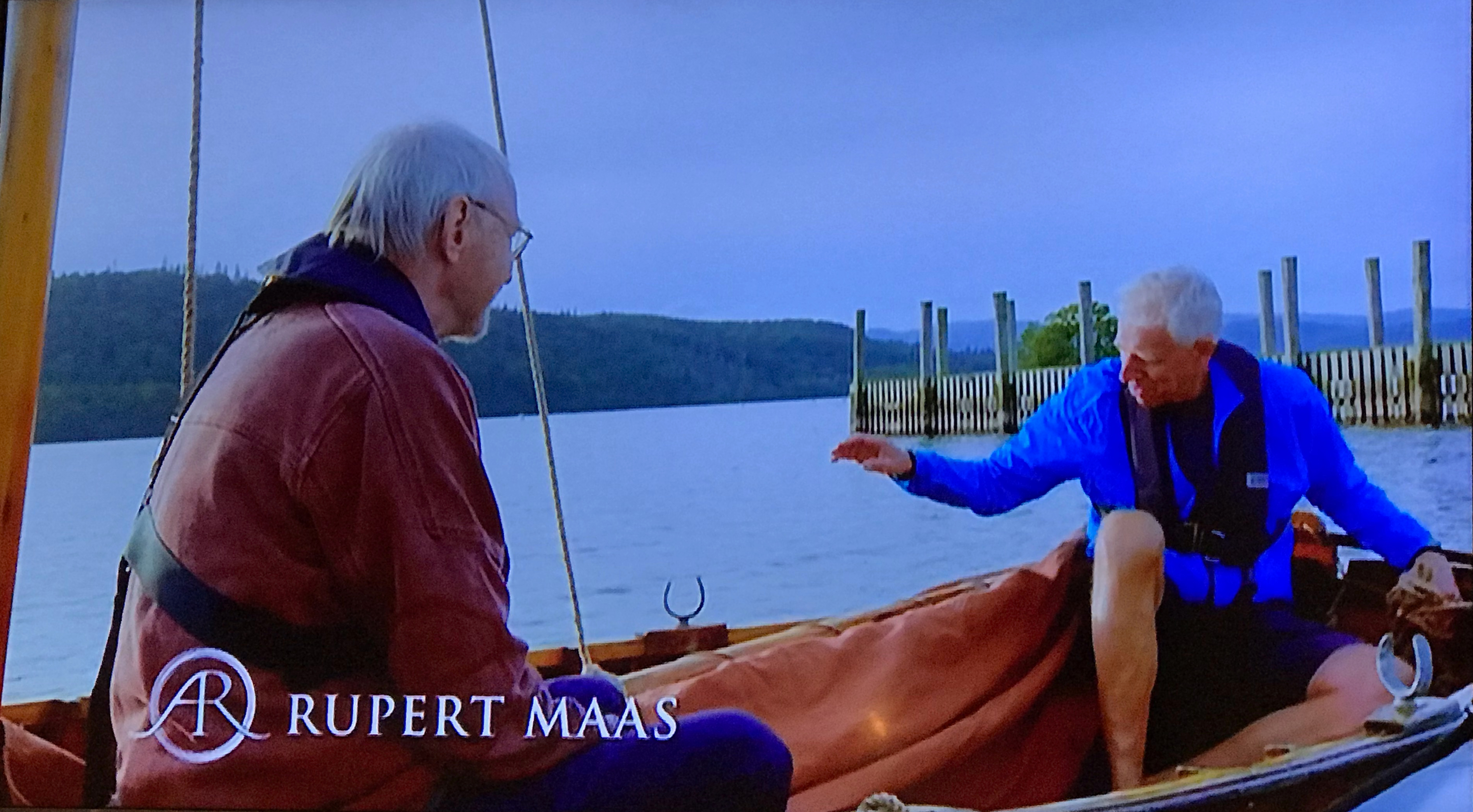
The Arthur Ransome Society now own both historic dinghies. Rupert Maas valued Swallow highly when she appeared on BBC Antiques Roadshow in 2021.Everyone gasped but her true worth is akin to Captain Flint’s hidden treasure: instead of gold ingots his trunk contained precious memories that no doubt kept him on course when the storms of life blew in. Just as Arthur Ransome’s books grant us solace, my prayer is that many will be able to grab the chance of sailing the little boats that take us into the stories immortalized on film so long ago. 
Back in 1974, none of us knew that Amazon had been used in the BBC adaptation of Swallows and Amazons made just eleven years previously and broadcast in 1963. I met the White family when they brought Amazon from Kent to Cumbria to feature in Country File. Ben Fogle had found their twin daughters on Peel Island, looking very much like Nancy and Peggy in damp bathing costumes having been swimming in the lake. It has been extremely generous of them to enable other families to sail such a precious boat.
Not so very long ago, a few TARS joined me at Keswick for a talk and screening of Swallows and Amazons at the Alhambra cinema when we grabbed the chance to go aboard the Lady Derwentwater. Nick Newby explained how she had been decommissioned in 1973 to appear as Captain Flint’s  houseboat. Her temporary conversion was overseen by Ian Whittaker, the set dresser who went on to be nominated for a number of awards and won an Oscar in 1993 for his work on Howard’s End. The Lady Derwentwater has since been given a new stern but is in good shape, back in her role as a passenger launch.

The mfp Vinyl LP of ‘Swallows and Amazons’ with Sophie Neville and Simon West bringing Swallow into her harbour

Arthur Ransome was taught to sail on Coniston Water by the Collingwoods in a boat they kept below Lane Head, now known as Swallow I. People often ask if the original Swallow II, a sea-going dingy with a standing lugsail built by William Crossfield, and sailed by the Ransomes, is still around. After being kept on a mooring in Bowness Bay, where she was looked after by a boatman called John Walker, she was sold in September 1935 and sadly ‘vanished without a trace’.

The Amazon, originally named Mavis, and also sailed by the Altounyan family, now resides in the John Ruskin Museum at Coniston where she can be visited much like a great aunt. Ransome’s dinghy Coch-y-bonddhu or Cocky, the model for Scarab in his books, restored and owned by TARS, is on display at Windermere Jetty, the museum where the fourteen foot RNSA dinghies used in the 2016 movie of Swallows and Amazons have been moored. A few of the steamboats used to dress the scenes set at Bowness-on-Windermere or Rio in 1973, such as Osprey and George Pattinson’s launch Lady Elizabeth, may be in residence. They are currently restoring the SL Esperance used by Ransome as his model for the houseboat.

In 1983, I worked behind-the-scenes on the BBC drama serial of Coot Club and The Big Six (and wrote Extras for the DVD titled Swallows and Amazons Forever! ) We spent three months filming on the Broads, using the four-berth gaff sloop Lullaby to play the Teasel, a vintage dinghy for Titmouse and a punt for Tom Dudgeon’s Dreadnaught. They have all been kept at Hunter’s Yard, near Ludham in Norfolk where you can hire classic boats. While exploring the Broads you can track down the Death and Glory, Janca, used to play the Hullabaloo’s Margoletta, and the wherry Albion used for Sir Garnet along with yachts like Pippa that were also featured in the serial. Hopefully, Arthur Ransome’s ‘good little ship’ the Nancy Blackett, bought with his ‘Spanish gold’ or royalties, will one day star as Goblin in a film adaptation of We Didn’t Mean To Go To Sea. Wouldn’t that be wonderful?

Swallows and Amazons (1974) sepia film poster (c) StudioCanal
Arnaldo Putzu’s poster for the EMI film Swallows and Amazons (1974)

Half a century has passed since the original film Swallows and Amazons first came out in cinemas, the good little ships featured sailing improably on the poster. Thanks go to Magnus Smith, Rob Boden, Diana Wright, Marc Grimston, and all those who have looked after and lovingly restored the inspirational boats that appeared in the movie. They mean so much to so many. Three million cheers to those at The Arthur Ransome Society who are working with Hunters Yard in Ludham to make both little ships available for hire in 2025 .

Amazon will soon be available to hire at Hunter's Yard, Ludham
Amazon will soon be available to hire at Hunter’s Yard, Ludham

If all goes to plan, you will be able to take them out. When you do, smell the freshness for me. Stroke the varnish, take in the feel of the ropes, the weight of the oars. It may be chilly, but that too is part of the experience of liaising with old boats out on the water.

You can read more in ‘The Making of Swallows and Amazons (1974)’ now available as an audiobook narrated by Sophie Neville

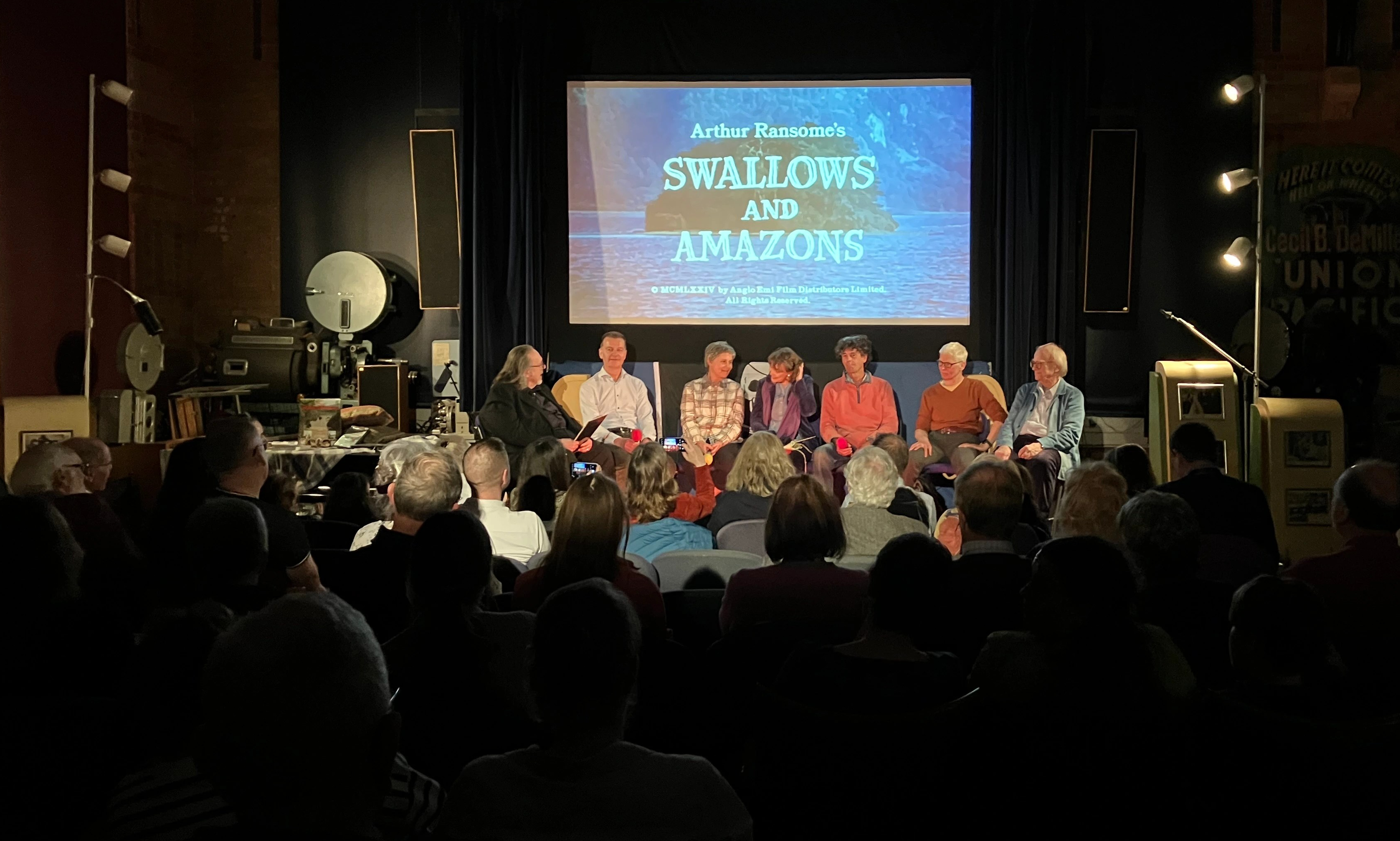
What are your favourite lines from the 1974 film ‘Swallows and Amazons?’ Screenwriter Brian Sibley’s hilarious Q&A with the cast of the classic movie made in location in the Lake District 50 years ago.

On 6th April, the original cast of ‘Swallows and Amazons’ (1974) gathered to celebrate the 50th Anniversary of the film’s release in London with David Wood who wrote the script.

It was unexpectedly amusing as can be seen in this recording kindly brought to us by Lee Pressmen and volunteers of the Cinema Museum where the original movie was shown before we were invited on stage by Brian Sibley.

The cast of 'Swallows and Amazons' (1974) gathered for the 50th Anniversary - photo Lee Pressman of the Cinema Museum
Brian Sibley talks to Simon West, Suzanna Hamilton, Sophie Neville, Sten Grendon, Kit Seymour and screenwriter David Wood – photo Lee Pressman of the Cinema Museum

As soon as self-confessed ‘super fans’ arrived, the venue began to buzz with the question, “What was your favourite line from the film?”

“They’ve got India rubber necks.”

“They’re girls!”

“… must be a retired pirate. He’s working on his devilish plans.”

Sten Grendon, who played Roger, said it was undoubtedly: “I said – ‘Yes’.”

I’ve always liked: “X marks the spot where they ate six missionaries.” Although I often use, “Here we are, intrepid explorers making the first ever voyage into unchartered waters,” I think “I’ve got her. I’ve got her!” is the most appealing.

One viewer on Instagram claimed their favourite line was: “Titty that way.”

What is your favourite line?

Do add your line to the Comments below.

A recording of Brian’s interview with the screenwriter David Wood can be watched on this website here.

Photos of the event can be found on an earlier post on this website here.

For those who couldn’t make it to the Cinema Museum in London, here is a brief profile:

Talks on making the original movie ‘Swallows and Amazons’ (1974) and tips on filming afloat at the Southampton International Boat Show 2023 this September

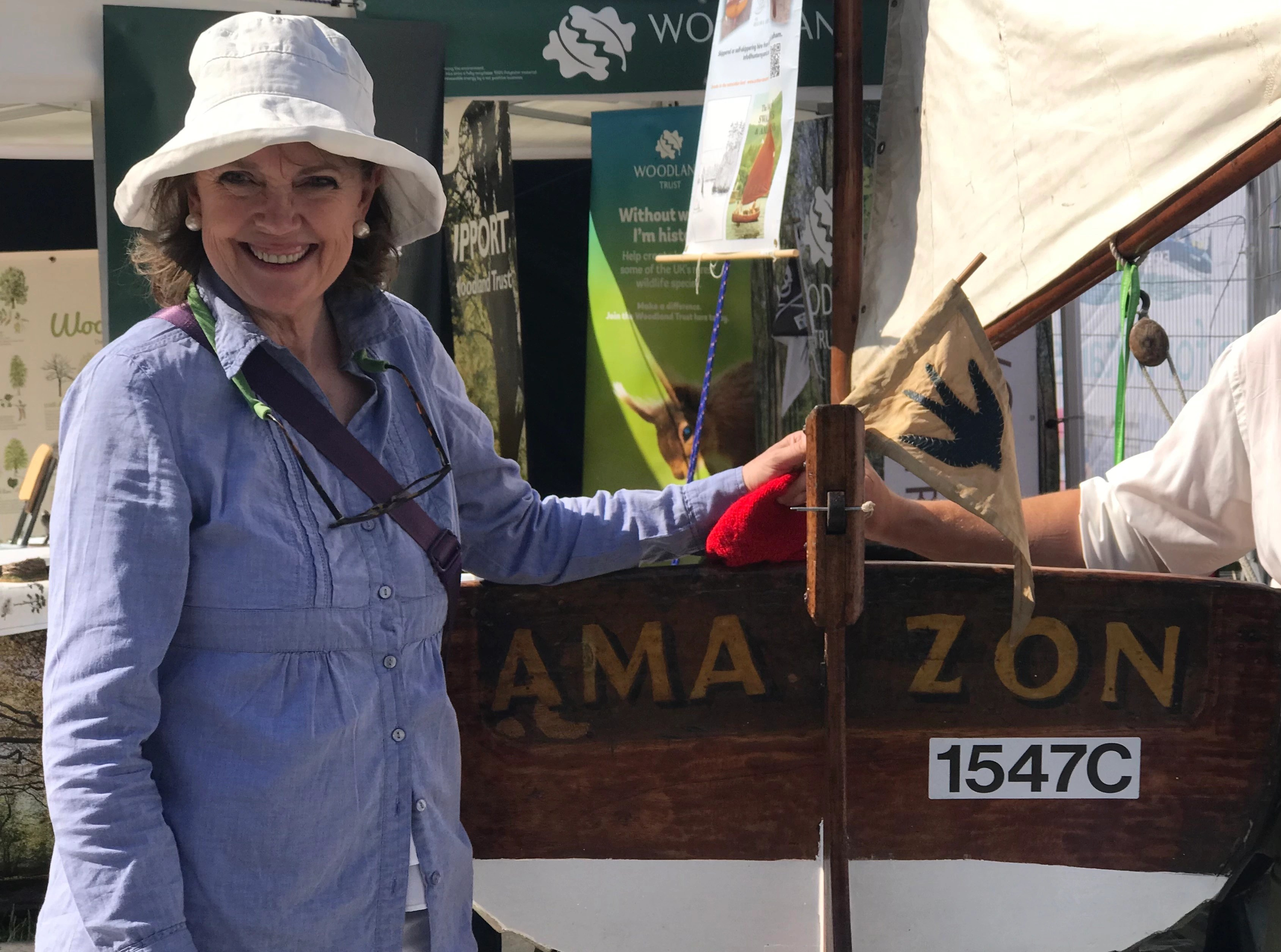
This year, Amazon, the iconic dinghy used in both the 1974 film and 1963 BBC serial of Swallows and Amazons was on display at the Southampton International Boat Show. The Arthur Ransome Society, who now own her, brought her down from the Norfolk Broads especially for the event.

Sophie Neville with Amazon, the dinghy from 'Swallows and Amazons'(1974)
Sophie Neville with Amazon, the dinghy from ‘Swallows and Amazons'(1974)

Thanks to volunteers from the project ‘Sail Swallow and Amazon’, it was great chance to find out about the literary society and chat about grabbing the chance to sail Amazon yourself. She has been renovated and is looked after by Hunter’s Yard near Ludham.

Amazon will soon be available to hire at Hunter's Yard, Ludham
Amazon will soon be available to hire at Hunter’s Yard, Ludham

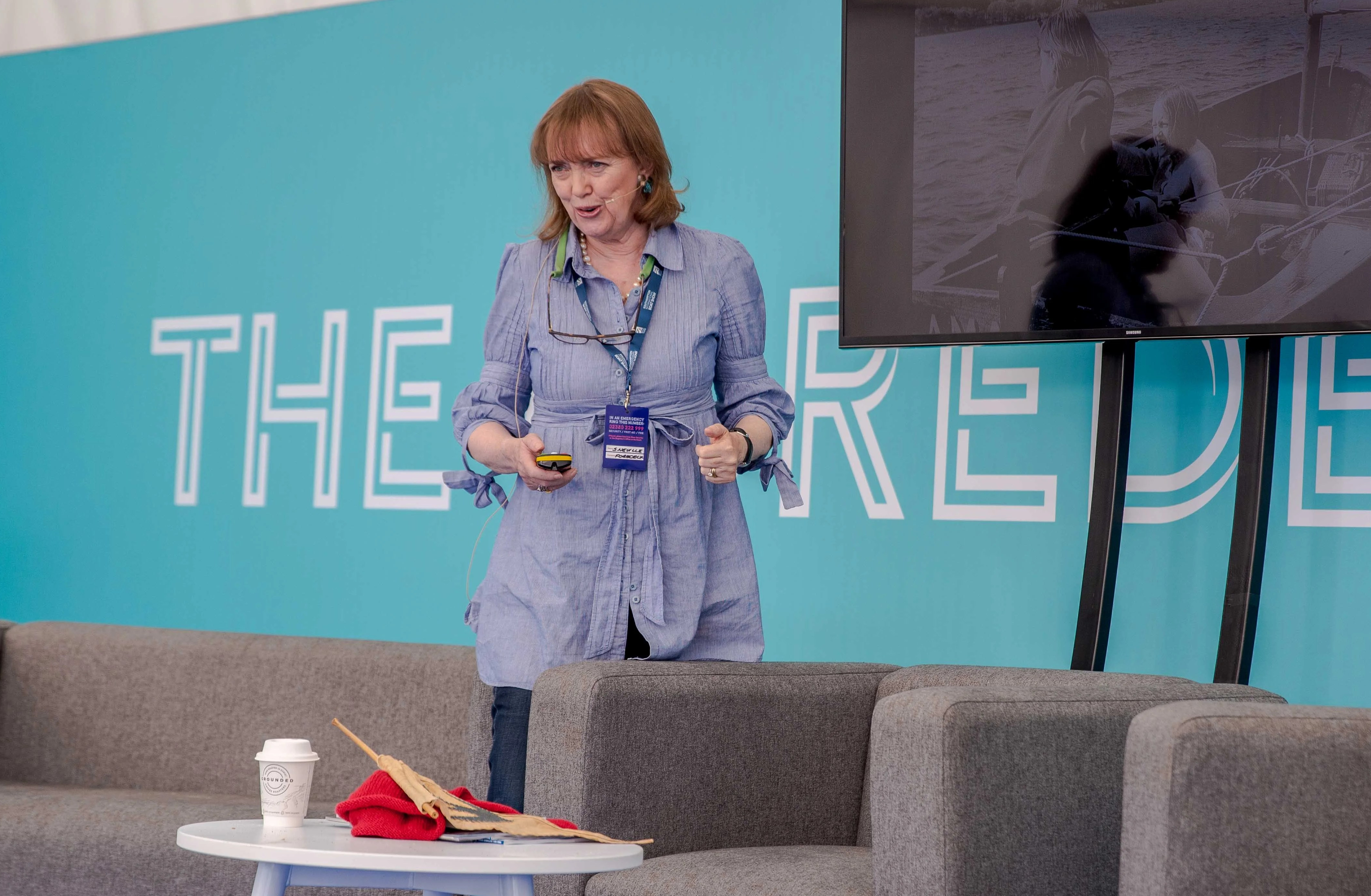
Sophie Neville, who captured the Amazon when she played Able Seaman Titty in film, gave illustrated talks on the Foredeck Stage at the Southampton International Boat Show on the afternoons of:

Friday 15th September – Press Day

Sunday 17th September

Thursday 21st September – Women and Marine Day

Sunday 24th September

Sophie Neville speaking at the Southampton Boat Show

Sophie signed copies of her book on ‘The Making of Swallows and Amazons’ at the Medina Bookshop near by. Based in Cowes on the Isle of Wight, they specialise in maritime books.

Sophie Neville signing books at the Medina Bookshop stand at Southampton Boat Show

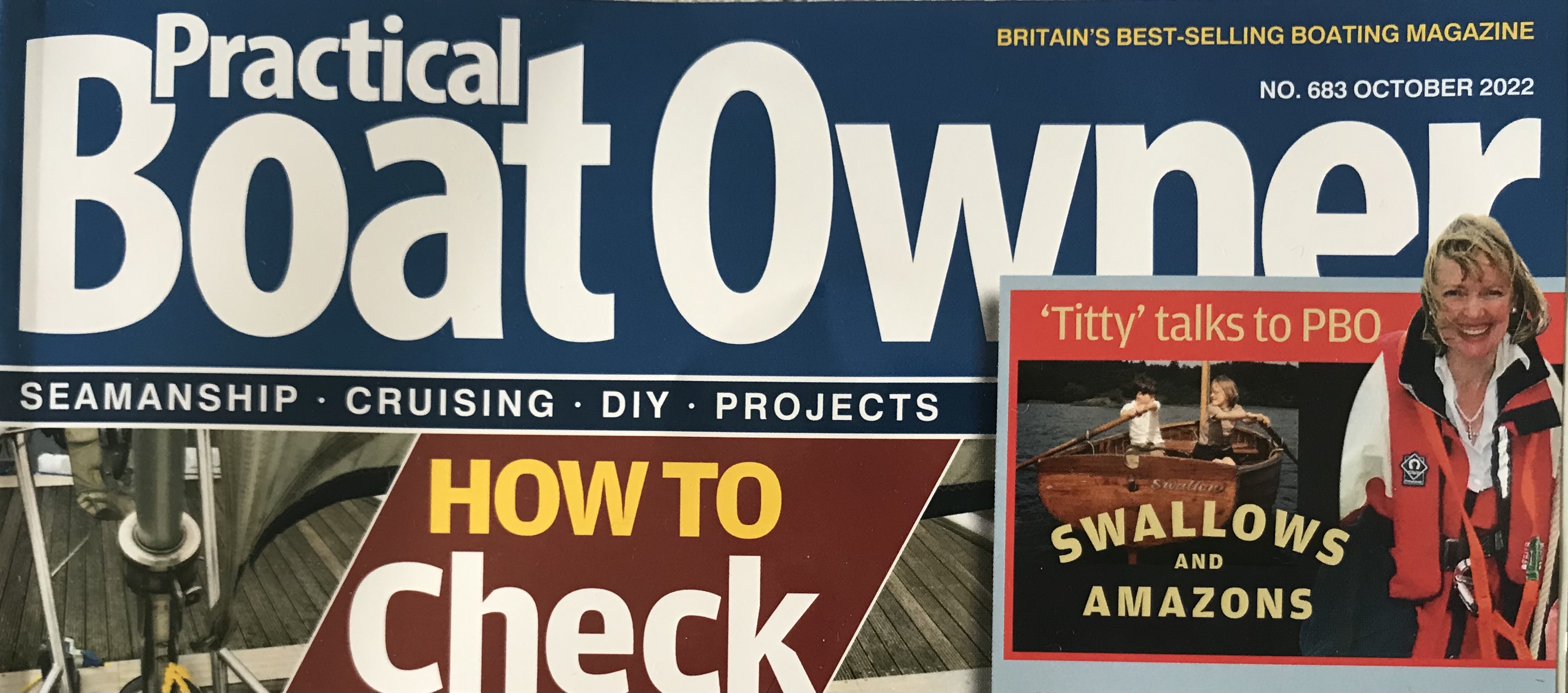
You will find the story of how Sophie handled the Amazon as a twelve year-old in this month’s edition of Practical Boat Owner magazine and you can read more here.

You can watch Practical Boat Owner’s video taken last year.

Amazon is available to hire from Hunter’s Yard on the Norfolk Broads from 27th September until the close of the season on about 6th October. Please contact Hunters Yard near Ludham who also have the Titmouse available.

An article published in Classic Boat read:

This film gives you a quick squizz around the Boat Show when you see the Foredeck Stage where Sophie was speaking.

Help is needed to restore Swallow and Amazon, the original sailing dinghies used in the 1974 film ‘Swallows and Amazons’

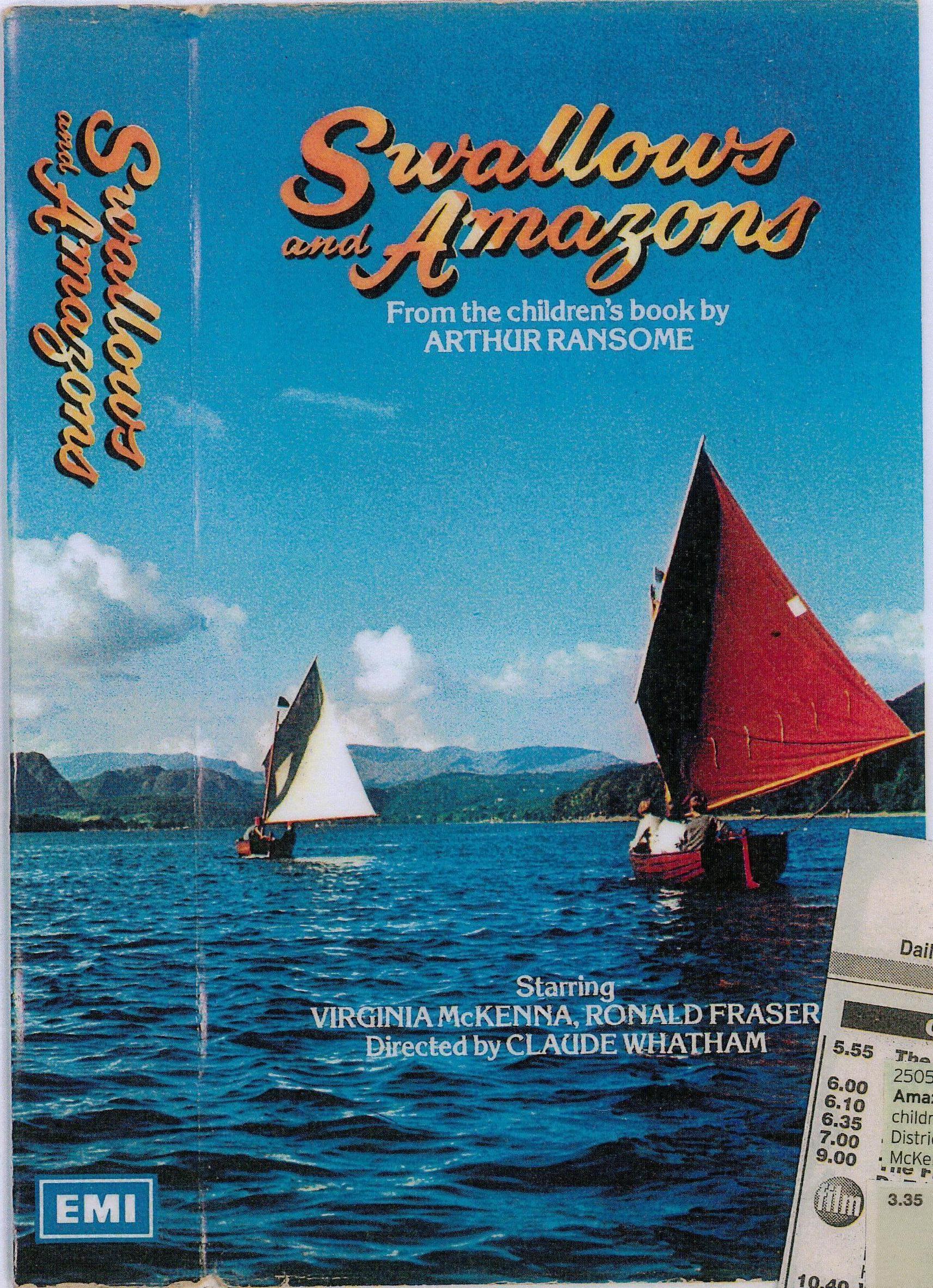
'Swallows and Amazons' on VHS
The original VHS version of ‘Swallows and Amazons’ (1974)

The Arthur Ransome Society has launched a new venture: Sail Swallow and Amazon

The classic dinghies from the original Swallows and Amazons 1974 film are being restored by Hunters Yard at Ludham on the Norfolk Broads. We are looking forward to welcoming people to come and sail, or row, the boats in due course.  Hopefully, the Amazon may be ready this June, but Swallow‘s keel needs attention so she will be not be seaworthy until next season.

Amazon being restored at Hunter’s Yard, Ludham

Next year – from 28th-30th June 2024, both boats will be appearing at the 50th anniversary celebrations of the 1974 film at Windermere Jetty in the Lake District. All welcome! We are hoping the dinghies will be joined by some of the traditional steamboats that appeared in the Rio Scenes such as Osprey and the Lady Elizabeth.

More information on Sail Swallow and Amazon – The Arthur Ransome Society (arthur-ransome.org)

Swallow being restored by Hunter's Yard at Ludham in Norfolk
Swallow being restored by Hunter’s Yard at Ludham in Norfolk

If you would like to make a donation, the link is: I would like to Donate – The Arthur Ransome Society (arthur-ransome.org)

Amazon will soon be available to hire at Hunter's Yard, Ludham

You can read more in the Eastern Daily Press

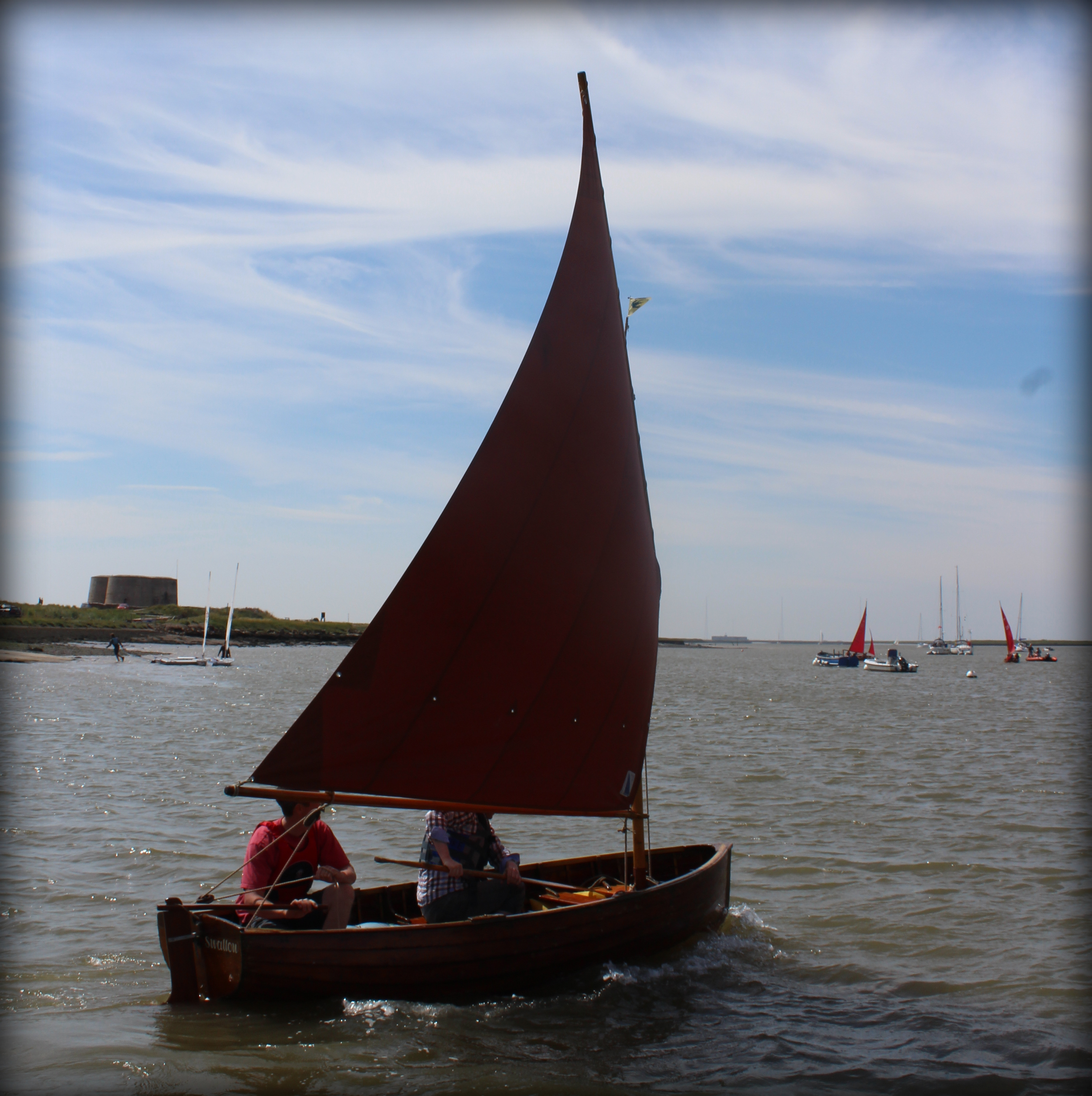
Sailing Swallow on the River Alde in 2016

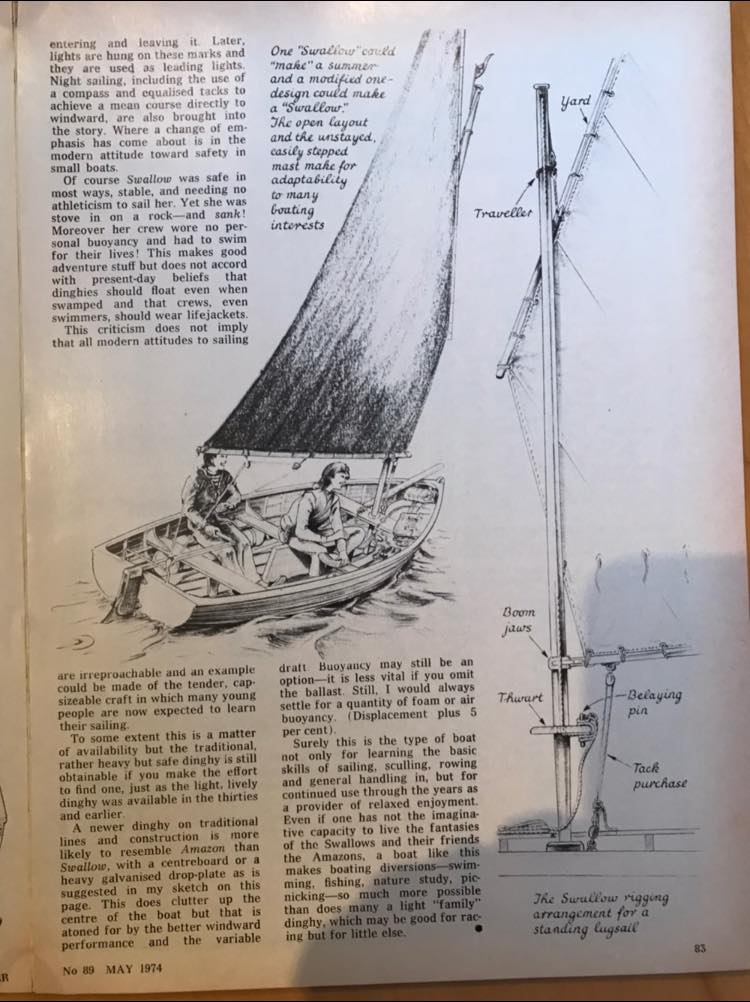
This magazine article was originally published in Practical Boat Owner:

Article in Practical Boat Owner magazine 1974

I’ve written more about Swallow here

You can read an extract from my diary when we first sailed her on Windermere fifty years ago on 13th May 1973 here.

The story about how the film was made against the odds is told in ‘The Making of Swallows and Amazons’ available online.

Swallow, the dinghy that starred in ‘Swallows and Amazons’ (1974)

Sten Grendon as Roger and Sophie Neville as Titty rowing Swallow
(c)StudioCanal

BBC Antiques Roadshow featured Swallow, the dinghy used in the original feature film of Swallows and Amazons in their first episode at Windermere Jetty repeated recently on BBC One. You can read about how she was valued by Rupert Maas on an earlier post on this blog here.

I wrote a little more about her history in an article for Practical Boat Owner, Britain’s most popular sailing magazine. The story opens in 2010, when I nearly bought her myself:

Swallow is coming up for auction,’ my father said, sending me the details of a clinker-built sailing dinghy stored in Mike Turk’s warehouse in Twickenham. It was the Spring of 2010. I took one look at the online photographs and wept.

Swallow stored in Twickenham

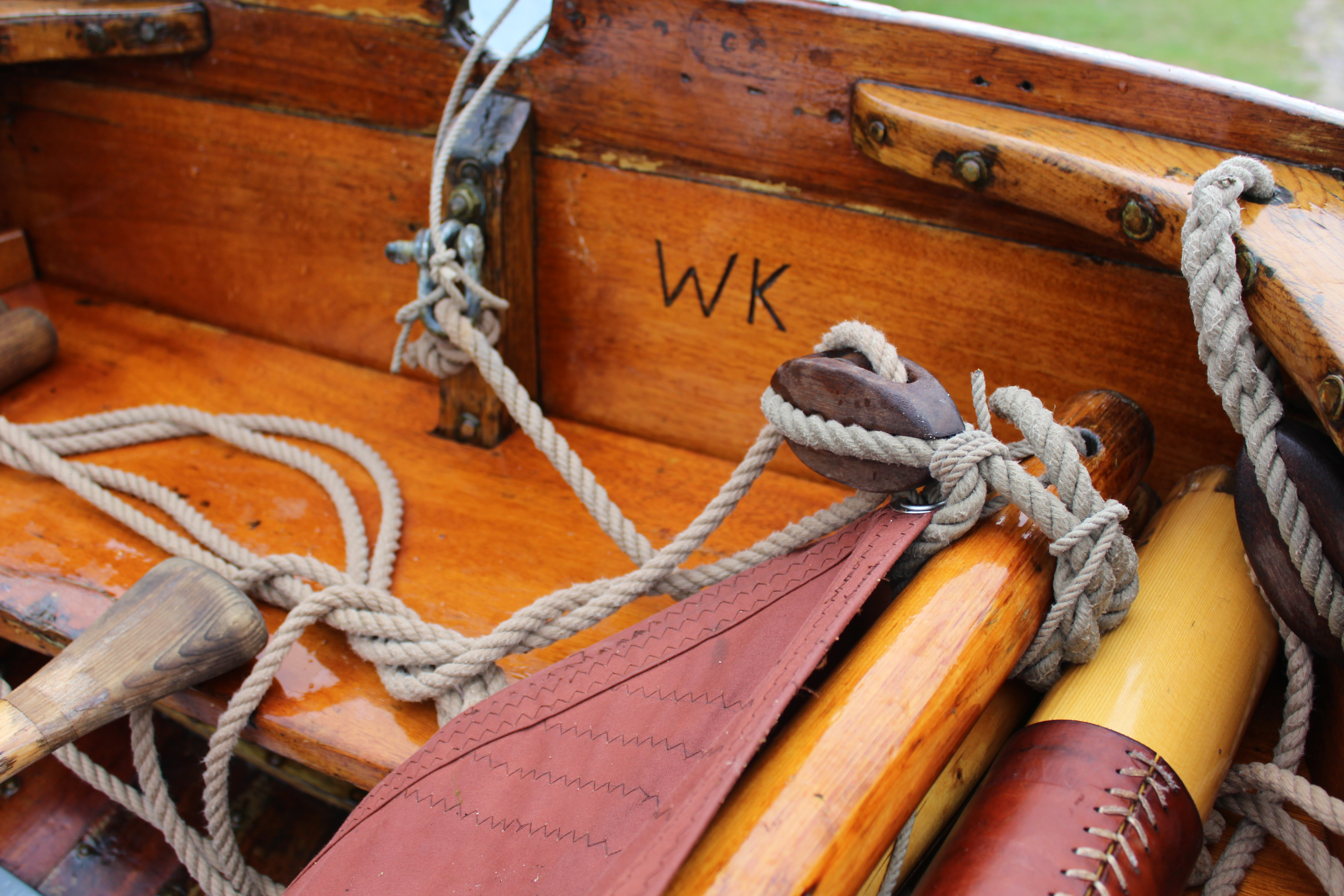
The letters WK were carved on her transom. It was the twelve-foot, all-purpose, run-around vessel originally owned by William King of Burnham-on-Sea that had been purchased by Richard Pilbrow in 1973 to feature as Swallow in the original feature film of Arthur Ransome’s classic novel Swallows and Amazons.

Swallow built by William King of Burnham-on-Crouch

I knew the little ship intimately. She looked a bit dried out but my husband thought we ought to buy her. I had played the part of Able-seaman Titty, the nine year-old girl who Ransome so cleverly made into the heroine of the story when she grabbed a chance to capture the Amazon, which enabled the Swallows to win the war set to determine ‘who should be the flag-ship’. In mooring her prize overnight near Cormorant Island, Titty witnessed Captain Flint’s stolen treasure chest being buried and was eventually able to rescue it. She was rewarded by the gift of a green parrot.

‘Did you know how to sail before playing Titty in Swallows and Amazons?’ people often asked. The truth was that I had crewed for my father in a similar dinghy and felt confident in a boat but could not have coped single-handed.

Sophie Neville aged about ten sailing in the Cotswolds

However, I had grown up living by a lake in the Cotswolds where we had a Thames skiff, which I often took out. This was important as Titty does quite a bit of rowing in the film. She and Roger become galley-slaves rowing back from the charcoal burners’, they row out to Cormorant Island and she takes the Amazon out of Secret Harbour. This I accomplished alone, in one take, later rowing some distance from Peel Island with the lighting cameraman and his 35mm Panavision Camera onboard. No one had thought about the implications of this when we first tried out the two boats on Windermere but, being aged twelve, rather than nine, I just about coped and grew adept at launching Swallow and moving about in her. As the book was written in 1929, we did not wear life-jackets.

Swallow with Simon West and Suzanna Hamilton (c) StudioCanal

Arthur Ransome described Swallow as being thirteen-foot long with a keel, rather than a centre board. In the illustrations she is painted white, a common way of protecting wood in the 1930s. I am pretty sure that Richard Pilbrow, the producer of the movie, bought the rowing boat we used when we where in Burnham-on-Crouch to audition for the parts in March 1973. She was varnished but had been given and forward thwart, mast, red-brown sail and balanced lug-sail as described in the books.

Simon West who played Captain John, aged only eleven, was a capable sailor with an understanding of the wind that enabled him to cope with gusty Lakeland conditions. Swallow had no buoyancy. In the scenes when we first sail to the island she was laden with camping gear, including heavy canvas tents, the lighthouse tree lantern and a shallow basket of kitchen utensils I shifted every time we went about.

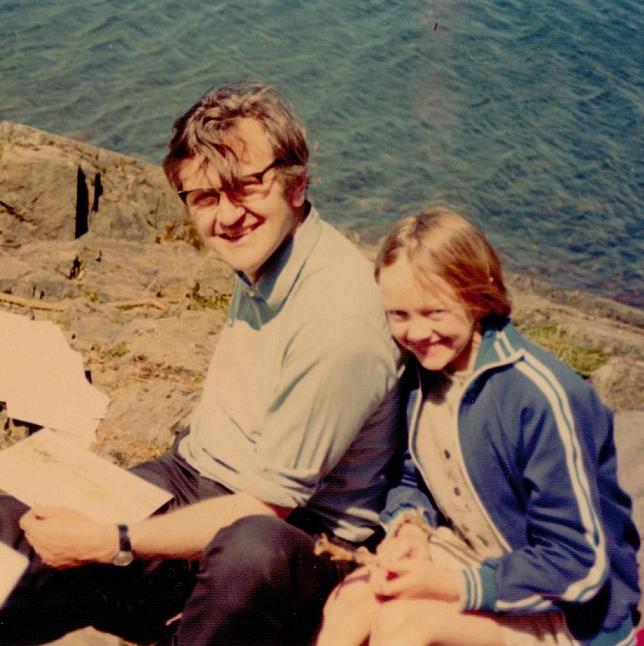
My father Martin Neville on the shore of Coniston Water

My father was an experienced sailor, used to racing yachts having frequently crossed the Solent in his own clinker-built dinghy as a boy. He was looking after us children when he agreed to appear in costume as a ‘native’ aboard the MV Tern on Windermere, which bares down on the Swallows in the story. He watched, terrified, as we sailed towards it. The Victorian steamer only had a notch throttle and an inexperienced skipper. Dad realised that Claude Whatham, the film director, had not anticipated the fact that we would lose our wind in the lee of the passenger ferry. He gave Simon a cue over the radio that was far too late. We only just went about in time, being pushed away from the larger vessel by the bow wave. Watch the film trailer and you can see how very close we got. I was about to reach out and feebly fend off.

Dad spoke sternly to the producer that afternoon, pointing out that we could have all gone down. Sten Grendon, who played the Boy Roger, was only aged eight and could hardly swim. I could have become entangled in the camping gear. My father tested the old BOAC life jackets we wore for rehearsals and to travel out to film locations. They failed to inflate. He nearly took me off the production.

Swallow and Amazon on the Puffin cover

Another tricky scene to film was when John, Susan and Roger set off from the Landing Place on Wild Cat Island leaving Titty to guard the camp and light the lanterns as they hoped to capture the Amazon and sail home after dark. I had push them off, grabbing the telescope at the last minute. Since Swallow’s mast was liable to catch in tree branches, I needed to wade out and give her a hard, one-handed shove. I slipped on a rock and fell up to my waste in water. Knowing it would be difficult to set up the shot a second time, I struggled to my feet and waved them off, dripping wet. By this time John had the mainsheet out as far as the knot and stood to grab the boom to avoid a Chinese gybe as Swallow was hit by a fresh gust of wind as he cleared the headland at the northern end of the island and sped northwards toward Coniston Old Man.

Simon West and Suzanna Hamilton at the helm of Swallow with Stephen Grendon in the bows, while Sophie Neville looks on from Peel Island.

Having spent nearly seven weeks filming in the Lake District, the film was post-synced at Elstree studios. We arrived to sing out our lines to find Swallow there. She had been set in a tank so that the sounds of sailing could be captured. It is something you tend to take for granted as a viewer while it draws you into the experience.

I last saw Swallow looking dejected outside the studio and was worried about what had become of her. Although she was offered to someone who had advised on the film, she was kept safely at Mike Turk’s prop hire company. Richard Pilbrow was hoping to make another film in the series.

Swallow at
Swallow at Mike Turk’s store in London

When Mike retired, many boats that had featured in movies came up for auction. I knew Swallow would be costly and in need of renovation. After fans of the film and members of The Arthur Ransome Society contacted me, we clubbed together to make a bid. In the end about eighty members of a hastily formed group called SailRansome spent approximately £5,700 on the purchase.

I contacted Nick Barton of Harbour Pictures, the film producer who was gaining the rights to make a new movie, hoping we could be able to re-coup costs by renting her back to him. Nick came up to Coniston Water to watch me re-launch Swallow in April 2011, sloshing brandy wine on her bow in true Ransome style. I helped him to raise finance for the new film, which was made in the summer of 2015 and released in 2016, starring Kelly Macdonald as Mrs Walker, Rafe Spall as Captain Flint and Andrew Scott as a Russian spy. In the end, he decided to use fourteen-foot RNSAs dinghies for Swallow and Amazon as they satisfied the film insurance company who demanded that two identical dinghies were used for Swallow.

This article was first published in Practical Boat Owner magazine

Joining SailRansome was pivotal for me as I was asked by the Nancy Blackett Trust and The Arthur Ransome Society to give a series of talks on how the old film, and the BBC serialization of ‘Coot Club’ and ‘The Big Six’ was made. I ended up speaking at a number of literary festivals, on BBC Radio and even ITV’s News at Ten, promoting the societies and urging people to help get young people out on the water. I ended up taking Swallow out on Ullswater, the Orwell and River Alde, remembering how difficult she is to turn, but enjoying her speed. She ended up being featured on BBC Antiques Roadshow when I brought movie memorabilia up to Windermere Jetty museum for two episodes first screened in 2021.

Sophie Neville with Swallow on Coniston Water
Sophie Neville after re-launching Swallow on Coniston Water in 2011

Next summer, you should be able to sail Swallow or Amazon yourself, in the company of an experienced skipper, by contacting Hunter’s Yard near Ludham on the Norfolk Broads. They also rent out Titmouse and yacht who played the Teasel in the BBC adaptation of ‘Coot Club’. As you can see from this clip, Swallow was in need of restoration when first acquired by Sailransome. She now needs a new keep. I have news of her restoration on this website here.

You can read more on the Arthur Ransome website here.

You can read more about the adventures we had making the original film in ‘The Making of Swallows and Amazons (1974)‘ by Sophie Neville, published by the Lutterworth Press, available from libraries, online retailers and to order from all good bookshops including Waterstones.

An article by Sophie Neville first published in Practical Boat Owner. A subscription to this bestselling UK magazine makes a great Christmas present.
Sophie Neville speaking at the Southampton International Boat Show #SIBS22

Inspirational speaker, Sophie Neville
Southampton International Boat Show 2022

In 2022, Swallow, the dinghy that starred in the original film Swallows and Amazons was on display at the Southampton International Boat Show, greeting families as they arrive.

Sophie Neville who once played Titty Walker with her good little ship

Sophie Neville gave talks on filming afloat and the movie was made on location in the Lake District fifty years ago.
Over 103,000 people visit the show. Although busy, it did not feel crowded. There is a lot to see and do.

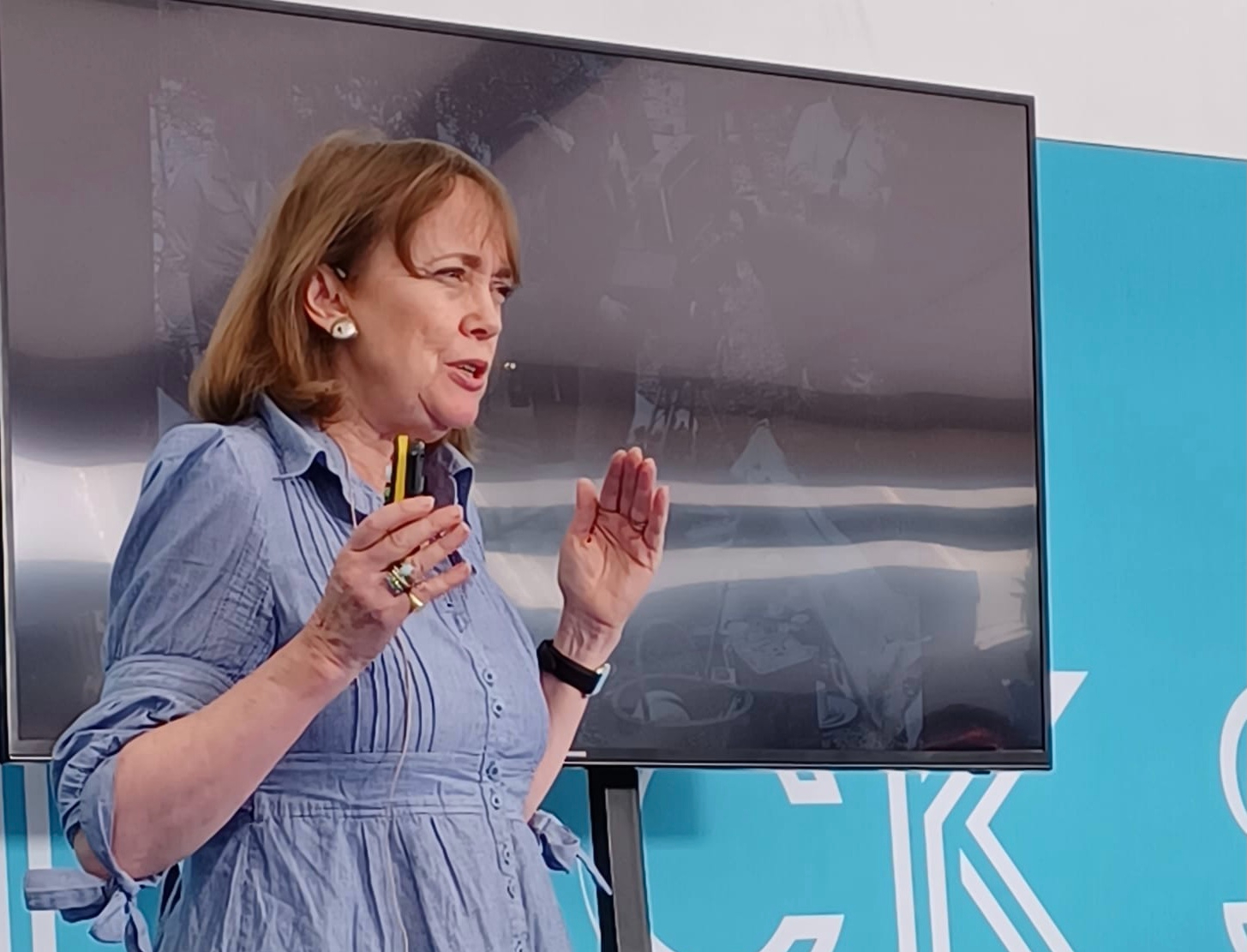
Speaker Sophie Neville
Sophie Neville speaking on the Foredeck Stage at #SIBS22

Thanks to the help of excellent technicians, presentations proved popular, with ‘inspiring talks on the Foredeck Stage’.

On the cover or Britain’s bestselling boating magazine

Sophie signed copies of ‘The Making of Swallows and Amazons‘ at Future Publishing’s corner stand.

“It was a great opportunity to meet film fans, readers and feature writers.”

Nick Jeffery the yacht publicist with Sophie Neville at the Southampton Boat Show
You can find a four-page feature on Swallow in Practical Boat Owner magazine.

A 4-page feature article in the bestselling magazine Practical Boat Owner

You can apply to The Arthur Ransome Society to take Swallow or Amazon out yourself on the Norfolk Broads next summer.

Sophie Neville with Swallow from Swallows and Amazons (1974)

If you are unable to get to the Southampton International Boat Show this year, you can watch an in-depth interview released this week by Your Take:

Your Take interview Sophie Neville on Zoom
Speaking about filming ‘Coot Club’ and ‘The Big Six’ on the Norfolk Broads

Sophie Neville with Titmouse

~Sophie Neville with the star of ‘Coot Club’~

I was invited to talk about making the BBC TV classic serial ‘Coot Club’ and ‘The Big Six’ at the Norfolk Broads Yacht Club to help celebrate their 80th Anniversary. Titmouse, then 1930s dinghy owned by Hunter’s Yard had been brought down from Ludham for the occasion. The bonus was that I was able to go sailing in one of the classic boats gathered at the club for their Open Day.

Geoff and Rose Angell kindly took me out on Pippa, their beautiful yacht with brown sails that appeared in ‘The Big Six’. I am sure Arthur Ransome would have loved her.

Back in 1983, I spent nine months working on the BBC production when it had been my job to cast the children and teenagers who appear in the drama, many of whom needed genuine Norfolk accents.

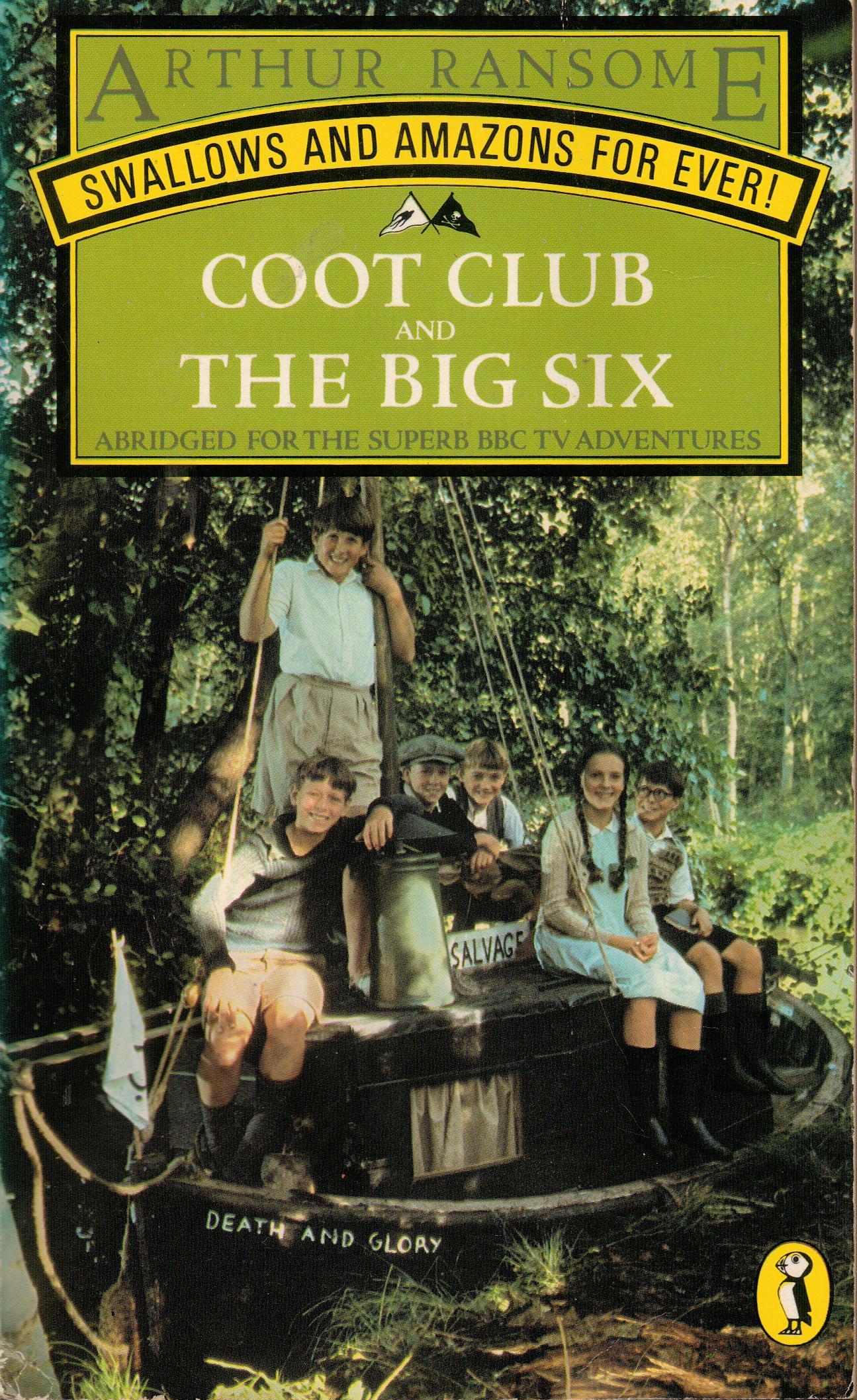
Coot Club - book cover

We had been looking for young actors who could swim well and were able handle boats. We then spent three months filming in East Anglia when I looked after the children and helped rehearse their lines. I set up this shot for the cover of the Puffin paperback that accompanied the series.

~Author Sophie Neville giving a talk at the Norfolk Broads Yacht Club~

At a forum organised after my talk, Pat Simpson from Stalham Yacht Services explained how he found one of the stars of the series – an old lifeboat suitable to play the Death and Glory. She had been brought from where she is kept at Belaugh for the evening. You can see more photographs of her in the previous blog post here.

'The Death and Glory'

Pat provided a number of other vessels for the series including Buttercup and support boats such as the safely boat, a large modern cruiser used as a school room along with another for the costume and make up personnel. He explained that this came as a god-send as boat rentals had not been good that summer. Working on the series was harder than he imagined, ‘We once had to take a boat from Regan to Horning Hall overnight’ but he was pleased that ‘after three months of concentrated work, we got it all done.’

~Robin Richardson~

Robin Richardson, who co-owned Pippa back in 1983, explained how the shot of her being cast adrift was achieved. This wasn’t as easy as first thought as even when Simon Hawes, who was playing George Owdon, flung her stem line on the deck, a gentle breeze was blowing her back against the staithe. ‘Pippa didn’t want to go anywhere’. Robin had to stage the action by throwing out a mud anchor, climbing under her awning and pulling on the line to create the effect of a boat drifting out of control into potential danger. Pippa’s white canvas cover is pulled back here, but you can imagine the scene.

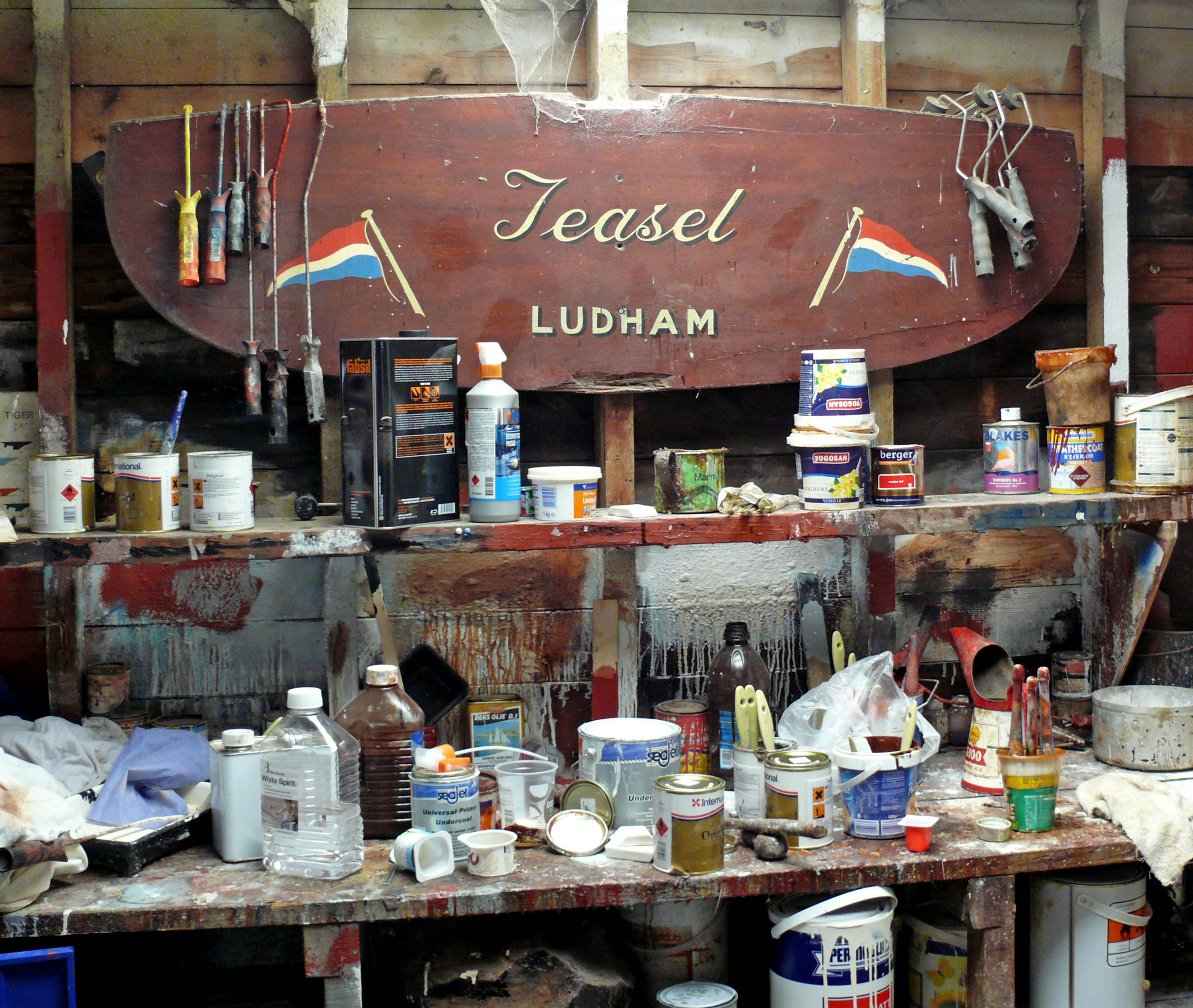
He was on location when Henry Dimbleby, who played Tom Dudgeon, was attempting to tow the Teasel under Potter Heigham bridge. He was rowing Titmouse, pulling hard on the oars but nothing was happening. ‘Stop for lunch,’ Robin advised the director, ‘and the tide will turn.’ This they did, and Henry we able to row under the bridge, towing the Teasel quite easily. Hunter’s Yard, who own Lullaby, who played the Teasle, could not bring her down for the weekend as she had been leased out with other boats, but they sent her transom, painted with her stage name.

'TEASEL'

Robin Richardson owns the ‘Slipstream’ class dinghy called Spindrift who played Shooting Star in the serial. She was built by her father but couldn’t be with us as they were not able to complete her winter maintenance in time but Richard Hattersley said she came tenth in this year’s Three Rivers race when only 15 of the 98 entries actually finished. It’s a 24 hour endurance challenge, which they completed despite light winds. He sent me this shot, ‘of her battling it out with much larger Thames A Raters.’

I was shown a wonderful black and white photograph of the vessel used to play the Cachalot. She was skippered in the series by the film actor Sam Kelly in the role of the unnamed pike fishermen who the Death and Glory boys simply called ‘Sir’. She is seen here with John Boswell, her real owner who has sadly passed away. His son, the artist Patrick Boswell, brought along an album of behind-the-scenes photos.

The theme of the weekend was ‘Boats of the 1930s’. I explained how Swallow, the dinghy used in the original film ‘Swallows and Amazons’ originally came from Burnham-on-Sea where she was made by W. King and Sons to be used as a run-a-round boat. She was stabilised by a keel that ran the length of the hull, as Ransome described. It makes her rather difficult to turn. You can sail her today and is in the Lake District right now. Please see Sailransome for details.

There was quite a bit of interest in memorabilia from the original movie ‘Swallows and Amazons’. I bought along the white elephant flag captured from Captain Flint’s houseboat in the 1974 film, which was approved by a young Amazon pirate.

After a celebratory dinner, David and Nicky Talbot invited me to spend the night in the comfortable for’ard cabin of Kingfisher, a 1970’s motor yacht moored at the club.

I woke early on the Sunday morning to find mist hanging above the water as the sun was rising on what proved to be another sunny day with a fair wind for sailing.

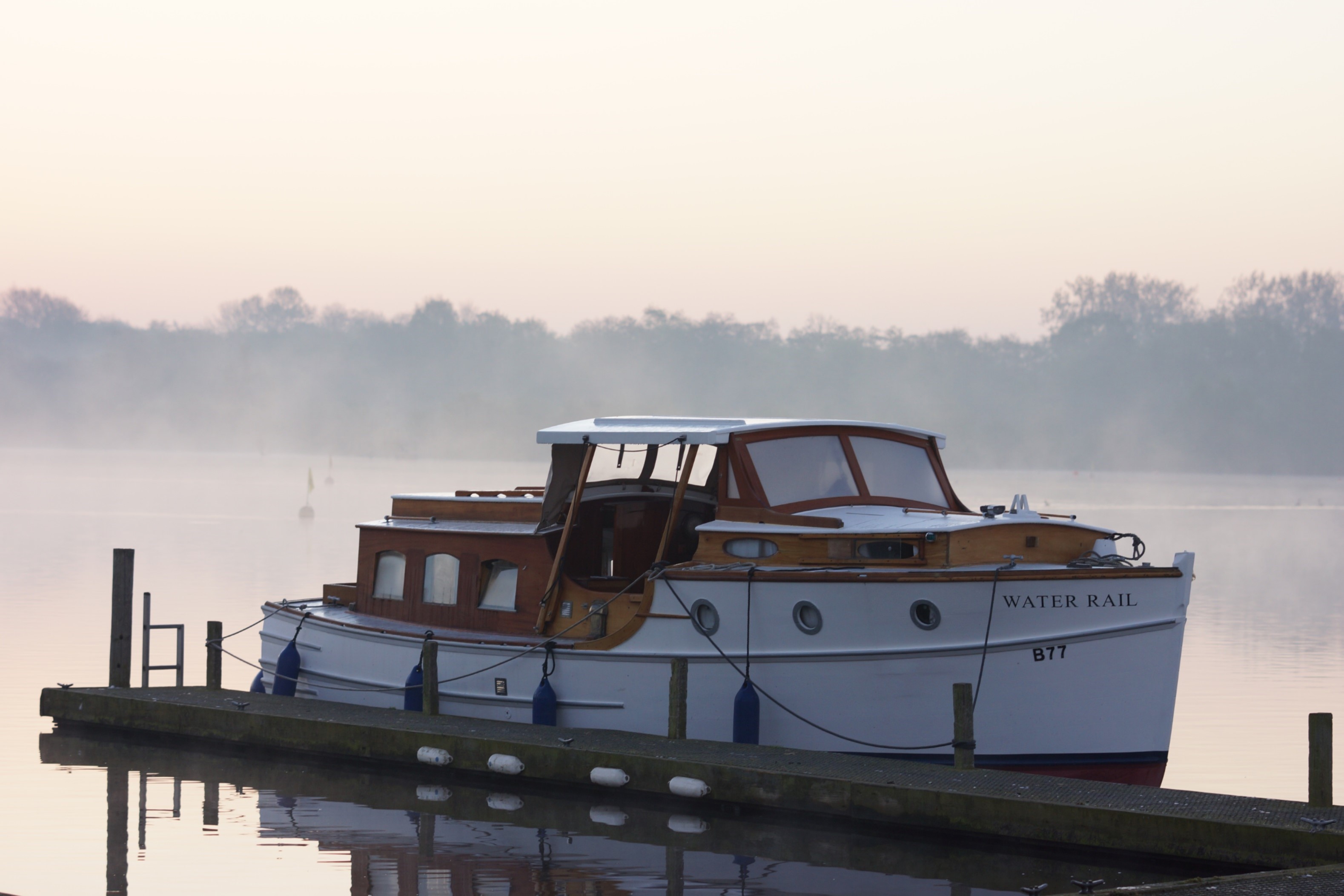
After breakfast aboard, I was invited out in the 1930s river cruiser ‘Water Rail’, who had also appeared in the serial. We took her down the River Bure to her mooring in Horning where she is still part of the scene.

It was wonderful to be out on the waterways of Norfolk, passing traditional buildings. This was a stretch of river never featured in the television drama as Rosemary Leach, who played Mrs Barrable, took Dick and Dorothea from Wroxham to Horning in a trap pulled by Rufus the pony. One reason for this was that in 1983 we had to use the North Norfolk Steam Railway, since Wroxham Station had been modernised but Joe Waters, the producer, said he wanted to add variety by featuring a pony rather than a motorboat.

IMG_6885

We encountered a number of period cruisers, although Janca, who we used to play the Hullabaloos’ Margoletta, sadly could not be with us, as she is still under repair.

IMG_6912

However, by motoring into Horning ourselves, we passed The Swan Inn and Horning Staithe where a number of scenes had been shot, including some that featured Julian Fellowes and Sarah Crowden, playing the hated Hullabaloos. You can see photographs of them in an earlier post here.

~Horning Staithe in Norfolk showing The Swan Inn~

Another vessel that interested me was a river launch that reminded me of the 1901 steamboat Daffodil, which I renovated with my father in 1978. I have photographs of her here.

IMG_6903

You can read more about the traditional boats used in the series by clicking here.

Gerry Spiller, has written from Woodbridge in Suffolk, to say that she has found an oar labelled TITMOUSE, bought at a boat jumble. Could this date from the early 1930? Does anyone have the pair?

Blade labelled TITMOUSE

The DVD of the serial is now available on a re-mastered DVD, available from Amazon here

(Do not be tempted by the old version with a more colourful cover as the image quality is very poor)

Swallows and Amazons Forever
Swallows And Amazons Forever! (Coot Club & The Big Six) SPECIAL EDITION [DVD]
Additional photographs by Richard Hattersly

Sailing the Nancy Blackett in Dutch waters – part two

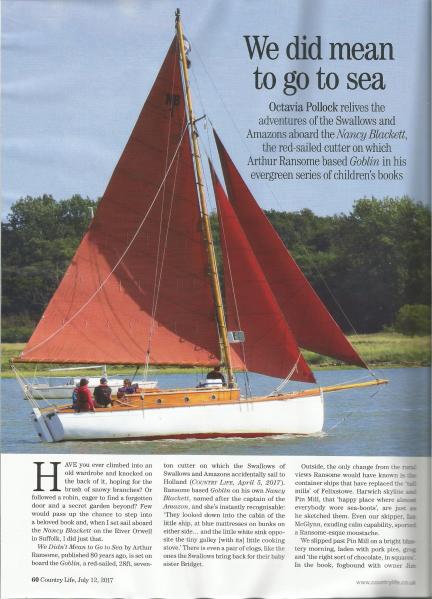
Nancy Blackett, the 28 foot cutter that Arthur Ransome bought with Spanish gold, as he called his royalties from ‘Swallows and Amazons’, is an old lady now. Built by Hillyards of Littlehampton in 1931, she turns eighty-five this year and yet looks pristine. If you ever wanted to sail the Goblin in ‘We Did Mean To Go To Sea’ you must know that it was Nancy who took this starring role in Ransome’s novel, first published eighty years ago.

Nancy Balckett in Middleburg photo Sophie Neville
Nancy Blackett

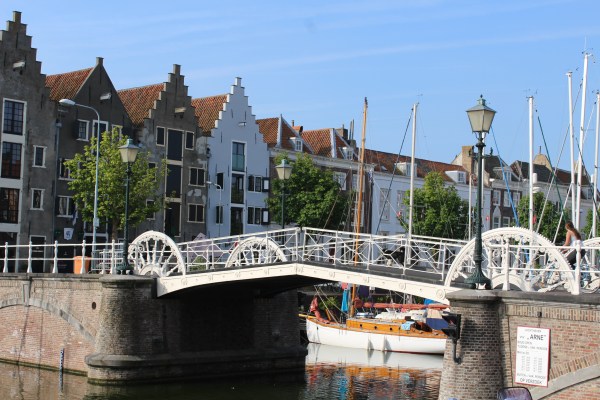
I arrived in the Netherlands this summer to find Nancy receiving visitors at a nautical festival in Midddleburg, while a jazz band played on the quay.  She was moored by a lifting bridge in the centre of town, neatly rigged and ready for anything. After taking a look at a number of old gaffers, her crew enjoyed a cold beer and walked down the canal to vittel-up at a supermarket before having dinner in what was once a packing house for silks and spices imported from the East Indies.
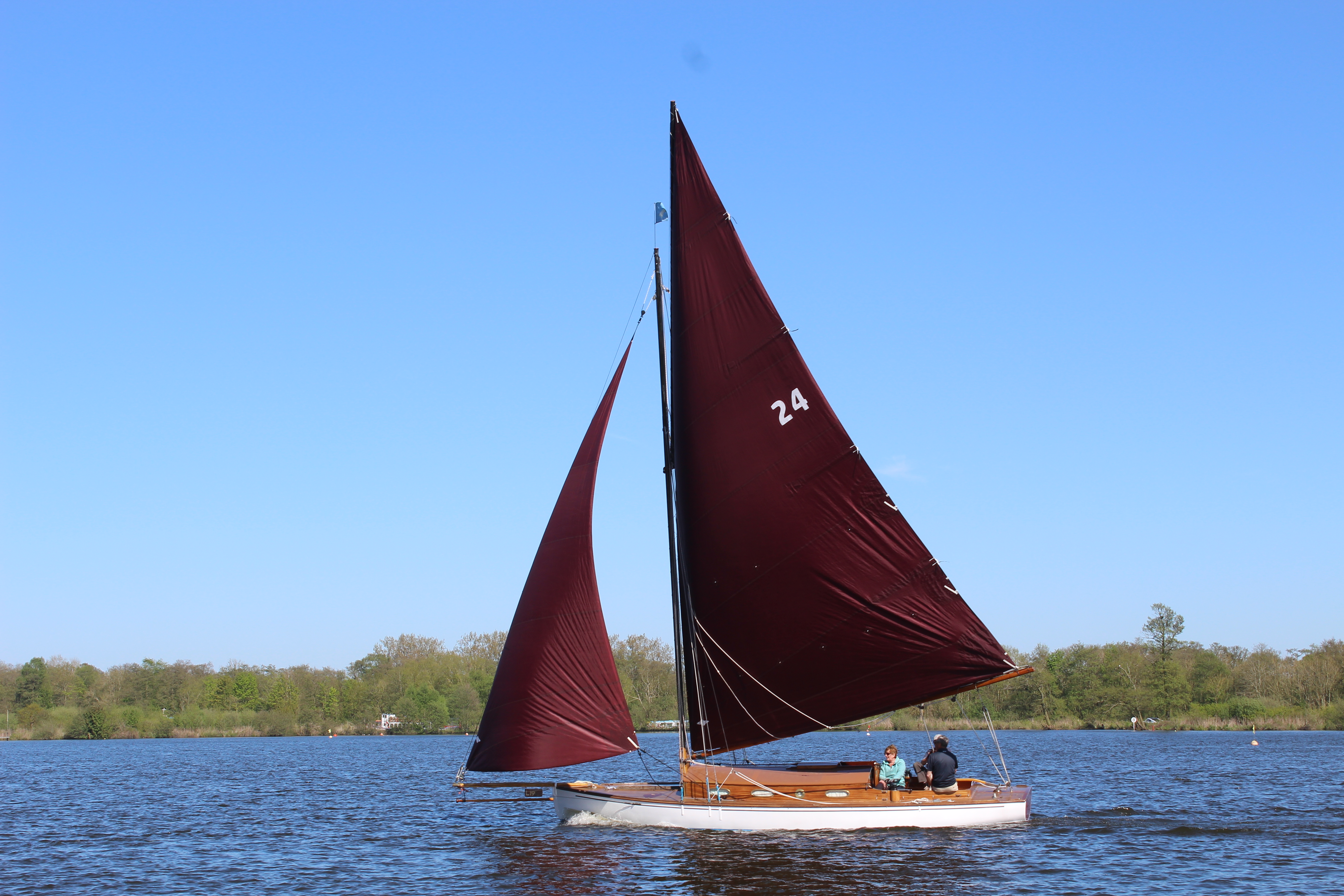
Nancy seen through the bridge in Middleburg
Nancy seen through the swing bridge in Middleburg

As the swing bridge rose the next morning, we made way and motored down the wide canal to Veere, mooring up by the grassy port bank. 

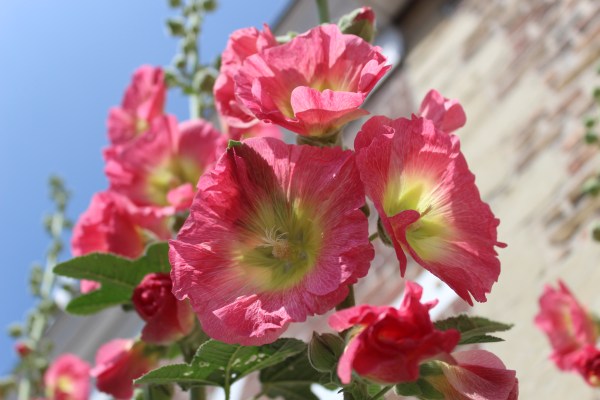
Hollyhocks of Veere
Hollyhocks of Veere

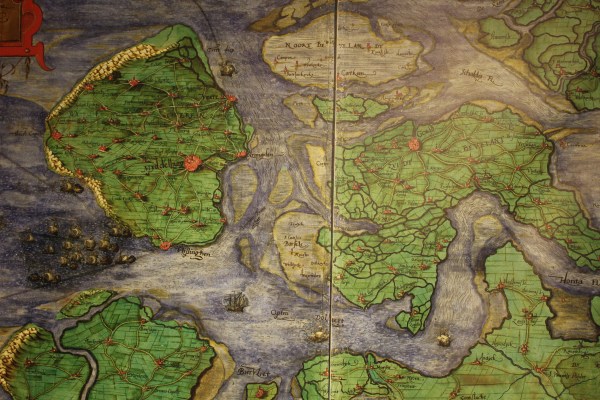
After being granted permission to go ashore, I passed the historic town well and walked down lanes bordered by hollyhocks to visit the museums of this ancient port. They house a number of charts and medieval maps that would have delighted the Swallows, along with old photographs of Dutch natives in traditional dress. I was tempted to buy a pair of clogs to take home for Bridget.

The waterways of Zeeland

We left Veere to explore the islands and creeks of the Veersemeer before sailing down-channel and through a modern lock into the Oosterschelde estuary formed by the River Scheldt. It was once an important shipping route that bought wealth to the Netherlands but is quieter now. I spotted a seal and watched a cormorant swallow a large eel, that wriggled and jiggled inside its gullet.

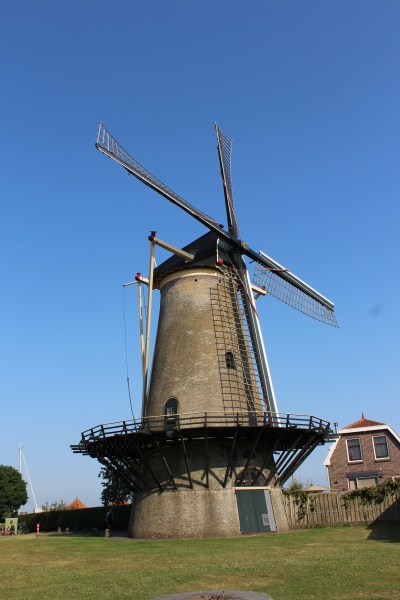
Windmill of Zeeland
A windmill of Zierikzee

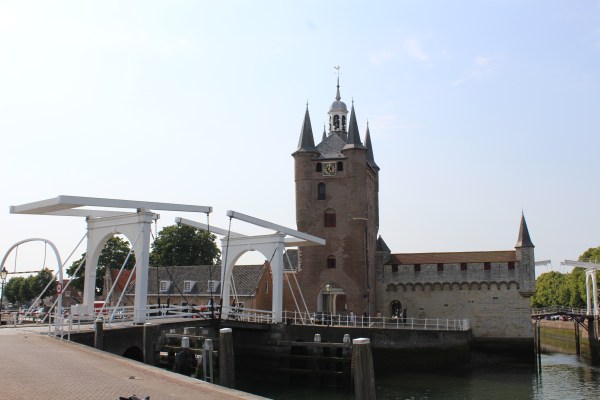
After negotiating the impressive Zeelandbrug that spans the delta, we sailed down to Zierikzee where you can climb the church tower, if you dare, and look out across the once fortified town. The windmills, ornate spires and ancient buildings help one to imagine what life must have been like in the 1500s when it became famous as a trading centre for salt and madder. I found scold’s stones and a whaler’s kayak from Greenland at the Stadhuis Museum in Zierikzee where Veronica Frenks was once the curator.

IMG_4902
The lock gates of Zierikzee

Our skipper, Ian McGlynn, wondered if we could sail back under an arch of the Zeelandbrug instead of waiting for one section of the road to lift. Built between 1963 and 1965 the Zeeland Bridge is more than five kilometres long and hardly comparable to the arch of Potter Heigham but Mate Judy Taylor didn’t want to take any risks. We had Nancy’s new mast to consider.

SONY DSC
Crewing the Nancy Blackett

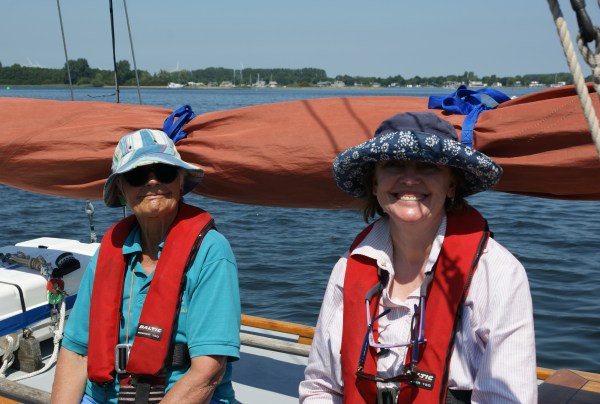
It was only on our last evening-but-one that rain hit us. We’d had blue skies and sunshine all week. As the salt water was washed away from Nancy’s portholes I opened the pages of ‘We Didn’t Mean To Go To Sea’ to find Ransome’s illustrations and read the final passages of the Swallows’ unplanned voyage to Holland. The book is eighty years old this year and yet moves me still. There is Nancy, portrayed as the Goblin moored up in a foreign port, which is where we left her to be enjoyed by other members of the Nancy Blackett Trust.

SONY DSC
Nancy Blackett in Zeeland

 A marathon reading of ‘We Didn’t Mean To Go To Sea’ is planned, to celebrate the 80 year anniversary of its publication, at Pin Mill Sailing Club on the Orwell in Suffolk on Saturday 21st October 2017.
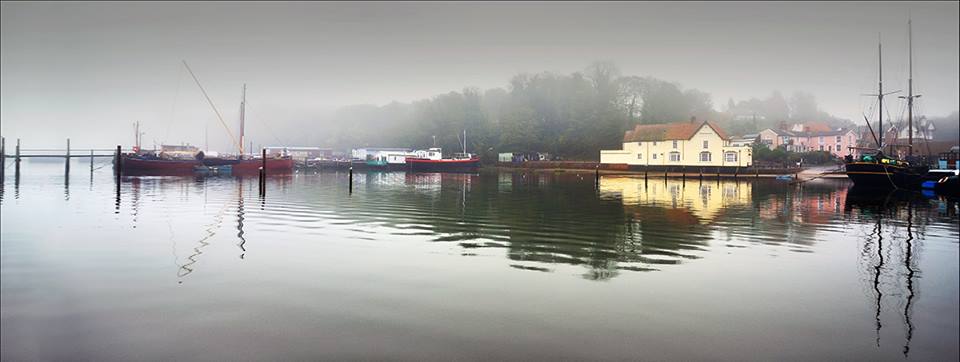
Pin Mill from the Water
To read more about Nancy or join the Nancy Blackett Trust please click here
Nancy has been featured by Country Life in a July issue you can read here
.
We Did Mean To Go To Sea by Octavia Pollock

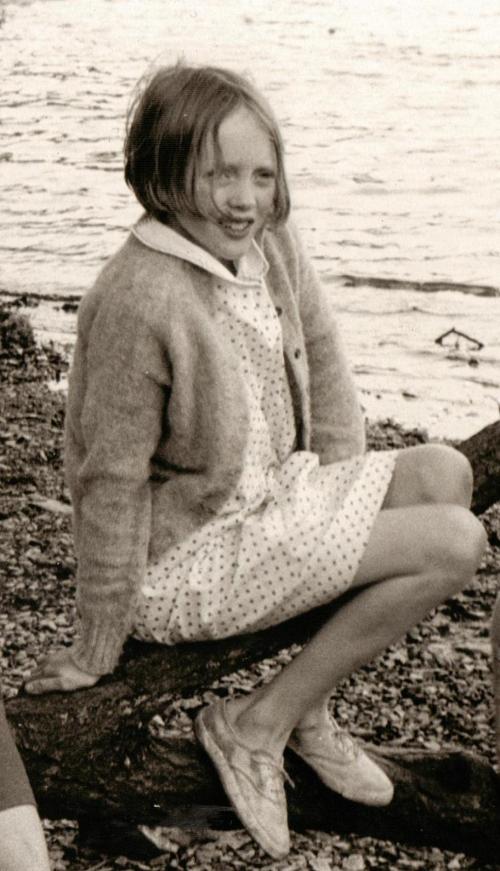
Taqui Altounyan on Peel Island

Amazon, originally known as Mavis, now rsiding at the Coniston Museum
Amazon, originally known as Mavis, now residing at the Coniston Museum

People come from all over the world to visit Mavis, the traditional gaff-rigged dinghy known to all those who love the Arthur Ransome books as Amazon. She has been lovingly renovated but, still being a bit leaky, is on permanent display at the Coniston Museum in the Lake District. It was in this clinker-built dinghy and another little ship named Swallow that the Altounyan children learnt to sail on Coniston Water in the late 1920s.

In later life they used Mavis to teach their own children and grandchildren to sail. She was kept in Brigit Sander’s (ne Altounyan) boathouse at Slate Quay, which so resembles Ransome’s illustrations of the Amazon boathouse.

SUZIE, TAQUI, BRIGIT
Suzie, Taqui and Brigit Altounyan

One of the secrets of  ‘Swallows and Amazons’ is that the character of Captain John, was, if anything, loosely based on a the eldest girl in the family. Arthur Ransome obviously needed to balance genders and have two boys and three girls instead of only one boy, as in real life. Taqui Altounyan seemed to take this in her stride, giving him what advice she could. She has detailed this in her memoirs of the family’s lives:  In Allepo Once and Chimes from a Wooden Bell  – excellent books that have become much sort after.

Roger Wardale, author of many books about Arthur Ransome and the locations he used in his stories, kindly sent me these photographs of Taqui that he took when she was showing him some of the places where she played as a girl.

Taqui on PEEL Island -
Taqui Altounyan on Peel Island, Coniston Water

The Lake District, where her Collingwood Grandparents lived, was obviously a special place for her.

Taqui at Beacon Tarn
Taqui Altounyan pointing to the rocks from which they would jump into Trout (Beacon) Tarn.

These photographs of Roger’s show her walking back in time,

TAQUI VISITS PEEL I

visit Mavis in Coniston Museum

Taqui + MAVIS
Taqui Altounyan looking at Mavis, who was later renamed Amazon

and go aboard SL Esperance on Windermere,

Taqui, _You can sweep up_
‘You can sweep up’ Taqui Altounyan in Esperance

soaking up the atmosphere in her cabin.

Taqui HOUSEBOAT PICNIC
Taqui Altounyan with Roger Wardale and some of his former pupils inside the Esperance, which was the model for Captain Flint’s houseboat

Very many thanks to Roger Wardale, whose own books can be found listed here.

For more photos of Amazon please click here

You can read about making of the original film of ‘Swallows and Amazons’ here:

Titty Altounyan

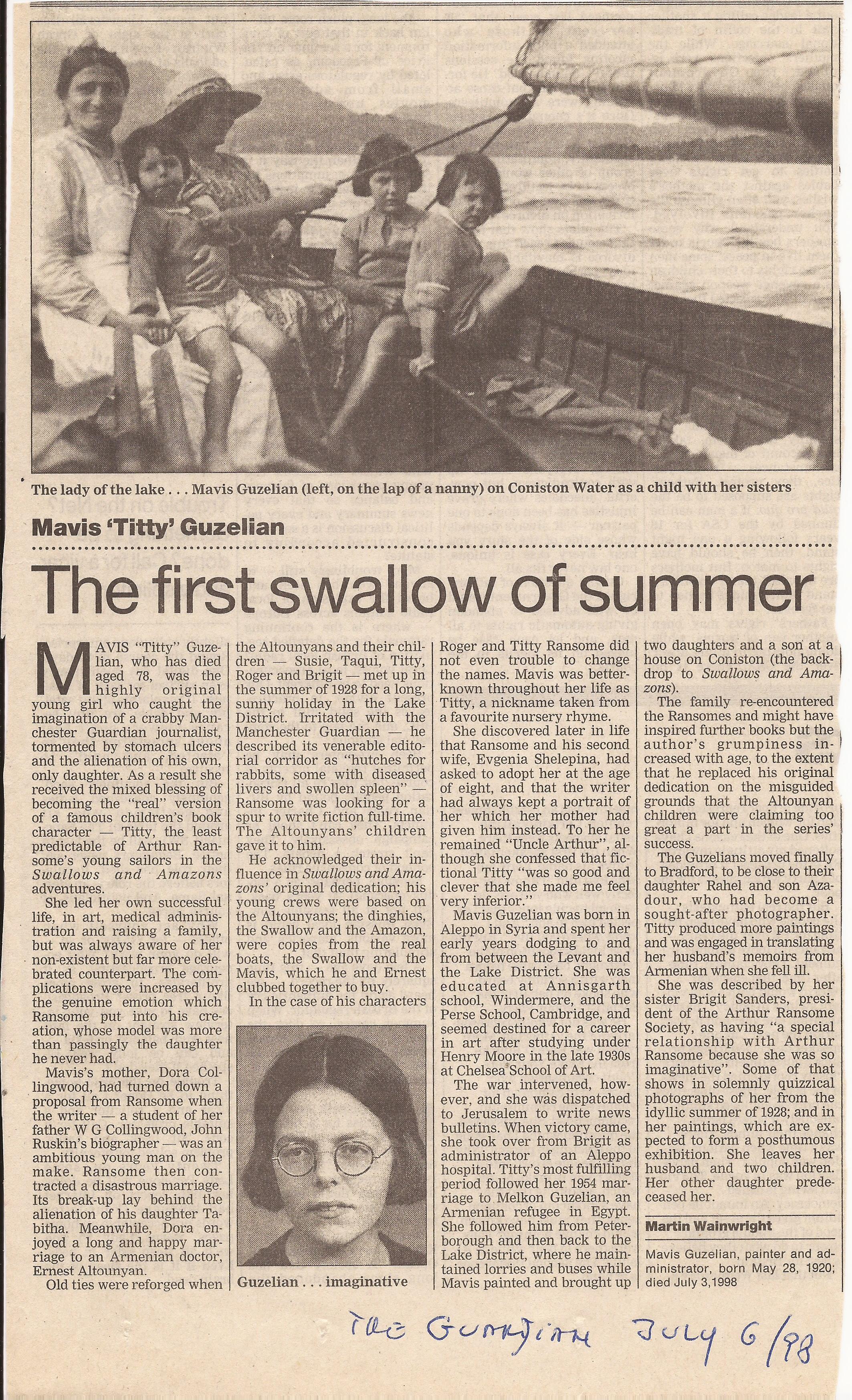
I am assured that Titty’s family will not be offended if I re-publish these news clippings. She has become well-loved by many who I know would like to learn more about her. The Times used her Christian name of Mavis, but she was always known as Titty.

Titty obituary - The Guardian

Titty Altounyan was born in Aleppo on 28th May 1920, and would have been aged nine when Arthur Ransome began writing ‘Swallows and Amazons’. She died in Bradford at the age of seventy eight.


Titty Altounyan 001

Although she was heralded as Arthur Ransome’s muse, I know that Titty Altounyan had no wish to be famous. If anything, she gradually disassociated herself with the character in the books, who struck her as being so good and clever. But Titty was her name.

It was a name I have lived with too, for I played the part of Titty in the film of Swallows & Amazons produced by Richard Pilbrow in 1973. Children and adults alike still call me Titty all these years later. One summer, when I was sailing Swallow, the dinghy used in the 1974 film, someone took this shot of me. It is as if I am still flying Titty’s inspirational flag, which I do with humility and with honour.

DSCF2700

Sophie Neville lowering Swallow’s sail on Ullswater in 2014

Titty Altounyan in 1938

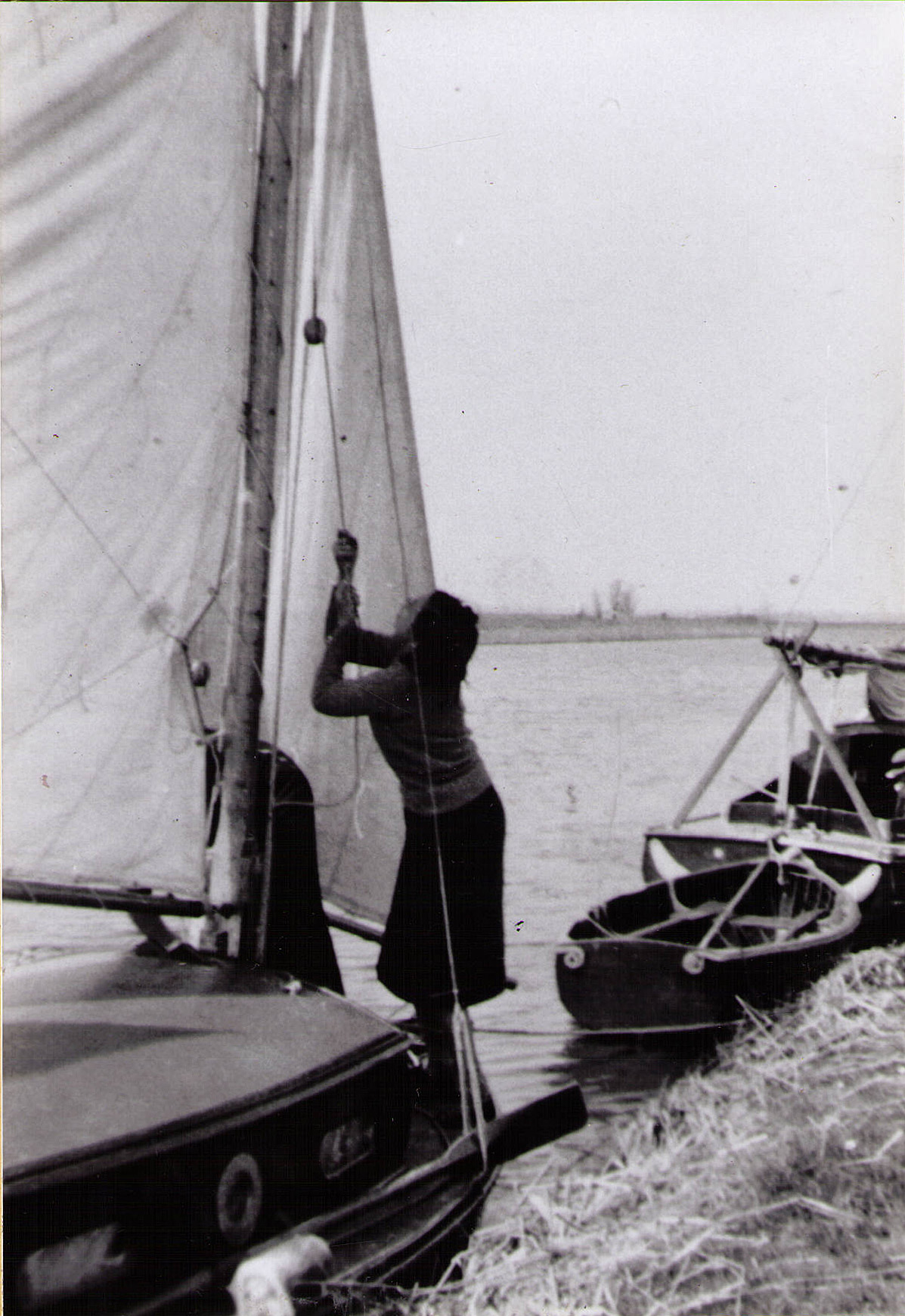
Titty Altounyan with the Ransome’s flotilla on the Norfolk Broads in 1934 (?)

Mrs Ransome wrote to Titty’s mother, Dora Altounyan, from Wroxham. This postcard was kindly shown to us by Ted Alexander who rescued it from certain destruction.

DSCF2137

I thought I was far too fair to play Titty but Mrs Ransome approved.  Despite Ransome’s book illustrations of girls with dark hair, she was most decisive about casting “An English rose” to play Titty and that the children should have British colouring. The idea was that viewers could easily associate with us. I am of Scots/English/Irish heritage, like three of Titty’s  grandmothers, but have no Armenian blood. I rather wish I did. It’s nuisance having such fair skin. My second name is Rose.

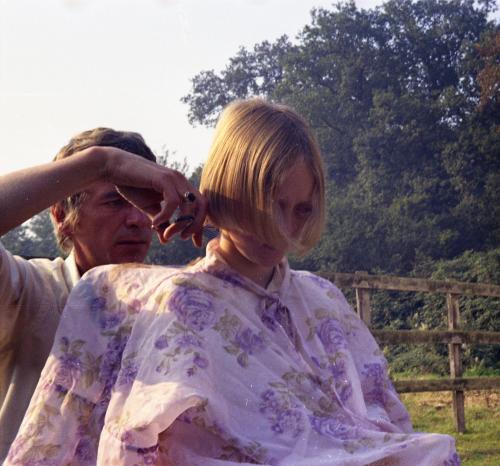
Sophie Neville receiving a Titty haircut

Hairstylist Ronnie Cogan giving Sophie Neville a Titty hair cut on location

I don’t know if Titty ever saw the 1974 film of ‘Swallows and Amazons’. She might have done. I only hope that we captured the sense of adventure experienced by the Altounyans when they were little and went camping on Peel Island during the weeks when they stayed with their grandparents, Mr and Mrs WG Collingwood, at Lane Head at the northern end of  Coniston Water.

Titty and John bringing Swallow into the secret harbour
Simon West and Sophie Neville bring Swallow into the Secret Harbour on Wildcat Island (c) Studiocanal

Although they are seen wearing shorts as young children I have been told that the Altounyan girls sailed in dresses, which they tucked up into their knickers if they had to wade ashore, much as I did in the film.

BW Sophie Neville in Secret Harbour

Sophie Neville as Titty (c) StudioCanal

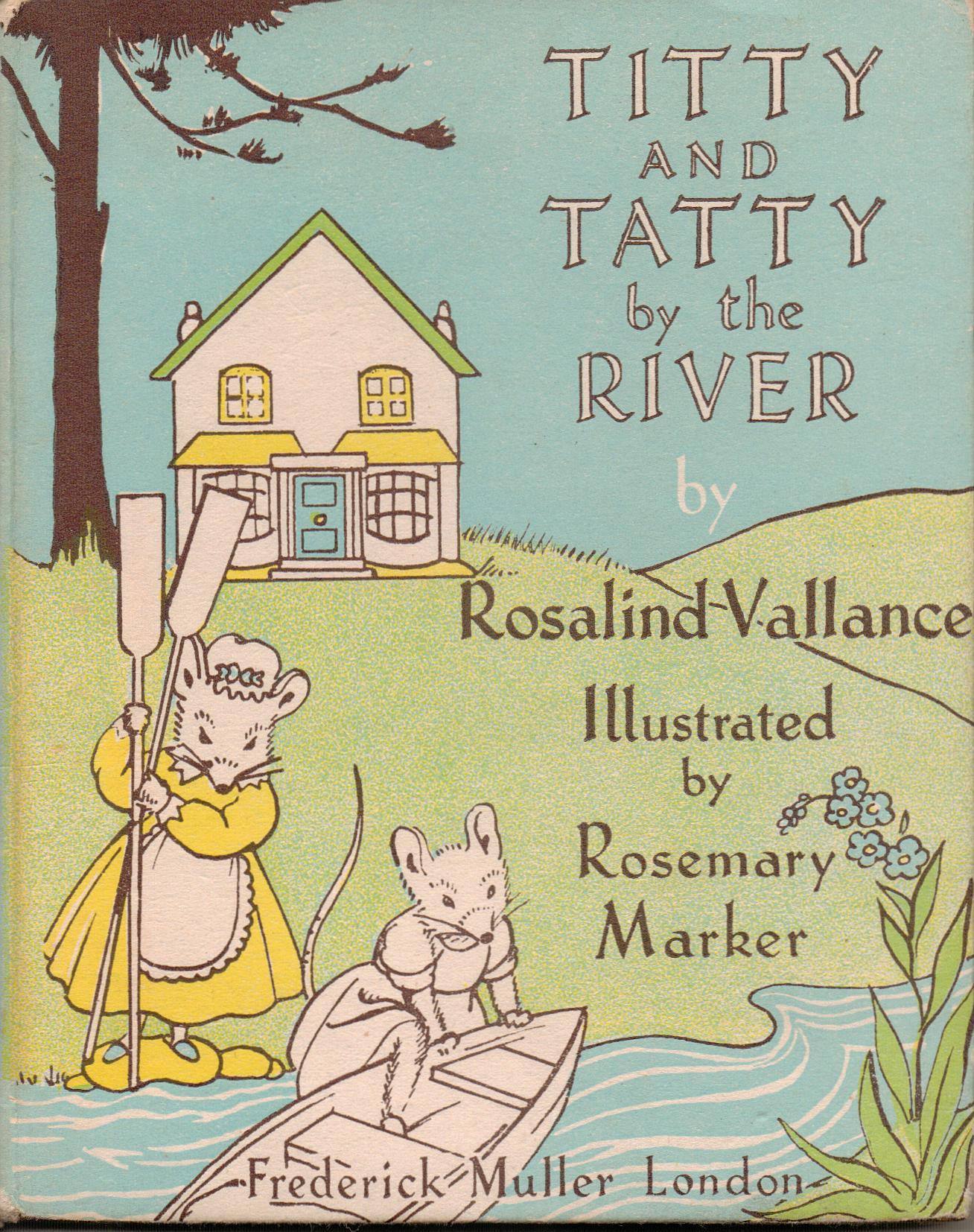
The reference to Titty’s name coming from The Tale of Mrs Tittlemouse in the article feature in The Times above is incorrect. Titty’s name was based on a character in fairy story Titty Mouse and Tatty Mouse by Joseph Jacobs published in 1890, that begins when Titty Mouse and Tatty Mouse go leasing (or gathering) corn. Here is a later edition. Titty ‘never could resist anything in print.’

You can read the original story here 

Titty and Tatty book

 A version of the story published in 1949

With thanks to Roger Wardale who showed me the handwritten letters that Titty sent him. She had the most beautiful writing.

Titty Altounyan's neice, Barbara Altounyan with Sophie Neville.
Titty’s niece, Barbara Altounyan, with Sophie Neville at a TARS Weekend.

If you would like to read more about the amazing time I had playing Titty in Swallows and Amazons, the first section can be leafed through, free of charge here: