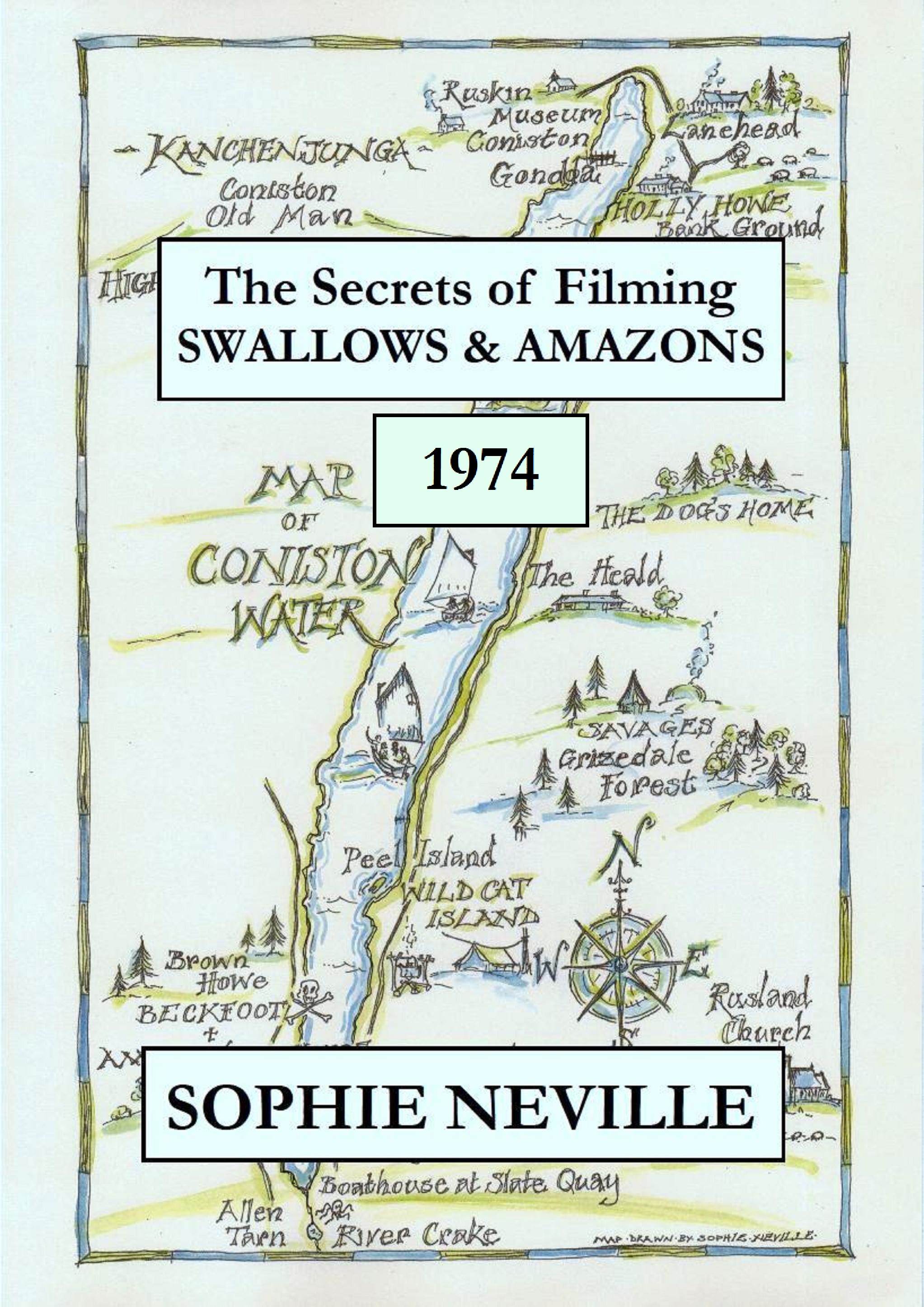
A second edition of the ebook ‘The Secrets of Filming ‘SWALLOWS & AMAZONS'(1974) is now available on Amazon Kindle, Smashwords, itunes, Kobo, and Nook for £2.99 . You can download this free of charge if you already own the first edition.
If you would like a copy but don’t have a Kindle, worry not. We have added a link whereby you can download a free Kindle app. Please go to my Book Page and scroll down for the details.
If you already have a copy of the ebook, contact a Customer Advisor and ask for a free update. You just need to give Kindle the ebook’s ASIN number. The ISBN for all online editions except Kindle is: ISBN 9781311761927
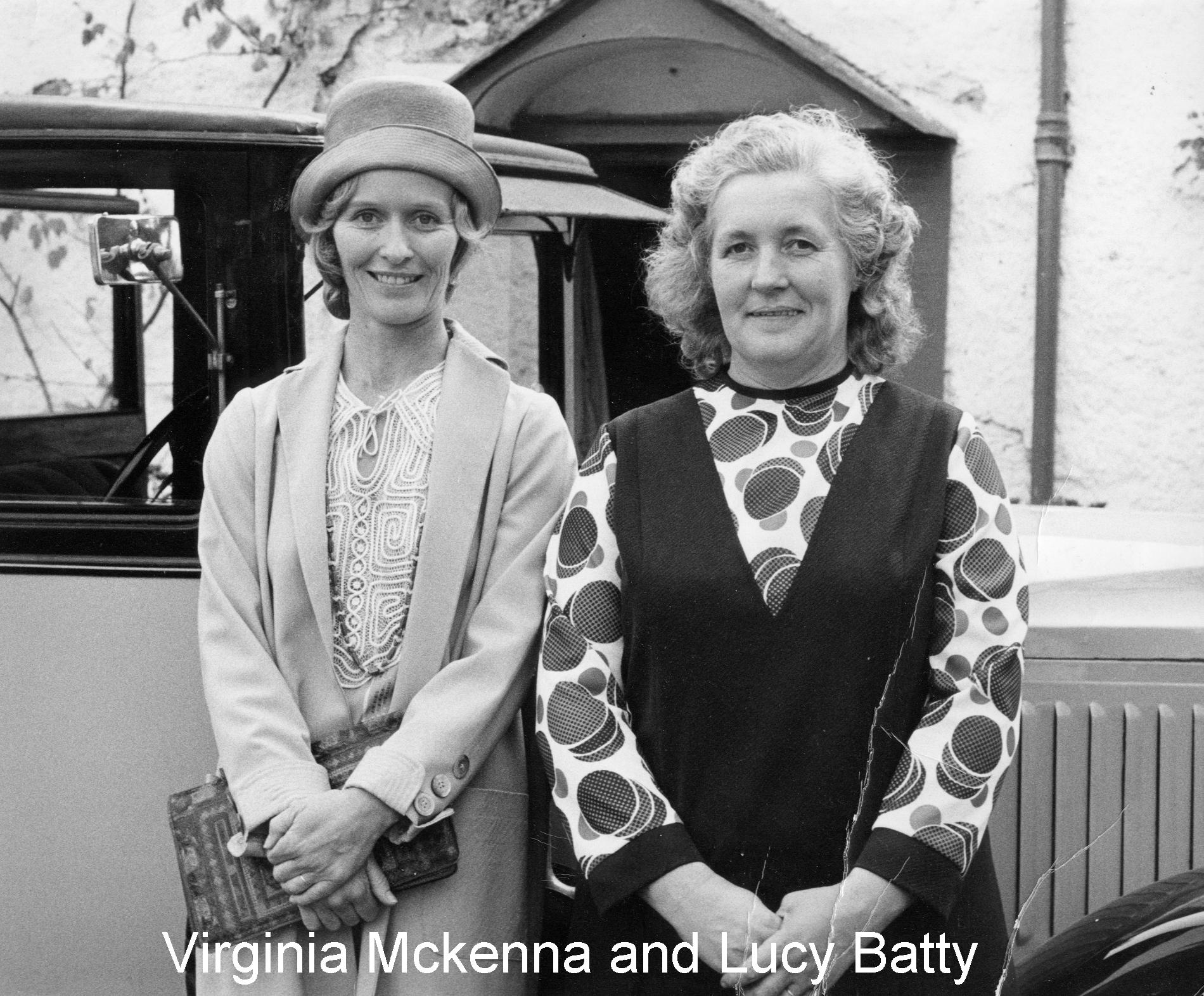
Since being contacted by others who were involved in the filming, I have been able to add a few more anecdotes and images, including this beautiful shot of Virginia McKenna in 1973 kindly sent in by the photographer Philip Hatfield.
I found a copy of my original contract for the film and when Jean McGill rang from Bowness, a few more secrets floated to the surface.
CBBCTV’s Cinemaniacs interviewed the screenwriter David Wood and myself on how the original movie of Arthur Ransome’s ‘Swallows and Amazons’ was made back in the summer of 1973. The idea was to use 30 second clips, so please excuse my over-the-top reactions, but you can watch the whole recording below.
‘This has to be one of the most delightful interviews in my recent memory.’ Tim Lewis, USA
David Stott has written in to say, “When l got the job driving for ‘Swallows and Amazons’ l think I took over the production car when Jean McGill started driving you children around in the mini-bus.” This must have been in May 1973 when the original film of Arthur Ransome’s classic book was being made in Westmorland.
David has all sorts of memories of filming ‘Swallows & Amazons’ in the Lake District that I knew nothing about.
“Jean mentioned that she took Ronnie Fraser for an early morning glass of champagne to get him going. I remember having to take him to the Lodore Swiss Hotel in Borrowdale while filming on Derwentwater. He would order what he called, ‘A Frazer’, which was some sort of vodka cocktail.”
David was only about seventeen at the time. Driving Ronald Fraser around must have been something of an eye-opener.
“I remember bringing him back to film ‘walking the plank’ and he was very drunk at the time. Expect he needed it for the cold water. He could be a little difficult when he had had a few.”
“I was rather star struck when l was driving Virginia McKenna,” he admitted. “On one occasion I had to drive her from the farmhouse on Coniston to Grange railway station. She was telling me all about filming ‘Born Free’ with the lions and I drove a bit slowly as l was enjoying her company. We arrived rather late and l had to throw her and her luggage onto the train just as it was leaving.” I asked Virginia about this but she couldn’t remember ever being late for the train. I can only imagine that David must have coped well.
“On another occasion I think l had Richard Pilbrow in the car,” he was the producer of the film. “We were driving back from Derwentwater when a cow jumped off a bank and landed on the bonnet, causing quite a lot of damage. I was dreading going back to Browns Motors and telling Alan Faulkener the owner what had happened.” Richard is still alive and well.
David, who now owns Crossways Hotel near Glynebourne, comes from an old Cumbrian family. His grandmother lived at High Green Gate, the farm next door to Beatrice Potter at Hilltop.
“My great grandfather was Farmer Potatoes in the ‘Tale of Samuel Whiskers’. It was sketched from a photograph that my mother still has.” Indeed, there was an article in Cumbria Magazine about Beatrice Potter’s relationship with the Postlethwaite family.
One of our locations – Haverthwaite Station today
“My father was the local joiner in Ambleside. He also kept about 1000 hens and delivered eggs around the hotels at the weekends. My brother and l would often help him on a Saturday morning.” David obviously knew the roads of Cumbria well.
David explained that, although he lived in Ambleside at the time, he has not seen Jean since the filming, so enjoyed reading that I had been in touch with her. “Jean’s Mum was called Girlie and she used to run a nursing home on Lake Road. Jean had a brother who was nicknamed Blondie. We would often have a cup of tea with Girlie in the nursing home kitchen.”
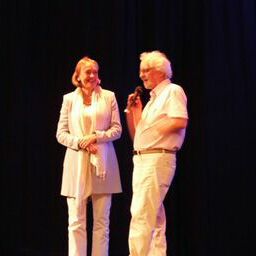
On Saturday 26th September at 3.00pm the original film of Arthur Ransome’s book ‘Swallows and Amazons’ was screened at the Riverside cinema in Woodbridge, Suffolk as part of their celebration of ‘100 Years of Film’.
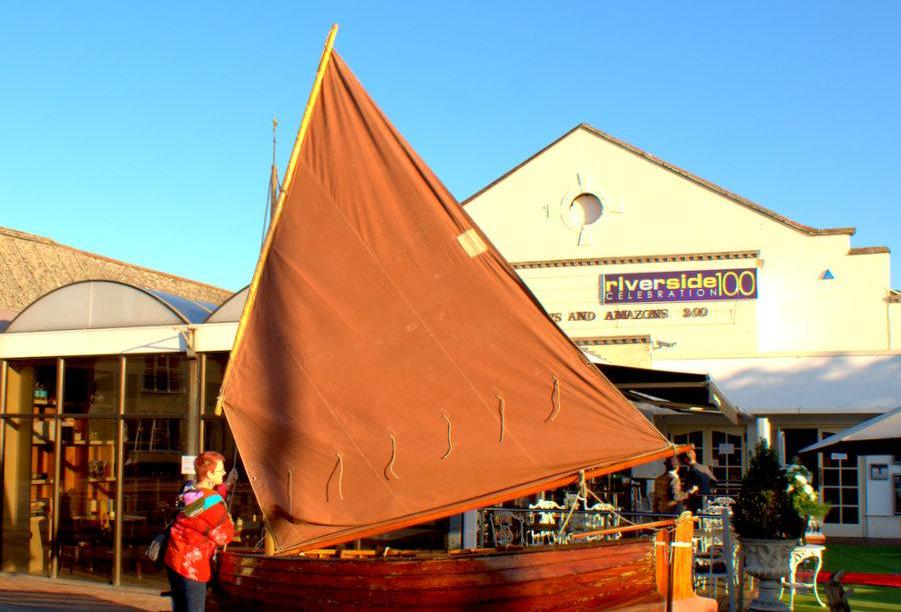
I was on stage to answer questions about how we made the film after the screening. Swallow, the dinghy we used on the movie was rigged up outside the cinema and admired by many.
Back in April, I was invited to a similar screening of ‘Swallows & Amazons’ (1974) also held to raise funds for the up-keep of Arthur Ransome’s yacht Nancy Blackett. As the film ended I was invited up on stage to answer questions about how it was made. Marc Grimston sent a list of these, so I could answer them here for those unable to get cinema seats.
As a child were you like Titty? In 1973, I was aged twelve and at five-foot two, was really too old and too tall for the role of Titty but it was easy enough to pretend to be nine years old. I was on-screen a great deal so it probably a good thing that I was old enough to cope with long filming days. I thought I was much more like Mate Susan but perhaps that made it easier for me to play Titty.
How many tried for the role of Titty? About 1,800 children originally auditioned for the six parts in ‘Swallows & Amazons’. Claude Whatham, the director, wrote inviting me to an interview. In the end there were five girls up for the part of Titty. You can read more about the final audition here.
Sophie Neville on stage with Peter Willis, President of the Nancy Blackett Trust
Had you read the books before? I had read most of the books in the series and loved them, so it was very easy to take on the part. We never had to sit down and learn lines because we knew what to say from reading the book.
Sophie Neville taking about Swallows & Amazons
Were they any disasters during filming? Swallow’s mast broke!
How did you stay safe with the snake? It was a real adder, but quite a tame one. I think they lowered its metabolism by keeping it cool.
How did they make the lion noises? It was a recording of a real lion.
When you filmed the approach to the houseboat it seamed as if Amazon was coming in fast, was she? Yes, she hit it quite hard!
How long did it take to film? We spent forty six days onset in total, which meant spending about seven weeks in the Lake District.
Do you still have the parrot? I don’t. The green parrot belonged to Mrs Proctor of Kendal where the residents were terrified of him.
What happened to Amazon? She is owned by a family living in Kent who love sailing her in the lakes. She was the same Amazon as used in the BBC serial of ‘Swallows and Amazons’ made in 1962, when Susan George played Kitty.
Have you been back to the island? Yes! I last returned with Nick Barton who is planning a new film adaptation of ‘Swallows and Amazons’.
Are there adaptations of any other Swallows and Amazon books? Yes, in 1983 I was able to work on the BBC serialisation of ‘Coot Club and The Big Six’, starring Rosemary Leach, Colin Baker, Henry Dimbleby and Julian Fellowes as one of the Hullabaloos. It was my job to cast the children and look after them during the three months we spent on location, which was great fun.
The screening of Swallows & Amazons (1974) on Sunday afternoon was sold out. 250 tickets. They were endlessly turning people away. ‘We should have shown it again in the 6.00pm slot,’ I told the manager. ‘Oh, we have American Snipper on then.’ It stars Bradley Cooper and Sienna Miller. ‘How many have booked to see it?’ ‘Three.’
All age groups were represented in the audience who came to the event – a fundraiser in aid of the Nancy Blackett Trust. About 70% had seen the film of Swallows & Amazons before. Some knew it well.
Everyone loved seeing the original white elephant flag flown on Captain Flint’s houseboat that had been sent to me from America by the producer.
Swallow, the clinker built dinghy, originally built by William King and Sons at Burnham-on-Crouch and used in the 1974 film, was rigged up outside the cinema for everyone to meet. She has been appearing at a number of The Arthur Ransome Society’sevents in Suffolk and Essex.
We used the best photo of Swallow under sail for the cover of the paperback on how the film was made, which was on display in the cinema lobby after the film. It is now available online or from the Aldebrugh Bookshop in Suffolk.
Someone asked if we had any disasters while making the film.
‘Swallow’s mast broke, we nearly sailed under the Windermere steamer and a cow fell down a bank onto the producer’s car.’ I couldn’t think of anything utterly disastrous from my own perspective except that I lost a tooth halfway through shooting a scene with Virginia McKenna, which was embarrassing. I can list other questions asked by the audience in the next post.
The Riverside Cinema in Woodbridge are thinking of showing Swallows & Amazons again in September to help them celebrate their centenary ~ ‘100 Years of Film’. Do add a comment in the box below if you would like to organise a screening of the film at a cinema near you.
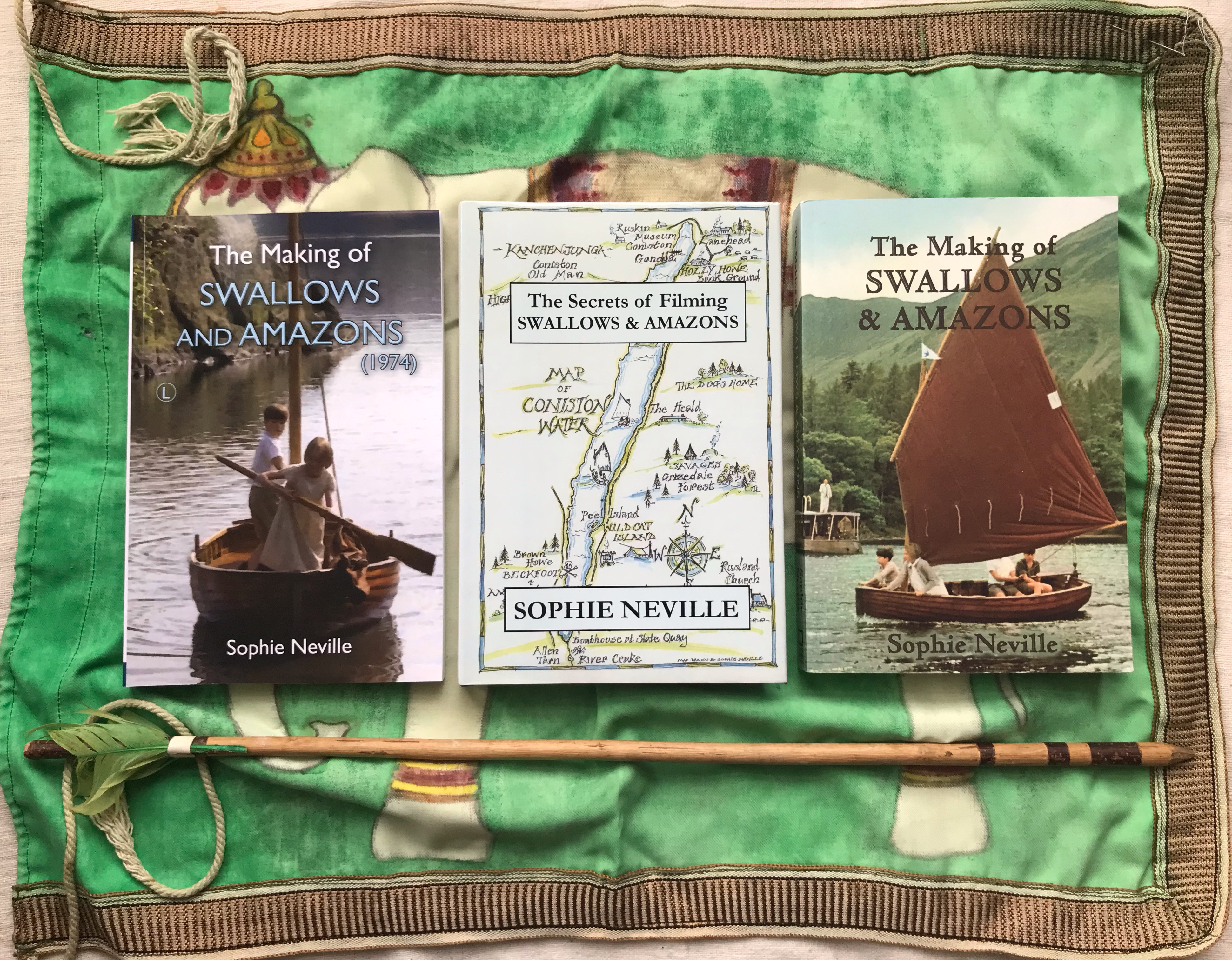
You can read about the adventures had making the original film of Swallows and Amazons in these editions available online:
Different editions of ‘The Making of Swallows and Amazons (1974) by Sophie Neville’
Virginia McKenna with Lucy Batty at Bank Ground Farm on 15th May 1973
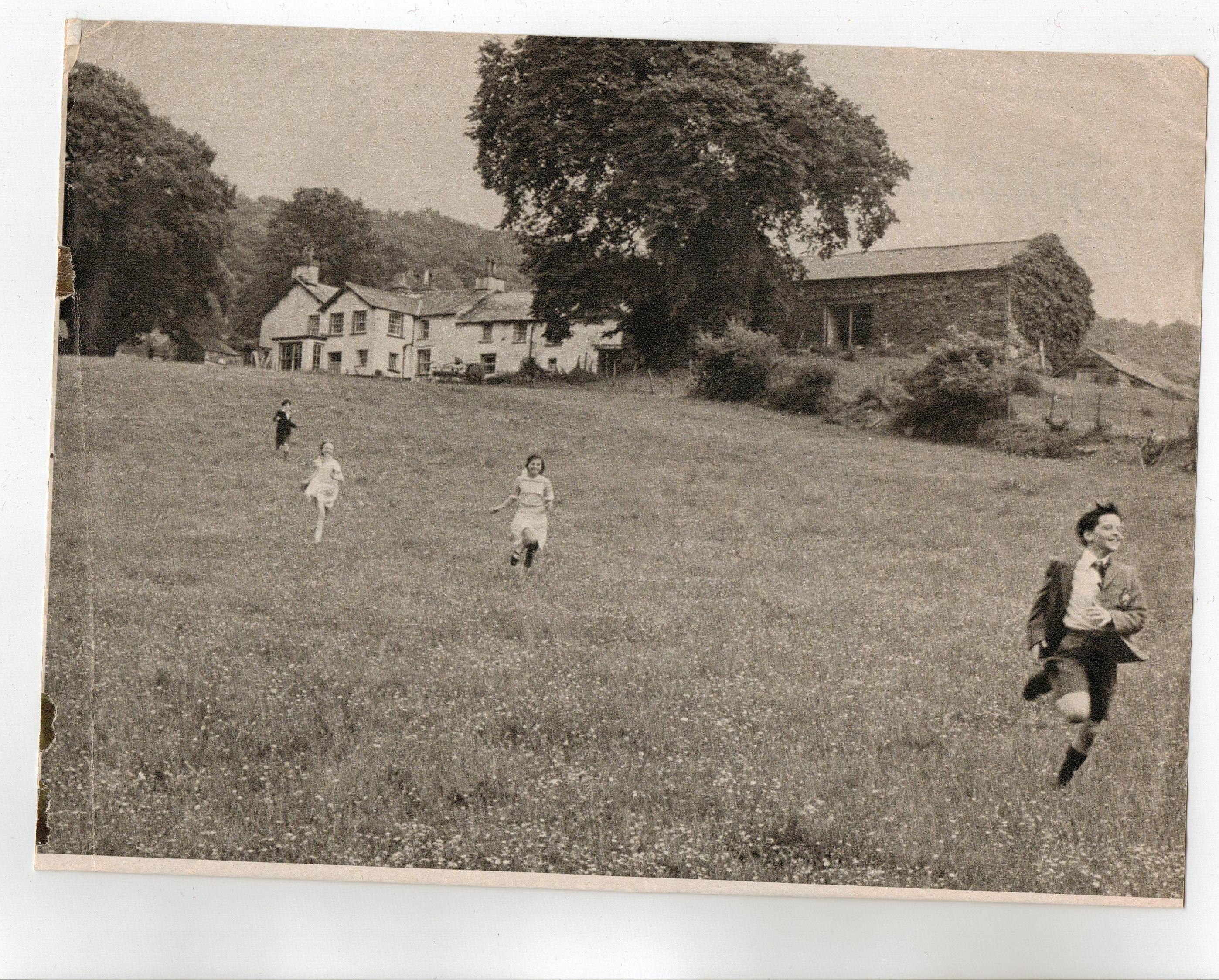
We were sad to hear that Lucy Batty has passed away. She was 87. Our thoughts are with her family. She will be fondly remembered by visitors from all over the world who were made so welcome at Bank Ground Farm above Coniston Water in the Lake District, which she ran as a guest house for many years. It was also used as a film location, becoming known as ‘Holly Howe’ in Richard Pilbrow’s 1974 movie, Swallows & Amazons.
Bank Ground Farm in the Lake District
I first met Mrs Batty when we filmed in her home back in 1973 and returned to stay with her in 2003 when the BBC asked Suzanna Hamilton and myself if we would appear in Countryfile, which they were filming at Bank Ground Farm with Ben Fogle. It was then that she had time to show me her photo albums. What a life she led! She was very proud of having brought up seven children on the farm, “Two of my own and five that came with my husband,” she explained. “Getting them all off to school in the mornings was such hard work that my in-laws came to help on my first day.They all wanted bread and dripping for breakfast, with sugar sprinkled on top.”
~ Sophie Neville with Lucy Batty in 1973~
“A magistrate once asked me what running a B&B entailed. ‘It’s much like looking after cattle,’ I told him. ‘You bring ‘um in, feed ‘um, see they’re bedded down, turn ’em out and muck’um out.’ He flung back his head and roared with laughter.”
She had a great sense of humour. I have a cutting from an article in The News written by Brenda Colton and published on 25th May 1973. It reads:
‘When Mrs Lucy Batty was asked if her house could be used for the setting of the film Swallows and Amazons, with guest star Virginia McKenna, she was delighted. After all, her home, Bank Ground Farm on the east side of Coniston Water, near Brantwood, was the setting chosen by Arthur Ransome for his children’s book Swallows and Amazons.
Mrs Batty thought it a good idea that the story should be filmed in an authentic location, and she felt she should be able to put up with a few cameras and film men for a while. But she just did not realise the scale of a “medium budget” film like this one, or what the production staff could do to her house. It was not the two double-decker buses coming down the path and parking on the farm that she minded, nor the numerous vans, lorries, cars and caravans. It was not even the difficulty of having 80 men and women wandering round the farmhouse carrying equipment here, there and everywhere.But when art director Simon Holland started tearing up her lino and carpet in the kitchen to get to the bare stone floor, she did get a little annoyed. Especially when he removed all the electric sockets, lights and switches, pushed all the kitchen furniture into the larder and whitewashed the newly papered walls.
“Have you seen the kitchen?” Mrs Batty said to me. “The larder is piled high with my furniture; and you would not believe the tip my lounge is in. But they are a funny lot. I asked if I could wash the beams in the kitchen for them, and they said ‘Oh no, we want them to look old.’ I have even had to hunt out a lot of old pottery from the cellar for them.
“But I have given up now. I have just left them to it.”
What I really did not know, until I watched the BBC documentary ‘Country Tracks’, was that Mrs Batty reached the point when she locked out the crew. She explained that when she was originally asked if we could film on her property she did not quite realise the scale of operations and only asked for – or accepted – a location fee of £75. She said that she decided that £75 was not enough, padlocked her front gate and wouldn’t let them back in until they agreed to pay her £1,000. It was a lot of money, more than double the fee I received for acting in the whole movie.
To read a little more about filming of Swallows & Amazons at Bank Ground Farm, please click here.
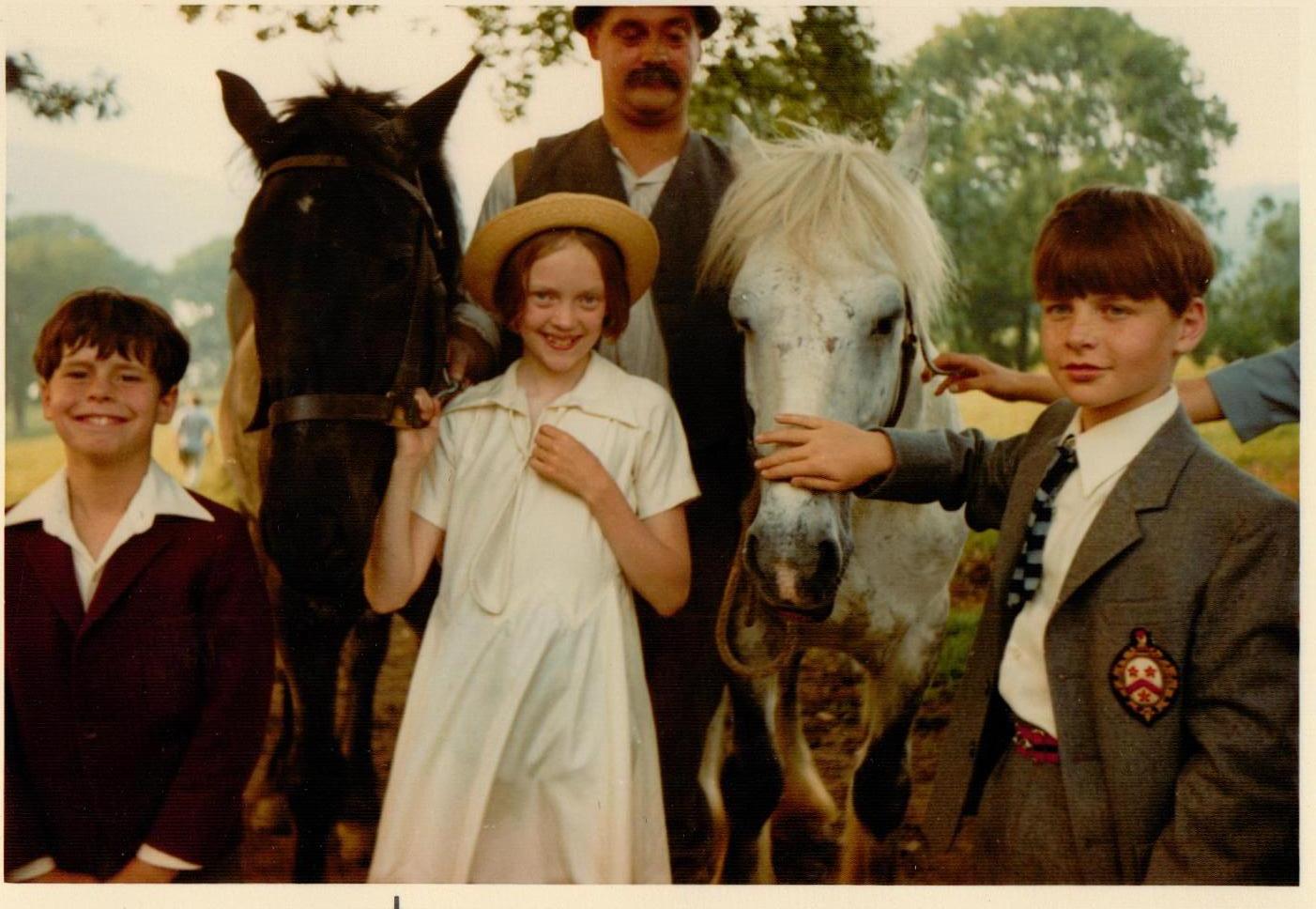
Sten Grendon, Sophie Neville & Simon West with Mr Jackson at Holly Howe
I am sure many people reading this have their own memories of Mrs Batty who was such a great character. Please do add them to the Comments box below. I feel it would be a tribute to all the hard work and love she put into making Bank Ground available over the decades for so many to enjoy.
The farmhouse as Holly Howe in 1973
You can read more about the adventures we had making the original film Swallows and Amazons here:
Amazon, originally known as Mavis, now residing at the Coniston Museum
People come from all over the world to visit Mavis, the traditional gaff-rigged dinghy known to all those who love the Arthur Ransome books as Amazon. She has been lovingly renovated but, still being a bit leaky, is on permanent display at the Coniston Museum in the Lake District. It was in this clinker-built dinghy and another little ship named Swallow that the Altounyan children learnt to sail on Coniston Water in the late 1920s.
In later life they used Mavis to teach their own children and grandchildren to sail. She was kept in Brigit Sander’s (ne Altounyan) boathouse at Slate Quay, which so resembles Ransome’s illustrations of the Amazon boathouse.
Suzie, Taqui and Brigit Altounyan
One of the secrets of ‘Swallows and Amazons’ is that the character of Captain John, was, if anything, loosely based on a the eldest girl in the family. Arthur Ransome obviously needed to balance genders and have two boys and three girls instead of only one boy, as in real life. Taqui Altounyan seemed to take this in her stride, giving him what advice she could. She has detailed this in her memoirs of the family’s lives: In Allepo Once and Chimes from a Wooden Bell – excellent books that have become much sort after.
Roger Wardale, author of many books about Arthur Ransome and the locations he used in his stories, kindly sent me these photographs of Taqui that he took when she was showing him some of the places where she played as a girl.
Taqui Altounyan on Peel Island, Coniston Water
The Lake District, where her Collingwood Grandparents lived, was obviously a special place for her.
Taqui Altounyan pointing to the rocks from which they would jump into Trout (Beacon) Tarn.
These photographs of Roger’s show her walking back in time,
visit Mavis in Coniston Museum
Taqui Altounyan looking at Mavis, who was later renamed Amazon
and go aboard SL Esperance on Windermere,
‘You can sweep up’ Taqui Altounyan in Esperance
soaking up the atmosphere in her cabin.
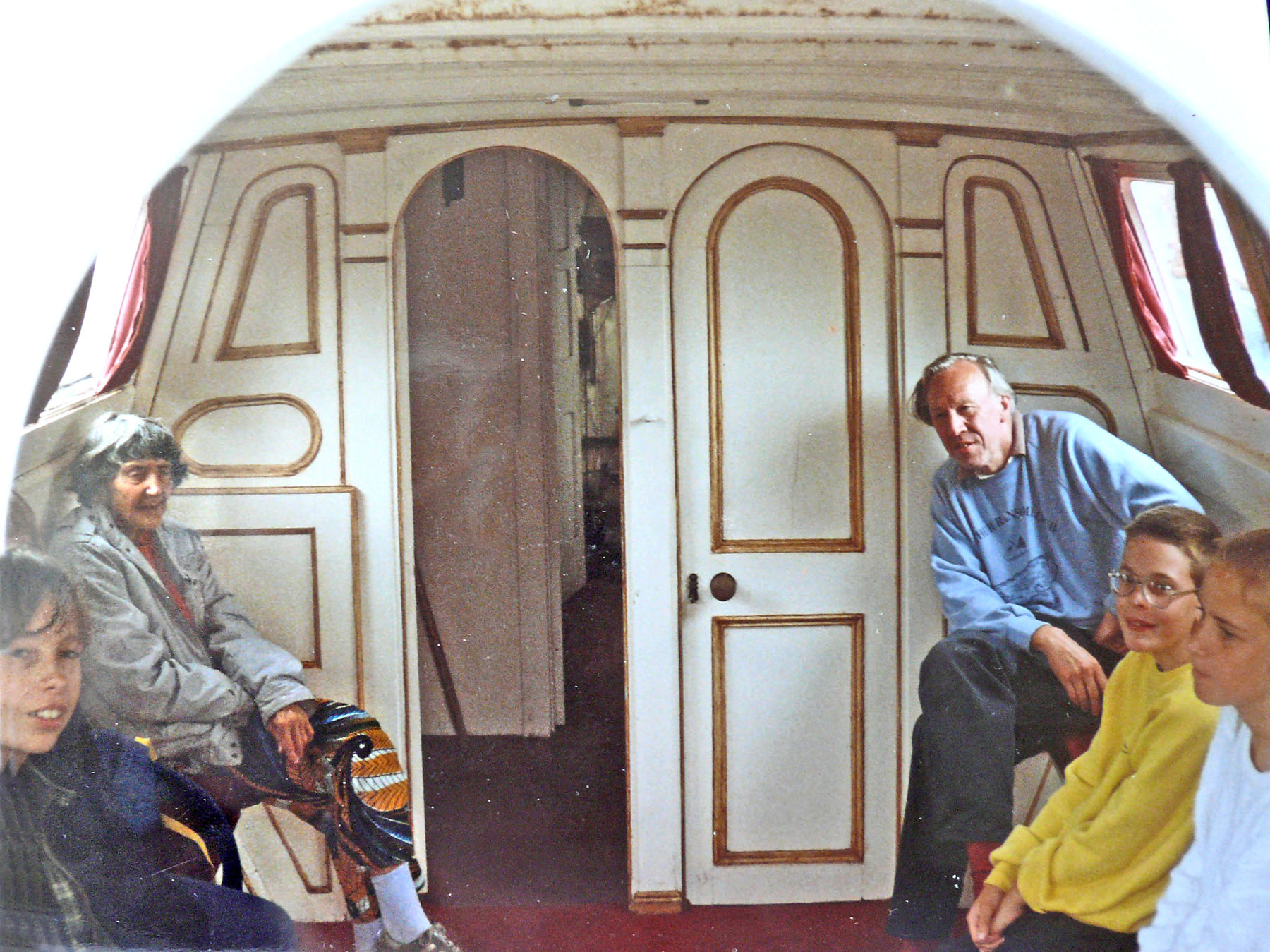
Taqui Altounyan with Roger Wardale and some of his former pupils inside the Esperance, which was the model for Captain Flint’s houseboat
Very many thanks to Roger Wardale, whose own books can be found listed here.
David Wood, who wrote the screenplay for SWALLOWS & AMAZONS in 1973, has recently told me about his work adapting other Arthur Ransome books – GREAT NORTHERN?, PIGEON POST, WE DIDN’T MEAN TO GO TO SEA and WINTER HOLIDAY – all for Richard Pilbrow of Theatre Project Films.
.
Producer Richard Pilbrow with Director Claude Whatham in their wet weather gear at The Secret Harbour on Peel Island, Coniston Water
.
‘It was decided that GREAT NORTHERN? should be the follow-up to the SWALLOWS film, because it was ‘different’, being the only book set in Scotland. Also, the villainous birds’ egg collector was a strong adult role – Peter Sellers was mentioned….. We had great fun looking for locations, swooping around in a helicopter over Harris, Lewis etc.
Sophie Neville, Suzanna Hamilton & Sten Grendon with David Wood and Claude Whatham in 1973
.
‘Word got out that I was working on GREAT NORTHERN? and I had a very firm letter from Mrs Ransome saying that no permission had been granted to work on this title, and that it would not be granted!! No reason was given. Years later, the Ransome autobiography suggested that Mrs R didn’t like GREAT NORTHERN? and criticised it to Ransome’s face. Also, he used sometimes to swan off to the Highlands with his friend, Quiller-Couch (I think) to fish, leaving Evgenia on her own back in the Lake District. The only communication from him would be the occasional delivery on a horse and cart from the railway station of a salmon, caught in Scotland the day before! Maybe she resented Scotland for luring him away! But she was determined that GREAT NORTHERN? the movie would never see the light of day!! But I still wrote a complete screenplay! I did a film treatment for WINTER HOLIDAY, that never got off the ground either.’
The script of the movie ‘Swallows and Amazons’ that I never saw until 2011
.
PIGEON POST was to be a six-part serial, a BBC-Theatre Projects co-production. David remembers that they got as far as looking for locations in the Lake District. I started making preparations to cast the children for this drama which Joe Waters wanted to produce in 1983, directly after making COOT CLUB and THE BIG SIX under the generic title SWALLOWS AND AMAZONS FOREVER! that had been adapted for television by Michael Robson.
.
‘WE DIDN’T MEAN TO GO TO SEA was also to be a serial. I did a treatment, visited Pin Mill and other locations, and met the man who built one of Ransome’s boats, or maybe worked on it with his father. All the materials and scripts still exist, but they are probably a bit too ‘straight’ for contemporary taste.’
.
David Wood’s numerous other forthcoming events and theatrical releases are listed on his website.
.
Can you help us? Was Quiller-Couch the friend who whisked Arthur Ransome off to fish in the Hebrides? Does anyone know where they went?
You can read more about the adventures we had whilst making Swallows and Amazons is these books, available to order online here
.
Different editions of ‘The Making of Swallows and Amazons (1974) by Sophie Neville’
Henry Dimbleby, Rosemary Leach, Caroline Downer, Richard Walton with Sarah and Claire Matthews in ‘Coot Club’
If there was a sequence we all enjoyed putting together more than any other, whilst filming Arthur Ransome’s ‘Coot Club’, it was the scene when Williams the pug dog is weighted on the scales outside Beccles Post Office. This was shot, not in Beccles, but in the market square called Church Plain in Worstead, near North Walsham, a village in Norfolk.
The shop was actually a family home belonging to the Howard family, which the design team dressed to look like a Post Office, with jars of sweets installed in the two front windows. It had once been a Post Office, a building with a rounded end between Back Street and Front Street boasting the New Inn, now called The White Lady.
Rebecca Howard, who was 16 at the time, wrote in to say: ‘Our house was called ‘The Old Post Office’. It was a post office in a previous life before we moved there. At the time of filming the post office was on Back Street – part of the house at the other end of the island between Front and Back Street, which also used to be a garage/service station on the Front Street side. The crew were modeling our house on my mum’s birthday – 12 August – they bought her a box of chocolates.’
Either Claire or Sarah Matthews with Joe Water’s secretary Jane
In the story, Port and Starboard surprise the crew of the Teasle by arriving unexpectedly on the back of a motorbike, having hitched rides across Norfolk on a series of historic craft including the Albion. Andrew Morgan, our Director was keen to end the scene with a high shot of the bustling market town, portraying East Anglian life as it was in the early 1930’s.
Rebecca says, ‘The pink house in the photo (with crew pictured) was the village shop, known as ‘Top Shop’ by locals. It closed years ago, but would have been trading at that time.’
Director Andrew Morgan with film cameraman Alec Curtis and his assistant and designer Bruce McCaddie. Production Managers Peter Markham and Liz Mace stand below
Apart from creating the Post Office so beautifully that we were convinced it had always been there, Bruce McCaddie our designer had television ariels taken off houses and yellow lines on the roads obliterated. He also commissioned his Prop Buyer, Dave Privett, to find a number of period vehicles that could be driven through the town.
BBC Prop Buyer David Privett ~ photo taken at a later date
Our Producer Joe Waters was keen on what was refered to in television as production value. ‘Always put your money in front of the camera’, he told me. David Privet did that for him, going to endless trouble to source steam rollers and hay wagons, charabangs and river cruisers to bring life and colour to a period drama. I learnt later when we all worked together on ‘My Family and Other Animals’ shot on location in Corfu what a complete perfectionist Dave was.
Caroline Downer, Sarah Matthews and Henry Dimbleby waiting for the shot to be set up. The camera was on top the mobile generator from Fenners behind them.
Busy crowd scenes are rewarding and look wonderful on screen, but they do take a while to set up. All the drivers had to have short back-and-sides haircuts and change into period costumes. On top of the motor-cycle and side car, which Port and Starboard arrived in, Dave had found a 1929 delivery lorry and several bicycles aswell as vintage motorcars. We also had various passers-by and towns people dressed in costume, armed as you’d expect with shopping baskets or prams. This was all pretty much as you’d expect. I’m not sure who decided that we should add a herd of sheep, but we also had sheep. Black-faced sheep to add a bit of rural life. The idea was they they would be driven through the market square at the end of the scene. Bruce sensibly had portable wooden fencing out-of-vision between the houses so they couldn’t escape.
Henry Dimbleby, Richard Walton, Claire and Sarah Matthews, Caroline Downer and Rosemary Leach with the delivery lorry outside the Post Office.
Our leading lady, Rosemary Leach, took up her position outside the Post Office with the children, and we set up to go for a take with all the vehicles in their start positions. As you can see from the low light in my photographs we were getting to the end of a long day. Everyone on the crew was tired, tempers were getting short and the twins were the only ones left with any energy. But the camera turned over and the Director shouted, ‘Action!’ The vehicles set off. There was then the curious sound of heavy rain. Sheep came not walking but galloping into the market square.
‘Cut!’ yelled the director. The vehicles came to a halt. Bruce and his prop men sprung up, ready with the hurdles. The sheep took one look at them and panicked further. The Dave Privett rushed in to help. There was no where for the sheep to go. They ended up following each other, running round and around a large black motor in the middle of the square. Dave was pinned against the rear bumper. He couldn’t move. The sheep kept on running, round and round. Alec Curtis, having a dry sense of humour, kept the camera running too. The whole sequence was caught on 16mm film.
Ricky King, Dave Privett, Peter Markham and Mary Soan filming ‘Coot Club’, or trying to
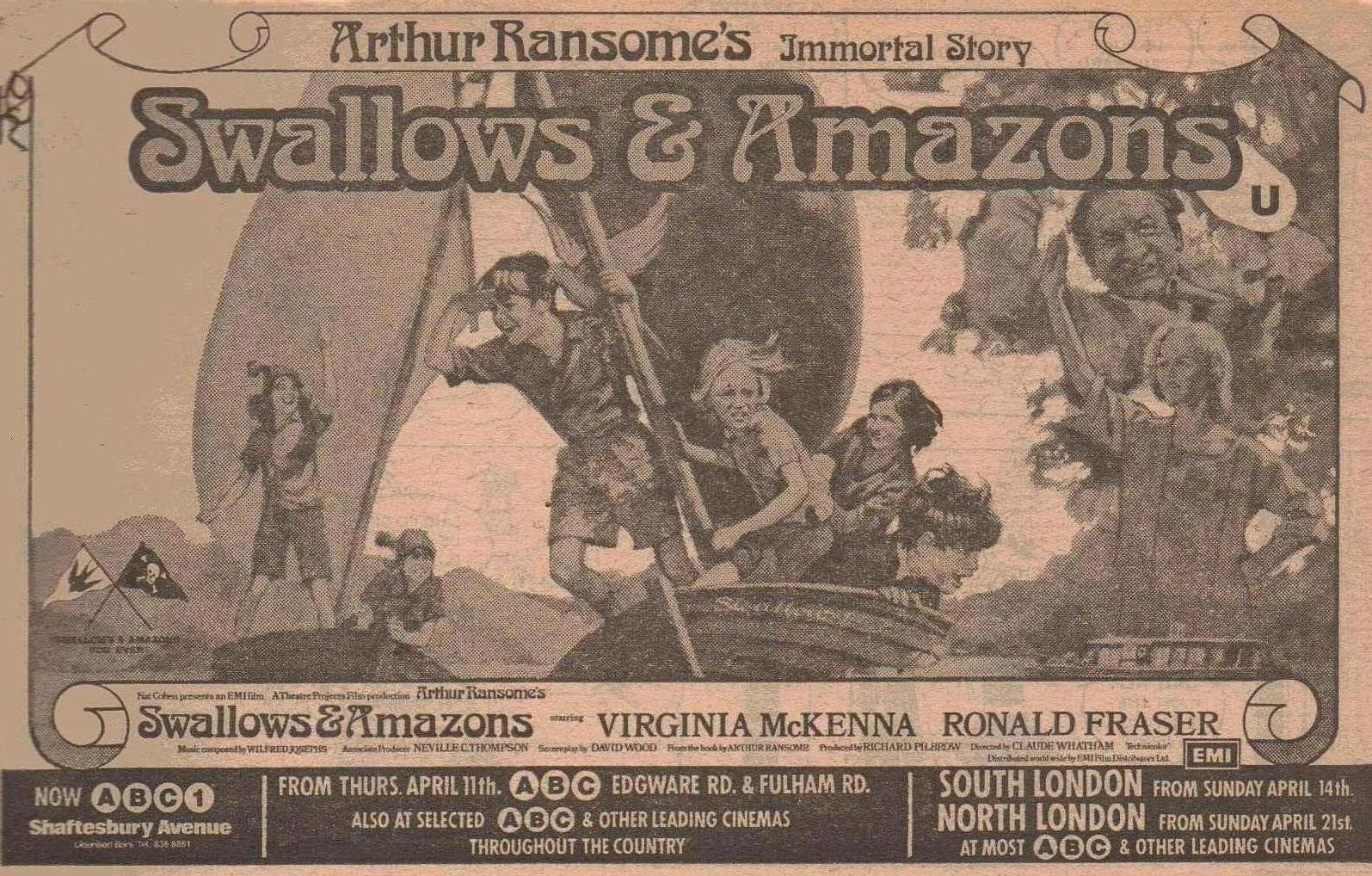
Kit Seymour, Lesley Bennett, Simon West, Sophie Neville, Stephen Grendon, Ronald Fraser and Virginia McKenna on the newspaper advertisement for ‘Swallows and Amazons’ released in April 1974
A school friend of mine sent me this advertisement. She had found it in a teenage magazine we all read at the time called Tammy and Sandy. There was a similar one in The Sunday Times newspaper – and no doubt many others. Film posters hung in the London Underground and at cinemas throughout the country. Swallows and Amazons was to come out, on general release for the Easter Holidays.
My mother subscribed to a press clippings agency called Durrant’s ~ Durrant’s of Herbal Hill London ECI ~ who, for a fee of £50, sent her all the articles written about the film. The Prince of Wales told a friend of mine that he never reads the newspapers. I know why. Reading about yourself is upsetting – or can be, especially if the facts are incorrect. My mother didn’t mind. She highlighted the bits about me, filling four albums.
After entertainingthe Daily Express so nicely in the Lake District this is what they printed about the film. I would think this is written by Ian Christie (1927-2010) the jazz clarinetist, who had formed the Christie Brothers Stompers with his brother Keith, and became a member of Humphrey Lyttelton’s band. He worked as a theater and film critic for the Daily Express for twenty-six years. Born in Blackpool and a habitue of Fleet Street pubs he held fiercely Left-wing views.
‘Kids won’t swallow this watery old tale’ was not good publicity. The same black and white photograph of me appeared on the front cover of The Daily Telegraph with the title ‘One Swallow won’t make a Summer’. Were they right? The Scotsmansaid:
The Scotsman ~ 1st July 1974
However, Russell Davies of The Observer, another jazz musician who now presents Brain of Britain on BBC Radio 4, saw that the film of Swallows and Amazons had niche. (If you click on the article it will enlarge).
Jack Woolgar, Simon West, Suzanna Hamilton, Sophie Neville and Stephen Grendon in a review by Russell Davies in The Observer 7th April 1974
Others recognised it as an innocent nostalgia trip ~
Others just loved it:
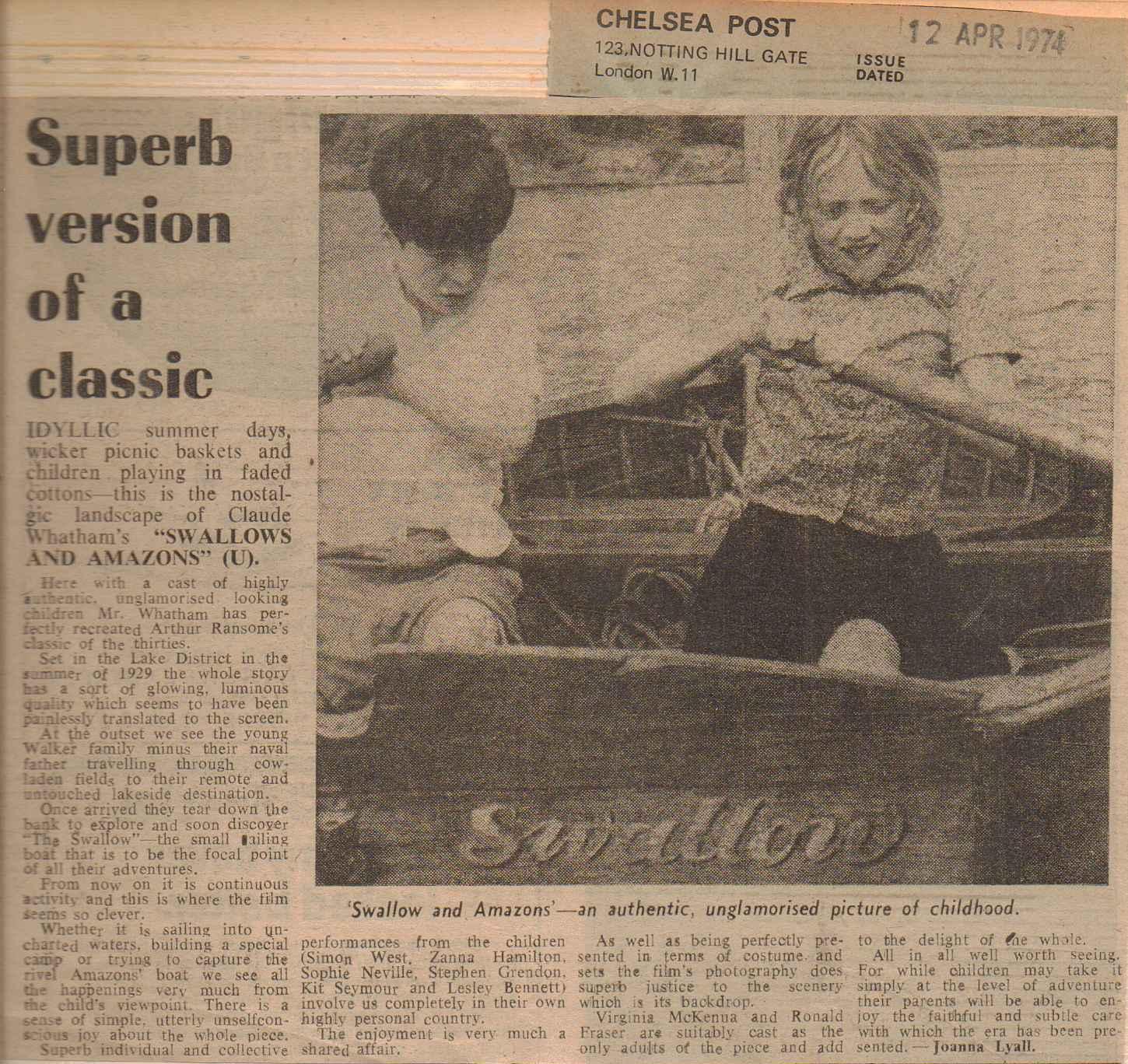
Stephen Grendon and Sophie Neville appearing in Chelsea Post 12th April 1974
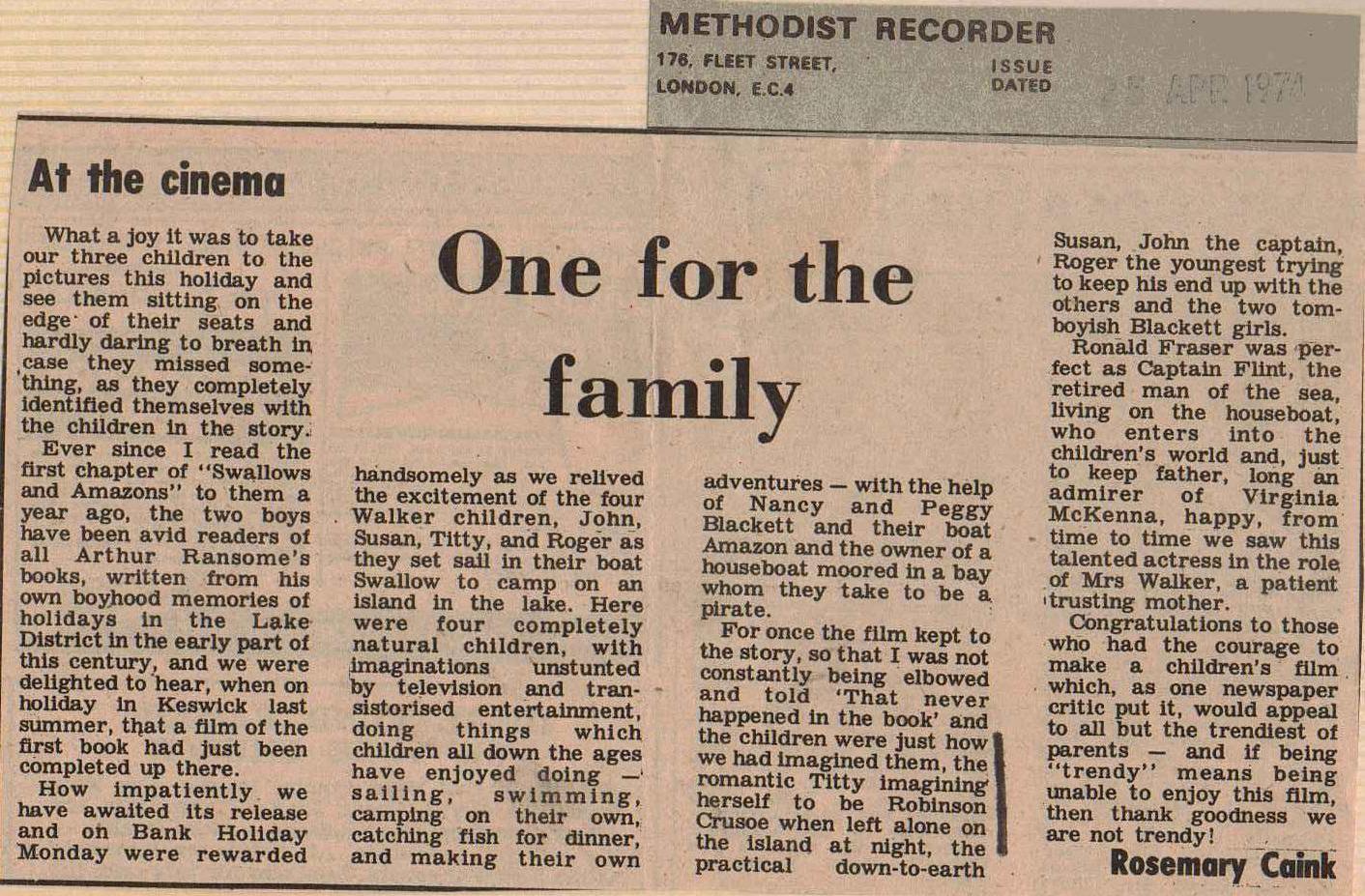
Rosemary Caink said that her three children, ‘completely identified themselves with the children in the story.’
My favorite article wasn’t found by Durrant’s. It was written in The Brownie and must have been sent to me by a fan.
Suzanna Hamilton, Stephen Grendon, Sophie Neville and Simon West, appearing in an article published in ‘The Brownie’ ~ 27th March 1974 Please click on the article to find out more about the Brownies.
I have many more articles ~ please let me know in the Comment box if you would like to see more. Otherwise I will move on to write about how the public responded and what happened next.
Virginia McKenna, Lesley Bennett, Suzanna Hamilton, Sophie Neville, Stephen Grendon and Ronald Fraser appearing in the film premiere programme
I opened the pages of the programme at the film premiere to find one of the publicity photographs of us taken at Bank Ground Farm. I wasn’t sure the face Simon was making would sell a cinema ticket.
Simon West, Kit Seymour, Ronald Fraser, Sophie Neville and Suzanna Hamilton with half of Stephen Grendon on the second page of the premier programme
But the film was now out. It had to sell itself. Everyone was waiting to hear what critics from within the movie industry felt about it.
Would this photograph ever sell the film?
I think my mother must have written to Barry Norman, inviting him to bring his daughters to one of the promotional events held at the Commonwealth Institute. I wonder if she met him at the Preview of the Premiere. He was then presenting BBC Television’s Film 74 and writing a weekly column in The Guardian newspaper. Here is his reply:
Barry Norman enjoyed it! The Radio Times says that he was looking at ‘films for the family over the Easter holidays’. Film 74 was shown on BBC TWO at 10.15pm – and repeated on Fridays even later so he must have been speaking to parents. Here’s his theme tune.
One thing that strikes me when I open the March 1974 copy of ‘Films and Filming’, kept by my mother, is that ‘Swallows and Amazons’ has to be one of the most enduring movies to come out at the time. Sean Connery opted to appear with Charlotte Rampling in ‘Zardoz’. I’ve neither seen or heard of it. Why couldn’t he have played Captain Flint with us? I did see Steve McQueen in ‘Papillon’ but had no desire to watch it more than once. Richard Lester’s version of ‘The Three Musketeers’ was also made in 1973. Even though it stared Oliver Reed, Raquel Welch, Richard Chamberlain, Michael York and dear Spike Milligan I don’t think it can have been broadcast on television as many times as ‘Swallows and Amazons’.
The magazine goes on to review ‘The Optimists of Nine Elms’ starring Peter Sellers, ‘Magnum Force’ starring Clint Eastwood, ‘Herbie Rides Again’starring Stephanie Powers and many others, films I have never heard of. ‘American Graffiti’ came out in the States, directed by George Lucas starring Richard Dreyfuss, Ron Howard, Paul Le Mat and Harrison Ford. It made gross profits of more than U$200 million becoming one of the most profitable films of all time, but I wonder how many times it has been shown on British television this year? Do your children know anything about it? Has it been projected in the pouring rain for loyal fans sitting on a lake shore?
I his book, ‘A Theatre Project’ Richard Pilbrow says, ‘We had a success.’ He quotes Variety magazine, “Charming, delightful, beautifully made film,” but said it was, ‘Not a hit but a reasonable success that continues to play, principally on television, around the world.’ Richard goes on to quantify how it did financially. ‘The world of film finance is a distinct mystery. Our production costs were just under £300,000. Over the years, income trickled in from an international market. Curiously the costs inexorably rose to match the income. The costs of marketing the movie always seemed to equal receipts at the box office. In 2004 our film actually recouped. That’s why I have the temerity to call it a success.
Not all the newspapers thought so in 1974. You can read how much we hated the publicity in any of the books on how the film was made:
Different editions of ‘The Making of Swallows and Amazons (1974) by Sophie Neville’