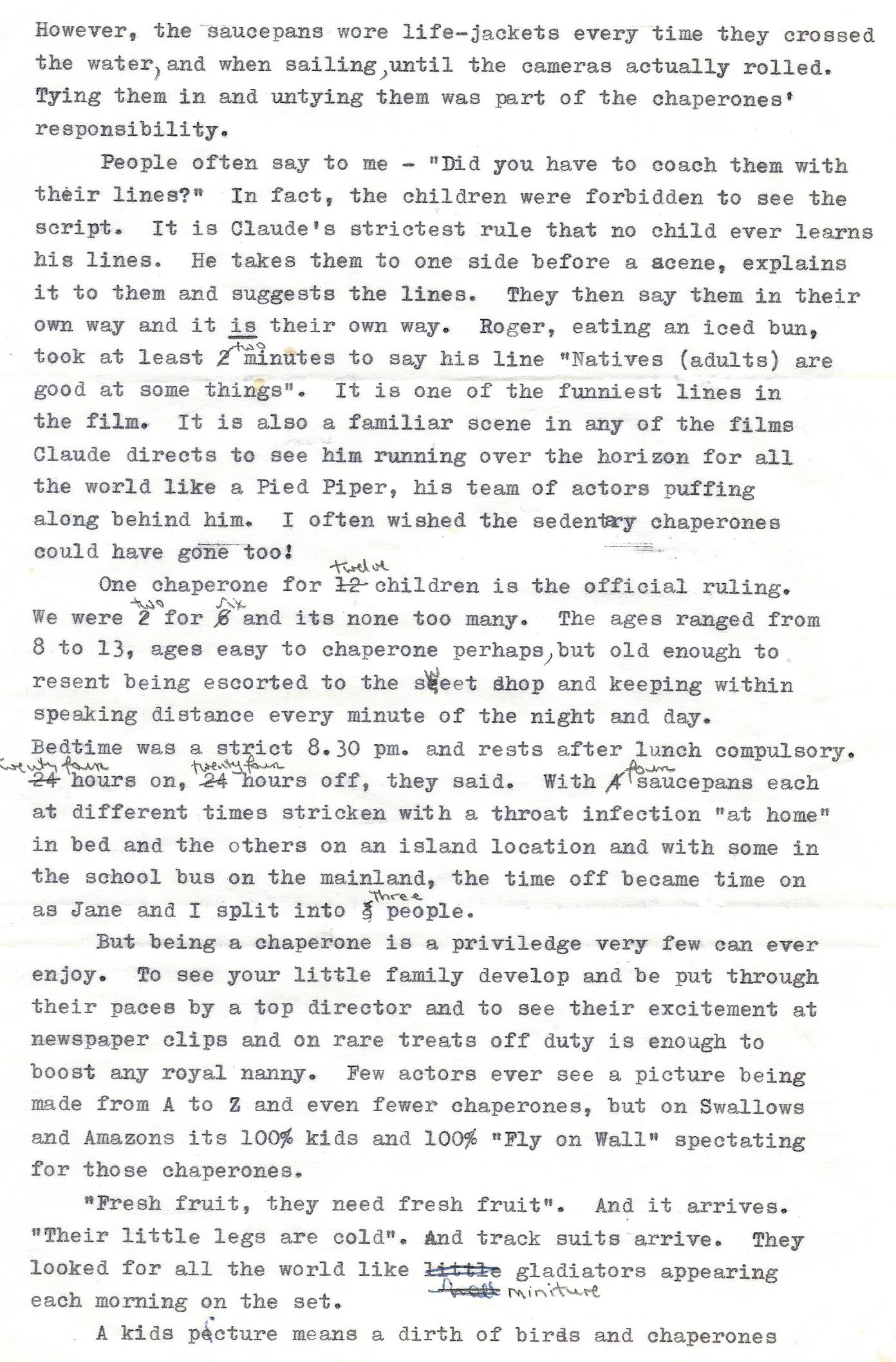
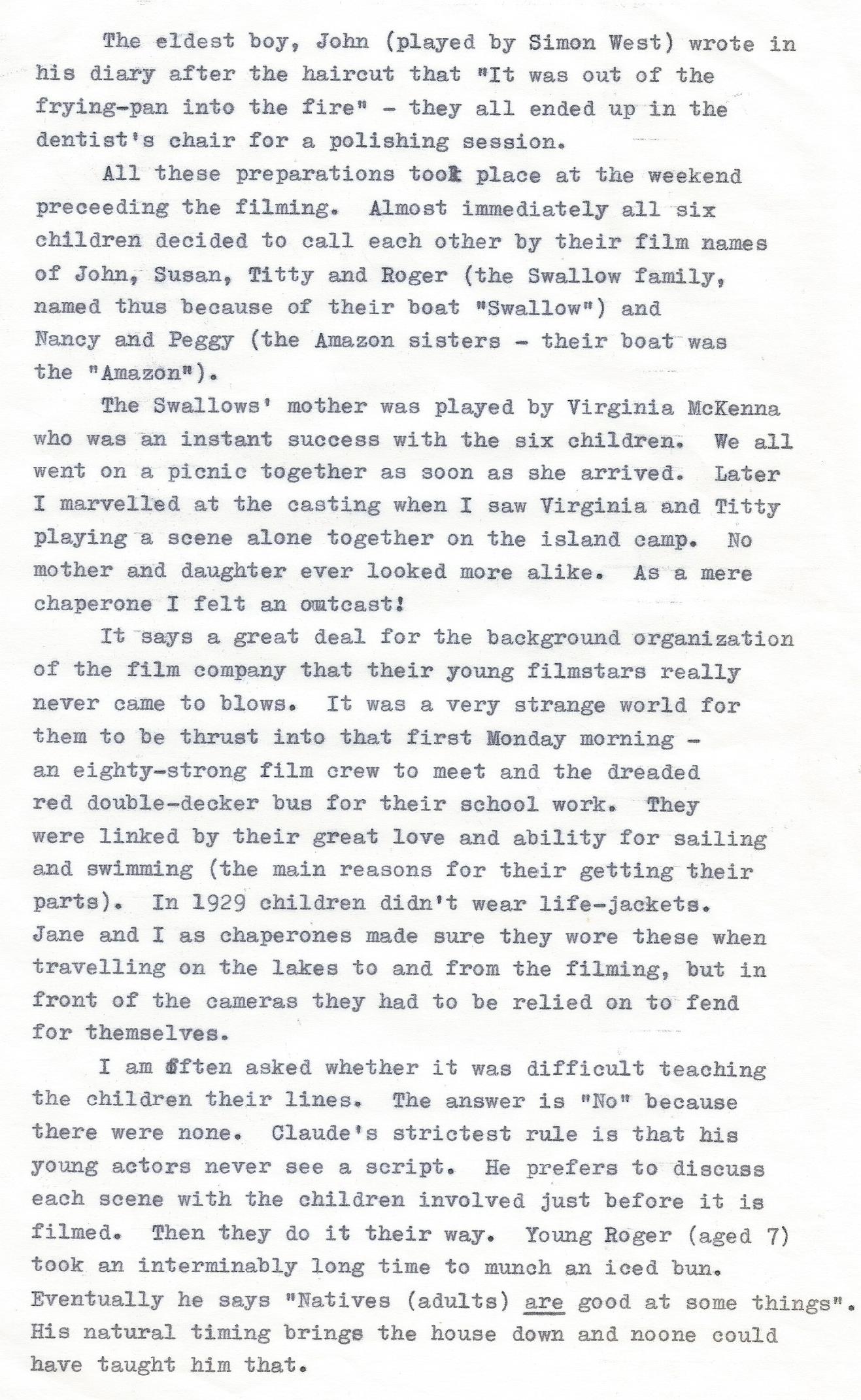
In 1974, my mother, Daphne Neville, was commissioned to write an article about working on the original film of ‘Swallows and Amazons’ for Woman magazine, which claimed to be ‘The world’s greatest weekly for women’. Here are some extracts from her type script:
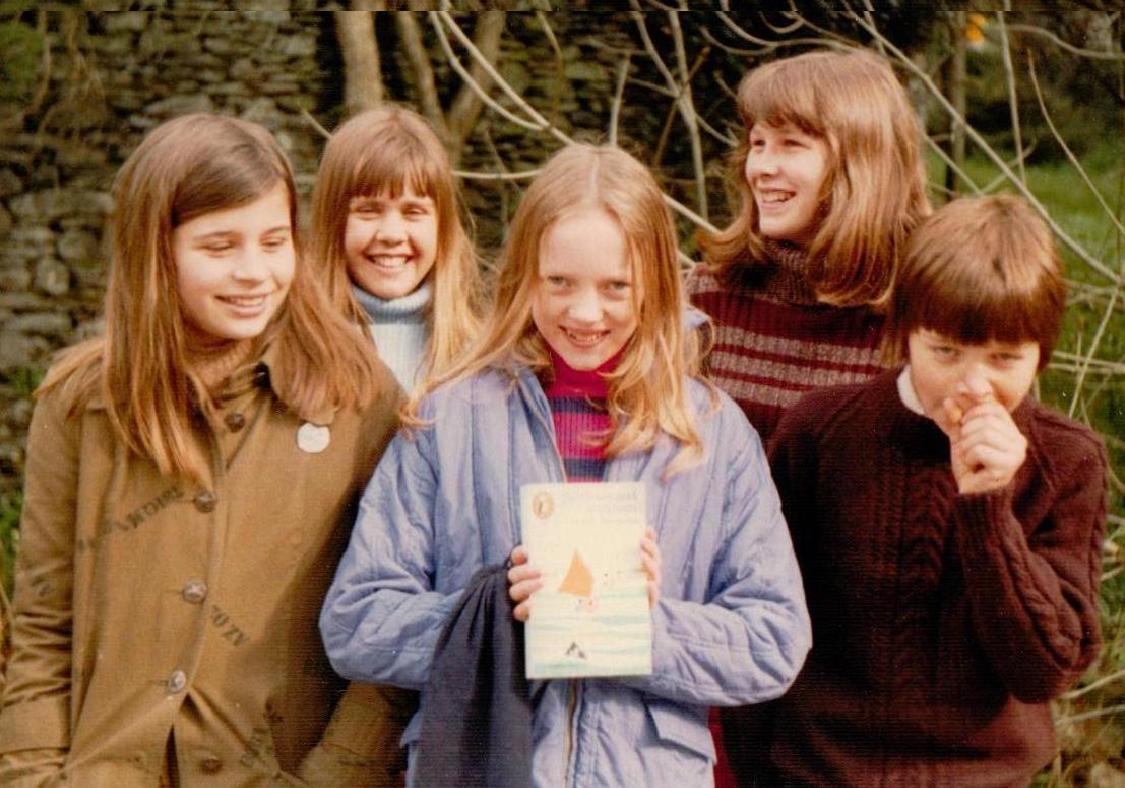
Simon West, Stephen Grendon, Suzanna Hamilton and Sophie Neville playing the Walker children in ‘Swallows and Amazons’ 1973 ~photo: Daphne Neville
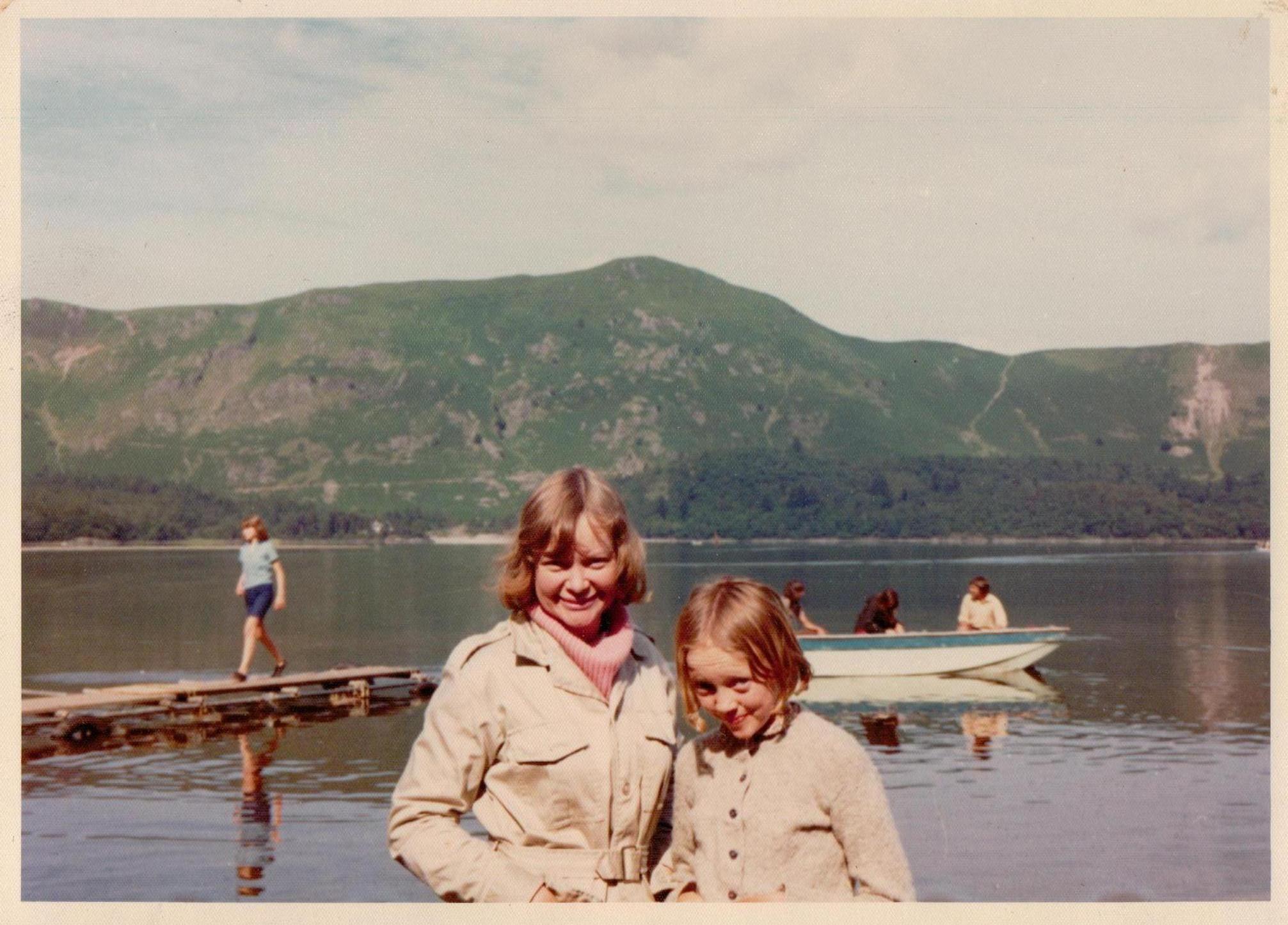
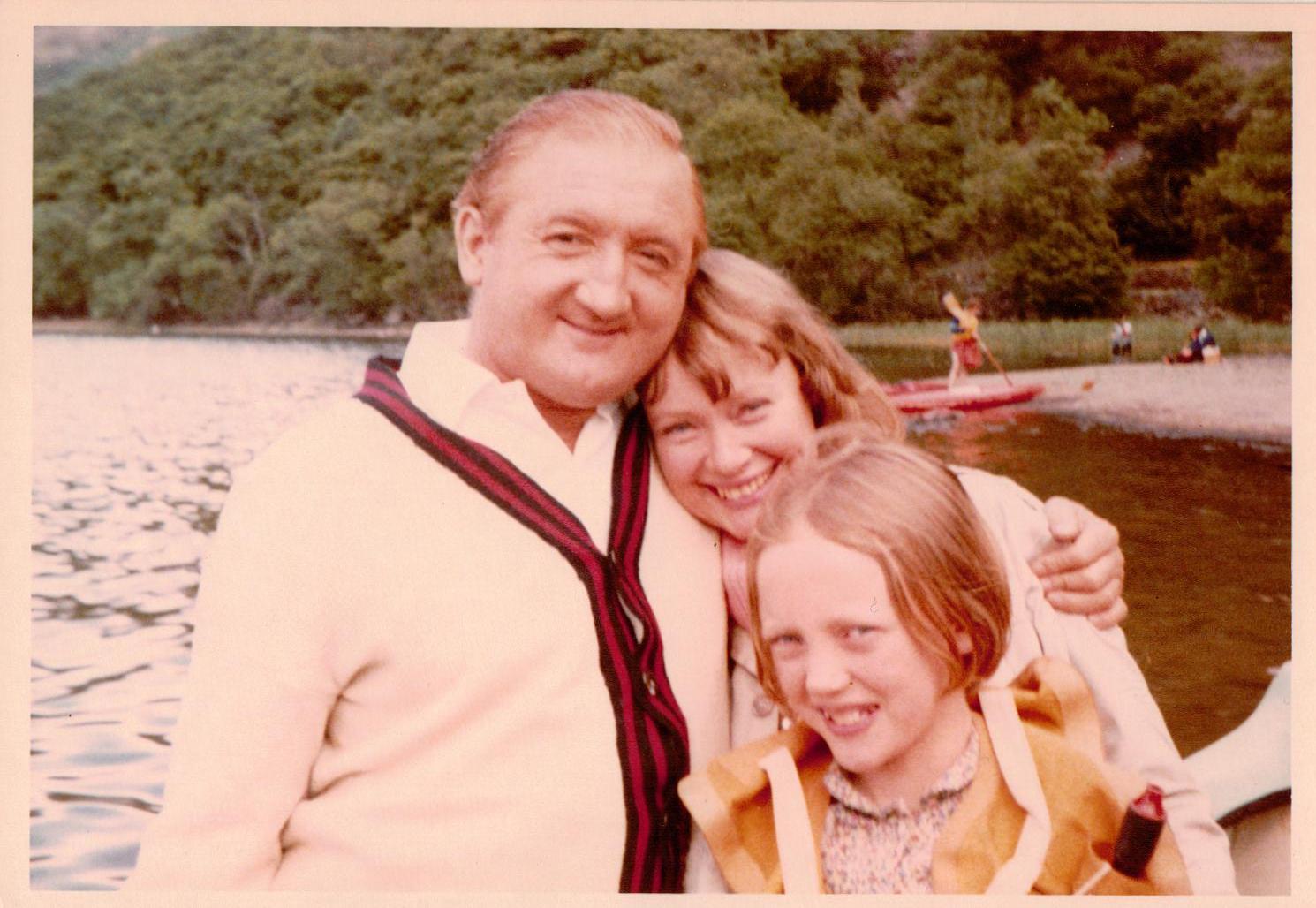
Daphne Neville with Sophie Neville and Simon West on Coniston Water
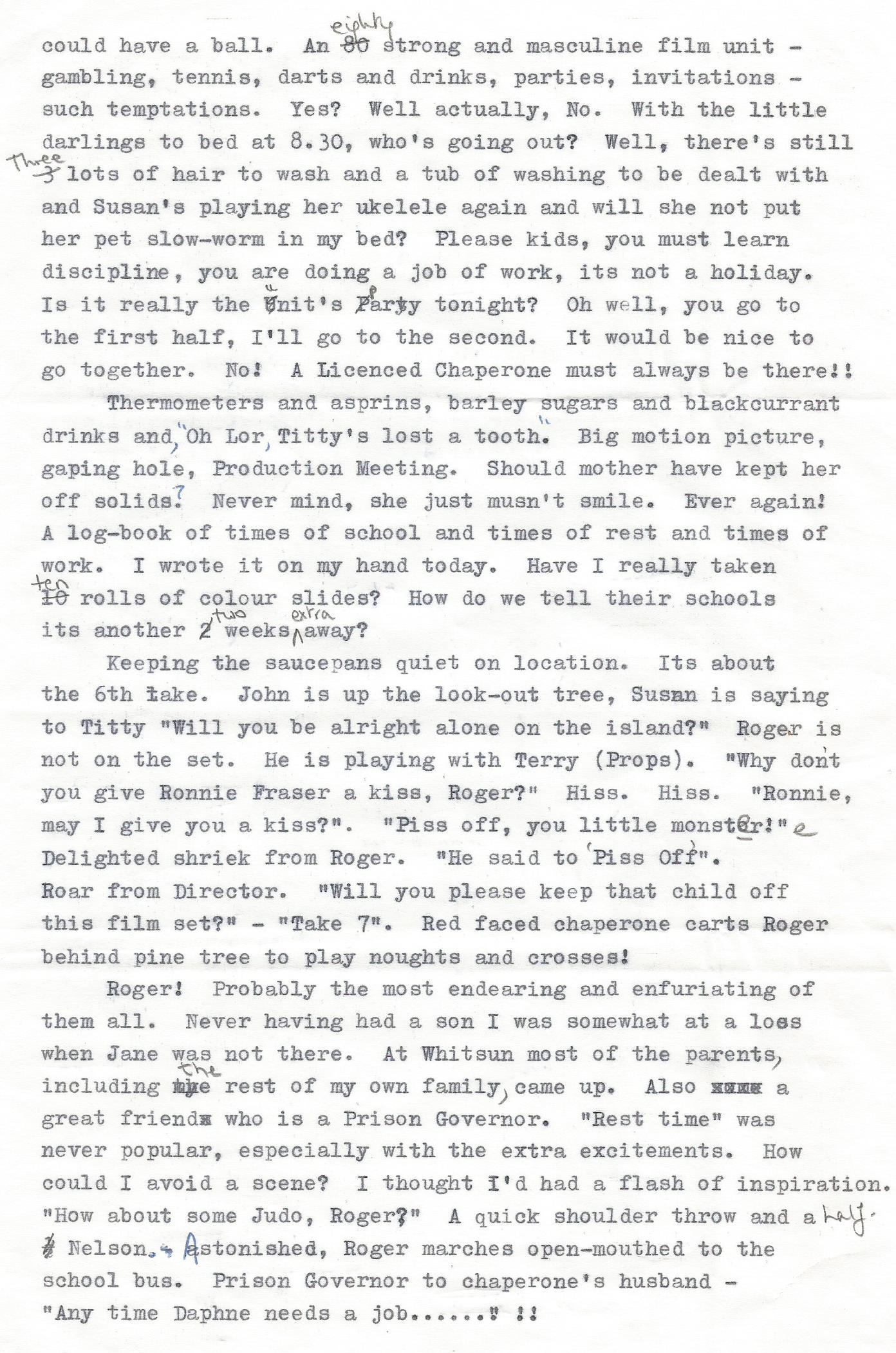
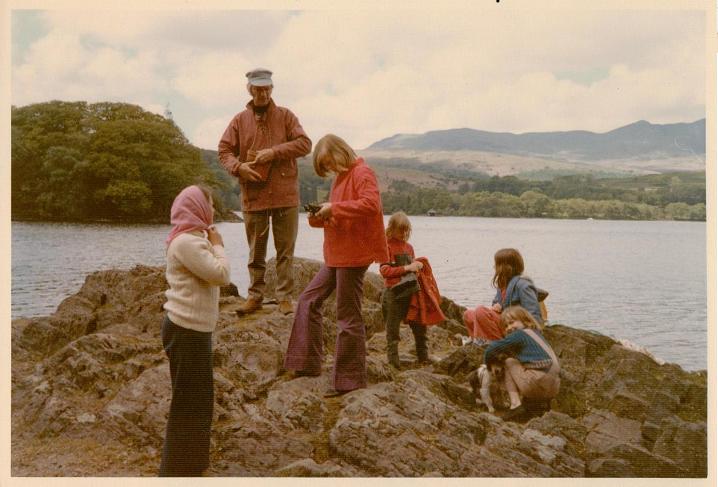
Our guests: Jane, Michael, Clare and Lucy Selby and their dog, Minnie on the shore of Conniston Water with my sisters Perry and Tamzin in 1973
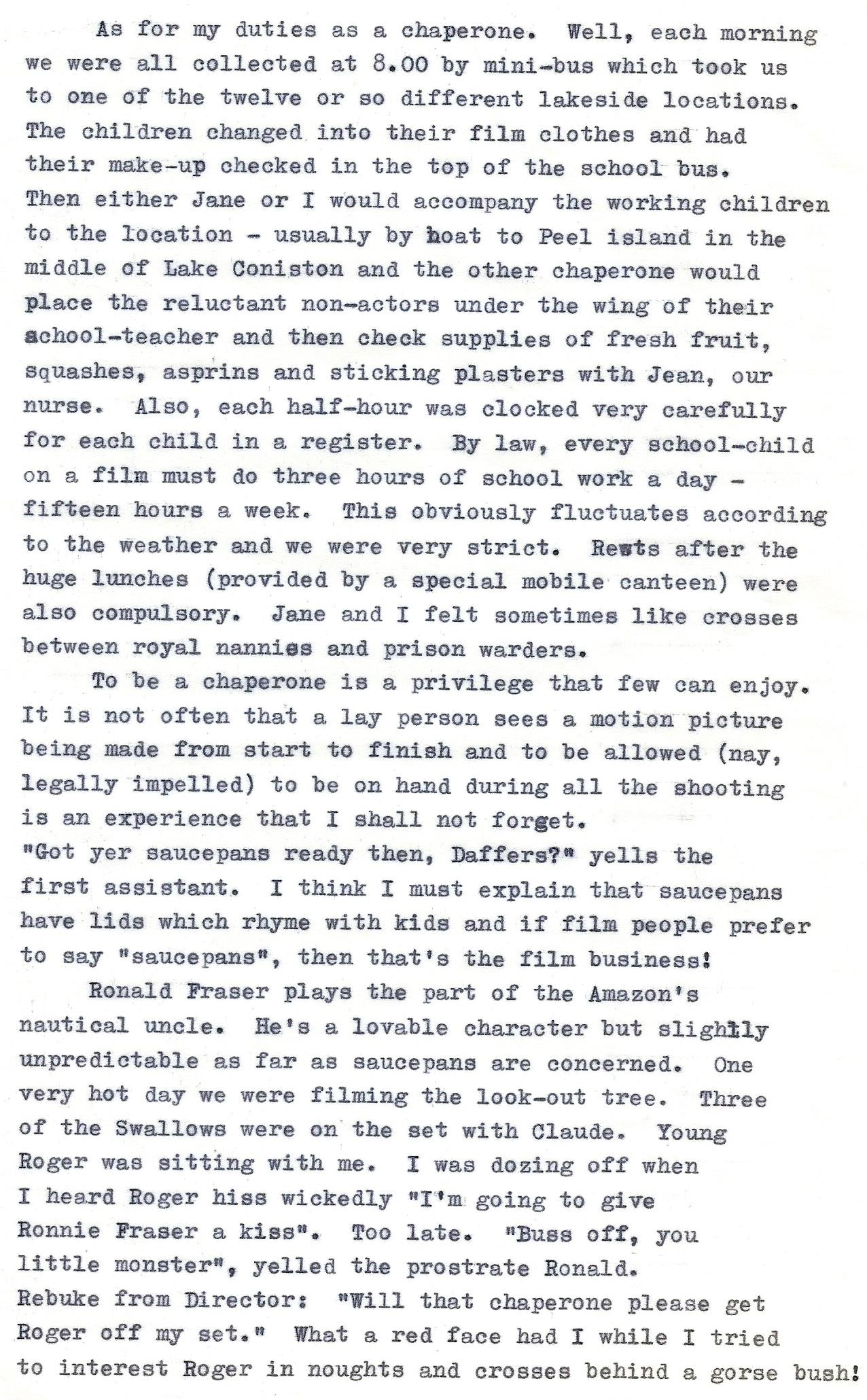
I was amazed to read some of this. ‘….a dirth of birds’? Was that really how my mother spoke in the early ‘Seventies? I had no recollection that ‘Nomansland’ had been displayed on the front of our double-decker bus. I never remembered there only being bathroom at Oaklands Guesthouse or that Mum had to wash out clothes. I do remember Ronald Fraser shouting, ‘Piss off you little monster’. I have the photo:
Sten Grendon sitting on top of Ronald Fraser during a break in the filming of ‘Swallows and Amazons’ on Derwentwater ~ photo: Daphne Neville
More to follow…. If you would like to see photos of Daphne Neville appearing in movies herself, please click here
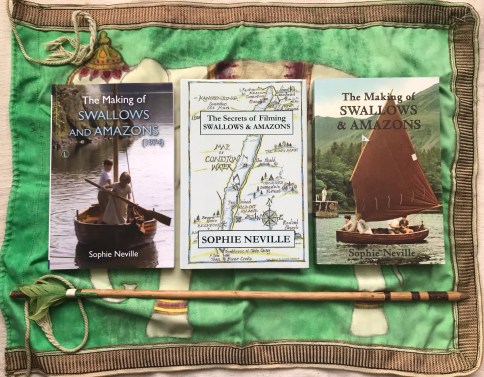
You read about how we made the original movie ‘Swallows and Amazons’ in any of these books that retail online and can be ordered from bookshops or libraries:
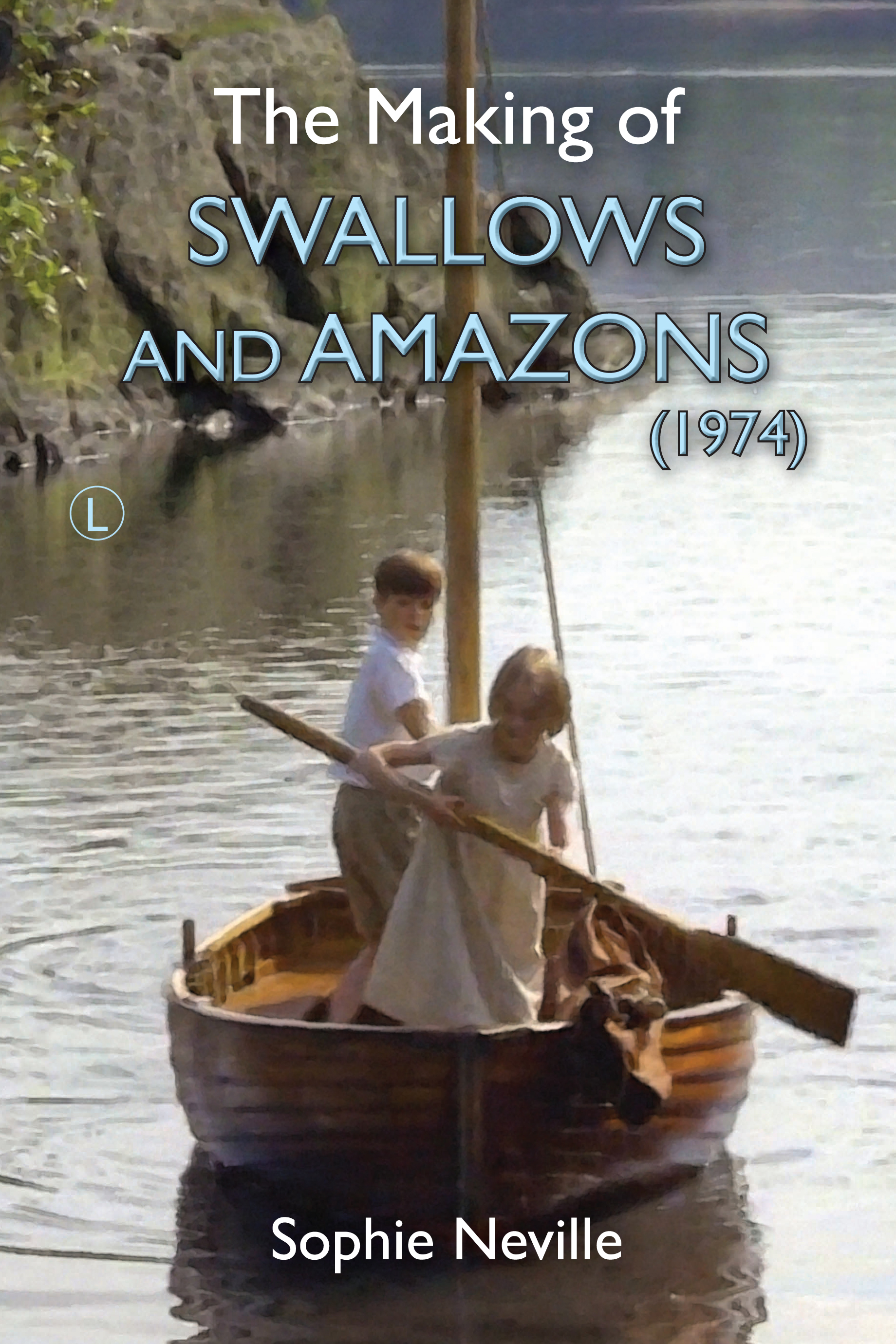
Different editions of ‘The Making of Swallows and Amazons (1974) by Sophie Neville’
My mother is a squirrel. She arrived at my house, not with nuts, but a large envelope. Amongst other things, this contained the transcript of a piece she wrote almost forty-nine years ago for BBC Radio Bristol, when she presented a programme called ‘Come Alive’. The four flimsy sheets of copy paper have only just been unearthed, along with a similar article for Woman magazine.
Daphne Neville was commissioned to write about her experience working on the original feature film, Swallows and Amazons, filmed on location in the Lake District in the summer of 1973 and brought to cinemas in 1974. Sold worldwide, has been broadcast on television for the last forty years and was last shown on TV in Australia on Boxing Day.
Daphne Neville with Sophie Neville while filming ‘Swallows and Amazons'(1974)
It is interesting to have Mum’s perspective. Some of the details are new to me. She timed this piece for BBC Radio as taking ‘8 minutes’ to read:
Suzanna Hamilton, Lesley Bennett, Sophie Neville, Kit Seymour and Simon West before their hair was cut for the film ‘Swallows and Amazons’ in 1973
~ On Derwentwater in 1973: Suzannah Hamilton, Kit Seymour, Daphne Neville, Sten Grendon, Simon West, Sophie Neville & Lesley Bennett ~ photo: Martin Neville
Daphne Neville with Stephen Grendon, Suzanna Hamilton, Sophie Neville, fellow chaperone, Jane Grendon and Simon West on location in 1973
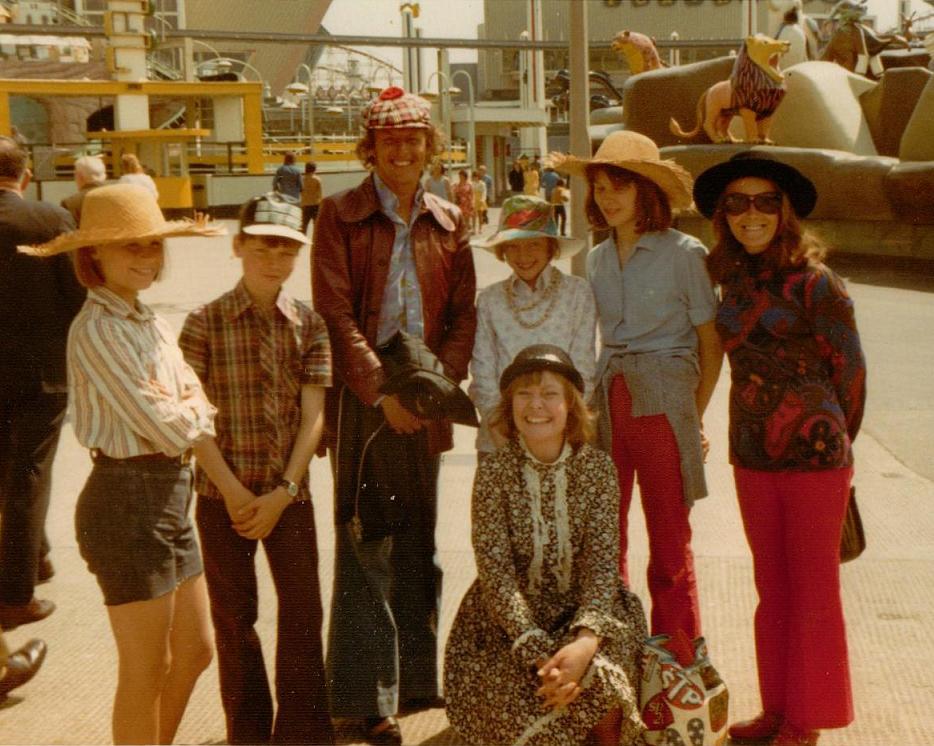
Suzanna Hamilton, Simon West, Claude Whatham Sophie Neville, Kit Seymour, Jean McGill with Daphne Neville kneeling at Blackpool fun fair in 1973
But Mum, were we ever ‘Film Stars’?
We scowled at the terminology at the time. Ten years later and I thought of us a merely puppets, marionettes of the director who carefully honed our performances. I can now see the contribution we made when I watch the film, but we were never film stars.
What do I wish? I wish that we’d been able to make a sequel and develop our work more fully. The flip-side of this would have been that any more success, or more publicity, might have stripped us of our anonymity, which is the bain of real film stars. We’d have had to go around wearing sunglasses.
The film star Ronald Fraser with Daphne Neville and Sophie Neville in 1973
If you would like to see what we were filming 49 years ago, on 1st July 1973, please click here.
Do let me know, via the comments below, if you would like to see more archive material. I have the draft of my mother’s article for Woman magazine – it’s a different version of the same but with added detail. She needed permission from Anglo EMI Film Distributors before it could be published. There is also a draft of another radio script and a number of letters. If you would like to see vintage photos of Mum appearing on television herself, please click here
If you would like to read more about our adventures filming ‘Swallows and Amazons’, please click here
I was invited to talk about making the BBC TV classic serial ‘Coot Club’ and ‘The Big Six’ at the Norfolk Broads Yacht Club to help celebrate their 80th Anniversary. Titmouse, then 1930s dinghy owned by Hunter’s Yard had been brought down from Ludham for the occasion. The bonus was that I was able to go sailing in one of the classic boats gathered at the club for their Open Day.
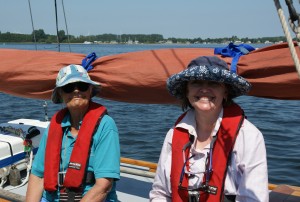
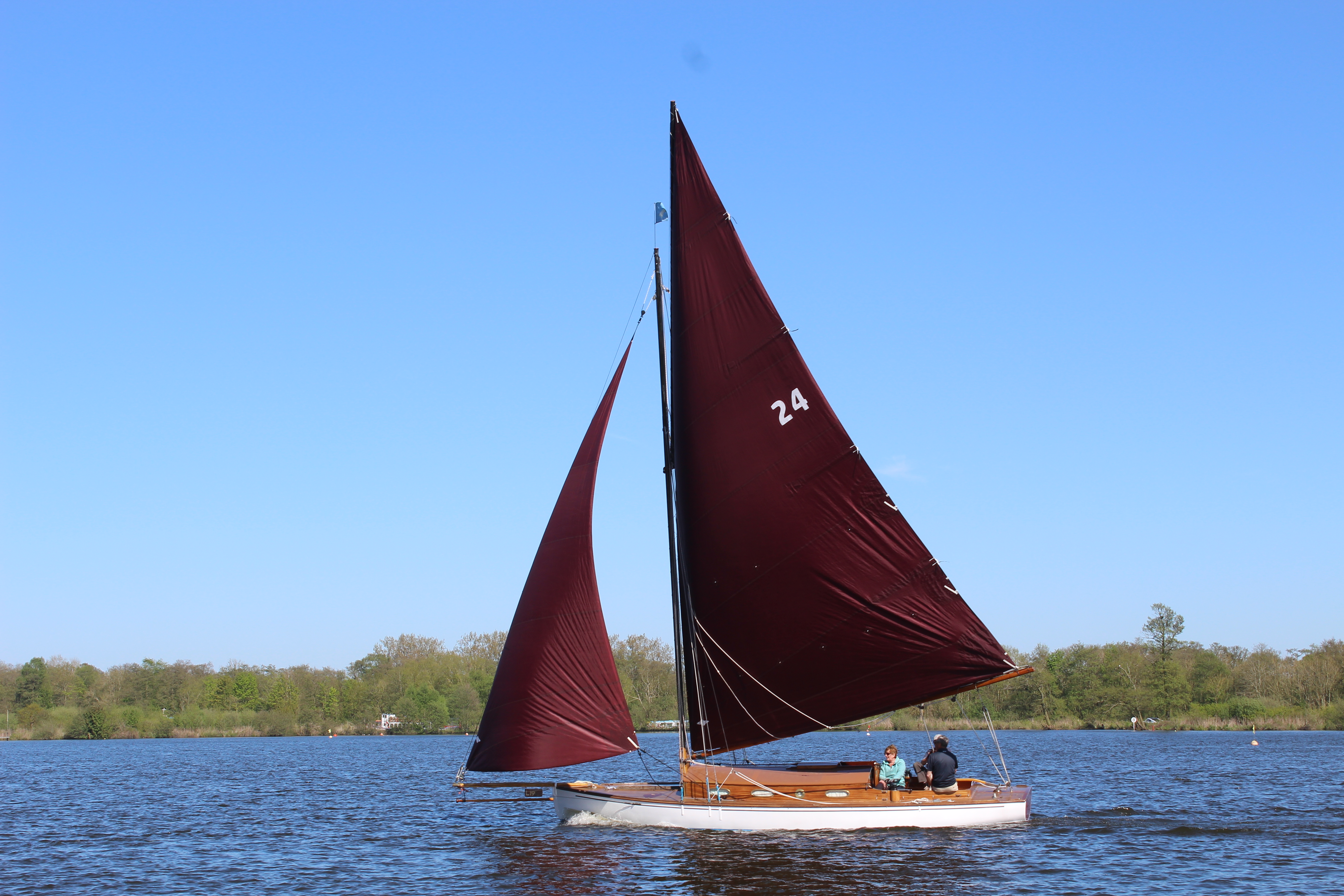
Geoff and Rose Angell kindly took me out on Pippa, their beautiful yacht with brown sails that appeared in ‘The Big Six’. I am sure Arthur Ransome would have loved her.
Back in 1983, I spent nine months working on the BBC production when it had been my job to cast the children and teenagers who appear in the drama, many of whom needed genuine Norfolk accents.
We had been looking for young actors who could swim well and were able handle boats. We then spent three months filming in East Anglia when I looked after the children and helped rehearse their lines. I set up this shot for the cover of the Puffin paperback that accompanied the series.
~Author Sophie Neville giving a talk at the Norfolk Broads Yacht Club~
At a forum organised after my talk, Pat Simpson from Stalham Yacht Services explained how he found one of the stars of the series – an old lifeboat suitable to play the Death and Glory. She had been brought from where she is kept at Belaugh for the evening. You can see more photographs of her in the previous blog post here.
Pat provided a number of other vessels for the series including Buttercup and support boats such as the safely boat, a large modern cruiser used as a school room along with another for the costume and make up personnel. He explained that this came as a god-send as boat rentals had not been good that summer. Working on the series was harder than he imagined, ‘We once had to take a boat from Regan to Horning Hall overnight’ but he was pleased that ‘after three months of concentrated work, we got it all done.’
~Robin Richardson~
Robin Richardson, who co-owned Pippa back in 1983, explained how the shot of her being cast adrift was achieved. This wasn’t as easy as first thought as even when Simon Hawes, who was playing George Owdon, flung her stem line on the deck, a gentle breeze was blowing her back against the staithe. ‘Pippa didn’t want to go anywhere’. Robin had to stage the action by throwing out a mud anchor, climbing under her awning and pulling on the line to create the effect of a boat drifting out of control into potential danger. Pippa’s white canvas cover is pulled back here, but you can imagine the scene.
He was on location when Henry Dimbleby, who played Tom Dudgeon, was attempting to tow the Teasel under Potter Heigham bridge. He was rowing Titmouse, pulling hard on the oars but nothing was happening. ‘Stop for lunch,’ Robin advised the director, ‘and the tide will turn.’ This they did, and Henry we able to row under the bridge, towing the Teasel quite easily. Hunter’s Yard, who own Lullaby, who played the Teasle, could not bring her down for the weekend as she had been leased out with other boats, but they sent her transom, painted with her stage name.
Robin Richardson owns the ‘Slipstream’ class dinghy called Spindrift who played Shooting Star in the serial. She was built by her father but couldn’t be with us as they were not able to complete her winter maintenance in time but Richard Hattersley said she came tenth in this year’s Three Rivers race when only 15 of the 98 entries actually finished. It’s a 24 hour endurance challenge, which they completed despite light winds. He sent me this shot, ‘of her battling it out with much larger Thames A Raters.’
I was shown a wonderful black and white photograph of the vessel used to play the Cachalot. She was skippered in the series by the film actor Sam Kelly in the role of the unnamed pike fishermen who the Death and Glory boys simply called ‘Sir’. She is seen here with John Boswell, her real owner who has sadly passed away. His son, the artist Patrick Boswell, brought along an album of behind-the-scenes photos.
The theme of the weekend was ‘Boats of the 1930s’. I explained how Swallow, the dinghy used in the original film ‘Swallows and Amazons’ originally came from Burnham-on-Sea where she was made by W. King and Sons to be used as a run-a-round boat. She was stabilised by a keel that ran the length of the hull, as Ransome described. It makes her rather difficult to turn. You can sail her today and is in the Lake District right now. Please see Sailransome for details.
There was quite a bit of interest in memorabilia from the original movie ‘Swallows and Amazons’. I bought along the white elephant flag captured from Captain Flint’s houseboat in the 1974 film, which was approved by a young Amazon pirate.
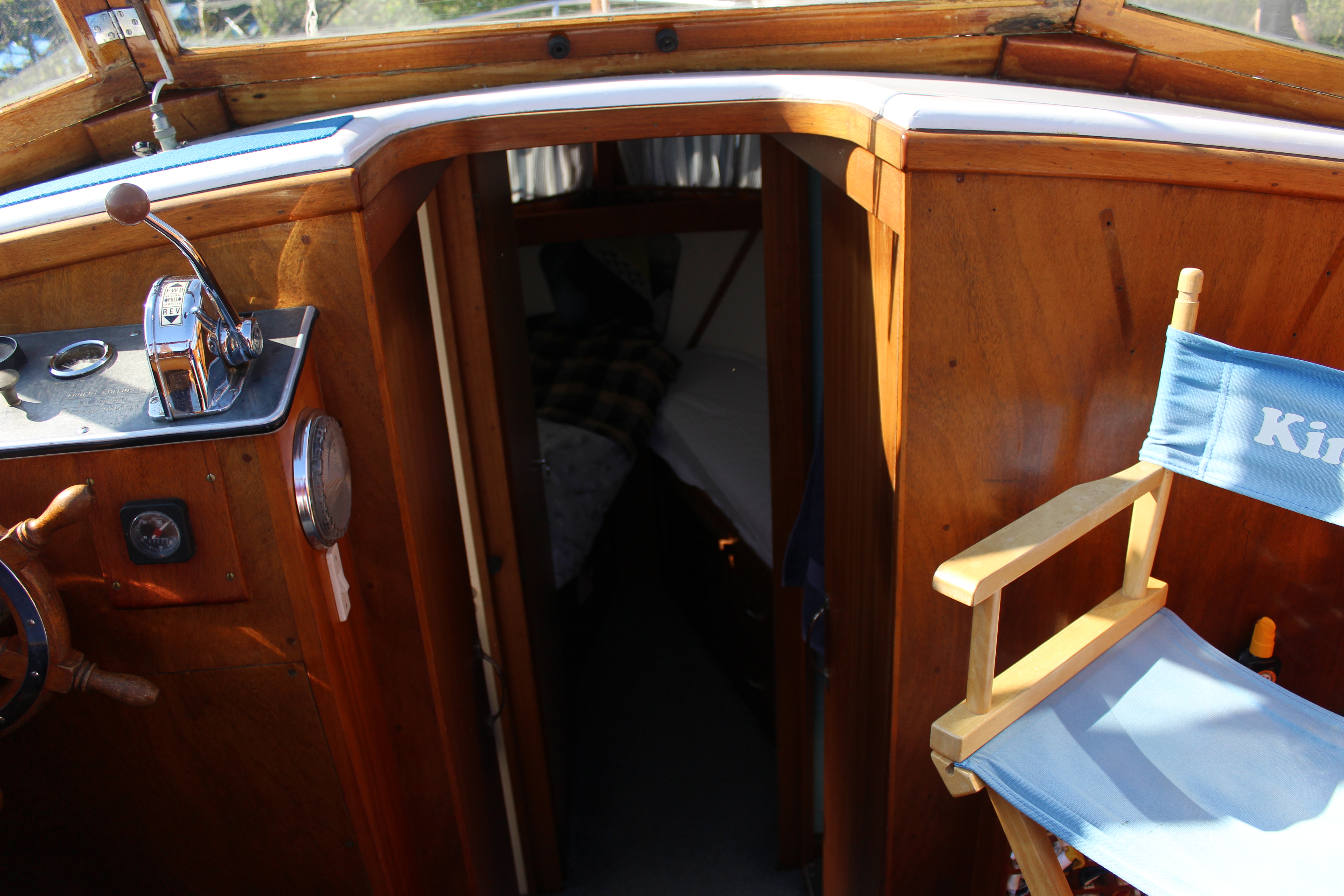
After a celebratory dinner, David and Nicky Talbot invited me to spend the night in the comfortable for’ard cabin of Kingfisher, a 1970’s motor yacht moored at the club.
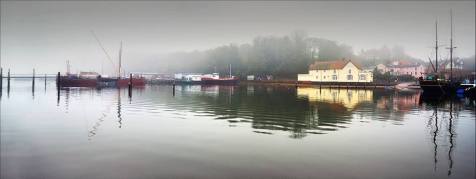
I woke early on the Sunday morning to find mist hanging above the water as the sun was rising on what proved to be another sunny day with a fair wind for sailing.
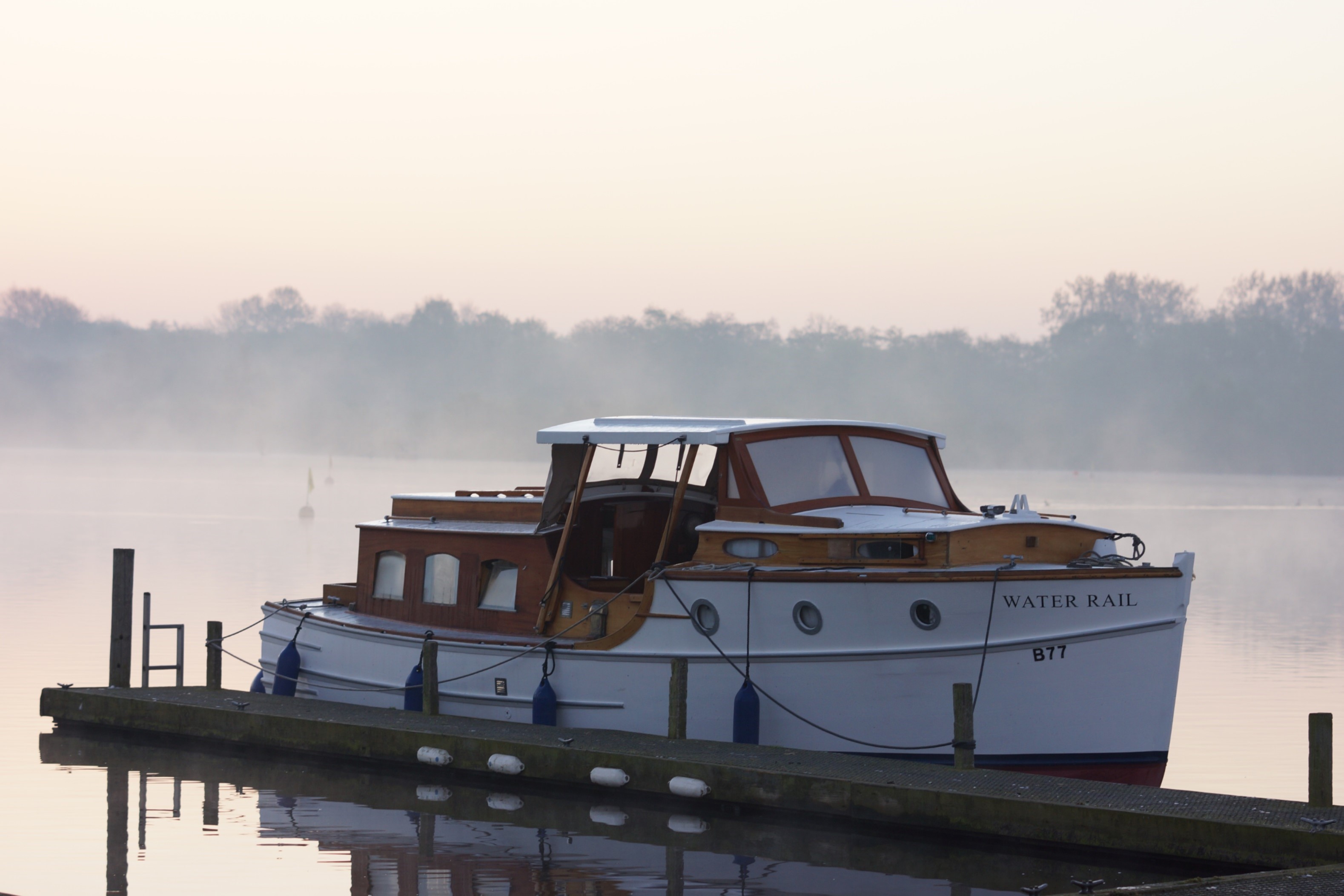
After breakfast aboard, I was invited out in the 1930s river cruiser ‘Water Rail’, who had also appeared in the serial. We took her down the River Bure to her mooring in Horning where she is still part of the scene.
It was wonderful to be out on the waterways of Norfolk, passing traditional buildings. This was a stretch of river never featured in the television drama as Rosemary Leach, who played Mrs Barrable, took Dick and Dorothea from Wroxham to Horning in a trap pulled by Rufus the pony. One reason for this was that in 1983 we had to use the North Norfolk Steam Railway, since Wroxham Station had been modernised but Joe Waters, the producer, said he wanted to add variety by featuring a pony rather than a motorboat.
We encountered a number of period cruisers, although Janca, who we used to play the Hullabaloos’ Margoletta, sadly could not be with us, as she is still under repair.
However, by motoring into Horning ourselves, we passed The Swan Inn and Horning Staithe where a number of scenes had been shot, including some that featured Julian Fellowes and Sarah Crowden, playing the hated Hullabaloos. You can see photographs of them in an earlier post here.
~Horning Staithe in Norfolk showing The Swan Inn~
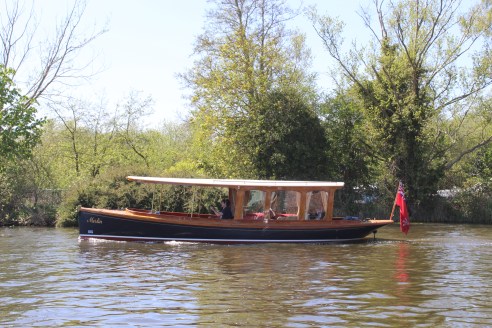
Another vessel that interested me was a river launch that reminded me of the 1901 steamboat Daffodil, which I renovated with my father in 1978. I have photographs of her here.
You can read more about the traditional boats used in the series by clicking here.
Gerry Spiller, has written from Woodbridge in Suffolk, to say that she has found an oar labelled TITMOUSE, bought at a boat jumble. Could this date from the early 1930? Does anyone have the pair?
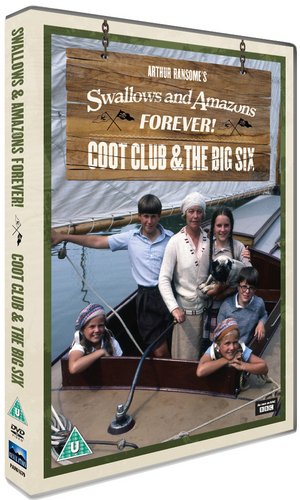
The DVD of the serial is now available on a re-mastered DVD, available from Amazon here
(Do not be tempted by the old version with a more colourful cover as the image quality is very poor)
Swallows And Amazons Forever! (Coot Club & The Big Six) SPECIAL EDITION [DVD]Additional photographs by Richard Hattersly
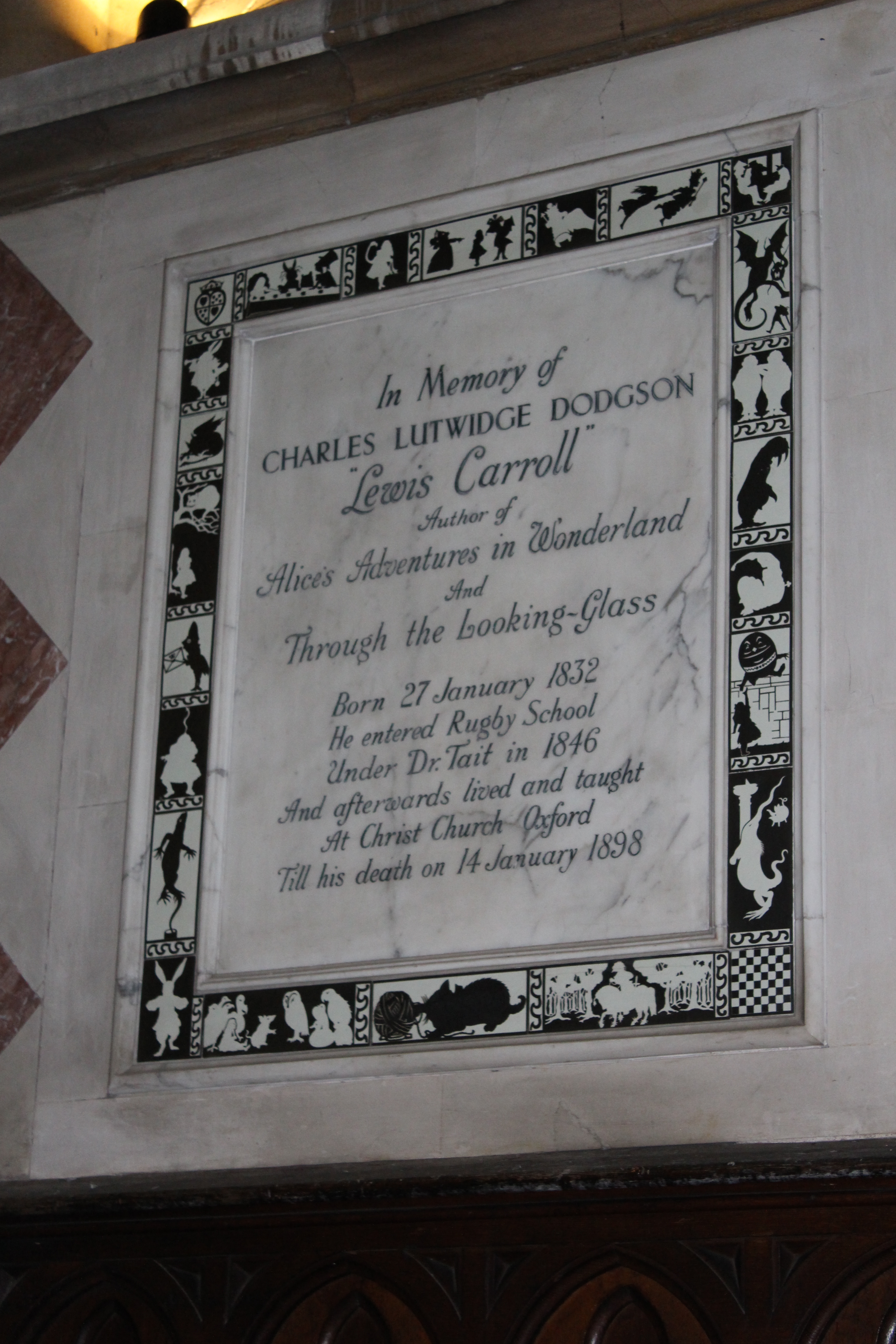
Almost as soon as we published the second edition of ‘The Making of Swallows and Amazons (1974)’ in May 2017, a number of facts and stories washed up on the incoming tide. I didn’t know that Ransome was aged twelve – Captain John’s age – when he first met the Collingwood family on Peel Island. I knew he went to Rugby School but not that he was given the study once used by the English author Lewis Carroll. I’m not sure if that inspired him to write children’s books but he certainly borrowed the term galumphing from Alice’s Adventures in Wonderland (1865).
~ Lewis Carroll’s plaque at Rugby School ~
I never knew that Rusland, where Arthur and Evgenia Ransome lie buried at St Paul’s Church, means ‘Land of the Rus’ – the name for Russia, where of course they met in what was then Petrograd when Evgenia was working as Leon Troski’s private secretary. Thanks to the feature writer Maggie Dickenson, I’ve learned that this kneeler at St Paul’s was embroidered by Jean Hopkins:
Brian Crawley has just written in to say that, in 1973, our visit to the charcoal burners was filmed less than a mile to the west of the church in Glass Knott Wood. I gather the remains of the wig-wam’s fireplace can still be seen. I didn’t know it was so close, and just assumed we had been in the Grizedale Forest. I’ll have to add it to my map!
The Russian edition of Swallows and Amazons, that can be borrowed from The Arthur Ransome Society library, has proved a great source of reference. Donated by the Gatchina Library it is the only copy in the UK. I learnt from the comments at the back that the Black Jack is a pirate flag, which I’ve always called a Jolly Roger, and that ‘in one’s mind’s eye’ is an expression used by William Shakespeare in Hamlet. “Tip us a stave” means “give us a song”, a term used in Treasure Island.
Other flotsam and jetsam on my tide-line is a wonderful quote to accompany this behind-the-scenes photograph when re-reading Winter Holiday written by Arthur Ransome in 1933:
“What’s in that box?” asked Roger.
“It’s just about big enough for you, isn’t it?” said Captain Flint.
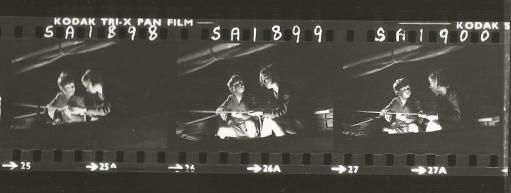
~ Sten Grendon playing Roger in the Panavision camera box in 1974~
A member of the Arthur Ransome Group on Facebook commented on how annoying it was that Ronald Fraser made a funny face when he first sipped the tea Suzanna Hamilton offered him. Captain Flint ALWAYS enjoyed Susan’s tea.
There was some discussion amongst members of the same Arthur Ransome Group about how female characters depicted in ‘Swallows and Amazons’. Eddie Castellan wrote: ‘Ransome is remarkably non-sexist for his era and remains so by today’s standards. Mind you, most great storytellers realise that weak female characters are simply dull…great storytellers seem to give women better roles than mediocre ones.’
Fionna Grant added: ‘Arthur Ransome had a range of roles for his female characters from Nancy to Susan to Titty…. not only represented, but honoured for their contribution to the group…All the kids in Swallows and Amazons are encouraged to learn through achievement but they are also allowed to choose their own path, follow their own interests.
At a talk given about the Norwegian explorer Fridtjof Nansen given by Simon Browne, at a meeting of The Arthur Ransome Society, we were given a definition of the word Hero: one who combats adversity through integrity, bravery or strength, often sacrificing personal concerns for the greater good.
Titty was brave but all she really did was to grab a chance to swipe Amazon. It meant she had to sleep on board, which was rather uncomfortable, but what made Titty a true heroine in the film was her determination and persistence: she woke up early and persuaded Roger to help her find the treasure hidden on Cormorant Island. Like Ransome himself, she was prepared to grab a chance, take a risk – even if it meant being cold and uncomfortable for a while.
I received another lovely note on Facebook from Zena Ashberry (nee Khan) who appeared as a film extra in the Rio scenes shot at Bowness-on-Windermere when she was a little girl, despite being of half-Asian descent:
‘I was nine at the time and my sister was eight. I remember going through an audition – which was really just a panel of three or four men looking at Mum, my sister and me to see if we would be in keeping with the ‘look’ of the film. They seemed very keen on having Mum. My sister, at the time had sandy coloured hair and so was not at all problematic, however I was very dark and because they wanted Mum they said that they could hide ‘it’ by putting me in a white dress and hat! How times have changed…obviously I remember other things too, like feeding the horses which pulled the open carriage and the horse standing on my foot oouuch!, the strange awkwardness of having to act ‘naturally’ whilst being watched through a camera, having to repeatedly carry out the same activity to ensure a good shot – how many times did we throw stones into the lake? The ice-cream tricycle with real ice cream mmmm a treat … being watched by crowds of tourists gathered along the footpath and flower beds. It was a strange and unreal experience, doing what as children we would normally do but doing it in ‘dressy-up’ clothes that weren’t from our own dressy -up box and playing the game with Mum and her friends with total strangers telling us what we should do…just a bit bewildering really, but funny in retrospect.’
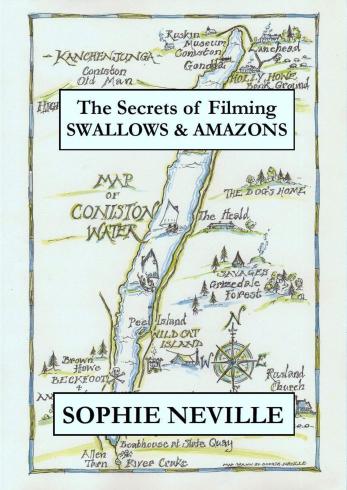
Please let me know if you have any points of interest that I could add to ‘The Secrets of Filming Swallows and Amazons (1974)’ that you think might of interest to readers. The great thing about ebooks is that they can be updated and re-loaded free of charge.
I’m hoping to give a number of talks on ‘The Making of Swallows and Amazons’ this summer. Please click here for details.
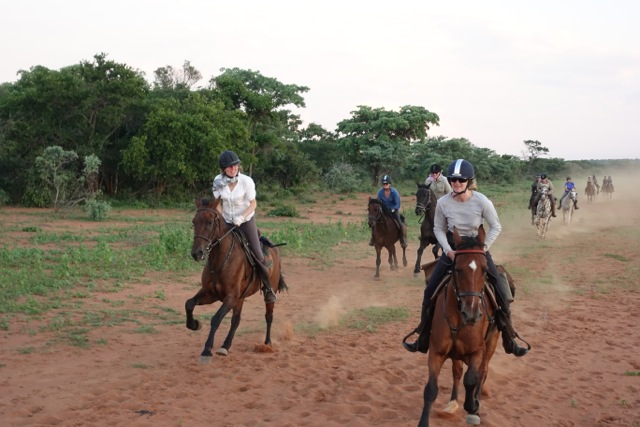
The 4th Waterberg Trust Challenge Ride, which set off on 21st January 2018, proved fast, fun and fulfilling. Thanks go to all those who sponsored me on Justgiving.com and helped me to raise funds in other ways.
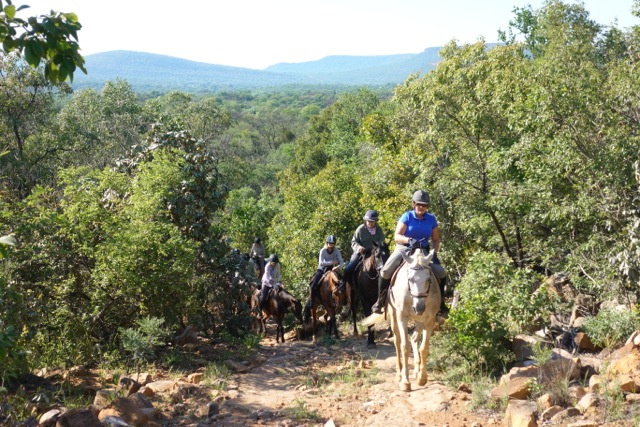
Crossing the game reserves of South Africa was a joy, especially since we encountered a number of newborn animals.
50% of funds raised go to Save The Waterberg Rhino to support the war against wildlife poaching.
Riders paid their own travel costs. We had a great team who’d worked hard on both their fitness and fundraising.
Some days were long but we were blessed with good weather. When the going got tough, we dismounted and walked.
Seven different game reserves were traversed in six days, with 187kms being clocked up on the GPS.
I felt hugely encouraged by everyone who supported me on social media and returned with dreams of exploring further afield. You can see more photos of the ride on The Waterberg Trust website.
What you can do to help
Share posts found on The Waterberg Trust’s Facebook page: please click here
This January I am working hard to get fit enough to take part in another sponsored horse ride through the game reserves of South Africa, where I once lived, to raise funds for The Waterberg Trust.
The safari company Ant’s Nest have generously offered to host our party of thirteen British riders and we are paying our own travel costs. Every penny raised in sponsorship will go straight to The Waterberg Trust, a UK registered charity.
50% of funds will be sent to Save the Waterberg Rhino and 50% will support projects that uplift local communities that are run by trusted friends. Each member of our team has been challenged to raise at least £1000 in sponsorship. The Drapers Company have kindly offered to match any funding that I raise personally, so if you can sponsor me your donation will be doubled. Even very small amounts are a huge encouragment and will go along way to improve things in Africa.
DAY 1 – Riders will be met at Johannesburg airport and driven north to Ant’s Nest Game Reserve deep in the Africa bush where we will meet horses that have been selected for the expedition and set off in search of wildlife.
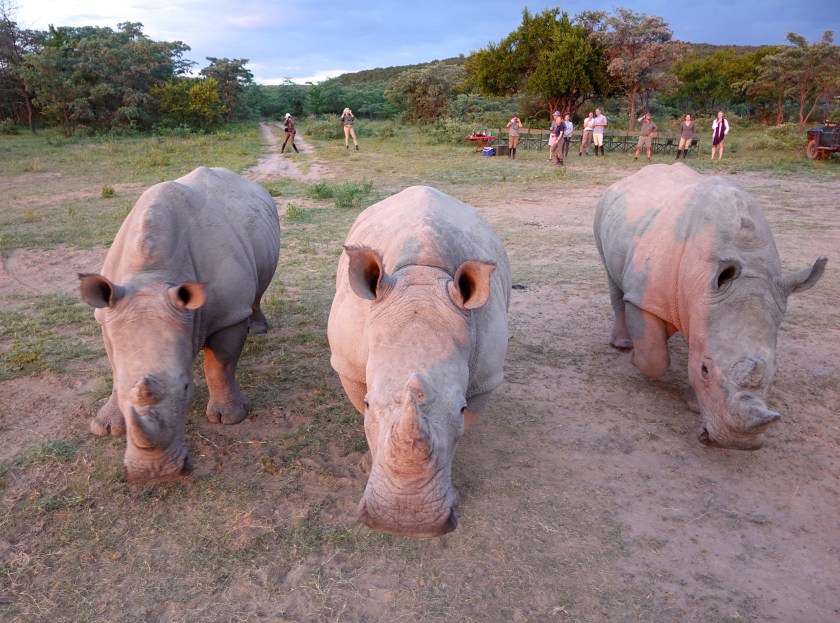
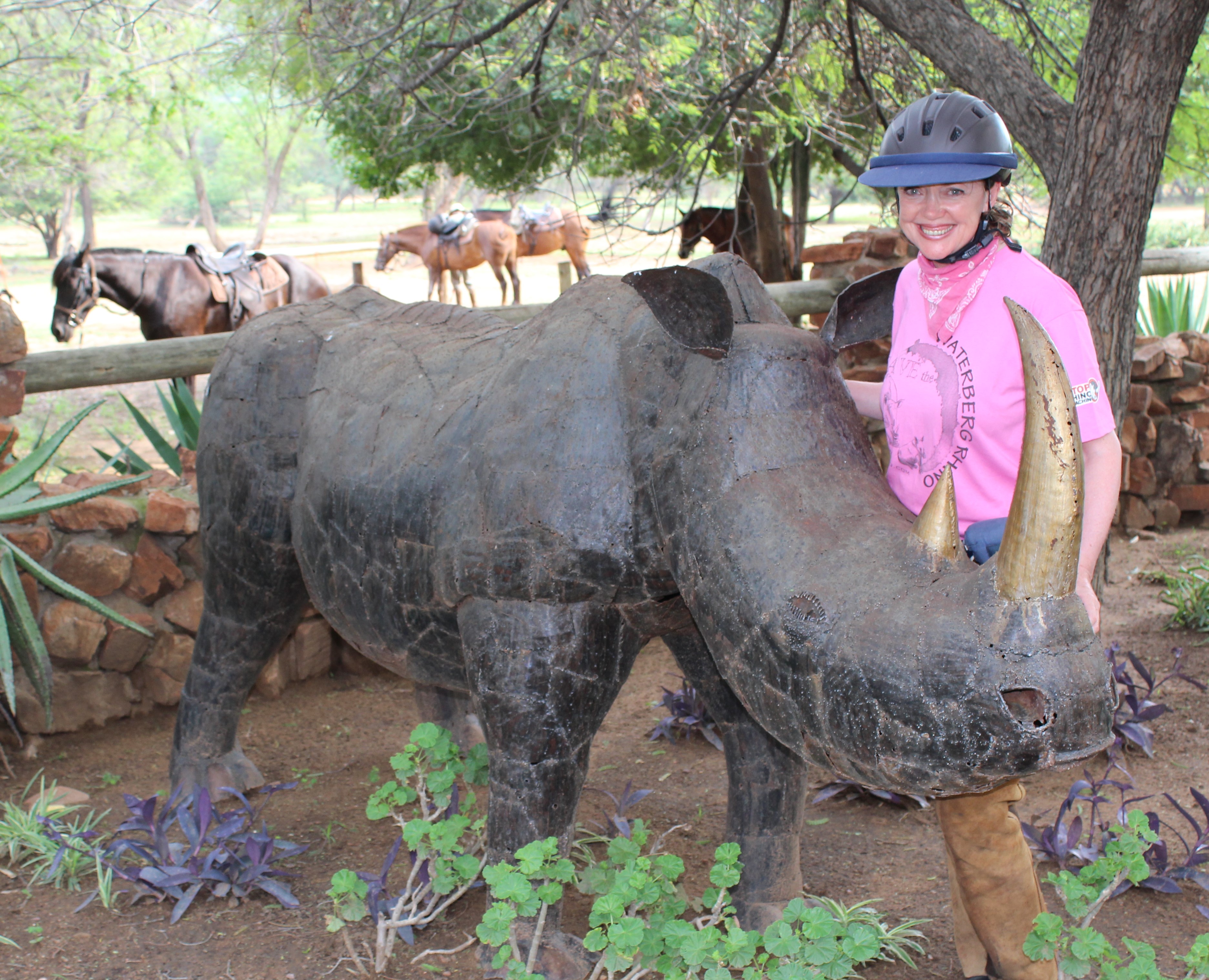
The Waterberg is home to the third largest population of rhino in South Africa, so their protection on the plateau is vital.
~The Waterberg Trust Riders with white rhino in 2017~
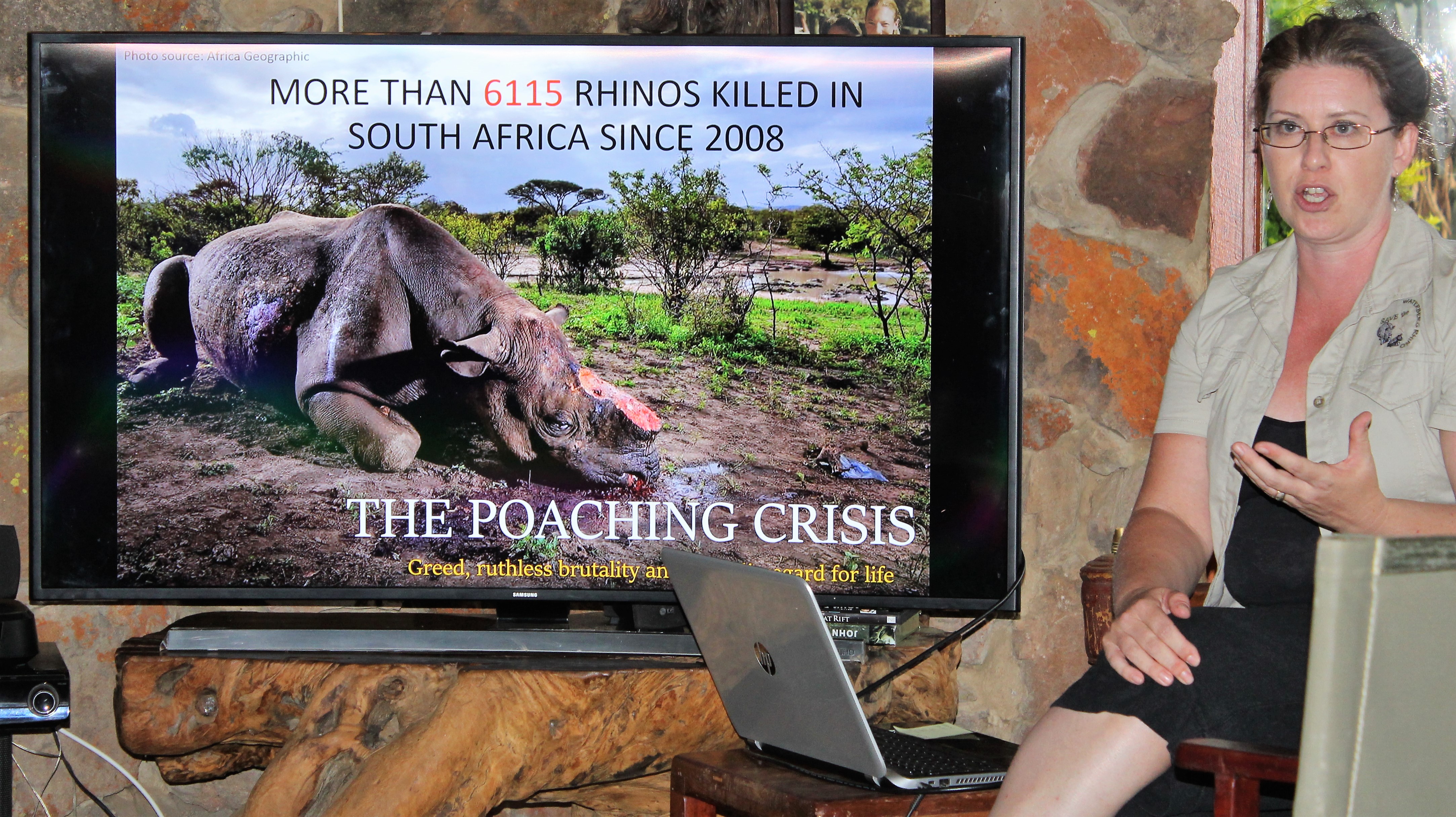
DAY 2 – We will spend the day riding up to Ant’s Hill, viewing game on horseback and looking for a breeding herd of white rhino, along with buffalo, wildebeest and antelope. We’ll return to Ant’s Nest for a talk on the work of ‘Save the Waterberg Rhino’.
DAY 3 – We set off early, riding north through the reserve and along sandy roads to the Waterberg Living Museum to meet Clive Walker, one of South Africa’s leading conservationists who is raising awareness of biodiversity and ecological systems. We may get the chance to see rare golden wildebeest as we ride up to Triple B Ranch were we will spend the night in a traditional farmhouse.
DAY 4 – We ride down through Triple B Ranch, where they have hippo and over the hills to Lindani game reserve, which will give us another amazing opportunity to see wildlife such as vervet monkey, baboon and warthog, zebra, eland and giraffe.
DAY 5 – This is a long day when we ride to Jembisa, a reserve on the Palala River where the pace will get faster. We hope to find more plains game including giraffe, jackal, warthog and red heartebeest.
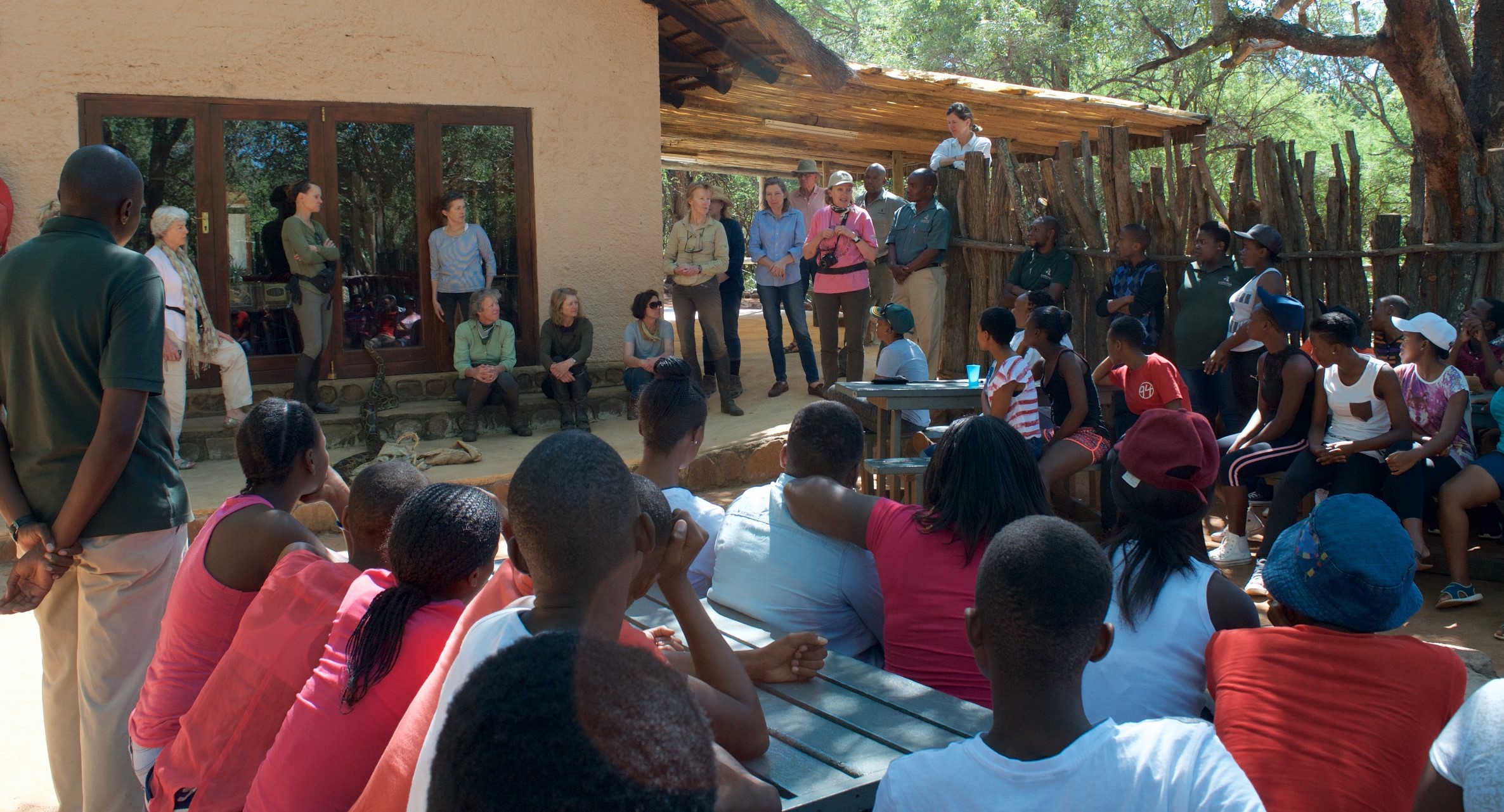
DAY 6 – We plan to visit Lapalala Wilderness School, which I have been associated with since 1992 when I became a horse safari guide in the area. The Waterberg Trust has been able to send groups of underprivileged children on a residential course at this eco-school to learn about conservation and the plight of South Africa’s wildlife.
One lesson is about what to do if you find a snake in the house.
The students take their enthusiasm into the community whose support is essential if poaching is to be combated. They are given a local mentor who can help with future issues.
We’ll spend the rest of the day riding across Jembisa where we hope to find hippos and perhaps see crocodile in the river before reaching the furthest point of the ride and grab a few photographs before bidding our horses farewell.
DAY 7 – Riders will visit Lethabo Kids Club in the Township of Leseding who run an excellent ‘Back to School’ project to ensure all local children get into an appropriate school, equipped with uniform, shoes and school bags. We will meet Nurse Grace whose salary is financed by The Waterberg Trust. The very first school nurse in the area, she has been looking after pupils’ health and issues that detract from their studies. We will also drop in on Kamotsogo community craft project that helps women living with HIV/Aids before leaving for the airport.
~Sophie Neville with students sponsored by The Waterberg Trust in 2017~
I need to get fit as there will be approximately 32–40km’s of riding per day, clocking up a total of 32 long hours in the saddle. It will be an exploratory venture, riding through this beautiful area, now proclaimed a UNESCO biosphere. You can read more about the ride here.
WHAT YOU CAN DO TO HELP:
Support us on social media by sharing information.
Share posts found on The Waterberg Trust’s Facebook page: please click here
Describe a typical Christmas Day in your household.
We scuttle off to our village church where people have gathered to celebrate the birth of Jesus for over a thousand years. Tears well in my eyes when I think of the joy and laughter, the disappointment and pain that has been brought there through the ages. We return to a bizarre Christmas tree, made from a holly bush covered in baubles, and light the fire to help bind us together as a family.
Which was your best Christmas – and why?
Last year I spent Christmas in Africa, where my next book ‘Makorongo’s War’ is set. We sat watching wild animals in the golden evening light.
Who do you think would make the most entertaining guest to invite to Christmas dinner – and why?
Funnily enough it’s my aunt Hermione who makes Christmas and New Year fun but she lives on Loch Lomond, 500 miles north from where we live on the south coast.
What was your best Christmas present as a child?
My father gave me a read leather writing case when I was twelve. ‘The Making of Swallows and Amazons (1974)’ is based on the I diary kept inside it.
What is your favourite carol?
You’ll have to read my book Ride the Wings of Morning about the time we sang Silent Night in Afrikaans. We had a poor translation. Heavenly sausages descended on Bethlehem.
What is your favourite festive ramble for walking off all the mince pies and turkey?
We’ll take my lurcher Flint for a walk by the sea, a social activity as many of my friends have dogs.
If you could spend Christmas Day anywhere in the world, apart from at home, where would it be – and why?
I’d love to bring my whole family up to the Lake District for Christmas so Aunt Hermione could join us. Perhaps we should go with Flint next year.
My favourite Christmas story:
Mary gave birth to her firstborn son. She wrapped him snugly in strips of cloth and laid him in a manger, because there was no lodging available for them.
That night there were shepherds staying in the fields nearby, guarding their flocks of sheep.Suddenly, an angel of the Lord appeared among them, and the radiance of the Lord’s glory surrounded them. They were terrified,but the angel reassured them. “Don’t be afraid!” he said. “I bring you good news that will bring great joy to all people.The Savior—yes, the Messiah, the Lord—has been born today in Bethlehem, the city of David!And you will recognize him by this sign: You will find a baby wrapped snugly in strips of cloth, lying in a manger.”
Suddenly, the angel was joined by a vast host of others—the armies of heaven—praising God and saying, “Glory to God in highest heaven, and peace on earth to those with whom God is pleased.” When the angels had returned to heaven, the shepherds said to each other, “Let’s go to Bethlehem! Let’s see this thing that has happened, which the Lord has told us about.”
They hurried to the village and found Mary and Joseph. And there was the baby, lying in the manger.After seeing him, the shepherds told everyone what had happened and what the angel had said to them about this child.All who heard the shepherds’ story were astonished,but Mary kept all these things in her heart and thought about them often.The shepherds went back to their flocks, glorifying and praising God for all they had heard and seen. It was just as the angel had told them. Luke 2 v 7-20
The cultural background is that in when Shepherds identified a perfect newborn lamb for sacrifice, they wrapped it in strips of cloth and laid it in a manger to keep it clean. When they saw Jesus in this situation, they would have immediately identified him as a sacrificial lamb.
~Lesley Bennett playing Mate Peggy in 1974 (copyright:StudioCanal)~
When I met up with Lesley Bennett in the Netherlands, she kindly allowed me to take copies of the snaps she took while filming ‘Swallows and Amazons’ (1974) on location in the Lake District in the summer of 1973.
~Kit Seymour and Lesley Bennett in 1973 (photo: Lesley Bennett)~
The shot above shows Lesley with Kit Seymour, who played her elder sister Nancy Blackett, wearing blue tracksuits and BOAC life-vests over their costumes. They were sitting on the east shore of Coniston Water waiting to cross over to Peel Island. Lesley is wearing Peggy Blackett’s distinctive red-stocking hat. We never saw the life-jackets inflated. The horrifying thing was that when my father tested one, it didn’t work.
~Old London Routemaster buses in 1973 (photo: Lesley Bennett)~
Throughout the seven weeks filming, we children were obliged to continue with our schooling. The law stipulated that we completed at least three hours of lessons a day. These were given to us by a local supply teacher, our tutor Margaret Causey, in the bottom of a converted Routemaster bus. We changed into our costumes on the top deck where there were six bunk beds. My mother made me take a rest after lunch. Lesley, who at thirteen, was a year older than me, was allowed out to play.
The other double-decker bus, seen here parked behind Mrs Lucy Batty’s barn at Bank Ground Farm near Coniston, had been fitted out with tables and was used as a dinning room where the film crew could shelter from the rain. They took their lunch on trays from the caterers’ van manned by chef John Englewood and his assistant Margaret Wells from Pinewood Studios. We only had a few scenes with a large number of film extras, but these were recorded on sunny days when nobody needed to eat in the buses.
~Behind the scenes in Bowness in 1973 (photo: Lesley Bennett)~
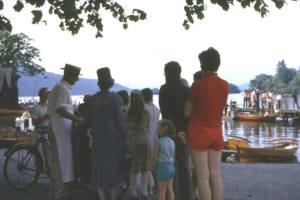
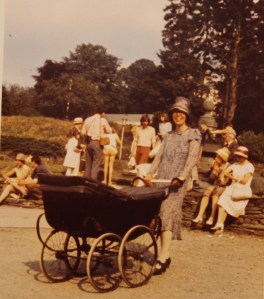
Lesley managed to take this shot of our chaperone, Jane Grendon, dressed in 1929 costume. This was not only fun but enabled her to look after children taking part in the Rio scenes shot at Bowness-on-Windemere while appearing in vision herself.
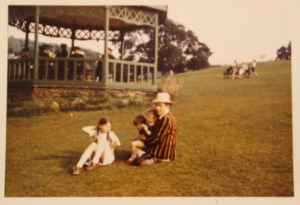
~Bowness Bandstand in 1973 (photo: Lesley Bennett)~
The Price family ran Oaklands Guesthouse in Ambleside where Lesley and I stayed for the duration of the filming, along with the other children in the cast. Jane Price and her brothers can be seen here with the Kendal Borough Band playing beyond them wearing their own period uniforms. Mr David Watkin Price, who looked quite snazzy in his striped blazer, played the part of the native on the jetty who said, ‘That’s a nice little boat you’ve got there.’ If you do not remember this it’s because the scene was cut from the television version, although it remains in the 40th Anniversary DVD and Blu-ray that is widely available. Sadly the bandstand no longer exists and has been replaced by a modern shelter.
Zena Ashberry also took part as a film extra in these scenes when she was a girl. Her maiden name was Khan and although she lived in Cumbria her father originated from the sub-continent. She wrote in saying:
I was nine at the time and my sister was eight. I remember going through an audition – which was really just a panel of three or four men looking at Mum, my sister and me to see if we would be in keeping with the ‘look’ of the film. They seemed very keen on having Mum. My sister, at the time had sandy coloured hair and so was not at all problematic, however I was very dark and because they wanted Mum they said that they could hide ‘it’ by putting me in a white dress and hat! how times have changed…obviously I remember other things too, like feeding the horses which pulled the open carriage and the horse standing on my foot oouuch!, the strange awkwardness of having to act ‘naturally’ whilst being watched through a camera, having to repeatedly carry out the same activity to ensure a good shot – how many times did we throw stones into the lake? The ice-cream tricycle with real ice cream mmmm a treat … being watched by crowds of tourists gathered along the footpath and flower beds. It was a strange and unreal experience, doing what as children we would normally do but doing it in ‘dressy-up’ clothes that weren’t from our own dressy -up box and playing the game with Mum and her friends with total strangers telling us what we should do…just a bit bewildering really, but funny in retrospect.
~filming in Bowness in 1973 (photo: Zena Khan)~
Zena kept this photo which shows the ice cream seller, Jane Grendon in her blue costume, possibly her daughter Jo Grendon in turquoise shorts and Michael Grendon along with the 35mm Panavision camera and film crew on the jetty where Swallow is moored to the right of frame. I don’t know who the lady in red can be – but do write in if you know!
For previous posts about filming in Bowness-on-Windermere that day, please click here
You can read more in ‘The Making of Swallows and Amazons(1974)’, which can be ordered from your local library.
If you enjoy ebooks, similar publication is available from all stockist for £2.99, including Amazon Kindle.
Nancy Blackett, the 28 foot cutter that Arthur Ransome bought with Spanish gold, as he called his royalties from ‘Swallows and Amazons’, is an old lady now. Built by Hillyards of Littlehampton in 1931, she turns eighty-five this year and yet looks pristine. If you ever wanted to sail the Goblin in ‘We Did Mean To Go To Sea’ you must know that it was Nancy who took this starring role in Ransome’s novel, first published eighty years ago.
Nancy Blackett
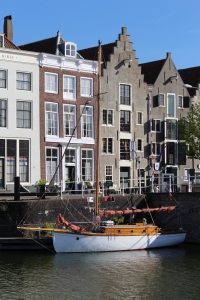
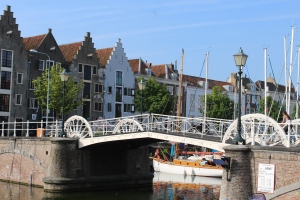
I arrived in the Netherlands this summer to find Nancy receiving visitors at a nautical festival in Midddleburg, while a jazz band played on the quay. She was moored by a lifting bridge in the centre of town, neatly rigged and ready for anything. After taking a look at a number of old gaffers, her crew enjoyed a cold beer and walked down the canal to vittel-up at a supermarket before having dinner in what was once a packing house for silks and spices imported from the East Indies.
Nancy seen through the swing bridge in Middleburg
As the swing bridge rose the next morning, we made way and motored down the wide canal to Veere, mooring up by the grassy port bank.
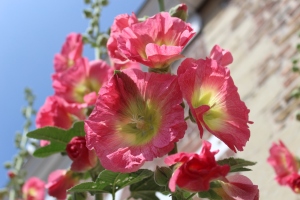
Hollyhocks of Veere
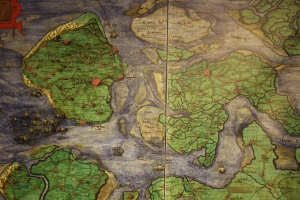
After being granted permission to go ashore, I passed the historic town well and walked down lanes bordered by hollyhocks to visit the museums of this ancient port. They house a number of charts and medieval maps that would have delighted the Swallows, along with old photographs of Dutch natives in traditional dress. I was tempted to buy a pair of clogs to take home for Bridget.
The waterways of Zeeland
We left Veere to explore the islands and creeks of the Veersemeer before sailing down-channel and through a modern lock into the Oosterschelde estuary formed by the River Scheldt. It was once an important shipping route that bought wealth to the Netherlands but is quieter now. I spotted a seal and watched a cormorant swallow a large eel, that wriggled and jiggled inside its gullet.
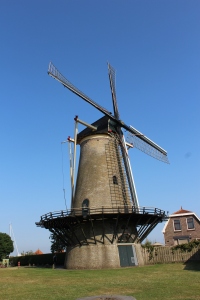
A windmill of Zierikzee
After negotiating the impressive Zeelandbrug that spans the delta, we sailed down to Zierikzee where you can climb the church tower, if you dare, and look out across the once fortified town. The windmills, ornate spires and ancient buildings help one to imagine what life must have been like in the 1500s when it became famous as a trading centre for salt and madder. I found scold’s stones and a whaler’s kayak from Greenland at the Stadhuis Museum in Zierikzee where Veronica Frenks was once the curator.
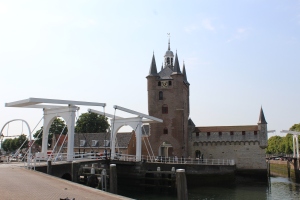
The lock gates of Zierikzee
Our skipper, Ian McGlynn, wondered if we could sail back under an arch of the Zeelandbrug instead of waiting for one section of the road to lift. Built between 1963 and 1965 the Zeeland Bridge is more than five kilometres long and hardly comparable to the arch of Potter Heigham but Mate Judy Taylor didn’t want to take any risks. We had Nancy’s new mast to consider.
Crewing the Nancy Blackett
It was only on our last evening-but-one that rain hit us. We’d had blue skies and sunshine all week. As the salt water was washed away from Nancy’s portholes I opened the pages of ‘We Didn’t Mean To Go To Sea’ to find Ransome’s illustrations and read the final passages of the Swallows’ unplanned voyage to Holland. The book is eighty years old this year and yet moves me still. There is Nancy, portrayed as the Goblin moored up in a foreign port, which is where we left her to be enjoyed by other members of the Nancy Blackett Trust.
Nancy Blackett in Zeeland
A marathon reading of ‘We Didn’t Mean To Go To Sea’ is planned, to celebrate the 80 year anniversary of its publication, at Pin Mill Sailing Club on the Orwell in Suffolk on Saturday 21st October 2017.
To read more about Nancy or join the Nancy Blackett Trust please click here
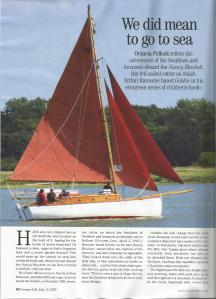
Nancy has been featured by Country Life in a July issue you can read here















 ~ Sten Grendon playing Roger in the Panavision camera box in 1974~


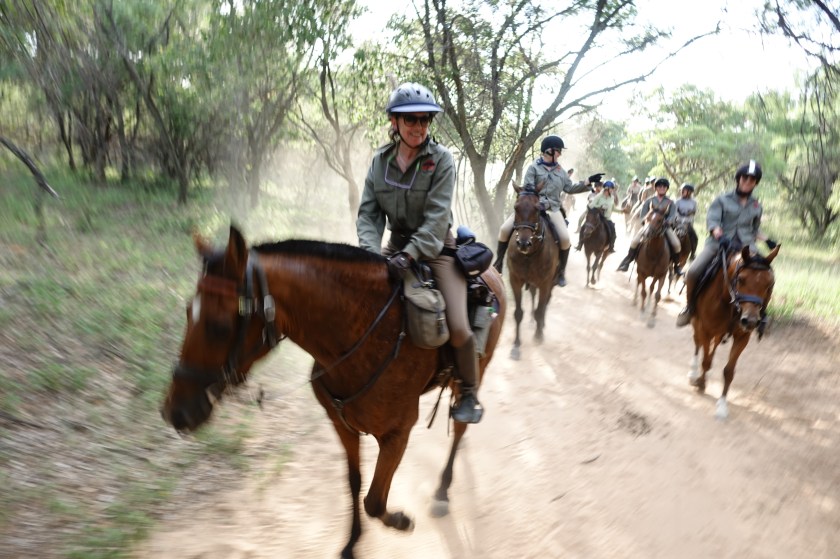



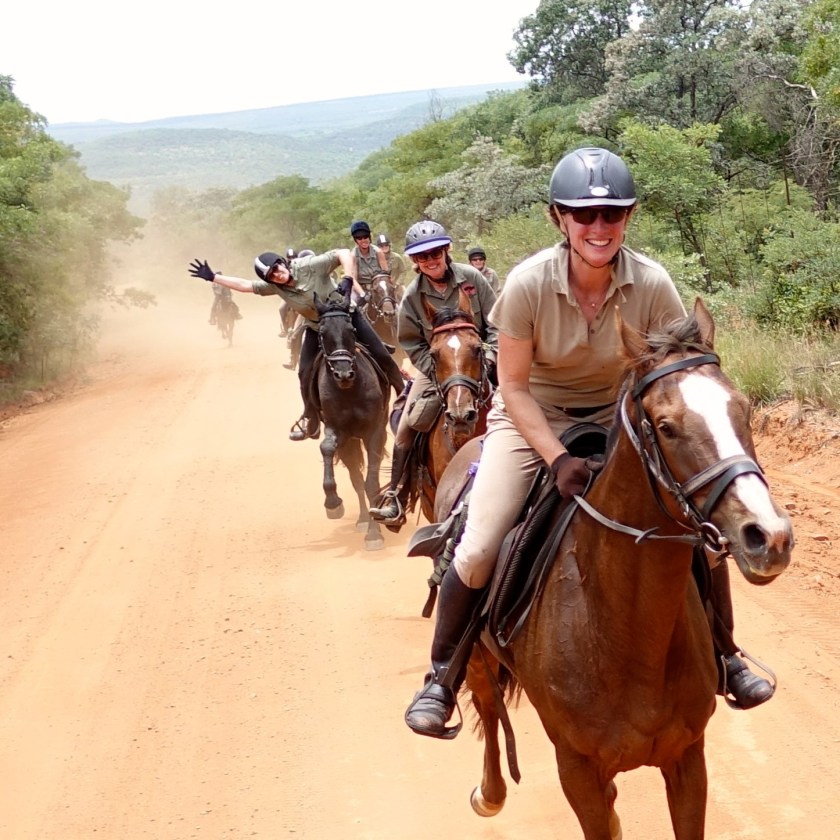
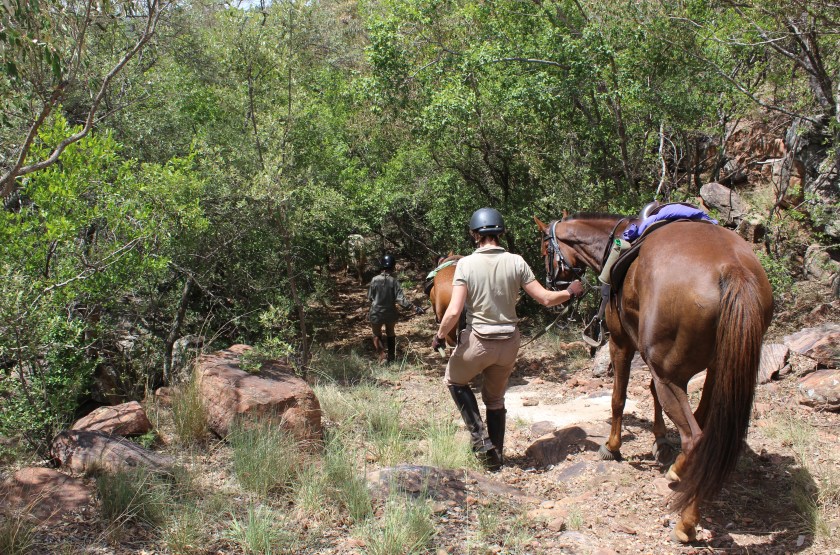

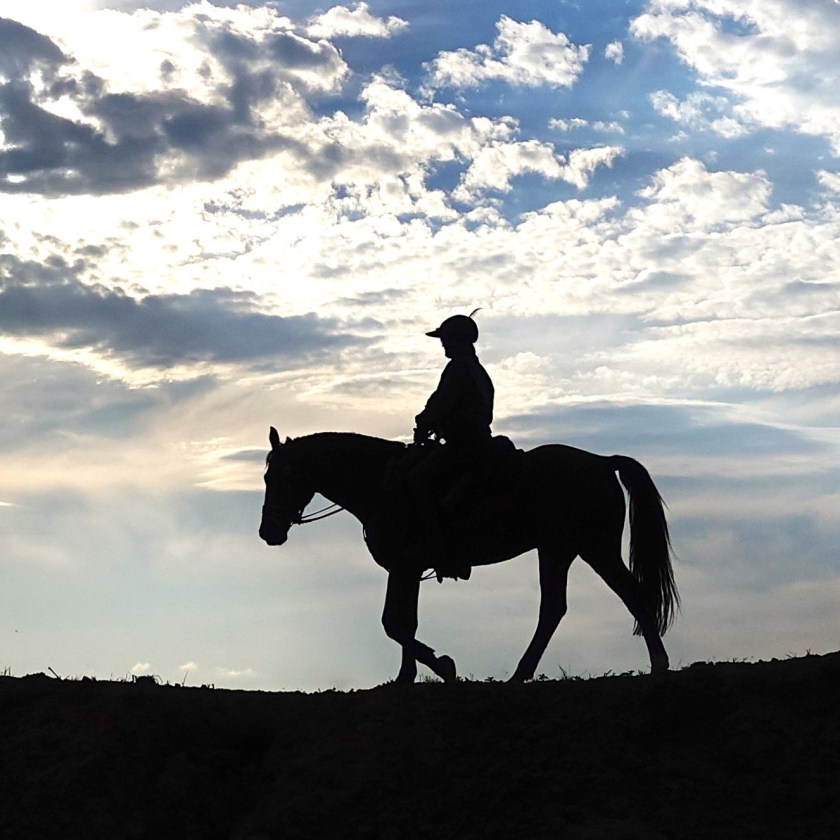

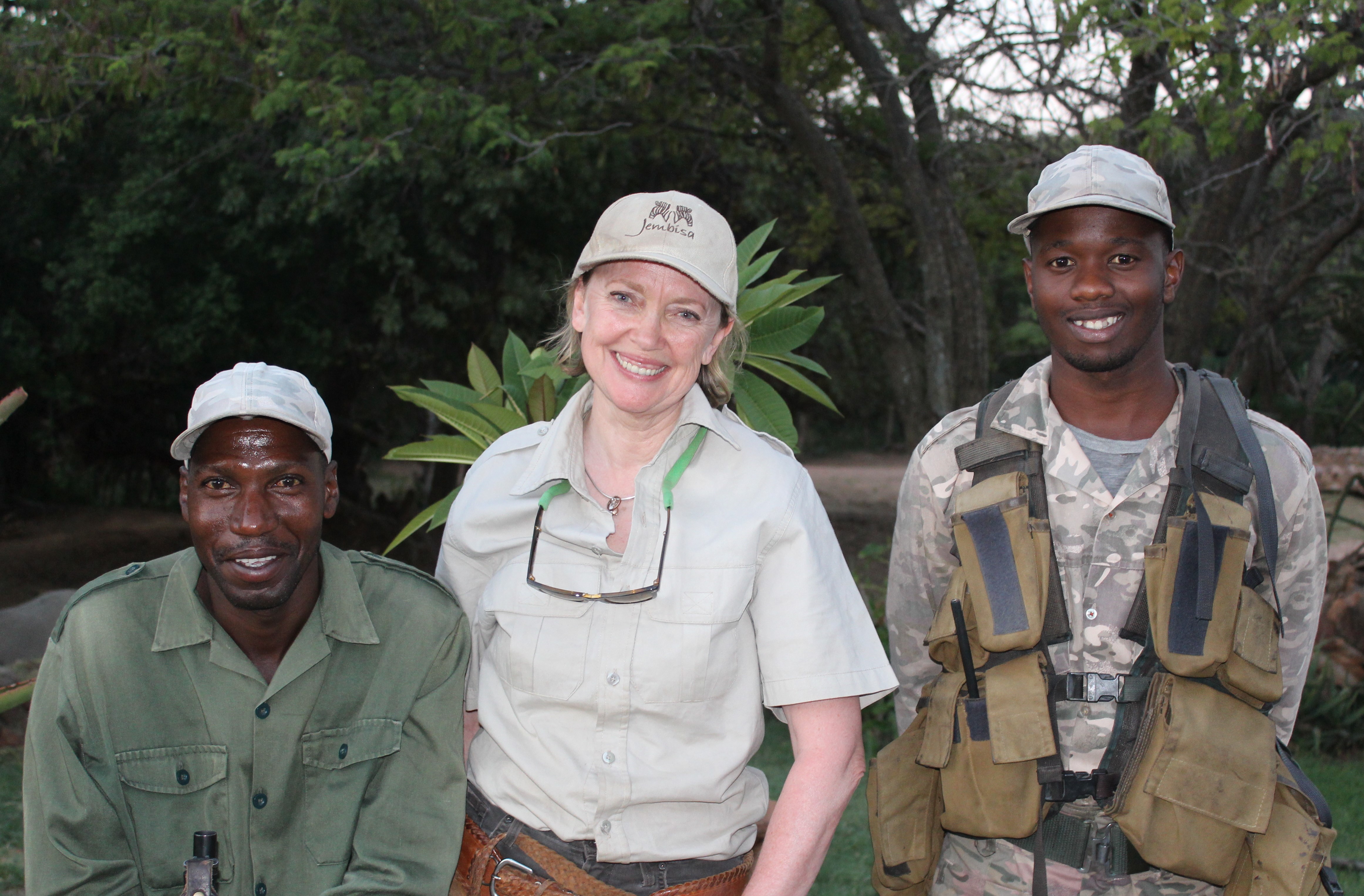






 ~The Waterberg Trust Challenge riders and back-up team 2017~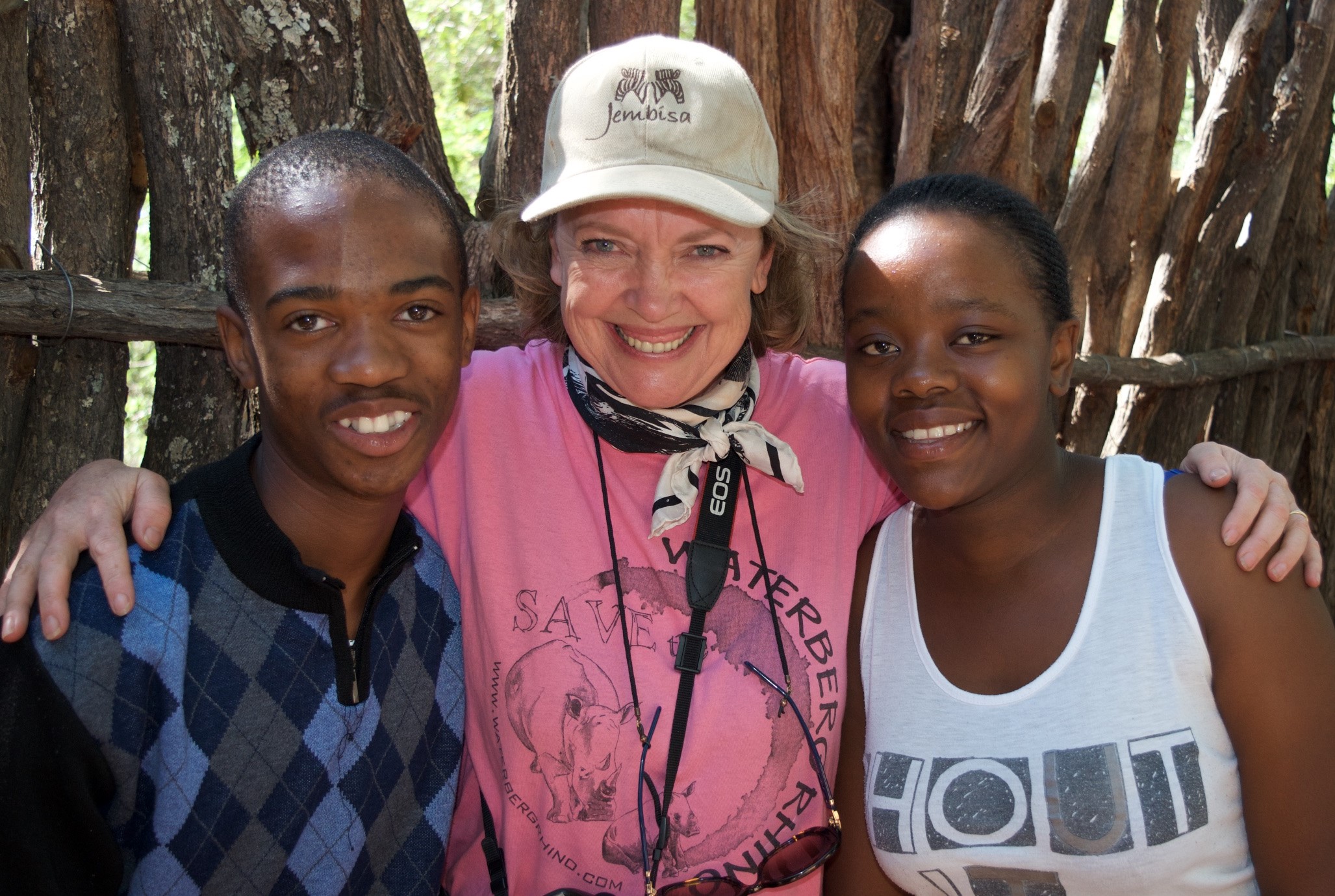



 ~Kit Seymour and Lesley Bennett in 1973 (photo: Lesley Bennett)~
 ~Old London Routemaster buses in 1973 (photo: Lesley Bennett)~
 ~Behind the scenes in Bowness in 1973 (photo: Lesley Bennett)~
 ~Bowness Bandstand in 1973 (photo: Lesley Bennett)~