The school term is over, ‘Swallows and Amazons’ is on BBC iPlayer and Christmas missives are arriving in the post. I have just been sent this homemade card from someone who came to the premier of the original film in 1974, when I was fortunate enough to play Able seaman Titty.
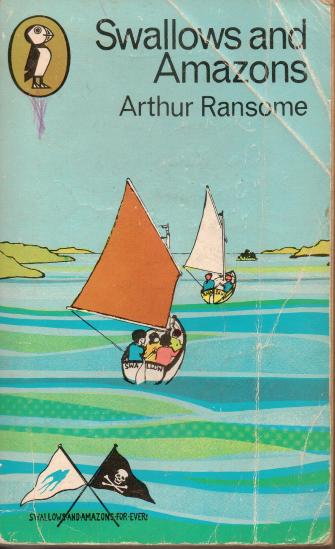
~Captain Flint hanging Christmas decorations around his houseboat on a card made from a Puffin book cover~
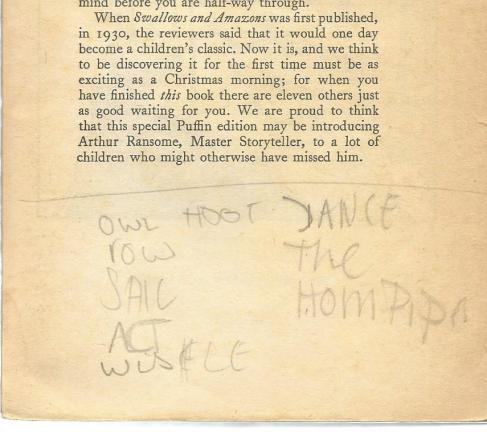
I dug out the Puffin paperback of Swallows and Amazons my father gave me when I was a girl and read avidly, along with other books in the series, by the time I was eleven years-old. It is a 1970’s edition in which I’d underlined everything Titty said. I must have re-read this copy when busy preparing for filming the 1974 movie financed by EMI.
Kaye Webb, the editor, had written an introduction saying, ‘This book is about sailing, fishing, swimming, camping, and piratical exploits.’ She wanted to make it available to children, thinking that discovering Swallows and Amazons ‘for the first time must be as exciting as a Christmas morning.’
Underneath, I’d noted down the skills I would need to acquire before playing the part of Titty. ‘Owl Hoot’, was one item, ‘wisle’ (sic) another. I was somewhat apprehensive about dancing the Hornpipe but excited about ‘being a cormorant’, having no idea how cold this experience would prove.
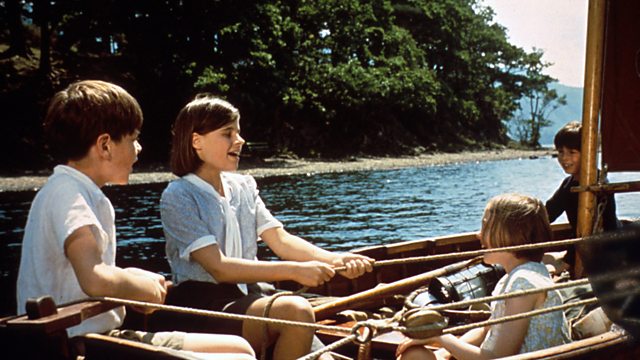
According to Trade News, 75,000 copies of a new Puffin paperback were brought out to accompany the original film. A still was used from the scene where the Swallows sail both dinghies from Cormorant Island. It retailed for 35p. Meanwhile Jonathan Cape printed 12,500 copies with the original dust jacket to accompany the release on 4th April 1974.
Today, I am most interested in Ransome’s prose, amused to find the phrase ‘X marks the spot where they ate six missionaries’ does not appear within the pages of the book. It was given to Titty in 1973 by the screenwriter David Wood. However, there are words of wisdom a-plenty that were not used in the film adaptations:
‘I like cooking,’ said mate Susan.
‘If you want to go on liking it, take my advice and get someone else to do the washing up’, is Mother’s reply. (I wonder who might have said this in reality.)
‘You can be wide awake and not see a thing when you aren’t looking’ is one of Roger’s observations.
John was able to look back to ‘a different, distant life’, which is exactly how it feels when the excitement of Ransome’s world spoils you for the ordinary. It’s true: those involved in outdoor activities develop in leaps and bounds ending up, ‘not at all what they had been.’
What is it about Arthur Ransome’s writing that captures your imagination? Rowing? Sailing? Cooking over a camp fire? Which book has most influenced your life?
Article on Swallows and Amazons on Puffin Magazine
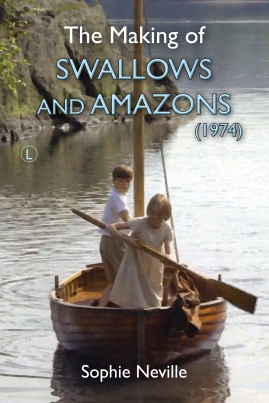
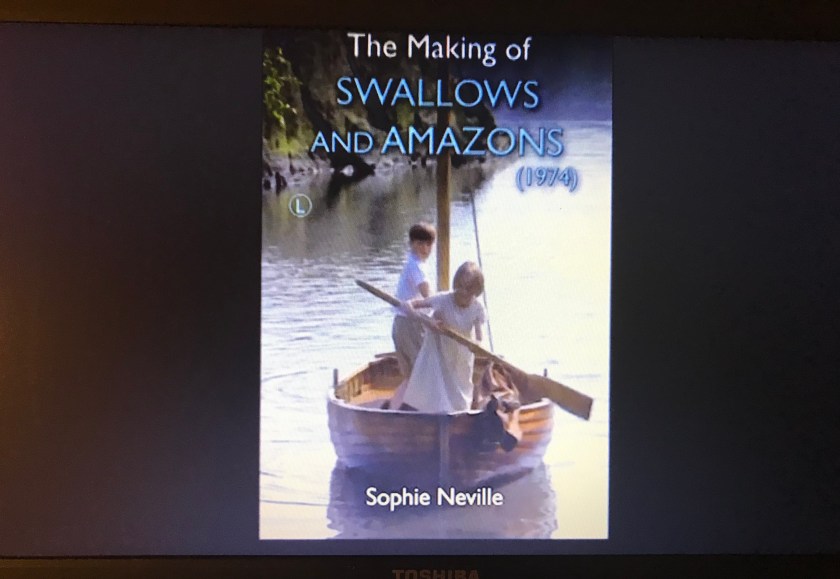
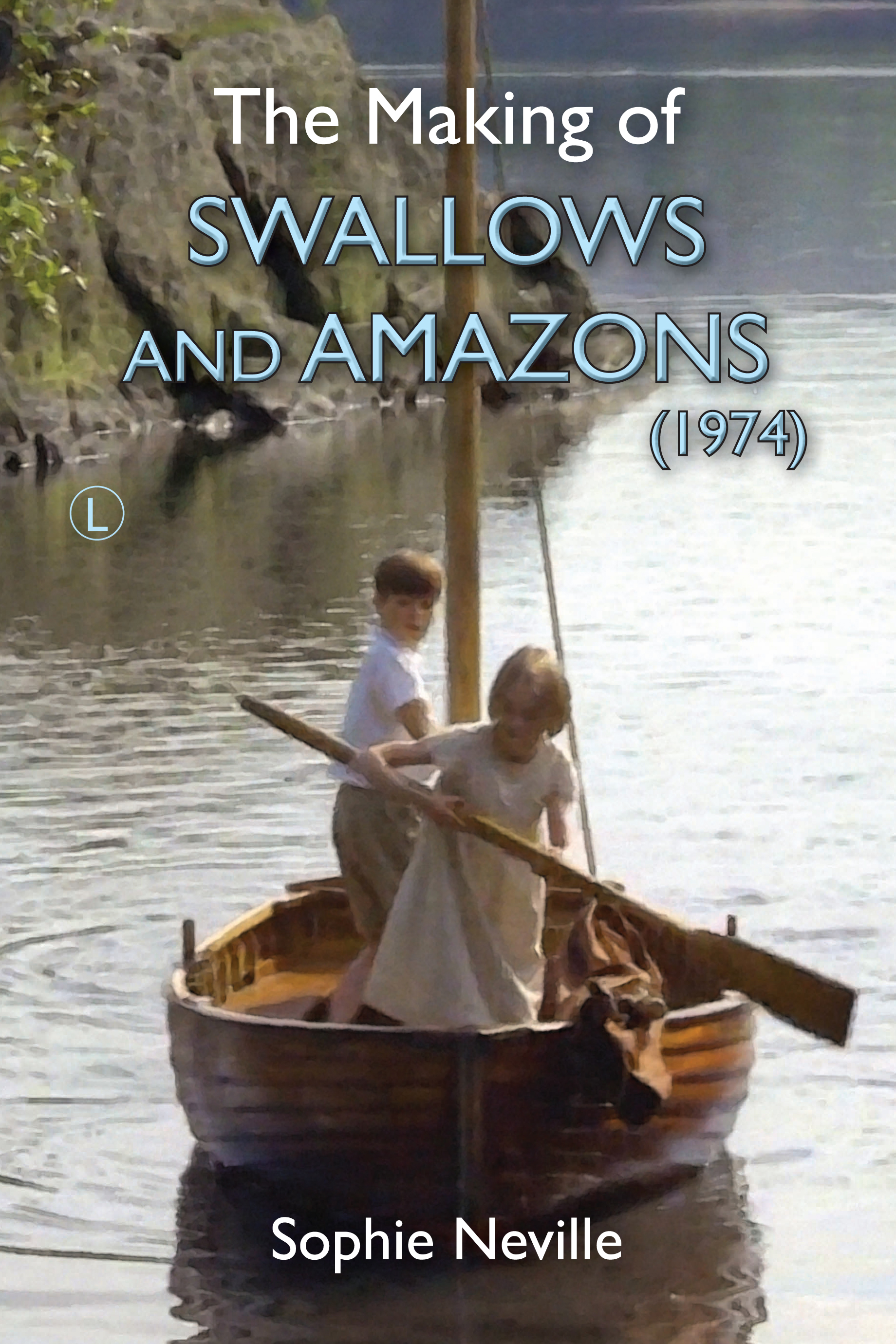
You can read about the adventures we had bringing out the original film in different versions of ‘The Making of Swallows and Amazons (1974)’, which is now available as an audiobook.
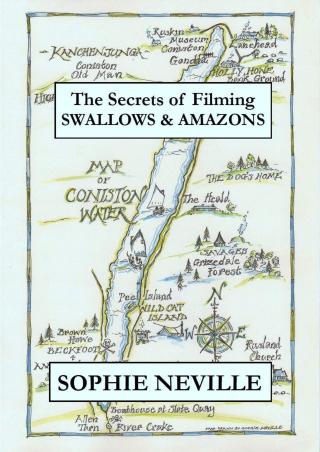
Different editions of ‘The Making of Swallows and Amazons (1974) by Sophie Neville’
If you enjoy ‘Swallows and Amazons’ do think of joining The Arthur Ransome Society who often visit the film locations or the Arthur Ransome Group on Facebook where you will meet like-minded people – of all ages. Most are dinghy sailors who love the books.
Lat time ‘Swallows and Amazons'(1974) was screened on BBC Two, at least one film fan held a TV party with a 1930’s theme. Others ‘stoked up the wood-burner and settled down to spend an afternoon re-living summer in the Lake District’, adding, ‘It is as if Christmas wouldn’t be Christmas without ‘Swallows and Amazons’ – a timeless classic to watch again and again.’
For the latest edition of the paperback on ‘The Making of Swallows and Amazons(1974)’ with details of where the film was made and what those who appeared in it are doing now, Please click here
The ebook, entitled ‘The secrets of filming Swallows & Amazons (1974)’ is similar with a few more stories for adult readers and has links to behind-the-scenes cine footage. It can be downloaded from iTunes, Smashwords,Kobo and Amazon Kindle
It would be lovely to hear from anyone who saw it in the cinema when it first came out in cinemas in the summer of 1974 – more than forty-five years ago.
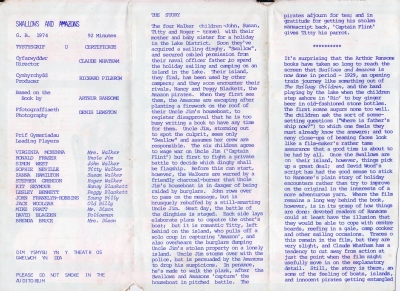
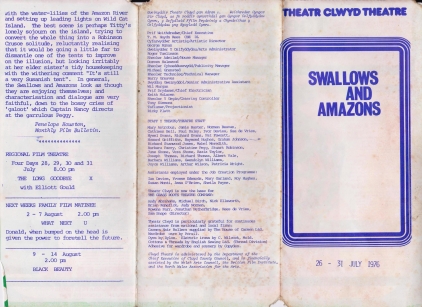
Simon Hodkin kindly sent in this cinema programme that he has kept since watching the movie when he was a boy growing up in North Wales.
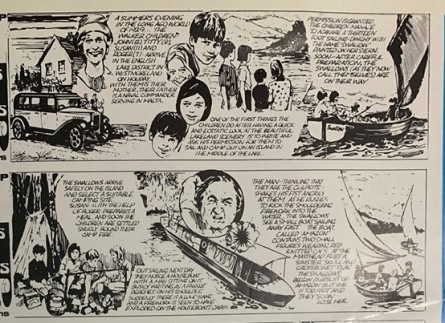
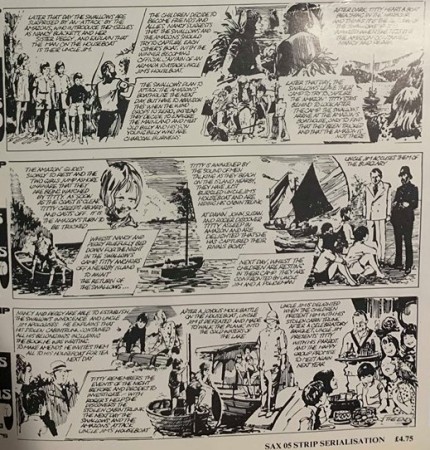
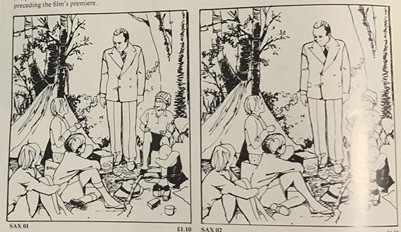
Arthur Herbertson managed to track down these rare publicity sheets for ‘Swallows and Amazons’ typical of movie games of the period:
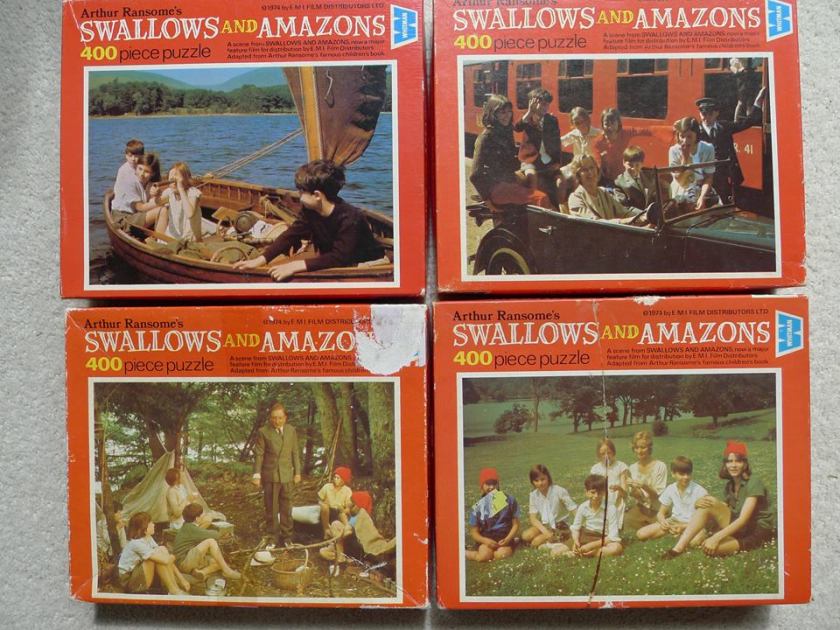
Arthur has a collection of the four jigsaw puzzles and the Puffin paperback that came out with the film.
There was a vinyl LP narrated by the screenwriter David Wood that you can still purchase.
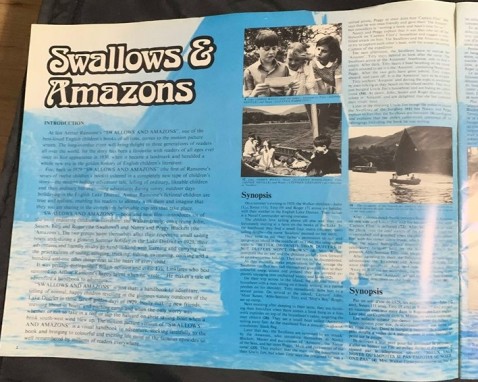
Arthur found a publicity brochure that I had never seen before.
To read comments from people who saw the film at the cinema in 1974, please click here
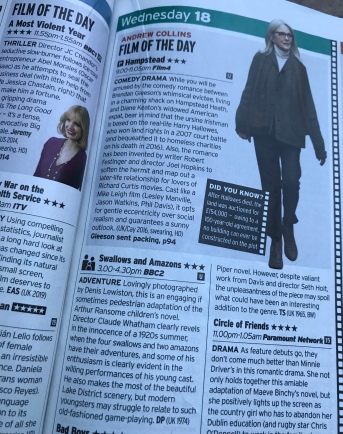
The original story was written by Arthur Ransome in 1929 ninety years ago, so the film hits the half-way mark between the original readers and today’s audience. It’s funny, the critics in 1974 are asking the same question as raised in the billing this week: Do ‘modern youngsters struggle to relate to such old-fashioned game playing’?
Do add your thoughts to the comments below.
~Billing in the Christmas edition of the Radio Times 2019~
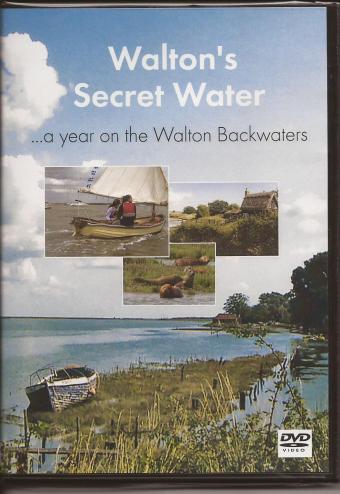
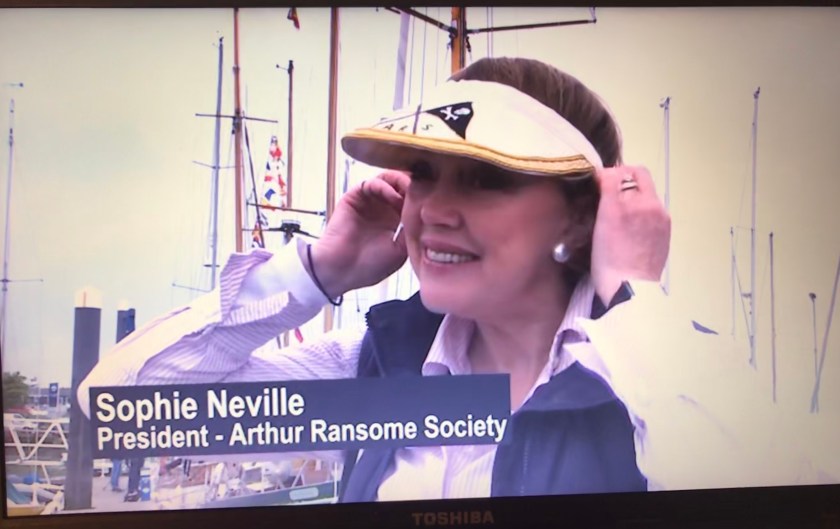
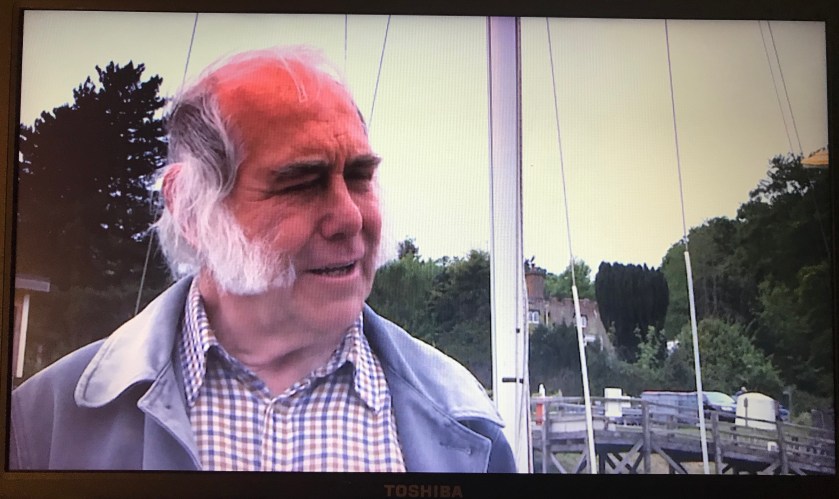
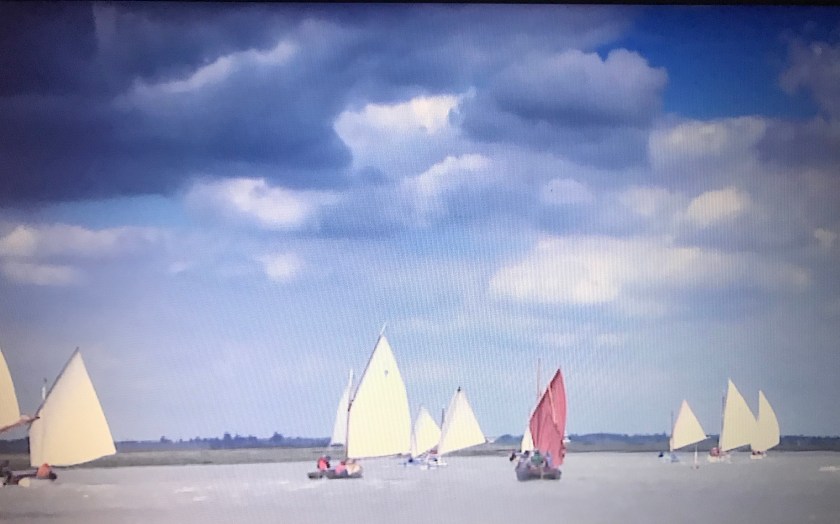
In my role as President of The Arthur Ransome Society, I was interviewed by Chris Opperman for a new documentary produced by David Webb on the Walton Backwaters, known by Arthur Ransome enthusiasts as ‘Secret Water’.
The 75 min DVD entitled ‘Walton’s Secret Backwaters’ is compatible with all DVD players displaying the DVD Video & PAL logo. It can be purchased online here
Chris Opperman, who chatted to me at the Royal Harwich Yacht Club on the Orwell, has sailed in the area for years. After a career in newspapers, he produced programmes for Radio 4 and the World Service before presenting the breakfast News and countryside documentaries on BBC Radio Suffolk.
As President of The Arthur Ransome Society, I represent the 1,000 or so members of the literary society devoted to the Swallows and Amazons books, including those set in East Anglia. There is usually a lot of flag flying since many members also sail. Swallow, the dinghy used in the original film ‘Swallows and Amazons’ has taken part in Swamazons events on the Walton Backwaters since she was renovated in 2011.
We celebrated the fact that Arthur Ransome’s book ‘Secret Water’ was published eighty years ago at the Essex Book Festival when I was joined by authors Julia Jones and Peter Willis in Harwich on Sunday 3rd March.
I signed copies of ‘The Making of Swallows and Amazons (1974)’ afterwards. It was great to see it featured in the DVD.
If you enjoyed the original film adaptation of Arthur Ransome’s book ‘Swallows and Amazons’ often broadcast on BBC Two, and now screened on Talking Pictures TV, do think of getting a copy of ‘The Making of Swallows and Amazons’, published by The Lutterworth Press or the ebook entitled ‘The Secrets of Filming Swallows and Amazons’. You can read the first section for free on Kindle here. Quite fun!
It’s surprising ‘Swallows and Amazons’ hasn’t been re-made a number of times. The 1974 movie was sold all over the world and has been screened so often it’s become regarded as iconic, labelled ‘a cult classic’ or ‘enduring success’. You can listen to Wilfred Joseph’s film score here:
Thanks to Claude Whatham’s extraordinary skill in creating a period film that never dated, cinema audiences emerge asking if it was made last summer.
The Danish poster of ‘Swallows & Amazons’ 1974 giving the Swallows a Jolly Roger or pirate flag
Although it was shot nearly 50 years ago, fan mail still arrives from Australia, the USA and Japan. Families can quote David Wood’s script fluently, having watched the DVD thirty times or more. The biggest complement is that they talk of being ‘Titty-ish’ or ‘just like Titty’, the little girl whose imagination gave her the strength and courage to excel.
-A carefully made fan letter showing Sophie Neville playing Titty Walker in 1974-
When I went to watch the 2016 film of ‘Swallows and Amazons’ being made on location, I warned the actors they were in for the long haul. Although the new adaptation has older children in the cast, and additions to the plot, it was heralded as a great British film, a landscape movie of significance about the thrill of exploring the great outdoors. Broadcast on BBC Two earlier this December and it is out on both Blu ray and DVD. For the Hanway Films billing of ‘Swallows and Amazons’ 2016, please click here.
A Czech poster of ‘Swallows & Amazons’ 1974
Think of uploading the ebook onto your phone so that you can use it as a guide to find the film locations and places Arthur Ransome knew well next time you are in the Lake District. You can read the first section free of charge here:
Signing copies of ‘The Making of Swallows and Amazons’ in Cumbria
1 – How did you get the part of Titty?
In March 1973, a letter arrived, out of the blue, inviting me to audition for a role in ‘Swallows and Amazons’. I was twelve years old, an ordinary school girl at a convent in Berkshire. I’d read the Arthur Ransome books but had no idea I was up for the lead in a major EMI feature film intended for a universal international audience. The movie was directed by Claude Whatham. Back in 1970, he’d cast me as Eileen Brown, opposite a boy playing Laurie Lee, in the BBC’s first adaptation of ‘Cider With Rosie’. It was a role that demanded learning a piano piece so complicated it took twenty-one hours to master, but I did it. Claude must have respected my hard work. I was too tall to play Titty but, after a sailing audition at Burnham-on-Crouch, I was offered the part. He cast Sten Grendon, who’d played the young Laurie Lee, as Roger, Suzanna Hamilton was Susan and Virginia McKenna starred as our mother. She later admitted to finding her character rather dull but it was her name, in lights outside cinemas, that drew big audiences. We’ve kept in touch. She is still acting, aged 87, and has led the Born Free Foundation’s international campaign to redeem the lives of wild animals held in miserable conditions since 1998.
With Virginia McKenna on location at Bank Ground Farm near Coniston, in 1973
2 – Why was it so suitable for you?
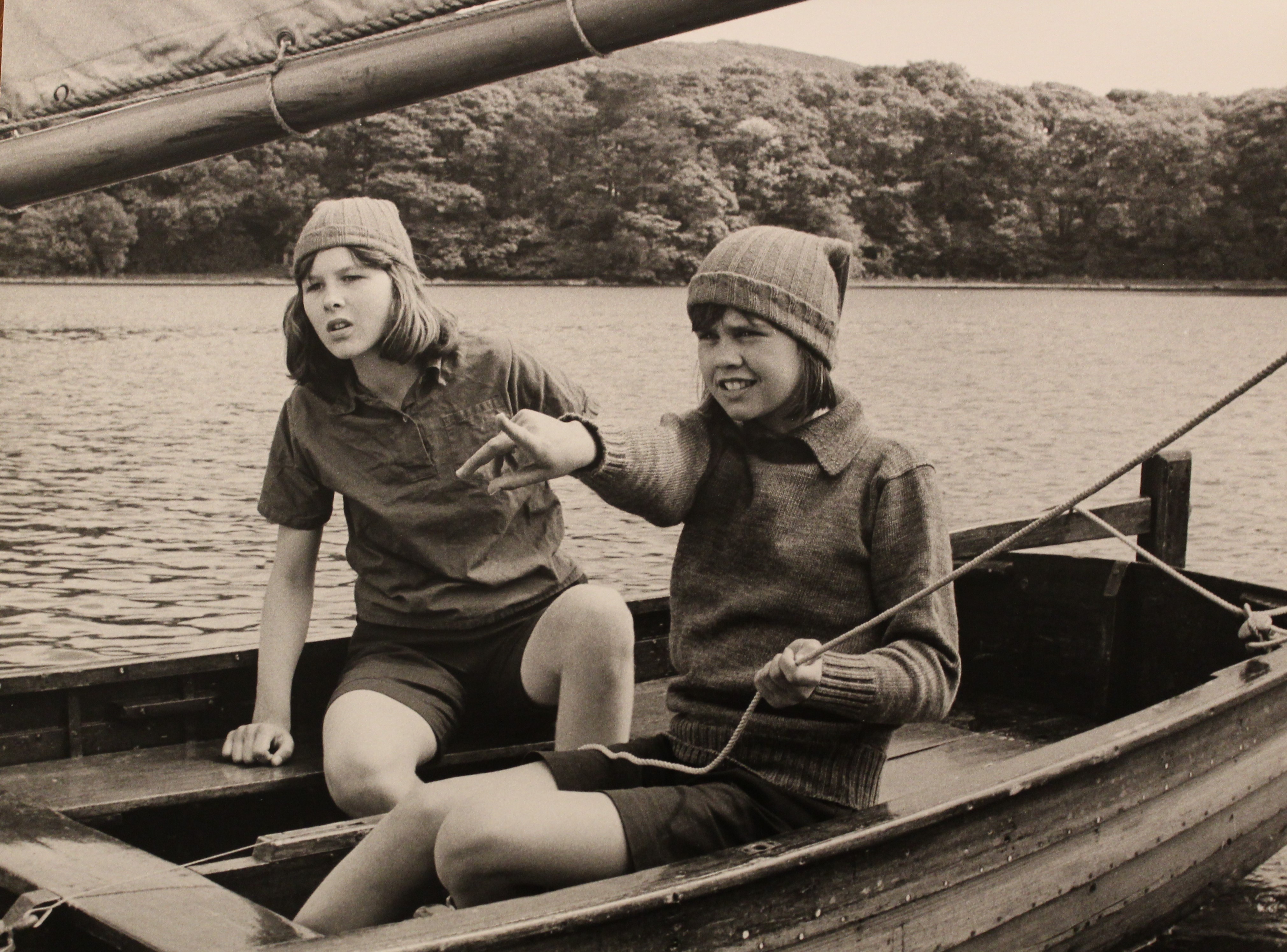
We loved visiting the Lake District as a family. My father helped the Maryport Button Factory with their publicity and once took us to stay on a farm near Castle Craig above the River Derwent. I spent my childhood camping and messing about in boats, adding a sail made from a dust-sheet to an old rowing skiff. The great thing about the original film of ‘Swallows and Amazons’ was that Simon West, who played Captain John, was an exceptional sailor. He went on to become a national champion. Kit Seymour, who played Captain Nancy, also had a natural command of the waves. It shows on screen. They were able to handle our small boats when squalls rolled down from the fells. I didn’t have their innate understanding of the wind but it was Titty’s job to row everywhere – back from the charcoal burners and off to One Tree Island on Derwentwater. “Pull harder, Roger!” I managed to row Amazon out of Secret Harbour in one take, with the cameraman and a massive 35mm Panavision Camera on board.
Simon West, Suzanna Hamilton and Sophie Neville in Swallow, 1973
Casting-off Swallow was more of a challenge. It doesn’t show on a small screen, but when ‘Swallows and Amazons’ is shown in cinemas, you can spot the sequence when I slip on a rock with the telescope in one hand. I was up to my waist in water but got back on my feet and battled on, waving as the others sailed up Coniston Water. I knew how difficult the shot was to achieve and was desperate to do my best for Claude Whatham.
Standing on Peel Island in a soaking wet dress while the Swallows sailed north
3 – Did it fire your wish to work in TV?
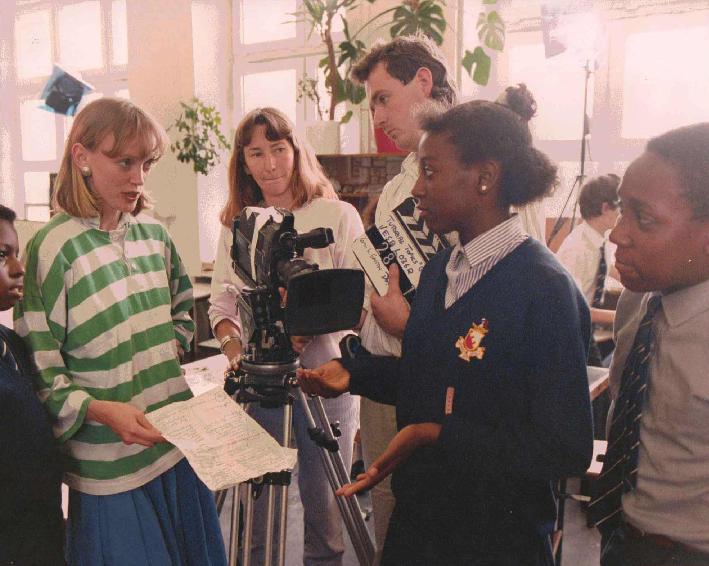
No! It was directing plays while reading Anthropology at Durham University that ignited a desire to work on television dramas. However, the experienced I’d gained acting in movies helped me win a place on the BBC TV Graduate Trainee scheme. After working on ‘The Russell Harty Show’, I grabbed the chance to cast children on the adaptation of Arthur Ransome’s books set on the Norfolk Broads: ‘Coot Club’ and ‘The Big Six’. I found Henry Dimbleby, then aged thirteen, to play the lead and spent three months on location with Julian Fellowes and Rosemary Leach – who I’d met when she played Laurie Lee’s mother. I later worked on ‘Doctor Who’, ‘Eastenders’ and ‘My Family and Other Animals’, before producing an INSET series, directing one episode at a village school in Cumbria. I began casting children in the Lake District to appear in BBC adaptations of Arthur Ransome’s Lakeland books but they were axed, which was sad, as we were all set to make ‘Swallowdale’ and ‘Pigeon Post’ on the high moors.
Sophie Neville directing a drama-doc with BBC cameraman Lorraine Smith
4 – What does the Lake District in general, and Keswick in particular, mean to you?
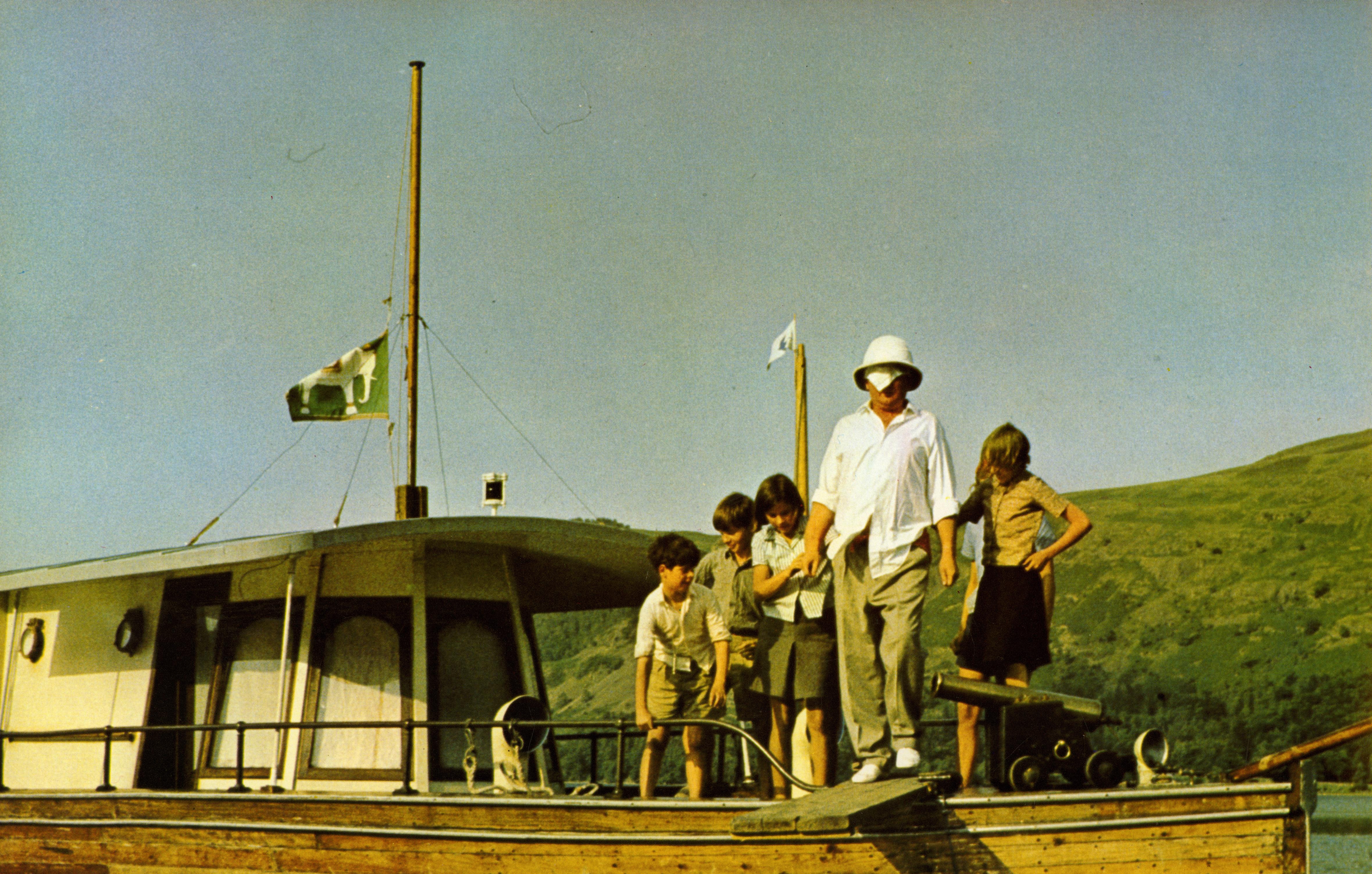
We live on the south coast but take the train north at any opportunity. I’m now President of The Arthur Ransome Society and came up for a fabulous weekend in May when we sailed from the jetty at Bank Ground Farm – Holly Howe in Ransome’s books. I gave an illustrated talk on the secrets of making ‘Swallows and Amazons’ at the Bassenthwaite Institute, using behind-the-scenes photographs taken when we were filming on Derwentwater forty-five years ago. We shot all the scenes involving Captain Flint’s Houseboat in a bay on the western shore. She was played by the Lady Derwentwater, converted for the drama by Ian Whittaker, a talented young set dresser who went on to win an Oscar for set decoration on the feature film ‘Howards End’ starring Sir Anthony Hopkins and Emma Thompson. We shot the lighthouse tree scenes near Friar’s Craig and used Lingholme or One Tree Island for Cormorant Island, where Titty finds the treasure chest. We enjoyed making Ronald Fraser, the film actor playing Captain Flint, walk the plank and sailed up Derwentwater to the strains of ‘What Shall We Do With The Drunken Sailor’, played as the end credits roll. Forty years later, Suzanna Hamilton and I were asked to lunch with Richard Pilbrow the producer of ‘Swallows and Amazons’. Buskers were singing this song outside the restaurant in Covent Garden. We couldn’t believe the coincidence.
Meeting fans of Swallows and Amazons at Keswick in July
I meet people from far and wide who tell me the 1974 film of ‘Swallows and Amazons’ inspired them to visit the Lake District. It has been broadcast on television every year for the last forty years and was last shown in Australia on Boxing Day. It has been dubbed into Czech twice and is often shown at festivals as only ‘U’ certificate movies can be screened outdoors. I just hope this has proved a blessing to the people of Keswick, which I so loved visiting as a child. I thought the 2016 film of ‘Swallows and Amazons’ – that I appear in for approximately two seconds – would overshadow the classic version but it has simply raised awareness along with DVD sales. Fan mail continues to arrive. A beautiful card came today. Arthur Ransome would have been touched. It had fish on it.
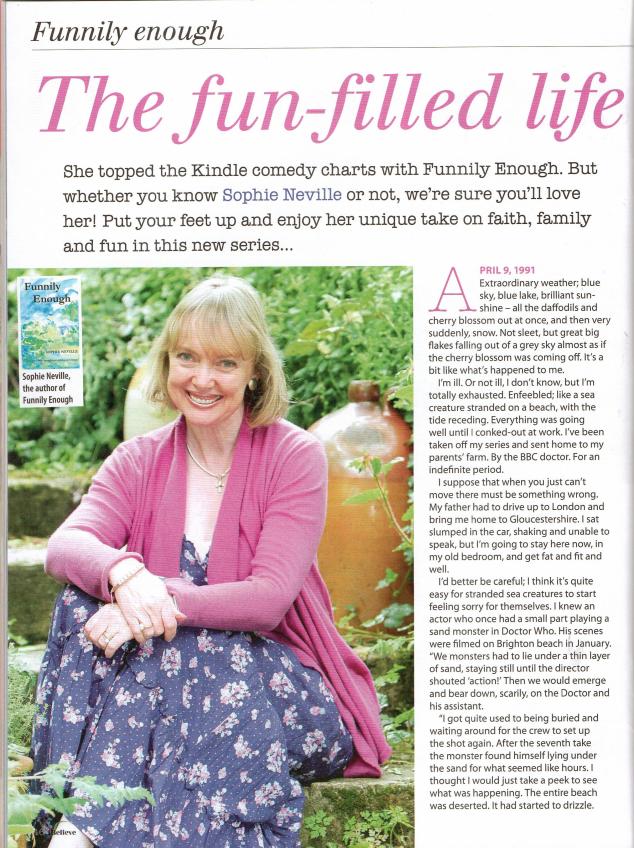
Editorial coverage and a literary award for ‘Funnily Enough’
5 – Do you want to mention mental health/physical health issues are always in the news?
I find that many of my readers are stuck in bed or battling with ill-health. I hope they are amused and uplifted in some way by stories in my books. ‘Funnily Enough’, a diary I kept after collapsing at the BBC, is about my own struggle with what I am pretty sure was a tick-bourne disease. I lost my job but recovered in Southern Africa, where I fulfilled Titty’s dream of seeing “forests full of parrots” and produced decorative maps for a living, inspired by Spurrier’s illustration on the original cover of ‘Swallows and Amazons’. I used maps and details from my sketchbook to illustrate a paperback entitled, ‘Ride the Wings of Morning’, which is out in colour as an ebook.
On the crew of the Gloriana in the Boat Race Flotilla in March featured on BBC Television
6 – What else?
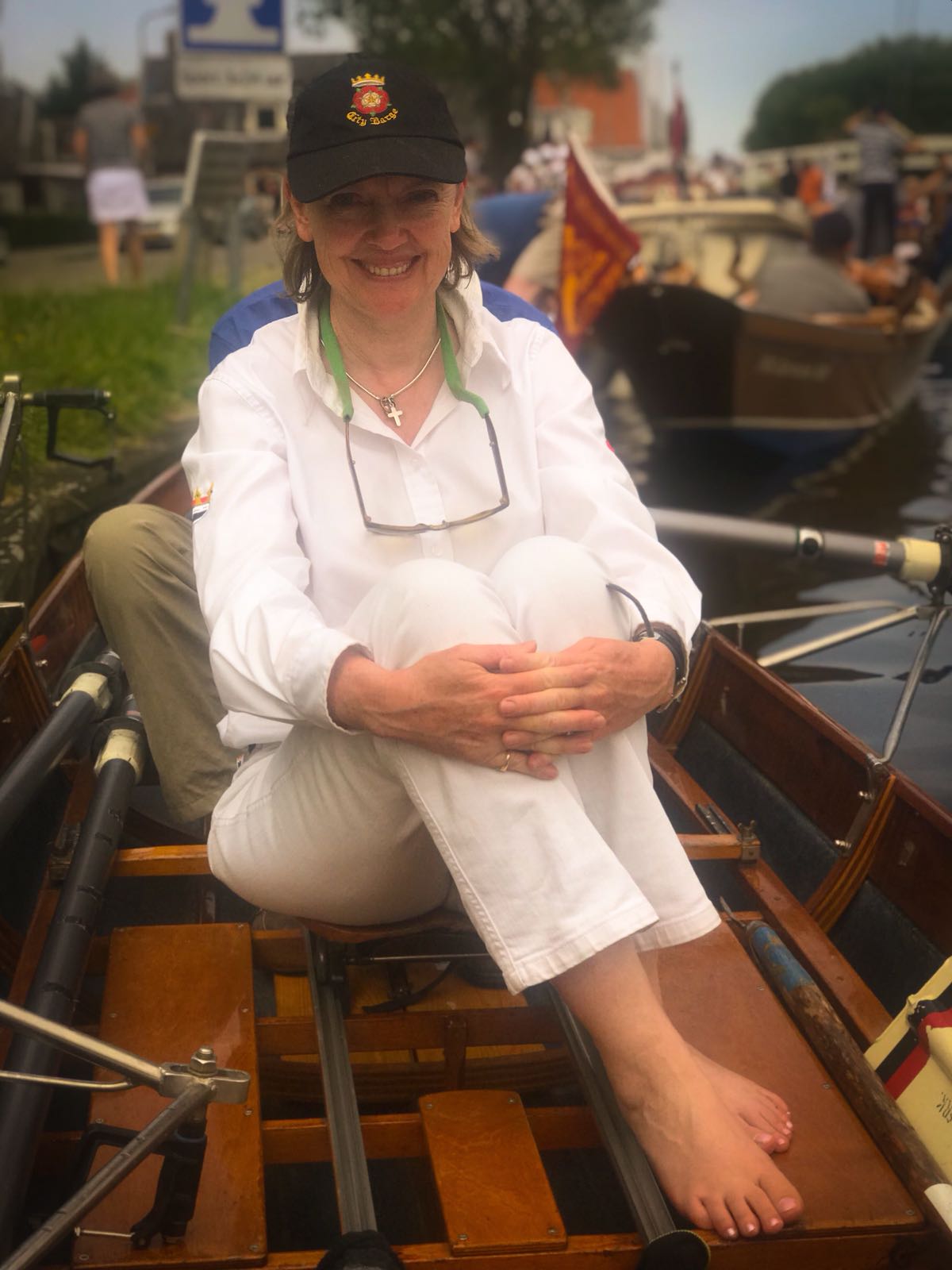
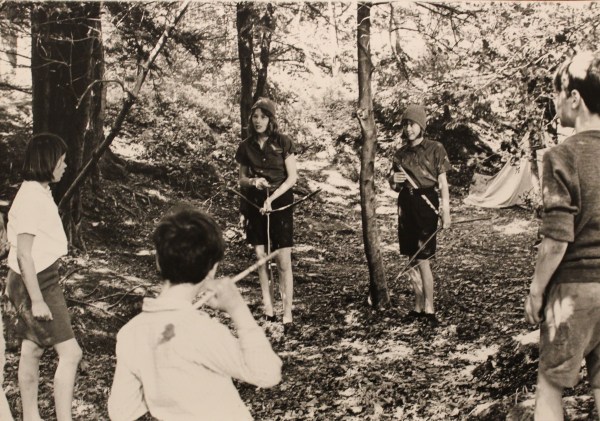
People often ask how ‘Swallows and Amazons’ influenced my life, keen to know what I am doing now. I am still keen on rowing. I completed the Voga Longa, a 32 kilometre marathon through the Venetian lagoon with Olympic gold medallist Ed Code and was on the crew of The Queen’s row barge Gloriana for the Boat Race Flotilla this year. This summer, I grabbed the chance to row through the canals of Amsterdam, which was fascinating. However, it was the Amazons bows and arrows that impacted my life. After learning to shoot on the shores of Coniston Water, I was cast as an archery champion in another movie and have since won three Ladies Championships. I met my husband at an archery match. My stepson shot for England in July, winning a tri-annual match against the Royal Company of Archers (so proud!) I gave a talk recently demonstrating how the arrows in ‘Swallows and Amazons were’ fired over my head. The shot looks so dangerous that it was cut from the TV version of the film, but is included in the re-mastered 40th Anniversary cinema Blu-ray version, which we are now able to watch on the big screen.
Rowing in from De Hoop Rowing Club in Amsterdam, July 2018
The 45th Anniversary of filming the original film ‘Swallows and Amazons’ on Derwentwater, when Ronald Fraser was obliged to walk the plank in a solar topi in July 1973, was marked by a special screening of the film at the Alhambra in Keswick.
Kerry Derbyshire, who played Vicky’s nurse came on stage and we demonstrated how one of the visual effects was achieved.
I brought one of the original arrows that the Amazon pirates fired over my head. It looks so dangerous on film that the shot was cut from the television version but is included in the re-mastered cinemascope edition that we are now able to watch on the big screen. You might be able to spot a few other things that went wrong while we were filming, such as the time I inadvertently slipped up to my waist in water.
Nick Newby from Nicole End Marine came along to tell us how the elegant Lakeland steamer, the Lady Derwentwater, had been converted for her starring role as Captain Flint’s houseboat. She was appropriately dressed for the part by the award-winning set designer Ian Whittaker, who went on to receive an Oscar for Best Art Direction on ‘Howards End’ starring Sir Anthony Hopkins and Emma Thompson. His astonishing list of nominations can been seen here.
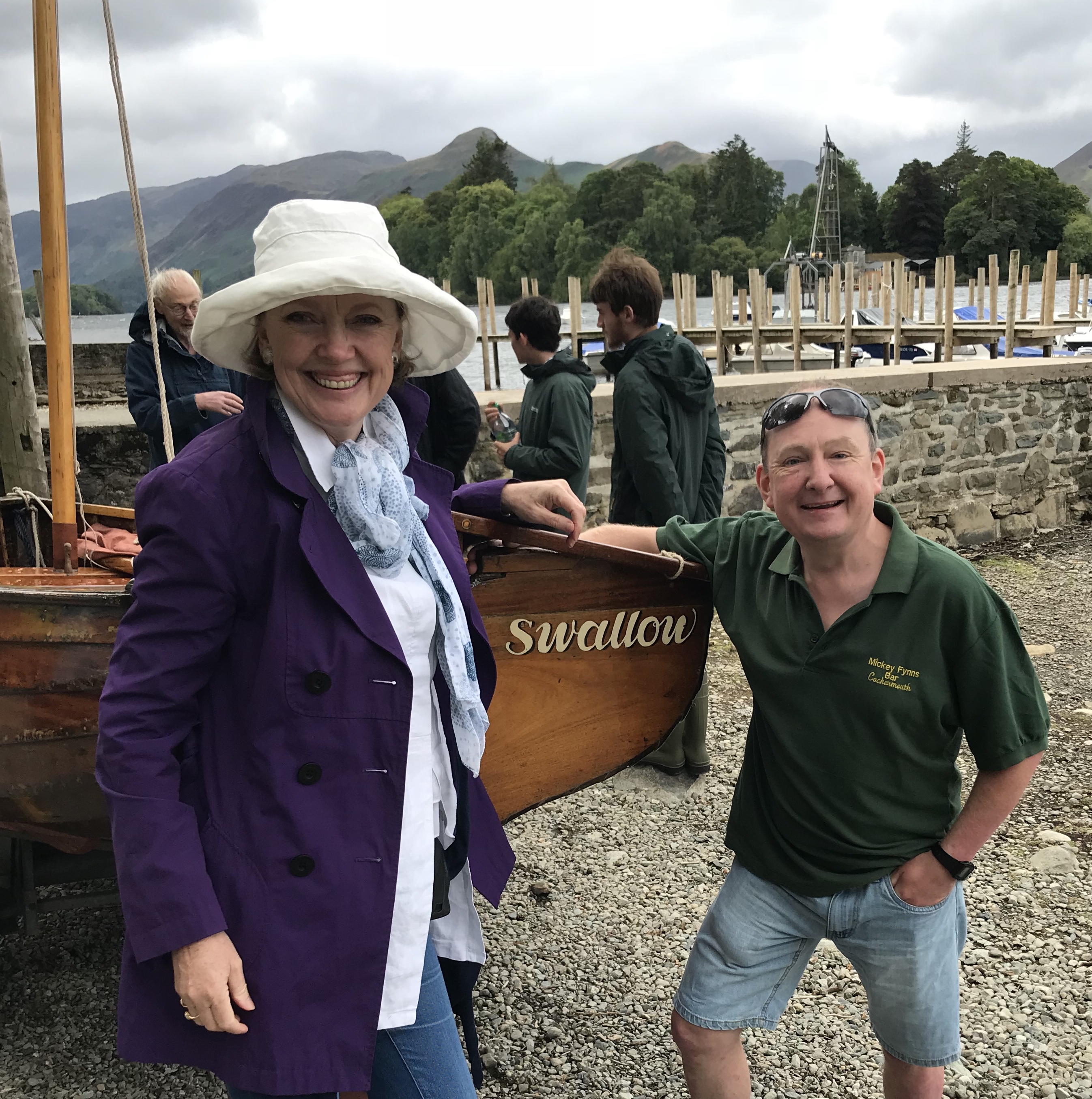
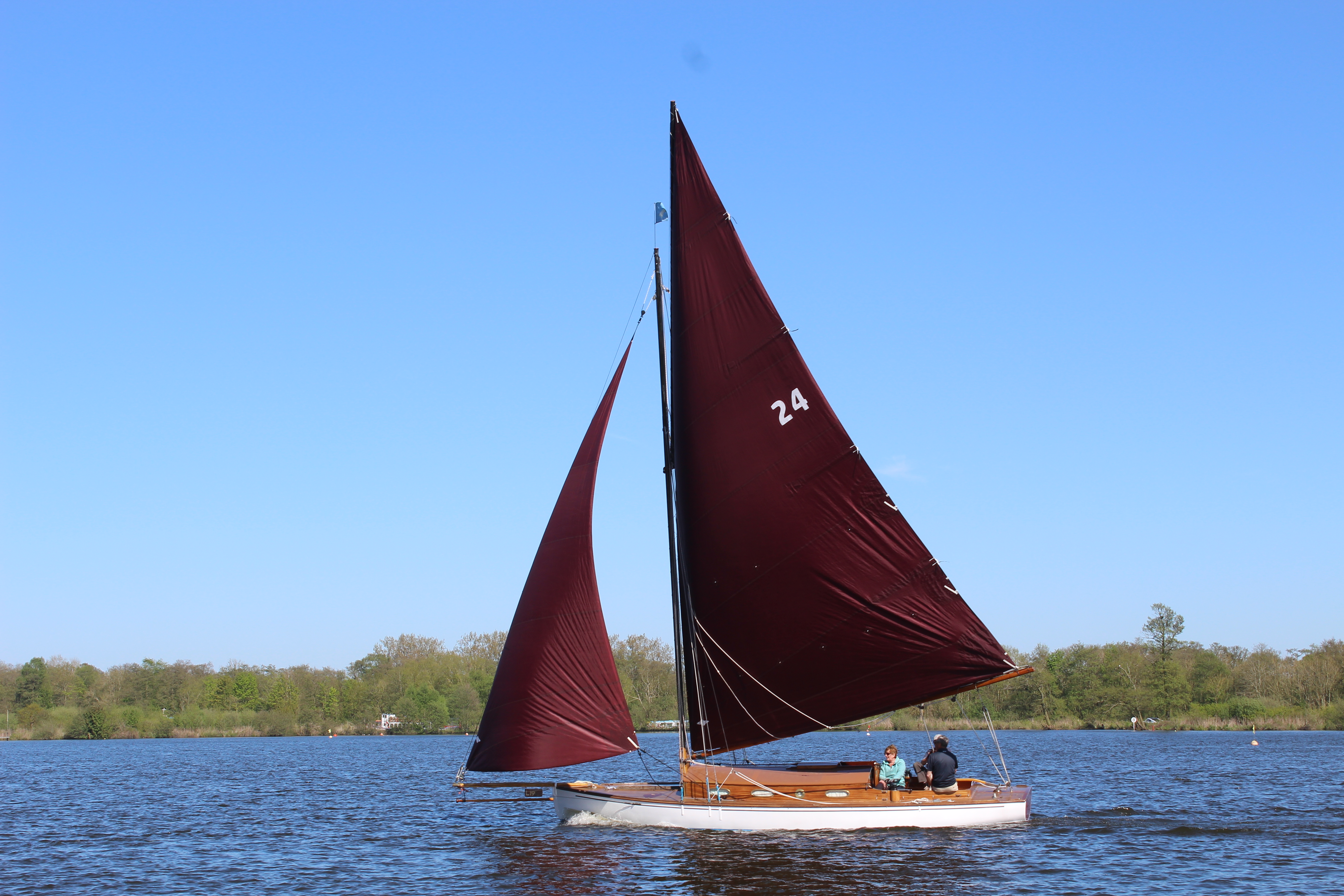
Swallow, the 1930s sailing dinghy used in the original film, was at the lakeside for Arthur Ransome enthusiasts to admire. She is looked after by Rob Boden, from Kendal, who is happy to take people for a sail by prior arrangement via the SailRansome website here.
I was invited to talk about making the BBC TV classic serial ‘Coot Club’ and ‘The Big Six’ at the Norfolk Broads Yacht Club to help celebrate their 80th Anniversary. Titmouse, then 1930s dinghy owned by Hunter’s Yard had been brought down from Ludham for the occasion. The bonus was that I was able to go sailing in one of the classic boats gathered at the club for their Open Day.
Geoff and Rose Angell kindly took me out on Pippa, their beautiful yacht with brown sails that appeared in ‘The Big Six’. I am sure Arthur Ransome would have loved her.
Back in 1983, I spent nine months working on the BBC production when it had been my job to cast the children and teenagers who appear in the drama, many of whom needed genuine Norfolk accents.
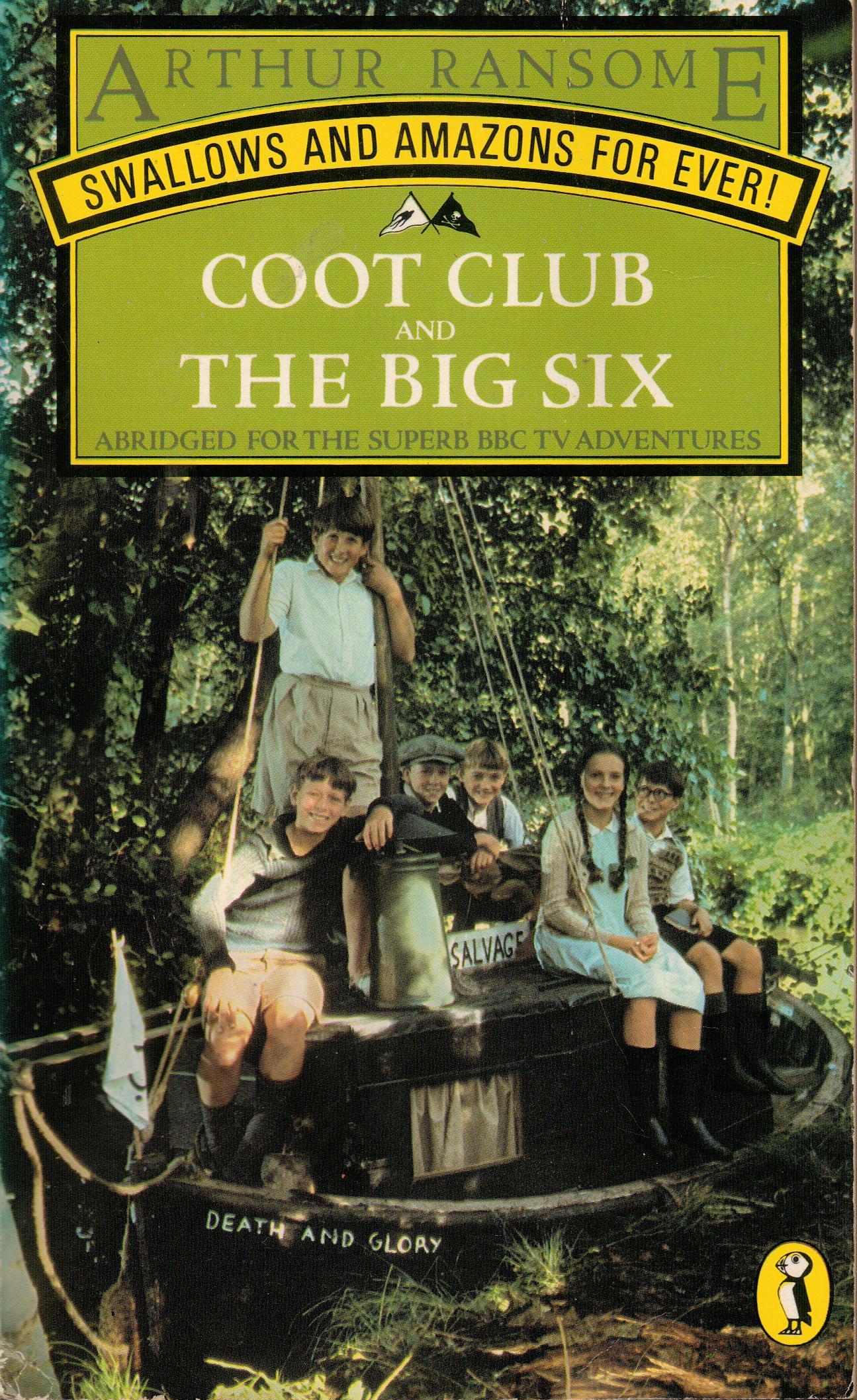
We had been looking for young actors who could swim well and were able handle boats. We then spent three months filming in East Anglia when I looked after the children and helped rehearse their lines. I set up this shot for the cover of the Puffin paperback that accompanied the series.
~Author Sophie Neville giving a talk at the Norfolk Broads Yacht Club~
At a forum organised after my talk, Pat Simpson from Stalham Yacht Services explained how he found one of the stars of the series – an old lifeboat suitable to play the Death and Glory. She had been brought from where she is kept at Belaugh for the evening. You can see more photographs of her in the previous blog post here.
Pat provided a number of other vessels for the series including Buttercup and support boats such as the safely boat, a large modern cruiser used as a school room along with another for the costume and make up personnel. He explained that this came as a god-send as boat rentals had not been good that summer. Working on the series was harder than he imagined, ‘We once had to take a boat from Regan to Horning Hall overnight’ but he was pleased that ‘after three months of concentrated work, we got it all done.’
~Robin Richardson~
Robin Richardson, who co-owned Pippa back in 1983, explained how the shot of her being cast adrift was achieved. This wasn’t as easy as first thought as even when Simon Hawes, who was playing George Owdon, flung her stem line on the deck, a gentle breeze was blowing her back against the staithe. ‘Pippa didn’t want to go anywhere’. Robin had to stage the action by throwing out a mud anchor, climbing under her awning and pulling on the line to create the effect of a boat drifting out of control into potential danger. Pippa’s white canvas cover is pulled back here, but you can imagine the scene.
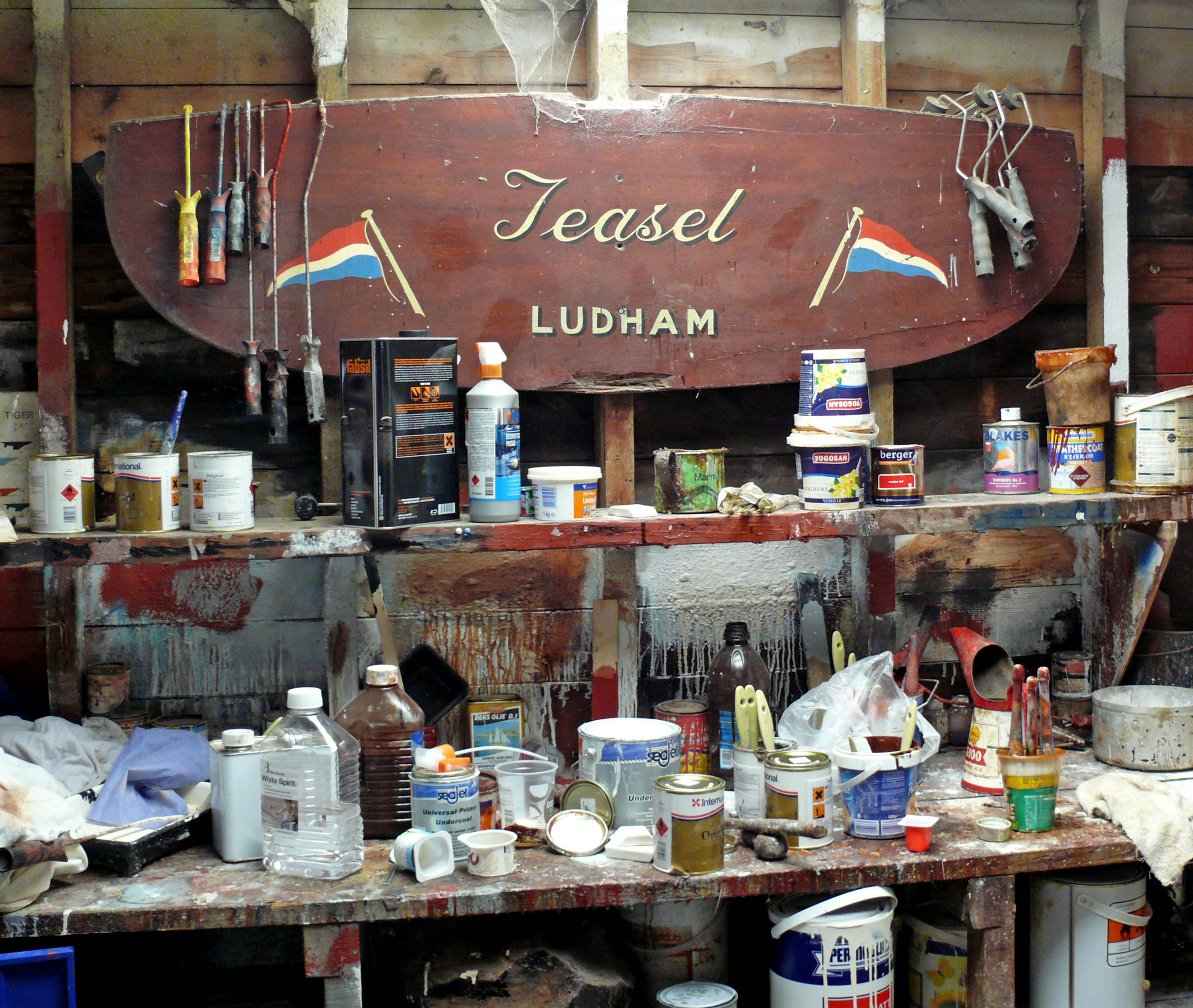
He was on location when Henry Dimbleby, who played Tom Dudgeon, was attempting to tow the Teasel under Potter Heigham bridge. He was rowing Titmouse, pulling hard on the oars but nothing was happening. ‘Stop for lunch,’ Robin advised the director, ‘and the tide will turn.’ This they did, and Henry we able to row under the bridge, towing the Teasel quite easily. Hunter’s Yard, who own Lullaby, who played the Teasle, could not bring her down for the weekend as she had been leased out with other boats, but they sent her transom, painted with her stage name.
Robin Richardson owns the ‘Slipstream’ class dinghy called Spindrift who played Shooting Star in the serial. She was built by her father but couldn’t be with us as they were not able to complete her winter maintenance in time but Richard Hattersley said she came tenth in this year’s Three Rivers race when only 15 of the 98 entries actually finished. It’s a 24 hour endurance challenge, which they completed despite light winds. He sent me this shot, ‘of her battling it out with much larger Thames A Raters.’
I was shown a wonderful black and white photograph of the vessel used to play the Cachalot. She was skippered in the series by the film actor Sam Kelly in the role of the unnamed pike fishermen who the Death and Glory boys simply called ‘Sir’. She is seen here with John Boswell, her real owner who has sadly passed away. His son, the artist Patrick Boswell, brought along an album of behind-the-scenes photos.
The theme of the weekend was ‘Boats of the 1930s’. I explained how Swallow, the dinghy used in the original film ‘Swallows and Amazons’ originally came from Burnham-on-Sea where she was made by W. King and Sons to be used as a run-a-round boat. She was stabilised by a keel that ran the length of the hull, as Ransome described. It makes her rather difficult to turn. You can sail her today and is in the Lake District right now. Please see Sailransome for details.
There was quite a bit of interest in memorabilia from the original movie ‘Swallows and Amazons’. I bought along the white elephant flag captured from Captain Flint’s houseboat in the 1974 film, which was approved by a young Amazon pirate.
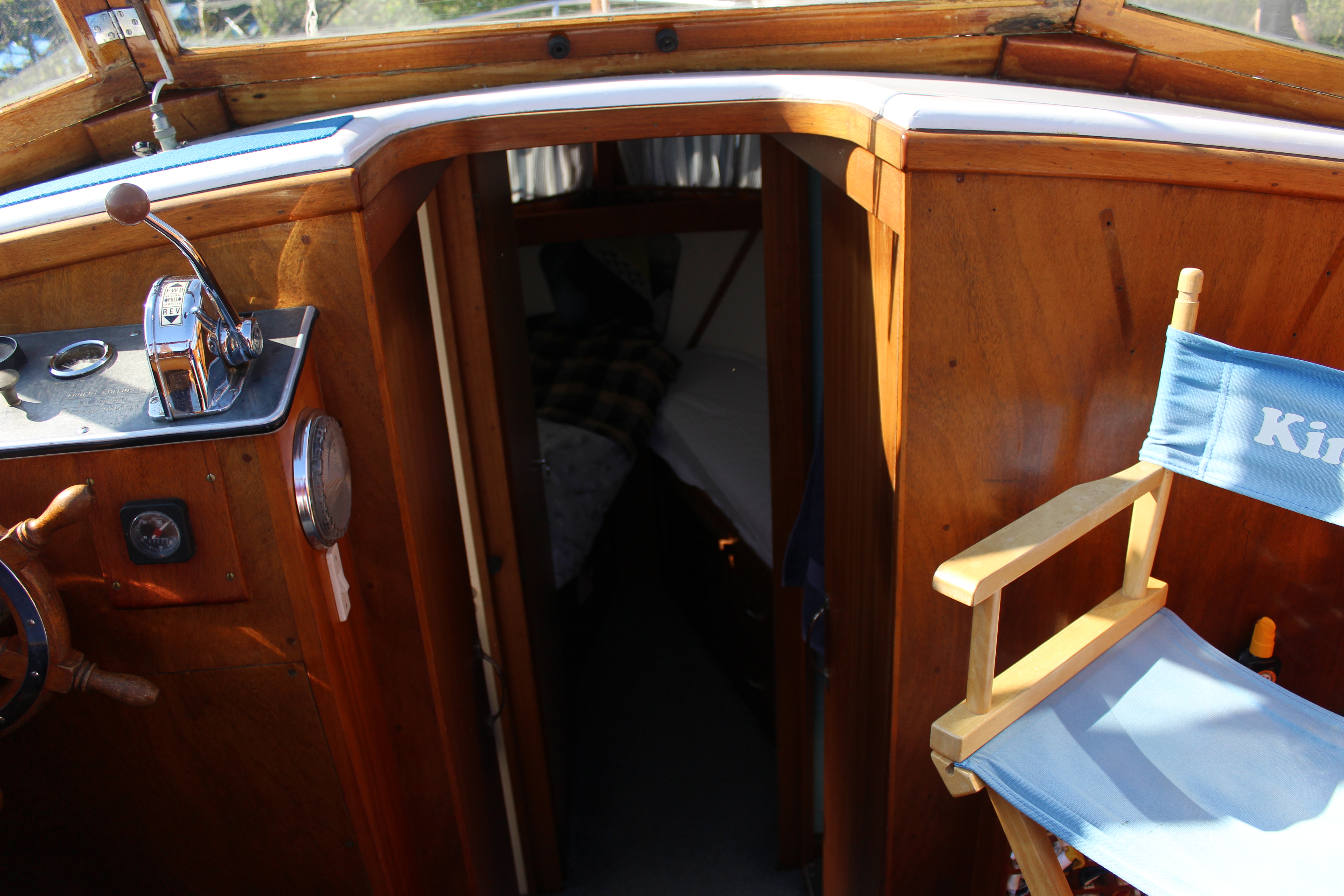
After a celebratory dinner, David and Nicky Talbot invited me to spend the night in the comfortable for’ard cabin of Kingfisher, a 1970’s motor yacht moored at the club.
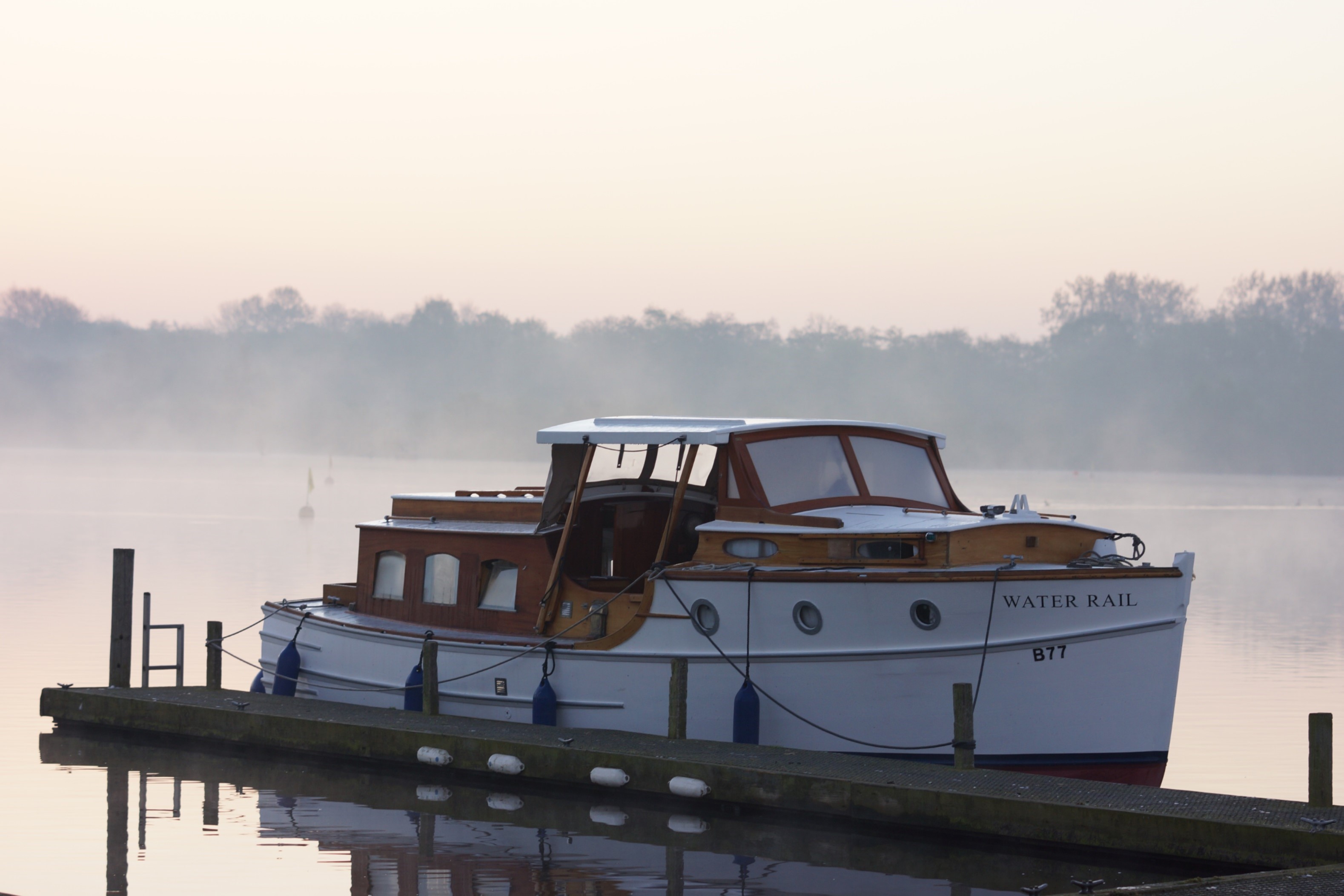
I woke early on the Sunday morning to find mist hanging above the water as the sun was rising on what proved to be another sunny day with a fair wind for sailing.
After breakfast aboard, I was invited out in the 1930s river cruiser ‘Water Rail’, who had also appeared in the serial. We took her down the River Bure to her mooring in Horning where she is still part of the scene.
It was wonderful to be out on the waterways of Norfolk, passing traditional buildings. This was a stretch of river never featured in the television drama as Rosemary Leach, who played Mrs Barrable, took Dick and Dorothea from Wroxham to Horning in a trap pulled by Rufus the pony. One reason for this was that in 1983 we had to use the North Norfolk Steam Railway, since Wroxham Station had been modernised but Joe Waters, the producer, said he wanted to add variety by featuring a pony rather than a motorboat.
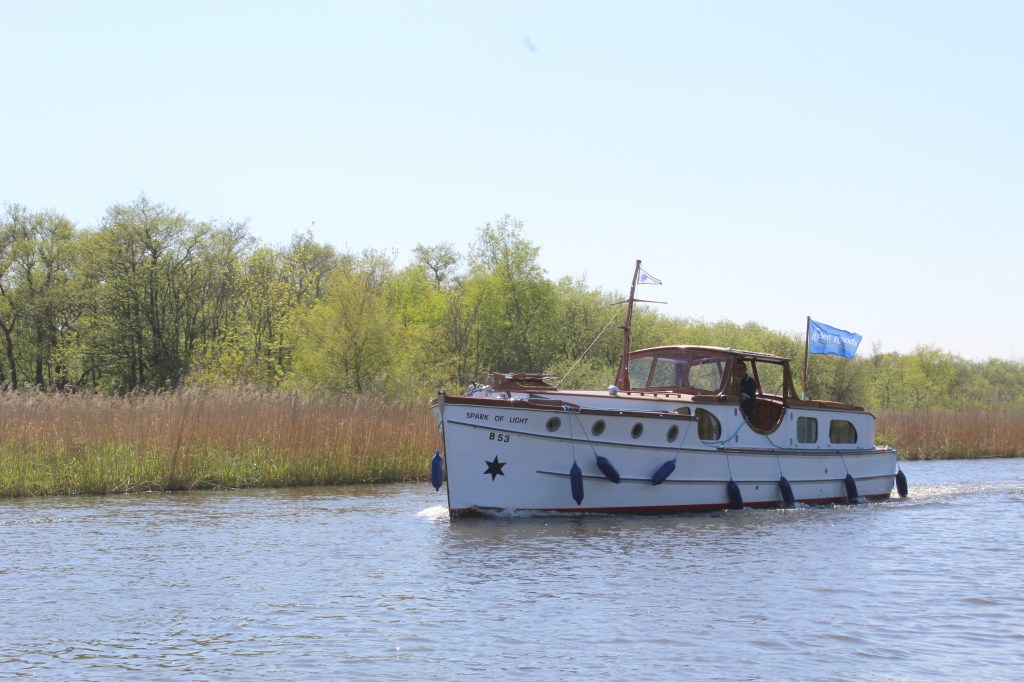
We encountered a number of period cruisers, although Janca, who we used to play the Hullabaloos’ Margoletta, sadly could not be with us, as she is still under repair.
However, by motoring into Horning ourselves, we passed The Swan Inn and Horning Staithe where a number of scenes had been shot, including some that featured Julian Fellowes and Sarah Crowden, playing the hated Hullabaloos. You can see photographs of them in an earlier post here.
~Horning Staithe in Norfolk showing The Swan Inn~
Another vessel that interested me was a river launch that reminded me of the 1901 steamboat Daffodil, which I renovated with my father in 1978. I have photographs of her here.
You can read more about the traditional boats used in the series by clicking here.
Gerry Spiller, has written from Woodbridge in Suffolk, to say that she has found an oar labelled TITMOUSE, bought at a boat jumble. Could this date from the early 1930? Does anyone have the pair?
The DVD of the serial is now available on a re-mastered DVD, available from Amazon here
(Do not be tempted by the old version with a more colourful cover as the image quality is very poor)
Swallows And Amazons Forever! (Coot Club & The Big Six) SPECIAL EDITION [DVD]Additional photographs by Richard Hattersly
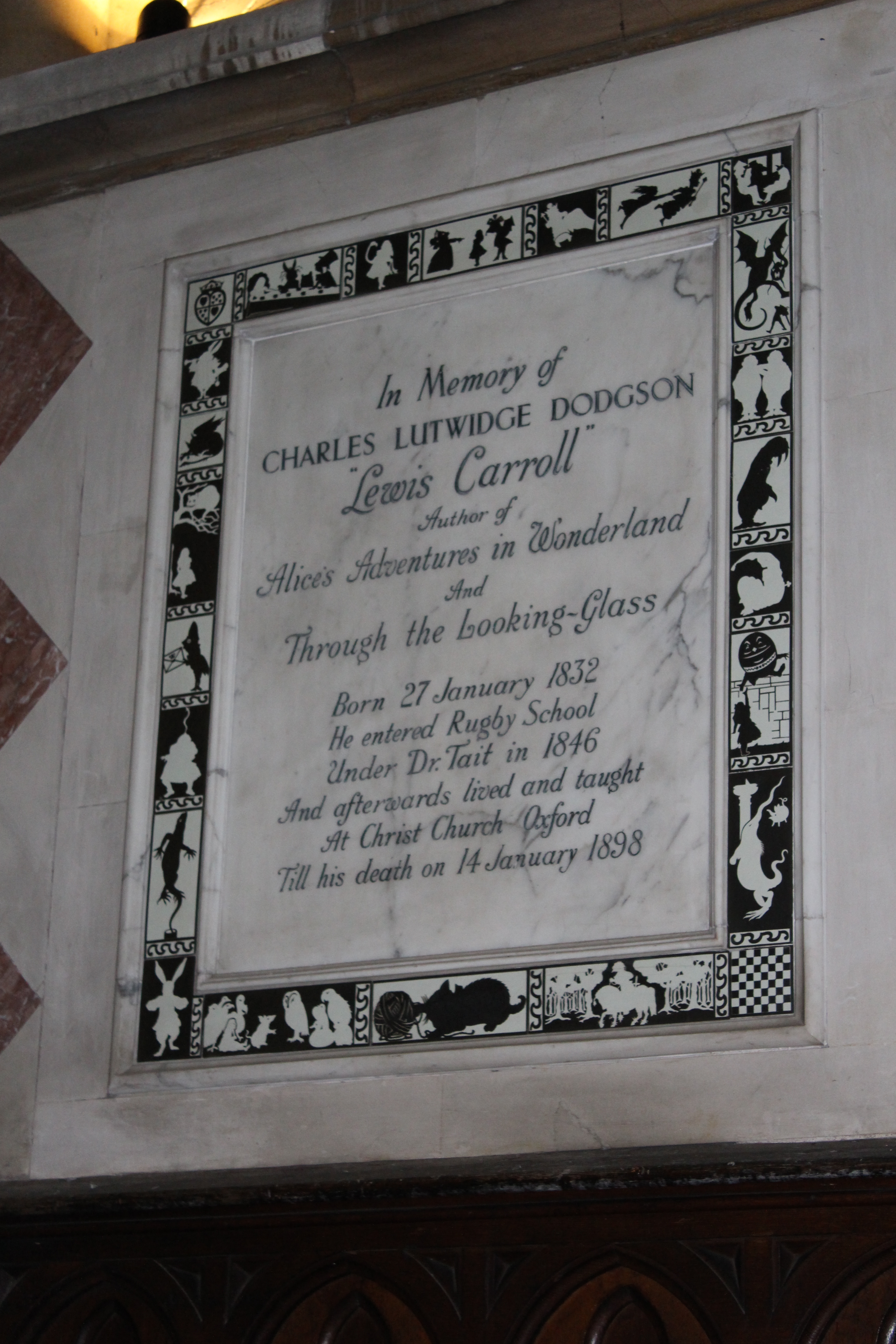
Almost as soon as we published the second edition of ‘The Making of Swallows and Amazons (1974)’ in May 2017, a number of facts and stories washed up on the incoming tide. I didn’t know that Ransome was aged twelve – Captain John’s age – when he first met the Collingwood family on Peel Island. I knew he went to Rugby School but not that he was given the study once used by the English author Lewis Carroll. I’m not sure if that inspired him to write children’s books but he certainly borrowed the term galumphing from Alice’s Adventures in Wonderland (1865).
~ Lewis Carroll’s plaque at Rugby School ~
I never knew that Rusland, where Arthur and Evgenia Ransome lie buried at St Paul’s Church, means ‘Land of the Rus’ – the name for Russia, where of course they met in what was then Petrograd when Evgenia was working as Leon Troski’s private secretary. Thanks to the feature writer Maggie Dickenson, I’ve learned that this kneeler at St Paul’s was embroidered by Jean Hopkins:
Brian Crawley has just written in to say that, in 1973, our visit to the charcoal burners was filmed less than a mile to the west of the church in Glass Knott Wood. I gather the remains of the wig-wam’s fireplace can still be seen. I didn’t know it was so close, and just assumed we had been in the Grizedale Forest. I’ll have to add it to my map!
The Russian edition of Swallows and Amazons, that can be borrowed from The Arthur Ransome Society library, has proved a great source of reference. Donated by the Gatchina Library it is the only copy in the UK. I learnt from the comments at the back that the Black Jack is a pirate flag, which I’ve always called a Jolly Roger, and that ‘in one’s mind’s eye’ is an expression used by William Shakespeare in Hamlet. “Tip us a stave” means “give us a song”, a term used in Treasure Island.
Other flotsam and jetsam on my tide-line is a wonderful quote to accompany this behind-the-scenes photograph when re-reading Winter Holiday written by Arthur Ransome in 1933:
“What’s in that box?” asked Roger.
“It’s just about big enough for you, isn’t it?” said Captain Flint.
~ Sten Grendon playing Roger in the Panavision camera box in 1974~
A member of the Arthur Ransome Group on Facebook commented on how annoying it was that Ronald Fraser made a funny face when he first sipped the tea Suzanna Hamilton offered him. Captain Flint ALWAYS enjoyed Susan’s tea.
There was some discussion amongst members of the same Arthur Ransome Group about how female characters depicted in ‘Swallows and Amazons’. Eddie Castellan wrote: ‘Ransome is remarkably non-sexist for his era and remains so by today’s standards. Mind you, most great storytellers realise that weak female characters are simply dull…great storytellers seem to give women better roles than mediocre ones.’
Fionna Grant added: ‘Arthur Ransome had a range of roles for his female characters from Nancy to Susan to Titty…. not only represented, but honoured for their contribution to the group…All the kids in Swallows and Amazons are encouraged to learn through achievement but they are also allowed to choose their own path, follow their own interests.
At a talk given about the Norwegian explorer Fridtjof Nansen given by Simon Browne, at a meeting of The Arthur Ransome Society, we were given a definition of the word Hero: one who combats adversity through integrity, bravery or strength, often sacrificing personal concerns for the greater good.
Titty was brave but all she really did was to grab a chance to swipe Amazon. It meant she had to sleep on board, which was rather uncomfortable, but what made Titty a true heroine in the film was her determination and persistence: she woke up early and persuaded Roger to help her find the treasure hidden on Cormorant Island. Like Ransome himself, she was prepared to grab a chance, take a risk – even if it meant being cold and uncomfortable for a while.
I received another lovely note on Facebook from Zena Ashberry (nee Khan) who appeared as a film extra in the Rio scenes shot at Bowness-on-Windermere when she was a little girl, despite being of half-Asian descent:
‘I was nine at the time and my sister was eight. I remember going through an audition – which was really just a panel of three or four men looking at Mum, my sister and me to see if we would be in keeping with the ‘look’ of the film. They seemed very keen on having Mum. My sister, at the time had sandy coloured hair and so was not at all problematic, however I was very dark and because they wanted Mum they said that they could hide ‘it’ by putting me in a white dress and hat! How times have changed…obviously I remember other things too, like feeding the horses which pulled the open carriage and the horse standing on my foot oouuch!, the strange awkwardness of having to act ‘naturally’ whilst being watched through a camera, having to repeatedly carry out the same activity to ensure a good shot – how many times did we throw stones into the lake? The ice-cream tricycle with real ice cream mmmm a treat … being watched by crowds of tourists gathered along the footpath and flower beds. It was a strange and unreal experience, doing what as children we would normally do but doing it in ‘dressy-up’ clothes that weren’t from our own dressy -up box and playing the game with Mum and her friends with total strangers telling us what we should do…just a bit bewildering really, but funny in retrospect.’
Please let me know if you have any points of interest that I could add to ‘The Secrets of Filming Swallows and Amazons (1974)’ that you think might of interest to readers. The great thing about ebooks is that they can be updated and re-loaded free of charge.
I’m hoping to give a number of talks on ‘The Making of Swallows and Amazons’ this summer. Please click here for details.
~Lesley Bennett playing Mate Peggy in 1974 (copyright:StudioCanal)~
When I met up with Lesley Bennett in the Netherlands, she kindly allowed me to take copies of the snaps she took while filming ‘Swallows and Amazons’ (1974) on location in the Lake District in the summer of 1973.
~Kit Seymour and Lesley Bennett in 1973 (photo: Lesley Bennett)~
The shot above shows Lesley with Kit Seymour, who played her elder sister Nancy Blackett, wearing blue tracksuits and BOAC life-vests over their costumes. They were sitting on the east shore of Coniston Water waiting to cross over to Peel Island. Lesley is wearing Peggy Blackett’s distinctive red-stocking hat. We never saw the life-jackets inflated. The horrifying thing was that when my father tested one, it didn’t work.
~Old London Routemaster buses in 1973 (photo: Lesley Bennett)~
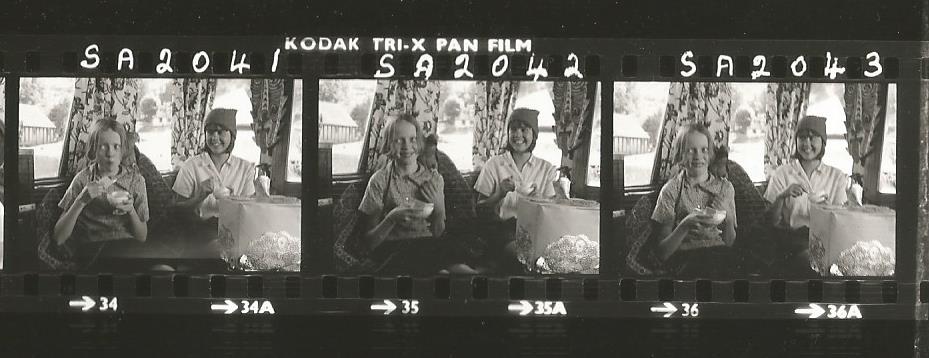
Throughout the seven weeks filming, we children were obliged to continue with our schooling. The law stipulated that we completed at least three hours of lessons a day. These were given to us by a local supply teacher, our tutor Margaret Causey, in the bottom of a converted Routemaster bus. We changed into our costumes on the top deck where there were six bunk beds. My mother made me take a rest after lunch. Lesley, who at thirteen, was a year older than me, was allowed out to play.
The other double-decker bus, seen here parked behind Mrs Lucy Batty’s barn at Bank Ground Farm near Coniston, had been fitted out with tables and was used as a dinning room where the film crew could shelter from the rain. They took their lunch on trays from the caterers’ van manned by chef John Englewood and his assistant Margaret Wells from Pinewood Studios. We only had a few scenes with a large number of film extras, but these were recorded on sunny days when nobody needed to eat in the buses.
~Behind the scenes in Bowness in 1973 (photo: Lesley Bennett)~
Lesley managed to take this shot of our chaperone, Jane Grendon, dressed in 1929 costume. This was not only fun but enabled her to look after children taking part in the Rio scenes shot at Bowness-on-Windemere while appearing in vision herself.
~Bowness Bandstand in 1973 (photo: Lesley Bennett)~
The Price family ran Oaklands Guesthouse in Ambleside where Lesley and I stayed for the duration of the filming, along with the other children in the cast. Jane Price and her brothers can be seen here with the Kendal Borough Band playing beyond them wearing their own period uniforms. Mr David Watkin Price, who looked quite snazzy in his striped blazer, played the part of the native on the jetty who said, ‘That’s a nice little boat you’ve got there.’ If you do not remember this it’s because the scene was cut from the television version, although it remains in the 40th Anniversary DVD and Blu-ray that is widely available. Sadly the bandstand no longer exists and has been replaced by a modern shelter.
Zena Ashberry also took part as a film extra in these scenes when she was a girl. Her maiden name was Khan and although she lived in Cumbria her father originated from the sub-continent. She wrote in saying:
I was nine at the time and my sister was eight. I remember going through an audition – which was really just a panel of three or four men looking at Mum, my sister and me to see if we would be in keeping with the ‘look’ of the film. They seemed very keen on having Mum. My sister, at the time had sandy coloured hair and so was not at all problematic, however I was very dark and because they wanted Mum they said that they could hide ‘it’ by putting me in a white dress and hat! how times have changed…obviously I remember other things too, like feeding the horses which pulled the open carriage and the horse standing on my foot oouuch!, the strange awkwardness of having to act ‘naturally’ whilst being watched through a camera, having to repeatedly carry out the same activity to ensure a good shot – how many times did we throw stones into the lake? The ice-cream tricycle with real ice cream mmmm a treat … being watched by crowds of tourists gathered along the footpath and flower beds. It was a strange and unreal experience, doing what as children we would normally do but doing it in ‘dressy-up’ clothes that weren’t from our own dressy -up box and playing the game with Mum and her friends with total strangers telling us what we should do…just a bit bewildering really, but funny in retrospect.
~filming in Bowness in 1973 (photo: Zena Khan)~
Zena kept this photo which shows the ice cream seller, Jane Grendon in her blue costume, possibly her daughter Jo Grendon in turquoise shorts and Michael Grendon along with the 35mm Panavision camera and film crew on the jetty where Swallow is moored to the right of frame. I don’t know who the lady in red can be – but do write in if you know!
For previous posts about filming in Bowness-on-Windermere that day, please click here
You can read more in ‘The Making of Swallows and Amazons(1974)’, which can be ordered from your local library.
If you enjoy ebooks, similar publication is available from all stockist for £2.99, including Amazon Kindle.
The Amazons confronting the Swallows on Peel Island in the movie ‘Swallows and Amazons’ (1974)
In the feature film ‘Swallows and Amazons'(1974) the part of Peggy Blackett was played by Lesley Bennett. She was an experienced dingy sailor and enjoyed the scenes on the houseboat although she told me she didn’t want the parrot to flap onto her shoulder, which was understandable. Its claws dug into mine.
~Sophie Neville as Titty with the green parrot and Lesley Bennett as Peggy~
When I met up with Lesley in the Netherlands this summer, we looked though the photographs she’d been given by the producer and kept for posterity.
Kit Seymour and Lesley Bennett at Brown Howe boathouse on Coniston Water in 1973
If you don’t recognise the scene above it is because, although the shot was taken at Brown Howe, where the Amazon boathouse can be found, they were rehearsing the scene at Secret Harbour on Peel Island when the Blacketts find their boat has been captured. ‘She can’t have drifted against the wind.’ This was the first I knew of this. Perhaps they were waiting around for the camera to be set up or for a decision to be made about their red hats, which they were not wearing. This was rare. They wore them in every other scene.
The Amazons sailing on Derwentwater
Lesley didn’t have much time for Ronald Fraser, who played her Uncle Jim, renamed by Titty as Captain Flint. “He wasn’t very nice to us. I think he regarded us as a bit of a nuisance but as soon as the cameras were on him, he’d change!”
Ronald Fraser with Lesley Bennett and Kit Seymour on Peel Island, Coniston Water in 1973
Lesley, who grew up in Kent, remembered my mother taking her shopping in Ambleside on one of our rare days off. “She had an appreciation of how important it is to buy a good top, explaining that she needed a selection for her work as a television presenter. I remember her waiting for ages while I tried on one after another.” I was amazed when I heard this. My mother only ever took me shopping once or twice when the first Laura Ashley shop opened in Cheltenham. This was deeply exciting but a rare treat. It was my poor father who was dragged from one shoe shop to another. It was difficult to find decent shoes in the ‘seventies.
Leaving London for the Lake District in May 1973 – photo Evening Standard
It was difficult to find decent clothes, that didn’t cost a fortune. There was a reason why dressmaking was so popular – we had to make our own garments. At the age of twelve I made a navy blue skirt for school so that it had a fashionably broad waist band. Flared dungarees were all the rage, worn with a stripy polo-neck or blouse with a large collar. Kit, Lesley and I all wore these, although sadly my brushed-cotton dungarees grew rather short during the filming.
Lesley signing autographs at the Chiddingstone School Book Fair in 1974
Lesley managed to find what I’d thought was the ideal outfit for our afternoon film premiere, which I’m pretty sure she is wearing in the shot above. Although we were almost obsessed with clothes, they were not a subject people discussed with new acquaintances, which was a pity as it would have provided us something neutral to discuss with the press.
“I remember the journalists at the hotel in the Lake District,” Lesley said, “and Claude saying, ‘Be careful what you say to journalists because they will turn it against you.'” However, when it came to film publicity Lesley was both enthusiastic and gracious turning up at a local school book fair and posing for newspaper photographers. I can see that tank-tops had come in by this time and it was possible to blow-dry your own hair.
Lesley enjoyed drama at school and looked into going to RADA, but after auditioning for one film decided the acting profession was too precarious. I think we were both interviewed for parts, possibly the same part in the same film. It was set in Wales and involved rock climbing. I said I wasn’t scared of heights, which was a lie! Sadly it was never made. I told her that Ronald Faser wanted us both to appear in another movie but that the funding fell through. She wasn’t disappointed. I was able to tell her that there was an actress called Lesley Bennett of about our age who once had a part in the long-running soap opera ‘Coronation Street’ but she confirmed that this was not her.
Lesley always loved meeting people wanted to travel, so went into marketing, working for Unilever on the first ‘Just one Cornetto’ campaign. She later branched out into international event management, which took her all over the world. She married a tall Dutchman and has two grown sons. They have a policy of visiting a different place each holiday, there by exploring different places, and they lived in Dubai for a while before returning to the Netherlands where she has been based since the early 1980s.
The cast of Swallows and Amazons with Virginia McKenna at Bank Ground Farm in 1973
Lesley looks back fondly on what she calls “The Swallows and Amazons era”, appreciating what recollections mean to those who have grown up with the movie and enjoy Arthur Ransome’s books. “Innocent films like ‘Swallows and Amazons’ (1974) appeal to those who know exactly how the books were written.” One thing she kept was the original film poster. Here she is with it more than forty-three years after the release. And she hasn’t changed a bit.
Lesley today, with her original film poster of ‘Swallows and Amazons’ (1974)






















 ~ Sten Grendon playing Roger in the Panavision camera box in 1974~


 ~Kit Seymour and Lesley Bennett in 1973 (photo: Lesley Bennett)~
 ~Old London Routemaster buses in 1973 (photo: Lesley Bennett)~
 ~Behind the scenes in Bowness in 1973 (photo: Lesley Bennett)~
 ~Bowness Bandstand in 1973 (photo: Lesley Bennett)~


 Sophie Neville