‘Unlike other films, ‘Swallows and Amazons’ is within children’s reach,’ I’ve been told. It’s true. Any child can pretend that their bed is a sailing dinghy taking them to a deserted island. And when you are a little bit older – it’s not impossible to join a sailing club or go camping.
We took Swallow to join the Aldeburgh Junior Lapwings on the River Alde in Suffolk.
One intrepid sailor had bought her own Lapwing for £100, raising the money by busking in Aldeburgh High Street. Tilly renovated and varnished the clinker-built dinghy herself.
She can be seen here teaching the younger children how to owl hoot, playing ‘What Shall We Do With The Drunken Sailor’ on her thumbs.
The children went fishing for crabs, which they later raced down the slipway.
They went in search of treasure – if that is what you call a scavenger hunt –
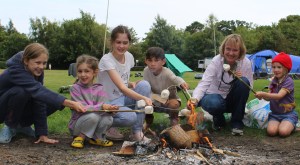
before sailing back to camp by the mud flats, cooking out in the open and sleeping in tents.
They launched their dinghies, raised their red sails
and headed off, catching the tide.
Swallow, the dinghy used in the 1974 film ‘Swallows & Amazons’ acted as flag ship.
Guy Willson, a reader from Papua New Guinea, has written to say: ‘I have read your book and I really liked it. I could see behind the scenes and often read between your lines as well.’
‘When you were making the movie (in 1973) I was on my way to Norfolk Island as a starting point of my adventures in the South Seas; so I never knew of the release of your film until much later when I had children of my own that had reached the age to go ‘avasting’ and ‘timber shivering’, when we were living in Rye in the 1990’s.’
‘Some years ago I restored a 13ft clinker dinghy and after adding a false keel, added a standing lugsail and trailed her up to Coniston for my children to sail…I had in mind an article from Classic Boat on the Swallow, how the Altounyan children preferred Swallow as a boat because they could stow more things in her and she could still sail well. I had noticed on a drawing in the article that Ransome had given her an extra 2 or 3 inches of false keel and this helped tremendously in reducing her leeway. I added a piece of oak to do the same thing but gave her an extra 9” aft and planed it down to a feather edge forward so the she would go about a bit easier. Well, it worked and Eaglet would have done the original Swallow proud.’
Swallow – the 12′ dinghy used in the film
‘If you would permit me a little correction: you described the rig as being gaff rig, but this is not so. Both the boats, originals and the ones you sailed were in fact luggers. The nearest thing to a gaffer among the luggers is the Gunter Rig which has jaws at the front of the yard but is hauled up by a single halyard. You can see this in the Mirror dinghy (in truth it is about halfway between the two). However the lug rig of Swallow is known as a ‘standing lug’ and it can be used to go about freely. After hauling up the sail on its traveller; the peak of the yard is raised by the downhaul line (usually attached to the bottom of the boom). This tightens the luff of the sail and lifts the outer end of the boom as well giving the best efficiency to the sail.’
A gaff rigged cutter
‘Lugsails were the working sails of England for most boats less than 60ft but they were usually rigged with a ‘dipping’ lug as the mail sail and a standing lug aft. This dipping lug had to be dropped and the yard hauled round behind the mast every time they went about. It was a powerful sail and they found their best expressions in the three masted Bisquines which used to raid British shipping in Napoleonic days. You can still see them at the classic boat events at Douarnenez and Brests, where I took the gaff schooner Soteria in 2006.’
Soteria at Douarnenez
‘If you had had a gaff rig you would most probably have needed a jib to balance it (unlike the American catboats which have their masts right up in the bow, not even a space for the Boy Roger on those! Thanks for writing a lovely book which I will pass on to my daughter.’
“X marks the spot where they ate six missionaries”
‘You did such a grand job as Titty and I am not really surprised to find that you are a bit of a wordsmith. I am a missionary (uneaten) in Papua New Guinea and we are planning to sail back there in our steel schooner see www.livingwatermission.org On our return we will be calling in at Erromanga in Vanuaatu where ‘x’ was the spot where two missionaries were eaten. Recently the descendant of one of them, John Williams, went to Erromanga for a service of reconciliation.’
If you have noticed any errors in ‘The Making of SWALLOWS & AMAZONS’ please use the Comments box to let us know so that we can make corrections! We might be able to bring out a third edition. Readers who already have a Kindle edition will be able to update it free of charge.
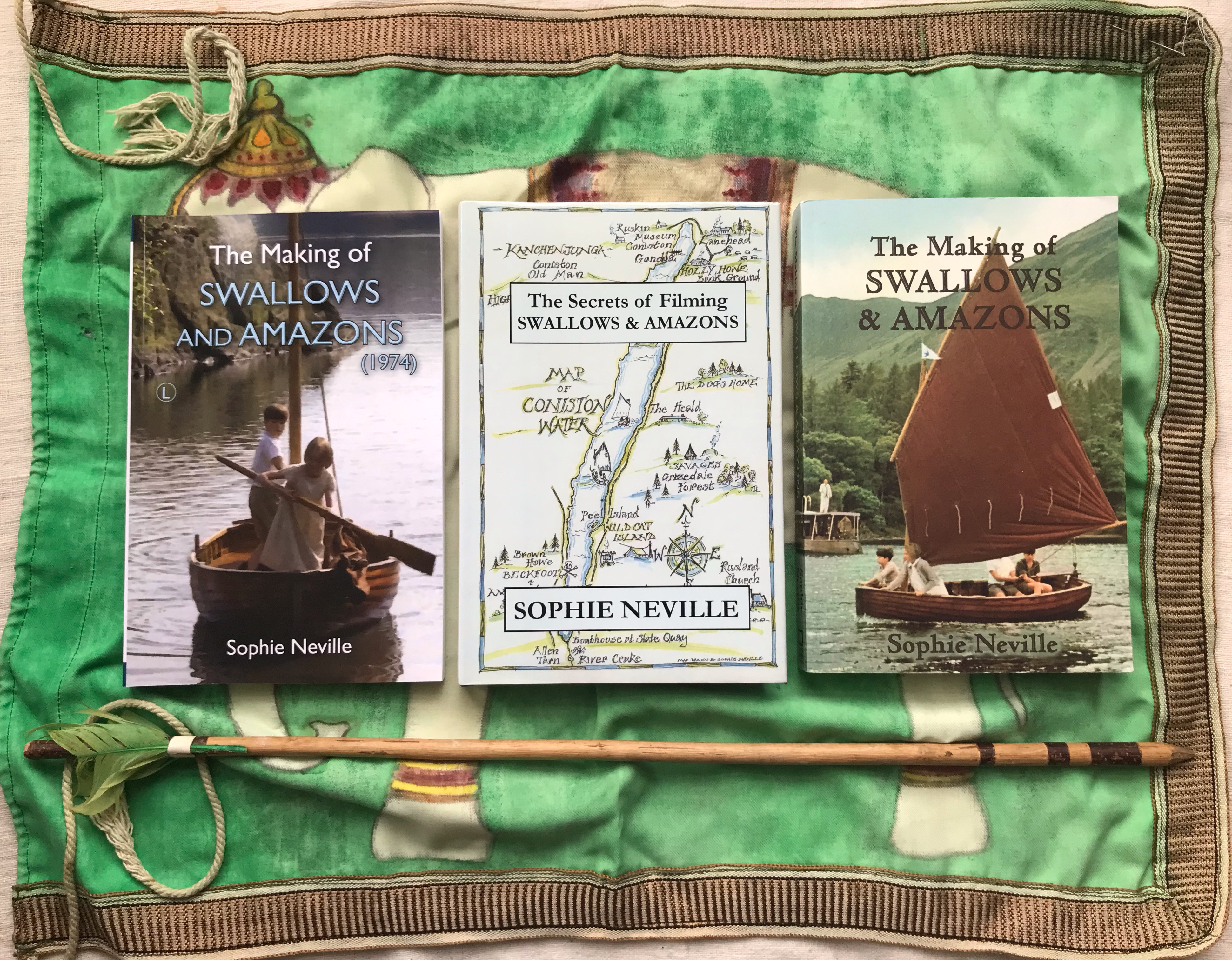
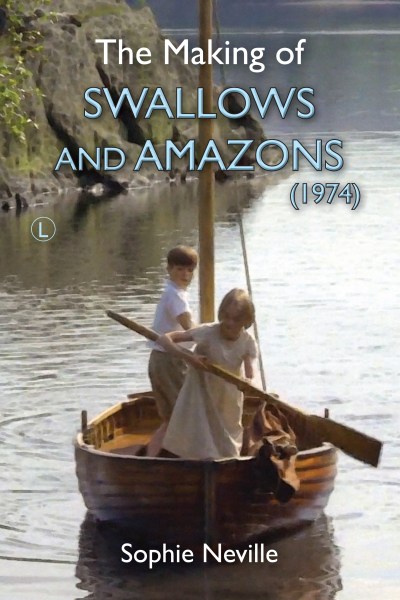
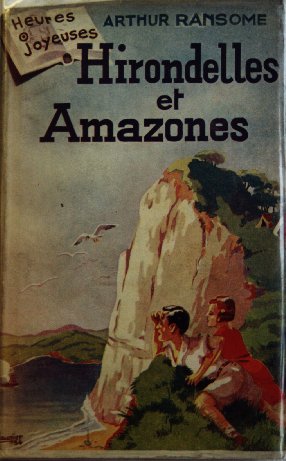
Different editions of ‘The Making of Swallows and Amazons (1974) by Sophie Neville’
The first swallows have arrived and summer is here. You only have to look around to see parents advocating a ‘Swallows and Amazons’ childhood for their offspring. They want to go camping, catch fish and learn to cook on open fire.
Titty’s dream of being alone on an island to experience what it must have been like for Robinson Crusoe has never been seen as worrying. Parents want to encourage their offspring to use their imaginations and explore the wilderness, knowing it will be memorable. As long as the weather holds they are happy to act as Man Friday. By exercising her imagination, Titty comes up with ideas that ultimately win the war and develop courage and resourcefulness by taking part in the adventure even though Captain John is at the helm. The fact that the mere able seaman becomes hailed as the hero of ‘Swallows and Amazons’ has inspired a generation.
TARS at Cobnor Camp
If you want the real deal, become a family member of The Arthur Ransome Society and sign up for one of our summer camps while there is still space:
The Nancy Blackett Trust offer memorable opportunities for children and teenagers, as well as adult sailors who love the opportunity of going out in Arthur Ransome’s yacht and meeting like-minded people.
The Nancy Blackett is based on the Orwell near where the Ransomes lived in Suffolk but she ventures forth and was even spotted on the Hamble last year.
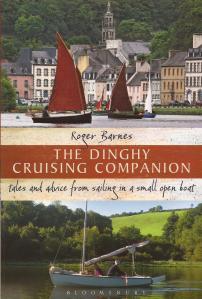
If you are keen on dinghy sailing and looking for adventure, this is a book to accompany you through the summer months ahead. It is full of sound advice from Roger Barnes who learnt to sail on Windermere in Cumbria and is now President of the Dinghy Cruising Association. He has written for Classic Boat, Watercraft,Dinghy Sailing Magazine and currently writes for Classic Sailor.
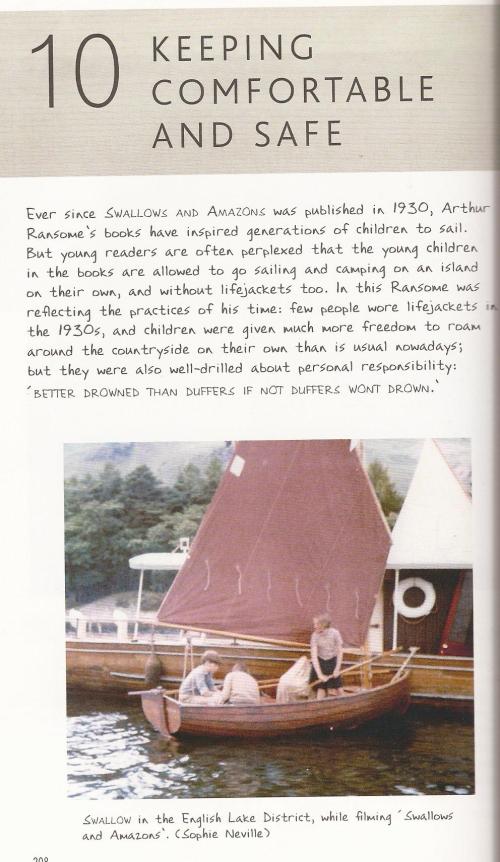
Roger emailed me to ask if I had a photograph of us sailing Swallow without life jackets. I supplied him with this shot my mother took in 1973 since I am standing in the dinghy. I am not sure how we managed to go about when we sailed off, as it also contained the parrot’s cage.
I will certainly take The Dinghy Cruising Companion with me if I manage to get Swallow to Brittany in the near future. As you can see from the cover Roger often takes his own boat to regattas in France.
I bought my copy of Roger’s paperback online but it’s available from all good bookshops. To find out about sailing Swallow, the dinghy used in the 1974 film of Swallows and Amazons, please click here for Sail Ransome.
If you know anyone who loves the original film of Swallows and Amazons, and is now learning French, why not buy a copy of the DVD that has been dubbed into the French language:
If you live in France you can order a Kindle copy of ‘The Secrets of Filming Swallows & Amazons’ – which is full of behind-the-scenes photos and links to home-movie footage taken on location, although the text is in English. The paperback makes a good present for students of Media Studies, Drama or Film:
The website All Things Ransome have links for of the Arthur Ransome’s book in French here with a useful list providing translations of names here.
The translation of the telegram BETTER DROWNED THAN DUFFERS IF NOT DUFFERS WONT DROWN is Préfère les savoir noyés que stupides. Si pas stupides pas noyés.
You too can find the locations and sail Swallow:
If you would like to stay at Holly Howe ~ contact Jonathan Batty at Bank Ground Farm
Swallows & Amazons tours of the Lake District ~ including a trip on the steam train, led by Peter Walker of Mountain Goat in Windermere can be booked for groups by request. A must for overseas visitors. To read about this do go to: ‘In Search of our old Film Locations’. For booking details please click here.
Swallow, the dinghy used in the film, is currently in East Anglia. For opportunities to sail her yourself please click here
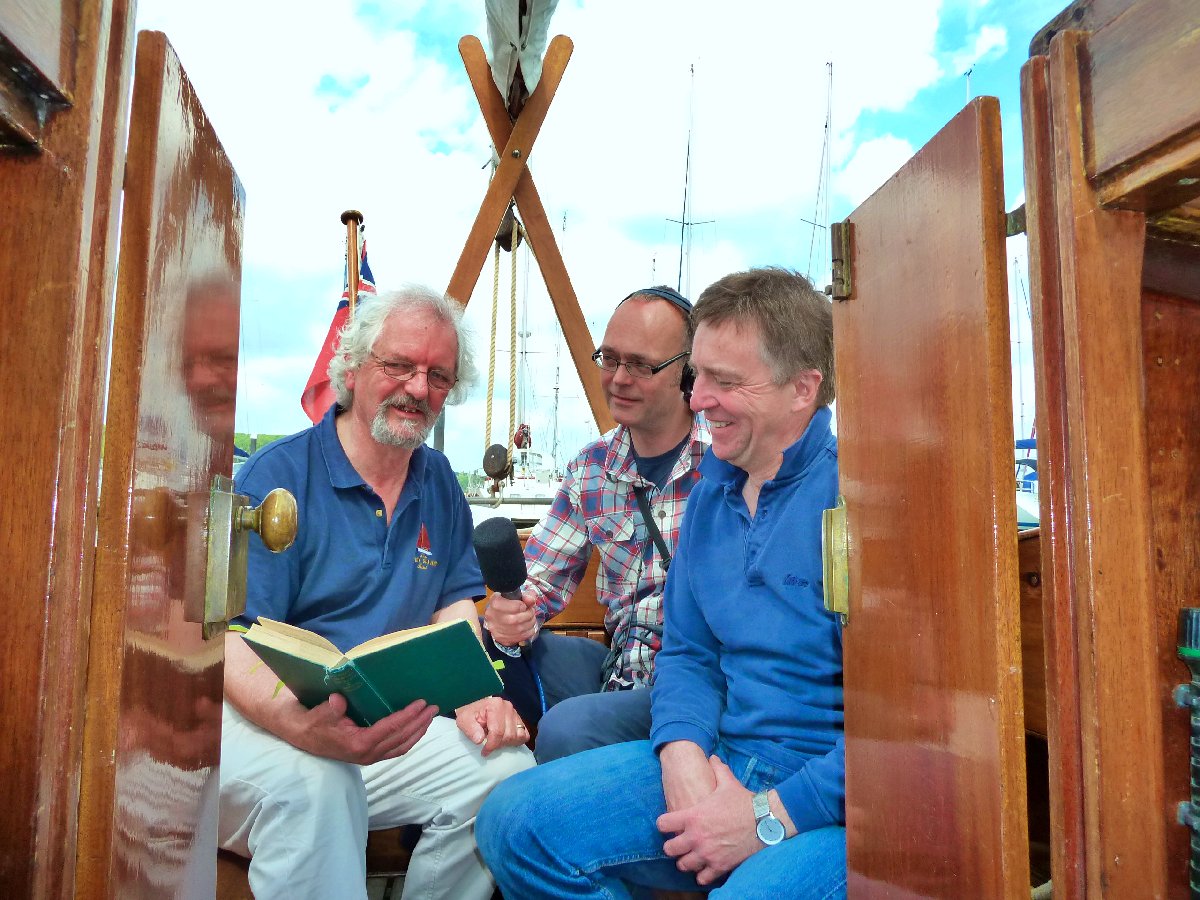
‘Paddling with Peter Duck’, John McCarthy’s documentary for BBC Radio 4, portrays the boats owned by the author Arthur Ransome and includes extracts read by Kate Taylor from his classic book Swallows and Amazons.
Peter Willis in the Nancy Blackett with John McCarthy
While the broadcast is a portrayal of Arthur Ransome and his boats, it touches on his friendship with the Altounyan family who inspired him to embark on writing the series of twelve Swallows and Amazons books. It is easy to understand this when looking at their photographs.
The Altounyan children with friends in Syria.
The girls seem to be Taqui, Brigit and Titty
Could it possibly be Arthur Ransome sitting on the right? He visited the family in Syria in 1932, when he must have been about forty-eight, but was never known to have worn shorts, although it would have been exceptionally hot in the Middle East. Click on the photos to enlarge.
Is this Arthur Ransome ? sitting on the bow of Peter Duck in Syria, the chap wearing the same hat and clothes as in the photo above? He took this dinghy out to Syria as a gift for the Altounyan children and wrote his novel Peter Duck while he and his wife Evgenia were staying with the family in Aleppo.
Possibly Arthur Ransome sailing Beetle II the Altounyans’ gunter-rigged dinghy at Amouk in Syria
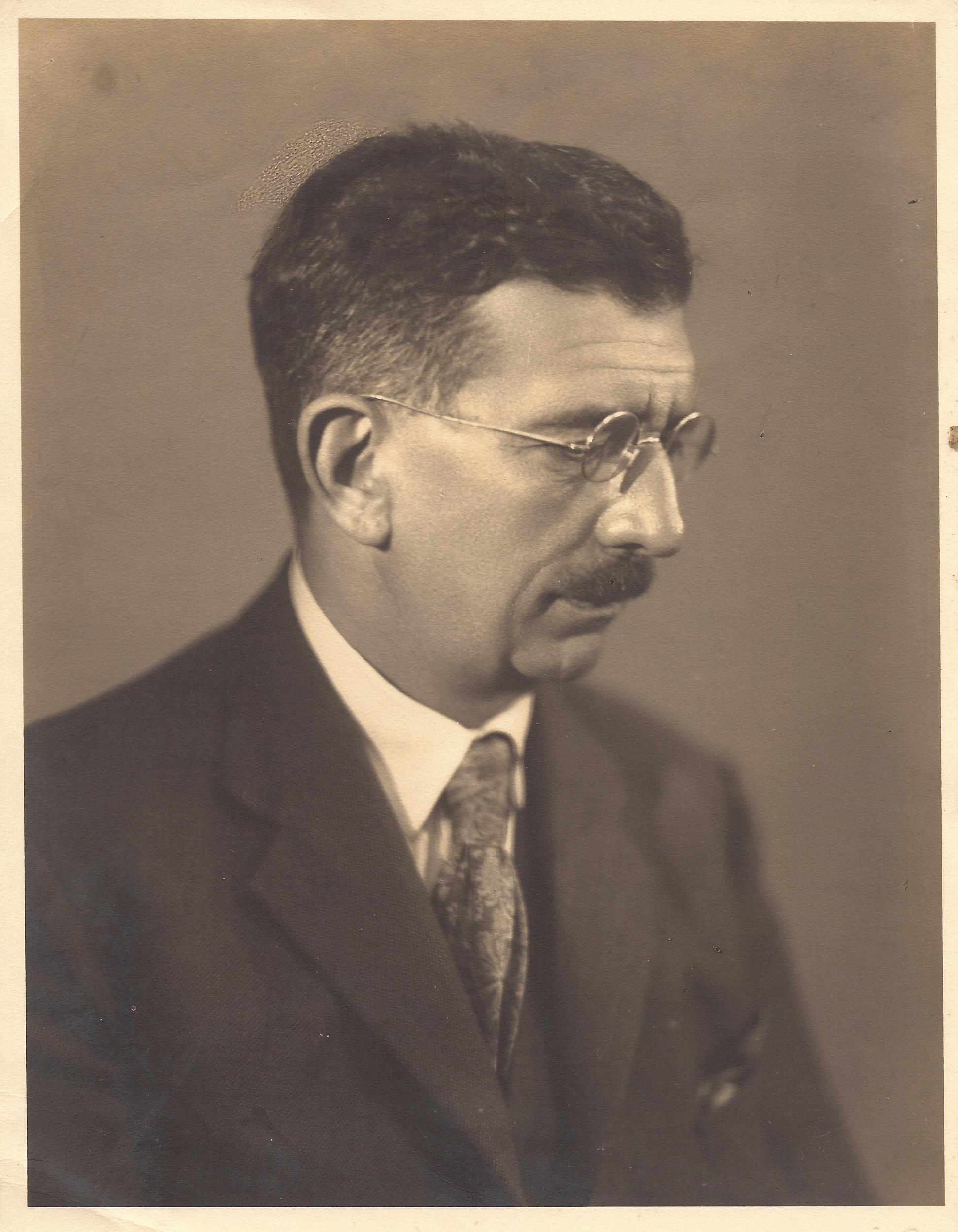
Ransome’s friend Dr Ernest Altounyan in 1935
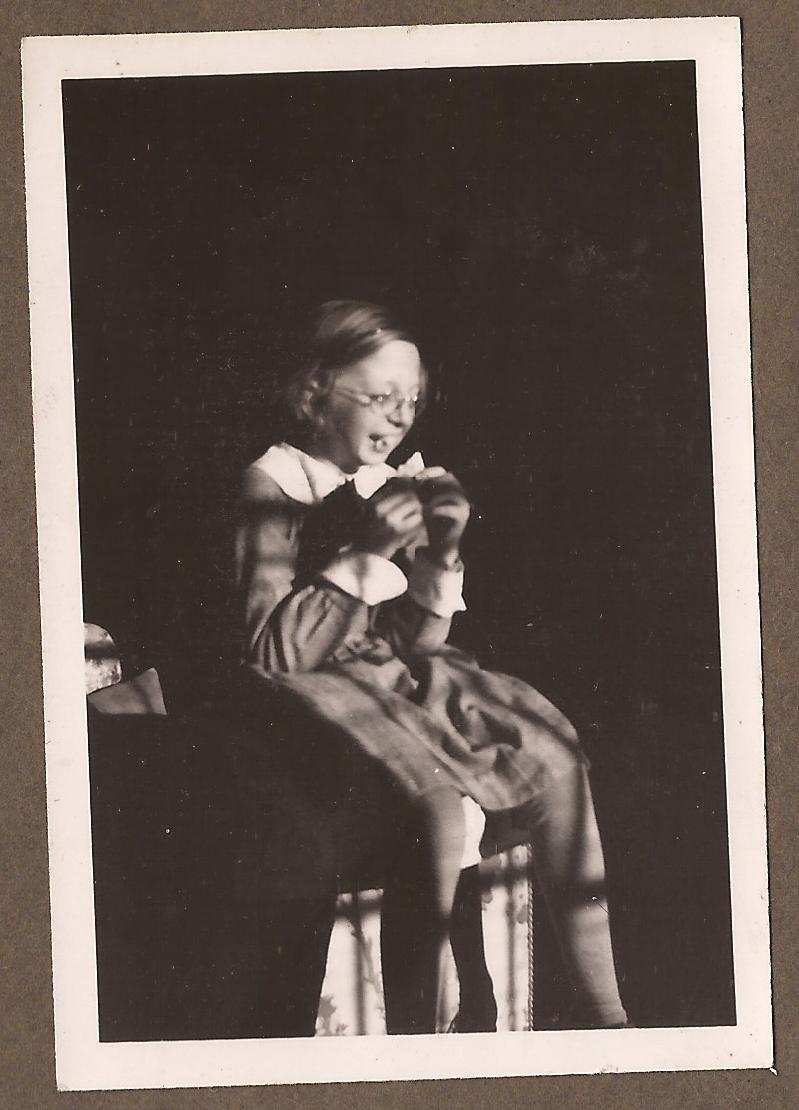
Dora Altounyan (nee Collingwood) in 1935
Was Dora the model for Mary Walker, the Swallows’ mother who grew up in Australia?
Sadly there is no sign of the original Swallow bought at the same time as Mavis by Arthur Ransome and Ernest Altounyan in Barrow-in-Furness, and later sailed by the Ransomes on Windermere. Mavis was later re-named Amazon by Brigit Altounyan, the youngest of the five Altounyan children, known as The Ship’s Baby.
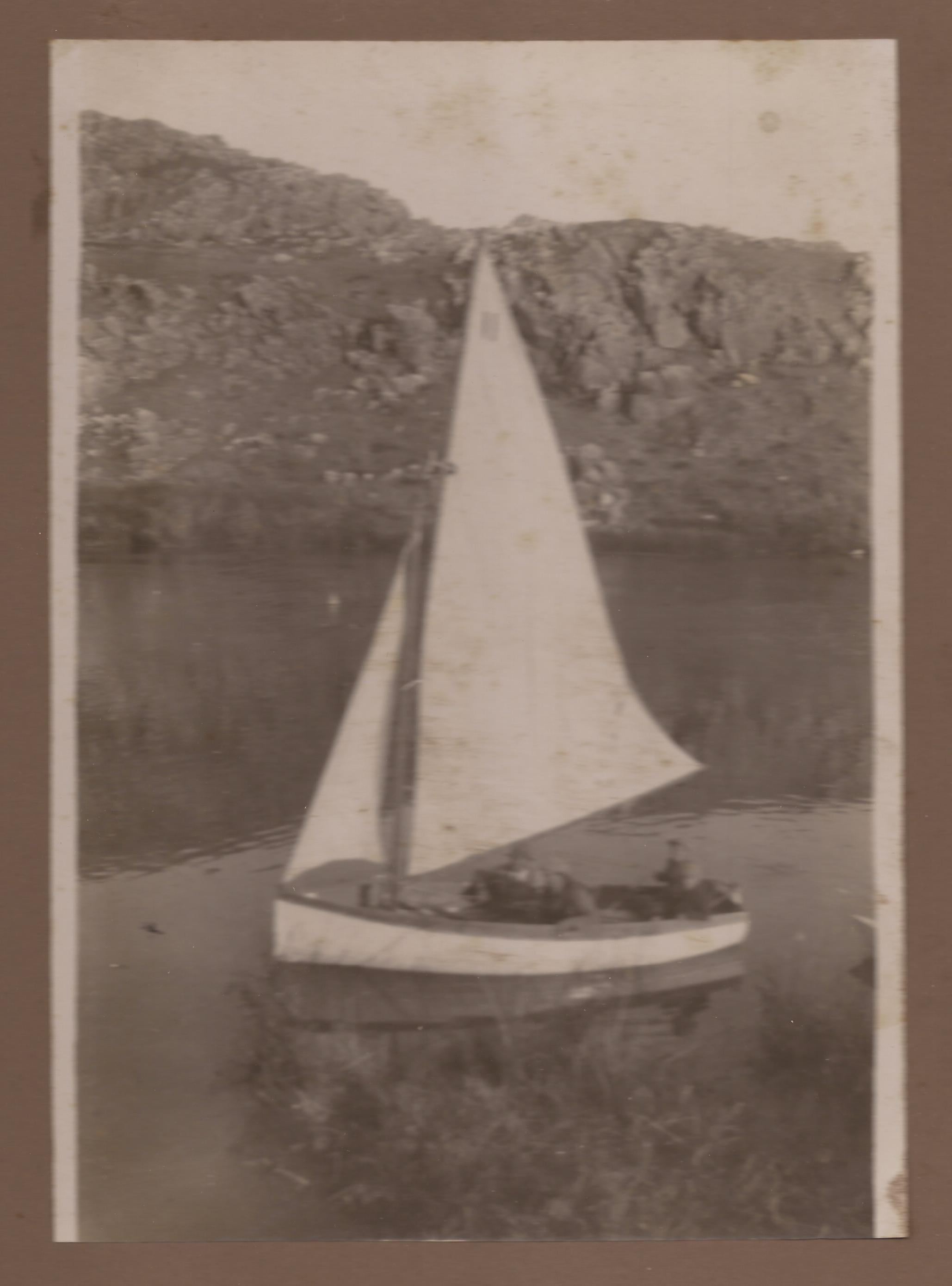
Dr Ernest Altounyan on Coniston Water with ‘Mavis’, one of the dinghies that inspired ‘Swallows and Amazons’
These unique photographs were recently found in Cheshire by the antiques dealer John Jukes who asked me if I could return them to the Altounyan family. This I have done and show them here by kind permission of Roger’s daughter, Barbara Altounyan. Please do not copy these photos.
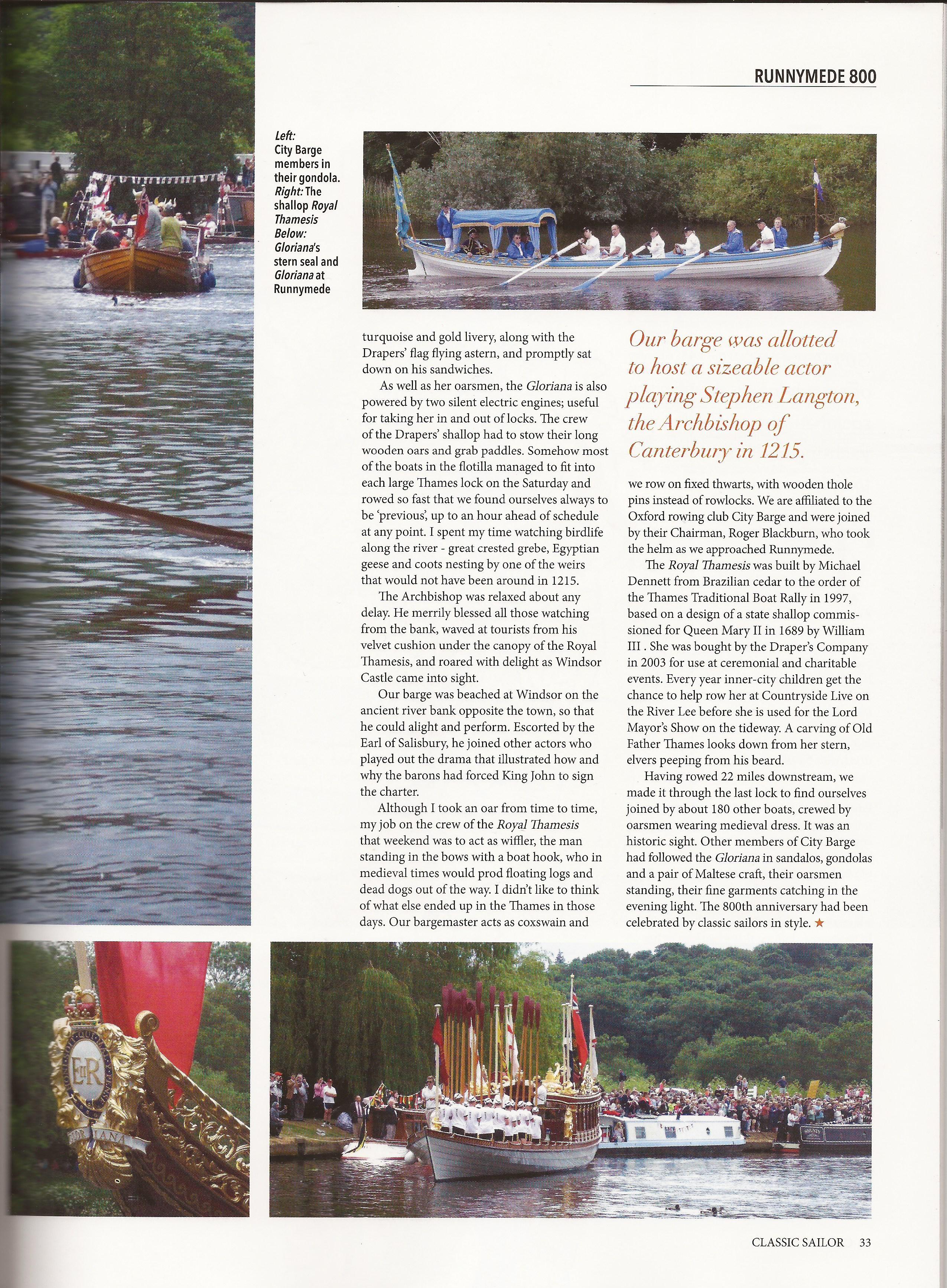
I had an article published in a fabulous magazine for all those who love classic boats and traditional craft:
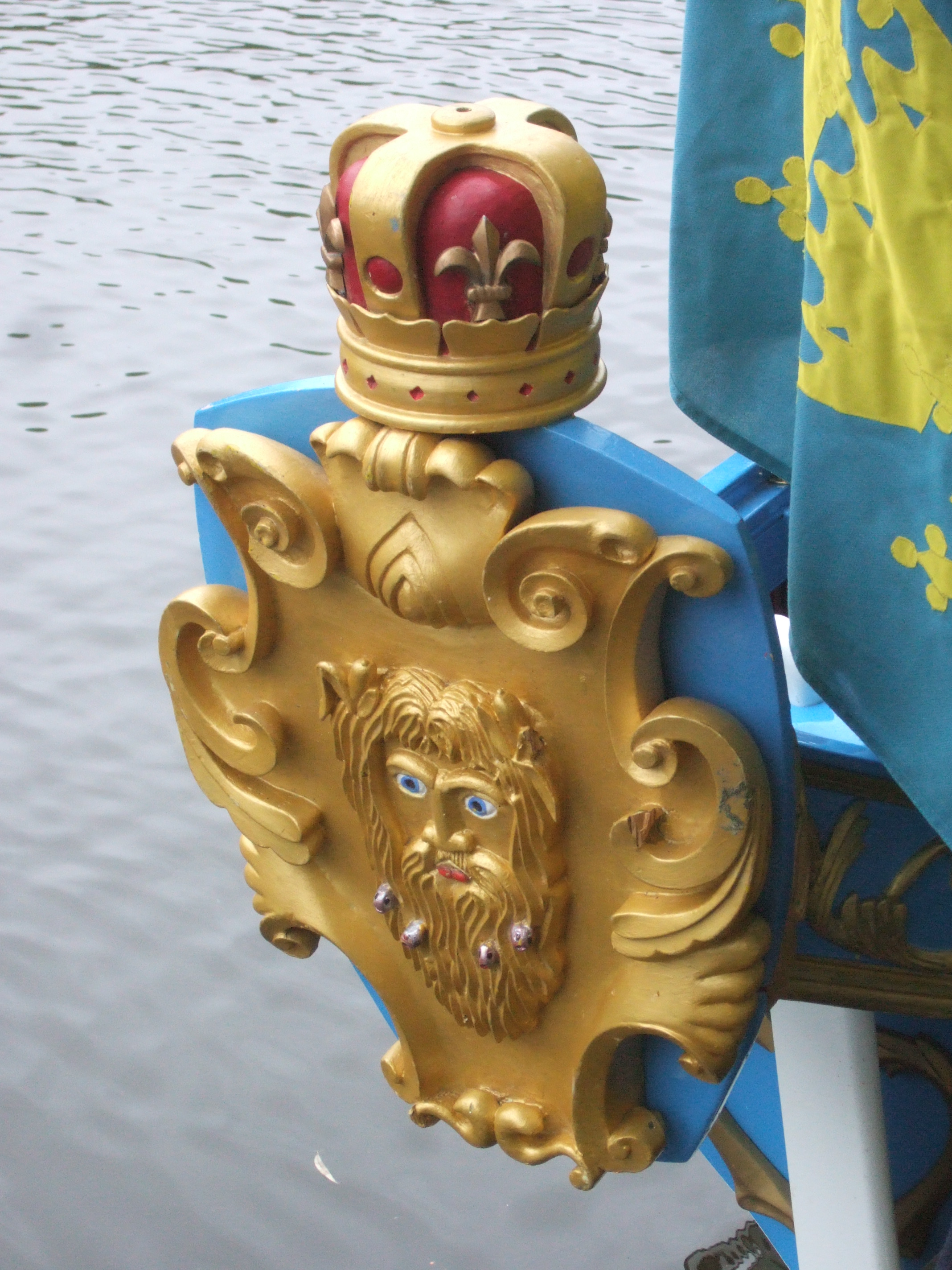
The balotina Nicoletta, a ceremonial gondola, pictured below, must be one of the most elegant on the River Thames.
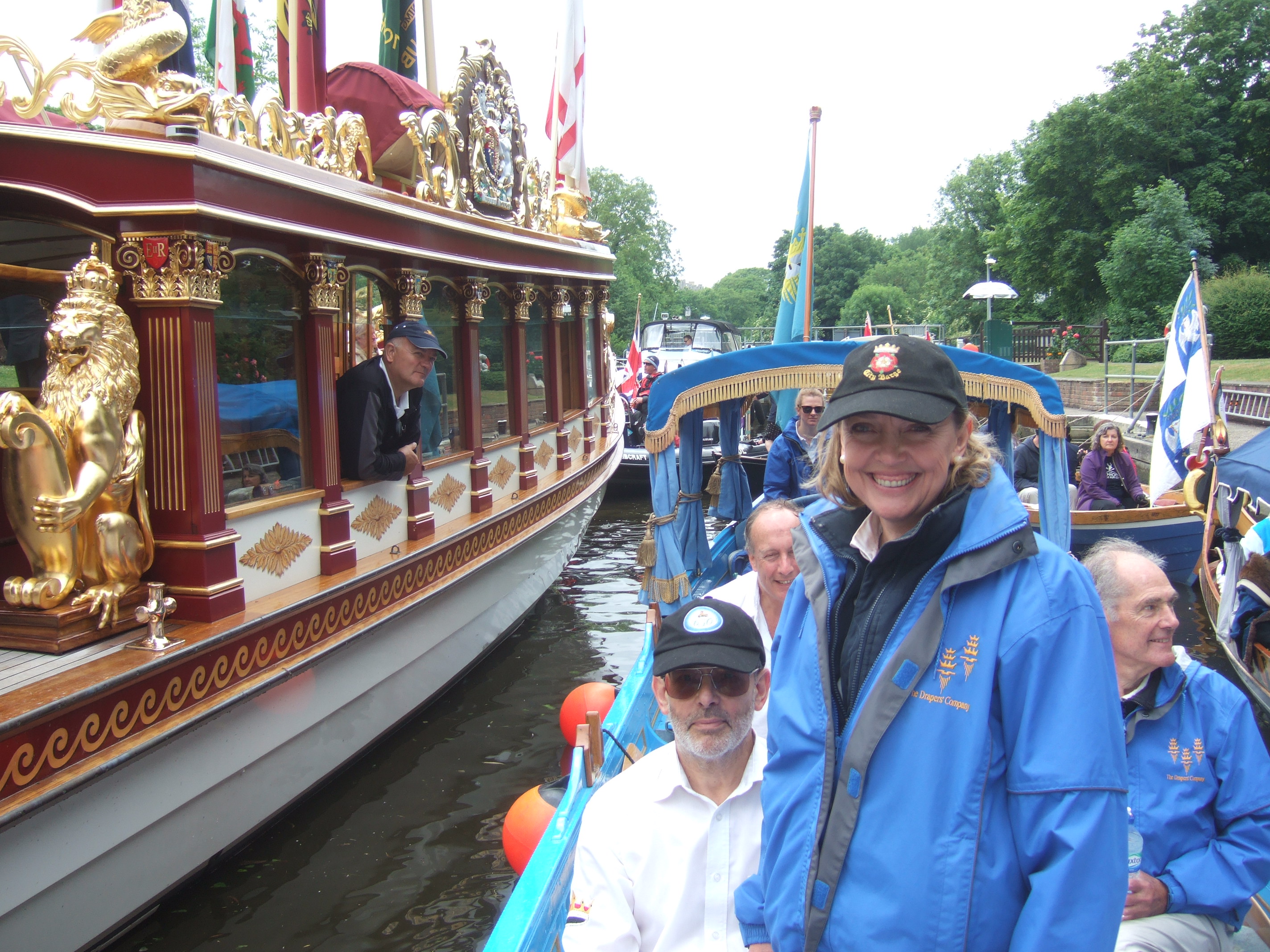
I am rowing at No 4 in this photograph of the Drapers’ shallop Royal Thamesis taken by Peter King. The shots of the Gloriana are my own:
There is lots more to read in the magazine including a story from Roger Barnes about taking his dinghy to a sail-and-oar challenge in France, as well as news of Thames barges on the east coast.
Classic Sailor are eager to hear from readers about what kind of articles they’d like included. If anyone can send me a book review or perhaps a review of sailing films, I could forward it to the editor.
To read more about the event and see wonderful photographs, please click here
Comments from readers are flooding in:
‘I really enjoyed your article and photos.’ Richard
‘This is a really nice article you have written – well done! It is a fitting tribute to such a memorable day…’ Edwina
‘..where were BBC TV on the day?’ Juliet
‘Standing rowing is, for me, the best way to travel in the canals and rivers of Britain. Out at sea in the waves, clearly, sitting rowing has a place. But I like seeing where I’m going.’ Peter
‘..is (the gondola) from the Tudor/16th Cent period or earlier? Kenny
‘ excellent article… the “sandalo in the background” is my sandalo Piero with its crew of Tony Meadows, three delightful ladies from Venice and yours truly. One of my prouder moments although I have never concentrated so hard in my effort to keep in formation. Fortunately Tim Williams kept Nicoletta on an impeccable course making it easier for the rest of us.’ John Sykes
The Nancy Blackett Trust presented another screening of the classic film ‘Swallows & Amazons’ (1974) at the Riverside in Woodbridge. The cinema was celebrating 100 years of film and were thrilled to welcome a large and enthusiastic audience of 250, made up of children and Arthur Ransome enthusiasts one of whom told us he saw the film in Shaftesbury Avenue when it first came out.
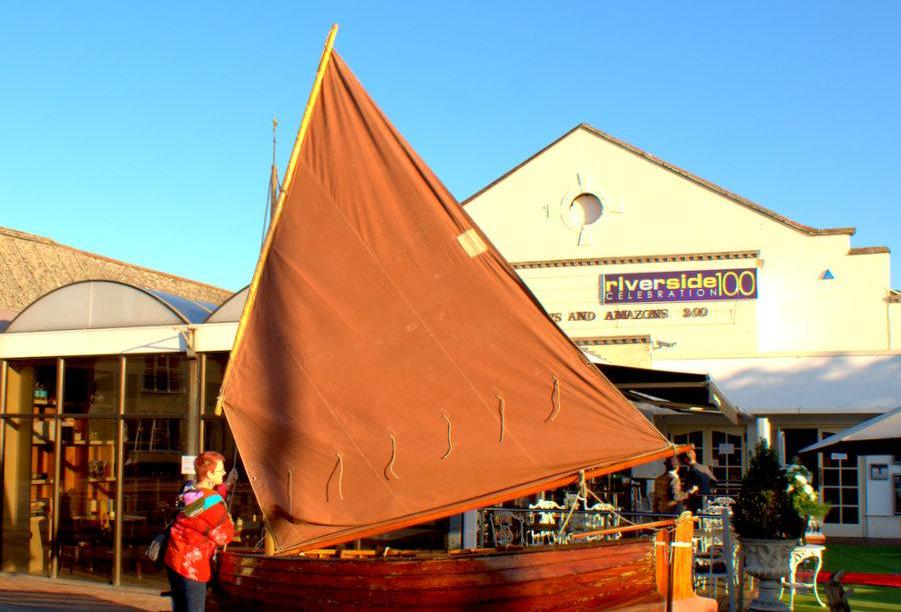
Swallow, the original dinghy used in the film was on display outside the cinema and I went along to answer questions about how the movie was made. Here are some of those asked by children in the audience:
Had you ever been on a boat before you started filming? Yes, my father was a great sailor and I’d crewed for him. As Titty, I had to row quite a bit – back from the charcoal burners, later when I captured Amazon and alongside Roger when we went to find the treasure on Cormorant Island.
How did you do the night time? We used Mrs Batty’s barn at Bank Ground Farm as a studio.
Which lake did you film on? Arthur Ransome wrote about an imaginary lake based on real places that we found on Windermere, Coniston Water, Derwentwater, Elterwater and a smelly lilly pond. the great thing is that you can go and find them too.
Did you enjoy filming? Yes, very much, but it could be chilly.
How long did it take to film? Forty-five days in all. It’s a 90 minute film so you can work out just how much we managed to film per day. It was well under the 4 minutes-a-day scheduled.
Did Titty actually keep the parrot? Titty did in the story but the parrot in the film was rather savage and had to be returned to Mrs Proctor of Kendal. However my parents bought a very tame green parrot called Chico who would sit on my shoulder, even when I went rowing.
Were you cold when you we filming the swimming scenes? Yes! We nearly passed out.
Why didn’t you wear life jackets? The film was set eighty-six years ago in 1929 when children didn’t wear life-jackets. We wore BOAC life-vests during rehearsals and when being taken out to the location.
What are the children doing now? Working! Suzanna Hamilton is the only one of us to kept acting. She’s appeared in two feature films this year including ‘My Feral Heart’. Simon West has an engineering company that invents machines, Sten Grendon is a gardener, Kit Seymour is spending this year in Australia and I believe Lesley Bennett lives in the Netherlands, but I’m not sure. I’d love to make contact with her. Virginia McKenna is still acting as well as figure-heading her charity Born Free that does so much to relieve the suffering of animals.
In reality, how old were you all when you acted? Roger was 8, I was aged 12 pretending to be aged 9, Susan was 12 and John 11. Nancy was about the right age as she celebrated her 13th birthday towards the end of the filming. The secret was that Peggy was the eldest at 13.
Do you have a cameo role in the new film? You might just see me on the platform of the railway station but I am wearing a wig!
Why is Swallow’s flag brown? Because it a little elderly.
The camping kit – was it all packed in Swallow? We children didn’t know it at the time but it didn’t all fit in, although they did keep taking the tents down. Why we had a rolling pin on board, I do not know.
What happened to Amazon? The Amazon Arthur Ransome knew, which was originally called Mavis, can be seen at the Coniston Museum. The dinghy we used in the film was also used in the black and white BBC TV serial made in 1962. She is now in Kent – and still sailing. You can see her on ‘Country Tracks’ by clicking here.
After the film screening, I was told that students on the Open University Children’s Literature course with study Arthur Ransome’s classic book ‘Swallows and Amazons’, which is good news, especially since the BBC News headline rang out the question: Do children still need to read the classics of English Literature? Declaring, ‘Gone from bedroom bookshelves are the Famous Five, The Chronicles of Narnia,and the adventures of the Swallows and Amazons.’
Is this true? Do leave your comments below – or contact the BBC!


 We took Swallow to join the Aldeburgh Junior Lapwings on the River Alde in Suffolk.


 before sailing back to camp by the mud flats, cooking out in the open and sleeping in tents.
 They launched their dinghies, raised their red sails




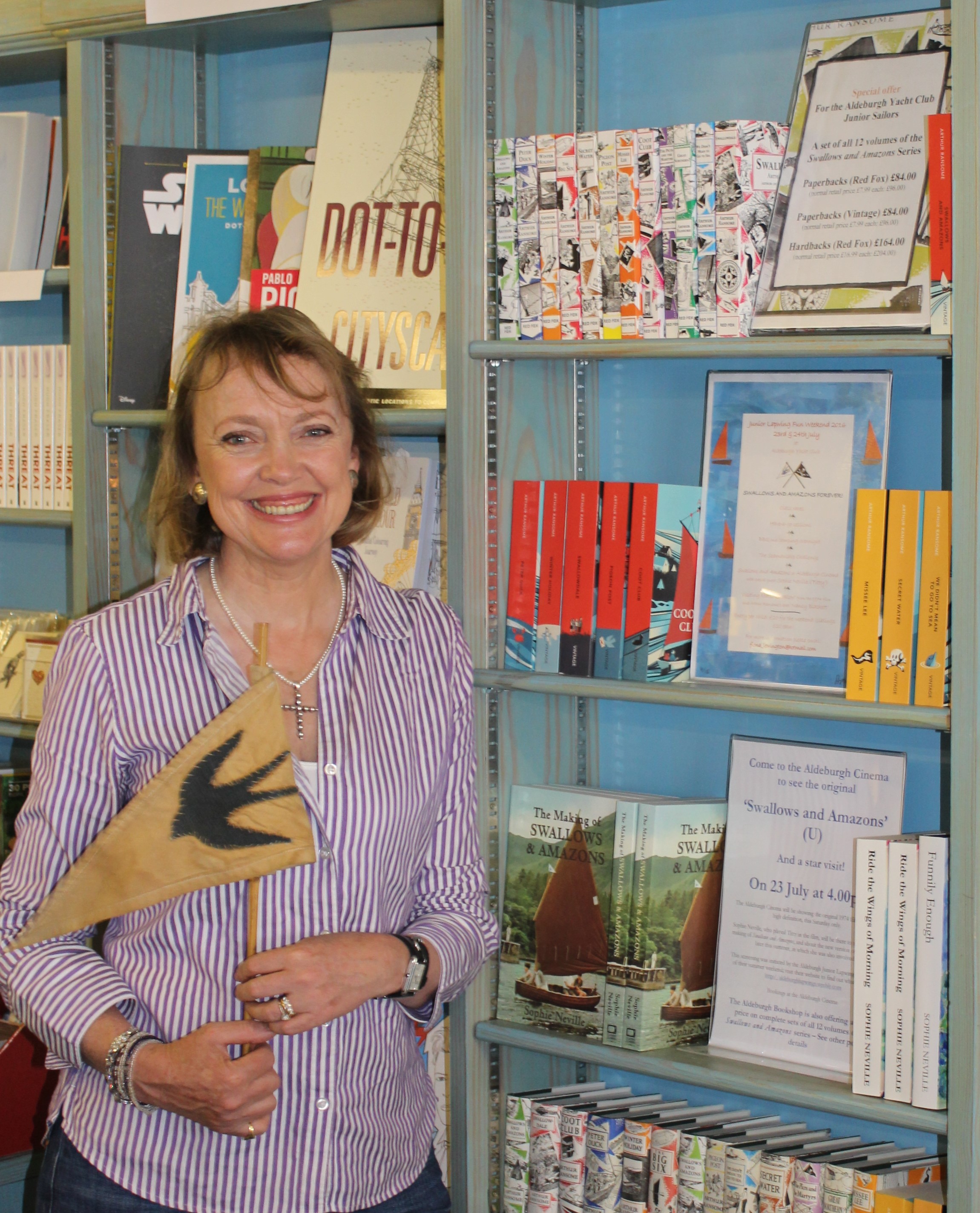

 adorn the shelves of the award-wining Aldeburgh Bookshop
 The sun shone and holiday makers enjoyed the beach























 Sophie Neville
