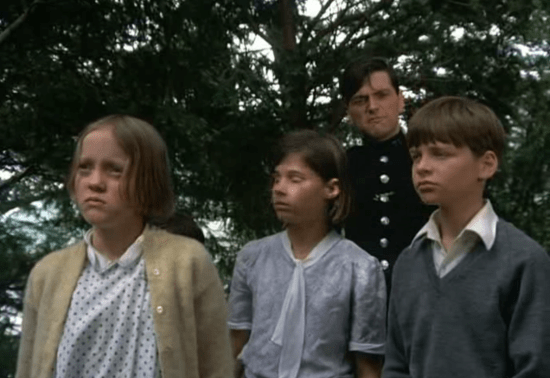
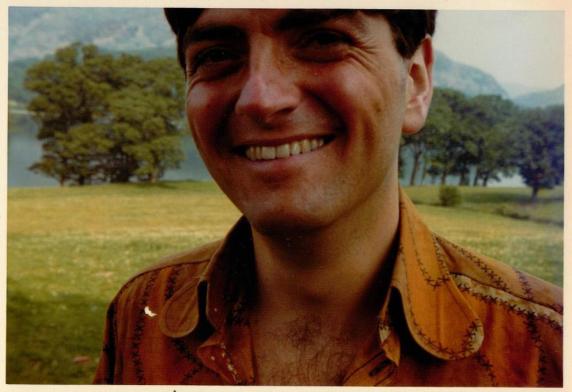
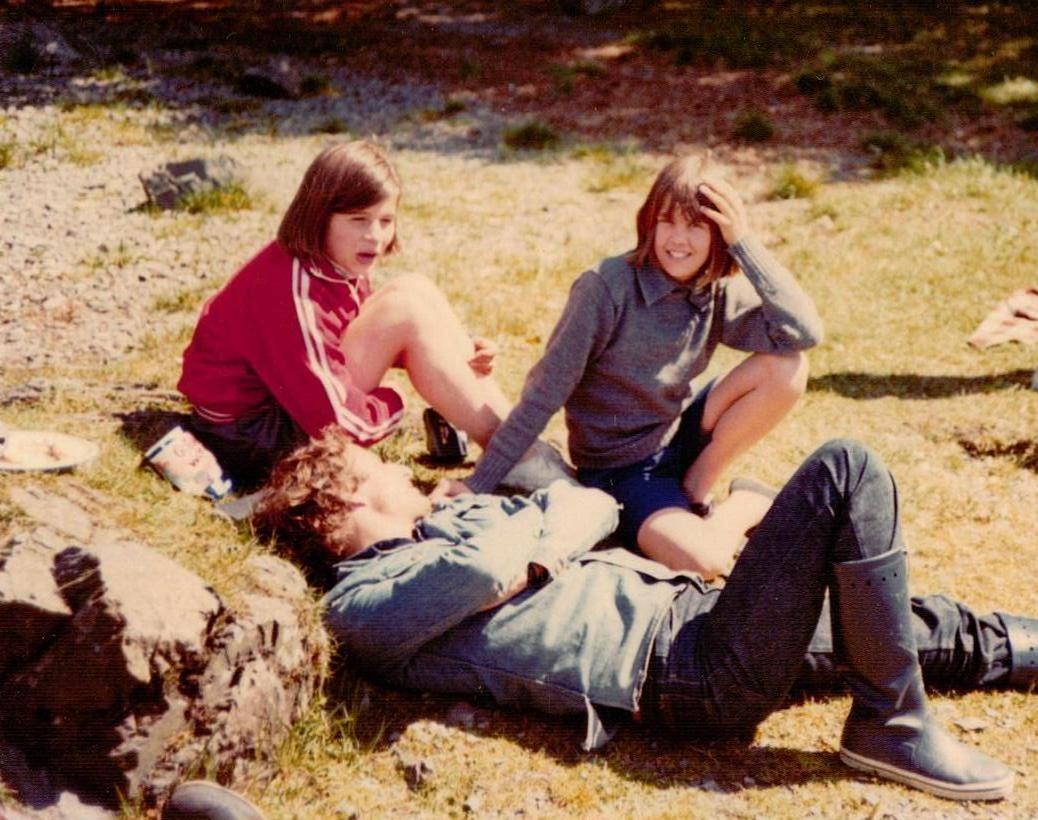
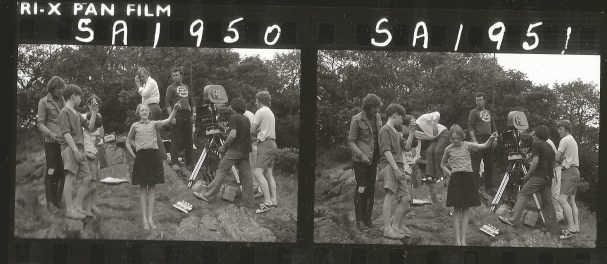
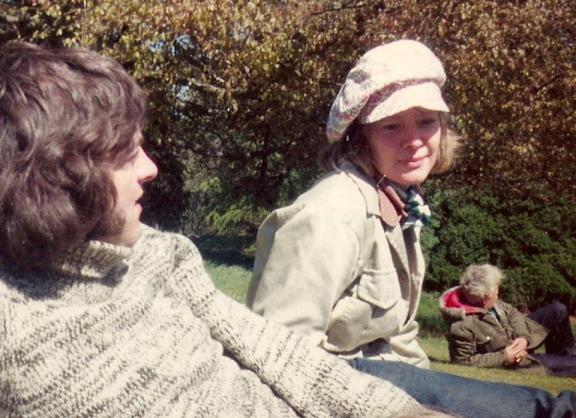
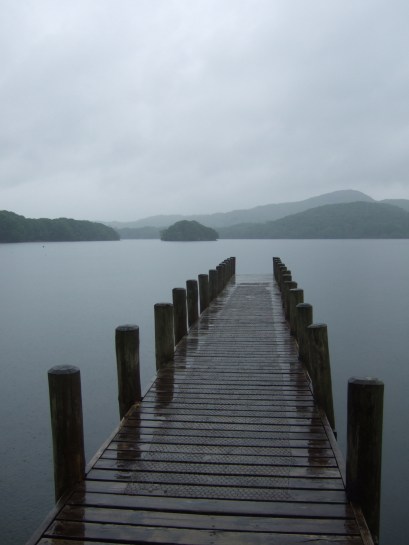
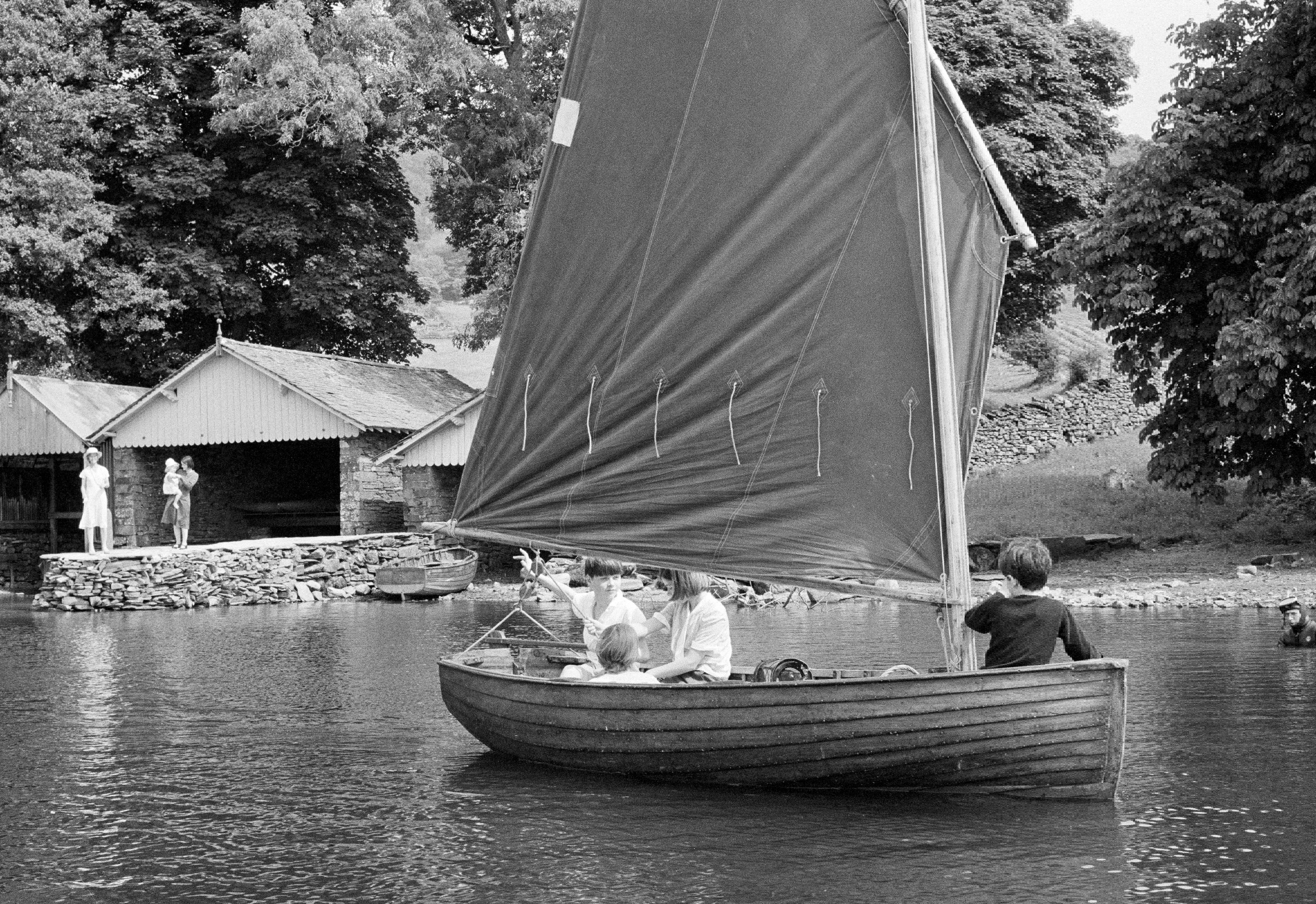
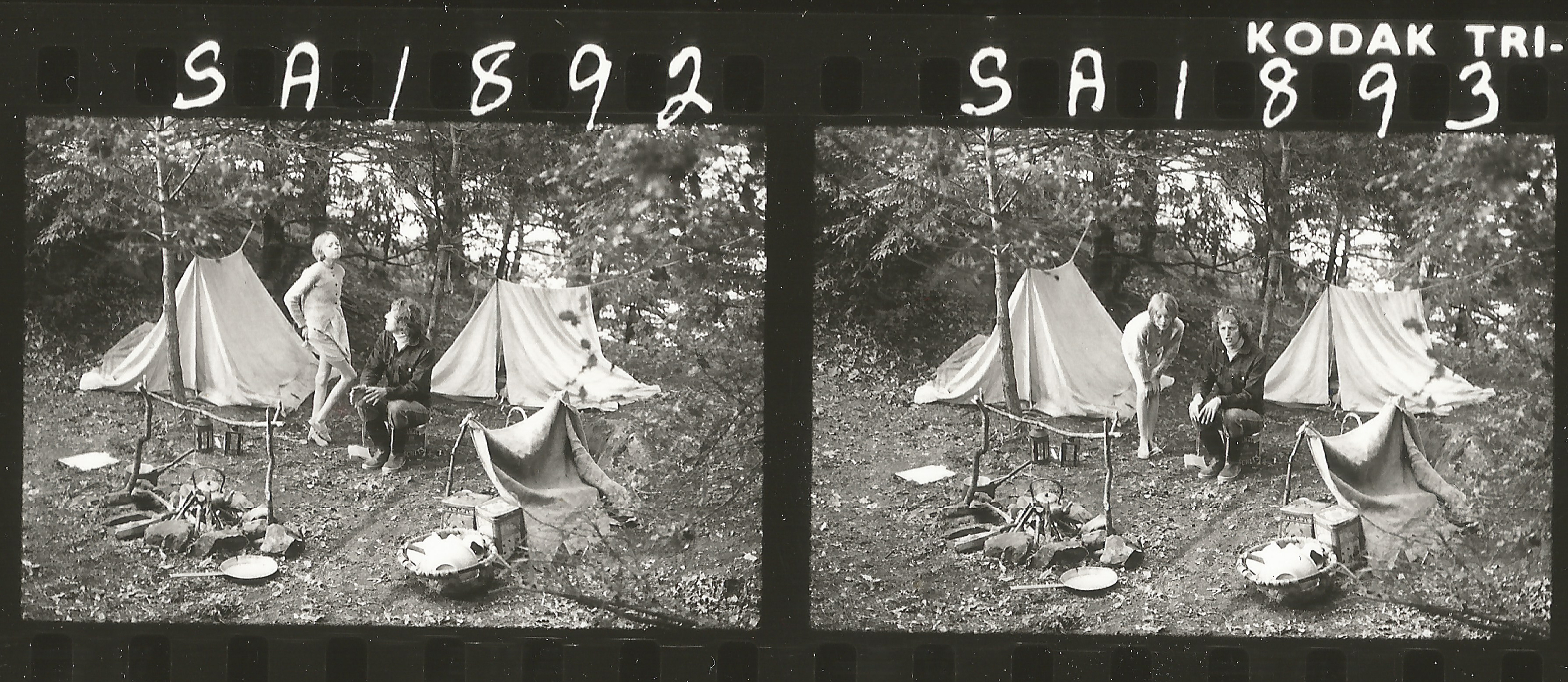
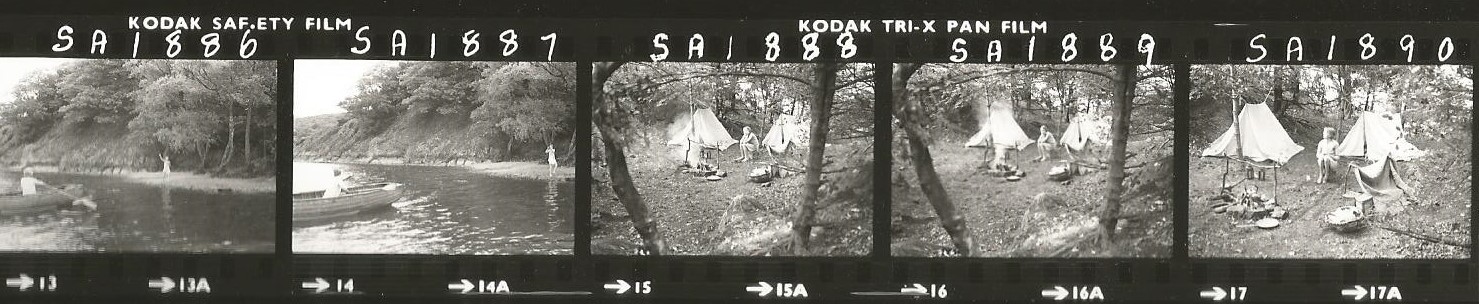
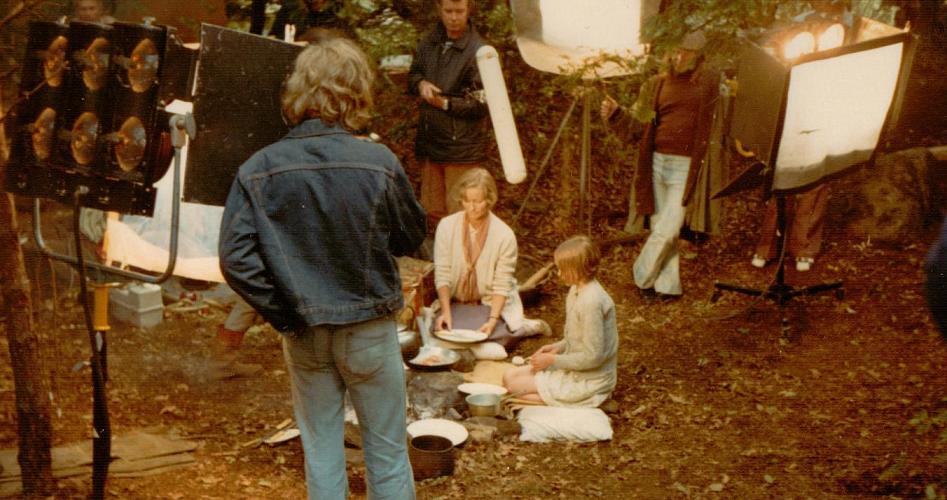
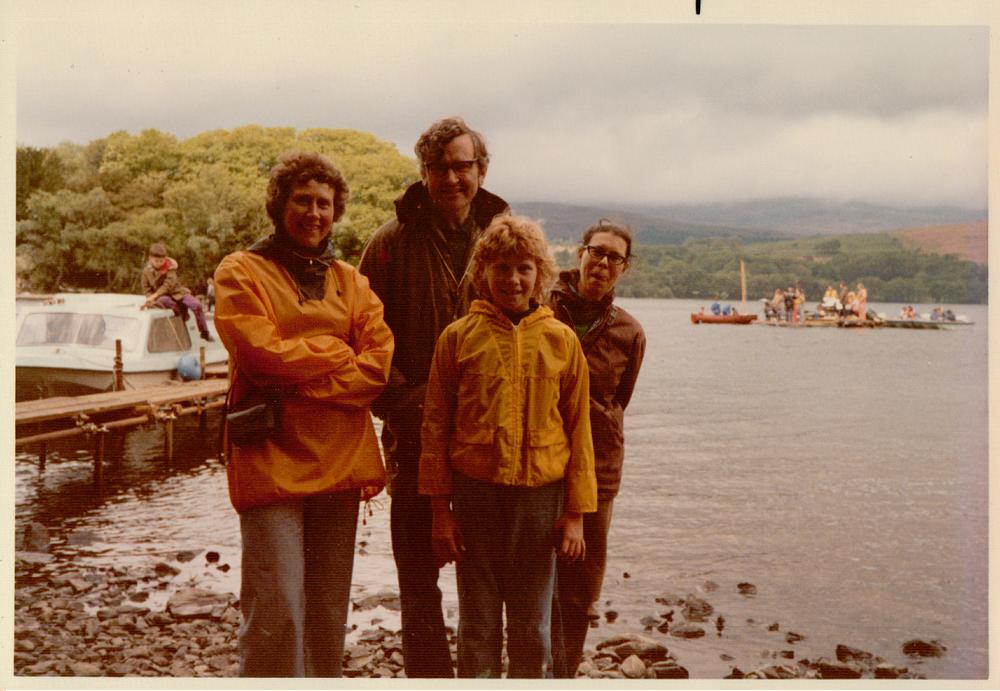
Leaving the Lake District after spending 50 days filming ‘Swallows and Amazons’~ 13th July 1973

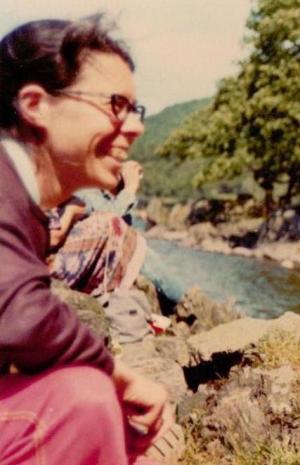
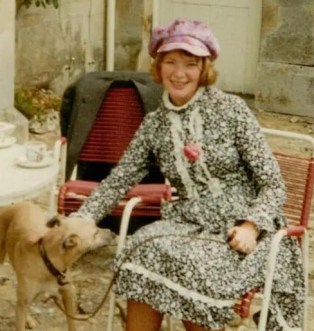
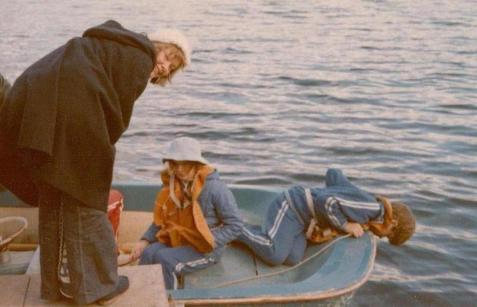
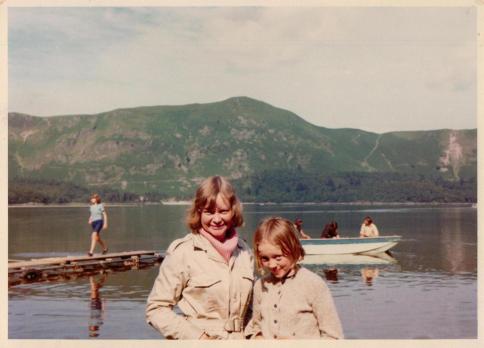
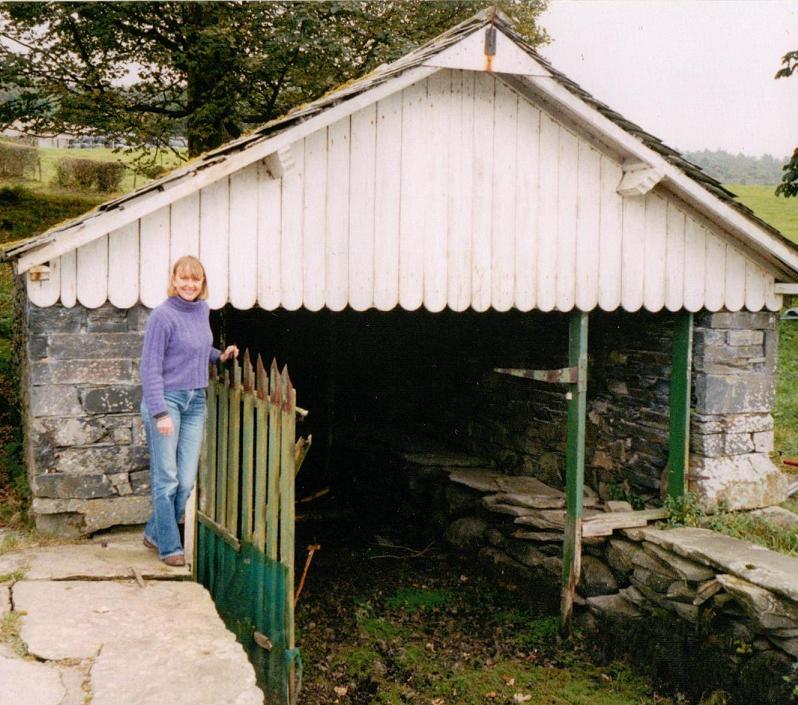
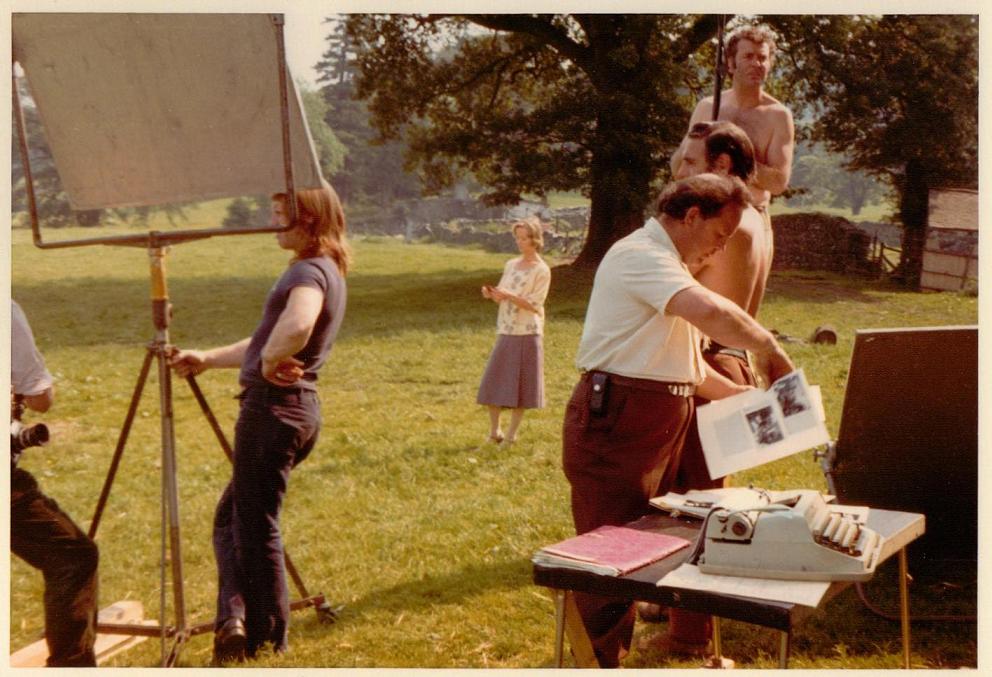
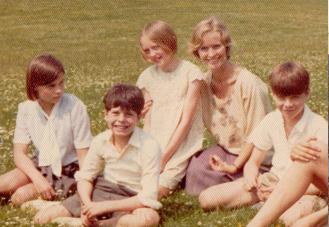
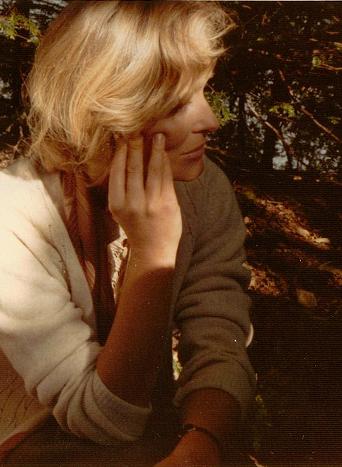
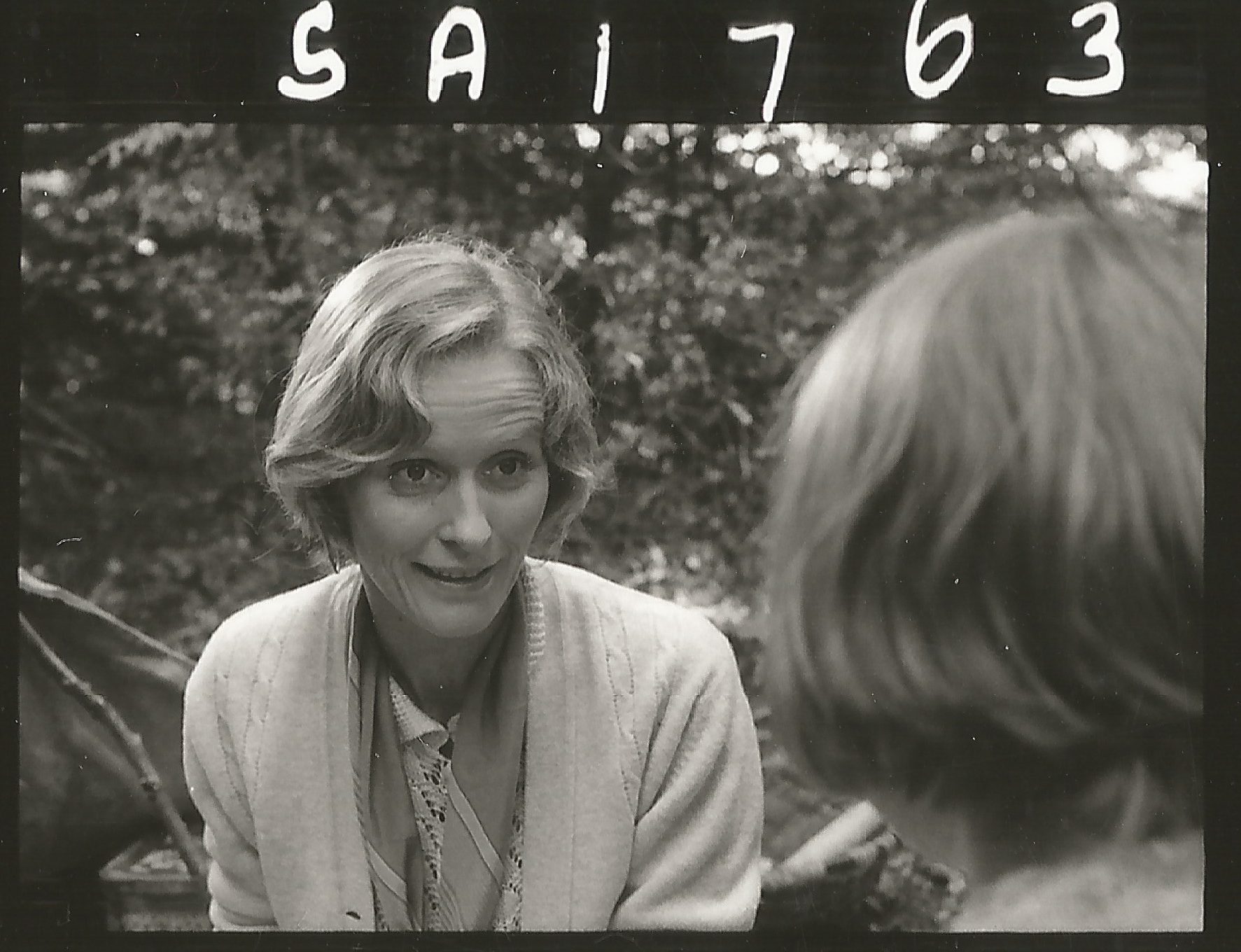
Daphne Neville with Sophie Neville while filming 'Swallows and Amazons' in Cumbria

 It was time to say goodbye. We’d had the most wonderful seven weeks filming on the Lakes but the end had drawn in with the clouds. It was time to go home.

Since we lived in Gloucestershire it was a long drive south. I’m not sure how Jane and Sten Grendon got back, as I don’t think Jane drove, but we must have dropped off some of their things on our way past their village.

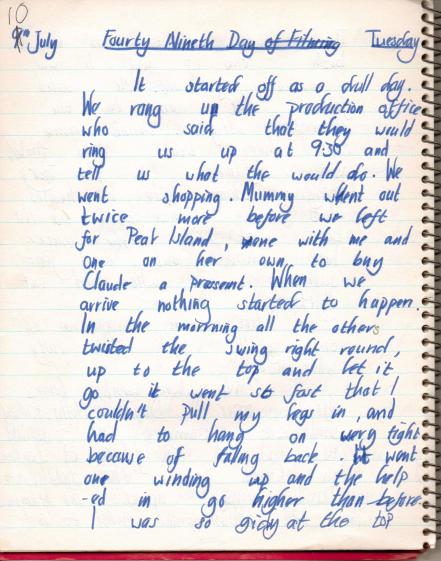
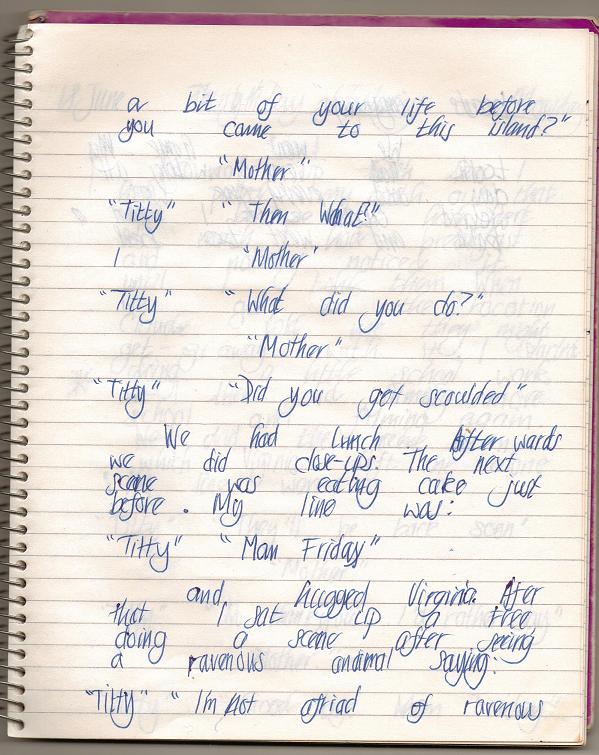
I remember seeing my real sisters and walking around the garden in the afternoon sunshine, looking at all that had changed. We’d left in early May, now it was full summer and the school holidays. I don’t know how I had the energy left to write up my diary.

Sophie Neville in 1973, in the garden at home with a swan
Back in the garden at home with a swan

‘Shall we go and put flowers on Luppy’s grave?’ Perry asked. I hadn’t heard that our dear old dog, the sheep dog I had known all my life, had died while we were away. I was inconsolable. Mum explained that they hadn’t wanted to tell me when it happened as we were filming, she thought that the sadness on my face would have come through on camera. I understood this but was still desolate. Having had to cope with the grief of losing Luppy, on top of the heartbreak of leaving everyone I had grown so close to in the Lake District, I was not in a good way.

One of the most treasured things that I had returned with – apart from the lump of Cumbrian slate Jean McGill had given me – was a hard-back copy of ‘Swallows and Amazons’ signed by the entire cast and crew.

Signatures of the cast, director and producer of the movie 'Swallows and Amazons' in my hardback copy of Arthur Ransome's book
Signatures of the cast, director and producer of the movie ‘Swallows and Amazons’ in my hardback copy of Arthur Ransome’s book

Here you can see inscriptions from Virginia McKenna who had played my mother and Ronald Fraser who obviously saw himself as Uncle Jim rather than Captain Flint.

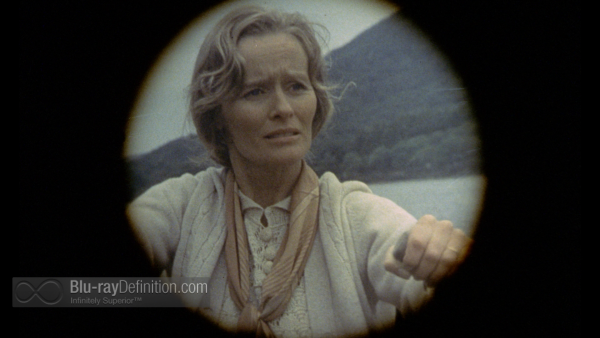
Virginia McKenna as Mother in Swallows and Amazons 1

Mike Pratt and Brenda Bruce who appeared as Mr and Mrs Dixon, Jack Wolgar and John Franklyn-Robbins who embodied the Charcoal Burners with Brian Robylas (sp?) and Moria Late who played Mr and Mrs Jackson.

Sophie Neville holding the horses
Stephen Grendon, Sophie Neville and Simon West with Brian Robylas ~ photo: Daphne Neville

It is interesting that all the children signed their character names with their real names in brackets. We must have grown to associate ourselves more with the characters names than with our own.

Claude Whatham in 1973

Claude Whatham wrote, with thanks, and Richard Pilbrow enchanted me by drawing a picture of Wild Cat Island at night.

Daphne Neville with Richard Pilbrow1
Molly and Richard Pilbrow in 1973

Sadly, we didn’t manage to nab everyone on the crew, but collected a few signatures.

Brian Doyle, the publicity manager on 'Swallows and Amazons'
Brian Doyle, the film publicist on ‘Swallows and Amazons’ (1974)

The only other signature on this page is from Brian Doyle, Mum’s friend the publicity manager on the movie who encouraged us to collect the autographs.

Signatures of the rest of the cast and crew of 'Swallows and Amazons' in the back of my Jonathan Cape edition of Arthur Ransome's book
Signatures of the rest of the cast and crew of ‘Swallows and Amazons’ in the back of my Jonathan Cape edition of Arthur Ransome’s book

At the back of the book David Blagden, who played Sammy the Policeman as well as overseeing the sailing.

David Blagden who played Sammy the Policeman
David Blagden who played Sammy the Policeman ~ photo: Daphne Neville

David drew me a picture of what must be a vision of himself, sailing into the sunset in his little yacht Willing Griffin that had taken him across the Atlantic.

David Blagden's signature and sketch

Phyllis B was my tapestry-making stand-in. Simon Holland our art director (set designer) drew me a wonderful set of crossed flags that were also paint brushes ~ a logo for my life.

Art Director Simon Holland
Art Director Simon Holland at Bank Ground Farm in 1973 ~ photo: Daphne Neville

I have a signature from Kerry Darbishire (I thought she’d written Dartisnine) who played Bridget’s Nurse, our Fair Spanish Lady. Like the actors who played the Jacksons, she was not credited on the movie but played a significant part. She still lives in Cumbria.

Nurse with Baby Vicky, the ship's baby
Nurse with Baby Vicky, the ship’s baby at Holly Howe

We left Jean McGill, our driver and unit nurse, in Bowness-on-Windermere.

Jean with sophie
Jean our driver and location nurse operating the radio with Sophie Neville ~ photo:Martin Neville

Eddie Collins was the camera operator,  Ronnie Cogan our hairdresser, Joni Turner was a local lady who worked on a few days as Suzanna’s stand-in.

Sophie with Martin Evans the Gaffer and Terry Smith the wardrobe master
Talking to Martin Evans the Gaffer and Terry Smith the wardrobe master while leaning on a lighting stand at Bowness-on-Windermere

Terry Smith was the wardrobe master, Albert Stills is Albert Clarke who took the black and white photographs day after day. Terry Needham was our long-suffering second assistant director.

Sophie Neville with Terry Needham in 1973
Sophie Neville with Terry Needham and the unit radio at Derwentwater ~ photo: Daphne Neville

On the last page I have a very classy signature from Robert – who I think was one of the Keswick boatmen looking after the Lady Derwentwater.

A boatman working on Derwent Water in 1973
Our boatman and the houseboat in 1973 ~ photo Daphne Neville

Denis Lewiston the DoP also left his mark on my life.

Dennis Lewiston, director of Photography on 'Swallows and Amazons' ~photo:Richard Pilbrow
Dennis Lewiston, director of Photography on ‘Swallows and Amazons’ ~photo:Richard Pilbrow

Peter Robb-King signed himself ‘Make-up for the Stars’ and Gareth Tandy as ‘The Whip-cracker’, which surprised me as I had never seen his whip. Graham Ford obviously didn’t want me to change and Margaret Causey, our tutor, sent her love. We’d been though so much together and in such confined spaces.

The film crew set up in Rio Bay
Swallow and the film crew setting up at Bowness-on-Windermere ~ photo: Richard Pilbrow

Interestingly, I also have an inscription from Ian Fuller the sound editor listed as if he was around on location. I am sure he was the chap I would have met next. Claude and Richard would have gone straight down to the cutting rooms to edit the film. It is not usual for actors to enter such territory but our adventure was to continue. We were soon to be summons to the Elstree Studios of EMI at Borehamwood in Hertfordshire, just off the A1.

The crew as I remember them filming with Swallow and Amazon from the pontoon ~ photo: Richard Pilbrow
The crew as I remember them filming with Swallow and Amazon from the pontoon ~ photo: Richard Pilbrow taken on Derwentwater in 1973

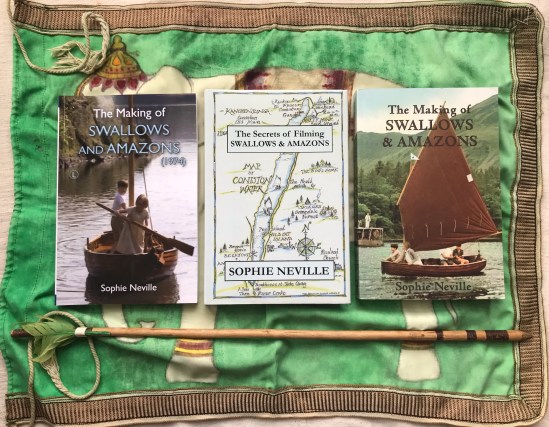
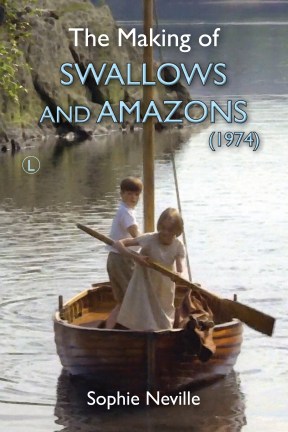
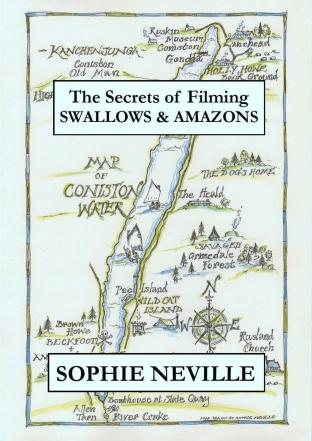
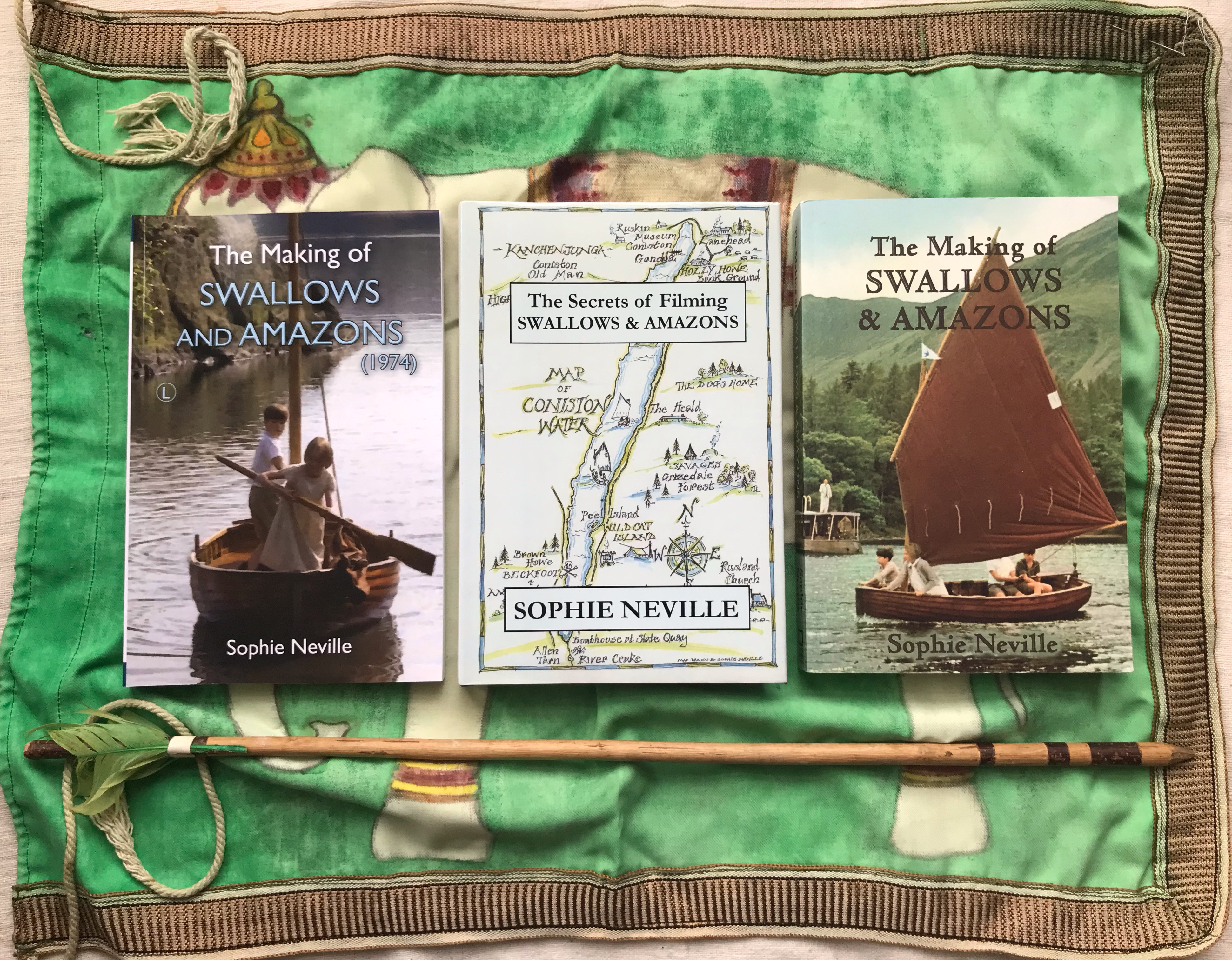
You can read more in the ebook ‘The secrets of filming Swallows and Amazons’ or paperback entitled ‘The Making of Swallows and Amazons’ available from all online retailers.

The Making of Swallows and Amazons by Sophie Neville
Different editions of ‘The Making of Swallows and Amazons’ by Sophie Neville

The dangers of filming discussed during our last days making ‘Swallows and Amazons’ on 10th July 1973

Claude Whatham showing the 16mm camera to Simon West and Sophie Neville. Sue Merry and Denis Lewiston.
Director Claude Whatham letting Simon West and Sophie Neville handle the 35mm Ariflex. Sue Merry and Denis Lewiston can be seen behind us.

When Suzanna Hamilton brought me the diary she kept during the filming of Swallows and Amazons we had time to reflect on the seven weeks we spent together in the Lake District during that far off summer of 1973.

‘We were beautifully looked after,’ she said. ‘I mean we were really well cared for. Look – Jane took me fell walking.’  Our diaries record that our local driver Jane McGill also went to endless lengths to make things fun for us – ever with safety afore-thought.

Jane Grendon, Sten’s mother and one of our two chaperones who took us fell walking.

She was right. Jane Grendon, who was Sten’s mother, and Daphne Neville, my mother, were our official chaperones. They worked day and night with very little time to themselves.

Daphne Neville in 1973

Both had left younger children and animals at home in Gloucestershire with their husbands, which can’t have been easy.

Sophie Neville on location film Swallows and Amazons in 1973
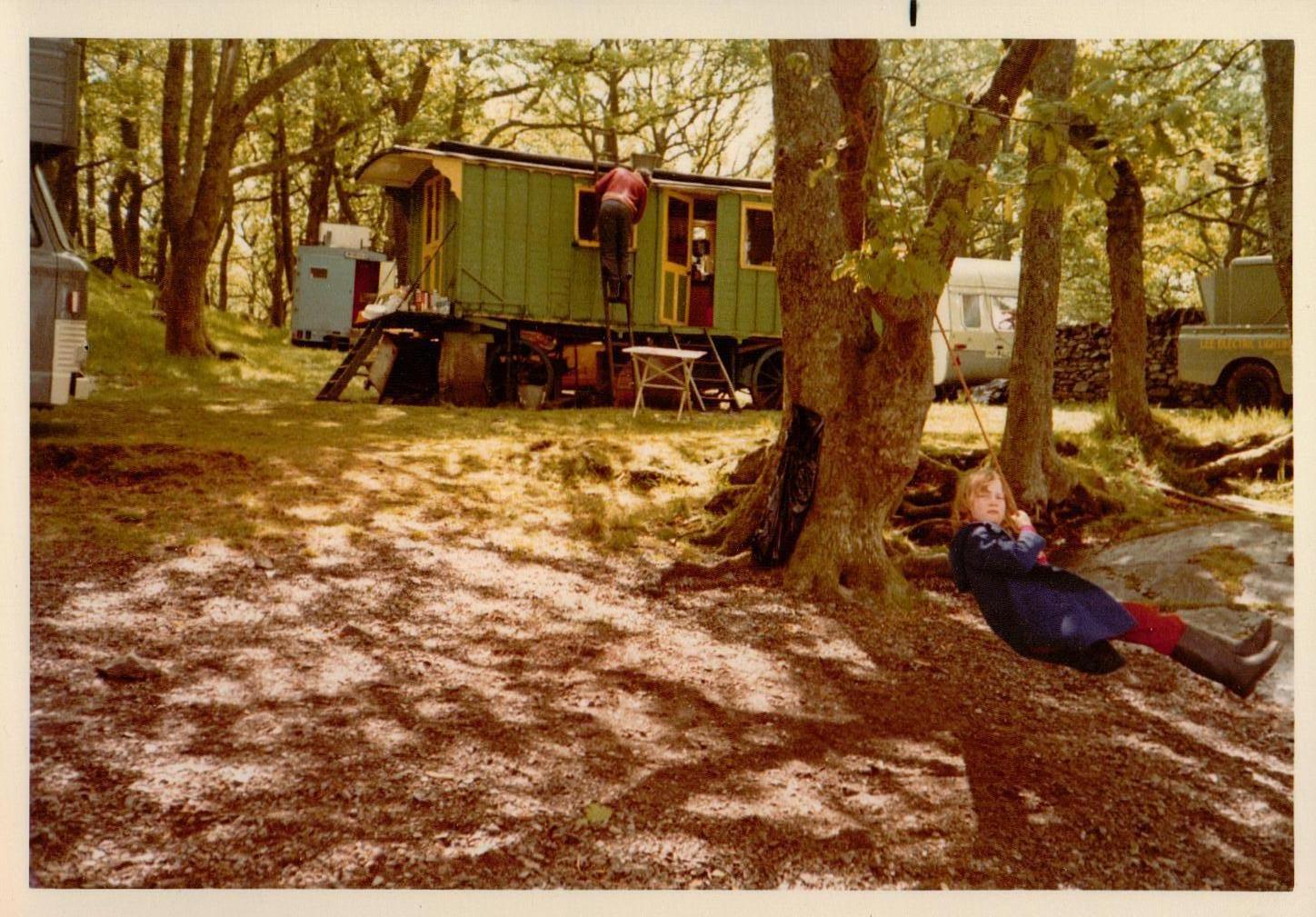
A photo taken of the swing at our unit base opposite Peel Island earlier in the filming when the school bus and caterers were still around

Mum later wrote an article for Woman magazine saying that being a chaperone was ‘Fascinating, Fattening and Fun’, but it must have been exhausting. It would have been quite a trial preventing us from getting sunburnt let alone keeping us entertained.

Daphne Neville, having organised Sophie Neville and Simon West into track-suits, life jackets, sun hats and the safety boat in 1973

When we had to do anything scary or unpleasant during the filming of Swallows and Amazons, such as walk through scratchy brambles, Claude Whatham would assuage any moans by awarding us ‘Danger Money’.  It was a huge encouragement. He gave me £2.00 for being good about diving into the chilly water for the swimming scenes.  It was a lot of money back then. My mother would make a careful note of it whilst we were still in costume.

A list of who had earned Danger Money written by my mother on the back of a Script Revision page

We spent our gains in Ambleside buying presents to take back for the stay-at-homes. I think we might have received a little more after Swallow was nearly mown down by the Windermere Steamer, an incident which had actually been dangerous. I am not sure what Kit and Lesley had been doing to receive £1 each. They may have just got wet and cold sailing.

Daphne Neville with Sophie Neville while filming 'Swallows and Amazons' in Cumbria
Daphne Neville with Sophie Neville while filming ‘Swallows and Amazons’ in Cumbria. Kit Seymour is walking along the jetty in the background.

After all the rushing about in boats, the risks taken clambering from one vessel to another and inevitable dangers that we faced out on the water, it was the boredom involved in filming that proved most dangerous; children’s games that went terribly wrong ~

My diary on the filming of the moive 'Swallows and Amazaons' in the Lake District, Cumbria kept in 1973

My diary on the filming of the moive 'Swallows and Amazaons' in the Lake District, Cumbria kept in 1973

My diary on the filming of the moive 'Swallows and Amazaons' in the Lake District, Cumbria kept in 1973

This was the swing in question, strung from a tree on the shores of Coniston Water opposite Peel Island where a couple were living in a wooden caravan. The white ‘Make-Up’ caravan, that had previously been used as a dressing room for Virginia McKenna, and later Ronald Fraser, is parked beside it. It was there that I was sent to lie down.

A snap shot taken earlier in the year of my little sister on the swing at the Unit Base opposite Peel Island ~ photo: Martin Neville

It was a shame that the baseball game Molly organised ended so abruptly. We enjoying it and longed to keep playing but she realised that it could so easily have been one of us who ended up with a black-eye.

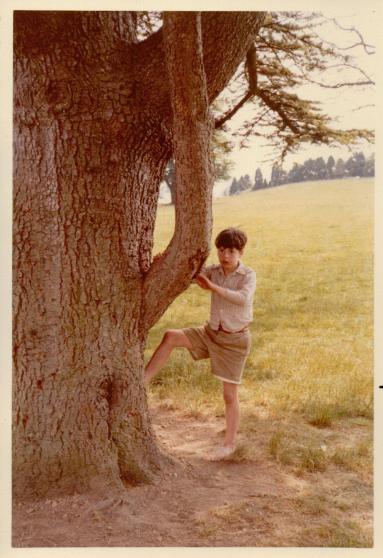
Stephen Grendon, longing to climb a tree whilst in costume

At one stage we all got into whittling wood. Bod Hedges, the property master, made a number of props on location. Different versions of the Amazons’ bows and arrows were carved from hazel on the banks of Coniston Water. He also made forked uprights for the fireplace and various stakes for the charcoal burners’ scene. Suzanna bought a penknife with her Danger Money and became quite a keen carver until the knife slipped. Jean treated the cut finger with such a massive bandage that Claude put a firm stop to any future whittling. It had been the one thing that kept us quiet. We were active children yet not allowed to climb trees or get wet. Instead Lesley Bennet plucked away at a tapestry and I painted pictures.

A bad copy of Beatrix Potter’s Jeremy Fisher Frog, looking not unlike Arthur Ransome.

Possibly the biggest danger was getting too fond of the primary objective – catching the bug that is film-making. Richard and Claude still had a few vital scenes to record and yet the weather forecast was bleak.

Richard Pilbrow and Claude Whatham at The Secret Harbour on Peel Island, Coniston Water
Producer Richard Pilbrow with Director Claude Whatham in their wet weather gear at The Secret Harbour on Peel Island, Coniston Water

You can read more in ‘The Making of Swallows and Amazons’ available in different versions that can be for sale online here

'The Making of Swallows and Amazons (1974) by Sophie Neville'
Different editions of ‘The Making of Swallows and Amazons (1974) by Sophie Neville’

‘Now then, Miss Nancy’ filming ‘Swallows and Amazons’ on Wild Cat Island on 27th June 1973

Suzanna Hamilton and the crew with Ronal Fraser
Director Claude Whatham and Bobby Sitwell with Suzanna Hamilton playing Susan Walker and Ronald Fraser as Jim Turner aka Captain Flint in 1973

I love this photograph of Suzanna with Claude Whatham and the Bobby the focus puller. It somehow captures the atmosphere of filming on Peel Island back in 1973. I was meant to be sitting on the biscuit tin where I have left my empty cup, but Claude must have been reading my lines as he took Suzanna Hamilton’s close-ups. I was never sure about the blouse she is wearing. We hadn’t heard of Margaret Thatcher at the time but it now seems to be edging a little too close to her style. I doubt if she took inspiration from us but, along with the gym shoes, it’s very much in style now.

‘It was quite a nice day weather-wise,’ one of the others had noted, but obviously not the solid sunshine needed for the big scenes yet to be shot out on the lakes. However our sailing director David Blagden was back with us, his hair cut short in order to appear in vision as Sammy the Policeman, a part he played beautifully. Although there is a cheerful photograph of him taken straight after he gained a short-back-and-sides we can only find rather a distant and visually confused one of him in uniform at the camp site on Wild Cat Island. He was so desolate to have had his hair cut short that he took off his helmet during the scene to prove that he really had been shorn.

David Blagden as Sammy the Policeman in 'Swallows and Amazons' (1974)
David Blagden as Sammy the Policeman

We were excited that David was on the set, in costume. He’d always been behind the camera before. But he made a very serious Policemen and didn’t let the persona of his character fall whilst he was in uniform.

David Blagden as Sammy the Policeman

What works best in the film is the edit. ‘No more trouble of any kind, ‘ Virginia McKenna insists – and the shot cuts to the boots of a Policemen arriving in camp.

David Blagden who played Sammy the Policeman
David Blagden who played Sammy the Policman ~ photo: Daphne Neville

It looks as  if this was one long scene – but the section where the content of Uncle Jim’s book was discussed while we sipped tea had been shot a week previously when Ronald Frazer first arrived in the Lake District.

The clapper-loader, Sophie Neville and David Blagden as the Policeman on Peel Island ~ photo: Daphne Neville
Director Claude Whatham having lunch with his leading ladies, Suzanna Hamilton and Lesley Bennett ~ photo: Daphne Neville

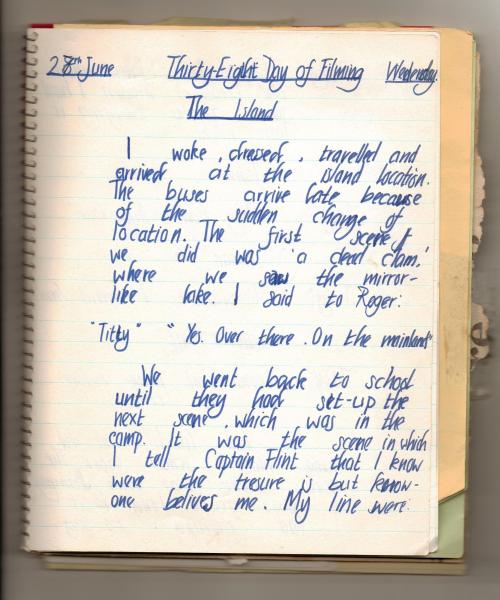
It was a long day, but a happy one. Any secrets?  It was really in the scene when John declares ‘a dead calm’ and we decide to visit the charcoal burners that it became apparent that I was taller than my elder brother played by Simon West.

Claude Whatham directing Swallows and Amazons 1974 with Simon West and Sophie Neville

A box was provided for him to stand on so that I look shorter when I run into shot. It was a shot I remember we did in one take – despite being fairly complicated. Everyone was amazed that we moved on so quickly. We needed to.

Filming Swallows and Amazons on Peel Island in 1973
The Swallows on Wild Cat Island

The pre-occupation of the producer was that, since the bad weather had caused delays, we still had an awful lot to film. We must have been about a week behind schedule – a huge worry for Richard Pilbrow. The next day we just had to get out on the water come what may.

The huge sadness was that David Blagden, so vibrant and good looking with so much to live for,  lost his life to the sea in the late 1970s.

Mum and David Blagden
David Blagden, the Sailing Director before he had his hair cut to play the Policeman, and my mother Daphne Neville, Chaperone to the six children acting in ‘Swallows and Amazons’

After Swallows and Amazons he presented an ITV series broadcast on Sundays called ‘Plain Sailing’. It featured Willing Griffin the 19′ Hunter in which he’d crossed the Atlantic despite  horrific weather in 1972 and the survey of a 39′ wooden boat I think he intended to take on another crossing.  Apparently he set off in this yawl from Alderney in a Force 11 gale and was never seen again. The harbour master had begged him not to go.  They found his girlfriend’s body and parts of the boat but there was no trace David.

Very Willing Griffin by David Blagden sailing director on 'Swallows and Amazons'

The cover of ‘Very Willing Griffin’ by David Blagden. ‘An exciting adventure of pursuing and living a dream against many odds’, this sort after book was reviewed in The Journal of Navigation.  His obituary in a school magazine is desperately sad. It was posted on the Arthur Ransome Group Facebook page.

You can read more in ‘The making of Swallows and Amazons’ published by The Lutterworth Press and available online or from Waterstones

'The Making of Swallows and Amazons (1974)'

In search of the film locations for the original movie of Swallows and Amazons (1974)

Peel Island on Coniston Water ~ photo: Sophie Neville 2012

A few years ago, on a wet but beautiful day in Cumbria, we set off on a quest to find some of the locations used in Richard Pilbrow’s 1974 film of ‘Swallows and Amazons’.

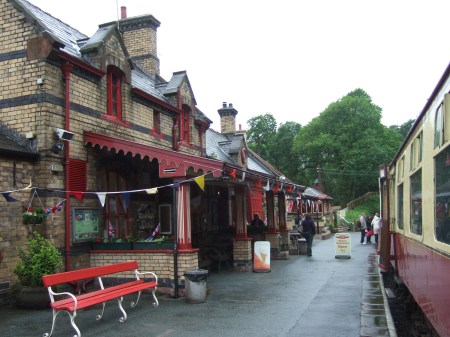
To my delight our journey started with a drive down through the streets of Rio (Bowness) and along the east shore of Windermere to the Lakeside and Haverthwaite Railway Station at the southern end of the lake (or Antarctica as Titty labelled the region). It was here that we spent our very first day filming ‘Swallows and Amazons’ in May 1973. I had not been there since.

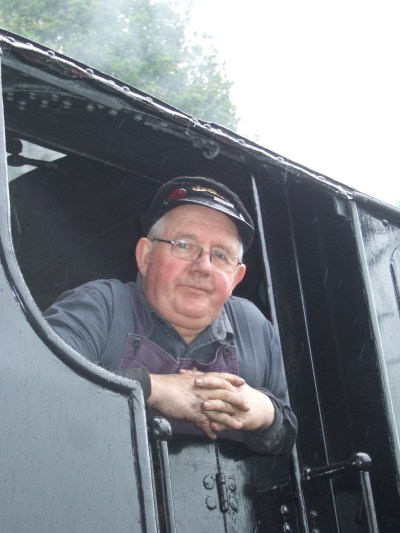
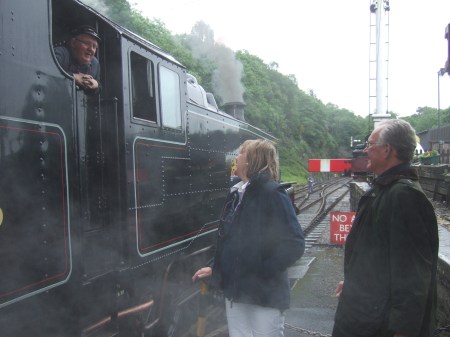
The driver of the Lakeside and Haverthwaite Steam locomotive

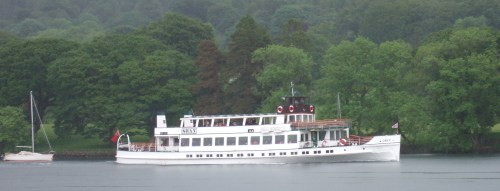
We had a chat to the train driver who explained that they now run six journeys a day. From Haverthwaite, the steam locomotives run alongside the River Leven to Lakeside Station. From here you can take a native steamer back up to Rio (the Bowness pier) or to the Far North (Ambleside, which is the town at the head of the lake where we lived whilst filming in that long distant summer when I was twelve years old.)

Talking to the train driver just as we did in 1973

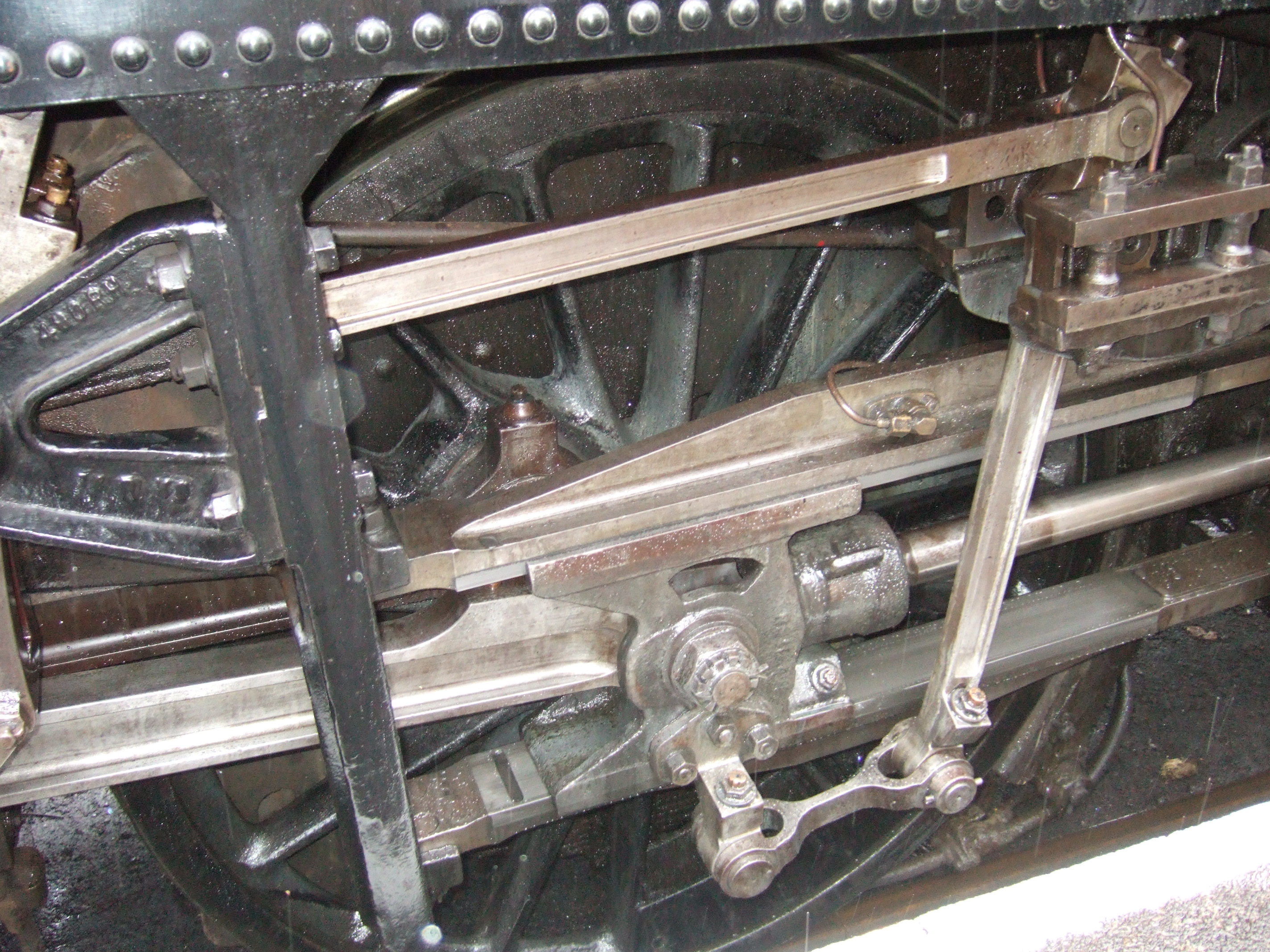
Whilst we used engine number 2073 in the movie, this steam locomotive 42085 was built in 1951. It uses about two tons of coal a day but it utterly magnificent.  The driver probably uses rather a lot of steam oil too.  It’s a smell I relish, familiar since childhood days spent on steamboats. I remember it from the SBA steamboat rally held on Windermere in 1991, which I describe in Funnily Enough.

Steam Locomotives Forever!

Curiously, Haverthwaite Railway Station looked cleaner and shinier than when we used it as a film location in 1973. I can only suppose it was still in the process of being restored back then, when Simon Holland our set designer cluttered it up with push bikes and luggage trolleys.  Much to our surprise, the yellow taxi we were transported in during the filming was actually driven along the platform.

Lakeside and Haverthwaite Steam Railway

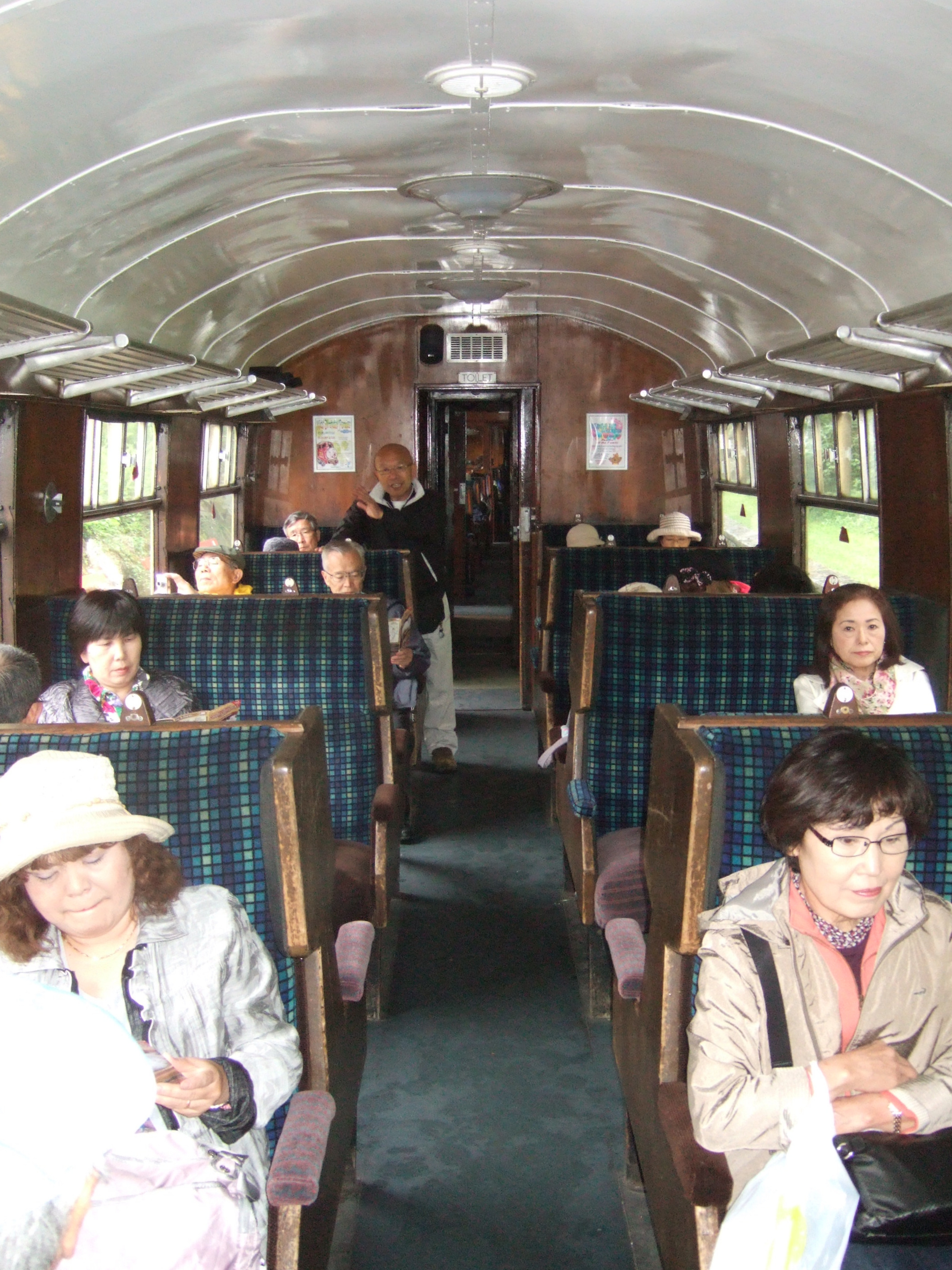
We climbed aboard the train and I explored, as Titty would have done, discovering people seated inside from far distant lands.

Inside the carridge of the Lakeside and Haverthwaite train

David Wood’s screenplay for the film of Swallows and Amazons, directed by Claude Whatham, opens to find the Walker family cooped up in a railway carriage compartment as they travel north for their holidays.

With Virginia McKenna at the Haverwaite Railway Station
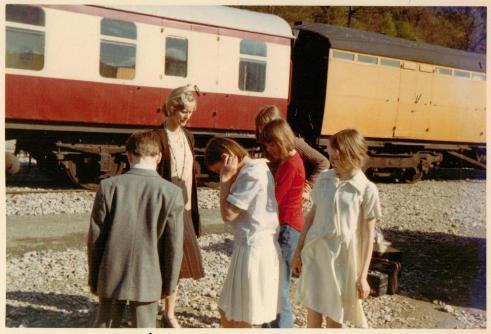
Viginia McKenna at the Haverthwaite Railway Station in Cumbria soon after it re-opened in May 1973. Simon West, Suzanna Hamilton, Lesley Bennet, Kit Seymour and Sophie Neville are with her. The carridge with compartments is in the background ~ photo: Daphne Neville

We saw this distinctive carriage in a siding as we steamed down the valley. Funnily enough when I reached home, later the next day, I came across a photograph on the internet I had never seen before. It was of Virginia McKenna, playing Mrs Walker, reading a magazine inside the compartment. Strangely it turned up when I Googled my own name – Sophie Neville.

Virginia McKenna playing Mary Walker, mother of the Swallows in the EMI feature film of ‘Swallows and Amazons’ made in 1973

The train is not included in Arthur Ransome’s book of Swallows and Amazons, written in 1929, but he does feature locomotives in his later novels, notably Pigeon Post. I clearly remember filming the BBC adaptation of Coot Club at what must have been The Poppy Line, a steam railway in north Norfolk when Henry Dimbley, playing Tom Dudgeon, jumped aboard the moving train and met Dick and Dorothea.

Peter Walker of Mountain Goat with Sophie Neville at Lakeside Station, Windermere.

I jumped off the train at the Lakeside Station to meet up with Peter Walker of Mountain Goat. Peter has carefully researched and put together a Swallows and Amazons tour, exploring ‘High Greenland’, the ‘Forest’ and ‘High Hills’ to discover the places where Arthur Ransome lived. We set off in search of the places where he fished, wrote, and drank beer.  It was fascinating – and proved an excellent way to spend a day in the Lake District despite the rain.

You can read more about the locations used in the original film of ‘Swallows and Amazons'(1974) in the paperback ‘The Making of Swallows and Amazons’ available from libraries, bookshops or online here.

'The Making of Swallows and Amazons (1974)'

There is also a similar ebook, entitled ‘The Secrets of Filming Swallows & Amazons (1974)’ available from all ebook distributors including Amazon

The Secrets of Filming Swallows & Amazons

If you have any questions, do write in.


'Native shipping'

‘Country Tracks’ with Ben Fogle

Sophie Neville at the Bank Ground Farm Boathouses
Sophie Neville at the Bank Ground Farm Boat-houses on Coniston Water in Cumbria for the filming of ‘Big Screen Britain’ presented by Ben Fogle for BBC TV

At last! We have the clip from Country Tracks presented by Ben Fogle, that includes interviews with Director Claude Whatham, Lucy Batty of Bank Ground Farm, Suzanna Hamilton and myself discussing the swimming scenes, with the unique behind-the-scenes footage my father shot on 16mm film, with his Bolex camera back in 1973. You might have seen a longer version of this on Countryfile and Big Screen Britain. I am yet to receive residuals.

If you would like to read about ‘The Secrets of Filming Swallows and Amazons (1974) in detail, the illustrated, multi-media ebook is available on Kindle and from other ebook retailers.

Filming with Dame Virginia McKenna at Bank Ground Farm, Cumbria ~ on 21st June 1973

Fifty one years ago this day, we were filming with Dame Virginia McKenna at the location used for Arthur Ransome’s Holly Howe above Coniston Water. It was a day of days – the sunshiny day that we had all be waiting for.

Virginia McKenna at Bank Ground Farm
Dame Virginia McKenna at the other side of the boat houses at Bank Ground Farm in 1973 ~ photo: Daphne Neville (c)

David Bracknell with Virginia McKenna at Bank Ground Farm
First Assistant Director David Bracknell standing-in (or kneeling-in) for Roger with Dame Virginia McKenna at Bank Ground Farm. The great trees in the background are sadly no longer there ~ photo: Daphne Neville (c)

The gift of a day when buttercups and daisies were still out in the field that flows from Holly Howe to the lake. Roger was able to tack up the meadow to receive the ‘despatches’ from Mrs Walker, described in the opening pages of Arthur Ransome’s book.

Dame Virginia McKenna reading the IF NOT DUFFERS telegram
Dame Virginia McKenna reading the IF NOT DUFFERS telegram to Sten Grendon as Roger

‘…Each crossing of the field brought him nearer to the farm. The wind was against him, and he was tacking up against it to the farm, where at the gate his patient mother was awaiting him.’

Virginia McKenna with Hairdresser Ronnie Cogan
Dame Virginia McKenna having her hair adjusted by Ronnie Cogan ~ photo:Daphne Neville (c)

I don’t think you can tell that this section of the scene was recorded seven whole days later than the sequence that runs directly on from this when the Boy Roger delivers the very same ‘If not duffers’ telegram to Captain John. 

Virginia McKenna as Mother in Swallows and Amazons 1

The hole that had been dug for the camera alongside our picnic had been filled in. You can see this from Mother’s perspective when I was milling about near the lake looking towards the island I couldn’t actually see.

Dame Virginia McKenna on location at Bank Ground Farm (Holly Howe) in the Lake District. Property Master Bob Hedges is working in the foreground. Lee Electric lighting assistants stand-by with reflector boards while Assistant Sound Recordist Gay Lawley-Wakelin waits on a box with the boom ~ photo: Daphne Neville (c)

Poor Sten, he had to run up the field on what proved to be our hottest day in a sleeveless sweater. I remember Jean McGill, the Unit Nurse ministering cool drinks and a flannel soaked in cool eau de Cologne to make sure he did not get dehydrated. We all wanted a go with the cool cloth on the back of our necks at lunch time.

With Virginia McKenna at Bank Ground Farm
The Walker Family ~ Suzanna Hamilton playing Susan, Stephen Grendon as Roger, Sophie Neville as Titty, Dame Virginia McKenna as Mother and Simon West as John. photo: Daphne Neville (c)

It was good to escape the heat by getting out on the water. We shot the scene set on the old stone jetty at the boat houses below the farm when Titty leads ‘Good Queen Bess’ down to the harbour to inspect her ship. I didn’t realise she had a large box of matches in her hand. Virginia kept it a surprise from us in real life. I was excited to find out that Simon Holland, the Designer had painted the branded cover by hand.

Dame Virginia McKenna bids the Swallows farewell
Farewell and adieu to you fair Spanish ladies

As the call sheet specifies, our dinghy Swallow had been loaded with all the tents and camping equipment that had been on Peel Island the day before. I didn’t realise at the time quite how often the design team had struck camp and made it up again. I just sat on top of the equipment singing Adieu and Farewell, not very well, as we sailed out onto Coniston Water, waving goodbye to our Fair Spanish Ladies.

Arriving at Holly Howe
Claude Whatham with Dame Virginia McKenna. Mrs Jackson stands patinetly at the door ~ photo: Daphne Neville (c)

I am sure that we had already recorded the scene in David Wood’s screenplay when the Walker family arrive at Holly Howe, but Claude decided to take advantage of the golden light and shoot it again.  I am sure this was a good decision. It had been a long day and we were tired but the excitement of our arrival is tangible.

Arriving at Holly Howe
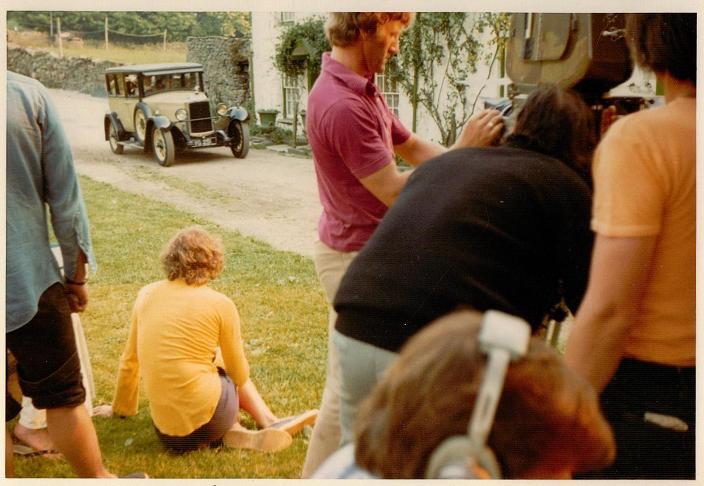
Director Claude Whatham, in a 1970s yellow long-sleeved t-shirt, watching the taxi drive up to Mrs Jackson’s front door in 1929. DoP Dennis Lewiston sets up the shot with Focus-puller Bobby Sitwell ~ photo: Daphne Neville (c)


Nurse with Baby Vicky, the ship's baby
Nurse with Baby Vicky, the ship’s baby at Holly Howe ~ photo: Daphne Neville(c)

My mother observed that Mrs and Mrs Jackson, Mrs Walker’s nurse and Vicky the ship’s baby, who were listed as Extras on the call sheet, were particularly well cast. Kerry Darbishire, who played the nurse, told me later that she had a daughter of the same age as Tiffany Smith seen here as Vicky. She could have brought her along. It was important they were there, playing ‘The stay-at-homes.’ Vicky anchored Mrs Walker to the farm, making it impossible for her to sail to the island with the Swallows. 

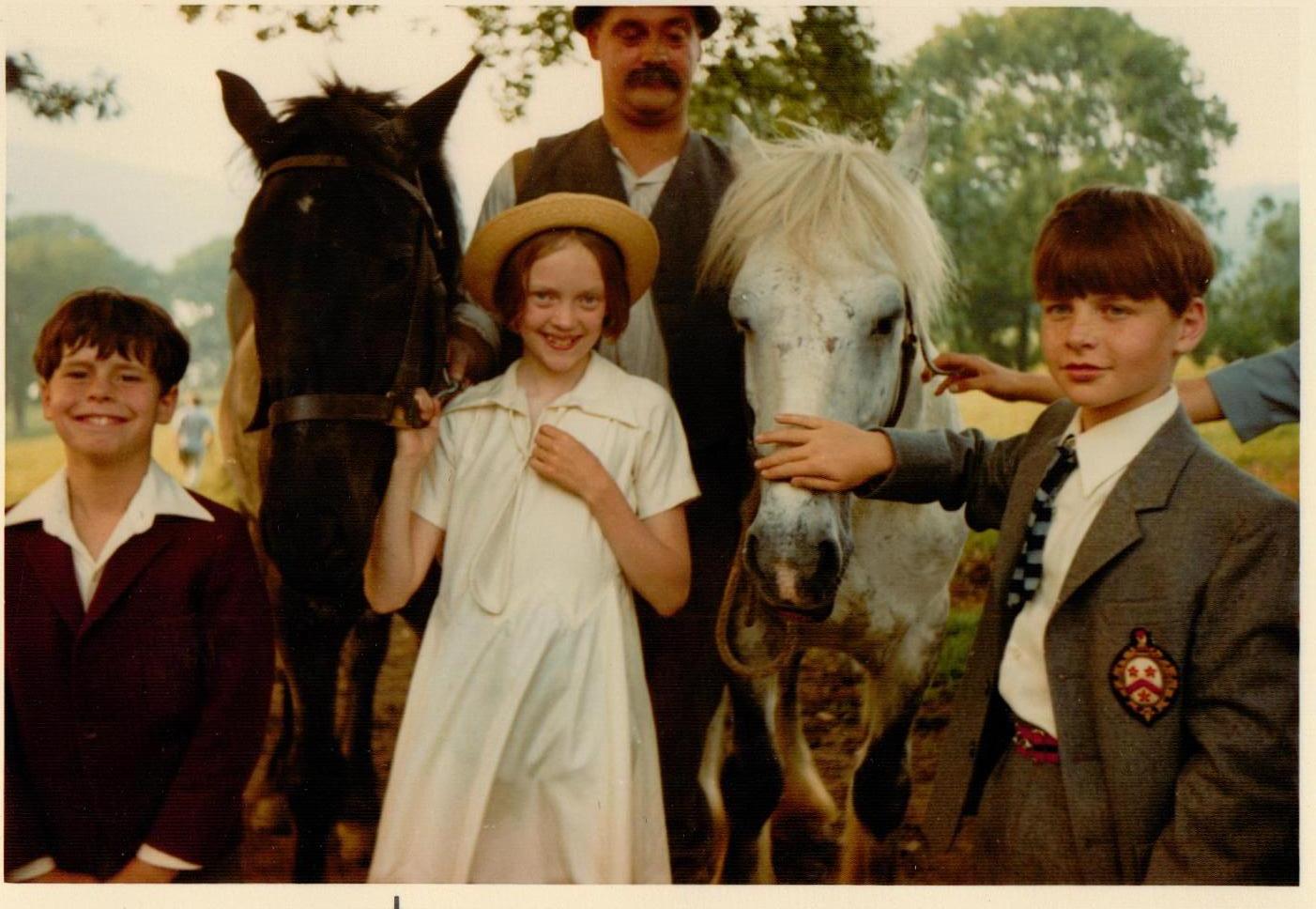
Sophie Neville holding the horses
Stephen Grendon, Sophie Neville and Simon West with Mr Jackson at Holly Howe~ photo: Daphne Neville

It must have been a long day for the little girl. It was a long hot day for all of us, but a happy day.

Simon West, Stephen Grendon, Suzanna Hamilton and Sophie Neville
Simon West, Stephen Grendon, Suzanna Hamilton & Sophie Neville playing the Walker children in ‘Swallows and Amazons’ 1973 ~photo: Daphne Neville(c)

The women who had been taken on as our stand-ins the day before did not seem to be around to help limit the hours we spent on set. David Bracknell, the first assistant director stood in for Roger. One of the women later claimed that she played Virginia McKenna in long-shots but the only long shot was taken of the Spanish Ladies on the jetty and I’m pretty sure that is Dame Virginia herself. 

Stephen Grendon, Simon West, Dame Virginia McKenna, Suzanna Hamilton and Sophie Neville, trying not to look as tall as she was in 1973 ~ photo: Daphne Neville(c)

What I really did not know, until I watched the documentary broadcast last Sunday, was that Mrs Batty, who held the lease on Bank Ground Farm, had locked out the crew. She explained that when she was originally asked if we could film on her property she did not quite realise the scale of operations and only asked for – or accepted – a location fee of £75.

Lesley Bennett's photo of the double decker buses at Bank Ground Farm in 1973
Lesley Bennett’s photo of the double decker buses at Bank Ground Farm in 1973

The arrival of the two red double-decker buses, the Lee Electric van, the generator and other lorries, not to mention the Make-up caravan rather daunted her, as did the furniture moving activities involved at the start of the filming when we shot the interior scenes. The idea that the film would bless her Bed & Breakfast and Tearoom business for the next fifty years alluded her. She said that she decided that £75 was not enough, padlocked her front gate and wouldn’t let the crew back in until they agreed to pay her £1,000. It was a lot of money, more than double the fee I received.

Sophie Neville with Lucy Batty at Bank Ground Farm in 1973 ~ photo: Daphne Neville(c)

You may have seen the BBC documentary about the making of Swallows and Amazons, when Ben Fogle interviewed Suzanna Hamilton and myself at Bank Ground Farm for ‘Big Screen Britain’. This was  re-packaged on a programme called Country TracksMy father’s 16mm footage had been skillfully inter-cut with an interview with our Director, Claude Whatham. I did not know that it was being broadcast but was able to watch on-line.Sophie Neville at the Bank Ground Farm Boathouses ~The Author Sophie Neville at the boatshed in 2013~

If you would like to read more, ‘The Secrets of Filming Swallows and Amazons (1974)’ is available on Amazon Kindle and all ebook platforms and the paperback on ‘The Making of Swallows and Amazons’ can be found in Waterstones from all online stockists.

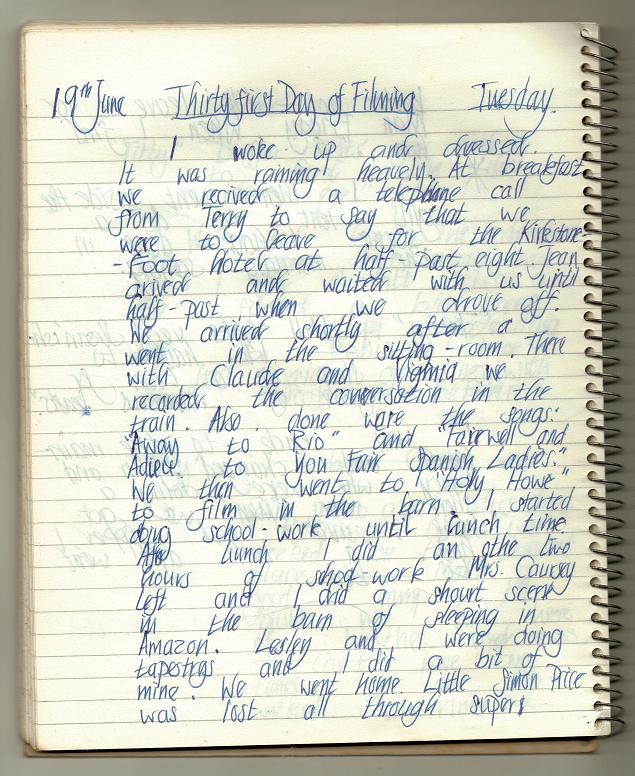
Filming the night scenes for ‘Swallows and Amazons’ on 19th June 1973

Sophie Neville as Titty Walker

The Lake District is very beautiful. The problem about filming there is that it can rain quite hard – ‘heavily’ – was the word I used in 1973.

By this stage in the filming of Swallows and Amazons Claude Whatham only had one ‘rain cover’ option. We were kept busy recording sea shanties with Virginia McKenna at the Kirkstone Foot Hotel by Lake Windermere while Dennis Lewiston, the DOP, lit Mrs Batty’s barn at Bank Ground Farm above Coniston Water.

Arthur Ransome must have done much to revive the songs of the sea: 

Farewell and adieu to you, fair Spanish ladies, Farewell and adieu to you, ladies of Spain; For we’ve under orders for to sail for old England, And we may never see you fair ladies again.

We never got as far as the ranting and roaring bit in the film.

No one really knows how old this naval song is. The Oxford Book of Sea Songs, mentions it in the logbook of the Nellie of 1796, long before shanties really came established as a genre. All I know is that Titty loved it and was still singing it in Peter Duck when the song became quite useful for navigating the English Channel.

‘The first land we sighted was called the Dodman, Next Rame Head off Plymouth, Start, Portland and Wight; We sailed by Beachy, by Fairlight and Dover, And then we bore up for the South Foreland light,’  or sort of.

Walking into Mrs Batty’s barn that day was hugely exciting. Simon Holland, the art director or set designer, had rebuilt the camp there, lighting a real fire.

Sophie Neville as Titty in Swallows and Amazons
Sophie Neville as Titty

Swallow was nmounted on a cradle so that she could be rocked, as if by water, as the scenes of her sailing at night were shot.  It was brilliant, she even went about. Moonlight wasn’t not a problem. Richard Pilbrow can correct me, but I think it was produced by a lamp called a ‘tall blonde’. I don’t think we had a wind machine. The Prop Men used a large sheet of cardboard to produce a breeze.

Contact sheet - Simon West and Suzanna Hamilton night sailing

‘Wouldn’t Titty have liked this?’

‘Liked what?’

‘Sailing like this in the dark.’

’57, 58, 60, 61…’

‘What’s the matter?’

‘Can’t you hear it? The wind in the trees?  We must be near the bank. Quick, Susan lower the sail! Roger, catch the yard as it comes down!’ Then there is a crunch as the Swallows hit a landing stage. All mocked up. Quite fun.

‘What about Titty?’

Amazon was placed on the same mounting. I climbed aboard and started wrapping myself up in her white sail.

Children always love the irony of John saying, ‘She’s at the camp. She’ll be alright. She’s got a tent,’ when the shot cuts to me looking damp and uncomfortable about sleeping in Amazon, anchored out on the water.

Burgulars approaching Cormorant Island

Later I wake up and come out from under the sail to hear the burglars heaving  Captain Flint’s trunk across Cormorant Island. All in all we achieved quite a bit on that wet day in Westmorland. Much safer and easier than being out on the water.  Because the cradle was at waist height Claude was able to get lower angle shots than when out on the camera pontoon. Simon West, who played John, did really well.  He managed to convince me that he was really sailing when I watched the film and I knew he wasn’t.

I’m pretty sure this scene of us inside a tent at night was actually shot on Peel Island but I may be wrong. We had a fire in the barn. If you look closely you can see an electric cable going into the lantern to boost light from the candle. The night scenes were tricky to light and shoot, but there was something about them that was intimate and exciting for children. I assume they would normally be in bed but it was the summer holiday and excitement was afoot.

Sophie Neville in the tent at night

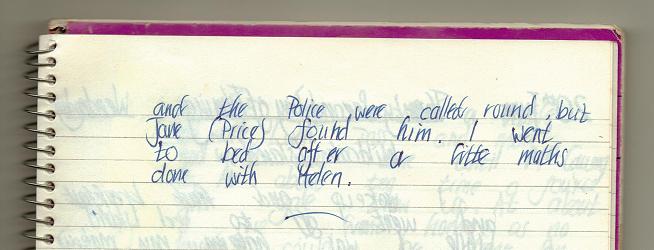
Back at our guest house in Ambleside there was a real life drama. Little Simon Price had gone missing.  He was the small boy last seen on the beach at Rio, having his shorts pulled up by his sister. The Police were called and everything. But as in a lot of real life situations, things were sorted out, and we returned to the mundane world of maths lessons. I was tutored by Helen, one of the students at the Charlotte Mason College of Education who was also lodging at Oaklands as Mrs Causey, our teacher, could not ‘do modern Maths.’

You can read more here:

Being Robinson Crusoe on Wild Cat Island ~ filming ‘Swallows and Amazons’ on 18th June 1973

Sophie Neville as Titty on Peel island
Sophie Neville as Robinson Crusoe the shipwrecked sailor

I did not envisage it beforehand, but at this point in my life I became one of the actors who played Robinson Crusoe on film, with Virginia McKenna, now Dame Virginia, taking the part of Man Friday. It would come across rather well on a chat show.  The audience would be taken unawares and we could meet the other actors who took the same parts after us. I am sure they were stranded on warmer desert islands.

Losing a milk tooth when you are twelve-and-a-half years old is really rather embarrassing. When you are in the middle of appearing in a feature film it’s disastrous. Not only was the gap sore but since it was an upper tooth at the front of my mouth the continuity of the whole movie was blown.  I think today they may have tried to fit a bridge but Claude Whatham, the Director decided he would just have to live with the problem.

Virginia McKenna greeting Sophie Neville

I spent the next few days trying not to let my teeth show, but even today, all these years later, those who know the film well, comment on the fact that I lost an eye tooth.

Virginia McKenna playing Man Friday in 1973 ~ photo: Daphne Neville

As it was, I had to concentrate on pushing the hideously heavy Holly Howe rowing boat away from our desert island in the scene when I bid farewell to Virginia McKenna who was gallantly playing Man Friday.

Sophie Neville as Titty with Virginia McKenna in Swallows and Amazons (1974)
Sophie Neville with Virginia McKenna on Peel Island

This was more tricky than it would be in real life as the massive 35mm camera, the Cameraman was in the boat with Virginia. The water was cold, the rocks rather slippy. And I had the telescope in my hand. This was in order to deliver Arthur Ransome’s line, ‘Duffer. That’s with looking too hard. Try the other eye,’ whilst lowering the telescope to wipe away a tear. I’m afraid that what came out was ‘That’s for looking too hard.’ 

Filming with Virginia McKenna on Coniston Water

I busy thinking of terribly sad things, all geared up to produce the tears, when glycerine was blown into my eyes. The most enormous tears, far more difficult to contain than real ones, gushed forth.

Virginia McKenna rowing

And I think that the Wardrobe Master must have forgotten about a hanky. You can tell that the square of white cotton I had tucked in my knickers is just a frayed piece of cloth.

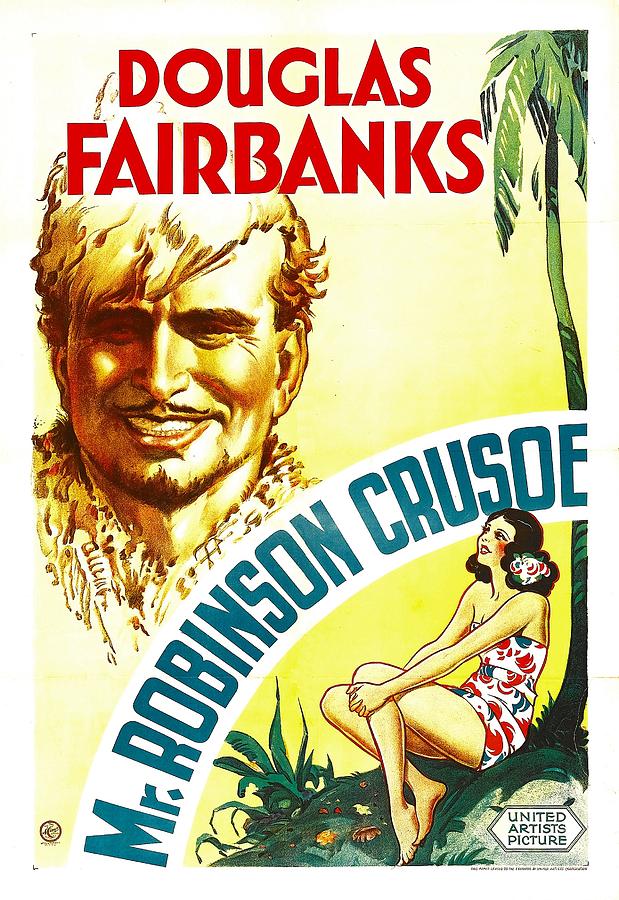
Daniel Defoe’s hero Robinson Crusoe has been portrayed on the big screen by Douglas Fairbanks, Dan O’Herlihy – who earned an Oscar nomination for playing the part in 1952, Aidan Quinn, Pierce Brosnan and me. Or rather me playing Titty being Robinson Crusoe. Oh, dear, Oh dear.

Sophie Neville as Robinson Crusoe with film director Claude Whatham
Rehearsing the shipwrecked sailor scene with Claude Whatham

The scene opens with Titty sitting on a biscuit tin, reading from her log. ‘Twenty-five years ago this day, I Robinson Crusoe, was wreck-ed on this desolate place.’ The fact that I had missed the -ed from wrecked was real. I hadn’t written the word down properly.  As you can see in my actual diary there was then a dash ______ . At this point I flung myself  to the ground and dragged my exhausted body into the camp grasping my throat so as to portray the fact that Robinson Crusoe was virtually dying of thirst.

Sophie Neville playing Robinson Crusoe in the movie Swallows and Amazons (1974)

I hauled myself to my feet by grabbing the forked stick by the fire. What I didn’t realise was that Graham Ford, the Sound Recordist had hidden his microphone there. You can still hear the sound crunch as I grasp the crossbar that held the kettle. He was a perfectionist and, despite my apologies, was really rather annoyed about it.

‘Make a good place for a camp,’ Titty declares heartily, whilst looking around. ‘I’ll build my hut here out of  branches and moss.’ And so continued my solo performance. ‘Can’t have two tents for one ship-wrecked mariner.’

Sophie Neville as Titty on Peel Island - contact sheet

As I have mentioned before, my mother is very theatrical. In her eyes this was my great soliloquy. The most embarrassing thing I have to admit is that for ages after the film, during my sensitive teenage years, Mum would insist that I used this scene as my audition piece.  Can you imagine? It was dotty. Instead of something appropriate for a young girl, like a scene from I Capture the Castle, which Virginia McKenna had been in, or even something from Shakespeare such as Romeo and Juliet, I would fling myself to the floor of the audition space and enact Titty playing a bearded man. Even now I blush as I remember doing all this in front of five amazed executives, who had never seen Swallows and Amazons. They were looking for nothing more than a normal girl to be in an advertisement for Parker Knoll armchairs.

Have you ever read the book? I don’t think many nine-year-olds would manage the prose. Despite the impression given by the poster above there are no girls in it. It’s about slavery. And cannibals. And rearing goats.

Douglas Fairbanks’ film came out in 1932, too late for Titty, but ‘The Adventures of Robinson Crusoe’ was released as a movie in 1922 and in 1929. I wonder if Arthur Ransome ever saw either version? I have to say that if there is ever a Hollywood line-up of actors who have played the part, I want to be included in it. I might make up for the ignominy I suffered.

I’ve written more about Titty and Robinson Crusoe on this websiter here were you can listen to the song from the musical version of ‘Swallows and Amazons’ here

You can read more about working with Virginia McKenna on the film here:

‘Man Friday!’ ~ filming ‘Swallows and Amazons’ with Dame Virginia McKenna on Wild Cat Island, 17th June 1973

Virginia McKenna and Sophie Neville on Peel Island
Dame Virginia McKenna and Sophie Neville on Peel Island in Cumbria, during the filming of ‘Swallows and Amazons’ in 1973 ~ photo: Daphne Neville

I didn’t know that Virginia McKenna was in the Lake District.

Virginia McKenna with Sophie Neville
‘They were very savage savages’ ~ Dame Virginia McKenna with Sophie Neville ~ photo: Daphne Neville

I didn’t know that we would spend that Sunday cooking on the camp fire.

Bill Travers watching Virginia McKenna
Bill Travers watching the scene featuring his wife Dame Virginia McKenna who is talking to Director Claude Whatham ~ photo: Daphne Neville

I didn’t know that Virginia had come up with her husband Bill Travers.

Virginia McKenna and Bill Travers as Joy and George Adamson in ‘Born Free’, Kenya 1964. Virginia later devoted her life to The Born Free Foundation.

Sophie Neville as Titty on Peel island
Sophie Neville as Robinson Crusoe the shipwrecked sailor

I still don’t know how Lee Electric managed to get so many lights working out on Peel Island. I can’t remember having them for any other scene. They must have had the generator on the bank and run cables under the water. It looks as if it was a pretty dark day. It was wonderful having the flood lights – they kept us warm.

Virginia McKenna as mother in Swallows and Amazons
Dame Virginia McKenna as Man Friday in Swallows and Amazons 1974

There was a hushed reverence when Virginia McKenna was on set. Gone were the saucepan jokes. Funny really, as it was frying-pan scene. ‘I waited til no-one was looking and jumped out of the pot and escaped!’ The pemmican potato cakes she made me were delicious. And very hot.

Virginia McKenna with Sophie Neville in Swallows and Amazons

Working with Virginia and Arthur Ransome’s dialogue was altogether an exercise in charm, or managing charm. I hope I didn’t over-cook it. I was rather pre-occupied by my loose tooth but loved being involved in a proper scene around the camp fire.

Sophie Neville as Titty getting her makeup done
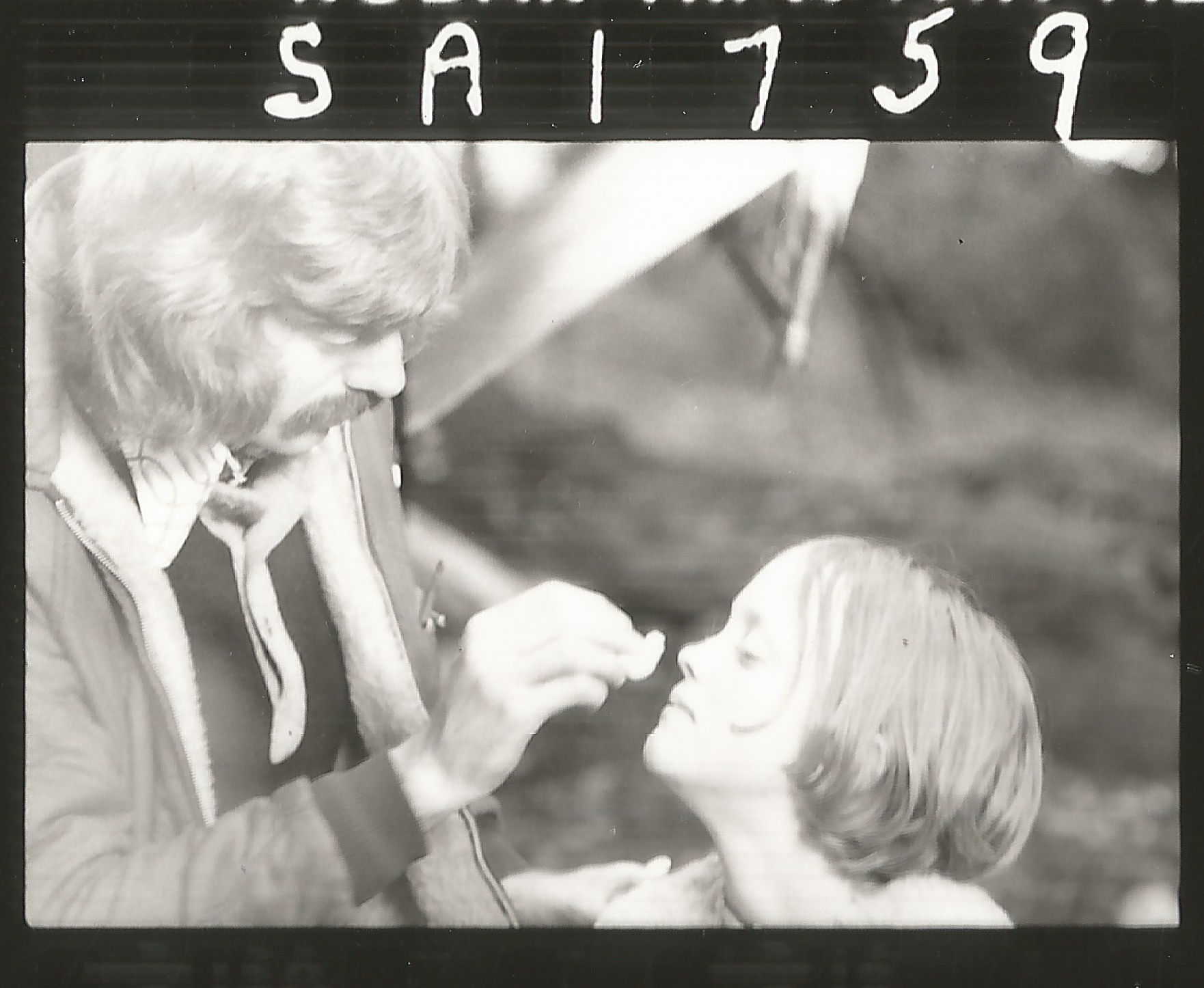
Sophie Neville being made up for the part of Titty by Peter Robb-King in 1973

Then Virginia was gone and I was a saucepan once more. A saucepan now with a very wiggly tooth indeed. Saucepan-lid, kid. No more lights. I was sitting up a tree above Coniston Water in my navy blue knickers, and descended feeling a bit like Pooh Bear.

me up a tree
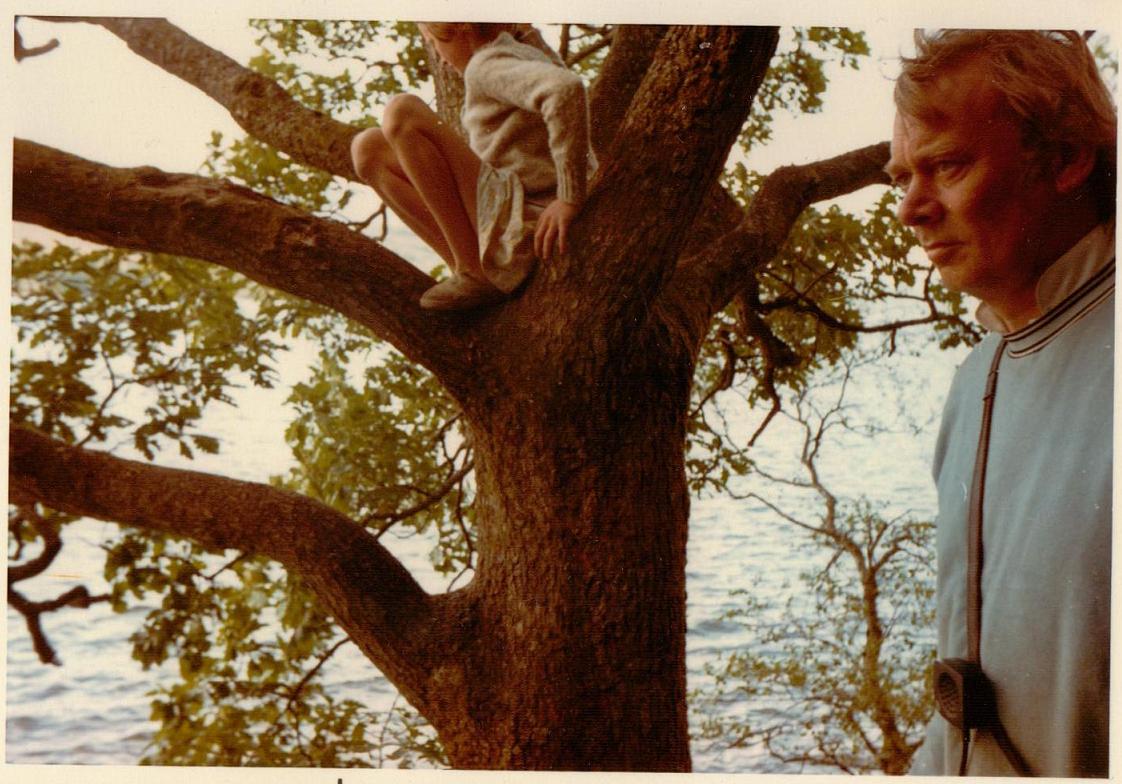
‘Up a tree for fear of ravenous beasts’ with David Bracknell the First Assistant Director ~ photo: Daphne Neville

It is still there, the mossy tree. You can climb it.

You can read more in the ebook ‘The Secrets of Filming Swallows and Amazons’or the paperback on ‘The Making of Swallows and Amazons’ now available as an audiobook.

'The Making of Swallows and Amazons (1974) by Sophie Neville'
Different editions of ‘The Making of Swallows and Amazons (1974) by Sophie Neville’

‘Oughtn’t I have the telescope?’ ~ Arthur Ransome’s story breaks into three strands – filming ‘Swallows & Amazons’ on 5th June 1973

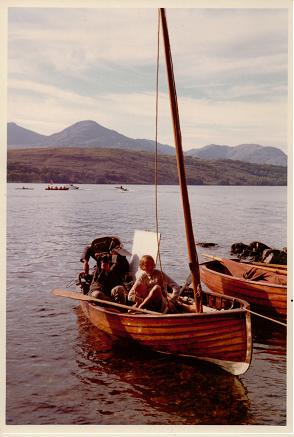
Sophie Neville on location in the Lake District ~ photo: Martin Neville

When David Wood constructed the screenplay of Swallows and Amazons he introduced dual action soon after the Swallows arrived at the island. By this I mean that he split us up a bit – John went to fetch the milk from Dixon’s farm whilst Susan and I were teaching Roger to swim.  This isn’t quite as Arthur Ransome wrote but it added vitality to the script, moving it along. I reckon the Director, Claude Whatham needed to avoid a gang scenario of Five go to Treasure Island at all costs. It enabled us to get on with our school work since no one actor was in every scene. I was in all the scenes shot on this day 5th June (I wrote 5th May by mistake) but went back to my lessons whilst Claude was out on the pontoon filming John and Susan jibing Swallow – a pick-up shot set into the long shot, when I waved them goodbye from Wildcat Island, recorded on 2nd June.

Mrs Bennett, Martin Neville, Lesley Bennett’s sister and Jane Grendon with the film crew on the pontoon filming Suzannah Hamilton, Simon West and Sten Grendon in Swallow just off Peel Island. Who is the boy sitting on the Capri moored to the temporary jetty?

At this stage in the story, Arthur Ransome split the action into three: John, Susan and Roger sail off to find the Amazon river leaving  Titty  alone on the island with her telescope, while the Amazons are busy plotting and planning at Beckfoot.  Up until this time most films followed linear stories – this happened, then that happened – a bit like my diary. My favourite wartime drama A Town like Alice, which stars Virginia McKenna, is an example of this. It’s a road movie.  Lovely – but I need to watch it whilst doing my tapestry.

Landing place with Claude
At the Landing Place with Claude and his crew

As it happened, the method of running three storylines at once became all the rage in television dramas of the 1980s and 1990s, so when Swallows and Amazons was first broadcast it felt fresh even though it had been made six or seven years previously. The playwright John Mortimer said that when he first started writing three strands of action for Rumpole of the Bailey it terrified him. Would the audience be able to follow what was going on? Now every detective story breaks into three as soon as possible, while soap operas keep a number of storylines boiling furiously. The technique helps to pace the action, up the suspense and gives the director much more flexibility in the cutting room. Apart from anything else it makes it easier to bring episodes in at the exact length required by the television schedulers. One reason why credits roll after a programme is because the Presentation Department can alter the speed they run at. Did you know this? It means that every story can be made to last exactly 37 mins 30 seconds.
Claude Whatham at the Landing Place
Claude Whatham giving us direction at the Landing Place

Nowadays linear story-telling in movies, such a The Kings Speech seems to be received as more cinemagraphic.  Perhaps multiple action just went too far. ‘Flashbacks’ seem dated and running two storylines in different time periods can be confusing. I couldn’t do my embroidery whilst watching A Social Network.
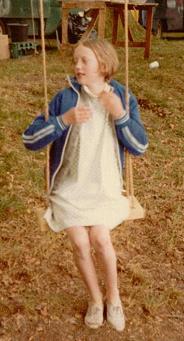
The swing opposite Peel Island by Coniston Water
My little sister on the swing at the Unit Base opposite Peel Island ~ photo: Martin Neville

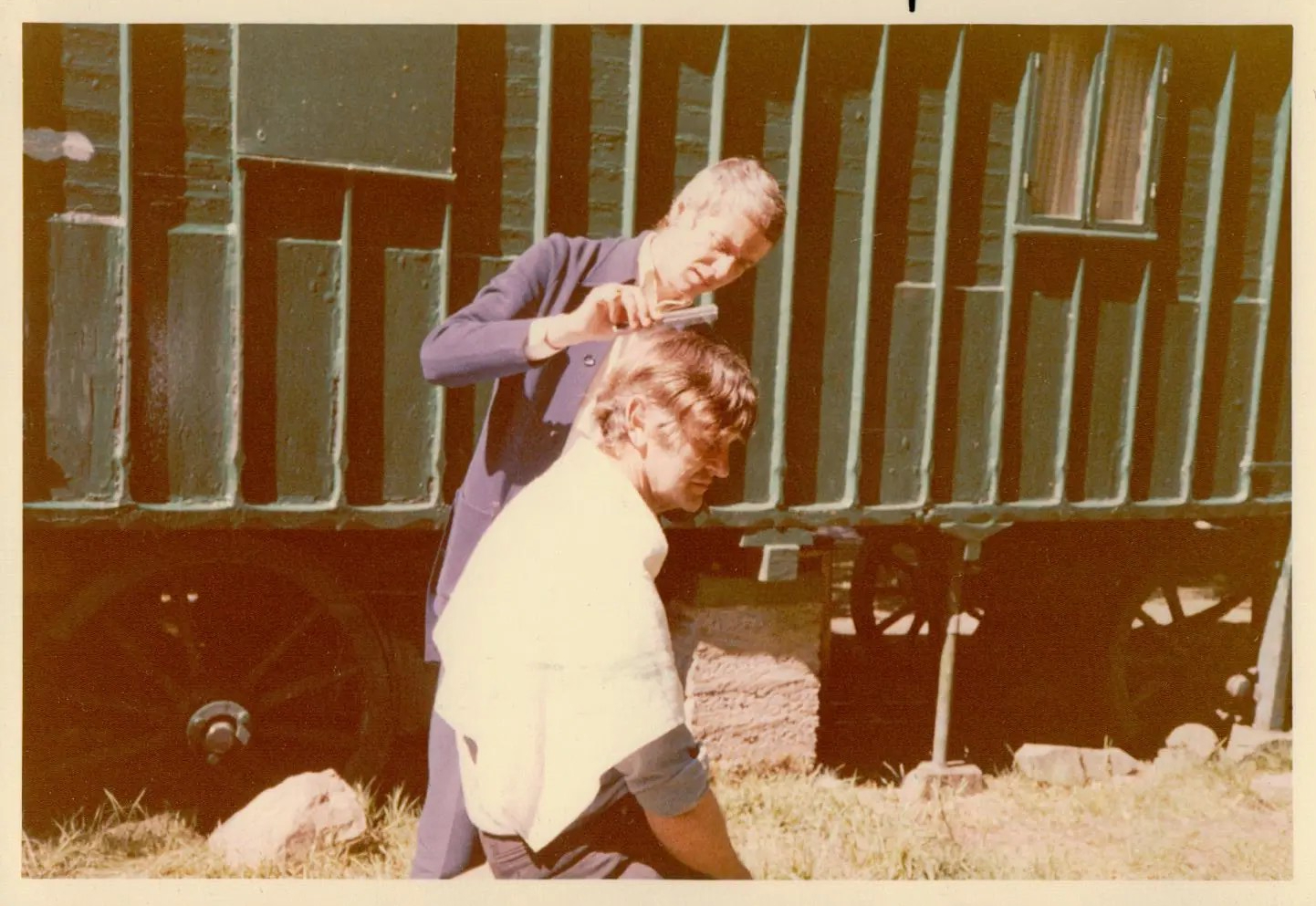
Meanwhile two or three things were happening behind the scenes in the Lake District.  Terry Needham, the Second Assistant Director, found that most of the men who had come forward to be Supporting Artists for the scene soon to be shot at Bowness were refusing to have their hair cut. My mother was astonished. They couldn’t portray the Lake District unpopulated by men. Only a few, very elderly gentlemen, who didn’t have much hair anyway, agreed to a short-back-and-sides.  And my father.  He was more than happy to receive a free hair cut.
Ronnie Cogan cutting Martin Neville's hair
Ronnie Cogan cutting Martin Neville’s hair

Ronnie Cogan brought out his scissors and snipped away there and then on the shore of Coniston Water. Someone grabbed Dad’s Bolex and took a few shots for posterity:

Dad missed seeing me capture the Amazon. Although it seems I was all alone in my story line, this was not the reality. I rowed away from Peel Island with the DoP Denis Lewiston, his 16mm camera and a reflector board held by Claude Whatham who was also tucked into Amazon’s stern. No wonder I was tired by the end of the day.

Sophie Neville in The Amazon with DOP Denis Lewiston, his 16mm camera and a reflector board ~ photo: Martin Neville

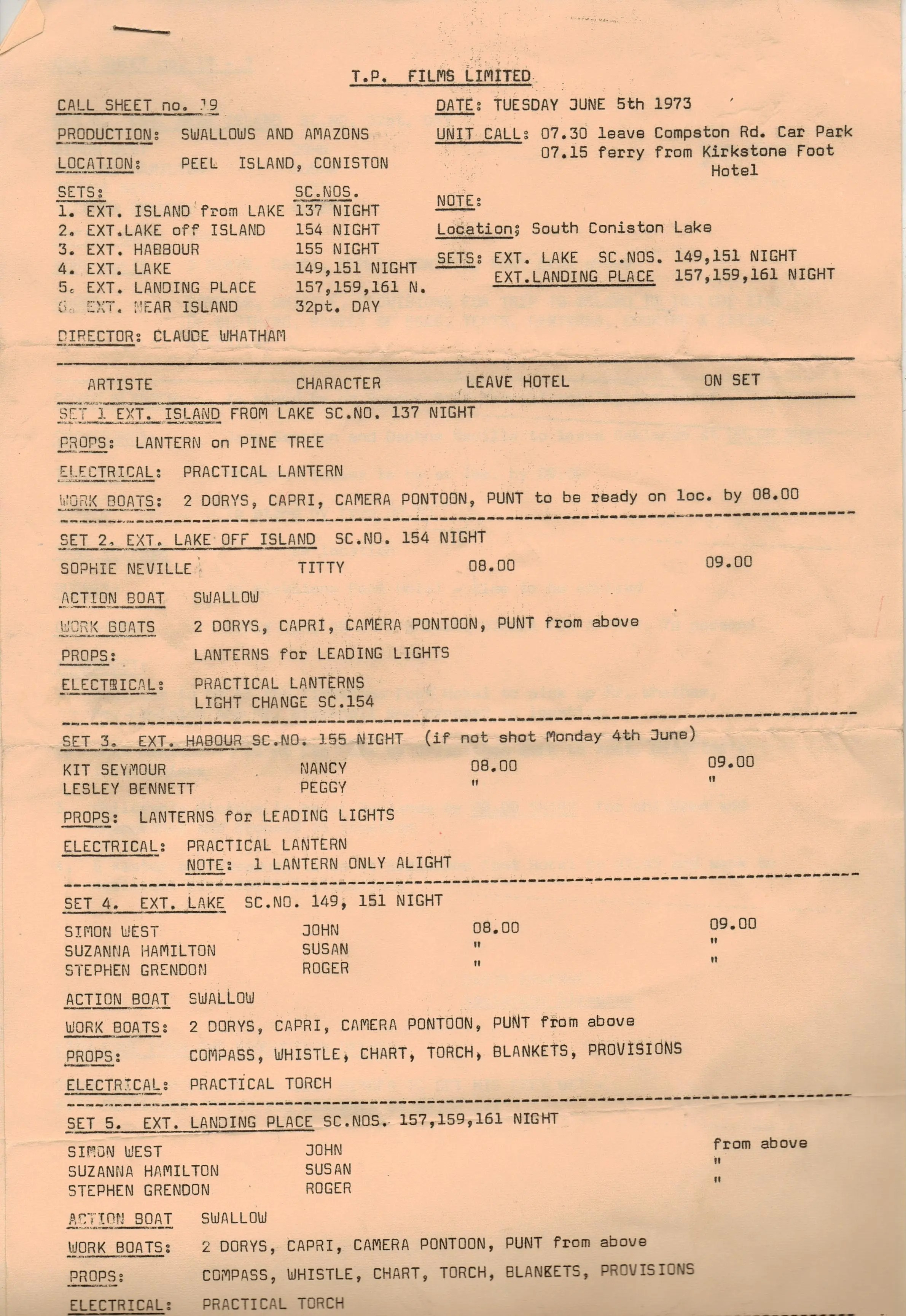
The Call Sheet for 5th June 1973
The Call Sheet for 5th June 1973 ~ my diary is titled 5th May but this was an error

You ca read more in the ebook available here: