‘Oughtn’t I have the telescope?’ ~ Arthur Ransome’s story breaks into three strands – filming ‘Swallows & Amazons’ on 5th June 1973

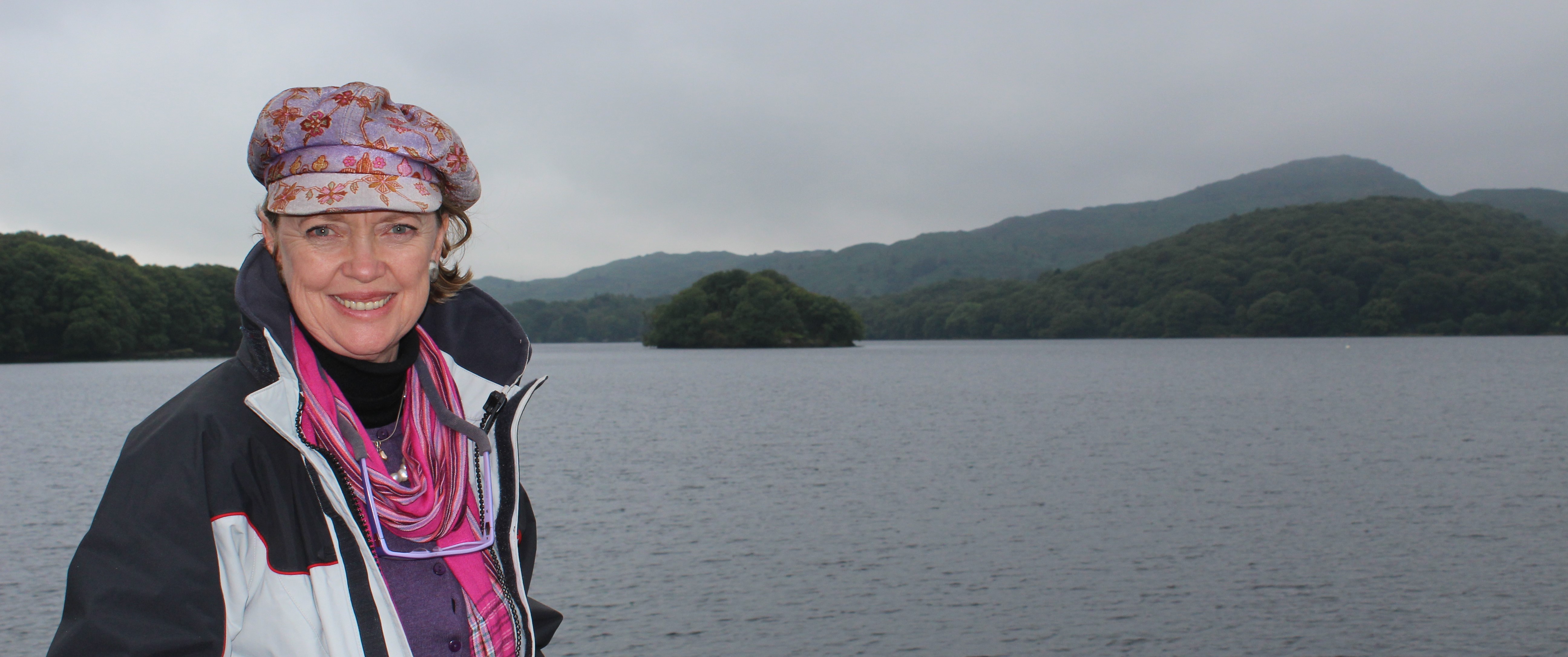
Sophie Neville on location in the Lake District ~ photo: Martin Neville

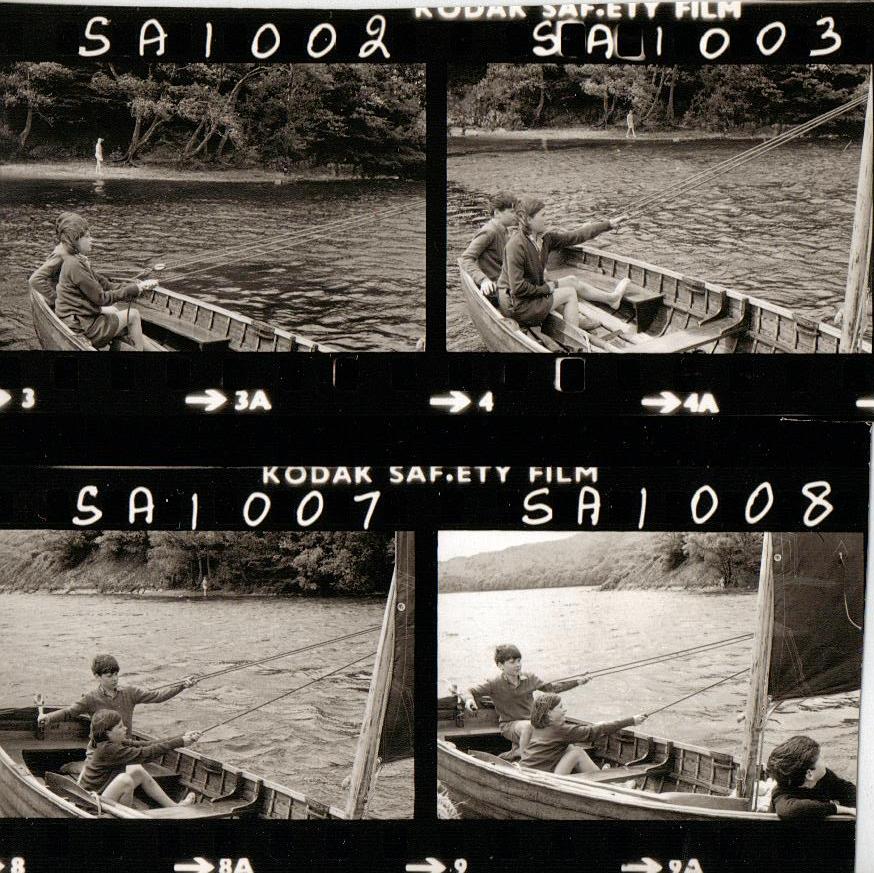
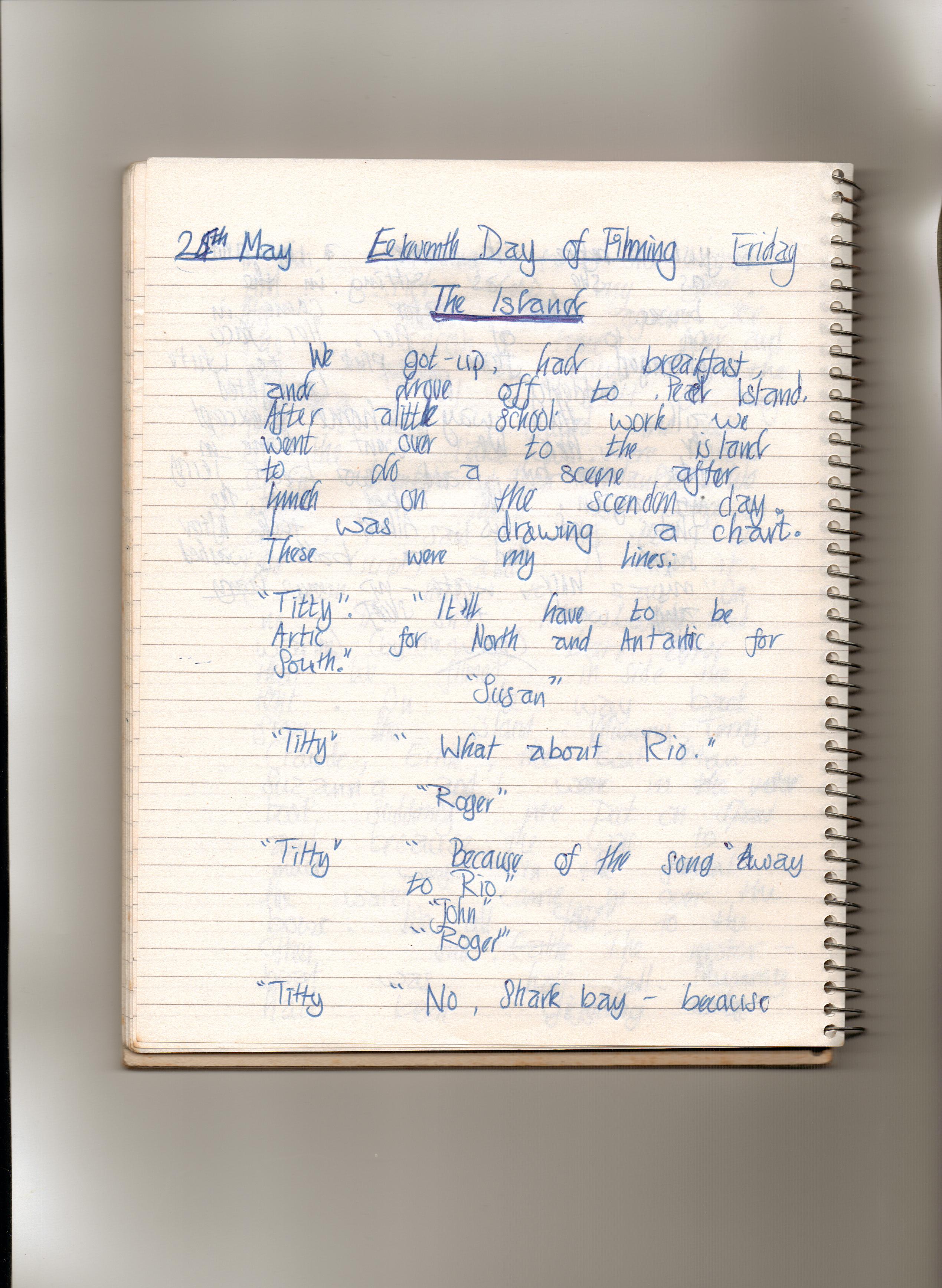
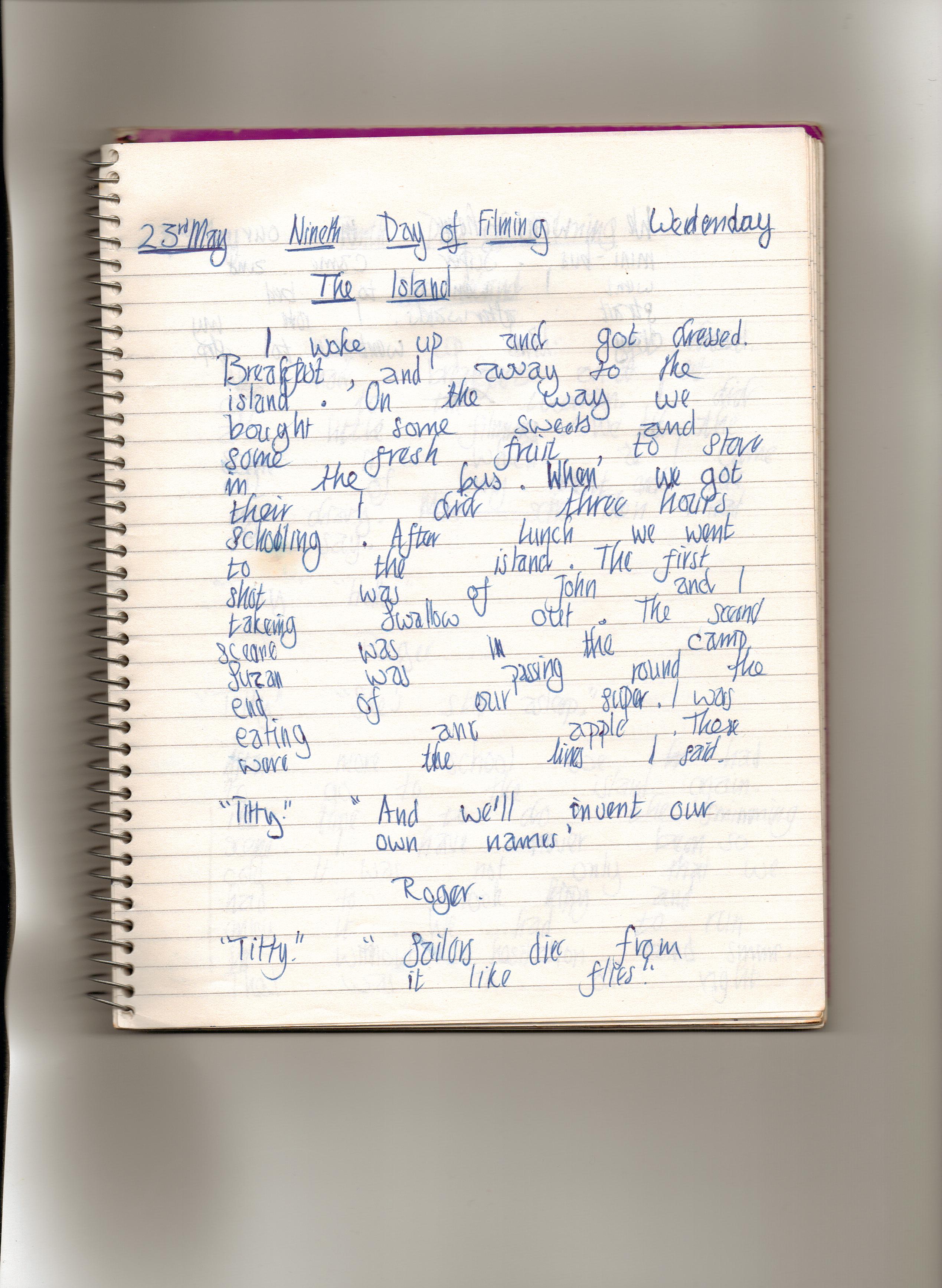
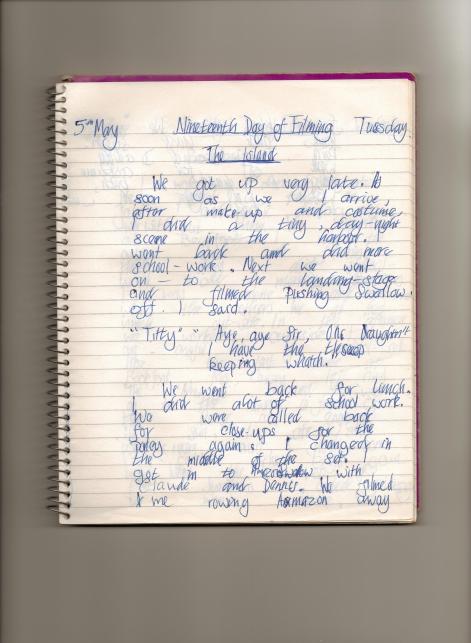
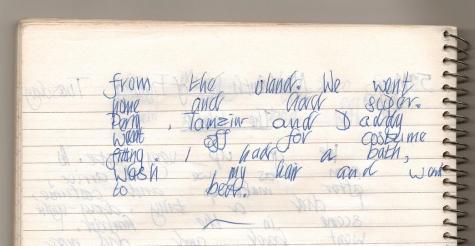
When David Wood constructed the screenplay of Swallows and Amazons he introduced dual action soon after the Swallows arrived at the island. By this I mean that he split us up a bit – John went to fetch the milk from Dixon’s farm whilst Susan and I were teaching Roger to swim.  This isn’t quite as Arthur Ransome wrote but it added vitality to the script, moving it along. I reckon the Director, Claude Whatham needed to avoid a gang scenario of Five go to Treasure Island at all costs. It enabled us to get on with our school work since no one actor was in every scene. I was in all the scenes shot on this day 5th June (I wrote 5th May by mistake) but went back to my lessons whilst Claude was out on the pontoon filming John and Susan jibing Swallow – a pick-up shot set into the long shot, when I waved them goodbye from Wildcat Island, recorded on 2nd June.

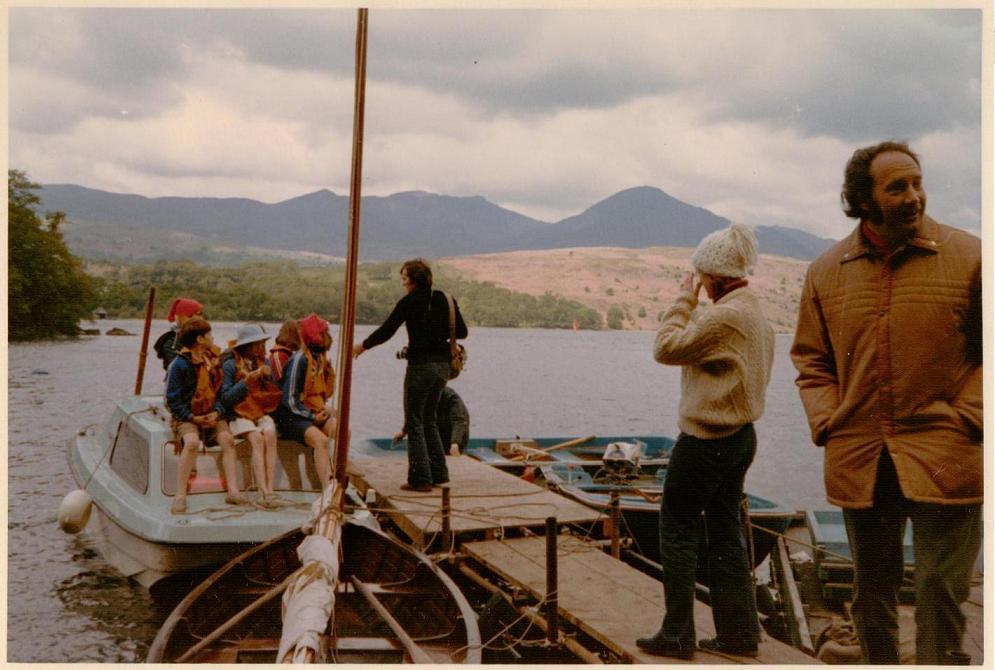
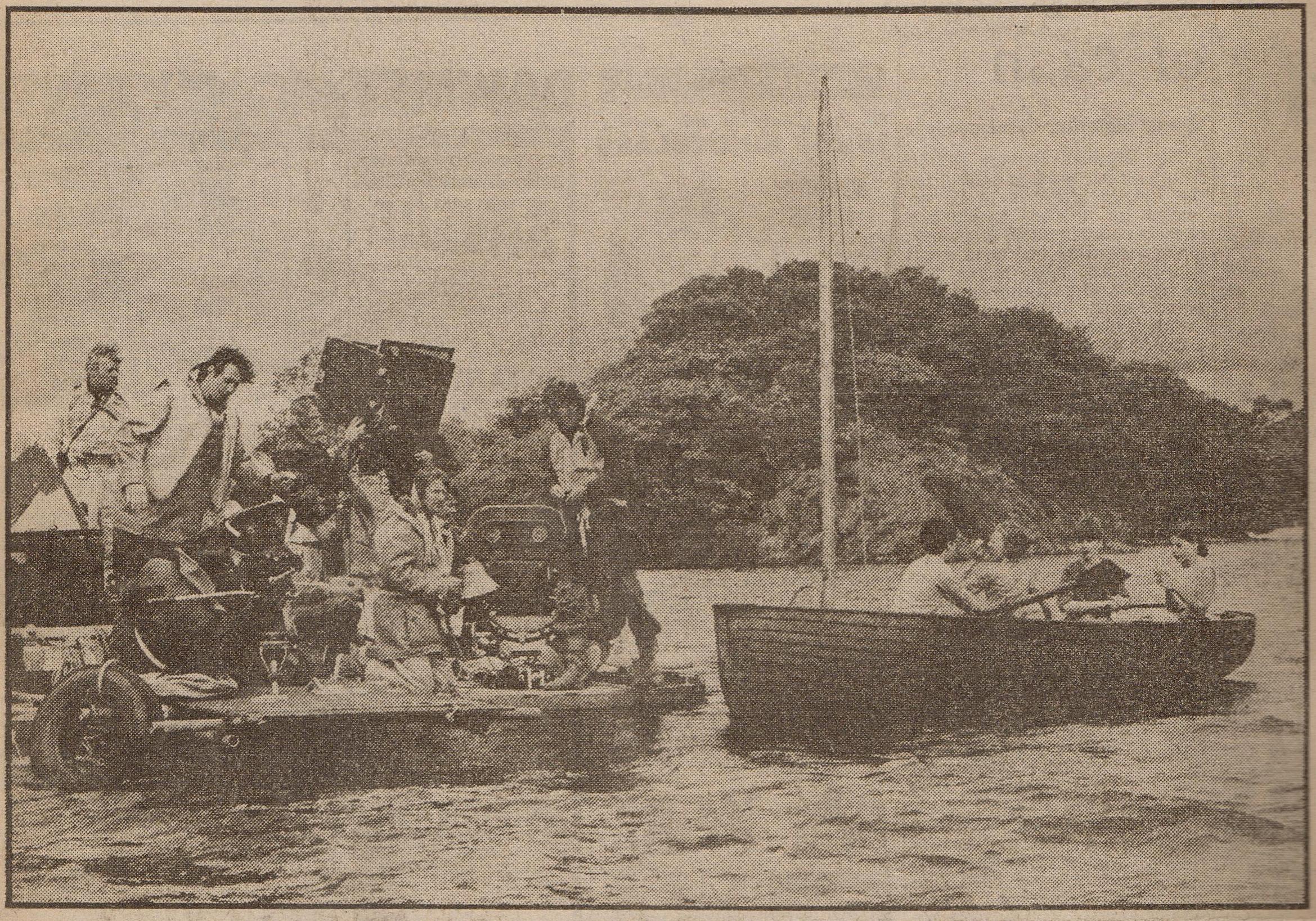
Mrs Bennett, Martin Neville, Lesley Bennett’s sister and Jane Grendon with the film crew on the pontoon filming Suzannah Hamilton, Simon West and Sten Grendon in Swallow just off Peel Island. Who is the boy sitting on the Capri moored to the temporary jetty?

At this stage in the story, Arthur Ransome split the action into three: John, Susan and Roger sail off to find the Amazon river leaving  Titty  alone on the island with her telescope, while the Amazons are busy plotting and planning at Beckfoot.  Up until this time most films followed linear stories – this happened, then that happened – a bit like my diary. My favourite wartime drama A Town like Alice, which stars Virginia McKenna, is an example of this. It’s a road movie.  Lovely – but I need to watch it whilst doing my tapestry.

Landing place with Claude
At the Landing Place with Claude and his crew

As it happened, the method of running three storylines at once became all the rage in television dramas of the 1980s and 1990s, so when Swallows and Amazons was first broadcast it felt fresh even though it had been made six or seven years previously. The playwright John Mortimer said that when he first started writing three strands of action for Rumpole of the Bailey it terrified him. Would the audience be able to follow what was going on? Now every detective story breaks into three as soon as possible, while soap operas keep a number of storylines boiling furiously. The technique helps to pace the action, up the suspense and gives the director much more flexibility in the cutting room. Apart from anything else it makes it easier to bring episodes in at the exact length required by the television schedulers. One reason why credits roll after a programme is because the Presentation Department can alter the speed they run at. Did you know this? It means that every story can be made to last exactly 37 mins 30 seconds.
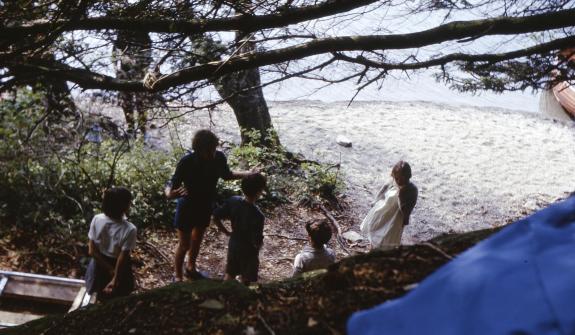
Claude Whatham at the Landing Place
Claude Whatham giving us direction at the Landing Place

Nowadays linear story-telling in movies, such a The Kings Speech seems to be received as more cinemagraphic.  Perhaps multiple action just went too far. ‘Flashbacks’ seem dated and running two storylines in different time periods can be confusing. I couldn’t do my embroidery whilst watching A Social Network.

The swing opposite Peel Island by Coniston Water
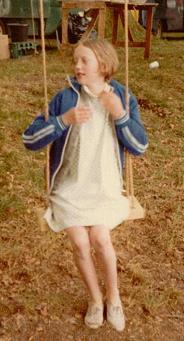
My little sister on the swing at the Unit Base opposite Peel Island ~ photo: Martin Neville

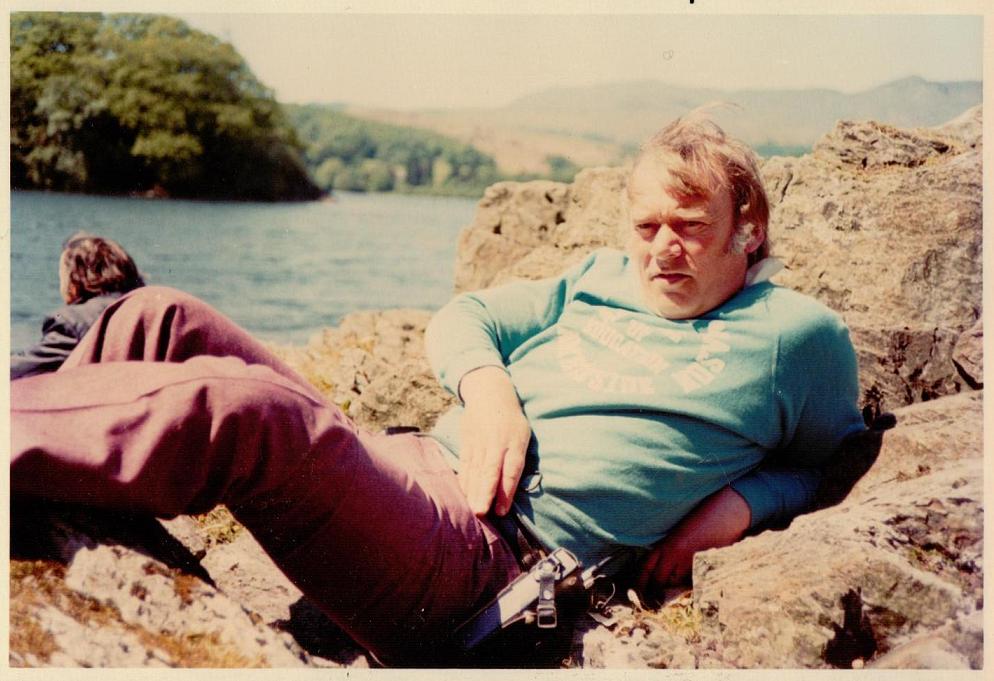
Meanwhile two or three things were happening behind the scenes in the Lake District.  Terry Needham, the Second Assistant Director, found that most of the men who had come forward to be Supporting Artists for the scene soon to be shot at Bowness were refusing to have their hair cut. My mother was astonished. They couldn’t portray the Lake District unpopulated by men. Only a few, very elderly gentlemen, who didn’t have much hair anyway, agreed to a short-back-and-sides.  And my father.  He was more than happy to receive a free hair cut.
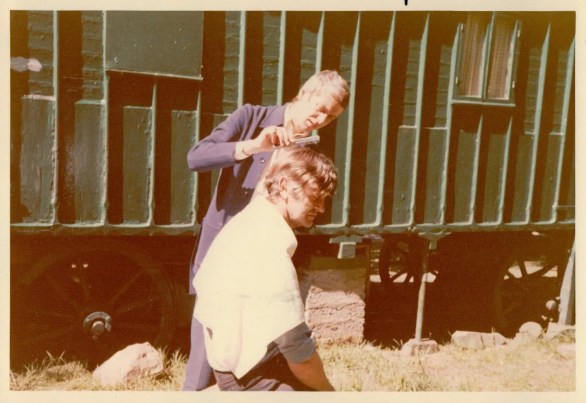
Ronnie Cogan cutting Martin Neville's hair
Ronnie Cogan cutting Martin Neville’s hair

Ronnie Cogan brought out his scissors and snipped away there and then on the shore of Coniston Water. Someone grabbed Dad’s Bolex and took a few shots for posterity:

Dad missed seeing me capture the Amazon. Although it seems I was all alone in my story line, this was not the reality. I rowed away from Peel Island with the DoP Denis Lewiston, his 16mm camera and a reflector board held by Claude Whatham who was also tucked into Amazon’s stern. No wonder I was tired by the end of the day.

Sophie Neville in The Amazon with DOP Denis Lewiston, his 16mm camera and a reflector board ~ photo: Martin Neville
The Call Sheet for 5th June 1973
The Call Sheet for 5th June 1973 ~ my diary is titled 5th May but this was an error

You ca read more in the ebook available here:
‘I thought he was a retired Pirate’ ~ filming with Amazons on Wild Cat Island and Mrs Ransome’s fears of Disneyization.

Sophie Neville and Suzanna Hamilton confronting the Amazon Pirates on Wildcat Island in Swallows and Amazons

Richard Pilbow says that the fantastic thing about filming Swallows and Amazons was that breakfast was served on location every morning, without fail, sending ‘a wonderful aroma across the set.’ Huge English breakfasts were dished up by John and Margaret, who worked for a location catering company from Pinewood, and greeted the film crew every morning, with bacon and eggs, mushrooms, sausages and tomatoes. And the fried bread was well fried.

It didn’t really matter that we missed breakfast at the Oaklands Guest House in Ambleside. A bacon butty would we placed into my hand as soon as we reached the base camp on Coniston Water. I only wish our guest house had been nearer Peel Island where we spent so much of our time filming.

Daphne Neville and Ricahrd Pilbrow on Peel Island on Coniston Water in 1973
Daphne Neville and Richard Pilbrow on Peel Island on Coniston Water in 1973 Amazons

I do believe my mother is still eating in the picture above. We all ate hugely to stave off the cold. You can see in the movie how much we enjoyed the iced buns before the Amazons attacked.

I remember the Parley Scene as being of importance to Mrs Ransome, who was still living at the time. Arthur Ransome had died in 1967 but his formidable widow owned the copyright to his books. And she did not want there to be any sexual frison between John and Nancy.

Kit Seymour (Nancy) and Lesley Bennett (Peggy) on Peel Island 1973

Richard Pilbrow had had quite a job of persuading her to give him the rights to the film at all. He know that Tom Maschler, the head of Jonathan Cape, had already had to turn down many movie offers. The Ransomes feared ‘a Disney-ization of the story, a vulgarization.’ They had vocally disliked the 1960s cartoon version of ‘Winnie the Pooh’. Whilst we children loved Disneyfications, we only wanted to bring the book the life. 

Neither Arthur Ransome nor his wife, Evgenia, had liked the black and white BBC version of Swallows and Amazons made in 1962 when Susan George played the part of Kitty, rather than Titty. I watched it with Joe Waters at the BBC library in 1983. I reported that it was terribly boring and rather badly made but it was simply of its time, with rather a floral performance from Mrs Walker and comic scenes being given to the burglars. We enjoyed watching the whole series at a weekend of The Arthur Ransome Society. Susan George had such beautiful long plaits. 

Daphne Neville with Richard Pilbrow1
Molly and Richard Pilbrow in 1973

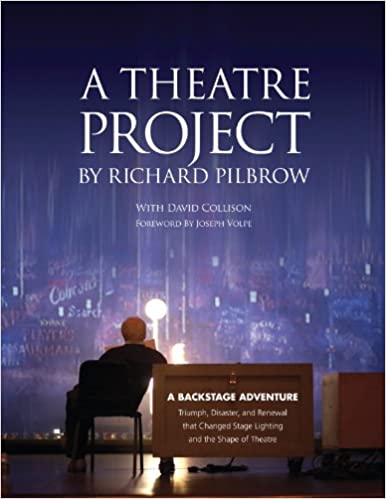
In his recently published book A Theatre Project, Richard describes how, by vowing to be true to the book, he finally persuaded Mrs Ransome to let him have the film rights. But life wasn’t easy. At the very last minute, just as we were about to start shooting, she put her oar in.

Sten Grendon

‘She took a violent dislike to the casting of Roger… He was dark haired. “This is outrageous; he has to be fair,” she protested.’  It was too late for Claude Whatham to re-cast. Richard admits that with regret he had to over-ride her.

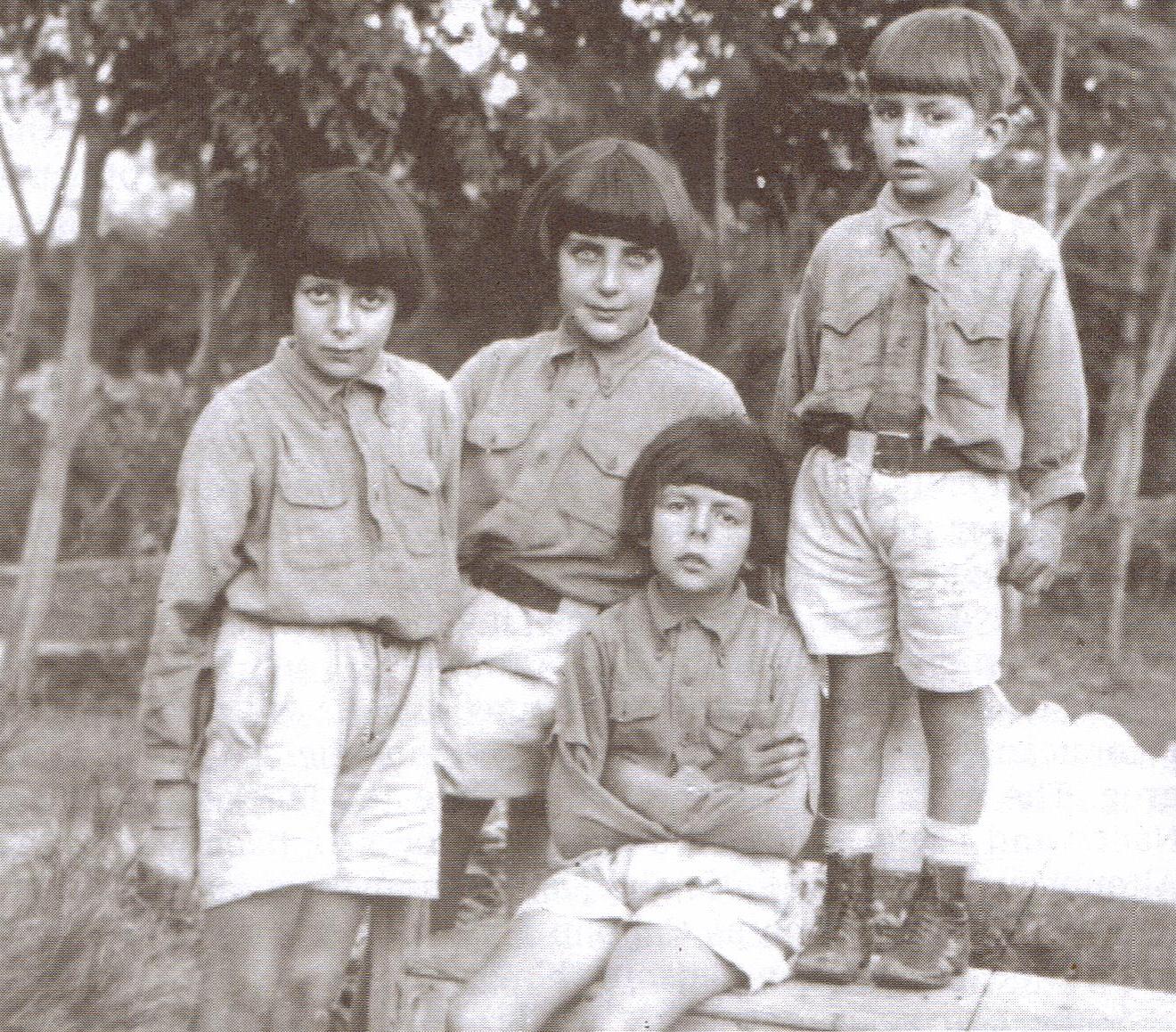
I was amazed when I heard about it, since all the Swallows in Arthur Ransome’s drawings had very dark hair – as did the real children – the Altounyans, whose father was of Irish/Scottish and Armenian descent.  

Altounyan Children - Susie, Taqui, Titty (seated) and Roger
Altounyan Children – Susie, Taqui, Titty (seated) and Roger

They lived in Aleppo, in Syria where Ernest Altounyan was working in his father’s hospital as a surgeon, and all looked quite tanned in the old photos.

I though that, if anything, Mrs Ransome would have objected to me being too blonde but apparently she wanted ‘an English rose’ to play Titty. David Wood told us that she wanted all the Swallows to have blond hair.

Once the books became well known, the Altounyans didn’t want people identifying the Walkers too closely with their children. There was a bit of an upset after the Ransomes’ offered to adopt Titty after which the dedication to ‘Swallows and Amazons’ was altered and maybe Mrs Ransome took umbridge.

Altounyan family with Ransome
Ransome with the Altounyans

The writer Roger Wardale, said that Arthur Ransome’s intention was to keep the appearance of his characters vague so that any child could easily associate with them and imagine themselves in their place. He originally described the Amazons as having curly hair, but edited this out.

Stephen Grendon playing Roger

Although we loved filming on Peel Island, our real families, who had come up to the Lake District to be with us over half-term, couldn’t watch. This probably made it easier for us to concentrate but must have been disappointing for our friends. Our friends the Selbys, with whom I had learnt to sail, had driven up to Cumbria from Chelmsford and yet probably saw nothing except for the bedraggled crew and me at lunch time.

Jane, Michael, Clare and Lucy Selby on the shore of Coniston Water talking to my sisters, Perry and Tamzin who is holding their dog, Minnie ~ photo: Martin Neville

Other members of the crew had been joined by their children. Brian Doyle noted in his diary that took his daughter Pandora off to Beatrix Potter’s farmhouse Hill Top, travelling in Dad’s car with my sisters Perry and Tamzin.

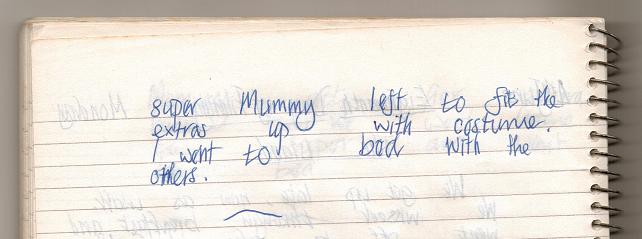
Although it was good to be on Coniston Water hanging around at the base camp all day would have been terribly dull for them. This, however was about to change.  That evening Mum went to help Terry Smith, the Wardrobe Master, sort out costumes to fit the Supporting Artistes. My sisters were about to earn their own breakfasts and be able to watch every shot being made . They were to become Film Extras.

You can read more here:

Setting sail from Wild Cat Island during the filming of Swallows and Amazons 0n 2nd June 1973

If it is tricky navigating in and out of the Secret Harbour on Peel Island, leaving from the Landing Place under sail in a clinker built dinghy can prove even more hazardous. You need a decent shove to get going so you can catch the wind, escape from snaring tree branches and avoid the danger of flat rocks lurking just under the surface of Coniston Water. This was my job on a rainy, grey day in the Lake District in 1973. With a telescope in one hand.

On the filming of 'Swallows and Amazons' in 1973

In the finished film you don’t see the shot when I slipped in the water up to my waist, and kept on shoving.  The “Don’t forget about the lights, Titty ” scene had to be re-shot on a sunnier day.

bw Susan sailing past Peel Island2
Simon West and Suzanna Hamilton at the helm of Swallow with Stephen Grendon in the bows, while Sophie Neville looks on from the shore of Peel Island.

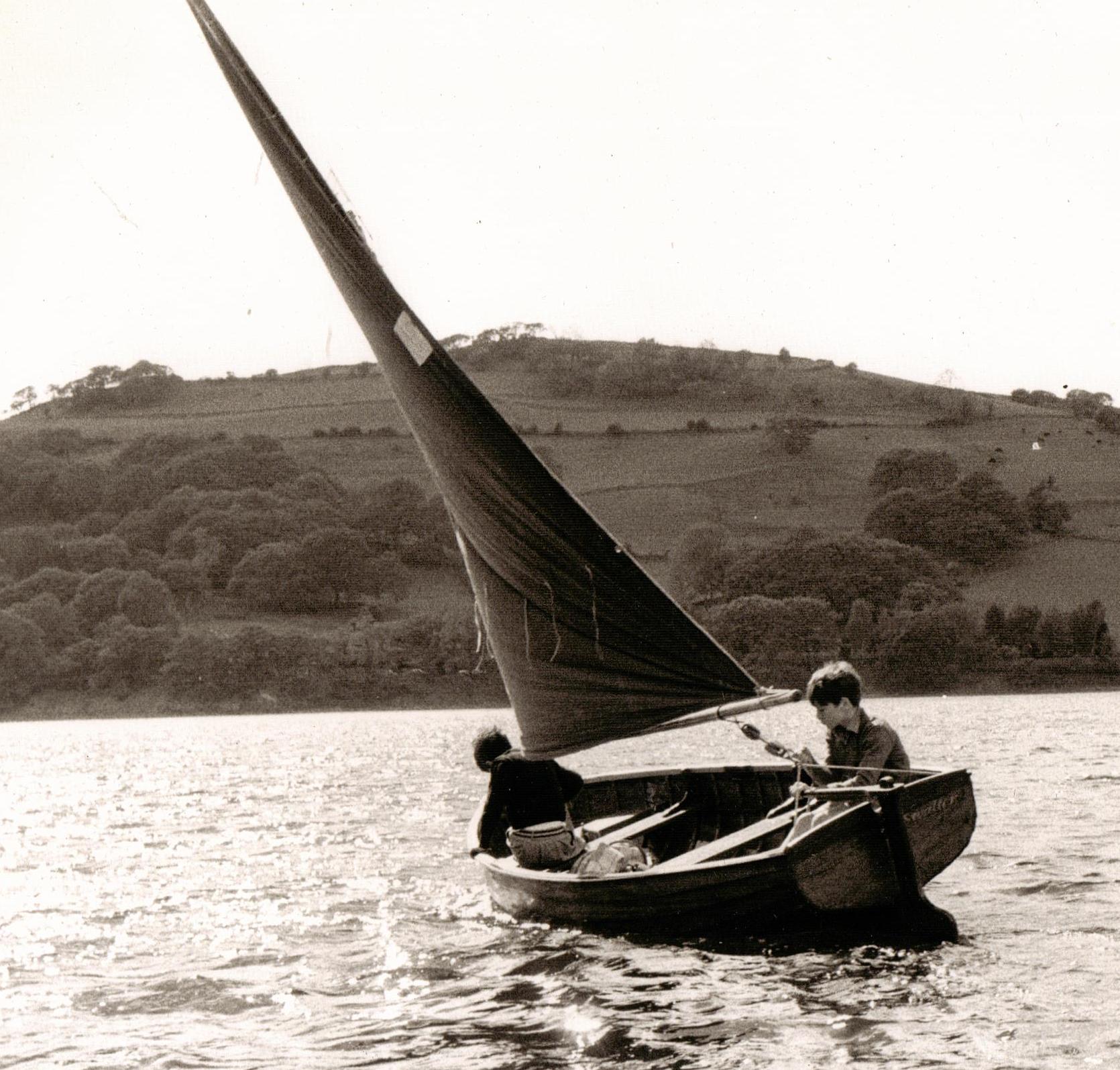
What you see is a long-shot, on a grey day, with Titty waving furiously from the shore, as Swallow leaves Wild Cat Island. You can not see that her dress is soaking wet but the trees on the island indicate just how windy it is. While Susan is waving back, Roger is looking out for rocks for all he is worth. John is sailing hard, running with the wind, with the boom right out and white water on his bow. He hung on, as he had to, until Swallow passed the big rock, before coping with a dramatic jibe. You see him rise to handle this, while Susan ducks. She needed to. It was so violent the mast nearly broke, but John ‘scandalised’, spilling excess wind and sailed on. The film cuts to two closer shots of the jibe taken on the sunny day, then cuts back to the long shot when Susan bobs up and Swallow sails at speed, north up Coniston towards grey clouds and rain over Langdale.

BW Swallow about to jibe

My father watched all this from the shore, knowing the risks, knowing Stephen Grendon aged nine, who played Roger couldn’t swim well. But Simon West was proving himself yet again as a very good sailor. He was totally confident. You can tell – even from a distance – how calm he was, how instinctively he read the wind. He knew it would hit him with force as he left the lee of the island.

Swallow on Coniston


These wet windy days in the Lake District were a worry to the Producer and a challenge for the crew. They had already lost a number of days to rain. Whilst Claude Whatham, the Director was always trying to find a way of making the best use of his time, David Bracknell, his First Assistant Director had to make things happen. The practicalities of each day rested on his shoulders.

David Bracknell, First Assistant Director on ‘Swallows and Amazons’ on the shore of Coniston Water near Peel Island ~ photo: Martin Neville

Just co-ordinating our transport out to Peel Island, so that we while the camera crew were never waiting for us we were not missing time at our lessons – would have been difficult. Getting the tea urns out there twice a day, must have been a struggle. I’m not sure what we did about anyone wanting the loo. There wasn’t even a bucket on the island. 

Claude Whatham and his crew on the camera punt
First assistant David Bracknell, director Claude Whatham, grip David Cadwallader and DoP Dennis Lewiston (seated) with three local boatmen ~ photo: Richard Pilbrow

Working in purple trousers, with a Motor-roller on his hip, David kept things safe and kept things going whatever the weather. He would call for ‘Quiet’, before each take, calling, ‘Camera? Sound? then: Mark it!’  The clapper board would be named and snapped shut before Claude the Director shouted ‘Action!’  Then off we’d go.  And the rule was to keep going – whatever happened – come the hell of slippery rocks or high water – until the Director shouted ‘Cut!’ David would then take over command and set up either for a re-take or a subsequent shot. Once a scene was completed he’d move the crew on for a new sequence.

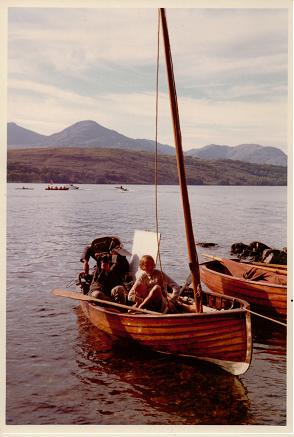
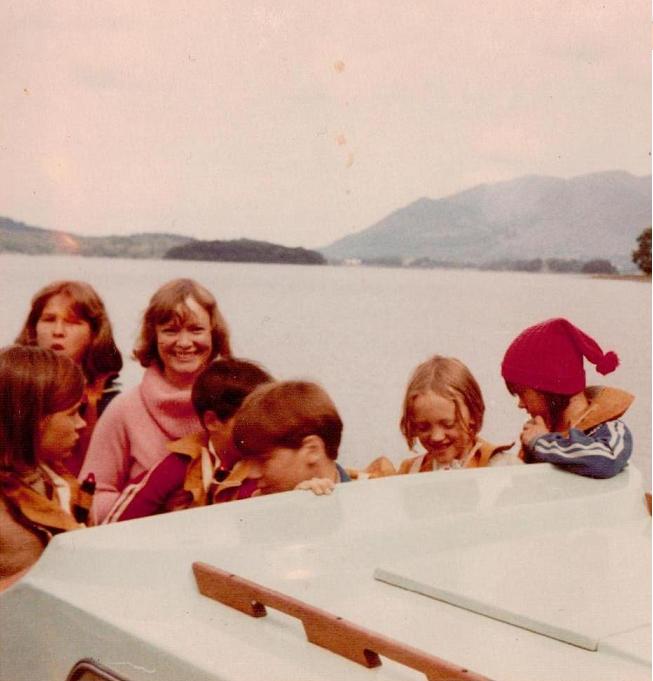
The cast of ‘Swallows and Amazons’ setting off in the Capri for Peel Island, my mother in her bobble hat, a journalist taking photographs and Brian Doyle, the film Publicist, wrapped up warm ~ photo: Martin Neville

David Bracknell was very experienced. He’d worked on a number of hugely popular Carry-on movies, which according to Maureen Lipman, were made at terrific speed. Prior to Swallows and Amazons his credits included Carry on Abroad, Carry on at your Convenience, (I’d seen this at school; it’s all about lavortaries) Carry on Henry and Carry on Loving with Kenneth Williams, Sid James and Charles Hawtrey.  He’d worked on Far from the Madding Crowd  with Julie Christie, Alan Bates and Trevor Stamp, A Day in the Death of Joe Egg with Janet Suzman and Peter Bowles, Bless this House with Sid James, Diana Coupland and Sally Geeson and Battle of Britain, which starred Michael Caine, Trevor Howard and Harry Andrews, Ian McShane, Susannah York and Laurance Olivier. By 1984 he was working on Indiana Jones and the Temple of Doom, in 1986 on Shaka Zulu with Edward Fox, Robert Powell and Trevor Howard again.  We were in capable hands.

My father recognised this, watching patiently from the base camp with Perry and Tamzin, my younger sisters. I fear it must have been terribly dull for them, especially on the cold grey days, but we were all together and did have a chance to explore Westmorland, as you will see when I reach tomorrow.

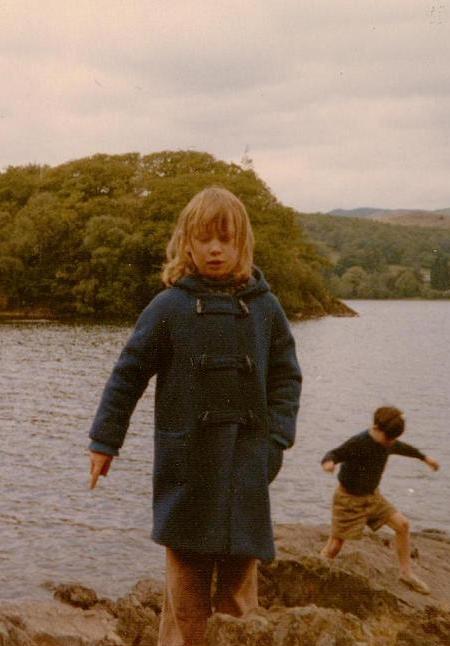
My sister Perry Neville on the shore of Coniston Water in Cumbria with Stephen Grendon and Peel Island beyond~ photo: Martin Neville

You can read more about the making of Swallows and Amazons here:

The Secret of Secret Harbour ~ where ‘Swallows and Amazons’ was filmed on 1st June 1973

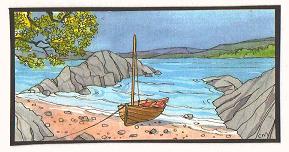
Claudia Myatt's painting of Swallow in the Secret Harbour
Claudia Myatt’s painting of Swallow in the Secret Harbour

The Secret Harbour on Peel Island looks south over Coniston Water to the hills of Cumbria. It has to be one of my favourite places on Earth. Bringing a small dinghy in there gives you a special feeling either of exploration or of coming home. You need to go when no one else is about. On the 1st June 1973 we spent a whole day filming there with a crew of sixty or more people. It was still a magical place.

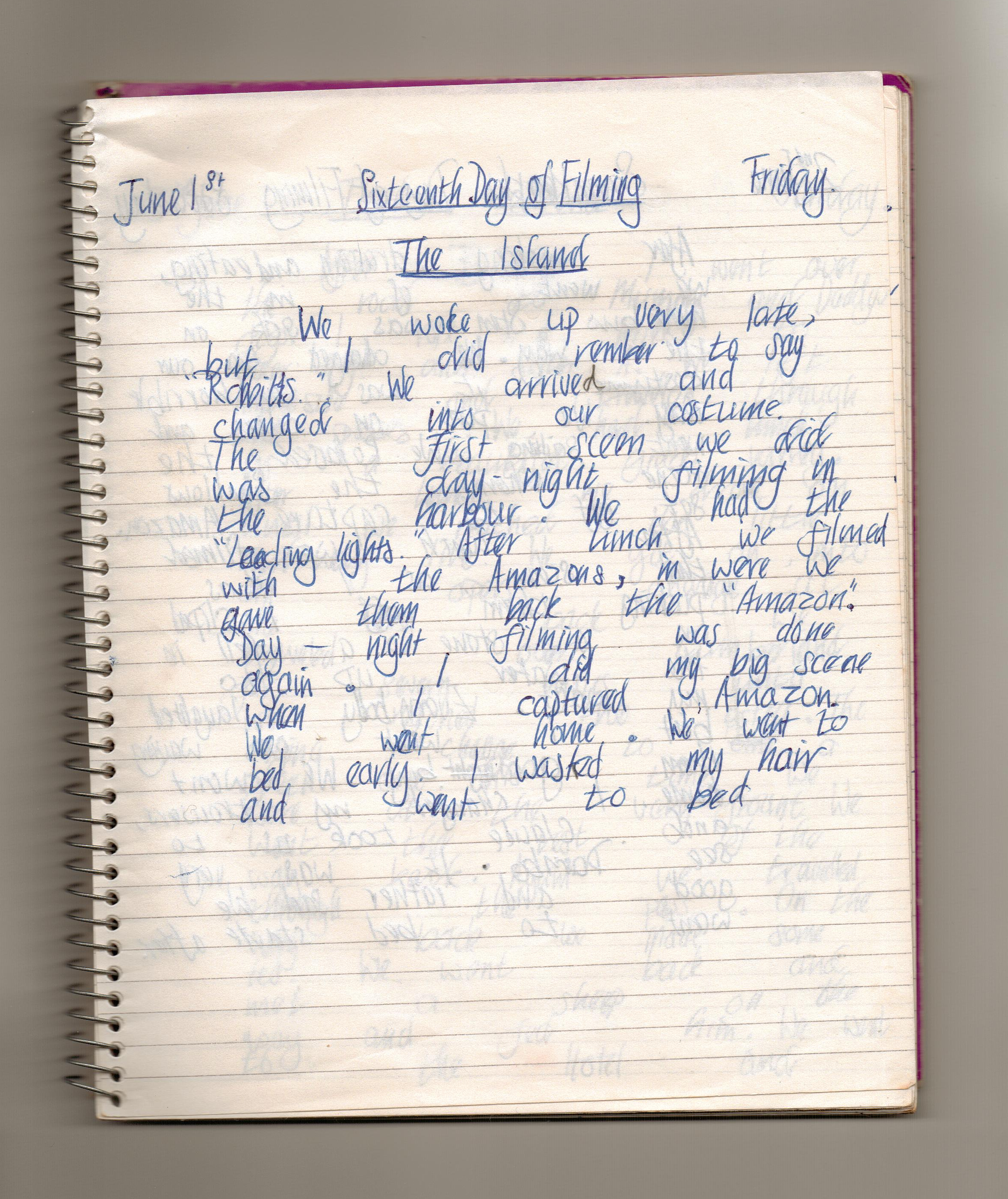
1st June 1973 ~ My Diary

Our secret of Secret Harbour was that although many of the scenes in Arthur Ransome’s story are set there at night, back in 1973 we only ever filmed them during the day. This was achieved by using the technique of Day-Night, or Day-for-Night filming, the use of filters over the camera lens so that we could film a scene that would come across as being dark even though it was shot in broad daylight.  This had obvious advantages. Filming at night is amazing, but very tiring. It demands considerable lighting set ups, which would have been impossible on Peel Island as they could not get a generator out there.

Sophie Neville with Claude Whatham

The sun wouldn’t have set until very late on 1st June in the Lake District where mid-summer nights are short. Children are only permitted to work certain hours and need to be given rest days afterwards, so filming exteriors at night just wasn’t feasible. And yet, much of Swallows and Amazons, including the most dramatic of scenes,  is set at night.

Secret Harbour on the southern end of Peel Island when we were returning for lunch in the Capri whilst Richard Pilbrow’s dog looked on from the temporary jetty constructed by the crew: photo ~ Martin Neville

I remember Claude Whatham, the Director of the film ‘Swallows & Amazons’ (1974) and Dennis Lewiston, our Lighting Cameraman or Director of Photography, being intensely absorbed in perfecting our Day-for-Night sequences. This was particularly tricky for them as many were set out on the water. Having already shot one night scene on Peel Island when we were in the girls’ tent, Dennis now started the day with a scene which was set on the island, yet looked out over the water. He explained that ideally he needed constant, bright sunlight, which would look like moonlight reflected on the ripples of the water. What he didn’t like were cloud banks. And for this we would wait. And waiting for children, while out on the water or in a confided space can be hard.

In the scene where the Swallows set up the leading lights Dennis accepted the clouds. It looks fine, as it’s appropriate for it to be getting dark. The little fluffy clouds in the scene where the Amazons arrive aren’t so great as they landed on Wild Cat Island in the dead of night.

Sophie Neville in Secret Harbour

Even on land the Day-for-Night shots would take some time to line up. The candle lanterns had to be boosted with battery operated light bulbs. If you look at the lantern in Susan’s tent you can see a black electric wire coming off it, and even a bulb on the Big Screen. You don’t notice this because your attention is on the dialogue but it can easily be spotted.  You might think it would be a distraction for us children but we were all quite down-to-earth and the technical detail kept our interest and our minds on our work.

BW Sophie Neville in Secret Harbour

These were our favourite scenes, set in our favourite place. It was the Amazons’ big day with Kit Seymour emanating leadership as she portrayed Nancy Blackett ‘terror of the seas’, with all the confidence, grace and rugged beauty Arthur Ransome must have either known or envisaged. ‘By Gum, Able-seaman – I wish you were on my crew.’

There was much dialogue for Lesley Bennett who played Peggy. She did well, but acting opposite Suzanna Hamilton is always easy. It’s like rowing in a crew led my an excellent stroke or having a good man at the helm. The part of the practical Susan was not a charismatic one but Suzanna anchored us all. Her own performance is absolutely faultless. I had much to react to but not much to say. I did manage to handle the Amazon by myself and the long shot when I captured her was achieved in one take. A triumph at the end of a long day.

‘There are more of us Swallows…’ Sten Grendon, playing Roger and Simon West, playing Captain John in the Secret Harbour on Wildcat Island during the filming of ‘Swallows and Amazons’ in 1973

There was much dialogue for Lesley Bennett who played Peggy. She did well, but acting opposite Suzanna Hamilton is easy. It’s like rowing in a crew led by an Olympic oarsman or having an experienced skipper at the helm. The part of the practical Susan was not a charismatic one but Suzanna anchored us all. Her own performance is absolutely faultless. I had much to react to but not much to say. I did manage to handle the Amazon by myself and the long shot when I captured her was achieved in one take. A triumph at the end of a long day.

Sophie Neville in the Amazon with the Denis Lewiston and the 16mm camera1
Sophie Neville in The Amazon with DOP Denis Lewiston, his 16mm camera and a reflector board ~ photo: Martin Neville

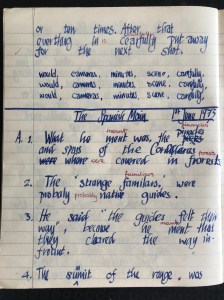
I must somehow have spent time in the school bus with my tutor on 1st June as I was learning about the Spanish Main:

You can read more about the filming here:

Filming The Swallow and The Amazon from a pontoon out on Coniston Water ~ 31st May 1973

The dinghies Swallow and Amazon with the camera pontoon at Peel Island on Coniston Water ~ photo: Martin Neville

How do you film two girls sailing a thirteen foot dinghy talking to their brothers sailing along in another small dinghy while calling out to two other girls in red bobble hats dancing about on a wooded island which both the small boats are approaching?

The scene looks so simple on paper.  It is the one when the Swallows sail back to Wild Cat Island with the captured Amazon to find Nancy ‘dancing with rage’ and Peggy anxious to get home before breakfast. One page of script.

Claude Whatham soon discovered that he was shooting the most complicated of sailing scenes. On a cold grey day in the Lake District.

It is extremely difficult to describe how he managed this, but I will attempt to do so.

31st May 1973 ~ My diary

Sophie Neville's diary 1974

There was no room in the dinghy Amazon to film Susan and Titty sailing. This had to be done from a boat or vessel lashed along side. The production had a pontoon hired from Mike Turk in Twickenham and managed with the help of Nick Newby at Nicole End Marine near Keswick. It was a sizeable raft equipped with four outboard engines and surfaced with a number of flat ‘camera boards’.

Swallow and the pontoonBasically rectangular, it had arms added on either side. The idea of this cross-shaped platform was to enable Claude to film us either side-on, from astern or across the bows of the dinghy, which was wired by its keel to the pontoon. The camera was normally on a tripod. The original idea was that it could be mounted on a short section of track but I don’t think this ever happened. Electric lighting was not something that could be used on this pontoon but two large reflector boards were used to light our faces instead.
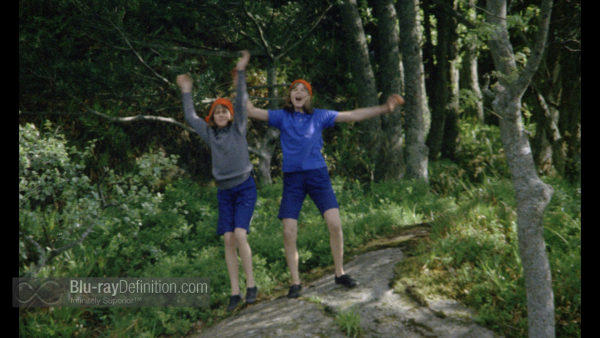
The result was a shot used on the cover of a book and a DVD marketed by the Daily Mail in 2008.

Sophie Neville on the cover of the Daily Mail DVD

As well as the director and camera crew, the sound recordist and ‘boom swinger’ were on board the pontoon along with Sue the continuity girl. Costume, make-up and our chaperone would be in a separate safety boat, in this case a Capri. This would mill about with the life jackets, sunhats and warm clothes that we wore between set ups. The crew all started off wearing life jackets, but as you can see they were soon discarded. They were dangerous things, old BOAC ‘life vests’ with so many flappy straps that you were at risk of being trapped under water by them.

Blu-ray Amazon Pirates

The pontoon was operated by two boat men under the eye of David Blagden, the sailing director. They had to work with Claude and the wind so that when we were sailing, while the pontoon travelled with us. This was tricky enough on open water. If we were near the shore it could become more difficult. As you can imagine the dinghy could easily start to sail away from the clumsy pontoon – or worse. Our mast socket broke that first day.  They needed my father on that pontoon. He there, quietly was watching from the shore.

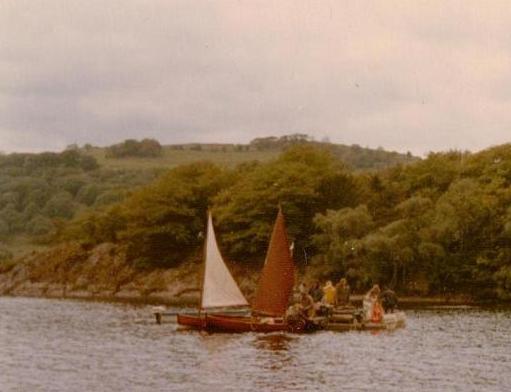
The camera pontoon on Coniston Water with Amazon attached to it and Swallow sailing to the other side of Peel Island during the filming of ‘Swallows and Amazons’ in 1973~ photo: Martin Neville

Although we had all read the book of Swallows and Amazons, and were devoted to adhering to every detail, no one remembered that John and Titty sailed the captured Amazon back to Wild Cat Island. She had a centre board which was a new thing for the Walkers so John decided to let Susan helm their familiar boat. I wish this had been detailed in the script. In the film, John was with Roger in Swallow whilst Susan and I were in the Amazon, which was a pity. I can only imagine that Claude decided this because he was trying to achieve a very difficult ‘three shot’. He was relying on John – on Simon West, who was aged eleven – to keep sailing Swallow in the right position, whilst out on the water between Amazon and Wild Cat Island.

Simon West sailing Swallow - trimmed
Simon West as Captain John sailing Swallow . Sten Grendon plays the Boy Roger in the bows

This wasn’t as easy as it looks. You can see from this photographs that Swallow kept racing ahead of the pontoon. It can be gusty around Peel Island and the rocks can be lethal. Roger was on lookout but he also had to deliver his lines.  Having no centre board and a shallow 1920’s rudder Swallow can be difficult to turn or get going if the wind slacks. This wasn’t actually a problem; Simon had wind and he did brilliantly. Suzanna Hamilton did too. She had no previous experience of sailing the Amazon. No one had remembered this sequence when we practiced before the filming began.

Molly Pilbrow and her dog with my sister, watching the camera pontoon from the shore of Coniston Water ~ photo: Martin Neville

Meanwhile Gareth Tandy, the third assistant director, was standing-by (probably for hours) on Peel Island with Nancy and Peggy. He had hide in the bushes and cue them at just the right time. They did so well. They had to deliver their lines while jumping from rock to slippery rock to keep up with both the Swallow, the camera and the story.

The Swallows and The Amazons in the Capri ~ Suzannah Hamilton, Kit Seymour, Daphne Neville, Stephen Grendon, Simon West, Sophie Neville and Lesley Bennett ~ photo: Martin Neville

When we filmed two of Arthur Ransome’s other books, Coot Club and The Big Six, on the Norfolk Broads in 1983, the BBC producer Joe Waters used a 35 foot river cruiser as camera boat. It could be difficult keeping it stable during a take, especially with so many people on board, but being a proper boat it was much easier to manoeuvre than the pontoon. And faster. Andrew Morgan, the director still managed to get his camera angles and it had the advantage of a cabin where sensitive equipment such as film stock and lenses could be stored. I can remember the camera assistant changing the film on board. I don’t know if the boat had heads. May be.

On both productions we had the inevitable problem of modern boats coming into shot. We had to have one of two men in zoomy motorboats that could zip across the open water to ask them to move clear of the shot. Even with this control you can imagine what happens. You line up your shot with all your boats in position, the sun comes out and a modern motorboat roars across the lake leaving you all rocking in its wake.  Then it rains.

The good thing about having a safety officer in a frog-suit is that they can carry you to shore at the end of a long day. You don’t have to get your feet wet.

The Safety Officer and me, with Dennis Lewiston and Claude Whatham still standing in the Amazon ~ photo: Martin Neville

The question is – Did the DOP and the director get carried ashore too?

You can read more here:

‘But we never touched his horrible houseboat…’ filming ‘Swallows and Amazons’ on Peel Island 30th May 1973

Peel Island on Coniston Water in the English Lake District whilst we were filming ‘Swallows and Amazons’ in the summer of 1973 ~ photo: Martin Neville

An extract from the journal I kept aged twelve:

Stephen Grendon, Suzannah Hamilton and Sophie Neville on the cover of the LP of the film ‘Swallows and Amazons’

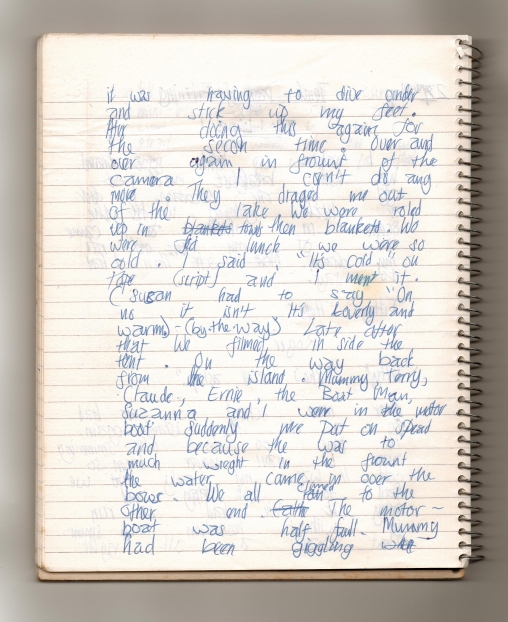
I must have lost my pen on this wet day in May 1973, for the diary on the making of the film ‘Swallows & Amazons’ is written in pencil. I don’t know if Claude Whatham, the Director, ever remembered me writing but when the film ended he kindly sent me an engraved Parker pen and propelling pencil. I loved the pen and wrote all my essays at university with it. Sadly I lost it just before my Finals but I still have the pencil. Somewhere.

Although we had a late start it was a good day, a day when Claude encouraged us to improvise. The dialogue in the little scene when we were gutting fish is our own. I’ve always thought improvisation can be magical. When I started to direct at the BBC we were very conscious of the cost of film stock – the footage – so were reticent about taking chances, but I made a drama on school bullies that turned out to be very powerful, purely because I let the children improvise. The only problem was that it came across as almost too frighteningly real. I found that although short scenes worked well, I had to write the story as a whole as I went along, which was a bit daunting. When I went on a BBC Studio Director’s Course I tried improvising a scene where a couple go camping in true Mike Leigh style. I asked the actors to erect a tent in the studio, and left them at it while I spoke to the cameramen via inter-com with the vision-mixer at my side. She also improvised.  The scene was to end with the couple going inside the tent, which then collapses on top of them. I used a dome tent of my own and I showed them just how easy it was for them to collapse it. It was quite fun, and worked surprisingly well. Up to a point. The problem was that I was working with actors and the actors, being actors, enjoyed themselves so much they didn’t want the scene to end. It nearly didn’t end at all. And I ended up with the longest studio show reel of all time.

sophie008
Sophie Neville, Suzanna Hamilton, Stephen Grendon, Lesley Bennett and Kit Seymour with David Blagden on Peel Island on Coniston

Suzanna Hamilton was very good at gutting fish. She is not a remotely squeamish person, in fact she loves snakes and other reptiles. A stoic, who would valiant be ’gainst all disaster, she is probably the most gutsy film actress there is. No fuss or over long scenes for her.

Blu-ray gutting fish

I was more interested in examining the the high dorsal fin of the perch and could have spent all morning standing on the rock. I seem wired to illustrate stories. I am sure Arthur Ransome used a line drawing of one of the perch he caught. Is it in Swallows and Amazons?

Claude Whatham, the Director of ‘Swallows and Amazons’, on the shore of Coniston Water ~ photo: Daphne Neville

Claude did not shoot many ‘takes’. His aim was to get fresh performances. By this time he had started to film the rehearsal, and then one ‘take’ as a back-up, to give the film editor an option. Then he would change the camera angle. It is probably a good policy when filming with children – as charm is difficult to replicate. When I started to direct on Beta-cam I attempted to shoot quite long scenes on one shot by using ‘jib-arms’, small cranes or camera track to move the camera. This was all the rage in the late 1980s. I remember using one long shot for the opening scene of a comedy drama called Thinkabout Science that starred Patsy Bryne ~ she who had become known to the nation as Nursie in the BBC sitcom Blackadder .

Thinkabout with Patsy Byrne
‘Thinkabout’ with Patsy Byrne

Patsy played a grandmother collecting two sisters and their friends from school. The children poured out of the front door, down some steps, met their granny and chatted to her as they skipped along the pavement. I had about 120 metres of camera track laid down the street, far more than any scene on Swallows and Amazons. We had a rehearsal and shot the three minute scene. It worked perfectly. It was fresh and funny and active. I was all set to move the whole crew to the next location when my producer descended from the Scanner, a truck where she was watching on three monitors, to tell me that one of the Extras had waved at the camera. I should have recorded the rehearsal. After that, it took us twelve more takes to get the scene right. Luckily Beta tape costs were negligible – certainly in comparison with the 35mm Technicolor stock that Claude was using.

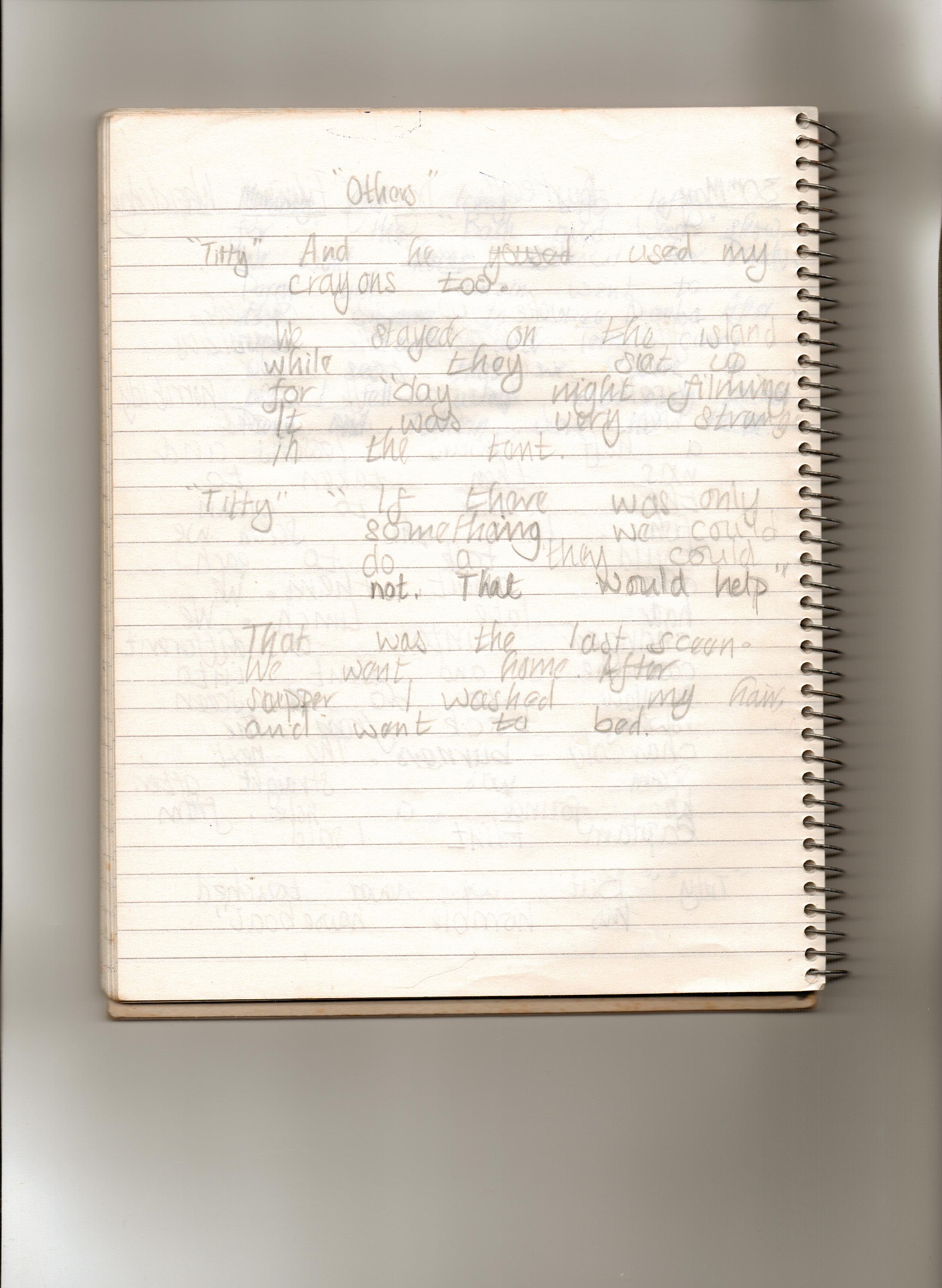
Richard Pilbrow must have been pleased to hear that we gained a reputation as ‘One take Wonders’ on Swallows. When it came to the scene when we returned to the camp to find the abrupt note from Captain Flint, Claude took me to one side and suggested I added a line of dialogue at the end when it came to the take, without letting the others know. He told me to say, ‘And he used my crayons too.’  I wish he had edited it out. I didn’t deliver the line well. I think Suzanna would have said it perfectly but the secret made me too self-conscious.

Simon West, Suzanna Hamilton, Stephen Grendon and Sophie Neville in ‘Swallows and Amazons’ filmed on location in the English Lake District in 1973

You can read more here:

Father loves the Lakes. He’d say, ‘Just look at that scenery…’ He joined us to take part in filming ‘Swallows and Amazons’ on 27th May 1973

My father has always grabbed a chance to visit the Lake District.  As a young man he once took advantage of a military travel warrant to climb the fells and later made it his job to visit the Colfast Button factory in Maryport every month, when he worked for BIP. He would stay at the Pheasant Inn at Bassenthwaite Lake, latching visits onto a weekend, so he could explore Cumbria.

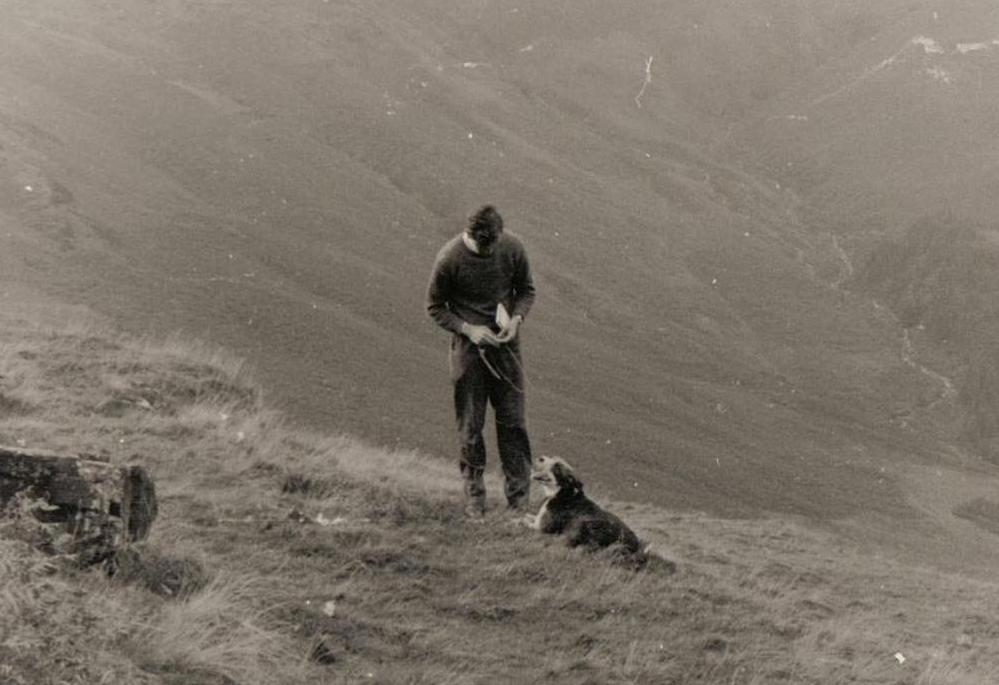
Martin Neville in Cumbria with his dog

This was in the late 1950s.  When I came along he took us to stay at Goosemead Farm. We climbed Castle Crag and you only have to glance at the photographs to see how happy I was to be there. We had a sheepdog called Luppy who came too. She was a great character and much loved. Found as a stray before I was born she was still around when I left home to be in Swallows and Amazons.

Sophie Neville aged three in the Lake District
Sophie Neville aged three in the Lake District with Luppy the sheepdog

Arthur Ransome had been Dad’s favourite author as a boy. He said that he would wait in anticipation for another book to be published. He’d bought me the set of twelve, collecting them from various secondhand shops. I had read seven  by the time I was twelve.  He set my destiny.

Painting with Dad the shore of Coniston Water
Finding my father Martin Neville the shore of Coniston Water

My father left the dogs at home on 26th May so that he could drive my younger sisters up to join us for two weeks and watch the filming. He found Peel Island on Coniston Water and was there to meet us when the boat came in at the end of the day. My sisters stood smiling on the rocks, dressed for the weather in matching red jerseys, duffle coats and gumboots.

My sisters Perry Neville and Tamzin waiting for me on the shore of  Coniston Water

My parents had booked a Bed and Breakfast in Ambleside across the road from the Oaklands Guest House. I immediately noticed a sign declaring that you had to pay 10p to have a bath. ”Ten pee!’  Mum glared at me, furious. ‘Do be quiet, they’ll hear you’.  I had moved to share Suzanna’s room, since Mrs Price had a long-standing booking for the back room Mum and I had been using. Her guesthouse was full to bursting since she had students from the Charlotte Mason College of Education lodging with her as well as all of us and her own three children. There were only two bathrooms for the twenty-two people living  in the house but there were basins in some of the bedrooms. Nylon sheets were provided but the bedding was apt to slide off in the middle of the night.

Perry Neville by Coniston Water near Peel Island
My sister  with Sten Grendon, Peel Island behind them

My sisters, Tamzin and Perry, who must have been about eight and nine, struck up an instant rapport with Suzanna Hamilton. She asked them to baby-sit her pet slow-worms. These had come up from London with her in a small glass aquarium, which she had put in the fire place in our room. I don’t know what Mrs Price thought. I wasn’t very keen on handling them, and have no idea how they were fed, but Perry was intrigued. Suzanna had also brought her ukulele. She would sit on her bed playing Ain’t She Sweet, Sunny side of the Street, Playing on my Banjo and other Norman Wisdom numbers, fluently and with great gusto. My sisters were entranced. They may have even shared the room with us and the slow-worms. Mum can’t remember.

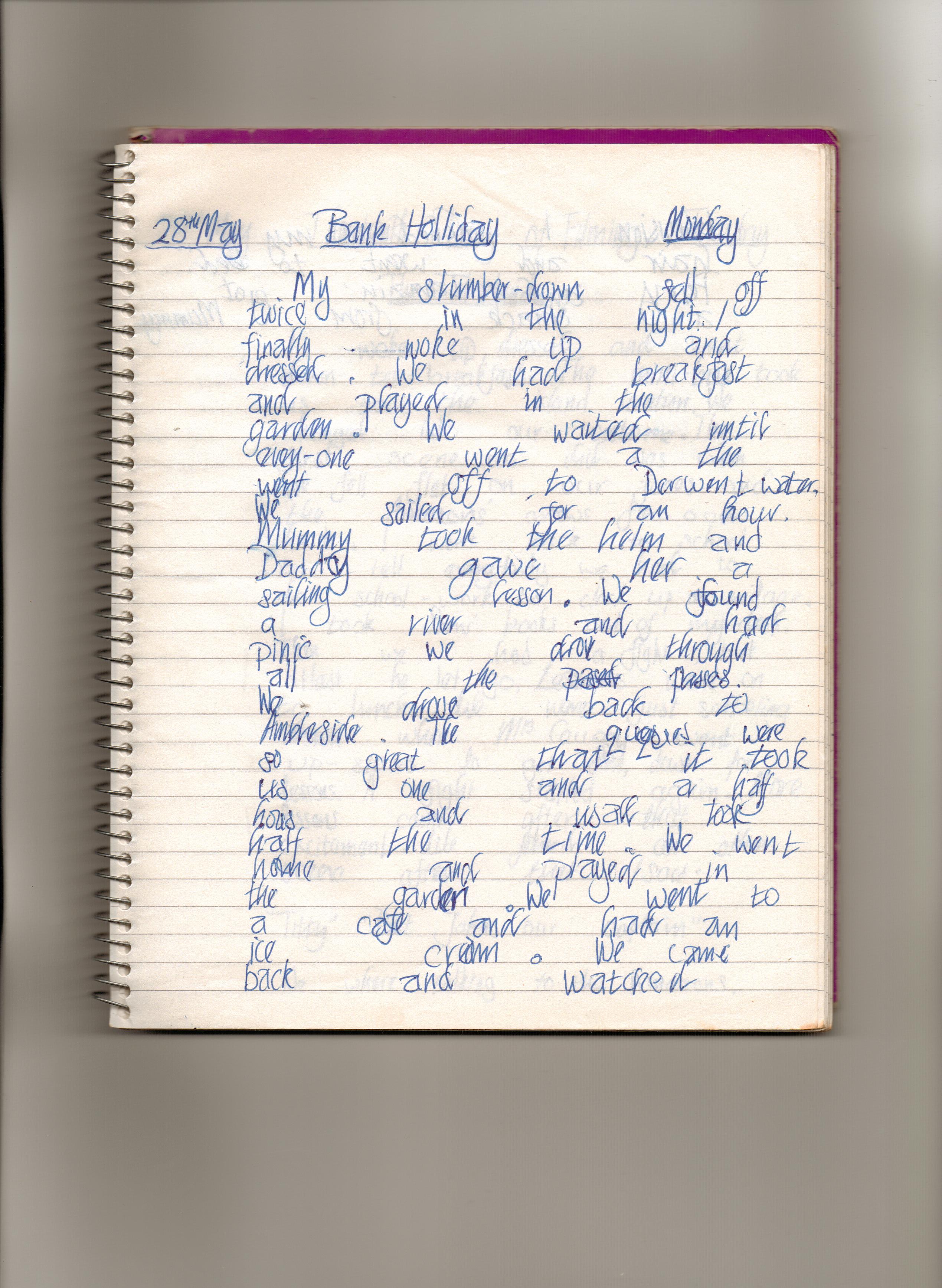
Dad had already made plans for sailing that first Bank Holiday, when Richard Pilbrow had scheduled a break.

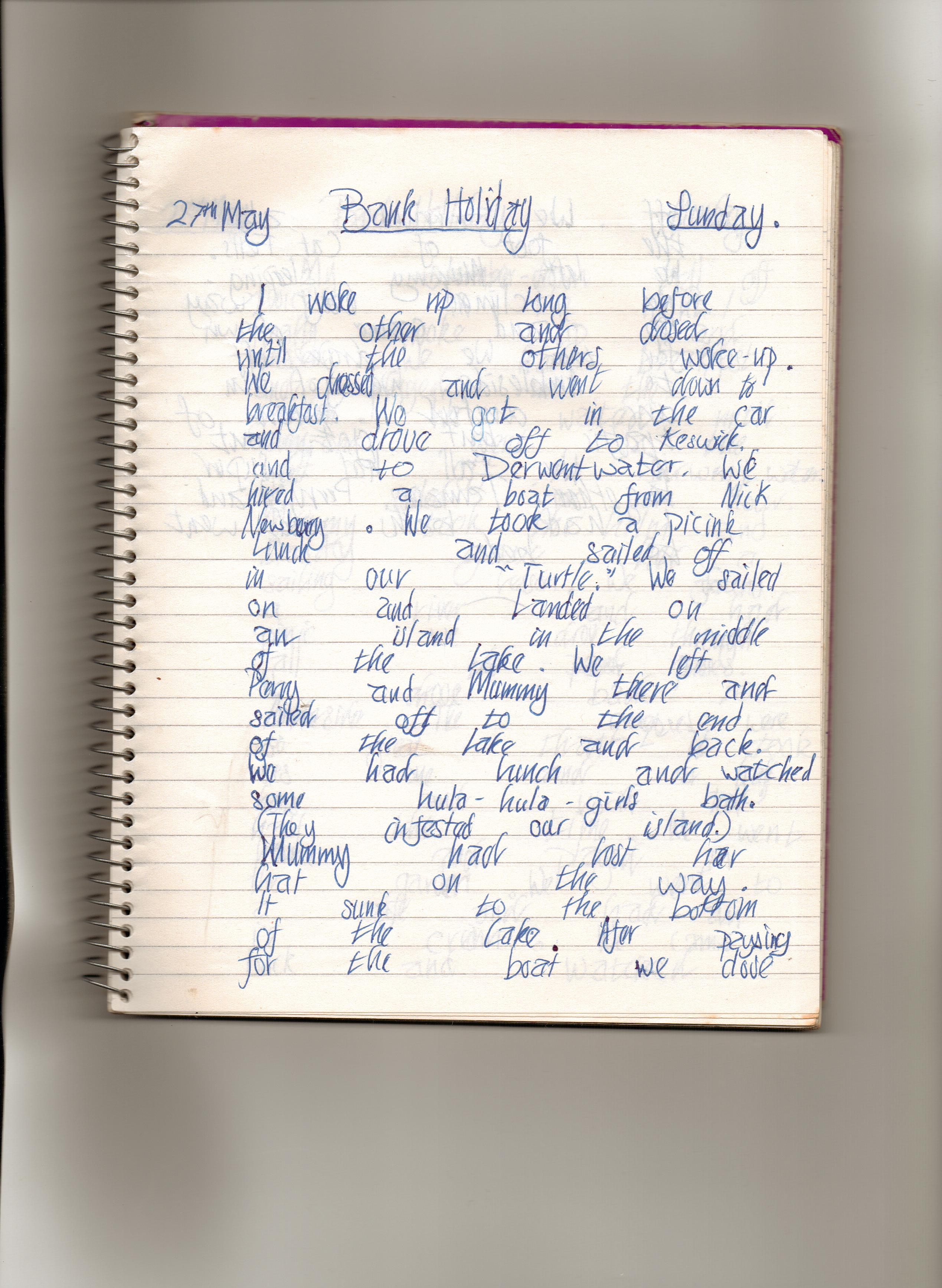
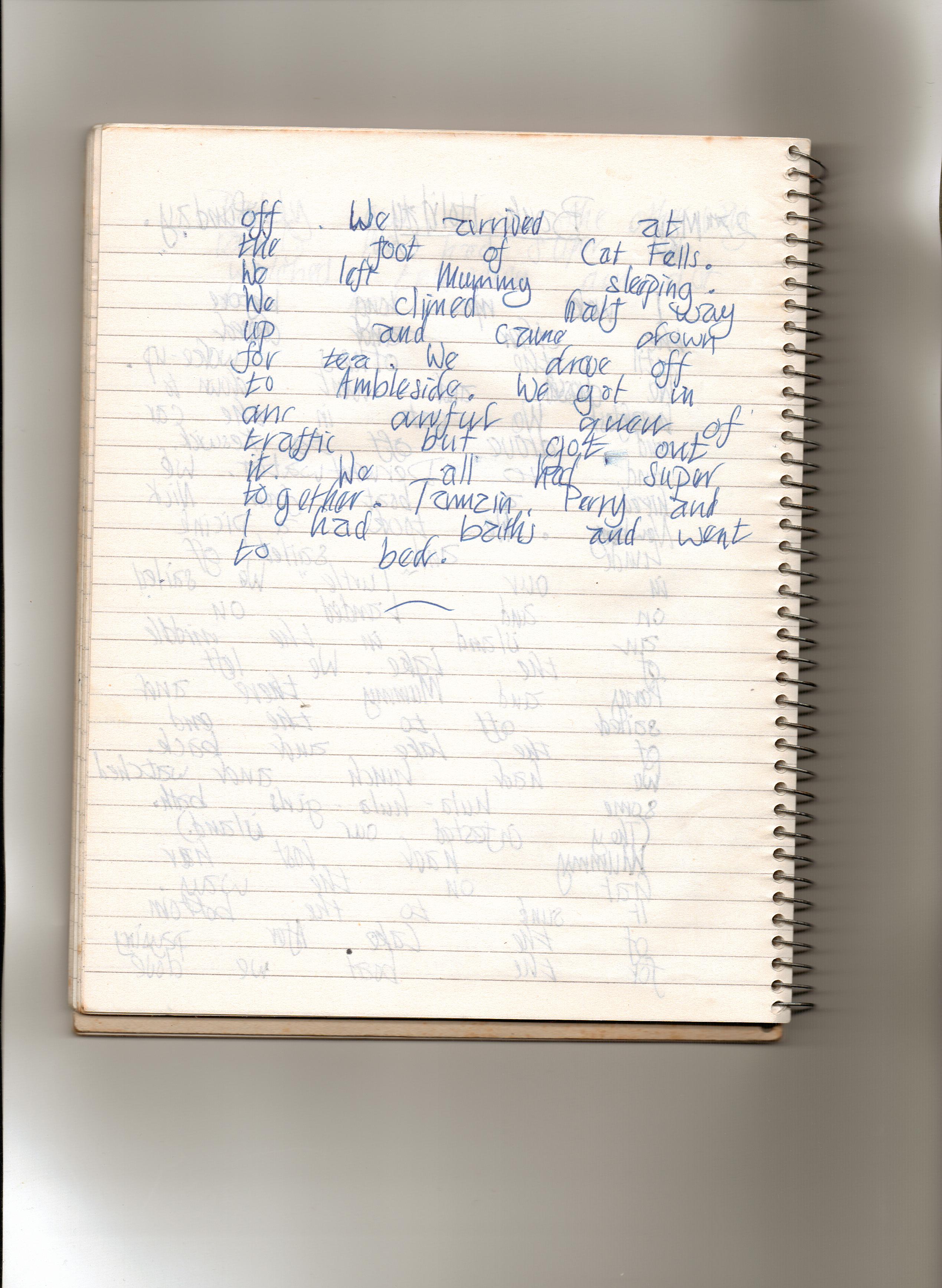
27th May page 2

I remember the Hula-hula girls well. Although it was only May they suddenly appeared on what seemed to be a remote, inaccessible island, clad in garish, brightly coloured bikinis – the kind that had little frilly skirts to them. We watched them splash about and swim in complete wonder as, although it was sunny, we knew how cold the water was.

We had seen something of the same kind of savage the day before. I can remember the dismay on the First Assistant’s face when he realised it really was the Saturday of the Bank Holiday. We had had Peel Island to ourselves, indeed it had become ours – our special place, our magical camp, our home. And suddenly it was being invaded by brash women from Manchester who certainly had no respect for anyone making a film.  I don’t know how they got out there. they seemed to arrive from no where when we were in the secret harbour, which was suddenly a secret no more. It was their holiday and there was no stopping them or their over-weight and noisy children. They were quite frightening.

The horrific Bank Holiday traffic queues were also unexpected, but my father took us up into the mountains and out on Derwent Water. He must have been trying to teach my mother to sail for decades but she has never begun to get the hang of it.

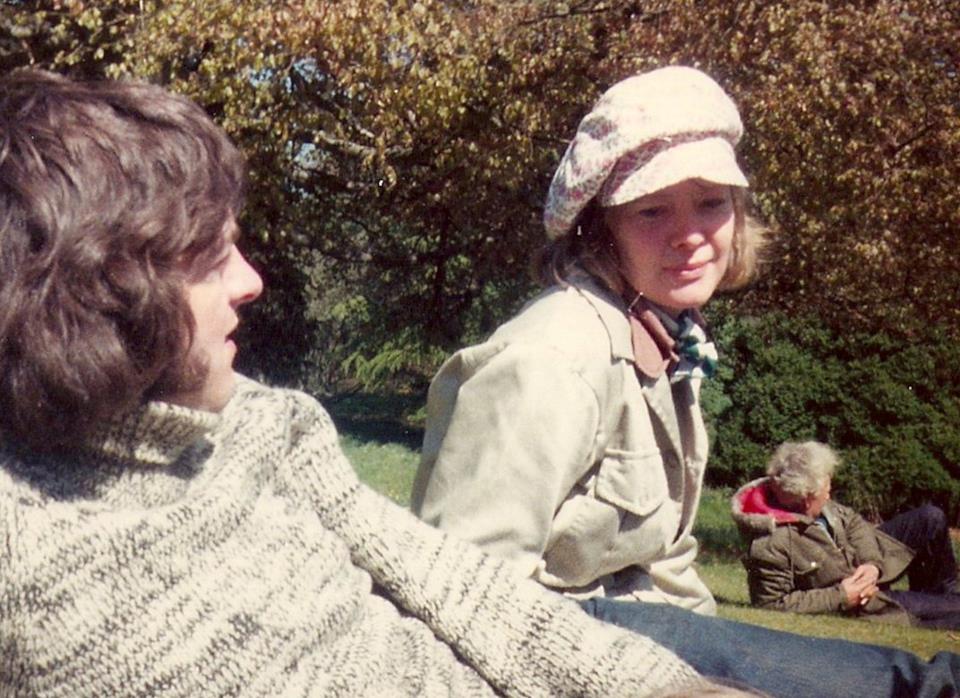
Mum and David Blagden
David Blagden and my mother Daphne Neville in her Donny Osmond cap

Mum was in mourning that weekend as she had watched her favourite hat blow across the water and sink to the bottom of the lake. It was a bulbous pink and white Donny Osmond cap that Claude Whatham had enjoyed wearing on set to amuse us. She was able to find a yellow and white one to replace it but he never liked it as much. Said it didn’t suit his colouring.

You can read more about our adventures making the film here:

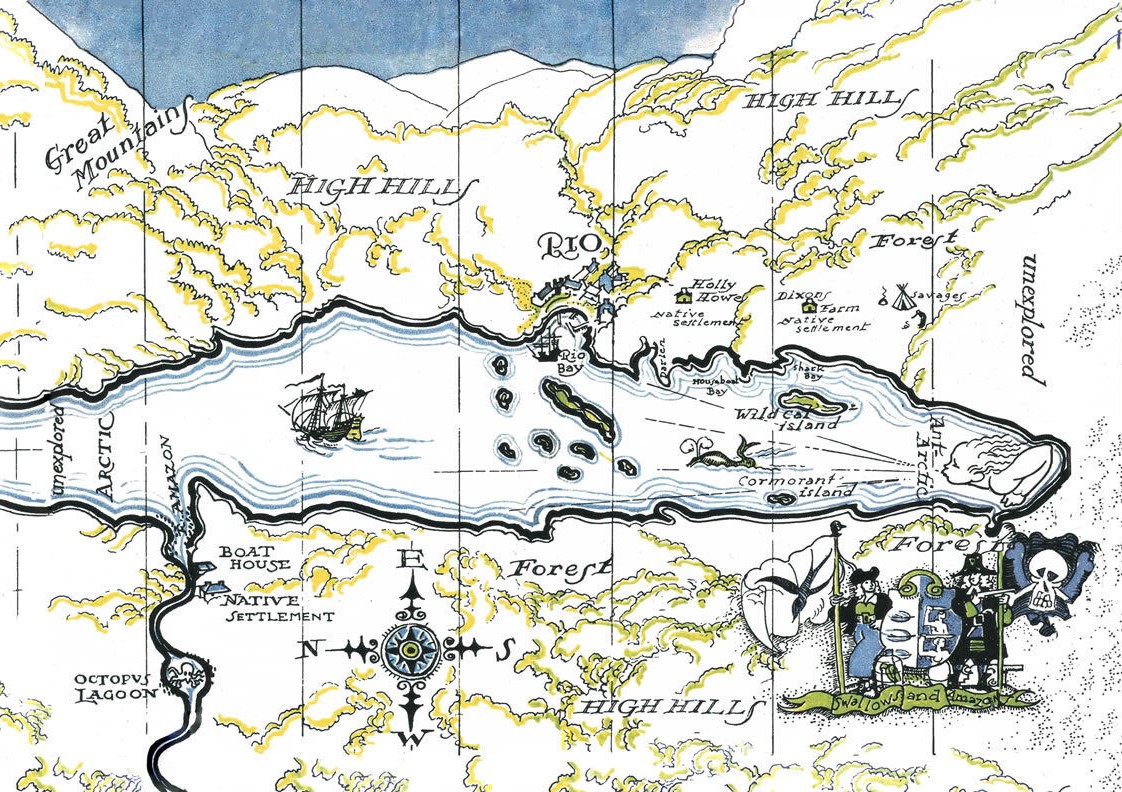
25th May 1973 ~ When I first started drawing maps

Sophie Neville as Titty working on her chart

I did not know it at the time but Titty’s chart had a profound influence on my life.

Titty working on the chart - copyright StudioCanal

I loved drawing the map. I had prepared it earlier with Simon Holland, the Art Director, and always regret pressing too hard. If you look very carefully you can see that I had already written ‘Rio’ and rubbed it out, only to write Rio again when it came to the take.  I also wish that I had been taught the song Away to Rio before this scene as I would had said that line differently. Never mind.

swallows and amazons map tea towel

 The map on the end papers of Arthur Ransome’s book of Swallows and Amazons, originally drawn by Steven Spurrier, is an inspiration to millions. I’ve gazed and gazed at it.

When I grew up and went to university, I took a course in cartography that was to stand me in good stead.  In the spring of 1992, I migrated to Southern Africa with the swallows and soon started drawing decorative maps.

colour elephant map

I added small pictures of settlements, trees, animals, and always a compass with a black and white border to give the scale. In the process I was able to explore the most wonderful country. Most of my commissions have been of game reserves or great swathes of Africa.

Macatoo Camp in the Okavango Delta, Botswana
A map by Sophie Neville depicting the area around Macatoo Camp in the Okavango Delta in Botswana where you find wild parrots

I have mapped areas of the Okavango Delta in Botswana and the Waterberg Plateau in South Africa.

Map of Jembisa

I travelled miles to complete one of the Malilangwe Conservation Trust in Zimbabwe and a map showing how to cross the Namib Desert on a horse.

Reit Safaris Horse Trails Map

I’ve mapped Jembisa Game Reserve, Triple B Ranch  and Ongava on the Etosha border. I have also drawn maps of military zones, ski resorts and stately homes.

Map of Four Ashes Hall by Sophie Neville

Some have been for charities such as Save the Rhino Trust, others for books, others for marketing holidays.

Map of Chamonix

They all gave me the excuse to go on living a Swallows and Amazons life, camping in wild places and exploring wilderness areas – uncharted territory.

Horseback Safaris 2 Map

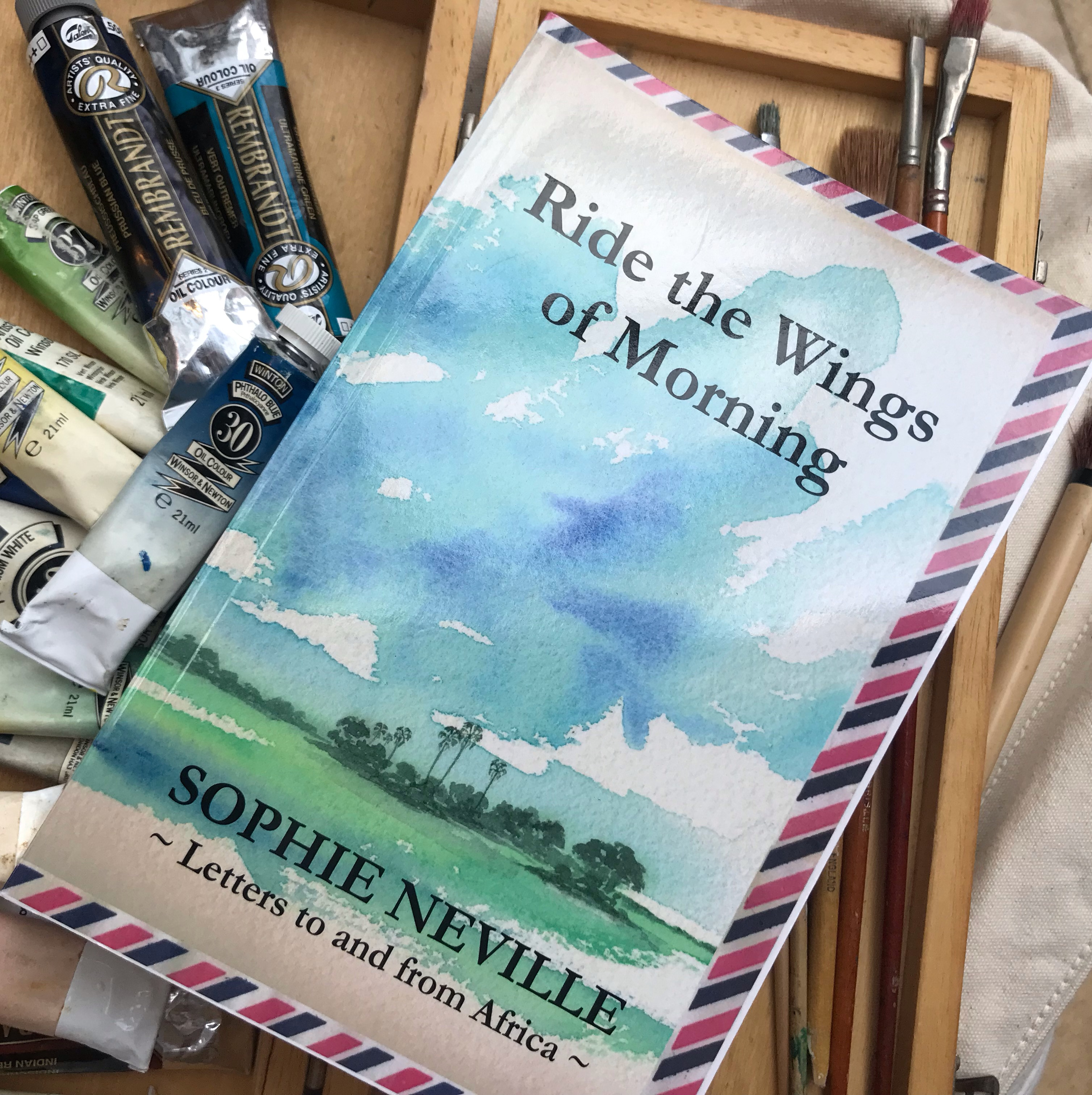
As I expect Titty would have done, I have been writing about these maps and the adventures I had in making them, putting everything together in an illustrated  travel book call Ride the Wings of Morning.

Ride the Wings of Morning by Sophie Neville

I have a couple of very early maps in my first book Funnily Enough. These were just sketched in my diary but one is of Windermere, where I went with my father and the Steam Boat Association, so should be of interest to Arthur Ransome enthusiasts.

A map of Windermere sketched in Sophie Neville’s Diary of 1991 published as the book ‘Funnily Enough’

I have since reproduced some of my own Swallows and Amazons maps on mugs, t-shirts and other items that make useful presents. You can find a selection here.

Swallows and Amazons mugs
Mugs printed with maps used to illustrate Sophie’s books

The mugs are good quality – you can order this one here

I used this map of the Swallows and Amazons locations on the front of the ebook on how we made the film, which has more within. It sells for about £2.99:

“It was really horrible” ~ filming the swimming scenes for ‘Swallows and Amazons’ ~ 24th May 1973

bw Susan teaching Roger to Swim
Sten Grendon as Roger Walker being taught to swim by Suzanna Hamilton playing his elder sister Susan Walker on location at Peel Island on Coniston Water in 1973

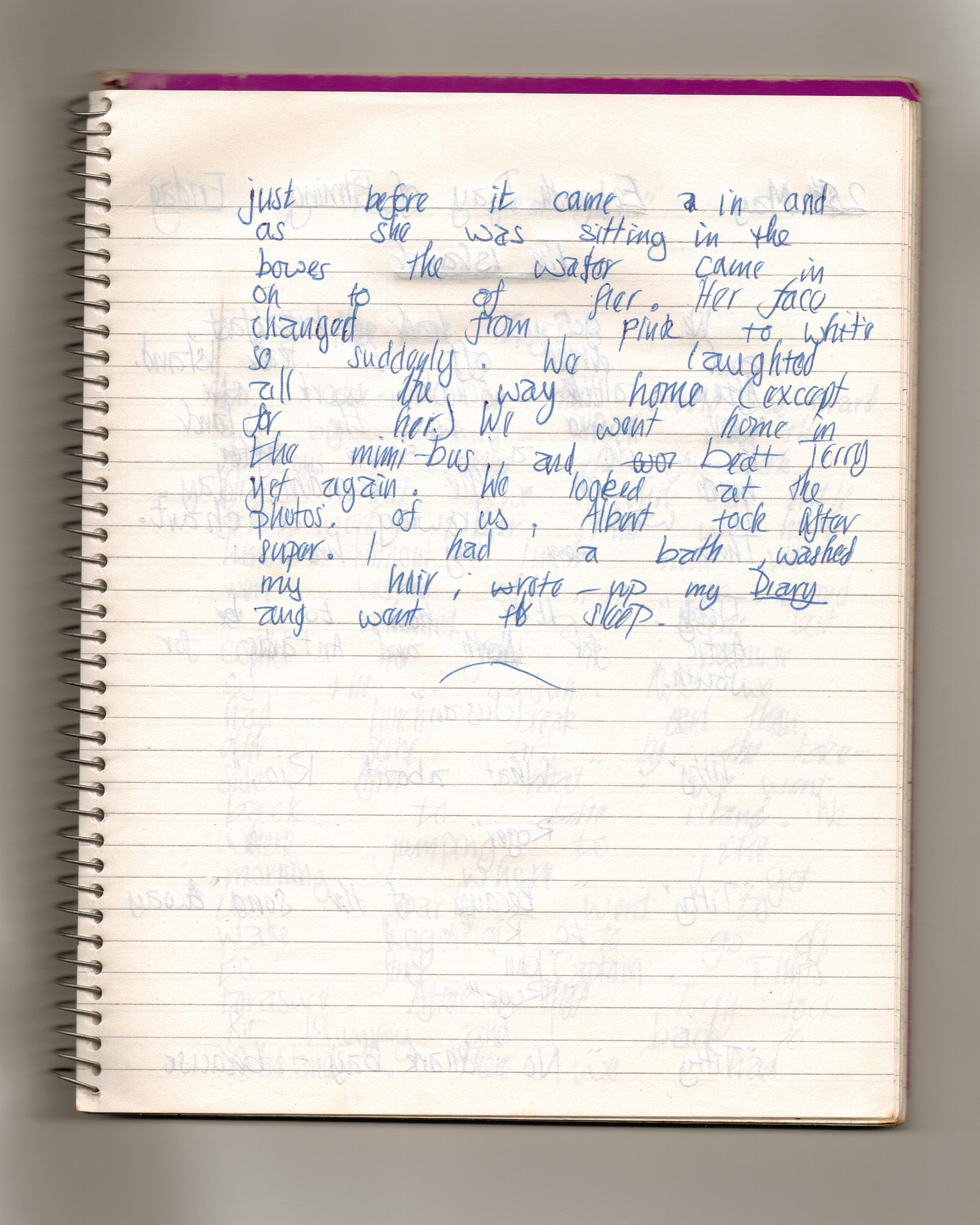
“…it was really horrible,” I told Tim Devlin, of The Times. “We had to run into the water and enjoy it. It was icy. I had to try to be a cormorant with my feet  in the air. Then I had to step water as Susan taught Roger to swim.  We were in for about three minutes and they had to do two takes of the scene. It was horrible.”   This was the day when we shot the swimming scenes ~

24th May 1973

24th May 19731

24th May 19732

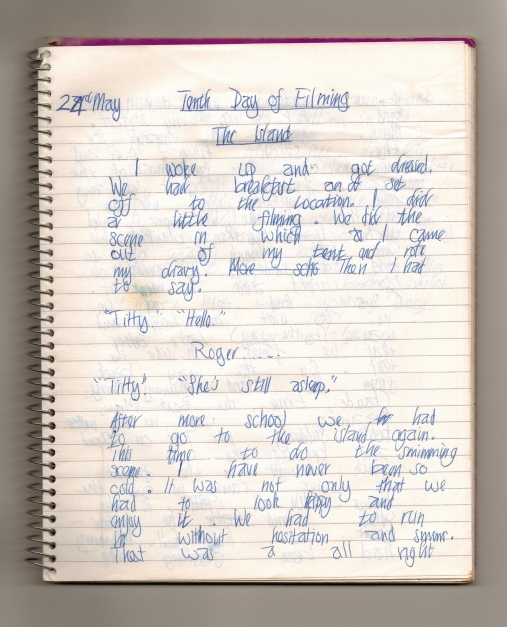
The first scene of the day was actually was the one when Titty emerged from her tent in her pyjamas, wiped the dew off the top of a large biscuit tin and started writing her diary. I always regret writing Titania Walker on the cover but I had been contracted to play the part of TITANIA WALKER. My mother, Daphne Neville, who is quite theatrical, loved Shakespeare’s Midsummer Night’s Dream and encouraged me to write out the full name, but I do wish I had simply labelled by notebook ‘Ship’s Log’.

bw Susan and Titty in their tent
Suzanna Hamilton playing Susan with Sophie Neville as Titty busy writing the ship’s log

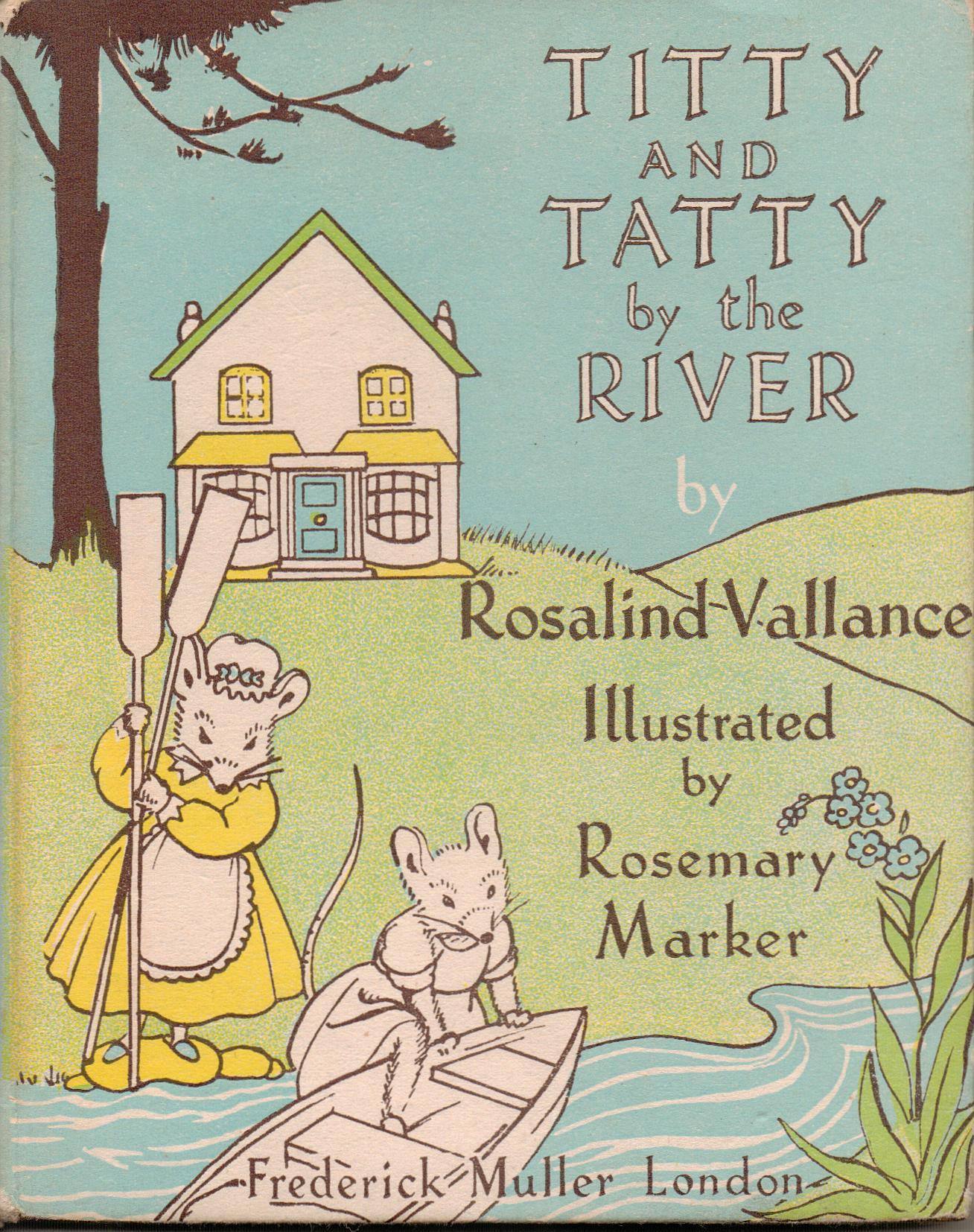
I am told that the real little girl who inspired my character, Titty Altounyan, was given the nickname after reading a horrible story of mousey death entitled Titty mouse and Tatty mouse’  from English Fairy Tales by Joseph Jacobs.  Her family called her Titty mouse, then Titty for short. People were concerned that I would be teased for being associated with a name like Titty, but I never was. It’s a sweet name. However, it seems Arthur Ransome did not object when the BBC altered it to Kitty in 1962, when Susan George played the part. When the 2016 version of ‘Swallows and Amazons’ was made Titty became Tatty and the press had a field day.

Titty and Tatty book

Our knitted swimming costumes, with their little legs were a real novelty to us. I do wish mine hadn’t been red. It was such a cold, grey day I went blue. I remember the entire crew were clad in overcoats – even parkers with fur lined hoods. Looking back it was silly to have gone ahead with the scene in May. Child cruelty.

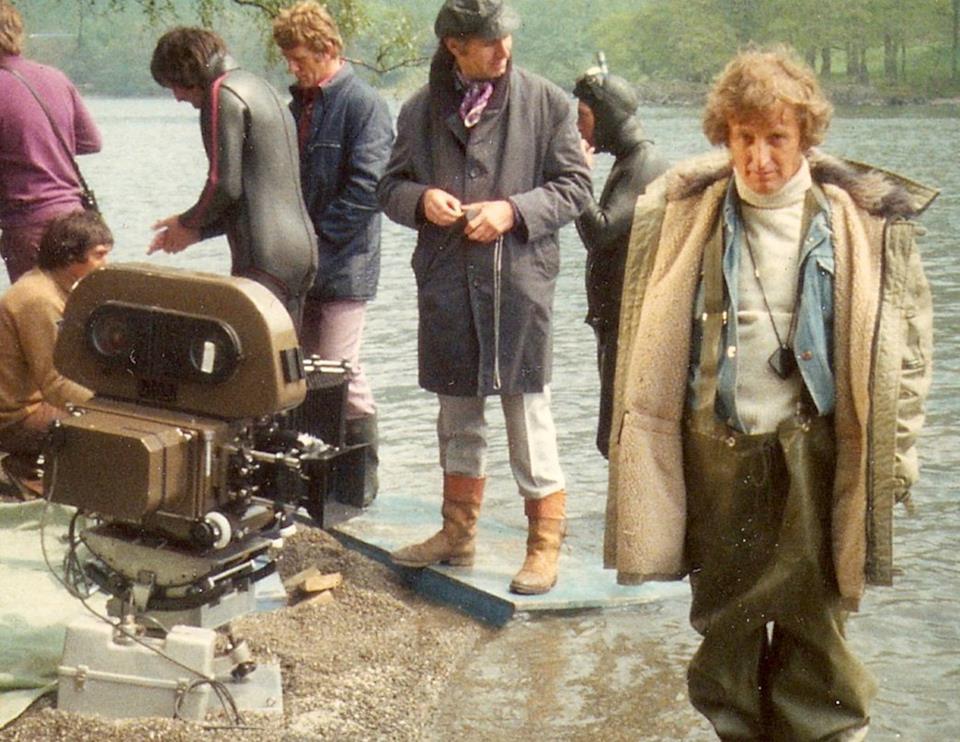
35m Panasonic, Eddie Collins the Camera Operator in (wet suit), Dennis Lewiston the DOP (in cap) Claude Whatham the Director (in waders) on Peel Island, Coniston Water ~ photo: Richard Pilbrow

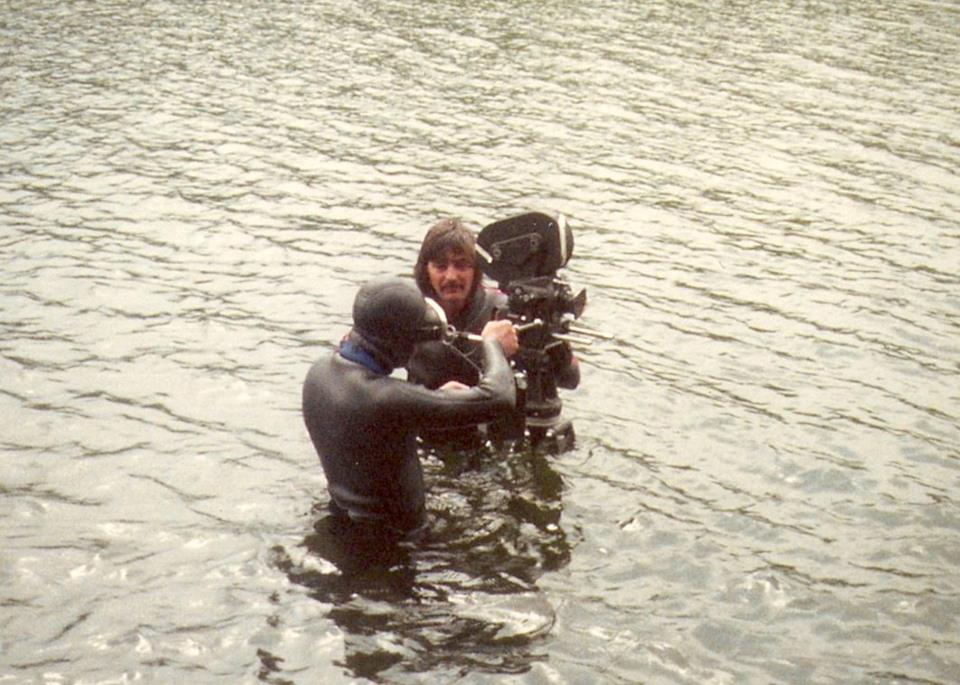
The director, Claude Whatham shot the scene using two cameras. The continuity would have been impossible otherwise. Eddie Collins the camera operator had a 16mm camera in the water with us. He was being steadied by another chap in a full wet-suit. Fitted neoprene was quite an unusual sight back then when divers were known as frogmen.

Filming the swimming scene
Eddie Collins operating the 16mm camera to capture the pearl diving scene ~photo: Richard Pilbrow

Suzanna Hamilton, who played Susan, did well but it simply wasn’t possible to pretend we were enjoying ourselves.  My rictus smile was not convincing. Later on in the summer the Lake District became so hot that we begged to be taken swimming in rivers on our day off. I wish we had re-shot the scene in July with an underwater camera capturing my pearl diving antics. I was a good swimmer. I still love snorkelling – but only in warm seas. As it was, I had to be extracted from Coniston Water by Eddie’s frogman. I’d almost passed out.

Sophie Neville in 1973 attempting to strangle Terry Smith the Wardrobe Master on ‘Swallows and Amazons’

Quite a few people almost learnt how cold we had been for themselves later that day in May. The boats used to ferry us back and forward to the island were blue Dorys with outboard motors. You don’t want to have too much weight in the bows of those boats. Water can come in very quickly.

You can read the whole story here:

Filming with Swallow and on Peel Island in the Lake District ~ 23rd May 1973

Sten Grendon, Suzanna Hamilton, Sophie Neville and Simon West in 'Swallows and Amazons'
Sten Grendon, Suzanna Hamilton, Sophie Neville and Simon West appearing in the original movie ‘Swallows & Amazons’

If you drive south down the narrow East of Lake road along by Coniston Water, passing Bank Ground Farm, Brantwood and a cottage where Arthur Ransome once lived, you will eventually see Peel Island. It is not that far from the shore.

Sophie Neville at Peel Island on Coniston
Sophie Neville finding Peel Island on Coniston Water a few years ago


Richard Pilbrow had permission from the Lake District  National Park for his film crew to gain access and use the fields and woodland opposite Peel Island as a base. One proviso was that our two red double-decker buses had to be swathed with camouflage netting in an attempt to make them less conspicuous. As a result they looked comic – like huge monsters from Doctor Who. In addition to these we had a caravan for Make-up and Hair, the caterers’ mobile kitchen or chuck-wagon, a prop lorry, a lorry belonging to Lee Electric who provided the lighting and huge reflector boards, the Lee Electric generator and the regrettable and very basic mobile loos. I cannot remember what kind of vehicle David Cadwallader the Grip used but I half remember a Land Rover. In addition to all this would be parked our mini-bus, the unit mini-bus, everyone’s cars and the boat trailers. Mum thinks that Terry Smith’s Range Rover could have been orange. ‘He was a very orange man.’ It was white.

It must have been a bit of an effort to avoid getting the whole entourage in shot when John and I launched Swallow and rowed around to the harbour. You can tell that it was a greyer day than the one before.

Sophie Neville as Titty and Simon West as John rowing Swallow towards Peel Island on Coniston Water in the Lake District National Park in 1973

A temporary jetty made from scaffold and planks had been built out into the water so that we could climb into any boat going to the island without getting wet. It must have been quite something lugging the 35mm Panavision camera over.  It travelled in a big black wooden box lined with foam rubber, with handles at either end,  transported by two men like the Arc of the Covenant , holy and revered. Once on the island it would be set on the complex mounting, which enabled it to pan and tilt. This in turn usually sat on sections of track so that moving shots could be achieved.

BW Filming on Peel Island

Denis Lewiston, the Director of Photography, had a Camera Operator but insisted on doing most of the camera work himself. If you watch the scenes of the Swallows making up camp you can see that he must have just followed what Susan and Roger were doing. It has a wonderful, busy natural quality with the result that all one wants to do is to leave real life behind and go camping. I imagine that the scenes when the kettle is being filled were shot in the morning, while I was at my lessons, but I joined them after lunch.

BW Simon West and Sophie Neville on Peel Island
Simon West and Sophie Neville on Coniston Water

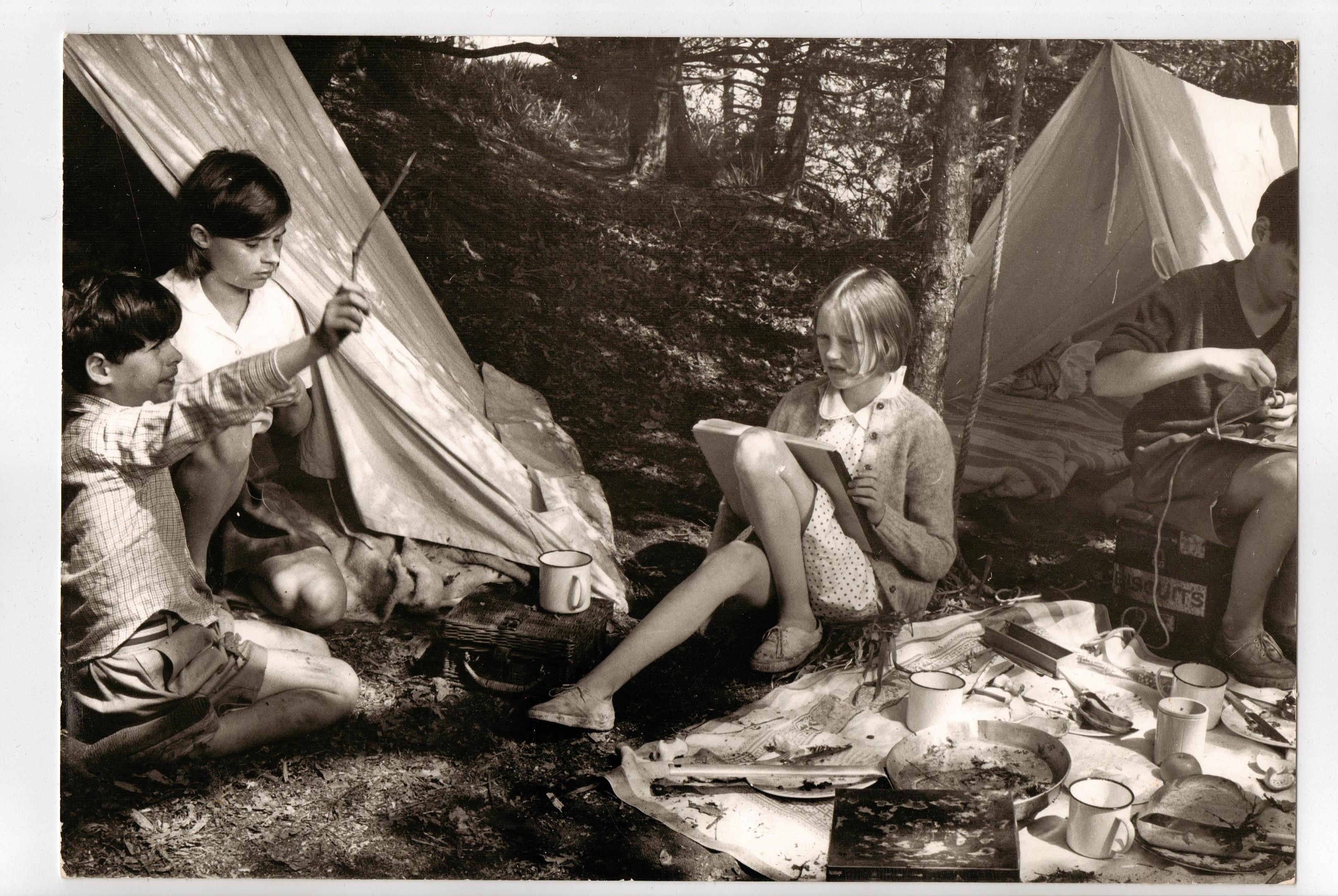
We loved shooting any scene at our camp on the island, especially when we were eating. As I think I have said before, when Suzanna swung her frying pan of buttered eggs she really did burn Roger on the knee. He was very brave about it. It was a heavy pan.

Titty working on the chart - copyright StudioCanal

David Cadwallader continued working as a grip, operating the crane on the 2011 movie of Jane Eyre, which stared Mia Wasikowska as Jane, Michael Fassbender as Mr Rochester and Judi Dench as Mrs Fairfax. I’d been reading Jane Eyre on that day in May 1973. It was my set book. My set book for school and the book I read on set. I should have been reading Robinson Crusoe.

****************************

Richard Pilbrow has just written from Connecticut to say, ‘You can read my side of the story, if you care to, in ‘A THEATRE PROJECT’, that you can get from Amazon.uk.’