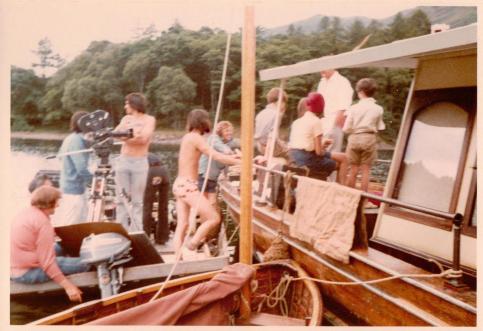
Our designer Simon Holland was rowing Swallow without his shirt. Producer Richard Pilbrow was hanging on the side of the houseboat clad in denim. Terry Smith, the wardrobe Master, was busy drying off Ronald Fraser’s wet costume on the aft deck. The white pith helmet was being touched up by the unit painter. Unions must have been strict back then.
The original film Swallows and Amazons (1974)
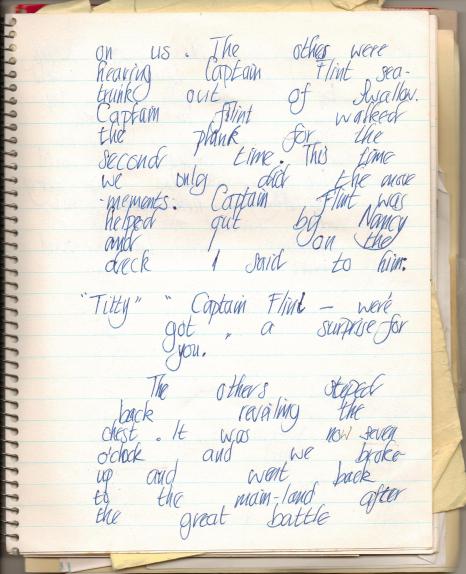
Director Claude Whatham was making the most of the rare but glorious Lake District weather to complete the scene on the foredeck of the houseboat. The Swallows, the Amazons and their Uncle Jim, who had just been made to walk the plank and was now dripping wet, waited patiently while I delivered Titty’s immortal line: ‘Captain Flint – we’ve got a surprise for you.’ Not quite the same as in Arthur Ransome’s book but it worked well.
War cries from everyone…
Kit Seymour, who was playing Nancy, must have dropped on top of us all.
The cabin of the houseboat had been turned into a dressing room for Ronald Fraser.
A long day’s filming out on the lake.
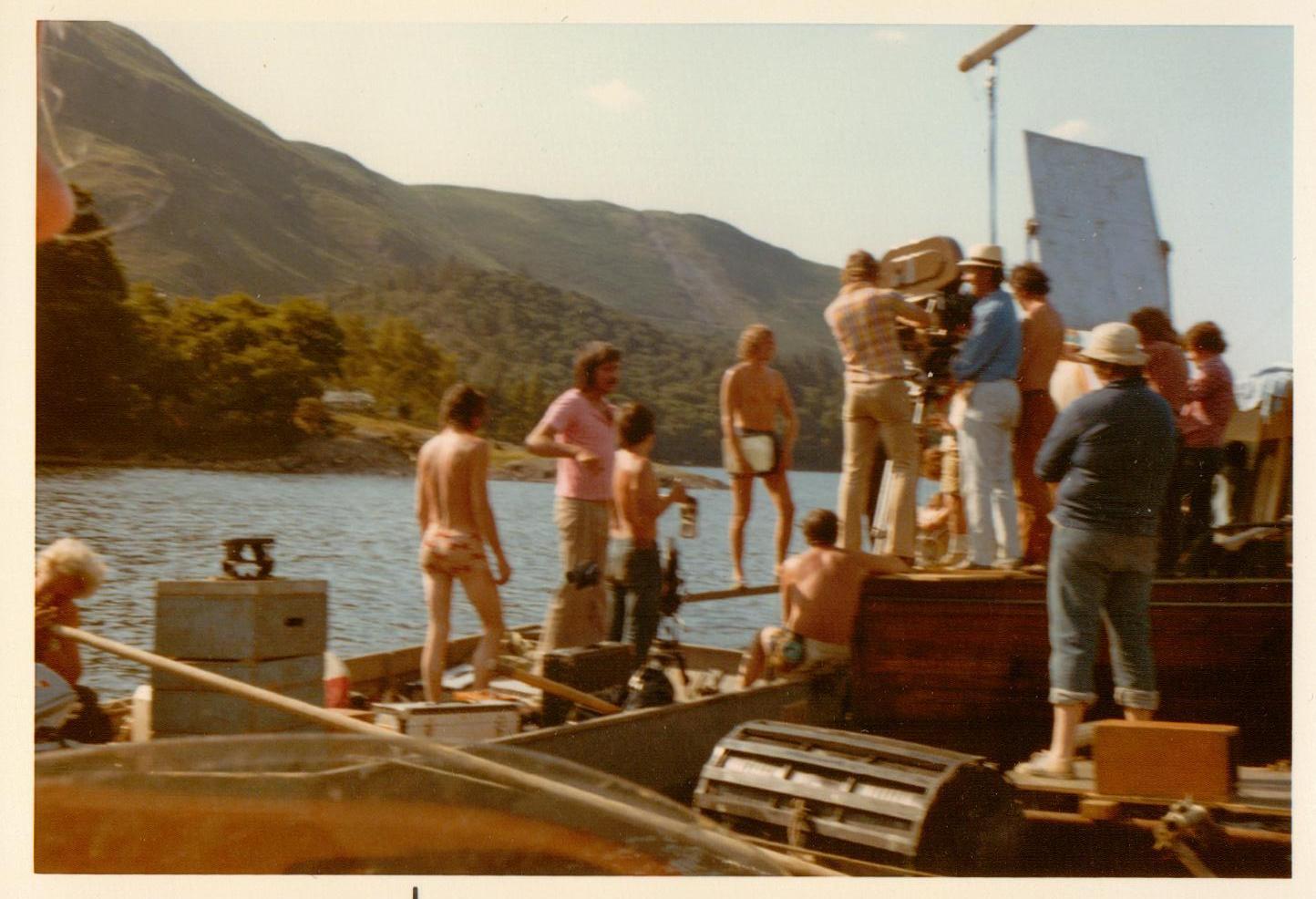
My mother took a series of photographs showing how the crew managed in the limited space:
Director Claude Whatham in blue denim talks to DoP Denis Lewiston. Terry Needham stands on deck ~ Photo: Daphne Neville
The 16mm camera in the grey punt.
The film crew with Director Claude Whatham talking to Simon West, Leseley Bennett, Ronald Fraser and Stephen Grendon on the foredeck ~ photo: Daphne Neville
I think the chap in the swimming trunks is a boatman from Keswick. Does anyone recognise him?
DoP Denis Lewiston with his assistant camerman, Sue Merry in black Claude Whatham and the film cast ~ photo: Daphne Neville
The 16mm camera was noisy. This would have been the shot taken when I said we just went through the movements.
Molly Pilbrow in the plaid jacket with the cast and crew on the houseboat ~ photo: Daphne Neville who was acting as chaperone.
And all the time Molly Pilbrow was keeping an eye on the script. I don’t think there was any room for Graham Ford. He was looking after the base camp:
Production Manager Graham Ford in Derwent Water: photo ~ Daphne Neville
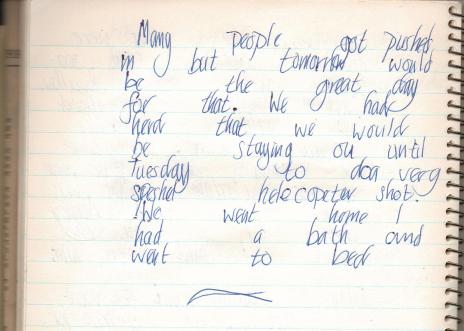
It had been a productive day; a battle well fought, the treasure returned.
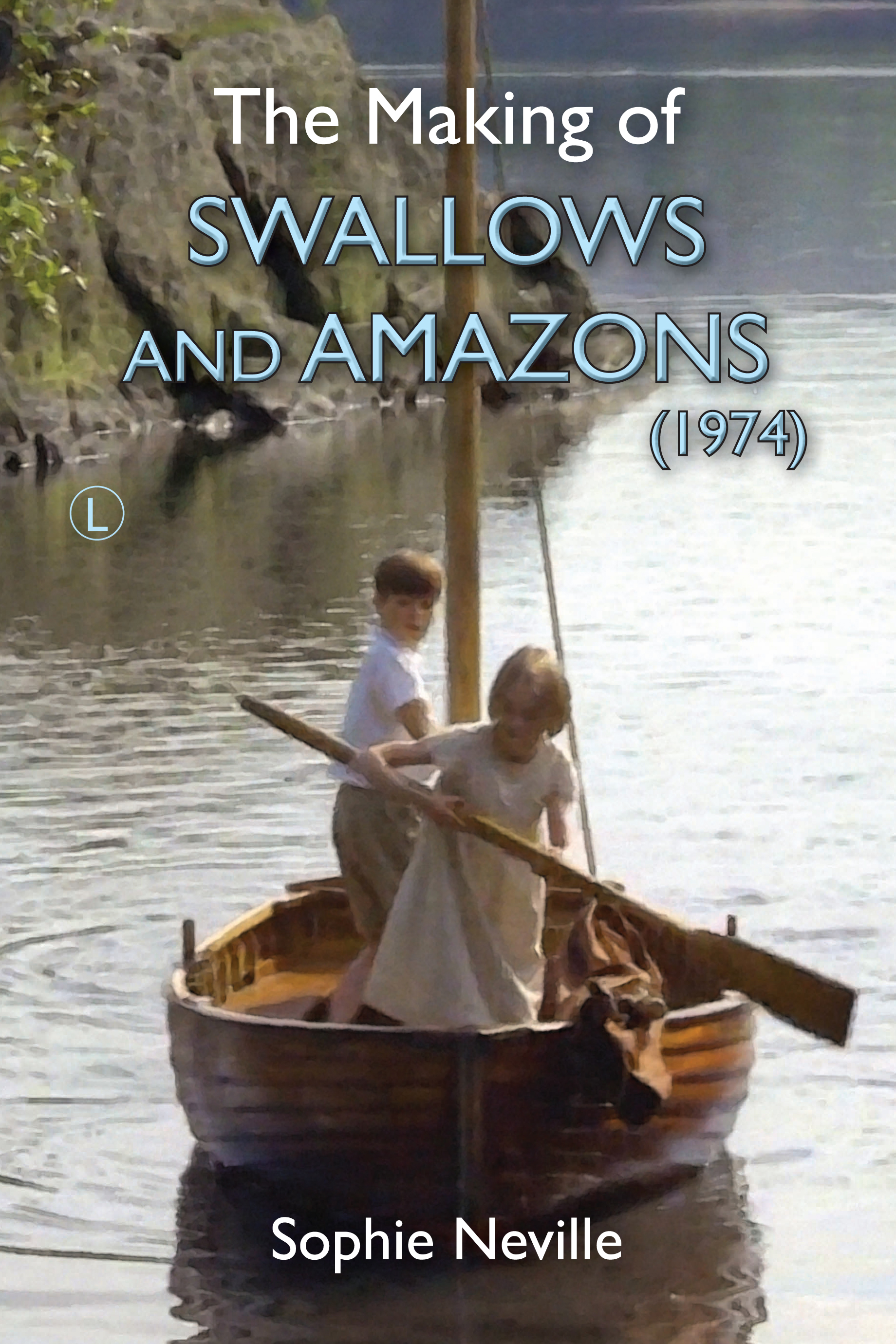
You can read the full story in ‘The Making of Swallows and Amazons (1974)’ available from The Nancy Blackett shop.
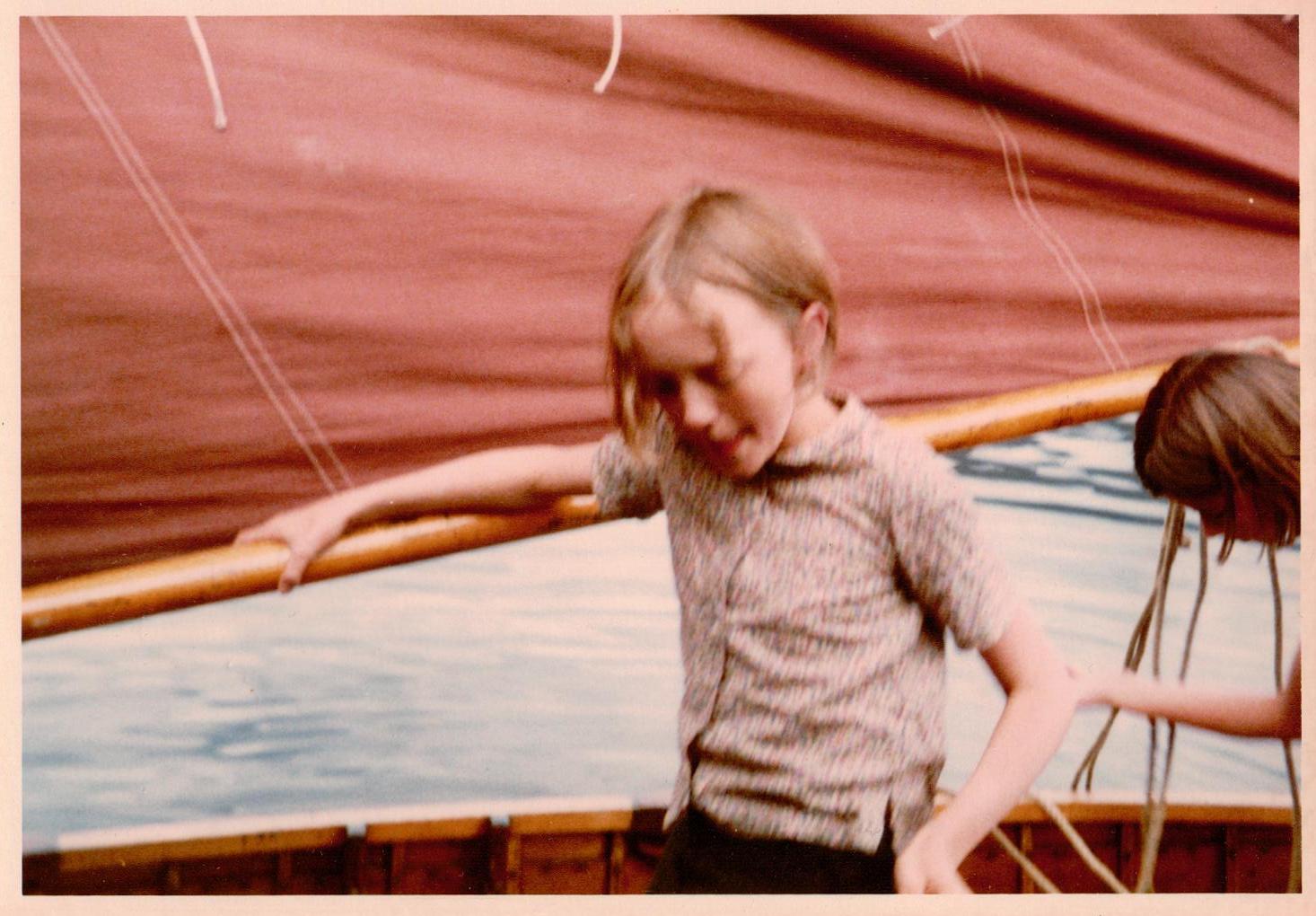
Sophie Neville at Titty Walker in Swallow on Derwentwater in 1973: photo~ Daphne Neville
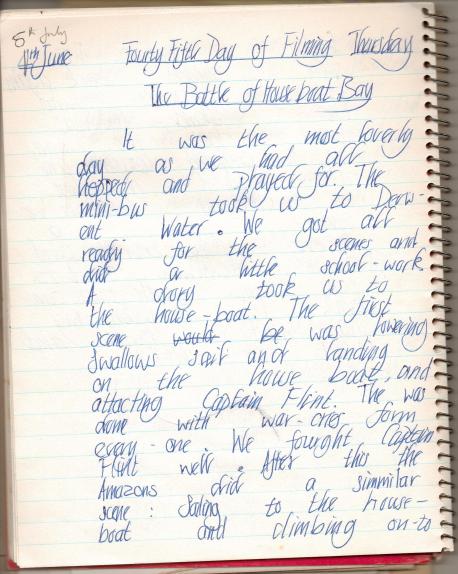
Sunlight on the water tells the story of my life. At last the skies cleared and fine weather we had hoped and prayed for settled over the Lake District. It enabled us to film the climax of Arthur Ransome’s adventure set on the high seas of Cumbria. It was the day we went to war. The day the Swallows and the Amazons took on Captain Flint at the Battle of Houseboat Bay.
An extra page in Suzanna’s Diary for 5th July 1973
‘There won’t be a leeside to him, ‘ said Captain John. ‘The houseboat’ll be lying head to wind. Our plan will be to reach into the bay, and then come head to wind one on each side of him.’ Arthur Ransome wrote. ‘If you’ll lay yourself aboard his starboard side, I’ll bring Swallow up on his port.’
Caught shrieking on the cover of the French DVD of ‘Swallows and Amazons'(1974)
To my everlasting regret, while some of the others managed to yell, ‘Swallows and Amazons Forever!’ my battle cry was, ‘Kill, kill!’ The script was pretty sketchy. I have the original and the re-writes, not that I saw either on the day.
This is the revised version of David Wood’s screenplay typed up on 16th June ~
And suddenly I was up on the roof of the houseboat with the Siamese flag~
Simon West as Captain John and Sophie Neville as Titty taking Captain Flint’s Houseboat on Derwentwater : photo~ Daphne Neville
We loved capturing Ronald Fraser and of course making him walk the plank. He was very good about it. Here is the shot used for the cover of the 1977 VHS issue of the movie made available in the USA ~
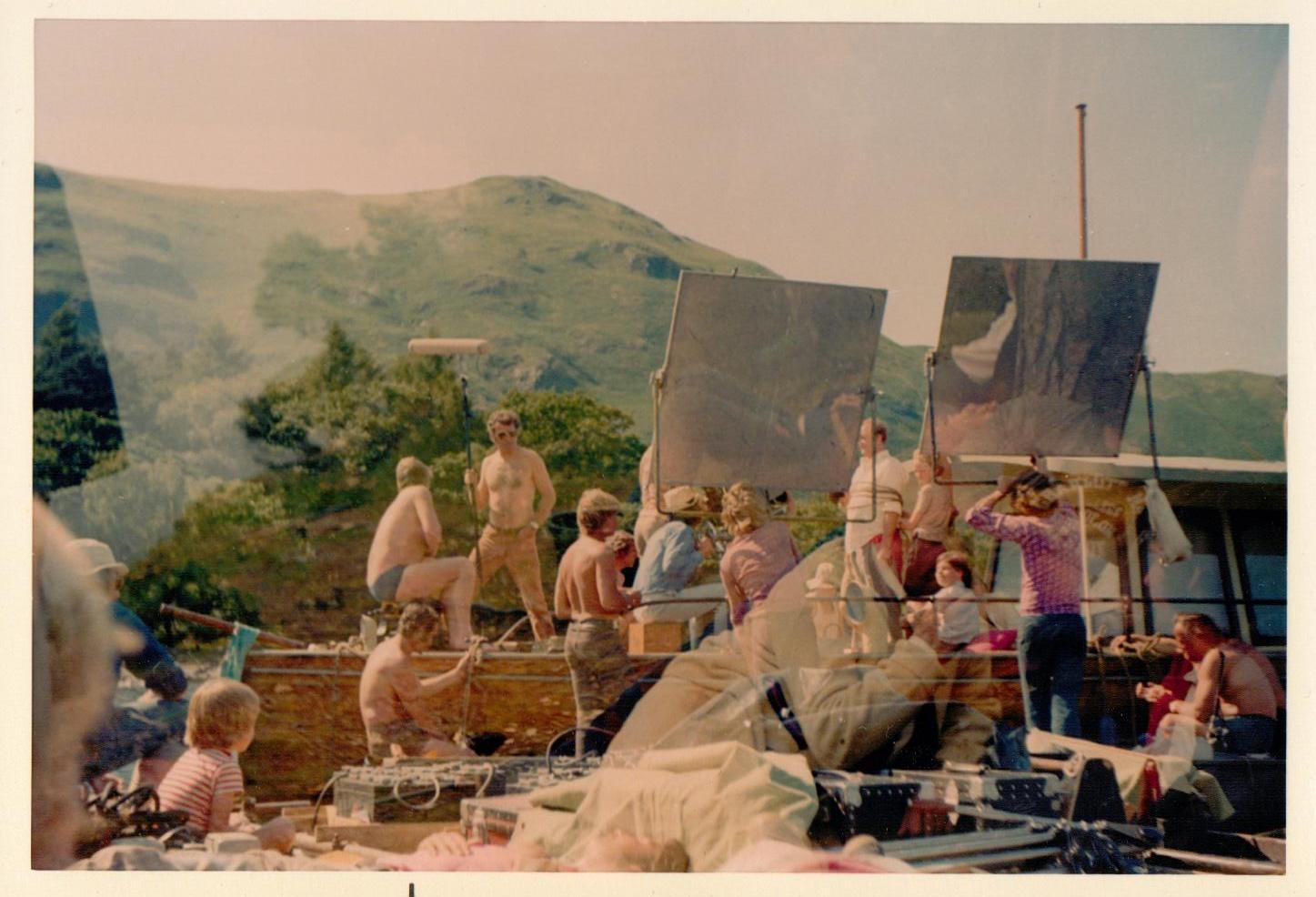
Actually filming this was tricky. The entire film crew with all their equipment including two cameras, two huge reflector boards and a second costume for Ronald Fraser, had to be accommodated either on the house boat or other craft on the bay in Derwentwater. It was a squash. And there were no loos.
The film crew on Captin Flint’s Houseboat on Derwentwater. Ronald Fraser, with a rope around his chest, can just be seen between the reflector boards: photo~ Daphne Neville
The good thing was that by now we were all pretty experienced with the procedure of getting out to what amounted to an inaccessible location with no lavatories – and certainly no room for tea urns. Oddly, space was made for a stand-in wearing a yellow bikini top. One stand-in. How could one stand-in be of any use when there were seven actors onboard?
Director Claude Whatham stands on the plank whilst Bobby Sitwell and DoP Denis Lewiston prepare the 35mm Panavision camera on board the Houseboat: Photo~ Daphne Neville
My mother recorded quite a bit of 8mm cine footage that day, showing life behind the scenes ~
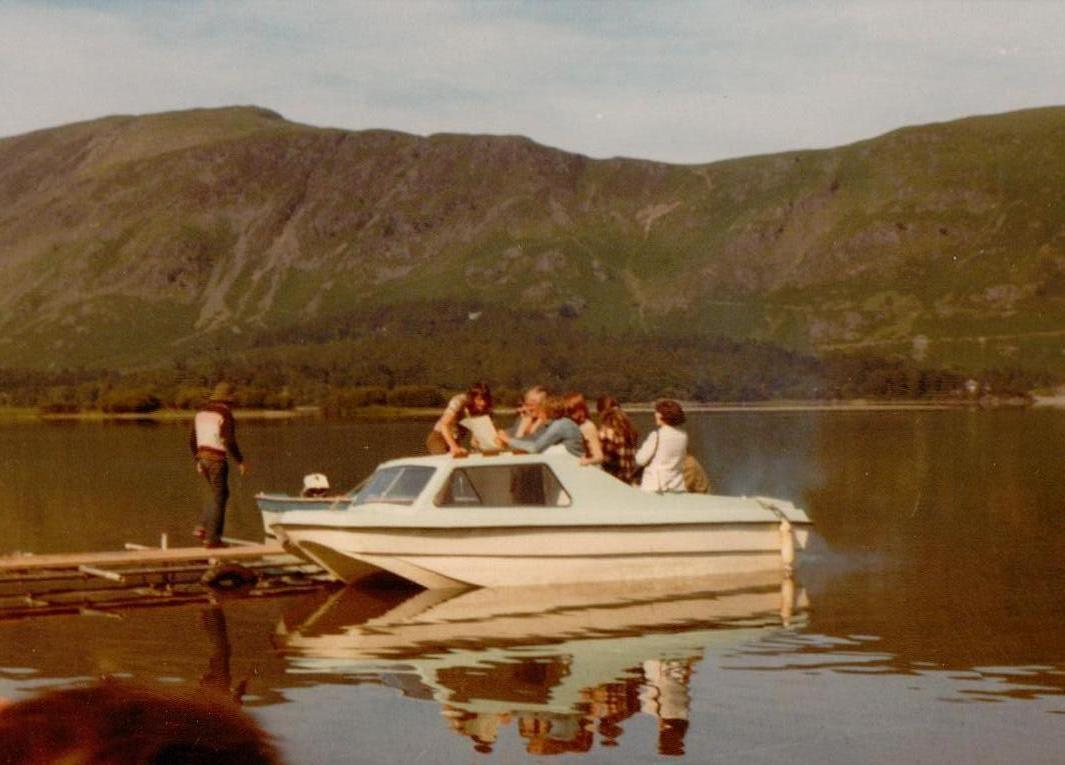
The scraggy looking man alone in a glass fibre boat with a paddle was the chap who drove the mobile lavatories from one location to another and yet managed to persuade the girls of Ambleside that he was producing the film.
Sophie Neville with be giving illustrated talks on ‘The Making of Swallows and Amazons'(1974) at the Southampton International Boat Show on 15th, 16th, 21st and 24th September 2023. We’re hoping Amazon, the original dinghy, will be there too.
Southampton International Boat Show 2022
You can read more about the adventures had in these paperbacks
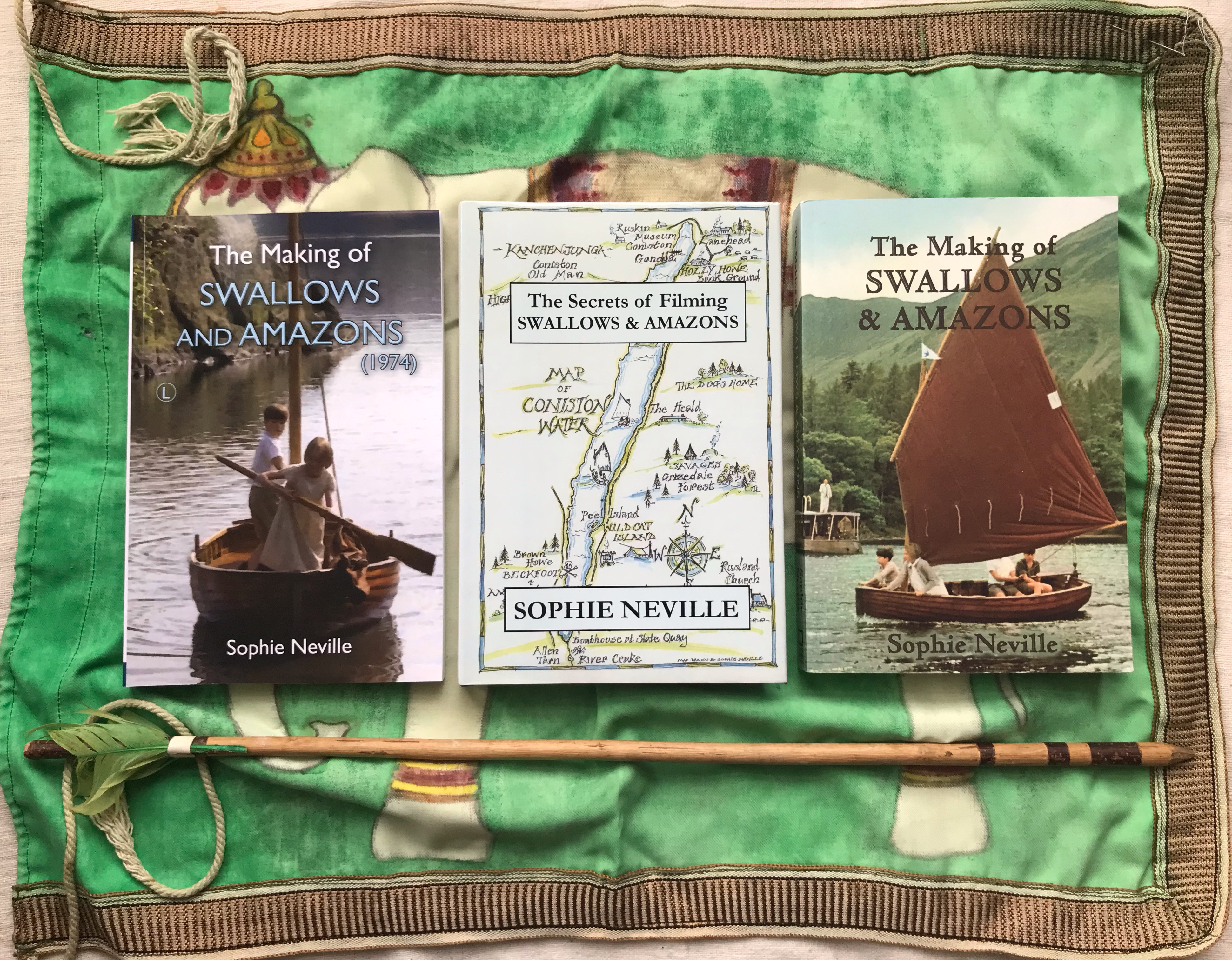
Different editions of ‘The Making of Swallows and Amazons (1974) by Sophie Neville’
Sten Gredon as Roger Walker being taught to swim by Suzanna Hamilton playing his sister Susan Walker on location at Peel Island on Coniston in 1973
Roger still couldn’t swim, but he was trying to. Very hard. The production manager had kindly scheduled the second of our swimming scenes as late in the summer as possible. The weather was warmer – we’d elected to go bathing in a river up near Rydal Water on our day off – but it was still pretty chilly out on Coniston.
Whilst we tried to acclimatise by running around in our swimming costumes the crew were all in their thick coats as you can see from this home movie footage shot by my mother. We had bought her 8mm camera by saving up Green Shield stamps. (Can you remember collecting Green Shield stamps from petrol stations? They were an icon of the early 1970s all by themselves.) I remember someone on the crew calling out ‘Second unit!’ as Mum lifted what looked like a grey and white toy to her face. It was a bit noisy so she was not able to record during a take. You only see us before and after the sequences in the film, but her footage shows quite a few of the members of the crew – all smoking away, even when they were trying to warm us up after each sequence. You can watch Jean McGill, from Cumbria, our unit nurse who was dressed in red, popping Dextrose into our mouths and giving us hot drinks to warm us up. Jean made Gareth Tandy, the third assistant, who was aged about 18, wear a sun hat because he had previously suffered from sun stroke. David Blagden can be glimpsed as the one other man with short hair.
The camera pontoon must have been left up on Derwentwater. Claude was obliged to shoot these scenes from what we called the camera punt, which was smaller but quite useful. Richard Pilbrow sent me a picture. He has included others in a book that he has written about his career, including a section on the making of ‘Swallows and Amazons’ called ‘A Theatre Project’
First assistant David Bracknell, director Claude Whatham, grip David Cadwallader and DoP Dennis Lewiston (seated) with three local boatmen ~ photo: Richard Pilbrow
Do please let me know if you can tell me the names of the three Cumbrian boatmen featured in this photograph who helped us. Others are featured in the home-movie footage. They all look like pirates. Real ones.
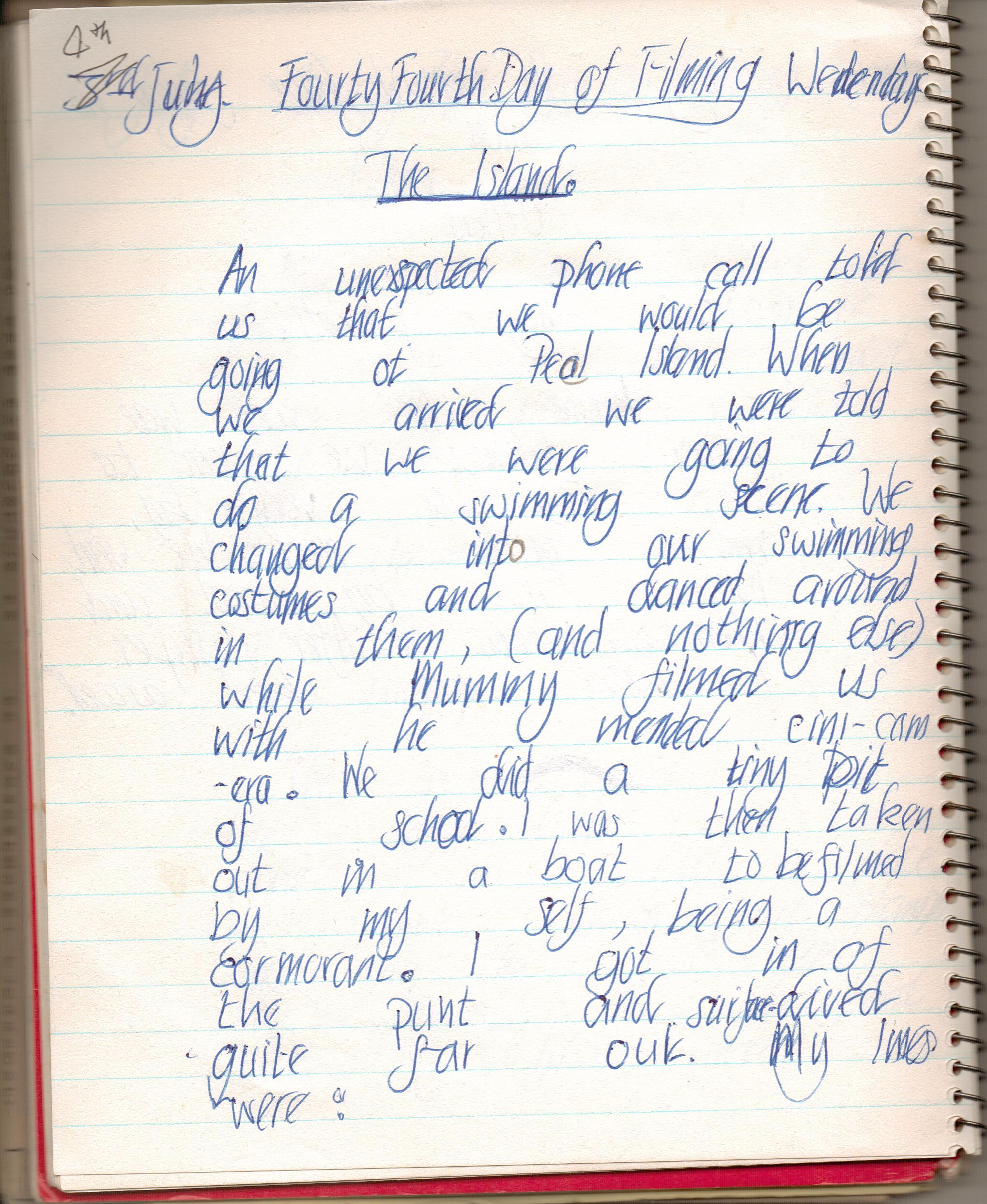
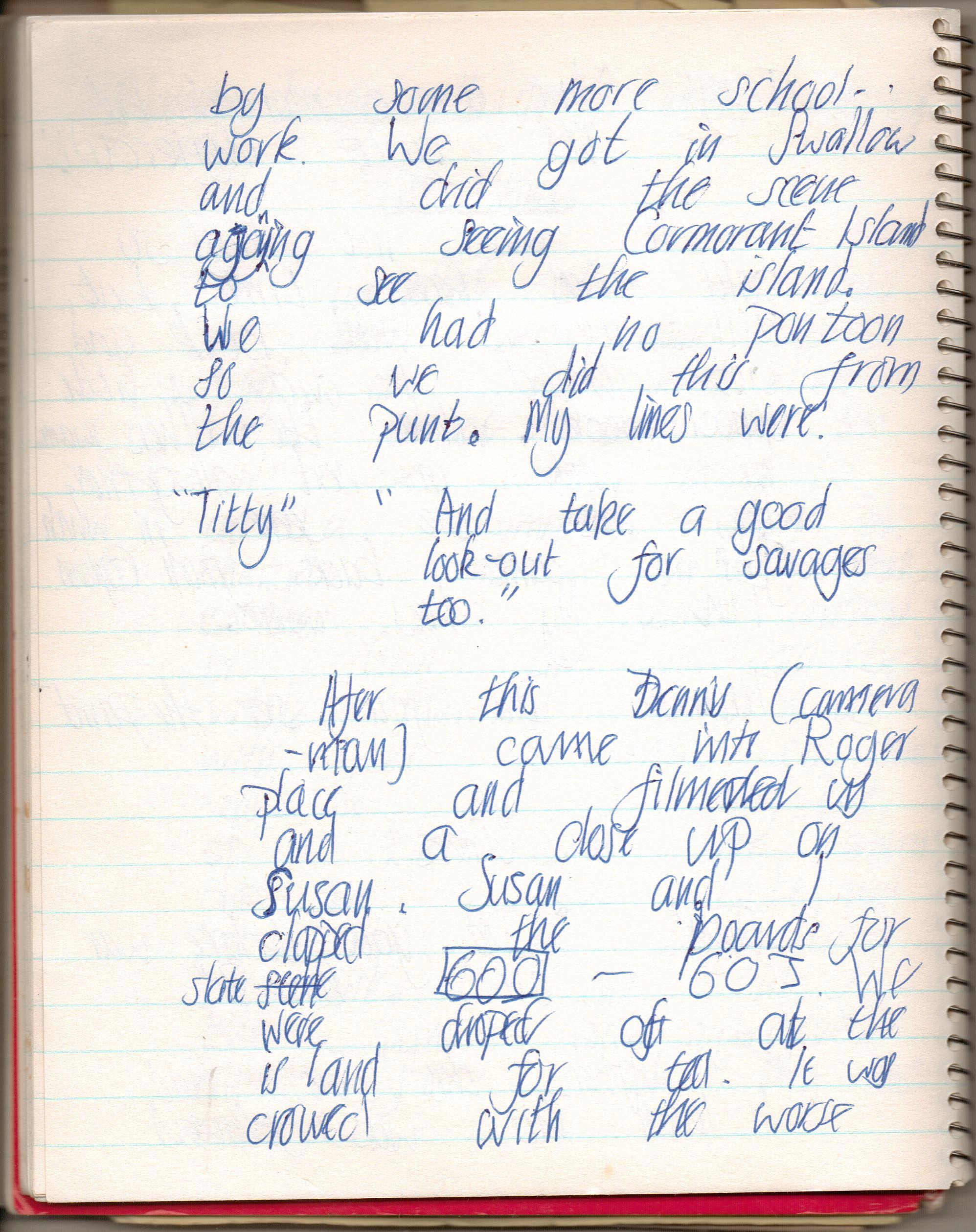
Goodness knows that Health and Safety would say about that punt today. The DoP managed to get two sizeable electric lights, on stands, into a boat already overloaded with personnel and expensive equipment. You can see for yourself. Were these ‘Filler’ lights powered by portable batteries? The Lee Electric generator was on the shore. I was in the water. Busy being a cormorant.
We had an interesting afternoon filming with both dinghies. At one point we had the camera with us in Swallow. I found these photographs of us on the internet.
Sophie Neville, Simon West and Suzanna Hamilton
I was given the honour of clapping the clapper-board and calling out, ‘Shot 600, Take one!’ for a close-up of Suzanna Hamilton.
Suzanna Hamilton as Susan Walker sailing Swallow on Coniston Water in 1973
‘The worse possible kinds of natives’… Tourists were beginning to arrive for their summer holidays in the Lake District and we still had quite a bit more to film.
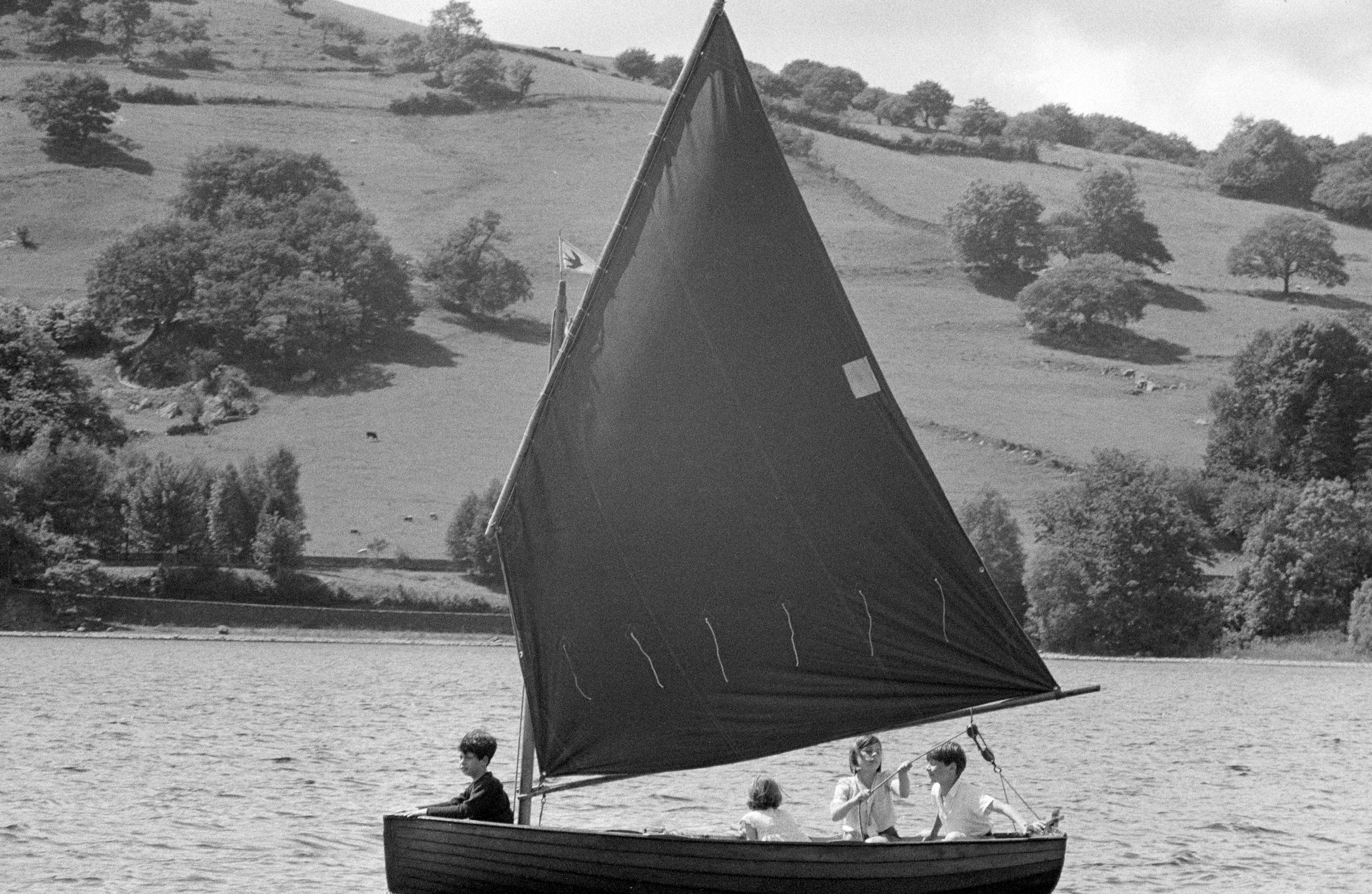
Sophie Neville, Suzanna Hamilton and Simon West sailing Swallow in 1973
You can read more about the adventures we had making the original film of Swallows and Amazons here:
Ronald Fraser as Captain Flint on his houseboat with Stephen Grendon, Sophie Neville, Suzanna Hamilton and Simon West in Swallow on Derwentwater, 1973
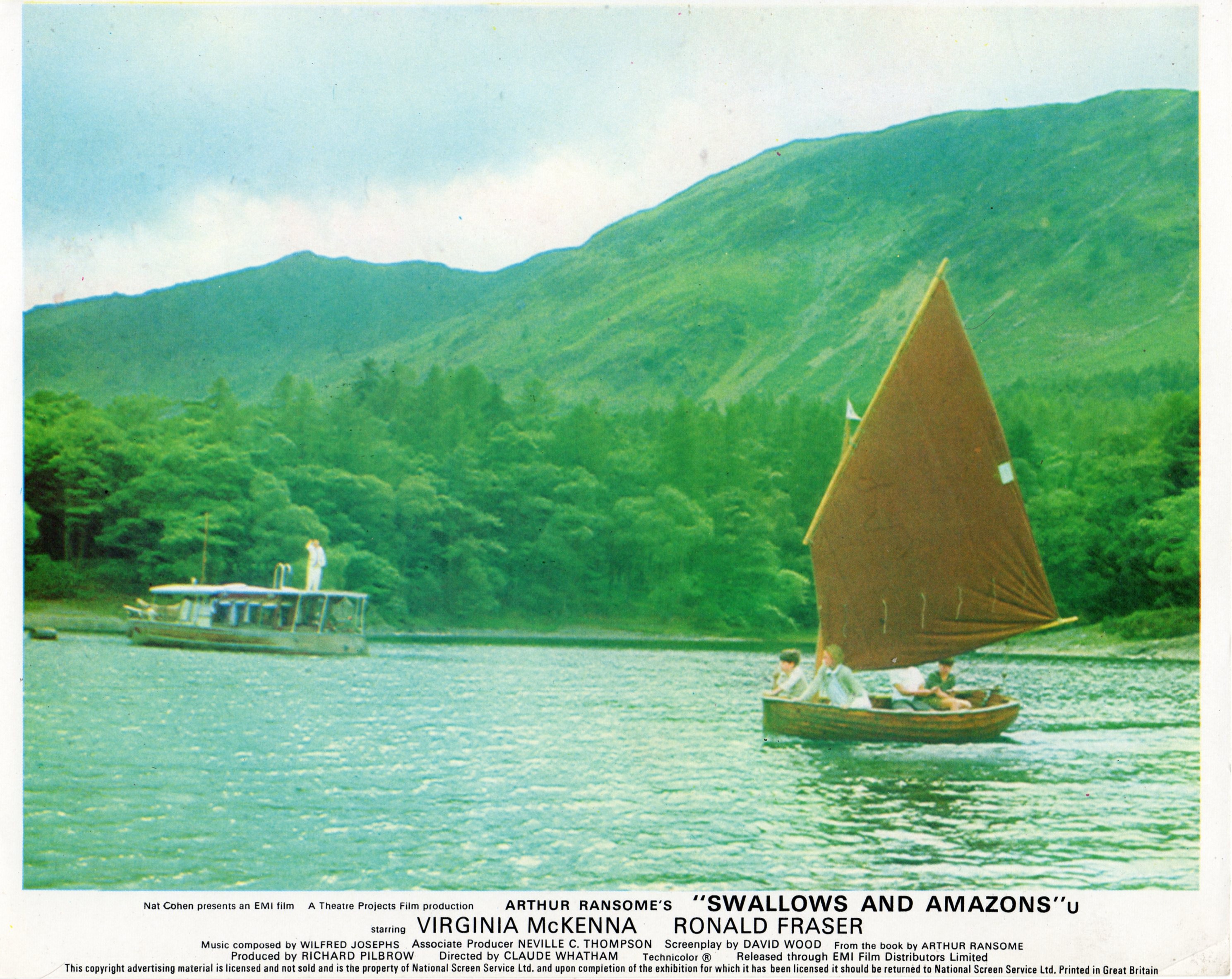
It was found on e-bay and brought to Coniston Water when we re-launched Swallow at the Bluebird Cafe in 2011. Everyone was fascinated. I’d never seen this hand-coloured print used to publicise the movie in cinema foyers, but it has memories of a good day, spent not on Coniston but further north on Derwentwater.
Swallow sailing past the houseboat on Derwentwater
When Richard Pilbrow’s movie of Swallows and Amazons was first shown on British television in 1977, ITV made a trailer to advertise it. This started with the shot of me saying, ‘They’re pirates!’ People loved it. Everyone was going around saying, ‘They’re pirates!’
If it was my best performance it was because I had been lying on a red ant’s nest – and they stung us.
The other secret is that that lighthouse tree in this shot is not a tree. Not one that was growing. It was a big log that Bobby Props had stuck in the ground making the ants very angry indeed.
Sophie Neville as Titty Walker in the ITV trailer for the movie of ‘Swallows and Amazons’ when it was first shown on television in 1977
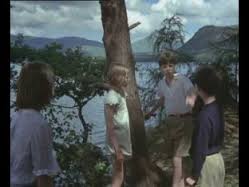
This was the second location that we used for ‘Lookout Point on Wild Cat Island’. It was on a promontory that overlooks the bay where the houseboat was moored on Derwentwater. There were bushes but no sadly big pine trees. The log was planted so that our director Claude Whatham could get what is called a two-shot of the Swallows watching Nancy sail past Captain Flint’s houseboat, while Peggy raises the skull and crossbones. As we were keeping low the height of the lighthouse tree was not an issue.
Simon West, Suzanna Hamilton, Sophie Neville and Stephen Grendon as the Swallows at the Lookout Point on Wild Cat Island
Just prior to this scene when we spot the Amazons for the first time, I was working on the chart while Susan was sewing a button onto Roger’s shirt. The needle stuck into him as he flung himself down on the grass beneath the lighthouse tree.
Stephen Grendon as Roger having a button sewn back on by Suzanna Hamilton playing Susan Walker in the previous scene.
Since needles are small you can hardly see what is happening but I think it is a detail that Arthur Ransome would have appreciated. I wonder if the same sort of thing had happened to him as a child? He used his memories of Annie Swainson throwing boys across her lap to darn their knickerbockers whilst they remained on him, just as Mary Swainson frequently darns Roger’s shorts after sliding down the Knickerbockerbreaker rockface in Swallowdale. Claire Kendall-Price describes this and where it all happened beautifully.
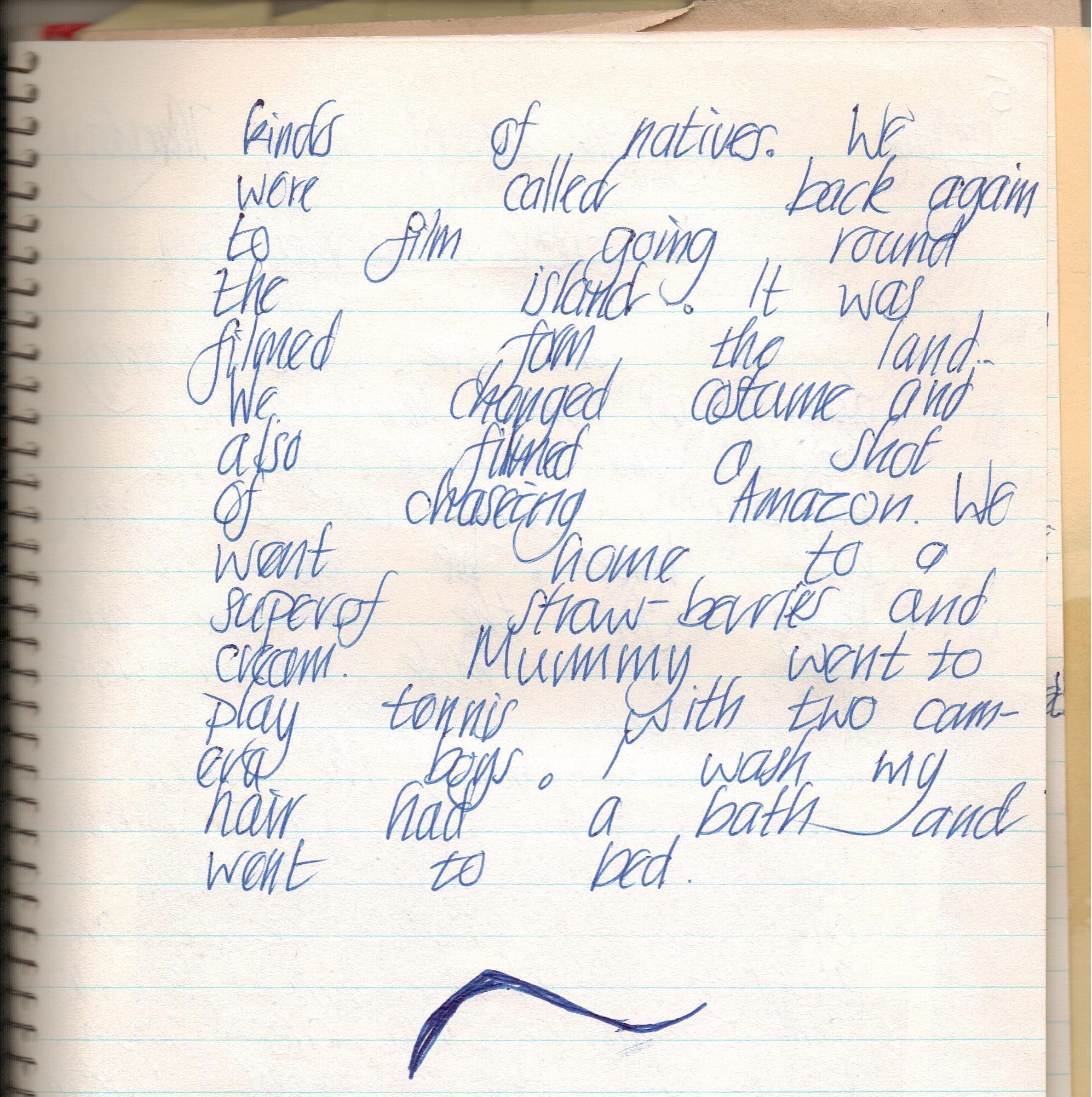
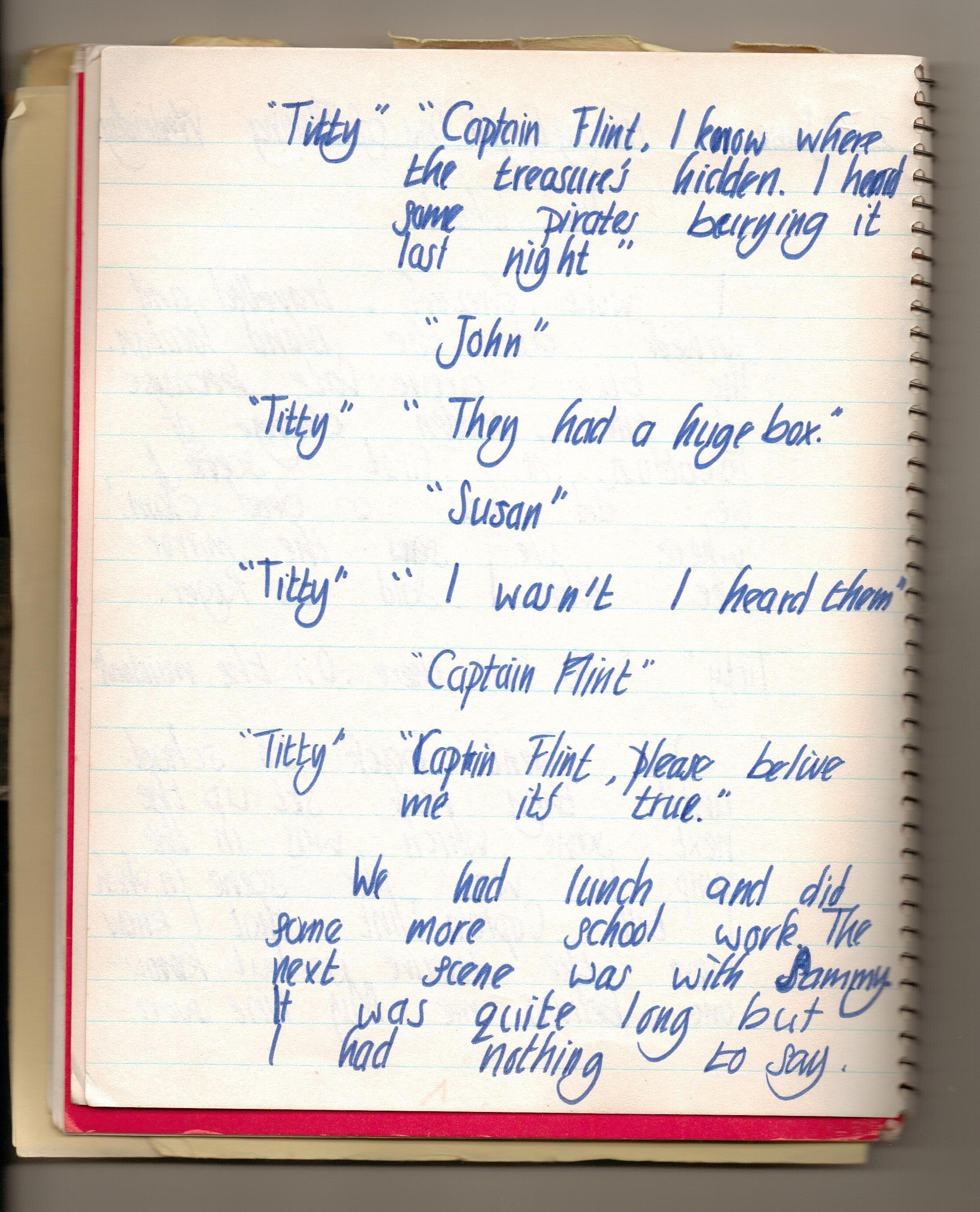
Here is the diary entry I kept for that day in the Lake District ~
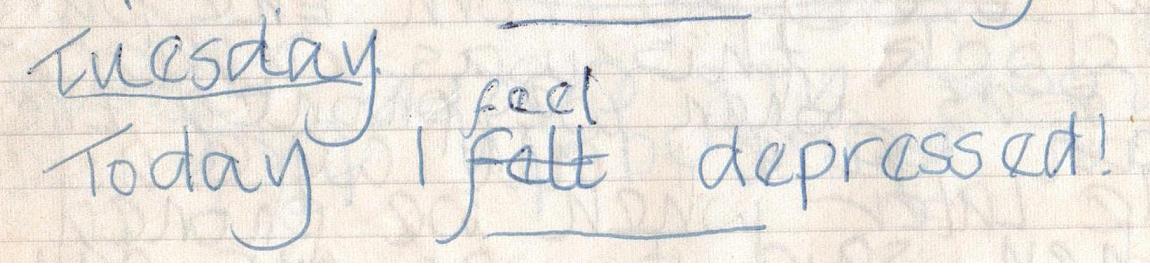
Suzanna’s diary is more succinct ~
I don’t know why she felt depressed. Perhaps it was the ants. She was on more of them than me and they were not waving. They were very angry.
So, the secret of Wild Cat Island is that the lighthouse tree sequences were shot in two different places. Although we were mainly on Peel Island on Coniston Water, Rampsholme, an island on Derwentwater is depicted in the opening titles. This is faithful in that Arthur Ransome annotated postcards to show that wanted this view and the fells beyond as a backdrop for his story. In her book, In the footsteps of the ‘Swallows and Amazons’, Claire Kendall-Price provides a wonderful map and guide showing how you can walk from Keswick to find some of the locations.
We didn’t use the island known as Blake Holme on Windermere at all even though Arthur Ransome had envisaged the camp fire as being there. Richard Pilbrow told us it had become a real camp site by 1973 with caravans on the nearest shore.
Sophie Neville in 2011 holding the original photograph in front of the newly restored dinghy at the Bluebird Cafe on Coniston Water. If you look carefully you can see that Swallow is being inspected by a modern day pirate ~ photo: Kitty Faulkner
The “They’re pirates” shot was used in the movie trailer, which you can watch on Amazon Prime here
The iconic photograph of Swallow sailing past the houseboat was used on the first edition of ‘The Making of Swallows and Amazons (1974)’ which has become a collector’s item but can still be found online.
The Lutterworth Press bought out an improved 2nd edition and this multi-media ebook is available everywhere for £2.99:
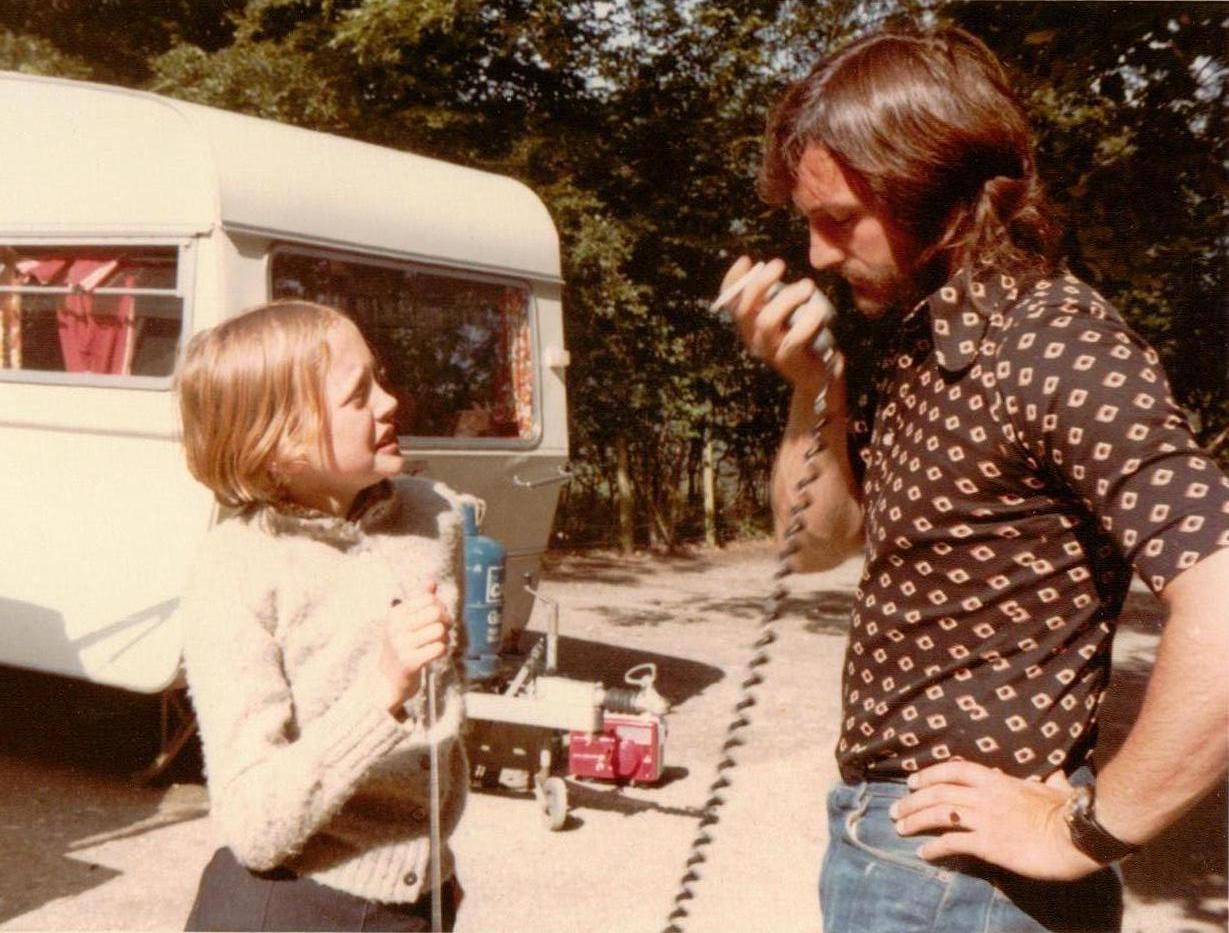
Sophie Neville with Terry Needham and the unit radio at Derwentwater ~ photo: Daphne Neville
I am often asked about my career in acting. I was even asked about it by the crew of Swallows and Amazons as we climbed in and out of boats on Derwentwater back in 1973.
‘Are you going to be another Bette Davis?’ (I gathered I looked vaguely like her but didn’t really know who she was.)
‘Will you get stuck as a child actress like Shirley Temple?’ (I didn’t really know who she was either.)
There was much speculation. The truth was that I was always more interested in what was happening behind the camera, and how the story was told, than I was in our performances. I had an empathy for the men who had to keep changing carefully made arrangements when the clouds rolled in. Whilst I was always interested in set dressing I loved aiding and abetting Terry Needham, the second assistant director, with whom we naturally spent a great deal of time. The 2nd July 1973 must have been a busy day for him. A maddening day really.
Whilst I was in front of the camera, delivering the line that fore-shadows the adventurous section of Arthur Ransome’s story, Terry Needham would have been busy planning who would go out in which boat and when. Just as important really.
Producer Richard Pilbrow and Director Claude Whatham discussing the script in the Capri on Derwentwater. Molly Pilbrow is in the boat with them ~ photo: Daphne Neville
Whilst filming out on the lakes ‘Swallows and Amazons’ was far more complicated than most movies to stage manage. Terry needed to have what Claude Whatham called his ‘Artistes standing-by, ready on set’ when the set in question was a boat moored out in a lake. In reality this meant that the film actor Ronald Fraser had to wait around on the houseboat with Costume, Make-up and Props, whilst the sun tried to decide whether to come out.
Set dresser Ian Whittaker, Ronald Fraser and one of the Prop Men on the houseboat ~ photo: Daphne Neville
Terry Needham, ever straight forward and prosaic, also had to make provision for a number of extra people who wanted to try and watch the action, notably Albert Clarke, the stills photographer, and the Producer, Richard Pilbrow who was often looking after journalists from major newspapers and magazines. We were making a movie that needed to be well publicised if it was to succeed.
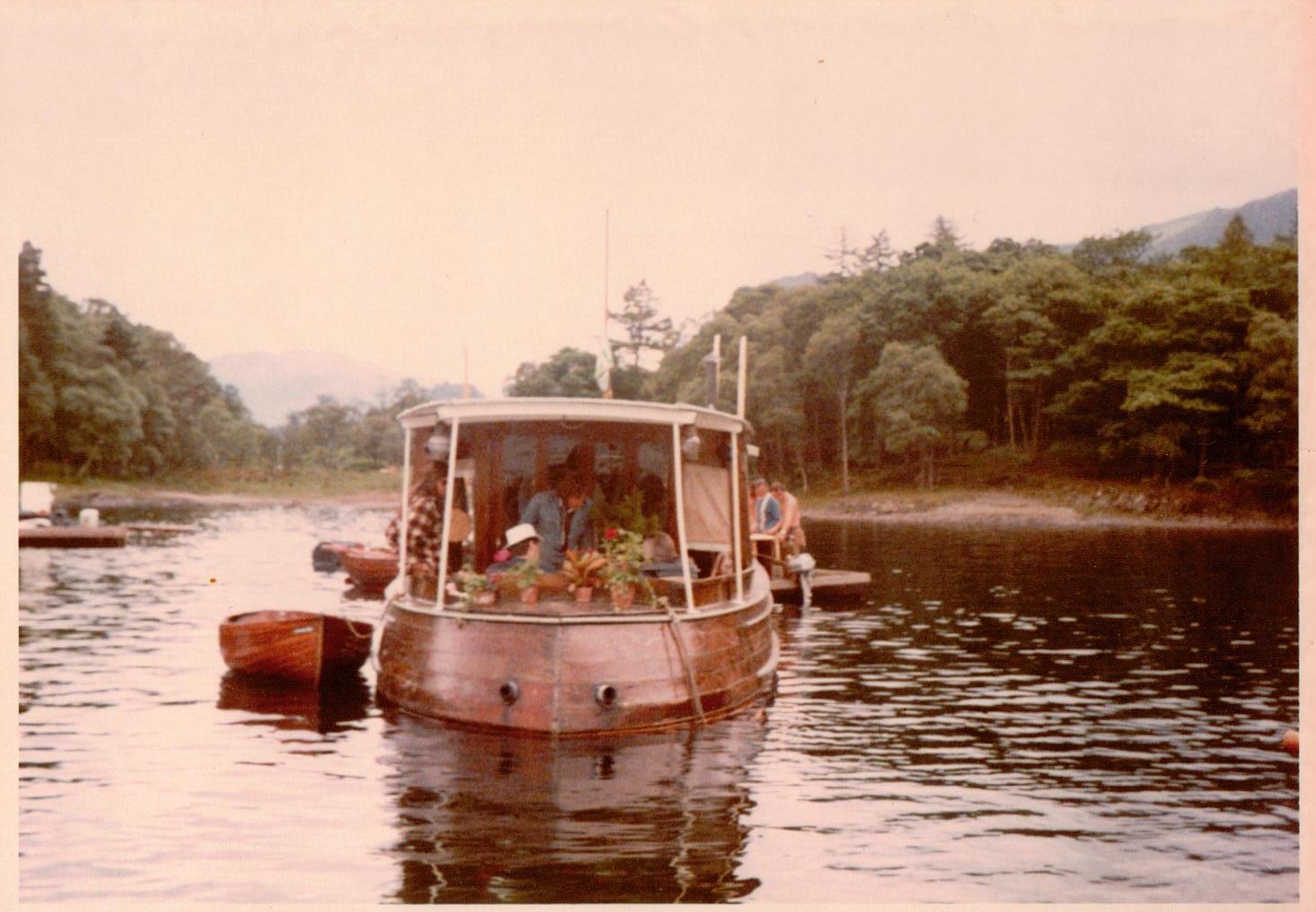
Claude Whatham discussing plans with sailing director David Blagden (in white hat) and Richard Pilbrow with Molly Pilbrow in checked jacket, on the aft deck of the houseboat played by The Lady Derwentwater ~ photo: Daphne Neville
What made Terry’s job even more demanding than usual was that since we were all under the age of sixteen we still had to complete at least three hours schooling a day. I was only meant to spend three hours a day in front of the camera and leave at 5.00pm. This meant that, unlike Ronnie Fraser, we had to be collected from our red bus and taken over the water to our set at the last possible moment when the camera and crew were ready to roll. We had no mobile phones, only Motorollas.
Second Assistant Terry Needham, Associate Producer Neville C Thompson and Production Manager Graham Ford with the unit radio on a sunny day in June 1973
As Swallow, our clinker-built dinghy, was wired to a floating pontoon, the job of our loyal Lakeland boatmen was particularly important. Can anyone tell me the name of this chap, in the photo below?
Chaperone Jane Grendon on Derwentwater in a Dory with a local boatman
Terry Needham also had to take into consideration the numbers of people licensed to be in each support boat. Although a period film, our clothes were simple, so we didn’t need the contingent of dressers and make-up artists typically demanded by costume dramas. However life-jackets were a must and wherever we went one of our licensed chaperones had to come too. Since Mum stayed at our guesthouse in Ambleside with Kit Seymour who was ill with ‘flu that day, it was Jane Grendon came out on the lake with us. It was her son Sten, playing the Boy Roger, who walked off the jetty into the water. Poor Jane was pushed in fully clothed. Suzanna Hamilton also fell in – or so she claims. What a nightmare for Terry Needham.
Terry Needham with the crew on the Houseboat moored on Derwentwater, Cumbria ~ photo: Daphne Neville
Terry survived to have the most prestigious career in film. Whilst he worked as an assistant director for Stanley Kubrick on The Shining (would Jack Nicholson have been easier to manage than us lot?) Terry was unit manager on Empire of the Sun for Stephen Speilberg and the first assistant director on such classic movies as Full Metal Jacket, Rambo III, A Man for All Seasons, The Field, The Golden Compass and Clash of the Titans. I only list a few of his many credits. He worked for Ridley Scott as Associate Producer and First Assistant on White Squall, G.I.Jane, Gladiator, Hannibal and Black Hawk Down – all gigantium tasks – and was Executive Producer of Red Dragon, and Kingdom of Heaven, again for Ridely Scott. He is still working on movies. What changes he must have seen. I wonder if he can remember that far distant summer spent in the Lake District?
I would not have had the physical strength to follow in Terry’s footsteps. It was his job – plus a bit of work with action props and set dressing – that I found myself busy doing at the BBC when I was an Assistant Floor Manager on big costume dramas. I was exhausted after about four years. The walky-talky I found so attractive aged twelve became rather heavy on my hip. I have a Polaroid photograph of myself looking tired out when working as a Location Manager in Bayswater, kept to remind myself not to accept such work again. Perhaps I should have taken the Bette Davis route after all. I might have had Terry looking after me again.
You can see Terry Needham with his portable radio at the end of this short 16mm film clip that was shot a couple of days later on Coniston Water. The pushings-in were still all the rage.
If you enjoyed this post, do think of getting a copy of ‘The Making of Swallows and Amazons’ available from libraries, online retailers and Amazon here
‘It would make a superb lighthouse,’ but not for a good few years yet. The Scots pine planted by The Arthur Ransome Society on the northern end of Peel Island was growing well when I last paid it homage.
Suzannah Hamilton, Stephen Grendon, Sophie Neville and Simon West above Derwentwater in 1973
I hope I don’t spoil the magic if I explain that the pine used in the 1973 film of ‘Swallows and Amazons’ is on a promontory above Derwentwater. An appropriate tree was chosen that overlooked the location we used for Houseboat Bay.
Captain John, played by Simon West, starts to climb the lighthouse tree at the Lookout Point: Photo ~ Daphne Neville
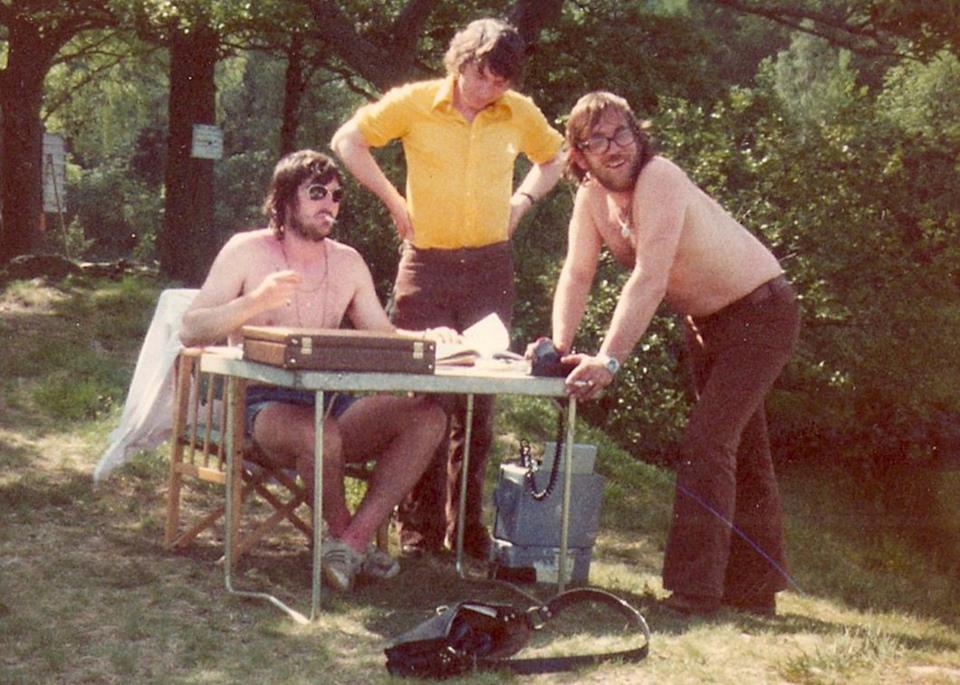
If you can avoid being distracted by David Bracknell’s trendy two-tone trousers, you can see a bit more of the lighthouse tree location with the lake beyond. I’ve been told it is at Friar’s Crag. Can anyone find the actual tree?
Sophie Neville as Titty Walker hanging the lantern. Claude Whatham sits beside the camera crew including Eddie Collins, Dennis Lewiston and Bobby Sitwell, whilst first assistant David Bracknell looks on: photo ~ Daphne Neville
As a child reading Swallows and Amazons I was always deeply impressed that Captain John managed to climb the pine tree in Arthur Ransome’s drawing. Simon West was able to use branches but he really did climb quite high. The cameraman had a scaffold tower.
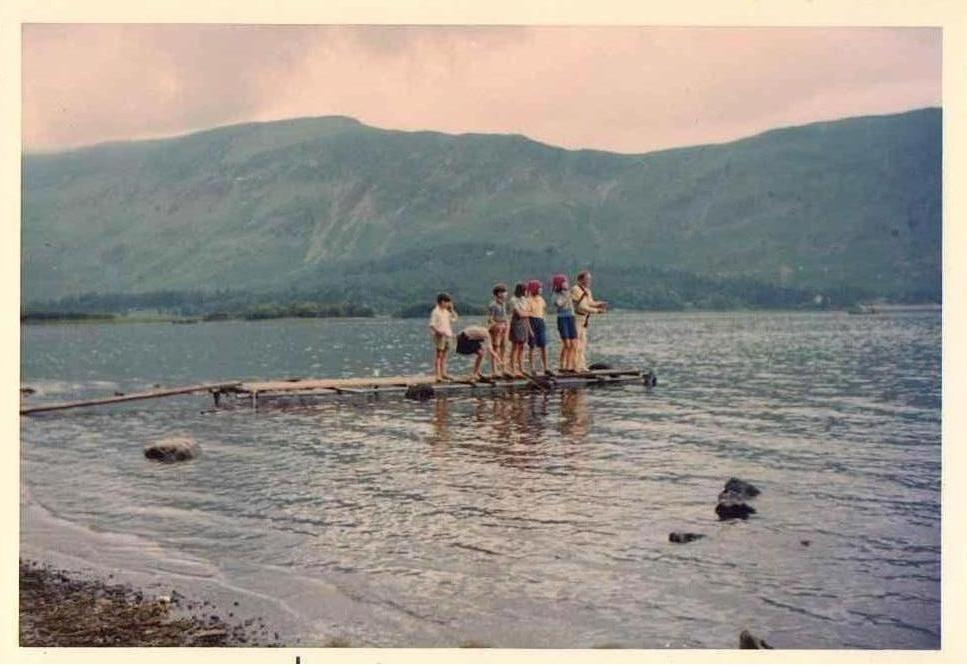
Suzanna wrote that, ‘In the late afternoon the Amazons were filming on the pontoon. Kit wasn’t feeling well.’ Lesley had recovered a bit but there was a ‘flu-like bug going around. Neither of them look that well in the resultant photograph but they survived.
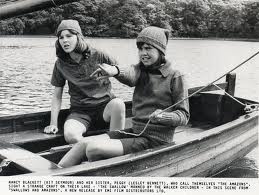
Kit Seymour as Nancy Blackett with Lesley Bennett playing her sister Peggy Blackett in Amazon, who is still sailing today.
If you would like to read more, upload a copy of ‘The Secrets of Filming ‘Swallows and Amazons'(1976)’ for sale on Amazon Kindle and other e-readers for £2.99
The secret was out; ‘his anecdotes are many, o u t r a g e o u s, and largely unrepeatable.’ Whilst we had been busy filming on a smelly lily pond the ‘joker’s joker’ had been languishing in the bar of the Kirkstone Foot Hotel just outside Ambleside saying that, ‘he was a lousy lover but loved to practice.’ Oh deary me. Worse was to come.
‘…baby, you’ve got to be a bit dotty.’ At least we were described as ‘bright and vivacious’.
We loved going to the cinema in Ambleside. David Blagden, our sailing director, had a small part of a prison officer in the movie Kidnapped, that we went to watch. It starred Michael Caine, Trevor Howard and Lawrence Douglas, with Jack Hawkins, Donald Pleasence and Gordon Jackson, but sadly not Ronald Fraser. He was still in the bar.
Suzanna Hamilton’s perspective on the day is not so very different but it is in purple.
Mediculs. A sure sign that our movie was both over-schedule and over budget, with nothing much anyone could do about it but keep going. We still had to capture the houseboat. And make that splendid gentleman walk the plank.
The distinguished actor Ronald Fraser fishing with Kit Seymour, Lesley Bennett, Suzanna Hamilton, Simon West, Sophie Neville and Stephen Grendon whilst filming on location in the Lake District ~ photo: Daphne Neville
If you would like to read more, Sophie’s diary is included within her ebook of ‘The Secrets of Making Swallows and Amazons (1974)’ available from online retailers and Amazon Kindle for £2.99 here
‘The rain poured down.’ Cumbria was covered in cloud, the Lake District dark and dismal. What a nightmare for Richard Pilbrow and his production team. We were behind schedule, Lesley Bennett who played Peggy was ill in bed and we had run out of ‘rain cover’.
Sten Grendon, Simon West and Suzanna Hamilton in Swallow
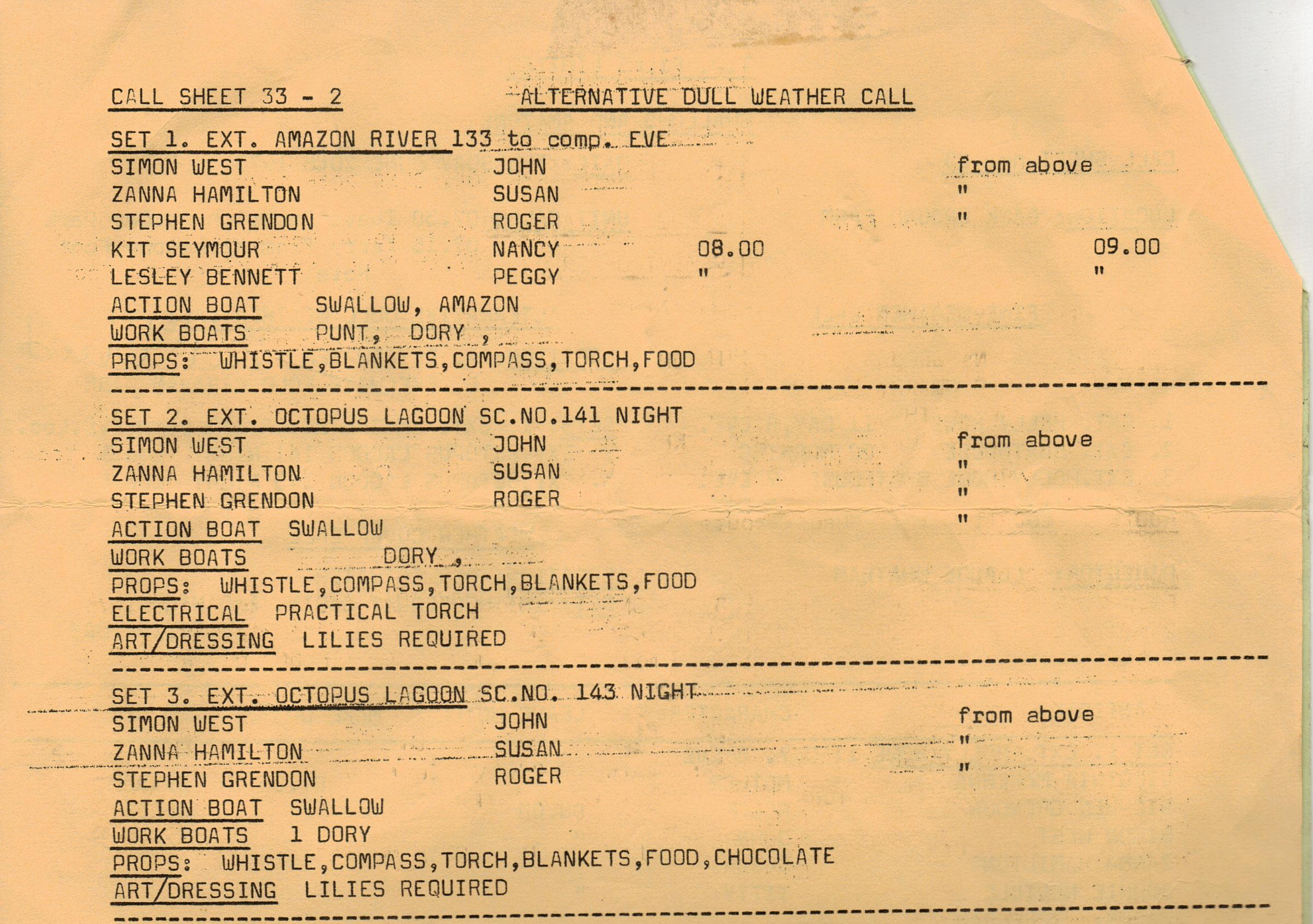
There was one sequence left that could be recorded in dull weather. Today was the day Claude Whatham shot the haunting scenes of Octopus Lagoon. After finishing our school work Kit Seymour and I sat watching the filming from the sloping field above the beautiful but rather smelly lily pond.
I do not have the Call Sheet for 29th June 1973 but have an extract from this earlier one detailing the ‘Alternative Dull Weather Call’:
I can’t say whether the weather allowed for the scene set on the Amazon River to be shot. Lesley had ‘flu so they would have had to somehow manage without her. I think Claude devoted his time to capture the conundrum and challenges faced by Captain John in the lagoon.
I remember looking down on the location, which was on private property near Skelwith Fold Caravan Park – possibly Slew Tarn.
Is this Slew Tran above Skelwith Fold?
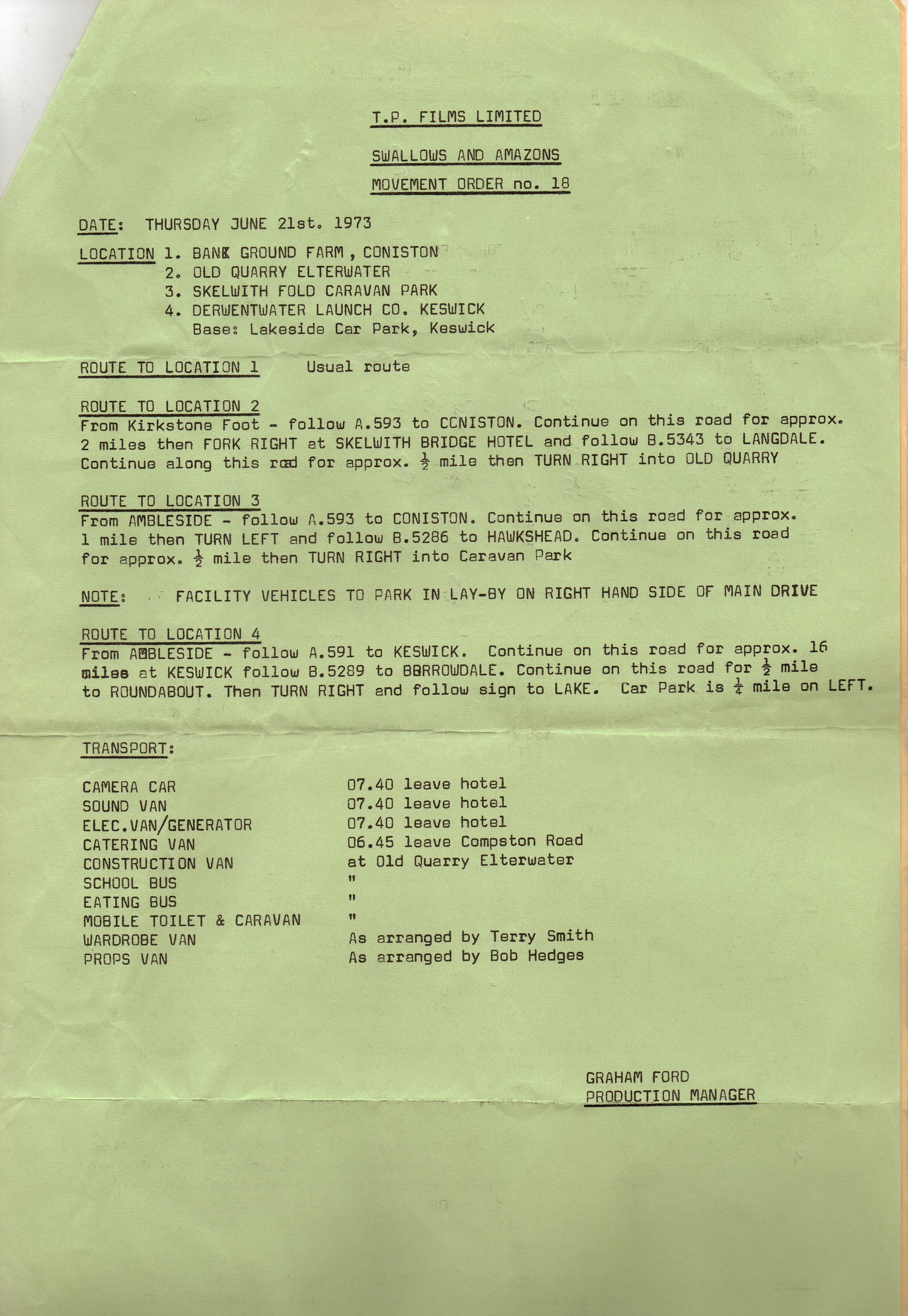
Those who are interested in finding the film locations used might find this old hand-typed ‘Movement Order’ useful:
Roger Wardale sites Octopus Lagoon as being Allan Tarn a short distance up the River Crake at the Southern end of Coniston Water, near High Nibthwaite. This is the place Arthur Ransome had in mind. He spent time there with is brother and sisters as a child when they spent their summers on Swainson’s Farm at Nibthwaite nearby. His father went there to fish for pike. It you have a shallow bottomed boat you can get there but it is not exactly on a footpath. The lily pond we used was in a high sided dip, which made it appropriately dark and gloomy. It was also more accessible for the film crew.
Graham Ford, who signed the Movement Order was our Production Manager. I only have a photograph of him taken on a sunnier day.
Second Assistant Terry Needham, Associate Producer Neville C Thompson and Production Manager Graham Ford with the unit radio on a sunny day in June 1973
Graham Ford would have been responsible for the film schedule, putting together the whole logistical jigsaw puzzle posed by factors such as the availability of leading actors and locations with the movement of vehicles and boats, including the massive camera pontoon. It was Graham who took the stress of problems caused by wet weather. I guess that he also took on the responsibilities of managing the locations, negotiating with owners and the Lake District National Park, something that authors such as Arthur Ransome would not have had to face.
Although young, Graham was pretty experienced. He had previously worked as an assistant director on such classic films as Steptoe and Son and had been the Unit Manager on The Devils, a film that starred Vanessa Redgrave and Oliver Reed. After Swallows he went on to work as Production Manager on S.O.S Titanic, The Honorary Consul and Princess Daisy as well as Time Bandits and Brazil directed by Terry Gilliam starring Jonathan Pryce, Kim Greist and Robert de Niro. Imagine being Terry Gilliam’s right hand man. He was a Location Manager for David Lynch on The Elephant Man and for Richard Attenborough on Ghandi in 1982. Graham’s career progressed. He produced The Nightmare Years and A Connecticut Yankee in King Arthur’s Court in the late 1980s before working on Gettysburg, the massive four hour long movie about the American civil war, in 1993. A life in film. He died in Ontario in 1994 aged only 48.
If you would like to read more, the story of the filming can be read in a paperback entitled ‘The Making of Swallows and Amazons (1976)’ available from libraries worldwide or from online stockist and good bookshops. The Nancy Blackett Trust have signed copies available here with proceeds going to the trust. These are illustrated so cost £15 but make good presents.
If you ever see a cormorant you must sing out, ‘They’ve got India-rubber necks!’
And then, if you are on a long journey you can add, ‘ Cormorants. We must be near the coast of China. The Chinese have cormorants. They train them to catch fish for them. Daddy sent me a picture.’
Sophie Neville, Suzanna Hamilton and Simon West as the Walker children sailing to Wild Cat Island in Swallow
If you ever get lost – or the journey really is a long one, you can say,
‘Here we are intrepid explorers making the first ever voyage into unchartered waters. What mysteries will they hold for us? What dark secrets will be revealed?’
They were most complicated speeches to deliver afloat, ones I had to learn. In the end the second part was heard OOV – out of vision. I could have read the lines. But then they wouldn’t have stayed in my head forever, as they have.
Stephen Grendon, Sophie Neville, Suzanna Hamilton and Simon West on the voyage to Wild Cat Island, scenes shot on Derwentwater in 1973
If, on your journey, you happen to see a man sitting in a chair writing notes you score high and can say, ‘What’s that man doing? He’s probably a retired pirate working on his devilish crimes.’
Filming Swallows and Amazons (1974) from a camera pontoon
(I’m a bit hesitant about that one because my Aunt Hermione really was approached by pirates when she was sailing round the world. The Daily Mail published her dairy chronicling the adventure; a full page double- spread with photographs no less. Rather sadly they ran headline ‘Intrepid Pensioners…’ What a swizz. She should have lied about her age and said she was 27 instead of 60. Well, perhaps 57, what with the photos.)
The scene behind the camera that day on Derwentwater was rather different from from the scene in front of it.
I got cold sailing but it was a glorious sunny day with a fair wind. We achieved a huge amount even if Cedric fell in. Some of the boatmen and crew wore life jackets, others did not – including my mother.
We wore BOAC life jackets for rehearsals but Swallow is a safe little boat – her keel ensuring we didn’t capsize if we happened to jibe and we never fell in. The pontoon was really rather more dangerous being a raft with no gunwale. Any one could have misjudged their step and plopped overboard. Luckily we were not stifled by Health and Safety in those days – only the rigorous demands of movie insurance companies.
This shows the camera crew climbing aboard the pontoon in order to film Swallow sailing. Daphne Neville sits in the Dory safety boat in the foreground. A reflector board, wrapped camera mount and microphone are already on board.
I’m sure we had already shot the first two scenes of the day when I was in Amazon, setting the anchor and later hearing the robbers. I expect Claude needed to re-shoot for technical reasons. Day-for-Night filming requires clear, sunny days and he would have needed still water.
John and Susan find Titty has moored the Amazon off Cormorant Island
I have some of my father’s 16mm footage showing us at around this stage in the filming. It was shot on a different day but shows us on the shores of Derwentwater, waiting around before rushing off across the lake in motor boats to finish filming before Claude lost the light. You see the pontoon and a safety boat towing Swallow, me snapping bossily at Roger to get a move-on, (unforgiveable but I was 3 years older than him and irritated to distraction), the third assistant Gareth Tandy in blue with glasses, our sound recordist Robin Gregory throwing his arms wide open, Kit Seymour and Lesley Bennett by the lake shore, David Blagden with his short hair-cut splicing rope, me in my Harry Potter-ish blue nylon track-suit top with Albert Clarke the stills photographer, Swallow and some mallard duckings.
If you are enjoying this blog, please find an expanded version of the story in the ebook, available from all online retailers such as Amazon Kindle for £2.99 and on Goodreads here It has also been published in two illustrated paperback versions, which make good presents.
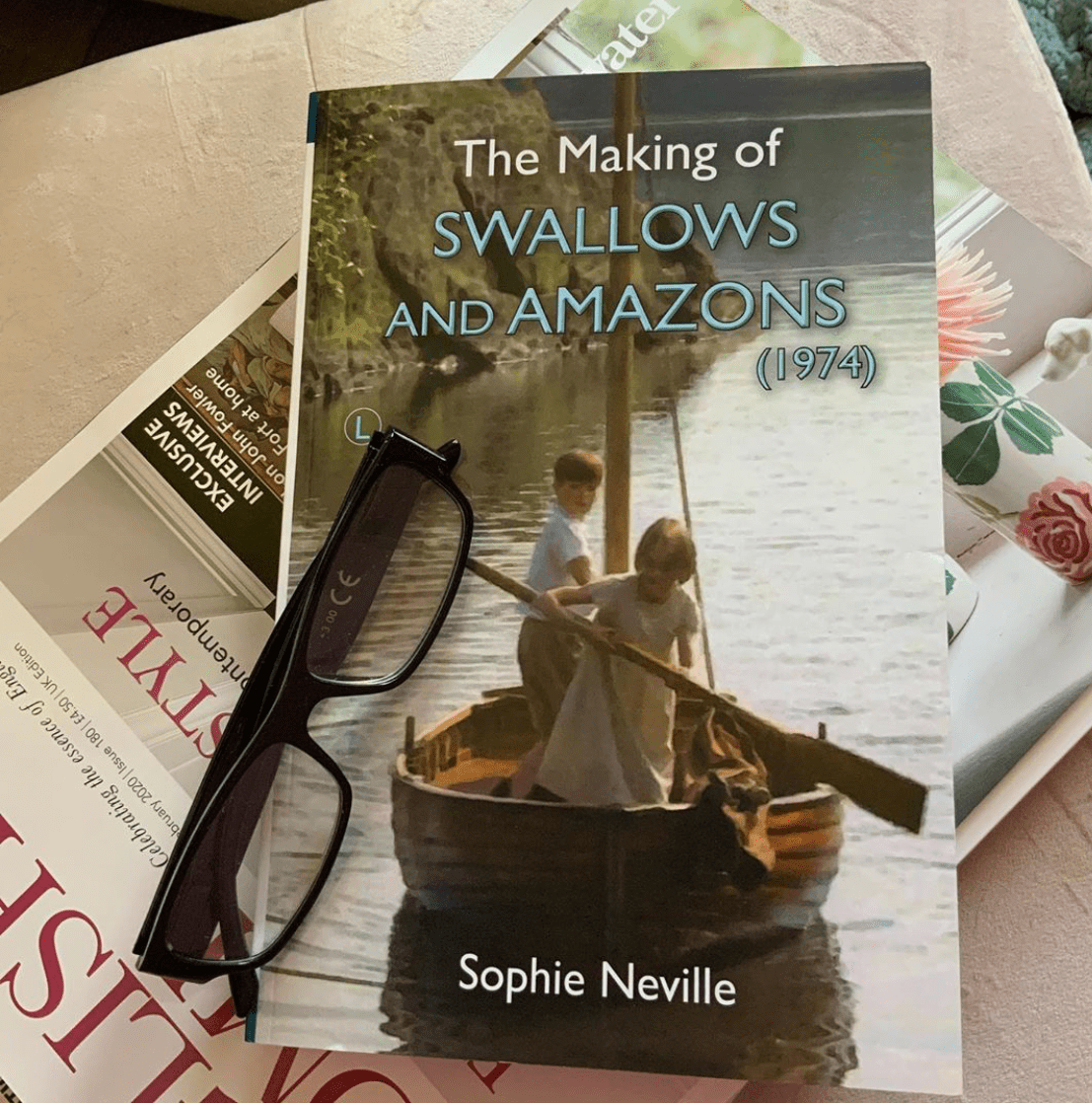
Different editions of ‘The Making of Swallows and Amazons (1974) by Sophie Neville’
Director Claude Whatham and Bobby Sitwell with Suzanna Hamilton playing Susan Walker and Ronald Fraser as Jim Turner aka Captain Flint in 1973
I love this photograph of Suzanna with Claude Whatham and the Bobby the focus puller. It somehow captures the atmosphere of filming on Peel Island back in 1973. I was meant to be sitting on the biscuit tin where I have left my empty cup, but Claude must have been reading my lines as he took Suzanna Hamilton’s close-ups. I was never sure about the blouse she is wearing. We hadn’t heard of Margaret Thatcher at the time but it now seems to be edging a little too close to her style. I doubt if she took inspiration from us but, along with the gym shoes, it’s very much in style now.
‘It was quite a nice day weather-wise,’ one of the others had noted, but obviously not the solid sunshine needed for the big scenes yet to be shot out on the lakes. However our sailing director David Blagden was back with us, his hair cut short in order to appear in vision as Sammy the Policeman, a part he played beautifully. Although there is a cheerful photograph of him taken straight after he gained a short-back-and-sides we can only find rather a distant and visually confused one of him in uniform at the camp site on Wild Cat Island. He was so desolate to have had his hair cut short that he took off his helmet during the scene to prove that he really had been shorn.
David Blagden as Sammy the Policeman
We were excited that David was on the set, in costume. He’d always been behind the camera before. But he made a very serious Policemen and didn’t let the persona of his character fall whilst he was in uniform.
David Blagden as Sammy the Policeman
What works best in the film is the edit. ‘No more trouble of any kind, ‘ Virginia McKenna insists – and the shot cuts to the boots of a Policemen arriving in camp.
David Blagden who played Sammy the Policman ~ photo: Daphne Neville
It looks as if this was one long scene – but the section where the content of Uncle Jim’s book was discussed while we sipped tea had been shot a week previously when Ronald Frazer first arrived in the Lake District.
The clapper-loader, Sophie Neville and David Blagden as the Policeman on Peel Island ~ photo: Daphne Neville
Director Claude Whatham having lunch with his leading ladies, Suzanna Hamilton and Lesley Bennett ~ photo: Daphne Neville
It was a long day, but a happy one. Any secrets? It was really in the scene when John declares ‘a dead calm’ and we decide to visit the charcoal burners that it became apparent that I was taller than my elder brother played by Simon West.
A box was provided for him to stand on so that I look shorter when I run into shot. It was a shot I remember we did in one take – despite being fairly complicated. Everyone was amazed that we moved on so quickly. We needed to.
The Swallows on Wild Cat Island
The pre-occupation of the producer was that, since the bad weather had caused delays, we still had an awful lot to film. We must have been about a week behind schedule – a huge worry for Richard Pilbrow. The next day we just had to get out on the water come what may.
The huge sadness was that David Blagden, so vibrant and good looking with so much to live for, lost his life to the sea in the late 1970s.
David Blagden, the Sailing Director before he had his hair cut to play the Policeman, and my mother Daphne Neville, Chaperone to the six children acting in ‘Swallows and Amazons’
After Swallows and Amazons he presented an ITV series broadcast on Sundays called ‘Plain Sailing’. It featured Willing Griffin the 19′ Hunter in which he’d crossed the Atlantic despite horrific weather in 1972 and the survey of a 39′ wooden boat I think he intended to take on another crossing. Apparently he set off in this yawl from Alderney in a Force 11 gale and was never seen again. The harbour master had begged him not to go. They found his girlfriend’s body and parts of the boat but there was no trace David.
The cover of ‘Very Willing Griffin’ by David Blagden. ‘An exciting adventure of pursuing and living a dream against many odds’, this sort after book was reviewed in The Journal of Navigation. His obituary in a school magazine is desperately sad. It was posted on the Arthur Ransome Group Facebook page.
You can read more in ‘The making of Swallows and Amazons’ published by The Lutterworth Press and available online or from Waterstones






































 Sophie Neville