The 4th Waterberg Trust Challenge Ride, which set off on 21st January 2018, proved fast, fun and fulfilling. Thanks go to all those who sponsored me on Justgiving.com and helped me to raise funds in other ways.
Crossing the game reserves of South Africa was a joy, especially since we encountered a number of newborn animals.
50% of funds raised go to Save The Waterberg Rhino to support the war against wildlife poaching.
Riders paid their own travel costs. We had a great team who’d worked hard on both their fitness and fundraising.
Some days were long but we were blessed with good weather. When the going got tough, we dismounted and walked.
Seven different game reserves were traversed in six days, with 187kms being clocked up on the GPS.
I felt hugely encouraged by everyone who supported me on social media and returned with dreams of exploring further afield. You can see more photos of the ride on The Waterberg Trust website.
What you can do to help
Share posts found on The Waterberg Trust’s Facebook page: please click here
This January I am working hard to get fit enough to take part in another sponsored horse ride through the game reserves of South Africa, where I once lived, to raise funds for The Waterberg Trust.
The safari company Ant’s Nest have generously offered to host our party of thirteen British riders and we are paying our own travel costs. Every penny raised in sponsorship will go straight to The Waterberg Trust, a UK registered charity.
50% of funds will be sent to Save the Waterberg Rhino and 50% will support projects that uplift local communities that are run by trusted friends. Each member of our team has been challenged to raise at least £1000 in sponsorship. The Drapers Company have kindly offered to match any funding that I raise personally, so if you can sponsor me your donation will be doubled. Even very small amounts are a huge encouragment and will go along way to improve things in Africa.
DAY 1 – Riders will be met at Johannesburg airport and driven north to Ant’s Nest Game Reserve deep in the Africa bush where we will meet horses that have been selected for the expedition and set off in search of wildlife.
The Waterberg is home to the third largest population of rhino in South Africa, so their protection on the plateau is vital.
~The Waterberg Trust Riders with white rhino in 2017~
DAY 2 – We will spend the day riding up to Ant’s Hill, viewing game on horseback and looking for a breeding herd of white rhino, along with buffalo, wildebeest and antelope. We’ll return to Ant’s Nest for a talk on the work of ‘Save the Waterberg Rhino’.
DAY 3 – We set off early, riding north through the reserve and along sandy roads to the Waterberg Living Museum to meet Clive Walker, one of South Africa’s leading conservationists who is raising awareness of biodiversity and ecological systems. We may get the chance to see rare golden wildebeest as we ride up to Triple B Ranch were we will spend the night in a traditional farmhouse.
DAY 4 – We ride down through Triple B Ranch, where they have hippo and over the hills to Lindani game reserve, which will give us another amazing opportunity to see wildlife such as vervet monkey, baboon and warthog, zebra, eland and giraffe.
DAY 5 – This is a long day when we ride to Jembisa, a reserve on the Palala River where the pace will get faster. We hope to find more plains game including giraffe, jackal, warthog and red heartebeest.
DAY 6 – We plan to visit Lapalala Wilderness School, which I have been associated with since 1992 when I became a horse safari guide in the area. The Waterberg Trust has been able to send groups of underprivileged children on a residential course at this eco-school to learn about conservation and the plight of South Africa’s wildlife.
One lesson is about what to do if you find a snake in the house.
The students take their enthusiasm into the community whose support is essential if poaching is to be combated. They are given a local mentor who can help with future issues.
We’ll spend the rest of the day riding across Jembisa where we hope to find hippos and perhaps see crocodile in the river before reaching the furthest point of the ride and grab a few photographs before bidding our horses farewell.
DAY 7 – Riders will visit Lethabo Kids Club in the Township of Leseding who run an excellent ‘Back to School’ project to ensure all local children get into an appropriate school, equipped with uniform, shoes and school bags. We will meet Nurse Grace whose salary is financed by The Waterberg Trust. The very first school nurse in the area, she has been looking after pupils’ health and issues that detract from their studies. We will also drop in on Kamotsogo community craft project that helps women living with HIV/Aids before leaving for the airport.
~Sophie Neville with students sponsored by The Waterberg Trust in 2017~
I need to get fit as there will be approximately 32–40km’s of riding per day, clocking up a total of 32 long hours in the saddle. It will be an exploratory venture, riding through this beautiful area, now proclaimed a UNESCO biosphere. You can read more about the ride here.
WHAT YOU CAN DO TO HELP:
Support us on social media by sharing information.
Share posts found on The Waterberg Trust’s Facebook page: please click here
Describe a typical Christmas Day in your household.
We scuttle off to our village church where people have gathered to celebrate the birth of Jesus for over a thousand years. Tears well in my eyes when I think of the joy and laughter, the disappointment and pain that has been brought there through the ages. We return to a bizarre Christmas tree, made from a holly bush covered in baubles, and light the fire to help bind us together as a family.
Which was your best Christmas – and why?
Last year I spent Christmas in Africa, where my next book ‘Makorongo’s War’ is set. We sat watching wild animals in the golden evening light.
Who do you think would make the most entertaining guest to invite to Christmas dinner – and why?
Funnily enough it’s my aunt Hermione who makes Christmas and New Year fun but she lives on Loch Lomond, 500 miles north from where we live on the south coast.
What was your best Christmas present as a child?
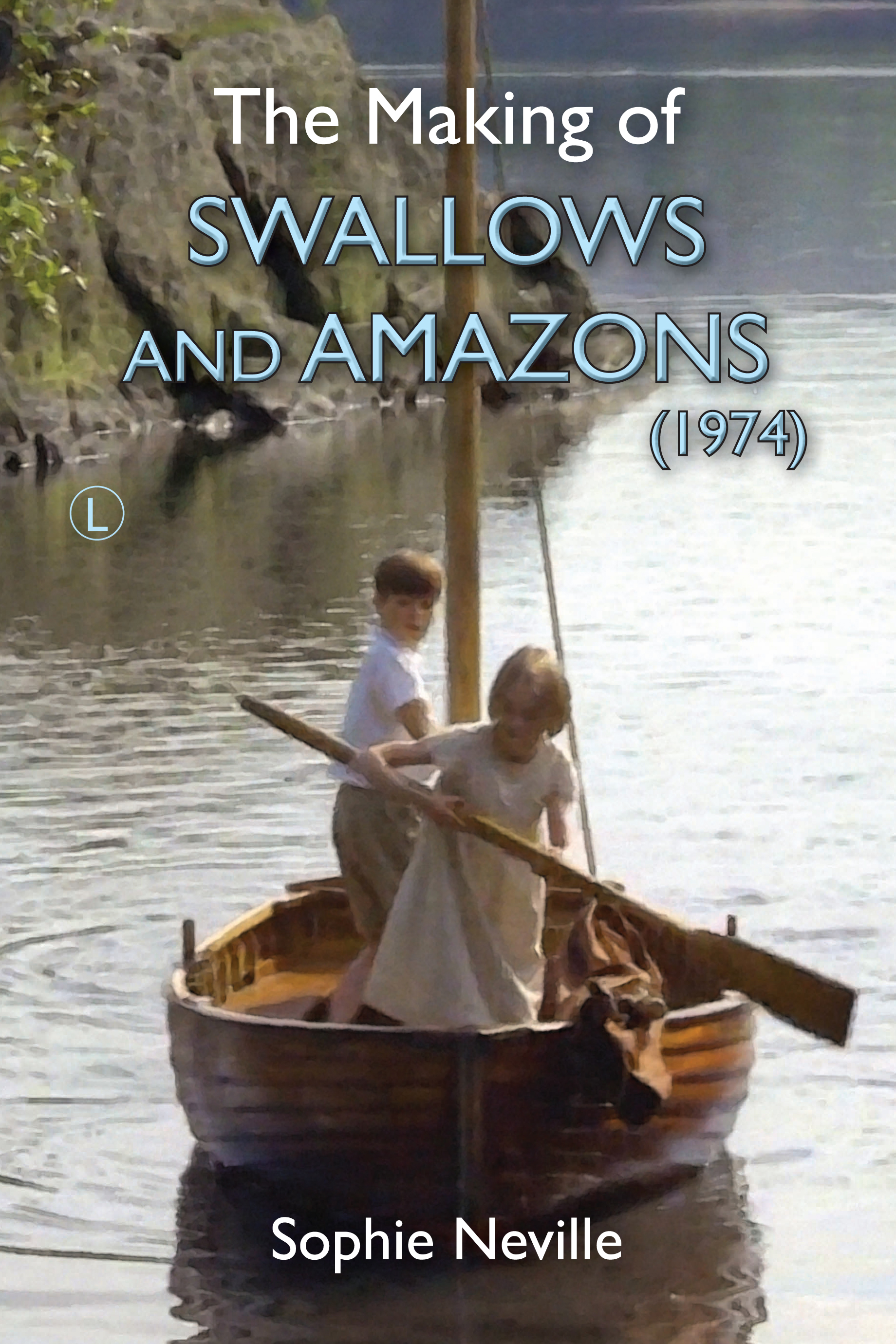
My father gave me a read leather writing case when I was twelve. ‘The Making of Swallows and Amazons (1974)’ is based on the I diary kept inside it.
What is your favourite carol?
You’ll have to read my book Ride the Wings of Morning about the time we sang Silent Night in Afrikaans. We had a poor translation. Heavenly sausages descended on Bethlehem.
What is your favourite festive ramble for walking off all the mince pies and turkey?
We’ll take my lurcher Flint for a walk by the sea, a social activity as many of my friends have dogs.
If you could spend Christmas Day anywhere in the world, apart from at home, where would it be – and why?
I’d love to bring my whole family up to the Lake District for Christmas so Aunt Hermione could join us. Perhaps we should go with Flint next year.
My favourite Christmas story:
Mary gave birth to her firstborn son. She wrapped him snugly in strips of cloth and laid him in a manger, because there was no lodging available for them.
That night there were shepherds staying in the fields nearby, guarding their flocks of sheep.Suddenly, an angel of the Lord appeared among them, and the radiance of the Lord’s glory surrounded them. They were terrified,but the angel reassured them. “Don’t be afraid!” he said. “I bring you good news that will bring great joy to all people.The Savior—yes, the Messiah, the Lord—has been born today in Bethlehem, the city of David!And you will recognize him by this sign: You will find a baby wrapped snugly in strips of cloth, lying in a manger.”
Suddenly, the angel was joined by a vast host of others—the armies of heaven—praising God and saying, “Glory to God in highest heaven, and peace on earth to those with whom God is pleased.” When the angels had returned to heaven, the shepherds said to each other, “Let’s go to Bethlehem! Let’s see this thing that has happened, which the Lord has told us about.”
They hurried to the village and found Mary and Joseph. And there was the baby, lying in the manger.After seeing him, the shepherds told everyone what had happened and what the angel had said to them about this child.All who heard the shepherds’ story were astonished,but Mary kept all these things in her heart and thought about them often.The shepherds went back to their flocks, glorifying and praising God for all they had heard and seen. It was just as the angel had told them. Luke 2 v 7-20
The cultural background is that in when Shepherds identified a perfect newborn lamb for sacrifice, they wrapped it in strips of cloth and laid it in a manger to keep it clean. When they saw Jesus in this situation, they would have immediately identified him as a sacrificial lamb.
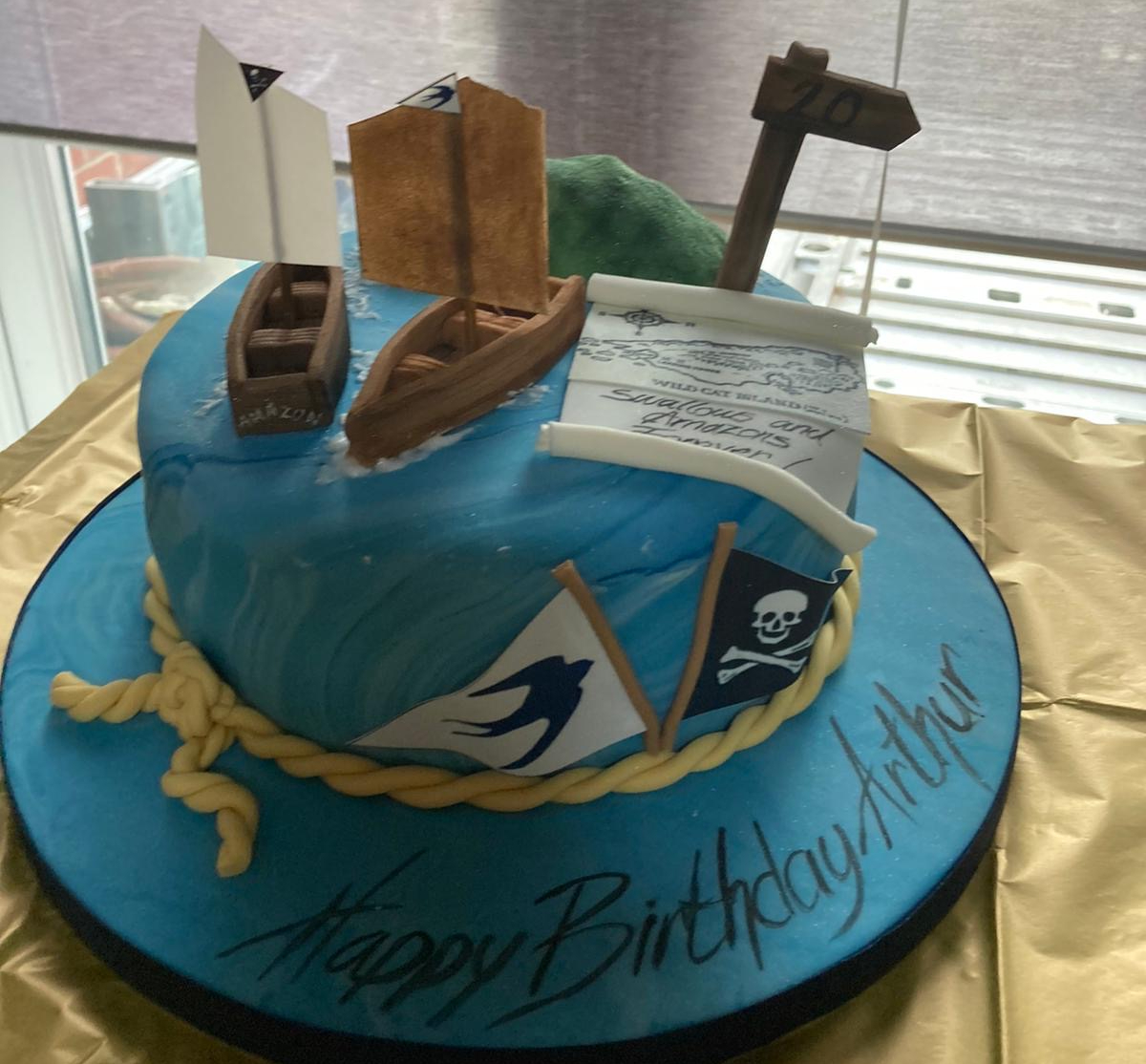
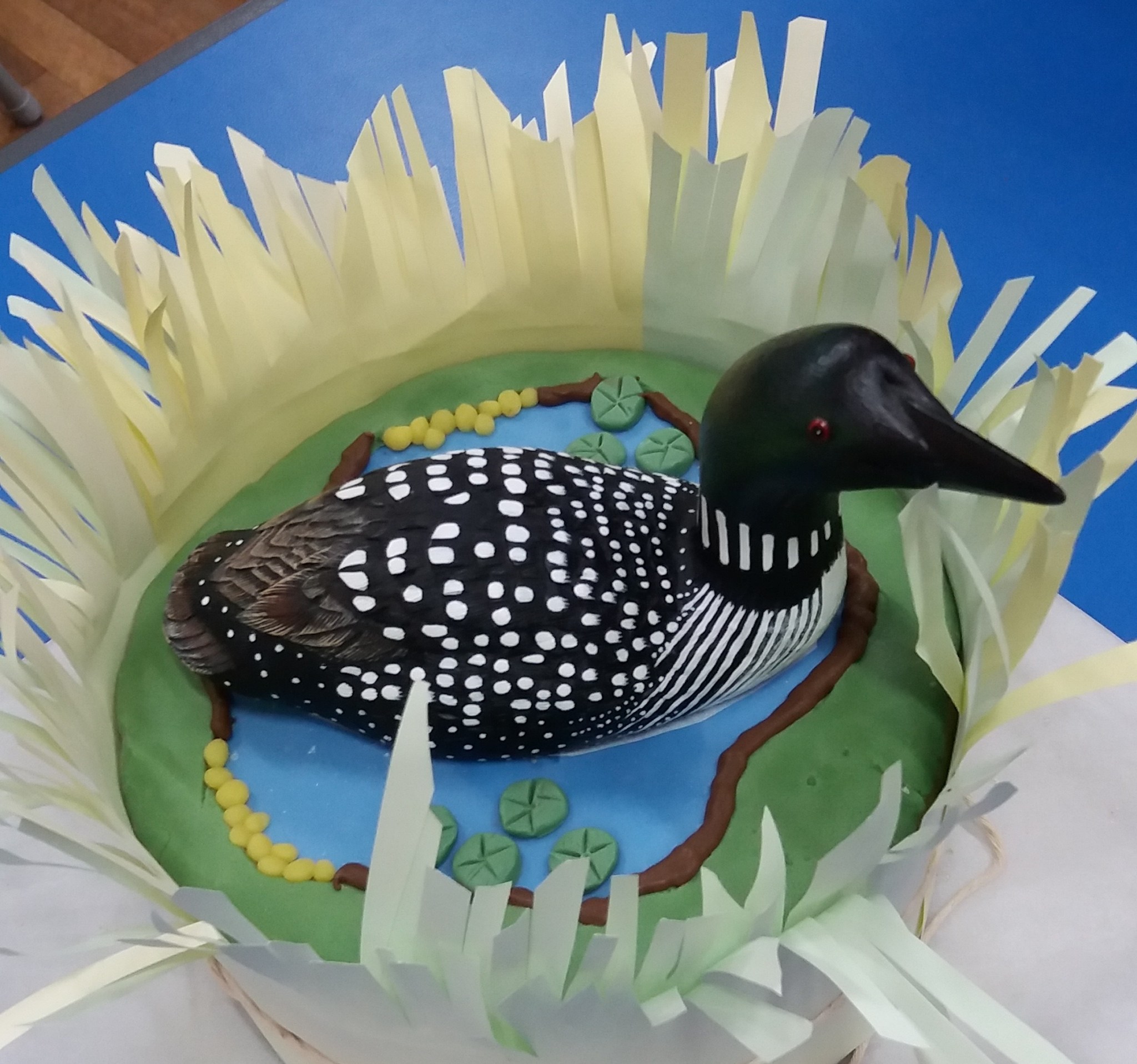
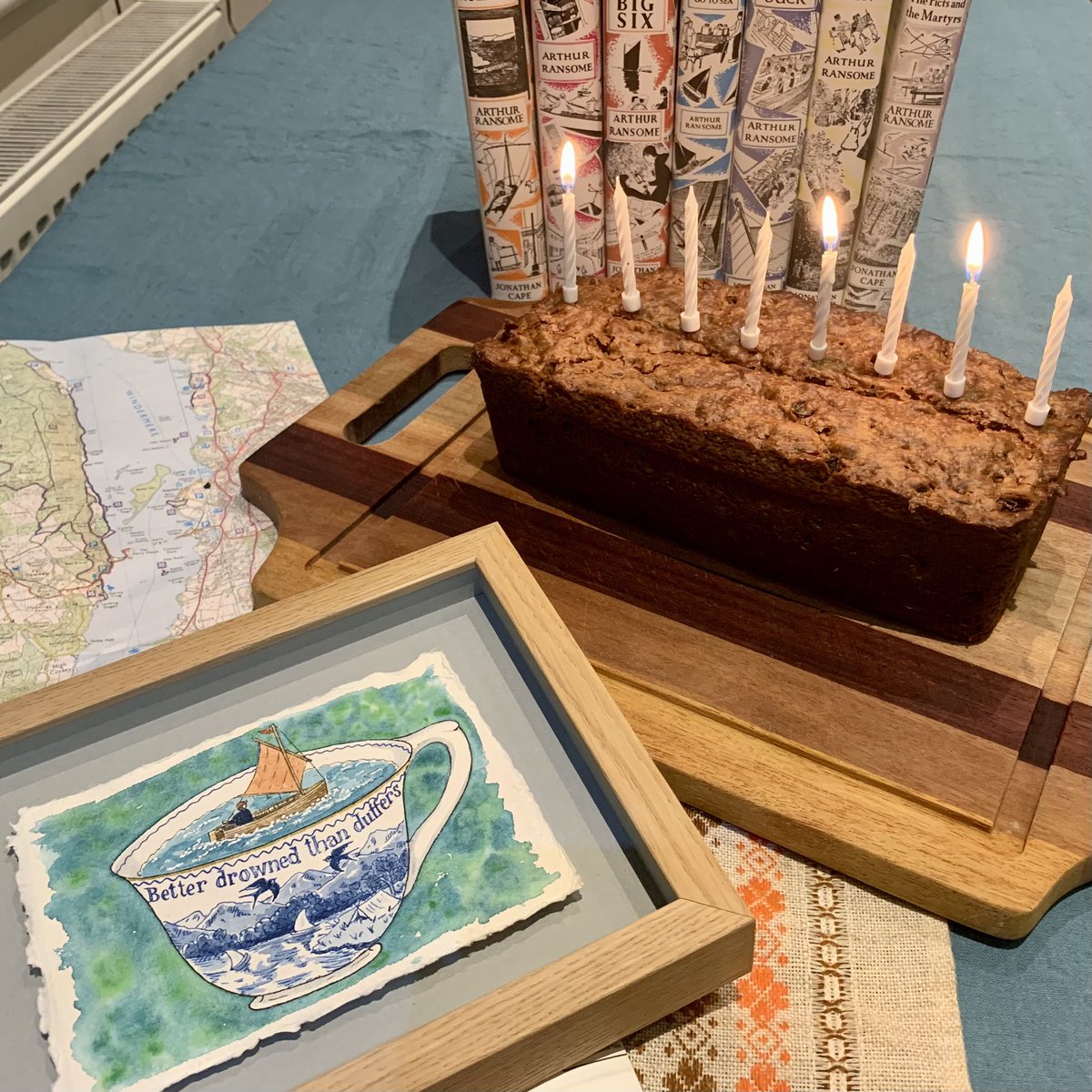
Stir up Sunday falls on 23rd November this year. I thought it would be lovely to share ideas for literary Christmas cakes. Do send in photos of yours.
We made a ‘Swallows and Amazons’ seed cake with caraway seeds and almonds, which reminded me of being on Peel Island.
Not so long ago, Miranda Gore Brown brought her version of Mrs Dixon’s traditional fruit cake to The Arthur Ransome Society pirate feast, along with her book Bake Me A Cake As Fast As You Can, which has ideas on how to ice cakes.
Miranda has all sort of ideas for baking here. She made this cake for her son’s birthday, described in detail here, but does anyone have a recipe for ‘Cook’s black cake’ or bun loaf fried up after being dropped in the lake?
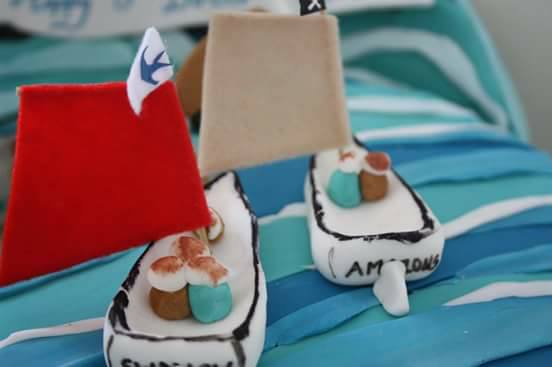
This amazing cake was made to commemorate the 50th Anniversary of the original film ‘Swallows and Amazons’. I love the fact that it is in the shape of a storybook.
Celebrating 50th Anniversary of the movie ‘Swallows and Amazons’ in 2024
This cake illustrates Arthur Ransome’s novel ‘Great Northern?’ set on the Isle of Lewis where filming took place for the DVD ‘Encountering the Ransomes’ released by The Arthur Ransome Society
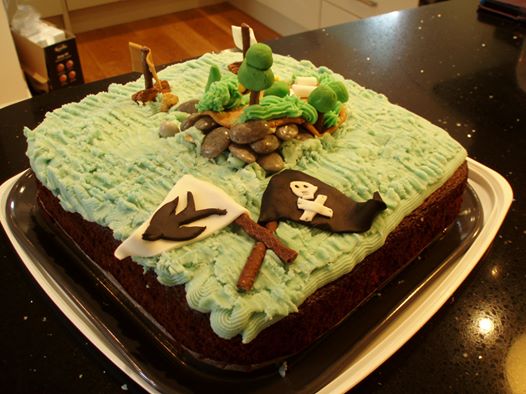
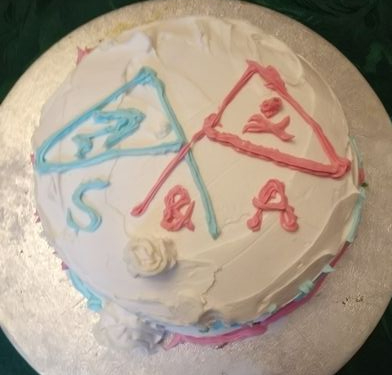
We would love to see your ideas for literary decorations. Here are a few more to inspire you:
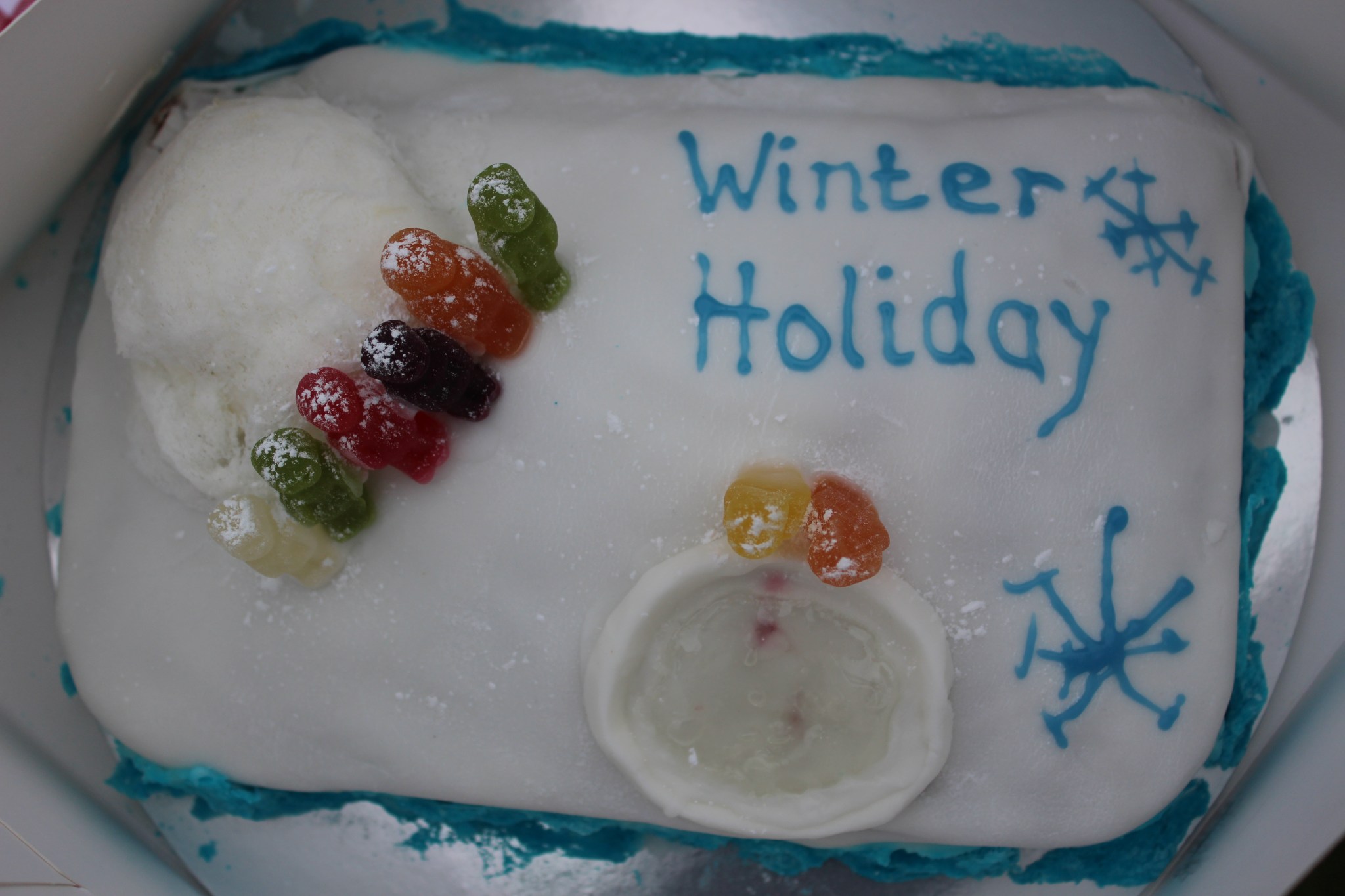
~Winner of The Susan Prize~
It was my privilege to award The Susan Prize to the girls who baked this cake. It proved they must have loved Arthur Ransome’s book ‘Winter Holiday’. The Swallows, Amazons and Ds are obviously contemplating whether or not to skate on the tarn that I understand was made by melting sweets and ‘took absolutely ages.’ You can see two of the characters approaching the ice.
Dorothea, the aspiring novelist, is skating around this cake, which tasted so delicious it almost transported me to the banks of the tarn itself.
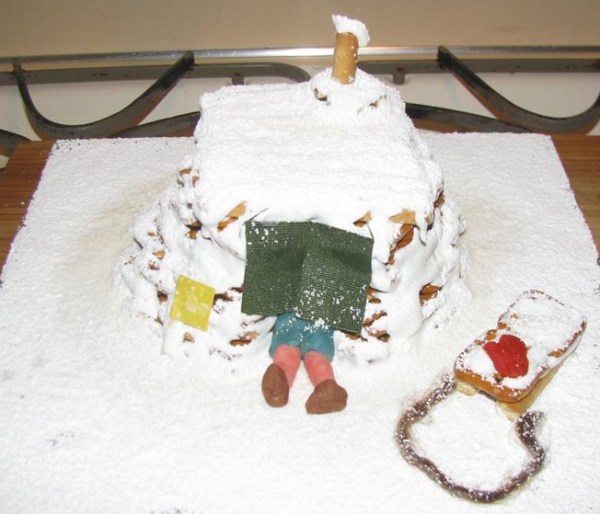
~Winner of the Crumbly Creations~
A number of crumbly creations, using biscuits and chocolate, gave us a good idea of what the igloo in ‘Winter Holiday’ must have looked like, while this birthday cake was inspired by the Puffin cover of ‘Swallows and Amazons’.
Detail of a Swallows and Amazons cake based on the Puffin cover
Swallowy dodgers with slices of cake claimed by Amazon pirates were on offer at Lakeland Arts to accompany their Swallows and Amazons exhibition:
“There was an enormous gooseberry tart” recipe published in Signals:
Elizabeth Rondthaler Jolley sent this photo from America:
Adam Quinan has written from Canada: ‘I made this for an Arthur Ransome Birthday party event in Toronto back in January 2004. We went skating on an outdoor rink and ate Igloo hotpot and then came inside and listened to some storytellers retelling some of ‘Old Peter’s Russian Tales’ with the ‘Winter Holiday’ cake and tea.’
Lucy Bailey-Wright of The Arthur Ransome Society wrote:
‘After a wonderful weekend at Swallowdale my girls have been full of love for all things Swallows and Amazons. So I had a go at a Swallows & Amazons themed cake! Had to be a number 5 too! Candles were in the camp fire!’
Arthur Herbertson designed this Birthday cake, which celebrates ‘Secret Water’ published eighty years ago.
The Swallows, Amazons and Ds seem to be sailing around Wild Cat Island in this Birthday cake made by Mae Fuller
Another igloo has been sent in by AusTARS –
This cake depicting Wild Cat Island was made for a special birthday that included the lantern in the lighthouse tree and leading lights.
This cake of Potter Heigham Bridge in Norfolk with the Teasel passing beneath that was also made by AusTARS in celebration of Arthur Ransome’s birthday.
I love this gingerbread cake featuring the adder who lived in the charcoal burner’s tobacco box. ‘Is it safe to touch?’ made by Arwen Seccombe of The Arthur Ransome Society
We would love to see your photographs of any cakes inspired by Arthur Ransome’s books. Please contact me via the comments below.
You can see other examples of Swallows and Amazons cakes as well as ideas for parties here.
To find ideas for Swallows, Amazons and Coots Birthday presents, please click here.
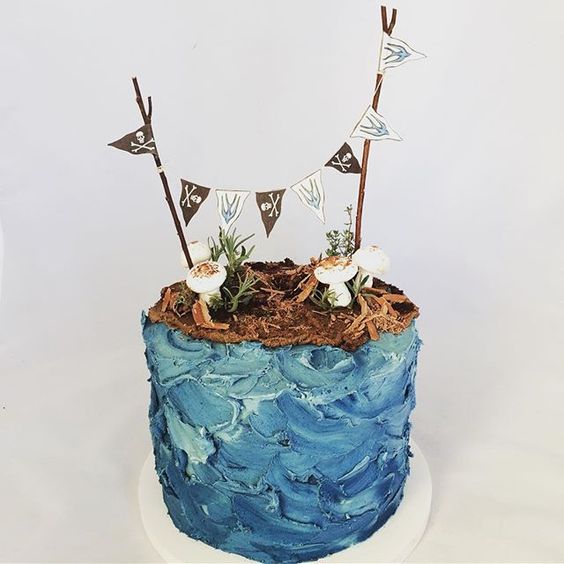
I didn’t bake this lovely cake – below- I spotted it on Pinterest, but they have made bunting out of the Swallows and Amazons flags I drew:
Original artwork on the bunting drawn by Sophie Neville, having been inspired by Arthur Ransome
Here is a bunloaf baked to celebrate Arthur Ransome’s Birthday in 2022
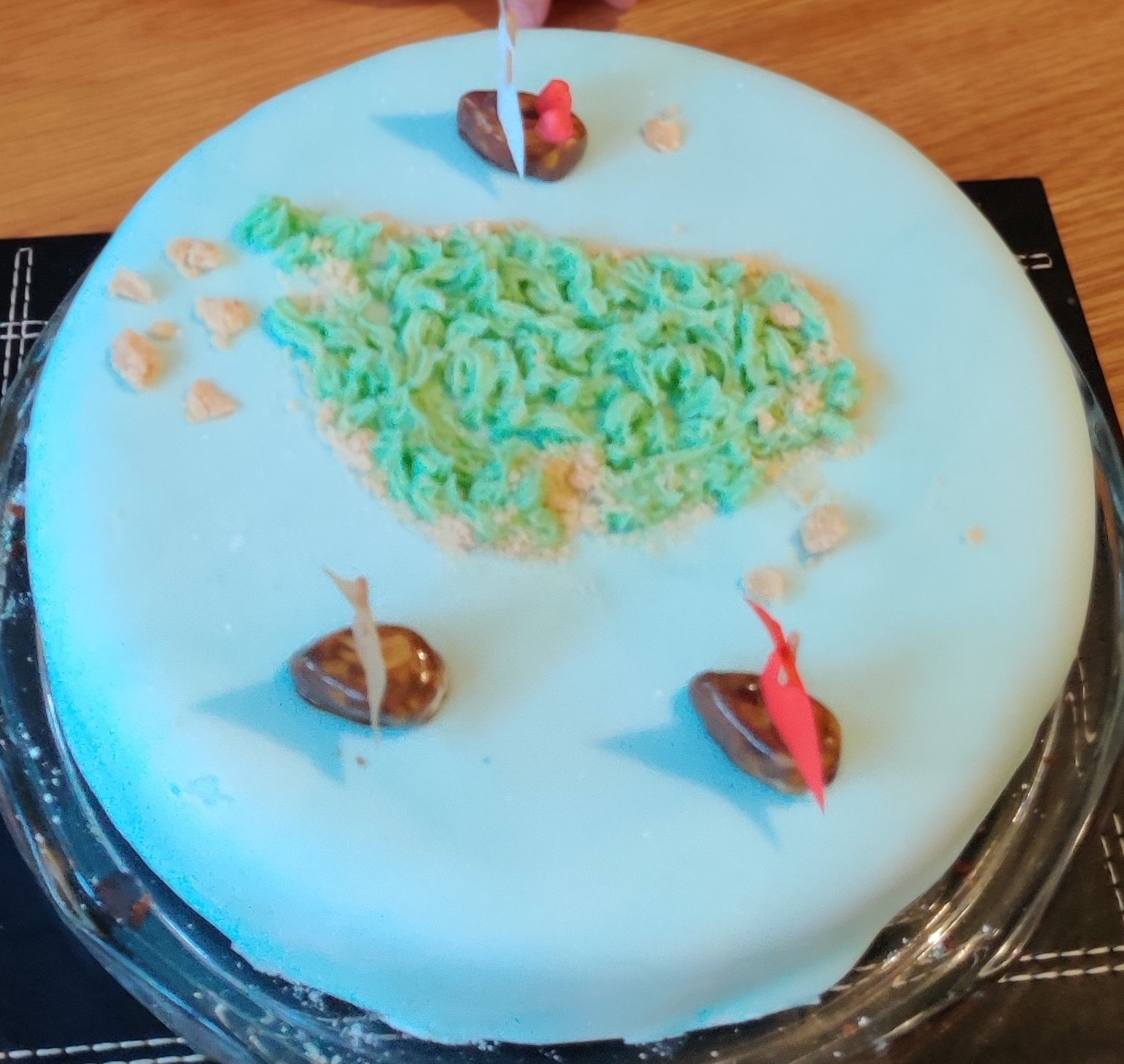
Wild Cat Island makes a good cake. Here’s one made in January 2022:
Swallow, the tents and Wild Cat Island
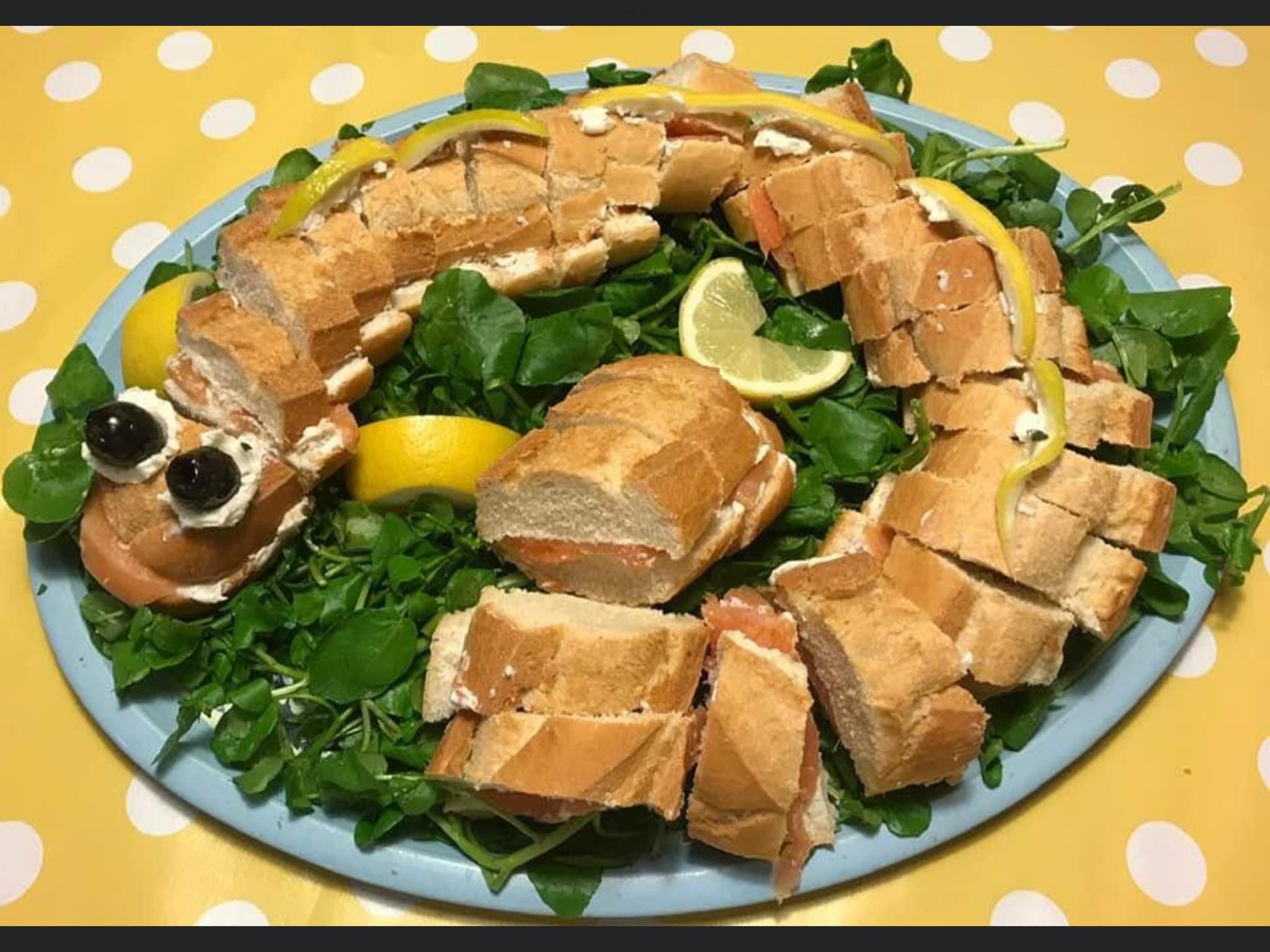
There are also some great savory ideas including this eel made by Annie Warwick:
Look at these fabulous macaroons decorating this cake:
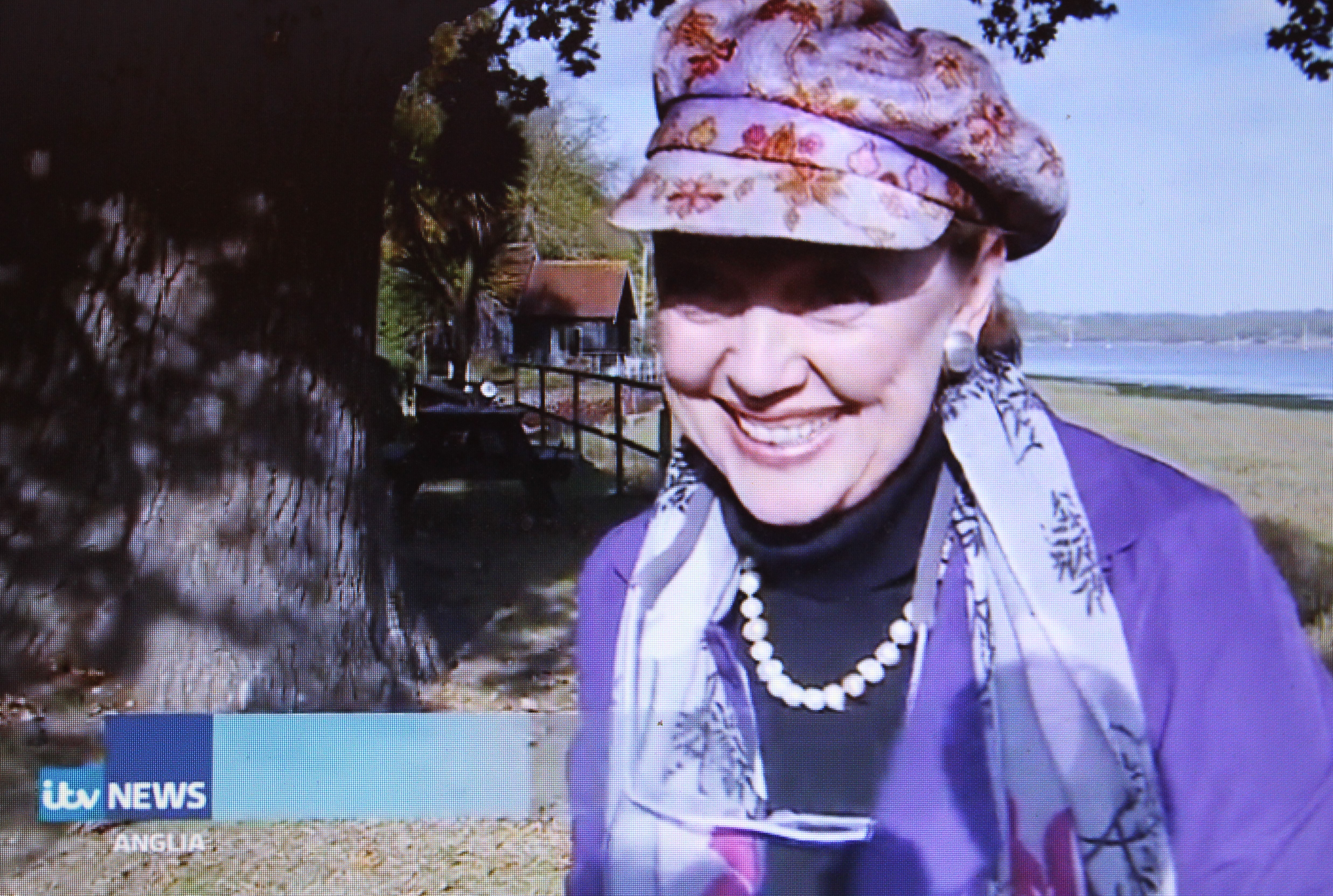
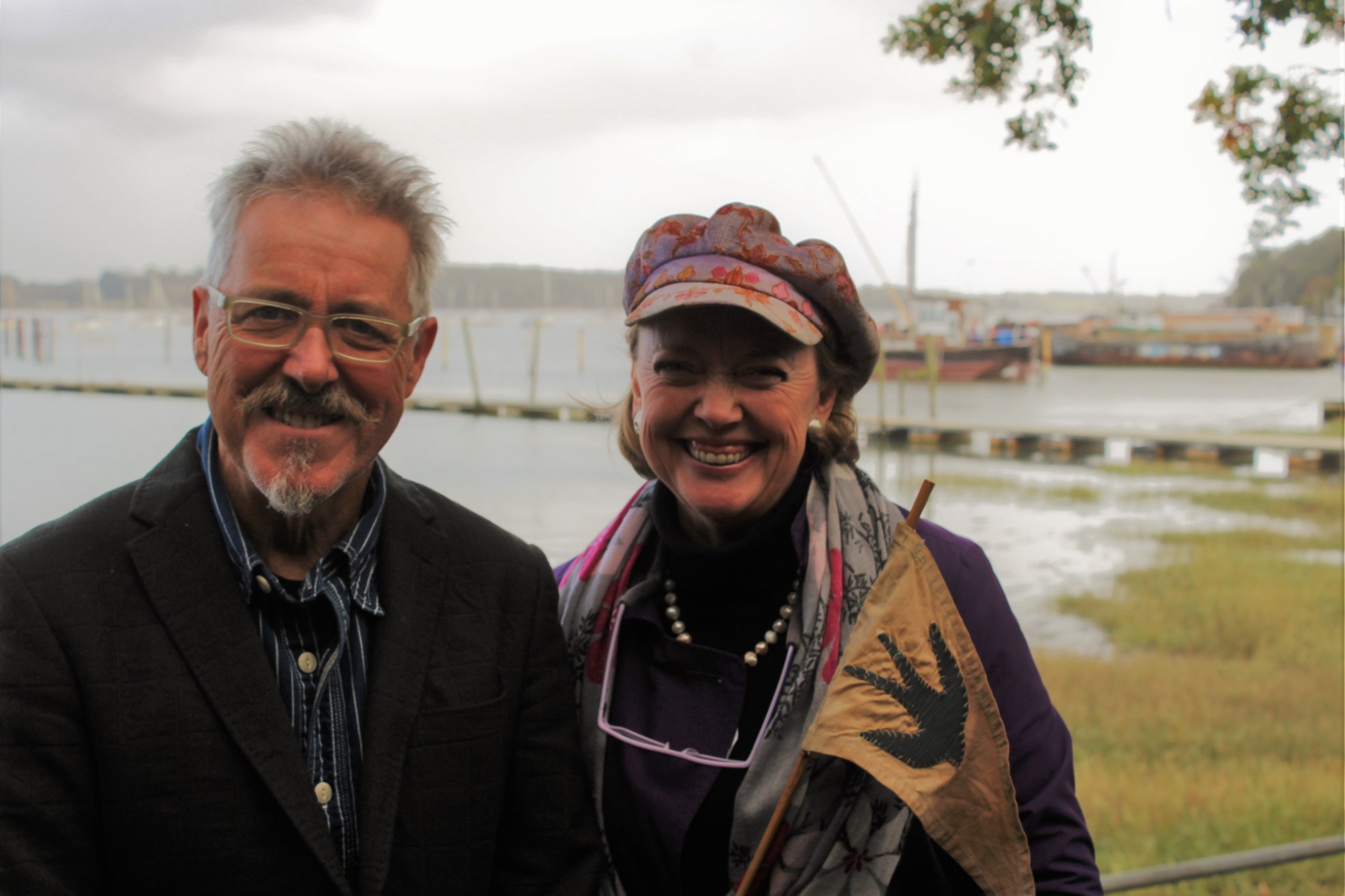
ITV News interviewed Griff Rhys Jones and myself at Pin Mill in Suffolk, which was fun. We were taking part in a marathon reading of Arthur Ransome’s iconic book ‘We Didn’t Mean To Go To Sea’ with other authors including Libby Purves, Francis Wheen, Christina Hardyment, Julia Jones and Marc Grimstone. Ivan Cutting of Eastern Angles and Dan Houston, editor of Classic Sailor, also read chapters. You can read more about the event here.
Arthur Ransome’s story begins at Pin Mill where the Swallows – John, Susan, Titty and Roger Walker, along with their mother and Bridget-the-ship’s-baby, are waiting for their father to take up a Naval posting nearby at Shotley. The four children didn’t mean to go to sea at all but somehow ended up sailing to the Netherlands in a terrific storm. I was asked to read the last chapter.
~Gryff Rhys Jones and Sophie Neville appearing on Anglia Television~
The reading, which lasted nine hours, was held to celebrate the 80th anniversary of the book’s publication in 1937.
~Author and broadcaster Libby Purves reading about Dutch barges~
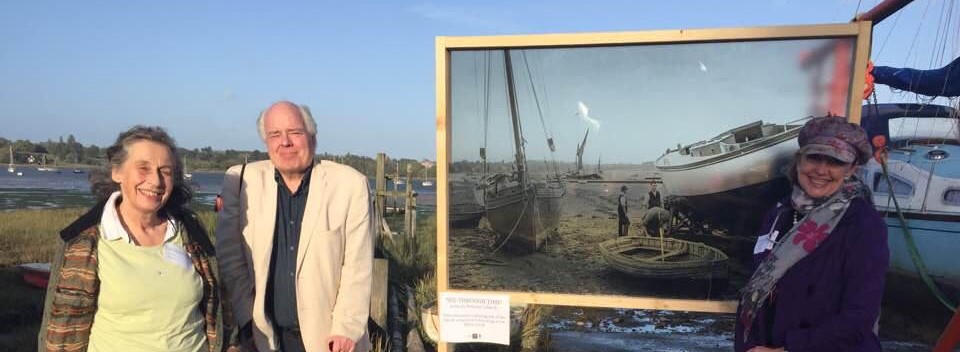
~Julia Jones, Francis Wheen and Sophie Neville with a photograph taken by Arthur Ransome when his yacht Selina King was being built. Photo: Anthony Cullen ~
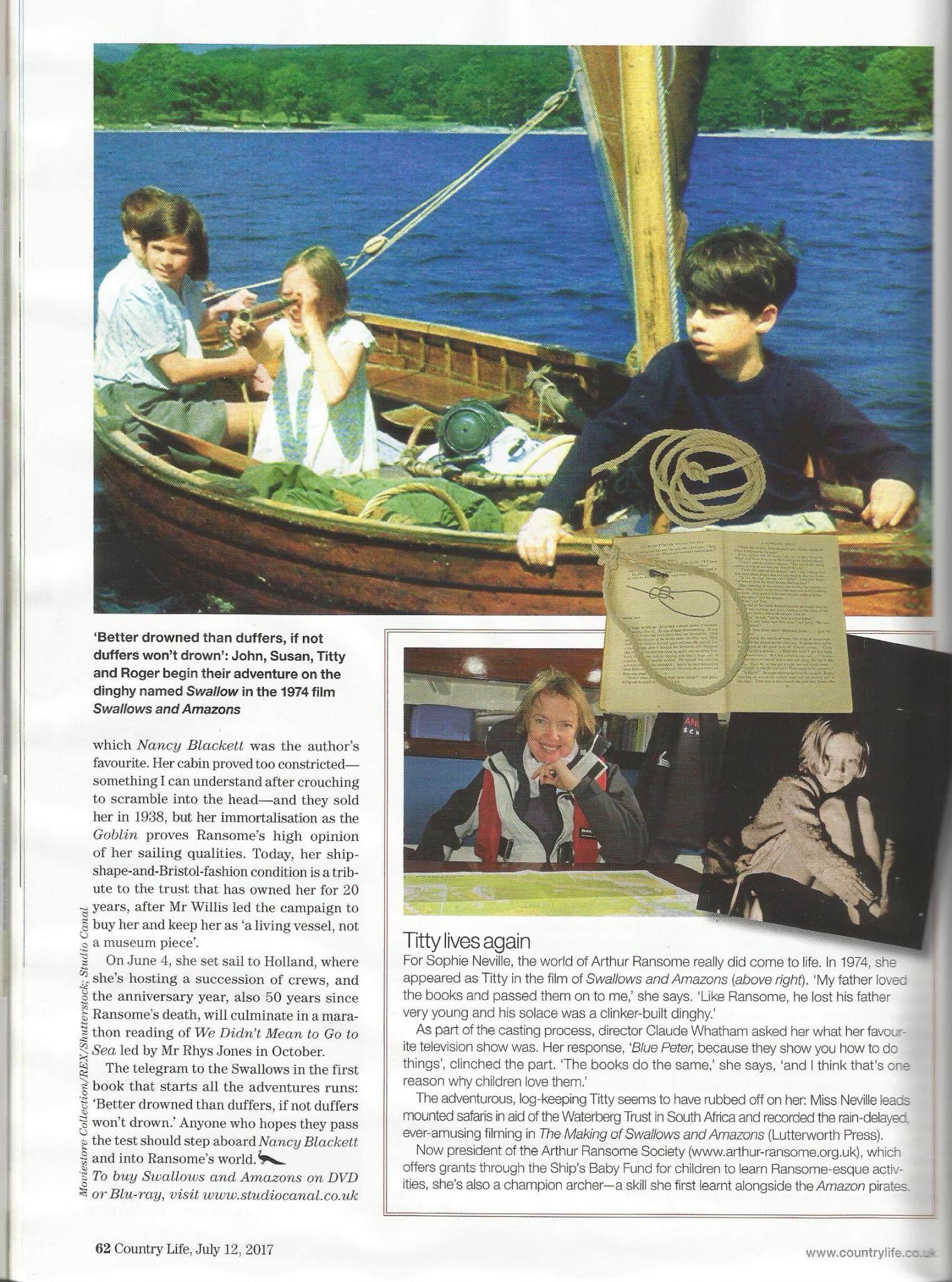
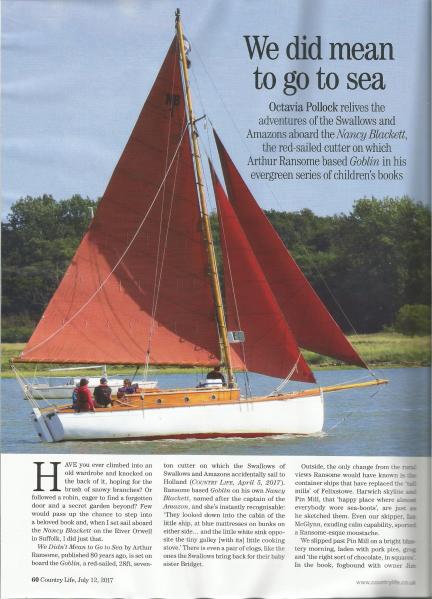
You can read about our adventures sailing Nancy Blackett this summer in Country Life magazine:
Going back twenty years: Members of The Arthur Ransome Society alerted me to a BBC Children’s Television programme, which shows Griff Rhys Jones at Pin Mill in 1997 when he met Taqui Altounyan who knew Ransome when she was a girl. The Swallows were originally based on her family who learnt to sail in two clinker-built dinghies called Swallow and Mavis when they stayed at Bank Ground Farm (Holly Howe) above Coniston Water in the Lake District. I recently discovered the secret that Taqui was also the model for Captain Nancy in Ransome’s well-loved books.
~Lesley Bennett playing Mate Peggy in 1974 (copyright:StudioCanal)~
When I met up with Lesley Bennett in the Netherlands, she kindly allowed me to take copies of the snaps she took while filming ‘Swallows and Amazons’ (1974) on location in the Lake District in the summer of 1973.
~Kit Seymour and Lesley Bennett in 1973 (photo: Lesley Bennett)~
The shot above shows Lesley with Kit Seymour, who played her elder sister Nancy Blackett, wearing blue tracksuits and BOAC life-vests over their costumes. They were sitting on the east shore of Coniston Water waiting to cross over to Peel Island. Lesley is wearing Peggy Blackett’s distinctive red-stocking hat. We never saw the life-jackets inflated. The horrifying thing was that when my father tested one, it didn’t work.
~Old London Routemaster buses in 1973 (photo: Lesley Bennett)~
Throughout the seven weeks filming, we children were obliged to continue with our schooling. The law stipulated that we completed at least three hours of lessons a day. These were given to us by a local supply teacher, our tutor Margaret Causey, in the bottom of a converted Routemaster bus. We changed into our costumes on the top deck where there were six bunk beds. My mother made me take a rest after lunch. Lesley, who at thirteen, was a year older than me, was allowed out to play.
The other double-decker bus, seen here parked behind Mrs Lucy Batty’s barn at Bank Ground Farm near Coniston, had been fitted out with tables and was used as a dinning room where the film crew could shelter from the rain. They took their lunch on trays from the caterers’ van manned by chef John Englewood and his assistant Margaret Wells from Pinewood Studios. We only had a few scenes with a large number of film extras, but these were recorded on sunny days when nobody needed to eat in the buses.
~Behind the scenes in Bowness in 1973 (photo: Lesley Bennett)~
Lesley managed to take this shot of our chaperone, Jane Grendon, dressed in 1929 costume. This was not only fun but enabled her to look after children taking part in the Rio scenes shot at Bowness-on-Windemere while appearing in vision herself.
~Bowness Bandstand in 1973 (photo: Lesley Bennett)~
The Price family ran Oaklands Guesthouse in Ambleside where Lesley and I stayed for the duration of the filming, along with the other children in the cast. Jane Price and her brothers can be seen here with the Kendal Borough Band playing beyond them wearing their own period uniforms. Mr David Watkin Price, who looked quite snazzy in his striped blazer, played the part of the native on the jetty who said, ‘That’s a nice little boat you’ve got there.’ If you do not remember this it’s because the scene was cut from the television version, although it remains in the 40th Anniversary DVD and Blu-ray that is widely available. Sadly the bandstand no longer exists and has been replaced by a modern shelter.
Zena Ashberry also took part as a film extra in these scenes when she was a girl. Her maiden name was Khan and although she lived in Cumbria her father originated from the sub-continent. She wrote in saying:
I was nine at the time and my sister was eight. I remember going through an audition – which was really just a panel of three or four men looking at Mum, my sister and me to see if we would be in keeping with the ‘look’ of the film. They seemed very keen on having Mum. My sister, at the time had sandy coloured hair and so was not at all problematic, however I was very dark and because they wanted Mum they said that they could hide ‘it’ by putting me in a white dress and hat! how times have changed…obviously I remember other things too, like feeding the horses which pulled the open carriage and the horse standing on my foot oouuch!, the strange awkwardness of having to act ‘naturally’ whilst being watched through a camera, having to repeatedly carry out the same activity to ensure a good shot – how many times did we throw stones into the lake? The ice-cream tricycle with real ice cream mmmm a treat … being watched by crowds of tourists gathered along the footpath and flower beds. It was a strange and unreal experience, doing what as children we would normally do but doing it in ‘dressy-up’ clothes that weren’t from our own dressy -up box and playing the game with Mum and her friends with total strangers telling us what we should do…just a bit bewildering really, but funny in retrospect.
~filming in Bowness in 1973 (photo: Zena Khan)~
Zena kept this photo which shows the ice cream seller, Jane Grendon in her blue costume, possibly her daughter Jo Grendon in turquoise shorts and Michael Grendon along with the 35mm Panavision camera and film crew on the jetty where Swallow is moored to the right of frame. I don’t know who the lady in red can be – but do write in if you know!
For previous posts about filming in Bowness-on-Windermere that day, please click here
You can read more in ‘The Making of Swallows and Amazons(1974)’, which can be ordered from your local library.
If you enjoy ebooks, similar publication is available from all stockist for £2.99, including Amazon Kindle.
The Amazons confronting the Swallows on Peel Island in the movie ‘Swallows and Amazons’ (1974)
In the feature film ‘Swallows and Amazons'(1974) the part of Peggy Blackett was played by Lesley Bennett. She was an experienced dingy sailor and enjoyed the scenes on the houseboat although she told me she didn’t want the parrot to flap onto her shoulder, which was understandable. Its claws dug into mine.
~Sophie Neville as Titty with the green parrot and Lesley Bennett as Peggy~
When I met up with Lesley in the Netherlands this summer, we looked though the photographs she’d been given by the producer and kept for posterity.
Kit Seymour and Lesley Bennett at Brown Howe boathouse on Coniston Water in 1973
If you don’t recognise the scene above it is because, although the shot was taken at Brown Howe, where the Amazon boathouse can be found, they were rehearsing the scene at Secret Harbour on Peel Island when the Blacketts find their boat has been captured. ‘She can’t have drifted against the wind.’ This was the first I knew of this. Perhaps they were waiting around for the camera to be set up or for a decision to be made about their red hats, which they were not wearing. This was rare. They wore them in every other scene.
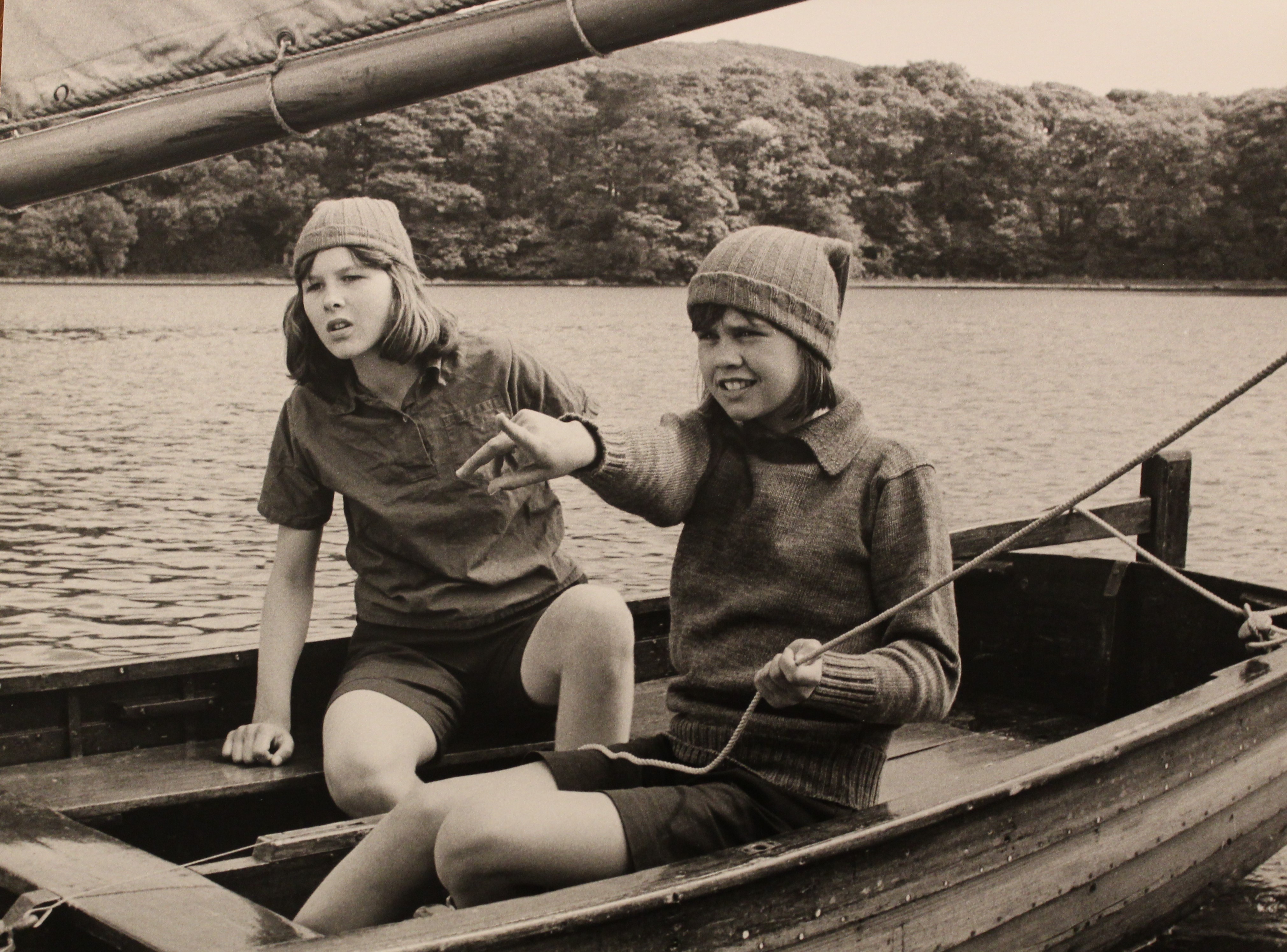
The Amazons sailing on Derwentwater
Lesley didn’t have much time for Ronald Fraser, who played her Uncle Jim, renamed by Titty as Captain Flint. “He wasn’t very nice to us. I think he regarded us as a bit of a nuisance but as soon as the cameras were on him, he’d change!”
Ronald Fraser with Lesley Bennett and Kit Seymour on Peel Island, Coniston Water in 1973
Lesley, who grew up in Kent, remembered my mother taking her shopping in Ambleside on one of our rare days off. “She had an appreciation of how important it is to buy a good top, explaining that she needed a selection for her work as a television presenter. I remember her waiting for ages while I tried on one after another.” I was amazed when I heard this. My mother only ever took me shopping once or twice when the first Laura Ashley shop opened in Cheltenham. This was deeply exciting but a rare treat. It was my poor father who was dragged from one shoe shop to another. It was difficult to find decent shoes in the ‘seventies.
Leaving London for the Lake District in May 1973 – photo Evening Standard
It was difficult to find decent clothes, that didn’t cost a fortune. There was a reason why dressmaking was so popular – we had to make our own garments. At the age of twelve I made a navy blue skirt for school so that it had a fashionably broad waist band. Flared dungarees were all the rage, worn with a stripy polo-neck or blouse with a large collar. Kit, Lesley and I all wore these, although sadly my brushed-cotton dungarees grew rather short during the filming.
Lesley signing autographs at the Chiddingstone School Book Fair in 1974
Lesley managed to find what I’d thought was the ideal outfit for our afternoon film premiere, which I’m pretty sure she is wearing in the shot above. Although we were almost obsessed with clothes, they were not a subject people discussed with new acquaintances, which was a pity as it would have provided us something neutral to discuss with the press.
“I remember the journalists at the hotel in the Lake District,” Lesley said, “and Claude saying, ‘Be careful what you say to journalists because they will turn it against you.'” However, when it came to film publicity Lesley was both enthusiastic and gracious turning up at a local school book fair and posing for newspaper photographers. I can see that tank-tops had come in by this time and it was possible to blow-dry your own hair.
Lesley enjoyed drama at school and looked into going to RADA, but after auditioning for one film decided the acting profession was too precarious. I think we were both interviewed for parts, possibly the same part in the same film. It was set in Wales and involved rock climbing. I said I wasn’t scared of heights, which was a lie! Sadly it was never made. I told her that Ronald Faser wanted us both to appear in another movie but that the funding fell through. She wasn’t disappointed. I was able to tell her that there was an actress called Lesley Bennett of about our age who once had a part in the long-running soap opera ‘Coronation Street’ but she confirmed that this was not her.
Lesley always loved meeting people wanted to travel, so went into marketing, working for Unilever on the first ‘Just one Cornetto’ campaign. She later branched out into international event management, which took her all over the world. She married a tall Dutchman and has two grown sons. They have a policy of visiting a different place each holiday, there by exploring different places, and they lived in Dubai for a while before returning to the Netherlands where she has been based since the early 1980s.
The cast of Swallows and Amazons with Virginia McKenna at Bank Ground Farm in 1973
Lesley looks back fondly on what she calls “The Swallows and Amazons era”, appreciating what recollections mean to those who have grown up with the movie and enjoy Arthur Ransome’s books. “Innocent films like ‘Swallows and Amazons’ (1974) appeal to those who know exactly how the books were written.” One thing she kept was the original film poster. Here she is with it more than forty-three years after the release. And she hasn’t changed a bit.
Lesley today, with her original film poster of ‘Swallows and Amazons’ (1974)
When the original feature film of ‘Swallows & Amazons’ was made in 1973, Peggy Blackett was played by Lesley Bennett, who was aged thirteen at the time. She can be seen here on location at Bank Ground Farm above Coniston Water in the Lake District.
For the last thirty-eight years, Lesley has been living in the Netherlands. I met up with her for lunch at Schiphol Airport on my way back from sailing Arthur Ransome’s cutter, the Nancy Blackett, through the inland waterways of Zeeland. (Please see the last two previous posts.) I nearly didn’t make the meeting. A man had been arrested for planting a bomb on a train just north of Middleberg, but the authorities must have acted quickly as I wasn’t delayed for long.
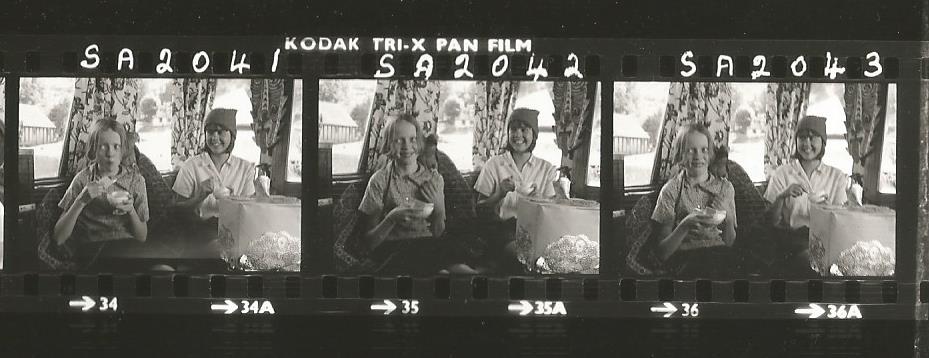
Lesley had brought along a blue file of documents and a number of black and white movie stills that she’d been given by Richard Pilbrow, the producer of ‘Swallows and Amazons’ (1974) on one of our last days in Ambleside after filming had finished. We could both remember them spread out on a table at the unit hotel so we could each chose the ones we appeared in. I had picked one where Lesley and I are sitting together, our hair bobbed in line with the 1930’s, I wearing a cream silk dress, Lesley in a dark top looking very pretty:
~A publicity shot featuring Virginia McKenna, with Kit Seymour, Sten Grendon, Sophie Neville, Lesley Bennett, Simon West and Suzanna Hamilton, published in the Guardian and other newspapers~
Lesley’s parents, who lived near Tonbridge in Kent, originally learnt that Theatre Projects were looking for children to take part in the film when the Associate Producer, Neville Thompson, wrote to their local sailing club. Lesley explained that her father, who was very well organised, kept a copy of the letter sent to the Secretary of the club in January 1973. Plans were made for Lesley to be interviewed for a part with her younger sister Lyn, who sadly fell ill and couldn’t make the audition. The letter contains a mistake that might explain why Lesley ended up playing Peggy when she was thirteen years old.
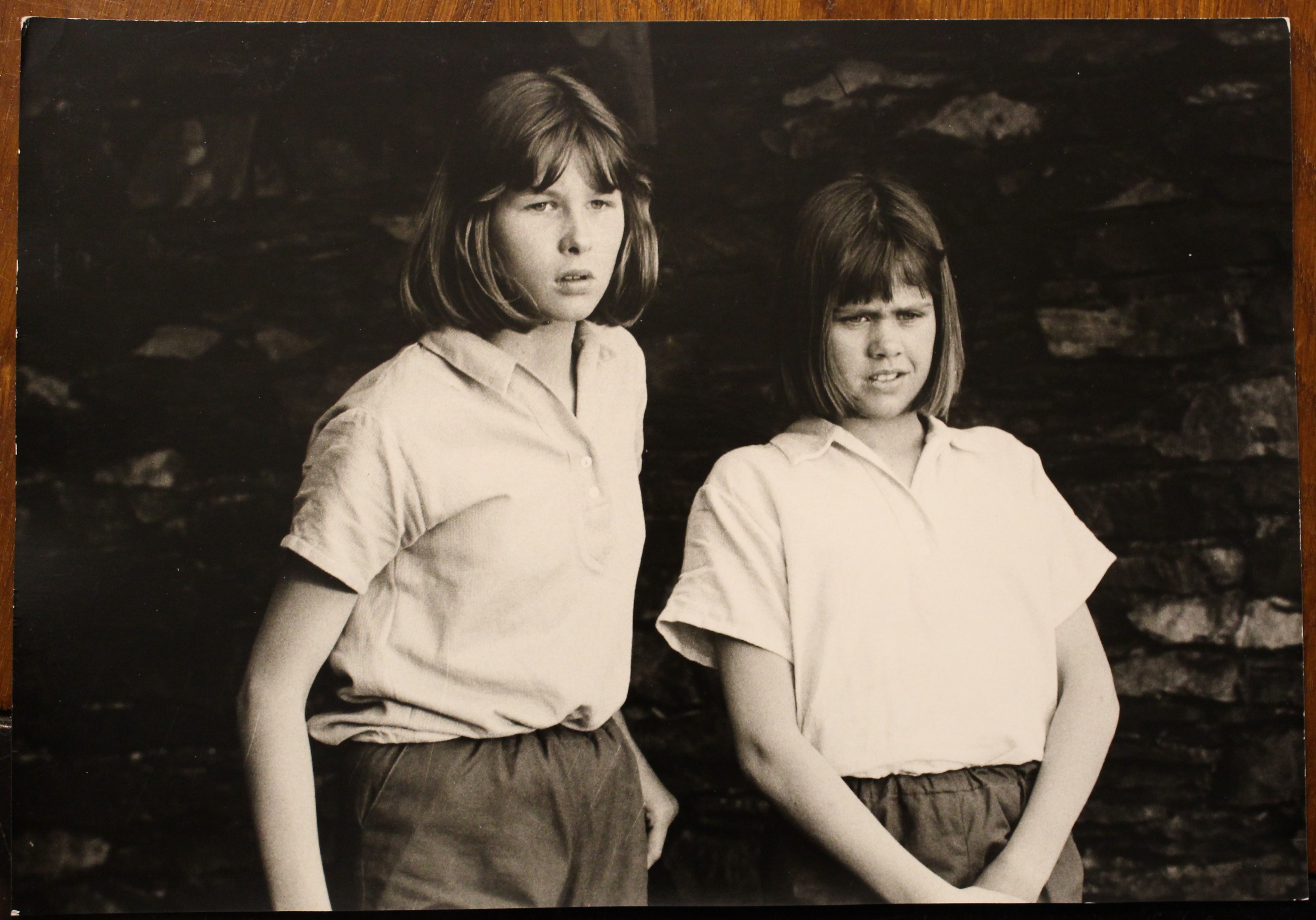
Lesley got on well with Kit Seymour who ended up playing her elder sister, Nancy Blackett – ‘terror of the seas’. Both girls would sail well and enjoyed being out on the lakes. Lesley told me that the reason why she held her hands between her legs in this photograph is that it was so cold when we were filming on Peel Island.
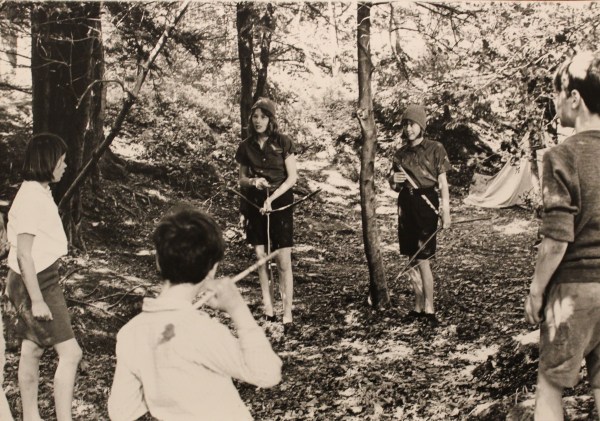
‘Kit would fold her arms and I’d try to keep my hands warm.’ Although I wore a cardigan in this scene, Swallows had been cold too. I remember thinking that at least the Amazons wore knitted hats. Otherwise their costumes were simple short-sleeved shirts and long shorts with black plymsols, worn without socks.
~Kit Seymour as Captain Nancy and Lesley Bennett as Mate Peggy in 1973~
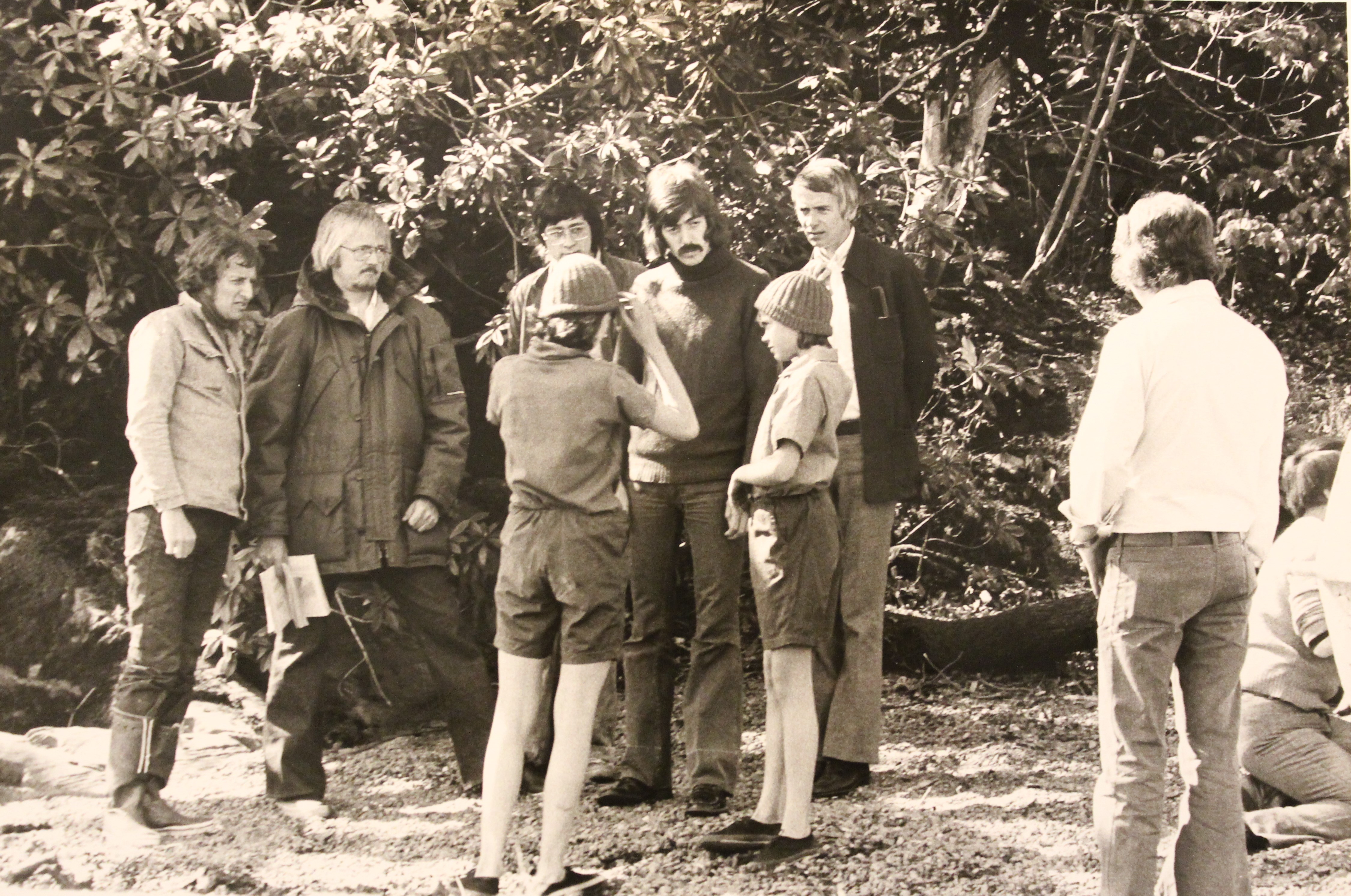
Lesley told me their hats had been quite a problem – not quite a full-blown movie disaster but a they caused consternation in Consiton. The first scene the Amazons shot was set in the garden of Beckfoot, the Blacketts’ house. Although it does not lie on the ‘Amazon River’ at the northern end of the lake, Brown Howe on the western shore of Coniston Water was used as the location and the crew set up the 35mm Panavision camera, along with reflector boards and enough lighting to bring sunshine to Westmorland. When everyone on the production was ready, Gareth Tandy, the third assistant led the Amazons down to the set wearing red knitted stocking caps – with no bobbles. Beanies were not quite what either the director or producer had expected. Lesley has a photo showing the great discussion that ensued:
~Director Claude Whatham, Producer Richard Pilbrow, 3rd Assistant Director Gareth Tandy, Make-up Artist Peter Robb-King, Hairdresser Ronnie Cogan and Associate Producer Neville Thompson with Kit Seymour and Lesley Bennett at Brown Howe on Coniston Water in May 1973 ~
In the end Claude Whatham shot the scene with the girls bare-headed, their hair blowing all over the place, even though it was meant to be ‘dead-calm’ in the story. This looked natural as they were at home but they needed to look like pirates in every other scene.
~Nancy and Peggy running down to Amazon at the Blackett’s house Beckfoot~
Wooly hats with ‘longer ends’ were knitted locally at some speed. Red is not a good colour on the screen. I remember a couple of bright pink ribbed bobble-hats arrived when we were filming on Peel Island but they were deemed a complete disaster and rejected in favour of scarlet ones originally described by Arthur Ransome even if the colour might look a bit jarring on screen.
Emma Porteous, the costume designer, was back in London. No one on the production knew anything about knitting or subtle shades of wool. When the third pair of hats arrived we were all a bit worried about the fatness of the bobble-end, as they didn’t quite match the illustrations in the books, but no one knew what else to do. Time ran out and the producer was forced to compromise. ‘They were warm but prone to flop about,’ Lesley said, ‘and sometimes flopped forward, which looked a bit silly.’ I’d never noticed this but it was captured in one photograph:
Kit Seymour and Lesley Bennett as Nancy and Peggy Blackett in 1973
Mum was given the pink version of the hats. She kept them for years but no one ever wore them.
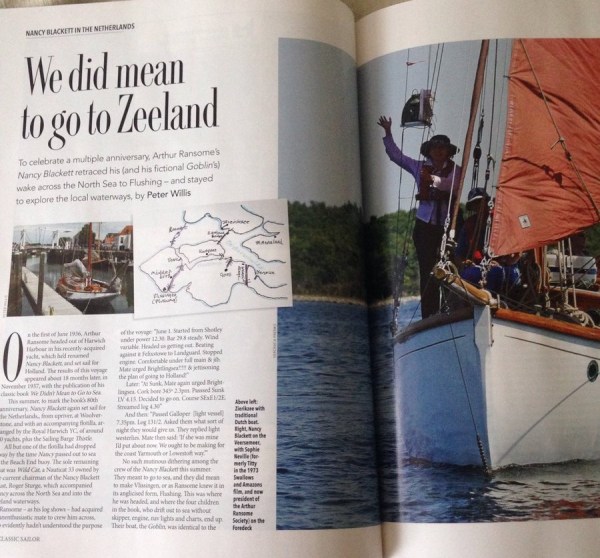
Nancy Blackett, the 28 foot cutter that Arthur Ransome bought with Spanish gold, as he called his royalties from ‘Swallows and Amazons’, is an old lady now. Built by Hillyards of Littlehampton in 1931, she turns eighty-five this year and yet looks pristine. If you ever wanted to sail the Goblin in ‘We Did Mean To Go To Sea’ you must know that it was Nancy who took this starring role in Ransome’s novel, first published eighty years ago.
Nancy Blackett
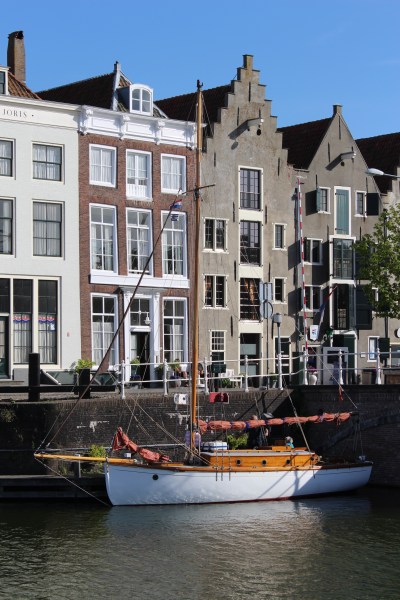
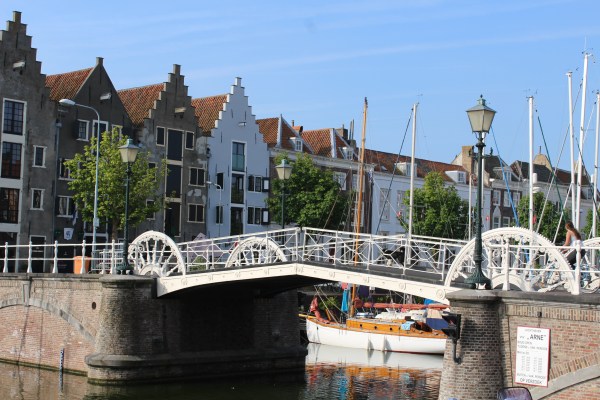
I arrived in the Netherlands this summer to find Nancy receiving visitors at a nautical festival in Midddleburg, while a jazz band played on the quay. She was moored by a lifting bridge in the centre of town, neatly rigged and ready for anything. After taking a look at a number of old gaffers, her crew enjoyed a cold beer and walked down the canal to vittel-up at a supermarket before having dinner in what was once a packing house for silks and spices imported from the East Indies.
Nancy seen through the swing bridge in Middleburg
As the swing bridge rose the next morning, we made way and motored down the wide canal to Veere, mooring up by the grassy port bank.
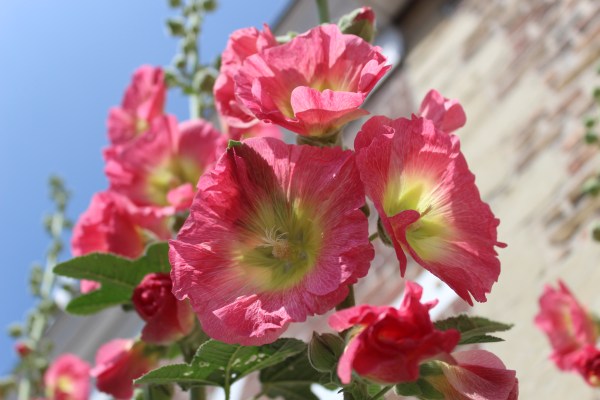
Hollyhocks of Veere
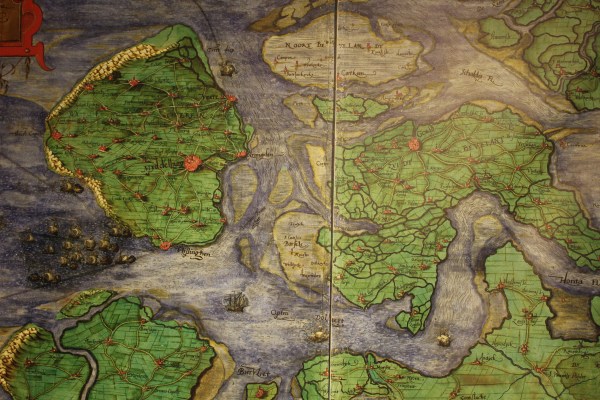
After being granted permission to go ashore, I passed the historic town well and walked down lanes bordered by hollyhocks to visit the museums of this ancient port. They house a number of charts and medieval maps that would have delighted the Swallows, along with old photographs of Dutch natives in traditional dress. I was tempted to buy a pair of clogs to take home for Bridget.
The waterways of Zeeland
We left Veere to explore the islands and creeks of the Veersemeer before sailing down-channel and through a modern lock into the Oosterschelde estuary formed by the River Scheldt. It was once an important shipping route that bought wealth to the Netherlands but is quieter now. I spotted a seal and watched a cormorant swallow a large eel, that wriggled and jiggled inside its gullet.
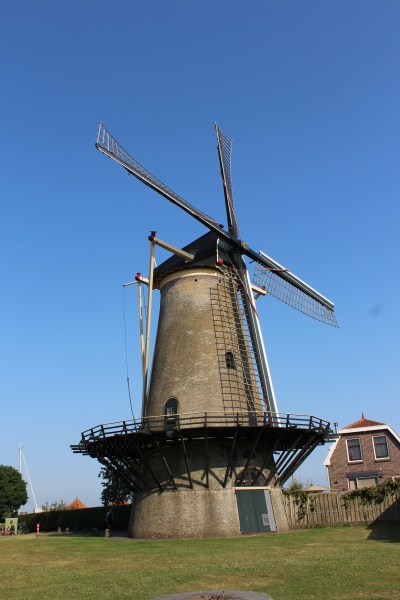
A windmill of Zierikzee
After negotiating the impressive Zeelandbrug that spans the delta, we sailed down to Zierikzee where you can climb the church tower, if you dare, and look out across the once fortified town. The windmills, ornate spires and ancient buildings help one to imagine what life must have been like in the 1500s when it became famous as a trading centre for salt and madder. I found scold’s stones and a whaler’s kayak from Greenland at the Stadhuis Museum in Zierikzee where Veronica Frenks was once the curator.
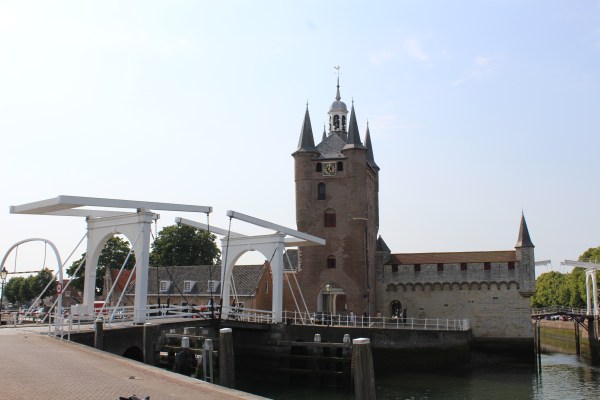
The lock gates of Zierikzee
Our skipper, Ian McGlynn, wondered if we could sail back under an arch of the Zeelandbrug instead of waiting for one section of the road to lift. Built between 1963 and 1965 the Zeeland Bridge is more than five kilometres long and hardly comparable to the arch of Potter Heigham but Mate Judy Taylor didn’t want to take any risks. We had Nancy’s new mast to consider.
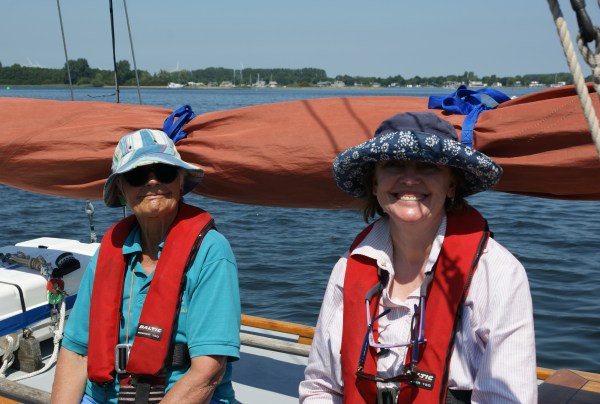
Crewing the Nancy Blackett
It was only on our last evening-but-one that rain hit us. We’d had blue skies and sunshine all week. As the salt water was washed away from Nancy’s portholes I opened the pages of ‘We Didn’t Mean To Go To Sea’ to find Ransome’s illustrations and read the final passages of the Swallows’ unplanned voyage to Holland. The book is eighty years old this year and yet moves me still. There is Nancy, portrayed as the Goblin moored up in a foreign port, which is where we left her to be enjoyed by other members of the Nancy Blackett Trust.
Nancy Blackett in Zeeland
A marathon reading of ‘We Didn’t Mean To Go To Sea’ is planned, to celebrate the 80 year anniversary of its publication, at Pin Mill Sailing Club on the Orwell in Suffolk on Saturday 21st October 2017.
To read more about Nancy or join the Nancy Blackett Trust please click here
Nancy has been featured by Country Life in a July issue you can read here

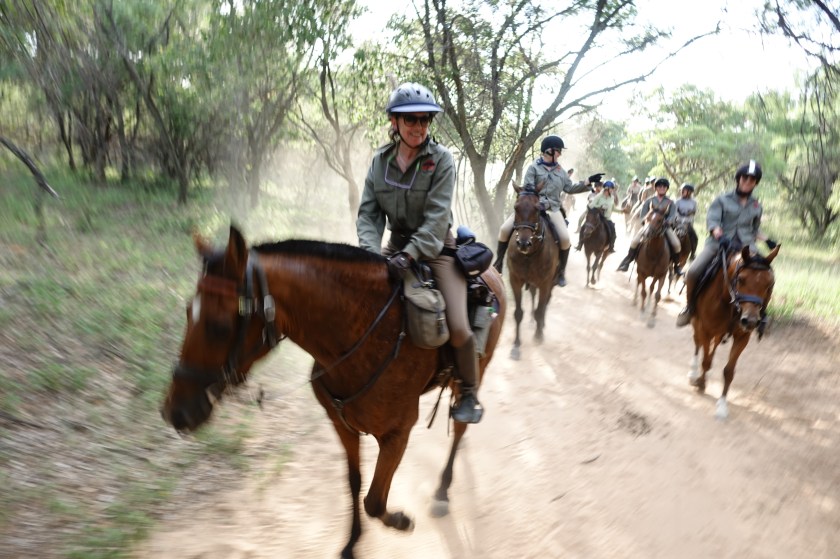


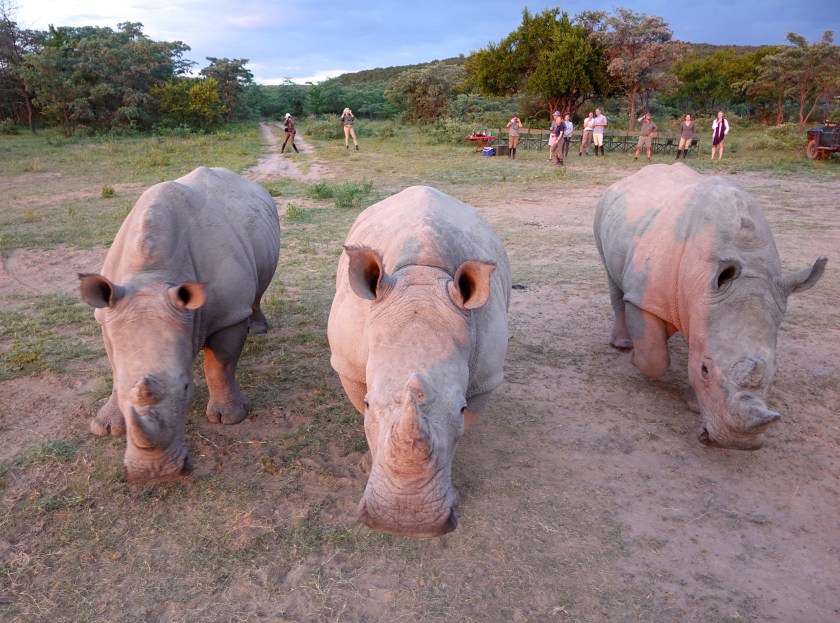

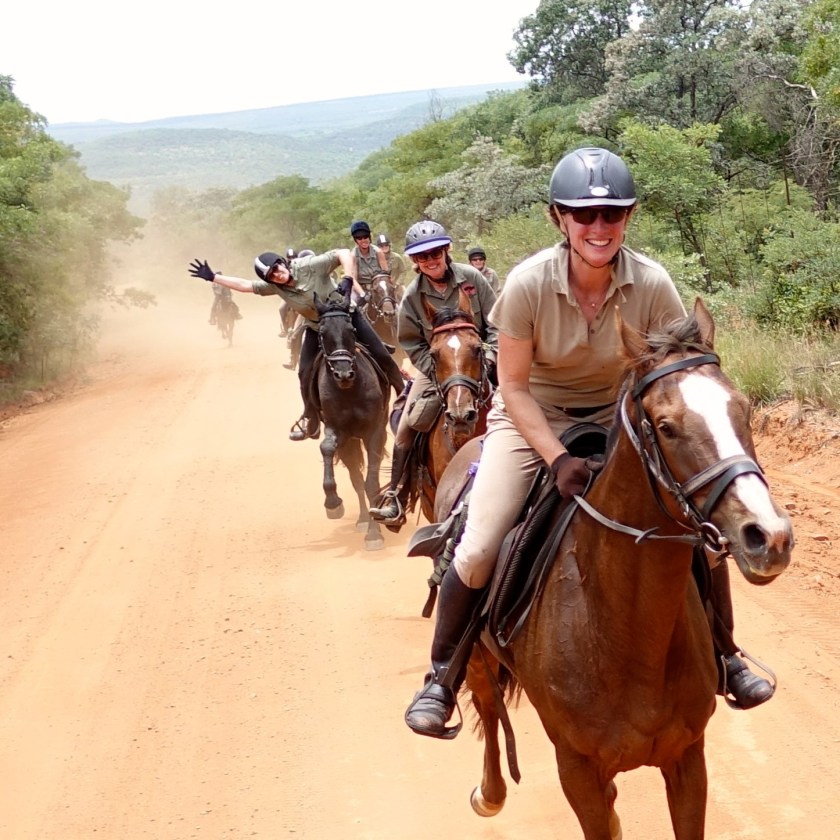
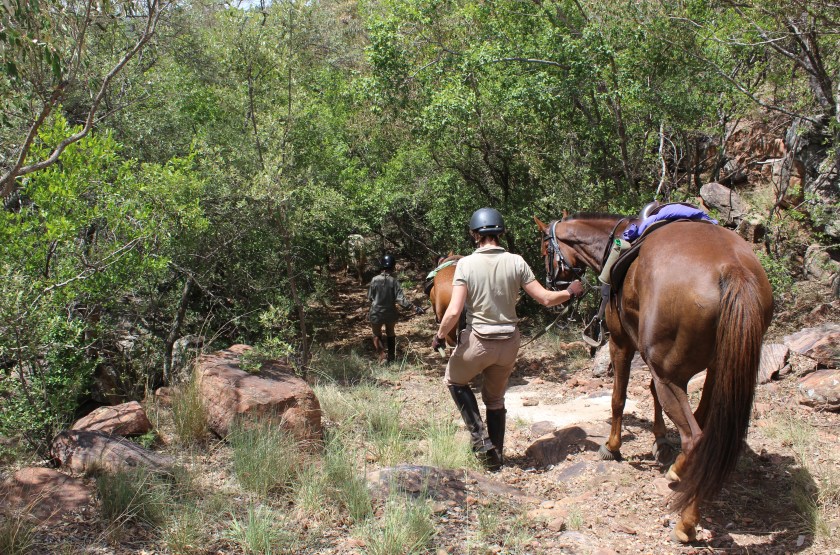

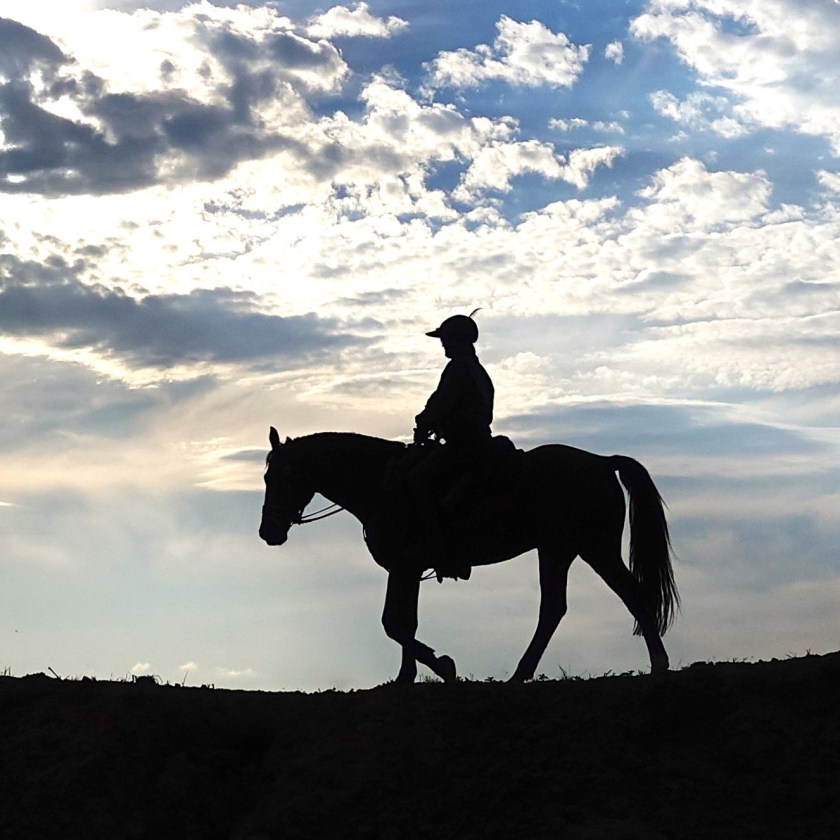

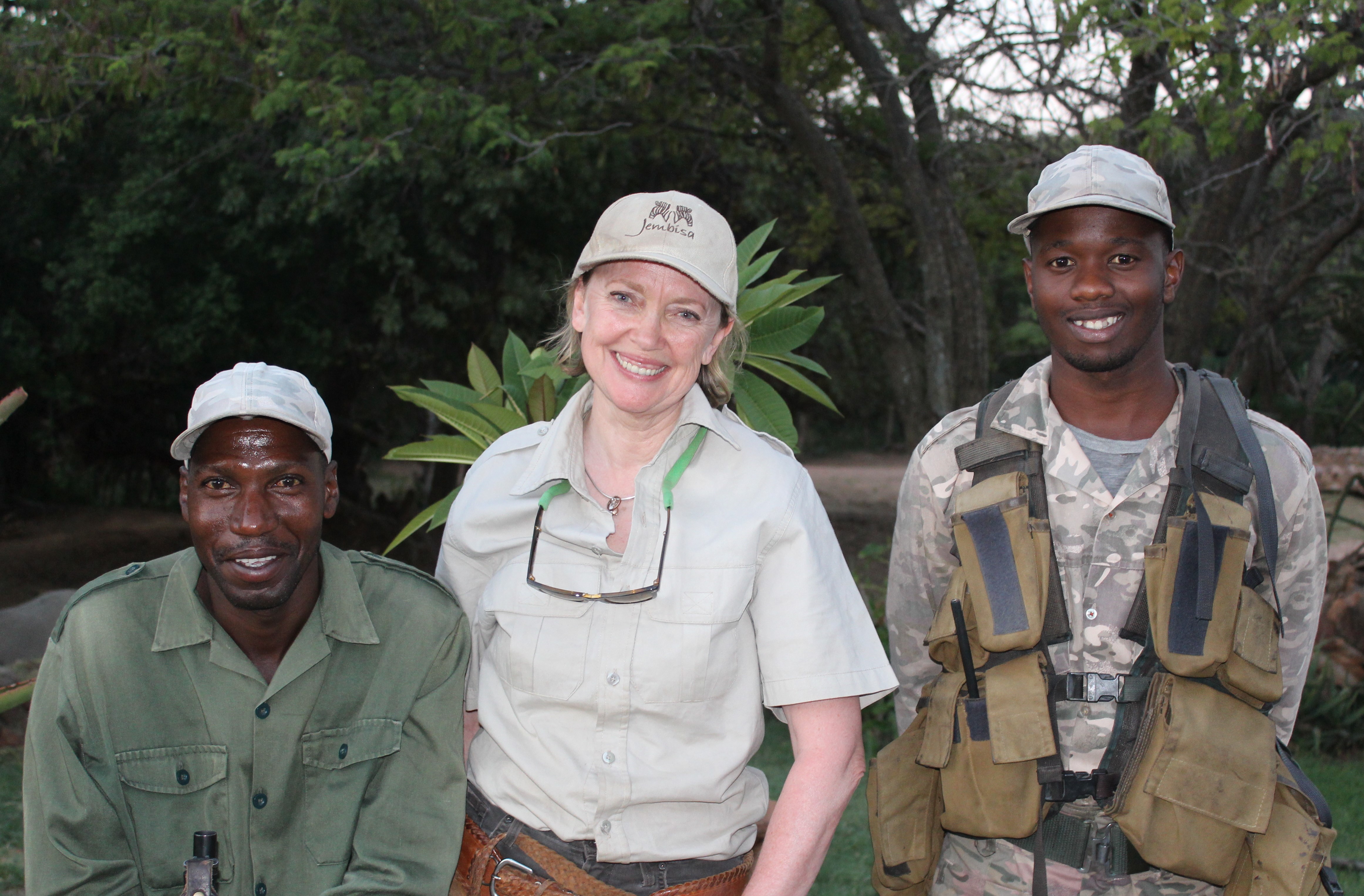

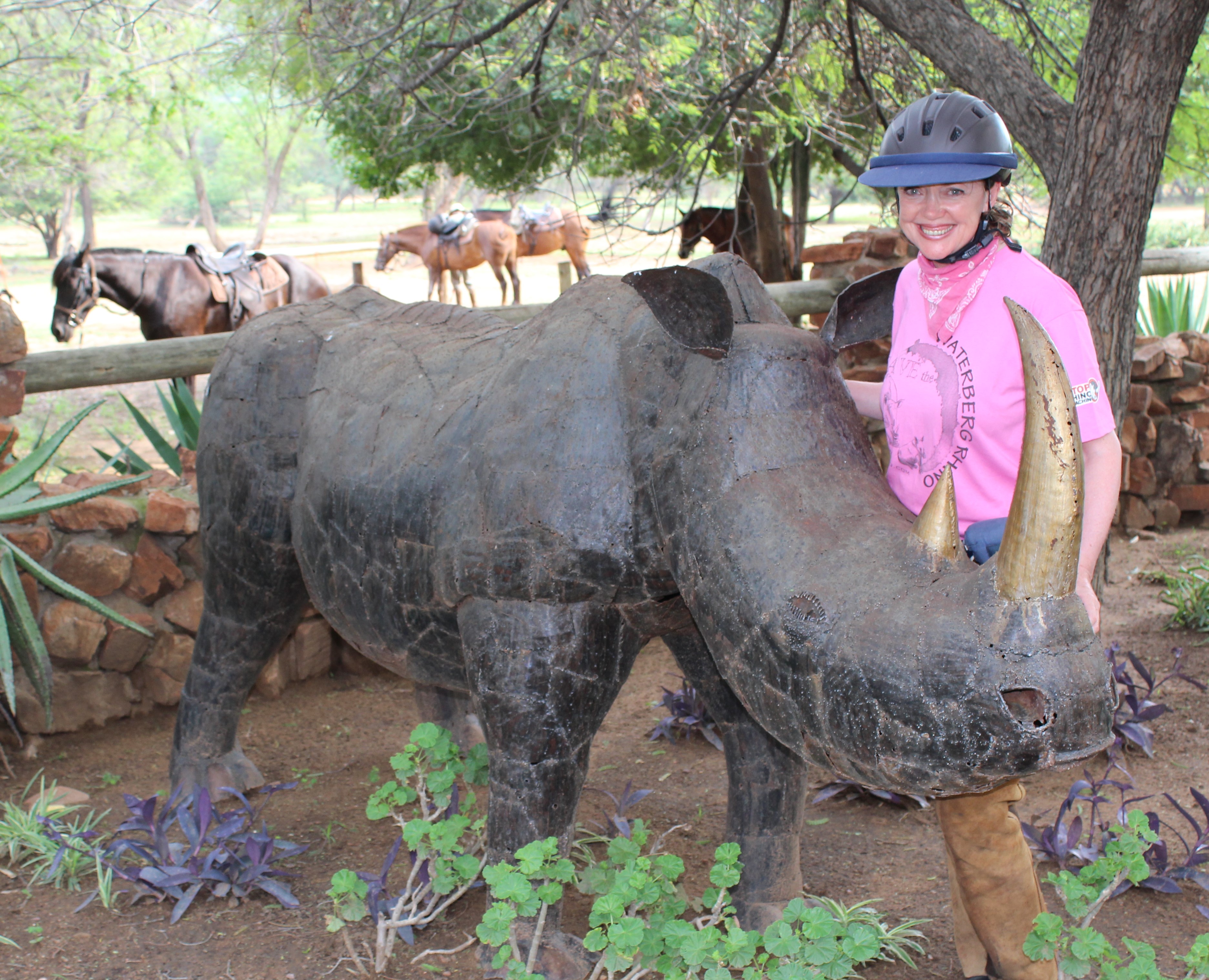


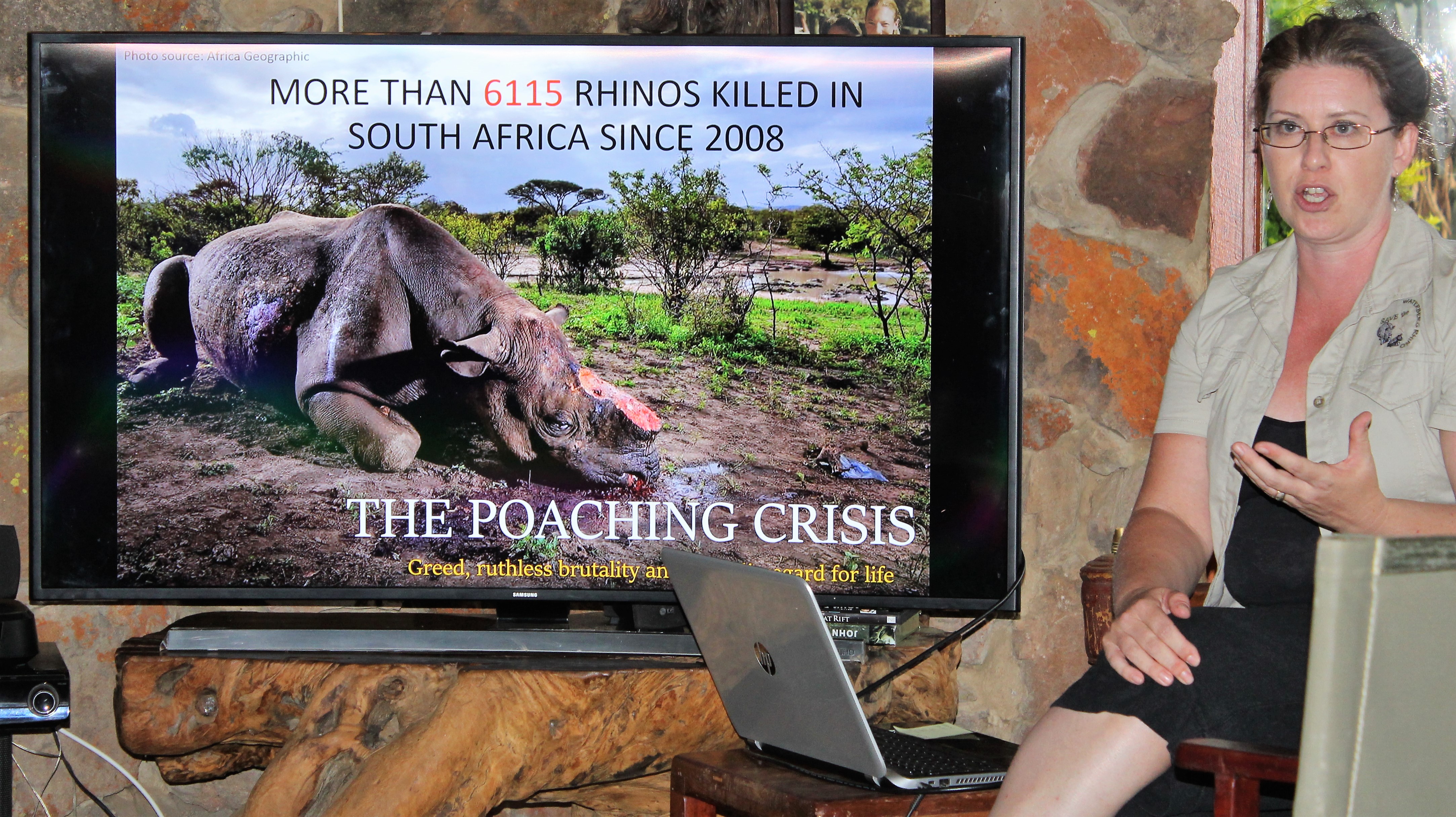

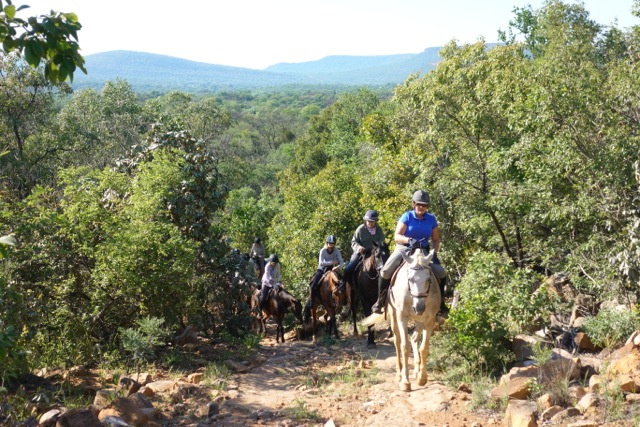
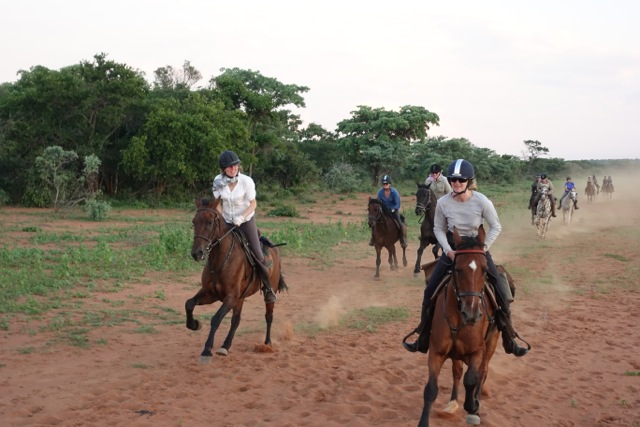


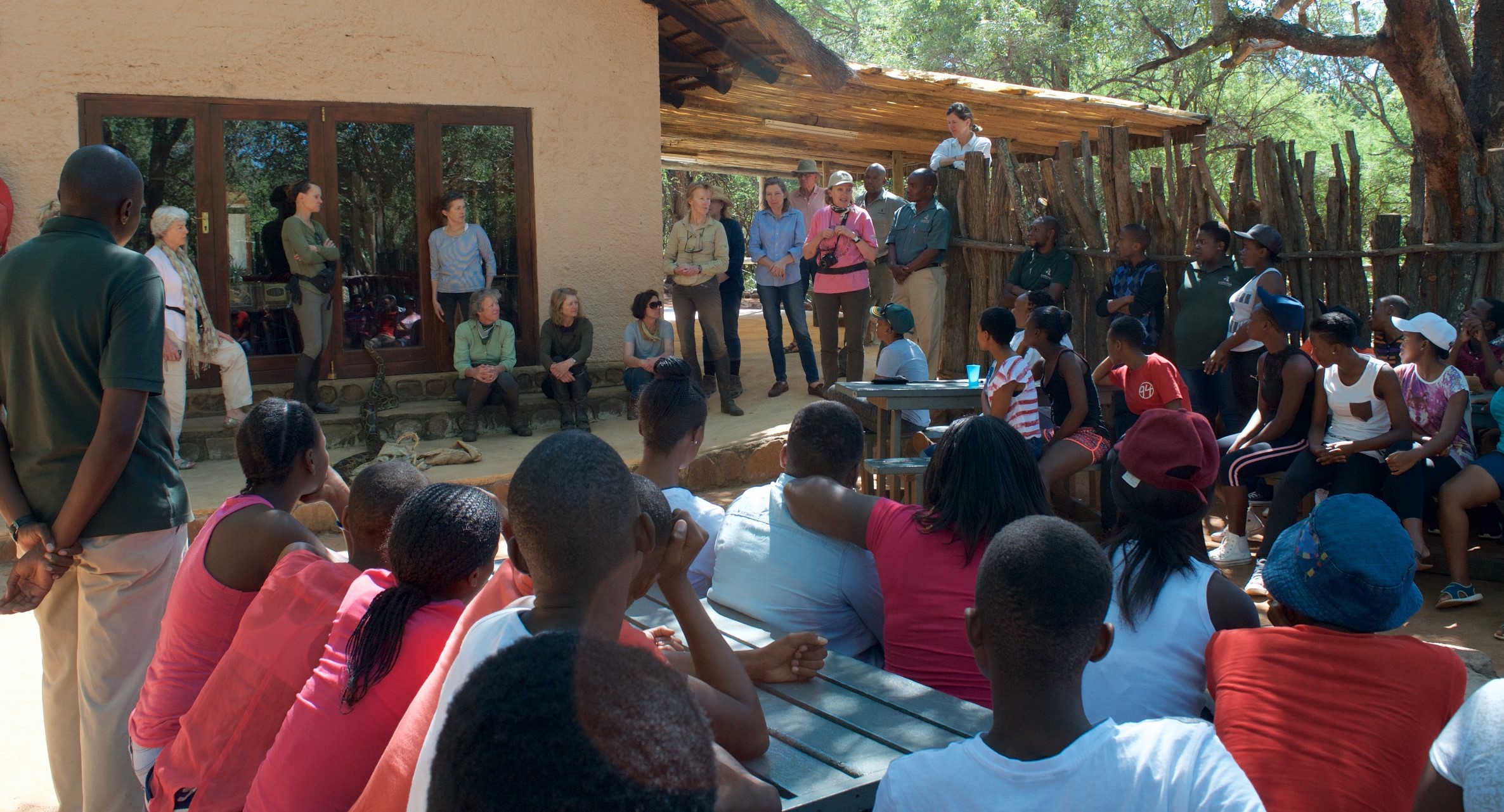
 ~The Waterberg Trust Challenge riders and back-up team 2017~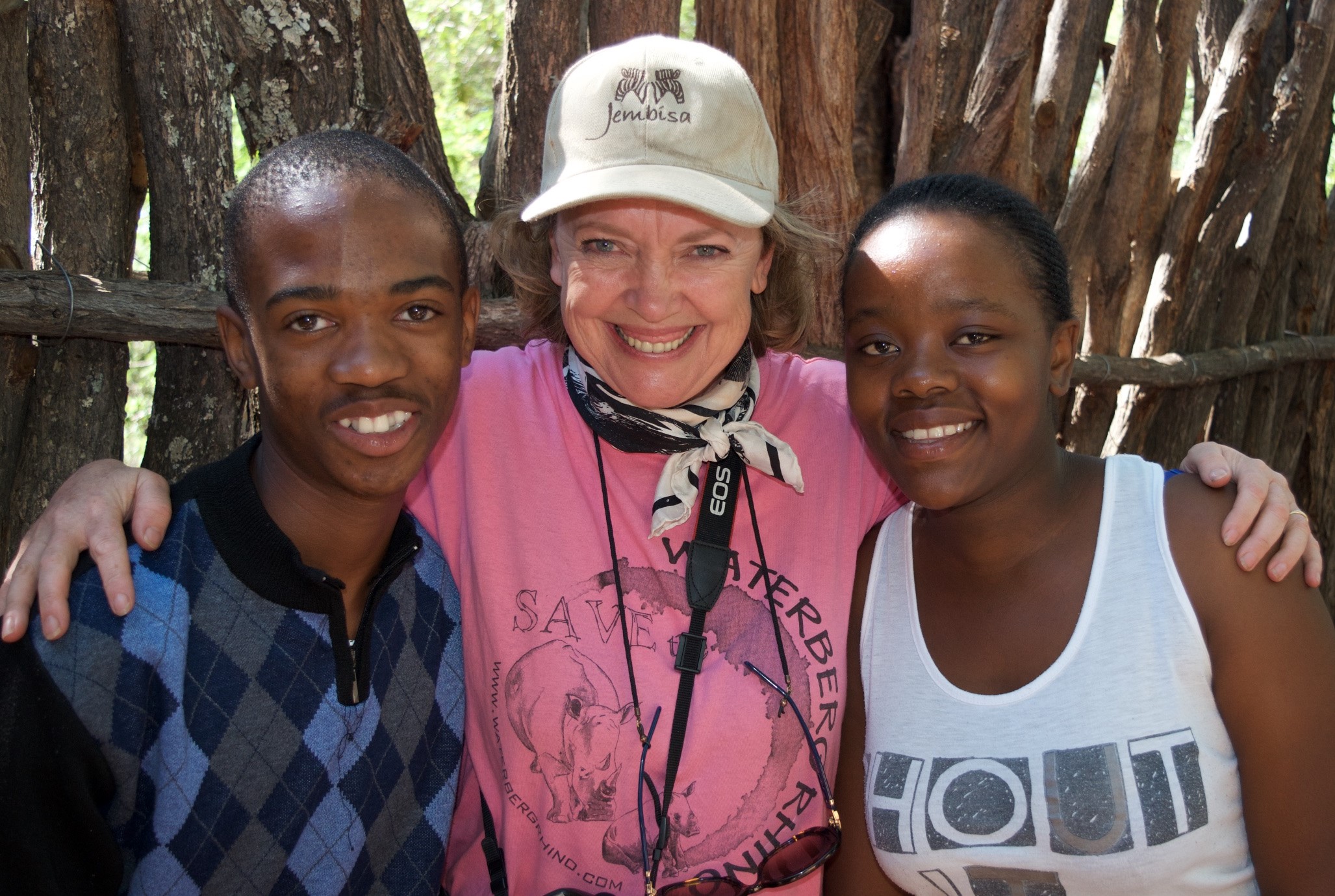















 ITV News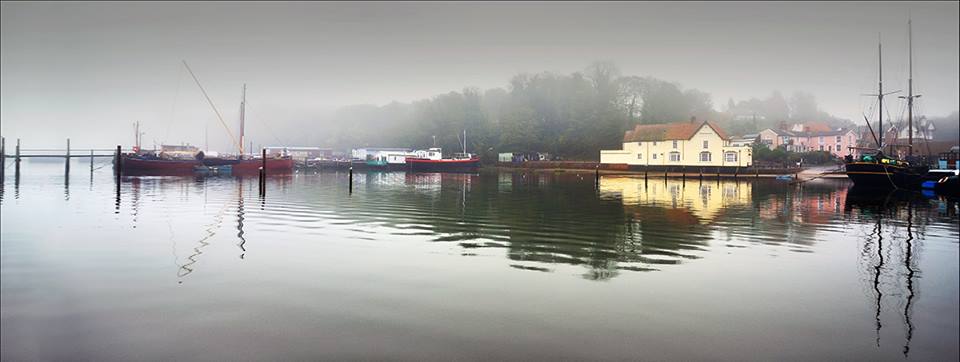
 ~Gryff Rhys Jones and Sophie Neville appearing on Anglia Television~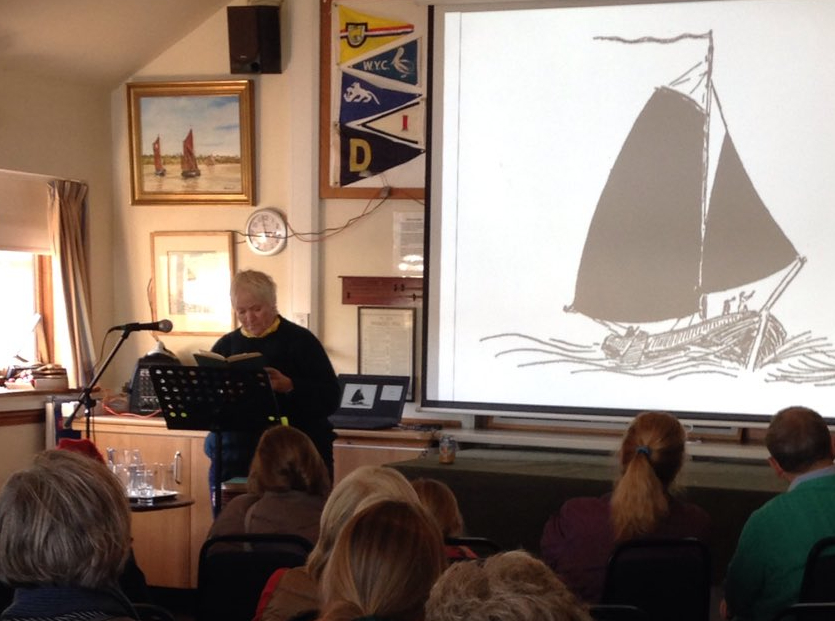

 ~Kit Seymour and Lesley Bennett in 1973 (photo: Lesley Bennett)~
 ~Old London Routemaster buses in 1973 (photo: Lesley Bennett)~
 ~Behind the scenes in Bowness in 1973 (photo: Lesley Bennett)~
 ~Bowness Bandstand in 1973 (photo: Lesley Bennett)~






 Sophie Neville