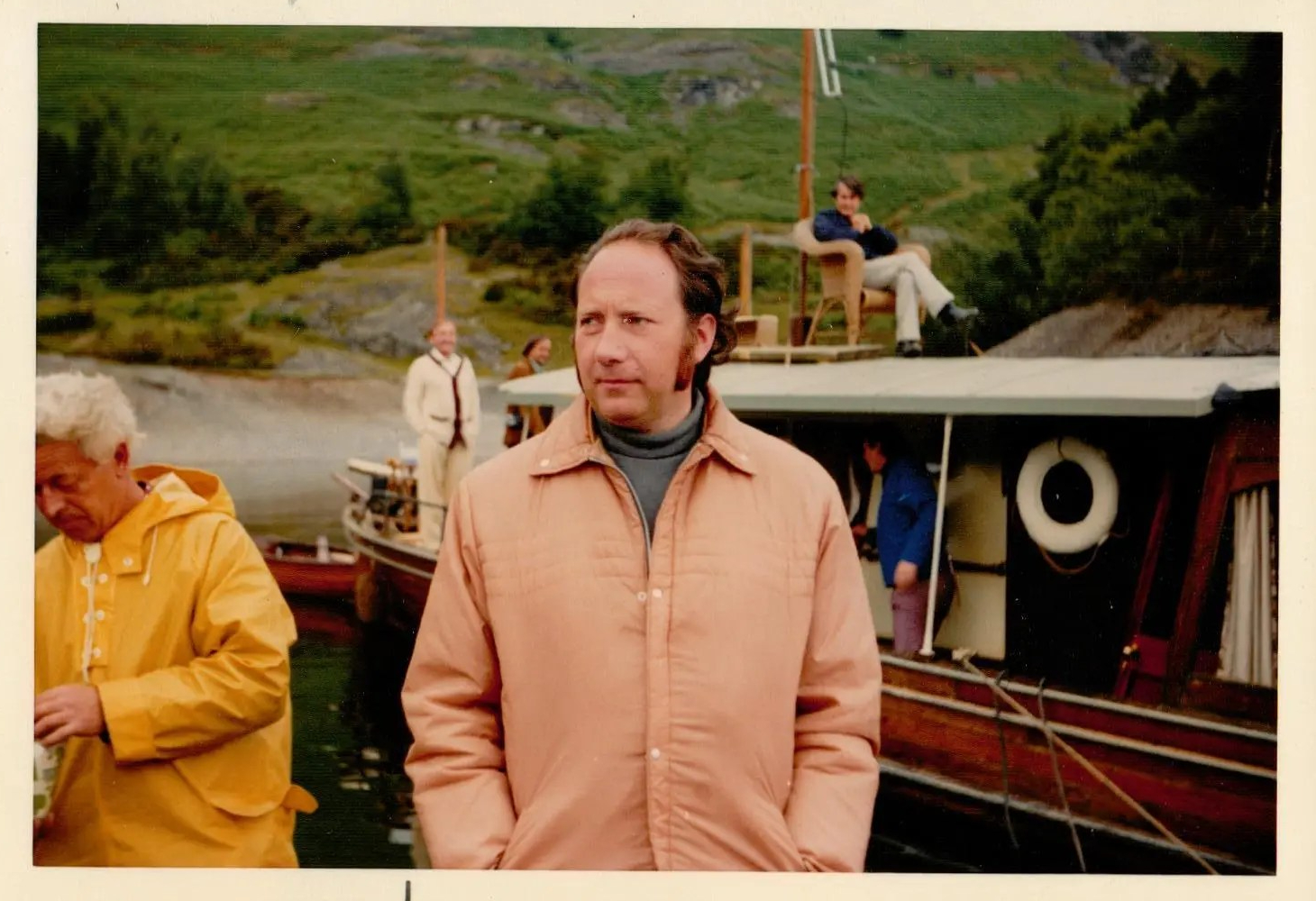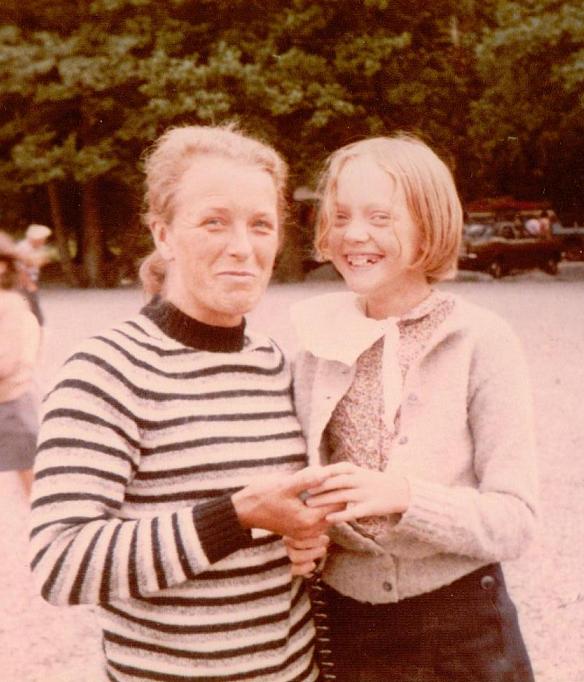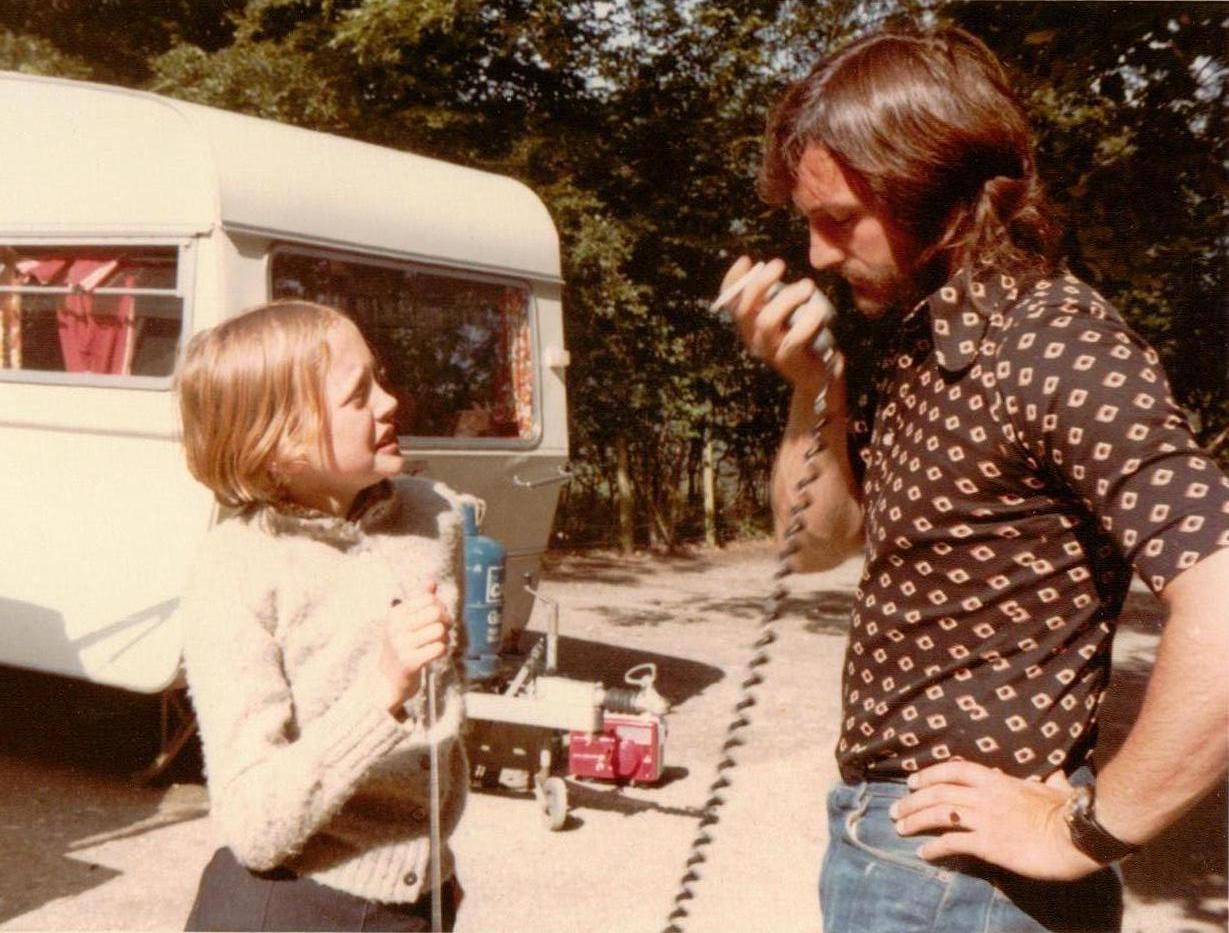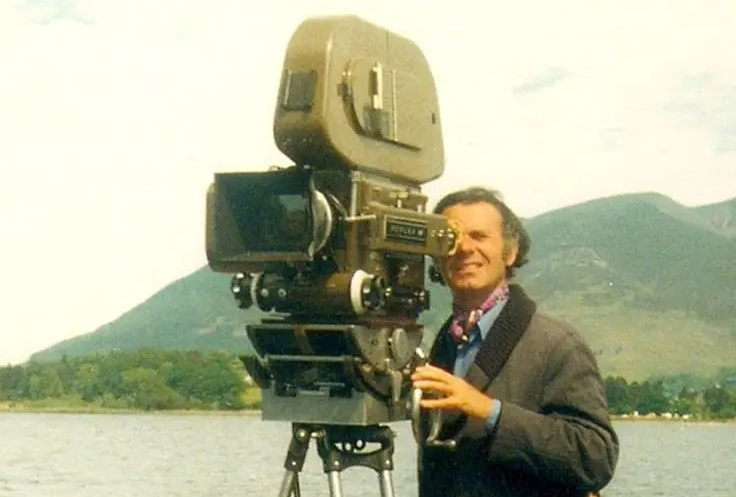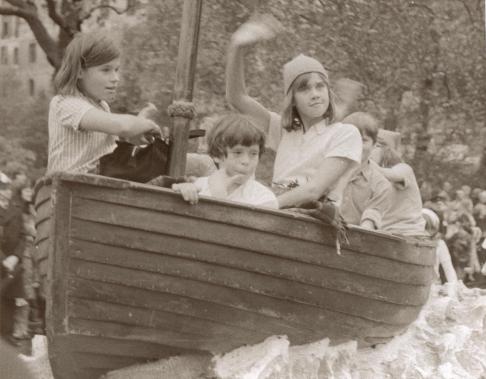
Promoting the original film of ‘Swallows and Amazons'(1974) at the Lord Mayor’s Show fifty years ago.

Suzanna Hamilton, Stephen Grendon, Leslie Bennett, Simon West and Kit Seymour sailing the streets of London in 'Swallow'
Suzanna Hamilton, Stephen Grendon, Leslie Bennett, Simon West and Kit Seymour sailing the streets of London on polystyrene waves.

Our first major public appearance for the promotion of ‘Swallows and Amazons’ was The Lord Mayor’s Show . For the first time since the filming we climbed into our costumes and then into Swallow who had been mounted on low-loader.  Afloat on a float, we made ready to sail through the City of London.

Sophie Neville, Suzanna Hamilton and Lesley Bennett

It must have been early November and was so very cold before we set off that we needed to keep our own coats on. We were anxious this would spoil things for people. I’m sure it would not have made much difference. Did anyone know who we were?  The film hadn’t come out. We were riding on the wave that Arthur Ransome and his books were so well loved by the people of our nation.

Stephen Grendon, Suzanna Hamilton, Lesley Bennett, Simon West, Kit Seymour and Sophie Neville in Swallow. What is the building behind us?

What was fun, if a little odd, was that it was the first time, indeed the only time, that the Swallows and the Amazons had been in a dinghy together. As we were taken through the streets of London passers-by started to wave at us and we waved back. Soon it was waves all round. Being Titty, I had Swallow’s flag to fly. John let Nancy take the tiller.

Kit Seymour, Sophie Neville, Simon West and Suzanna Hamilton together with huge crowds of Londoners ~ photo: Daphne Neville

We were amazed to find huge crowds of people had gathered and that it was all rather fun. I don’t know why but Sten must have joined my mother on the pavement by the time this shot was taken. I can see the back of his head in this next photograph. He is wearing the tartan hat Claude Whatham bought him at Blackpool fun-fair.

Jeremy Fisher Frog was leaping about in front of us, which was rather amazing. With him danced other representatives from the Tales of Beatrix Potter, The Royal Ballet’s wonderful feature film that also came out in 1973/4.  We were marking the 35th anniversary of EMI, whilst bringing the Lake District to London Town, which is something we all could celebrate.
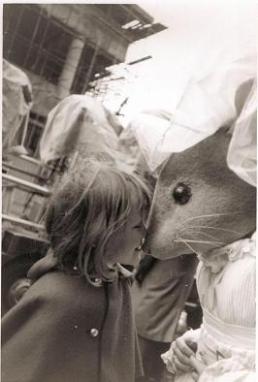
Tamzin Neville meeting Mrs Tittlemouse

Since we didn’t have to talk to anyone, we were able to enjoy being involved in the pageant, which included so many icons of British Life.

I hadn’t met a Pearly Queen before, but there was a whole clan of them in their glorious suits, lovingly embroidered with mother of pearl buttons. I resolved to collect enough to adorn my own jacket. My favorite view was of HM the Queen’s gold state coach pulled by her lovely white horses, six in hand. I’d been to see them at the Royal Mews when we came up for my first interview at Theatre Projects offices in Longacre when I first met our director Claude Whatham.

My mother took a photograph of the Queen’s Drum Horse. Much later she found that he was a stallion, on offer as part of a British Horse Society breeding improvement scheme. He was brought over to service her Irish mare Gerty. The result was a lanky skewbald called Nimrod, an enormous gelding who Andrew Parker Bowles rejected on behalf of the British Army. This proved an error. Like most heavy horses Nimrod was just slow to grow. He eventually became a national dressage champion, although not in our hands.

The Queen’s drum horse who sired our foal, Nimrod

We have one last photograph which shows that the float in front of us depicted an EMI film crew, with 2K lights, a camera and technicians. It is studing this photograph that made  me feel that we were not in Swallow as the transom seems so differnet. I don’t suppose anyone else noticed.

Funnily enough I was in a boat for the Lord Mayor’s Show this year.  We rowed up the Thames in the Lord Mayor’s procession on Saturday 12th November.

I am on the crew of the Drapers’ Barge, Royal Thamesis a 33  foot shallop, which I last rowed on the tideway for the re-creation of Nelson’s funeral covered by Sky TV. You may have seen her taking part as the in the Queen’s Jubilee Pageants. We have been asked to take part in the procession of boats that heralds the Lord Mayor’s Show this coming November.
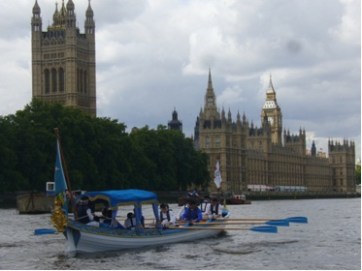
Sophie Neville rowing The Drapers Barge
The Drapers’ Barge ‘Royal Thamesis’ taking part in the Lord Mayor’s Show

This colour footage shows various aspects of the Lord Mayor’s procession in 1973 including the Queen’s Gold State Coach built in 1762 and a float with Daleks, which must represent Doctor Who, a series I worked on about ten years later when at the BBC.

Publicity photographs used to promote ‘Swallows and Amazons’ in the early 1970s – or how we hated having our photographs taken.
Lesley Bennett, Suzanna Hamilton, Stephen Grendon, Sophie Neville, Virginia McKenna, Simon West and Kit Seymour gathered at Bank Ground Farm above Coniston Water for a publicity photograph. This one was taken by Daphne Neville.

When a television drama is ready to be transmitted there is a little publicity, but not much. Photographs might be taken for the cover of the Radio Times or a book to accompany the series, there might be a Preview at BAFTA to which journalists from the colour supplements and daily newspapers are invited, but, because the programme can be advertised on air, the actors are not intensively involved in the promotion. A feature film is very different.

Whilst we didn’t mind our photographs being taken while we were acting, and were fine about Mum clicking away with her little instamatic, we all hated having promotional photographs taken for ‘Swallows and Amazons’. They were usually so posed, set up by strangers who had no idea of the story. Virginia McKenna tried to make it fun for us but this is what we all felt about this photo-call:

Virginia McKena, Lesley Bennett, Stephen Grendon, Suzanna Hamilton, Sophie Neville, Simon West, Kit Seymour for 'Swallows and Amazons'
~ How not to set up a publicity shot for a feature film ~

Why were the Amazons at Holly Howe? Why weren’t we with any of the boats? It was all terribly hot and difficult to squint into the sunshine. Only Mrs Batty’s dog seemed to be enjoying the attention.

The glare of the flash bulbs had started on day one. As Suzanna said in her diary, it made us feel ‘right twits.’

Claude Whatham was very good at explaining things to children. Looking back I wish that he had explained why the publicity was so important, but of course this was not his job and he would have been busy setting up the next shot. Certainly once the filming had finished we needed to know how important it was to promote the film. Richard Pilbrow really wanted to make a sequel, particularly an adaptation of Ransome’s twelfth book in the series – ‘Great Northern?’  He loves the Outer Hebrides and has a house on Col. I think we might have been a little keener about publicity shots if we had been told that the out-come could have been going up there for another summer. We would have been able to look forward to the possibility, but I don’t suppose he was at leave to even suggest it.

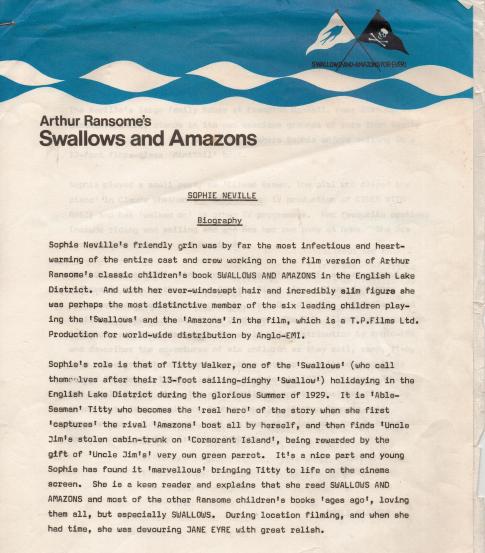
Journalists were introduced to us and looked after by our unit publicist Brian Doyle.  Brian had worked on Straw Dogs’ in 1971, the thriller that starred Dustin Hoffman, Susan George and Peter Vaughan. Susan George had of course played Titty, or ‘Kitty’ in the black and white BBC adaptation of Swallows and Amazons in the early 1960s. She was now regarded as glamorous sex symbol in British cinema – setting me rather a daunting example. Much easier for Brian to publicise her then me. She had a gorgeous figure with beautiful, thick, blonde, hair. I had what my sister still calls ‘tendrils’ and my mother calls ‘bits’. And was skinny with crooked teeth.

Brian was a lovely man. He had an amazing career, going on to work on films such as Ken Russell’s Valentino with Rudolf Nureyev and Leslie Caron, The Wild Geese, Alien, Educating Rita starring Michael Caine and Julie Walters and the James Bond movie For Your Eyes Only – with Roger Moore in the lead role . He even has his name on the credits of one of George Lucas’ Star Wars films.

This was the profile he wrote for me:

Brian adored Children’s literature. His own children came up to stay on location over their half-term and spent hours playing with my sisters, indeed they all appeared together as extras in the scenes shot at Bowness, and can be seen playing on the beach. Sadly Brian died, very suddenly, in 2008. His daughter told me that he left a collection of 35,000 books.

I still have Brian’s announcement:

At this the journalists moved in. From all over the place!

There was a very trendy women’s magazine in the early 1970s called Over 21, which the senior girls at school used to read. My mother was thrilled to find that Celia Brayfield had written a double page feature. I was amazed. I didn’t mind the picture of us gutting fish, but started reading with trepidation.

(If you can read this, I’m afraid page one comes second.)

Over 21 ~ December 1973

I read it, looked up the word etiolated in the dictionary and burst into tears.

Far worse was to come.

Off to Elstree Studios ~ to dub ‘Swallows and Amazons’ in 1973

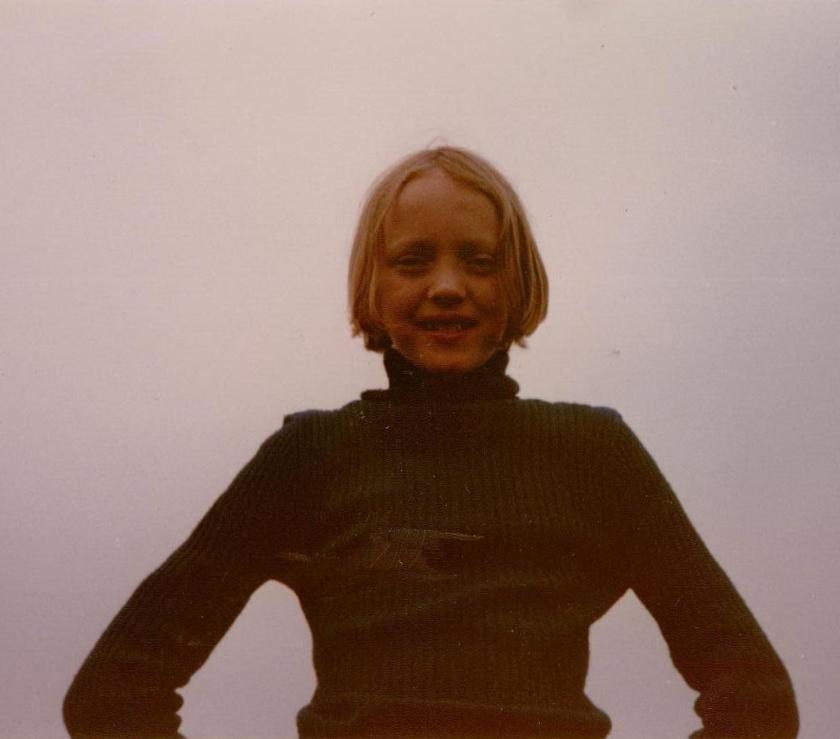
Sophie Neville at Elstree Studios in 1973

The process of editing a film can be terrifying for a director. There is always the prospect of finding a sequence that will not cut together. But working with a good film editor is hugely creative and fulfilling. Problems do arise but great things can happen. Richard Pilbrow says in his new book, A Theatre Project  that he was completely captivated by the process. ‘Moving a few frames from here to there, could change the whole emphasis of a scene.’  On the whole editing is an exciting, yet more relaxing time for the director than having to lead a massive crew out on location. And the actors are never around.

Sadly I never met Michael Bradsell who edited Swallows and Amazons. Like many others on our film crew he’d worked with Claude Whatham before on the movie That’ll be the Day. He went to on edit many great movies; Local Hero for Bill Forsyth and  David Puttman,  Henry V for Kenneth Branagh and Wilde, which starred Stephen Fry. Oh, to think that he hauled my image over his Steenbeck.

I remember that when I saw Henry V at the Curzon Cinema in Mayfair, in 1989, there was something terribly wrong with the projection. The lip-sync was out. Kenneth Branagh’s voice was delivered after his lips started moving. It was most off-putting. I knew all about lip-sync because I had been involved in dubbing movies since I was twelve. For, it was back in 1973, when Claude Whatham was working on the sound track for Swallows and Amazons that, rather unusually, I was summons to the EMI Elstreee Studios.

Sophie Neville at the EMI Elstree Studios on Friday 20th July 1973

Visiting Elstree Studios was exciting. I remember meeting the Dubbing Mixer and being there with the other Swallows, but I don’t think we saw anyone else in the cast. Suzanna came along with her nine-year-old cousin who was called Seymour – a very bright boy who was wearing stripey canvas trousers like a deck chair. Mummy had bought me a smart new dress that was the height of fashion. Looking at the photograph I rather wish she hadn’t bothered.

We were led into a huge dubbing theater hung with long black drapes around a high white screen. Claude explained that he needed to re-record our dialogue for various sequences. This was because the original soundtrack had been spoilt by the sound of motorboats, car horns or simply the wind. At first we were handed dubbing scripts, but it was difficult to look at them as well as the screen. As we could still remember our lines we didn’t need them. Instead, we stood in front of microphones on spindly stands and sung out the words we knew as sections of the film were projected. To help up a thick black cue-line would pass across the scene. When it hit one side it was time to start speaking. This was to ensure that our voices would be in sync with out lips. It could help, it could be off-putting. In the end we just went for it naturally. After each ‘take’ the film would be re-wound and we would go-again. There is a scene in at the Amazon Boathouse when John scrunches up the Amazon’s message and throws it in the water. It amused us to see this in reverse.

The post-syncing was a chance to improve on our performances and diction. Some time was spent in re-recording our sea shanty, Adieu and Farewell to you Fair Spanish Ladies. I made a mistake here that I have always regretted. Instead of singing sweetly and true I went for volume, which was not only unnecessary, but disastrous. It is acceptable on the film when you can see I am singing out on the water but sounds horrid on the LP. We had no idea at the time that EMI were going to bring out an album to accompany the movie, but they did.

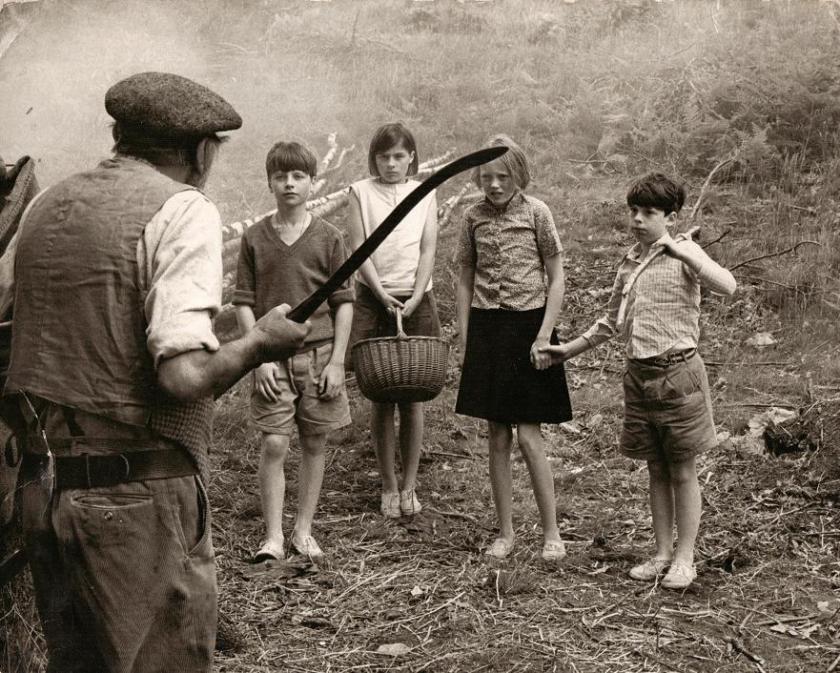
Jack Woolgar as Old Billy confronting Simon West, Suzanna Hamilton, Sophie Neville and Stephen Grendon as the Swallows who were visiting the charcoal burners.

The one line that I simply could not replicate was the dialogue Titty delivered when saying goodbye to the charcoal burners: ‘Thank you so much for letting us see your lovely serpent.’  We went over it again and again, but Jack Woolgar wasn’t at the dubbing studio and I couldn’t do it without looking at him. The charm and sincerity of the moment was not something I could reproduce. In the end Claude said he just had to use the original despite the sound of the roaring wind.

I remember being at Elstree for a week. Mum has 20th July, 2nd and 3rd August (although that looks crossed out,) then EMI 6th and 7th August, marked in her diary. At lunch time we were shown around the back lot, where Sten refused to leave the wreckage of a WWII plane and the film stages. David Niven was playing Count Dracula in Vimpira, literally kissing the lovely actress Teresa Graves in the coffin as we watched from the edge of the set.

After we had left Elstree, sound effects would have been added. Richard Pilbrow said that, ‘Bill Rowe was our masterful sound mixer, working magic with birdsong, a rustle of leaves, a broken twig – all the tiniest details that went into making the story spring to life.’ When I watch the film of Swallows and Amazons now I so admire the technique of using sound to illustrate the soaring of Titty’s imagination. The storm bell on Robinson Crusoe’s ship heralds the roaring wind and lends reality to scene when I play the shipwrecked sailor, dragging my parched body towards the island campsite. You can hear parrots and monkeys in the palm trees. I am sure Arthur Ransome would have approved.

Bill Rowe, I read, was the director of Post Production and Sound at Elstree Studios until he died at the age of sixty in 1992.  He’d worked on an amazing number of movies winning an Oscar for The Last Emperor and BAFTAs for The Killing Fields, The French Lieutenant’s Woman and Alien with nominations for Chariots of Fire, A Clockwork Orange, The Mission and Batman. And to think, we had been playing Hide and Seek behind his sound drapes.

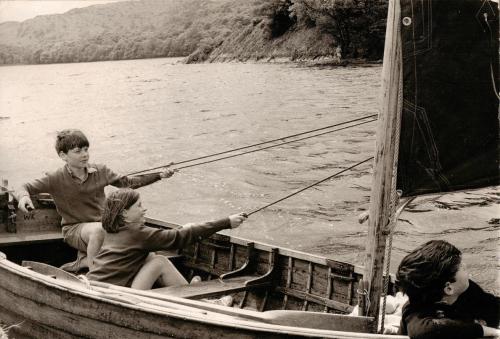
Simon West and Suzanna Hamilton at the helm of Swallow with Stephen Grendon in the bows, while Sophie Neville looks on from the shore of Peel Island, where she has been left alone with the telescope. Sound of Swallow’s moving parts was added later by the dubbing editor Bill Rowe at Elstree Studios.

One thing that really worried me was that I saw Swallow lying outside Elstree Studios. She looked forlorn, a ship out of water. Looking back on it they must have needed her to record sound effects.  I was concerned that we would not see her again, but we did. The next time we Swallows gathered was to publicize the film. We found ourselves climbing aboard Swallows again, albeit in a very different location from the Lake District. And this I will write about in my next post.

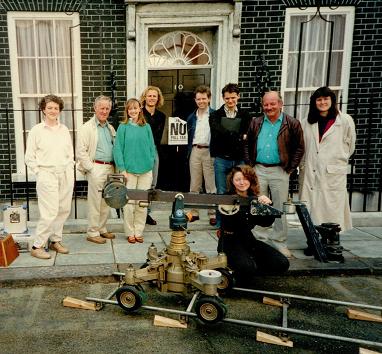
Sophie Neville not at 10 Downing Street but on the lot at Elstree Studios
Not at 10 Downing Street but on the Lot at Elstree Studios for the BBC Drama Directors’ studio course. I am wearing green.

Later in life, when I worked in television production, I spent many months at Elstree Studios at Borehamwood. However these were the BBC Studios on the other side of the road where we recorded endless episodes of  Eastenders and the wartime romance Bluebell, programmes that were never post-synced.

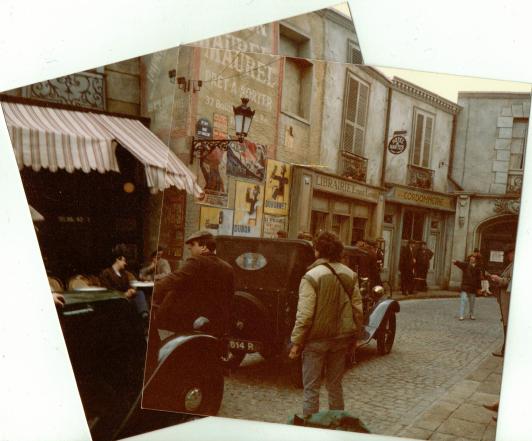
'Bluebell' the BAFTA award winning BBC serial
Working on the Parisian set of ‘Bluebell’ constructed on the lot at Elstree.

I’d drive past the old EMI/ATV Studios and never breathe a word that I’d worked there once as an actress.

Sophie Neville, in striped top, on the BBC Studio Director’s Course at the BBC Elstree Studios, Borehamwood in 1990

Sophie’s books about working in film and television  are available online.

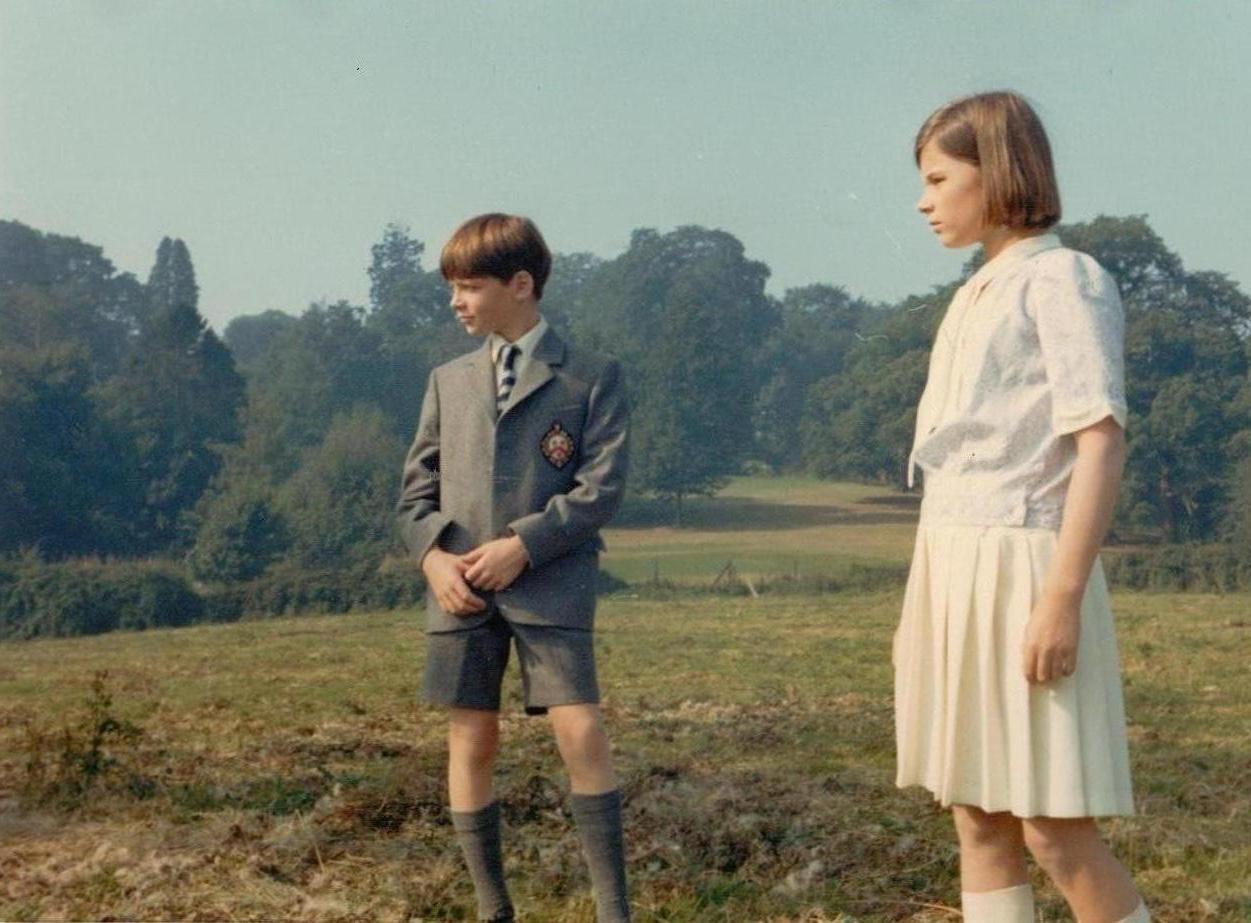
Swallows in Egham ~ a pick-up day, filming ‘Swallows and Amazons’ in 1973

Simon West, Stephen Grendon, Suzanna Hamilton and Sophie Neville as the Walker children dressed as they arrived at Holly Howe at the start of their holiday in the Lake District
Simon West, Stephen Grendon, Suzanna Hamilton and Sophie Neville playing the Walker children, as they arrived at Holly Howe at the start of their summer holiday in the Lake District ~ photo: Daphne Neville

While I had been at home with my family, Claude Whatham had been busy in the film editing suite putting ‘Swallows and Amazons’ together with Michael Bradsell.  They had previously worked together on ‘That’ll be the Day’.  Our Continuity supervisor Sue Merry must have known Michael too, as he’d edited Ken Russell’s film ‘The Boyfriend’.  Claude found that they definitely needed the sequence when the Walker children run up to the Peak at Darien and see Wild Cat Island for the very first time.

It is the scene that heralds the start of the adventure and indeed the opening titles of the movie. Richard Pilbrow had always wanted it to be shot at Friar’s Craig on Derwent Water.  There is a postcard of this headland with notes written on it by Arthur Ransome who labelled it for the first illustrator of the Jonathan Cape edition of the book, and it seemed just right for the Peak of Darien despite being a long way from Bank Ground Farm.  Although there had been two attempts made to record the handful of shots needed as the evening light lit up the islands across the water, we had always been held up and reached the spot too late in the day.

Richard must have already been over budget but the money was found to mount a pick-up shoot at Runnymede near Egham in Surrey on Saturday 8th September. We were told that King John signed the Magna Carta under an oak tree there.

We loved the idea of meeting up again. Claude said he made an effort to get as many members of the same crew together as possible so it wouldn’t seem strange.

Sophie Neville with Sten Grendon, Jane Grendon, Claude Whatham and Neville Thompson
Sophie Neville looks on as Stephen Grendon organises his costume helped by Jane Grendon with Claude Whatham and Neville C Thompson.

The one thing that was striking was how much our hair had grown. We all needed a trim. Sten needed a full hair cut. Luckily Ronnie Cogan was free.

Stephen Grendon playing Roger Walker having his hair cut by Ronnie Cogan

Neville Thompson had even managed to book the same Make-up caravan. It was here that Peter Robb-King the make-up designer toned down our summer tans in an effort to match the skins of the pale Walker children who’d been sitting in the railway compartment with their mother at the beginning of the film.

Photograph of movie hair-stylist Ronnie Cogan giving a boy a short back and sides hair cut
Ronnie Cogan giving Sten Grendon a hair-cut. I was in the Make-up caravan beyond.

The ironic thing was that it was Make-up that held us up when we were first failed to record the scene in the Lake District. It took so long for Peter Robb-King to sponge down all four of us with pale foundation that the sun had set before we arrived on location. I can remember my mother hurrying him along, claiming it was ridiculous as it was too dark to see our freckles anyway. I was keen on the importance of continuity and had contradicted her. Claude couldn’t believe how long it had taken us to change. He had been furious when we turned up late but tried hard not to let us think it had been the fault of us children.

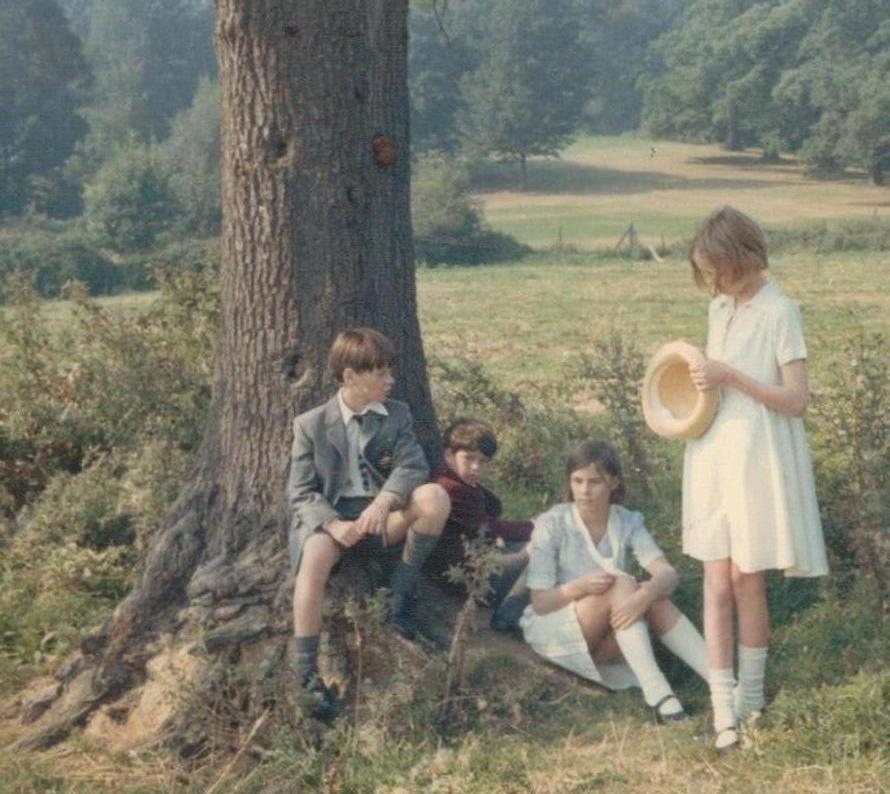
Simon West playing John Walker and Suzanna Hamilton as Susan Walker

There was no Peak of Darien at the farm in Surrey, but a field had been found where we could run up to an oak tree. We just had to pretend we were looking out over the lake.

If you click on the shot below it should take you to a post I wrote on the opening locations of the film. Scroll down and you’ll see the shot of us running down the meadow at Bank Ground farm. This was the shot Claude had to cut from to the sequence that we were currently filming. Scroll right down to the end of the post and you’ll see me on Friar’s crag looking exhausted after a long day’s filming. I am so glad we were not able to continue that day.

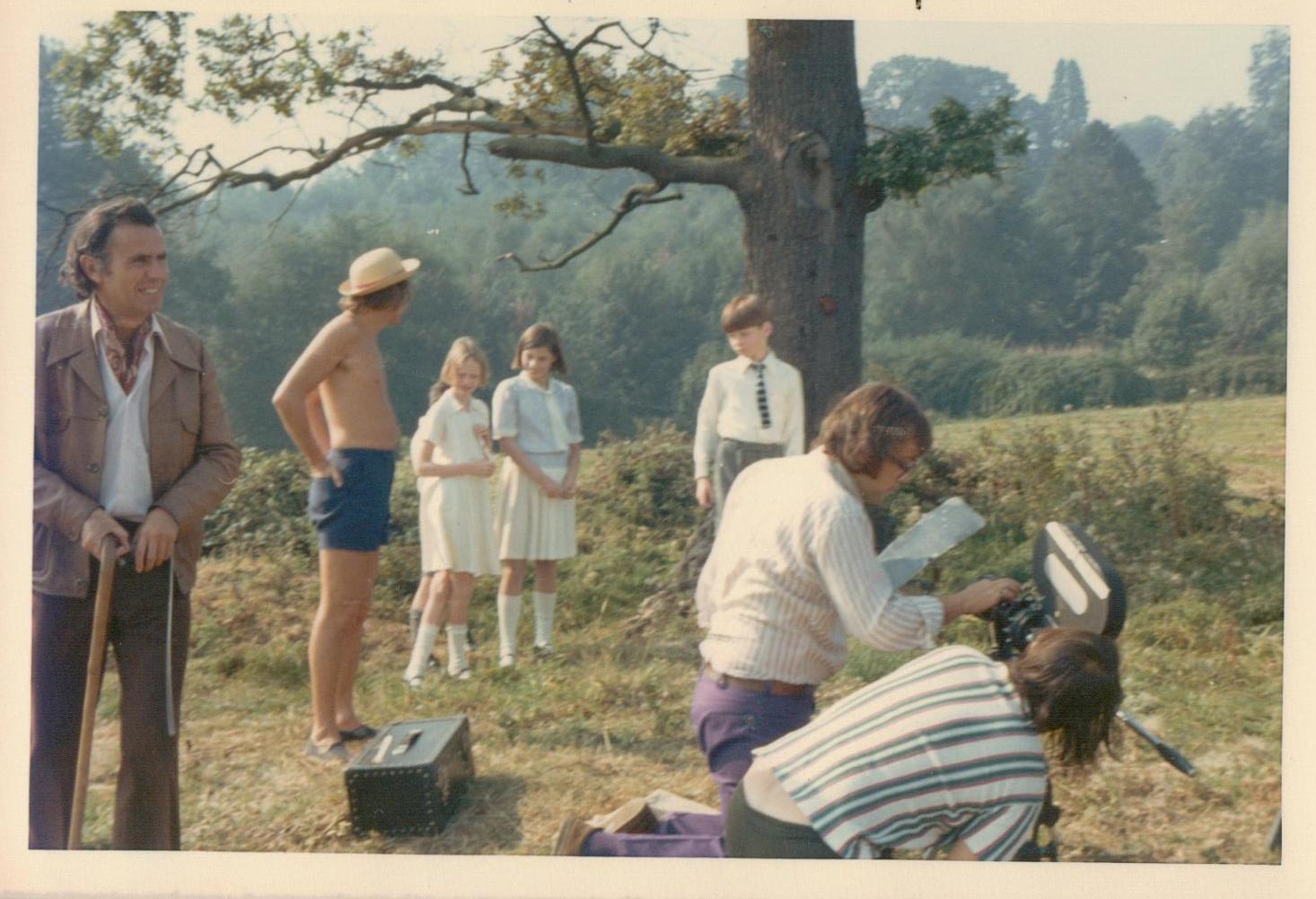
Director Claude Whatham with Sophie Neville, Stephen Grendon, Suzanna Hamilton and Simon West. Producer Richard Pilbow looks on ~ photo: Daphne Neville

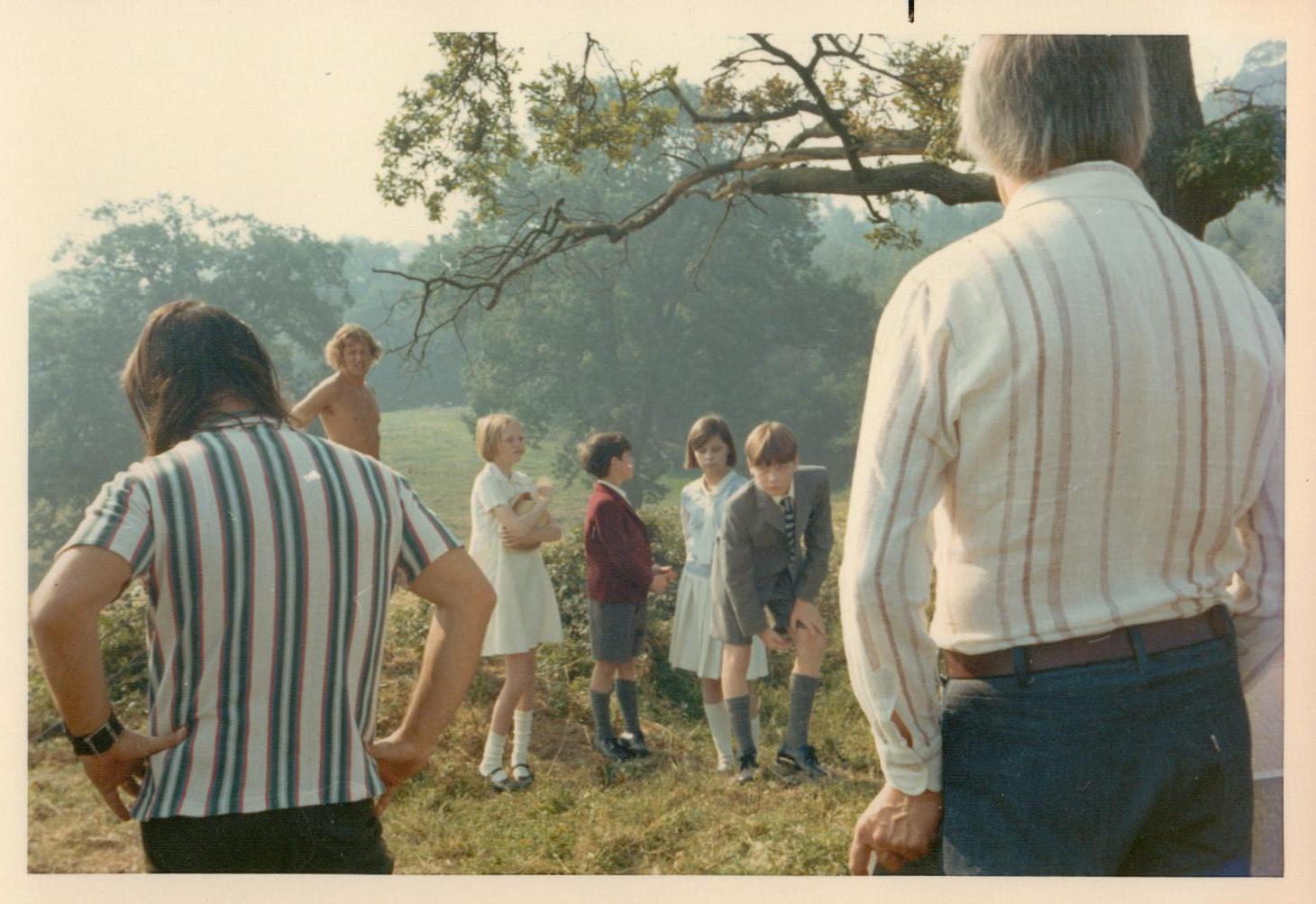
Although he had a freelance camera operator in a stripy shirt who we did not know, we met our Director of Photography Denis Lewiston who was setting up the shot with Claude under the oak tree, using a 35mm Arriflex camera on ‘short legs’.

If you click on the photo above you should get to a Post written about a location that was set on Derwentwater near Friar’s Crag – or on part of Friar’s crag that will give you an idea of what the real Peak of Darien would look like. However, the day in September in Egham was hotter than any day we’d experienced in Cumbria. Claude was soon wearing my straw hat.

DoP Denis Lewiston, Claude Whatham, Sophie Neville, Suzanna Hamilton and Simon West with Gordon Hayman behind the 35mm Arriflex Camera ~ photo: D.Neville

If you click on the photo above it will take you to the day on 8th July when we had tried and failed to shoot this scene despite rushing around.

Although we look a bit hot and stiff in these photographs that my mother took when we were lining up the shots I think that the movie was probably made by this scene. We had learnt how to magic-up performances by this stage. If you watch the finished film our faces can be seen glowing with excitement. This was also partly because we were happy to be together again, on a sunny day in a lovely place.

Sophie Neville playing Titty Walker with Stephen Grendon as Roger Walker with Gordon Hayman, Denis Lewiston and Claude Whatham behind the camera

I’ve just realised this image of Titty, clutching her school hat as she looked out over an entirely imaginary lake, was the last actual shot recorded. Soon my close-up was ‘in the can’ and ‘a wrap’ was called. It had been the 1003rd slate of the movie. We celebrated with tins of Fanta rather than champagne.

Since the first shot in the compartment of the steam train as it travelled between Haverthwaite Station and Windermere, recorded back in May, I had put on about seven pounds and grown taller than my elder brother and sister.

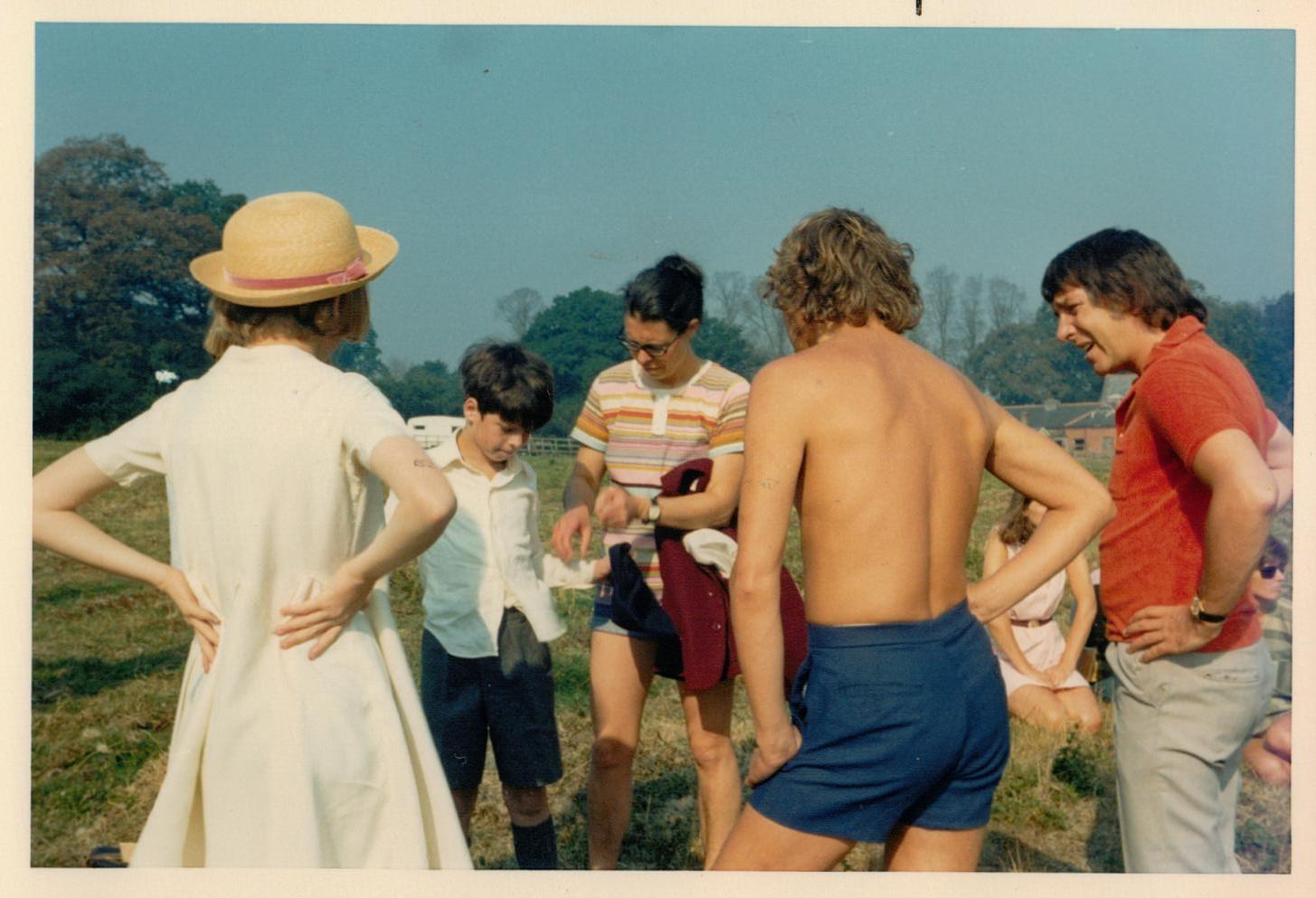
Daphne Neville with Stephen Grendon, Suzanna Hamilton, Sophie Neville, Jane Grendon and Simon West

I can’t help thinking that this photograph is symbolic of the futures we were to step into. Sten Grendon is holding an apple, Suzanna seems to have a framed photograph and I’d been given a roll of camera tape. What Simon West is holding is something of a mystery, but it is tightly clasped.

Simon West writing his address for me on a scrap of paper

Soon it was time to go. We changed back into our own clothes and said goodbye. Mummy took me on to see Robin Clarke, a music editor we had met on holiday who had worked on the movie Chitty Chitty Bang Bang.

It wasn’t long before we saw Claude again. Once he’d finished editing the film we were called to the work on the sound. The movie was still in the making.

Sophie Neville saying goodbye to director Claude Whatham. The film actress Teresa Graves is speaking to Neville Thompson in the back ground.

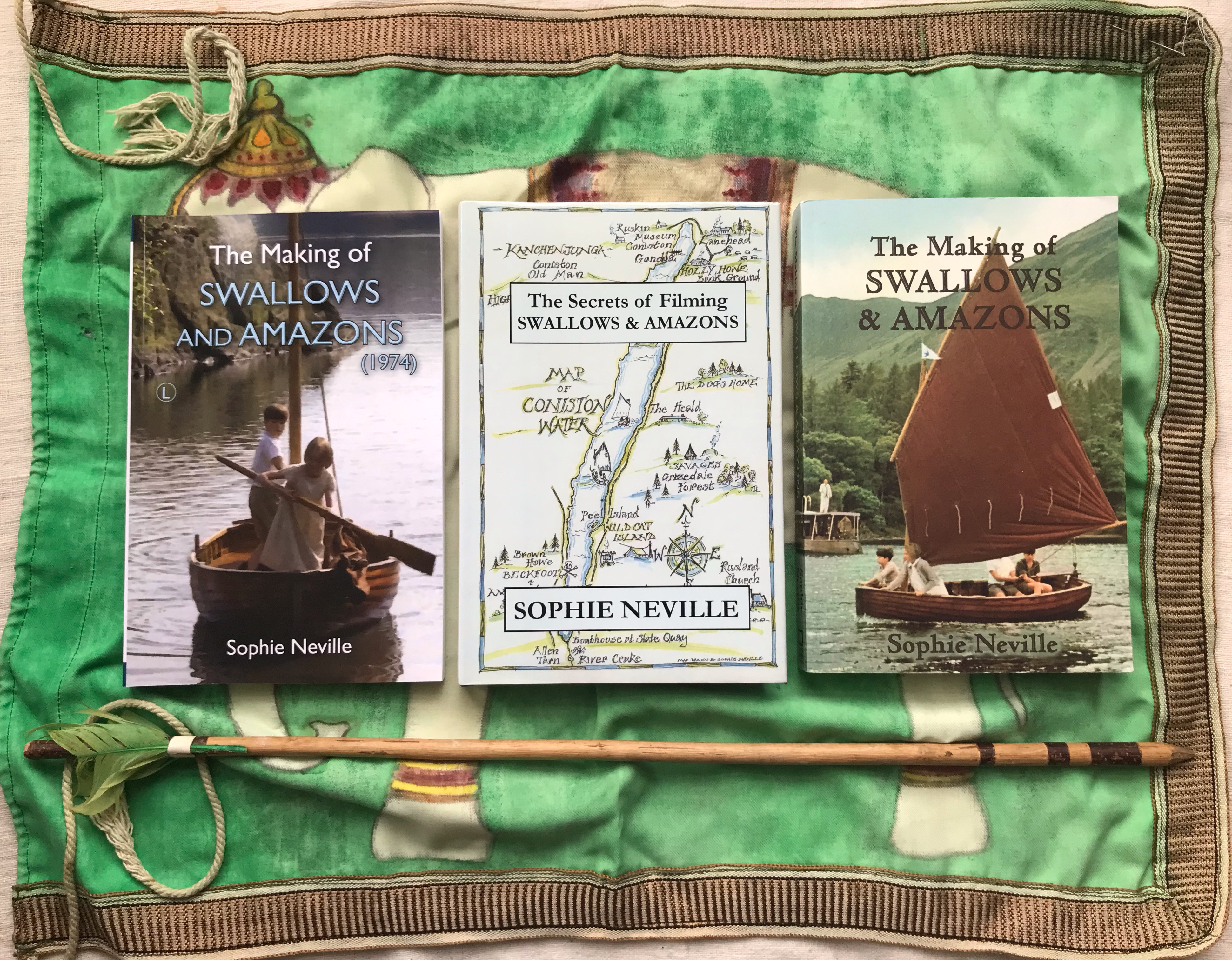
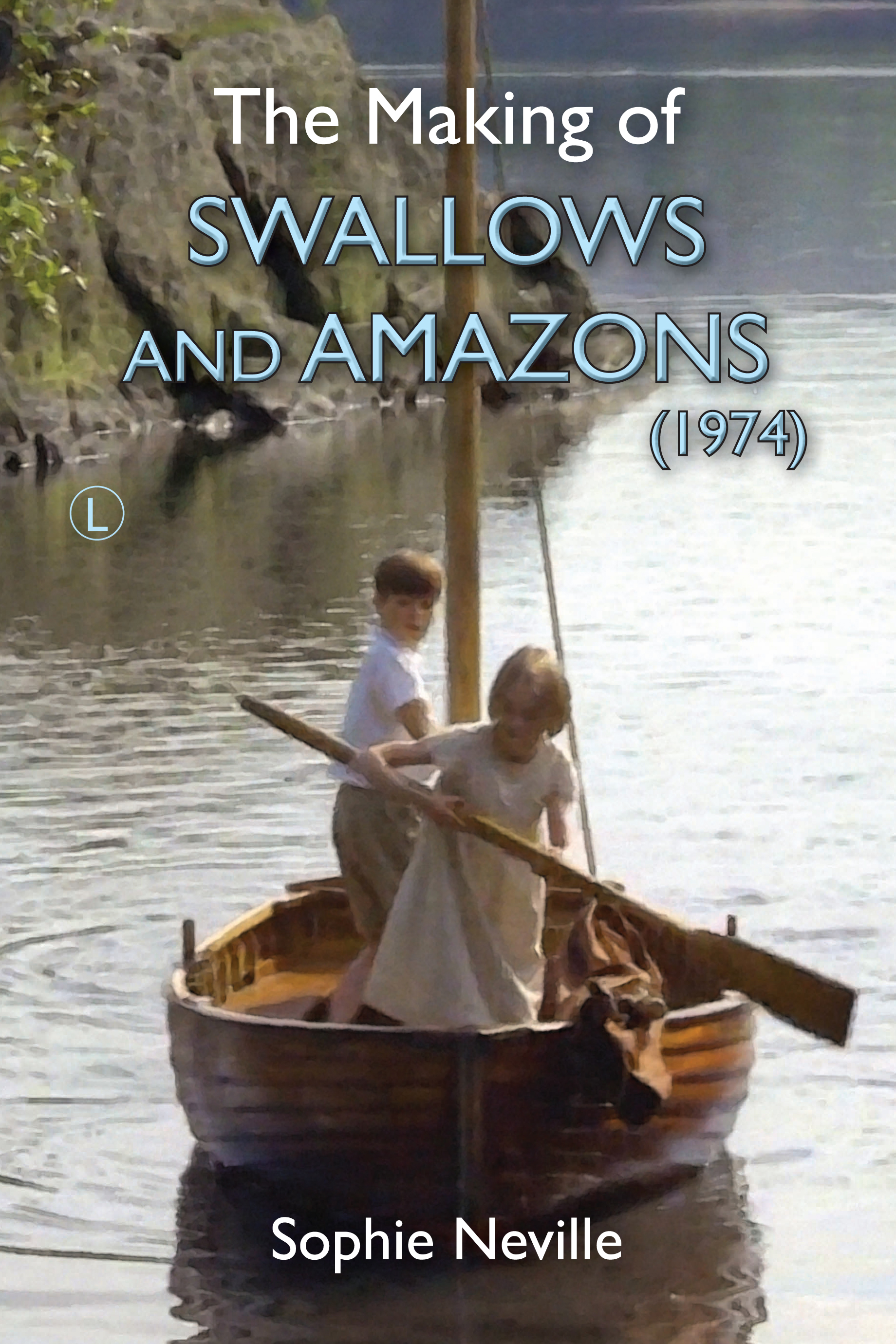
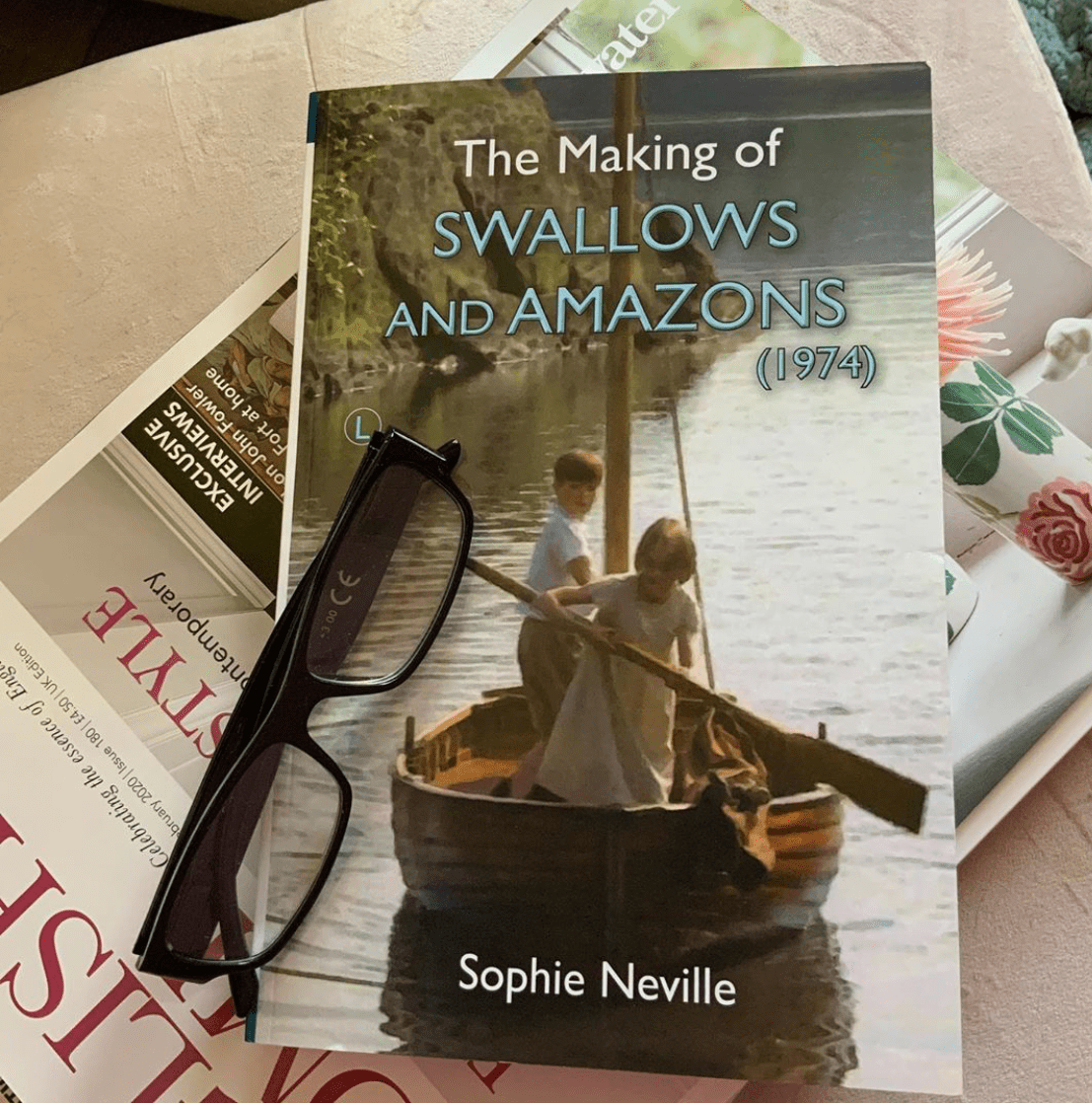
There are now three editions of the illustrated book on ‘The Making of Swallows and Amazons’, all available from online retailers and libraries worldwide .

'The Making of Swallows and Amazons (1974) by Sophie Neville'
Different editions of ‘The Making of Swallows and Amazons (1974) by Sophie Neville’

You can read the first three chapters for free here:

The food we ate whilst filming ‘Swallows and Amazons’ in 1973

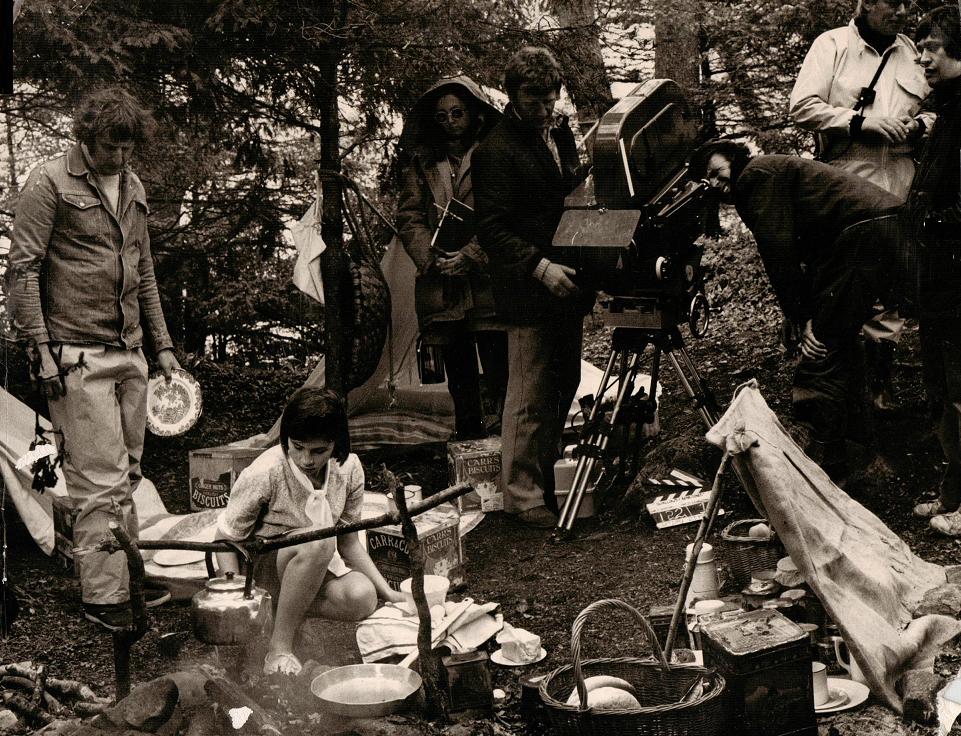
Suzanna Hamilton as The Mate Susan, cooking buttered eggs on the camp fire on Wild Cat Island. Director Claude Whatham, Sue Merry, Bobby Sitwell and DoP Denis Lewiston look on, clad in wet weather gear.
Suzanna Hamilton as The Mate Susan, cooking buttered eggs with tea on the camp fire on Wild Cat Island. Director Claude Whatham, Sue Merry, Bobby Sitwell and DoP Denis Lewiston look on, clad in wet weather gear.

One of the questions I was asked when we returned from filming ‘Swallows and Amazons’ in 1973 was about the food. This could only properly be answered by going into considerable detail.

The location caterers from Pinewood
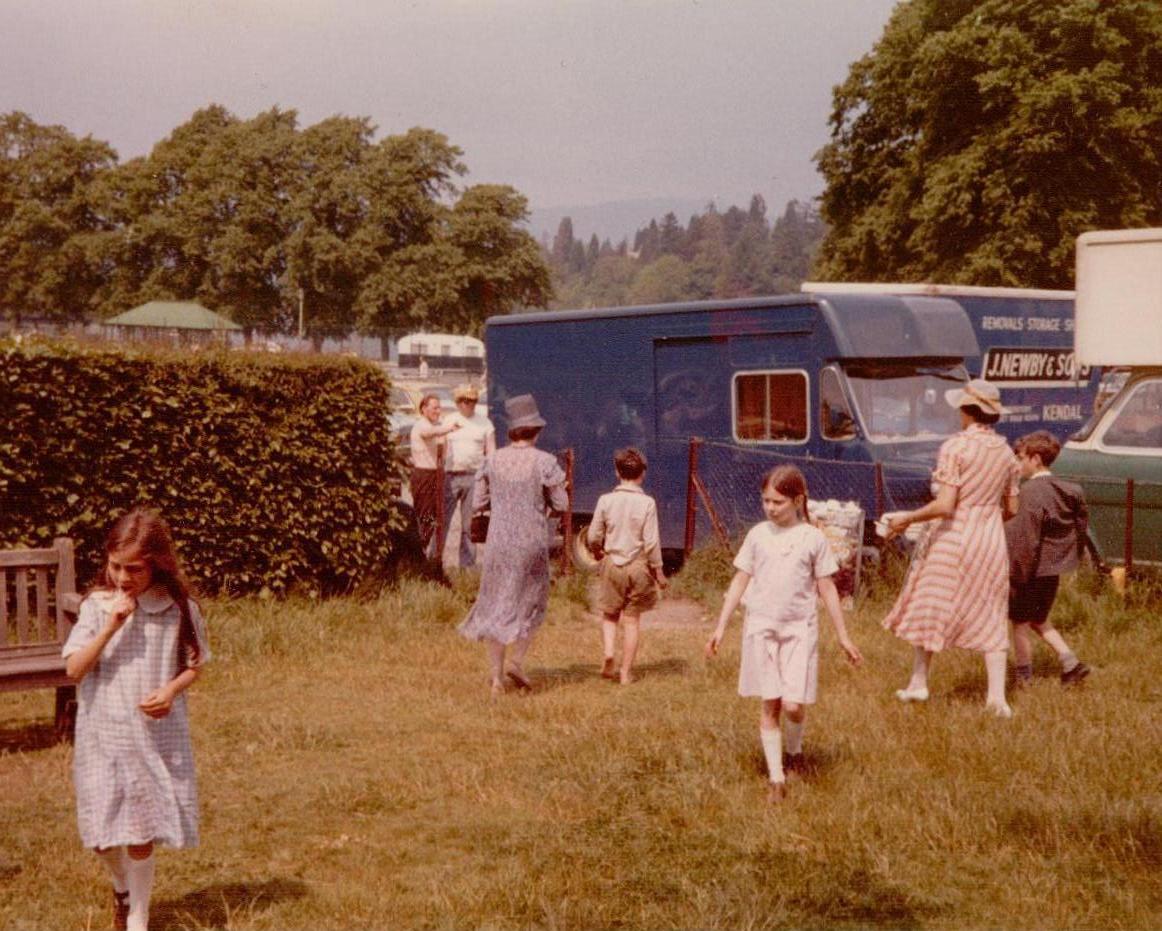
Jane and Sten Grendon walk, in costume, towards John and Margaret’s location catering wagon parked at Bowness-on-Windermere ~ photo: Daphne Neville

When on location, our breakfast, coffee, lunch and tea were provided every day from the back of a location catering van staffed by a couple called John and Margaret who had come up from Pinewood. My mother always referred to their van as ‘The Chuck Wagon’. There wasn’t perhaps as wide a choice as there is with location catering today, but good hot meals were produced on time, whatever the weather and wherever we might be.

If we ever filmed on a Sunday there would be a full roast meal. At other times they would enchant us with a choice that might include spaghetti, a dish that was new to England – or at least where we lived – in 1973. It was the kind of special meal that my mother would cook for a dinner party, served with a spoon and fork so you could swirl the pasta properly. As children we were allowed to go to the head of the queue so that we could avoid having to queue up in the rain. We’d take out plates to tables in one of the  red  double-decker buses. You could help yourself to knives and forks and paper napkins on the way in. We had to be careful not to get food on our costumes.

I remember when location caterers first started providing salad buffets in addition to hot lunches in the 1980s. It was such a relief not having to queue. Salads were not regarded as food for the working man back in the early 1970s  but Suzanna thought otherwise. Indeed she would eat little else.

Despite the fact that Suzanna often only ate tomato sandwiches for lunch, the catering budget must have been considerable. The call sheet always seemed to specify ‘LUNCH for approx 70 persons’.

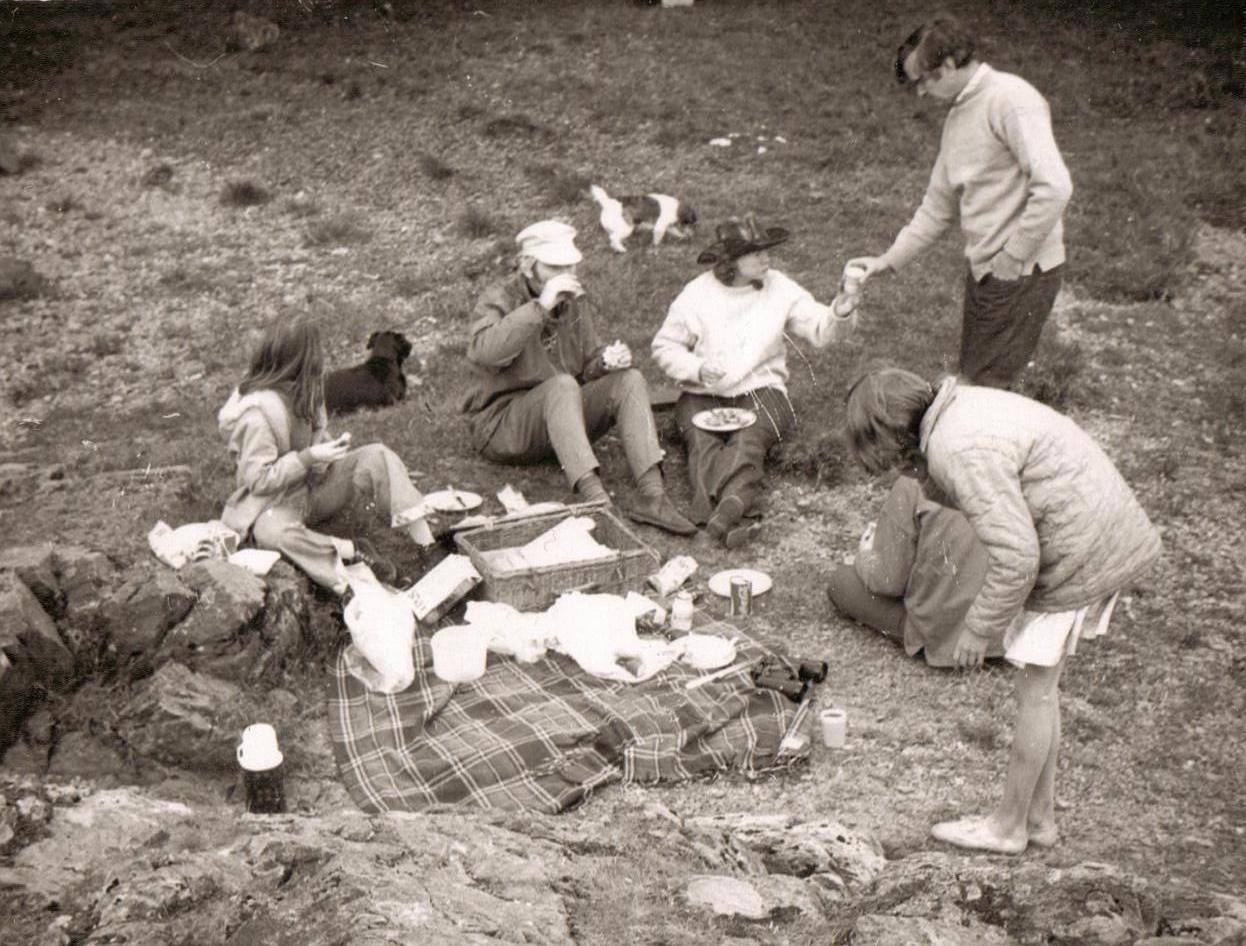
When friends came to visit us on location my parents were sensitive to this and bought a picnic, which was very much how we lived normally. This was always carried in a wicker basket and set out on a car rug, cold squash in one thermos flask, hot coffee in another. Triangles of processed cheese with ham and pickle sandwiches. No cool bags or bottles of wine. You couldn’t buy ready-made sandwiches from petrol stations or supermarkets then but if you went to a bakery they would make you a filled bap while you waited.

A family picnic on the banks of Coniston Water, Cumbria in 1973
Daphne and Martin Neville having a picnic with their friends on the banks of Coniston Water in 1973. Sophie Neville wears an anorak over her costume.

As anyone who has read Arthur Ransomes’ books will know, the Swallows were very organised when it came to provisions. Milk from the farm, buttered eggs, seed cake, apples, molasses (toffees) and grog – I loved it all. I wasn’t too sure about fried perch but the pemmican and potato cakes cooked by Man Friday with a great knob of butter were utterly delicious. And I loved the buns from Rio. We didn’t have peas to shell on the film. Apples must have seemed a realistic alternative.

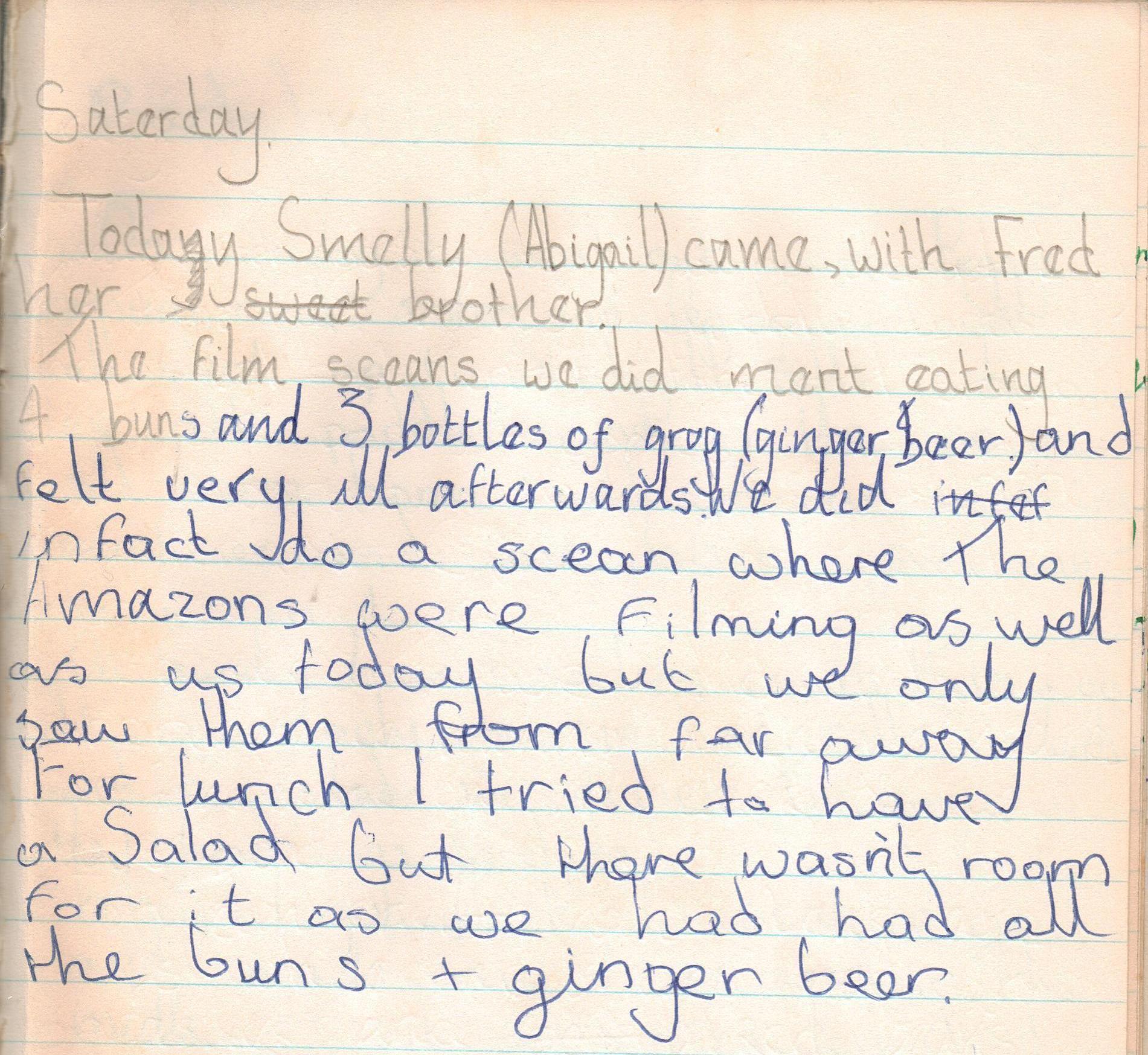
Again we have to rely on The Mate Susan for details. Surely she was modeled on Ransome’s own efficient wife Evgenia? In this extract from her diary Suzanna mentions that Richard Pilbrow’s two children came to watch the filming. She knew Abigail from London.

Mum became worried quite early on that Suzanna wasn’t eating enough. The solution came when she was taken out to dinner at a restaurant where she was able to chose from a wide menu.

As a result Suzanna was often given steak for supper back at the Oakland’s Guest House while the rest of us had whatever was on offer, which was a bit of a swizz.

Eating apples
‘Sailors die from it like flies’ Stephen Grendon, Suzanna Hamilton, Sophie Neville and Simon West as The Swallows eating apples to fend off scurvy.

Suzanna was of course completely right about insisting on eating salads and fresh fruit. She chivvied, encouraged and begged both the caterers and Mrs Price for more and more fresh raw food. She loved strawberries. Virginia McKenna won her heart by bringing her two boxes of fresh strawberries when she was ill with tonsillitis at the start of the filming. These would have been early English strawberries and a great treat in 1973.  John and Margaret managed to find enough for us all later in the summer. They were presented in a manner that would have pleased the men working on the film crew but Mate Susan wasn’t so happy about this.

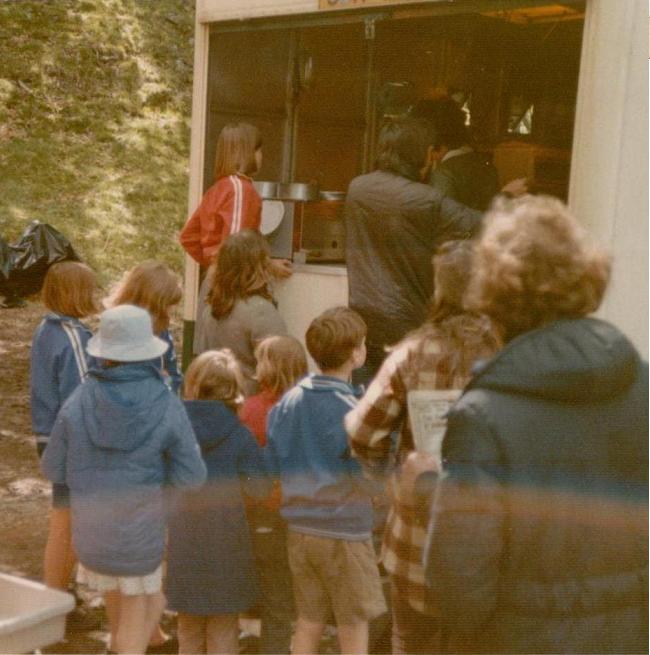
I’ve included this photograph before but it provides proof that food was an important issue. Please note that Mate Susan is first in line, inspecting everything on offer.

Location catering
Suzanna Hamilton, in her red tracksuit top, seeing what the location caterers had for lunch on the set of ‘Swallows and Amazons’ by Coniston Water

If you would like to read more about what it felt like to appear in Swallows and Amazons, I have bought out a paperback: ‘The Making of Swallows and Amazons’ for sale online or available from any library worldwide.

Screenshot of The Making of Swallows and Amazons book cover on Instagram

‘What was it like?’ ~ adjusting to life at home after filming ‘Swallows and Amazons’ in 1973

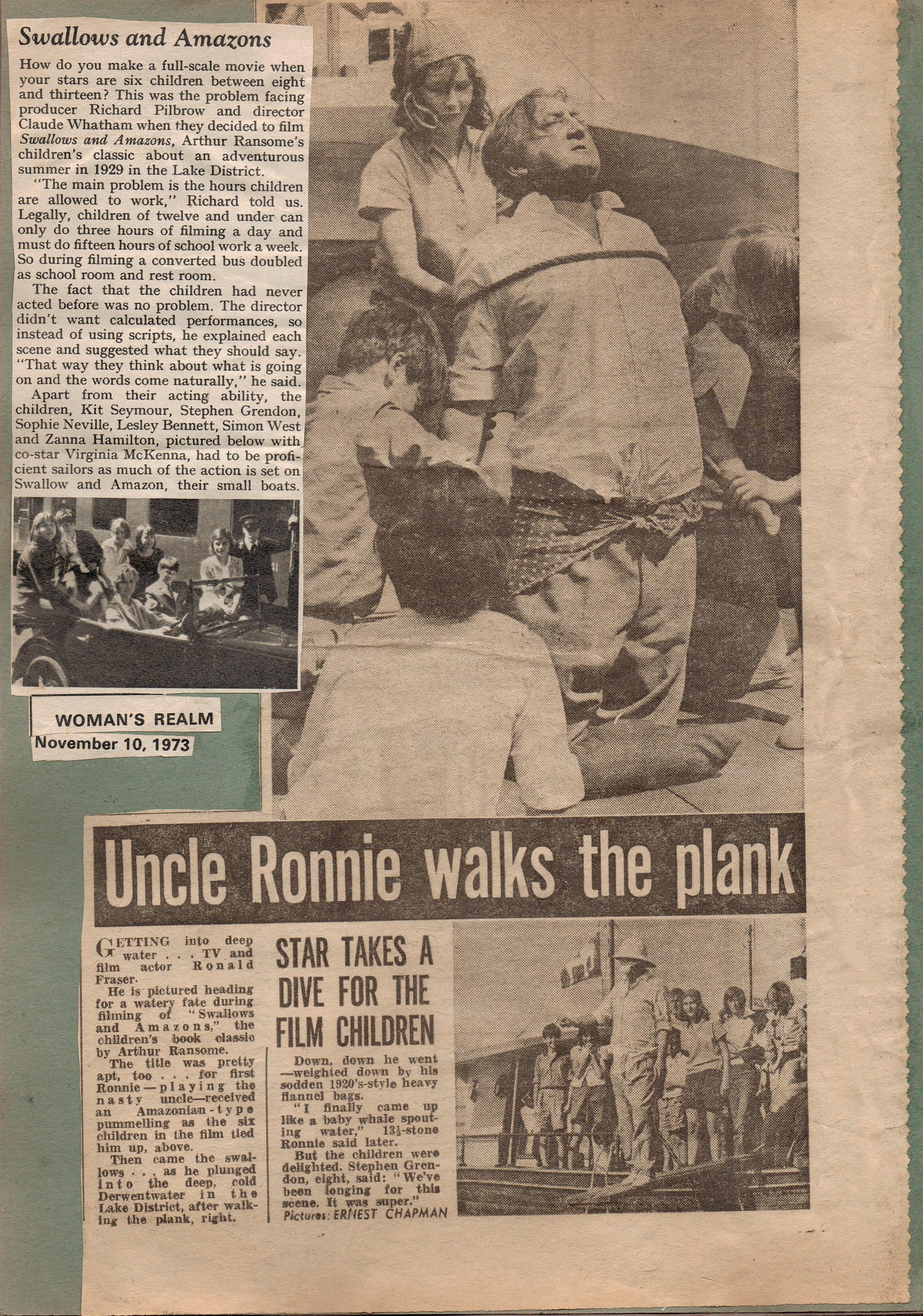
Newspaper articles about 'Swallows and Amazons' in 1973
A newspaper article by Ernest Chapman that came out in July 1973. The main photo features Ronald Fraser as Captain Flint with Sophie Neville, Stephen Grendon, Simon West and Kit Seymour

Being back at home for the summer holidays was lovely. I must have been pretty tired. But, adjusting to real life when articles like this one appeared in Woman’s Realm was tricky. Everyone seemed to be reading about me in their dentist’s surgery.

‘What was it like?’ I was often asked.

How could I begin to describe working like this ~

Sophie Neville with the cast and crew of 'Swallows and Amazons in 1973
The cast and crew of ‘Swallows and Amazons’ filming on the jetty at Rio in 1973

‘Did you have lots of lines to learn?’

How could I explain that this is how we worked on the dialogue?

Filming the movie 'Swallows and Amazons' in 1973
Rehearsing with Claude Whatham out on the lake

‘What were the others like?’

How could I tell people about the whole crew, that I’d had working relationships with so many adults?

Talking to Martin Evans the Gaffer and Terry Smith the wardrobe master while leaning on a lighting stand at Bowness-on-Windermere

Technical questions were much easier to answer than, ‘How did you feel?’  No one wanted to know that most of the time I felt cold.

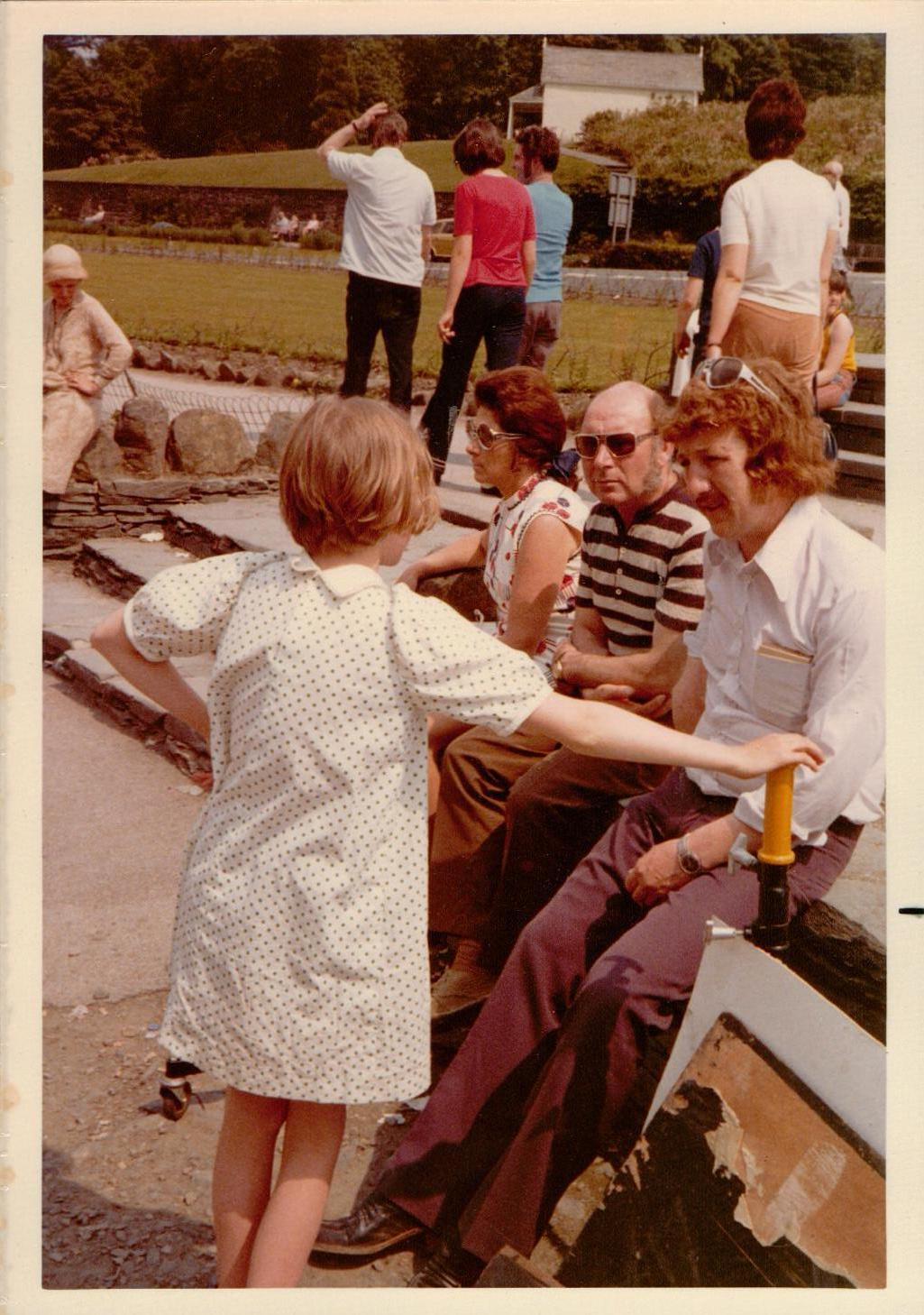
‘Did you have to wear make-up?’  This was a difficult one, as we didn’t wear conventional make up but my legs were regularly coated in a layer of foundation so as not to appear shockingly white. You can see the smooth effect in the photograph above. Suzanna was amusing about this in her diary. She hated being sponged down with a matt base and sun-bathed whenever she could so as to avoid it in the near future.

‘What did you wear?’

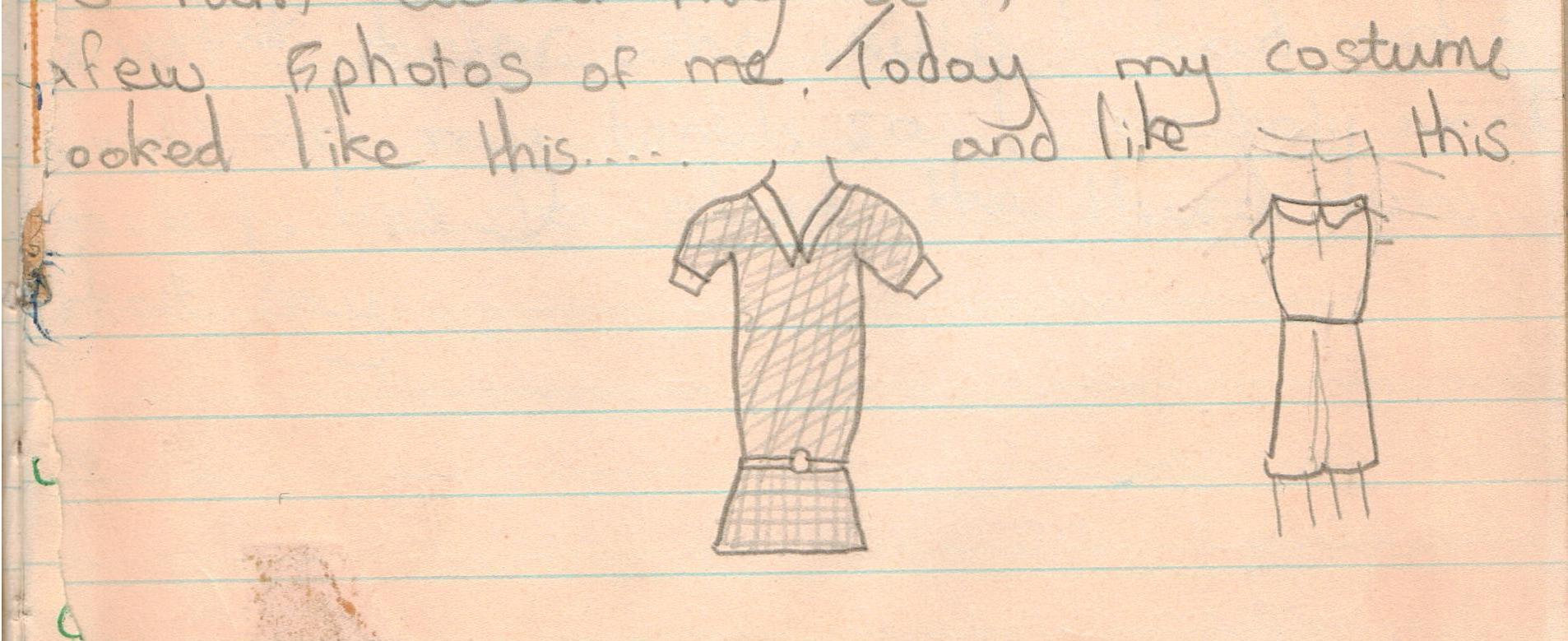
Suzanna drew pictures of the two dresses she wore at Bank Ground Farm. I always rather liked her blue gingham one. Unlike the Duchess of Cambridge I have never worn a yellow dress apart from the sleeveless one I had to climb into to play Titty. It was really too short for 1929. I remember the costume designer, Emma Porteus, confiding in Mum that they would cheat on the length a bit. Hem-lines were very much above the knee in 1973. Arthur Ransome would have turned in is grave. Luckily Titty’s dresses just look a little out-grown.

Suzanna Hamilton's costumes for scenes set at Holly Howe
Suzanna Hamilton’s drawings of her costumes for scenes set at Holly Howe

‘How did they film you sailing?’

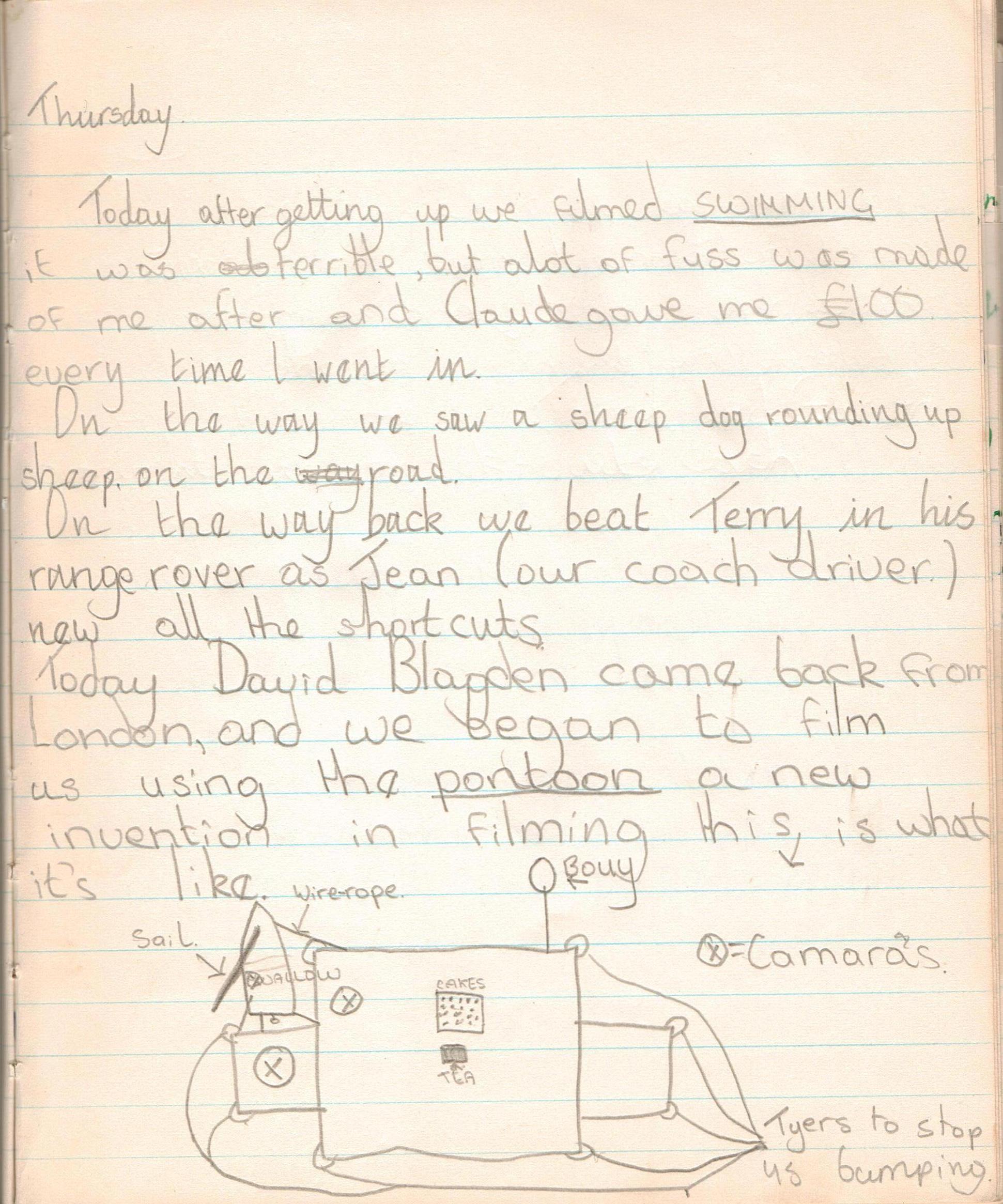
Again Suzanna provided wonderful graphics of this. I don’t think I’ve yet published this page of her diary.

Suzanna Hamilton's diary about using a camera pontoon on Coniston Water
Suzanna Hamilton’s diary about using the camera pontoon on Coniston Water. If you click on the picture you should get through to Ben Fogel’s documentary where Claude Whatham describes this in further detail.

‘What was Virginia McKenna like?’

This question was easy. ‘She was lovely.’

The Walker family played by Suzanna Hamilton Stephen Grendon, Sophie Neville, Virginnia McKenna and Simon West at Bank Ground Farm in Cumbria
The Walker family played by Suzanna Hamilton Stephen Grendon, Sophie Neville, Virginia McKenna and Simon West at Bank Ground Farm in Cumbria

Many years have gone since we sat amongst the daisies at Bank Ground Farm. I am now happy to talk about anything. Do click on the comment box below or go on a Facebook page to ask any questions you might have about the filming of ‘Swallows and Amazons’.

You can read more in ‘The Secrets of Filming Swallows and Amazons’ available online for £2.99

The Secrets of Filming Swallows & Amazons

Leaving the Lake District after spending 50 days filming ‘Swallows and Amazons’~ 13th July 1973

Daphne Neville with Sophie Neville while filming 'Swallows and Amazons' in Cumbria

 It was time to say goodbye. We’d had the most wonderful seven weeks filming on the Lakes but the end had drawn in with the clouds. It was time to go home.

Since we lived in Gloucestershire it was a long drive south. I’m not sure how Jane and Sten Grendon got back, as I don’t think Jane drove, but we must have dropped off some of their things on our way past their village.

I remember seeing my real sisters and walking around the garden in the afternoon sunshine, looking at all that had changed. We’d left in early May, now it was full summer and the school holidays. I don’t know how I had the energy left to write up my diary.

Sophie Neville in 1973, in the garden at home with a swan
Back in the garden at home with a swan

‘Shall we go and put flowers on Luppy’s grave?’ Perry asked. I hadn’t heard that our dear old dog, the sheep dog I had known all my life, had died while we were away. I was inconsolable. Mum explained that they hadn’t wanted to tell me when it happened as we were filming, she thought that the sadness on my face would have come through on camera. I understood this but was still desolate. Having had to cope with the grief of losing Luppy, on top of the heartbreak of leaving everyone I had grown so close to in the Lake District, I was not in a good way.

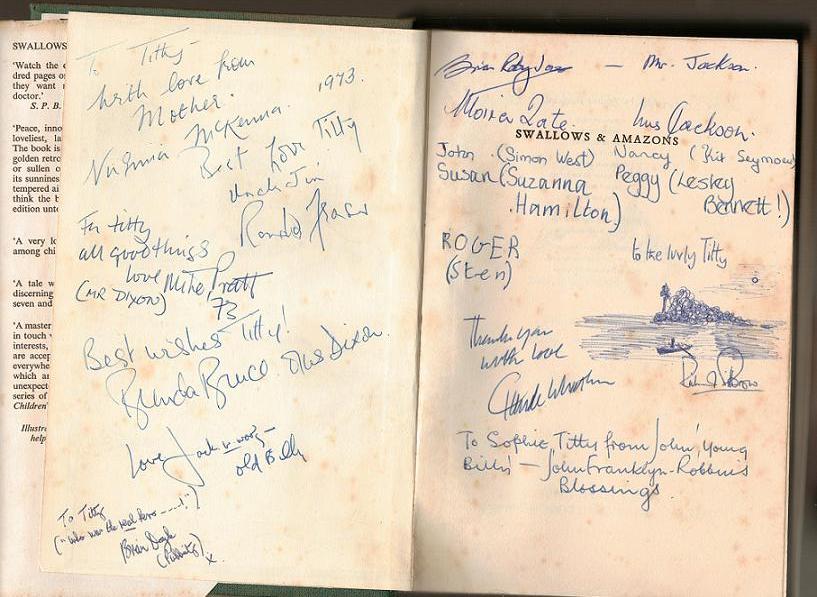
One of the most treasured things that I had returned with – apart from the lump of Cumbrian slate Jean McGill had given me – was a hard-back copy of ‘Swallows and Amazons’ signed by the entire cast and crew.

Signatures of the cast, director and producer of the movie 'Swallows and Amazons' in my hardback copy of Arthur Ransome's book
Signatures of the cast, director and producer of the movie ‘Swallows and Amazons’ in my hardback copy of Arthur Ransome’s book

Here you can see inscriptions from Virginia McKenna who had played my mother and Ronald Fraser who obviously saw himself as Uncle Jim rather than Captain Flint.

Virginia McKenna as Mother in Swallows and Amazons 1

Mike Pratt and Brenda Bruce who appeared as Mr and Mrs Dixon, Jack Wolgar and John Franklyn-Robbins who embodied the Charcoal Burners with Brian Robylas (sp?) and Moria Late who played Mr and Mrs Jackson.

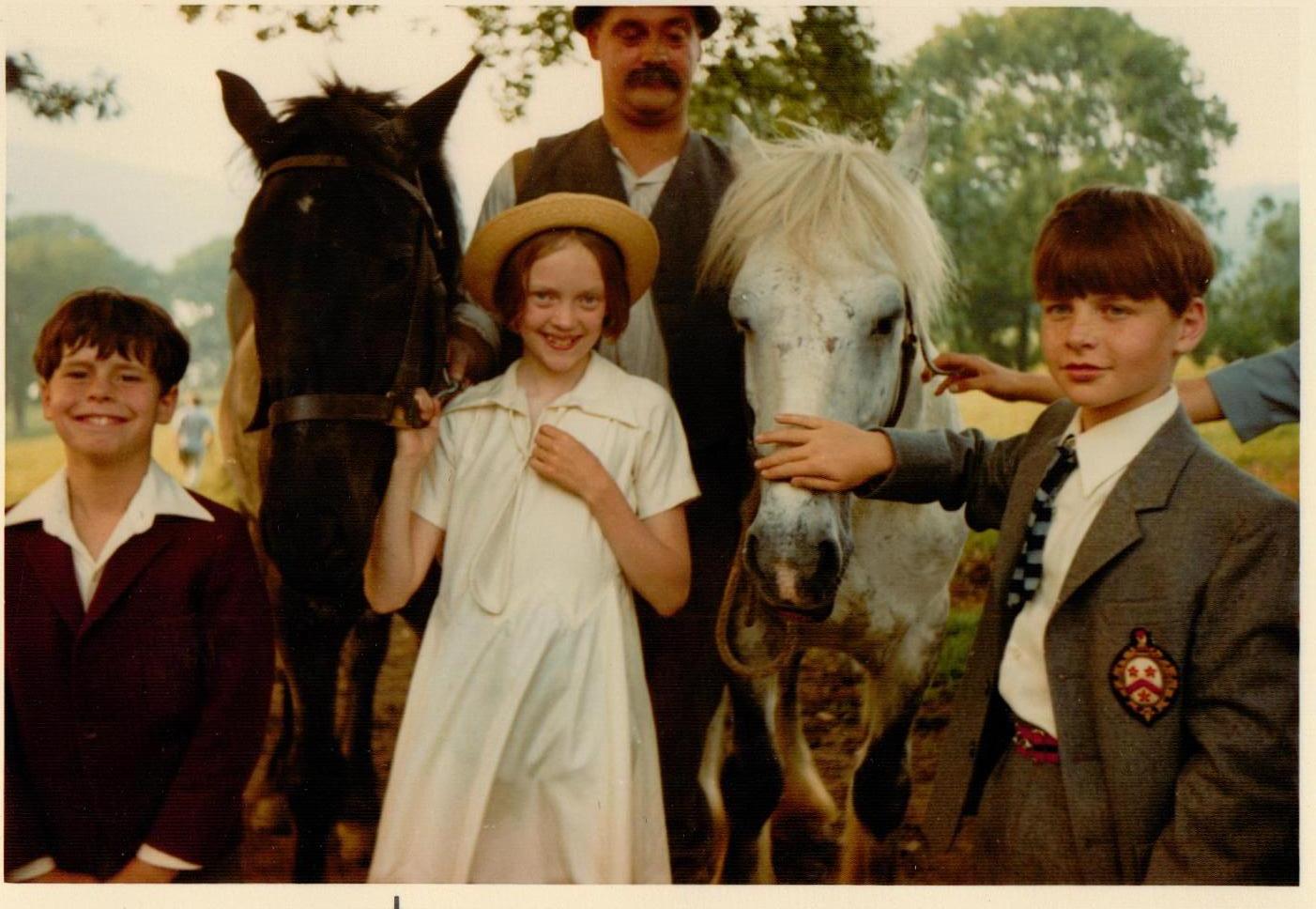
Sophie Neville holding the horses
Stephen Grendon, Sophie Neville and Simon West with Brian Robylas ~ photo: Daphne Neville

It is interesting that all the children signed their character names with their real names in brackets. We must have grown to associate ourselves more with the characters names than with our own.

Claude Whatham in 1973

Claude Whatham wrote, with thanks, and Richard Pilbrow enchanted me by drawing a picture of Wild Cat Island at night.

Daphne Neville with Richard Pilbrow1
Molly and Richard Pilbrow in 1973

Sadly, we didn’t manage to nab everyone on the crew, but collected a few signatures.

Brian Doyle, the publicity manager on 'Swallows and Amazons'
Brian Doyle, the film publicist on ‘Swallows and Amazons’ (1974)

The only other signature on this page is from Brian Doyle, Mum’s friend the publicity manager on the movie who encouraged us to collect the autographs.

Signatures of the rest of the cast and crew of 'Swallows and Amazons' in the back of my Jonathan Cape edition of Arthur Ransome's book
Signatures of the rest of the cast and crew of ‘Swallows and Amazons’ in the back of my Jonathan Cape edition of Arthur Ransome’s book

At the back of the book David Blagden, who played Sammy the Policeman as well as overseeing the sailing.

David Blagden who played Sammy the Policeman
David Blagden who played Sammy the Policeman ~ photo: Daphne Neville

David drew me a picture of what must be a vision of himself, sailing into the sunset in his little yacht Willing Griffin that had taken him across the Atlantic.

David Blagden's signature and sketch

Phyllis B was my tapestry-making stand-in. Simon Holland our art director (set designer) drew me a wonderful set of crossed flags that were also paint brushes ~ a logo for my life.

Art Director Simon Holland
Art Director Simon Holland at Bank Ground Farm in 1973 ~ photo: Daphne Neville

I have a signature from Kerry Darbishire (I thought she’d written Dartisnine) who played Bridget’s Nurse, our Fair Spanish Lady. Like the actors who played the Jacksons, she was not credited on the movie but played a significant part. She still lives in Cumbria.

Nurse with Baby Vicky, the ship's baby
Nurse with Baby Vicky, the ship’s baby at Holly Howe

We left Jean McGill, our driver and unit nurse, in Bowness-on-Windermere.

Jean with sophie
Jean our driver and location nurse operating the radio with Sophie Neville ~ photo:Martin Neville

Eddie Collins was the camera operator,  Ronnie Cogan our hairdresser, Joni Turner was a local lady who worked on a few days as Suzanna’s stand-in.

Sophie with Martin Evans the Gaffer and Terry Smith the wardrobe master
Talking to Martin Evans the Gaffer and Terry Smith the wardrobe master while leaning on a lighting stand at Bowness-on-Windermere

Terry Smith was the wardrobe master, Albert Stills is Albert Clarke who took the black and white photographs day after day. Terry Needham was our long-suffering second assistant director.

Sophie Neville with Terry Needham in 1973
Sophie Neville with Terry Needham and the unit radio at Derwentwater ~ photo: Daphne Neville

On the last page I have a very classy signature from Robert – who I think was one of the Keswick boatmen looking after the Lady Derwentwater.

A boatman working on Derwent Water in 1973
Our boatman and the houseboat in 1973 ~ photo Daphne Neville

Denis Lewiston the DoP also left his mark on my life.

Dennis Lewiston, director of Photography on 'Swallows and Amazons' ~photo:Richard Pilbrow
Dennis Lewiston, director of Photography on ‘Swallows and Amazons’ ~photo:Richard Pilbrow

Peter Robb-King signed himself ‘Make-up for the Stars’ and Gareth Tandy as ‘The Whip-cracker’, which surprised me as I had never seen his whip. Graham Ford obviously didn’t want me to change and Margaret Causey, our tutor, sent her love. We’d been though so much together and in such confined spaces.

The film crew set up in Rio Bay
Swallow and the film crew setting up at Bowness-on-Windermere ~ photo: Richard Pilbrow

Interestingly, I also have an inscription from Ian Fuller the sound editor listed as if he was around on location. I am sure he was the chap I would have met next. Claude and Richard would have gone straight down to the cutting rooms to edit the film. It is not usual for actors to enter such territory but our adventure was to continue. We were soon to be summons to the Elstree Studios of EMI at Borehamwood in Hertfordshire, just off the A1.

The crew as I remember them filming with Swallow and Amazon from the pontoon ~ photo: Richard Pilbrow
The crew as I remember them filming with Swallow and Amazon from the pontoon ~ photo: Richard Pilbrow taken on Derwentwater in 1973

You can read more in the ebook ‘The secrets of filming Swallows and Amazons’ or paperback entitled ‘The Making of Swallows and Amazons’ available from all online retailers.

The Making of Swallows and Amazons by Sophie Neville
Different editions of ‘The Making of Swallows and Amazons’ by Sophie Neville

Desperation, music and laughter ~ the filming of ‘Swallows and Amazons’, 12th July 1973

Director Claude Whatham

Our director, Claude Whatham had a problem. Despite two attempts he had failed to shoot the key scene when the Walker children – who had just arrived at Holly Howe – discover the Peak at Darien and look out over the lake to spot Wild Cat Island for the very first time. He saw it as crucial to the motivation of the story.

Claude had shot the sequence of us running down the field at Bank Ground Farm in the evening light. He had what would technically be called our POV (point of view) of the island. He had nothing in between. There was no dialogue but without the right light the sequence would not cut together. And now it was raining, endlessly. We waited around all day, yet again,  hoping for the weather to clear. It did not.

12th July ~ my revised diary

I can’t believe that we went, what would now be termed, wild swimming in the Lake District after making such a fuss about recording the swimming scenes at Peel Island. Even if it was raining the water must have been fairly warm. I don’t suppose we were in for that long. I’m now rather shocked that we dried our hair by sticking our heads out of the windows of the mini-bus. We could have all been decapitated.

While Claude was busy looking at the sky I spent the rest of the day industriously sticking small photographs into my scrap-book. Mum had her camera films developed by Triple Print so that she had some to give away.  This was the result:

Photographs in a child's scrapbook

Two of these tiny photographs show us sitting in the Grizedale Forest with Wilfred Josephs who composed the music for Swallows and Amazons.  He had visited us on location when we were shooting the charcoal burners scenes. If I blow up this tiny photograph you can see a little more of him.

Wilfred Josephs

Wilfred had written a canon with the idea that he could do something musical with our voices. Our efforts were being recorded by Robin and his assistant when Mum took these snap shots. The words went in a round, like this:

Swallows:  ‘Swallows sail the ocean-wide, Natives we can not abide.’  (Sung in a high register)

Amazons:  ‘We are the Amazons.’ (Sung beneath us in a low register)

What Wilfred soon discovered was that, apart from Lesley Bennett, we were all pretty useless at holding a tune. Whatever was recorded on that day near the charcoal burners’ hut never made it to the final sound track – or even the LP that EMI brought out to accompany the movie.

Wilfred Josephs on location in Cumbria
Composer Wilfred Josephs with Sophie Neville, Lesley Bennett, Claude Whatham, Kit Seymour, Simon West and sound recordist Robin Gregory ~ photo: Daphne Neville

Mum was thrilled to meet Wilfred Josephs. He was fantastically talented, with a huge list of credits to his name. Born in 1927, he qualified as a dentist at the Universtity of Durham ~ where I also studied ~ before becoming a full-time composer in the early 1960s. His career was launched when his Requiem in memory of the Jews who were lost to the Holocaust won La Scala. He went on to compose 12 symphonies, 22 concertos and was  commissioned to write a number of overtures, ballets, operas and other vocal works.  In the field of television he is perhaps most well know for producing the theme music for I,Claudius, Enemy at the Door, The Prisoner and Pollyanna. He worked for Claude Whatham on the movie score for All Creatures Great and Small that starred Anthony Hopkins and Simon Ward, as well as the television drama W.Somerset Maugham and the serial Disraeli, which Suzanna Hamilton appeared in.

In the early 1970s Wilfred had also composed the theme music for Claude’s BBC play of Laurie Lee’s auto-biography Cider with Rosie, which Sten and I had acted in. Wilfred Josephs sadly died at the age of seventy, but I found that someone has put his haunting composition for Cider with Rosie onto YouTube. It was so good to hear it again. It comes with colourful cider-making images but – unless passionate about cider – you can have a look at more of my scrapbook while you listen to it. Like the film-score to Swallows and Amazons the orchestra was conducted by Marcus Dods.

Some of these tiny photographs from the contact sheets that Richard Pilbrow gave us are fascinating.

You can read more about making the film in the ebook entitled ‘The Secrets of Making Swallows and Amazons’ here:

You can listen to Wilfred Owen’s haunting music for ‘Cider With Rosie’ here

The 50th Day ~ making the movie ‘Swallows and Amazons’, 11th July 1973

Producer Richard Pilbrow with Neville C Thompson on Derwentwater in the Lake District in 1973
Producer Richard Pilbrow with production associate Neville C Thompson on Derwentwater in the Lake District in 1973

This photograph of Richard and Neville sitting on the deck of Captain Flint’s houseboat in the pouring rain must epitomize the struggles they went through to work around the weather and bring ‘Swallows and Amazons’ in on budget.

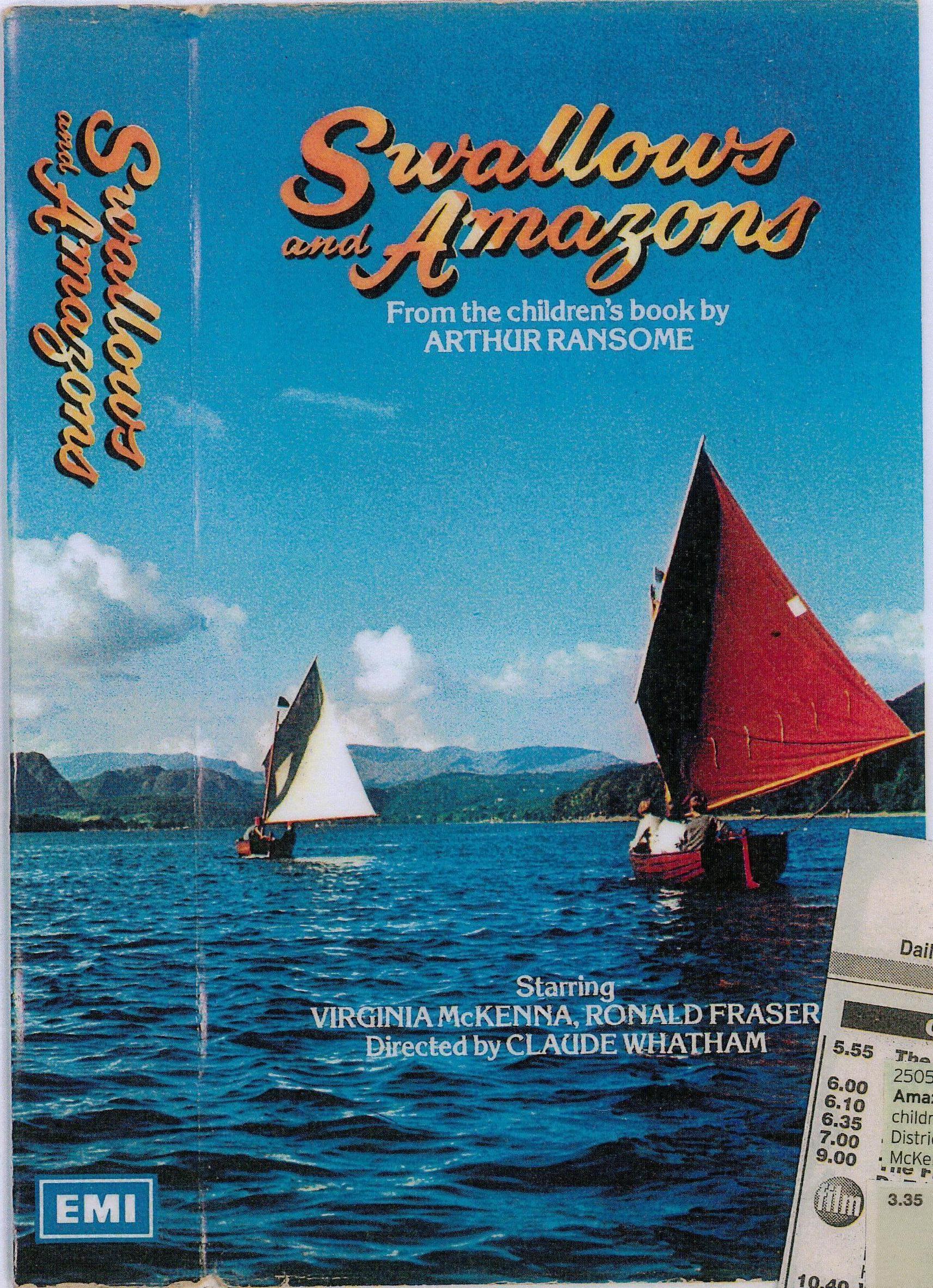
It was Claude Whatham’s dream to end the movie with an aerial shot of Swallow and Amazon sailing away from Captain Flint’s houseboat. He had a helicopter pilot standing-by with a special cameraman, but it wasn’t to be. He needed bright sunshine for the shot to cut with our farewell sequence after the battle. We waited three days but the weather was too dull and wet to film anything useful. I’m so glad. Claude ended up freezing the simple shot that captures Arthur Ransome’s book completely. It was used on the front of one of the first VHS copies of the movie.

'Swallows and Amazons' on VHS
The Amazons, played by Kit Seymour, Lesley Bennet and the Swallows, played by Sophie Neville, Suzanna Hamilton, Simon West and Stephen Grendon on the cover of the original VHS version of ‘Swallows and Amazons’

I’m afraid we hung about the very nice Waterhead Hotel in Ambleside getting bored and precocious, or so the evidence suggests. Since John and Margaret, our location caterers, had returned to Pinewood Studios, we were taken to the hotel restaurant for lunch.

We loved the cinema in Ambleside. Was it the same then as Zeffirellis, the cinema in Compston Road operating today?  The adults must have found it a good means of keeping us peacefully entertained, but then again they were all film-makers who loved movies. Zanna didn’t come to the cinema that afternoon. She walked four miles up Wanstell Pike with Jane Grendon.

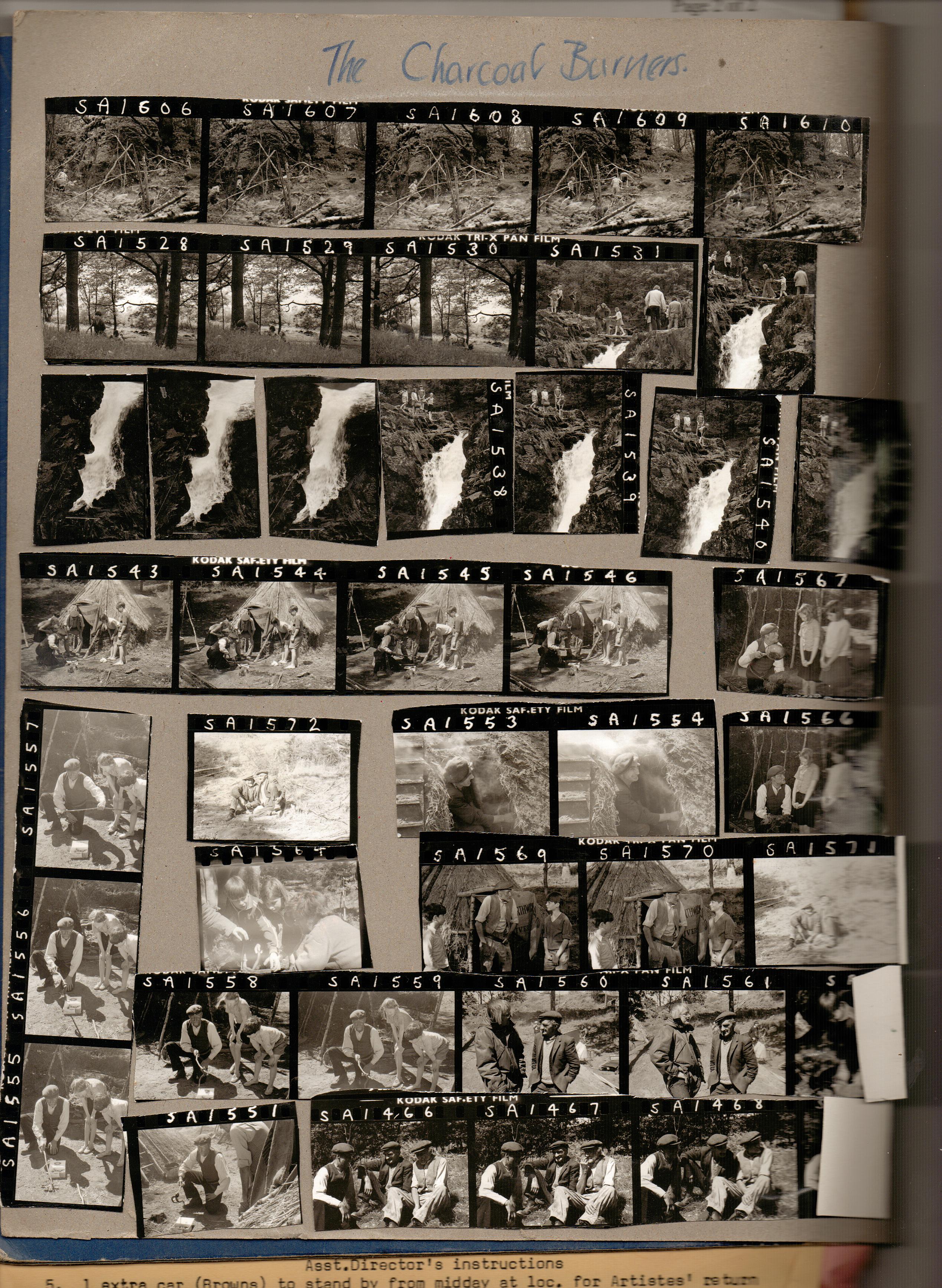
Albert Clarke, the stills photographer on the film crew, had given us contact sheets of the black and white photographs that he had taken during the filming. I spent my time at the Kirkstone Foot Hotel, where Claude and Richard were  staying, with a tube of Copydex ~ or ‘rubber solution glue’, as they kept saying on Blue Peter,  sticking the tiny photographs into the scrap books that I had been keeping.

The Real Charcoal Burners a contact sheet

Richard Pilbrow kindly let us choose large 10’x 8′ versions of the photographs, which we are able to take home to our families. I kept mine all these years, never using them for anything, but treasuring them as a memory of those happy, fulfilling days spent in Cumbria in 1973.

Black and White photograph of a waterfall in the Lake District
‘It’s Niagara!’ Titty declared. ‘We could get a barrel and bounce down it.’ Sten Grendon, Suzanna Hamilton, Simon West and Sophie Neville as the Swallows on their way to visit the charcoal burners

You can now read about making the movie in the ebook ‘The Secrets of Filming Swallows and Amazons’ or the paperback entitled, ‘The Making of Swallows and Amazons (1974)’ available at most online distributors or to order from your library or local bookshop.

'The Making of Swallows and Amazons (1974)'
published by The Lutterworth Press

The dangers of filming discussed during our last days making ‘Swallows and Amazons’ on 10th July 1973

Claude Whatham showing the 16mm camera to Simon West and Sophie Neville. Sue Merry and Denis Lewiston.
Director Claude Whatham letting Simon West and Sophie Neville handle the 35mm Ariflex. Sue Merry and Denis Lewiston can be seen behind us.

When Suzanna Hamilton brought me the diary she kept during the filming of Swallows and Amazons we had time to reflect on the seven weeks we spent together in the Lake District during that far off summer of 1973.

‘We were beautifully looked after,’ she said. ‘I mean we were really well cared for. Look – Jane took me fell walking.’  Our diaries record that our local driver Jane McGill also went to endless lengths to make things fun for us – ever with safety afore-thought.

Jane Grendon, Sten’s mother and one of our two chaperones who took us fell walking.

She was right. Jane Grendon, who was Sten’s mother, and Daphne Neville, my mother, were our official chaperones. They worked day and night with very little time to themselves.

Daphne Neville in 1973

Both had left younger children and animals at home in Gloucestershire with their husbands, which can’t have been easy.

Sophie Neville on location film Swallows and Amazons in 1973
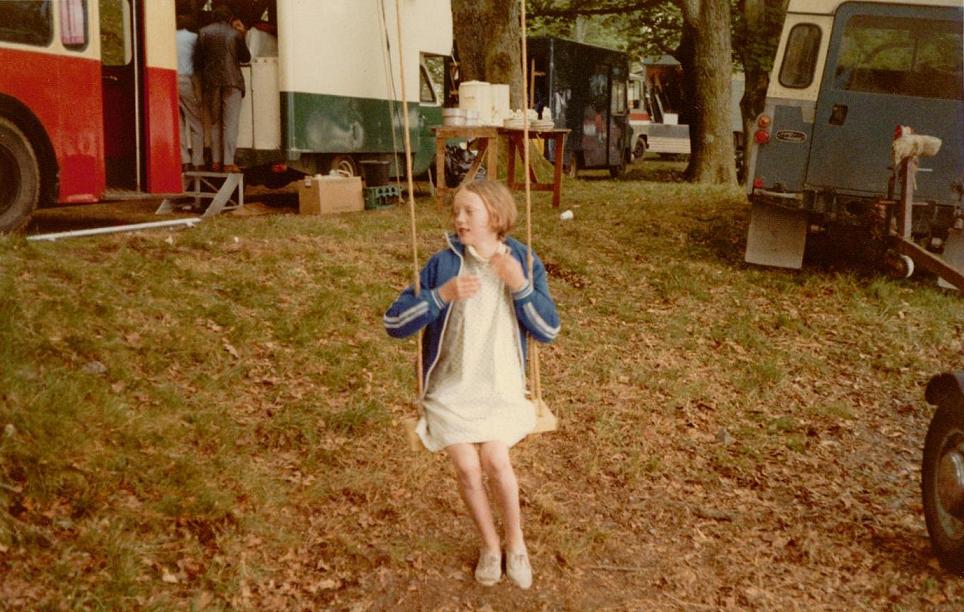
A photo taken of the swing at our unit base opposite Peel Island earlier in the filming when the school bus and caterers were still around

Mum later wrote an article for Woman magazine saying that being a chaperone was ‘Fascinating, Fattening and Fun’, but it must have been exhausting. It would have been quite a trial preventing us from getting sunburnt let alone keeping us entertained.

Daphne Neville, having organised Sophie Neville and Simon West into track-suits, life jackets, sun hats and the safety boat in 1973

When we had to do anything scary or unpleasant during the filming of Swallows and Amazons, such as walk through scratchy brambles, Claude Whatham would assuage any moans by awarding us ‘Danger Money’.  It was a huge encouragement. He gave me £2.00 for being good about diving into the chilly water for the swimming scenes.  It was a lot of money back then. My mother would make a careful note of it whilst we were still in costume.

A list of who had earned Danger Money written by my mother on the back of a Script Revision page

We spent our gains in Ambleside buying presents to take back for the stay-at-homes. I think we might have received a little more after Swallow was nearly mown down by the Windermere Steamer, an incident which had actually been dangerous. I am not sure what Kit and Lesley had been doing to receive £1 each. They may have just got wet and cold sailing.

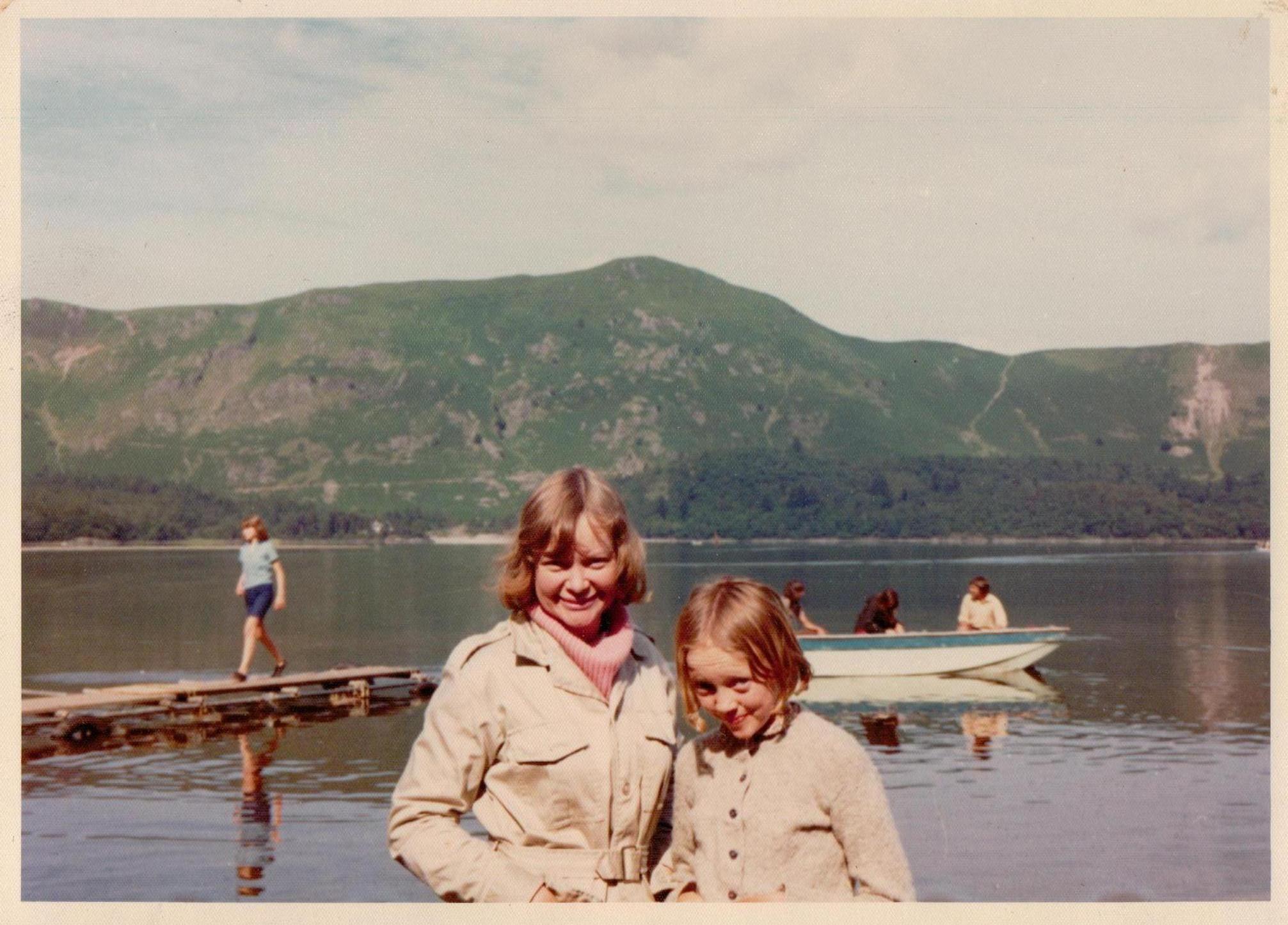
Daphne Neville with Sophie Neville while filming 'Swallows and Amazons' in Cumbria
Daphne Neville with Sophie Neville while filming ‘Swallows and Amazons’ in Cumbria. Kit Seymour is walking along the jetty in the background.

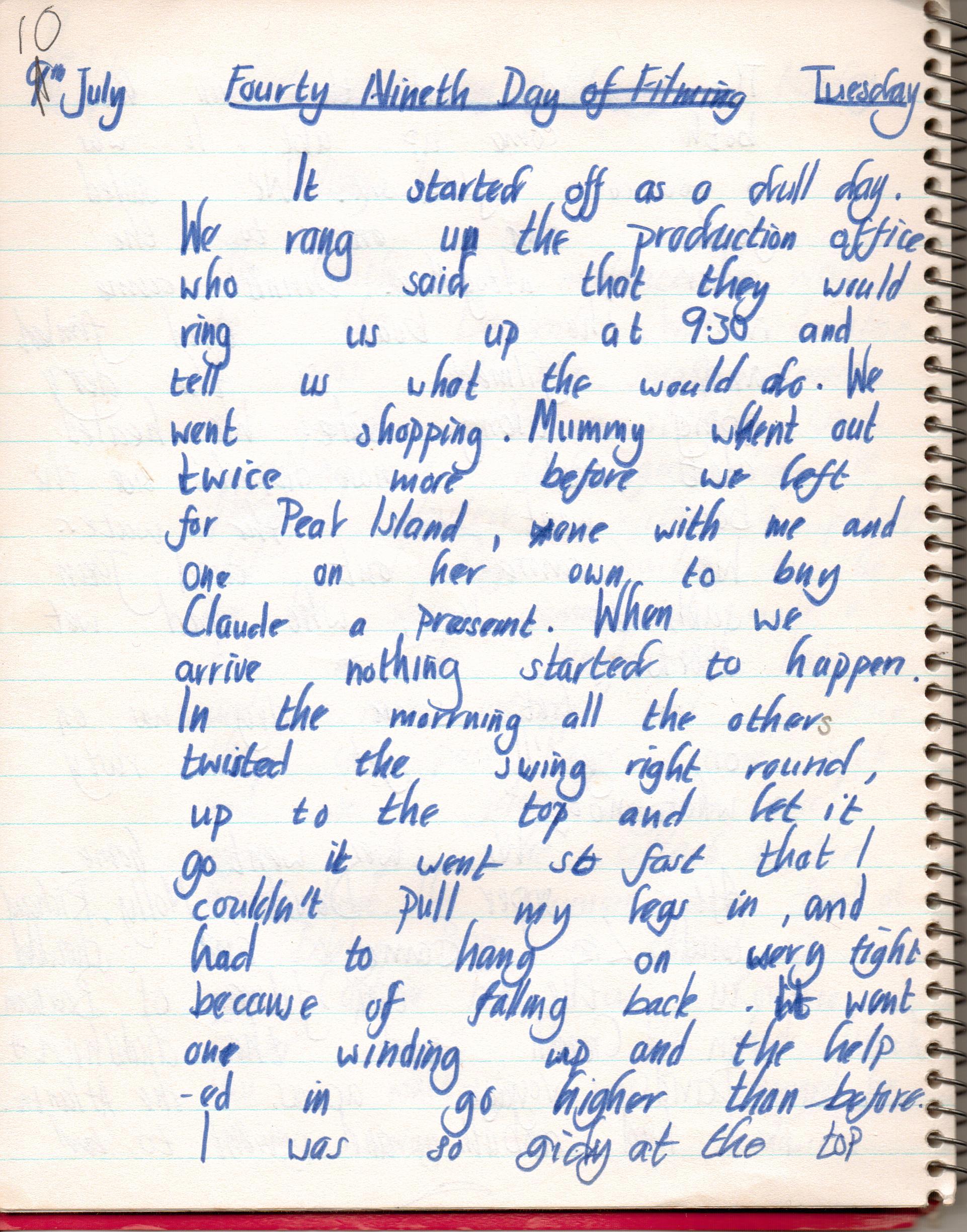
After all the rushing about in boats, the risks taken clambering from one vessel to another and inevitable dangers that we faced out on the water, it was the boredom involved in filming that proved most dangerous; children’s games that went terribly wrong ~

My diary on the filming of the moive 'Swallows and Amazaons' in the Lake District, Cumbria kept in 1973

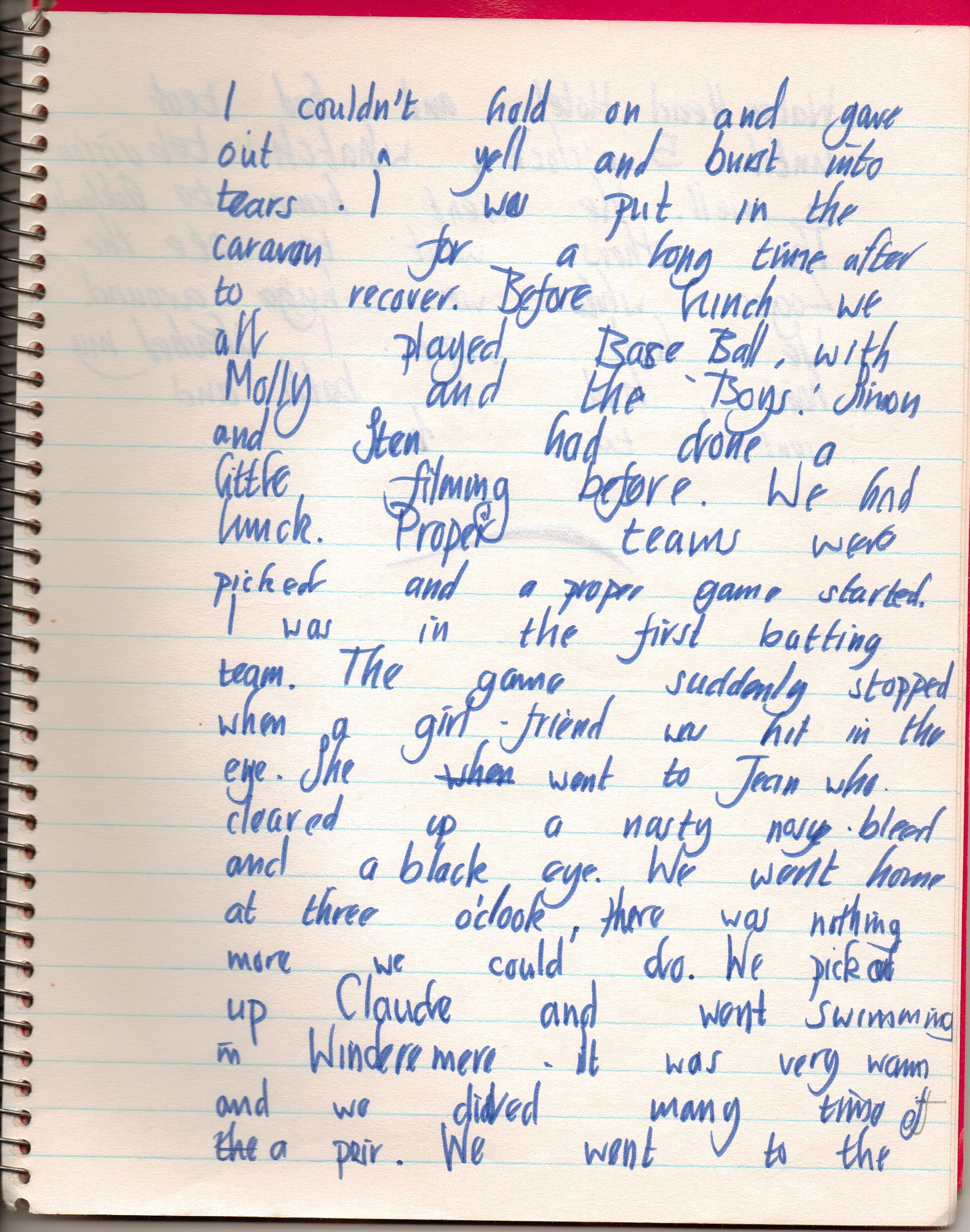
My diary on the filming of the moive 'Swallows and Amazaons' in the Lake District, Cumbria kept in 1973

My diary on the filming of the moive 'Swallows and Amazaons' in the Lake District, Cumbria kept in 1973

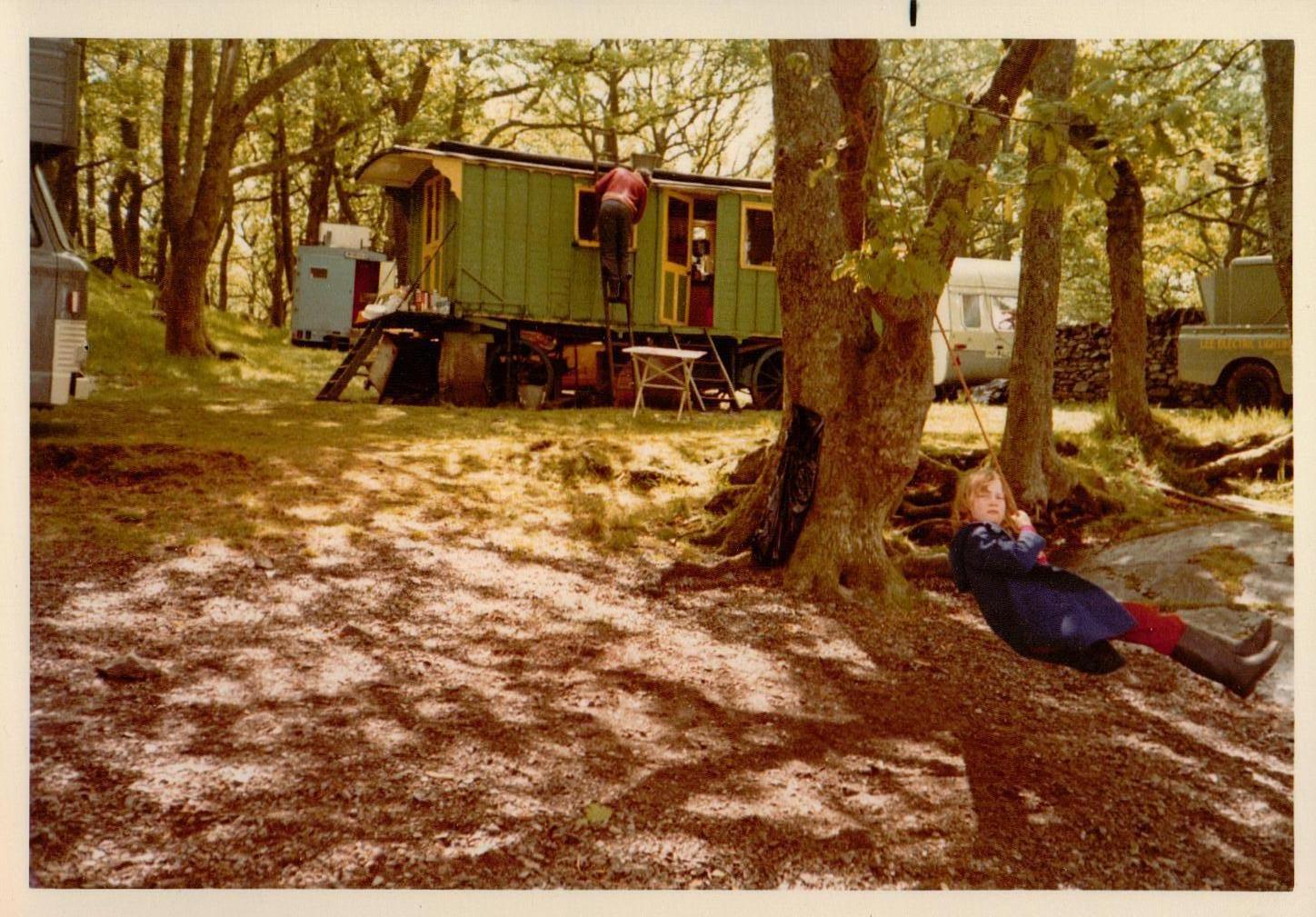
This was the swing in question, strung from a tree on the shores of Coniston Water opposite Peel Island where a couple were living in a wooden caravan. The white ‘Make-Up’ caravan, that had previously been used as a dressing room for Virginia McKenna, and later Ronald Fraser, is parked beside it. It was there that I was sent to lie down.

A snap shot taken earlier in the year of my little sister on the swing at the Unit Base opposite Peel Island ~ photo: Martin Neville

It was a shame that the baseball game Molly organised ended so abruptly. We enjoying it and longed to keep playing but she realised that it could so easily have been one of us who ended up with a black-eye.

Stephen Grendon, longing to climb a tree whilst in costume

At one stage we all got into whittling wood. Bod Hedges, the property master, made a number of props on location. Different versions of the Amazons’ bows and arrows were carved from hazel on the banks of Coniston Water. He also made forked uprights for the fireplace and various stakes for the charcoal burners’ scene. Suzanna bought a penknife with her Danger Money and became quite a keen carver until the knife slipped. Jean treated the cut finger with such a massive bandage that Claude put a firm stop to any future whittling. It had been the one thing that kept us quiet. We were active children yet not allowed to climb trees or get wet. Instead Lesley Bennet plucked away at a tapestry and I painted pictures.

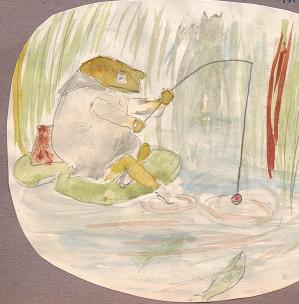
A bad copy of Beatrix Potter’s Jeremy Fisher Frog, looking not unlike Arthur Ransome.

Possibly the biggest danger was getting too fond of the primary objective – catching the bug that is film-making. Richard and Claude still had a few vital scenes to record and yet the weather forecast was bleak.

Richard Pilbrow and Claude Whatham at The Secret Harbour on Peel Island, Coniston Water
Producer Richard Pilbrow with Director Claude Whatham in their wet weather gear at The Secret Harbour on Peel Island, Coniston Water

You can read more in ‘The Making of Swallows and Amazons’ available in different versions that can be for sale online here

'The Making of Swallows and Amazons (1974) by Sophie Neville'
Different editions of ‘The Making of Swallows and Amazons (1974) by Sophie Neville’