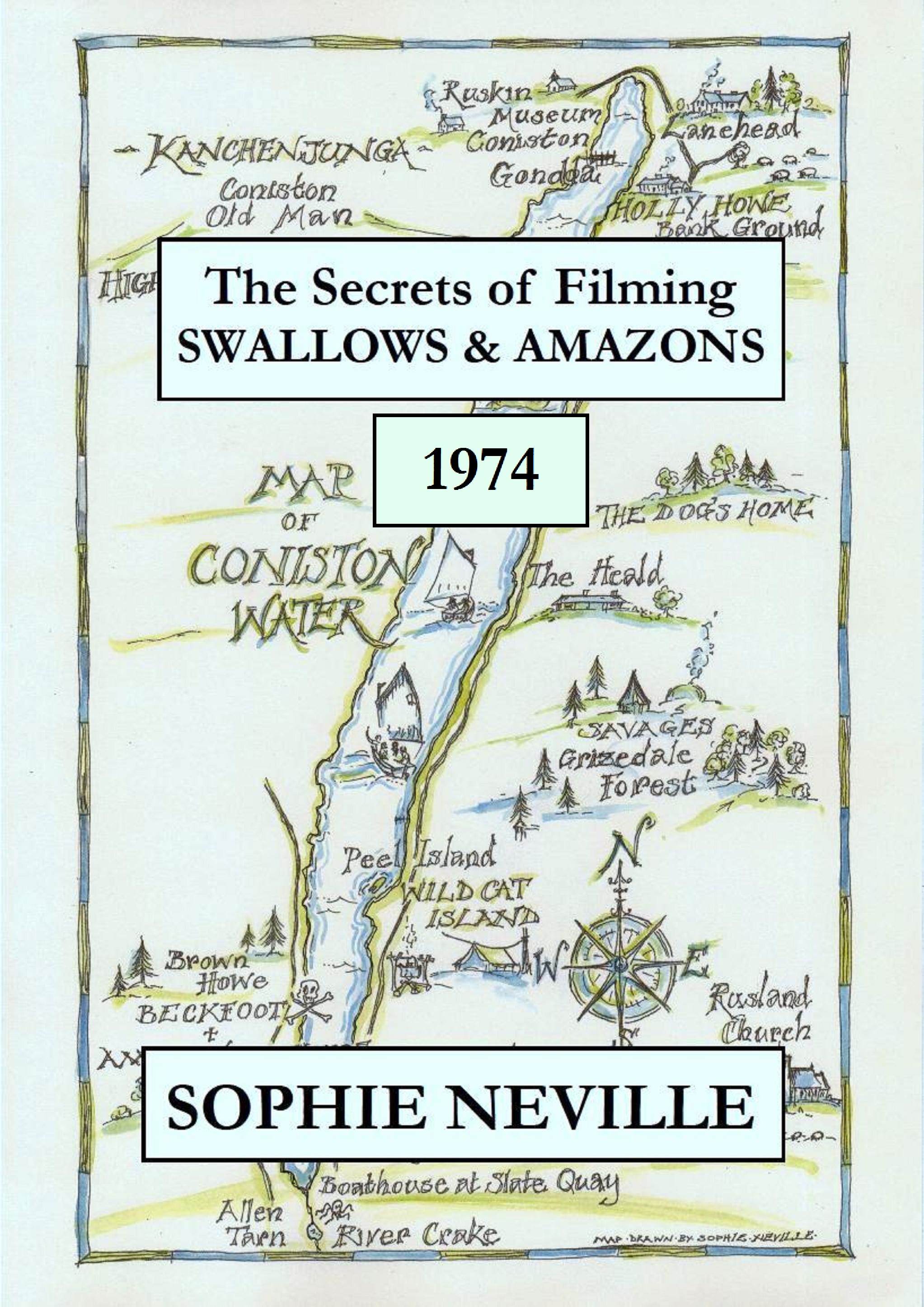
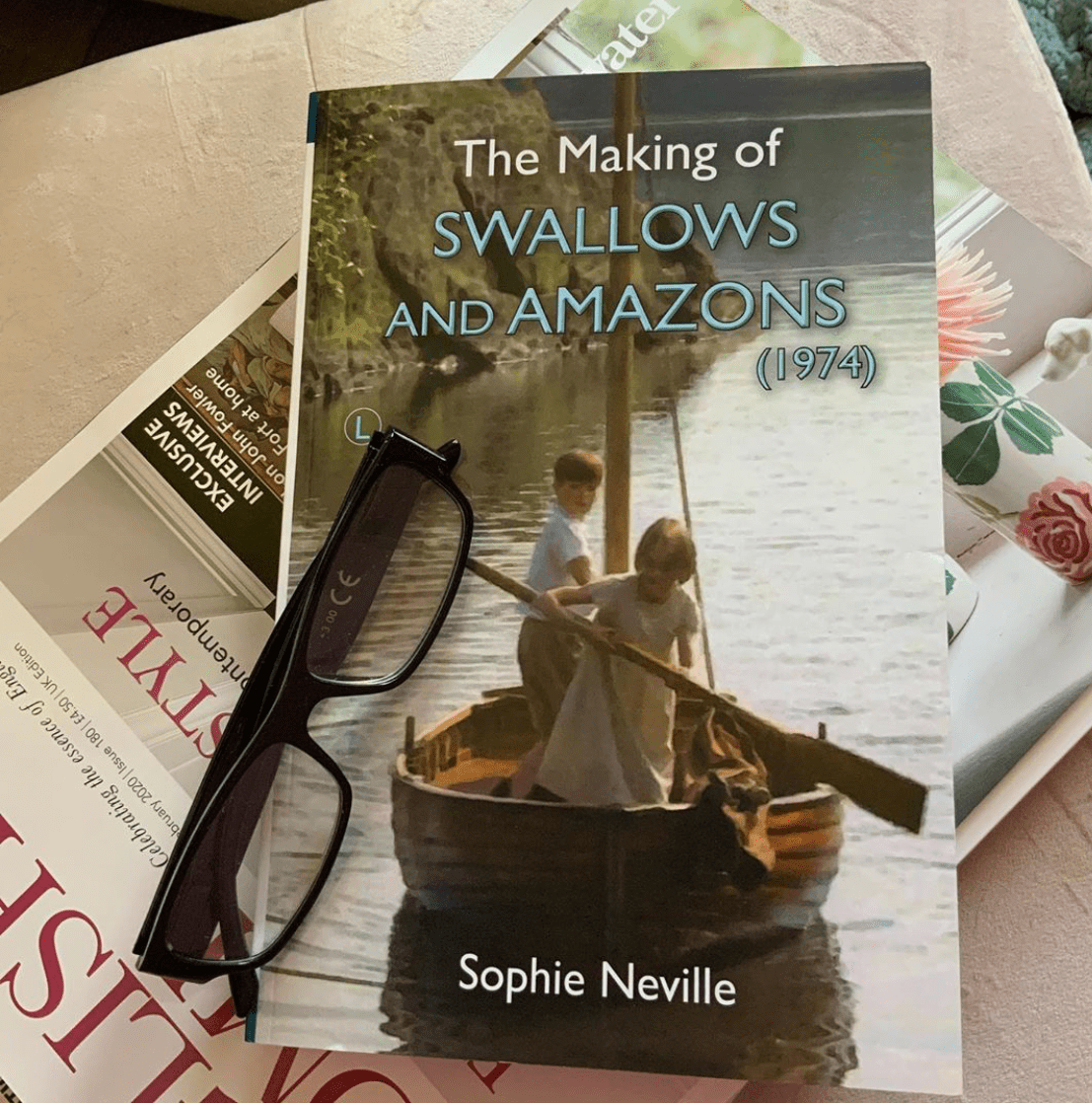
A second edition of the ebook ‘The Secrets of Filming ‘SWALLOWS & AMAZONS'(1974) is now available on Amazon Kindle, Smashwords, itunes, Kobo, and Nook for £2.99 . You can download this free of charge if you already own the first edition.
If you would like a copy but don’t have a Kindle, worry not. We have added a link whereby you can download a free Kindle app. Please go to my Book Page and scroll down for the details.
If you already have a copy of the ebook, contact a Customer Advisor and ask for a free update. You just need to give Kindle the ebook’s ASIN number. The ISBN for all online editions except Kindle is: ISBN 9781311761927
Since being contacted by others who were involved in the filming, I have been able to add a few more anecdotes and images, including this beautiful shot of Virginia McKenna in 1973 kindly sent in by the photographer Philip Hatfield.
I found a copy of my original contract for the film and when Jean McGill rang from Bowness, a few more secrets floated to the surface.
CBBCTV’s Cinemaniacs interviewed the screenwriter David Wood and myself on how the original movie of Arthur Ransome’s ‘Swallows and Amazons’ was made back in the summer of 1973. The idea was to use 30 second clips, so please excuse my over-the-top reactions, but you can watch the whole recording below.
‘This has to be one of the most delightful interviews in my recent memory.’ Tim Lewis, USA
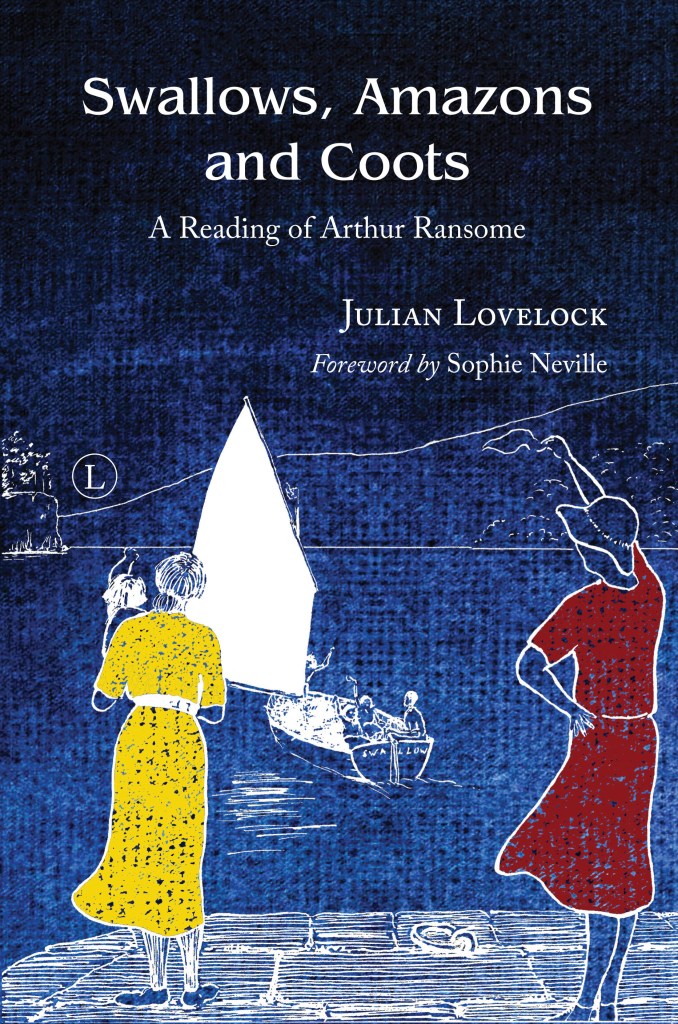
‘Swallows, Amazons and Coots’ by Julian Lovelock, with a forward by Sophie Neville, was launched on 23rd September at The Radcliffe Centre at the University of Buckingham. Published by the Lutterworth Press, it is a companion for anyone who loves Arthur Ransome’s series of ‘Swallows and Amazons’ books.
To read more and enter a competition to win a copy please click here
‘In 1929, Arthur Ransome (1884-1967), a journalist and war correspondent on the books of MI5, now widely regarded as one of the most influential children’s writers of the twentieth century, turned his hand to writing adventure stories for children. The result was Swallows and Amazons and eleven more wonderful books beyond, spanning in publication the turbulent years from 1930 to 1947. They changed the course of children’s literature and have never been out of print since, beloved for the author’s ability to create a world of escape so close to reality that it is utterly believable, in which things always turn out right in the end. Yet to be properly appreciated today, the novels must be read as products of their era, inextricably bound up with Ransome’s life and times as he bore witness to the end of Empire and the dark days of the Second World War.
‘In the first critical book devoted wholly to the series, Julian Lovelock explores each novel in turn to offer an erudite assessment of Ransome’s creative process and narrative technique, highlighting reflections of his experiences and contradictory politics, colonial imagery, the spectre of war and of course his remarkable skill as a story-teller as he constructed a fictional refuge for himself and his readers. Thus Lovelock convincingly demonstrates that, despite first appearances, the novels challenge as much as reinforce the pervading attitudes of their time. Elegantly written, Swallows, Amazons and Coots is both up-to-date and nostalgic. It will appeal to anyone who has enjoyed the world of Swallows and Amazons, and there is plenty here to challenge the Ransome enthusiast and the student as well.’
Endorsements
Virginia McKenna wrote: ‘There is always more in life than meets the eye. The delightful and unique Arthur Ransome stories from Swallows and Amazons to Great Northern? have delighted us over the years. But now we learn, thanks to this fascinating book, that there are more aspects and depths to the stories than we ever imagined. In no way does this diminish them – on the contrary. By giving us a more profound understanding of the author, the adventures and exploits of his characters take on an extra depth and dimension. These are stories for children that no adult should miss.’
‘An admirable introduction for newcomers to the Swallows and Amazons novels, written with detailed and expert knowledge. Julian Lovelock clearly has a deep affection and admiration for Ransome’s writing, and places the books in a rich and complex context. This is an elegant and leisurely guide through the books in the company of an amiable and well-informed companion.’ Peter Hunt, Emeritus Professor of Children’s Literature, Cardiff University, and co-author of How Did Long John Silver Lose His Leg? (2013)
Julian Lovelock is the editor of Mixed Moss,2016, the journal of The Arthur Ransome Society, which includes an article by Sophie Neville who is President of the literary society.
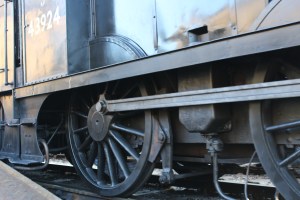
Kelly Macdonald starring as Mrs Walker and Andrew Scott as Lazlov, with me, Sophie Neville, as a dithering lady in a hat and rusty-coloured jacket getting into the steam train behind Roger at Portsmouth Station. Blink and you’ll miss me.
So opens the new film version of Arthur Ransome’s story ‘Swallows and Amazons’ (2016) directed by Phillipa Lowthorpe, which is coming out in cinemas around the UK on 19th August.
‘Unlike other films, ‘Swallows and Amazons’ is within children’s reach,’ I’ve been told. It’s true. Any child can pretend that their bed is a sailing dinghy taking them to a deserted island. And when you are a little bit older – it’s not impossible to join a sailing club or go camping.
We took Swallow to join the Aldeburgh Junior Lapwings on the River Alde in Suffolk.
One intrepid sailor had bought her own Lapwing for £100, raising the money by busking in Aldeburgh High Street. Tilly renovated and varnished the clinker-built dinghy herself.
She can be seen here teaching the younger children how to owl hoot, playing ‘What Shall We Do With The Drunken Sailor’ on her thumbs.
The children went fishing for crabs, which they later raced down the slipway.
They went in search of treasure – if that is what you call a scavenger hunt –
before sailing back to camp by the mud flats, cooking out in the open and sleeping in tents.
They launched their dinghies, raised their red sails
and headed off, catching the tide.
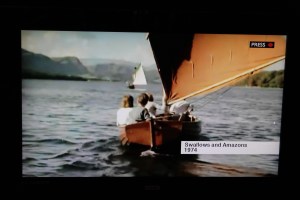
Swallow, the dinghy used in the 1974 film ‘Swallows & Amazons’ acted as flag ship.
Guy Willson, a reader from Papua New Guinea, has written to say: ‘I have read your book and I really liked it. I could see behind the scenes and often read between your lines as well.’
‘When you were making the movie (in 1973) I was on my way to Norfolk Island as a starting point of my adventures in the South Seas; so I never knew of the release of your film until much later when I had children of my own that had reached the age to go ‘avasting’ and ‘timber shivering’, when we were living in Rye in the 1990’s.’
‘Some years ago I restored a 13ft clinker dinghy and after adding a false keel, added a standing lugsail and trailed her up to Coniston for my children to sail…I had in mind an article from Classic Boat on the Swallow, how the Altounyan children preferred Swallow as a boat because they could stow more things in her and she could still sail well. I had noticed on a drawing in the article that Ransome had given her an extra 2 or 3 inches of false keel and this helped tremendously in reducing her leeway. I added a piece of oak to do the same thing but gave her an extra 9” aft and planed it down to a feather edge forward so the she would go about a bit easier. Well, it worked and Eaglet would have done the original Swallow proud.’
Swallow – the 12′ dinghy used in the film
‘If you would permit me a little correction: you described the rig as being gaff rig, but this is not so. Both the boats, originals and the ones you sailed were in fact luggers. The nearest thing to a gaffer among the luggers is the Gunter Rig which has jaws at the front of the yard but is hauled up by a single halyard. You can see this in the Mirror dinghy (in truth it is about halfway between the two). However the lug rig of Swallow is known as a ‘standing lug’ and it can be used to go about freely. After hauling up the sail on its traveller; the peak of the yard is raised by the downhaul line (usually attached to the bottom of the boom). This tightens the luff of the sail and lifts the outer end of the boom as well giving the best efficiency to the sail.’
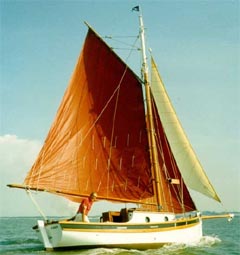
A gaff rigged cutter
‘Lugsails were the working sails of England for most boats less than 60ft but they were usually rigged with a ‘dipping’ lug as the mail sail and a standing lug aft. This dipping lug had to be dropped and the yard hauled round behind the mast every time they went about. It was a powerful sail and they found their best expressions in the three masted Bisquines which used to raid British shipping in Napoleonic days. You can still see them at the classic boat events at Douarnenez and Brests, where I took the gaff schooner Soteria in 2006.’
Soteria at Douarnenez
‘If you had had a gaff rig you would most probably have needed a jib to balance it (unlike the American catboats which have their masts right up in the bow, not even a space for the Boy Roger on those! Thanks for writing a lovely book which I will pass on to my daughter.’
“X marks the spot where they ate six missionaries”
‘You did such a grand job as Titty and I am not really surprised to find that you are a bit of a wordsmith. I am a missionary (uneaten) in Papua New Guinea and we are planning to sail back there in our steel schooner see www.livingwatermission.org On our return we will be calling in at Erromanga in Vanuaatu where ‘x’ was the spot where two missionaries were eaten. Recently the descendant of one of them, John Williams, went to Erromanga for a service of reconciliation.’
If you have noticed any errors in ‘The Making of SWALLOWS & AMAZONS’ please use the Comments box to let us know so that we can make corrections! We might be able to bring out a third edition. Readers who already have a Kindle edition will be able to update it free of charge.
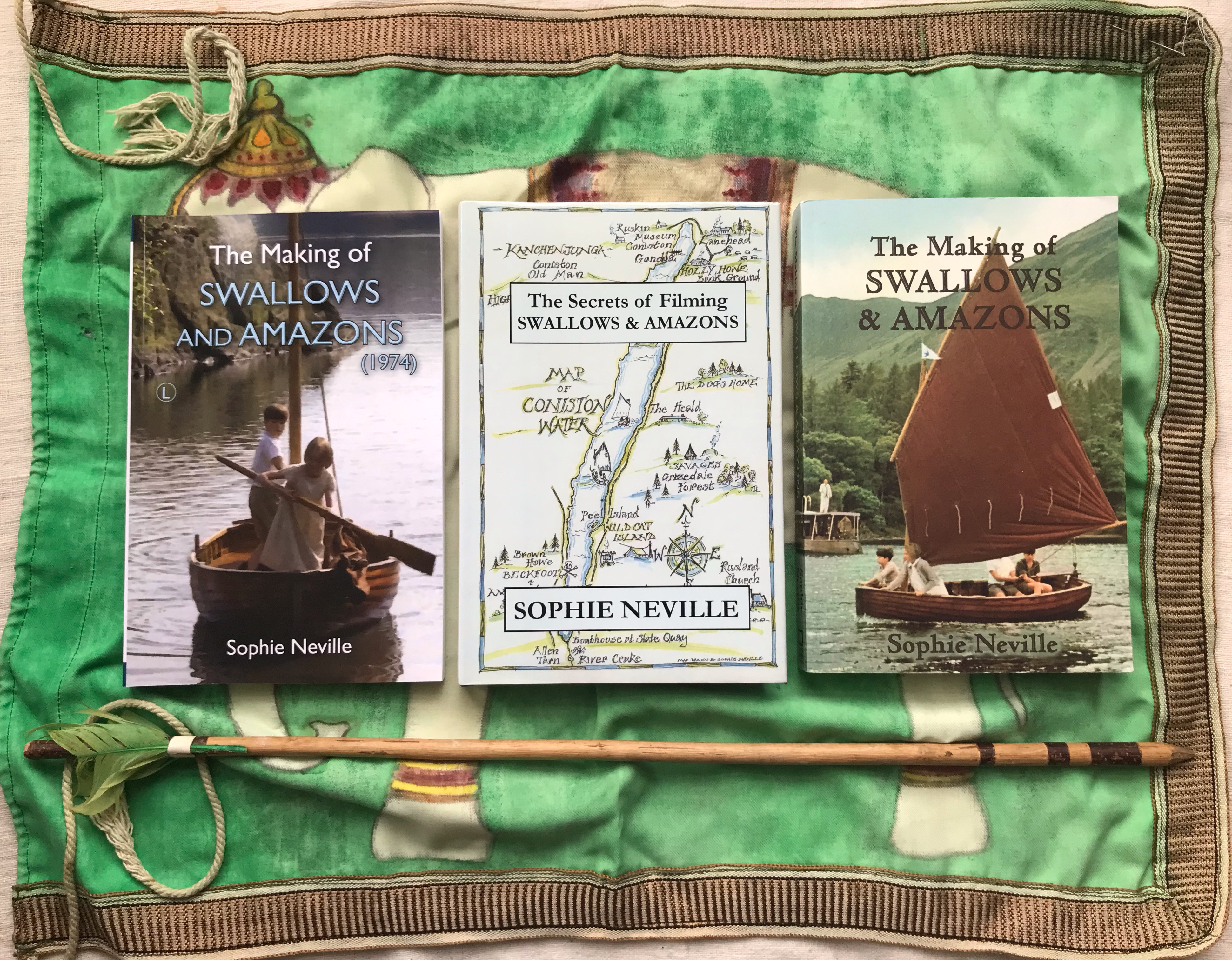
Different editions of ‘The Making of Swallows and Amazons (1974) by Sophie Neville’
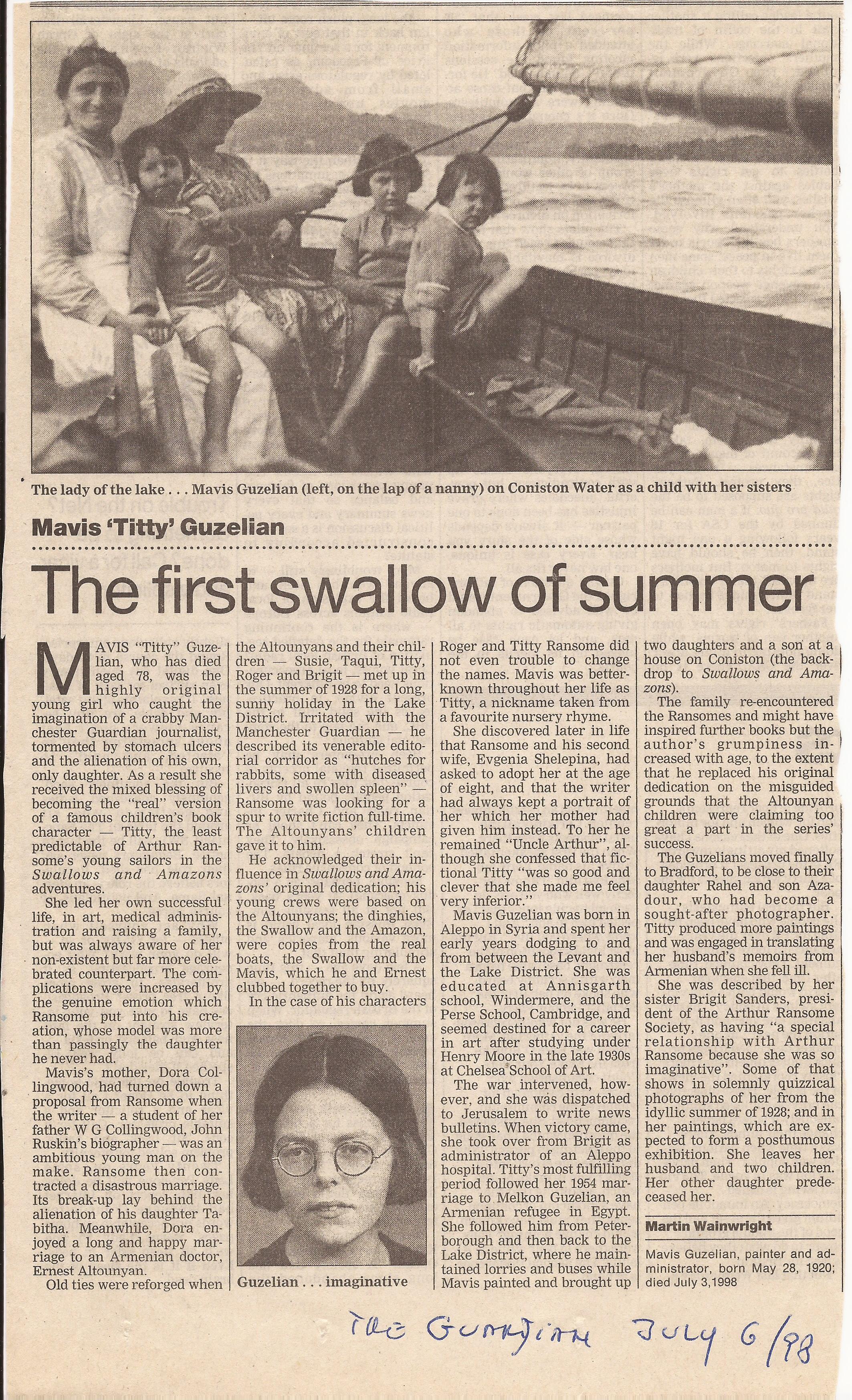
Titty was the name of an imaginative and ‘highly original’ little girl who Arthur Ransome first got to know in the Lake District when she was aged eight. When I met her niece Barbara Altounyan, she was most amused to hear that I had once played her Auntie Titty.
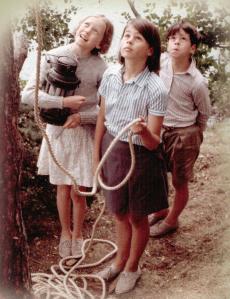
~Sophie Neville playing Titty Altounyan in the 1974 film ‘Swallows & Amazons’. Official photograph taken a Bank Ground Farm above Coniston Water copyright: StudioCanal~
I’d brought Barbara some long lost family photographs that included some of Titty’s wedding in Aleppo. They are beautiful.
Titty on the arm of her father, Dr Ernest Altounyan in Aleppo, 1954
Titty on her wedding day with her husband Melkon Guzelian, her sister-in-law, her father Ernest Altounyan, her mother Dora and brother Roger, far right. You can also see Roger, Ernest and Dora below, with Roger’s wife standing far right.
There is also a more informal shot.
‘Don’t you want to know about Titty?’ Barbara asked me. ‘She was a very detailed person and quite a perfectionist.’ I knew she was a wonderful artist who had studied under Henry Moore at the Chealsea School of Art. Although she produced a lot of colourful art, she was unwilling to ever attempt to sell her work. I was also told she also had long legs. I only hope that I have represented her well.
Titty and her siblings had dark hair, but I was told that Mrs Ransome wanted the children playing the Swallows to have have blonde hair. She insisted that Titty was played by ‘an English Rose.’
Titty Altounyan at her sister Brigit’s wedding to John Sanders in 1953
(NB: Ransome did not write ‘Swallows and Amazons’ while on holiday on Coniston Water as was stated in the programme. To see a photograph of Low Ludderburn, the house above Windermere where Arthur Ransome lived and wrote ‘Swallows and Amazons’ please click here and scroll down.)
You can read about what it was like to play the part of Able Seaman Titty in the original film of ‘Swallows and Amazons’ in this illustrated paperback, available online or to order from libraries worldwide:
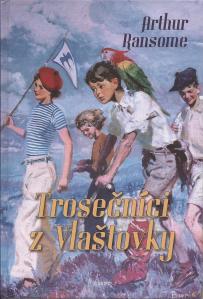
Albatros Media in the Czech Republic have re-published a hardback edition of ‘Swallowdale’ by Arthur Ransome, illustrated by the great Czech artist Zdenek Burian.
The Foreword has been written by me, Sophie Nevilleová.
I was commissioned by Ondřej Müller, Fiction Program Director, thanks to an introduction by Petr Korbel, a feature writer in Prague. My somewhat daunting task was to introduce the well-loved story that comes with classic illustrations.
I took the opportunity to recommend that readers book a holiday in Cumbria. It’s always exciting to find the actual locations described in a novel, particularly one you know well, although I believe finding Swallowdale is quite a challenge.
Of all Arthur Ransome’s books, it was Swallowdale that inspired me to go camping. I have since pitched my tent all over the world from Papua New Guinea in the Pacific to Patagonia, which I crossed on horseback. I once spent six months driving down through Africa, sleeping in a tent and using all I had learnt from this beautifully written book. Not long after this expedition, I started to draw maps in the hope that I that might encourage others to travel and explore the world as the Swallows did.
Back in 1973 I had the great privilege of playing the part of Titty in the movie of ‘Swallows & Amazons’ that has been translated into Czech twice. Throughout my life I have received letters from people telling me how Arthur Ransome’s books have given them direction in life, encouraging them to set sail and explore unchartered waters.
If you ever visit the English Lake District take the charcoal burners’ advice and keep a good lookout for adders but in searching for Swallowdale one thing is for sure, you will be walking in Arthur Ransome’s footsteps. He was taken to the summit of Old Man Coniston, the mountain known in the book as Kanchenjunga, as a small baby and rowed into the secret harbour of Peel Island, or Wild Cat Island as the Swallows called it, when he was a boy.
The people of Cumbria still welcome visitors, indeed you can stay at the farm known as Holly Howe and it is possible to take a boat out on the lake below it. Coniston Water is not an exact replica of the map in the book, but you can enjoy looking for Horseshoe Cove and the Amazon boathouse. Rio can be found on Windermere where you might also find the Peak of Darien along with native steamers. Titty would encourage you to let your imagination take you further and I am sure Roger would suggest you take a fishing rod.
Even if travelling does not appeal to you, ‘Swallowdale’ is such a vivid story that you will sail back in time to 1931 quite effortlessly. This classic book is a full of wonderful imagery from ‘black wretched thoughts…crowding in like cormorants coming to roost’, to potatoes being in bad mood. It is enjoyable on many levels. I laughed when Titty decided, ‘Miss Turner could hardly be dead if she was complaining of cold plates’ and was uplifted by her joy at discovering, ‘the most secret valley that ever there was in the world.’
I am so pleased that Albatros Media are able to bring you this beautifully illustrated edition, to read, enjoy and perhaps pass on to others.
Burian’s version of the Swallows and Amazons flags
Dr Bill Frankland with Sophie Neville at Drapers’ Hall
Once Alexander Fleming’s clinical assistant, Dr Bill Frankland was still working as an allergist at the age of 103, ‘I have my first patient at 9.00am tomorrow morning.’ I gather he was still working on academic papers up until his death from Covid in 2020 at the age of 108.
Dr Frankland and I were both Liverymen of the Worshipful Company of Drapers, so found ourselves seated together in all sorts of places from St Paul’s Cathedral to a bus heading for Romford. Always chatty and full of enthusiasm, Bill was an endless source of interesting stories. He gave me detailed insights on WWII, when he served as a medical officer in the Far East, becoming a PoW to the Japanese after Singapore fell and gallantly agreed to became the historical adviser on my next book, ‘Love is for the Brave’. To my astonishment I found myself noting dialogue used in PoW camps. He could remember the exact words used by the Japanese. I was not be surprised to see he’d been invited to the premiere of ‘The Railway Man’, the movie of Eric Lomax’s wartime experience starring Colin Firth and Nicole Kidman. He also attended the 70th Anniversary VJ Day memorial at Horse Guards Parade with other British and Commonwealth veterans.
Bill grew up in the Lake District with his identical twin brother, who sadly died some time ago. He was a good friend of Roger Altounyan and knew his sister Titty. Along with their other three siblings, Taqui , Susie and Brigit, they had been models for the Walker family in Arthur Ransome’s book ‘Swallows and Amazons’.
After he began working as an allergist, Bill became a colleague of Roger who developed the Intal spin-inhaler to relieve asthmatic symptoms.
Bill was amused by the fact that, as a child of twelve, I played the part of Titty in the 1974 feature film of ‘Swallows & Amazons’, delighted that I was able to introduce him to Nick Barton, the producer of the 2016 movie of ‘Swallows and Amazons’, now on DVD and released in the US by Samuel Goldwyn Meyer.
Bill lost his wife to cancer some time ago but his family were ever around him. At the age of 102, he told me that his doctor insisted that he walked a mile a day but it was quite an experience to accompany him along the crowded London streets as he began to use a walking stick which was twirled in all directions.
Read more:
‘From Hell Island to Hay Fever, The Life of Dr Bill Frankland’, by Paul Watkins.
An orange flag has been labelling the Vintage paperback edition of ‘Swallows and Amazons’ as a #1 Best Seller in the Amazon UK sales. Not bad for a book written in 1929.
I was giving a talk at the International Annual General Meeting of The Arthur Ransome Society, when I asked learned members, ‘What has made it such an enduring success?’
Is it that ‘Swallows and Amazons’ set in the Lake District where so many of us long to spend our holidays?
Or that we can buy a set of wooden postcards depicting Ransome’s inspirational illustrations?
Is it because the stories are driven by the characters of the children themselves, as Jill Goulder has observed, and that adults are relegated to native status, featured as little as is possible so that we enter a child’s world?
Do children relish the idea of independence and being in control of all they do, as John and Nancy seem to be? Is it that dressing up as pirates is cool?
Swallows and Amazons is about the importance of listening to children. It’s about integrity. Readers love the fact that Titty, the lowly able-seaman comes out as the unexpected hero. It was, after all, a brave thing to capture the Amazon at night and perhaps braver still to return to Cormorant Island with Roger to look for the treasure no one believed was there.
Could it be because the story is about sailing, and how to handle a simple dinghy? Claude Whatham, who directed the 1974 movie, recognised Ransome’s skill in describing how to make a camp was of huge appeal to children. Do we like to learn without the indignity of being taught?
Arthur Ransome’s style of writing is certainly vivid, drawing you into the world he created having been inspired by reading ‘Robinson Crusoe’, ‘Treasure Island’ and exotic tales himself. Martin Smith, whose comments on this strand have been endlessly interesting, has observed that there is something of ‘The Tempest’ by Shakespeare in the adventures set on Wild Cat Island.
Ransome was able to draw on years of experience as a writer before he launched the Swallows & Amazons series and this shines through. Since virtually only six children and two adults appear in his first book we get to know them well and are ready to welcome others such as Dick and Dorothea when they come along in Winter Holiday.
Is it because, ‘nothing happens in the books that couldn’t really have happened’, as Caroline Lawrence wrote recently in The Outlaw, a magazine written for children who readily identify with the characters. You can certainly enjoy looking for Ransome’s locations yourself. Those who do so are almost certain to buy the books for their own offspring.
Adults read the books, saying they bring great solace, evoking nostalgic memories and taking them back to a carefree childhood when summer days were spent devising camps and imaginary sailing adventures. Perhaps the traditional values act as an anchor in our stormy lives.
Despatches?
One thing is for certain. While many of the forty-two books Arthur Ransome wrote are now seen as obscure, his series of twelve ‘Swallows and Amazons’ novels line the shelves of almost every bookshop in Britain and are ever popular overseas. The Arthur Ransome Society has a thriving membership, enabling families to live the adventures for themselves. You can find out about joining yourself by clicking here.
The new feature film of ‘Swallows and Amazons’ starring Ralph Spall, Andrew Scott and Kelly Macdonald and released in 2016 has hopefully brought the story to the nation’s consciousness. It won awards in the USA where it was released in cinemas by Samuel Goldwyn.
The film adaptation of ‘Swallow & Amazons’ made in 1973 and repeated on television so many times, helped to keep the flags flying. It too has been labelled as ‘a timeless classic’ and ‘an enduring success’. StudioCanal released a 40th Anniversary DVD with footage so beautifully restored that if it wasn’t for the extras package you might think it had been shot last summer.