Earlier in the year, I spoke to Helen Millican on BBC Radio Cumbria about making the original film of ‘Swallows and Amazons’ in the Lake District, back in the summer of 1973. We have had an amusing development.
Sophie Neville speaking to Helen Millican on BBC Radio Cumbria
I had been chatting away, telling Helen that people like hearing about all the disasters we had whilst filming on location. One odd thing that went wrong was that one of my milk-teeth fell out in the middle of shooting a scene with Virginia McKenna on Peel Island. At the time, I was somewhat distracted and self-conscious about this but could do no more than try to keep my mouth shut.
Virginia McKenna and Sophie Neville ~ photo: Daphne Neville
However, viewers often spot the fact that my tooth suddenly disappeared. They still talk about it nearly fifty years later. Helen assured me that the tooth fairy was bound to turn up with it, suggesting I could then take the small canine on BBC ‘Antiques Roadshow’, which was being recorded at Windermere Jetty museum in Cumbria at the time.
The tooth that went missing – top right
Amazingly, the missing tooth has been sent to me.
Peter Robb-King, the Make-up Designer on ‘Swallows and Amazons’, rang to say that he had kept it safely in a metal film canister labelled ‘Titty’s tooth’. He promised to send it to me in the post so that I could add it to my bizarre collection of movie memorabilia – valued by Marc Allum at £4,000 to £6,000.
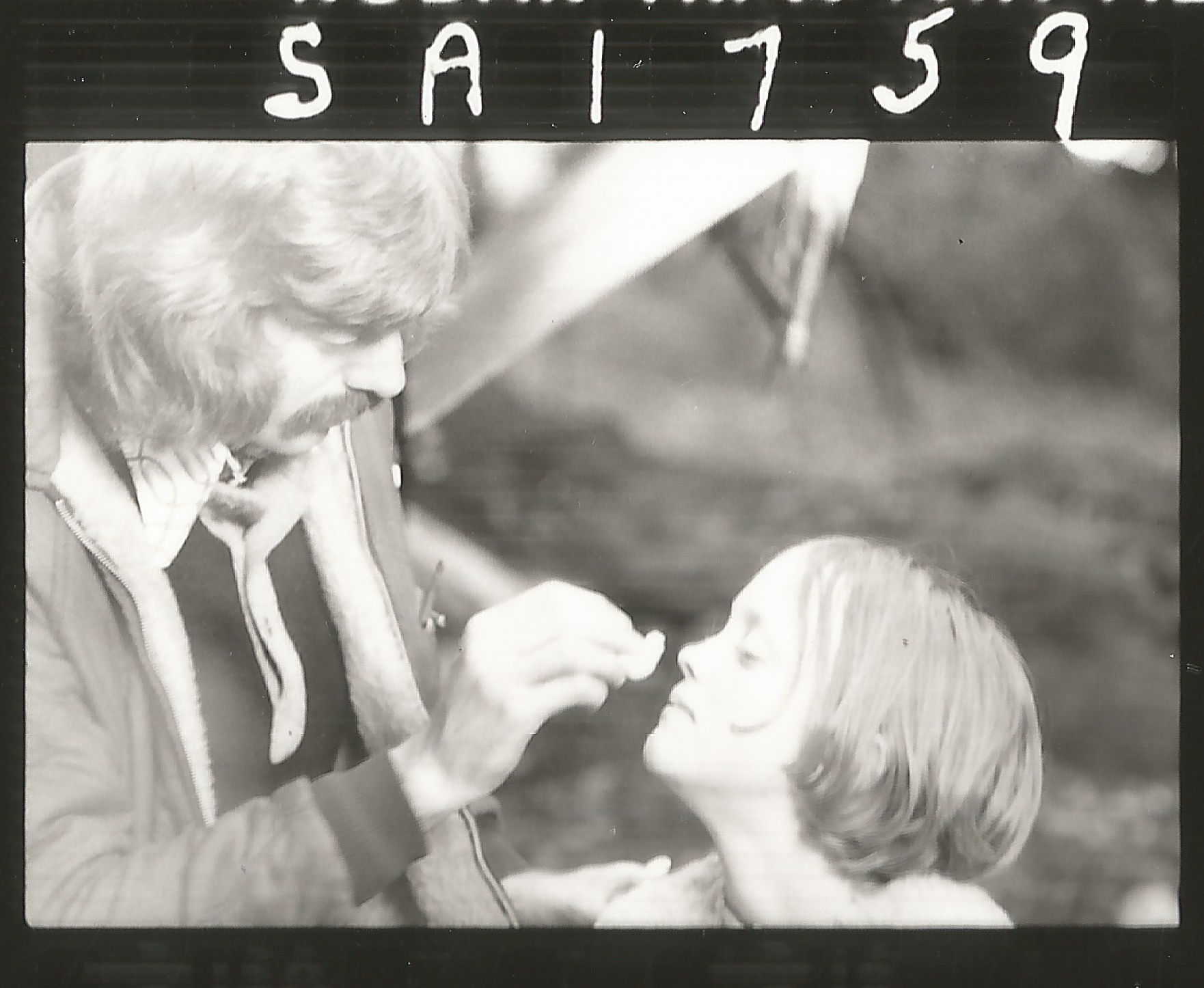
Sophie Neville being made up for the part of Titty by Peter Robb-King in 1973
Helen was delighted to hear that the tooth had materialized after 48 years. “Wow, Sophie what a result, after we made such a joke of it as well! That might just take your valuation up to the next level!”
Peter explained that he took the milk tooth to a dentist in Ambleside to ask if a bridge could be made to temporarily replace it but I remember the director, Claude Whatham, saying that he would ‘have to live with it’ – it being something of a continuity problem as he was yet to shoot earlier scenes of us sailing to the island. As a result, film fans can now work out which sequences were shot right at the end of our time on location even though they come before the scene with Man Friday (played by Virginia McKenna) in the storyline.
My missing tooth, kept since 1973
Peter Robb-King went on to have an amazing career in film, working on ‘The Rocky Horror Picture Show’, ‘Aliens’, and a number of ‘Indiana Jones’, ‘Batman’ and ‘Star Wars’ movies. He told me that he originally found it difficult to break into Make-Up Design as a man, but managed to win a post as a trainee on ‘The Avengers’ in 1968. ‘Swallows and Amazons’ (1974) was his first job as a Make-Up Supervisor, proving a break-through for him and other members of the film crew. It was the first film made by the producer Richard Pilbrow and David Wood’s first screenplay. Suzanna Hamilton, who played Susan, went on to star in many movies including ‘1984’ with John Hurt and ‘Out of Africa’ opposite Meryl Streep. She has recently had a guest appearance on ‘EastEnders’.
Peter Robb-King can be glimpsed right at the end of this cine clip taken on location
Now retired, Peter and his wife live in Maidenhead but enjoy travelling around. We had a long chat about the green parrot as he later adopted a young one that was rescued while making an Indiana Jones film in Sri Lanka. Stephen Spielberg looked after another parrot from the clutch.
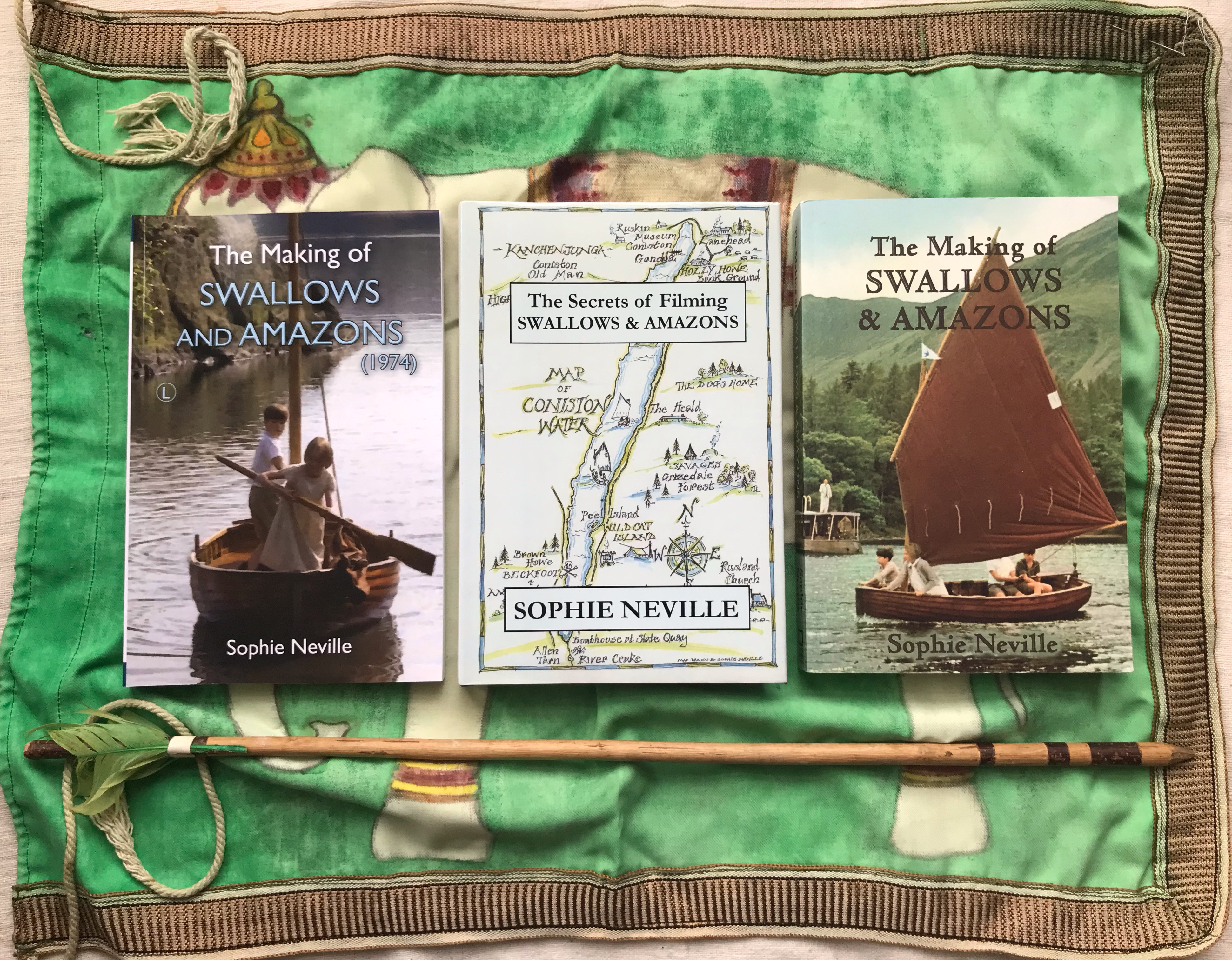
You can read more about the disasters that befell us whilst filming in ‘The Making of Swallows and Amazons’, signed copies of which are available from libraries, The Nancy Blackett Trust book shop and other online distributors.
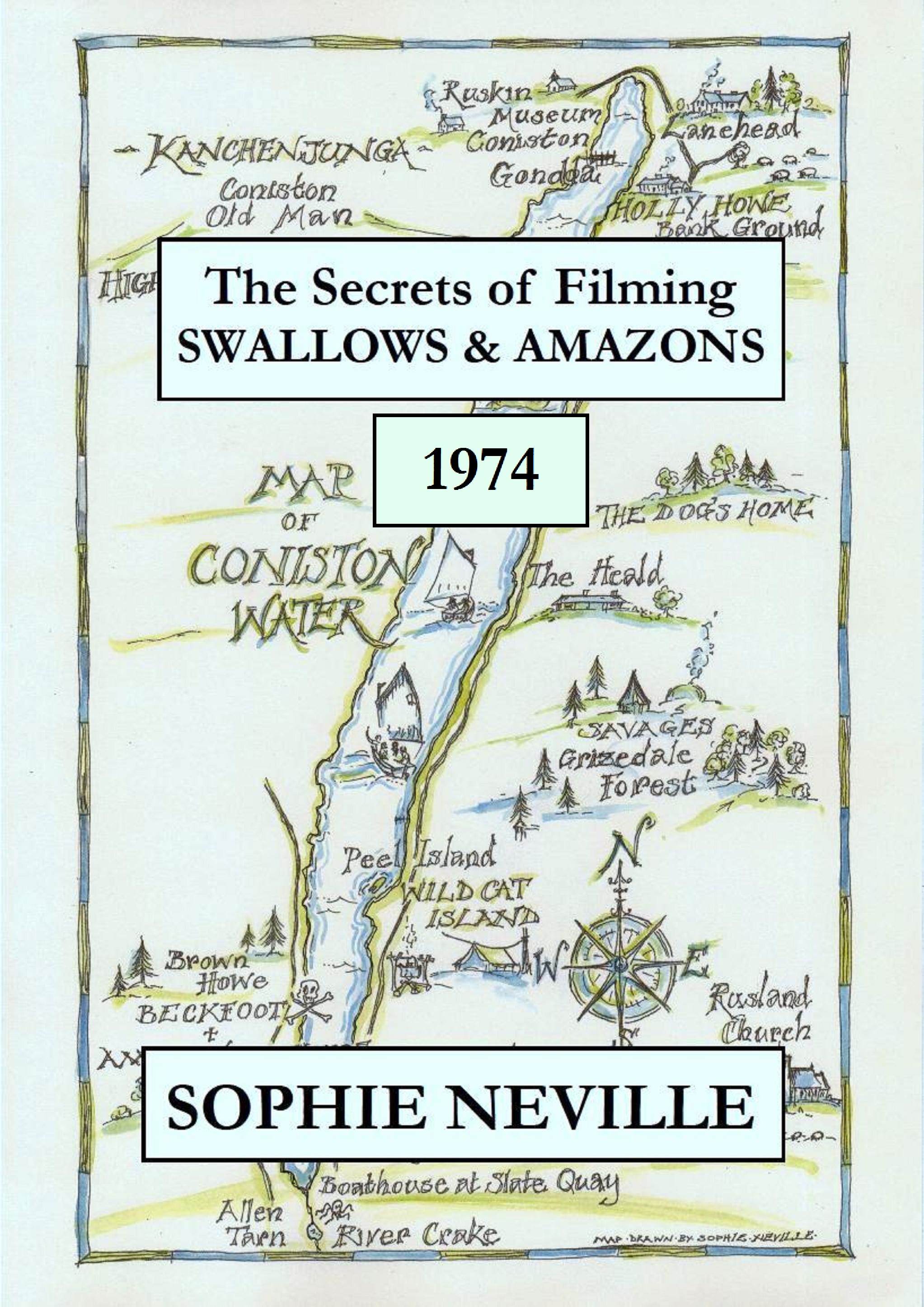
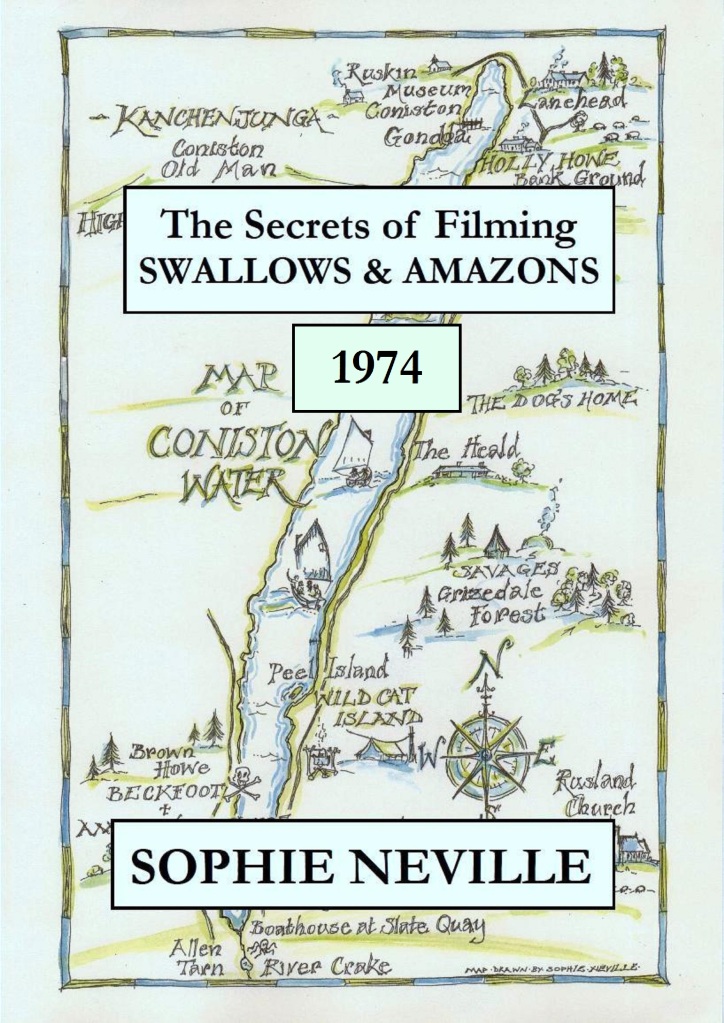
If you enjoy ebooks, ‘The Secrets of Filming Swallows and Amazons (1974)’ has links to behind-the-scenes cine footage and is very good value at £2.99 – available on Kobo, Smashwords, iTunes and on Kindle here
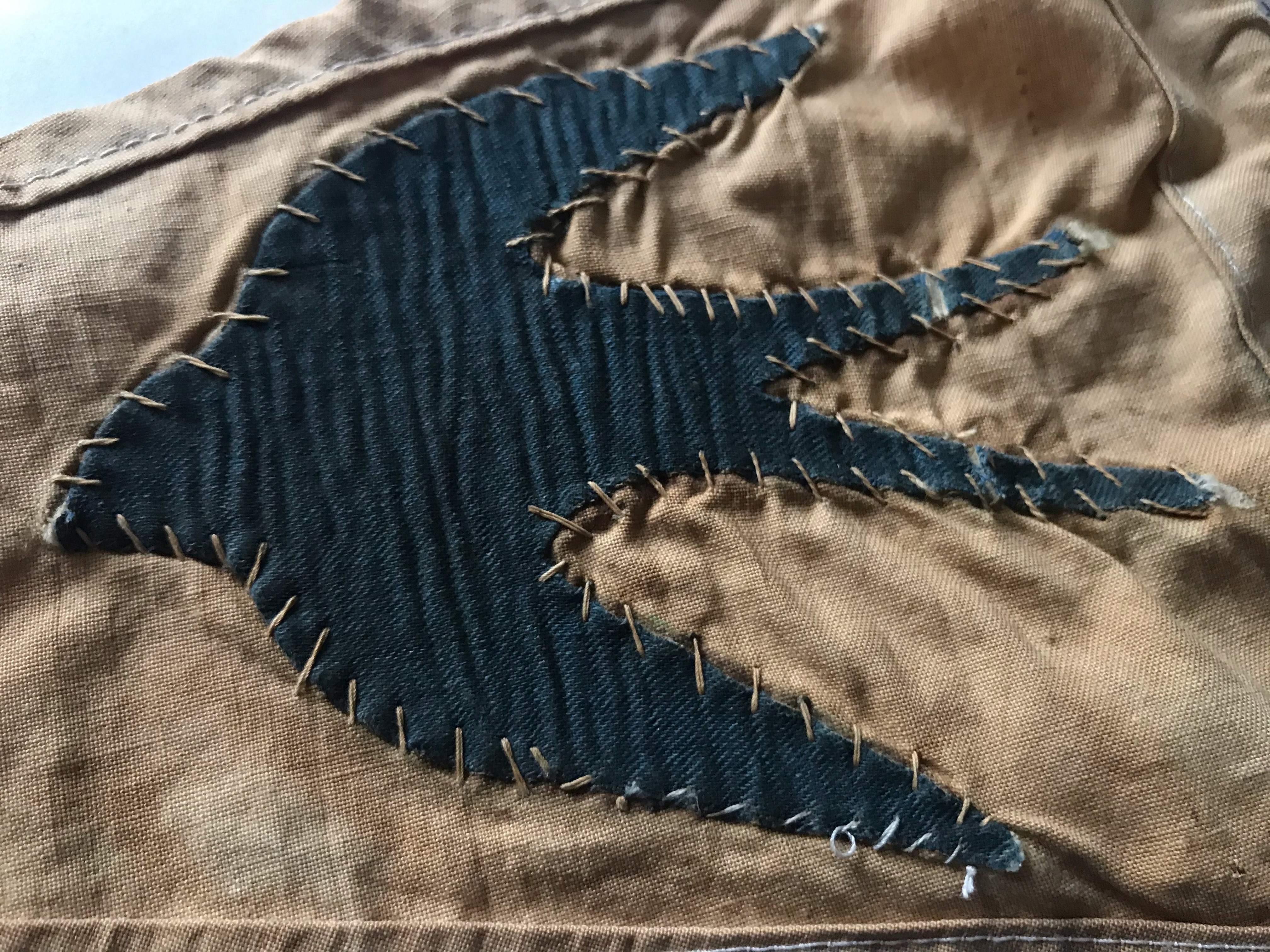
The flag Titty made for Swallow in the original film ‘Swallows and Amazons’ (1974)
Were some of these stitches mine after all?
A few weeks ago, BBC Antiques Roadshow featured some of the flags from the original movie ‘Swallows and Amazons'(1974) in which I played Titty Walker. These film props had been sent to me by the producer Richard Pilbrow who now lives in Connecticut. I take them with me if I’m ever asked to give a Q&A or talk about ‘The Making of Swallows and Amazons’. Film fans enjoy taking selfies with them.
I explained that they were made on location in 1973, possibly by the Art Director, Simon Holland, who enjoyed painting. Equally, they may have been made by the Set Decorator Ian Whittaker, who went on to win an Oscar and nominations for several more. Bob Hedges who was in charge of the action props was also adept at making props in the days when health and safety regulations were more relaxed.
In the story, Titty decides to make a new flag for the Swallow. I was keen on sewing as a child, and was thrilled to be given a needle and thread to stitch a blue swallow on the flag myself in a scene with Virginia McKenna, who played Mrs Walker, shot at Holly Howe (Bank Ground Farm) above Coniston Water in the Lake District. Rather a modern reel of cotton was caught in vision.
Virginia McKenna, as Mary Walker with Sophie Neville playing her daughter Titty Walker busy stitching Swallow’s new flag in preparation for the voyage to the island (c)StudioCanal
It was not until I returned from recording Antiques Roadshow at Windermere Jetty and had the flag on my desk that I noticed some of the stitches are different from others. It looks as if the small, white stitching on one wing could have been my own. As a child, I had thought the larger stitches rather clumsy but am sure they looked appropriate in vision. It would be worth far more if it was known to have been made by Ian Whittaker. He won an Oscar and was nominated for his work on a number of other films.
Ian Whittaker with the Art Director Simon Holland
‘Properly’, as Titty would say, the bird should be flying towards the mast, although I am assured that Arthur Ransome did once draw a diving swallow on one flag. In his book, the swallow was sewn into the cloth rather that plonked on top of fabric browned by tea but our flag has lasted for 48 years.
Property Master Bob Hedges keeping the perch alive
After Antiques Roadshow was broadcast, a lady who grew up in Bowness on Windermere, wrote to say, ‘It may be of interest that we still have the fishing rods that were used in the film. They belonged to my father Leslie Borwick and were lent to the film crew. They are rather worse for wear but still treasured as I was a big fan of the books when I was young. Unfortunately I was living abroad when the film was made so have no memories of it.’
Leslie Borwick on Windermere
Leslie Borwick, was a keen fisherman who took his daughter out to catch perch. She said that the bamboo rods are quite fragile but one has a wooden reel, which is interesting.
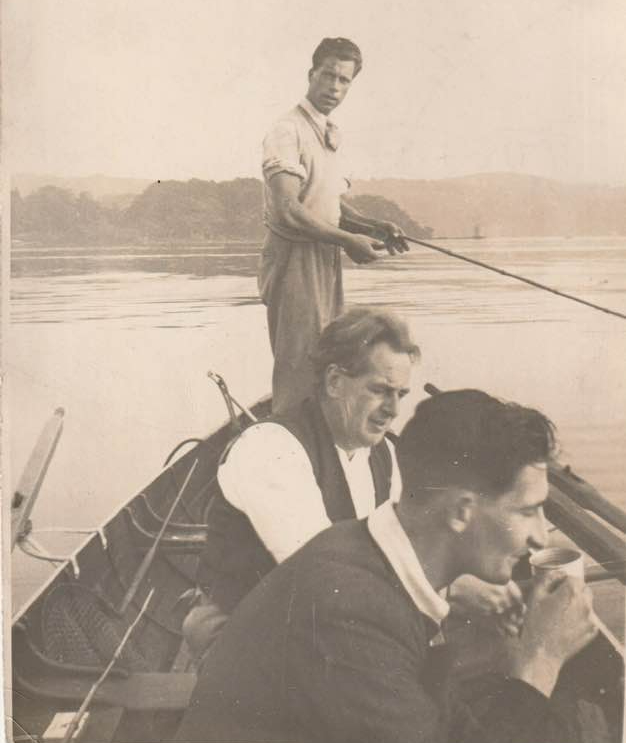
Ronald Bousfield fishing at about the time ‘Swallows and Amazons’ was written
“My mother’s side of the family were very keen fishermen. Their surname was Bousefield and there is a fly called “Bousefield’s Fancy”(Frank Bousefield)”
You can read the original post about filming the fishing scene on Elterwater here
A clip of Swallow’s flag being valued on BBC Antiques Roadshow can be watched on BBC iPlayer.
The whole story of the making of Swallows and Amazons (1974) can be read here:
Sophie Neville playing Titty Walker in the 1974 movie
‘Titty from Swallows and Amazons’ often gets typed into the Goggle search engine but when I attempt to use it as a ‘tag’ a message pops up saying: ‘Sorry, you are not allowed to assign the provided terms.’ I can only conclude that Google lacks literary enlightenment but the BBC were happy for me to talk about Titty on BBC Antiques Roadshow recently.
Sophie Neville on BBC Antiques Roadshow
‘Memory picks and choses,’ as Arthur Ransome said in his autobiography (p.33) but those who love his novels often wonder what would have happened to the characters when they grew up. It dawned on me that this might be one reason why people are interested to know what we all did with our lives. I played Titty Walker in Richard Pilbrow’s 1974 movie of ‘Swallows and Amazons’. In 1962, the film actress Susan George played the same character in the black and white BBC television serial of ‘Swallows and Amazons’ with her hair in pigtails. She was called Kitty, apparently with Arthur Ransome’s approval. BBC Films decided to call the Able seaman ‘Tatty’ in the 2016 movie ‘Swallows and Amazons’, when she was brilliantly played by Teddy-Rose Malleson-Allen who went on to star in ‘Four Kids and It'(2020).
The character was inspired by a real little girl, Titty Altounyan, who stayed at Bank Ground Farm (or Holly Howe) when visiting her grandparents who lived above Coniston Water. In 1939, Miss Joyce Cartmell acquired a signed note from Arthur Ransome explaining that, ‘Titty is short for Tittymouse which is what she was called when she was a baby. Nobody ever calls her anything but Titty now’. It appears that Ransome was also asked for a photograph of himself, to which he responded, ‘Too ugly’.
Edward Thomas (1878-1917) described Arthur Ransome as ‘exuberant, rash and intelligent.’ In 1973, I can only assume the film director Claude Whatham was looking for the same spirit in us children. It was certainly captured by Wilfred Joseph’s nautical film score.
What constantly impacts me is the number of people who write in to say how much they wanted Titty to become their best friend. In many ways the characters from Ransome’s books become friends for life. You can easily gain others who have the same outlook on life by joining The Arthur Ransome Society, who offer activities and grants for young people as well as adults with a literary bent. You too can stay at Bank Ground Farm and run down the field to dip your hands in the lake.
Staying at Bank Ground Farm – ‘Holly Howe’ with TARS
You can read more about making the movie in the multi-media ebook entitled ‘The Secrets of Filming Swallows and Amazons’.
Marc Allum socially distanced from Sophie Neville and her bow
“Really enjoyed watching @Sophie_Neville talking about Swallows and Amazons and showing memorabilia from the film on @BBC_ARoadshow I never usually choose to watch this but my Mum text to say ‘it’s brilliant!’ So I watched it on catch up straight after! #SwallowsAndAmazonsForever” Mel Wardle on Twitter
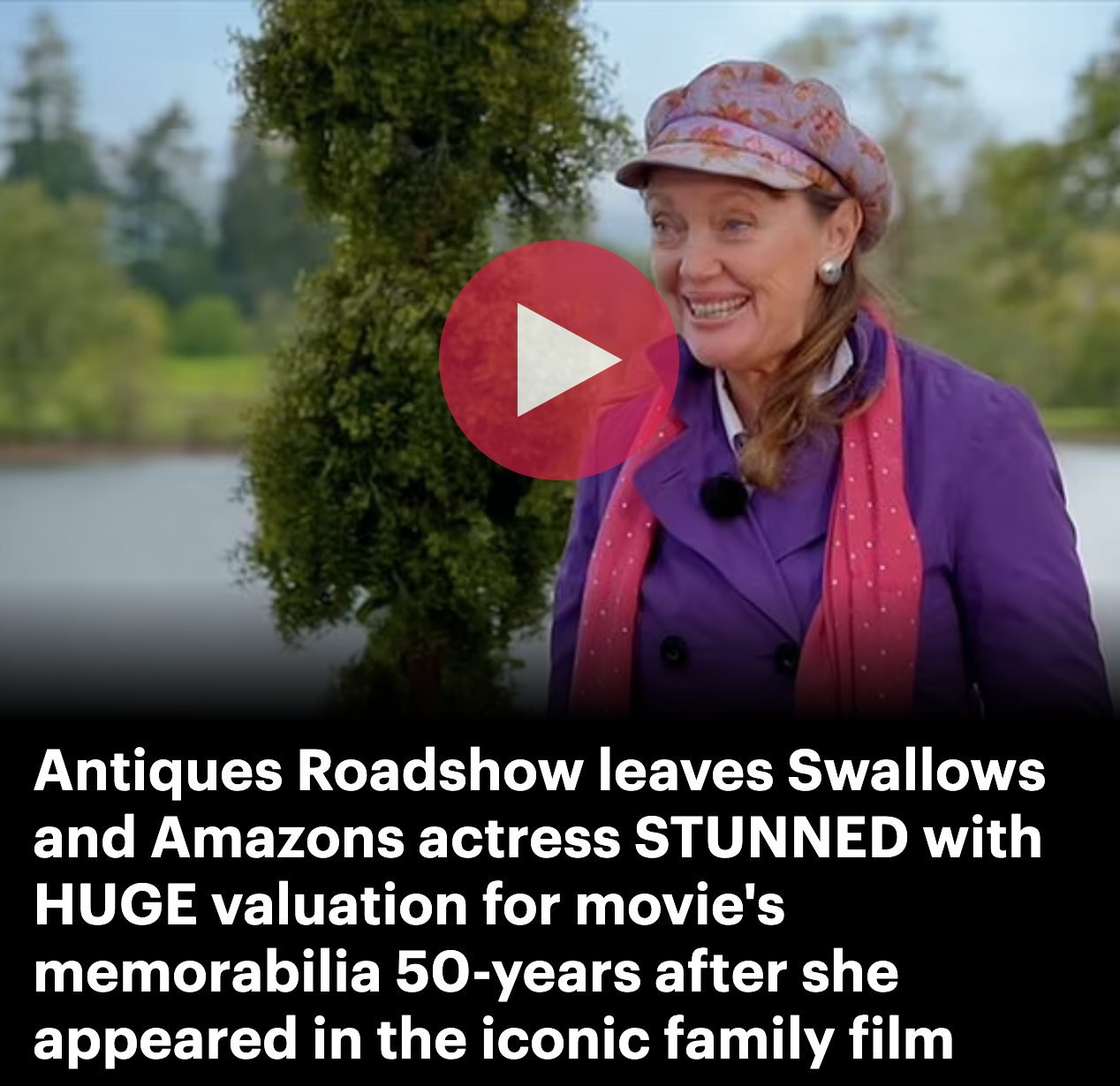
When BBC Antiques Roadshow returned to Windermere Jetty in the Lake District there was huge interest from Swallows and Amazons fans and readers of the Daily MailOnline.
The first episode broadcast from the museum featured Swallow, the dinghy from the original movie made on location in the Lake District in 1973 and brought to cinema scenes in 1974.
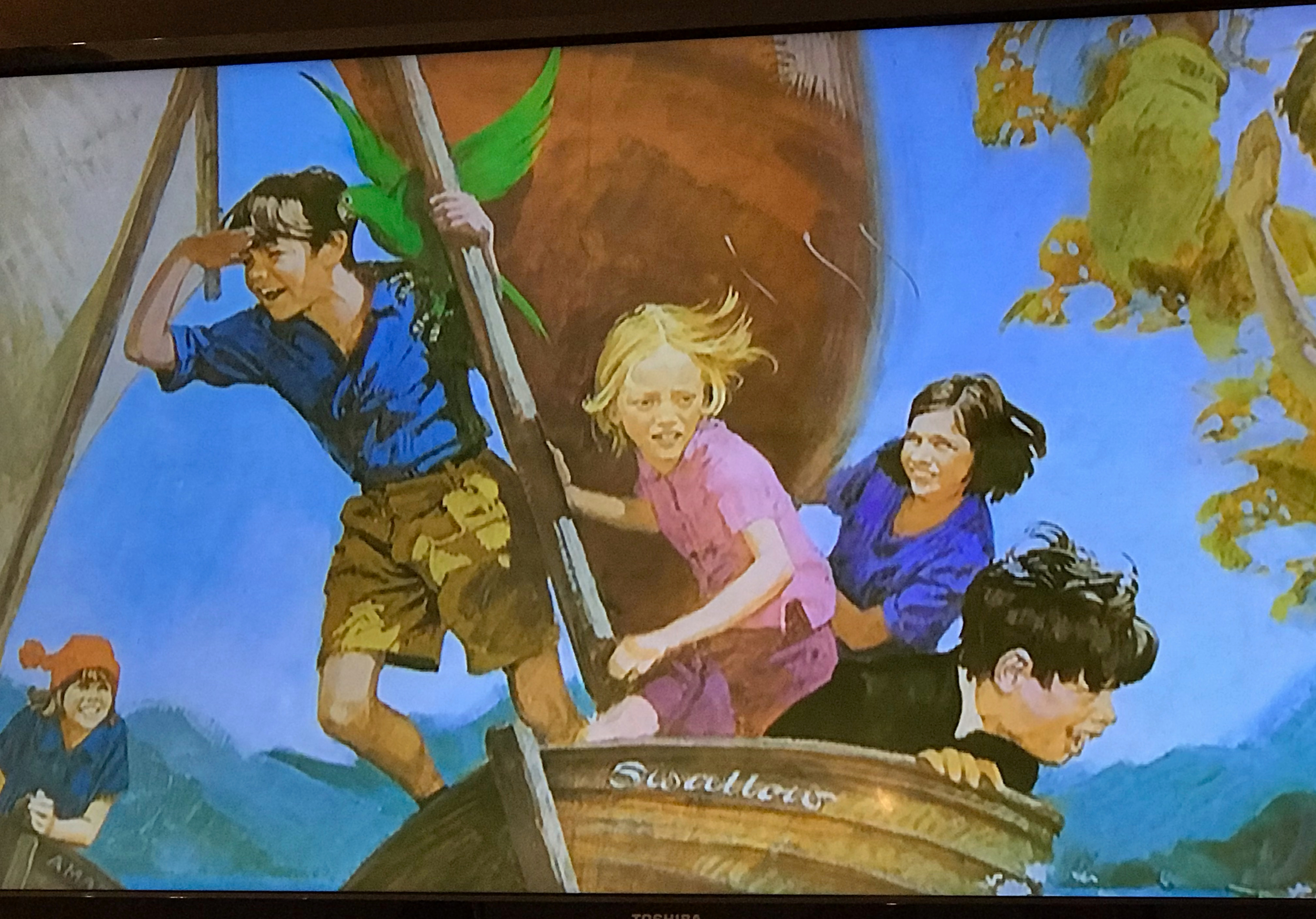
The movie poster of ‘Swallows and Amazons’ (1974) I’m in pink
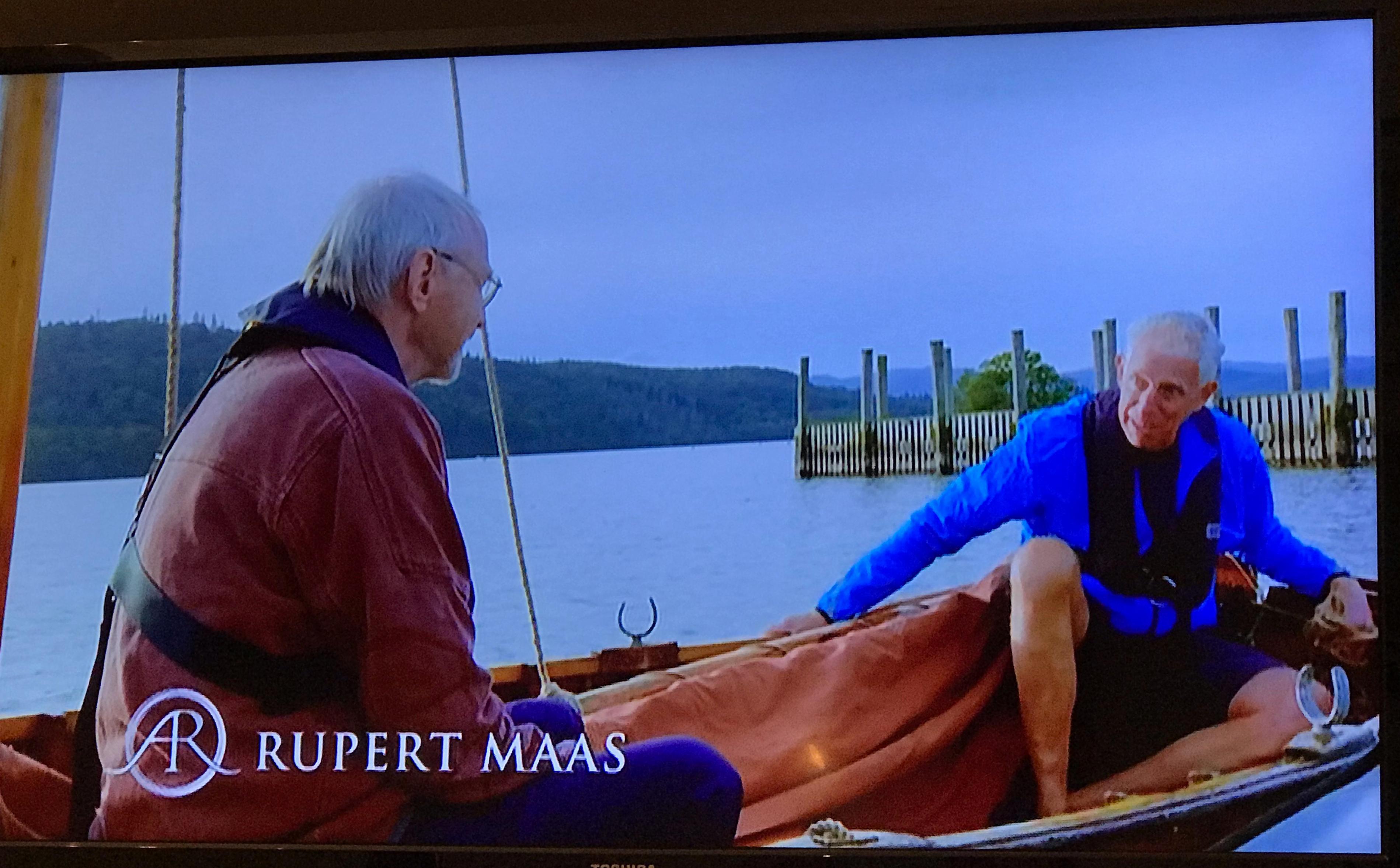
‘Such an iconic film,’ the expert Rupert Maas, commented, admitting that it once inspired him to sail across the Atlantic Ocean.
He chatted to Rob Boden who looks after Swallow for the organisation Sail Ransome before placing a pretty high value on the old girl. They had just enough wind to sail off into the sunshine. It was great publicity for me as I had featured Swallow on the cover of two editions of my book on the making of the film
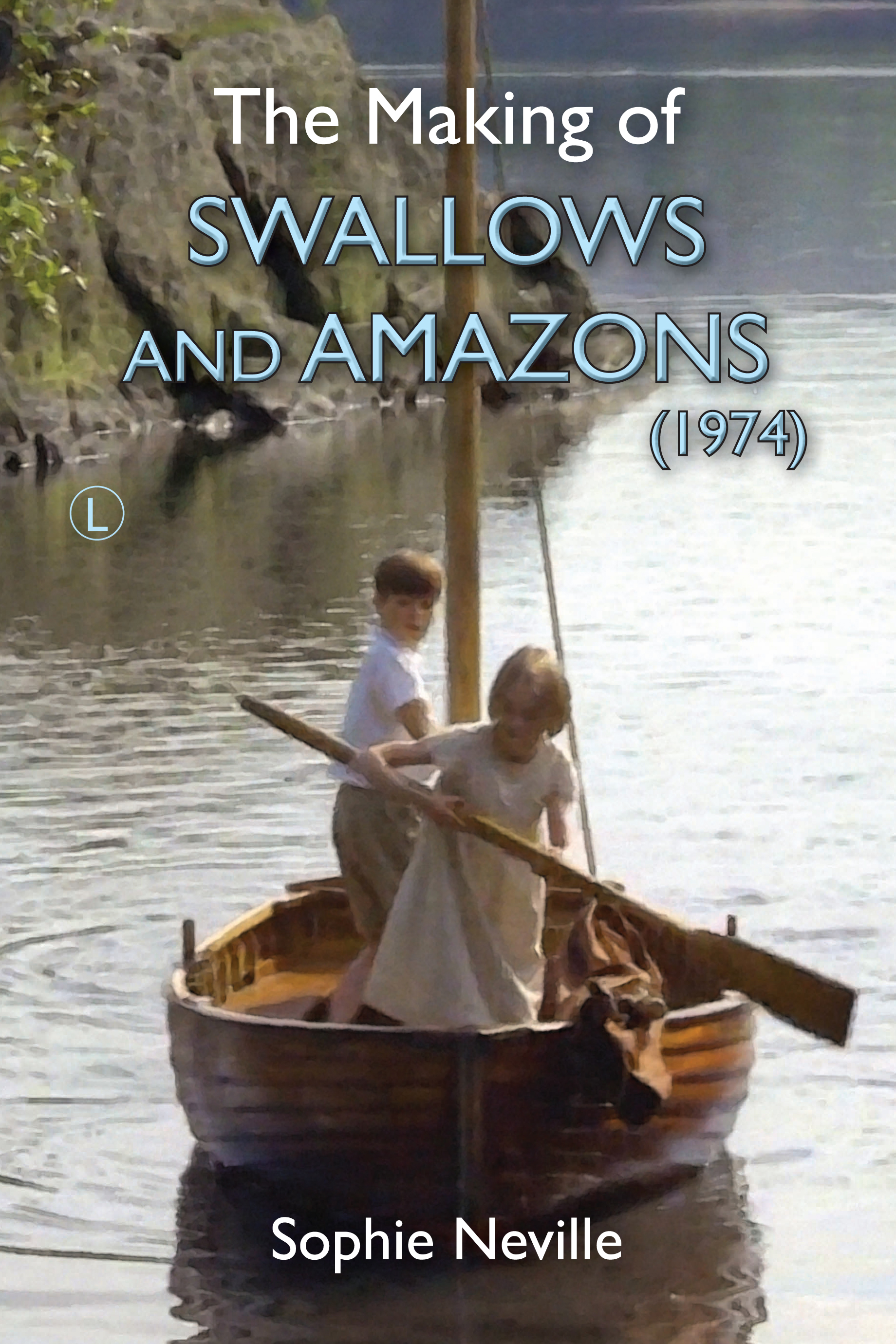
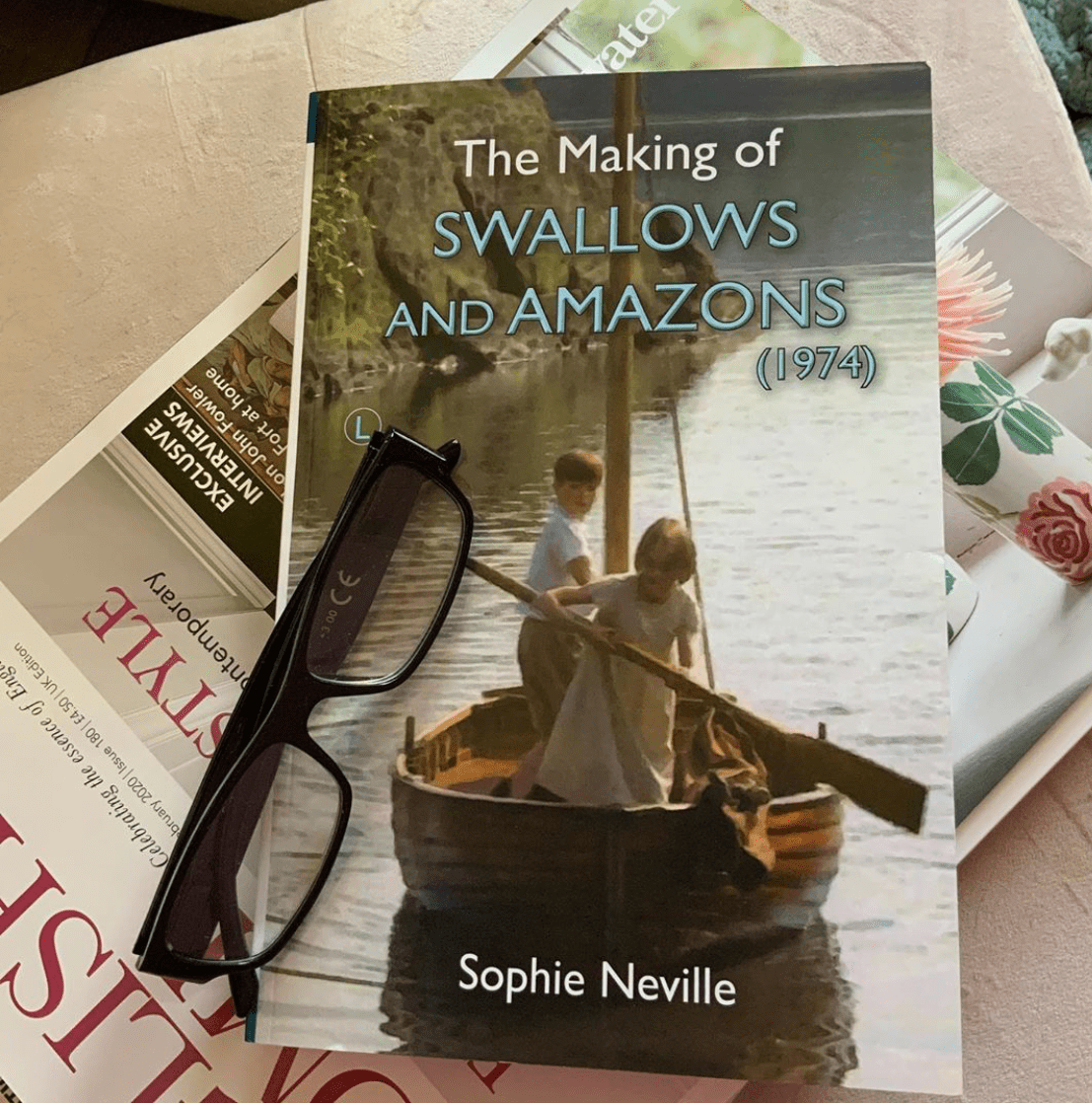
Different editions of ‘The Making of Swallows and Amazons (1974) by Sophie Neville’
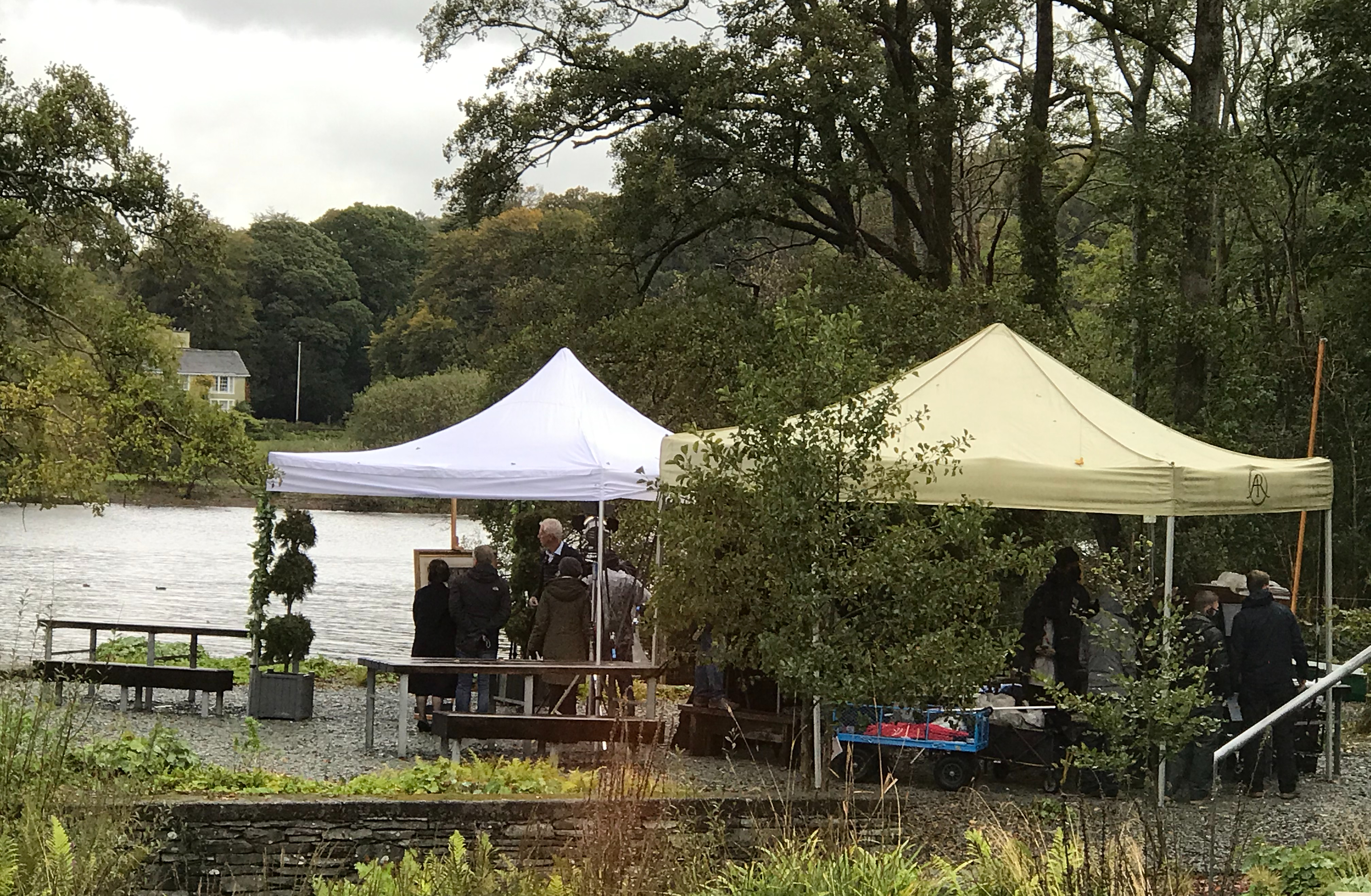
I had been invited along for the second episode, recorded the next day, when it poured with rain. While others were arriving with exquisite treasures, I staggered into the museum with two carrier bags of old photographs, a few flags and what my family regard as clutter.
Rupert Maas was busy valuing a painting by the waters edge but came to say Hello in the lovely new cafe at Windermere Jetty while we watched the expert, Marc Allum value a steam kettle.
Marc later walked around to inspect my collection of ‘movie memorabilia’ relating to the film of ‘Swallows and Amazons'(1974), filmed in the Lake District forty-eight years ago.
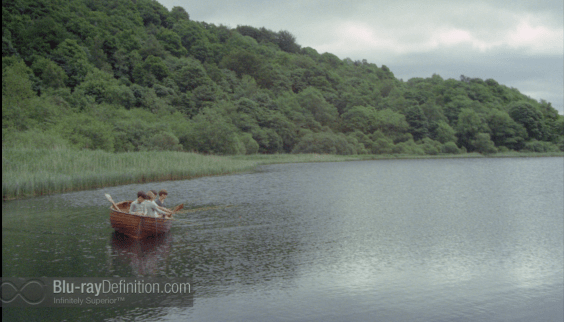
Swallow being rowed by Sten Grendon and Sophie Neville (c)StudioCanal
He liked the LP, the programme from the premier and the original black and white film stills, along with the penants kindly sent to me from America by Richard Pilbrow who produced the movie now distributed by StudioCanal who have a remastered cinema Bluray and DVD with Extras.
Premier ticket for the Gala of ‘Swallows and Amazons’
The camera crew seemed adept at keeping their equipment dry, but lining up shots was tricky since everyone had to be carefully distanced.
I knew that signed, first edition copies of Arthur Ransome’s book ‘Swallows and Amazon’ are worth up to £11,000. A note sold in an envelope addressed to a Miss Cartmell postmarked 1939 and accompanied by a small card signed by the author with a pen and ink sketch of a sailing boat, sold recently with an estimate of £1,000-1,500 but I did not think my collection of movie memorabilia from the early 1970’s would be worth much.
Marc Allum lining up a shot with Sophie Neville
Marc invited me to take up the bow an arrow, whittled on location during the filming and fletched with feathers from a ‘Red Indian Headdress’ purchased from a toy shop in Ambleside in 1973.
Marc Allum and Sophie Neville with the director
I suggested the director might like to take a shot of the ML Tern as she passed but visibility was too low. Marc concentrated on my collection, which had nearly been thrown out in a fit of de-cluttering years ago. He valued it at far more than I ever would have imagined.
I wondered if my item would ever be included, thinking it could easily hit the cutting room floor, but this well a kind reader alerted me to the Radio Times billing here
To see more photos of BBC Antiques Roadshow at Windermere Jetty, please see the previous post here
Here is the clip as featured in the Daily Mail Online. It was also written up in OK! magazine, which rather embarrassingly looked like this:
You can find the illustrated book on ‘The Making of Swallows and Amazons’ here:
For details on the BBC Antiques Roadshow website, please click here They tell me they, “would be delighted to hear of any developments that may occur following the transmission of the programme. For instance, further information about the history of an item occasionally comes to light or a decision is taken to put the featured piece up for sale. Should you have any such news, please contact the Antiques Roadshow Office at antiques.roadshow@bbc.co.uk.
Imdb, the International movie data base, list Billy Mayerl’s composition ‘Marigold’ as being included in the original film of ‘Swallows and Amazons’. This intrigued me. I looked up the music as I couldn’t think where it had been featured. Listen to the original version and see if you can recognise it:
The famous variety and radio entertainer Billy Mayerl playing ‘Marigold’ and other melodies
It was ‘played’ on the radio in the chandlery in Rio, laid over the scene when the film was dubbed at Elstree Studios. We didn’t hear it when we were in the actual shop.
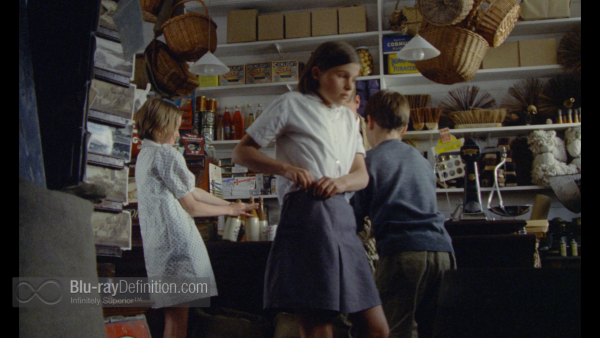
Sophie Neville, Suzanna Hamilton and Simon West inside the chandlery
The Swallows bought ‘grog’ (ginger beer) and rope for the lighthouse tree. Postcards and wicker shopping baskets hung in the chandlery, which had weighing scales on the counter.
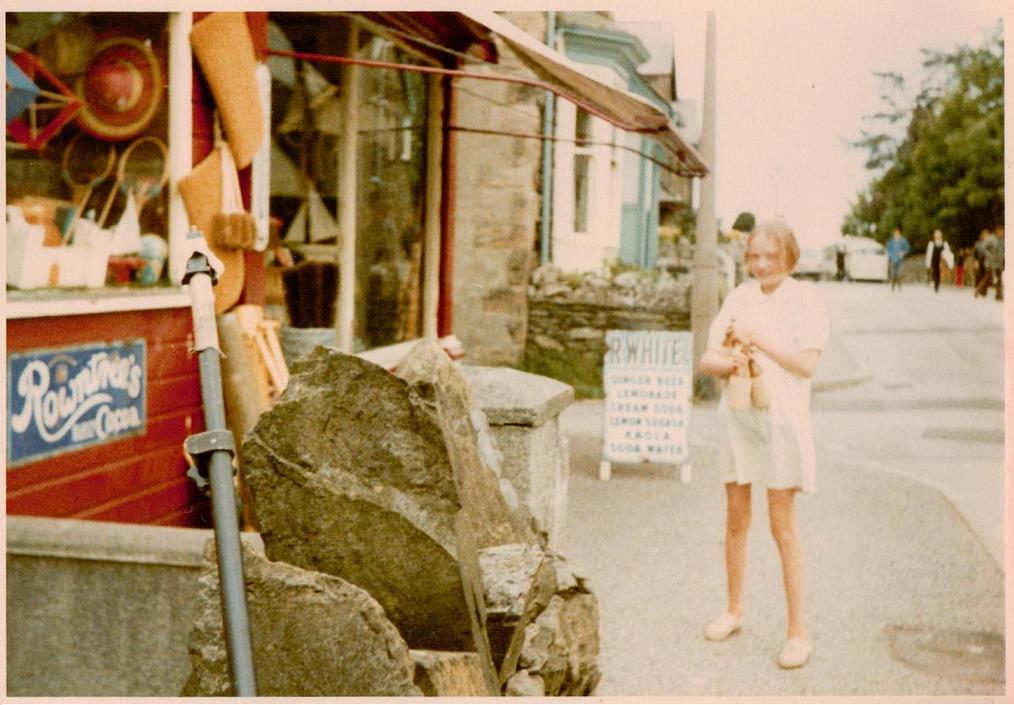
Sophie Neville in Rio with four bottles of grog ~ photo: Daphne Neville
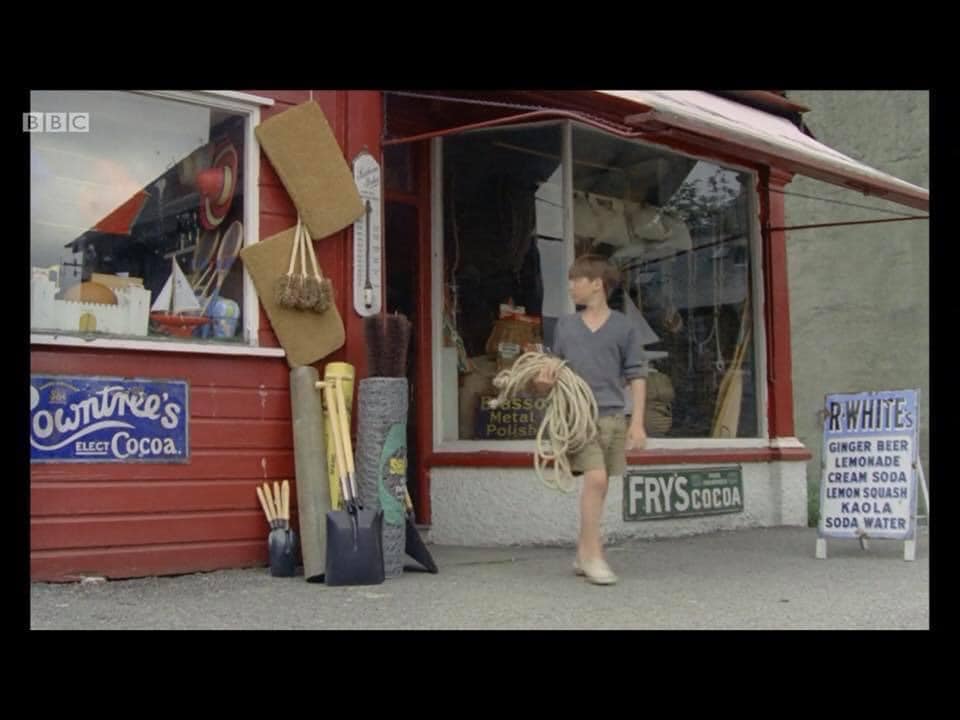
This shot was taken during the filming on the corner of Woodland Road, Bowness-on-Windermere during the filming in June 1973. I wonder who the people in the background were – possibly members of the film crew. The man in the blue top looks like Gareth Tandy the third assistant director who would have been asking passing traffic to wait while filming was in progress. The building looked like this in 2012 but I need a more up to date photo.
Once Tom Kirkbride’s cobbler’s shop, later Mr Cropper’s sweet shop selling rainbow sherbet, Andy Dyker’s Fine Furnishings, a hairdressing salon and now a wood-burning stove showroom
Jenny Maconchy wrote in to say, “It may be of interest that we still have the bamboo fishing rods that were used in the film. They belonged to my father Leslie Borwick and lent to the film crew. They are rather worse for wear but still treasured as I was a big fan of the books when I was young. Unfortunately I was living abroad when the film was made so have no memories of it.”
The Swallows fishing for perch on Elterwater (c) StudioCanal
As a boy, Arthur Ransome had his own perch rod with a colored float to use at Nibthwaite. Towards the end of the filming, Claude Whatham gave Simon West a similar fishing rod, which Ronnie Fraser taught him to use on Derwentwater.
Ronald Fraser behind-the-scenes on Swallows and Amazons (1974)
A member of the Arthur Ransome Group wrote, "I did not realise that the Lakeside Railway had only just re-opened in time for the filming. Of course, although Lakeside Station does get a mention in one of the books, it was the Windermere Station where the Swallows always travelled to. Although Lakeside Station would have been far more convenient from Beckfoot,the Great Aunt always insisted on Windermere as it meant less changes for her. Incidentally both Lake Windermere and Coniston Water had rail connections years ago (which is the likely route for the slate from Slater Bob’s mine although this is not mentioned being outside the scope of a childrens’ story).
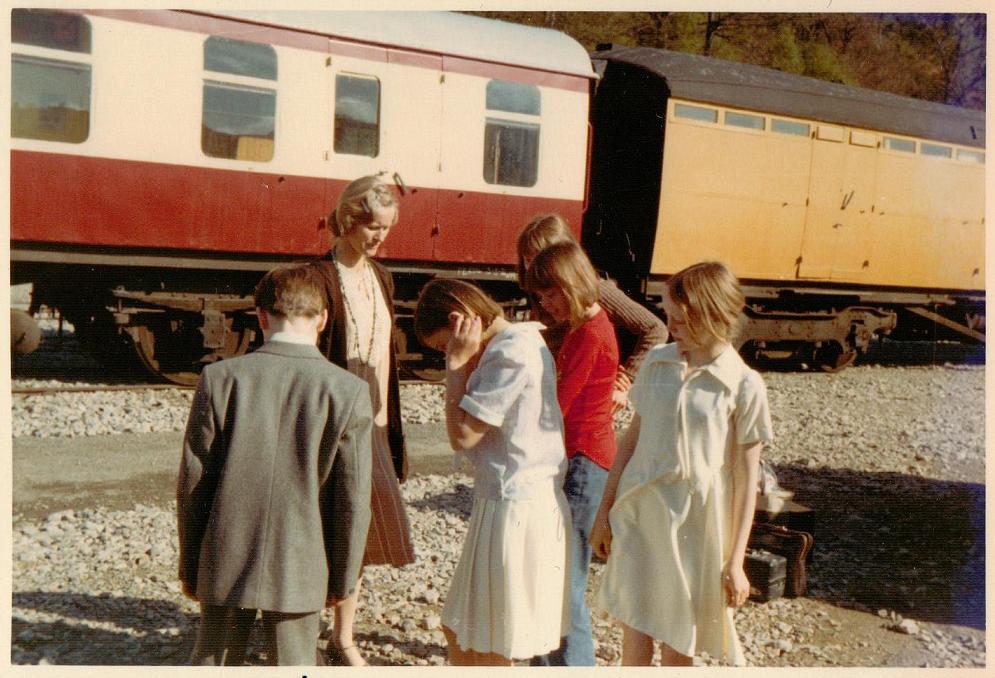
Viginia McKenna at the Haverthwaite Railway Station in Cumbria soon after it re-opened in May 1973. Simon West, Suzanna Hamilton, Lesley Bennet and Sophie Neville are with her. The carriage with compartments is in the background ~ photo: Daphne Neville
“‘Swallows and Amazons'(1974) was instrumental in helping me through a very stressful period of my life, and writing was a great healer for me. The results of my efforts are in the The Arthur Ransome Society library : ‘Prospectors Afloat’ and ‘Coots in the North’ a completion of the short portion which was published. I will be obtaining ‘The making of Swallows and Amazons’ and no doubt many more of your other publications in due course.” Charles H Ball
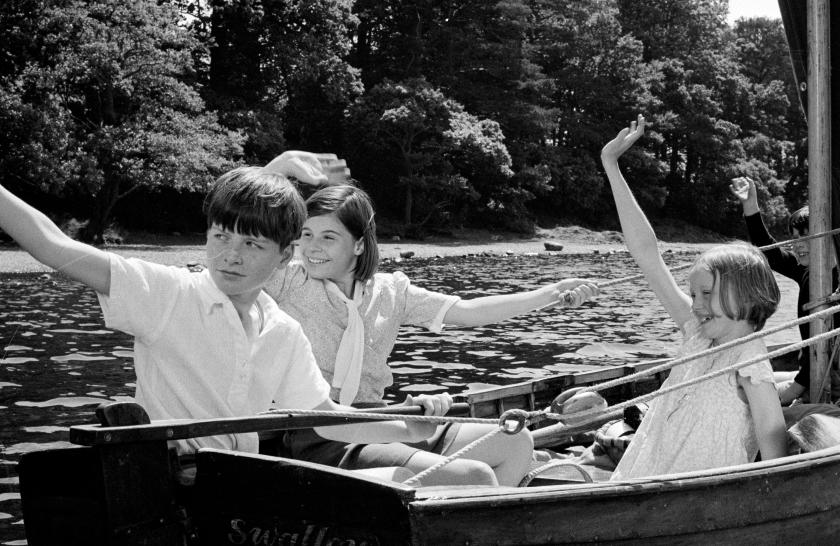
Simon West, Suzanna Hamilton, Sophie Neville and Stephen Grendon as the Swallows on Wild Cat Island
I’ve just read that in Zulu folklore, the swallow is known as Inkonjany – the one who points the way to summer. “The swallow, and other birds like it, is regarded by our people as a symbol of effort and hard work as well as of unity, because you will see these birds gather together in large groups as they come and go. The name Inkonjany means the little pointer, and it comes from the verb komba, which means to point out something. It was said that if you saw a lot of swallows in the sky, it meant that the summer and the harvest would be very good.” I felt this applied quite well to the Walker family migrating north for their summer holiday and working hard as being the best crew they could be.
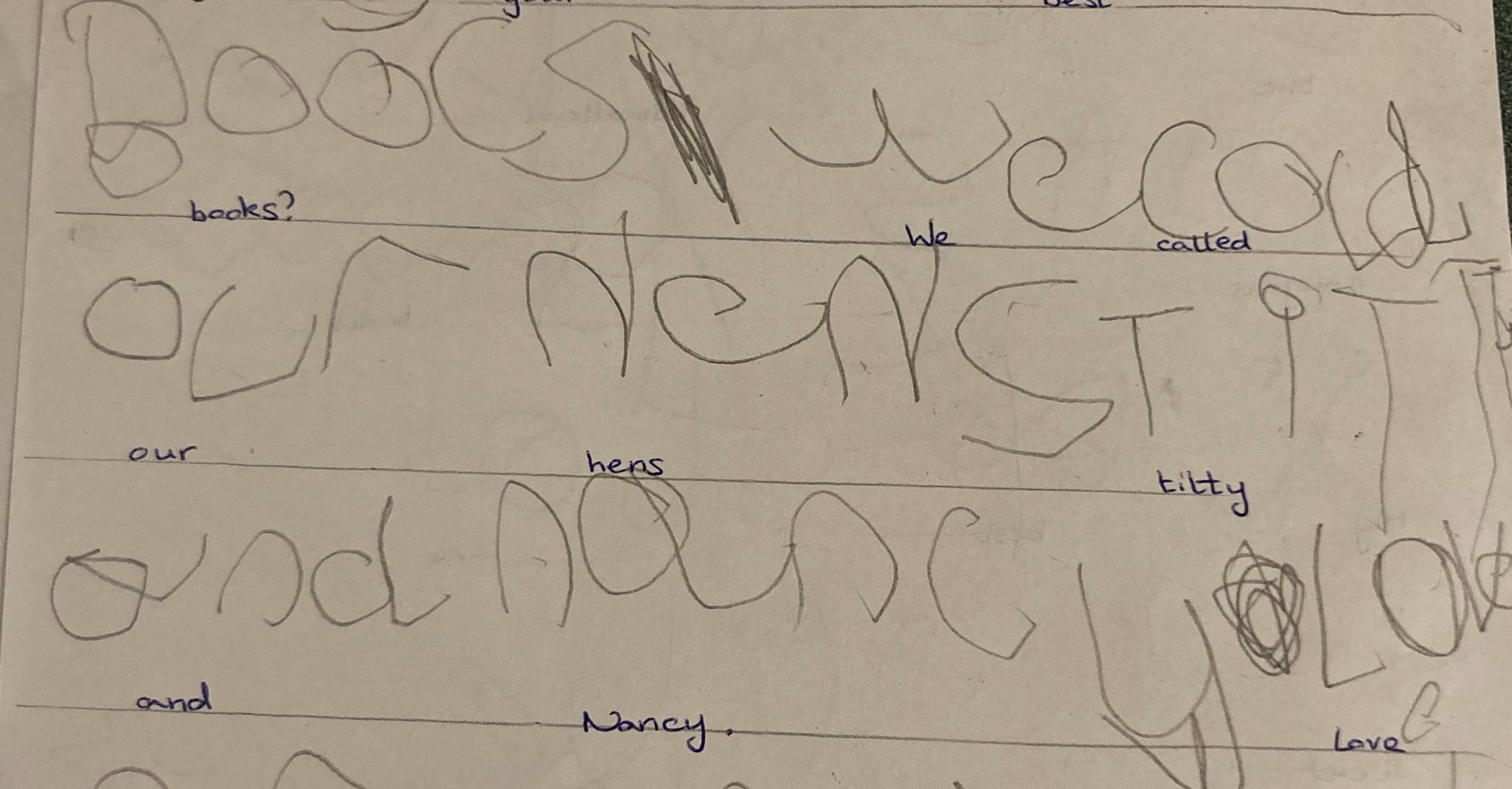
One of the film fans has called her hens Titty and Nancy. I’m sure Mrs Jackson would approve. Do use the comments box below to write in with any connections you have to ‘Swallows and Amazons’ and the original film.
You can read more in ‘The Making of Swallows and Amazons’ available from libraries, bookshops or direct from the publisher . The Nancy Blackett Trust have signed copies and it can be purchased online here:
There is also a similar multi-media ebook entitled, ‘The Secrets of Filming Swallows and Amazons'(1974). You can see inside the first section for free here
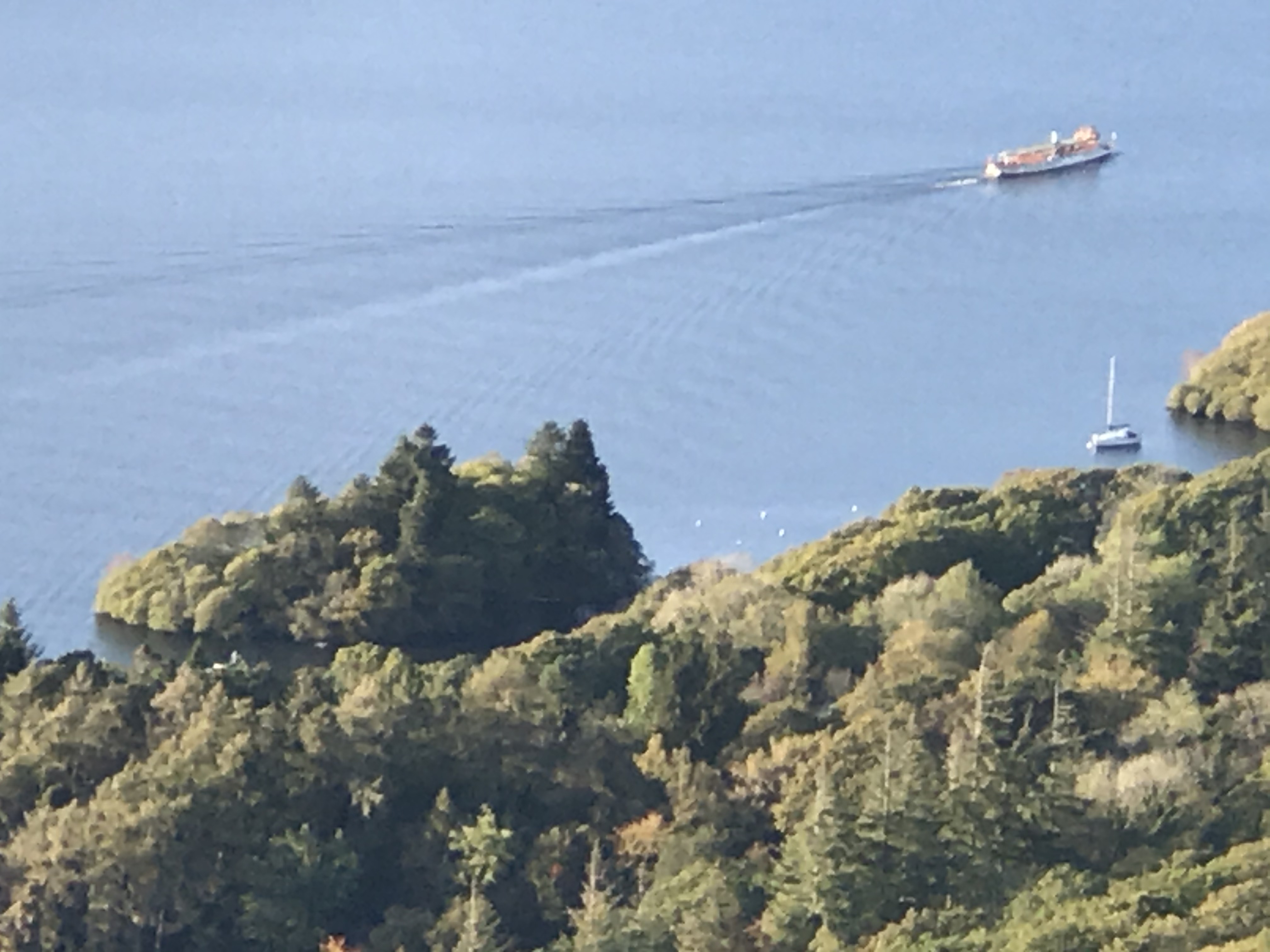
When I was last in the Lake District, I grabbed the chance to climb to the top of Gummer’s Howe to look down on the ‘Great Lake in the North’. Arthur Ransome, who once lived at High Nibthwaite, must have gazed at this exact, same view. ‘Native shipping’ was passing a wooded island and a bay where I could see a yacht was moored. It was like looking down on the chart I once drew for the original film of ‘Swallows and Amazons’ first screened in cinemas forty-seven years ago in April 1974.
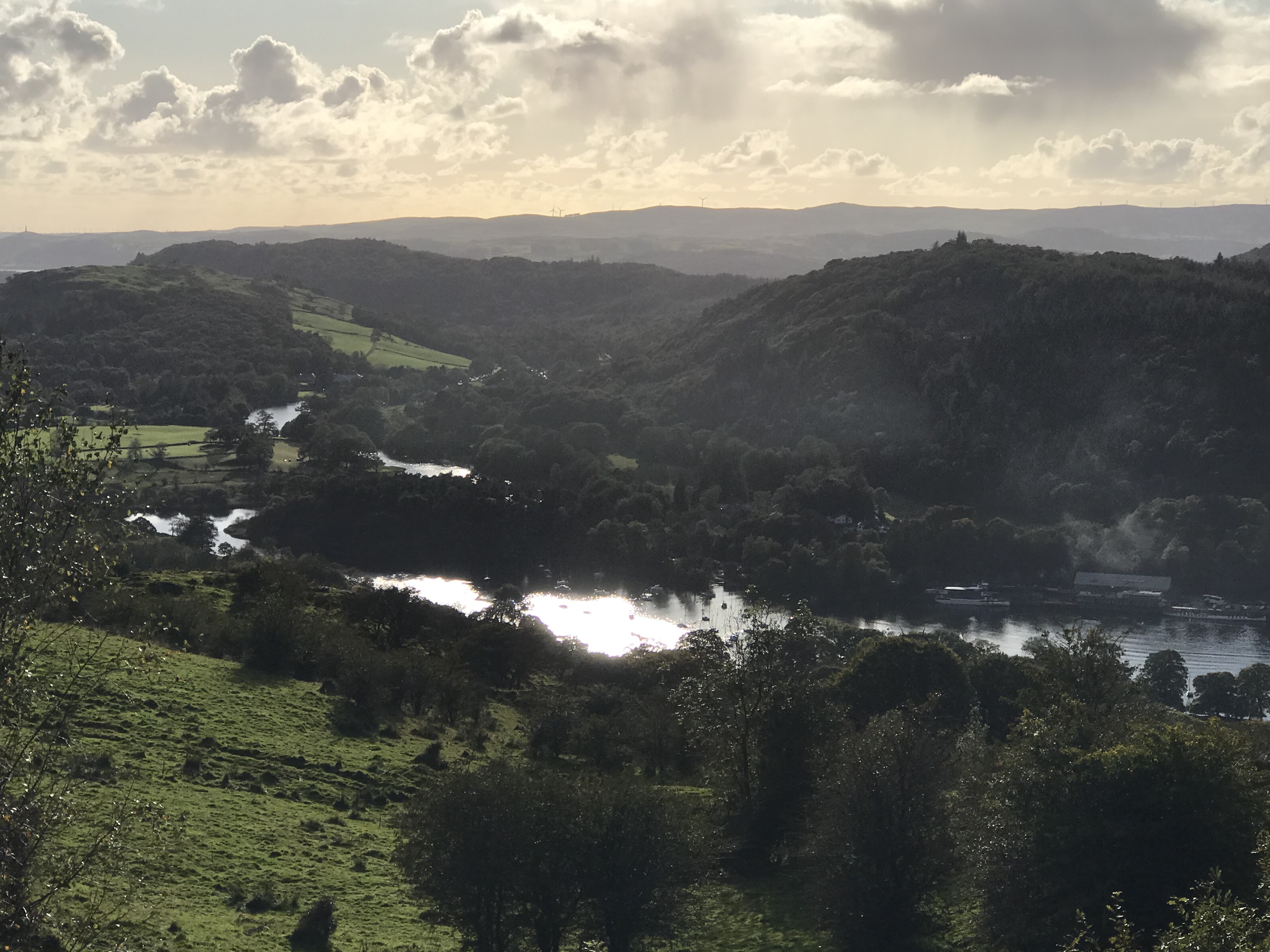
Looking to the south, I could see Lakeside Station and the Haverthwaite steam railway running alongside the River Leven where we began filming back in May 1973. The renovated line had only been running for two weeks but we were instantly transported back to 1929, when Ransome wrote the book in a grey barn nearby.
Blake Holme, one of the wooded islands on which Wild Cat Island was modelled
Michael Johnson left a comment on the Arthur Ransome Group Facebook page saying, ‘The Lakeside & Haverthwaite is a lovely line, but frustratingly slow. It’s such a short line that the journey would be over within a few minutes even at a modest speed, like 25mph. Drivers are under standing instructions to drive at little more than walking pace so the journey takes at least 15 minutes. That way everybody thinks they’ve got their money’s worth!’ I hadn’t noticed when travelling on the line myself a few years ago.
The River Leven and southern end of Windermere in Cumbria
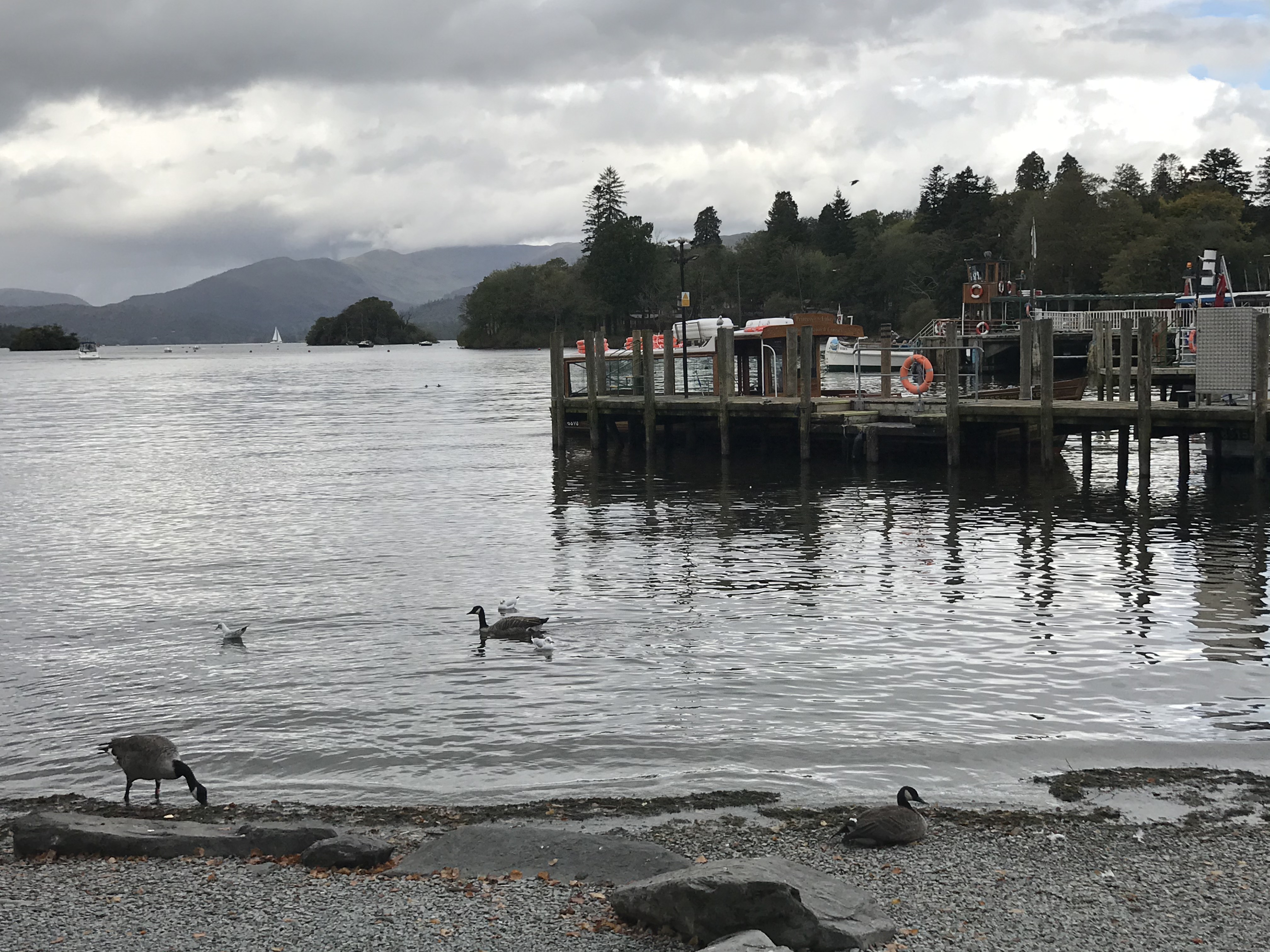
Ransome wrote: ‘Windermere is the lake, a bit disguised’ although he used many locations found on Coniston Water that perhaps he wanted to keep more secret. However, it is clear that Rio is his name for Bowness-on-Windermere, which I was able to explore recently. This was the jetty where the Boy Roger was left guarding Swallow.
Bowness-on-Windermere
Charles Elliot from Bowness remembers us, “filming in the bay with some actors in a rowing boat. There was no security so I walked down the jetty right behind the camera.” Was this captured by the Guardian newspaper here?
It’s possible find some of the locations and even some of the traditional boats that appeared in the movie. The natives may be able to help you. Brian Salisbury said, “The village store was my grandfather, Tom Kirkbride’s cobblers shop from mid-1930s to mid-1950s.
Woodland Road, Windermere
Stan Cropper took it over and added the LH extension.” He said of our set designer, “They did it up with the original red wooden finish.” The cat was called Rusty.
Simon West as Captain John in ‘Swallows and Amazons’ (1974) – StudioCanal
After he posted this photo on Facebook, Harry Hodgson wrote to say, “I remember looking at all the 1930’s products in the windows.”
This behind-the-scenes cine footage shot by my father in 1973 shows the film extras getting off the coach at Bowness and a scene being shot on the jetty:
Stephen Newton and Phil Procter would go and watch the filming in their dinner break from Borwicks Aquatics. “There was a band playing in the bandstand and a bloke on a pushbike with a front box selling ice cream. You can see this in the film when the kids are on the pier in the background.”
Windermere skiffs at Bowness-on-Windermere
In many ways, the 1974 film ‘Swallows and Amazons’ has become a touchstone to re-set our lives. Nigel Young writes: “On arrival back from touring, I’d get to Oxenholme station and rush home, change into my boots and head to the hills passing through Bowness…. I’d look across the lake and count the trees on the small beach, seven in all? and in my mind’s eye try to place the bandstand which features in the film so prominently. I’d look for the jetty where Roger was confronted by a blazered gent in whitened shoes asking him about his boat and think… ‘What have they done with it?’
Lakeland steamers embarking from Bowness-on-Windermere
“Then I’d look at the landscape and note all the changes since the making of the film before heading home where I’d immediately put the film on, grab a glass of white wine and just sit and watch it, getting transported back in time to another way and another space, but that space still exists in some strange dimension for me, and I feel in touch with the lakes and in touch with a past I can totally relate with. John wears one of those stripy S buckle belts on his shorts. I had one too!
Sophie Neville, Simon West, Suzanna Hamilton and Stephen Grendon in Bowness in the summer of 1973
“You were well cast, almost as if you were a family before you all started and the cinematography, especially where the sailing sequences are concerned, is something out of this world. Whoever shot and edited the footage for the film were totally at one with the story and the locations….. And Ronald Fraser !! …well I would say he really did ‘Swim’ …… I was Principal of an Outdoor Education Centre on Windermere for over a decade and I am aware of just how cold the lake can be in winter or summer….and there goes ‘Ronald’ getting thrown off the plank by you guys into Coniston or Windermere which ever, they are both as cold as each other!”
To read a previous post on finding the film locations and taking the Lakeside and Haverthwaite steam train, please click here
Bowness-on-Windermere
You can read more about the film locations used in ‘Swallows and Amazons'(1974) in ‘The Making of Swallows and Amazons’ published by The Lutterworth Press who can send you a copy.
“One pandemic discovery for my family was 1974’s ‘Swallows and Amazons,’ a charming British film about kids just playing on a lake. On their own, they’re plenty capable of making their own tents and adventures”, the US film critic Jake Coyle wrote in a review for the Associated Press.
Many people have fond memories of watching the original movie of ‘Swallows and Amazons’ when it first came out in cinemas nearly forty-seven years ago and list it in their Top Ten feature films of all time.
David Kerr wrote: “I first saw the film while I was a junior projectionist. I was 17 at the time. My cinema was called the Astor in Bromley, part of south east London. While an independent cinema, we took the ABC circuit films. Somewhere, I have the LP record and a poster of the film. I went on to a career spanning 40 years in international film distribution.”
“It remains one of my top ten films even to this day. I worked for 20th Century Fox…Polygram…and United International Pictures which distributed Universal, Paramount and Dreamworks films. I had a good career and witnessed the good the bad and the ugly during my travels.”
Simon West and the camera crew at Bank Ground Farm
“From memory, I can recall that the film was released over the Easter school holidays in 1974. It’s just been helped as I have found a press ad online and it lists South London unusually running the film first on April 14th.”
Simon West, Sten Grendon and Sophie Neville with the director Claude Whatham
“I believe the film was supported by ‘The Lion at Worlds End’ …the documentary that Virginia and Bill Travers made with George Adamson about returning an African lion to the wild. I know I ran the film again either in 1975 or ’76 as an afternoon matinee only with a Kung Fu adult programme in the evenings.”
Brenda Bruce and Simon West on location above Coniston Water
“The film means a lot to me and has done so since 1974. It made me revisit the books…which I still read (currently dipping in and out of an old hardback edition of ‘Pigeon Post’) but I believe I had only read one during my childhood, which I think was ‘Swallowdale’. I also embarked on a number of holidays in the lakes because of the film. That first year I camped on a farm at Torver on the west side of Coniston.”
Simon West as John Walker studying the chart at Holly Howe before the voyage.
“The reason I include it in my top ten is simple. It is pure storytelling that takes the viewer on an adventure. You do not notice the individual aspects of film making you just become engrossed in the story. And that is what a good film should do. I watched it again just last week on a streaming service… It makes me smile ….what more can I say.”
Virginia McKenna with Sophie Neville on location at Bank Ground Farm
John Rose wrote: “I can remember watching the film in 1974 with my mum and grandma when I was a nine or ten year-old, at the then called Mecca Cinema in Horsham, Sussex (sadly now demolished). I remember loving the natural setting and the adventure in the film and remember it being thrilling and suspenseful! Still my favourite film, so cheerful and up-lifting. The lovely music! All still brings a tear to my eye. Back then in the ’70s we didn’t have the lakes but at every opportunity our little band of local children would run off over the fields playing, building camps and climbing trees in the woods – such happy, carefree days.”
Simon West, Suzanna Hamilton, Sophie Neville and Sten Grendon in Swallow
Last time the film was broadcast on BBC Two, David Stott, who worked as a unit driver on ‘Swallows and Amazons’ when he was fresh out of college, wrote in to say: “I remember how cold you all were whilst filming the swimming scene. The lily pond scene brought back memories of a very wet day on Pull Wyke caravan park. Most of the day was spent in the two double decker buses that were your school room and the canteen waiting for the rain to clear. Everyone was so grateful to pack up and go home.”
Sten Grendon as Roger with Suzanna Hamilton as Susan
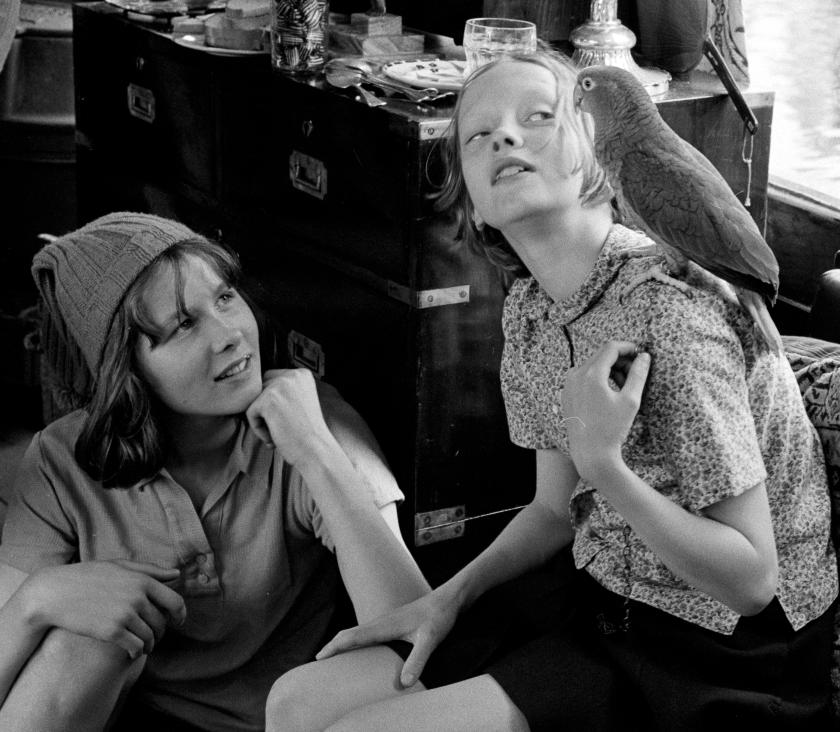
“I had many incidents with the parrot that I had to collect in the morning and return at night. I hated the bird, often it was let free in a bathroom at Kirskstone Foot and l would have to catch it and put it in its travel bag. I notice in the film that it is chained down whilst it is sitting on your shoulder.”
Kit Seymour as Nancy, Sophie Neville as Titty and Beauty playing Polly the green parrot.
“I would spend a lot chatting to Ronnie Logan the hairdresser while the shooting was taking place, such a nice man.”
“The day they filmed the walking the plank scene I remember very well. I took Ronnie Fraser to the Lodore Swiss hotel at lunchtime and he was really very well plastered by the time I got him back for the afternoon filming. I suppose it was the only way they managed to get him in the water. He was not a happy chappy that afternoon when I eventually took him back to Ambleside.”
“I had to put the rushes on the train to London in the evening and collect developed film (how times have changed). One of my treats was that I was allowed to watch the rushes with the production team in the evening. Watching it again this afternoon was a real trip down memory lane. I cannot believe that I was a student starting out in life at the time and now l am a pensioner. Where has all that time gone?”
Simon West and Sophie Neville on Peel Island in 1973
Barbara Altounyan, who founded the charity, Hospice Biographers, interviewed me for Family-Talk, a wonderful project that she set up to unite families.
Barbara’s father, Roger Altounyan, was not only the inspiration for The Boy Roger in Arthur Ransome’s series of ‘Swallows and Amazons’ books but qualified as a doctor, becoming the allergist who developed the Intal asthma inhaler. He experimented on himself so many times that he died prematurely, aged sixty-five. Barbara was able to interview him just before he passed away. The recording is so precious that she is keen to record the biographies of others.
You can listen to our interview here. It starts rather abruptly but is quite fun – a bit like Desert Island Discs without the music:
Do find out about Family-Talk and think of contacting Barbara yourself. She is able to conduct hour-long interviews on a Thursday and send the recording via We Transfer. Her service is completely free of charge. If you would like to be interviewed, please email Barbara at hello@family-talk.co.uk
Barbara says:
• All recordings are GDPR privacy compliant, ie they are strictly confidential and will not be shared.
• All interviews are currently conducted over the phone / WhatsApp
• A professional audio engineer ensures best possible quality sound
• Family-Talk is available to absolutely anyone who wishes to have their life story recorded over the phone. It is great for those who wish to have a heart-warming conversation with someone from a different generation within their own family and the technology is able to connect lots of different people, on one line. UK Citizens can be connected with anyone across the country or abroad.
Barbara Altounyan is hugely experienced reporter and a television executive who produced H£ir Hunt£rs, Horizon, Tomorrow’s World and many documentaries, including the docu-drama Hair Soup starring David Suchet as her father immersed in in quest to find a treatment for asthma.
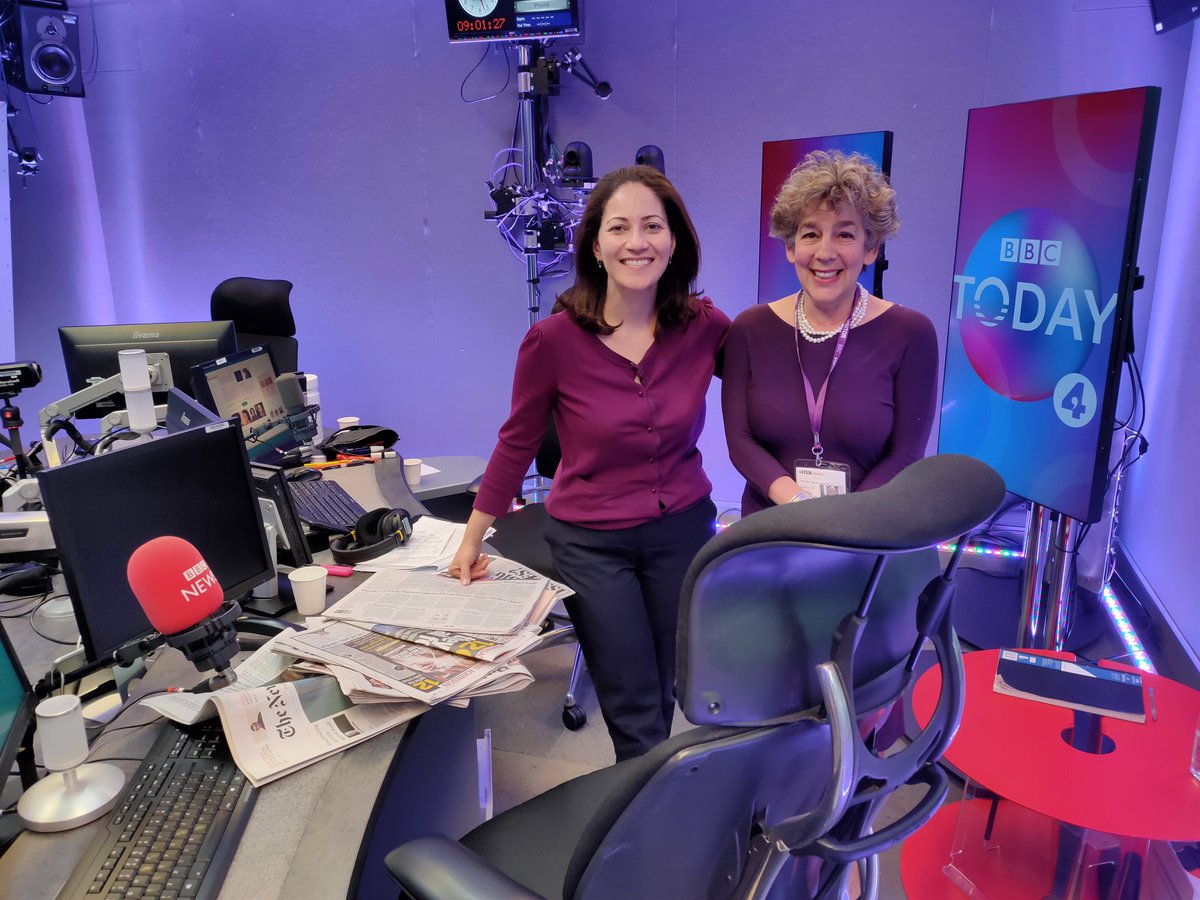
Barbara speaking on Radio 4’s Today show – May 2022
More information can be found on the website: www.family-talk.co.uk (Barbara says “No one will be able to find us without the hyphen!”)
Hospice Biographers, inspired by Roger Altounyan, also records memoirs free of charge. If you would like to find out more about this nationwide charity for end-of-life patients, please click here
Barbara Altounyan and Sophie Neville at an AGM of The Arthur Ransome Society
Barbara was named after her great aunt Barbara Collingwood who knew Arthur Ransome well. I have used archive photos to profile, her father, Dr Roger Altounyan here
You can watch a profile caught on a film made by Fisons here:
The school term is over, ‘Swallows and Amazons’ is on BBC iPlayer and Christmas missives are arriving in the post. I have just been sent this homemade card from someone who came to the premier of the original film in 1974, when I was fortunate enough to play Able seaman Titty.
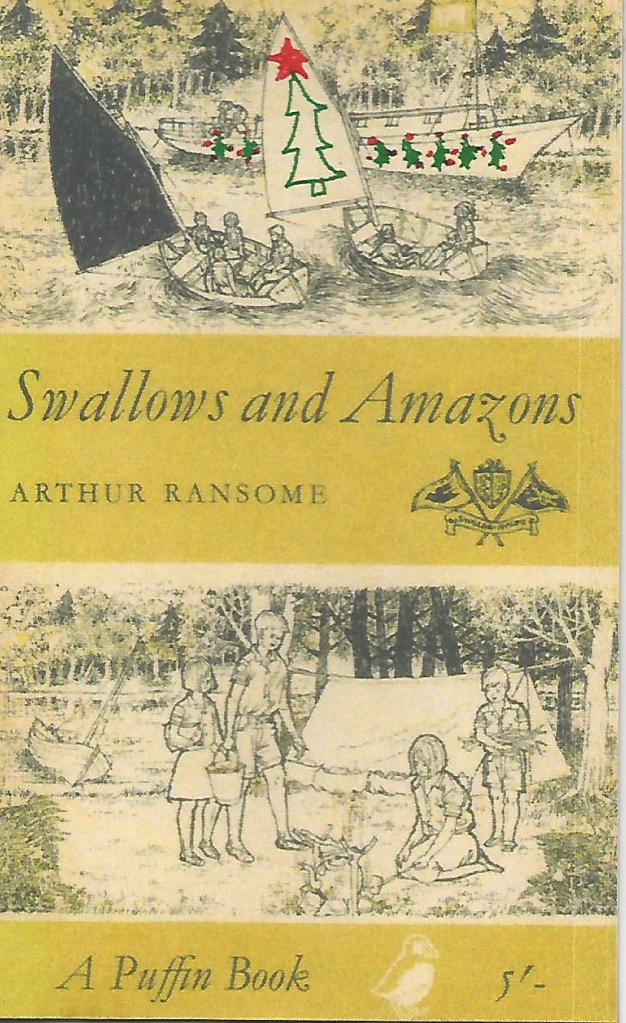
~Captain Flint hanging Christmas decorations around his houseboat on a card made from a Puffin book cover~
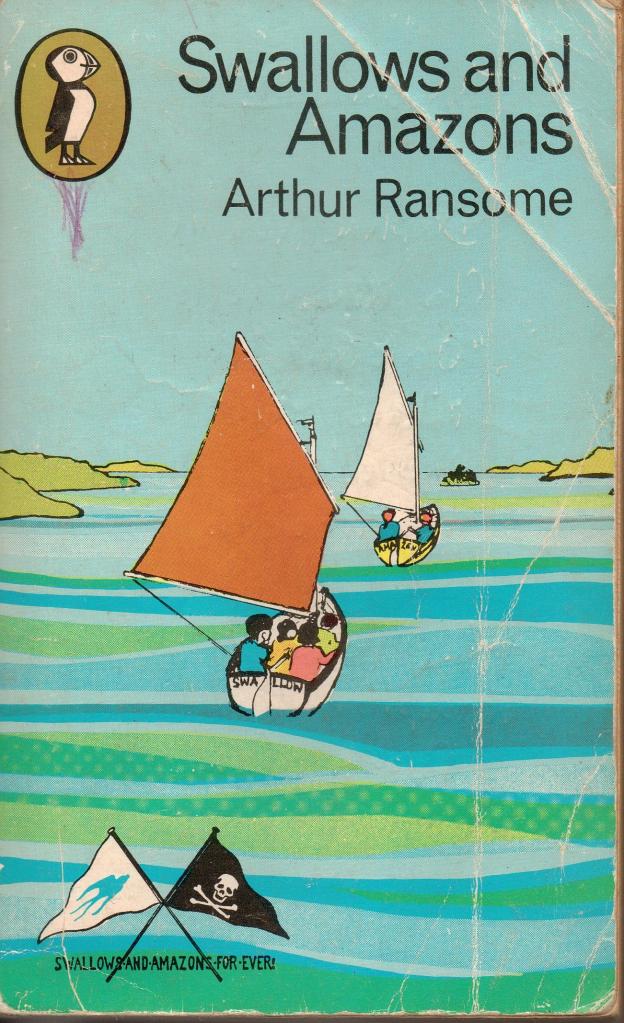
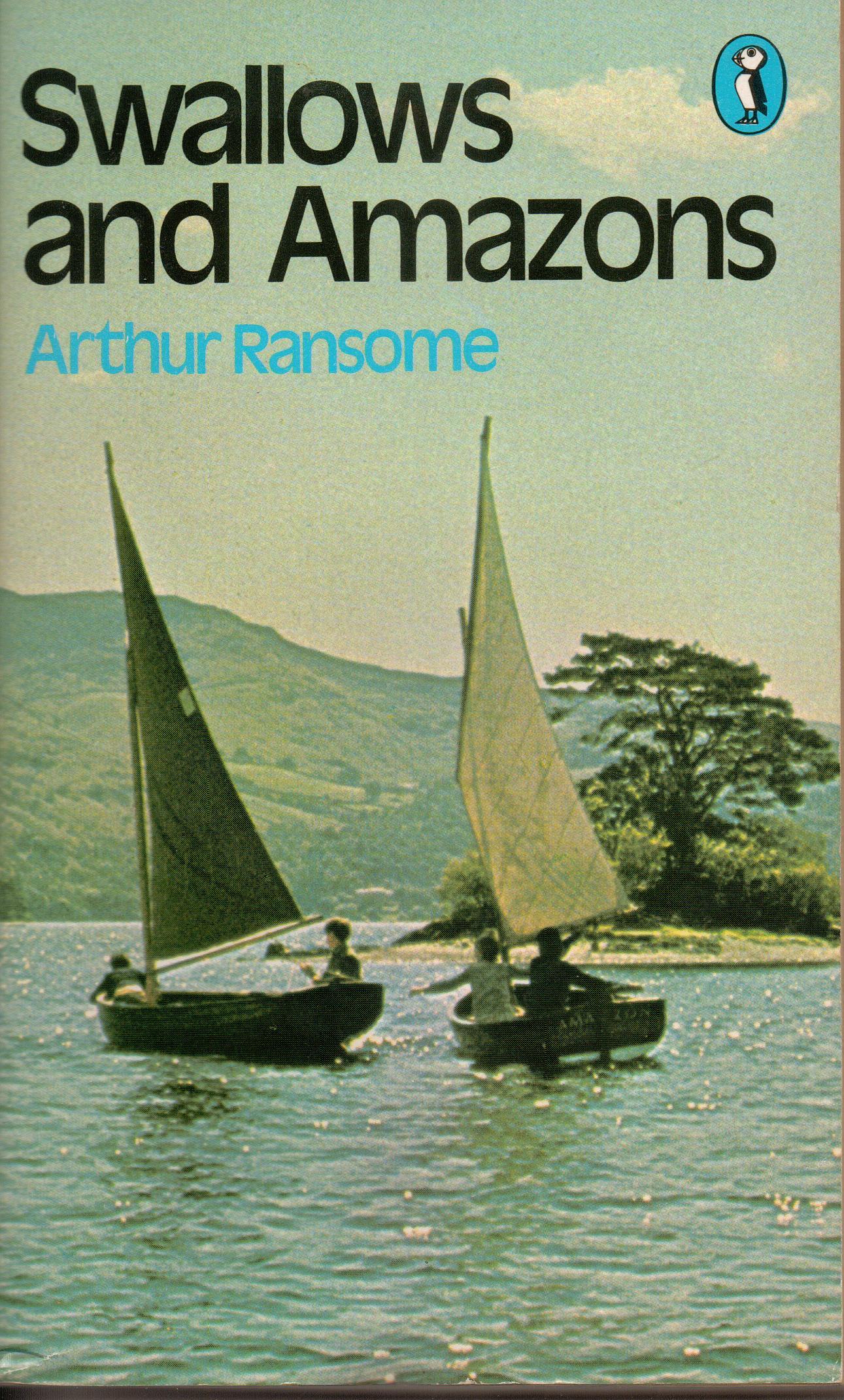
I dug out the Puffin paperback of Swallows and Amazons my father gave me when I was a girl and read avidly, along with other books in the series, by the time I was eleven years-old. It is a 1970’s edition in which I’d underlined everything Titty said. I must have re-read this copy when busy preparing for filming the 1974 movie financed by EMI.
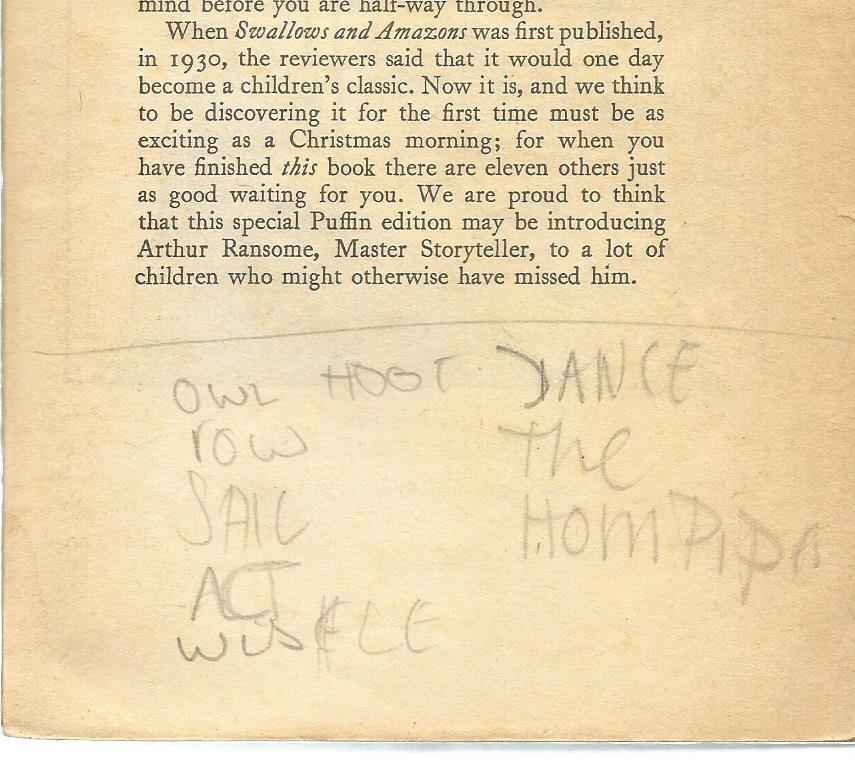
Kaye Webb, the editor, had written an introduction saying, ‘This book is about sailing, fishing, swimming, camping, and piratical exploits.’ She wanted to make it available to children, thinking that discovering Swallows and Amazons ‘for the first time must be as exciting as a Christmas morning.’
Underneath, I’d noted down the skills I would need to acquire before playing the part of Titty. ‘Owl Hoot’, was one item, ‘wisle’ (sic) another. I was somewhat apprehensive about dancing the Hornpipe but excited about ‘being a cormorant’, having no idea how cold this experience would prove.
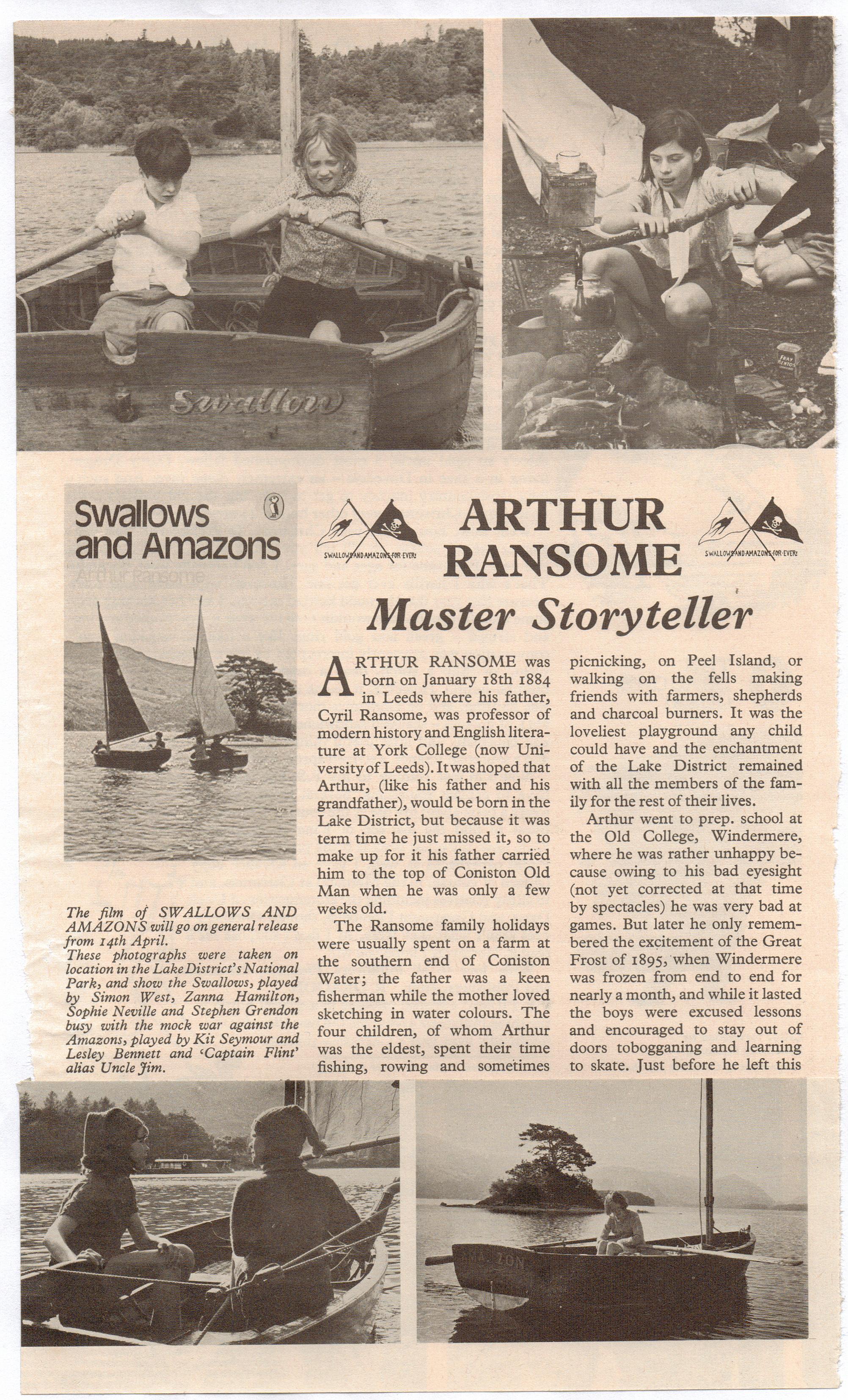
According to Trade News, 75,000 copies of a new Puffin paperback were brought out to accompany the original film. A still was used from the scene where the Swallows sail both dinghies from Cormorant Island. It retailed for 35p. Meanwhile Jonathan Cape printed 12,500 copies with the original dust jacket to accompany the release on 4th April 1974.
Today, I am most interested in Ransome’s prose, amused to find the phrase ‘X marks the spot where they ate six missionaries’ does not appear within the pages of the book. It was given to Titty in 1973 by the screenwriter David Wood. However, there are words of wisdom a-plenty that were not used in the film adaptations:
‘I like cooking,’ said mate Susan.
‘If you want to go on liking it, take my advice and get someone else to do the washing up’, is Mother’s reply. (I wonder who might have said this in reality.)
‘You can be wide awake and not see a thing when you aren’t looking’ is one of Roger’s observations.
John was able to look back to ‘a different, distant life’, which is exactly how it feels when the excitement of Ransome’s world spoils you for the ordinary. It’s true: those involved in outdoor activities develop in leaps and bounds ending up, ‘not at all what they had been.’
What is it about Arthur Ransome’s writing that captures your imagination? Rowing? Sailing? Cooking over a camp fire? Which book has most influenced your life?
Article on Swallows and Amazons on Puffin Magazine
You can read about the adventures we had bringing out the original film in different versions of ‘The Making of Swallows and Amazons (1974)’, which is now available as an audiobook.
Different editions of ‘The Making of Swallows and Amazons (1974) by Sophie Neville’
An article first published in Mixed Moss, the journal of The Arthur Ransome Society:
Sophie Neville who played Titty Walker in ‘Swallows and Amazons’ (1974)
‘I can’t see it.’ The man was standing in the rain outside the cinema. ‘You said Swallows and Amazons has parallels to missionary life but I don’t get it.’ He was a vicar, camping with his family in the Lake District. After spending a week at the Keswick Convention, he’d brought his children to see the original film Swallows and Amazons (1974) at the Alhambra cinema where I was giving a Q&A after a screening of the movie.
‘I once went on a short-term mission to Australia,’ I told him. ‘People would ask me if I was going to convert the natives.’ The archaic idea of berating aboriginal people almost filled me with horror but use of the word ‘natives’ reminded me of Swallows and Amazons. This led me to consider how deeply Arthur Ransome was influenced by missionary journeys of the early 1900s. As the author, Julian Lovelock points out, ‘exploring, trading and being a missionary were, in Victorian times, all shades of the same colonial activity. Dr Livingstone is often described as an ‘explorer-missionary’. This is the 80th Anniversary year of the publication of Secret Water where ‘missionaries’ enter Ransome’s world in their ‘mission ship’ Lapwing.
‘Would’t Titty like this?’
Linda Hendry, of The Arthur Ransome Society (TARS), observed that as a boy of ten, Arthur envied his Aunt Edith and Aunt Jessie who were going off to China as missionaries. Did this idea of adventures last with him?
Although his father, Cyril Ransome, came from a clerical background and ensured Arthur received a biblical education in Windermere, Margaret Ratcliffe of TARS reports that ‘there is never a hint of spirituality’ in his letters and diaries. ‘Arthur and Genia were not of an active religious persuasion; Christmas and Easter were ordinary days for them.’ The only time he went to church on a regular basis was when he lived in Finsthwaite and his closest fishing friend was the vicar, the Rev. Roland Pedder. ‘Arthur Ransome never mentions that they discuss spiritual matters, rather hooks, bait and water levels.’ I agree with Margaret’s view that any analogy ‘would have been subliminal on his part, rather than conscious’ but it is embedded in the story, all the more interesting for being unintended.
The reality of going on overseas missions does have parallels with Swallows and Amazons. You tend to set off as a group or family, like the Walker children, and usually end up helping people who need a bit of support, even if it is not what you might expect. Those once wounded often make the best doctors.
One of the key themes, perhaps driving force behind Swallows and Amazons is fatherlessness. Is the story an out-working of Arthur Ransome’s grief for his own father, who died when Arthur was thirteen? Was he desperate to prove himself as reliable and resourceful as Captain John, planning the expedition while Commander Walker was in Malta preparing to sail to Hong Kong? As it is, the Swallows gain Daddy’s permission while remaining under the umbrella of their mother’s care, making sensible preparations before setting sail. This is very like missionary groups who usually need permission from the church with back-up and support from their mission organisation.
Peter Wright, chairman of The Arthur Ransome Society, added, ‘The Amazons seek out the Swallows in much the same way as indigenous people came to find out about early explorers.’ Any number of missionaries have had arrows fired at them. The Swallows discover that Nancy and Peggy not only prove to be the same age but share their terminology and outlook on life. They too have no father around and have recently been rejected by their uncle who is busy writing. As a result, they are being rebellious and let off a firework on the roof of his houseboat. The Swallows make friends with the Amazons and end up helping Uncle Jim to see sense.
Everyone’s moral values are tested in Swallows and Amazons. Uncle Jim realises he has been neglecting his relationship with his nieces and sees what ‘a cross-grained curmudgeonly idiot’ he’d been to ever doubt John Walker’s integrity. Although this casts a shadow on idyllic island days, it almost visibly builds John’s character before his leadership skills are stretched by challenges set by Nancy. The other characters use their gifts to the full, Susan becoming the practical facilitator and Roger learning to be helpful. Titty is the one keen on diving for fish like a cormorant. She keeps the journal or ‘ship’s log’ and takes guidance from the Christian novel Robinson Crusoe that, ‘tells you what to do on an island’, being well-aware that missionaries could be eaten by cannibals. Although her active imagination is undervalued at first, she comes up with ideas that prove vital.
When the Swallows meet indigenous people of the area such as the charcoal burners, they are both polite and respectful, taking an interest in traditional beliefs, such as keeping an adder under the bed for luck. Although Roger makes a bit of a gaff, saying Old Billy ‘doesn’t look much like a son’, the others take an interest in ‘savage’ language and culture.
The Swallow’s mother looks out for them constantly. She reprimands John and sets rules when he goes too far, ‘No more sailing at night’, but continually ensures they are provisioned and their needs met. It might not be expected, but there are battles to be won on the mission field. They are usually tricky, demanding timely action and often involving discomfort akin to sleeping in a dinghy moored by Cormorant Island. Interestingly, it is Titty, the littlest girl, who finds the strength and courage to also unearth the buried treasure and bring restitution.
‘What did the burglars do when they found the treasure had gone?’ one little girl at the cinema asked?
Quick as a flash, Marc Grimston of TARS EAST, who was in the audience, said, ‘Captain Flint carves a fish for them to find instead of the trunk.’ Repentant and forgiven himself, Jim Turner opts to convince the thieves of their guilt rather than report the burglars to the police.
The great thing is, that whilst fishing from boats and weathering the storm, firm friendships are forged that take the Swallows and the Amazons on further adventures, even to the ends of the Earth. There is something inspirational about these that stories lead others to extend themselves, hoist their sails and live life to the full.
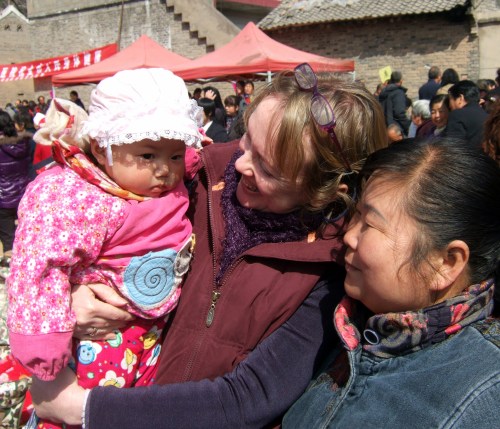
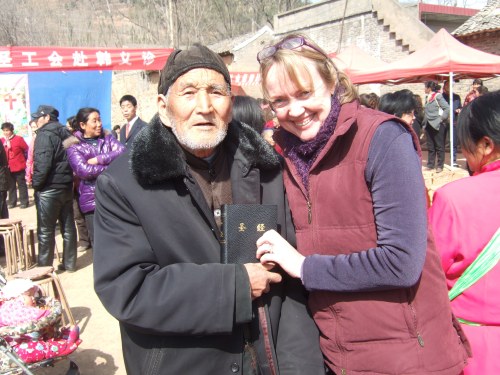
~ Sophie Neville supporting an adult literacy programme in rural China ~
You can’t go out as a missionary expecting to convert the natives. You need to come alongside people who are hurting, find the key to their needs and help them use their God-given ability to fulfil their dreams. It can be scary and things won’t always go smoothly but you are usually warned of danger. There will be a need for strong leadership when times become testing but it should be fun. If you can gain people’s trust and hold on to the unity there will be celebration and feasting in the end.
~ Sophie Neville on a Bible Society mission of encouragement to China ~
The vicar, standing in the rain beside his bicycle, began to appreciate the parallels. You may find more. One thing is certain: there is something about the Swallows and Amazons series of books that enables adults to enjoy them as much as children. We can escape pressures of contemporary life and are inspired to fulfill our dreams, becoming all the good Lord wants us to be, doing all the things He has prepared us to do.
You may disagree completely, you may can find parallels in other Arthur Ransome books. Please write in, using the comments box below.
Duncan Hall of the Arthur Ransome Group on Facebook wrote: ‘Of course, throughout (the series of Swallows and Amazons books) there are references to fictional and non-fictional adventures of exploration and discovery which historically sat with Empire, missions and trade as well as with piracy, etc. They do contrast with a political outlook that is clearly oppositional to those traditions. We always end up being impressed by savages (in the Lakes or the Walton backwaters) rather than hoping to civilise them. In Missee Lee, we obviously want to protect the location of the Three Islands, rather than send Daddy’s gunboats over there (despite the pretty monstrous business that Miss Lee presided over, we are convinced that the Brits destroying their way of life would be more monstrous still).































 Sophie Neville