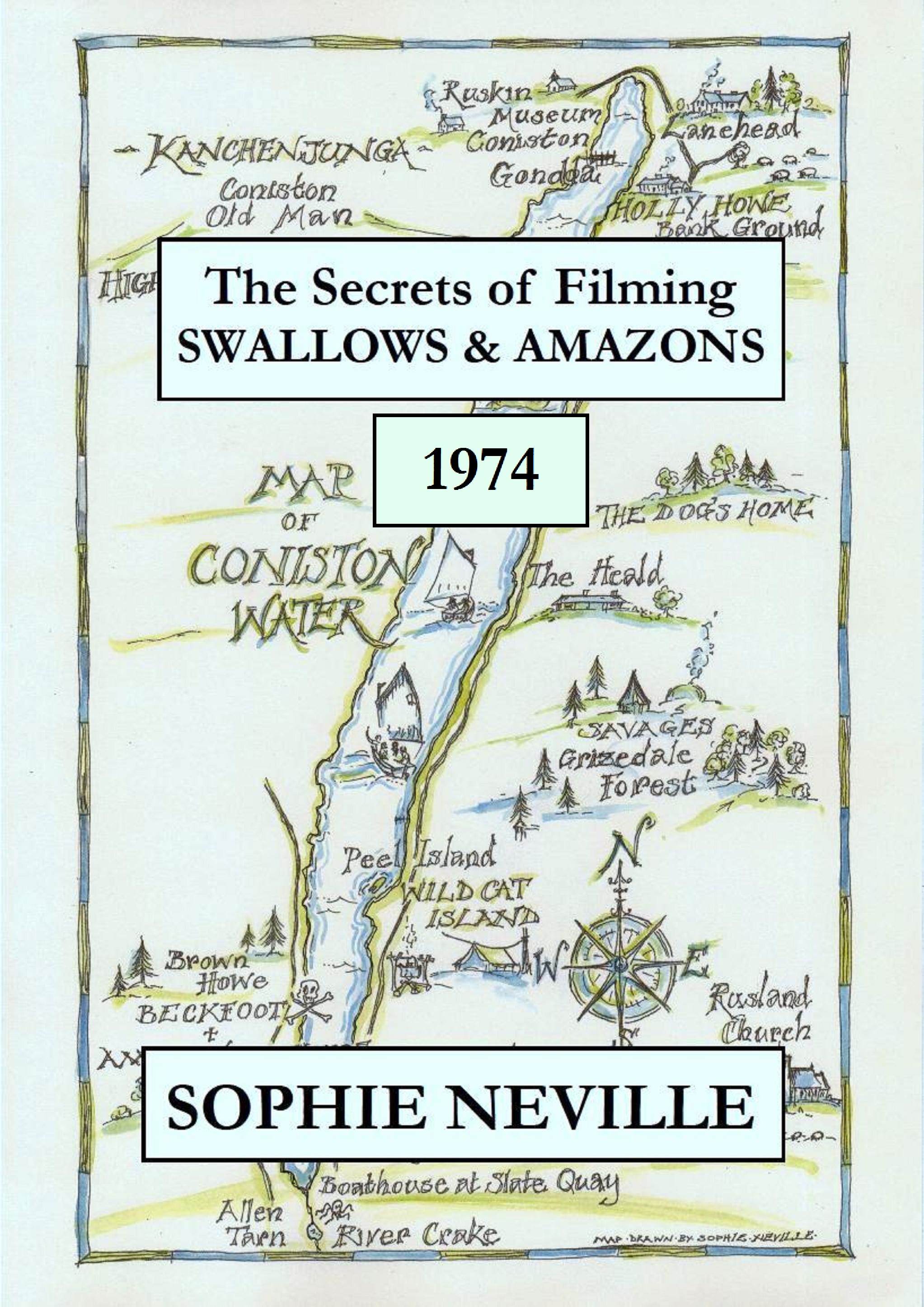
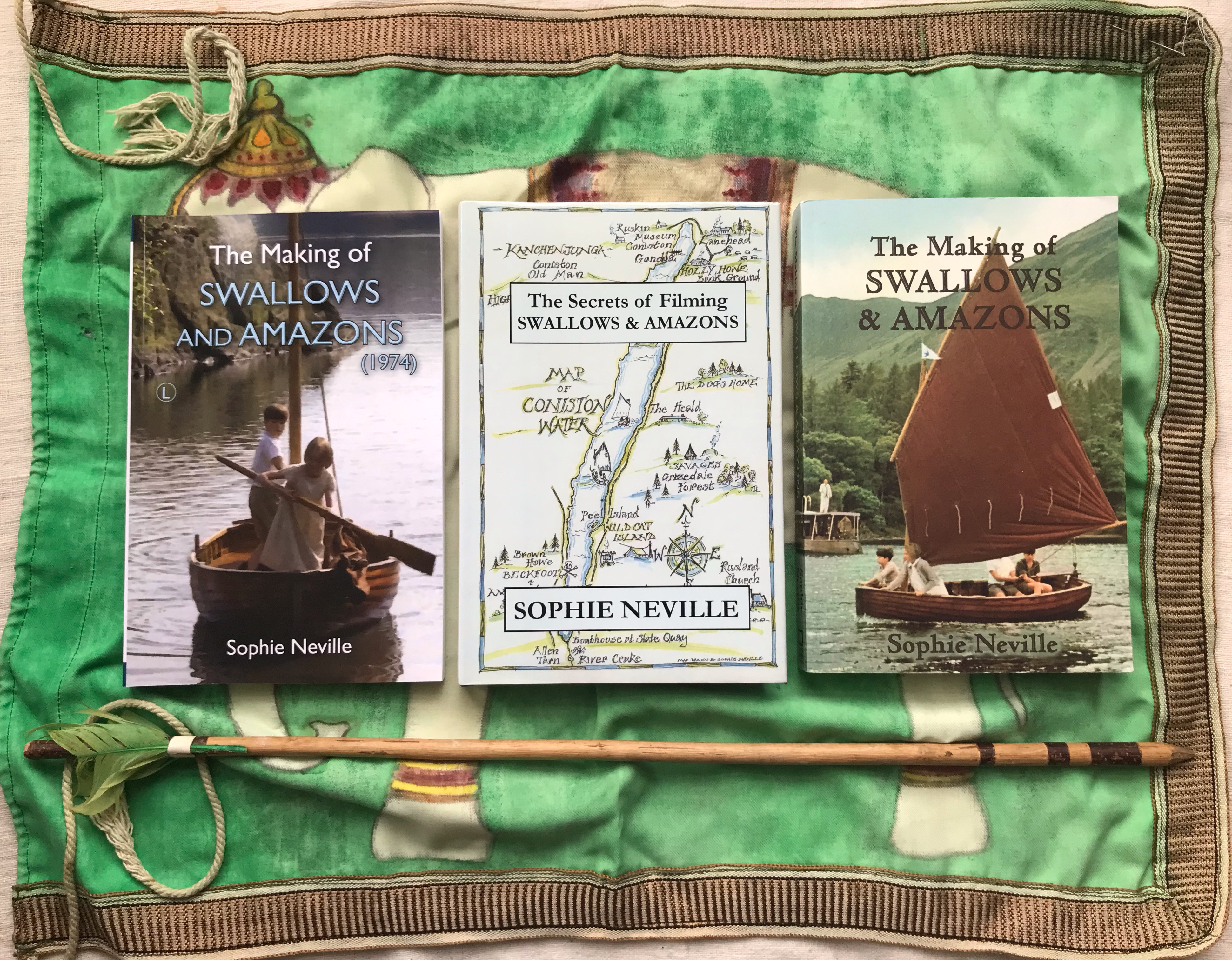
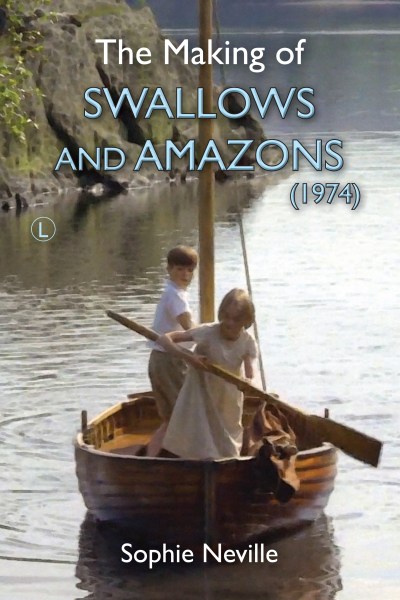
A second edition of the ebook ‘The Secrets of Filming ‘SWALLOWS & AMAZONS'(1974) is now available on Amazon Kindle, Smashwords, itunes, Kobo, and Nook for £2.99 . You can download this free of charge if you already own the first edition.
If you would like a copy but don’t have a Kindle, worry not. We have added a link whereby you can download a free Kindle app. Please go to my Book Page and scroll down for the details.
If you already have a copy of the ebook, contact a Customer Advisor and ask for a free update. You just need to give Kindle the ebook’s ASIN number. The ISBN for all online editions except Kindle is: ISBN 9781311761927
Since being contacted by others who were involved in the filming, I have been able to add a few more anecdotes and images, including this beautiful shot of Virginia McKenna in 1973 kindly sent in by the photographer Philip Hatfield.
I found a copy of my original contract for the film and when Jean McGill rang from Bowness, a few more secrets floated to the surface.
CBBCTV’s Cinemaniacs interviewed the screenwriter David Wood and myself on how the original movie of Arthur Ransome’s ‘Swallows and Amazons’ was made back in the summer of 1973. The idea was to use 30 second clips, so please excuse my over-the-top reactions, but you can watch the whole recording below.
‘This has to be one of the most delightful interviews in my recent memory.’ Tim Lewis, USA
David Stott has written in to say, “When l got the job driving for ‘Swallows and Amazons’ l think I took over the production car when Jean McGill started driving you children around in the mini-bus.” This must have been in May 1973 when the original film of Arthur Ransome’s classic book was being made in Westmorland.
David has all sorts of memories of filming ‘Swallows & Amazons’ in the Lake District that I knew nothing about.
“Jean mentioned that she took Ronnie Fraser for an early morning glass of champagne to get him going. I remember having to take him to the Lodore Swiss Hotel in Borrowdale while filming on Derwentwater. He would order what he called, ‘A Frazer’, which was some sort of vodka cocktail.”
David was only about seventeen at the time. Driving Ronald Fraser around must have been something of an eye-opener.
“I remember bringing him back to film ‘walking the plank’ and he was very drunk at the time. Expect he needed it for the cold water. He could be a little difficult when he had had a few.”
“I was rather star struck when l was driving Virginia McKenna,” he admitted. “On one occasion I had to drive her from the farmhouse on Coniston to Grange railway station. She was telling me all about filming ‘Born Free’ with the lions and I drove a bit slowly as l was enjoying her company. We arrived rather late and l had to throw her and her luggage onto the train just as it was leaving.” I asked Virginia about this but she couldn’t remember ever being late for the train. I can only imagine that David must have coped well.
“On another occasion I think l had Richard Pilbrow in the car,” he was the producer of the film. “We were driving back from Derwentwater when a cow jumped off a bank and landed on the bonnet, causing quite a lot of damage. I was dreading going back to Browns Motors and telling Alan Faulkener the owner what had happened.” Richard is still alive and well.
David, who now owns Crossways Hotel near Glynebourne, comes from an old Cumbrian family. His grandmother lived at High Green Gate, the farm next door to Beatrice Potter at Hilltop.
“My great grandfather was Farmer Potatoes in the ‘Tale of Samuel Whiskers’. It was sketched from a photograph that my mother still has.” Indeed, there was an article in Cumbria Magazine about Beatrice Potter’s relationship with the Postlethwaite family.
One of our locations – Haverthwaite Station today
“My father was the local joiner in Ambleside. He also kept about 1000 hens and delivered eggs around the hotels at the weekends. My brother and l would often help him on a Saturday morning.” David obviously knew the roads of Cumbria well.
David explained that, although he lived in Ambleside at the time, he has not seen Jean since the filming, so enjoyed reading that I had been in touch with her. “Jean’s Mum was called Girlie and she used to run a nursing home on Lake Road. Jean had a brother who was nicknamed Blondie. We would often have a cup of tea with Girlie in the nursing home kitchen.”
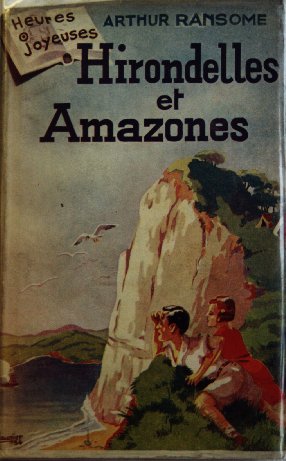
If you know anyone who loves the original film of Swallows and Amazons, and is now learning French, why not buy a copy of the DVD that has been dubbed into the French language:
If you live in France you can order a Kindle copy of ‘The Secrets of Filming Swallows & Amazons’ – which is full of behind-the-scenes photos and links to home-movie footage taken on location, although the text is in English. The paperback makes a good present for students of Media Studies, Drama or Film:
The website All Things Ransome have links for of the Arthur Ransome’s book in French here with a useful list providing translations of names here.
The translation of the telegram BETTER DROWNED THAN DUFFERS IF NOT DUFFERS WONT DROWN is Préfère les savoir noyés que stupides. Si pas stupides pas noyés.
You too can find the locations and sail Swallow:
If you would like to stay at Holly Howe ~ contact Jonathan Batty at Bank Ground Farm
Swallows & Amazons tours of the Lake District ~ including a trip on the steam train, led by Peter Walker of Mountain Goat in Windermere can be booked for groups by request. A must for overseas visitors. To read about this do go to: ‘In Search of our old Film Locations’. For booking details please click here.
Swallow, the dinghy used in the film, is currently in East Anglia. For opportunities to sail her yourself please click here
The Nancy Blackett Trust presented another screening of the classic film ‘Swallows & Amazons’ (1974) at the Riverside in Woodbridge. The cinema was celebrating 100 years of film and were thrilled to welcome a large and enthusiastic audience of 250, made up of children and Arthur Ransome enthusiasts one of whom told us he saw the film in Shaftesbury Avenue when it first came out.
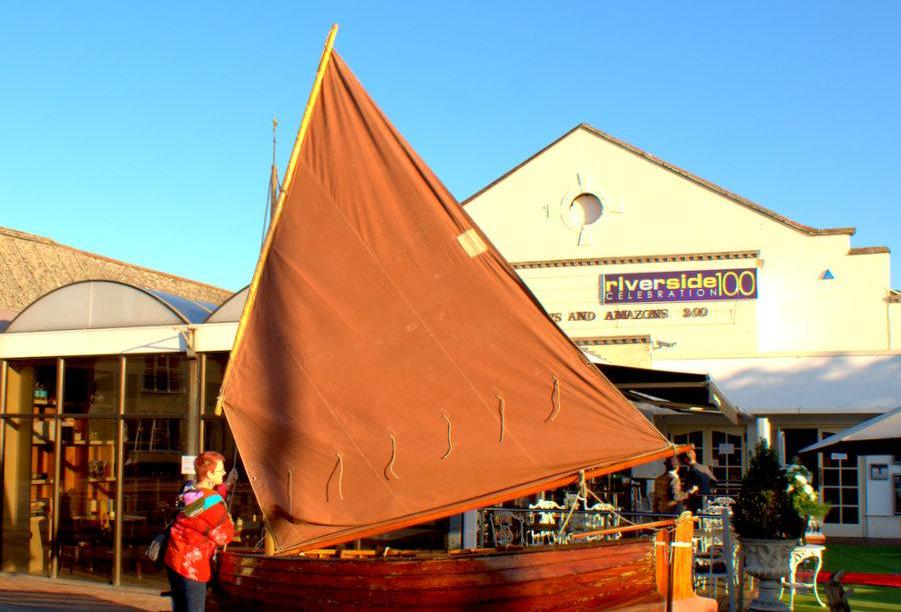
Swallow, the original dinghy used in the film was on display outside the cinema and I went along to answer questions about how the movie was made. Here are some of those asked by children in the audience:
Had you ever been on a boat before you started filming? Yes, my father was a great sailor and I’d crewed for him. As Titty, I had to row quite a bit – back from the charcoal burners, later when I captured Amazon and alongside Roger when we went to find the treasure on Cormorant Island.
How did you do the night time? We used Mrs Batty’s barn at Bank Ground Farm as a studio.
Which lake did you film on? Arthur Ransome wrote about an imaginary lake based on real places that we found on Windermere, Coniston Water, Derwentwater, Elterwater and a smelly lilly pond. the great thing is that you can go and find them too.
Did you enjoy filming? Yes, very much, but it could be chilly.
How long did it take to film? Forty-five days in all. It’s a 90 minute film so you can work out just how much we managed to film per day. It was well under the 4 minutes-a-day scheduled.
Did Titty actually keep the parrot? Titty did in the story but the parrot in the film was rather savage and had to be returned to Mrs Proctor of Kendal. However my parents bought a very tame green parrot called Chico who would sit on my shoulder, even when I went rowing.
Were you cold when you we filming the swimming scenes? Yes! We nearly passed out.
Why didn’t you wear life jackets? The film was set eighty-six years ago in 1929 when children didn’t wear life-jackets. We wore BOAC life-vests during rehearsals and when being taken out to the location.
What are the children doing now? Working! Suzanna Hamilton is the only one of us to kept acting. She’s appeared in two feature films this year including ‘My Feral Heart’. Simon West has an engineering company that invents machines, Sten Grendon is a gardener, Kit Seymour is spending this year in Australia and I believe Lesley Bennett lives in the Netherlands, but I’m not sure. I’d love to make contact with her. Virginia McKenna is still acting as well as figure-heading her charity Born Free that does so much to relieve the suffering of animals.
In reality, how old were you all when you acted? Roger was 8, I was aged 12 pretending to be aged 9, Susan was 12 and John 11. Nancy was about the right age as she celebrated her 13th birthday towards the end of the filming. The secret was that Peggy was the eldest at 13.
Do you have a cameo role in the new film? You might just see me on the platform of the railway station but I am wearing a wig!
Why is Swallow’s flag brown? Because it a little elderly.
The camping kit – was it all packed in Swallow? We children didn’t know it at the time but it didn’t all fit in, although they did keep taking the tents down. Why we had a rolling pin on board, I do not know.
What happened to Amazon? The Amazon Arthur Ransome knew, which was originally called Mavis, can be seen at the Coniston Museum. The dinghy we used in the film was also used in the black and white BBC TV serial made in 1962. She is now in Kent – and still sailing. You can see her on ‘Country Tracks’ by clicking here.
After the film screening, I was told that students on the Open University Children’s Literature course with study Arthur Ransome’s classic book ‘Swallows and Amazons’, which is good news, especially since the BBC News headline rang out the question: Do children still need to read the classics of English Literature? Declaring, ‘Gone from bedroom bookshelves are the Famous Five, The Chronicles of Narnia,and the adventures of the Swallows and Amazons.’
Is this true? Do leave your comments below – or contact the BBC!
‘I’ve just read this delightful ebook – thank you so much for writing it! I’m sure you must get messages all the time like this, but I hope you will deservedly enjoy hearing that I absolutely adored the film of S&A and learned your name, along with all of the other actors and actresses off by heart from the record, which I played and played.
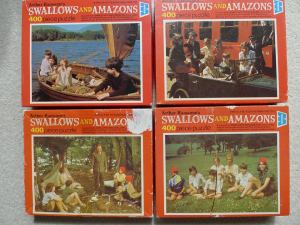
‘I also had the jigsaw of the campsite scene, which I thought was an incredible piece of merchandising (and it was, for its day).
‘I read my first S&A book (Swallowdale, but never mind) in the summer holidays when I was 7, and rapidly recruited my best friend Linda to being a fan. One of our mums spotted that the film was on at our local cinema in Dundee that Christmas, but the next day was the last date it was showing – so we were collected early from our school Christmas party, so that we could make it in time. We were in heaven. The next Easter, our families took us to the Lake District (staying in Coniston) for the first of many holidays there. We remember “finding” Gondola submerged in the reeds, and sailing with our dads over to Bank Ground and seeing the two dinghies named Swallow and Amazon. We soon found a favourite picnic on the shore close to Peel Island, and in later years, my dad and I rowed over to the Island in a rubber dinghy, which was tremendously exciting. Fascinating to hear about the artificial shingle beach!
I was interested to read that one of your qualifications for getting the job was that you could row, and that you’d practised at home in a Thames Skiff. Many thanks again for giving me such a delightful film to immerse myself in as a child. Helena Smalman-Smith
‘We love your book and tales of filming.’ Love Ambleside – on Twitter
‘…the girls adore your film of Swallows and Amazons. In fact, I fear it is thanks to your film rather than the book that my Swallows and Amazons camping weekend was full to bursting. I also have friends in Suffolk who would happily hot foot it across the country with their three children to hear you!’ Grainne Dennison (teacher and Ransome fan).
‘My daughter is 11 today & this is her favourite present! Titty was always Moira’s favourite character from the books AND the film, she is thrilled!’
‘My daughter LOVED your book! She couldn’t help sharing gems & finished it in a few days on hols. Magic! My turn now!’
‘I have been hesitating to write, but I do want to tell you how much I enjoyed reading ‘The Making of Swallows and Amazons’. It made watching the film so much more enjoyable. I came to Arthur Ransome late in life, but I’ve read all of them, and have a complete collection of the ‘Swallows and Amazons’ adventures.’ Mark Cheng, Bedford
‘I really love the Swallows and Amazons movie. I actually went to see it at the pictures in London, with my family when it first came out, but I was only about 4 or 5 years old, so I don’t remember much about that day. But of course I have watched it many times over the years and since I have the DVD I make a point to watch it at least once every year. You are my favourite as you are so charming!!’ Robert Newland, Dorset
On Saturday 26th September at 3.00pm the original film of Arthur Ransome’s book ‘Swallows and Amazons’ was screened at the Riverside cinema in Woodbridge, Suffolk as part of their celebration of ‘100 Years of Film’.
I was on stage to answer questions about how we made the film after the screening. Swallow, the dinghy we used on the movie was rigged up outside the cinema and admired by many.
Back in April, I was invited to a similar screening of ‘Swallows & Amazons’ (1974) also held to raise funds for the up-keep of Arthur Ransome’s yacht Nancy Blackett. As the film ended I was invited up on stage to answer questions about how it was made. Marc Grimston sent a list of these, so I could answer them here for those unable to get cinema seats.
As a child were you like Titty? In 1973, I was aged twelve and at five-foot two, was really too old and too tall for the role of Titty but it was easy enough to pretend to be nine years old. I was on-screen a great deal so it probably a good thing that I was old enough to cope with long filming days. I thought I was much more like Mate Susan but perhaps that made it easier for me to play Titty.
How many tried for the role of Titty? About 1,800 children originally auditioned for the six parts in ‘Swallows & Amazons’. Claude Whatham, the director, wrote inviting me to an interview. In the end there were five girls up for the part of Titty. You can read more about the final audition here.
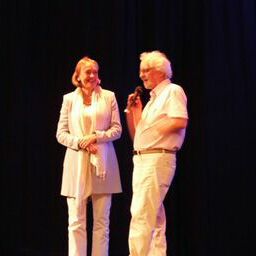
Sophie Neville on stage with Peter Willis, President of the Nancy Blackett Trust
Had you read the books before? I had read most of the books in the series and loved them, so it was very easy to take on the part. We never had to sit down and learn lines because we knew what to say from reading the book.
Sophie Neville taking about Swallows & Amazons
Were they any disasters during filming? Swallow’s mast broke!
How did you stay safe with the snake? It was a real adder, but quite a tame one. I think they lowered its metabolism by keeping it cool.
How did they make the lion noises? It was a recording of a real lion.
When you filmed the approach to the houseboat it seamed as if Amazon was coming in fast, was she? Yes, she hit it quite hard!
How long did it take to film? We spent forty six days onset in total, which meant spending about seven weeks in the Lake District.
Do you still have the parrot? I don’t. The green parrot belonged to Mrs Proctor of Kendal where the residents were terrified of him.
What happened to Amazon? She is owned by a family living in Kent who love sailing her in the lakes. She was the same Amazon as used in the BBC serial of ‘Swallows and Amazons’ made in 1962, when Susan George played Kitty.
Have you been back to the island? Yes! I last returned with Nick Barton who is planning a new film adaptation of ‘Swallows and Amazons’.
Are there adaptations of any other Swallows and Amazon books? Yes, in 1983 I was able to work on the BBC serialisation of ‘Coot Club and The Big Six’, starring Rosemary Leach, Colin Baker, Henry Dimbleby and Julian Fellowes as one of the Hullabaloos. It was my job to cast the children and look after them during the three months we spent on location, which was great fun.
The Telegraph listed ‘Swallows & Amazons’ as Film of the Week when it was broadcast on ITV3 in the UK recently. It was also shown on GEM television in Australia last Friday. Sophie has been answering questions about making the film ‘Swallows & Amazons’ at the Curious Arts Festival. If you have one, please use the comments box below.
On 26th July Sophie Neville, spoke to Dan Damon on the BBC Radio 4 Sunday morning programme ‘Broadcasting House’ about the enduring success of the film. To read more, please click here.
‘John, Titty & Susan on the Swallow’ by Fadi Mikhail
As you can see from these paintings, Fadi Mikhail, the artist famous in the UK for painting one of our Christmas stamps and being commissioned by the Prince of Wales, as well as the Duke and Duchess of Cambridge, was certainly inspired by the film of ‘Swallows & Amazons’ made in 1973. He has kindly let me publish this remarkable series of paintings.
‘Look out! Another boat’ by Fadi Mikhail
Since my last post, comments have flooded in as to why the simple story is so popular:
‘John and Susan coming about’ by Fadi Mikhail
‘…the Swallows don’t own ‘Swallow’ – they’re having a farmhouse holiday and the boat belongs to the farm, and that could just have happened to any of us. Norman Willis… used to rise up against critics who considered that children from poorer backgrounds should read books full of gritty reality related to their daily lives: he pointed out that they wanted to escape from their daily lives for a few precious hours, not always into a zone of dragons and princesses but into an alternative realistic world.’ Jill Goulder of The Arthur Ransome Society.
‘The Swallows in the boat’ by Fadi Mikhail
‘What I liked most about these stories was that the Swallows and Amazons and their friends behaved like real children, but lived in a completely different world from the one I inhabited. I’d camped with the Girl Guides, but the Swallows and Amazons had astounding freedom – camping alone on an island, going out at night and sailing wherever they liked without needing to ask permission.’ Emily Lock ‘…the books gripped my imagination forever’. Please click here to read Emily Lock’s full review.
Titty and John eating apples by Fadi Mikhail
Christopher Tuft thought the enduring success is, ‘Because it’s a wonderful adventure story, with well rounded characters, played out in a beautiful setting, reminding us of a time now gone.’
‘The Swallows in the wood’ by Faid Milhail
‘The combination of practical realism – everything that happens could happen – and the child’s viewpoint makes the story and it’s sister volumes almost unique even now,’ Andrew Craig-Bennett of The Arthur Ransome Group on Facebook.
‘John and Susan hoisting the sail’ by Fadi Mikhail
The whole series of books clearly have a worldwide following popular from one generation to another. ‘I don’t find this surprising. I got my first Arthur Ransome book (Swallowdale) as a present, in 1948. At the time it was a copper-bottomed dead cert as a present for any child, couldn’t be criticised, known to be virtuous, and incidentally known to be good. All that is still true and has been for decades. I don’t think it could fail to be up there. Children may now prefer Star Wars, Lego books or Minecraft (my grandsons certainly do), but books are still *bought* by adults.’ Peter Ceresole ‘The book has lasting appeal, particularly for children, because there is nothing in the adventures of the Swallows and Amazons that readers feel they could not do themselves. They felt they could sail a dinghy like the Swallows. I know, because when adults came aboard Ransome’s restored boat Nancy Blackett in recent years, many had tears in their eyes and said: ‘I learned to sail from the books; and Arthur Ransome was the biggest influence on my life.’ The story is not like so many others an unachievable fantasy. This must stem in part from the fact that the characters are based on real children and on Ransome’s observation of those real children. The quality of the plotting is superb. Ransome was utterly clear about the stories he wrote, sometime writing chapters in the middle of the book before writing earlier ones. His prose is spare and simple and very easy to read, and bears comparison with the writing of Jonathan Swift in Gulliver’s Travels — another writer with appeal to both children and adults.’ Michael Rines Do add your own thoughts in the Comments below.
‘The Swallows chasing the Amazons’ by Fadi Mikhail
Hugh Shelley wrote, in his Bodely Head Monograph of Arthur Ransome, that it is the joy with which the story is written that makes Swallows and Amazons a great book. In many ways it is a reflection of Arthur Ransome’s own childhood holidays with his brother and sisters on Coniston Water. And even today, children can discover the places mentioned for themselves. Holly, aged six, wrote to me recently saying, ‘My Mummy and Daddy took me to Wild Cat Island. It was my favorite day… When I am bigger I want to be like Titty.’
‘Roger ties the Swallow down’ by Fadi Mikhail
While ‘nearly all enduring books do so because of the writing,’ as another reader commented, children enjoy the camaraderie and the action that have been captured in these semi-abstract oils.
‘John, Susan and Roger waving to Titty’ 60x50cms by Fadi Mikhail depicting Sophie Neville, Suzanna Hamilton, Simon West and Sten Grendon in a scene from ‘Swallows & Amazons’ (1974)
An orange flag has been labelling the Vintage paperback edition of ‘Swallows and Amazons’ as a #1 Best Seller in the Amazon UK sales. Not bad for a book written in 1929.
I was giving a talk at the International Annual General Meeting of The Arthur Ransome Society, when I asked learned members, ‘What has made it such an enduring success?’
Is it that ‘Swallows and Amazons’ set in the Lake District where so many of us long to spend our holidays?
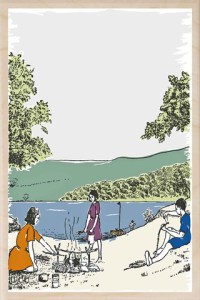
Or that we can buy a set of wooden postcards depicting Ransome’s inspirational illustrations?
Is it because the stories are driven by the characters of the children themselves, as Jill Goulder has observed, and that adults are relegated to native status, featured as little as is possible so that we enter a child’s world?
Do children relish the idea of independence and being in control of all they do, as John and Nancy seem to be? Is it that dressing up as pirates is cool?
Swallows and Amazons is about the importance of listening to children. It’s about integrity. Readers love the fact that Titty, the lowly able-seaman comes out as the unexpected hero. It was, after all, a brave thing to capture the Amazon at night and perhaps braver still to return to Cormorant Island with Roger to look for the treasure no one believed was there.
Could it be because the story is about sailing, and how to handle a simple dinghy? Claude Whatham, who directed the 1974 movie, recognised Ransome’s skill in describing how to make a camp was of huge appeal to children. Do we like to learn without the indignity of being taught?
Arthur Ransome’s style of writing is certainly vivid, drawing you into the world he created having been inspired by reading ‘Robinson Crusoe’, ‘Treasure Island’ and exotic tales himself. Martin Smith, whose comments on this strand have been endlessly interesting, has observed that there is something of ‘The Tempest’ by Shakespeare in the adventures set on Wild Cat Island.
Ransome was able to draw on years of experience as a writer before he launched the Swallows & Amazons series and this shines through. Since virtually only six children and two adults appear in his first book we get to know them well and are ready to welcome others such as Dick and Dorothea when they come along in Winter Holiday.
Is it because, ‘nothing happens in the books that couldn’t really have happened’, as Caroline Lawrence wrote recently in The Outlaw, a magazine written for children who readily identify with the characters. You can certainly enjoy looking for Ransome’s locations yourself. Those who do so are almost certain to buy the books for their own offspring.
Adults read the books, saying they bring great solace, evoking nostalgic memories and taking them back to a carefree childhood when summer days were spent devising camps and imaginary sailing adventures. Perhaps the traditional values act as an anchor in our stormy lives.
Despatches?
One thing is for certain. While many of the forty-two books Arthur Ransome wrote are now seen as obscure, his series of twelve ‘Swallows and Amazons’ novels line the shelves of almost every bookshop in Britain and are ever popular overseas. The Arthur Ransome Society has a thriving membership, enabling families to live the adventures for themselves. You can find out about joining yourself by clicking here.
The new feature film of ‘Swallows and Amazons’ starring Ralph Spall, Andrew Scott and Kelly Macdonald and released in 2016 has hopefully brought the story to the nation’s consciousness. It won awards in the USA where it was released in cinemas by Samuel Goldwyn.
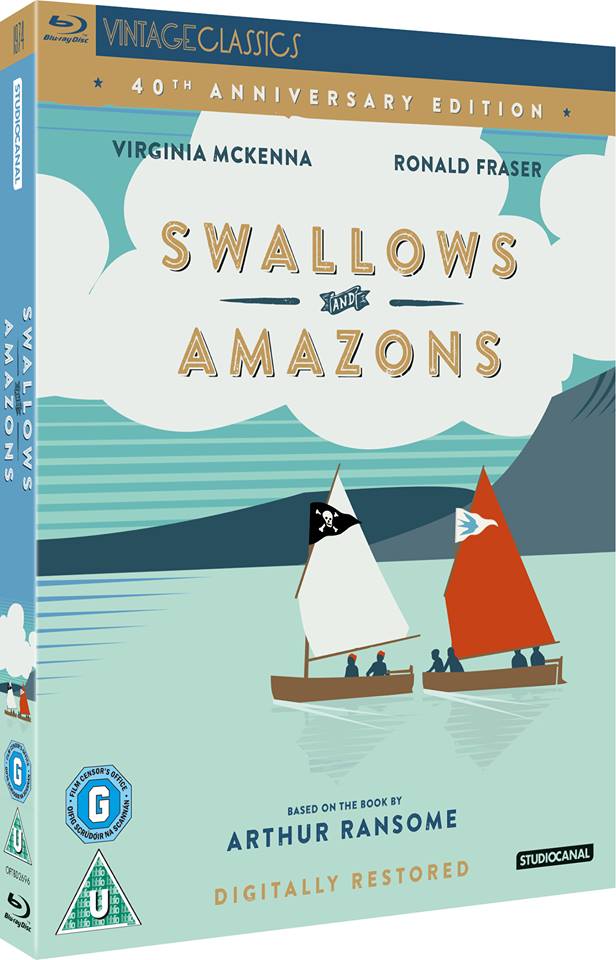
The film adaptation of ‘Swallow & Amazons’ made in 1973 and repeated on television so many times, helped to keep the flags flying. It too has been labelled as ‘a timeless classic’ and ‘an enduring success’. StudioCanal released a 40th Anniversary DVD with footage so beautifully restored that if it wasn’t for the extras package you might think it had been shot last summer.




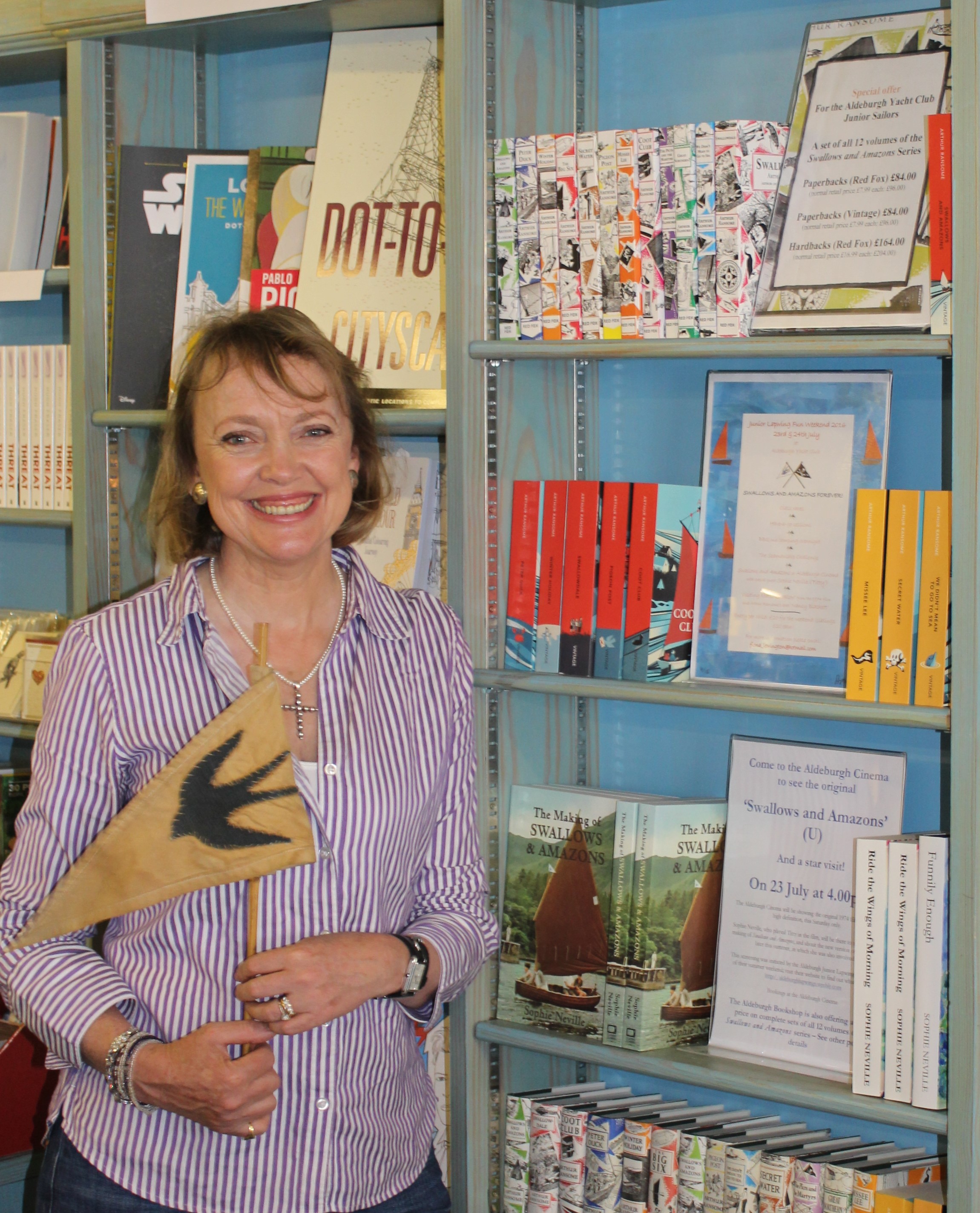

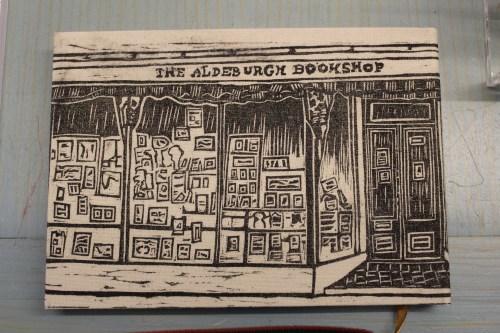
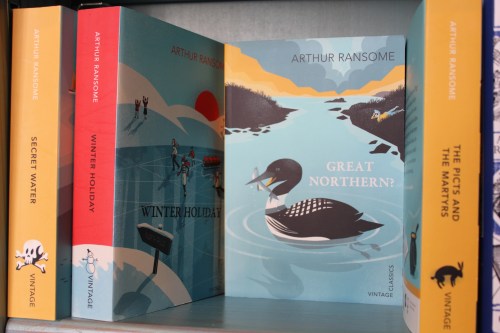 adorn the shelves of the award-wining Aldeburgh Bookshop
 The sun shone and holiday makers enjoyed the beach




 David has all sorts of memories of filming ‘Swallows & Amazons’ in the Lake District that I knew nothing about.














 Sophie Neville