Each year, at Christmas time, my father, who was born in 1929, would look forward to receiving a copy of the latest Arthur Ransome novel. 2019 marks the 80th anniversary of the publication of ‘Secret Water’, the only book in the Swallows and Amazons series to be set in Essex. While my father’s Jonathan Cape hard-backs were sadly lost to life’s chaos, I was lucky enough to find a first edition given to another little boy for Christmas 1939. This March, I took it with me to Harwich, near to the Walton Backwaters where the story is set, to help celebrate the 20th Essex Book Festival, whose theme for 2019 is Uncharted Waters.
~Author Peter Willis, Neil D’Arcy-Jones and Sophie Neville~
“Here we are, intrepid explorers, making the first ever voyage into uncharted waters. What mysteries will they hold for us? What dark secrets shall be revealed?” Titty Walker in the 1974 feature film ‘Swallows and Amazons’.
I had been invited to speak on a panel led by journalist Neil D’Arcy-Jones with Peter Willis, President of The Nancy Blackett Trust and Julia Jones, author of The Strong Winds series who owns Arthur Ransome’s yacht, Peter Duck. The discussion was introduced by Seona Ford, Chairman of the Essex Book Festival, and supported by Ros Green, the festival director and Brian Key, chairman of TARS EAST – The Arthur Ransome Society’s eastern branch. The event was sold out with members of the audience travelling from as far a field as Durham.
~A buoy akin to those featured in Ransome’s novels outside the 1912 Centre~
A huge variety of activities had been laid on that day. AL Kennedy, winner of the Costa Book of the Year, read from the tale of The Little Snake deep in the bowels of the Harwich Redoubt, a circular fort built in 1808, where a display illustrated the Kindertransport of 1938 when two hundred children were temporarily housed nearby.
~Award-winning author AL Kennedy reading from her new book The Little Snake~
Although I’d sailed past in the Nancy Blackett, I hadn’t been to Harwich since I worked on the BBC TV series One by One, a drama about the adventures of a vet starring James Ellis and an elephant with tummy trouble. Instead of a film crew, we found an offshore pirate radio revival was being celebrated with the help of a shanty band in Harwich harbour, the final berth of Radio Caroline’s The Boat That Rocked.
~LightVessel 18 moored on The Quay to host nautical storytelling and poems~
Arthur Ransome enthusiasts met for lunch at a hostelry named after Samuel Pepys, MP for the historic port that was home to Christopher Jones, Captain of The Mayflower. Marine artist Claudia Myatt arrived from a workshop she hosted on nautical flags and knots, using activity books she wrote and illustrated for the Royal Yachting Association.
~Artist and book illustrator Claudia Myatt with one of her RYA books~
For other exciting talks and events held this month by the Essex Book Festival in Colchester, Chelmsford, Harwich, Baintree, Southend-on-Sea, Brentwood, Epping and other venues around the county, please click here.
~Claudia Myatt’s sketches of Pin Mill on the River Orwell~
If you enjoyed the original film adaptation of Arthur Ransome’s book ‘Swallows and Amazons’ often broadcast on BBC Two, and now screened on Talking Pictures TV, do think of getting a copy of ‘The Making of Swallows and Amazons’, published by The Lutterworth Press or the ebook entitled ‘The Secrets of Filming Swallows and Amazons’. You can read the first section for free on Kindle here. Quite fun!
It’s surprising ‘Swallows and Amazons’ hasn’t been re-made a number of times. The 1974 movie was sold all over the world and has been screened so often it’s become regarded as iconic, labelled ‘a cult classic’ or ‘enduring success’. You can listen to Wilfred Joseph’s film score here:
Thanks to Claude Whatham’s extraordinary skill in creating a period film that never dated, cinema audiences emerge asking if it was made last summer.
The Danish poster of ‘Swallows & Amazons’ 1974 giving the Swallows a Jolly Roger or pirate flag
Although it was shot nearly 50 years ago, fan mail still arrives from Australia, the USA and Japan. Families can quote David Wood’s script fluently, having watched the DVD thirty times or more. The biggest complement is that they talk of being ‘Titty-ish’ or ‘just like Titty’, the little girl whose imagination gave her the strength and courage to excel.
-A carefully made fan letter showing Sophie Neville playing Titty Walker in 1974-
When I went to watch the 2016 film of ‘Swallows and Amazons’ being made on location, I warned the actors they were in for the long haul. Although the new adaptation has older children in the cast, and additions to the plot, it was heralded as a great British film, a landscape movie of significance about the thrill of exploring the great outdoors. Broadcast on BBC Two earlier this December and it is out on both Blu ray and DVD. For the Hanway Films billing of ‘Swallows and Amazons’ 2016, please click here.
A Czech poster of ‘Swallows & Amazons’ 1974
Think of uploading the ebook onto your phone so that you can use it as a guide to find the film locations and places Arthur Ransome knew well next time you are in the Lake District. You can read the first section free of charge here:
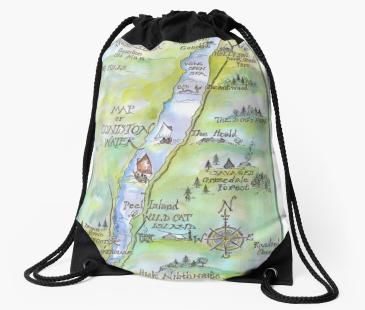
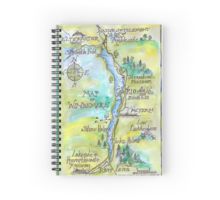
When I made a tradition of suggesting literary themed presents I didn’t expect to find fabulous cushions like these but they have great ideas on the Redbubble website
Did Penguin ever publish ‘Swallows and Amazons’ or was it only Puffin?
I don’t know if Swallows and Amazons thimbles are still on ebay
I am not sure Arthur Ransome’s Literary Estate know about them. They do recommend this pair of bone china coffee cups feature exquisite designs incorporating Arthur Ransome’s own illustrations from the Swallows and Amazons books and are currently reduced by 40% here:
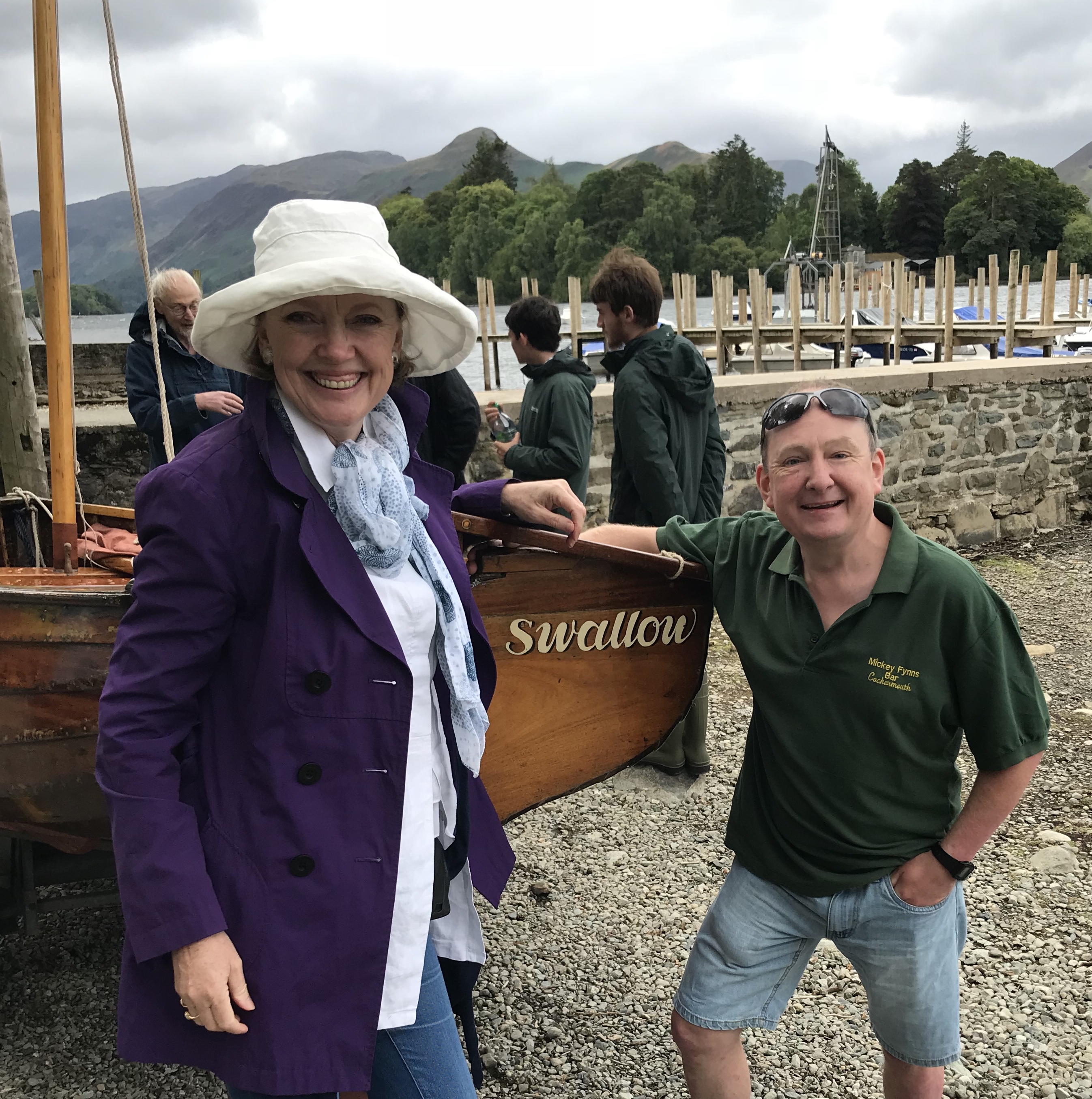
You could give someone an activity, such as a sail in Swallow, the original dinghy used in the 1974 film ‘Swallows and Amazons’. She is currently in Kendal so you could ask to go sailing on Coniston or Windermere. This can be booked through SailRansome.com
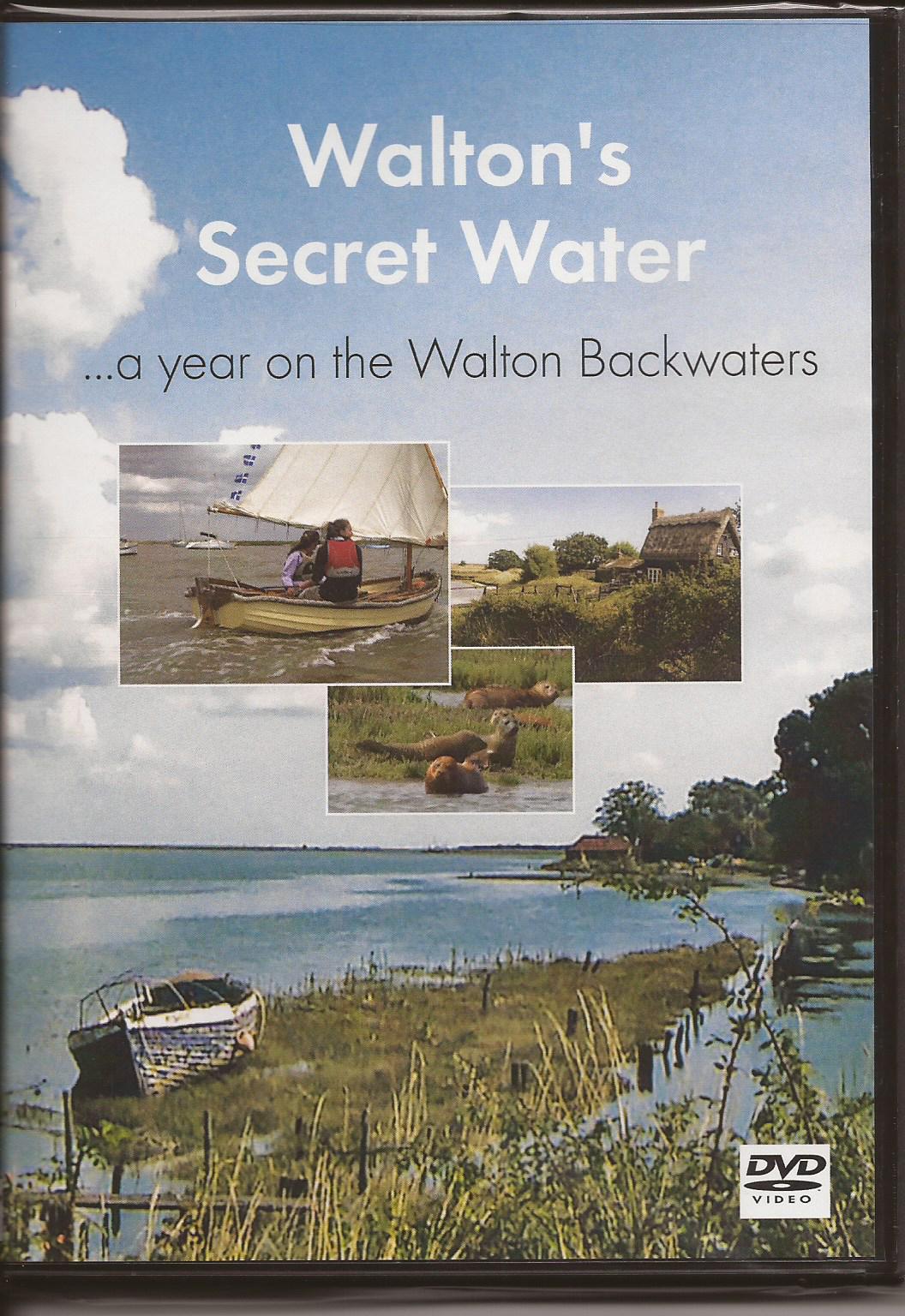
A member of the Arthur Ransome Group on Facebook is asking for a new DVD that has just come out on the location described by Arthur Ransome in his book ‘Secret Water’. It is available here.
Nothing to do with Swallows and Amazons but I have a short piece in this Christmas book, which might prove useful if you need to hold a carol service and are looking for some new readings. It makes a good present for anyone who loves stories. Check it out on Kindle, order a copy from your library or buy one online here.
Signing copies of ‘The Making of Swallows and Amazons’ in Cumbria
1 – How did you get the part of Titty?
In March 1973, a letter arrived, out of the blue, inviting me to audition for a role in ‘Swallows and Amazons’. I was twelve years old, an ordinary school girl at a convent in Berkshire. I’d read the Arthur Ransome books but had no idea I was up for the lead in a major EMI feature film intended for a universal international audience. The movie was directed by Claude Whatham. Back in 1970, he’d cast me as Eileen Brown, opposite a boy playing Laurie Lee, in the BBC’s first adaptation of ‘Cider With Rosie’. It was a role that demanded learning a piano piece so complicated it took twenty-one hours to master, but I did it. Claude must have respected my hard work. I was too tall to play Titty but, after a sailing audition at Burnham-on-Crouch, I was offered the part. He cast Sten Grendon, who’d played the young Laurie Lee, as Roger, Suzanna Hamilton was Susan and Virginia McKenna starred as our mother. She later admitted to finding her character rather dull but it was her name, in lights outside cinemas, that drew big audiences. We’ve kept in touch. She is still acting, aged 87, and has led the Born Free Foundation’s international campaign to redeem the lives of wild animals held in miserable conditions since 1998.
With Virginia McKenna on location at Bank Ground Farm near Coniston, in 1973
2 – Why was it so suitable for you?
We loved visiting the Lake District as a family. My father helped the Maryport Button Factory with their publicity and once took us to stay on a farm near Castle Craig above the River Derwent. I spent my childhood camping and messing about in boats, adding a sail made from a dust-sheet to an old rowing skiff. The great thing about the original film of ‘Swallows and Amazons’ was that Simon West, who played Captain John, was an exceptional sailor. He went on to become a national champion. Kit Seymour, who played Captain Nancy, also had a natural command of the waves. It shows on screen. They were able to handle our small boats when squalls rolled down from the fells. I didn’t have their innate understanding of the wind but it was Titty’s job to row everywhere – back from the charcoal burners and off to One Tree Island on Derwentwater. “Pull harder, Roger!” I managed to row Amazon out of Secret Harbour in one take, with the cameraman and a massive 35mm Panavision Camera on board.
Simon West, Suzanna Hamilton and Sophie Neville in Swallow, 1973
Casting-off Swallow was more of a challenge. It doesn’t show on a small screen, but when ‘Swallows and Amazons’ is shown in cinemas, you can spot the sequence when I slip on a rock with the telescope in one hand. I was up to my waist in water but got back on my feet and battled on, waving as the others sailed up Coniston Water. I knew how difficult the shot was to achieve and was desperate to do my best for Claude Whatham.
Standing on Peel Island in a soaking wet dress while the Swallows sailed north
3 – Did it fire your wish to work in TV?
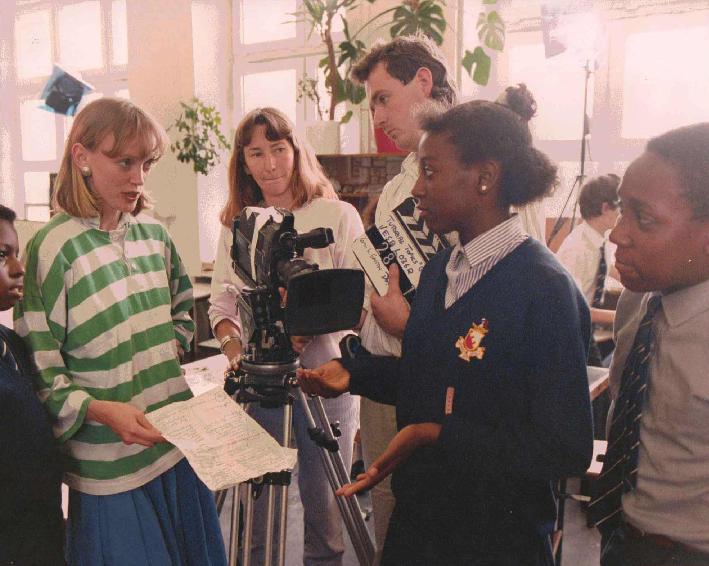
No! It was directing plays while reading Anthropology at Durham University that ignited a desire to work on television dramas. However, the experienced I’d gained acting in movies helped me win a place on the BBC TV Graduate Trainee scheme. After working on ‘The Russell Harty Show’, I grabbed the chance to cast children on the adaptation of Arthur Ransome’s books set on the Norfolk Broads: ‘Coot Club’ and ‘The Big Six’. I found Henry Dimbleby, then aged thirteen, to play the lead and spent three months on location with Julian Fellowes and Rosemary Leach – who I’d met when she played Laurie Lee’s mother. I later worked on ‘Doctor Who’, ‘Eastenders’ and ‘My Family and Other Animals’, before producing an INSET series, directing one episode at a village school in Cumbria. I began casting children in the Lake District to appear in BBC adaptations of Arthur Ransome’s Lakeland books but they were axed, which was sad, as we were all set to make ‘Swallowdale’ and ‘Pigeon Post’ on the high moors.
Sophie Neville directing a drama-doc with BBC cameraman Lorraine Smith
4 – What does the Lake District in general, and Keswick in particular, mean to you?
We live on the south coast but take the train north at any opportunity. I’m now President of The Arthur Ransome Society and came up for a fabulous weekend in May when we sailed from the jetty at Bank Ground Farm – Holly Howe in Ransome’s books. I gave an illustrated talk on the secrets of making ‘Swallows and Amazons’ at the Bassenthwaite Institute, using behind-the-scenes photographs taken when we were filming on Derwentwater forty-five years ago. We shot all the scenes involving Captain Flint’s Houseboat in a bay on the western shore. She was played by the Lady Derwentwater, converted for the drama by Ian Whittaker, a talented young set dresser who went on to win an Oscar for set decoration on the feature film ‘Howards End’ starring Sir Anthony Hopkins and Emma Thompson. We shot the lighthouse tree scenes near Friar’s Craig and used Lingholme or One Tree Island for Cormorant Island, where Titty finds the treasure chest. We enjoyed making Ronald Fraser, the film actor playing Captain Flint, walk the plank and sailed up Derwentwater to the strains of ‘What Shall We Do With The Drunken Sailor’, played as the end credits roll. Forty years later, Suzanna Hamilton and I were asked to lunch with Richard Pilbrow the producer of ‘Swallows and Amazons’. Buskers were singing this song outside the restaurant in Covent Garden. We couldn’t believe the coincidence.
Meeting fans of Swallows and Amazons at Keswick in July
I meet people from far and wide who tell me the 1974 film of ‘Swallows and Amazons’ inspired them to visit the Lake District. It has been broadcast on television every year for the last forty years and was last shown in Australia on Boxing Day. It has been dubbed into Czech twice and is often shown at festivals as only ‘U’ certificate movies can be screened outdoors. I just hope this has proved a blessing to the people of Keswick, which I so loved visiting as a child. I thought the 2016 film of ‘Swallows and Amazons’ – that I appear in for approximately two seconds – would overshadow the classic version but it has simply raised awareness along with DVD sales. Fan mail continues to arrive. A beautiful card came today. Arthur Ransome would have been touched. It had fish on it.
Editorial coverage and a literary award for ‘Funnily Enough’
5 – Do you want to mention mental health/physical health issues are always in the news?
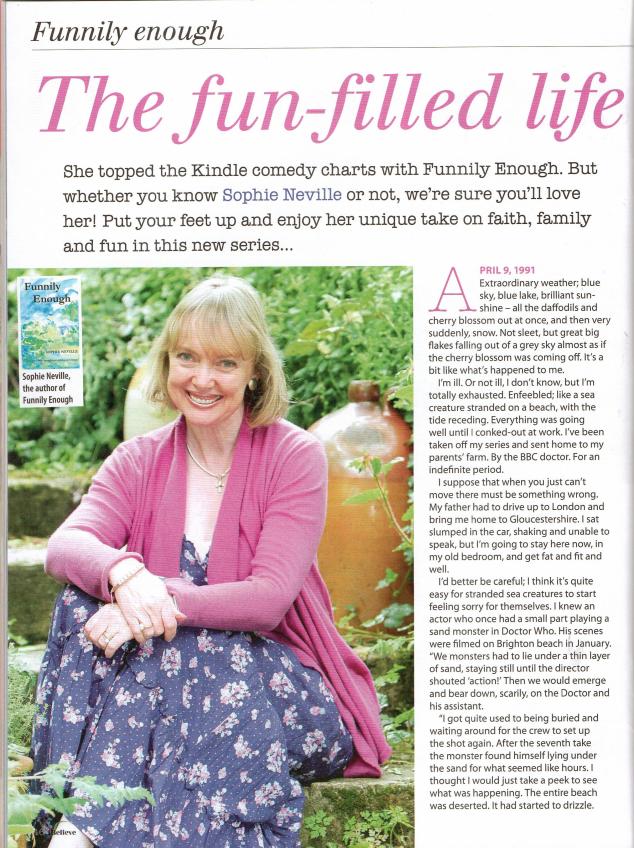
I find that many of my readers are stuck in bed or battling with ill-health. I hope they are amused and uplifted in some way by stories in my books. ‘Funnily Enough’, a diary I kept after collapsing at the BBC, is about my own struggle with what I am pretty sure was a tick-bourne disease. I lost my job but recovered in Southern Africa, where I fulfilled Titty’s dream of seeing “forests full of parrots” and produced decorative maps for a living, inspired by Spurrier’s illustration on the original cover of ‘Swallows and Amazons’. I used maps and details from my sketchbook to illustrate a paperback entitled, ‘Ride the Wings of Morning’, which is out in colour as an ebook.
On the crew of the Gloriana in the Boat Race Flotilla in March featured on BBC Television
6 – What else?
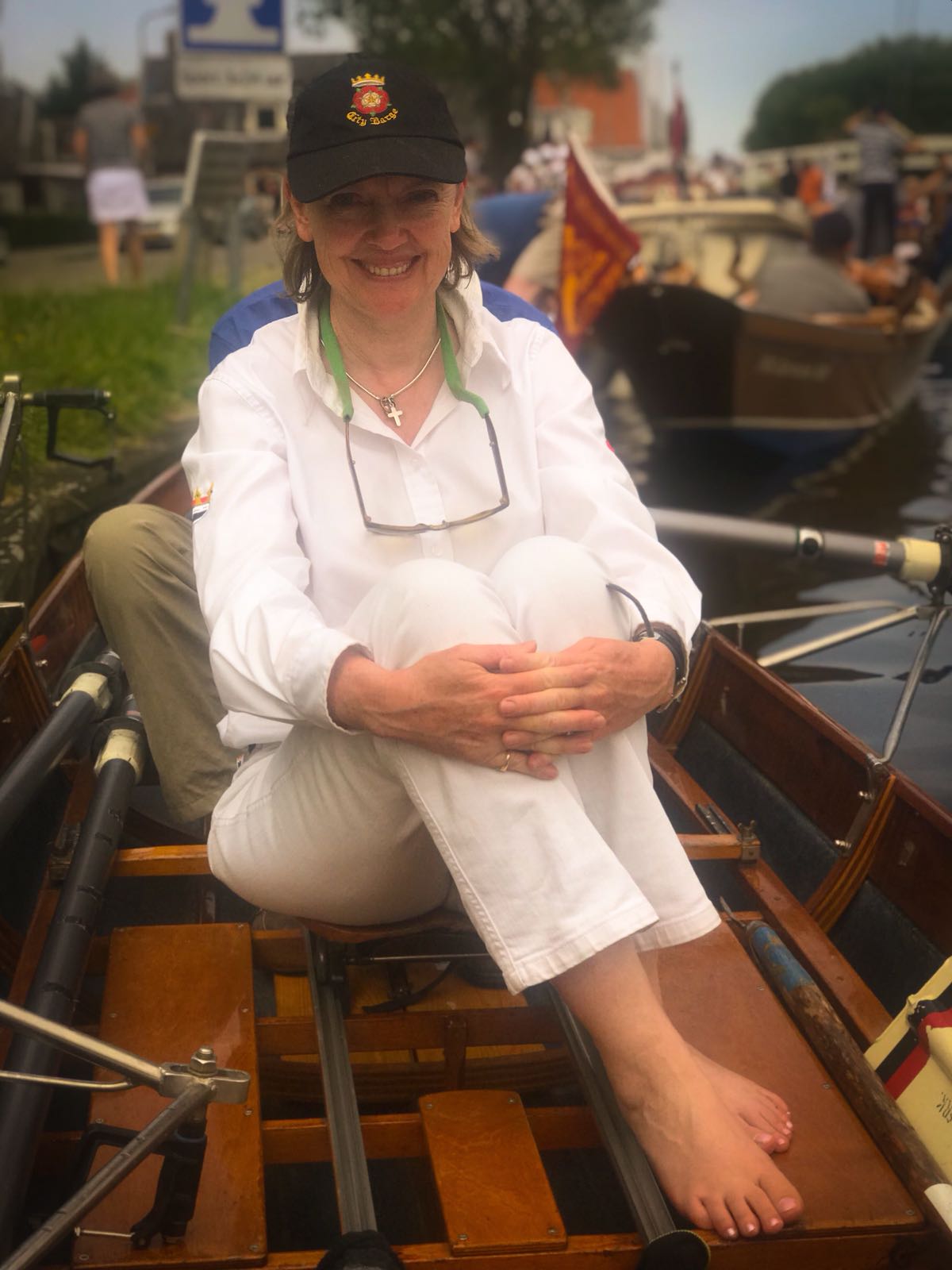
People often ask how ‘Swallows and Amazons’ influenced my life, keen to know what I am doing now. I am still keen on rowing. I completed the Voga Longa, a 32 kilometre marathon through the Venetian lagoon with Olympic gold medallist Ed Code and was on the crew of The Queen’s row barge Gloriana for the Boat Race Flotilla this year. This summer, I grabbed the chance to row through the canals of Amsterdam, which was fascinating. However, it was the Amazons bows and arrows that impacted my life. After learning to shoot on the shores of Coniston Water, I was cast as an archery champion in another movie and have since won three Ladies Championships. I met my husband at an archery match. My stepson shot for England in July, winning a tri-annual match against the Royal Company of Archers (so proud!) I gave a talk recently demonstrating how the arrows in ‘Swallows and Amazons were’ fired over my head. The shot looks so dangerous that it was cut from the TV version of the film, but is included in the re-mastered 40th Anniversary cinema Blu-ray version, which we are now able to watch on the big screen.
Rowing in from De Hoop Rowing Club in Amsterdam, July 2018
Much has been written of the legacy left by Arthur Ransome who inspired so many go camping, fell walking or sail the seven seas. I hope he would be amused to learn it has been the arrow, fletched with green parrot feathers, that has flown through the pages of my life.
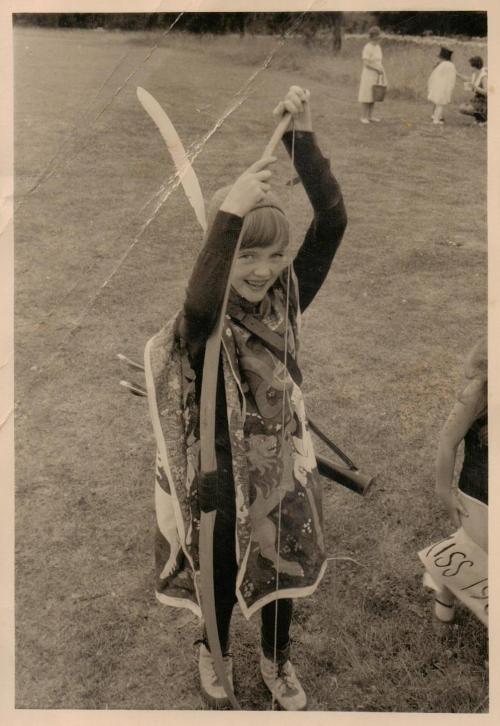
~Sophie Neville dressed as a medieval archer in 1969~
Archery became a popular sport for ladies in Victorian England. The influence was not lost on Arthur Ransome who writes in his autobiography that his Great-aunt Susan was a keen toxophilite who attended bow meetings at Belle Isle, the long island on Windermere. Another great-aunt was shot in the bonnet by an arrow when the Boxer Rising reached Peking. She was serving as a missionary.
I gather it was Arthur Ransome’s sister, Joyce, who owned a green parrot whose feathers made good pipe cleaners. Did they ever get used for flighting arrows? Arthur doesn’t seem to have taken up a bow beyond, perhaps, playing Red Indians as a child with his friend Ric Eddison.
Titty Walker may not have known that the real Queen Bess was a proficient archer, but Roger certainly expected savages to be armed with poison-tipped arrows as he took dispatches across the Peak at Darien. Did Nancy and Peggy ever don Red Indian head-dresses? Since they are described as wearing red caps when the Swallows first encounter them, I assume this idea was instigated by Helen Edmundson’s musical and reinforced by the 2016 film of Swallows and Amazons. Although far from nautical, this is akin to certain antics in Secret Water and certainly adds visual drama to the confrontation.
~Sophie Neville with Peter Robb-King, Ronnie Cogan, Lesley Bennett, Kit Seymour and Terry Smith~
I learnt how to shoot in 1973 when the Amazons were being taught how to pull a bow made of Lakeland hazel for the original movie of Swallows and Amazons. As children, we all wanted a go. I still have a practice bow and a couple of arrows whittled on location by Bob Hedges, our property master. I remember one hitting the campfire. ‘Don’t touch the point – it might be poisonous!’ Please note that the shot of the arrows zooming over our heads looks so dangerous on screen that it was cut from the television version of the feature film. This was no snazzy visual effect. The arrows were genuine, however they were strung on taut nylon fishing line rigged over our heads to ensure we would not get hit. They were fired by the prop men and not the Amazons.
~Daphne Neville who won many archery prizes teaching Lesley Bennett (Peggy Blackett)~
As female Amazon warriors were redoubtable archers it is easy to imagine Captain Nancy bent a sapling to her will and had Peggy making arrows. It is reasonable to assume they used longbows on Wild Cat Island, but in Swallowdale it is a crossbow that graces Ransome’s illustration. How Nancy got her hands on one is unknown but it must have been simpler to use in a boat with discretion and accuracy. Did Ransome ever try this out?
~Sophie Neville shooting with a compound bow in the Emirates~
What happened to the bows and arrows after Swallowdale? Archery is something you usually grow into, rather than out of. By the age of fifteen, I’d gained the part of an archery champion in an adventure movie called The Copter Kids. This necessitated target practice with a modern re-curve bow and ended with me shooting from a helicopter.
I now belong to a number of archery societies and, like Great-aunt Susan, set out with my tabs and tassel, quiver and longbow. Luckily the skill, much like an appreciation of Arthur Ransome’s writing, is something that tends to improve with age. I met my husband at one bow meeting, have held three Ladies’ Championship titles and managed to reach a distance of 145 yards when we celebrated the 600th Anniversary of Agincourt.
I have never fired a crossbow. Since they are potentially lethal weapons, Nancy could have been detained for firing hers even if the tip was not deemed poisonous.
~Sophie Neville at a West Berks bow meeting~
A version of this article was originally published in Mixed Moss, the journal of The Arthur Ransome Society.
You can read more in ‘The Secrets of Filming Swallows and Amazons’ available online:
The Swallows and The Amazons in the Capri ~ Suzannah Hamilton, Kit Seymour, Daphne Neville, Stephen Grendon, Simon West, Sophie Neville and Lesley Bennett ~ photo: Martin Neville
I clearly remember my mother winding carbon paper into the roller of her portable typewriter and bashing out articles. Ping! the bell would ring as she reached the end of a line. She would then pull left on a shiny paddle, with relish, to begin a new paragraph. She seemed to type like the wind, it was only a pity she didn’t write more. Was it more time-consuming when making changes was so laborious and a dictionary needed to be flicked through to check spelling? I was forever pouring through a thesaurus and looking for reference books in libraries as a child in the ‘seventies but find computers seems to steal more time.
~The photograph that illustrated an article in Woman magazine taken at the Commonwealth Institute in 1974~
Here is the second part of the article Mum wrote for Woman magazine when the original film of ‘Swallows and Amazons’ was screened in cinemas around the country in April 1974. Earlier pages can be read in a previous post here and there is also a programme she wrote for BBC Radio Bristol on the same subject here.
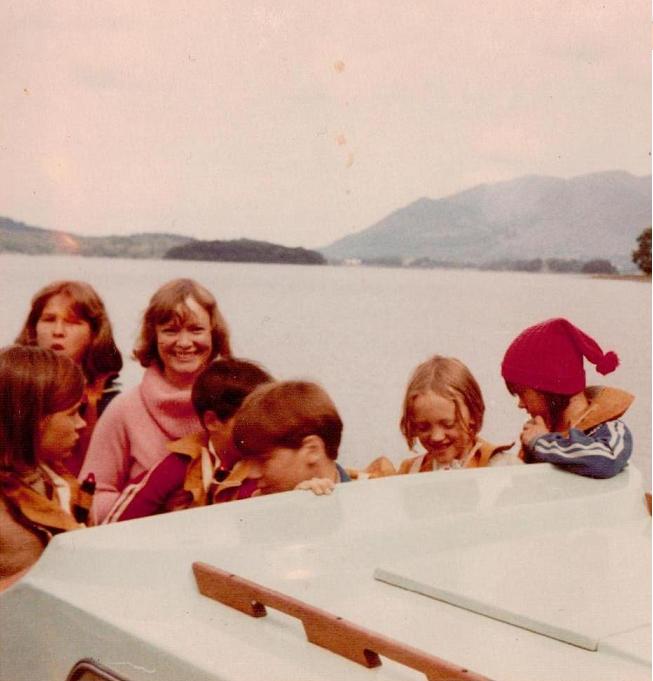
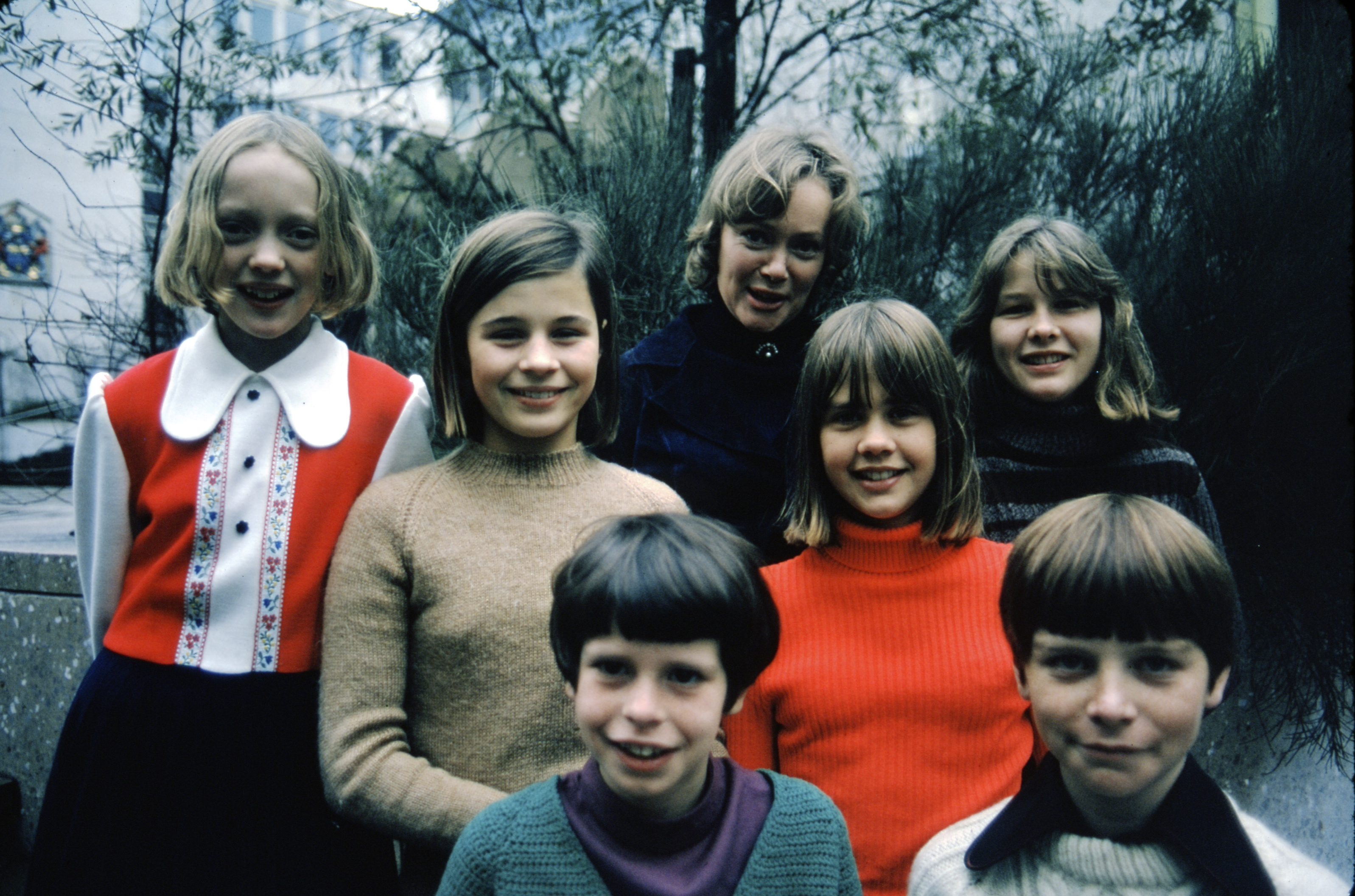
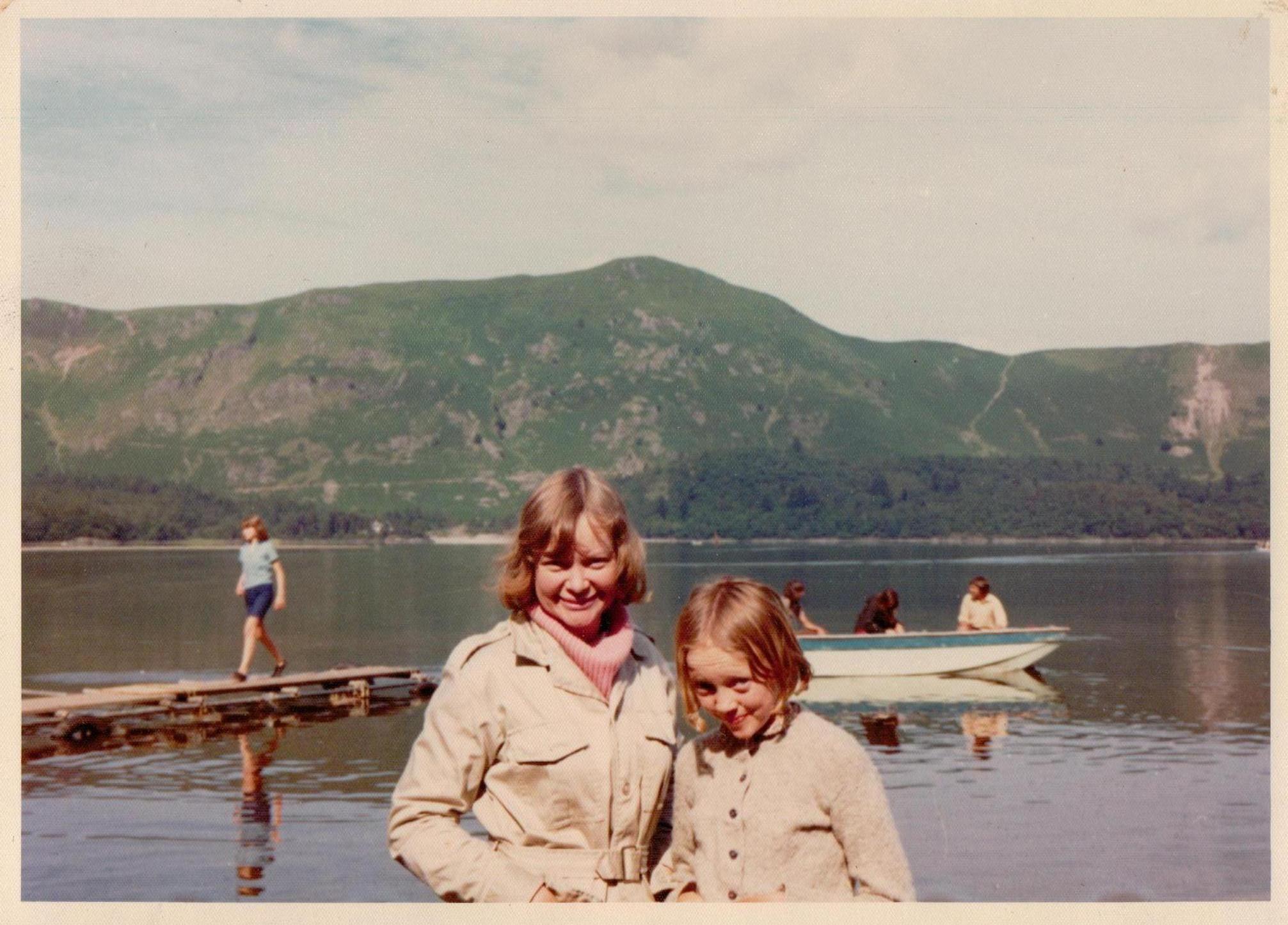
Jean McGill, Jane Grendon, Sten Grendon, Kit Seymour, Sophie Neville, Claude Whatham, Simon West, Lesley Bennett, Suzanna Hamilton, Ronnie Cogan, 1973
The Saucepan and her mother, Daphne Neville in 1973
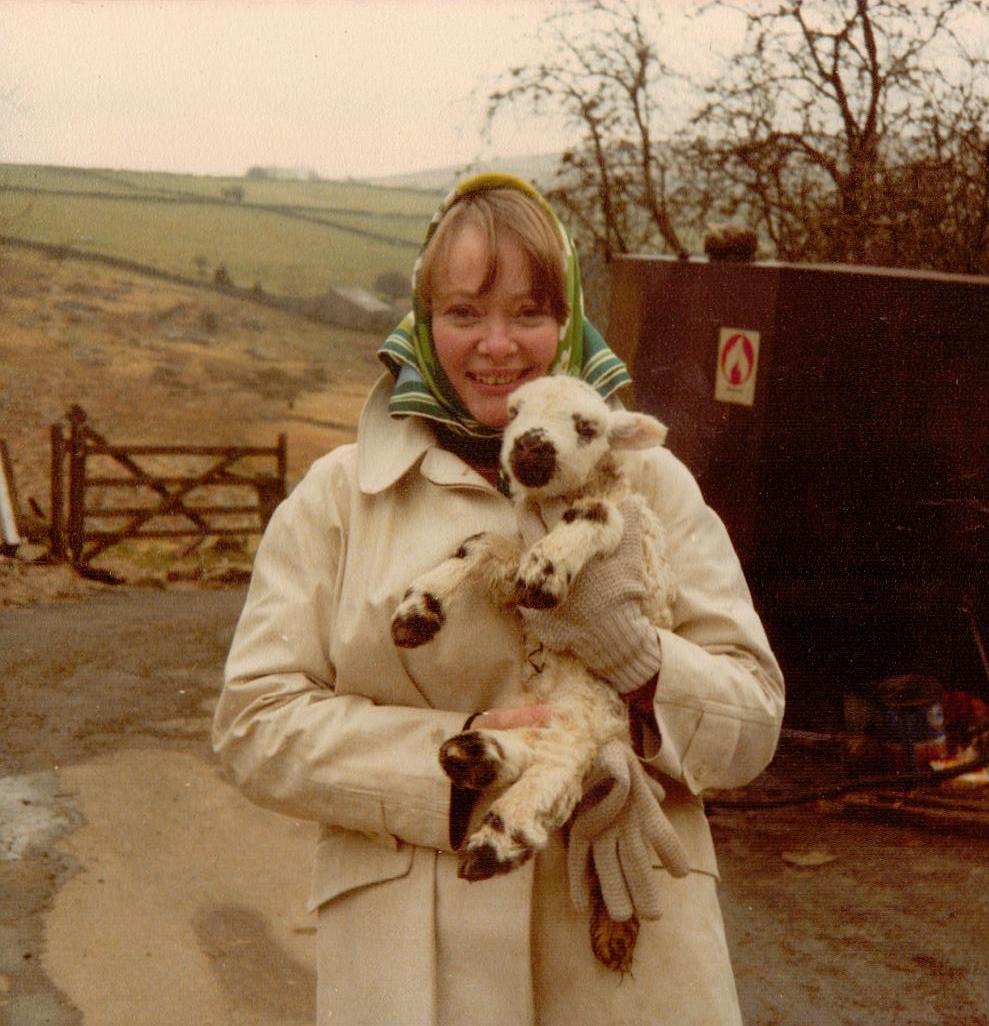
Wardrobe Master Terry Smith with Sophie Neville and her mother Daphne Neville outside the Make-up caravan on location near Keswick in Cumbria
I’d forgotton that Kit was sent half a Birthday cake but do remember Ronnie Fraser arrived at her party quite tiddly. I am amused to learn we finally left Oaklands Guest House with fifty peices of luggage but I still have a hazel bow and arrow set, which I don’t expect ever fitted into a suitcase.
Please let me know if you would like to see old scripts and letters relating to the original publicity for the film, kept in my mother’s archives.
To read more about Daphne Neville’s adventures in film and television please click here
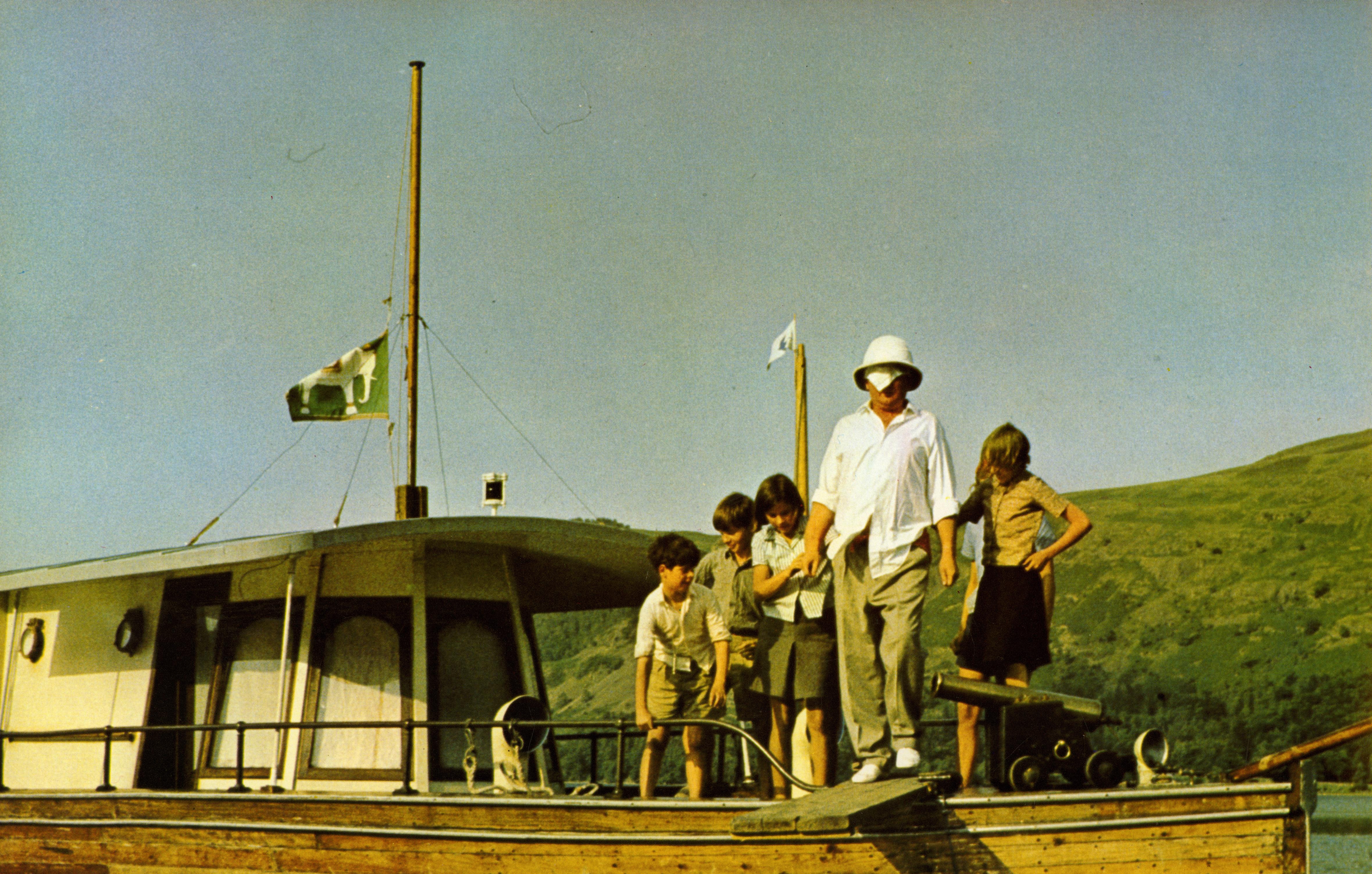
The 45th Anniversary of filming the original film ‘Swallows and Amazons’ on Derwentwater, when Ronald Fraser was obliged to walk the plank in a solar topi in July 1973, was marked by a special screening of the film at the Alhambra in Keswick.
Kerry Derbyshire, who played Vicky’s nurse came on stage and we demonstrated how one of the visual effects was achieved.
I brought one of the original arrows that the Amazon pirates fired over my head. It looks so dangerous on film that the shot was cut from the television version but is included in the re-mastered cinemascope edition that we are now able to watch on the big screen. You might be able to spot a few other things that went wrong while we were filming, such as the time I inadvertently slipped up to my waist in water.
Nick Newby from Nicole End Marine came along to tell us how the elegant Lakeland steamer, the Lady Derwentwater, had been converted for her starring role as Captain Flint’s houseboat. She was appropriately dressed for the part by the award-winning set designer Ian Whittaker, who went on to receive an Oscar for Best Art Direction on ‘Howards End’ starring Sir Anthony Hopkins and Emma Thompson. His astonishing list of nominations can been seen here.
Swallow, the 1930s sailing dinghy used in the original film, was at the lakeside for Arthur Ransome enthusiasts to admire. She is looked after by Rob Boden, from Kendal, who is happy to take people for a sail by prior arrangement via the SailRansome website here.
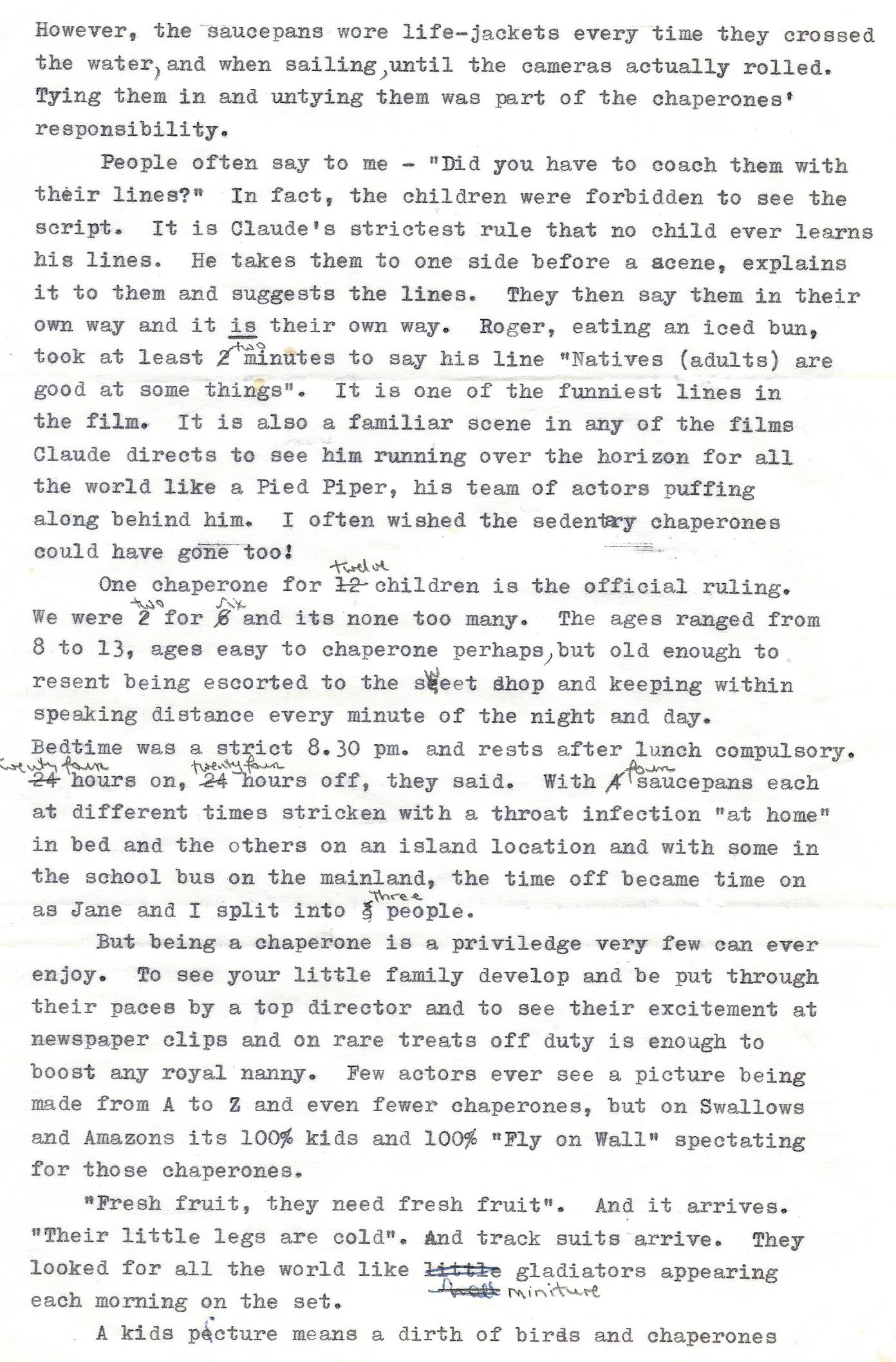
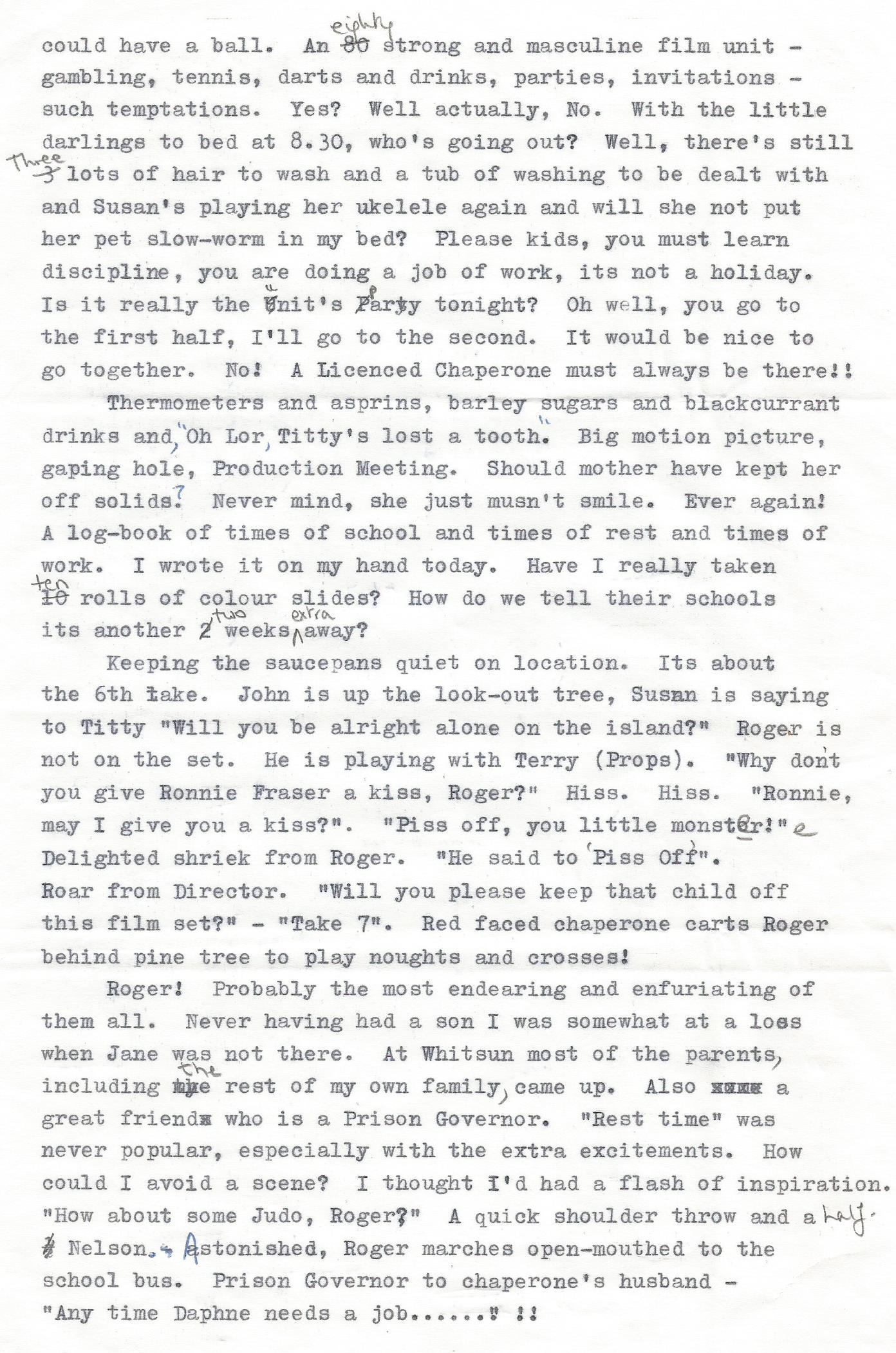
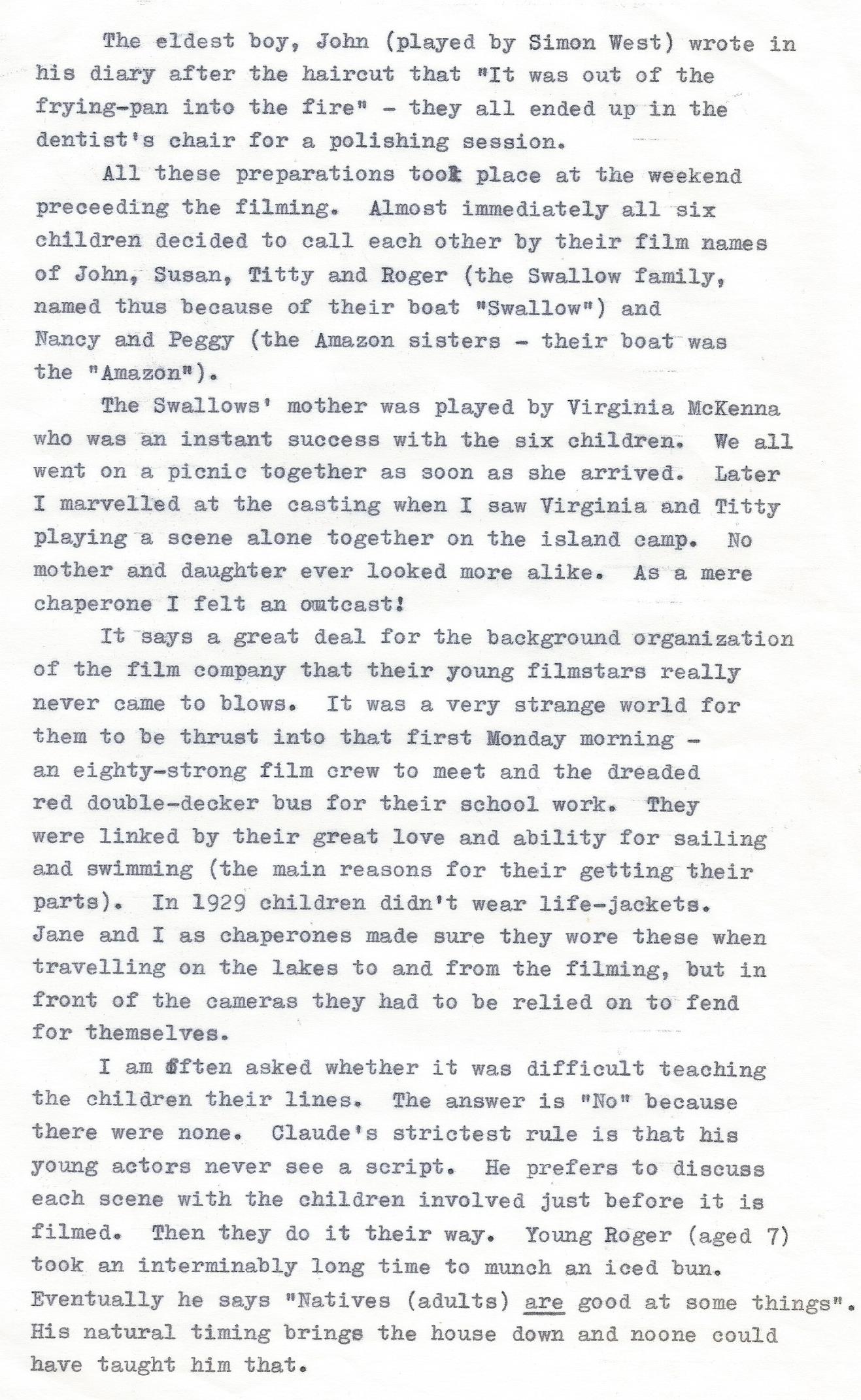
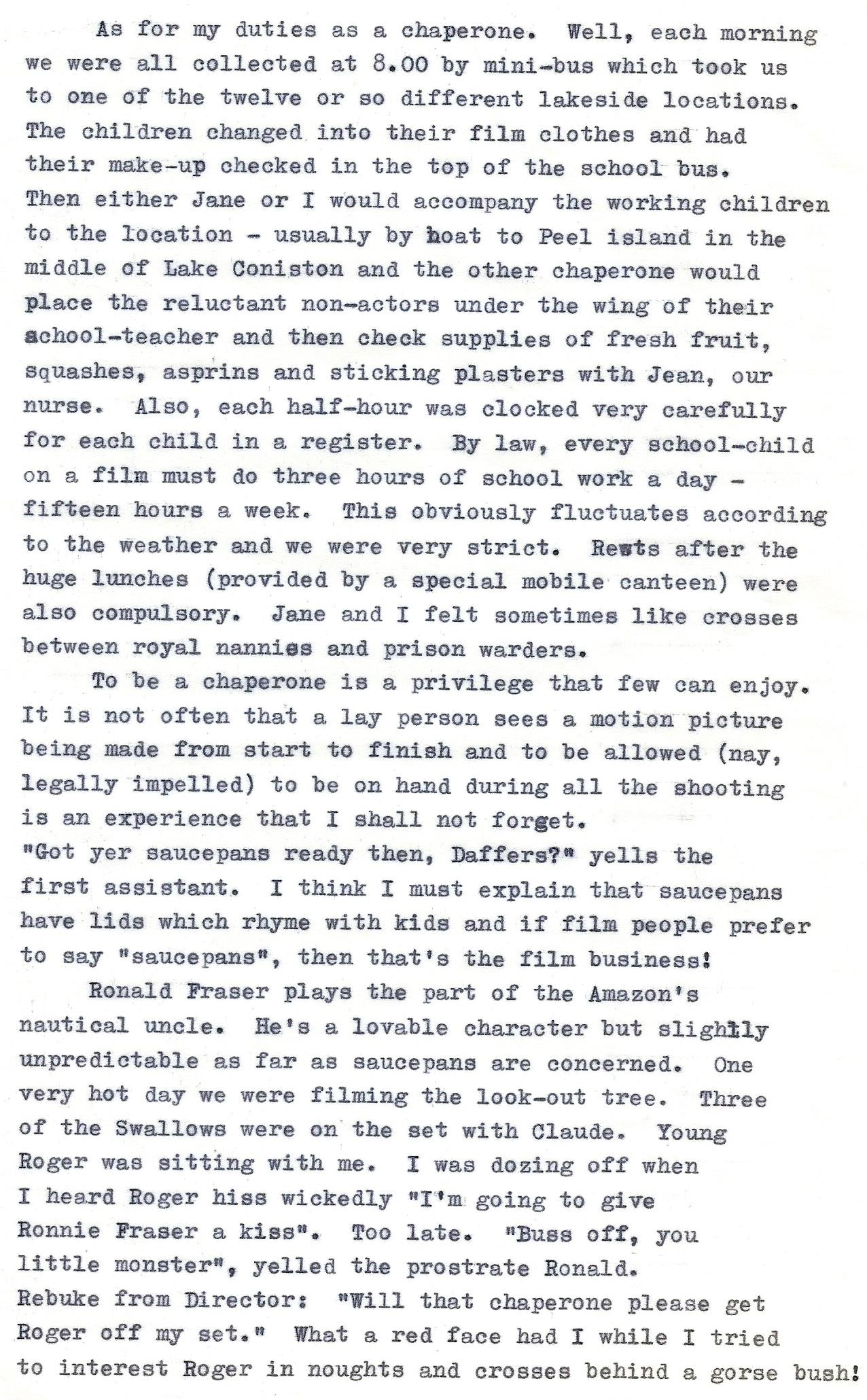
In 1974, my mother, Daphne Neville, was commissioned to write an article about working on the original film of ‘Swallows and Amazons’ for Woman magazine, which claimed to be ‘The world’s greatest weekly for women’. Here are some extracts from her type script:
Simon West, Stephen Grendon, Suzanna Hamilton and Sophie Neville playing the Walker children in ‘Swallows and Amazons’ 1973 ~photo: Daphne Neville
Daphne Neville with Sophie Neville and Simon West on Coniston Water
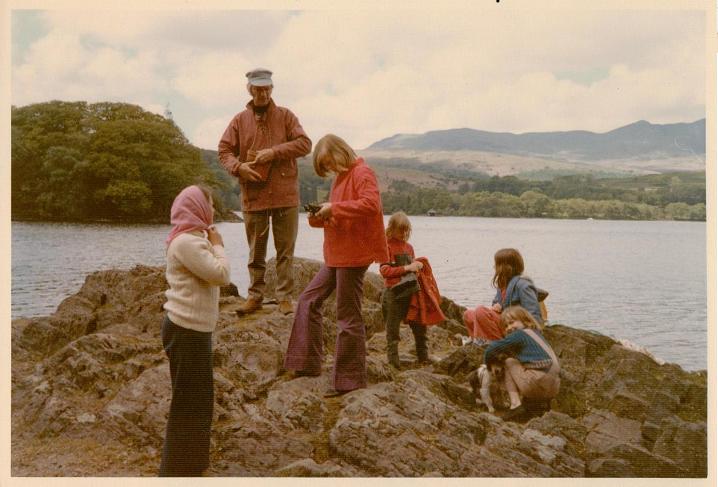
Our guests: Jane, Michael, Clare and Lucy Selby and their dog, Minnie on the shore of Conniston Water with my sisters Perry and Tamzin in 1973
I was amazed to read some of this. ‘….a dirth of birds’? Was that really how my mother spoke in the early ‘Seventies? I had no recollection that ‘Nomansland’ had been displayed on the front of our double-decker bus. I never remembered there only being bathroom at Oaklands Guesthouse or that Mum had to wash out clothes. I do remember Ronald Fraser shouting, ‘Piss off you little monster’. I have the photo:
Sten Grendon sitting on top of Ronald Fraser during a break in the filming of ‘Swallows and Amazons’ on Derwentwater ~ photo: Daphne Neville
More to follow…. If you would like to see photos of Daphne Neville appearing in movies herself, please click here
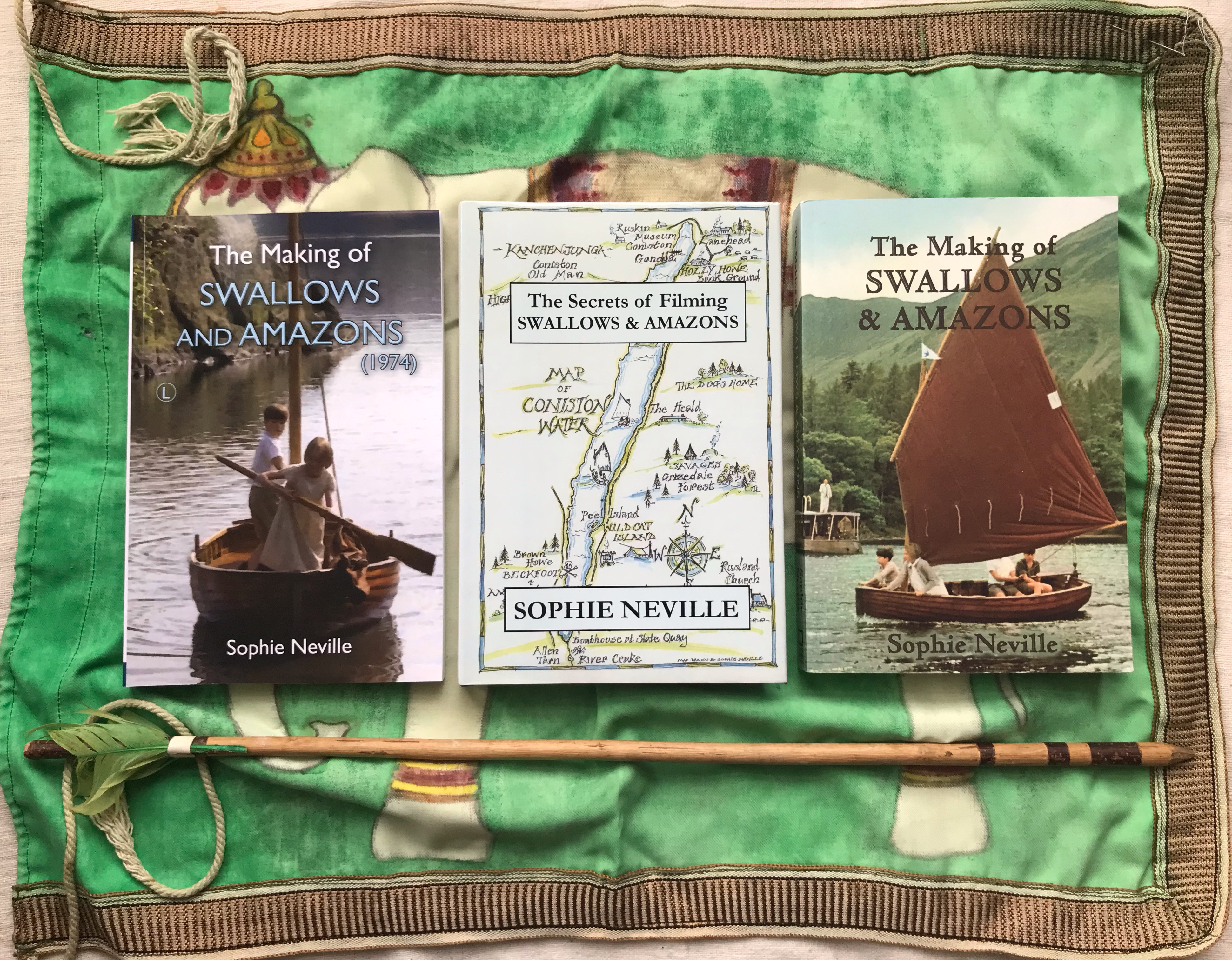
You read about how we made the original movie ‘Swallows and Amazons’ in any of these books that retail online and can be ordered from bookshops or libraries:
Different editions of ‘The Making of Swallows and Amazons (1974) by Sophie Neville’
My mother is a squirrel. She arrived at my house, not with nuts, but a large envelope. Amongst other things, this contained the transcript of a piece she wrote almost forty-nine years ago for BBC Radio Bristol, when she presented a programme called ‘Come Alive’. The four flimsy sheets of copy paper have only just been unearthed, along with a similar article for Woman magazine.
Daphne Neville was commissioned to write about her experience working on the original feature film, Swallows and Amazons, filmed on location in the Lake District in the summer of 1973 and brought to cinemas in 1974. Sold worldwide, has been broadcast on television for the last forty years and was last shown on TV in Australia on Boxing Day.
Daphne Neville with Sophie Neville while filming ‘Swallows and Amazons'(1974)
It is interesting to have Mum’s perspective. Some of the details are new to me. She timed this piece for BBC Radio as taking ‘8 minutes’ to read:
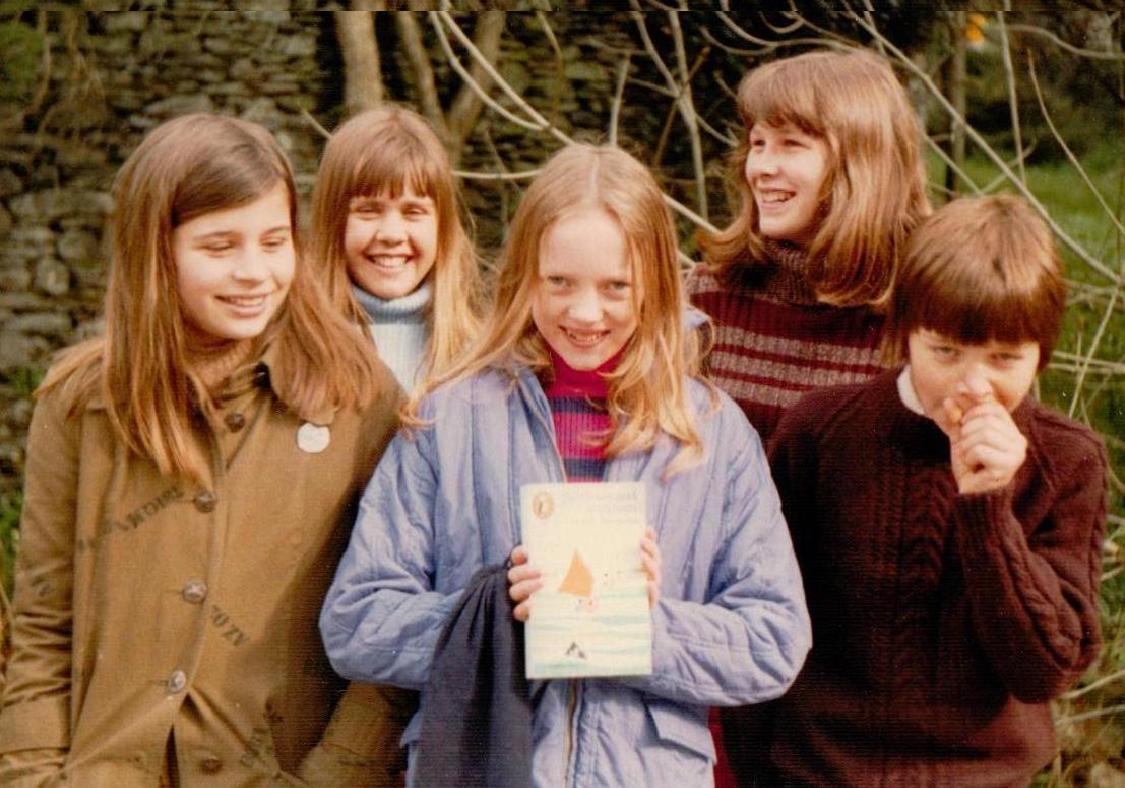
Suzanna Hamilton, Lesley Bennett, Sophie Neville, Kit Seymour and Simon West before their hair was cut for the film ‘Swallows and Amazons’ in 1973
~ On Derwentwater in 1973: Suzannah Hamilton, Kit Seymour, Daphne Neville, Sten Grendon, Simon West, Sophie Neville & Lesley Bennett ~ photo: Martin Neville
Daphne Neville with Stephen Grendon, Suzanna Hamilton, Sophie Neville, fellow chaperone, Jane Grendon and Simon West on location in 1973
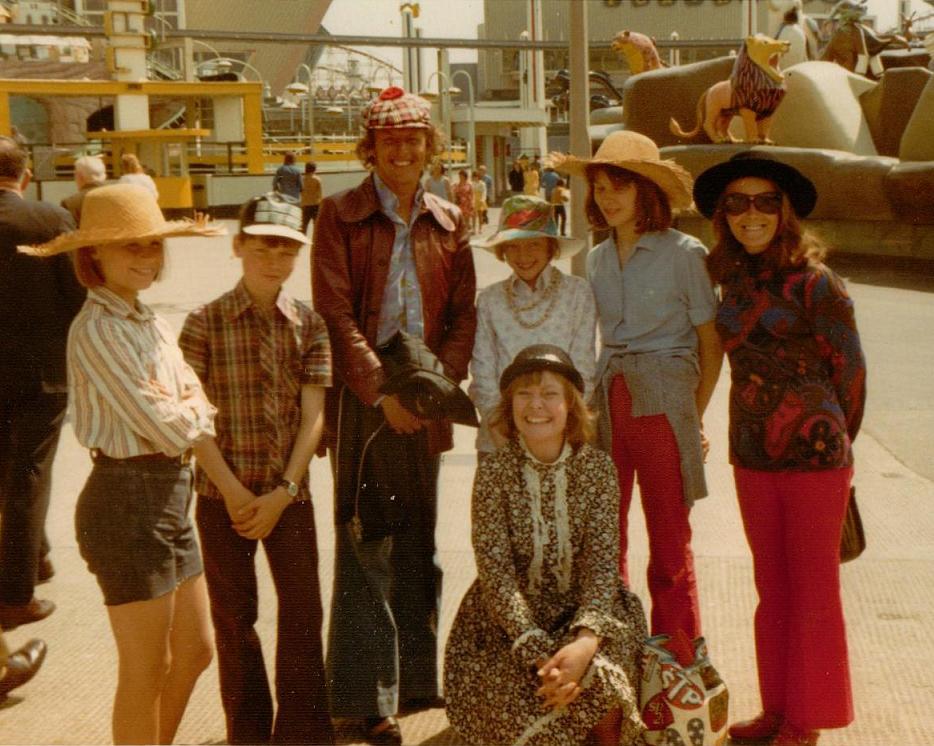
Suzanna Hamilton, Simon West, Claude Whatham Sophie Neville, Kit Seymour, Jean McGill with Daphne Neville kneeling at Blackpool fun fair in 1973
But Mum, were we ever ‘Film Stars’?
We scowled at the terminology at the time. Ten years later and I thought of us a merely puppets, marionettes of the director who carefully honed our performances. I can now see the contribution we made when I watch the film, but we were never film stars.
What do I wish? I wish that we’d been able to make a sequel and develop our work more fully. The flip-side of this would have been that any more success, or more publicity, might have stripped us of our anonymity, which is the bain of real film stars. We’d have had to go around wearing sunglasses.
The film star Ronald Fraser with Daphne Neville and Sophie Neville in 1973
If you would like to see what we were filming 49 years ago, on 1st July 1973, please click here.
Do let me know, via the comments below, if you would like to see more archive material. I have the draft of my mother’s article for Woman magazine – it’s a different version of the same but with added detail. She needed permission from Anglo EMI Film Distributors before it could be published. There is also a draft of another radio script and a number of letters. If you would like to see vintage photos of Mum appearing on television herself, please click here
If you would like to read more about our adventures filming ‘Swallows and Amazons’, please click here
I was invited to talk about making the BBC TV classic serial ‘Coot Club’ and ‘The Big Six’ at the Norfolk Broads Yacht Club to help celebrate their 80th Anniversary. Titmouse, then 1930s dinghy owned by Hunter’s Yard had been brought down from Ludham for the occasion. The bonus was that I was able to go sailing in one of the classic boats gathered at the club for their Open Day.
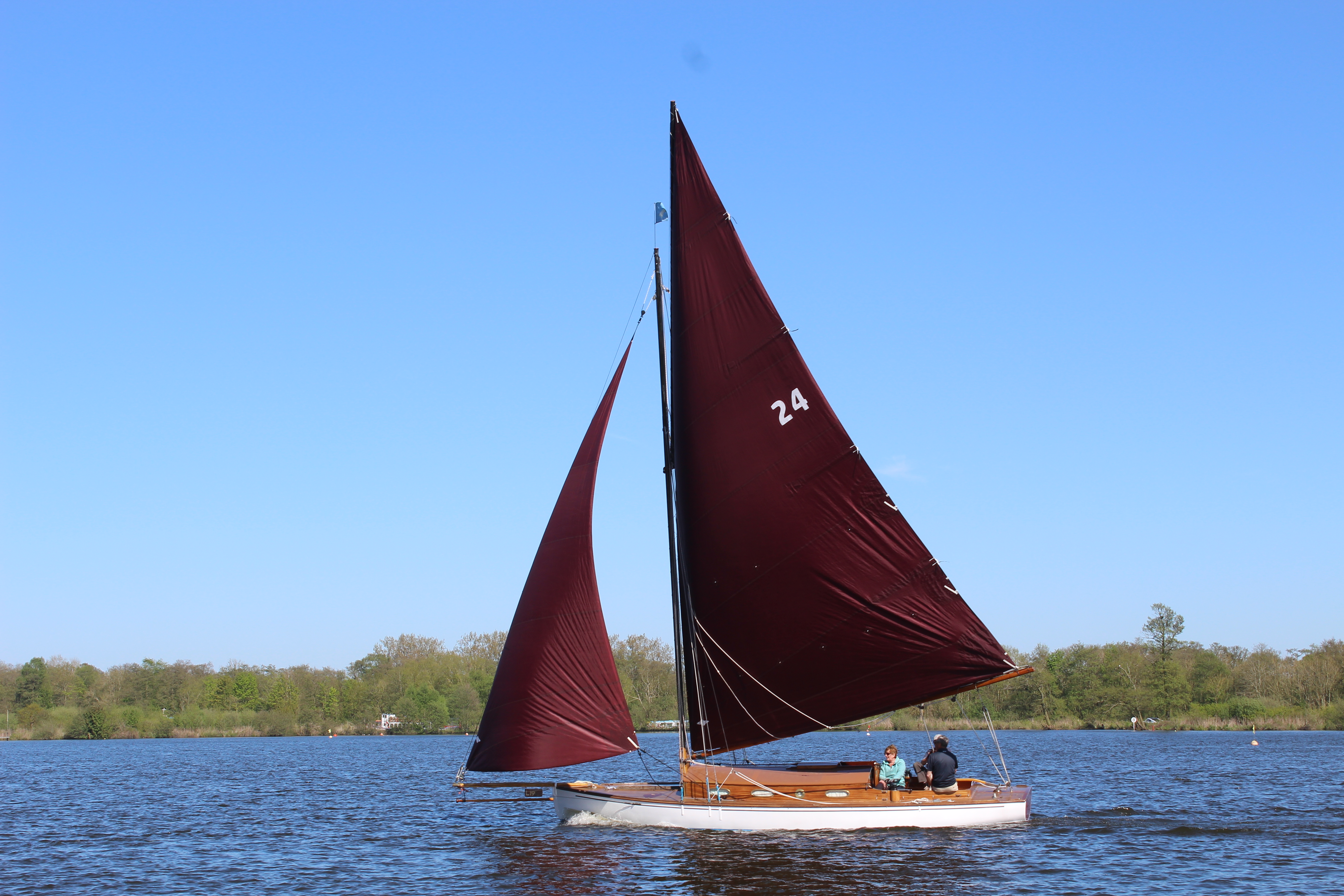
Geoff and Rose Angell kindly took me out on Pippa, their beautiful yacht with brown sails that appeared in ‘The Big Six’. I am sure Arthur Ransome would have loved her.
Back in 1983, I spent nine months working on the BBC production when it had been my job to cast the children and teenagers who appear in the drama, many of whom needed genuine Norfolk accents.
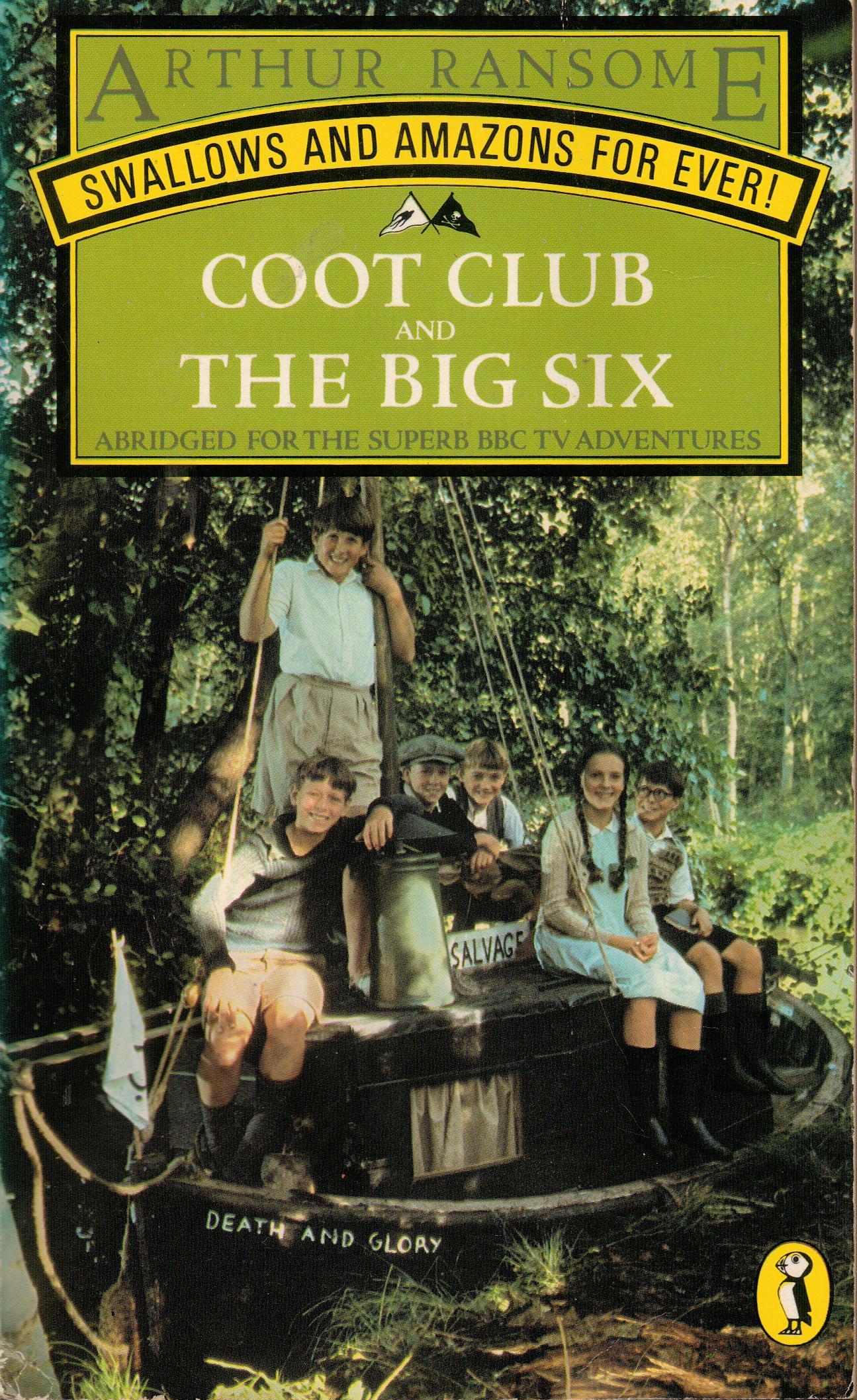
We had been looking for young actors who could swim well and were able handle boats. We then spent three months filming in East Anglia when I looked after the children and helped rehearse their lines. I set up this shot for the cover of the Puffin paperback that accompanied the series.
~Author Sophie Neville giving a talk at the Norfolk Broads Yacht Club~
At a forum organised after my talk, Pat Simpson from Stalham Yacht Services explained how he found one of the stars of the series – an old lifeboat suitable to play the Death and Glory. She had been brought from where she is kept at Belaugh for the evening. You can see more photographs of her in the previous blog post here.
Pat provided a number of other vessels for the series including Buttercup and support boats such as the safely boat, a large modern cruiser used as a school room along with another for the costume and make up personnel. He explained that this came as a god-send as boat rentals had not been good that summer. Working on the series was harder than he imagined, ‘We once had to take a boat from Regan to Horning Hall overnight’ but he was pleased that ‘after three months of concentrated work, we got it all done.’
~Robin Richardson~
Robin Richardson, who co-owned Pippa back in 1983, explained how the shot of her being cast adrift was achieved. This wasn’t as easy as first thought as even when Simon Hawes, who was playing George Owdon, flung her stem line on the deck, a gentle breeze was blowing her back against the staithe. ‘Pippa didn’t want to go anywhere’. Robin had to stage the action by throwing out a mud anchor, climbing under her awning and pulling on the line to create the effect of a boat drifting out of control into potential danger. Pippa’s white canvas cover is pulled back here, but you can imagine the scene.
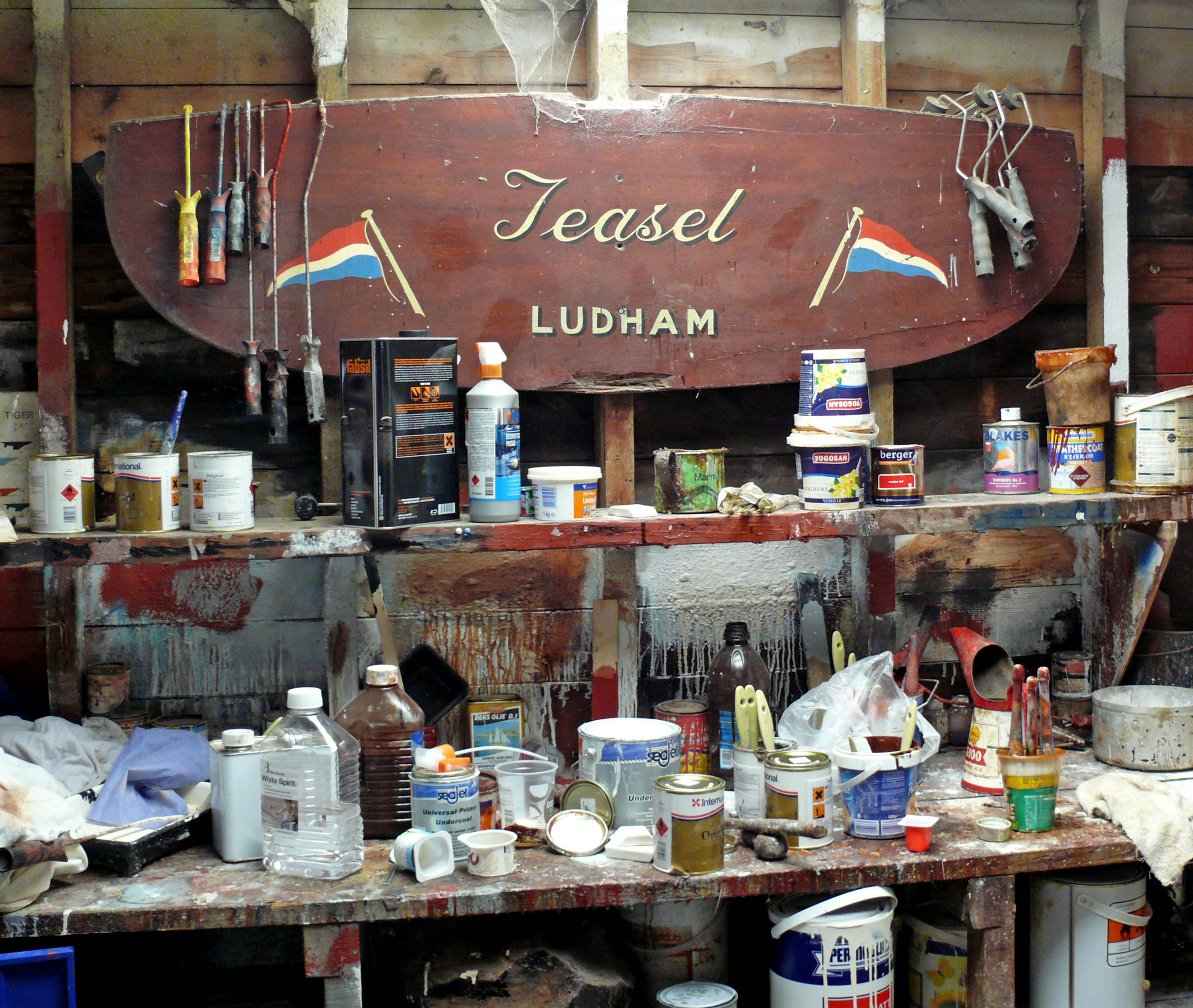
He was on location when Henry Dimbleby, who played Tom Dudgeon, was attempting to tow the Teasel under Potter Heigham bridge. He was rowing Titmouse, pulling hard on the oars but nothing was happening. ‘Stop for lunch,’ Robin advised the director, ‘and the tide will turn.’ This they did, and Henry we able to row under the bridge, towing the Teasel quite easily. Hunter’s Yard, who own Lullaby, who played the Teasle, could not bring her down for the weekend as she had been leased out with other boats, but they sent her transom, painted with her stage name.
Robin Richardson owns the ‘Slipstream’ class dinghy called Spindrift who played Shooting Star in the serial. She was built by her father but couldn’t be with us as they were not able to complete her winter maintenance in time but Richard Hattersley said she came tenth in this year’s Three Rivers race when only 15 of the 98 entries actually finished. It’s a 24 hour endurance challenge, which they completed despite light winds. He sent me this shot, ‘of her battling it out with much larger Thames A Raters.’
I was shown a wonderful black and white photograph of the vessel used to play the Cachalot. She was skippered in the series by the film actor Sam Kelly in the role of the unnamed pike fishermen who the Death and Glory boys simply called ‘Sir’. She is seen here with John Boswell, her real owner who has sadly passed away. His son, the artist Patrick Boswell, brought along an album of behind-the-scenes photos.
The theme of the weekend was ‘Boats of the 1930s’. I explained how Swallow, the dinghy used in the original film ‘Swallows and Amazons’ originally came from Burnham-on-Sea where she was made by W. King and Sons to be used as a run-a-round boat. She was stabilised by a keel that ran the length of the hull, as Ransome described. It makes her rather difficult to turn. You can sail her today and is in the Lake District right now. Please see Sailransome for details.
There was quite a bit of interest in memorabilia from the original movie ‘Swallows and Amazons’. I bought along the white elephant flag captured from Captain Flint’s houseboat in the 1974 film, which was approved by a young Amazon pirate.
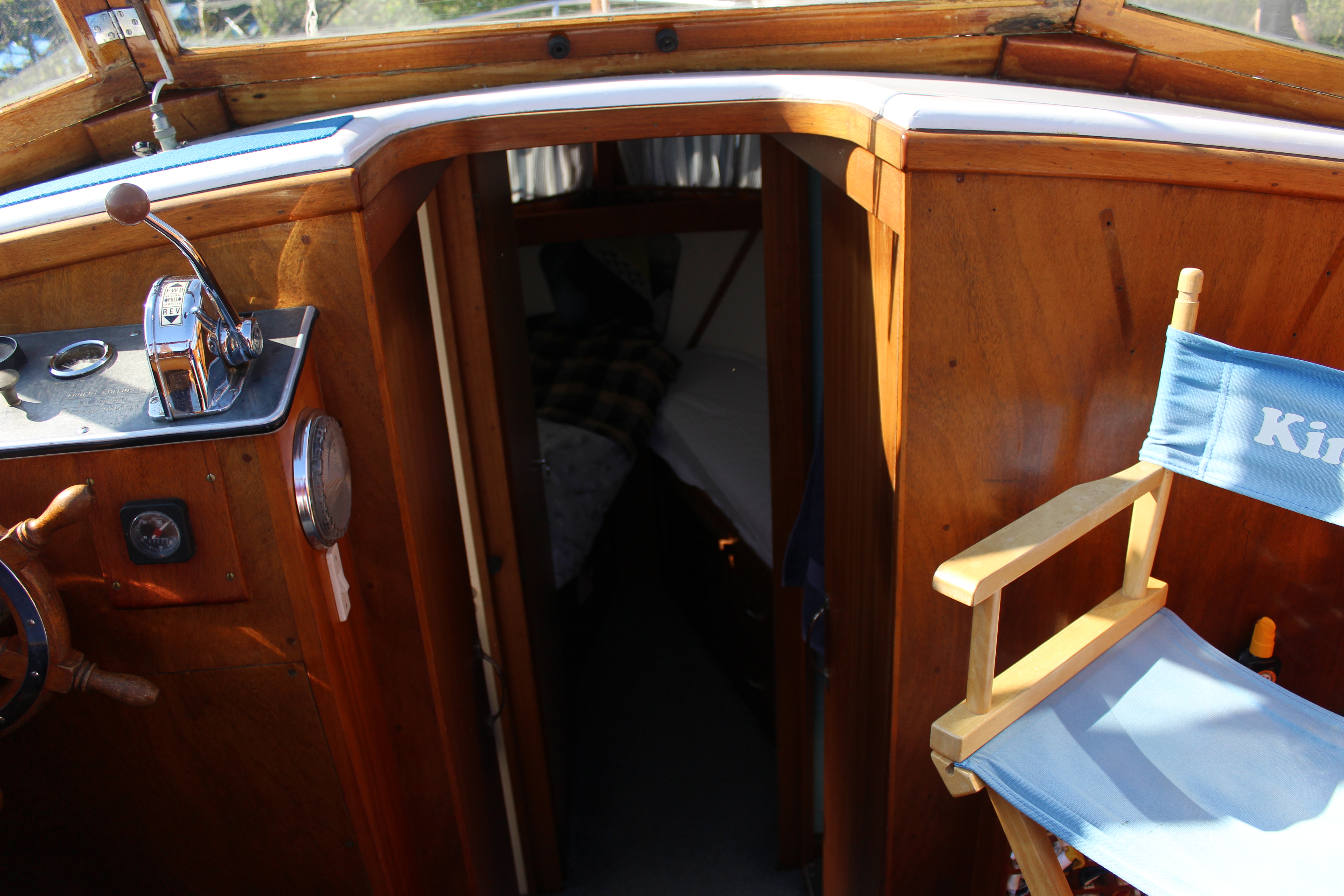
After a celebratory dinner, David and Nicky Talbot invited me to spend the night in the comfortable for’ard cabin of Kingfisher, a 1970’s motor yacht moored at the club.
I woke early on the Sunday morning to find mist hanging above the water as the sun was rising on what proved to be another sunny day with a fair wind for sailing.
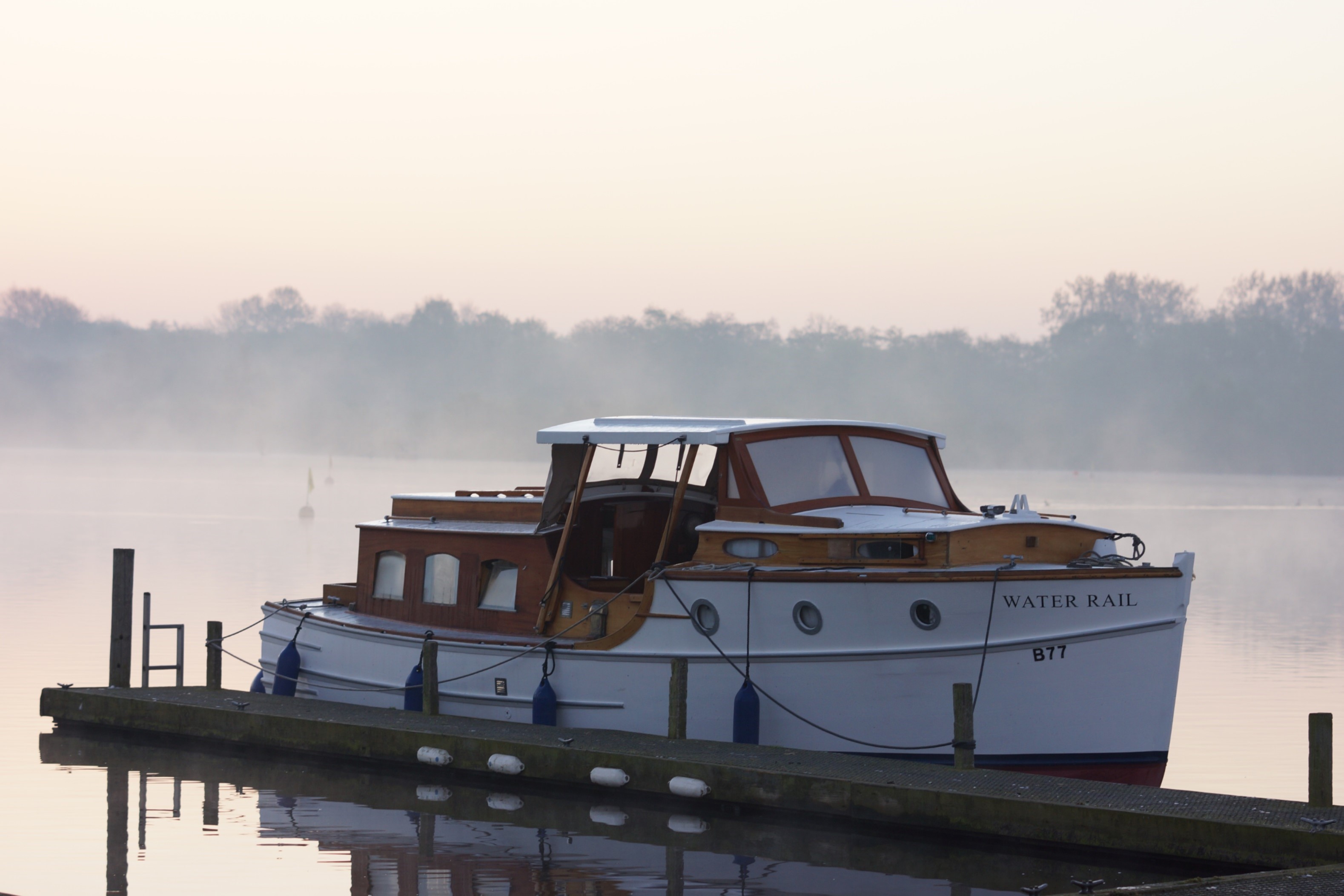
After breakfast aboard, I was invited out in the 1930s river cruiser ‘Water Rail’, who had also appeared in the serial. We took her down the River Bure to her mooring in Horning where she is still part of the scene.
It was wonderful to be out on the waterways of Norfolk, passing traditional buildings. This was a stretch of river never featured in the television drama as Rosemary Leach, who played Mrs Barrable, took Dick and Dorothea from Wroxham to Horning in a trap pulled by Rufus the pony. One reason for this was that in 1983 we had to use the North Norfolk Steam Railway, since Wroxham Station had been modernised but Joe Waters, the producer, said he wanted to add variety by featuring a pony rather than a motorboat.
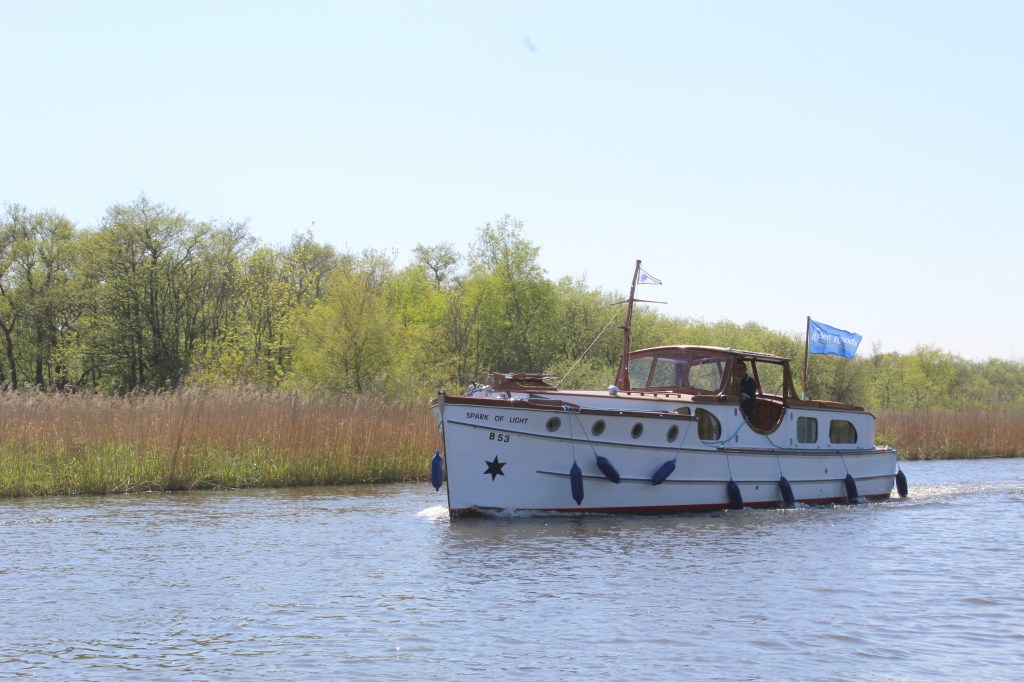
We encountered a number of period cruisers, although Janca, who we used to play the Hullabaloos’ Margoletta, sadly could not be with us, as she is still under repair.
However, by motoring into Horning ourselves, we passed The Swan Inn and Horning Staithe where a number of scenes had been shot, including some that featured Julian Fellowes and Sarah Crowden, playing the hated Hullabaloos. You can see photographs of them in an earlier post here.
~Horning Staithe in Norfolk showing The Swan Inn~
Another vessel that interested me was a river launch that reminded me of the 1901 steamboat Daffodil, which I renovated with my father in 1978. I have photographs of her here.
You can read more about the traditional boats used in the series by clicking here.
Gerry Spiller, has written from Woodbridge in Suffolk, to say that she has found an oar labelled TITMOUSE, bought at a boat jumble. Could this date from the early 1930? Does anyone have the pair?
The DVD of the serial is now available on a re-mastered DVD, available from Amazon here
(Do not be tempted by the old version with a more colourful cover as the image quality is very poor)
Swallows And Amazons Forever! (Coot Club & The Big Six) SPECIAL EDITION [DVD]Additional photographs by Richard Hattersly

 ~Author Peter Willis, Neil D’Arcy-Jones and Sophie Neville~





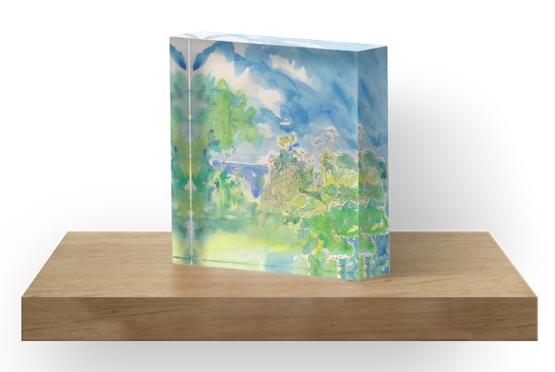


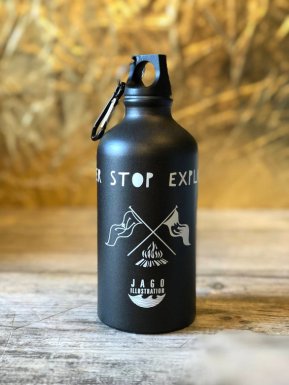

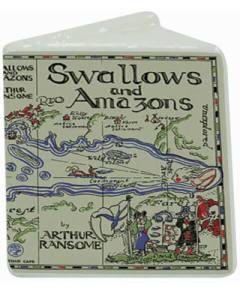 I am not sure Arthur Ransome’s Literary Estate know about them. They do recommend this pair of bone china coffee cups feature exquisite designs incorporating Arthur Ransome’s own illustrations from the Swallows and Amazons books and are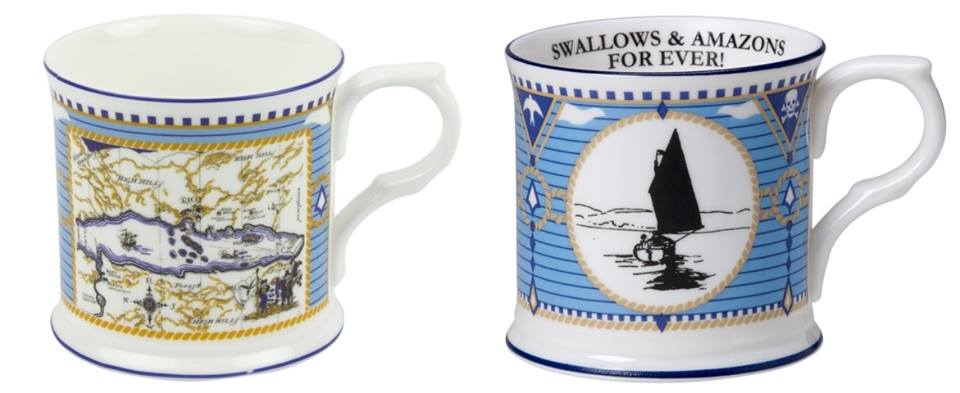




 ~Sophie Neville dressed as a medieval archer in 1969~