Swallows, Amazons and Archery

Much has been written of the legacy left by Arthur Ransome who inspired so many go camping, fell walking or sail the seven seas. I hope he would be amused to learn it has been the arrow, fletched with green parrot feathers, that has flown through the pages of my life.
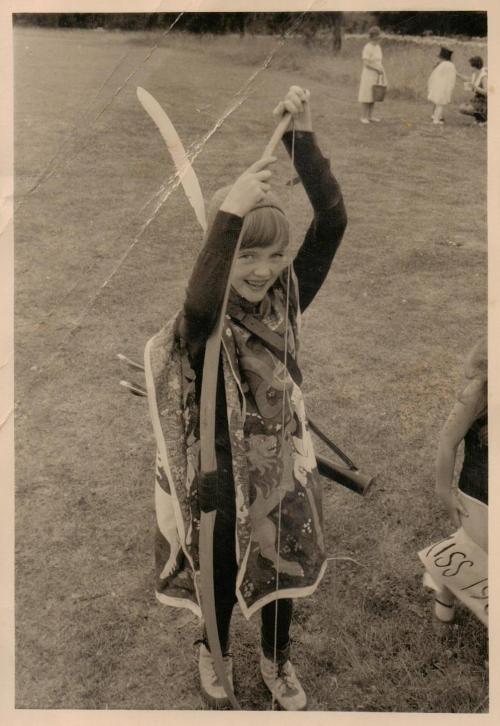
Sophie Neville the archer c 1969~Sophie Neville dressed as a medieval archer in 1969~

Archery became a popular sport for ladies in Victorian England. The influence was not lost on Arthur Ransome who writes in his autobiography that his Great-aunt Susan was a keen toxophilite who attended bow meetings at Belle Isle, the long island on Windermere. Another great-aunt was shot in the bonnet by an arrow when the Boxer Rising reached Peking. She was serving as a missionary.

I gather it was Arthur Ransome’s sister, Joyce, who owned a green parrot whose feathers made good pipe cleaners. Did they ever get used for flighting arrows? Arthur doesn’t seem to have taken up a bow beyond, perhaps, playing Red Indians as a child with his friend Ric Eddison.

Titty Walker may not have known that the real Queen Bess was a proficient archer, but Roger certainly expected savages to be armed with poison-tipped arrows as he took dispatches across the Peak at Darien. Did Nancy and Peggy ever don Red Indian head-dresses? Since they are described as wearing red caps when the Swallows first encounter them, I assume this idea was instigated by Helen Edmundson’s musical and reinforced by the 2016 film of Swallows and Amazons. Although far from nautical, this is akin to certain antics in Secret Water and certainly adds visual drama to the confrontation.

Practicing with bows and arrows

~Sophie Neville with Peter Robb-King, Ronnie Cogan, Lesley Bennett, Kit Seymour and Terry Smith~ 

I learnt how to shoot in 1973 when the Amazons were being taught how to pull a bow made of Lakeland hazel for the original movie of Swallows and Amazons. As children, we all wanted a go. I still have a practice bow and a couple of arrows whittled on location by Bob Hedges, our property master. I remember one hitting the campfire. ‘Don’t touch the point – it might be poisonous!’ Please note that the shot of the arrows zooming over our heads looks so dangerous on screen that it was cut from the television version of the feature film. This was no snazzy visual effect. The arrows were genuine, however they were strung on taut nylon fishing line rigged over our heads to ensure we would not get hit. They were fired by the prop men and not the Amazons.

neville002

~Daphne Neville who won many archery prizes teaching Lesley Bennett (Peggy Blackett)~

As female Amazon warriors were redoubtable archers it is easy to imagine Captain Nancy bent a sapling to her will and had Peggy making arrows. It is reasonable to assume they used longbows on Wild Cat Island, but in Swallowdale it is a crossbow that graces Ransome’s illustration. How Nancy got her hands on one is unknown but it must have been simpler to use in a boat with discretion and accuracy. Did Ransome ever try this out?

Sophie Neville shooting

~Sophie Neville shooting with a compound bow in the Emirates~

What happened to the bows and arrows after Swallowdale? Archery is something you usually grow into, rather than out of. By the age of fifteen, I’d gained the part of an archery champion in an adventure movie called The Copter Kids. This necessitated target practice with a modern re-curve bow and ended with me shooting from a helicopter.

I now belong to a number of archery societies and, like Great-aunt Susan, set out with my tabs and tassel, quiver and longbow. Luckily the skill, much like an appreciation of Arthur Ransome’s writing, is something that tends to improve with age. I met my husband at one bow meeting, have held three Ladies’ Championship titles and managed to reach a distance of 145 yards when we celebrated the 600th Anniversary of Agincourt.

I have never fired a crossbow. Since they are potentially lethal weapons, Nancy could have been detained for firing hers even if the tip was not deemed poisonous.

Author Sophie Neville

 ~Sophie Neville at a West Berks bow meeting~

A version of this article was originally published in Mixed Moss, the journal of The Arthur Ransome Society.

You can read more in ‘The Secrets of Filming Swallows and Amazons’ available online:

Exploring Arthur Ransome’s Lake District

Letter from Arthur Ransome

~An illustrated letter from Arthur Ransome, 1955~

I have been sent a copy of a letter written to a reader by Arthur Ransome in June 1955 revealing where some of his ‘Swallows and Amazons’ locations can be found. I was interested to read that, ‘the lake is mainly Windermere with some things stolen from Coniston.’

One summer, we spent a long weekend with The Arthur Ransome Society when we managed to find quite a few locations around Coniston Water that are featured in Ransome’s books.

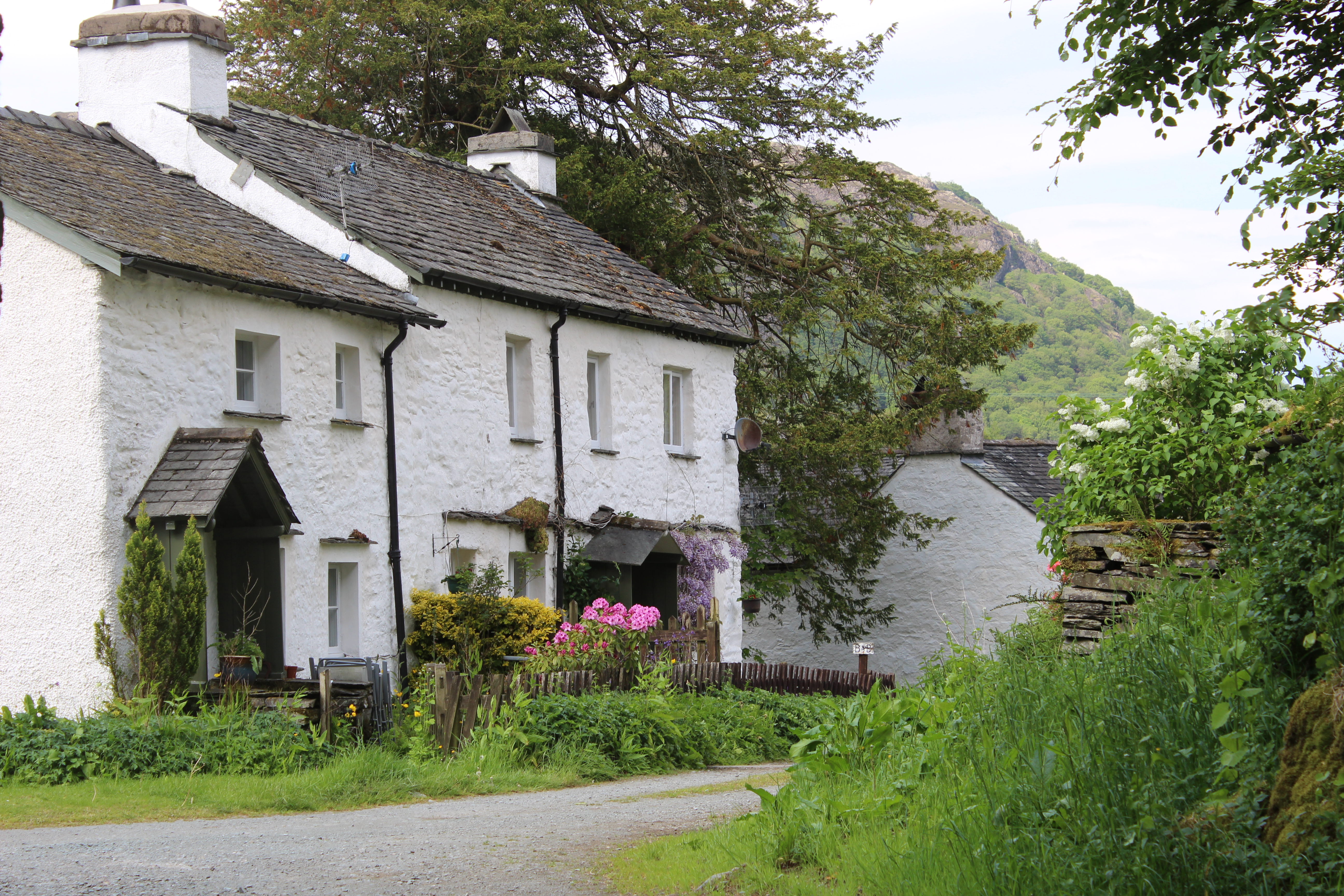
~Low Yewdale Farm, near Coniston ~

The curator of the John Ruskin Museum took us on a walk around the village of Coniston and under the Yewdale Crags towards Tarn Howes. We passed Low Yewdale Farm where Arthur Ransome stayed as a young man. It is just as I imagined Swainson’s Farm in the book ‘Swallowdale’. The footpath takes you down to the beck where Ransome fished for brown trout. I could imagine Roger attempting to tickle trout there.

If you follow the path on south, then branch left up the East of Lake Road around Coniston Water, you will find another footpath leading to Bank Ground Farm.

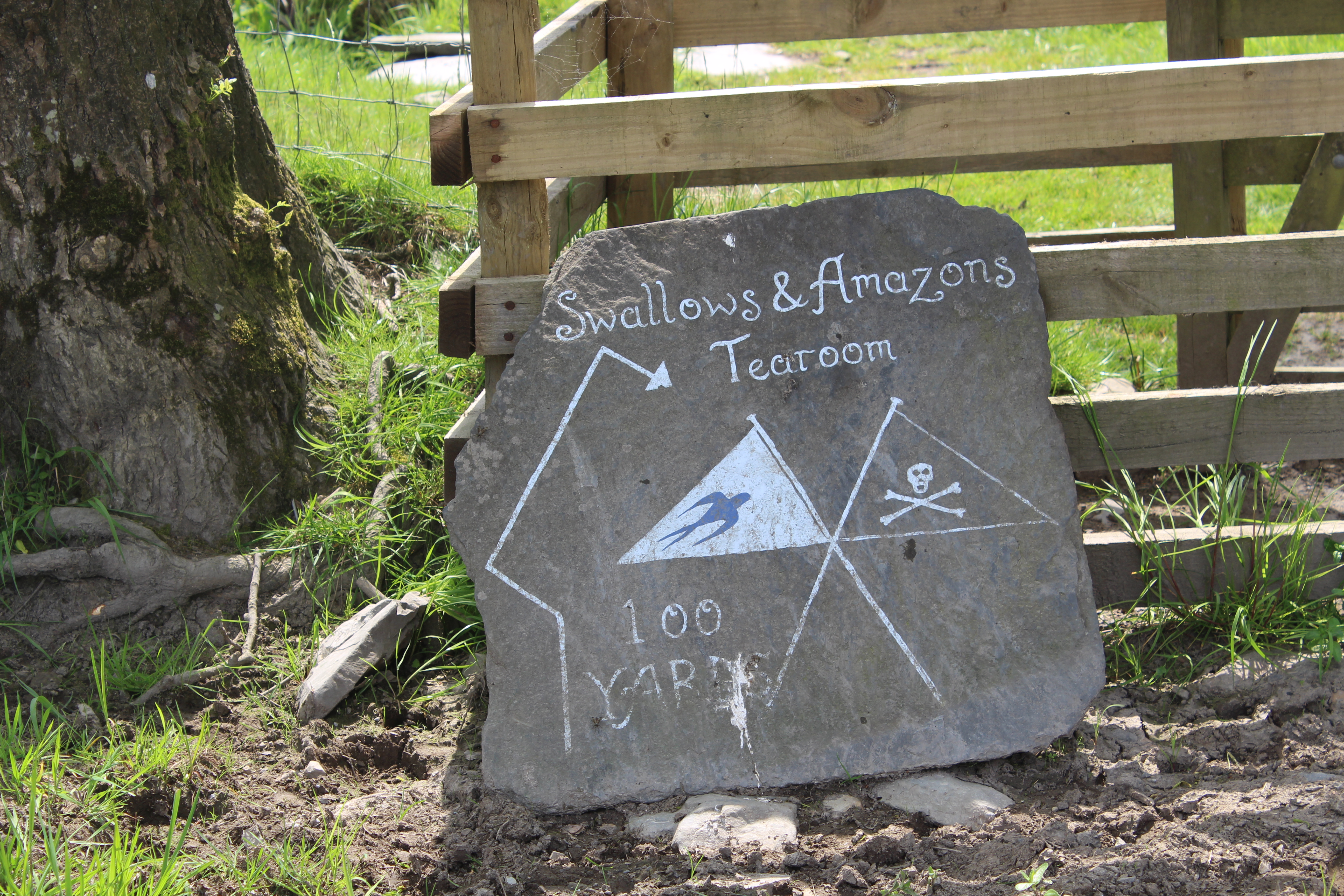
A hand-painted sign guides you through fields, where Galloway cows maybe grazing. Look up and you will literally find yourself at Holly Howe, the long white farmhouse where Mr and Mrs Jackson live in ‘Swallows and Amazons’. You can imagine the Walker children running down the meadow to the Peak of Darien.

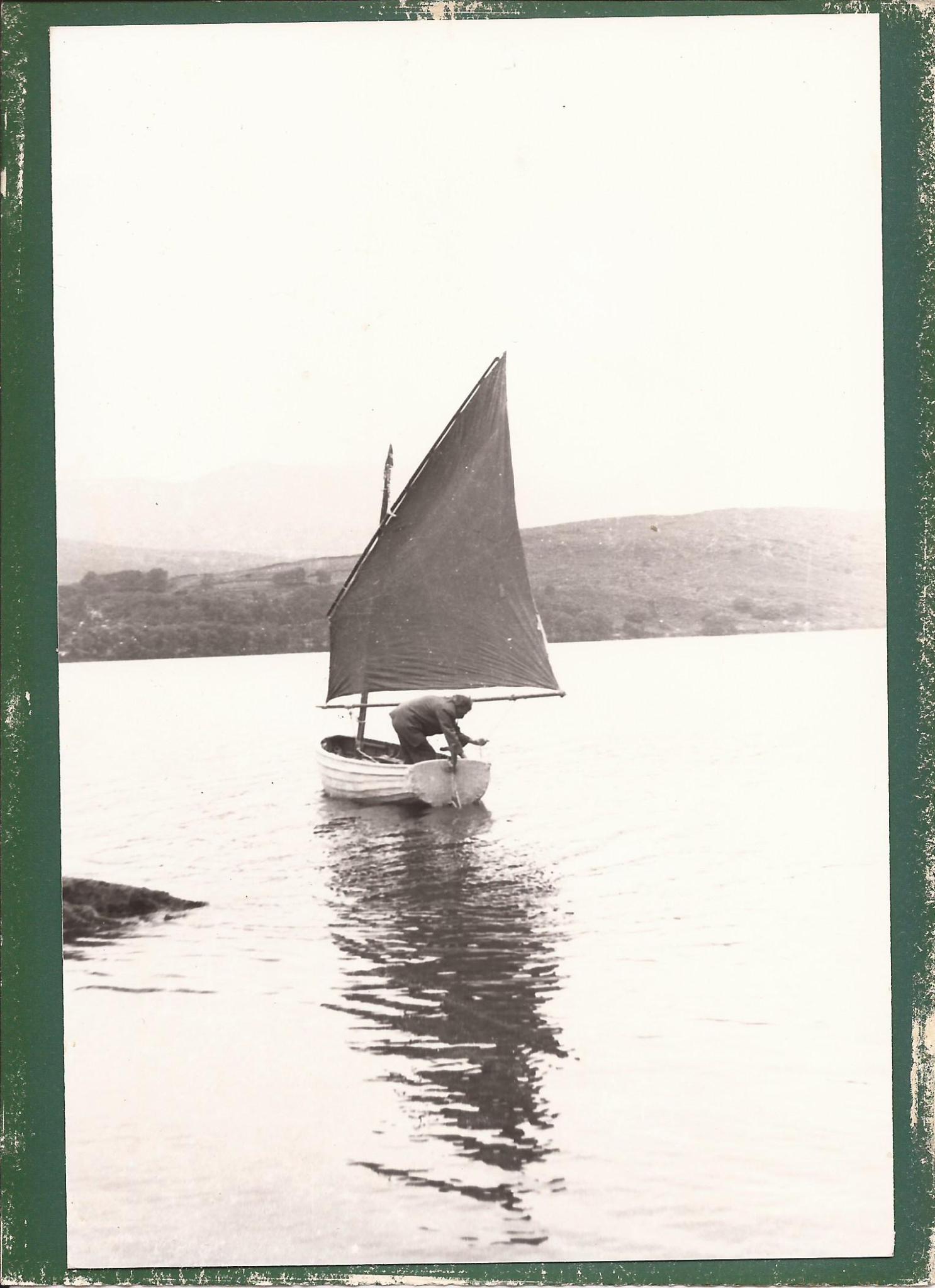
Ernest Altounyan sailing Mavis on Coniston

~ Dr Ernest Altounyan rigging Mavis on Coniston Water~

It was here that the Altounyan children, Taqui, Susie, Titty, Roger and Brigit spent one summer holiday in 1928, while visiting their grandparents who lived next door at Lane Head. They learned to sail on the lake in two dinghies: Swallow and Mavis, later re-named Amazon, who can be visited at the John Ruskin Museum in Coniston.

IMG_7096

~Bank Ground Farm in Cumbria where the movie ‘Swallows and Amazons’ (1974) was made~

The barn, inside which we filmed some of the night sequences for the original movie of ‘Swallows & Amazons’, has been converted into self-catering holiday accommodation that can house a number of families quite easily. From here you can run down to the boatshed where John, Susan, Titty and Roger found Swallow and imagine them setting off  on their voyage to Wild Cat Island leaving the Fair Spanish Ladies on the stone quay.

~The boatsheds below Bank Ground Farm, on Coniston Water~

Wooden jetties have been added recently and it is possible to either launch your own boat or hire a kyak from Bank Ground Farm.

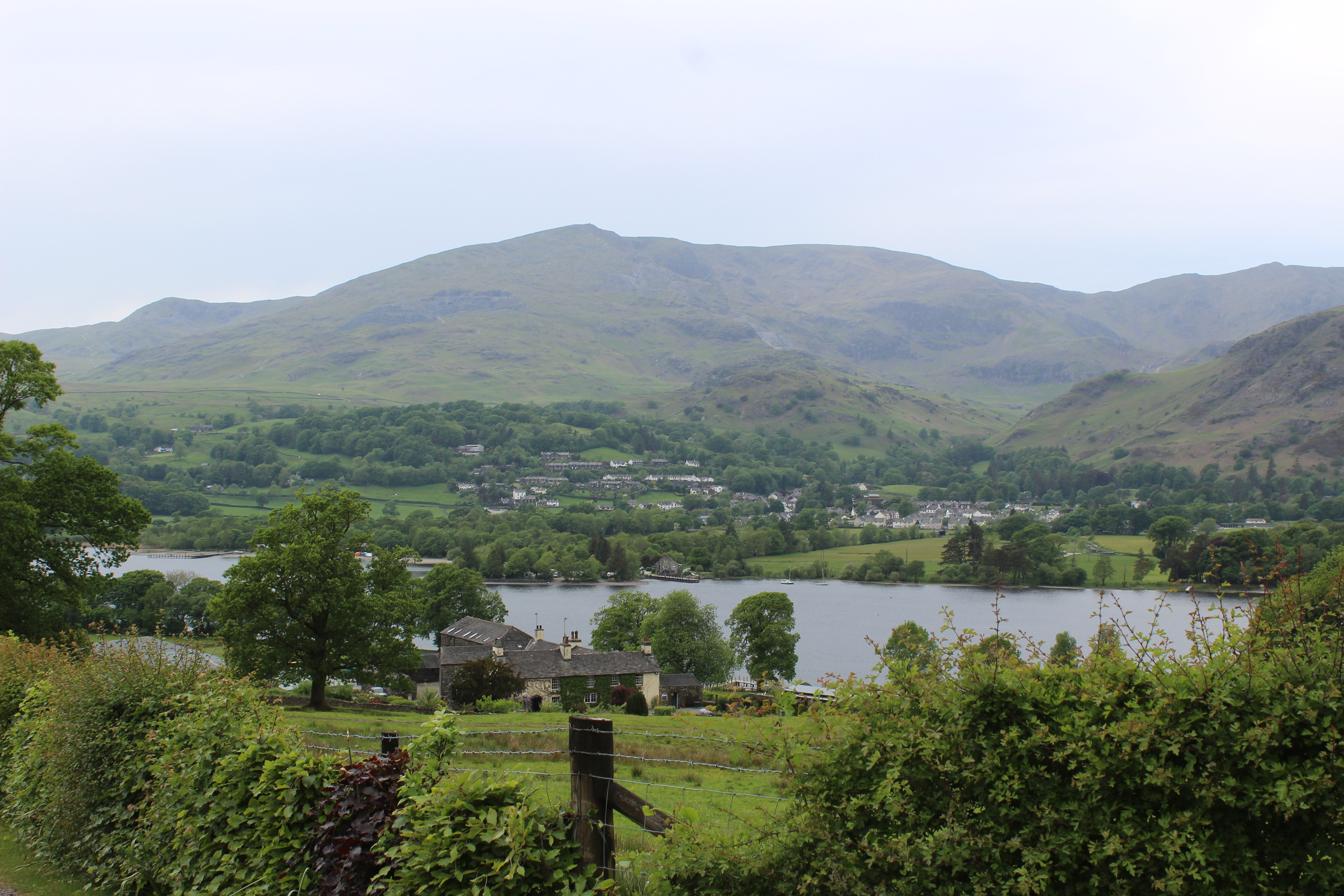
~The northern end of Coniston Water~

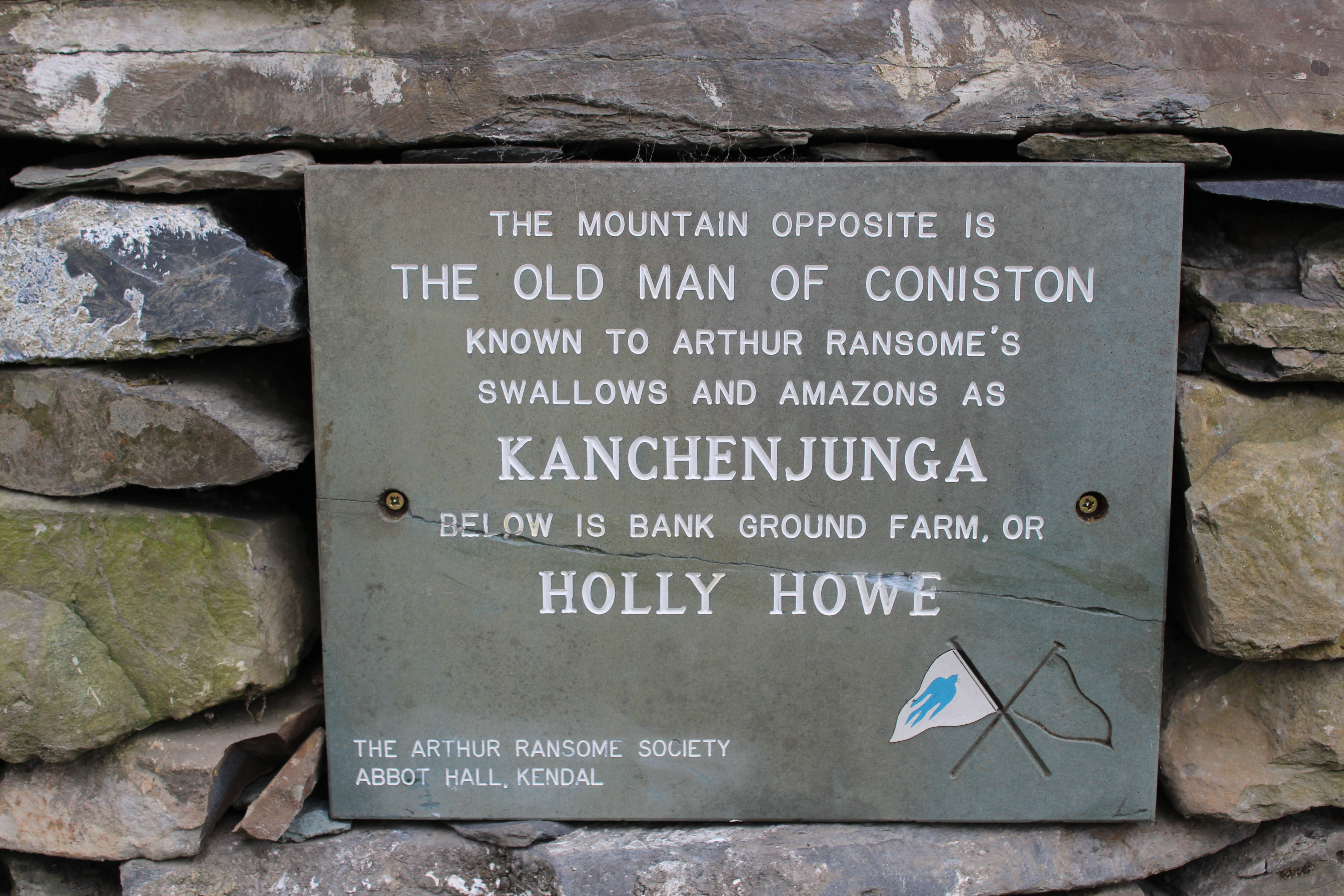
We had a bedroom in the barn that looked north towards the Langdales. If you walk up the farm drive, you can look back towards Coniston Old Man, or ‘Kanchenjunga’, as the Walkers and Blacketts call it in ‘Swallowdale’.

~Bank Ground Farm with the village of Coniston beyond~

Arthur Ransome was taken up the Old Man of Coniston as a tiny baby. You can climb it today but wear more than sand shoes. Stout walking boots are called for. The task of reaching the summit should not be underestimated.

We were able to get out on the lake to find a few more locations. This red-sailed dinghy, named Peggy Blackett, is a copy of Arthur Ransome’s Cochybundhu, used as the model for Dick and Dorothea’s boat Scarab.

~Sailing on Coniston Water towards the village of Coniston~

It is a long way down Coniston Water to Peel Island but it is there that you will spot the Secret Harbour, instantly recognisable as belonging to Wild Cat Island. We travelled there in the SL Gondola, that also now belongs to the National Trust. Ransome knew the steam launch as a boy when he made friends with the captain who let him take the helm.

~ Secret Harbour on the southern end of Peel Island, Coniston Water ~

In the cemetery of Coniston village we found the grave of Titty Altounyan, the girl who inspired Arthur Ransome’s well-loved character. I never met her but was with her niece Barbara that long weekend in Coniston, when we both thoroughly enjoyed walking, sailing and steaming along in Ransome’s footsteps.

~ Sophie Neville visiting Titty Altounyan’s grave in Coniston ~

For details of more locations at the southern end of Coniston Water that are featured in the Swallows and Amazons series of books, please click here.

Think of joining The Arthur Ransome Society and come looking for locations described in his books. You will find the details here.

There is an alternative walk in search of Arthur Ransome’s locations tying in with the Gondola’s timetable described here.

You can find illustrated maps and a chapter guiding you to some of the locations in ‘The Making of Swallows and Amazons’ and this less expensive ebook:

‘Swallows and Amazons’ at the Alhambra Cinema in Keswick

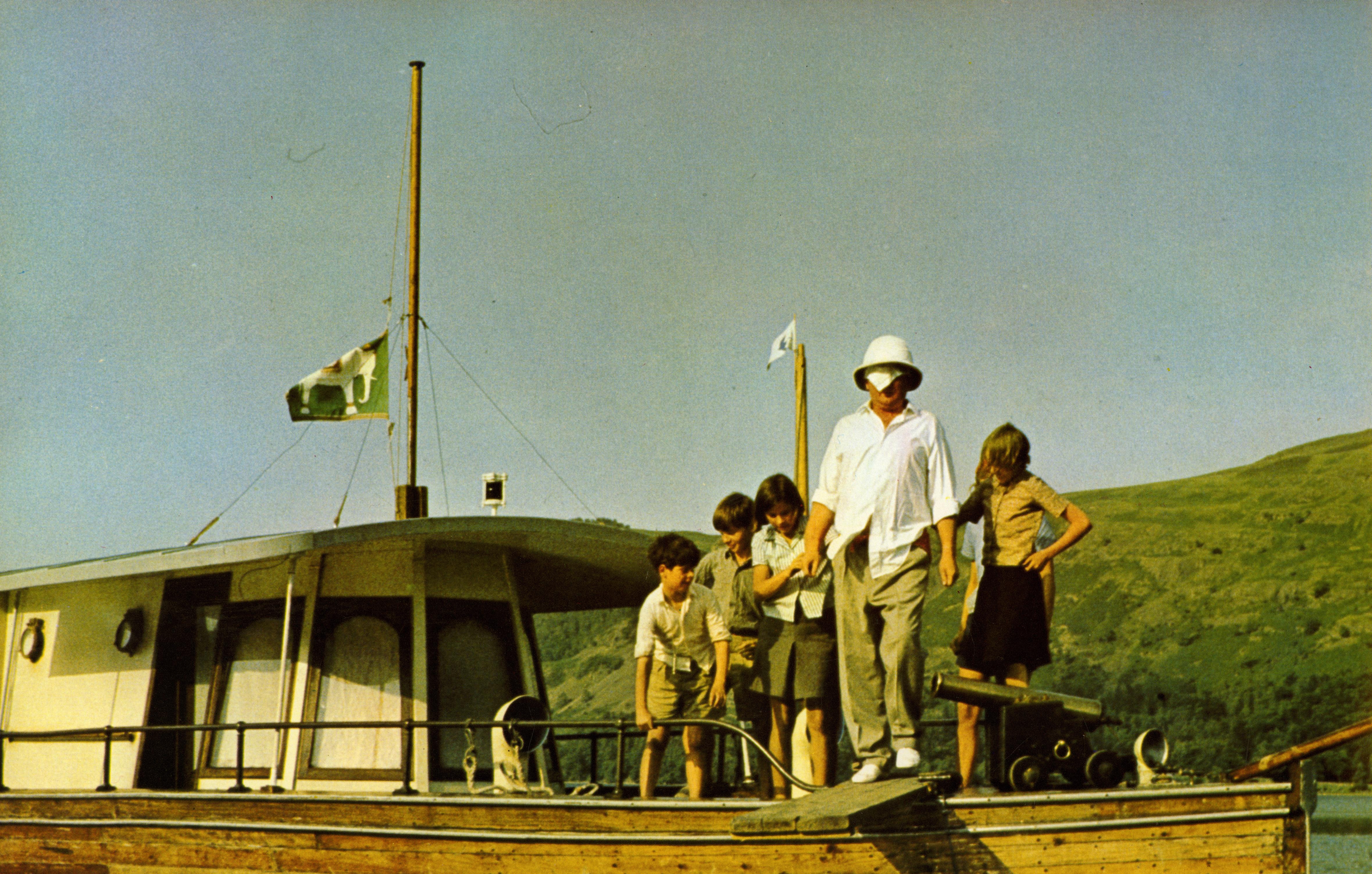
The 45th Anniversary of filming the original film ‘Swallows and Amazons’ on Derwentwater, when Ronald Fraser was obliged to walk the plank in a solar topi in July 1973, was marked by a special screening of the film at the Alhambra in Keswick.

Ronald Fraser walking the plank

Kerry Derbyshire, who played Vicky’s nurse came on stage and we demonstrated how one of the visual effects was achieved. 

I brought one of the original arrows that the Amazon pirates fired over my head. It looks so dangerous on film that the shot was cut from the television version but is included in the re-mastered cinemascope edition that we are now able to watch on the big screen. You might be able to spot a few other things that went wrong while we were filming, such as the time I inadvertently slipped up to my waist in water.

Captain Flint having walked the plank

Nick  Newby from Nicole End Marine came along to tell us how the elegant Lakeland steamer, the Lady Derwentwater, had been converted for her starring role as Captain Flint’s houseboat. She was appropriately dressed for the part by the award-winning set designer Ian Whittaker, who went on to receive an Oscar for Best Art Direction on ‘Howards End’ starring Sir Anthony Hopkins and Emma Thompson. His astonishing list of nominations can been seen here.

Swallow, the 1930s sailing dinghy used in the original film, was at the lakeside for Arthur Ransome enthusiasts to admire. She is looked after by Rob Boden, from Kendal, who is happy to take people for a sail by prior arrangement via the SailRansome website here.


Secrets of filming Swallows and Amazons

Signed copies of ‘The Making of Swallows and Amazons’ were available after a Q&A.

‘I chaperoned six film stars’ my mother’s memories of working on the 1974 movie ‘Swallows and Amazons’-Part Two

Daphne Neville presenting 'Women Only'1

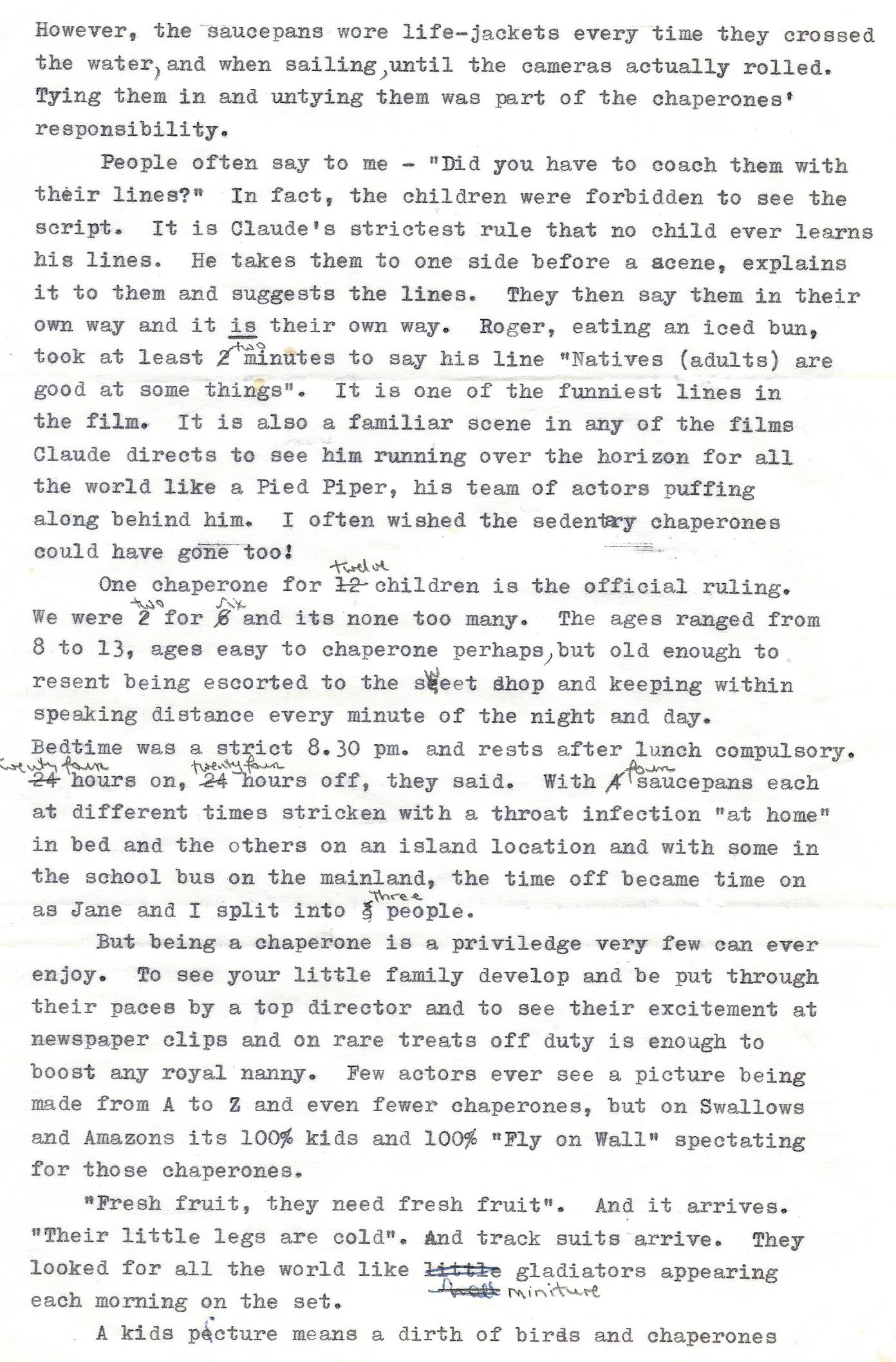
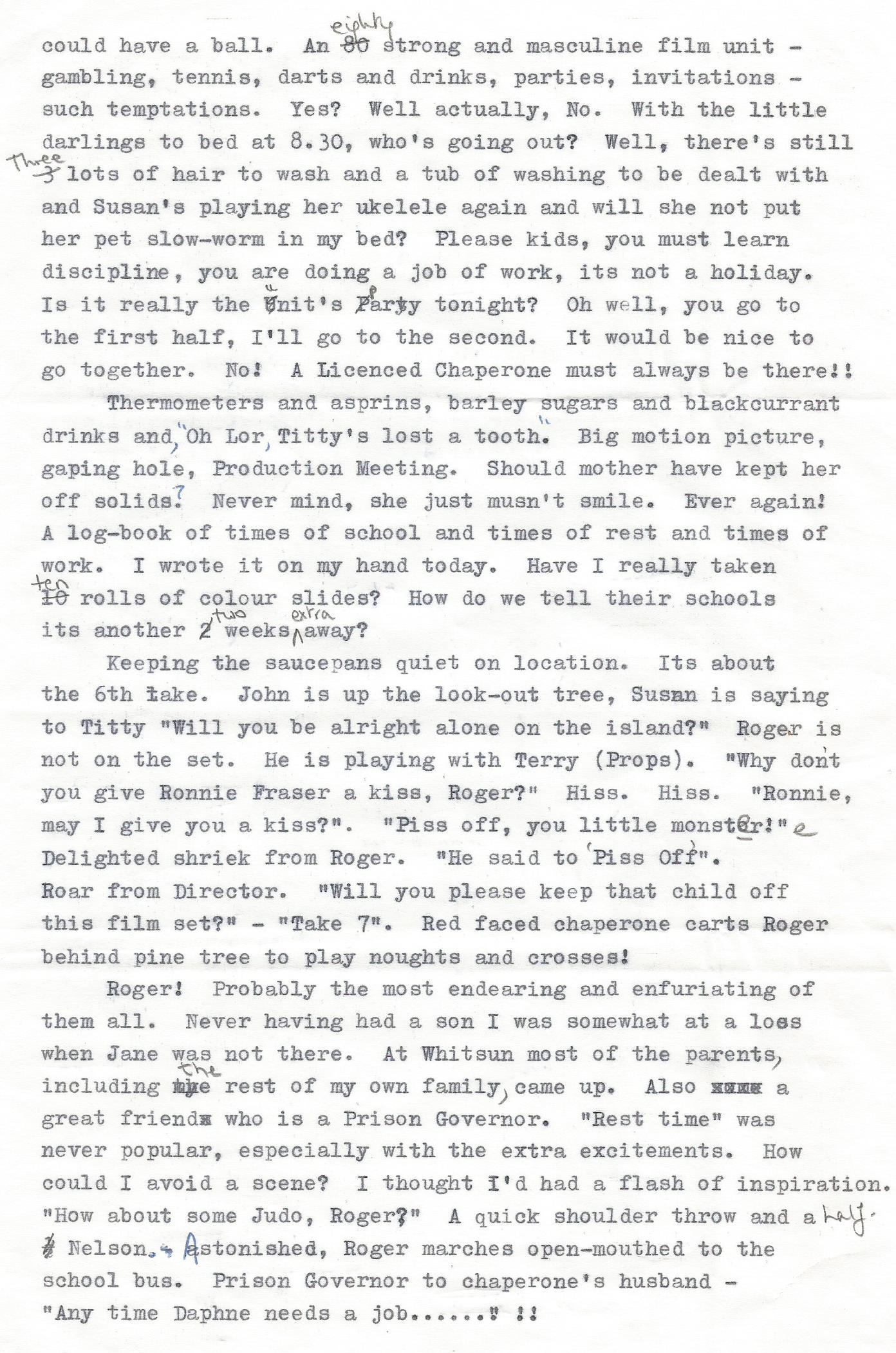
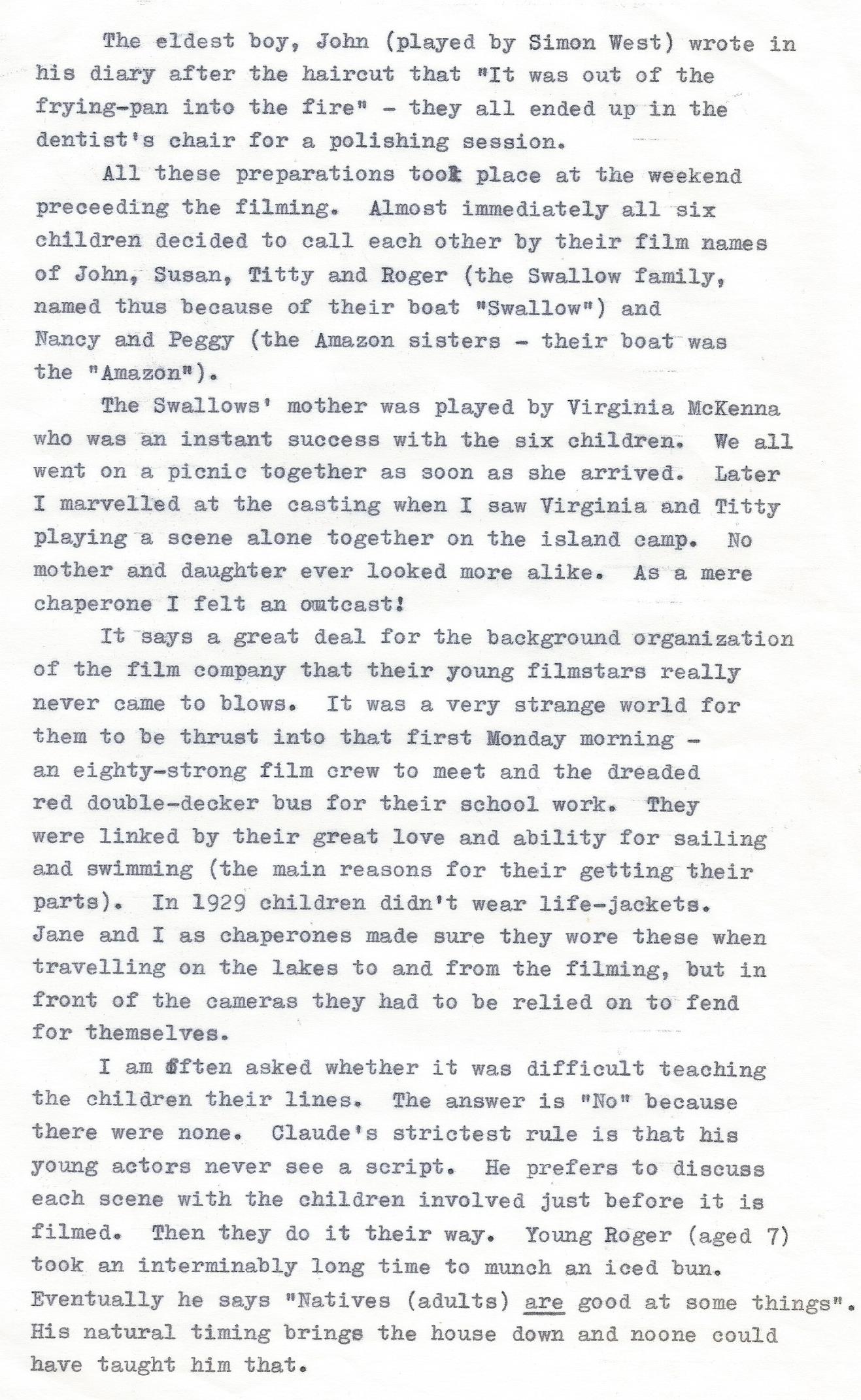
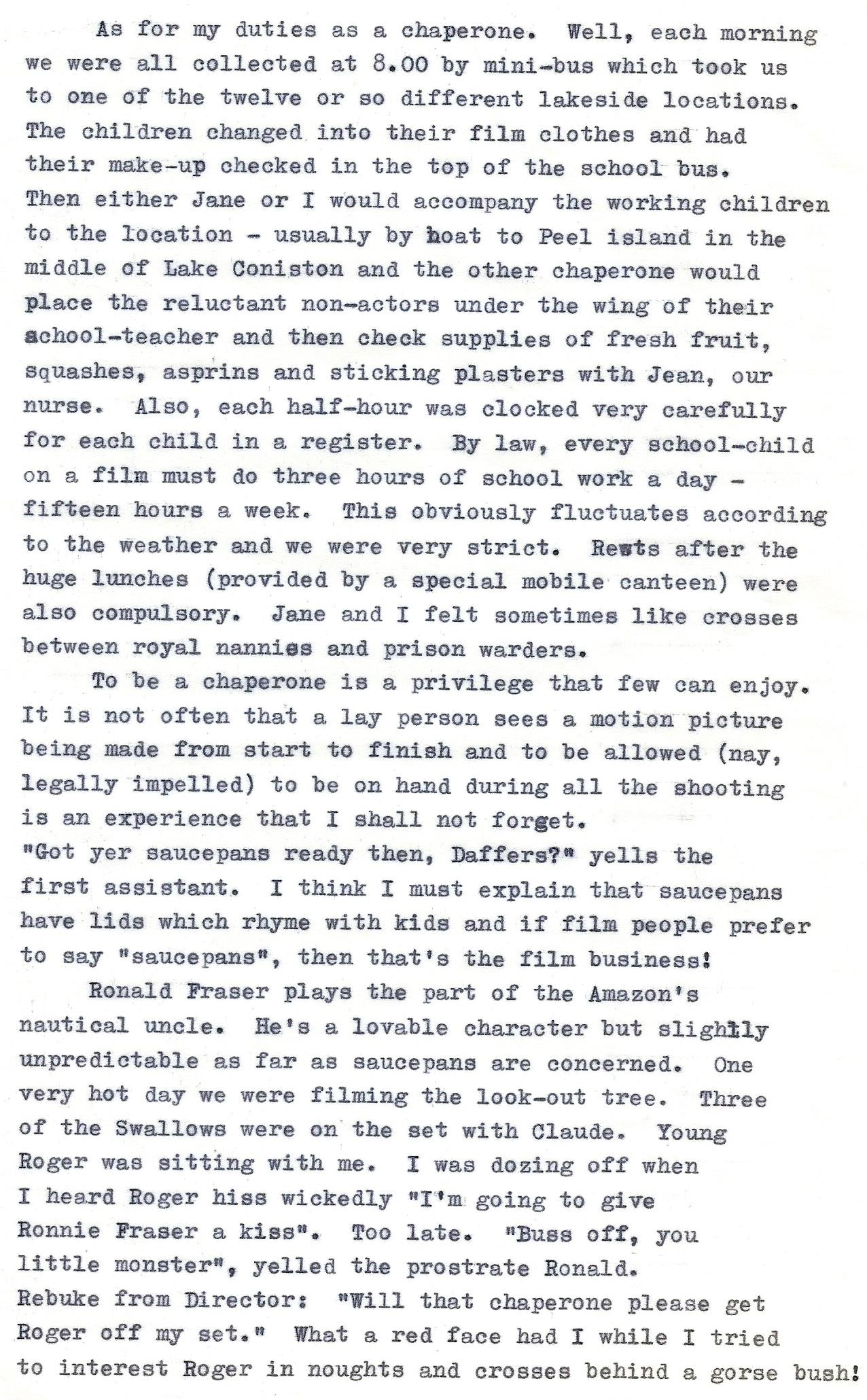
In 1974, my mother, Daphne Neville, was commissioned to write an article about working on the original film of ‘Swallows and Amazons’ for Woman magazine, which claimed to be ‘The world’s greatest weekly for women’. Here are some extracts from her type script:

Simon West, Stephen Grendon, Suzanna Hamilton and Sophie Neville playing the Walker children in ‘Swallows and Amazons’ 1973 ~photo: Daphne Neville

Daphne Neville with Sophie Neville and Simon West on Coniston Water

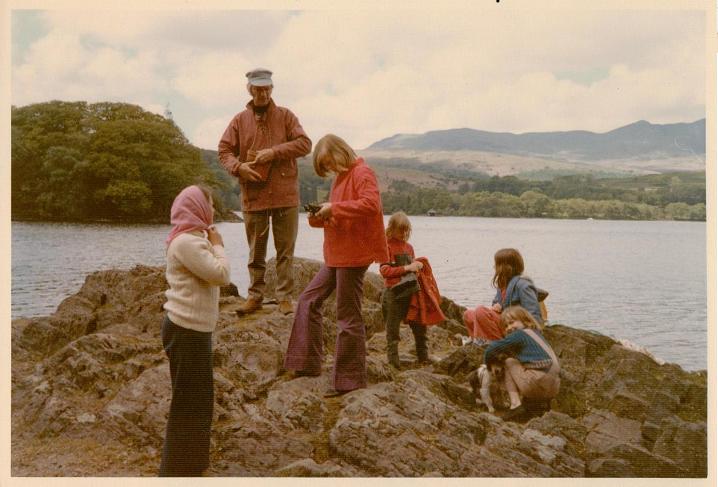
Our guests: Jane, Michael, Clare and Lucy Selby and their dog, Minnie on the shore of Conniston Water with my sisters Perry and Tamzin in 1973

I was amazed to read some of this. ‘….a dirth of birds’? Was that really how my mother spoke in the early ‘Seventies? I had no recollection that ‘Nomansland’ had been displayed on the front of our double-decker bus. I never remembered there only being bathroom at Oaklands Guesthouse or that Mum had to wash out clothes. I do remember Ronald Fraser shouting, ‘Piss off you little monster’.  I have the photo:

Sten Grendon irriating Ronnie Fraser
Sten Grendon sitting on top of Ronald Fraser during a break in the filming of ‘Swallows and Amazons’ on Derwentwater ~ photo: Daphne Neville

More to follow…. If you would like to see photos of Daphne Neville appearing in movies herself, please click here

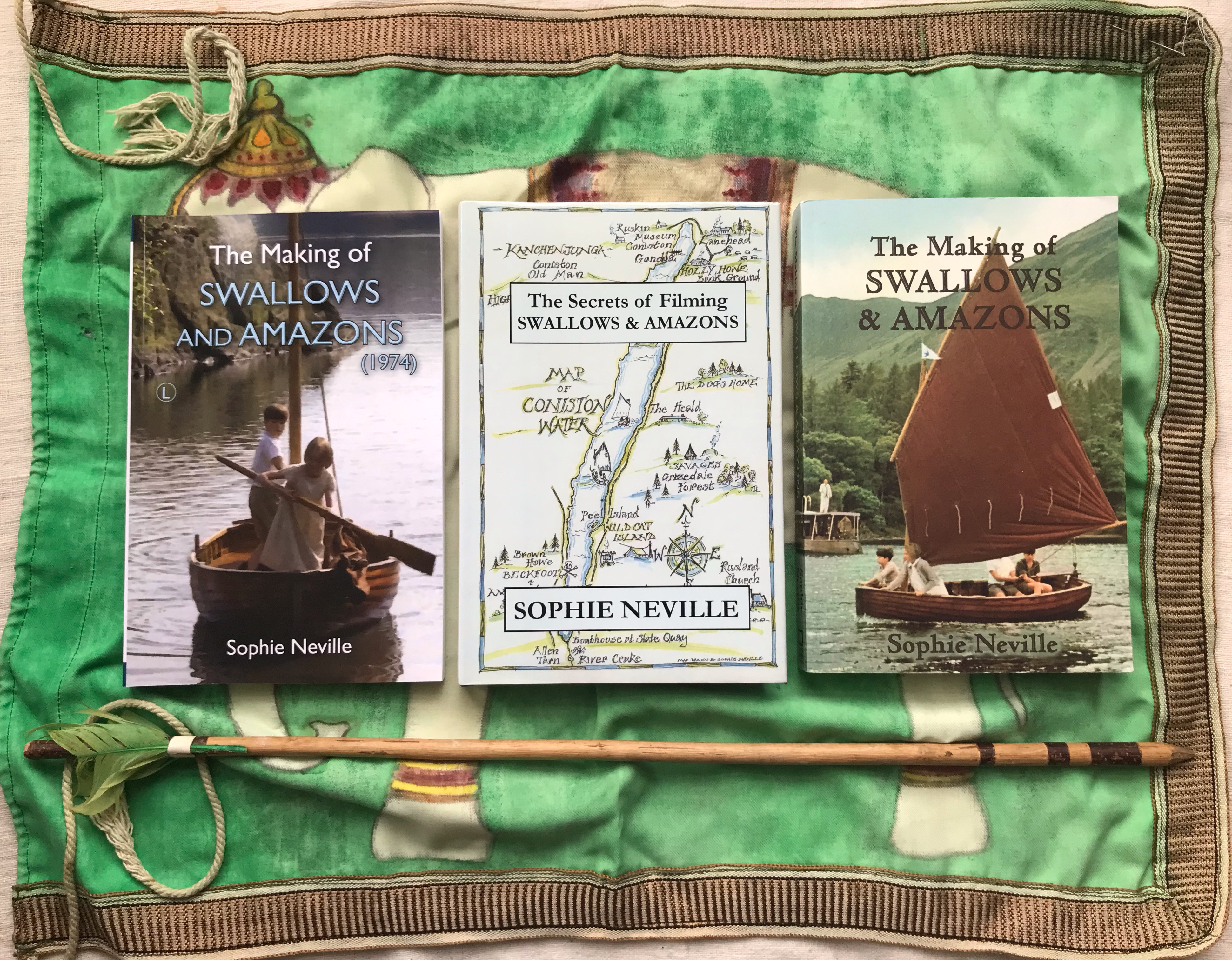
You read about how we made the original movie ‘Swallows and Amazons’ in any of these books that retail online and can be ordered from bookshops or libraries:

'The Making of Swallows and Amazons (1974) by Sophie Neville'
Different editions of ‘The Making of Swallows and Amazons (1974) by Sophie Neville’

‘I Chaperoned Six Film Stars’ – Daphne Neville’s memories of working behind-the-scenes on the 1974 film of ‘Swallows and Amazons’ 49 years ago.

My mother is a squirrel. She arrived at my house, not with nuts, but a large envelope. Amongst other things, this contained the transcript of a piece she wrote almost forty-nine years ago for BBC Radio Bristol, when she presented a programme called ‘Come Alive’.  The four flimsy sheets of copy paper have only just been unearthed, along with a similar article for Woman magazine.

Daphne Neville was commissioned to write about her experience working on the original feature film, Swallows and Amazons, filmed on location in the Lake District in the summer of 1973 and brought to cinemas in 1974. Sold worldwide, has been broadcast on television for the last forty years and was last shown on TV in Australia on Boxing Day.

Daphne Neville with Sophie Neville while filming 'Swallows and Amazons' in Cumbria
Daphne Neville with Sophie Neville while filming ‘Swallows and Amazons'(1974)

It is interesting to have Mum’s perspective. Some of the details are new to me. She timed this piece for BBC Radio as taking ‘8 minutes’ to read:

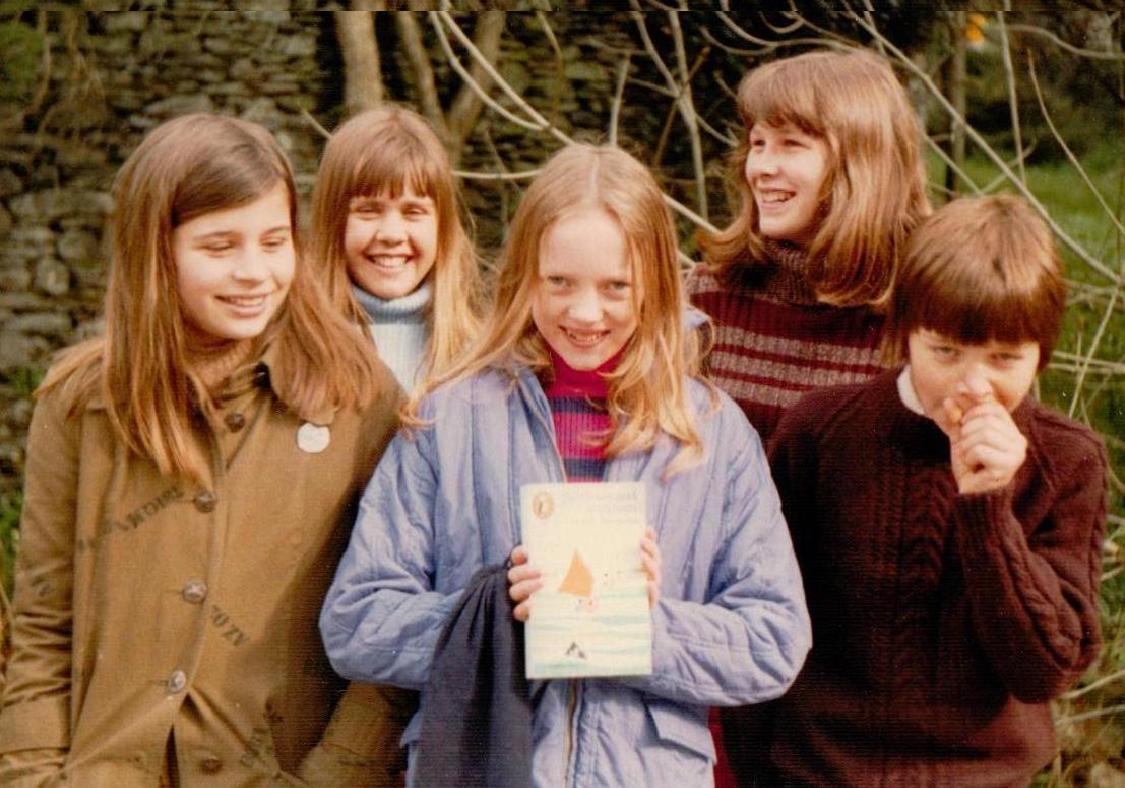
Suzanna Hamilton, Lesley Bennett, Sophie Neville, Kit Seymour and Simon West before their hair was cut for the film ‘Swallows and Amazons’ in 1973

Daphne Neville Chaperone

~ On Derwentwater in 1973: Suzannah Hamilton, Kit Seymour, Daphne Neville, Sten Grendon, Simon West, Sophie Neville & Lesley Bennett ~ photo: Martin Neville

'Swallows and Amazons'(1974) Daphne Neville with Stephen Grendon, Suzanna Hamilton, Sophie Neville, fellow chaperone, Jane Grendon and Simon West on location in 1973
Daphne Neville with Stephen Grendon, Suzanna Hamilton, Sophie Neville, fellow chaperone, Jane Grendon and Simon West on location in 1973

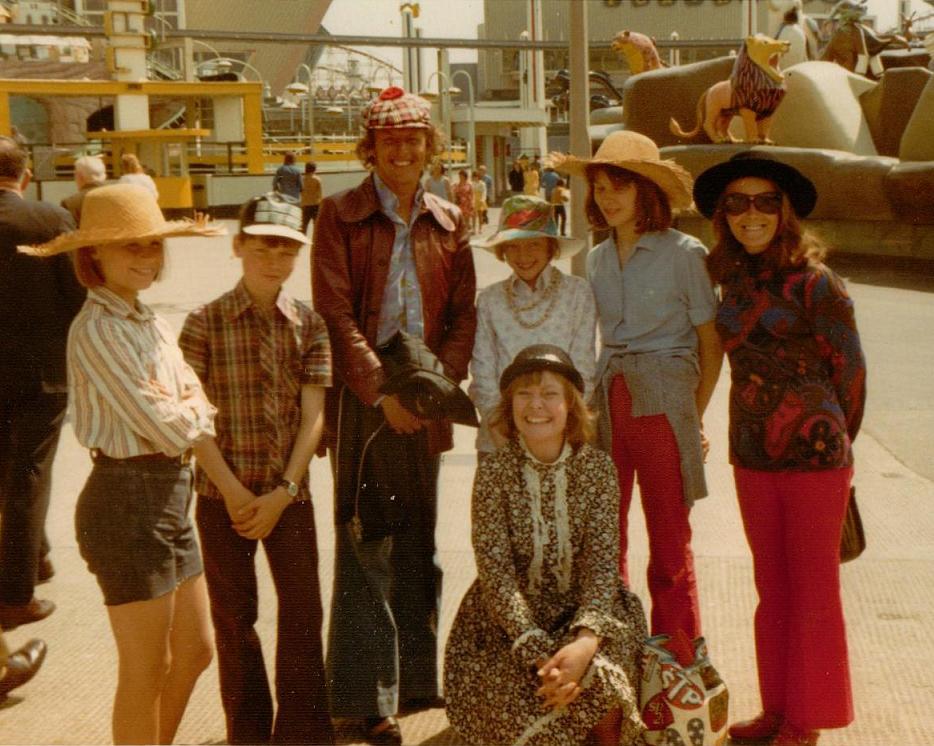
A Day Off in Blackpool - Suzanna Hamliton, Simon West, Claude Whatham Sophie Neville, Kit Seymour, Jean McGill with Daphne Neville kneeling at Blackpool funfair in 1973
Suzanna Hamilton, Simon West, Claude Whatham Sophie Neville, Kit Seymour, Jean McGill with Daphne Neville kneeling at Blackpool fun fair in 1973

But Mum, were we ever ‘Film Stars’?

We scowled at the terminology at the time. Ten years later and I thought of us a merely puppets, marionettes of the director who carefully honed our performances. I can now see the contribution we made when I watch the film, but we were never film stars.

What do I wish? I wish that we’d been able to make a sequel and develop our work more fully. The flip-side of this would have been that any more success, or more publicity, might have stripped us of our anonymity, which is the bain of real film stars. We’d have had to go around wearing sunglasses.

The film star Ronald Fraser with Daphne Neville and Sophie Neville in 1973

If you would like to see what we were filming 49 years ago, on 1st July 1973, please click here.

Do let me know, via the comments below, if you would like to see more archive material. I have the draft of my mother’s article for Woman magazine – it’s a different version of the same but with added detail. She needed permission from Anglo EMI Film Distributors before it could be published. There is also a draft of another radio script and a number of letters. If you would like to see vintage photos of Mum appearing on television herself, please click here

If you would like to read more about our adventures filming ‘Swallows and Amazons’, please click here

You can read the first pages for free here:

An Arthur Ransome weekend at the Norfolk Broads Yacht Club

Sophie Neville with camera

~Sophie Neville with the yacht ‘Goldfish’ sailing on Wroxham Broad~

The Norfolk Broads Yacht Club have been celebrating life on the Broads in the 1930s, along with the books by Arthur Ransome that are set in East Anglia.

A number of vessels that appeared in the BBC TV adaptations of ‘Coot Club’ and ‘The Big Six’ entitled ‘Swallows and Amazons Forever!’ were on display when I paid them a visit, including Titmouse, the dinghy belonging to Tom Dudgeon, hero of the story that normally resides at Hunter’s Yard in Norfolk.

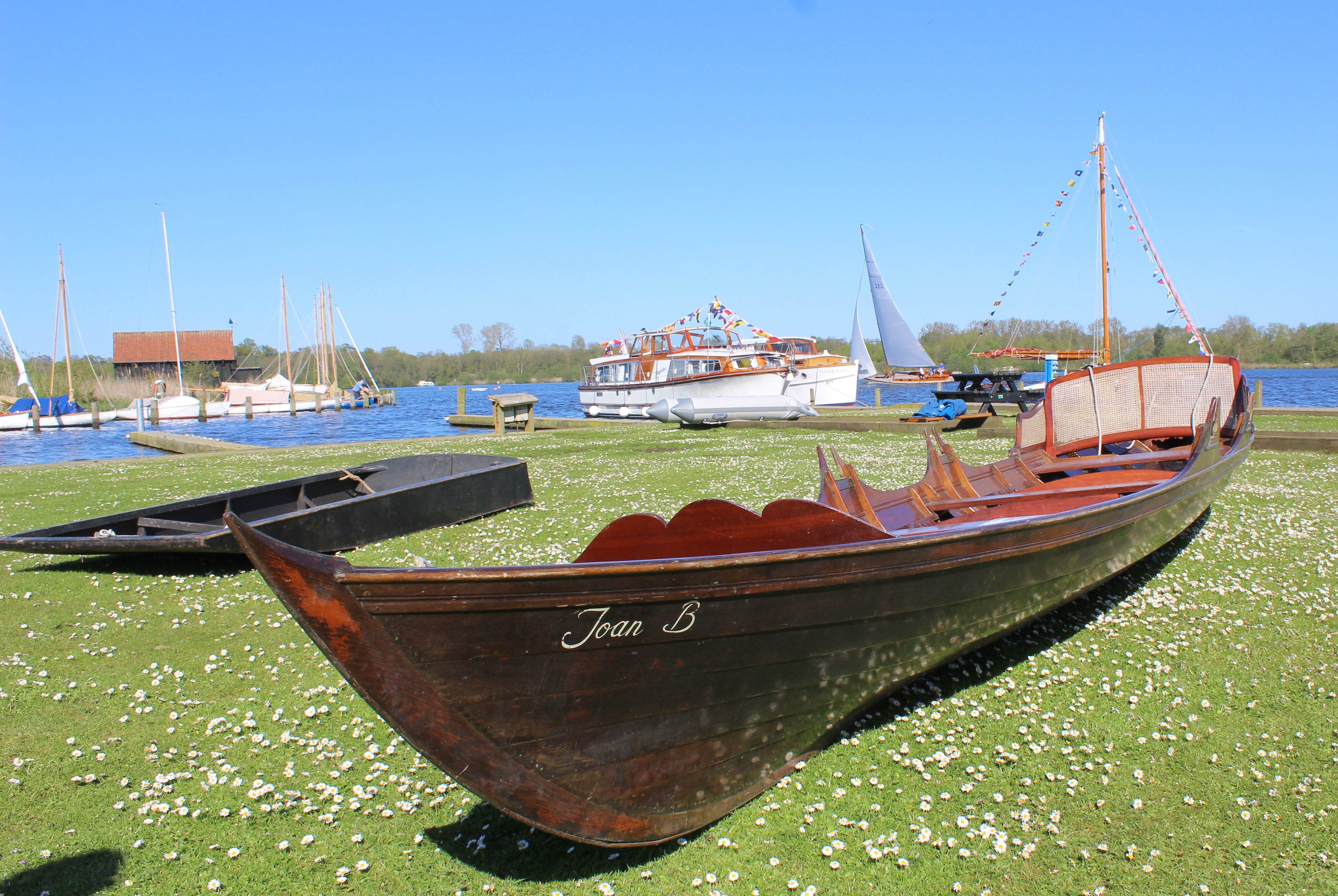
Tom’s punt, the Dreadnaught was pulled up alongside an elegant Edwardian skiff called Joan B that was once set adrift at Horning by George Owden. She had been brought along by Pat Simpson, a member of the Norfolk Broads Yacht Club.

Pippa, a classic broads river-cruiser with dark sails belonging to Geoff and Rose Angell, was cast adrift at Horning in the dark of night. She came to no harm and was now out on the water, racing against a 1904 yacht with white sails, number 4, called Swallow.

‘White Boats’ or ‘Yare and Bure one-designs’ originally brought out in 1908, were also  racing as they have been since the Farland twins, Port and Starboard, crewed for their father in ‘Coot Club’. Ransome refereed to a white boat called Grizzled Skipper who belonged to Chris Shallcross, but no one could remember which of the 140-odd White Boats registered was used in the series. Many members of this class of 20 foot half-deckers are named after moths or butterflies. You can see a fleet of White Boats here racing at Horning, the Swan Inn in the background:

IMG_6896

I spotted ‘Brown Boats’, a Broads’ one-design with a distinctive counter stern and spoon bow, which would also have been seen racing in the 1930s. They were first built in 1907 and although a few were lost during the war there are still 88 in existence, although some now have fibre glass hulls. Number 61, called Hanser, is owned by Danny Tyrrell.

Lullaby, who played the Teasel in the series, was up at Horsey Mere with other from her fleet but we had her costume on display. It is a varnished transom painted with the name Teasel. 

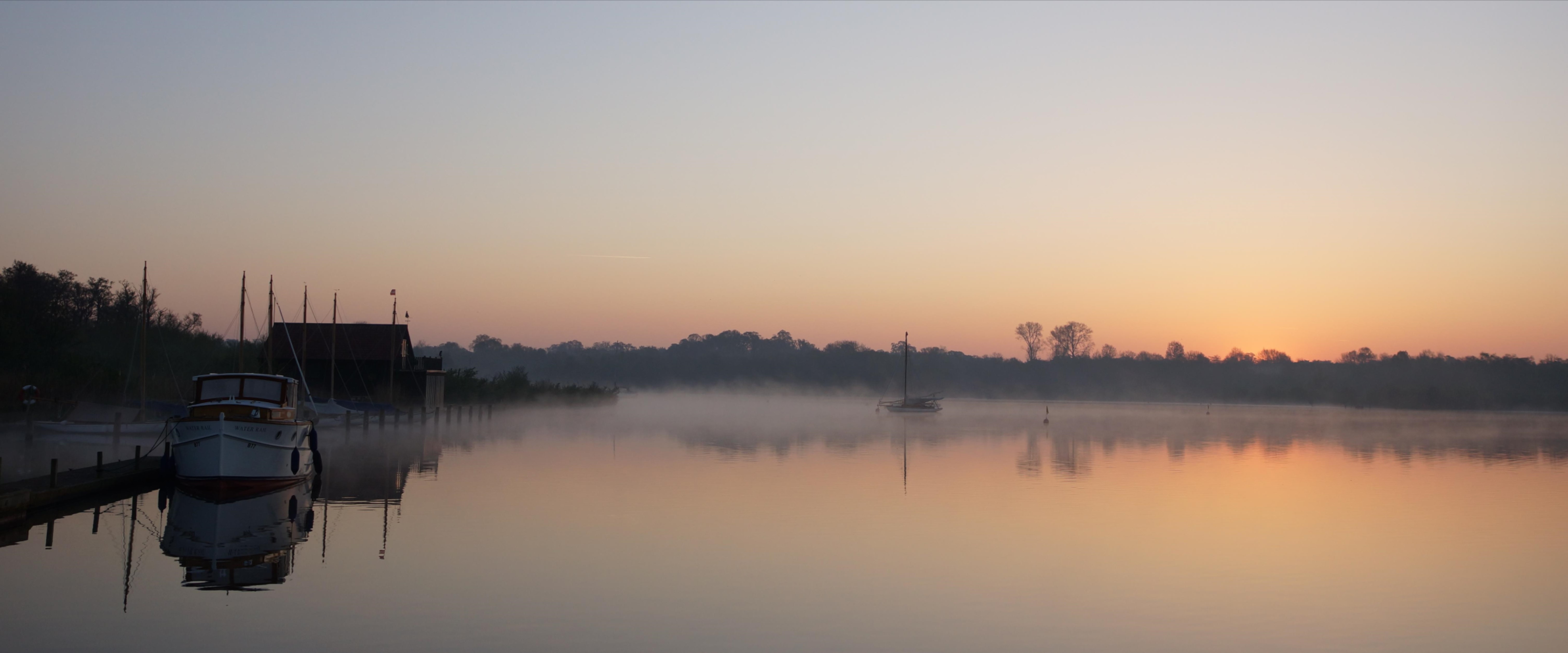
Janca, the motorboat who played the infamous Margoletta, hired by the Hullabaloos, was unable to come as she is currently being renovated, but Water Rail, a Herbert Woods Delight Class B 1930s cruiser belonging to Liz Goodyear was safely moored alongside other classic boats. She appeared in the back ground of several scenes in the television drama.

I then spotted a distinctive burgee that took me back thirty-five years:

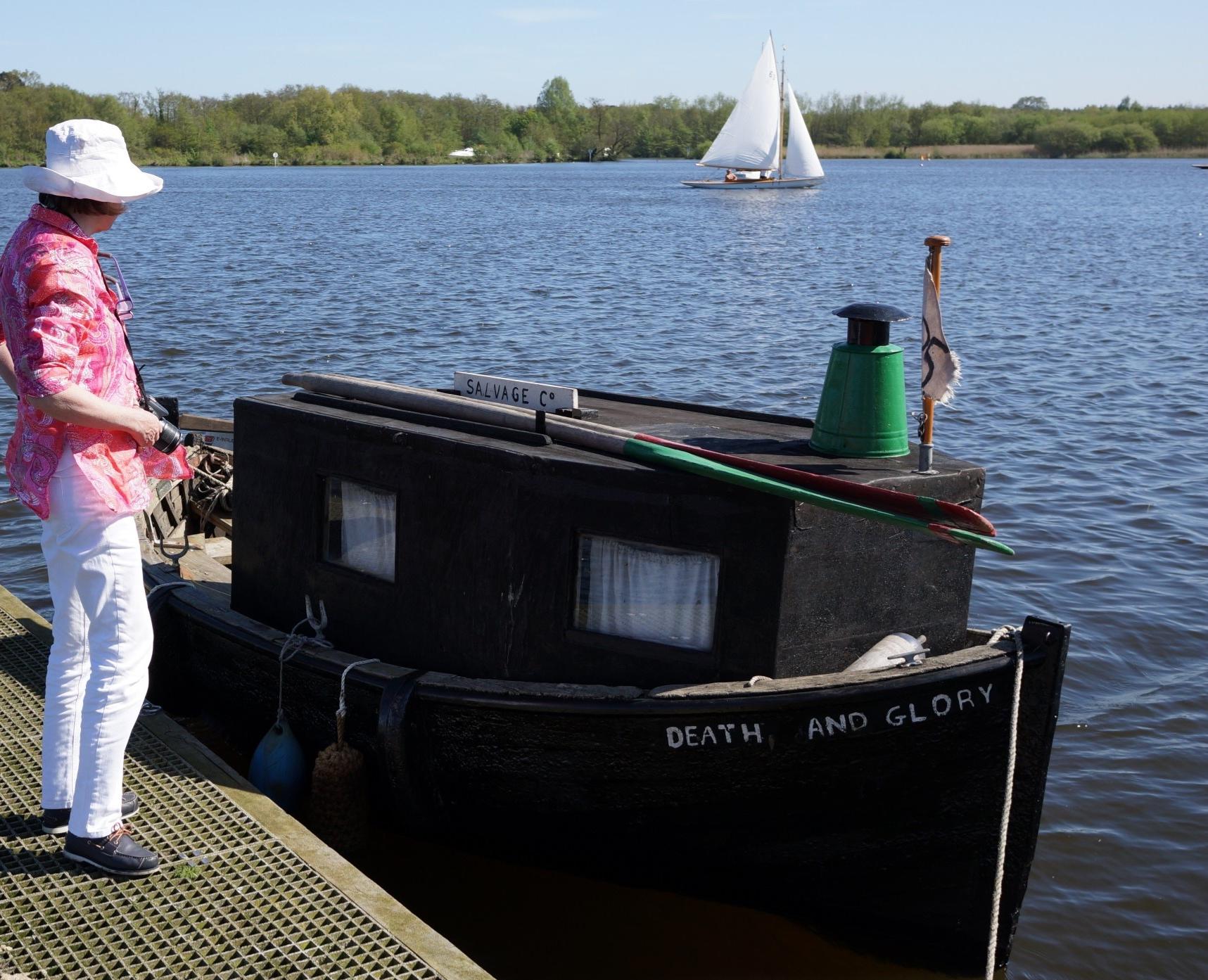
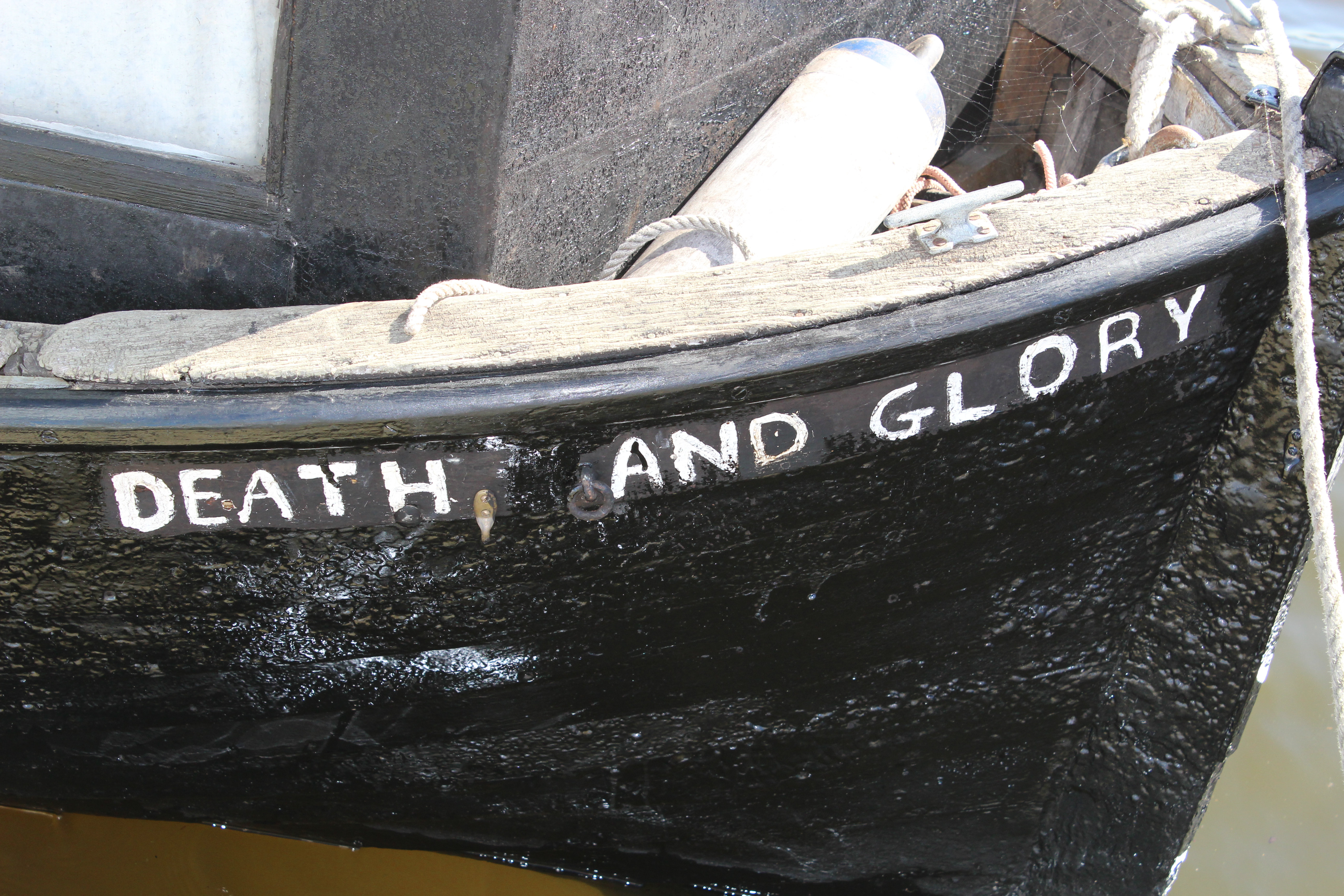
Bird Preservation Society – it was the flag belonging to the Death and Glory, flying next to ‘the little old chimney’ made from a galvanised bucket.

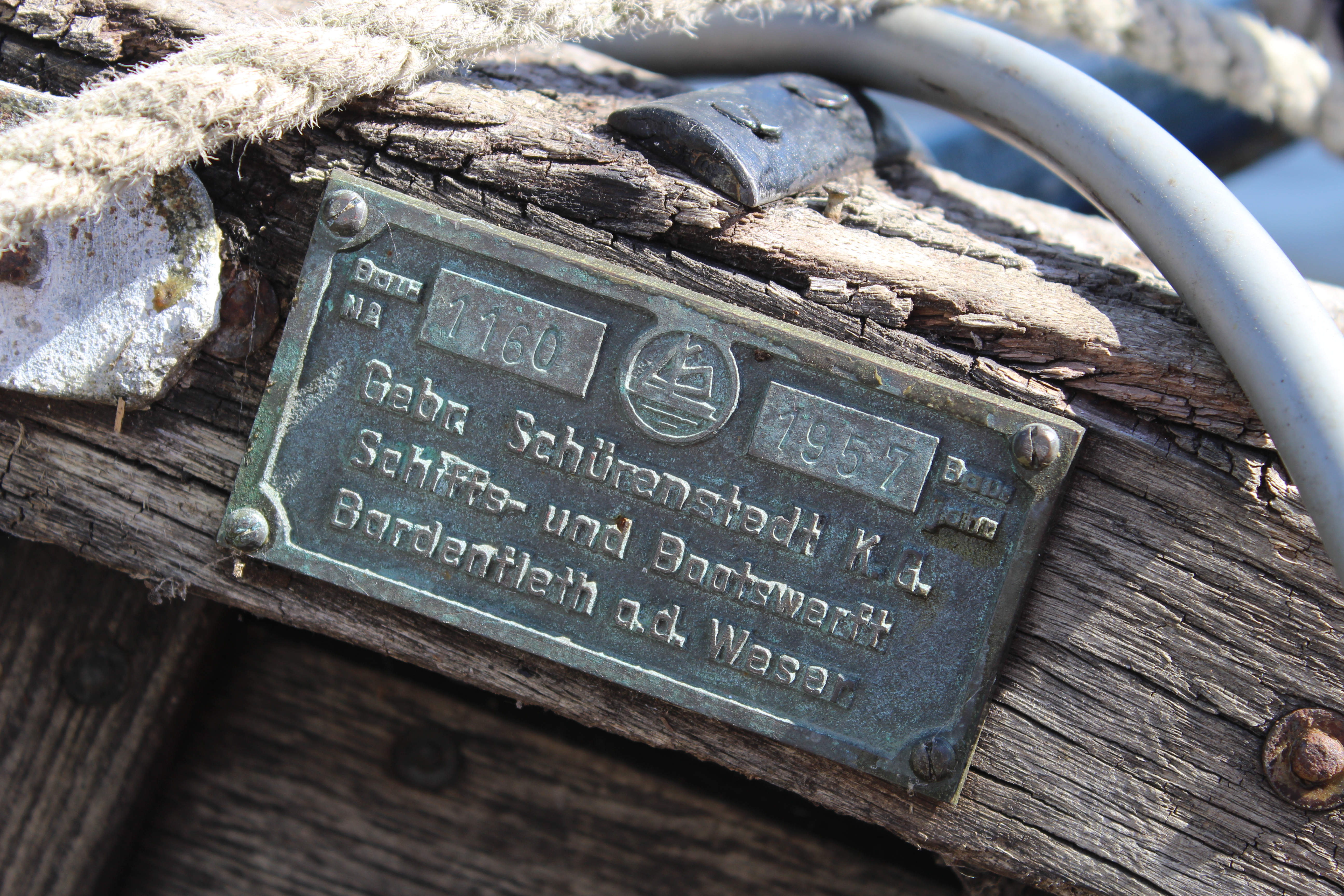
Originally a German lifeboat washed up on the beach at Southwold, she had been bought for the series by Pat Simpson of Stalham Yacht Services, who found her moored at Snape in Suffolk.

Pat kept her for his sons to take out on the Norfolk Broads and it has been operated by children as Death and Glory, ever since.

It must have taken a bit of work to make her sea-worthy but tarred and fitted-out correctly, she closely resembles Arthur Ransome’s illustrations, the homemade cabin mysteriously larger inside than out.

I was asked to sign a copy of ‘The Big Six’ bought along by Professor John Farrington from Aberdeen, who acquired the Death and Glory for his own children in 1989.

‘I took them to the boatyard and suggested they climbed aboard. “Get on!” ‘They were aged ten and eleven.’

‘”But what about the owners?” they asked.

“You are the owners,” I told them.’ He had just bought it for them as an unexpected present. ‘Before long, they rowed it from Stalham to Sutton and back.’

~Sophie Neville signing books for Professor John Farrington~

We were gathered the 80th Anniversary of The Norfolk Broads Yacht Club, which is why they had a 1930’s theme running through their calendar. The day proved a true celebration of traditional boats that would have been seen back then.

IMG_6920

I had been asked to give a talk about filming the series, which I will relate in my next blog post. The re-mastered DVD, for which I wrote the DVD extras, is available on Amazon here:

Swallows and Amazons Forever
Swallows And Amazons Forever! (Coot Club & The Big Six) SPECIAL EDITION [DVD]
You can read more about how these boats were used in the series here

and on Norfolk Broads Yacht Club website

Do add any information about these boats or ask questions about making the book adaptions in the comments below.


~Photograph of Water Rail moored on Wroxham Broad by Richard Hattersley~

Longing to add more stories to ‘The Making of Swallows and Amazons (1974)’

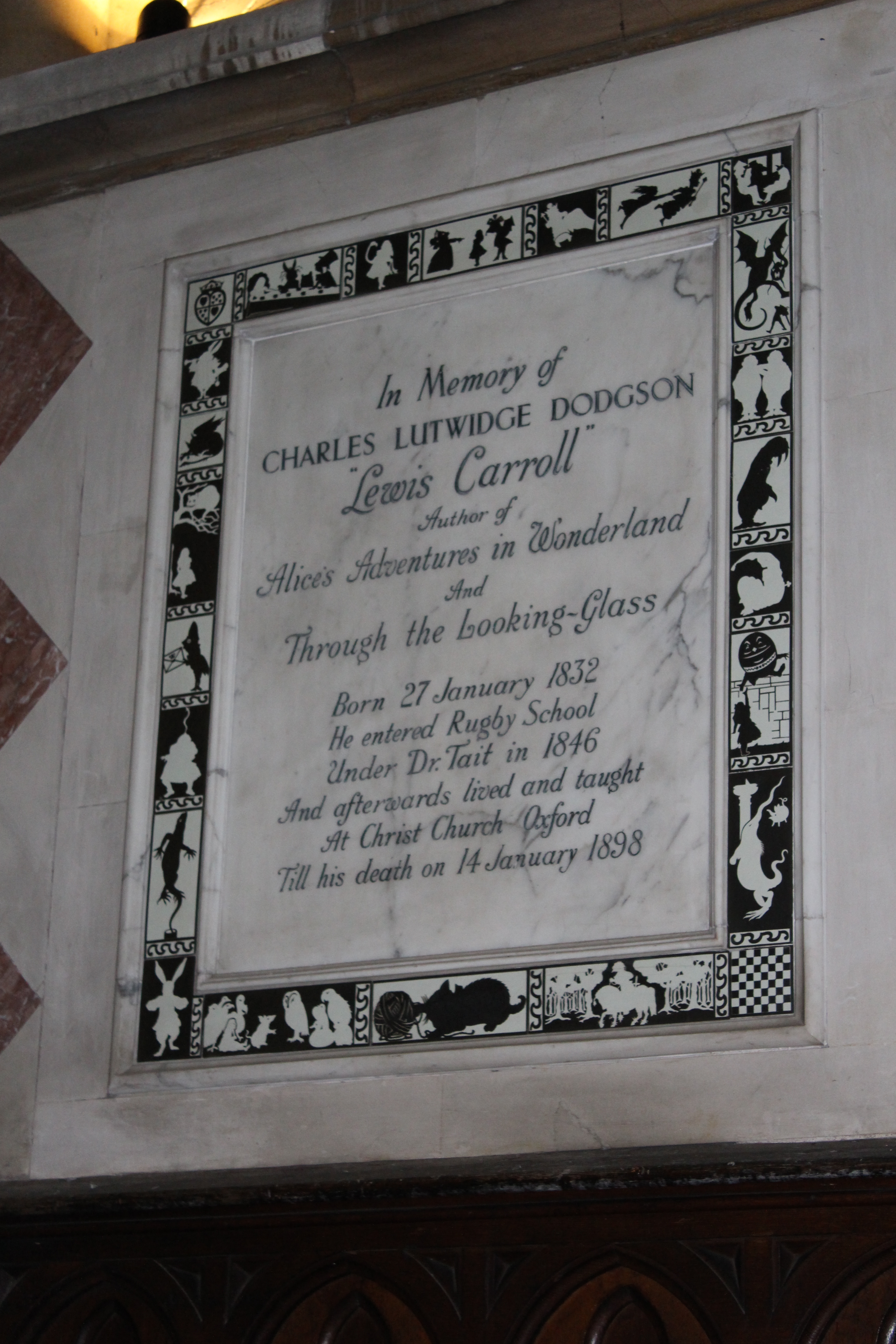
Almost as soon as we published the second edition of ‘The Making of Swallows and Amazons (1974)’ in May 2017, a number of facts and stories washed up on the incoming tide. I didn’t know that Ransome was aged twelve – Captain John’s age – when he first met the Collingwood family on Peel Island. I knew he went to Rugby School but not that he was given the study once used by the English author Lewis Carroll. I’m not sure if that inspired him to write children’s books but he certainly borrowed the term galumphing from Alice’s Adventures in Wonderland (1865).

~ Lewis Carroll’s plaque at Rugby School ~

I never knew that Rusland, where Arthur and Evgenia Ransome lie buried at St Paul’s Church, means ‘Land of the Rus’ – the name for Russia, where of course they met in what was then Petrograd when Evgenia was working as Leon Troski’s private secretary. Thanks to the feature writer Maggie Dickenson, I’ve learned that this kneeler at St Paul’s was embroidered by Jean Hopkins:

Cross flags at Rusland Church where the Ransomes are buried - photo Sophie Neville

Brian Crawley has just written in to say that, in 1973, our visit to the charcoal burners was filmed less than a mile to the west of the church in Glass Knott Wood. I gather the remains of the wig-wam’s fireplace can still be seen. I didn’t know it was so close, and just assumed we had been in the Grizedale Forest. I’ll have to add it to my map!

The Russian edition of Swallows and Amazons, that can be borrowed from The Arthur Ransome Society library, has proved a great source of reference. Donated by the Gatchina Library it is the only copy in the UK. I learnt from the comments at the back that the Black Jack is a pirate flag, which I’ve always called a Jolly Roger, and that ‘in one’s mind’s eye’ is an expression used by William Shakespeare in Hamlet. “Tip us a stave” means “give us a song”, a term used in Treasure Island.

Other flotsam and jetsam on my tide-line  is  a wonderful quote to accompany this behind-the-scenes photograph when re-reading Winter Holiday written by Arthur Ransome in 1933:

What’s in that box?” asked Roger.

It’s just about big enough for you, isn’t it?” said Captain Flint.

Sten Grendon in the camera box~ Sten Grendon playing Roger in the Panavision camera box in 1974~

A member of the Arthur Ransome Group on Facebook commented on how annoying it was that Ronald Fraser made a funny face when he first sipped the tea Suzanna Hamilton offered him. Captain Flint ALWAYS enjoyed Susan’s tea.

Contact sheet - Ronald Fraser with Lesley Bennett

There was some discussion amongst members of the same Arthur Ransome Group about how female characters depicted in ‘Swallows and Amazons’. Eddie Castellan wrote: Ransome is remarkably non-sexist for his era and remains so by today’s standards. Mind you, most great storytellers realise that weak female characters are simply dull… great storytellers seem to give women better roles than mediocre ones.’ 

Contact sheet - Claude Whatham directing on the houseboat

Fionna Grant added: Arthur Ransome had a range of roles for his female characters from Nancy to Susan to Titty…. not only represented, but honoured for their contribution to the group… All the kids in Swallows and Amazons are encouraged to learn through achievement but they are also allowed to choose their own path, follow their own interests.

Contact sheet - Sten Grendon and Sophie Neville on Cormorant Island

At a talk given about the Norwegian explorer Fridtjof Nansen given by Simon Browne, at a meeting of The Arthur Ransome Society, we were given a definition of the word Hero: one who combats adversity through integrity, bravery or strength, often sacrificing personal concerns for the greater good.

Titty was brave but all she really did was to grab a chance to swipe Amazon. It meant she had to sleep on board, which was rather uncomfortable, but what made Titty a true heroine in the film was her determination and persistence: she woke up early and persuaded Roger to help her find the treasure hidden on Cormorant Island. Like Ransome himself, she was prepared to grab a chance, take a risk – even if it meant being cold and uncomfortable for a while.

Contact sheet - blurred images of Sten Grendon and Sophie Neville rowing to Cormorant Island

I received another lovely note on Facebook from Zena Ashberry (nee Khan) who appeared as a film extra in the Rio scenes shot at Bowness-on-Windermere when she was a little girl, despite being of half-Asian descent:

‘I was nine at the time and my sister was eight. I remember going through an audition – which was really just a panel of three or four men looking at Mum, my sister and me to see if we would be in keeping with the ‘look’ of the film. They seemed very keen on having Mum. My sister, at the time had sandy coloured hair and so was not at all problematic, however I was very dark and because they wanted Mum they said that they could hide ‘it’ by putting me in a white dress and hat! How times have changed…obviously I remember other things too, like feeding the horses which pulled the open carriage and the horse standing on my foot oouuch!, the strange awkwardness of having to act ‘naturally’ whilst being watched through a camera, having to repeatedly carry out the same activity to ensure a good shot – how many times did we throw stones into the lake? The ice-cream tricycle with real ice cream mmmm a treat … being watched by crowds of tourists gathered along the footpath and flower beds. It was a strange and unreal experience, doing what as children we would normally do but doing it in ‘dressy-up’ clothes that weren’t from our own dressy -up box and playing the game with Mum and her friends with total strangers telling us what we should do…just a bit bewildering really, but funny in retrospect.’

Contact sheet - Simon West and Suzanna Hamilton night sailing

Please let me know if you have any points of interest that I could add to ‘The Secrets of Filming Swallows and Amazons (1974)’ that you think might of interest to readers. The great thing about ebooks is that they can be updated and re-loaded free of charge.

The Secrets of Filming Swallows & Amazons

I’m hoping to give a number of talks on ‘The Making of Swallows and Amazons’ this summer. Please click here for details.

My Christmas

Sophie Neville at Araminta Blue's art exhibition 2017

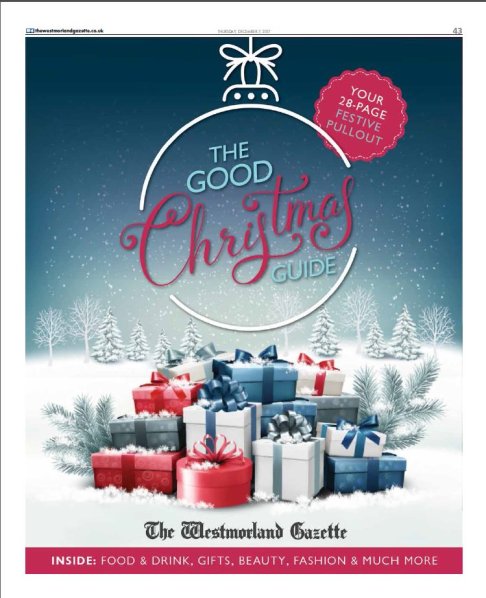
first published in

The Good Christmas Guide 2017

The Good Christmas guide

Describe a typical Christmas Day in your household.

We scuttle off to our village church where people have gathered to celebrate the birth of Jesus for over a thousand years. Tears well in my eyes when I think of the joy and laughter, the disappointment and pain that has been brought there through the ages. We return to a bizarre Christmas tree, made from a holly bush covered in baubles, and light the fire to help bind us together as a family.

Which was your best Christmas – and why?

Last year I spent Christmas in Africa, where my next book ‘Makorongo’s War’ is set. We sat watching wild animals in the golden evening light.

What has really made my Christmas this year was having ‘The Making of Swallows and Amazons’ listed as a recommended book alongside John le Carre, Winston Grahma and Matt Haig

Who do you think would make the most entertaining guest to invite to Christmas dinner – and why?

Funnily enough it’s my aunt Hermione who makes Christmas and New Year fun but she lives on Loch Lomond, 500 miles north from where we live on the south coast.

What was your best Christmas present as a child?

My father gave me a read leather writing case when I was twelve. ‘The Making of Swallows and Amazons (1974)’ is based on the I diary kept inside it.

What is your favourite carol?

You’ll have to read my book Ride the Wings of Morning about the time we sang Silent Night in Afrikaans. We had a poor translation. Heavenly sausages descended on Bethlehem.

What is your favourite festive ramble for walking off all the mince pies and turkey?

We’ll take my lurcher Flint for a walk by the sea, a social activity as many of my friends have dogs.

If you could spend Christmas Day anywhere in the world, apart from at home, where would it be – and why?

I’d love to bring my whole family up to the Lake District for Christmas so Aunt Hermione could join us. Perhaps we should go with Flint next year.

My favourite Christmas story:

 Mary gave birth to her firstborn son. She wrapped him snugly in strips of cloth and laid him in a manger, because there was no lodging available for them.

That night there were shepherds staying in the fields nearby, guarding their flocks of sheep. Suddenly, an angel of the Lord appeared among them, and the radiance of the Lord’s glory surrounded them. They were terrified, but the angel reassured them. “Don’t be afraid!” he said. “I bring you good news that will bring great joy to all people. The Savior—yes, the Messiah, the Lord—has been born today in Bethlehem, the city of David! And you will recognize him by this sign: You will find a baby wrapped snugly in strips of cloth, lying in a manger.”

Suddenly, the angel was joined by a vast host of others—the armies of heaven—praising God and saying, “Glory to God in highest heaven, and peace on earth to those with whom God is pleased.” When the angels had returned to heaven, the shepherds said to each other, “Let’s go to Bethlehem! Let’s see this thing that has happened, which the Lord has told us about.”

They hurried to the village and found Mary and Joseph. And there was the baby, lying in the manger.  After seeing him, the shepherds told everyone what had happened and what the angel had said to them about this child. All who heard the shepherds’ story were astonished, but Mary kept all these things in her heart and thought about them often. The shepherds went back to their flocks, glorifying and praising God for all they had heard and seen. It was just as the angel had told them.   Luke 2 v 7-20

The cultural background is that in when Shepherds identified a perfect newborn lamb for sacrifice, they wrapped it in strips of cloth and laid it in a manger to keep it clean. When they saw Jesus in this situation, they would have immediately identified him as a sacrificial lamb.

A marathon reading of ‘We Didn’t Mean To Go To Sea’ by Arthur Ransome

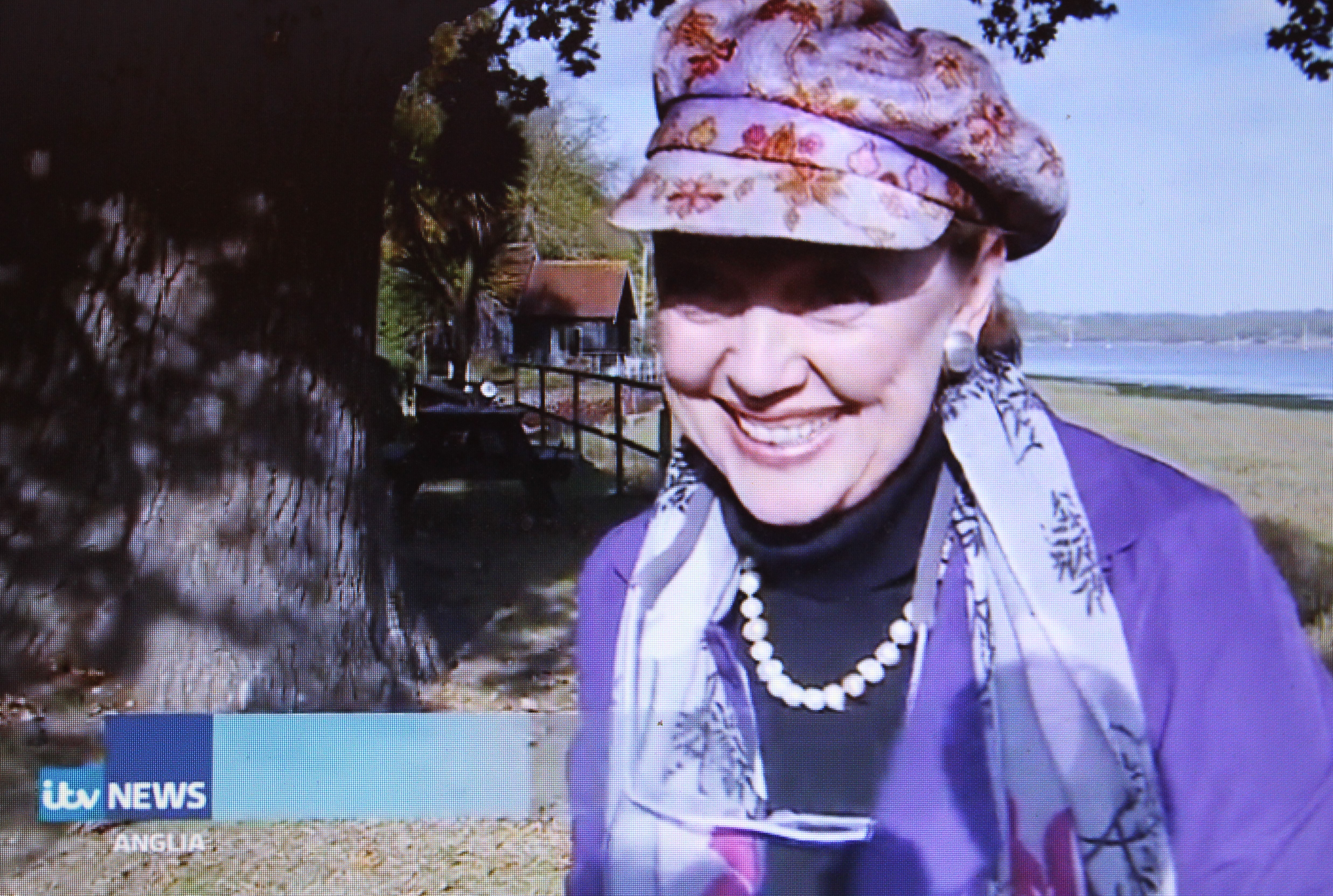
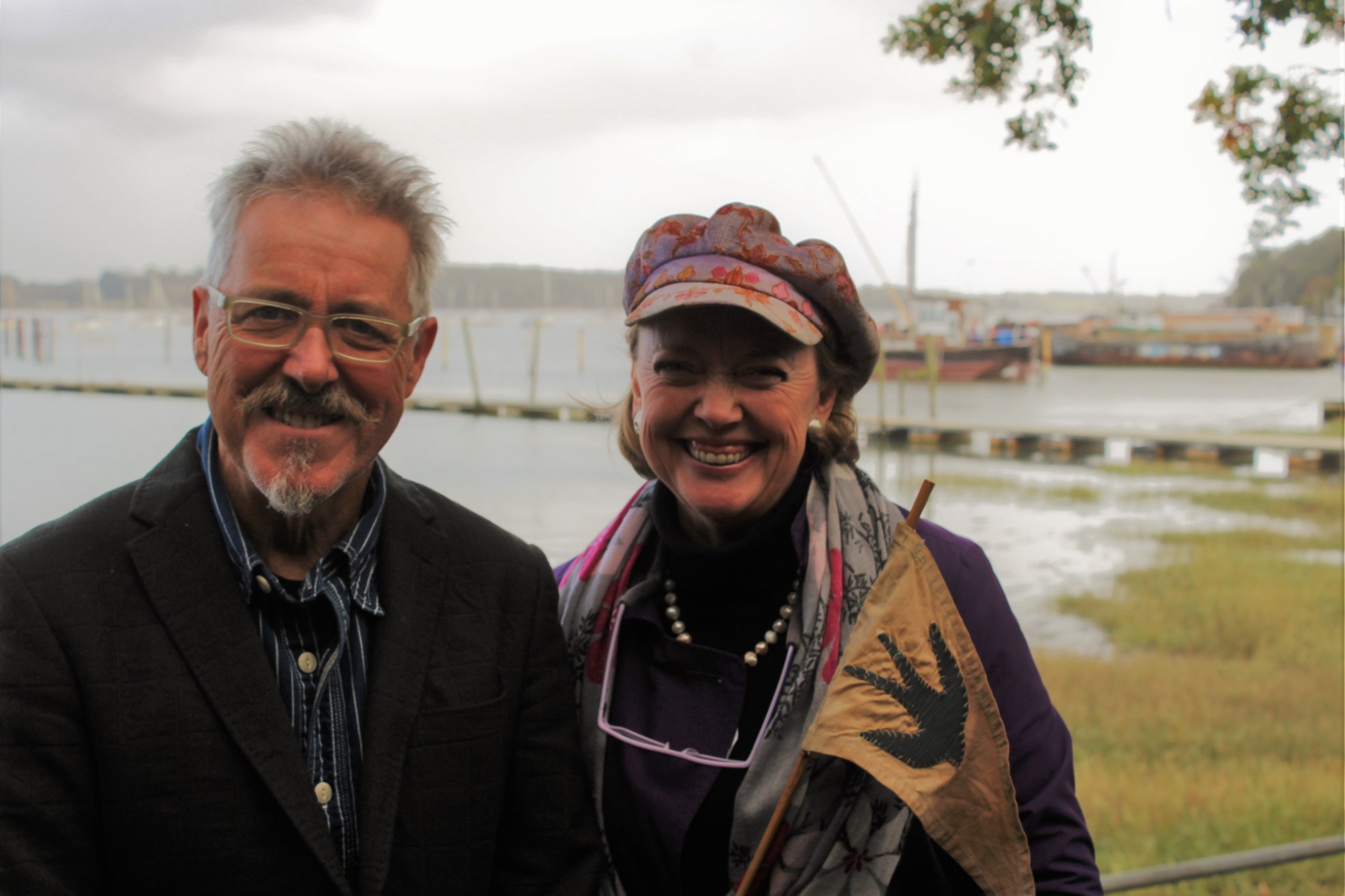
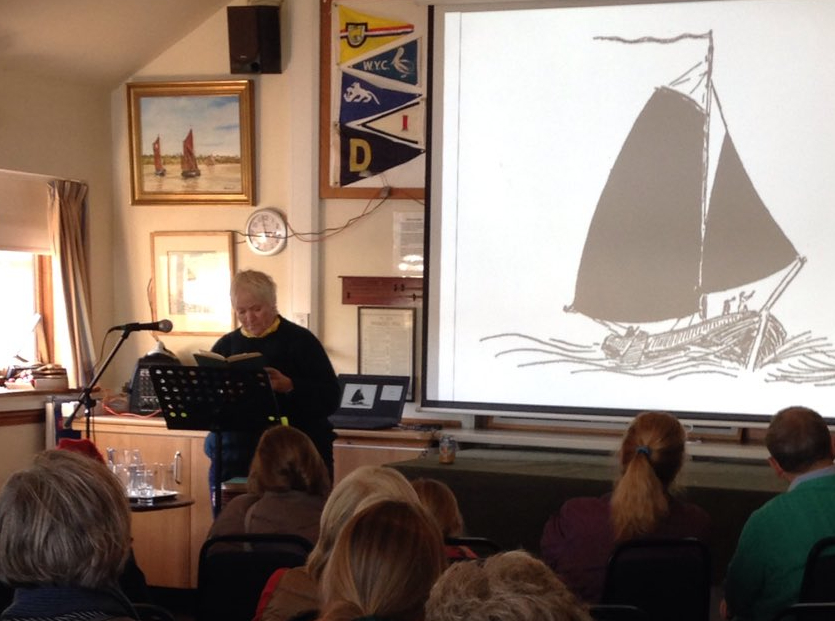
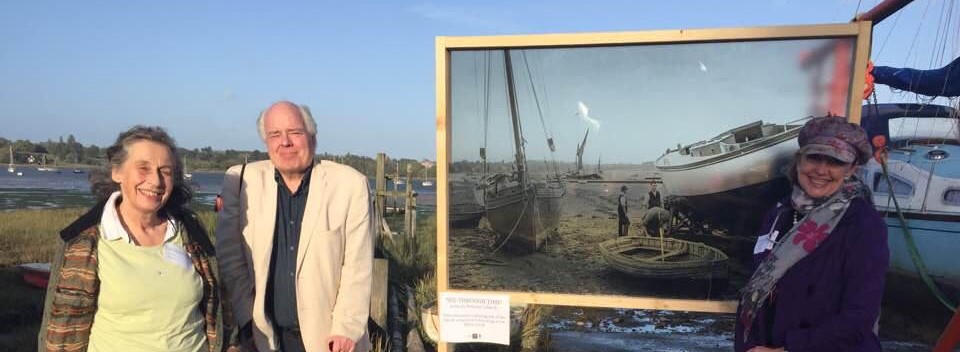
Sophie Neville on ITV News 2017ITV News interviewed Griff Rhys Jones and myself at Pin Mill in Suffolk, which was fun. We were taking part in a marathon reading of Arthur Ransome’s iconic book ‘We Didn’t Mean To Go To Sea’ with other authors including Libby Purves, Francis Wheen, Christina Hardyment, Julia Jones and Marc Grimstone. Ivan Cutting of Eastern Angles and Dan Houston, editor of Classic Sailor, also read chapters. You can read more about the event here.


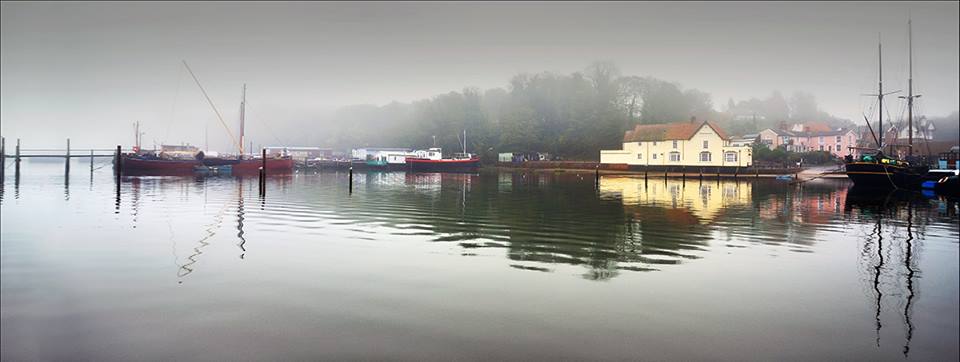
~Pin Mill on the Orwell ~ photo: Anthony Cullen(c)~

Arthur Ransome’s story begins at Pin Mill where the Swallows – John, Susan, Titty and Roger Walker, along with their mother and Bridget-the-ship’s-baby, are waiting for their father to take up a Naval posting nearby at Shotley. The four children didn’t mean to go to sea at all but somehow ended up sailing to the Netherlands in a terrific storm. I was asked to read the last chapter.

Griff Rhys Jones and Sophie Neville at Pin Mill 21st Oct 2017~Gryff Rhys Jones and Sophie Neville appearing on Anglia Television~

The reading, which lasted nine hours, was held to celebrate the 80th anniversary of the book’s publication in 1937.

Libby Purves

~Author and broadcaster Libby Purves reading about Dutch barges~

It has been profiled in the magazine Classic Boat and on the BBC News website. The event was organised by Peter Willis of The Nancy Blackett Trust who spoke at length to Lesley Dolphin on BBC Radio Suffolk

Julia Jones, Francis Wheen and Sophie Neville - photo by Anthony Cullen

~Julia Jones, Francis Wheen and Sophie Neville with a photograph taken by Arthur Ransome when his yacht Selina King was being built. Photo: Anthony Cullen ~

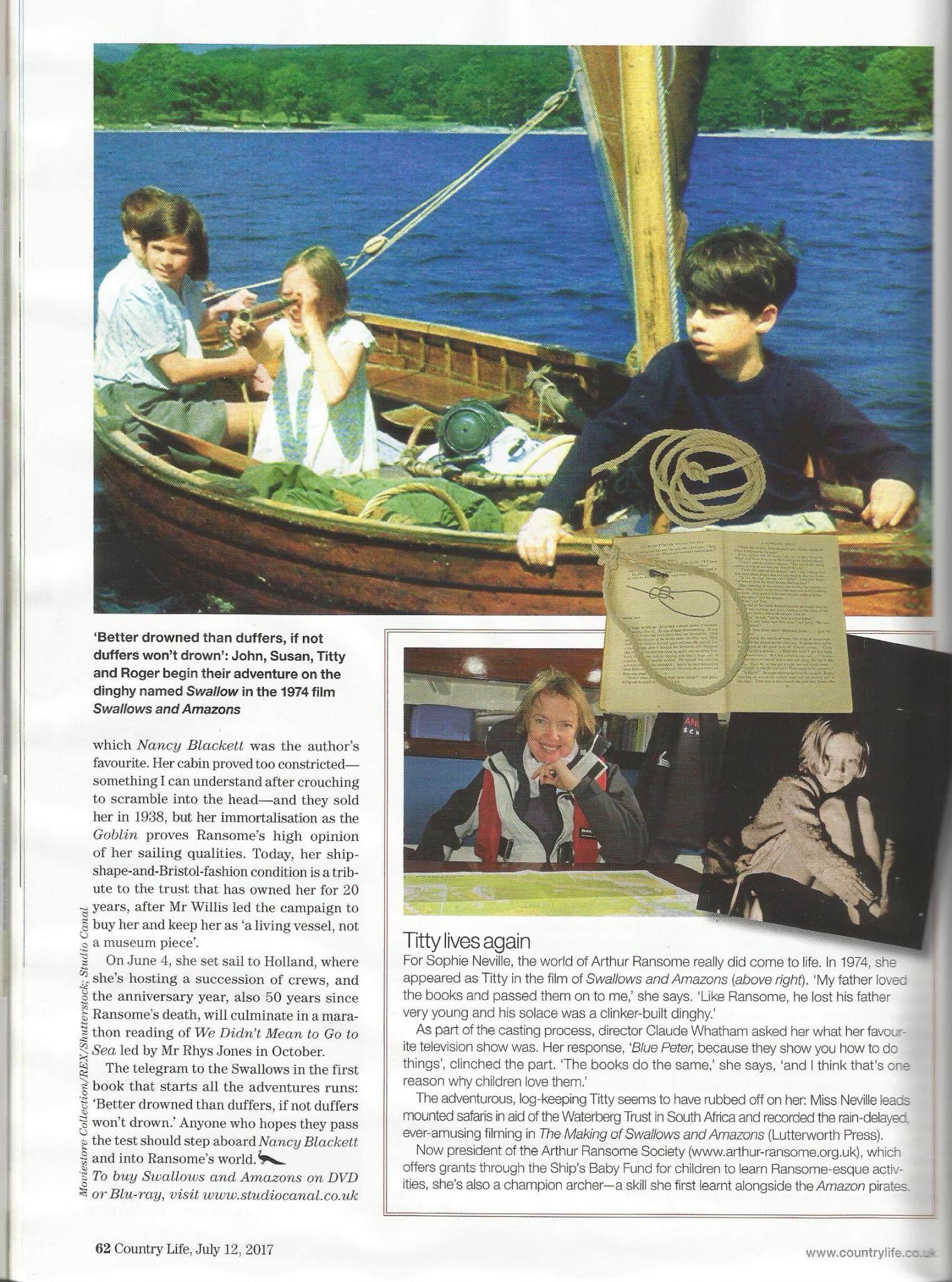
You can read about our adventures sailing Nancy Blackett this summer in Country Life magazine:
Sophie Neville profiled in Country Life magazine 12 July 2017

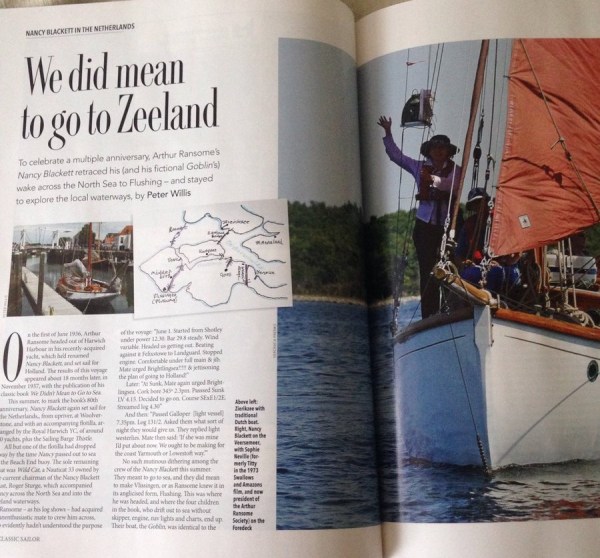
There are also photos of our cruise through the Netherlands on the Nancy Blackett Trust website, as well as a six page colour feature in Classic Sailor magazine. You can watch the ITV News clip here.

Nancy Blackett in Classic Sailor

Going back twenty years: Members of The Arthur Ransome Society alerted me to a BBC Children’s Television programme, which shows Griff Rhys Jones at Pin Mill in 1997 when he met Taqui Altounyan who knew Ransome when she was a girl. The Swallows were originally based on her family who learnt to sail in two clinker-built dinghies called Swallow and Mavis when they stayed at Bank Ground Farm (Holly Howe) above Coniston Water in the Lake District. I recently discovered the secret that Taqui was also the model for Captain Nancy in Ransome’s well-loved books.

Meeting up with Peggy Blackett – from the film ‘Swallows & Amazons'(1974)

Lesley Bennett in 1973

When the original feature film of ‘Swallows & Amazons’ was made in 1973, Peggy Blackett was played by Lesley Bennett, who was aged thirteen at the time. She can be seen here on location at Bank Ground Farm above Coniston Water in the Lake District.

For the last thirty-eight years, Lesley has been living in the Netherlands. I met up with her for lunch at Schiphol Airport on my way back from sailing Arthur Ransome’s cutter, the Nancy Blackett, through the inland waterways of Zeeland. (Please see the last two previous posts.) I nearly didn’t make the meeting. A man had been arrested for planting a bomb on a train just north of Middleberg, but the authorities must have acted quickly as I wasn’t delayed for long.

Lesley had brought along a blue file of documents and a number of black and white movie stills that she’d been given by Richard Pilbrow, the producer of ‘Swallows and Amazons’ (1974) on one of our last days in Ambleside after filming had finished. We could both remember them spread out on a table at the unit hotel so we could each chose the ones we appeared in. I had picked one where Lesley and I are sitting together, our hair bobbed in line with the 1930’s, I wearing a cream silk dress, Lesley in a dark top looking very pretty:

With Virginia McKenna on the first day of filming
~A publicity shot featuring Virginia McKenna, with Kit Seymour, Sten Grendon, Sophie Neville, Lesley Bennett, Simon West and Suzanna Hamilton, published in the Guardian and other newspapers~

Lesley’s parents, who lived near Tonbridge in Kent, originally learnt that Theatre Projects were looking for children to take part in the film when the Associate Producer, Neville Thompson, wrote to their local sailing club. Lesley explained that her father, who was very well organised, kept a copy of the letter sent to the Secretary of the club in January 1973.  Plans were made for Lesley to be interviewed for a part with her younger sister Lyn, who sadly fell ill and couldn’t make the audition. The letter contains a mistake that might explain why Lesley ended up playing Peggy when she was thirteen years old.

Lesley got on well with Kit Seymour who ended up playing her elder sister, Nancy Blackett – ‘terror of the seas’. Both girls would sail well and enjoyed being out on the lakes. Lesley told me that the reason why she held her hands between her legs in this photograph is that it was so cold when we were filming on Peel Island.

‘Kit would fold her arms and I’d try to keep my hands warm.’ Although I wore a cardigan in this scene, Swallows had been cold too. I remember thinking that at least the Amazons wore knitted hats. Otherwise their costumes were simple short-sleeved shirts and long shorts with black plymsols, worn without socks.

~Kit Seymour as Captain Nancy and Lesley Bennett as Mate Peggy in 1973~

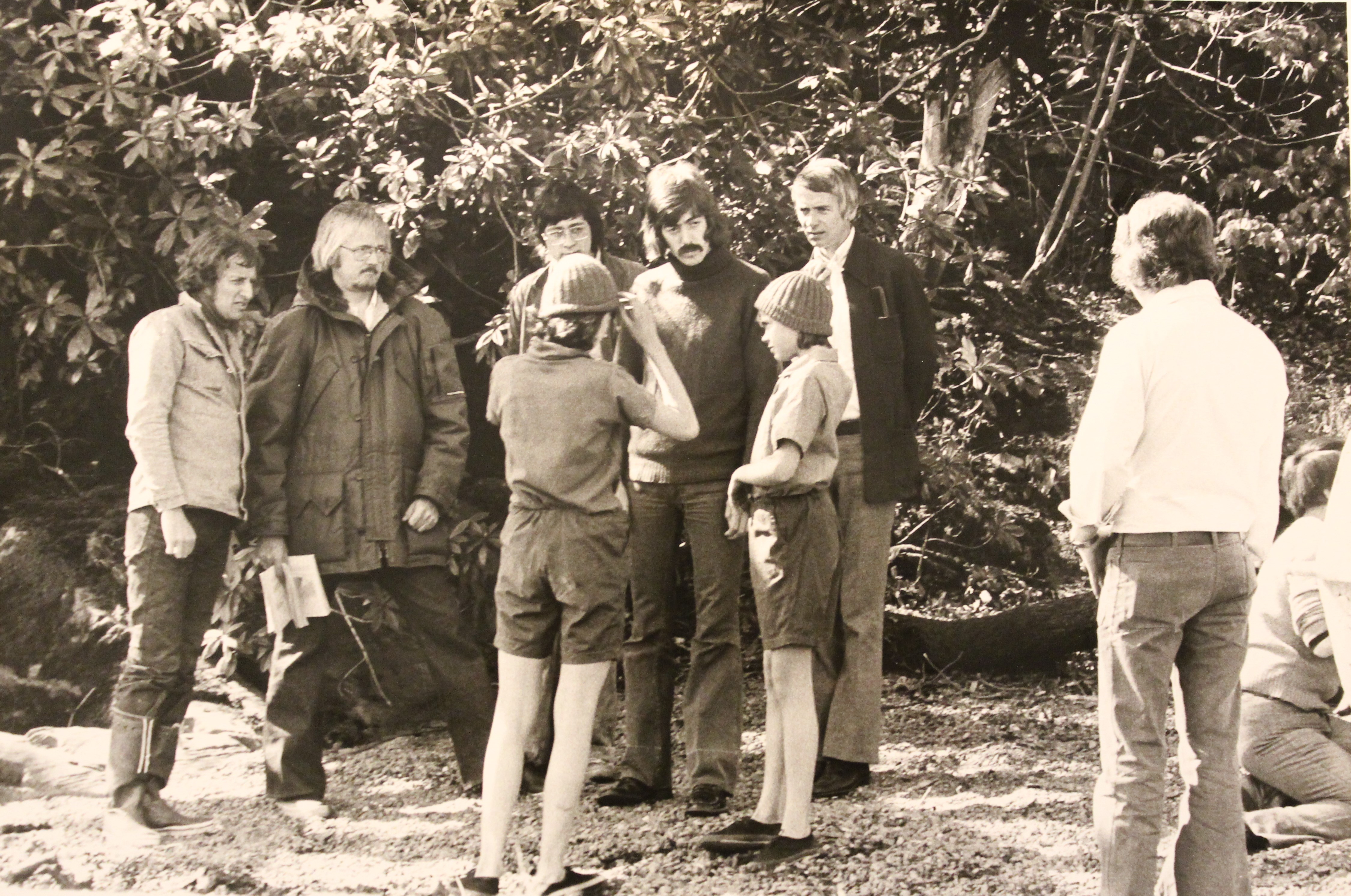
Lesley told me their hats had been quite a problem – not quite a full-blown movie disaster but a they caused consternation in Consiton. The first scene the Amazons shot was set in the garden of Beckfoot, the Blacketts’ house. Although it does not lie on the ‘Amazon River’ at the northern end of the lake, Brown Howe on the western shore of Coniston Water was used as the location and the crew set up the 35mm Panavision camera, along with reflector boards and enough lighting to bring sunshine to Westmorland. When everyone on the production was ready, Gareth Tandy, the third assistant led the Amazons down to the set wearing red knitted stocking caps – with no bobbles. Beanies were not quite what either the director or producer had expected. Lesley has a photo showing the great discussion that ensued:


~Director Claude Whatham, Producer Richard Pilbrow, 3rd Assistant Director Gareth Tandy, Make-up Artist Peter Robb-King, Hairdresser Ronnie Cogan and Associate Producer Neville Thompson with Kit Seymour and Lesley Bennett at Brown Howe on Coniston Water in May 1973 ~

In the end Claude Whatham shot the scene with the girls bare-headed, their hair blowing all over the place, even though it was meant to be ‘dead-calm’ in the story.  This looked natural as they were at home but they needed to look like pirates in every other scene.

~Nancy and Peggy running down to Amazon at the Blackett’s house Beckfoot~

Wooly hats with ‘longer ends’ were knitted locally at some speed. Red is not a good colour on the screen. I remember a couple of bright pink ribbed bobble-hats arrived when we were filming on Peel Island but they were deemed a complete disaster and rejected in favour of scarlet ones originally described by Arthur Ransome even if the colour might look a bit jarring on screen.

Emma Porteous, the costume designer, was back in London. No one on the production knew anything about knitting or subtle shades of wool. When the third pair of hats arrived we were all a bit worried about the fatness of the bobble-end, as they didn’t quite match the illustrations in the books, but no one knew what else to do. Time ran out and the producer was forced to compromise. ‘They were warm but prone to flop about,’ Lesley said, ‘and sometimes flopped forward, which looked a bit silly.’ I’d never noticed this but it was captured in one photograph:

Kit Seymour and Lesley Bennett as Nancy and Peggy Blackett in 1973

Mum was given the pink version of the hats. She kept them for years but no one ever wore them.

You can read more in the paperback ‘The Making of Swallows and Amazons (1974)’, or in this ebook for sale at £2.99