Memories to add to the third edition of ‘The Secrets of Filming Swallows and Amazons’ – part two:

Since the experts on BBC Antiques Roadshow have been taking an interest in the original feature film ‘Swallows and Amazons’ (1974), I thought I ought to add to a few facts. Although the movie was released forty-seven years ago, the cast list remains incomplete. A few credits are missing:

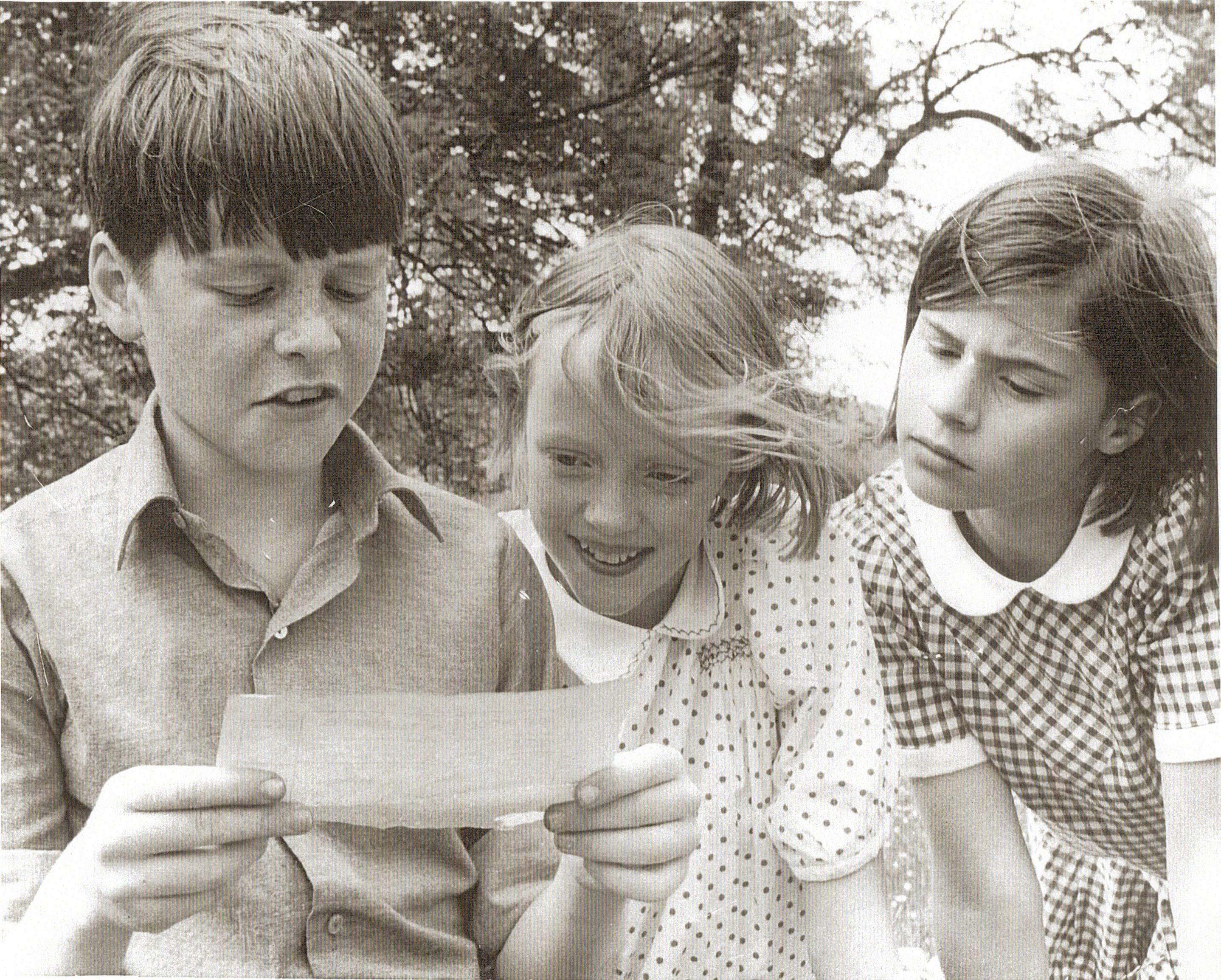
Jim Stelfox was in uniform, playing a guard or station master at the Haverthwaite Steam Railway station in the opening scenes, when the Swallows first arrive in the Lake District. He ended up appearing in some of the publicity stills that were used in magazines and newspapers. One features on a jigsaw puzzle that accompanied the release of the movie. The little boy leaning out of the train window is Robin Smith, who grew up in Ambleside. He came along with his mother Eileen and his brother, Alan Smith, who became a newsreader on BBC Radio 4.


Kit Seymour, Sten Grendon, Sophie Neville, Lesley Bennett, Virginia McKenna, Simon West Suzanna Hamilton with Jim Stelfox, the station master.

David Watkin Price, also from Cumbria, played the native on the jetty in Rio. His speaking part was cut from the television version of the film broadcast on ITV but remains in the remastered 2014 cinema Bluray and DVD available online.

Mr Price played an important part in our lives when the film was being made as he owned and ran the Oaklands Guest House in Ambleside where we stayed. His daughter Jane, told me, ‘They wanted you to stay in a place that had a family atmosphere with other children.’ I expect that she did a lot to help.

David Price who played the part of the Native in Rio with his family in Ambleside. They ran the Oakland’s Guesthouse ~ photo: Daphne Neville

Jane appeared with her two brothers as film extras in the Rio scenes, remembering that it gave her a day off school. Sadly, her little brother’s knickerbockers kept falling down. You can see Jane in a grey dress with long pigtails,  hoiking them up in this behind-the-scenes shot. To see other photos of the Price family in costume, please click here.

The Price children in their 1929 costumes on the shore of Windermere, 1973

The people of the Lake District have written in with other stories. Philippa Poulson knew the real charcoal burner, Norman Allonby – ‘I lived around the corner from him in 1973. He lived in a tiny one up, one down traditional cottage, walked everywhere, and made a lovely cup of tea. He was very interested in my English Literature A’ level course, being a keen reader. I wonder how many people know he knew Paradise Lost and Paradise Regained, by heart, and in their entirety and could recite any part, at any time, on request. He would happily talk for hours on the subject, with a twinkle in his eye and his pickle catching front tooth. Lovely, gentle man, living life at the right pace.’ You can read more about the real charcoal burners of Grizedale Forest here.

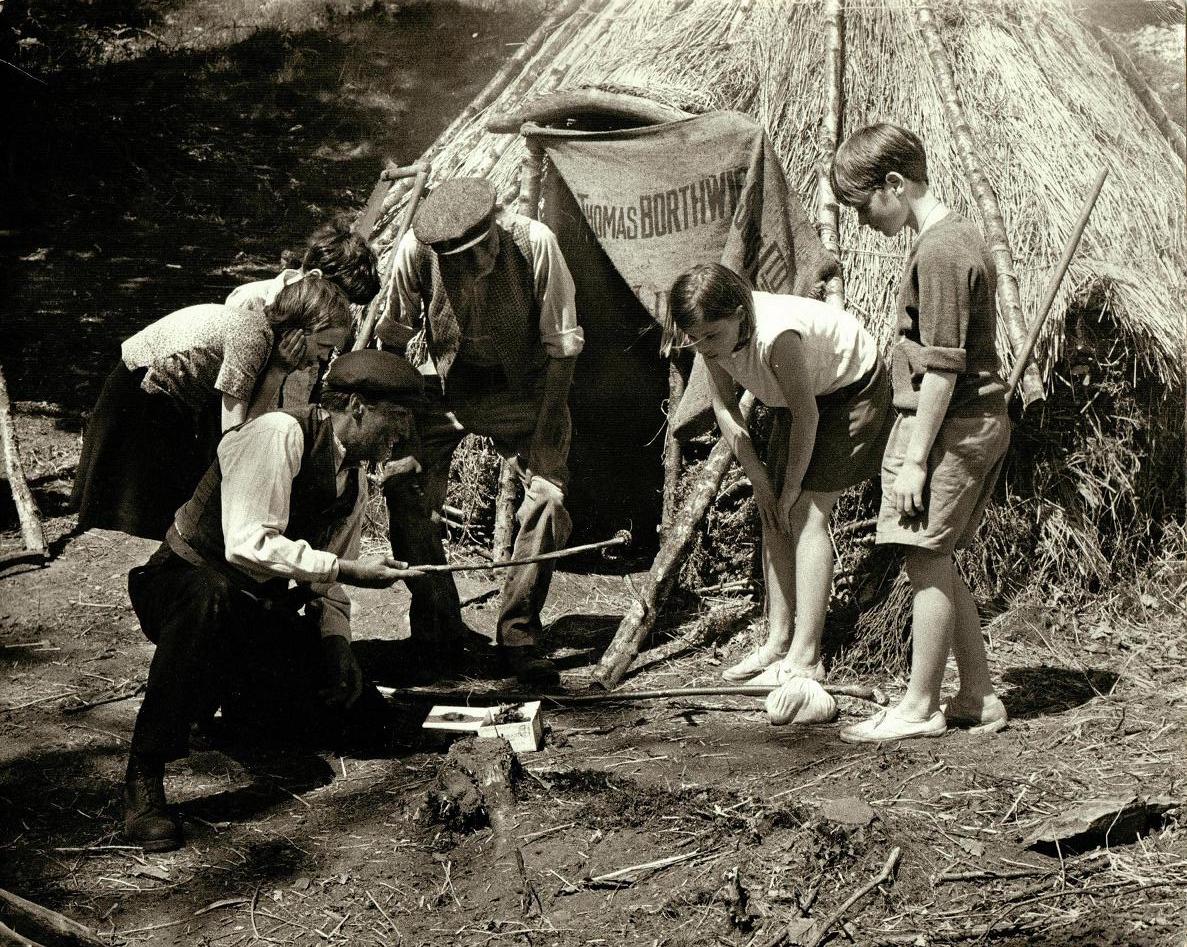
The real charcoal burner
The real charcoal burner outside the hut. Behind him the 35mm Panasonic camera is being mounted on a short section of track ~ photo: Daphne Neville

Susie Trezise said, “I remember them filming ‘Swallows and Amazons’ – it was right in the middle of my O’Level exams and their walkie-talkies kept coming through my stereo speakers! It was fascinating listening. I lived at Stock Ghyll Mill, so about five miles away from the filming. The strangest thing was it still came through the speakers when they were turned off but still plugged in!”
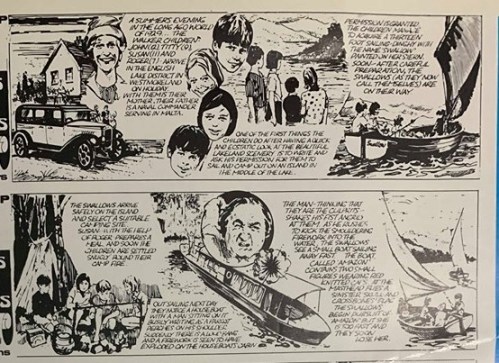
~Comic strips based on the 1974 film found by Arthur Herbertson~

Joss Bundy wrote to say: “My Father, between being the technical director of the Royal Opera House and the National Theatre, worked with Richard Pilbrow at Theatre Projects in the ’70s. He had been a friend of Richard’s for many years. Theatrical lighting design was still in its infancy and designers tended to stick together. Richard and my Dad were the founders of The Association of Lighting Designers, along with various others.
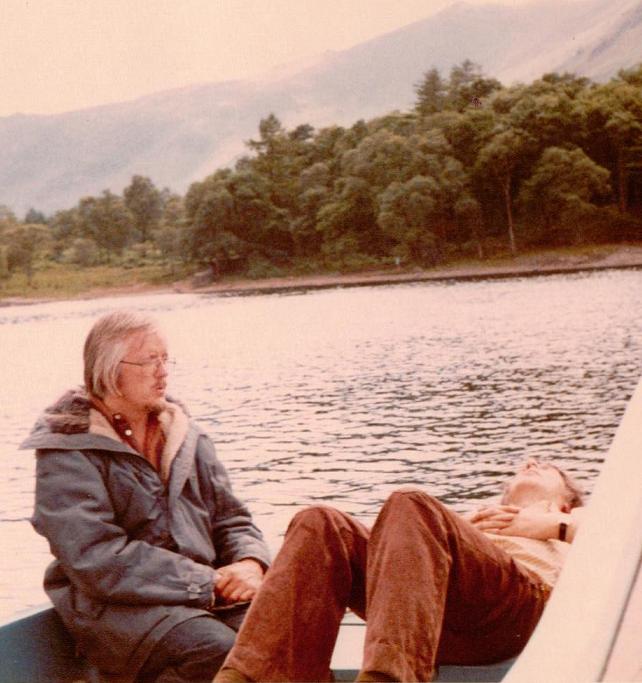
Richard Pilbrow and Neville Thompson ~ photo:Daphne Neville

“My mother, Rosemary Lindsay, had been a ballerina at the ROH, which is where they met. My Mother had sailed since a small child and had devoured each new Ransome book as it was published and loved them more than any others. When Richard mooted the film, my father mentioned what an expert Rosemary was and when the project was getting up on its feet she was given an early script to vet. Various things had been added in for dramatic effect and she vetoed one: Roger getting stuck on top of a cliff, as she felt John and Susan would never have let him get in such a situation.”

“I was clearing yet another box of theatre-related photos and as well as a couple of publicity stills.” One shows filming the Amazon boat house. “I can only assume Richard or Molly sent them back to my Dad, who would have been running Theatre Projects while Richard was away.”

“After the film was finished, Richard offered Swallow to my Mum, but she didn’t want the responsibility of another wooden boat. We still own the one she sailed as a child, a smaller version of a Swallow type boat. She also felt that a boat only sailed in fresh water would not necessarily do well in salt water.”


Do add any memories you have to the Comments, below. It would be lovely to hear from you.
 
It would be great to have some more review on the film on the International Movie Database. You can easily add one here.
 

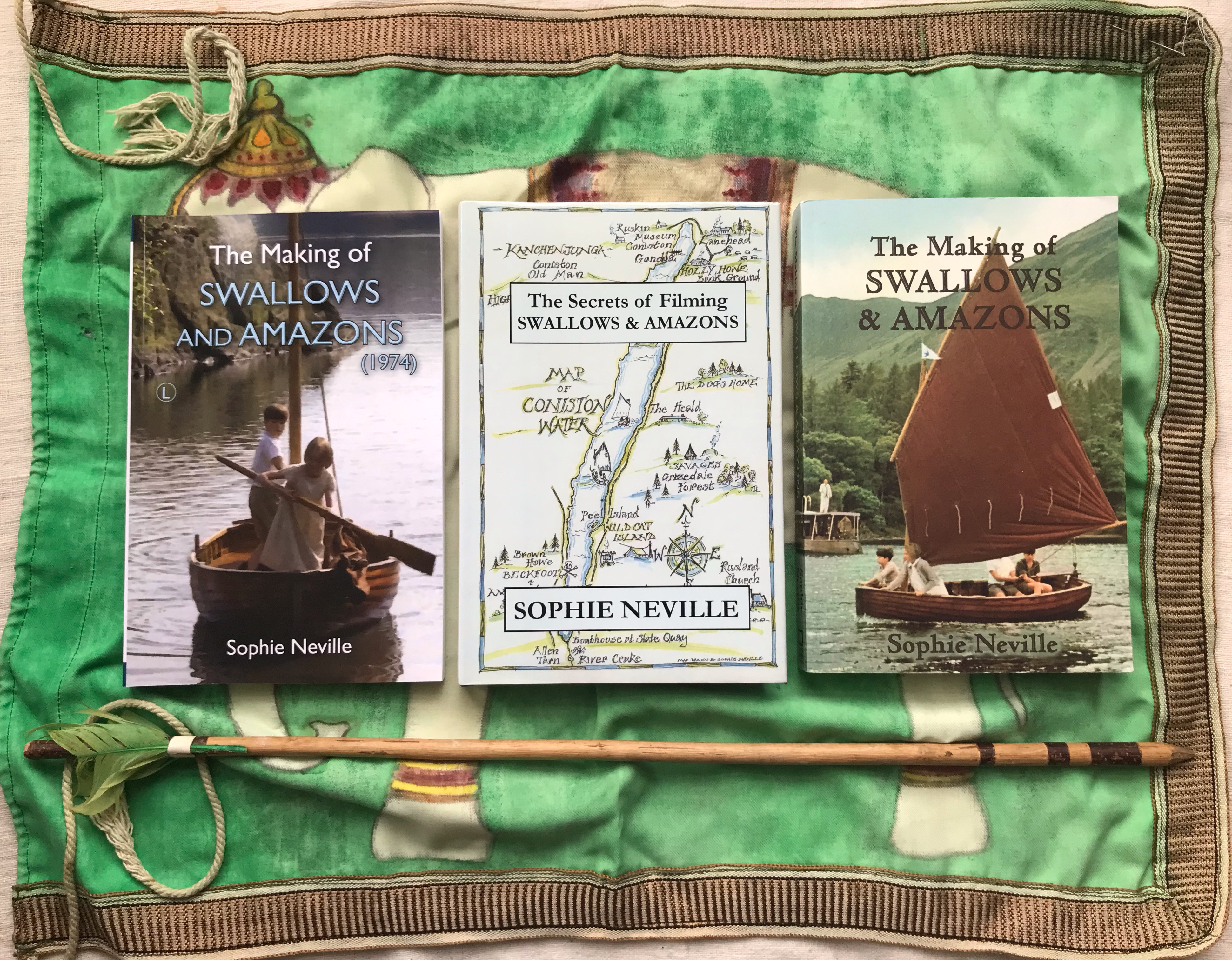
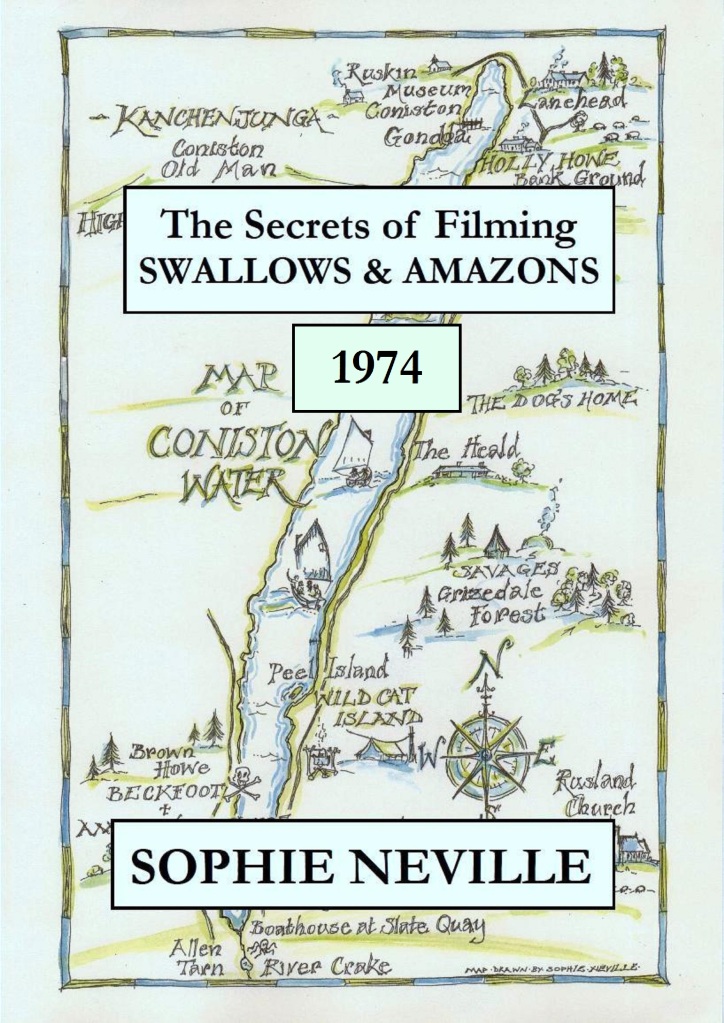
You can read more in the ebook about ‘The secrets of filming Swallows and Amazons (1974)’
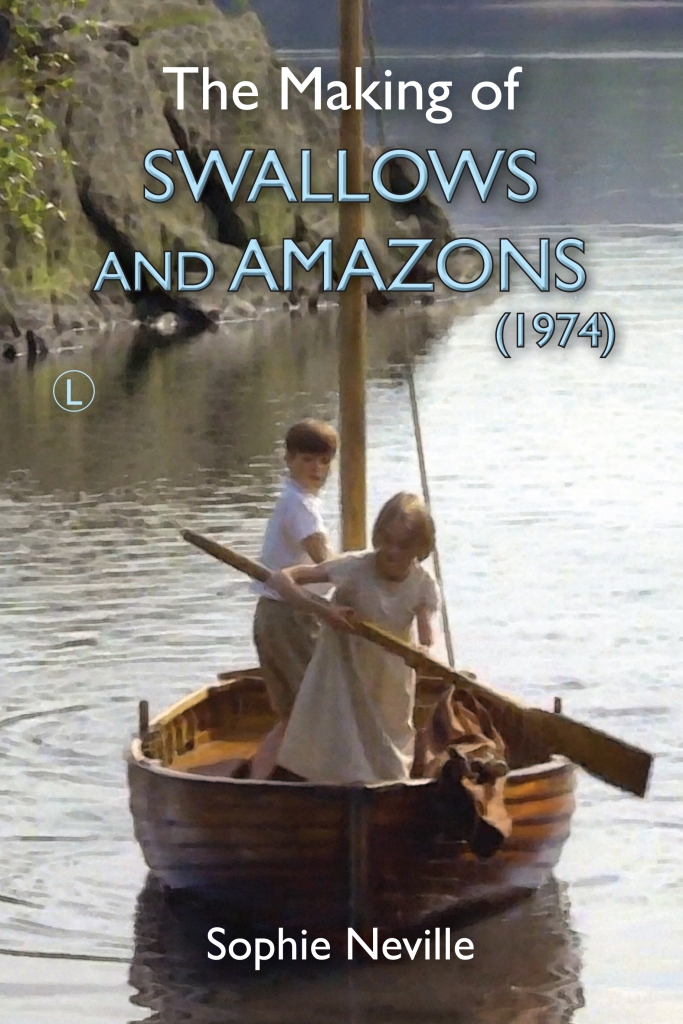
and  ‘The Making of Swallows & Amazons’ in paperback.
You can see some of the illustrations here:

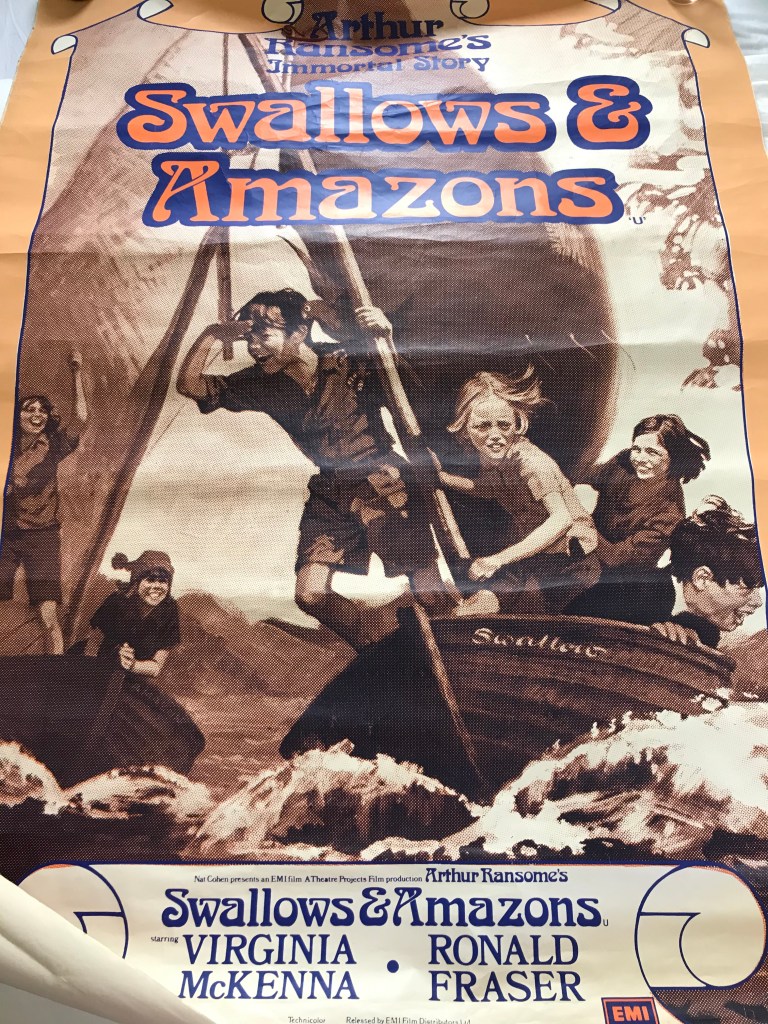
Swallow appeared on BBC Antiques Roadshow at Windermere Jetty with a movie poster from the original film of Swallows and Amazons (1974)

When Lakeland Arts declared that Antiques Roadshow was coming to Windermere Jetty, I sent the BBC a photograph of some of the props used in the 1974 film of ‘Swallows and Amazons’.

Swallow’s burgee made in 1973 for the original film of ‘Swallows and Amazons'(1974)

I was hoping their expert on movie memorabilia might be interested in the film posters, but couldn’t think that a hand-whittled hazel bow and arrow could be worth much.

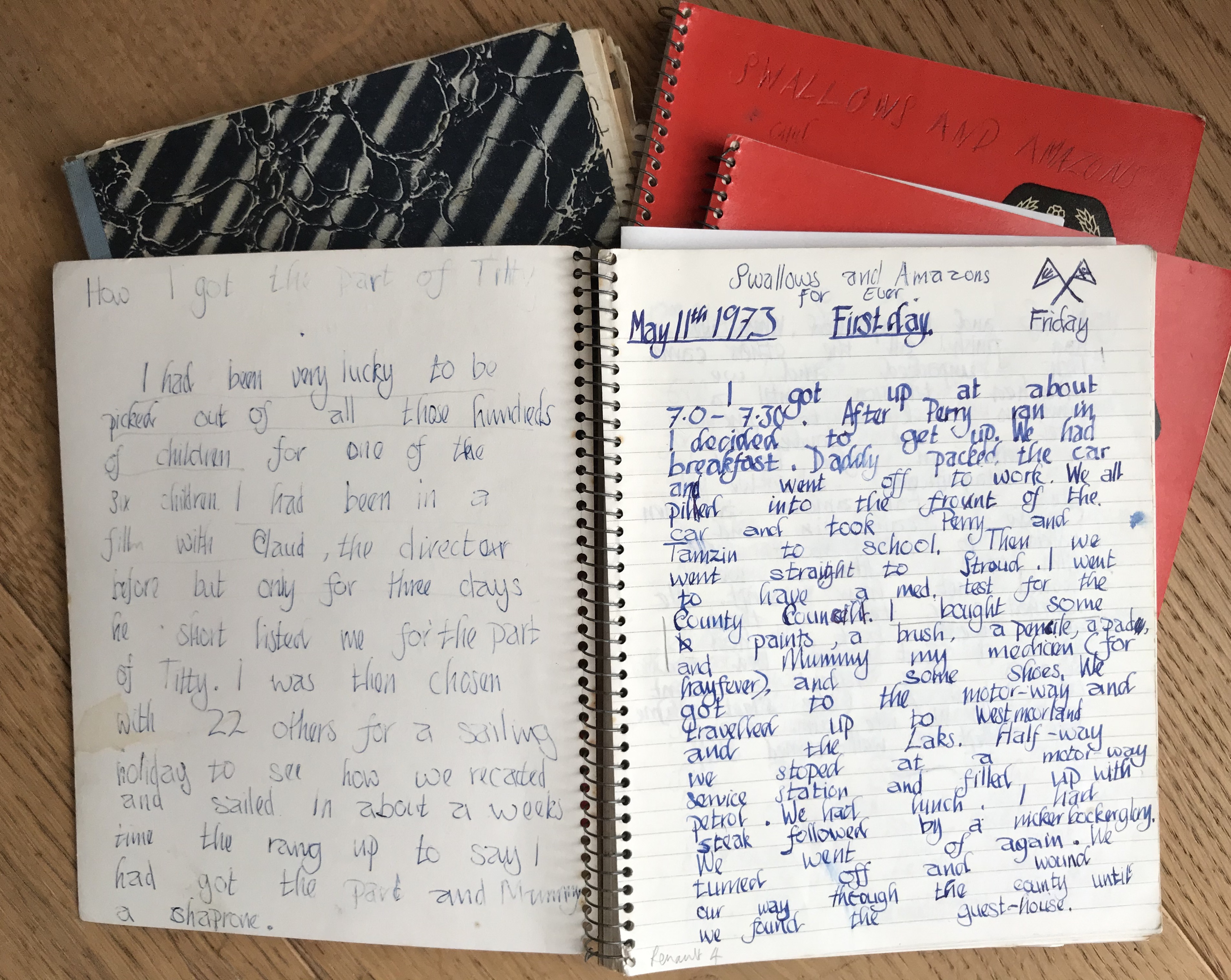
Diaries kept on location in 1974, which form the basis of ‘The Making of Swallows and Amazons’

I was keen to talk about the scrapbooks and diaries that I’d kept on location and thought they might want to use photos my father took of George Pattinson whose collection of boats formed the basis of the original Windermere Steamboat Museum. He brought along his 1900 steam launch Lady Elizabeth to Bowness-on-Windermere when we shot the Rio scenes in the summer of 1973 . She was being restored at the museum.

George Pattinson in his steam launch Lady Elisabeth in 1973 ~ photo: Martin Neville

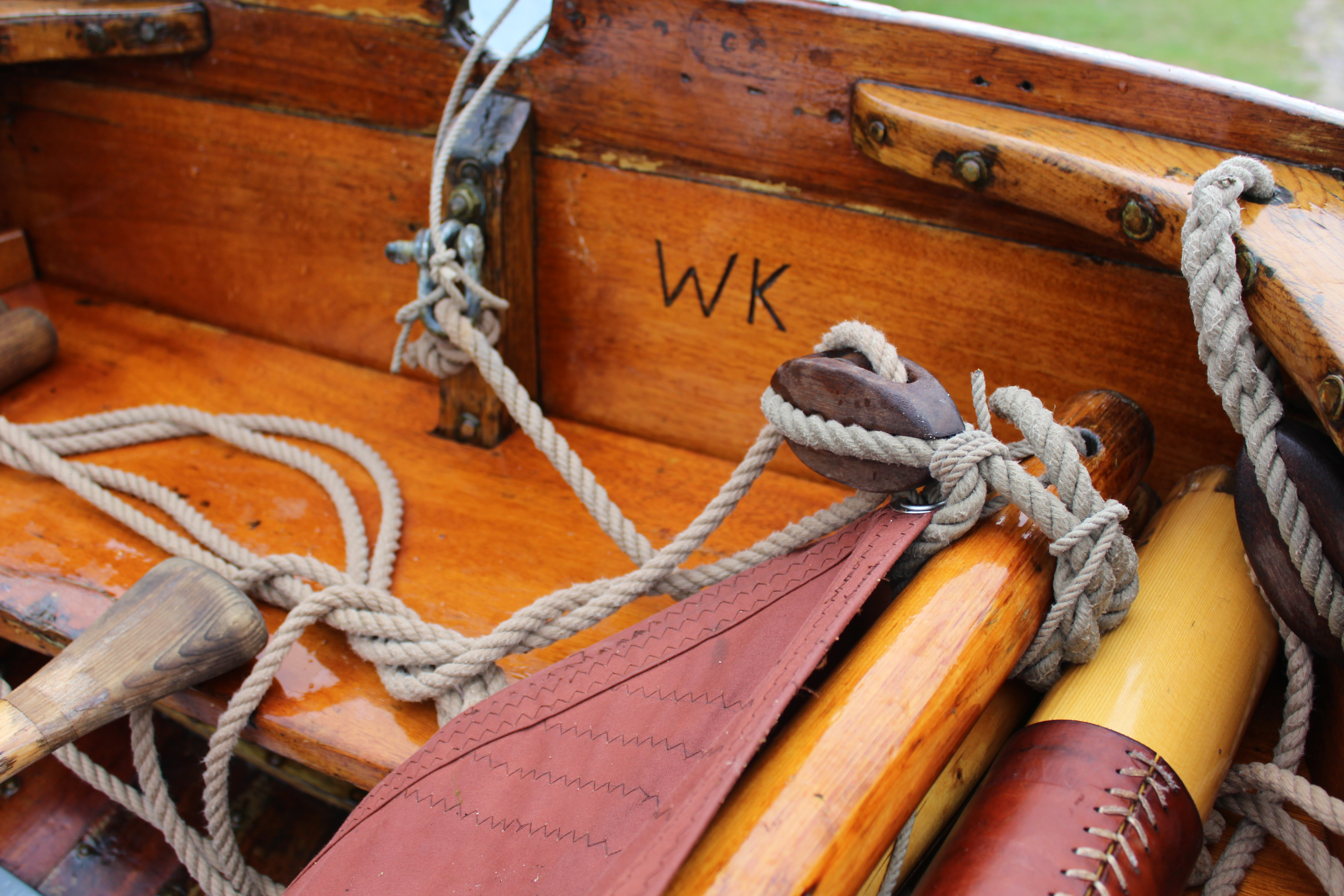
I also suggested they featured Swallow the dinghy we used in the film. A group of us clubbed together in 2010 to purchase her when she came up for auction.

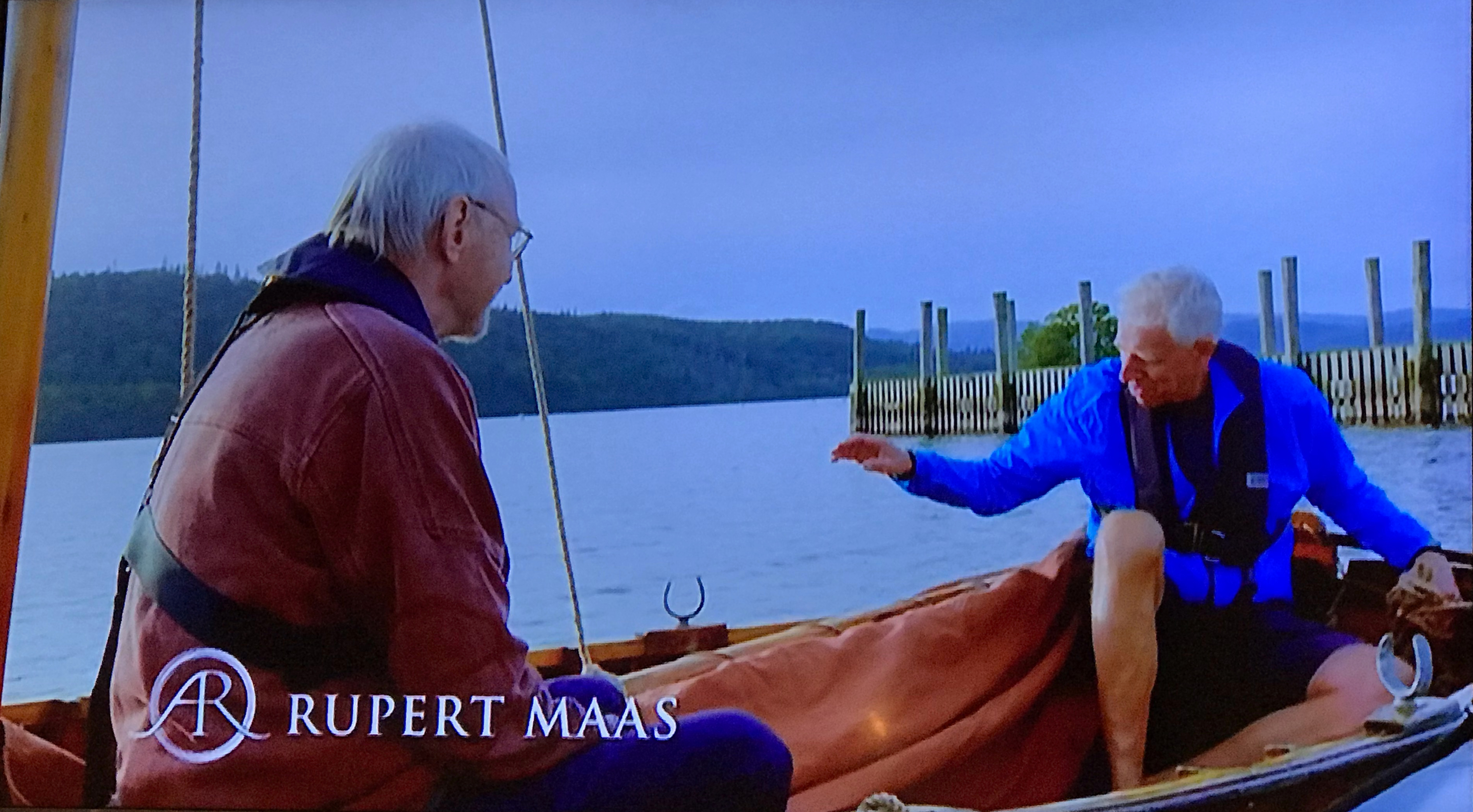
She was valued by Rupert Maas who is a great fan of Arthur Ransome’s books and watched the film himself as a boy. He liked the fact she hadn’t been over-restored. I didn’t know her ribs were made of elm.

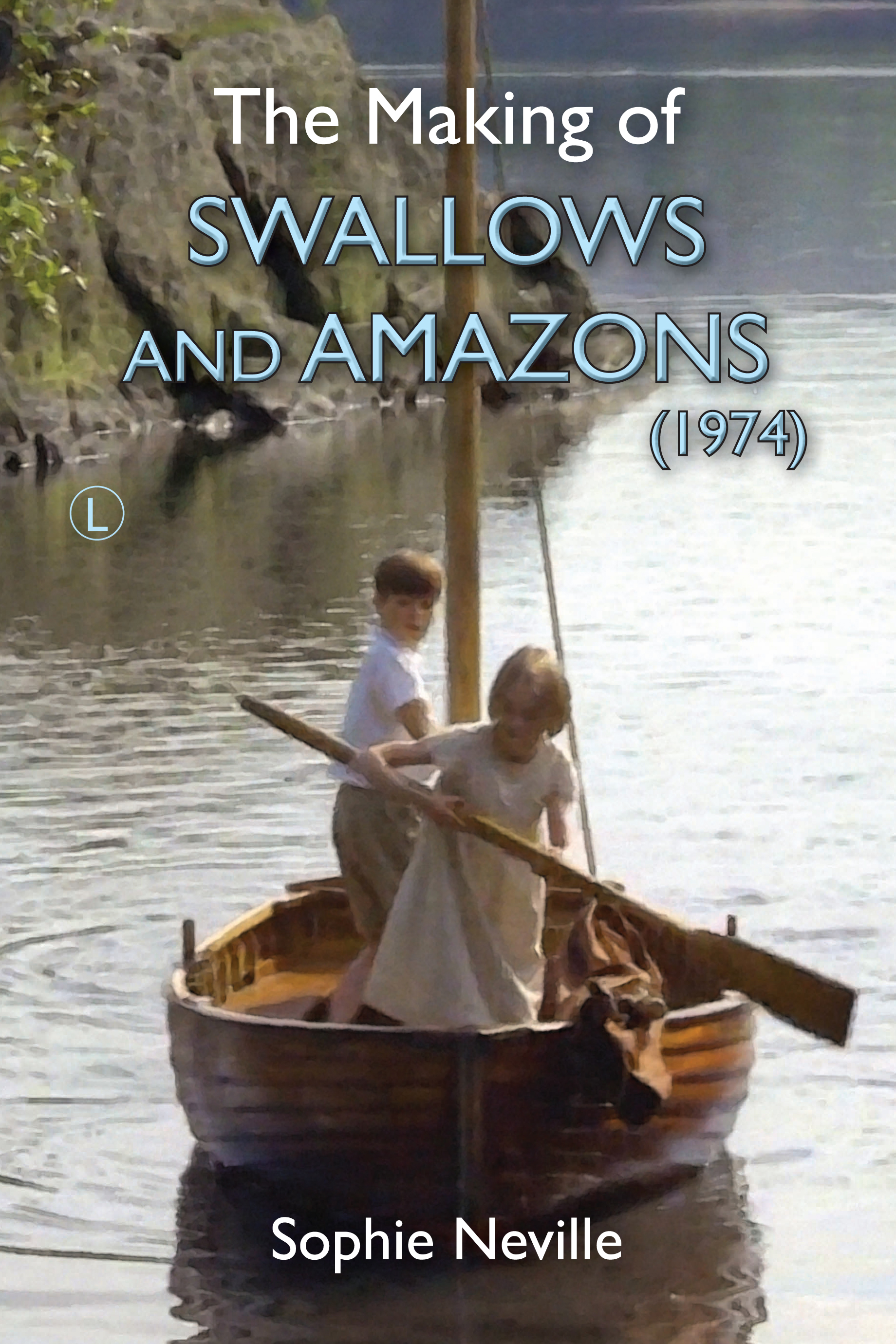
The best photograph of Swallow under sail was used on the cover or the first edition of my book about making the 1974 film:

This first edition is now selling for ridiculous amounts on Amazon, but please email me if you’d like a signed copy. I have a few left.

You can order a copy of the 2nd edition online here

If you enjoy ebooks, ‘The Secrets of Filming Swallows and Amazons’ has links to behind-the-scenes home movie footage. It is available for £2.99 here

The billing from the Radio Times lists the other interesting items on the show. You can watch the episode, mostly shot on a lovely sunny day, on BBC iPlayer. Further details are reported here.

If you would like to find out about sailing ‘Swallow’ yourself, please contact Sail Ransome.

I might appear in the second of the two episodes broadcast from Windemere Jetty – the one shot in rain.

When the BBC rang inviting me to come up, it was clear that I was the antique they wanted to see. The first thing they asked me was my date of birth. This turned out to be due to Covid-19 restrictions but the director did, later, ask if she could call me Titty.

BBC Antiques RoadShow at Windermere Jetty in Cumbria

Filming was already in progress when we arrived at the museum. It was a typical day in late September, pouring with rain.

There was a great deal of impressive camera and lighting equipment in evidence but a number of marquees had been erected to keep everyone dry.

We were introduced to the designer, who whisked off various items I’d brought with me to display, and Marc Allum, antiques expert, author and long-time contributor to the Roadshow. He’s tough. It wasn’t freezing but the weather was far from warm.

BBC Antiques Roadshow Expert Marc Allum

Once at the water’s edge I met Debbie, the director who was surprised by the length of my hair. I explained it had grown during lockdown having not been cut for a year.

My position was marked by small sticks in exactly the same manner as during the filming of ‘Swallows and Amazons’ when I was aged twelve. Camera tape would not stick to the slate shingle.

A measuring rod was used to ensure we remained two meters apart, even whilst on camera, before I was asked to take up the bow and arrow I had helped whittle on location long ago.

Expert Marc Allum setting on a display of movie memorabilia with Sophie Neville

The display included Swallow’s burgee. I did ask for the flags to be crossed, but the significance of this was lost on the design team. You will have to write in and explain the importance.

When it came to being given an estimate for the value of what my husband calls ‘my junk’, I was truly amazed, especially since I nearly chucked half of it away in a fit of de-cluttering.

I am sworn to secrecy, so you’ll need to watch the show to find out how much my collection of movie memorabilia is meant to be worth. It should be broadcast on Sunday 21st February 2021 – but will I be on? I know they will feature Swallow this week but my item could either be featured in a different episode or hit the cutting-room floor.

We talked about the film premiere and influence the Swallows and Amazons books have had in encouraging children to get out into the wild.  As I walked around the museum afterwards, I found the Lady Elizabeth being restored, which you can see in a previous post here.

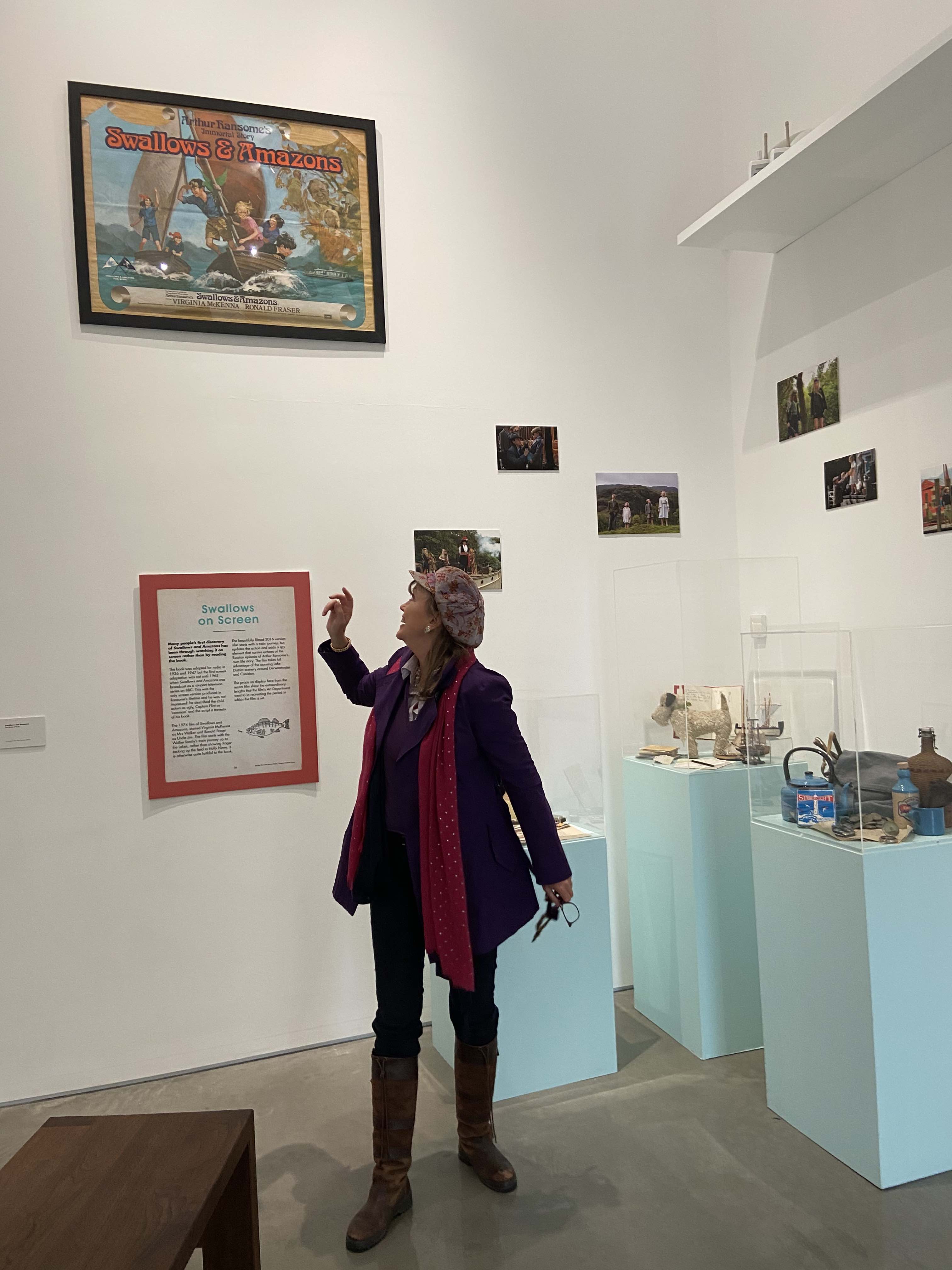
There is already a movie poster at the Windermere Jetty museum. I dug out a large, sepia poster designed for cinemas that has not been seen since 1974 but the BBC were not able to feature these for copyright reasons. Since receiving a valuation, I am getting it framed. You can read more about the artist, Arnaldo Putzu on this website here.

Quotes for the 3rd edition of ‘The Secrets of Filming Swallows and Amazons (1974)’

Movies are made for watching. In the end, they belong to those who love them and it is wonderful to hear of the impact they have had on people’s lives.

The screenwriter Caleb Ranson wrote: “You’ve no idea how thrilling this is for me to hear from you. Swallows & Amazons was a life changing cinema visit for me, set me off on my path writing/producing TV/films. I played the soundtrack album every night for years. And I love your book BTW, bought it when it first came out.”

Paddy Heron of Children in Read describes the movie Swallows and Amazons(1974) as “a national treasure of a film.”

Nigel Seymour wrote to say, “that the original film has an ambience which cannot be calculated.  It sits in time, yet it is as fresh as if it was made yesterday!” An international musician today, Nigel believes, “It possesses a simplicity of life we’ve lost, so watching it is a refreshing reminder of great days… a journey into another dimension and another world steeped with love and belonging, adventure and moral understanding, which is shared between a family and accepted. The characters are brought to life almost as if they are an infinite, integral part of the immortality of the story, each giving that picturesque understanding the viewer finds impossible to explain. After watching this film one arrives back in real time with a resounding bang! We wonder why such a simple story can create such an iconic understanding. Why watching this film can make you feel happy, totally complete and yearning to return again and savour that wonderful, eternal landscape we have all learned to grow  and love as the Lakes.”

Tracy Kenny from Ketts Books wrote: “Swallows and Amazons is a firm family favourite in our house and for a while there, your movie was the only film my eldest would watch!”

The author Catherine Randall said: “I lived and breathed Swallow & Amazons including your film. Knew nearly all the words!”

The fan letters continue to arrive. Each one treasured.

Nigel Young writes: “‘Swallows and Amazons’ is one of those films which sets itself  in that timeless space no one can quite fathom or understand, almost verging on ‘Immortality’.  I’m sure no one at the time working on it ever thought the film would achieve the cult status it seems to enjoy today. You are possibly smiling when you read this, but it’s a true reflection of a film, which is more than a film and touches on those beautiful innocent moments and times which have been lost forever.”

Charles H Ball wrote: “‘Swallows and Amazons’ was instrumental in helping me through a very stressful period of my life… I will be obtaining ‘The making of Swallows and Amazons’ and no doubt many more of your other publications in due course. “

C.H.B. left a review of ‘The Secrets of Filming Swallows and Amazons’ writing: ‘the feelings of anybody who would have loved to have had the opportunity of actually taking part in the film are summed up by Nancy Blackett when the D’s are explaining how they managed to get to the North Pole a day earlier than planned. ‘And you two came by yourselves and got here through that blizzard?’ said Nancy. ‘However did you find the Pole?’ ‘The blizzard helped really,’ said Dorothea. ‘We were sailing,’ said Dick………..’And we’ve gone and opened the stores,’ said Dorothea. ‘And eaten some of them. You see we lost our food when the sledge turned over and the mast broke…’ ‘Capsized!’ cried Nancy. ‘Mast gone by the board! Oh. you lucky, lucky beasts!’ Some of us will forever envy the lucky children who had the opportunity of a lifetime.

I hope to include all these quotes in the 3rd edition of ‘The Secrets of Filming Swallows and Amazons’, to be brought out for the 50th Anniversary of the films release in April 2024. Do leave a comment below or write in, letting us know what the film meant to you or how it effected your life.

Charcoal Burners at Hill Top – Arthur Ransome’s last home in the Lake District

A guest post written by Stephen Sykes of Hill Top, Ealinghearth, Haverthwaite:

There are two farmhouses in the Lake District both called Hill Top and both once owned by famous children’s authors – and just a few miles apart. One, of course was Beatrix Potter’s, and the other was the last home of Arthur Ransome, which my wife and I purchased in 2012.

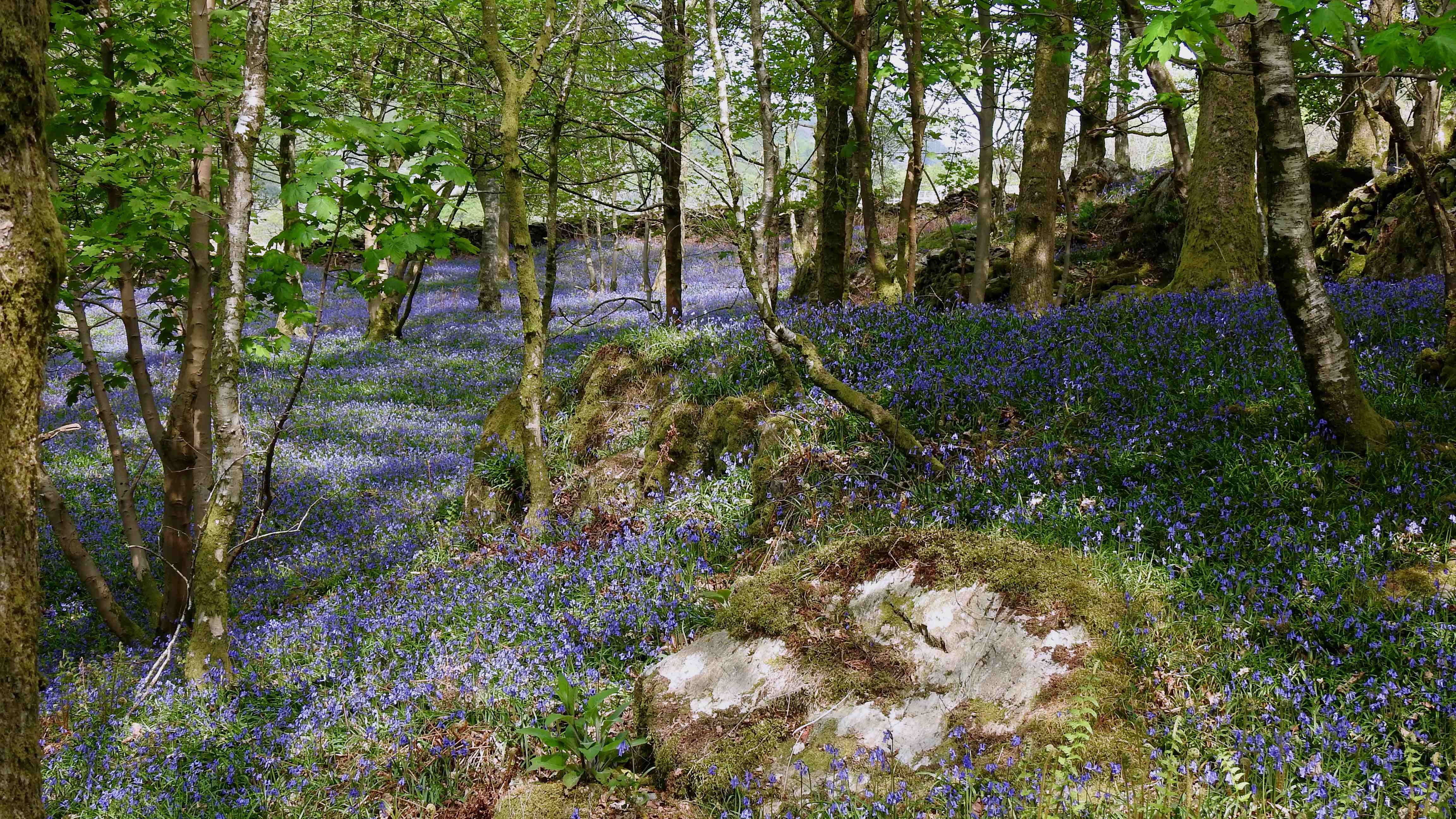
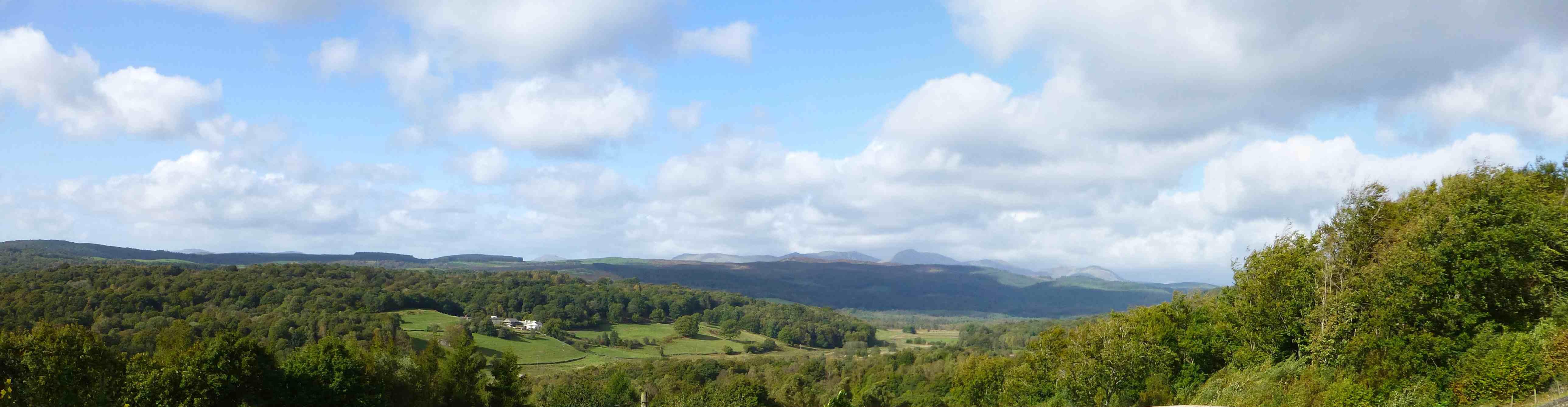
More recently we acquired the adjacent wonderful ancient woodland of some seven and a half acres. With its precipitous rock faces, mighty oaks, gigantic gnarled yews and dazzling carpets of bluebells in the springtime, Backhouse Brow (as it is known) entirely fulfils The Woodland Trust’s epithet: “home to myth and legend, where folk tales began”.

There are the evocative remains of long-gone human activities too. Coppiced sycamores evidence a traditional form of woodland management historically used in the area to satisfy the insatiable demand for charcoal required to service the long-ago thriving iron industry in Backbarrow, just a half-mile away over the hillside. And within Backhouse Brow can be found numerous archaeological remains left by the charcoal burners and their activities, once a common sight in this area of South Lakeland. Long-disused trackways still clearly make their way up and across the woodland. Levelled spaces – knowns as pitsteads or platforms – for creating kilns or piles to burn charcoal are still in evidence.

Circular stone base of a charcolburners’s hut

Ancient walls in various states of decay both encompass the woodland and subdivide it. And most evocatively of all, there are the more personal remnants of the lives of the charcoal burners themselves. In addition to a much-rusted shovel or two, can be found the tumble-down remains of a circular low stone wall upon which charcoal burners would have erected a shelter, much as Ransome describes in Swallows and Amazons:

At the edge of the wood, not far from the smoking mound, there was a hut shaped like a round tent, but made not of canvas but of larch poles set up on end and all sloping together so that the longer poles crossed each other at the top. On the side of it nearest to the mound there was a doorway covered with a hanging flap made of an old sack.

Meeting the charcoal burners’s adder – a scene from the film ‘Swallows and Amazons’ (1974) StudioCanal

And indeed only a modest distance from our circular stone base, but at a somewhat higher level, lies the still identifiably levelled ground of a pitstead where a charcoal pile may well once have been tended by the men whose hut lay below. A strategic placing not only high above, but in a position which ensured that smoke was generally carried well away by the prevailing south-westerlies.

Stone hearth near Ealingshearth

Quite separately, in a glade some distance away, there are also the isolated remains of a rather fine stone hearth, presumably used for charcoal burners’ more domestic chores.

So, with extensive coppicing, trackways, pitsteads, the circular stone remnants of a hut and a hearth of particular note, and all adjacent to Hill Top – indeed, all now within Hill Top’s grounds – begs the question: was Ransome aware of any of this? Whilst he would have certainly seen the coppiced trees, probably not the archaeological remains. Despite the central involvement of charcoal burners in his story, he makes only the most fleeting occasional mention of the woodland in his later diaries and there is no mention of his having entered. Nevertheless, it’s rather fitting that in his final years he should have found himself in immediate proximity to this iconic historic activity about which he wrote some three decades earlier in his most famous fictional work.

The Ransomes owned Hill Top from 1960 until 1968 when Evgenia sold the property the year after Arthur died. In fact, following their arrival for the summer in 1963, they never returned to London – Hill Top finally having been supplied with electricity.

You can read more about charcoal burning in the Lake District in relation to ‘Swallows and Amazons’ here.

To read about filming the charcoal burner’s scene in the original film of ‘Swallows and Amazons’ (1974) please click here.

To rent the converted barn at one end of the farmhouse, which now comprises luxury self-catering holiday accommodation for two couples, please click here

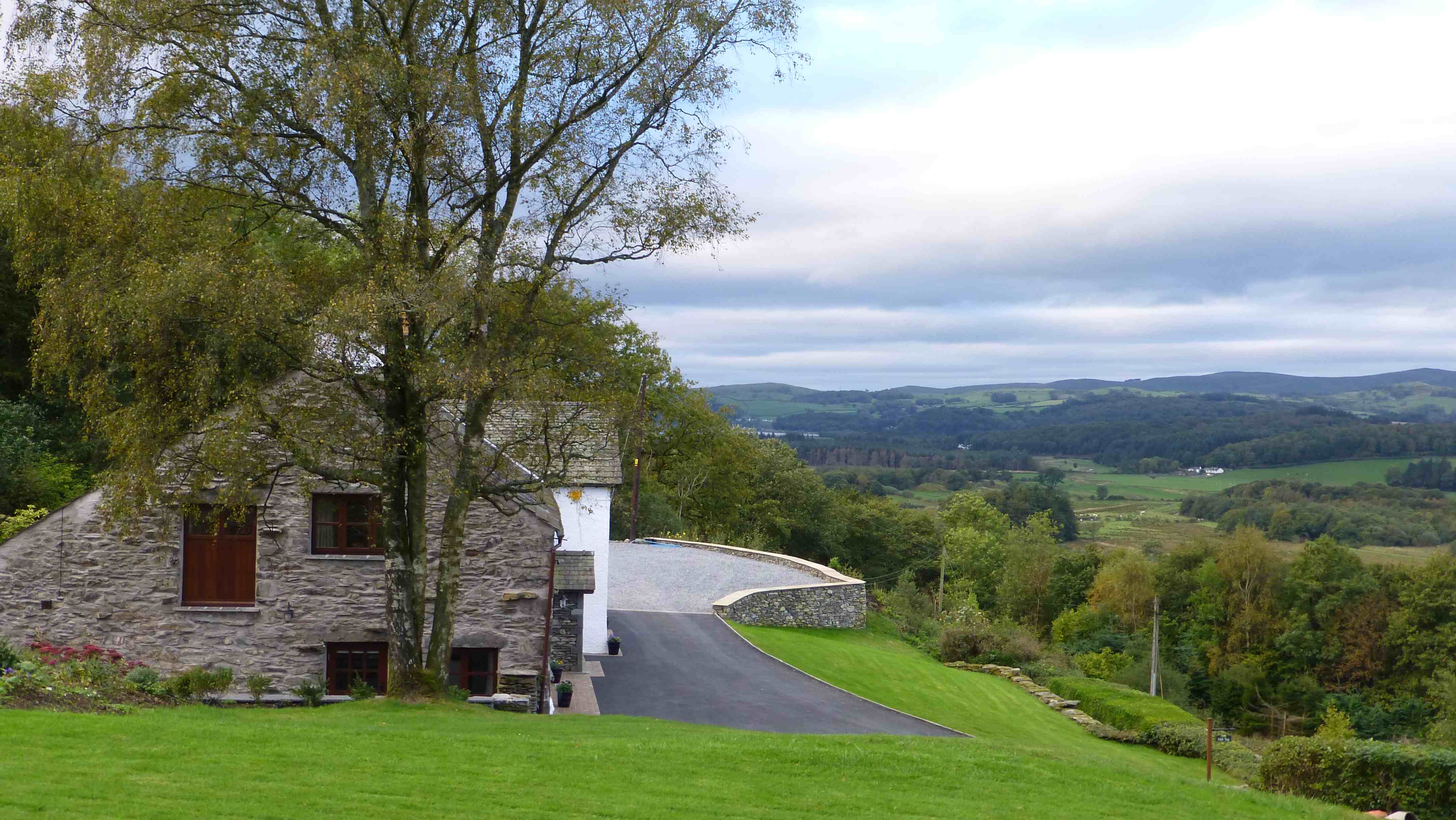
Sophie Neville visited Hill Top with members of The Arthur Ransome Society who admired the astonishing views across Cumbria. “It occurred to me that the fireplace and low stone walls of the charcoal burners’ wigwam, once abandoned, may have made up the basis of the igloo built by the Swallows and Amazons in Winter Holiday, which has a fireplace.”

Hill Top farm, near Ealinshearth where Arthur Ransome lived with his wife Evgenia

Sophie Neville being interviewed on ‘The Making of Swallows and Amazons’

Lakeland Arts, based at the Windermere Jetty Museum, ask how the original film of ‘Swallows and Amazons’ was made on location in the Lake District in 1973 –

You can find out more in the illustrated paperback, suitable for all age of readers, entitled ‘The Making of Swallows and Amazons’, which makes a good Christmas present when combined with the 40th Anniversary DVD with DVD extras.

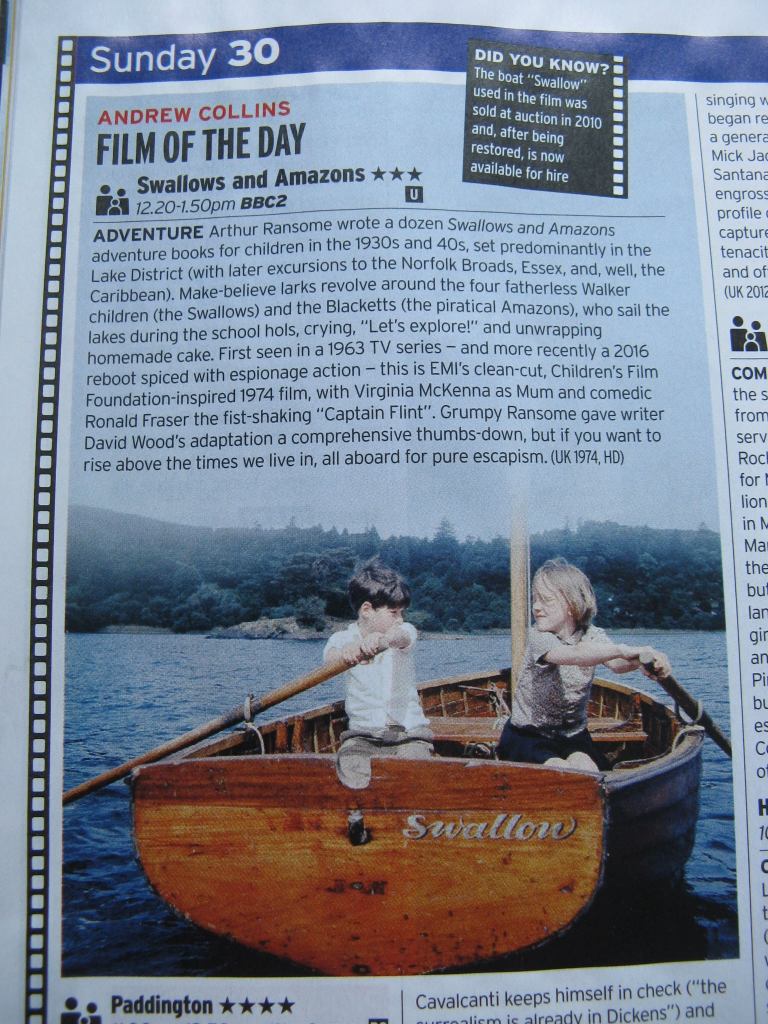
The original movie ‘Swallows and Amazons’ featured in the Radio Times as Film of the Day

‘Swallows & Amazons'(1974) starring Virginia McKenna was broadcast on BBC Two, recalling the adventures of the Walker and Blackett families on a ‘Lake in the North’ in August 1929 before the school term began. Once hailed as ‘The feel-good film of Lockdown’, it transports us back to a time of freedom, celebrating the beauty of the English Lake District. It was available on BBC iPlayer here and is currently streaming on Amazon Prime where you can watch the trailer.

You can watch a short re-mix here:
It was wonderful to see the feature film heralded as ‘Film of the Day’ but Hilary Weston of The Arthur Ransome Society pointed out that there are a few errors in the write up.

Arthur Ransome wrote the novel ‘Swallows and Amazons’ in 1929. The first illustrated hardback was published by Jonathan Cape on 1st December 1930. There are twelve books in the series, however only five are set in the Lake District. ‘Missee Lee’ sees the Swallows and Amazons exploring the South China sea with Captain Flint, while Dick and Dororthea join them all on the Sea Bear to cruise the Otter Hebrides in ‘Great Northern?’. The 13th story in the series, an unfinished manuscript entitled ‘Coots in the North’, is set in Cumbria.

Props used in the original film ‘Swallows & Amazons’ (1974)

Arthur Ransome died in 1967, aged 83, so was not around to see this feature film made. He had been grumpy about the 1963 BBC serial made in black and white, which starred Susan George as ‘Kitty’ (rather than Titty).

After he died, his Russian wife Evgenia was determined to avoid what they called a ‘Disneyfication’ of the books and kept a tight hold on the script, character names, locations and casting of Richard Pilbrow’s 1974 adaptation. As a result, David Wood’s screenplay adheres to the story and was approved by Mrs Ransome who gave the go ahead. On watching the finished film, her only adverse comment was that one of the kettles used was of the wrong period.

Suzanna Hamilton playing Susan Walker with Sten Grendon as Roger

Arthur Ransome’s father died when he was thirteen and the theme of fatherlessness flows though his books granting the young characters independence. In ‘Swallows and Amazons’ it is Nancy and Peggy, the Amazon pirates, who have no father.

Kit Seymour as Nancy & Lesley Bennett as Peggy Blackett sailing Amazon

The story opens when the four elder Walker children are given permission to sail off to camp on an island by their father who is absent, in Malta with the Navy, and sends the famous telegram: BETTER DROWNED THAN DUFFERS IF NOT DUFFERS WONT DROWN (with no apostrophe).

Simon West, Sophie Neville abd Suzanna Hamilton in Swallows and Amazons
Simon West, Sophie Neville and Suzanna Hamilton – receiving the telegram

Vicky, the fifth sibling and baby of the Walker family, keeps the Swallows’ mother at Holly Howe farm on the mainland. Tension is created after the Amazons let off a firework on their uncle’s houseboat while he is absorbed in his writing and ignoring them. He shook his fist at the crew of the Swallow assuming they were responsible for the damage and was labelled ‘Captain Flint’.

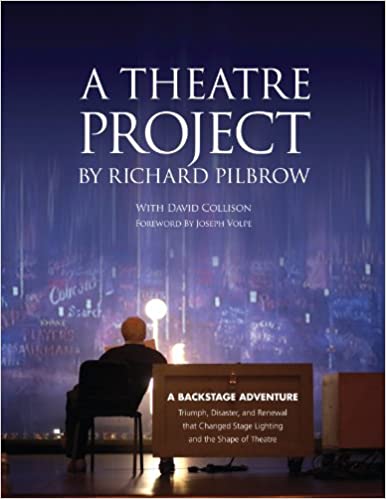
A Theatre Project by Richard Pilbrow

In his memoir, ‘A Theatre Project’, Richard Pilbrow describes how the idea of adapting ‘Swallows and Amazons’ came to him as he watched the sun set over Windermere one night when visiting the Lake District. He put the idea to Nat Cohen of EMI who was looking for a classic book adaptation similar to ‘The Railway Children’, which had been a box office success. Nat Cohen hadn’t heard of Arthur Ransome but his assistant loved his books and raved about the idea. EMI Films provided the initial budget of £250,000 although more was spent. The movie was directed by Claude Whatham who may well have been influenced by the Children’s Film Foundation but he was regarded as avant guard at the time and, like Richard, motivated by the beauty of the Lakes.

Richard Pilbrow and Claude Whatham at The Secret Harbour on Peel Island, Coniston Water
Producer Richard Pilbrow with Director Claude Whatham in Secret Harbour on Peel Island, Coniston Water

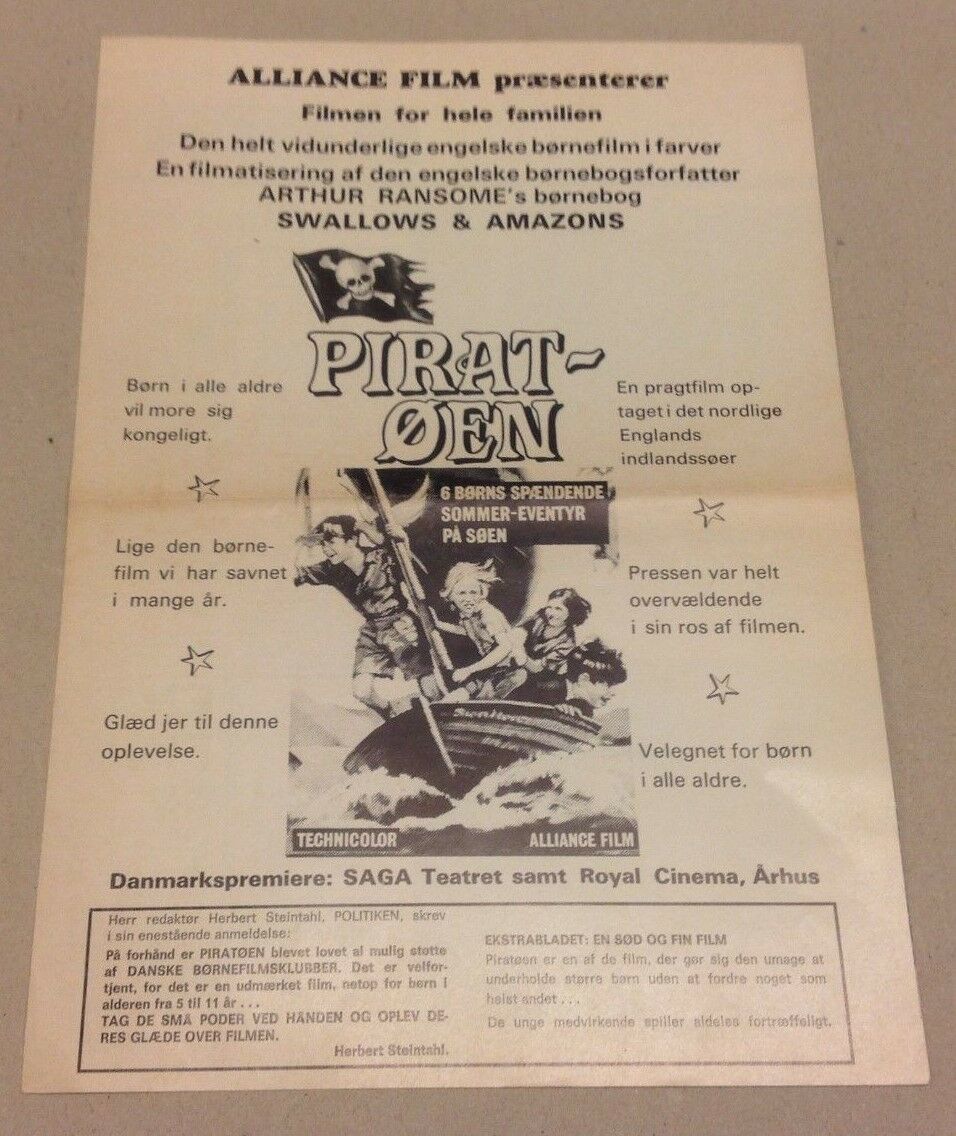
The original poster for the film used an ampersand in the title graphics but this was lost as it was translated, sold worldwide and remastered.

Someone who must love the old film claimed the error in the write up was that it was only given three stars. The DVD now has a 4.5 star rating on Amazon but it only gets 6.5 out of 10 on IMDb – the International Movie Data base, which is equivalent to three stars. You can add a review on this site here.

Mark Walker of the Arthur Ransome Group added: And they got the title of the article completely wrong. “Film of the *Day*”, indeed..!! Film of the Year, Decade, Century, Millenium….any of the above could have been more appropriate..!!

If you would like to learn more about the original movie ‘Swallows and Amazons’ there is now a paperback entitled ‘The Making of Swallows and Amazons (1974)’  It can be ordered direct from the publishers and is available from Waterstones

A second edition of the ebook entitled ‘The Secrets of Filming Swallows and Amazons(1974), the first section of which you can read for free here.

Swallows & Amazons mugs

Have you seen this set of Swallows and Amazons mugs printed with hand-painted maps of locations featured in my book on ‘The Making of Swallows and Amazons (1974)’? Redbubble, the manufacturers often have discount coupons, which you should be able to find here.

Swallows and Amazons mugs
Mugs printed with maps used to illustrate Sophie’s books

The three different designs are now available in a ‘classic’ or ‘tall’ style, as a travel mug or a water bottle. The full collection is available here.

Swallows and Amazons map of Windermere

Map of Windermere water bottle available here

and travel mug available here.

Swallows and Amazons map of Derwentwater 

Map of Derwentwater water bottle available here

and travel mug available here.

Swallows and Amazons map of Coniston Water

Map of Coniston water water bottle is available here

and travel mugs are available here.

You can see these designs on women’s clothing and men’s clothing with other useful items that make good presents or stocking fillers such as coasters:

The cover image of ‘The Secrets of Filming Swallows and Amazons’ is now available on a mug and on other products.

ur,mug_lifestyle,square,1000x1000These high-quality goods are manufactured in Australia by RedBubble who take care of customs charges. If you are asked to pay customs, send them a picture of proof of payment of customs charges and they’ll sort it out.

Here’s a link to the help center – https://help.redbubble.com/hc/en-us.

The maps can be found in the paperback of ‘The Making of Swallows and Amazons (1974), available from libraries, bookshops and online here.

'The Making of Swallows and Amazons (1974)'

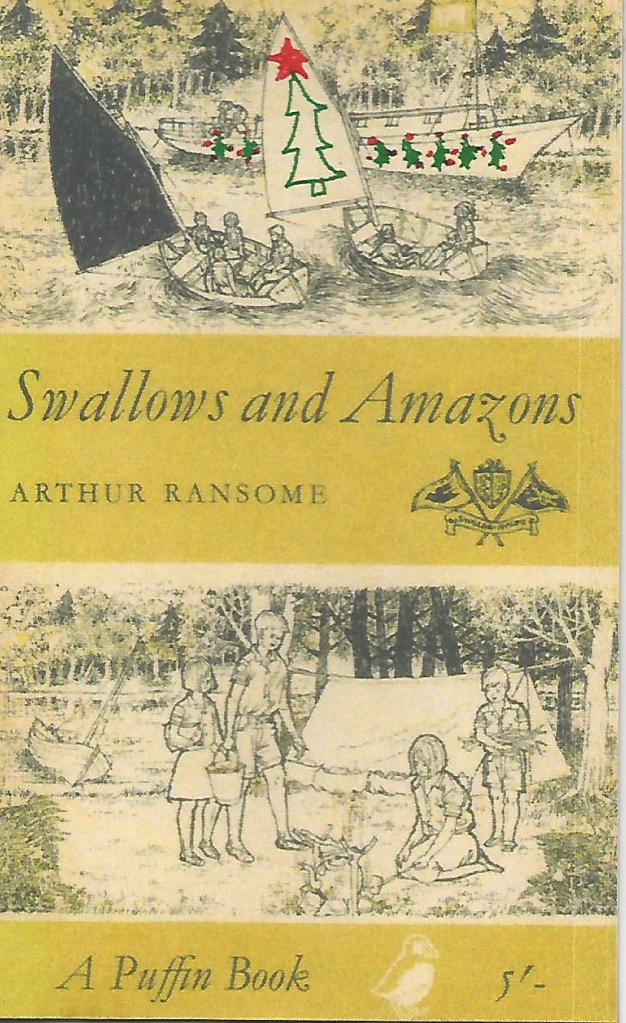
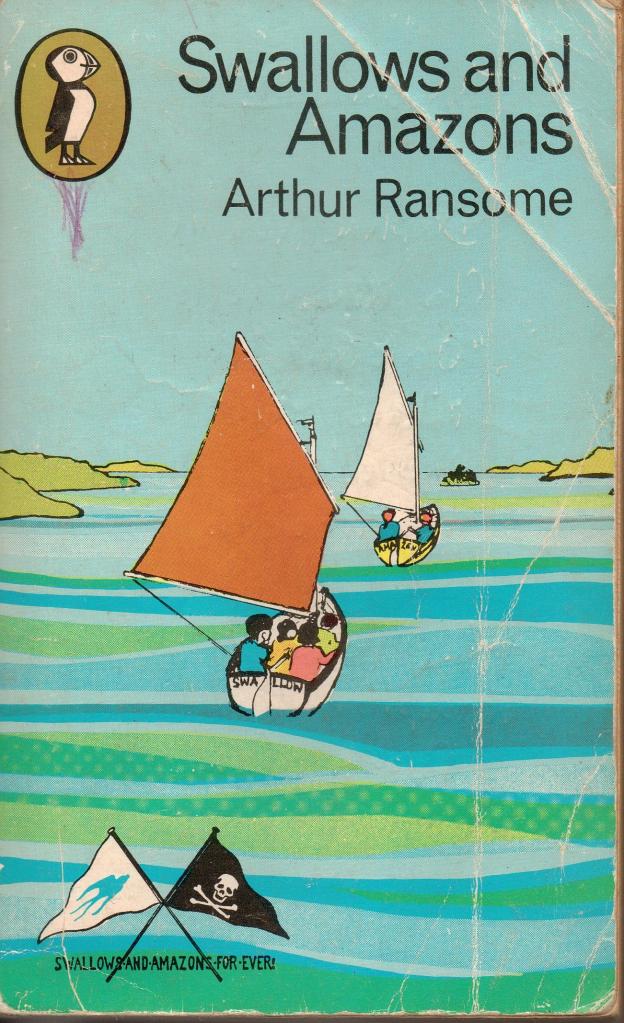
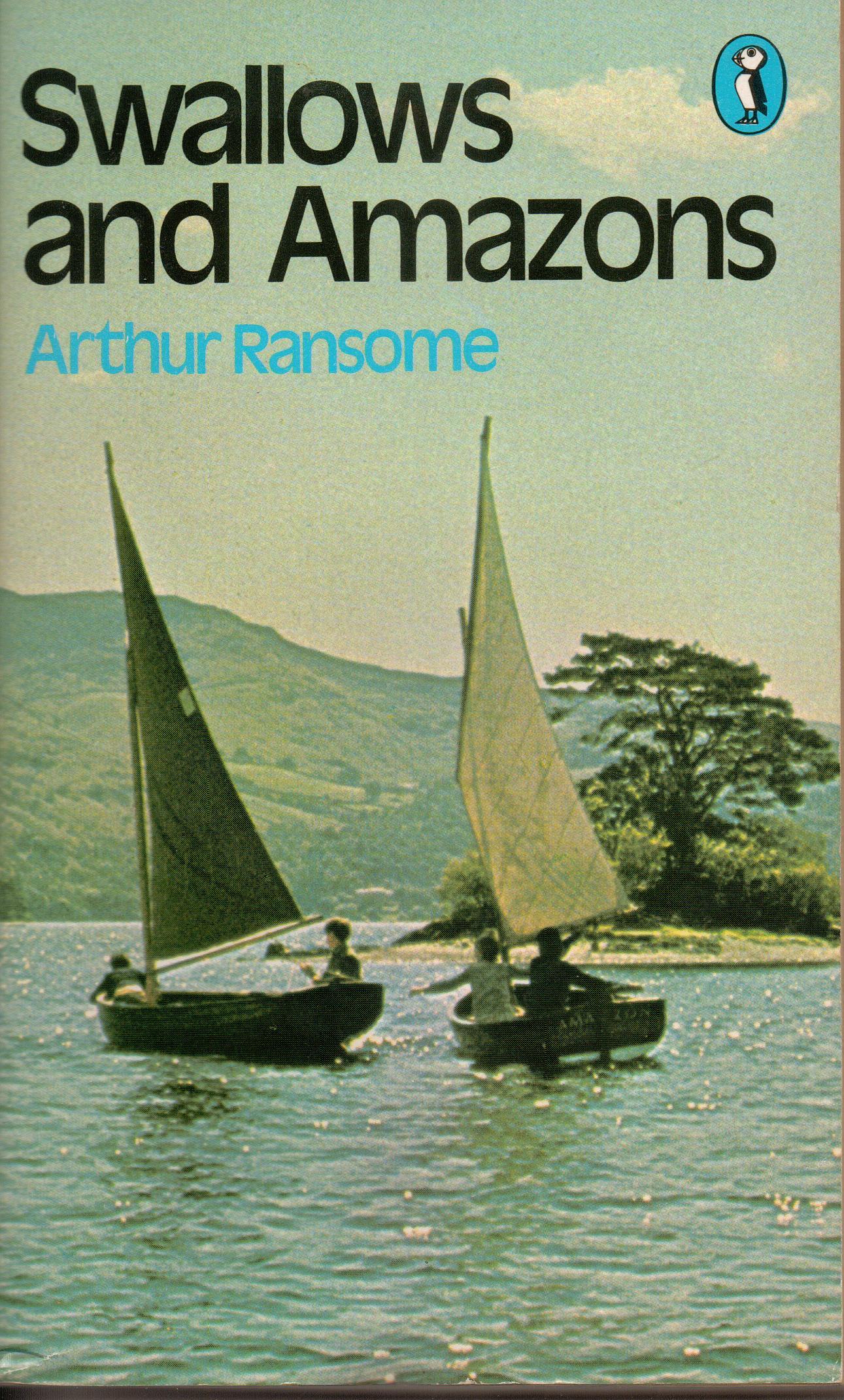
The Puffin paperback copies of ‘Swallows and Amazons’

The school term is over, ‘Swallows and Amazons’ is on BBC iPlayer and Christmas missives are arriving in the post. I have just been sent this homemade card from someone who came to the premier of the original film in 1974, when I was fortunate enough to play Able seaman Titty.

Image (75)

~Captain Flint hanging Christmas decorations around his houseboat on a card made from a Puffin book cover~

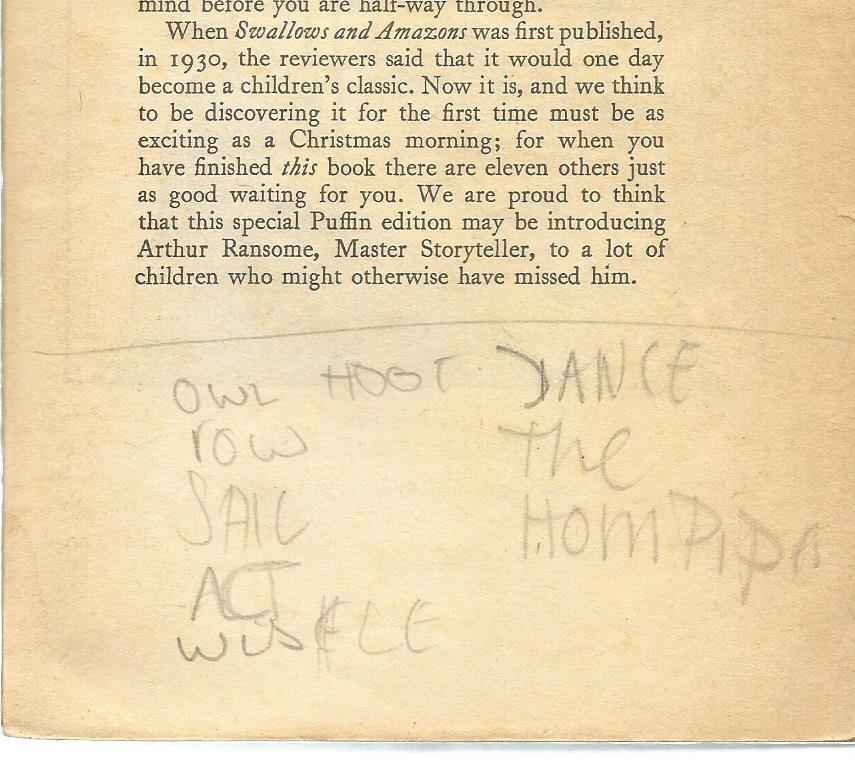
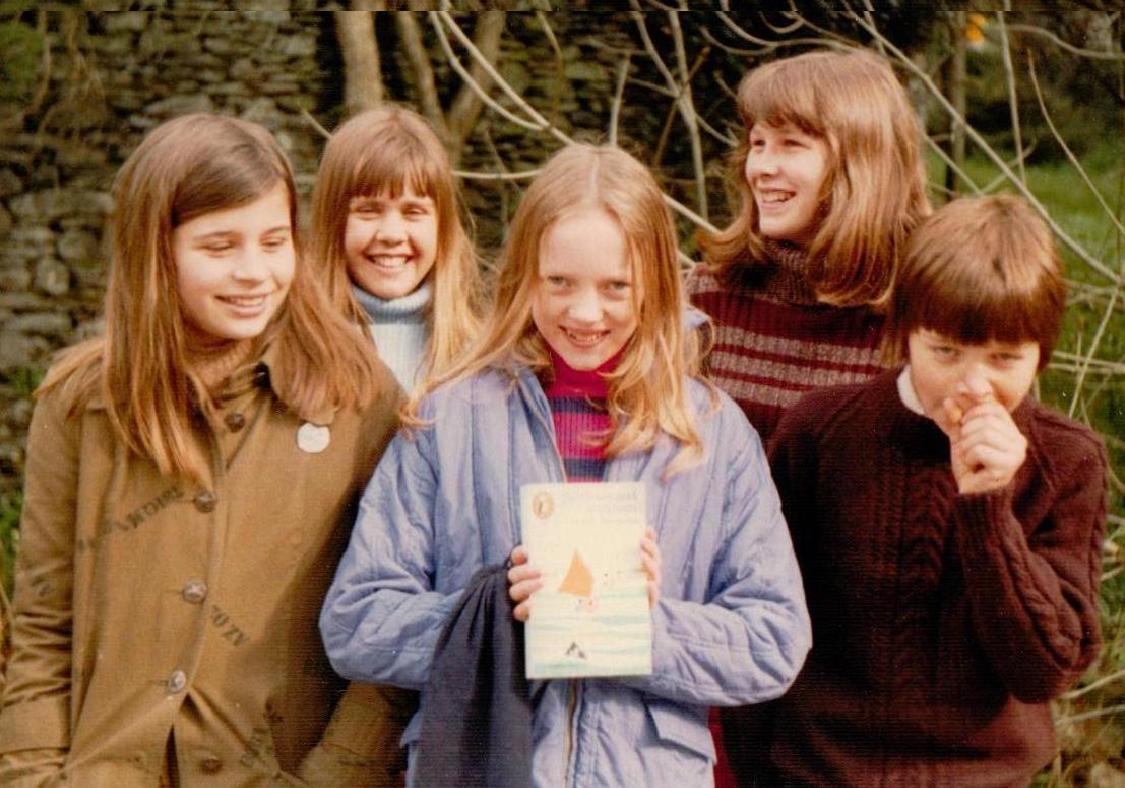
I dug out the Puffin paperback of Swallows and Amazons my father gave me when I was a girl and read avidly, along with other books in the series, by the time I was eleven years-old. It is a 1970’s edition in which I’d underlined everything Titty said. I must have re-read this copy when busy preparing for filming the 1974 movie financed by EMI.

'Swallows and Amazons' Puffin book cover 1970

Kaye Webb, the editor, had written an introduction saying, ‘This book is about sailing, fishing, swimming, camping, and piratical exploits.’ She wanted to make it available to children, thinking that discovering Swallows and Amazons ‘for the first time must be as exciting as a Christmas morning.’

Underneath, I’d noted down the skills I would need to acquire before playing the part of Titty. ‘Owl Hoot’, was one item, ‘wisle’ (sic) another. I was somewhat apprehensive about dancing the Hornpipe but excited about ‘being a cormorant’, having no idea how cold this experience would prove.

My 1970 Puffin edition of Swallows and Amazons

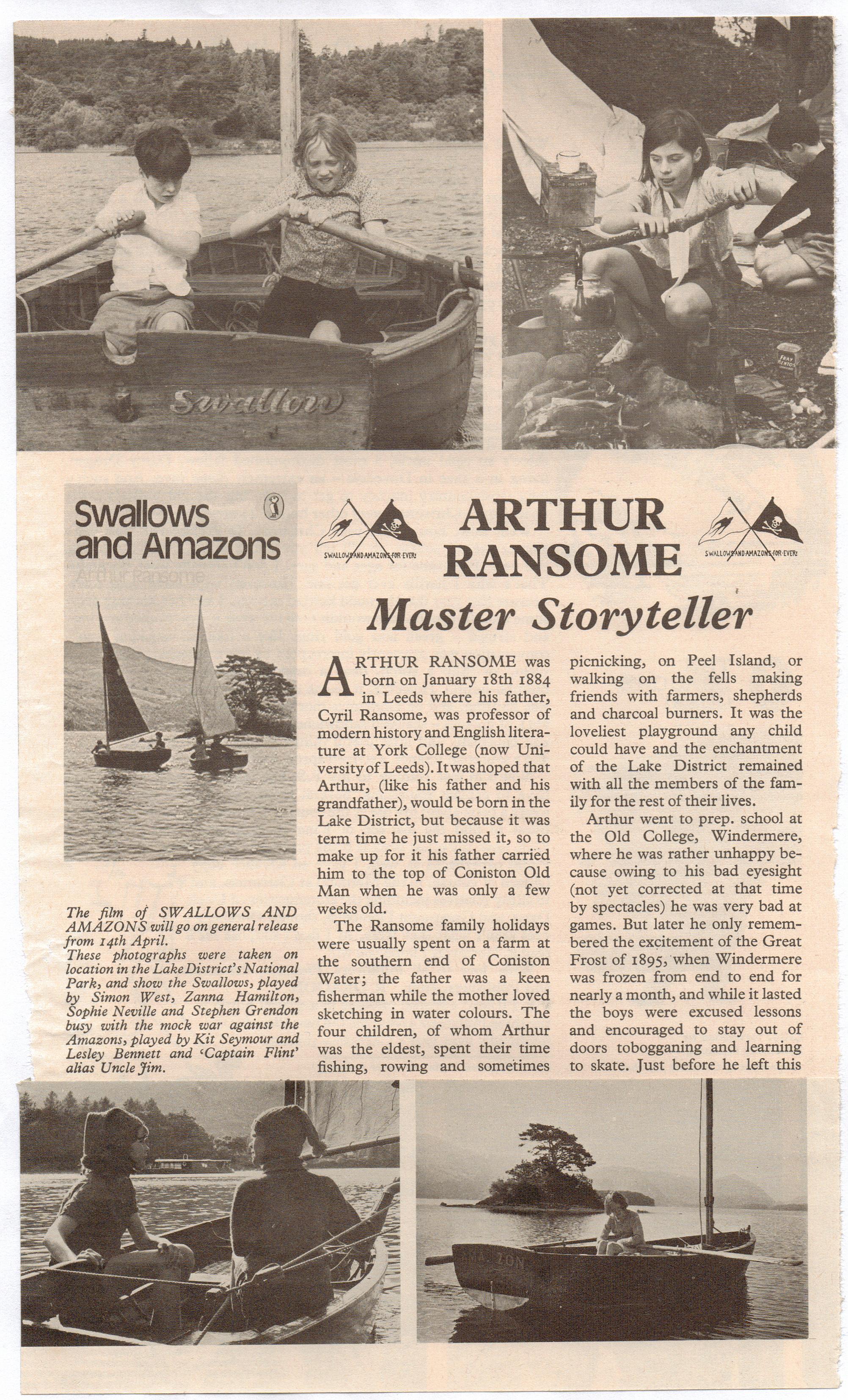
According to Trade News, 75,000 copies of a new Puffin paperback were brought out to accompany the original film. A still was used from the scene where the Swallows sail both dinghies from Cormorant Island. It retailed for 35p. Meanwhile Jonathan Cape printed 12,500 copies with the original dust jacket to accompany the release on 4th April 1974.

Swallows and Amazons 1984 Puffin book cover

Today, I am most interested in Ransome’s prose, amused to find the phrase ‘X marks the spot where they ate six missionaries’ does not appear within the pages of the book. It was given to Titty in 1973 by the screenwriter David Wood. However, there are words of wisdom a-plenty that were not used in the film adaptations:

‘I like cooking,’ said mate Susan.

‘If you want to go on liking it, take my advice and get someone else to do the washing up’, is Mother’s reply. (I wonder who might have said this in reality.)

‘You can be wide awake and not see a thing when you aren’t looking’ is one of Roger’s observations.

John was able to look back to ‘a different, distant life’, which is exactly how it feels when the excitement of Ransome’s world spoils you for the ordinary. It’s true: those involved in outdoor activities develop in leaps and bounds ending up, ‘not at all what they had been.’
What is it about Arthur Ransome’s writing that captures your imagination? Rowing? Sailing? Cooking over a camp fire? Which book has most influenced your life?

Article on Swallows and Amazons on Puffin Magazine

You can read about the adventures we had bringing out the original film in different versions of ‘The Making of Swallows and Amazons (1974)’, which is now available as an audiobook.

'The Making of Swallows and Amazons (1974) by Sophie Neville'
Different editions of ‘The Making of Swallows and Amazons (1974) by Sophie Neville’

Swallows, Amazons and Archery

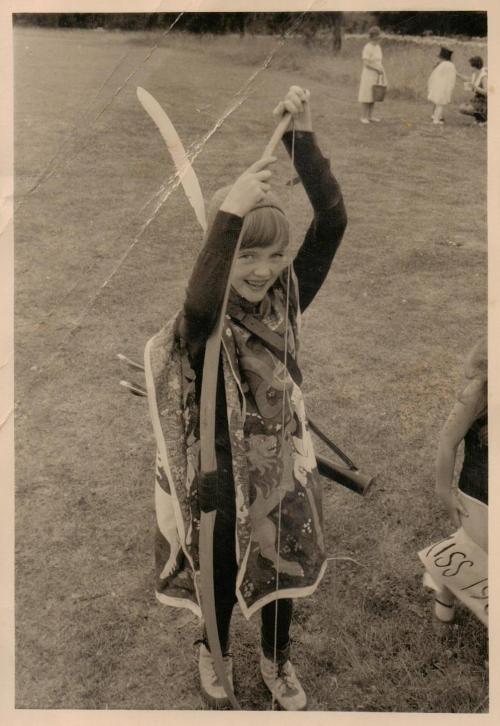
Much has been written of the legacy left by Arthur Ransome who inspired so many go camping, fell walking or sail the seven seas. I hope he would be amused to learn it has been the arrow, fletched with green parrot feathers, that has flown through the pages of my life.

Sophie Neville the archer c 1969~Sophie Neville dressed as a medieval archer in 1969~

Archery became a popular sport for ladies in Victorian England. The influence was not lost on Arthur Ransome who writes in his autobiography that his Great-aunt Susan was a keen toxophilite who attended bow meetings at Belle Isle, the long island on Windermere. Another great-aunt was shot in the bonnet by an arrow when the Boxer Rising reached Peking. She was serving as a missionary.

I gather it was Arthur Ransome’s sister, Joyce, who owned a green parrot whose feathers made good pipe cleaners. Did they ever get used for flighting arrows? Arthur doesn’t seem to have taken up a bow beyond, perhaps, playing Red Indians as a child with his friend Ric Eddison.

Titty Walker may not have known that the real Queen Bess was a proficient archer, but Roger certainly expected savages to be armed with poison-tipped arrows as he took dispatches across the Peak at Darien. Did Nancy and Peggy ever don Red Indian head-dresses? Since they are described as wearing red caps when the Swallows first encounter them, I assume this idea was instigated by Helen Edmundson’s musical and reinforced by the 2016 film of Swallows and Amazons. Although far from nautical, this is akin to certain antics in Secret Water and certainly adds visual drama to the confrontation.

Practicing with bows and arrows

~Sophie Neville with Peter Robb-King, Ronnie Cogan, Lesley Bennett, Kit Seymour and Terry Smith~ 

I learnt how to shoot in 1973 when the Amazons were being taught how to pull a bow made of Lakeland hazel for the original movie of Swallows and Amazons. As children, we all wanted a go. I still have a practice bow and a couple of arrows whittled on location by Bob Hedges, our property master. I remember one hitting the campfire. ‘Don’t touch the point – it might be poisonous!’ Please note that the shot of the arrows zooming over our heads looks so dangerous on screen that it was cut from the television version of the feature film. This was no snazzy visual effect. The arrows were genuine, however they were strung on taut nylon fishing line rigged over our heads to ensure we would not get hit. They were fired by the prop men and not the Amazons.

neville002

~Daphne Neville who won many archery prizes teaching Lesley Bennett (Peggy Blackett)~

As female Amazon warriors were redoubtable archers it is easy to imagine Captain Nancy bent a sapling to her will and had Peggy making arrows. It is reasonable to assume they used longbows on Wild Cat Island, but in Swallowdale it is a crossbow that graces Ransome’s illustration. How Nancy got her hands on one is unknown but it must have been simpler to use in a boat with discretion and accuracy. Did Ransome ever try this out?

Sophie Neville shooting

~Sophie Neville shooting with a compound bow in the Emirates~

What happened to the bows and arrows after Swallowdale? Archery is something you usually grow into, rather than out of. By the age of fifteen, I’d gained the part of an archery champion in an adventure movie called The Copter Kids. This necessitated target practice with a modern re-curve bow and ended with me shooting from a helicopter.

I now belong to a number of archery societies and, like Great-aunt Susan, set out with my tabs and tassel, quiver and longbow. Luckily the skill, much like an appreciation of Arthur Ransome’s writing, is something that tends to improve with age. I met my husband at one bow meeting, have held three Ladies’ Championship titles and managed to reach a distance of 145 yards when we celebrated the 600th Anniversary of Agincourt.

I have never fired a crossbow. Since they are potentially lethal weapons, Nancy could have been detained for firing hers even if the tip was not deemed poisonous.

Author Sophie Neville

 ~Sophie Neville at a West Berks bow meeting~

A version of this article was originally published in Mixed Moss, the journal of The Arthur Ransome Society.

You can read more in ‘The Secrets of Filming Swallows and Amazons’ available online:

‘I Chaperoned Six Film Stars’ – Daphne Neville’s memories of working behind-the-scenes on the 1974 film of ‘Swallows and Amazons’ 49 years ago.

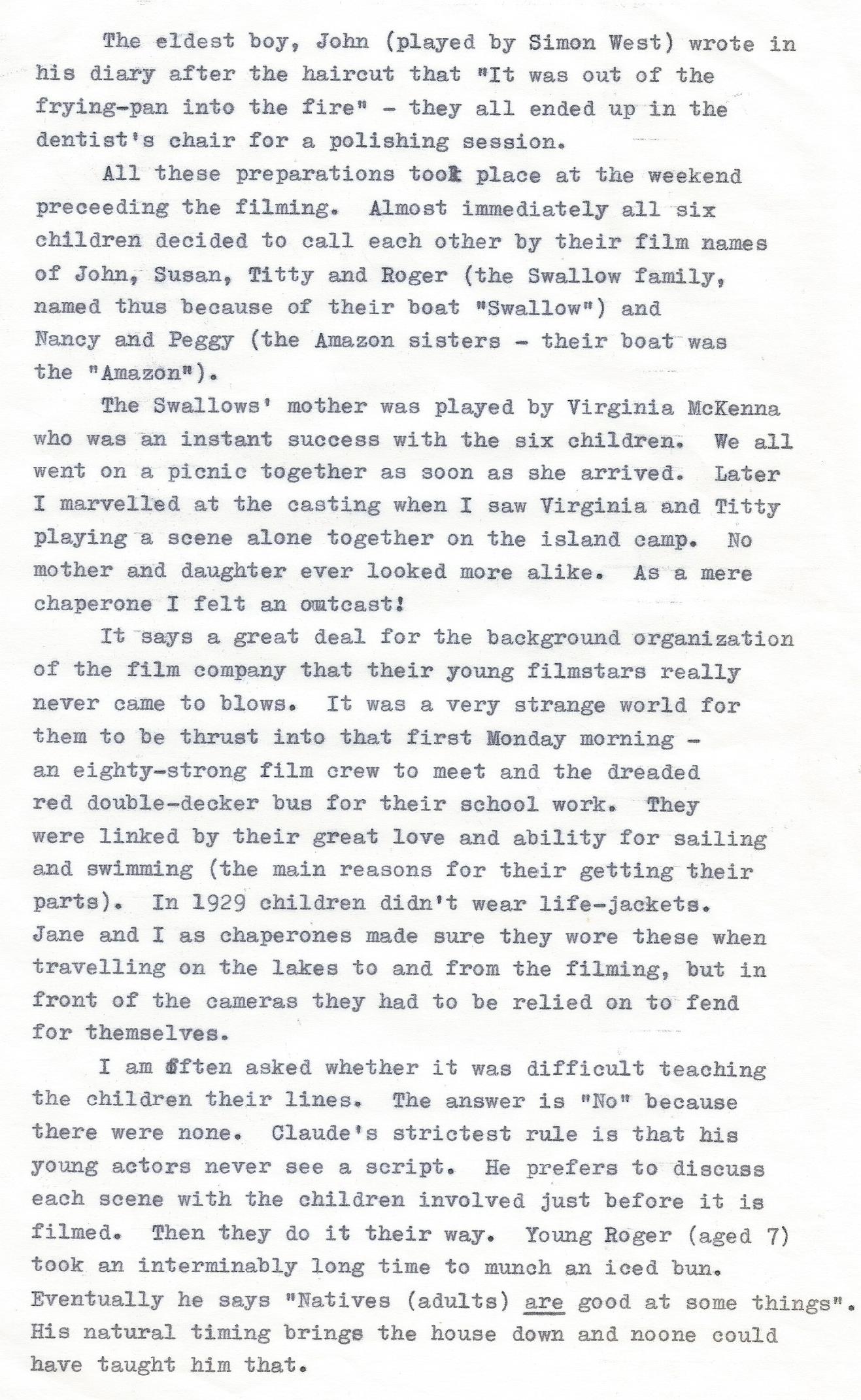
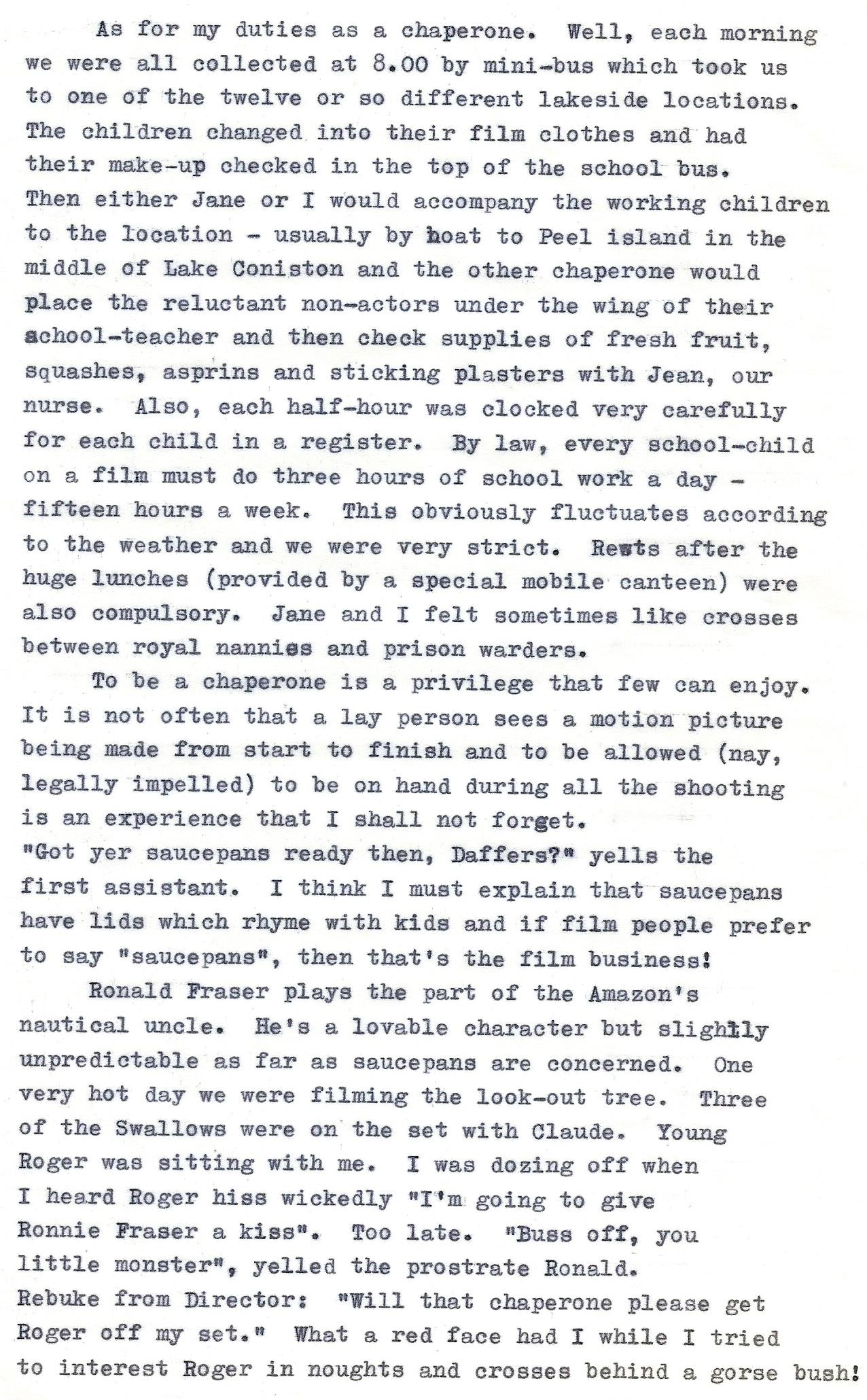
My mother is a squirrel. She arrived at my house, not with nuts, but a large envelope. Amongst other things, this contained the transcript of a piece she wrote almost forty-nine years ago for BBC Radio Bristol, when she presented a programme called ‘Come Alive’.  The four flimsy sheets of copy paper have only just been unearthed, along with a similar article for Woman magazine.

Daphne Neville was commissioned to write about her experience working on the original feature film, Swallows and Amazons, filmed on location in the Lake District in the summer of 1973 and brought to cinemas in 1974. Sold worldwide, has been broadcast on television for the last forty years and was last shown on TV in Australia on Boxing Day.

Daphne Neville with Sophie Neville while filming 'Swallows and Amazons' in Cumbria
Daphne Neville with Sophie Neville while filming ‘Swallows and Amazons'(1974)

It is interesting to have Mum’s perspective. Some of the details are new to me. She timed this piece for BBC Radio as taking ‘8 minutes’ to read:

Suzanna Hamilton, Lesley Bennett, Sophie Neville, Kit Seymour and Simon West before their hair was cut for the film ‘Swallows and Amazons’ in 1973

Daphne Neville Chaperone

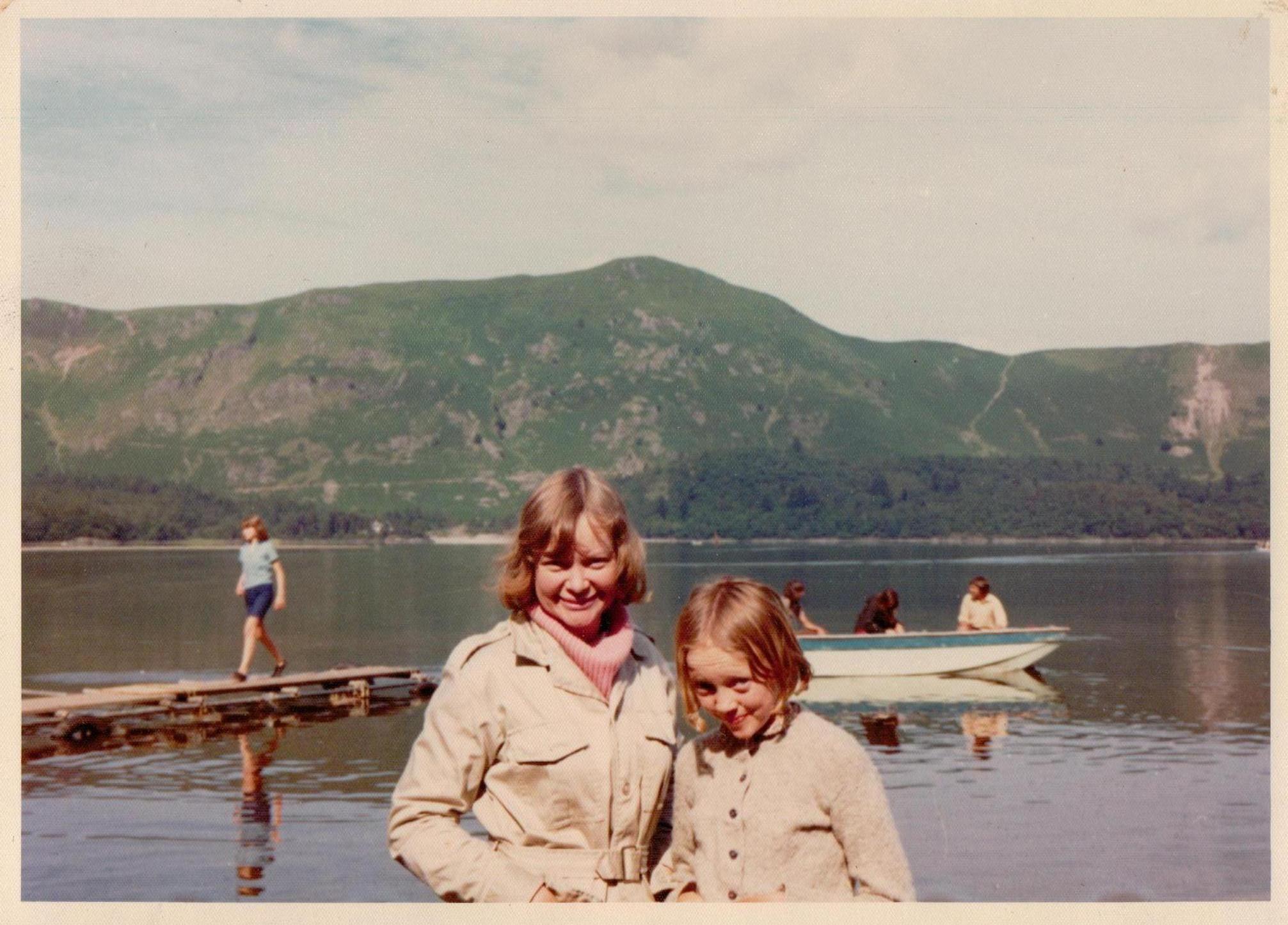
~ On Derwentwater in 1973: Suzannah Hamilton, Kit Seymour, Daphne Neville, Sten Grendon, Simon West, Sophie Neville & Lesley Bennett ~ photo: Martin Neville

'Swallows and Amazons'(1974) Daphne Neville with Stephen Grendon, Suzanna Hamilton, Sophie Neville, fellow chaperone, Jane Grendon and Simon West on location in 1973
Daphne Neville with Stephen Grendon, Suzanna Hamilton, Sophie Neville, fellow chaperone, Jane Grendon and Simon West on location in 1973

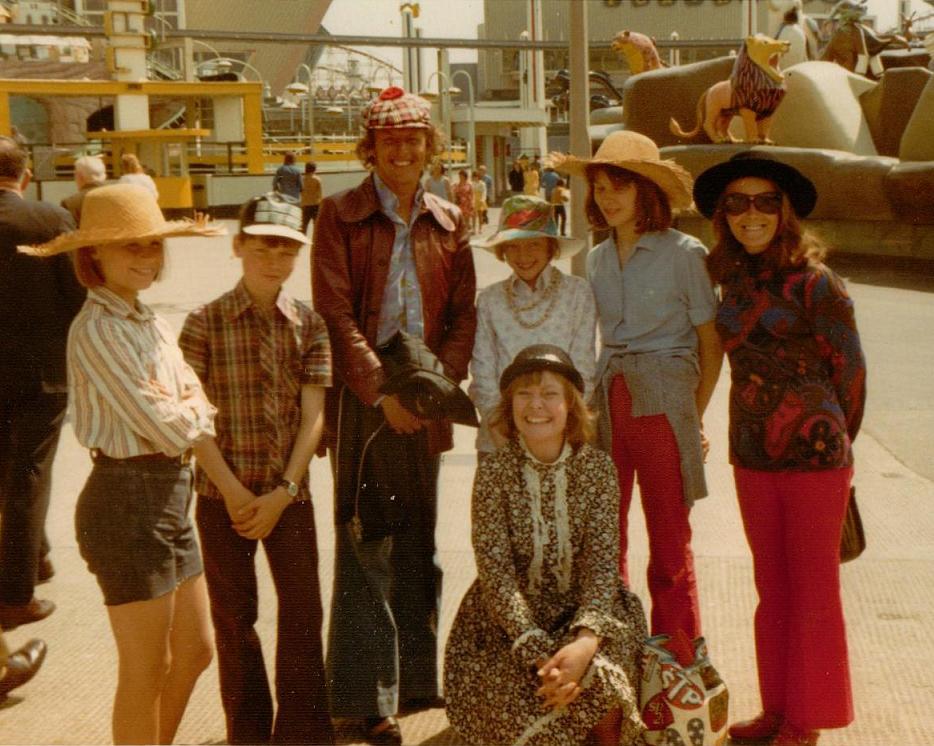
A Day Off in Blackpool - Suzanna Hamliton, Simon West, Claude Whatham Sophie Neville, Kit Seymour, Jean McGill with Daphne Neville kneeling at Blackpool funfair in 1973
Suzanna Hamilton, Simon West, Claude Whatham Sophie Neville, Kit Seymour, Jean McGill with Daphne Neville kneeling at Blackpool fun fair in 1973

But Mum, were we ever ‘Film Stars’?

We scowled at the terminology at the time. Ten years later and I thought of us a merely puppets, marionettes of the director who carefully honed our performances. I can now see the contribution we made when I watch the film, but we were never film stars.

What do I wish? I wish that we’d been able to make a sequel and develop our work more fully. The flip-side of this would have been that any more success, or more publicity, might have stripped us of our anonymity, which is the bain of real film stars. We’d have had to go around wearing sunglasses.

The film star Ronald Fraser with Daphne Neville and Sophie Neville in 1973

If you would like to see what we were filming 49 years ago, on 1st July 1973, please click here.

Do let me know, via the comments below, if you would like to see more archive material. I have the draft of my mother’s article for Woman magazine – it’s a different version of the same but with added detail. She needed permission from Anglo EMI Film Distributors before it could be published. There is also a draft of another radio script and a number of letters. If you would like to see vintage photos of Mum appearing on television herself, please click here

If you would like to read more about our adventures filming ‘Swallows and Amazons’, please click here

You can read the first pages for free here: