Filming with Dame Virginia McKenna at Bank Ground Farm, Cumbria ~ on 21st June 1973

Fifty one years ago this day, we were filming with Dame Virginia McKenna at the location used for Arthur Ransome’s Holly Howe above Coniston Water. It was a day of days – the sunshiny day that we had all be waiting for.

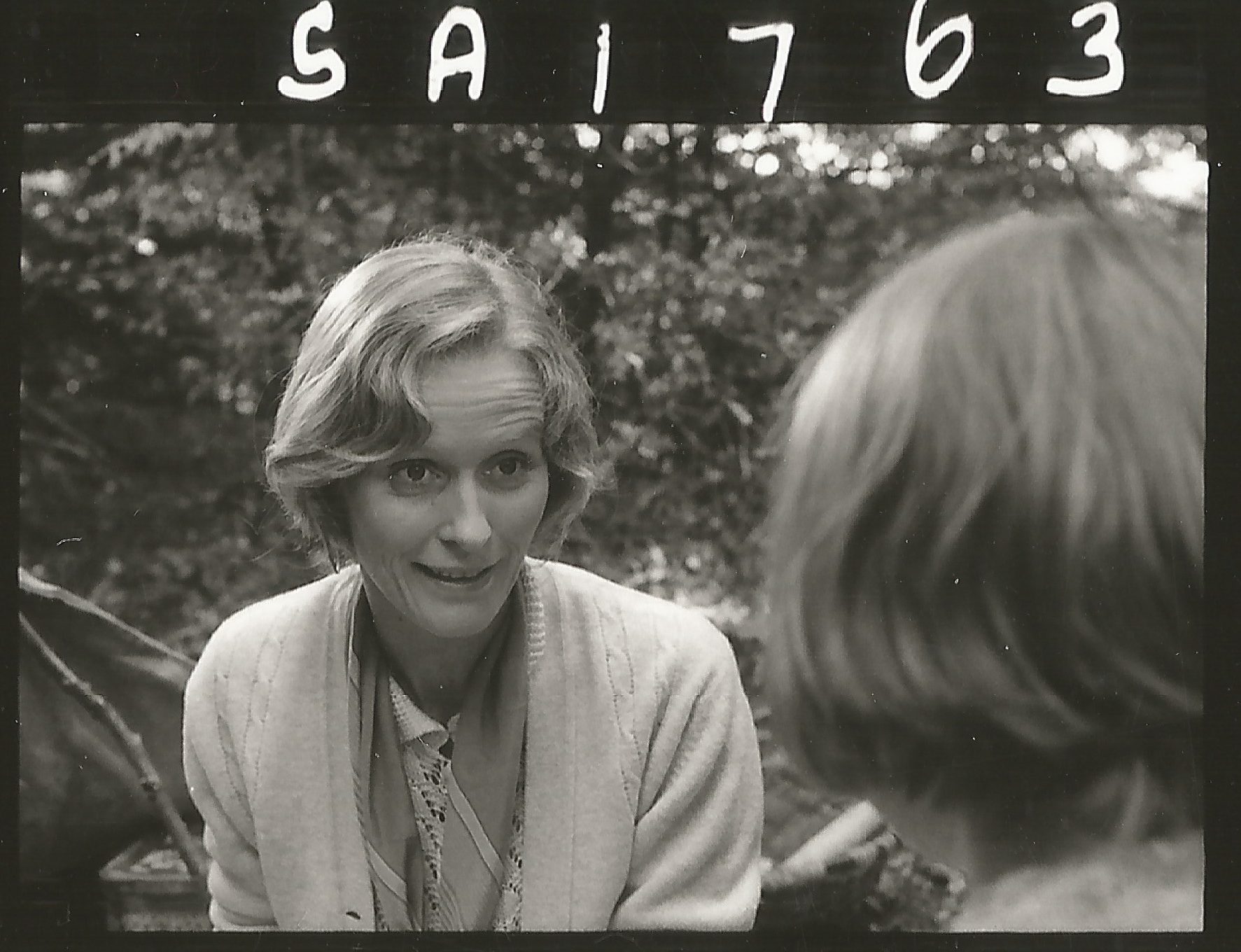
Virginia McKenna at Bank Ground Farm
Dame Virginia McKenna at the other side of the boat houses at Bank Ground Farm in 1973 ~ photo: Daphne Neville (c)

David Bracknell with Virginia McKenna at Bank Ground Farm
First Assistant Director David Bracknell standing-in (or kneeling-in) for Roger with Dame Virginia McKenna at Bank Ground Farm. The great trees in the background are sadly no longer there ~ photo: Daphne Neville (c)

The gift of a day when buttercups and daisies were still out in the field that flows from Holly Howe to the lake. Roger was able to tack up the meadow to receive the ‘despatches’ from Mrs Walker, described in the opening pages of Arthur Ransome’s book.

Dame Virginia McKenna reading the IF NOT DUFFERS telegram
Dame Virginia McKenna reading the IF NOT DUFFERS telegram to Sten Grendon as Roger

‘…Each crossing of the field brought him nearer to the farm. The wind was against him, and he was tacking up against it to the farm, where at the gate his patient mother was awaiting him.’

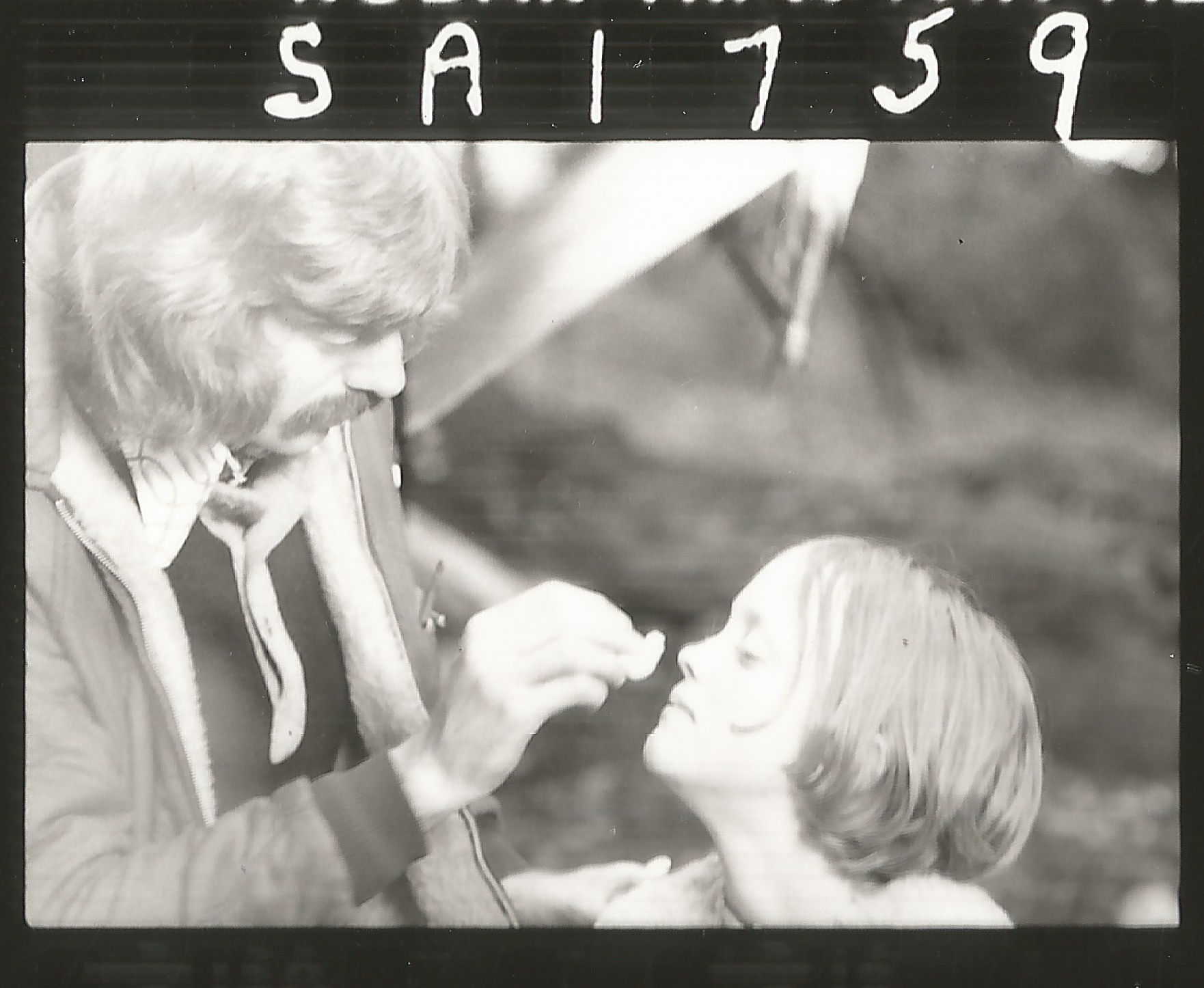
Virginia McKenna with Hairdresser Ronnie Cogan
Dame Virginia McKenna having her hair adjusted by Ronnie Cogan ~ photo:Daphne Neville (c)

I don’t think you can tell that this section of the scene was recorded seven whole days later than the sequence that runs directly on from this when the Boy Roger delivers the very same ‘If not duffers’ telegram to Captain John. 

Virginia McKenna as Mother in Swallows and Amazons 1

The hole that had been dug for the camera alongside our picnic had been filled in. You can see this from Mother’s perspective when I was milling about near the lake looking towards the island I couldn’t actually see.
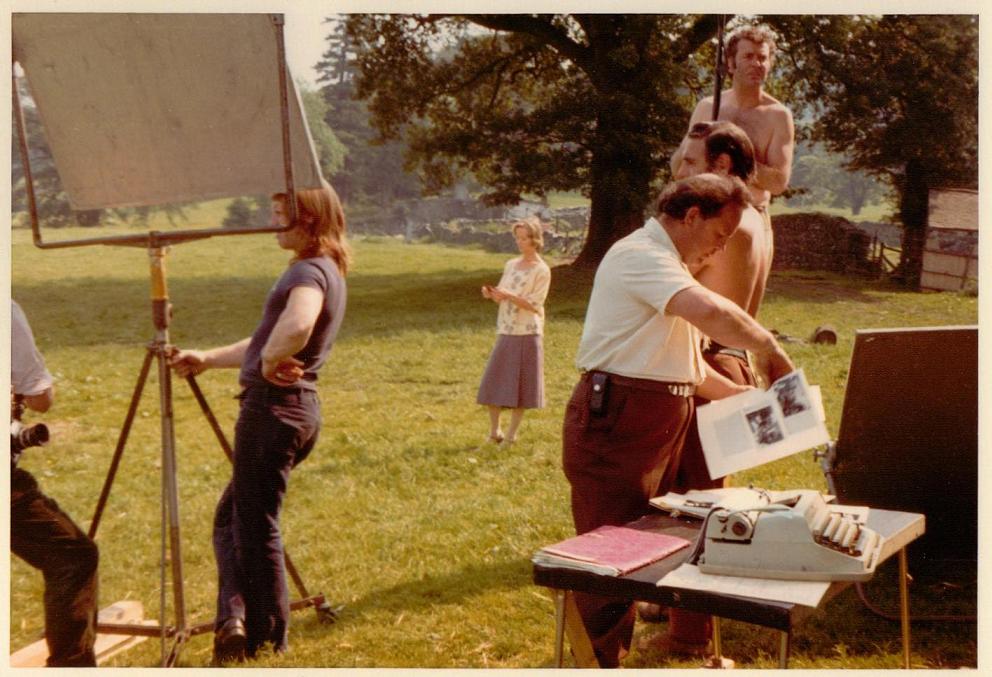
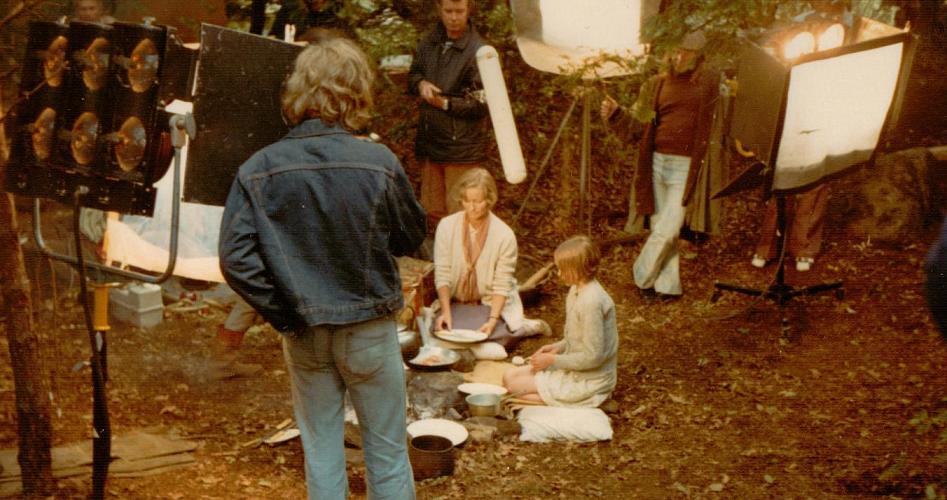
Dame Virginia McKenna on location at Bank Ground Farm (Holly Howe) in the Lake District. Property Master Bob Hedges is working in the foreground. Lee Electric lighting assistants stand-by with reflector boards while Assistant Sound Recordist Gay Lawley-Wakelin waits on a box with the boom ~ photo: Daphne Neville (c)

Poor Sten, he had to run up the field on what proved to be our hottest day in a sleeveless sweater. I remember Jean McGill, the Unit Nurse ministering cool drinks and a flannel soaked in cool eau de Cologne to make sure he did not get dehydrated. We all wanted a go with the cool cloth on the back of our necks at lunch time.
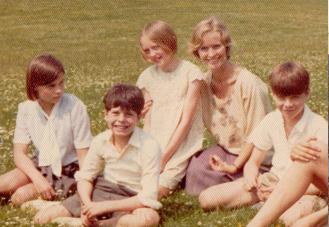
With Virginia McKenna at Bank Ground Farm
The Walker Family ~ Suzanna Hamilton playing Susan, Stephen Grendon as Roger, Sophie Neville as Titty, Dame Virginia McKenna as Mother and Simon West as John. photo: Daphne Neville (c)

It was good to escape the heat by getting out on the water. We shot the scene set on the old stone jetty at the boat houses below the farm when Titty leads ‘Good Queen Bess’ down to the harbour to inspect her ship. I didn’t realise she had a large box of matches in her hand. Virginia kept it a surprise from us in real life. I was excited to find out that Simon Holland, the Designer had painted the branded cover by hand.
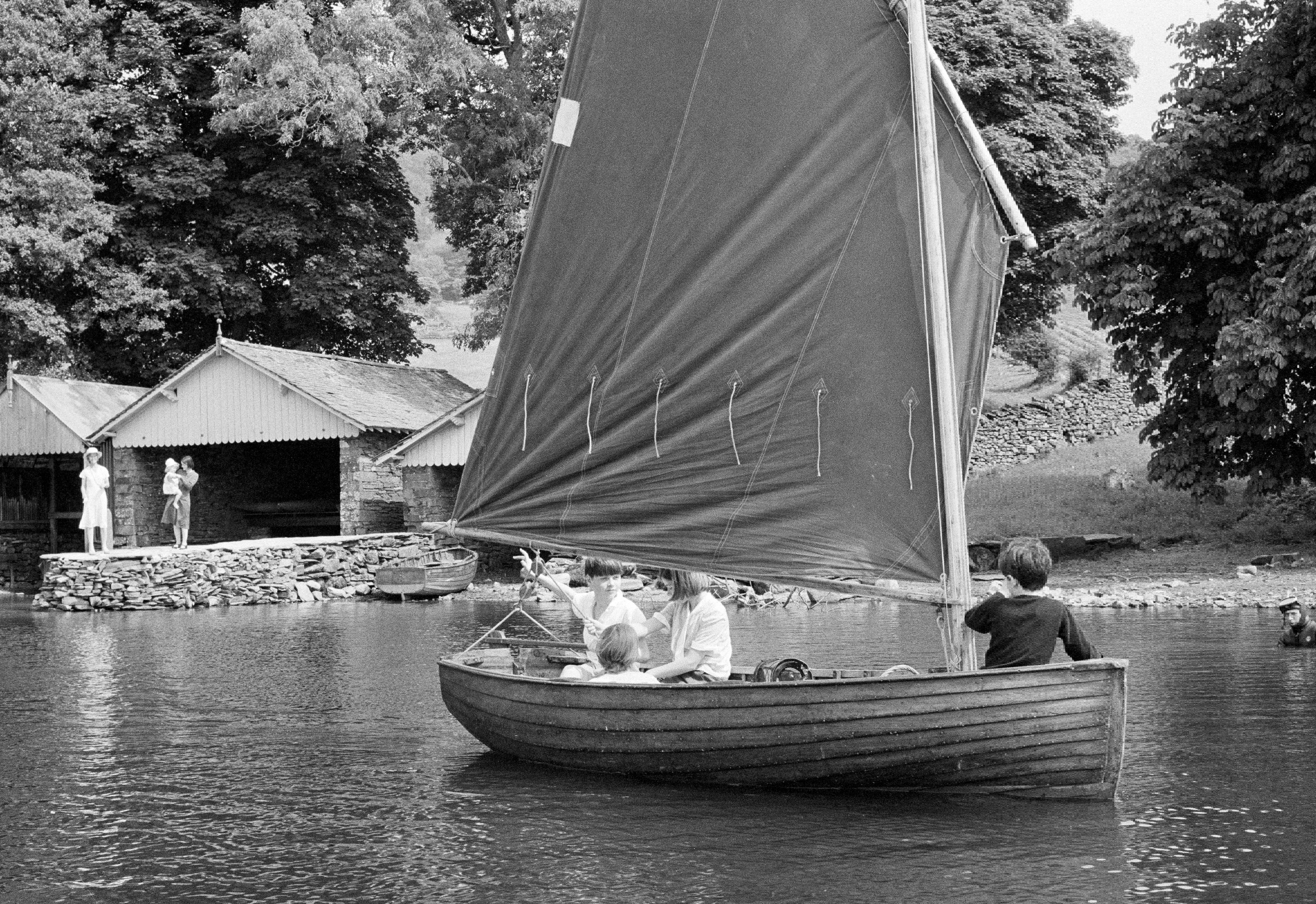
Dame Virginia McKenna bids the Swallows farewell
Farewell and adieu to you fair Spanish ladies

As the call sheet specifies, our dinghy Swallow had been loaded with all the tents and camping equipment that had been on Peel Island the day before. I didn’t realise at the time quite how often the design team had struck camp and made it up again. I just sat on top of the equipment singing Adieu and Farewell, not very well, as we sailed out onto Coniston Water, waving goodbye to our Fair Spanish Ladies.

Arriving at Holly Howe
Claude Whatham with Dame Virginia McKenna. Mrs Jackson stands patinetly at the door ~ photo: Daphne Neville (c)

I am sure that we had already recorded the scene in David Wood’s screenplay when the Walker family arrive at Holly Howe, but Claude decided to take advantage of the golden light and shoot it again.  I am sure this was a good decision. It had been a long day and we were tired but the excitement of our arrival is tangible.
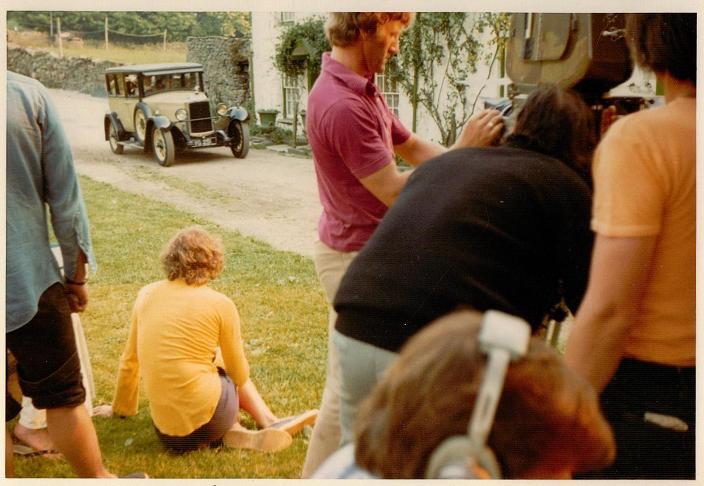
Arriving at Holly Howe
Director Claude Whatham, in a 1970s yellow long-sleeved t-shirt, watching the taxi drive up to Mrs Jackson’s front door in 1929. DoP Dennis Lewiston sets up the shot with Focus-puller Bobby Sitwell ~ photo: Daphne Neville (c)


Nurse with Baby Vicky, the ship's baby
Nurse with Baby Vicky, the ship’s baby at Holly Howe ~ photo: Daphne Neville(c)

My mother observed that Mrs and Mrs Jackson, Mrs Walker’s nurse and Vicky the ship’s baby, who were listed as Extras on the call sheet, were particularly well cast. Kerry Darbishire, who played the nurse, told me later that she had a daughter of the same age as Tiffany Smith seen here as Vicky. She could have brought her along. It was important they were there, playing ‘The stay-at-homes.’ Vicky anchored Mrs Walker to the farm, making it impossible for her to sail to the island with the Swallows. 
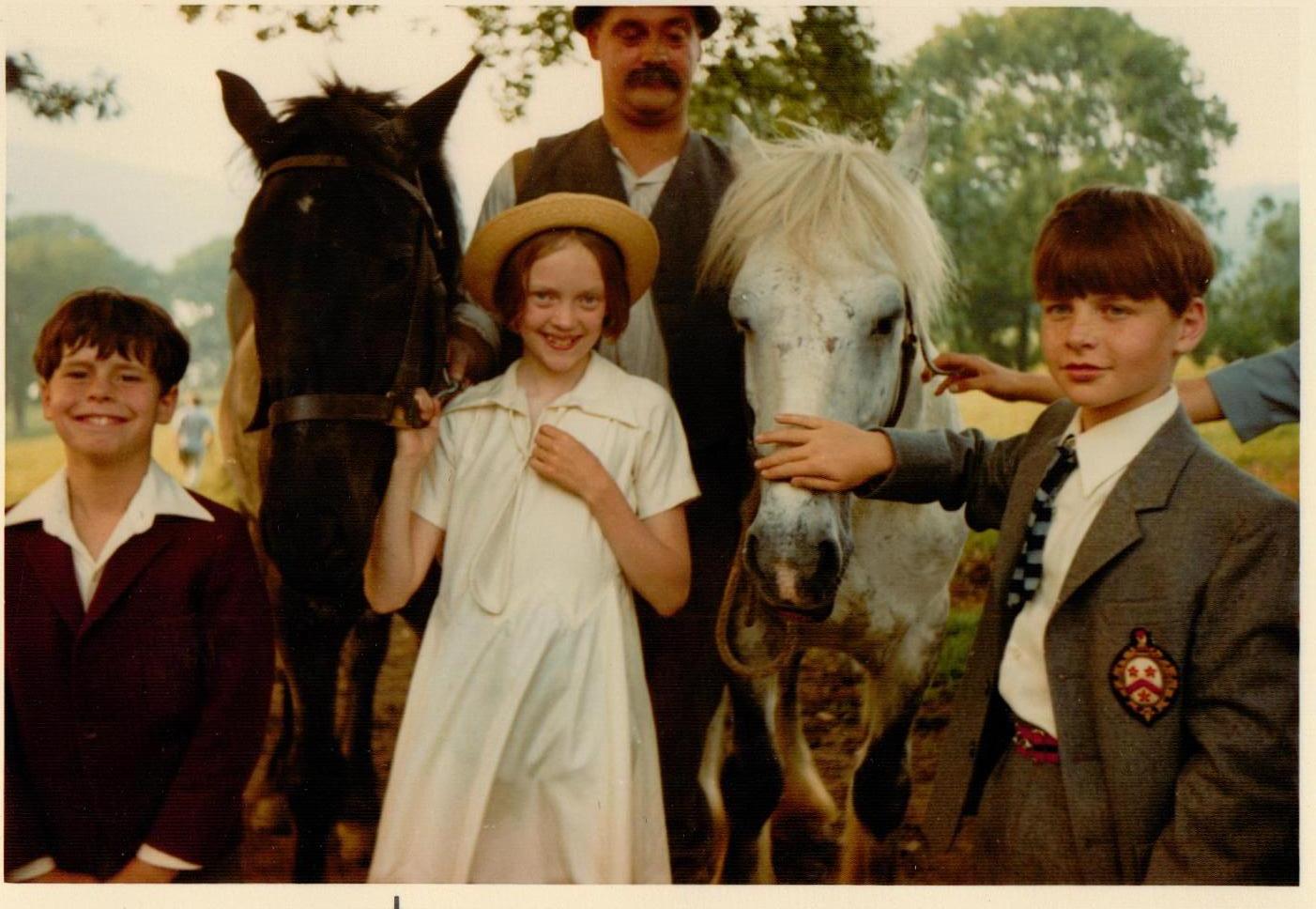
Sophie Neville holding the horses
Stephen Grendon, Sophie Neville and Simon West with Mr Jackson at Holly Howe~ photo: Daphne Neville

It must have been a long day for the little girl. It was a long hot day for all of us, but a happy day.

Simon West, Stephen Grendon, Suzanna Hamilton and Sophie Neville
Simon West, Stephen Grendon, Suzanna Hamilton & Sophie Neville playing the Walker children in ‘Swallows and Amazons’ 1973 ~photo: Daphne Neville(c)

The women who had been taken on as our stand-ins the day before did not seem to be around to help limit the hours we spent on set. David Bracknell, the first assistant director stood in for Roger. One of the women later claimed that she played Virginia McKenna in long-shots but the only long shot was taken of the Spanish Ladies on the jetty and I’m pretty sure that is Dame Virginia herself. 

Stephen Grendon, Simon West, Dame Virginia McKenna, Suzanna Hamilton and Sophie Neville, trying not to look as tall as she was in 1973 ~ photo: Daphne Neville(c)

What I really did not know, until I watched the documentary broadcast last Sunday, was that Mrs Batty, who held the lease on Bank Ground Farm, had locked out the crew. She explained that when she was originally asked if we could film on her property she did not quite realise the scale of operations and only asked for – or accepted – a location fee of £75.

Lesley Bennett's photo of the double decker buses at Bank Ground Farm in 1973
Lesley Bennett’s photo of the double decker buses at Bank Ground Farm in 1973

The arrival of the two red double-decker buses, the Lee Electric van, the generator and other lorries, not to mention the Make-up caravan rather daunted her, as did the furniture moving activities involved at the start of the filming when we shot the interior scenes. The idea that the film would bless her Bed & Breakfast and Tearoom business for the next fifty years alluded her. She said that she decided that £75 was not enough, padlocked her front gate and wouldn’t let the crew back in until they agreed to pay her £1,000. It was a lot of money, more than double the fee I received.

Sophie Neville with Lucy Batty at Bank Ground Farm in 1973 ~ photo: Daphne Neville(c)

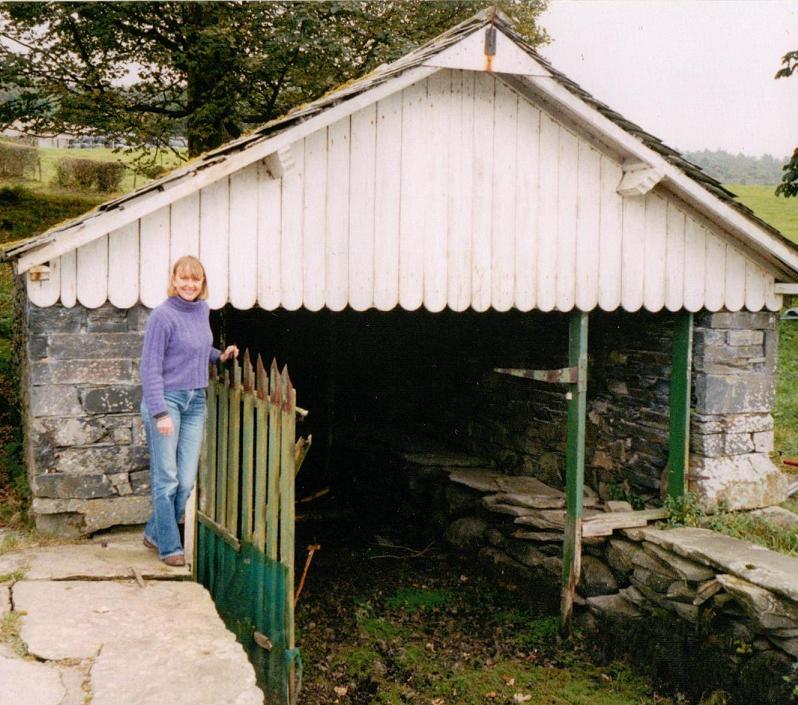
You may have seen the BBC documentary about the making of Swallows and Amazons, when Ben Fogle interviewed Suzanna Hamilton and myself at Bank Ground Farm for ‘Big Screen Britain’. This was  re-packaged on a programme called Country TracksMy father’s 16mm footage had been skillfully inter-cut with an interview with our Director, Claude Whatham. I did not know that it was being broadcast but was able to watch on-line.Sophie Neville at the Bank Ground Farm Boathouses ~The Author Sophie Neville at the boatshed in 2013~
If you would like to read more, ‘The Secrets of Filming Swallows and Amazons (1974)’ is available on Amazon Kindle and all ebook platforms and the paperback on ‘The Making of Swallows and Amazons’ can be found in Waterstones from all online stockists.

Ronald Fraser arrives in the Lake District to play Captain Flint ~ on 20th June 1973

Sophie Neville and Simon West with Ronald Fraser playing Captain Flint
Sophie Neville, Simon West and Suzanna Hamilton with Ronald Fraser playing Captain Flint in the 1973 film of Arthur Ransome’s ‘Swallows and Amazons’

Ronald Fraser! veteran of World War II movies who had won an award for playing Basil Allenby-Johnson in The Misfits, had arrived on the shore of Coniston Water in two-tone shoes. Curiously so had two stand-ins. A short lady for me, who had dark hair, and a lady with blonde hair for Suzanna Hamilton. I have blonde hair and Suzanna is dark, but that is how it was.

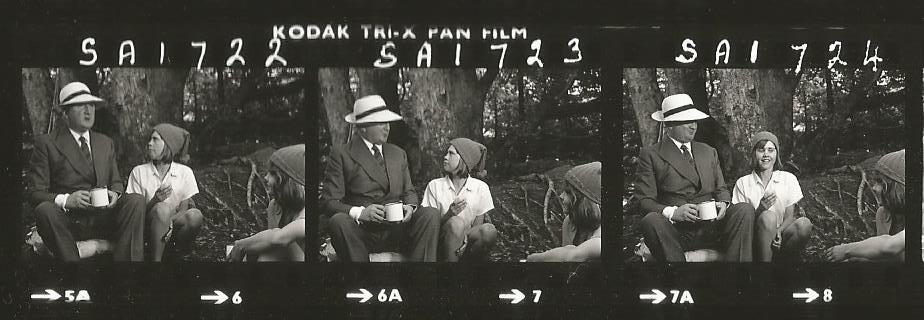
Contact sheet - Ronald Fraser with Lesley Bennett

The other four actors didn’t have stand-ins, which seemed odd. Kit Seymour, who played Nancy Blackett, and Lesley Bennett in the role of Peggy, rehearsed as usual. The two boys, Simon West and Sten Grendon, were younger than us but never had stand-ins, so that seemed odder. We didn’t think the ladies would be very comfortable on Peel Island. There wasn’t exactly a powder room there.

Suzanna Hamilton and the crew with Ronal Fraser
Director Claude Whatham and Bobby Sitwell with Suzanna Hamilton playing Susan Walker and Ronald Fraser as Jim Turner aka Captain Flint

And we were some way into the filming, used to handling props that the stand-ins found alien. However they were very excited about coming over to Peel Island. They sat in our positions and read our lines back to Ronald Fraser whilst the scene at the camp site was lit, and returned to stand-in for us later when his close-ups were shot. Somehow they managed to do this in scanty summer clothing despite a brewing storm.

My stand-in. I liked her very much and was most interested in her tapestry, since I was doing one myself. Lots of the men in the crew were interested in her tapestry too. They hadn’t noticed mine.

Our stand-ins got a lot of help from the crew as they went from ship to shore. We didn’t, but then we were agile and wore life-jackets. Mummy didn’t wear a life-jacket, but she has always been surprising good at getting in and out of boats.  Her comment on the matter of my stand-in was, ‘Most unsuitable for a children’s film.’ Mum became increasingly concise: ‘I don’t think that woman was invited. She just turned up.’

Enthused by our Stand-in, Lesley Bennett and I went into Ambleside that evening to buy more wool for our own tapestries.

Ronald Fraser on Peel IslandThe recording of our scene with Captain Flint on Peel Island went smoothly, and Claude Whatham the Director was happy with the result, but my diary reports that a Force 8 gale blew in. This spun the poor production team into a quandary.

The call sheet for Thursday 20th June documents how truly unpredictable the weather could be. We had a ‘Fine Weather Call’, an ‘Alternative Dull Weather Call’, ‘Rain Cover’ in the Houseboat cabin, and a pencilled-in end-plan entitled ‘Peel Island’, which is where we’d ended up. Richard Pilbrow, the Producer, had a 1970s embroidered patch sewn to his jeans which read: THE DECISION IS MAYBE AND THAT’S FINAL.

The Call Sheet that never-was for 20th June 1973. We ended up on Peel Island.

In Arthur Ransome’s book Swallows and Amazons there is a dramatic storm with lashing rain. We were rather disappointed that it was not included in David Wood’s screenplay. It could have been shot that afternoon, but this was not to be. I can remember Mum saying, ‘You can’t have everything.’

What had been good about the 20th June was that we, the Swallows and the

Captian Flint challenges us to capture his houseboatAmazons, were all together, not sailing but on Wild Cat Island, with the novelty of working with Captain Flint for the first time. Kit and Lesley had been so patient, waiting day after day for their scenes to come up. They were stuck having lessons with our tutor Mrs Causey in the red double-decker bus most of the time. But the fact that they were on stand-by was helpful to the production manager who had to wrestle with the film schedule and call sheets.
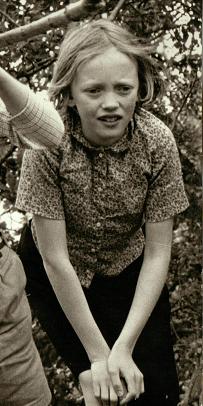
Blu-ray Sophie Neville with Ronald Fraser

As it was, the storm blew hard but cleared the dull-weather clouds and the next day was glorious, one to remember forever…

You can read more in the paperback or ebook here. There is also an audiobook narrated by me, Sophie Neville.

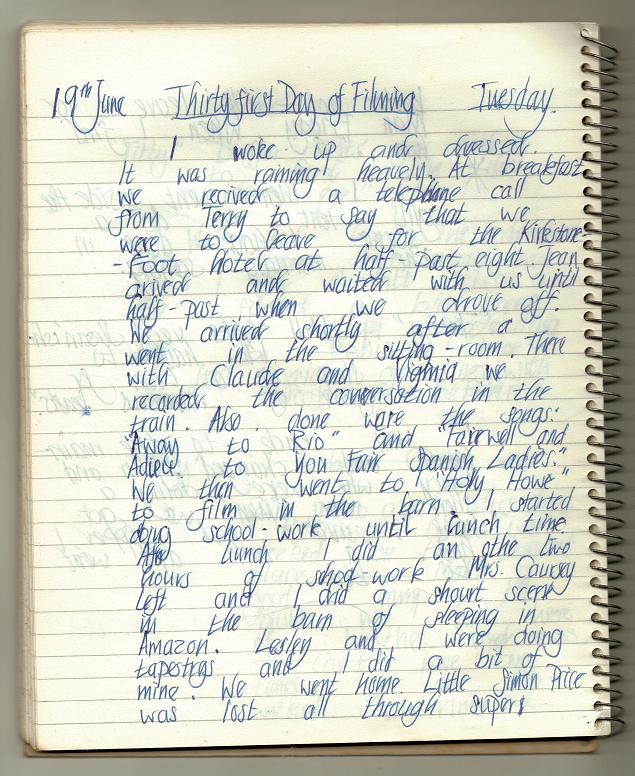
Filming the night scenes for ‘Swallows and Amazons’ on 19th June 1973

Sophie Neville as Titty Walker

The Lake District is very beautiful. The problem about filming there is that it can rain quite hard – ‘heavily’ – was the word I used in 1973.

By this stage in the filming of Swallows and Amazons Claude Whatham only had one ‘rain cover’ option. We were kept busy recording sea shanties with Virginia McKenna at the Kirkstone Foot Hotel by Lake Windermere while Dennis Lewiston, the DOP, lit Mrs Batty’s barn at Bank Ground Farm above Coniston Water.

Arthur Ransome must have done much to revive the songs of the sea: 

Farewell and adieu to you, fair Spanish ladies, Farewell and adieu to you, ladies of Spain; For we’ve under orders for to sail for old England, And we may never see you fair ladies again.

We never got as far as the ranting and roaring bit in the film.

No one really knows how old this naval song is. The Oxford Book of Sea Songs, mentions it in the logbook of the Nellie of 1796, long before shanties really came established as a genre. All I know is that Titty loved it and was still singing it in Peter Duck when the song became quite useful for navigating the English Channel.

‘The first land we sighted was called the Dodman, Next Rame Head off Plymouth, Start, Portland and Wight; We sailed by Beachy, by Fairlight and Dover, And then we bore up for the South Foreland light,’  or sort of.

Walking into Mrs Batty’s barn that day was hugely exciting. Simon Holland, the art director or set designer, had rebuilt the camp there, lighting a real fire.

Sophie Neville as Titty in Swallows and Amazons
Sophie Neville as Titty

Swallow was nmounted on a cradle so that she could be rocked, as if by water, as the scenes of her sailing at night were shot.  It was brilliant, she even went about. Moonlight wasn’t not a problem. Richard Pilbrow can correct me, but I think it was produced by a lamp called a ‘tall blonde’. I don’t think we had a wind machine. The Prop Men used a large sheet of cardboard to produce a breeze.

Contact sheet - Simon West and Suzanna Hamilton night sailing

‘Wouldn’t Titty have liked this?’

‘Liked what?’

‘Sailing like this in the dark.’

’57, 58, 60, 61…’

‘What’s the matter?’

‘Can’t you hear it? The wind in the trees?  We must be near the bank. Quick, Susan lower the sail! Roger, catch the yard as it comes down!’ Then there is a crunch as the Swallows hit a landing stage. All mocked up. Quite fun.

‘What about Titty?’

Amazon was placed on the same mounting. I climbed aboard and started wrapping myself up in her white sail.

Children always love the irony of John saying, ‘She’s at the camp. She’ll be alright. She’s got a tent,’ when the shot cuts to me looking damp and uncomfortable about sleeping in Amazon, anchored out on the water.

Burgulars approaching Cormorant Island

Later I wake up and come out from under the sail to hear the burglars heaving  Captain Flint’s trunk across Cormorant Island. All in all we achieved quite a bit on that wet day in Westmorland. Much safer and easier than being out on the water.  Because the cradle was at waist height Claude was able to get lower angle shots than when out on the camera pontoon. Simon West, who played John, did really well.  He managed to convince me that he was really sailing when I watched the film and I knew he wasn’t.

I’m pretty sure this scene of us inside a tent at night was actually shot on Peel Island but I may be wrong. We had a fire in the barn. If you look closely you can see an electric cable going into the lantern to boost light from the candle. The night scenes were tricky to light and shoot, but there was something about them that was intimate and exciting for children. I assume they would normally be in bed but it was the summer holiday and excitement was afoot.

Sophie Neville in the tent at night

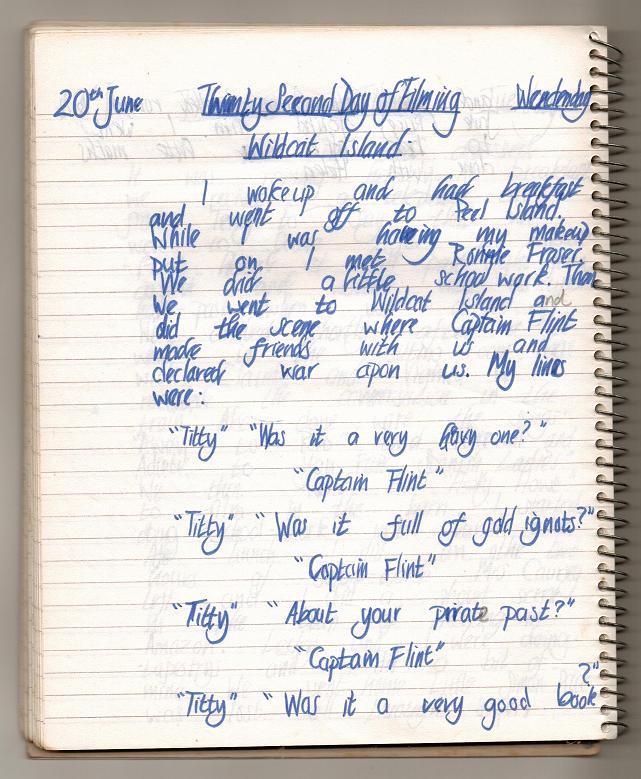
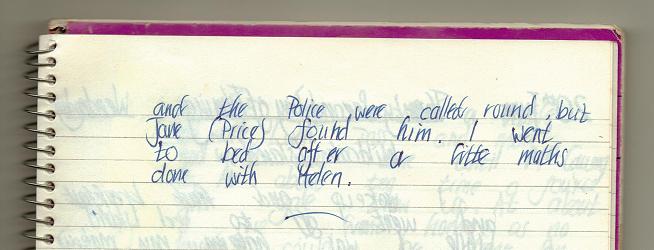
Back at our guest house in Ambleside there was a real life drama. Little Simon Price had gone missing.  He was the small boy last seen on the beach at Rio, having his shorts pulled up by his sister. The Police were called and everything. But as in a lot of real life situations, things were sorted out, and we returned to the mundane world of maths lessons. I was tutored by Helen, one of the students at the Charlotte Mason College of Education who was also lodging at Oaklands as Mrs Causey, our teacher, could not ‘do modern Maths.’

You can read more here:

Being Robinson Crusoe on Wild Cat Island ~ filming ‘Swallows and Amazons’ on 18th June 1973

Sophie Neville as Titty on Peel island
Sophie Neville as Robinson Crusoe the shipwrecked sailor

I did not envisage it beforehand, but at this point in my life I became one of the actors who played Robinson Crusoe on film, with Virginia McKenna, now Dame Virginia, taking the part of Man Friday. It would come across rather well on a chat show.  The audience would be taken unawares and we could meet the other actors who took the same parts after us. I am sure they were stranded on warmer desert islands.

Losing a milk tooth when you are twelve-and-a-half years old is really rather embarrassing. When you are in the middle of appearing in a feature film it’s disastrous. Not only was the gap sore but since it was an upper tooth at the front of my mouth the continuity of the whole movie was blown.  I think today they may have tried to fit a bridge but Claude Whatham, the Director decided he would just have to live with the problem.

Virginia McKenna greeting Sophie Neville

I spent the next few days trying not to let my teeth show, but even today, all these years later, those who know the film well, comment on the fact that I lost an eye tooth.

Virginia McKenna playing Man Friday in 1973 ~ photo: Daphne Neville

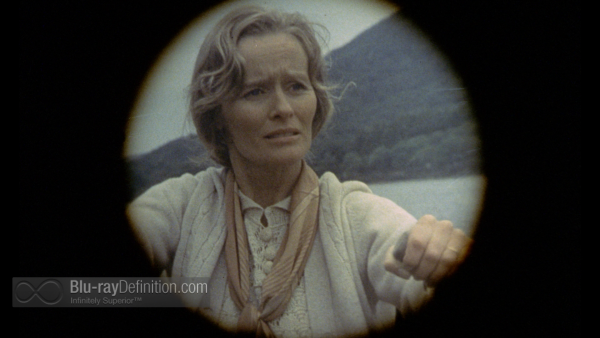
As it was, I had to concentrate on pushing the hideously heavy Holly Howe rowing boat away from our desert island in the scene when I bid farewell to Virginia McKenna who was gallantly playing Man Friday.

Sophie Neville as Titty with Virginia McKenna in Swallows and Amazons (1974)
Sophie Neville with Virginia McKenna on Peel Island

This was more tricky than it would be in real life as the massive 35mm camera, the Cameraman was in the boat with Virginia. The water was cold, the rocks rather slippy. And I had the telescope in my hand. This was in order to deliver Arthur Ransome’s line, ‘Duffer. That’s with looking too hard. Try the other eye,’ whilst lowering the telescope to wipe away a tear. I’m afraid that what came out was ‘That’s for looking too hard.’ 

Filming with Virginia McKenna on Coniston Water

I busy thinking of terribly sad things, all geared up to produce the tears, when glycerine was blown into my eyes. The most enormous tears, far more difficult to contain than real ones, gushed forth.

Virginia McKenna rowing

And I think that the Wardrobe Master must have forgotten about a hanky. You can tell that the square of white cotton I had tucked in my knickers is just a frayed piece of cloth.

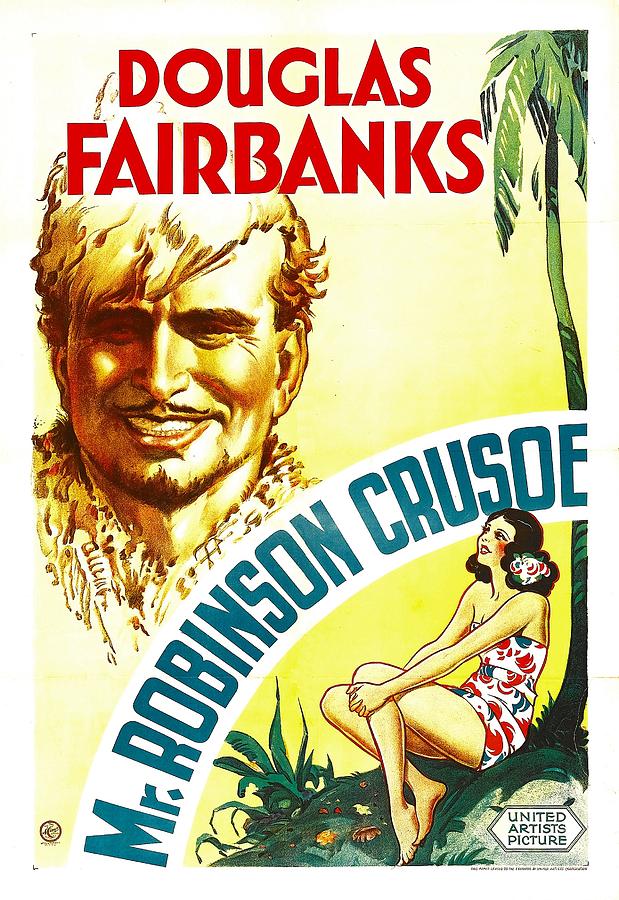
Daniel Defoe’s hero Robinson Crusoe has been portrayed on the big screen by Douglas Fairbanks, Dan O’Herlihy – who earned an Oscar nomination for playing the part in 1952, Aidan Quinn, Pierce Brosnan and me. Or rather me playing Titty being Robinson Crusoe. Oh, dear, Oh dear.

Sophie Neville as Robinson Crusoe with film director Claude Whatham
Rehearsing the shipwrecked sailor scene with Claude Whatham

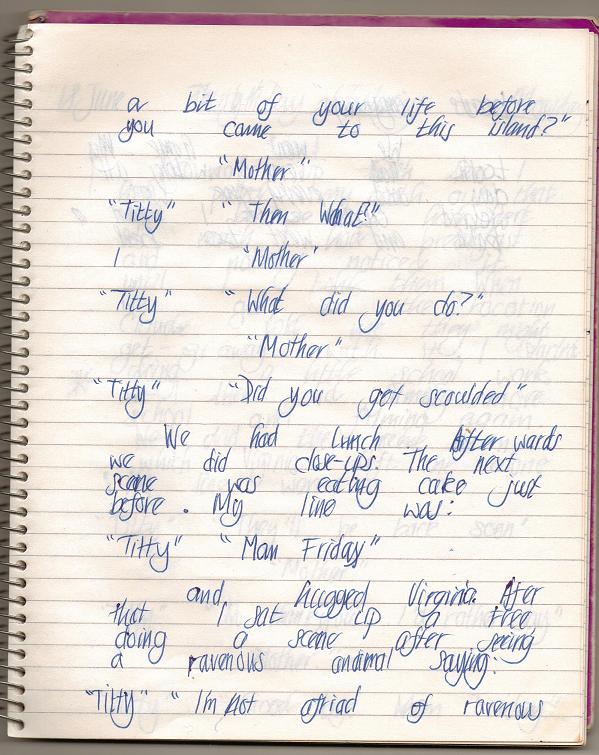
The scene opens with Titty sitting on a biscuit tin, reading from her log. ‘Twenty-five years ago this day, I Robinson Crusoe, was wreck-ed on this desolate place.’ The fact that I had missed the -ed from wrecked was real. I hadn’t written the word down properly.  As you can see in my actual diary there was then a dash ______ . At this point I flung myself  to the ground and dragged my exhausted body into the camp grasping my throat so as to portray the fact that Robinson Crusoe was virtually dying of thirst.

Sophie Neville playing Robinson Crusoe in the movie Swallows and Amazons (1974)

I hauled myself to my feet by grabbing the forked stick by the fire. What I didn’t realise was that Graham Ford, the Sound Recordist had hidden his microphone there. You can still hear the sound crunch as I grasp the crossbar that held the kettle. He was a perfectionist and, despite my apologies, was really rather annoyed about it.

‘Make a good place for a camp,’ Titty declares heartily, whilst looking around. ‘I’ll build my hut here out of  branches and moss.’ And so continued my solo performance. ‘Can’t have two tents for one ship-wrecked mariner.’

Sophie Neville as Titty on Peel Island - contact sheet

As I have mentioned before, my mother is very theatrical. In her eyes this was my great soliloquy. The most embarrassing thing I have to admit is that for ages after the film, during my sensitive teenage years, Mum would insist that I used this scene as my audition piece.  Can you imagine? It was dotty. Instead of something appropriate for a young girl, like a scene from I Capture the Castle, which Virginia McKenna had been in, or even something from Shakespeare such as Romeo and Juliet, I would fling myself to the floor of the audition space and enact Titty playing a bearded man. Even now I blush as I remember doing all this in front of five amazed executives, who had never seen Swallows and Amazons. They were looking for nothing more than a normal girl to be in an advertisement for Parker Knoll armchairs.

Have you ever read the book? I don’t think many nine-year-olds would manage the prose. Despite the impression given by the poster above there are no girls in it. It’s about slavery. And cannibals. And rearing goats.

Douglas Fairbanks’ film came out in 1932, too late for Titty, but ‘The Adventures of Robinson Crusoe’ was released as a movie in 1922 and in 1929. I wonder if Arthur Ransome ever saw either version? I have to say that if there is ever a Hollywood line-up of actors who have played the part, I want to be included in it. I might make up for the ignominy I suffered.

I’ve written more about Titty and Robinson Crusoe on this websiter here were you can listen to the song from the musical version of ‘Swallows and Amazons’ here

You can read more about working with Virginia McKenna on the film here:

‘Man Friday!’ ~ filming ‘Swallows and Amazons’ with Dame Virginia McKenna on Wild Cat Island, 17th June 1973

Virginia McKenna and Sophie Neville on Peel Island
Dame Virginia McKenna and Sophie Neville on Peel Island in Cumbria, during the filming of ‘Swallows and Amazons’ in 1973 ~ photo: Daphne Neville

I didn’t know that Virginia McKenna was in the Lake District.

Virginia McKenna with Sophie Neville
‘They were very savage savages’ ~ Dame Virginia McKenna with Sophie Neville ~ photo: Daphne Neville

I didn’t know that we would spend that Sunday cooking on the camp fire.

Bill Travers watching Virginia McKenna
Bill Travers watching the scene featuring his wife Dame Virginia McKenna who is talking to Director Claude Whatham ~ photo: Daphne Neville

I didn’t know that Virginia had come up with her husband Bill Travers.

Virginia McKenna and Bill Travers as Joy and George Adamson in ‘Born Free’, Kenya 1964. Virginia later devoted her life to The Born Free Foundation.

Sophie Neville as Titty on Peel island
Sophie Neville as Robinson Crusoe the shipwrecked sailor

I still don’t know how Lee Electric managed to get so many lights working out on Peel Island. I can’t remember having them for any other scene. They must have had the generator on the bank and run cables under the water. It looks as if it was a pretty dark day. It was wonderful having the flood lights – they kept us warm.

Virginia McKenna as mother in Swallows and Amazons
Dame Virginia McKenna as Man Friday in Swallows and Amazons 1974

There was a hushed reverence when Virginia McKenna was on set. Gone were the saucepan jokes. Funny really, as it was frying-pan scene. ‘I waited til no-one was looking and jumped out of the pot and escaped!’ The pemmican potato cakes she made me were delicious. And very hot.

Virginia McKenna with Sophie Neville in Swallows and Amazons

Working with Virginia and Arthur Ransome’s dialogue was altogether an exercise in charm, or managing charm. I hope I didn’t over-cook it. I was rather pre-occupied by my loose tooth but loved being involved in a proper scene around the camp fire.

Sophie Neville as Titty getting her makeup done
Sophie Neville being made up for the part of Titty by Peter Robb-King in 1973

Then Virginia was gone and I was a saucepan once more. A saucepan now with a very wiggly tooth indeed. Saucepan-lid, kid. No more lights. I was sitting up a tree above Coniston Water in my navy blue knickers, and descended feeling a bit like Pooh Bear.

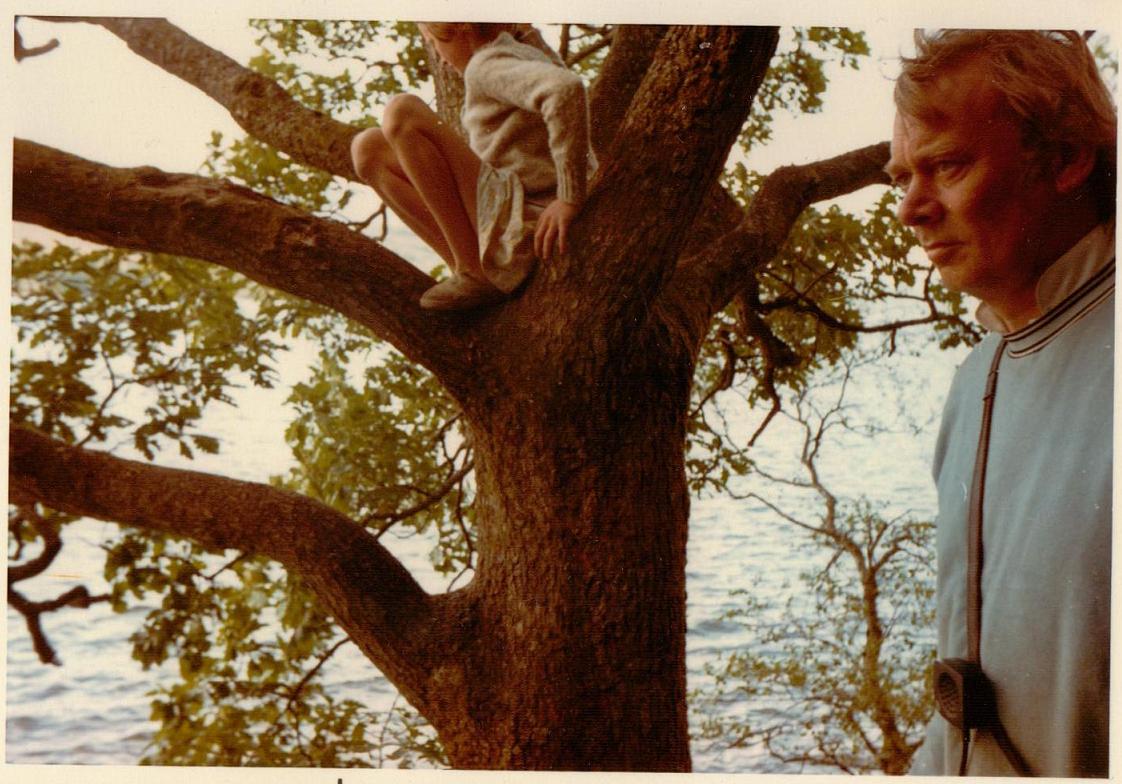
me up a tree
‘Up a tree for fear of ravenous beasts’ with David Bracknell the First Assistant Director ~ photo: Daphne Neville

It is still there, the mossy tree. You can climb it.

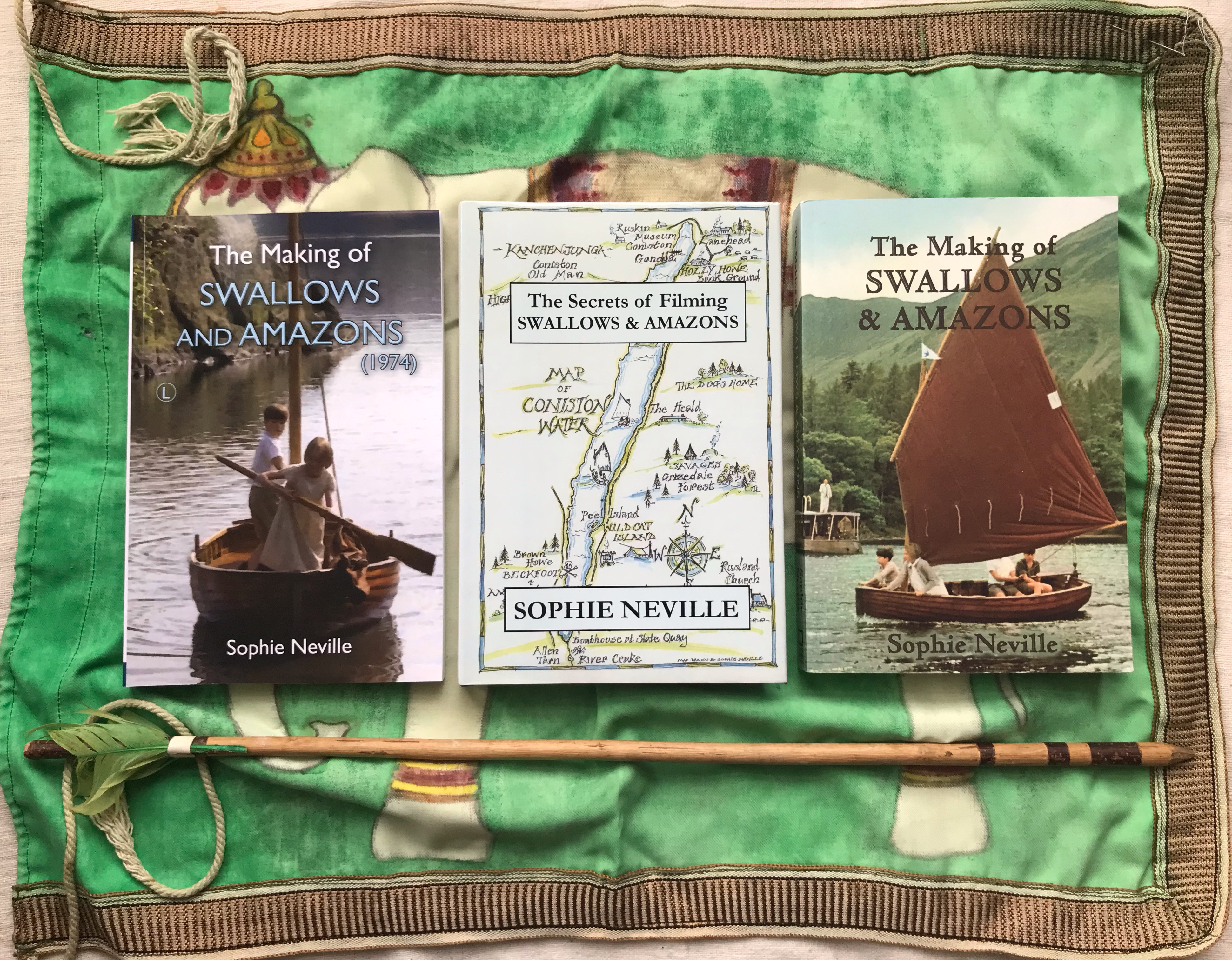
You can read more in the ebook ‘The Secrets of Filming Swallows and Amazons’or the paperback on ‘The Making of Swallows and Amazons’ now available as an audiobook.

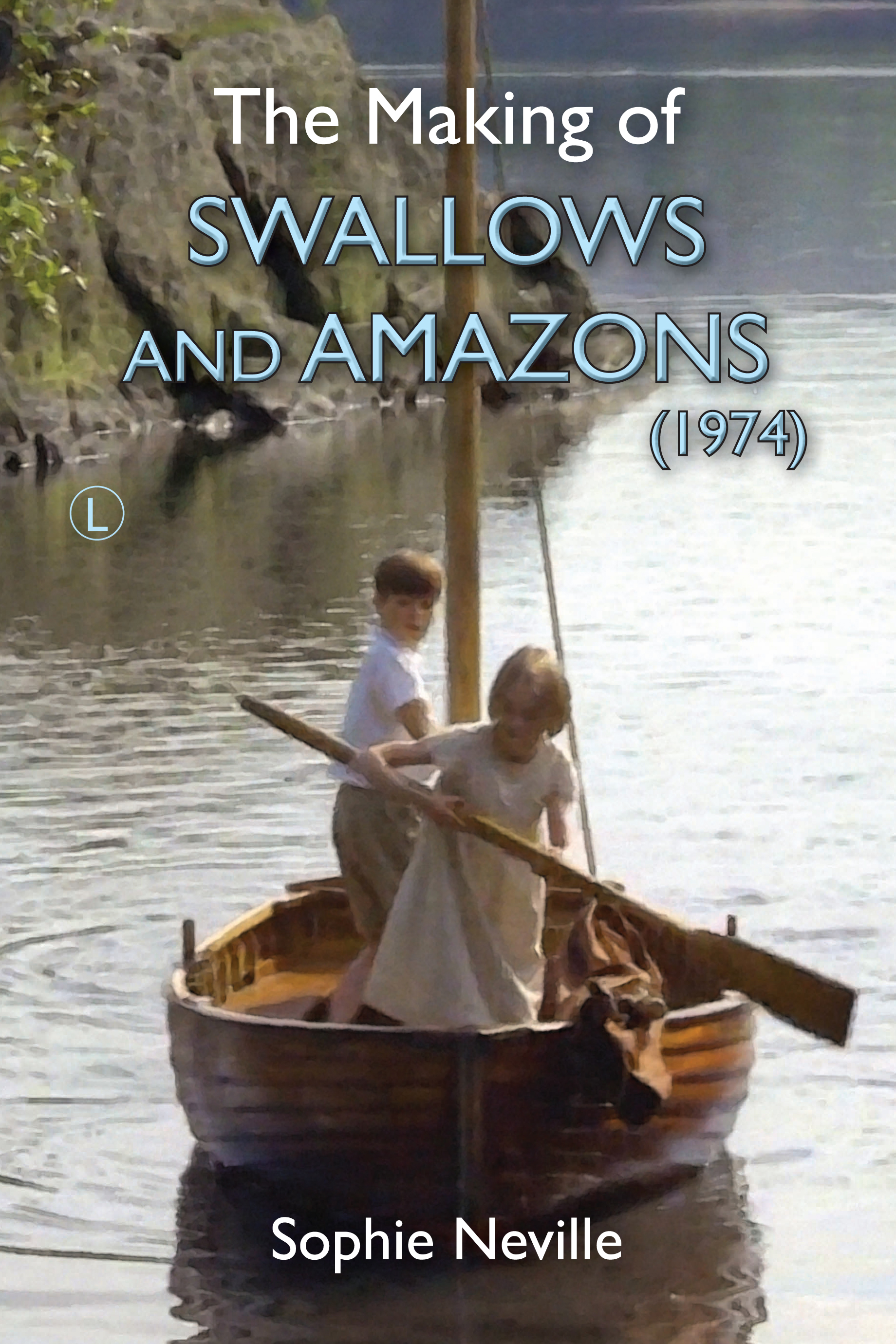
'The Making of Swallows and Amazons (1974) by Sophie Neville'
Different editions of ‘The Making of Swallows and Amazons (1974) by Sophie Neville’

A day off in Blackpool ~ whilst filming ‘Swallows and Amazons’ on 16th June 1973

A Day Off in Blackpool
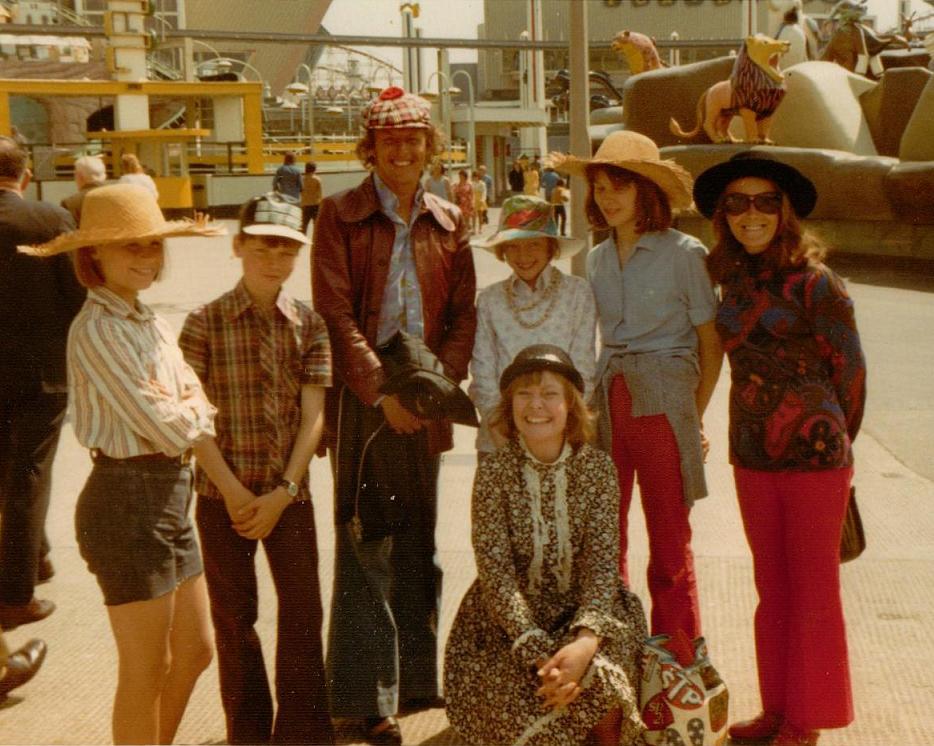
Suzanna Hamliton, Simon West, Claude Whatham, Sophie Neville, Kit Seymour, Jean McGill with Daphne Neville kneeling at Blackpool funfair in 1973

Apart from referring to us as The Swallows and The Amazons, our director Claude Whatham always called us his artistes – ‘My art-istes!’ This was, of course, because far from being trained actors we were just the children who made up his cast.

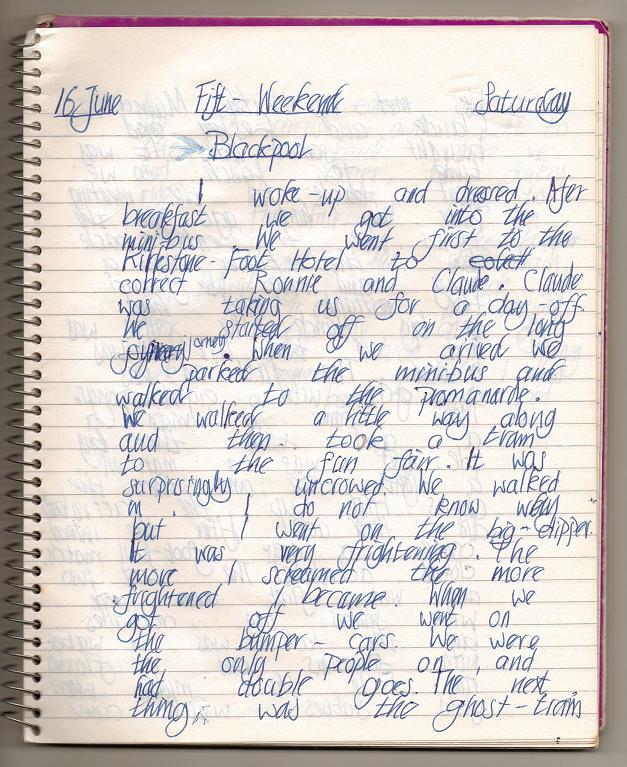
It was Saturday morning on 16th June 1973 and a day off from filming. We’d all been working hard. Instead of resting, Claude took us all to Blackpool, the famous holiday destination of the north west. None of us had ever been before. It was a great treat and hugely exciting. I can remember choosing the clothes I would wear, and putting on a shell necklace Daddy had brought back from Africa, for the occasion.

A complete contrast to camping and sailing in the wilds of Westmorland, Blackpool proved a day trip to remember.

It must have taken more than an hour-and-a-half to travel from Ambleside to the Blackpool promenade in those days. Jean McGill, our friend and driver, drove us down in the unit mini-bus. We were joined for the day by Ronnie Cogan, the hairdresser on the film crew, and of course Mum and Jane came as our parents and legal chaperones. I’m pretty sure Ronnie smoked the whole way there and back, but we all adored him and were thrilled he wanted to come too.

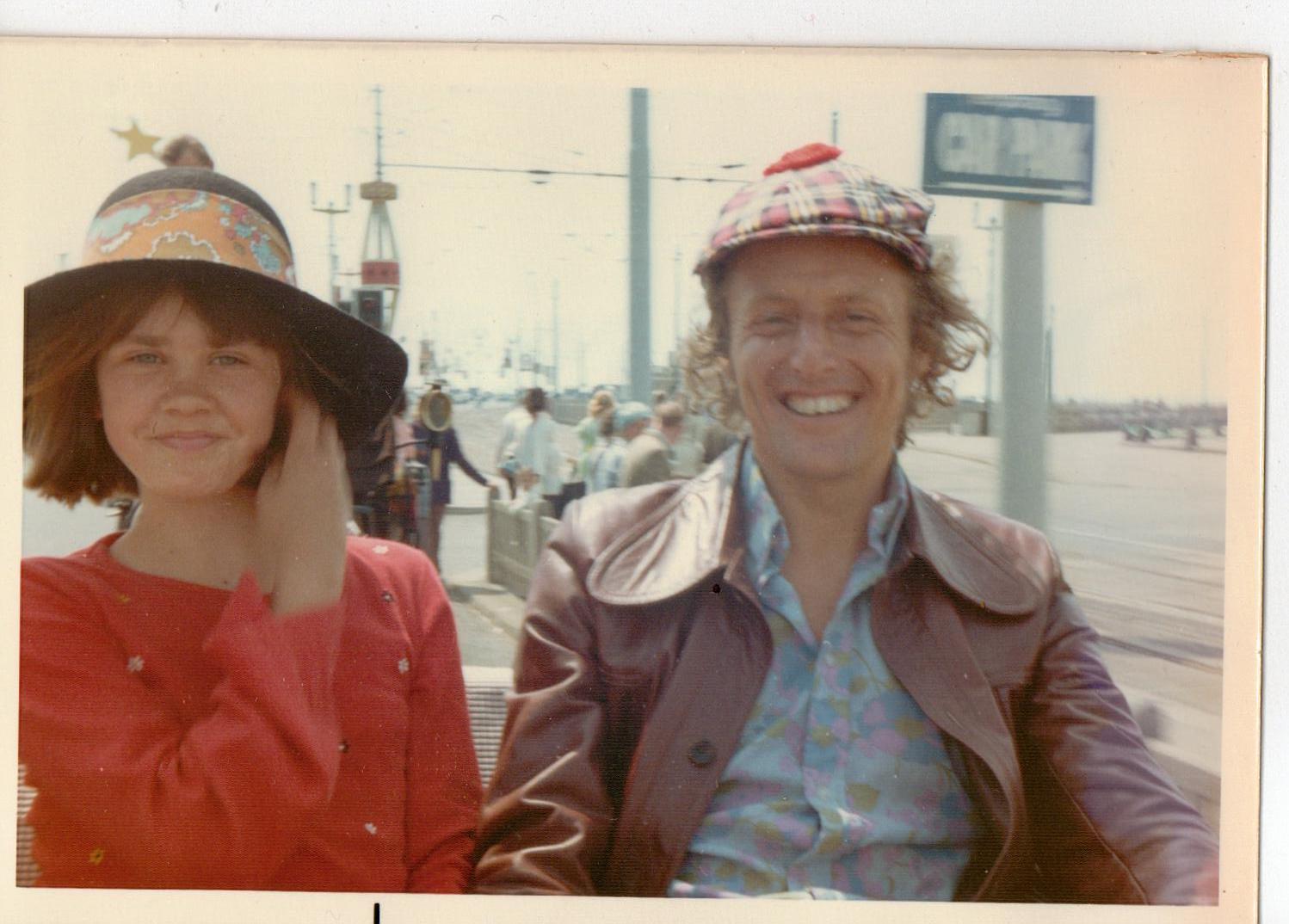
The first thing we did was to buy those crazy hats. I chose one I could wear later as I rather needed a sunhat. y the end of the day Sten had swapped his for Claude’s cap, which he wore for ages afterwards.

Blackpool funfari 1973
Claude Whatham with Stephen Grendon and Daphne Neville with Leseley Bennett

16th June ~ my diary page two

Blackpool
Lesley Bennett with Claude Whatham at Blackpool~ photo: Daphne Neville

I think Claude must have liked fun-fairs. Before Swallows and Amazons he directed That’ll be the Day, a rock and roll movie produced by David Puttman, set at a fun fair of the 1950s. It starred David Essex and Ringo Starr with Billy Fury singing “A Thousand Stars”, “Long Live Rock”, “That’s All Right Mama” and “What Did I Say”. Claude gave me the LP, which I played again and again.

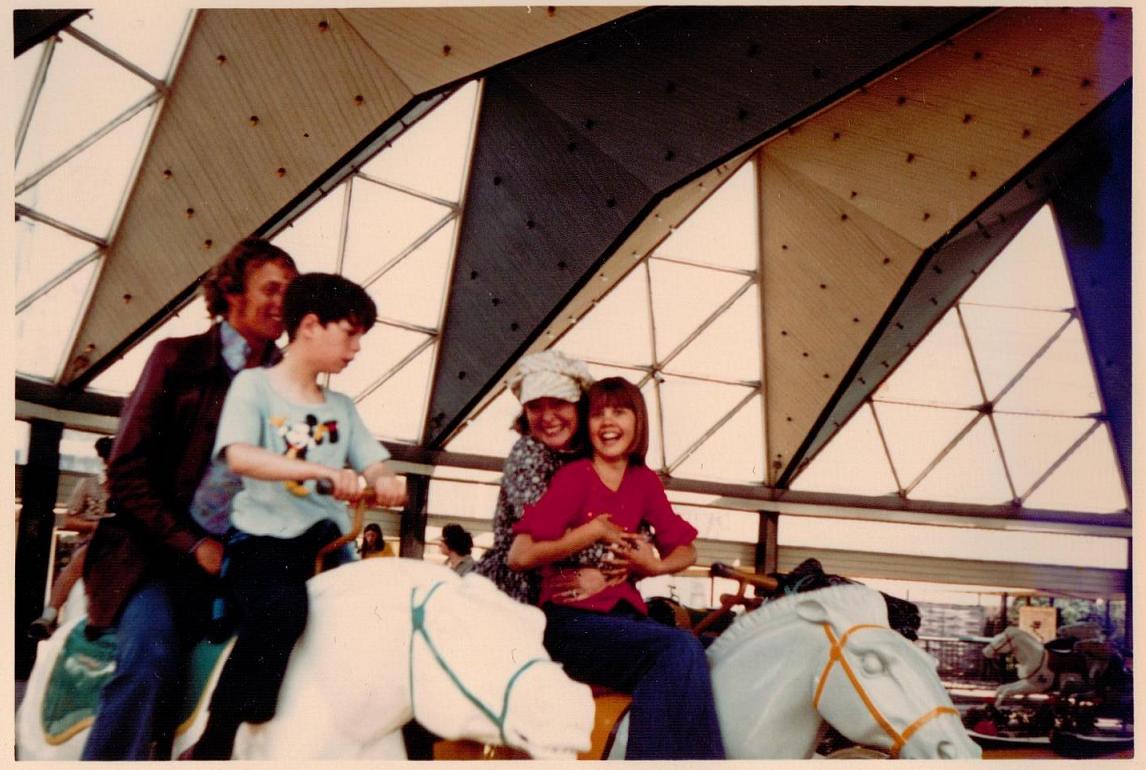
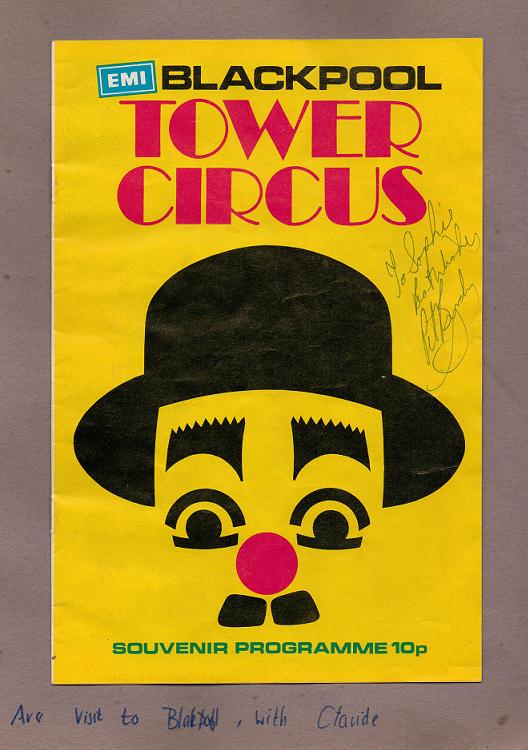
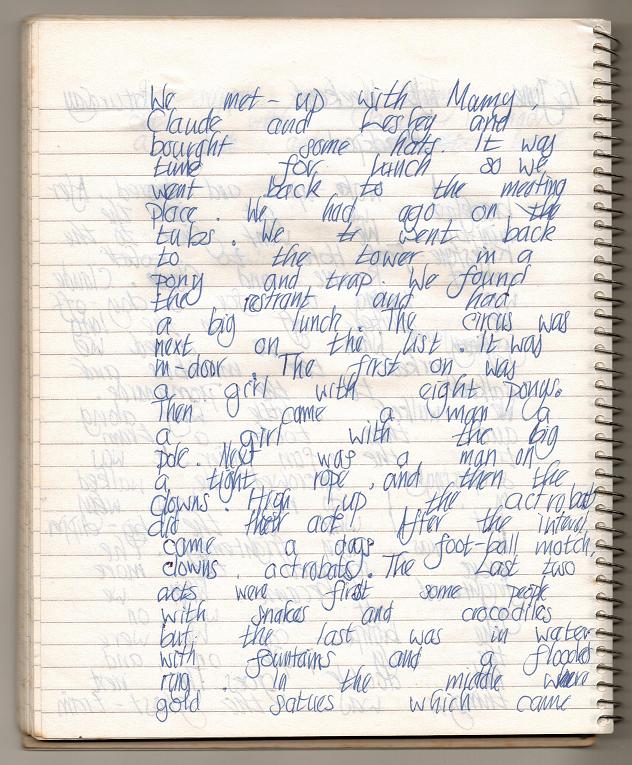
Blackpool. We did it all. I was most impressed – and terrified out of my wits – by the big dipper but have always loved going in a pony and trap and racing donkeys. Looking back it seems we took a number of risks. What EMI’s insurance company would have said I do not know. Falling off a donkey could have cost quite a few expensive filming days but then EMI did own the circus we went to. There we saw true artistes, with snakes and crocodiles. The mind boggles.

We were exhilarated by the whole experience. Whilst it was tiring, it energised us, bringing us together as a family, all looking up to Claude as our father figure. He had two children of his own, but they must have been at college by then. Paul had been about sixteen when we made Cider with Rosie – Mum remembers him as a curly haired boy talking to his father about the casting. He sadly died in a motor cycle accident driving home from Oxford Polytechnic when he was only about nineteen. Claude never got over it. I weep for him, even now.

Jean McGill, Jane Grendon, Stephen Grendon, Kit Seymour, Sophie Neville, Claude Whatham, Simon West, Lesley Bennett, Suzanna Hamilton, Ronnie Cogan~ photo: Daphne Neville

I’ve written about the food we ate at the time here

And am adding memories to a post on life in 1973 here. Comments welcome!

You can read more about our antics here:

Rowing to Cormorant Island ~ filming ‘Swallows and Amazons’ on Derwentwater on 15th June 1973

Sophie Neville rowing to Cormorant Island
Sophie Neville as Titty and Stephen Grendon as Roger rowing to Cormorant Island

‘Pull harder, Roger!’ ~ hardly a line from Shakespeare, but one that has lodged deep in my memory. Titty was even bossier in Arthur Ransome’s books ~

“You keep time with me, Boy,” said the able-seaman.

“All right.”

Official film still from StudioCanal
Sten Grendon as Roger and Sophie Neville as Titty rowing Swallow (c)StudioCanal

Titty lifted her oar from the water. Roger gave one pull.”Boy,” said the able-seaman, “you mustn’t say ‘All right’.”

“Aye, aye, sir,” said the boy.**

When we auditioned for Swallows and Amazons the emphasis was on sailing. Could we sail? In fact I needed to be good at rowing. Titty and Roger row back form the Charcoal Burners, I rowed the Amazon from Wild Cat Island and here we were rowing across Derwentwater to Cormorant Island. This was more difficult than normal as Swallow was wired to the camera pontoon.

Cormorant Island

When I look at the 16mm footage my father took of me rowing at home before we left to film in the Lake District, I cringe. My blades were high above the water, hitting the surface with terrible splashes but I seemed to achieve my objective.  I managed to fit an improvised mast to our Thames skiff and even made my own sail. It doesn’t look great, but I think Arthur Ransome would have approved.

Cormorant Island and the camera boats
Swallow finding Amazon anchored near Cormorant Island on Derwent Water with the camera pontoon and safety boat: photo~ Daphne Neville

Simon West and Suzanna Hamilton joined us for the scene when the Swallows lower the Jolly Roger and start to sail the captured the Amazon back to Wild Cat Island.  I can only imagine that I changed my costume in one of the support boats. The scene may have been shot with two cameras on different boats.

Sophie Neville playing Titty Walker in the captured Amazon, with David Cadwallader, Bobby Sitwell, Dennis Lewiston, Claude Whatham and two electricians holding reflector boards on the camera punt: Photo ~ Daphne Neville

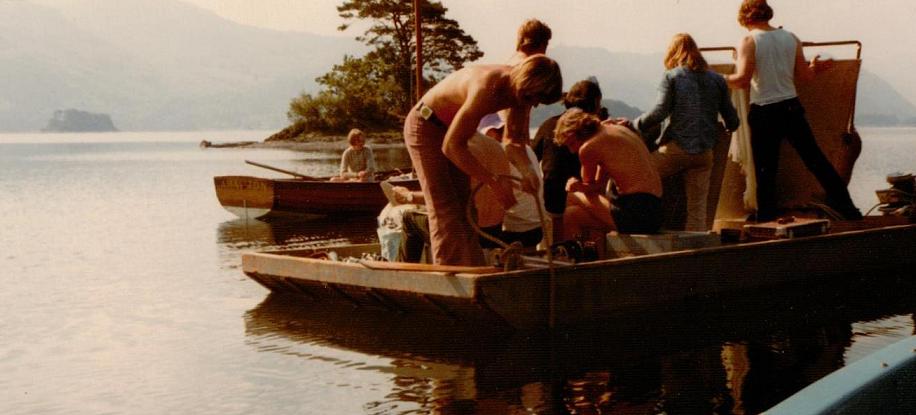
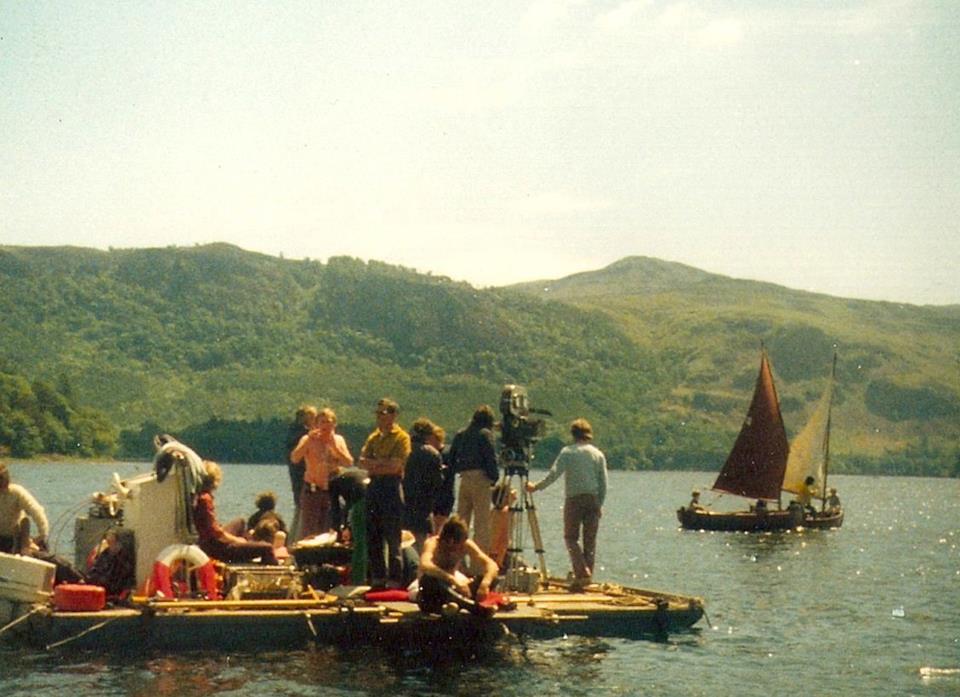
This shot shows Claude Whatham using the grey punt,* which somehow managed to accommodate Dennis Lewiston, the 35mm Panavision and quite a few crew members, while Richard Pilbrow remained on the camera pontoon with Eddie Collins operating the 16mm camera.

Richard Pilbrow and his film crew on the camera pontoon with Eddie Collins operating the 16mm camera. Simon West and Stephen Grendon sail Swallow. Suzanna Hamilton is climbing aboard the Amazon with Sophie Neville

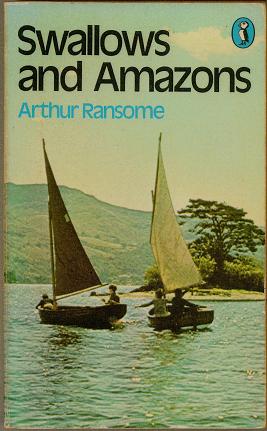
I remember the scene itself as being difficult to achieve in terms of sailing. Swallow has a keel, and Amazon with her centre board is much the faster dinghy. It is not like racing two boats of the same class. After hauling up the anchor Suzanna and I battled to turn the Amazon, not wanting to wiggle the rudder and jeopardise her pins. I remember Simon calling advise over the water. He stalled and we caught up, trying to get close together for the shot. The result was a photograph used on the front cover of the next Puffin edition of the book.

Swallows and Amazons book cover 1974
Stephen Grendon, Simon West, Sophie Neville and Suzanna Hamilton on the cover of the 1974 Puffin edition of ‘Swallows and Amazons’

* I may be wrong about these photographs. The still surface of the water in the shot of Titty alone in Amazon suggests that it was taken later on, when we filmed the burglars landing on Cormorant Island with Captain Flint’s trunk, but we probably had a very similar set up on this more sparking day ~ 15th June 1973.

Contact sheet - sailing Swallow & Amazon on Derwentwater

We went on to film various shots of us sailing on to Wild Cat Island, when I think the camera was in Swallow capturing close-ups of a triumphant Captain John. He did indeed do well.

Sailing Swallow & Amazon by Cormorant Island

**Swallows and Amazons by Arthur Ransome, 1970 Jonathan Cape edition

You can read more about our adventures here:

Better drowned than duffers ~ filming ‘Swallows and Amazons’ on the afternoon of 14th June 1973

SSophie Neville on the Daily Telegraph front cover

Sophie Neville as Titty Walker

If not Duffers...

14th June ~ my Diary at Bank Ground Farm

14th June ~ My diary at Bank Gound Farm

Claude Whatham had no Peak of Darien at Bank Ground Farm,  Arthur Ransome’s location for Holly Howe. But he did have buttercups and daisies, the flowers so evocative of childhood summers spent in the English countryside.  The field that runs down to Coniston Water looked glorious that sunny day in June 1973.  It was glowing.

Claude had used wild flowers to good effect when he made Laurie Lee’s memoir Cider with Rosie for the BBC in May 1971. It had been one of those months of endless sunny days in Gloucestershire but we were in Westmorland now, where buttercups bloomed later in the year and sunny days were cherished. This was Claude’s afternoon for low angle shots.

The view from Bank Ground Farm
The view from Bank Ground Farm over Lake Coniston as it was in 1973

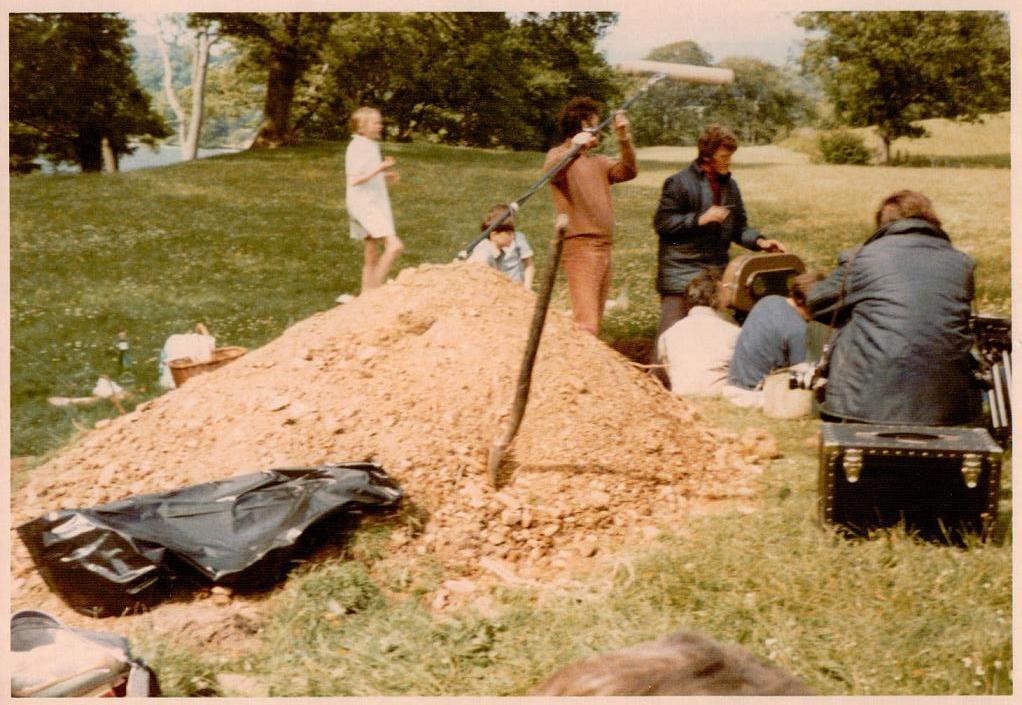
We arrived to find that a huge hole had been dug in the meadow for the camera, with a picnic for us spread out the other side of it. We thought this was very exciting. I’m not sure whether Mrs Batty felt quite the same joy about the excavations in her field. I was sad that we didn’t have a fire with a kettle, as they do in the book of Swallows and Amazons, but that was kept as a feature of island life and camping yet to come.

Sophie Neville, Simon West, Suzanna Hamilton, Gay Lawley Waklin, Bobby Sitwell, Dennis Lewiston, Albert Clark: photo~ Daphne Neville

Roger came sailing down clutching the telegram from our father, reaching out to deliver it over the hole. I understand that this was based on the cryptic telegrams that Ernest Altounyan sent his children Taqui, Susie, Titty and Roger, the children who acted as models for the Swallows. It has become the iconic response to Health and Safety ever since.

Bank Ground Farm
Claude Watham having just spoken to Stephen Grendon playing Roger at Bank Ground Farm. Who is in the foregound? : photo~ Daphne Neville

What we ended up saying altered slightly from David Wood’s original screenplay. ‘Dispatches?’ – Ransome spells the word ‘Despatches’ but apparently both spellings are correct.

John referred to Daddy as ‘Father’. I’m not sure why. He did so in his letter. It is daddy in the book, but perhaps Claude considered ‘Father’ as having a more period feel.  I stuck more to Ransome’s dialogue, as you can see if you compare the film script with my diary entry above. This was because I knew his book so well, and never saw the script. The acting credit must go to Simon West who sat holding the telegram, graciously absorbing my bossiness, whilst I grappled with the words.

David Wood's screenplay  of 'Swallows and Amazons'
David Wood’s original screenplay of ‘Swallows and Amazons’

Sue Merry typing up continuity notes on location at Bank Ground Farm: photo ~ Daphne Neville

Back in 1973 it was the job of  the ‘Continuity Girl’ to take notes on any changes made to the script. Sue Merry, ever present in her dark coat, took on this role. Today she would probably be known as a ‘Script Supervisor’ but her Aviator sunglasses and black polo-necked jersey would be the height of fashion. Sue also took notes technical notes for the film editor and director, indicating which Takes were favoured and which had been spoilt, giving the reason. In those days we had no monitors. The camera lens would be unscrewed after each take and checked carefully. If any fluff was found, Bobby Sitwell the camera assistant would call out, ‘Hair in the gate!’  Sue would quietly note this down and David Bracknell, the first assistant, would call out, ‘Set up to go again’. And we’d go again.

Blu-ray reading telgram

Sue was also responsible for the continuity, and would take numerous Polaroid photographs as an aide-memoir. This scene followed the one of Mother giving Roger the telegram, which had not yet been shot. Virginia McKenna hadn’t arrived back in Cumbria. Looking back, this seems a huge gamble. Would they ever get another sunny day while the buttercups were still blooming, a day to match – exactly – the weather of 14th June?

Sue would sit and type up her notes on location, using a portable typewriter that sometimes was set up for her on a spindly picnic table. This method of working was different from the BBC, when a ‘production assistant’ would type up her notes at the end of each day. Would it have been so that one copy of her notes, typed on triplicate paper, could be sent to the laboratory with the exposed film? It meant that her evenings were free.

Filming Swallows and Amazons in 1973
We were allowed to help fill in the hole at the end of the day.

Sue Merry had worked for Neville C. Thompson before on The Boyfriend, Ken Russell’s movie that starred Twiggy with Tommy Tune, Barbara Windsor and Glenda Jackson. She later worked on The Wicker Man, Anthony Shaffer’s harrowing film directed by Robin Hardy that featured Edward Woodward, Christopher Lee and Diane Cliento, Britt Ekland and Ingrid Pitt. She went on to work with Dennis Lewiston and other members of our crew on The Rocky Horror Picture Show, the movie that starred Tim Curry, Susan Sarandon and such unexpected artists such as Meatloaf, Christopher Biggins and Prince Andrew’s old flame Koo Stark,  who played a bridesmaid. Sue also did the continuity for Nicolas Roeg on The Man Who Fell to Earth, starring David Bowie,  before moving into television to work on The Professionals and The Comic Strip Presents… All quite fun!

But on that day in June 1973, she was the girl with the daisies in her hair, wearing a coat thick enough to indicate that although sunny it was still quite chilly in the Lake District.

You can read more in ‘The Secrets of Filming Swallows and Amazons (1974)’

The real Charcoal Burners ~ who we met whilst filming ‘Swallows and Amazons’ on 14th June 1973

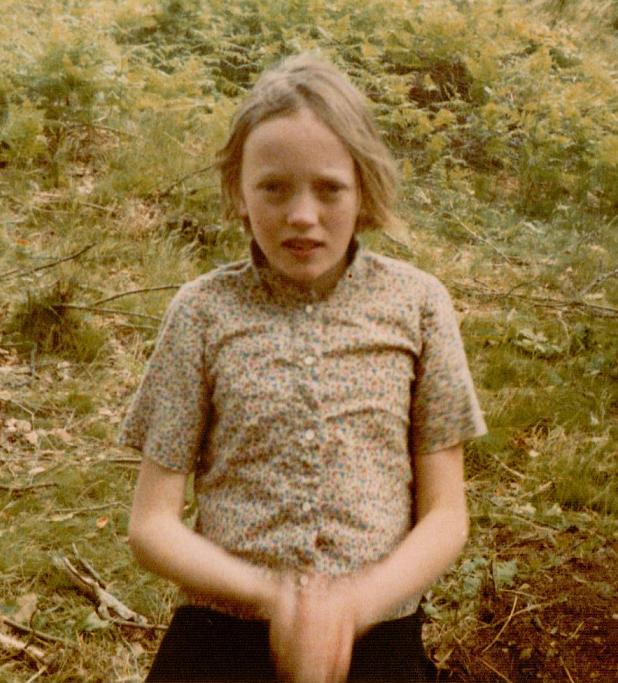
Sophie Neville at the Charcoal Burners
Sophie Neville as Titty Walker visiting the charcoal burners on a cold day in 1973 ~ photo: Daphne Neville

On 14th June we were back at Ickenthwaite Forest, in Cumbria, to film the sequence when the Swallows visit the Charcoal Burners.

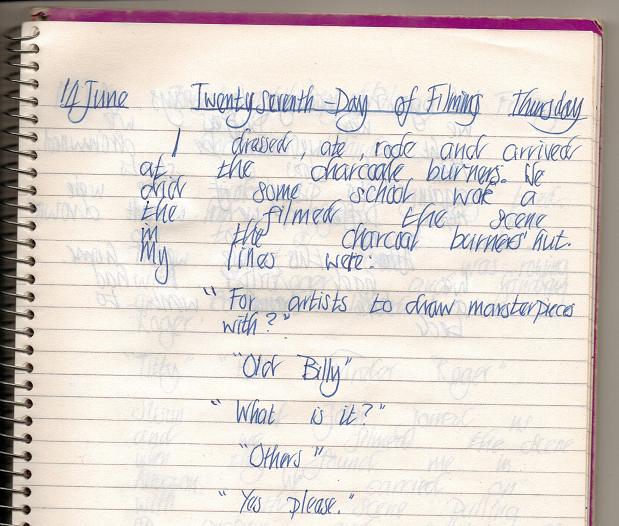
14th June ~ my diary aabout the charcoal burners

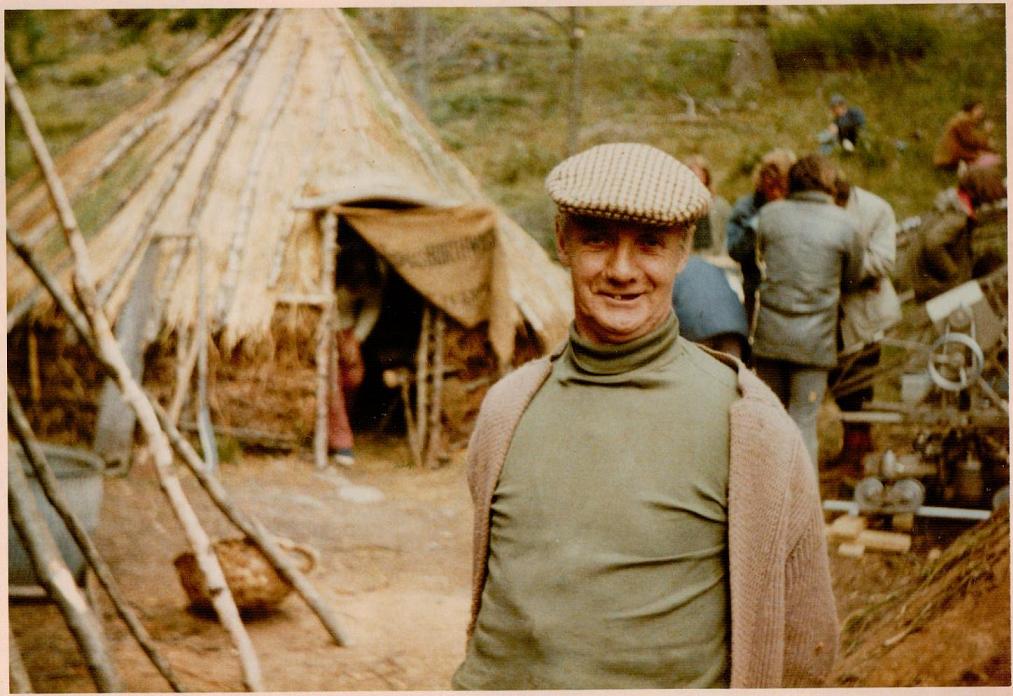
The real charcoal burner
Norman Allonby, the real charcoal burner outside the hut. Behind him the 35mm Panavision camera is being mounted on a small crane and short section of track ~ photo: Daphne Neville

‘He doesn’t look much like a son.’  The real Young Billy was almost indistinguishable from the actor. He seemed to take a wry interest in the filming but what he thought of us, of the crew, I dread to think. We were aliens on his planet. Terribly bossy ones.

The real Charcoal Burner with the actor
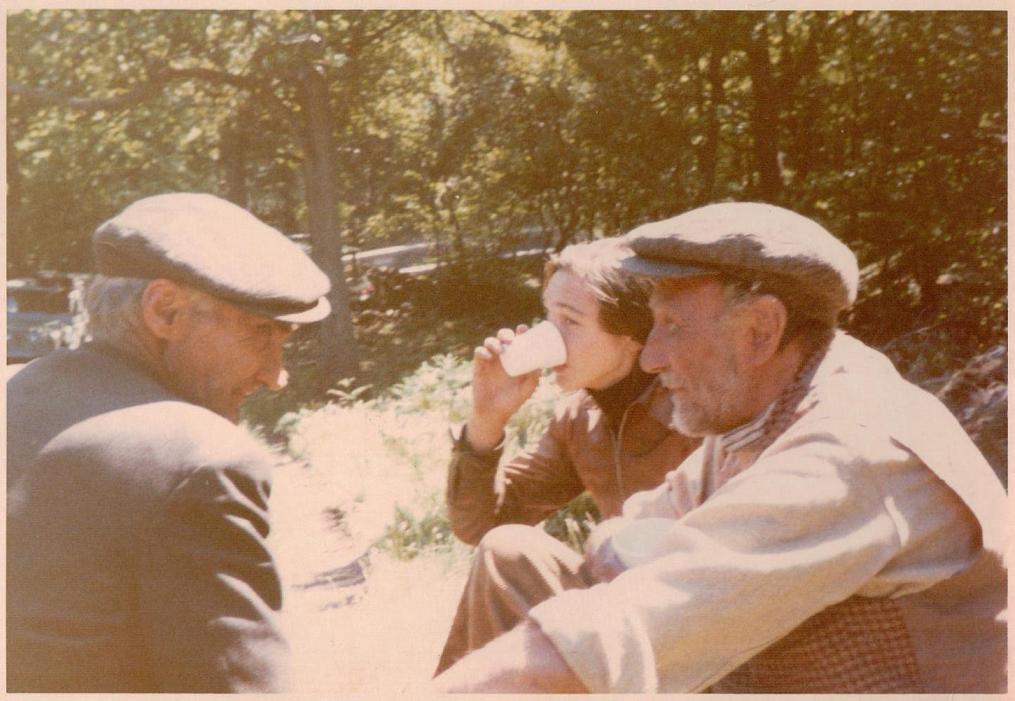
The charcoal burner Jack Allonby chatting to Jack Woolgar playing Old Billy

Our polystyrene coffee cups look so out of place. They were. How much had changed in the art of producing charcoal between 1973 and 1929 when Arthur Ransome set our story?

Jack Woolgar looks as old as the hills. He’d been born in 1913, so must have only been sixty years old, younger than I am now. He’s appeared in ‘Doctor Who’, ‘Emmerdale Farm’ and ‘Coronation Street’. After ‘Swallows and Amazons’ he played Carney in forty-eight episodes of ‘Crossroads’. We knew him as the professor in ‘The Lion, the witch and the Wardrobe’.

Charcoal Burners during the filming of Swallows and Amazons
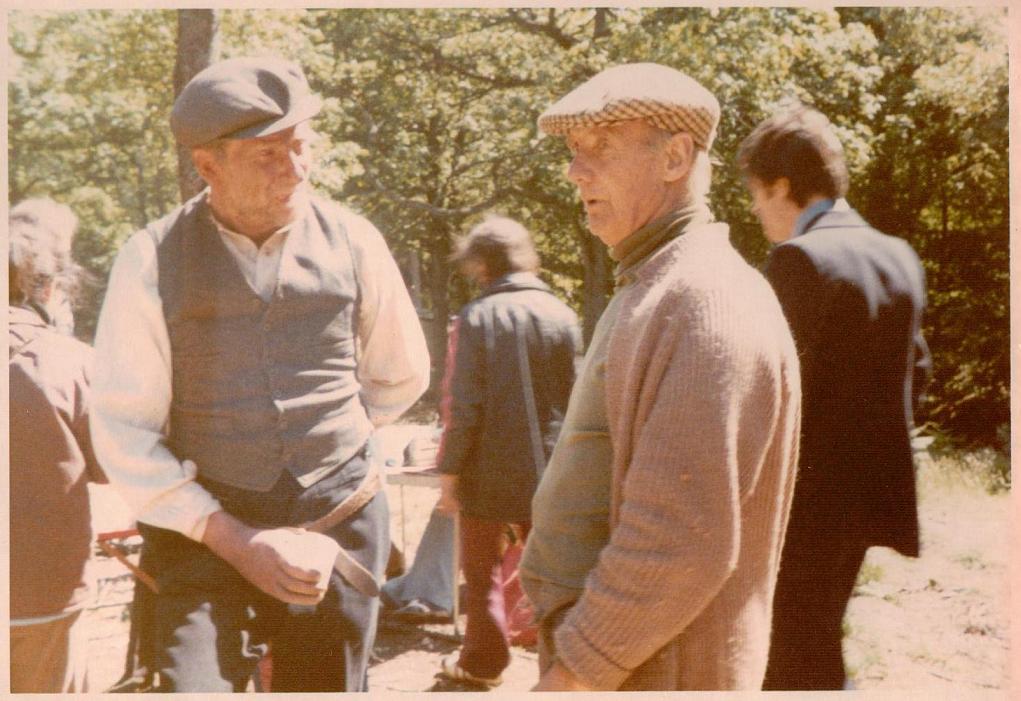
John Franklin-Robbins playing Young Billy, chatting to Norman Allonby of Bandrake Head  during a coffee break on set ~ photo: Daphne Neville

The Call Sheet for the day scheduled Scene 110 with the adder, but I recorded in my diary that we had completed that the previous day. I must have meant my part in it. The director, Claude Whatham, was probably using the time to pick-up the shots of Young Billy working with his dampened fire.

Much later, when I asked Claude what made a good director he said, ‘You need to use your time well.’ This probably makes you an employable director, but I think Claude had other assets. We all adored him for one thing, and would do anything he asked without question. We knew that he wanted us to keep going, no matter what happened. Susan really did leave her basket behind at the Charcoal Burners’. When Old Billy called her, she was truly taken aback and sweetly ran to collect it. It’s something that rings true, a natural quality that Claude brought to the film.
Charcoal Burners article probably late 1973

The interior of the hut must have been tricky to light. I think we had a real fire burning in the stone grate and Claude was keen for the scene to be atmospherically smoky. The wood smoke itself was fine but the crew were working with smoke guns, since they were more directional and considered more controllable. The acrid fumes produced by their oil canisters choked me but Jack Woolgar was absolutely stoic and kept our attention. I loved drawing with the charcoal. I wish I had drawn him.  Apart from the amount of smoke it was lovely inside the mossy wigwam. I could have stayed there quite happily. It was nice and warm.

Charcoal Burners Movie Call Sheet ~ Swallows and Amazons

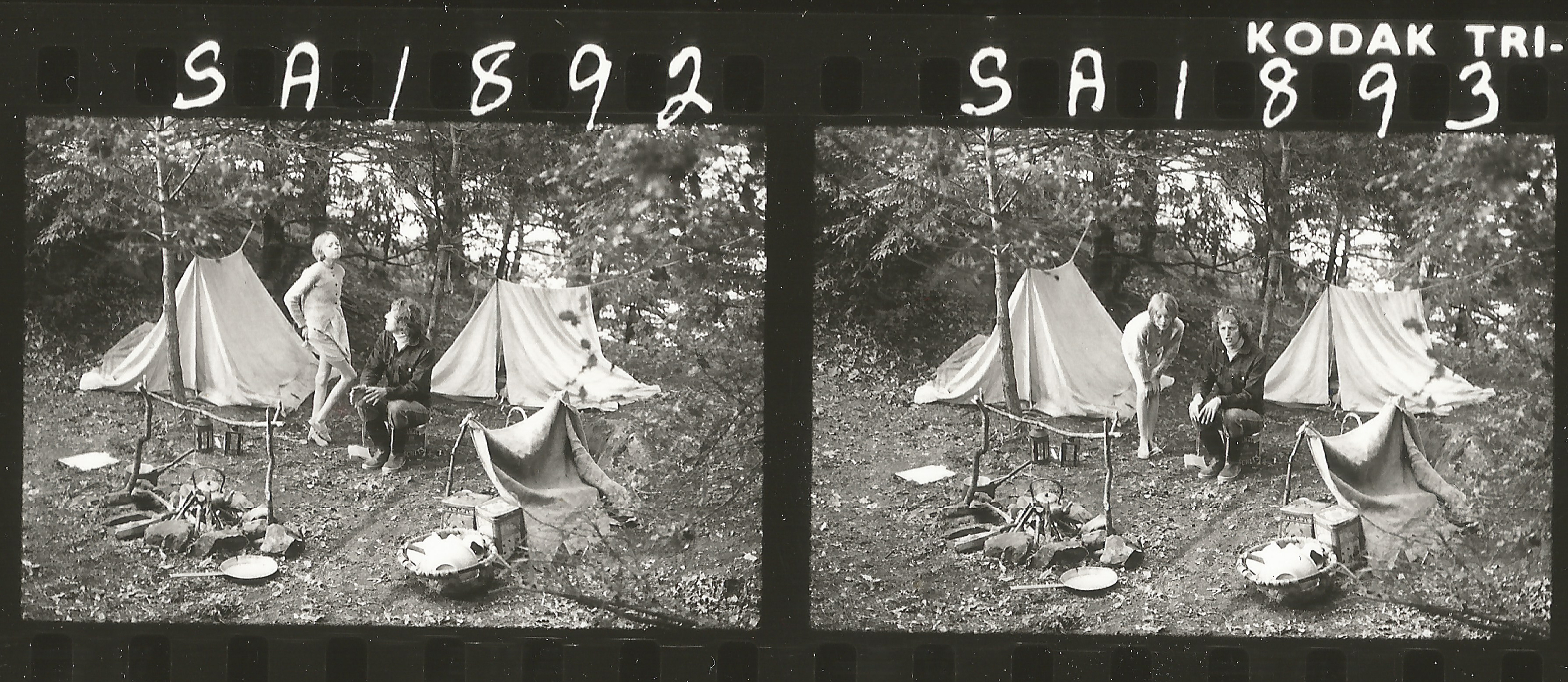
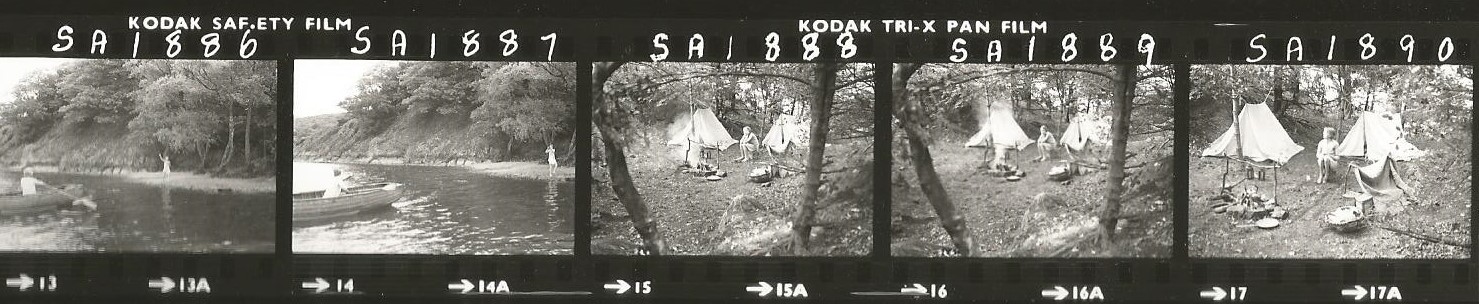
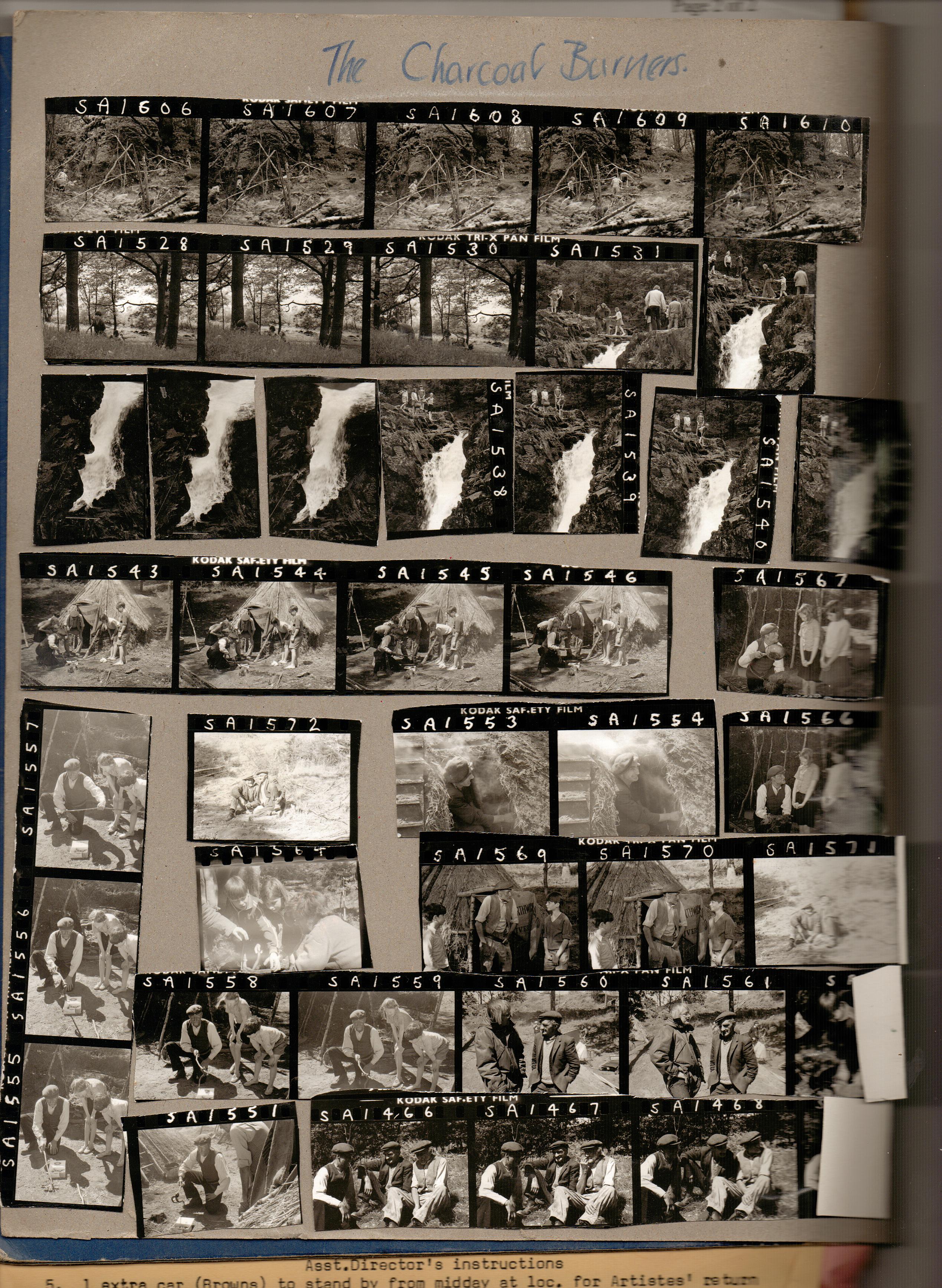
Albert Clarke, our Stills Photographer, later gave us his unwanted contact sheets to stick in the scrap-books we kept of the filming. Amongst them are these photos he took of the Producer Richard Pilbrow with the charcoal burners of Ickenthwaite Forest.

The Real Charcoal Burners a contact sheet

Audrey Steeley told me that the older charcoal burner is Jack Allonby who lived at Spark Bridge, a well known local character.  Norman Allonby lived at Bandrake Head.

Bill Norris, was another authority on charcoal burning also from Spark Bridge.

As the Call Sheet decreed, we were scheduled to to move to Bank Ground Farm after lunch to film the receiving of ‘despatches’, a scene I look forward to describing in the next post.

You can see photos and read more in ‘The Making of Swallows and Amazons(1974)’, available online here

I’ve written more about charcoal burning in Cumbria here

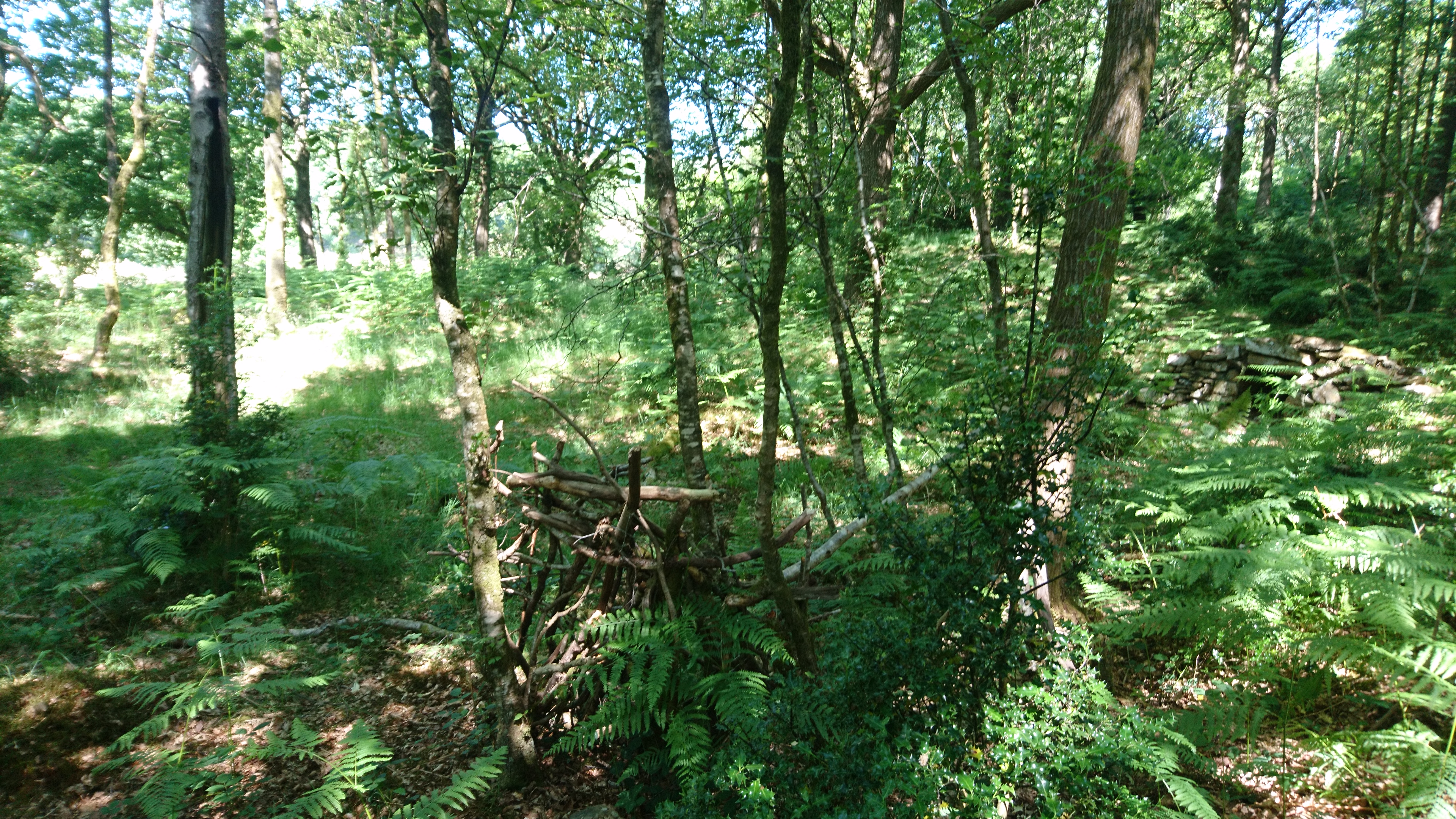
Brian Crawley kindly sent me this shot of what the location looks like today. You can just fee the remains of the fireplace to the right:

DSC_2156

One of Brian’s friends remembers watching our Routemaster double-decker buses climbing the twisting track up to the site.

There is evidence of charcoal burnering near Hill Top where Arthur Ransome lived long after he wrote ‘Swallows and Amazons’. You can find the photos on this site here

'The Making of Swallows and Amazons (1974)'

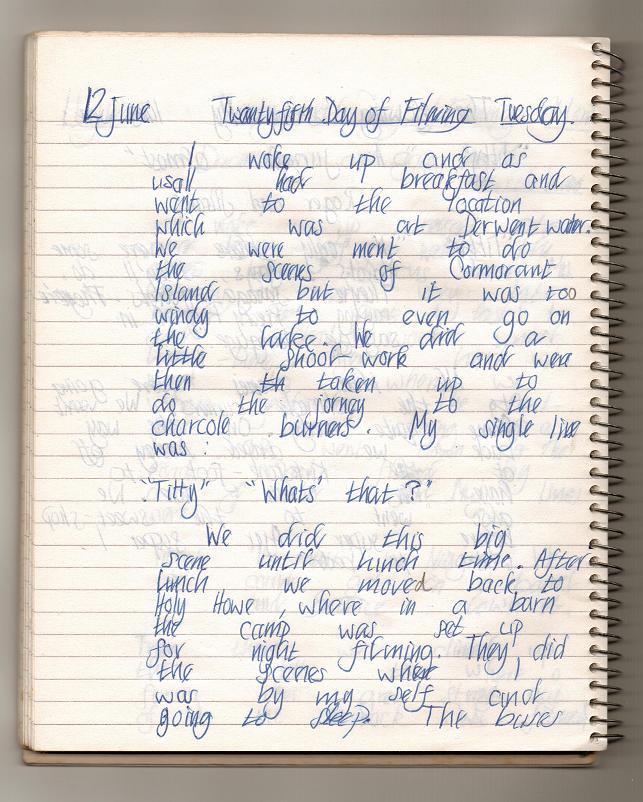
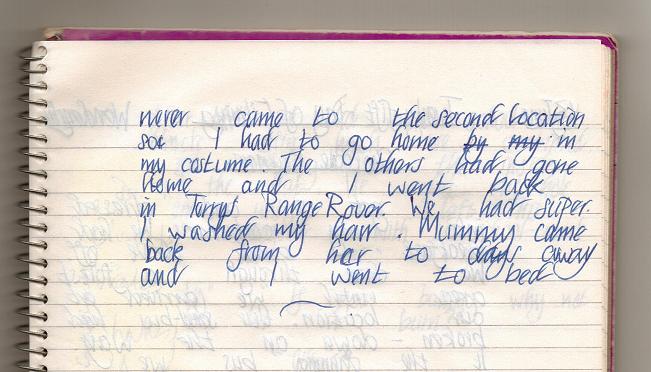
Dark secrets revealed – the making of ‘Swallows and Amazons’ on 12th June 1973

Sophie Neville as Titty in Swallows and Amazons

‘Here we are, intrepid explorers making our way into uncharted waters. What mysteries will they hold for us? What dark secrets shall be revealed?’
The dark secret was that the inky black night scenes had to be shot in Mrs Batty’s barn. At Bank Ground Farm. During the day.  A rainy day.
The design team strung up thick light-proof drapes and made the dusty out-building into a studio. The director, Claude Whatham had no choice. We had quickly run out of interior scenes and the weather was so bad that we could do little else.

Richard Pilbrow and Claude Whatham at The Secret Harbour on Peel Island, Coniston Water
Producer Richard Pilbrow with director Claude Whatham in their wet weather gear on Peel Island, Coniston Water

‘While the rest of England melted in a heat wave, the Lakes seemed wrapped in mist and rain,’ Richard Pilbrow the producer remembers. I have a press cutting from The Guardian dated 7th July 1973, which opens with the words:

  • ‘THE WEATHER report follows in half a minute. Richard Pilbrow is obsessed with the weather. Every morning he wakes around 4 o’clock and crosses his room at the Kirkstone Foot Hotel to cock a weather eye at the sky above Wansfell Pike. Most mornings it is the same story… Pilbrow looks out of the window. Raining. ‘ 

What a worry and concern that rain was. Swallows and Amazons is firmly set in an idyllic childhood summer, August of 1929, when the water was warm enough to swim daily and the only disappointment was a total lack of wind. When we arrived to start filming at Derwentwater on 12th June 1973 it was too windy to even go out on the lake.

I loved filming in the barn.  The Third Assistant, Gareth Tandy, lead me through the high wooden doors and into a magical version of our camp on Peel Island, beautifully recreated by Ian Whittaker the set dresser. A real camp fire was burning. Blankets (goatskins in Titty’s imagination) and pillows from our tents had been laid out so that I could be ‘shrouded in my cloak’ whilst  waiting up for the Swallows to return from the Amazon River. The scene was beautifully lit with branches held in stands in front of the lights with a gentle wind produced by the prop men wafting a board to lift my hair at the right moment. I don’t think there was an owl hoot for me to hear. I had to imagine that so they could add a real owl call later. Someone has written in to ask if I learnt how to make an answering hoot. I’m afraid not. I tried and tried. I still can’t. John could do it but Claude asked us both to just pretend so that he could lay the sound on afterwards.

The director and cast of Swallows and Amazons
Director Claude Whatham with his cast of Swallows in 1973

What we gained, despite or perhaps because of the weather, was a camaraderie that formed a foundational basis to the film. We had to be stoic and get on with filming despite getting cold and wet. Rain doesn’t show up on screen unless it is really pelting down. You can see the effects – wet hair and soggy costumes, but you actually have to use rain machines if you want to show rain in a drama. We could film our trek up the hill to visit the charcoal burners without a problem but going out on the lake was impossible. You’d have seen the rain drops falling on the water. And it was too windy. As it was, we had a brilliant director of photography who used what light he had to capture that limpid quality you find in the Lakes, so quintessentially English it draws you in, reeling back to childhood days when we had time to make camps and rush about in the woods.

Suzanna Hamilton, Sten Grendon, Sophie Neville and Simon West in a scene cut from the film

I’m pretty sure that the big scene I referred to was one that was cut from the final film. It was about leaving paterrans in the woods, as detailed in the books but not essential to the story. It must have been covered by the journalist from the Guardian as I found this cutting:

Local newspaper cutting of Patterran rehearsal The rain did deter my mother from taking photographs. She didn’t have a flash to use in the barn but she took lots – masses – the following day…

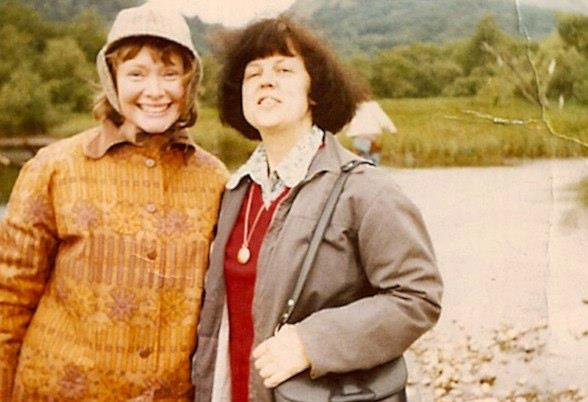
Dressed for the Cumbrian weather: Daphne Neville with Liz Lomas, Richard’s assistant at Theatre Projects in London ~ photo: Richard Pilbrow

Other scenes that hit the cutting room floor are detailed here

If you would like to read more, ‘The Secrets of Filming Swallows and Amazons’ is available as on Amazon Kindle and other ebook platforms.