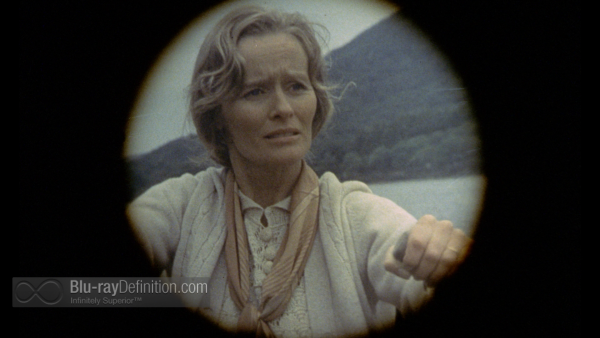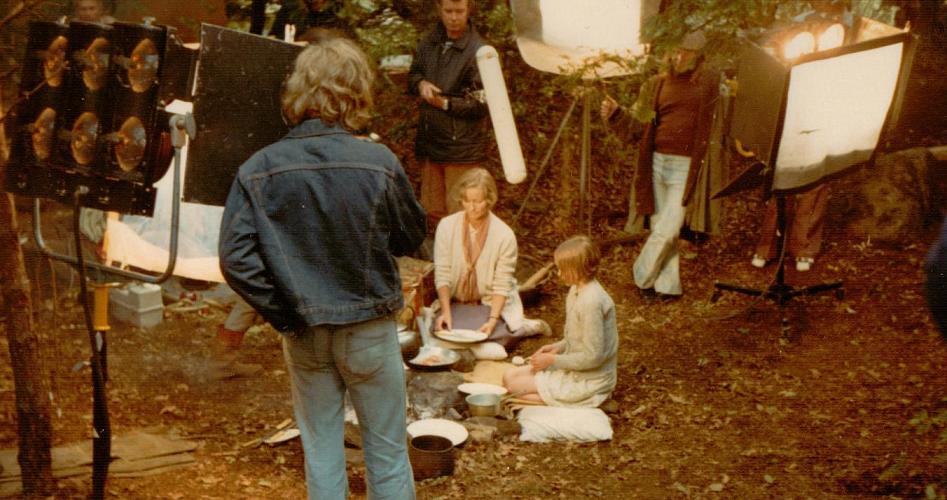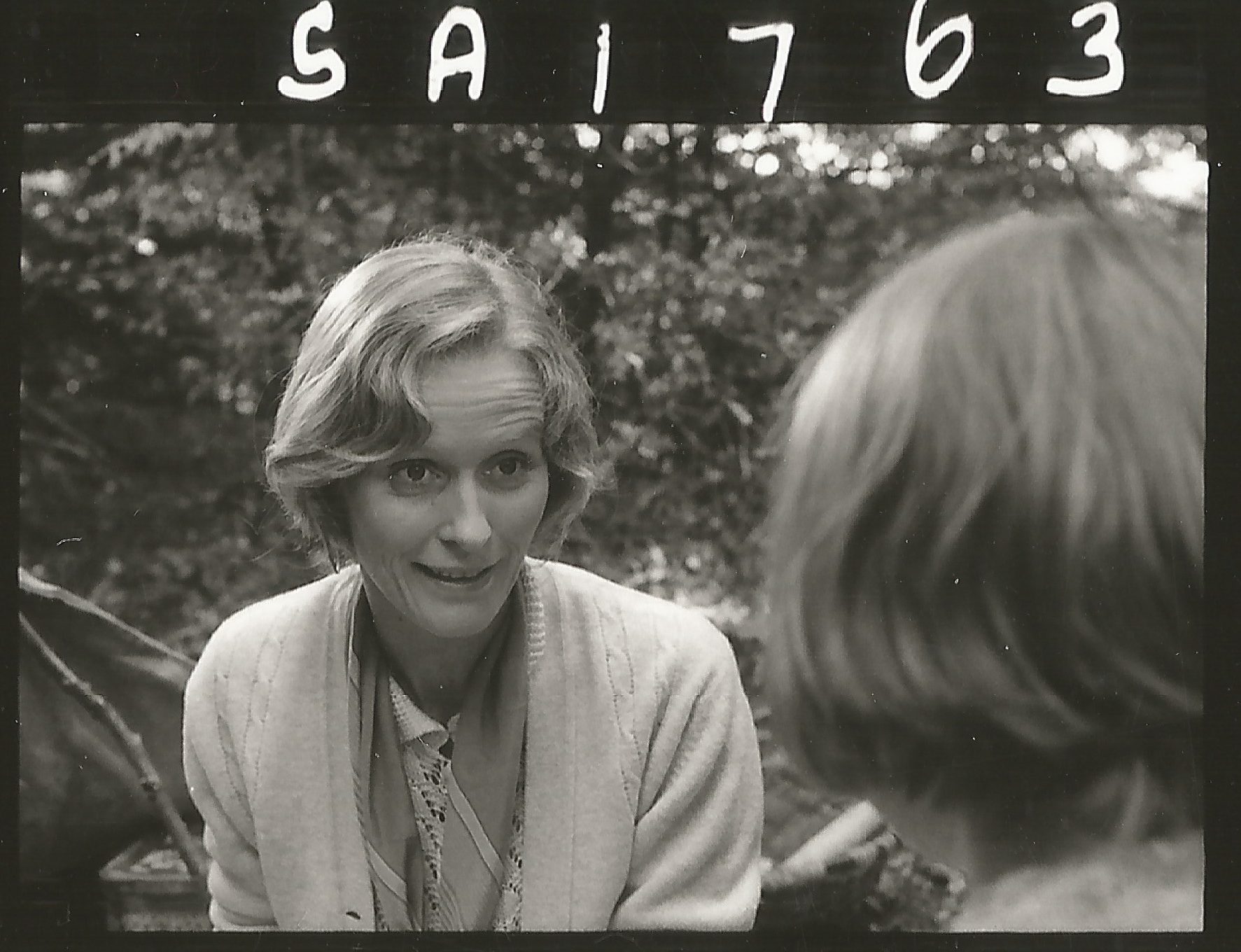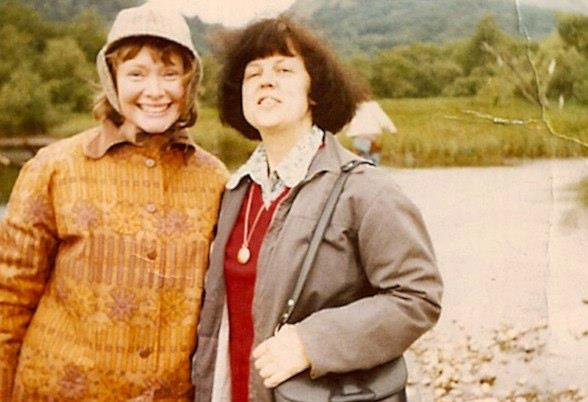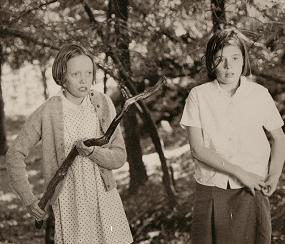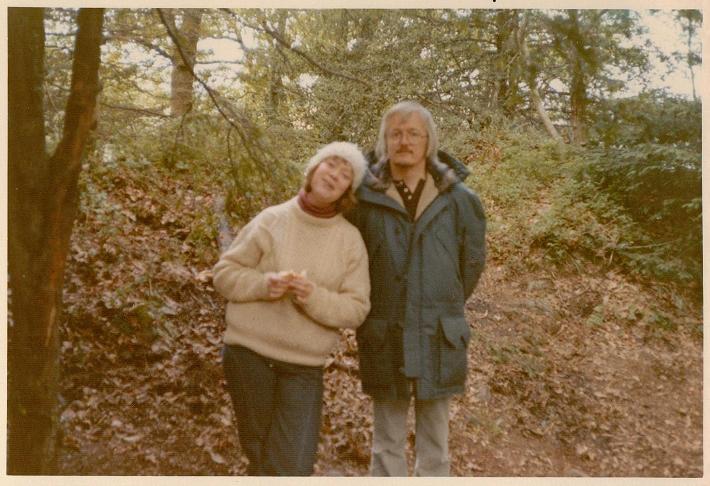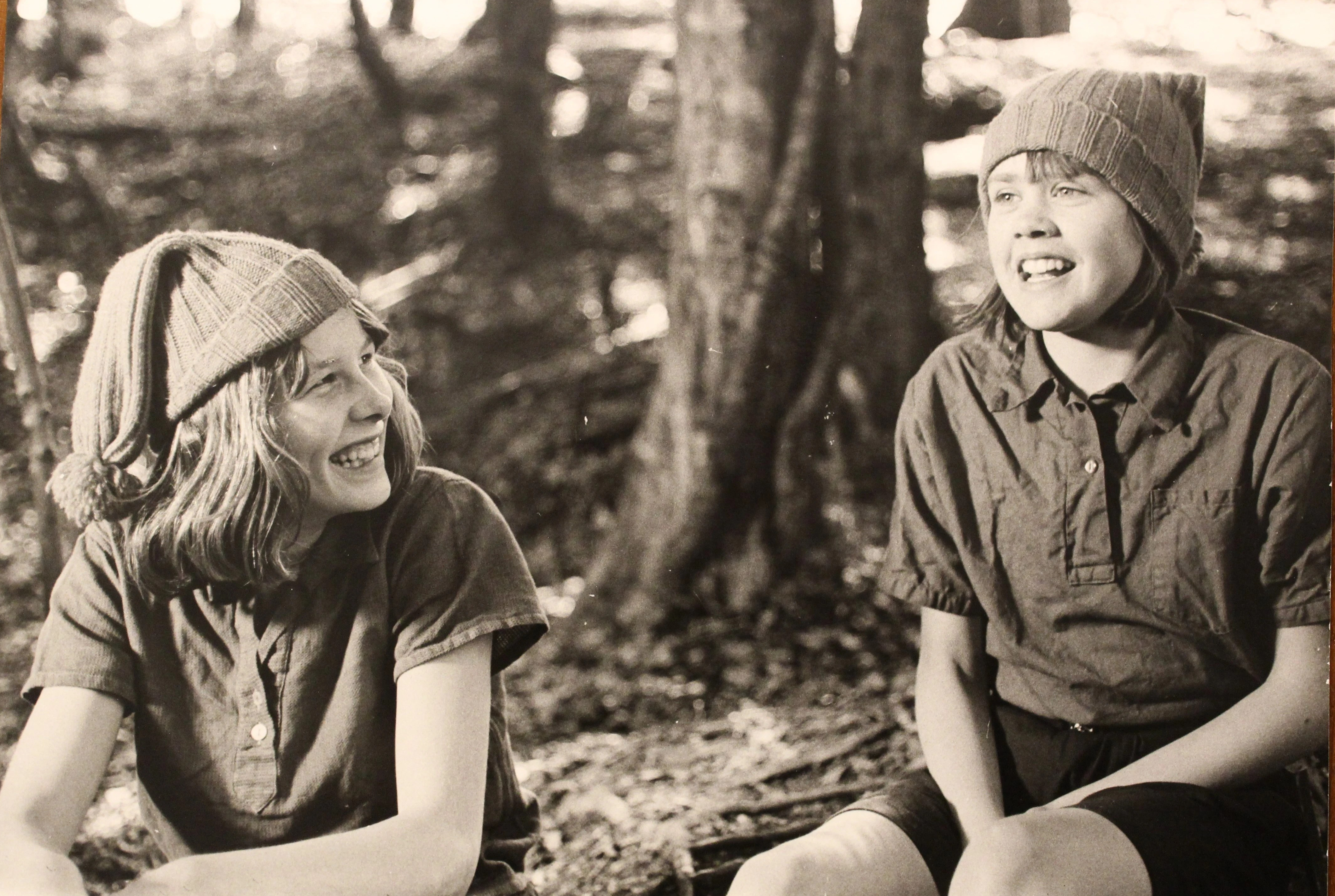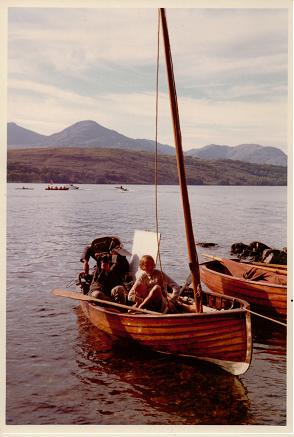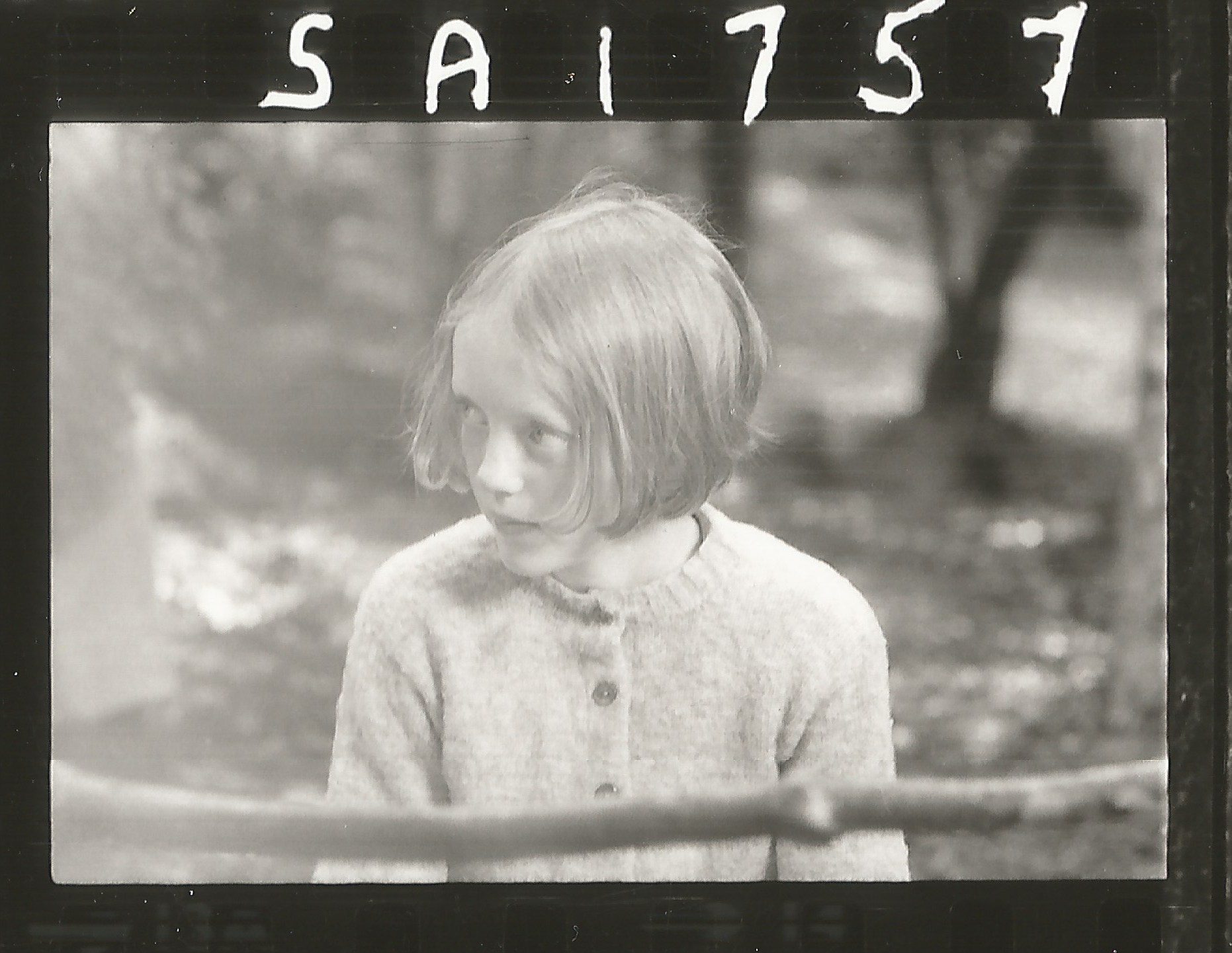
‘They were very savage savages’ ~ Dame Virginia McKenna with Sophie Neville ~ photo: Daphne Neville
I didn’t know that we would spend that Sunday cooking on the camp fire.
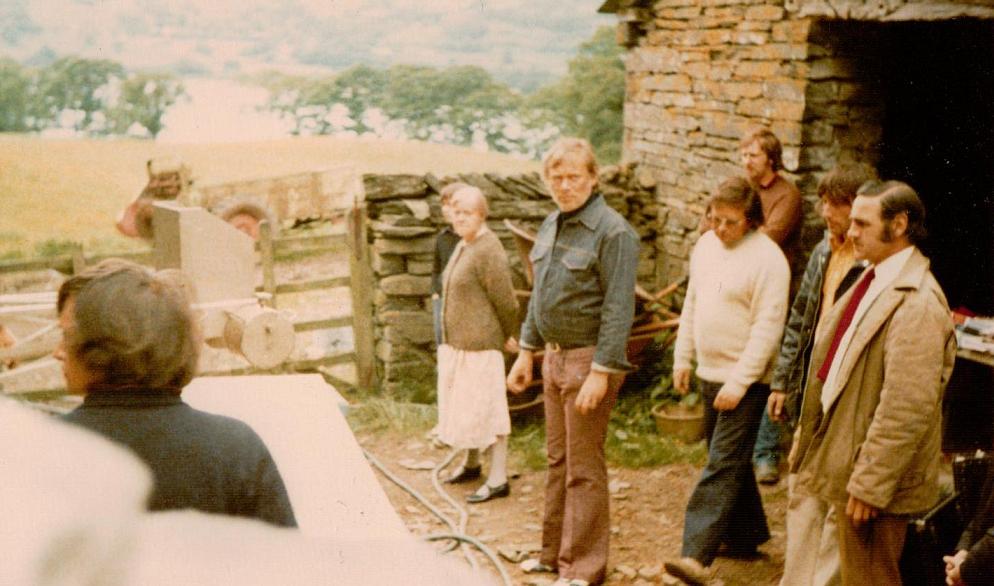
Bill Travers watching the scene featuring his wife Dame Virginia McKenna who is talking to Director Claude Whatham ~ photo: Daphne Neville
I didn’t know that Virginia had come up with her husband Bill Travers.
Virginia McKenna and Bill Travers as Joy and George Adamson in ‘Born Free’, Kenya 1964. Virginia later devoted her life to The Born Free Foundation.
Sophie Neville as Robinson Crusoe the shipwrecked sailor
I still don’t know how Lee Electric managed to get so many lights working out on Peel Island. I can’t remember having them for any other scene. They must have had the generator on the bank and run cables under the water. It looks as if it was a pretty dark day. It was wonderful having the flood lights – they kept us warm.
Dame Virginia McKenna as Man Friday in Swallows and Amazons 1974
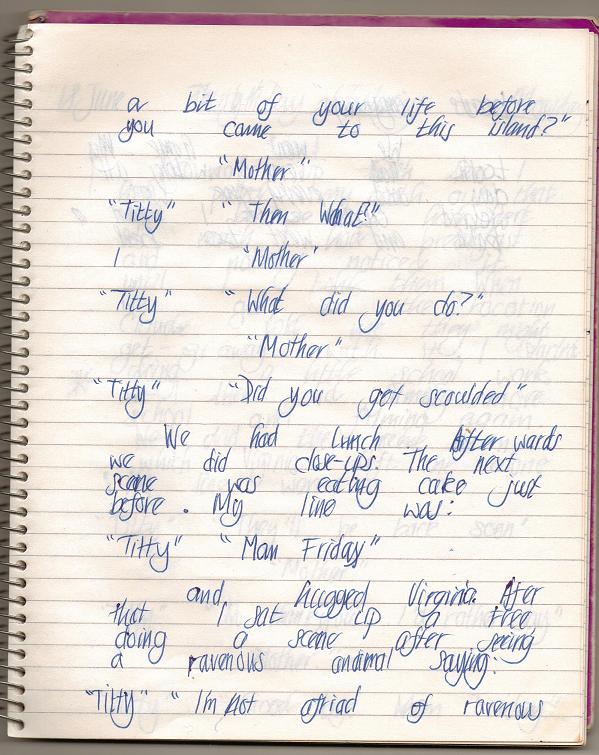
There was a hushed reverence when Virginia McKenna was on set. Gone were the saucepan jokes. Funny really, as it was frying-pan scene. ‘I waited til no-one was looking and jumped out of the pot and escaped!’ The pemmican potato cakes she made me were delicious. And very hot.
Working with Virginia and Arthur Ransome’s dialogue was altogether an exercise in charm, or managing charm. I hope I didn’t over-cook it. I was rather pre-occupied by my loose tooth but loved being involved in a proper scene around the camp fire.
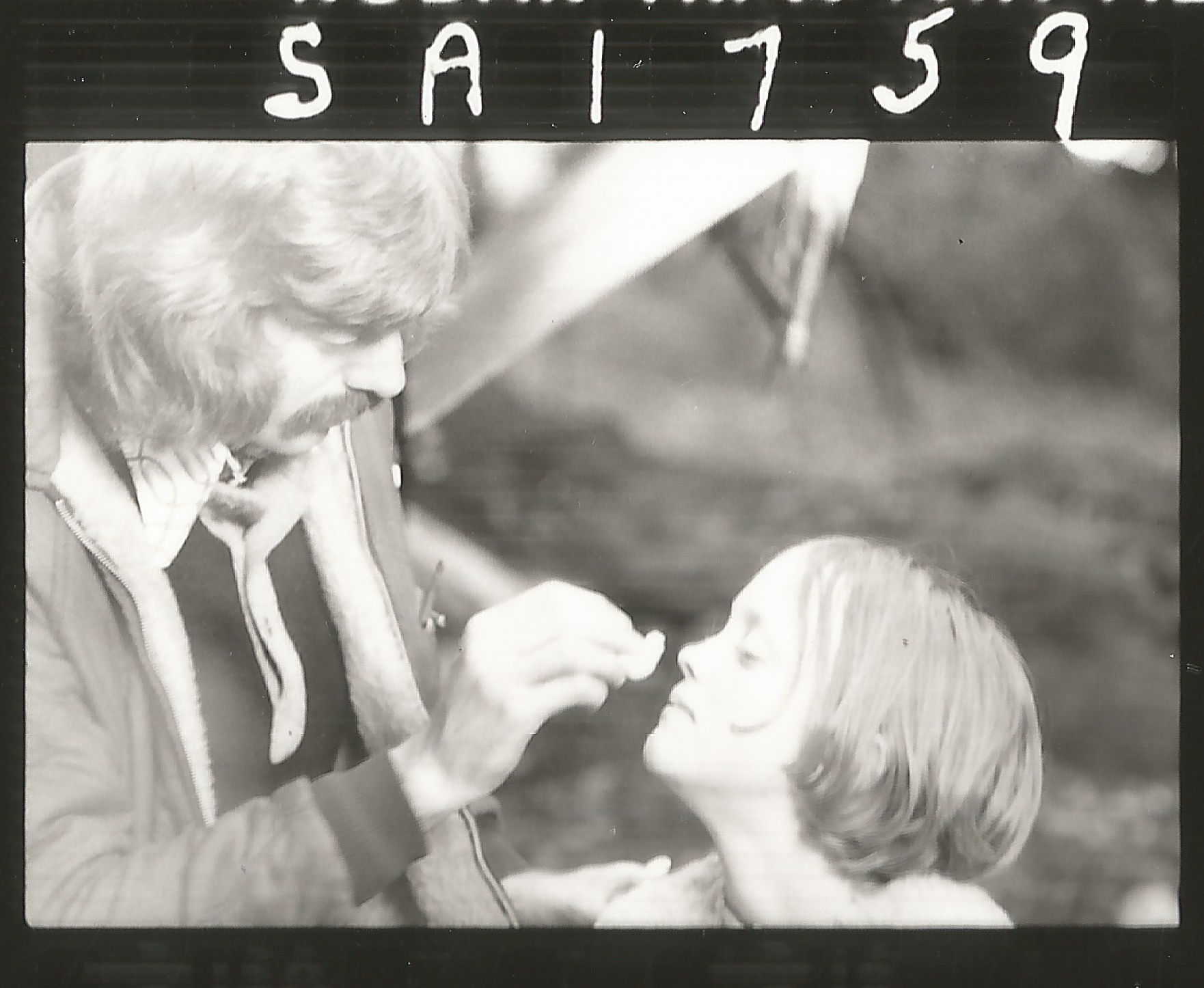
Sophie Neville being made up for the part of Titty by Peter Robb-King in 1973
Then Virginia was gone and I was a saucepan once more. A saucepan now with a very wiggly tooth indeed. Saucepan-lid, kid. No more lights. I was sitting up a tree above Coniston Water in my navy blue knickers, and descended feeling a bit like Pooh Bear.
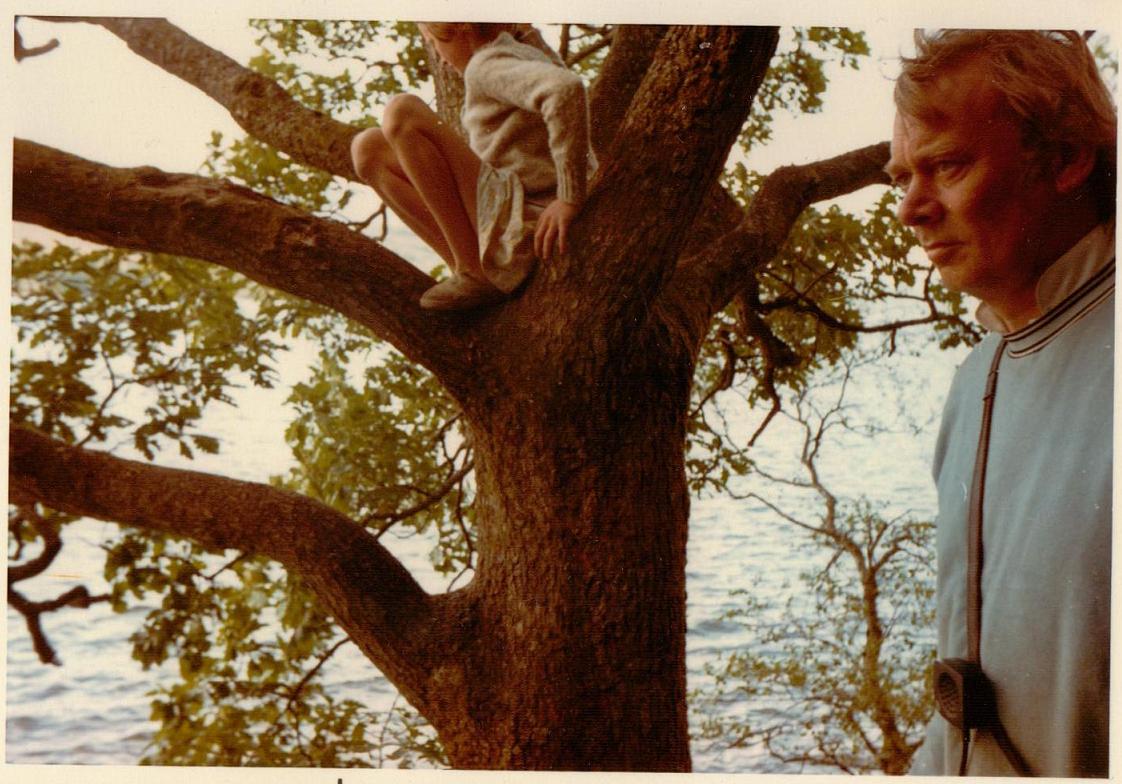
‘Up a tree for fear of ravenous beasts’ with David Bracknell the First Assistant Director ~ photo: Daphne Neville
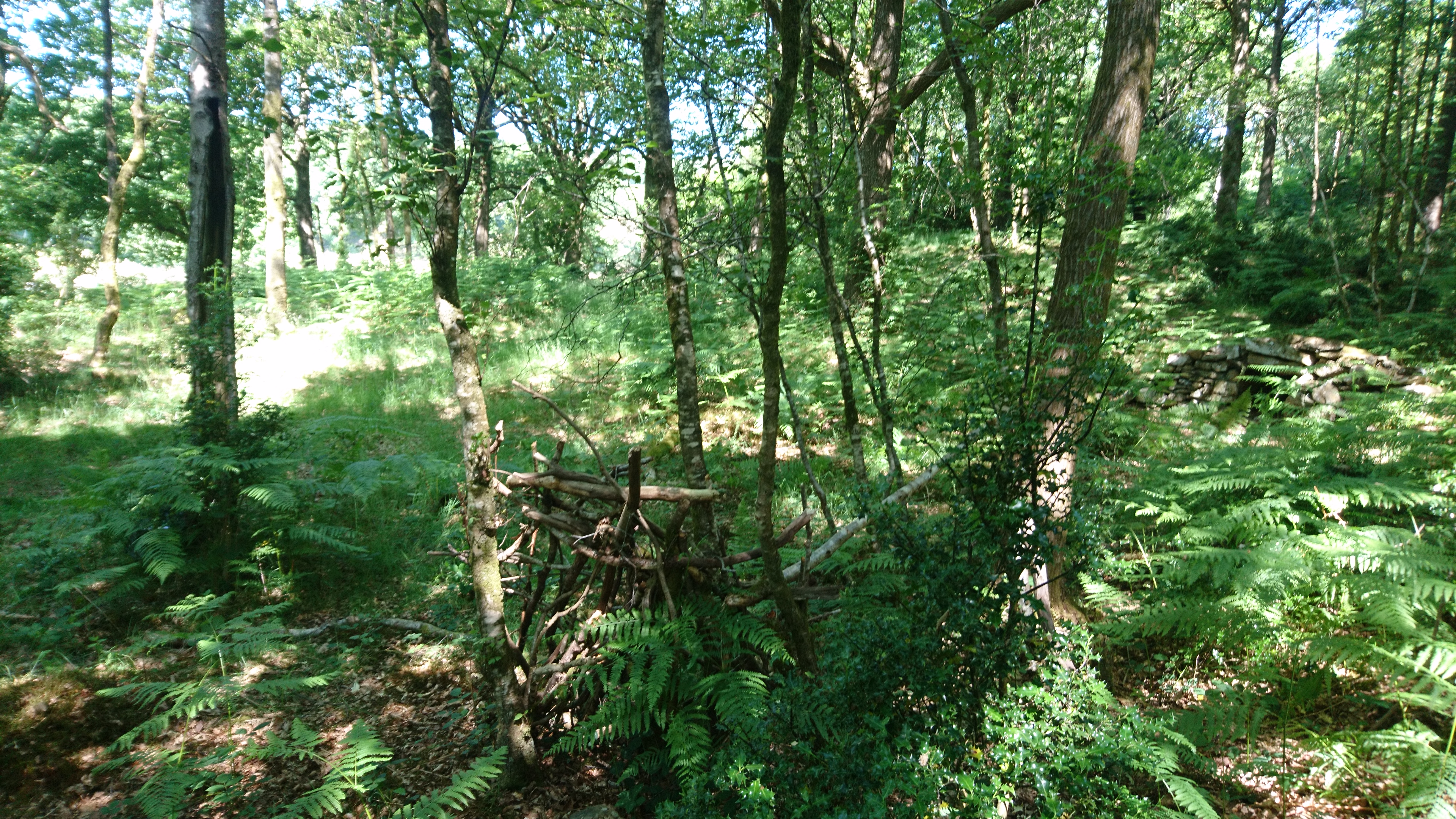
It is still there, the mossy tree. You can climb it.
Sophie Neville as Titty and Stephen Grendon as Roger rowing to Cormorant Island
‘Pull harder, Roger!’ ~ hardly a line from Shakespeare, but one that has lodged deep in my memory. Titty was even bossier in Arthur Ransome’s books ~
“You keep time with me, Boy,” said the able-seaman.
“All right.”
Sten Grendon as Roger and Sophie Neville as Titty rowing Swallow (c)StudioCanal
Titty lifted her oar from the water. Roger gave one pull.”Boy,” said the able-seaman, “you mustn’t say ‘All right’.”
“Aye, aye, sir,” said the boy.**
When we auditioned for Swallows and Amazons the emphasis was on sailing. Could we sail? In fact I needed to be good at rowing. Titty and Roger row back form the Charcoal Burners, I rowed the Amazon from Wild Cat Island and here we were rowing across Derwentwater to Cormorant Island. This was more difficult than normal as Swallow was wired to the camera pontoon.
When I look at the 16mm footage my father took of me rowing at home before we left to film in the Lake District, I cringe. My blades were high above the water, hitting the surface with terrible splashes but I seemed to achieve my objective. I managed to fit an improvised mast to our Thames skiff and even made my own sail. It doesn’t look great, but I think Arthur Ransome would have approved.
Swallow finding Amazon anchored near Cormorant Island on Derwent Water with the camera pontoon and safety boat: photo~ Daphne Neville
Simon West and Suzanna Hamilton joined us for the scene when the Swallows lower the Jolly Roger and start to sail the captured the Amazon back to Wild Cat Island. I can only imagine that I changed my costume in one of the support boats. The scene may have been shot with two cameras on different boats.
Sophie Neville playing Titty Walker in the captured Amazon, with David Cadwallader, Bobby Sitwell, Dennis Lewiston, Claude Whatham and two electricians holding reflector boards on the camera punt: Photo ~ Daphne Neville
This shot shows Claude Whatham using the grey punt,* which somehow managed to accommodate Dennis Lewiston, the 35mm Panavision and quite a few crew members, while Richard Pilbrow remained on the camera pontoon with Eddie Collins operating the 16mm camera.
Richard Pilbrow and his film crew on the camera pontoon with Eddie Collins operating the 16mm camera. Simon West and Stephen Grendon sail Swallow. Suzanna Hamilton is climbing aboard the Amazon with Sophie Neville
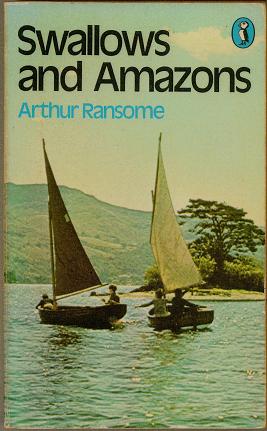
I remember the scene itself as being difficult to achieve in terms of sailing. Swallow has a keel, and Amazon with her centre board is much the faster dinghy. It is not like racing two boats of the same class. After hauling up the anchor Suzanna and I battled to turn the Amazon, not wanting to wiggle the rudder and jeopardise her pins. I remember Simon calling advise over the water. He stalled and we caught up, trying to get close together for the shot. The result was a photograph used on the front cover of the next Puffin edition of the book.
Stephen Grendon, Simon West, Sophie Neville and Suzanna Hamilton on the cover of the 1974 Puffin edition of ‘Swallows and Amazons’
* I may be wrong about these photographs. The still surface of the water in the shot of Titty alone in Amazon suggests that it was taken later on, when we filmed the burglars landing on Cormorant Island with Captain Flint’s trunk, but we probably had a very similar set up on this more sparking day ~ 15th June 1973.
We went on to film various shots of us sailing on to Wild Cat Island, when I think the camera was in Swallow capturing close-ups of a triumphant Captain John. He did indeed do well.
**Swallows and Amazons by Arthur Ransome, 1970 Jonathan Cape edition
Claude Whatham had no Peak of Darien at Bank Ground Farm, Arthur Ransome’s location for Holly Howe. But he did have buttercups and daisies, the flowers so evocative of childhood summers spent in the English countryside. The field that runs down to Coniston Water looked glorious that sunny day in June 1973. It was glowing.
Claude had used wild flowers to good effect when he made Laurie Lee’s memoir Cider with Rosie for the BBC in May 1971. It had been one of those months of endless sunny days in Gloucestershire but we were in Westmorland now, where buttercups bloomed later in the year and sunny days were cherished. This was Claude’s afternoon for low angle shots.
The view from Bank Ground Farm over Lake Coniston as it was in 1973
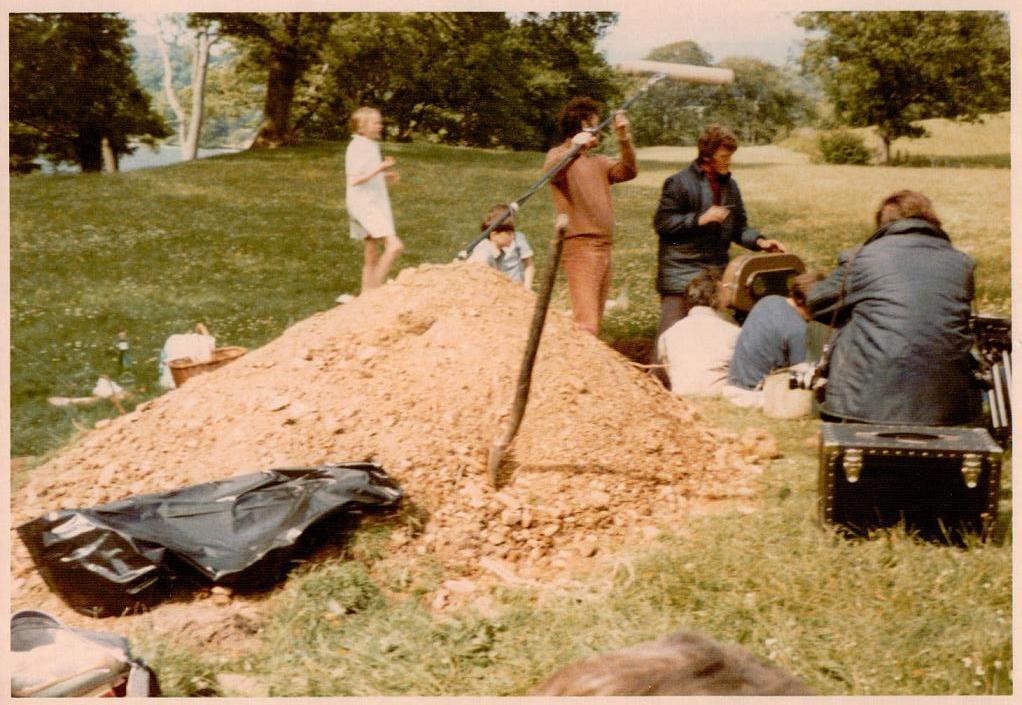
We arrived to find that a huge hole had been dug in the meadow for the camera, with a picnic for us spread out the other side of it. We thought this was very exciting. I’m not sure whether Mrs Batty felt quite the same joy about the excavations in her field. I was sad that we didn’t have a fire with a kettle, as they do in the book of Swallows and Amazons, but that was kept as a feature of island life and camping yet to come.
Sophie Neville, Simon West, Suzanna Hamilton, Gay Lawley Waklin, Bobby Sitwell, Dennis Lewiston, Albert Clark: photo~ Daphne Neville
Roger came sailing down clutching the telegram from our father, reaching out to deliver it over the hole. I understand that this was based on the cryptic telegrams that Ernest Altounyan sent his children Taqui, Susie, Titty and Roger, the children who acted as models for the Swallows. It has become the iconic response to Health and Safety ever since.
Claude Watham having just spoken to Stephen Grendon playing Roger at Bank Ground Farm. Who is in the foregound? : photo~ Daphne Neville
What we ended up saying altered slightly from David Wood’s original screenplay. ‘Dispatches?’ – Ransome spells the word ‘Despatches’ but apparently both spellings are correct.
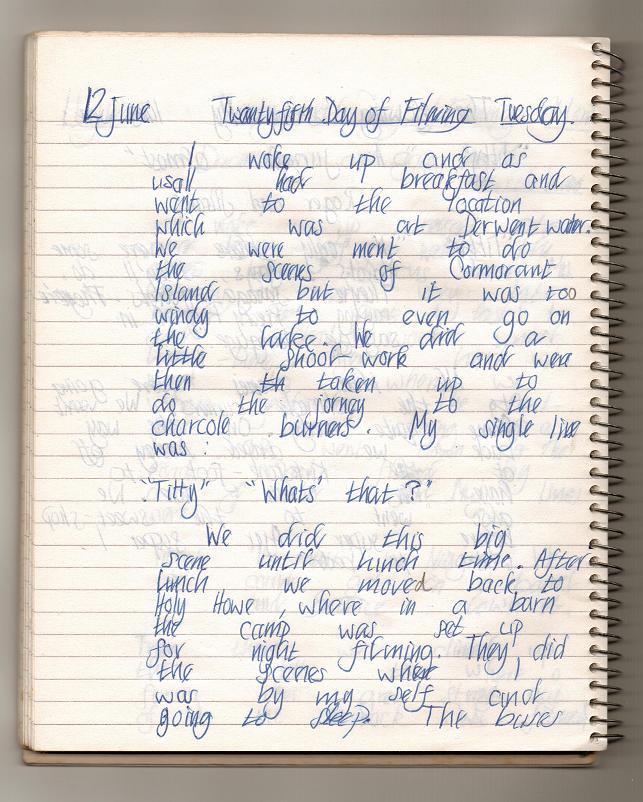
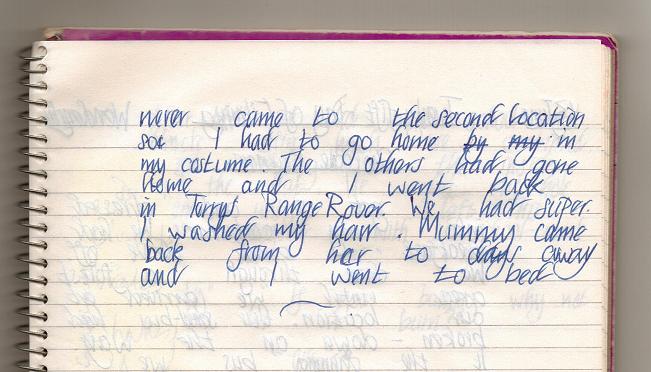
John referred to Daddy as ‘Father’. I’m not sure why. He did so in his letter. It is daddy in the book, but perhaps Claude considered ‘Father’ as having a more period feel. I stuck more to Ransome’s dialogue, as you can see if you compare the film script with my diary entry above. This was because I knew his book so well, and never saw the script. The acting credit must go to Simon West who sat holding the telegram, graciously absorbing my bossiness, whilst I grappled with the words.
David Wood’s original screenplay of ‘Swallows and Amazons’Sue Merry typing up continuity notes on location at Bank Ground Farm: photo ~ Daphne Neville
Back in 1973 it was the job of the ‘Continuity Girl’ to take notes on any changes made to the script. Sue Merry, ever present in her dark coat, took on this role. Today she would probably be known as a ‘Script Supervisor’ but her Aviator sunglasses and black polo-necked jersey would be the height of fashion. Sue also took notes technical notes for the film editor and director, indicating which Takes were favoured and which had been spoilt, giving the reason. In those days we had no monitors. The camera lens would be unscrewed after each take and checked carefully. If any fluff was found, Bobby Sitwell the camera assistant would call out, ‘Hair in the gate!’ Sue would quietly note this down and David Bracknell, the first assistant, would call out, ‘Set up to go again’. And we’d go again.
Sue was also responsible for the continuity, and would take numerous Polaroid photographs as an aide-memoir. This scene followed the one of Mother giving Roger the telegram, which had not yet been shot. Virginia McKenna hadn’t arrived back in Cumbria. Looking back, this seems a huge gamble. Would they ever get another sunny day while the buttercups were still blooming, a day to match – exactly – the weather of 14th June?
Sue would sit and type up her notes on location, using a portable typewriter that sometimes was set up for her on a spindly picnic table. This method of working was different from the BBC, when a ‘production assistant’ would type up her notes at the end of each day. Would it have been so that one copy of her notes, typed on triplicate paper, could be sent to the laboratory with the exposed film? It meant that her evenings were free.
We were allowed to help fill in the hole at the end of the day.
Sue Merry had worked for Neville C. Thompson before on The Boyfriend, Ken Russell’s movie that starred Twiggy with Tommy Tune, Barbara Windsor and Glenda Jackson. She later worked on The Wicker Man, Anthony Shaffer’s harrowing film directed by Robin Hardy that featured Edward Woodward, Christopher Lee and Diane Cliento, Britt Ekland and Ingrid Pitt. She went on to work with Dennis Lewiston and other members of our crew on The Rocky Horror Picture Show, the movie that starred Tim Curry, Susan Sarandon and such unexpected artists such as Meatloaf, Christopher Biggins and Prince Andrew’s old flame Koo Stark, who played a bridesmaid. Sue also did the continuity for Nicolas Roeg on The Man Who Fell to Earth, starring David Bowie, before moving into television to work on The Professionals and The Comic Strip Presents… All quite fun!
But on that day in June 1973, she was the girl with the daisies in her hair, wearing a coat thick enough to indicate that although sunny it was still quite chilly in the Lake District.
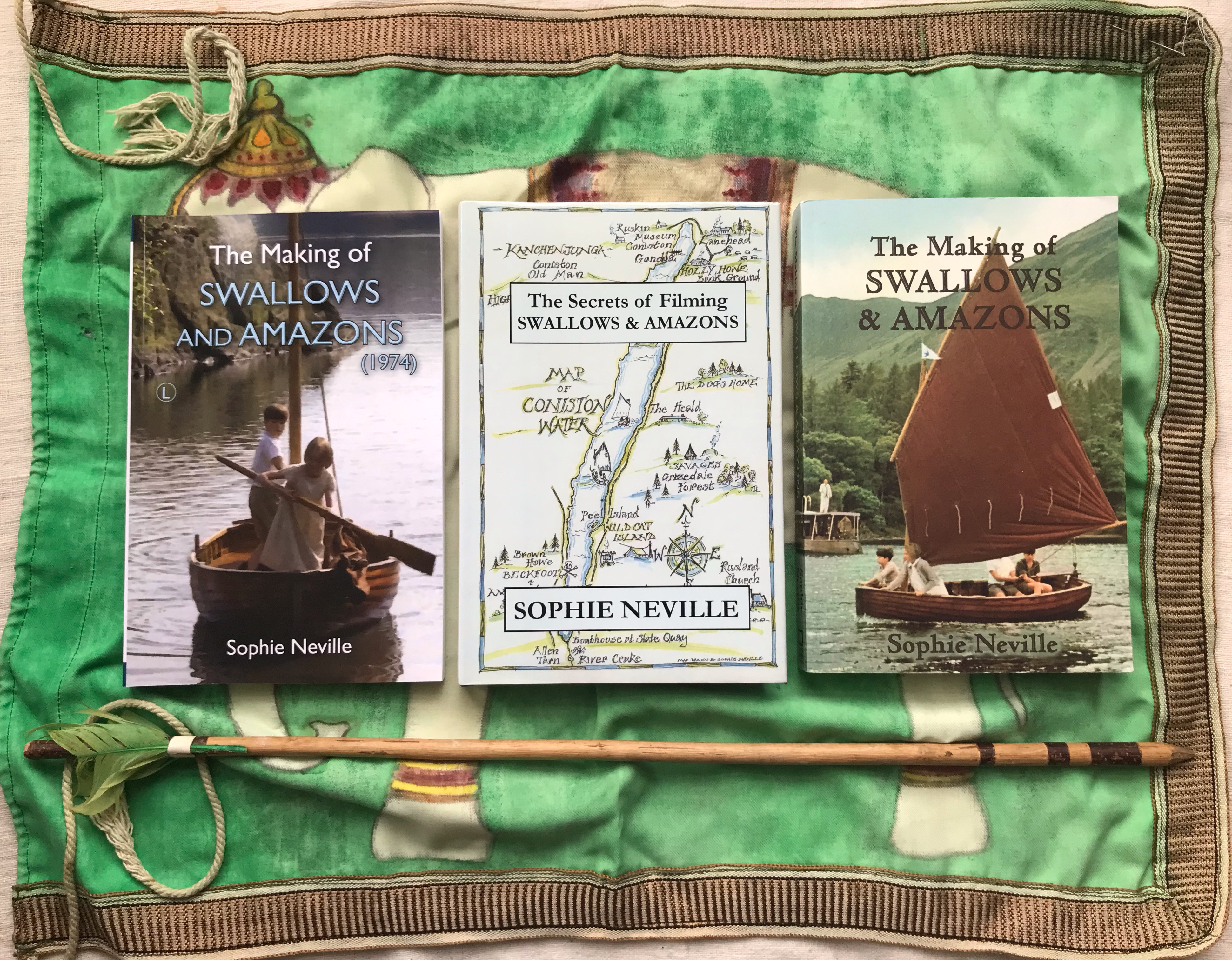
You can read more in ‘The Secrets of Filming Swallows and Amazons (1974)’
Sophie Neville as Titty Walker visiting the charcoal burners on a cold day in 1973 ~ photo: Daphne Neville
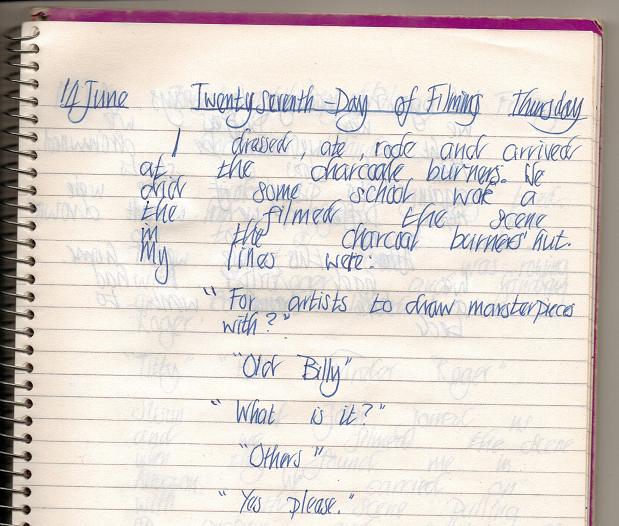
On 14th June we were back at Ickenthwaite Forest, in Cumbria, to film the sequence when the Swallows visit the Charcoal Burners.
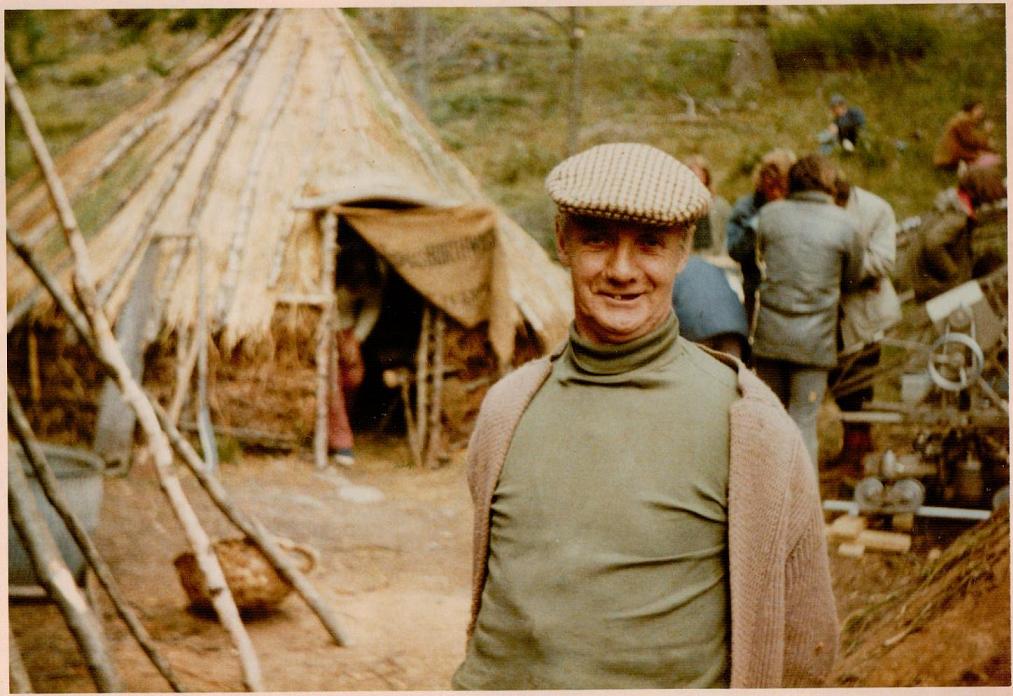
Norman Allonby, the real charcoal burner outside the hut. Behind him the 35mm Panavision camera is being mounted on a small crane and short section of track ~ photo: Daphne Neville
‘He doesn’t look much like a son.’ The real Young Billy was almost indistinguishable from the actor. He seemed to take a wry interest in the filming but what he thought of us, of the crew, I dread to think. We were aliens on his planet. Terribly bossy ones.
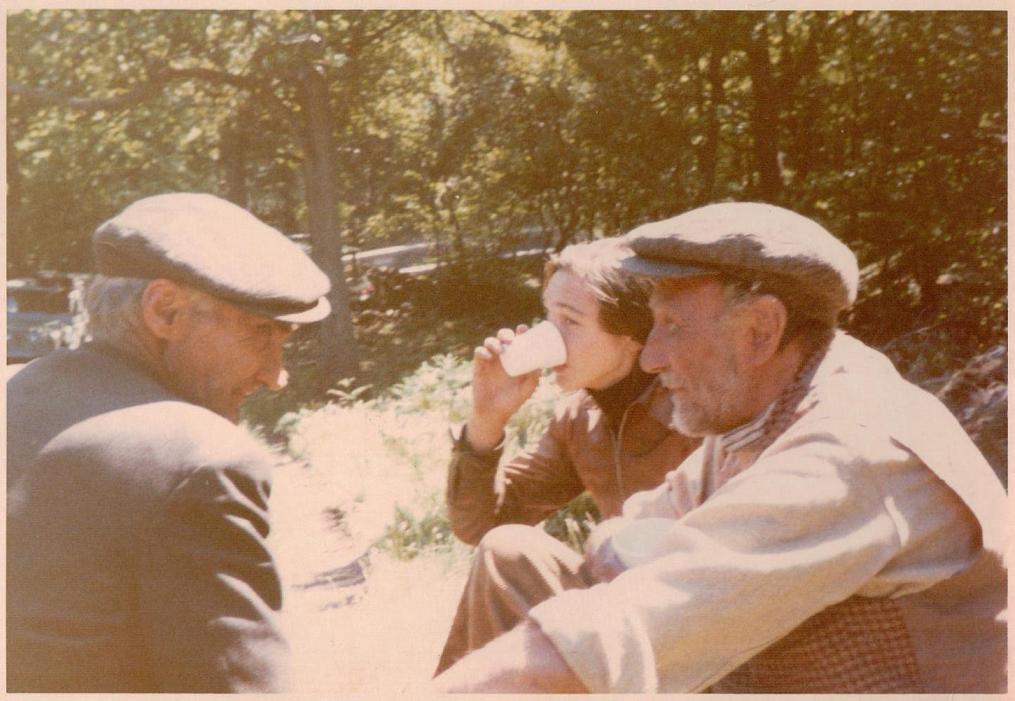
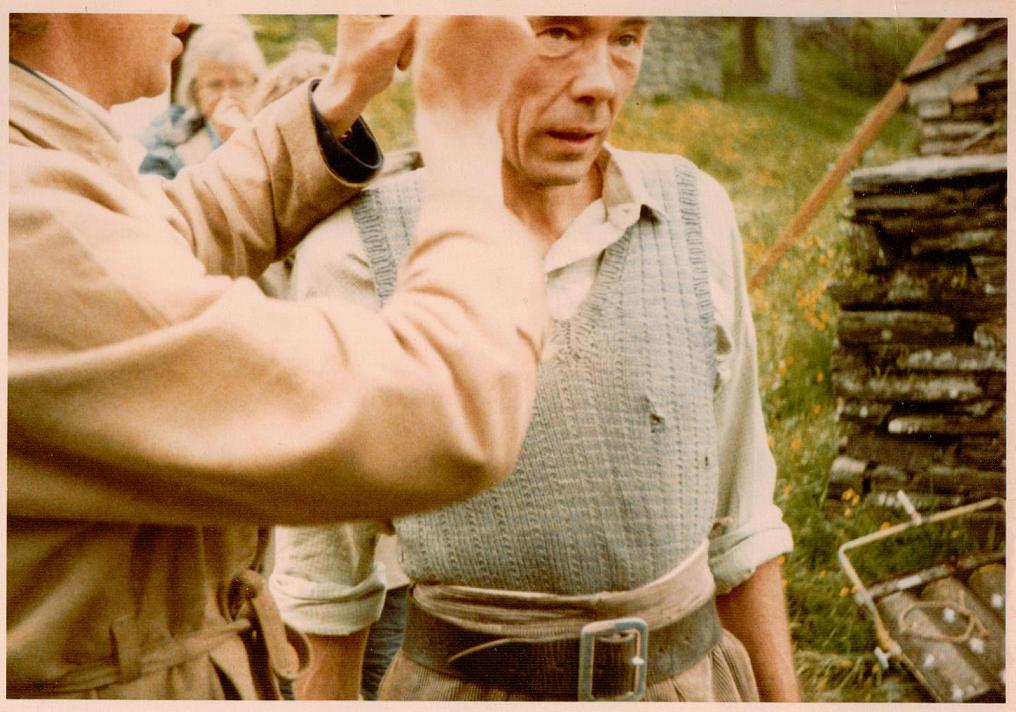
The charcoal burner Jack Allonby chatting to Jack Woolgar playing Old Billy
Our polystyrene coffee cups look so out of place. They were. How much had changed in the art of producing charcoal between 1973 and 1929 when Arthur Ransome set our story?
Jack Woolgar looks as old as the hills. He’d been born in 1913, so must have only been sixty years old, younger than I am now. He’s appeared in ‘Doctor Who’, ‘Emmerdale Farm’ and ‘Coronation Street’. After ‘Swallows and Amazons’ he played Carney in forty-eight episodes of ‘Crossroads’. We knew him as the professor in ‘The Lion, the witch and the Wardrobe’.
John Franklin-Robbins playing Young Billy, chatting to Norman Allonby of Bandrake Head during a coffee break on set ~ photo: Daphne Neville
The Call Sheet for the day scheduled Scene 110 with the adder, but I recorded in my diary that we had completed that the previous day. I must have meant my part in it. The director, Claude Whatham, was probably using the time to pick-up the shots of Young Billy working with his dampened fire.
Much later, when I asked Claude what made a good director he said, ‘You need to use your time well.’ This probably makes you an employable director, but I think Claude had other assets. We all adored him for one thing, and would do anything he asked without question. We knew that he wanted us to keep going, no matter what happened. Susan really did leave her basket behind at the Charcoal Burners’. When Old Billy called her, she was truly taken aback and sweetly ran to collect it. It’s something that rings true, a natural quality that Claude brought to the film.
The interior of the hut must have been tricky to light. I think we had a real fire burning in the stone grate and Claude was keen for the scene to be atmospherically smoky. The wood smoke itself was fine but the crew were working with smoke guns, since they were more directional and considered more controllable. The acrid fumes produced by their oil canisters choked me but Jack Woolgar was absolutely stoic and kept our attention. I loved drawing with the charcoal. I wish I had drawn him. Apart from the amount of smoke it was lovely inside the mossy wigwam. I could have stayed there quite happily. It was nice and warm.
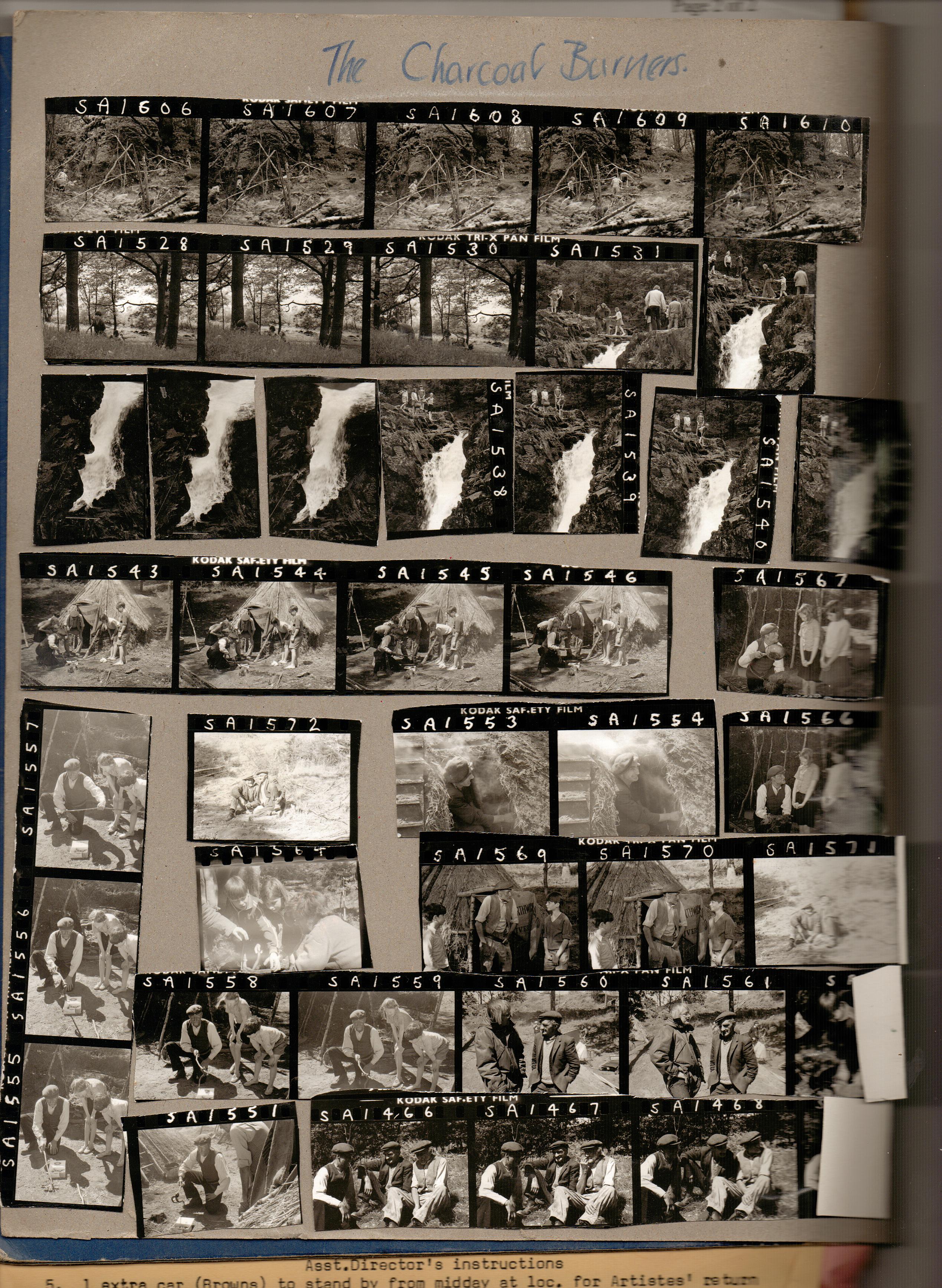
Albert Clarke, our Stills Photographer, later gave us his unwanted contact sheets to stick in the scrap-books we kept of the filming. Amongst them are these photos he took of the Producer Richard Pilbrow with the charcoal burners of Ickenthwaite Forest.
Audrey Steeley told me that the older charcoal burner is Jack Allonby who lived at Spark Bridge, a well known local character. Norman Allonby lived at Bandrake Head.
Bill Norris, was another authority on charcoal burning also from Spark Bridge.
As the Call Sheet decreed, we were scheduled to to move to Bank Ground Farm after lunch to film the receiving of ‘despatches’, a scene I look forward to describing in the next post.
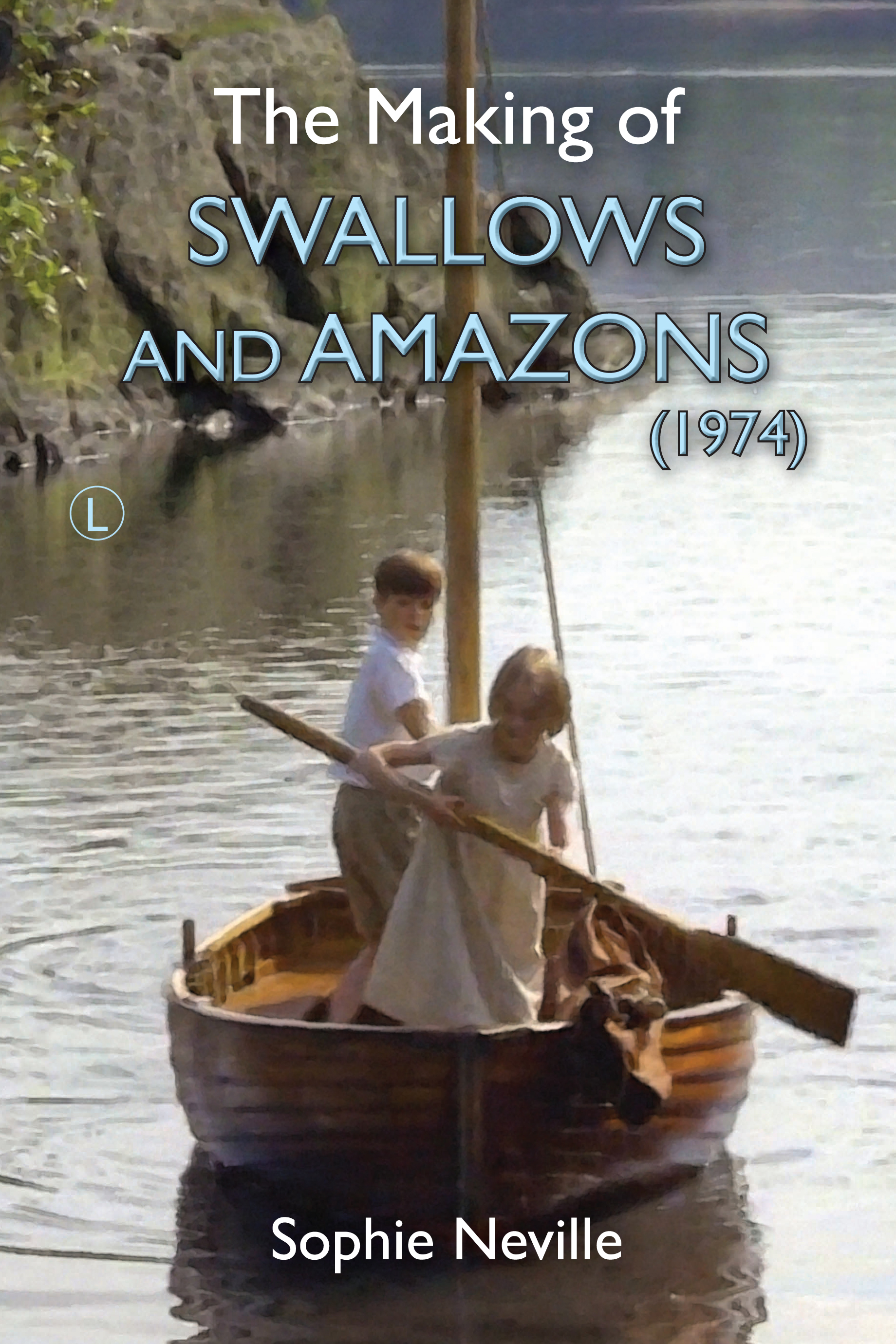
You can see photos and read more in ‘The Making of Swallows and Amazons(1974)’, available online here
I’ve written more about charcoal burning in Cumbria here
Brian Crawley kindly sent me this shot of what the location looks like today. You can just fee the remains of the fireplace to the right:
One of Brian’s friends remembers watching our Routemaster double-decker buses climbing the twisting track up to the site.
There is evidence of charcoal burnering near Hill Top where Arthur Ransome lived long after he wrote ‘Swallows and Amazons’. You can find the photos on this site here
‘Here we are, intrepid explorers making our way into uncharted waters. What mysteries will they hold for us? What dark secrets shall be revealed?’
The dark secret was that the inky black night scenes had to be shot in Mrs Batty’s barn. At Bank Ground Farm. During the day. A rainy day.
The design team strung up thick light-proof drapes and made the dusty out-building into a studio. The director, Claude Whatham had no choice. We had quickly run out of interior scenes and the weather was so bad that we could do little else.
Producer Richard Pilbrow with director Claude Whatham in their wet weather gear on Peel Island, Coniston Water
‘While the rest of England melted in a heat wave, the Lakes seemed wrapped in mist and rain,’ Richard Pilbrow the producer remembers. I have a press cutting from The Guardian dated 7th July 1973, which opens with the words:
‘THE WEATHER report follows in half a minute. Richard Pilbrow is obsessed with the weather. Every morning he wakes around 4 o’clock and crosses his room at the Kirkstone Foot Hotel to cock a weather eye at the sky above Wansfell Pike. Most mornings it is the same story… Pilbrow looks out of the window. Raining. ‘
What a worry and concern that rain was. Swallows and Amazons is firmly set in an idyllic childhood summer, August of 1929, when the water was warm enough to swim daily and the only disappointment was a total lack of wind. When we arrived to start filming at Derwentwater on 12th June 1973 it was too windy to even go out on the lake.
I loved filming in the barn. The Third Assistant, Gareth Tandy, lead me through the high wooden doors and into a magical version of our camp on Peel Island, beautifully recreated by Ian Whittaker the set dresser. A real camp fire was burning. Blankets (goatskins in Titty’s imagination) and pillows from our tents had been laid out so that I could be ‘shrouded in my cloak’ whilst waiting up for the Swallows to return from the Amazon River. The scene was beautifully lit with branches held in stands in front of the lights with a gentle wind produced by the prop men wafting a board to lift my hair at the right moment. I don’t think there was an owl hoot for me to hear. I had to imagine that so they could add a real owl call later. Someone has written in to ask if I learnt how to make an answering hoot. I’m afraid not. I tried and tried. I still can’t. John could do it but Claude asked us both to just pretend so that he could lay the sound on afterwards.
Director Claude Whatham with his cast of Swallows in 1973
What we gained, despite or perhaps because of the weather, was a camaraderie that formed a foundational basis to the film. We had to be stoic and get on with filming despite getting cold and wet. Rain doesn’t show up on screen unless it is really pelting down. You can see the effects – wet hair and soggy costumes, but you actually have to use rain machines if you want to show rain in a drama. We could film our trek up the hill to visit the charcoal burners without a problem but going out on the lake was impossible. You’d have seen the rain drops falling on the water. And it was too windy. As it was, we had a brilliant director of photography who used what light he had to capture that limpid quality you find in the Lakes, so quintessentially English it draws you in, reeling back to childhood days when we had time to make camps and rush about in the woods.
Suzanna Hamilton, Sten Grendon, Sophie Neville and Simon West in a scene cut from the film
I’m pretty sure that the big scene I referred to was one that was cut from the final film. It was about leaving paterrans in the woods, as detailed in the books but not essential to the story. It must have been covered by the journalist from the Guardian as I found this cutting:
The rain did deter my mother from taking photographs. She didn’t have a flash to use in the barn but she took lots – masses – the following day…
Dressed for the Cumbrian weather: Daphne Neville with Liz Lomas, Richard’s assistant at Theatre Projects in London ~ photo: Richard Pilbrow
Other scenes that hit the cutting room floor are detailed here
If you would like to read more, ‘The Secrets of Filming Swallows and Amazons’ is available as on Amazon Kindle and other ebook platforms.
Sophie Neville by Elterwater in 1973 ~ photo: DJ Neville
My mother was very excited about meeting the actress Brenda Bruce who Claude had engaged to play Mrs Dixon. She had arrived on 10th June whilst we were filming the fishing scene at Elterwater where she found Claude keeping up our moral by wearing my mother’s Donny Osmond hat. I think he needed it for warmth. It was unexpectedly cold.
I can remember being worried that Brenda Bruce would be chilly as she was only wearing a blouse and flip-flops. Now I understand that she ‘was of a certain age’ and didn’t feel the cold quite so much as skinny twelve-year-olds with opinions.
Brenda Bruce had been born in Prestwich in Lancashire. I’d had no idea that she was so well-known, that BAFTA ~ the British Academy for Television Awards had named her Best Actress in 1963. “Yes, you do!” Mum said. “She was the White Queen in Alice Through the Looking Glass.” She’d actually worked for Claude quite a bit and he trusted her to play a small part well. brought her son with her.
I shouldn’t have been worried about Mrs Dixon. She looked wonderful in the film – was wonderful – and very comfortable in her nice clean dairy.
When I look back on Swallows and Amazons, I can see that Claude made sure it didn’t become chocolate-boxy. You can tell by glancing at Mike Pratt’s costume.
Mike Pratt who played Mr Dixon the provider of worms for our fishing bait, the lovely Lakeland colours of his garments contrasting with the harsh blues and reds of the 1970’s clothes worn by the crew.
Brenda Bruce as Mrs Dixon with Claude Whatham
I can’t remember exactly where Dixon’s Farm was filmed. The scenes set at Jackson’s Farm, Arthur Ransome’s ‘Holly Howe’ were shot at Bank Ground Farm by Coniston Water, but all I know about the location for Dixon’s Farm is that our tutor got terribly lost trying to find it…
Geraint Lewis of the Arthur Ransome Trust wrote to confirm Kevin Burn’s theory about the location we used for Mrs Dixon’s dairy. ‘I had a long conversation once with Lucy Batty about her recollections of filming at Bank Ground in the house, barn, etc. She confirmed that they used the buildings shown as Tent Lodge Cottages on Google Maps – as Dixon’s Farm. That certainly seems to fit from the view of the lake and shoreline trees in the background.’
What Richard Pilbrow and Claude Whatham did want to make the most of was the Westmorland scenery. In many ways they were making a landscape movie. I think what they most enjoyed was finding all the locations to put together Arthur Ransome’s imaginary lake as depicted in the end pages of Swallows and Amazons and I am often asked where the waterfall is.
“It must be Niagara!” No, Sophie. It’s somewhere near Elterwater.
‘It’s Niagra!’ Titty declared. Stephen Grendon, Suzanna Hamilton, Simon West and Sophie Neville as the Swallows on their way to visit the charcoal burners
Kevin Burn sent me some suggestions with photos which made me feel pretty sure the actual waterfall is Skelwith Force. But Roger Wardale, who is an expert on Arthur Ransome’s locations, thinks not. “I don’t think it’s Skelwith Force which is more a series of rocky rapids in fairly level ground. I watched the film again yesterday and was reminded of the waterfall at Glen Mary (otherwise known as Tom Gill) the outlet for Tarn Hows dropping down to the Coniston-Ambleside road 4 miles from Skelwith Bridge.” So – any ideas most welcome!
You can read more about the film locations and our antics in ‘The Secrets of Filming Swallows and Amazons’ available on Amazon Kindle and from all ebook providers:
Sophie Neville and Suzanna Hamilton confronting the Amazon Pirates on Wildcat Island in Swallows and Amazons
Richard Pilbow says that the fantastic thing about filming Swallows and Amazons was that breakfast was served on location every morning, without fail, sending ‘a wonderful aroma across the set.’ Huge English breakfasts were dished up by John and Margaret, who worked for a location catering company from Pinewood, and greeted the film crew every morning, with bacon and eggs, mushrooms, sausages and tomatoes. And the fried bread was well fried.
It didn’t really matter that we missed breakfast at the Oaklands Guest House in Ambleside. A bacon butty would we placed into my hand as soon as we reached the base camp on Coniston Water. I only wish our guest house had been nearer Peel Island where we spent so much of our time filming.
Daphne Neville and Richard Pilbrow on Peel Island on Coniston Water in 1973 Amazons
I do believe my mother is still eating in the picture above. We all ate hugely to stave off the cold. You can see in the movie how much we enjoyed the iced buns before the Amazons attacked.
I remember the Parley Scene as being of importance to Mrs Ransome, who was still living at the time. Arthur Ransome had died in 1967 but his formidable widow owned the copyright to his books. And she did not want there to be any sexual frison between John and Nancy.
Kit Seymour (Nancy) and Lesley Bennett (Peggy) on Peel Island 1973
Richard Pilbrow had had quite a job of persuading her to give him the rights to the film at all. He know that Tom Maschler, the head of Jonathan Cape, had already had to turn down many movie offers. The Ransomes feared ‘a Disney-ization of the story, a vulgarization.’ They had vocally disliked the 1960s cartoon version of ‘Winnie the Pooh’. Whilst we children loved Disneyfications, we only wanted to bring the book the life.
Neither Arthur Ransome nor his wife, Evgenia, had liked the black and white BBC version of Swallows and Amazons made in 1962 when Susan George played the part of Kitty, rather than Titty. I watched it with Joe Waters at the BBC library in 1983. I reported that it was terribly boring and rather badly made but it was simply of its time, with rather a floral performance from Mrs Walker and comic scenes being given to the burglars. We enjoyed watching the whole series at a weekend of The Arthur Ransome Society. Susan George had such beautiful long plaits.
Molly and Richard Pilbrow in 1973
In his recently published book A Theatre Project, Richard describes how, by vowing to be true to the book, he finally persuaded Mrs Ransome to let him have the film rights. But life wasn’t easy. At the very last minute, just as we were about to start shooting, she put her oar in.
‘She took a violent dislike to the casting of Roger… He was dark haired. “This is outrageous; he has to be fair,” she protested.’ It was too late for Claude Whatham to re-cast. Richard admits that with regret he had to over-ride her.
I was amazed when I heard about it, since all the Swallows in Arthur Ransome’s drawings had very dark hair – as did the real children – the Altounyans, whose father was of Irish/Scottish and Armenian descent.
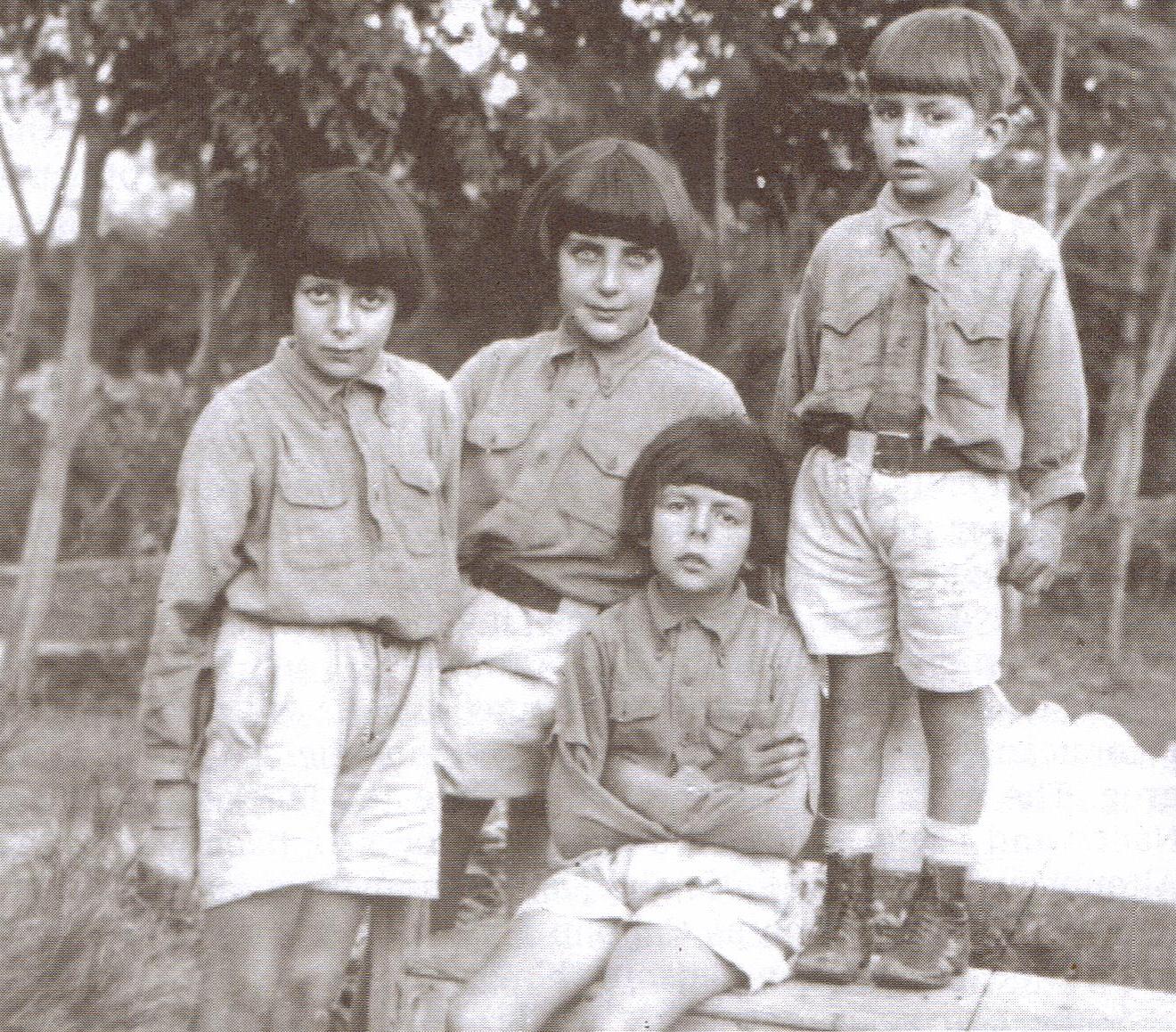
Altounyan Children – Susie, Taqui, Titty (seated) and Roger
They lived in Aleppo, in Syria where Ernest Altounyan was working in his father’s hospital as a surgeon, and all looked quite tanned in the old photos.
I though that, if anything, Mrs Ransome would have objected to me being too blonde but apparently she wanted ‘an English rose’ to play Titty. David Wood told us that she wanted all the Swallows to have blond hair.
Once the books became well known, the Altounyans didn’t want people identifying the Walkers too closely with their children. There was a bit of an upset after the Ransomes’ offered to adopt Titty after which the dedication to ‘Swallows and Amazons’ was altered and maybe Mrs Ransome took umbridge.
Ransome with the Altounyans
The writer Roger Wardale, said that Arthur Ransome’s intention was to keep the appearance of his characters vague so that any child could easily associate with them and imagine themselves in their place. He originally described the Amazons as having curly hair, but edited this out.
Stephen Grendon playing Roger
Although we loved filming on Peel Island, our real families, who had come up to the Lake District to be with us over half-term, couldn’t watch. This probably made it easier for us to concentrate but must have been disappointing for our friends. Our friends the Selbys, with whom I had learnt to sail, had driven up to Cumbria from Chelmsford and yet probably saw nothing except for the bedraggled crew and me at lunch time.
Jane, Michael, Clare and Lucy Selby on the shore of Coniston Water talking to my sisters, Perry and Tamzin who is holding their dog, Minnie ~ photo: Martin Neville
Other members of the crew had been joined by their children. Brian Doyle noted in his diary that took his daughter Pandora off to Beatrix Potter’s farmhouse Hill Top, travelling in Dad’s car with my sisters Perry and Tamzin.
Although it was good to be on Coniston Water hanging around at the base camp all day would have been terribly dull for them. This, however was about to change. That evening Mum went to help Terry Smith, the Wardrobe Master, sort out costumes to fit the Supporting Artistes. My sisters were about to earn their own breakfasts and be able to watch every shot being made . They were to become Film Extras.
It was Sunday and a much needed, formal day off for the crew of Swallows and Amazons. It was also a day of rest for the ‘Artistes’ as Claude Whatham, the Director called us. The crew called us ‘Saucepans’. Saucepan lids : kids. It is Cockney rhyming slang. There was a lot of that about in Ambleside that year.
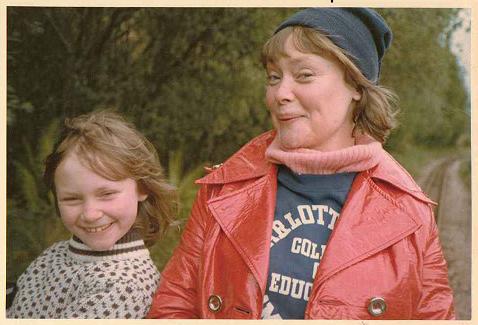
Sophie Neville with her mother on a scenic railway in Cumbria during a break in the filming of Swallows and Amazons in 1973 ~ photo: Martin Neville
My parents were still in bed, exhausted on that Sunday morning. To keep me busy, Mum had me writing letters to my Headmistress, Sister Ann-Julian and to my Housemistress, Sister Allyne. Amazingly I wrote them.
My father’s idea of a day out in Westmorland was to drive up the Hard Knott Pass taking car rugs, a picnic and his volcano. This is a brilliant item of equipment with which you can boil enough water to make a cup of tea using an old newspaper. I’ve read that Arthur Ransome had one… I think my mother just pulled on her Charlotte Mason College of Education sweatshirt and came too.
The highlight of the day was a trip on the Ravenglass and Eskdale Railway, through the National Park to the coast and back. You can still do this today. The historic line was opened in 1875 to ferry iron ore from the mine near Boot to the coast at Ravensglass by steam locomotive. They say that nowadays:
“Four steam locomotives are currently in regular service, ranging from River Irt, the oldest working 15″ gauge locomotive in the world, to Northern Rock, one of the most powerful. The locomotives names, with one obvious exception, are those of the local rivers, the Esk, Mite and Irt, the last mentioned flowing from Wastwater just a few miles away from the railway.”
My father has always loved steam. He’s also rather enjoyed using the self-timer on his new camera.
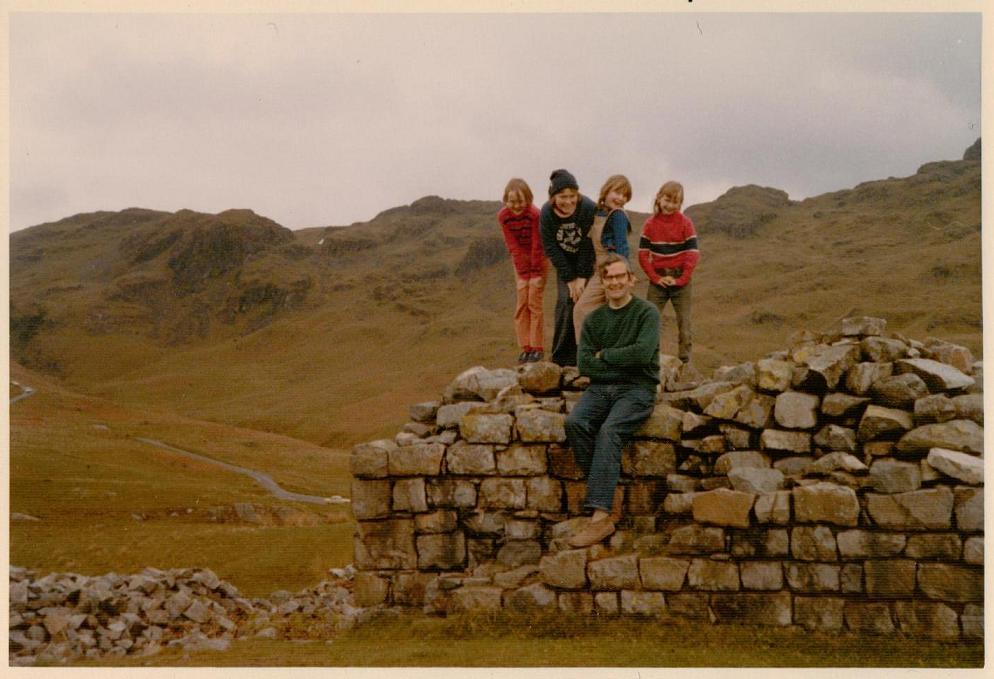
The Nevilles in the Lake District in 1973
We were standing on part of the Hard Knott Roman Fort near Boot with the fells behind. Built between AD120 and AD138 at the Eskdale end of the Hard Knott Pass it must have been one of the furthermost outposts of the Roman Empire. It had been studied and excavated by Arthur Ransome’s mentor WG Collingwood, whose novel Thorstein of the Mere is set on Peel Island where we had just spent the week. The fort was known to the Romans as Mediobogdum, which has to be one of the all-time great names. If only the film crew had known.
As children we had grown up watching Frankie Howerd on television when he was dressed in a Roman tunic, assuring us that ‘A Funny Thing Happened on the Way to the Forum’. We didn’t know at the time, but the producer of ‘Swallows and Amazons’, Richard Pilbrow, had brought the theatre production from New York to the West End, where it ran for two years.
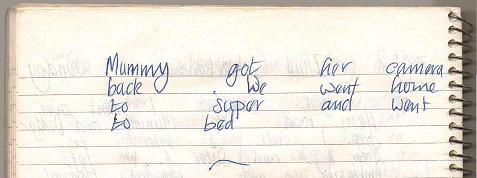
The hotel I mention was the Kirkstone Foot Hotel, at the top of Windermere, in Ambleside where Richard Pilbrow and the senior members of the film crew were staying. Mum must have left her camera there.
The Kirkstone Foot Hotel, Ambleside in 1973
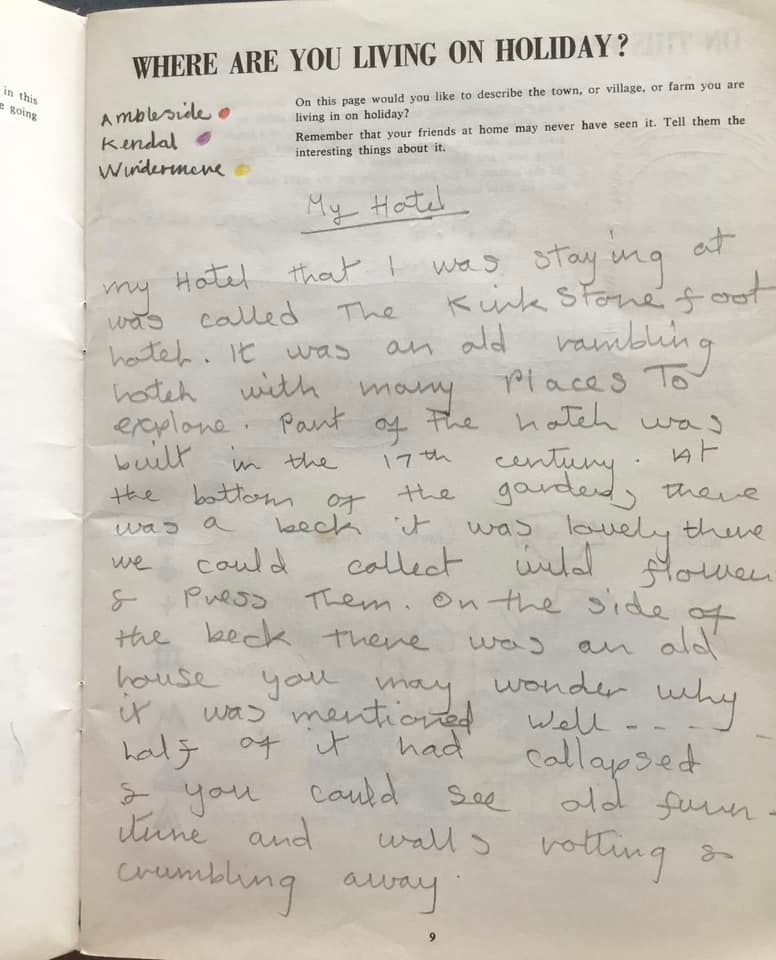
Pandora Doyle, whose father Brian Doyle was handling the publicity for Swallows and Amazons, kept a record of her half-term holiday, marking her room at the Kirkstone Foot (telephone: Ambleside 2232). She wrote about it quite beautifully:
I’m pretty sure the film company used the coach-house block for their production office. The green parrot was once released in the bathroom where it spent a day waiting to be used in a scene, presumably on the houseboat. Pandora pointed out the hole-protector she had added when filing her scrapbook. I’d totally forgotten about such things and yet I must have stuck on hundreds. ‘Ring-binders’ were the thing but I never had red ones.
We didn’t know it, but Arthur Ransome had died on this day, 3rd June in 1967, six years previously. I feel he would have enjoyed our day out.
Tamzin Neville and Daphne Neville in 1973
You can read the full account of making the film here:
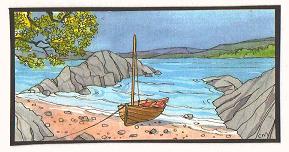
Claudia Myatt’s painting of Swallow in the Secret Harbour
The Secret Harbour on Peel Island looks south over Coniston Water to the hills of Cumbria. It has to be one of my favourite places on Earth. Bringing a small dinghy in there gives you a special feeling either of exploration or of coming home. You need to go when no one else is about. On the 1st June 1973 we spent a whole day filming there with a crew of sixty or more people. It was still a magical place.
Our secret of Secret Harbour was that although many of the scenes in Arthur Ransome’s story are set there at night, back in 1973 we only ever filmed them during the day. This was achieved by using the technique of Day-Night, or Day-for-Night filming, the use of filters over the camera lens so that we could film a scene that would come across as being dark even though it was shot in broad daylight. This had obvious advantages. Filming at night is amazing, but very tiring. It demands considerable lighting set ups, which would have been impossible on Peel Island as they could not get a generator out there.
Sophie Neville with Claude Whatham
The sun wouldn’t have set until very late on 1st June in the Lake District where mid-summer nights are short. Children are only permitted to work certain hours and need to be given rest days afterwards, so filming exteriors at night just wasn’t feasible. And yet, much of Swallows and Amazons, including the most dramatic of scenes, is set at night.
Secret Harbour on the southern end of Peel Island when we were returning for lunch in the Capri whilst Richard Pilbrow’s dog looked on from the temporary jetty constructed by the crew: photo ~ Martin Neville
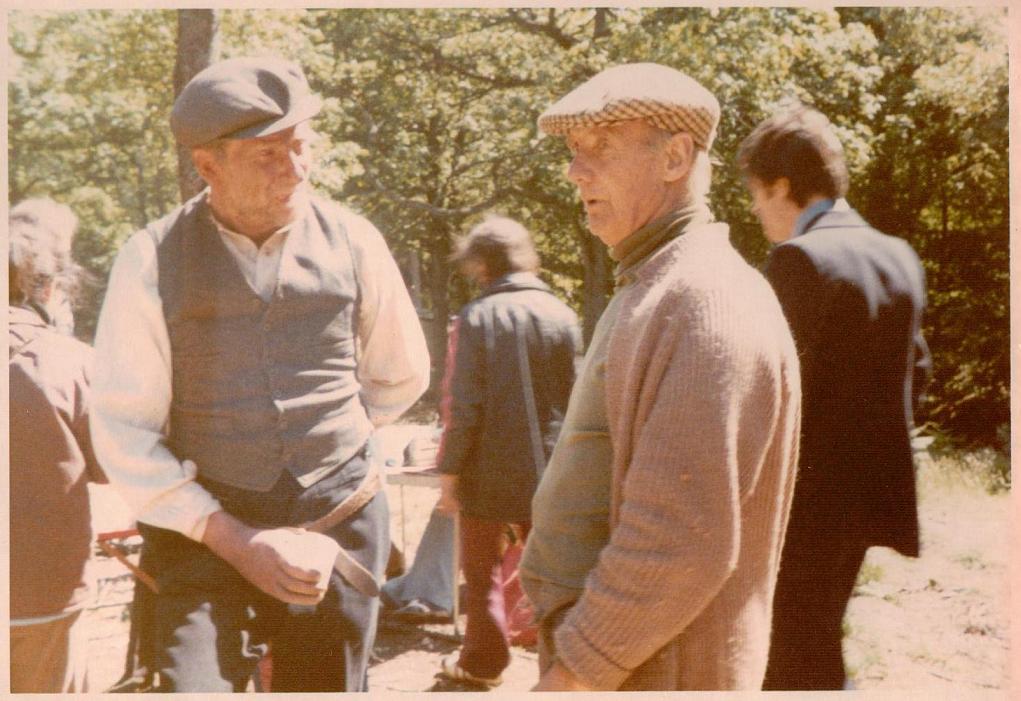
I remember Claude Whatham, the Director of the film ‘Swallows & Amazons’ (1974) and Dennis Lewiston, our Lighting Cameraman or Director of Photography, being intensely absorbed in perfecting our Day-for-Night sequences. This was particularly tricky for them as many were set out on the water. Having already shot one night scene on Peel Island when we were in the girls’ tent, Dennis now started the day with a scene which was set on the island, yet looked out over the water. He explained that ideally he needed constant, bright sunlight, which would look like moonlight reflected on the ripples of the water. What he didn’t like were cloud banks. And for this we would wait. And waiting for children, while out on the water or in a confided space can be hard.
In the scene where the Swallows set up the leading lights Dennis accepted the clouds. It looks fine, as it’s appropriate for it to be getting dark. The little fluffy clouds in the scene where the Amazons arrive aren’t so great as they landed on Wild Cat Island in the dead of night.
Even on land the Day-for-Night shots would take some time to line up. The candle lanterns had to be boosted with battery operated light bulbs. If you look at the lantern in Susan’s tent you can see a black electric wire coming off it, and even a bulb on the Big Screen. You don’t notice this because your attention is on the dialogue but it can easily be spotted. You might think it would be a distraction for us children but we were all quite down-to-earth and the technical detail kept our interest and our minds on our work.
These were our favourite scenes, set in our favourite place. It was the Amazons’ big day with Kit Seymour emanating leadership as she portrayed Nancy Blackett ‘terror of the seas’, with all the confidence, grace and rugged beauty Arthur Ransome must have either known or envisaged. ‘By Gum, Able-seaman – I wish you were on my crew.’
There was much dialogue for Lesley Bennett who played Peggy. She did well, but acting opposite Suzanna Hamilton is always easy. It’s like rowing in a crew led my an excellent stroke or having a good man at the helm. The part of the practical Susan was not a charismatic one but Suzanna anchored us all. Her own performance is absolutely faultless. I had much to react to but not much to say. I did manage to handle the Amazon by myself and the long shot when I captured her was achieved in one take. A triumph at the end of a long day.
‘There are more of us Swallows…’ Sten Grendon, playing Roger and Simon West, playing Captain John in the Secret Harbour on Wildcat Island during the filming of ‘Swallows and Amazons’ in 1973
There was much dialogue for Lesley Bennett who played Peggy. She did well, but acting opposite Suzanna Hamilton is easy. It’s like rowing in a crew led by an Olympic oarsman or having an experienced skipper at the helm. The part of the practical Susan was not a charismatic one but Suzanna anchored us all. Her own performance is absolutely faultless. I had much to react to but not much to say. I did manage to handle the Amazon by myself and the long shot when I captured her was achieved in one take. A triumph at the end of a long day.
Sophie Neville in The Amazon with DOP Denis Lewiston, his 16mm camera and a reflector board ~ photo: Martin Neville
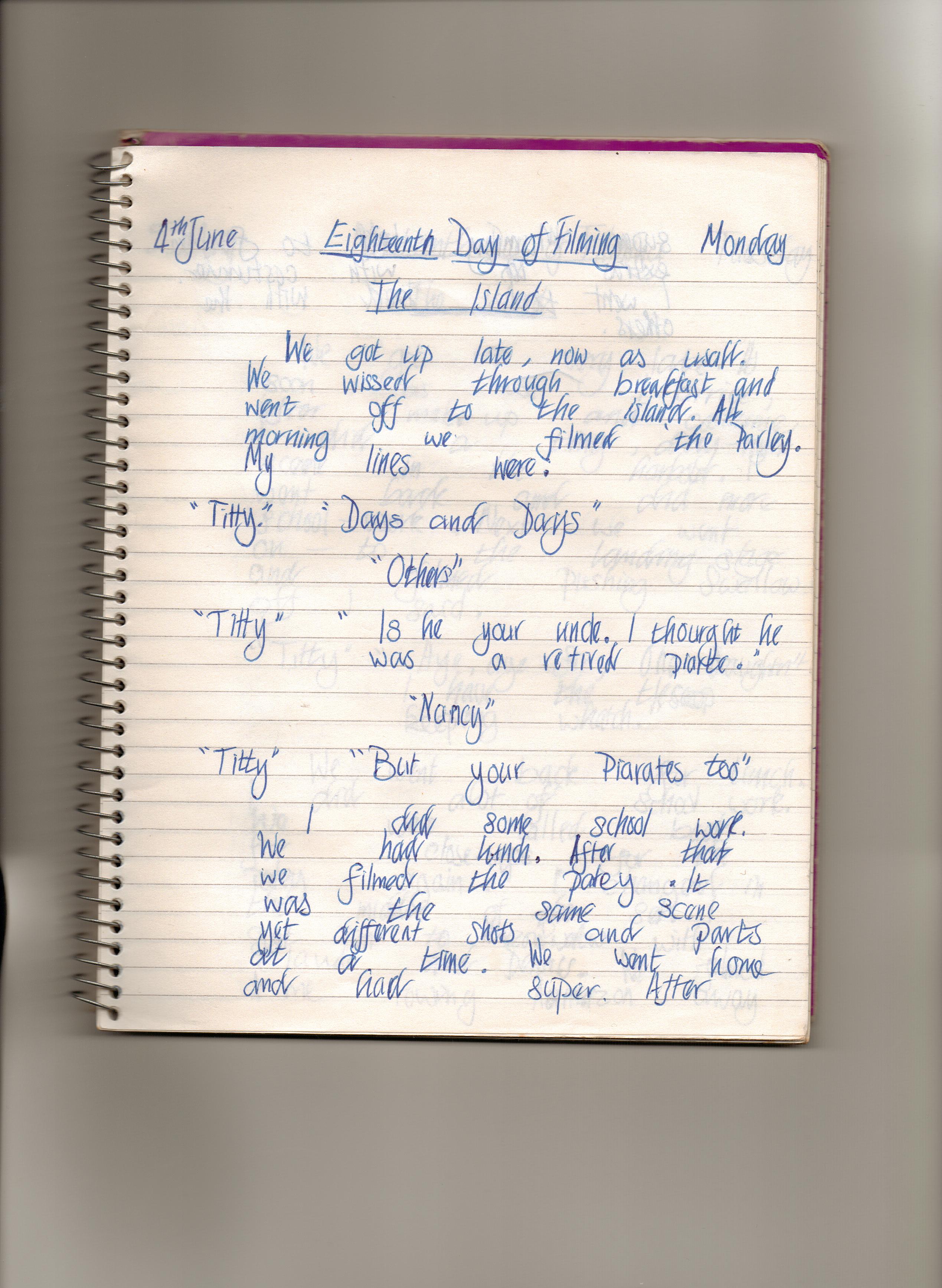
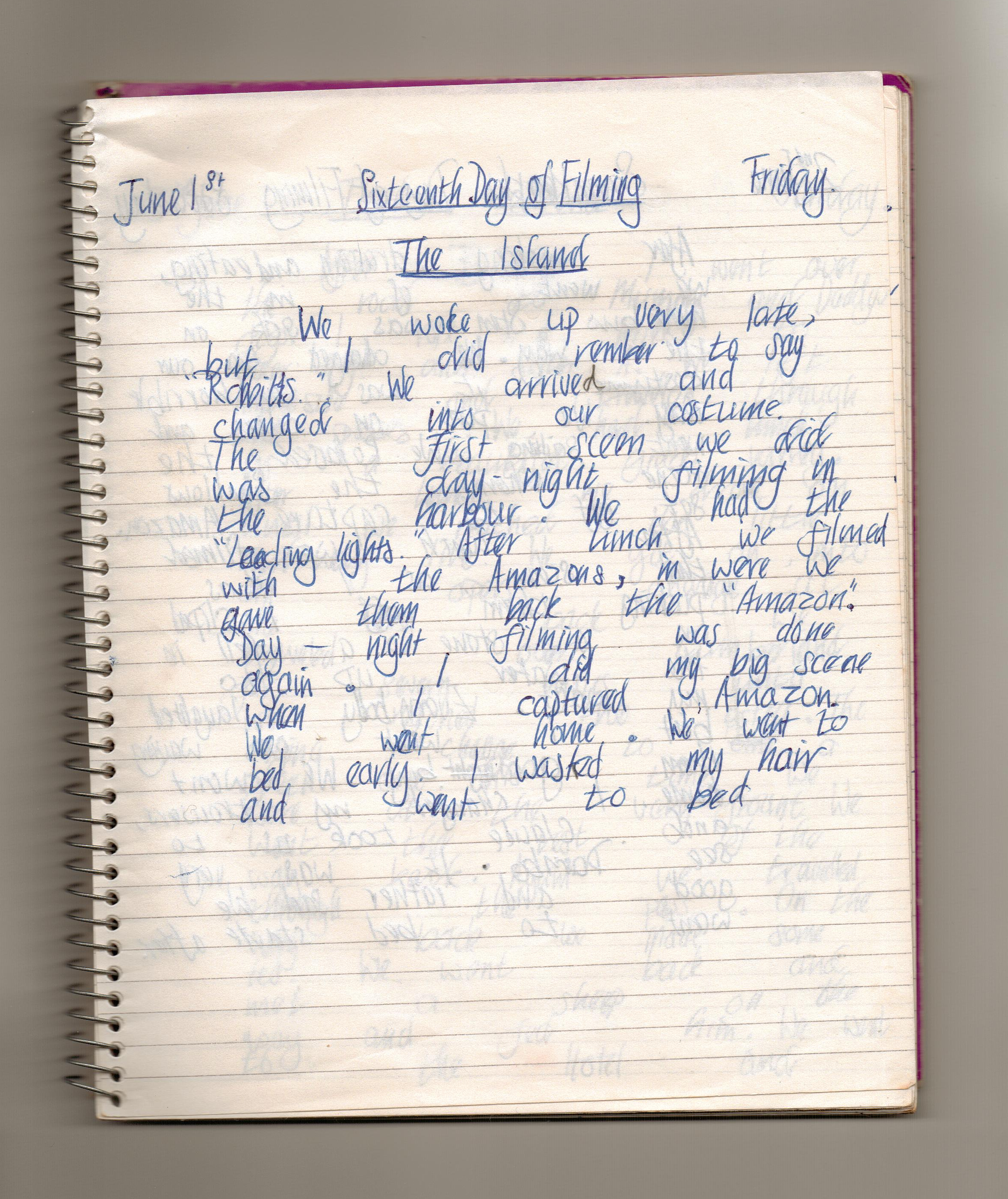
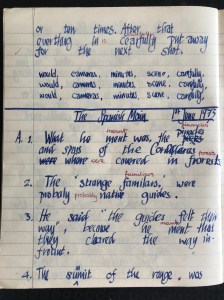
I must somehow have spent time in the school bus with my tutor on 1st June as I was learning about the Spanish Main:
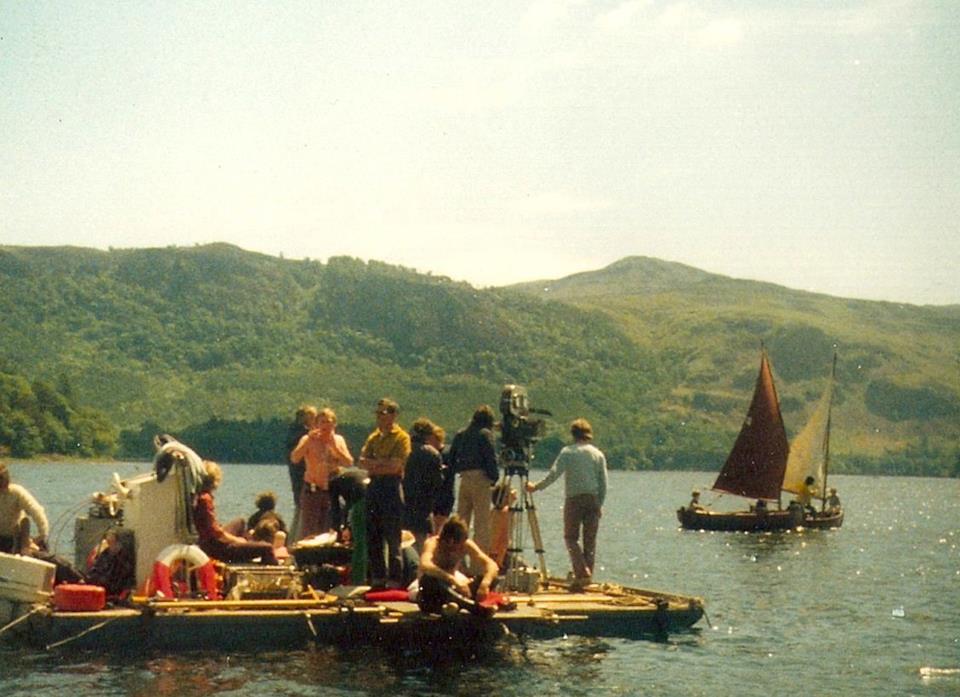
The dinghies Swallow and Amazon with the camera pontoon at Peel Island on Coniston Water ~ photo: Martin Neville
How do you film two girls sailing a thirteen foot dinghy talking to their brothers sailing along in another small dinghy while calling out to two other girls in red bobble hats dancing about on a wooded island which both the small boats are approaching?
The scene looks so simple on paper. It is the one when the Swallows sail back to Wild Cat Island with the captured Amazon to find Nancy ‘dancing with rage’ and Peggy anxious to get home before breakfast. One page of script.
Claude Whatham soon discovered that he was shooting the most complicated of sailing scenes. On a cold grey day in the Lake District.
It is extremely difficult to describe how he managed this, but I will attempt to do so.
There was no room in the dinghy Amazon to film Susan and Titty sailing. This had to be done from a boat or vessel lashed along side. The production had a pontoon hired from Mike Turk in Twickenham and managed with the help of Nick Newby at Nicole End Marine near Keswick. It was a sizeable raft equipped with four outboard engines and surfaced with a number of flat ‘camera boards’.
Basically rectangular, it had arms added on either side. The idea of this cross-shaped platform was to enable Claude to film us either side-on, from astern or across the bows of the dinghy, which was wired by its keel to the pontoon. The camera was normally on a tripod. The original idea was that it could be mounted on a short section of track but I don’t think this ever happened. Electric lighting was not something that could be used on this pontoon but two large reflector boards were used to light our faces instead.
The result was a shot used on the cover of a book and a DVD marketed by the Daily Mail in 2008.
As well as the director and camera crew, the sound recordist and ‘boom swinger’ were on board the pontoon along with Sue the continuity girl. Costume, make-up and our chaperone would be in a separate safety boat, in this case a Capri. This would mill about with the life jackets, sunhats and warm clothes that we wore between set ups. The crew all started off wearing life jackets, but as you can see they were soon discarded. They were dangerous things, old BOAC ‘life vests’ with so many flappy straps that you were at risk of being trapped under water by them.
The pontoon was operated by two boat men under the eye of David Blagden, the sailing director. They had to work with Claude and the wind so that when we were sailing, while the pontoon travelled with us. This was tricky enough on open water. If we were near the shore it could become more difficult. As you can imagine the dinghy could easily start to sail away from the clumsy pontoon – or worse. Our mast socket broke that first day. They needed my father on that pontoon. He there, quietly was watching from the shore.
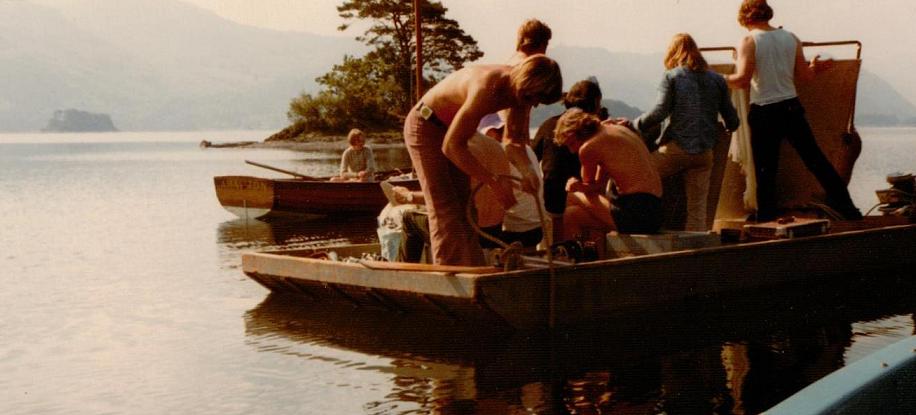
The camera pontoon on Coniston Water with Amazon attached to it and Swallow sailing to the other side of Peel Island during the filming of ‘Swallows and Amazons’ in 1973~ photo: Martin Neville
Although we had all read the book of Swallows and Amazons, and were devoted to adhering to every detail, no one remembered that John and Titty sailed the captured Amazon back to Wild Cat Island. She had a centre board which was a new thing for the Walkers so John decided to let Susan helm their familiar boat. I wish this had been detailed in the script. In the film, John was with Roger in Swallow whilst Susan and I were in the Amazon, which was a pity. I can only imagine that Claude decided this because he was trying to achieve a very difficult ‘three shot’. He was relying on John – on Simon West, who was aged eleven – to keep sailing Swallow in the right position, whilst out on the water between Amazon and Wild Cat Island.
Simon West as Captain John sailing Swallow . Sten Grendon plays the Boy Roger in the bows
This wasn’t as easy as it looks. You can see from this photographs that Swallow kept racing ahead of the pontoon. It can be gusty around Peel Island and the rocks can be lethal. Roger was on lookout but he also had to deliver his lines. Having no centre board and a shallow 1920’s rudder Swallow can be difficult to turn or get going if the wind slacks. This wasn’t actually a problem; Simon had wind and he did brilliantly. Suzanna Hamilton did too. She had no previous experience of sailing the Amazon. No one had remembered this sequence when we practiced before the filming began.
Molly Pilbrow and her dog with my sister, watching the camera pontoon from the shore of Coniston Water ~ photo: Martin Neville
Meanwhile Gareth Tandy, the third assistant director, was standing-by (probably for hours) on Peel Island with Nancy and Peggy. He had hide in the bushes and cue them at just the right time. They did so well. They had to deliver their lines while jumping from rock to slippery rock to keep up with both the Swallow, the camera and the story.
The Swallows and The Amazons in the Capri ~ Suzannah Hamilton, Kit Seymour, Daphne Neville, Stephen Grendon, Simon West, Sophie Neville and Lesley Bennett ~ photo: Martin Neville
When we filmed two of Arthur Ransome’s other books, Coot Club and The Big Six, on the Norfolk Broads in 1983, the BBC producer Joe Waters used a 35 foot river cruiser as camera boat. It could be difficult keeping it stable during a take, especially with so many people on board, but being a proper boat it was much easier to manoeuvre than the pontoon. And faster. Andrew Morgan, the director still managed to get his camera angles and it had the advantage of a cabin where sensitive equipment such as film stock and lenses could be stored. I can remember the camera assistant changing the film on board. I don’t know if the boat had heads. May be.
On both productions we had the inevitable problem of modern boats coming into shot. We had to have one of two men in zoomy motorboats that could zip across the open water to ask them to move clear of the shot. Even with this control you can imagine what happens. You line up your shot with all your boats in position, the sun comes out and a modern motorboat roars across the lake leaving you all rocking in its wake. Then it rains.
The good thing about having a safety officer in a frog-suit is that they can carry you to shore at the end of a long day. You don’t have to get your feet wet.
The Safety Officer and me, with Dennis Lewiston and Claude Whatham still standing in the Amazon ~ photo: Martin Neville
The question is – Did the DOP and the director get carried ashore too?