This winter we took it upon ourselves as a family to dig these abandoned buoy anchors out of the mud.
We extracted four, all of which were so heavy it was near impossible to carry them away. There has been less litter but the storms bring in all sorts of things.
Plastic pollution has been unremitting but it is good to be making a contribution. It is such a beautiful area, so important to wildlife.
Some of the items are dangerous.
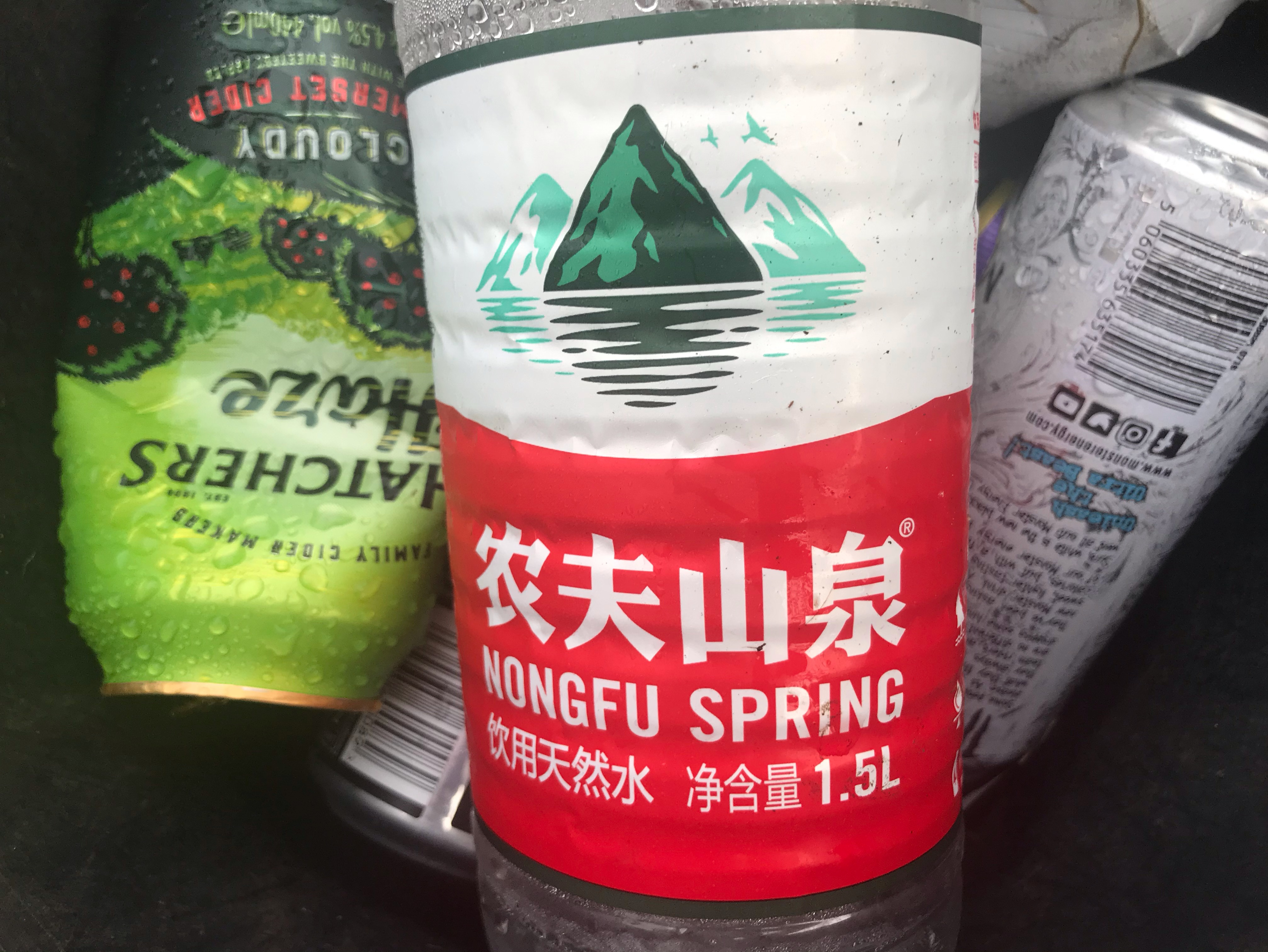
Others have travelled a long way, possibly dropped off ships.
Most pieces are small, some tiny, others revolting. It is satisfying to go out after a storm.
It is then that a lot of PVC rope comes in. It can do a great deal of damage.
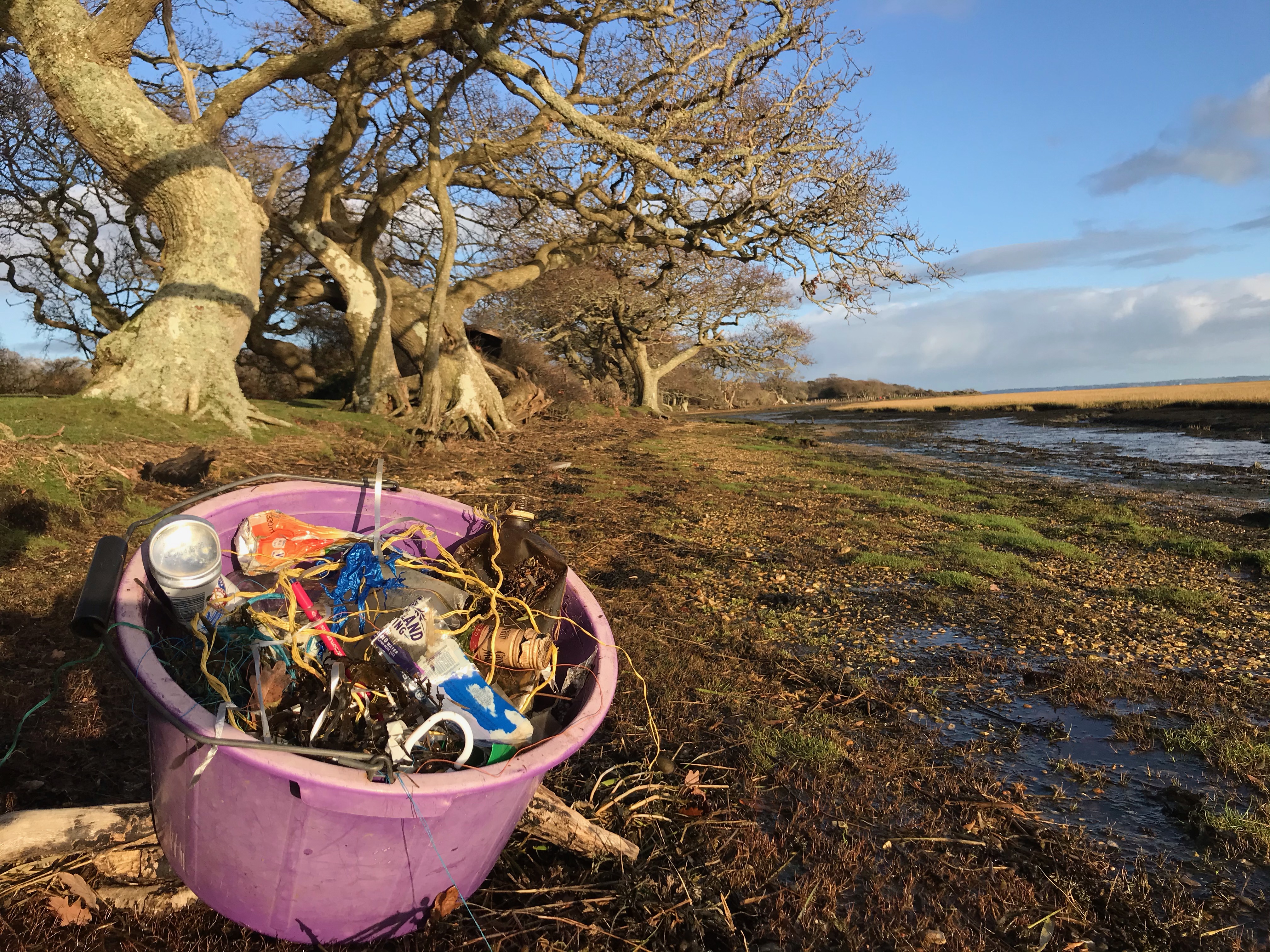
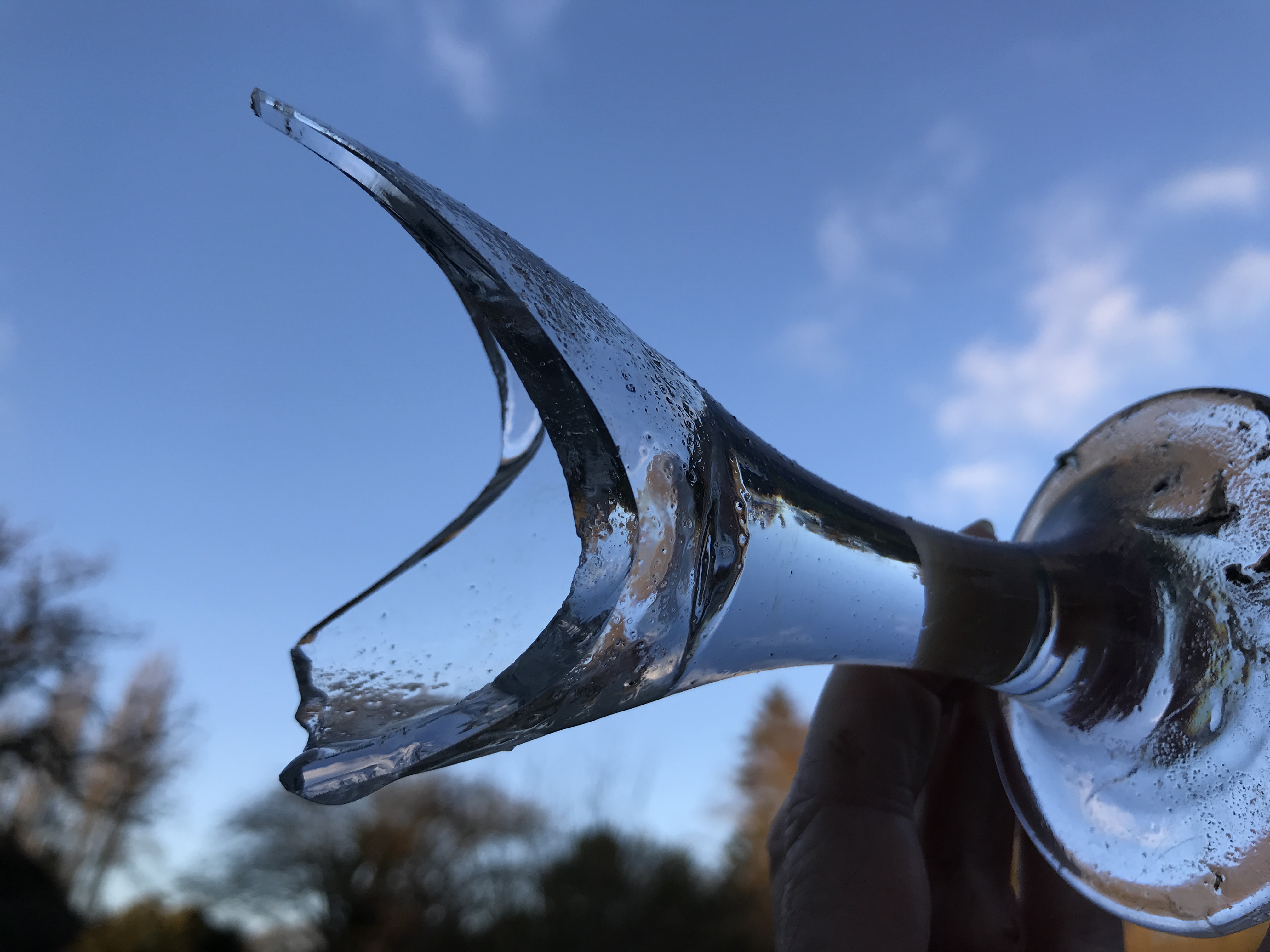
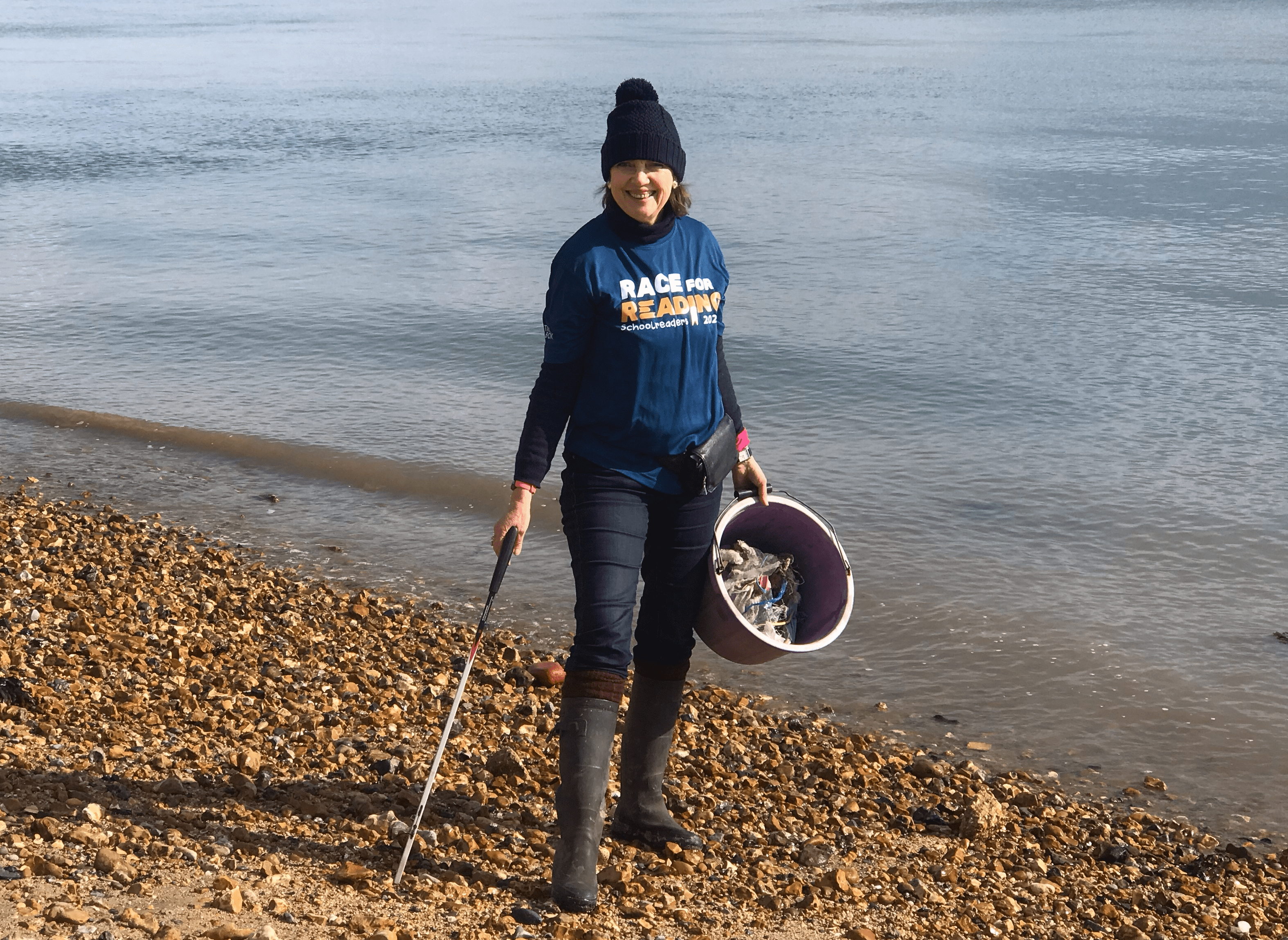
I use a bucket as bags flap in the wind and there are often sharp pieces of glass.
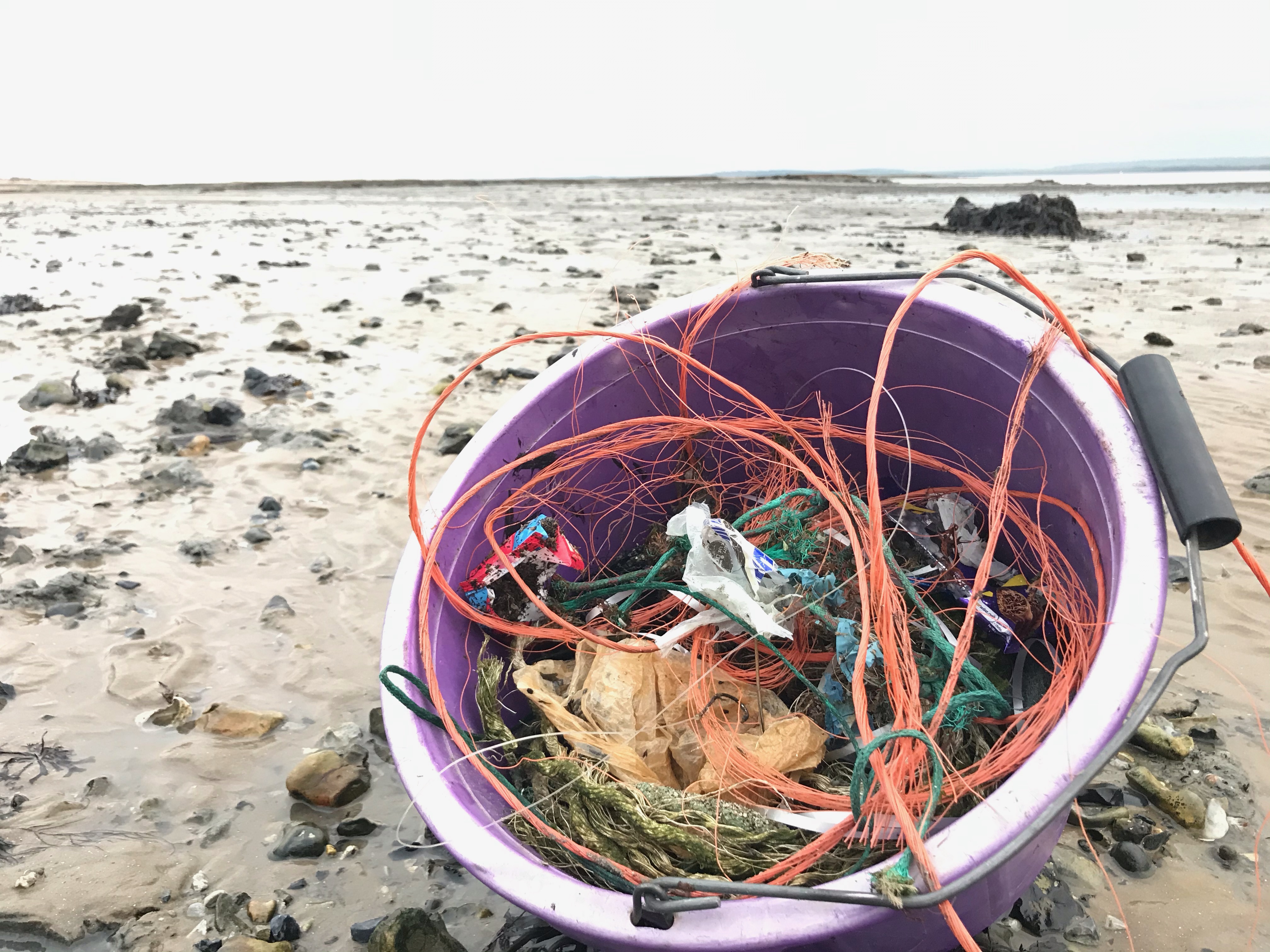
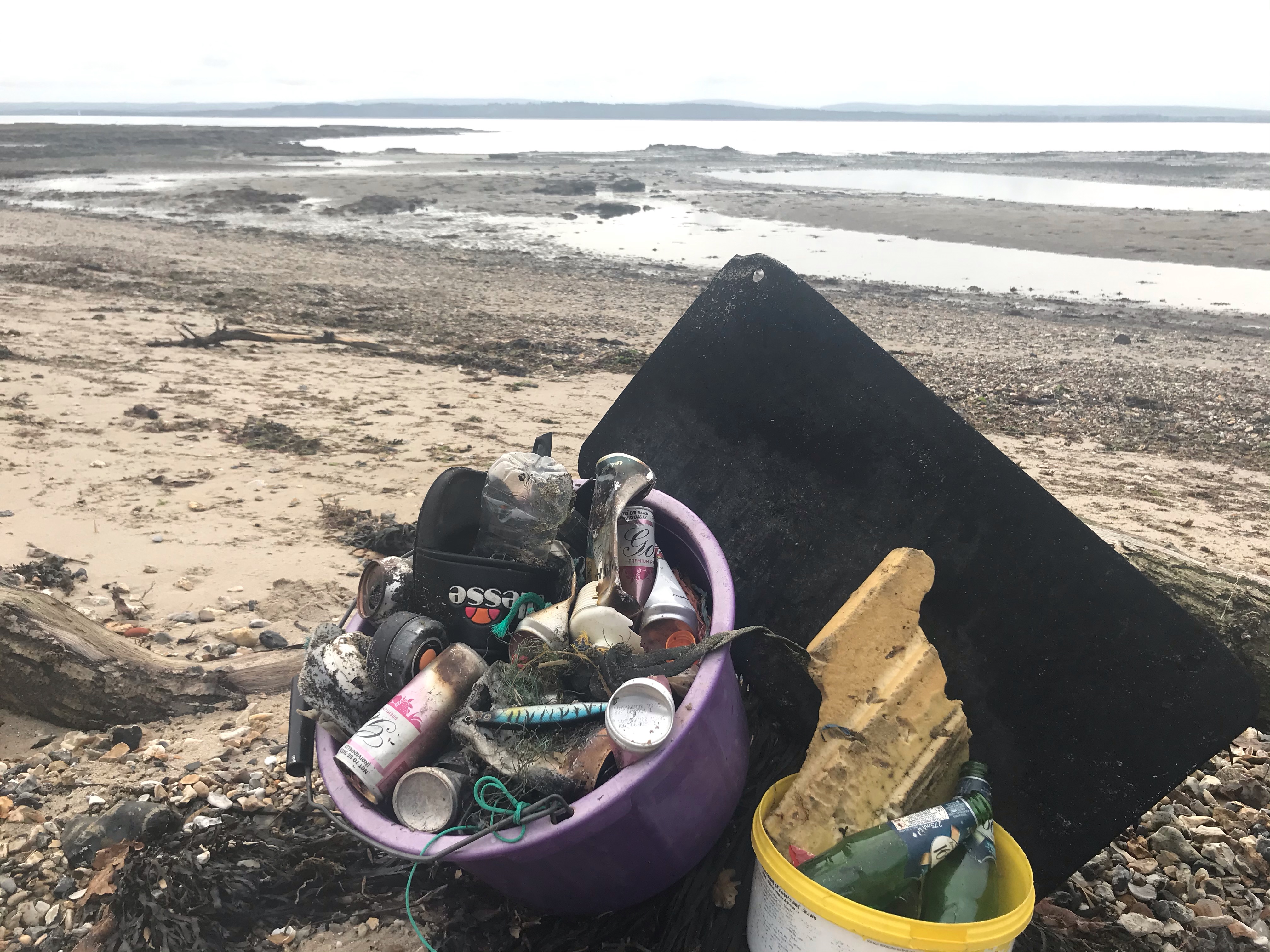
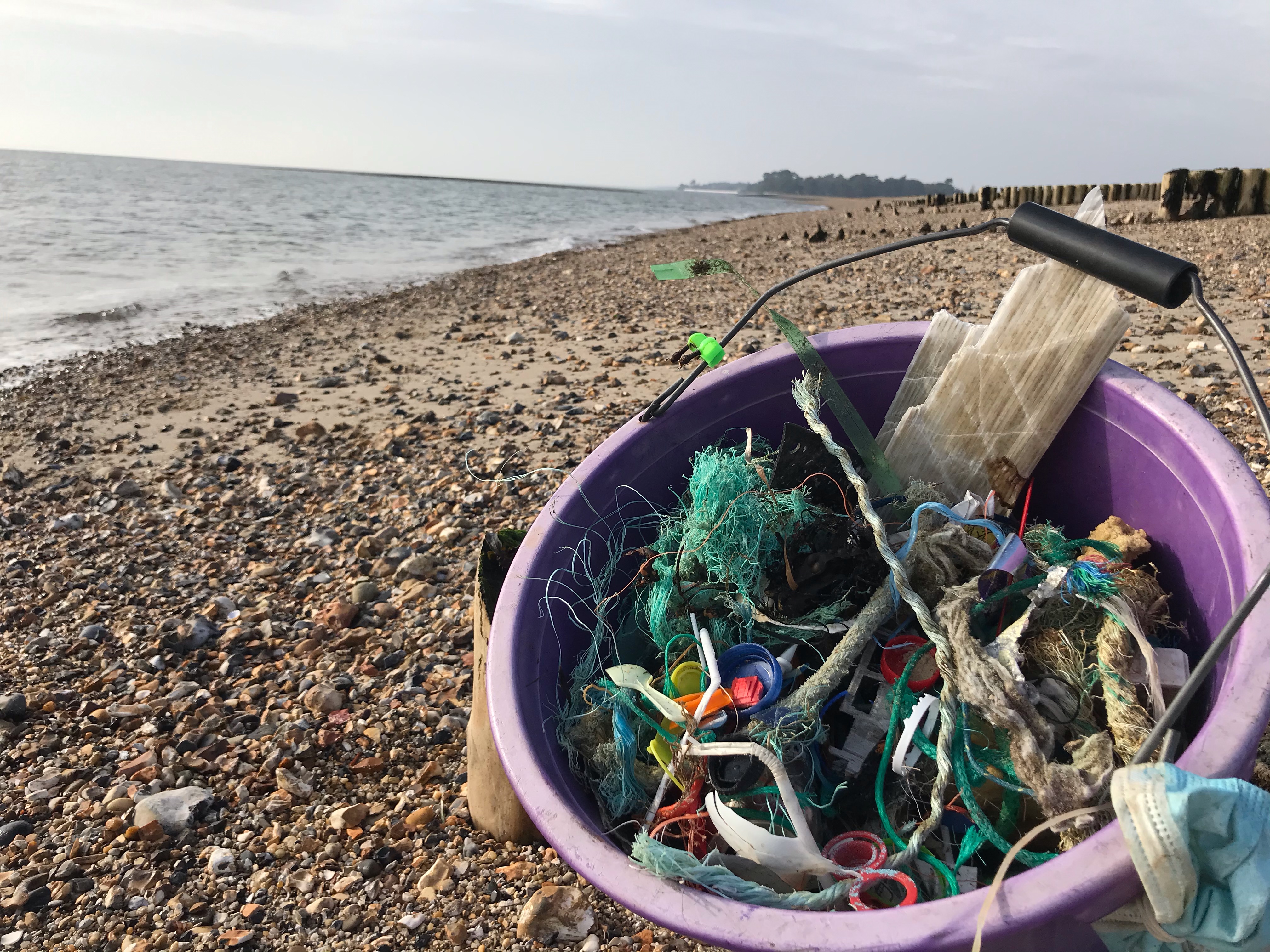
They can weigh 4kgs when full. This one contained a lot of old fishing line.
I often find unopened drinks or packets of food.
Almost every day there is a helium ballon and a mask to pick up or extract.
It’s as if the sea is spitting them out.
We sometimes come across amusing pieces, often toys or balls of some kind.
The best thing about collecting plastic pollution is that it gets us out there.
For a full list of things we’ve found washed up on the Solent – click here
I am thrilled to announce that I have been awarded a certificate as ‘Beach Picker of the Year’ by Litter Pickers of the New Forest, who presented me with a very good bottle of wine. The sea thanked my sons and three year-old helpers by presenting them with a jar of instant coffee and a baseball.
Sophie Neville on the Solent
The good thing about winter beach cleans is that, instead of picnic litter, you are in with a chance of finding interesting things washed up on the shore. Along with a Tescos’ ‘bag-for-life’, that we filled with pieces of rope, bottles and part of a lobster pot, I found an unopened can of larger, a decent ball and a pristine jar of Nescafe Gold, fully sealed although dated 19/5/19. It must have been floating about in the Solent for some time.
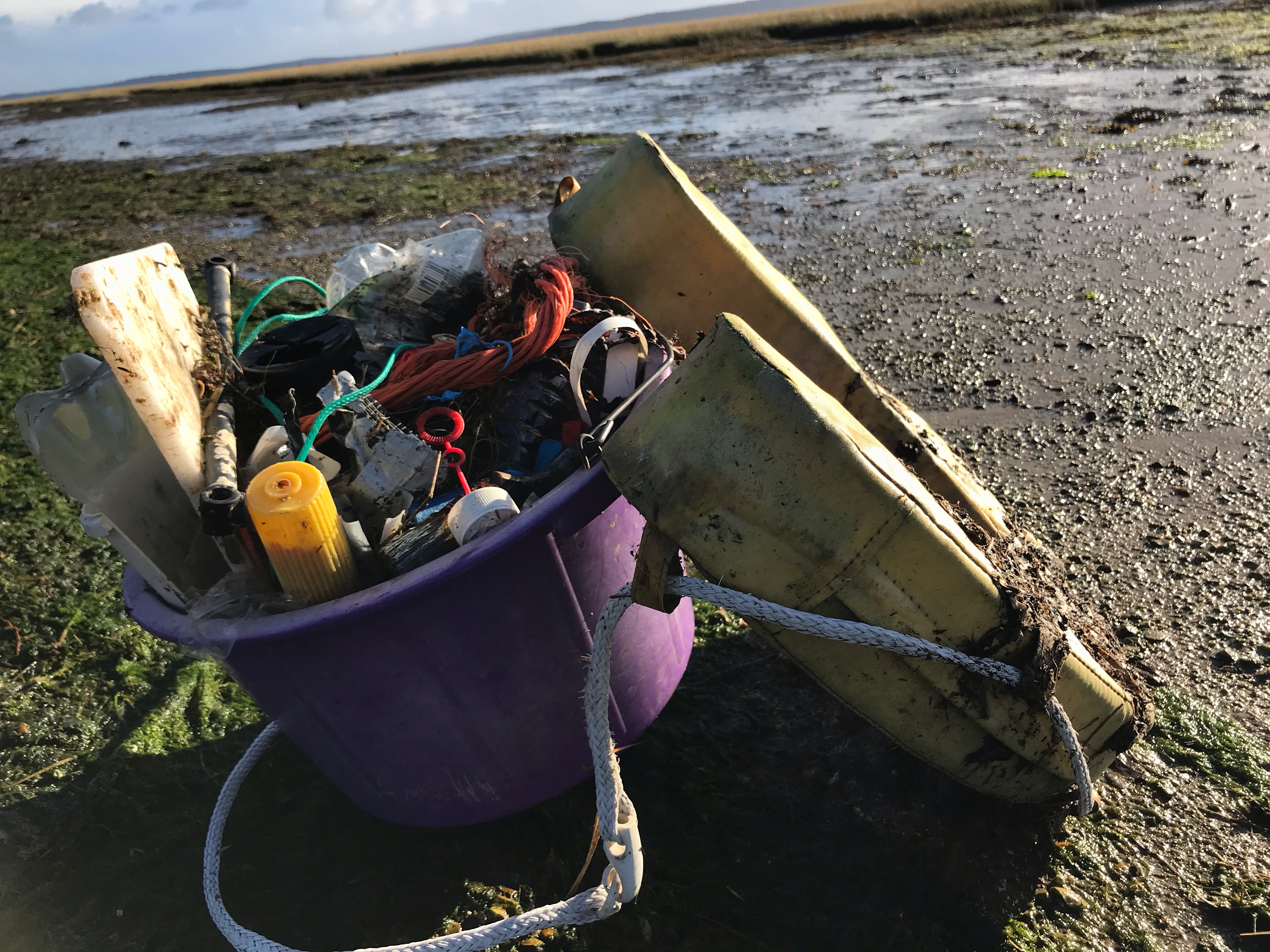
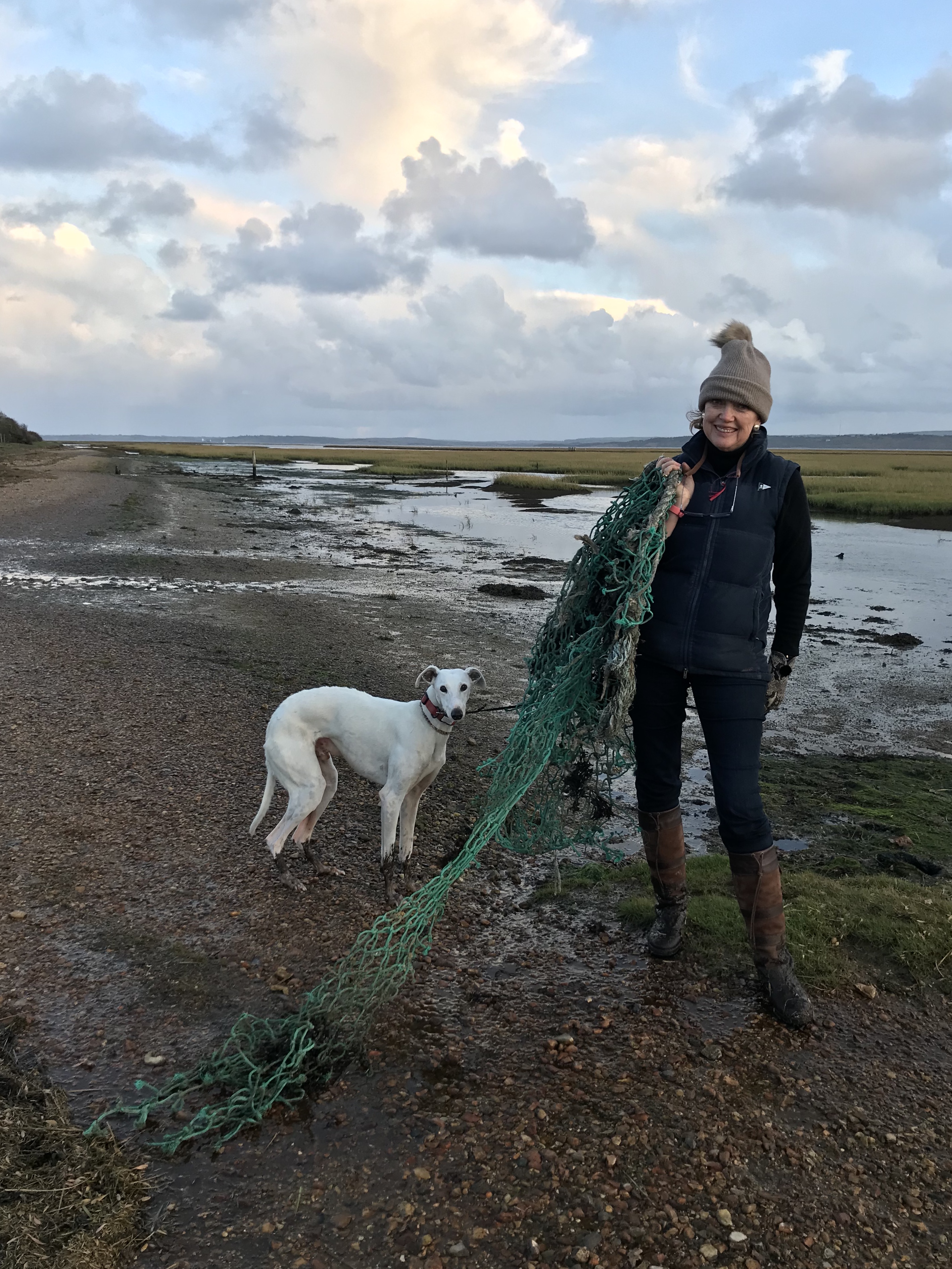
The storms tend to bring in a lot of old plastic. This fishermen’s litter (below) accumulated in the lee of the causeway, out of the wind, but in a nature reserve where otters can be found.
There was a lot to gather. I need to return for more.
PPE is getting everywhere. I’ve been stuffing the masks I find in a jar. I’ve also been picking up aged polystyrene, tampon applicators and tangled PVC rope.
I sometimes use a counter to record how many items I pick up. This purple bucketload (below) contained 140 items but can take more than 260, as many pieces of sea plastic are small. It usually ends up weighing between 3 and 4 Kgs.
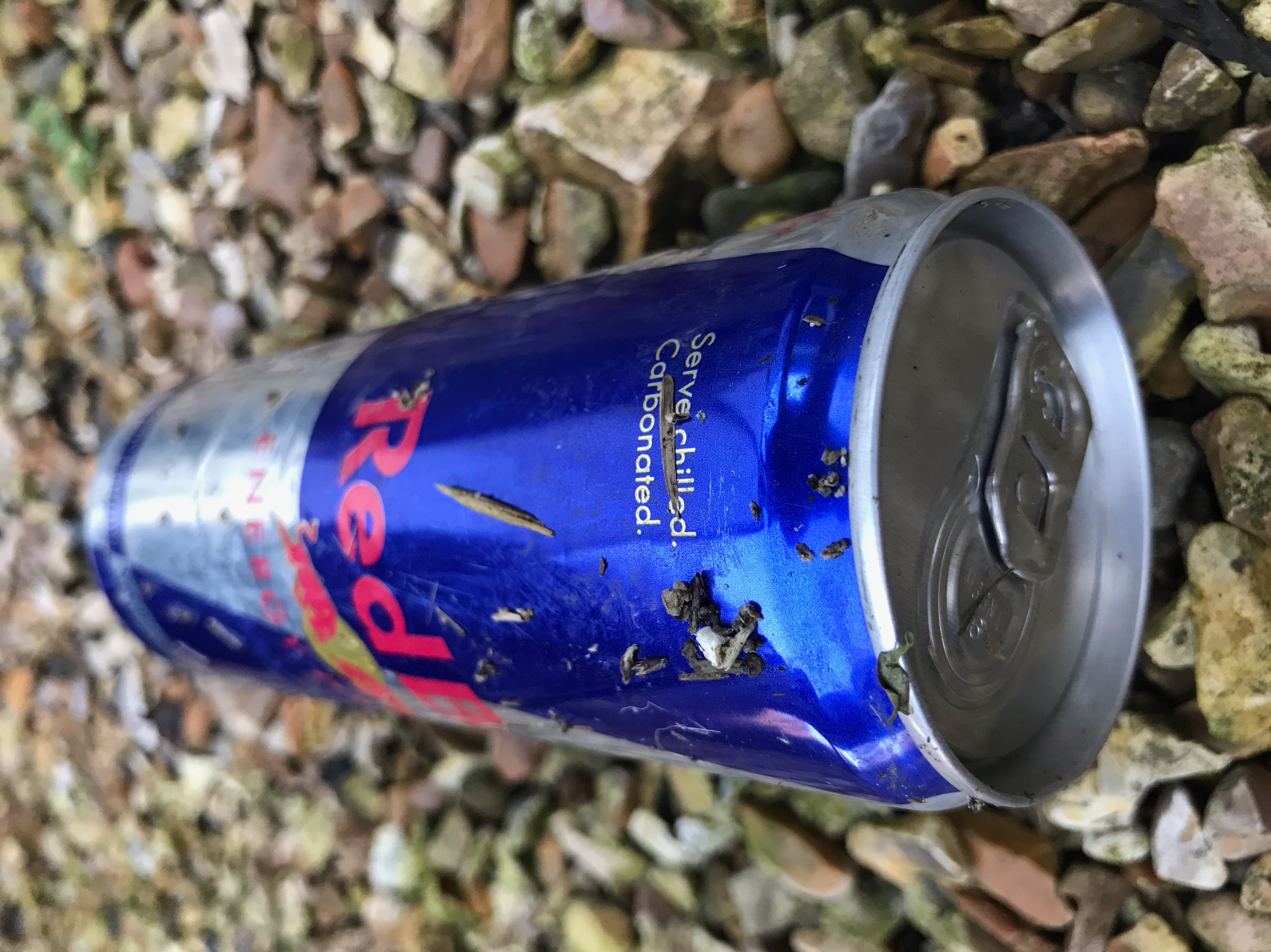
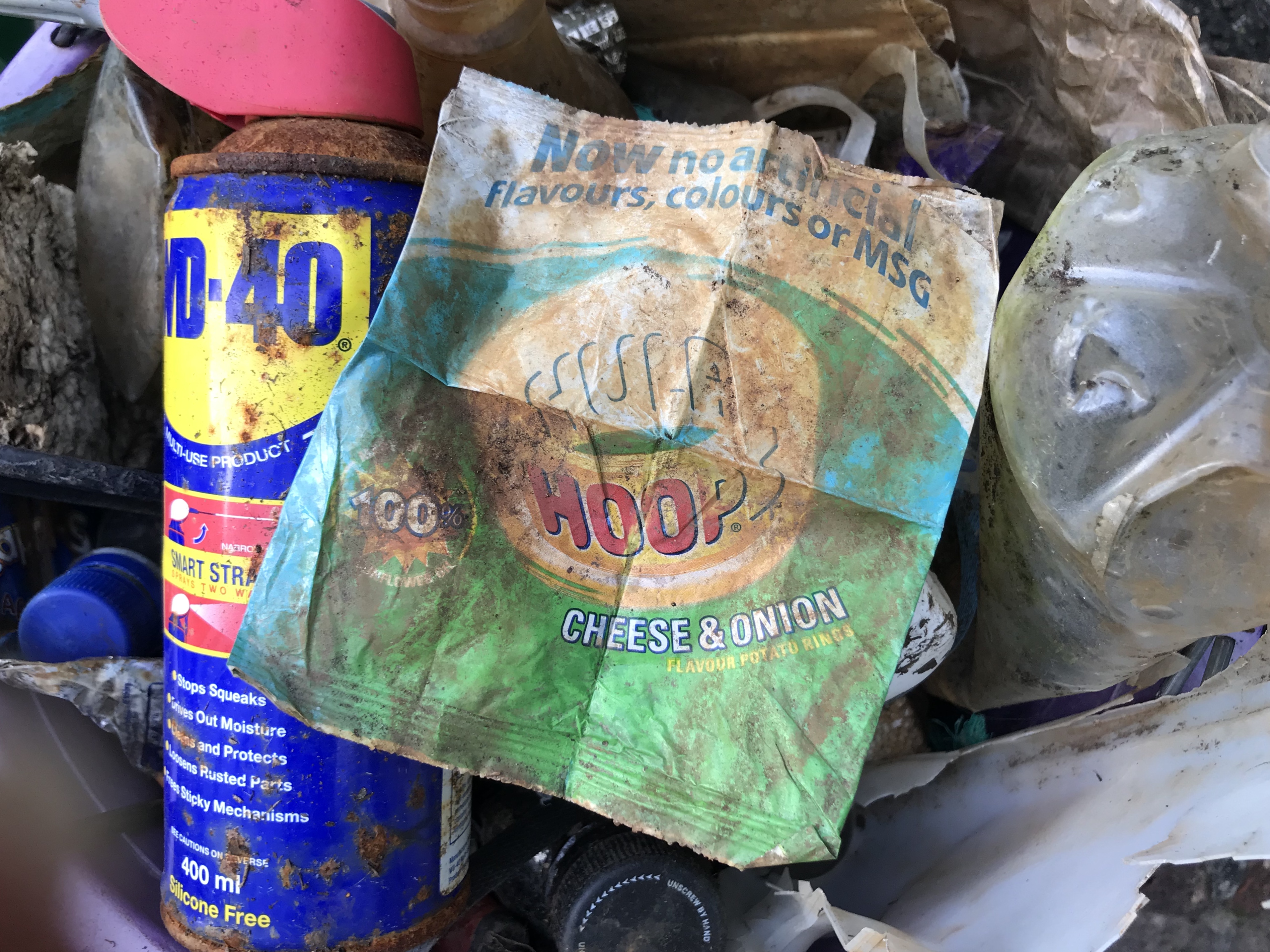
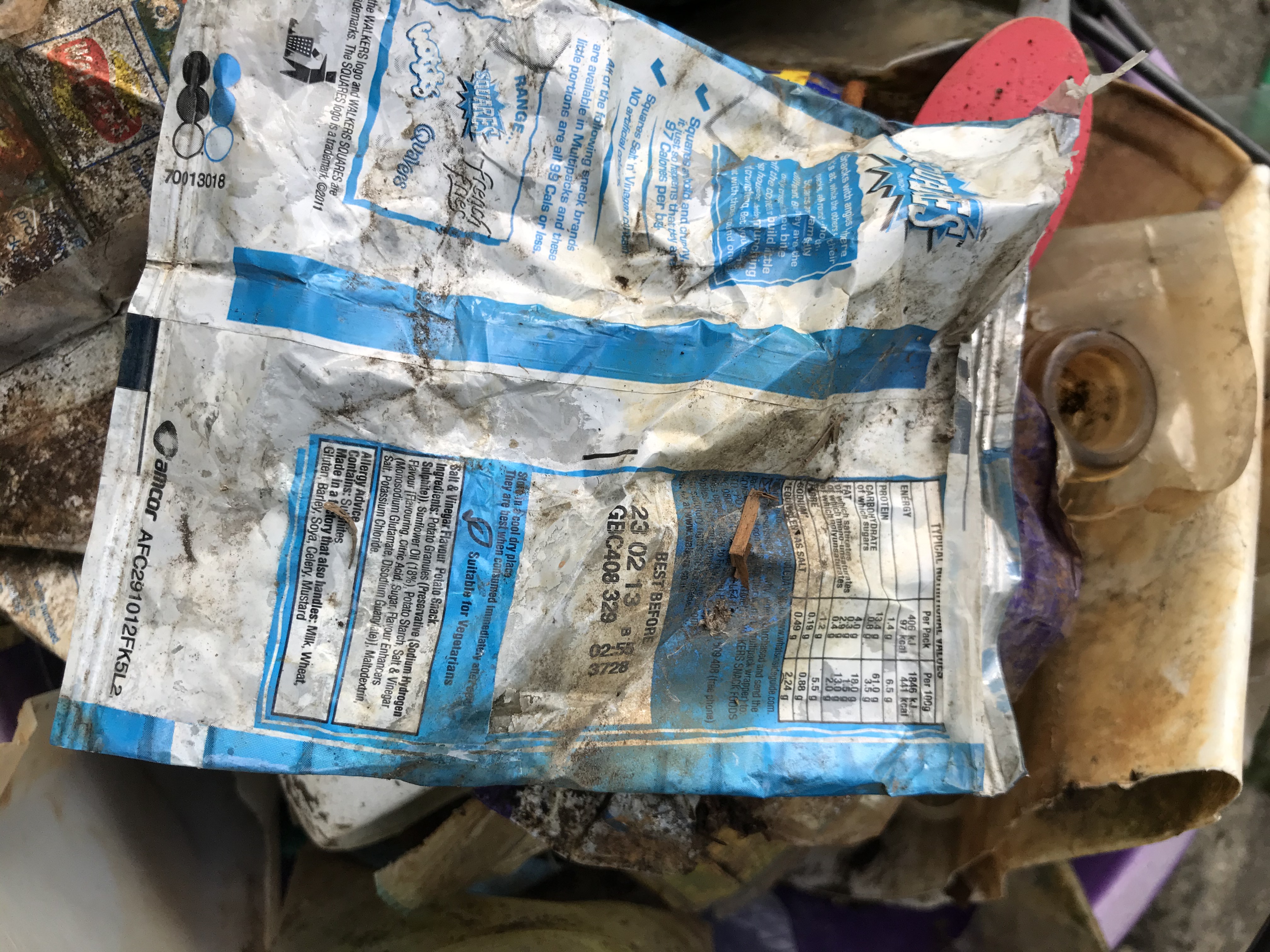
How long will will it take for all this to disintegrate? It’s interesting to date elderly rubbish. Crisp packets can easily last 40 years.
These ones were only aged about 8, which was a bit disappointing.
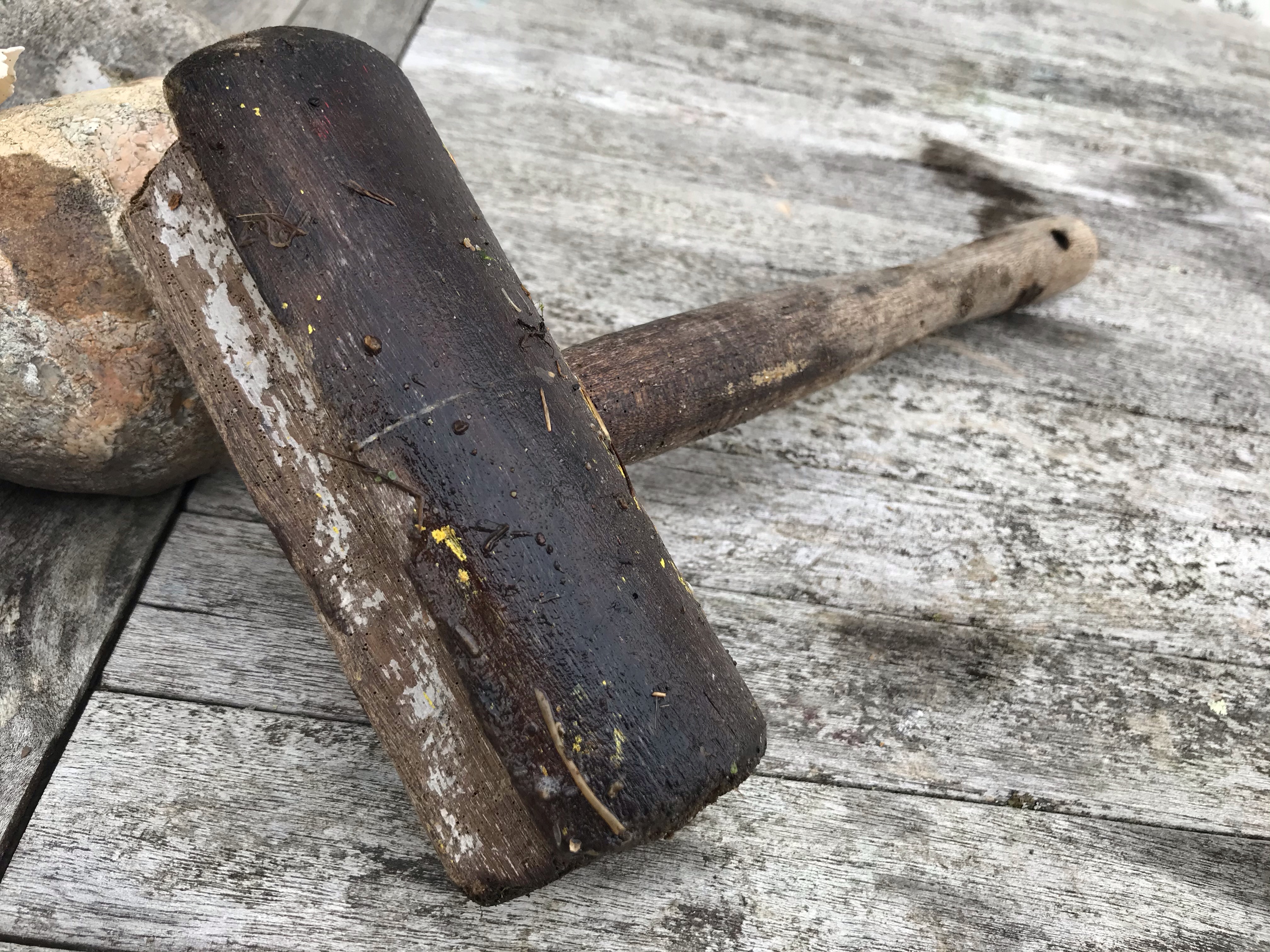
Odd things turn up. This mallet was made with a groove along the top, which I understand is used by riggers. It looks as if it came from a fairground.
After the gales this November, I found an undamaged fluorescent light bulb washed up on the Solent. This is my third. I gather these contain mercury. Is it British? Has it been flung off a ship?
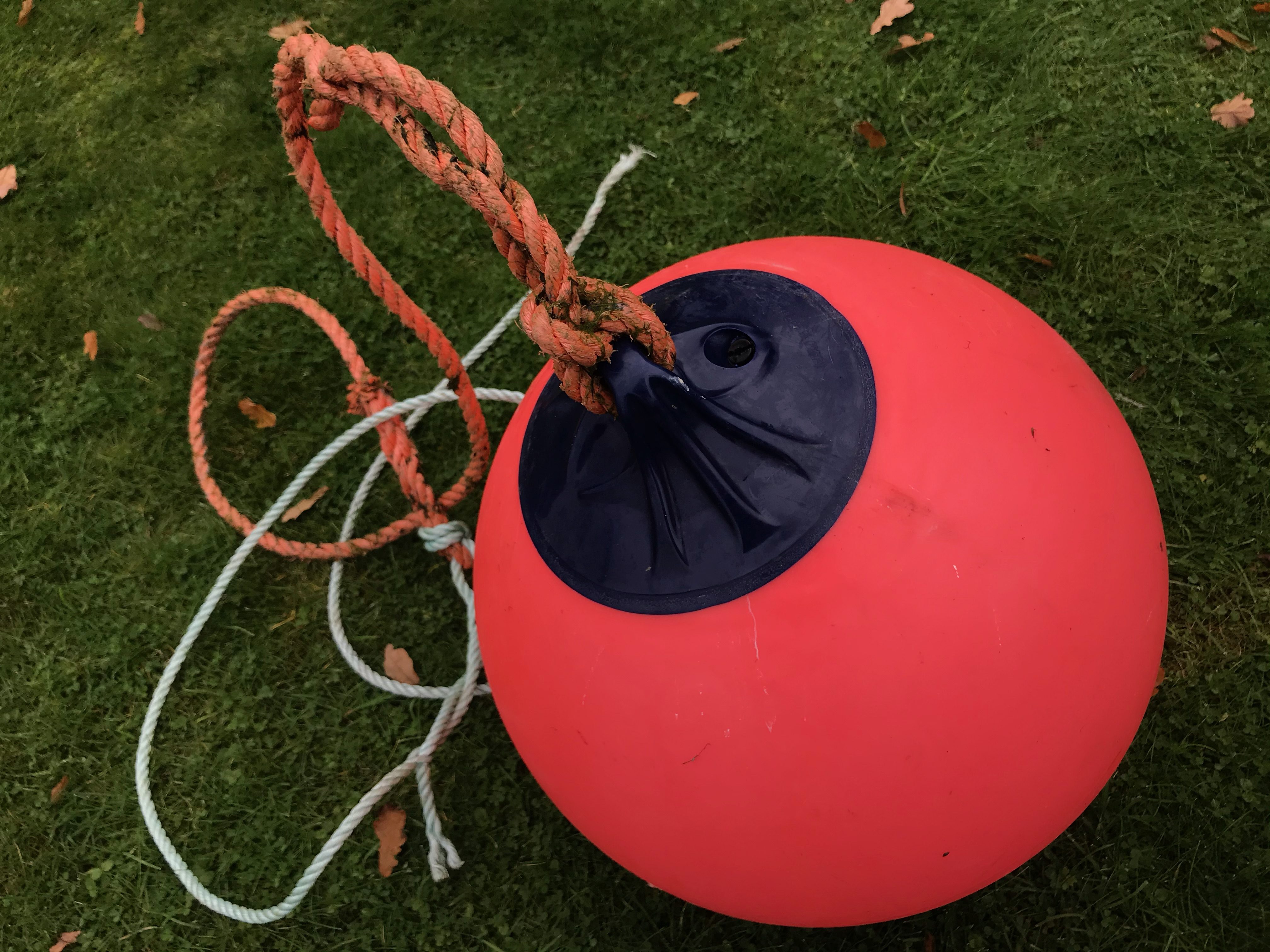
By contrast, this large lobster pot buoy obviously belongs to someone. It’s been registered as missing on Facebook but with no response.
The important thing is to keep going, collecting a little but regularly:
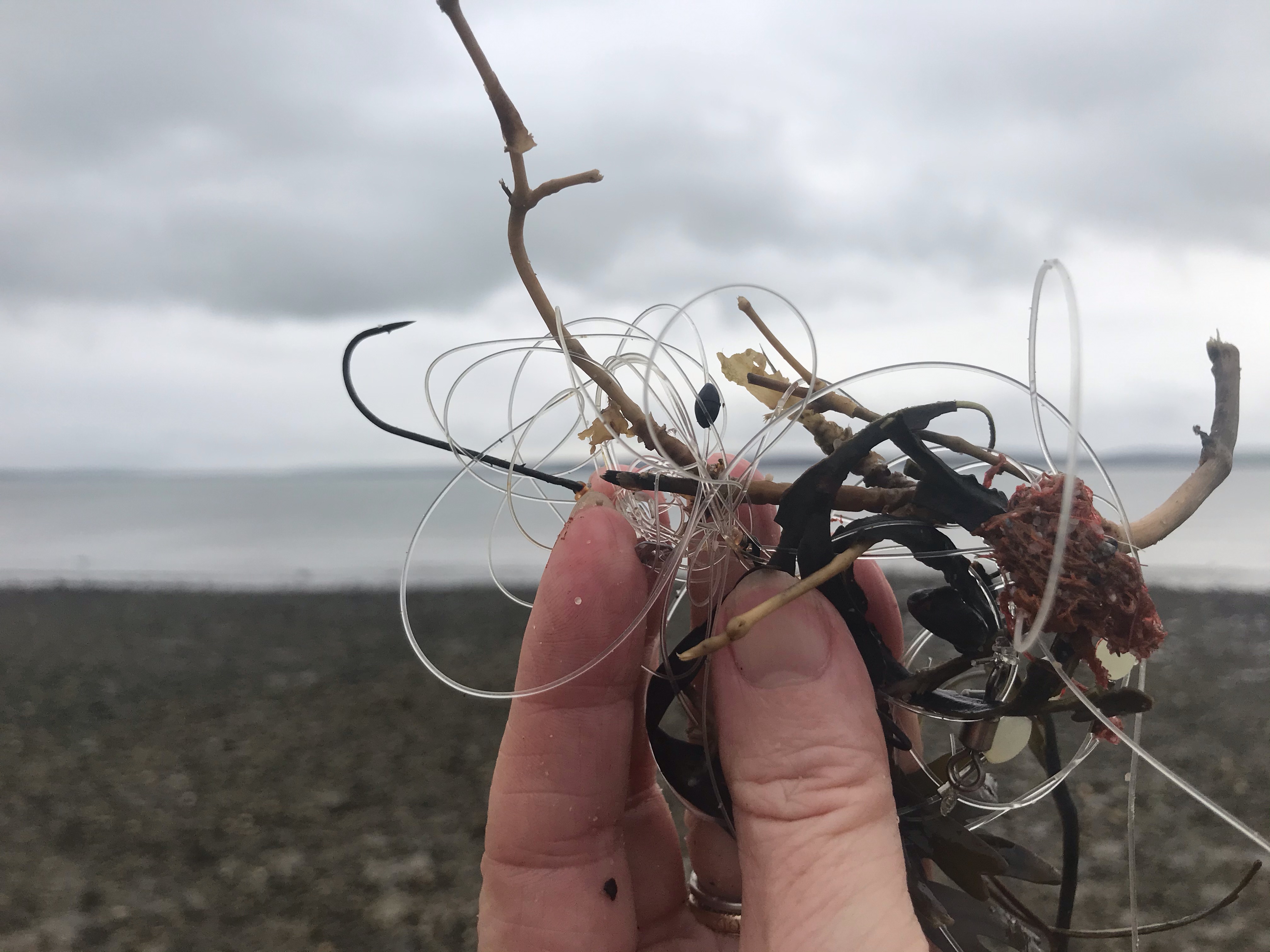
It’s then that your eye catches small pieces like fishing line – which we nearly missed –
This is one of three fishy lures collected recently.
It’s good to record just how much plastic pollution accumulates over time. I found about 3 Kgs of rope and micro plastics after scouring this remote beach that I had cleared a month before.
This pollution is being retrieved from ecologically sensitive areas within the New Forest National Park and British seas. Sadly, all this now has to go into landfill – apart from the ball and sealed jar of coffee. It was just what we needed at home.
Sophie Neville collecting plastic pollution from Solent shores.
To see some of the things we found beach cleaning in September, please click here
Lakeland Arts, based at the Windermere Jetty Museum, ask how the original film of ‘Swallows and Amazons’ was made on location in the Lake District in 1973 –
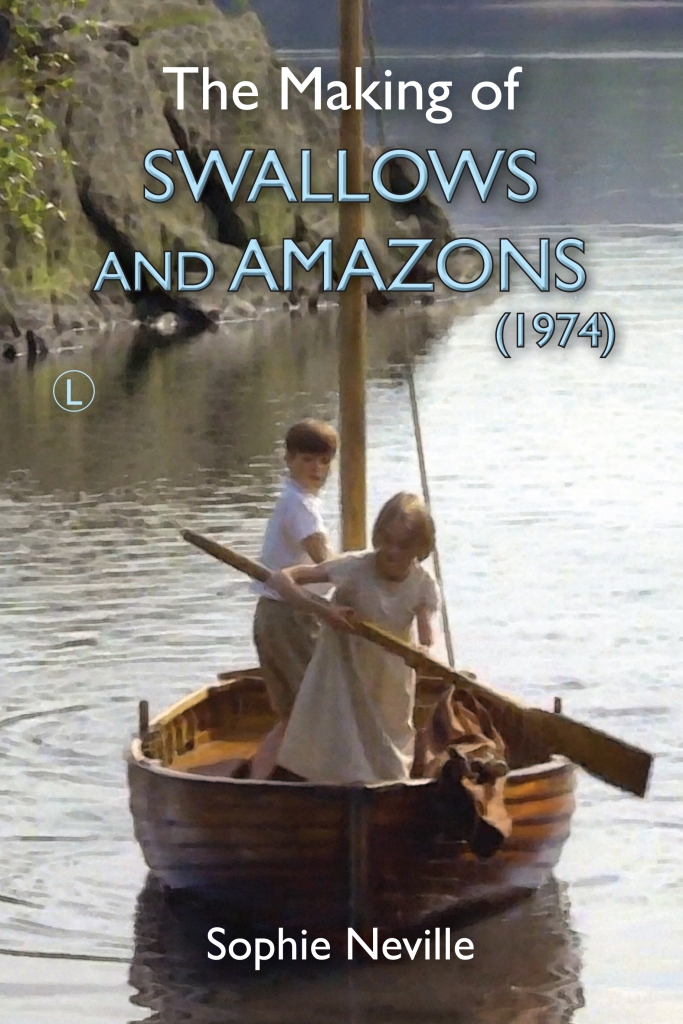
You can find out more in the illustrated paperback, suitable for all age of readers, entitled ‘The Making of Swallows and Amazons’, which makes a good Christmas present when combined with the 40th Anniversary DVD with DVD extras.
After a career as a foreign correspondent, which took him to Russia, Egypt and China, Arthur Ransome wrote ‘Swallows and Amazons’ in the hills above Windermere in 1929.
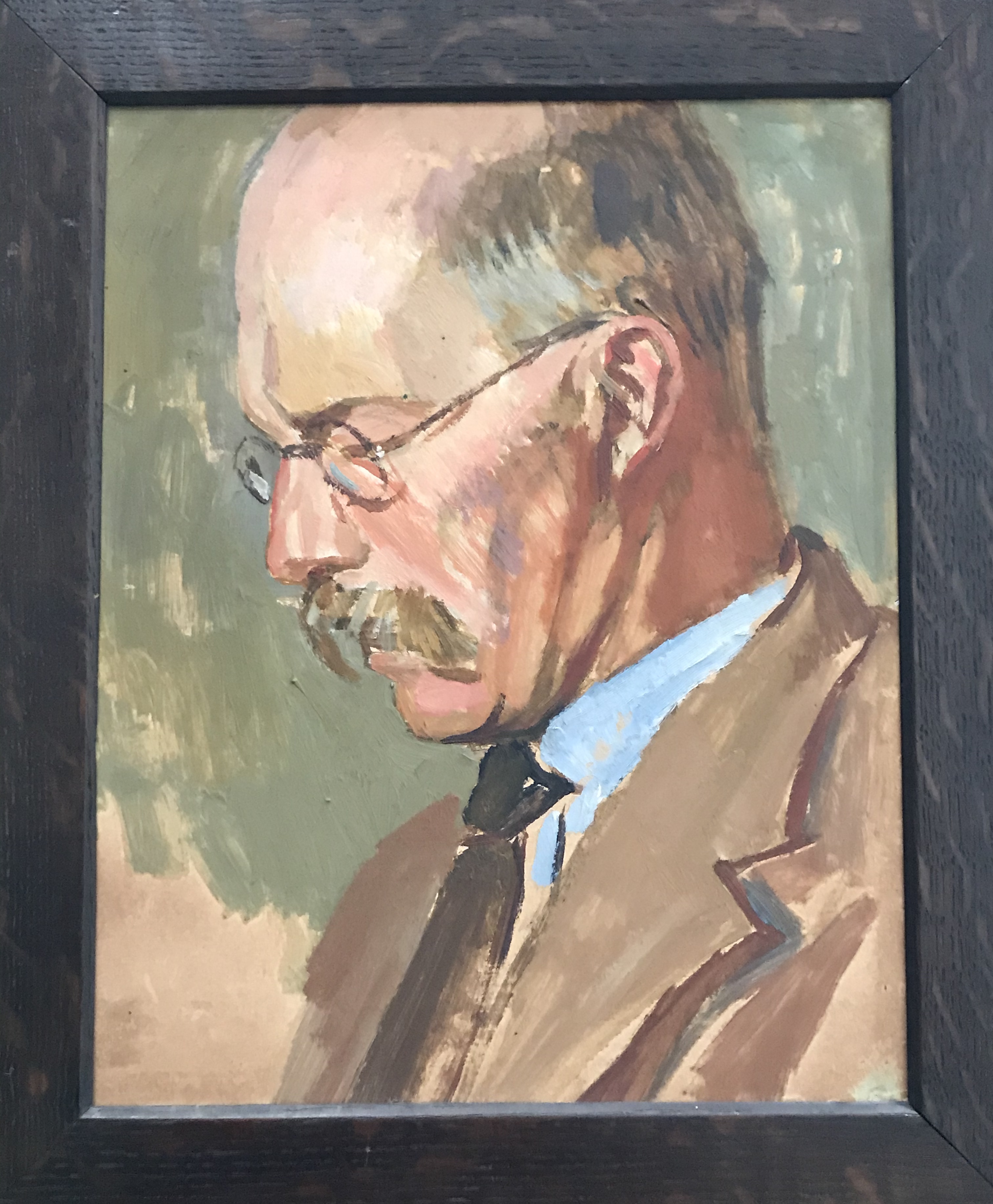
Arthur Ransome portrayed by Dora Collingwood, wife of Dr Ernest Altounyan, on display at the museum
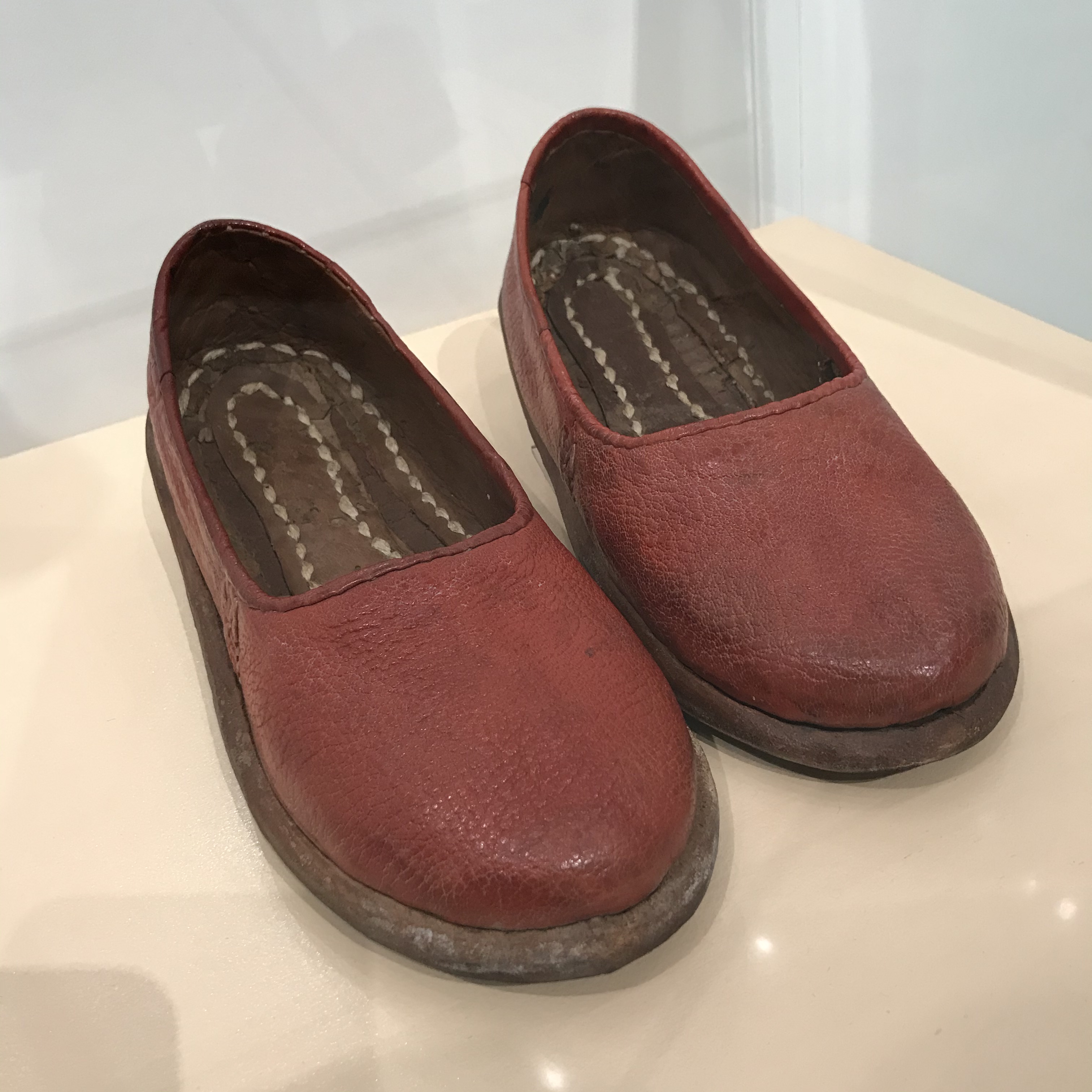
He was inspired partly by his own childhood holidays in the Lake District and partly by the Altounyan children who brought him a pair of red slippers for his birthday to thank him for enabling them to learn to sail on Coniston Water where their grandparents lived.
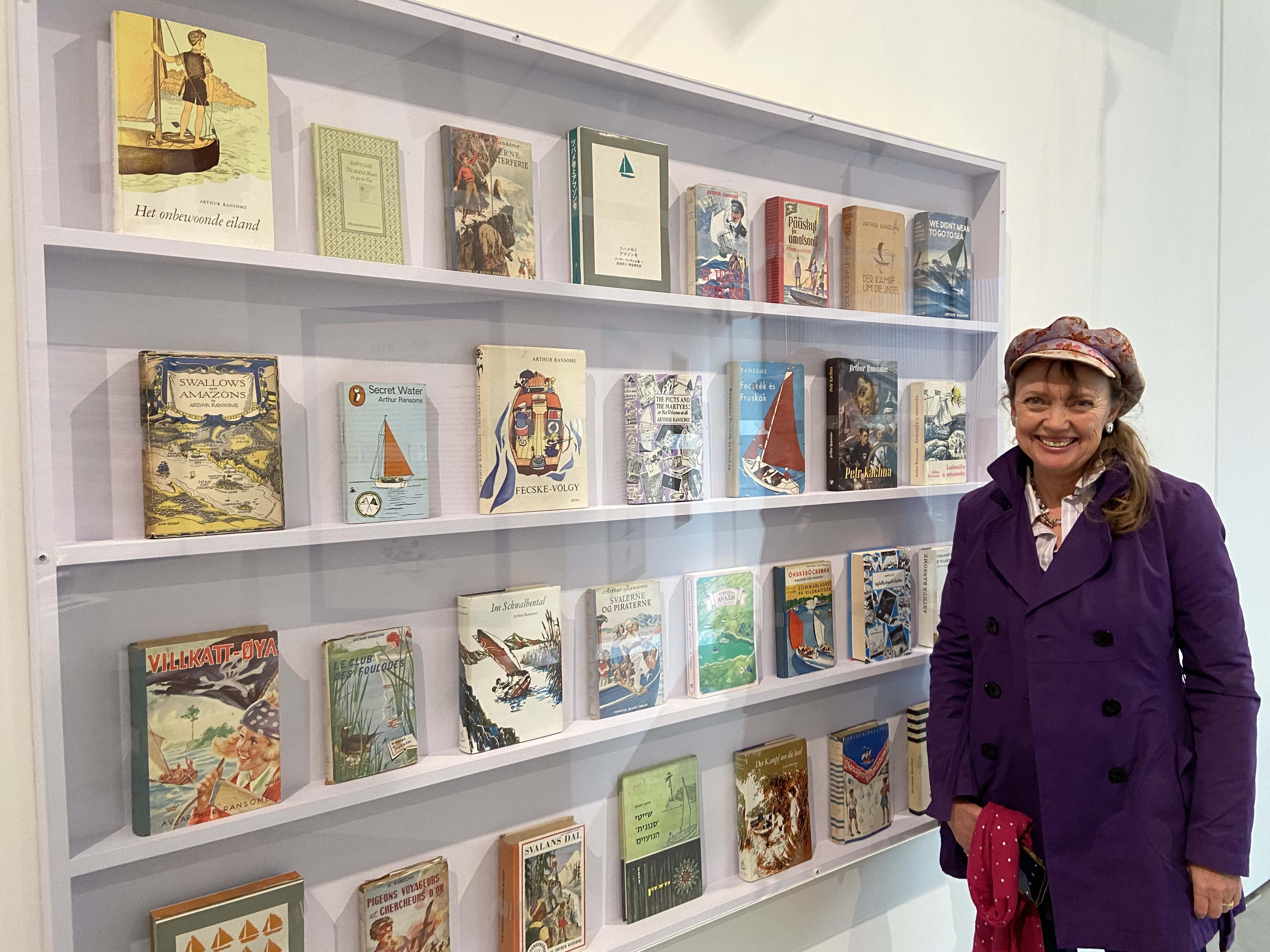
The first edition came out on 21st July 1930, with no illustrations apart from Spurrier’s map on the end papers. The illustrated hardback published by Jonathan Cape came out on 1st December 1930, in time for Christmas. It was followed by another eleven (and one unfinished) book in a series that was to be translated and published all over the world.
Sophie Neville with a collection of Arthur Ransome books on display
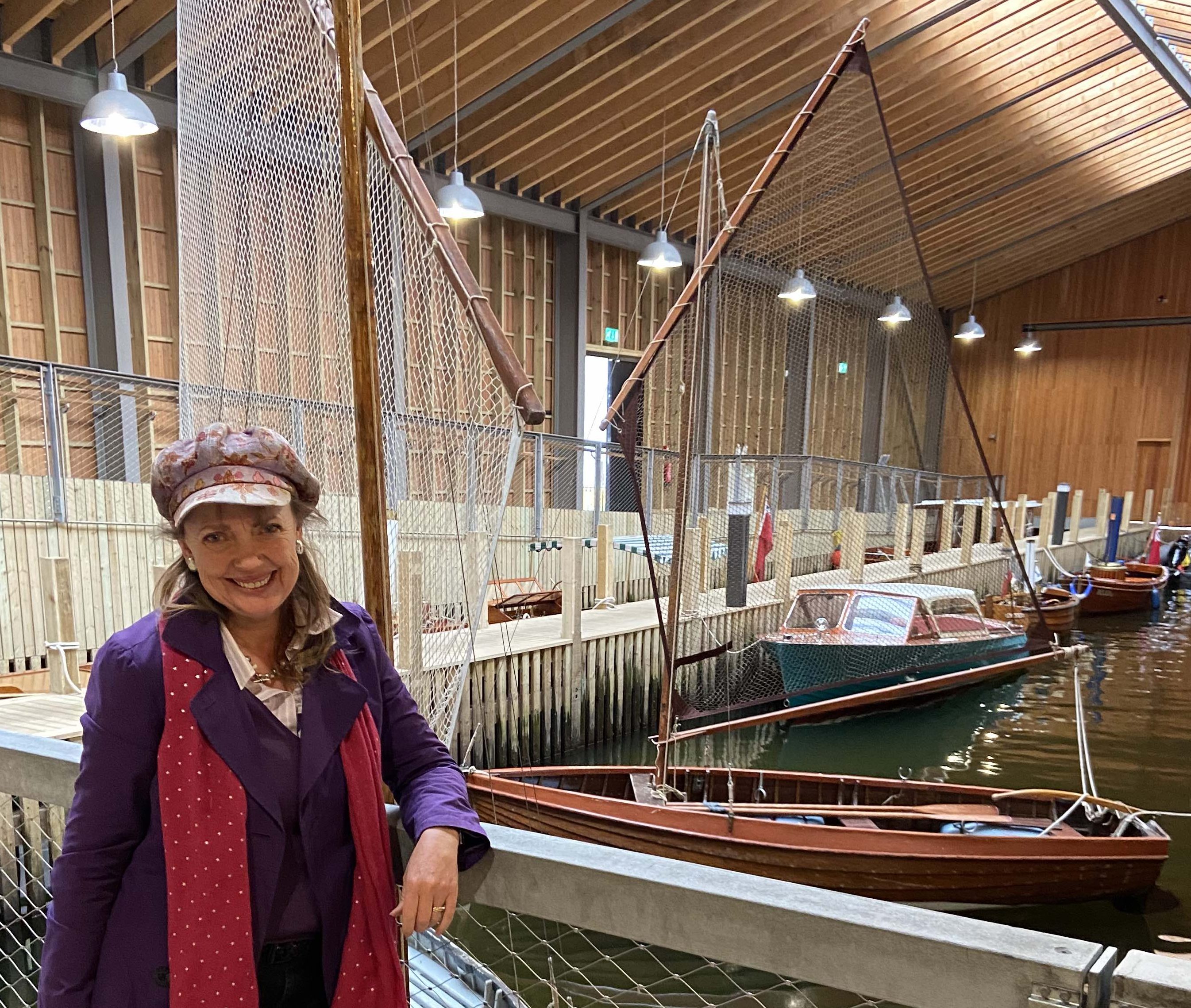
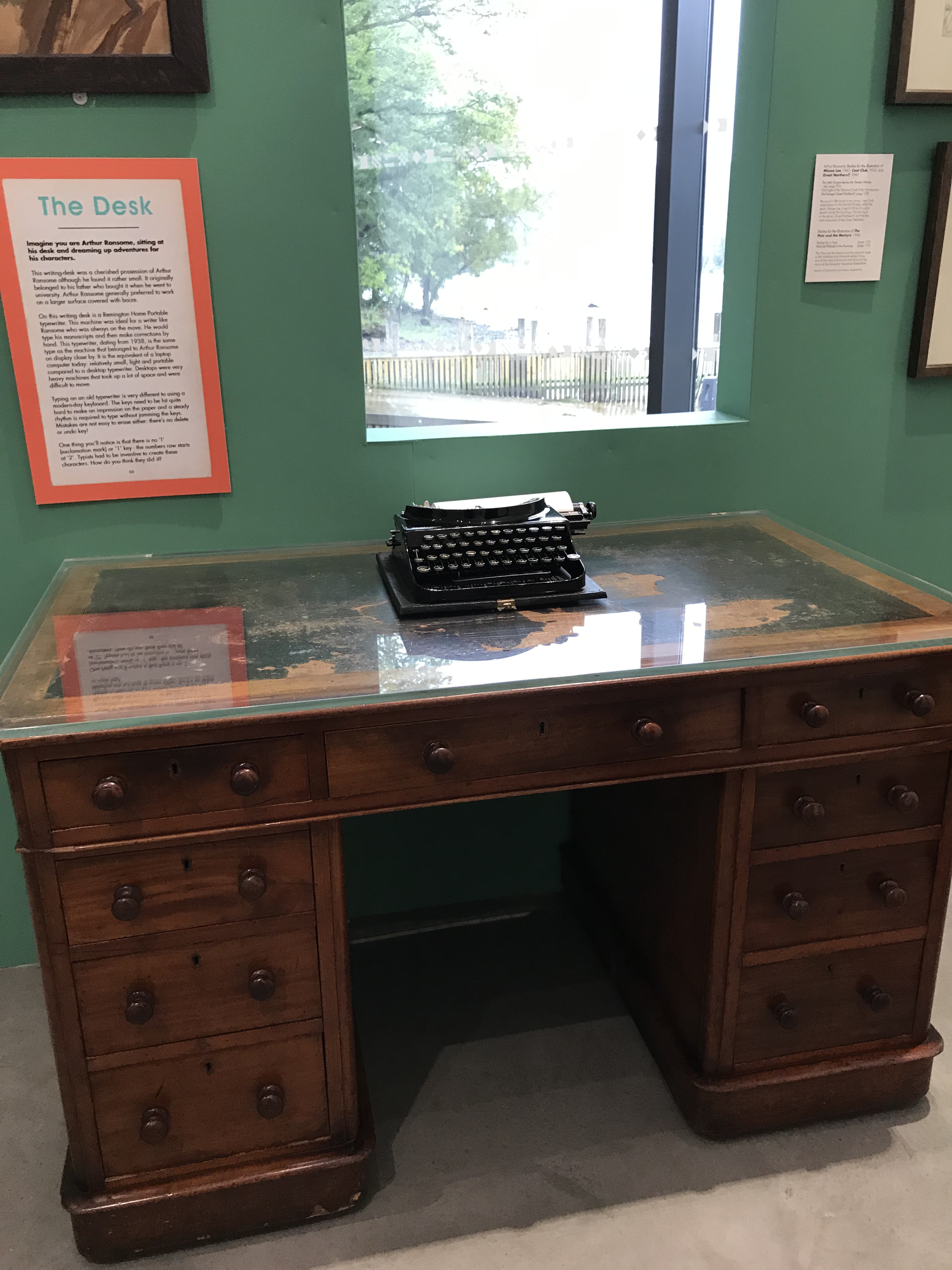
I paid homage to copies at the Windermere Jetty museum where you can find Arthur Ransome’s desk and typewriter on display with a view looking out over the lake.
Arthur Ransome’s desk and typewriter set under a view of Windermere
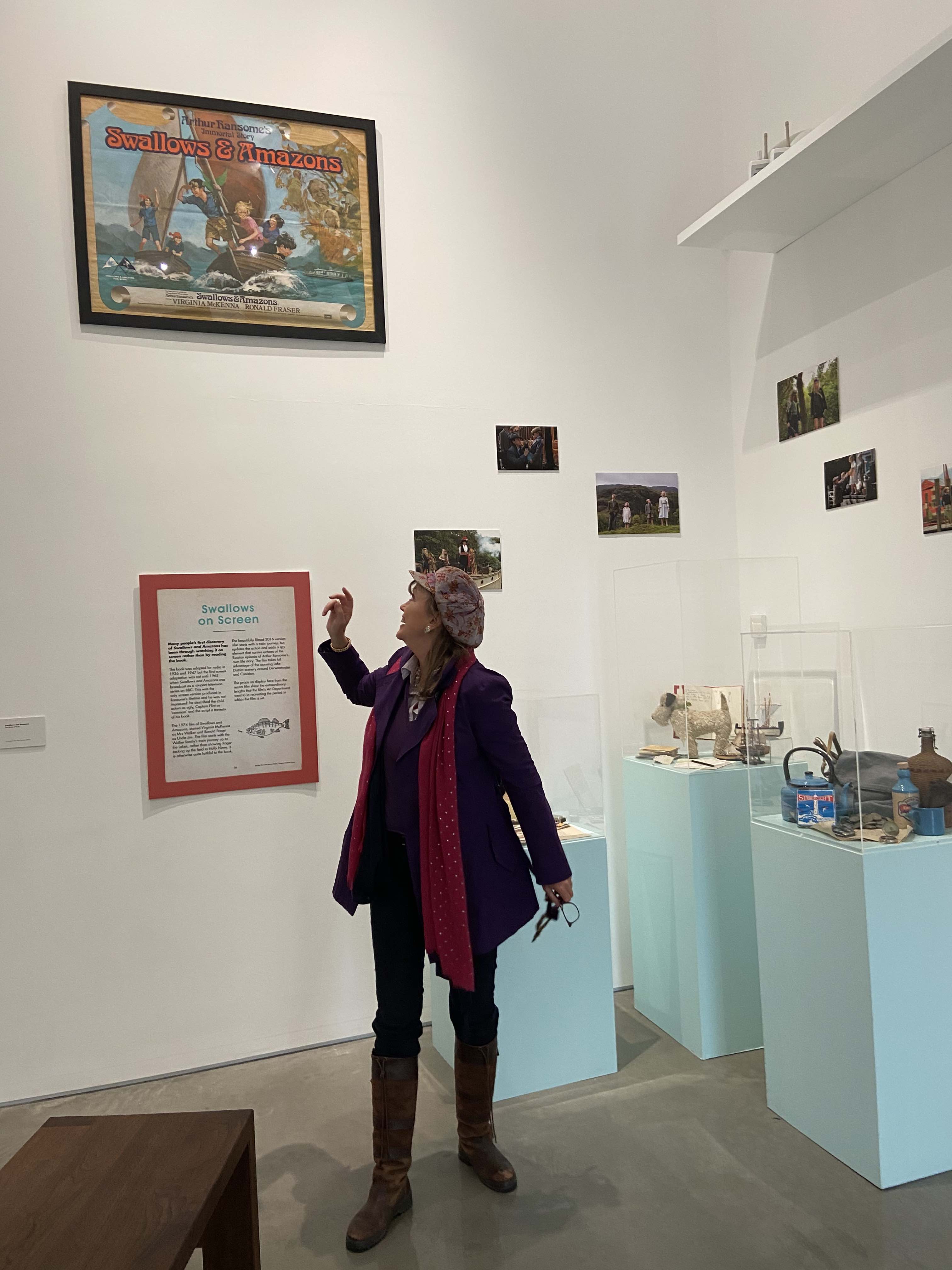
Boats, props and film stills from the 2016 film of ‘Swallows and Amazons’ are on display, along with a poster of the 1974 movie, depicting Titty in a pink blouse.
Sophie Neville spotting the ‘Swallows and Amazons'(1974) movie poster at Windermere Jetty museum
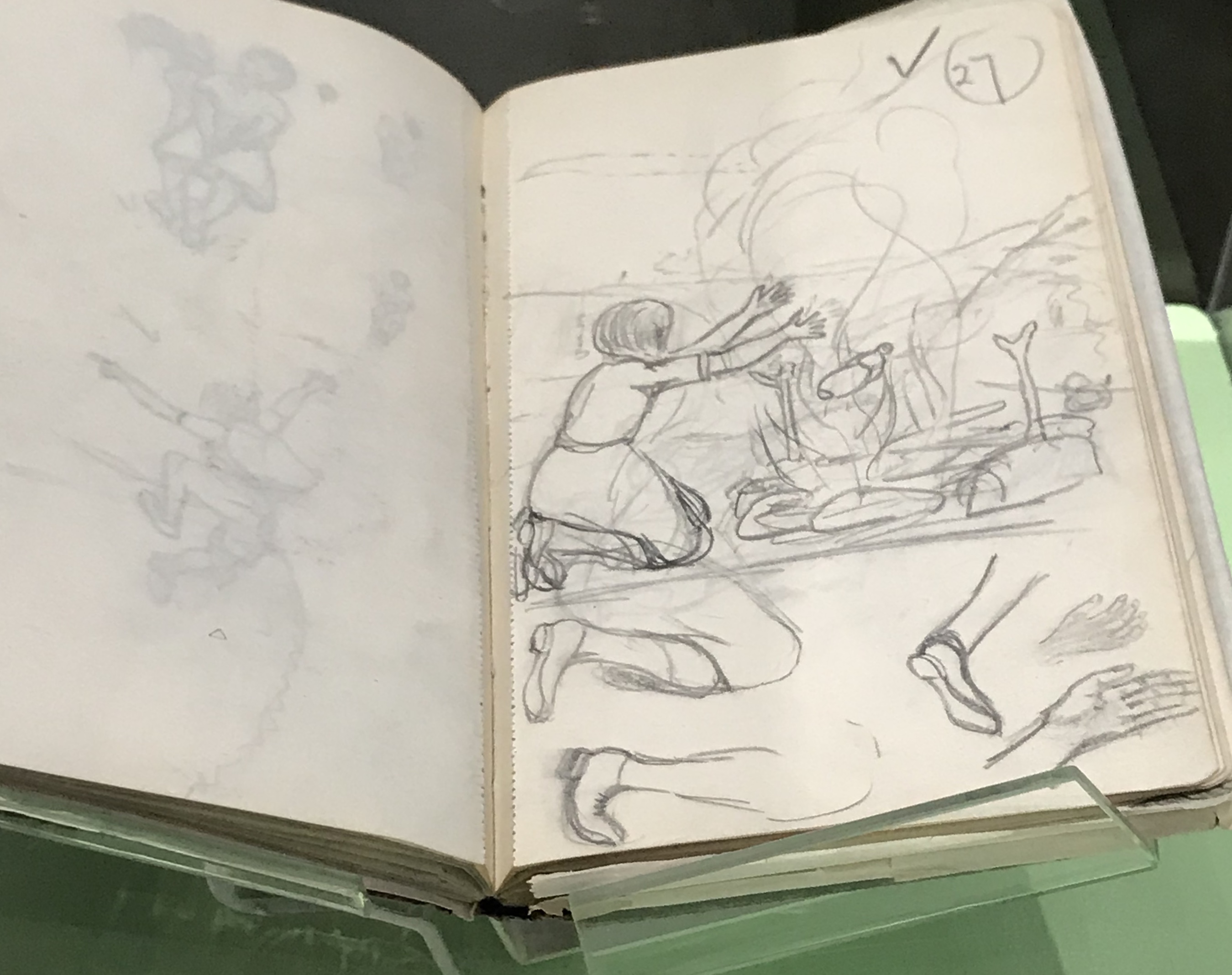
I was fascinated to find sketches of Titty in Arthur Ransome’s notebook.
Arthur Ransome’s original sketches of Titty
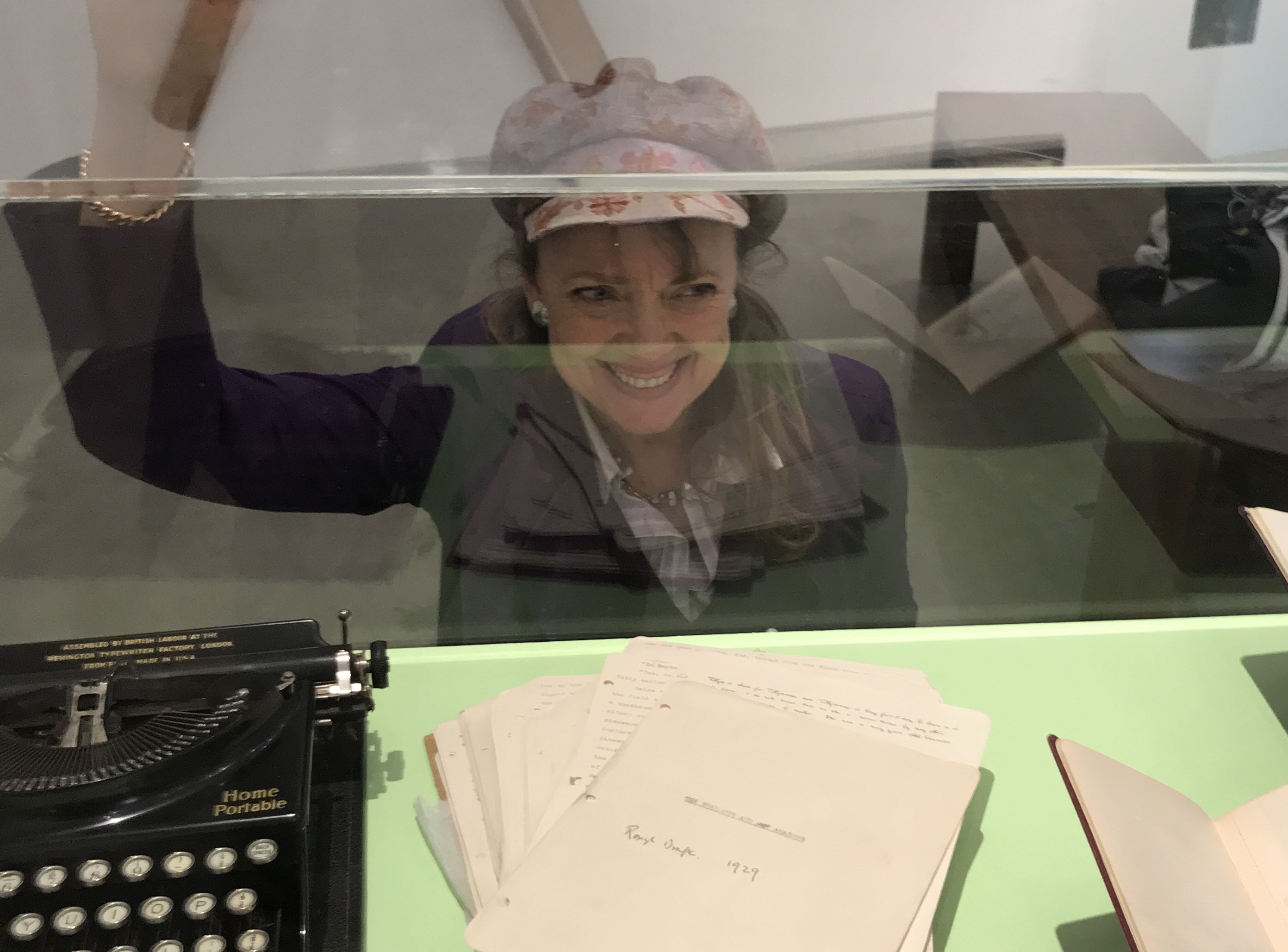
A number of Ransome’s original illustrations were on display and I came across the first draft of ‘Swallows and Amazons’ in a glass case.
Sophie Neville with Arthur Ransome’s typewriter and the original draft of ‘Swallows and Amazons’
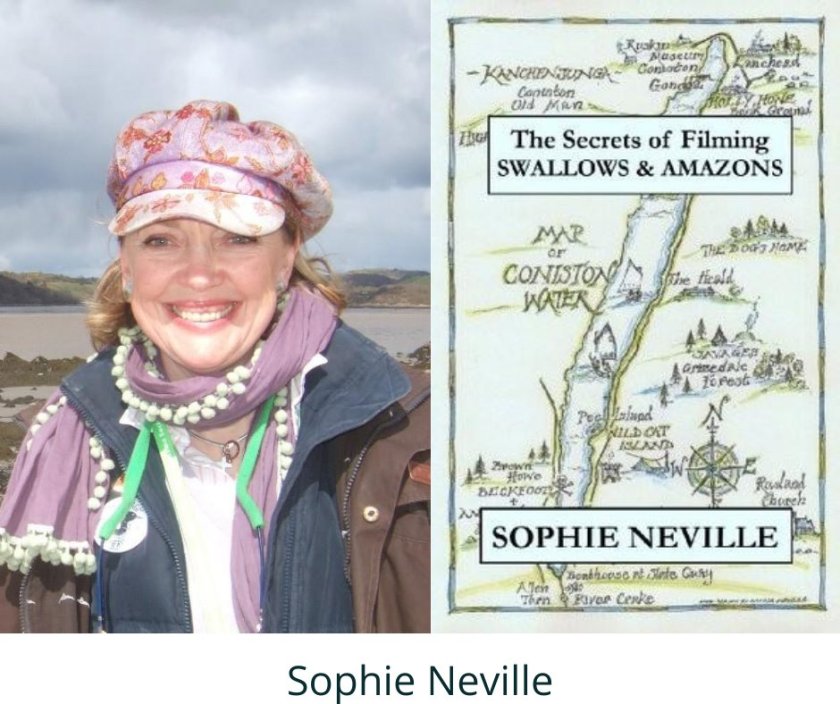
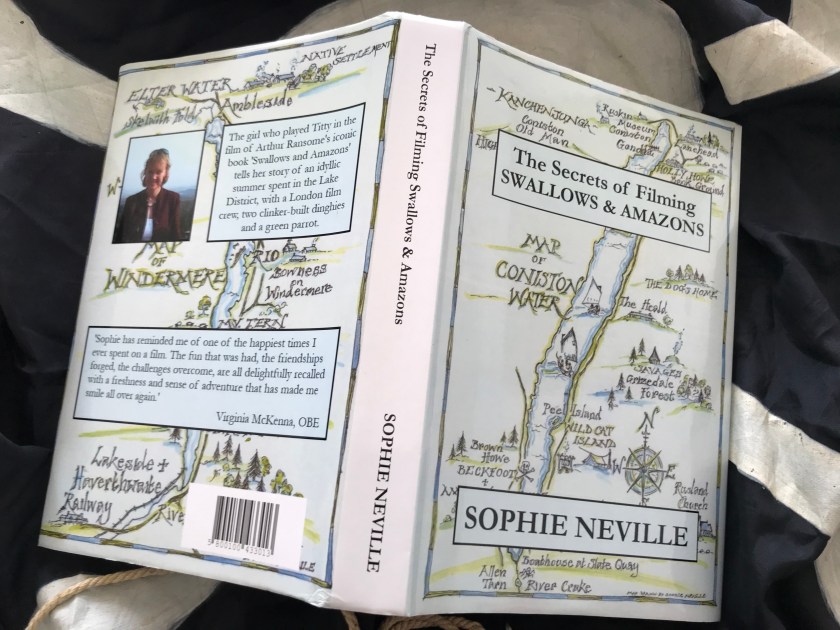
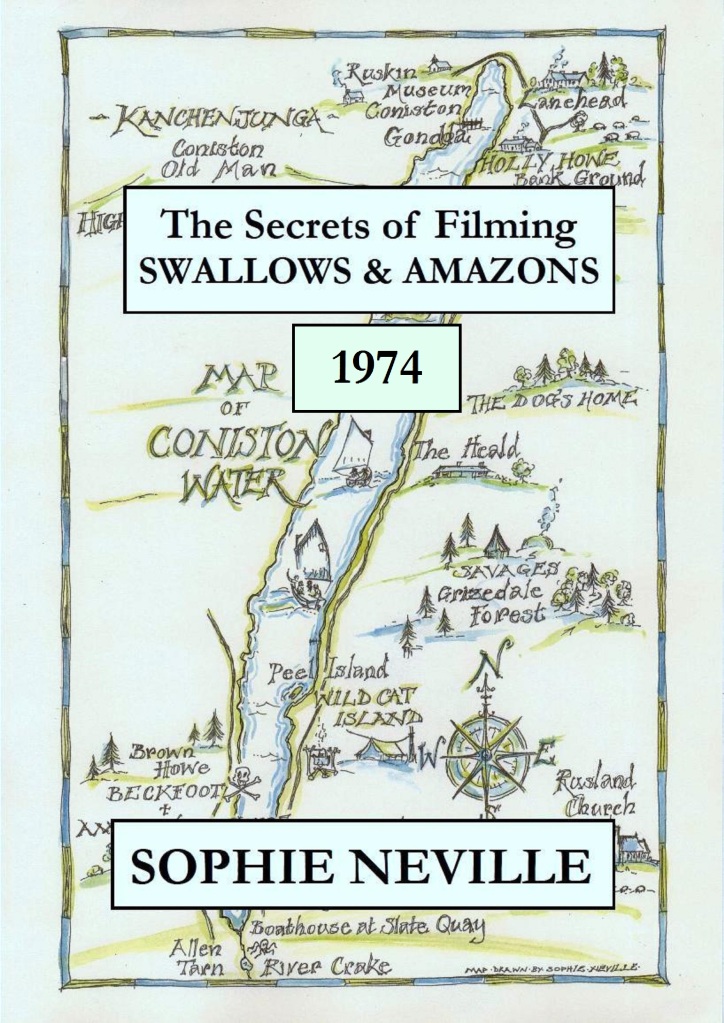
You can read about the making of ‘Swallows and Amazons’ (1974) in this illustrated book by Sophie Neville available online:
‘The Girl Who Got out of Zanzibar’ originally won a place on Eyelands’ Three Rock Writer’s Residency in Crete in September 2019, where Sophie worked on the first 20,000 words. It went on to win third prize in the Association of Christian Writers’ novel competition 2020, when the judge, Tony Collins, described it as: ‘a treat: full of atmosphere, detail, vivid characters, and a love for the island and its culture. I liked the fact that the narrator is a young black girl, which I find refreshing, and the relish with which the food was described is delightful. The underlying theme of FGM (and its place in a patriarchal society, the practice perpetuated by grandmothers) is a dark thread, well sustained, which both horrifies and compels.’
The sequel ‘The Man Who Got Out of Japan’ won the Eyelands Book Award for an unpublished historical novel in 2019. An awards ceremony in Athens is planned for April 2021.
Bidding mounted steadily for a hardback first edition copy of ‘The Secrets of Filming Swallows and Amazons (1974)’, signed by the author.
After 64 bids and it sold for £201
– I am quite blown away. Very many thanks to all our supporters –
100% of the money will be donated to BBC Children in Need – under the auspices of ‘Children in Read’ via the Jumblebee auction site where this illustrated book was listed under the categories of both ‘Autobiography’ and ‘Film & Television’.
To read a free sample of the first section of the 2nd edition – available as an ebook – click here – then click on ‘Look inside’.
To see more on the second edition of the ebook – click here
‘highly amusing and thoroughly enjoyable’ David Butters
Since the bidding ran so high, I will include a signed copy of the 2nd edition, entitled ‘The Making of Swallows and Amazons (1974)’, published by The Lutterworth Press. This contains colour plates with more photos and additional stories that flowed down from the Lake District after the first edition came out.
I’m also including a hardback First Edition of my memoir ‘Funnily Enough’, which has a few pages on ‘Swallows and Amazons’ and a signed copy of ‘Ride the Wings of Morning’, which has noting about the making of ‘Swallows and Amazons’ but is all about living out the adventurous outdoor lifestyle advocated by Arthur Ransome, so there are four books in the bundle.
Although surpassed by Phillip Pullman and JK Rowling, I gained far more than authors such as Bernard Cornwall, Jeffery Archer, Sophie Kinsella and Maggie O’Farrell.
Being a filmography, ‘The Secrets of Filming Swallows & Amazons’ sat alongside the bestsellers, ‘Killing Eve’ by Luke Jennings and ‘Kay’s Anatomy’ by Adam Kay, which you can see by clicking here.
This auction of books has already raised £21,841 for BBC Children in Need, which is fantastic. It closed on Friday 13th November at 11.00pm.
If you need to know more about the auction, please contact Paddy Heron at Children in Read: childreninread@yahoo.com
This is the 7th Authors’ & Illustrators’ Auction in support of the 2021 BBC Children in Need Appeal. Charity Ref: 802052
I was told the beach was free of litter. It took me ten minutes to fill my builder’s bucket with flotsam. Do people simply zone out sea plastic and litter?
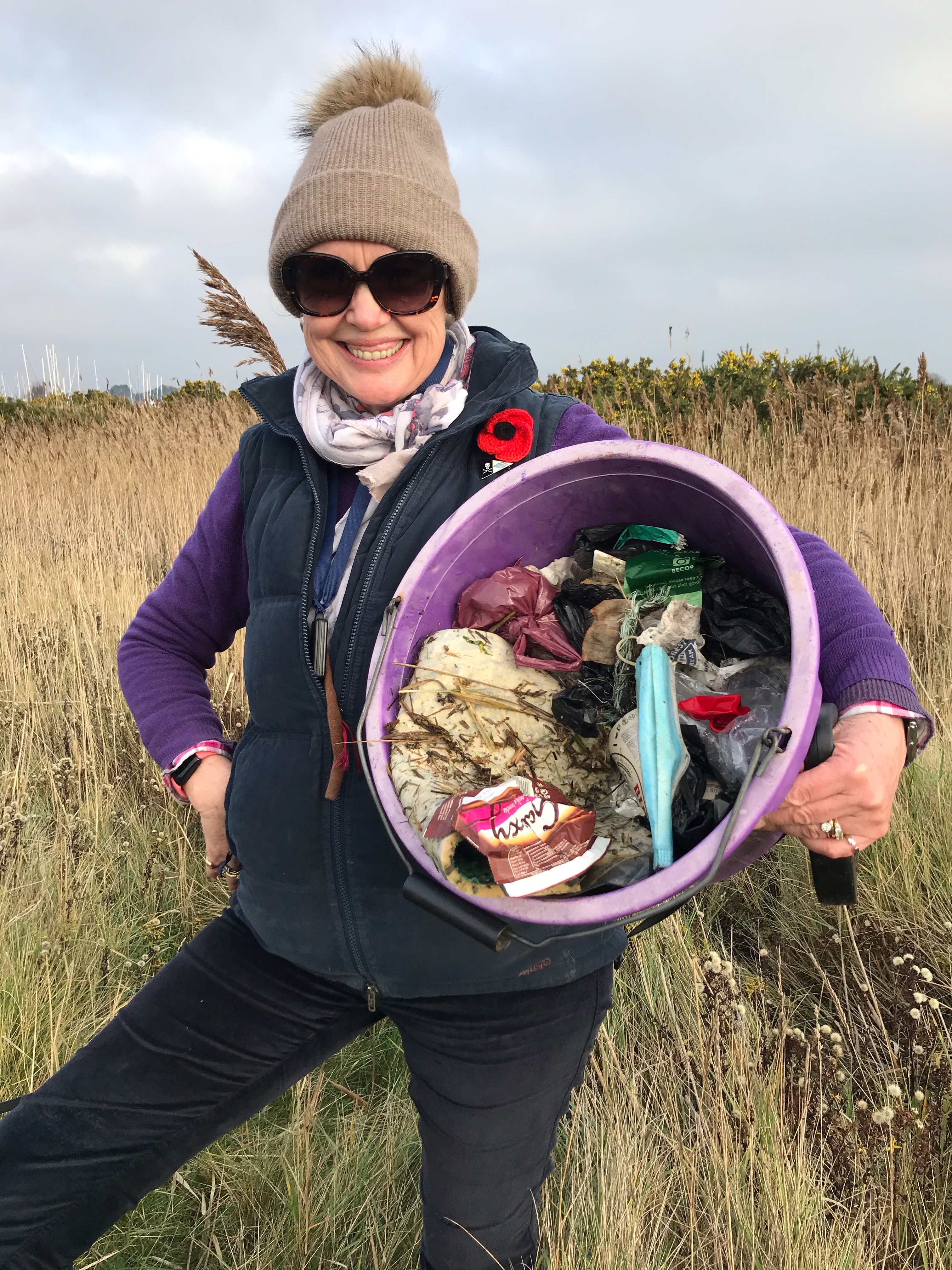
Some was old, but how long have PPE masks like this been floating around the Solent? I found two, along with the usual plastic bottles. It is interesting to count and categorise what you find. The Marine Conservation Society list: litter, sewage and fishing gear but the reality can be hundreds of small pieces known collectively as micro-plastics.
Picnic litter is inexcusable. With well-designed bins near the gate to the beach there is no excuse for this. Although some plastics, such as the straws and bottle-tops, have floated in on the tide, I found a neatly folded crisp packet tucked into the sea wall. Why?
Cotton bud stalks and plastic tampon applicators classify as ‘sewage’ since they are flushed down the loo – with things too revolting to photograph – and yet this is where our children play.
Fishing line makes up the majority of plastic pollution in the seas. We found an angler’s hook and line as well as commercial netting and floats. The fishhook, lying on the float, caught on my own finger.
We tried digging out one section of PVC rope but failed and had to bury it.
The reward for our work was finding a killer whale, a toy orca.
Since ‘Baby Shark’ has been popular in our family, this made our spirits soar, coming almost as a thank you from the sea.
We returned two days later to find half a bucketful of assorted detritus had either come in on the tide or been missed in earlier searches. Spotting a toy soldier amused me this time. I’ve found a couple of others further along the Solent coastline within the New Forest National Park.
For a list of really weird things found on previous beach cleans, click here
One thing is certain. I can no longer walk along the shore without collecting as much plastic pollution as I can carry. It always proves fun and gives us a sense of purpose higher than ourselves.
The Great British Beach Clean is being organized by Keep Britain Tidy. What does this entail?
For me, the reality means extracting litter posted into prickly blackthorn bushes by those too lazy to take their party rubbish home. It’s usually made up of beer bottles and nitrous oxide canisters, which will never decompose.
I pull on a pair of gloves, grab bucket and barbecue tongs and just get on with picking up the litter. It is, however good to analyse what is found and report findings on social media.
There is so little wave action on Solent shores that broken glass remains a problem for years, endangering paddling children, beloved dogs and wildlife.
On top of this we now have PPE, endless cans and paper cups that have been in people’s mouths, along with clothing and stolen items.
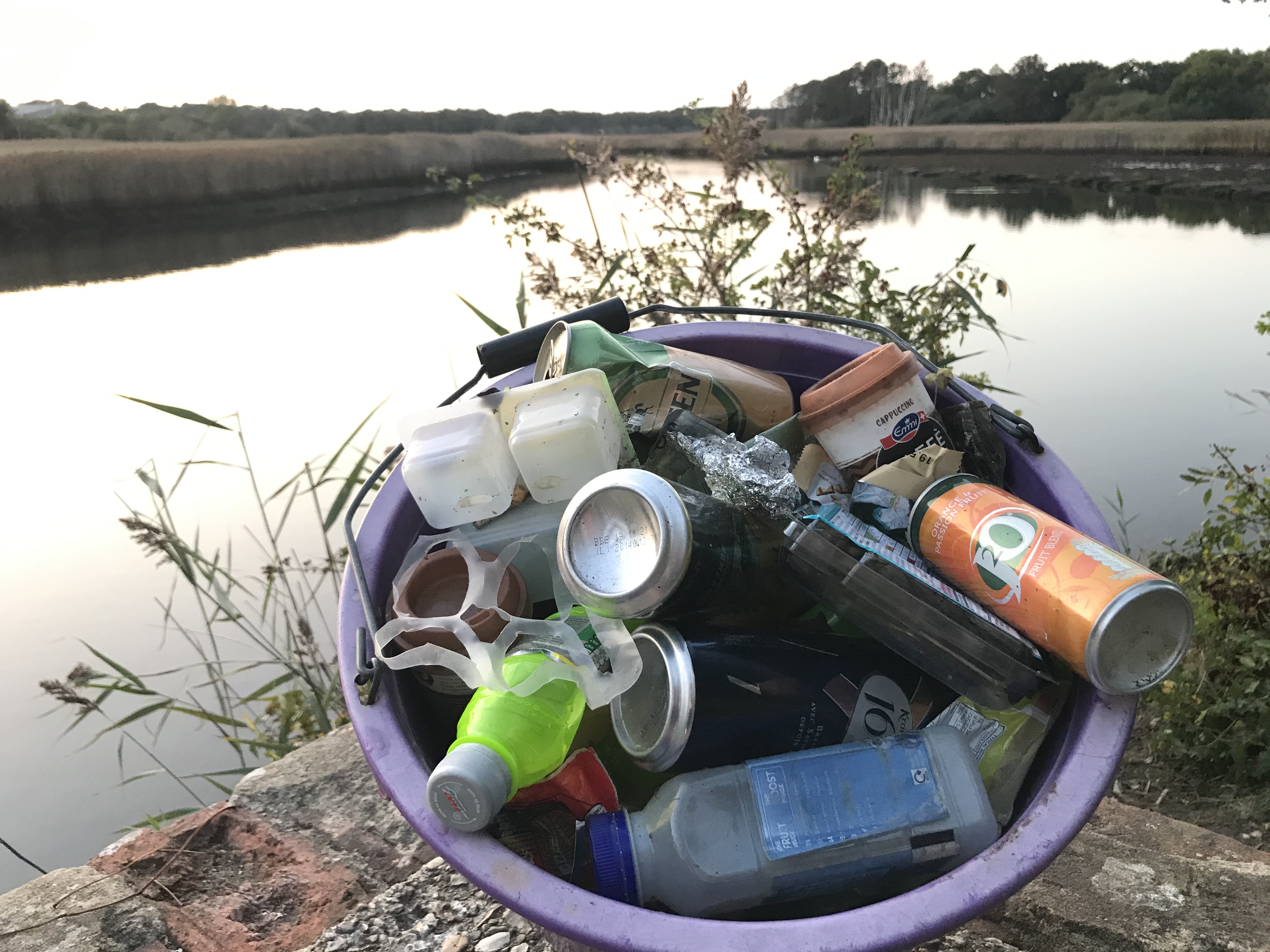
I use a heavy duty bucket, rather than a black plastic bag, so I can cope with broken glass. It can end up containing 260 pieces and weighing more than 6kgs when full. Needing an extra bag is rarely a problem – I find so many.
I go out with friends and family making it fun. Teenagers always have a lot to say about the hazards of #plasticpollution especially when it has travelled a fair distance. Plymouth is 150 miles from the Solent.
The aim is to remove rubbish from sensitive coastal or riverine areas before it can damage the environment.
There are often old lighters, always micro plastics and bottle tops. It is the tiny pieces that take time to collect but small children are good at this.
I go out daily, finding helium ballons, more PPE and endless plastic bottles.
I use tongs and avoid touching the rubbish, even with gloves. It’s cleaner on the shore, since almost everything has been soaking in seawater. Most of this (above) was flotsam. Collecting up litter that others should have taken home (below) is more aggravating but it is makes a huge difference and is a job that has to be done before the wildlife suffers.
Do think of registering with Keep Britain Tidy who offer advice and your local litter-picking group who will have equipment and dates for group activities.
Hoping to see you on the sea shore sometime. If you’d like to see a full list of the things I found in the past, please click here.
For photos of some of the weirdest things I’ve found, click here
‘Swallows & Amazons'(1974) starring Virginia McKenna was broadcast on BBC Two, recalling the adventures of the Walker and Blackett families on a ‘Lake in the North’ in August 1929 before the school term began. Once hailed as ‘The feel-good film of Lockdown’, it transports us back to a time of freedom, celebrating the beauty of the English Lake District. It was available on BBC iPlayer here and is currently streaming on Amazon Prime where you can watch the trailer.
You can watch a short re-mix here:
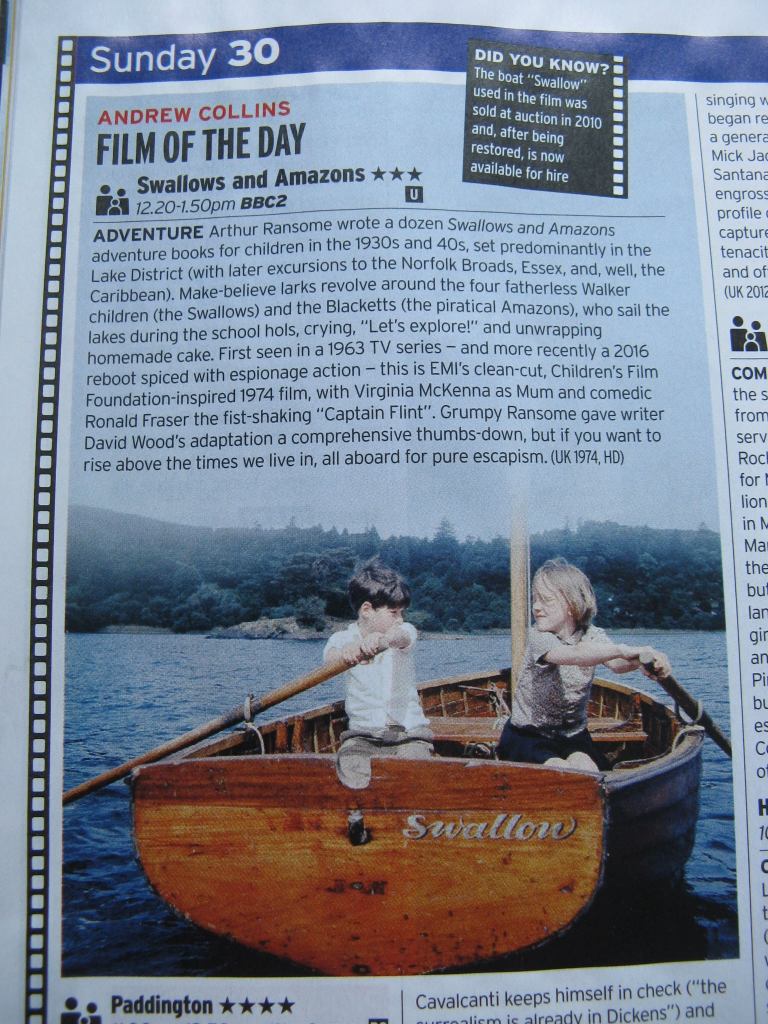
It was wonderful to see the feature film heralded as ‘Film of the Day’ but Hilary Weston of The Arthur Ransome Society pointed out that there are a few errors in the write up.
Arthur Ransome wrote the novel ‘Swallows and Amazons’ in 1929. The first illustrated hardback was published by Jonathan Cape on 1st December 1930. There are twelve books in the series, however only five are set in the Lake District. ‘Missee Lee’ sees the Swallows and Amazons exploring the South China sea with Captain Flint, while Dick and Dororthea join them all on the Sea Bear to cruise the Otter Hebrides in ‘Great Northern?’. The 13th story in the series, an unfinished manuscript entitled ‘Coots in the North’, is set in Cumbria.
Props used in the original film ‘Swallows & Amazons’ (1974)
Arthur Ransome died in 1967, aged 83, so was not around to see this feature film made. He had been grumpy about the 1963 BBC serial made in black and white, which starred Susan George as ‘Kitty’ (rather than Titty).
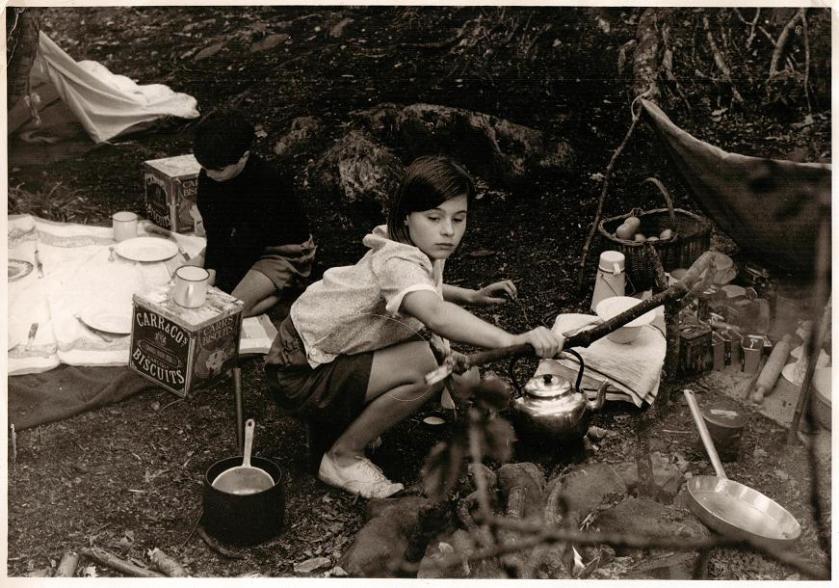
After he died, his Russian wife Evgenia was determined to avoid what they called a ‘Disneyfication’ of the books and kept a tight hold on the script, character names, locations and casting of Richard Pilbrow’s 1974 adaptation. As a result, David Wood’s screenplay adheres to the story and was approved by Mrs Ransome who gave the go ahead. On watching the finished film, her only adverse comment was that one of the kettles used was of the wrong period.
Suzanna Hamilton playing Susan Walker with Sten Grendon as Roger
Arthur Ransome’s father died when he was thirteen and the theme of fatherlessness flows though his books granting the young characters independence. In ‘Swallows and Amazons’ it is Nancy and Peggy, the Amazon pirates, who have no father.
Kit Seymour as Nancy & Lesley Bennett as Peggy Blackett sailing Amazon
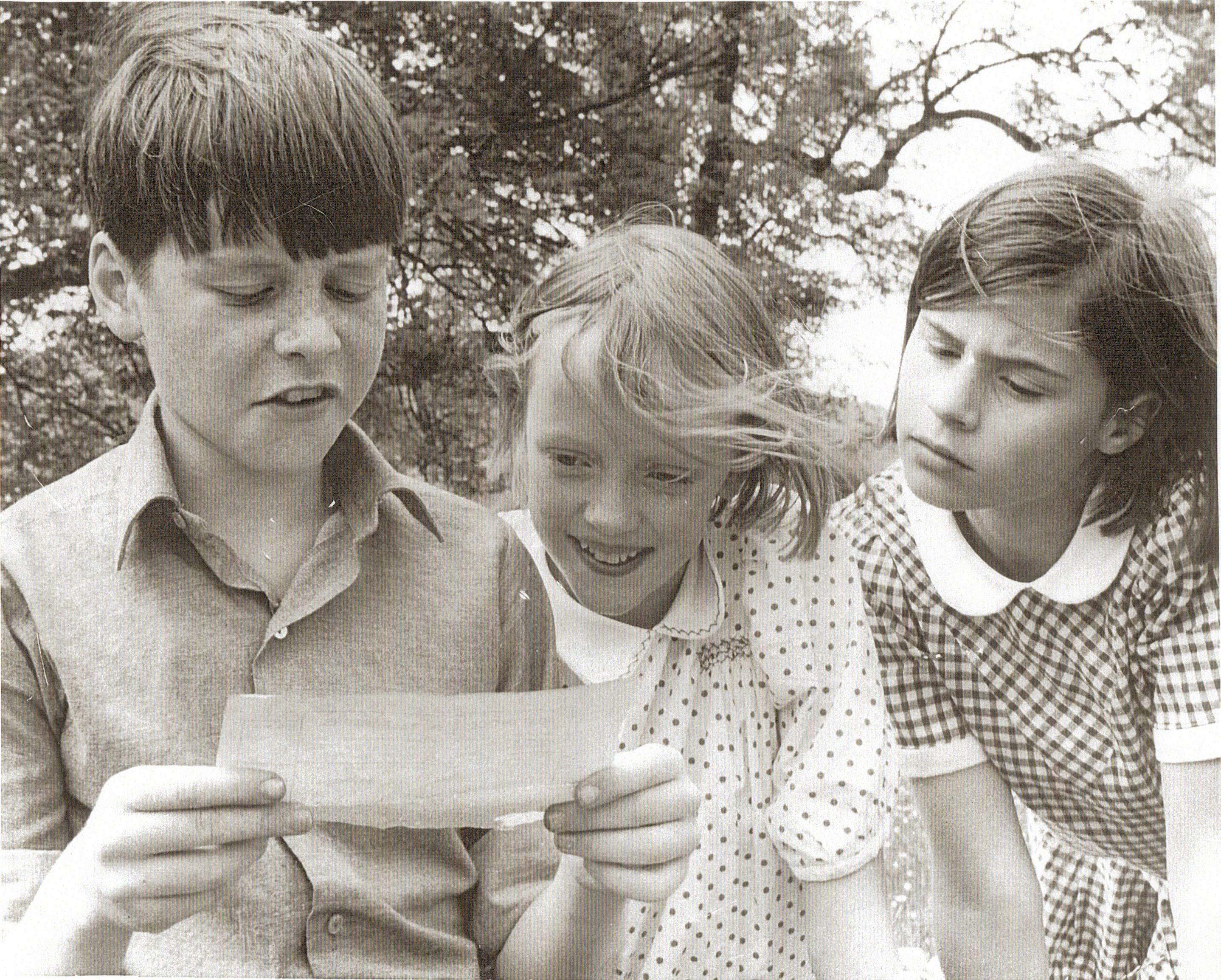
The story opens when the four elder Walker children are given permission to sail off to camp on an island by their father who is absent, in Malta with the Navy, and sends the famous telegram: BETTER DROWNED THAN DUFFERS IF NOT DUFFERS WONT DROWN (with no apostrophe).
Simon West, Sophie Neville and Suzanna Hamilton – receiving the telegram
Vicky, the fifth sibling and baby of the Walker family, keeps the Swallows’ mother at Holly Howe farm on the mainland. Tension is created after the Amazons let off a firework on their uncle’s houseboat while he is absorbed in his writing and ignoring them. He shook his fist at the crew of the Swallow assuming they were responsible for the damage and was labelled ‘Captain Flint’.
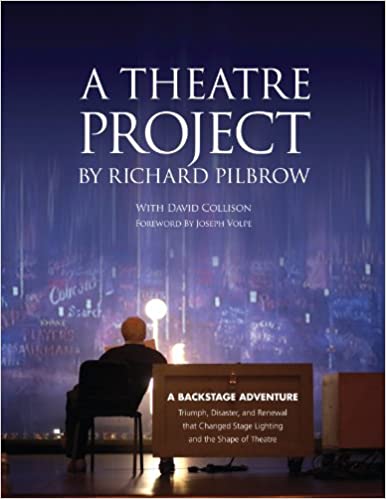
In his memoir, ‘A Theatre Project’, Richard Pilbrow describes how the idea of adapting ‘Swallows and Amazons’ came to him as he watched the sun set over Windermere one night when visiting the Lake District. He put the idea to Nat Cohen of EMI who was looking for a classic book adaptation similar to ‘The Railway Children’, which had been a box office success. Nat Cohen hadn’t heard of Arthur Ransome but his assistant loved his books and raved about the idea. EMI Films provided the initial budget of £250,000 although more was spent. The movie was directed by Claude Whatham who may well have been influenced by the Children’s Film Foundation but he was regarded as avant guard at the time and, like Richard, motivated by the beauty of the Lakes.
Producer Richard Pilbrow with Director Claude Whatham in Secret Harbour on Peel Island, Coniston Water
The original poster for the film used an ampersand in the title graphics but this was lost as it was translated, sold worldwide and remastered.
Someone who must love the old film claimed the error in the write up was that it was only given three stars. The DVD now has a 4.5 star rating on Amazon but it only gets 6.5 out of 10 on IMDb – the International Movie Data base, which is equivalent to three stars. You can add a review on this site here.
Original 1974 poster
Norweigian poster
Mark Walker of the Arthur Ransome Group added: And they got the title of the article completely wrong. “Film of the *Day*”, indeed..!! Film of the Year, Decade, Century, Millenium….any of the above could have been more appropriate..!!
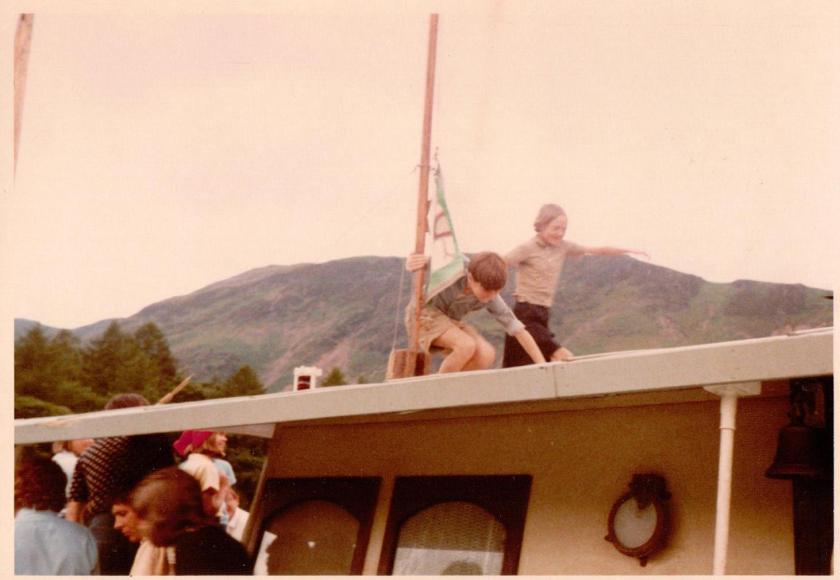
Simon West, Suzanna Hamilton and Sophie Neville in Swallow about to leave the Houseboat. Amazon’s white sail can be seen the other side ~ photo: Daphe Neville
Viewers of the original film ‘Swallows and Amazons'(1974) have written to point out that when the Amazons sailed up to Captain Flint’s houseboat there was a terrible crash. I found the quote from ‘The Picts and The Martrys’, which made me realise why this horrified anyone who knows the characters well:
“…when you come sailing along and fetch up with a bump against Jim’s new paint.”
“We never do,” said Nancy. “Remember when we came and made you and Uncle Jim walk the plank last summer? We were aboard and rushing the cabin before you knew we were anywhere near.” ‘Picts and Martyrs’ by Arthur Ransome p.14
Simon West as Captain John and Sophie Neville as Titty taking Captain Flint’s Houseboat : photo~ Daphne Neville
Jane Sullivan noticed Captain Flint yelled, “Death or Glory!” as the Swallows and Amazons laid siege to his houseboat. ‘Is that a pre-echo of the East Anglian stories?’ she asked.
Jane also noted: ‘In the closing credits, I notice they spell For Ever as two words, which it is as it should be, rather than the modern way which confuses the adjective “forever” with the adverbial phrase “for ever”.’
Peel Island whilst we were filming in 1973 ~ photo: Martin Neville
Most people are familiar with the fact that Peel Island was used as the location for Wild Cat Island in the 1974 film.
Peter Dowden of the Arthur Ransome Group, pointed out that Peel Island is a classic example of a rocher moutonnee or sheepback, shaped by glacial erosion. Larger examples in Sweden are known as flyggbergs. Others comment that it’s easy to imagine the island as Captain Flint’s schooner the Wild Cat, which sails to the Caribees in ‘Peter Duck’ and is set on fire by Gibber the monkey in ‘Missee Lee’.
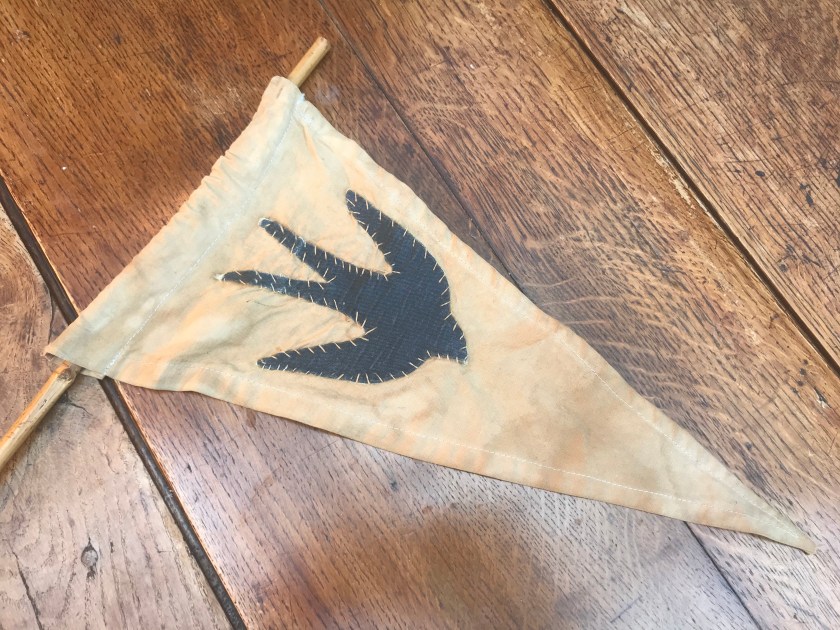
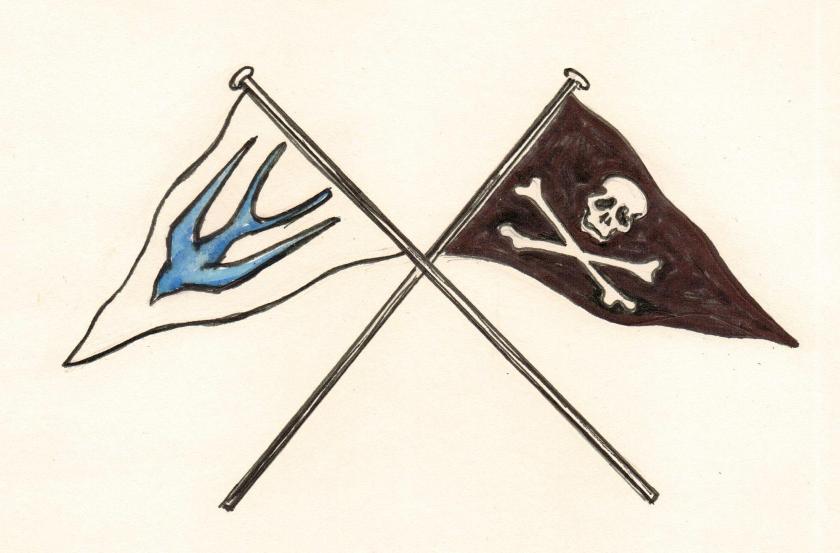
Peter also wrote about burgees. He noted, ‘Traditionally, creatures shown on flags face towards the “hoist” – the bit of the flag that is attached to the mast. So head near the mast and tail near the flappy part of the flag (called the ‘fly’). He went on to say, “someone did the research and Arthur Ransome drew the Swallow flag both beak to hoist and beak to fly!”
Our art director, Simon Holland, made what I considered the mistake of having the swallow on Swallow’s burgee flying away from the mast.
My publisher asked me to draw our crossed flags, a sketch which was later stolen and used all over the place from the call sheet of the 2016 movie to badges for sale on eBay.
Paul Thomas, of the Arthur Ransome Group, explained that Swallow and Amazon are standing lugsail dinghies, rather the balanced lugsails as I had been told. “Swallow’s keel was designed for sailing in shallow estuaries and grounding on shifting shoals with sails tanned to protect them from rot and sunshine.”
“What is particularly impressive, to me,” Roger Barnes, president of the Dinghy Crusing Association, commented, “is how well done the sailing scenes are, and sometimes in pretty strong winds. Most sailing in films is really unconvincing.” Roger added: “The boom jaws off the mast as they first approach Wild Cat Island is the only major flaw with that aspect of the film.” I had never noticed! We were bitterly cold on that day when we first sailed Swallow in front of the camera.
Roger Barnes’ illustrated book, The Dinghy Cruising Companion, published by Bloomsbury, included my behind-the-scenes photo of Swallow, where you can see the jaw back in place.
You can also see the jaws in this film still (c) Studiocanal:
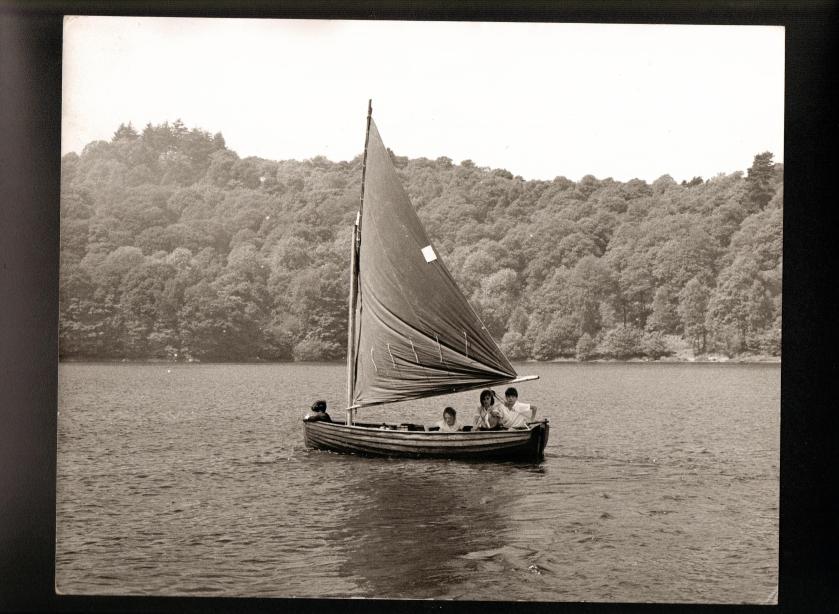
Sten Grendon, Sophie Neville, Suzanna Hamilton and Simon West as the Swallows sailing on Coniston Water in 1973 (c)StudioCanal
Please do add a comment below or write in with any points you notice that I can add to a third edition of ‘The Secrets of Filming Swallows and Amazons’, an ebook available from a variety online stockists. You can look at the first pages here.






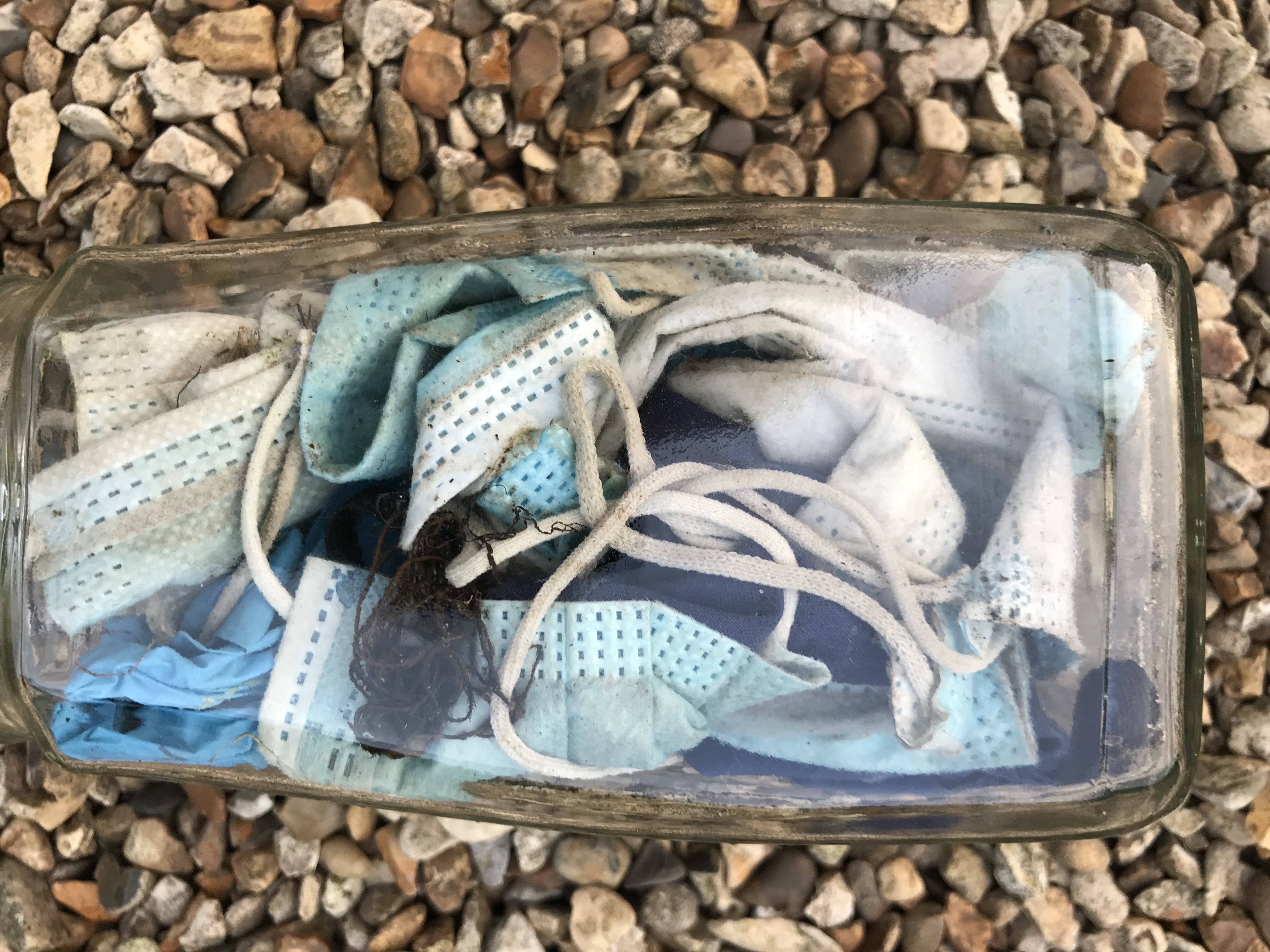












 Some was old, but how long have PPE masks like this been floating around the Solent? I found two, along with the usual plastic bottles. It is interesting to count and categorise what you find. The Marine Conservation Society list: litter, sewage and fishing gear but the reality can be hundreds of small pieces known collectively as micro-plastics.


 The Great British Beach Clean is being organized by Keep Britain Tidy. What does this entail?










 Sophie Neville