
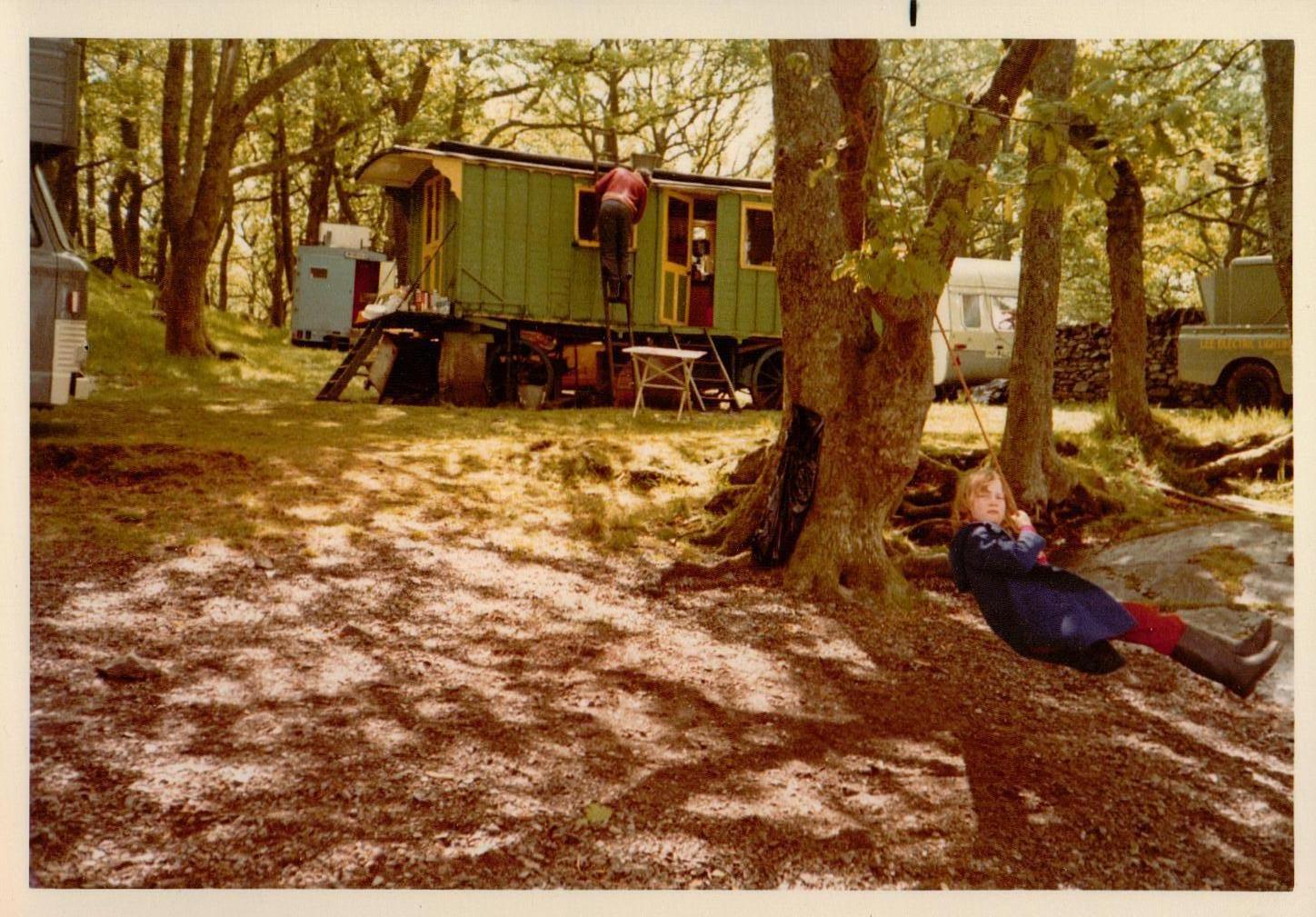
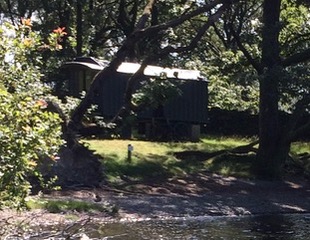
Readers often ask me about the green wooden caravan parked in the woodland opposite Peel Island where our unit vehicles were based when we made the original film of ‘Swallows and Amazons’ in the early 1970s.
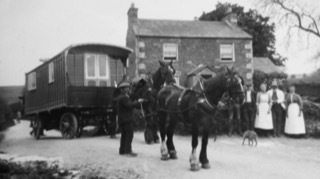
It is actually a postal surveyor’s van bought in Halifax by the Smithson family in 1913 and pulled by two horses to Coniston Water. John Smithson, now in his nineties, provided this photo:
Once it was in Coniston, John’s niece’s family the Bowmans, and his friend Charles Rothwell joined the venture, but the caravan was eventually left with Charles Rothwell’s descendants. It has been maintained, visited and used for holidays by members of his family ever since. They turned up during the May half-term whilst we were filming in 1973.
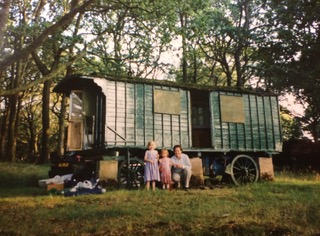
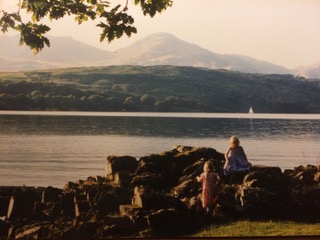
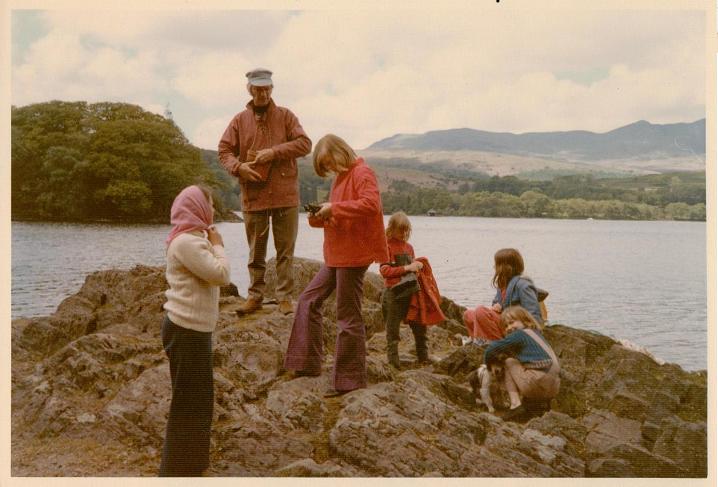
“I was one of those ‘gypsies’, aged 9 at the time,” writes Sarah Bennet. “We were about as surprised to see you as you were to see us – I remember driving into the field and unexpectedly there was a red double decker bus in front of us! I also remember playing with your younger sisters on the promontory rock by the jetty whilst filming was going on.”
My father was given a short-back-and-sides haircut outside the caravan so he could appear in the film that was set in 1929 when Ransome wrote the book. You can see different angles of of the wooden exterior here after shots of the film crew our on the lake:
The green caravan is currently cherished and used by the 5th generation of Charles Rothwell’s family. “Unfortunately, the National Trust (‘landlords’ since 1932, long after the Caravan was placed in the field) have now given notice of terminating our licence to be there. If we cannot successfully challenge this, we will have to ‘remove’ the Caravan by January 31st 2025. Since the wheels rotted long ago, and it is resting on breeze blocks, this actually means its complete destruction.”

Since the wooden caravan has been positioned on the banks of Coniston Water for more than one hundred years, it must have been known to Arthur Ransome when he wrote Swallows and Amazons in 1929. “It is right opposite Peel Island and was then brightly painted in red and gold.” The trees would have been young at the time. “So he must have seen it, and it must have been part of the vision for his books.” It is still used for the sort of adventure holidays that he promoted – camping, boating, camp-fire cooking, exploring the woods and hills.
Could members of The Arthur Ransome Society and those who love heritage features of the area appeal to the National Trust and ask for the licence to be extended?
Sarah is happy to be contacted at sarah.bennet2@btinternet.com
The date 1913 is corroborated by a note from Agnes, Charles Smithson’s niece. She spent a holiday at the caravan as a child in 1913 and mentions sleeping in red felt tents ‘on mattresses filled with bracken’ saying that that the caravan was originally painted green, yellow and purple. In 1928, Agnes married George Bowman. She said that by then the caravan was in a bad state but that “G. mended it all up marvellously”, so it might have been repainted then.









 Some was old, but how long have PPE masks like this been floating around the Solent? I found two, along with the usual plastic bottles. It is interesting to count and categorise what you find. The Marine Conservation Society list: litter, sewage and fishing gear but the reality can be hundreds of small pieces known collectively as micro-plastics.




















 Sophie Neville