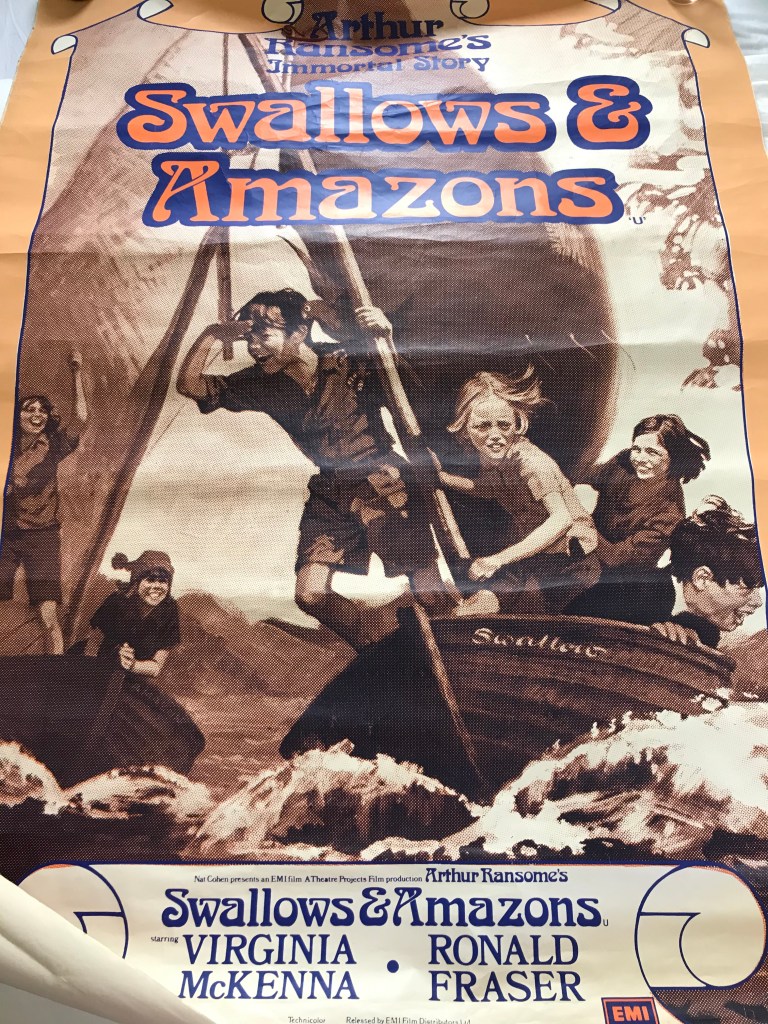
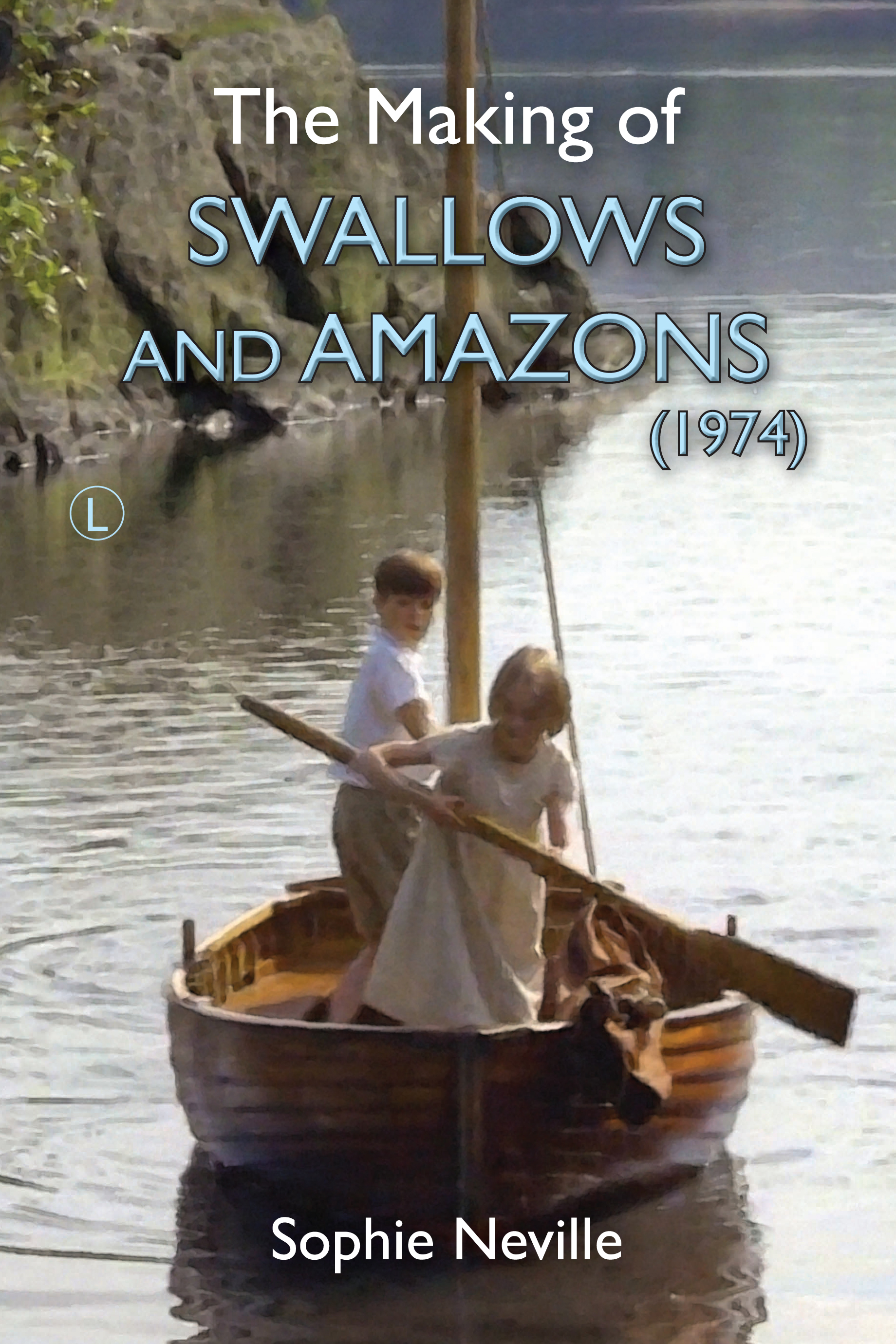
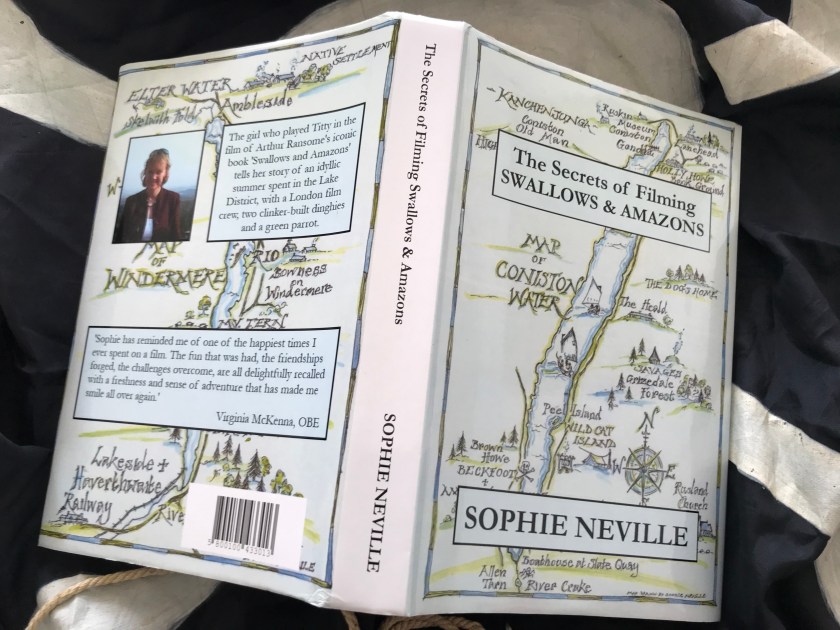
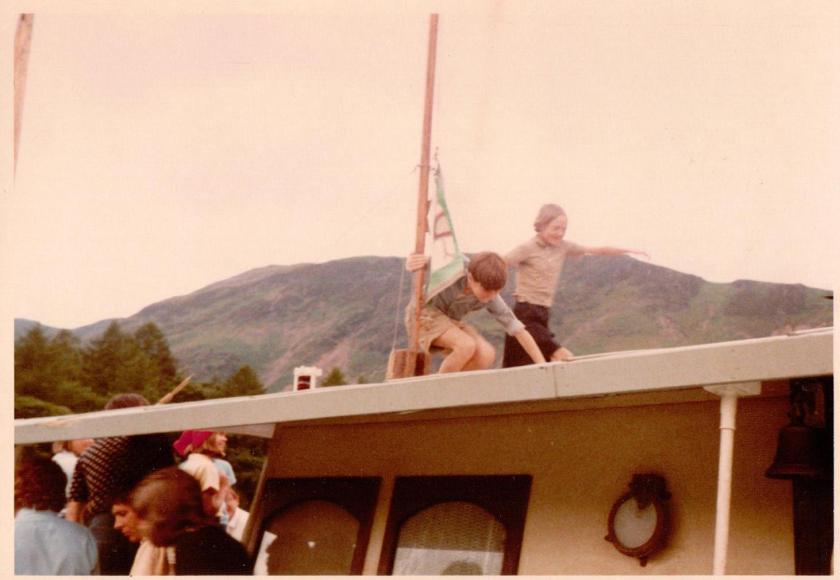
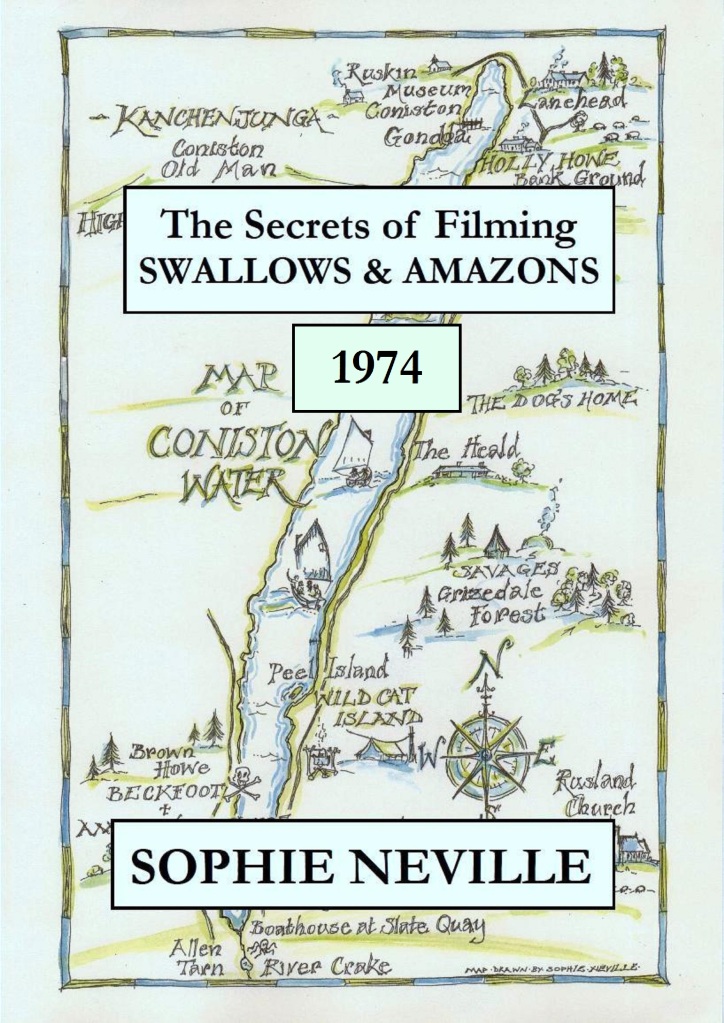
Quotes for the 3rd edition of ‘The Secrets of Filming Swallows and Amazons (1974)’

Movies are made for watching. In the end, they belong to those who love them and it is wonderful to hear of the impact they have had on people’s lives.

The screenwriter Caleb Ranson wrote: “You’ve no idea how thrilling this is for me to hear from you. Swallows & Amazons was a life changing cinema visit for me, set me off on my path writing/producing TV/films. I played the soundtrack album every night for years. And I love your book BTW, bought it when it first came out.”

Paddy Heron of Children in Read describes the movie Swallows and Amazons(1974) as “a national treasure of a film.”

Nigel Seymour wrote to say, “that the original film has an ambience which cannot be calculated.  It sits in time, yet it is as fresh as if it was made yesterday!” An international musician today, Nigel believes, “It possesses a simplicity of life we’ve lost, so watching it is a refreshing reminder of great days… a journey into another dimension and another world steeped with love and belonging, adventure and moral understanding, which is shared between a family and accepted. The characters are brought to life almost as if they are an infinite, integral part of the immortality of the story, each giving that picturesque understanding the viewer finds impossible to explain. After watching this film one arrives back in real time with a resounding bang! We wonder why such a simple story can create such an iconic understanding. Why watching this film can make you feel happy, totally complete and yearning to return again and savour that wonderful, eternal landscape we have all learned to grow  and love as the Lakes.”

Tracy Kenny from Ketts Books wrote: “Swallows and Amazons is a firm family favourite in our house and for a while there, your movie was the only film my eldest would watch!”

The author Catherine Randall said: “I lived and breathed Swallow & Amazons including your film. Knew nearly all the words!”

The fan letters continue to arrive. Each one treasured.

Nigel Young writes: “‘Swallows and Amazons’ is one of those films which sets itself  in that timeless space no one can quite fathom or understand, almost verging on ‘Immortality’.  I’m sure no one at the time working on it ever thought the film would achieve the cult status it seems to enjoy today. You are possibly smiling when you read this, but it’s a true reflection of a film, which is more than a film and touches on those beautiful innocent moments and times which have been lost forever.”

Charles H Ball wrote: “‘Swallows and Amazons’ was instrumental in helping me through a very stressful period of my life… I will be obtaining ‘The making of Swallows and Amazons’ and no doubt many more of your other publications in due course. “

C.H.B. left a review of ‘The Secrets of Filming Swallows and Amazons’ writing: ‘the feelings of anybody who would have loved to have had the opportunity of actually taking part in the film are summed up by Nancy Blackett when the D’s are explaining how they managed to get to the North Pole a day earlier than planned. ‘And you two came by yourselves and got here through that blizzard?’ said Nancy. ‘However did you find the Pole?’ ‘The blizzard helped really,’ said Dorothea. ‘We were sailing,’ said Dick………..’And we’ve gone and opened the stores,’ said Dorothea. ‘And eaten some of them. You see we lost our food when the sledge turned over and the mast broke…’ ‘Capsized!’ cried Nancy. ‘Mast gone by the board! Oh. you lucky, lucky beasts!’ Some of us will forever envy the lucky children who had the opportunity of a lifetime.

I hope to include all these quotes in the 3rd edition of ‘The Secrets of Filming Swallows and Amazons’, to be brought out for the 50th Anniversary of the films release in April 2024. Do leave a comment below or write in, letting us know what the film meant to you or how it effected your life.

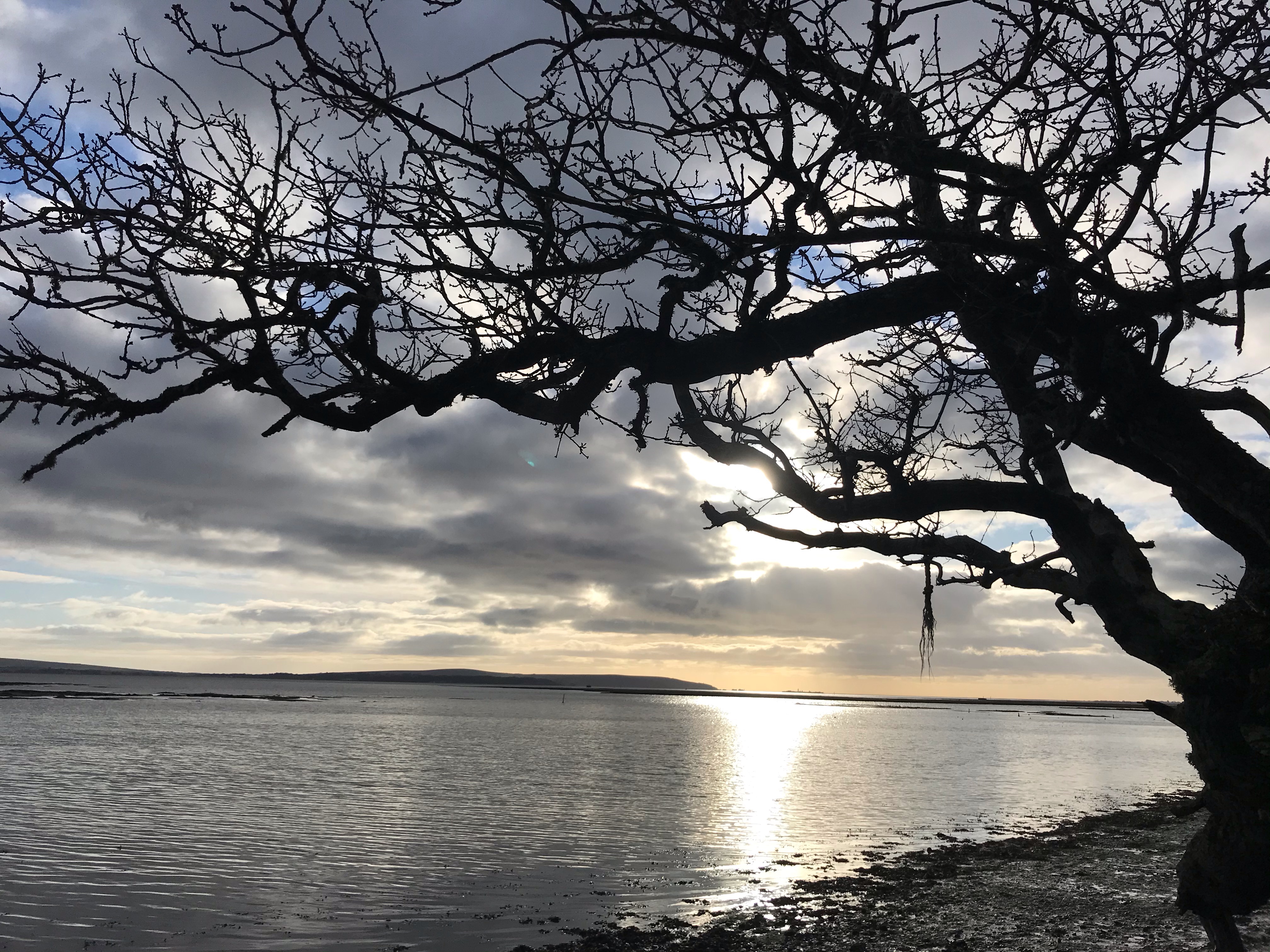
Diary of a Beachcomber on Solent shores where I’m told, ‘There is no rubbish.’

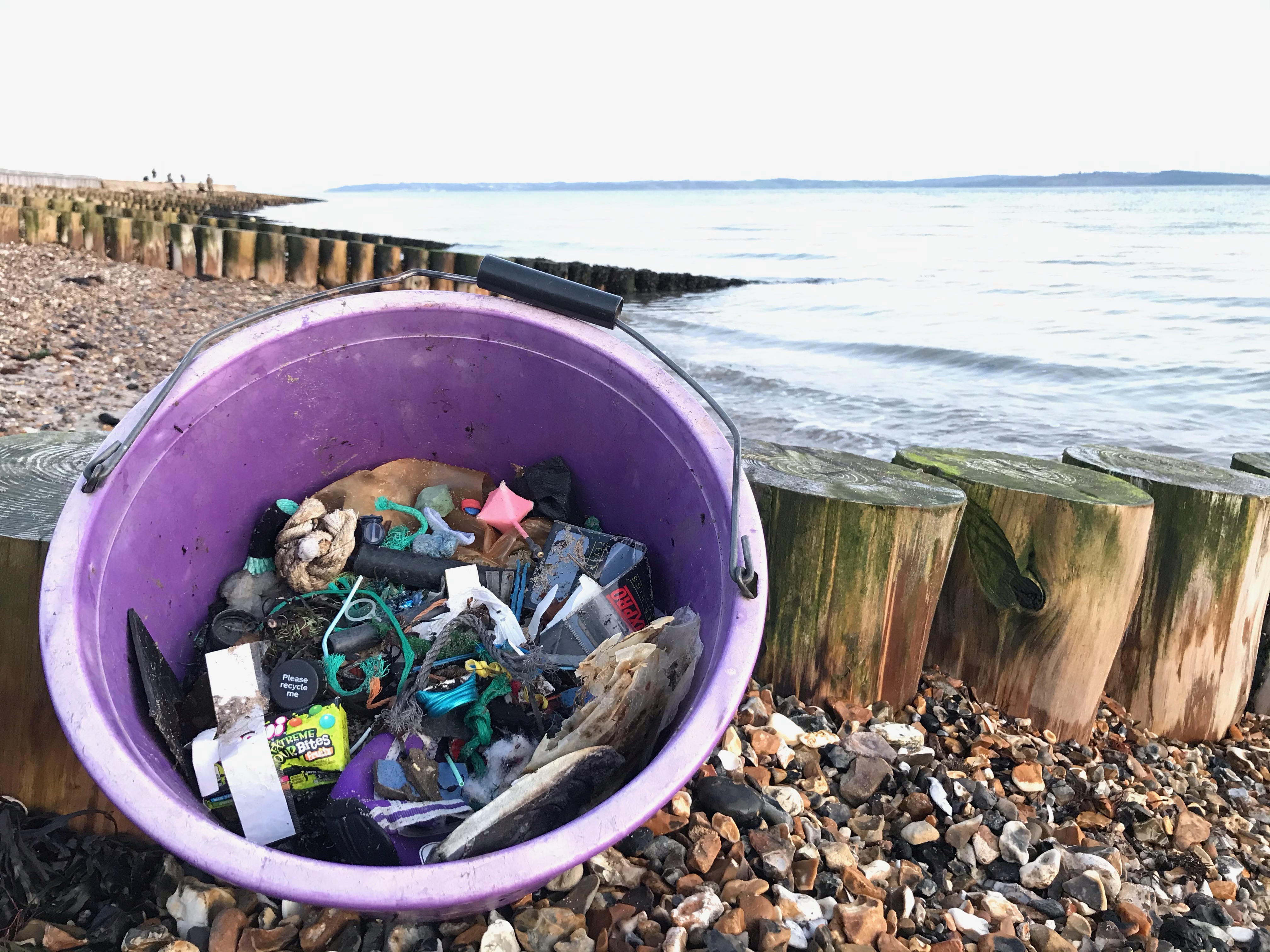
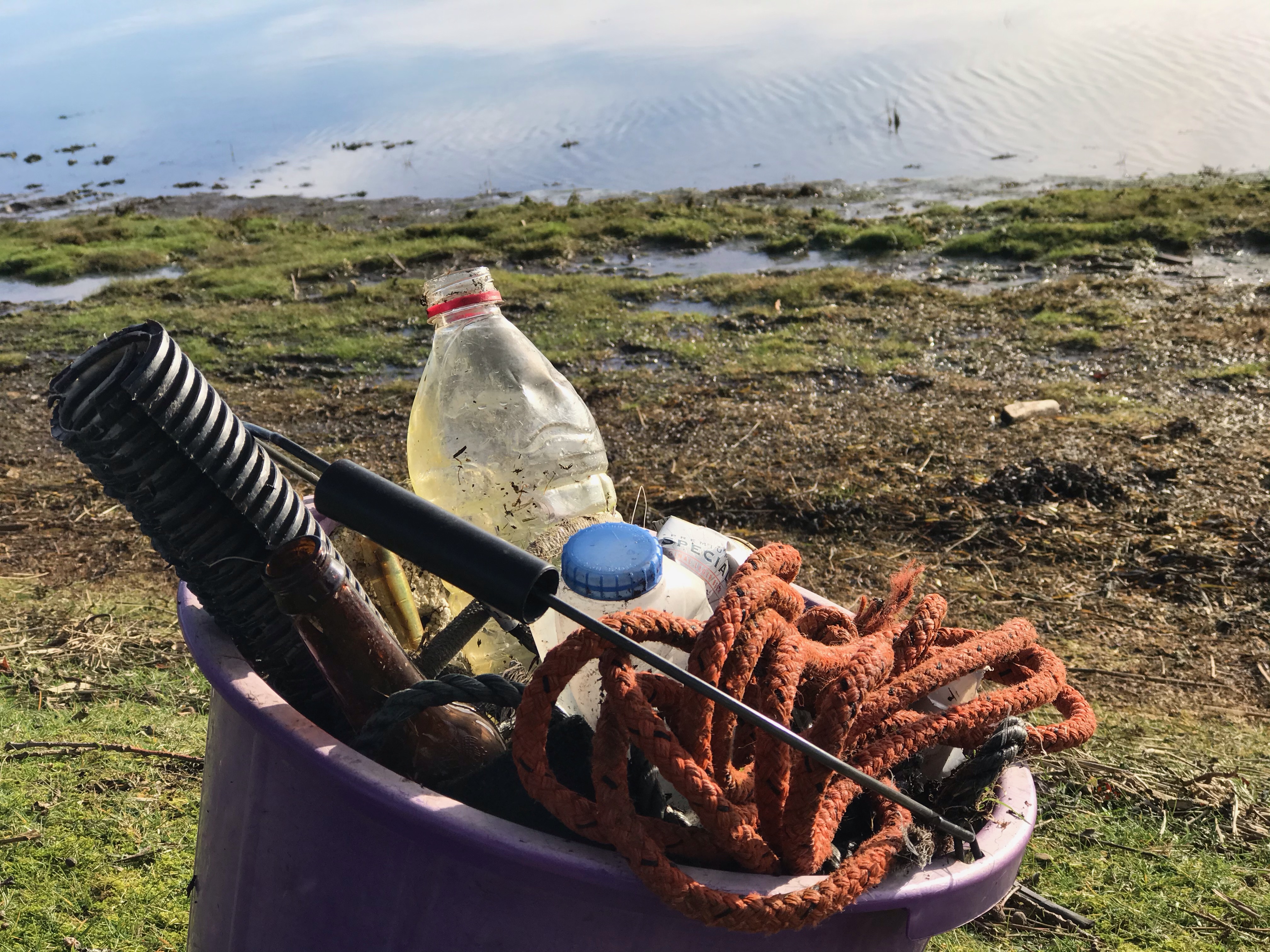
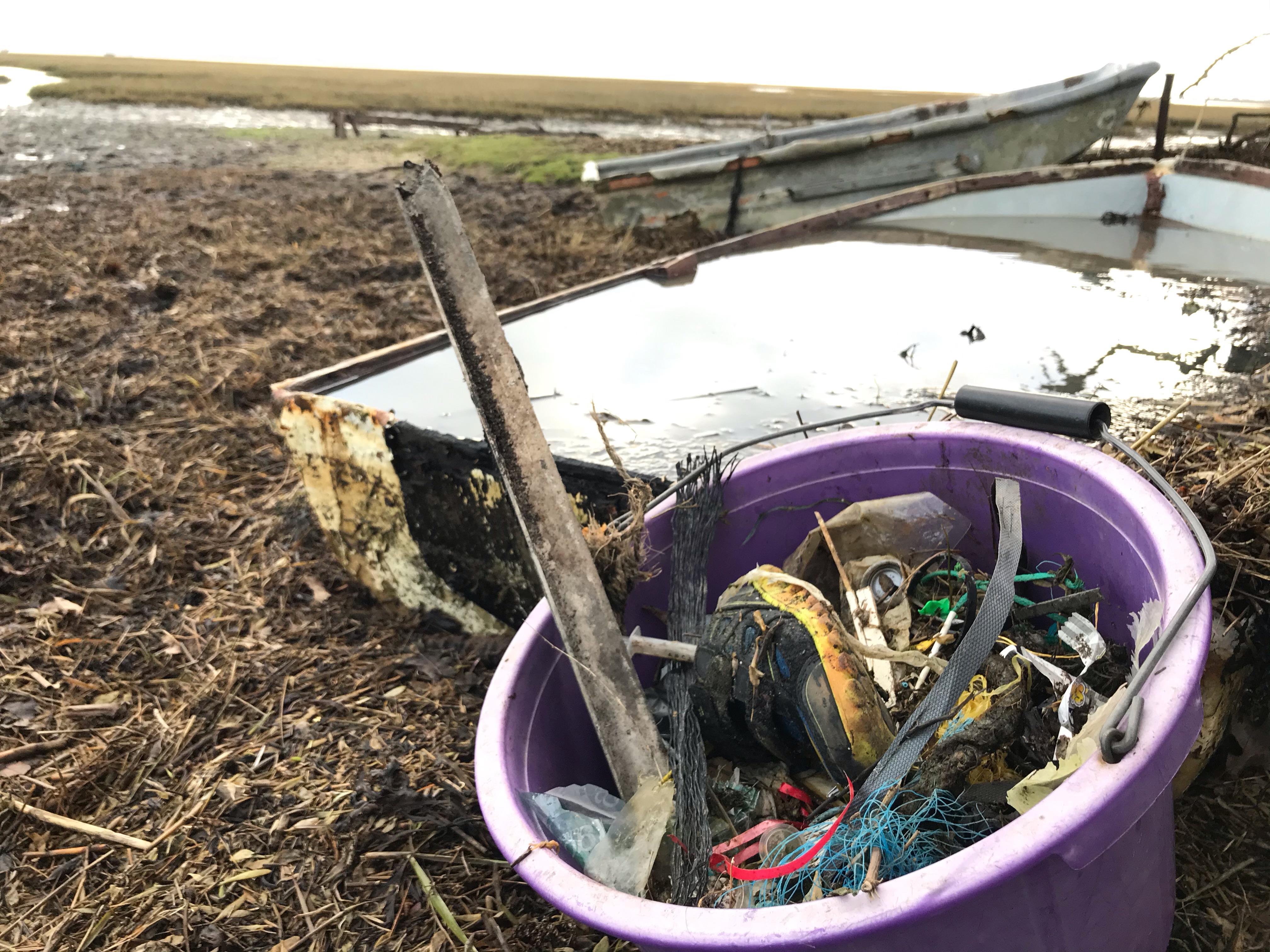
‘I didn’t see any rubbish on the beach,’ I was told by a walker as I extracted plastic bottles and tins from the ditch leading down to the sea. I was glad. I’d cleaned it just before New Year. But, once by the sea, I found a Christmas tree and collected half a bucketful of small pieces of PVC rope and elderly plastic that had been washed up on the shore.

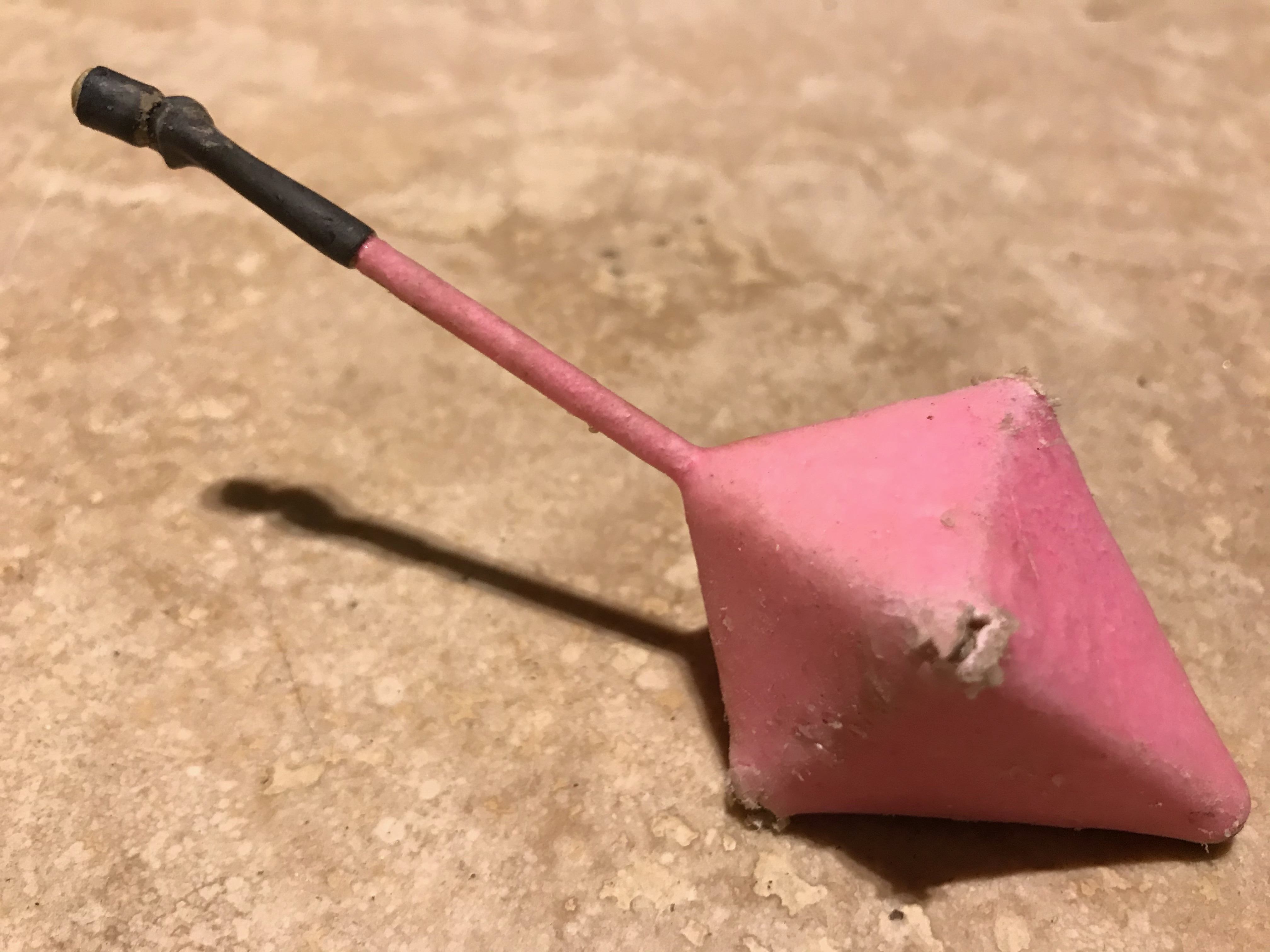
Since this is an isolated beach, it shows how much plastic is floating around the Solent. Someone might like their plumb line returned.

While a few things are clearly dropped by mistake,

the amount of litter and ageing plastic on public beaches remains unacceptable. I cannot walk by without collecting it. It takes a good hour to fill each of these buckets, which contain bags of dog poo and dangerous broken glass. They can end up weighing 4Kgs each.

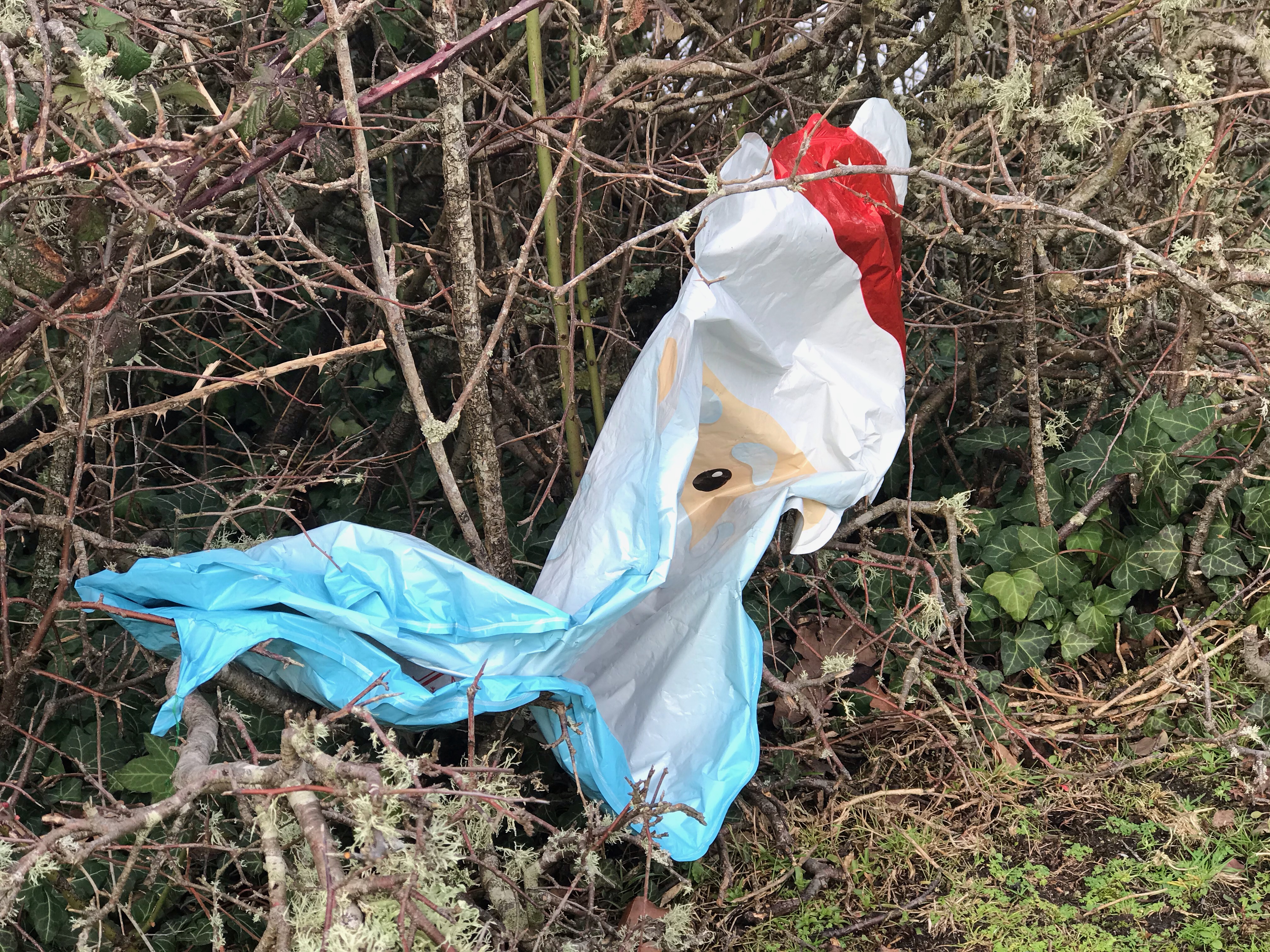
What are helium balloons doing to the environment? I find one a day.

‘There’s no rubbish on the beach,’ I’m assured by walkers, the next week. I agree that it looks okay. It should be fine. I’ve cleared it a hundred times.

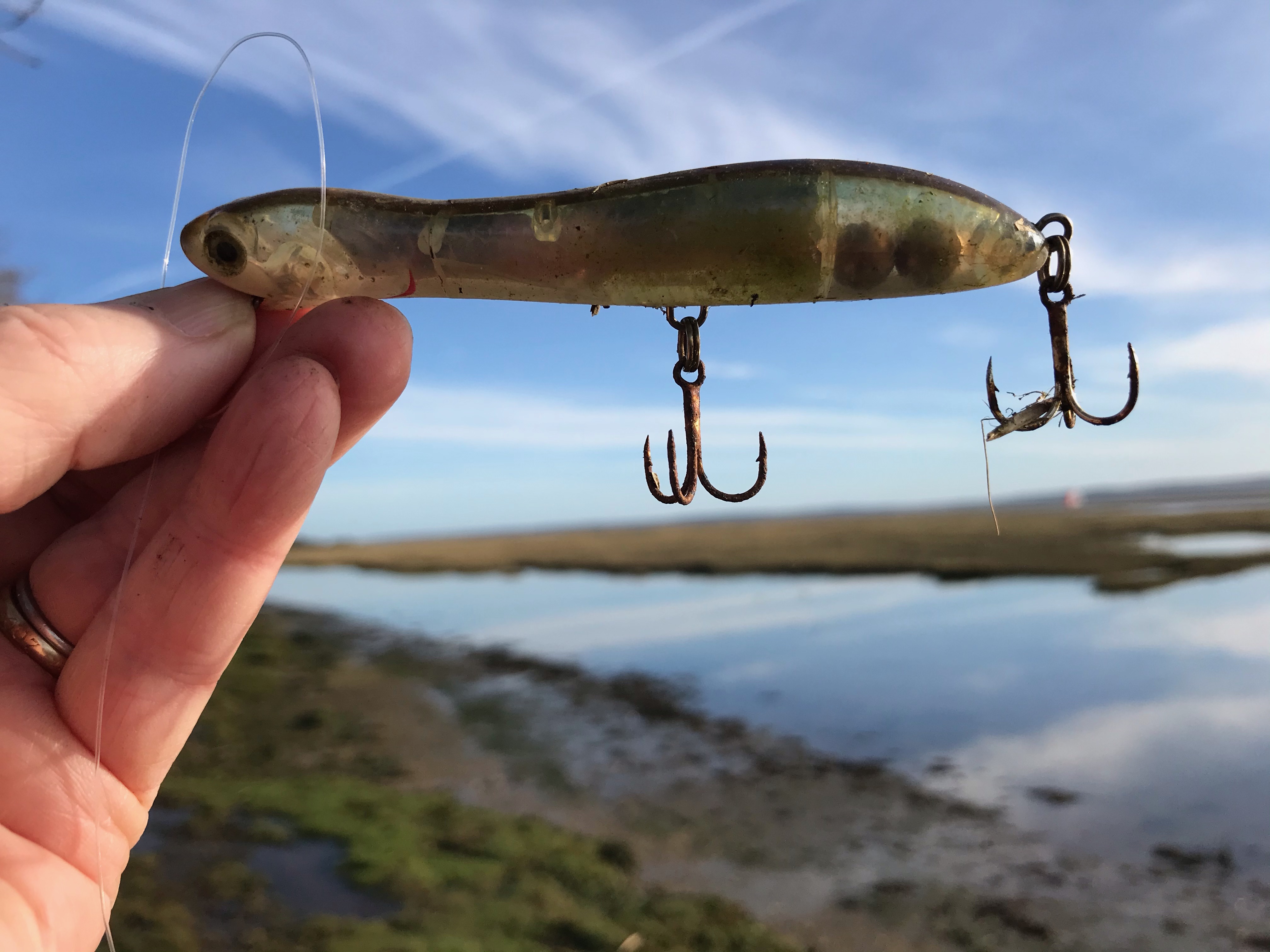
But, almost immediately, I find bottle ring and other items dangerous to wildlife. Then I come across fishing line, the fish hooks bound up in weed.

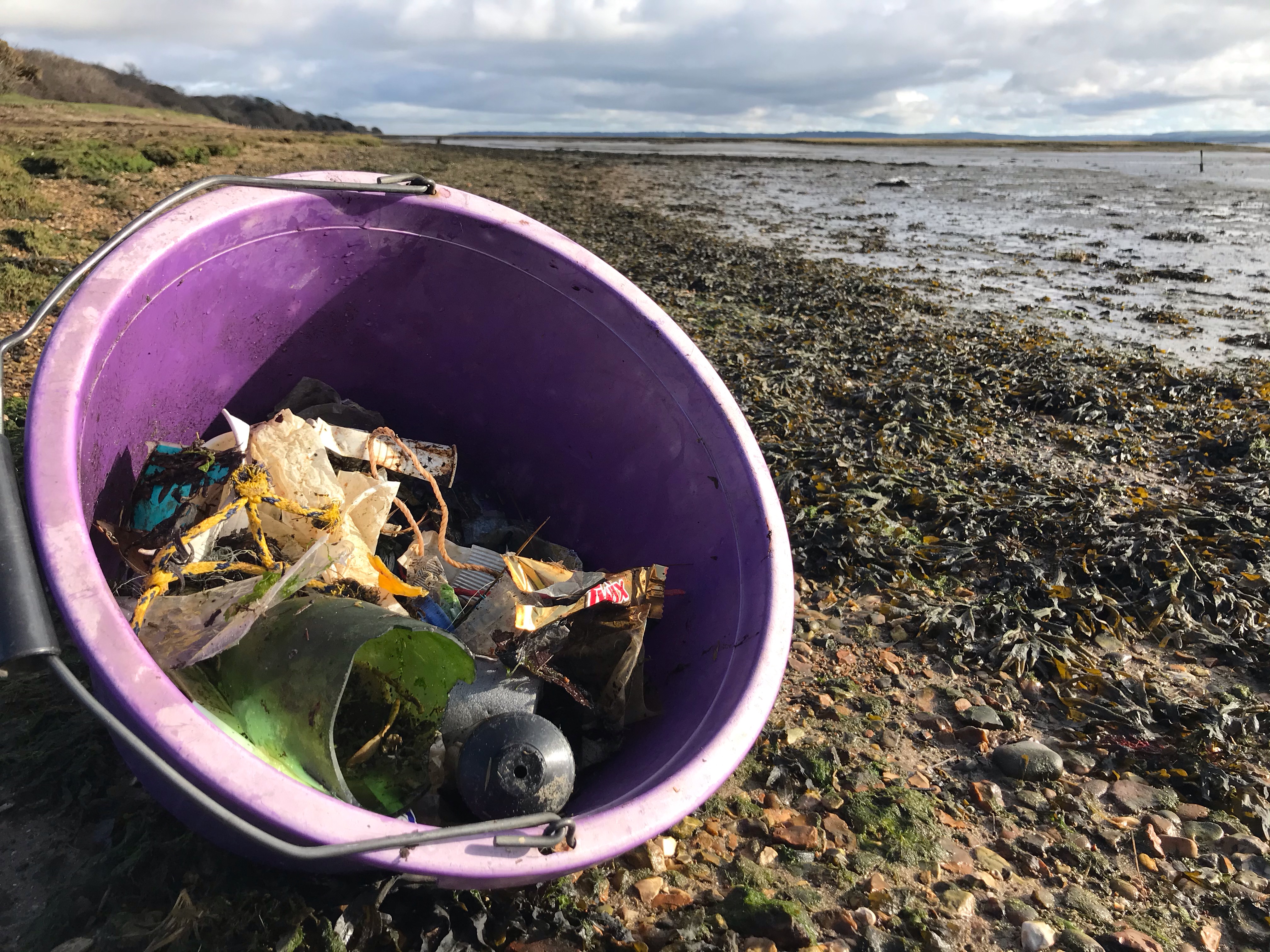
By the time I reach the end of the beach, I have filled my bucket, finding evidence of nitrous oxide canisters chucked into fires. The ghost rope alone could have caused havoc to shipping.

About this much plastic and glass washes up on a half-mile stretch of the Solent every twenty-four hours. It is not always easy to see it, but it’s there.

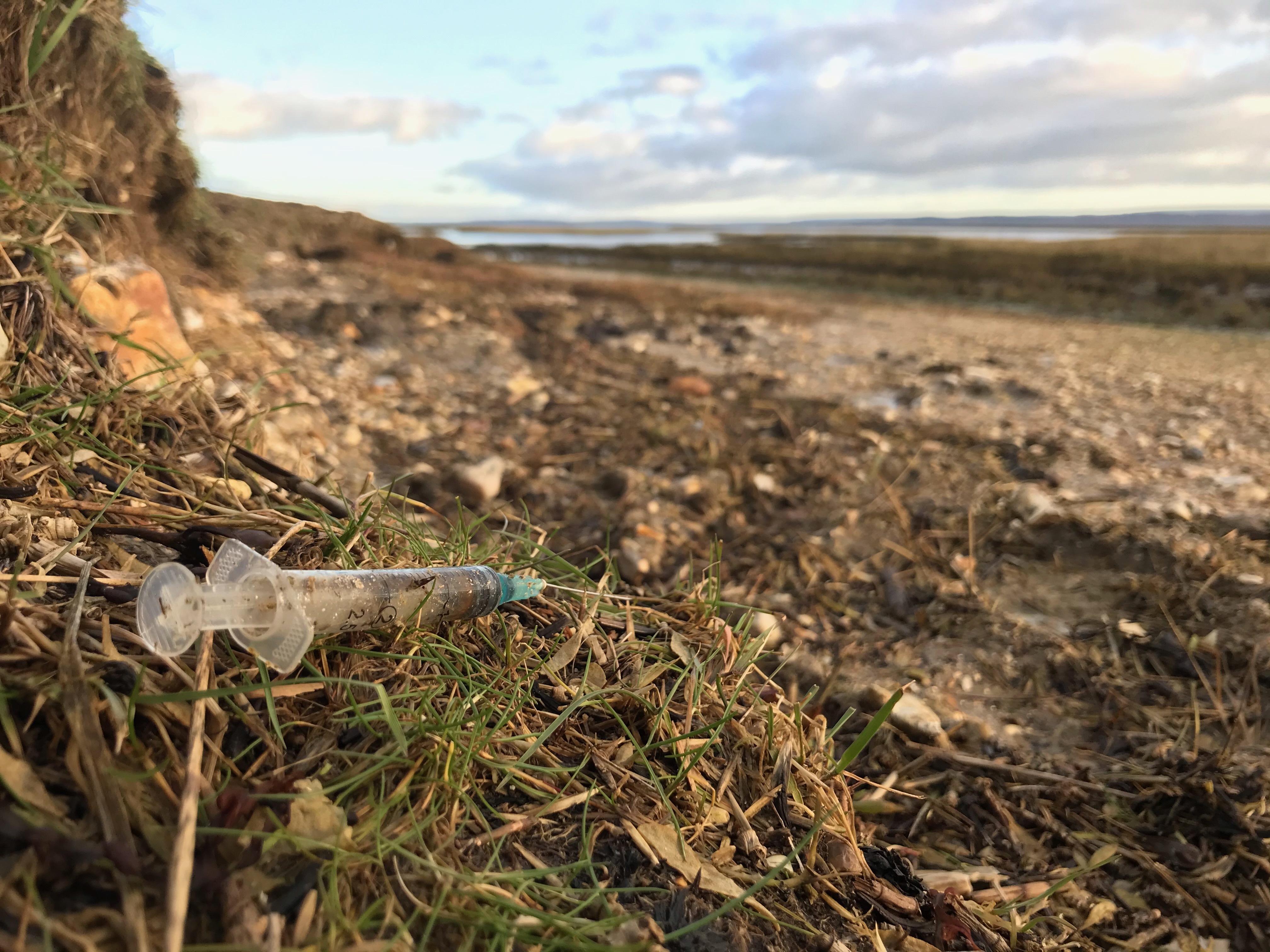
‘There is no litter,’ I’m told on approaching the foreshore with my dog-walking neighbour. We keep looking anyway. My friend spots this:

Before long, I had a filled my bucket. Again. Perhaps it’s only when you begin litter picking yourself that you appreciate how bad the problem is. Do join us!

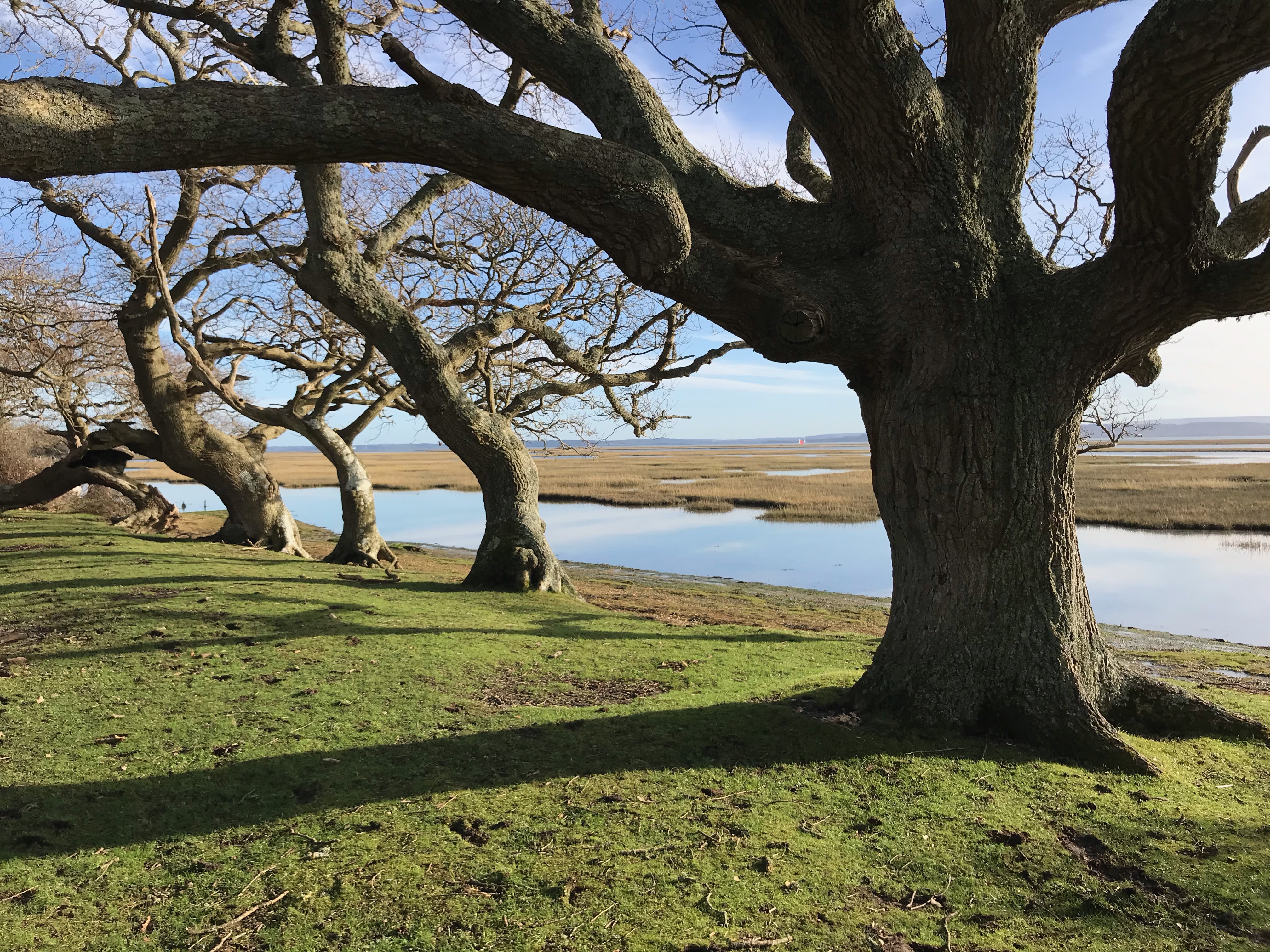
And yet, we didn’t retrieve everything. Can you see what I see?

To see more photos of the odd things we find, please click here

Litter Pickers of the New Forest Beach Picker of the Year 2020

Looking back on 2020 with gratitude.

Sophie Neville in Portugal on 1st January 2020

The year 2020 began for me in Portugal. I was recovering from a broken arm and disappointed to have to cancel my annual charity ride through southern Africa. However, a lovely girl flew over from the Waterberg in South Africa to work for me and we had fun designing gifts, using the illustrations from ‘The Making of Swallows and Amazons’.

Swallows and Amazons mugs
Mugs printed with maps used to illustrate Sophie Neville’s books

You can see more on Redbubble. The ‘Swallows and Amazons’ mugs are popular:

When news of the Coronavirus broke out, we launched an appeal to help families in rural South Africa, which proved a huge success.

Carefully monitored by a qualified nursing sister, and with the help of volunteers from St John’s Church, food packages are still being distributed to needy families, feeding about 150 people a month. Read the latest news here.

Nursing Sister Grace Ismail reporting back from rural South Africa

Tests were unavailable in March, but I might have had a light version of Covid-19 whist we were working on this fund-raising campaign. I certainly lost my sense of smell and developed a weird blister/rash on one hand and foot after spending ten days in bed with fatigue.

Sophie Neville reading Lockdown Tales while self-isolating in the garden

My talks, planned for the summer, were cancelled but I read a story for Lockdown Tales, produced by Wildbeast for BBC Radio Suffolk and made available on BBC Sounds. I took part in an online reading of ‘The Picts and the Martyrs’ by Arthur Ransome, recording a chapter at home.

As literary conferences went online, I led a workshop on photographing books for instagram, when we were joined by the award-winning author Claire Wade.

While devising exotic recipes for my next book, I began baking cakes for the first time in my life, adding cardamon and cloves.

We rolled up a circle in the lawn to make a Lockdown vegetable garden so the children could see how different plants developed. Our dancing carrots became a hit on Instagram.

I photographed one of my husband’s artichokes, winning the Create! competition, organised by the literacy charity SchoolReaders and judged anonymously by Harry Cory Wright.

The prize-winning photograph of an artichoke

I was Highly Commended for a collage made out of sea plastic I’d collected when beach cleaning, awarded by Emma Bridgewater. The winning entries were exhibited at the Wilson Stephens and Jones Gallery in Notting Hill.

Seascape - artwork by sophie Neville made from sea-plastic

SchoolReaders invited me to become an author supporter of their work instilling a love for books in the next generation, along with other authors including Joanna Trollop and Sophie Kinsella. We are encouraging people to make a gift in their will.

I began loading illustrations and some of my sketches onto instagram. Do follow this here.

Hailed as ‘the feel-good film of lockdown’,’Swallows and Amazons'(1974) was broadcast on BBC 2 in both April and August and screened in Australia.

Radio Times billed Swallows & Amazons as ‘Film of the Day’

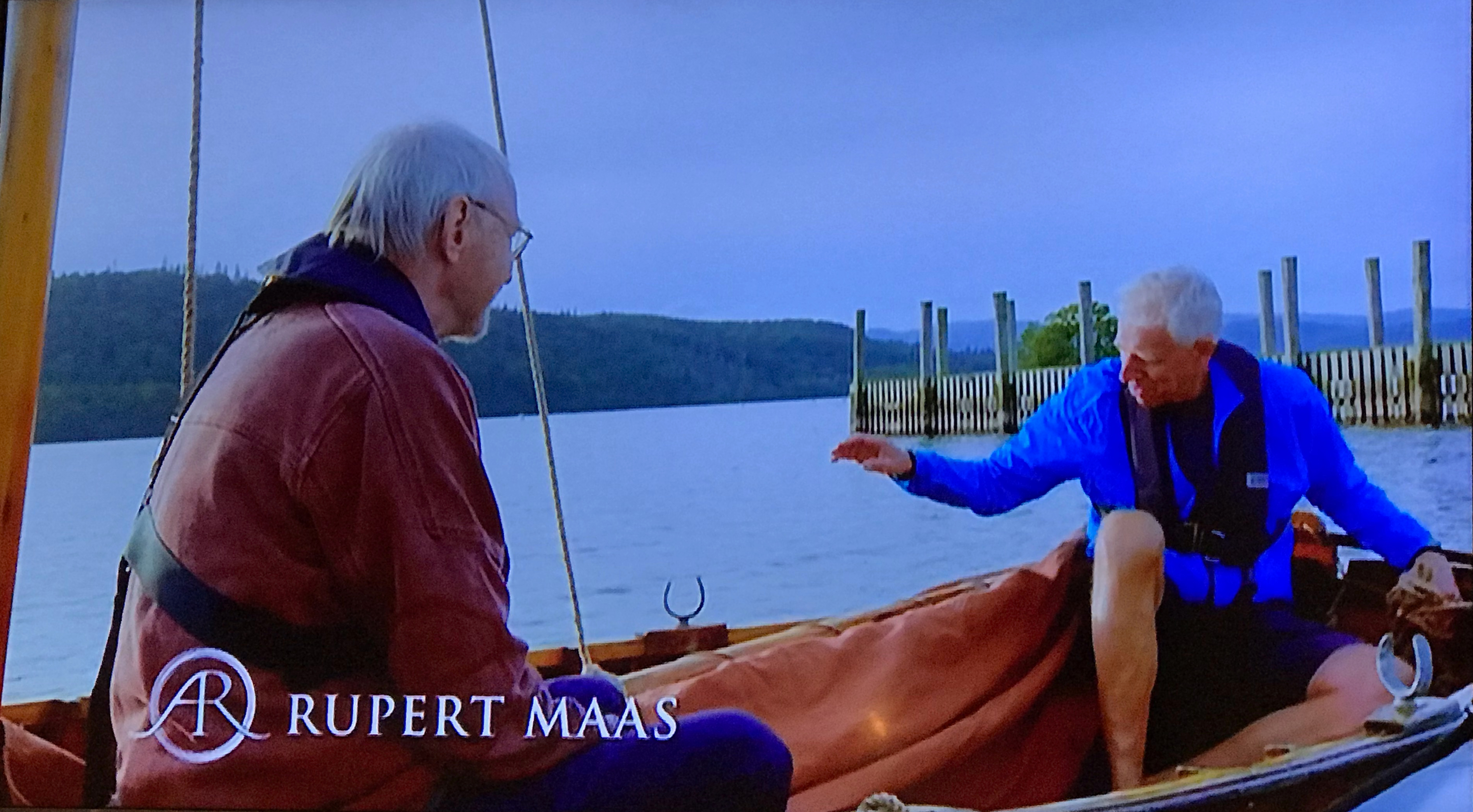
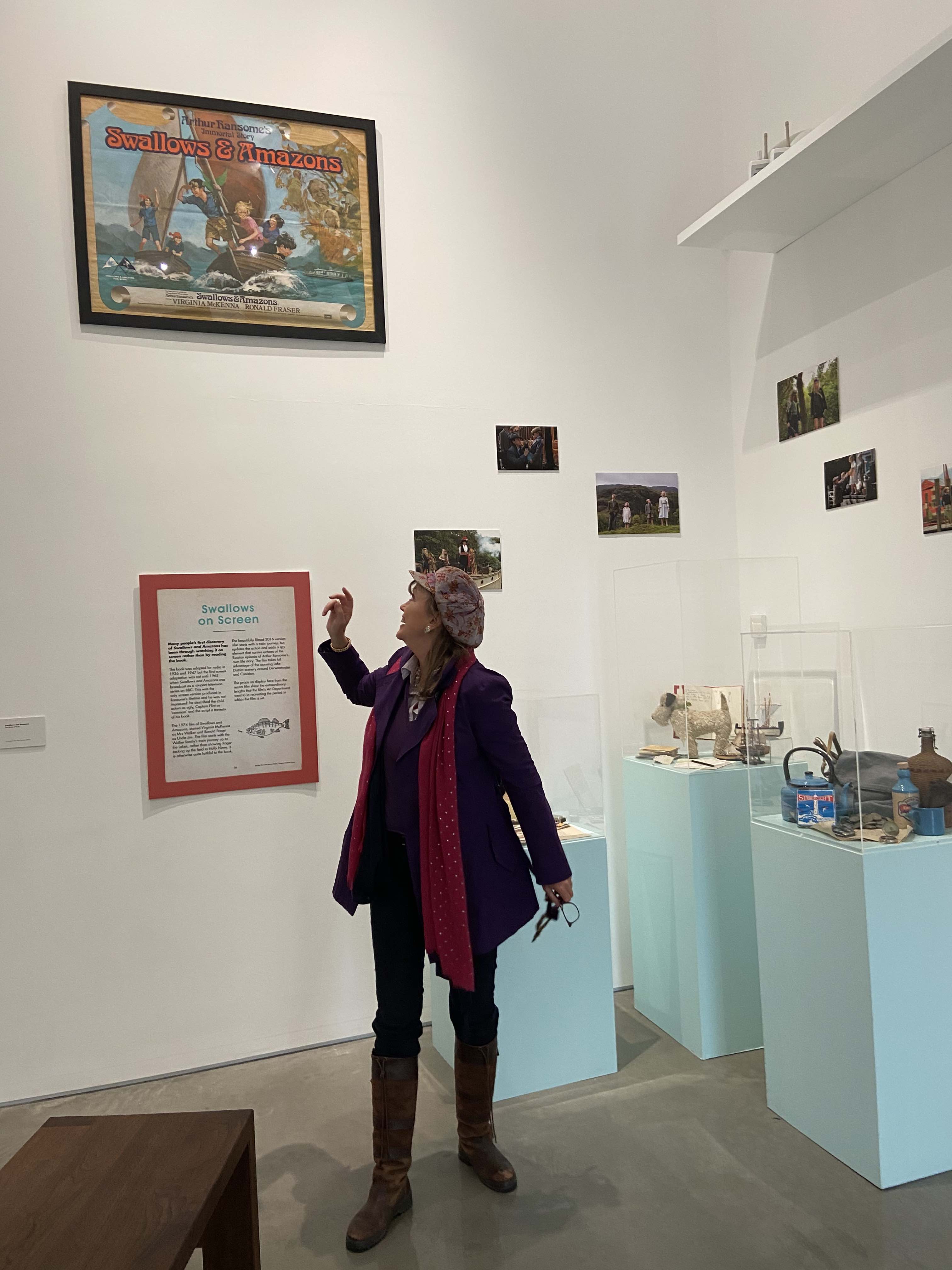
I was invited to talk about the movie memorabilia in a socially isolated edition of BBC Antiques Roadshow at Windermere Jetty, broadcast in March 2021.

Writer Marc Allum with Sophie Neville at Windermere Jetty in Cumbria

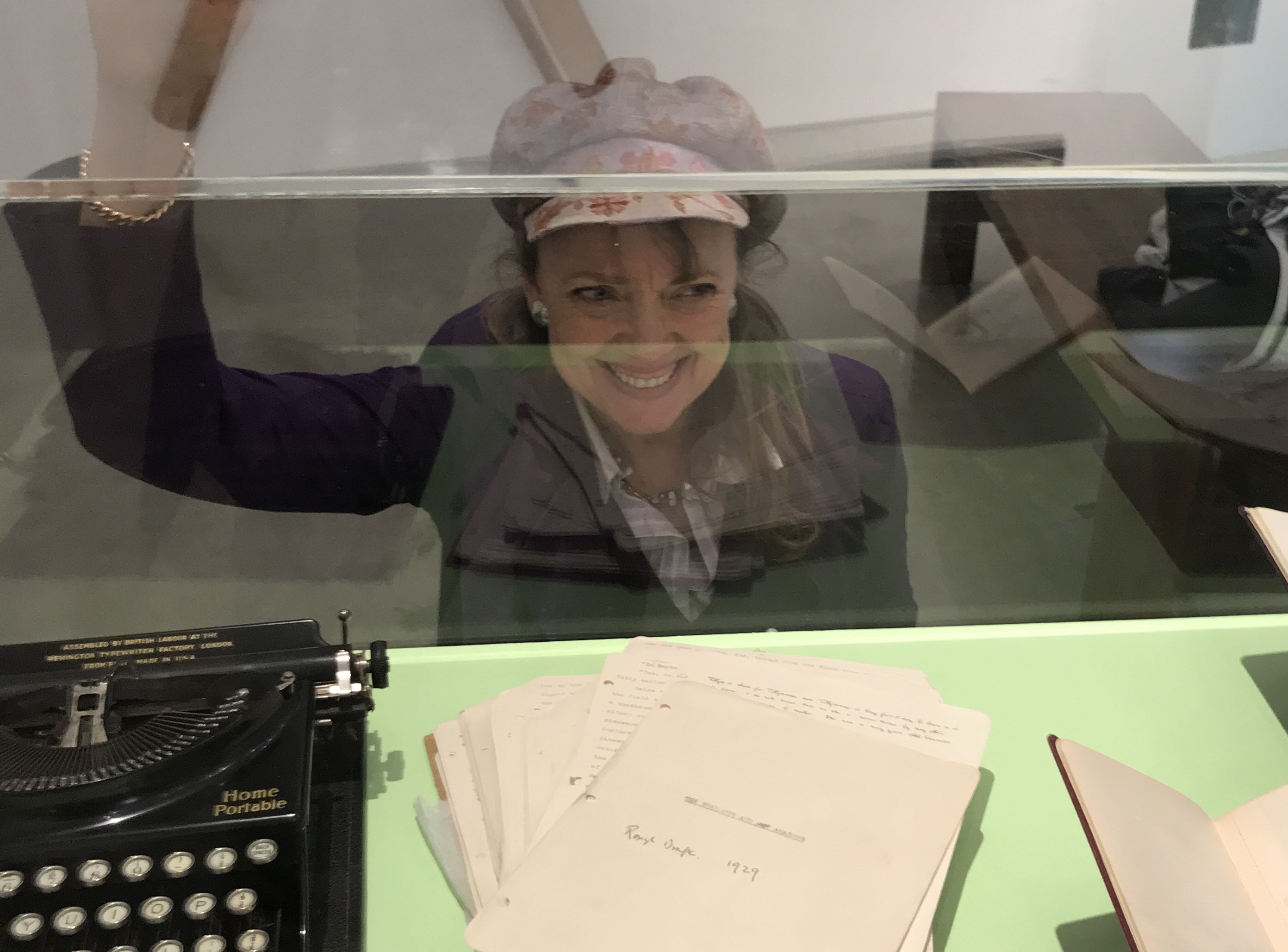
It was wonderful to be able to spend a few days in the Lake District, where Arthur Ransome’s first draft of ‘Swallows and Amazons’ is on display.

Sophie Neville with Arthur Ransome’s first draft of ‘Swallows and Amazons’ at Windermere Jetty

A signed First Edition hardback copy of ‘The Secrets of Filming Swallows and Amazons (1974)’ was auctioned online, raising an astonishing £201 for BBC Children in Need, exceeding bids for signed copies of books by bestselling authors such as Bernard Cornwall, Jeffery Archer and Adam Kay.

Lakeland Arts organised an online event to celebrate the 90th Anniversary of the publication of ‘Swallows and Amazons’, selling tickets for an evening ‘In Conversation with Sophie Neville, which you can listen to here.

Kett’s Books invited me to speak on Zoom for their ‘Books at Lunchtime’

The greatest days of this unusual year were spent on the Solent, litter picking with my extended family, who came to live with us through lockdown. Although some dreams were grounded, we had time to go for long walks and were able to explore the South Coast where we live.

We formed a pod of six, so had no visitors, but I treasured the letters that arrived. I’m collecting quotes for the 3rd edition of ‘The Secrets of Filming Swallows and Amazons’, an ebook which I plan to bring out for the 50th Anniversary in 2024. Do write in with your memories.

Reviews and photos from readers are always appreciated, especially on Goodreads and Amazon.

After Christmas, I heard that a historical novel I am currently working on was awarded 3rd prize in the Association of Christian Writers’ novel competition and was shortlisted for the Eyeland’s Book Awards, who have offered me a writer’s residency in Crete.

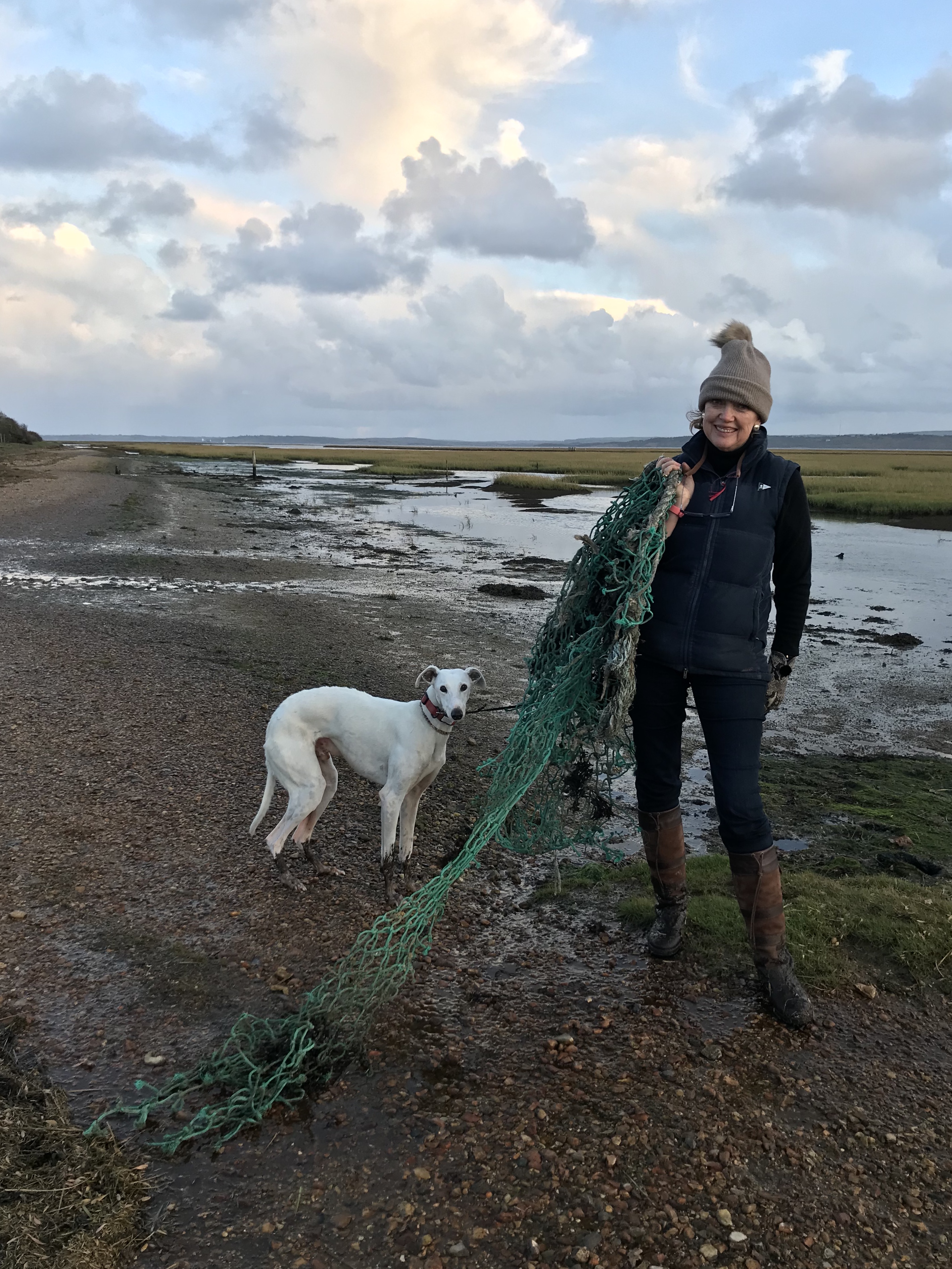
As we entered Tier 3, I was recognised as ‘Beach Picker of the Year’ by Litter Pickers of the New Forest, a high accolade that marked the end of a quiet but busy year.

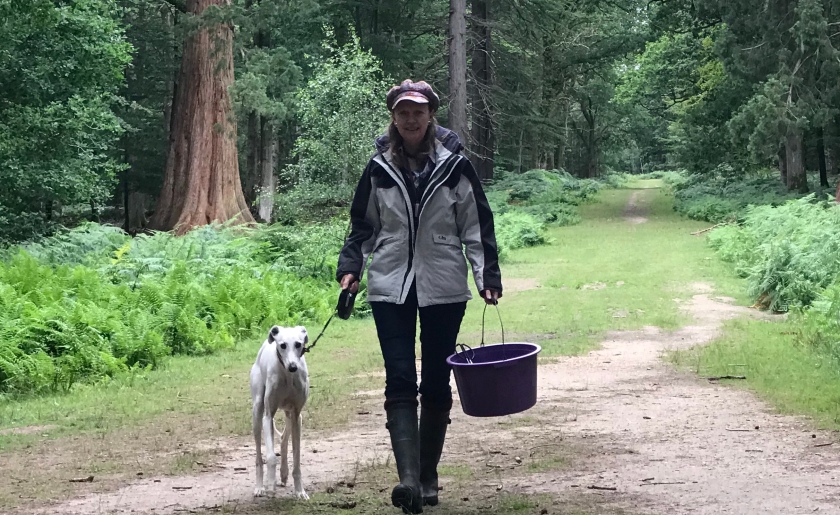
‘Beach Picker of the Year’ – Sophie Neville and her dog Flint on the Solent.

I gained three pounds and didn’t get to the hairdressers for eighteen months, but looked forward to a future with no need to wear face-masks. You can find my post on finding elderly litter here

Sophie Neville being interviewed on ‘The Making of Swallows and Amazons’

Lakeland Arts, based at the Windermere Jetty Museum, ask how the original film of ‘Swallows and Amazons’ was made on location in the Lake District in 1973 –

You can find out more in the illustrated paperback, suitable for all age of readers, entitled ‘The Making of Swallows and Amazons’, which makes a good Christmas present when combined with the 40th Anniversary DVD with DVD extras.

At Windermere Jetty museum – to see the amazing boats

Simon West, Suzanna Hamilton and Sophie Neville filming ‘Swallows and Amazons’ (1974) 

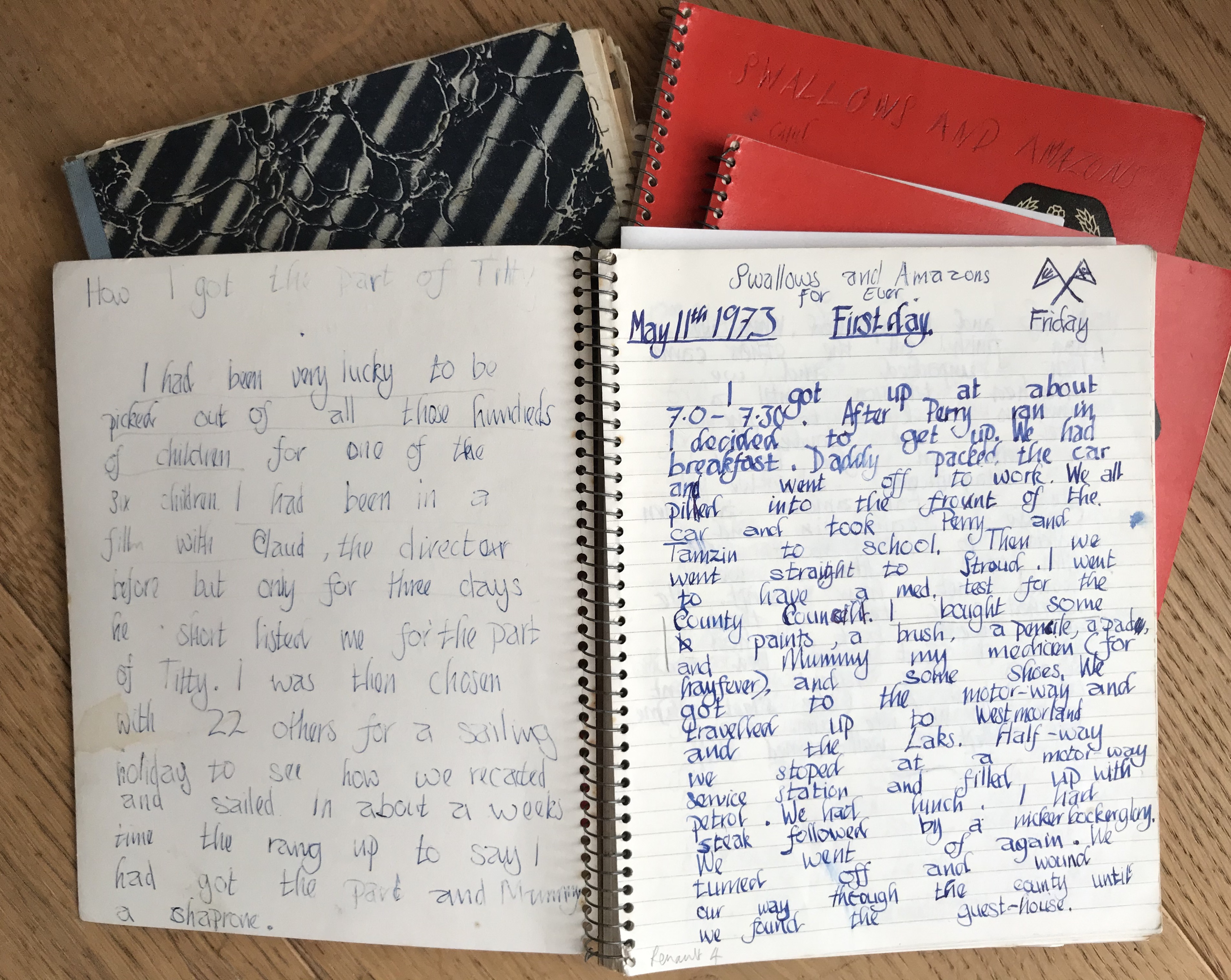
In the summer of 1973, I was transported to the shores of Windermere, ‘The Great Lake in the North’ to appear as ‘Titty Walker’ in the classic movie of ‘Swallows and Amazons’, starring Virginia McKenna and Ronald Fraser.

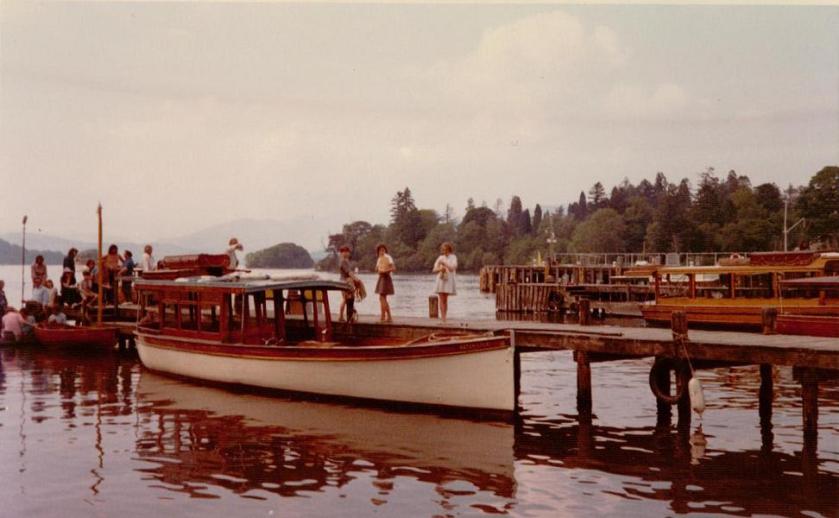
The Swallows approach the jetty in Rio. Which launch is moored outside the boat sheds?

We were fortunate enough to film the scenes set in Rio at Bowness-on-Windermere before the original green boat sheds were demolished in favor of an amusement arcade.

Rio – or Bowness-on-Windermere in 1973 – with SL Elizabeth ~ photo: Martin Neville

George Pattinson brought along his steamboat the Lady Elizabeth, which you can see here beyond the Windermere skiffs pulled up on the shore.

George Pattinson in his steam launch Elisabeth ~ photo: Martin Neville

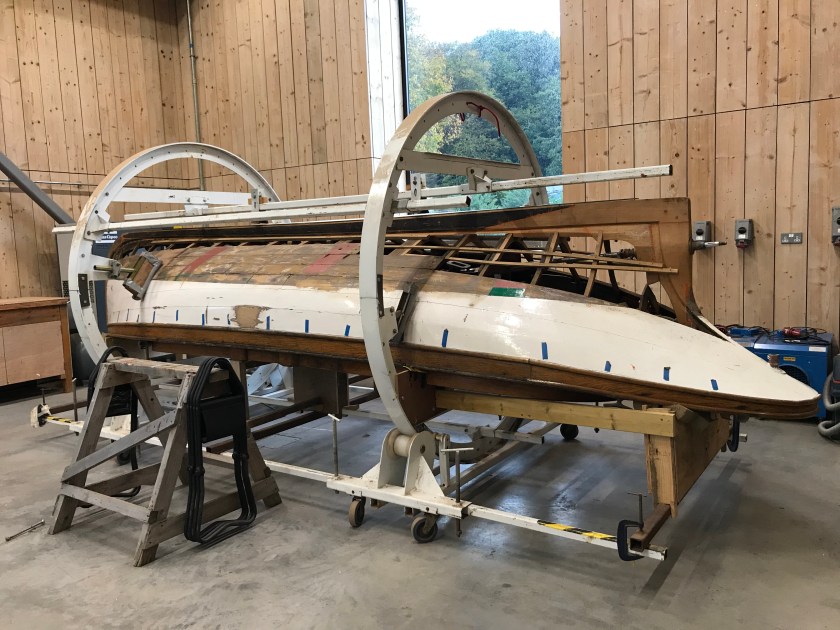
George’s personal collection made up the basis of the Steamboat Museum now rebuilt and known as Windermere Jetty, where we found the Lady Elizabeth under full restoration.

Eighteen foot long, she was built in New York State in about 1900 and brought to England, so was likely on Windermere in 1929 when Arthur Ransome wrote ‘Swallows and Amazons’. She sank off Cockshott Point beyond Bowness, but Mr Pattinson salvaged and renovated her in 1955. You can read more here.

The Lady Elizabeth under restoration at Windermere Jetty

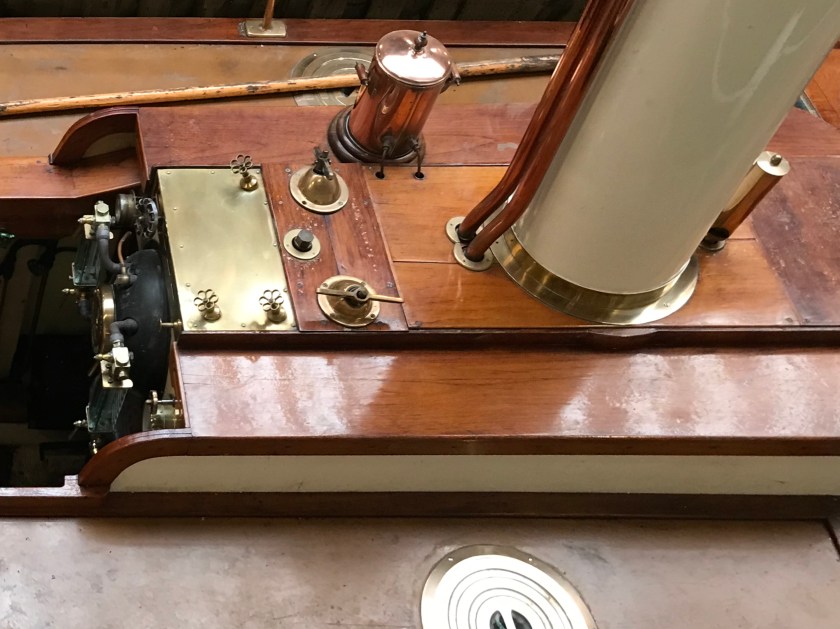
Other exhibits included the exquisite steam launch Osprey, in fine fettle with her copper steam kettle kept brightly polished. I knew her from taking part in a Steam Boat Association rally on Windermere in 1991. 

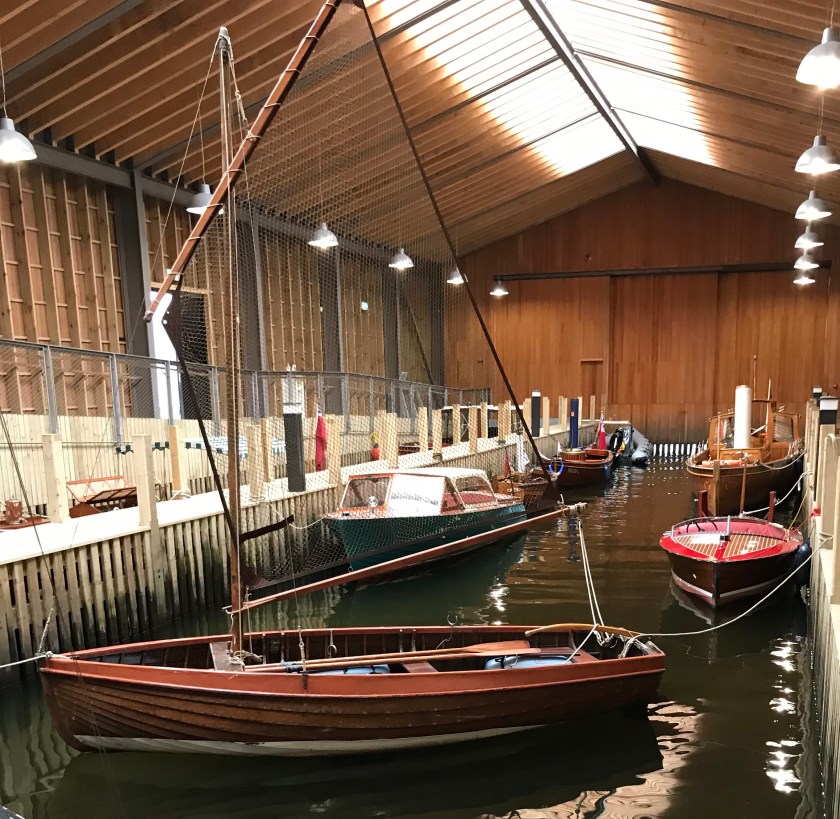
The RNSA dinghies used to play Swallow and Amazon in the 2016 movie can also be seen in the wet dock at Windermere Jetty.

Look up, and you can spy a green beetle on an old burgee. 

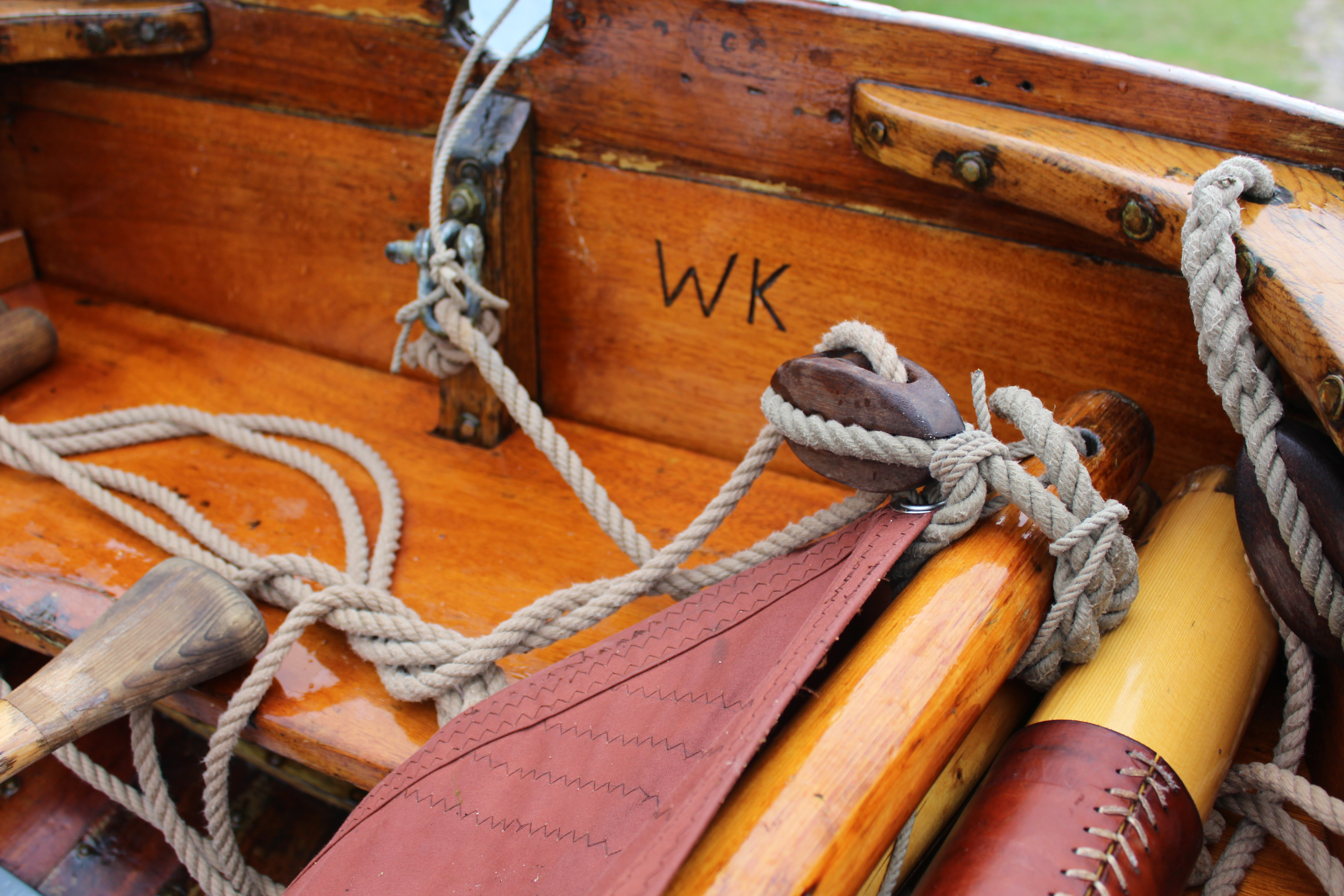
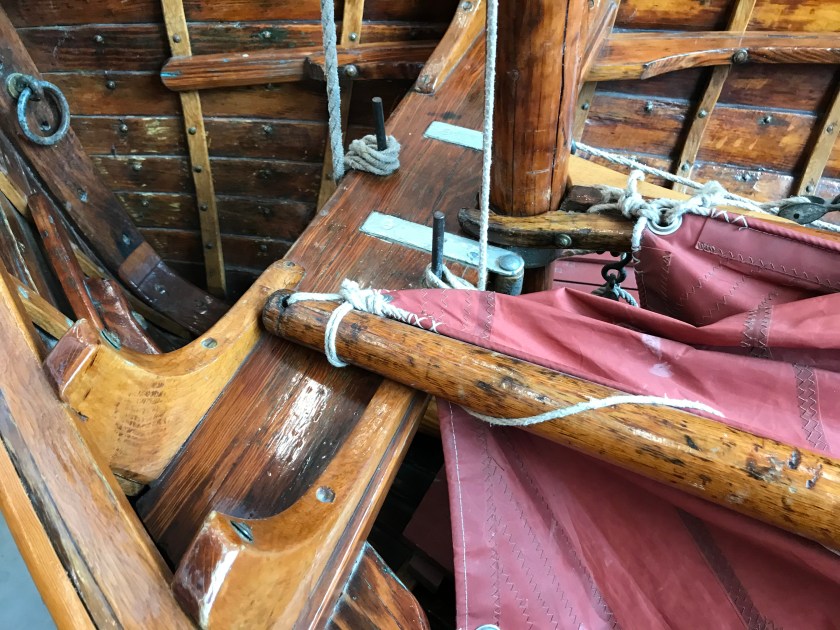
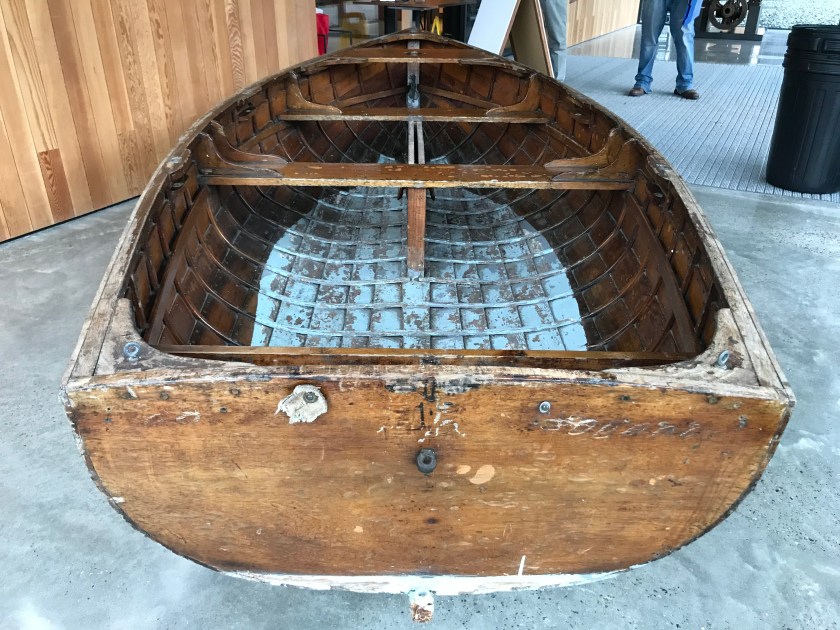
Arthur Ransome’s dinghy Conch-y-bonddhu, known as Scarab in his books, is on display with Beatrix Potter’s rough, flat-bottomed rowing boat (the pointed bows of which can be seen here hanging on the wall to the right).

It was good to be able to examine Conchy’s rigging. You can read about her here.

The museum has many other treasures including the hull of the oldest yacht in existence in the Lake District.

Every one of the forty boats exhibited has a story to tell.  You can find out more about visiting Windermere Jetty on their website here.

The Windermere skiffs can still be seen up the road in Bowness where you can begin to look for locations used in the original film.

If you don’t already have a copy you can read about ‘The Making of Swallows and Amazons (1974)’ here. This includes maps and chapters on how to find the film locations.

To learn more about the film locations, please click here.

The ebook on ‘The Secrets of Filming Swallows and Amazons’, which is similar, is available on all ebook platforms, including Kindle here.

A weekend spent steam boating on Windermere in 1991, is featured in ‘Funnily Enough’, a diary of a year when everything changed, can be found here.

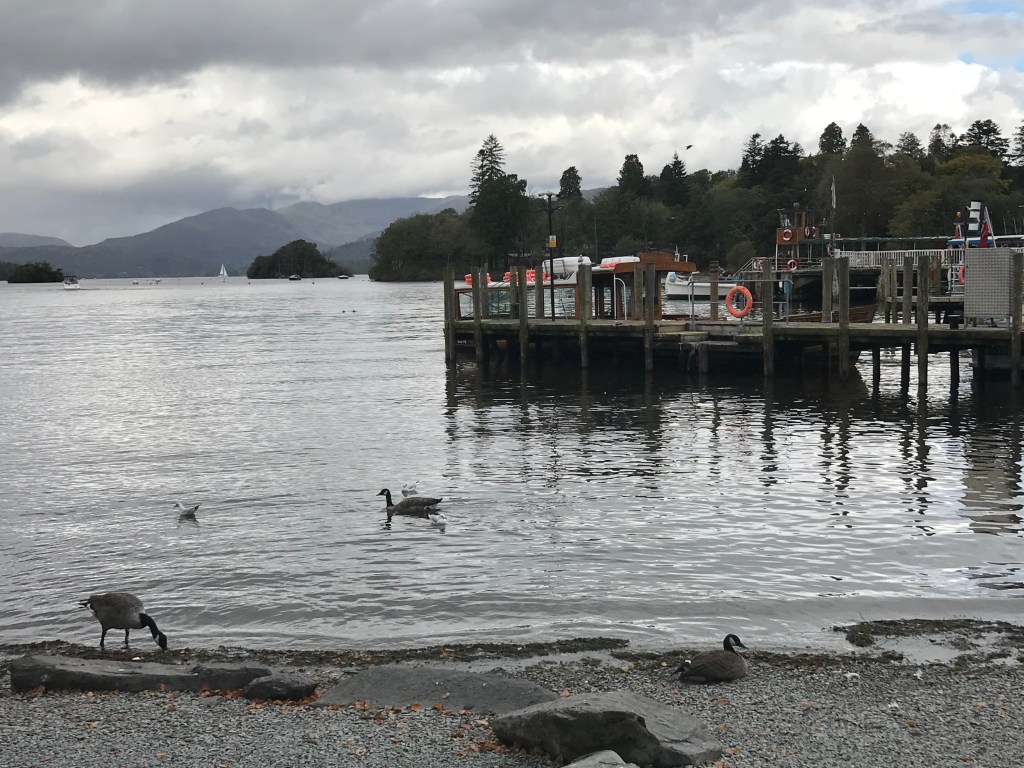
Looking towards the jetty featured in ‘Swallows & Amazons’ (1974) at Bowness-on-Windermere

I look forward to returning to Windermere Jetty when the Lady Elizabeth is on back the water. The museum will be opening soon.

You can read about the 1901 steam launch Daffodil that I helped to renovate here.

Sophie Neville visiting Windermere Jetty – photo: Caroline Robinson

A First Edition of ‘The Secrets of Filming Swallows and Amazons (1974)’ – signed by the author – goes for £201 in an auction held in aid of BBC Children in Need, 2020

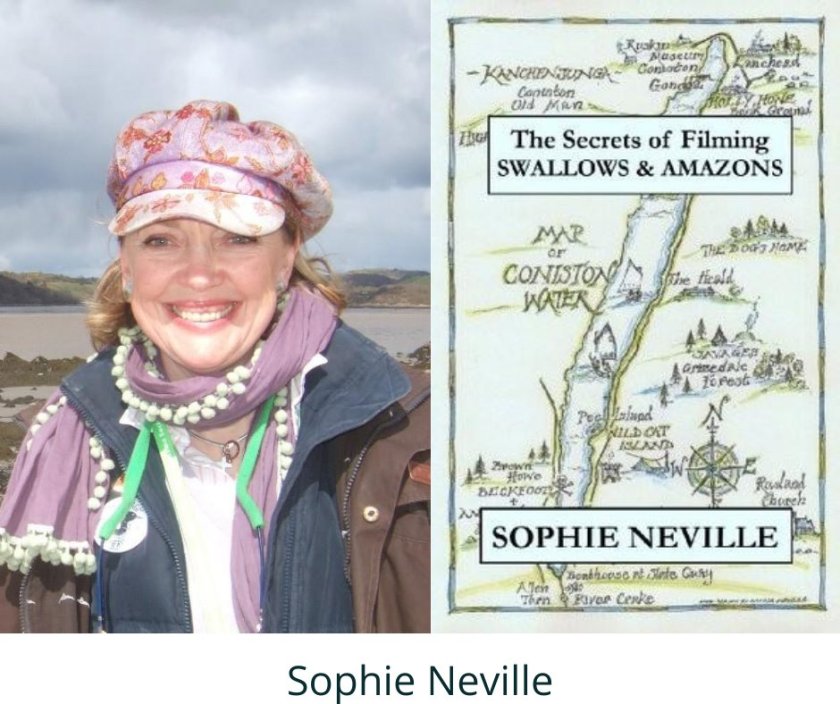
Sophie Neville author of 'The Secrets of Filming Swallows and Amazons (1974)'

Bidding mounted steadily for a hardback first edition copy of ‘The Secrets of Filming Swallows and Amazons (1974)’, signed by the author.

After 64 bids and it sold for £201

– I am quite blown away. Very many thanks to all our supporters –

100% of the money will be donated to BBC Children in Need – under the auspices of ‘Children in Read’ via the Jumblebee auction site where this illustrated book was listed under the categories of both ‘Autobiography’ and ‘Film & Television’.

To read a free sample of the first section of the 2nd edition – available as an ebook  – click here – then click on ‘Look inside’.

To read reviews on the 2nd edition of this book, please click here

To see more on the second edition of the ebook – click here

‘highly amusing and thoroughly enjoyable’ David Butters

Since the bidding ran so high, I will include a signed copy of the 2nd edition, entitled ‘The Making of Swallows and Amazons (1974)’, published by The Lutterworth Press. This contains colour plates with more photos and additional stories that flowed down from the Lake District after the first edition came out.

I’m also including a hardback First Edition of my memoir ‘Funnily Enough’, which has a few pages on ‘Swallows and Amazons’ and a signed copy of ‘Ride the Wings of Morning’, which has noting about the making of ‘Swallows and Amazons’ but is all about living out the adventurous outdoor lifestyle advocated by Arthur Ransome, so there are four books in the bundle.

'The Making of Swallows and Amazons (1974)'

Although surpassed by Phillip Pullman and JK Rowling, I gained far more than authors such as Bernard Cornwall, Jeffery Archer, Sophie Kinsella and Maggie O’Farrell.

Being a filmography, ‘The Secrets of Filming Swallows & Amazons’ sat alongside the bestsellers, ‘Killing Eve’ by Luke Jennings and ‘Kay’s Anatomy’ by Adam Kay, which you can see by clicking here.

This auction of books has already raised £21,841 for BBC Children in Need, which is fantastic. It closed on Friday 13th November at 11.00pm.

If you need to know more about the auction, please contact Paddy Heron at Children in Read: childreninread@yahoo.com

This is the 7th Authors’ & Illustrators’ Auction in support of the 2021 BBC Children in Need Appeal. Charity Ref: 802052

Points to add to the third edition of ‘The Secrets of Filming ‘Swallows and Amazons'(1974) – part one

Simon West, Suzanna Hamilton and Sophie Neville in Swallow about to leave the Houseboat. Amazon’s white sail can be seen the other side ~ photo: Daphe Neville

Viewers of the original film Swallows and Amazons'(1974) have written to point out that when the Amazons sailed up to Captain Flint’s houseboat there was a terrible crash. I found the quote from ‘The Picts and The Martrys’, which made me realise why this horrified anyone who knows the characters well:

“…when you come sailing along and fetch up with a bump against Jim’s new paint.”

“We never do,” said Nancy. “Remember when we came and made you and Uncle Jim walk the plank last summer? We were aboard and rushing the cabin before you knew we were anywhere near.” ‘Picts and Martyrs’ by Arthur Ransome p.14

Simon West and Sophie Neville on Captian Flint's Houseboat
Simon West as Captain John and Sophie Neville as Titty taking Captain Flint’s Houseboat : photo~ Daphne Neville

Jane Sullivan noticed Captain Flint yelled, “Death or Glory!” as the Swallows and Amazons laid siege to his houseboat. ‘Is that a pre-echo of the East Anglian stories?’ she asked.

Jane also noted: In the closing credits, I notice they spell For Ever as two words, which it is as it should be, rather than the modern way which confuses the adjective “forever” with the adverbial phrase “for ever”.’

Peel Island whilst we were filming in 1973 ~ photo: Martin Neville

Most people are familiar with the fact that Peel Island was used as the location for Wild Cat Island in the 1974 film.

Peter Dowden of the Arthur Ransome Group, pointed out that Peel Island is a classic example of a rocher moutonnee or sheepback, shaped by glacial erosion. Larger examples in Sweden are known as flyggbergs. Others comment that it’s easy to imagine the island as Captain Flint’s schooner the Wild Cat, which sails to the Caribees in ‘Peter Duck’ and is set on fire by Gibber the monkey in ‘Missee Lee’.

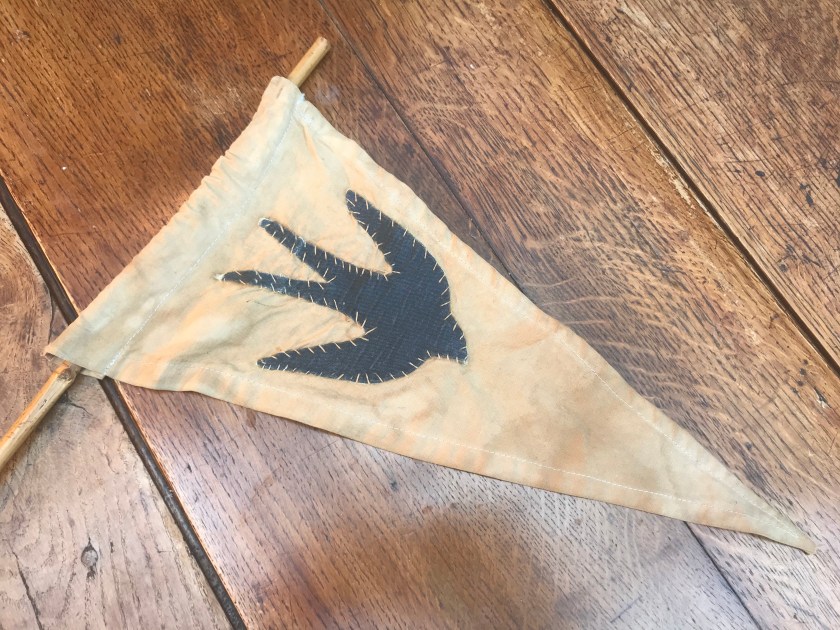
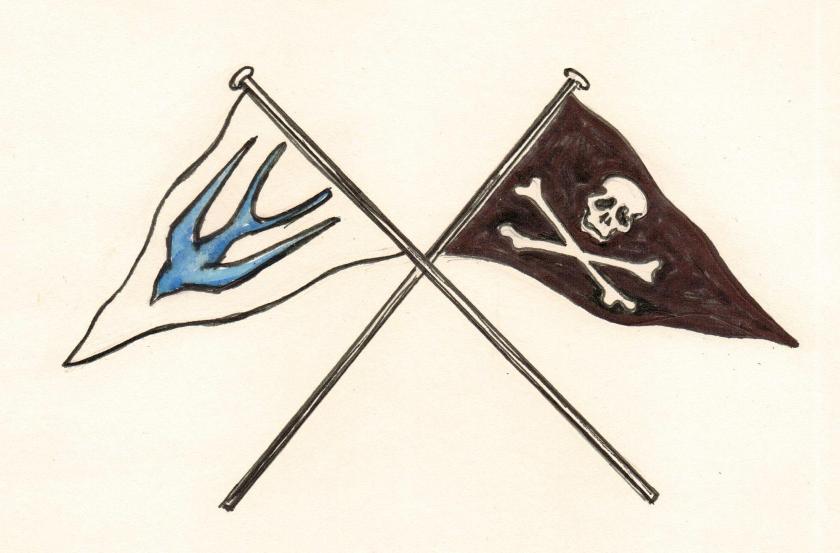
Peter also wrote about burgees. He noted, ‘Traditionally, creatures shown on flags face towards the “hoist” – the bit of the flag that is attached to the mast. So head near the mast and tail near the flappy part of the flag (called the ‘fly’). He went on to say, “someone did the research and Arthur Ransome drew the Swallow flag both beak to hoist and beak to fly!”

Our art director, Simon Holland, made what I considered the mistake of having the swallow on Swallow’s burgee flying away from the mast. 

My publisher asked me to draw our crossed flags, a sketch which was later stolen and used all over the place from the call sheet of the 2016 movie to badges for sale on eBay.

Paul Thomas, of the Arthur Ransome Group, explained that Swallow and Amazon are standing lugsail dinghies, rather the balanced lugsails as I had been told. “Swallow’s keel was designed for sailing in shallow estuaries and grounding on shifting shoals with sails tanned to protect them from rot and sunshine.”

“What is particularly impressive, to me,” Roger Barnes, president of the Dinghy Crusing Association, commented, “is how well done the sailing scenes are, and sometimes in pretty strong winds. Most sailing in films is really unconvincing.” Roger added: “The boom jaws off the mast as they first approach Wild Cat Island is the only major flaw with that aspect of the film.” I had never noticed! We were bitterly cold on that day when we first sailed Swallow in front of the camera.

Roger Barnes’ illustrated book, The Dinghy Cruising Companion, published by Bloomsbury, included my behind-the-scenes photo of Swallow, where you can see the jaw back in place.

You can also see the jaws in this film still (c) Studiocanal:

The Swallows on their voyage to Wildcat Island
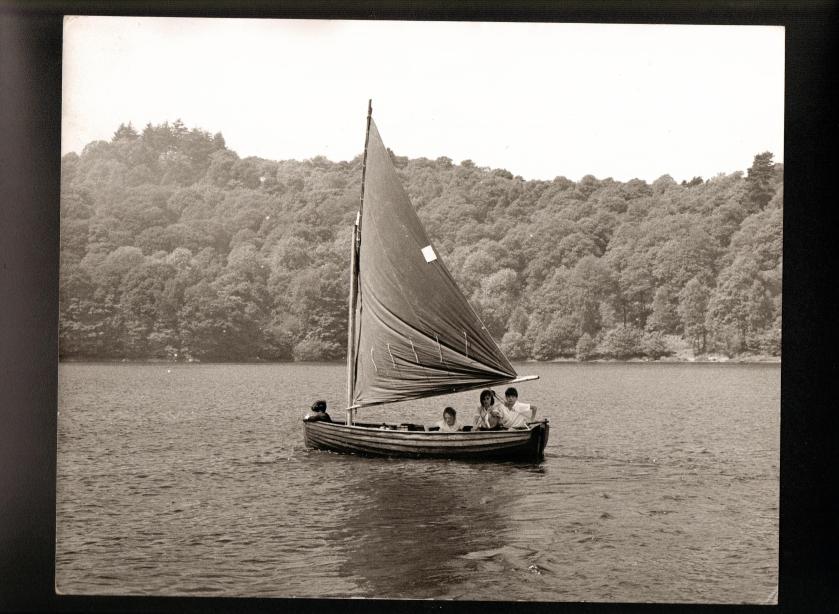
Sten Grendon, Sophie Neville, Suzanna Hamilton and Simon West as the Swallows sailing on Coniston Water in 1973 (c)StudioCanal

Please do add a comment below or write in with any points you notice that I can add to a third edition of ‘The Secrets of Filming Swallows and Amazons’, an ebook available from a variety online stockists. You can look at the first pages here.

Diary of a litter picker – coming out of the first Coronavirus Lockdown

Author Sophie Neville collecting litter in the New Forest
Sophie Neville collecting litter in the New Forest as quarantine restrictions lift

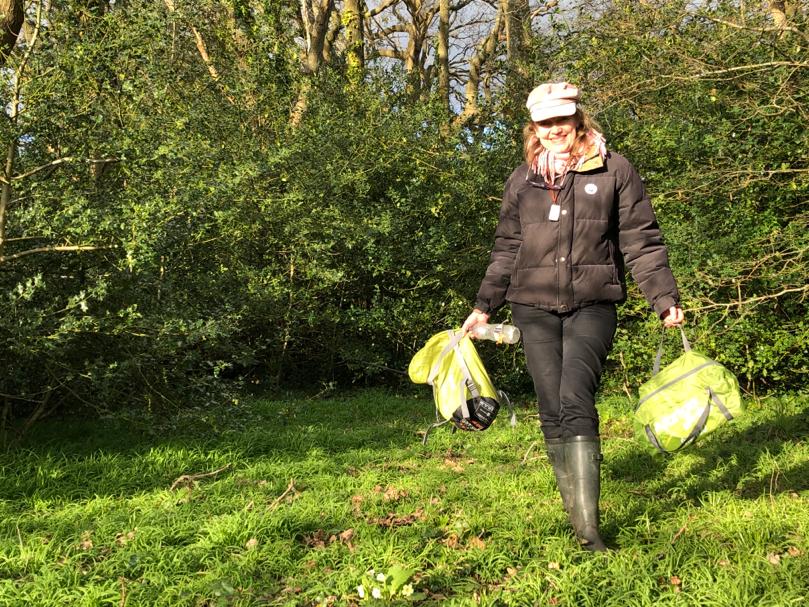
Accompanied by my purple bucket, rescue hound, two sons and their small children, I can no longer classify myself as a lone litter-picker, but as Covid-19 restrictions lifted on 4th July we set off through the New Forest to resume collecting things that have been lost or discarded. Most of what we found was scattered around the car park despite the prevalence of litter bins.

5th July, and I collected this from a causeway crossing a tidal river where some drivers think it a good idea to toss what they no longer desire into the water.  The evidence suggests they are drink driving, and perhaps not thinking clearly.

I pick up endless car parts and assorted trash whenever I venture out, believing that taking one or two pieces from the river bank has to make a difference. We collected a bucketful collected from a beach on the Solent and another from around a local landmark in the New Forest National Park.

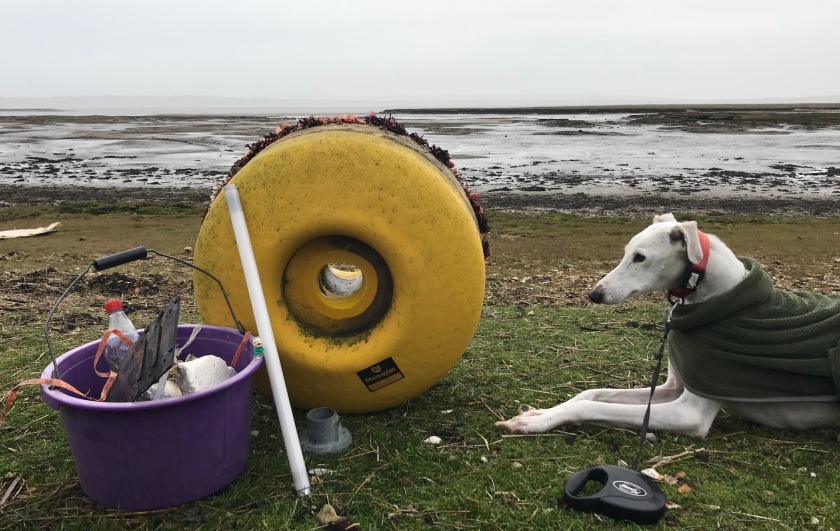
When will people realise what they are doing to the planet? The dog now waits expectantly while I excavate plastic from the sea, often showing me something I’ve missed like a lost shoe. I was extracting three pieces of plastic guttering from the Solent when this photo was taken.

To see what I collected during the Coronavirus Lockdown, please click here.
To read about beach cleaning along Solent shore, please click here.

For a list of things I typically find on Solent beach cleans, please click here

Sophie Neville collecting litter dropped along the Solent Way in Hampshire

Diary of a Beachcomber: cleaning Solent shores of plastic pollution

I’m often ask what are the most extraordinary things I’ve found on a beach clean. This year, I came across a crate washed up on Solent shores that originated in Brittany, nearly 400 kilometres across the English Chanel.

My bucket fills with lost toys and discarded litter as I clear plastic debris brought in on the tide. There is often a piece of Lego and nearly always an old cigarette lighter. How do they get into the sea?

Plastic and PVC string gets entangled in oak trees brought down in the storms.

But, perhaps the strangest things are three unbroken fluorescent light bulbs washed up in the same place at different times.

There is always plenty to collect from tidal margins including a fair bit of rope. Most pieces are tiny. Plastic gardening waste is common.

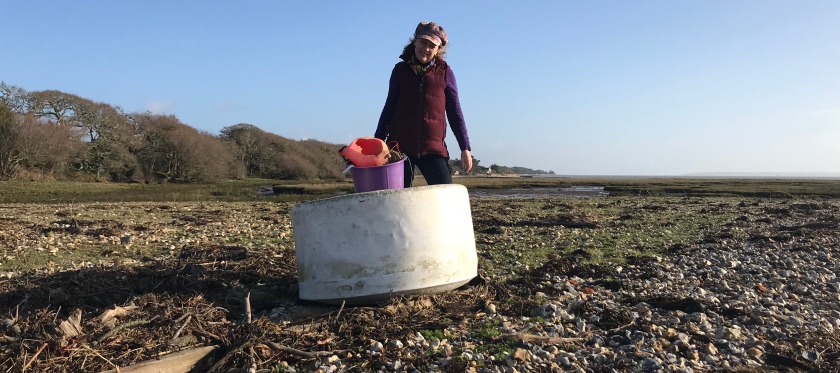
Some of it defeats me. I couldn’t shift this marker buoy. It is difficult to imagine how it will ever be removed from such a remote spot with no vehicle access.

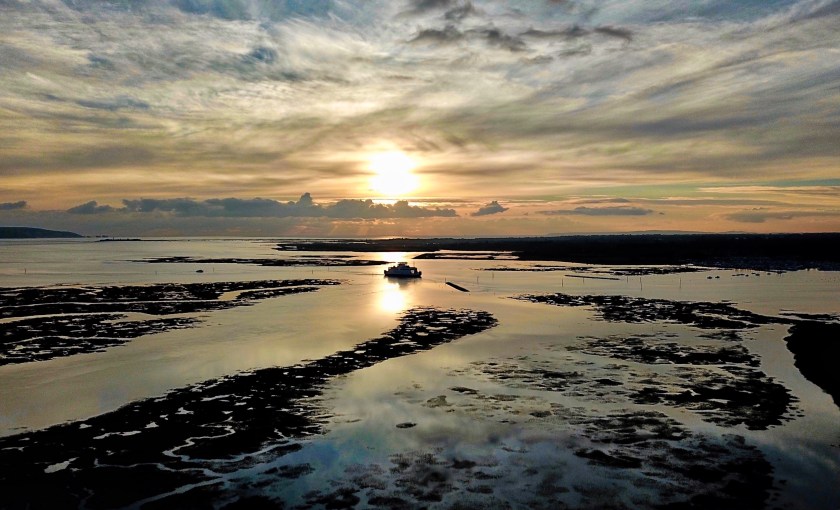
British mud flats, so important for wildfowl, constitute one of our last wildernesses. I long to check the whole area but birds will be breeding on the low lying islands soon.

Instead, I go inland, clearing plastic bottles and wrappers that have blown off the Solent into coastal fields where they risk being a hazard to livestock. I often find pieces of plastic that have passed through the guts of New Forest ponies. Some items have obviously been dumped by overloaded hikers such as this brand new camping gear.

Meanwhile, the Lymington river estuary seems to be regarded as a litter bin by someone who drinks Tazoo everyday. I collect what I can from the banks before the rubbish attracts even more.

The nearest McDonalds is a 25 minute drive away and yet countless people wait until they reach the bridge before tossing their cups into the tidal river. Why do they do this?

I didn’t clear nearly enough. The road flooded taking all the litter chucked onto the verge into the sea.

The shore I usually clean-up was not too bad after the storms but this is because others have begun to clear up debris.

After storm Ciara I found three old cigarette lighters at once along with other indicators of how bad things are. I learnt that one person had  found 105 old lighters up on the Mersey. For a list of things found while beach cleaning in 2019, please click here.

What could you do to help? Could you pick up a little litter today? Please click here to find a list of the things I might take on a beach clean.

You really can make a difference. We have the Great British Spring Clean from 20th March until 13th April. Sign up and get involved here.

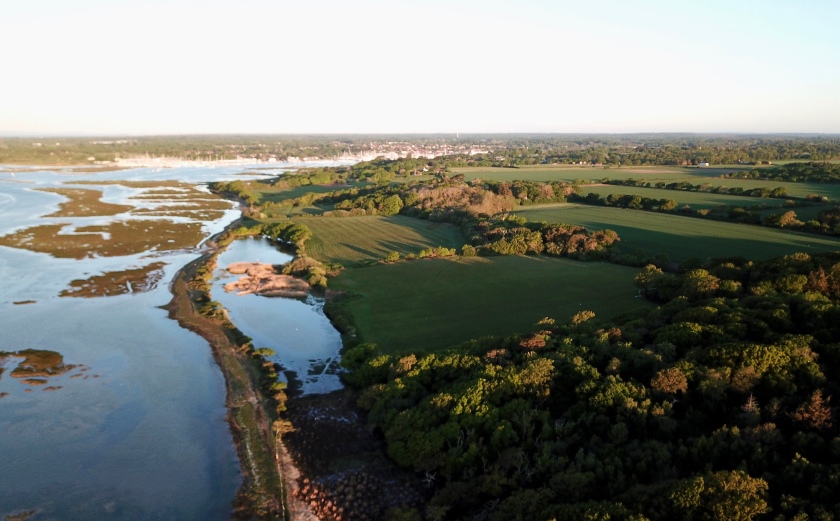
The Solent coast and mudflats looking west

Diary of a Litter-picker – after the Solent storms

Solent Beach Clean photo Matt Wright
photo: Matt Wright

I returned to the shingle beach at Tanner’s Lane on the Solent at low tide to see what had washed up after a week of stormy weather. You can see me and my dog wrapped up against the cold weather in the bottom left hand corner of this aerial photograph taken as we searched for rubbish along the shore. We found a predominance of PVC fishing net and rope, along with plastic straws and cotton bud stalks, bottle tops and micro plastics.

I was obliged to leave a car tyre and a quantity of rope that was too deeply buried to extract without a crowbar but it had been too cold for picnicers. There was no litter. It is not difficult to imagine that plastic pollution can endanger people. The yards of loose mooring rope I did retrieve could easily have become entangled in the propeller of someone’s boat and left them stranded in shipping lanes.

I joined ‘Paws on Plastic’ on Facebook who encourage dog walkers to return with one piece of rubbish a day. One piece is better than noting. I picked up a can discarded by the sign greeting people to our town and took it home for re-cycling with the mantra, ‘rubbish attracts more rubbish’ swirling around my mind.

The next time I took my hound for a walk in the New Forest, I came across two carrier bags of litter hanging from a tree. I’m rather hoping their owner will return for them since I had already collected a bucketful.

I continued to collect tins and plastic bottles throughout the week, if only two or three a day. What amazes me is how often I find unopened cans or bottles of drink chucked in the bushes. Were they originally stolen? Why are they thrown into the woods? To read more, please click here

I hate sorting the litter when I reach home but getting out into the wild can be amazing.