How the chance of acting in the movie Swallows and Amazons began in Stroud in the Cotswolds

When I first published ‘The Secrets of Filming Swallows and Amazons’, someone left a review online saying they thought it a good idea for a novel but that it was a bit farfetched.

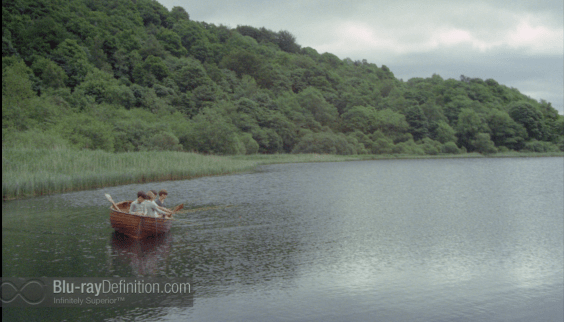
This amused me. It was a non-fiction book, written because the extraordinary story was true. Of all the roles, in all the novels ever written, I was asked to play Titty in Swallows and Amazons, an EMI film made in 1973 for universal distribution.

The offer came out of the blue. Within a year, I, an ordinary schoolgirl, found my image on the front of daily newspapers and on film posters pasted on the walls of the London Underground. All this happened nearly fifty years ago and yet the publicity never ends.

Swallows and Amazons (1974) now distributed by StudioCanal

Arthur Ransome, a haunted foreign correspondent, who escaped from Russia with Trotsky’s secretary, wrote Swallows and Amazons in 1929 while suffering from stomach pains so bad they prevented him from travelling. He said that the book wrote itself, but it is clear that he was self-medicating, grieving his own childhood, when he’d been longing to make friends and prove himself to his father who died when he was only thirteen.

Tweed-clad and continuously pipe-smoking, Ransome was oblivious to Lakeland weather. I acted out his almost-real fantasy in nothing but a thin cotton dress and a pair of enormous navy blue elasticated knickers. My book on ‘The Making of Swallows and Amazons’ is not a novel, not a fantasy. It is a true story. The movie is streaming on Amazon Prime where you can watch the trailer.

Why was I cast in the film? Why me? I had loved all the Arthur Ransome books I’d read in the Swallows and Amazons series, imagined myself exploring Wild Cat Island and the Great Lake in the North. Did I ever ask the Lord if I could live out the stories for myself?

The reality began in Stroud, at the Subscription Rooms. I put up my hand when someone asked if there was a ten year-old girl who could play the piano. They didn’t say, “play well.”

A young director called Claude Whatham, who lived in the Cotswold village of Camp, was looking for children to appear in the 1971 BBC adaptation of ‘Cider With Rosie’, based on Laurie Lee’s haunting memoir. He needed to find a little girl who had been to a village school near Stroud. I had attended Oakridge Parochial Church School when it was heated by pot-bellied stoves and the vicar told us Bible Stories.

I was chosen to play Eileen Brown, who shared a desk with Laurie Lee and accompanied him as he played Oh Danny Boy on his violin at the Christmas concert.
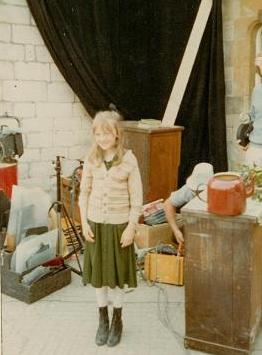
Sophie Neville in the 1971 BBC adaptation of ‘Cider with Rosie’, directed by Claude Whatham

My music arrived three days before filming began. It consisted of endless cords – a complicated accompaniment with no tune. To tackle the piece, I’d needed to practice for seven hours a day with the help of my long-suffering piano teacher from Far Oakridge.
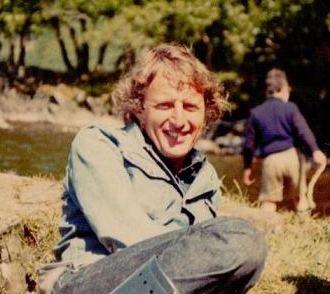
Claude Whatham ~ photo: Daphne Neville

The director must have remembered me as a determined little girl because two years later a letter arrived, addressed to my father, only he was working in South Africa. My mother very nearly didn’t open it, however the words Theatre Projects were embossed on the envelope and she was intrigued.
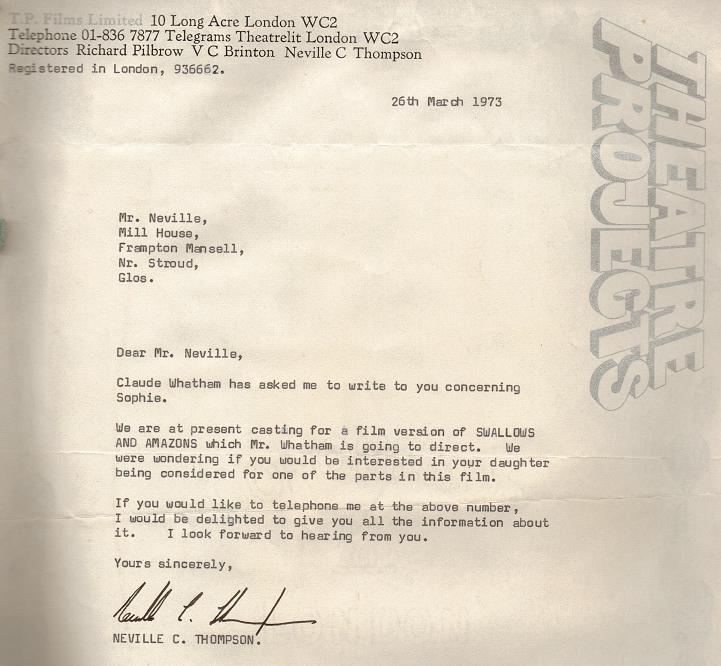
But she did. We drove up from Gloucestershire to collect Dad from Heathrow and went straight to Long Acre near Leicester Square for an interview with Claude.

I was then invited to take part in a sailing audition at Burnham-on-Crouch in Essex – miles from the Cotswolds. The producer, Richard Pilbrow, was determined that any child chosen for a part knew how to sail. I had grown up beside one of the few lakes in Gloucestershire and knew how to row a Thames skiff. I’d added my own sail, made from a green dust sheet, but was no expert.

There were four other girls auditioning to play Titty. They were all smaller and prettier than me, with straight teeth. I didn’t think I was in with a chance.
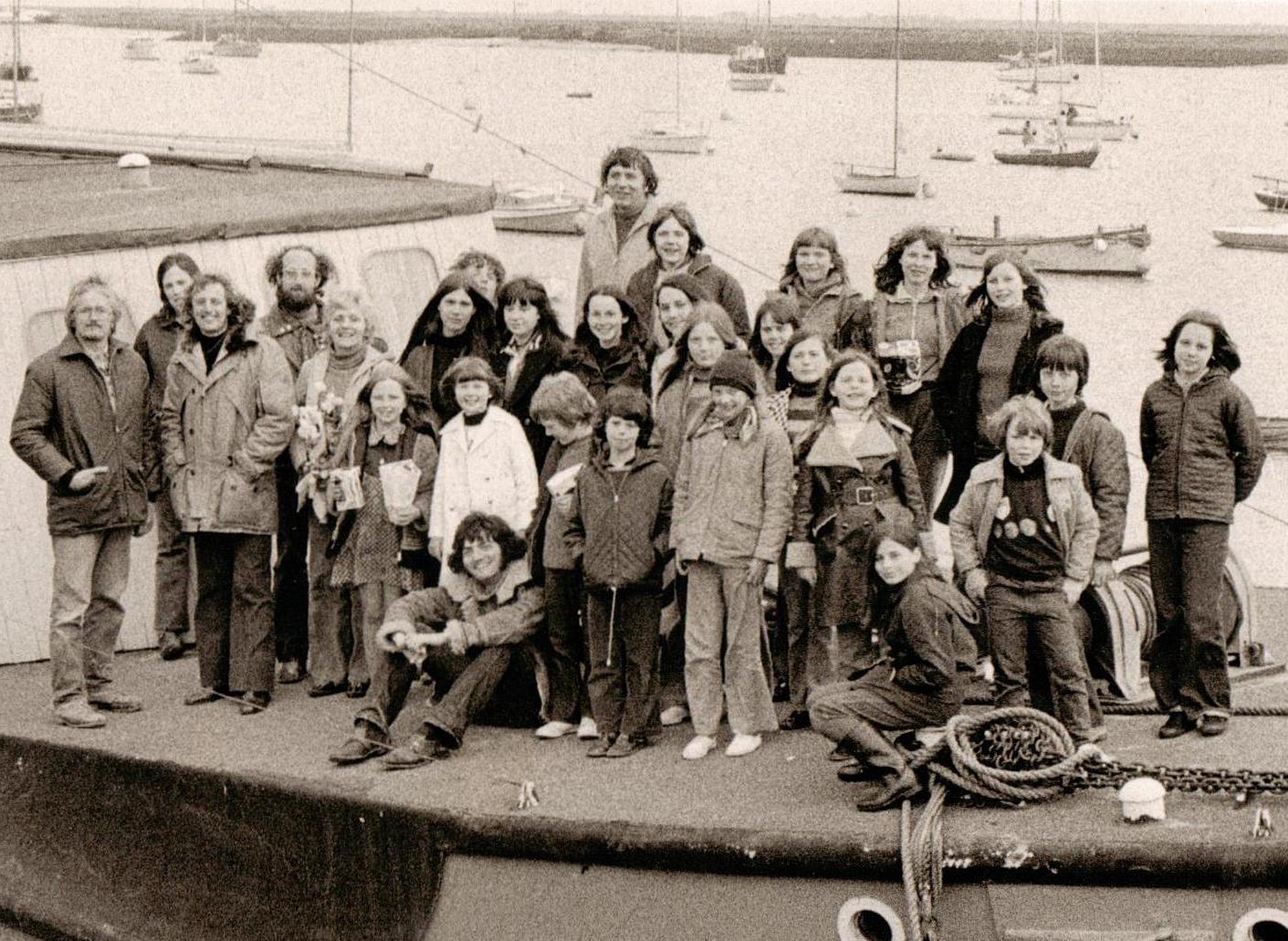
The filming was to commence on 14th May 1973 and continue through the summer term. Our local authority – Gloucester County Council – needed my headmistress’ permission for me to miss five weeks of school.

Only, I didn’t go to school in Gloucestershire. I went to an Anglican convent in Berkshire. The nuns prayed about the proposition. They gave their permission – if I was chosen.

I didn’t think I was right to play Titty at all. I was three years too old and too tall. Ransome’s illustrations in the books portrayed girls with straight, dark hair. I didn’t know it but the character had been inspired by a real little girl called Titty Altounyan. I share her Scots, Irish and English heritage, but she was one quarter Armenian and had dark colouring.

However, unknown to us, Mrs Ransome had asked that ‘an English Rose’ should play Titty. Claude Whatham cast Sten Grendon, who had played Little Laurie Lee, as my younger brother Roger. Mrs Ransome – NB:the lady who once been Trotsky’s private secretary – was not happy that he had black hair. She nearly cancelled the film, but conceded when she saw him with a short-back-and-sides.

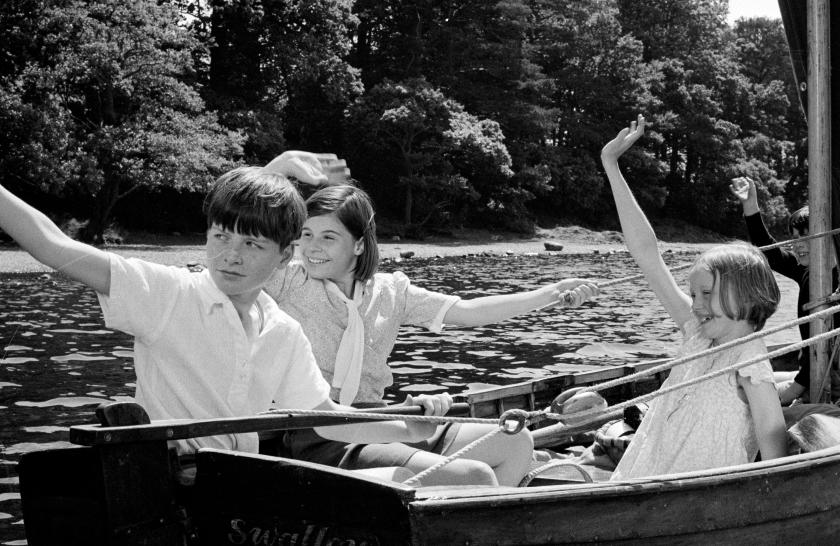
Sten Grendon as Roger and Sophie Neville as Titty rowing Swallow (c)StudioCanal

Sten claims we had the best parts. He grew up in the Whiteway Community and later went to school in Eastcombe. He now lives in France but still has family living in the Cotswolds. Back in 1973 his mother Jane, and my mother, Daphne, travelled up to the Lake District to look after us all.

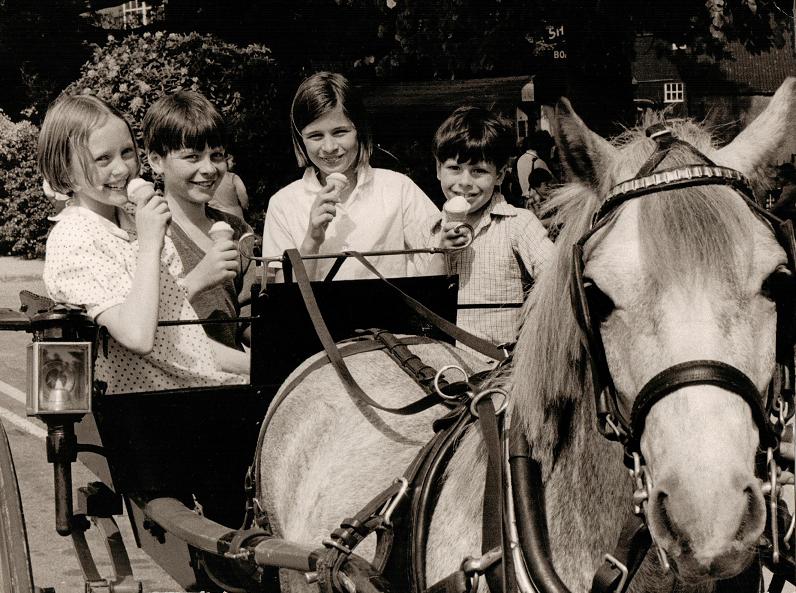
Daphne Neville with Sten Grendon, Suzanna Hamilton, Sophie Neville, Jane Grendon and Simon West

In at the deep end. Whoomph! We literally had to swim for it. The water was icy, but we had plenty of support. I was able to embody my part because Suzanna Hamilton, who played my sister, was so brilliant. She anchored us, as did Simon West, who played John. He was only aged eleven but very bright and a confident sailor.

Stephen Grendon as Roger Walker with Suzanna Hamilton on location in 1973

Making the film was character-building stuff. While it was an inspiration and privilege to work under arc lamps with Virginia McKenna, it was often chilly and involved a lot of hanging around.

Stephen Grendon, Simon West, Virginia McKenna, Suzanna Hamilton and Sophie Neville, trying not to look as tall as she was in 1973 ~ photo: Daphne Neville

Virginia had four children of her own and brought us together as a team. While making things fun, she got us to focus and concentrate as we recorded the first scenes at Bank Ground Farm.

Virginia McKenna at Bank Ground Farm
Virginia McKenna at Bank Ground Farm in 1973 ~ photo: Daphne Neville

Arthur Ransome had been inspired as a boy by two of his aunts who left for Peking to serve as missionaries. They must have had great adventures. One even received a Boxer arrow in her bonnet. The story of Swallows and Amazons is about a family of four children on holiday who embark on something of a missionary journey themselves when they are allowed to sail off in a dinghy called Swallow to explore an island on a lake. They are confronted by two local girls, the Amazons, who are behaving badly, as their Uncle Jim has retired to his houseboat so that he can concentrate on writing his memoirs.
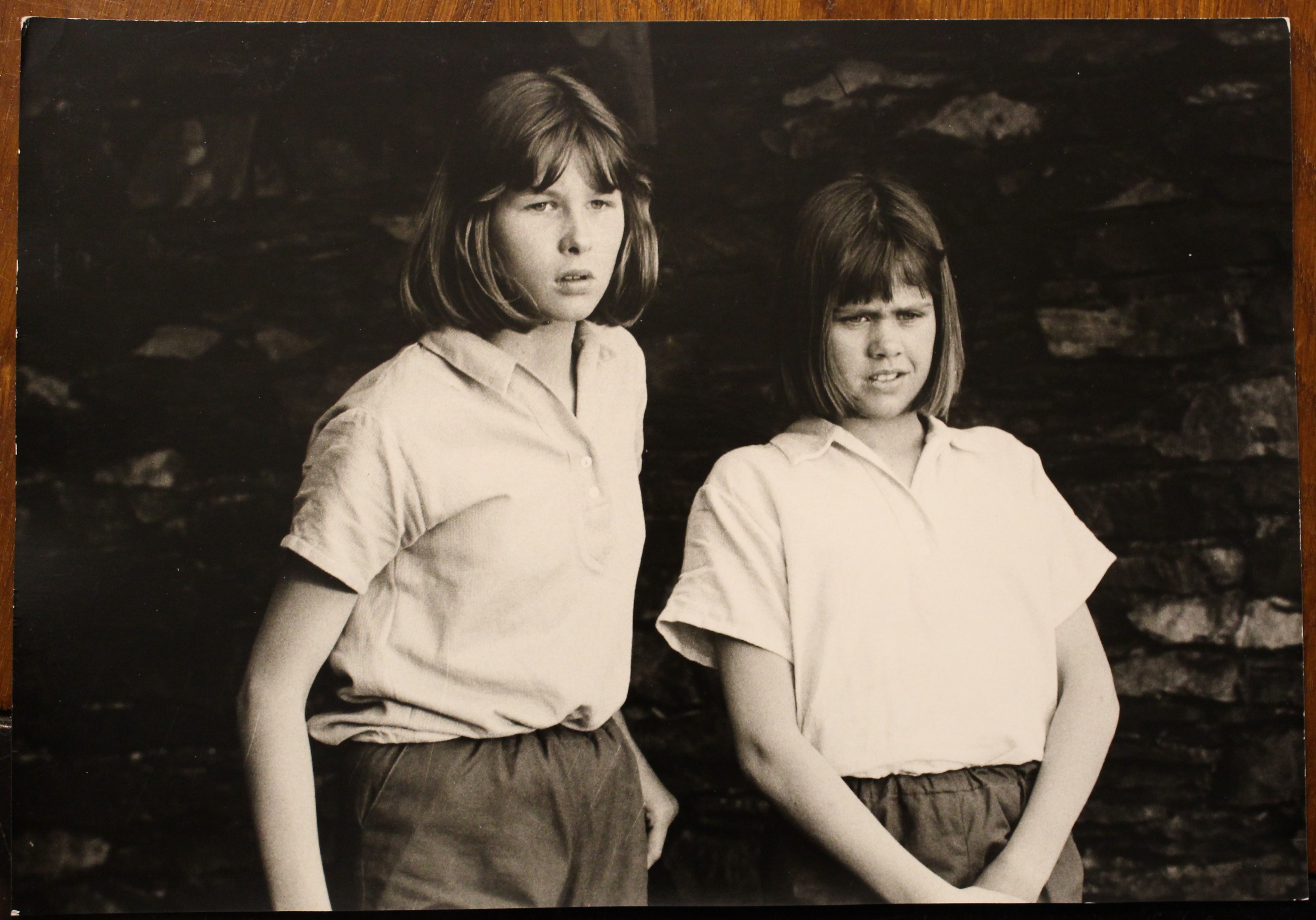
There is a strong undercurrent of fatherless-ness. Ransome had lost his own father before he could prove himself. The Swallows, whose father is in the Navy, come alongside the Amazons, who have lost their father and are being ignored by their uncle. They unite, make friends and have a lot of fun, whilst relishing in their independence granted because they are not duffers.

The crisis, in the story, is about the draft of a book being stolen, which I can only think must have been Ransome’s greatest fear. No one believes Titty, the youngest girl, who is sure she heard the burglars, so – in the film – she gets Roger to help her row Swallow to Cormorant Island where she finds it in what looks like a treasure chest.

Producer Richard Pilbrow with Neville C Thompson on Derwentwater in the Lake District in 1973
Producer Richard Pilbrow and Production Associate Neville C Thompson on Derwentwater in the Lake District in 1973

Richard Pilbrow and Claude Whatham had a tough time making the movie. Filming in the Lake District with its unpredictable weather and pressure from tourists was not easy. We faced endless problems and over-ran by two weeks.

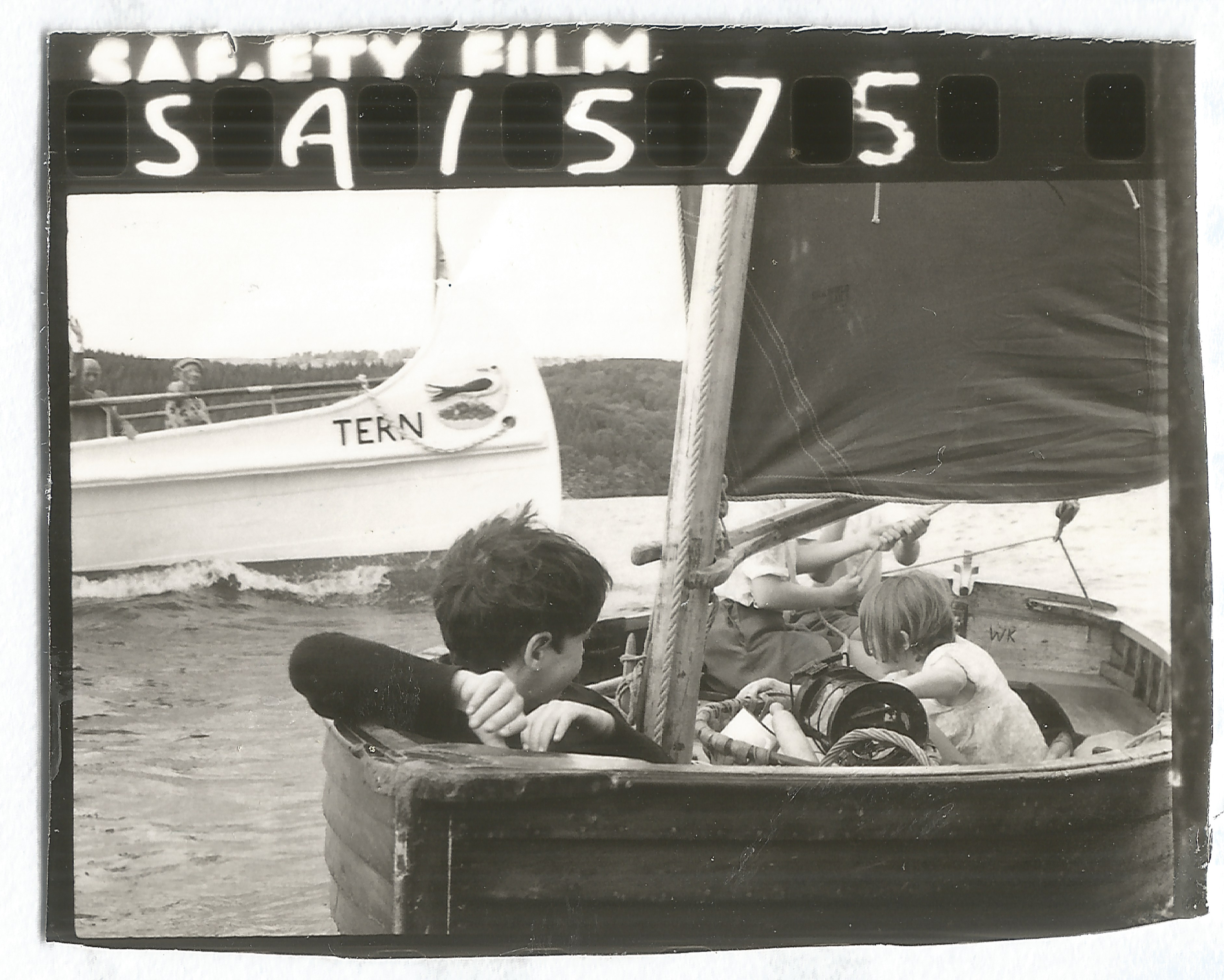
But Mum was praying, Granny was praying, the nuns must have been praying for me – we needed the covering: I was the only girl who never fell ill. Swallow’s mast broke. I fell in. Water sloshed into a support boat. The rain poured down. We nearly crashed into the Tern. Our life jackets proved useless. There was a gas leak in our bus. We could have had an explosion. Most of the crew smoked continuously.

Sophie Neville with Daphne Neville in the Lake District

The behavior of some members of the film crew was pretty toxic. Many drove too fast. A cow fell on to the producer’s car. I fell out of a tree whilst playing. Suzanna cut her finger. Ronald Fraser was almost permanently pickled. Someone got hit in the eye by a baseball. The film set was vandalized and I lost a tooth halfway through filming a scene with Virginia McKenna.

Virginia McKenna and Sophie Neville on Peel Island
Virginia McKenna with Sophie Neville keeping her mouth shut ~ photo: Daphne Neville

We pushed on. Ran the race with perseverance. Somehow the challenges gave the finished film an edge, an enduring quality that made it into a classic.

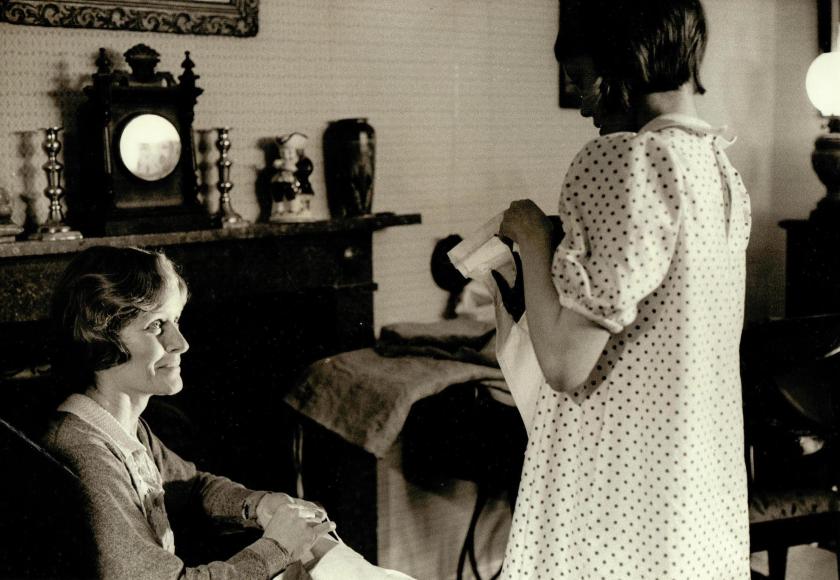
Sophie Neville as Titty

The crew began asking if I would go on to act. The big question: was this a calling on my life? I didn’t just play Titty. I’d been part of the production team, suggesting that Ransome-like title graphics were used, that Seymour’s voice was used for Nancy. I didn’t want to act. I wanted to become a film director.

I’d enjoyed the post production work at Elstree Studios but disliked the fuss around the cinema release. Seeing yourself on camera always feels uncomfortable. The premiere of Swallows and Amazons was daunting.

Premier ticket for the Gala of ‘Swallows and Amazons’

It was first screened at the ABC in Shaftesbury Avenue alongside The Exorcist. But look! I literally had two guardians. My mother invited the nuns from school.

The ABC in Shaftesbury Avenue in 1974. It is now the Odeon Cinema.

Sister Allyne came. She didn’t flatter me but she was there.

Sister Allyne, Daphne Neville, Tamzin Neville and Sophie Neville

Like it or not, I ended up promoting the film on television. After I featured in ‘Animal Magic’, an image of me, rowing up the lake at Bakers Mill in the Cotswolds with a green parrot on my shoulder was used to replace the test card.

I grew too tall to continue playing children on screen and there was not much money for film finance in the 1970s when inflation was roaring. Sister Allyne prepared me for a film test for a musical Disney adaptation of ‘The Old Curiosity Shop’ but I wasn’t chosen. The movie flopped. I returned to my lessons.

At the age of fifteen I had a leading part in an adventure film with Vic Armstrong and Sophie Ward, called ‘The Copter Kids’, and I had a few little television parts in serials like ‘The Two Ronnies’ and ‘Crossroads’ while I was a student, but the drive wasn’t there. It was just as well. I didn’t have the bone structure.

Suzanna Hamilton playing Susan with Sophie Neville as Titty busy writing the ship’s log

Suzanna had a strong desire to act professionally and fought for parts. She went on to appear in Tess directed by Polanski, 1984 opposite John Hurt, Out of Africa with Meryl Streep, Whetherby with Vanessa Redgrave, Brimstone and Treacle with Sting, and a number of increasingly dark movies. She survived to appear in Casualty, New Tricks, Eastenders and is still working.

What she hated was the publicity. It’s a difficult part to any job. As she said at the age of twelve, having your photo on the front page of the Evening Standard ‘makes you felt a right twit’. She was furious with me for writing about her under sung talent in the Telegraph even though she looked beautiful in the arms of John Hurt.
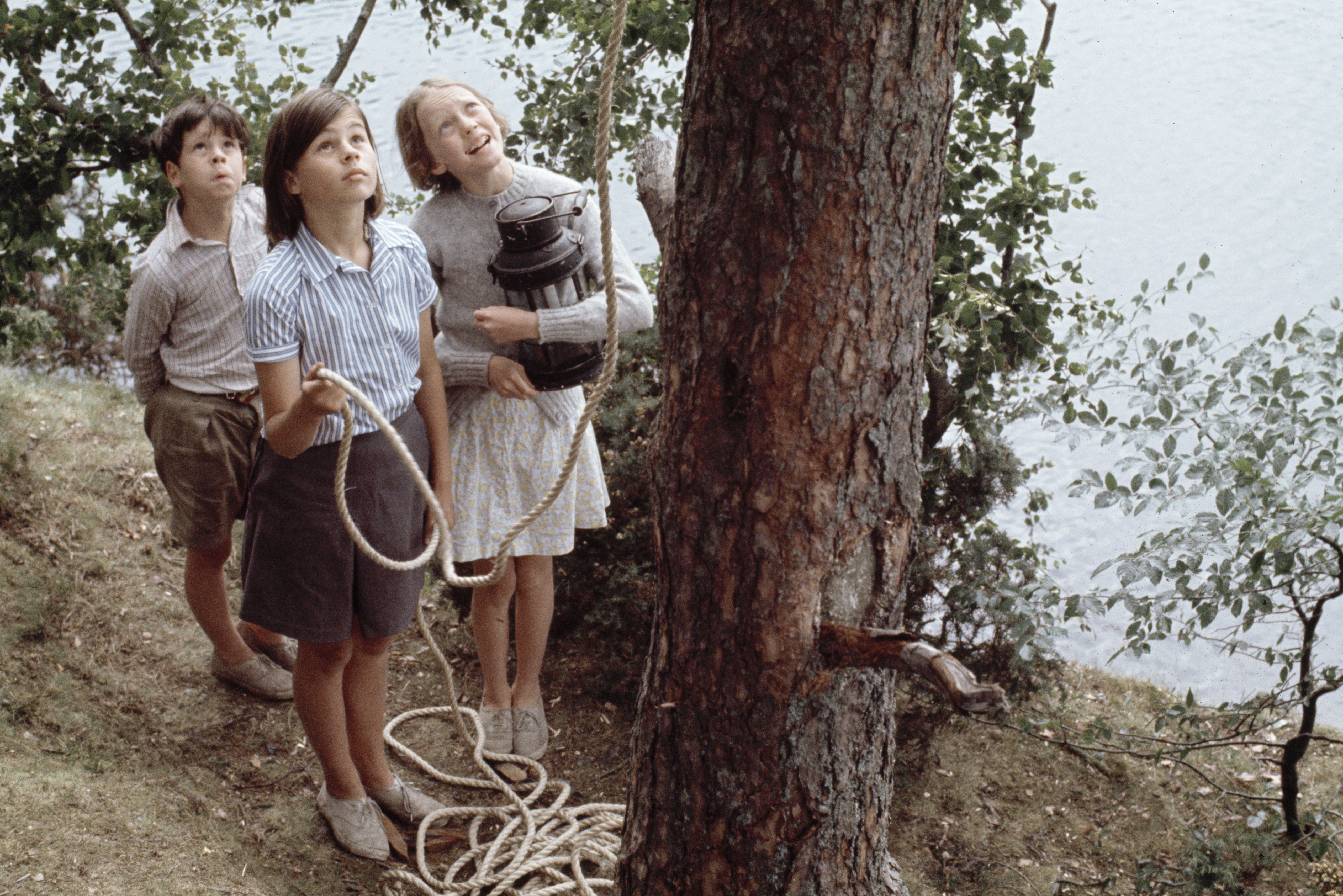
I developed a burning desire to direct and went into television production. I made my first documentary for Channel 4 whilst driving from London to Johannesburg. I must have begun directing at the BBC at the age of 27 and produced my first series aged 29, but overdid it and was hammered by ill health. It was a good training. I learnt endurance, how to edit and I grew used to working to deadlines. I understood about moving the audience, cliff-hangers and bringing out books to accompany your work.
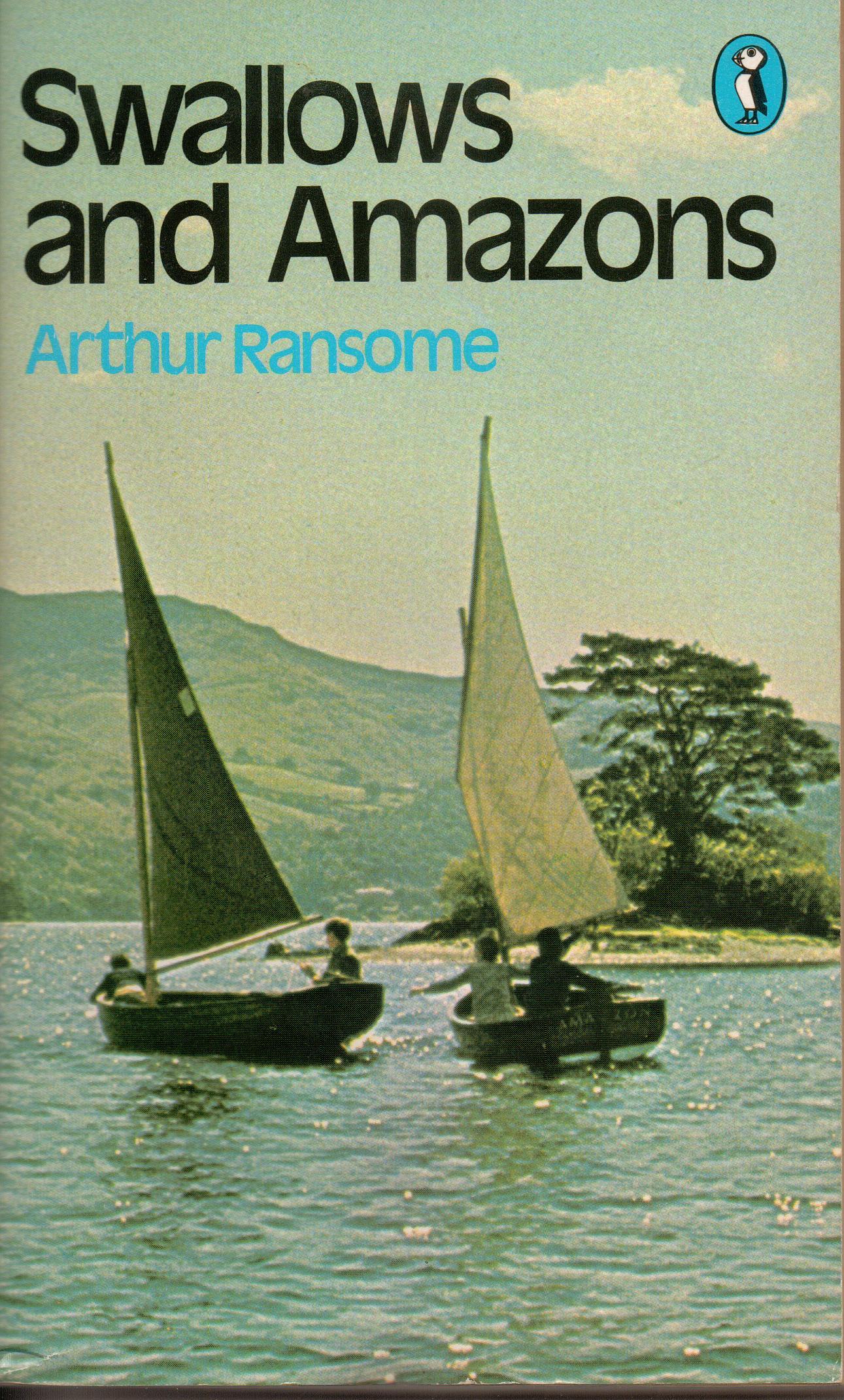
I didn’t learn to embrace the marketing aspect until I worked in the safari industry when I was assured it comprised 50% of the job. This attitude helped when I became and wildlife artist and later an author. After writing two books my readers – and my formatter – implored me to write about the making of Swallows and Amazons, especially once they learned that I had kept a diary whilst making it – as did Suzanna.
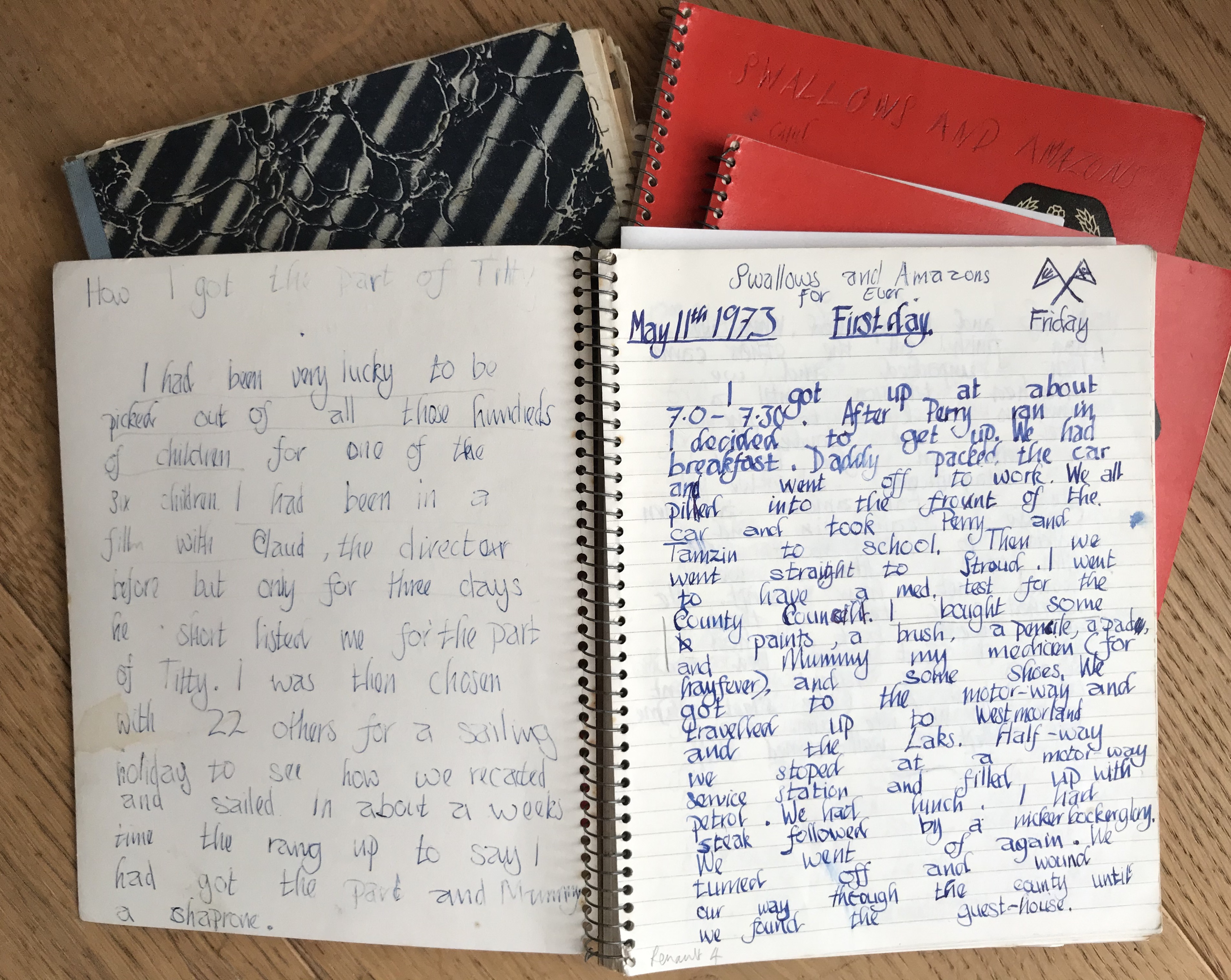
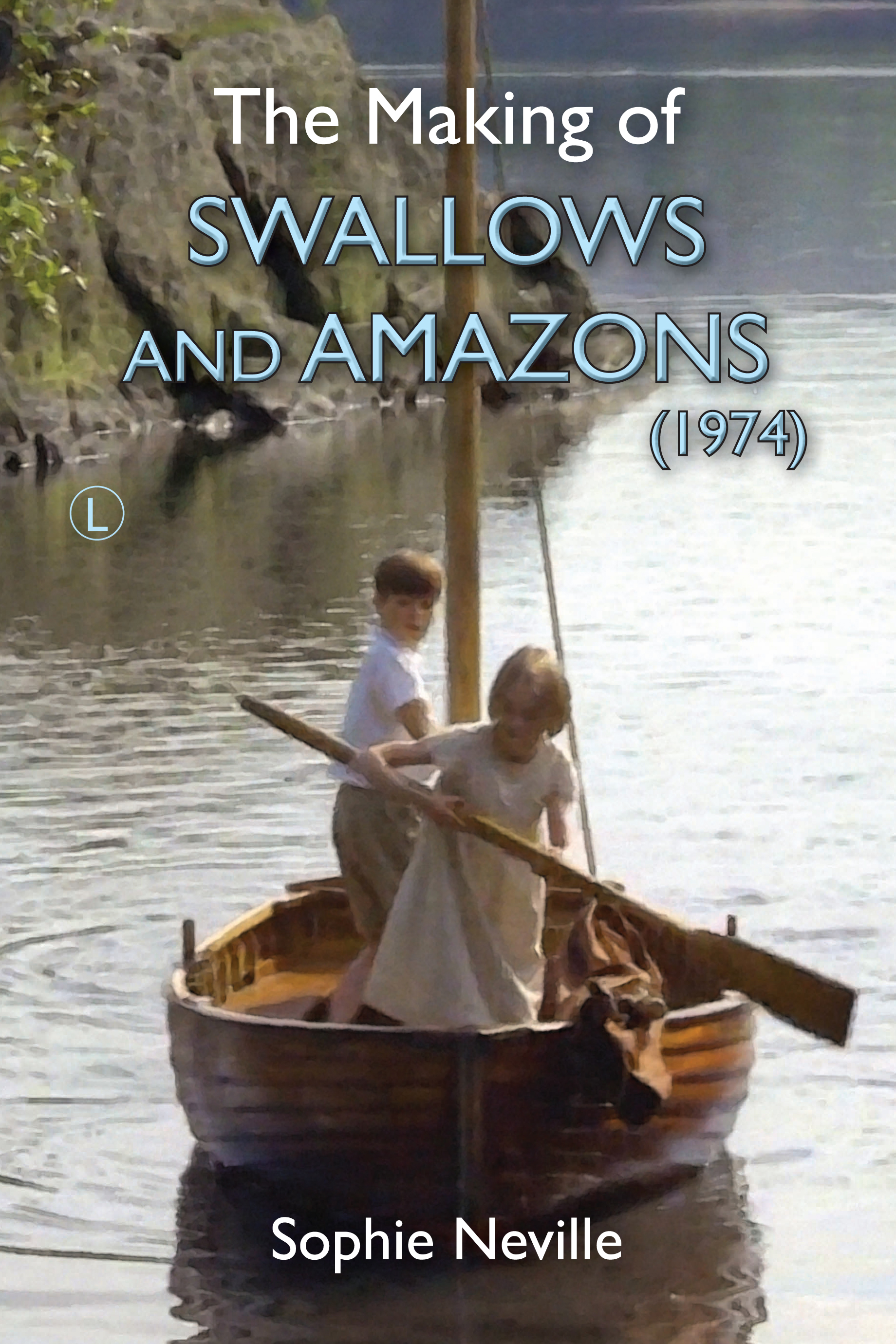
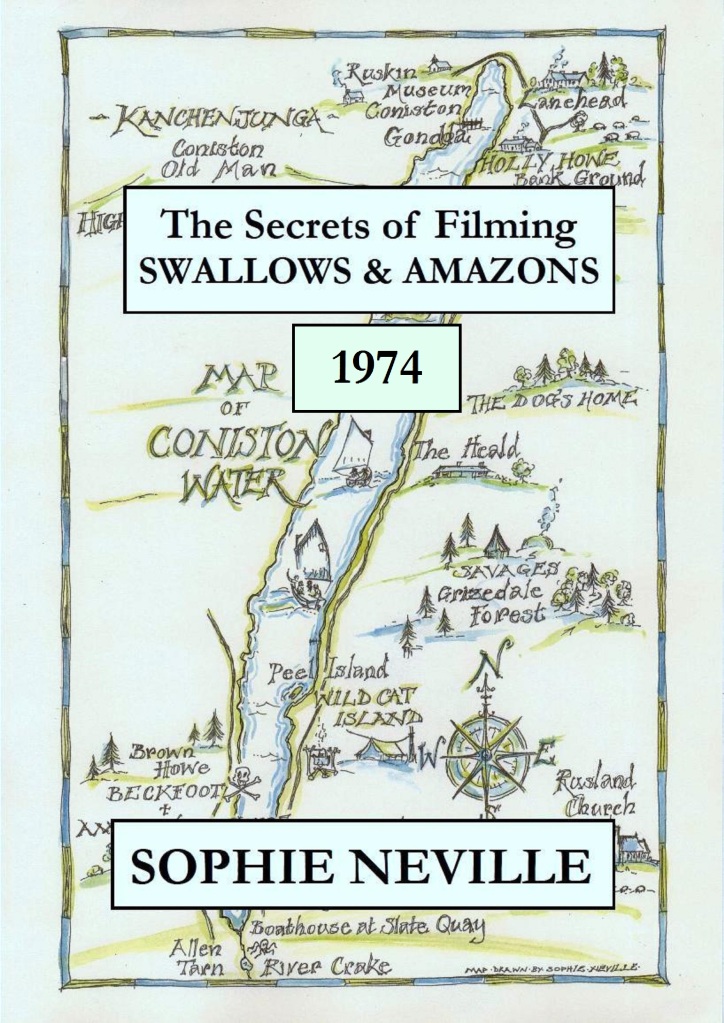
I first brought this out as a multimedia ebook, which is now in its second edition. It includes links to the cine footage my parents took on location. There are two versions of the paperback entitled ‘The Making of Swallows and Amazons’, seen here on the flag we captured.
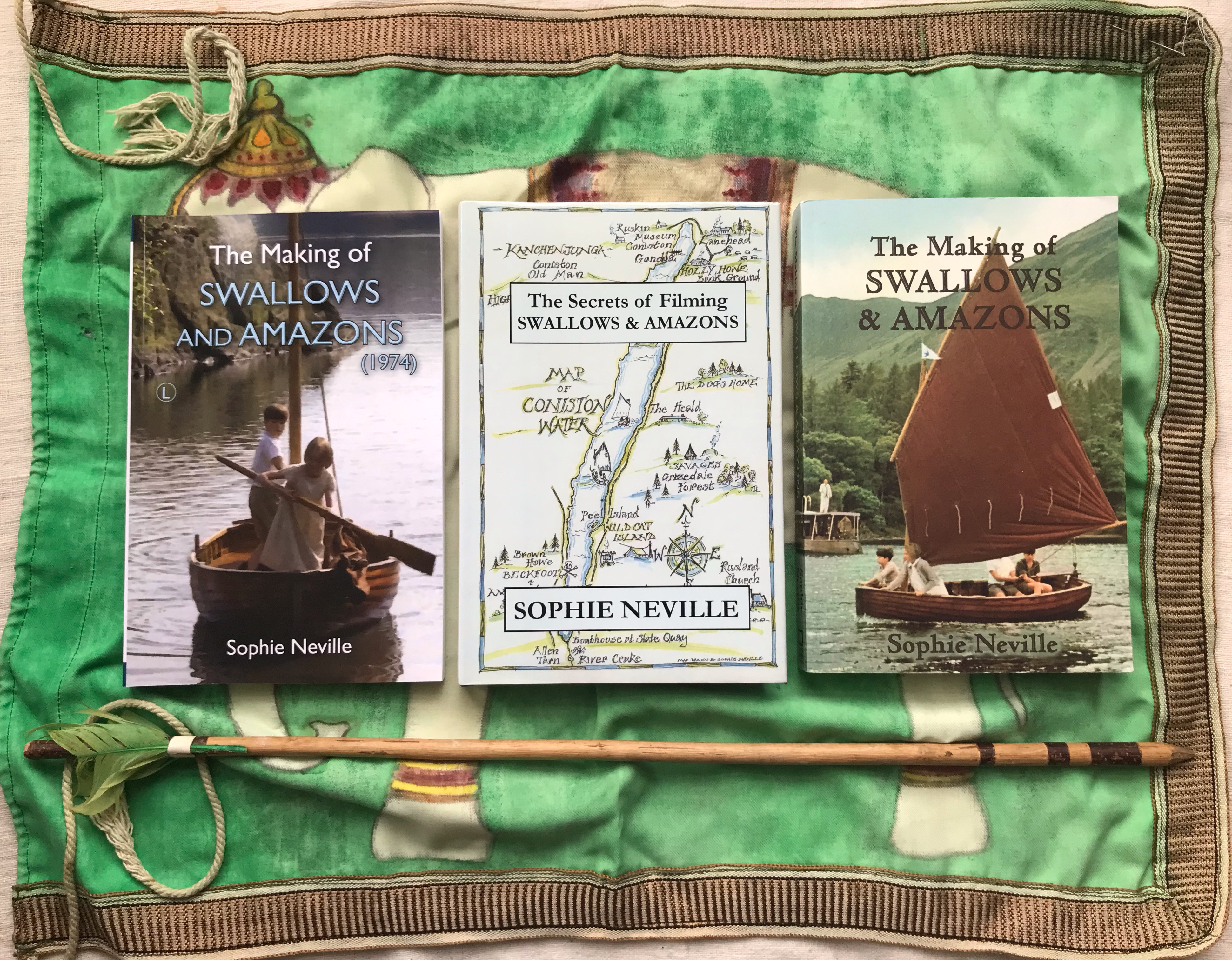
'The Making of Swallows and Amazons (1974) by Sophie Neville'
Different editions of ‘The Making of Swallows and Amazons (1974) by Sophie Neville’

It has been a delight to figurehead a story about sailing, a pillar of childhood that has influenced so many. Parents want me to engender a love for the outdoor life, sailing and exploring the lakes and countryside.
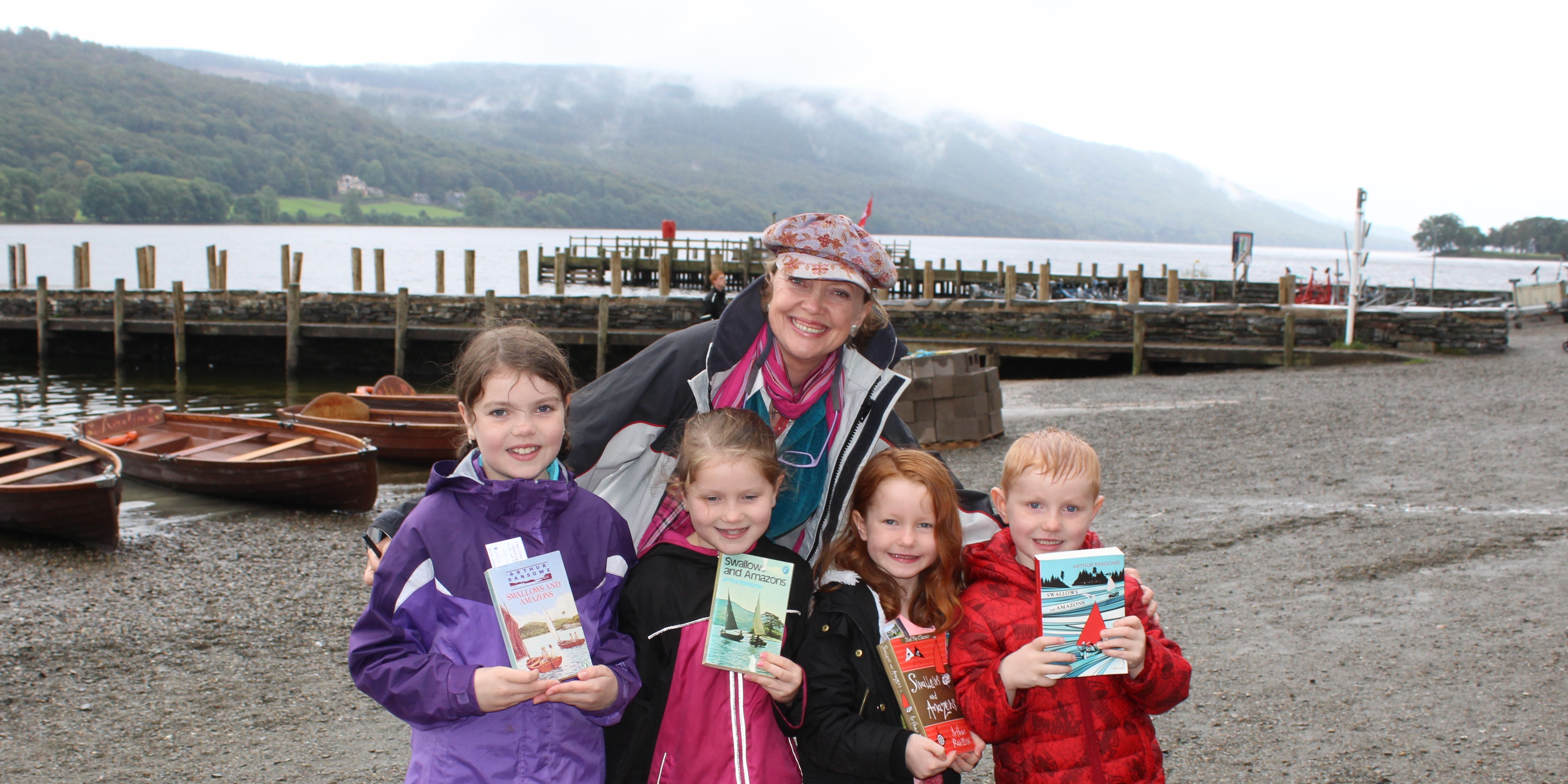
I hope I have helped to attract the right kind of people to the Lake District, that we have been able to inspire young people to read Arthur Ransome’s books, to get out into the countryside and sail, fish, go camping, build friendships, whatever the weather.

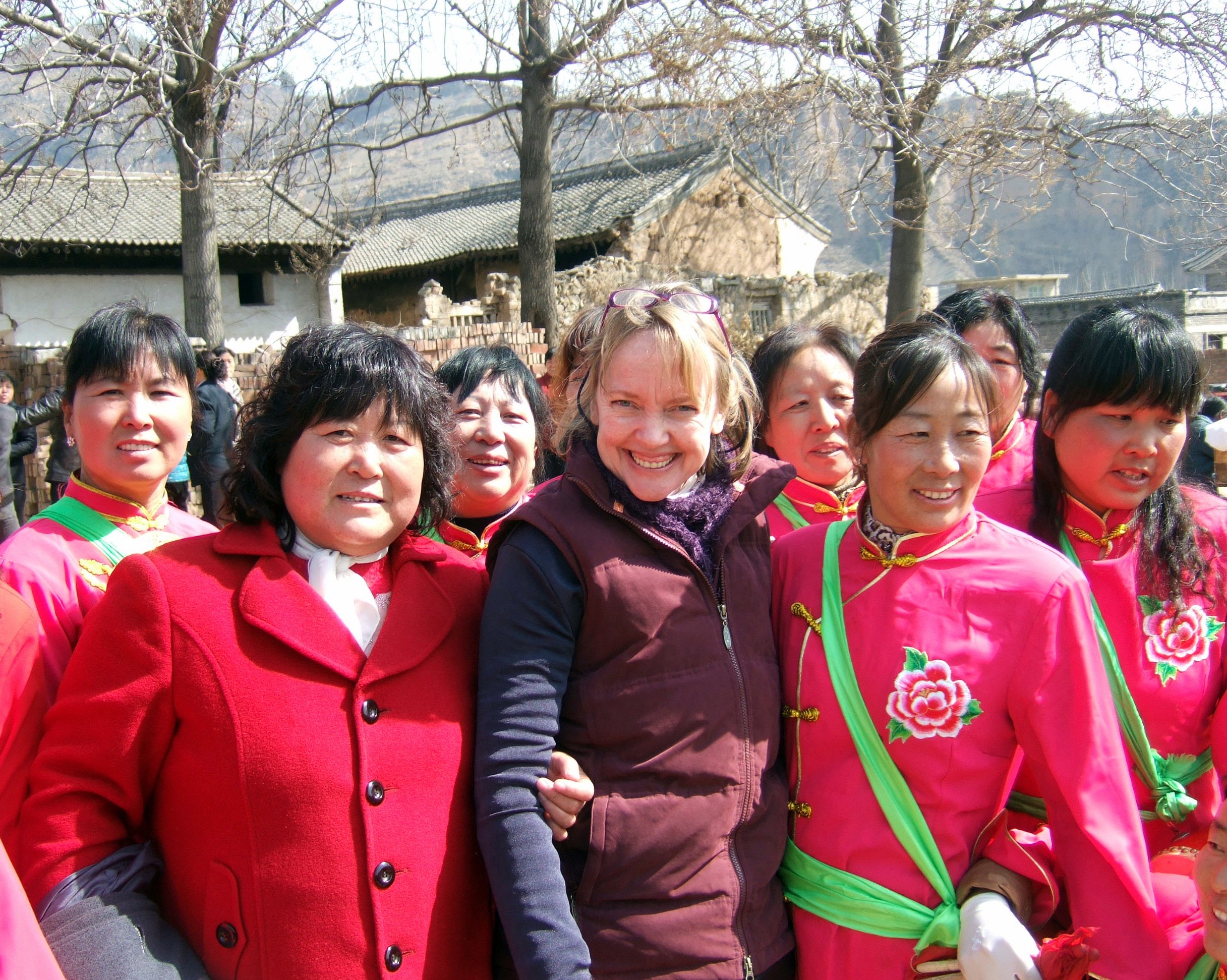
In the footsteps of Ransome’s great aunts, I went on a Bible Society mission to China. The people we met thanked us for coming, saying they hadn’t received European visitors for forty years. ‘But we’ve seen Europeans in town.’ ‘Them? They have just come to make money, not visit us.’
Does the old film shine a light, offer solace? People write in to tell me that the film of Swallows and Amazons carried them through a difficult patch. Some watch it once a week. It exists to remind people that they need not despair.

Does the symbolism still hold? It was my self-appointed job in the screenplay to wait, alone, and light the lantern, to be a light in the darkness that could be seen for miles.

Swallows and Amazons was not made to make money. It wasn’t the producer’s motivation. Richard Pilbrow just loved the books and wanted to bring them to life. We children didn’t do it for the money. There wasn’t very much. I earned £7.50 a day and was given a book token for appearing in the Lord Mayor’s Show. Even today, StudioCanal were reluctant to pay my expenses for re-launching the 40th Anniversary DVD when we were interviewed for the Extras package.

It doesn’t matter. I have been so warmly greeted so warmly by fans of the film. I was invited to become President of the Arthur Ransome Society, and have been offered numerous opportunities to speak about my books. I’ve passed on most of my speaking fees to charity – sending disadvantaged children in South Africa on an environmental course that has literally changed their lives.
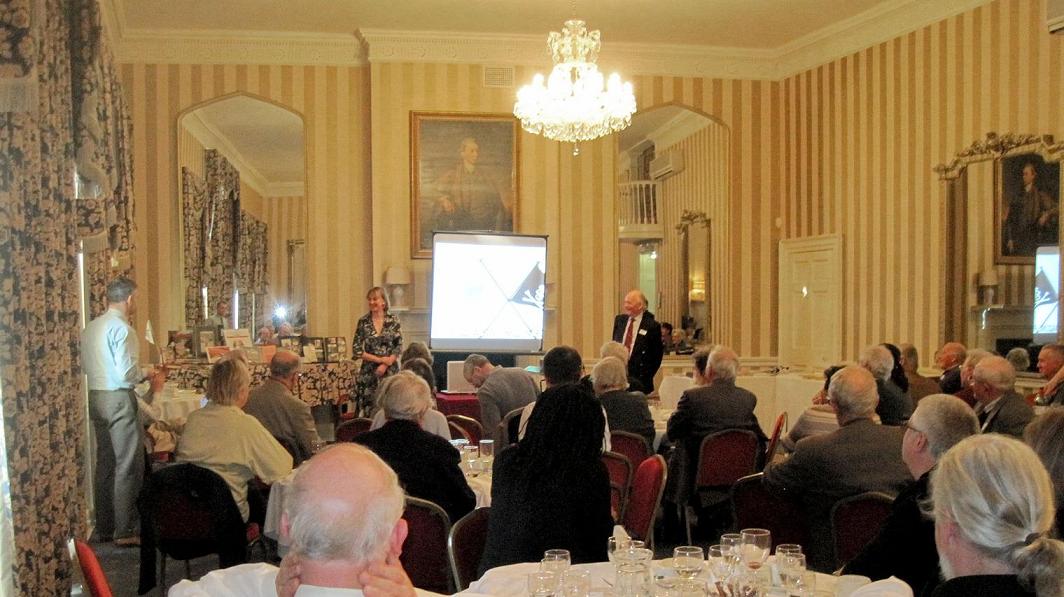
Sophie Neville speaking at The Arthur Ransome Society

The treasure Titty found wasn’t pieces of eight. It was heavy to carry, but she was rewarded for her tenacity. She was given her heart’s desire, and parrots live a long time. They can easily outlive their owners.

The author Julia Jones points out that, ‘the treasure that was finally unearthed on Cormorant Island was a book. It might or might not have been a good book but the message of the story is quite clear: if you’re convinced that there’s something hidden under the rocks, all you can do is keep digging.’ 

An extra ordinary thing happened. When Richard Pilbrow was awarded an honorary degree from he invited Suzanna and I to lunch in London. As we left the restaurant in Covent Garden a group of buskers outside where singing the final sea shanty from the film, What Shall We Do With the Drunken Sailor? What were the chances of that? We hurried on to find transport and found ourselves outside the cinema where the premier had been held.

Something else happened to me as a result of Swallows and Amazons. Not what you might expect. We all wanted to learn to shoot with a bow and arrow. The next film role I was offered was as an archery champion. I kept up the sport, and ended up meeting my husband at a long bow meeting in the village where I was born. He was the chairman of the archery society. I won the Best Lady’s Gold. These are my colours:
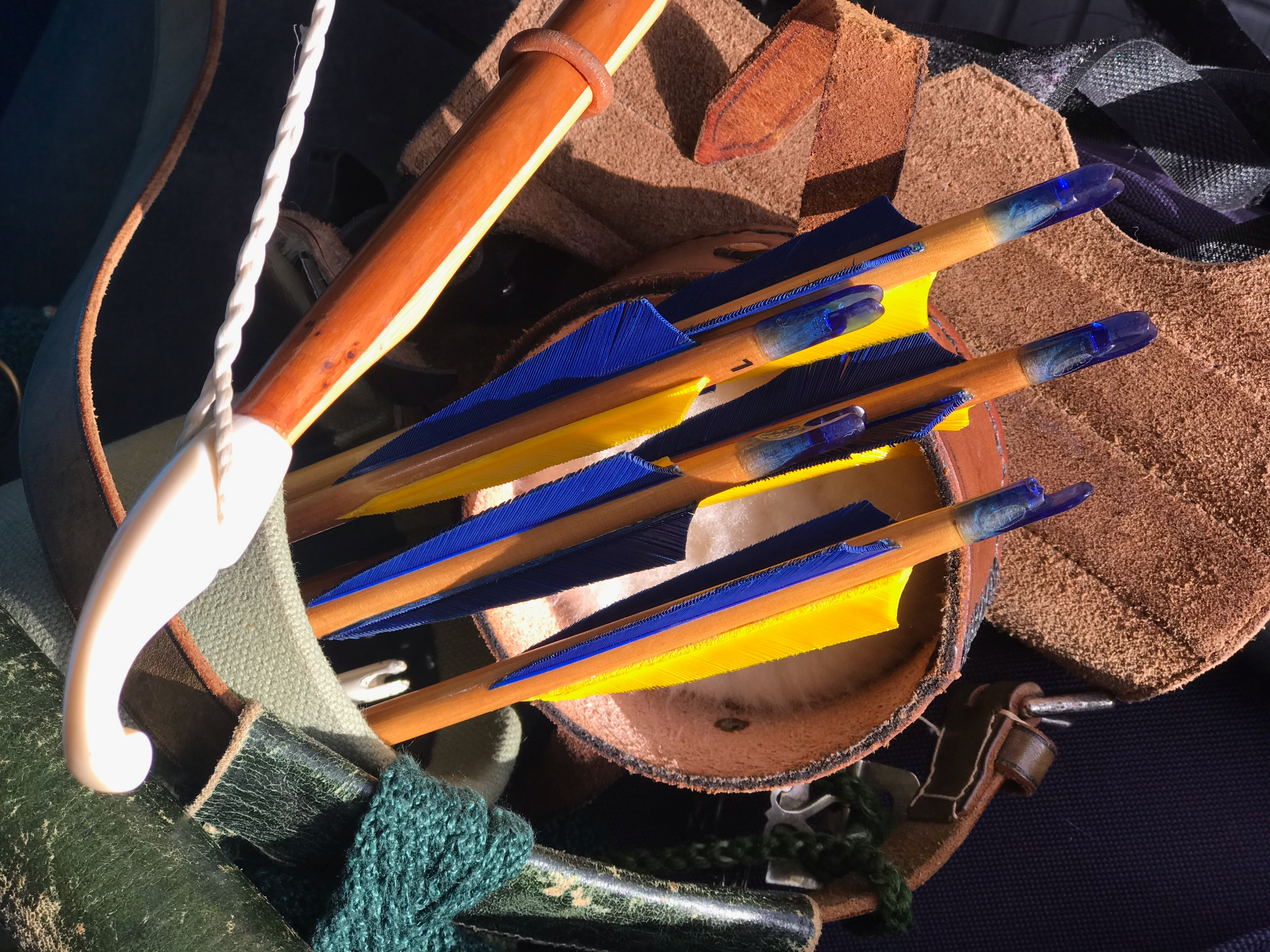
Sophie Neville's bow and arrows

Proverbs 23-23 talks of wisdom, instruction and insight. My name, Sophia, means wisdom. My hope is that others gain wisdom and insight from what I have written.

You can read more in ‘The Making of Swallows and Amazons’, which is coming out as an audiobook. It will available from all the retailers and is currently on Scribd here.

Sophie Neville has been speaking at the Stroud Christian Book Festival.

A write up of Sophie’s talk for BookBlest – the first Stroud Christian Book Festival – on The Making of Swallows and Amazons can be found on this website here

If you missed Sophie’s talk on ‘The Making of Swallows and Amazons’, you can read about her adventures in one of these editions, available online.

'The Making of Swallows and Amazons (1974) by Sophie Neville'
Different editions of ‘The Making of Swallows and Amazons (1974) by Sophie Neville’

There is a brief resume of the talk on this website, here Prepare to be taken back to the 1970s:

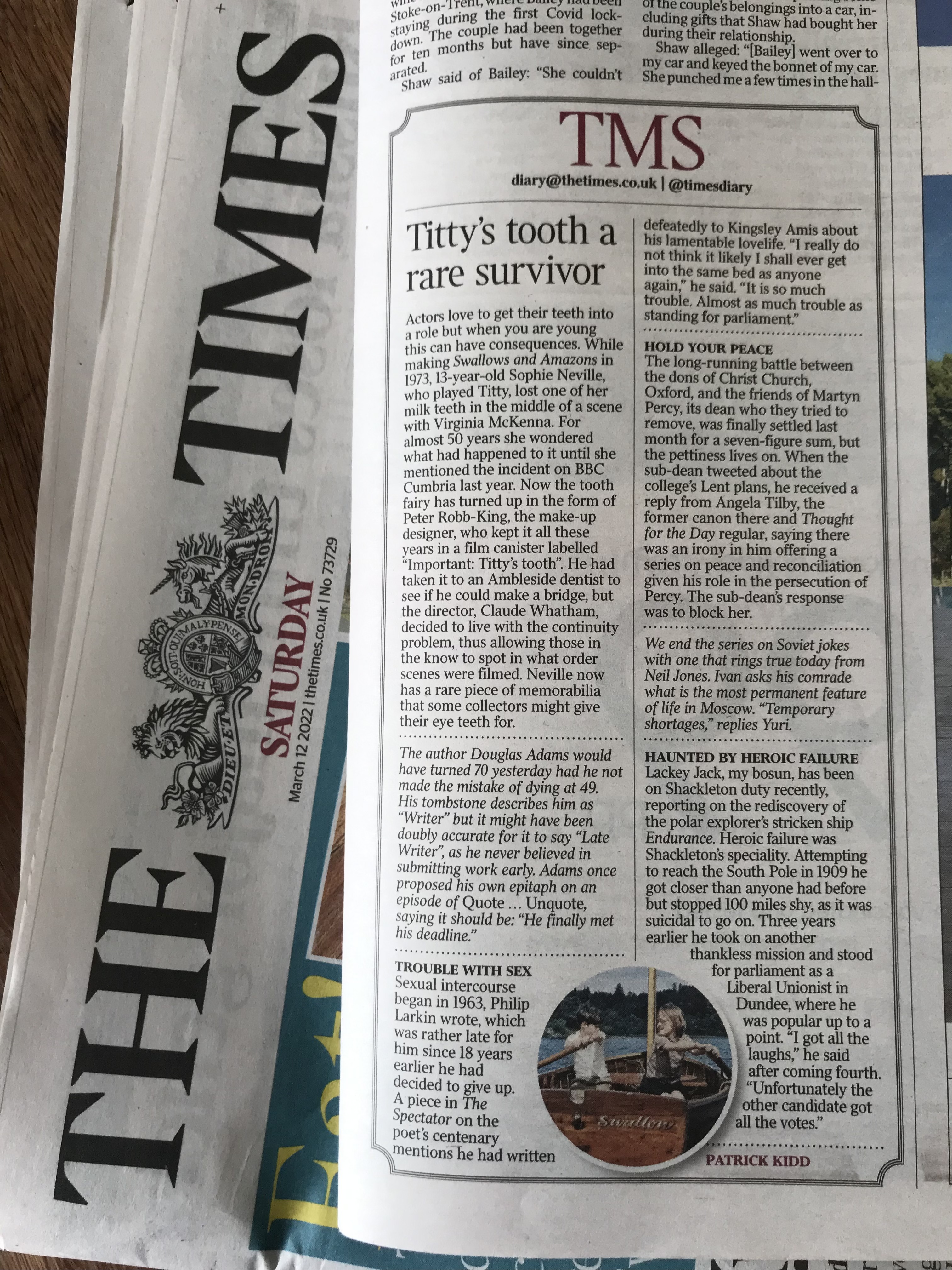
Titty’s Tooth in The Times

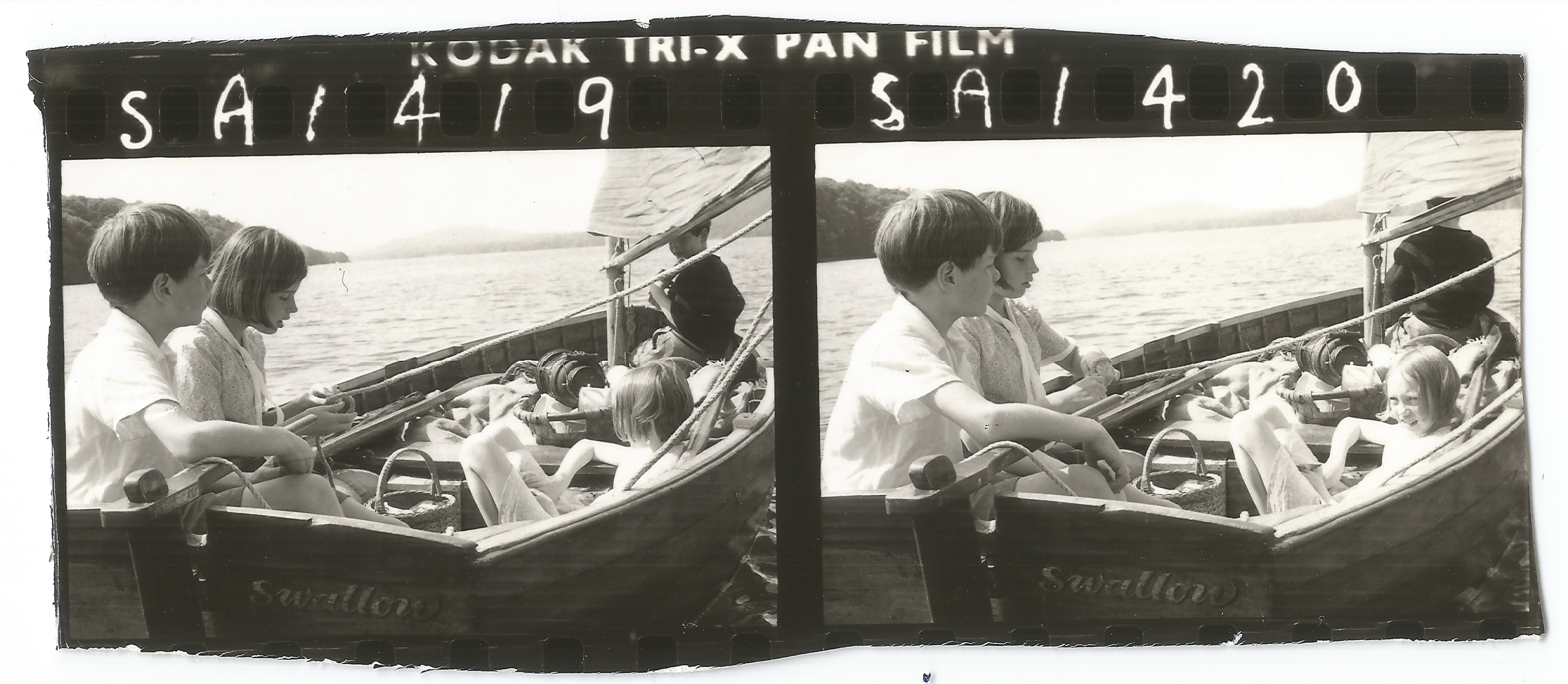
Sten Grendon and Sophie Neville – trying to row with her mouth shut.

The story of my missing tooth published in The Times! A great honour. The indignity of being toothless still rankles but I now have a full set.

You can find the whole story on The Nancy Blackett Trust website

It’s possible to spot the gap by watching the film trailer for the 1974 movie of ‘Swallows and Amazons’ with further information on the International movie data base also seen here:

Sophie Neville, aged 12, without tooth. Suzanna Hamilton, aged 12, with beautiful teeth.

A signed, first edition copy of ‘The Making of Swallows and Amazons (1974)’ is being auctioned in aid of BBC Children in Need

Are you looking for a special Birthday or Christmas present for someone who happens to love the original film of ‘Swallows and Amazons'(1974)?

Sophie Neville
Author Sophie Neville

Paddy Heron of Children in Read has a huge number of amazing books listed in a charity auction being held to raise funds for BBC Children in Need. Nearly £21,000 has already been pledged, which is amazing. We have 3 days left to bid, so you have time to chat to the family!

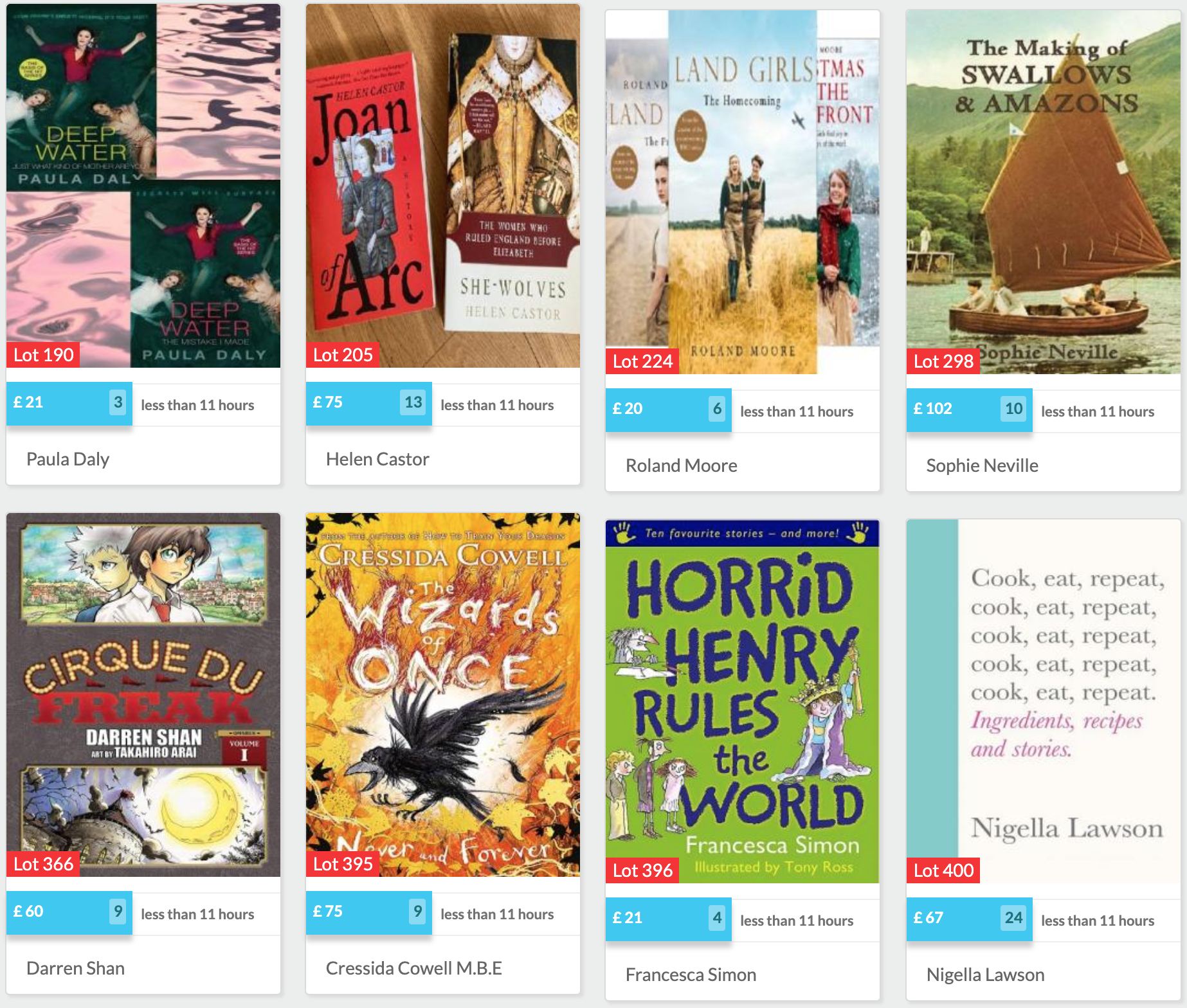
‘The Making of Swallows and Amazons (1974)’ is listed as Lot 298, in the section ‘Film & Television’ above Nigella Lawson’s book ‘Coot, eat, repeat’.

Listing in the Film and TV section

To place a bid, click on this link: https://www.jumblebee.co.uk/childreninread2021?cid=2431

and scroll down until you see the image of the book you would like to bid on, then click on the price button and you can enter a bid when the large image pops up. You don’t pay until you win on the final day. I will pay the postage within the UK and inscribe the copy to whom you wish.

What the bidding page looks like

We now have another bid for £101. Copies on Amazon.UK – where is it has 47 reviews, are now listed as costing about £76. I promised that if the bidding went higher than £78 I would personally inscribe this large paperback edition and include a signed first edition hardback copy of my autobiographical book ‘Funnily Enough’, worth £15, which includes a few pages about filming ‘Swallows and Amazons’ in the Lake District.

‘Funnily Enough’, Sophie Neville’s illustrated diary

I said that the bidding goes any higher than £101, I will include a copy of ‘Ride the Wings of Morning’, my memoir about leading a Swallows and Amazons style life camping in Africa:

Ride the Wings of Morning by Sophie Neville

To read about taking part in the same auction last year, please click here

If you need to know more about the auction, please contact Paddy Heron at Children in Read: childreninread@yahoo.com

Listings in the AutobiographyBiography section

The lighthouse tree lantern from Swallows and Amazons (1974) has come to light

I received an interesting series of emails recently from a stone mason called Philip Chatfield:

“Hi Sophie, I was watching ‘Swallows and Amazons’, the old classic, on Talking Pictures TV… great channel. Curiously, I have, hanging in my cottage ceiling timbers, the lantern you used for the Lighthouse on Wild Cat Island !!!!!!”

The lighthouse tree lantern today

‘Lanterns like this pattern are not common, so I presume it must be the one used in your 1974 film. I like to think so. There is a hole in the top of my lantern which has been plugged up and holes in the base too. If you use the lantern with candles, which is what I always do. then you cannot have a hole in the top of the lantern. Heat goes up and out of it and the rope or wooden handle may catch fire! It is stopped up with a small bolt with a flat rounded top.’

The holes would have been made to insert an electric light behind the candle so that it would show up on film.

Sten Grendon (Roger), Suzanna Hamilton (Susan) and Sophie Neville (Titty) at the lighthouse tree in the 1974 movie of Arthur Ransome’s book ‘Swallows and Amazons’

It certainly looks like the lantern we used, which I knew well at the time. A hurricane lamp is used in the book Swallows and Amazons. John, ‘tied the other end round the oil box at the bottom of the lantern’, although candle lanterns were used to mark Secret Harbour.

You can see the lantern lying near Swallow’s mast

The black lantern was packed into Swallow on the voyage to the island, visible when the Walker children narrowly miss the Tern. You can see it lying in the shallow basket.

Film stills taken by Albert Clarke in 1973

It was rather uncomfortable to lean over when handing Roger the telescope.

Swallow nearly collides with MV Tern

The basket was taken out of Swallow at the landing place and Titty moves it up the beach ‘for fear of tidal waves.’ See if you can take some screen shots of it hanging from the lighthouse tree.

The same lantern was used in the movie ‘Far From the Madding Crowd'(1967) starring Alan Bates, Peter Finch, Terence Stamp and Julie Christie.

Terrence Stamp with the lantern

You can also see it hanging from a farm cart.

The same lantern

Philip says, ‘Clearly all the props went back to the Turk Phoenix shed near Teddington after shooting.’

Mike Turk’s warehouse full of film props

‘I never thought about it before but I used to work on a sailing ship called Grand Turk, which was owned by Mile Turk of Turk Phoenix who did a lot of film work.’

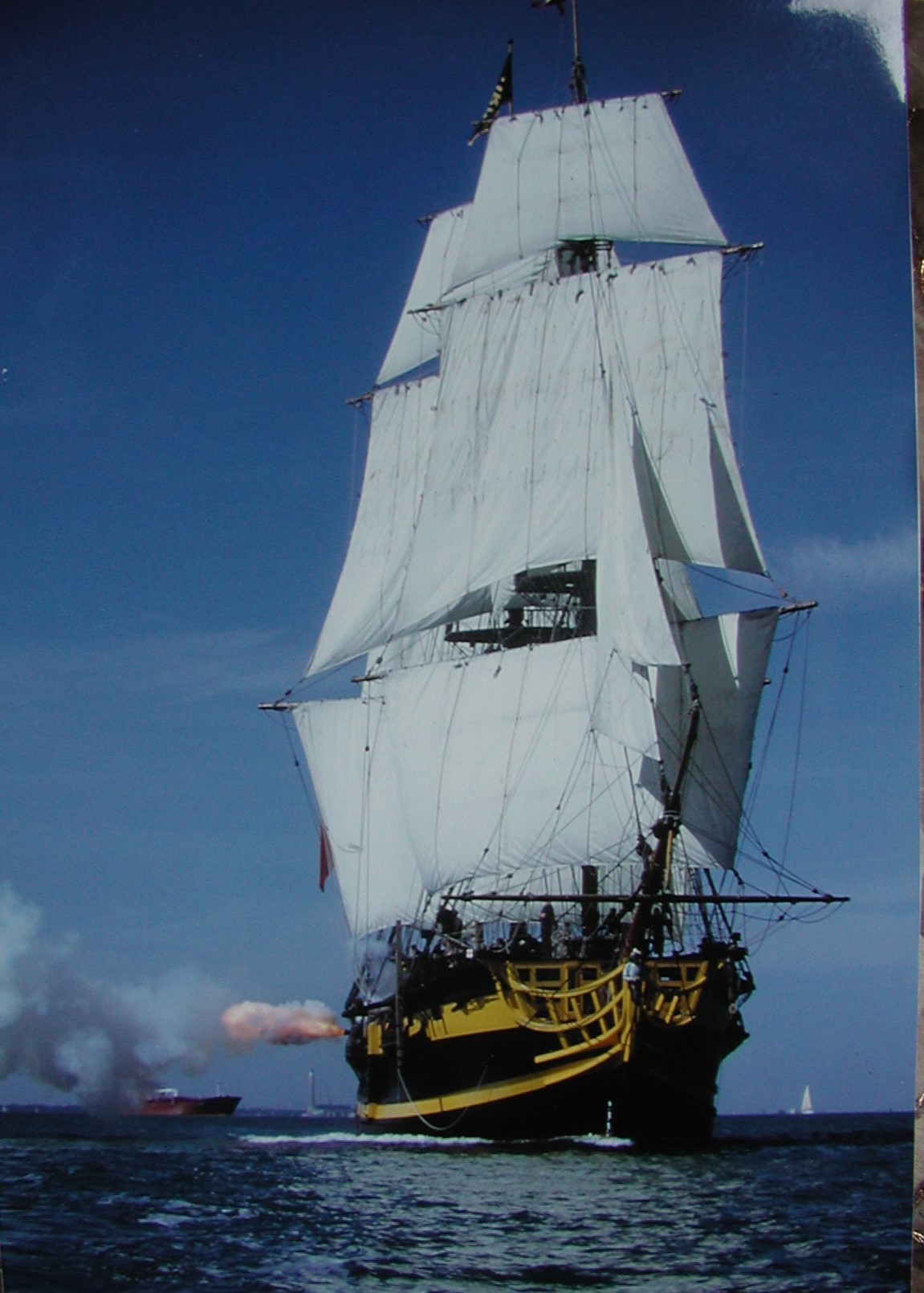
SV Grand Turk with Philip Chatfield firing a live shot on the Solent.  “That would have given Captain Flint’s houseboat a shaking up!”

‘The Grand Turk played the HMS Indefatigable in ‘Hornblower’ with Ioan Griffiths and co. While I was on board (as Third Mate and Gun Captain) I needed more props for the gunnery dept. The lantern was one of the props we had on board. It came from Turk Phoenix who still had one of the boats used in your wonderful film.’

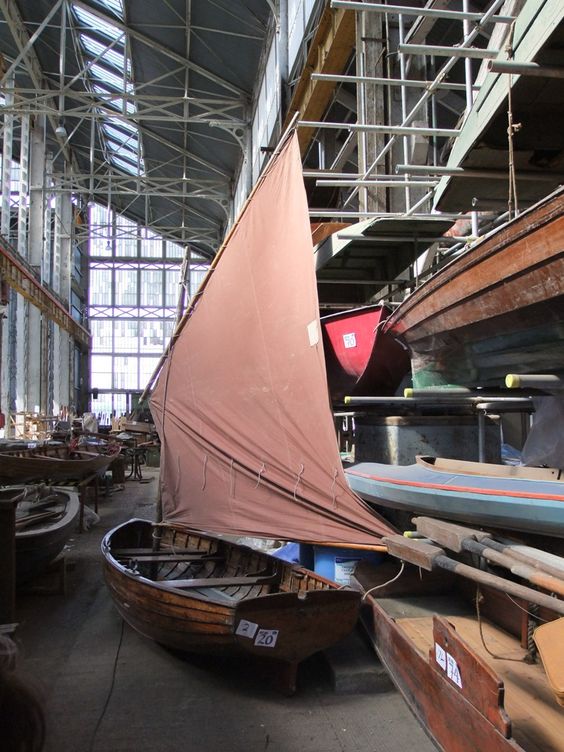
Swallow at Mike Turk’s warehouse in 2010

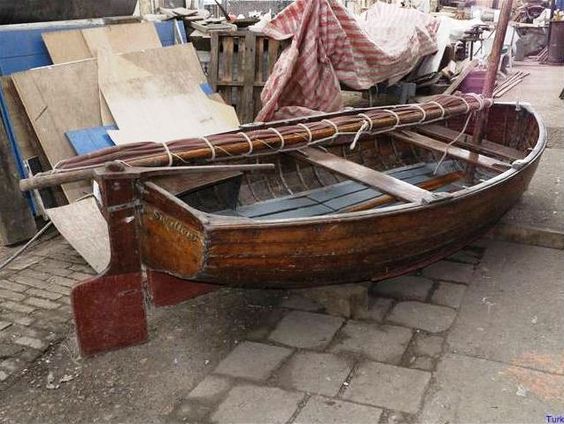
‘Mike Turk’s business provided nautical props.’ When Mike reached the end of his life and fell ill, many of these were sold at auction in 2010, including the dinghy that played Swallow in ‘Swallows and Amazons’ (1974), which was purchased by group of film fans now known as SailRansome.

Swallow prepared for auction in 2010

‘Before my time on Grand Turk I spent five years working on a lovely old square rig ship called MARIA ASUMPTA. Back in 1991 we sailed from London’s St Katherine’s Dock to Ipswich. We anchored off Shotley on the Orwell pretty much where the GOBLIN in Ransome’s book ‘We Didn’t Mean To Go to Sea’ book was set. As we hauled up our anchor we brought up a small kedge anchor. I still have it. At the time I was convinced it may have been from the story or even the sailing trip the story was originally based on. Who knows, but it is a lovely anecdote.  We had sailed the autumn before to Flushing in Holland and did a tour of the inland waters of Holland.’ 

Philip Chatfield with a kedge anchor

‘Sadly, Maria Asumpta was lost off Padstow in May 1995 with the loss of three crew. Thankfully I was one of the survivors.’

Maria Asumpta wrecked on a desolate shore

‘You can just see me standing staggering, second from the left, in a state of shock. Three were lost but I was amazed more weren’t, frankly. My friend the bosun Graham is sitting on the stern about to leap off. He survived, just. The ship had been built in Barcelona and launched in 1858.’ By the 1990’s it was the oldest square rigger still sailing.’ A true ship wrecked sailor! What would Titty say?

Philip Chatfield in HMS Victory working on a carving of Lord Nelson in 2008

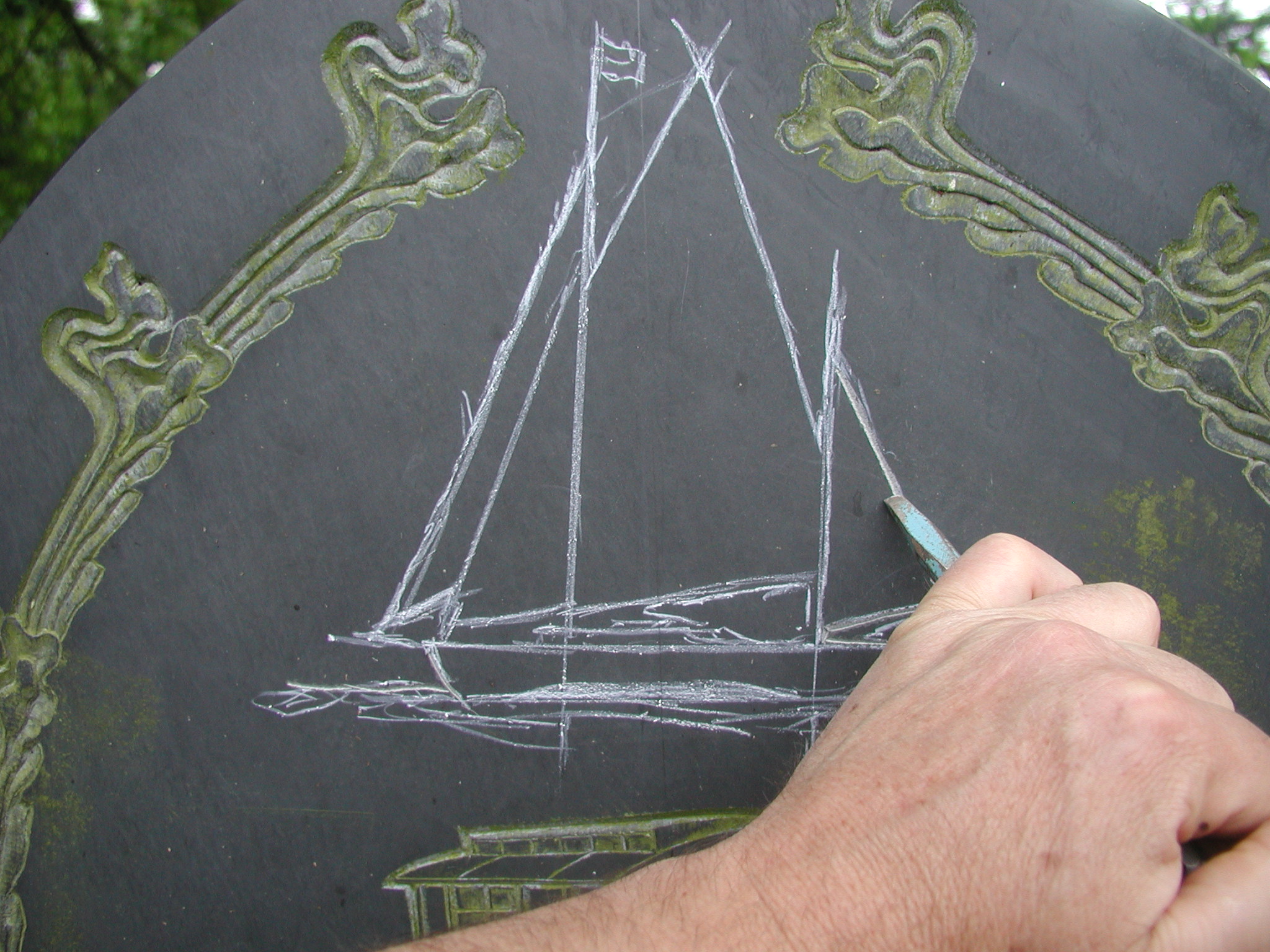
‘As a stone carver and sculptor I make memorials. A few years ago I was asked to do the memorial for one of my old school teachers and eventually his wife, who now shares his grave in Monmouth. She was Helen Bucknall but her mother was Mrs Henry Clay. The Ransome book  ‘We Didn’t Mean To Go To Sea’ is dedicated to Mrs Henry Clay no less. Henry Clay was a friend and colleague of Ransome’s on the Manchester Guardian, also a keen sailor. I think Helen and her family were the inspiration for the story in the book. So Helen has a carving of the yacht they sailed as children on the large Welsh slate memorial in Monmouth cemetery.’

‘The galling thing for my friends, whose mother was Helen, is that they can’t find the original first edition of ‘We Didn’t Mean To Go To Sea’ that Ransome signed. Hope it turns up. At least that charming card exists. Love his little sketch of the dinghy.’

‘Anyway, hope this is of interest… well done for all you do.  I have a hard copy of the book on order! Can’t wait. Very best wishes, Philip Chatfield’

The lighthouse tree lantern today

To read more about some of the Swallows and Amazons movie memorabilia, including Swallow’s flag and the fishing rods, please click here

To read more about ‘The Making of Swallows and Amazons (1974)’ – click here

This lovely documentary shows Philip’s recent work on railways:

Alan Smith of BBC Radio 4 remembers being a film extra as a boy in the original movie ‘Swallows and Amazons'(1974)

Stories about making original film of ‘Swallows and Amazons’ are still floating to the surface. The BBC Radio 4 newscaster Alan Smith, wrote to me, saying:

“It’s Alan Smith here – I’ve been through the family archive of photographs and have uncovered two pictures which I’m sure you won’t have:

Brian Doyle, Terry Smith and Graham Ford, with Virginia McKenna, Kit Seymour, Sten Grendon, Simon West, Suzanna Hamilton and Lesley Bennett (photo: Eileen Smith)

“The first picture is fairly obvious – it’s you and the other cast members in the car at Haverthwaite station. This will have been taken by my Mum at the time the ‘official’ photo was taken.” This was on 14th May 1973 when a reporter from the Times came to witness our first day of filming ‘Swallows and Amazons’. The station had only been re-opened two weeks earlier.

The cast of ‘Swallows and Amazons’ (1974) at Haverthwaite Railway Station with Jim Stelfox. Robin Smith is at the window, Alan Smith and John Eccles are standing in the doorway.

“The photo (below) shows (left to right) my brother Robin, me and our friend John Eccles standing in front of a pony & trap. This picture was also taken at Haverthwaite, probably by my mother. John came along with his grandparents Patsy and John, and everyone remarked on how distinguished Mr Eccles senior looked in his boater and blazer!

Robin Smith (6), Alan Smith (9) and John Eccles (7) at Haverthwaite Railway Station with the props lorry in the background


“Please feel free to use these pictures however you’d like – I wonder if they’ll prompt others who were there to unearth similar memories?!”


“We had a lovely two days as extras on the film. I remember there was a casting one Sunday morning at St Anne’s Hall (an old church which is now converted to flats) in Ambleside. This is where anyone who wanted to take part went along to meet the director and wardrobe people. My mother was given instructions re the dress-code for Robin and me, and we were asked to meet in Ambleside town centre a couple of weeks later to board a bus which took us to the first location (Haverthwaite).”  This took place about two weeks before the film. Eileen Smith ran the Gale Crescent Guesthouse in Ambleside although none of the crew stayed there. My mother, Daphne Neville, went along to help the wardrobe master, Terry Smith, fit the film extras with costumes.

Alan’s brother, Robin Smith, made it onto a jigsaw puzzle released with the film

Alan couldn’t think why his Dad didn’t come along. It might have been the threat of haircuts. No man in Cumbria under the age of seventy could be persuaded to have a 1929 haircut, apart from Jim Stelfox the station master and my own father, Martin Neville, who appeared in the Rio scenes shot at Bowness.

You can see a quick flash of Alan and his family near the bus in this behind-the-scenes cine clip, shot by my father with a 16mm Bolex borrowed from his company. As he says it’s, “lovely to have all those memories flooding back!”

Behind-the-scenes footage taken by Martin Neville

Alan watched this clip and wrote, “My brother and I are convinced that the boy on the right of the frame at 0’06” is Robin, and the woman standing next to him in the hat with the red band is my mother, Eileen (I appear to have gone in search of ice cream or something, as I’m nowhere to be seen!).

“A couple of seconds earlier at 0’04” I’m almost certain the woman standing in front of the red bus with the large bag is John’s grandmother Patsy Eccles, and the the man in the white blazer, trousers and hat is John Eccles senior, Patsy’s husband. I have very fond memories of Mr & Mrs Eccles – they were a lovely, kind couple who were almost like an extra set of grandparents to Robin and me.

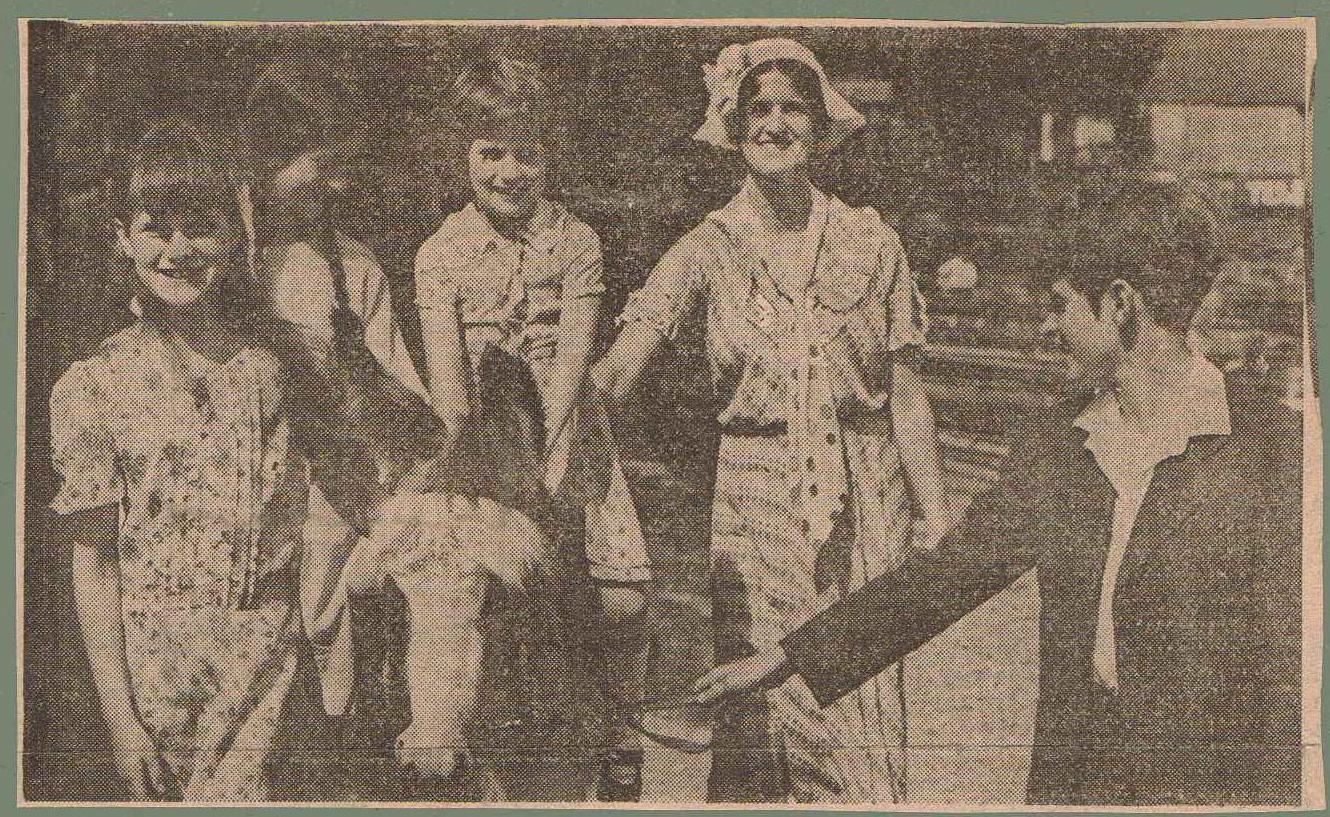
Other children who took part, featured in the local newspaper

“We may only have been extras, but it was so exciting for all of us! The first day’s filming was spent getting on and off the train, followed by what seemed like endless trips up and down the line (this would have been when you and the other actors were in the next carriage filming the early scenes).

Some of the other film extras with Suzanna Hamilton and Sophie Neville


“The second day was a few days later at Bowness Bay. This must have been some feat to achieve as the road was closed to traffic and any clues from the 1970s such as road signs had to be covered up or disguised!

Is Alan fighting with his brother in this shot, top right?

“Both days had a very big effect on me. As a child I’d always been fascinated by radio, film & television, and this brought my imagination to life. It also lit a fuse under my ambitions to do something in broadcasting. The result is I’m now a news presenter on Radio4, doing the news in programmes such as Today, PM and The World at One, so I have a lot to thank Swallows and Amazons for! My work means I now live in Buckinghamshire, but I get back to the Lakes 5 or 6 times a year, and I know that when I hang up my headphones for good, that’s where I’ll live.”

Although born in Edinburgh, Alan’s family moved to Cumbria when he was two years old. He and his brother, Robin, enjoyed an idyllic ‘Swallows and Amazons’ childhood growing up in the Lakes. They didn’t get into sailing but loved hill walking. You can see his BBC profile here

Zena Ashbury and her mother, in front of Brown’s coach returning the film extras to Ambleside at the end of the day’s filming in Bowness.

You can see more photos and read about the adventures everyone had making the original film ‘Swallows and Amazons’ here:

The disaster of the missing tooth – whilst making the movie ‘Swallows and Amazons'(1974)

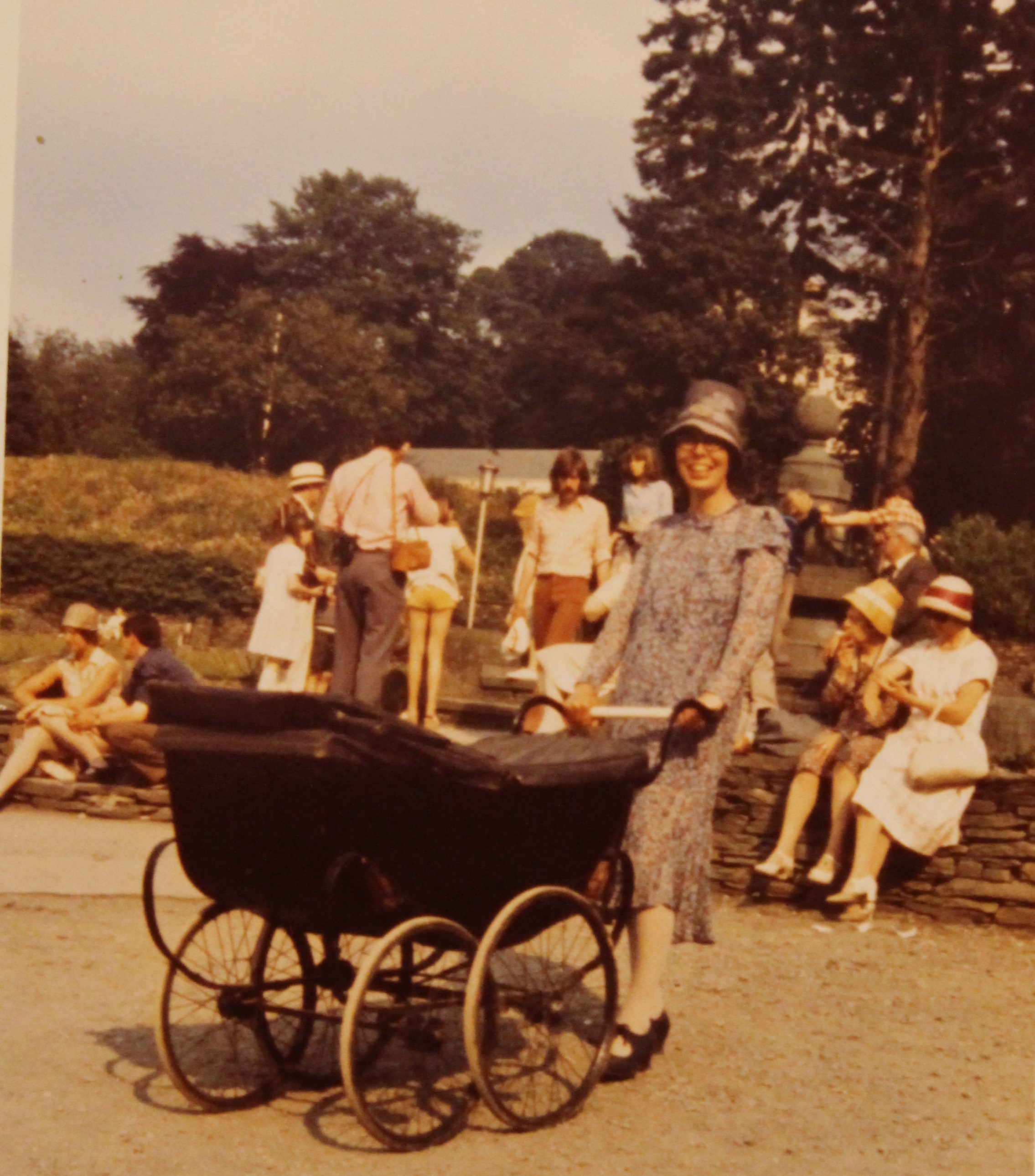
Earlier in the year, I spoke to Helen Millican on BBC Radio Cumbria about making the original film of ‘Swallows and Amazons’ in the Lake District, back in the summer of 1973. We have had an amusing development.

Sophie Neville speaking to Helen Millican on BBC Radio Cumbria

I had been chatting away, telling Helen that people like hearing about all the disasters we had whilst filming on location. One odd thing that went wrong was that one of my milk-teeth fell out in the middle of shooting a scene with Virginia McKenna on Peel Island. At the time, I was somewhat distracted and self-conscious about this but could do no more than try to keep my mouth shut.

Virginia McKenna and Sophie Neville on Peel Island
Virginia McKenna and Sophie Neville ~ photo: Daphne Neville

However, viewers often spot the fact that my tooth suddenly disappeared. They still talk about it nearly fifty years later. Helen assured me that the tooth fairy was bound to turn up with it, suggesting I could then take the small canine on BBC ‘Antiques Roadshow’, which was being recorded at Windermere Jetty museum in Cumbria at the time.

The tooth that went missing – top right

Amazingly, the missing tooth has been sent to me.

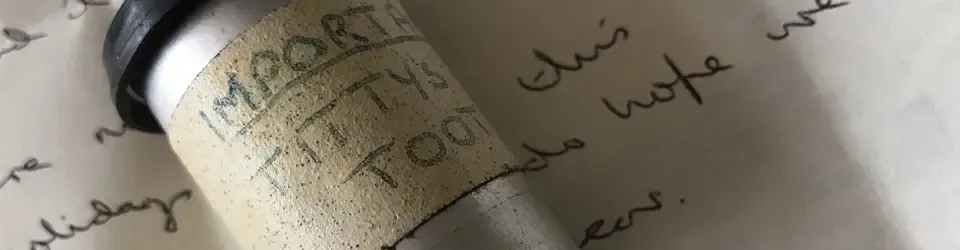
Peter Robb-King, the Make-up Designer on ‘Swallows and Amazons’, rang to say that he had kept it safely in a metal film canister labelled ‘Titty’s tooth’. He promised to send it to me in the post so that I could add it to my bizarre collection of movie memorabilia – valued by Marc Allum at £4,000 to £6,000.

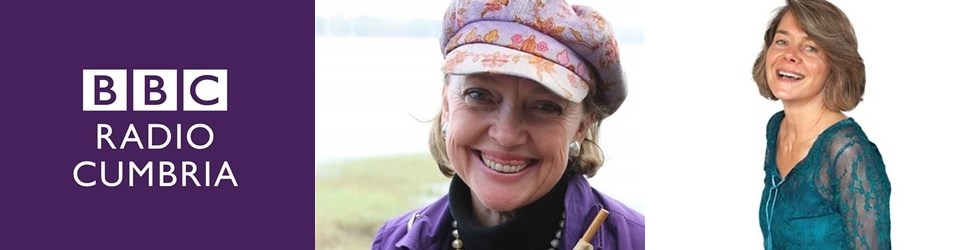
Sophie Neville being made up for the part of Titty by Peter Robb-King in 1973

Helen was delighted to hear that the tooth had materialized after 48 years. “Wow, Sophie what a result, after we made such a joke of it as well! That might just take your valuation up to the next level!”

Peter explained that he took the milk tooth to a dentist in Ambleside to ask if a bridge could be made to temporarily replace it but I remember the director, Claude Whatham, saying that he would ‘have to live with it’ – it being something of a continuity problem as he was yet to shoot earlier scenes of us sailing to the island. As a result, film fans can now work out which sequences were shot right at the end of our time on location even though they come before the scene with Man Friday (played by Virginia McKenna) in the storyline.

My missing tooth, kept since 1973

Peter Robb-King went on to have an amazing career in film, working on ‘The Rocky Horror Picture Show’, ‘Aliens’, and a number of ‘Indiana Jones’, ‘Batman’ and ‘Star Wars’ movies. He told me that he originally found it difficult to break into Make-Up Design as a man, but managed to win a post as a trainee on ‘The Avengers’ in 1968. ‘Swallows and Amazons’ (1974) was his first job as a Make-Up Supervisor, proving a break-through for him and other members of the film crew. It was the first film made by the producer Richard Pilbrow and David Wood’s first screenplay. Suzanna Hamilton, who played Susan, went on to star in many movies including ‘1984’ with John Hurt and ‘Out of Africa’ opposite Meryl Streep. She has recently had a guest appearance on ‘EastEnders’.

Peter Robb-King can be glimpsed right at the end of this cine clip taken on location

Now retired, Peter and his wife live in Maidenhead but enjoy travelling around. We had a long chat about the green parrot as he later adopted a young one that was rescued while making an Indiana Jones film in Sri Lanka. Stephen Spielberg looked after another parrot from the clutch.

You can read more about the disasters that befell us whilst filming in ‘The Making of Swallows and Amazons’, signed copies of which are available from libraries, The Nancy Blackett Trust book shop and other online distributors.

'The Making of Swallows and Amazons (1974)'

If you enjoy ebooks, ‘The Secrets of Filming Swallows and Amazons (1974)’ has links to behind-the-scenes cine footage and is very good value at £2.99 – available on Kobo, Smashwords, iTunes and on Kindle here

To read a little more about filming with Virginia McKenna on Peel Island, please click here

A list of Peter’s film credits can be found here: Peter Robb-King – IMDbimdb.com

An article on the tooth in the Times

You can listen to the ten minute recording of my chat with Helen Millican of Radio Cumbria on the Nancy Blackett Trust website here.

The episode of BBC ‘Antiques Roadshow’ showing movie memorabilia from the 1974 film of ‘Swallows and Amazons’ can be watched on BBCiPlayer here.
You can spot the missing tooth but the movie trailer can be seen here as we attack the houseboat. The clip is slightly out of sinc.

Swallow’s flag and the bamboo fishing rods featured in the 1974 movie ‘Swallows and Amazons’

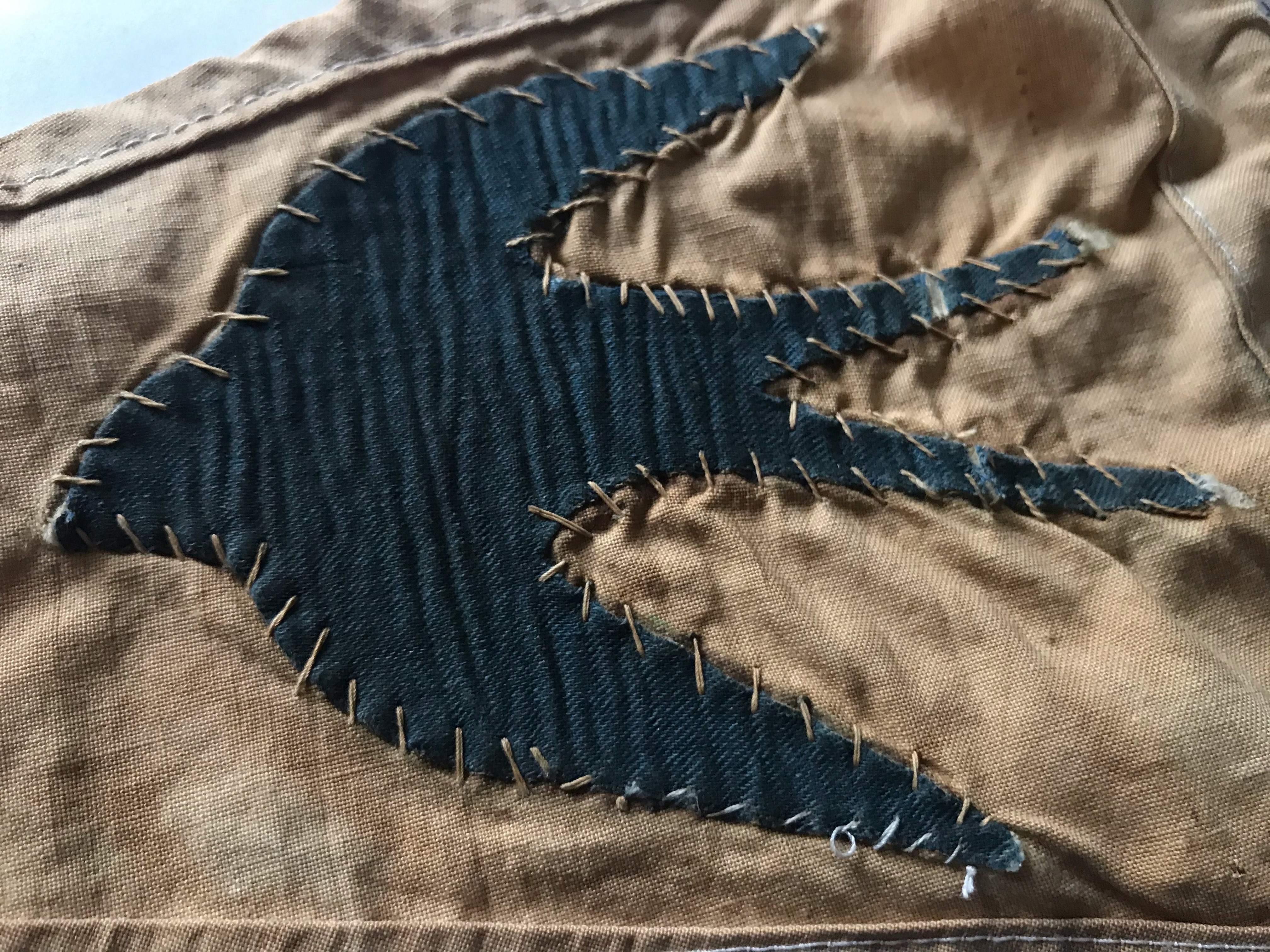
The flag Titty made for Swallow in the original film ‘Swallows and Amazons’ (1974)

Were some of these stitches mine after all?

A few weeks ago, BBC Antiques Roadshow featured some of the flags from the original movie ‘Swallows and Amazons'(1974) in which I played Titty Walker. These film props had been sent to me by the producer Richard Pilbrow who now lives in Connecticut. I take them with me if I’m ever asked to give a Q&A or talk about ‘The Making of Swallows and Amazons’. Film fans enjoy taking selfies with them.

I explained that they were made on location in 1973, possibly by the Art Director, Simon Holland, who enjoyed painting. Equally, they may have been made by the Set Decorator Ian Whittaker, who went on to win an Oscar and nominations for several more. Bob Hedges who was in charge of the action props was also adept at making props in the days when health and safety regulations were more relaxed.
In the story, Titty decides to make a new flag for the Swallow. I was keen on sewing as a child, and was thrilled to be given a needle and thread to stitch a blue swallow on the flag myself in a scene with Virginia McKenna, who played Mrs Walker, shot at Holly Howe (Bank Ground Farm) above Coniston Water in the Lake District. Rather a modern reel of cotton was caught in vision.

Virginia McKenna, as Mary Walker with Sophie Neville playing her daughter Titty Walker busy stitching Swallow’s new flag in preparation for the voyage to the island (c)StudioCanal

It was not until I returned from recording Antiques Roadshow at Windermere Jetty and had the flag on my desk that I noticed some of the stitches are different from others. It looks as if the small, white stitching on one wing could have been my own. As a child, I had thought the larger stitches rather clumsy but am sure they looked appropriate in vision. It would be worth far more if it was known to have been made by Ian Whittaker. He won an Oscar and was nominated for his work on a number of other films.

Ian Whittaker with the Art Director Simon Holland

‘Properly’, as Titty would say, the bird should be flying towards the mast, although I am assured that Arthur Ransome did once draw a diving swallow on one flag. In his book, the swallow was sewn into the cloth rather that plonked on top of fabric browned by tea but our flag has lasted for 48 years.

Property Master Bob Hedges keeping the perch alive

After Antiques Roadshow was broadcast, a lady who grew up in Bowness on Windermere, wrote to say, ‘It may be of interest that we still have the fishing rods that were used in the film. They belonged to my father Leslie Borwick and were lent to the film crew. They are rather worse for wear but still treasured as I was a big fan of the books when I was young. Unfortunately I was living abroad when the film was made so have no memories of it.’

Leslie Borwick on Windermere

Leslie Borwick, was a keen fisherman who took his daughter out to catch perch. She said that the bamboo rods are quite fragile but one has a wooden reel, which is interesting.

Ronald Bousfield fishing at about the time ‘Swallows and Amazons’ was written

“My mother’s side of the family were very keen fishermen. Their surname was Bousefield and there is a fly called “Bousefield’s Fancy”(Frank Bousefield)”

You can read the original post about filming the fishing scene on Elterwater here

A clip of Swallow’s flag being valued on BBC Antiques Roadshow can be watched on BBC iPlayer.

The whole story of the making of Swallows and Amazons (1974) can be read here:

Points to add to the third edition of ‘The Making of Swallows and Amazons’ (1974) – part four

Windermere in the English Lake District

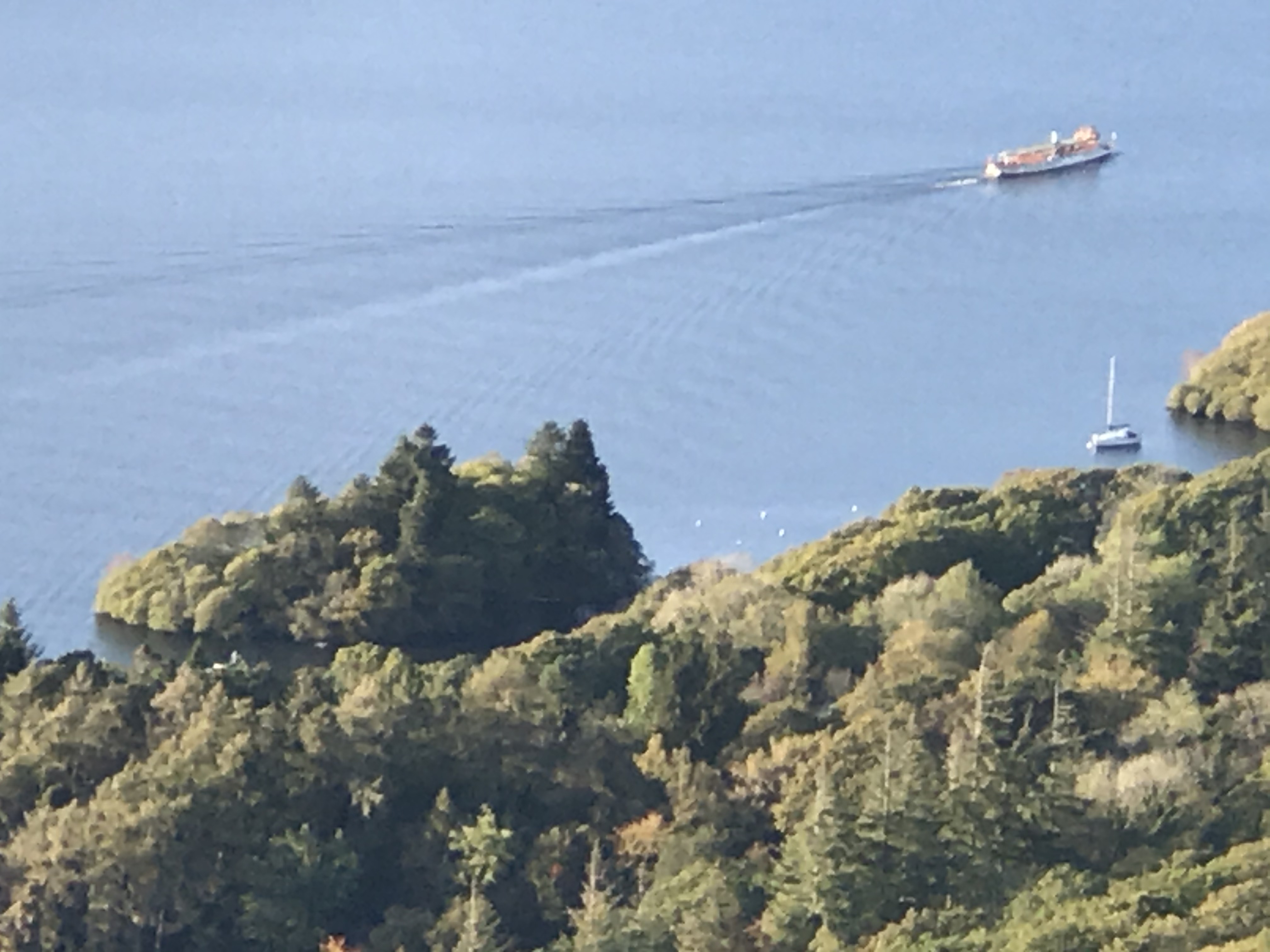
When I was last in the Lake District, I grabbed the chance to climb to the top of Gummer’s Howe to look down on the ‘Great Lake in the North’. Arthur Ransome, who once lived at High Nibthwaite, must have gazed at this exact, same view. ‘Native shipping’ was passing a wooded island and a bay where I could see a yacht was moored. It was like looking down on the chart I once drew for the original film of ‘Swallows and Amazons’ first screened in cinemas forty-seven years ago in April 1974.

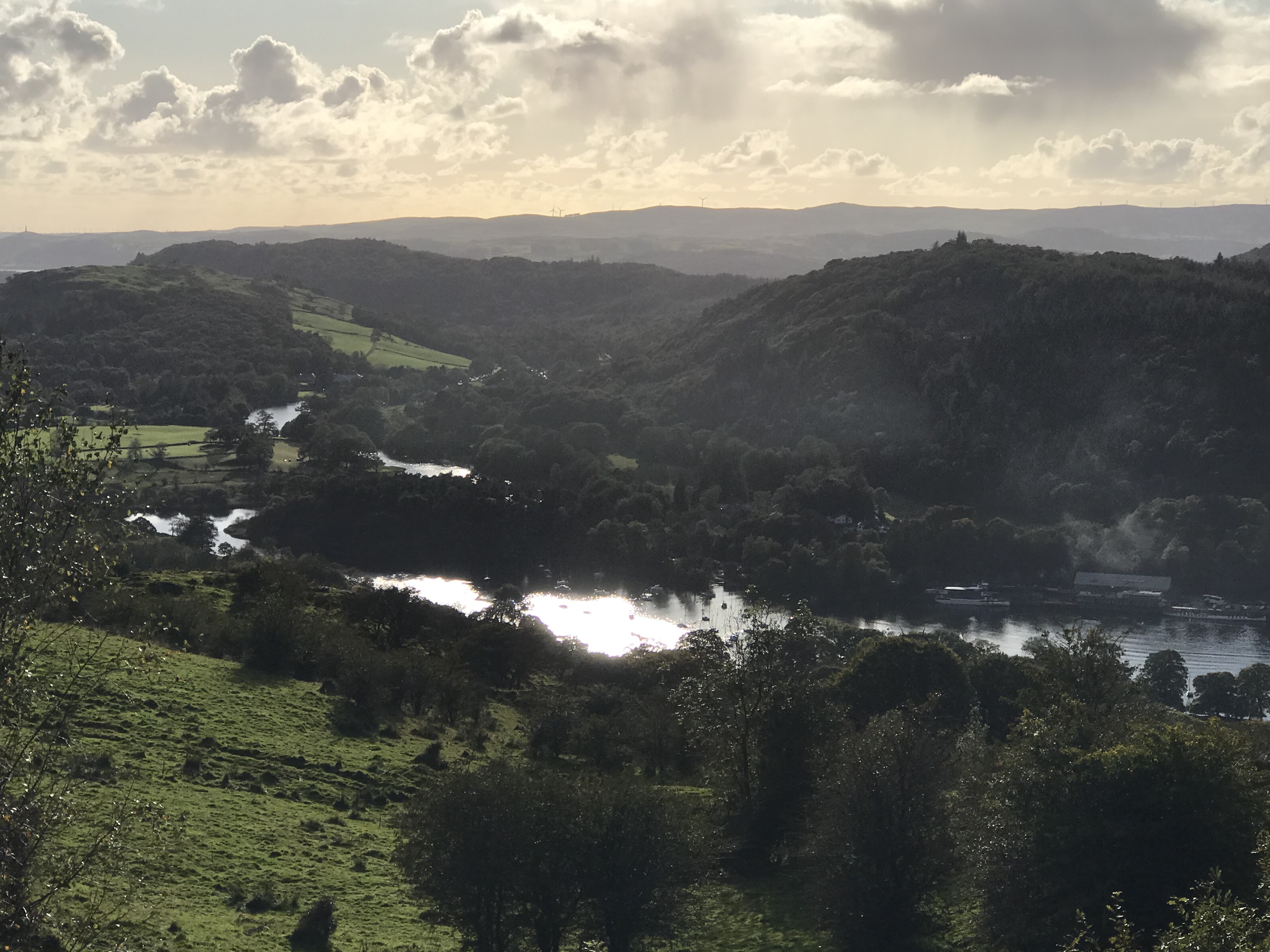
Looking to the south, I could see Lakeside Station and the Haverthwaite steam railway running alongside the River Leven where we began filming back in May 1973. The renovated line had only been running for two weeks but we were instantly transported back to 1929, when Ransome wrote the book in a grey barn nearby.

Blake Holme, one of the wooded islands on which Wild Cat Island was modelled

Michael Johnson left a comment on the Arthur Ransome Group Facebook page saying, ‘The Lakeside & Haverthwaite is a lovely line, but frustratingly slow. It’s such a short line that the journey would be over within a few minutes even at a modest speed, like 25mph. Drivers are under standing instructions to drive at little more than walking pace so the journey takes at least 15 minutes. That way everybody thinks they’ve got their money’s worth!’ I hadn’t noticed when travelling on the line myself a few years ago.

The River Leven and southern end of Windermere in Cumbria

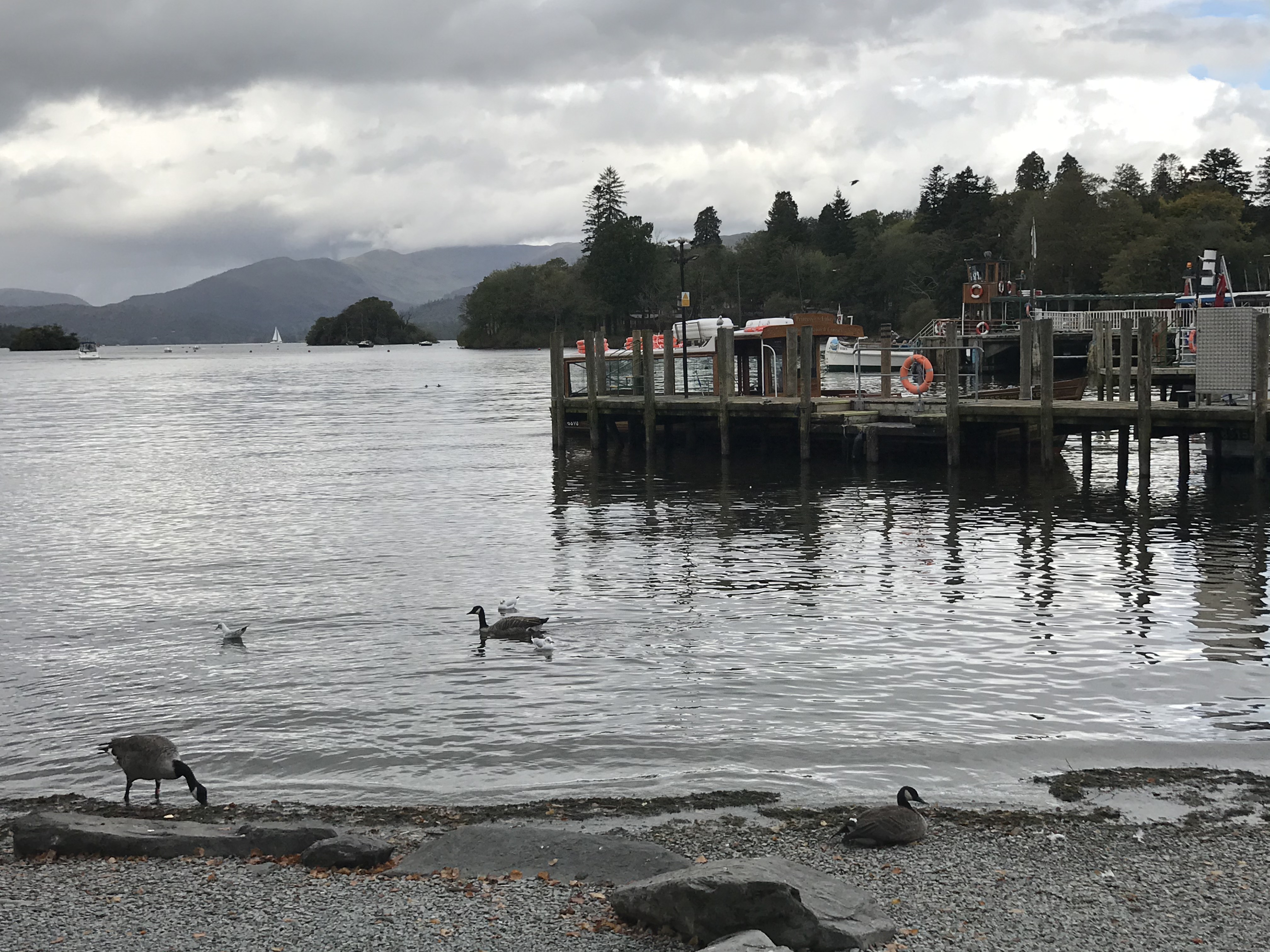
Ransome wrote: ‘Windermere is the lake, a bit disguised’ although he used many locations found on Coniston Water that perhaps he wanted to keep more secret. However, it is clear that Rio is his name for Bowness-on-Windermere, which I was able to explore recently. This was the jetty where the Boy Roger was left guarding Swallow.

Bowness-on-Windermere

Charles Elliot from Bowness remembers us, “filming in the bay with some actors in a rowing boat. There was no security so I walked down the jetty right behind the camera.” Was this captured by the Guardian newspaper here?

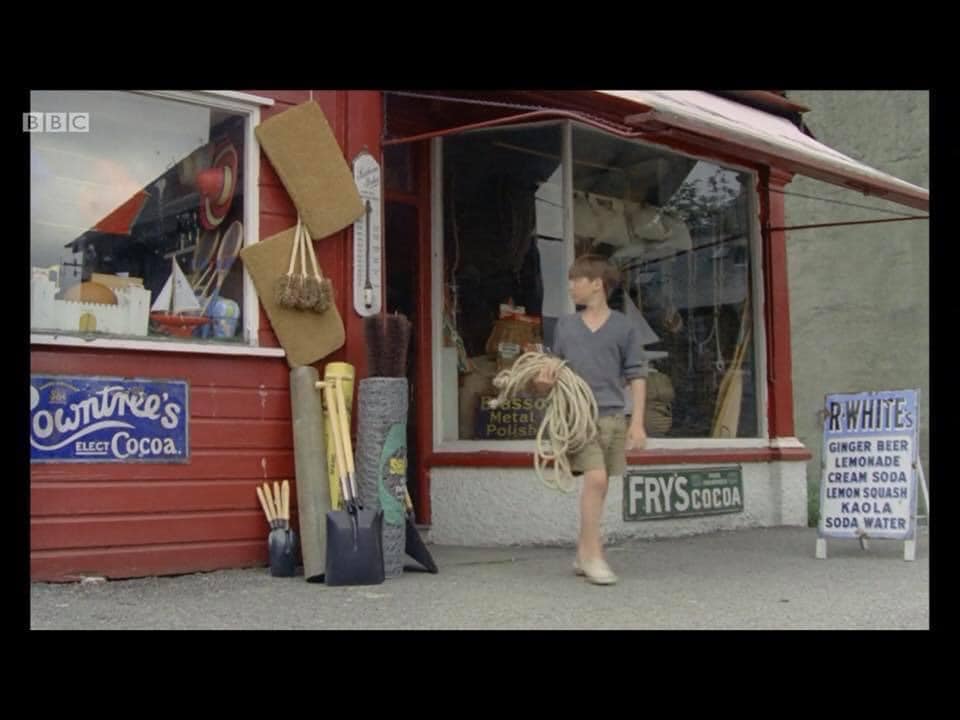
It’s possible find some of the locations and even some of the traditional boats that appeared in the movie. The natives may be able to help you. Brian Salisbury said, “The village store was my grandfather, Tom Kirkbride’s cobblers shop from mid-1930s to mid-1950s.
Woodland Road, Windermere

Stan Cropper took it over and added the LH extension.” He said of our set designer, “They did it up with the original red wooden finish.” The cat was called Rusty.

Simon West as Captain John in ‘Swallows and Amazons’ (1974) – StudioCanal

After he posted this photo on Facebook, Harry Hodgson wrote to say, “I remember looking at all the 1930’s products in the windows.”

This behind-the-scenes cine footage shot by my father in 1973 shows the film extras getting off the coach at Bowness and a scene being shot on the jetty:

Stephen Newton and Phil Procter would go and watch the filming in their dinner break from Borwicks Aquatics. “There was a band playing in the bandstand and a bloke on a pushbike with a front box selling ice cream. You can see this in the film when the kids are on the pier in the background.”

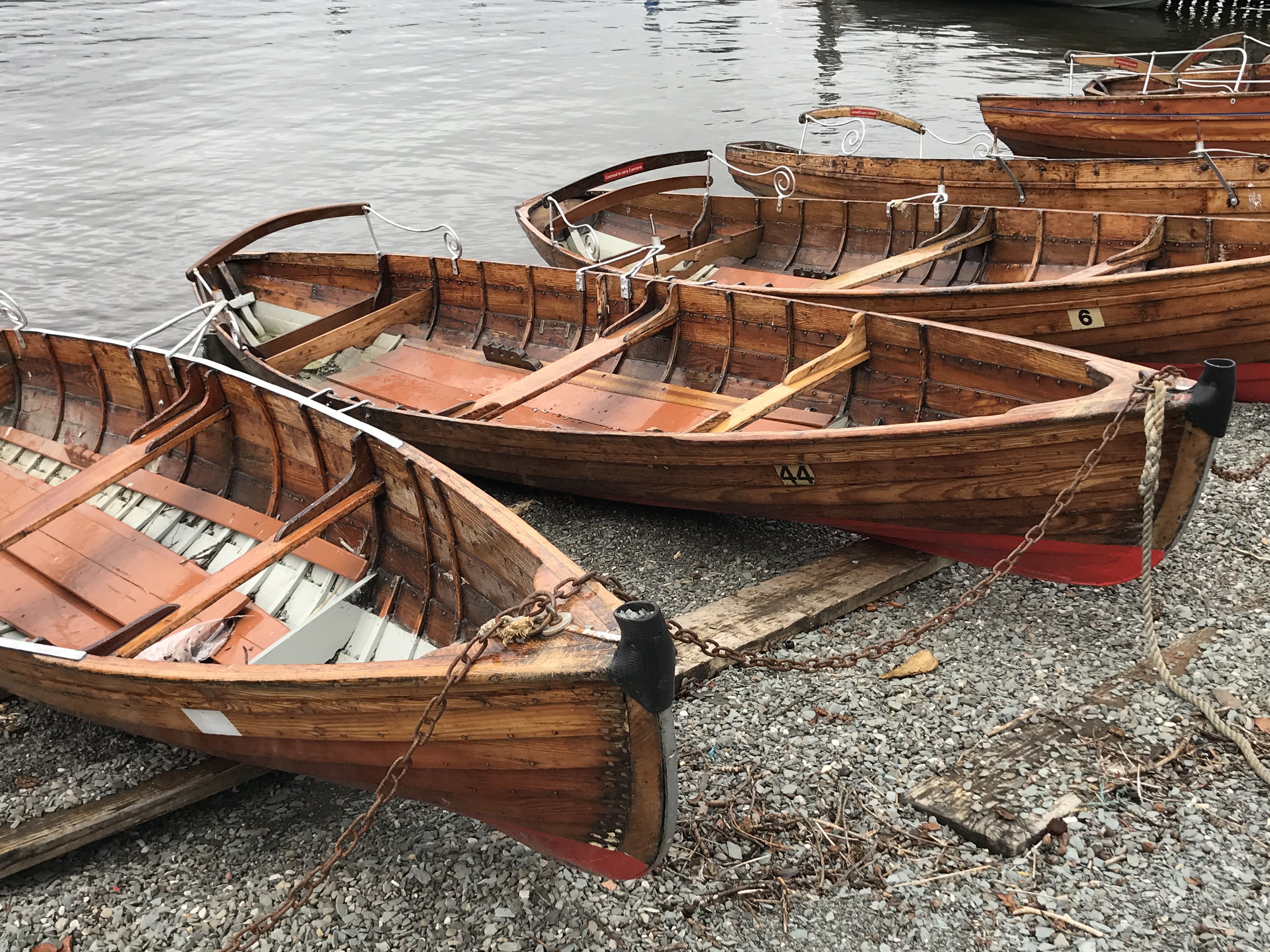
Windermere skiffs at Bowness-on-Windermere

In many ways, the 1974 film ‘Swallows and Amazons’ has become a touchstone to re-set our lives. Nigel Young writes: “On arrival back from touring, I’d get to Oxenholme station and rush home, change into my boots and head to the hills passing through Bowness…. I’d look across the lake and count the trees on the small beach, seven in all? and in my mind’s eye try to place the bandstand which features in the film so prominently. I’d look for the jetty where Roger was confronted by a blazered gent in whitened shoes asking him about his boat and think… ‘What have they done with it?’  

Lakeland steamers embarking from Bowness-on-Windermere

“Then I’d look at the landscape and note all the changes since the making of the film before heading home where I’d immediately put the film on, grab a glass of white wine and just sit and watch it, getting transported back in time to another way and another space, but that space still exists in some strange dimension for me, and I feel in touch with the lakes and in touch with a past I can totally relate with.  John wears one of those stripy  S buckle belts on his shorts.  I had one too!

Sophie Neville in Bowness, Cumbria
Sophie Neville, Simon West, Suzanna Hamilton and Stephen Grendon in Bowness in the summer of 1973

“You were well cast, almost as if you were a family before you all started and the cinematography, especially where the sailing sequences are concerned, is something out of this world. Whoever shot and edited the footage for the film were totally at one with the story and the locations…..   And Ronald Fraser !!  …well I would say he really did ‘Swim’ …… I was Principal of an Outdoor Education Centre on Windermere for over a decade and I am aware of just how cold the lake can be in winter or summer….and there goes ‘Ronald’ getting thrown off the plank by you guys into Coniston or Windermere which ever, they are both as cold as each other!”

To read a previous post on finding the film locations and taking the Lakeside and Haverthwaite steam train, please click here

Bowness-on-Windermere

You can read more about the film locations used in ‘Swallows and Amazons'(1974) in ‘The Making of Swallows and Amazons’ published by The Lutterworth Press who can send you a copy.

'The Making of Swallows and Amazons (1974)'

Memories to add to the third edition of ‘The Secrets of Filming Swallows and Amazons (1974)’ – part three

“One pandemic discovery for my family was 1974’s ‘Swallows and Amazons,’ a charming British film about kids just playing on a lake. On their own, they’re plenty capable of making their own tents and adventures”, the US film critic Jake Coyle wrote in a review for the Associated Press.

Many people have fond memories of watching the original movie of ‘Swallows and Amazons’ when it first came out in cinemas nearly forty-seven years ago and list it in their Top Ten feature films of all time.

David Kerr wrote: “I first saw the film while I was a junior projectionist. I was 17 at the time. My cinema was called the Astor in Bromley, part of south east London. While an independent cinema, we took the ABC circuit films. Somewhere, I have the LP record and a poster of the film. I went on to a career spanning 40 years in international film distribution.”

“It remains one of my top ten films even to this day. I worked for 20th Century Fox…Polygram…and United International Pictures which distributed Universal, Paramount and Dreamworks films. I had a good career and witnessed the good the bad and the ugly during my travels.”

Simon West and the camera crew at Bank Ground Farm

“From memory, I can recall that the film was released over the Easter school holidays in 1974. It’s just been helped as I have found a press ad online and it lists South London unusually running the film first on April 14th.”

Finding Swallow
Simon West, Sten Grendon and Sophie Neville with the director Claude Whatham

“I believe the film was supported by ‘The Lion at Worlds End’ …the documentary that Virginia and Bill Travers made with George Adamson about returning an African lion to the wild. I know I ran the film again either in 1975 or ’76 as an afternoon matinee only with a Kung Fu adult programme in the evenings.”

Brenda Bruce and Simon West on location above Coniston Water

“The film means a lot to me and has done so since 1974. It made me revisit the books…which I still read (currently dipping in and out of an old hardback edition of ‘Pigeon Post’) but I believe I had only read one during my childhood, which I think was ‘Swallowdale’. I also embarked on a number of holidays in the lakes because of the film. That first year I camped on a farm at Torver on the west side of Coniston.”

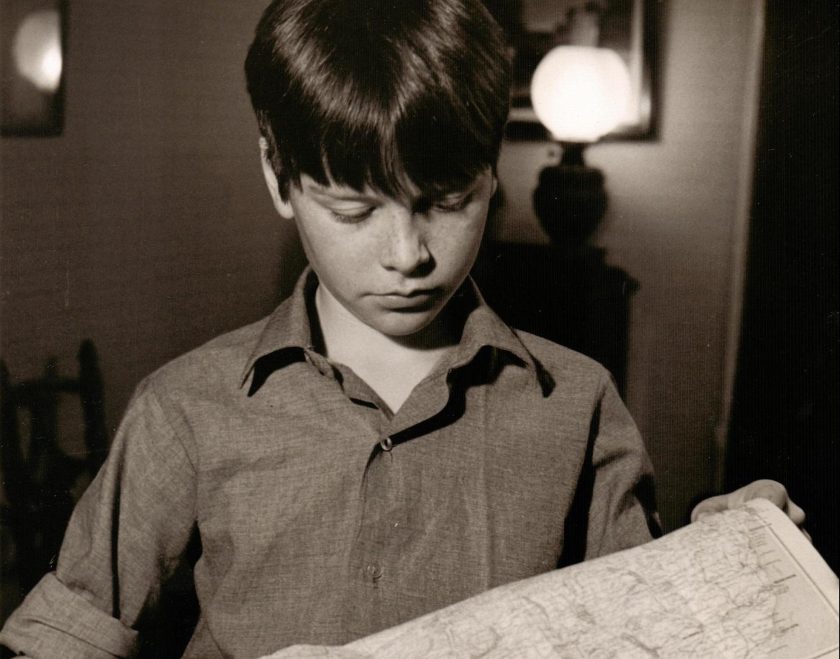
Simon West as John Walker studying the chart at Holly Howe before the voyage.

“The reason I include it in my top ten is simple. It is pure storytelling that takes the viewer on an adventure. You do not notice the individual aspects of film making you just become engrossed in the story. And that is what a good film should do. I watched it again just last week on a streaming service… It makes me smile ….what more can I say.”

Virginia McKenna with Sophie Neville on location at Bank Ground Farm

John Rose wrote: “I can remember watching the film in 1974 with my mum and grandma when I was a nine or ten year-old, at the then called Mecca Cinema in Horsham, Sussex (sadly now demolished). I remember loving the natural setting and the adventure in the film and remember it being thrilling and suspenseful! Still my favourite film, so cheerful and up-lifting. The lovely music! All still brings a tear to my eye.  Back then in the ’70s we didn’t have the lakes but at every opportunity our little band of local children would run off over the fields playing, building camps and climbing trees in the woods – such happy, carefree days.”

Simon West, Suzanna Hamilton, Sophie Neville and Sten Grendon in Swallow

Last time the film was broadcast on BBC Two, David Stott, who worked as a unit driver on ‘Swallows and Amazons’ when he was fresh out of college, wrote in to say: “I remember how cold you all were whilst filming the swimming scene.  The lily pond scene brought back memories of a very wet day on Pull Wyke caravan park.  Most of the day was spent in the two double decker buses that were your school room and the canteen waiting for the rain to clear. Everyone was so grateful to pack up and go home.”

Sten Grendon as Roger with Suzanna Hamilton as Susan


“I had many incidents with the parrot that I had to collect in the morning and return at night.  I hated the bird, often it was let free in a bathroom at Kirskstone Foot and l would have to catch it and put it in its travel bag. I notice in the film that it is chained down whilst it is sitting on your shoulder.”

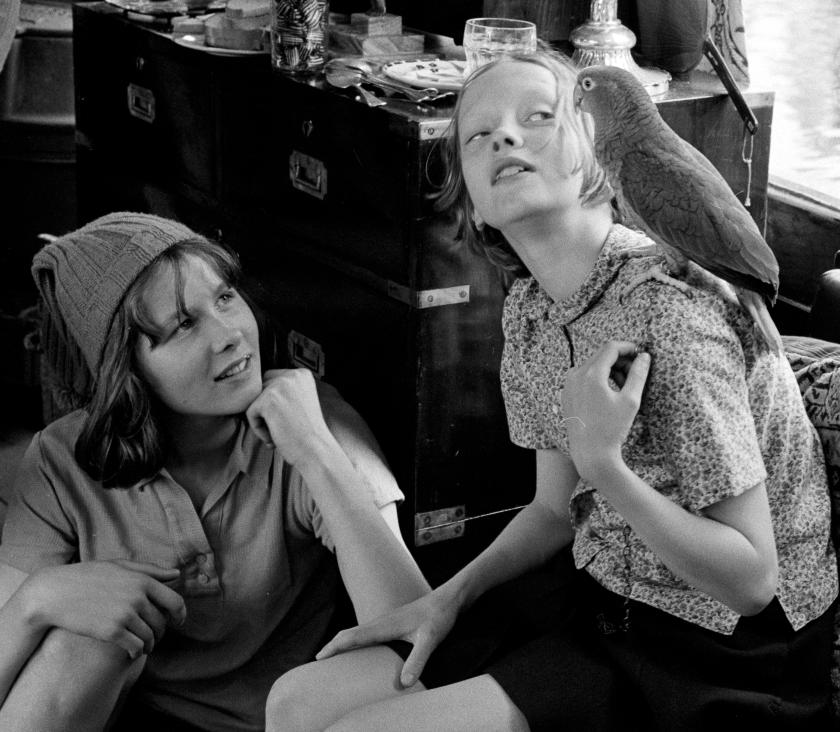
Kit Seymour as Nancy, Sophie Neville as Titty and Beauty playing Polly the green parrot.


“I would spend a lot chatting to Ronnie Logan the hairdresser while the shooting was taking place, such a nice man.”

“The day they filmed the walking the plank scene I remember very well.  I took Ronnie Fraser to the Lodore Swiss hotel at  lunchtime and he was really very well plastered by the time I got him back for the afternoon filming.  I suppose it was the only way they managed to get him in the water.  He was not a happy chappy that afternoon when I eventually took him back to Ambleside.”

“I had to put the rushes on the train to London in the evening and collect developed film (how times have changed).  One of my treats was that I was allowed to watch the rushes with the production team in the evening. Watching it again this afternoon was a real trip down memory lane.  I cannot believe that I was a student starting out in life at the time and now l am a pensioner.  Where has all that time gone?”

Simon West and Sophie Neville on Peel Island in 1973
 
You can read more in the paperback on ‘The Making of Swallows and Amazons (1974)’
.


You can see some of the illustrations here: