In search of the real ‘Swallows and Amazons’ ~ Part Three

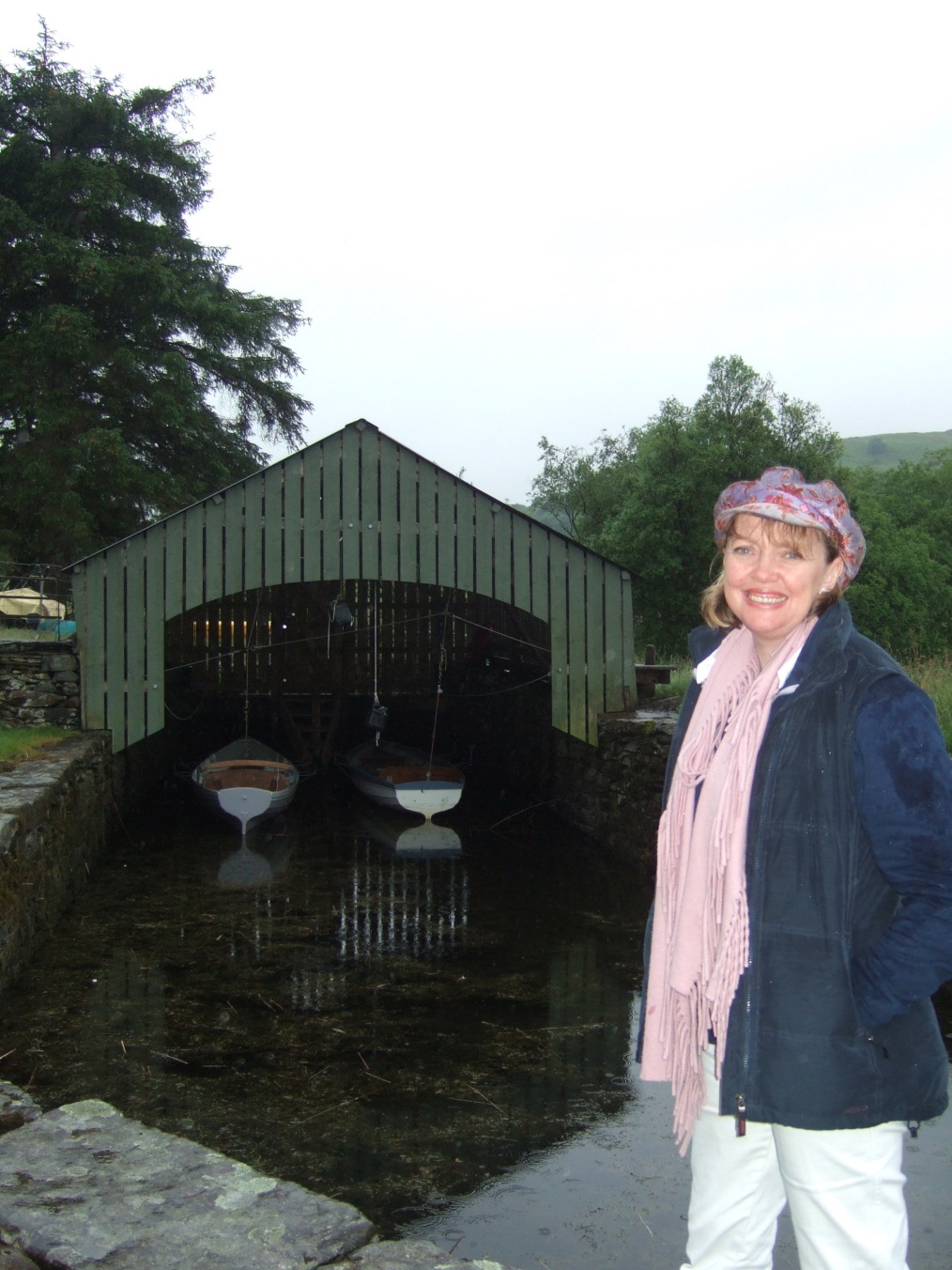
Sophie Neville at the real Amazon Boathouse

~Sophie Neville at the real Amazon boathouse~

The boathouse at the Slate Quay where Arthur Ransome came on holiday as a child sits at the southern end of Coniston Water. How wise he was to write about the places, the culture and experiences that he knew so well.

As you walk down the footpath from the lane, you come across interesting artwork, although it would not have been around in Ransome’s day.

Sophie and Mr Gormely

~ Sculpture at Slate Quay by Andy Gormsly~ 

The boathouse came to be owned by Bridgit Sanders, nee Altounyan, who was the inspiration for the youngest of the Swallows Vicky, the ship’s baby, and went on to become the first president of The Arthur Ransome Society. She lived with her family in the house nearby, teaching her children and grandchildren to sail on Coniston Water. After having children, Roger Altounyan rented half the house and would take them sailing in Mavis, the model for Amazon, bailing like mad.

Coniston Water

~Coniston Water~

Arthur’s father would venture up the River Crake to fish in Allan Tarn, which may well be the location of Octopus Lagoon, first mentioned in ‘Swallows and Amazons’. 

Whilst fish enjoy the reedy habitat, small boys are reputed to enjoy the ‘Knickerbockerbreaker’ rocks that rise above what must be Swainson’s Farm at High Nibthwaite, featured in Swallowdale, which you can find by the road nearby.

We pressed on in search of other places that made an impression on Ransome’s life. Although we had a very good driver this was not always as easy as one might imagine.

'Cows blocking the road' ~ photo by Wendy Willis

But I did find another representation of the crossed flags. Can anyone guess where?

Arthur Ransome's symbol

~Kneeler embroidered by Jean Hopkins~

We drove through the gentle countryside south of Coniston Water passing a house called New Hall, once rented by Arthur Ransome and his wife, and on, climbing up past Gummer’s How and wiggling down to reach The Mason’s Arms, which I gather this was one of his favorite pubs.

 The barn where Arthur Ransome wrote 'Swallows and Amazons'

Then, seemingly in the middle of no where, we came across the Holy Grail: Low Ludderburn and the erstwhile grey barn where Ransome wrote ‘Swallows and Amazons’.  He had a writing room on the first floor. Roger Wardale says he kept his car, the ‘Rattletrap’ in the wooden garage that you can see just in front of the building.  It was private then, and is a private house now, but you can catch a glimpse of it from the lane that runs up and on, eventually taking you down to Blake Holme on Windermere, which he named as partly the inspiration for Wildcat Island.

I’ve always thought that Arthur Ransome must have been completly impervious to the damp, to cold and wet weather.  I am not. By now it was raining so hard that my husband was wearing my pink beret, but we were still in good spirits.

Foxgloves in the Lake District

In a recent letter to The New York Times Frank Phelan from Albuquerque wrote to say,

  • It was not just British children who were saturated with the “Swallows and Amazons” novels of Arthur Ransome, as the review of “The Last Englishman,” by Roland Chambers, suggests (May 27). I grew up hundreds of miles from the ocean in Pittsburgh, wanting to be like Ransome’s characters. I wrote to him asking which of the English lakes was the right one. He sent me a postcard saying that it was “Windermere, with a few touches of Coniston, for the sake of disguise.” He ended with “You’ll be sailing some day!” and I lived on that.

So back to Windermere, and a long hot bath at Miller Howe, a lovely hotel that had a Jonathan Cape copy of Swallows and Amazons on the hall table. In the morning cloud was sitting on the high fells looking just like snow. I ran down to the lake to put my hands in the water, thinking, ‘This is the place for Winter Holiday’.  But that is another book.

You can find maps showing these locations in ‘The Making of Swallows and Amazons’ or the ebook of ‘The Secrets of Filming Swallows and Amazons (1974)’ available from Amazon Kindle and other ebook platforms.

In search of Arthur Ransome’s locations ~ Part Two

Arthur Ransome must surely have fished here

‘Here we are, intrepid explorers, making the first ever voyage into unchartered waters. What mysteries will they hold for us?  What dark secrets shall be revealed?

As we set off from the Lakeside Railway Station on the southern shore of Windermere to explore Arthur Ransome’s world, I began wondering how many signs of ‘Swallows and Amazons’ we would find. Would we see the crossed flags that have become a symbol of the bestseller he wrote back in 1929?

Swallows and Amazons Tearoom ~ photo: Sophie Neville

We found the first sign the East of Lake road above Coniston Water. And there was Holly Howe where the Walker Family came for their holidays. It is so exciting to know that you can stay there too, or go for tea, and run down the field full of buttercups to dip your hands in the lake, just as the real Altounyan children – the real Swallows – must have done. We passed Lanehead, their grandparents’ house next-door as we drove down to Coniston. I gather it is for sale.

Bank Ground Farm the location used for Holly Howe

Coniston Old Man or Kanchenjunga, as the Swallows and Amazons called the mountain, was snoozing under a thick blanket of cloud but the challenge of climbing to the summit was for another day. Below the village, mooring up to the jetty at the Bluebird Cafe, was Ransome, the Coniston Launch. Peter Walker introduced us to the Captain who welcomed us aboard. He asked after Swallow the little ship from the film that we had re-launched from the very same jetty in April 2011. If you join The Arthur Ransome Society you can sail Swallow on Coniston this summer.

The Boatsheds at Bank Ground Farm

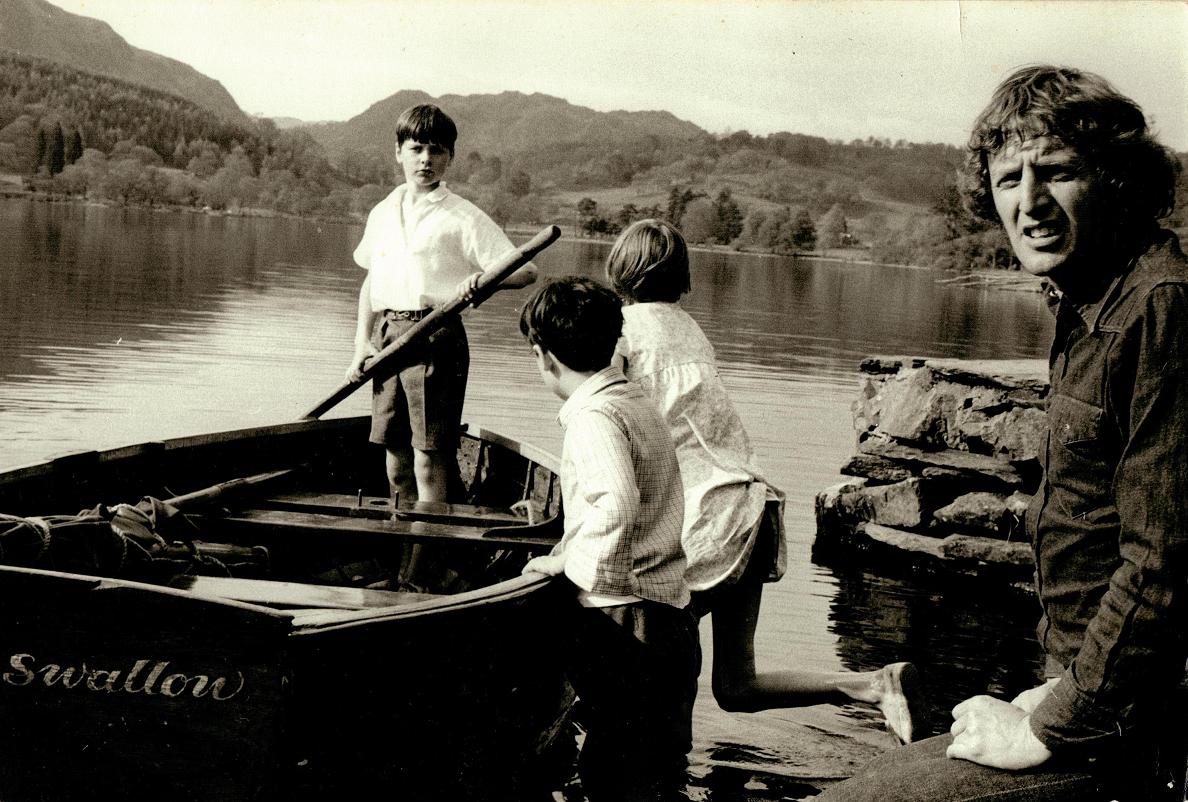
As we set off across the lake we could see Swallow’s boatshed clearly from the Coniston launch.  It has been renovated and repaired but the old stone jetty is still there, below the huge horse chestnut trees. I remember how cold the water was when we first brought Swallow out from the depths of that shed in May 1973 to shoot the opening scenes of the movie. Two sheep came down to see what we were doing. Richard Pilbrow, the Producer, gave me this black and white photograph that, unusually, shows Claude Whatham the Director setting up the shot. I was letting water drain from my shoe.

Finding Swallow
Simon West as Captain John standing in ‘Swallow’ at the stone boatshed jetty on Coniston Water with Ableseaman Titty and The Boy Roger. Director Claude Whatham knew how cold the water was that day in May 1973

The Coniston Launch can take you right down the lake to Wild Cat Island or Peel Island as it is really called. You can see the Secret Harbour best from a boat and imagine Titty trying to get out through the rocks in Amazon, in the dark, when she captured her from the terrifying Amazon Pirates.

We actually disembarked at Brantwood, John Ruskin’s House. It was here that the Altounyan children’s grandfather WH Collingwood worked as Ruskin’s private secretary. He painted him at his desk there. My niece has just graduated from The Ruskin School of Art in Oxford.

Peter Walker met us and drove us on down the lake to show us The Heald, a bungalow above the road where Arthur Ransome lived with his Russian wife, Evgenia and his dinghy, Coch-y-bonddhu. It was here that he wrote Picts and Martyrs Coch-y-bonddhu played the part of Dick and Dot’s boat Scarab. The original ‘Dogs Home’ can be found in the woods above the house. Rob Boden is very keen to restore it.

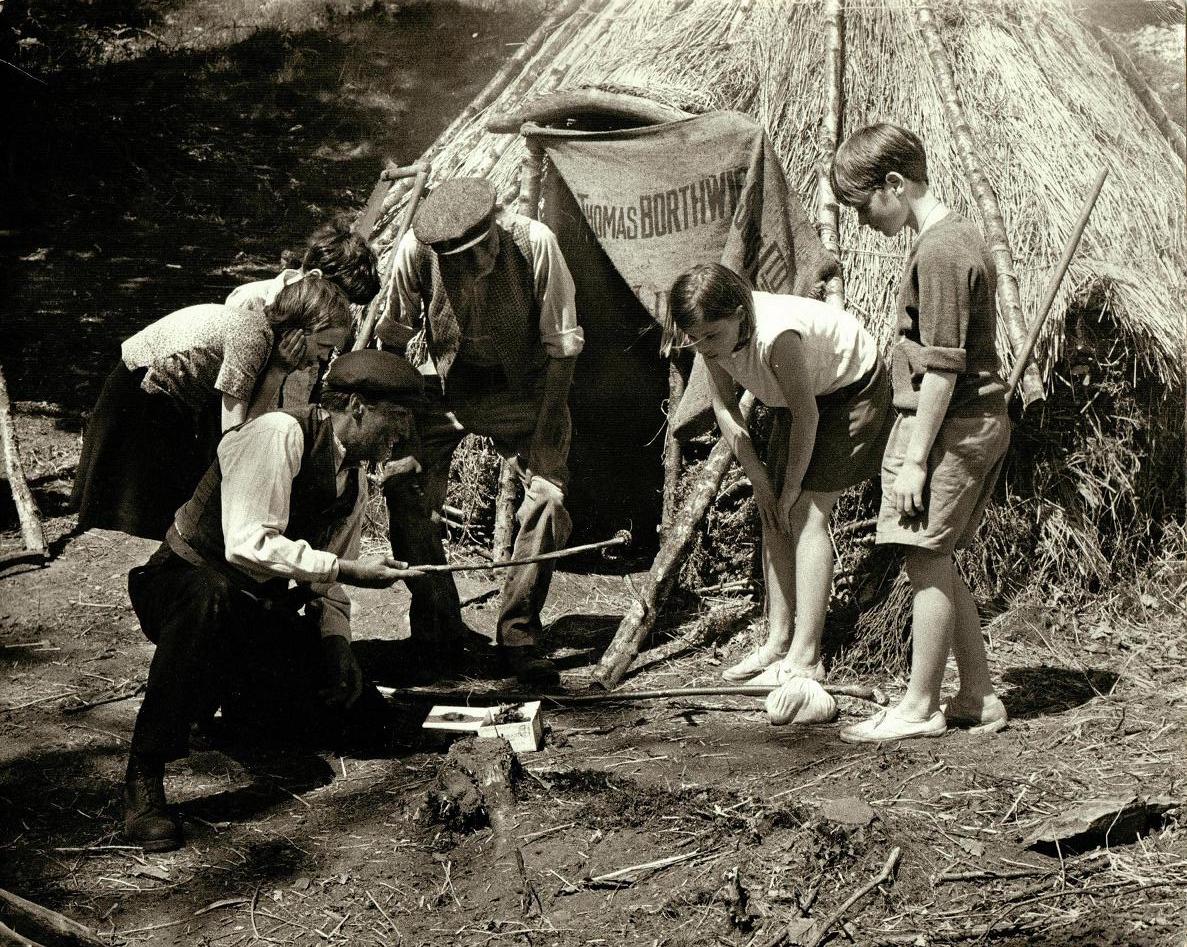
It was in the Grizedale Forest that we went to see the charcoal burners and met the real men in the process. And an adder. It was real too.

John Franklyn-Robbins, as Young Billy who is showing his adder to Sophie Neville, Stephen Grendon, Jack Woolgar, Suzanna Hamilton and Simon West at a location in the Grizedale Forest above Coniston Water

I looked back at the island where I spent so much of my childhood. It was difficult to imagine how a location catering wagon let alone two Route-master London double-decker buses could have driven down the winding East of Lake road. They parked in the field opposite the islands so the crew could at least eat lunch in the dry and we could have our lessons. The National Parks Authority had to ask the Production Manager to drape wartime camouflage netting over them. You must have been able to see the red buses for miles.

Sophie Neville on Coniston Water with Peel Island
The hat is a purple ode to the early 1970’s. My mother bought it at great expense in Carnaby Street. It is very good at keeping off the rain.

As you drive south you can look over the water to see Brown Howe, the house that we used as a location for Beckfoot in the film of Swallows and Amazons and shortly after, the Edwardian boathouse, which Claude Whatham used for the Amazons. I don’t think this was the one Ransome envisaged. His was at the mouth of the Amazon River – a reedy place. The pictures in the illustrations show a building with a low-pitched roof.

Peter took us down to a farm the south of Coniston Water where the real Ransome children spent their summer holidays. You can walk down the footpath they must have taken to dip their hands in the lake. And there I found what must be the real Amazon boat house.

The Slate Quay on Coniston Water ~ photo: Sophie Neville
Is this the real Amazon Boathouse?

Continued here…

or read the full account in the ebook:

In search of the film locations for the original movie of Swallows and Amazons (1974)

Peel Island on Coniston Water ~ photo: Sophie Neville 2012

A few years ago, on a wet but beautiful day in Cumbria, we set off on a quest to find some of the locations used in Richard Pilbrow’s 1974 film of ‘Swallows and Amazons’.

To my delight our journey started with a drive down through the streets of Rio (Bowness) and along the east shore of Windermere to the Lakeside and Haverthwaite Railway Station at the southern end of the lake (or Antarctica as Titty labelled the region). It was here that we spent our very first day filming ‘Swallows and Amazons’ in May 1973. I had not been there since.

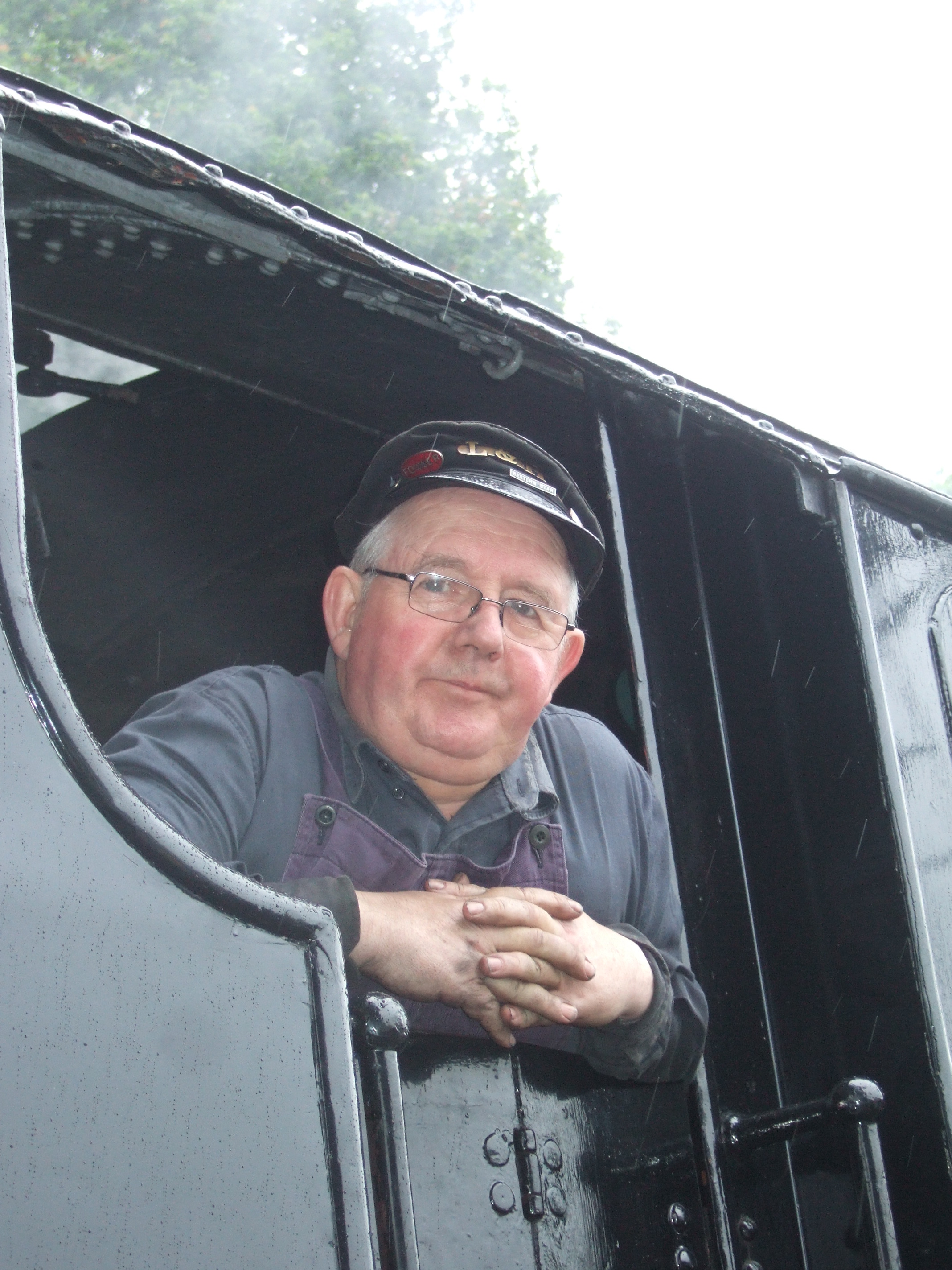
The driver of the Lakeside and Haverthwaite Steam locomotive

We had a chat to the train driver who explained that they now run six journeys a day. From Haverthwaite, the steam locomotives run alongside the River Leven to Lakeside Station. From here you can take a native steamer back up to Rio (the Bowness pier) or to the Far North (Ambleside, which is the town at the head of the lake where we lived whilst filming in that long distant summer when I was twelve years old.)

Talking to the train driver just as we did in 1973

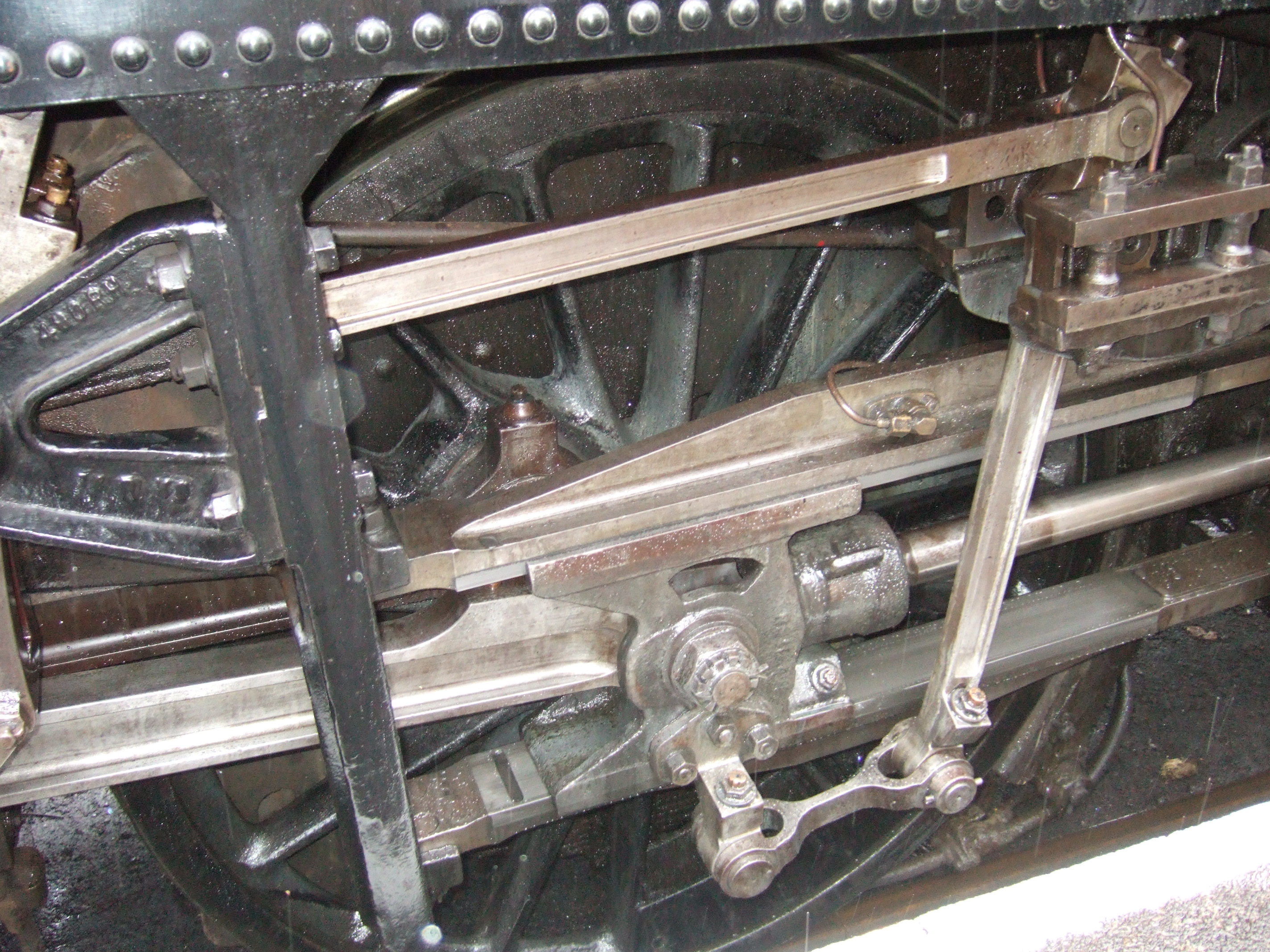
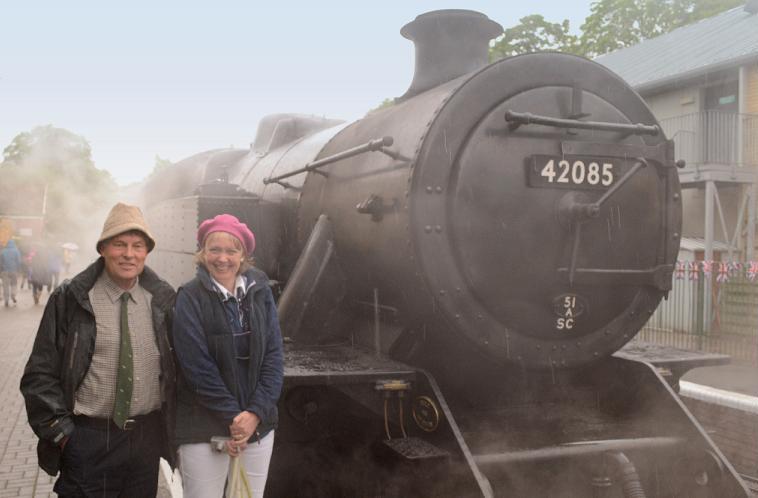
Whilst we used engine number 2073 in the movie, this steam locomotive 42085 was built in 1951. It uses about two tons of coal a day but it utterly magnificent.  The driver probably uses rather a lot of steam oil too.  It’s a smell I relish, familiar since childhood days spent on steamboats. I remember it from the SBA steamboat rally held on Windermere in 1991, which I describe in Funnily Enough.

Steam Locomotives Forever!

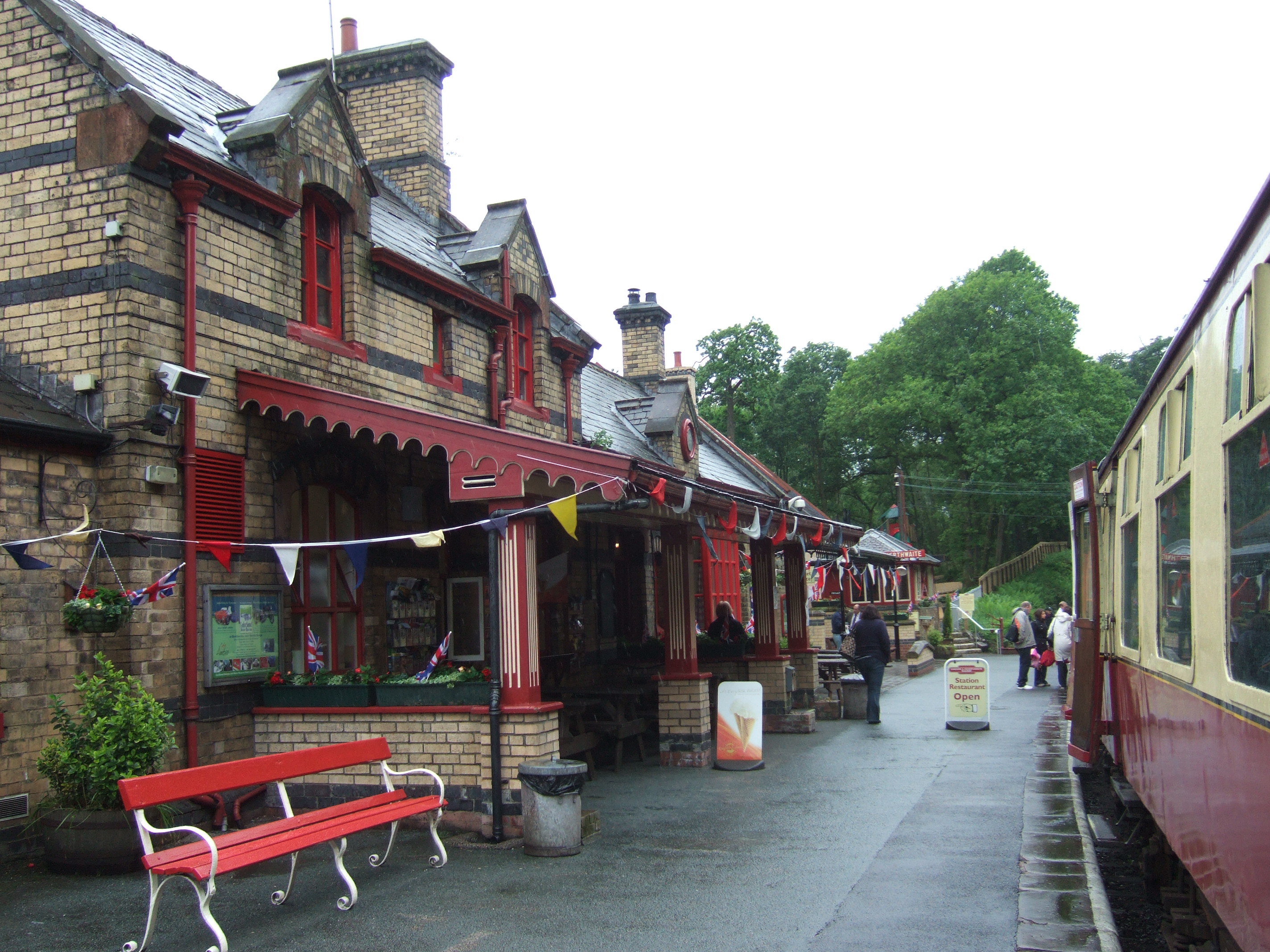
Curiously, Haverthwaite Railway Station looked cleaner and shinier than when we used it as a film location in 1973. I can only suppose it was still in the process of being restored back then, when Simon Holland our set designer cluttered it up with push bikes and luggage trolleys.  Much to our surprise, the yellow taxi we were transported in during the filming was actually driven along the platform.

Lakeside and Haverthwaite Steam Railway

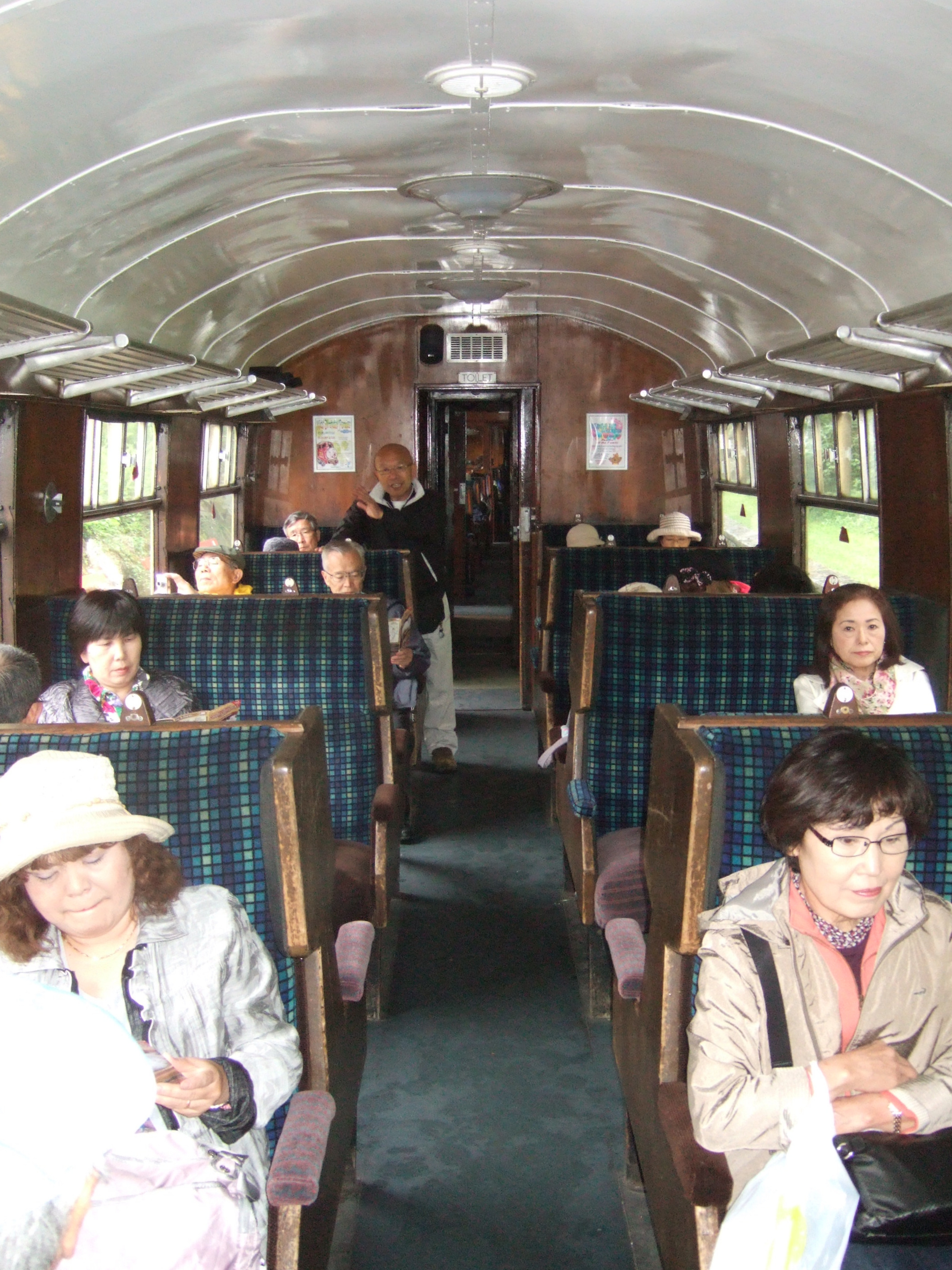
We climbed aboard the train and I explored, as Titty would have done, discovering people seated inside from far distant lands.

Inside the carridge of the Lakeside and Haverthwaite train

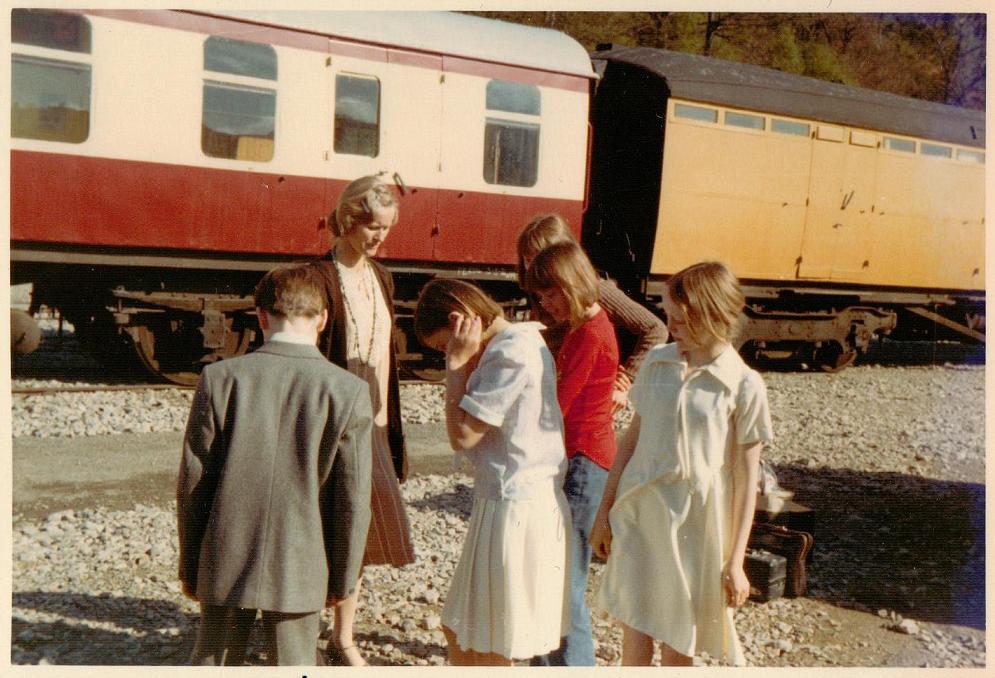
David Wood’s screenplay for the film of Swallows and Amazons, directed by Claude Whatham, opens to find the Walker family cooped up in a railway carriage compartment as they travel north for their holidays.

With Virginia McKenna at the Haverwaite Railway Station
Viginia McKenna at the Haverthwaite Railway Station in Cumbria soon after it re-opened in May 1973. Simon West, Suzanna Hamilton, Lesley Bennet, Kit Seymour and Sophie Neville are with her. The carridge with compartments is in the background ~ photo: Daphne Neville

We saw this distinctive carriage in a siding as we steamed down the valley. Funnily enough when I reached home, later the next day, I came across a photograph on the internet I had never seen before. It was of Virginia McKenna, playing Mrs Walker, reading a magazine inside the compartment. Strangely it turned up when I Googled my own name – Sophie Neville.

Virginia McKenna playing Mary Walker, mother of the Swallows in the EMI feature film of ‘Swallows and Amazons’ made in 1973

The train is not included in Arthur Ransome’s book of Swallows and Amazons, written in 1929, but he does feature locomotives in his later novels, notably Pigeon Post. I clearly remember filming the BBC adaptation of Coot Club at what must have been The Poppy Line, a steam railway in north Norfolk when Henry Dimbley, playing Tom Dudgeon, jumped aboard the moving train and met Dick and Dorothea.

Peter Walker of Mountain Goat with Sophie Neville at Lakeside Station, Windermere.

I jumped off the train at the Lakeside Station to meet up with Peter Walker of Mountain Goat. Peter has carefully researched and put together a Swallows and Amazons tour, exploring ‘High Greenland’, the ‘Forest’ and ‘High Hills’ to discover the places where Arthur Ransome lived. We set off in search of the places where he fished, wrote, and drank beer.  It was fascinating – and proved an excellent way to spend a day in the Lake District despite the rain.

You can read more about the locations used in the original film of ‘Swallows and Amazons'(1974) in the paperback ‘The Making of Swallows and Amazons’ available from libraries, bookshops or online here.

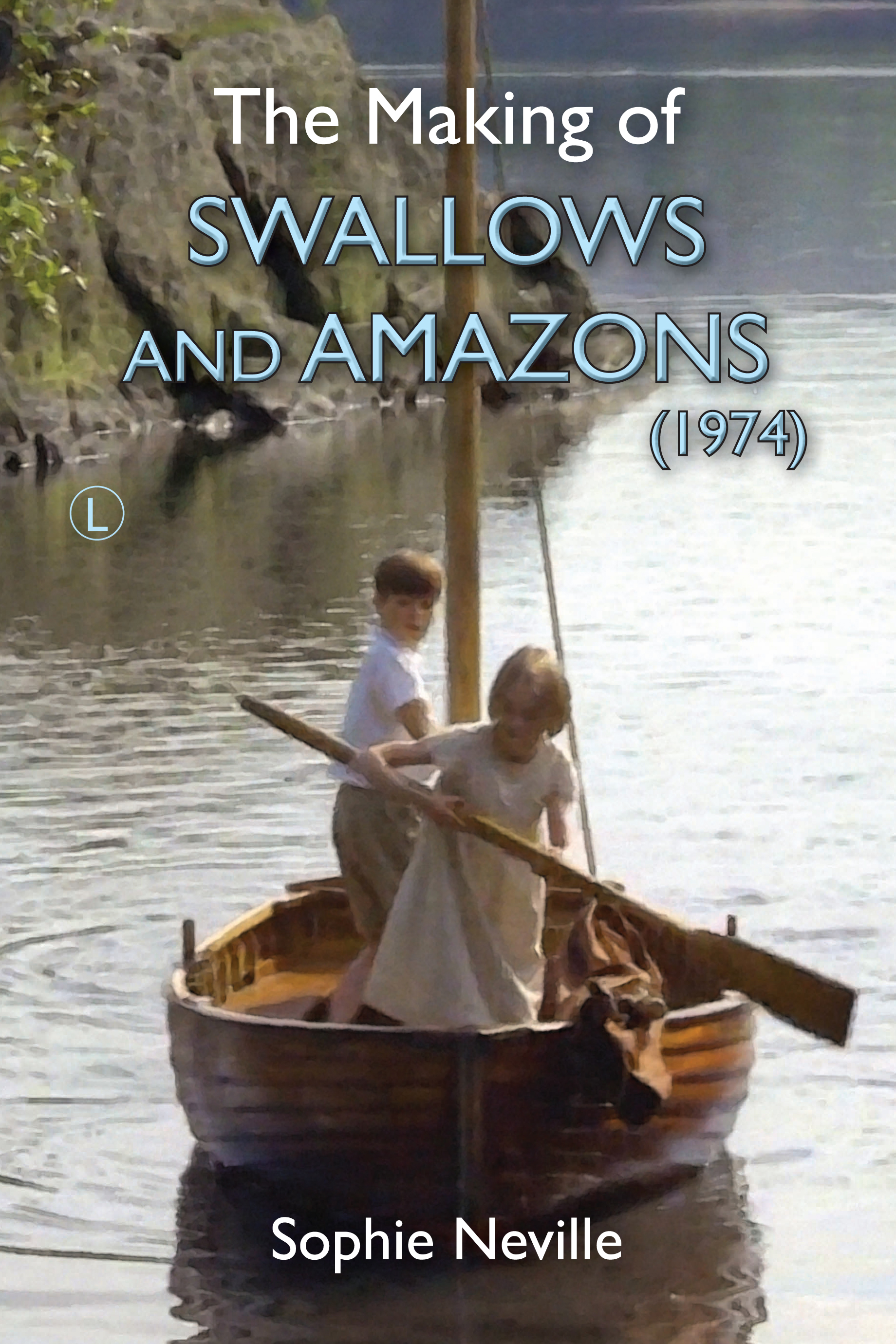
'The Making of Swallows and Amazons (1974)'

There is also a similar ebook, entitled ‘The Secrets of Filming Swallows & Amazons (1974)’ available from all ebook distributors including Amazon

The Secrets of Filming Swallows & Amazons

If you have any questions, do write in.


'Native shipping'

Father loves the Lakes. He’d say, ‘Just look at that scenery…’ He joined us to take part in filming ‘Swallows and Amazons’ on 27th May 1973

My father has always grabbed a chance to visit the Lake District.  As a young man he once took advantage of a military travel warrant to climb the fells and later made it his job to visit the Colfast Button factory in Maryport every month, when he worked for BIP. He would stay at the Pheasant Inn at Bassenthwaite Lake, latching visits onto a weekend, so he could explore Cumbria.

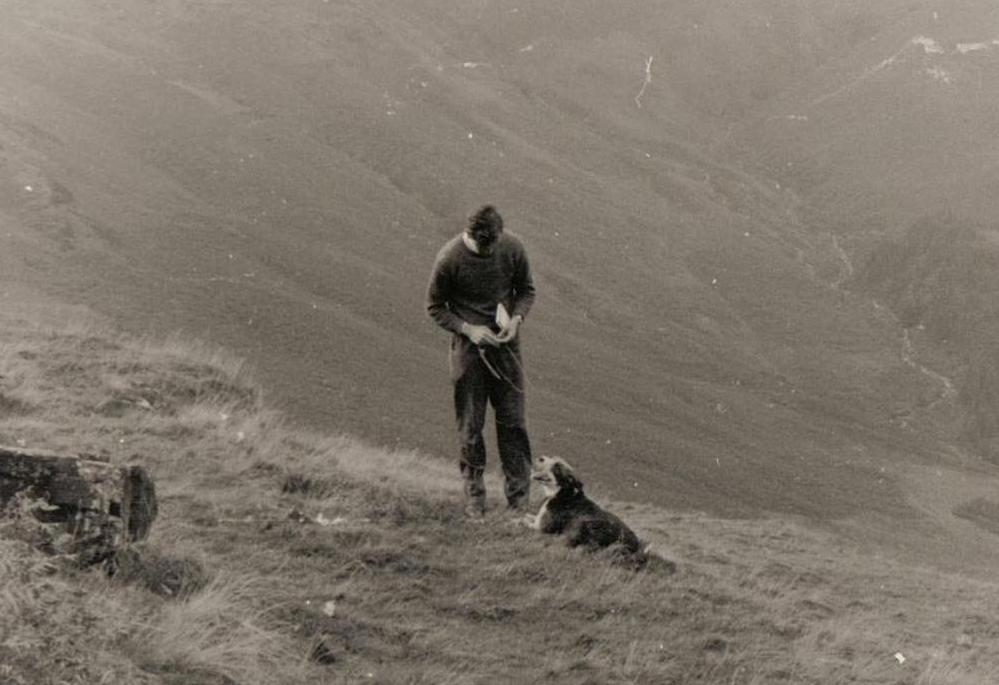
Martin Neville in Cumbria with his dog

This was in the late 1950s.  When I came along he took us to stay at Goosemead Farm. We climbed Castle Crag and you only have to glance at the photographs to see how happy I was to be there. We had a sheepdog called Luppy who came too. She was a great character and much loved. Found as a stray before I was born she was still around when I left home to be in Swallows and Amazons.

Sophie Neville aged three in the Lake District
Sophie Neville aged three in the Lake District with Luppy the sheepdog

Arthur Ransome had been Dad’s favourite author as a boy. He said that he would wait in anticipation for another book to be published. He’d bought me the set of twelve, collecting them from various secondhand shops. I had read seven  by the time I was twelve.  He set my destiny.

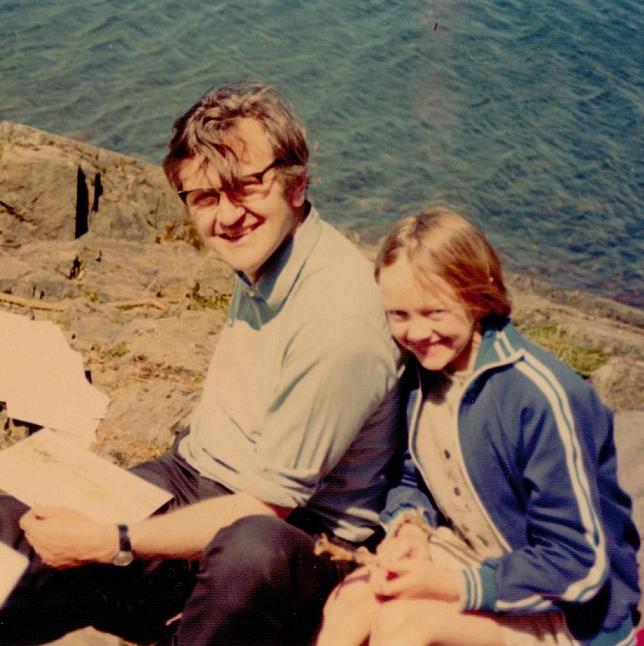
Painting with Dad the shore of Coniston Water
Finding my father Martin Neville the shore of Coniston Water

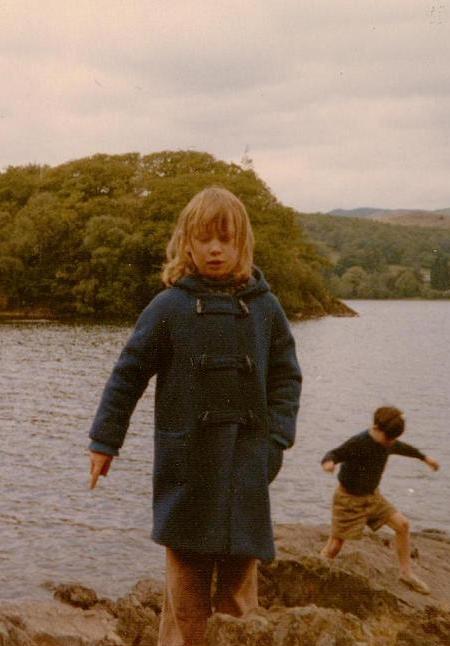
My father left the dogs at home on 26th May so that he could drive my younger sisters up to join us for two weeks and watch the filming. He found Peel Island on Coniston Water and was there to meet us when the boat came in at the end of the day. My sisters stood smiling on the rocks, dressed for the weather in matching red jerseys, duffle coats and gumboots.

My sisters Perry Neville and Tamzin waiting for me on the shore of  Coniston Water

My parents had booked a Bed and Breakfast in Ambleside across the road from the Oaklands Guest House. I immediately noticed a sign declaring that you had to pay 10p to have a bath. ”Ten pee!’  Mum glared at me, furious. ‘Do be quiet, they’ll hear you’.  I had moved to share Suzanna’s room, since Mrs Price had a long-standing booking for the back room Mum and I had been using. Her guesthouse was full to bursting since she had students from the Charlotte Mason College of Education lodging with her as well as all of us and her own three children. There were only two bathrooms for the twenty-two people living  in the house but there were basins in some of the bedrooms. Nylon sheets were provided but the bedding was apt to slide off in the middle of the night.

Perry Neville by Coniston Water near Peel Island
My sister  with Sten Grendon, Peel Island behind them

My sisters, Tamzin and Perry, who must have been about eight and nine, struck up an instant rapport with Suzanna Hamilton. She asked them to baby-sit her pet slow-worms. These had come up from London with her in a small glass aquarium, which she had put in the fire place in our room. I don’t know what Mrs Price thought. I wasn’t very keen on handling them, and have no idea how they were fed, but Perry was intrigued. Suzanna had also brought her ukulele. She would sit on her bed playing Ain’t She Sweet, Sunny side of the Street, Playing on my Banjo and other Norman Wisdom numbers, fluently and with great gusto. My sisters were entranced. They may have even shared the room with us and the slow-worms. Mum can’t remember.

Dad had already made plans for sailing that first Bank Holiday, when Richard Pilbrow had scheduled a break.

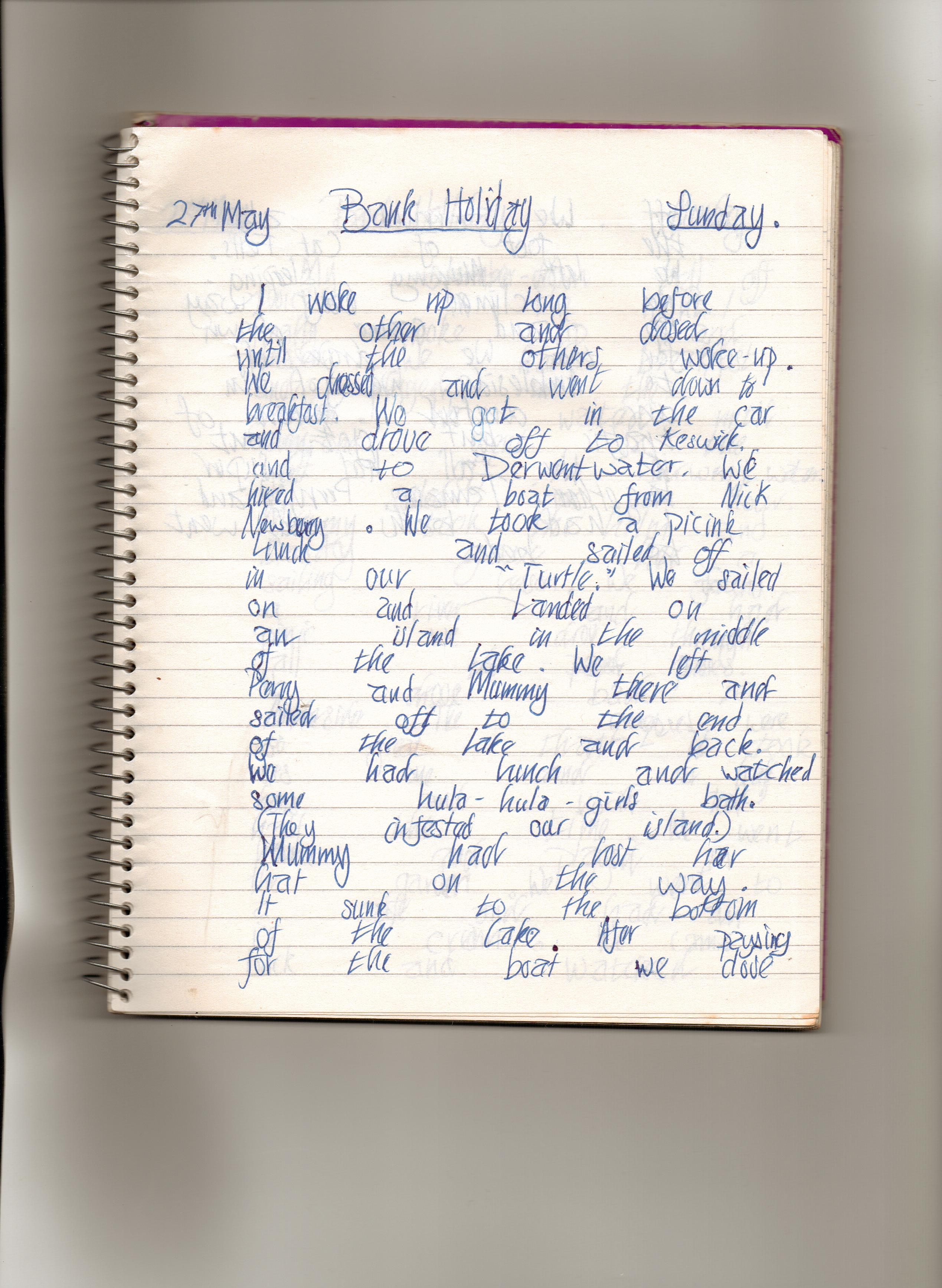
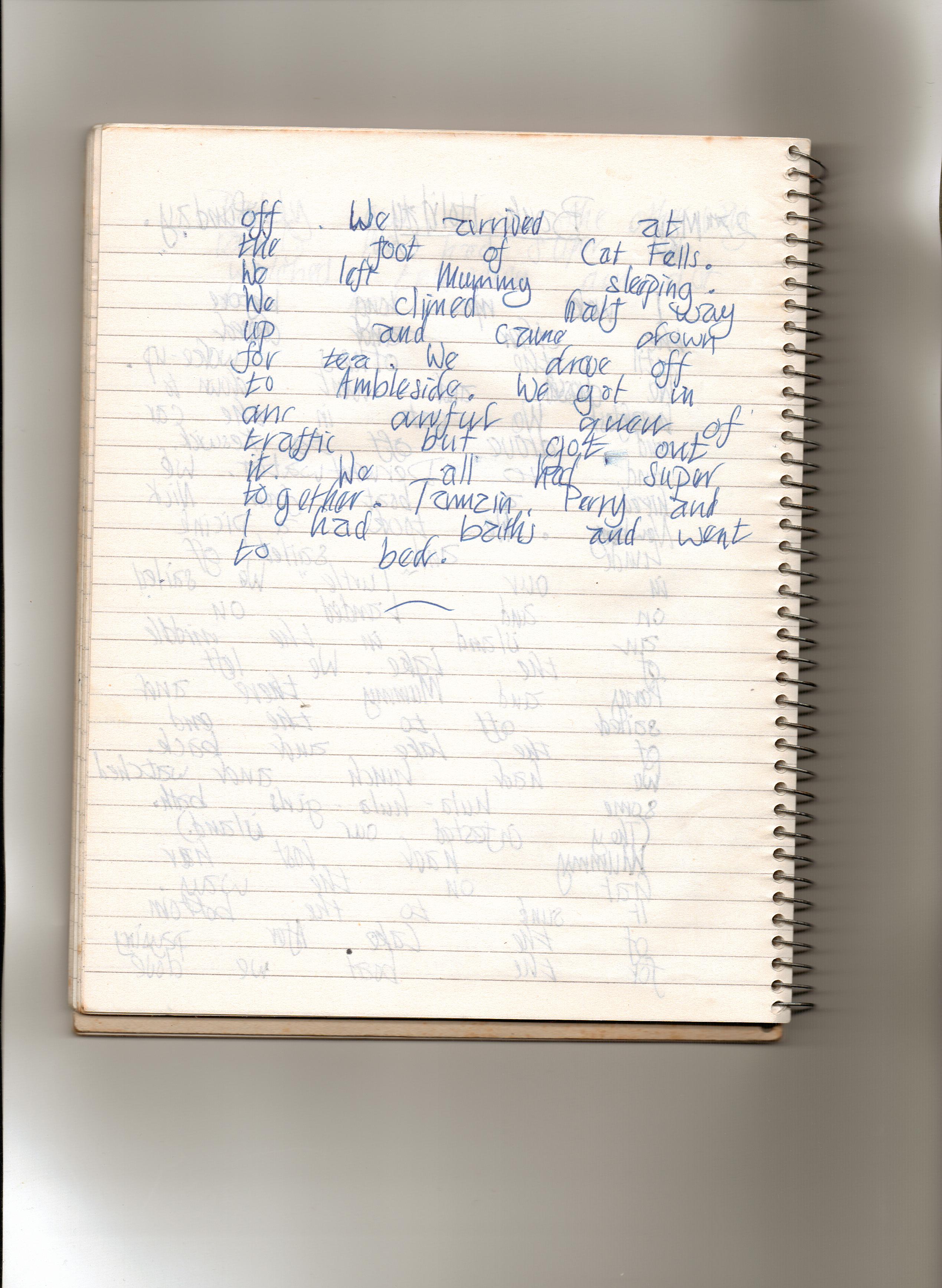
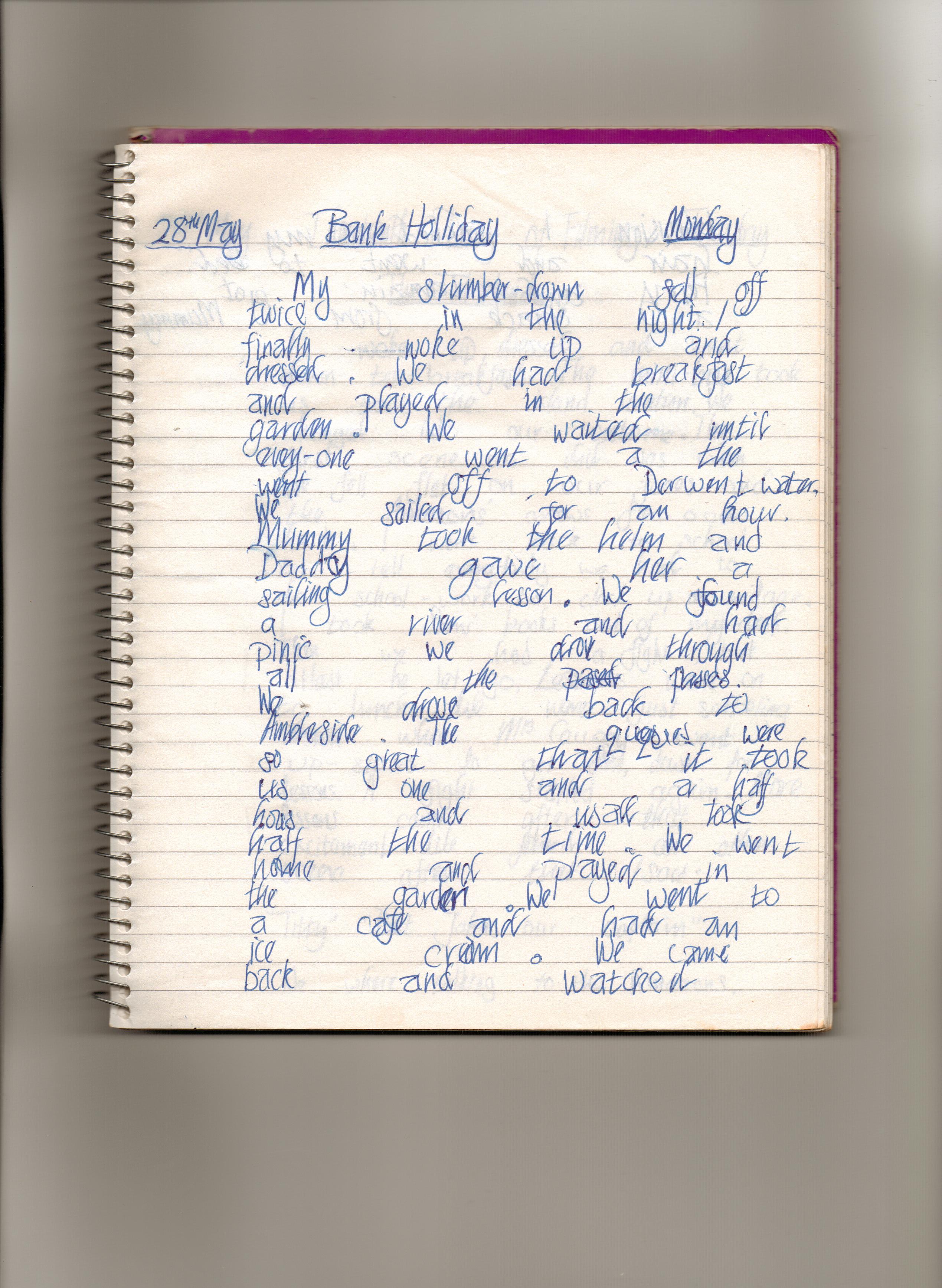
27th May page 2

I remember the Hula-hula girls well. Although it was only May they suddenly appeared on what seemed to be a remote, inaccessible island, clad in garish, brightly coloured bikinis – the kind that had little frilly skirts to them. We watched them splash about and swim in complete wonder as, although it was sunny, we knew how cold the water was.

We had seen something of the same kind of savage the day before. I can remember the dismay on the First Assistant’s face when he realised it really was the Saturday of the Bank Holiday. We had had Peel Island to ourselves, indeed it had become ours – our special place, our magical camp, our home. And suddenly it was being invaded by brash women from Manchester who certainly had no respect for anyone making a film.  I don’t know how they got out there. they seemed to arrive from no where when we were in the secret harbour, which was suddenly a secret no more. It was their holiday and there was no stopping them or their over-weight and noisy children. They were quite frightening.

The horrific Bank Holiday traffic queues were also unexpected, but my father took us up into the mountains and out on Derwent Water. He must have been trying to teach my mother to sail for decades but she has never begun to get the hang of it.

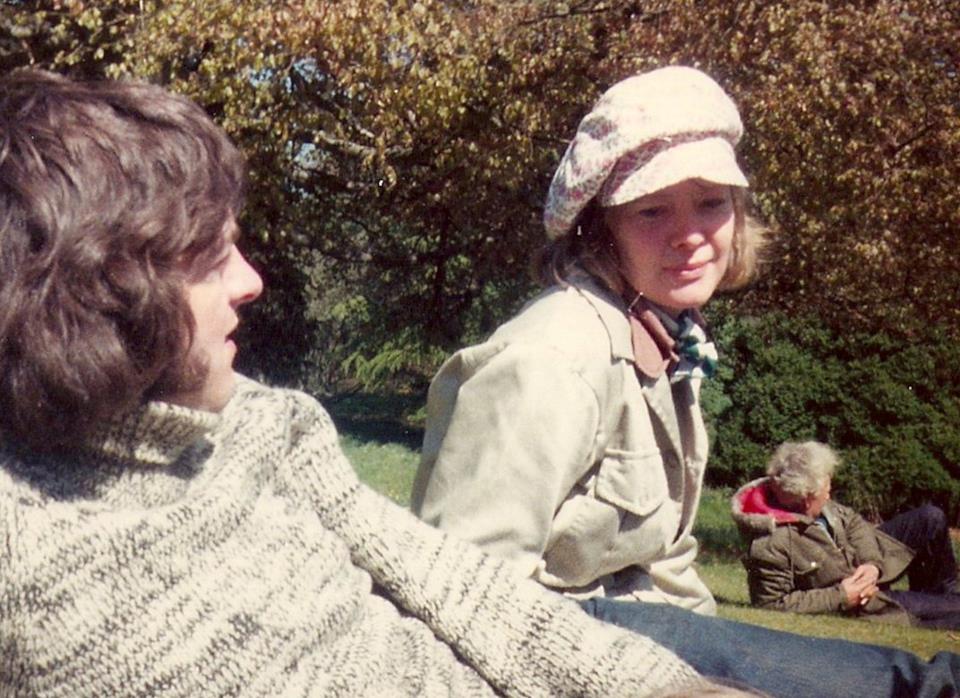
Mum and David Blagden
David Blagden and my mother Daphne Neville in her Donny Osmond cap

Mum was in mourning that weekend as she had watched her favourite hat blow across the water and sink to the bottom of the lake. It was a bulbous pink and white Donny Osmond cap that Claude Whatham had enjoyed wearing on set to amuse us. She was able to find a yellow and white one to replace it but he never liked it as much. Said it didn’t suit his colouring.

You can read more about our adventures making the film here: