The ‘Doctor Who’ connection

One viewer has observed that, in the BBC serialisation of Coot Club and The Big Six, we had not one but two Doctors in the cast, Time Lords at that. This is true. We arrived on location one morning to find that Patrick Troughton had  transmogrified into Harry Bangate the Eel Man.

Patrick Troughton as the eel man
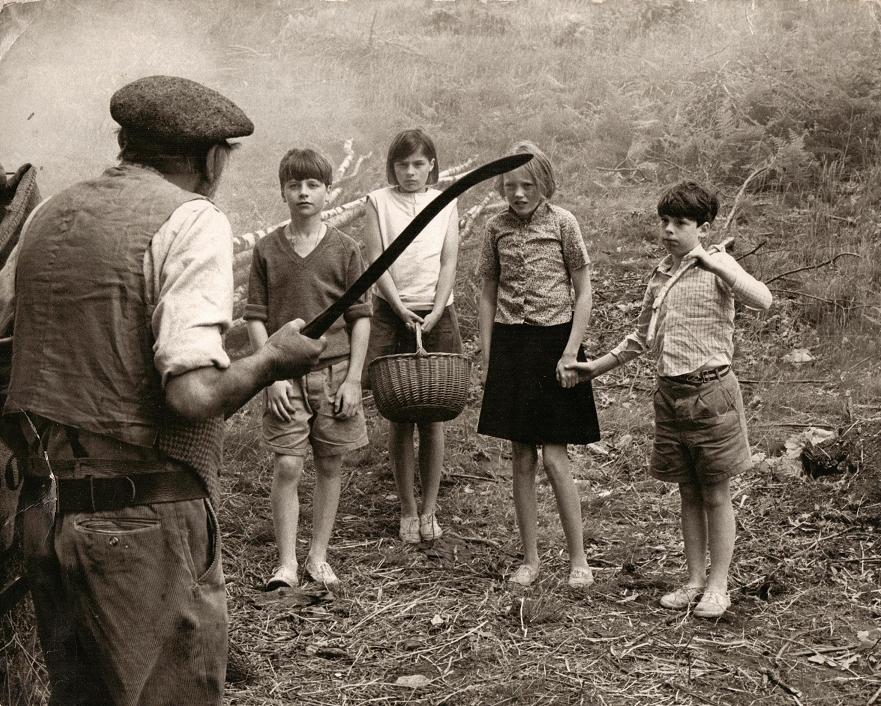
Patrick Troughton playing The Eel Man in ‘The Big Six’, 1983

He had led the most fascinating life. A Naval Officer during World War II, and the first actor to play Robin Hood on television, Patrick Troughton played The Doctor in 128 episodes of Doctor Who. But would he be drawn? If we asked him about his life he just started talking about eels in a broad Norfolk accent. He’d worked for our director Andrew Morgan on Kings Royal and for Joe Waters on Z Cars, but for us, in the summer of 1983, he was the eel man.

Coot Club - Jake Coppard - playing Pete
Jake Coppard playing Pete at the eel man’s hut

Colin Baker first appeared in Doctor Who (a story entitled Arc of Infinity) in the role of Commander Maxil, when he actually shot the 5th Time Lord, who was being played by Peter Davison. It was not until after he arrived in Norfolk to play Arthur Ransome’s tweed-clad Dr Dudgeon, that he realised his full destiny and donned a multi-coloured dream coat to take on the 6th incarnation of The Doctor in the long-running BBC science fiction series.  I went on to work as an Assistant Floor Manager on a two-part story called Vengeance on Varos when the Tardis had to make an emergency landing on a most unattractive planet. Once established at the North Acton rehearsal rooms I persuaded Colin to teach me all the correct jargon about transmogrifiers but it has since washed from my brain.
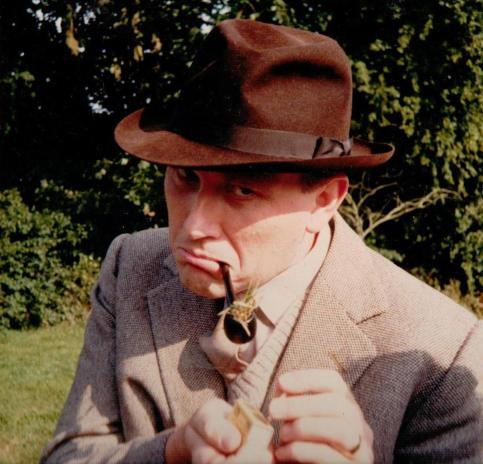
Colin Baker as Dr Dudgeon in 'Coot Club' and 'The Big Six'
Colin Baker as Dr Dudgeon amusing us by smoking grass

I can’t remember whether Colin Baker was cast as Dr Dudgeon in Coot Club before or after Henry Dimbleby was given the part of his son Tom Dudgeon, but he did not look unlike Henry’s real father back then.

David Dimbelby with us on location in Norfolk, 1983

There were various other members of our film crew who were also familiar with the Tardis. (We were meant to refer to it as  ‘T.A.R.D.I.S.’ short for ‘Time And Relative Dimension In Space’).  John Woodvine ,who played PC Tedder, had preciously taken the role of the Marshall in ‘The Armageddon Factor’, opposite Tom Baker and Mary Tamm in 1979.

John Gill who we knew as Old Bob of the Comealong had the part of Oak in Fury from the Deep, made in Patrick Troughton’s time. Alan Lake played Herrick in four episodes entitled Underworld first broadcast in 1978. Andrew Burt played Valgard in Terminus during Peter Davison’s era and Tim Barlow, the distinctive looking actor who played the old man at the Roaring Donkey was Tyssan in Destiny of the Daleks. Sam Kelly, our Captain of the Catchalot appeared in the audio dramas of Doctor Who titled The Holy Terror and Return to the Web Planet.

Andrew Morgan directed both Time and the Rani and Remembrance of the Daleks. Tariq Anwar our film editor on Coot Club, worked on two stories while  Andy Lazell, the visual effects designer responsible for creating so much fake fog on Breydon Water had worked on ‘The Leisure Hive’ and ‘Snakedance’, eight episodes of Doctor Who first broadcast in the early 1980s. I went on to work on Vengeance on Varos when Colin Baker played The Doctor. I’ve a feeling he learnt that he’s been cast in the role while he was on location with us in Norfolk. Andrew was thrilled for him and opened the champagne.

Colin March, our sound recordist worked on the film sound or ‘Planet of Evil’ in 1975 and ‘The Two Doctors’, with both Colin Baker and Patrick Troughton. It was broadcast in 1985. Liz Mace, had been the production manager on ‘Time-Flight’.  Diana Brookes, our script supervisor – or production assistant as the job was then known – had worked with Colin Baker on the four-part Doctor Who story ‘Arc of Infinity’ in 1982/3. Perhaps it was she who thought of him for Dr Dudgeon. I have just learnt that she sadly died in New Zealand 2024.

Diana Brookes in Beccles with Richard Walton who played Dick in 'Coot Club'
Di Brookes in Beccles with Richard Walton who played Dick in ‘Coot Club’

The part of the tall and elegant Hullabaloo, Livy, was played by Sarah Crowden. Her father, the actor Graham Crowden who I always think of as Tom Ballard in his Sit-com Waiting For God, was offered the part of the fourth Doctor Who , after Jon Pertwee but he turned down the opportunity as it was such a commitment. Instead he played Soldeed in The Horns of Nimon in 1980 after Tom Baker had being playing the fourth Doctor for some time.

The person working on our series who had had a huge input on Doctor Who was Mervyn Haisman, our Script Editor. He’d written at least seventeen episodes including the series entitled The Dominators, writing under the name Norman Ashby. Mervyn never appeared on location but it was he who steered the adaptation of Arthur Ransome’s novels, breaking them down into four episodes each, whilst remaining faithful to the original stories.

You can read more about the making of ‘Coot Club’ here

The Costumes for the BBC serialisation of Arthur Ransome’s books ‘Coot Club’ and ‘The Bix Six’

Sophie Neville in 1983, during the filming of 'Swallows and Amazons Forever!'
Sophie Neville in 1983, during the filming of ‘Coot Club’

Julian Fellowes recently introduced me to friends, explaining that we had worked together when I had been a Consultant on ‘Swallows and Amazons Forever!’ ~ the overall title given to the BBC serialisation of ‘Coot Club’ and ‘The Big Six’. This was very kind. Apart from a fact or two about Arthur Ransome, my consultant-ish-ness consisted mainly in suggesting the children wore warm clothes when they were out on the water. I need not have worried. Our Producer, Joe Waters, appointed the most wonderful costume designer, who knew all about thermal underwear and hats. ‘I love hats,’ she told me. ‘Everyone wore hats in the 1930s. They give the whole production a period feel.’

Coot Club Susannah BNuxton and Henry Dimbelby
Susannah Buxton and Henry Dimbleby on location in Norfolk in 1983

Everyone on the unit – certainly all the children in the cast, adored Susannah Buxton. She was only about thirty-three and had not been a costume designer long. A tall red-head, she admitted to often struggling to her feet on set when the Lighting-Camera man called for a certain light.

Rosemary Leach as Mrs Barrable in a hat suitable for an Admiral

I’ve just read a review on Amazon.co.uk  about ‘Coot Club’, which said, ‘Wonderful attention to period detail. Even the film’s colours are right for the period.’ They certainly were. Susannah managed to source a huge number of original hand-knitted garments.

Nicholas Walpole as Joe with Sam Kelly in 'The Big Six' ~ photo Sophie Neville
Nicholas Walpole as Joe with Sam Kelly in ‘The Big Six’

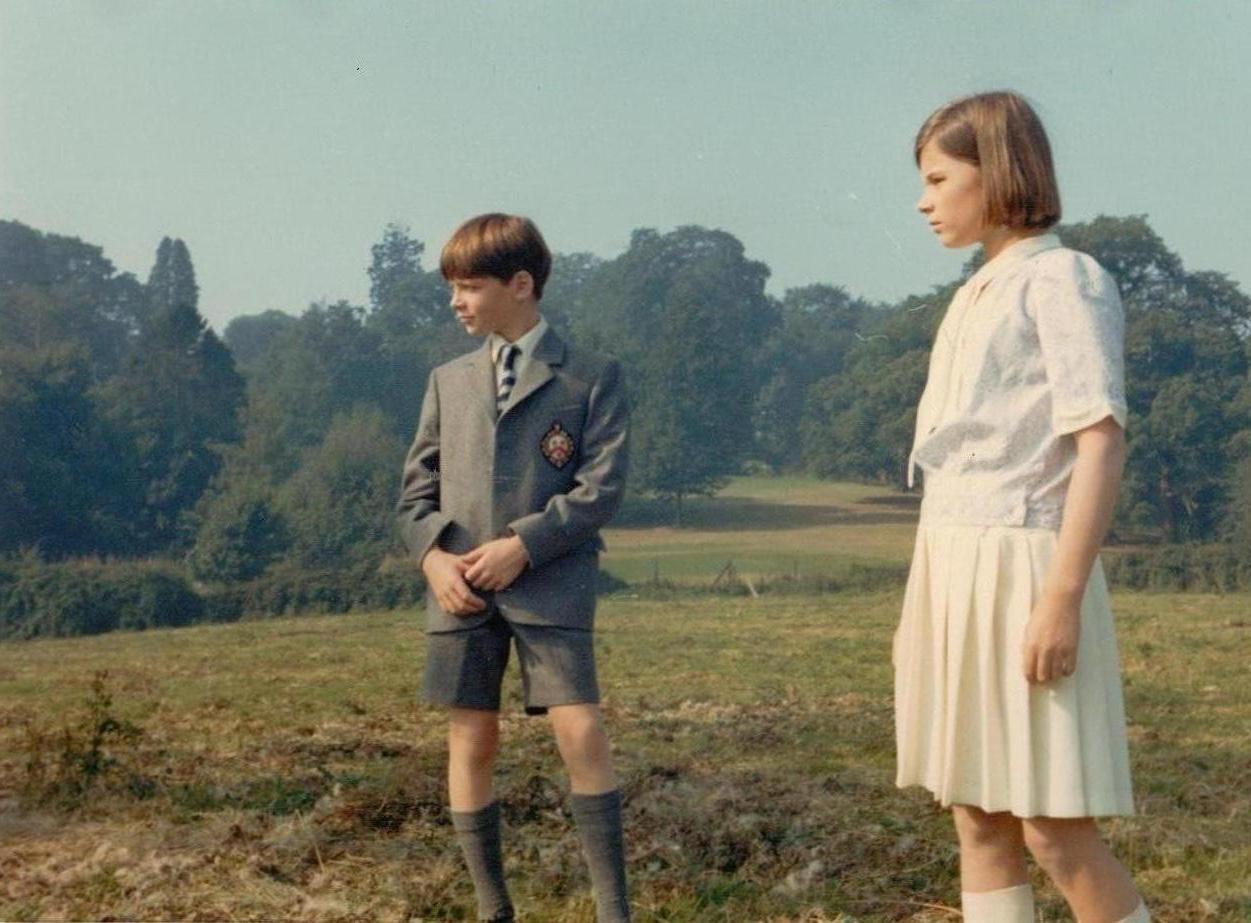
While she was dressing the children, deciding what they should wear at the beginning of a new day in the story, Susannah explained that she was keen that they didn’t look too chocolate-boxy. The girls playing Dorothea and the Farland twins were all so pretty it would have been easy to go over the top. She carefully combined elements of school uniform with 1930’s clothes that children would have worn in their summer holidays. I can’t remember any member of the cast being uncomfortable – either two cold or two hot, even though we spent three months filming on the Norfolk Broads.

‘How did you become a designer?’ I asked her.

She explained that she loved clothes and it was what she always wanted to do. She’d been working freelance as an assistant in Bristol, thinking she wouldn’t get to design on a television production for years, when the phone rang. ‘I was asked if I could take on the role of costume designer, so I took a deep breath and said, “Yes.”‘  Here I have to explain that many members of the crew had come up from BBC Bristol, which then had a regional crews available to work on period dramas. Our Producer was very pleased about this. He used a crew from BBC Bristol again when we made ‘My Family and Other Animals’ on Corfu  a few years later. Susannah had a wonderful assistant called Helena and at least three dressers, including Paul Higton and Lesley Bowling, who were not only meticulous but great fun.

Coot Club - Lesley Bowling
Lesley Bowling on location in 1983. The hand belongs to Paul Higton.

The size of the costume department reflected the difference between the 1974 feature film of  ‘Swallows and Amazons’, which was shot in the Lake District with a small cast and very few crowd scenes – when the one Wardrobe Master was helped only by my mother – and our BBC TV adaptations of Arthur Ransome’s books set in Norfolk.  ‘Coot Club’ and ‘The Big Six’ had much bigger casts, with many more roles for adults and supporting artistes.

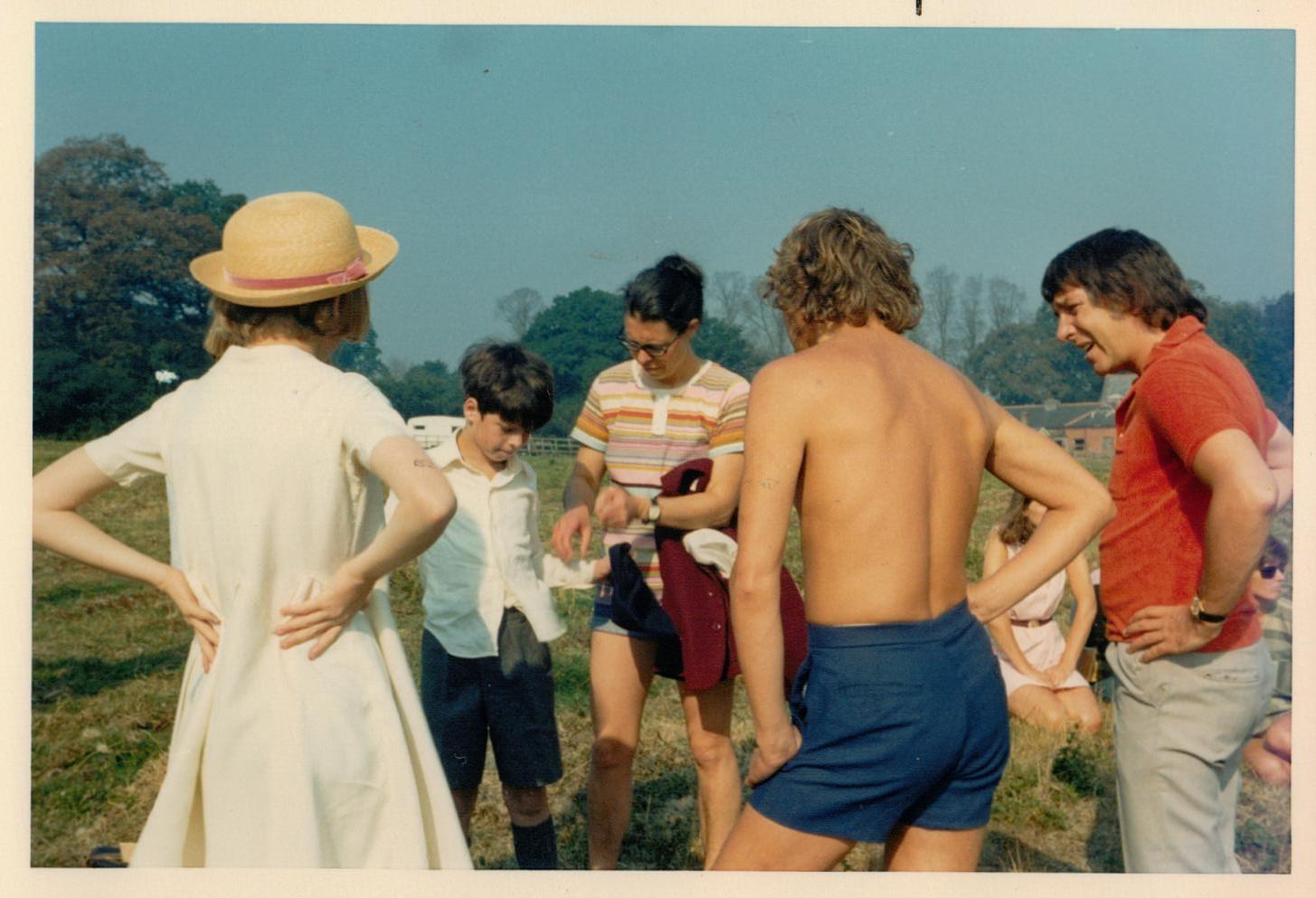
Coot Club - the hay wagon
A hot day in Norfolk on the set of ‘Coot Club’

I was looking after the eight children in the lead parts and another six or seven boys in supporting roles, not to mention children who appeared as extras in the village scenes.  It was Paul and Lesley’s humour that oiled the wheels that kept us running smoothly. ‘The Big Six’  had to be taken through costume and make-up almost every day for three months and these were costumes that had to stay clean all day. The children were obliged to wear life-jackets when they were near water, right up until the time when the director went for a take. Obviously, these had to go straight back on after each camera set-up. I can still see Paul Higton with an armful of colourful life-jackets he was handing back to five boys at a time.  He went on to become the costume designer on forty-eight episodes of Dangerfield and more than 825 episodes of the TV series Doctors.

Jake Coppard receiving a soaking from Paul Higton while Nicholas Walpole and Make Page escape getting wet.
Jake Coppard receiving a soaking from Paul Higton while Nicholas Walpole and Mark Page escape getting wet.

Susannah Buxton went on to have the most dazzling career. I last saw her when she was striding along the South Bank in London one evening. I didn’t know that she had worked on so many movies. These have included,  Millions, 2004, directed by Danny Boyle, ‘As you like it’, directed by Kenneth Branagh and ‘Death defying Acts’, which starred Catherine Zeta-Jones. She won a BAFTA award for ‘Mr Wroe’s Virgins’, directed by Danny Boyle, an RTS award for ‘Shooting the Past’, which was directed by Stephen Poliakoff, and a number of awards for ‘Downton Abbey’, including an Emmy for Outstanding Costume Design.  I’m not sure she imagined all this would be in store for her when she was busy loading costumes into a boat on Horning Staithe back in 1983.

Happy New Year!

Amazon with the pontoon

2013 will be the 40th Anniversary of making of the EMI movie ‘Swallows and Amazons’. Forty years! Where did they go to? I must have been looking the other way.

Everyone wants to know what we are all doing now. I am only in touch with Richard Pilbrow, Suzanna Hamilton, Virginia McKenna, Lucy Batty of Bank Ground Farm and my own family. Please do send me an e-mail if you were involved in the film in anyway. It would be wonderful to hear from you. I am sophie@sophieneville.co.uk

A steam roller in Horning for the 1983 BBC drama serial of ‘Swallows and Amazons Forever!’

 
Mary Soan, Susannah Buxton, Sam Kelly and Penny Fergusson in 1983
 
Assistant director Mary Soan, Costume designer Susannah Buxton, Actor Sam Kelly and Make-up artist Penny Fergusson when filming on location in Norfolk in 1983
 
“I had a telephone call one day from a man working for the B.B.C. he said he had heard I had a steam roller, if so could I take it to Horning to appear in a film they were about to shoot in the broads area.”

I was sent this extract, copied word-for-word from Jimmy Nicholson’s autobiography I kept a Troshin’ originally published in 1989 by S.J. Nicholson.

“The title was ‘Swallows and Amazons’ which was shown on B.B.C.2.  So on the appointed day I loaded the roll onto our low loader and Geoffrey, our lorry driver, took it to Horning.  I unloaded it near the Swan Hotel about eight thirty, some of the people were already there, the people in charge rolled up about nine.  Then a coach load came, there was also a coach full of costumes. The young lady who was helping to organise things said I had better change some of my things into old time dress, as the film was supposed to have been in older times.  So I went in the bus where all these costumes hung. The young lady in there said I had better change my shirt and boots and wear another hat, an old fashioned cap. So I pulled my shirt off she handed me one of these old ones. I said, ‘What about my trousers, do you want me to take them off!’
She laughed and said, ‘No I think yours will do.’
I thought what a shame.
Another young lady said she thought I should have my hair cut. So I sat on a chair on the Swan car park and had a hair do. The next thing they were queueing up for breakfast from a mobile canteen. The lady in charge said, ‘Come on Jimmy.’ she had learned my name by now. I said, ‘I’ve had mine.’
She said, ‘Never mind have another one. ‘Which I did and had a full English breakfast.
By the time they wanted me to start operating it was time to stop for coffee and other drinks. When I did start I had to drive the roll up the road passed the cameras. I did this about a dozen times, I had to time this with some children running down a side road to see me go passed. By now it was lunch time so I joined the queue again and had another cooked meal.
After having a pint in the Swan the lady in charge said, ‘I think we’ve finished with you now.’
I thought what a shame,  I could put up with this for a week.”
 

Jimmy was obviously very much taken by the girls working for BBC television on the drama serial of Arthur Ransome’s books ‘Coot Club’ and ‘The Big Six’. When we made the EMI movie of ‘Swallows and Amazons’ in 1973, the only female member of the actual film crew had been the ‘Continuity Girl’ or script supervisor. In ten years things had changed. Joe Waters, our producer, aimed at having a 50/50 ratio of men and women on his production team and crew. This created an atmosphere that was full of fun and the children acting in the series thrived.

The young lady ‘who was helping to organise things’ would have been our efficient AFM, or Assistant Floor Manager, Mary Soan (known as a ‘Second Assistant Director’ on a feature film). I should explain that, in BBC Drama, stage management roles had evolved from equivalent in the theatre, so her job also involved being responsible for the ‘action props’ and action vehicles – in this case a 1930’s steam roller. I am sure Jimmy would have been quite taken by Mary – she was very pretty, with thick blonde hair, an ever radiant smile on her face. Whilst I went on to direct television programmes for the BBC in the late ’80s, Mary became a Production Manager. It wasn’t long before she went freelance as a First Assistant Director and started working on the most incredible movies ~ Pearl Harbor (2001), Bridget Jones’s Diary (2001), The Chronicles of Narnia (2005), Stardust (2007) and Skin (2008) as well as TV mini-series such as Place of Execution(2008).

Coot Club - Helena
Helena on the Norfolk Boards in 1983

‘The young lady’ in the costume bus, who was happy for Jimmy to keep his own trousers on, must have been Helena, the assistant costume designer, while the young lady who thought he should have a 1930’s short-back and sides, would have been our ever laughing Make-up Assistant Penny Fergusson.

Assistant Make-up Designer Penny Fergusson with John Woodvine who played PC Tedder in 'Coot Club', 1983
Assistant Make-up Designer Penny Fergusson with John Woodvine who played PC Tedder in ‘Coot Club’, 1983

Penny Fergusson originally trained at the Royal Ballet School. What would Jimmy have said had he known he was having his hair cut by a girl who had performed at the Royal Opera House and the Venice Film Festival before dancing her way across Europe with Pan’s People?

‘The lady in charge’, who gave Jimmy permission to go was Liz Mace, our senior Production Manager. Sadly I don’t have a photograph of her, but she was in charge of our film schedule, logistics and locations as well as Health and Safety on set. You will have seen her name on the end-credits of BBC drama serials such as The Ondein Line, When the Boat Comes In, Secret Army, on Doctor Who, the Police series Juliet Bravo and All Creatures Great and Small. In 1991, I worked with her in Ealing on a series of Thinkabout Science before she returned to work at Elstree Studios making numerous episodes of the soap opera Eastenders.

Jimmy concluded his tale by adding:

“When the film was shown on television you could just see the roll go passed and that was it, but I did enjoy myself and I enjoyed it even more when I received a cheque for the job.”
Coot Club - the cycle shop
Mark Page, Jake Coppard, Richard Walton & Henry Dimbleby filming at Itteringham Village Shop in Norfolk in 1983. Click on the photo to see the location today.
 

Filming ‘Coot Club’ & ‘The Big Six’ for BBC TV in 1983 ~

Coot Club
Caroline Downer, Henry Dimbleby, Richard Walton weighing William the pug dog

I saw so many children when I was casting Coot Club and The Big Six that I could have left the BBC and set myself up as an independent casting director, but I was twenty-two and all I wanted to do was to join the film crew on location in Norfolk. I was just not sure how.

The script called for a pug dog called William to not only appear with Mrs Barrable, played by Rosemary Leach, but to accompany the children as sailed through the Norfolk Broads aboard the Teasel. He then becomes the hero of the day as he walks across the mud on Breydon Water so a rope can be slung from one boat to another. He ended up needing to sit on weighing scales outside Beccles Post Office. I contacted Janimals, the London animal handlers. They decided it would be best to buy a puppy and train him for the requirements of the story. Naturally he was named William. The delightful young dog was brought into the office for our approval. He was still youthful when he appeared in front of the camera.

Coot Club - The Teasel sailed by a double

Andrew Morgan was a lovely director with two children the same age as those in our cast. To my surprise, I met him with his family one weekend on Port Meadow near Oxford. They had a narrow-boat moored at Bossom’s Boatyard where my father kept his steamboat Daffodil. Arthur Ransome would have approved.

Andrew had previously directed action dramas such as Secret Army, Blakes 7, Buccaneer, Triangle, Kings Royal and two episodes of Squadron, which Joe Waters had produced. Andrew, who was good at delegating, later declared himself, as he cued the steam train on the North Norfolk Railway, to be a director who specialised in films about different forms of transport. He very graciously asked me if I would work on location in the formal role of chaperone to the children whilst preparing their performances for the scenes ahead. He anticipated being out on the water in a boat without enough time to go through the children’s lines with them.

Coot Club -Sophie Neville with David Dimbleby
Sophie Neville with Henry’s father David Dimbleby in Norfolk, 1983

Once the casting was complete and licenses for each child safely lodged with various education authorities I took a weeks’ leave before returning to the production office on Shepherd’s Bush Green, where I helped book transport and accommodation. Filming on the Norfolk Broads for three months took quite a bit of preparation. While Joe and Andrew were casting the adult parts, we had to find a local tutor, buy life jackets and make numerous arrangements idiosyncratic to our particular production. The most exciting of these was commissioning the animal handler, Jan Gray of Janimals, to find a pug dog to play William. She bought a puppy so that he could be accustomed to his character name, travelling by boat, working with children and specifically trained to walk across mud. William had no idea of the stardom that awaited him. He ended up spending a great deal of his life in Gretchen Franklin’s arms playing Willy in Eastenders.

The day came when I packed up the little room I had been renting in Shepherd’s Bush from the actress Zelah Clarke  and drove to the Dimblebys’ house in Putney to collect Henry. As he had just passed his Common Entrance he’d been let off school earlier than most thirteen-year-olds and we motored up to Norwich in a jubilant mood, singing most of the way. Whilst most of the production team and crew had found holiday cottages, I was to live at Sprowston Manor, the unit hotel with Caroline Downer, Henry and the other actors including the Matthews twins who travelled up with their mother. It was terribly grand. We had small quiet rooms at the back.

Coot Club
One of the Matthews twins having her hair plaited by Make-up Artist Penny Fergusson

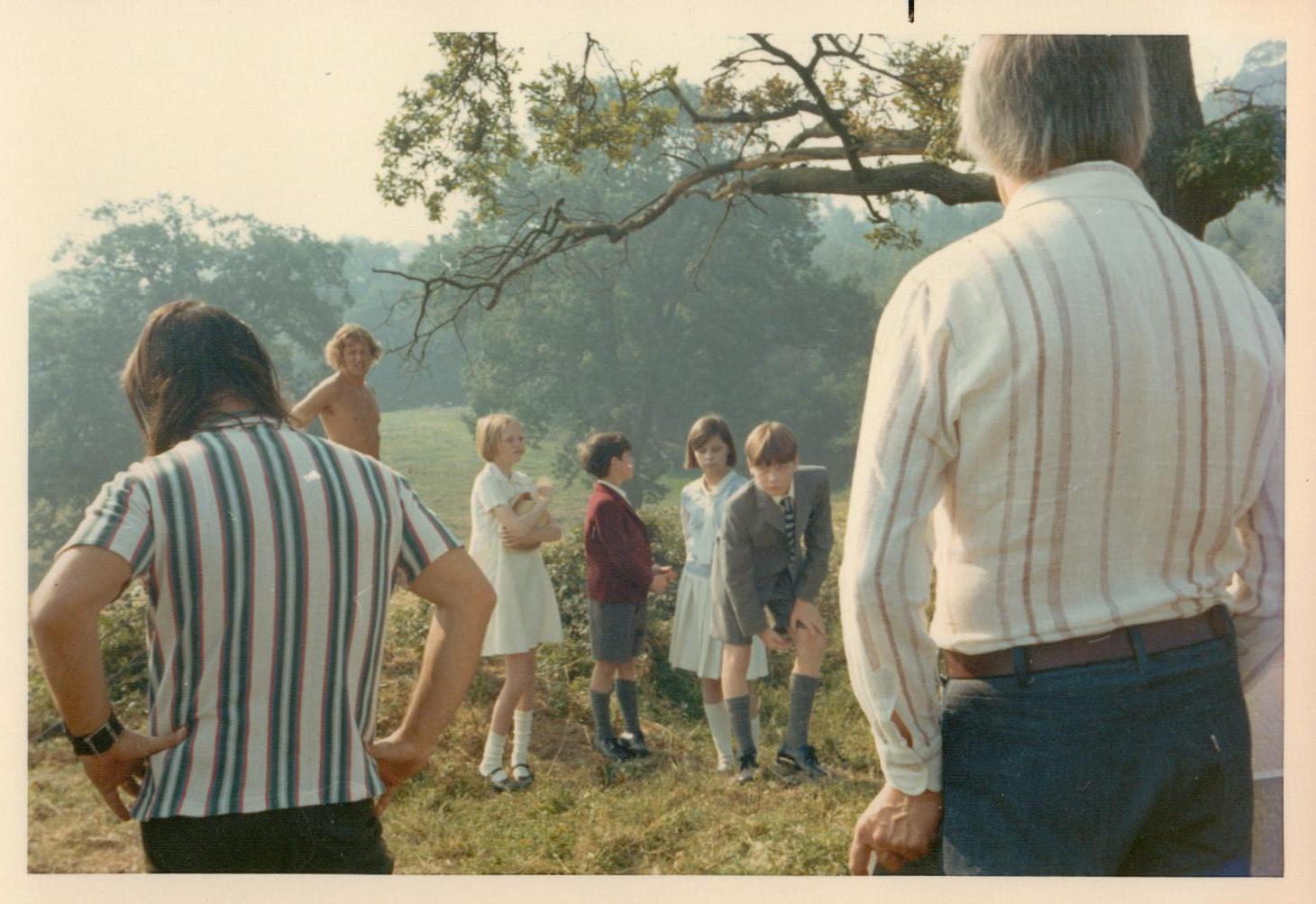
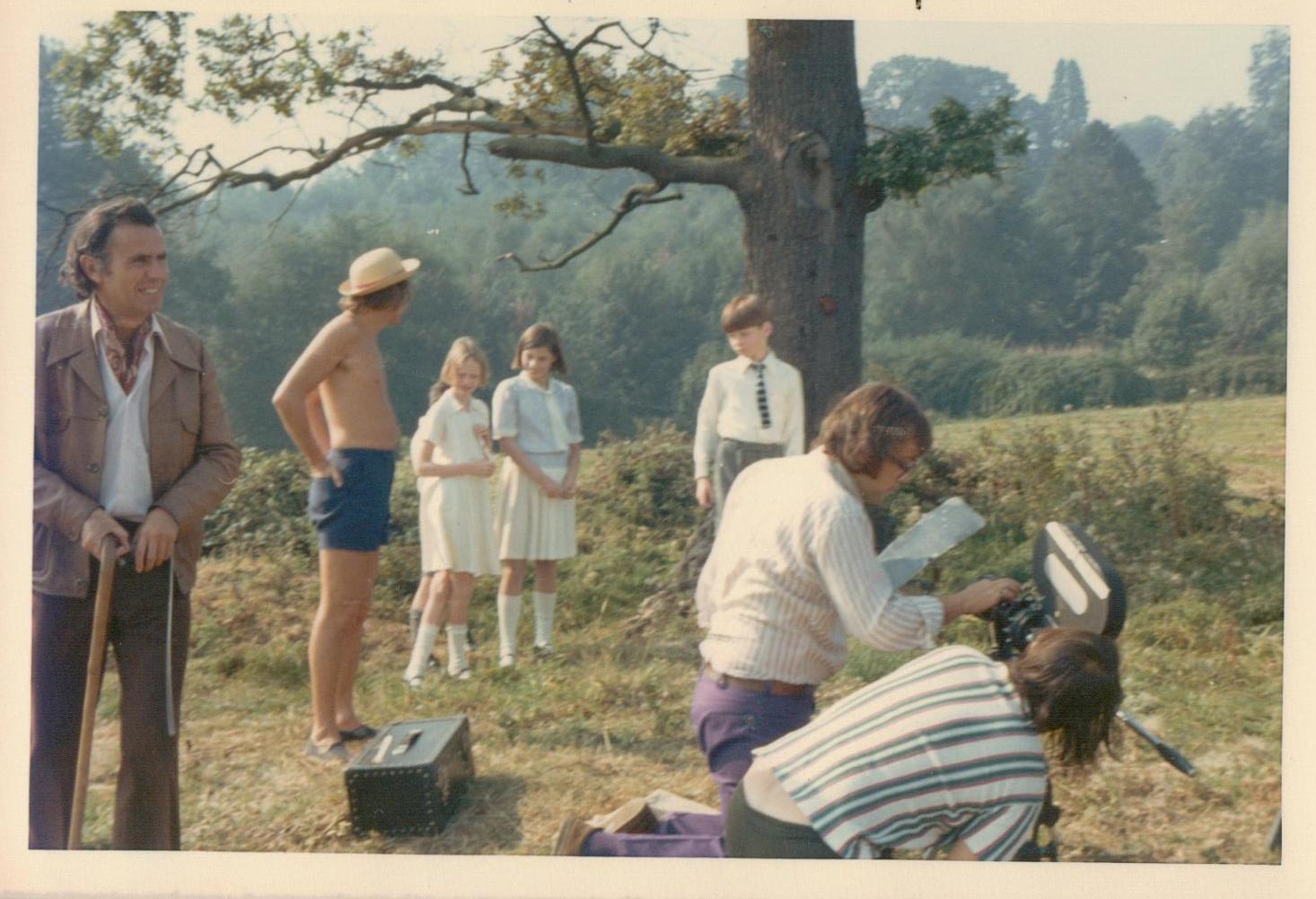
Liz Mace, our production manager, had taken my advice and scheduled ‘running around scenes’ for the first few days of filming, so that the children could get used to working with the film crew. The whole series was shot on 16mm by a wonderful, patient lighting-cameraman called Alec Curtis. We were very lucky to get him. He’d just finished The Kenny Everett Television Show and  had worked on a huge number of well known comedy dramas ~ The Rise and Fall of Reginald Perrin with Leonard Rossiter, Fawlty Towers for John Cleese, The Morecambe & Wise Show, Sorry!, To the Manor Born and a BBC thriller called Scorpion. Alec had made God’s Wonderful Railway and was more than happy working with Andrew on the Bluebell Line for the opening scenes of Coot Club. Filming from a boat presented many more challenges, not least simply keeping the camera horizontal, but Alec was ever patient and kind. And always wearing a sun hat.

'The Big Six' - The D&Gs with Andrew Morgan
Mark Page, Nicholas Walpole and Jake Coppard as the crew of the Death and Glory with director Andrew Morgan and Cameraman Alec Curtis, 1983

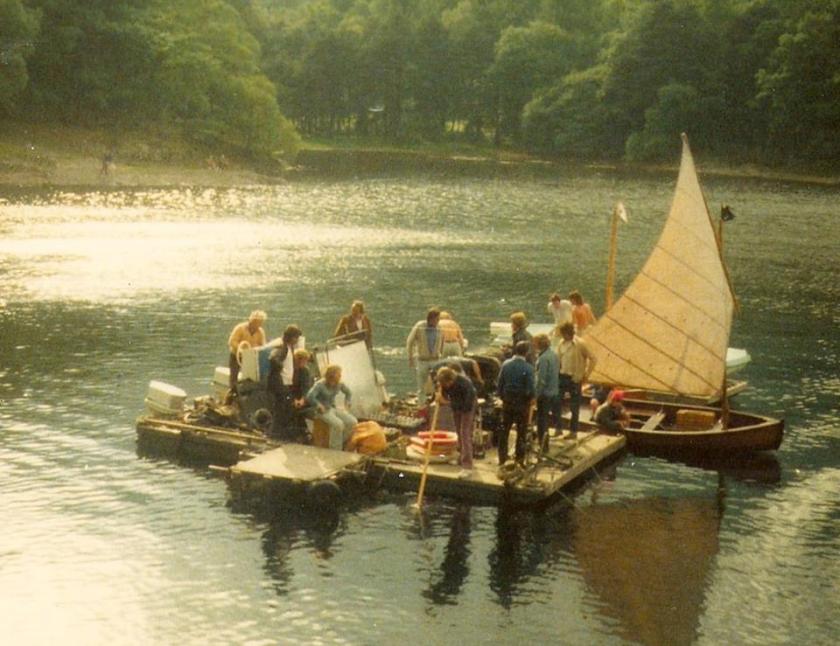
I had drawn Andrew endless diagrams of Claude Whatham’s camera pontoon, built with a flat surface to accommodate camera track, that used to make Swallows and Amazons in the Lake District. However a more normal and faster vessel was chosen as the camera boat for the Broads. It had to travel around quite a bit since a far greater variety of locations was required than we had in Cumbria. We also had a couple of glass fibre run-around boats which would sometimes be used for the camera, especially in backwaters too shallow for the larger boat.

The Big Six - showing the runaround boat ~ photo: Sophie Neville
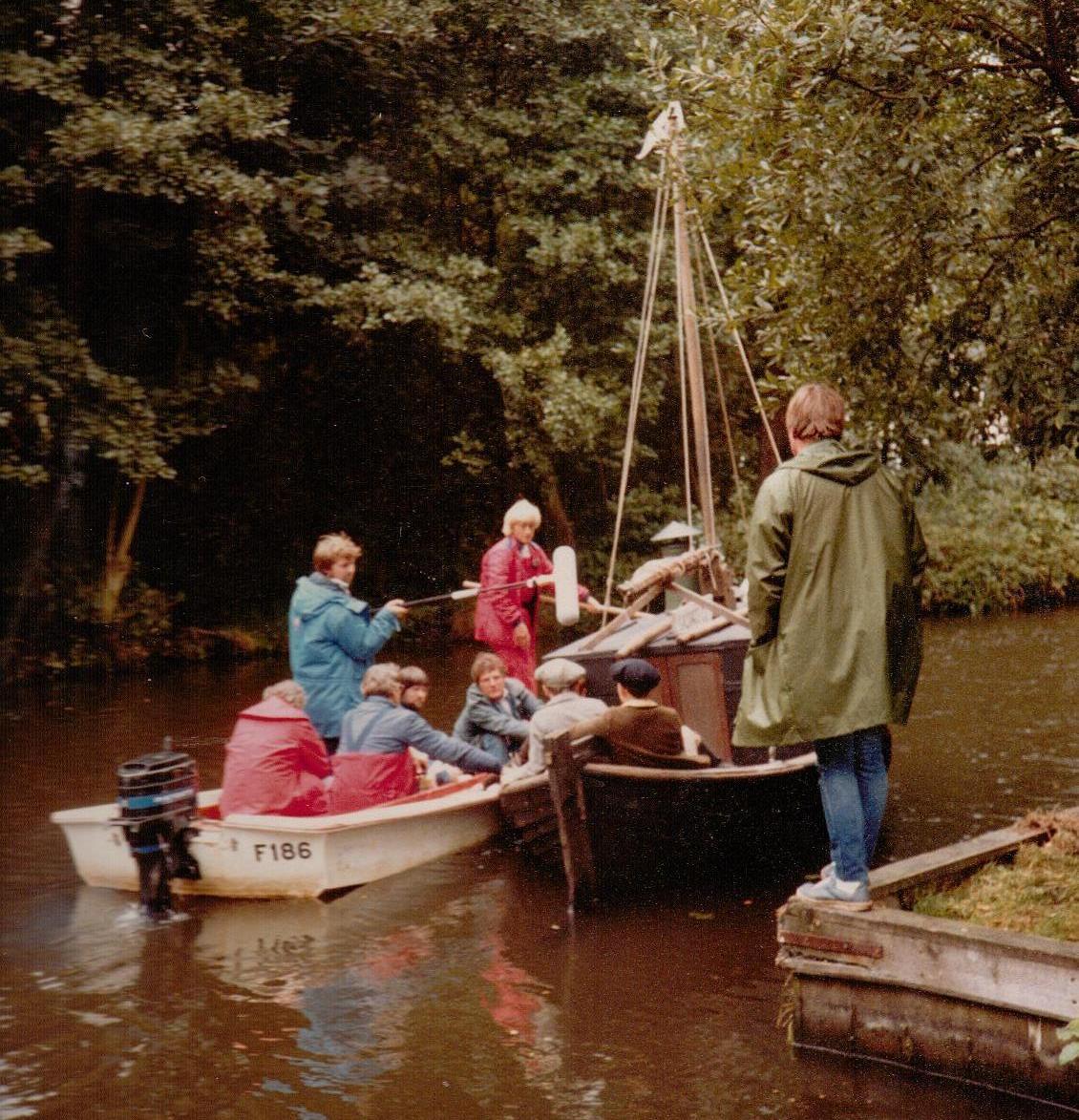
Alec Curtis and Andrew Morgan filming theDeath and Glory , with Peter Markham as First Assistant ,and Jill Searle looking after the boats, on one of the few rainy days on location at Gays Staithe, 1983


I have been writing about the adventures had whilst filming from one boat to another here:

‘How did appearing in ‘Swallows and Amazons’ affect your life?’

Wheetabix commercial
Sophie Neville appearing in a Wheetabix commercial directed by Claude Whatham in 1973

I am often asked what impact Swallows and Amazons has had on my life. Because I had been given the lead in a feature film, it naturally lead to ‘more work’, as any actor would put it. I had not expected this, but things seemed to come our way. Sadly not riches, as I was still paid as a child, but it was fun and I learnt a great deal.

Wheetabix Commercial with Claude Whatham looking through the camera
Claude Whatham looking down the 35mm camera, giving direction to Ruth Shields and Percy Baxter, while Perry and Tamzin Neville stand by in the foreground.

I think Claude Whatham must have accepted a contract to direct commercials for Wheetabix even before he finished editing the Arthur Ransome movie, because in the summer of 1973, my sisters and I appeared in three lovely period films – each about three minutes long – that he made in Gloucestershire at harvest time.

Wheetabix Commercial with Tamzin and Perry
Girls in a Cotswold corn field harvesting stocks of wheat ~ Photo: Martin Neville

Claude had a cottage near Sten Grendon’s house in the Cotswolds. The location can not have been far from where we all lived as I recognise some of the Extras, who my mother gathered together including Percy Baxter, Ruth Shields, my younger sisters, Perry and Tamzin, and my father, Martin Neville. I can’t remember Sten being on the set but I have a photograph of our erst-while chaperone Jane Grendon in period costume.

Wheetabix Commercial with Jane Grendon
An unknown gentleman with Daphne Neville and Jane Grendon in Gloucestershire while filming a commercial for Claude Whatham in August 1973

We didn’t actually have to eat breakfast cereal. In my film there was simply a shot of me climbing over a gate to discover a cornfield with the voice track, ‘When I was young…’ over a shot of me and my brother, played by Nicholas Newman, eating individual grains of corn. This was not in the script. We just behaved as children do.

Wheetabix Commercial directed by Claude Whatham
Nicholas Newman and Sophie Neville eating grains of wheat.

Claude asked me just to stand in the crop and ended the film with a shot of me spinning around, enjoying the feel the ripe heads of corn as they hit my hands, captured against the low light of the setting sun. It was undirected action. Despite having endless lengths of track, the latest camera mounts and a massive 35mm Claude was letting us behave completely naturally – experimenting with improvised drama without even asking us to improvise.

My mother could not appear in the advertisement herself, as she had already been in a Television commercial for cereal and her agent did not want her to accept ‘Extra work’. She was represented by Bryan Drew, whose assistant Wendy Noel found Mum featured roles in a wide range of television commercials, which paid very well as the repeat fees were good. I remember going with Mum to their office in Shaftesbury Avenue when Brian Drew lent back in his chair, casually agreeing to represent me.

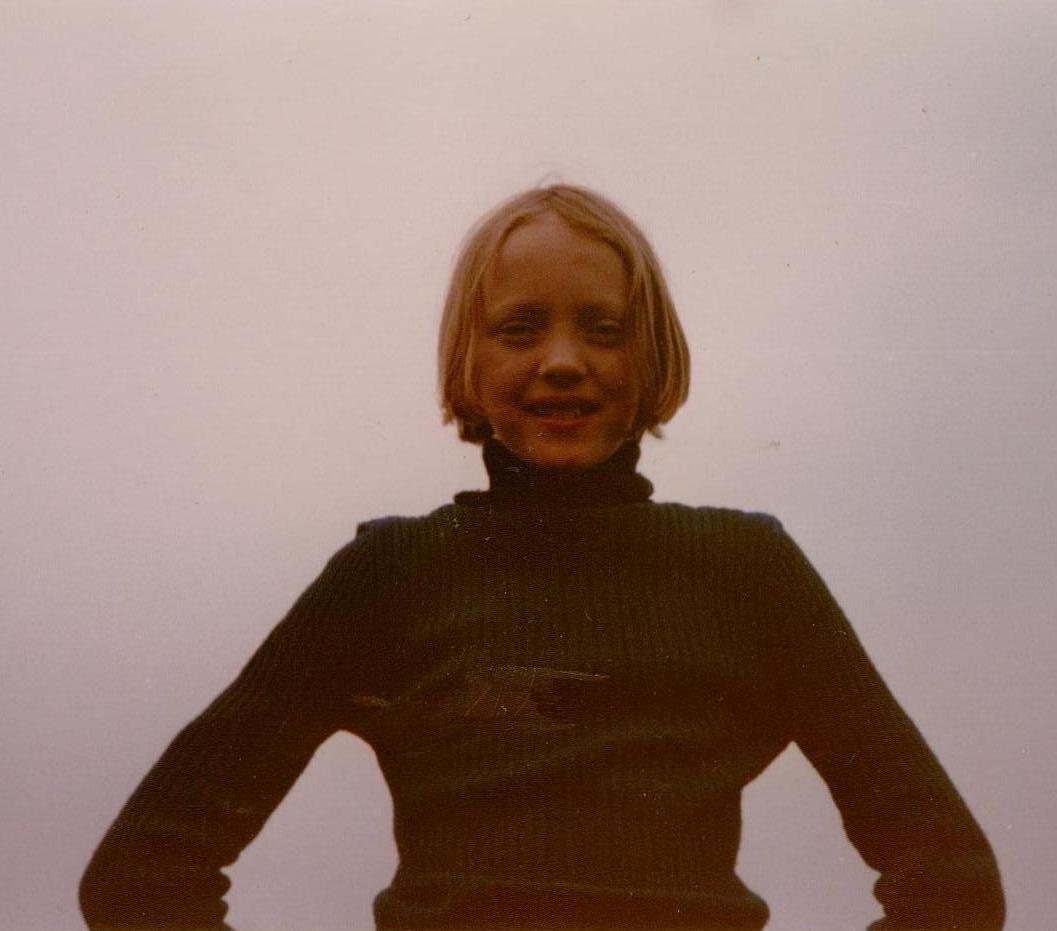
Sophie Neville in 1976

I went to a number of interviews – rather than auditions – to appear in feature films that I don’t think were ever made. Inflation was running at 17% in the mid-1970s and money for movies must have been tight in the UK.  This was probably why Richard Pilbrow couldn’t get the financing for an adaptation of Great Northern? 

When I was fifteen, I decided that the old black and white promotion photographs of me playing Titty had become out-dated and arranged for my own Spotlight photograph to be taken by an old professional – the husband of rather an unpopular teacher at school. I decided exactly what I would wear and how I would sit. My friends and the teacher were amazed, but it did the trick. On the strength of this one photograph, and obviously my experience gained on Swallows and Amazons, I was given the leading role of Liz Peters, an archery champion in a CFF adventure movie titled, The ‘Copter Kids alongside Sophie Ward and Jonathan Scott-Taylor.

Sophie Neville in The 'Copter Kids
Jonathan Scott-Taylor, Sophie Neville, Daphne Neville and Sophie Ward in a family adventure movie called ‘The Copter Kids’, 1976

This time my mother played our mother, wearing her red mac and rather tight jeans. Derek Fowlds played our father, an oil prospecting helicopter pilot. At the time he was only really well-known as ‘Mr Derek’, the straight guy for Basil Brush. I was actually asked at the audition whether I thought that girls my age would find him attractive. I was too polite to say that we all preferred Basil. Basil Brush was a fox puppet, but so enormously amusing and spontaneous, he was adored by the whole nation.

What happened during the filming was that we all fell in love with the stunt men, Vic Armstrong and Marc Boyle, who were acting in their own right as the Baker Brother baddies. How could we not? Vic spent years playing Harrison Ford’s double. He was the real Indiana Jones. His numerous film credits include Thor, Robin Hood, The Golden Compass, Charlie’s Angels and Empire of the Sun. He is currently working as the stunt coordinator on Jack Ryan, directed by Kenneth Branagh and starring Chris Pine, Keira Knightley and Kevin Costner. Marc Boyle worked on Star Wars – return of the Jedi, Batman and Alien 3, as well as supervising the stunts on the Bond movie Licence to Kill.

Derek Fowlds went on to do incredibly well, famous for playing Bernard alongside (or under) the late Paul Eddington and Nigel Hawthorne in the classic BBC TV comedies Yes Minister and Yes, Prime Minister that ran from 1980-1988 and are still adored. Sophie Ward, who played my sister Jill, was so very beautiful that she became a top model, the face of Laura Ashley, before she was sixteen and has never stopped working as an actress, starring in films such as The Young Sherlock Holmes and the TV movie of Joanna Trollop’s novel The Village Affair. Recently, she appeared as Lady Ellen Hoxley in Land Girls and as Rosie Miller in Secret State.

A star-studded cast, but should you rush off to order a DVD of The Copter Kids? Please don’t. It was a dreadful film. One of the stage school children who appeared in the crowd scenes floored me by asking, ‘What’s it like being a film star?’ I became self-conscious, which killed the sparkle and enthusiasm I needed for the role of teenage heroine. And I didn’t even shoot very well. You would be appalled. It was probably only made because being a charity, CFF  – The Childrens Film Foundation,  did have a bit of money in the coffers. A little bit. I was paid so meagerly that Bryan Drew waivered his agent’s commission.

Appearing in the BCC series ‘Animal Magic’ with a parrot on my shoulder: the film that replaced the test card.

When I was about thirteen, we were given a green parrot from South America called Chico. A shot of me, rowing down a lake with the parrot on my shoulder, was used to replace the test card image of Carol Hersey playing tic tac toe with a hideous clown.

Animal Magic1
Robin Hellier (in yellow) working with a 16mm film camera and his crew from BBC Bristol. I am sitting at the head of the table. Tamzin has our parrot on her shoulder.

Chico was wonderfully tame and came everywhere, chatting away in Spanish. He was much more affectionate – and less of a treat – than Beauty, the parrot with a Lancastrian accent who played Polly in Captain Flint’s cabin. One minute he’d be sitting on Tamzin’s shoulder, the next, he’d be on mine.

Filming Animal Magic
Sophie, Perry and Tamzin Neville appearing in short film shot on 16mm for ‘Animal Magic’ being produced for the BBC NHU by Robin Hellier (in yellow sweater).

We didn’t always have tea with a parrot, but once the film of Swallows and Amazons was on general release I was often invited to appear on radio or television. This usually entailed going to a studio to appear on a magazine programme such as Points West or  Nationwide. However, Robin Hellier, who had just begun working for the BBC on Animal Magic, was thrilled to hear that I really did have a green parrot and brought a film crew from Bristol to our house. We didn’t know at the time that some of the footage taken would end up filling endless small gaps in the schedules.

Animal Magic with our donkeys1
Robin Hellier directing a sequence featuring Sophie Neville, her parrot Chico and Lucy and Leonard the donkeys with Daphne Neville and Tamzin Neville

Although the focus of the item was a profile of  my role in Swallows and Amazons, the aim must have been to get as many animals on the programme as possible since they also featured our donkeys having their feet trimmed. The faithful parrot was still on my shoulder. I don’t know what the blacksmith thought.

Animal Magic with our donkeys
Leonard and Lucy the donkeys, Tamzin, Daphne and Sophie (in green) with Chico the parrot, standing-by for Robin Hellier who was speaking to our farrier Graham Williams. You can see how much taller I had grown in a year.

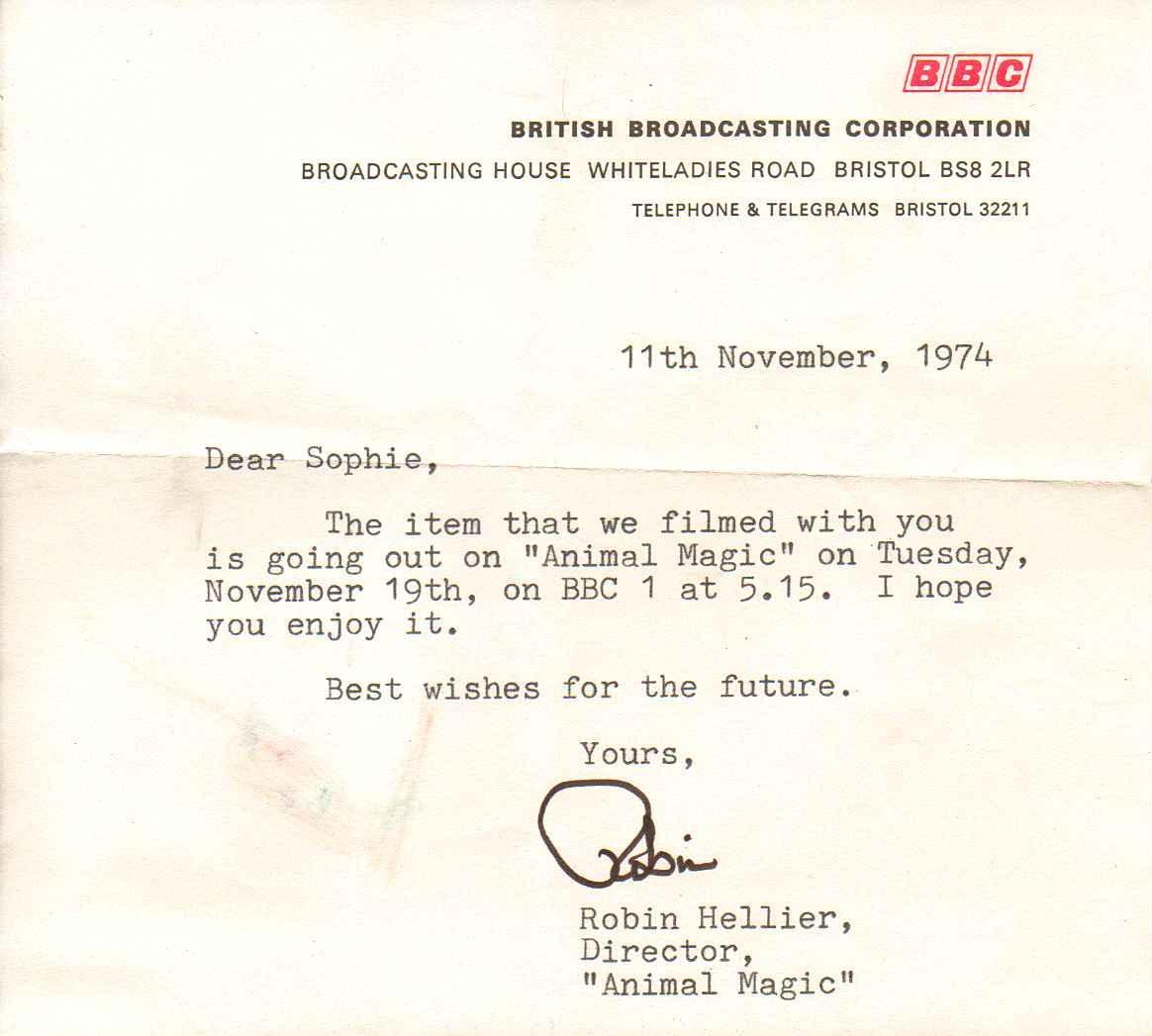
I thought Robin Hellier was a brilliant director, far better than Claude Whatham at letting us know what he wanted to achieve. I was able to tell Robin this when I found myself working with him in South Africa twenty-two years later. He laughed, admitting that it was the very first film he ever directed.  Being conscientious, he took the trouble to write to let me know when it was to be broadcast, although I can’t remember ever seeing it go out.

Animal Magic

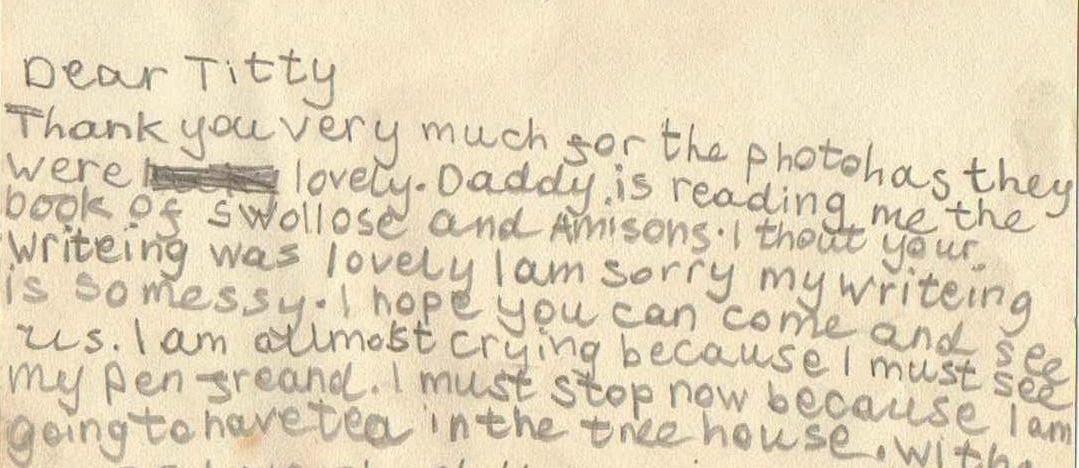
Children’s television was watched by everyone I knew in the 1970s. Letters poured in. My mother loved getting them. The volume was such that I think she had to answer some of them for me.

A fan letter3

A fan letter4

And over the years the letters have kept coming.

A fan letter73

These came from a girl I corresponded with for years.  My friends at university were amazed to find letters arriving addressed to Titty, but they were always charming. I appreciated them more and more as the years went by.

A fan letter74

My mother only wrote me one proper letter while I was away at boarding school. It was to tell me that Chico had died. He spent so much time flying free that he caught a virus off wild birds and could not be saved. I was utterly inconsolable.

Animal Magic continued to featured through our childhood until 1982, when I started working at BBC Television myself. Johnny Morris, who presented the series, became a legend in his own time and is remembered with great affection.

A WildFilm History interview of Robin Hellier can be viewed on this link:

http://www.wildfilmhistory.org/oh/44/clip/975/section/357/Robin+Hellier%3A+Reflections+on+a+career+at+the+BBC+Natural+History+Unit.html

Publicity photographs used to promote ‘Swallows and Amazons’ in the early 1970s – or how we hated having our photographs taken.

Lesley Bennett, Suzanna Hamilton, Stephen Grendon, Sophie Neville, Virginia McKenna, Simon West and Kit Seymour gathered at Bank Ground Farm above Coniston Water for a publicity photograph. This one was taken by Daphne Neville.

When a television drama is ready to be transmitted there is a little publicity, but not much. Photographs might be taken for the cover of the Radio Times or a book to accompany the series, there might be a Preview at BAFTA to which journalists from the colour supplements and daily newspapers are invited, but, because the programme can be advertised on air, the actors are not intensively involved in the promotion. A feature film is very different.

Whilst we didn’t mind our photographs being taken while we were acting, and were fine about Mum clicking away with her little instamatic, we all hated having promotional photographs taken for ‘Swallows and Amazons’. They were usually so posed, set up by strangers who had no idea of the story. Virginia McKenna tried to make it fun for us but this is what we all felt about this photo-call:

Virginia McKena, Lesley Bennett, Stephen Grendon, Suzanna Hamilton, Sophie Neville, Simon West, Kit Seymour for 'Swallows and Amazons'
~ How not to set up a publicity shot for a feature film ~

Why were the Amazons at Holly Howe? Why weren’t we with any of the boats? It was all terribly hot and difficult to squint into the sunshine. Only Mrs Batty’s dog seemed to be enjoying the attention.

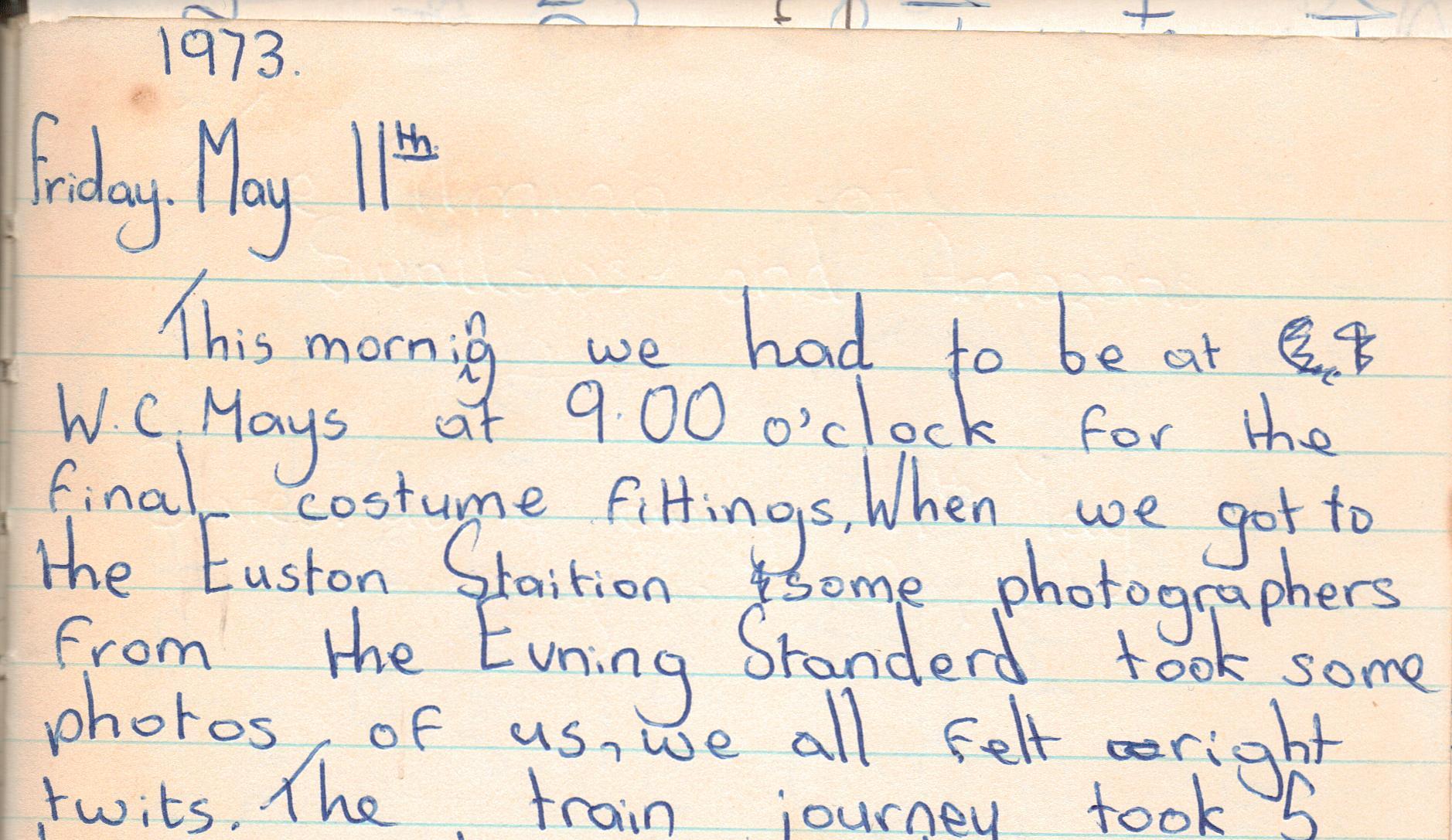
The glare of the flash bulbs had started on day one. As Suzanna said in her diary, it made us feel ‘right twits.’

Claude Whatham was very good at explaining things to children. Looking back I wish that he had explained why the publicity was so important, but of course this was not his job and he would have been busy setting up the next shot. Certainly once the filming had finished we needed to know how important it was to promote the film. Richard Pilbrow really wanted to make a sequel, particularly an adaptation of Ransome’s twelfth book in the series – ‘Great Northern?’  He loves the Outer Hebrides and has a house on Col. I think we might have been a little keener about publicity shots if we had been told that the out-come could have been going up there for another summer. We would have been able to look forward to the possibility, but I don’t suppose he was at leave to even suggest it.

Journalists were introduced to us and looked after by our unit publicist Brian Doyle.  Brian had worked on Straw Dogs’ in 1971, the thriller that starred Dustin Hoffman, Susan George and Peter Vaughan. Susan George had of course played Titty, or ‘Kitty’ in the black and white BBC adaptation of Swallows and Amazons in the early 1960s. She was now regarded as glamorous sex symbol in British cinema – setting me rather a daunting example. Much easier for Brian to publicise her then me. She had a gorgeous figure with beautiful, thick, blonde, hair. I had what my sister still calls ‘tendrils’ and my mother calls ‘bits’. And was skinny with crooked teeth.

Brian was a lovely man. He had an amazing career, going on to work on films such as Ken Russell’s Valentino with Rudolf Nureyev and Leslie Caron, The Wild Geese, Alien, Educating Rita starring Michael Caine and Julie Walters and the James Bond movie For Your Eyes Only – with Roger Moore in the lead role . He even has his name on the credits of one of George Lucas’ Star Wars films.

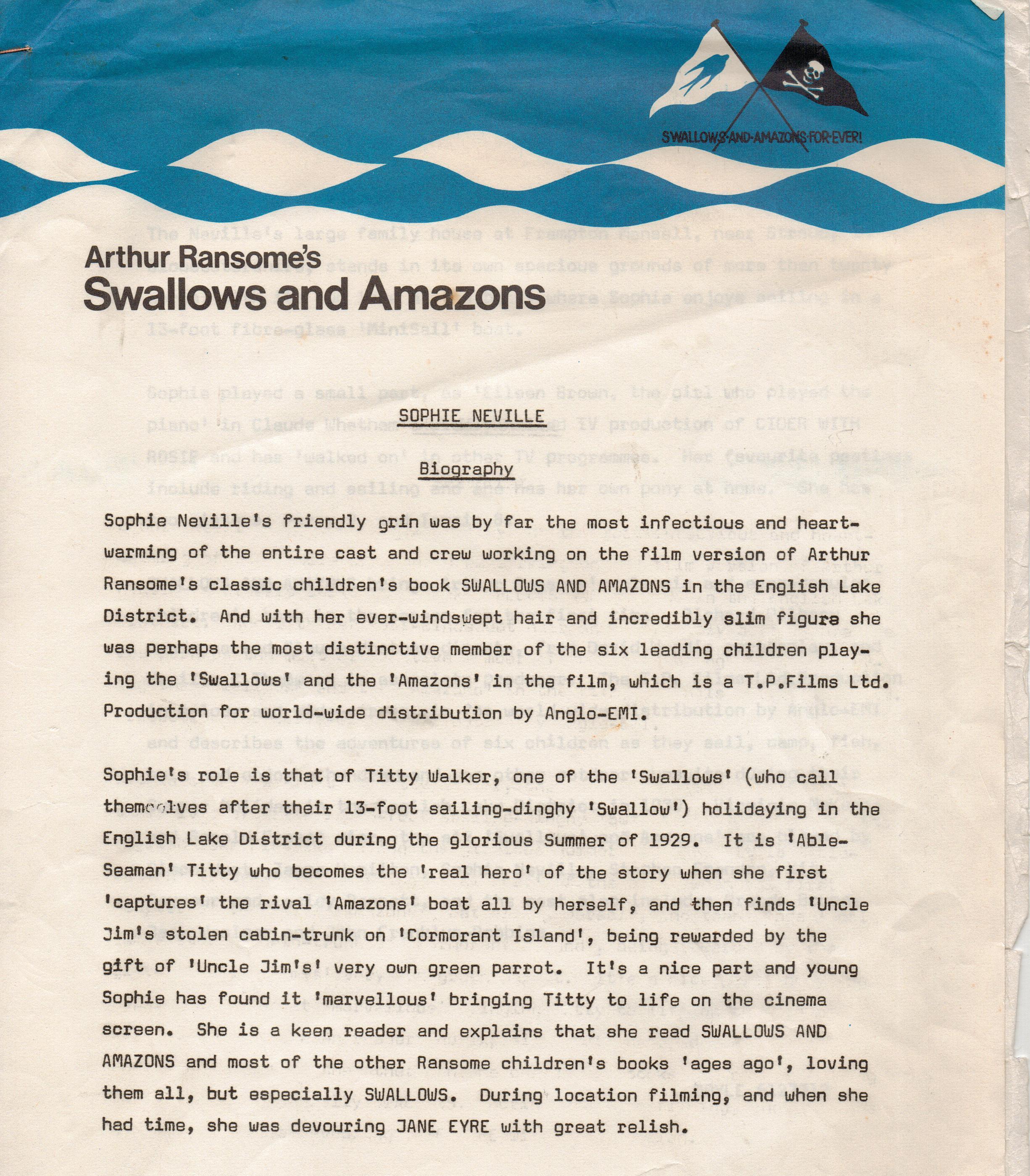
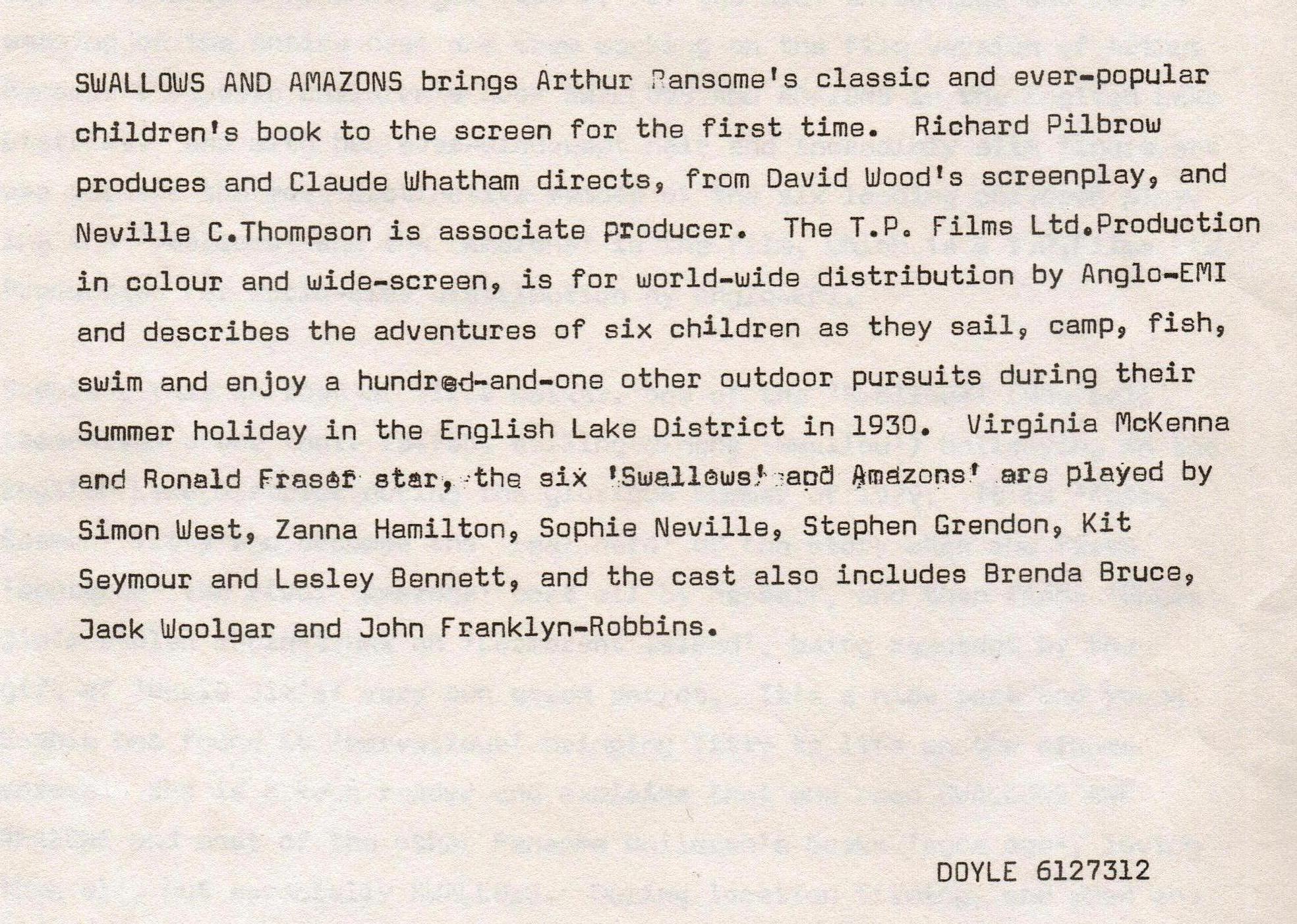
This was the profile he wrote for me:

Brian adored Children’s literature. His own children came up to stay on location over their half-term and spent hours playing with my sisters, indeed they all appeared together as extras in the scenes shot at Bowness, and can be seen playing on the beach. Sadly Brian died, very suddenly, in 2008. His daughter told me that he left a collection of 35,000 books.

I still have Brian’s announcement:

At this the journalists moved in. From all over the place!

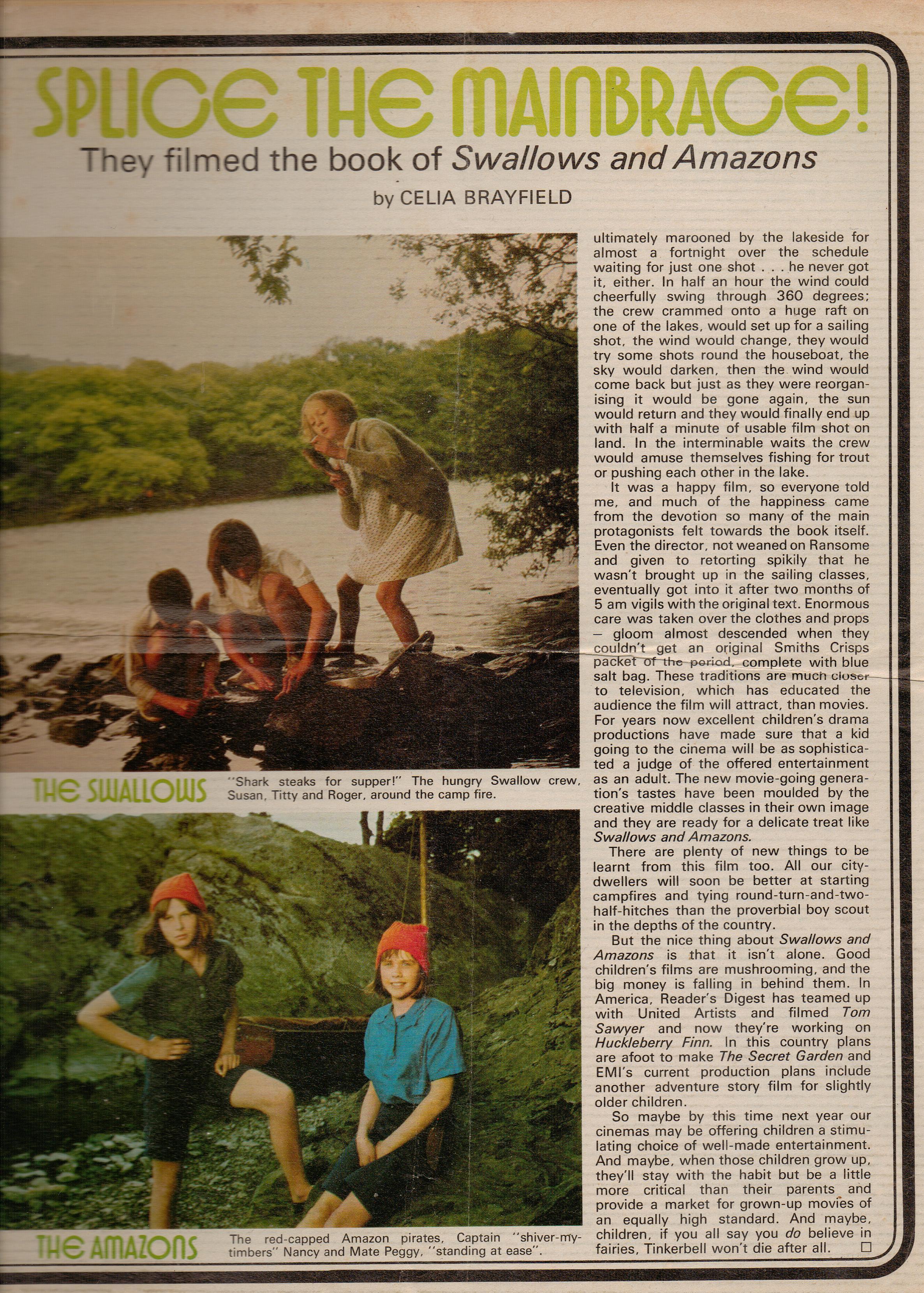
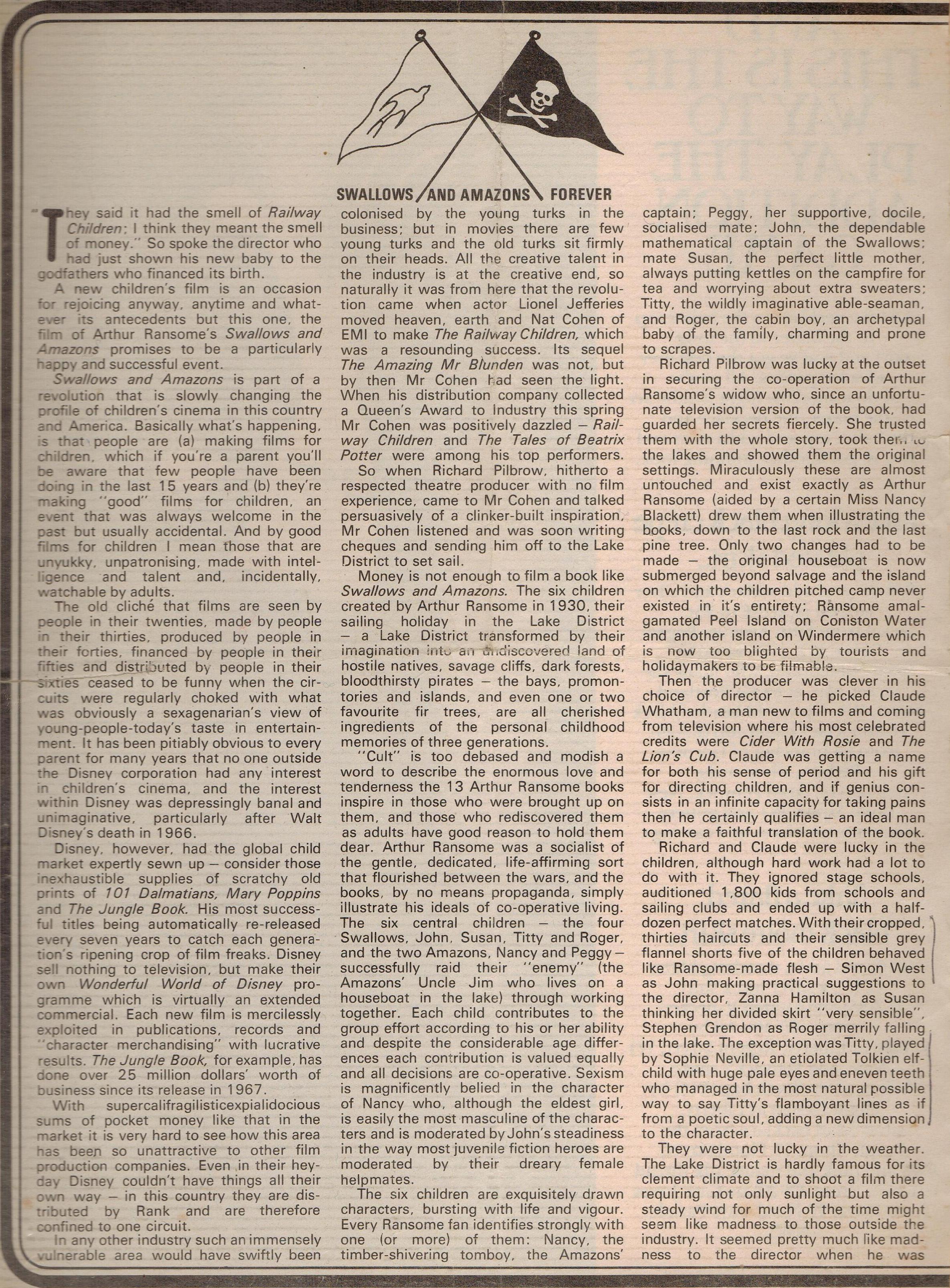
There was a very trendy women’s magazine in the early 1970s called Over 21, which the senior girls at school used to read. My mother was thrilled to find that Celia Brayfield had written a double page feature. I was amazed. I didn’t mind the picture of us gutting fish, but started reading with trepidation.

(If you can read this, I’m afraid page one comes second.)

Over 21 ~ December 1973

I read it, looked up the word etiolated in the dictionary and burst into tears.

Far worse was to come.

Off to Elstree Studios ~ to dub ‘Swallows and Amazons’ in 1973

Sophie Neville at Elstree Studios in 1973

The process of editing a film can be terrifying for a director. There is always the prospect of finding a sequence that will not cut together. But working with a good film editor is hugely creative and fulfilling. Problems do arise but great things can happen. Richard Pilbrow says in his new book, A Theatre Project  that he was completely captivated by the process. ‘Moving a few frames from here to there, could change the whole emphasis of a scene.’  On the whole editing is an exciting, yet more relaxing time for the director than having to lead a massive crew out on location. And the actors are never around.
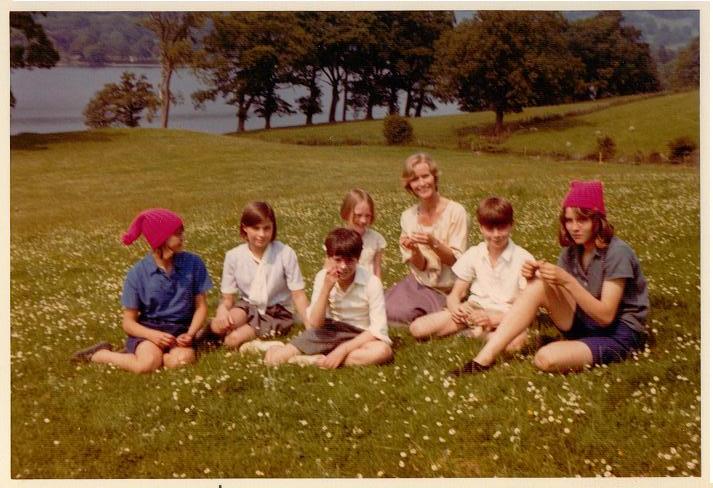
Sadly I never met Michael Bradsell who edited Swallows and Amazons. Like many others on our film crew he’d worked with Claude Whatham before on the movie That’ll be the Day. He went to on edit many great movies; Local Hero for Bill Forsyth and  David Puttman,  Henry V for Kenneth Branagh and Wilde, which starred Stephen Fry. Oh, to think that he hauled my image over his Steenbeck.

I remember that when I saw Henry V at the Curzon Cinema in Mayfair, in 1989, there was something terribly wrong with the projection. The lip-sync was out. Kenneth Branagh’s voice was delivered after his lips started moving. It was most off-putting. I knew all about lip-sync because I had been involved in dubbing movies since I was twelve. For, it was back in 1973, when Claude Whatham was working on the sound track for Swallows and Amazons that, rather unusually, I was summons to the EMI Elstreee Studios.
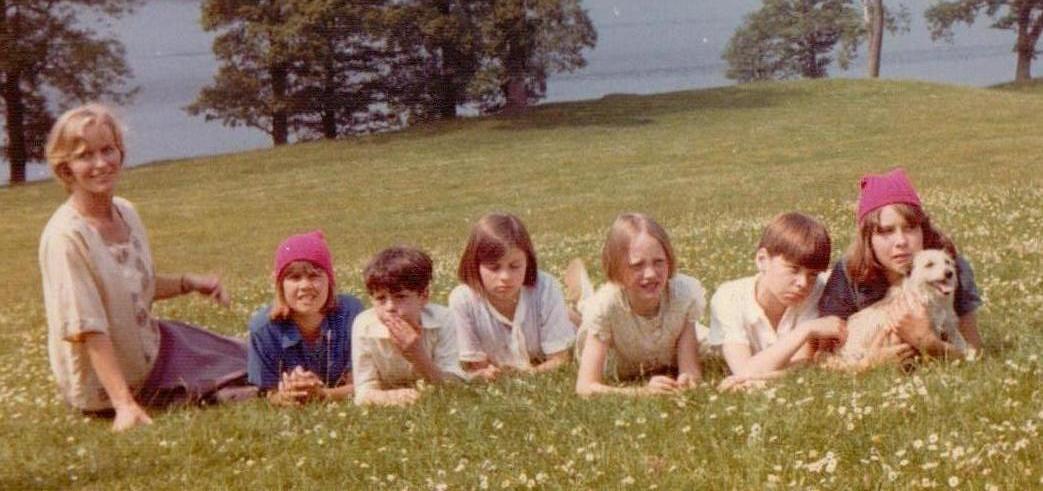
Sophie Neville at the EMI Elstree Studios on Friday 20th July 1973

Visiting Elstree Studios was exciting. I remember meeting the Dubbing Mixer and being there with the other Swallows, but I don’t think we saw anyone else in the cast. Suzanna came along with her nine-year-old cousin who was called Seymour – a very bright boy who was wearing stripey canvas trousers like a deck chair. Mummy had bought me a smart new dress that was the height of fashion. Looking at the photograph I rather wish she hadn’t bothered.
We were led into a huge dubbing theater hung with long black drapes around a high white screen. Claude explained that he needed to re-record our dialogue for various sequences. This was because the original soundtrack had been spoilt by the sound of motorboats, car horns or simply the wind. At first we were handed dubbing scripts, but it was difficult to look at them as well as the screen. As we could still remember our lines we didn’t need them. Instead, we stood in front of microphones on spindly stands and sung out the words we knew as sections of the film were projected. To help up a thick black cue-line would pass across the scene. When it hit one side it was time to start speaking. This was to ensure that our voices would be in sync with out lips. It could help, it could be off-putting. In the end we just went for it naturally. After each ‘take’ the film would be re-wound and we would go-again. There is a scene in at the Amazon Boathouse when John scrunches up the Amazon’s message and throws it in the water. It amused us to see this in reverse.
The post-syncing was a chance to improve on our performances and diction. Some time was spent in re-recording our sea shanty, Adieu and Farewell to you Fair Spanish Ladies. I made a mistake here that I have always regretted. Instead of singing sweetly and true I went for volume, which was not only unnecessary, but disastrous. It is acceptable on the film when you can see I am singing out on the water but sounds horrid on the LP. We had no idea at the time that EMI were going to bring out an album to accompany the movie, but they did.

Jack Woolgar as Old Billy confronting Simon West, Suzanna Hamilton, Sophie Neville and Stephen Grendon as the Swallows who were visiting the charcoal burners.

The one line that I simply could not replicate was the dialogue Titty delivered when saying goodbye to the charcoal burners: ‘Thank you so much for letting us see your lovely serpent.’  We went over it again and again, but Jack Woolgar wasn’t at the dubbing studio and I couldn’t do it without looking at him. The charm and sincerity of the moment was not something I could reproduce. In the end Claude said he just had to use the original despite the sound of the roaring wind.

I remember being at Elstree for a week. Mum has 20th July, 2nd and 3rd August (although that looks crossed out,) then EMI 6th and 7th August, marked in her diary. At lunch time we were shown around the back lot, where Sten refused to leave the wreckage of a WWII plane and the film stages. David Niven was playing Count Dracula in Vimpira, literally kissing the lovely actress Teresa Graves in the coffin as we watched from the edge of the set.

After we had left Elstree, sound effects would have been added. Richard Pilbrow said that, ‘Bill Rowe was our masterful sound mixer, working magic with birdsong, a rustle of leaves, a broken twig – all the tiniest details that went into making the story spring to life.’ When I watch the film of Swallows and Amazons now I so admire the technique of using sound to illustrate the soaring of Titty’s imagination. The storm bell on Robinson Crusoe’s ship heralds the roaring wind and lends reality to scene when I play the shipwrecked sailor, dragging my parched body towards the island campsite. You can hear parrots and monkeys in the palm trees. I am sure Arthur Ransome would have approved.

Bill Rowe, I read, was the director of Post Production and Sound at Elstree Studios until he died at the age of sixty in 1992.  He’d worked on an amazing number of movies winning an Oscar for The Last Emperor and BAFTAs for The Killing Fields, The French Lieutenant’s Woman and Alien with nominations for Chariots of Fire, A Clockwork Orange, The Mission and Batman. And to think, we had been playing Hide and Seek behind his sound drapes.

Simon West and Suzanna Hamilton at the helm of Swallow with Stephen Grendon in the bows, while Sophie Neville looks on from the shore of Peel Island, where she has been left alone with the telescope. Sound of Swallow’s moving parts was added later by the dubbing editor Bill Rowe at Elstree Studios.

One thing that really worried me was that I saw Swallow lying outside Elstree Studios. She looked forlorn, a ship out of water. Looking back on it they must have needed her to record sound effects.  I was concerned that we would not see her again, but we did. The next time we Swallows gathered was to publicize the film. We found ourselves climbing aboard Swallows again, albeit in a very different location from the Lake District. And this I will write about in my next post.

Sophie Neville not at 10 Downing Street but on the lot at Elstree Studios
Not at 10 Downing Street but on the Lot at Elstree Studios for the BBC Drama Directors’ studio course. I am wearing green.

Later in life, when I worked in television production, I spent many months at Elstree Studios at Borehamwood. However these were the BBC Studios on the other side of the road where we recorded endless episodes of  Eastenders and the wartime romance Bluebell, programmes that were never post-synced.

'Bluebell' the BAFTA award winning BBC serial
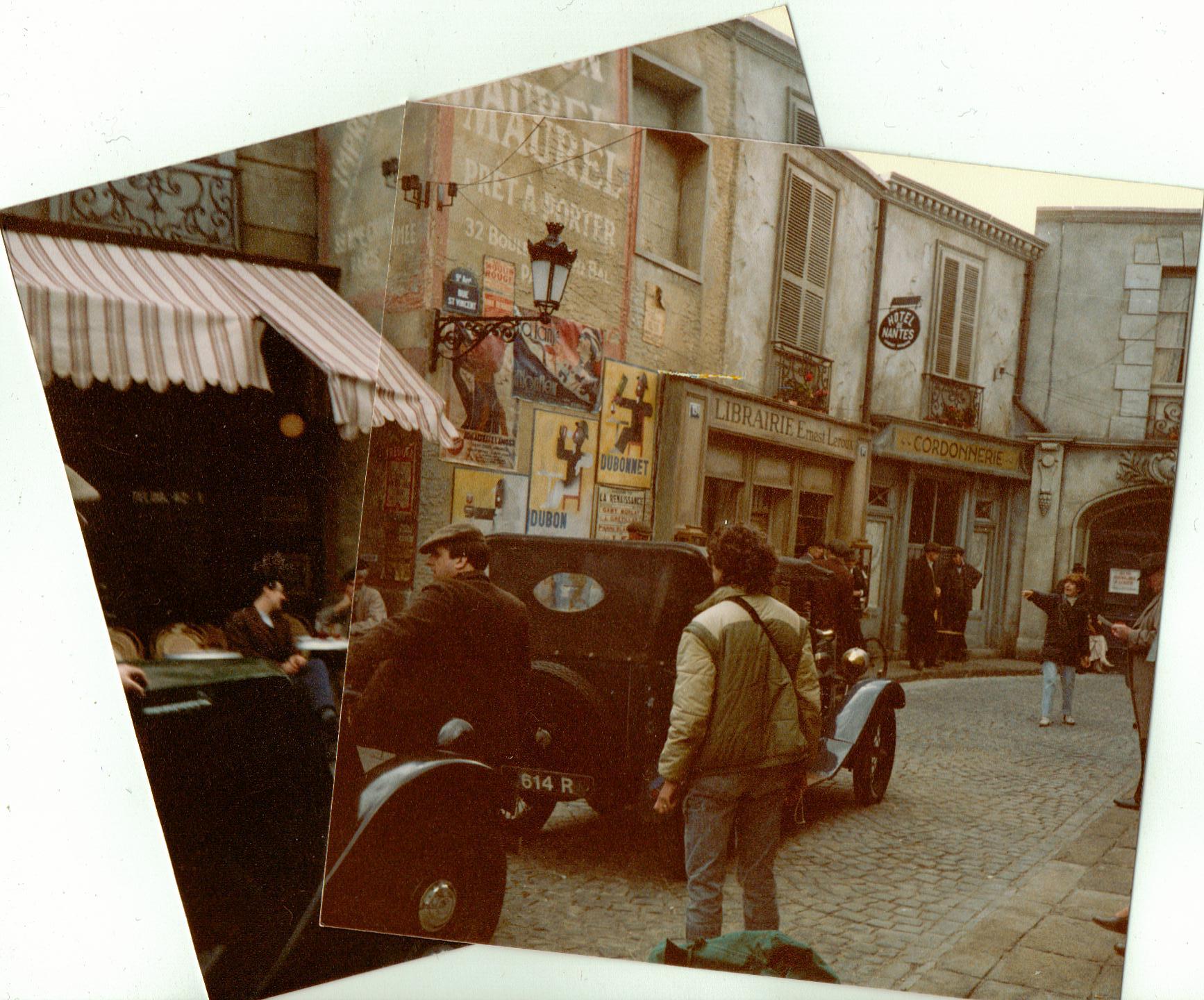
Working on the Parisian set of ‘Bluebell’ constructed on the lot at Elstree.

I’d drive past the old EMI/ATV Studios and never breathe a word that I’d worked there once as an actress.

Sophie Neville, in striped top, on the BBC Studio Director’s Course at the BBC Elstree Studios, Borehamwood in 1990

Sophie’s books about working in film and television  are available online.

Swallows in Egham ~ a pick-up day, filming ‘Swallows and Amazons’ in 1973

Simon West, Stephen Grendon, Suzanna Hamilton and Sophie Neville as the Walker children dressed as they arrived at Holly Howe at the start of their holiday in the Lake District
Simon West, Stephen Grendon, Suzanna Hamilton and Sophie Neville playing the Walker children, as they arrived at Holly Howe at the start of their summer holiday in the Lake District ~ photo: Daphne Neville

While I had been at home with my family, Claude Whatham had been busy in the film editing suite putting ‘Swallows and Amazons’ together with Michael Bradsell.  They had previously worked together on ‘That’ll be the Day’.  Our Continuity supervisor Sue Merry must have known Michael too, as he’d edited Ken Russell’s film ‘The Boyfriend’.  Claude found that they definitely needed the sequence when the Walker children run up to the Peak at Darien and see Wild Cat Island for the very first time.

It is the scene that heralds the start of the adventure and indeed the opening titles of the movie. Richard Pilbrow had always wanted it to be shot at Friar’s Craig on Derwent Water.  There is a postcard of this headland with notes written on it by Arthur Ransome who labelled it for the first illustrator of the Jonathan Cape edition of the book, and it seemed just right for the Peak of Darien despite being a long way from Bank Ground Farm.  Although there had been two attempts made to record the handful of shots needed as the evening light lit up the islands across the water, we had always been held up and reached the spot too late in the day.

Richard must have already been over budget but the money was found to mount a pick-up shoot at Runnymede near Egham in Surrey on Saturday 8th September. We were told that King John signed the Magna Carta under an oak tree there.

We loved the idea of meeting up again. Claude said he made an effort to get as many members of the same crew together as possible so it wouldn’t seem strange.

Sophie Neville with Sten Grendon, Jane Grendon, Claude Whatham and Neville Thompson
Sophie Neville looks on as Stephen Grendon organises his costume helped by Jane Grendon with Claude Whatham and Neville C Thompson.

The one thing that was striking was how much our hair had grown. We all needed a trim. Sten needed a full hair cut. Luckily Ronnie Cogan was free.

Stephen Grendon playing Roger Walker having his hair cut by Ronnie Cogan

Neville Thompson had even managed to book the same Make-up caravan. It was here that Peter Robb-King the make-up designer toned down our summer tans in an effort to match the skins of the pale Walker children who’d been sitting in the railway compartment with their mother at the beginning of the film.

Photograph of movie hair-stylist Ronnie Cogan giving a boy a short back and sides hair cut
Ronnie Cogan giving Sten Grendon a hair-cut. I was in the Make-up caravan beyond.

The ironic thing was that it was Make-up that held us up when we were first failed to record the scene in the Lake District. It took so long for Peter Robb-King to sponge down all four of us with pale foundation that the sun had set before we arrived on location. I can remember my mother hurrying him along, claiming it was ridiculous as it was too dark to see our freckles anyway. I was keen on the importance of continuity and had contradicted her. Claude couldn’t believe how long it had taken us to change. He had been furious when we turned up late but tried hard not to let us think it had been the fault of us children.

Simon West playing John Walker and Suzanna Hamilton as Susan Walker

There was no Peak of Darien at the farm in Surrey, but a field had been found where we could run up to an oak tree. We just had to pretend we were looking out over the lake.

If you click on the shot below it should take you to a post I wrote on the opening locations of the film. Scroll down and you’ll see the shot of us running down the meadow at Bank Ground farm. This was the shot Claude had to cut from to the sequence that we were currently filming. Scroll right down to the end of the post and you’ll see me on Friar’s crag looking exhausted after a long day’s filming. I am so glad we were not able to continue that day.

Director Claude Whatham with Sophie Neville, Stephen Grendon, Suzanna Hamilton and Simon West. Producer Richard Pilbow looks on ~ photo: Daphne Neville

Although he had a freelance camera operator in a stripy shirt who we did not know, we met our Director of Photography Denis Lewiston who was setting up the shot with Claude under the oak tree, using a 35mm Arriflex camera on ‘short legs’.

If you click on the photo above you should get to a Post written about a location that was set on Derwentwater near Friar’s Crag – or on part of Friar’s crag that will give you an idea of what the real Peak of Darien would look like. However, the day in September in Egham was hotter than any day we’d experienced in Cumbria. Claude was soon wearing my straw hat.

DoP Denis Lewiston, Claude Whatham, Sophie Neville, Suzanna Hamilton and Simon West with Gordon Hayman behind the 35mm Arriflex Camera ~ photo: D.Neville

If you click on the photo above it will take you to the day on 8th July when we had tried and failed to shoot this scene despite rushing around.

Although we look a bit hot and stiff in these photographs that my mother took when we were lining up the shots I think that the movie was probably made by this scene. We had learnt how to magic-up performances by this stage. If you watch the finished film our faces can be seen glowing with excitement. This was also partly because we were happy to be together again, on a sunny day in a lovely place.

Sophie Neville playing Titty Walker with Stephen Grendon as Roger Walker with Gordon Hayman, Denis Lewiston and Claude Whatham behind the camera

I’ve just realised this image of Titty, clutching her school hat as she looked out over an entirely imaginary lake, was the last actual shot recorded. Soon my close-up was ‘in the can’ and ‘a wrap’ was called. It had been the 1003rd slate of the movie. We celebrated with tins of Fanta rather than champagne.

Since the first shot in the compartment of the steam train as it travelled between Haverthwaite Station and Windermere, recorded back in May, I had put on about seven pounds and grown taller than my elder brother and sister.

Daphne Neville with Stephen Grendon, Suzanna Hamilton, Sophie Neville, Jane Grendon and Simon West

I can’t help thinking that this photograph is symbolic of the futures we were to step into. Sten Grendon is holding an apple, Suzanna seems to have a framed photograph and I’d been given a roll of camera tape. What Simon West is holding is something of a mystery, but it is tightly clasped.

Simon West writing his address for me on a scrap of paper

Soon it was time to go. We changed back into our own clothes and said goodbye. Mummy took me on to see Robin Clarke, a music editor we had met on holiday who had worked on the movie Chitty Chitty Bang Bang.

It wasn’t long before we saw Claude again. Once he’d finished editing the film we were called to the work on the sound. The movie was still in the making.

Sophie Neville saying goodbye to director Claude Whatham. The film actress Teresa Graves is speaking to Neville Thompson in the back ground.

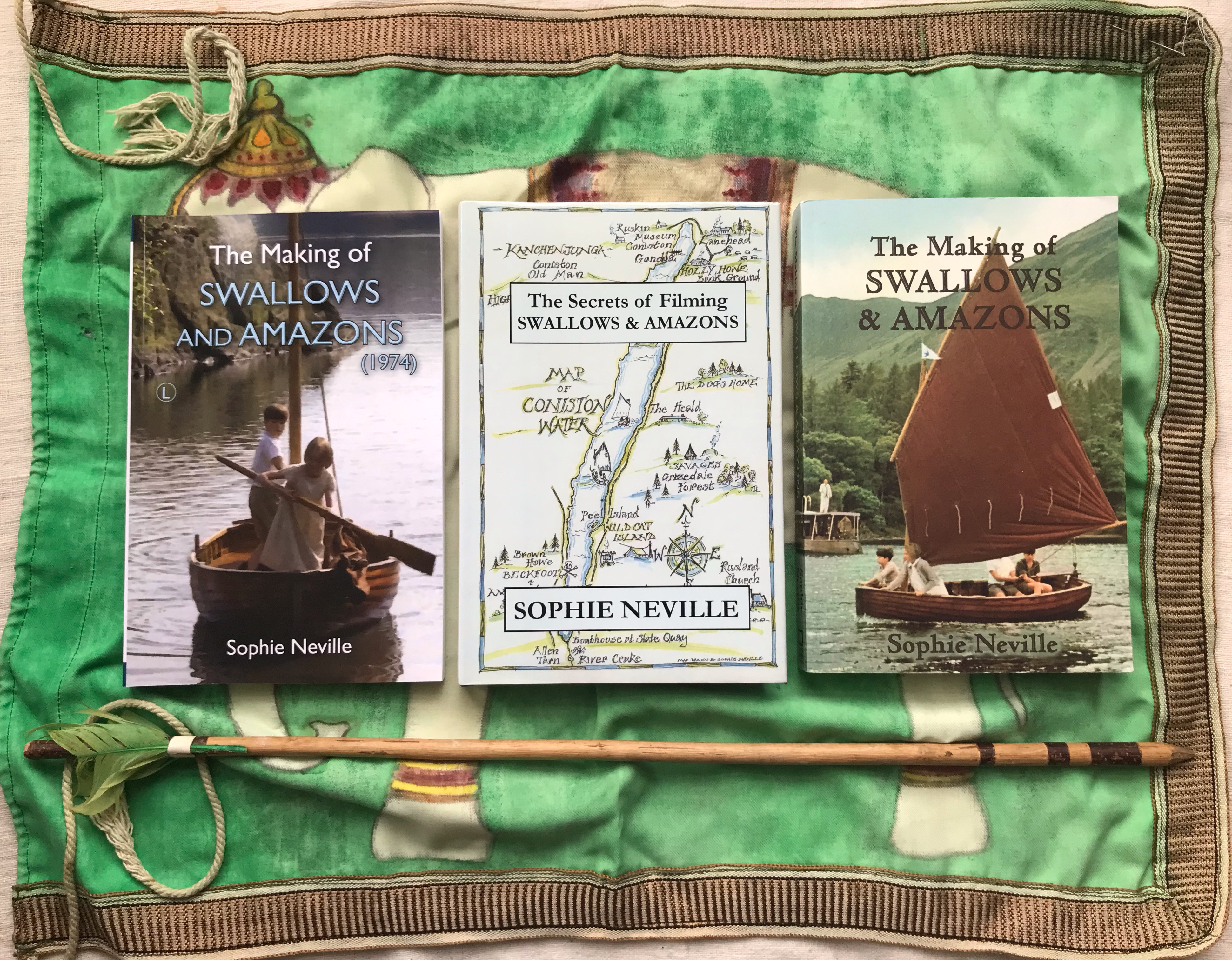
There are now three editions of the illustrated book on ‘The Making of Swallows and Amazons’, all available from online retailers and libraries worldwide .

'The Making of Swallows and Amazons (1974) by Sophie Neville'
Different editions of ‘The Making of Swallows and Amazons (1974) by Sophie Neville’

You can read the first three chapters for free here: