Being on BBC Breakfast

Sophie Neville, Suzanna Hamilton and Kit Seymour on BBC Breakfast

‘Can you speak to BBC Breakfast?’ I was asked. ‘They want to interview the cast on Zoom tomorrow morning.’

It was Saturday 29th June. We were at Windermere Jetty in Cumbria for the 50th Anniversary of ‘Swallows and Amazons’, the 1974 film was being screened in the room below us and a huge number of enthusiasts were eager to chat about how we’d made it. I had just come in from sailing Amazon, John Sergeant, president of The Arthur Ransome Society, was about to arrive and we had books to sign, but I knew it was important to act fast. The BBC would need time to contact StudioCanal in order to use the film trailer. I grabbed my lap-top and attempted to persuade the production team we had lots to talk about while finding a good signal. The best place was on a staircase, which was fun when Captain Nancy and Mate Susan rushed past, but a more interesting background was required.

‘What time do you want us on air?’

‘7.40am.’

‘Ah – the museum doesn’t open until 10.00am. Can we chat to you from the terrance of our hotel? It overlooks Windermere.’

‘It might be best if we send out an outside broadcast unit.’

I wasn’t told the item would also go out on Look North and North West News.
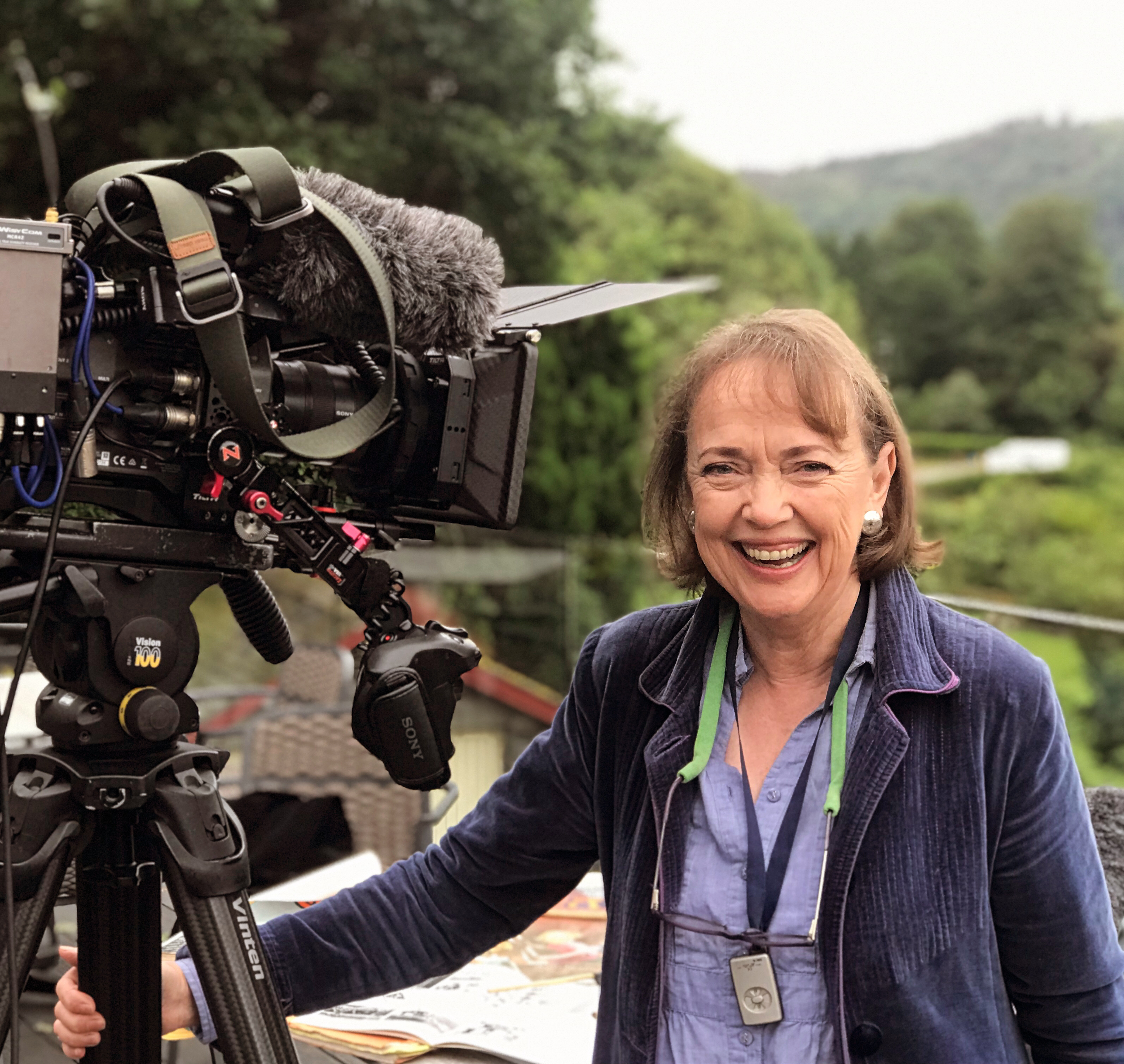
I woke early the next morning to find Keith, the BBC cameraman, setting up his equipment. Rain clouds cleared as I unrolled Arnaldo Putzu’s 1974 film poster and plonked David Wood’s screenplay on top of it with a few flags but worried about my hair, which was not behaving. We had Peter Robb-King, one of the greatest make up designers in the world with us. I should have asked for his help. All I did was remove a car key from around my neck.

Sadly, Simon West who’d played Captain John had already left, but Suzanna Hamilton and Kit Seymour emerged from their rooms and we lined up for the shot.

Was I organised? Did I tell them, ‘We need to get three points across!’ ?

No.

Someone quietly suggested I could mention The Arthur Ransome Society who had organised the weekend festival, which was free for all.
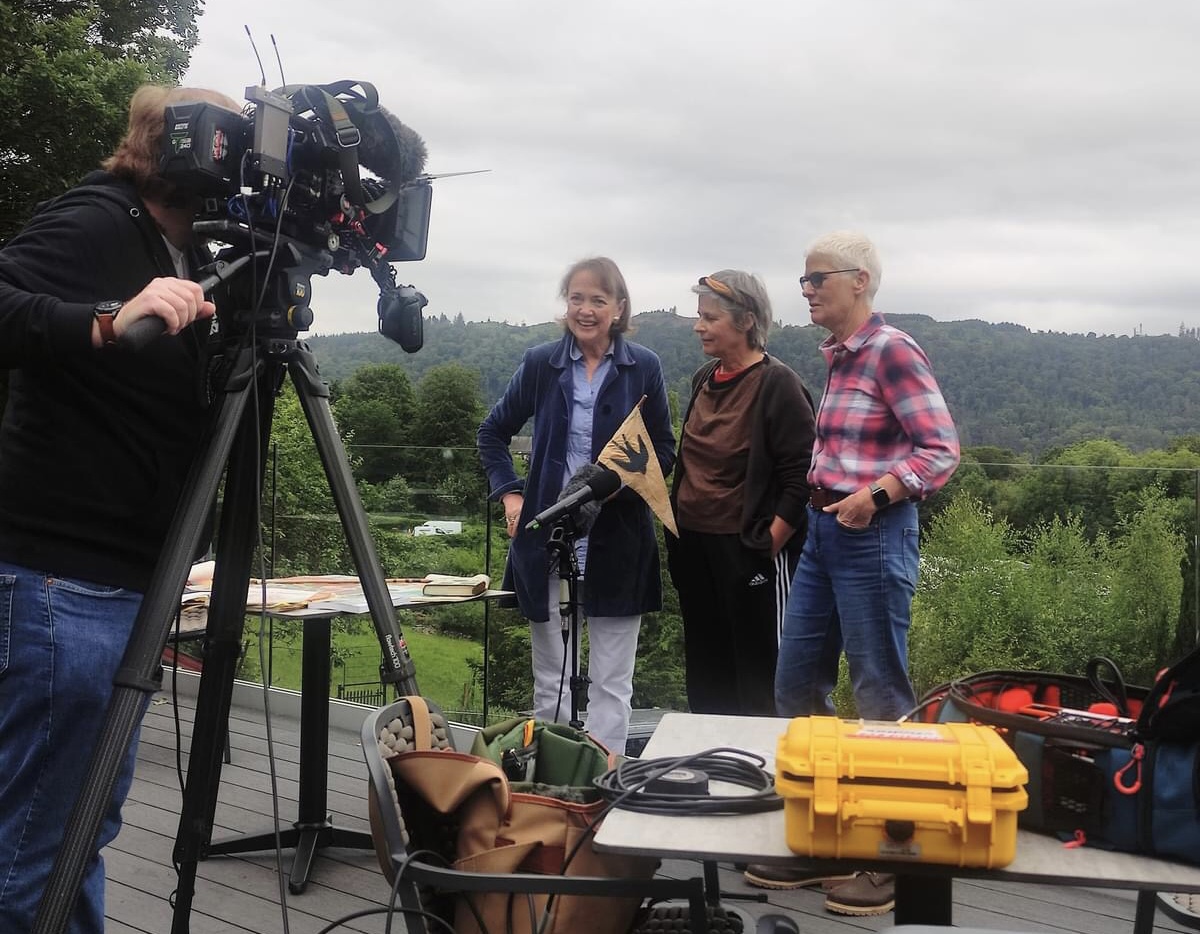
Sophie Neville, Suzanna Hamilton and Kit Seymour setting up for BBC Breakfast

Keith fitted us with earpieces and explained that there would be a delay between questions asked in the studio and our answers. We couldn’t see the presenters but could hear the film trailer being played. When we were asked us to introduce ourselves, I didn’t realise they needed to know which characters we’d played until I got to Kit Seymour, who had been Nancy. Straight forward and honest, she managed to answer the difficult question:

‘What’s it like… how does it feel?’

‘Listening to stories of how the film has changed people’s lives,’
she admitted, ‘was quite an emotional experience.’

Suzanna, explained in her beautiful voice, that since the the story was set in the 1930s it hasn’t dated, and we were able to chat naturally about our mission to encourage the next generation to get out on the water. We chatted about the movie memorabilia and David Wood’s script – that as children we were never allowed to read and the amazing time we were having at Windermere Jetty museum where one little girl arrived dressed as Titty Walker with a green parrot on her sholder.

I held Swallow’s flag and managed to speak about the acquisition and renovation of the dinghies, aware that there were no boats to be seen on the hotel terrace. However BBC Breakfast have brilliant vision mixers. The best film clips of Swallow and Amazon literally sailed over my words and I grabbed the chance to talk about The Arthur Ransome Society on national television before they bid us farewell.

When John Sergeant asked me how it had gone I had to admit that we tripped up on the time delays, but we celebrated the much loved film bringing news that Swallow and Amazon are being made available for anyone to sail and that grants are available for children to take part in outdoor activities mentioned in Arthur Ransome’s twelve books.

Many thanks to all those who left encouraging feedback on social media. I forwarded it to the production team.

Eileen Jones – This is fascinating , about the landscape more important than costume. Just introduced another generation.

Will Hawthorne – just watched it. Lovely.

Amanda Whatley – Great interview, congratulations on the reunion of the boats and people. 

Jon Porter – Fantastic

John Greenhough – Great memories of this film. 

David Elms – Delightful interview Sophie. 

Amanda Currie– I ‘m so sorry I didn’t get there Sophie, my stupid body keeps letting me down, I would have so loved to meet you all. 

Robin Jett – I love your delight about the boats. The boats are back! What fun! Great to see how ‘Susan’ and ‘Nancy’ have grown up too. I can see aspects of each character in each actress, but I expect, if you had all played different characters, that might still be true.

A Writer’s Year – Highlights of 2023

2023 started with a bang when I learnt that I had won the Eyelands Book Award for an unpublished historical novel, but that wasn’t all.

My true life story ‘Funnily Enough’ came out out as an audiobook – available on Spotify, Audible and all the other platforms.

My guiding light Virginia McKenna was awarded a DBE . It is well-deserved. You can find photos and read more on this website here.

Since 2023 marked the 50th Anniversary of making the original film in the Lake district, I gave a number of talks and ran a series of #OTD – On This Day – social media posts. Having spent years in Africa, I am wrinklier than Swallows’s flag, but my hair has become darker. At least it is my natural colour.

50th Anniversary of filming Swallows and Amazons in the Lake District

The Arthur Ransome Society were able to acquire both Swallow and Amazon, the dinghies used in the 1974 film. Hunters Yard near Ludham on the Norfolk Broads, who already own heritage boats used in the BBC adaptations of Coot Club and The Big Six are making them available for hire.

Amazon will soon be available to hire at Hunter's Yard, Ludham
Amazon will soon be available to hire at Hunter’s Yard, Ludham

My WWII novel was shortlisted by both the 2023 Chanticleer Award for wartime fiction in the United States and Flash 500’s novel opening competition. Another won third prize in Louise Walters’ Page 100 competition, which was flattering.

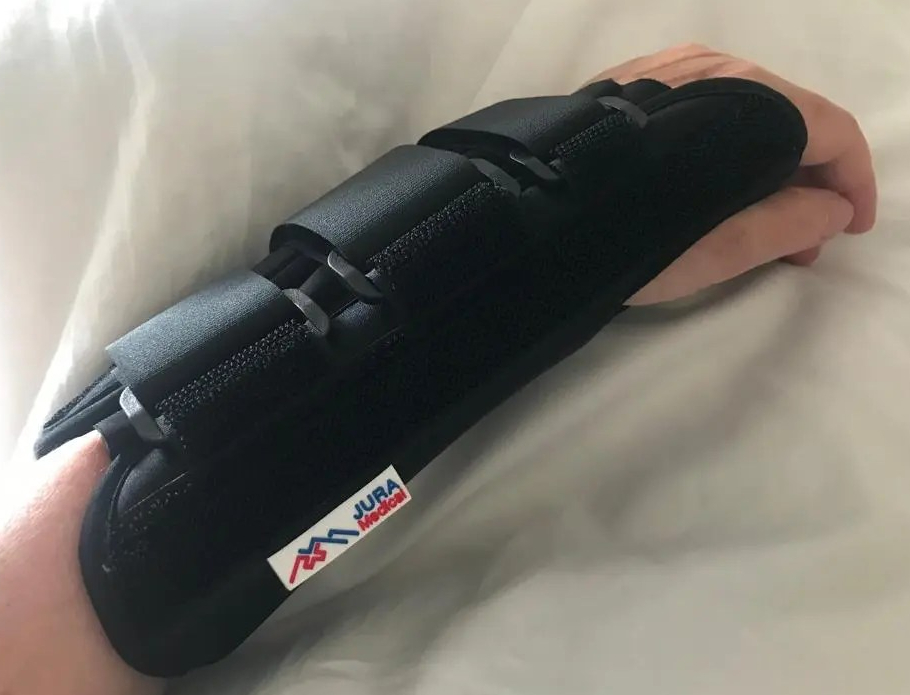
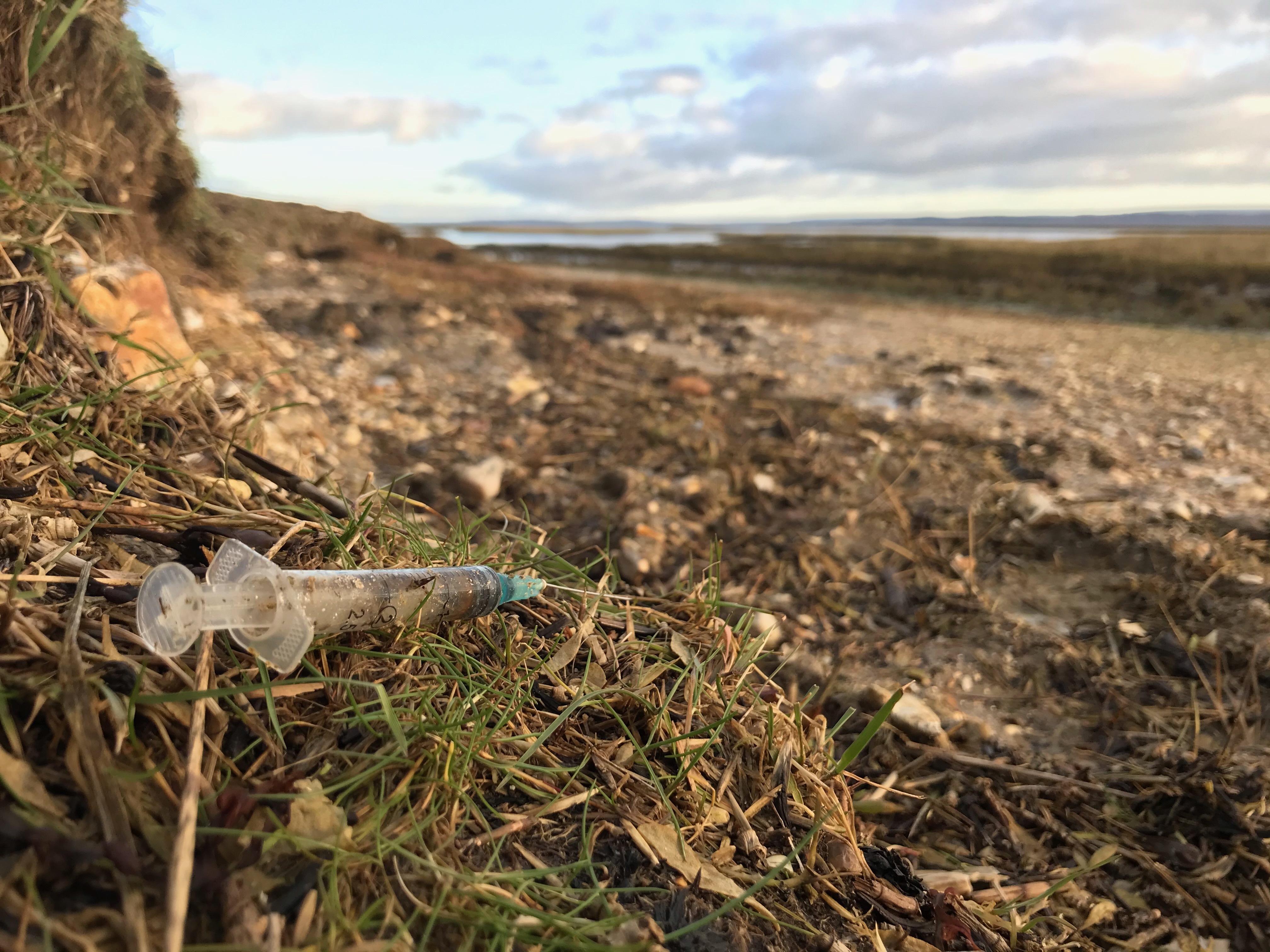
But – I slipped on the Pembrokeshire coastal path – walking around a pile of fly-tipping – and broke my wrist. Six weeks later, I broke it again.

broken wrist in velcro cast

I was unable to type for a while. We ended up doing #NoMowMay, June, and July and I couldn’t go litter-picking until September.

I ran an online workshop for writers on photographing their books.

The author Wendy H. Jones interviewed me on The Writing and Marketing Show.

I attended the Romantic Novelists’s Association Conference at London University meeting an editor from Pan MacMillan.

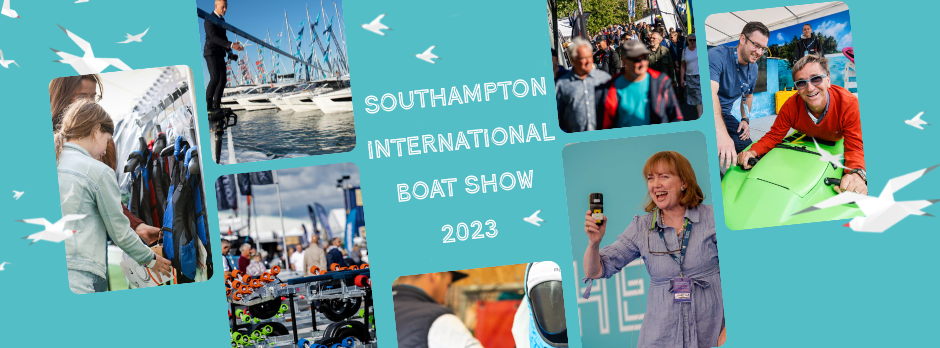
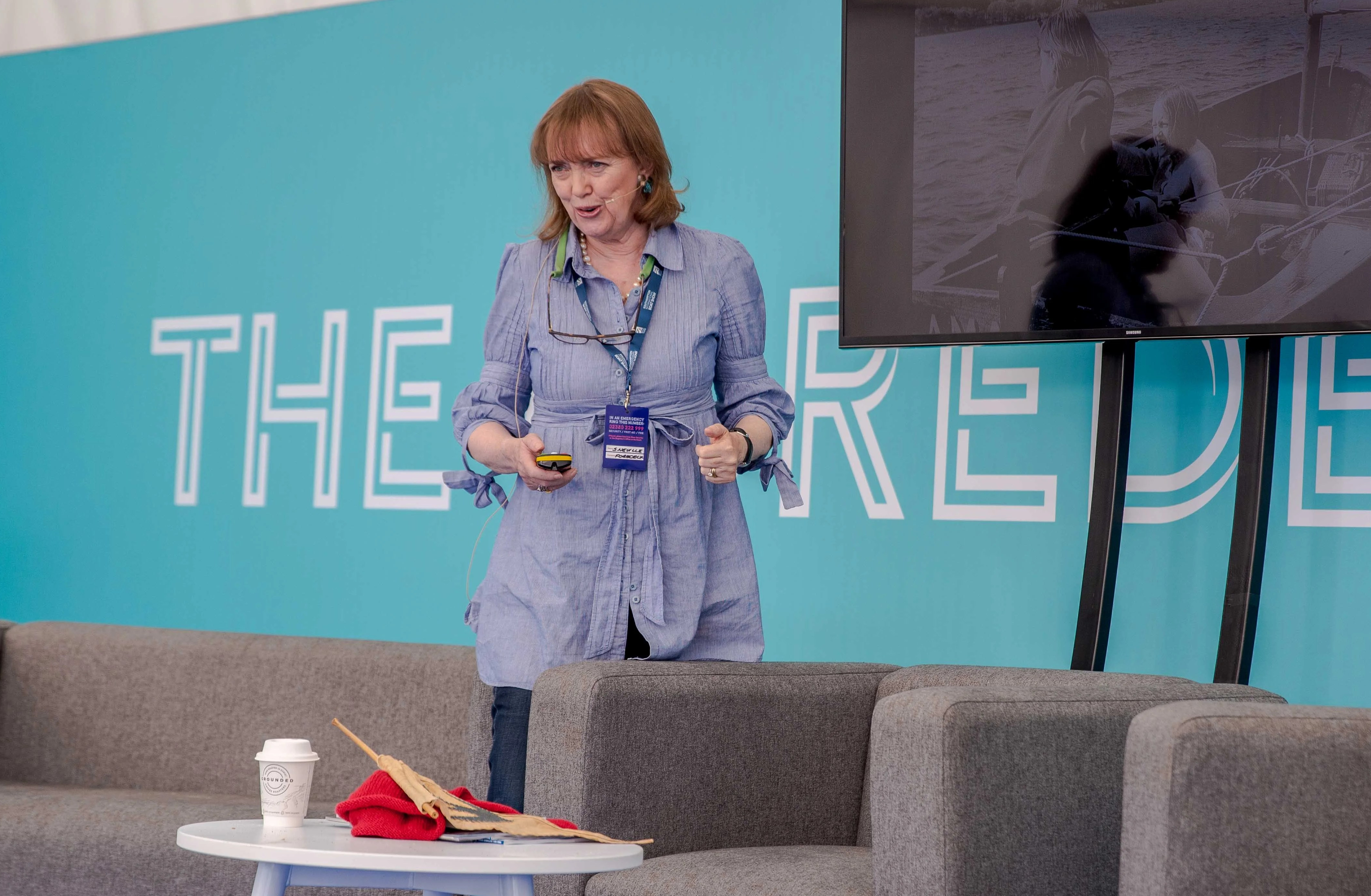
and gave four talks on the Foredeck Stage at the Southampton Boat Show 2023

We had the iconic dinghy Amazon on display and I had a four-page feature article published in the national magazine Practical Boat Owner.

It was a great opportunity to meet sailing enthusiasts and speak in front of the camera.

Sophie Neville speaking at the Southampton Boat Show

I hugely enjoyed speaking at The British Christian Writer’s Conference at Ridley Hall in Cambridge where I met other members of Resolute Books.

I donated a signed copy of ‘The Making of Swallows and Amazons’ to the 2023 Children in Read charity auction, which raised so much for BBC Children in Need that I added a signed DVD and a number of other books to the package.

In December, we received the sad news that Richard Pilbrow, who produced the original film of ‘Swallows and Amazons’ died at the age of ninety. He would have been thrilled to know that the remastered version of the film was broadcast on television in Ireland on 23rd December.

Molly and Richard Pilbrow in 1973

We were hoping Richard could join us for the 50th Anniversary celebrations of the release of the film in cinemas. The screenwriter, David Wood, has organised Q&As at two screenings at the Cinema Museum in London on 6th April 2024.

Lakeland Arts and The Arthur Ransome Society are planning a Swallows and Amazons Festival at Windermere Jetty on 29th and 30th June 2024.

Other events and more details for 2024 can be found on my Events Page.

Come and join us in 2024!

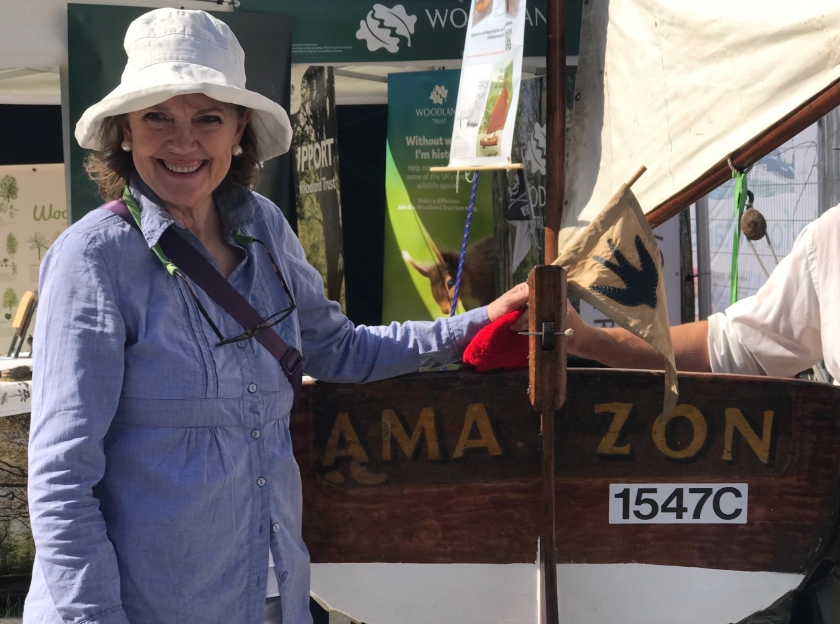
Sophie Neville with Amazon, the dinghy from 'Swallows and Amazons'(1974)

Sophie Neville has been talking about her books in the open air

Girl with otter
It all started when I was asked to speak to the W.I. about ‘Living with Otters’

On Sunday 8th May, we had an Open Day at Bakers Mill in the Cotswolds where everyone was invited to come for picnic by the lake.

Rudi was hand-reared so is very tame

My mother, Daphne Neville, gave a Q&A on otters and I began signing books.

My diary about living with two tame otters

It was held in aid of the local wildlife rescue. Rudi the Otter was in residence.
Funnily Enough by Sophie Neville

Add a message in the comments below if you are able to come!

Funnily Enough
The location of ‘Funnily Enough’

Eyelands Book Awards 2021

Sophie Neville Eyelands Book Awards 2021

The Eyelands Book Awards are to be announced on 30th December. I first entered this international writing competition in 2019, when my novel entitled ‘The Man Who Got Out of Japan’ won their prize for the best unpublished historical novel.

I was invited to apply for their Writer’s Residency and arrived on the island of Crete to begin work on the sequel under the title, ‘The Girl Who Escaped from Zanzibar’. This novel, set in Zanzibar in the heady days before the revolution of 1964, reached the finals of their 2020 competition in the category Unpublished Historical Fiction.

provisional cover

After being placed or long-listed in a number of other writing competitions, including the Page Turner Awards, this intricate story was completely rewritten. Transposed from the first person to the third person and re-titled ‘A Girl Called Redemption’ it has become multi-layered and intriguing. This second incarnation was submitted to Eyelands Book Awards in October 2021.

Eyelands Book Awards 2021

Eyelands Book Awards have now published a list of the authors short-listed for their grand prize. The final results will be announced on 30th December followed by an awards ceremony in Athens in April 2022.
Eyelands Book Awards

‘A Girl Called Redemption’ is up against stiff competition, including a WWII novel written by an American professor of writing:

Hiroshima Bomb Money / Terry Watada /Canada

Yesteryear / Stephen G. Eoannou /USA

The Swimmer /David Tenenbaum/USA

China China / Tong Ge /Canada

A Girl Called Redemption / Sophie Neville /UK

Sophie Neville short-listed for the Eyelands Book Awards 2021

Here is the full line-up of the finalists. Many congratulations for getting this far and best wishes to all!

Alan Smith of BBC Radio 4 remembers being a film extra as a boy in the original movie ‘Swallows and Amazons'(1974)

Stories about making original film of ‘Swallows and Amazons’ are still floating to the surface. The BBC Radio 4 newscaster Alan Smith, wrote to me, saying:

“It’s Alan Smith here – I’ve been through the family archive of photographs and have uncovered two pictures which I’m sure you won’t have:

Brian Doyle, Terry Smith and Graham Ford, with Virginia McKenna, Kit Seymour, Sten Grendon, Simon West, Suzanna Hamilton and Lesley Bennett (photo: Eileen Smith)

“The first picture is fairly obvious – it’s you and the other cast members in the car at Haverthwaite station. This will have been taken by my Mum at the time the ‘official’ photo was taken.” This was on 14th May 1973 when a reporter from the Times came to witness our first day of filming ‘Swallows and Amazons’. The station had only been re-opened two weeks earlier.

The cast of ‘Swallows and Amazons’ (1974) at Haverthwaite Railway Station with Jim Stelfox. Robin Smith is at the window, Alan Smith and John Eccles are standing in the doorway.

“The photo (below) shows (left to right) my brother Robin, me and our friend John Eccles standing in front of a pony & trap. This picture was also taken at Haverthwaite, probably by my mother. John came along with his grandparents Patsy and John, and everyone remarked on how distinguished Mr Eccles senior looked in his boater and blazer!

Robin Smith (6), Alan Smith (9) and John Eccles (7) at Haverthwaite Railway Station with the props lorry in the background


“Please feel free to use these pictures however you’d like – I wonder if they’ll prompt others who were there to unearth similar memories?!”


“We had a lovely two days as extras on the film. I remember there was a casting one Sunday morning at St Anne’s Hall (an old church which is now converted to flats) in Ambleside. This is where anyone who wanted to take part went along to meet the director and wardrobe people. My mother was given instructions re the dress-code for Robin and me, and we were asked to meet in Ambleside town centre a couple of weeks later to board a bus which took us to the first location (Haverthwaite).”  This took place about two weeks before the film. Eileen Smith ran the Gale Crescent Guesthouse in Ambleside although none of the crew stayed there. My mother, Daphne Neville, went along to help the wardrobe master, Terry Smith, fit the film extras with costumes.

Alan’s brother, Robin Smith, made it onto a jigsaw puzzle released with the film

Alan couldn’t think why his Dad didn’t come along. It might have been the threat of haircuts. No man in Cumbria under the age of seventy could be persuaded to have a 1929 haircut, apart from Jim Stelfox the station master and my own father, Martin Neville, who appeared in the Rio scenes shot at Bowness.

You can see a quick flash of Alan and his family near the bus in this behind-the-scenes cine clip, shot by my father with a 16mm Bolex borrowed from his company. As he says it’s, “lovely to have all those memories flooding back!”

Behind-the-scenes footage taken by Martin Neville

Alan watched this clip and wrote, “My brother and I are convinced that the boy on the right of the frame at 0’06” is Robin, and the woman standing next to him in the hat with the red band is my mother, Eileen (I appear to have gone in search of ice cream or something, as I’m nowhere to be seen!).

“A couple of seconds earlier at 0’04” I’m almost certain the woman standing in front of the red bus with the large bag is John’s grandmother Patsy Eccles, and the the man in the white blazer, trousers and hat is John Eccles senior, Patsy’s husband. I have very fond memories of Mr & Mrs Eccles – they were a lovely, kind couple who were almost like an extra set of grandparents to Robin and me.

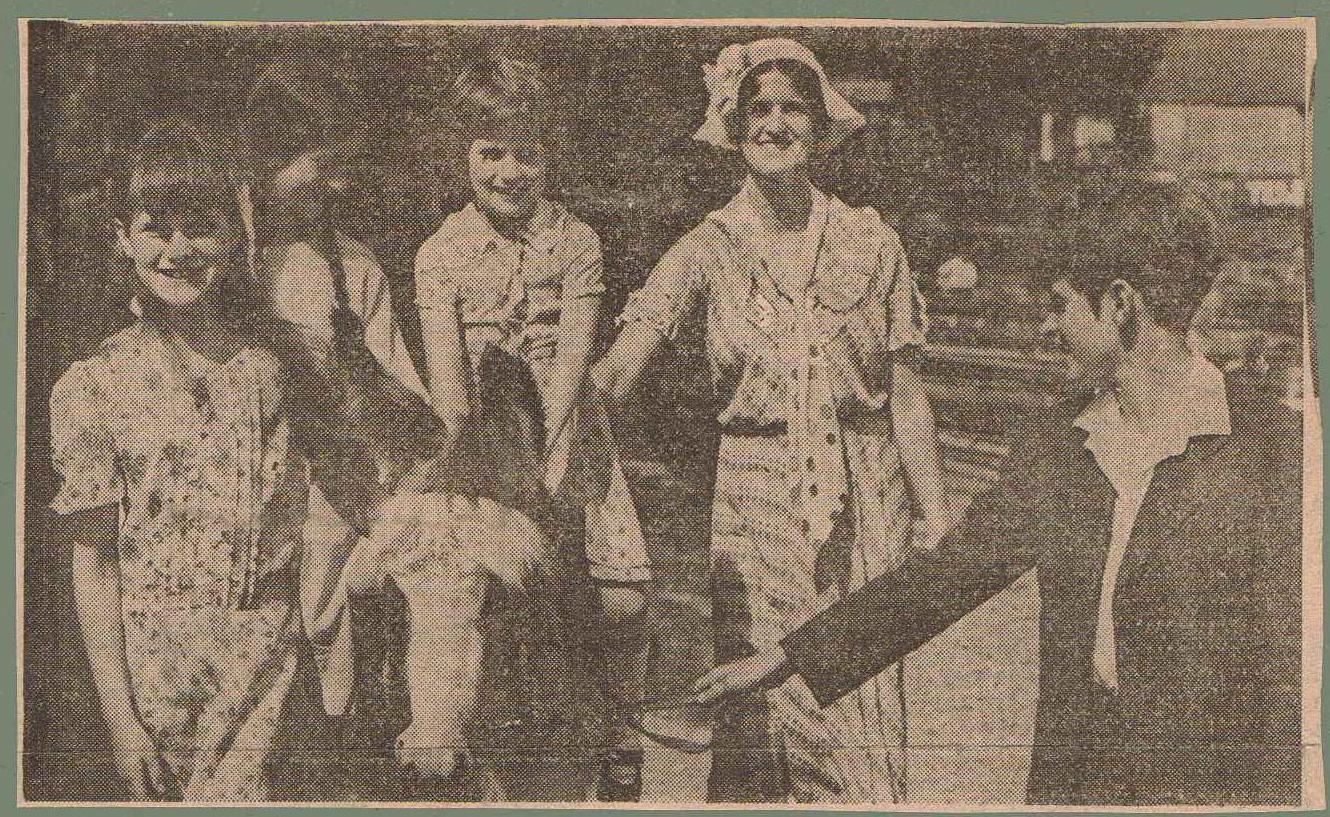
Other children who took part, featured in the local newspaper

“We may only have been extras, but it was so exciting for all of us! The first day’s filming was spent getting on and off the train, followed by what seemed like endless trips up and down the line (this would have been when you and the other actors were in the next carriage filming the early scenes).

Some of the other film extras with Suzanna Hamilton and Sophie Neville


“The second day was a few days later at Bowness Bay. This must have been some feat to achieve as the road was closed to traffic and any clues from the 1970s such as road signs had to be covered up or disguised!

Is Alan fighting with his brother in this shot, top right?

“Both days had a very big effect on me. As a child I’d always been fascinated by radio, film & television, and this brought my imagination to life. It also lit a fuse under my ambitions to do something in broadcasting. The result is I’m now a news presenter on Radio4, doing the news in programmes such as Today, PM and The World at One, so I have a lot to thank Swallows and Amazons for! My work means I now live in Buckinghamshire, but I get back to the Lakes 5 or 6 times a year, and I know that when I hang up my headphones for good, that’s where I’ll live.”

Although born in Edinburgh, Alan’s family moved to Cumbria when he was two years old. He and his brother, Robin, enjoyed an idyllic ‘Swallows and Amazons’ childhood growing up in the Lakes. They didn’t get into sailing but loved hill walking. You can see his BBC profile here

Zena Ashbury and her mother, in front of Brown’s coach returning the film extras to Ambleside at the end of the day’s filming in Bowness.

You can see more photos and read about the adventures everyone had making the original film ‘Swallows and Amazons’ here:

Diary of a Litter Picker: Flotsam on New Forest Shores

Collecting plastic pollution along the Solent

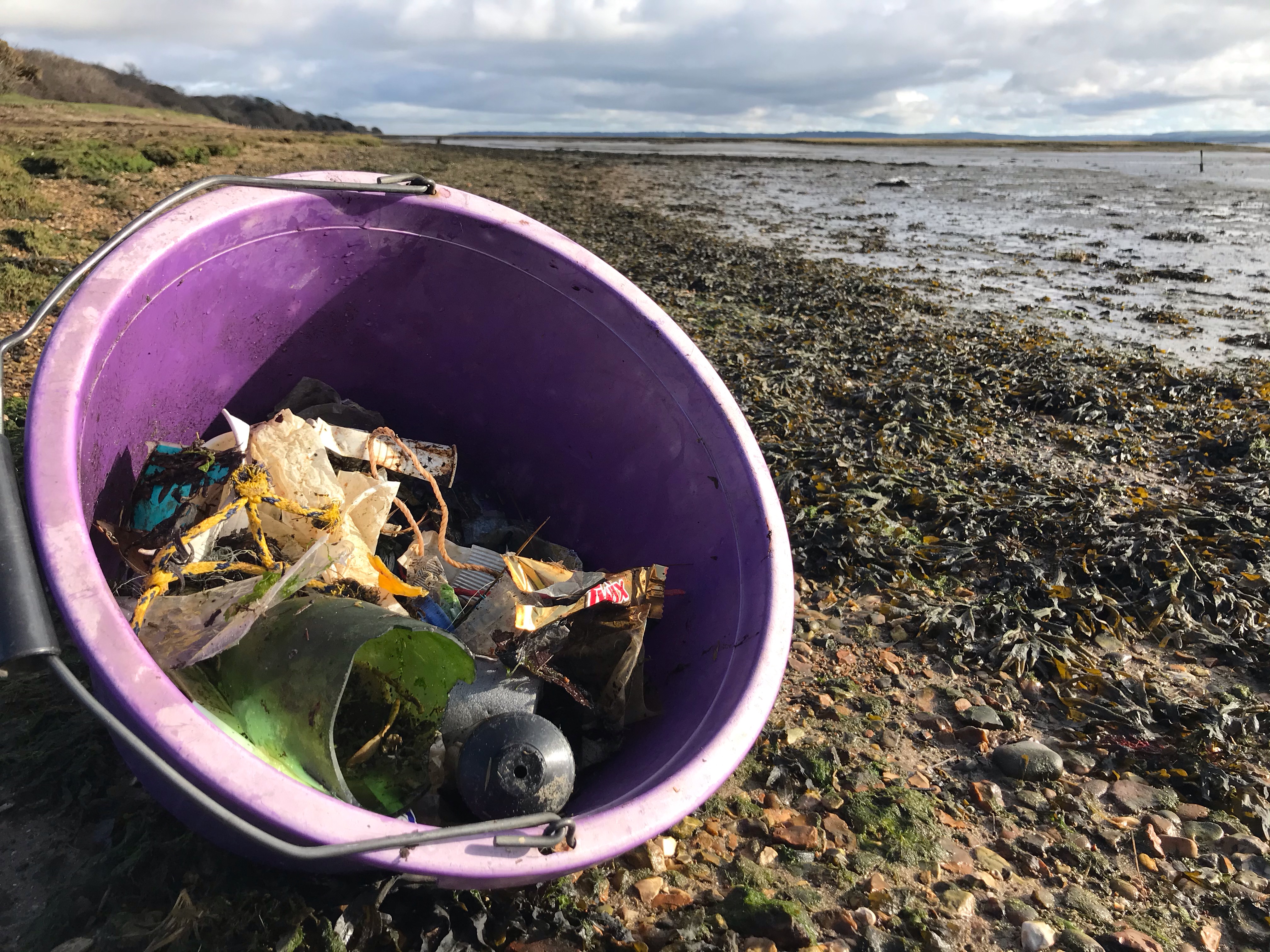
It took two adults and two small children more than an hour to collect this flotsam washed up along the Solent within the New Forest National Park.

Expert at spotting micro-plastics

The collection ended up weighing about 3 Kgs, despite cellophane and a large number of light, fly-away wrappers. The contents included hundreds of tiny pieces of plastic found in the shingle or blown inland.

A pencil, a washer and a tab from a life jacket

Sorting the colours brought attention to objects that the Marine Conservation Society would classify under ‘sewage’, ‘fishing’ and ‘litter’, thankfully well washed in seawater.

Solent flotsam – including evidence of sewage

Plastic straws and cotton bud stalks have thankfully been banned but plastic pollution remains a huge problem. We need to do what we can to turn the tide.

A plastic straw, a shotgun cartridge, the tip of a boathook and the handle of a brush

What most distresses me are signs that birds are confusing styrofoam with the natural remains of cephalopods that they peck at in search of calcium.

Insulation material and single use styrofoam

I sort out the marine rope and fishing tackle, which is stored for a future project.

Fishing line and shellfish traps

All this, and broken glass, was collected from a beach where children play. There are serviced, wildlife-proof litter bins, and since it is remote, requiring a parking permit, it is never crowded.

For photos of a previous Solent Beach Clean – please click here. You can see which items turn up month after month, such as green ‘sea kisses’ and tampon applicators.

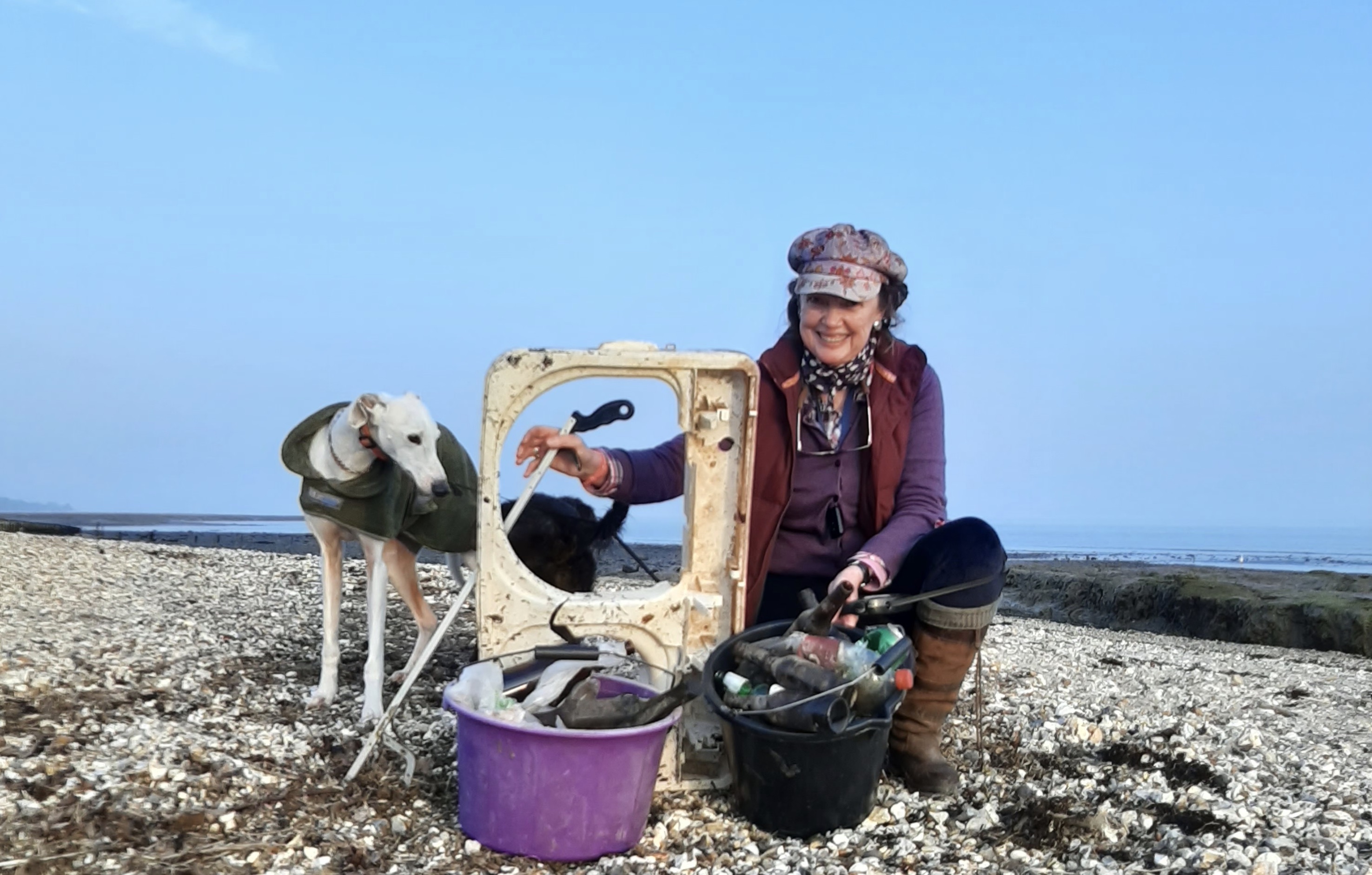
Sophie Neville happy beach cleaning

Diary of a Litter Picker: Lockdown Reflections

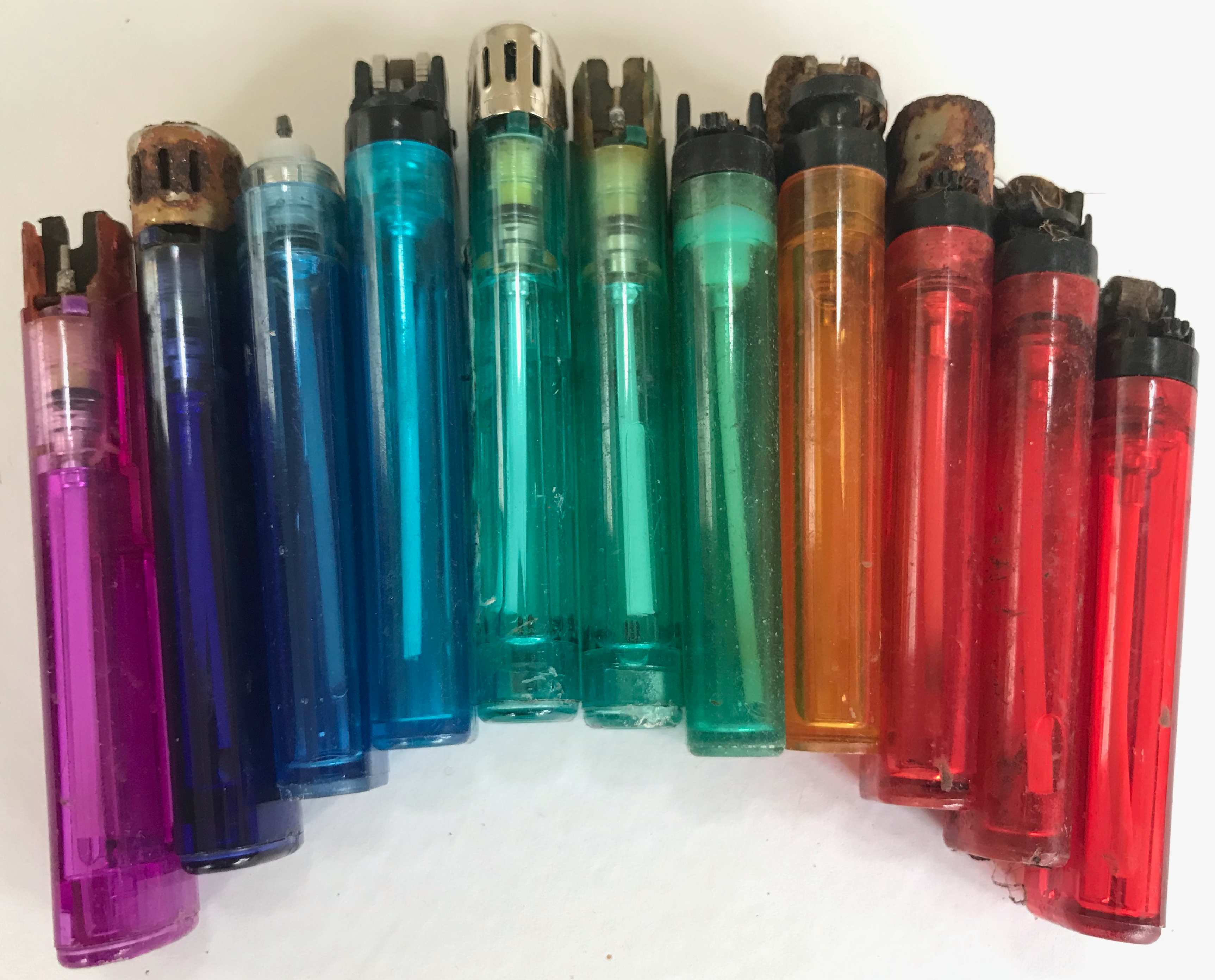
A rainbow of discarded cigarette lighters

For some odd reason we have seen a rise in litter since Covid-19 broke out. Why is this? Does it reflect national frustrations or just an increase in takeaway meals and outdoor parties?

Green bottles found in ditches and beaches during Lockdown, sorted for recycling

It is strange that people continue to discard PPE despite obvious health risks. Have we ceased to care about endangering wildlife and polluting the environment? Ben Deutsch described it as, ‘an act of libertarian defiance.’ Jill Crouch decided, ‘we are coming out of a me me me time – a superficial needing of more and wondering why we are not fulfilled when we get it.’

There will always be lost things but have we lost pride in Britain?

This rubber shoe was found washed up on the shore with a mask, but there has been gradually less sea plastic found on my stretch of the Solent, presumably due to fewer ferries and less shipping.

A mask and other plastics washed up on the Solent along with an elderly bottle and scaffolding parts

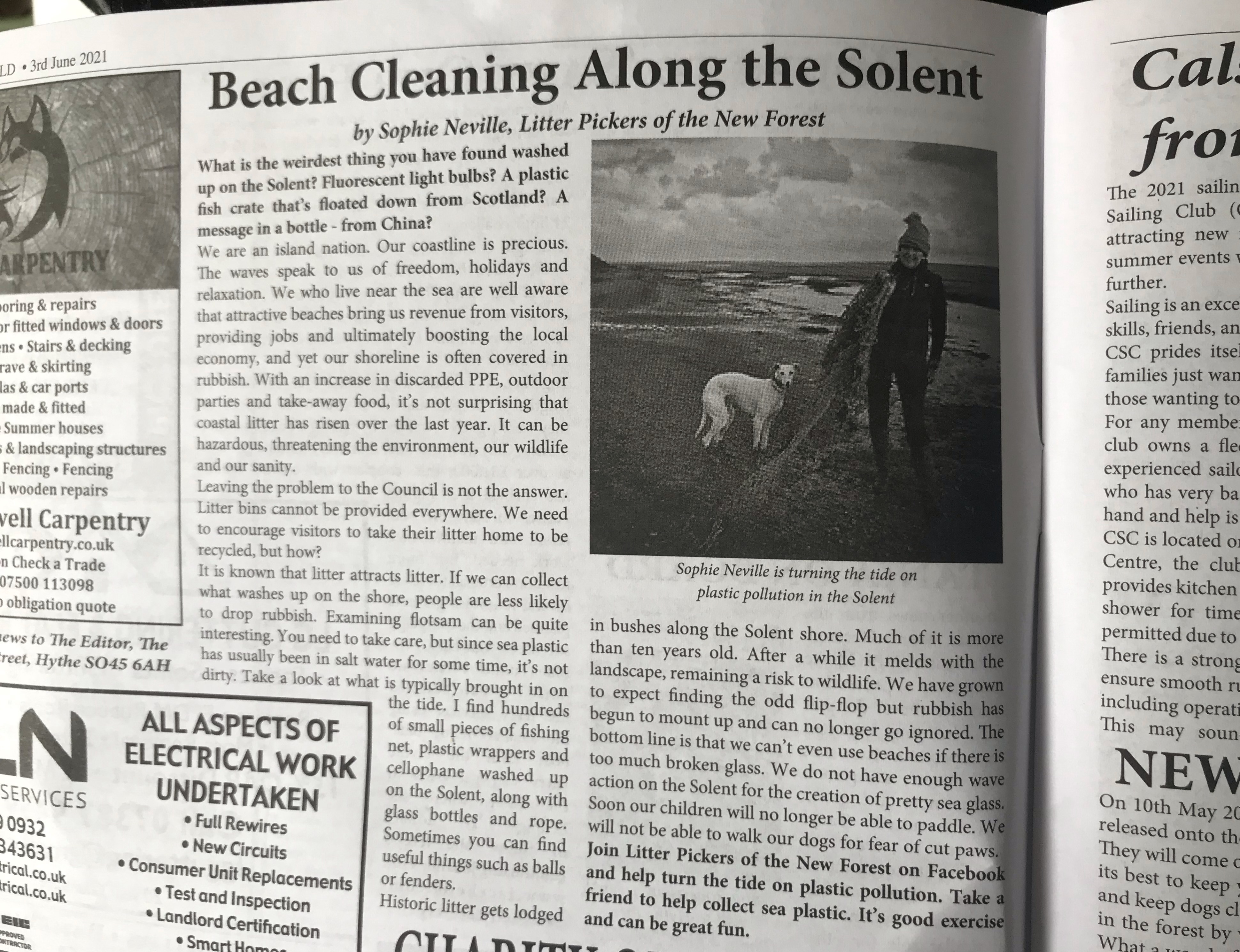
I have been reporting finds in the local newspaper in an effort to inspire others to begin collecting flotsam.

SophieNeville, beach-hedge-and river-saviour,” one reader commented. “It’s frightening just how much litter she removes. I’m inspired to try to emulate her.”

Articles in The Herald by Sophie Neville

Meanwhile, there have been lots of vehicle part to retrieve on dry land.

Vehicle parts dumped in a Hampshire bluebell wood

Lockdown certainly bought an increase in fly-tipping as people used time off work to clear out their sheds and attics or redecorate. At the same time, Council dumps closed during the first Lockdown and then introduced various restrictions, which proved disastrous. The New Forest National Park was hit particularly hard with bed mattresses and junk being dumped in precious wilderness areas.

Matt Rudd, writing in the Sunday Times Magazine was horrified by the increase in rubbish strewn about during Lockdown. He wrote, “There are two schools of thought on why people litter. The first is that they hate themselves for cramming all that junk food into their faces. Chucking wrappers out of the car window is just self-hatred by proxy.” Certainly, most of the litter I find has once wrapped over-sugared, over-salted, over-caffeinated food and drink of some kind. I would add tobacco and harmful drugs to his list. It’s as if people want to distance themselves from guilt and shame.

“The second,” Matt Rudd claims, “is that the further you are from home, the less you care about the environment.” And yet, he witnesses that, even in strict Lockdown, our local parks and car parks are strewn with newly dumped masks. Does the fear of contracting a virus make people more selfish?

However, the response has been amazing. Despite restrictions, individuals have used their daily exercise allowance to clean the beaches and verges of Britain. Litter-Pickers of the New Forest have gained over 1,300 volunteers in the last year, with an active Facebook Page and Justgiving site. They encourage members with sponsors delivering rewards for volunteer achievements.

A gift of encouragement from Litter-Pickers of the New Forest

If you happen upon a litter-picker, do give them encouragement, and if possible, lend them a hand. We are all fighting the same battle.

To find out about Waste Less, Live More, please click here

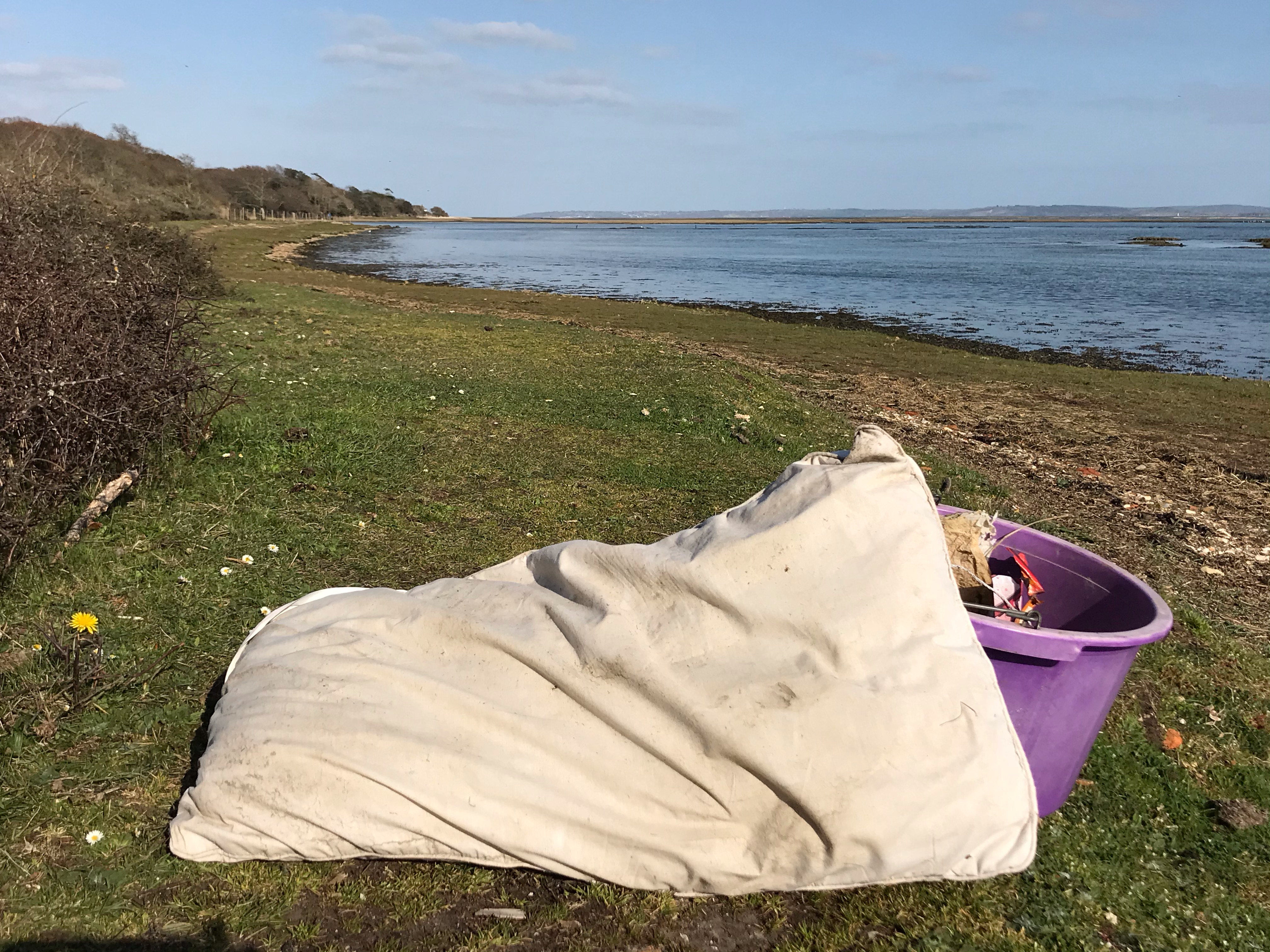
A pillow washed up on Solent shores

COVID Reflections – an anthology

I am honoured to have become a patron of COVID Reflections, a charitable project inviting writers and artists to contribute to an anthology celebrating the positive aspects of the pandemic. The hope is to make a difference by raising money for worthy causes affected by Lockdown and giving a voice to those that are heard the least.

COVID Reflections was founded by Ash Subramanian, a consultant breast surgeon from Sussex, who has gathered an impressive team of volunteers and trustees, profiled here.

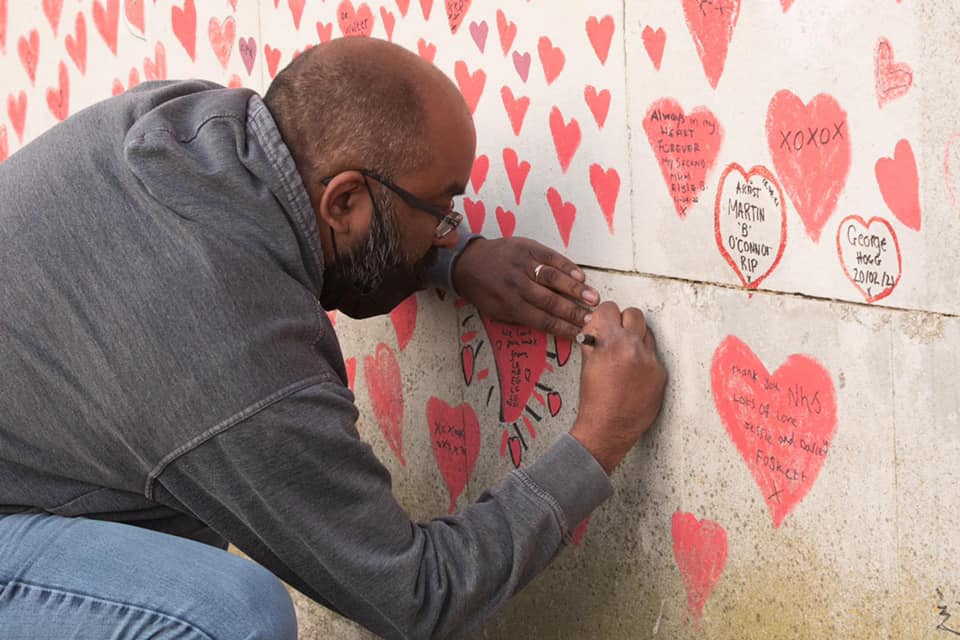
Ash Subramanian on the South Bank

Their aim is to publish a coffee table book and multi-media ebook that can be sold to raise funds for charities that have taken a hammering in the last year. You are invited to submit a poem, diary entry or piece of prose.

Think of sending in 200 words on what Lockdown meant for you. I wrote:

There were no tests available when I contracted COVID-19 early March 2020. I stayed at home, puzzled about being unable to smell. Although the virus wiped days from my life, Lockdown proved a golden time. My step-son brought his tiny twin boys to live with us for nine months. The two-year-olds thrived while we dug up the lawn to plant vegetables, enjoying the birdsong and wonderful weather. I let my hair grow, turned the spare bedroom into an office and devoted my daily exercise to collecting litter – which became horrendous – and coastal plastic – which diminished slightly. I donated clothes to women in need, was interviewed on Zoom and enjoyed church on WhatsApp. We raised funds for those seriously hit by the pandemic and prayed for friends admitted to hospital. Released from the tyranny of my usual diary, I learnt how to say ‘rainbow’ in Portuguese, regained my sense of smell and wrote a novel. We spent Christmas alone and had no holidays, but for me, the ‘Time of Corona’ felt like a year off, enabling me to remain at home with my family, where I was needed and needed to be.

PPE I collected from the coast

You could submit a painting, drawing, photograph or audiovisual contribution be it music or film. Here is Piers Harrison-Reid with his brilliant poetry. He works as a nurse in A&E at Norwich Hospital and has been supporting COVID Reflections by appearing in virtual concerts.

The aims of COVID Reflection’s projects are :

• To give those effected by this pandemic a lasting voice and platform to express themselves.

• To bring communities together, encourage collaborations and to spread positivity.

• To raise significant charitable funds to support organisations on a national and local level .

Dr Kate Grant’s painting or
Jenny Liston, Nurse Practitioner, making a car-side consultation in a pop up tent, Suffolk

Covid Reflections have a Facebook page here

and can be found on Twitter here

I sent in a shot of a home-schooling project that took on a life of its own.

Carrots from our Lockdown garden

The project has the blessing of the Arch-Bishop of Canterbury and will have a Foreword by Captain Sir Tom Moore’s daughter. They are collaborating with The Sussex Constabulary, The Sussex Ambulance & Fire service, a growing representative of MPs, every major religious group, The Royal Society and The Royal College of Surgeons.

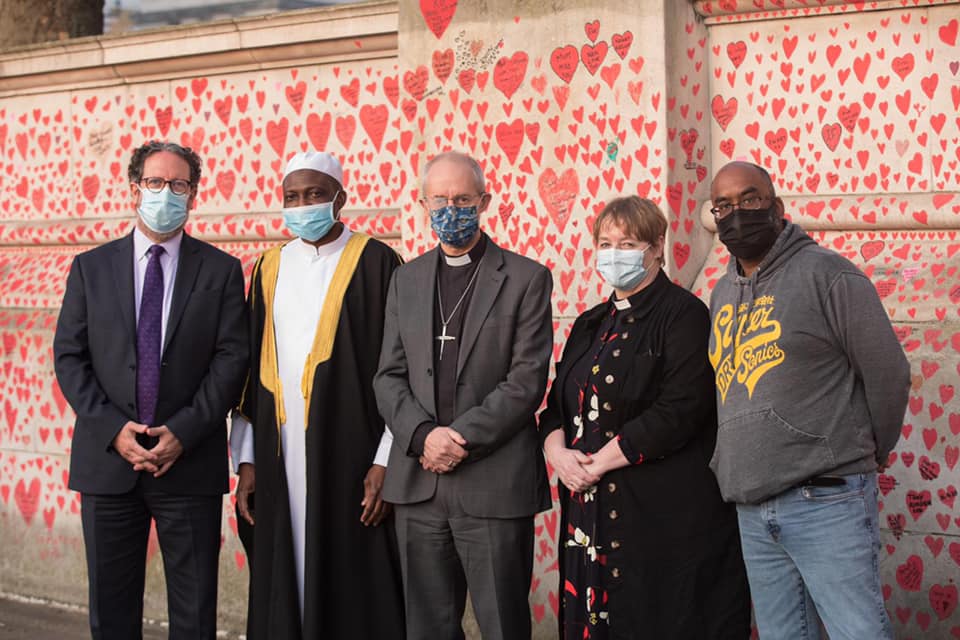
National Covid Memorial Wall in London – photo by Roff Smith

Anything submitted will be published either in a printed book or in electronic format.

You can find submission details on COVID Reflection’s website here

‘Hope’ by Kieran Gandhe aged 12, taken at the beginning of the pandemic

COVID Reflections hopes to make a real difference by raising money for worthy causes and providing support to individuals and businesses who have been adversely affected by the pandemic. They will do this by making grants to local, small national and large national charities, to enable them to help those who need it the most, allowing them to continue to do the amazing work that we know is being carried out every day. We hope that, together, we are able to make a difference. If you would like to be involved, please email C19voices@gmail.com or visit their website www.CovidReflections.org

Diary of a Beachcomber: finding elderly rubbish by the sea

Every day we collect aging plastic pollution, cans and glass bottles from Solent shores.

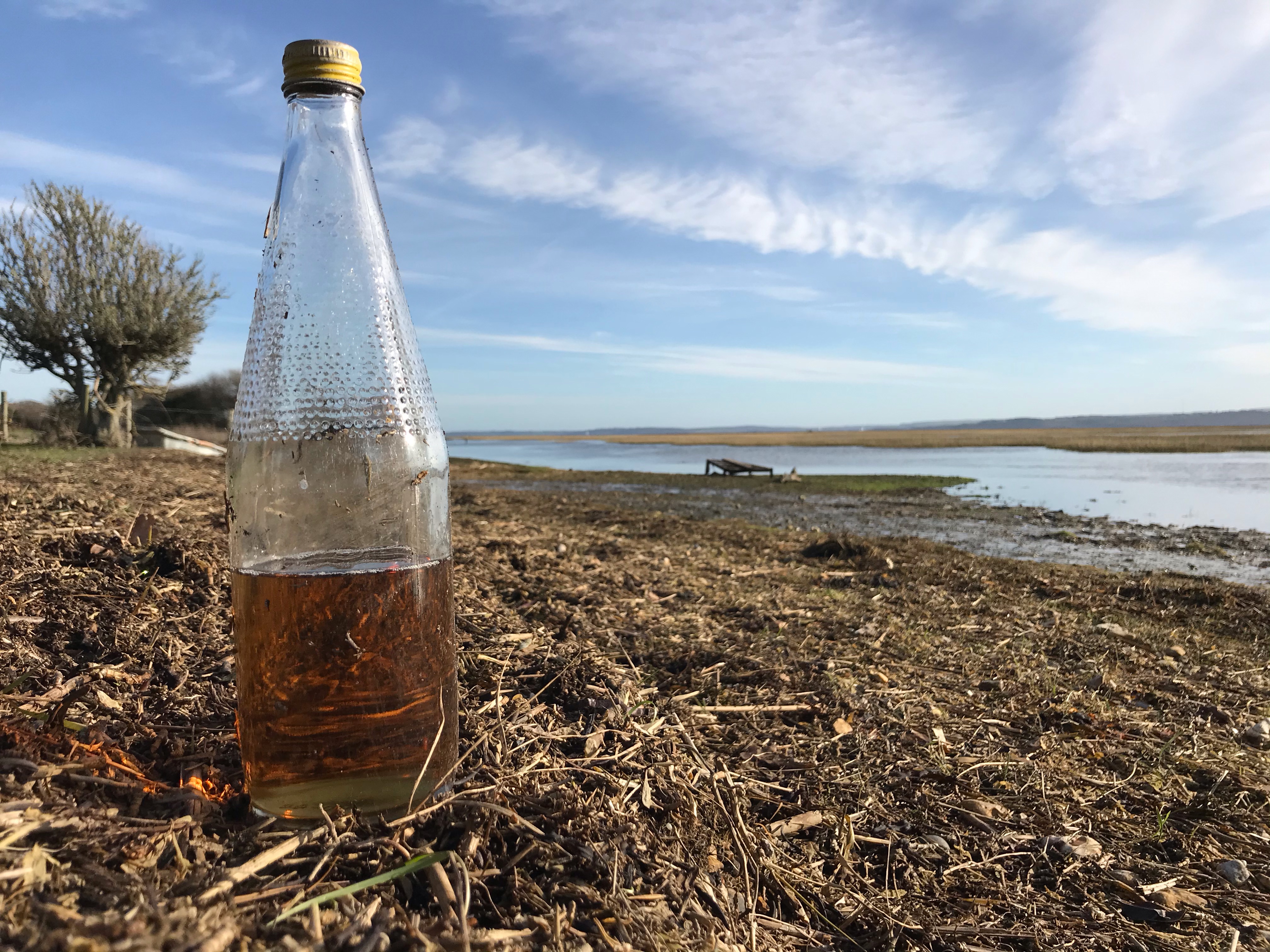
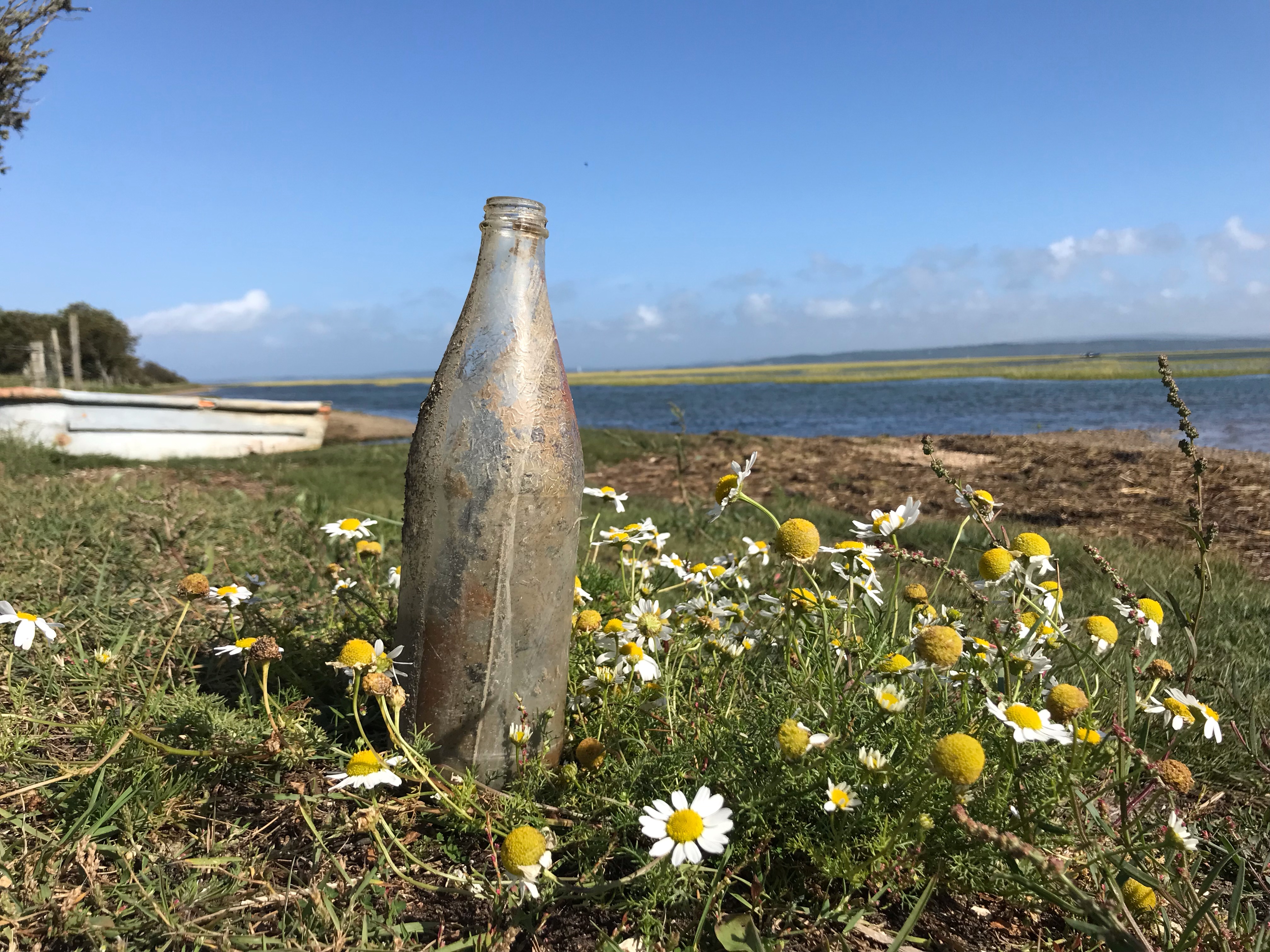
This old glass bottle seems representative of our time of Corona. How long has it been floating around the Solent? Fifty years?

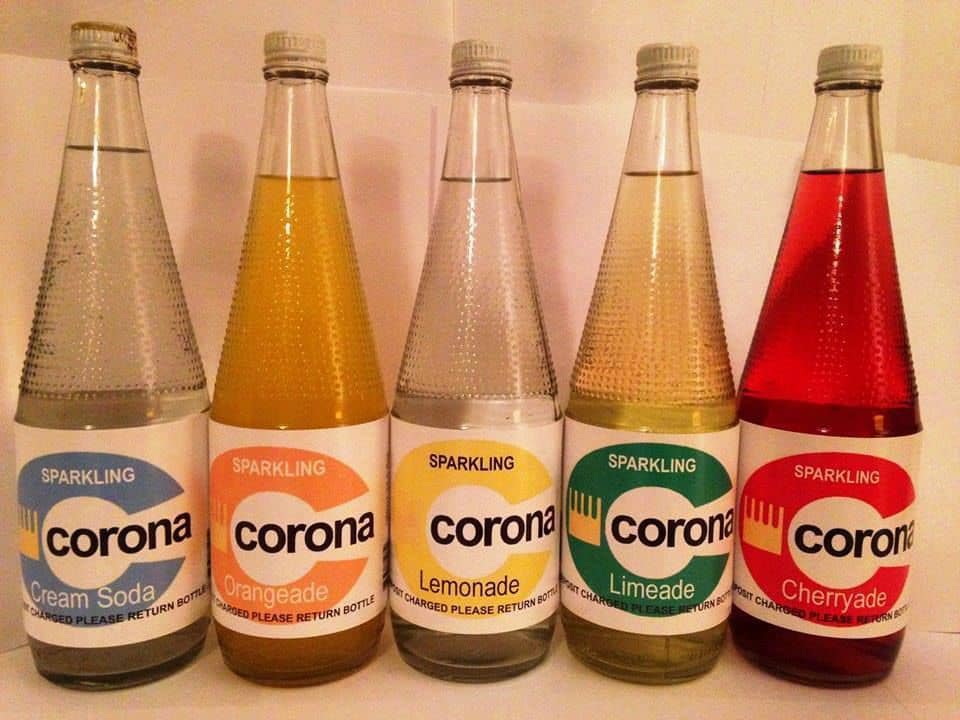
The Litter Pickers of the New Forest found me this 1960s advert for the original bottles with the same cream metal cap.

The Deposit Return Scheme running at the time ensured that most were returned to the manufacturers but I’ve found a couple on the shore. One that held ‘Limeade’ with a 3d deposit return label is selling for £23 on Ebay where it is described as ‘a lovely piece of nostalgia.’

A year later I found this vintage bottle (above) washed up in exactly the same place. How many more will arrive there?

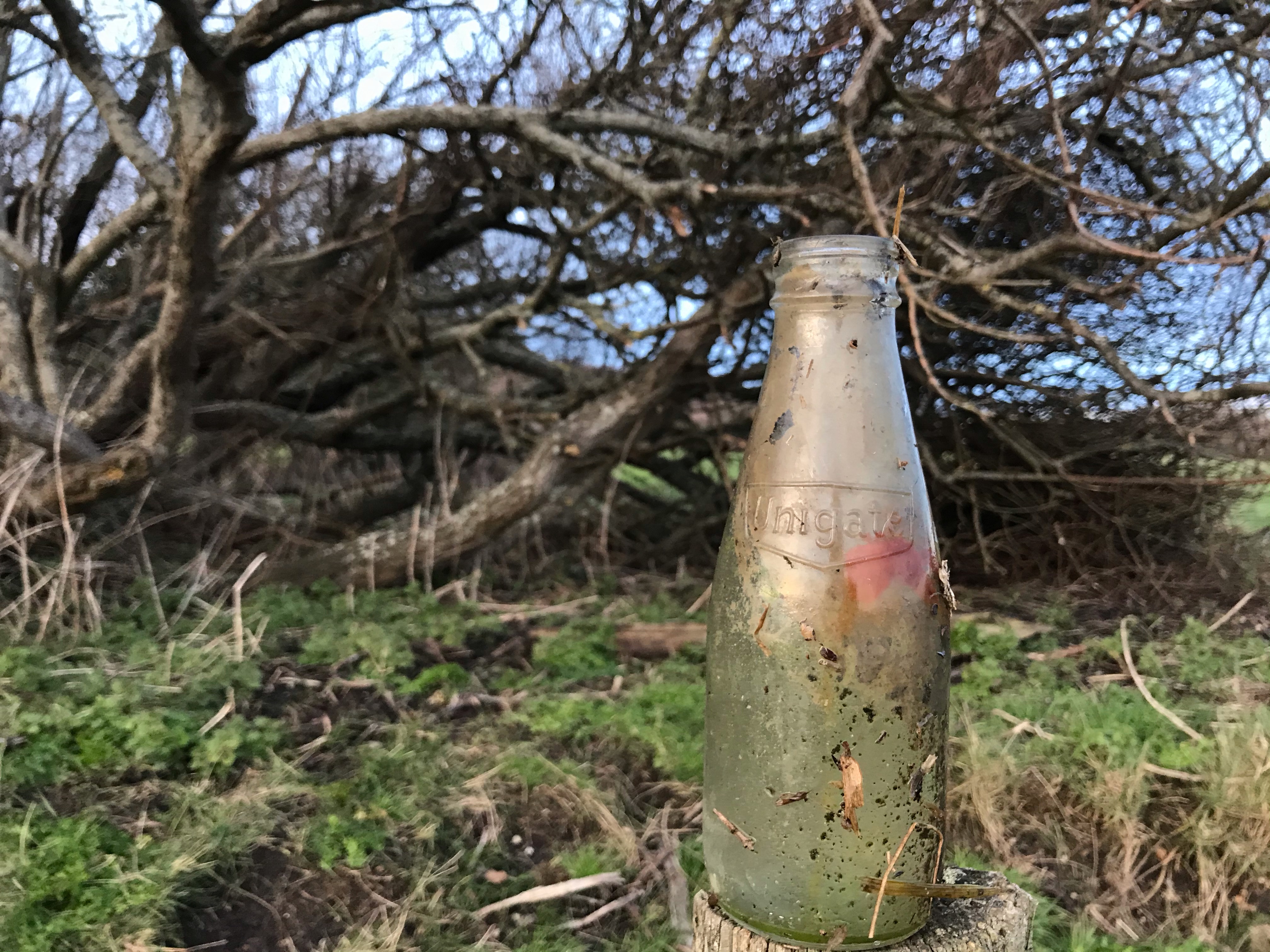
How old would this re-useable Unigate milk bottle be? 1980s? Forty years? They have also become collectors’ items. One like this is valued at £15 on eBay. It was found in these willow trees just above the high tide mark. It might have come over from the Isle of Wight where ‘Milk and More’ ran deliveries.

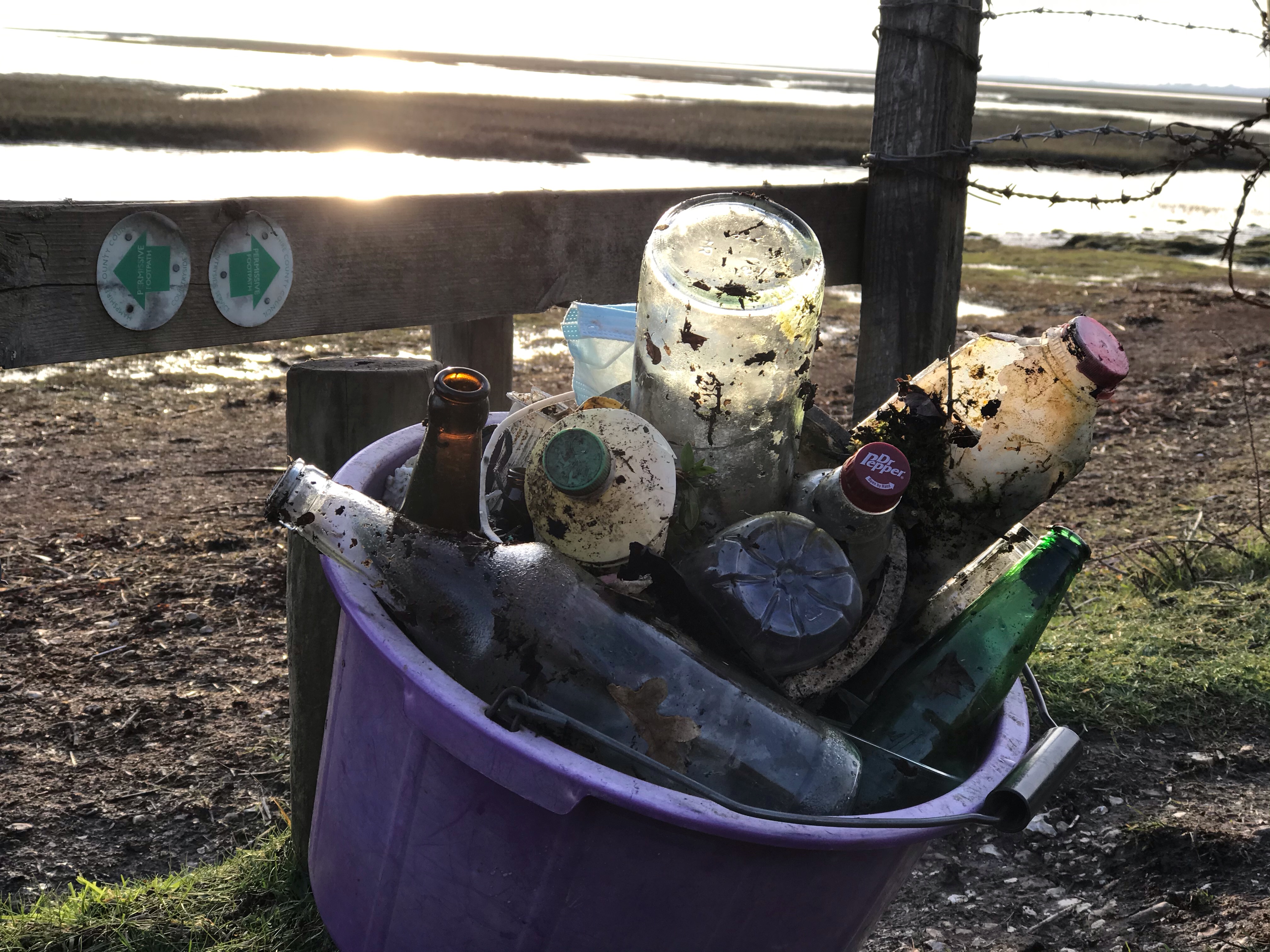
You can just see a brand new mask in this photo (above) but the bottles and plastic containers were hauled out of bramble bushes a few feet from the sea where they have languished for years.

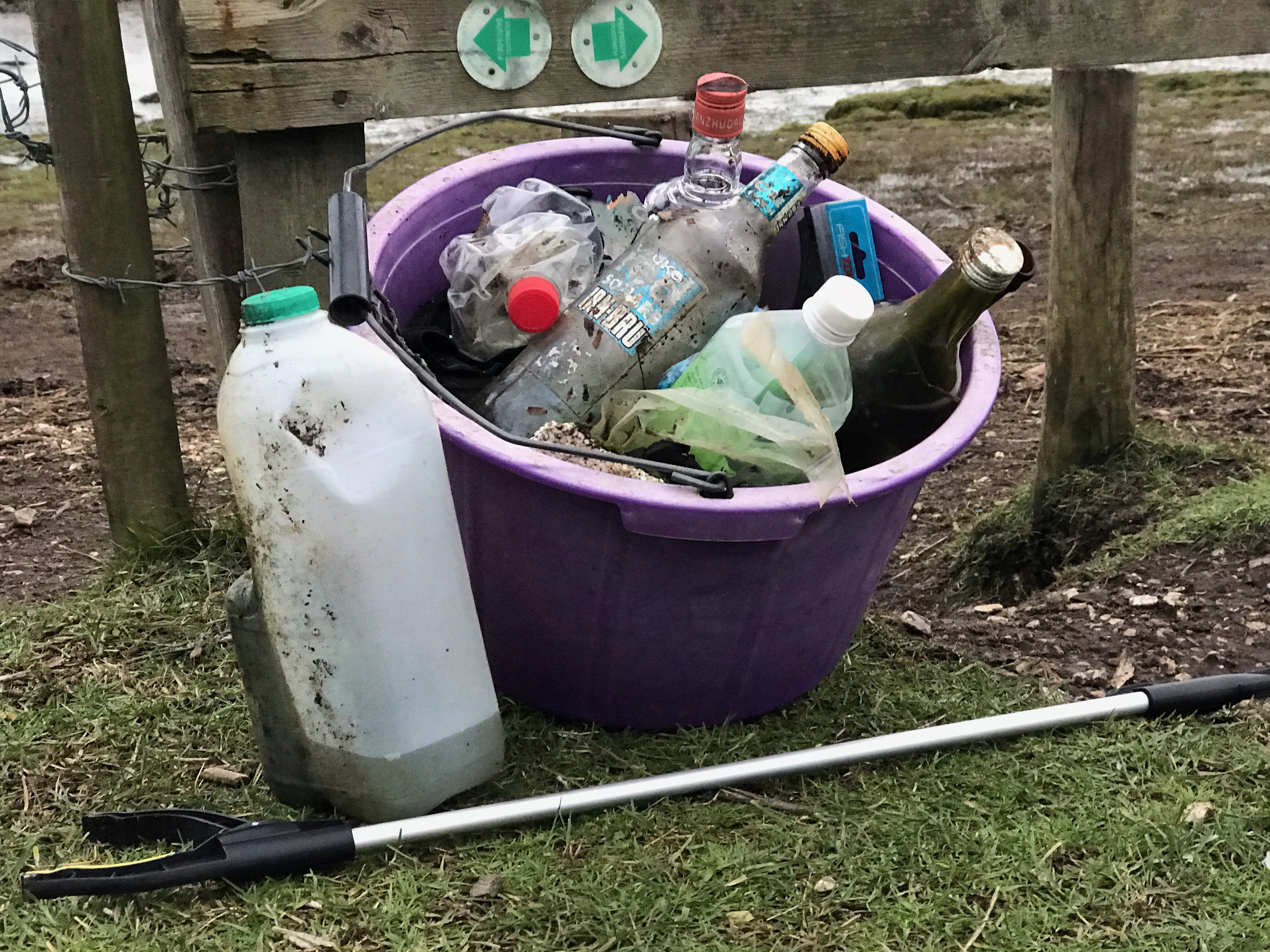
Here is a photo of the same footpath with more plastic bottles that have blown in, together with old glass bottles the earth seems to be spitting out. The message inside them is clear: this has to stop.

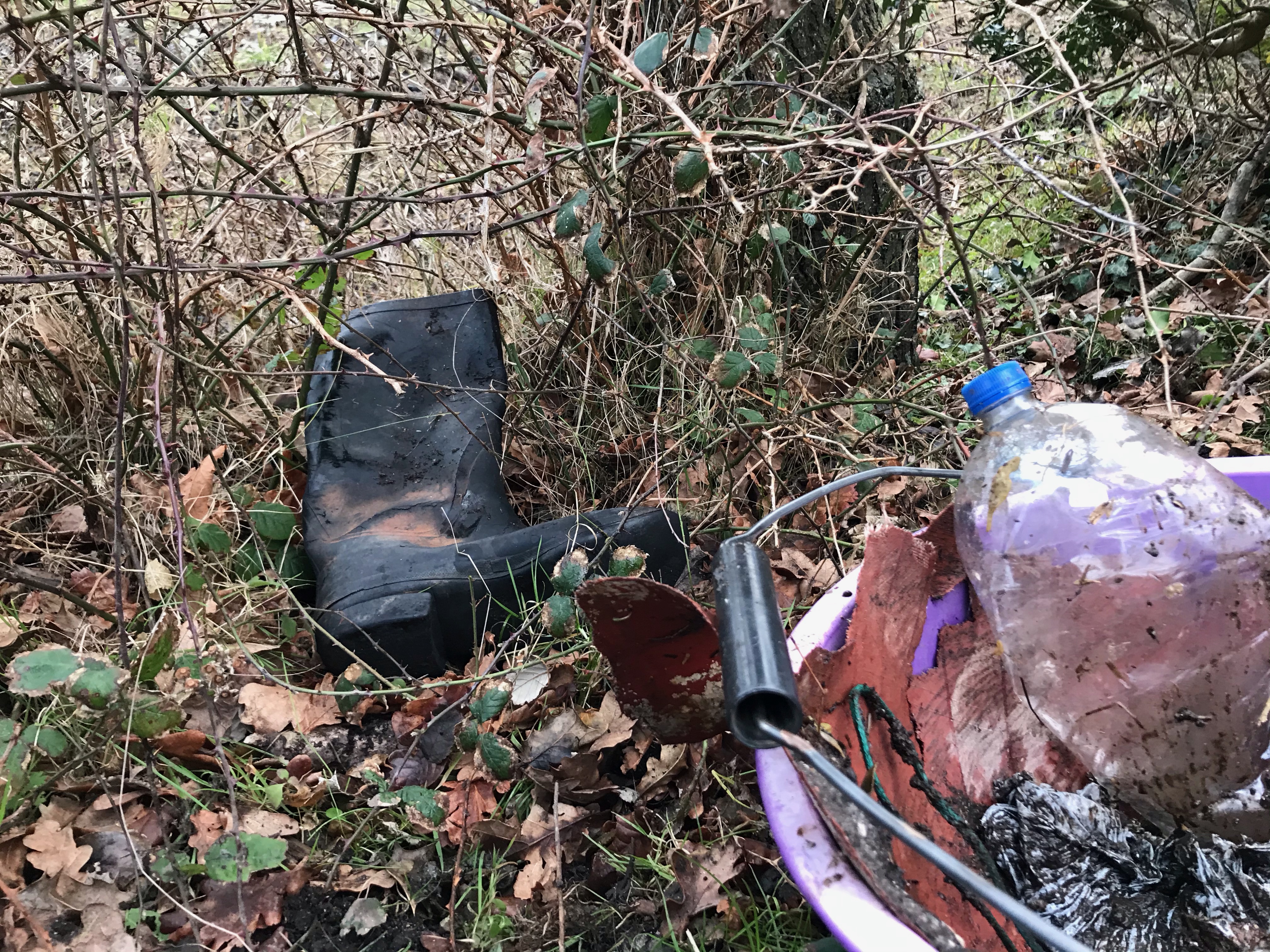
I found a Wellington boot, washed up or discarded, which must have been around for some time. It had a field-mouse living inside so, I left it for now, but there is plenty more like it.

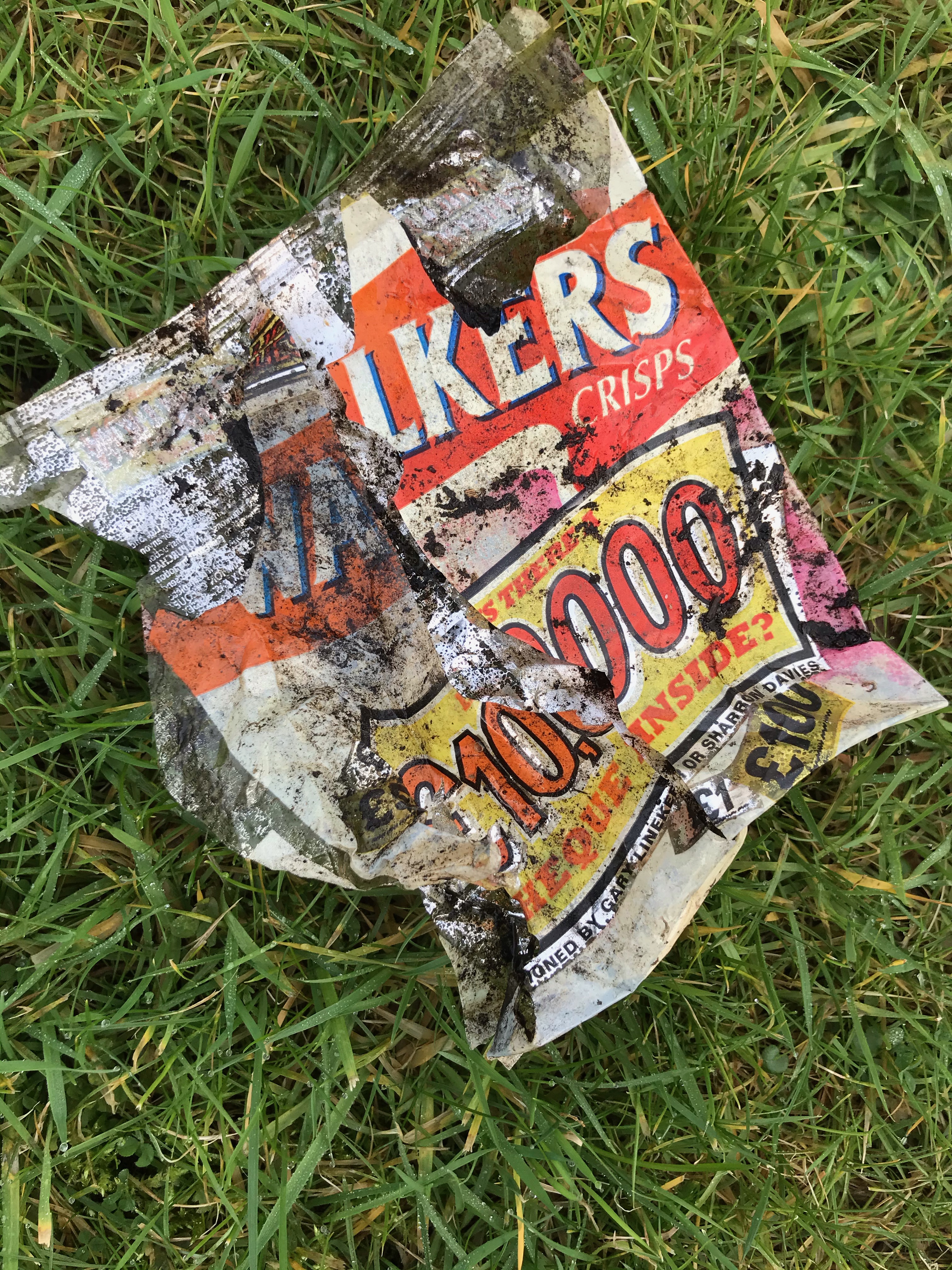
This Walker’s Crips packet, found recently, is 24 years old. I have quite a collection.

Plastic is amazing stuff. My father manufactured products made from PVC. He said that back in the 1970s, his company never considered what would happen when the items they made reached the end of their useful lives.

Found on the Solent

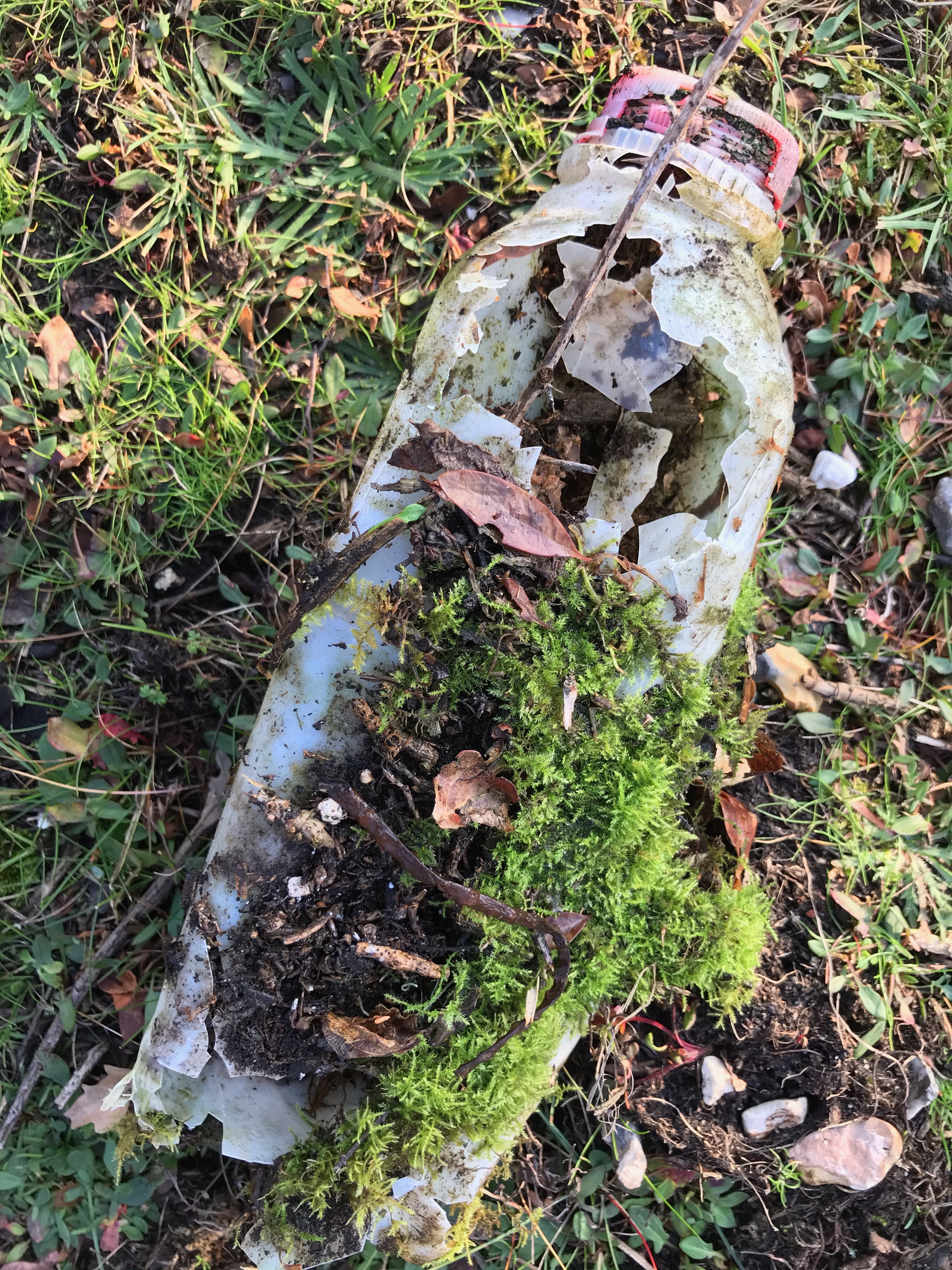
What date did the squarish plastic milk bottles come in? How many are disposed of daily in the UK alone? How many are recycled? How long does it take for them to decompose? They tend to flake.

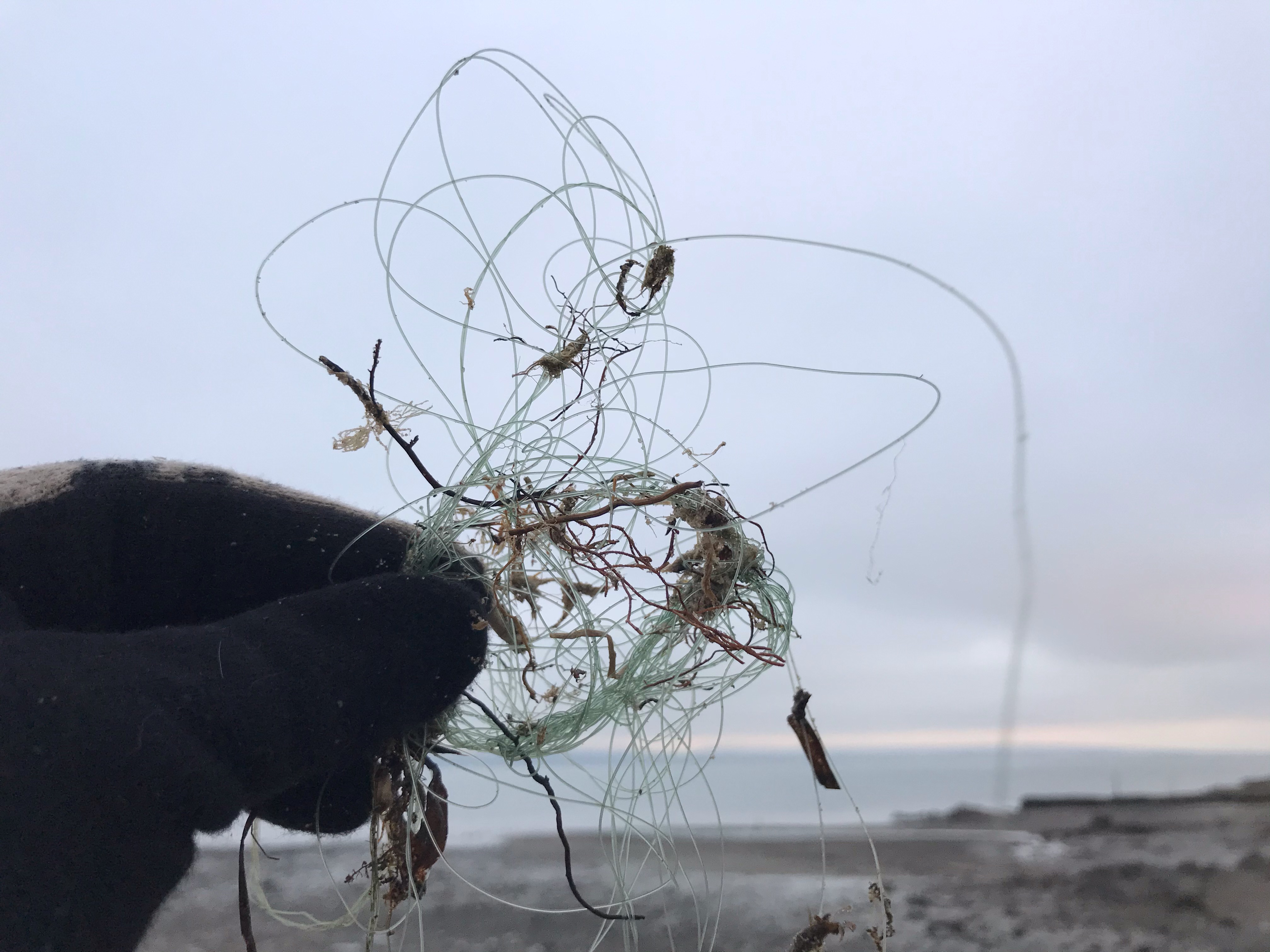
How long does it take for a Tescos ‘bag for life’ to deteriorate? I often find them in the Solent. Fishing line undoubtedly lasts a long time. It can be difficult to spot.

I often find individual plastic pegs. Why is this? Do they fall off boats?

Collecting the old rubbish is satisfying. You can see more beach cleaning photos here

The Wombles of Hambleton have made up a list of how to age vintage litter:

* cans with an old style ring pull – the new style was used from 1989

* cans that pre-date the bar code (approx 1970s) are measured in fl oz

* older style names, disused names or products eg: Marathon

* pre-decimal prices – dated before 1971

* glass bottles before the switch to plastic eg: older Lucozade glass bottles

* look for competitions advertised on the packaging, which are dated

* products advertising sporting events eg: Mexico World Cup Coca Cola

What is this flotsam doing to the planet? Could you help clear it up? Would you join The Great British Spring Clean or other schemes run by the charity Keep Britain Tidy?

For a full list of things I found on beach-cleans please click here

A fourteen year old can of Coke – found unopened – on the Solent, along with many shotgun cartridges.

Diary of a Beachcomber on Solent shores where I’m told, ‘There is no rubbish.’

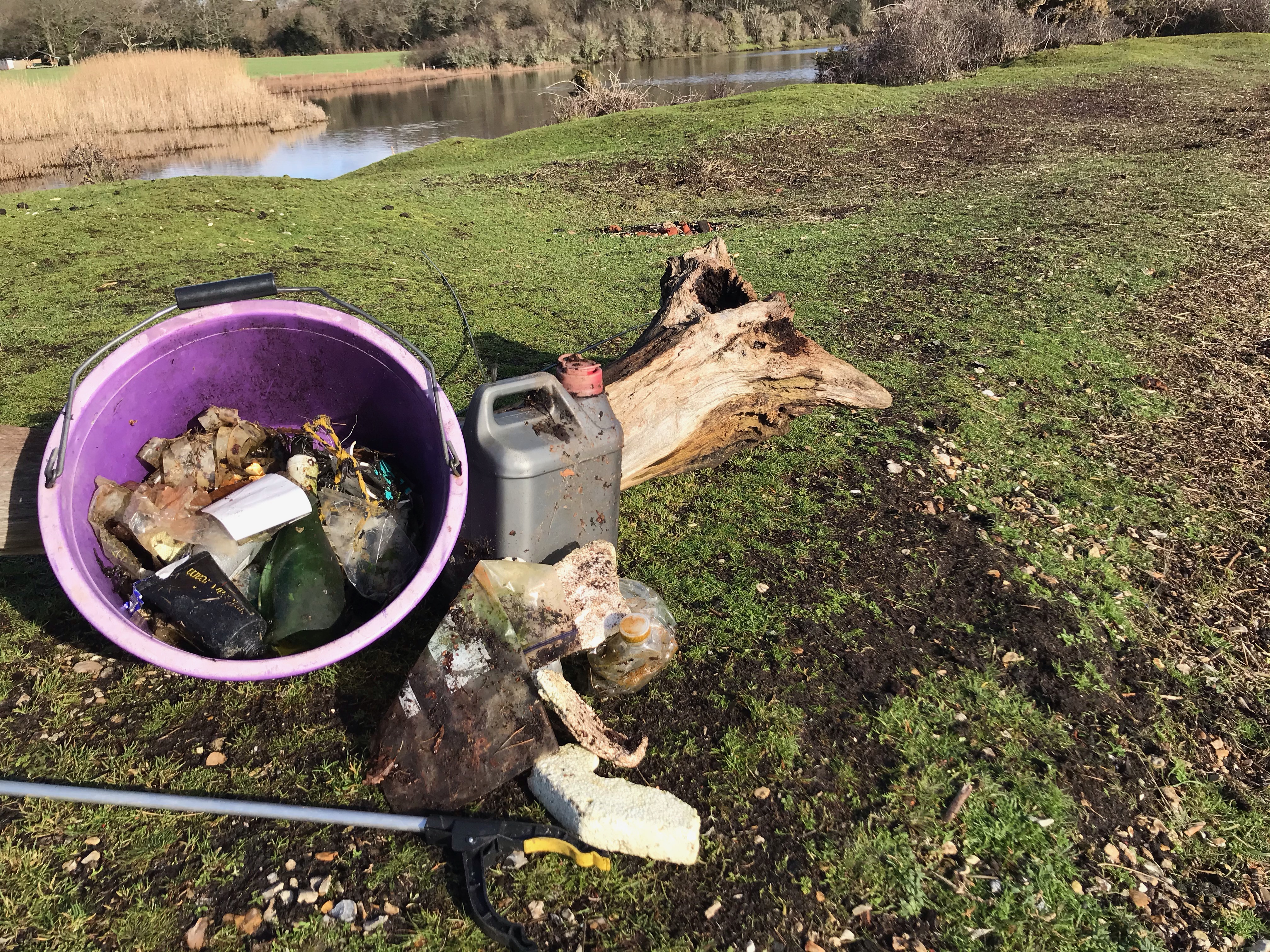
‘I didn’t see any rubbish on the beach,’ I was told by a walker as I extracted plastic bottles and tins from the ditch leading down to the sea. I was glad. I’d cleaned it just before New Year. But, once by the sea, I found a Christmas tree and collected half a bucketful of small pieces of PVC rope and elderly plastic that had been washed up on the shore.

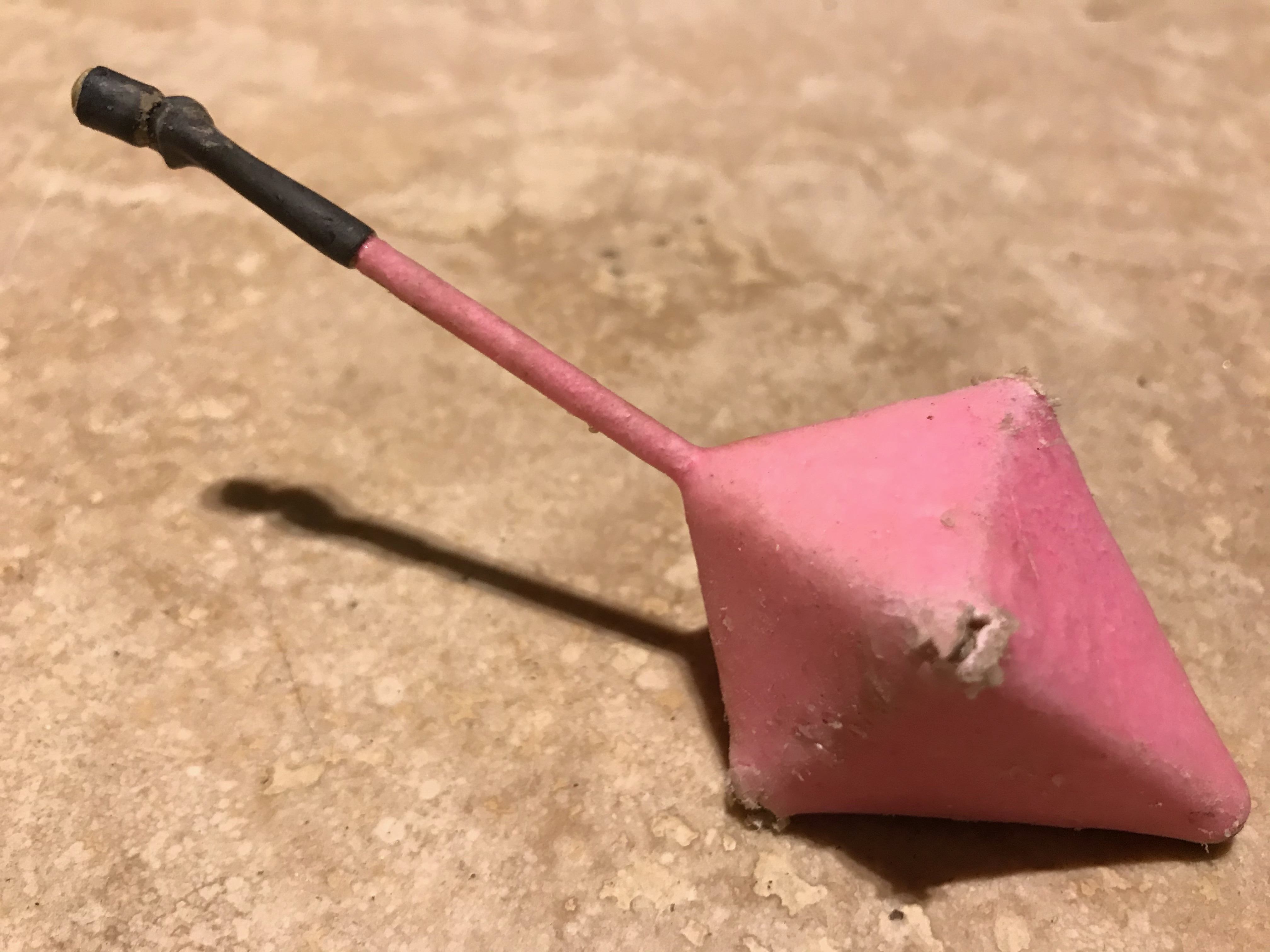
Since this is an isolated beach, it shows how much plastic is floating around the Solent. Someone might like their plumb line returned.

While a few things are clearly dropped by mistake,

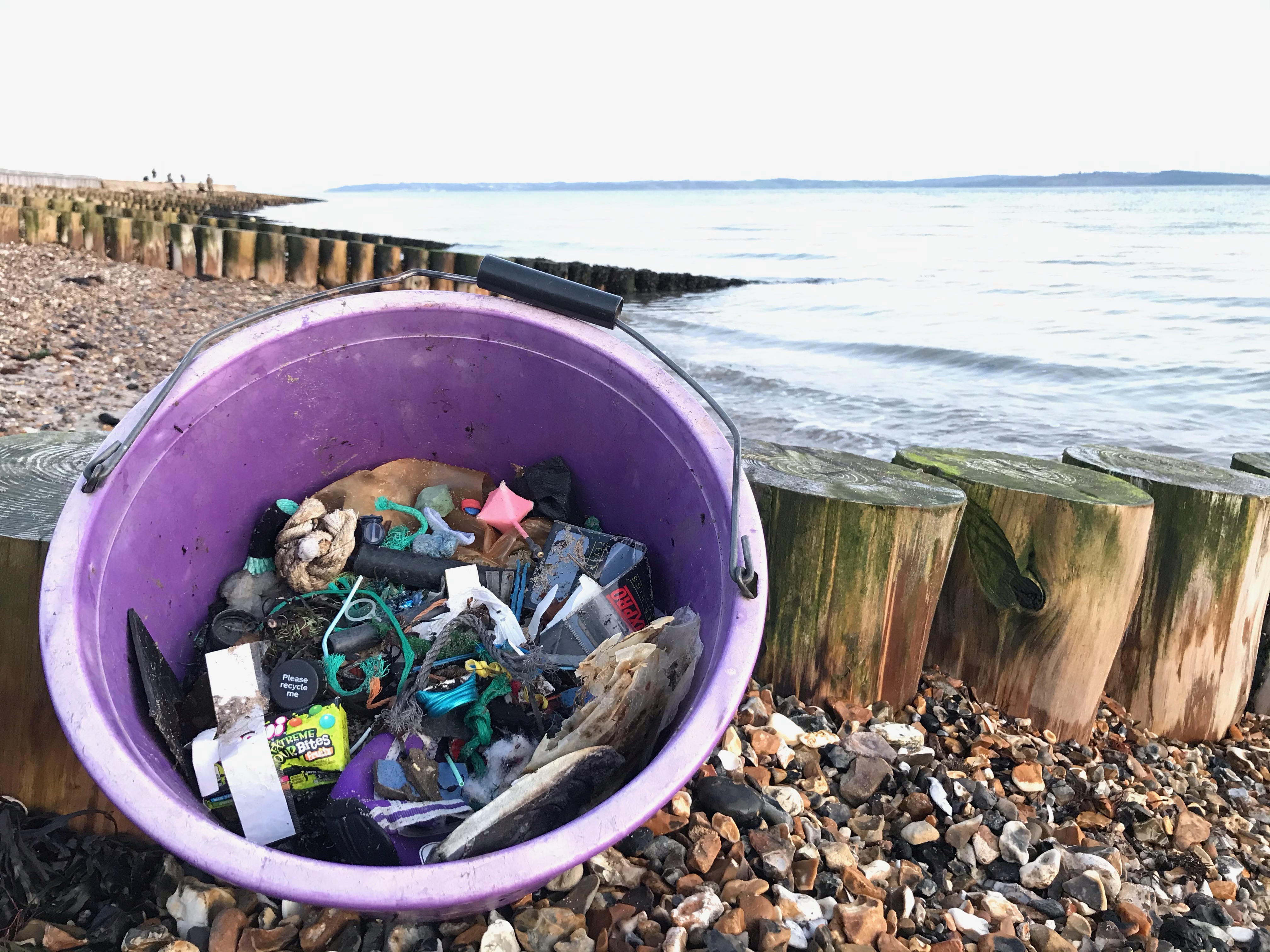
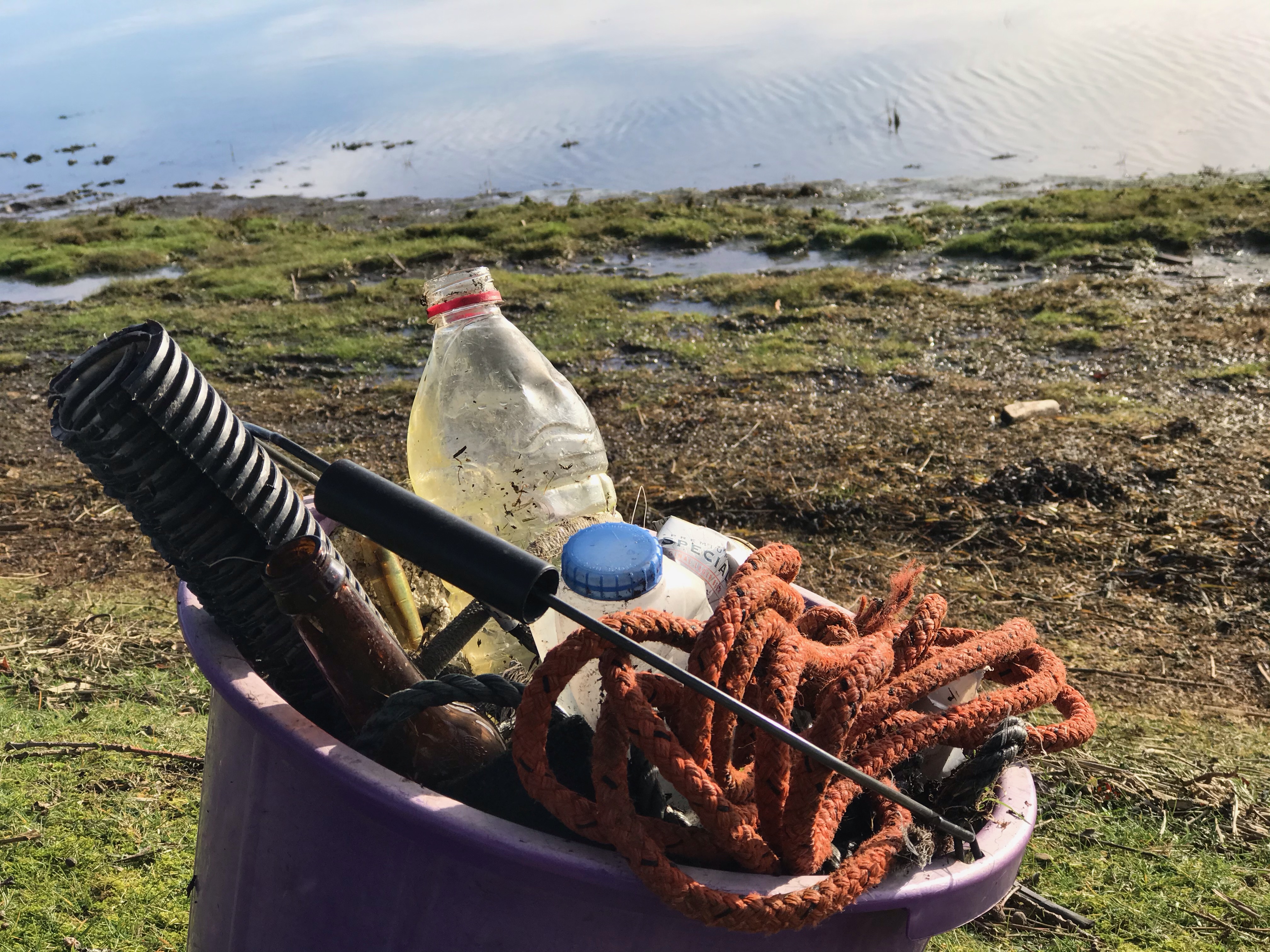
the amount of litter and ageing plastic on public beaches remains unacceptable. I cannot walk by without collecting it. It takes a good hour to fill each of these buckets, which contain bags of dog poo and dangerous broken glass. They can end up weighing 4Kgs each.

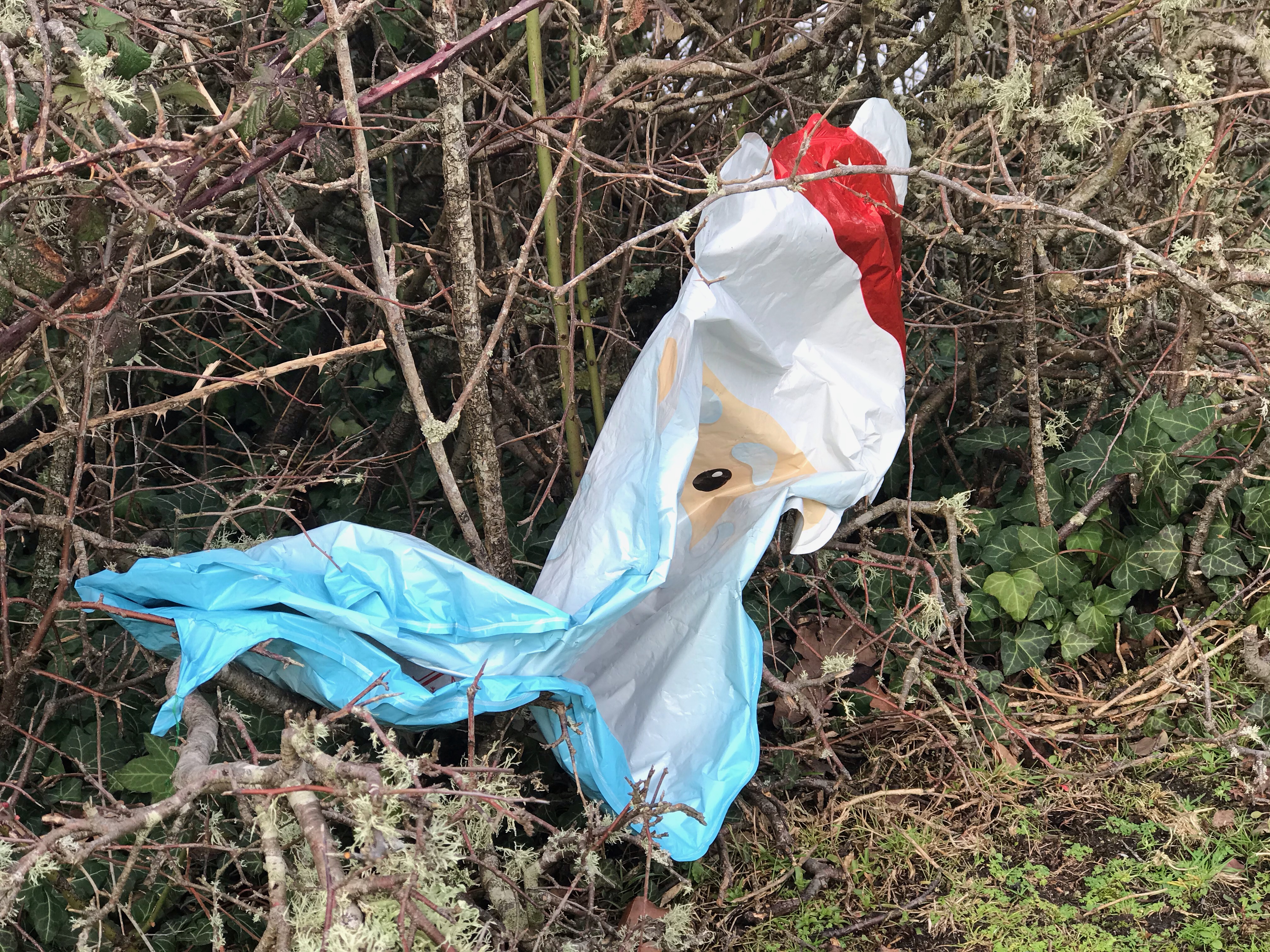
What are helium balloons doing to the environment? I find one a day.

‘There’s no rubbish on the beach,’ I’m assured by walkers, the next week. I agree that it looks okay. It should be fine. I’ve cleared it a hundred times.

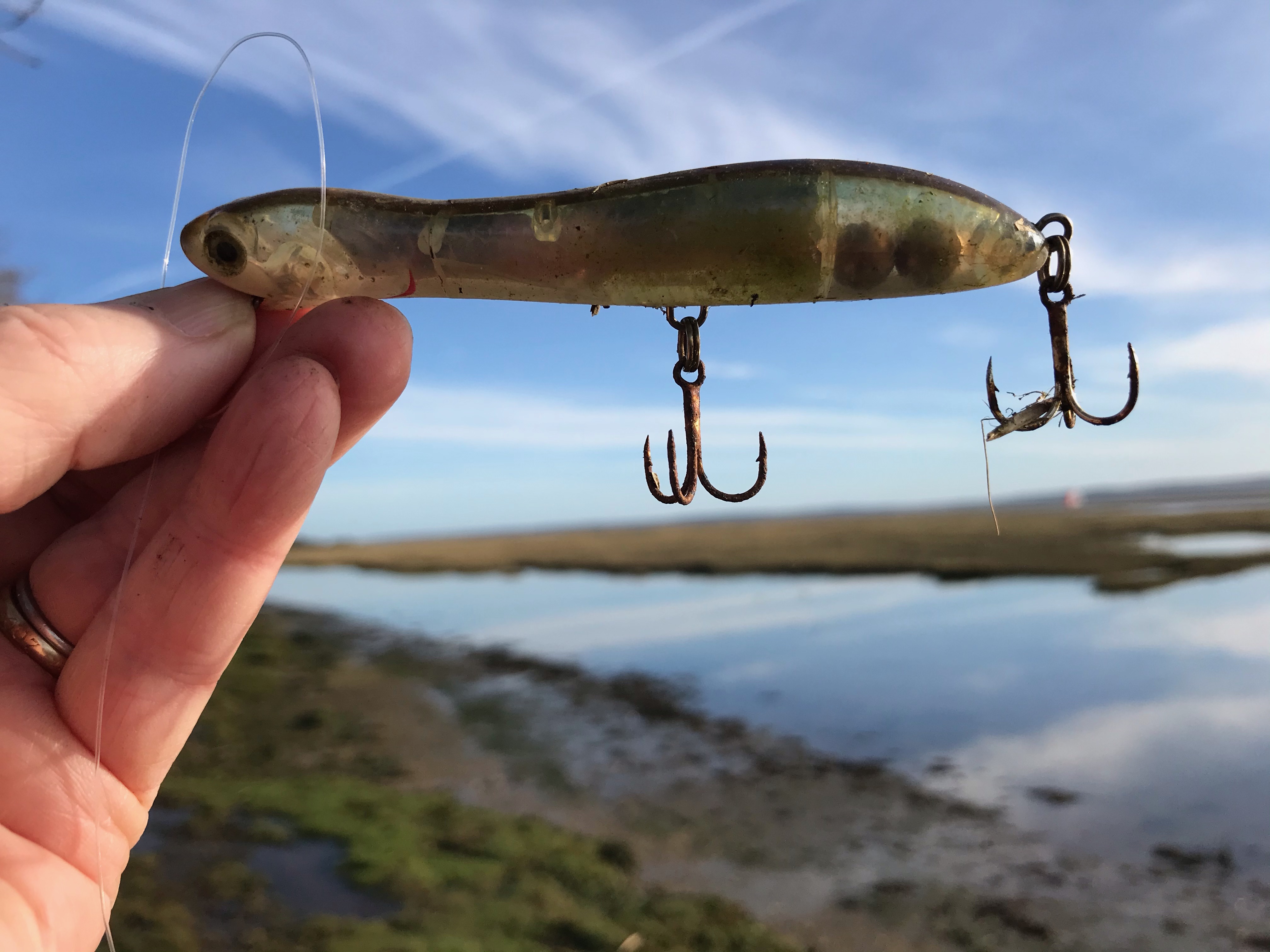
But, almost immediately, I find bottle ring and other items dangerous to wildlife. Then I come across fishing line, the fish hooks bound up in weed.

By the time I reach the end of the beach, I have filled my bucket, finding evidence of nitrous oxide canisters chucked into fires. The ghost rope alone could have caused havoc to shipping.

About this much plastic and glass washes up on a half-mile stretch of the Solent every twenty-four hours. It is not always easy to see it, but it’s there.

‘There is no litter,’ I’m told on approaching the foreshore with my dog-walking neighbour. We keep looking anyway. My friend spots this:

Before long, I had a filled my bucket. Again. Perhaps it’s only when you begin litter picking yourself that you appreciate how bad the problem is. Do join us!

And yet, we didn’t retrieve everything. Can you see what I see?

To see more photos of the odd things we find, please click here

Litter Pickers of the New Forest Beach Picker of the Year 2020