On Sunday 9th February 2025, I was invited to join the Projections in Time panel since I worked on ‘Doctor Who’ in the summer of 1984 .
An email arrived with this wonderful invitation:
“Over the last few years, I have been part of a team at Riverside Studios in Hammersmith, organising screenings based around a number of television series, but the most popular and regular of these events have been based around Doctor Who.”
“In conjunction with the Doctor Who Appreciation Society, the next event at will be a screening celebrating Vengeance on Varos, a Doctor Who story made in the studio at BBC Television Centre.
The story will be shown, followed by Q&As, as well as a photo studio session, in which fans can have a photo with the guests, and an autograph session. So far, Colin Baker, Nicola Bryant, Nabil Shaban, Gerladine Alexander, Stephen Yardley and Forbes Collins will be joining us. You can buy tickets here.
“I always do my best to include crew at these events as I think they have more of an overall impression.” Apparently those on the production team have been very popular and do well at the autograph table. I’ve been thinking up some stories.
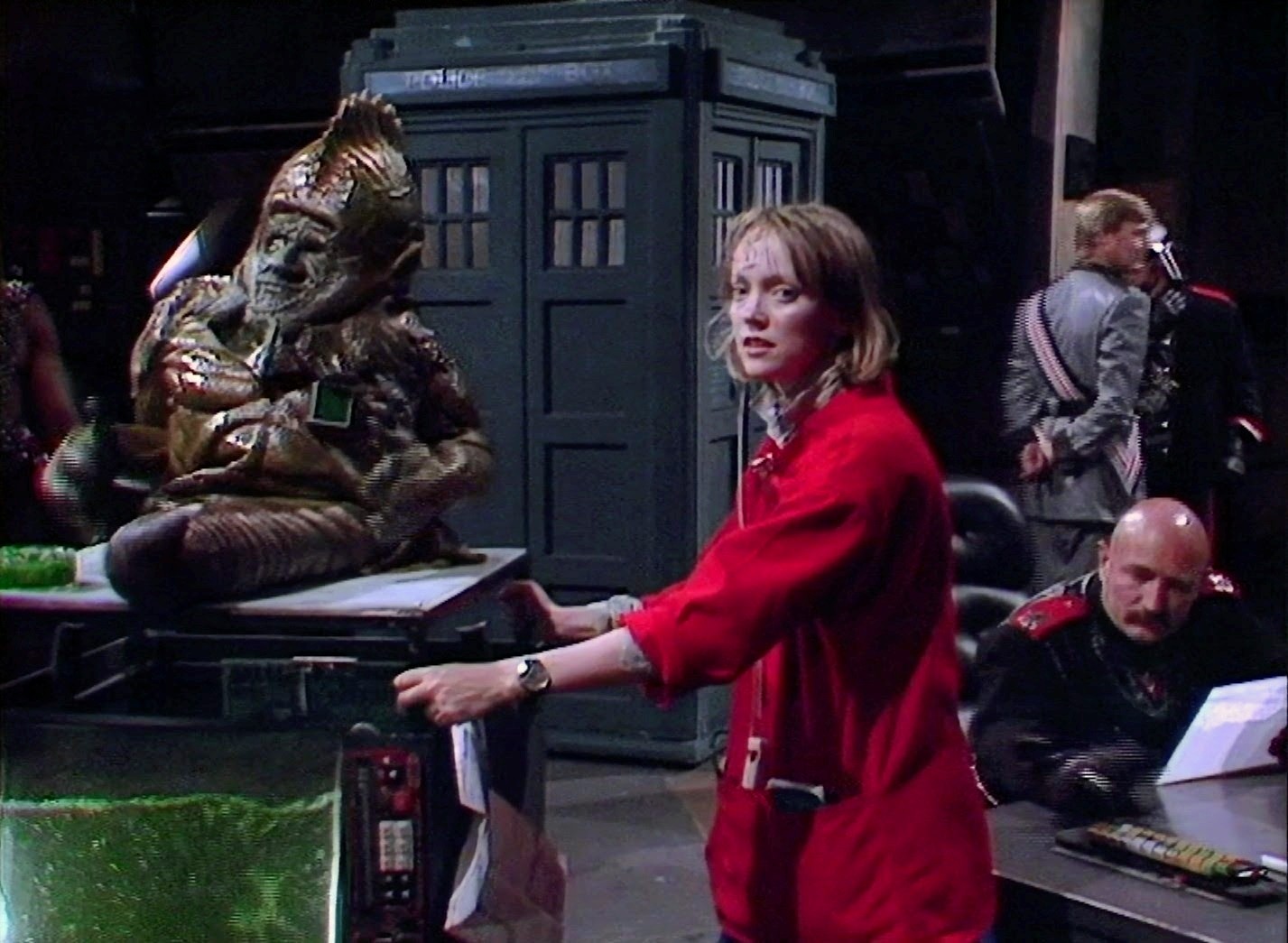
Sophie Neville working on the set of Doctor Who in TC6 with Nibil Shaban, Martin Jarvis and Forbes Collins
Below is a plan of the day after, lunch for the guests, with two panels of guests.
“At the autograph table we’ll provide photos to sign, although attendees normally bring their own items. There are normally a handful of posters of the event, which we ask all of the guests to sign, which are then sold for charity.”
The story was recently re-released on a Bluray – with studio footage.
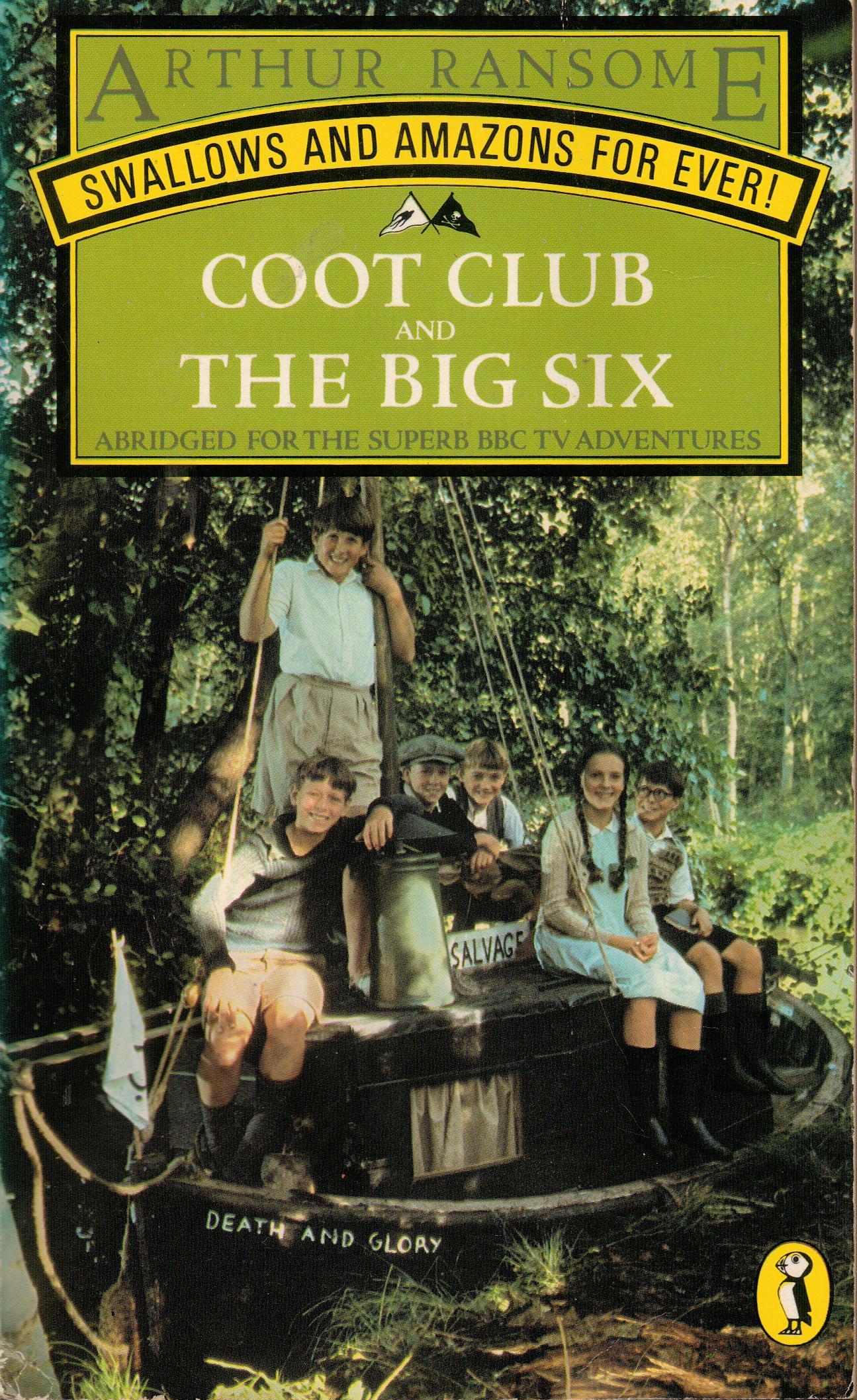
In 1983, I worked for the director Andrew Morgan on the BBC adaptation of Arthur Ransome’s books ‘Coot Club’ and ‘The Big Six’ that was screened under the title ‘Swallows and Amazons Forever!’ and is now available on DVD.
Swallows And Amazons Forever! (Coot Club & The Big Six) SPECIAL EDITION [DVD]
Andrew cast Colin Baker as Doctor Dudgeon. I had found Henry Dimbleby to play his son Tom Dudgeon, the hero of the story.
Colin Baker as Doctor Dudgeon in ‘Coot Club’ – photo Sophie Neville
I also took this photo, below, of Patrick Troughton who played Harry Bangate the eel man in in ‘The Big Six’.
Patrick Troughton playing Harry Bangate the eel man in ‘The Big Six’ – photo Sophie Neville
Many of those working on our crew worked on episodes of Doctor Who at some stage, including Di Brookes, Liz Mace and the sound recordist Colin March. I have written about the Doctor Who connection here. Having read Andrew Morgan’s memoir, I remember that Colin found out that he’d been offered the part of The Doctor while he was with us on location in Norfolk. He was thrilled.
Assistant Make-up Designer Penny Fergusson with John Woodvine who played PC Tedder in ‘Coot Club’, having appeared in ‘Doctor Who’
If we could promise a big enough audience, I could ask if Riverside Studios would host a similar event celebrating ‘Swallows and Amazons Forever!’ Please let me know if you’d be interested in coming in the comments below. I’ll ask Colin Baker if he could come when I see him on 9th February.
Those who played Time Lords had other incarnations. As a researcher, I invited Peter Davidson to sing on the chat show Russell Harty’s Christmas Party, which was fun, and appeared with Tom Baker in Sherlock Holmes. He was brilliant in that role. I wore rather a tight corset.
Sophie Neville with Tom Baker in ‘Sherlock Holmes’
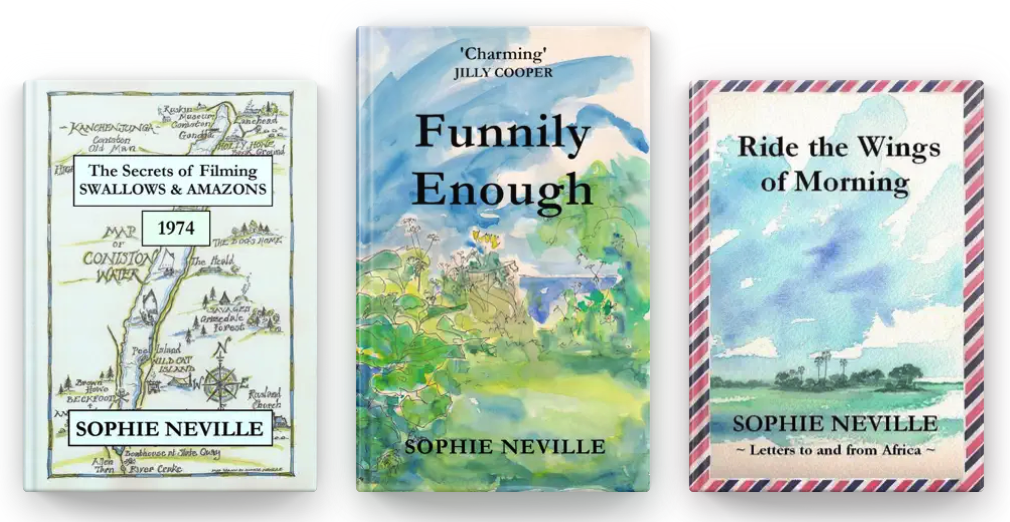
You can read more about the adventures I had working in film and television in ‘Funnily Enough’, now also available on audible.
Funnily Enough – the paperback with black and white illustrations
“The smell is just the same.” Suzanna Hamilton began rowing me across Coniston Water from Bank Ground Farm, taking us back to childhood days.
“It sounds the same.” The colours, the landscape, the feeling of being out on the water was still magical.
Suzanna Hamilton and Sophie Neville at Coniston Water in the Lake District
As girls, Suzanna and I had appeared as Mate Susan and Able seaman Titty in Richard Pilbrow’s original film of Swallows and Amazons, adapted by David Wood and released in cinemas on 4th April 1974. It starred Dame Virginia McKenna and Ronald Fraser but it was the two of us who were invited to return to the film locations in 2003 to be interviewed by Ben Fogle for an episode of the long-running BBC series Country File. Thanks to sunshiny weather and the support of Geraint and Helen Lewis, his report proved so successful that it was repeated on Country Tracks and featured in the series Big Screen Britain alongside iconic landscape movies such as The Dam Busters and Whistle Down the Wind.
We had been talking about swimming off Peel Island soon after we began filming Swallows and Amazons in the Lake District in May 1973. The director, Claude Whatham, was fresh from making a BAFTA nominated adaptation of Cider With Rosie when he cast Sten Grendon as young Laurie Lee, and the rock-and-roll movie That’ll Be The Day starring David Essex and Ringo Starr. Although happy out on the water, he knew little about boats. The producer, Richard Pilbrow, had insisted on finding children who could sail well rather than audition young actors and teach them to sail, and advertised the opportunity in sailing clubs. This was pivotal. Simon West (who played John), Kit Seymour (Nancy) and Lesley Bennett (Peggy) all had experience with a natural feeling for the wind and emanated confidence. They were only given a couple of days to get used to sailing the little boats used as Swallow and Amazon before filming began and yet their skill ended up making the film a classic.
Farewell and adieu to you fair Spanish ladies
We had instruction from a sailing director in the form of a good looking actor called David Blagden. He’d recently crossed the Atlantic in a nineteen foot yacht called Willing Griffin but was unfamiliar with blustery Lakeland winds and did not know how to break down a script. Simon, aged eleven, ended up explaining to Claude how to get a decent shot. Suzanna took her lead from him and I clung to the gunwales, trying hard not to shiver in a costume designed by Emma Porteous that consisted of no more than a short yellow dress and enormous pair of navy blue gym knickers.
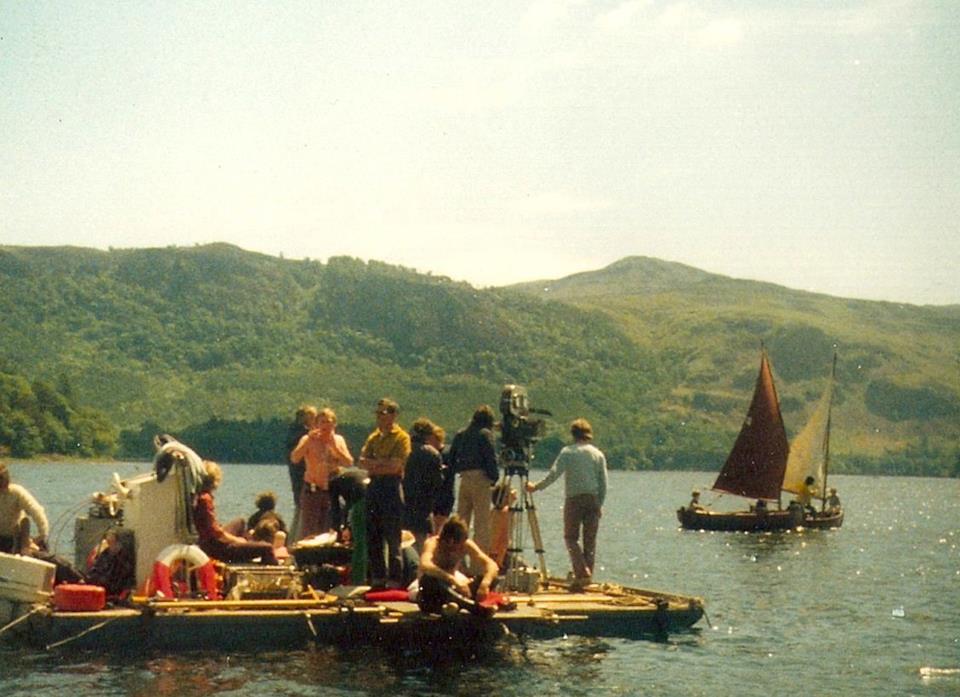
It was unusual for a movie to feature so many scenes set in two small boats. Mike Turk, whose family had been building boats since 1295, and Nick Newby of Nicol End Marine on Derwentwater, took up the challenge of constructing Claude a cross-shaped pontoon to act as a mobile camera mount so that our dialogue could be captured. This extraordinary vessel had two outboards but wasn’t easy to handle. The dinghies were wired to it with underwater cables but tended to pull away. The base to Swallow’s mast broke, proving safety was an issue, but the idea eventually worked.
Richard Pilbrow and his film crew on the camera pontoon
A grey punt was also used. I remember Simon West towing it as he rowed us into Rio. It was easy to transport from one lake to another but must have been tippy. Somehow David Cadwallader, the grip, managed to keep the horizon horizontal using no more than a spirit level. Shadows were lifted from our faces by using huge reflector boards apt to catch the wind. It must have been impossible to use filler lights out on the water, although they somehow managed to power a number of sets on Peel Island.
Sophie Neville in the Amazon with DOP Denis Lewiston, his 16mm camera and a reflector board ~ photo: Martin Neville
Richard Pilbrow kindly sent me Swallow’s pennant from his home in America. Unlike Ransome’s original sketch of the crossed flags, the bird flies away from the mast, which is technically incorrect, but I was thrilled to receive the genuine film prop used in vision. If you look closely you can see some of the stitches I made whilst in conversation with Mother, played by Virginia McKenna.
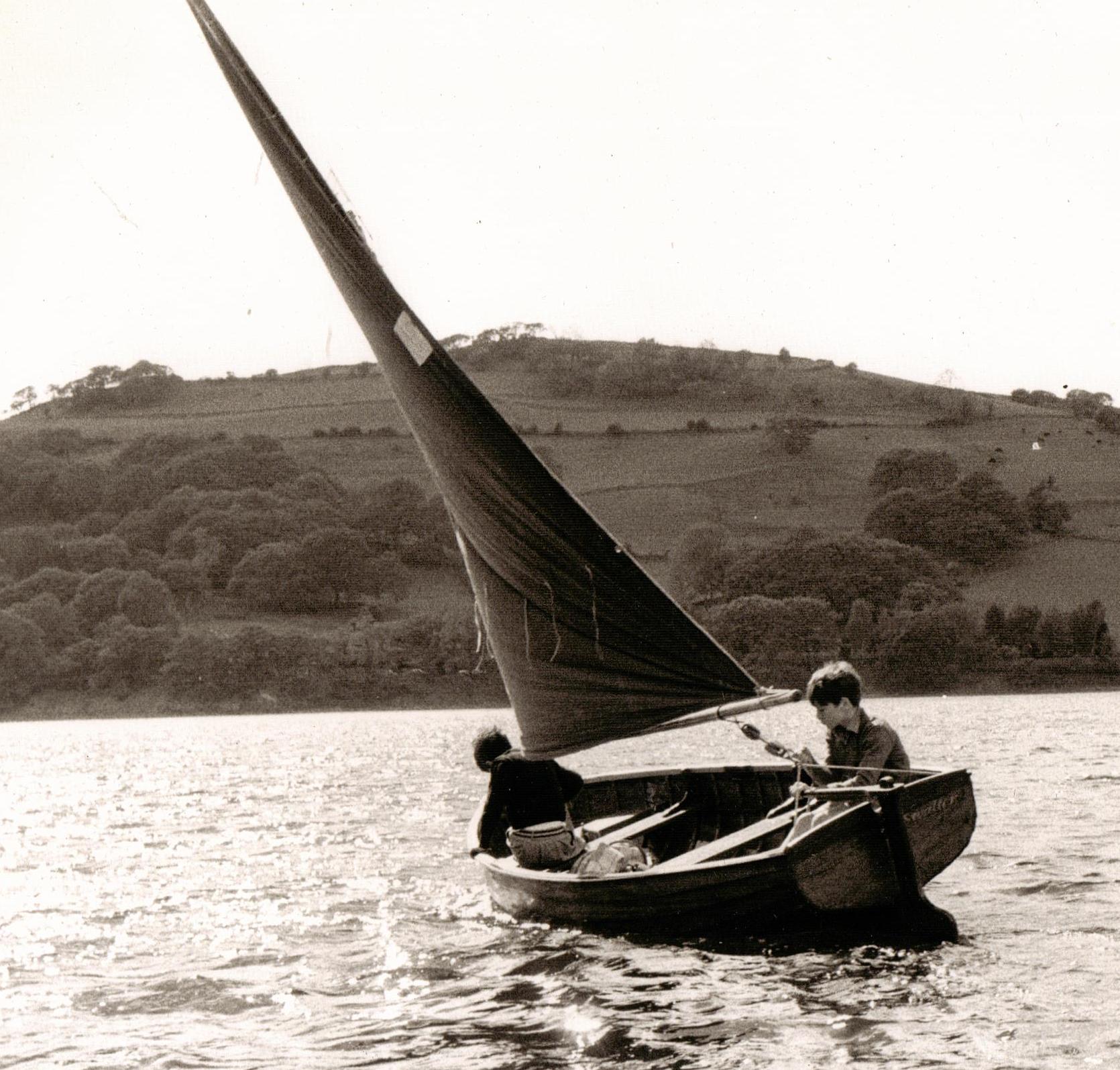
It would have been good if Swallow’s hull had been painted white in line with illustrations in the books. Her varnished planks are a nod to the 1970’s when everyone was busy stripping pine, but the important detail is that she has a keel rather than a centerboard. It makes her difficult to turn, and markedly slower than Amazon, but grants her stability. This feature may have saved us when we really did just miss colliding with the MV Tern on Windermere, which alarmed my father who was on the Tern’s deck. He knew how difficult Swallow would be to turn with the larger vessel taking our wind. We were fully laden with camping gear and yet totally lacking buoyancy of any kind.
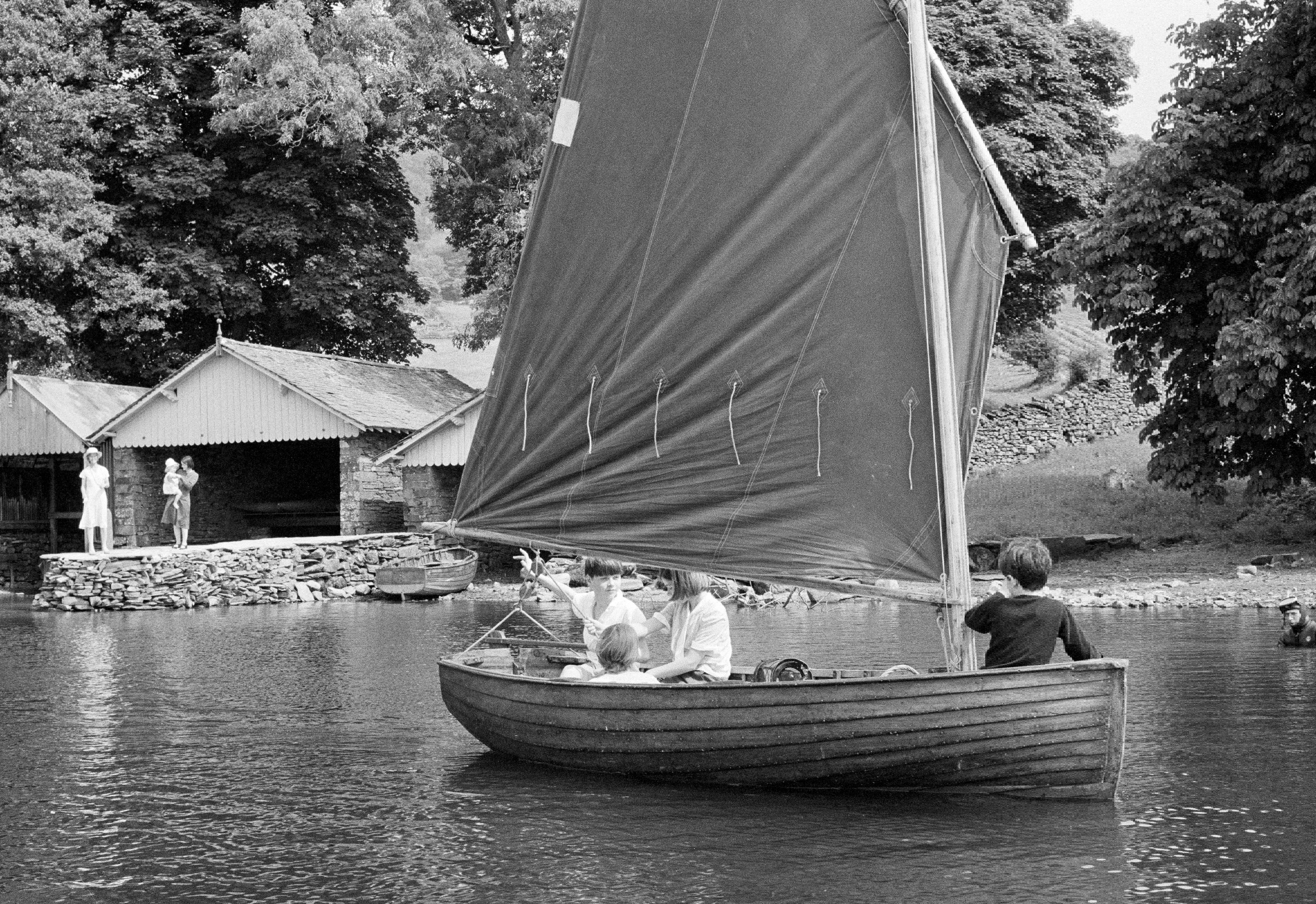
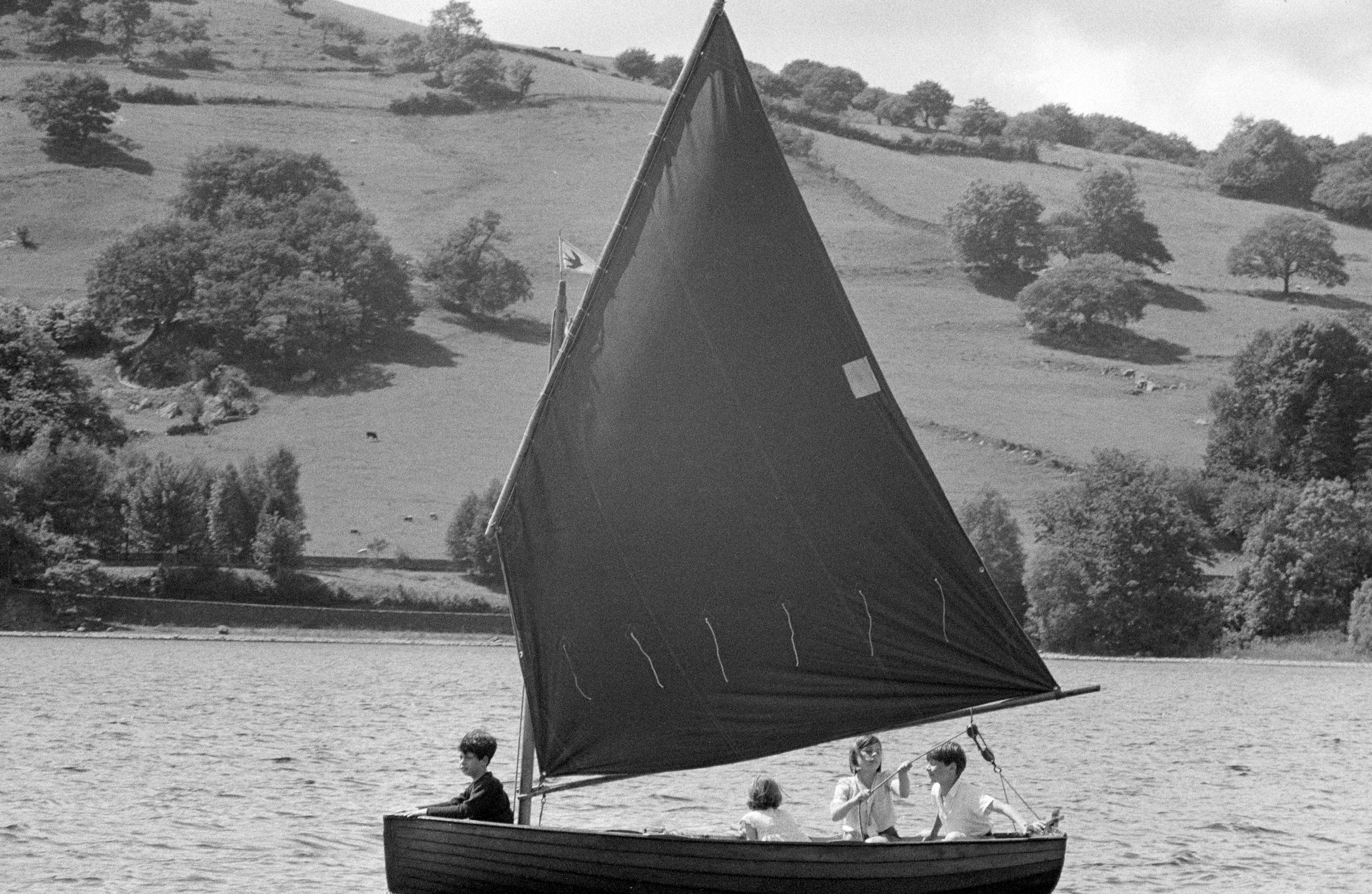
Simon West as Captain John sailing Swallow. Sten Grendon plays the Boy Roger
One secret of filming Swallows and Amazons is that it was set on four different lakes, a smelly lily pond that served as Octopus Lagoon, and Mrs Batty’s barn where night sailing sequences were shot with Swallow mounted on a cradle. One challenging scene was when the Swallows were cast off from Wild Cat Island to sail north to the Amazon River, leaving Titty behind to light the lanterns. I slipped underwater whilst pushing her free of branches overhanging the landing place but regained my footing and waved them off. Simon caught ‘a fair wind’ but the boom swung so far out that Suzanna held the mainsheet by the figure-of-eight knot and Swallow sped up Coniston Water like a ‘pea in a peashooter’, as Ransome wrote in Winter Holiday. A gust hit them broadside as they cleared the island and Swallow gybed, but Simon calmly stood to catch the boom, scarified the wind and took her on up the lake. Watching the sequence still brings tears to my eyes.
Simon West and Suzanna Hamilton at the helm of Swallow with Stephen Grendon in the bows, while Sophie Neville looks on from the shore of Peel Island
No one had given much consideration to the rowing involved in the story. Built as a run-about boat by William King of Burnham-on-Crouch, Swallow has two sets of rowlocks but it was tricky to keep time when she was wired to the camera pontoon. The first scene attempted was when the Boy Roger and I had to row her back from the charcoal burners with Susan at the tiller.
Sophie Neville as Titty and Stephen Grendon as Roger rowing to Cormorant Island
We rowed again on Derwentwater, making our way out to Cormorant Island to look for the treasure. It took everything in me, but I later managed to row Amazon out of Secret Harbour in one take at the end of a long day filming. The action was repeated with Denis Lewiston, the lighting-cameraman, and his 35mm Panavision camera in the stern. Cold, with wet feet, I completed the scene but had to be carried ashore by a frogman acting as the safety officer. Titty later anchors Amazon off Cormorant Island on Derwentwater, but the shot of her wrapped in the sail, sleeping aboard, was taken in the darkened barn at Bank Ground Farm. The fishing scenes were recorded on Elterwater with Swallow moored near the reedbeds.
Sophie Neville as Titty and Simon West as John
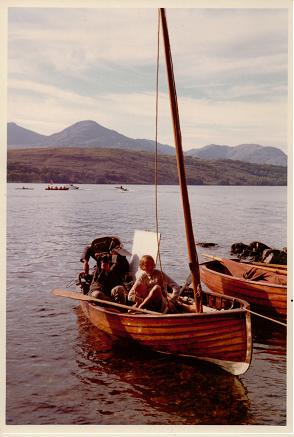
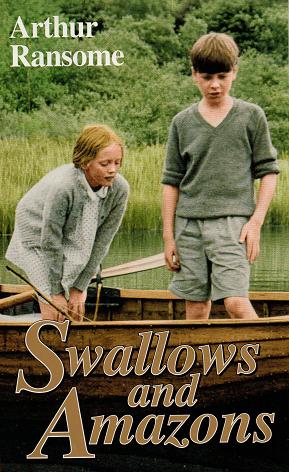
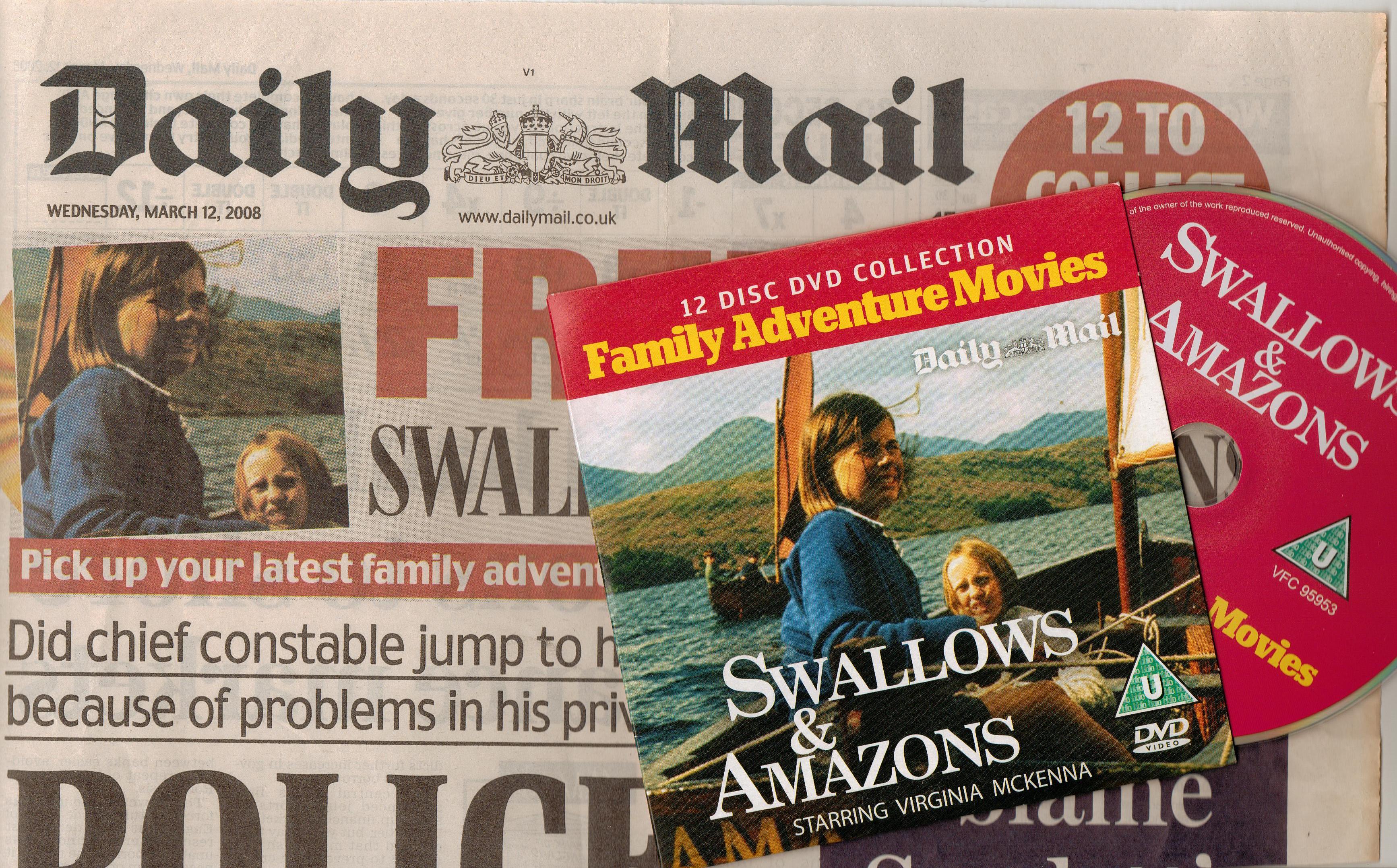
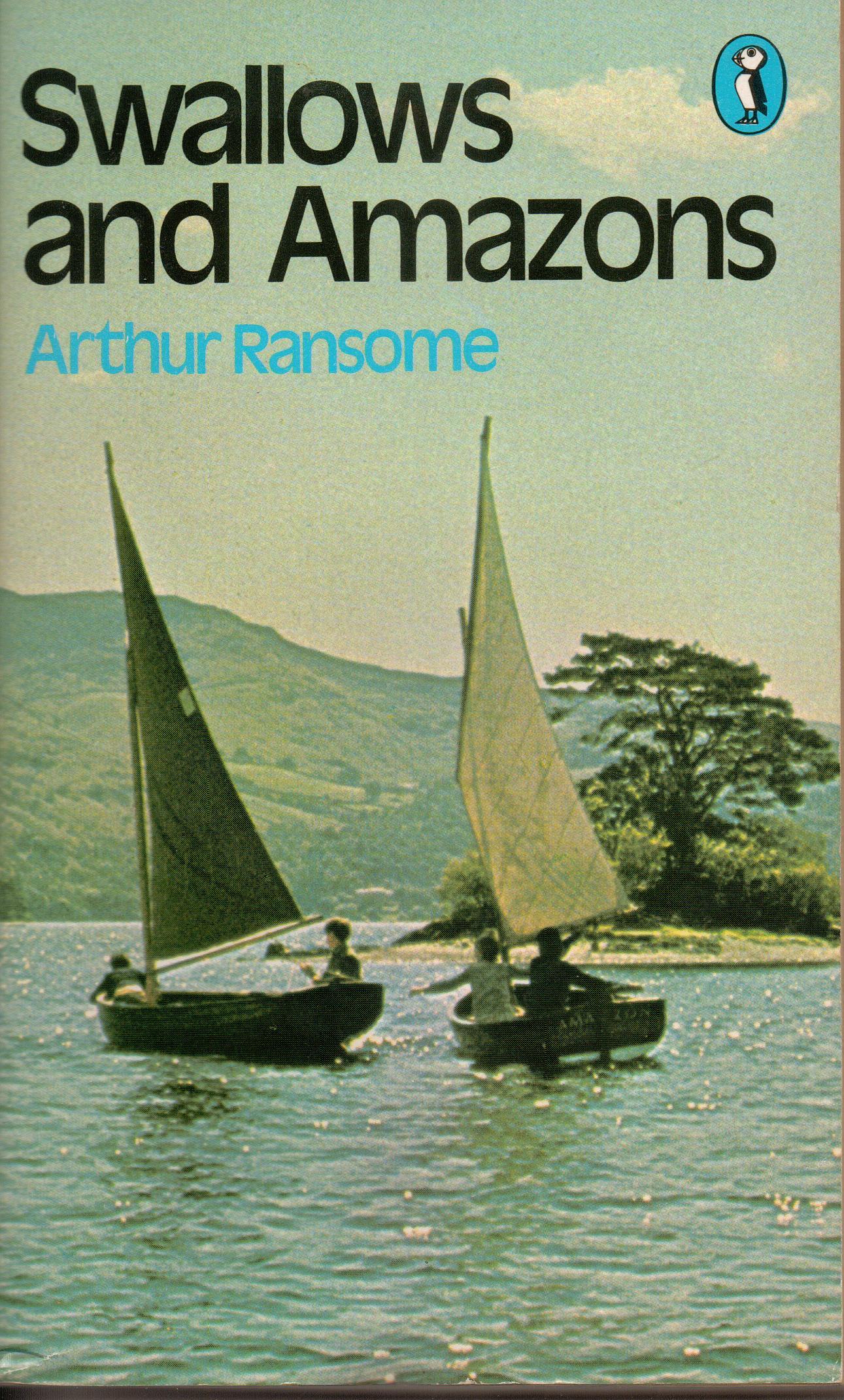
My one regret is that we didn’t follow the book when sailing the captured Amazon back to Wild Cat Island. The wind was up and Claude Whatham needed Simon to sail Swallow ahead of the Amazon which was lashed to the pontoon. I originally took the tiller as Titty is urged to in the story, but had trouble with the rudder and Susan is at the helm on the cover of the paperbacks brought out to accompany the film and a DVD distributed by the Daily Mail.
I was somewhat surprised to see Swallow outside Elstree Studios where we went to post-sync the film. They set up a tank on the sound stage so that Bill Rowe, the dubbing editor who was to win an Oscar for The Last Emperor, could capture the sounds so taken for granted and yet so evocative of handling wooden boats. I was concerned that she’d been given away (and she nearly was) but, as Richard Pilbrow made plans to adapt other Ransome books, she was sent to Mike Turk’s warehouse in Twickenham and stored with maritime props such as the Grand Turk, a replica of HMS Indefatigable, built in 1996 in Turkey for Hornblower.
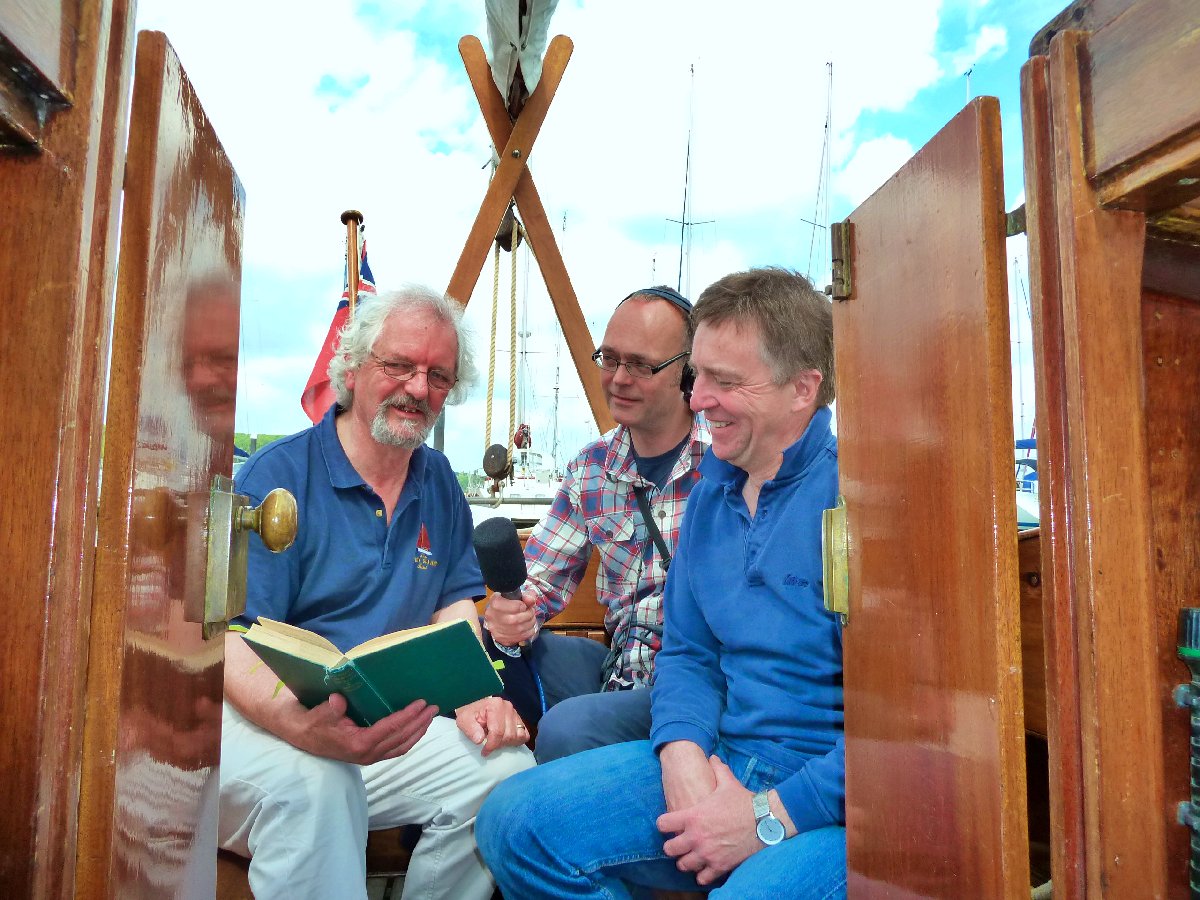
When Mike’s collection was eventually auctioned in 2010 I was alerted, first by my father, then by Magnus Smith. We found Swallow’s details online, took one look at the photos and clubbed together to purchase her, launching SailRansome at the 2011 London Boat Show. The idea that others could go out in her with an experienced skipper was greeted by John McCarthy who recorded the sounds of sailing Swallow for Paddling With Peter Duck, his programme made for BBC Radio 4.
Peter Willis in the Nancy Blackett with John McCarthy
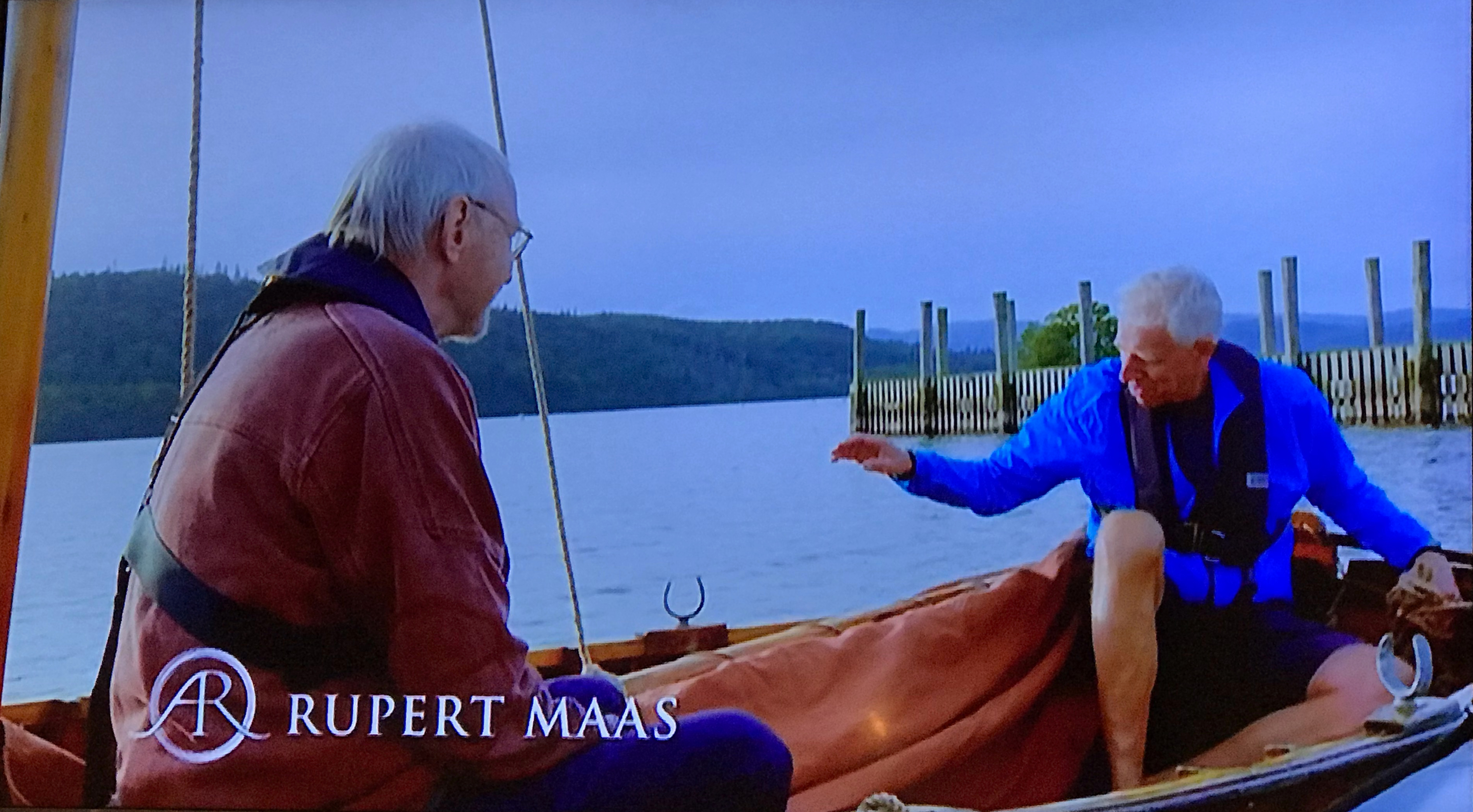
The Arthur Ransome Society now own both historic dinghies. Rupert Maas valued Swallow highly when she appeared on BBC Antiques Roadshow in 2021.Everyone gasped but her true worth is akin to Captain Flint’s hidden treasure: instead of gold ingots his trunk contained precious memories that no doubt kept him on course when the storms of life blew in. Just as Arthur Ransome’s books grant us solace, my prayer is that many will be able to grab the chance of sailing the little boats that take us into the stories immortalized on film so long ago.
Back in 1974, none of us knew that Amazon had been used in the BBC adaptation of Swallows and Amazons made just eleven years previously and broadcast in 1963. I met the White family when they brought Amazon from Kent to Cumbria to feature in Country File. Ben Fogle had found their twin daughters on Peel Island, looking very much like Nancy and Peggy in damp bathing costumes having been swimming in the lake. It has been extremely generous of them to enable other families to sail such a precious boat.
Not so very long ago, a few TARS joined me at Keswick for a talk and screening of Swallows and Amazons at the Alhambra cinema when we grabbed the chance to go aboard the Lady Derwentwater. Nick Newby explained how she had been decommissioned in 1973 to appear as Captain Flint’s houseboat. Her temporary conversion was overseen by Ian Whittaker, the set dresser who went on to be nominated for a number of awards and won an Oscar in 1993 for his work on Howard’s End. The Lady Derwentwater has since been given a new stern but is in good shape, back in her role as a passenger launch.
The mfp Vinyl LP of ‘Swallows and Amazons’ with Sophie Neville and Simon West bringing Swallow into her harbour
Arthur Ransome was taught to sail on Coniston Water by the Collingwoods in a boat they kept below Lane Head, now known as Swallow I. People often ask if the original Swallow II, a sea-going dingy with a standing lugsail built by William Crossfield, and sailed by the Ransomes, is still around. After being kept on a mooring in Bowness Bay, where she was looked after by a boatman called John Walker, she was sold in September 1935 and sadly ‘vanished without a trace’.
The Amazon, originally named Mavis, and also sailed by the Altounyan family, now resides in the John Ruskin Museum at Coniston where she can be visited much like a great aunt. Ransome’s dinghy Coch-y-bonddhu or Cocky, the model for Scarab in his books, restored and owned by TARS, is on display at Windermere Jetty, the museum where the fourteen foot RNSA dinghies used in the 2016 movie of Swallows and Amazons have been moored. A few of the steamboats used to dress the scenes set at Bowness-on-Windermere or Rio in 1973, such as Osprey and George Pattinson’s launch Lady Elizabeth, may be in residence. They are currently restoring the SL Esperance used by Ransome as his model for the houseboat.
In 1983, I worked behind-the-scenes on the BBC drama serial of Coot Club and The Big Six (and wrote Extras for the DVD titled Swallows and Amazons Forever!) We spent three months filming on the Broads, using the four-berth gaff sloop Lullaby to play the Teasel, a vintage dinghy for Titmouse and a punt for Tom Dudgeon’s Dreadnaught. They have all been kept at Hunter’s Yard, near Ludham in Norfolk where you can hire classic boats. While exploring the Broads you can track down the Death and Glory, Janca, used to play the Hullabaloo’s Margoletta, and the wherry Albion used for Sir Garnet along with yachts like Pippa that were also featured in the serial. Hopefully, Arthur Ransome’s ‘good little ship’ the Nancy Blackett, bought with his ‘Spanish gold’ or royalties, will one day star as Goblin in a film adaptation of We Didn’t Mean To Go To Sea. Wouldn’t that be wonderful?
Arnaldo Putzu’s poster for the EMI film Swallows and Amazons (1974)
Half a century has passed since the original film Swallows and Amazons first came out in cinemas, the good little ships featured sailing improably on the poster. Thanks go to Magnus Smith, Rob Boden, Diana Wright, Marc Grimston, and all those who have looked after and lovingly restored the inspirational boats that appeared in the movie. They mean so much to so many. Three million cheers to those at The Arthur Ransome Society who are working with Hunters Yard in Ludham to make both little ships available for hire in 2025 .
Amazon will soon be available to hire at Hunter’s Yard, Ludham
If all goes to plan, you will be able to take them out. When you do, smell the freshness for me. Stroke the varnish, take in the feel of the ropes, the weight of the oars. It may be chilly, but that too is part of the experience of liaising with old boats out on the water.
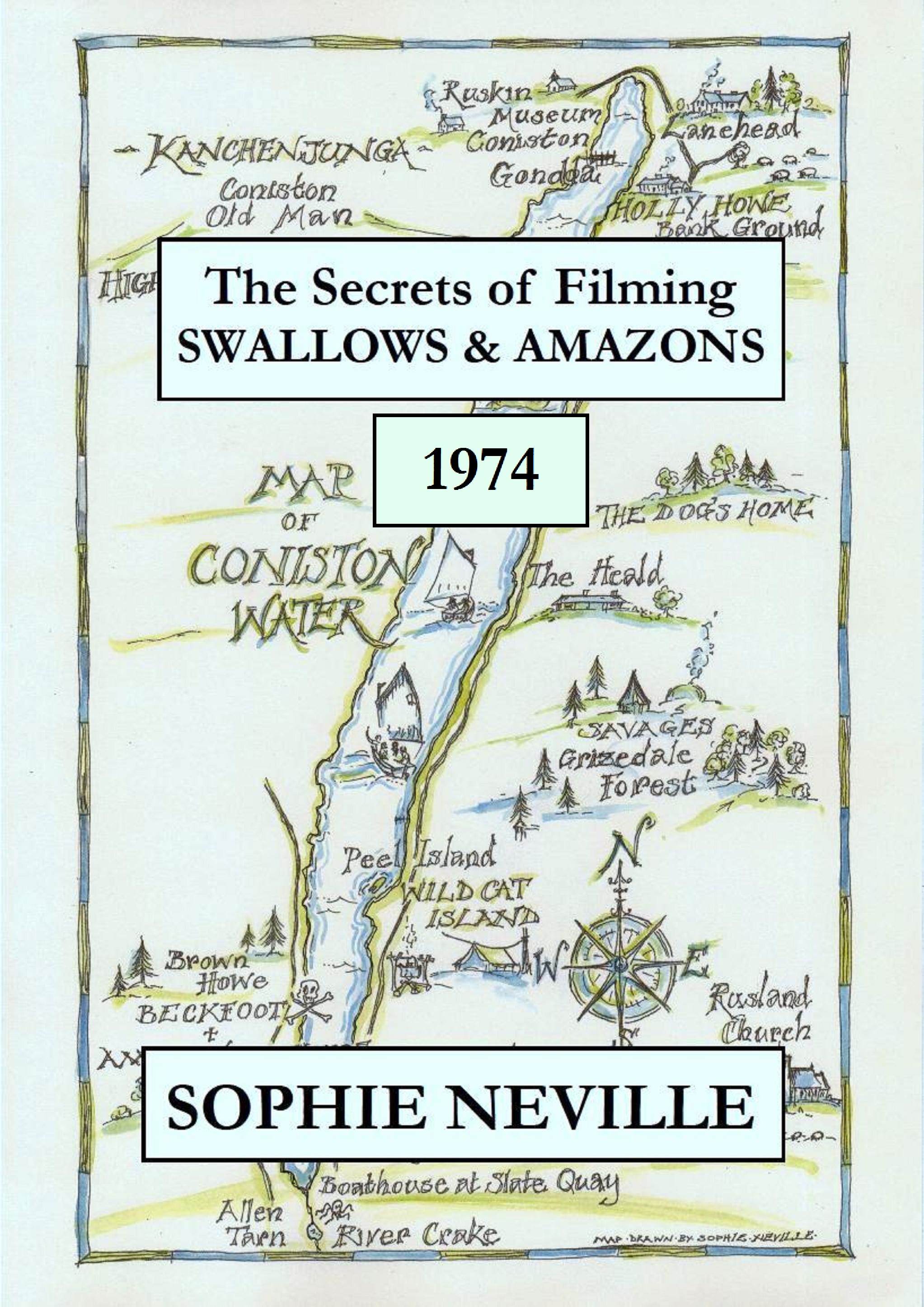
An original hardback copy of my book on how we made the 1974 film of Swallows and Amazons was sold in Paddy Heron’s online auction for £86 to raise funds for BBC Children in Need 2024.
It exceeded bids for the autobiographies of Theresa May, Michael Ball, Charles Spencer, Tim Peake, Lynda La Plante, Father Alex Frost and a number of amazing biographies.
An unframed print of a portrait of her playing Titty executed by C. Assheton was also sold in the online charity auction, which raised a total of £14,705 – which is fantastic.
Paperback and ebook editions of my same story are also available at Waterstones and online from all the usual stockists including Amazon
Neville Thompson acted as the online producer on the 1974 film of Swallows and Amazons. He choose an excellent crew and took daily responsibility for scheduling the production on location in the Lake District and later at Elstree Studios where the film was edited and post-synced.
Producer Richard Pilbrow and Production Associate Neville C Thompson on Derwentwater in the Lake District in 1973
Neville was born in Ipswich in 1933. Although gregarious at times, he was a quiet man who was once a maths teacher in Scotland. He had five children to support, but decided to go to RADA and become an actor. When a pair of twins came along he moved the family to Croyden and went into film production. He began work as a location manager for Mike Newell and became a production manager for Ken Russell.
Richard Pilbrow gained the rights and film finance for ‘Swallows and Amazons’ but came from a background in theatre and knew nothing about film production. He asked Neville to help set everything up.
Neville C Thomas (top centre) with Richard Pilbrow, Claude Whatham et al
Neville came to Burnham-on-Crouch for our sailing audition when the dinghy ‘Swallow’ must have been purchased from the boatbuilders William King.
Second Assistant Terry Needham, Associate Producer Neville C Thompson and Production Manager Graham Ford with the unit radio on a sunny day in June 1973
Neville was passionate about film making, becoming known as ‘the last gentleman producer.’ He would have been the one making the executive decisions, the man ultimately in charge of the schedule, personnel, safety, insurance and bringing the film in on budget.
Claude Whatham, Richard Pilbrow, Gareth Tandy, Peter Robb-King, Ronnie Cogan and Neville C Thompson with Kit Seymour and Lesley Bennet trying on hats
His daughter, Mandy, told me that he was a wonderful Dad but had been away a lot. ‘He had eight children in nine years and was keen for them to make their own way in the world.’ Mandy became an occupational therapist, George became a ballet dancer, Chris Thompson went into film making. Neville was diagnosed with Lukemia at the age of 47 but lived another twenty years, ending his days in Woodbridge in Suffolk.
Neville Thompson relaxing on set – photo taken on Sunday 24th July 1973, by Daphne Neville
Neville established a production office at the unit hotel on Windermere. By the time he reached the location he was often exhausted. Everything he’d set up was in motion so, like an experienced parent, he could relax and enjoy the boats.
Richard Pilbrow and Neville Thompson ~ photo:Daphne Neville
When Neville died in Woodbridge in Suffolk at the age of sixty-nine in 2002, Richard told me that ‘Swallows and Amazons’ was broadcast on television as if in his honour.
You can find an impressive list of Neville C Thompson’s production credits on IMDb here
Sophie Neville looks on as Stephen Grendon organises his costume helped by Jane Grendon with Claude Whatham and Neville C Thompson when filming pick up shots near Epsom.
You can find details of how to purchase ‘The making of Swallows and Amazons’ here on line or listen to it on audible and other audiobook platforms.
On Wednesday 27th November at 3.00pm, I will be giving another talka about ‘The Making of Swallows and Amazons’ on a Zoom hosted by the national child literacy charity Schoolreaders.
You can join us by remailing s.glasgow-smith@schoolreaders.org
Since the original film of ‘Swallows and Amazons’ has been out for fifty years, and screened on television more than any other British film, it has a loyal fan base. Paddy Heron of the fundraising charity ‘Children in Read’ says, ‘I have seen that film I don’t know how many times through the decades, with my brother and sisters, with my own kids, and with my grandkids. That film will stand the test of time for ever.’
Jane Whitbread, who founded Schoolreaders ten years ago, tells me that a love of reading is a proven key to future success in life. Around a quarter of all children in England leave primary school unable to read well and yet good literacy improves all round academic achievement. Arthur Ransome’s series of twelve ‘Swallows and Amazons’ books is great for reluctant readers – those who learn to read but fail to develope an interest in books.
Although my handwriting outshone others, I was deeply embarrassed about not being able to read until the age of nine. I battled to crack the code but once through the barrier, soon gained fluency and was captivated by imaginary worlds. Like me, Andrew Harvey said that he was helped by the Arthur Ransome books, “which provided the inspiration to get me through my (undiagnosed) dyslexia.”
Since it was launched ten years ago, Schoolreaders has helped about 80,000 children to read fluently and develop an interest in books by giving them one-to-one support.
It’s clear that lives are transformed by reading. The author David Cooper says: ‘I found Ransome when I was six, and that was a revelation. He wrote with the same high standards as apply to writing for adults, which is why people of all ages are attracted to them. It only took a few chapters of Swallows and Amazons to make me want to be a writer.’
You can watch a precious talk with Schoolreaders on Youtube:
If you could volunteer to listen to children read in school for a year, think of contacting the charity Schoolreaders: www.schoolreaders.org
On 6th April, the original cast of ‘Swallows and Amazons’ (1974) gathered to celebrate the 50th Anniversary of the film’s release in London with David Wood who wrote the script.
It was unexpectedly amusing as can be seen in this recording kindly brought to us by Lee Pressmen and volunteers of the Cinema Museum where the original movie was shown before we were invited on stage by Brian Sibley.
Brian Sibley talks to Simon West, Suzanna Hamilton, Sophie Neville, Sten Grendon, Kit Seymour and screenwriter David Wood – photo Lee Pressman of the Cinema Museum
As soon as self-confessed ‘super fans’ arrived, the venue began to buzz with the question, “What was your favourite line from the film?”
“They’ve got India rubber necks.”
“They’re girls!”
“… must be a retired pirate. He’s working on his devilish plans.”
Sten Grendon, who played Roger, said it was undoubtedly: “I said – ‘Yes’.”
I’ve always liked: “X marks the spot where they ate six missionaries.” Although I often use, “Here we are, intrepid explorers making the first ever voyage into unchartered waters,” I think “I’ve got her. I’ve got her!” is the most appealing.
One viewer on Instagram claimed their favourite line was: “Titty that way.”
What is your favourite line?
Do add your line to the Comments below.
A recording of Brian’s interview with the screenwriter David Wood can be watched on this website here.
I began with working on book adaptations in 1971 with Laurie Lee’s memoir Cider With Rosie and went on to appear as Titty Walker in the 1974 film Swallows and Amazons when the screenwriter David Wood worked with Mrs Ransome to abridge her husband’s well-loved novel into a 90 minute movie.
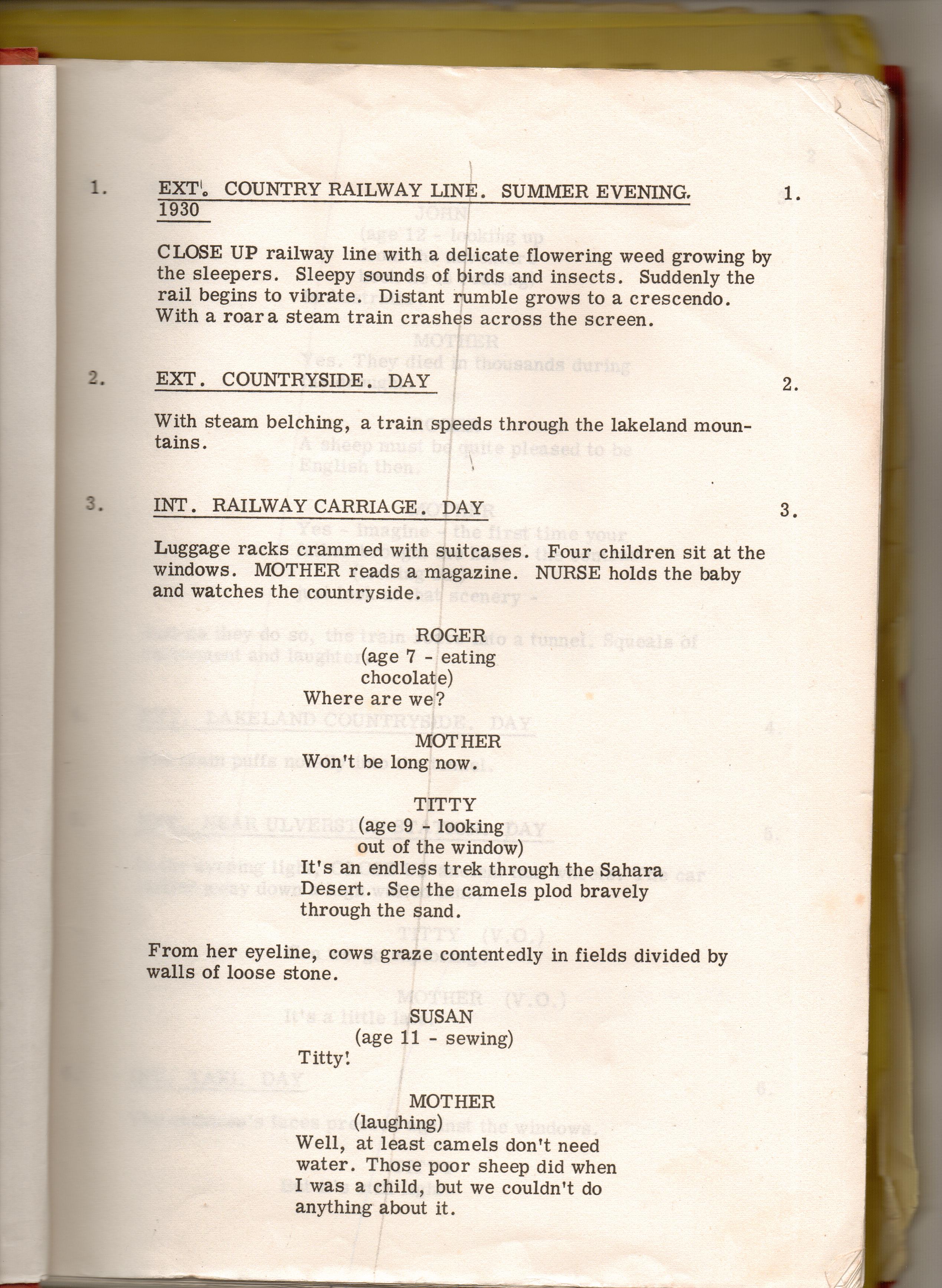
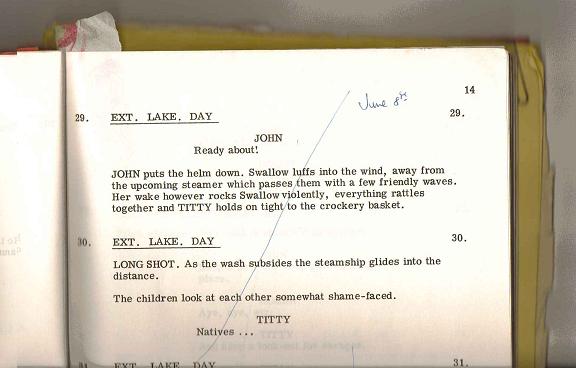
I’ve written about how the film was made and include pages from David Wood’s script of ‘Swallows and Amazons’ below. It is fascinating to see the original 1973 screenplay. Those who know the film well can appreciate how it was changed whilst we were on location.
By 1983, I was working in television production on book adaptations such as Coot Club and The Big Six by Arthur Ransome, set in East Anglia.
My Family and Other Animals shot entirely on Corfu.
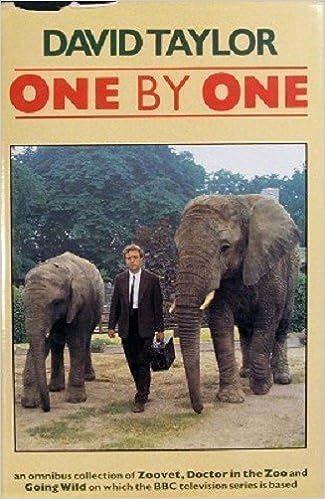
One by One, David Taylor’s memoirs of a zoo vet.
James Ellis as Paddy O’Reilly in the BBC vet series ‘One by One’, which ran to 32 episodes ~ photo: Sophie Neville
I also worked on The Diary of Anne Frank, Doctor Who, Eastenders, Rockcliffes Babies (a police procedure series), a Shakespeare play – Titus Andronicus and Bluebell – a costume drama based on the true life story of a dancer from Liverpool called Margaret Kelly.
I then wrote/edited – five documentaries and two drama-docs that I produced for BBC Education, and one that I made for Channel 4. In all I’ve worked on about 100 different television programmes in 7 different countries and appeared in 100 others but am still learning how to write scripts.
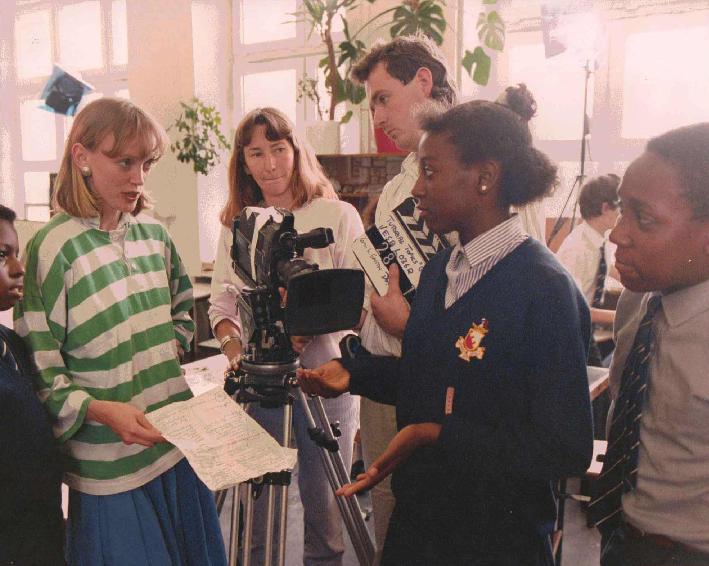
Sophie Neville directing a sequence with BBC cameraman Lorraine Smith
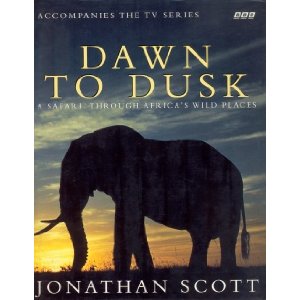
I’ve submitted numerous tv and film proposals. ‘Dawn to Dusk’ became a major Natural History series, broadcast on Thursday nights at 8.00pm.
Series originated by Sophie Neville, Produced by Alastair Fothergill
It is very difficult to get a new series or film accepted. George Marshall said, ‘Hollywood is like a whale, indiscriminately glupping plankton.’ He optioned one film script I’ve written.
‘But I’d love to get my books adapted for the screen’
You can pay someone to adapt your work – and then edit and market it yourself. But watch out for scammers.
‘How do I do it myself?’
It’s going to be a slog – and expensive – so ask yourself WHY you want to do it. You can always self publish a novel but there is little you can do with a script that won’t sell. The transposition exercise helps you improve on your prose, but it is a lot of work. Take a first step and record your novel as an audiobook. I have narrated two at Monkeynut Studios.
You need to build up a CV to give producers confidence. The easiest thing to get accepted is an item in a long-running magazine programme eg: BBC Antiques Roadshow. This cost me no more than my time and petrol but I had two (historical fiction) stories accepted instantly. They were repeated and got me in the Mail Online and OK magazine. You can see the photos on this website here.
‘That’s not my pigeon!’ But it’s what viewers want. Start small and move on to providing Countryfile with an historical story. ‘But I write Biblical fiction.’ OK – Horrible Histories.
2. Buy Final Draft software – (they give you a free trial) and read up on how to format a script. Free software is out there such as celtx or WriterDuet. MS word has a screenplay template but most professionals send each other manuscripts on Final Draft.
The formatting gives you the length: 1 minute a page – 90 minutes for a screenplay – ie script of 90 pages.
100 pages = a short story. When I transposed a screenplay into a novel, adding description, it was only 30,000 words long. It took me another five years to finish it.
3. Never submit rough work. Perfect it. One of my first jobs – aged 22 – was to put together A Russell Harty Christmas show starring Esther Rantzen, Peter Davison and Matthew Kelly. This was the first time I wrote for television: a pantomime piece. I walked into the rehearsal room with a rough copy and it was a disaster. They gave the commission to Nicholas Parsons – and paid him well.
4. Write plays for the stage or radio – they are cheaper to make and accept historical and biblical fiction with BBC Writer’s Room offering an open door. Write low budget material. Come up with a story that’s set in a church or an inexpensive venue.
5. Think Netflix. Think episodic: Would your books be suitable for a TV series? What kind? How long would each episode be?
A serial = long-running story with something happening in each episode. eg: we made My Family and Other Animals into 8 x 28.5 min episodes. (Interestingly Ep 2 looked weak on paper but turned out to be quirky and eccentric.)
A series = each episode a story with a continual tread. The James Herriot books made a good series: Each 50 min programme could stand alone as a TV film. Different characters in each. Silent Witness – a dramas with pairs of episodes within a series.
“I want to make one book into a feature film.”
6. Look at the market.What is selling? It’s difficult to get a film accepted, particularly an epic one. If you have an idea for one set in a swimming pool in LA it would be easier. The US market is looking for formulaic Christmas movies – 50 get made a year. High concept Rom Coms. Netflix series. Many filmmakers begin with shorts. Look up the length. See what they want.
The script for the movie ‘Swallows and Amazons’
It can happen! David Wood was asked to adapt Swallows and Amazons at the age of 28 in 1972. He added jeopardy – which was cut firstly by Mrs Ransome, secondly by time restraints and ultimately the producer and his assistant, who stuck to the simple story that had been a bestseller since 1931.
Sophie Neville and David Wood talking about films on CBBCTV
7. Do you write for children? Again, think in terms of sales and marketing. David said, that since parents tend to be very conservative, it is a good idea to adapt well-known stories, like the Tiger Who Came To Tea rather than attempt to devise your own. It’s easier for the producers to raise funding. Movie finances are far more risky than books. Bestsellers can still lose money.
Ransome began studied storytelling in Russia. Perhaps try adapting fairytales, traditional or out of copyright stories to make a name for yourself before you try to sell your own novel as a script.
8. Watch on catch up and take note. Watch good writers. What do you like? What don’t you? Who is producing what? Talk to writers. Gerald Durrell advised us about things like sound, encouraged us to edit the truth. Brian Sibley said that it’s good to begin with a journey. The dubbing editor on Swallows and Amazons amplified Titty’s imagination (cheaply) from the sound of wind in palm trees, parrots, chattering monkeys…
Gerald Durrell with Sophie Neville in 1987
The producer Joe Waters told me to ‘Put your money in front of the camera’ – the visual impact of steam trains, traction engines, period cars, horses and boats.
9. Get a job as a trainee script editor. All BBC producers work with a script editor. There were two on Eastenders when I worked on the series. See if you can work in this capacity. (NB: Script Editors are different from Script Supervisors who oversea continuity on location and script co-ordinators.)
The original screenplay of ‘Swallows and Amazons’ adapted by David Wood in 1973
There’s a lot to learn. eg: You need to number the Days. These examples are lacking. It should read: EXT: LAKE – DAY 2 . Remember the script will be ‘broken down’ by the costume, makeup and set designers.
Expect re-writes – hundreds. They will want Spot the dog.
The script of David Wood’s adapation of Arthur Ransome’s classic book ‘Swallows and Amazons’
What do you do with your finished script?
Screen writing competitions and pitch sessions. Page Turner in the UK offer a book adaptation as a prize or will adapt your book for a fee.
I have entered numerous screenwriting awards on FilmFreeway – winning 25 to date. Again, beware of the spammy ‘Film Awards’ offering discounts.
All the big American awards can be entered on Coverfly. You can register and set up a profile free of charge. I have accumulated 17 accolades and have a profile here.
The costs can mount up. Have a budget. I met someone who spent 3 years writing 4 feature films and sold nothing but remember that it can happen. Swallows and Amazons was made by very young professionals and it’s still being broadcast.
Remember: Script writing is a craft. The huge comfort is that Jesus was a carpenter. He knows how to put things together, so they last, and are finished well.
A page of David Wood’s original screenplay: ‘Swallow & Amazons’ (1974) that was completely changed.
Just do it.
As a young actor, Julian Fellows formed a partnership with the drama director Andrew Morgan when making Coot Club on location in Norfolk. Just when the Head of BBC Drama Series and Serials said ‘No more children’s book adaptations!’ they collaborated on two period costume drama serials for children: Little Lord Fontelroy and The Prince and the Pauper. He then won an Oscar forGosford Park.
Julian Fellowes as Jerry in ‘Coot Club’ photo: Sophie Neville
He’s the only writer I’ve encountered on location. ‘I’m like a make-up artist, ready to tweak.’
This coming Monday 2nd September, Sophie Neville is giving a talk on zoom about her screenwriting for Historical and Biblical Fiction Christian Writers Online. You can sign up on Bobbie Ann Cole’s website ahava.space
Sophie was interviewed recently for Writer’s Showcase at the Santa Barbara International Screenplay Awards:
Your script stood out among hundreds of others. What was the inspiration for your story and why did you write a script instead of a short story or a novel?
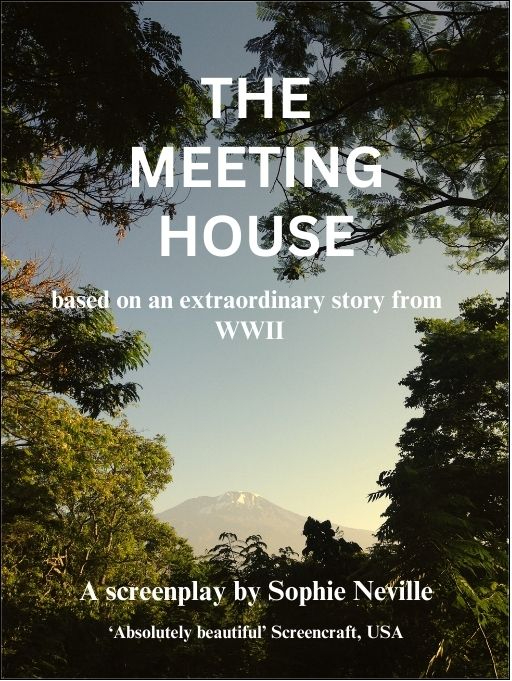
THE MEETING HOUSE is the extraordinary true story of an East African who served as an ambulance driver in Burma during WWII, became a POW to the Japanese and was airlifted out of Tokyo before it was bombed by Operation Meetinghouse in 1945.
I was commissioned to write the screenplay, then developed the historical novel with Curtis Brown Creative. It has won three writing prizes and is ready for publication.
How long did it take you to write your script… and what is your writing process?
This script took years of research! I worked on the outline with the producer, but she sadly died. It was then optioned by George Marshall who personally gave me rewrites. I then brought in historical advisers, script editors, kept polishing and tried out different structures while writing the novel.
What is your ultimate ambition as a writer?
I have two ideas for comedies: BANANA MAN – THE TRUE STORY about singleness and marriage (I was the bridesmaid) and THE RING OF KERRY based on an hysterical road trip collecting handprints for a genetic survey of Western Ireland in 1981 (the misadventures of me and a girlfriend).
Which film or television writers inspire you? Why?
Brian Sibley inspired me with his novel and true-life faith film ‘SHADDOWLANDS’. Sally Wainwright OBE writes humorous female-driven crime with gusto. David Wood OBE is great at adapting children’s literature for both film and stage.
What’s your all-time favorite movie or television show?
The movie SWALLOWS AND AMAZONS (1974) and tv drama SWALLOWS AND AMAZONS FOREVER! (1984) as I worked on them both.
What advice do you have for writers hoping to win a contest or place as a finalist as you have?
Keep writing – and keep submitting to Santa Barbara International Screenplay Awards for feedback!
What else are you working on that the world needs to know about?
The world needs to know about Chronic Fatigue Syndrome. My book FUNNILY ENOUGH – a true-life, faith & family, comedy would convert into a low-budget movie. (We could add the fact that a serial killer was at large in Gloucestershire at the time. He has twelve known victims.)
Sophie Neville, Suzanna Hamilton and Kit Seymour on BBC Breakfast
‘Can you speak to BBC Breakfast?’ I was asked. ‘They want to interview the cast on Zoom tomorrow morning.’
It was Saturday 29th June. We were at Windermere Jetty in Cumbria for the 50th Anniversary of ‘Swallows and Amazons’, the 1974 film was being screened in the room below us and a huge number of enthusiasts were eager to chat about how we’d made it. I had just come in from sailing Amazon, John Sergeant, president of The Arthur Ransome Society, was about to arrive and we had books to sign, but I knew it was important to act fast. The BBC would need time to contact StudioCanal in order to use the film trailer. I grabbed my lap-top and attempted to persuade the production team we had lots to talk about while finding a good signal. The best place was on a staircase, which was fun when Captain Nancy and Mate Susan rushed past, but a more interesting background was required.
‘What time do you want us on air?’
‘7.40am.’
‘Ah – the museum doesn’t open until 10.00am. Can we chat to you from the terrance of our hotel? It overlooks Windermere.’
‘It might be best if we send out an outside broadcast unit.’
I wasn’t told the item would also go out on Look North and North West News.
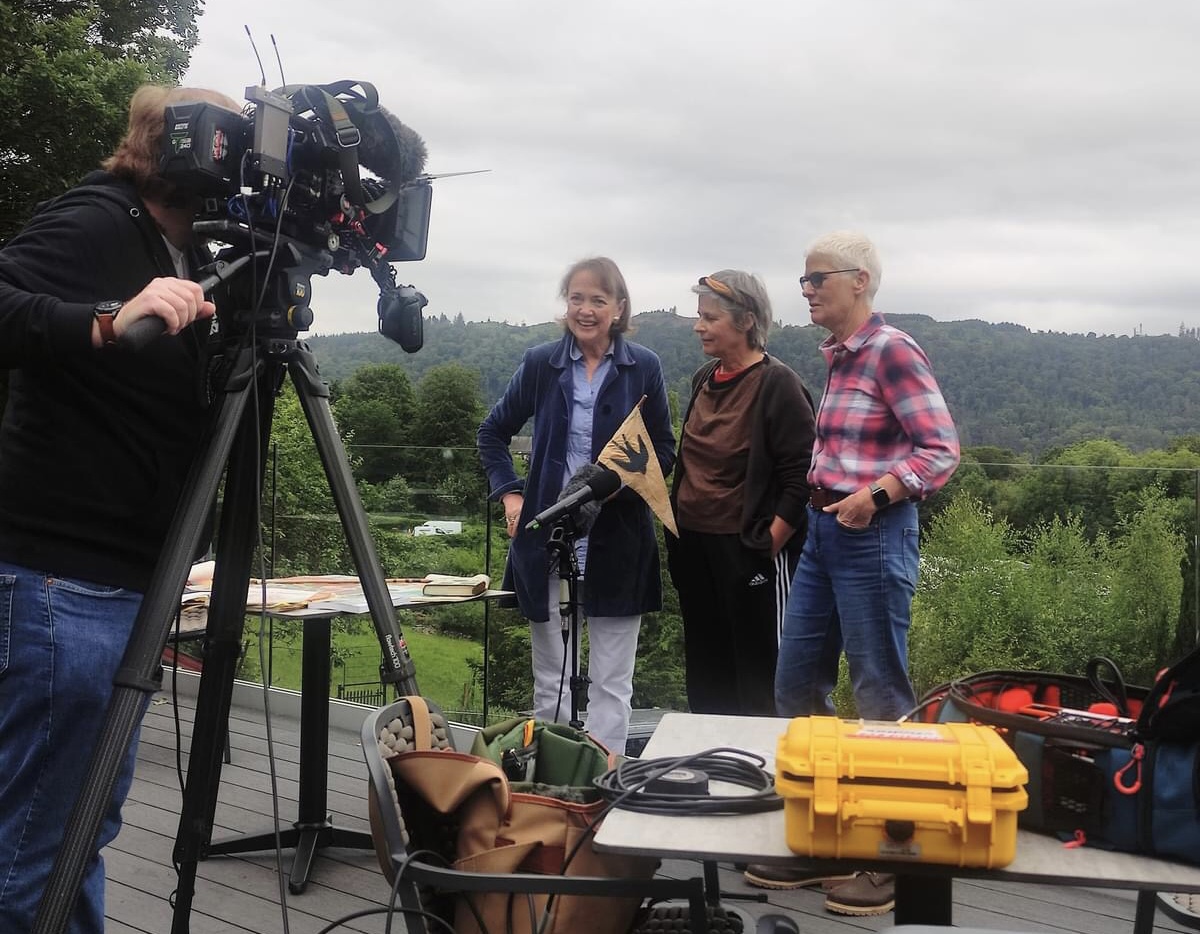
I woke early the next morning to find Keith, the BBC cameraman, setting up his equipment. Rain clouds cleared as I unrolled Arnaldo Putzu’s 1974 film poster and plonked David Wood’s screenplay on top of it with a few flags but worried about my hair, which was not behaving. We had Peter Robb-King, one of the greatest make up designers in the world with us. I should have asked for his help. All I did was remove a car key from around my neck.
Sadly, Simon West who’d played Captain John had already left, but Suzanna Hamilton and Kit Seymour emerged from their rooms and we lined up for the shot.
Was I organised? Did I tell them, ‘We need to get three points across!’ ?
No.
Someone quietly suggested I could mention The Arthur Ransome Society who had organised the weekend festival, which was free for all.
Sophie Neville, Suzanna Hamilton and Kit Seymour setting up for BBC Breakfast
Keith fitted us with earpieces and explained that there would be a delay between questions asked in the studio and our answers. We couldn’t see the presenters but could hear the film trailer being played. When we were asked us to introduce ourselves, I didn’t realise they needed to know which characters we’d played until I got to Kit Seymour, who had been Nancy. Straight forward and honest, she managed to answer the difficult question:
‘What’s it like… how does it feel?’
‘Listening to stories of how the film has changed people’s lives,’ she admitted, ‘was quite an emotional experience.’
Suzanna, explained in her beautiful voice, that since the the story was set in the 1930s it hasn’t dated, and we were able to chat naturally about our mission to encourage the next generation to get out on the water. We chatted about the movie memorabilia and David Wood’s script – that as children we were never allowed to read and the amazing time we were having at Windermere Jetty museum where one little girl arrived dressed as Titty Walker with a green parrot on her sholder.
I held Swallow’s flag and managed to speak about the acquisition and renovation of the dinghies, aware that there were no boats to be seen on the hotel terrace. However BBC Breakfast have brilliant vision mixers. The best film clips of Swallow and Amazon literally sailed over my words and I grabbed the chance to talk about The Arthur Ransome Society on national television before they bid us farewell.
When John Sergeant asked me how it had gone I had to admit that we tripped up on the time delays, but we celebrated the much loved film bringing news that Swallow and Amazon are being made available for anyone to sail and that grants are available for children to take part in outdoor activities mentioned in Arthur Ransome’s twelve books.
Many thanks to all those who left encouraging feedback on social media. I forwarded it to the production team.
Eileen Jones – This is fascinating , about the landscape more important than costume. Just introduced another generation.
Amanda Whatley – Great interview, congratulations on the reunion of the boats and people.
Jon Porter – Fantastic
John Greenhough – Great memories of this film.
David Elms – Delightful interview Sophie.
Amanda Currie– I ‘m so sorry I didn’t get there Sophie, my stupid body keeps letting me down, I would have so loved to meet you all.
Robin Jett – I love your delight about the boats. The boats are back! What fun! Great to see how ‘Susan’ and ‘Nancy’ have grown up too. I can see aspects of each character in each actress, but I expect, if you had all played different characters, that might still be true.





















 Sophie Neville