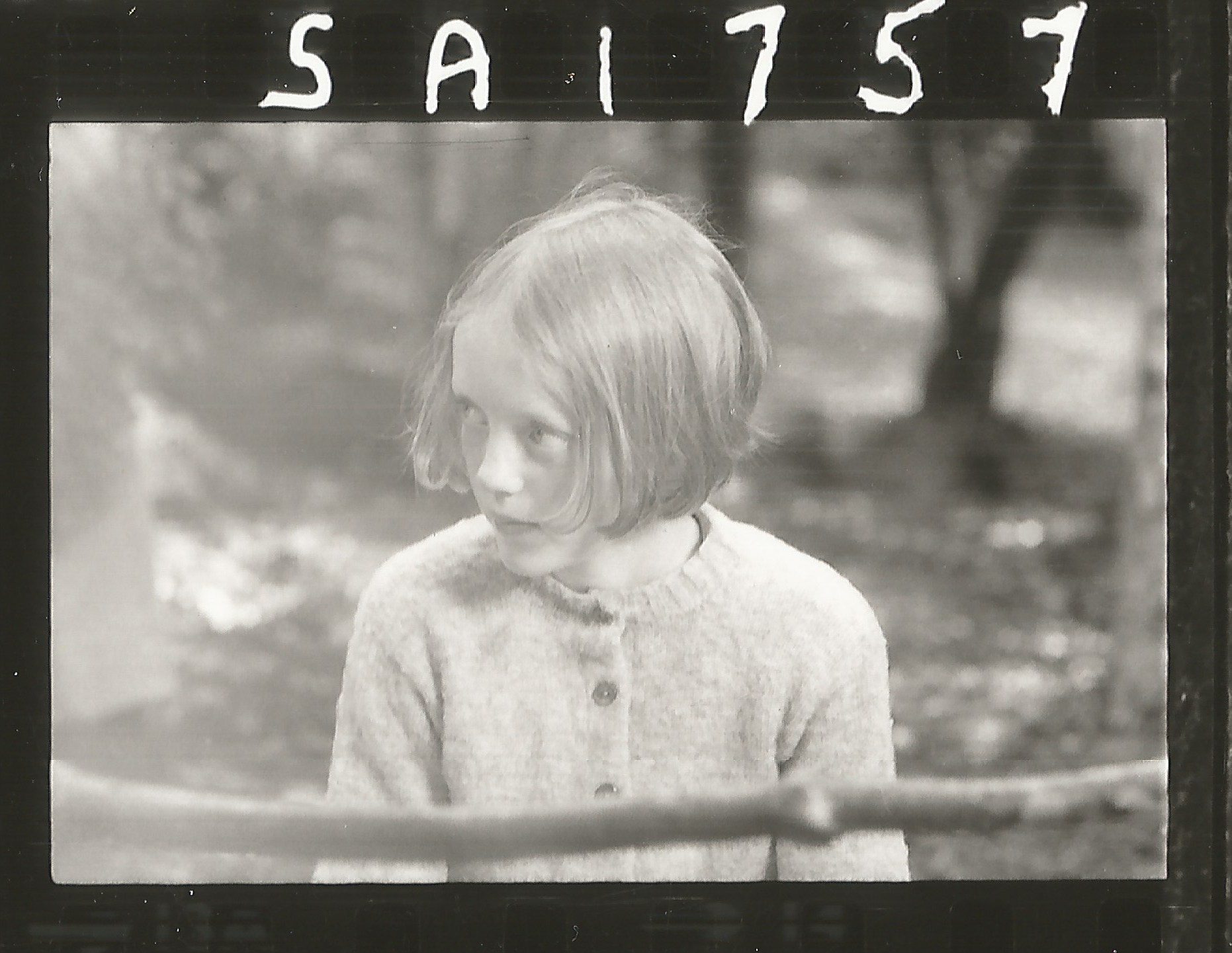
Memories of sailing Swallow and Amazon more than fifty years ago

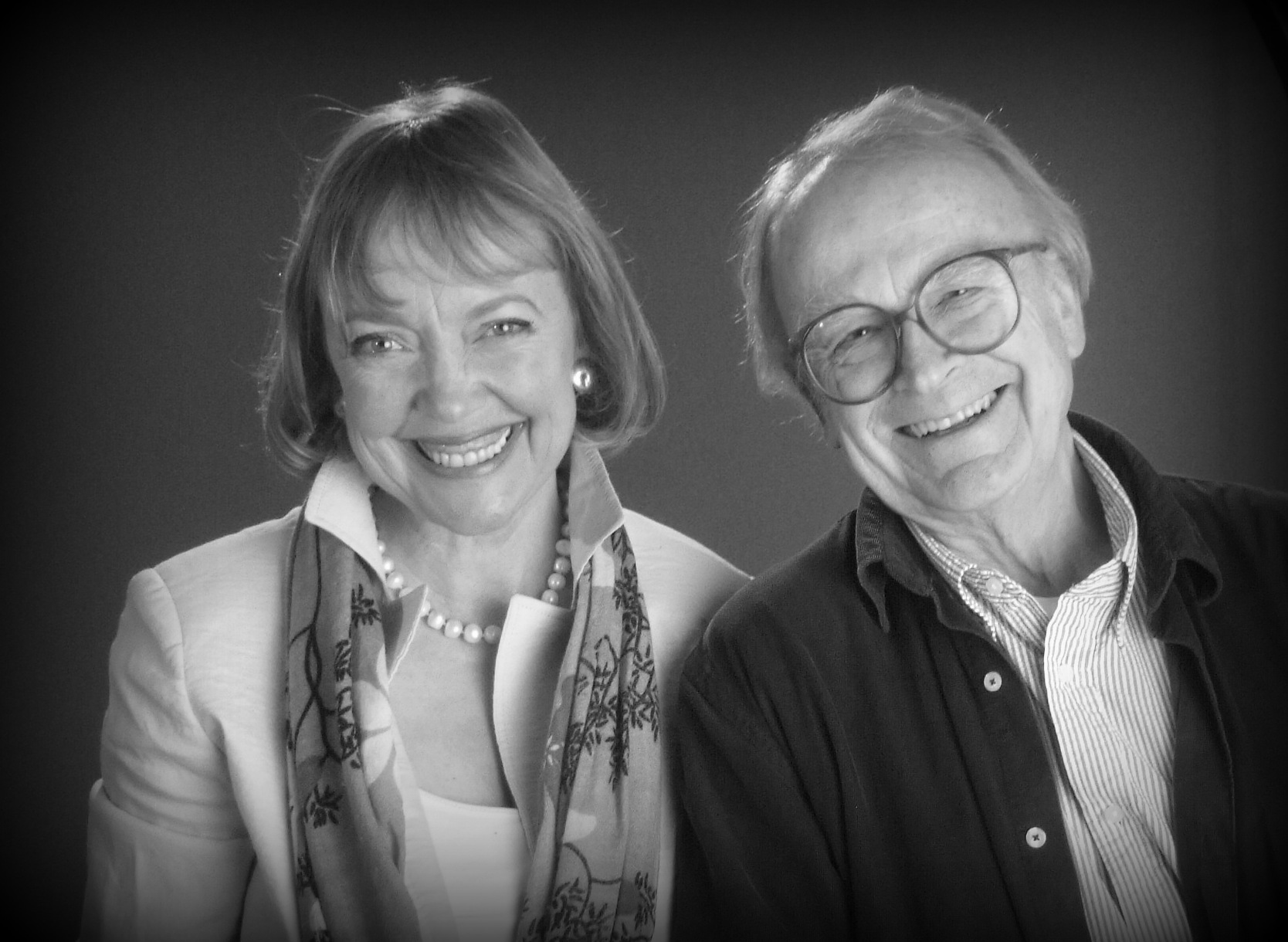
“The smell is just the same.” Suzanna Hamilton began rowing me across Coniston Water from Bank Ground Farm, taking us back to childhood days.

“It sounds the same.” The colours, the landscape, the feeling of being out on the water was still magical.

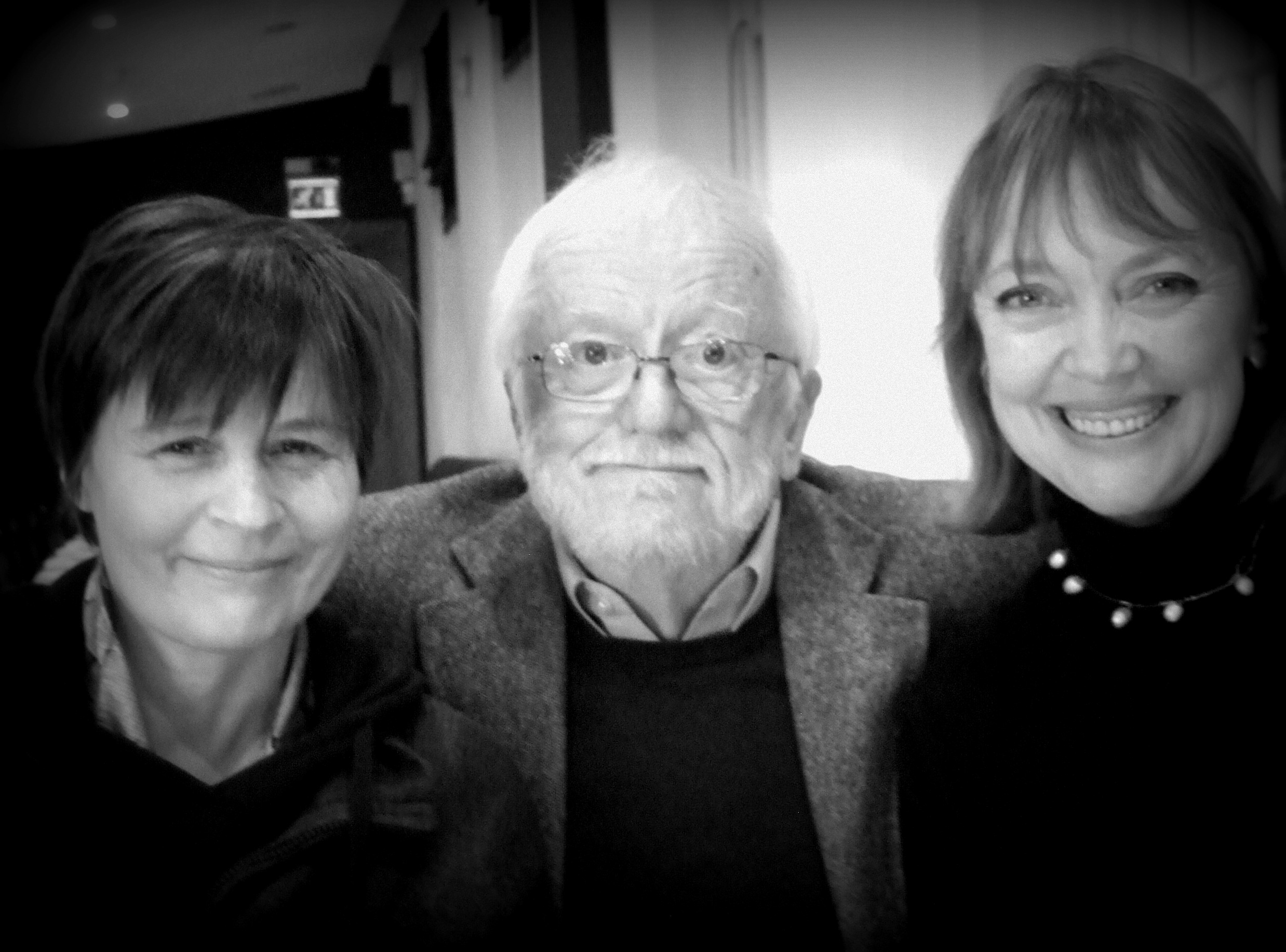
Suzanna Hamilton and Sophie Neville at Coniston Water in the Lake District

As girls, Suzanna and I had appeared as Mate Susan and Able seaman Titty in Richard Pilbrow’s original film of Swallows and Amazons, adapted by David Wood and released in cinemas on 4th April 1974. It starred Dame Virginia McKenna and Ronald Fraser but it was the two of us who were invited to return to the film locations in 2003 to be interviewed by Ben Fogle for an episode of the long-running BBC series Country File. Thanks to sunshiny weather and the support of Geraint and Helen Lewis, his report proved so successful that it was repeated on Country Tracks and featured in the series Big Screen Britain alongside iconic landscape movies such as The Dam Busters and Whistle Down the Wind.

We had been talking about swimming off Peel Island soon after we began filming Swallows and Amazons in the Lake District in May 1973. The director, Claude Whatham, was fresh from making a BAFTA nominated adaptation of Cider With Rosie when he cast Sten Grendon as young Laurie Lee, and the rock-and-roll movie That’ll Be The Day starring David Essex and Ringo Starr. Although happy out on the water, he knew little about boats. The producer, Richard Pilbrow, had insisted on finding children who could sail well rather than audition young actors and teach them to sail, and advertised the opportunity in sailing clubs. This was pivotal. Simon West (who played John), Kit Seymour (Nancy) and Lesley Bennett (Peggy) all had experience with a natural feeling for the wind and emanated confidence. They were only given a couple of days to get used to sailing the little boats used as Swallow and Amazon before filming began and yet their skill ended up making the film a classic.
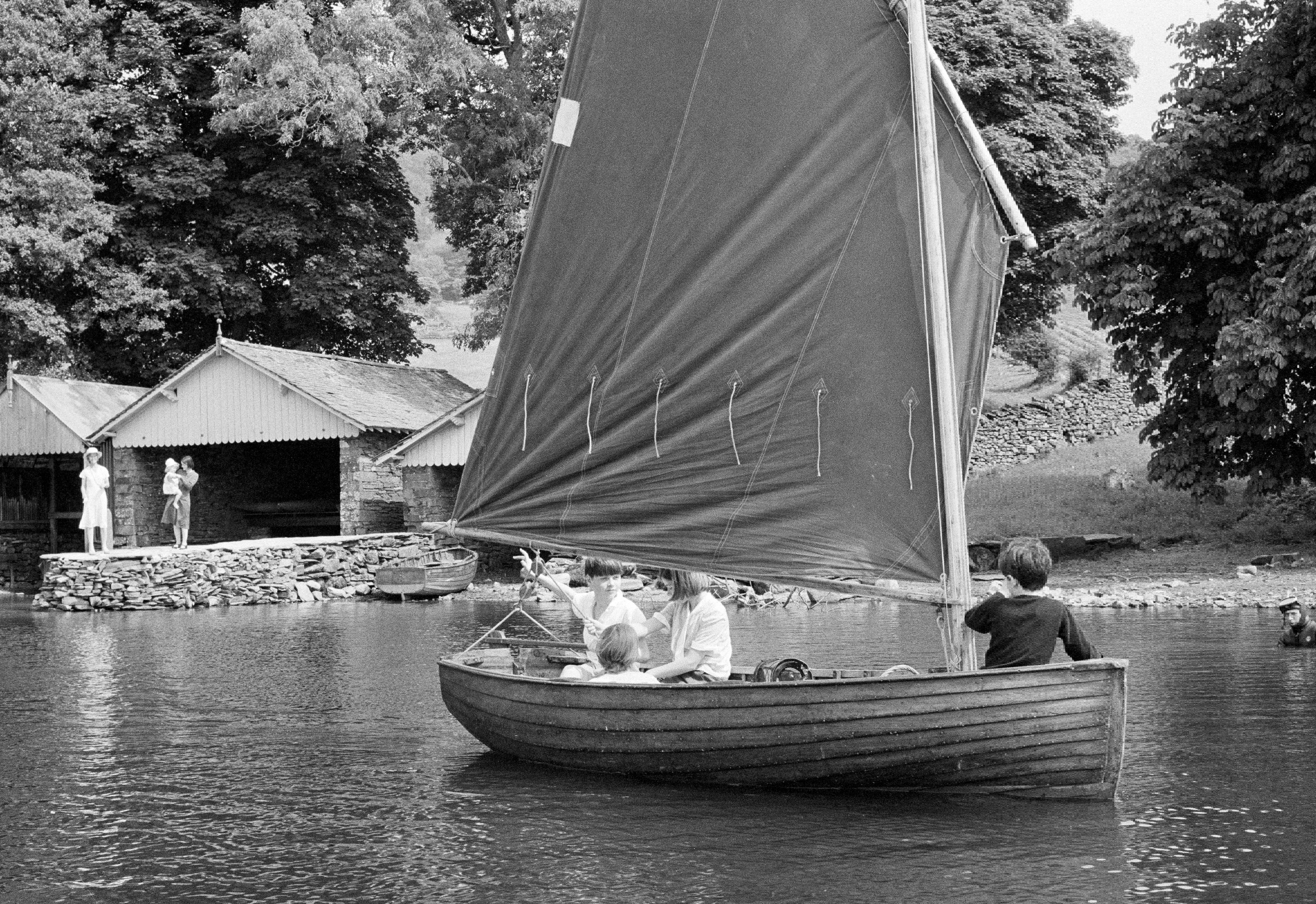
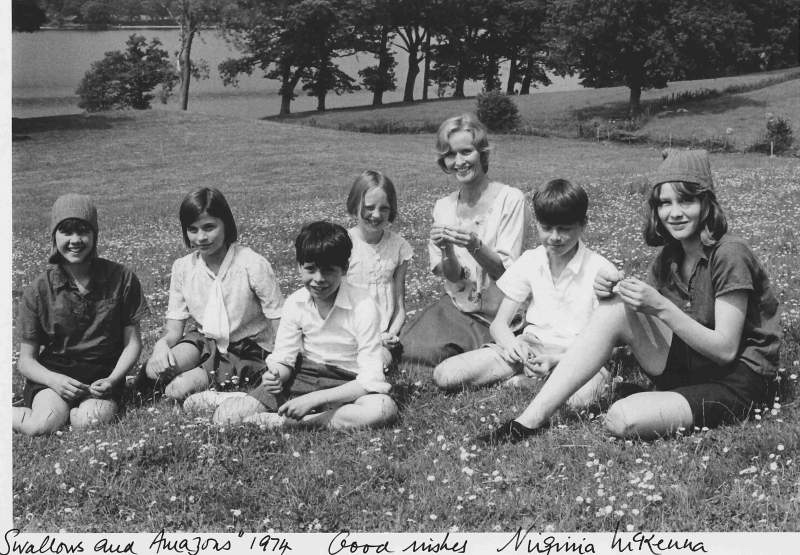
Dame Virginia McKenna bids the Swallows farewell
Farewell and adieu to you fair Spanish ladies

We had instruction from a sailing director in the form of a good looking actor called David Blagden. He’d recently crossed the Atlantic in a nineteen foot yacht called Willing Griffin but was unfamiliar with blustery Lakeland winds and did not know how to break down a script. Simon, aged eleven, ended up explaining to Claude how to get a decent shot. Suzanna took her lead from him and I clung to the gunwales, trying hard not to shiver in a costume designed by Emma Porteous that consisted of no more than a short yellow dress and enormous pair of navy blue gym knickers.
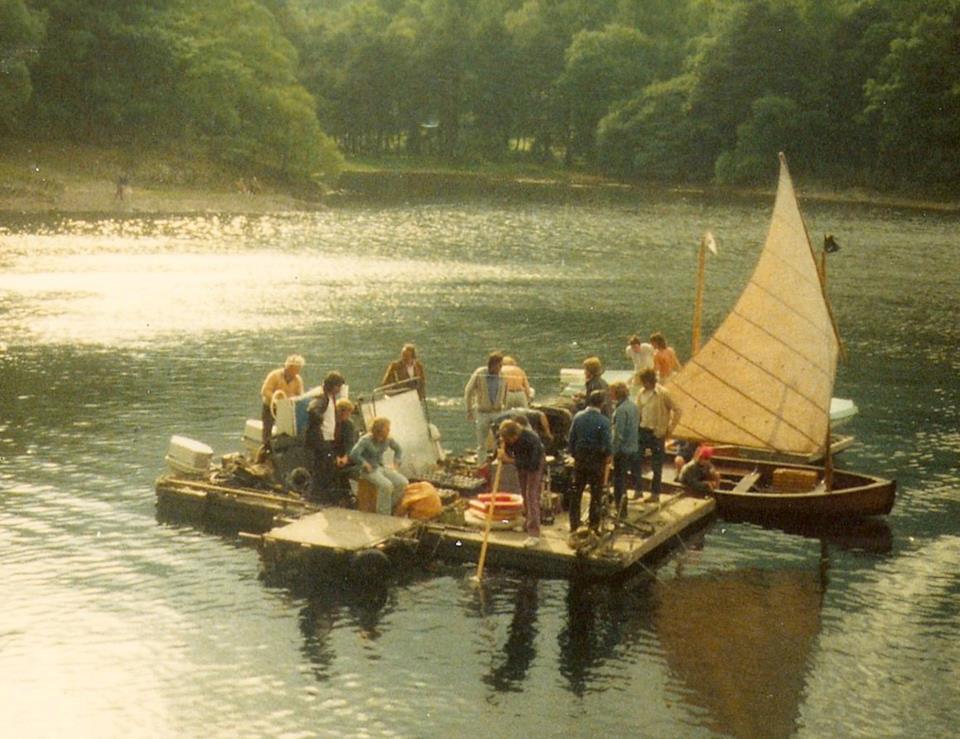
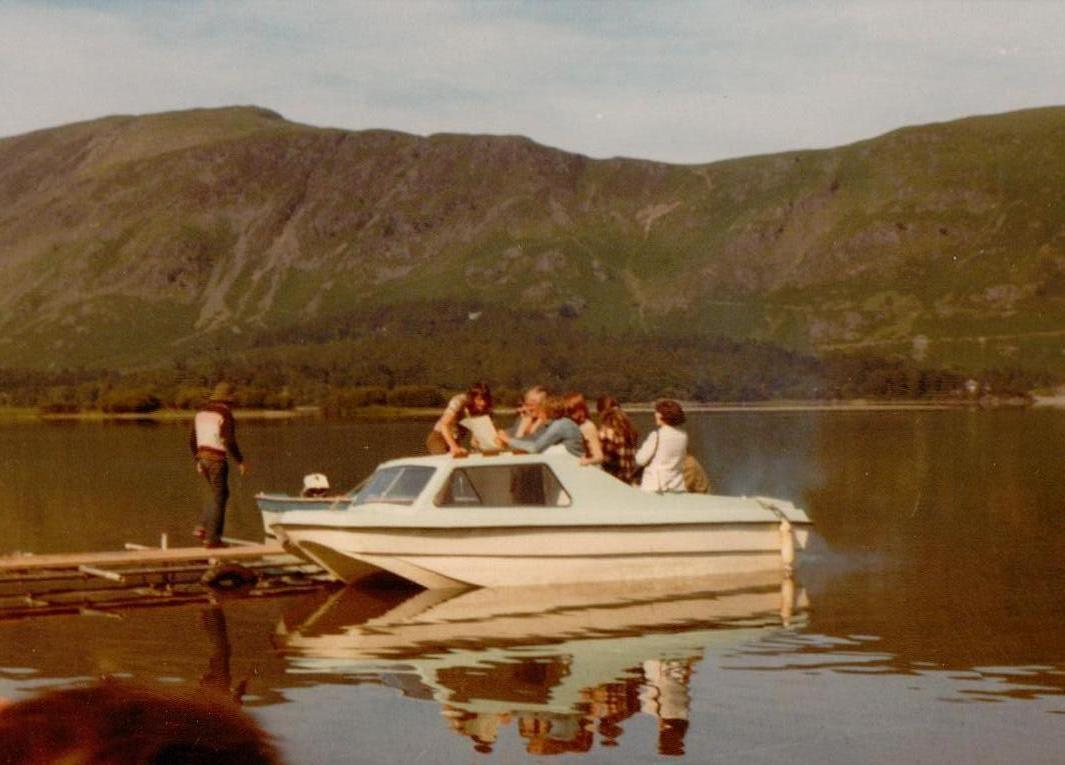
It was unusual for a movie to feature so many scenes set in two small boats. Mike Turk, whose family had been building boats since 1295, and Nick Newby of Nicol End Marine on Derwentwater, took up the challenge of constructing Claude a cross-shaped pontoon to act as a mobile camera mount so that our dialogue could be captured. This extraordinary vessel had two outboards but wasn’t easy to handle. The dinghies were wired to it with underwater cables but tended to pull away. The base to Swallow’s mast broke, proving safety was an issue, but the idea eventually worked.
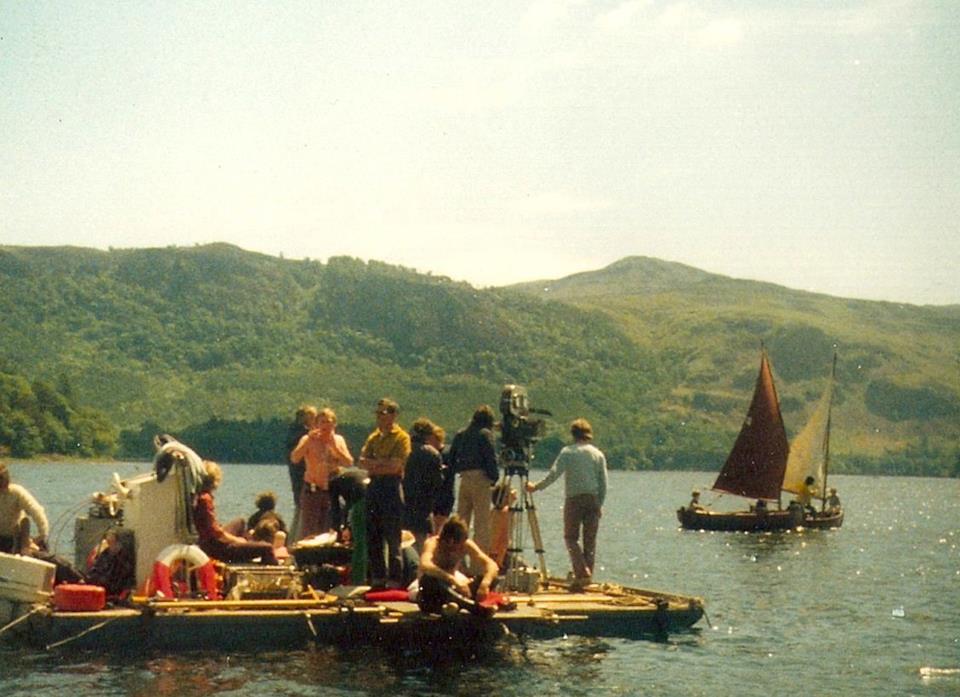
Richard Pilbrow and his film crew on the camera pontoon

A grey punt was also used. I remember Simon West towing it as he rowed us into Rio. It was easy to transport from one lake to another but must have been tippy. Somehow David Cadwallader, the grip, managed to keep the horizon horizontal using no more than a spirit level. Shadows were lifted from our faces by using huge reflector boards apt to catch the wind. It must have been impossible to use filler lights out on the water, although they somehow managed to power a number of sets on Peel Island.
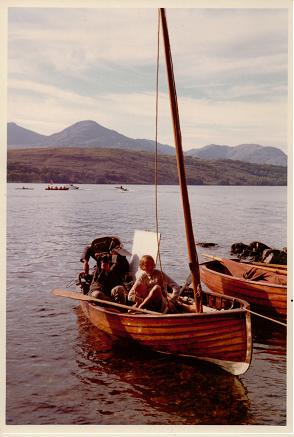
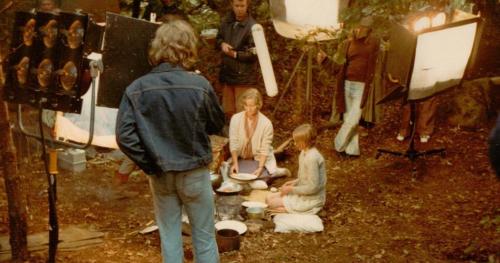
Sophie Neville in the Amazon with DOP Denis Lewiston, his 16mm camera and a reflector board ~ photo: Martin Neville

Richard Pilbrow kindly sent me Swallow’s pennant from his home in America. Unlike Ransome’s original sketch of the crossed flags, the bird flies away from the mast, which is technically incorrect, but I was thrilled to receive the genuine film prop used in vision. If you look closely you can see some of the stitches I made whilst in conversation with Mother, played by Virginia McKenna.

It would have been good if Swallow’s hull had been painted white in line with illustrations in the books. Her varnished planks are a nod to the 1970’s when everyone was busy stripping pine, but the important detail is that she has a keel rather than a centerboard. It makes her difficult to turn, and markedly slower than Amazon, but grants her stability. This feature may have saved us when we really did just miss colliding with the MV Tern on Windermere, which alarmed my father who was on the Tern’s deck. He knew how difficult Swallow would be to turn with the larger vessel taking our wind. We were fully laden with camping gear and yet totally lacking buoyancy of any kind.
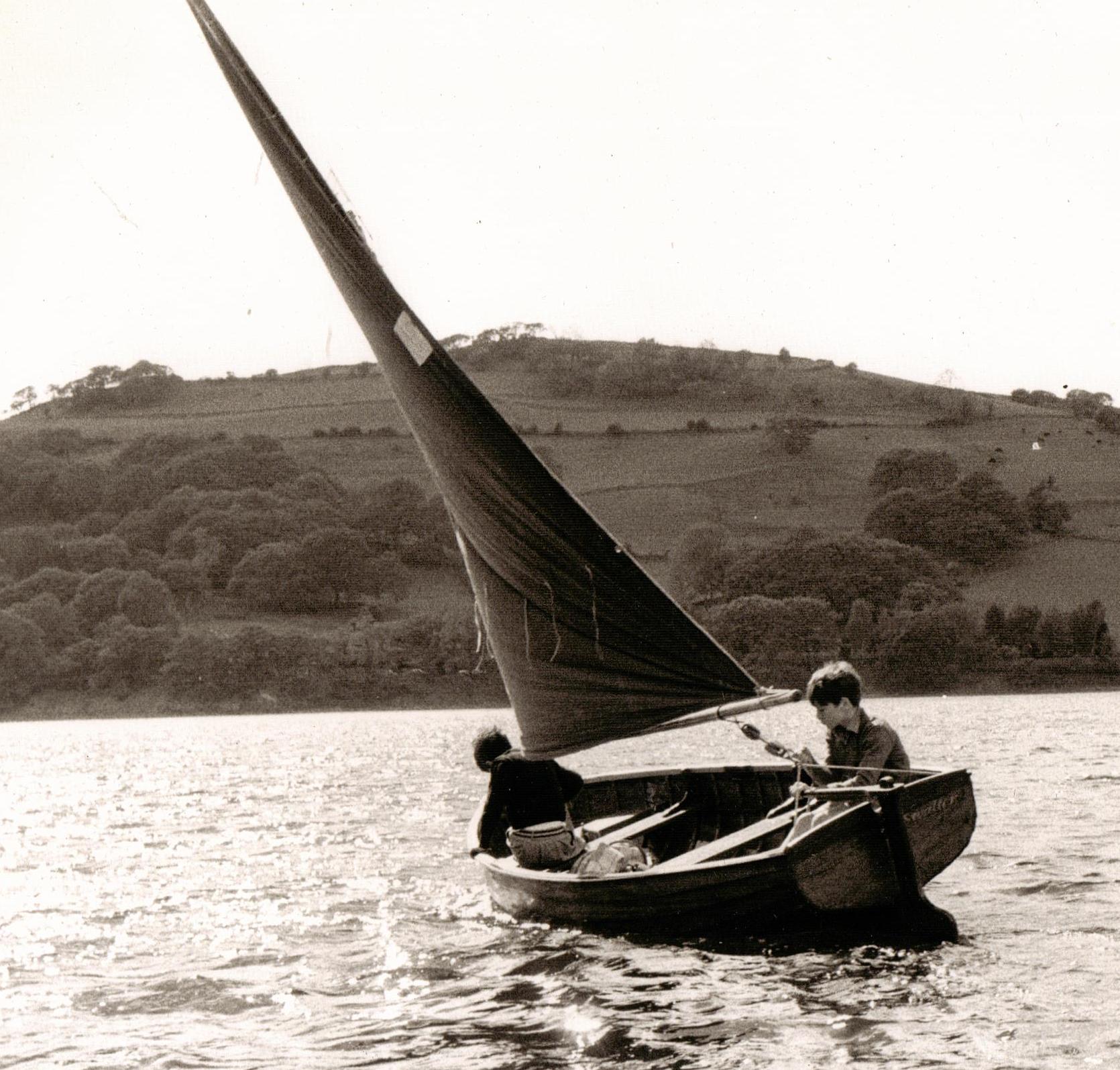
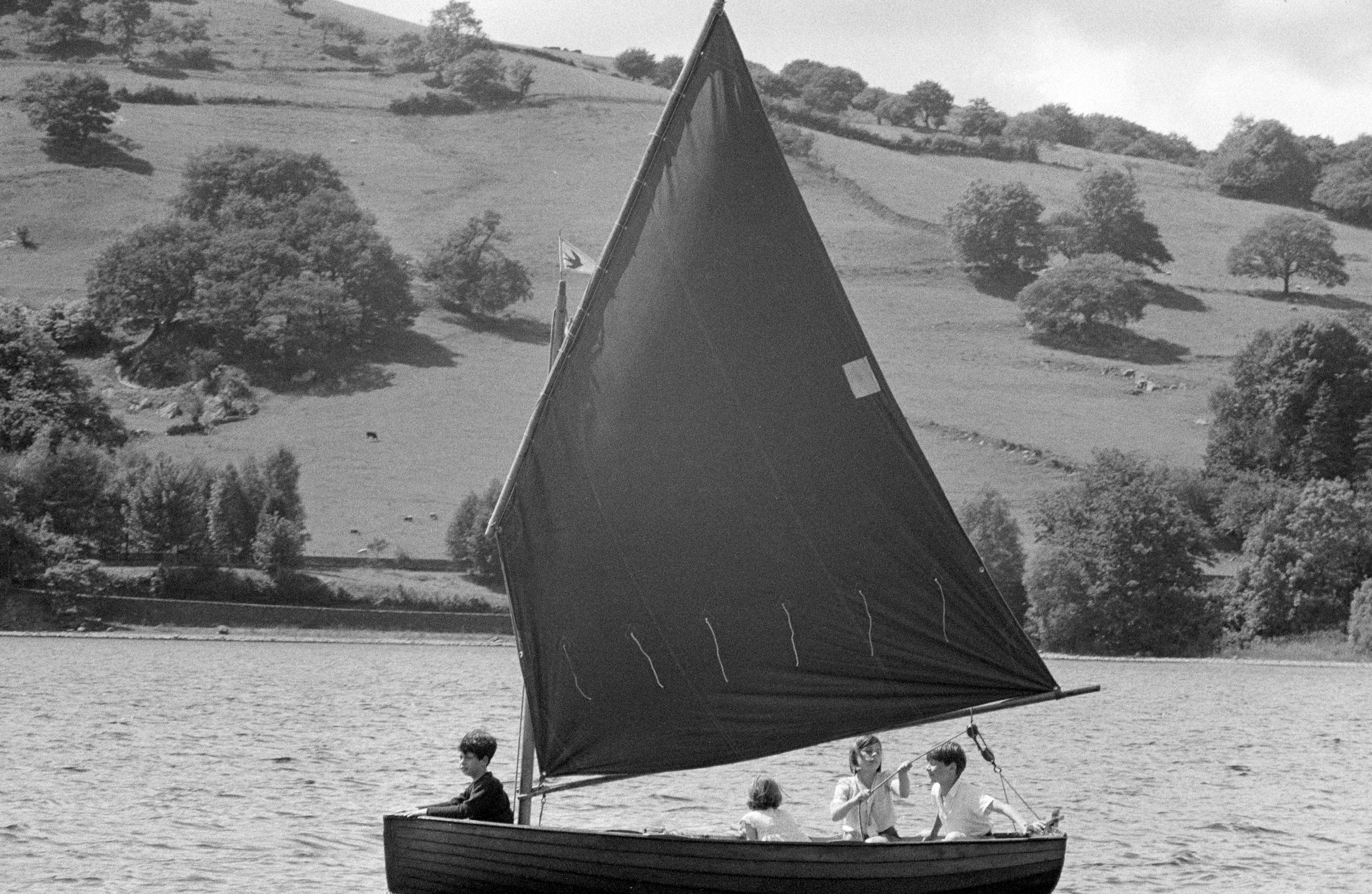
Simon West as Captain John sailing Swallow. Sten Grendon plays the Boy Roger

One secret of filming Swallows and Amazons is that it was set on four different lakes, a smelly lily pond that served as Octopus Lagoon, and Mrs Batty’s barn where night sailing sequences were shot with Swallow mounted on a cradle. One challenging scene was when the Swallows were cast off from Wild Cat Island to sail north to the Amazon River, leaving Titty behind to light the lanterns. I slipped underwater whilst pushing her free of branches overhanging the landing place but regained my footing and waved them off. Simon caught ‘a fair wind’ but the boom swung so far out that Suzanna held the mainsheet by the figure-of-eight knot and Swallow sped up Coniston Water like a ‘pea in a peashooter’, as Ransome wrote in Winter Holiday. A gust hit them broadside as they cleared the island and Swallow gybed, but Simon calmly stood to catch the boom, scarified the wind and took her on up the lake. Watching the sequence still brings tears to my eyes.

Simon West and Suzanna Hamilton at the helm of Swallow with Stephen Grendon in the bows, while Sophie Neville looks on from the shore of Peel Island

No one had given much consideration to the rowing involved in the story. Built as a run-about boat by William King of Burnham-on-Crouch, Swallow has two sets of rowlocks but it was tricky to keep time when she was wired to the camera pontoon. The first scene attempted was when the Boy Roger and I had to row her back from the charcoal burners with Susan at the tiller.

Sophie Neville rowing to Cormorant Island
Sophie Neville as Titty and Stephen Grendon as Roger rowing to Cormorant Island

We rowed again on Derwentwater, making our way out to Cormorant Island to look for the treasure. It took everything in me, but I later managed to row Amazon out of Secret Harbour in one take at the end of a long day filming. The action was repeated with Denis Lewiston, the lighting-cameraman, and his 35mm Panavision camera in the stern. Cold, with wet feet, I completed the scene but had to be carried ashore by a frogman acting as the safety officer. Titty later anchors Amazon off Cormorant Island on Derwentwater, but the shot of her wrapped in the sail, sleeping aboard, was taken in the darkened barn at Bank Ground Farm. The fishing scenes were recorded on Elterwater with Swallow moored near the reedbeds.
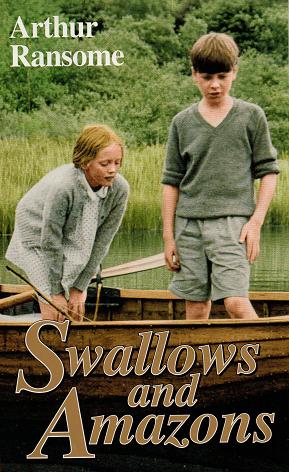
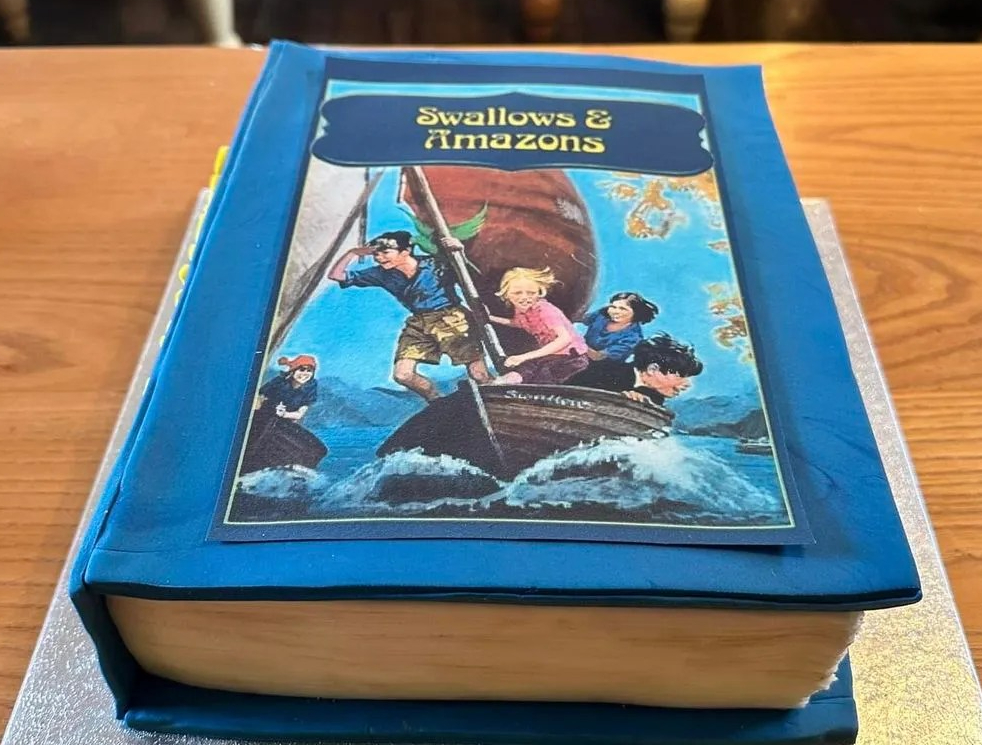
Sophie Neville as Titty and Simon West as John appearing on the cover of 'Swallows and Amazons'
Sophie Neville as Titty and Simon West as John

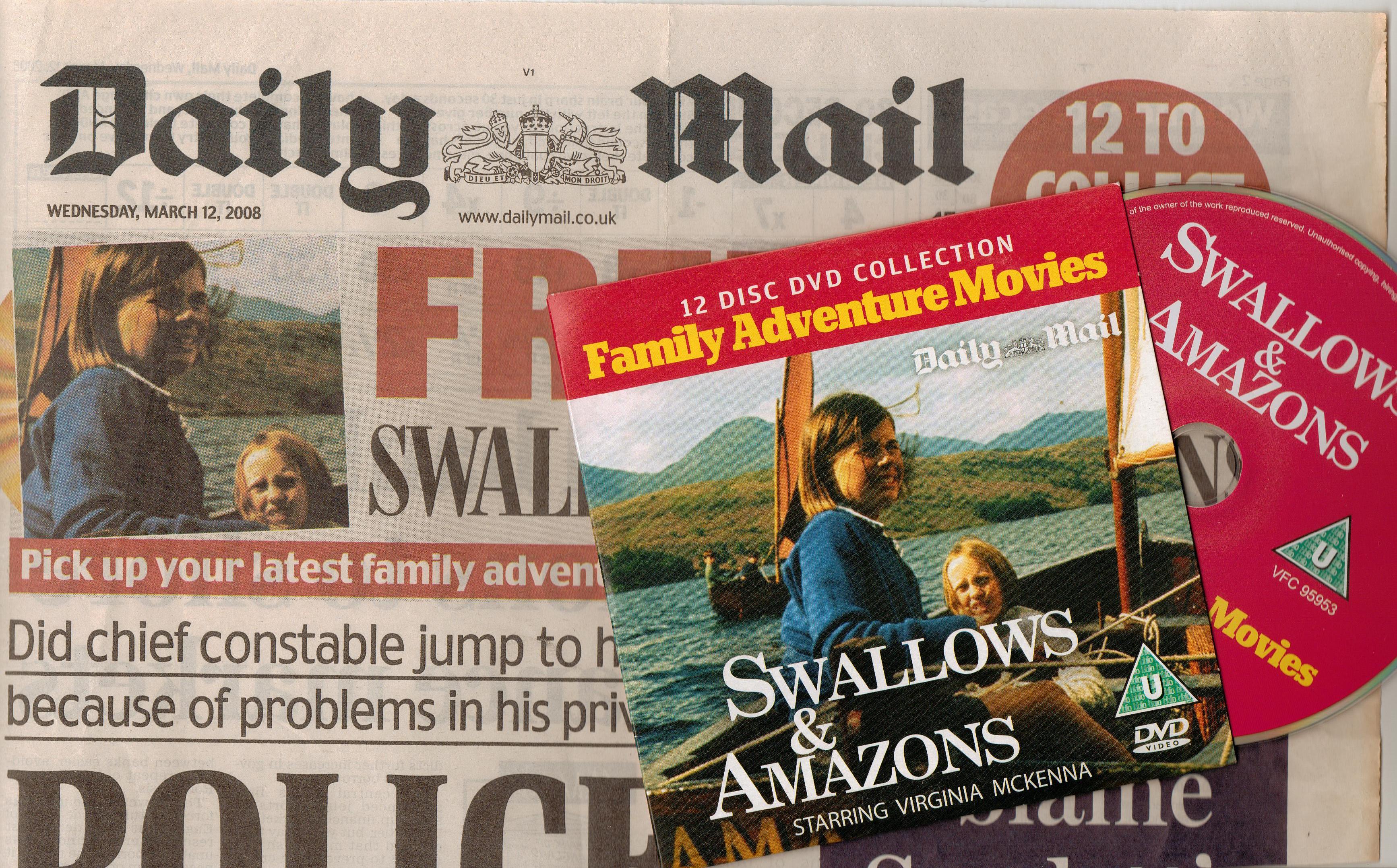
My one regret is that we didn’t follow the book when sailing the captured Amazon back to Wild Cat Island. The wind was up and Claude Whatham needed Simon to sail Swallow ahead of the Amazon which was lashed to the pontoon. I originally took the tiller as Titty is urged to in the story, but had trouble with the rudder and Susan is at the helm on the cover of the paperbacks brought out to accompany the film and a DVD distributed by the Daily Mail.
I was somewhat surprised to see Swallow outside Elstree Studios where we went to post-sync the film. They set up a tank on the sound stage so that Bill Rowe, the dubbing editor who was to win an Oscar for The Last Emperor, could capture the sounds so taken for granted and yet so evocative of handling wooden boats. I was concerned that she’d been given away (and she nearly was) but, as Richard Pilbrow made plans to adapt other Ransome books, she was sent to Mike Turk’s warehouse in Twickenham and stored with maritime props such as the Grand Turk, a replica of HMS Indefatigable, built in 1996 in Turkey for Hornblower.

Swallow at Mike Turk's warehouse

When Mike’s collection was eventually auctioned in 2010 I was alerted, first by my father, then by Magnus Smith. We found Swallow’s details online, took one look at the photos and clubbed together to purchase her, launching SailRansome at the 2011 London Boat Show. The idea that others could go out in her with an experienced skipper was greeted by John McCarthy who recorded the sounds of sailing Swallow for Paddling With Peter Duck, his programme made for BBC Radio 4.
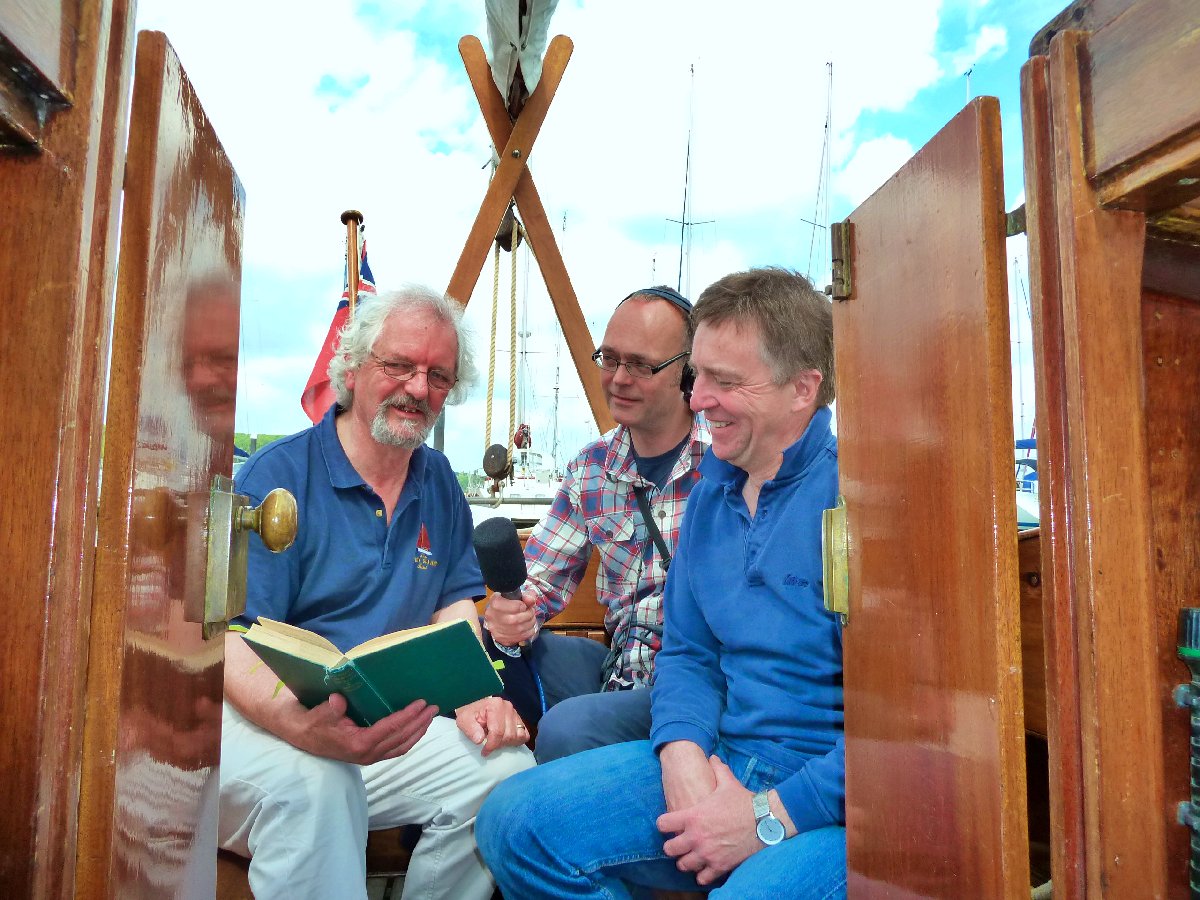
Peter Willis in the Nancy Blackett with John McCarthy

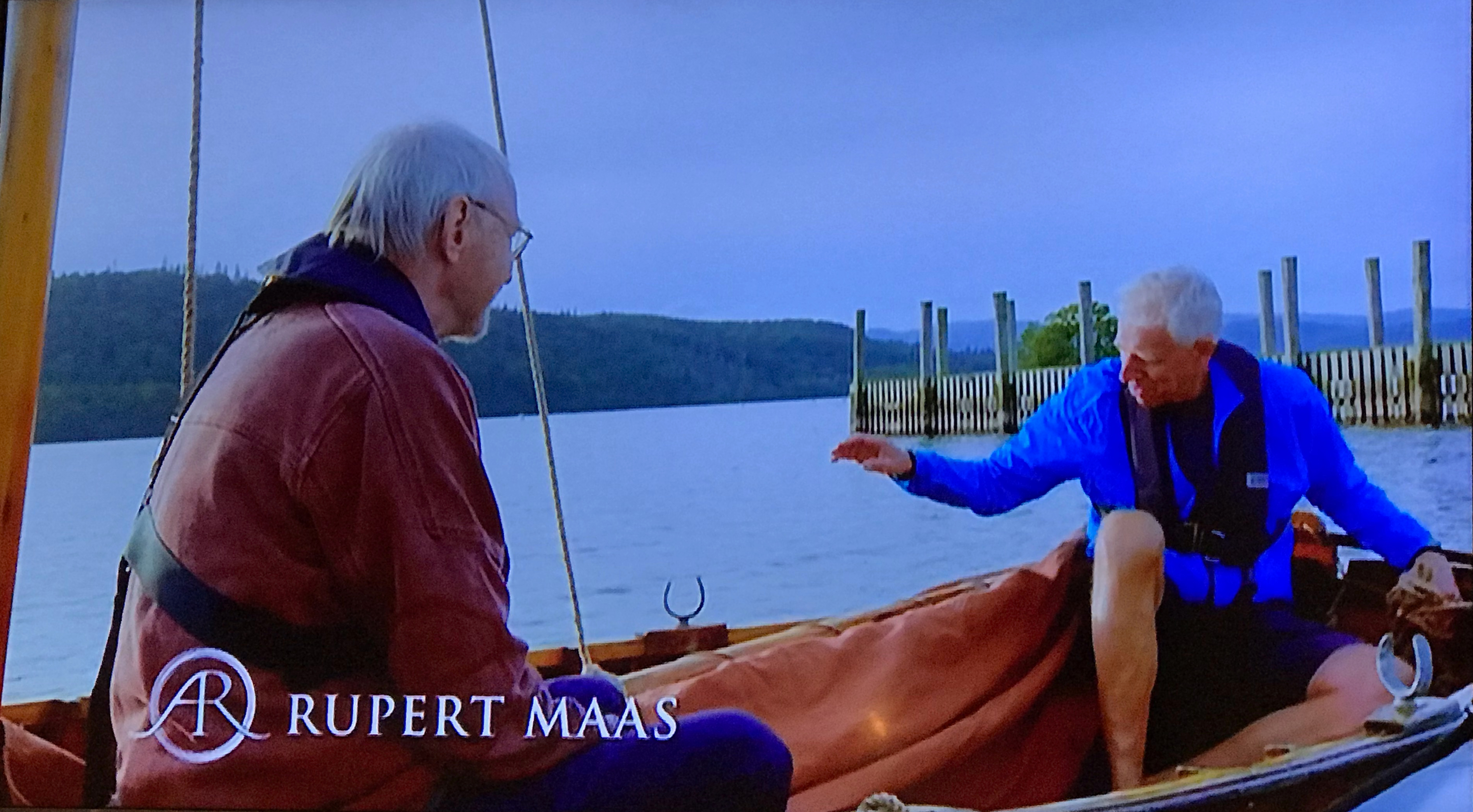
The Arthur Ransome Society now own both historic dinghies. Rupert Maas valued Swallow highly when she appeared on BBC Antiques Roadshow in 2021.Everyone gasped but her true worth is akin to Captain Flint’s hidden treasure: instead of gold ingots his trunk contained precious memories that no doubt kept him on course when the storms of life blew in. Just as Arthur Ransome’s books grant us solace, my prayer is that many will be able to grab the chance of sailing the little boats that take us into the stories immortalized on film so long ago. 
Back in 1974, none of us knew that Amazon had been used in the BBC adaptation of Swallows and Amazons made just eleven years previously and broadcast in 1963. I met the White family when they brought Amazon from Kent to Cumbria to feature in Country File. Ben Fogle had found their twin daughters on Peel Island, looking very much like Nancy and Peggy in damp bathing costumes having been swimming in the lake. It has been extremely generous of them to enable other families to sail such a precious boat.
Not so very long ago, a few TARS joined me at Keswick for a talk and screening of Swallows and Amazons at the Alhambra cinema when we grabbed the chance to go aboard the Lady Derwentwater. Nick Newby explained how she had been decommissioned in 1973 to appear as Captain Flint’s  houseboat. Her temporary conversion was overseen by Ian Whittaker, the set dresser who went on to be nominated for a number of awards and won an Oscar in 1993 for his work on Howard’s End. The Lady Derwentwater has since been given a new stern but is in good shape, back in her role as a passenger launch.

The mfp Vinyl LP of ‘Swallows and Amazons’ with Sophie Neville and Simon West bringing Swallow into her harbour

Arthur Ransome was taught to sail on Coniston Water by the Collingwoods in a boat they kept below Lane Head, now known as Swallow I. People often ask if the original Swallow II, a sea-going dingy with a standing lugsail built by William Crossfield, and sailed by the Ransomes, is still around. After being kept on a mooring in Bowness Bay, where she was looked after by a boatman called John Walker, she was sold in September 1935 and sadly ‘vanished without a trace’.

The Amazon, originally named Mavis, and also sailed by the Altounyan family, now resides in the John Ruskin Museum at Coniston where she can be visited much like a great aunt. Ransome’s dinghy Coch-y-bonddhu or Cocky, the model for Scarab in his books, restored and owned by TARS, is on display at Windermere Jetty, the museum where the fourteen foot RNSA dinghies used in the 2016 movie of Swallows and Amazons have been moored. A few of the steamboats used to dress the scenes set at Bowness-on-Windermere or Rio in 1973, such as Osprey and George Pattinson’s launch Lady Elizabeth, may be in residence. They are currently restoring the SL Esperance used by Ransome as his model for the houseboat.

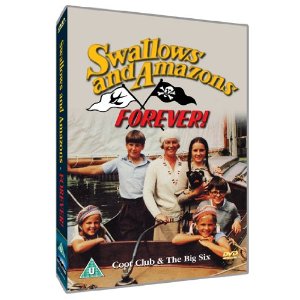
In 1983, I worked behind-the-scenes on the BBC drama serial of Coot Club and The Big Six (and wrote Extras for the DVD titled Swallows and Amazons Forever! ) We spent three months filming on the Broads, using the four-berth gaff sloop Lullaby to play the Teasel, a vintage dinghy for Titmouse and a punt for Tom Dudgeon’s Dreadnaught. They have all been kept at Hunter’s Yard, near Ludham in Norfolk where you can hire classic boats. While exploring the Broads you can track down the Death and Glory, Janca, used to play the Hullabaloo’s Margoletta, and the wherry Albion used for Sir Garnet along with yachts like Pippa that were also featured in the serial. Hopefully, Arthur Ransome’s ‘good little ship’ the Nancy Blackett, bought with his ‘Spanish gold’ or royalties, will one day star as Goblin in a film adaptation of We Didn’t Mean To Go To Sea. Wouldn’t that be wonderful?

Swallows and Amazons (1974) sepia film poster (c) StudioCanal
Arnaldo Putzu’s poster for the EMI film Swallows and Amazons (1974)

Half a century has passed since the original film Swallows and Amazons first came out in cinemas, the good little ships featured sailing improably on the poster. Thanks go to Magnus Smith, Rob Boden, Diana Wright, Marc Grimston, and all those who have looked after and lovingly restored the inspirational boats that appeared in the movie. They mean so much to so many. Three million cheers to those at The Arthur Ransome Society who are working with Hunters Yard in Ludham to make both little ships available for hire in 2025 .

Amazon will soon be available to hire at Hunter's Yard, Ludham
Amazon will soon be available to hire at Hunter’s Yard, Ludham

If all goes to plan, you will be able to take them out. When you do, smell the freshness for me. Stroke the varnish, take in the feel of the ropes, the weight of the oars. It may be chilly, but that too is part of the experience of liaising with old boats out on the water.

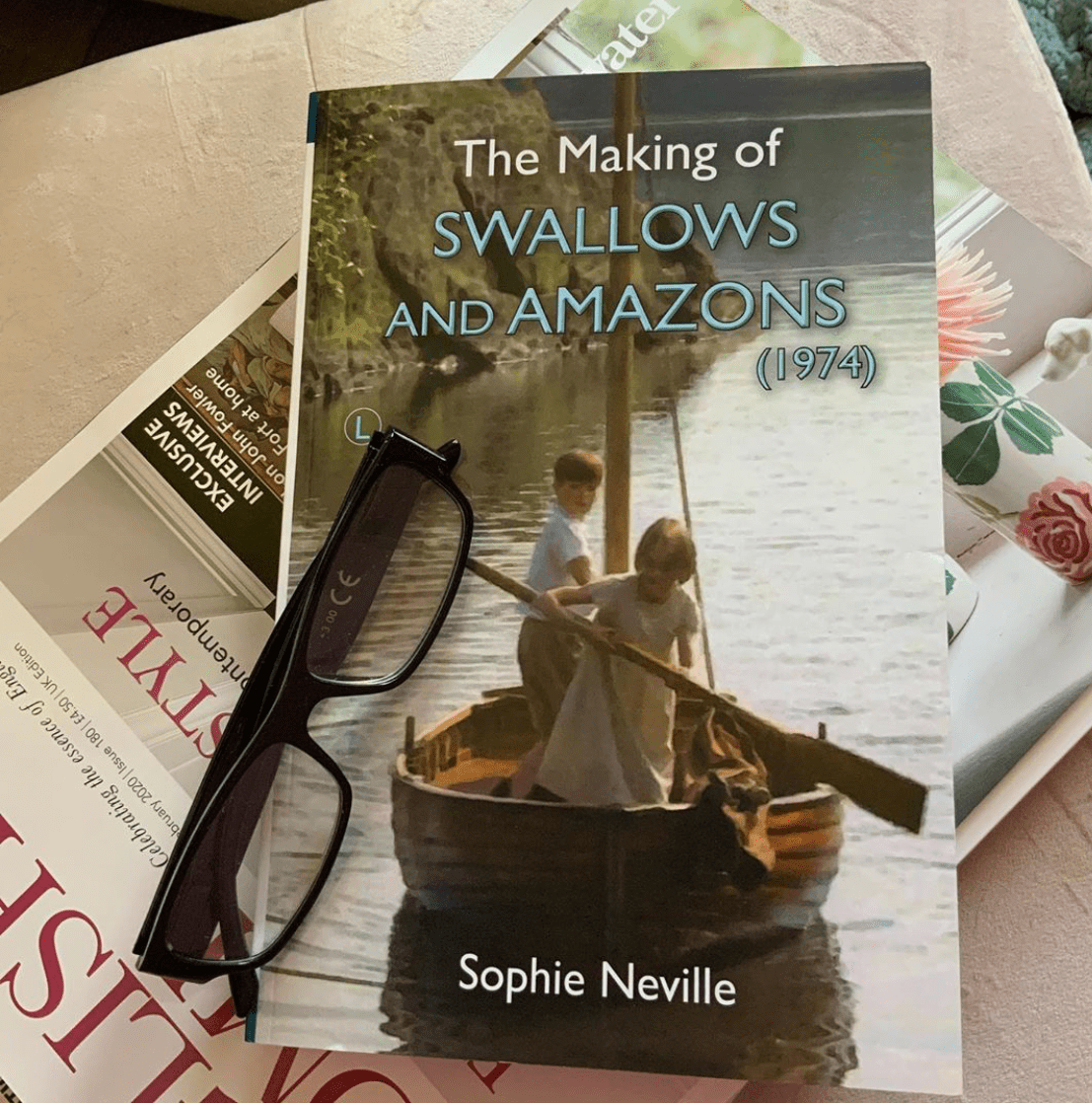
You can read more in ‘The Making of Swallows and Amazons (1974)’ now available as an audiobook narrated by Sophie Neville

Neville C Thompson

Neville Thompson acted as the online producer on the 1974 film of Swallows and Amazons. He choose an excellent crew and took daily responsibility for scheduling the production on location in the Lake District and later at Elstree Studios where the film was edited and post-synced.

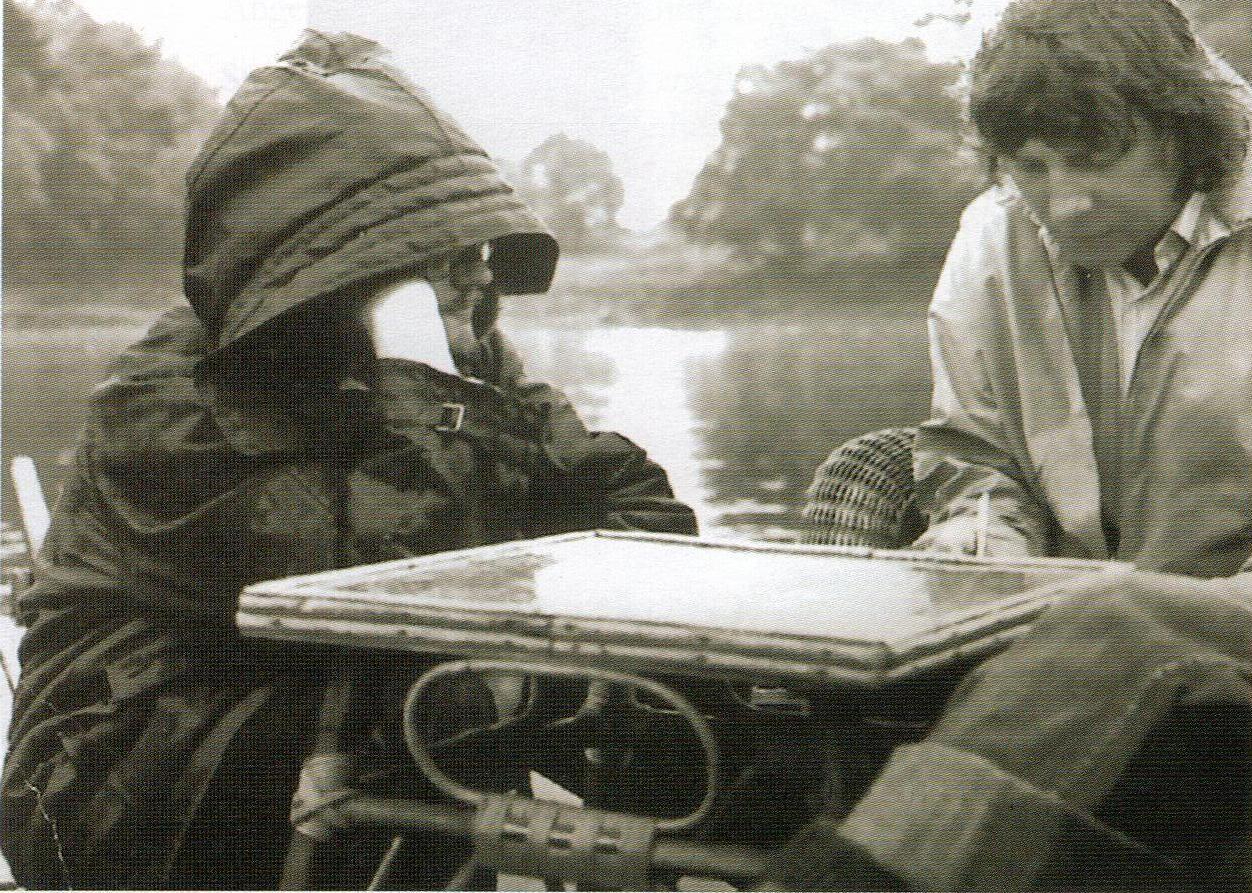
Producer Richard Pilbrow with Neville C Thompson on Derwentwater in the Lake District in 1973
Producer Richard Pilbrow and Production Associate Neville C Thompson on Derwentwater in the Lake District in 1973

Neville was born in Ipswich in 1933. Although gregarious at times, he was a quiet man who was once a maths teacher in Scotland.  He had five children to support, but decided to go to RADA and become an actor. When a pair of twins came along he moved the family to Croyden and went into film production. He began work as a location manager for Mike Newell and became a production manager for Ken Russell.

Richard Pilbrow gained the rights and film finance for ‘Swallows and Amazons’ but came from a background in theatre and knew nothing about film production. He asked Neville to help set everything up.

Neville C Thomas (top centre) with Richard Pilbrow, Claude Whatham et al

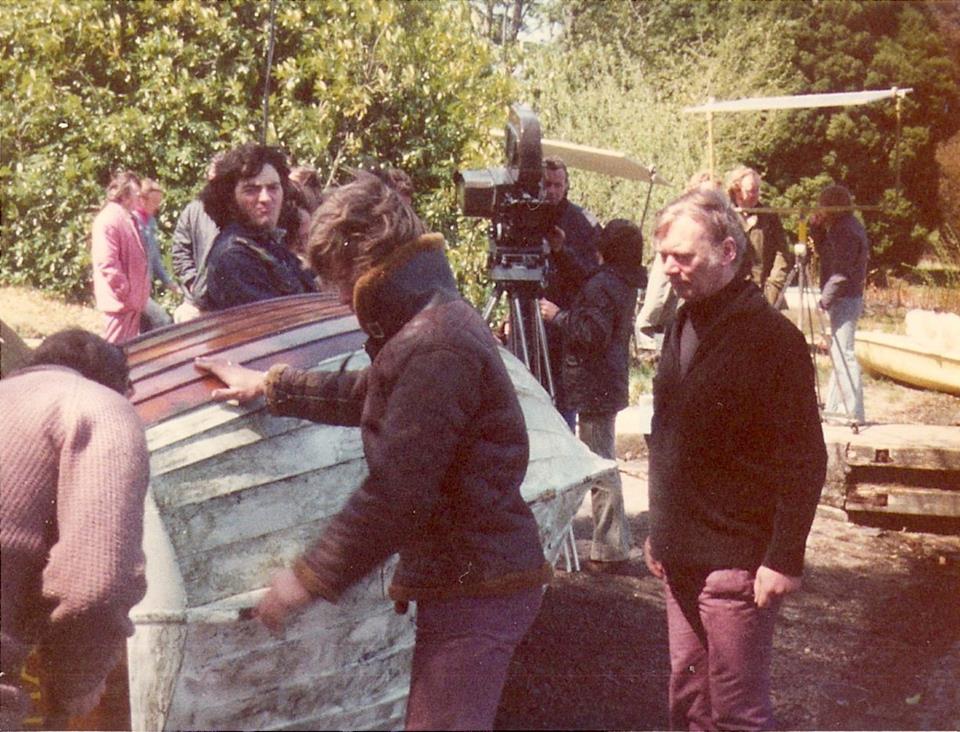
Neville came to Burnham-on-Crouch for our sailing audition when the dinghy ‘Swallow’ must have been purchased from the boatbuilders William King.

The Production Team on 'Swallows and Amazons' in 1973
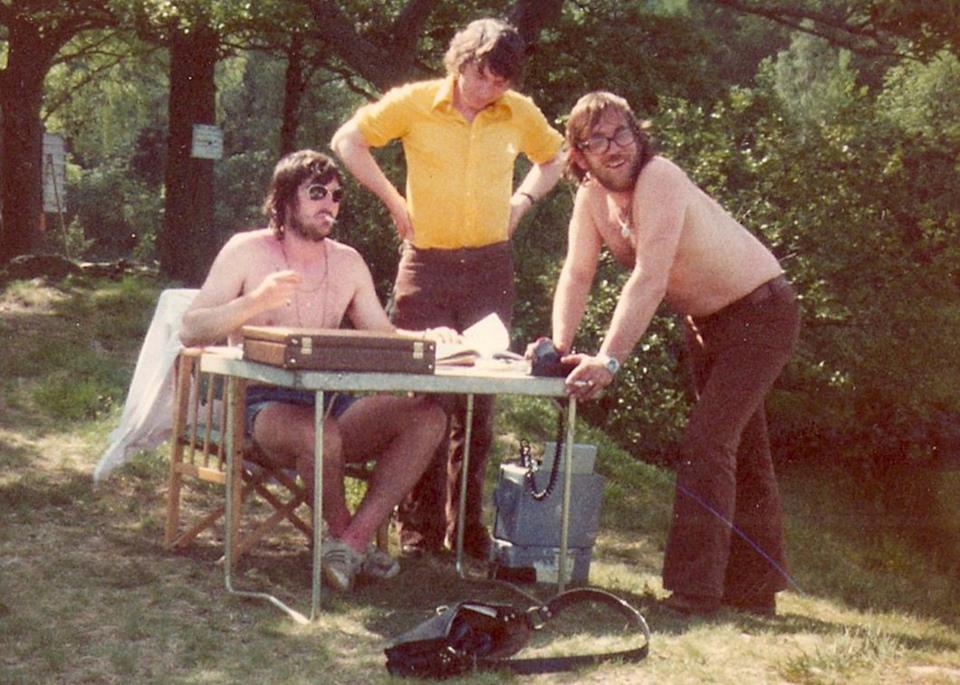
Second Assistant Terry Needham, Associate Producer Neville C Thompson and Production Manager Graham Ford with the unit radio on a sunny day in June 1973

Neville was passionate about film making, becoming known as ‘the last gentleman producer.’  He would have been the one making the executive decisions, the man ultimately in charge of the schedule, personnel, safety, insurance and bringing the film in on budget.

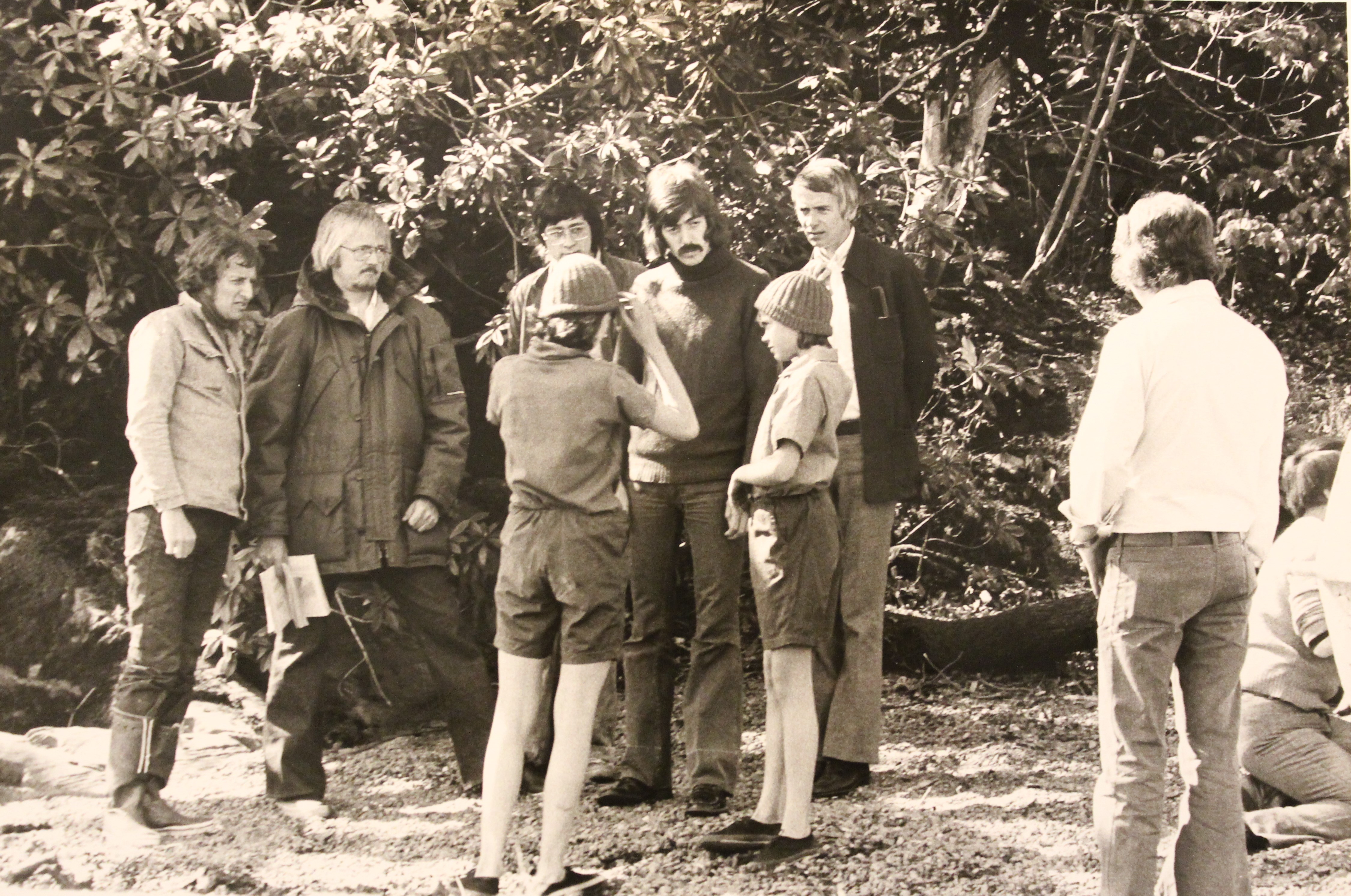
Claude Whatham, Richard Pilbrow, Gareth Tandy, Peter Robb-King, Ronnie Cogan and Neville C Thompson with Kit Seymour and Lesley Bennet trying on hats for Swallows and Amazons
Claude Whatham, Richard Pilbrow, Gareth Tandy, Peter Robb-King, Ronnie Cogan and Neville C Thompson with Kit Seymour and Lesley Bennet trying on hats

His daughter, Mandy, told me that he was a wonderful Dad but had been away a lot. ‘He had eight children in nine years and was keen for them to make their own way in the world.’ Mandy became an occupational therapist, George became a ballet dancer, Chris Thompson went into film making. Neville was diagnosed with Lukemia at the age of 47 but lived another twenty years, ending his days in Woodbridge in Suffolk.

Neville Thompson relaxing on set – photo taken on Sunday 24th July 1973, by Daphne Neville

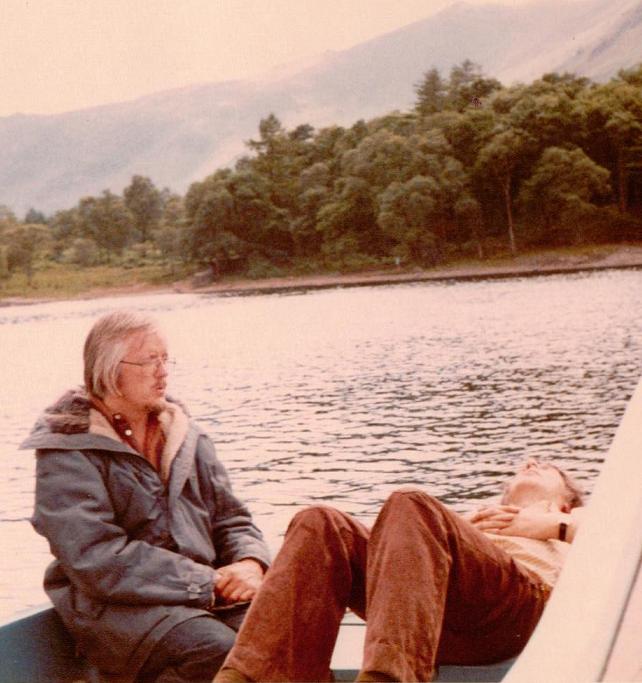
Neville established a production office at the unit hotel on Windermere. By the time he reached the location he was often exhausted. Everything he’d set up was in motion so, like an experienced parent, he could relax and enjoy the boats.

Richard Pilbrow and Neville Thompson ~ photo:Daphne Neville

When Neville died in Woodbridge in Suffolk at the age of sixty-nine in 2002, Richard told me that ‘Swallows and Amazons’ was broadcast on television as if in his honour.

You can find an impressive list of Neville C Thompson’s production credits on IMDb here

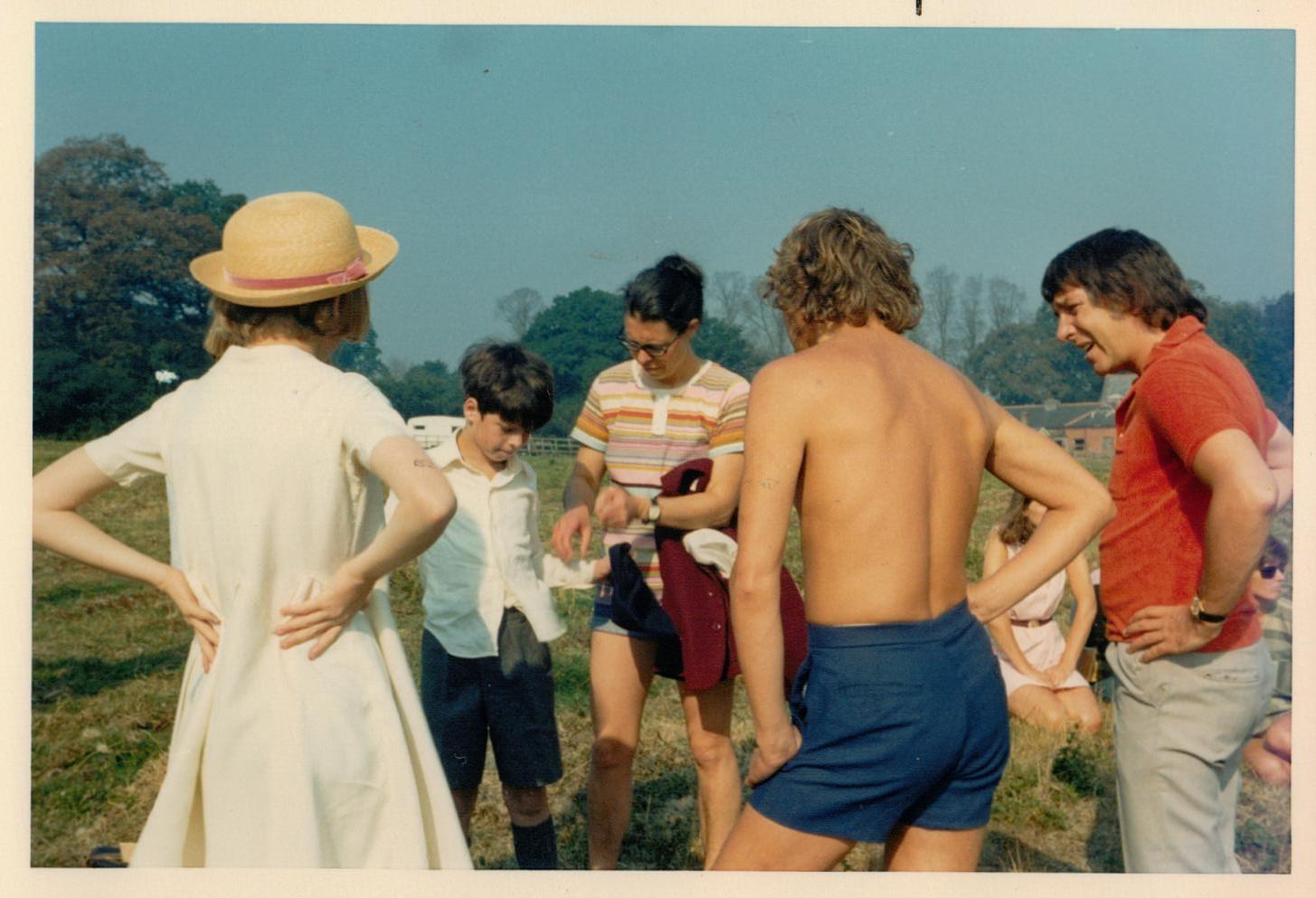
Sophie Neville with Sten Grendon, Jane Grendon, Claude Whatham and Neville Thompson
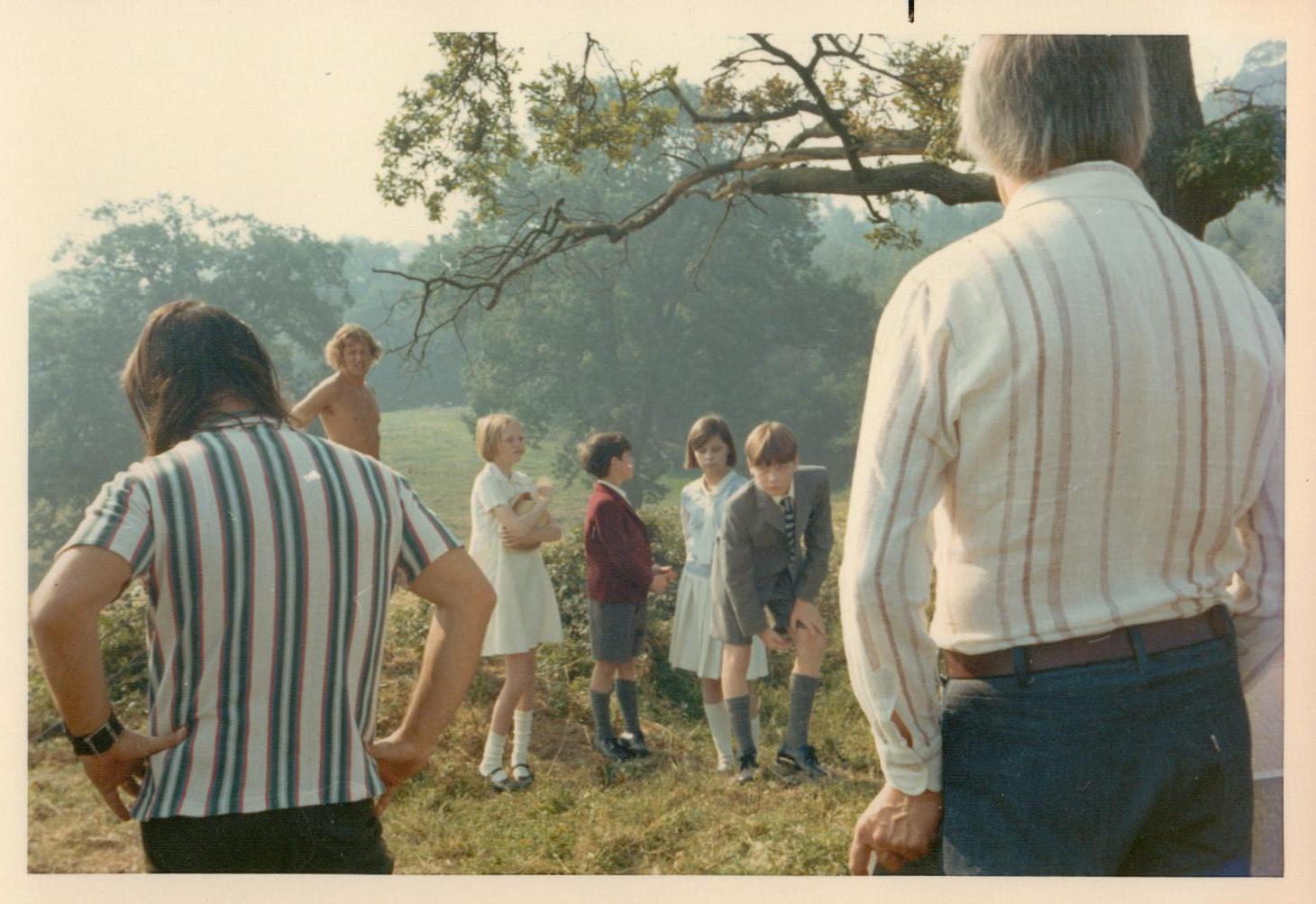
Sophie Neville looks on as Stephen Grendon organises his costume helped by Jane Grendon with Claude Whatham and Neville C Thompson when filming pick up shots near Epsom.

You can find details of how to purchase ‘The making of Swallows and Amazons’ here on line or listen to it on audible and other audiobook platforms.

The audiobook of 'The Making of Swallows and Amazons'
The new audiobook

I captured the Amazon

I CAPTURED THE AMAZON

The Arthur Ransome Society has been able to reunite Swallow and Amazon for the fiftieth Anniversary of the 1974 film and to preserve them for future generations. Come to see them both – and even sail Amazon – at Windermere Jetty museum in Cumbria on 29th and 30th June when John Sergeant will be hosting a Q&A with the cast and crew.

Celebrating 50th Anniversary of the movie 'Swallows and Amazons' in 2024
Celebrating 50th Anniversary of the movie ‘Swallows and Amazons’ in 2024

The challenge is on to fully restore Swallow so that families can set her sails and live out the pages of Arthur Ransome’s iconic books today.

Sophie Neville when president of The Arthur Ransome Society

At the age of twelve, I was cast as Able Seaman Titty when the original film Swallows and Amazons was made on location in the Lake District in the summer of 1973. Dame Virginia McKenna played my mother and the six of us children had fun making Ronald Fraser walk the plank. Now hailed as a classic sailing film, I’m assured it has been broadcast on British television more times than any other movie and is currently streaming on Amazon.com and Netflix Europe.   

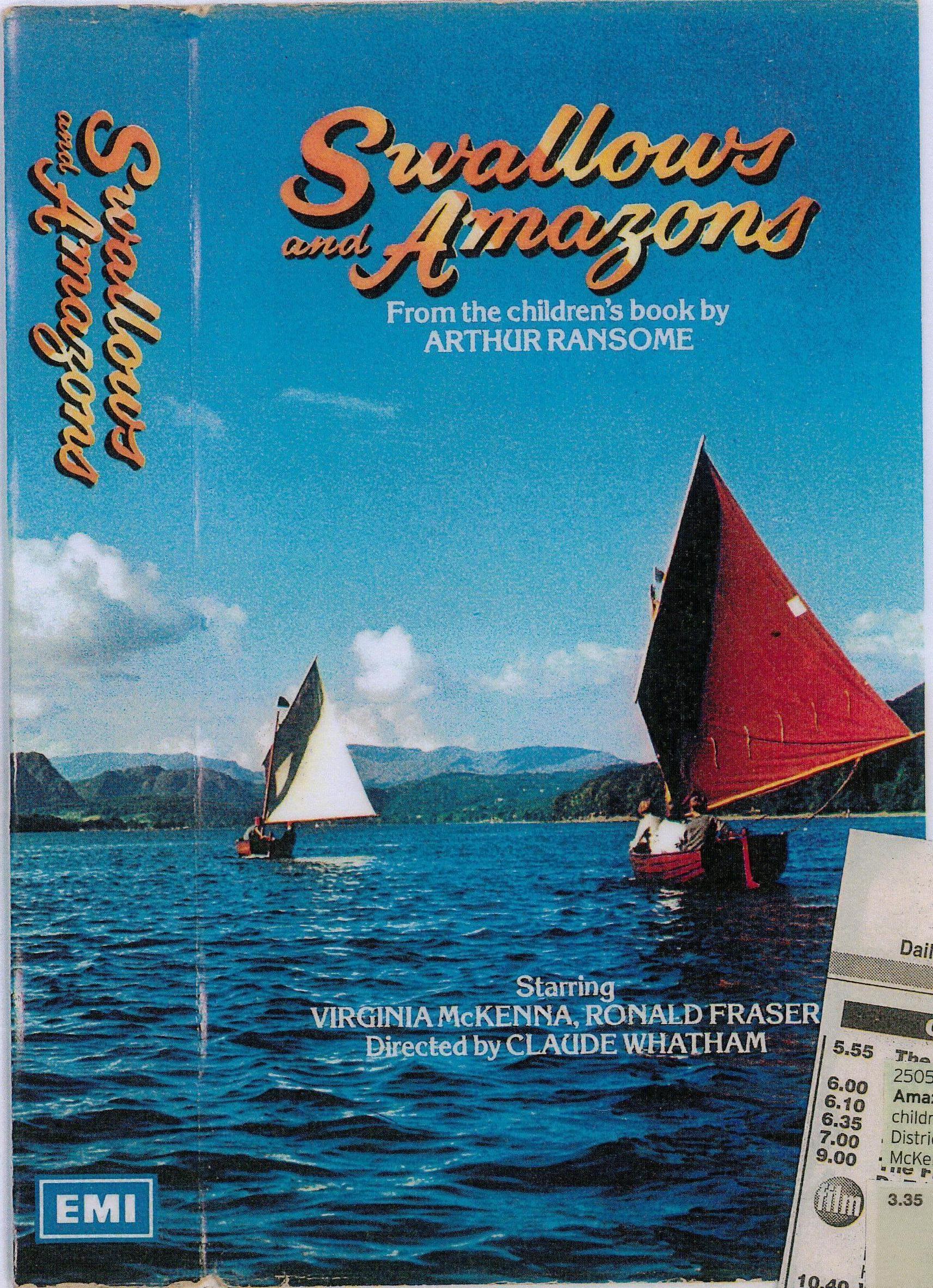
'Swallows and Amazons' on VHS
The cover of the original VHS version of ‘Swallows and Amazons’

One secret is that the film was made on four different lakes – Coniston Water, Windermere, Elterwater, Derwentwater – and a smelly lily pond. We were able to use Bank Ground Farm as Holly Howe and Brown Howe as Beckfoot, home to the Amazon pirates who careened their dinghy on the lake shore in the company of a 45-man film crew from Pinewood Studios.

David Blagden, David Cadwallader, and David Bracknell looking at the Amazon’s bottom with DPO Denis Lewiston in the background with the Panasonic

Careening the Amazon at Brown Howe, Coniston Water – photo: Daphne Neville

We were only given a couple of days to get used to handling Swallow and Amazon before filming began. Although happy out on the water, the director, Claude Whatham, knew little about boats. To make up for this, we had instruction from a sailing director in the form of a good-looking actor called David Blagden who presented a television programme called Plain Sailing. He’d recently raced crossed the Atlantic in a nineteen foot yacht called Willing Griffin but was unfamiliar with blustery Lakeland winds and did not know how to break down a script. Simon West, aged eleven, who played Captain John, ended up explaining to Claude how to get a decent shot while I tried not to shiver. My costume was designed by Emma Porteous of James Bond fame but consisted of nothing more than a short yellow dress and an enormous pair of navy-blue gym knickers.

Amazon, flying the Jolly Roger, with her seamed white lugsail and heavy centerboard is a lovely boat to sail. Although vital to the story, no one took into account that I needed to take her, on my own, from Secret Harbour on Wild Cat Island and drop her anchor off Cormorant Island. I was given a grey cardigan to wear but had not been asked if I could row. Having grown up handling a Thames skiff, I managed to use the leading lights we’d set up to negotiate the narrow channel and threatening rocks in one take. I repeated the action with Dennis Lewiston, the lighting-cameraman, and his 35mm Panavision camera in the stern but grew so tired that I needed to be carried ashore by a frogman acting as our safety officer.

Sophie Neville in The Amazon with DOP Denis Lewiston, his 16mm camera and a reflector board ~ photo: Martin Neville

Sophie Neville having captured the Amazon, with the lighting cameraman and 35mm Panavision Camera in her stern. Swallow is moored alongside – photo: Martin Neville

Titty later anchors Amazon off Cormorant Island on Derwentwater, but the shot of her wrapped in the sail, sleeping aboard, was taken in Mrs Batty’s blacked-out barn at Bank Ground, with the boat rocking on a cradle made by the unit carpenter. This was for a night scene when Titty is disturbed by burglars hiding a heavy trunk that turns out to contain Captain Flint’s treasure. When the action was repeated out on Derwentwater near One Tree Island, I got soaked. Rain had collected in the furled sails.

My one regret is that we didn’t follow the book when sailing the Amazon back to Wild Cat Island. The wind was up and Claude Whatham needed Captain John to sail Swallow ahead of the Amazon which is the faster boat. I originally took the tiller, as Titty is urged to in the story, but had trouble with the rudder. Mate Susan, played by Suzanna Hamilton, is at the helm on the cover of the Puffin paperback brought out to accompany the film, whilst I am fending off.

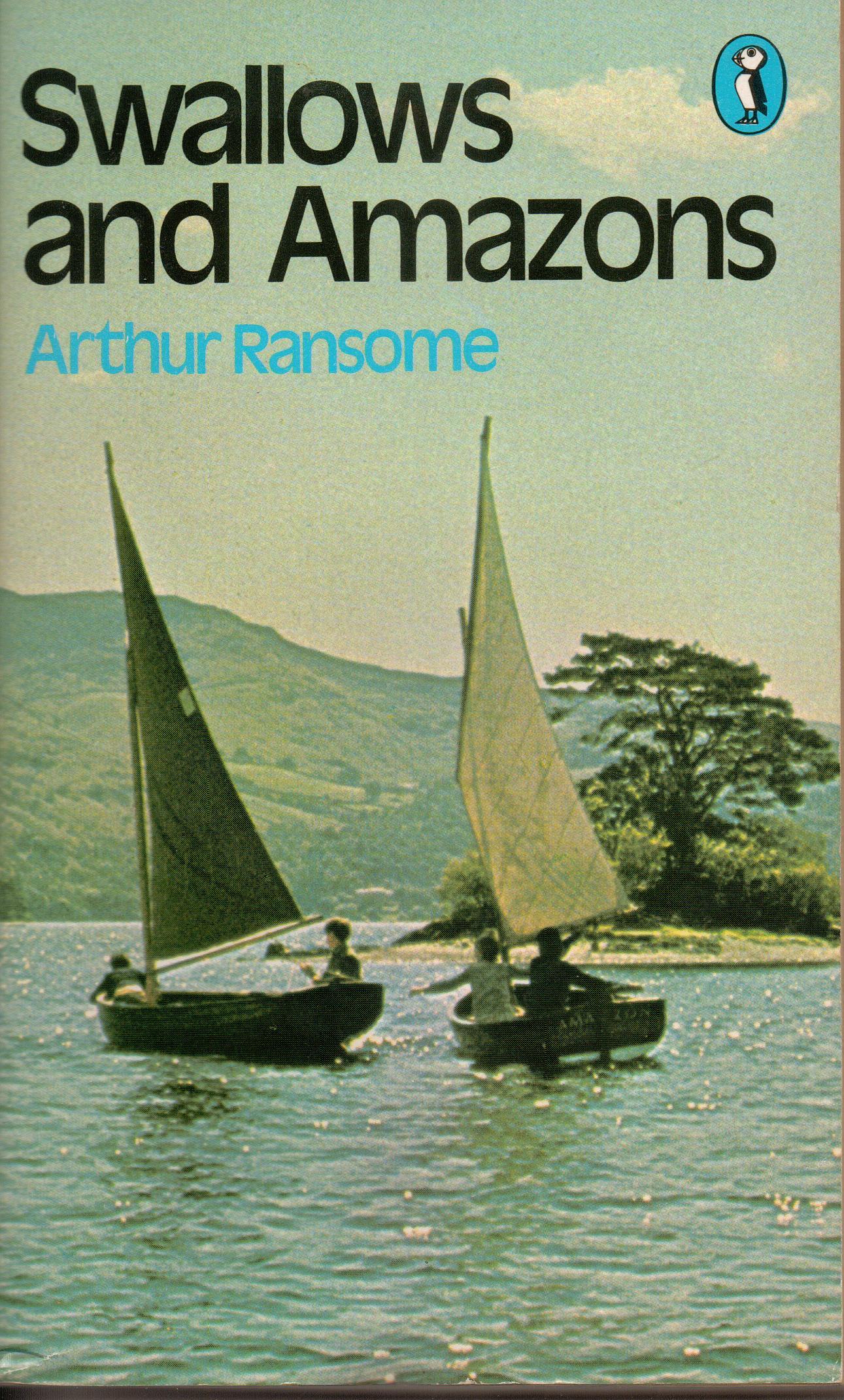
One of the film stills taken from the pontoon was used on the cover of the Puffin edition of ‘Swallows and Amazons’ brought out in 1974 to accompany the film.

The second part of the scene was shot on Coniston Water, with the Amazon Pirates, Nancy and Peggy ‘dancing with rage’ on Peel Island. A shot of this was used on the cover of a hardback and a DVD distributed by the Daily Mail.

Not many sailing films have been made and it was unusual for a movie to feature so many scenes set in two small dinghies. Mike Turk, whose family had been boat building for centuries, and Nick Newby of Nicol End Marine near Keswick, took up the challenge of adapting a cross-shaped pontoon to act as a mobile camera mount so that our dialogue could be recorded. This extraordinary vessel had two outboards but wasn’t easy to handle. The dinghies were wired to it with underwater cables but tended to pull away. Swallow’s mast broke the first time she was rigged, but the idea eventually worked and only Sten Grendon, playing Roger, fell in.


Amazon rigged up to the camera pontoon – photo: Richard Pilbrow

Somehow David Cadwallader, the grip looking after the camera equipment, managed to keep the horizon horizontal using no more than a spirit level on the tripod. Shadows were lifted from our faces by using reflector boards and, since the whole movie was post-synced at Elstree Studios, the audience can hear what we say.

Richard Pilbrow and his film crew on the camera pontoon with Eddie Collins operating the 16mm camera. Simon West and Stephen Grendon sail Swallow. Suzanna Hamilton is climbing aboard the Amazon with Sophie Neville

Filming Swallow and Amazon from the camera pontoon – photo: Daphne Neville

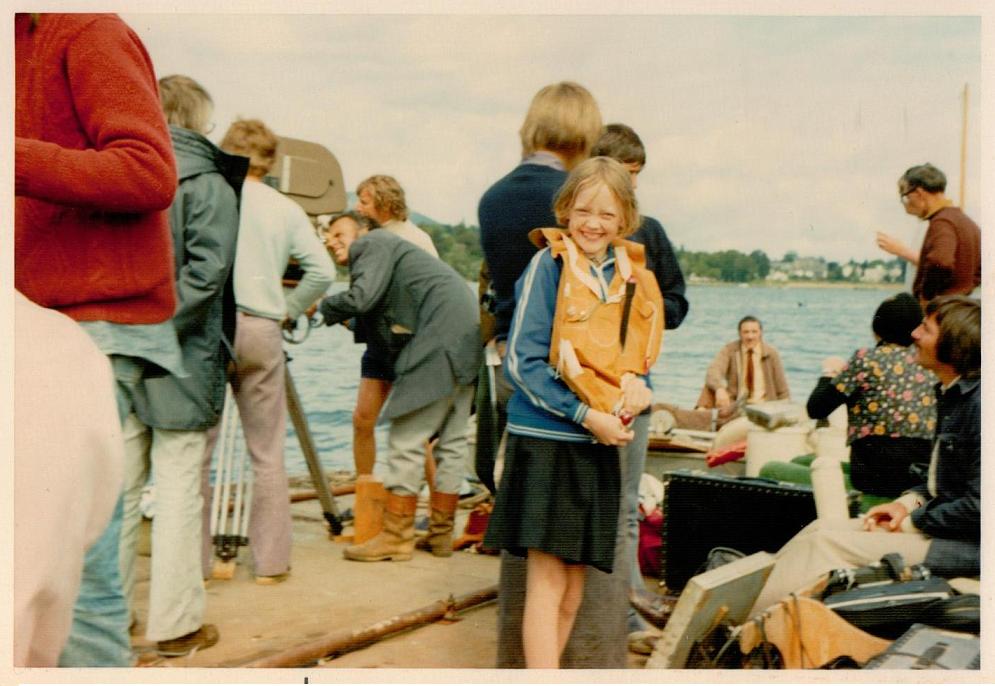
Sophie Neville on the pontoon during the filming of 'Swallows and Amazons'
The pontoon on Derwentwater with Richard Pilbrow, Bobby Sitwell, Denis Lewiston, Claude Whatham, David Cadwalader and Sophie Neville aged 12 playing Titty. Eddie Collins looks on ~ photo: Daphne Neville

Sophie Neville on the camera pontoon on Derwentwater – photo: Daphne Neville

The first Amazon, a chunky sea-going fourteen-footer with a standing lugsail purchased in Barrow-in-Furness by the Altounyan family in 1928, was originally called Mavis. After being restored, she was renamed Amazon in line with Ransome’s books but remains too leaky to take out. She now resides in the John Ruskin Museum at Coniston where she can be visited like a great aunt.

None of us children knew that the Amazon we sailed had been used in the 1963 BBC adaptation of Swallows and Amazons made in black and white with Susan George playing ‘Kitty’ as Titty was renamed. Looking at the photographs, it would have been good if Amazon’s hull had been painted black but her varnished planks are a nod to the 1970s when everyone was busy stripping pine.

By 2003, she was owned by the White family who I met when they brought Amazon from Kent to Cumbria to feature in Countryfile and an episode of Big Screen Britain. Ben Fogle met their twin daughters on Peel Island, looking very much like Nancy and Peggy in damp bathing costumes having been swimming in Coniston Water. It has been extremely generous of them to pass such a precious boat on to The Arthur Ransome Society.

Amazon will soon be available to hire at Hunter's Yard, Ludham
Amazon will soon be available to hire at Hunter’s Yard, Ludham

Amazon at Hunters Yard – photo: Marc Grimston

Amazon is currently being kept at Hunter’s Yard near Ludham where you can apply to sail her on the Norfolk Broads, along with the Titmouse and the Teasle, (a cabin cruiser called Lullaby) and a punt called the Dreadnaught featured in the 1984 BBC adaptation of Coot Club. Swallow is also there under restoration, needing a new keel.

Amazon being restored at Hunter's Yard, Ludham
Amazon being restored at Hunter’s Yard, Ludham

Amazon at Hunters Yard – photo: Marc Grimston

The plan is for both Swallow and Amazon to be on display at Windermere Jetty in Cumbria for the weekend of 29th & 30th June 2024. We hope some of the steamboats used to dress the Rio scenes set at Bowness-on-Windermere such as Osprey and George Pattinson’s launch Lady Elizabeth can be in attendance. Windermere Jetty is currently restoring the steam launch Esperance used by Ransome as his model for Captain Flint’s houseboat, and you can find the fourteen-foot RNSA dinghies used in the 2016 movie of Swallows and Amazons moored in the wet dock.

In 2021, everyone at Windermere Jetty gasped when Rupert Maas valued Swallow highly on BBC’s Antiques Roadshow, but the true worth of both Swallow and Amazon is akin to Captain Flint’s hidden treasure: instead of gold ingots his trunk contained precious memories of friendship and adventure. They no doubt kept him on course when the storms of life blew in and gave him plenty to write about. Just as Arthur Ransome’s books grant us solace, my prayer is that many will be able to grab the chance of sailing the little boats that take us into the stories immortalised on film so long ago. 

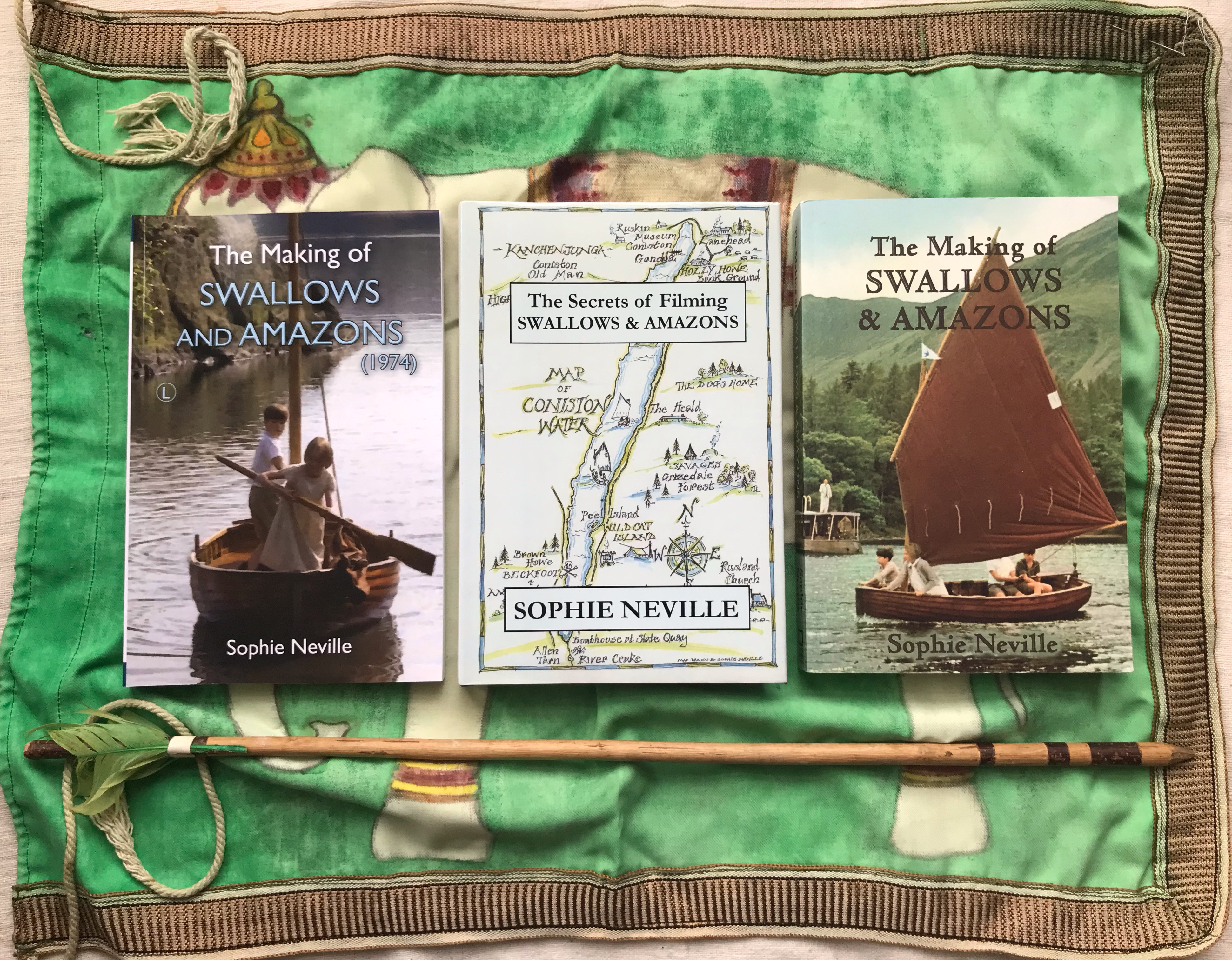
You can read more of Sophie Neville’s memories in The Making of Swallows and Amazons’, published by the Lutterworth Press and now available as an audiobook narrated by the author

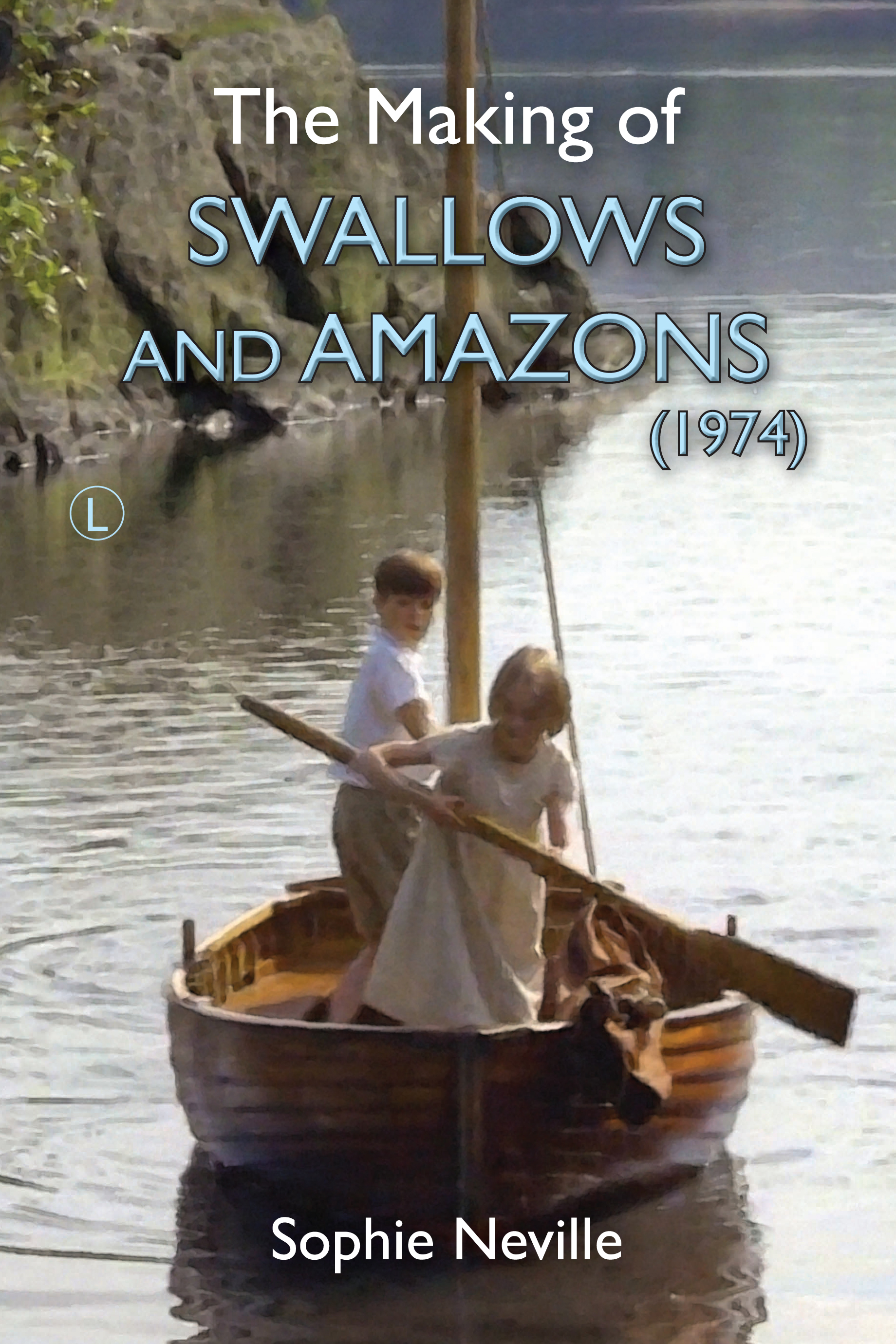
'The Making of Swallows and Amazons (1974) by Sophie Neville'
Different editions of ‘The Making of Swallows and Amazons (1974) by Sophie Neville’

Thanks go to all those who have looked after and lovingly restored the inspirational boats that appear in the adaptations of Arthur Ransome’s books. If you would like to help by making a donation towards the restoration, the link is:

I would like to Donate – The Arthur Ransome Society (arthur-ransome.org)

Sophie Neville with Titmouse at Hunter’s Yard. She will join Swallow and Amazon at Windermere Jetty on 29th and 30th June. Come and join us!

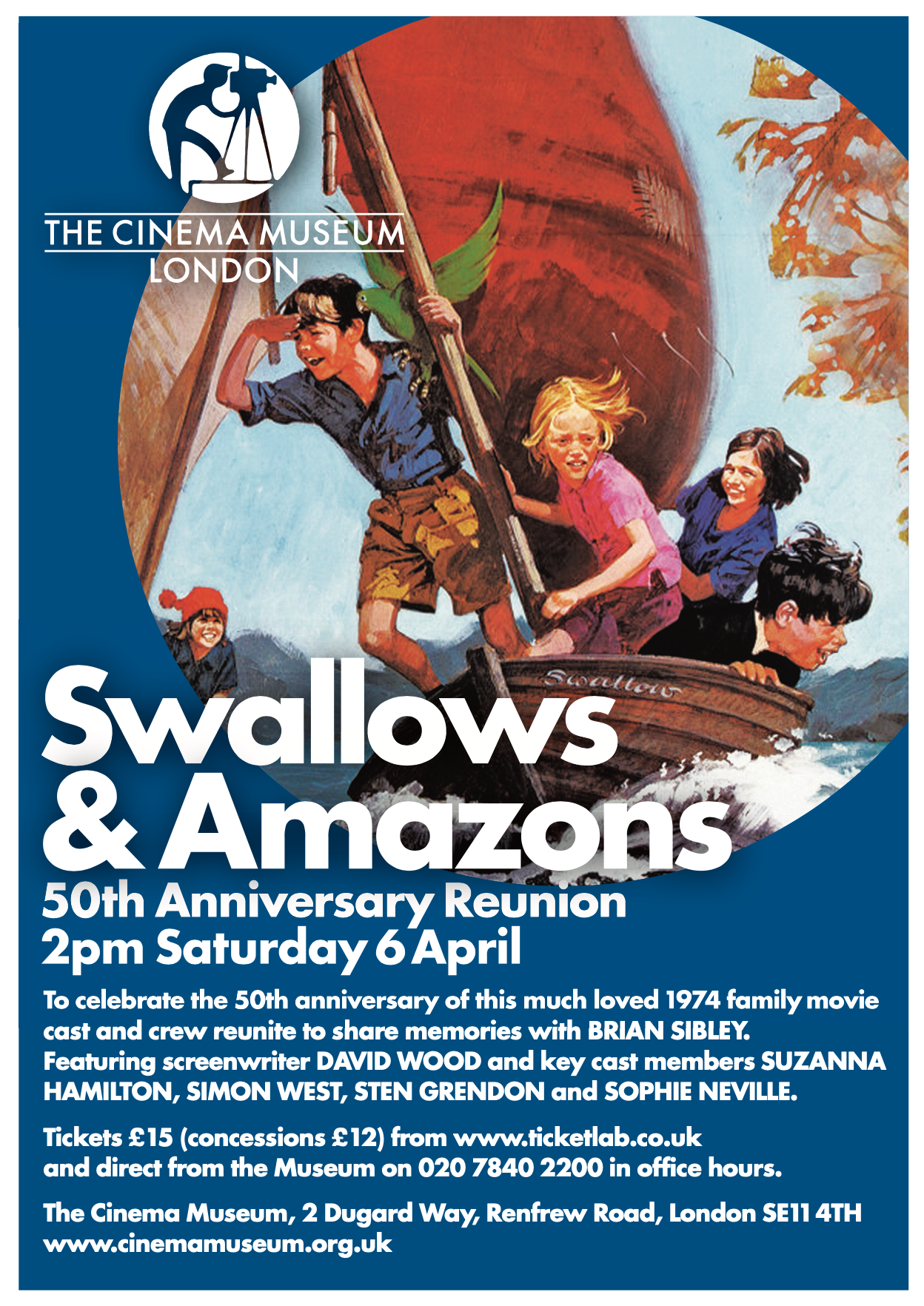
50th Anniversary of launching the movie ‘Swallows & Amazons'(1974) in cinemas

Save the Dates!

On Saturday 6th April at 2.00pm there will be a 50th Anniversary screening of the original film ‘Swallows and Amazons’ followed by a Q&A with cast and crew hosted by Brian Sibley and the screenwriter, David Wood at the Cinema Museum in London. More info and link to ticket sales here.

On Saturday 29th & Sunday 30th June 2024 a Swallows and Amazons Festival is being held at Windermere Jetty Museum near Bowness-on-Windermere in Cumbria hosted by Lakeland Arts and The Arthur Ransome Society. We are hoping that members of the cast and crew will be able to come and share their stories, including Kerry Darbishire (below) who still lives in Cumbria. Now a poet, she appeared in the opening scenes as Vicky’s nurse.

Kerry Darbishire who played Vicky's nurse in 'Swallows and Amazons'(1974)
Kerry Darbishire who played Vicky’s nurse in ‘Swallows and Amazons'(1974)

The Arthur Ransome Society is bringing Swallow and Amazon, the dinghies used in the film which they now own, along with Titmouse from ‘Coot Club’. The steamboats Osprey and Lady Elizabeth that appeared in the Rio scene of the 1974 film will be at Windermere Jetty. Hopefully the original Amazon owned by the Altounyan family, and Arthur Ransome’s own dinghy Coch-y-Bonddhu that he used as the model for Scarab will be there with the RNSA dinghies that played Swallow and Amazon in the 2016 movie. There may well be trips on MV Tern and the Lakeside and Haverthwaite Railway. 

Sophie Neville with Titmouse - now renovated
Sophie Neville with Titmouse – now beautifully renovated

Saturday 13th July – A screening of Swallows and Amazons (1974) at the Riverside Cinema in Woodbridge, Suffolk.

People who read the paperback on ‘The Making of Swallows and Amazons’ ask how I could remember what happened on each day in such detail, but I had the diaries I’d kept on location and was able to rewatch the film on my laptop, studying the detail.

Aged twelve, I was a little older than Simon West who played Captain John, so I was able to recall more. He now reckons that having my mother on location with me must have helped as we would have discussed each day at the time and would have naturally chatted about shared experiences. She also took hundreds of behind the scenes photos, along with home movie footage captured on her cine camera.

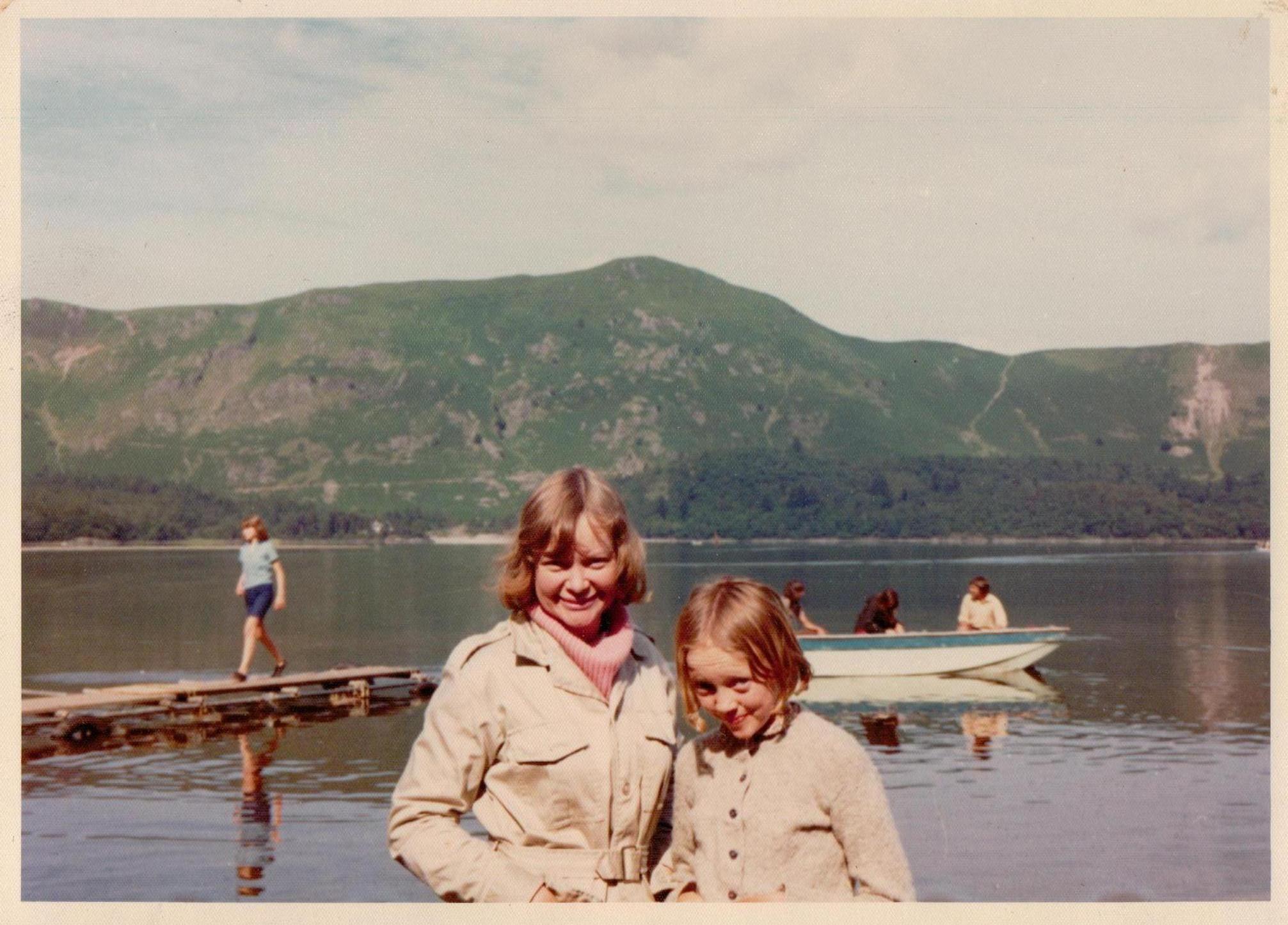
Daphne Neville with Sophie Neville while filming 'Swallows and Amazons' in Cumbria
Daphne Neville with Sophie Neville while filming ‘Swallows and Amazons’ in Cumbria. Kit Seymour is walking along the jetty in the background.

Fans of the DVDs write in from all over the world offering encouragement: “I was able to catch up on Swallows and Amazons Forever! I’ve only been waiting a lot of decades to watch this. It was fabulous and you embodied Titty. I now need to re-read Ransome’s book and yours.” Suzie Eisfelder, Melbourne, Australia

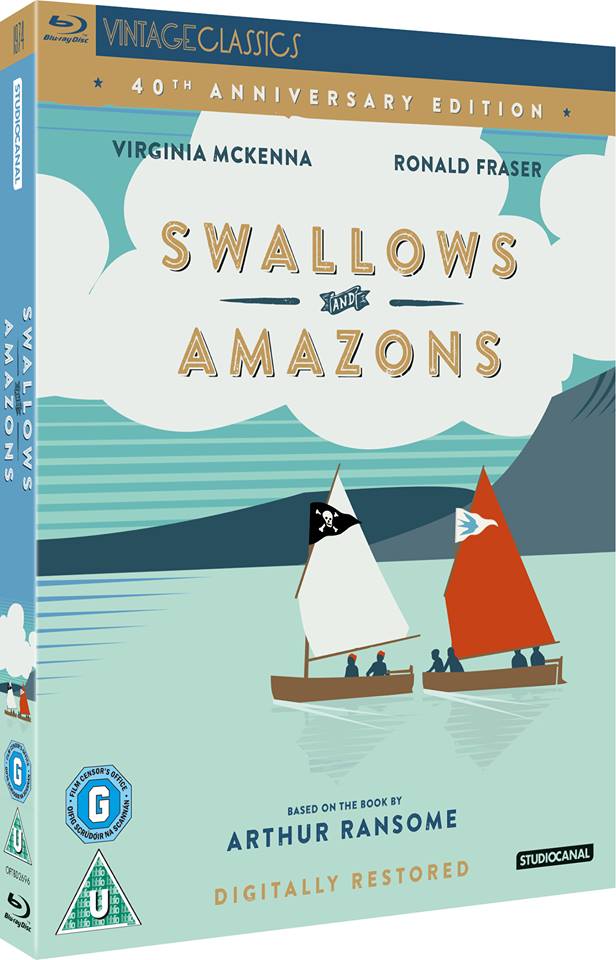
Once screened in cinemas with ‘The Sting’ and ‘The Great Gatsby’, ‘Swallows and Amazons’ (1974) has been labelled a Vintage Classic. The good thing about this is that the DVD includes an interesting Extras package. Here is one of the original reviews:

Richard Pilbrow, who produced the movie ‘Swallows and Amazons’ (1974)

Daphne Neville with Richard Pilbrow1Richard Pilbrow produced the original movie ‘Swallows and Amazons’ (1974) in which I appeared in a as a girl. I’m told that it has been broadcast on television more times than any other British movie and has been an inspiration to many.

Swallows and Amazons (1974) sepia film poster (c) StudioCanal
Arnaldo Putzu’s poster for the EMI film Swallows and Amazons (1974)

Back in the early 1970s, Richard was busy producing iconic West End musicals such as ‘A Funny Thing Happened On The Way to The Forum’ when he was inspired to make a film adaptation of Arthur Ransome’s novel while taking a break in the Lake District.

Richard Pilbrow and Neville Thompson
Richard Pilbrow on location with his colleague Neville Thompson ~ photo:Daphne Neville

He said the most difficult task he ever took on was persuading Mrs Ransome to grant him the rights. Arthur Ransome had famously disliked a BBC adaptation and passionately did not want a ‘Disneyfication’ of the book based on his own childhood memories.

Sophie Neville appearing on the cover of Swallows and Amazons published by the Daily Mail

Richard said that raising the film finance was relatively easy. Nat Cohen of EMI Films happened to be looking for a classic story akin to ‘The Railway Children’, which had been a box office success. He’d never heard of ‘Swallows and Amazons’ but an assistant in his office was wildly enthusiastic and Richard secured a budget of £250,000 to make a ninety minute movie entirely on location in the Lake District.

Richard Pilbrow and Claude Whatham in the Capri
Producer Richard Pilbrow and Director Claude Whatham discussing the script in the Capri on Derwentwater. Molly Pilbrow is in the boat with them ~ photo: Daphne Neville

Richard loved being out on the water and took Mrs Ransome to find authentic locations. Being determined that the six children playing the Swallows and the Amazons should be able to sail well, he advertised in yacht clubs and interviewed about 1200 candidates. I met the director at the Theatre Project offices in Shaftesbury Avenue. Those short-listed were taken on a sailing weekend in Burnham-on-Crouch to see how they coped afloat.

The final audition for 'Swallows & Amazons' in March 1973
Richard Pilbrow, Claude Watham, Fred Pilbrow, Sophie Neville, Suzanna Hamilton

Mrs Ransome kept a close eye on the script, insisting that the part of Titty was played by ‘an English rose’, which must be why I was cast as the heroine.

Sophie Neville as Titty Walker in Swallows and Amazons
Sophie Neville as Titty Walker in the ITV trailer for the movie of ‘Swallows and Amazons’ when it was first shown on television in 1977

My mother came up to look after us six children who played the Swallows and Amazons. We landed on Wild Cat Island and began playing out the characters that sprung from the pages of the book.

Daphne Neville and Richard Pilbrow on Peel Island
Daphne Neville and Richard Pilbrow on Peel Island on Coniston Water in 1973

Claude Whatham was actually the second director appointed to work on the film. He had only made one other feature – ‘That’ll Be The Day’, starring David Essex and Ringo Starr, but he was an outdoorsy person and got on well with Richard who gave him a free rein. They embraced the 1929 period and the idea of somehow capturing childhood innocence.

Richard Pilbrow and Claude Whatham at The Secret Harbour on Peel Island, Coniston Water
Producer Richard Pilbrow with Director Claude Whatham in their wet weather gear at The Secret Harbour on Peel Island, Coniston Water

Unpredictable Lakeland weather and working out on the water could make scheduling and logistics a nightmare but Richard had the support of an excellent production team working under Neville Thompson who also organised the post-production work at Elstree Studios where the film was post-synced.

Producer Richard Pilbrow with Neville C Thompson on Derwentwater in the Lake District in 1973
Producer Richard Pilbrow and Production Associate Neville C Thompson on Derwentwater

Neville was passionate about film making, becoming known as ‘the last gentleman producer.’  Although gregarious at times, he was a quiet man who had begun working as a location manager for Mike Newell and became a production manager for Ken Russell.

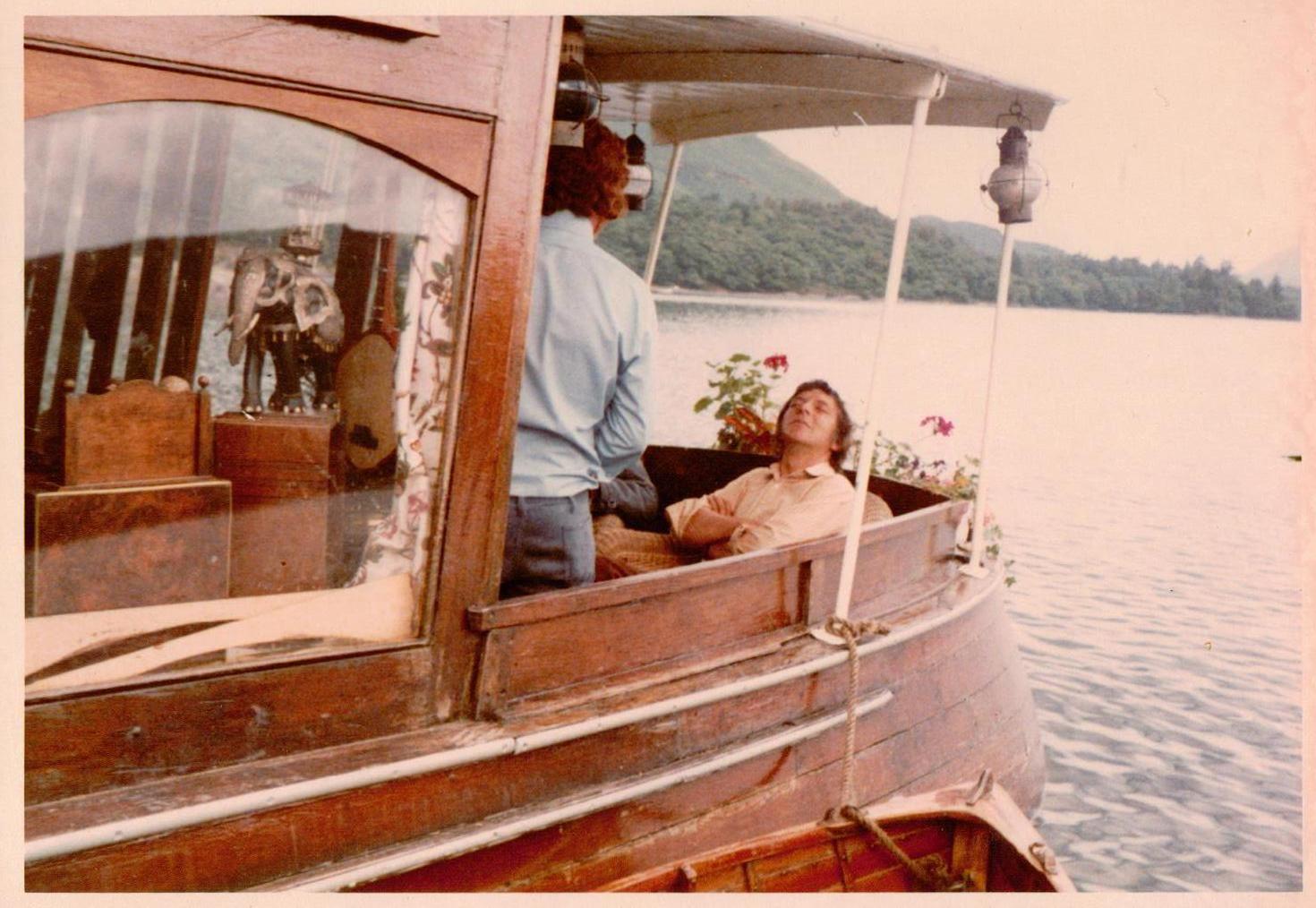
Neville C Thompson on the houseboat
Neville C Thompson, the Associate Producer relaxing on set – to be fare this shot may well have been taken on Sunday 24th July 1973, by Daphne Neville

Neville was diagnosed with Lukemia at the age of 47 but lived another twenty years, ending his days in Woodbridge in Suffolk. you can find his impressive list of production credits here

Richard Pilbrow with the Swallows in Egham
Director Claude Whatham with Sophie Neville, Stephen Grendon, Suzanna Hamilton and Simon West. Producer Richard Pilbow looks on ~ photo: Daphne Neville

The Pilbrows spent their family holidays on the Isle of Coll, so it was not surprising that Richard wanted to make ‘Great Northern?’ as a sequel even though Mrs Ransome wasn’t keen.

Swallows and Amazons Coot Club
Henry Dimbleby and Rosemary Leach in ‘Coot Club’ and ‘The Big Six’

Sadly it was too difficult in the mid-1970s to raise money  for filming and Richard never produced another movie. He sold the rights to adapt ‘Coot Club’ and ‘The Big Six’ to the BBC, and I saw him in Norwich in 1983 when I was setting up the drama series with Joe Waters.

When Richard heard that I was giving talks on ‘The Making of Swallows and Amazons (1974)’ he kindly sent me Swallow’s original burgee and Captain Flint’s white elephant flag, along with a Jolly Roger – all handmade props used in the original film.

We last met up in Covent Garden when he came to London to receive an honour from the Central School of Dramatic Art where he had originally studied Stage Management and Technical Theatre Studies.

Sophie Neville as Titty with Suzanna Hamilton as Susan
Sophie Neville with Suzanna Hamilton

He later wrote to thank me for collecting information on how the film of ‘Swallows and Amazons’ was and writing about the impact it had. He loved hearing about our Q&As at cinemas and admired StudioCanal’s remastered DVD. ‘They really did a beautiful job—a very subtle enhancement.’

Swallows and Amazons 1974 - Simon West, Sophie Neville, Suzanna Hamilton and Sten Grendon in Secret Harbour
Simon West, Sophie Neville, Suzanna Hamilton and Sten Grendon in Secret Harbour

I sent Richard and his family on safari to the Waterberg in South Africa, where he ended up riding a horse past grazing rhinos. He is survived by his three children, grandchildren and his wife Molly who worked as his assistant on ‘Swallows and Amazons’.

Sophie Neville in Swallow

Richard’s obituary in the Telegraph can be found here

The momentous story of his life and work is recorded in his memoir ‘A Theatre Project’ available online here.

Suzanna Hamilton, Richard Pilbrow and Sophie Neville

If you would like to read more, there are many stories in ‘The Secrets of Filming Swallows and Amazons’, available as an ebook and this paperback:

'The Making of Swallows and Amazons (1974)'

David Wood, who wrote the screenplay for ‘Swallows and Amazons’ (1974), shares stories from filming ‘If….’ the British movie he starred in opposite Malcolm McDowell in 1973.

FILMING if….

David Wood OBE shares an insight into filming one of the most outrageous British films of all time.

Filming If…. is the first written memoir about the cult classic film with rather a short title directed by the talented Lindsay Anderson in 1968. David Wood co-starred as one of the three public school boys, alongside Malcolm McDowell (Mick) and Richard Warwick (Wallace), who led a revolution against authority. This was regarded by many as a metaphor for the social and political situation in the UK.

If…. celebrates its 50th anniversary this year. The book contains David’s memories of the personalities involved, the day-to-day challenges, and the reception given to the avant garde film, which won the Palme d’Or at Cannes. David Wood reflects the brilliance of Lindsay Anderson and his team. With a foreword by Malcolm McDowell and an afterword by George Perry.

Filming If…. has been highly endorsed and enjoyed by many:

…What a brilliant thing you have done, recalling what it was like being directed by the great Lindsay Anderson, and being part of this hugely important film and its dazzling cast.” – Joanna Lumley OBE

David Wood has written a wonderfully evocative insider’s view of the shooting of one of the best British films ever made.” – Sir Alan Parker

“If…. is a classic movie – I was at the première in 1968 and we all sensed it then… I’ve a feeling this book’s going to be something of a classic, too.” – Gyles Brandreth

“What are you waiting for? David Wood’s gentle memoir of the film and its legacy is required, one-sitting reading.” – Total Film Magazine

Copies are available from the author via Amazon: https://amzn.eu/d/9Cgiz0X 

Sophie Neville and David Wood appearing on CBBCTV

David Wood went on to write or adapt a huge number of plays, musicals, television programmes and feature films. The first screenplay he wrote was for ‘Swallows and Amazons’ (1974). He wrote to me with stories of working with the audacious Mrs Ransome, which I posted on this website here.

David’s movie ‘Back Home’ won a gold award at the New York Film and Television Festival in 1991. He went on to receive enormous acclaim in the West End, winning an Olivier Award in 2013 for his stage adaptation of ‘Good Night Mr Tom’, and the JM Barrie lifetime achievement award for his contribution to children’s arts in 2017. You can find his website here.

David and I caught up properly when we were invited onto the CBBC programme Cinemanics – which you can read about here.

David Wood on QuoteUnquote

The Make up designer Peter Robb-King adds points to add to the third edition of ‘The Secrets of Filming Swallows and Amazons’ part eight.

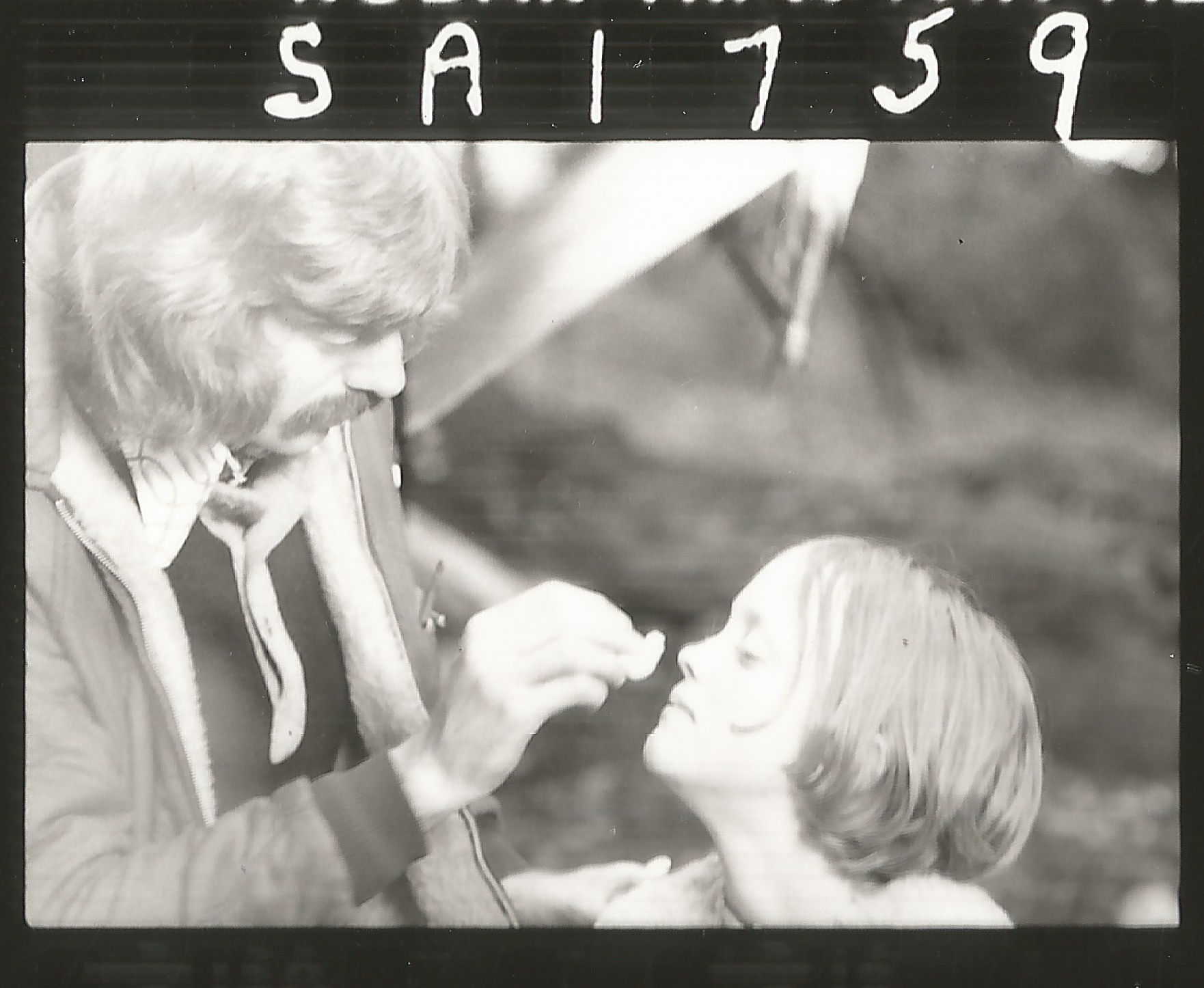
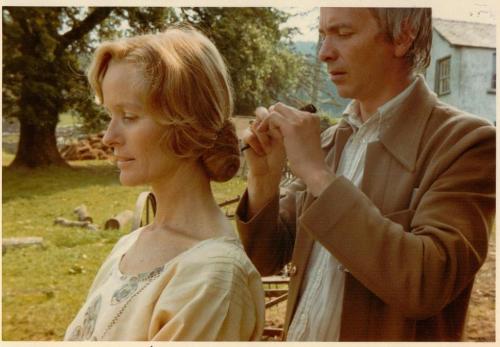
Sophie Neville being made up for the part of Titty by Peter Robb-King in 1973

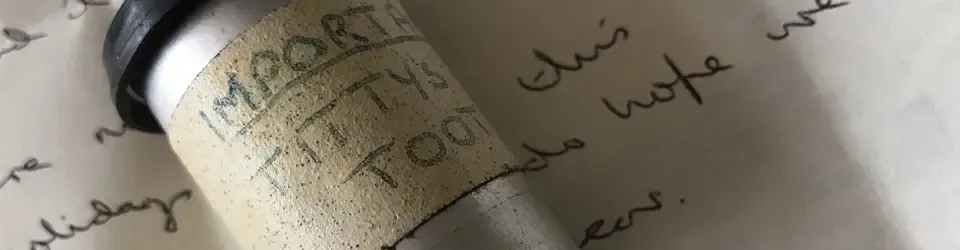
Peter Robb-King, the Make-up Designer on ‘Swallows and Amazons'(1974) rang up to say he had my milk-tooth that had fallen out half-way through a scene with Virginia McKenna. ‘It’s in a metal film canister, which I’d taken to a dentist to try and get a replacement.’

He said that although not his first movie, ‘Swallows and Amazons’ was his first film when he was in charge of Make-Up design. ‘I hoped initially to work at the BBC but was turned down for being a man.’ It just happened that he went on a supernumerary training scheme for feature film make-up in 1968, starting on ‘The Avengers’.

He said the highlight of his career would be impossible to pin point, but he worked on some iconic movies including The Rocky Horror Picture Show, Legend with Tom Cruise and some of the Star Wars, Batman and Indiana Jones pictures. At one time he rescued a parrot while making an Indiana Jones film in Sri Lanka. ‘Three ring-necked parakeet chicks were thrown out of their nest by a crow and rescued by the animal handler. One was adopted by Stephen Spielburg, another by the production manager, while Peter and his wife brought up the third, which lived with them for twenty-five years.

Ronald Fraser as Captain Flint with Daphne Neville and Sophie Neville playing Titty Walker on Derwentwater in 1973

Peter knew Ronnie Fraser’s addiction to alcohol would be difficult for the crew to deal with but managed to get him in and out of the make-up caravan.

‘He wasn’t alone at the time. There were a number of screen actors at the time who you’d think would never be able to say a line but they’d end up word-perfect.’ He didn’t recall any difficult moments with Ronnie. Peter reckoned that one of the reasons why they didn’t make a sequel could have been Ronnie’s problem. ‘He may have damaged his own career. It’s difficult for the other actors.’ He thought it sad that there was never a sequel.

Ronald Fraser, Peter Robb-King (make-up) and Ian Whitaker (set dresser) on the houseboat in 1973

Peter told me that, ‘Denis Lewiston (the director of photography on ‘Swallows and Amazons’) was scared of green. He didn’t like photographing the colour green, which everyone thought hysterical since we were filming in the Lake District.’

Dennis Lewiston, director of Photography on 'Swallows and Amazons' ~photo:Richard Pilbrow
Dennis Lewiston, director of Photography on ‘Swallows and Amazons’ ~photo:Richard Pilbrow

Denis Lewiston, the brilliant cinematographer, has died but he was around to approve the remastered version of the BluRay and DVD of ‘Swallows and Amazons’ in 2014. After a long and fulfilling career he will be remembered fondly and admired for the numerous films he made, seeking excellence with every sequence.

To see some of the shots Denis set up for the film of ‘Swallows & Amazons'(1974) please click here for the BFI site. Peter assured me that a recent industry survey of children’s films rated ‘Swallows and Amazons’ (1974) as one of the best ever.

Peter Robb-King was one of the few people to formally retire from the film industry. ‘It’s very rare. Many people don’t retire. They just stop working.’ His daughter sent him a picture of him making me up on the set of Swallows and Amazons. ‘I remember what I looked like then, so it was interesting.’

The full story of ‘The Making of Swallows and Amazons’ is now available as an audiobook.

The audiobook of 'The Making of Swallows and Amazons'
The new audiobook

Author Interview: Sophie Neville

by Francesca Tyer –

  • How old were you when you first read Arthur Ransome’s books? Did you have a favourite storyline or character?

My father devoured the Swallows and Amazons books as they were published in the 1930s. I was a slow reader but must have started the series aged about ten or eleven as I’d read seven of the twelve by the time we arrived in the Lake District to make the film in 1973. I enjoyed the practical aspects of the books and most readily identified with Mate Susan, although I counted all the characters my friends. Ransome published thirty other books. Some are heavy going, but I enjoyed his autobiography.

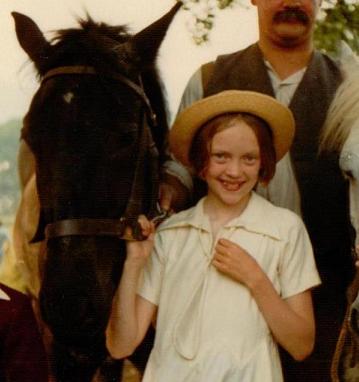
Sophie Neville as a child
Sophie Neville as a child ~ photo: Martin Neville
  • Have you re-read the books since your childhood? If so, how has your perception of the books and the characters, in particular Titty, changed?

I’ve re-read most of the books in the Swallows and Amazons series and gain something new each time I read Swallows and Amazons, recently appreciating how important Titty’s imagination was to progressing the story. Her ideas take the plot forward. I ended up writing an article on how Swallows and Amazons can be seen as an allegory to missionary work undertaken by Arthur Ransome’s great aunts, one of whom received a Boxer arrow in her bonnet for her efforts in China.

Simon West and Sophie Neville on Peel Island in 1973
  • Do you think playing Titty influenced your own personality? If so, how?

Titty helped me to look beyond the saucepans and concentrate on creative endeavors rather than getting bogged down by management and administration. Acting in the film instilled in me a work ethic, responsibility and striving for excellence. Looking back, the part was a huge burden to lay on the shoulders of a twelve-year-old but it was worth it. The film has had an enduring quality and is still broadcast today. I find constant interest when I’m in social or sporting situations. For me, it has truly been a case of ‘Swallows and Amazons Forever!’

Sophie Neville rowing to Cormorant Island
Sophie Neville as Titty and Stephen Grendon as Roger rowing to Cormorant Island
  • Do you remember what you wanted to be before you became an actress? Did a writing career ever interest you as a child?

I acted professionally from the age of ten until I was twenty-one, going into television production at the BBC before I became a writer. I’ve also worked as a safari guide, wildlife artist and – thanks to Titty – as a cartographer. You can see a few maps I drew on my website here.

I’ve undertaken quite a bit of charity work, fundraising and acting as webmaster for The Waterberg Trust. I can’t remember having strong career ambitions as a child but knew art to be my strongest subject. I have a visual brain that flits about. Keeping a diary and constant letter writing has helped me develop my writing and has given me a huge quantity of material to draw upon.

Suzanna Hamilton with Sophie Neville as Titty busy writing the ship’s log
  • What led/inspired you to become a producer?

Claude Whatham was a ground-breaking director who inspired all those around him, but directing became a viable option at Opera Camp, annual amateur productions we took part in over our summer holidays as teenagers. I began directing plays at university and developed a burning desire to direct for television, always ‘looking for the shot.’ By producing documentaries, I got to direct and put them together, editing voice-overs into a narrative arc. I would now like to adapt my own stories for film, so have Final Draft software on my laptop and Witness Films Ltd registered as a UK company, but although I have a couple of ideas out to tender, I’ve been concentrating on polishing my historical novels.

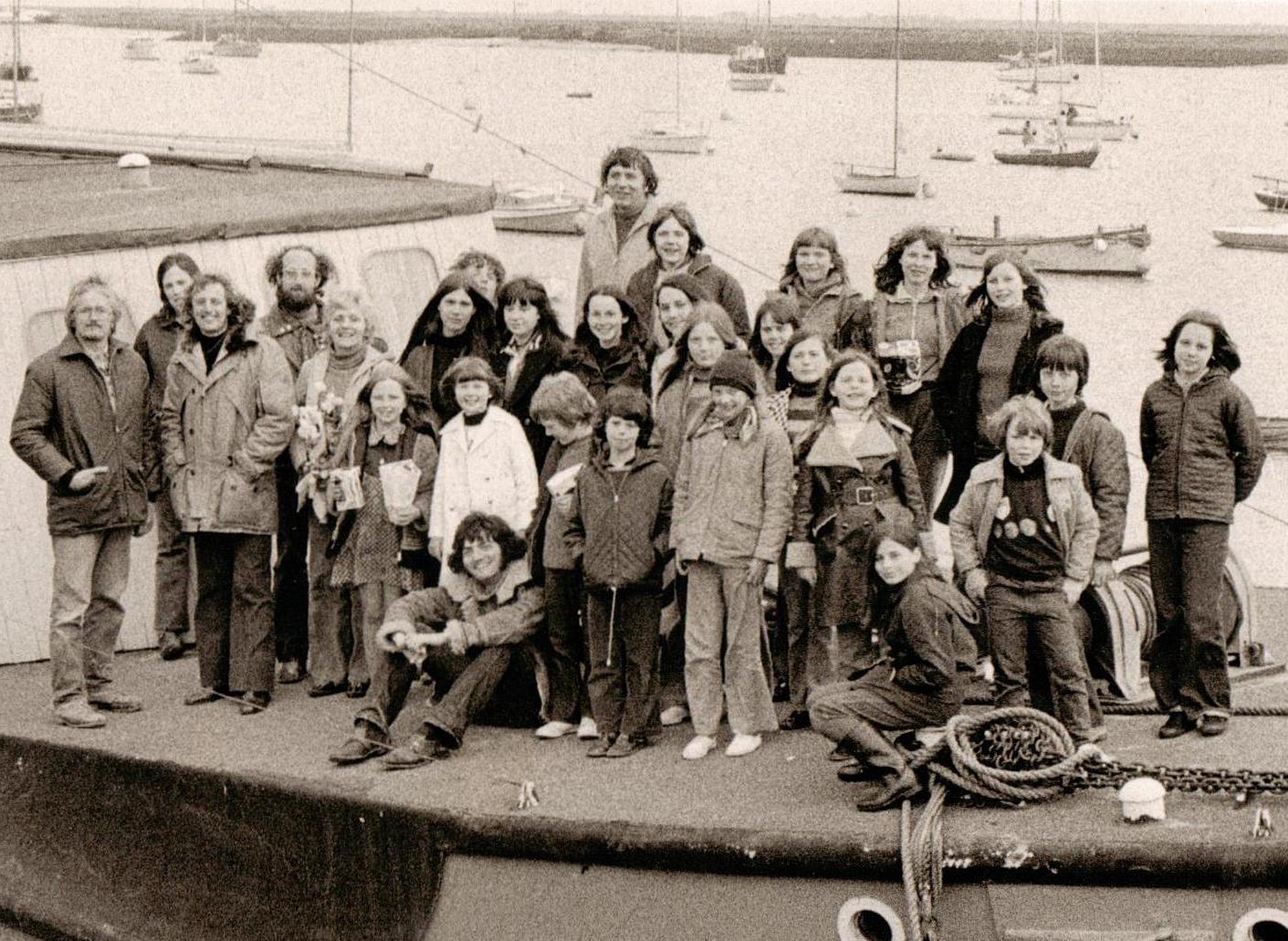
The director and cast of Swallows and Amazons
Director Claude Whatham with his cast of Swallows in 1973
  • I’ve read that before filming Swallows and Amazons, you were in a production of Cider with Rosie. Was playing Titty anything like your experience of playing Eileen Brown?

Claude Whatham directed bother Cider With Rosie (1971) and Swallows and Amazons (1974) so the experience was similar. I also appeared in a Weetabix commercial he made in the Cotswolds. All three productions were set in roughly the same period, but Titty’s costumes, designed by Emma Porteous, were easiest to wear. Cider With Rosie was the most daunting production as I had to play the piano, which required three days of intensive practice. Titty only had to draw, write and row a boat, which was much more my thing.

Titty working on the chart - copyright StudioCanal
Titty working on the chart

Working with Virginia McKenna was amazing. Hugely inspirational and one of our most iconic British film actresses, she taught me a great deal – and still does.

Virginia McKenna playing Mother in Swallows and Amazons
  • What were your favourite and least favourite parts of the filming process?

We loved eating iced buns on set but hated hanging around in the cold.  There was a lot of waiting for clouds to pass in the Lake District where I spent days clad in nothing but a thin cotton dress and enormous pair of navy blue gym knickers. I became more interested in the technical aspects of filming rather than acting, which for us children was more a case of ‘Let’s pretend.’

Claude Whatham showing the 16mm camera to Simon West and Sophie Neville. Sue Merry and Denis Lewiston.
Claude Whatham showing the 16mm camera to Simon West and Sophie Neville. Sue Merry and Denis Lewiston can be seen behind us.
  • What were your first impressions of the Lake District? Had you ever been to the Lake District before filming Swallows and Amazons?

My parents had taken me to the Lake District as a three-year-old and loved going themselves, so it was a treasured destination in my family. I was dazzled by the lakes and mountains. Holly Howe (Bank Ground Farm) above Coniston Water is a very special place. I love gazing up into the Langdales and walking up into the fells. We were members of the Steam Boat Association, something I have written about in my book, Funnily Enough and I returned over Lockdown to appear in BBC Antiques Roadshow when Swallows and Amazons was profiled.

Sophie Neville aged four
Sophie Neville aged three in the Lake District
  • How detailed was the diary you wrote during the filming? Had you ever thought about turning your notes into a book before you were persuaded to write The Secrets of Filming Swallows and Amazons?

I’ve put every page of my diary kept whilst making Swallows and Amazons on my blog at Sophieneville.net/swallowsandamazons  My mother kept them, nagging me to write them up for years. Finding the time was difficult but I got there in time for the 40th Anniversary of the film’s release when StudioCanal brought out a DVD with an Extras package we appeared in.  

Diary kept filming 'Swallows and Amazons 16th May 1973
  • What was the writing process like? eg. challenges

The challenge with adapting a diary is to eliminate inevitable repetition but something extraordinary or disastrous happened everyday whilst filming Swallows and Amazons. With so much filmed afloat or on islands, it was an incredibly difficult production to work on and made a story in itself. I enjoyed finally bringing the book to life and interacting with readers who so kindly sent in reviews and comments. Some love hearing what we all went on to do after the film. One reader did not want to know, but I included this as there were many interesting links and coincidences, especially since I worked on the BBC serialisation of Coot Club and The Big Six.

and favourite moments?

It is very exciting when the first paperbacks arrive. Every author enjoys unpacking that box.

The first edition of The Making of Swallows and Amazons
  • What is the most surprising thing you’ve learned as a writer?

I never guessed how many times I would need to re-work my books. Each one is read though and edited repeatedly, on and on until it flows well and reads flawlessly. Recording the audiobooks has opened up a whole new world. I narrated them myself, which was far more complicated than I imagined. It’s difficult to digest the fact that I am on Spotify and the audiobookstore. Funnily Enough is selling well on audible.

  • Do you have any events lined up to promote the book?

Yes, I list the events on my website sophieneville.net/events I’m hoping to be signing copies at the Royal Thames Yacht Club in April and Southampton International Boat Show in September.

I often give illustrated talks on how Swallows and Amazons was made and Q&As at cinema screenings. I’ve begun running workshops on photographing books at literary conferences, which is proving popular.

Giving a talk on how sailing sequences are filmed
  • Could you tell me a little bit about your other books?

Funnily Enough and Ride the Wings of Morning are illustrated memoirs that follow on from The Making of Swallows and Amazons, which is now in its 2nd edition.

Merry Christmas Everyone and Write Well are anthologies to which I have contributed a chapter. I have written Forewords to four books, including the Czech version of Swallowdale by Arthur Ransome, and Swallows, Amazons and Coots by Julian Lovelock. I have a couple of non-fiction books waiting in the wings including The Secrets of Filming Coot Club. The first three chapters have already been included in DVD extras for the remastered version of the DVD.

 Swallows And Amazons Forever! (Coot Club & The Big Six) SPECIAL EDITION [DVD]
  • Are you currently writing anything, either to do with Arthur Ransome or entirely separate?

I often write articles for magazines, which have connections to Swallows and Amazons, and have completed two historical novels, which are set in East Africa.

  • Finally, could you tell me about your other pursuits such as your litter picking, art and the combination of the two? Have art and conservation always interested you?

I have always been passionate about wildlife conservation, often giving talks about otters since they are the key indicator species we have been active in protecting as a family. I am taking part in the Race for Reading by litter picking whilst walking the coast to raise funds for the UK literacy charity SchoolReaders. I sometimes make collages out of the rubbish to attract attention to the composition of sea plastic. You can see examples of this and my paintings on Instagram @Sophienevilleauthor

Sophie Neville

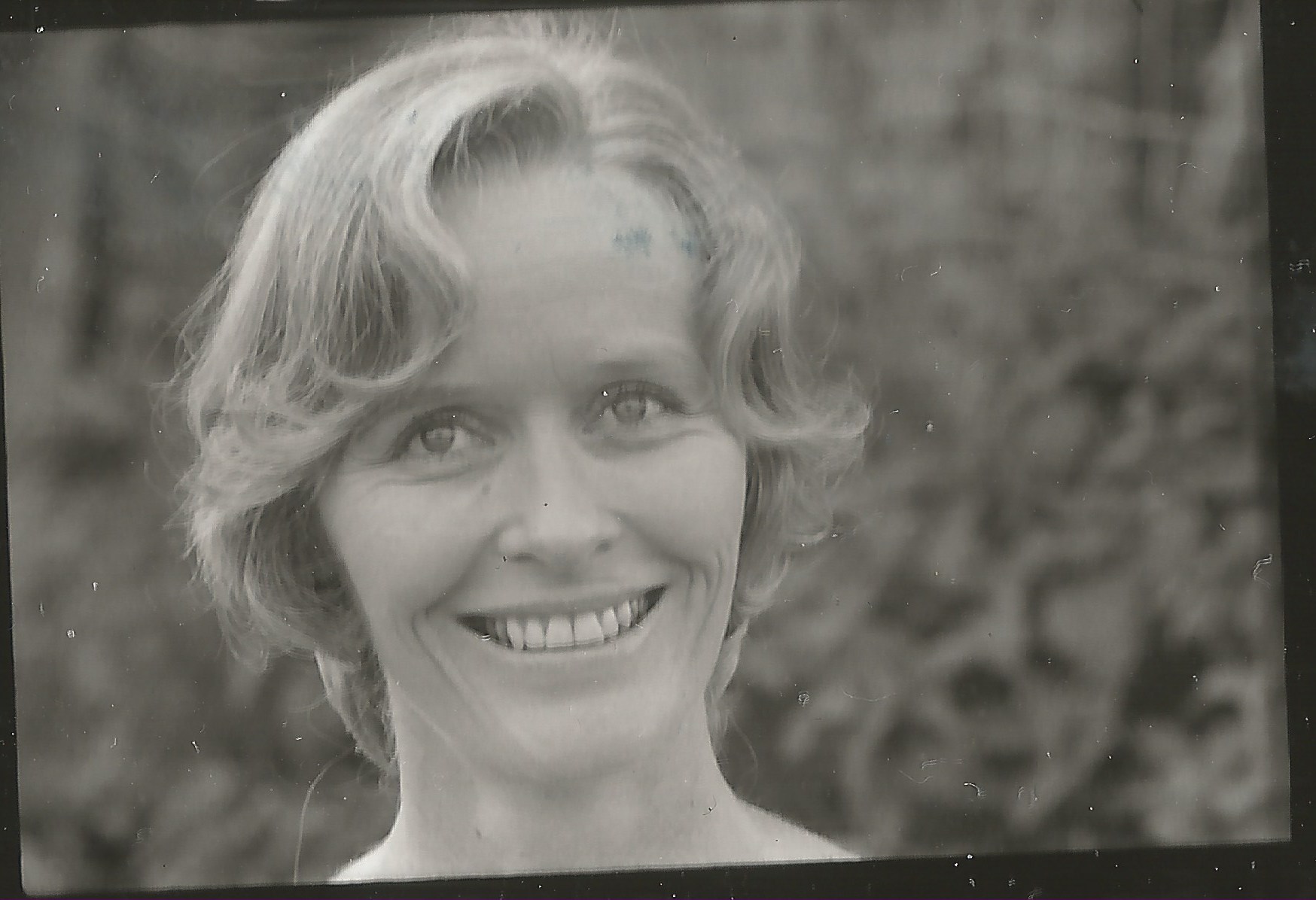
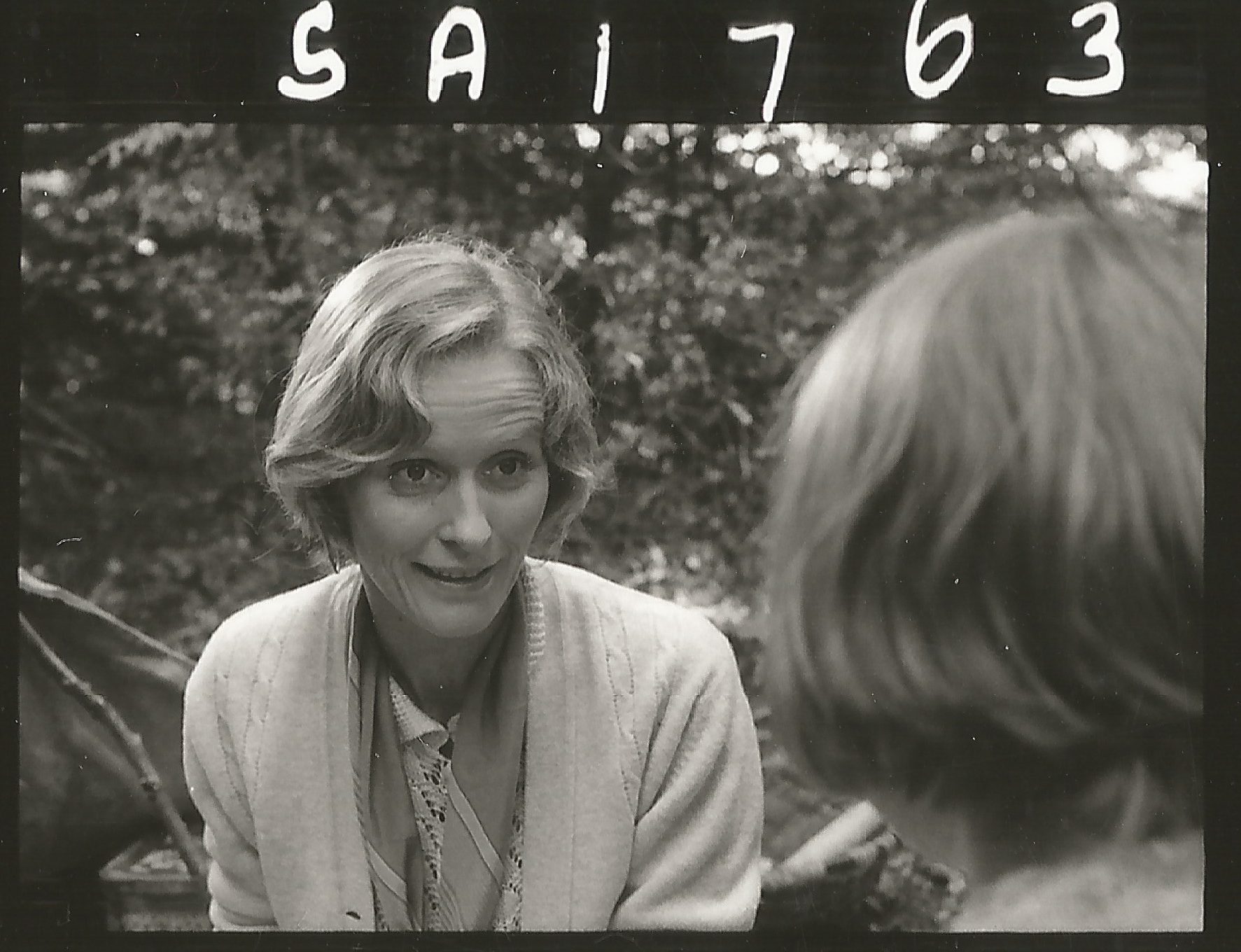
Dame Virginia McKenna and her work on the classic film ‘Swallows and Amazons’ (1974)

Virginia McKenna in 'Swallows and Amazons' (1974) by the film poster artist Arnaldo Putzu
Virginia McKenna in ‘Swallows and Amazons’ (1974) immortalized by the film poster artist Arnaldo Putzu (c) StudioCanal

I was so thrilled to read that Virginia McKenna has been awarded a DBE for services to wildlife conservation and to wild animal welfare in the New Year Honours. When I last spoke to her, she was working tirelessly for the Born Free Foundation that she co-founded with her son Will Travers OBE.

I first met Dame Virginia in 1973 when she agreed to star in the first big screen adaptation of ‘Swallows and Amazons’, produced by Richard Pilbrow, directed by Claude Whatham and released by EMI Films in 1974.

Dame Virginia McKenna on Windermere in 1973 - photo: Philip Hatfield
Dame Virginia McKenna at the Langdale Chase Hotel on Windermere in 1973 – photo: Philip Hatfield

She played the part of my mother, Mary Walker. The movie was shot entirely on location in the Lake District where Arthur Ransome set his classic series of children’s books.

Virginia McKenna at Bank Ground Farm
Dame Virginia McKenna at Bank Ground Farm in 1973 ~ photo: Daphne Neville (c)

The film has been broadcast on British television more than any other but it is when you watch it on the big screen that you can appreciate what made Virginia McKenna such a great star. Her face conveys a thousand tiny emotions that sweep you into a long-forgotten time when children were able to run free. 

Virginia McKenna holding the telegramme
Dame Virginia McKenna on location at Bank Ground in Cumbria ~ photo: Daphne Neville (c)

Dame Virginia had originally been scheduled to come up to Cumbria for the first ten days of the seven-week shoot but, since wet weather closed in, she was obliged to return when the sun came out for the famous scene when Roger tacks up the field at Holly Howe to receive ‘despatches’ in the form of the cryptic telegram BETTER DROWNED THAN DUFFERS IF NOT DUFFERS WONT DROWN. 

Virginia McKenna with Hairdresser Ronnie Cogan
Dame Virginia McKenna with Ronnie Cogan ~ photo:Daphne Neville (c)

Dame Virginia enjoyed the discipline and focus of concentration on set and helped centre us from the start. If you watch other movies made at the time, such as ‘The Railway Children’ (1970), most of the adult actresses are wearing wigs with a district nineteen-seventies feel to their costume and make-up.  ‘Swallows and Amazons’ owes its timeless appeal to the fact that Virginia simply had had lovely thick hair scooped into a bun and wore her original 1929 garments with grace.

Sophie Neville as Titty
Sophie Neville as Titty in 1973 – photo: Daphne Neville (c)

I played Titty Walker who inveigled her mother into playing Man Friday to her Robinson Crusoe when she came to visit Wild Cat Island. The sequences were shot on Peel Island on Coniston Water where Ransome was taken as a boy by his own parents and met the Collingwood family in the 1890’s. He later became a good friend of Dora Collingwood whose five children became the inspiration for the story ‘Swallows and Amazons’. Her third daughter, the dreamer, was nicknamed Titty.

Virginia McKenna and Sophie Neville on Peel Island
Dame Virginia McKenna and Sophie Neville on Peel Island ~ photo: Daphne Neville (c)

It can not have been easy for Virginia to act with me, a child of twelve, while frying pemmican in butter on a camp fire. I was self-conscious about having lost an eye-tooth the night before and had rather a sore mouth and she later had to row from the island with a 35mm Panavision camera in her boat.

What I’d forgotten until recently was that Bill Travers watched the filming that day on Peel Island. He’d been a hero of mine ever since he played George Adamson in ‘Born Free’ and Gavin Maxwell in ‘Ring of Bright Water’ opposite Virginia. Their film, ‘An Elephant Called Slowly’, was released as a double bill with ‘Swallows and Amazons’

You can see a few more behind-the-scenes photos here and I’ve written more about being Robinson Crusoe here.

Virginia McKenna with Sophie Neville
‘They were very savage savages’ ~ Virginia McKenna with Sophie Neville ~ photo: Daphne Neville (c)

Looking back, I realise how fortunate we were to be able to play out the scenes from the iconic book in the actual locations, such as Bank Ground Farm where the Collingwood children had stayed one holiday as children, so they could visit their grandparents who lived at Tent Lodge next door and were too unwell to have them in the house.

The Walker Family at Holly Howe
Sten Grendon, Simon West, Virginia McKenna, Suzanna Hamilton and Sophie Neville at Bank Ground Farm, in 1973 ~ photo: Daphne Neville (c)

We were not so keen on the publicity photographs taken for the film even though Virginia tried to make it fun. Right from the the very first day of filming, she worked hard to bring us together as a cast, playing games such as ‘Consequences’ to help us laugh and relax, while concentrating on the task of bringing the book to life.

The Walker family played by Suzanna Hamilton Stephen Grendon, Sophie Neville, Virginnia McKenna and Simon West at Bank Ground Farm in Cumbria
Suzanna Hamilton Sten Grendon, Sophie Neville, Dame Virginia McKenna and Simon West – photo Daphne Neville (c)

In 1980, I went to work for Ginny and her husband Bill Travers, as a housekeeper for a few months. She needed domestic help while she was appearing with Yule Brynner in ‘The King and I’ at the London Palladium, for which she won an Olivier Award for Best Actress in a musical.  I looked after her youngest son, Dan, who later worked as a safety officer and consultant on the 2016 film of ‘Swallows and Amazons’. I met him at the cast and crew screening in Leicester Square.

Dan Travers and Sophie Neville in 2016

Ginny and I kept in touch. She was ever-supportive, encouraging me to keep raising funds for anti-poaching in South Africa, where she had been evacuated as a child during WWII. 

It was only when I heard her speak at the Kempsford  Literary Festival in the Cotswolds that I learnt that other ships in her convoy to Cape Town had been torpedoed and sunk crossing the Bay of Biscay. By some miracle, her ship had been delayed in Liverpool but she described finding the flotsam left by the ships that had been hit.

Having written a number of books herself, Ginny encouraged me to write, urging me to keep focused on one thing.

Virginia McKenna at Bank Ground

Her letters and cards also inspired me to keep raising funds for wildlife conservation in Africa.

Merry Christmas African animals card design by Sophie Neville
A Christmas card design by Sophie Neville

In turn, I supported the Born Free Foundation, printing them greeting cards, donating a Christmas card design for their catalogue and a picture that was auctioned at the Big Cat Open Day in Kent.

Sophie Neville with Virginia McKenna in about 2000
Sophie Neville with Virginia McKenna in about 2001 – photo Daphne Neville (c)

In 2014, StudioCanal invited us both to appear in the DVD Extras package for the 40th anniversary DVD of ‘Swallows and Amazons’ (1974). While we were waiting for the crew, she told me that she’d appeared in more than thirty movies. I know she’s made a few more since then.

You can watch her interview here:

Interview with Virginia Mckenna

I released the first edition of ‘The Making of Swallows and Amazons’ for which Virginia graciously provided a quote. You can read the first few pages in the preview of the ebook, entitled ‘The Secrets of Filming Swallows and Amazons 1974’ here

To hear Virginia and her son Will Travers talking about receiving her DBE, please click here for BBC Sounds

~ ‘The Secrets of Filming Swallows & Amazons 1974’~

The audiobook of ‘The Making of Swallows and Amazons’ (1974) narrated by Sophie Neville who played Titty
In the long hot summer of 2022, I spent three days in a sound-proofed booth at Monkeynut Studios near Romsey narrating the audiobook of my memoir on the adventures we had making the 1974 movie ‘Swallows and Amazons’, now published in paperback by The Lutterworth Press.

I found telling the story, with all the different voices, more difficult than I had imagined but the audiobook has been beautifully produced, with sound adding a different dimension to this filmography that resonates with the lives of so many.

Sophie Neville at Monkeynut Recording Studios

It is now up on Audible here

You can listen to a free sample in the Audiobook Store here

There are a number of different online retailers. It is available on Spotify:

The audiobook of The Making of Swallows and Amazons (1974) by Sophie Neville
Kobo have this deal:

Scribd stock it, along with a couple of articles from Practical Boat Owner, but I did not narrate those. It might be better to read them online.

You can listen to this true life story on audiobooks.com

It is also available on Audiobooksnow

Google Play and audiobookstore.com who have it on a special price here. This must be the American version:

Wheelers stock it in New Zealand

Google books have it in the UK

Barnes and Noble sell it in U$ dollars

LibroFM

Storytel have it for sale in rupees.

I gather it will be available on Audible but they are very slow to add books.

I hope it will take you back to that long hot summer in 1929 when the Swallows first set sail and remind you of the early 1970s when we made the original film in the days before mobile phones or computers without CGI or green screens. We literally walked into the page of the books and sang out Arthur Ransome’s immortal lines as the wind took us up Coniston Water. I hope you enjoy it.

Swallows and Amazons (1974) (c)StudioCanal

If you prefer holding a book in your hands the paperback is available from Waterstones and all online retailers.