(Ignore the incongruous photo of office politics – I could provide them another)
Duncan adds, ‘Neil Hannon of the excellent Divine Comedy – wrote all the songs/music for the Swallows and Amazons musical. Piano and vocal versions were included as bonus tracks on the deluxe version. The Amazon Pirates song is very funny!
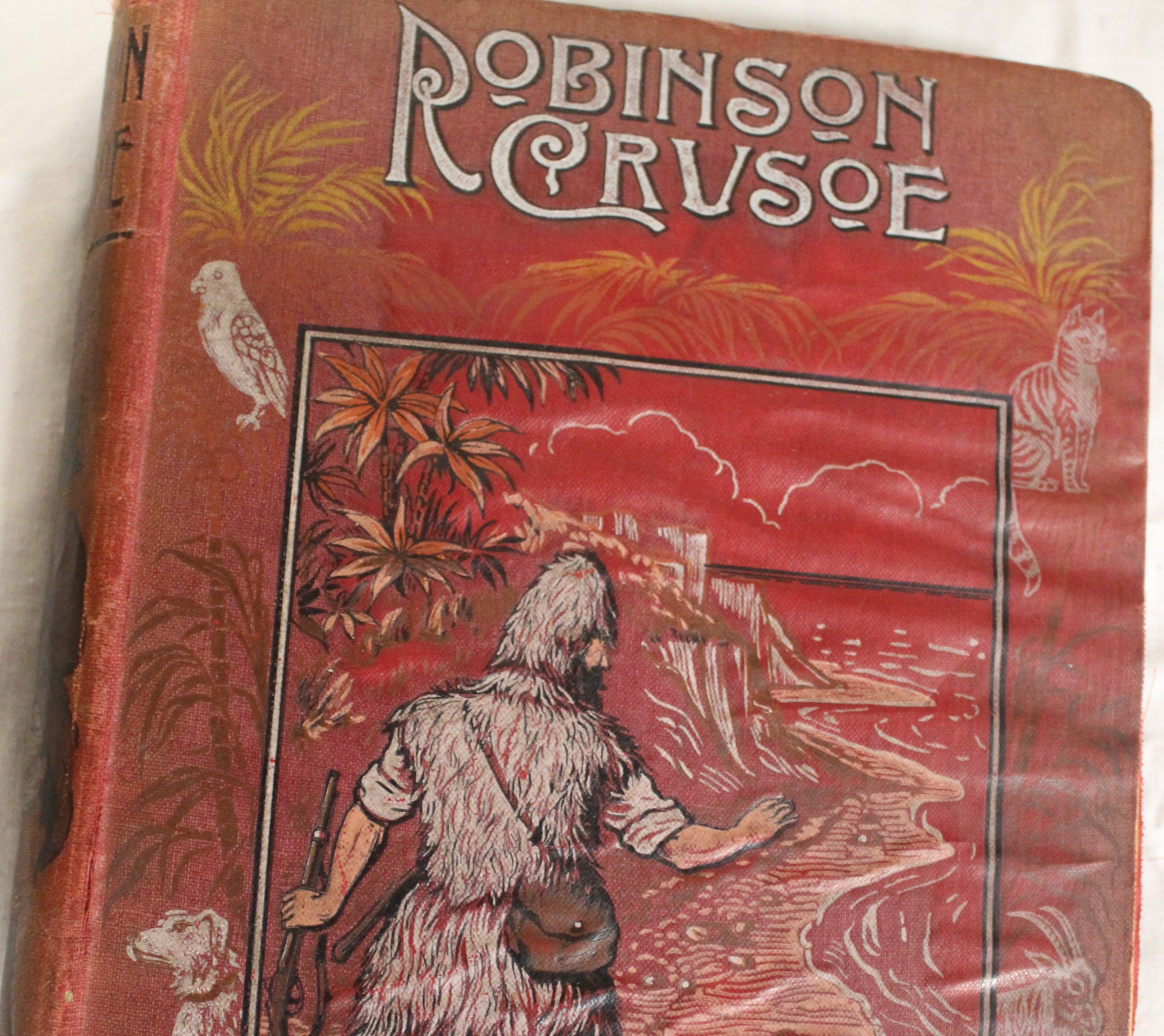
What hadn’t occurred to me was that, as Catherine Lamont points out, ‘Titty frequently invokes roles or role models to help her (or Roger) overcome anxiety.’ Does she imagine herself as Robinson Crusoe to avoid being frightened about being left alone on Wild Cat Island, or is she longing to experience what it would feel like to be a shipwrecked sailor?
She cast her mother as Man Friday, which is quite amusing. You can find more behind-the-scenes photos of Dame Virginia McKenna in this guise here
Virginia McKenna and Sophie Neville on Peel Island ~ photo: Daphne Neville
I did love finding this cartoon by Lee Healey on Twitter recently.
Although the original novel was written over three hundred years ago, there are a number of versions of ‘Robinson Crusoe’ on Amazon Prime, along with ‘The Farther Adventures of Robinson Crusoe’. Wouldn’t Titty like that?
Robinson Crusoe has been re-published a thousand times. Being a child of the 1960s, I grew up with this theme tune:
You can find different versions of the true story. This is the story of the castaway Alexander Selkirk who was abandoned on a remote Pacific island off the coast of Chile, who hunted feral goats, was once attacked by rats and befriended wild cats but was rescued after four and a half years by The Duke. He ended up robbing Spanish ladies and becoming a circumnavigator.
The video below, tells another version of Alexander Selkirk’s story but concludes that the novel Robinson Crusoe was more likely to have been based on Henry Pitman’s adventures in the Caribbean in the late 1680s. It was he who met Man Friday and ate a roast tortoise:
There are a few more castaways clad in goatskins detailed here
What is most memorable about the making of ‘Swallows and Amazons’ for you?
I love exploring the places Arthur Ransome features in his stories. We were privileged to live out the pages of the book on location in the Lake District, but sailing in nothing but a short cotton dress and a pair of navy blue gym knickers was decidedly chilly – we earned our passage.
Would you consider Susan to be an influence on Titty within the story?
Susan made camping on the island possible. Suzanna Hamilton, the remarkable British actress who played Susan in the original film of ‘Swallows and Amazons’, became our rock without becoming prim or losing the joy and excitement of adventure. She went on to play leading roles in a number of major movies including ‘Out of Africa’ opposite Meryl Streep and ‘1984’ with John Hurt and Richard Burton. She is still working on cutting edge productions and recently had a guest appearance in ‘Eastenders’.
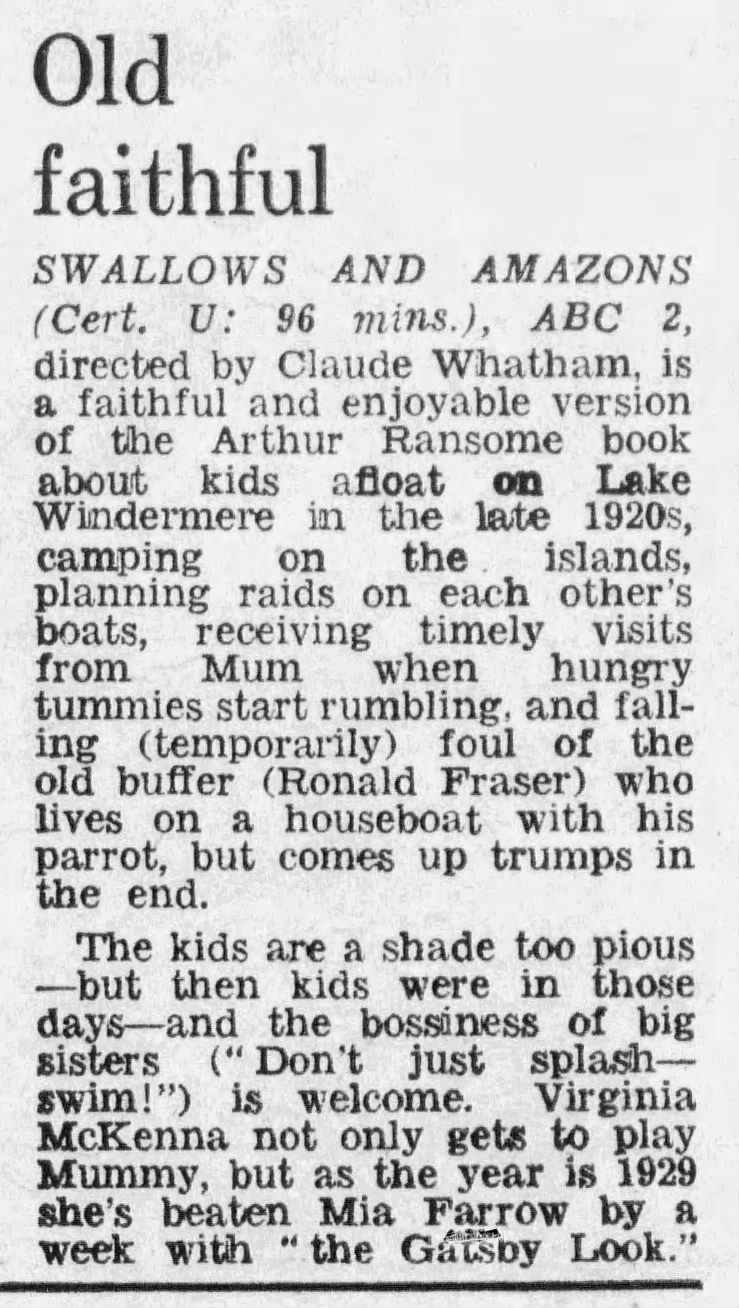
Time Out – April 1974
Is there anything you think should always be included in different versions of ‘Swallows and Amazons’?
You must feature the green parrot! It’s vital to enter the world of a 9-12 year old child, capturing the trepidation. It would be interesting to adapt Arthur Ransome’s books without featuring adults, or only including them as shadowy facilitators.
How did you feel about playing a part where you were able to be the cunning and playful younger sister?
In real life, I was the elder of three sisters so took on the roles of both John and Susan. Playing Titty felt something of a release. I was freed from the responsibility of taking the helm.
Titty is well-read and bright, creative and imaginative but I wouldn’t call her cunning. She longs to be alone on the island to experience what it was like to be Robinson Crusoe, which is why she volunteers to stay behind to light the candles, but is that a cunning plot? She is an innocent.
What was your favourite line in Swallows and Amazons?
Titty’s lines are challenging and can only be uttered with humour and an acceleration of charm. I rather enjoyed, ‘X marks the spot where we ate six missionaries’, although I don’t think it can be found in the book. ‘Thank you so much for letting us see your lovely serpent’ would probably be disallowed these days.
Did you have a favourite scene?
Finding the lighthouse tree was a short sequence that worked well. We shot it on the banks of Derwentwater towards the end of the filming. But I most enjoyed our day with the charcoal burners. They were wonderful.
What did you enjoy most about filming in the Lake District?
We loved High Force, the waterfall, and exploring the mossy woodlands. Secret Harbour on Peel Island is very special, as is One Tree Island where we found the treasure.
Do you feel that you and your character influenced children?
Even now, nearly 48 years after the film was released, I receive correspondence from people telling me how the original film of ‘Swallows and Amazons’ influenced their lives or helped carry them through a tough patch. It is always wonderful to hear how Titty has inspired others.
Maurice Thomas who used to live in Cockermouth wrote: ‘My mum and my Auntie Gladys took me to see this little children’s flick in 1974/5 as it was a double bill with ‘The Railway Children‘. I remember ‘The Railway Children‘ reasonably fondly, but ‘Swallows & Amazons‘ had me utterly mesmerised.’
If you were to give any advice to actors wanting to perform in ‘Swallows and Amazons’ what would it be?
Visit the locations. Go to Bank Ground Farm and run, fast, down the field to dip your hands in the lake as Arthur Ransome did as a child. Capture that feeling and carry it with you as you sing out the lines.
And be prepared for the impact the story will have. It could follow you all your life.
Thanks to my kind donors, I have raised £630 in sponsorship for Schoolreaders, which has been matched by my company.
The charity have also been promised matched funding, so hopefully my grand total will be £2,520.
If you are able to add a little, it would be hugely appreciated. You £5 would be magnified into £20. The link to my Justgiving page can be found here.
The last weeks of SchoolReaders’ Race for Reading have been tough for me. Back from holiday and the fresh winds of west Wales, I came into contact with numerous people testing Covid + and went down with fatigue, possibly fending off the virus. I was persuaded to take things slowly and do a little at a time but I have walked a total of 92 miles, collecting sea plastic, flotsam and litter.
It’s an honour to be an author supporter of Schoolreaders who have organised this fantastic marathon. So many have taken part in it that the total number of miles covered is impressive.
Collecting litter along the Solent Way
Here is my progress since my last post:
Day 27 – May 14th 2022 – 1.8km – I collect Easter bunnies encased in plastic lying discarded along the Solent Way.
Day 28 – May 15th – 2.22km – I extract a cheerful orange case from the mudflats. It once held sunglasses.
Day 30 – May 16th – 1 km – cleaning up after a tramp who had been sniffing air freshner in the bluebell woods.
Day 31 – May 20th – I km – finding MacDonald’s packaging on Tanner’s Lane Beach.
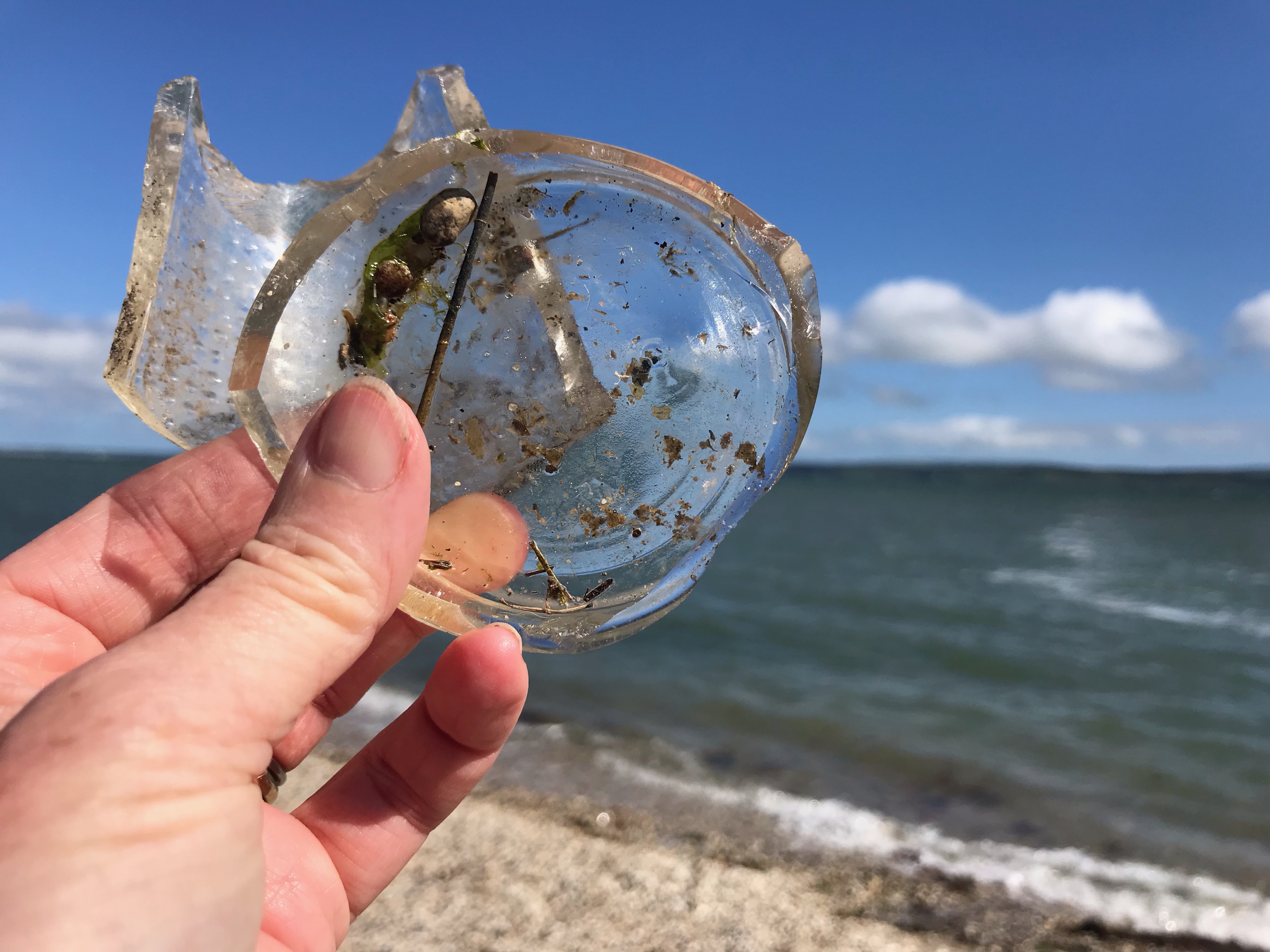
Collecting broken glass from a beach where children paddle and dogs play
Day 32 – May 24th – 2.2km – finding builder’s gloves chucked into the ditch running alongside the river
Day 33 – May 26th – 1 km – no litter! as I take the footpath up the hill to the pub
Day 34 – May 27th – 0.8km – but spend ages excavating elderly bottles from newly dug drain that flows into the river
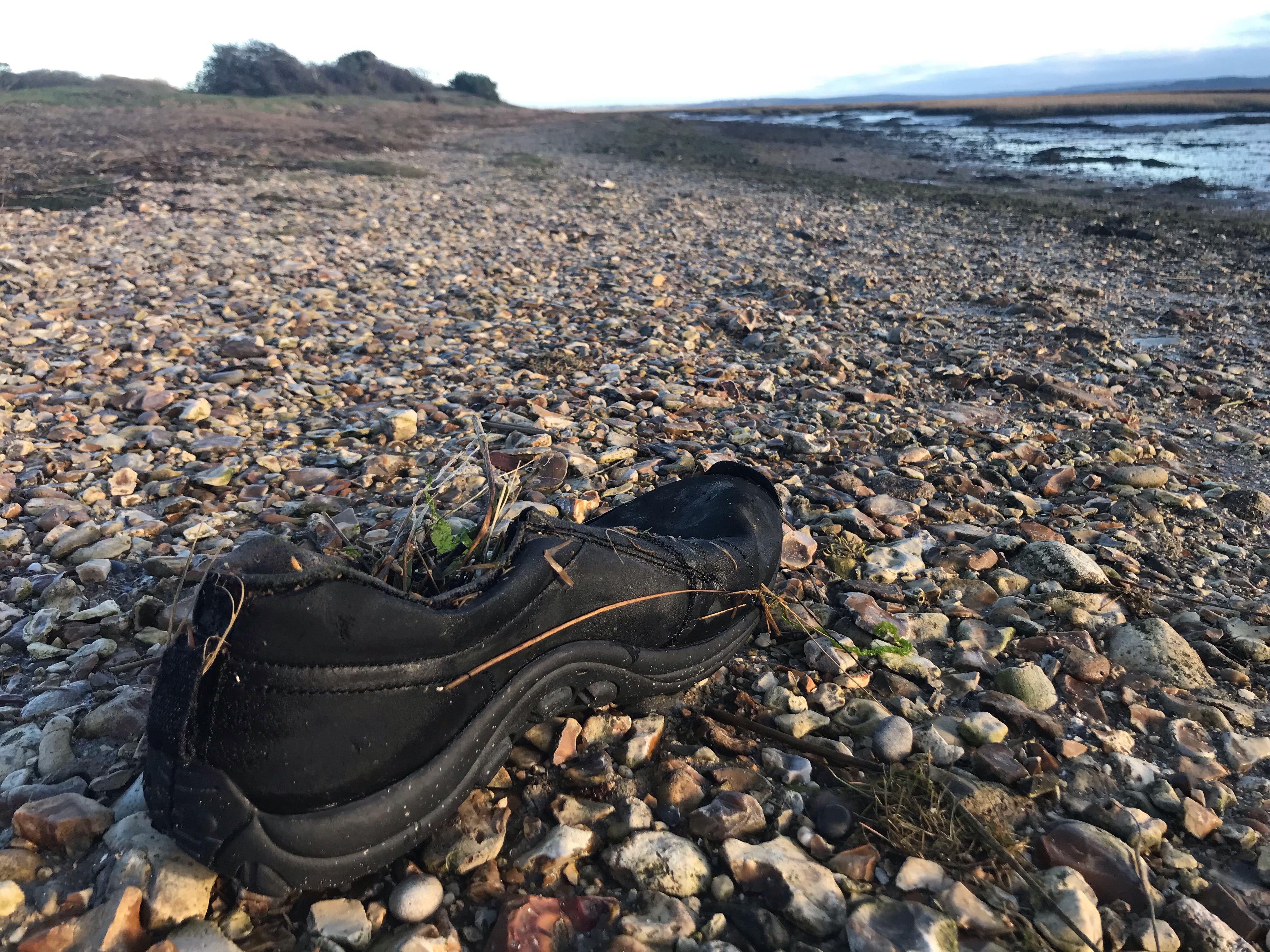
Found on the Foreshore
Day 35 – May 28th – 3km – along the coast with a friend collecting broken glass and plastic, a clothes peg and a slip-on shoe.
Day 36 – June 7th – 2km – along a lane by the river collecting driver’s litter.
Day 37 – June 12th – 1km – along country lanes and into a village.
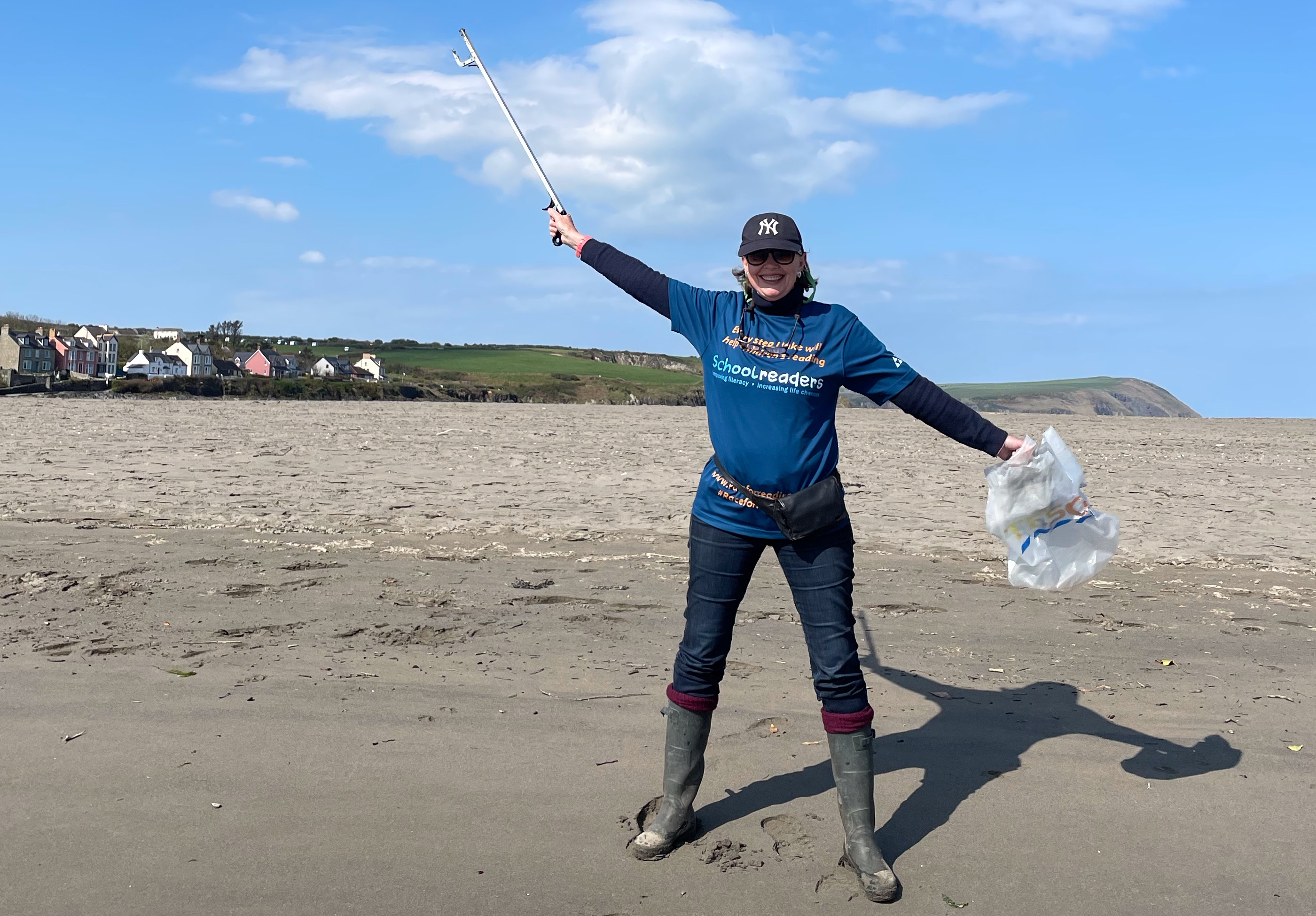
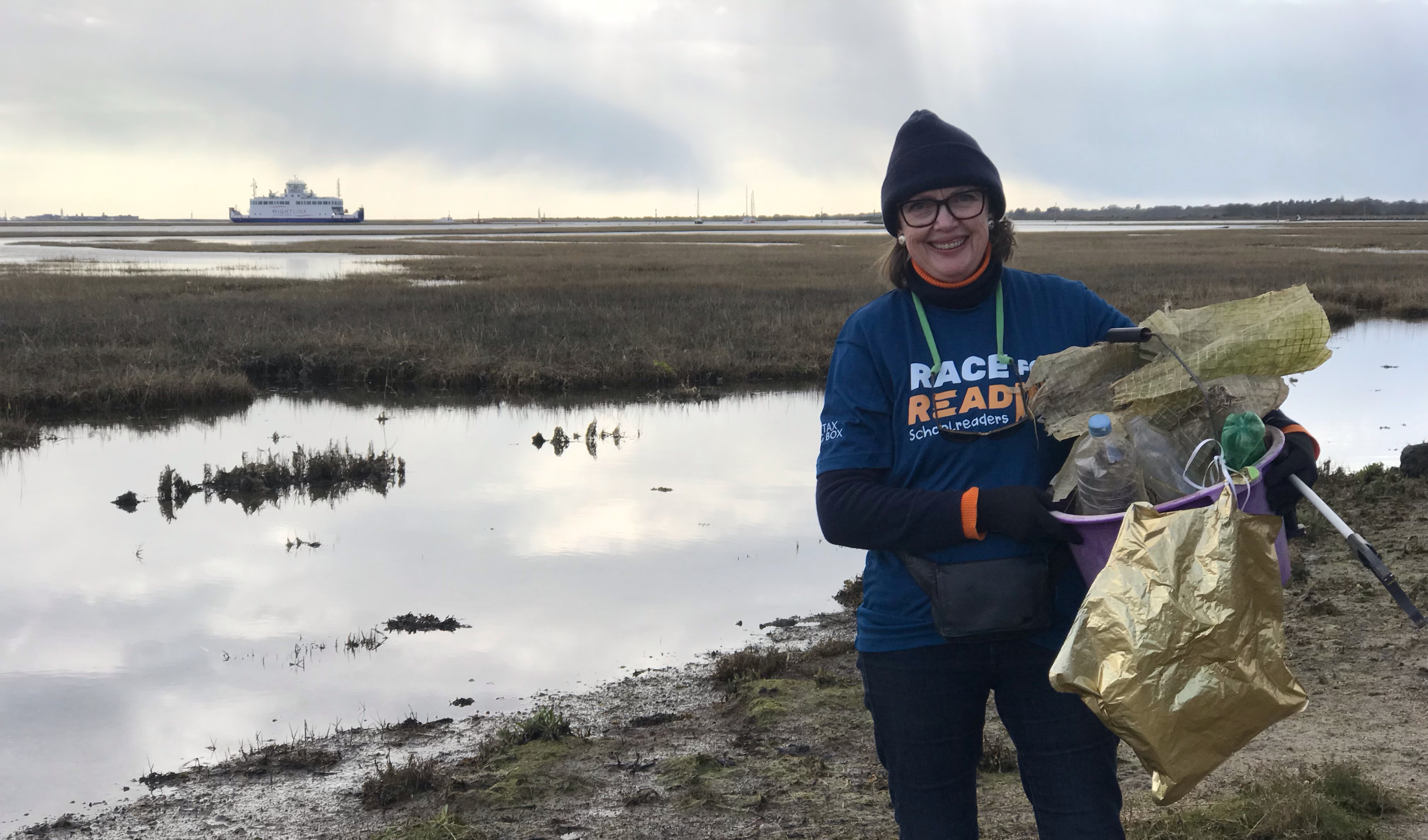
Sophie Neville collecting litter from Solent Shores
A lovely email from SchoolReaders arrived saying: “You really have been a Race for Reading superstar.”
Day 38 – June 15th – 1.6km – along the Solent Way collecting a bucketful of fast food containers and empty packets of cigarettes.
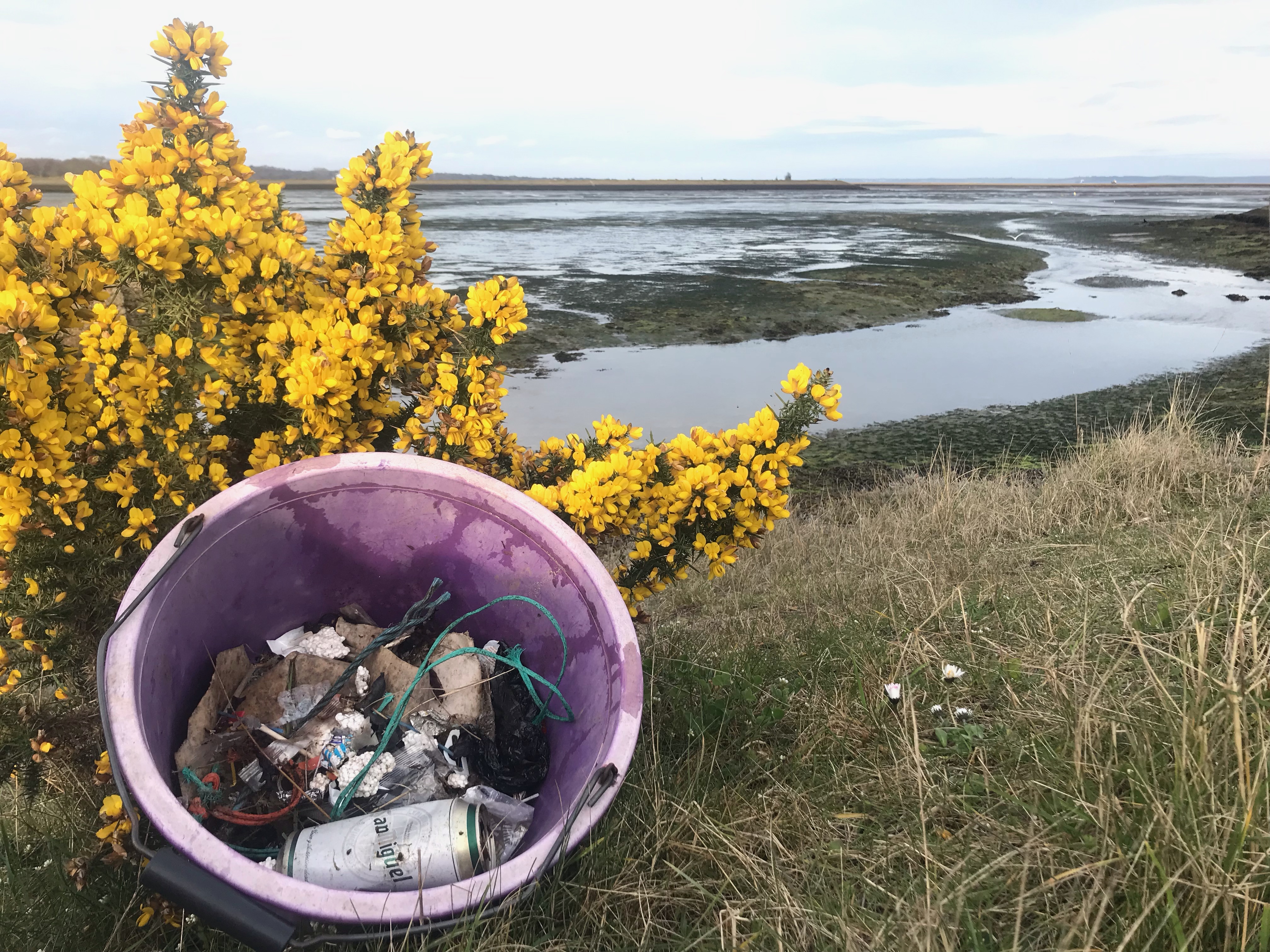
Day 39 – June 16th – 2.2km walking along the Solent foreshore collecting old PVC rope and muddy plastic bags. I find a pot shard in a dyke that could be rubbish from long ago.
Day 40 – June 18th – 3.km found a huge PVC rope whilst walking along the Solent and lugged it home with a bucket of flotsam.
THANK YOU to the sponsors of Race for Reading; Maths Circle and Kindred who sponsored the campaign.
Schoolreaders now have the final total for this year’s Race for Reading! Collectively, we travelled 27,941.17 miles and raised more than £17,000!
Thank you so much to everyone who helped to achieve this! Your support means that Schoolreaders volunteers will be able to listen to many more children read, and make the world of difference to their lives!
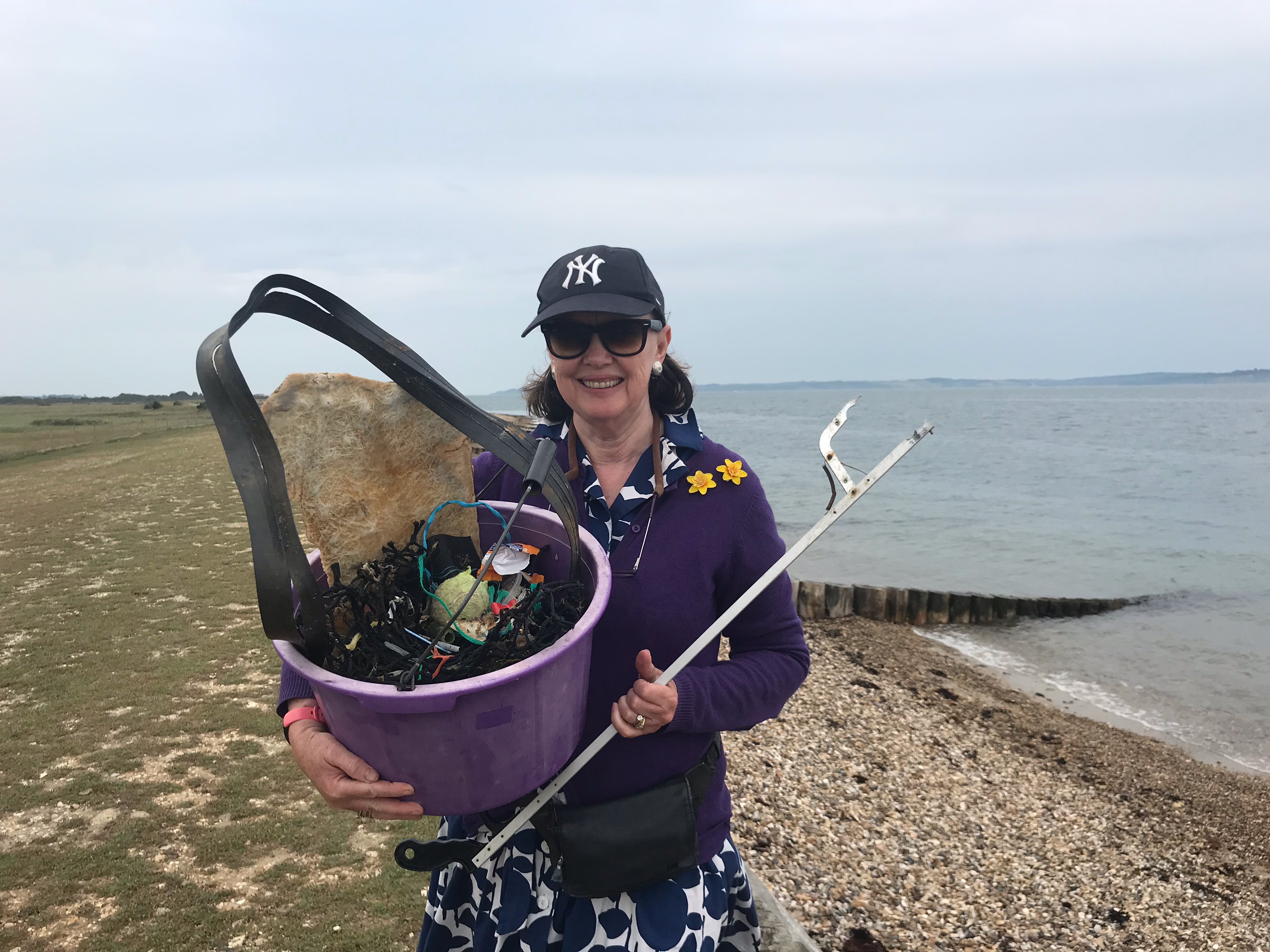
As you can see, I use an old feed bucket to collect litter but these bags made out of old sails can take broken glass and cope well in the wind. I was kindly given one by Litter Pickers of the New Forest to keep me going.
A camera washed up on the Solent
We all need to keep collecting litter and sea plastic. You can hear news for the oceans here:
Schoolreaders is such a great charity. I’m one of their author supporters along with Joanna Trollop and Sophie Kinsella. They have been incredibly supportive, tweeting:
@Sophie_Neville has been an absolute star of #RacefoReading this year! Not only has she collected a massive amount of #litter from our coastlines she’s raised over £550 to support children’s #literacy via #Schoolreaders, which she hopes to get match funded!
U is for Unbelievable how much litter there is in Britain
Unless each one of us do something useful, we’ll be burrowing through unbearable rubbish. I embark on an uplifting walk of about 12.5kms, up and down the river, collecting useless plastic before it is washed into the unforgiving sea.
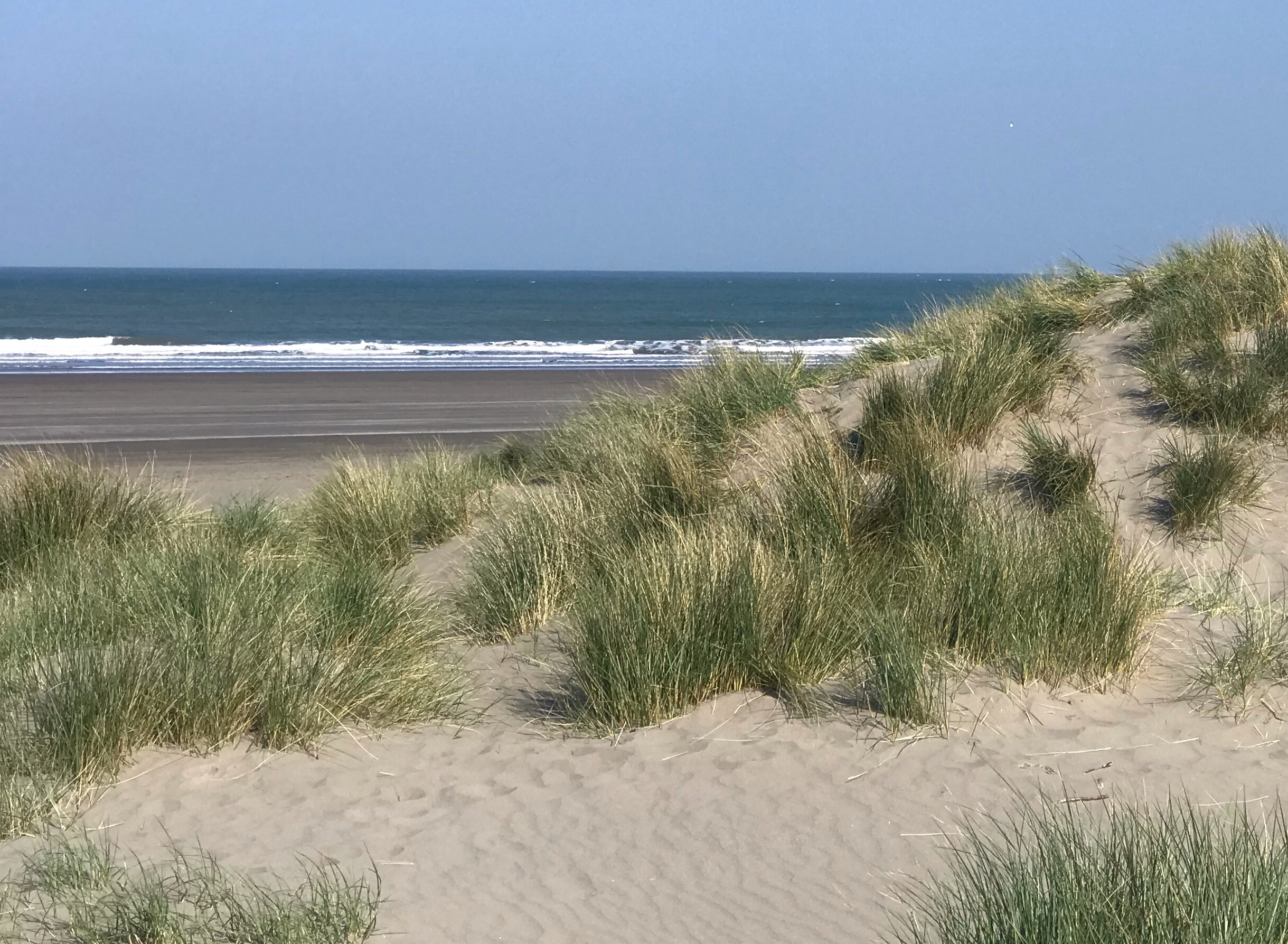
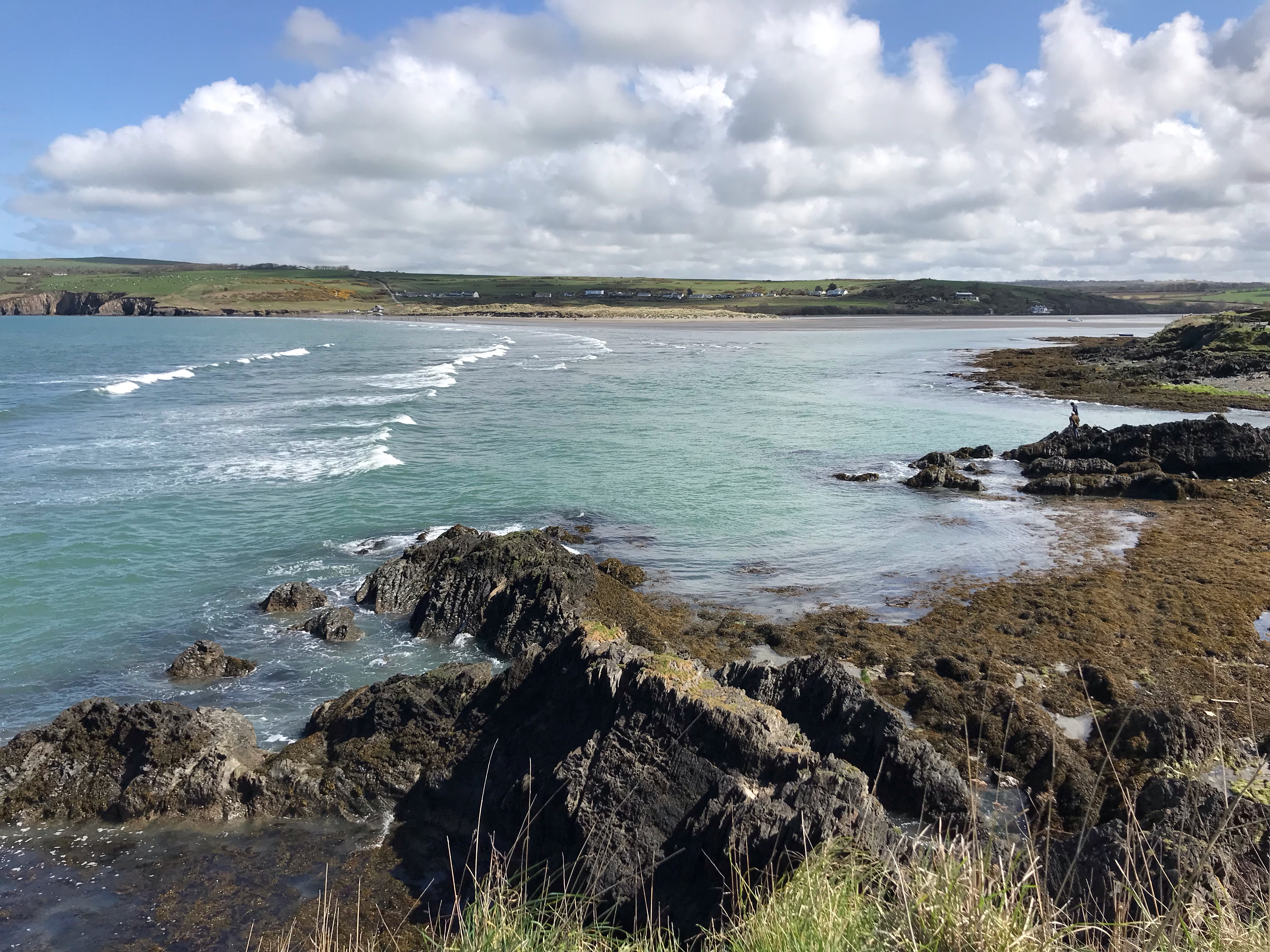
I walk vigilantly along the tideline, through the sand dunes, along the verdant estuary where flotsam gathers, and into town finding very small pieces as I cover 6.5kms.
Day 23 –
W is for Why Worry?
Why use a dog poo bag if you are going to leave it in the countryside? It is worrying. They do not decompose and have been known to kill animals attracted to grain in the dog poo. Foals have died. A vet found 20 dog poo bags in the stomach of a deer.
I wander through tide wrack finding a number of dog poo bags washed up by the sea. How many kill dolphins? I return via the windswept sand dunes crossing an ancient midden or rubbish dump. 4 km + 9km = 13km walked today.
W is for Waterhaul – I use this old feed bucket for collecting litter but it is better to take a bag when it’s windy. You need a strong one that can take broken glass. Waterhaul are making beach clean bags out of old sails and are up-cyling amazing things out of discarded fishing net. You can find their website here.
Day 24
X is for sea Xs – I find a huge number along the coast – the result of torn fishing net being shredded and discarded at sea. It is too costly to mend or dispose of them on land. Theses strands of HDPE (high-density polyethylene) are known as sea-kisses when an X is formed by the knot. Please collect any and report your findings to Marine Management.
PVC fishing net purposely shredded and discarded at sea
I stop for a rest to look back on what’s been achieved, appreciating all the encouragement I’ve been given.
Rebecca Holmes left a message saying: “only 3.5km” only this only that. NO, it’s not only. It’s brilliant, every single step counts.
Liz Downs Wow. This is the first I’ve heard of this. What an achievement
Stephen Green Such a worthwhile cause, I commend you Sophie well done, I don’t know where you get the energy from.
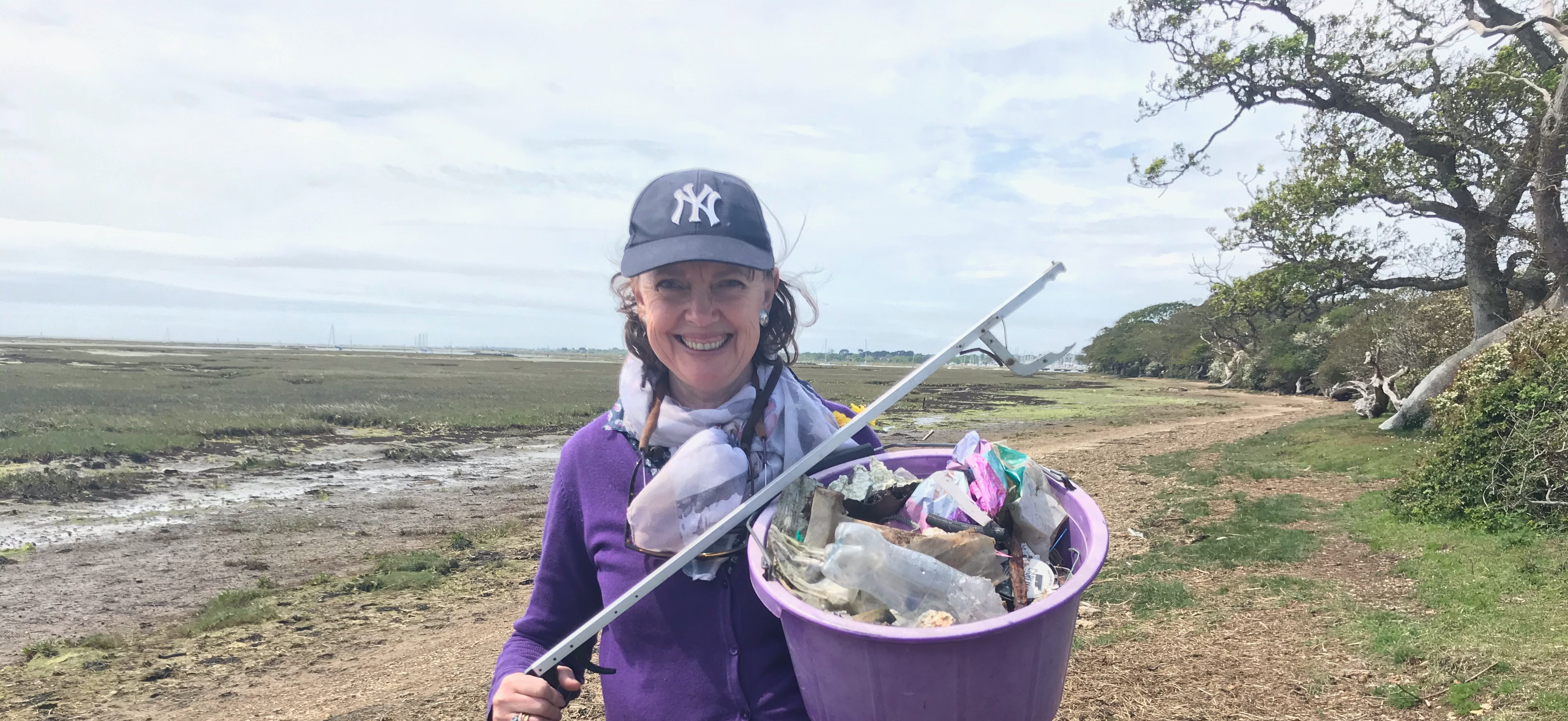
Sophie Neville collecting marine plastic on the r4r2022
Day 25
Y is for Yucky
Are young people to blame or drivers? If you take a lane running alongside your local river, you soon notice that most roadside litter is made up of the bright packaging of things that are bad for people: tobacco, sweets, over flavoured snacks, drugs, sugary carbonated drinks and alcohol. Somehow the caffeine fails to give people the energy to take their rubbish to a bin.
I took part in Keep Britain Tidy’s Great British Spring Clean when we counted cans collected and found twice as many alcohol containers as soft drinks. The highways of Britain are lined with tins and bottles that have been in people’s mouths. What are the consequences?
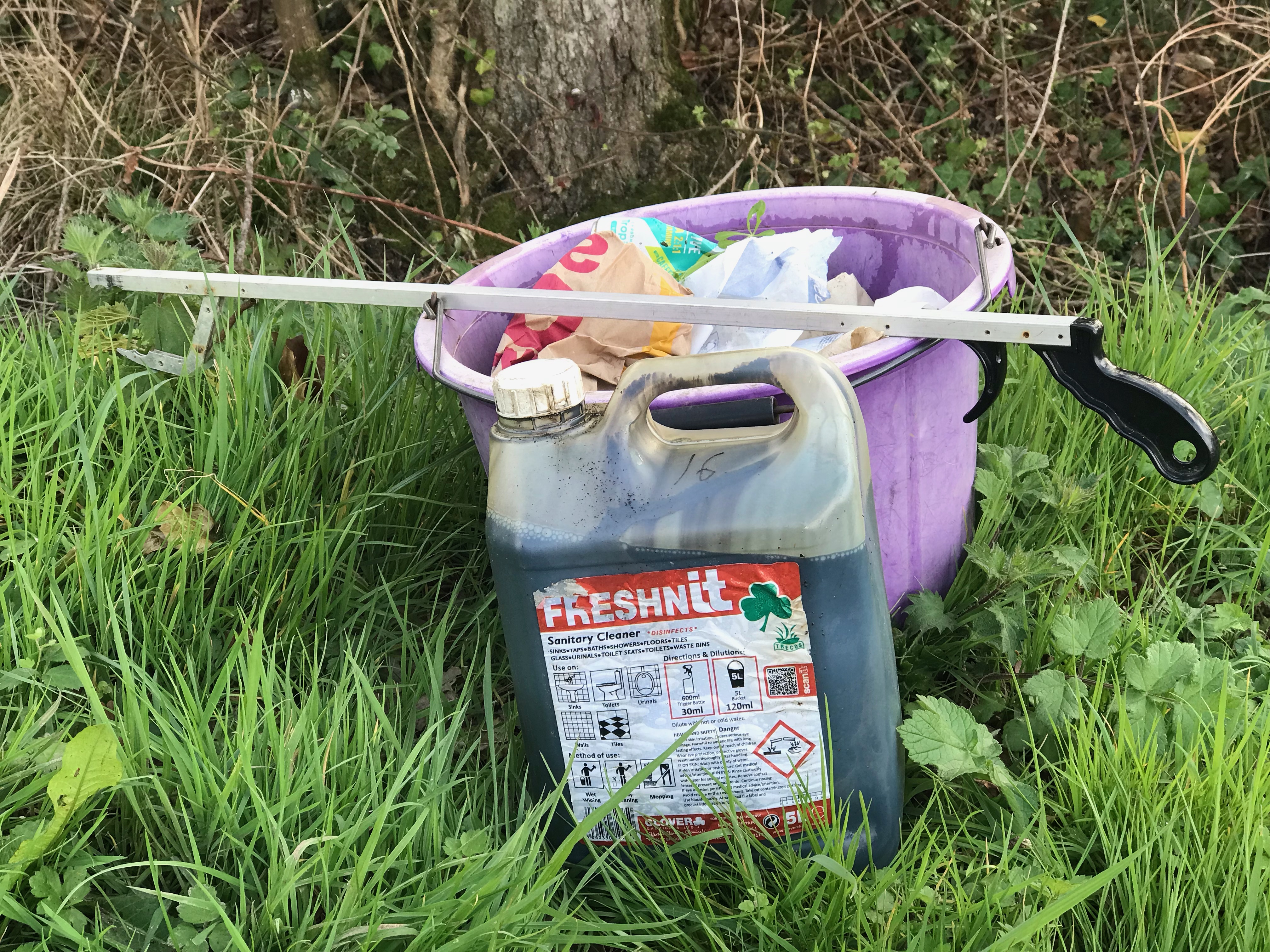
I walk 1.3km along our tidal river within the National Park, collecting a couple of large bottles that would have been hazardous if flung from a vehicle. These are added to my glass recycling bin, which has become embarrassingly full. I have a container of old oil I do not know how to dispose of. There are two 25 litre drums of chemicals, a car bumper and a metal table lurking in the estuary. I’ve reported them to the Council twice but nothing has been done.
I feel discouraged but am delighted to announce that a colleague from Litter Pickers of The New Forest, renown for covering a huge distance, has signed up for the Race for Reading 2022 and will be picking up the baton. Another volunteer promises to help me extract the fly-tipping and take it to the dump.
Day 26
Z is for Zonked. I’m getting tired but zoom along the shore zealously collecting muddy rubbish and tiny pieces of litter covering 4.1km.
Z is for Zero plastic waste. I sign up for The Big Plastic Count. We have to stop producing so much single use plastic. I’m told that a truckload of rubbish enters the sea every second of everyday. I will continue to pick pieces up from the coast but we have to stop it getting into the sea.
I log my fitness to find I have covered over 78 miles on the Race for Reading 2022. I’ve only collected one wheely bin of litter, a tub of glass bottles and another of tin cans but the coast is clear.
Thanks to my generous sponsors, I’ve raised £445 for School Readers so far. My company will double any money I can raise in sponsorship, so any donations given to School Readers via my Justgiving page will be doubled.
Schoolreaders is a children’s literacy charity which provides volunteers to partner primary schools nationwide to listen to children read. Even before Covid 19, 1 in 4 children left primary school unable to read properly1. Currently, our dedicated volunteers support over 7,000 children every week with one-to-one reading support, boosting their reading ability, fluency, comprehension and enjoyment.
Why Schoolreaders is needed:
Inequalities in literacy levels have widened since the pandemic. 5-7 year old disadvantaged pupils are 7 months behind non-disadvantaged peers2
One in seven adults (7 million people) have poor literacy and are unable to fill in a job application form, read a medicine label or understand written instructions. This can affect their mental health, contribute to unemployment, homelessness and crime – 48% of UK prisoners have reading ages of 11 or under.3
Illiteracy costs the UK economy nearly £40 billion every year.4
More than 10% of primary schools in England have registered with Schoolreaders to help their pupils catch up on vital reading skills.
No regrets! It’s not too late to register for the Race for Reading.
I’ve been going slowly but nothing is stopping me. My quest is to collect litter and marine plastic as I walk along the coast of the UK to raise funds for the charity Schoolreaders.
As you can see on my earlier posts, I’ve been using the alphabet as a theme.
N is for Nothing changes unless we take action
Day 14 – Another nice walk along the estuary into the small town of Newport collecting numerous wrappers and a noxious nappy dropped by numbskulls.
I walk another 3km later, cleaning the high tide line along the beach finding, amongst the rope and fishing line, a spoon, a sock and five poo bags. Why dog owners use tennis balls is a mystery. They contain lead and can choke large dogs.
Old tennis balls and shredded fishing net
O is for Obviously old things get outdated or ousted and litter becomes an ordinary occurrence rather than an outrage.
Day 15 – I only cover 2 kms following the coastal path to a lifeboat station but collect three old socks, a pair of knickers and half a bucket of litter. I later search the tide line for flotsam and mainly find dog poo bags and obsolete fishing line while covering another 3.5kms.
P is for Plastic –
Day 16 – I plod past a harbour collecting picnic litter, pondering on the fact I’ve probably covered 2 kms. Later I pace the tide line for 3.7kms returning with a heavy bucketful of party rubbish: plastic packaging, plastic bottles, plastic cutlery, plastic cups, plastic straws and 6-pack plastic that litters the coast. I find plenty of plastic cotton bud stalks, panty liners and packets of condoms along the shore – an indication of sewage entering the sea. PVC rope and polystyrene discarded by the fishing industry is common.
Plastic, polystyrene and PVC
Patience is needed. PPE, party poppers, plasters and ear plugs fill me with fury. I prefer picking up paddles, pegs, paintbrushes, pens and pencils since there’s a possibility they were simply lost. There’s a litter-picking prize for finding pairs of pants.
Day 17 –
Q is for quayside
but as that is now clean, I walk up the estuary into a quaint market town. It’s quiet but I find a lot of wrappers, covering 3.9kms as I collect a bucketful of litter. The skate park posed quite a challenge. The drains there wash straight into the estuary.
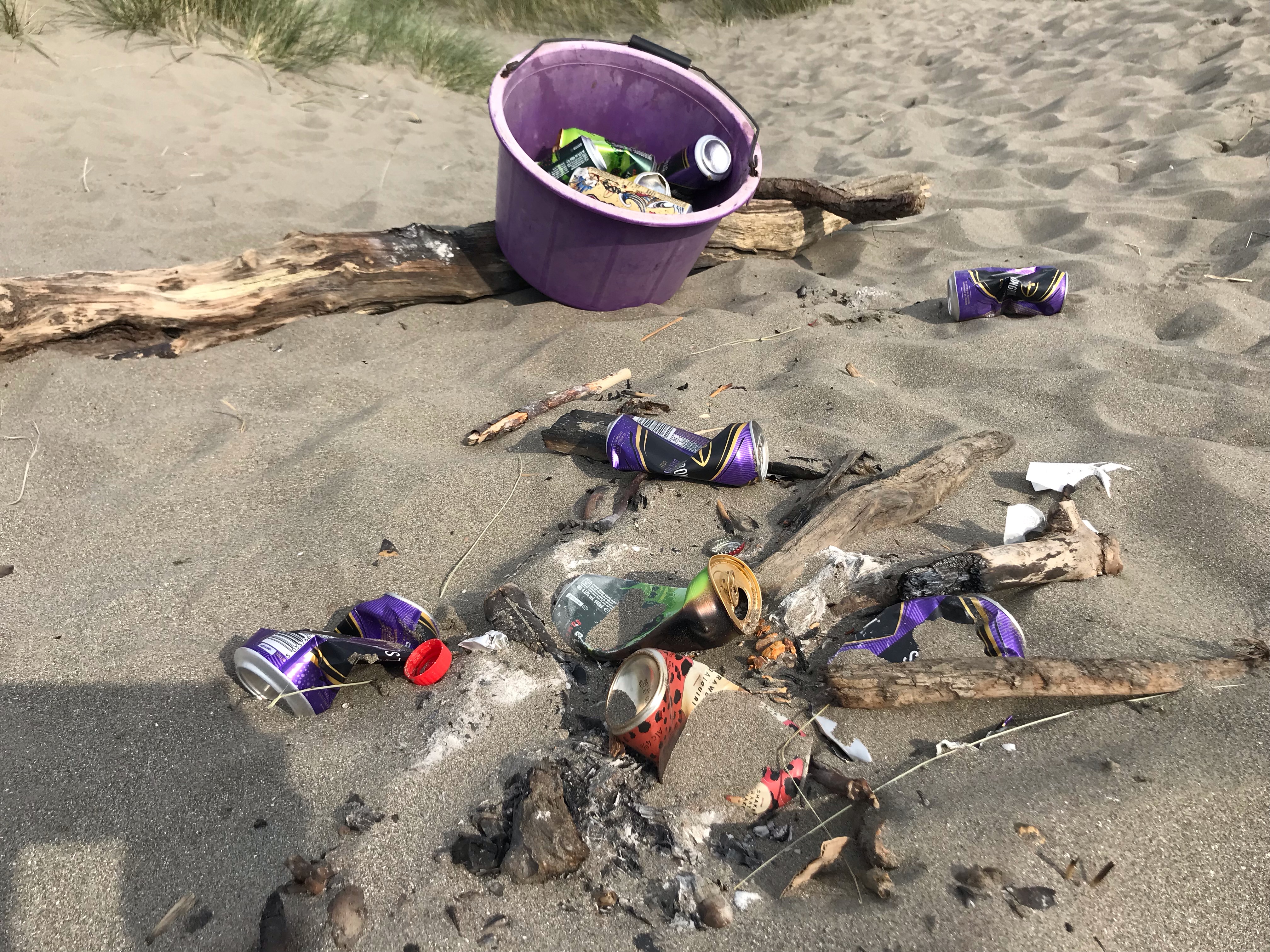
After lunch, I set out across the sand dunes finding a quantity of drink cans and glass bottles left by camp fires. The 20 bottles are heavy to lug back.
filling my bucket with picnic litter
I’ve learnt a lot since collecting litter. You see what’s happening from the underside of society. Alcohol containers are often discarded from high vehicles , rural drug taking is rife and fishing vessels are shredding nets at sea. The arterial roads of Britain are strewn with rat-infested litter loaded with human DNA. It’s surprising we are not threatened by a more serious pandemic.
Day 18 –
R is for re-cycling on the Race for Reading
I have been putting bottles or clean drink cans in the recycling bins but most coastal plastic needs to go to landfill. I scan the mudflats for ancient litter including heinous broken glass covering about 2.5km.
Day 19 –
S is for Sunshine
Silvery skies lift my spirit as I searchthe seashore for seven kilometers without seeing much flotsam. We seem to be making progress. If people see no rubbish they are less likely to drop litter.
Day 20 –
T is for tidying
I retrace my tracks traversing three kilometers to town coming across little litter. Two more kilometers with the dog and I’m tired but happy. Another two kilometers in the evening take us to a running total of 55 miles covered litter-picking so far. Logging my progress with the Race for Reading has been motivational.
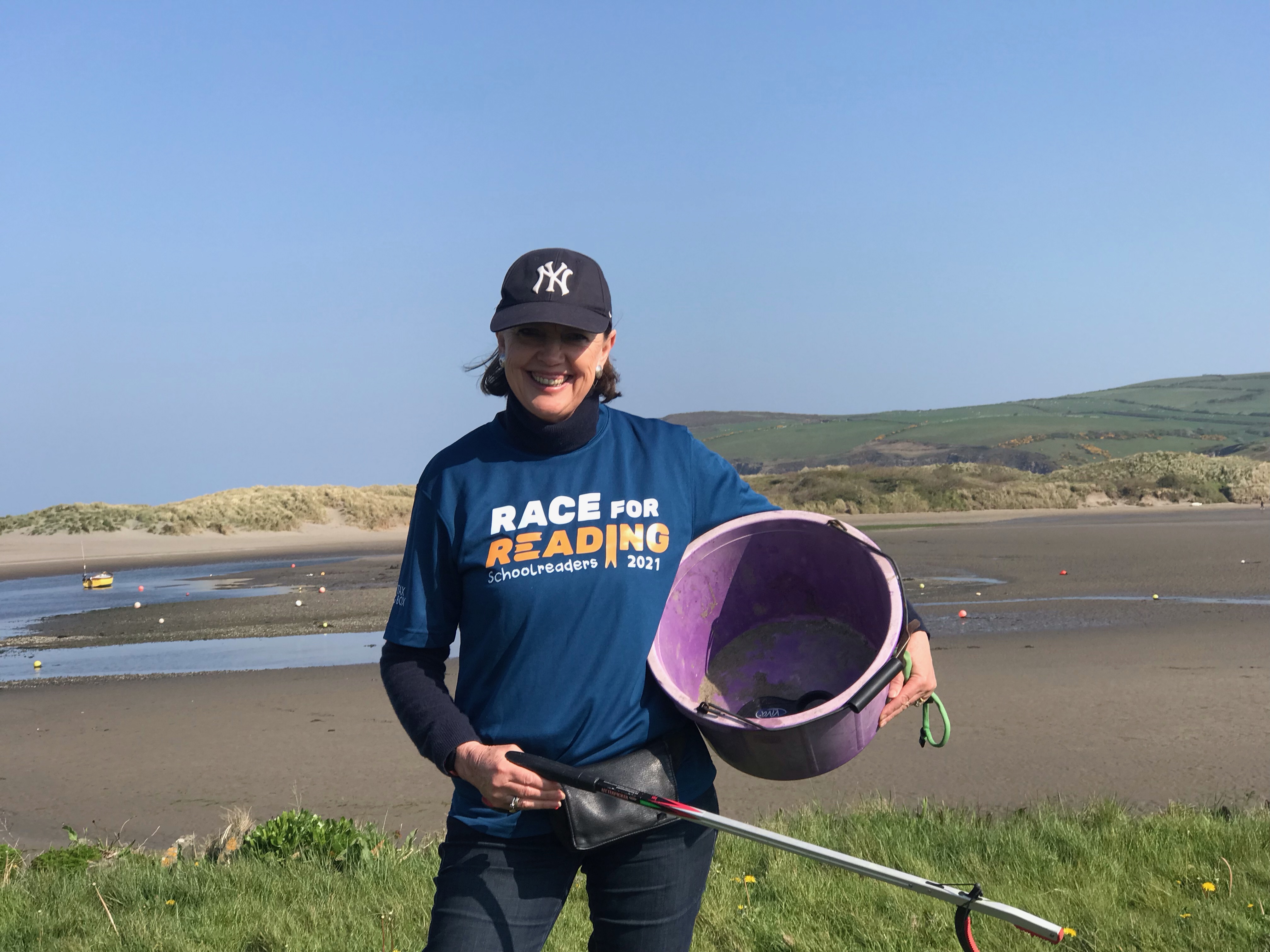
Sophie Neville on Schoolreaders Race for Reading 2022 – photo by Caspar aged 7
If you would like to sponsor me on the Race for Reading 2022, I have a Justgiving page here and there are alternative ways of donating to the charity here.
Each donation will be matched by my company, and then again by SchoolReaders matched funding, so if you can donate £5 it will be magnified to £20.
Every small amount is an encouragement and will make a difference, enabling slow readers to catch up at school and gain a love for books.
I’m walking along the coast on a sponsored beach-clean, using the alphabet as my theme.
The aim is to raise funds for the charity Schoolreaders who aim to ensure every child in the UK can read fluently by the age of eleven. Shockingly, 25% fall behind. It jeopardizes their future.
Could you take part in the Race for Reading too?
Day 7 – H is Hard work – Ihead out along hedgerows just above the high tide’s reach to harvest horrific litter that could wash into the sea. I cover 2.1km and only collect 35 pieces but haul three discarded containers of chemicals that were chucked into the river.
One of three chemical containers chucked into the nature reserve
Day 8 – I is for I have to do something. Imagine our coastlines covered in rubbish. It’s impossible to ignore wanton trash. I’ve found three intact fluorescent light bulbs washed up before now.
Ice cream left for the fairies
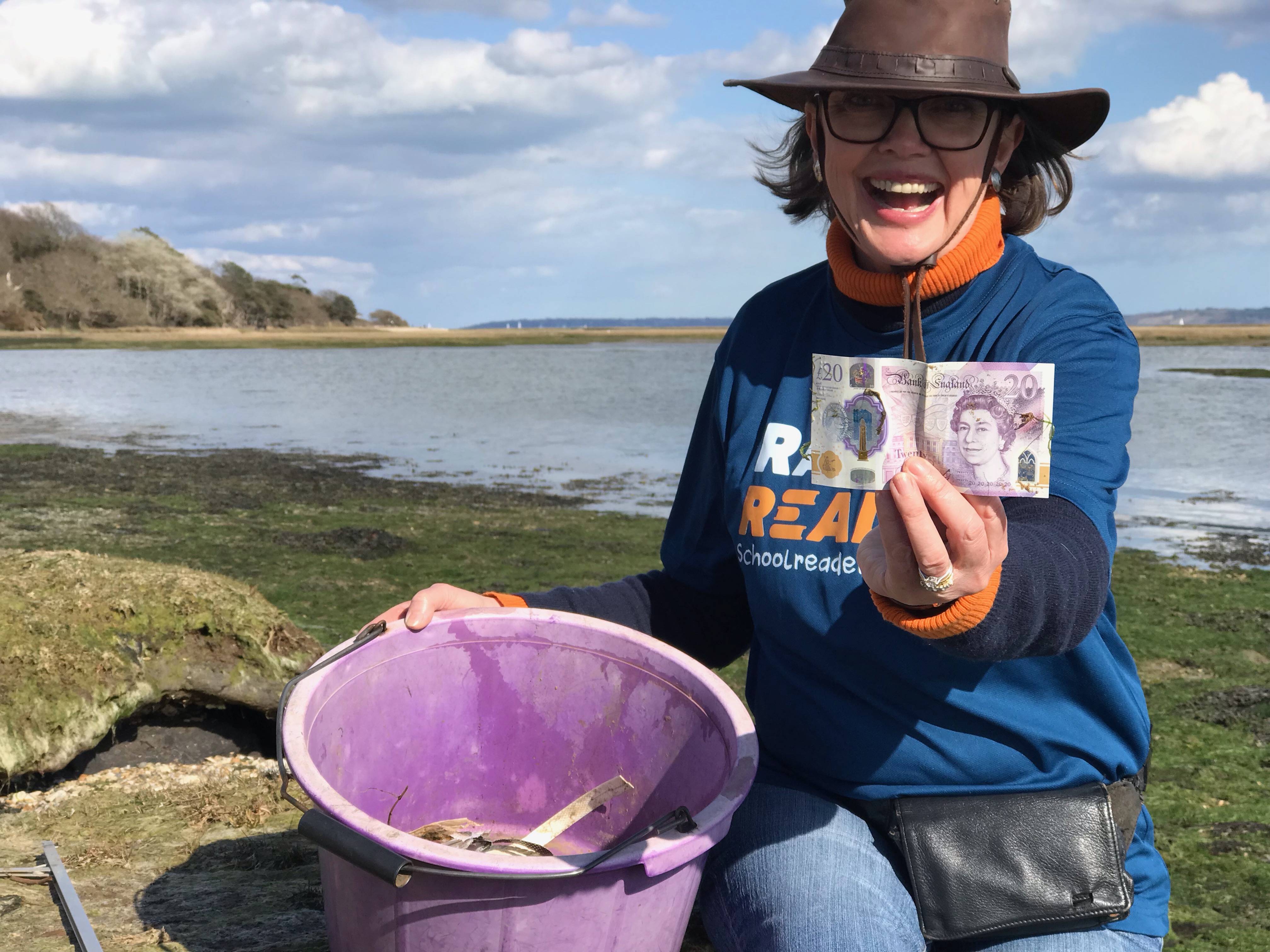
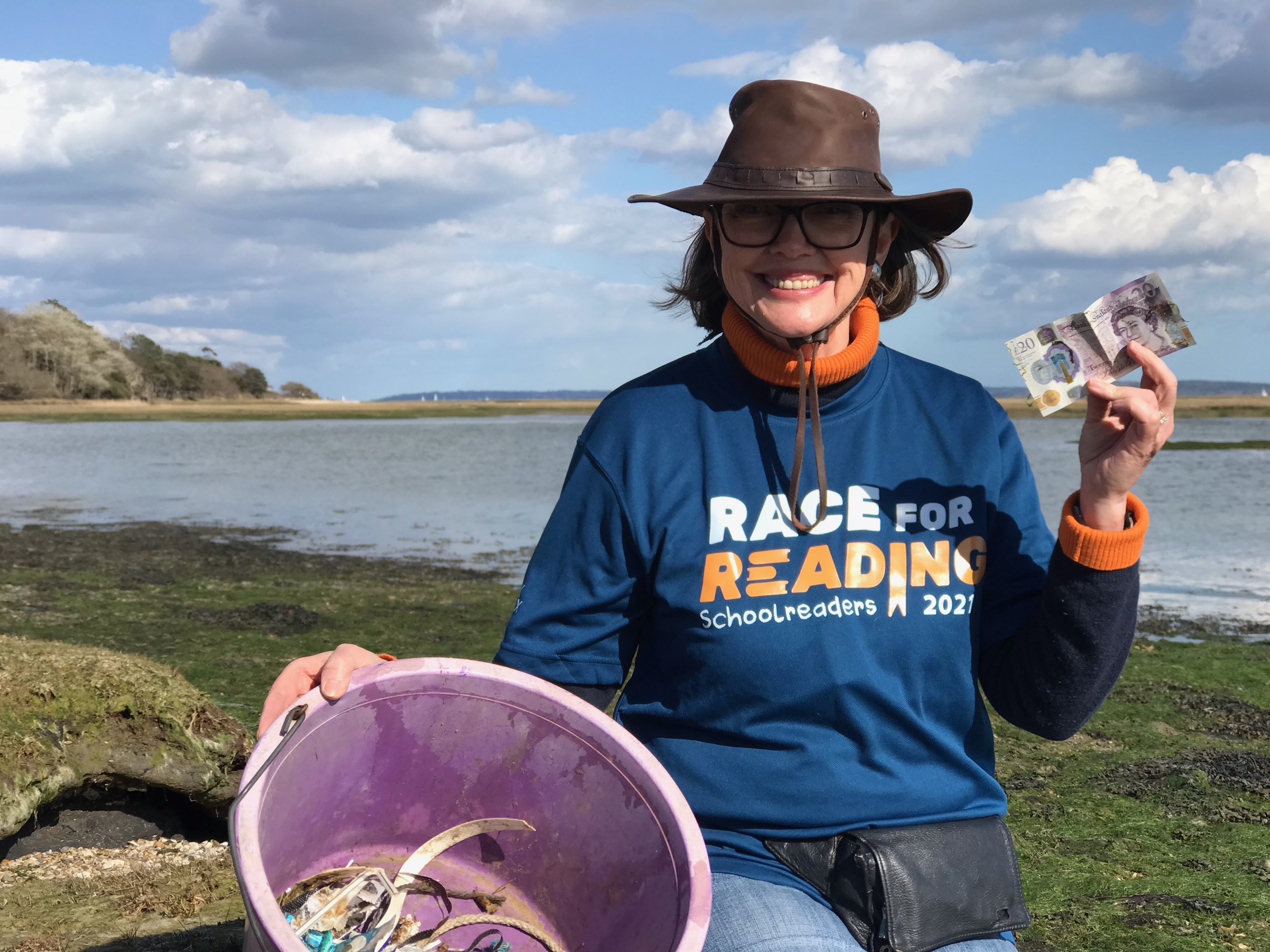
We go down to the foreshore to see what recent storms have brought in. When I first moved to the Solent eighteen years ago it was multi-coloured with bottle tops. Volunteers have slowly cleared it but the sea coughs up unwanted plastic on every tide. As we collect flotsam, a £20 note floats up to us!
Day 9 – J is for Just pick it up –
We need to keep picking up litter before it is blown into the sea and this nature reserve
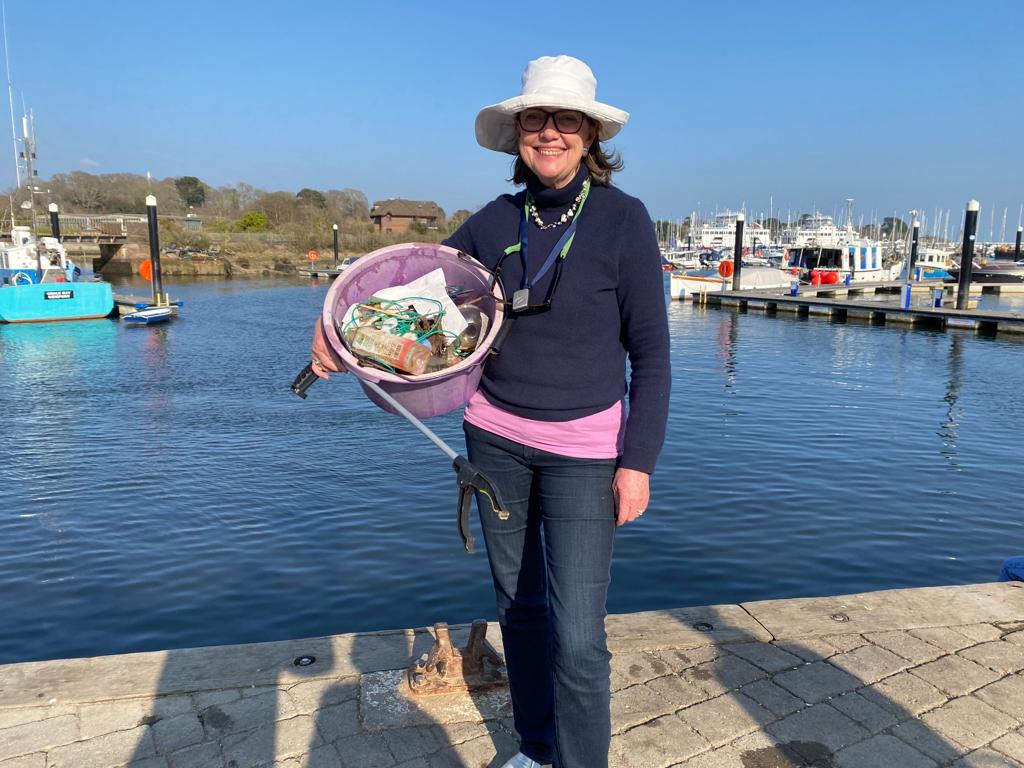
I cross a causeway over a tidal river where drivers obviously chuck rubbish while waiting for the level-crossing to open on the far side. Having a litter-picker makes the job easier and safer. I collect a bagful and continue into town, putting litter straight into council bins. Despite plenty of these, I find a significant amount of cellophane on the quay about to be blown into the harbour. I cover 3.5km collecting litter over 90 minutes.
The Co-op carrier bag is compostable, the plastic pollution is not
Day 10 – K is for keep fit – and keep going. We arrive in Pembrokeshire for a family holiday. I’m tired after the journey but walk about two miles in 90 minutes, collecting a carrier bag full of coastal litter.
Day 11 – L is for Litter – loitering in the tide wrack of Wales, but I’m joined by friends from The Dog House which is fun. We walk 5 kms along a sandy beach where the smallest dog is rather good at finding litter.
Joined in my quest by The Dog House
Day 12 – M is for mission to rid the cost of plastic pollution. I walk up an estuary for only 2kms but collect a bucketful of PVC rope and plastic wrappers. I repeat the same distance at low tide when the landscape looks quite different.
Would you like to join the challenge? It’s not too late.
The charity SchoolReaders are still looking for runners, swimmers, riders and walkers keen to take part in their Race for Reading.
Run, walk, cycle, swim, ride, wheel, litter-pick
Every pound raised in sponsorship makes a difference and provides more children with vital reading help. They send out T shirts to those who reach £100 in donations along with a R4R 2022 medal to everyone who has raised over £15 and a gold medal to those who have raised over £1,000.
My company will match any sponsorship I personally raise, so any money given via my Justgiving page will be doubled.
Thanks to my very kind supporters I’ve raised £355 so far, which will be doubled to make £710! This will be enough to ensure twenty volunteers are able to listen to children read and give them a love of books, improving their life chances.
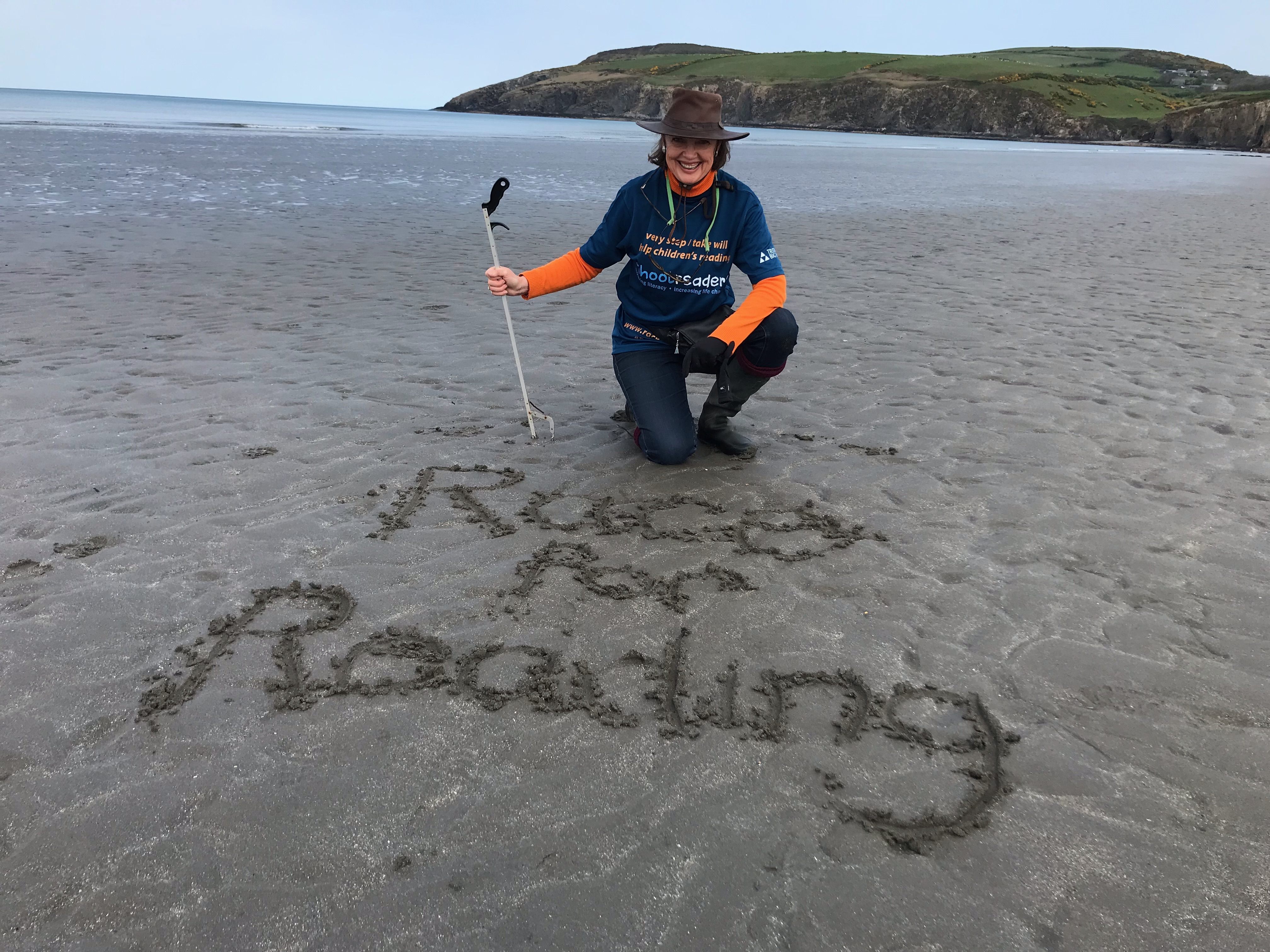
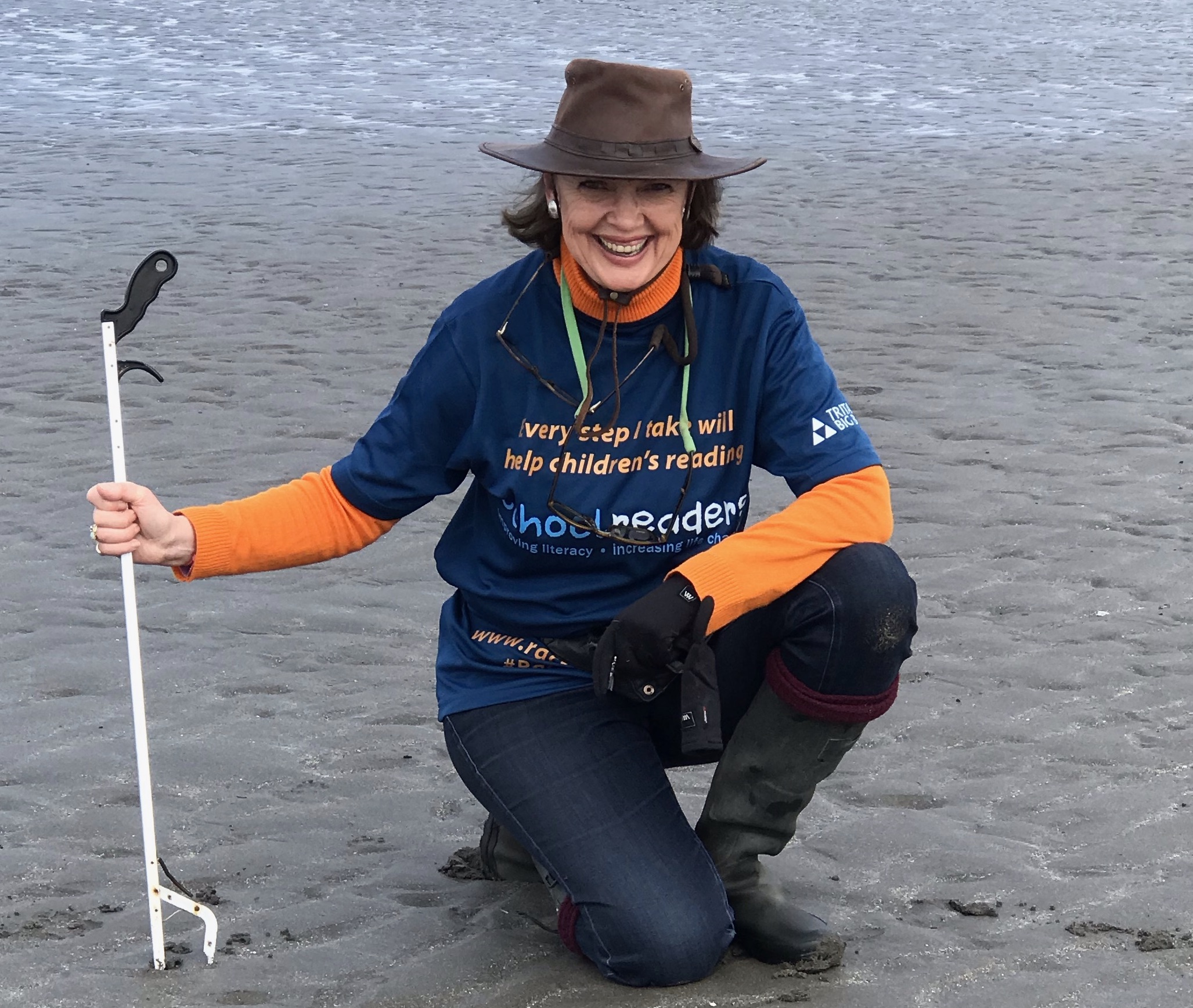
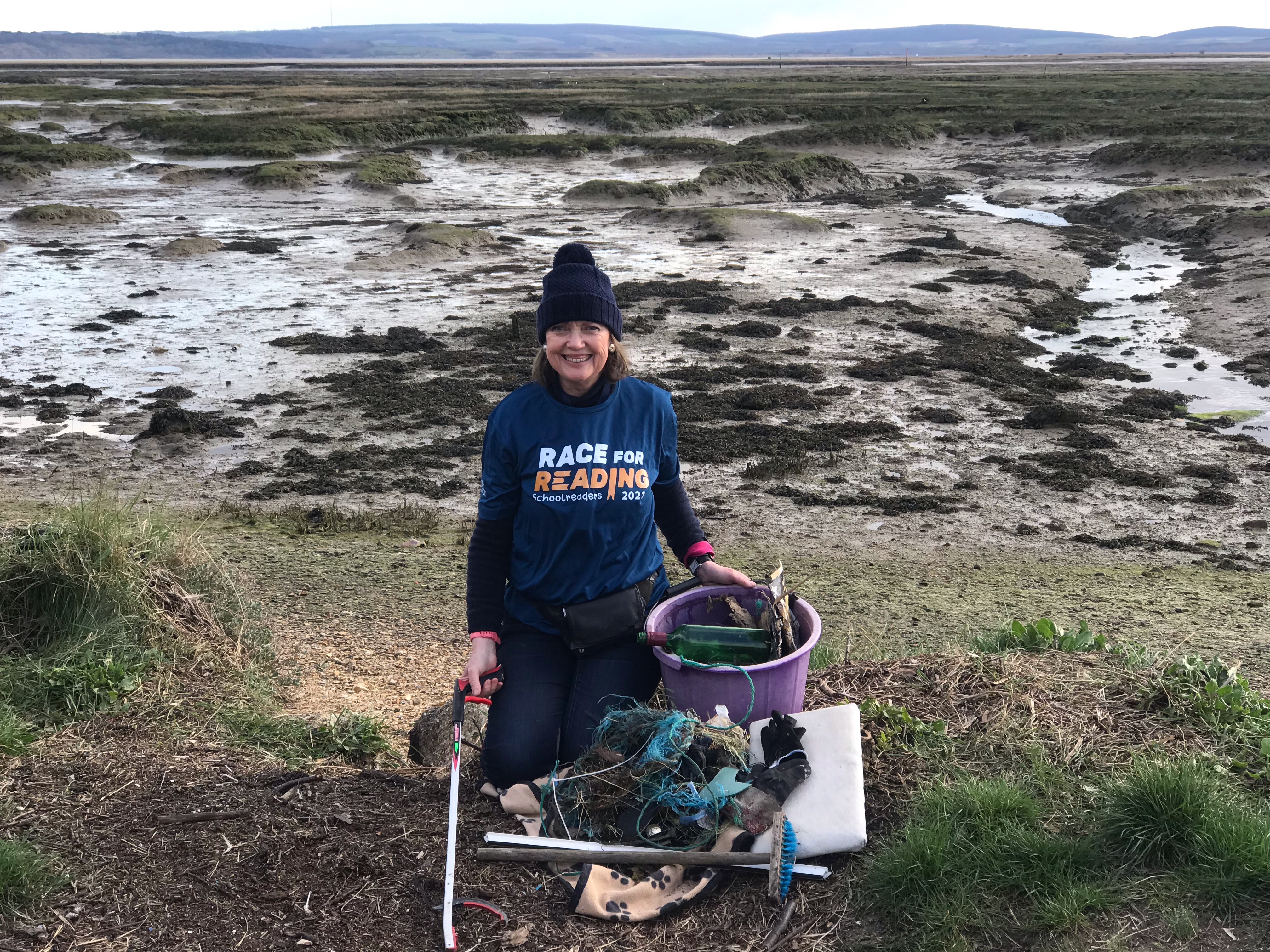
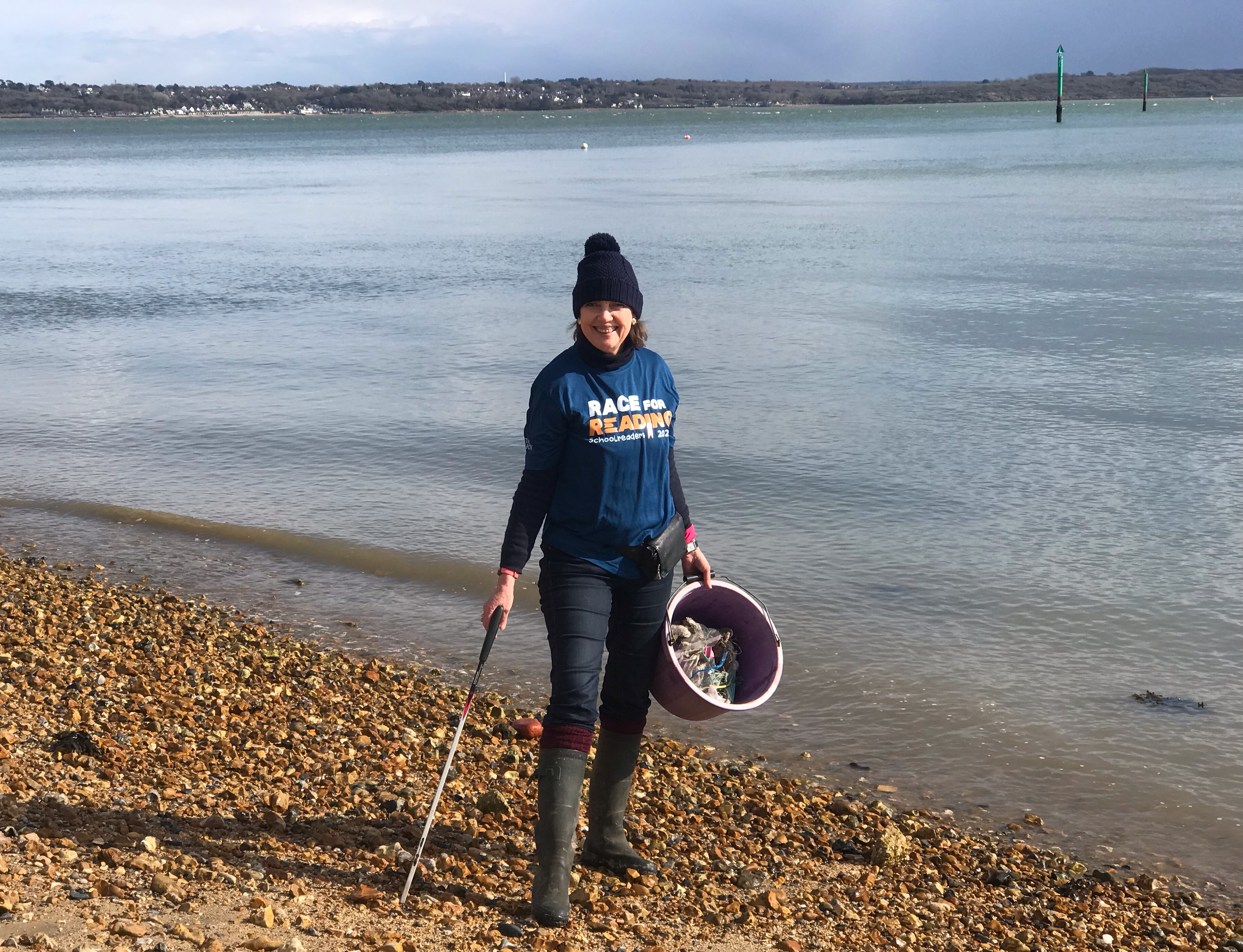
Sophie Neville cleaning the mudflats of PVC rope and old fishing line.
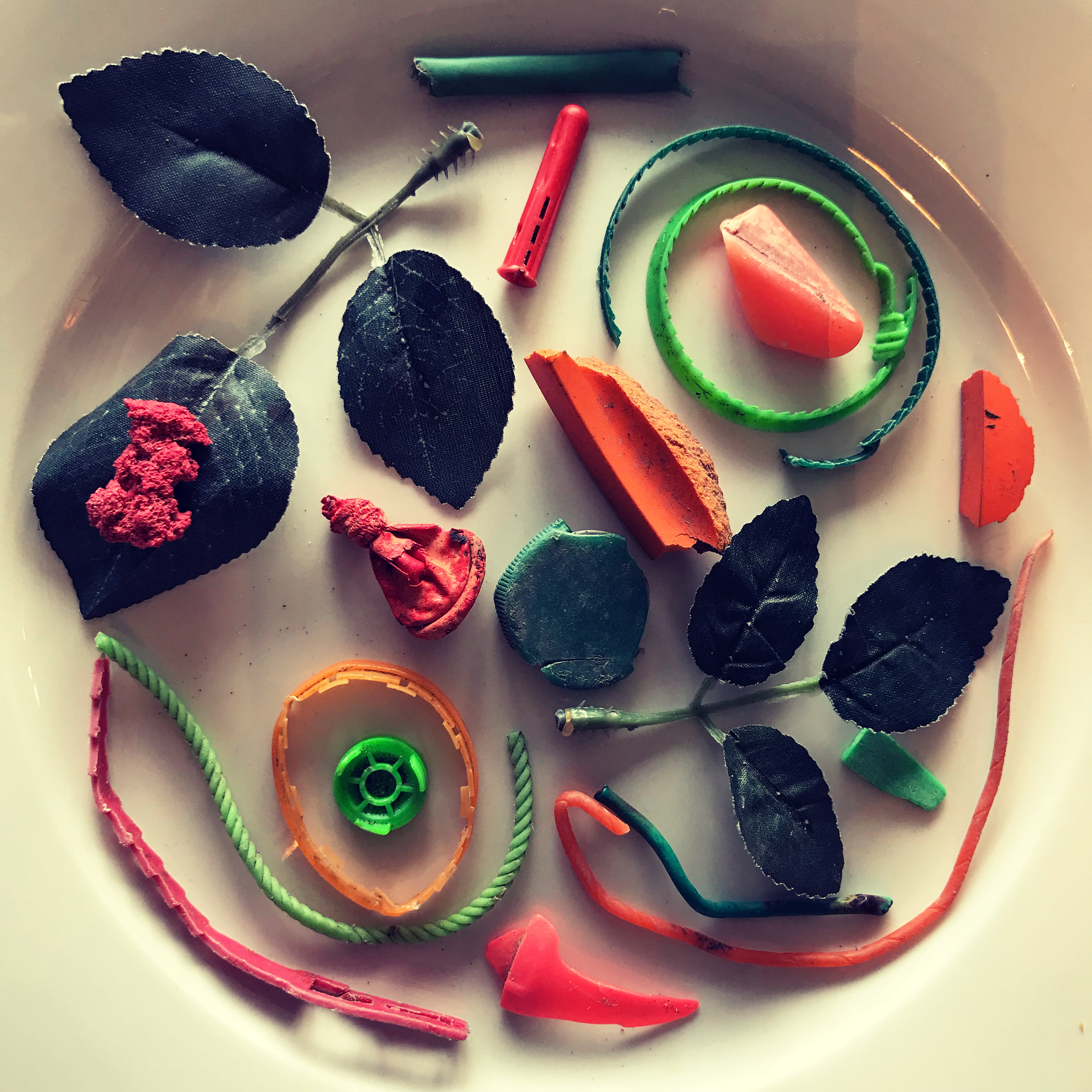
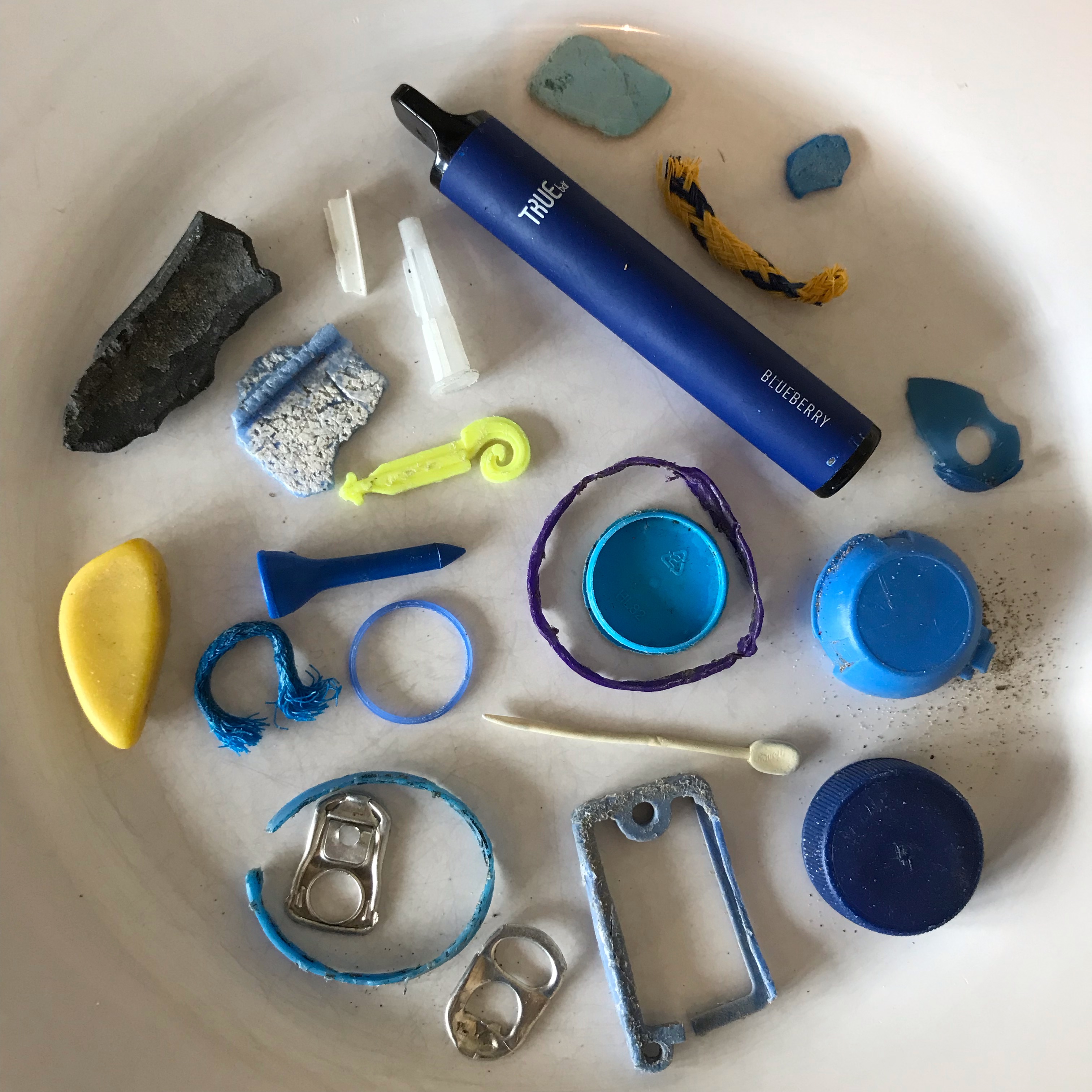
And, I’ve stopped litter from threatening wildlife and polluting our seas. For a full list of things I’ve found washed up on the Solent over the years, please click here
Thanks go to Schoolreaders who change the life stories of so many children.
It’s great when things come together. I have a passion to promote literacy, a resolve to rid the coast of plastic pollution and a need to keep fit.
Only 3 miles but I must have collected 300 small pieces of plastic
Day 2 – I love walking along beaches more than anything but litter picking can be challenging on a number of different levels. It takes time. I spent nearly two hours on the coast and, according to my Fit-bit, covered only 5km = 3.1 miles. Once home, I had to sort the rubbish and recycle the broken glass.
B is for bottles, balloons, barbed wire and a broken broom
C is for caring
C is for constant cleaning
C is for change – change a child’s life chances
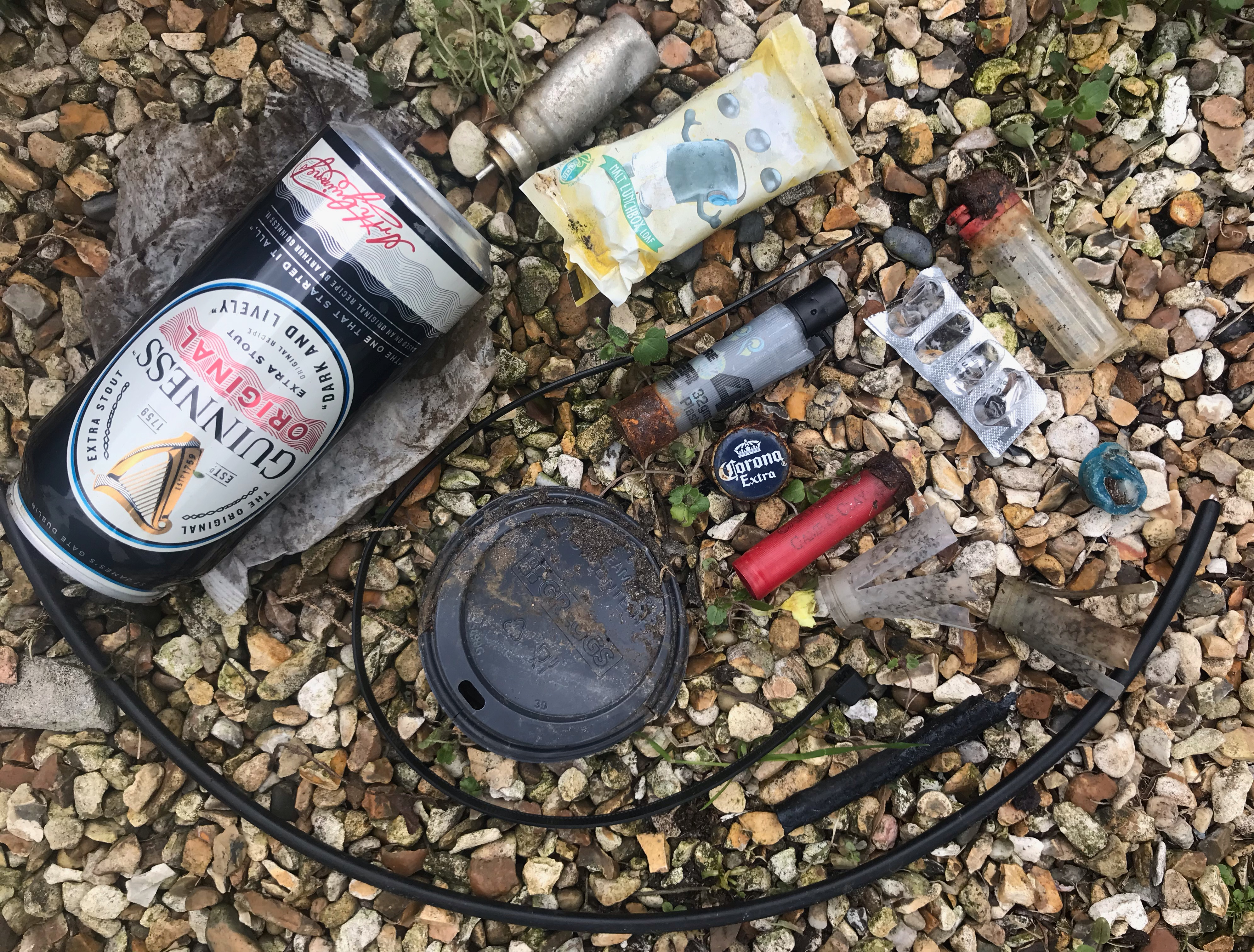
Collecting cups, cartons, containers and coastal contaminates
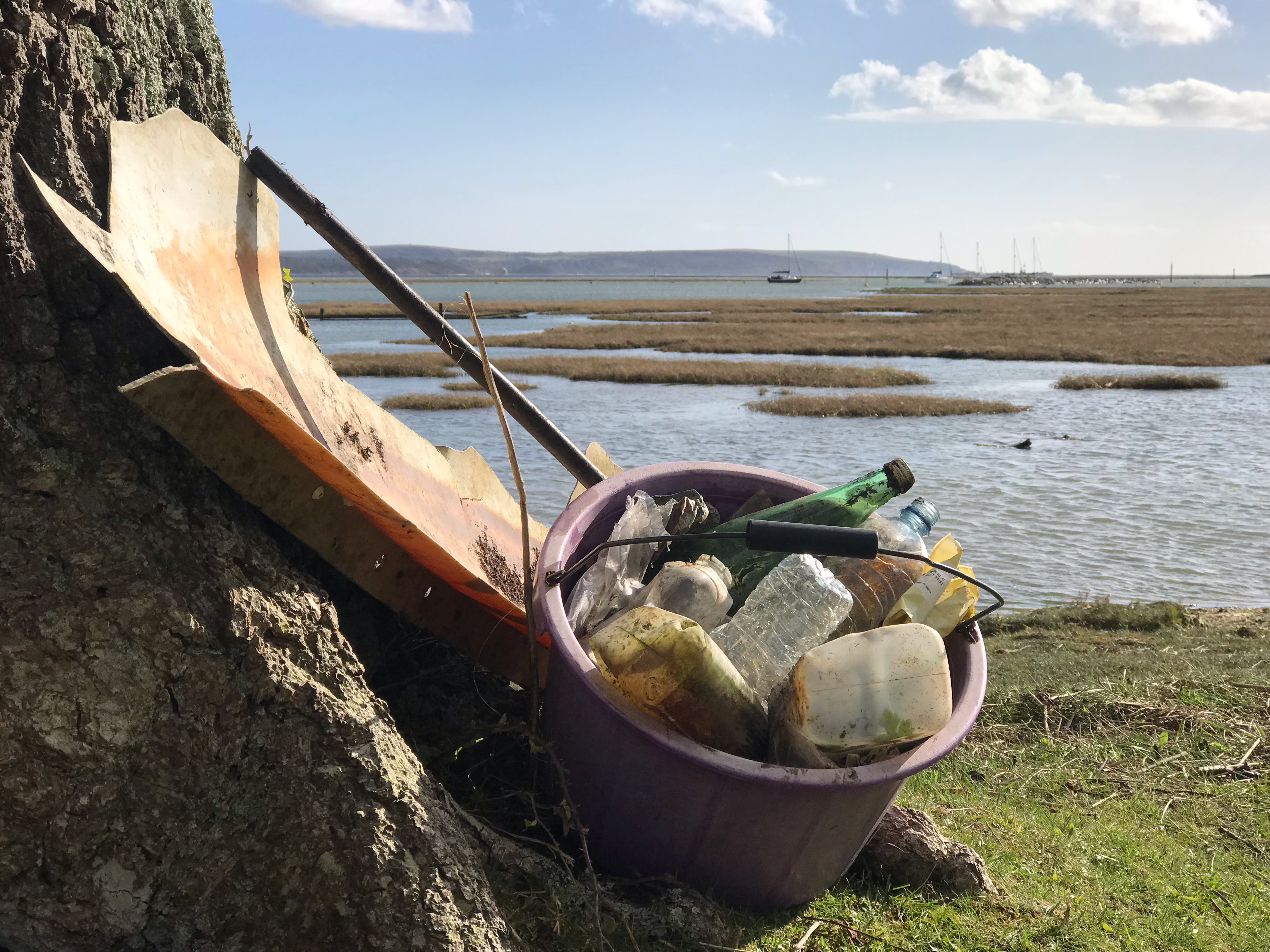
Day 3 -Another two hours clearing the foreshore and mudflats when I only covered 3.71km = 2.3 miles, but removed items that will never rot. Here’s a selection:
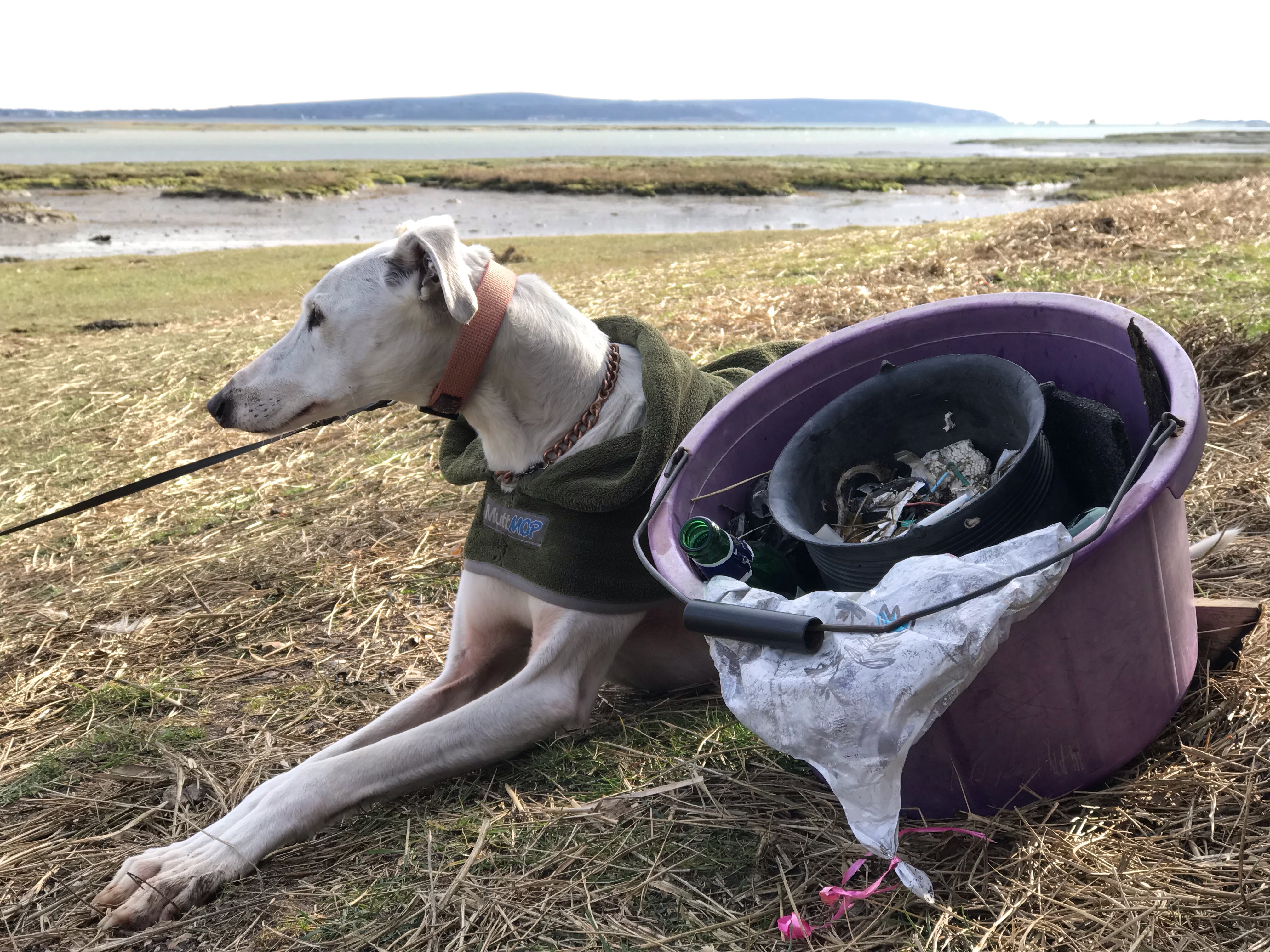
Darling dog – distressing debris: 148 items in are this bucket
90 mins spent covering 1.8 miles collecting 162 pieces of litter and plastic pollution including 6 bags full of dog poo, despite the provision of a council bin.
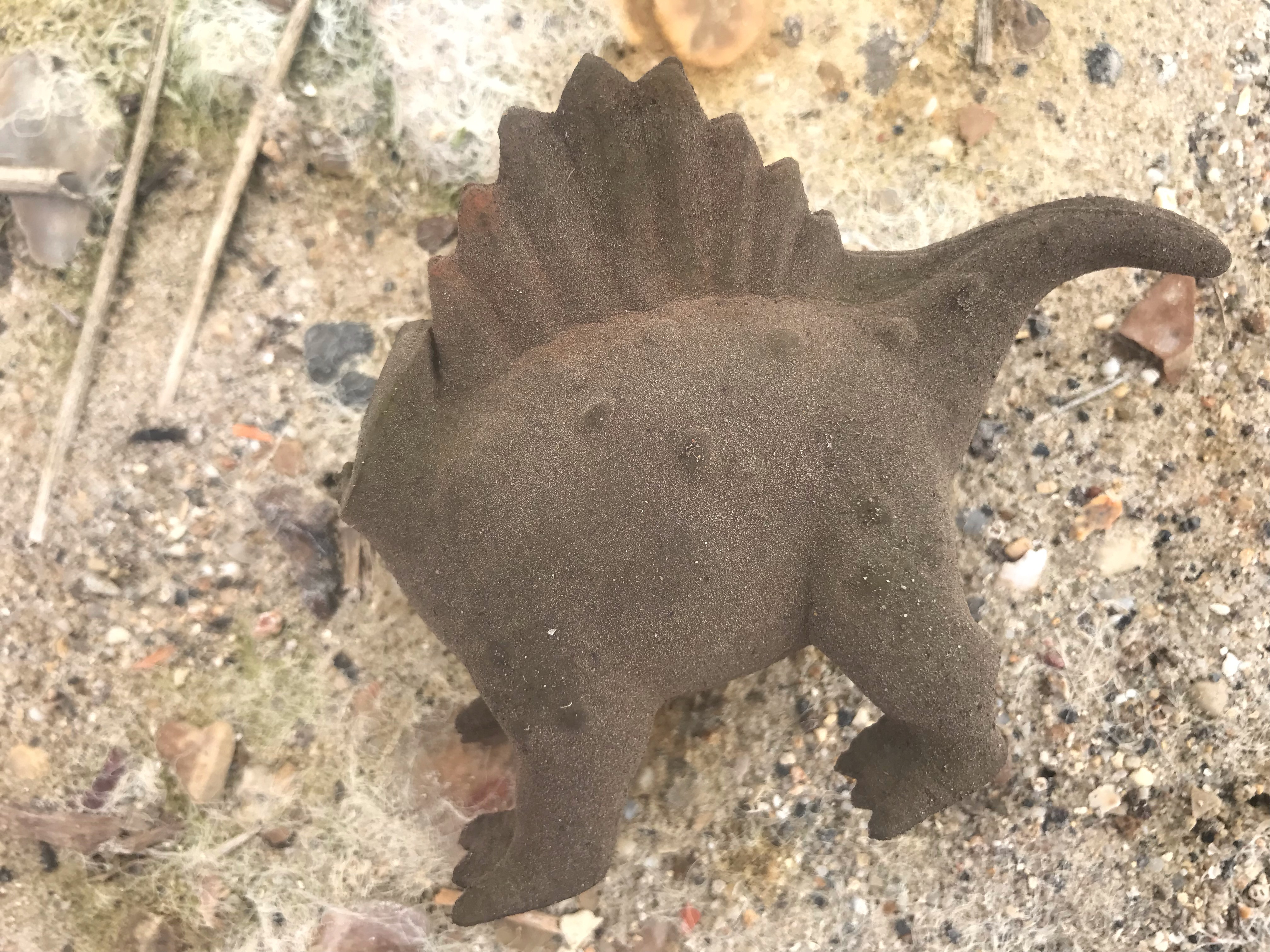
D is for dinosaur
E is for Environment
E is for Everyone
E is for Energy
Day 5 – 90 minutes covering 2 miles along the coast and associated lanes.
Flotsam and fishing line found on the foreshore
F is for Fitness
F is for Friends
F is for Fishing debris
Day 6- 60 minutes in the fresh air covering half a mile through fields returning with baller-twine, a discard PVC dustbin and a broken wheelbarrow.
Gloves and glass – some of which was hazardous to wildlife, dogs and walkers
Day 7 – 90 minutes collecting 130 items of glass and plastic covering 3.75km = 2.3miles
Gillian, who accompanied me on one of my beach cleaning forays has written to say: ‘I found it surprisingly enjoyable and absorbing.’ She was once a volunteer school reader.
Glass-fibre and glass bottles with tubing and plastic
Would you sponsor me to continue to collect litter as I continue to walk along the coast for Race for Reading 2022? So far, I have only covered 12.2 miles but I have collected about 1,000 small pieces of rubbish, recycling the glass.
I’ve registered in my full name so Gift Aid can be added on my My JustGiving page. My company will match money given in sponsorship, so your donation will effectively be doubled.
Sophie Neville collecting flotsam from the Solent shoreline in the Race for Reading
Funds raised will go straight to Schoolreaders – a fantastic charity that supplies volunteers to listen to children read in school and whip up excitement about books and storytelling. A gift of £30 will fund the placement of a volunteer in a needy school for a year.
We’re asking you to step up for children’s literacy!
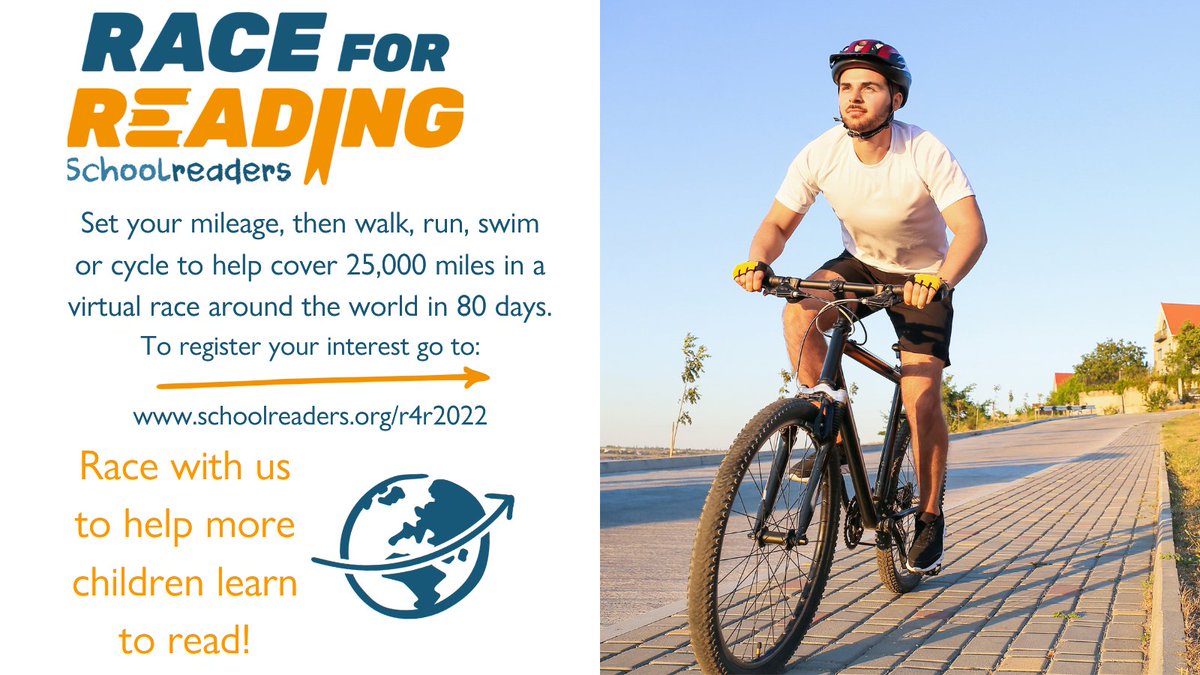
Over the next 80 days, supporters around the world will run, cycle, swim, row and walk to raise funds for the national charity Schoolreaders. They are encouraging litter-pickers to join their virtual race.
Spring Clean the coastline with Keep Britain Tidy
As an ambassador for Keep Britian Tidy, I have been litter-picking as I walk along the coast, cleaning beaches and shorelines of the United Kingdom on the Great British Spring Clean from 25th March to 10th April. I’m happy to extend this until 19th June 2022 when Schoolreaders virtual race ends.
Last year, a total of over 34,000 miles was covered by the registered participants. I kept a tally of miles walked while litter picking, clocking up 32 miles. My distance covered was not very impressive – but collecting flotsam takes time and my bucket can get heavy.
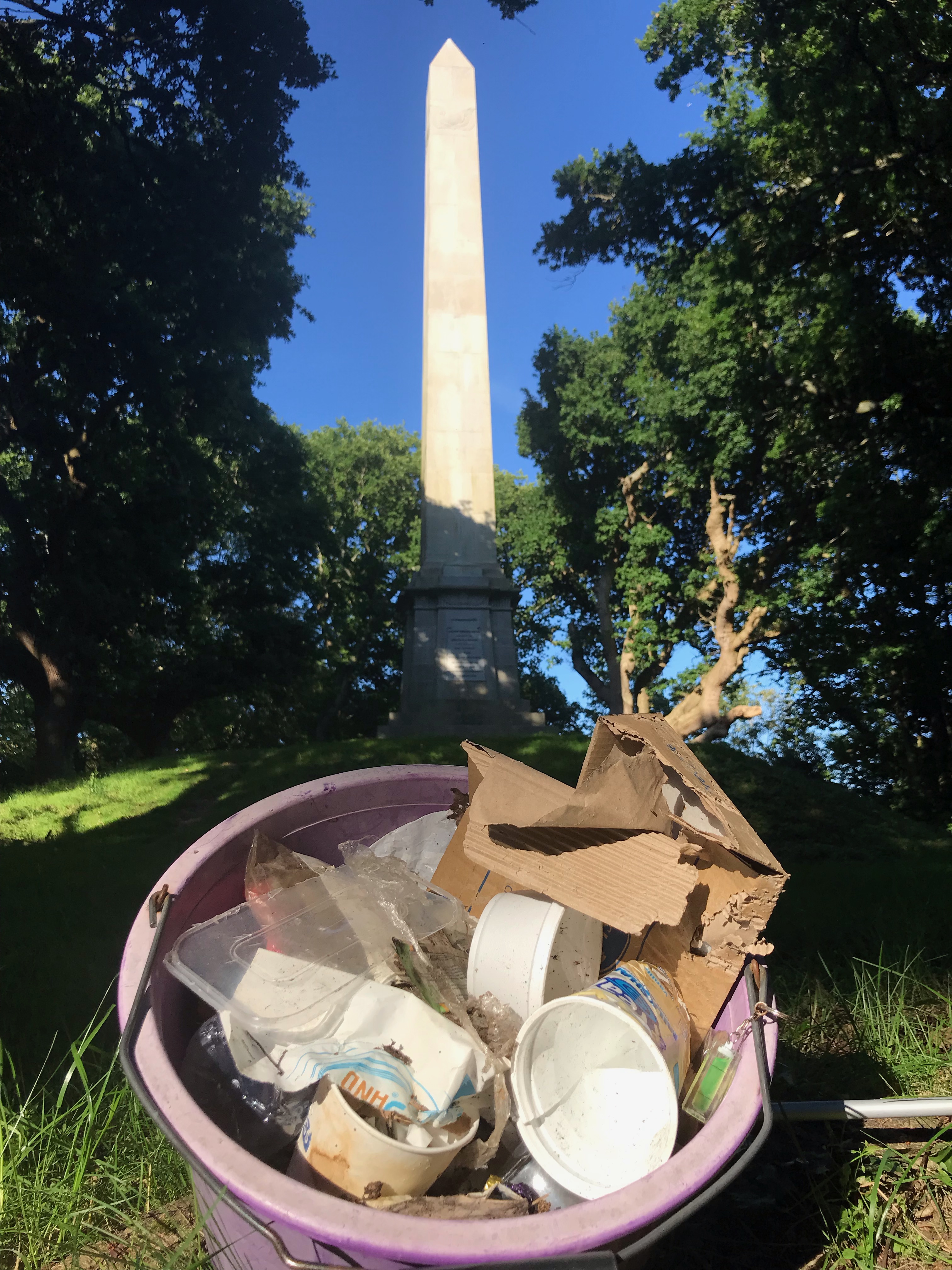
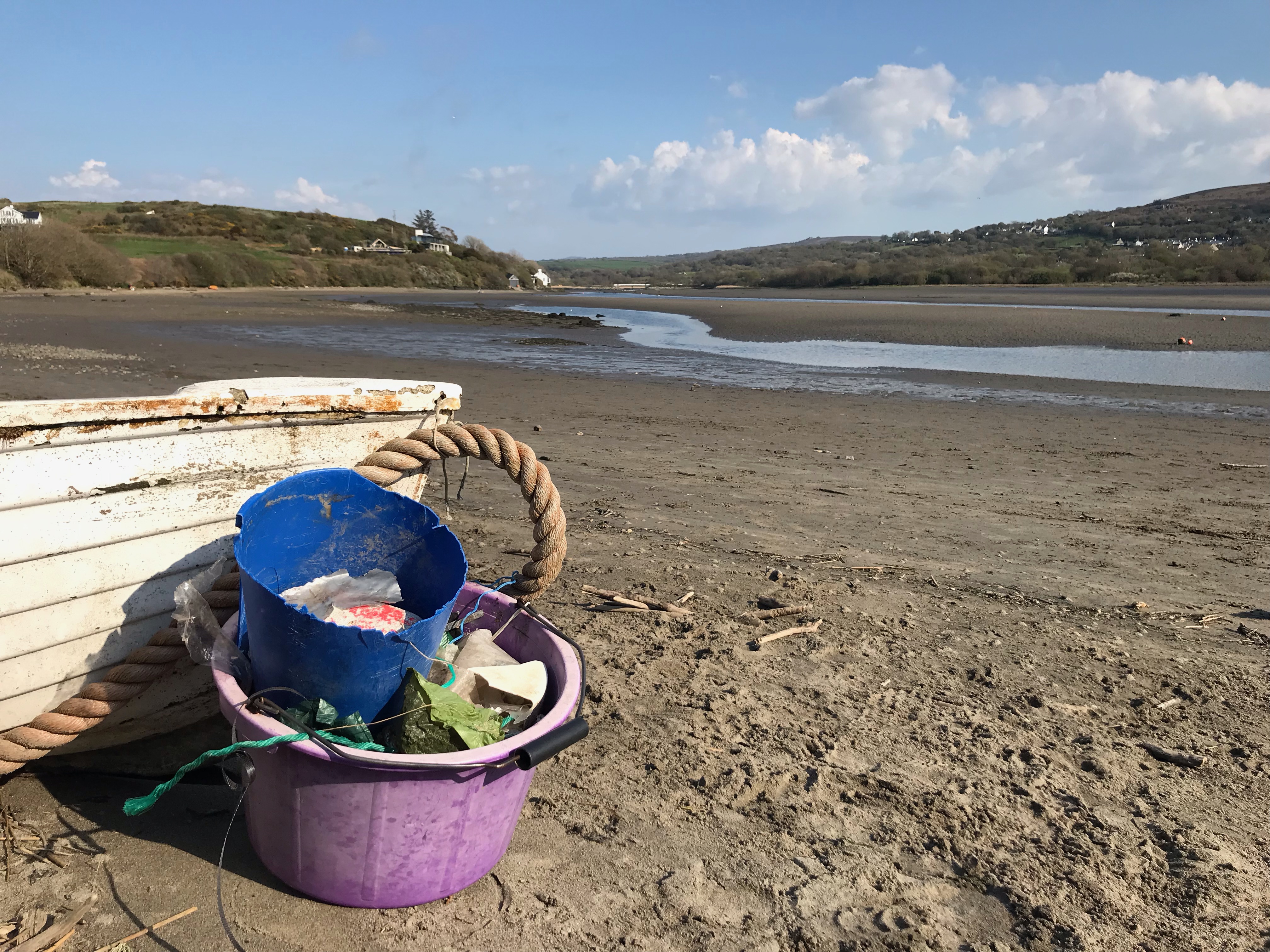
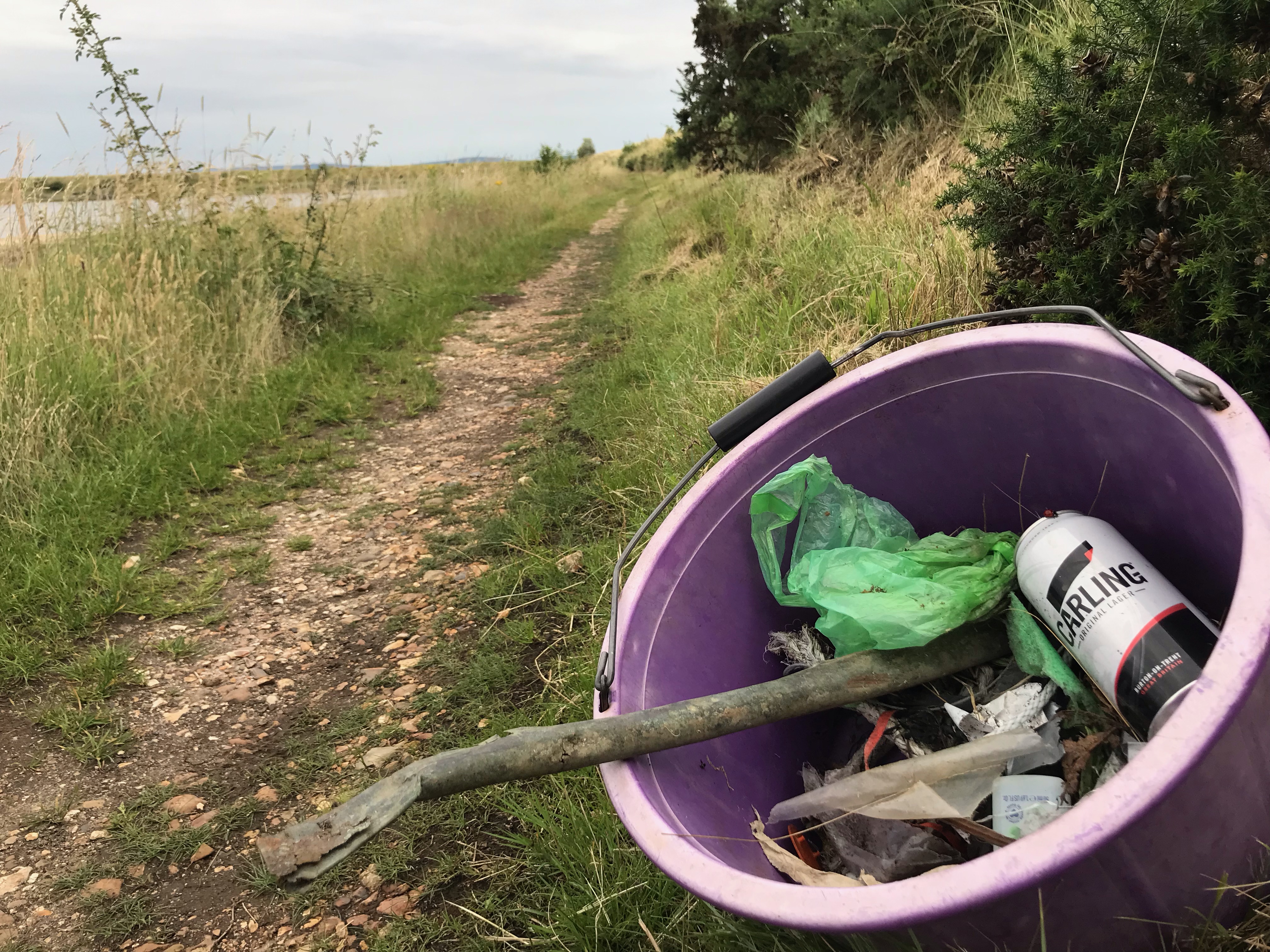
Litter collected whilst walking along the Solent shore
Somewhere I have a tally of the amount of rubbish collected. I certainly took a lot of photos. I’m hoping friends will join me this year as I’m aiming to walk a lot further.
I’m not sure if I will find anything that relates to books or reading but it is possible.
I quite often find reading glasses when I’m litter picking
If you would like to support children’s reading in the UK there are many ways you can do so:
You can sign up to become a Schoolreaders volunteer– they ask for a commitment of one academic year to provide the children with consistency.
You can set up a regular donation for as little as £5 by clicking here
Funds raised will provide weekly one-to-one reading support sessions from Schoolreaders volunteers across the country. We are hoping to be able to help over 2,500 children who may have fallen behind with their reading during Lockdown.
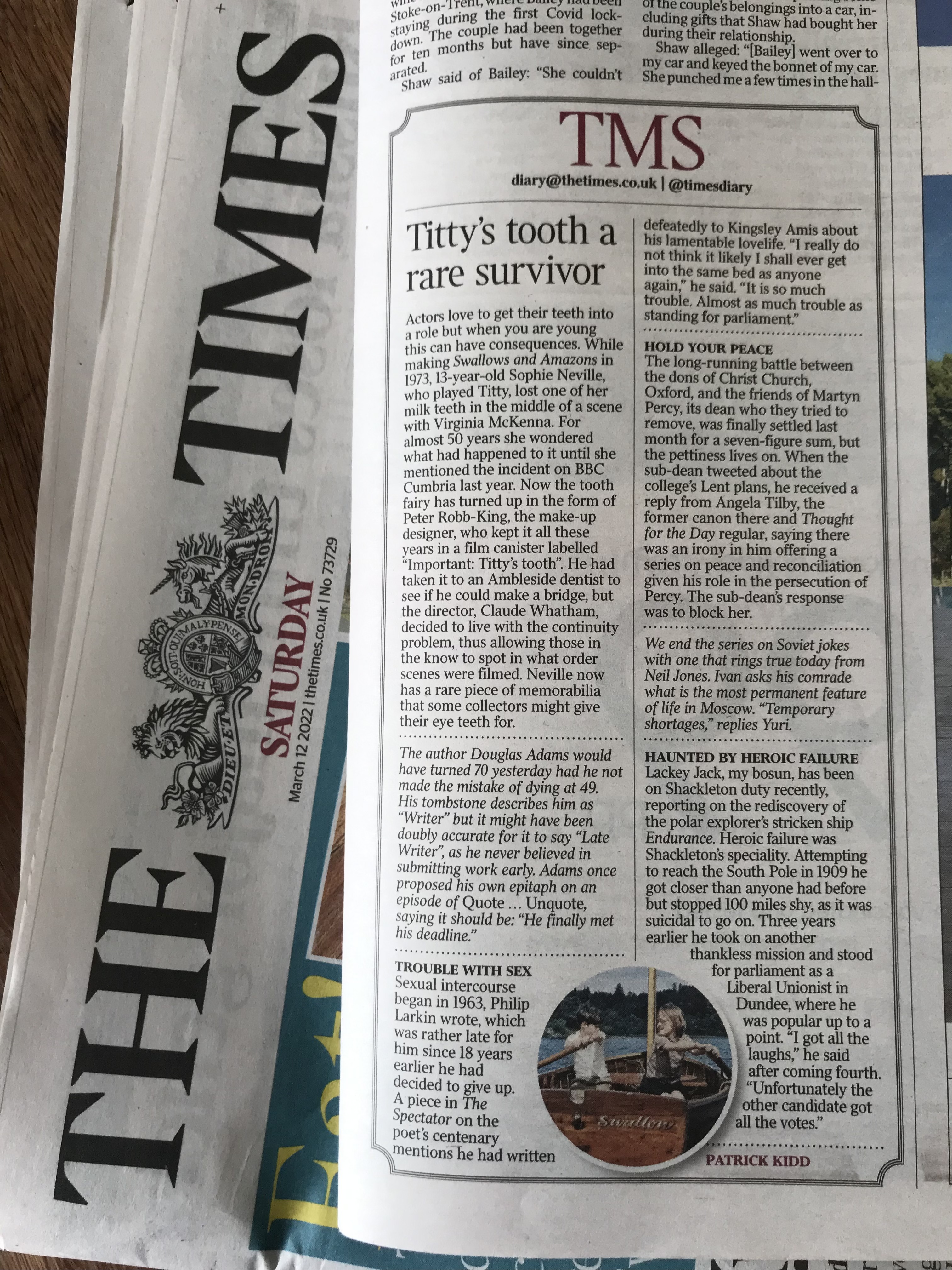
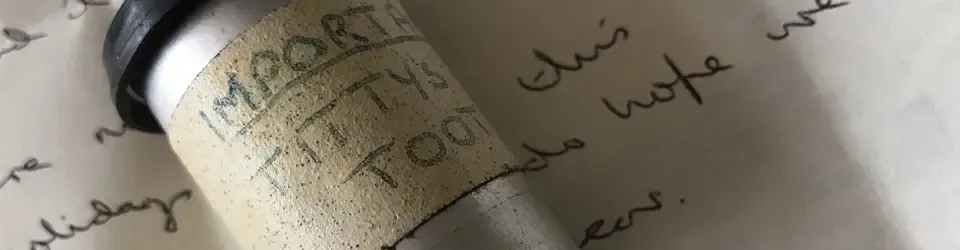
It’s possible to spot the gap by watching the film trailer for the 1974 movie of ‘Swallows and Amazons’ with further information on the International movie data base also seen here:
Sophie Neville, aged 12, without tooth. Suzanna Hamilton, aged 12, with beautiful teeth.
























 Sophie Neville