Memories of sailing Swallow and Amazon more than fifty years ago

“The smell is just the same.” Suzanna Hamilton began rowing me across Coniston Water from Bank Ground Farm, taking us back to childhood days.

“It sounds the same.” The colours, the landscape, the feeling of being out on the water was still magical.

Suzanna Hamilton and Sophie Neville at Coniston Water in the Lake District

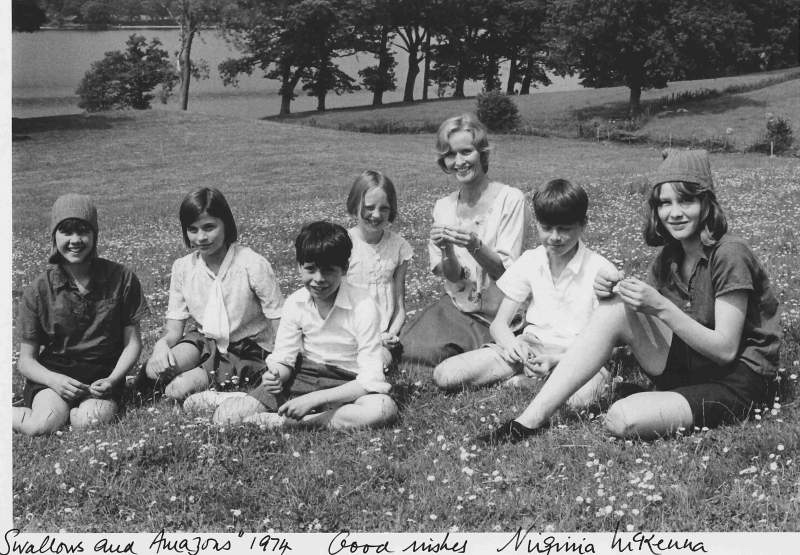
As girls, Suzanna and I had appeared as Mate Susan and Able seaman Titty in Richard Pilbrow’s original film of Swallows and Amazons, adapted by David Wood and released in cinemas on 4th April 1974. It starred Dame Virginia McKenna and Ronald Fraser but it was the two of us who were invited to return to the film locations in 2003 to be interviewed by Ben Fogle for an episode of the long-running BBC series Country File. Thanks to sunshiny weather and the support of Geraint and Helen Lewis, his report proved so successful that it was repeated on Country Tracks and featured in the series Big Screen Britain alongside iconic landscape movies such as The Dam Busters and Whistle Down the Wind.

We had been talking about swimming off Peel Island soon after we began filming Swallows and Amazons in the Lake District in May 1973. The director, Claude Whatham, was fresh from making a BAFTA nominated adaptation of Cider With Rosie when he cast Sten Grendon as young Laurie Lee, and the rock-and-roll movie That’ll Be The Day starring David Essex and Ringo Starr. Although happy out on the water, he knew little about boats. The producer, Richard Pilbrow, had insisted on finding children who could sail well rather than audition young actors and teach them to sail, and advertised the opportunity in sailing clubs. This was pivotal. Simon West (who played John), Kit Seymour (Nancy) and Lesley Bennett (Peggy) all had experience with a natural feeling for the wind and emanated confidence. They were only given a couple of days to get used to sailing the little boats used as Swallow and Amazon before filming began and yet their skill ended up making the film a classic.
Dame Virginia McKenna bids the Swallows farewell
Farewell and adieu to you fair Spanish ladies

We had instruction from a sailing director in the form of a good looking actor called David Blagden. He’d recently crossed the Atlantic in a nineteen foot yacht called Willing Griffin but was unfamiliar with blustery Lakeland winds and did not know how to break down a script. Simon, aged eleven, ended up explaining to Claude how to get a decent shot. Suzanna took her lead from him and I clung to the gunwales, trying hard not to shiver in a costume designed by Emma Porteous that consisted of no more than a short yellow dress and enormous pair of navy blue gym knickers.
It was unusual for a movie to feature so many scenes set in two small boats. Mike Turk, whose family had been building boats since 1295, and Nick Newby of Nicol End Marine on Derwentwater, took up the challenge of constructing Claude a cross-shaped pontoon to act as a mobile camera mount so that our dialogue could be captured. This extraordinary vessel had two outboards but wasn’t easy to handle. The dinghies were wired to it with underwater cables but tended to pull away. The base to Swallow’s mast broke, proving safety was an issue, but the idea eventually worked.
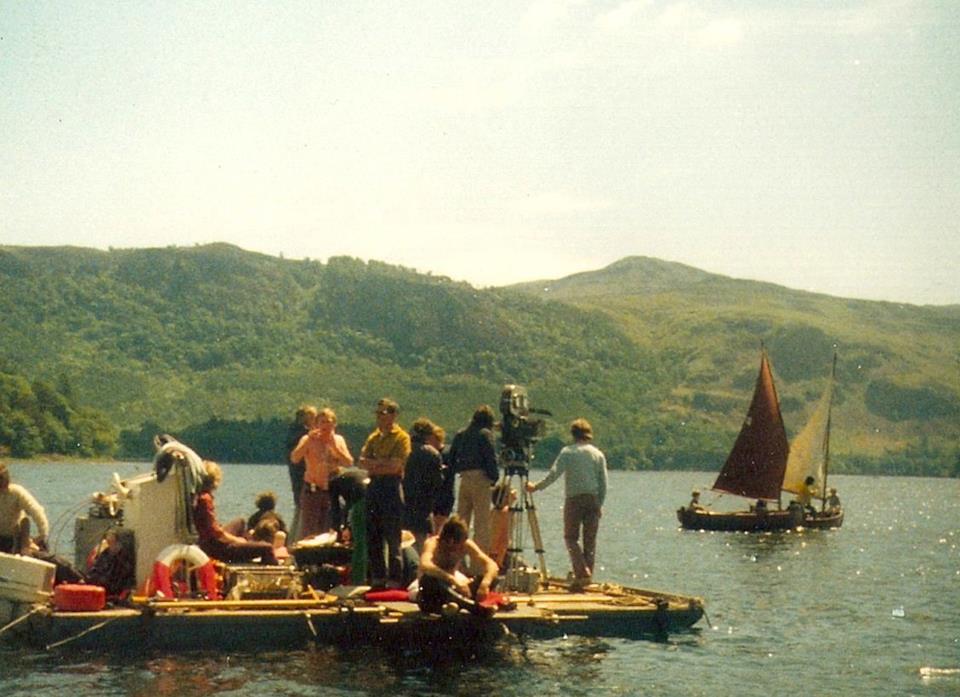
Richard Pilbrow and his film crew on the camera pontoon

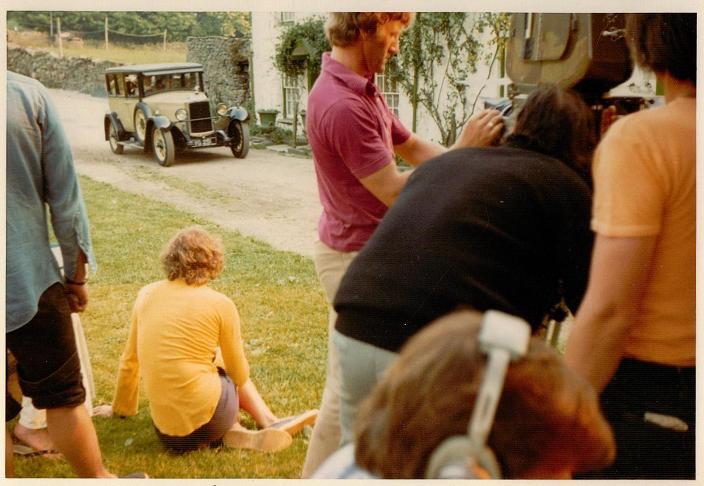
A grey punt was also used. I remember Simon West towing it as he rowed us into Rio. It was easy to transport from one lake to another but must have been tippy. Somehow David Cadwallader, the grip, managed to keep the horizon horizontal using no more than a spirit level. Shadows were lifted from our faces by using huge reflector boards apt to catch the wind. It must have been impossible to use filler lights out on the water, although they somehow managed to power a number of sets on Peel Island.
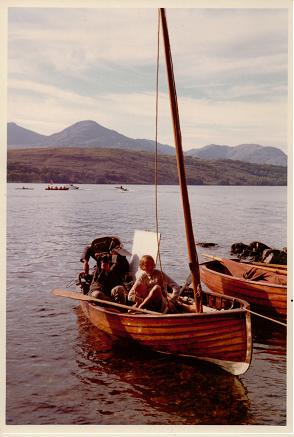
Sophie Neville in the Amazon with DOP Denis Lewiston, his 16mm camera and a reflector board ~ photo: Martin Neville

Richard Pilbrow kindly sent me Swallow’s pennant from his home in America. Unlike Ransome’s original sketch of the crossed flags, the bird flies away from the mast, which is technically incorrect, but I was thrilled to receive the genuine film prop used in vision. If you look closely you can see some of the stitches I made whilst in conversation with Mother, played by Virginia McKenna.

It would have been good if Swallow’s hull had been painted white in line with illustrations in the books. Her varnished planks are a nod to the 1970’s when everyone was busy stripping pine, but the important detail is that she has a keel rather than a centerboard. It makes her difficult to turn, and markedly slower than Amazon, but grants her stability. This feature may have saved us when we really did just miss colliding with the MV Tern on Windermere, which alarmed my father who was on the Tern’s deck. He knew how difficult Swallow would be to turn with the larger vessel taking our wind. We were fully laden with camping gear and yet totally lacking buoyancy of any kind.
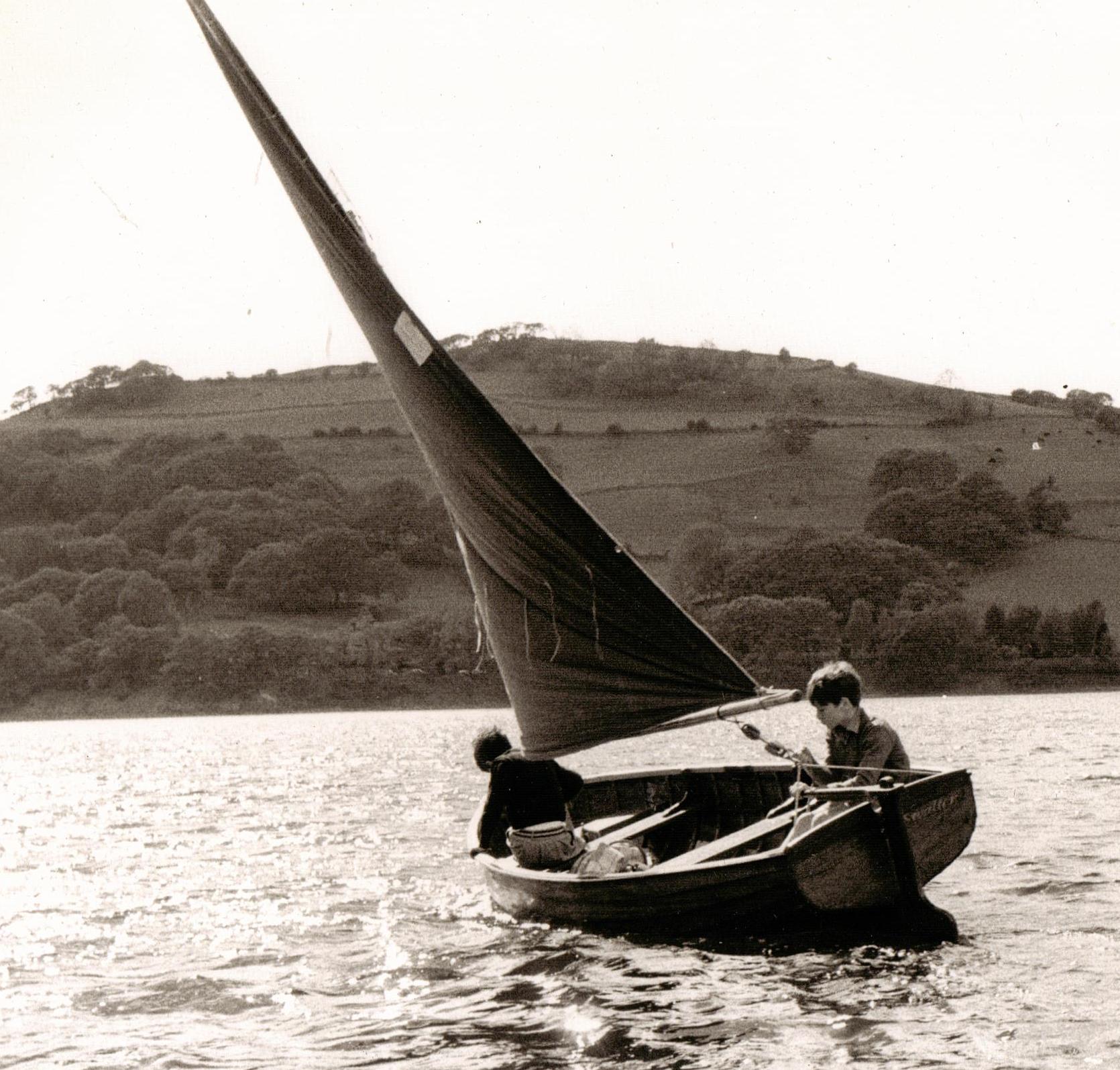
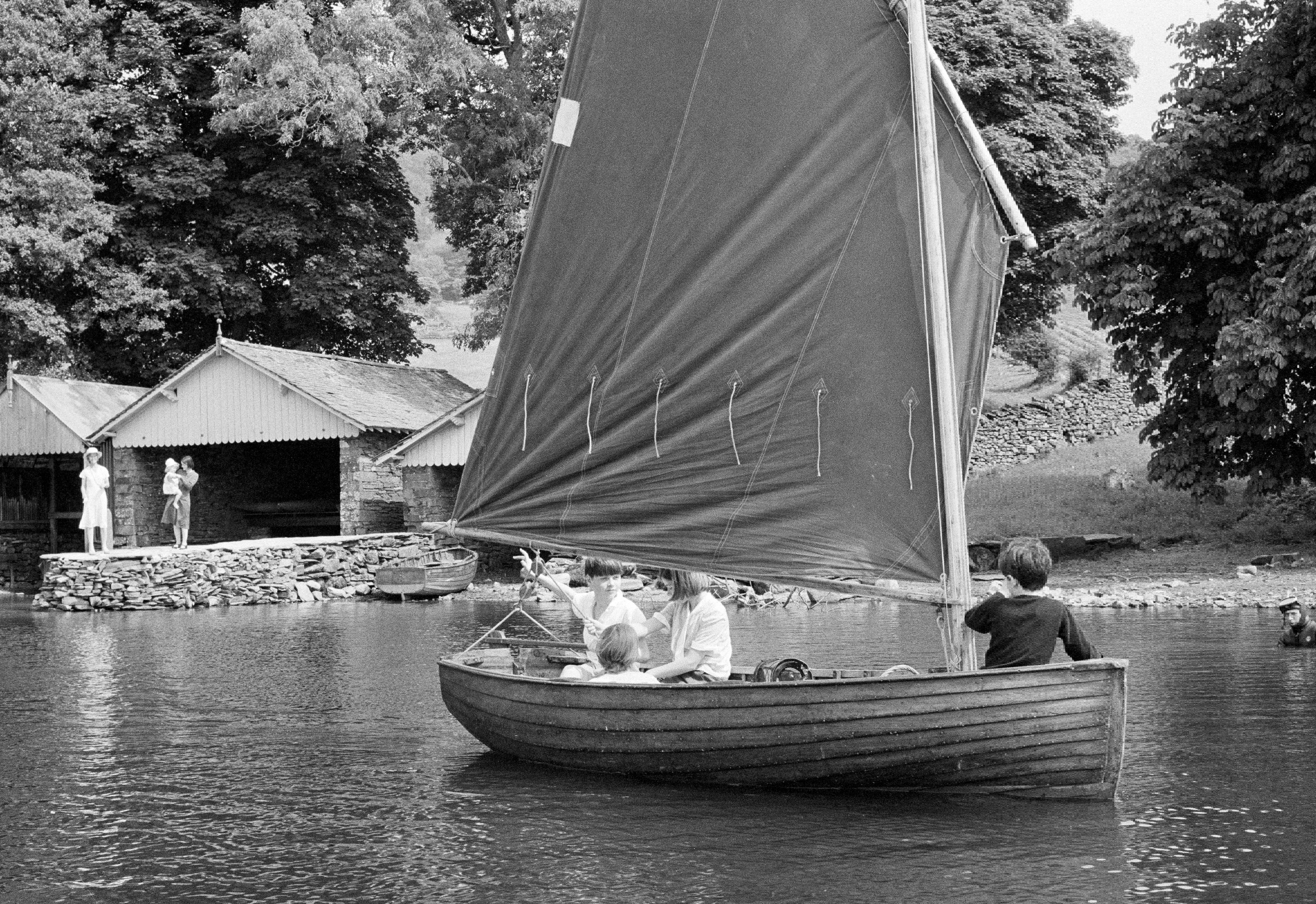
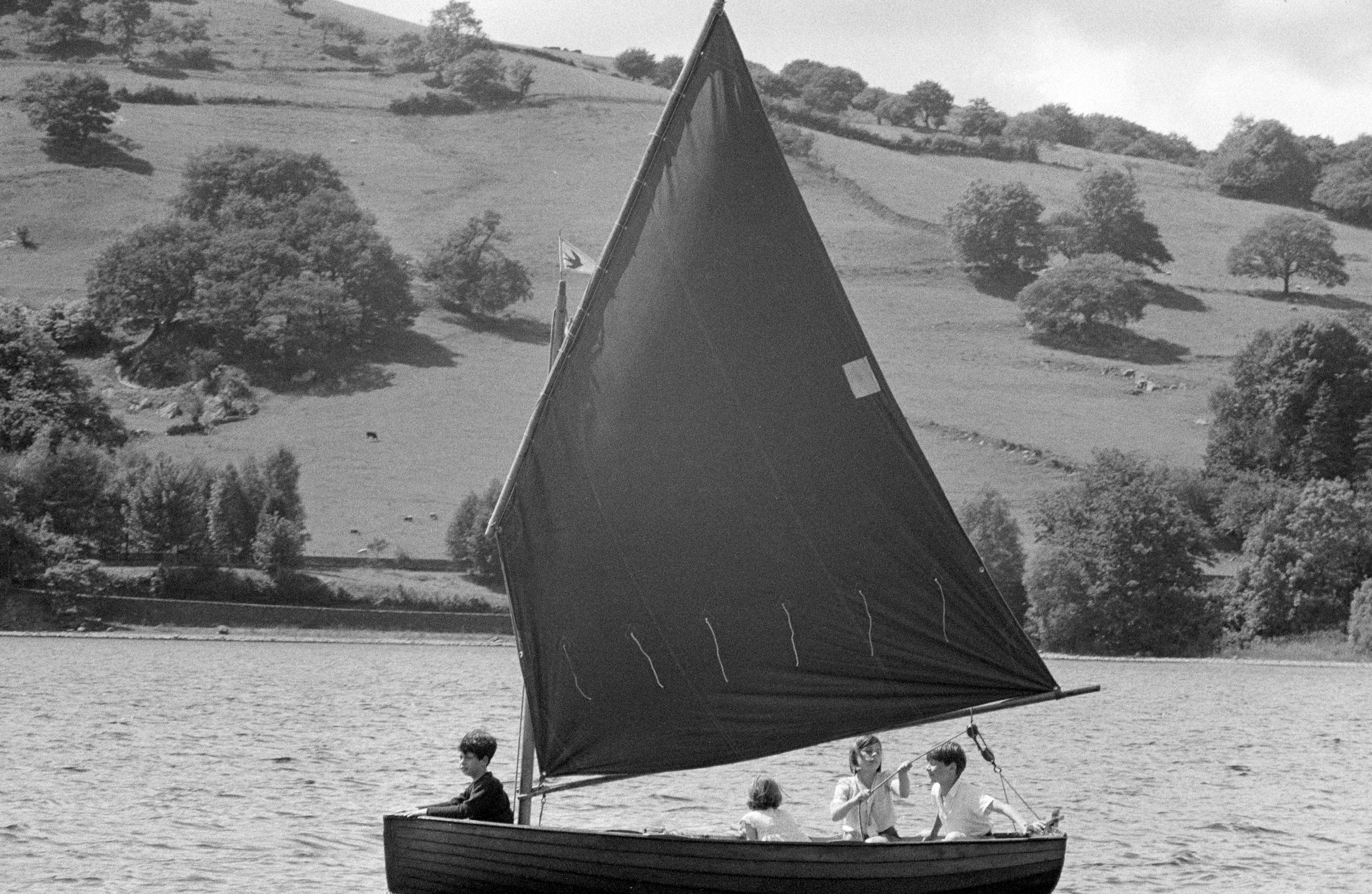
Simon West as Captain John sailing Swallow. Sten Grendon plays the Boy Roger

One secret of filming Swallows and Amazons is that it was set on four different lakes, a smelly lily pond that served as Octopus Lagoon, and Mrs Batty’s barn where night sailing sequences were shot with Swallow mounted on a cradle. One challenging scene was when the Swallows were cast off from Wild Cat Island to sail north to the Amazon River, leaving Titty behind to light the lanterns. I slipped underwater whilst pushing her free of branches overhanging the landing place but regained my footing and waved them off. Simon caught ‘a fair wind’ but the boom swung so far out that Suzanna held the mainsheet by the figure-of-eight knot and Swallow sped up Coniston Water like a ‘pea in a peashooter’, as Ransome wrote in Winter Holiday. A gust hit them broadside as they cleared the island and Swallow gybed, but Simon calmly stood to catch the boom, scarified the wind and took her on up the lake. Watching the sequence still brings tears to my eyes.

Simon West and Suzanna Hamilton at the helm of Swallow with Stephen Grendon in the bows, while Sophie Neville looks on from the shore of Peel Island

No one had given much consideration to the rowing involved in the story. Built as a run-about boat by William King of Burnham-on-Crouch, Swallow has two sets of rowlocks but it was tricky to keep time when she was wired to the camera pontoon. The first scene attempted was when the Boy Roger and I had to row her back from the charcoal burners with Susan at the tiller.

Sophie Neville rowing to Cormorant Island
Sophie Neville as Titty and Stephen Grendon as Roger rowing to Cormorant Island

We rowed again on Derwentwater, making our way out to Cormorant Island to look for the treasure. It took everything in me, but I later managed to row Amazon out of Secret Harbour in one take at the end of a long day filming. The action was repeated with Denis Lewiston, the lighting-cameraman, and his 35mm Panavision camera in the stern. Cold, with wet feet, I completed the scene but had to be carried ashore by a frogman acting as the safety officer. Titty later anchors Amazon off Cormorant Island on Derwentwater, but the shot of her wrapped in the sail, sleeping aboard, was taken in the darkened barn at Bank Ground Farm. The fishing scenes were recorded on Elterwater with Swallow moored near the reedbeds.
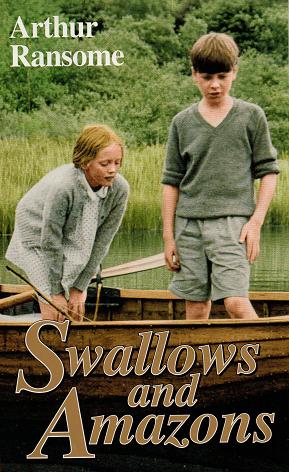
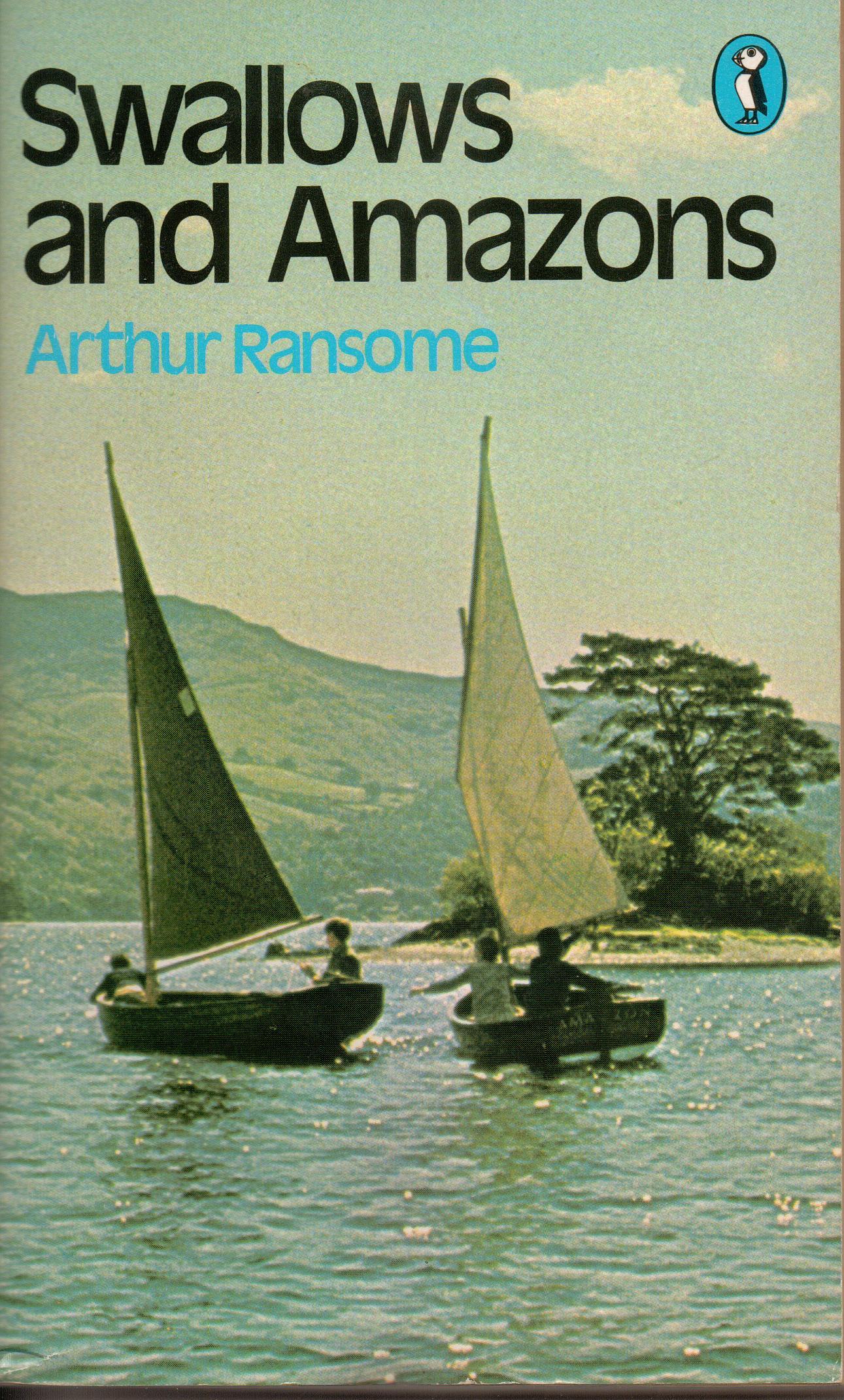
Sophie Neville as Titty and Simon West as John appearing on the cover of 'Swallows and Amazons'
Sophie Neville as Titty and Simon West as John

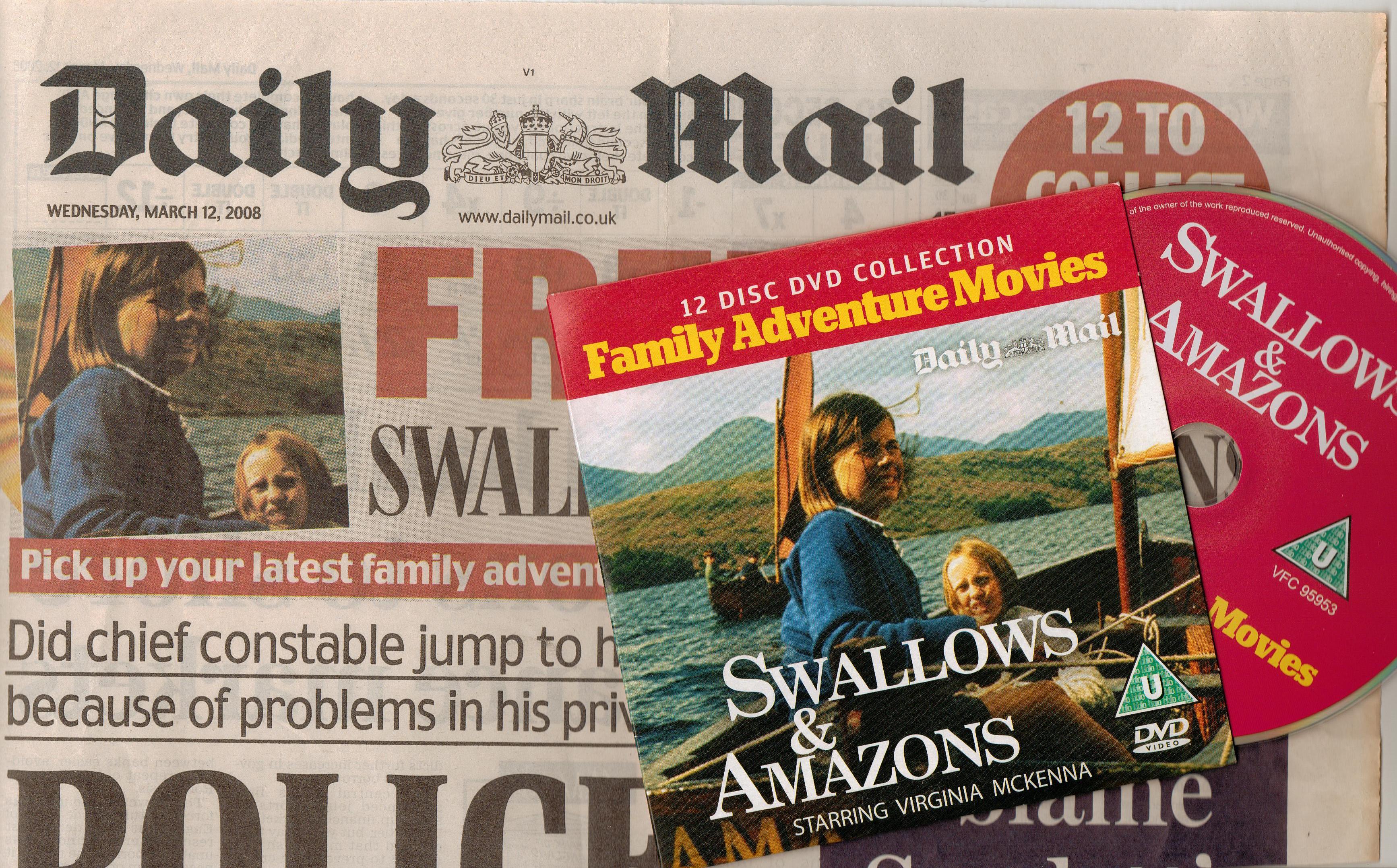
My one regret is that we didn’t follow the book when sailing the captured Amazon back to Wild Cat Island. The wind was up and Claude Whatham needed Simon to sail Swallow ahead of the Amazon which was lashed to the pontoon. I originally took the tiller as Titty is urged to in the story, but had trouble with the rudder and Susan is at the helm on the cover of the paperbacks brought out to accompany the film and a DVD distributed by the Daily Mail.
I was somewhat surprised to see Swallow outside Elstree Studios where we went to post-sync the film. They set up a tank on the sound stage so that Bill Rowe, the dubbing editor who was to win an Oscar for The Last Emperor, could capture the sounds so taken for granted and yet so evocative of handling wooden boats. I was concerned that she’d been given away (and she nearly was) but, as Richard Pilbrow made plans to adapt other Ransome books, she was sent to Mike Turk’s warehouse in Twickenham and stored with maritime props such as the Grand Turk, a replica of HMS Indefatigable, built in 1996 in Turkey for Hornblower.

Swallow at Mike Turk's warehouse

When Mike’s collection was eventually auctioned in 2010 I was alerted, first by my father, then by Magnus Smith. We found Swallow’s details online, took one look at the photos and clubbed together to purchase her, launching SailRansome at the 2011 London Boat Show. The idea that others could go out in her with an experienced skipper was greeted by John McCarthy who recorded the sounds of sailing Swallow for Paddling With Peter Duck, his programme made for BBC Radio 4.
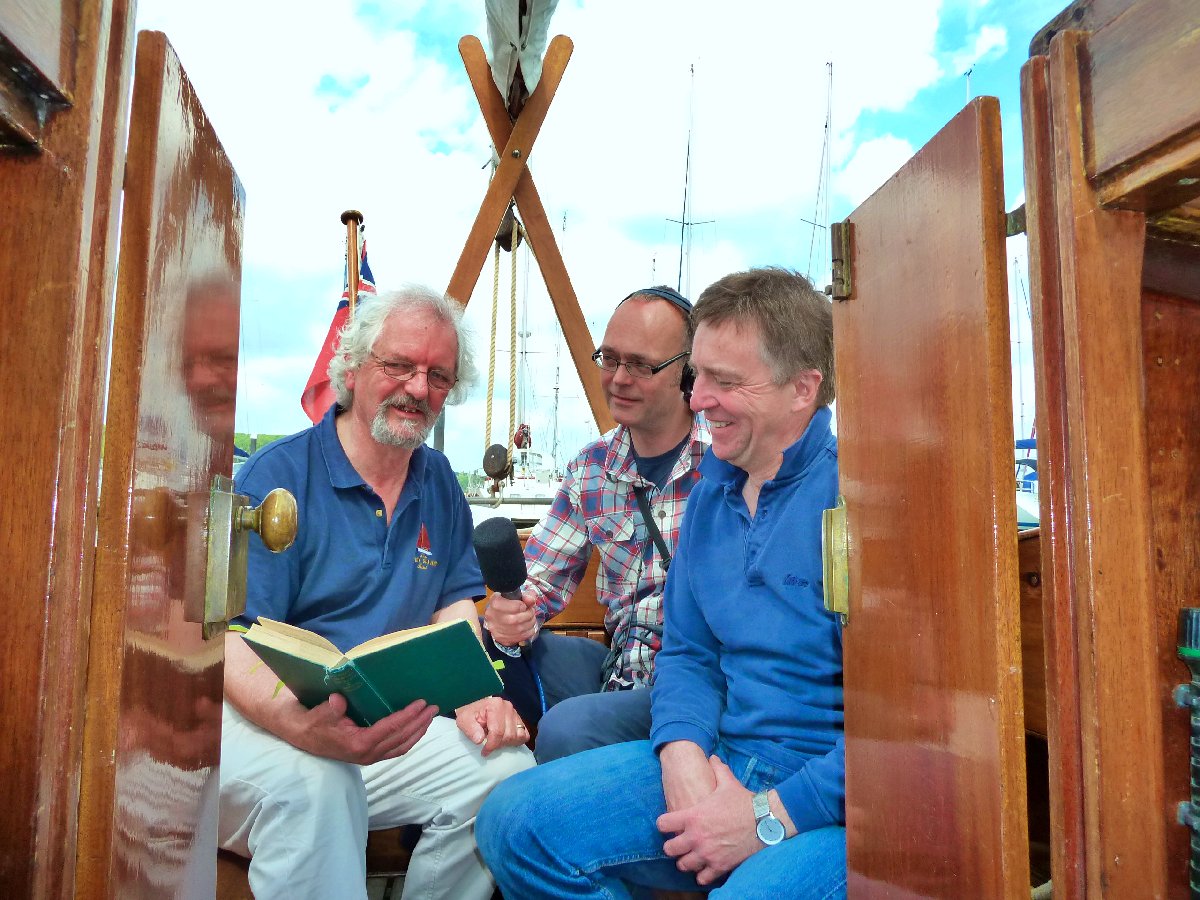
Peter Willis in the Nancy Blackett with John McCarthy

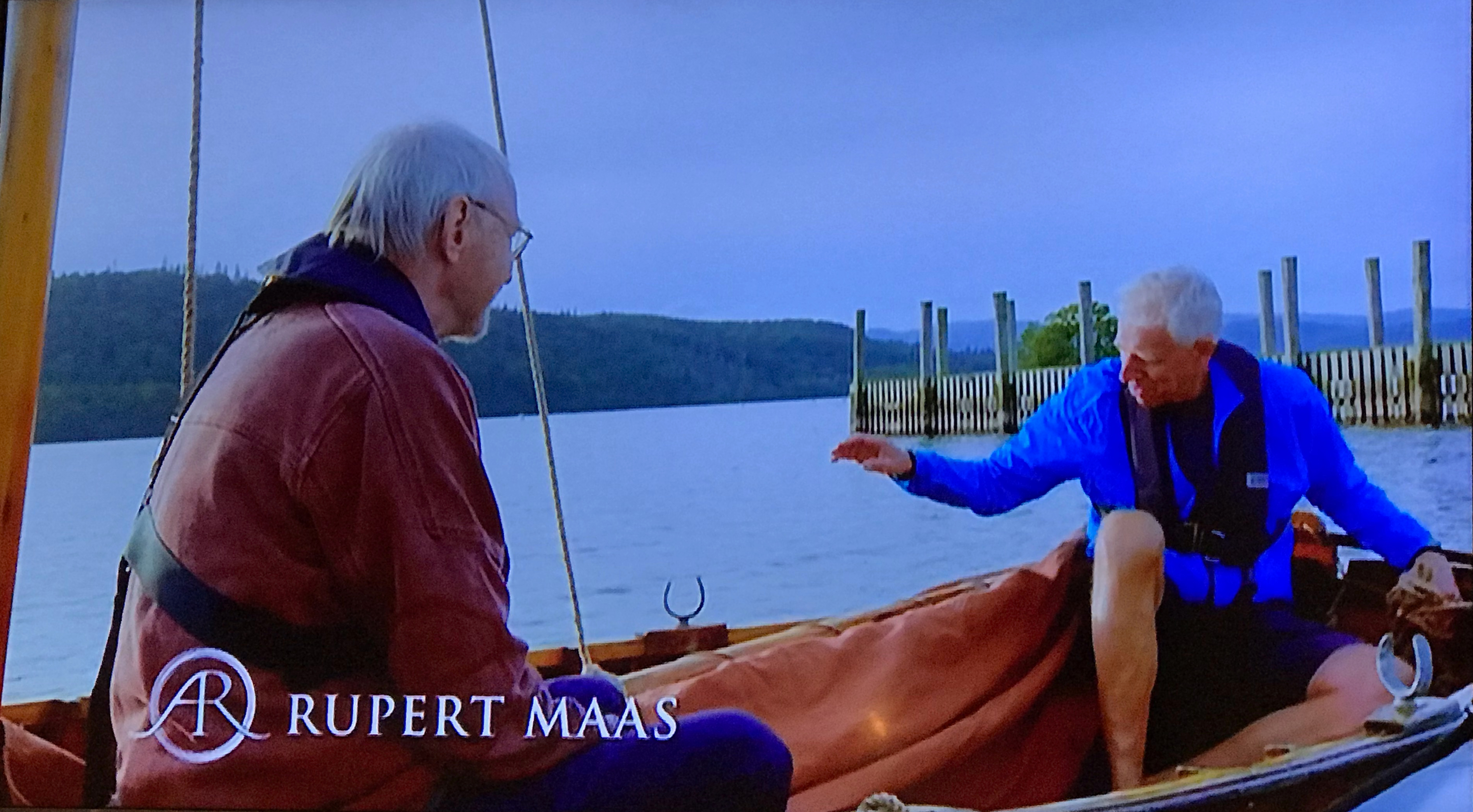
The Arthur Ransome Society now own both historic dinghies. Rupert Maas valued Swallow highly when she appeared on BBC Antiques Roadshow in 2021.Everyone gasped but her true worth is akin to Captain Flint’s hidden treasure: instead of gold ingots his trunk contained precious memories that no doubt kept him on course when the storms of life blew in. Just as Arthur Ransome’s books grant us solace, my prayer is that many will be able to grab the chance of sailing the little boats that take us into the stories immortalized on film so long ago. 
Back in 1974, none of us knew that Amazon had been used in the BBC adaptation of Swallows and Amazons made just eleven years previously and broadcast in 1963. I met the White family when they brought Amazon from Kent to Cumbria to feature in Country File. Ben Fogle had found their twin daughters on Peel Island, looking very much like Nancy and Peggy in damp bathing costumes having been swimming in the lake. It has been extremely generous of them to enable other families to sail such a precious boat.
Not so very long ago, a few TARS joined me at Keswick for a talk and screening of Swallows and Amazons at the Alhambra cinema when we grabbed the chance to go aboard the Lady Derwentwater. Nick Newby explained how she had been decommissioned in 1973 to appear as Captain Flint’s  houseboat. Her temporary conversion was overseen by Ian Whittaker, the set dresser who went on to be nominated for a number of awards and won an Oscar in 1993 for his work on Howard’s End. The Lady Derwentwater has since been given a new stern but is in good shape, back in her role as a passenger launch.

The mfp Vinyl LP of ‘Swallows and Amazons’ with Sophie Neville and Simon West bringing Swallow into her harbour

Arthur Ransome was taught to sail on Coniston Water by the Collingwoods in a boat they kept below Lane Head, now known as Swallow I. People often ask if the original Swallow II, a sea-going dingy with a standing lugsail built by William Crossfield, and sailed by the Ransomes, is still around. After being kept on a mooring in Bowness Bay, where she was looked after by a boatman called John Walker, she was sold in September 1935 and sadly ‘vanished without a trace’.

The Amazon, originally named Mavis, and also sailed by the Altounyan family, now resides in the John Ruskin Museum at Coniston where she can be visited much like a great aunt. Ransome’s dinghy Coch-y-bonddhu or Cocky, the model for Scarab in his books, restored and owned by TARS, is on display at Windermere Jetty, the museum where the fourteen foot RNSA dinghies used in the 2016 movie of Swallows and Amazons have been moored. A few of the steamboats used to dress the scenes set at Bowness-on-Windermere or Rio in 1973, such as Osprey and George Pattinson’s launch Lady Elizabeth, may be in residence. They are currently restoring the SL Esperance used by Ransome as his model for the houseboat.

In 1983, I worked behind-the-scenes on the BBC drama serial of Coot Club and The Big Six (and wrote Extras for the DVD titled Swallows and Amazons Forever! ) We spent three months filming on the Broads, using the four-berth gaff sloop Lullaby to play the Teasel, a vintage dinghy for Titmouse and a punt for Tom Dudgeon’s Dreadnaught. They have all been kept at Hunter’s Yard, near Ludham in Norfolk where you can hire classic boats. While exploring the Broads you can track down the Death and Glory, Janca, used to play the Hullabaloo’s Margoletta, and the wherry Albion used for Sir Garnet along with yachts like Pippa that were also featured in the serial. Hopefully, Arthur Ransome’s ‘good little ship’ the Nancy Blackett, bought with his ‘Spanish gold’ or royalties, will one day star as Goblin in a film adaptation of We Didn’t Mean To Go To Sea. Wouldn’t that be wonderful?

Swallows and Amazons (1974) sepia film poster (c) StudioCanal
Arnaldo Putzu’s poster for the EMI film Swallows and Amazons (1974)

Half a century has passed since the original film Swallows and Amazons first came out in cinemas, the good little ships featured sailing improably on the poster. Thanks go to Magnus Smith, Rob Boden, Diana Wright, Marc Grimston, and all those who have looked after and lovingly restored the inspirational boats that appeared in the movie. They mean so much to so many. Three million cheers to those at The Arthur Ransome Society who are working with Hunters Yard in Ludham to make both little ships available for hire in 2025 .

Amazon will soon be available to hire at Hunter's Yard, Ludham
Amazon will soon be available to hire at Hunter’s Yard, Ludham

If all goes to plan, you will be able to take them out. When you do, smell the freshness for me. Stroke the varnish, take in the feel of the ropes, the weight of the oars. It may be chilly, but that too is part of the experience of liaising with old boats out on the water.

You can read more in ‘The Making of Swallows and Amazons (1974)’ now available as an audiobook narrated by Sophie Neville

Dame Virginia McKenna and her work on the classic film ‘Swallows and Amazons’ (1974)

Virginia McKenna in 'Swallows and Amazons' (1974) by the film poster artist Arnaldo Putzu
Virginia McKenna in ‘Swallows and Amazons’ (1974) immortalized by the film poster artist Arnaldo Putzu (c) StudioCanal

I was so thrilled to read that Virginia McKenna has been awarded a DBE for services to wildlife conservation and to wild animal welfare in the New Year Honours. When I last spoke to her, she was working tirelessly for the Born Free Foundation that she co-founded with her son Will Travers OBE.

I first met Dame Virginia in 1973 when she agreed to star in the first big screen adaptation of ‘Swallows and Amazons’, produced by Richard Pilbrow, directed by Claude Whatham and released by EMI Films in 1974.

Dame Virginia McKenna on Windermere in 1973 - photo: Philip Hatfield
Dame Virginia McKenna at the Langdale Chase Hotel on Windermere in 1973 – photo: Philip Hatfield

She played the part of my mother, Mary Walker. The movie was shot entirely on location in the Lake District where Arthur Ransome set his classic series of children’s books.

Virginia McKenna at Bank Ground Farm
Dame Virginia McKenna at Bank Ground Farm in 1973 ~ photo: Daphne Neville (c)

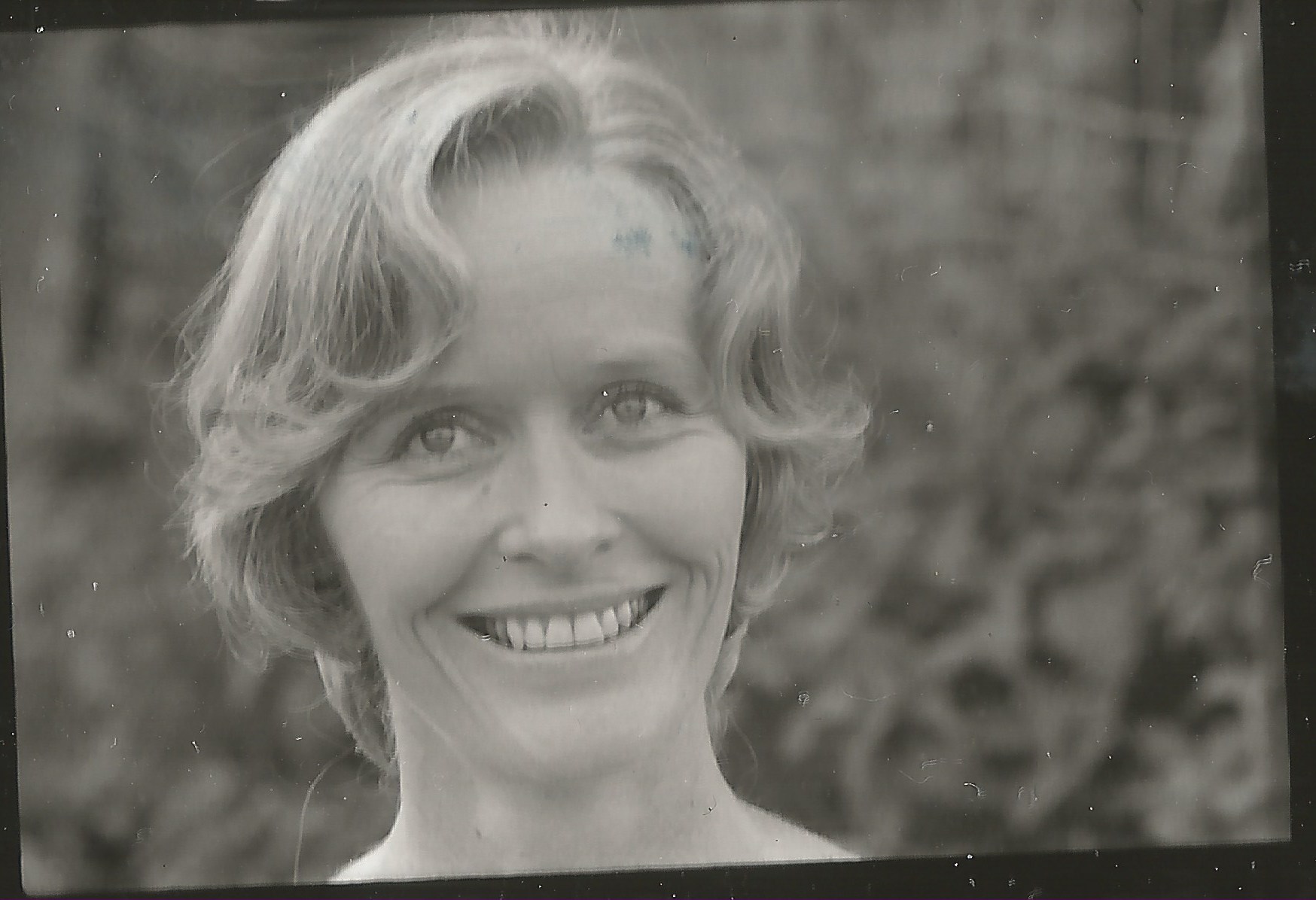
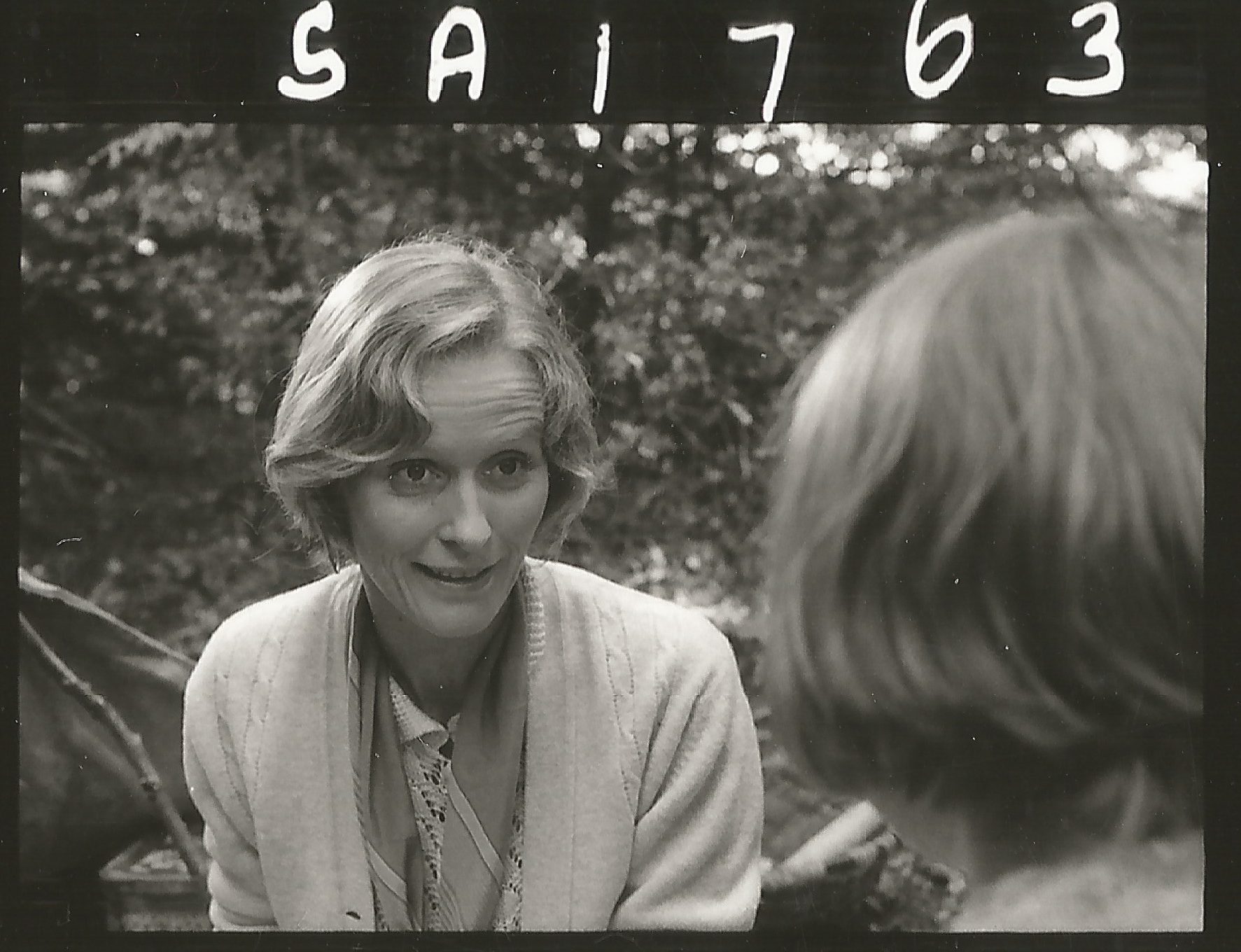
The film has been broadcast on British television more than any other but it is when you watch it on the big screen that you can appreciate what made Virginia McKenna such a great star. Her face conveys a thousand tiny emotions that sweep you into a long-forgotten time when children were able to run free. 

Virginia McKenna holding the telegramme
Dame Virginia McKenna on location at Bank Ground in Cumbria ~ photo: Daphne Neville (c)

Dame Virginia had originally been scheduled to come up to Cumbria for the first ten days of the seven-week shoot but, since wet weather closed in, she was obliged to return when the sun came out for the famous scene when Roger tacks up the field at Holly Howe to receive ‘despatches’ in the form of the cryptic telegram BETTER DROWNED THAN DUFFERS IF NOT DUFFERS WONT DROWN. 

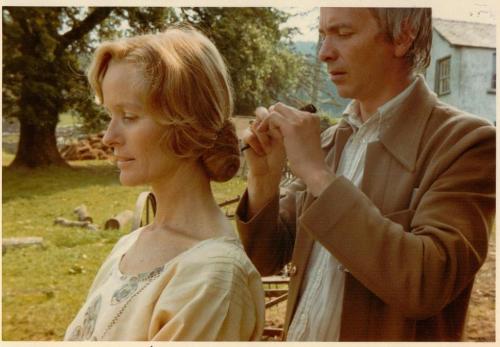
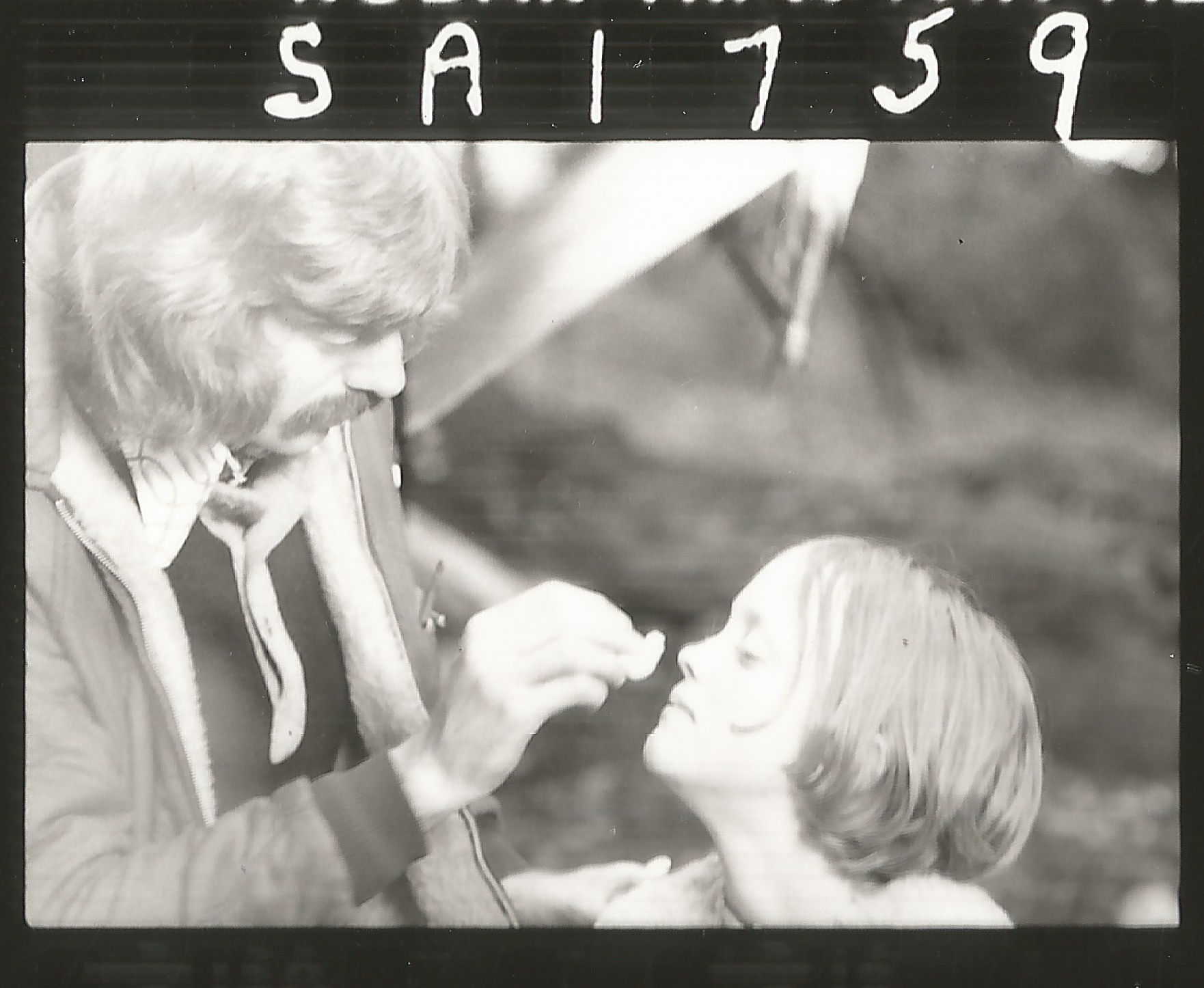
Virginia McKenna with Hairdresser Ronnie Cogan
Dame Virginia McKenna with Ronnie Cogan ~ photo:Daphne Neville (c)

Dame Virginia enjoyed the discipline and focus of concentration on set and helped centre us from the start. If you watch other movies made at the time, such as ‘The Railway Children’ (1970), most of the adult actresses are wearing wigs with a district nineteen-seventies feel to their costume and make-up.  ‘Swallows and Amazons’ owes its timeless appeal to the fact that Virginia simply had had lovely thick hair scooped into a bun and wore her original 1929 garments with grace.

Sophie Neville as Titty
Sophie Neville as Titty in 1973 – photo: Daphne Neville (c)

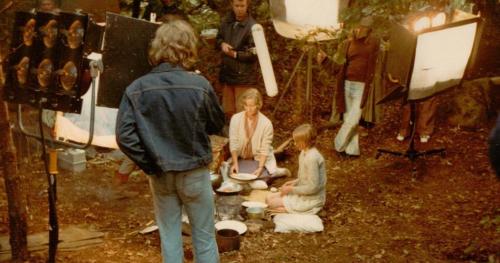
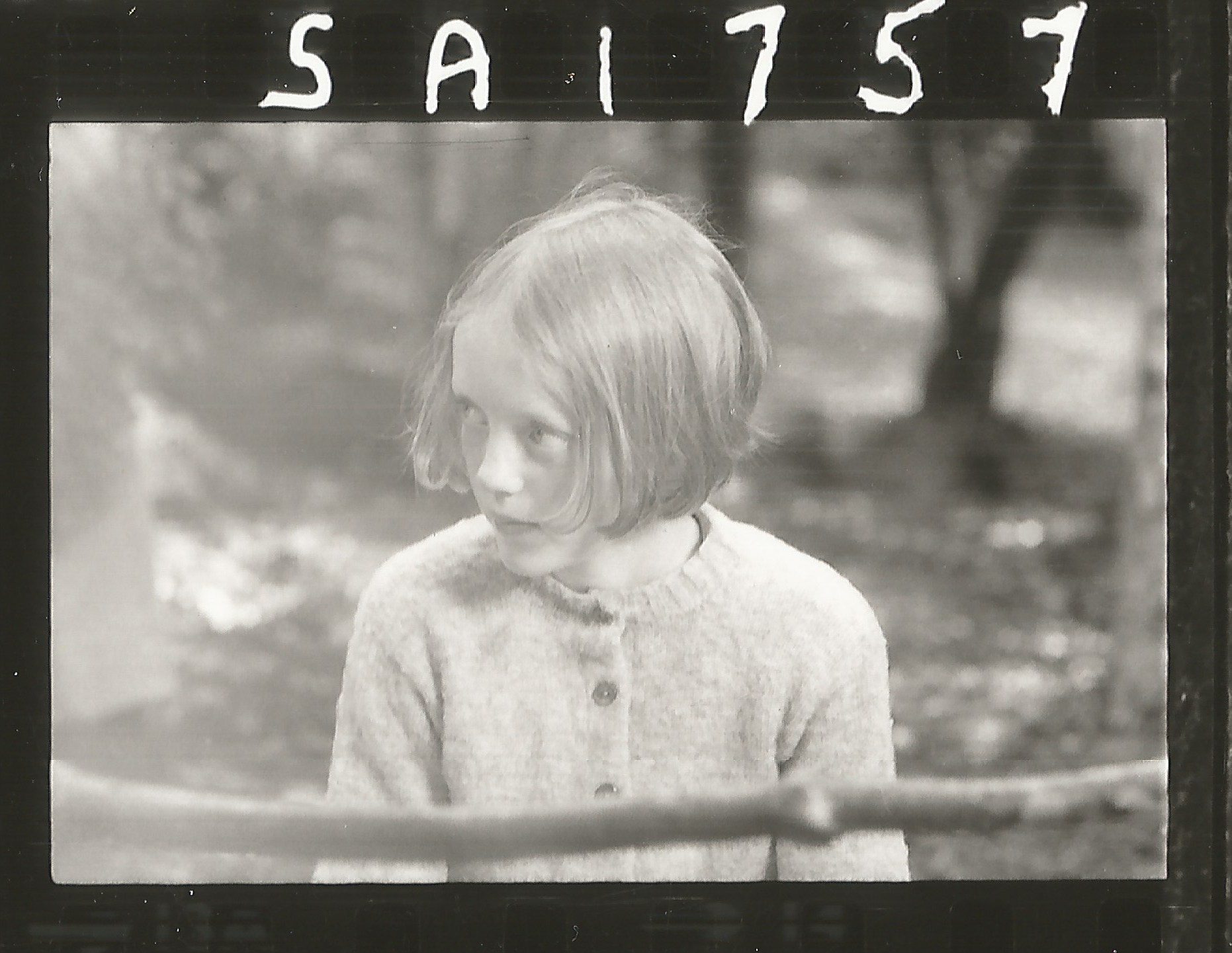
I played Titty Walker who inveigled her mother into playing Man Friday to her Robinson Crusoe when she came to visit Wild Cat Island. The sequences were shot on Peel Island on Coniston Water where Ransome was taken as a boy by his own parents and met the Collingwood family in the 1890’s. He later became a good friend of Dora Collingwood whose five children became the inspiration for the story ‘Swallows and Amazons’. Her third daughter, the dreamer, was nicknamed Titty.

Virginia McKenna and Sophie Neville on Peel Island
Dame Virginia McKenna and Sophie Neville on Peel Island ~ photo: Daphne Neville (c)

It can not have been easy for Virginia to act with me, a child of twelve, while frying pemmican in butter on a camp fire. I was self-conscious about having lost an eye-tooth the night before and had rather a sore mouth and she later had to row from the island with a 35mm Panavision camera in her boat.

What I’d forgotten until recently was that Bill Travers watched the filming that day on Peel Island. He’d been a hero of mine ever since he played George Adamson in ‘Born Free’ and Gavin Maxwell in ‘Ring of Bright Water’ opposite Virginia. Their film, ‘An Elephant Called Slowly’, was released as a double bill with ‘Swallows and Amazons’

You can see a few more behind-the-scenes photos here and I’ve written more about being Robinson Crusoe here.

Virginia McKenna with Sophie Neville
‘They were very savage savages’ ~ Virginia McKenna with Sophie Neville ~ photo: Daphne Neville (c)

Looking back, I realise how fortunate we were to be able to play out the scenes from the iconic book in the actual locations, such as Bank Ground Farm where the Collingwood children had stayed one holiday as children, so they could visit their grandparents who lived at Tent Lodge next door and were too unwell to have them in the house.

The Walker Family at Holly Howe
Sten Grendon, Simon West, Virginia McKenna, Suzanna Hamilton and Sophie Neville at Bank Ground Farm, in 1973 ~ photo: Daphne Neville (c)

We were not so keen on the publicity photographs taken for the film even though Virginia tried to make it fun. Right from the the very first day of filming, she worked hard to bring us together as a cast, playing games such as ‘Consequences’ to help us laugh and relax, while concentrating on the task of bringing the book to life.

The Walker family played by Suzanna Hamilton Stephen Grendon, Sophie Neville, Virginnia McKenna and Simon West at Bank Ground Farm in Cumbria
Suzanna Hamilton Sten Grendon, Sophie Neville, Dame Virginia McKenna and Simon West – photo Daphne Neville (c)

In 1980, I went to work for Ginny and her husband Bill Travers, as a housekeeper for a few months. She needed domestic help while she was appearing with Yule Brynner in ‘The King and I’ at the London Palladium, for which she won an Olivier Award for Best Actress in a musical.  I looked after her youngest son, Dan, who later worked as a safety officer and consultant on the 2016 film of ‘Swallows and Amazons’. I met him at the cast and crew screening in Leicester Square.

Dan Travers and Sophie Neville in 2016

Ginny and I kept in touch. She was ever-supportive, encouraging me to keep raising funds for anti-poaching in South Africa, where she had been evacuated as a child during WWII. 

It was only when I heard her speak at the Kempsford  Literary Festival in the Cotswolds that I learnt that other ships in her convoy to Cape Town had been torpedoed and sunk crossing the Bay of Biscay. By some miracle, her ship had been delayed in Liverpool but she described finding the flotsam left by the ships that had been hit.

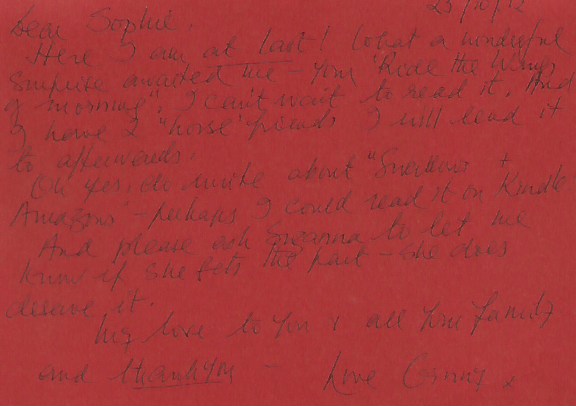
Having written a number of books herself, Ginny encouraged me to write, urging me to keep focused on one thing.

Virginia McKenna at Bank Ground

Her letters and cards also inspired me to keep raising funds for wildlife conservation in Africa.

Merry Christmas African animals card design by Sophie Neville
A Christmas card design by Sophie Neville

In turn, I supported the Born Free Foundation, printing them greeting cards, donating a Christmas card design for their catalogue and a picture that was auctioned at the Big Cat Open Day in Kent.

Sophie Neville with Virginia McKenna in about 2000
Sophie Neville with Virginia McKenna in about 2001 – photo Daphne Neville (c)

In 2014, StudioCanal invited us both to appear in the DVD Extras package for the 40th anniversary DVD of ‘Swallows and Amazons’ (1974). While we were waiting for the crew, she told me that she’d appeared in more than thirty movies. I know she’s made a few more since then.

You can watch her interview here:

Interview with Virginia Mckenna

I released the first edition of ‘The Making of Swallows and Amazons’ for which Virginia graciously provided a quote. You can read the first few pages in the preview of the ebook, entitled ‘The Secrets of Filming Swallows and Amazons 1974’ here

To hear Virginia and her son Will Travers talking about receiving her DBE, please click here for BBC Sounds

~ ‘The Secrets of Filming Swallows & Amazons 1974’~

Filming with Dame Virginia McKenna at Bank Ground Farm, Cumbria ~ on 21st June 1973

Fifty one years ago this day, we were filming with Dame Virginia McKenna at the location used for Arthur Ransome’s Holly Howe above Coniston Water. It was a day of days – the sunshiny day that we had all be waiting for.

Virginia McKenna at Bank Ground Farm
Dame Virginia McKenna at the other side of the boat houses at Bank Ground Farm in 1973 ~ photo: Daphne Neville (c)

David Bracknell with Virginia McKenna at Bank Ground Farm
First Assistant Director David Bracknell standing-in (or kneeling-in) for Roger with Dame Virginia McKenna at Bank Ground Farm. The great trees in the background are sadly no longer there ~ photo: Daphne Neville (c)

The gift of a day when buttercups and daisies were still out in the field that flows from Holly Howe to the lake. Roger was able to tack up the meadow to receive the ‘despatches’ from Mrs Walker, described in the opening pages of Arthur Ransome’s book.

Dame Virginia McKenna reading the IF NOT DUFFERS telegram
Dame Virginia McKenna reading the IF NOT DUFFERS telegram to Sten Grendon as Roger

‘…Each crossing of the field brought him nearer to the farm. The wind was against him, and he was tacking up against it to the farm, where at the gate his patient mother was awaiting him.’

Virginia McKenna with Hairdresser Ronnie Cogan
Dame Virginia McKenna having her hair adjusted by Ronnie Cogan ~ photo:Daphne Neville (c)

I don’t think you can tell that this section of the scene was recorded seven whole days later than the sequence that runs directly on from this when the Boy Roger delivers the very same ‘If not duffers’ telegram to Captain John. 

Virginia McKenna as Mother in Swallows and Amazons 1

The hole that had been dug for the camera alongside our picnic had been filled in. You can see this from Mother’s perspective when I was milling about near the lake looking towards the island I couldn’t actually see.

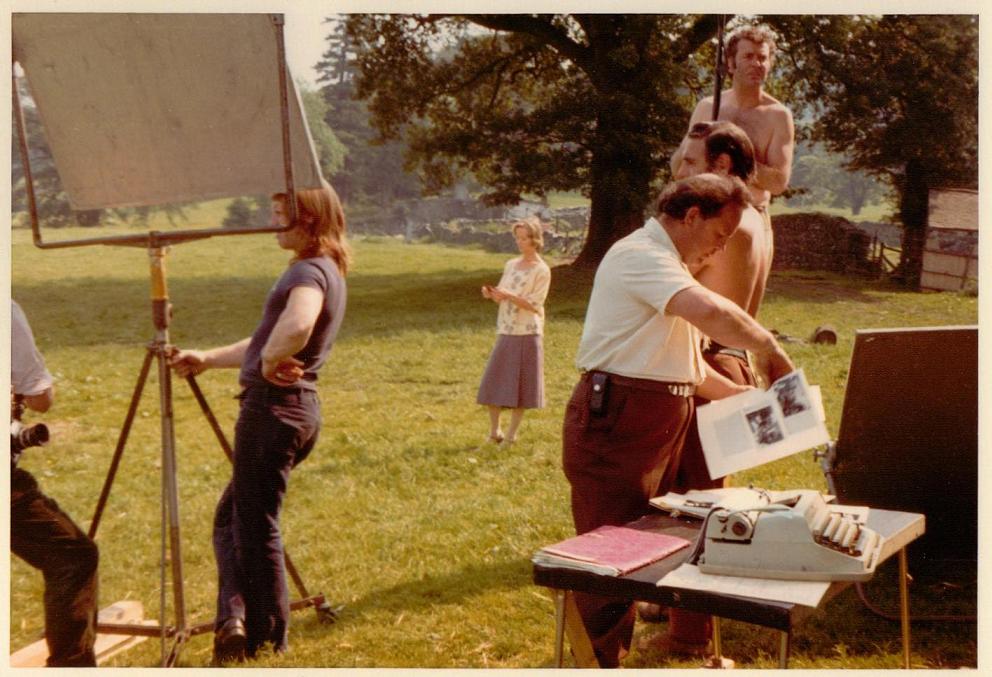
Dame Virginia McKenna on location at Bank Ground Farm (Holly Howe) in the Lake District. Property Master Bob Hedges is working in the foreground. Lee Electric lighting assistants stand-by with reflector boards while Assistant Sound Recordist Gay Lawley-Wakelin waits on a box with the boom ~ photo: Daphne Neville (c)

Poor Sten, he had to run up the field on what proved to be our hottest day in a sleeveless sweater. I remember Jean McGill, the Unit Nurse ministering cool drinks and a flannel soaked in cool eau de Cologne to make sure he did not get dehydrated. We all wanted a go with the cool cloth on the back of our necks at lunch time.

With Virginia McKenna at Bank Ground Farm
The Walker Family ~ Suzanna Hamilton playing Susan, Stephen Grendon as Roger, Sophie Neville as Titty, Dame Virginia McKenna as Mother and Simon West as John. photo: Daphne Neville (c)

It was good to escape the heat by getting out on the water. We shot the scene set on the old stone jetty at the boat houses below the farm when Titty leads ‘Good Queen Bess’ down to the harbour to inspect her ship. I didn’t realise she had a large box of matches in her hand. Virginia kept it a surprise from us in real life. I was excited to find out that Simon Holland, the Designer had painted the branded cover by hand.

Dame Virginia McKenna bids the Swallows farewell
Farewell and adieu to you fair Spanish ladies

As the call sheet specifies, our dinghy Swallow had been loaded with all the tents and camping equipment that had been on Peel Island the day before. I didn’t realise at the time quite how often the design team had struck camp and made it up again. I just sat on top of the equipment singing Adieu and Farewell, not very well, as we sailed out onto Coniston Water, waving goodbye to our Fair Spanish Ladies.

Arriving at Holly Howe
Claude Whatham with Dame Virginia McKenna. Mrs Jackson stands patinetly at the door ~ photo: Daphne Neville (c)

I am sure that we had already recorded the scene in David Wood’s screenplay when the Walker family arrive at Holly Howe, but Claude decided to take advantage of the golden light and shoot it again.  I am sure this was a good decision. It had been a long day and we were tired but the excitement of our arrival is tangible.

Arriving at Holly Howe
Director Claude Whatham, in a 1970s yellow long-sleeved t-shirt, watching the taxi drive up to Mrs Jackson’s front door in 1929. DoP Dennis Lewiston sets up the shot with Focus-puller Bobby Sitwell ~ photo: Daphne Neville (c)


Nurse with Baby Vicky, the ship's baby
Nurse with Baby Vicky, the ship’s baby at Holly Howe ~ photo: Daphne Neville(c)

My mother observed that Mrs and Mrs Jackson, Mrs Walker’s nurse and Vicky the ship’s baby, who were listed as Extras on the call sheet, were particularly well cast. Kerry Darbishire, who played the nurse, told me later that she had a daughter of the same age as Tiffany Smith seen here as Vicky. She could have brought her along. It was important they were there, playing ‘The stay-at-homes.’ Vicky anchored Mrs Walker to the farm, making it impossible for her to sail to the island with the Swallows. 

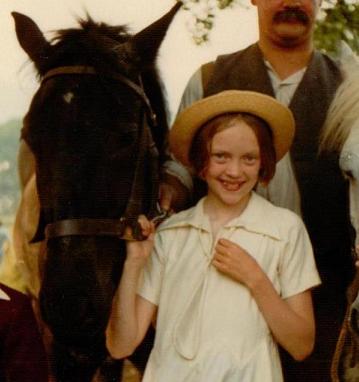
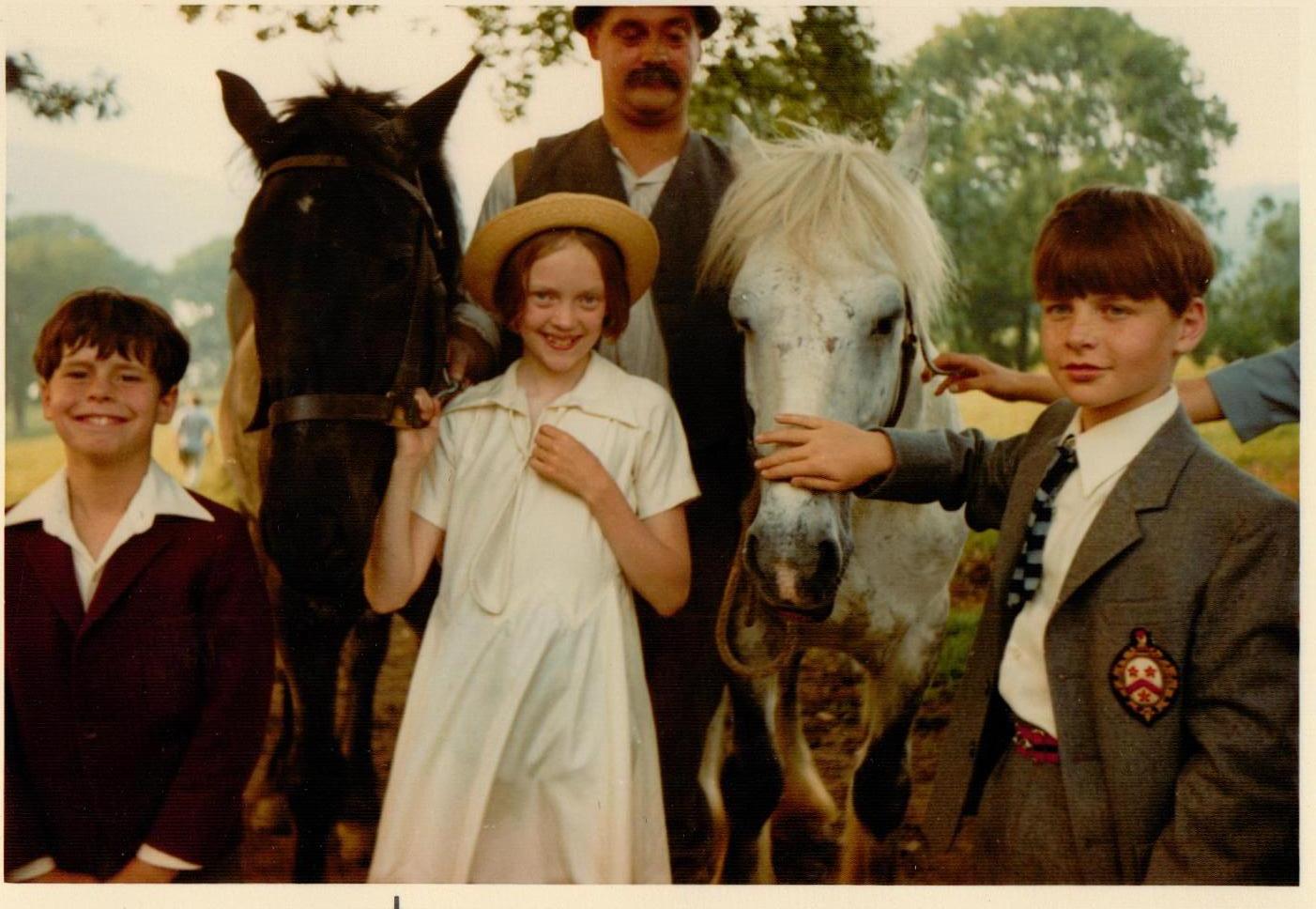
Sophie Neville holding the horses
Stephen Grendon, Sophie Neville and Simon West with Mr Jackson at Holly Howe~ photo: Daphne Neville

It must have been a long day for the little girl. It was a long hot day for all of us, but a happy day.

Simon West, Stephen Grendon, Suzanna Hamilton and Sophie Neville
Simon West, Stephen Grendon, Suzanna Hamilton & Sophie Neville playing the Walker children in ‘Swallows and Amazons’ 1973 ~photo: Daphne Neville(c)

The women who had been taken on as our stand-ins the day before did not seem to be around to help limit the hours we spent on set. David Bracknell, the first assistant director stood in for Roger. One of the women later claimed that she played Virginia McKenna in long-shots but the only long shot was taken of the Spanish Ladies on the jetty and I’m pretty sure that is Dame Virginia herself. 

Stephen Grendon, Simon West, Dame Virginia McKenna, Suzanna Hamilton and Sophie Neville, trying not to look as tall as she was in 1973 ~ photo: Daphne Neville(c)

What I really did not know, until I watched the documentary broadcast last Sunday, was that Mrs Batty, who held the lease on Bank Ground Farm, had locked out the crew. She explained that when she was originally asked if we could film on her property she did not quite realise the scale of operations and only asked for – or accepted – a location fee of £75.

Lesley Bennett's photo of the double decker buses at Bank Ground Farm in 1973
Lesley Bennett’s photo of the double decker buses at Bank Ground Farm in 1973

The arrival of the two red double-decker buses, the Lee Electric van, the generator and other lorries, not to mention the Make-up caravan rather daunted her, as did the furniture moving activities involved at the start of the filming when we shot the interior scenes. The idea that the film would bless her Bed & Breakfast and Tearoom business for the next fifty years alluded her. She said that she decided that £75 was not enough, padlocked her front gate and wouldn’t let the crew back in until they agreed to pay her £1,000. It was a lot of money, more than double the fee I received.

Sophie Neville with Lucy Batty at Bank Ground Farm in 1973 ~ photo: Daphne Neville(c)

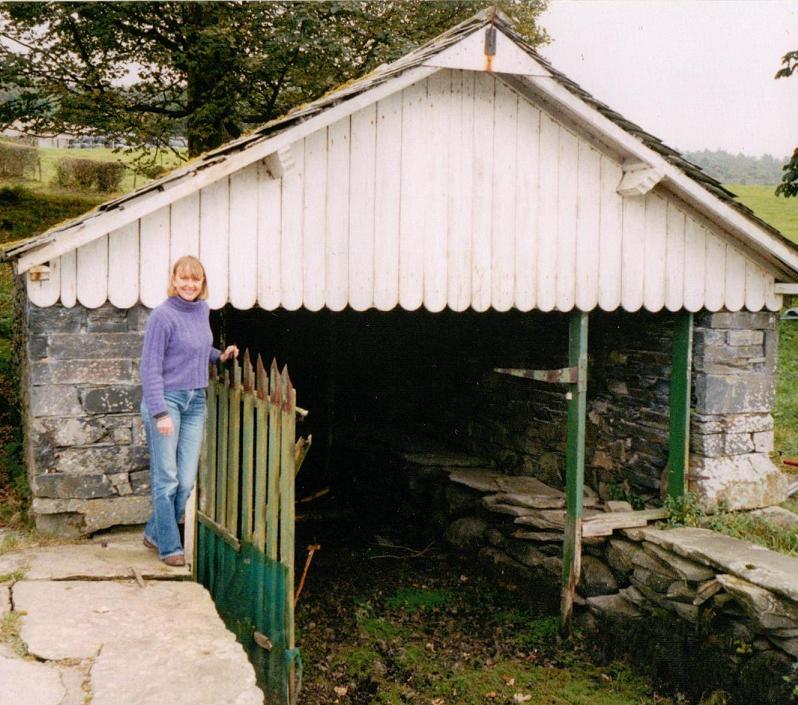
You may have seen the BBC documentary about the making of Swallows and Amazons, when Ben Fogle interviewed Suzanna Hamilton and myself at Bank Ground Farm for ‘Big Screen Britain’. This was  re-packaged on a programme called Country TracksMy father’s 16mm footage had been skillfully inter-cut with an interview with our Director, Claude Whatham. I did not know that it was being broadcast but was able to watch on-line.Sophie Neville at the Bank Ground Farm Boathouses ~The Author Sophie Neville at the boatshed in 2013~

If you would like to read more, ‘The Secrets of Filming Swallows and Amazons (1974)’ is available on Amazon Kindle and all ebook platforms and the paperback on ‘The Making of Swallows and Amazons’ can be found in Waterstones from all online stockists.