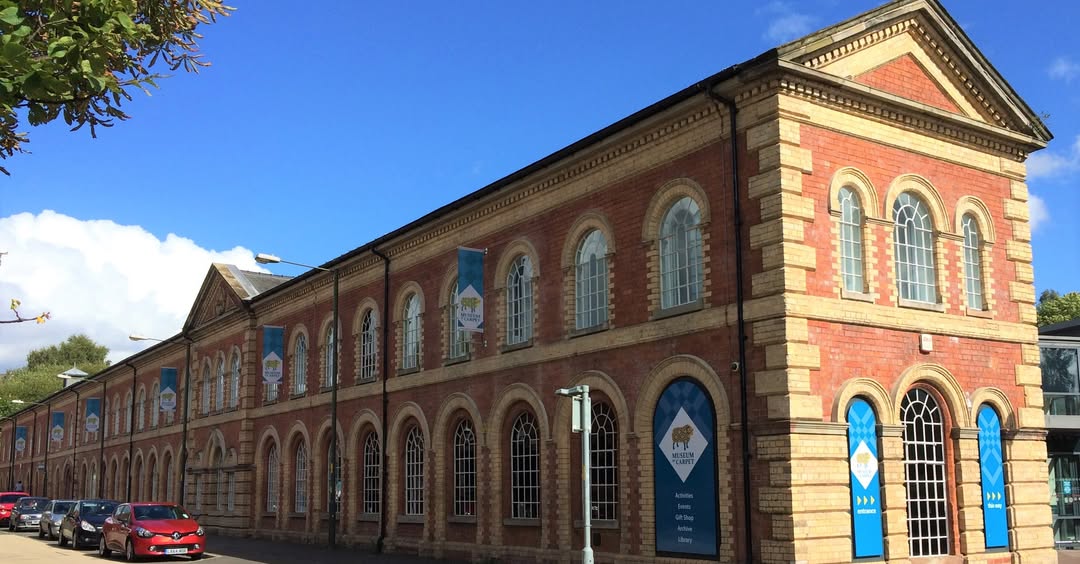
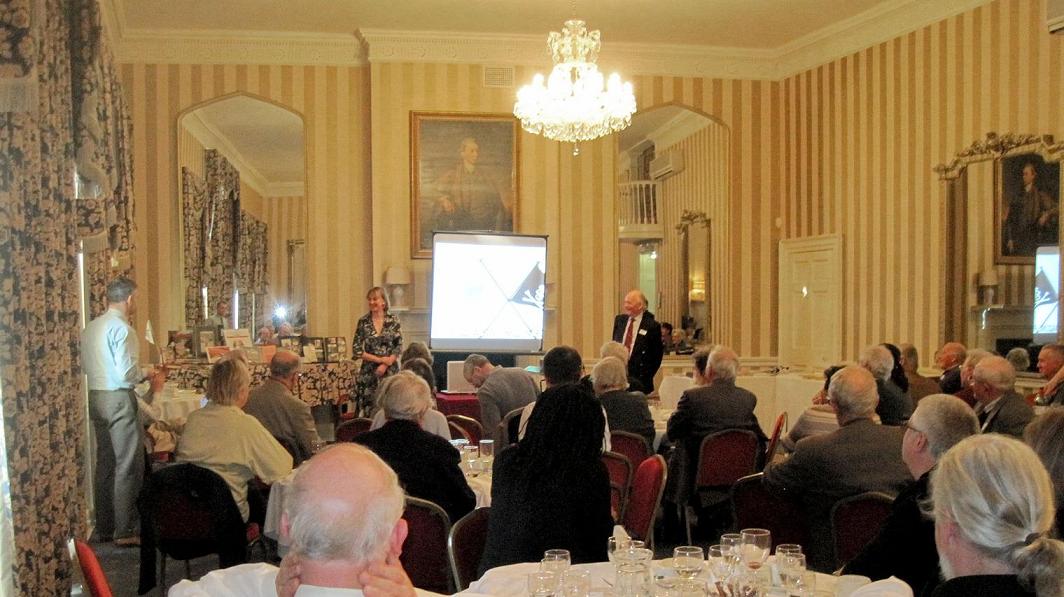
Sophie Neville, who played Titty in the original film ‘Swallows and Amazons’, gave a special talk on what is was like to take the lead part in a feature film at the Museum of Carpet in Kidderminster, on Saturday 21st February.
Richard Pilbrow, who produced the original film ‘Swallows and Amazons’ had been married to Vicky Brinton whose family donated many of the items on display at the former mill, along with a huge poster in the conference room.
Sophie was born in Worcestershire, seven miles from the venue. Her great-grandfather, Canon Hastings Neville, was a curate in Kidderminster and one of his ten sons, the Olympic athlete Dick Neville, pioneered the manufacture of woolen carpets in New Zealand, developing a crossbreed of sheep for the purpose. In 1960, he employed Richard Pugh-Cook who returned to the Midlands and founded the Museum of Carpet thirteen years ago.
About seventy people packed into the conference room to listen to the talk, which enjoyed a great response. “The degree of factual information contained in it is amazing…all those details of 50 years ago conveyed with such clarity and enthusiasm!”
“….such an inspiration to so many people especially younger people who have such different lives these days – another era then, it seems, but one we should not forget.”
“a great success – everyone seemed to have throughly enjoyed your talk, hearing about the other side of filming!”
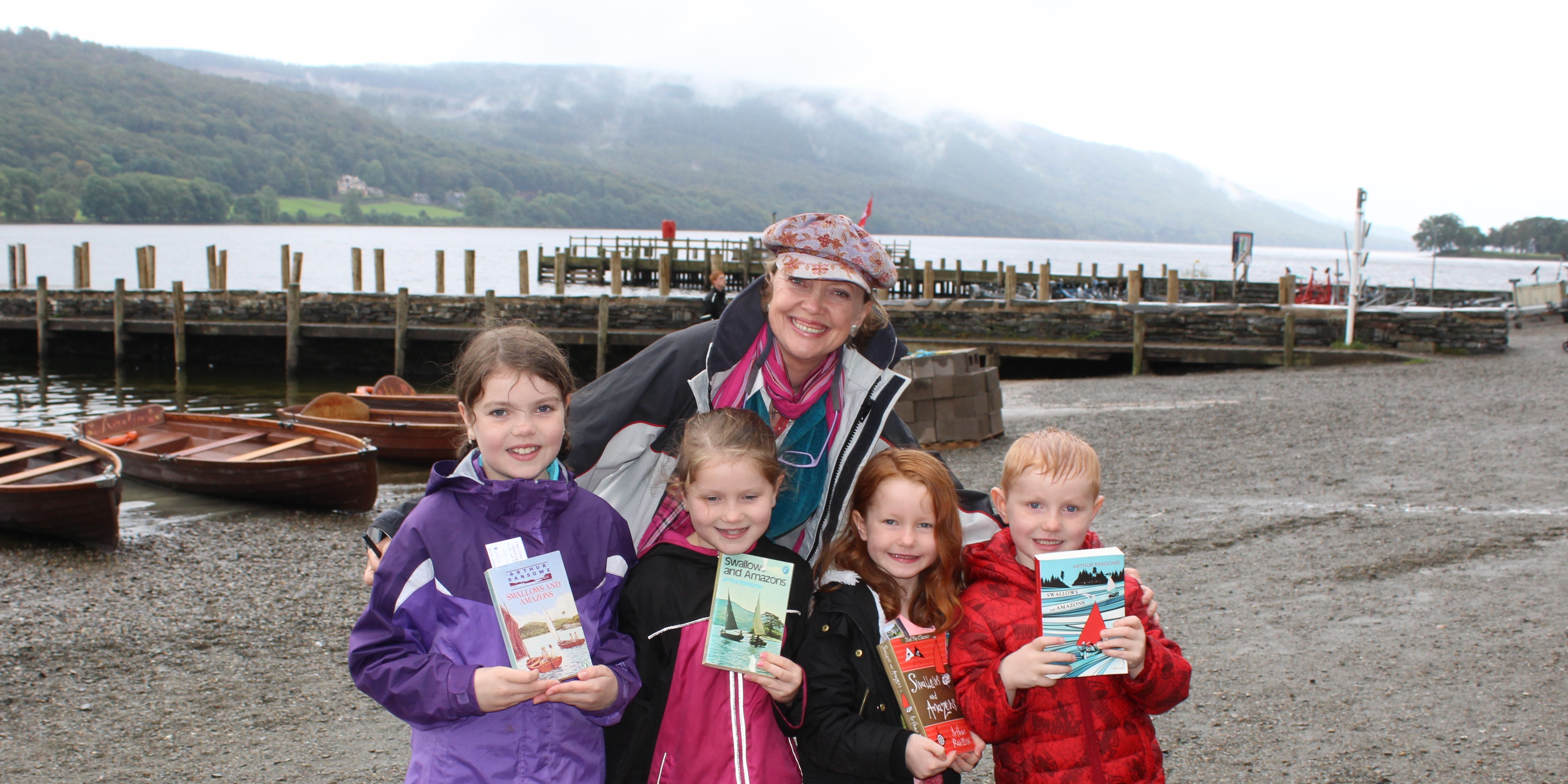
Sophie signed copies of her books after the talk when she had a chance to meet ‘Swallows and Amazons’ enthusiasts and a little girl hoping to become a film actress. The event was covered in the local news.
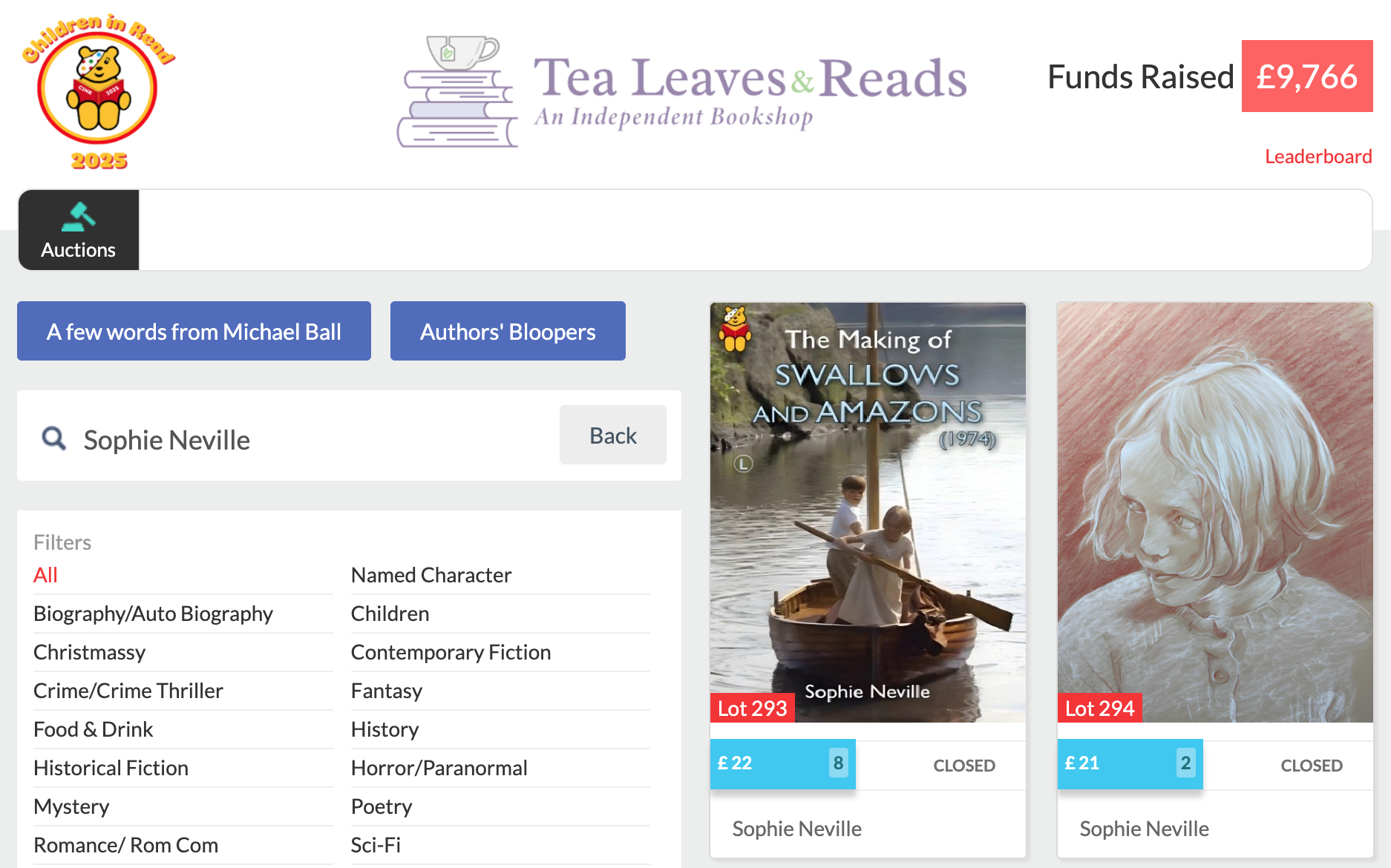
A book signed by the author always makes a good Christmas present. Each year, I take part in an annual online charity auction organised by Children in Read to raise funds for BBC Children in Need.
You can scroll through the site on Jumblebee. co.uk. and choose from an amazing selection of biographies and other books donated by contemporary authors.
Taking part is always great fun and offers authors a bit of publicity whilst presenting readers a choice of signed and dedicated books and illustrations.
In 2023, items in the Authors and Illustrators’ auction, raised a total of £24,061 for BBC Children in Need.
This year, authors and illustrators raised £9,766.
Over the eleven years that the annual event has been running a stunning total of £141,766 has been raised. I joined in 2020 and have raised a total of £616 for this cause.
Bidding has now closed but put the event in your diary for next year.
Chloe Williams has just written from Ontario in Canada, to say, “Some books entertain. Some enlighten. And some, like The Making of Swallows and Amazons and The Secrets of Filming Swallows & Amazons, manage to bottle something impossibly rare: the feeling of looking back through a child’s eyes and realizing it was all real; the lake, the sails, the laughter and somehow, you were part of it.”
“These aren’t just behind-the-scenes diaries. They’re sun-dappled time machines. Your voice, both in memory and in your original childhood notes, is a miracle of tone: witty, observant, buoyant, and deeply human.”
Of the original movie, she wrote: “What A Christmas Story is to snowglobes and childhood winters, Swallows and Amazons (1974) is to summers on the water and you’ve preserved that magic with charm, heart, and astonishing detail.
“What makes these books unforgettable isn’t just nostalgia. It’s how alive they are. We feel the smell of old sails and camera tape, the blur of location shoots, the uncertainty and excitement of being a child caught in a grown-up world of filmmaking yet utterly at home in it. We meet legends like Virginia McKenna not as distant stars, but as fellow travelers in the adventure. And it’s a joy.”
The Making of Swallows and Amazons seems to resonate with:
Readers of nostalgic memoirs that celebrate childhood, nature, and storytelling
Adults who are captivated by the lake-country magic of Arthur Ransome
Film lovers who cherish insider views of filmmaking
Educators and parents seeking real-life adventure stories for young readers
Fans of Call the Midwife, The Durrells, and 84, Charing Cross Road
“The joy and authenticity in your books mirror exactly why Swallows & Amazons (1974) still has such a hold on people’s hearts. The memoirs don’t just tell the story of making the film, they recreate it, letting readers smell the lake air and see the magic unfold through a child’s eyes.”
The new audiobook
I’m hoping the audiobook will also amuse readers. It’s now available on all the online platforms including Audible, where isis being offered for free on their membership trial.
On Wednesday 27th November at 3.00pm, I will be giving another talka about ‘The Making of Swallows and Amazons’ on a Zoom hosted by the national child literacy charity Schoolreaders.
You can join us by remailing s.glasgow-smith@schoolreaders.org
Since the original film of ‘Swallows and Amazons’ has been out for fifty years, and screened on television more than any other British film, it has a loyal fan base. Paddy Heron of the fundraising charity ‘Children in Read’ says, ‘I have seen that film I don’t know how many times through the decades, with my brother and sisters, with my own kids, and with my grandkids. That film will stand the test of time for ever.’
Jane Whitbread, who founded Schoolreaders ten years ago, tells me that a love of reading is a proven key to future success in life. Around a quarter of all children in England leave primary school unable to read well and yet good literacy improves all round academic achievement. Arthur Ransome’s series of twelve ‘Swallows and Amazons’ books is great for reluctant readers – those who learn to read but fail to develope an interest in books.
Although my handwriting outshone others, I was deeply embarrassed about not being able to read until the age of nine. I battled to crack the code but once through the barrier, soon gained fluency and was captivated by imaginary worlds. Like me, Andrew Harvey said that he was helped by the Arthur Ransome books, “which provided the inspiration to get me through my (undiagnosed) dyslexia.”
Since it was launched ten years ago, Schoolreaders has helped about 80,000 children to read fluently and develop an interest in books by giving them one-to-one support.
It’s clear that lives are transformed by reading. The author David Cooper says: ‘I found Ransome when I was six, and that was a revelation. He wrote with the same high standards as apply to writing for adults, which is why people of all ages are attracted to them. It only took a few chapters of Swallows and Amazons to make me want to be a writer.’
You can watch a precious talk with Schoolreaders on Youtube:
If you could volunteer to listen to children read in school for a year, think of contacting the charity Schoolreaders: www.schoolreaders.org
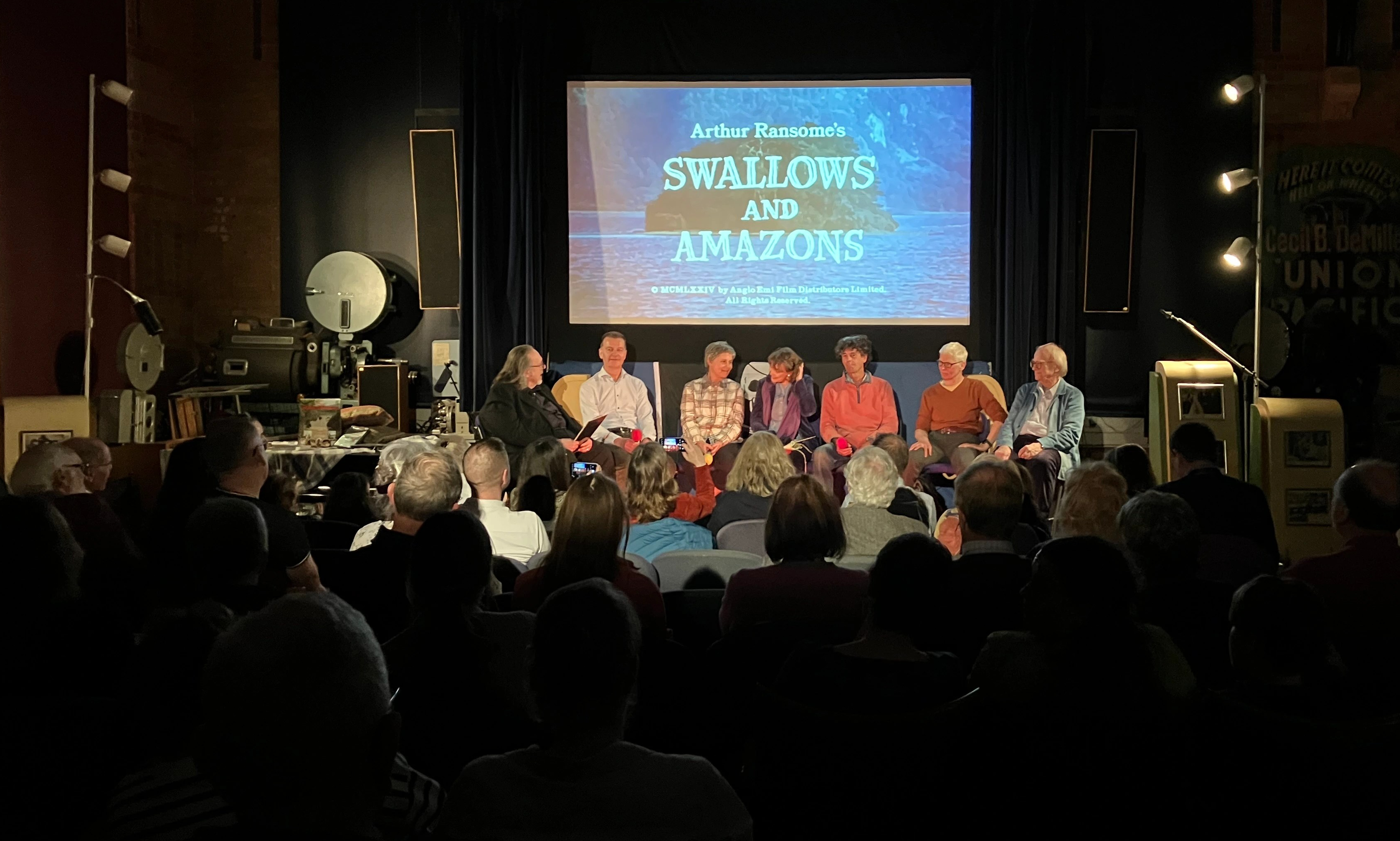
On 6th April, the original cast of ‘Swallows and Amazons’ (1974) gathered to celebrate the 50th Anniversary of the film’s release in London with David Wood who wrote the script.
It was unexpectedly amusing as can be seen in this recording kindly brought to us by Lee Pressmen and volunteers of the Cinema Museum where the original movie was shown before we were invited on stage by Brian Sibley.
Brian Sibley talks to Simon West, Suzanna Hamilton, Sophie Neville, Sten Grendon, Kit Seymour and screenwriter David Wood – photo Lee Pressman of the Cinema Museum
As soon as self-confessed ‘super fans’ arrived, the venue began to buzz with the question, “What was your favourite line from the film?”
“They’ve got India rubber necks.”
“They’re girls!”
“… must be a retired pirate. He’s working on his devilish plans.”
Sten Grendon, who played Roger, said it was undoubtedly: “I said – ‘Yes’.”
I’ve always liked: “X marks the spot where they ate six missionaries.” Although I often use, “Here we are, intrepid explorers making the first ever voyage into unchartered waters,” I think “I’ve got her. I’ve got her!” is the most appealing.
One viewer on Instagram claimed their favourite line was: “Titty that way.”
What is your favourite line?
Do add your line to the Comments below.
A recording of Brian’s interview with the screenwriter David Wood can be watched on this website here.
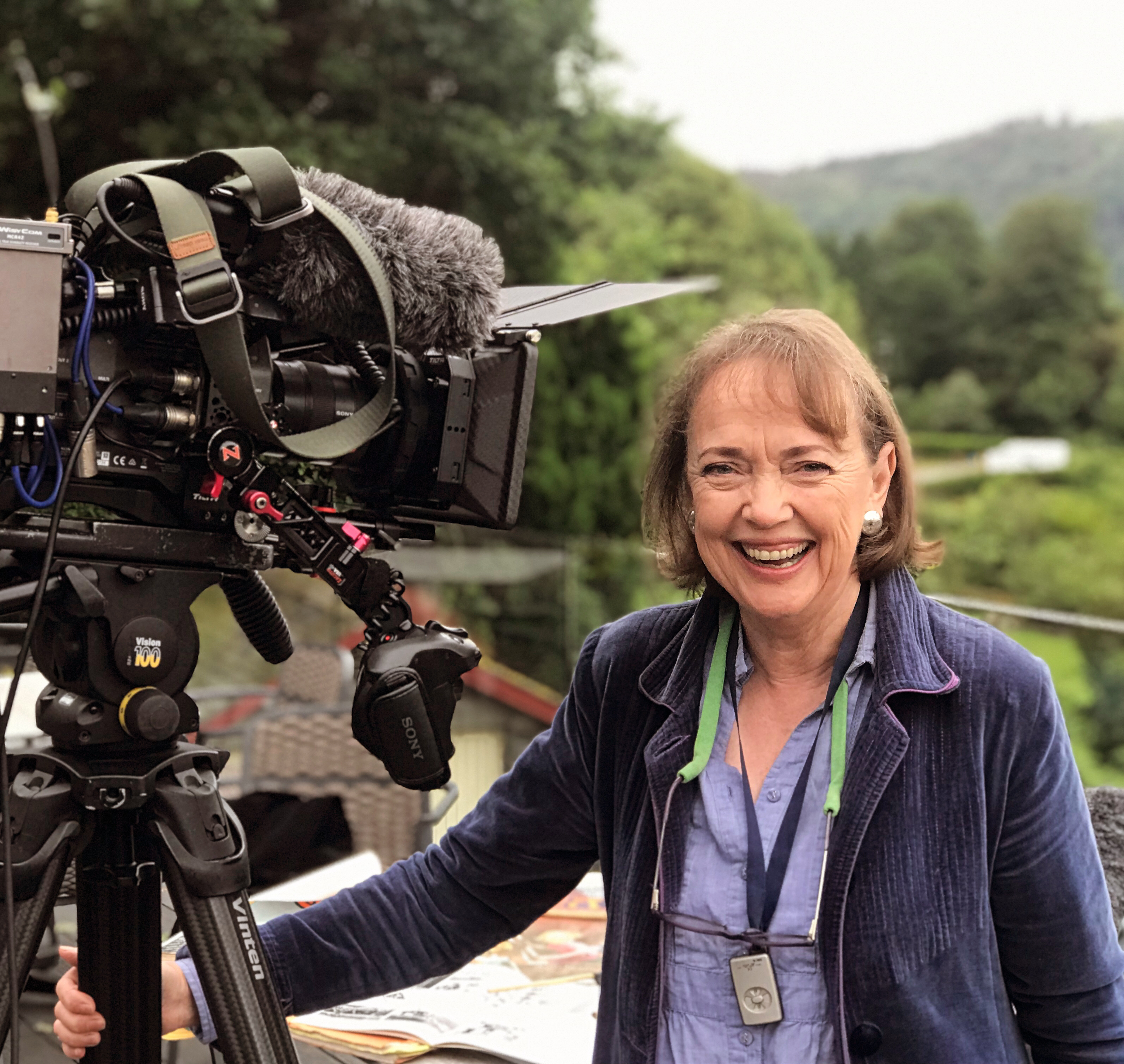
Sophie Neville, Suzanna Hamilton and Kit Seymour on BBC Breakfast
‘Can you speak to BBC Breakfast?’ I was asked. ‘They want to interview the cast on Zoom tomorrow morning.’
It was Saturday 29th June. We were at Windermere Jetty in Cumbria for the 50th Anniversary of ‘Swallows and Amazons’, the 1974 film was being screened in the room below us and a huge number of enthusiasts were eager to chat about how we’d made it. I had just come in from sailing Amazon, John Sergeant, president of The Arthur Ransome Society, was about to arrive and we had books to sign, but I knew it was important to act fast. The BBC would need time to contact StudioCanal in order to use the film trailer. I grabbed my lap-top and attempted to persuade the production team we had lots to talk about while finding a good signal. The best place was on a staircase, which was fun when Captain Nancy and Mate Susan rushed past, but a more interesting background was required.
‘What time do you want us on air?’
‘7.40am.’
‘Ah – the museum doesn’t open until 10.00am. Can we chat to you from the terrance of our hotel? It overlooks Windermere.’
‘It might be best if we send out an outside broadcast unit.’
I wasn’t told the item would also go out on Look North and North West News.
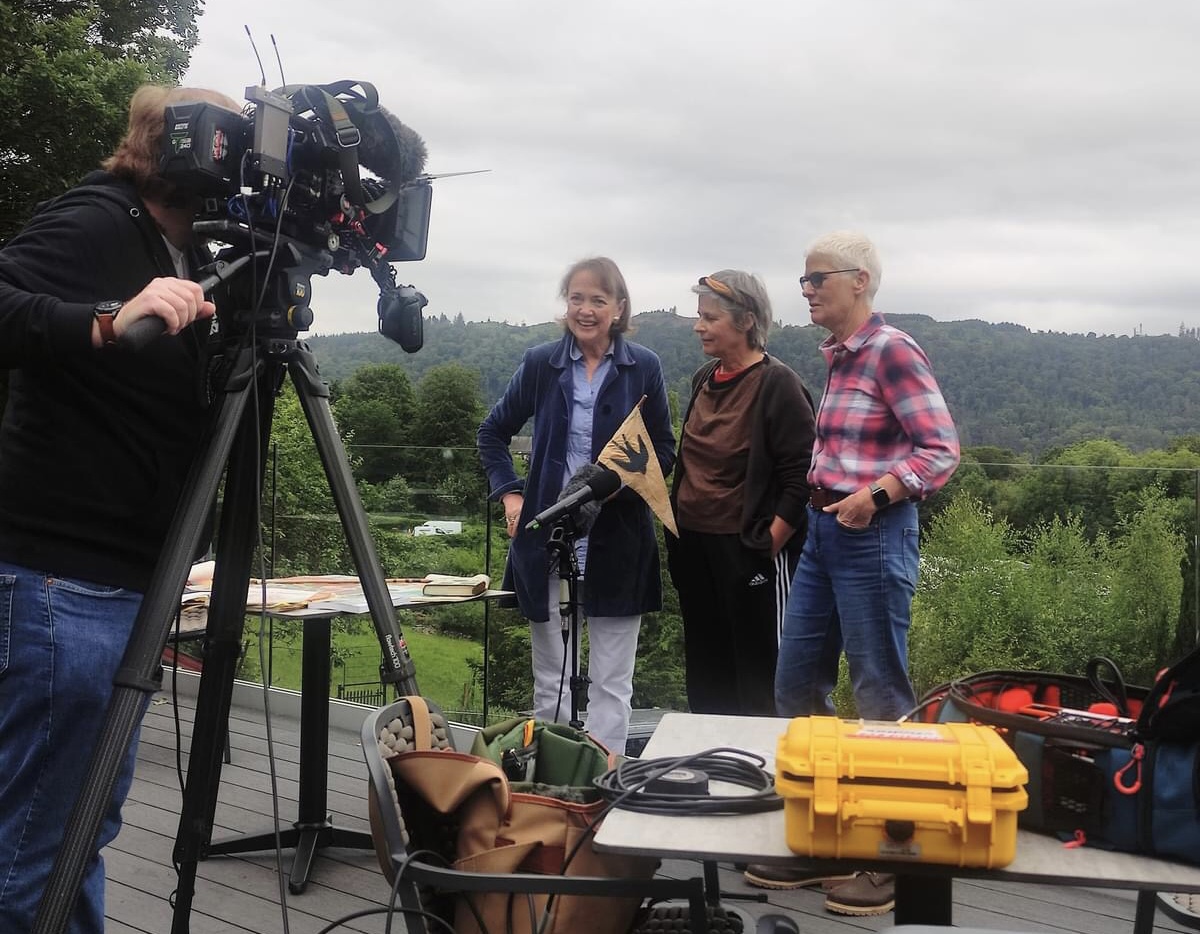
I woke early the next morning to find Keith, the BBC cameraman, setting up his equipment. Rain clouds cleared as I unrolled Arnaldo Putzu’s 1974 film poster and plonked David Wood’s screenplay on top of it with a few flags but worried about my hair, which was not behaving. We had Peter Robb-King, one of the greatest make up designers in the world with us. I should have asked for his help. All I did was remove a car key from around my neck.
Sadly, Simon West who’d played Captain John had already left, but Suzanna Hamilton and Kit Seymour emerged from their rooms and we lined up for the shot.
Was I organised? Did I tell them, ‘We need to get three points across!’ ?
No.
Someone quietly suggested I could mention The Arthur Ransome Society who had organised the weekend festival, which was free for all.
Sophie Neville, Suzanna Hamilton and Kit Seymour setting up for BBC Breakfast
Keith fitted us with earpieces and explained that there would be a delay between questions asked in the studio and our answers. We couldn’t see the presenters but could hear the film trailer being played. When we were asked us to introduce ourselves, I didn’t realise they needed to know which characters we’d played until I got to Kit Seymour, who had been Nancy. Straight forward and honest, she managed to answer the difficult question:
‘What’s it like… how does it feel?’
‘Listening to stories of how the film has changed people’s lives,’ she admitted, ‘was quite an emotional experience.’
Suzanna, explained in her beautiful voice, that since the the story was set in the 1930s it hasn’t dated, and we were able to chat naturally about our mission to encourage the next generation to get out on the water. We chatted about the movie memorabilia and David Wood’s script – that as children we were never allowed to read and the amazing time we were having at Windermere Jetty museum where one little girl arrived dressed as Titty Walker with a green parrot on her sholder.
I held Swallow’s flag and managed to speak about the acquisition and renovation of the dinghies, aware that there were no boats to be seen on the hotel terrace. However BBC Breakfast have brilliant vision mixers. The best film clips of Swallow and Amazon literally sailed over my words and I grabbed the chance to talk about The Arthur Ransome Society on national television before they bid us farewell.
When John Sergeant asked me how it had gone I had to admit that we tripped up on the time delays, but we celebrated the much loved film bringing news that Swallow and Amazon are being made available for anyone to sail and that grants are available for children to take part in outdoor activities mentioned in Arthur Ransome’s twelve books.
Many thanks to all those who left encouraging feedback on social media. I forwarded it to the production team.
Eileen Jones – This is fascinating , about the landscape more important than costume. Just introduced another generation.
Amanda Whatley – Great interview, congratulations on the reunion of the boats and people.
Jon Porter – Fantastic
John Greenhough – Great memories of this film.
David Elms – Delightful interview Sophie.
Amanda Currie– I ‘m so sorry I didn’t get there Sophie, my stupid body keeps letting me down, I would have so loved to meet you all.
Robin Jett – I love your delight about the boats. The boats are back! What fun! Great to see how ‘Susan’ and ‘Nancy’ have grown up too. I can see aspects of each character in each actress, but I expect, if you had all played different characters, that might still be true.
In the long hot summer of 2022, I spent three days in a sound-proofed booth at Monkeynut Studios near Romsey narrating the audiobook of my memoir on the adventures we had making the 1974 movie ‘Swallows and Amazons’, now published in paperback by The Lutterworth Press.
I found telling the story, with all the different voices, more difficult than I had imagined but the audiobook has been beautifully produced, with sound adding a different dimension to this filmography that resonates with the lives of so many.
I gather it will be available on Audible but they are very slow to add books.
I hope it will take you back to that long hot summer in 1929 when the Swallows first set sail and remind you of the early 1970s when we made the original film in the days before mobile phones or computers without CGI or green screens. We literally walked into the page of the books and sang out Arthur Ransome’s immortal lines as the wind took us up Coniston Water. I hope you enjoy it.
If you prefer holding a book in your hands the paperback is available from Waterstones and all online retailers.
This amused me. It was a non-fiction book, written because the extraordinary story was true. Of all the roles, in all the novels ever written, I was asked to play Titty in Swallows and Amazons, an EMI film made in 1973 for universal distribution.
The offer came out of the blue. Within a year, I, an ordinary schoolgirl, found my image on the front of daily newspapers and on film posters pasted on the walls of the London Underground. All this happened nearly fifty years ago and yet the publicity never ends.
Arthur Ransome, a haunted foreign correspondent, who escaped from Russia with Trotsky’s secretary, wrote Swallows and Amazons in 1929 while suffering from stomach pains so bad they prevented him from travelling. He said that the book wrote itself, but it is clear that he was self-medicating, grieving his own childhood, when he’d been longing to make friends and prove himself to his father who died when he was only thirteen.
Tweed-clad and continuously pipe-smoking, Ransome was oblivious to Lakeland weather. I acted out his almost-real fantasy in nothing but a thin cotton dress and a pair of enormous navy blue elasticated knickers. My book on ‘The Making of Swallows and Amazons’ is not a novel, not a fantasy. It is a true story. The movie is streaming on Amazon Prime where you can watch the trailer.
Why was I cast in the film? Why me? I had loved all the Arthur Ransome books I’d read in the Swallows and Amazons series, imagined myself exploring Wild Cat Island and the Great Lake in the North. Did I ever ask the Lord if I could live out the stories for myself?
The reality began in Stroud, at the Subscription Rooms. I put up my hand when someone asked if there was a ten year-old girl who could play the piano. They didn’t say, “play well.”
A young director called Claude Whatham, who lived in the Cotswold village of Camp, was looking for children to appear in the 1971 BBC adaptation of ‘Cider With Rosie’, based on Laurie Lee’s haunting memoir. He needed to find a little girl who had been to a village school near Stroud. I had attended Oakridge Parochial Church School when it was heated by pot-bellied stoves and the vicar told us Bible Stories.
I was chosen to play Eileen Brown, who shared a desk with Laurie Lee and accompanied him as he played Oh Danny Boy on his violin at the Christmas concert.
Sophie Neville in the 1971 BBC adaptation of ‘Cider with Rosie’, directed by Claude Whatham
My music arrived three days before filming began. It consisted of endless cords – a complicated accompaniment with no tune. To tackle the piece, I’d needed to practice for seven hours a day with the help of my long-suffering piano teacher from Far Oakridge.
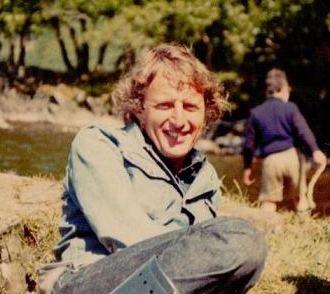
Claude Whatham ~ photo: Daphne Neville
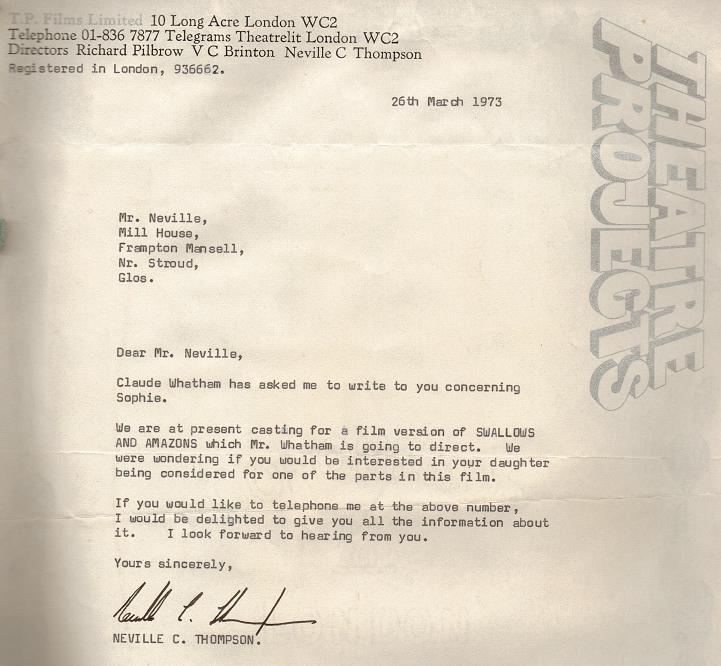
The director must have remembered me as a determined little girl because two years later a letter arrived, addressed to my father, only he was working in South Africa. My mother very nearly didn’t open it, however the words Theatre Projects were embossed on the envelope and she was intrigued.
But she did. We drove up from Gloucestershire to collect Dad from Heathrow and went straight to Long Acre near Leicester Square for an interview with Claude.
I was then invited to take part in a sailing audition at Burnham-on-Crouch in Essex – miles from the Cotswolds. The producer, Richard Pilbrow, was determined that any child chosen for a part knew how to sail. I had grown up beside one of the few lakes in Gloucestershire and knew how to row a Thames skiff. I’d added my own sail, made from a green dust sheet, but was no expert.
There were four other girls auditioning to play Titty. They were all smaller and prettier than me, with straight teeth. I didn’t think I was in with a chance.
The filming was to commence on 14th May 1973 and continue through the summer term. Our local authority – Gloucester County Council – needed my headmistress’ permission for me to miss five weeks of school.
Only, I didn’t go to school in Gloucestershire. I went to an Anglican convent in Berkshire. The nuns prayed about the proposition. They gave their permission – if I was chosen.
I didn’t think I was right to play Titty at all. I was three years too old and too tall. Ransome’s illustrations in the books portrayed girls with straight, dark hair. I didn’t know it but the character had been inspired by a real little girl called Titty Altounyan. I share her Scots, Irish and English heritage, but she was one quarter Armenian and had dark colouring.
However, unknown to us, Mrs Ransome had asked that ‘an English Rose’ should play Titty. Claude Whatham cast Sten Grendon, who had played Little Laurie Lee, as my younger brother Roger. Mrs Ransome – NB:the lady who once been Trotsky’s private secretary – was not happy that he had black hair. She nearly cancelled the film, but conceded when she saw him with a short-back-and-sides.
Sten Grendon as Roger and Sophie Neville as Titty rowing Swallow (c)StudioCanal
Sten claims we had the best parts. He grew up in the Whiteway Community and later went to school in Eastcombe. He now lives in France but still has family living in the Cotswolds. Back in 1973 his mother Jane, and my mother, Daphne, travelled up to the Lake District to look after us all.
Daphne Neville with Sten Grendon, Suzanna Hamilton, Sophie Neville, Jane Grendon and Simon West
In at the deep end. Whoomph! We literally had to swim for it. The water was icy, but we had plenty of support. I was able to embody my part because Suzanna Hamilton, who played my sister, was so brilliant. She anchored us, as did Simon West, who played John. He was only aged eleven but very bright and a confident sailor.
Stephen Grendon as Roger Walker with Suzanna Hamilton on location in 1973
Making the film was character-building stuff. While it was an inspiration and privilege to work under arc lamps with Virginia McKenna, it was often chilly and involved a lot of hanging around.
Stephen Grendon, Simon West, Virginia McKenna, Suzanna Hamilton and Sophie Neville, trying not to look as tall as she was in 1973 ~ photo: Daphne Neville
Virginia had four children of her own and brought us together as a team. While making things fun, she got us to focus and concentrate as we recorded the first scenes at Bank Ground Farm.
Virginia McKenna at Bank Ground Farm in 1973 ~ photo: Daphne Neville
Arthur Ransome had been inspired as a boy by two of his aunts who left for Peking to serve as missionaries. They must have had great adventures. One even received a Boxer arrow in her bonnet. The story of Swallows and Amazons is about a family of four children on holiday who embark on something of a missionary journey themselves when they are allowed to sail off in a dinghy called Swallow to explore an island on a lake. They are confronted by two local girls, the Amazons, who are behaving badly, as their Uncle Jim has retired to his houseboat so that he can concentrate on writing his memoirs.
There is a strong undercurrent of fatherless-ness. Ransome had lost his own father before he could prove himself. The Swallows, whose father is in the Navy, come alongside the Amazons, who have lost their father and are being ignored by their uncle. They unite, make friends and have a lot of fun, whilst relishing in their independence granted because they are not duffers.
The crisis, in the story, is about the draft of a book being stolen, which I can only think must have been Ransome’s greatest fear. No one believes Titty, the youngest girl, who is sure she heard the burglars, so – in the film – she gets Roger to help her row Swallow to Cormorant Island where she finds it in what looks like a treasure chest.
Producer Richard Pilbrow and Production Associate Neville C Thompson on Derwentwater in the Lake District in 1973
Richard Pilbrow and Claude Whatham had a tough time making the movie. Filming in the Lake District with its unpredictable weather and pressure from tourists was not easy. We faced endless problems and over-ran by two weeks.
But Mum was praying, Granny was praying, the nuns must have been praying for me – we needed the covering: I was the only girl who never fell ill. Swallow’s mast broke. I fell in. Water sloshed into a support boat. The rain poured down. We nearly crashed into the Tern. Our life jackets proved useless. There was a gas leak in our bus. We could have had an explosion. Most of the crew smoked continuously.
Sophie Neville with Daphne Neville in the Lake District
The behavior of some members of the film crew was pretty toxic. Many drove too fast. A cow fell on to the producer’s car. I fell out of a tree whilst playing. Suzanna cut her finger. Ronald Fraser was almost permanently pickled. Someone got hit in the eye by a baseball. The film set was vandalized and I lost a tooth halfway through filming a scene with Virginia McKenna.
Virginia McKenna with Sophie Neville keeping her mouth shut ~ photo: Daphne Neville
We pushed on. Ran the race with perseverance. Somehow the challenges gave the finished film an edge, an enduring quality that made it into a classic.
Sophie Neville as Titty
The crew began asking if I would go on to act. The big question: was this a calling on my life? I didn’t just play Titty. I’d been part of the production team, suggesting that Ransome-like title graphics were used, that Seymour’s voice was used for Nancy. I didn’t want to act. I wanted to become a film director.
I’d enjoyed the post production work at Elstree Studios but disliked the fuss around the cinema release. Seeing yourself on camera always feels uncomfortable. The premiere of Swallows and Amazons was daunting.
Premier ticket for the Gala of ‘Swallows and Amazons’
It was first screened at the ABC in Shaftesbury Avenue alongside The Exorcist. But look! I literally had two guardians. My mother invited the nuns from school.
The ABC in Shaftesbury Avenue in 1974. It is now the Odeon Cinema.
Sister Allyne came. She didn’t flatter me but she was there.
Sister Allyne, Daphne Neville, Tamzin Neville and Sophie Neville
Like it or not, I ended up promoting the film on television. After I featured in ‘Animal Magic’, an image of me, rowing up the lake at Bakers Mill in the Cotswolds with a green parrot on my shoulder was used to replace the test card.
I grew too tall to continue playing children on screen and there was not much money for film finance in the 1970s when inflation was roaring. Sister Allyne prepared me for a film test for a musical Disney adaptation of ‘The Old Curiosity Shop’ but I wasn’t chosen. The movie flopped. I returned to my lessons.
At the age of fifteen I had a leading part in an adventure film with Vic Armstrong and Sophie Ward, called ‘The Copter Kids’, and I had a few little television parts in serials like ‘The Two Ronnies’ and ‘Crossroads’ while I was a student, but the drive wasn’t there. It was just as well. I didn’t have the bone structure.
Suzanna Hamilton playing Susan with Sophie Neville as Titty busy writing the ship’s log
Suzanna had a strong desire to act professionally and fought for parts. She went on to appear in Tess directed by Polanski, 1984 opposite John Hurt, Out of Africa with Meryl Streep, Whetherby with Vanessa Redgrave, Brimstone and Treacle with Sting, and a number of increasingly dark movies. She survived to appear in Casualty, New Tricks, Eastenders and is still working.
What she hated was the publicity. It’s a difficult part to any job. As she said at the age of twelve, having your photo on the front page of the Evening Standard ‘makes you felt a right twit’. She was furious with me for writing about her under sung talent in the Telegraph even though she looked beautiful in the arms of John Hurt.
I developed a burning desire to direct and went into television production. I made my first documentary for Channel 4 whilst driving from London to Johannesburg. I must have begun directing at the BBC at the age of 27 and produced my first series aged 29, but overdid it and was hammered by ill health. It was a good training. I learnt endurance, how to edit and I grew used to working to deadlines. I understood about moving the audience, cliff-hangers and bringing out books to accompany your work.
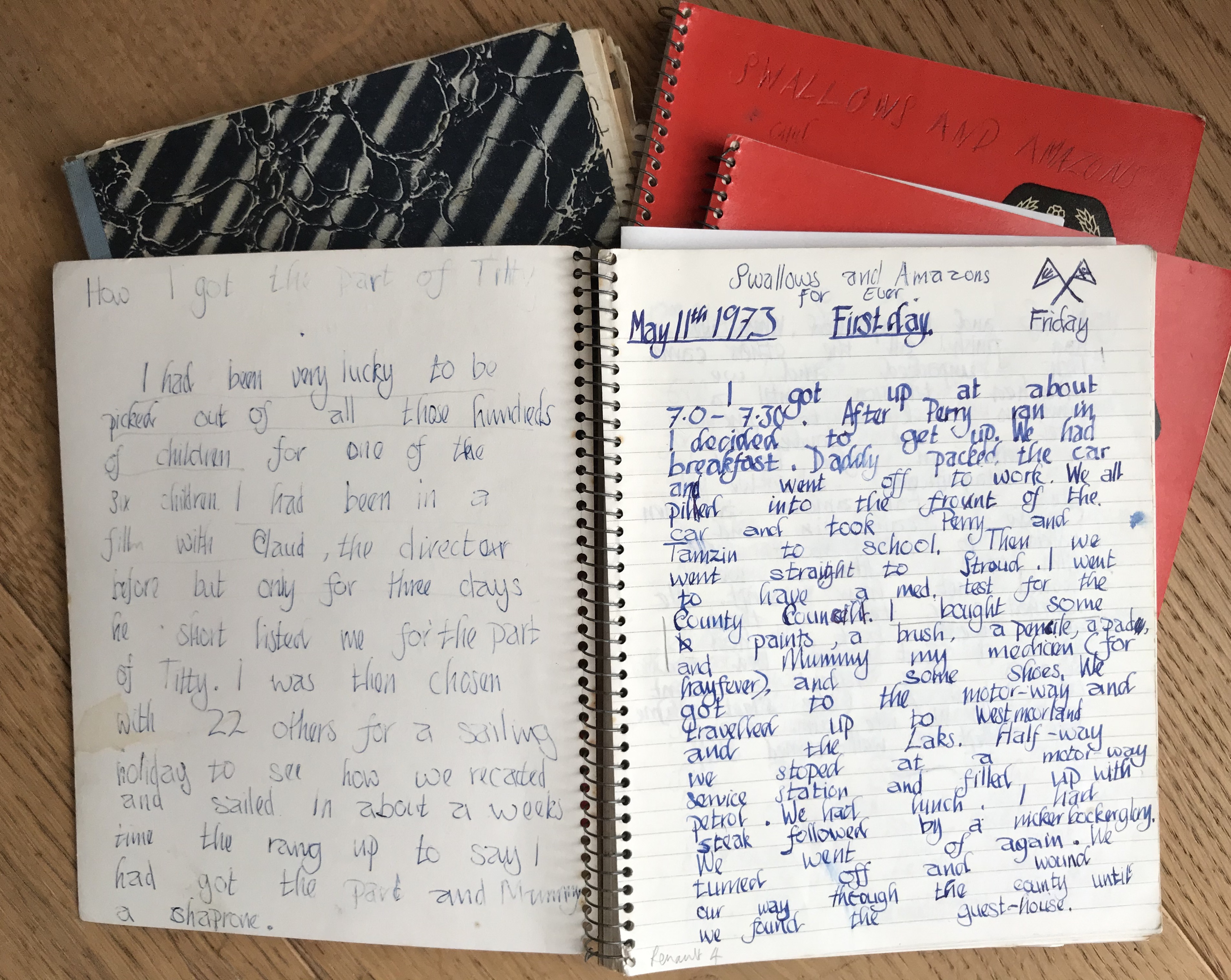
I didn’t learn to embrace the marketing aspect until I worked in the safari industry when I was assured it comprised 50% of the job. This attitude helped when I became and wildlife artist and later an author. After writing two books my readers – and my formatter – implored me to write about the making of Swallows and Amazons, especially once they learned that I had kept a diary whilst making it – as did Suzanna.
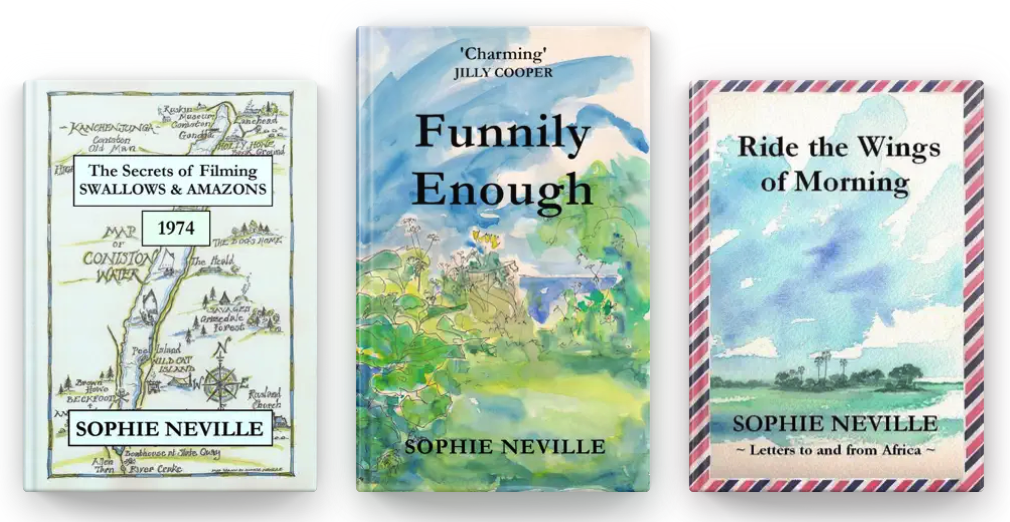
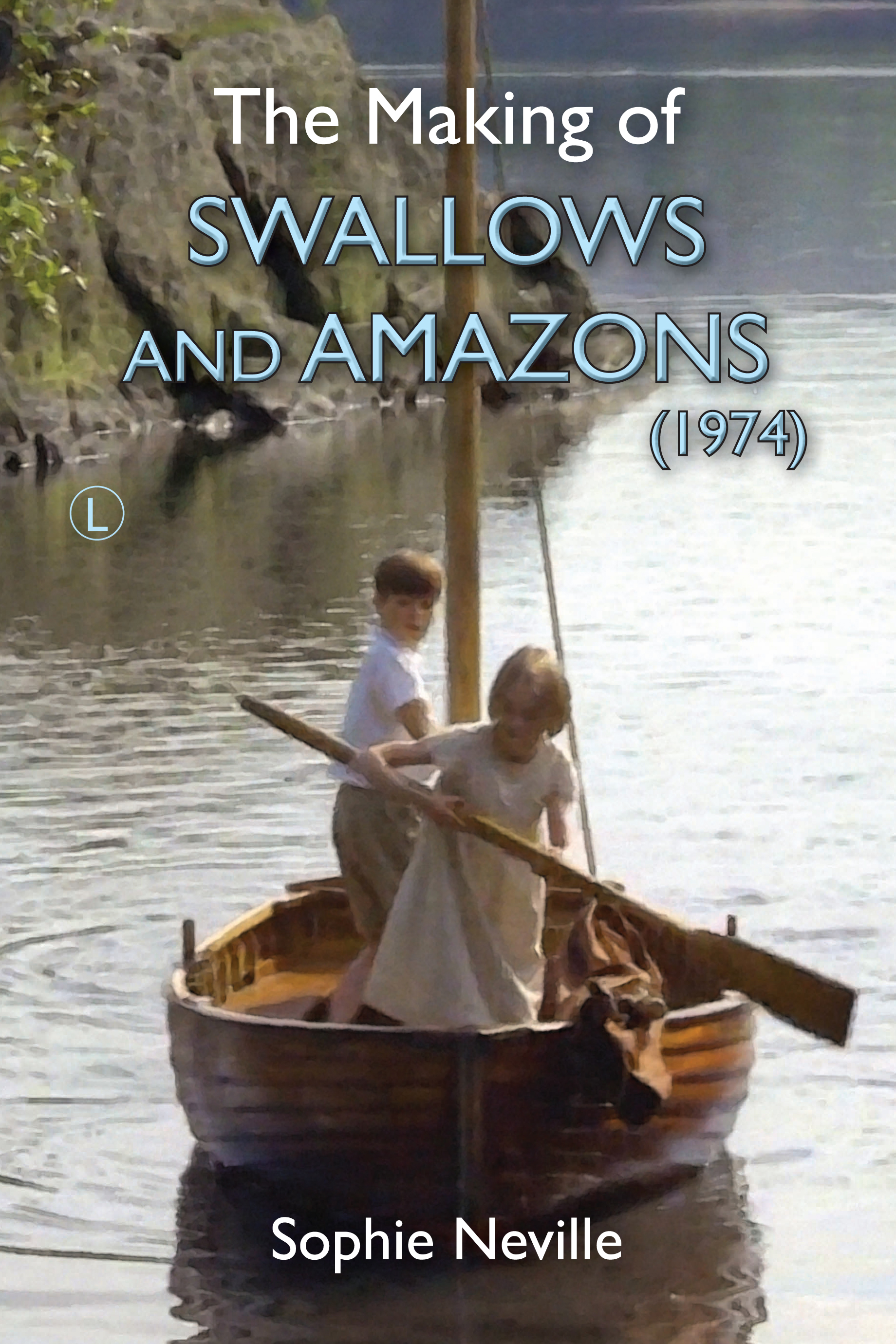
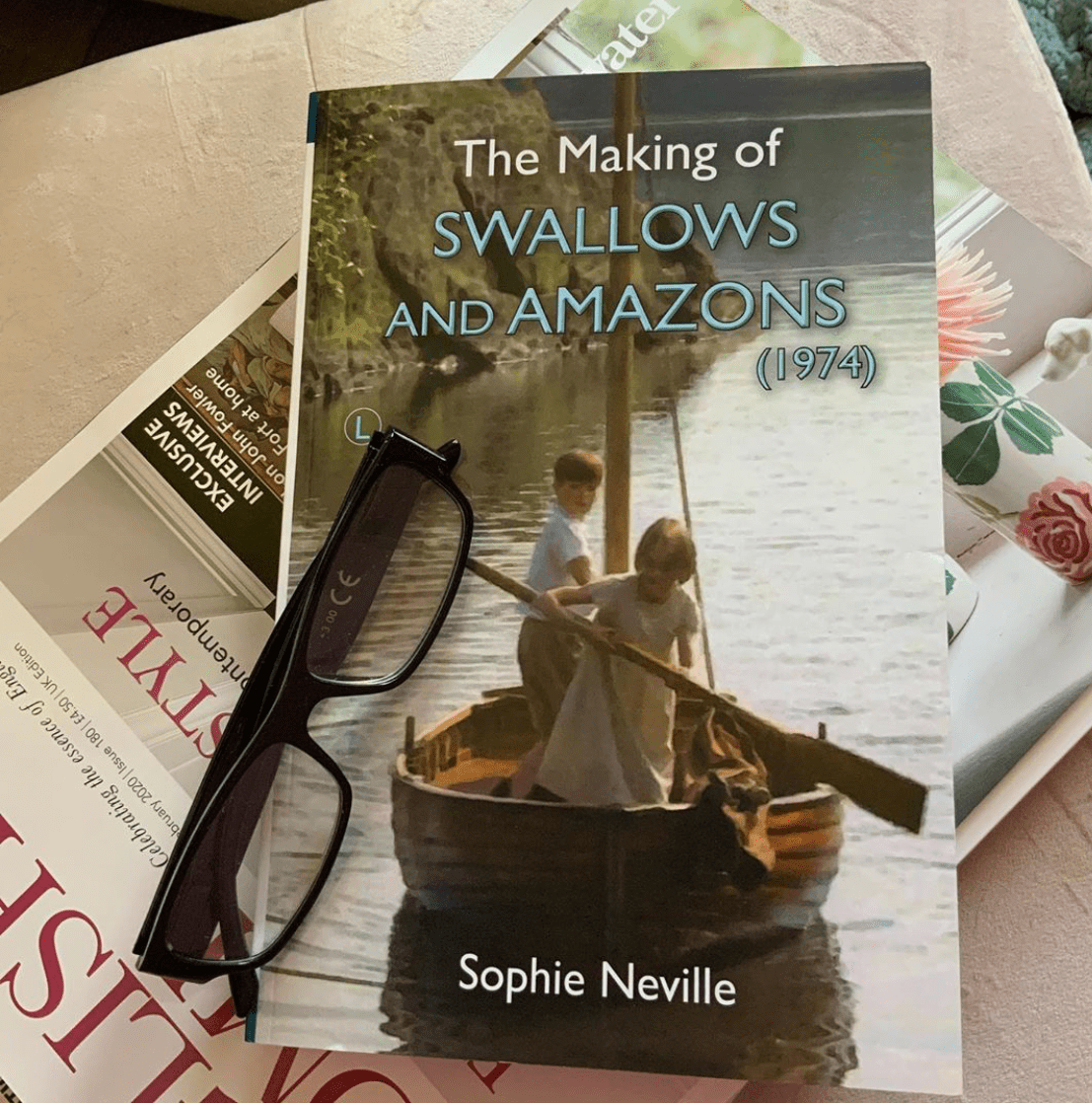
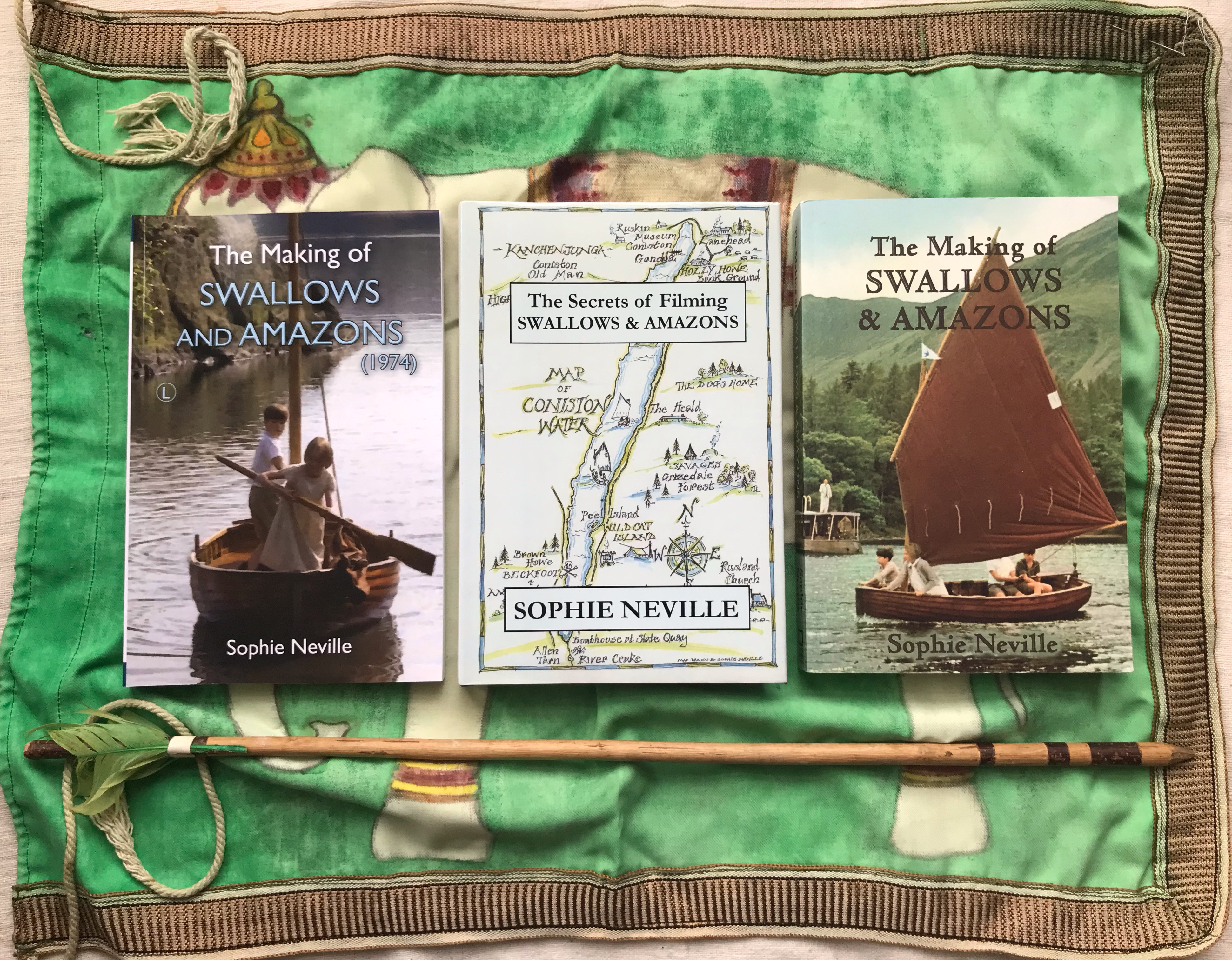
I first brought this out as a multimedia ebook, which is now in its second edition. It includes links to the cine footage my parents took on location. There are two versions of the paperback entitled ‘The Making of Swallows and Amazons’, seen here on the flag we captured.
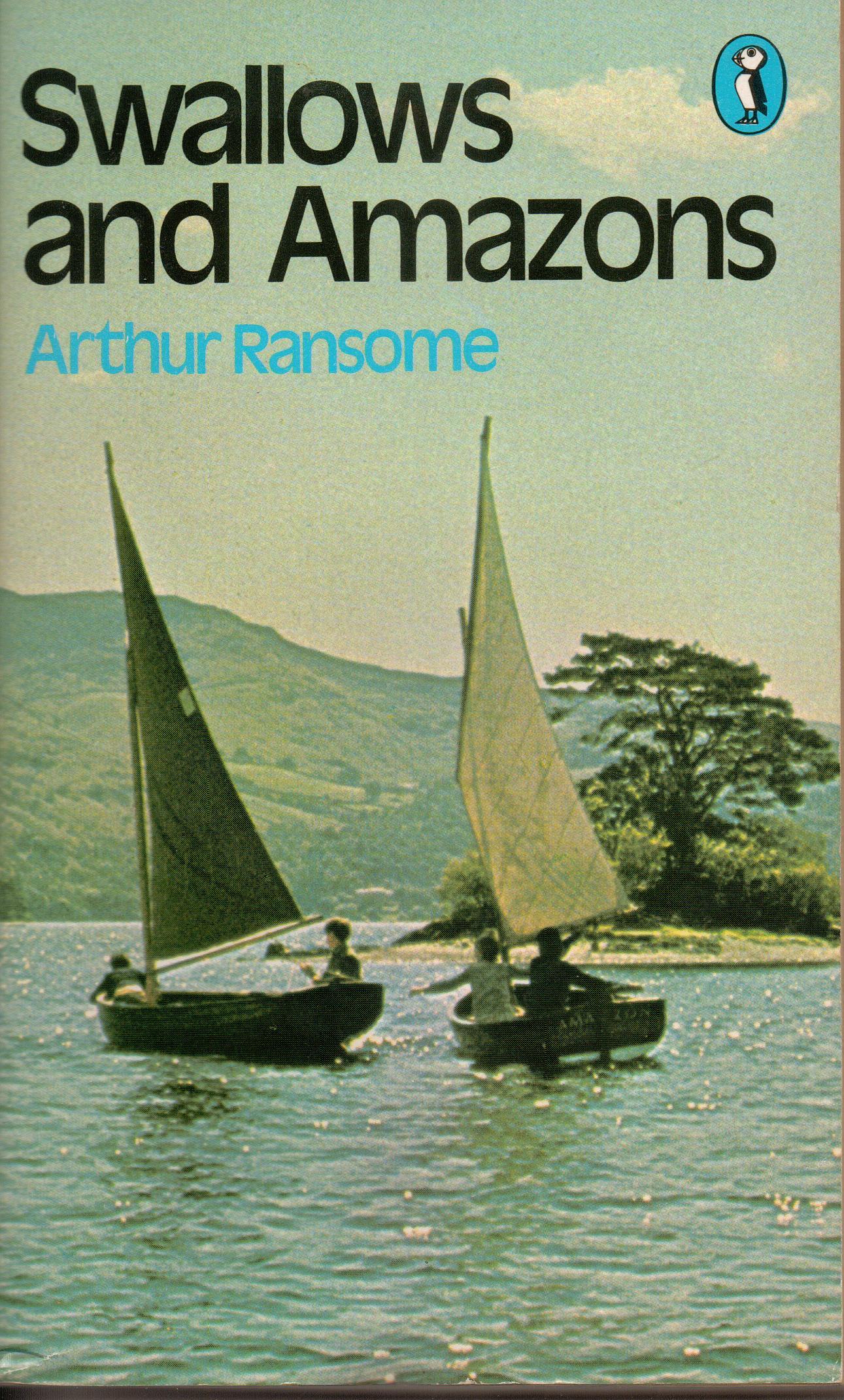
Different editions of ‘The Making of Swallows and Amazons (1974) by Sophie Neville’
It has been a delight to figurehead a story about sailing, a pillar of childhood that has influenced so many. Parents want me to engender a love for the outdoor life, sailing and exploring the lakes and countryside.
I hope I have helped to attract the right kind of people to the Lake District, that we have been able to inspire young people to read Arthur Ransome’s books, to get out into the countryside and sail, fish, go camping, build friendships, whatever the weather.
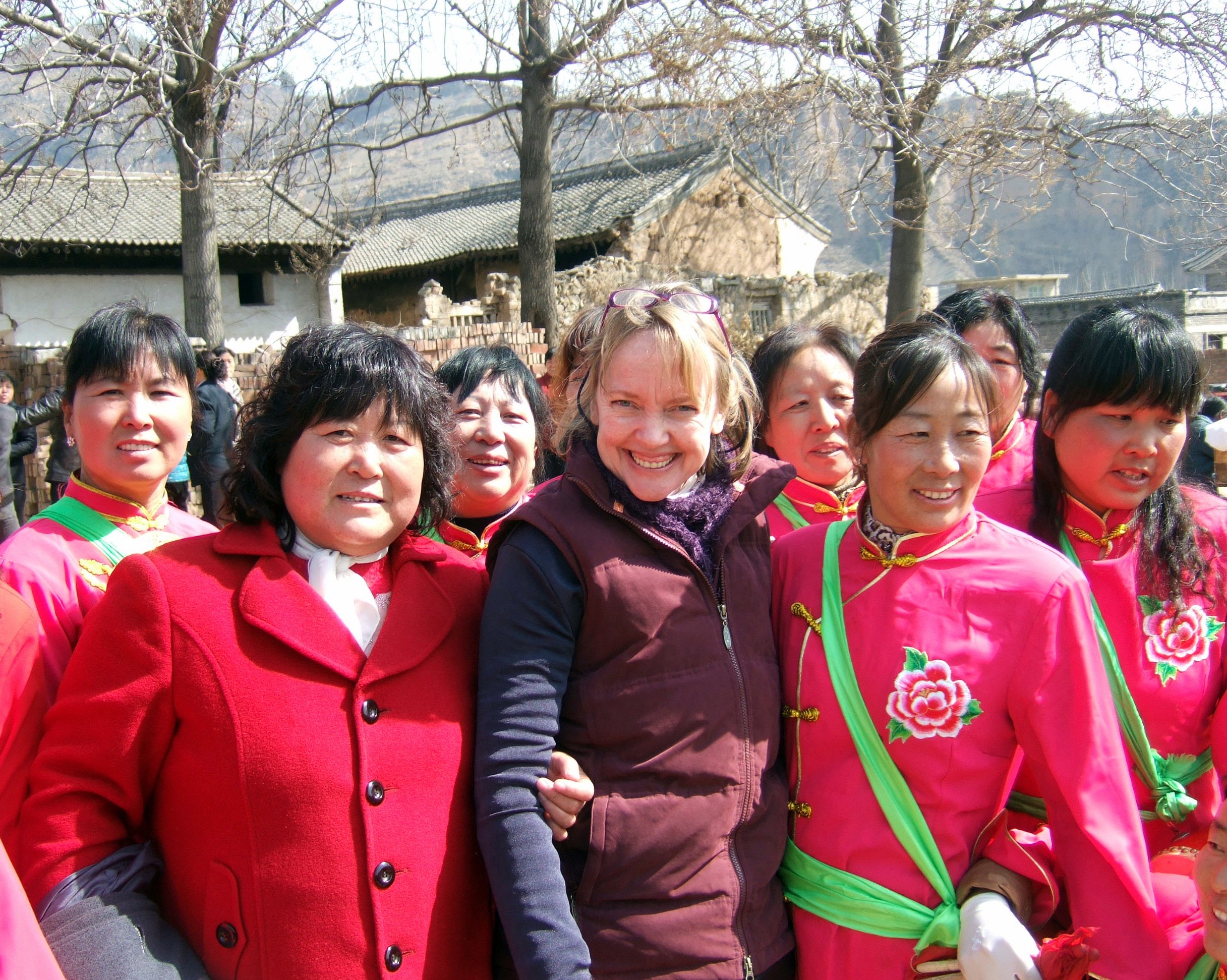
In the footsteps of Ransome’s great aunts, I went on a Bible Society mission to China. The people we met thanked us for coming, saying they hadn’t received European visitors for forty years. ‘But we’ve seen Europeans in town.’ ‘Them? They have just come to make money, not visit us.’
Does the old film shine a light, offer solace? People write in to tell me that the film of Swallows and Amazons carried them through a difficult patch. Some watch it once a week. It exists to remind people that they need not despair.
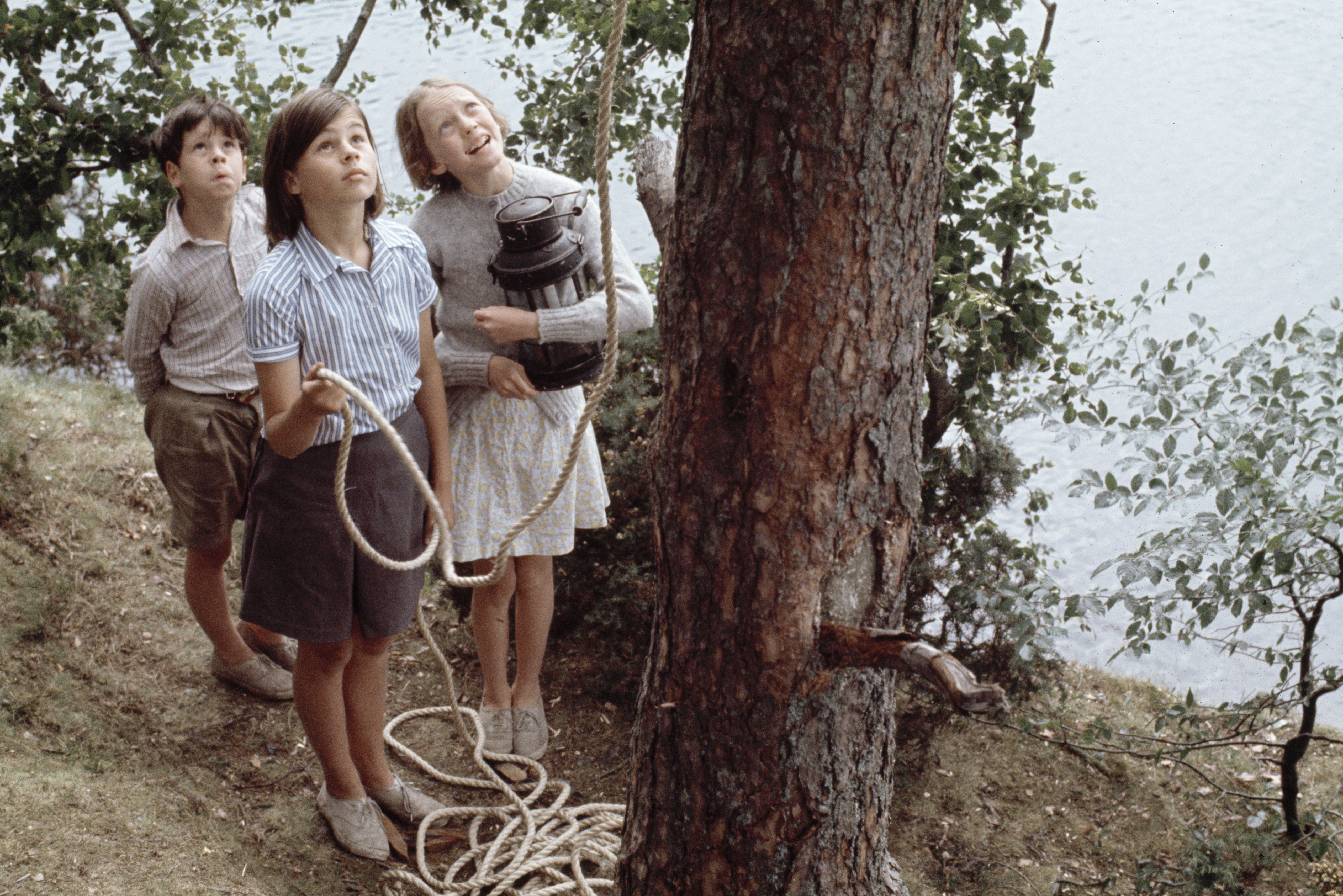
Does the symbolism still hold? It was my self-appointed job in the screenplay to wait, alone, and light the lantern, to be a light in the darkness that could be seen for miles.
Swallows and Amazons was not made to make money. It wasn’t the producer’s motivation. Richard Pilbrow just loved the books and wanted to bring them to life. We children didn’t do it for the money. There wasn’t very much. I earned £7.50 a day and was given a book token for appearing in the Lord Mayor’s Show. Even today, StudioCanal were reluctant to pay my expenses for re-launching the 40th Anniversary DVD when we were interviewed for the Extras package.
It doesn’t matter. I have been so warmly greeted so warmly by fans of the film. I was invited to become President of the Arthur Ransome Society, and have been offered numerous opportunities to speak about my books. I’ve passed on most of my speaking fees to charity – sending disadvantaged children in South Africa on an environmental course that has literally changed their lives.
Sophie Neville speaking at The Arthur Ransome Society
The treasure Titty found wasn’t pieces of eight. It was heavy to carry, but she was rewarded for her tenacity. She was given her heart’s desire, and parrots live a long time. They can easily outlive their owners.
The author Julia Jones points out that, ‘the treasure that was finally unearthed on Cormorant Island was a book. It might or might not have been a good book but the message of the story is quite clear: if you’re convinced that there’s something hidden under the rocks, all you can do is keep digging.’
An extra ordinary thing happened. When Richard Pilbrow was awarded an honorary degree from he invited Suzanna and I to lunch in London. As we left the restaurant in Covent Garden a group of buskers outside where singing the final sea shanty from the film, What Shall We Do With the Drunken Sailor? What were the chances of that? We hurried on to find transport and found ourselves outside the cinema where the premier had been held.
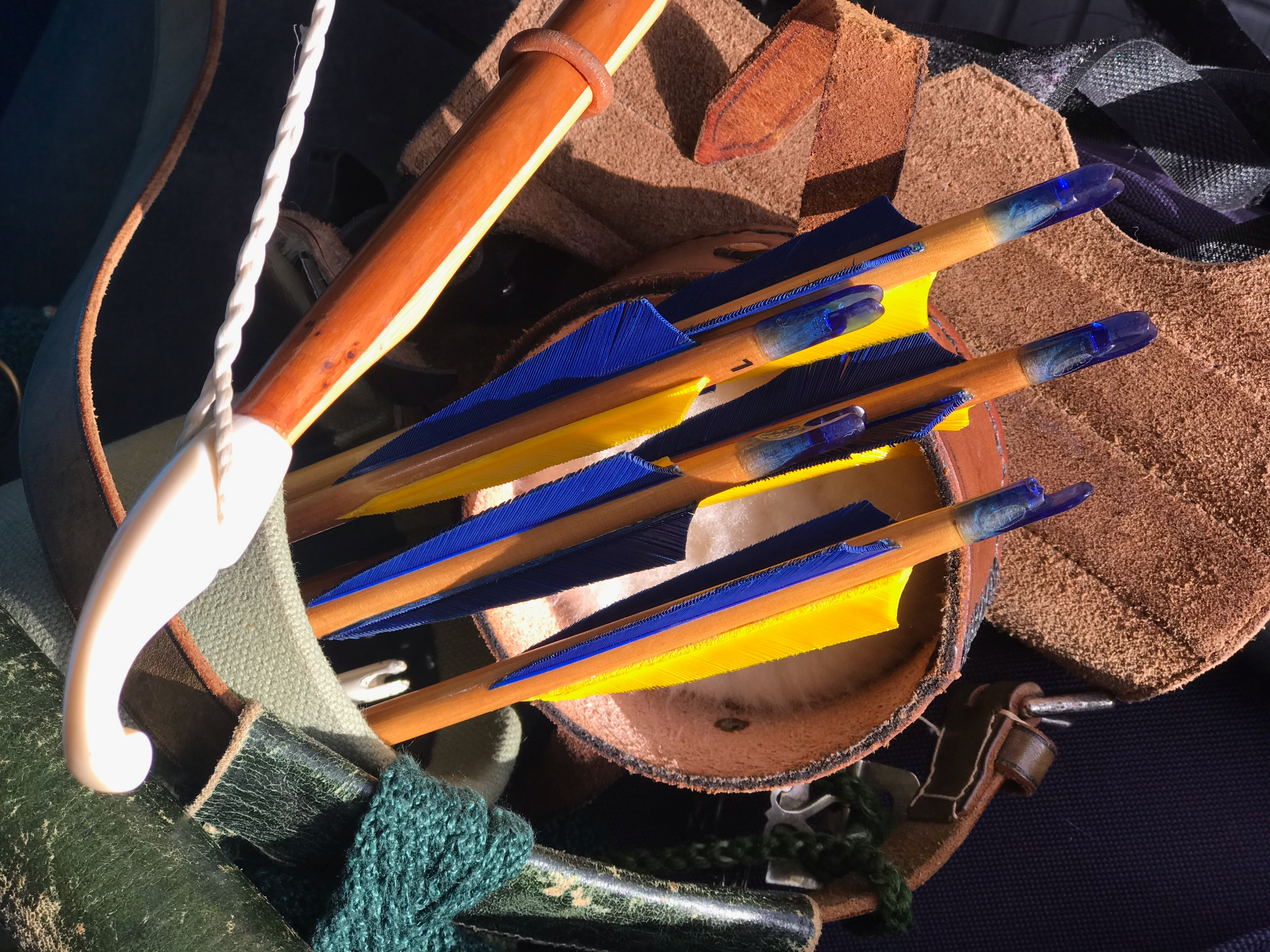
Something else happened to me as a result of Swallows and Amazons. Not what you might expect. We all wanted to learn to shoot with a bow and arrow. The next film role I was offered was as an archery champion. I kept up the sport, and ended up meeting my husband at a long bow meeting in the village where I was born. He was the chairman of the archery society. I won the Best Lady’s Gold. These are my colours:
Proverbs 23-23 talks of wisdom, instruction and insight. My name, Sophia, means wisdom. My hope is that others gain wisdom and insight from what I have written.
You can read more in ‘The Making of Swallows and Amazons’, which is coming out as an audiobook. It will available from all the retailers and is currently on Scribd here.
A write up of Sophie’s talk for BookBlest – the first Stroud Christian Book Festival – on The Making of Swallows and Amazons can be found on this website here
If you missed Sophie’s talk on ‘The Making of Swallows and Amazons’, you can read about her adventures in one of these editions, available online.
Different editions of ‘The Making of Swallows and Amazons (1974) by Sophie Neville’
There is a brief resume of the talk on this website, here Prepare to be taken back to the 1970s:
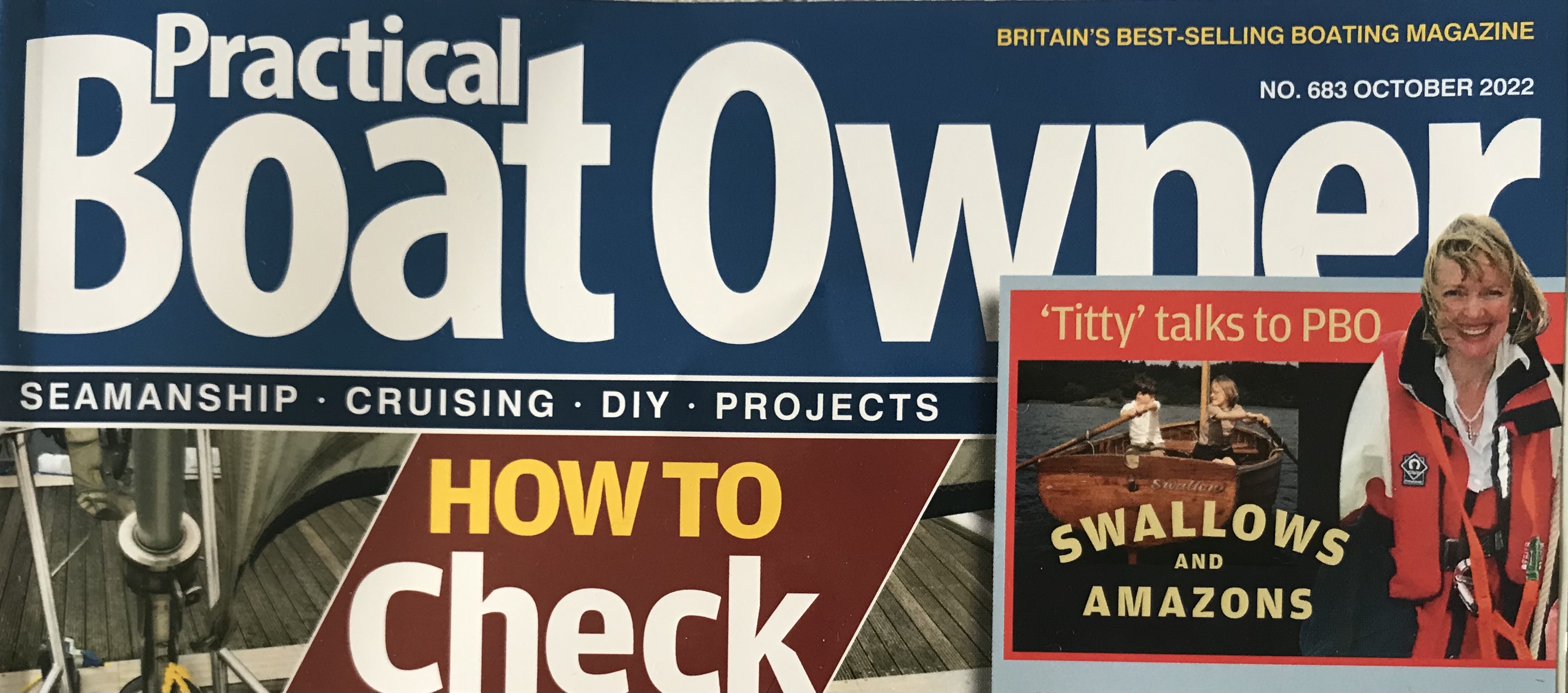
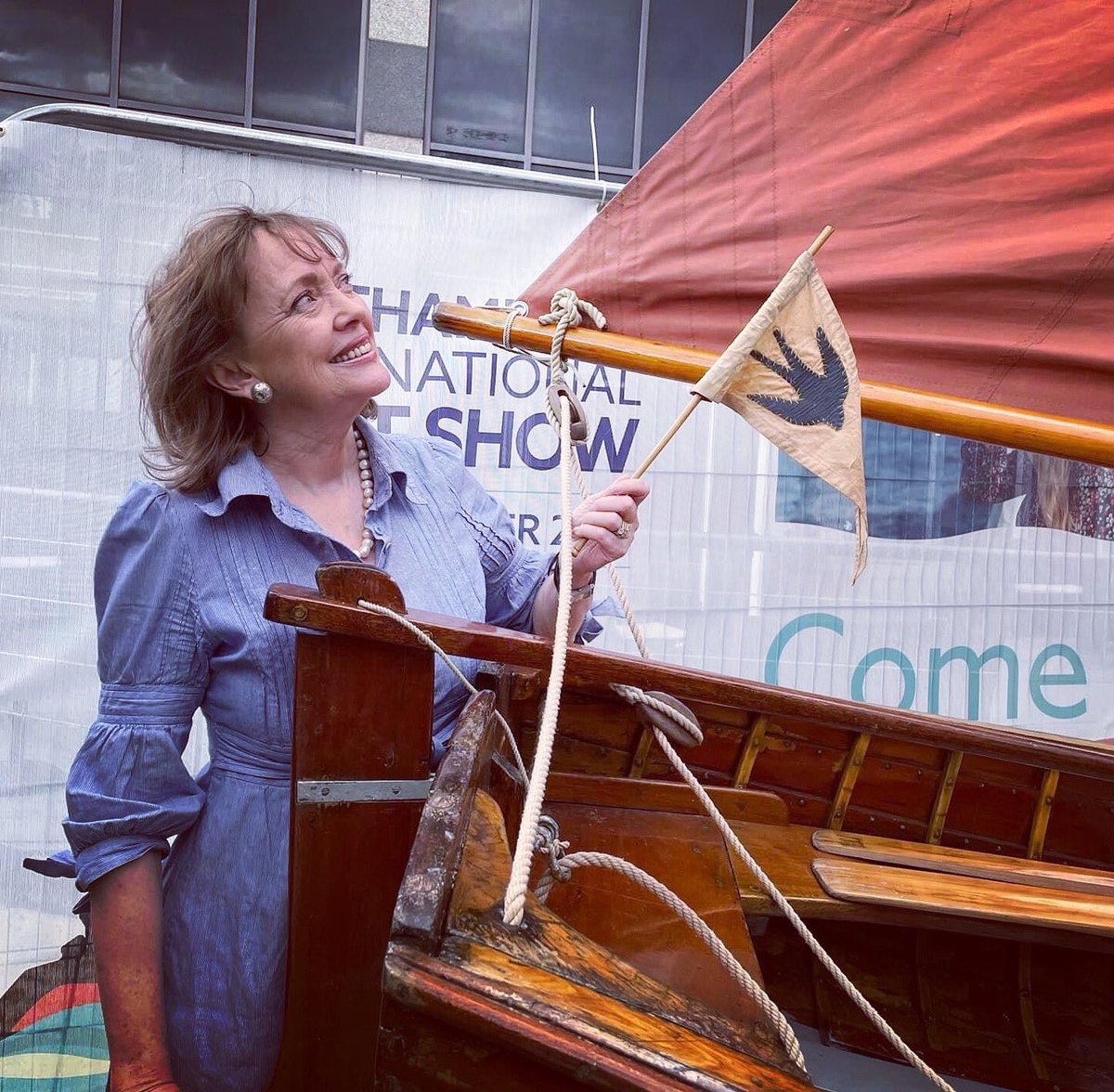
In 2022, Swallow, the dinghy that starred in the original film Swallows and Amazons was on display at the Southampton International Boat Show, greeting families as they arrive.
Sophie Neville who once played Titty Walker with her good little ship
Sophie Neville gave talks on filming afloat and the movie was made on location in the Lake District fifty years ago.
Over 103,000 people visit the show. Although busy, it did not feel crowded. There is a lot to see and do.
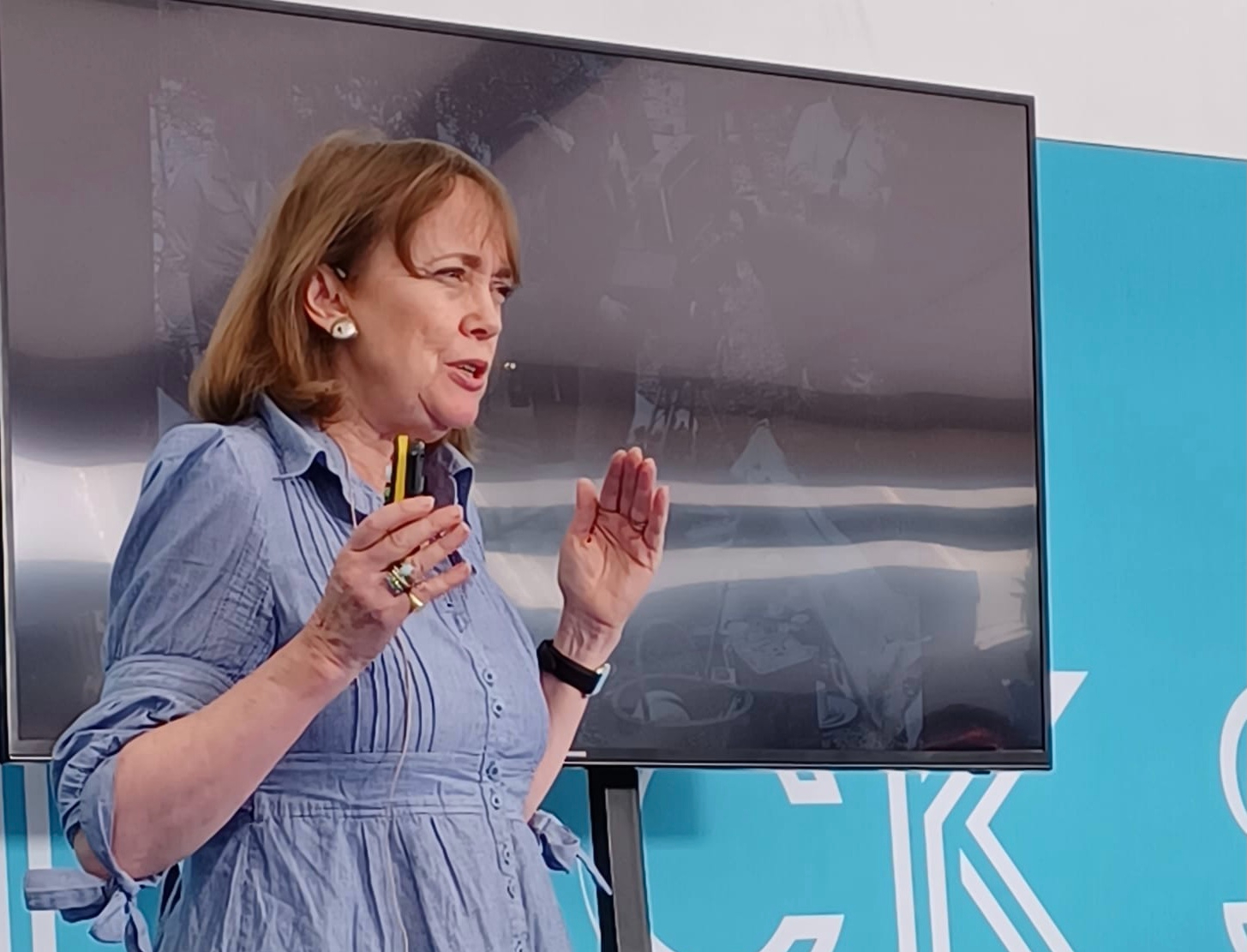
Sophie Neville speaking on the Foredeck Stage at #SIBS22






















 Sophie Neville