Chloe Williams has just written from Ontario in Canada, to say, “Some books entertain. Some enlighten. And some, like The Making of Swallows and Amazons and The Secrets of Filming Swallows & Amazons, manage to bottle something impossibly rare: the feeling of looking back through a child’s eyes and realizing it was all real; the lake, the sails, the laughter and somehow, you were part of it.”
“These aren’t just behind-the-scenes diaries. They’re sun-dappled time machines. Your voice, both in memory and in your original childhood notes, is a miracle of tone: witty, observant, buoyant, and deeply human.”
Of the original movie, she wrote: “What A Christmas Story is to snowglobes and childhood winters, Swallows and Amazons (1974) is to summers on the water and you’ve preserved that magic with charm, heart, and astonishing detail.
“What makes these books unforgettable isn’t just nostalgia. It’s how alive they are. We feel the smell of old sails and camera tape, the blur of location shoots, the uncertainty and excitement of being a child caught in a grown-up world of filmmaking yet utterly at home in it. We meet legends like Virginia McKenna not as distant stars, but as fellow travelers in the adventure. And it’s a joy.”
The Making of Swallows and Amazons seems to resonate with:
Readers of nostalgic memoirs that celebrate childhood, nature, and storytelling
Adults who are captivated by the lake-country magic of Arthur Ransome
Film lovers who cherish insider views of filmmaking
Educators and parents seeking real-life adventure stories for young readers
Fans of Call the Midwife, The Durrells, and 84, Charing Cross Road
“The joy and authenticity in your books mirror exactly why Swallows & Amazons (1974) still has such a hold on people’s hearts. The memoirs don’t just tell the story of making the film, they recreate it, letting readers smell the lake air and see the magic unfold through a child’s eyes.”
The new audiobook
I’m hoping the audiobook will also amuse readers. It’s now available on all the online platforms including Audible, where isis being offered for free on their membership trial.
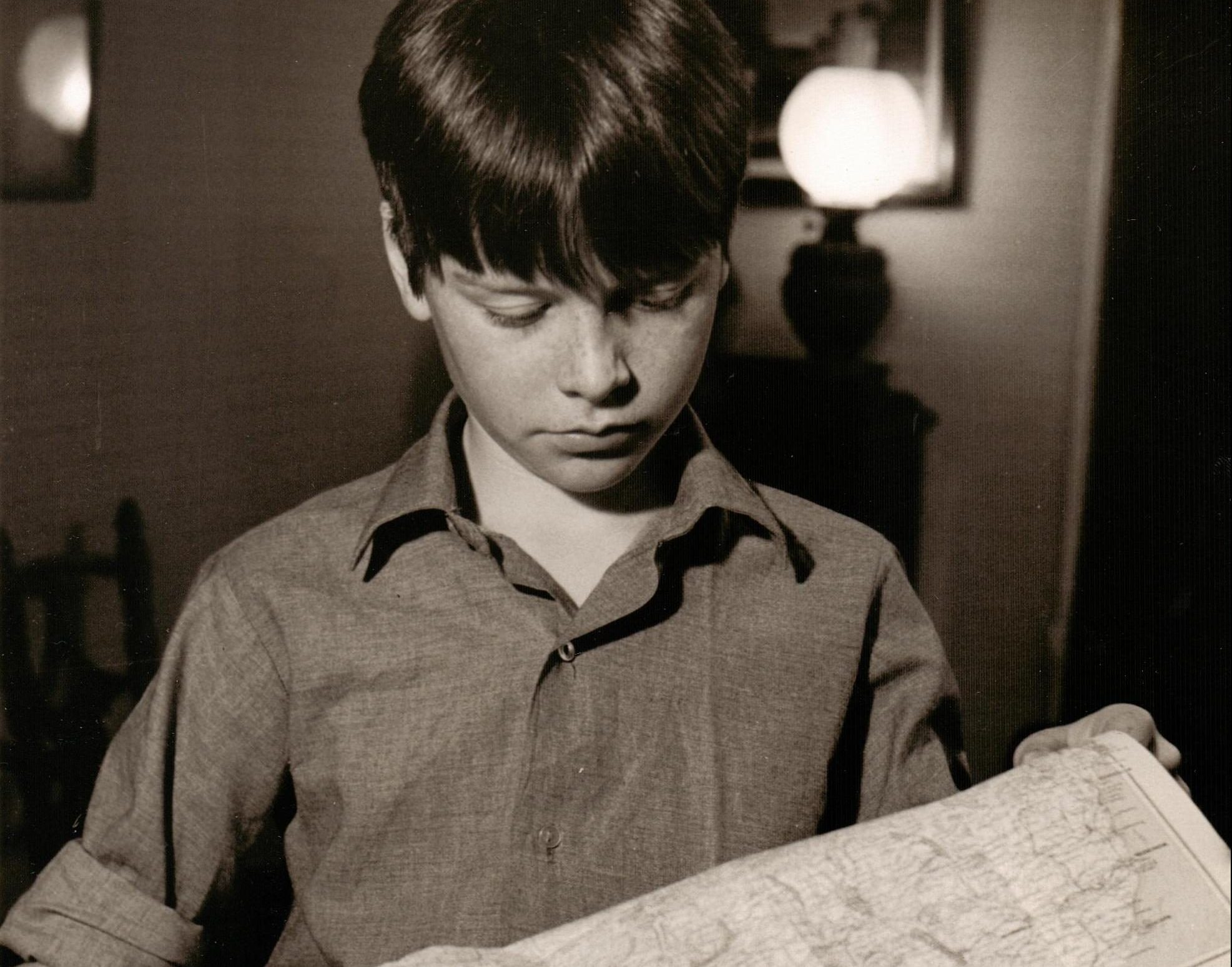
Simon West as John Walker studying the chart before the voyage.
1. It’s good to begin a film with establishing shots that explain what is happening. This could be a chart, a poster, a yacht club, a moored boat or the landscape. Then tell the story, introducing the characters and different boats.
2. Once you begin filming boats the most important thing is to keep the horizon horizontal.
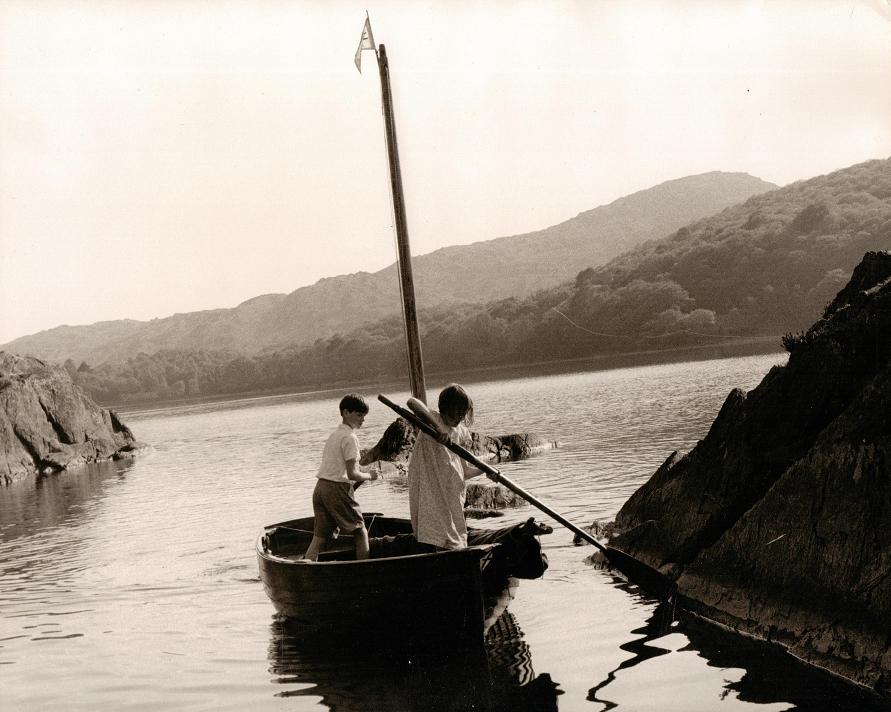
Simon West and Sophie Neville bring Swallow into the Secret Harbour on Wildcat Island
Alternatively, tilt your camera at a dramatically acute angle – but don’t use compromised shots like the one above.
Farewell and adieu to you fair Spanish ladies – can you spot the safety officer?
3. When you pan – side to side – first plan and rehearse the shot with good opening and ending frames. Hold for a beat on these – it gives you a transition to the next shot in the same way as a comma or full stop.
Simon West, Suzanna Hamilton, Sophie Neville and Sten Grendon in ‘Swallows and Amazons’ (1974)
Pans look better if the shot moves from left to right, as that is how westeners read.
A pan works best if it’s ‘motivated’ ie follows action. Only pan from right to left if you are following a subject, then let it pass out of shot.
Avoid panning from left to right and back again. Don’t wave the camera around.
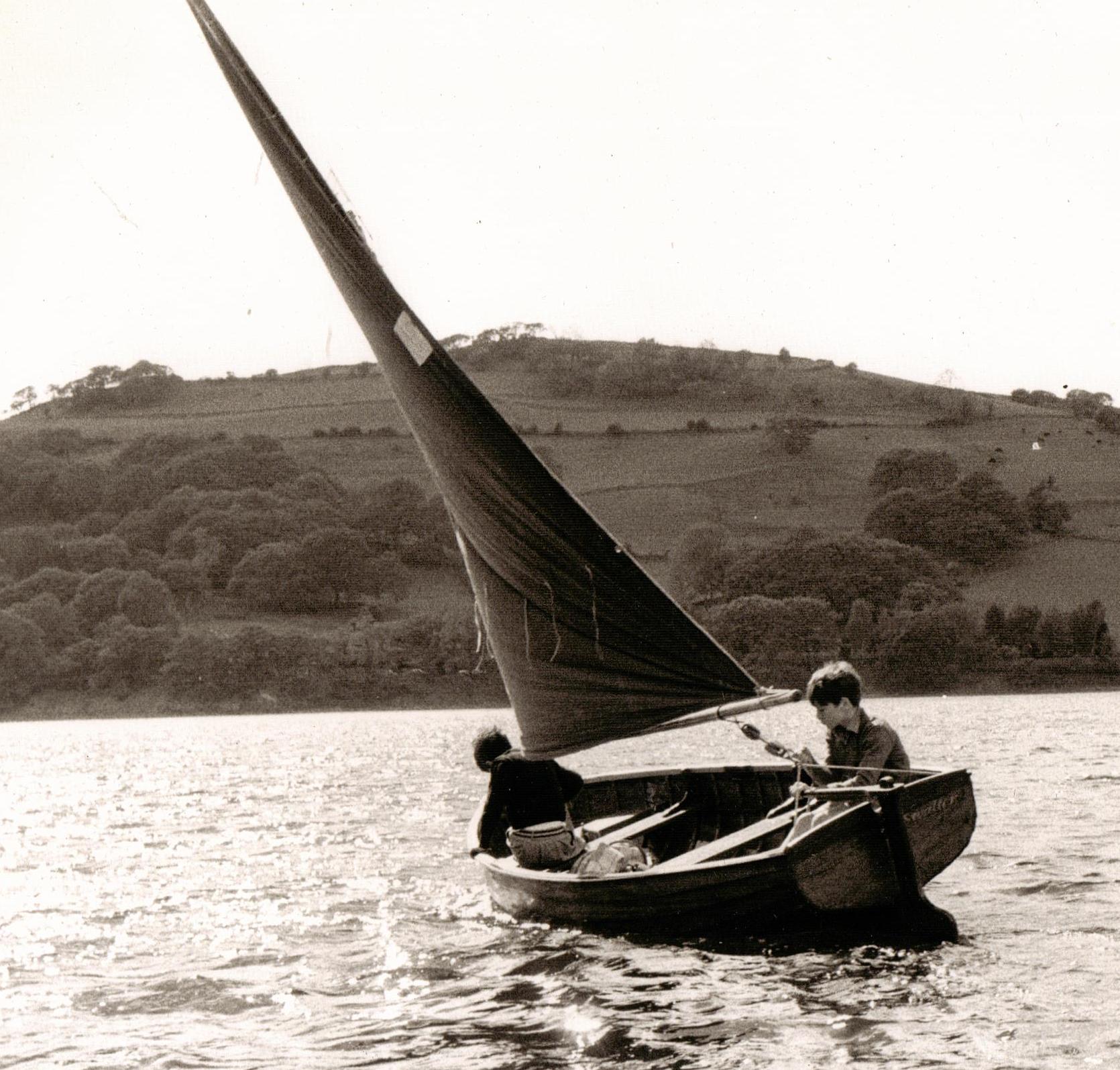
Simon West as Captain John sailing Swallow . Sten Grendon plays the Boy Roger
4. Avoid using the zoom unless it is motivated. Tilting the camera works better eg: open on a shot of a boat’s name and tilt up to find the skipper.
5. A general rule is: If the subject is stationary you can move the shot. If the subject is moving, keep the shot still.
6. Low angle shots are atmospheric – try filming at chair height, especially if you are tall.
Suzanna Hamilton as Susan with Sophie Neville as Titty busy writing the ship’s log
7. Close ups and detail are good, especially if there is some movement. eg: burgee flying in the wind.
A montage of close-ups works well to explain what is happening and explain a passage of time.
8. People do well in front of the camera if you give them something intricate to do or look at. Show what they are doing, possibly from a different angle.
9. You will need to film one boat from another. We were lashed to a camera boat to achieve these shots.
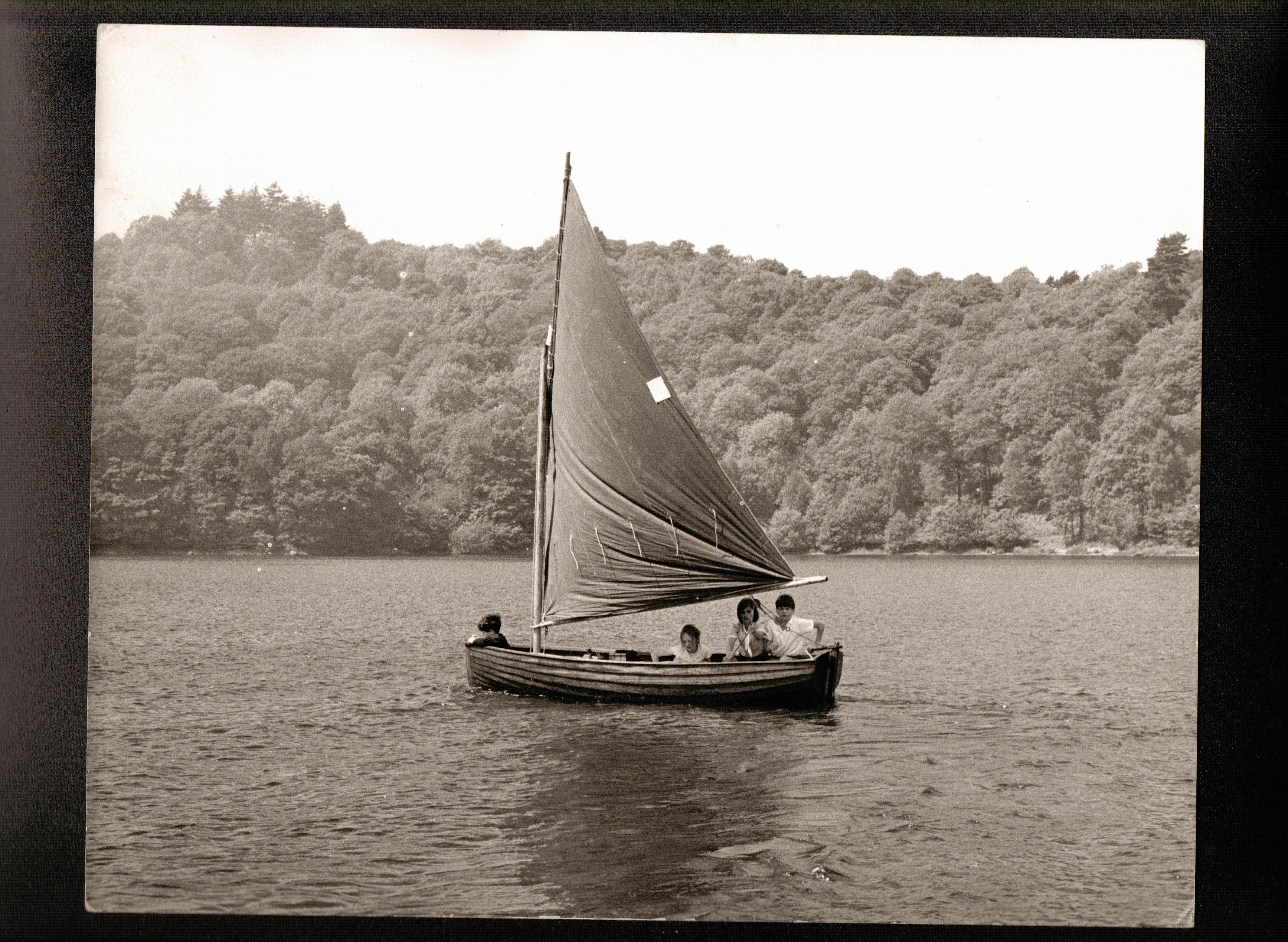
Sophie Neville, Suzanna Hamilton and Simon West sailing Swallow in 1973
10. Make sure your lens is kept clean – or use water droplets for effect. Don’t let your camera get wet but capture the excitement.
Simon West and Suzanna Hamilton at the helm of Swallow with Stephen Grendon
I continue to hear amazing stories about how the 1974 film ‘Swallows and Amazons’ has influenced people’s lives. Someone wrote to say, ‘This was my favourite movie growing up in Australia and the main reason I ended up moving to the UK!’
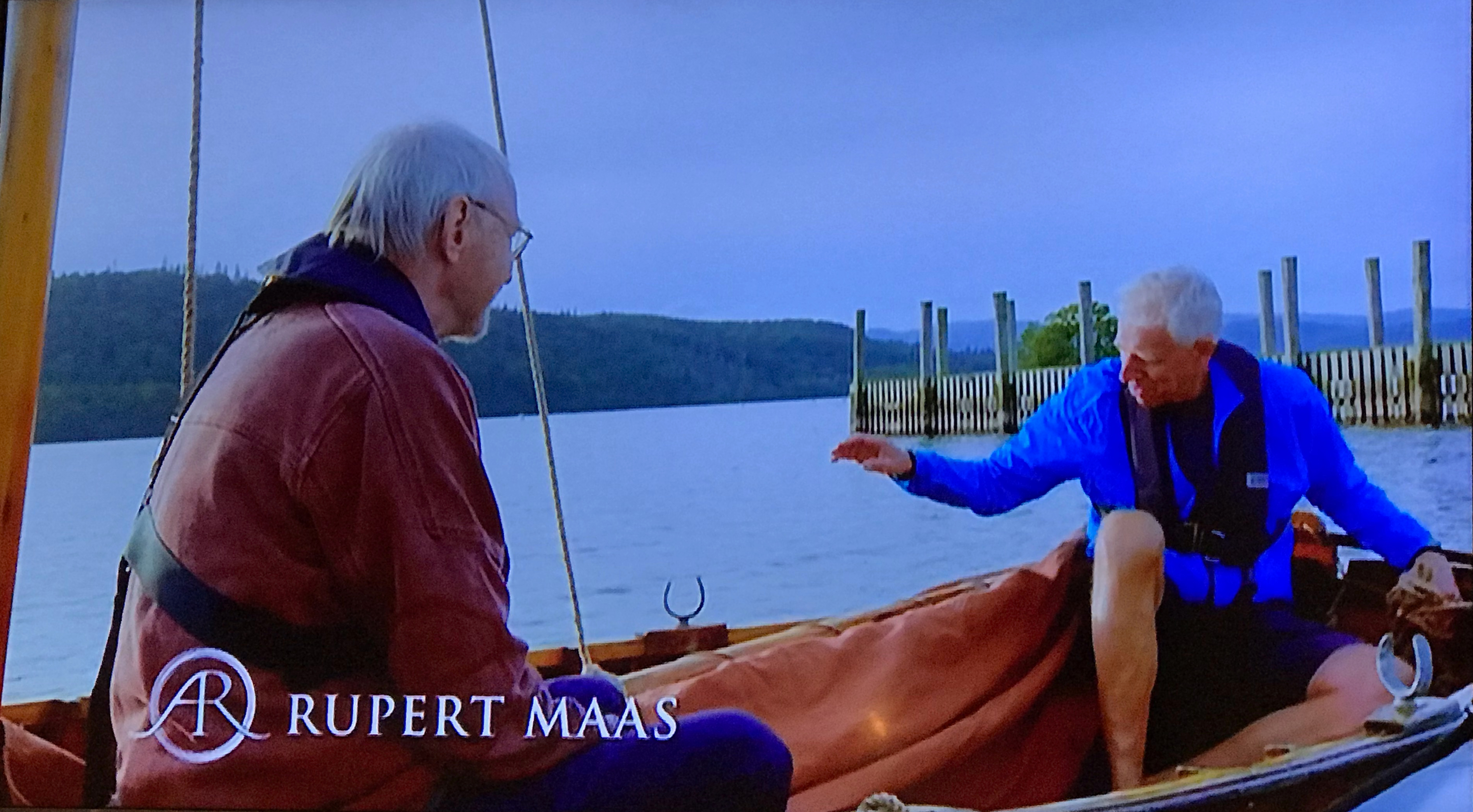
Rob Boden talking to Rupert Maas on BBC Antiques Roadshow.
There has been quite a bit in the popular press about what Rupert Maas, the expert on paintings, said of the movie ‘Swallows and Amazons’ (1974) which he saw aged 14. “It’s fair to say it got me into sailing. Just watching the romantic lives of these children in this wonderful summer. It never seemed to rain, the sun was always out…” He ended up crossing the Atlantic Ocean.
Simon West as Captain John in Swallows and Amazons 1974
Marc Grimston writes, “I was read the books as bedtime stories when I was too young to read them myself… but when I was taken to see the film, the stories became alive to me. I had not seen the Lake District at that point and the film changed everything. I could visualise the landscape every time I read one of the books, that was due to the film. The characters in the stories now had faces I could recognise in my head from that point on. When I read the books now, the characters are still the same 51 years on. The books, the film and the TV series of Coot Club and The Bix Six gave me a love of boats, camping, the Lake District and the Norfolk Broads.
Krista French “Those books were my part of my childhood escape toolkit.”
Simon Leach saw a poster of the 1974 film ‘Swallows and Amazons’ and said that when it came out, “my family was living in South Australia. After watching this, my parents were so homesick, that we returned to the UK.”
Others comment on how it has given them solace during difficult times. One man wrote to say that he watches ‘Swallows and Amazons'(1974) every week.
Fiona Ring said, “It literally shaped my childhood, that was me, I was Titty, the adventures the love for the outdoors. I read and watched it over and over and now it’s even better that I’m reliving it all again with my girls. Travelling up to the lakes each year to find all your secret spots. It’s amazing. Kayaking to wild cat island with our girls in April was a dream come true.”
Sophie Neville with Suzanna Hamilton
Andy Stuart loved Arthur Ransome’s simple book illustrations. “And equally perfect were the the actors in the 1974 film. If I think of the Swallows and Amazons, those are the faces I see when I read the novels in which their characters feature, and my mind’s eye visions of the Norfolk children and the D’s are conjured from who I imagine would have fitted in alongside the original cast. You were all wonderful, Sophie Neville!”
Simon West, Sophie Neville, Suzanna Hamilton and Sten Grendon in Secret Harbour
The author Duncan Hall says, “I can’t remember if I read the books or saw the film first. I don’t remember picturing the Swallows and Amazons differently so I maybe saw the film first? But would have been at a similar time. It sparked a lifetime obsession with the Lakes, boats and stories.”
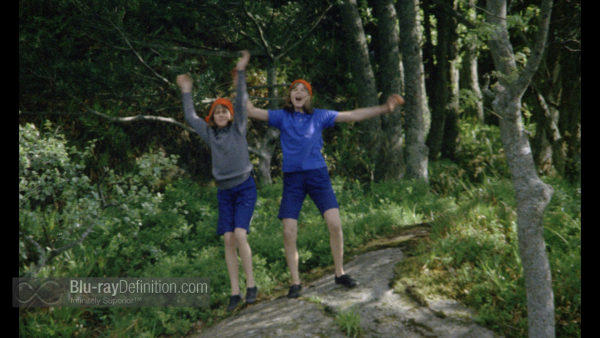
Lesley Bennett and Kit Seymour as the Amazon pirates dancing on Peel Island
Rob Twycross said, “I saw myself in the children in the film. We lived our childhood like that, going off exploring, discovering and learning. Halcyon days that I fear are gone now. It’s lovely to watch it again now and feel young again, if only in my head and heart for a little while!”
Sophie Neville as Able seaman Titty in Swallow
You can now listen to the story of how the 1974 film was made on location in the Lake District on any of the audio-book platforms, including Audible.
Sophie Neville, Suzanna Hamilton and Kit Seymour on BBC Breakfast
‘Can you speak to BBC Breakfast?’ I was asked. ‘They want to interview the cast on Zoom tomorrow morning.’
It was Saturday 29th June. We were at Windermere Jetty in Cumbria for the 50th Anniversary of ‘Swallows and Amazons’, the 1974 film was being screened in the room below us and a huge number of enthusiasts were eager to chat about how we’d made it. I had just come in from sailing Amazon, John Sergeant, president of The Arthur Ransome Society, was about to arrive and we had books to sign, but I knew it was important to act fast. The BBC would need time to contact StudioCanal in order to use the film trailer. I grabbed my lap-top and attempted to persuade the production team we had lots to talk about while finding a good signal. The best place was on a staircase, which was fun when Captain Nancy and Mate Susan rushed past, but a more interesting background was required.
‘What time do you want us on air?’
‘7.40am.’
‘Ah – the museum doesn’t open until 10.00am. Can we chat to you from the terrance of our hotel? It overlooks Windermere.’
‘It might be best if we send out an outside broadcast unit.’
I wasn’t told the item would also go out on Look North and North West News.
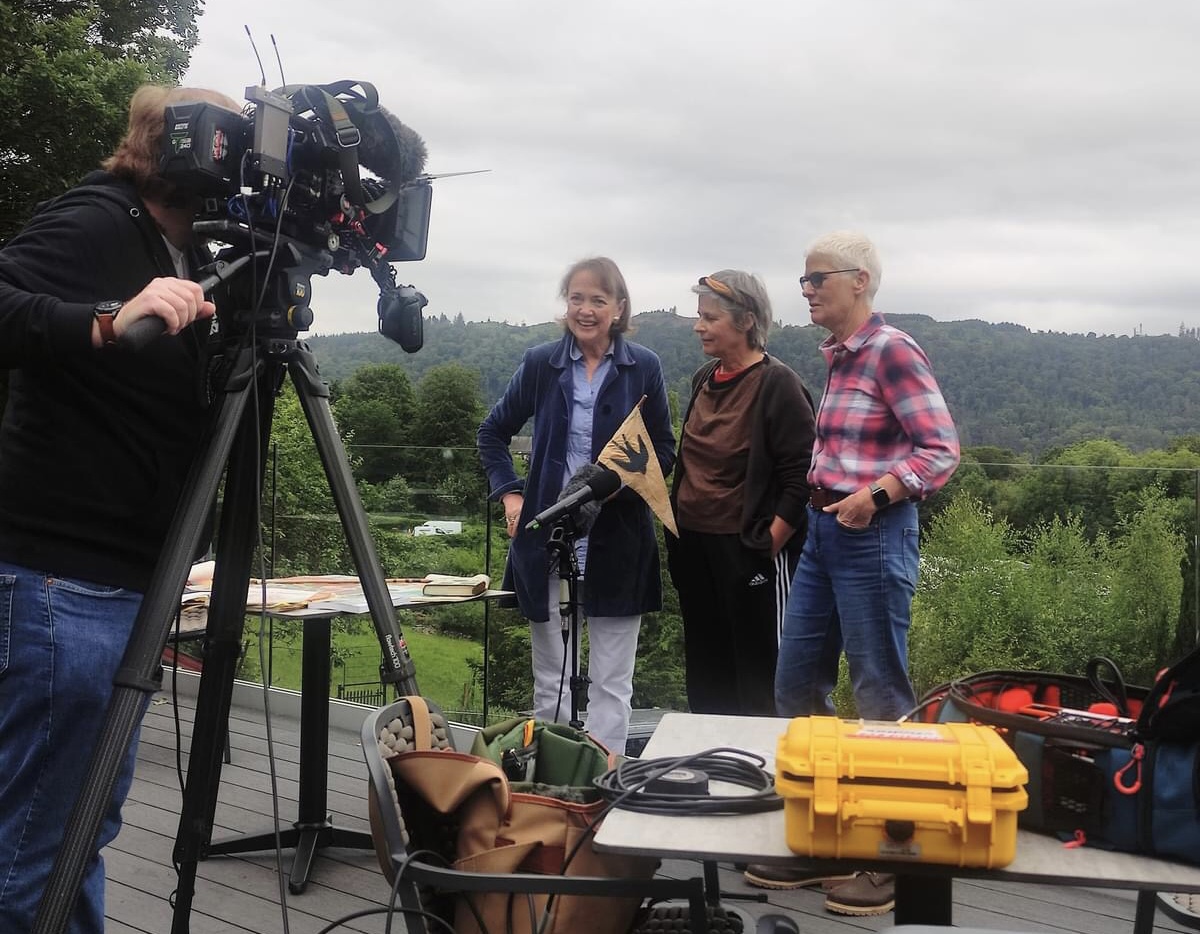
I woke early the next morning to find Keith, the BBC cameraman, setting up his equipment. Rain clouds cleared as I unrolled Arnaldo Putzu’s 1974 film poster and plonked David Wood’s screenplay on top of it with a few flags but worried about my hair, which was not behaving. We had Peter Robb-King, one of the greatest make up designers in the world with us. I should have asked for his help. All I did was remove a car key from around my neck.
Sadly, Simon West who’d played Captain John had already left, but Suzanna Hamilton and Kit Seymour emerged from their rooms and we lined up for the shot.
Was I organised? Did I tell them, ‘We need to get three points across!’ ?
No.
Someone quietly suggested I could mention The Arthur Ransome Society who had organised the weekend festival, which was free for all.
Sophie Neville, Suzanna Hamilton and Kit Seymour setting up for BBC Breakfast
Keith fitted us with earpieces and explained that there would be a delay between questions asked in the studio and our answers. We couldn’t see the presenters but could hear the film trailer being played. When we were asked us to introduce ourselves, I didn’t realise they needed to know which characters we’d played until I got to Kit Seymour, who had been Nancy. Straight forward and honest, she managed to answer the difficult question:
‘What’s it like… how does it feel?’
‘Listening to stories of how the film has changed people’s lives,’ she admitted, ‘was quite an emotional experience.’
Suzanna, explained in her beautiful voice, that since the the story was set in the 1930s it hasn’t dated, and we were able to chat naturally about our mission to encourage the next generation to get out on the water. We chatted about the movie memorabilia and David Wood’s script – that as children we were never allowed to read and the amazing time we were having at Windermere Jetty museum where one little girl arrived dressed as Titty Walker with a green parrot on her sholder.
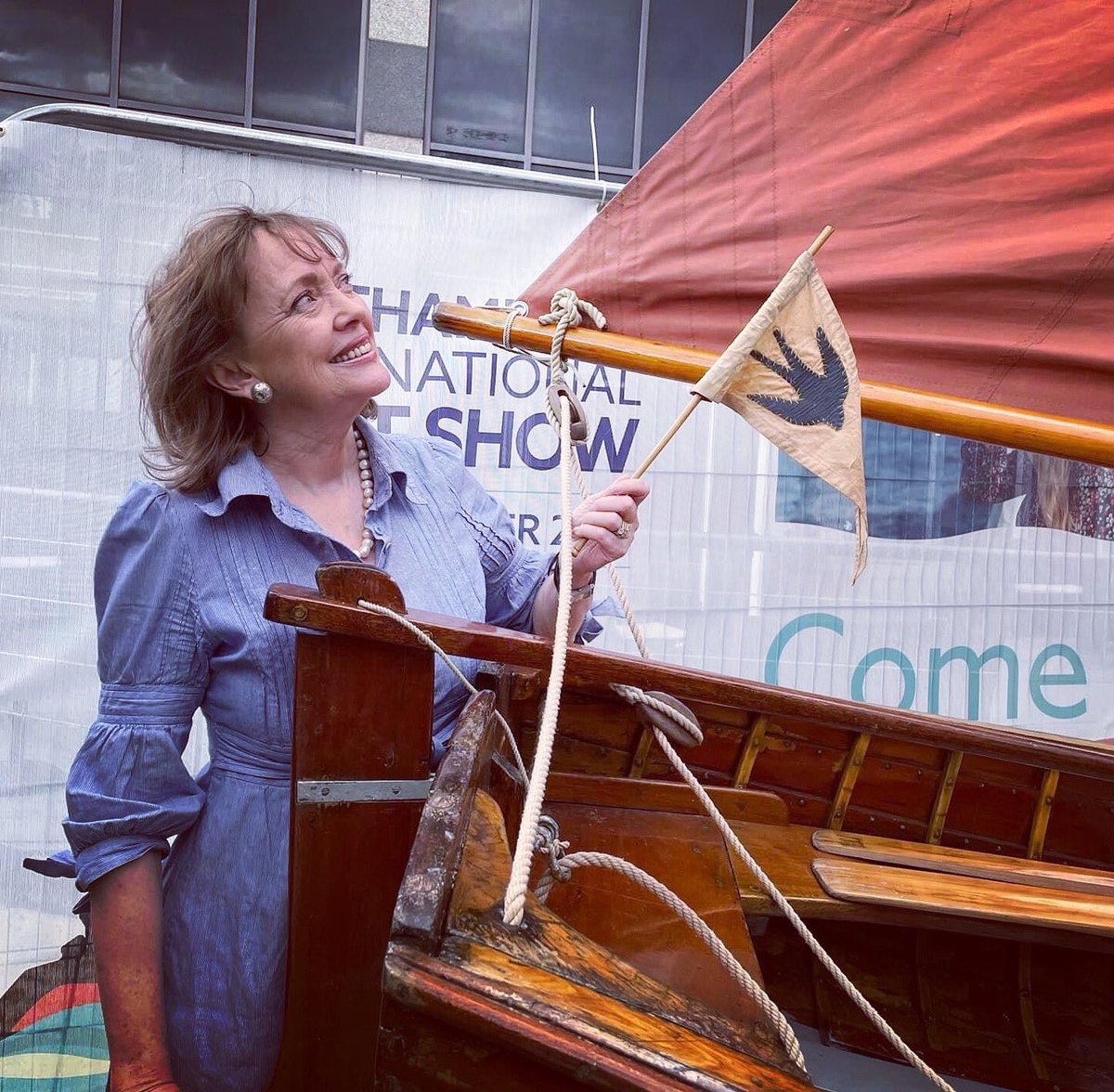
I held Swallow’s flag and managed to speak about the acquisition and renovation of the dinghies, aware that there were no boats to be seen on the hotel terrace. However BBC Breakfast have brilliant vision mixers. The best film clips of Swallow and Amazon literally sailed over my words and I grabbed the chance to talk about The Arthur Ransome Society on national television before they bid us farewell.
When John Sergeant asked me how it had gone I had to admit that we tripped up on the time delays, but we celebrated the much loved film bringing news that Swallow and Amazon are being made available for anyone to sail and that grants are available for children to take part in outdoor activities mentioned in Arthur Ransome’s twelve books.
Many thanks to all those who left encouraging feedback on social media. I forwarded it to the production team.
Eileen Jones – This is fascinating , about the landscape more important than costume. Just introduced another generation.
Amanda Whatley – Great interview, congratulations on the reunion of the boats and people.
Jon Porter – Fantastic
John Greenhough – Great memories of this film.
David Elms – Delightful interview Sophie.
Amanda Currie– I ‘m so sorry I didn’t get there Sophie, my stupid body keeps letting me down, I would have so loved to meet you all.
Robin Jett – I love your delight about the boats. The boats are back! What fun! Great to see how ‘Susan’ and ‘Nancy’ have grown up too. I can see aspects of each character in each actress, but I expect, if you had all played different characters, that might still be true.
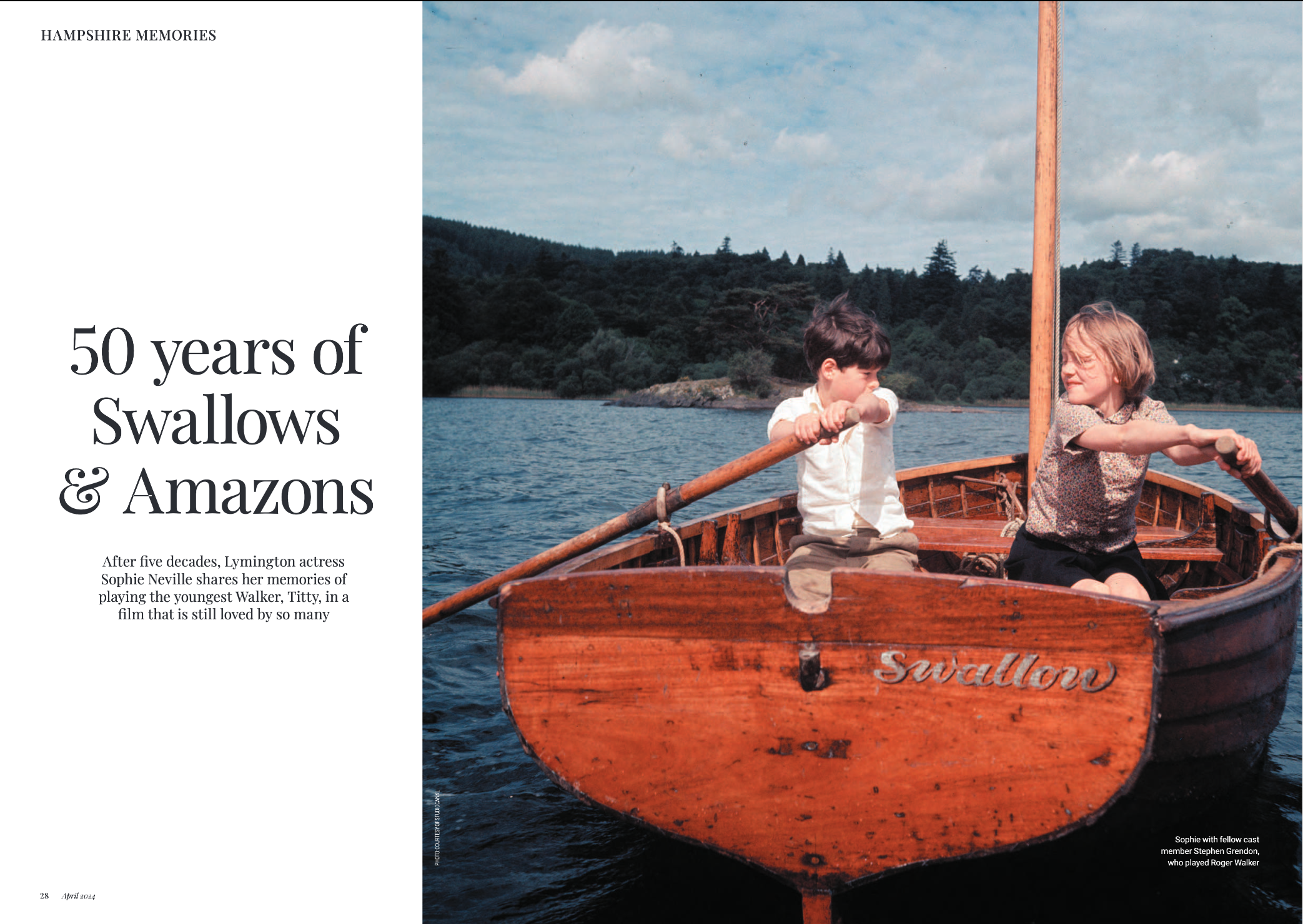
The April issue of Hampshire Life magazine has a four-page feature celebrating the 50th Anniversary of the release of the original movie ‘Swallows & Amazons’ (1974) in cinemas, which you can now read online here.
The link with Hampshire is that my father grew up in Lymington and learnt to sail on the Solent. I met my husband Simon at an archery match in Worcestershire and was amazed to hear he lived on the Lymington River. I came down to the South Coast just before we got engaged but didn’t move in until after we returned from our honeymoon in Spain.
I’ve lived in Hampshire for twenty years now, give talks at the Southampton Boat Show and meet the Nancy Blackett when she sails down to Buckler’s Hard on the Beaulieu River where my parents spent their honeymoon.
It feels odd being described as an actress, but it’s good to get a front page byline.
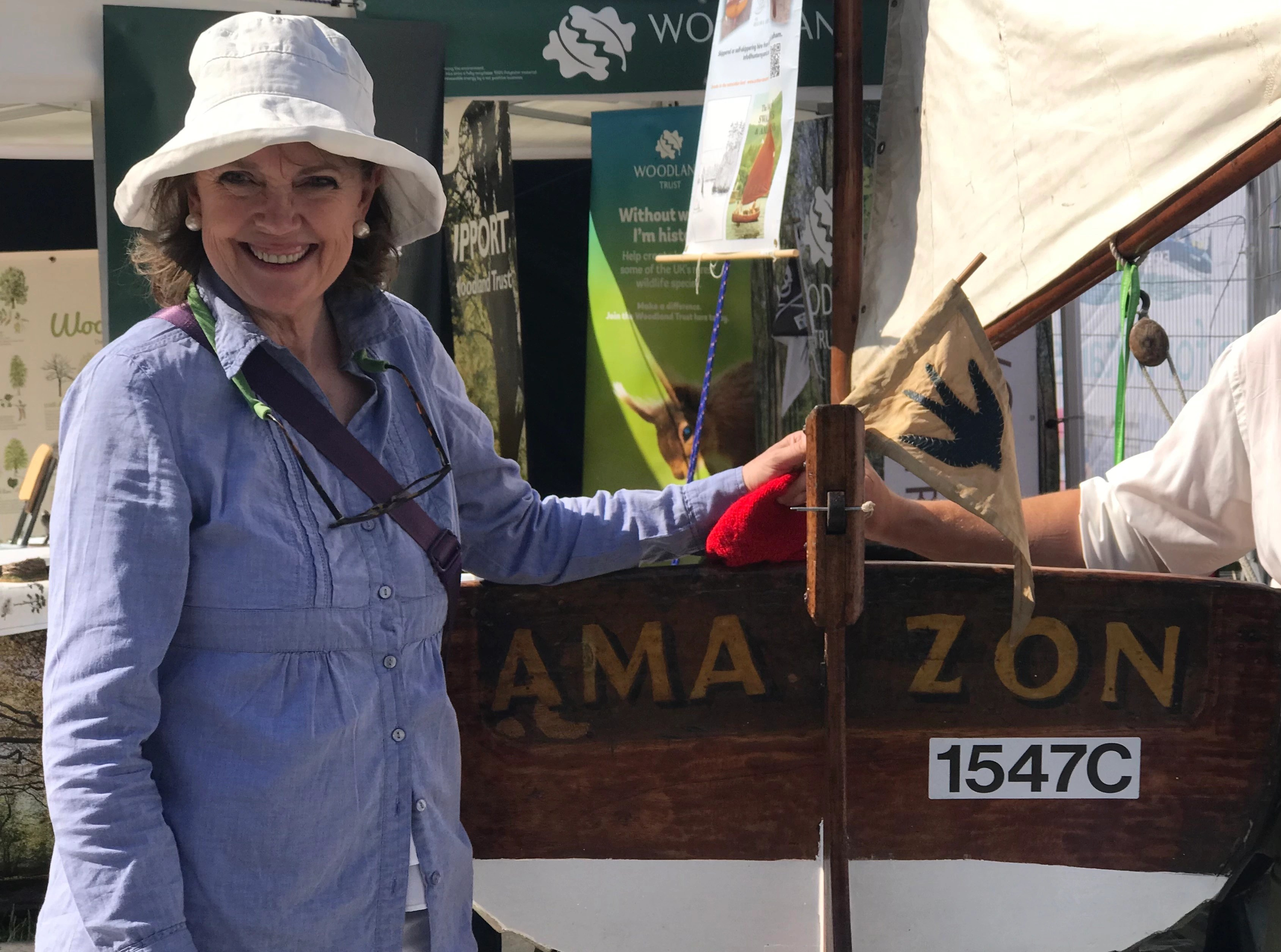
This year, Amazon, the iconic dinghy used in both the 1974 film and 1963 BBC serial of Swallows and Amazons was on display at the Southampton International Boat Show. The Arthur Ransome Society, who now own her, brought her down from the Norfolk Broads especially for the event.
Sophie Neville with Amazon, the dinghy from ‘Swallows and Amazons'(1974)
Thanks to volunteers from the project ‘Sail Swallow and Amazon’, it was great chance to find out about the literary society and chat about grabbing the chance to sail Amazon yourself. She has been renovated and is looked after by Hunter’s Yard near Ludham.
Amazon will soon be available to hire at Hunter’s Yard, Ludham
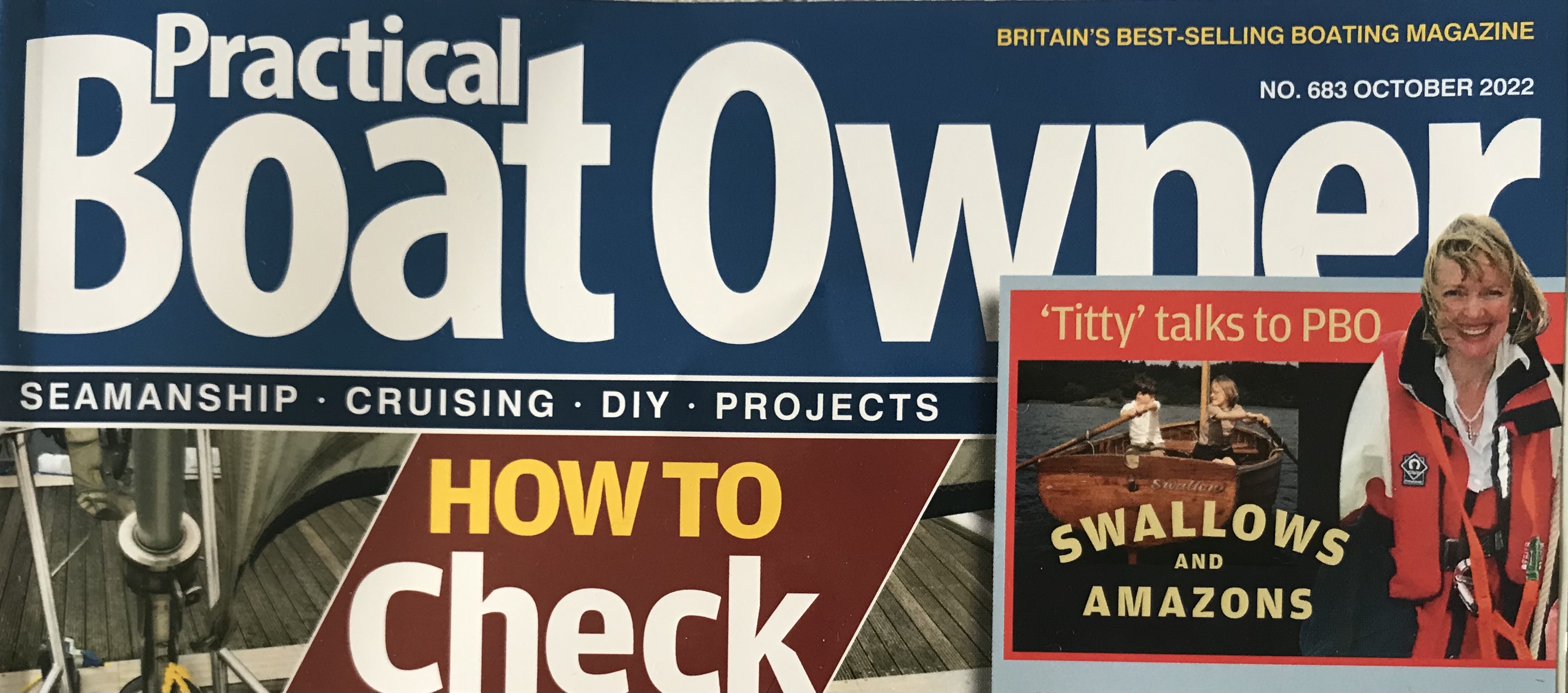
You can watch Practical Boat Owner’s video taken last year.
Amazon is available to hire from Hunter’s Yard on the Norfolk Broads from 27th September until the close of the season on about 6th October. Please contact Hunters Yard near Ludham who also have the Titmouse available.
An article published in Classic Boat read:
This film gives you a quick squizz around the Boat Show when you see the Foredeck Stage where Sophie was speaking.
This question is often typed into search engines. Arthur Ransome was living at Low Ludderburn above Windermere when he wrote ‘Swallows and Amazons’ in 1929, setting it on ‘The great lake in the north’. Like me, he undoubtedly did a bit of wondering, and was inspired by many of the locations that can be seen from Windermere, envisaging the island Blake Holme as a model for ‘Wild Cat Island’ and Silver Holme as ‘Cormorant Island’ nearby.
Martin Neville aboard MV Tern on Windermere
The ‘native shipping’ on Windermere was brought to life in the 1974 film when the Swallows narrowly miss hitting the MV Tern.
MV Tern on Windermere was built in 1890 with a steam engine, converted to diesel in the 1950s, and is still operating today.
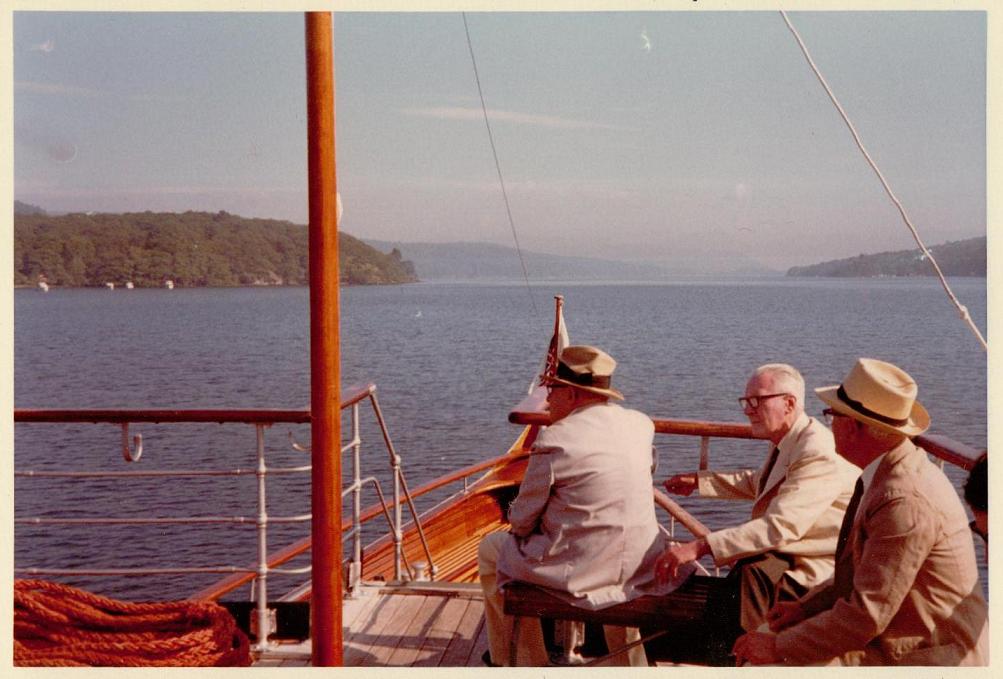
On the deck of the MV Tern on Windermere in 1973 ~ photo: Martin Neville
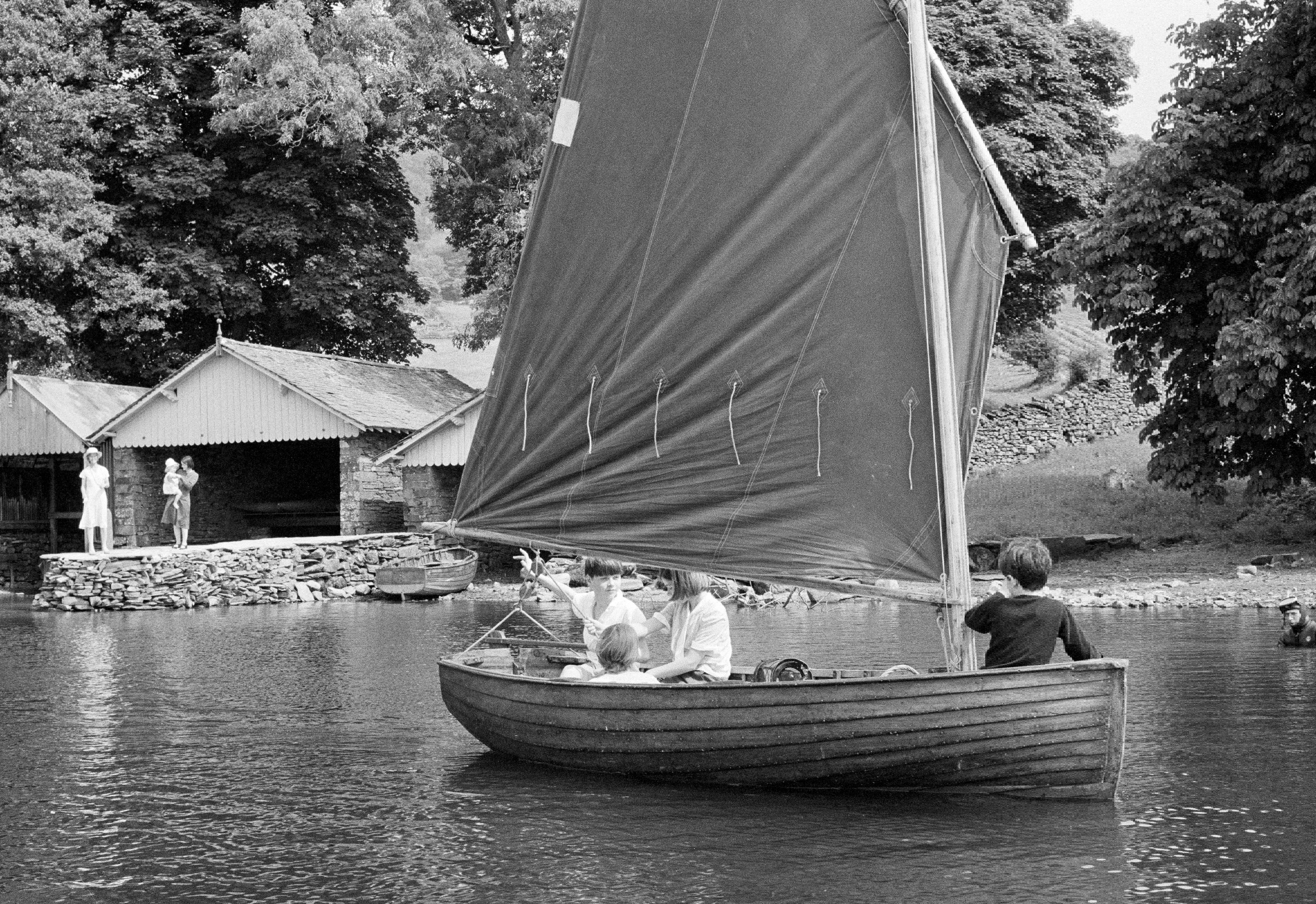
It was a tricky sequence to shoot and since Swallow lost her wind in the lee of the steamer she only just managed to turn in time.
You can read more about this near disaster in the diary I kept here
My father’s view of Swallow attached to the camera pontoon from his position on MV Tern ~ photo: Martin Neville
The other big scene was shot at Bowness-on-Windermere, referred to as Rio in the story.
Rio – or Bowness-on-Windermere in 1973
Steamboats such as Osprey and the Lady Elizabeth, who is currently residing at Windermere Jetty museum, appeared in the background.
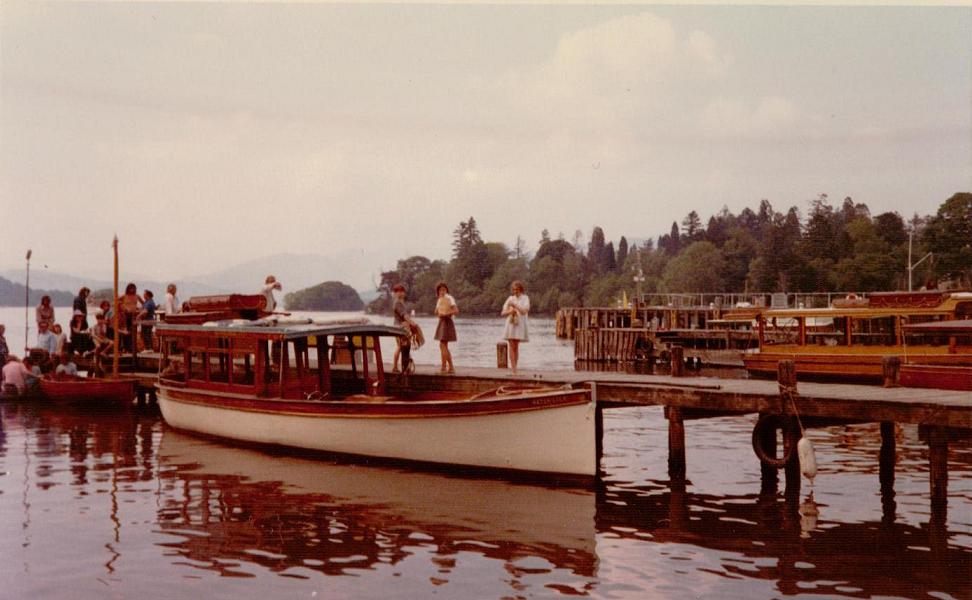
The film crew of ‘Swallows and Amazons’ wait with Swallow and Stephen Grendon at the end of the jetty while Simon West, Suzanna Hamilton and Sophie Neville line up by the launch
Had we arrived in Rio? Arthur Ransome confirmed this in a letter to a young reader:
When the movie was made in the summer of 1973 the original green boat sheds, featured in Ransome’s sequel ‘Swallowdale’ were captured on film.
Is that the steam launch Osprey moored to the jetty?
Kit Seymour who played Nancy was watching the filming. You can just see the original bandstand with period cars parked in the background.
The bandstand and shelter on Glebe Road were also caught on celluloid, along with the traditional Windermere skiffs. You can see more photos of the filming on this website here.
The Price children, Perry Neville, Jane Grendon, Tamzin Neville and Pandora Doyle in their 1929 costumes on the shore of Lake Windermere at Bowness in 1973
The Swallows in Woodland Road, Windermere in 1973
After buying rope for their lighthouse tree in Woodland Road, the Swallows walk down Church Street past the Stags Head Hotel.
John, Susan and Titty walking down to the jetty
Other scenes were shot nearby, with the film opening on a steam train running along the River Leven on Lakeside and Haverthwaite Railway. You can add details about the locations yourself by contributing to the website Reelstreets which logs film locations in the United Kingdom.
Talking to the engine driver on the first day of filming ‘Swallows and Amazons’ in 1973 (Photo: Daphne Neville)
When Richard Pilbrow, the film producer asked Mrs Ransome to point out more, she claimed the Peak at Darrien could be found on Windermere. She may have been thinking of a headland at Waterhead but in the end the opening titles shot was taken from Friar’s Crag on Derwentwater with the Borrowdale Fells in the background. The secret is that the 1974 film ‘Swallows and Amazons’ was also shot on Coniston Water, Elterwater and a lily pond near Skelworth Fold.
The Kirkstone Foot Hotel, Ambleside in 1973
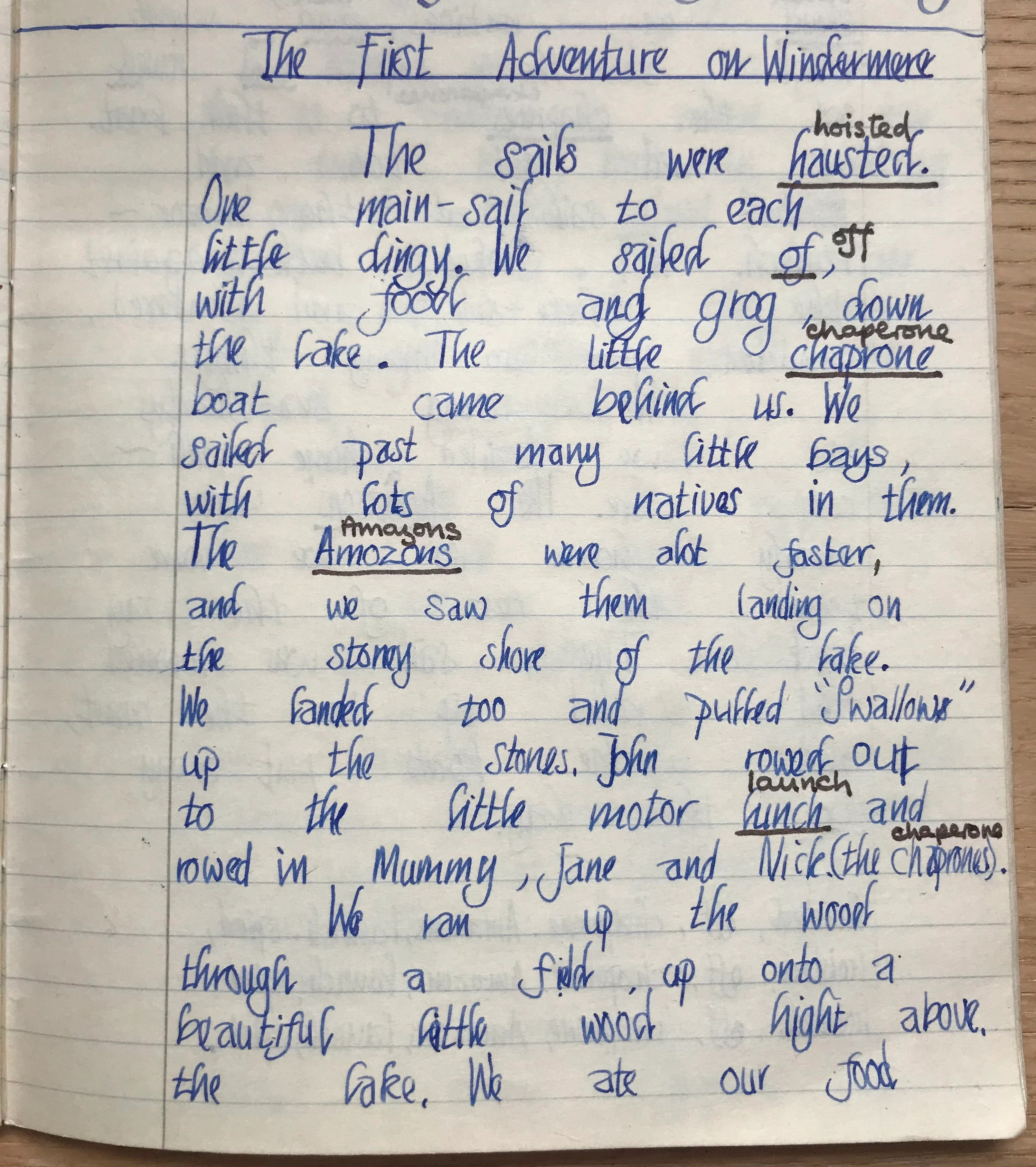
In real life, Richard based his production office at the Kirkstone Foot Hotel near Ambleside at the northern tip Windermere and it was from here that we practiced sailing Swallow and Amazon in May 1973. Here is a description written by my twelve-year-old self:
Preparing for filming Swallows and Amazons by sailing on Windermere
Virginia McKenna, who starred in the film as Mrs Walker, was accommodated at the Langdale Chase Hotel on the lake. The wrap party was held there to the great excitement of children in the cast. You can see the view on the hotel website here.
Dame Virginia McKenna on Windermere in 1973 – photo: Philip Hatfield
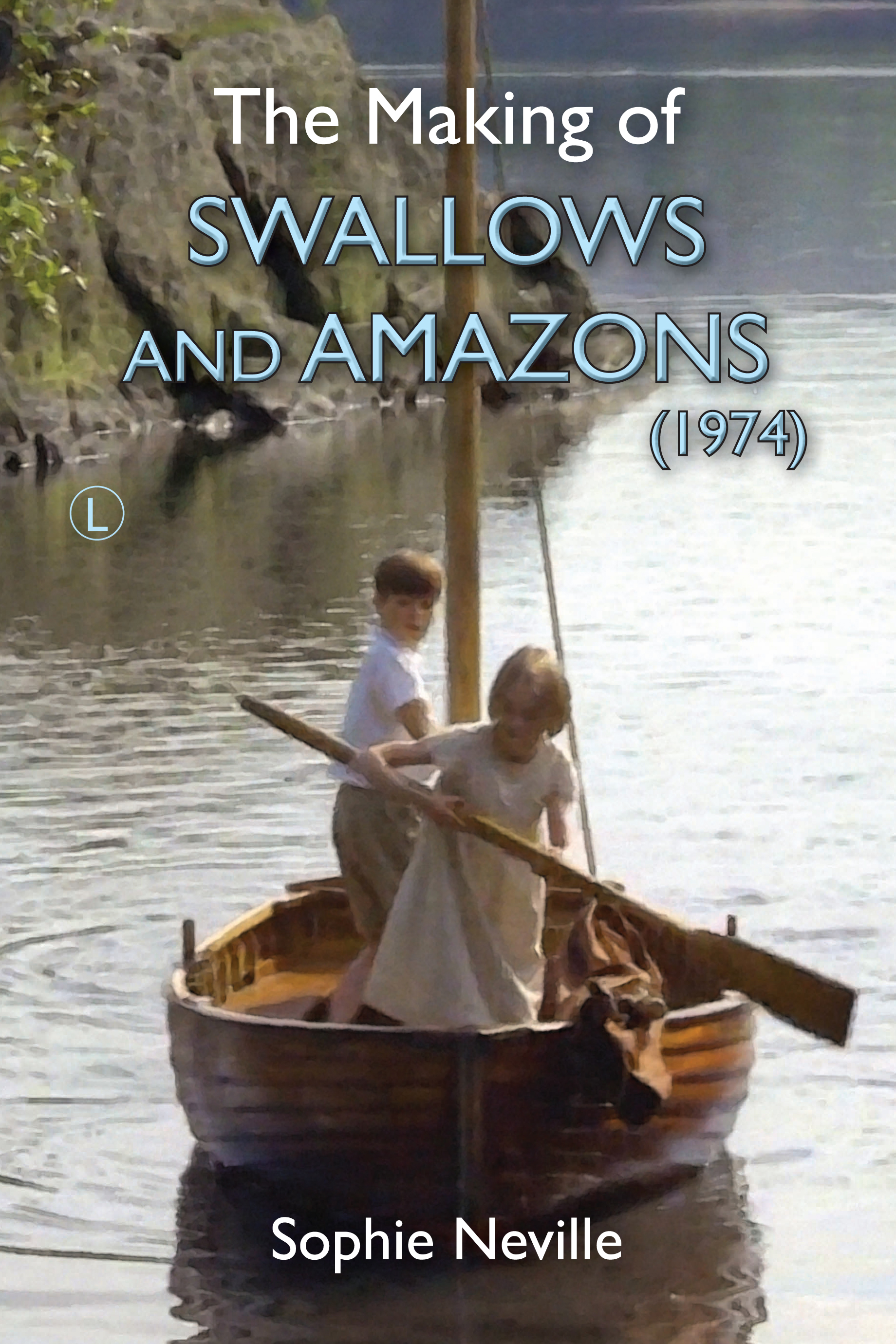
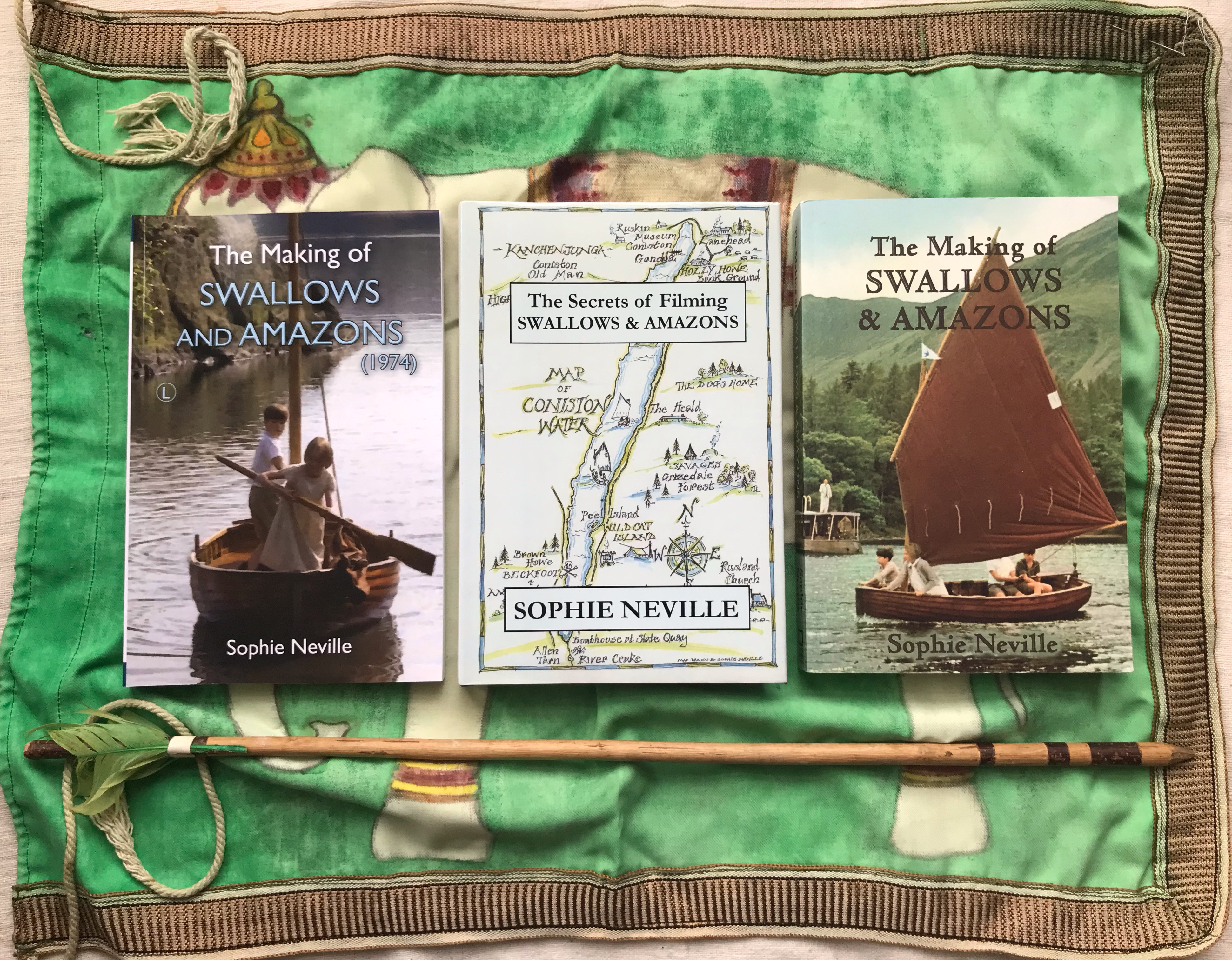
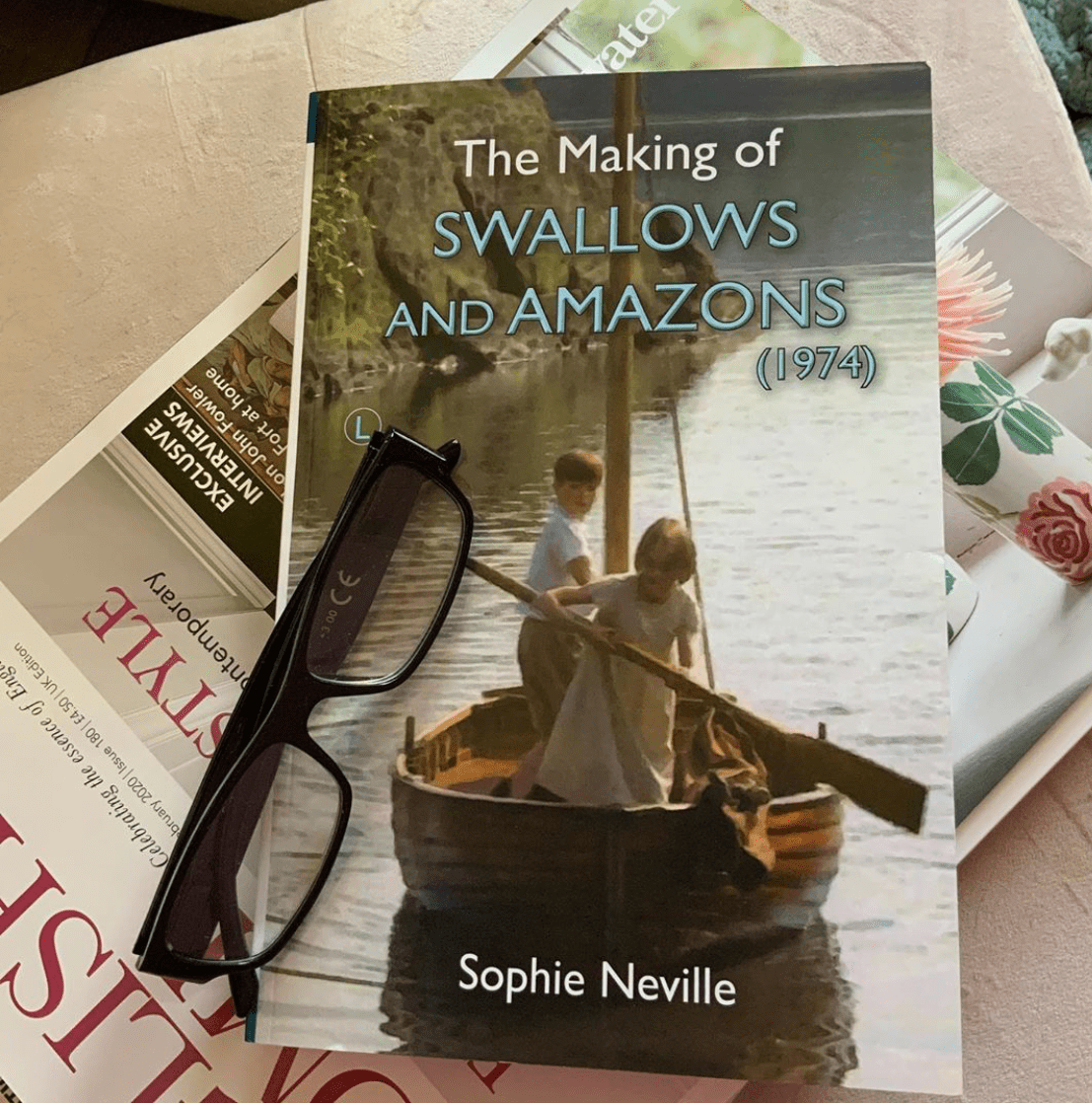
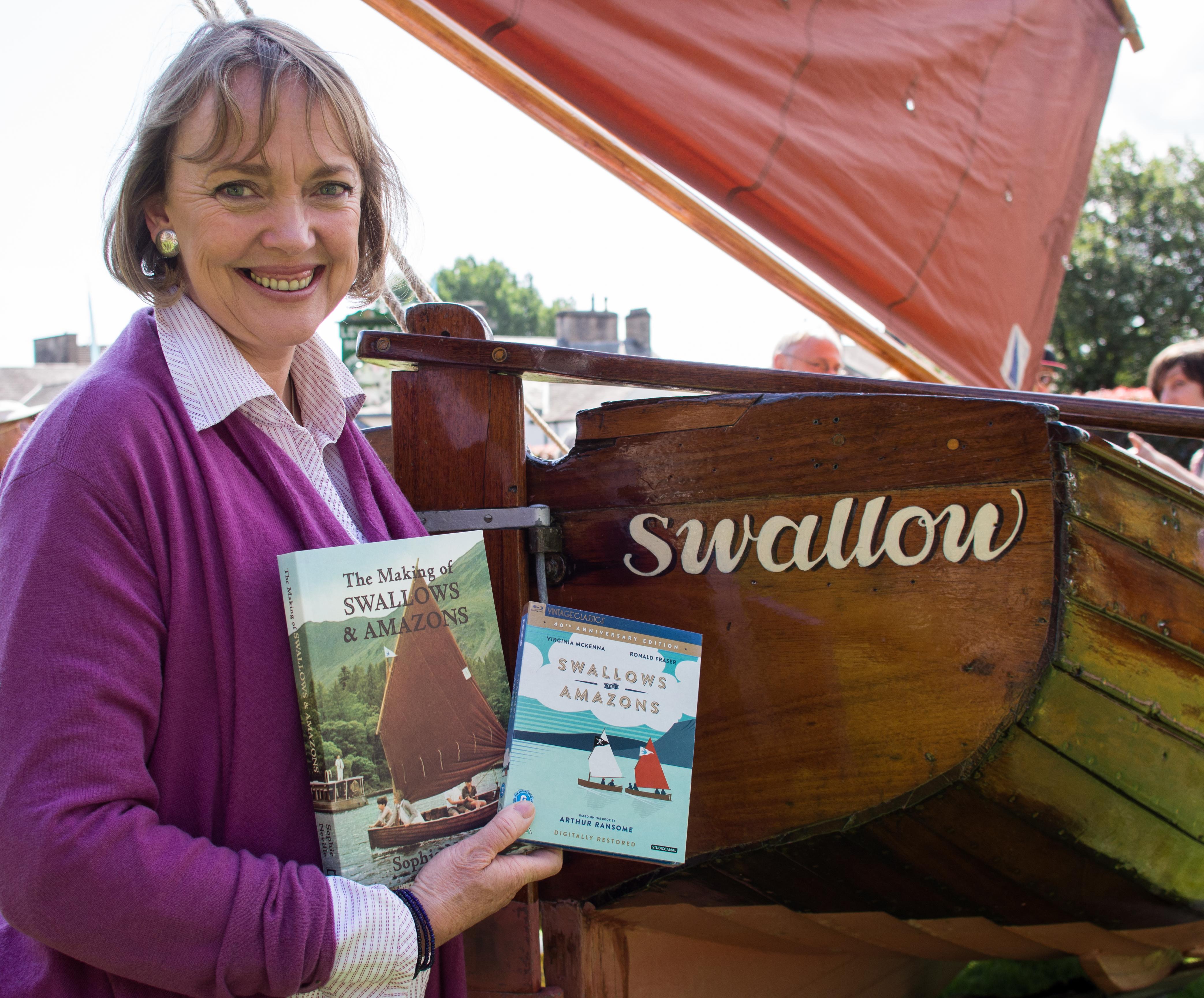
The 40th Anniversary DVD includes an Extras package on the locations and you can read more in ‘The Making of Swallows and Amazons’, available online in different editions here or direct from The Lutterworth Press.
In the long hot summer of 2022, I spent three days in a sound-proofed booth at Monkeynut Studios near Romsey narrating the audiobook of my memoir on the adventures we had making the 1974 movie ‘Swallows and Amazons’, now published in paperback by The Lutterworth Press.
I found telling the story, with all the different voices, more difficult than I had imagined but the audiobook has been beautifully produced, with sound adding a different dimension to this filmography that resonates with the lives of so many.
I gather it will be available on Audible but they are very slow to add books.
I hope it will take you back to that long hot summer in 1929 when the Swallows first set sail and remind you of the early 1970s when we made the original film in the days before mobile phones or computers without CGI or green screens. We literally walked into the page of the books and sang out Arthur Ransome’s immortal lines as the wind took us up Coniston Water. I hope you enjoy it.
If you prefer holding a book in your hands the paperback is available from Waterstones and all online retailers.
In 2022, Swallow, the dinghy that starred in the original film Swallows and Amazons was on display at the Southampton International Boat Show, greeting families as they arrive.
Sophie Neville who once played Titty Walker with her good little ship
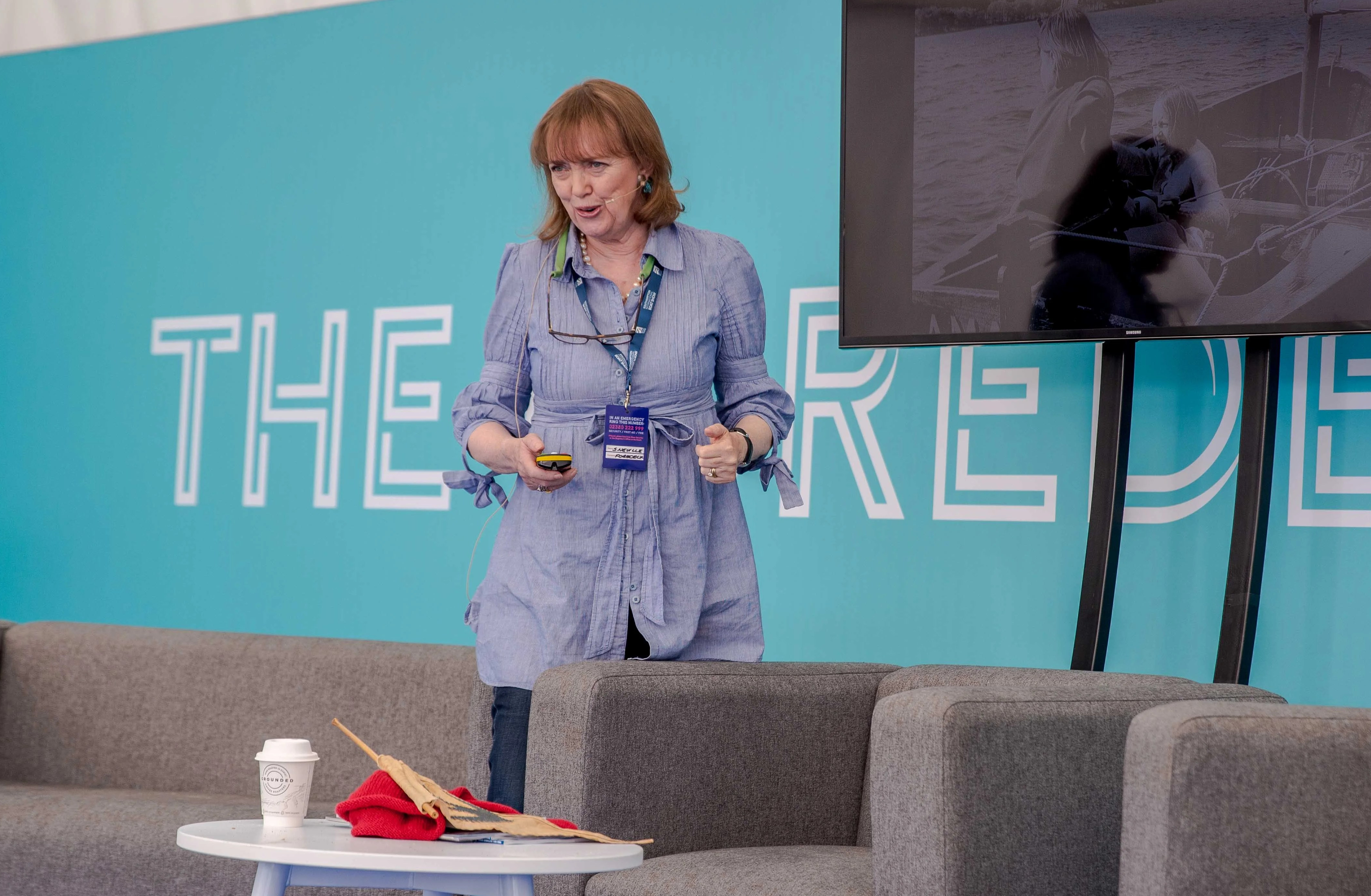
Sophie Neville gave talks on filming afloat and the movie was made on location in the Lake District fifty years ago.
Over 103,000 people visit the show. Although busy, it did not feel crowded. There is a lot to see and do.
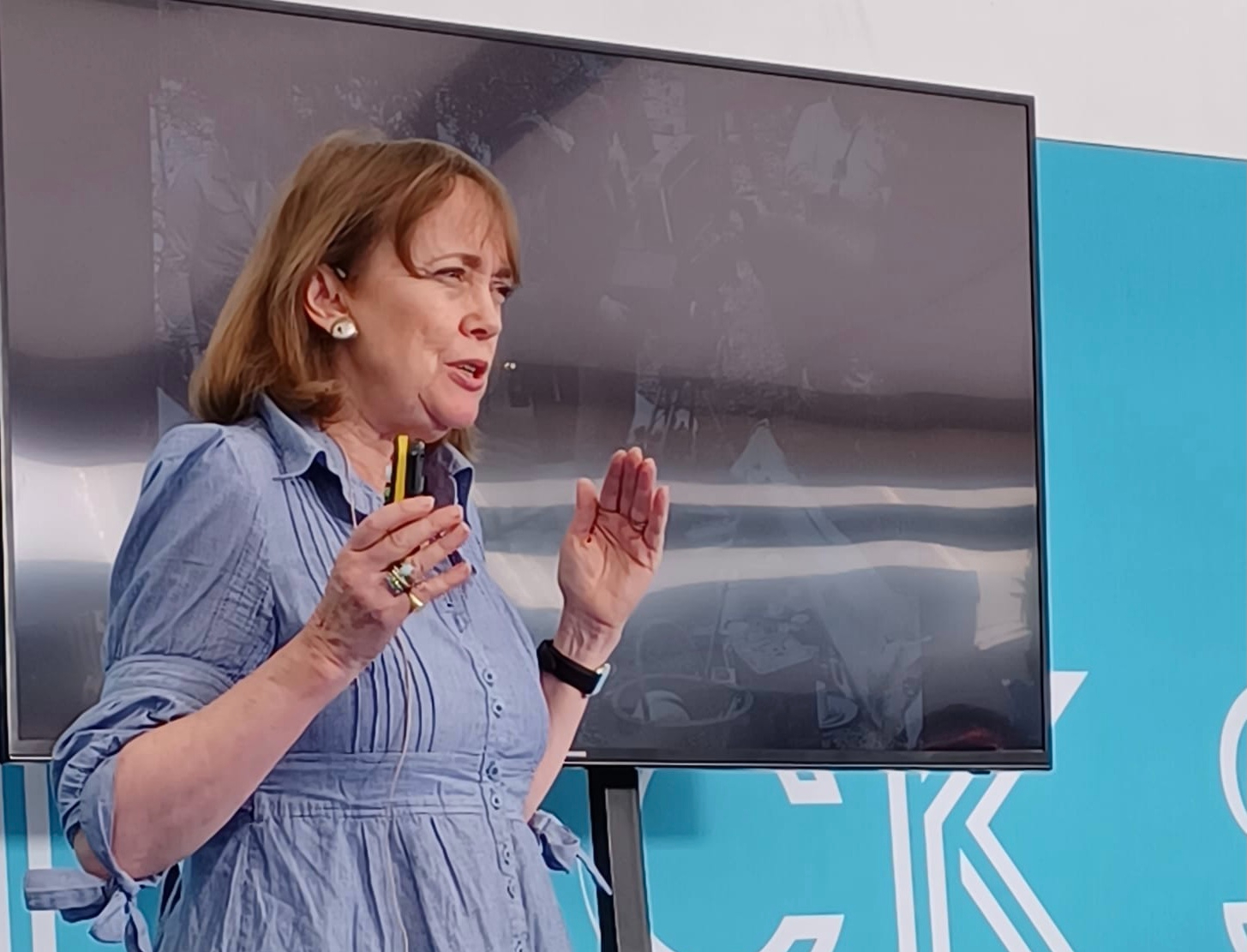
Sophie Neville speaking on the Foredeck Stage at #SIBS22
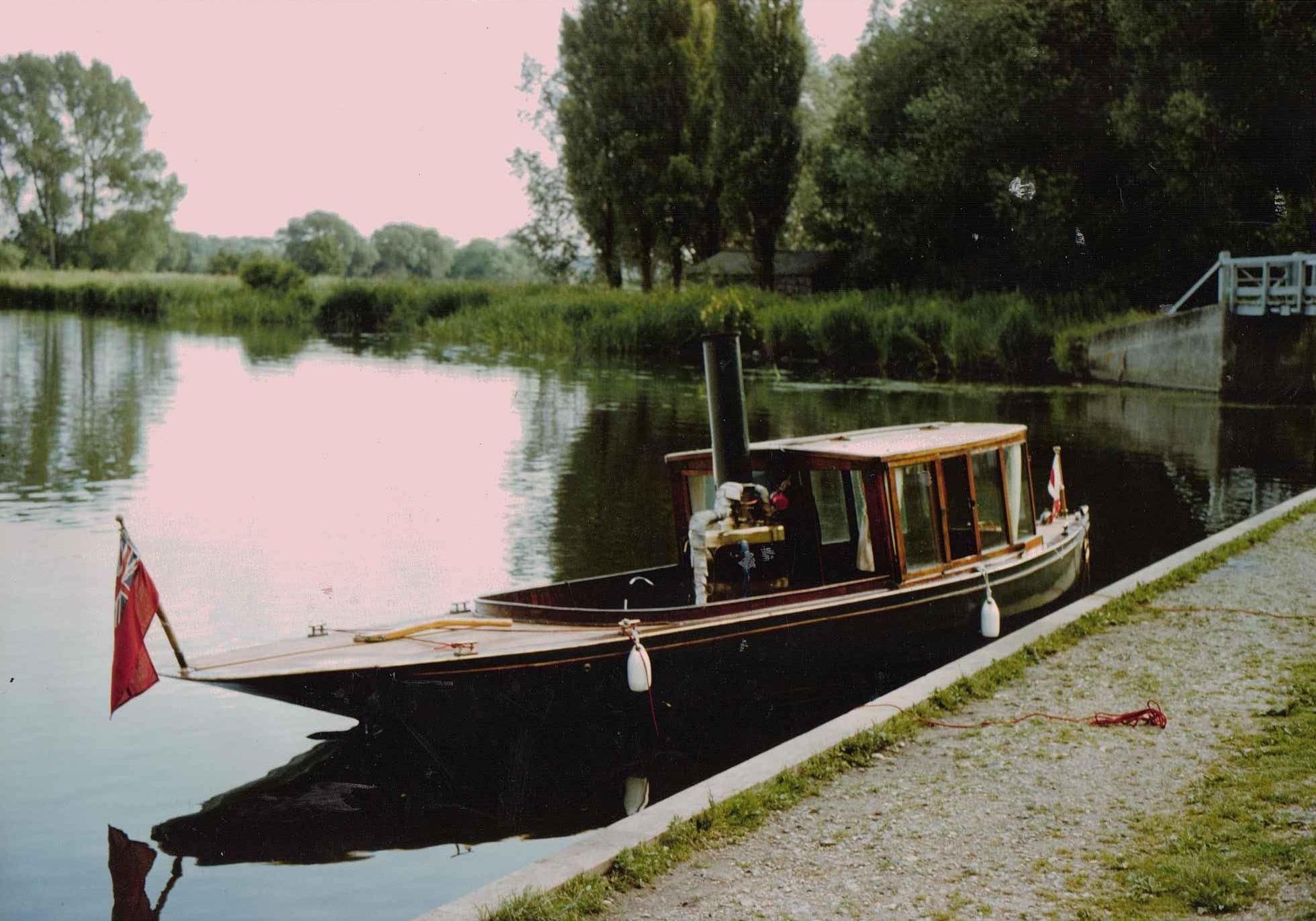
I grew up with boats in the garden. My father owned eight at one time, including two coracles and a vintage river launch called Ottor that he renovated himself.
Martin Neville with friends on the Norfolk Broads
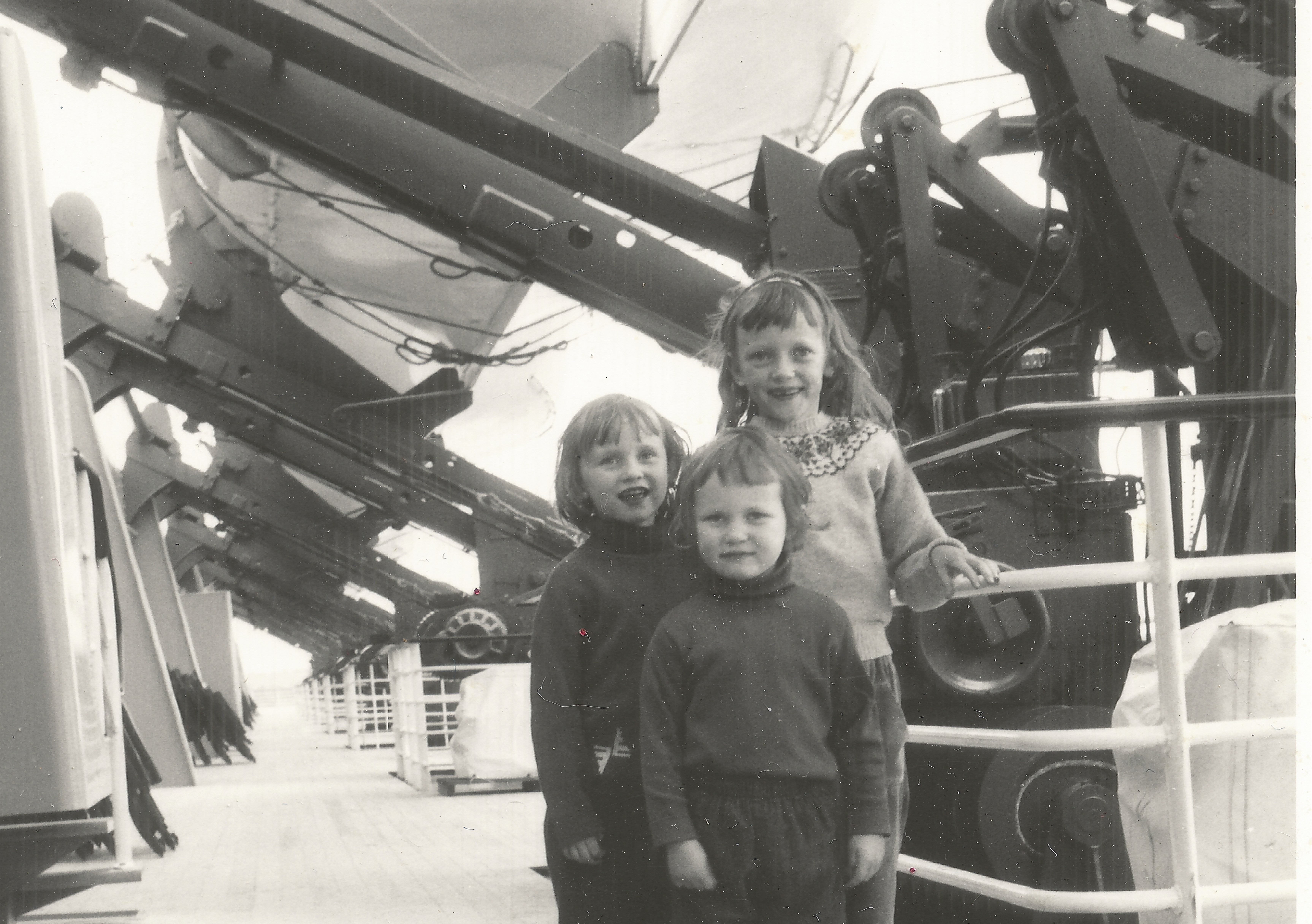
As a young man, while setting up a team to develop the fibreglass hull, Dad raced on the Solent, volunteered on a tall ship, and wrangled an Atlantic crossing on the maiden return voyage of the QE2, taking us children around the liner when it reached Southampton.
Sophie Neville with her younger sisters aboard the QEII in 1969
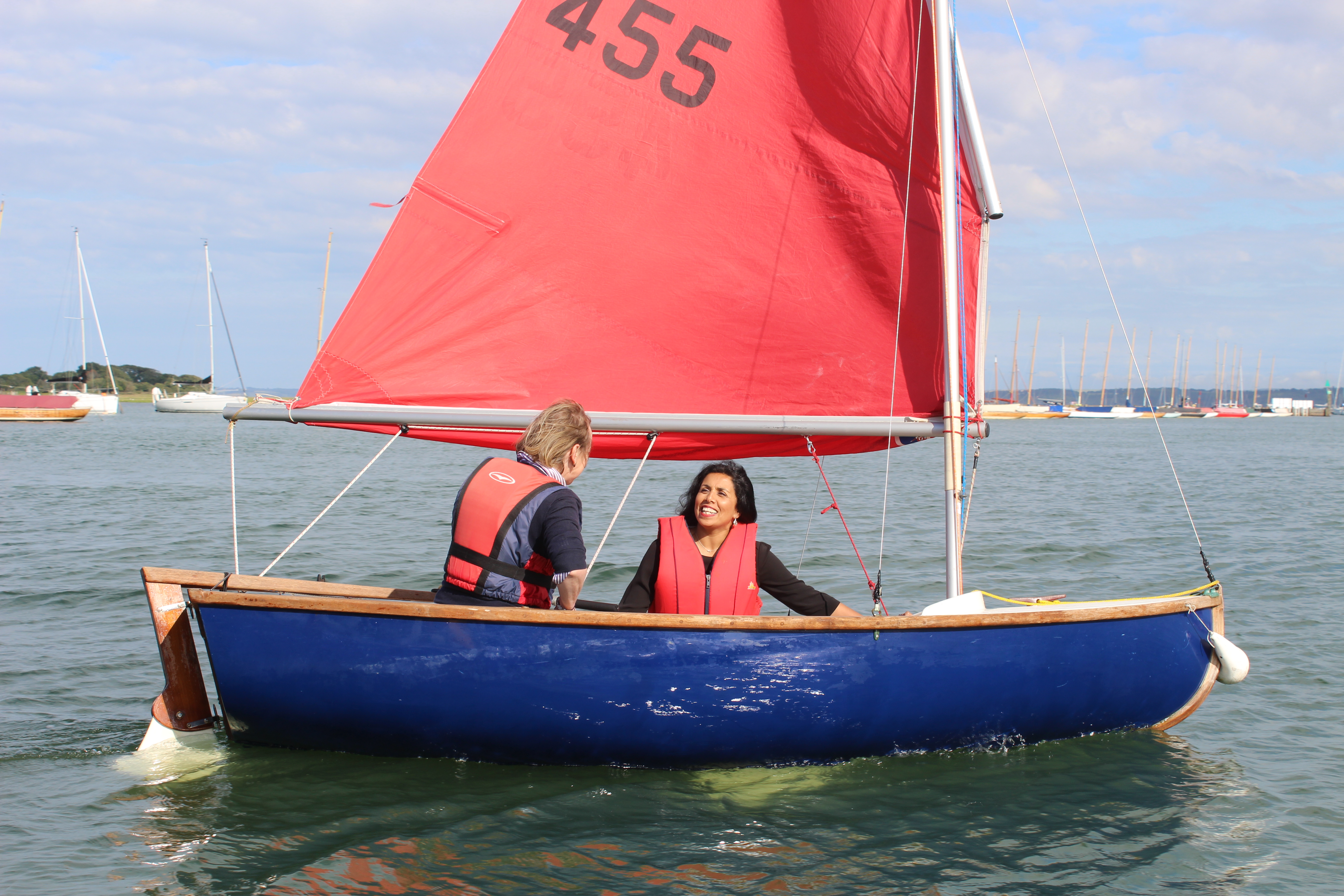
I learnt to sail dinghies at Newport Bay in Pembrokeshire, later making my own sail for a Thames skiff so that I could take it down the lake where I grew up in Gloucestershire.
My father wanted a Mirror dinghy, but since they were beyond his budget we had a dubious one-design with a ? on its sail.
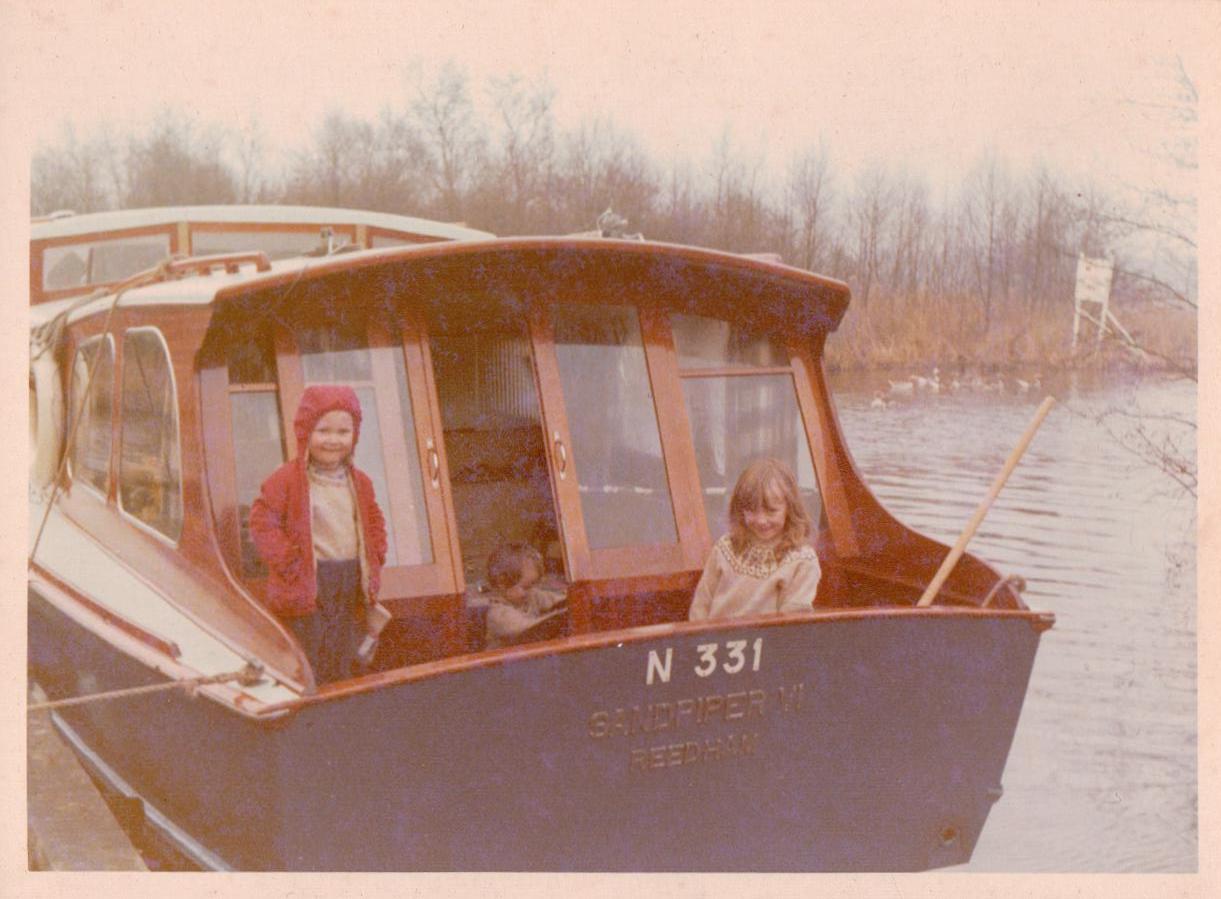
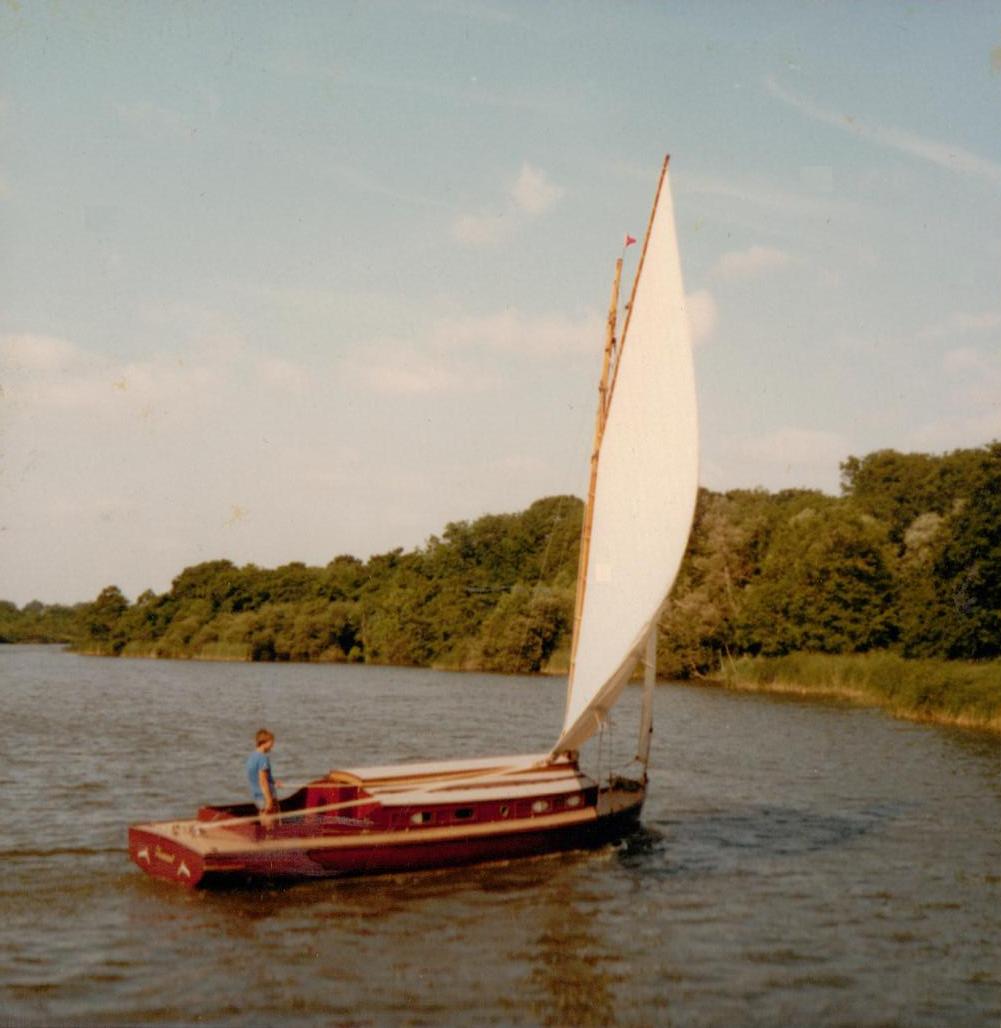
A family holiday in a Hullabaloo boat on the Broads – off season
Dad bought one of the first Toppers, which seemed quite daring at the time. It had no halyards. Its arrival caused much excitement. Called Earwig, the fibreglass hull was portable but proved precarious, soaking the crew as waves sloshed over her orange deck. I wasn’t much good at withstanding the cold and grew to loath setting off with wet feet.
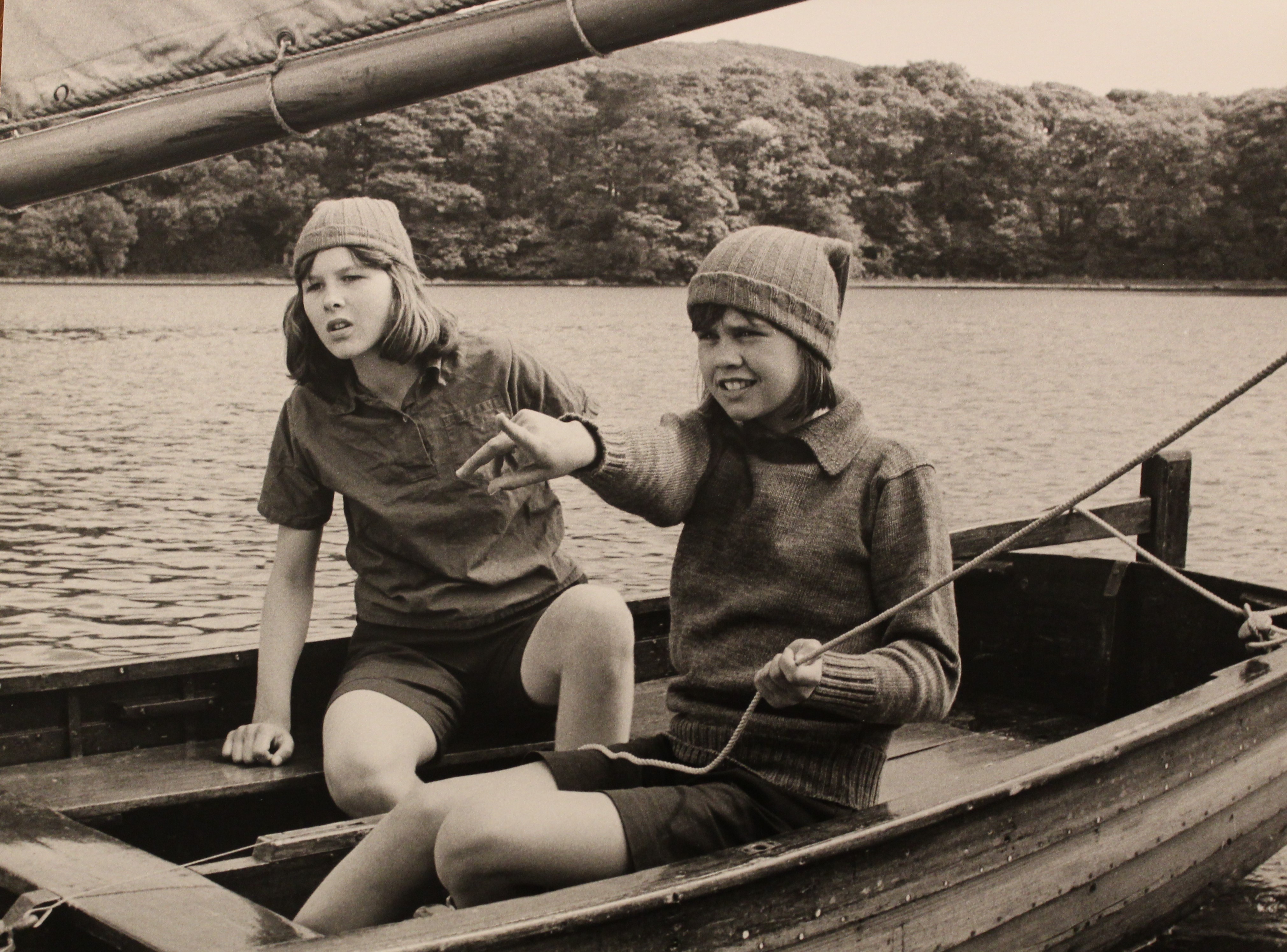
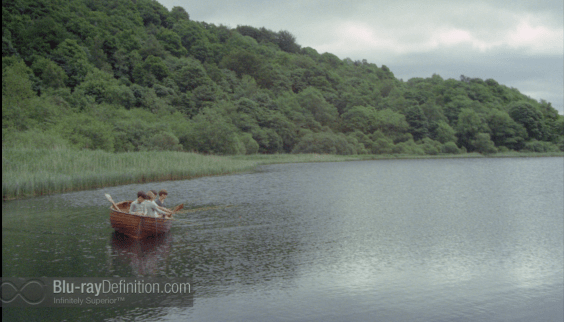
Sophie Neville as Titty and Sten Grendon as Roger rowing to Cormorant Island
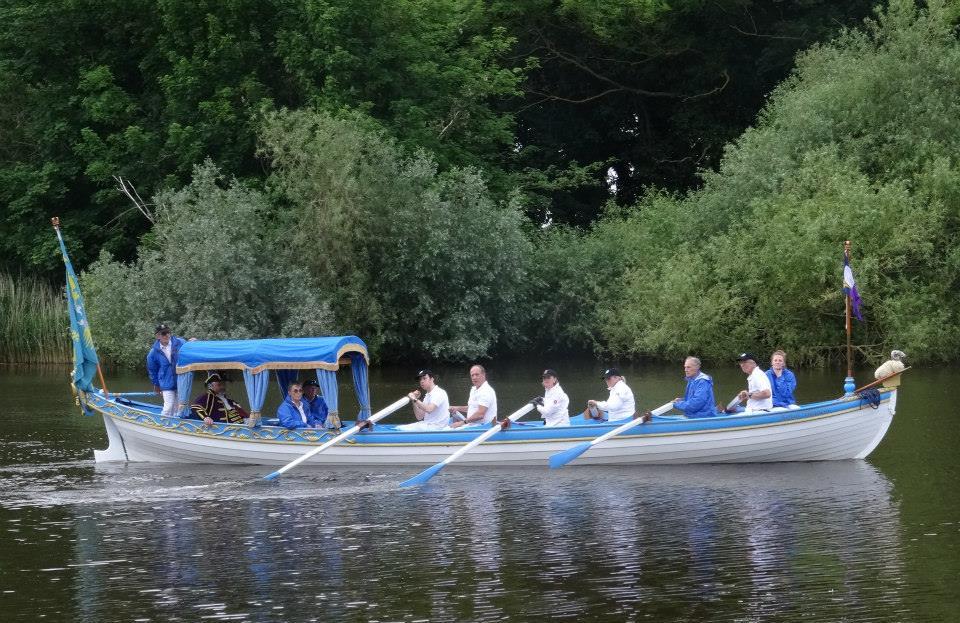
Playing Titty in original film of ‘Swallows and Amazons’ involved quite a bit of rowing, which I kept up first as a member of the Collingwood Ladies Four at Durham University and later on the crew of The Drapers’ Shallop, a ceremonial barge that can be spotted on the Thames and River Lea, the Dart or Poole Harbour.
Rowing the Drapers’ shallop down to Runnymede
My dedication to fixed thwart rowing enabled me to take part in a Jubilee Pageant for The Queen at Henley, transport a copy of the Magna Carta to Windsor, and man an oar of the royal barge Gloriana in the Boat Race flotilla at Putney a year when Cambridge won.
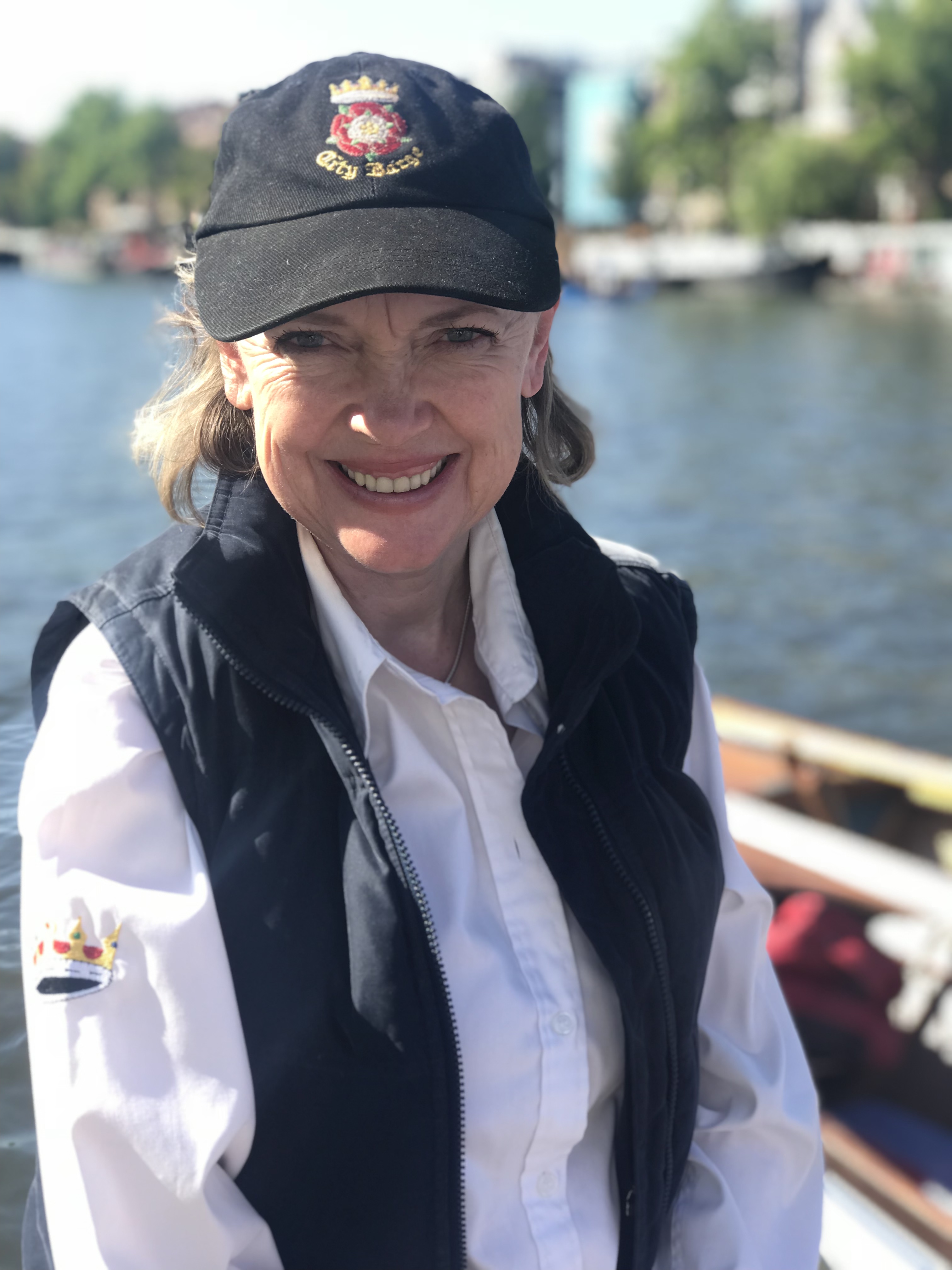
Sophie Neville rowing in black cap on the River Thames at Putney
Belonging to the rowing club,City Barge, enabled me to take part in the Voga Longa in Venice – a 35km marathon – with the gold medalist Ed Coode as stroke. I later rowed a sandalo down the Amstel into Amsterdam standing to row Venetian-style, getting used to the idea of using a forcola in windy weather.
In the bows of a sandalo on the River Amstel in Amsterdam
We navigated the shallop down a tributary of the Loire in Brittany, leading a procession of two hundred and forty traditional boats into Nantes for the Rendez-vous de l’Erdre. I was asked to take the helm on the way back, great Dutch barges bearing down on us.
With the presenter and crew of France 3 news
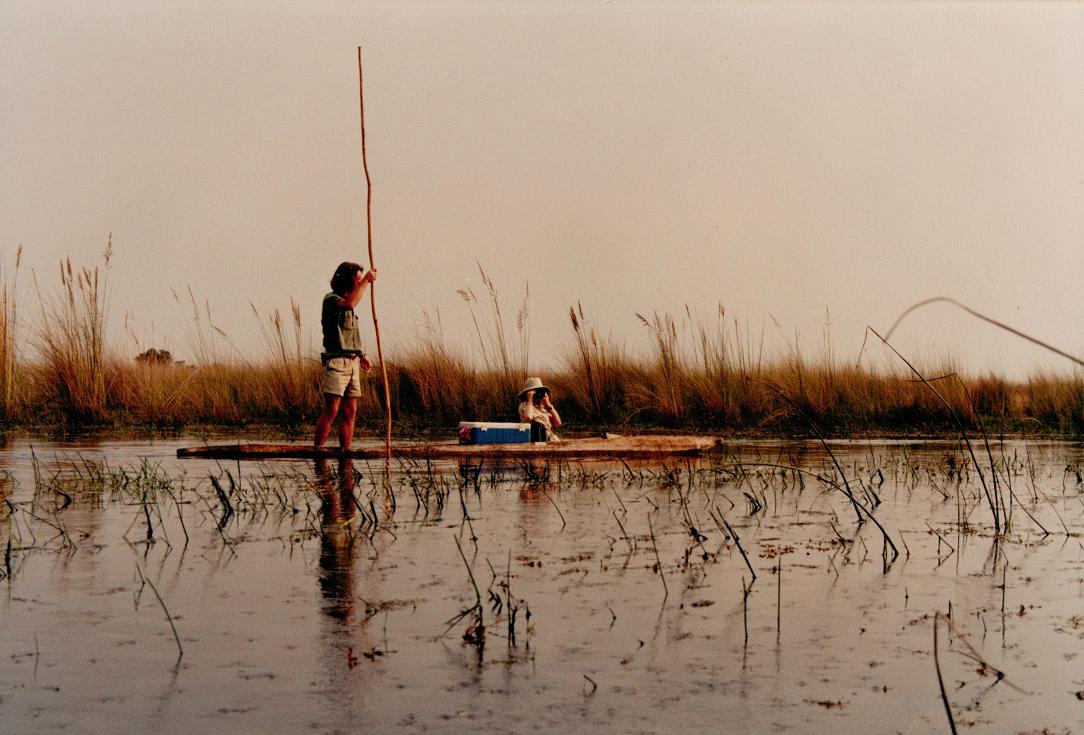
One of my favourite vessels is a two-man canvas canoe my sister found on a rubbish dump. I nearly drowned after getting stuck in a kayak and prefer an open dugout or fibreglass equivalent. These have taken me on adventures in Papua New Guinea, across Lake Malawi and through the Okavango Delta in Botswana.
Bird watching on the Boro River – Sophie Neville with Jez Lye
Back in 1978, I helped my father, Martin Neville, to restore a 1901 steamboat called Daffodil, which they kept near Oxford at Port Meadow on the Thames.
SL Daffodil on the River Thames
We would steam down to Henley each year for the royal regatta or upstream towards Letchlade. You can read about how we renovated here here.
We took a Humber Yawl that Dad built to take part in a Steam Boat Association rally on Windermere and pay homage to launches used in the film ‘Swallows and Amazons’ kept by George Pattinson at the Steam Boat Museum, now known as Windermere Jetty.
Lullaby undersail, playing the Teasel on the broads
I a lot of time on the water while filming the 1984 BBC adaptation of ‘Coot Club’ and ‘The Big Six’ when we spent three months filming on the Norfolk Broads. The series starred a yacht called Lullaby from Hunter’s Yard, which you can now hire for holidays.
I went away from my wedding in a punt, Dad polling while I sat with my new husband, holding an umbrella while a rainbow appeared over the water.
At the Brewery Arts Cinema in Kendal for the launch of ‘The Making of Swallows and Amazons’ and the 40th Anniversary DVD
While serving as President of The Arthur Ransome Society, I gave twelve Q&As at cinemas. Members of SailRansome have often come along with the little clinker-built dinghy used as Swallow, which I helped purchase when she came up for auction in 2010.
I am often asked to write articles about my life afloat, and have spoken at literary festivals, on BBC Radio and on ITV News when I nearly capsized.
On ITV News at Ten with Nina Nannar
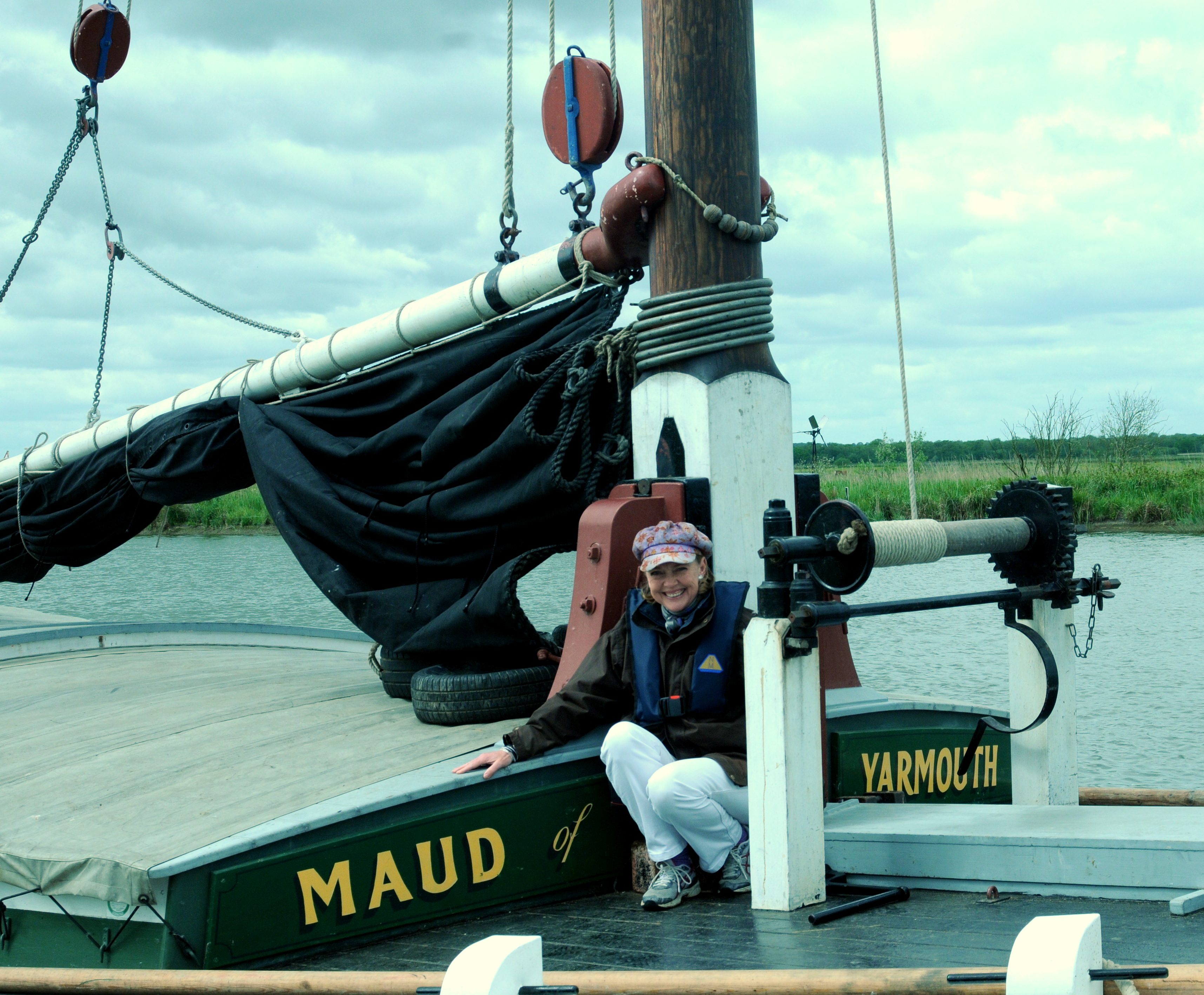
It is with The Arthur Ransome Society that I have been able to sail an historic wherry down the Norfolk Broads, take an old German ferry to Lundy Island and cruise down Coniston Water on SL Gondola.
Aboard Wherry Maud – photo Diana Dicker
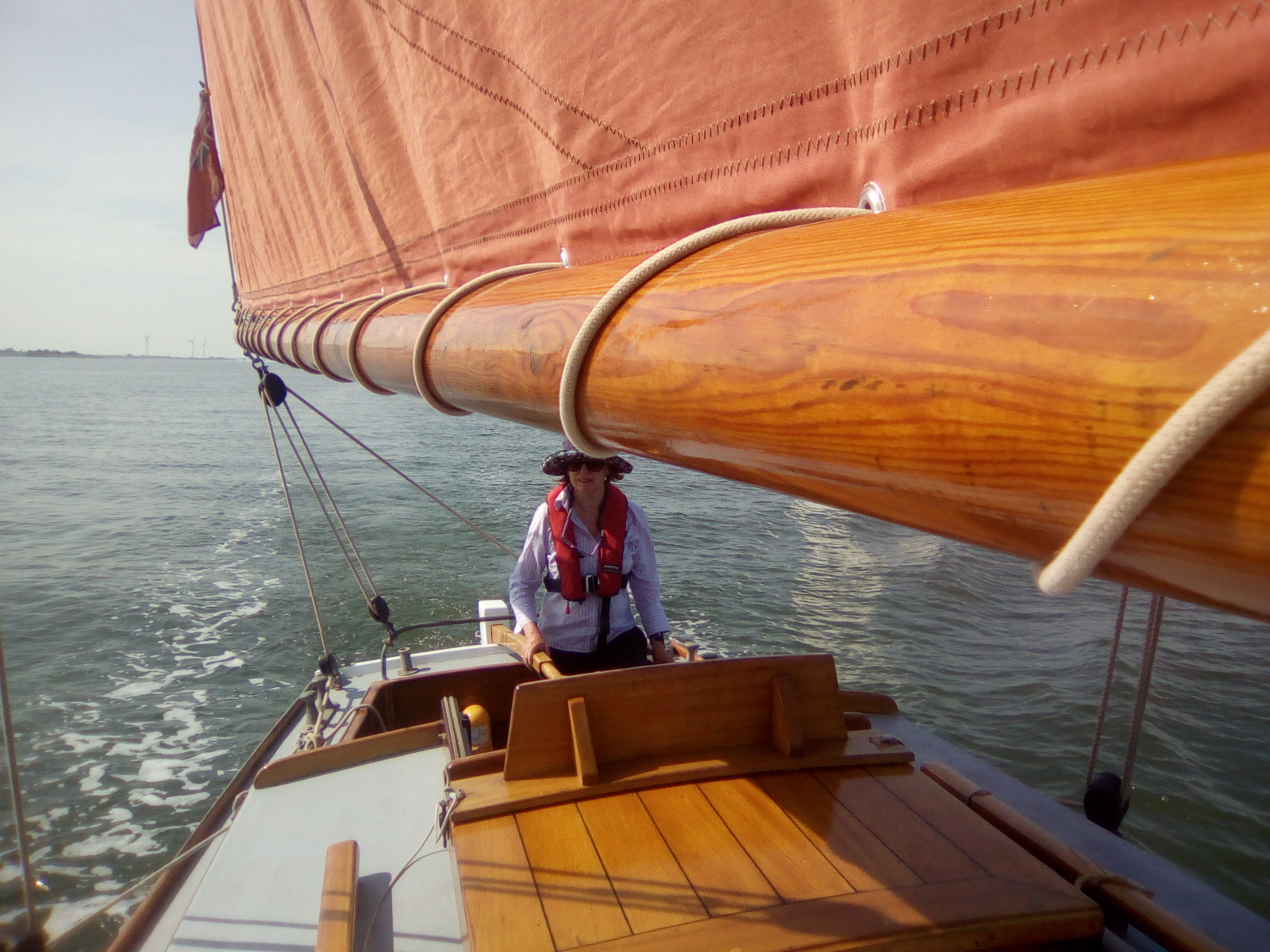
As a member of the Nancy Blackett Trust, I’ve sailed on the Orwell, in the Solent and through the inland waterways of the Netherlands, visiting Middleburg.
~Nancy Blackett in the Netherlands~
I enjoyed crossing the Veersemere to Zierikzee in the wake of my own forefathers.
Over the years, I’ve grabbed the chance to sail yachts to Salcombe, up the coast of Norway and through the Mediterranean but I still love taking out a small boat in the Lake District or on the Norfolk Broads.
At Wroxham on the Norfolk Broads
You can read more in ‘The Making of Swallows and Amazons’ available on line.




































 Sophie Neville