Chloe Williams has just written from Ontario in Canada, to say, “Some books entertain. Some enlighten. And some, like The Making of Swallows and Amazons and The Secrets of Filming Swallows & Amazons, manage to bottle something impossibly rare: the feeling of looking back through a child’s eyes and realizing it was all real; the lake, the sails, the laughter and somehow, you were part of it.”
“These aren’t just behind-the-scenes diaries. They’re sun-dappled time machines. Your voice, both in memory and in your original childhood notes, is a miracle of tone: witty, observant, buoyant, and deeply human.”
Of the original movie, she wrote: “What A Christmas Story is to snowglobes and childhood winters, Swallows and Amazons (1974) is to summers on the water and you’ve preserved that magic with charm, heart, and astonishing detail.
“What makes these books unforgettable isn’t just nostalgia. It’s how alive they are. We feel the smell of old sails and camera tape, the blur of location shoots, the uncertainty and excitement of being a child caught in a grown-up world of filmmaking yet utterly at home in it. We meet legends like Virginia McKenna not as distant stars, but as fellow travelers in the adventure. And it’s a joy.”
The Making of Swallows and Amazons seems to resonate with:
Readers of nostalgic memoirs that celebrate childhood, nature, and storytelling
Adults who are captivated by the lake-country magic of Arthur Ransome
Film lovers who cherish insider views of filmmaking
Educators and parents seeking real-life adventure stories for young readers
Fans of Call the Midwife, The Durrells, and 84, Charing Cross Road
“The joy and authenticity in your books mirror exactly why Swallows & Amazons (1974) still has such a hold on people’s hearts. The memoirs don’t just tell the story of making the film, they recreate it, letting readers smell the lake air and see the magic unfold through a child’s eyes.”
The new audiobook
I’m hoping the audiobook will also amuse readers. It’s now available on all the online platforms including Audible, where isis being offered for free on their membership trial.
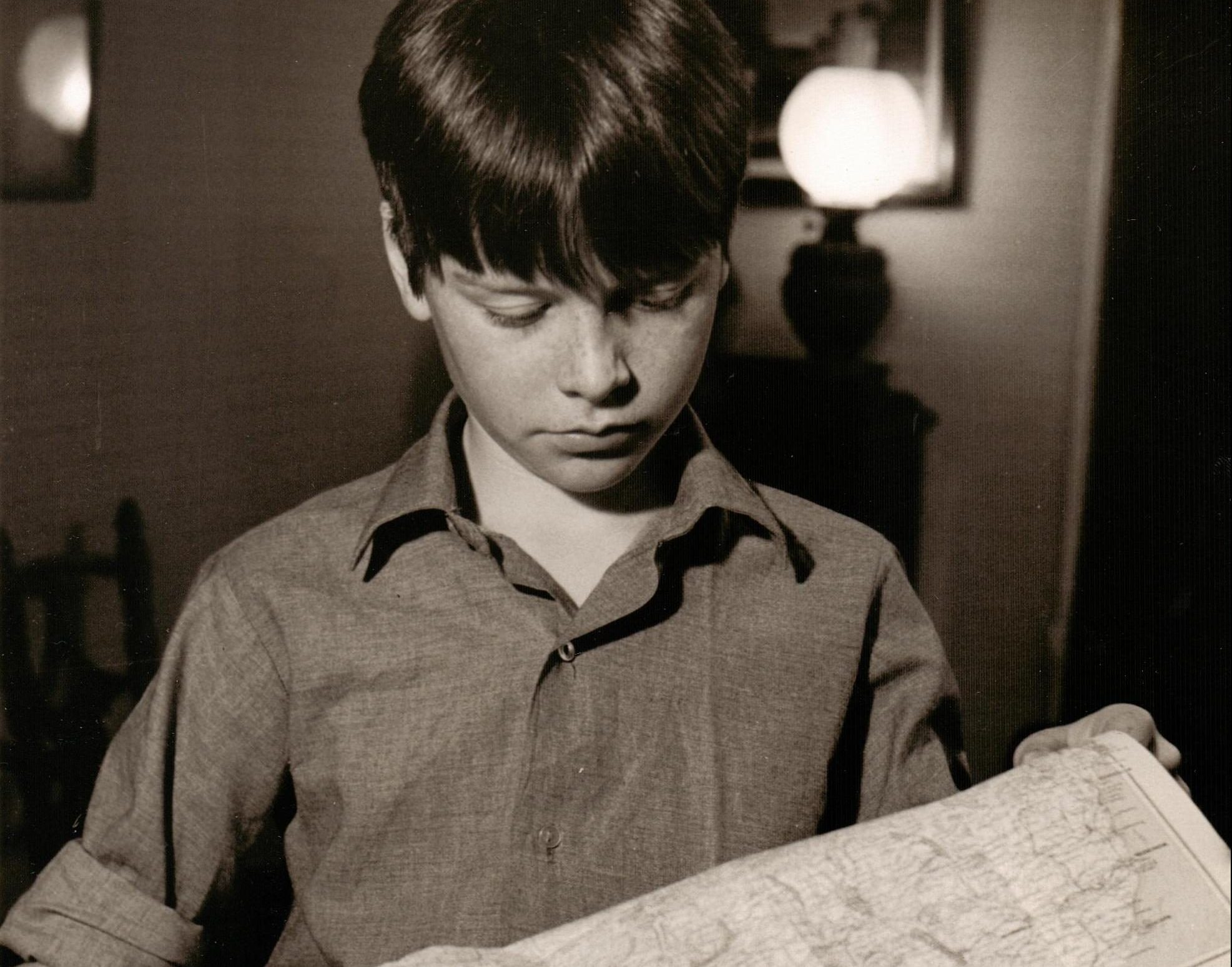
Simon West as John Walker studying the chart before the voyage.
1. It’s good to begin a film with establishing shots that explain what is happening. This could be a chart, a poster, a yacht club, a moored boat or the landscape. Then tell the story, introducing the characters and different boats.
2. Once you begin filming boats the most important thing is to keep the horizon horizontal.
Simon West and Sophie Neville bring Swallow into the Secret Harbour on Wildcat Island
Alternatively, tilt your camera at a dramatically acute angle – but don’t use compromised shots like the one above.
Farewell and adieu to you fair Spanish ladies – can you spot the safety officer?
3. When you pan – side to side – first plan and rehearse the shot with good opening and ending frames. Hold for a beat on these – it gives you a transition to the next shot in the same way as a comma or full stop.
Simon West, Suzanna Hamilton, Sophie Neville and Sten Grendon in ‘Swallows and Amazons’ (1974)
Pans look better if the shot moves from left to right, as that is how westeners read.
A pan works best if it’s ‘motivated’ ie follows action. Only pan from right to left if you are following a subject, then let it pass out of shot.
Avoid panning from left to right and back again. Don’t wave the camera around.
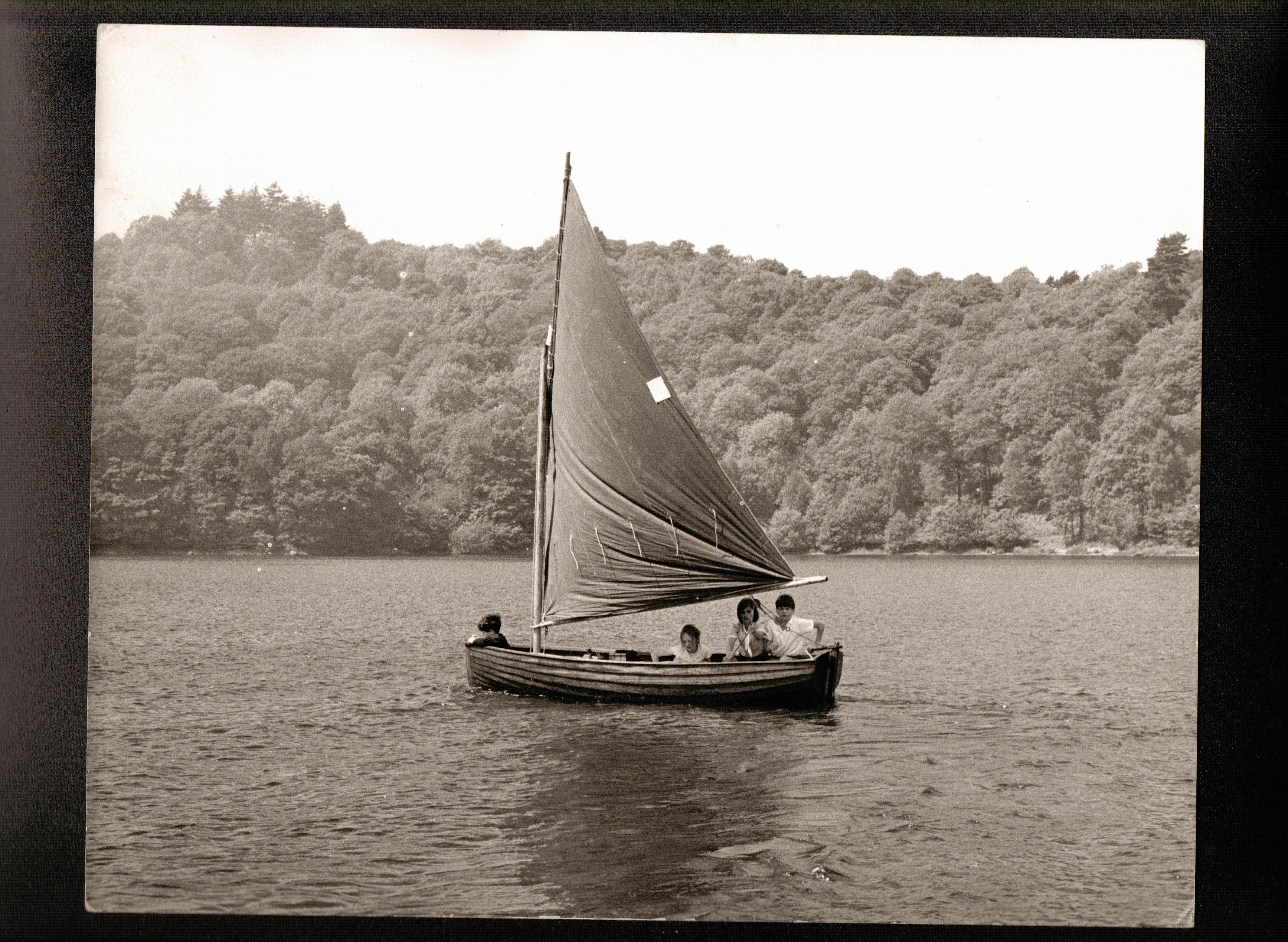
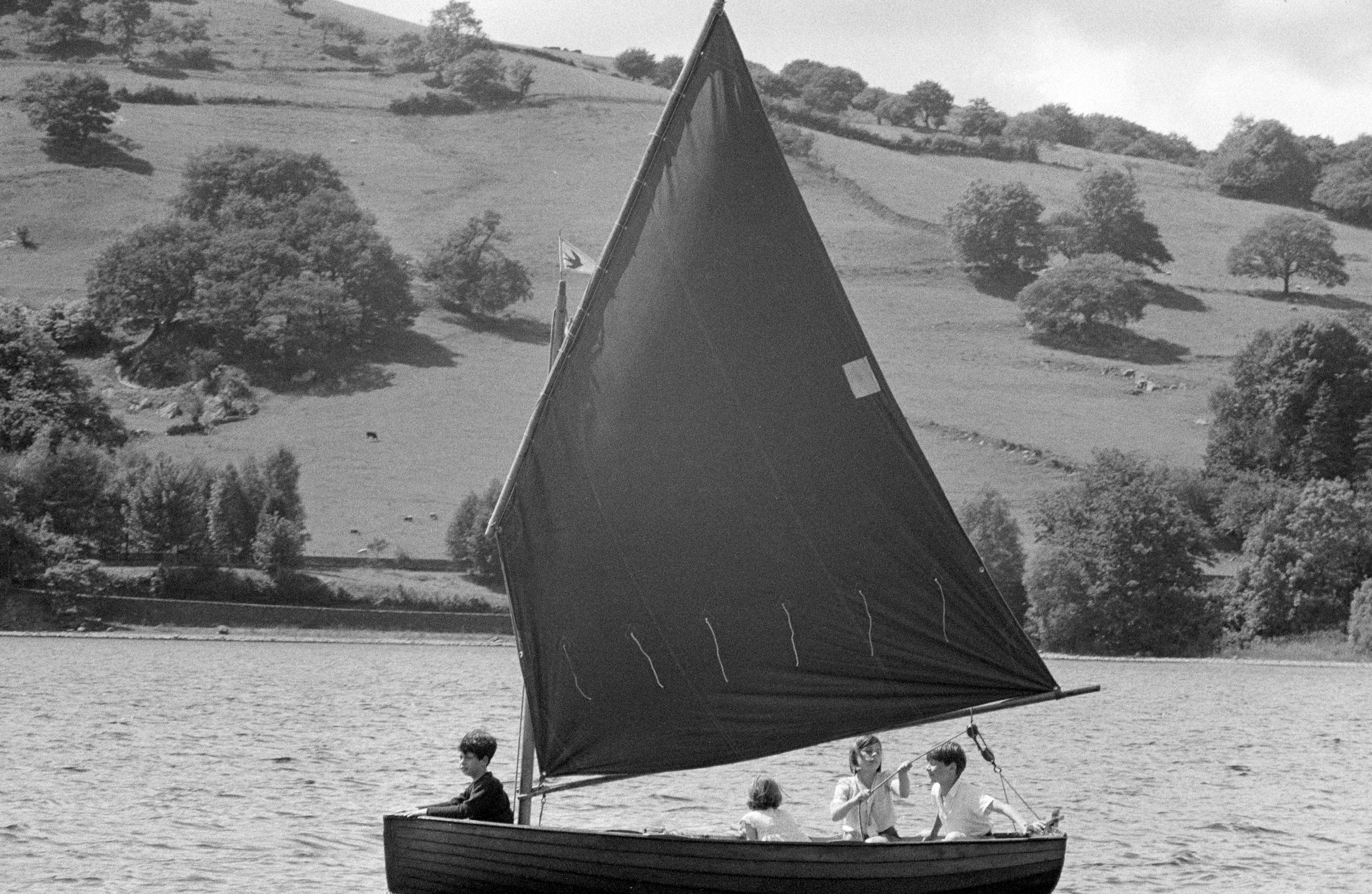
Simon West as Captain John sailing Swallow . Sten Grendon plays the Boy Roger
4. Avoid using the zoom unless it is motivated. Tilting the camera works better eg: open on a shot of a boat’s name and tilt up to find the skipper.
5. A general rule is: If the subject is stationary you can move the shot. If the subject is moving, keep the shot still.
6. Low angle shots are atmospheric – try filming at chair height, especially if you are tall.
Suzanna Hamilton as Susan with Sophie Neville as Titty busy writing the ship’s log
7. Close ups and detail are good, especially if there is some movement. eg: burgee flying in the wind.
A montage of close-ups works well to explain what is happening and explain a passage of time.
8. People do well in front of the camera if you give them something intricate to do or look at. Show what they are doing, possibly from a different angle.
9. You will need to film one boat from another. We were lashed to a camera boat to achieve these shots.
Sophie Neville, Suzanna Hamilton and Simon West sailing Swallow in 1973
10. Make sure your lens is kept clean – or use water droplets for effect. Don’t let your camera get wet but capture the excitement.
Simon West and Suzanna Hamilton at the helm of Swallow with Stephen Grendon
I continue to hear amazing stories about how the 1974 film ‘Swallows and Amazons’ has influenced people’s lives. Someone wrote to say, ‘This was my favourite movie growing up in Australia and the main reason I ended up moving to the UK!’
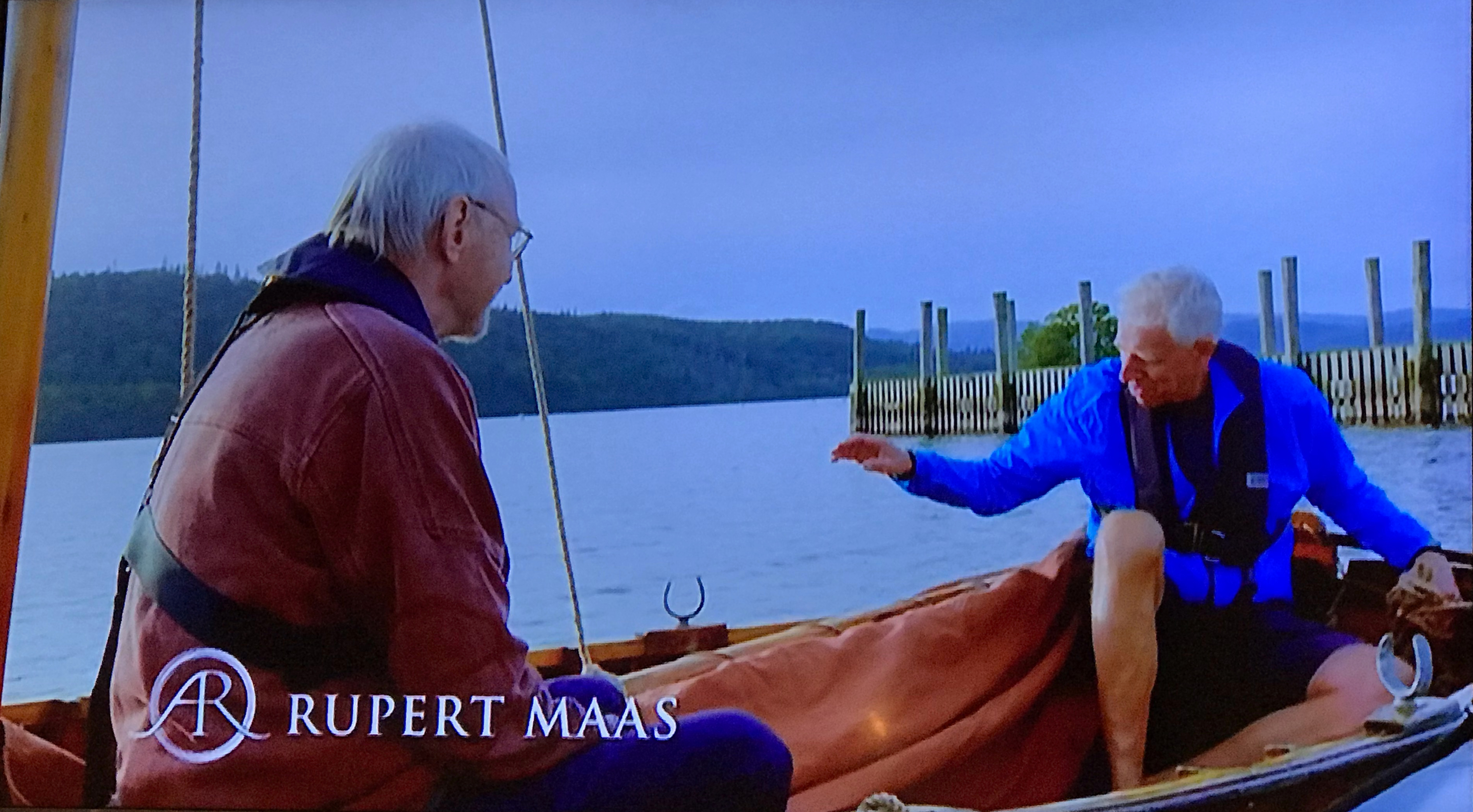
Rob Boden talking to Rupert Maas on BBC Antiques Roadshow.
There has been quite a bit in the popular press about what Rupert Maas, the expert on paintings, said of the movie ‘Swallows and Amazons’ (1974) which he saw aged 14. “It’s fair to say it got me into sailing. Just watching the romantic lives of these children in this wonderful summer. It never seemed to rain, the sun was always out…” He ended up crossing the Atlantic Ocean.
Simon West as Captain John in Swallows and Amazons 1974
Marc Grimston writes, “I was read the books as bedtime stories when I was too young to read them myself… but when I was taken to see the film, the stories became alive to me. I had not seen the Lake District at that point and the film changed everything. I could visualise the landscape every time I read one of the books, that was due to the film. The characters in the stories now had faces I could recognise in my head from that point on. When I read the books now, the characters are still the same 51 years on. The books, the film and the TV series of Coot Club and The Bix Six gave me a love of boats, camping, the Lake District and the Norfolk Broads.
Krista French “Those books were my part of my childhood escape toolkit.”
Simon Leach saw a poster of the 1974 film ‘Swallows and Amazons’ and said that when it came out, “my family was living in South Australia. After watching this, my parents were so homesick, that we returned to the UK.”
Others comment on how it has given them solace during difficult times. One man wrote to say that he watches ‘Swallows and Amazons'(1974) every week.
Fiona Ring said, “It literally shaped my childhood, that was me, I was Titty, the adventures the love for the outdoors. I read and watched it over and over and now it’s even better that I’m reliving it all again with my girls. Travelling up to the lakes each year to find all your secret spots. It’s amazing. Kayaking to wild cat island with our girls in April was a dream come true.”
Sophie Neville with Suzanna Hamilton
Andy Stuart loved Arthur Ransome’s simple book illustrations. “And equally perfect were the the actors in the 1974 film. If I think of the Swallows and Amazons, those are the faces I see when I read the novels in which their characters feature, and my mind’s eye visions of the Norfolk children and the D’s are conjured from who I imagine would have fitted in alongside the original cast. You were all wonderful, Sophie Neville!”
Simon West, Sophie Neville, Suzanna Hamilton and Sten Grendon in Secret Harbour
The author Duncan Hall says, “I can’t remember if I read the books or saw the film first. I don’t remember picturing the Swallows and Amazons differently so I maybe saw the film first? But would have been at a similar time. It sparked a lifetime obsession with the Lakes, boats and stories.”
Lesley Bennett and Kit Seymour as the Amazon pirates dancing on Peel Island
Rob Twycross said, “I saw myself in the children in the film. We lived our childhood like that, going off exploring, discovering and learning. Halcyon days that I fear are gone now. It’s lovely to watch it again now and feel young again, if only in my head and heart for a little while!”
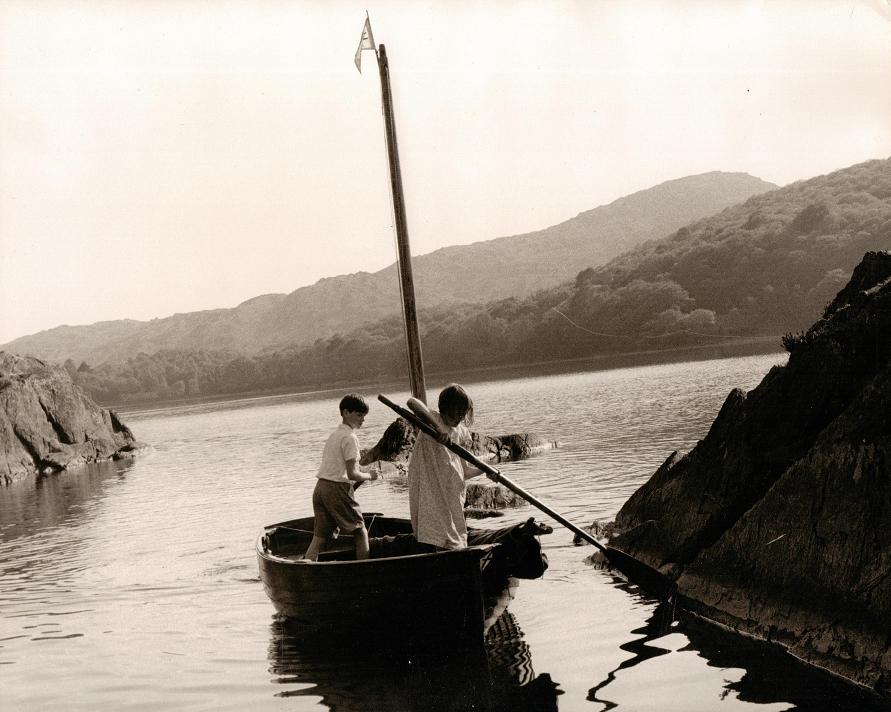
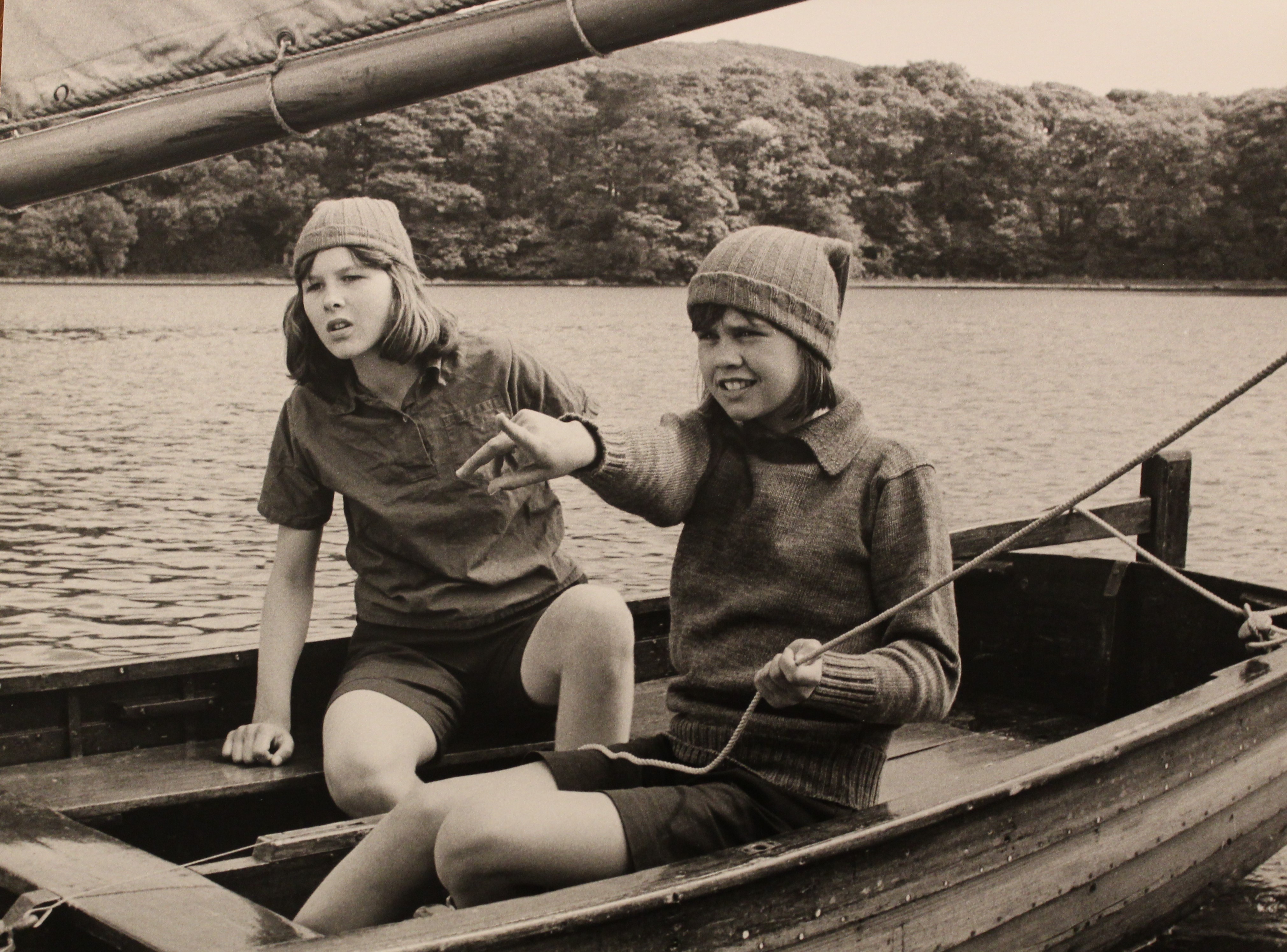
Sophie Neville as Able seaman Titty in Swallow
You can now listen to the story of how the 1974 film was made on location in the Lake District on any of the audio-book platforms, including Audible.
I have been told that the 1974 film ‘Swallows and Amazons’ has been broadcast on television more than any other British film. Arthur Ransome’s well loved series can be found on the shelves of most book shops. Many of his devoted readers belong to the Arthur Ransome Group on Facebook where they share interesting observations some of which I have collected here:
Jill Goulder was interested to learn that the film of ‘Swallows and Amazons‘ was made with EMI Film’s box office revenue from ‘The Railway Children‘ (1970), the adaptation of E Nesbit’s book starring Jenny Agutter . “So we have ‘The Railway Children‘ partly to thank! I’m thinking about themes in common. A focus on a family of children with father absent and mother in the background; the children fairly realistic (‘The Railway Children‘ may win on points here as the children argue among themselves); beautiful scenery; a key point of interest in the landscape (railway, lake) which influences the plot; male characters who aren’t always amiable but who are basically very attached to the children; an episode involving an accusation (false in the case of the firework, true in the case of the coal theft); etc!” The two films were bought out together on VHS.
Jill later pointed out, “In World War II, spy catchers interrogating possible German spies would check their knowledge of Arthur Ransome as a classic test of Britishness.”
I thought this ironic given the spy themes in The Railway Children and the 2016 film adaptation of Swallows and Amazons. And why did Commander Walker send such cryptic telegrams. Was he more than a Naval Officer? Was his ship really in Malta or on its way to Hong Kong?
Simon West, Sophie Neville, Suzanna Hamilton and Sten Grendon in Secret Harbour
Maurice Thomas noted that, “both Ransome and Nesbit (and CS Lewis) liked the fit of two girls and two boys, though the second boy is absent from ‘The Railway Children‘. Both ‘Swallows and Amazons‘ and ‘Five Children and It‘ have a “ship’s baby”. The trope of four seems to go wider, though – four hobbits, for example. I suppose it’s the smallest group where you can have “split quests” that still allow for character dialogue, otherwise it’s just one person and their thoughts. Lewis does it, of course, when Edmund becomes evil, but at least he has Jadis to talk to.”
Tamzin Neville playing Anthea in The Phoenix and the Carpet
My sister Tamzin played Anthea in the 1976 BBC adaptation of The Phoenix and the Carpet, when E Nesbit features a family of five children: two girls, two boys and a baby. The Captain Flint character, who facilitates their adventures, is the Phoenix, his houseboat/the Wildcat is a magic carpet. I wonder if Ransome, who knew E Nesbit, was influenced by this story.
Janet Mearns noted, “Louisa M Alcott’s ‘Little Women’, features four children, all girls but Jo is a forerunner of Nancy, one parent absent. Capt Marryat’s ‘Children of the New Forest’: two boys and two girls living off the land, both parents absent.”
Matthew Jones wrote, “What’s lovely about AR’s stories is how they pull his characters out of gloom (along with his readers) into the world of friends and connection and purpose.”
Simon West as Captain John rowing towards the Landing Place
The question, ‘How old is John Walker in Swallows and Amazons?’ is often typed into Google.
John Fenn expressed an interest in Captain John’s character. “In his illustrations Arthur Ransome found it hard to keep John young enough. I suspect that John was the boy Arthur Ransome wished he had been, easily gaining his father’s approval (especially in ‘We Didn’t Mean To Go To Sea‘ and ‘Secret Water’) which was so often withheld from Ransome himself. It’s not surprising he ‘saw’ John as more grown up than he was, and therefore could not keep him young in his illustrations. The upshot is that in the 1974 film it is a shock to us to see a John who looks the age he is supposed to be – about 12.” And yet Simon West, who was only aged 11 when he played Captain John, was adept at handling boats, climbing pine trees and negotiating with adults. He fell easily into the part.
Simon West as Captain John in Swallows and Amazons 1974
The author Jon Tucker writes, “An enduring children’s book is like an onion – multi-layered. The seven-year old is focused mainly on the action embedded in the narrative. The ten-year old is more aware of the underlying emotions. By a third reading at 13 or 14 years, the more mature teen reader can grasp the inter-relationships between the characters entwined within the outer layers. If the book has real substance, an adult reader will absorb those three layers, with a further understanding of the adult characters’ perspectives.”
Sophie Neville as Titty with Suzanna Hamilton playing Susan in 1974
“Taking Swallows and Amazons as an example, we adult readers can understand Titty’s slightly apprehensive emotions alone on Wildcat Island, alongside Mother’s somewhat concerned puzzlement on finding her eight/nine-year-old daughter apparently abandoned. We can also reach out to Captain Flint’s realization that he needs to pull out all stops to make amends for his nearly unforgivable behaviour towards John. A huge part of the success of this novel is the battle for Houseboat Bay, with Captain Flint’s endearing actions to put things right. Ransome’s enduring appeal lies in having a readership which has survived into adulthood.”
Michael Shaw said Titty is his daughter’s absolutely favourite character “because she makes everything into an adventure story” but not everyone can cope. Someone commenting elsewhere on Facebook wrote,”I could never read ‘Swallows and Amazons’, because one of the characters was named ‘Titty.’ It pulled me right out of the story. I just could not imagine everyone calling her that.” And yet the character was based on Titty Altounyan, a real person who was known as Titty all her life.
Sophie Neville playing Able Seaman Titty.
One Arthur Ransome enthusiast wrote: “Random thought, as it’s on @TalkingPicsTV tomorrow, but why has there never been a ‘Swallows and Amazons’ board game? There’s a brilliant strategy game somewhere in there.”
I recall being contacted by a friend who had just passed his driving test, and wished to spend a lazy day in the Lake District where he’d insisted on hiring a rowing boat in Bowness on Windermere in order to ‘enjoy the beauty of the lake’. While heading out from the jetty towards the ‘Lily of the valley’ island in rather a clumsy fashion, I was asked. ‘Who do you want to be, the Swallows or the Amazons?’
At a later date I was given the book ‘Swallows and Amazons’ written by Arthur Ransome together with a video and an original vinyl of the music soundtrack. Turning the pages of the 1930 novel was like opening a door to several other worlds for suddenly the lakes swept in like the most refreshing breeze that kindled an inner passion for hills, mountains, lakes, sleepy streams and mists, early morning stillness on the water and sailing adventures.
Watching the film for the first time was a turning point in my rather dull experience of being at school in the north west of England with its drab corridors, gray walls and endless smoking chimneys out to the horizon.
Within a very short time I too have taken a seat on a train en route to the Lake District in 1929 that had a family travelling together in one of those wonderful old carriages consisting of four children and their mother who were to spend a holiday together in a beautiful farmhouse nestling in the trees by the lake.
For some reason William Wordsworth’s immortal words ran through my mind: ‘Beside the lake beneath the trees fluttering and dancing in the breeze.’
The story touches on many human aspects that we all learn to accept as a part of our evolvement into adulthood and which today seems to have got lost in the quest for an increasingly fast world understanding and a computer generated experience.
The joy of the family arriving at the farmhouse and standing there looking out over the glorious Lakeland towards their dream island where it’s hoped they will be able to embark on a camping holiday after receiving permission from their absent father.
The four children, John Susan Titty and Roger Walker, all displayed an individual aspect of evolvement, with Titty engrossed in the book ‘Robinson Crusoe’, using her vivid imagination to create the island realm and keeping a hand written diary, while John seemed to be moving towards a Naval leaning by spending his time learning the basics of Morse code, boat handling and navigation. Young Boy Roger enjoys stuffing himself with anything he can possibly eat, appears to be showing signs of enjoying the great outdoors, and wants more adventure. Susan comes across as the mother figure who thinks about the younger siblings and what they all will be eating while on their adventures.
The story unfolds as the children receive the go ahead in a telegram from their father to sail over to their island to camp in a borrowed dinghy called ‘Swallow’. A burgee is sewn up to fly from the mast depicting a swallow. This news is received with unadulterated delight by the children who immediately begin the preparations.
The lake and mountainous surroundings featured in the film begin to open up as the children undertake their journey to discover sailing rivals in Nancy and Peggy Blackett who live in one of the houses bordering the lake and own a dinghy named ‘Amazon’ that sports a ‘pirate’ burgee.
Initial rivalry erupts between the Walkers and Blacketts, which results in eventual harmony as the two sides join forces to capture a common enemy who just happens to be the Blacketts’ ‘Uncle Jim’ who owns a houseboat on the lake and is busy writing a book.
The Swallows and Amazons decide to host an expedition to capture Jim (‘Captain Flint’) and the houseboat, and, to determine who should be the leader, they make an attempt at capturing each other’s boats.
This requires sailing at night and some pretty shady manoeuvres, which are grievously frowned upon when discovered by the Walkers’ mother when she made a journey to the island to check up on the children and found Titty on her own. John has to confront his mother and explain his reasons to sail in the dark. She reluctantly accepts his explanations but with a proviso that no further actions of this sort will occur again for the remainder of the holiday.
Titty won the day by seizing an opportunity to capture the Amazon boat while the Blackett’s were on Wild Cat Island, making the Walkers the winners. This leads up to the finale where there is a sea battle as the Swallows and Amazons launch an assault on Captain Flint and the houseboat when he is captured and made to walk the plank. The end of the film sees Titty gifted with Flint’s pet parrot who seemed to have taken quite a shine to her, and everyone resolves to be kindred spirits for ever!
After watching this film my mind was transported to the lakes and sharing the beautiful sunny days, crispy clear water and blue skies with the backdrop of the mountains the wooden jetties and a sailing journey into Bowness for supplies. I could sense myself seated in the lugsail rig and feeling the tug on the main sail as the boat crept closer to the wind before going about and heading away onto another tack.
I was carried with the family into that other realm and other time where innocence and responsibility were coming to the fore, where family values were held dear and independence was something young people strove to achieve within the simplicity of their everyday existence. For the brothers and sisters to go camping on a small island in the middle of a lake away from any overseeing adult, and to arrived there by sailing over in a borrowed boat, leaves little to the imagination.
There was a sense of adventure with the children, and a wanting to show they could be responsible and look after themselves, something in today’s society we have to a degree lost touch with. That immortal sense of adventure within a landscape never changes, except within its own light that we know and love today as the Lake District.
This film is a journey into another dimension and another world steeped with love and belonging, adventure and moral understanding, which is shared between a family and accepted.
The characters are bought to life almost as if they are an infinite, integral part of the immortality of the story, each giving that picturesque understanding the viewer finds impossible to explain.
After watching this film one arrives back in real time with a resounding bang! We wonder why such a simple story can create such an iconic understanding, why watching this film can make you feel happy, totally complete and yearning to return again and savour that wonderful, eternal landscape we have all learned to grow and love as The Lakes.
Do think of leaving a review of this film on the International Movie Base site. The link for ‘Swallows and Amazons'(1974) is: https://www.imdb.com/title/tt0072233/
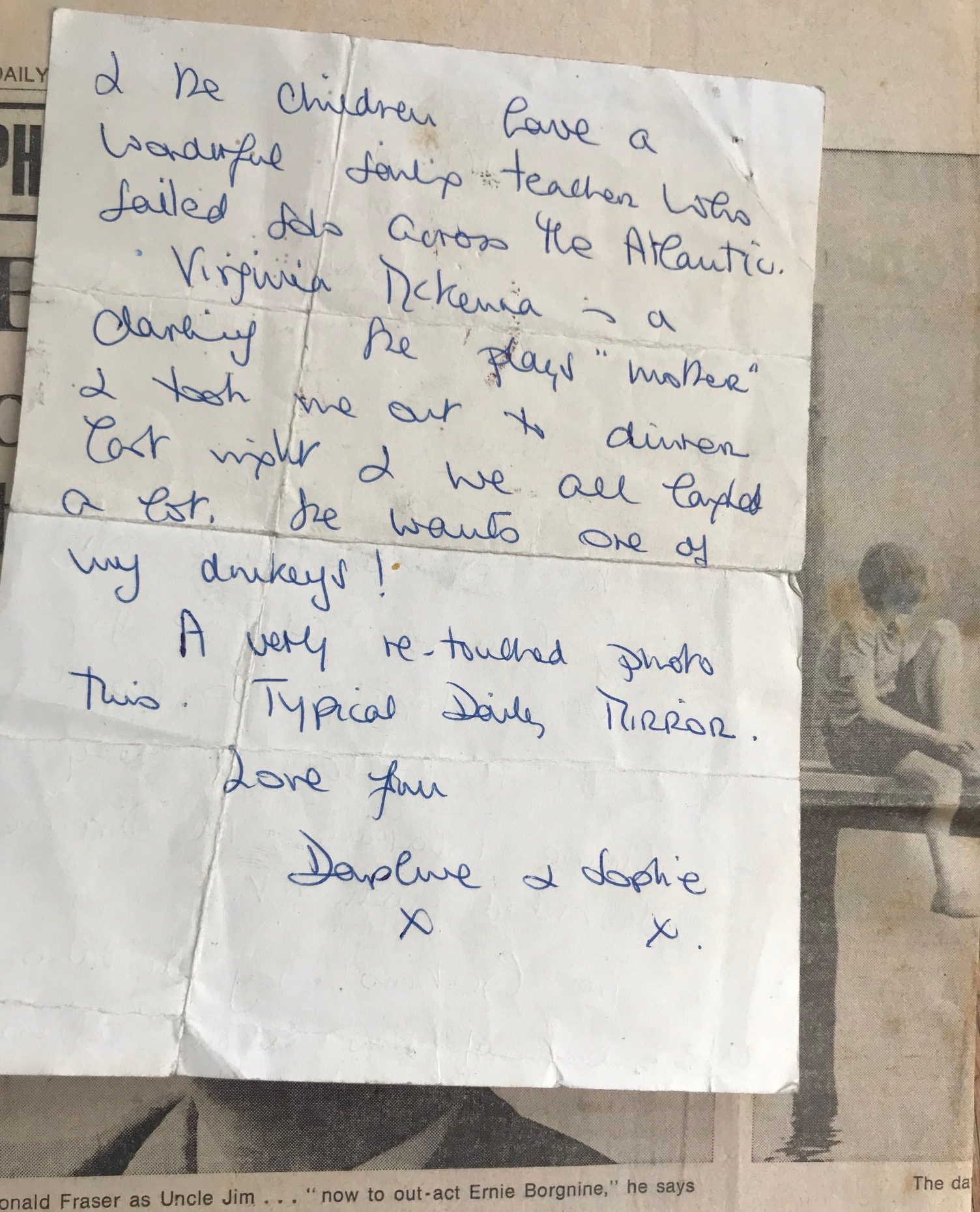
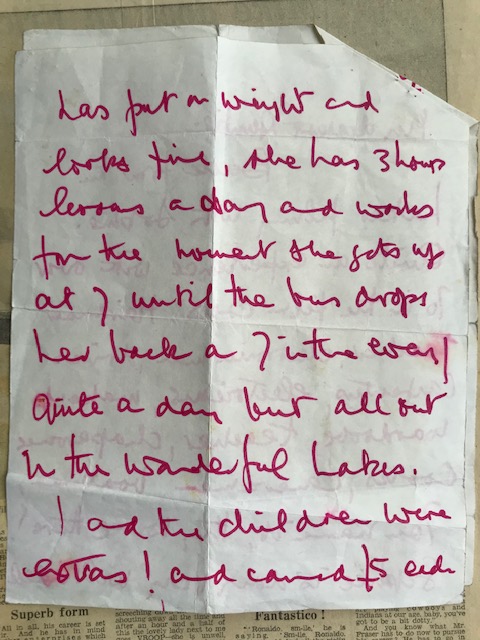
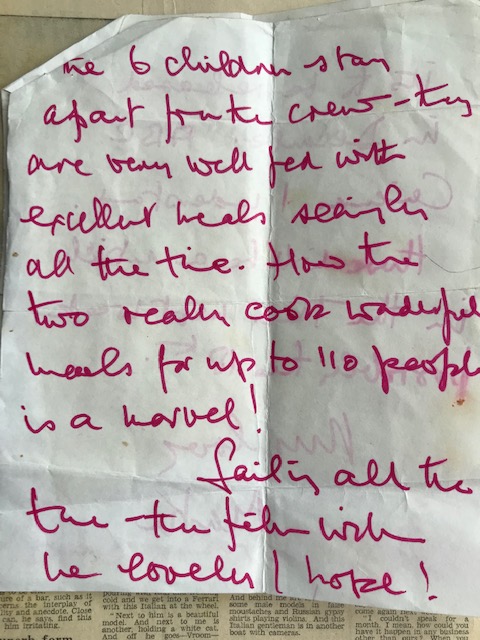
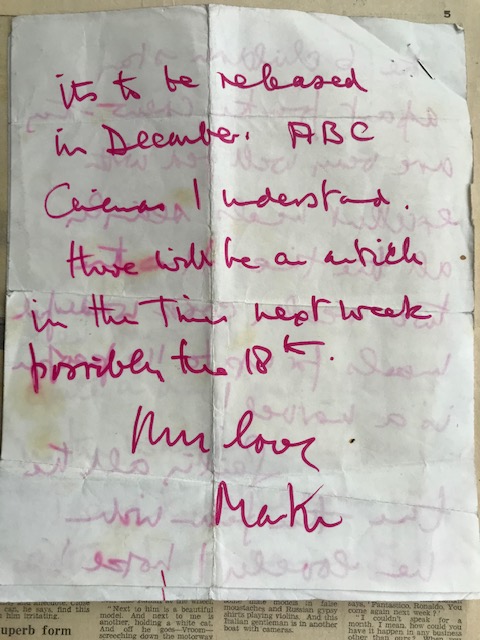
I’ve been asked to post the hand-written letters that my mother wrote on location while we were making the original film of ‘Swallows and Amazons’. It is amazing they have survived. This was sent to my great aunt who lived on the Solent and knew Buckler’s Hard where Arthur Ransome once moored.
Mum mentions Claude Whatham, the director, David Blagden our ‘sailing teacher’ who played Sammy the Policeman and Dame Virginia McKenna, the star of the movie who played my mother, Mary Walker.
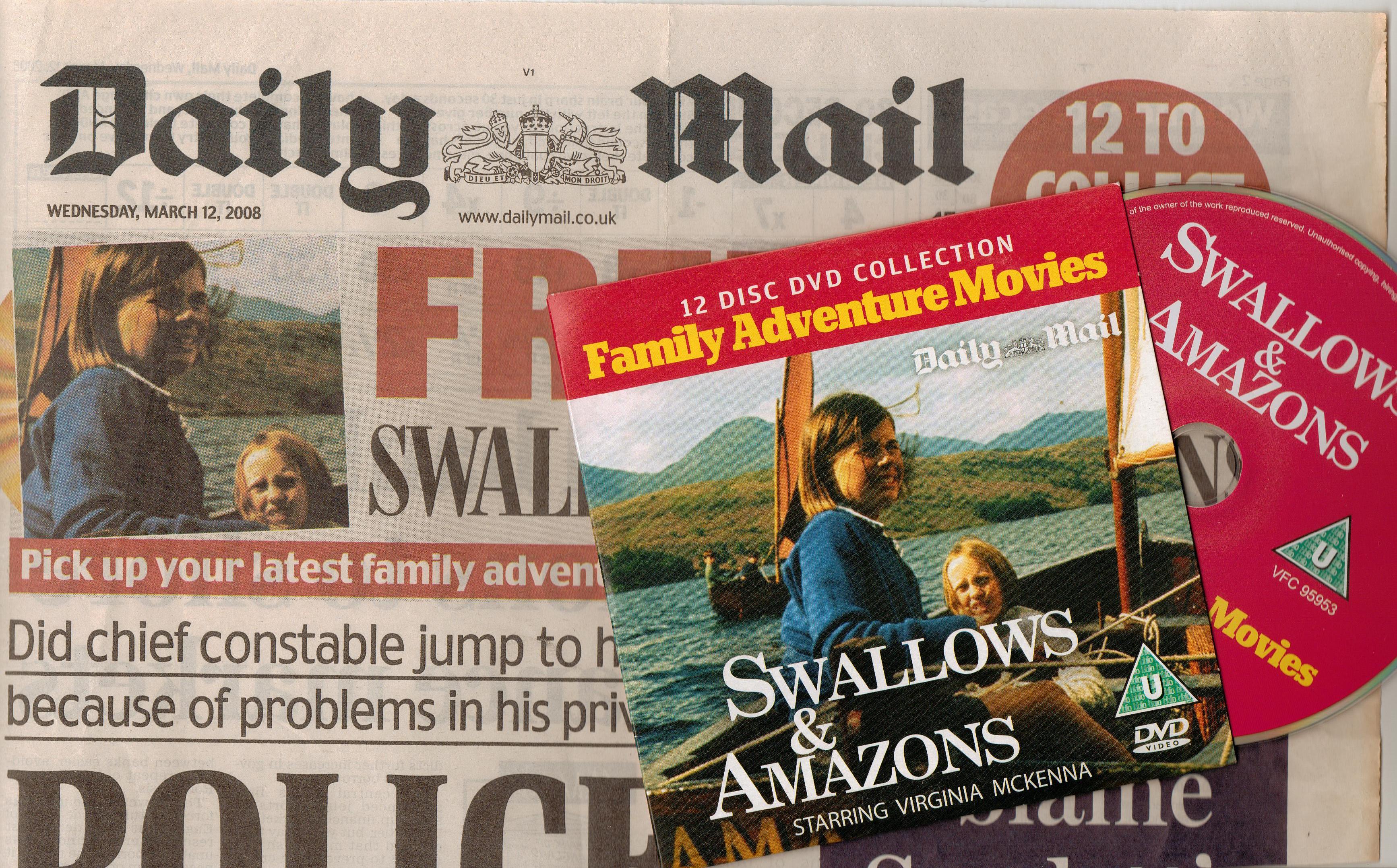
This must be the cutting from the Daily Mail that I hadn’t seen for more than fifty years and yet remember the photos as being over-exposed. Mum marked me with an X, as in ‘X marks the spot.’
‘The Making of Swallows and Amazons’, narrated by Sophie Neville, is now available as an audiobook on all platforms, along with Audible where you can listen to a free sample.
Whilst clearing out my mother’s house recently we found a few letters written by my parents to my great aunt in June 1973. They report on the progress of making the original EMI movie of ‘Swallows and Amazons’ in the Lake District.
Stephen Grendon as the Boy Roger, Sophie Neville as Able-seaman Titty and Simon West playing Captain John Walker beside Derwentwater in 1973 ~ photo: Daphne Neville
My mother had been given headed writing paper designed for members of the production to use on location by Brian Doyle, who managed the film publicity.
It looks as if my father used his children’s felt pens.
It is interesting to learn how much my sisters earned as film extras when they appeared in the scenes shot at Rio (Bowness on Windermere).
Kit Seymour and Jane Grendon watch the filming on the jetty whilst Tamzin and Perry Neville eat ice creams with the one man in Cumbria willing to have a short-back-and-sides. You can just see the period cars parked in the background
They made £5 a day, which was the same amount as the green parrot. I calculated that those of us with leading parts, who he describes as ‘the 6 children’ earned £7.50 a day. This was probably because we were only meant to be on set for a couple of hours. As Dad mentions, I effectively worked twelve-hour days but seemed to be thriving.
Until reading this letter, I didn’t know that the movie (or ‘picture’ as Mum called it) was originally due to be released in time for the Christmas holidays. It was launched in ABC Cinemas but not until April. You can read about the film’s release and premiere at what was then the ABC in Shaftesbury Avenue on my website here.
I’m posting this collection of images with immense gratitude for all the help, support and encouragement I received in 2024.
I was unwell for the first six months of the year with one chest infection after another, but whilst languishing in bed I managed to improve a couple of screenplays I’ve been working on and the novels that accompany them.
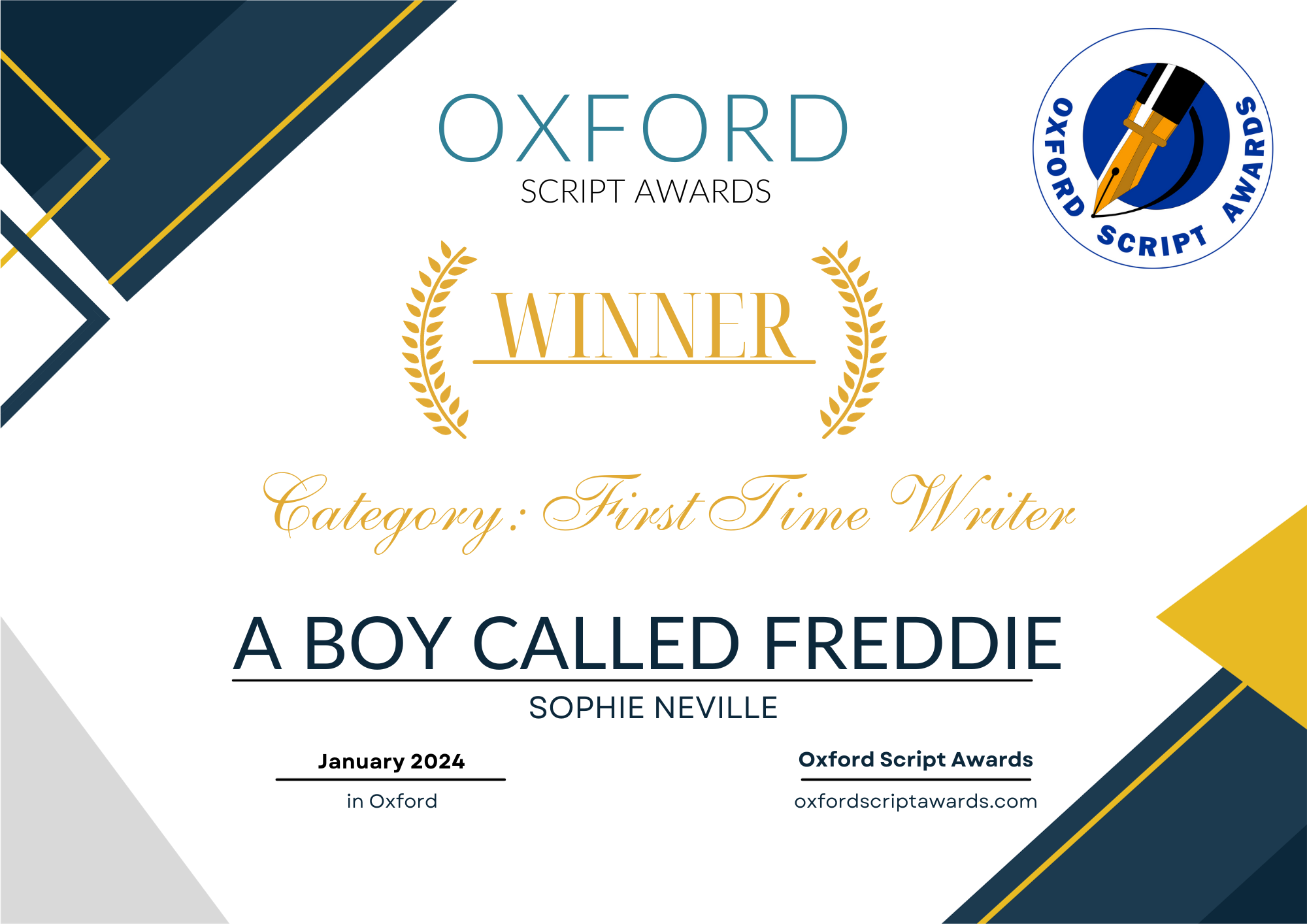
My biopic on Freddie Mercury’s teenage adventures in Zanzibar won about ten international script awards and was selected for many more including the Best Feature Screenplay at the Berlin Art Film Festival
My WWII story set in East Africa, Burma and Japan won about seventeen awards including the Page Turner Award for Best True Story.
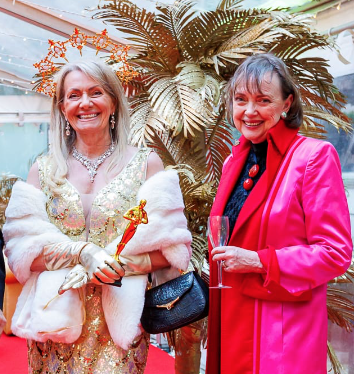
Sadly, I contracted Covid quite badly and couldn’t get to more than one awards ceremony but did make it to a Hollywood party in London.
Fundraiser Caroline Dolby with Sophie Nevillle.
This story was well received in Europe, particularly in Germany.
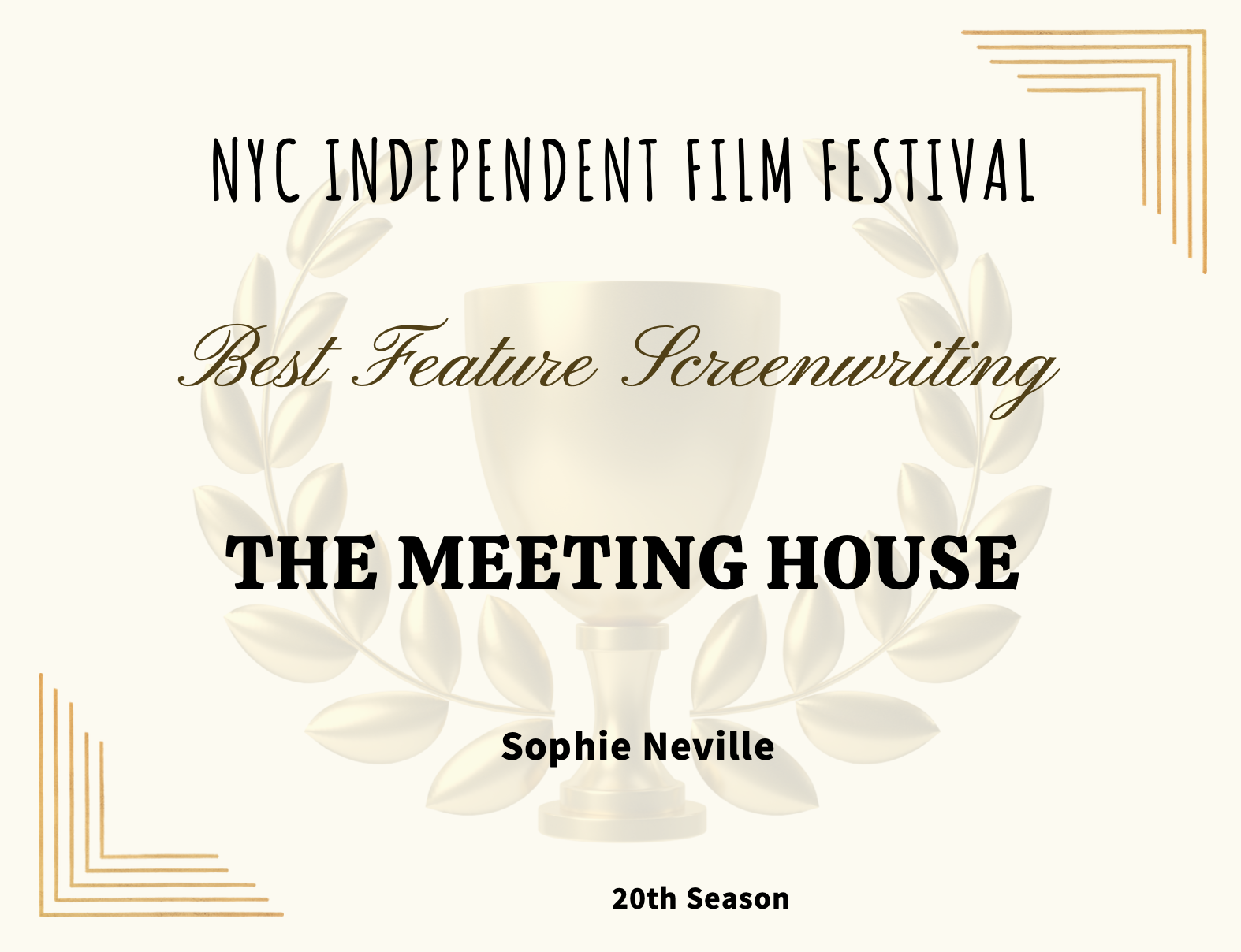
I proudly loaded some of the laurels I was sent on my website here.
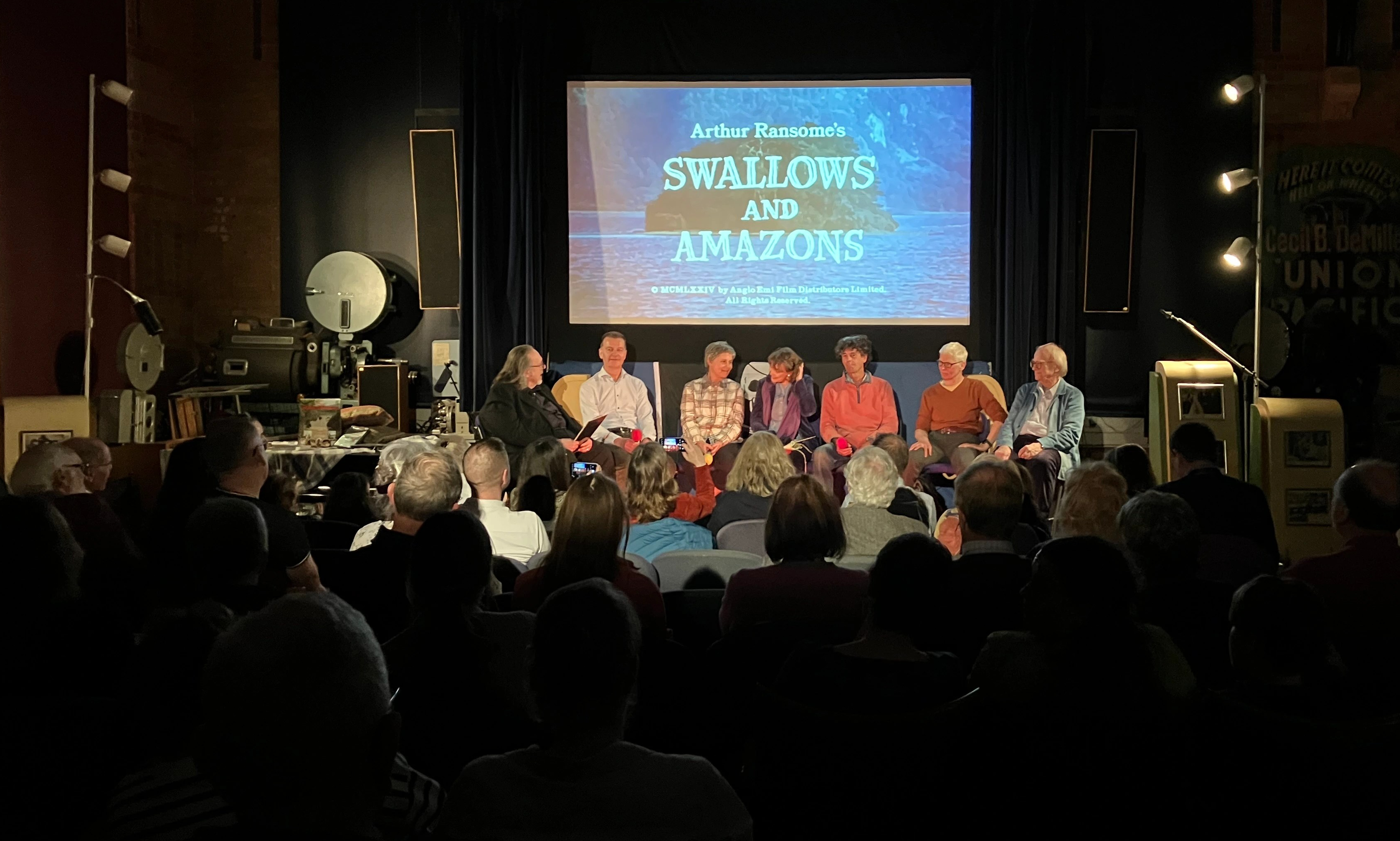
The cast of ‘Swallows and Amazons’ (1974) gathered for the 50th Anniversary – photo Lee Pressman of the Cinema Museum
One of the highlights of the year was celebrating the 50th Anniversary of the release of the movie ‘Swallows and Amazons’. The original cast and screenwriter David Wood gathered at the Cinema Museum in London for a Q&A with Brian Sibley when I was invited to read out a message from Virginia McKenna. You can watch a recording of the often hilarious event here and David Wood’s interview here.
I wrote an article about appearing in the film for Hampshire Life magazine.
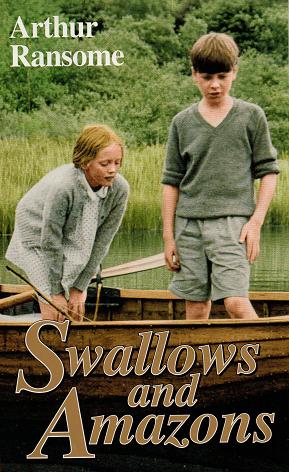
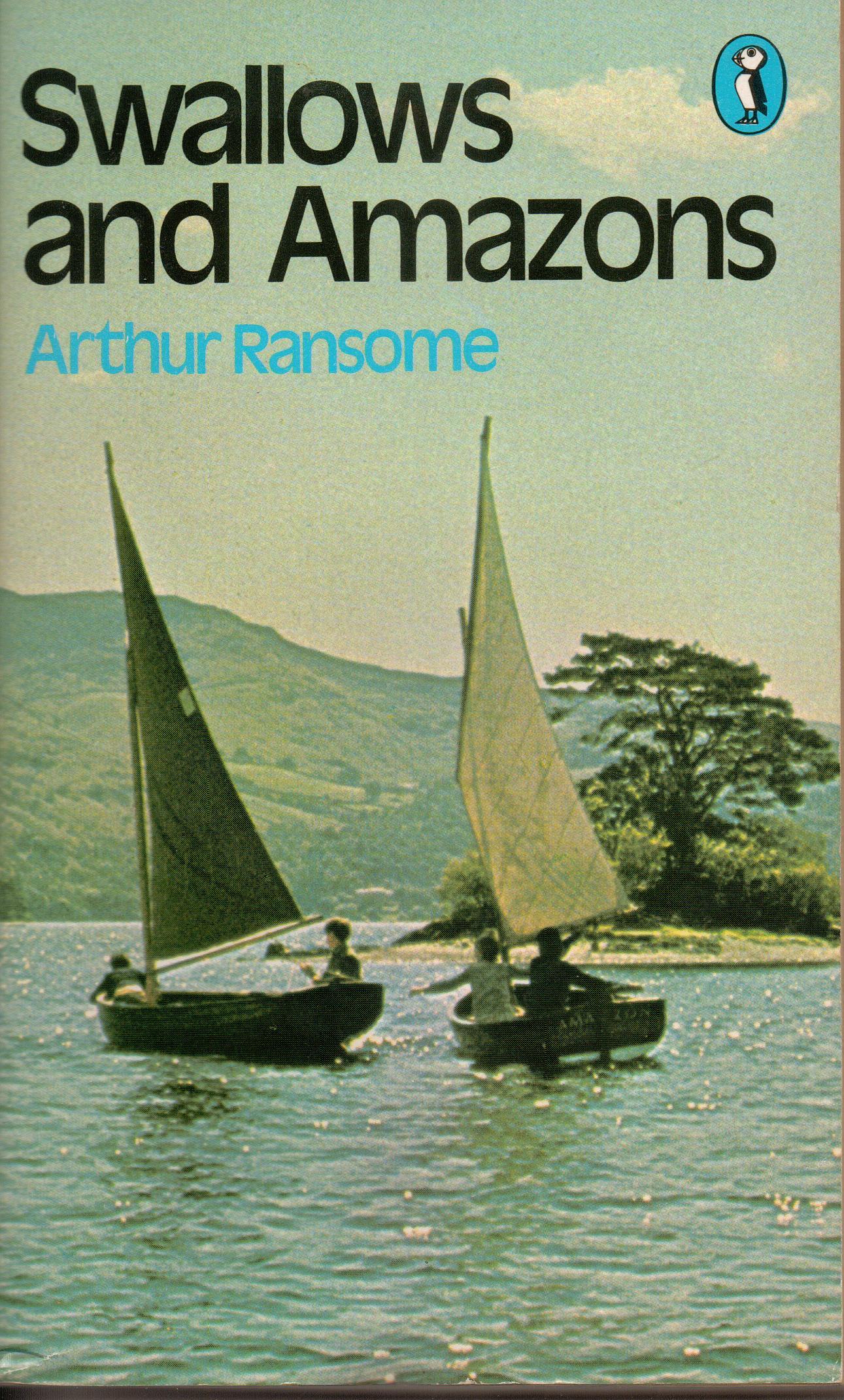
The Puffin copy of ‘Swallows and Amazons’ brought out to accompany the 1974 film
I then received a message out of the blue from someone I’d never met:
“I was so excited tonight. Your episode of Antiques Roadshow came up. I had to down tools to watch you! Loved all your memorabilia.” Suzie Eisfelder in Australia.
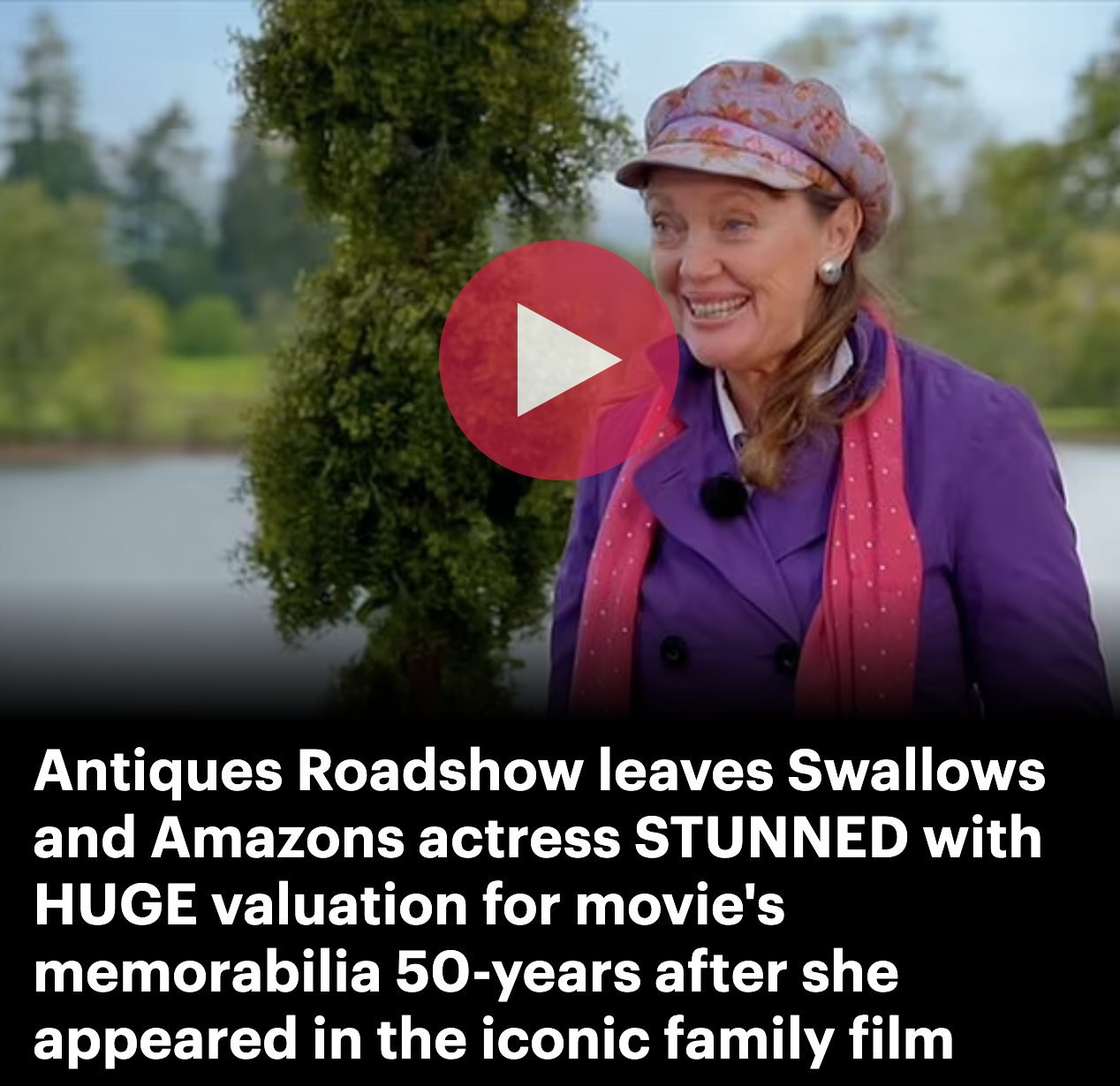
This took me by surprise but there I was on BBC One being interviewd by Marc Allum on the shores of Windermere.
GRUMPYBUG from North Yorkshire commented,’Most actors just take a bit of something for a memento. She nicked half the props.’ The truth was that Richard Pilbrow had sent me the flags from America. The exciting news was that Swallow and Amazon, the dinghies used in the film, have survived and are being renovated for anyone to sail from Hunters Yard on the Norfolk Broads where we made the BBC serial ‘Swallows and Amazons Forever!’ back in 1983.
The broadcast coincided with an online Q&A with the writer David Wood OBE and top Hollywood make up designer Peter Robb-King. All this was great pre-publicity for 50th Anniversary celebrations of the film in Cumbria when I met film fans, signed copies of my books, gave a couple of talks and was interviewed by John Sergeant, president of The Arthur Ransome Society who hosted the two-day event.
A good account of the weekend was featured in Flip the Media. It was covered by BBC News, there was an item on Look North, North West News and BBC Breakfast television.
Sophie Neville, Suzanna Hamilton and Kit Seymour on BBC Breakfast
After chatting on BBC Radio Cumbria I was interviewed by Luke on CalonFM radio.
I returned from the north to write a Foreword to Dr Anthony Mitchell’s book ‘From Dust to Trust’, which describes life around Lake Turkana in Northern Kenya.
I then helped Paddy Heron to raise funds to help a little boy called Max get medical treatment in Germany by auctioning two signed copies of my books and later auctioned another book for BBC Children in Need.
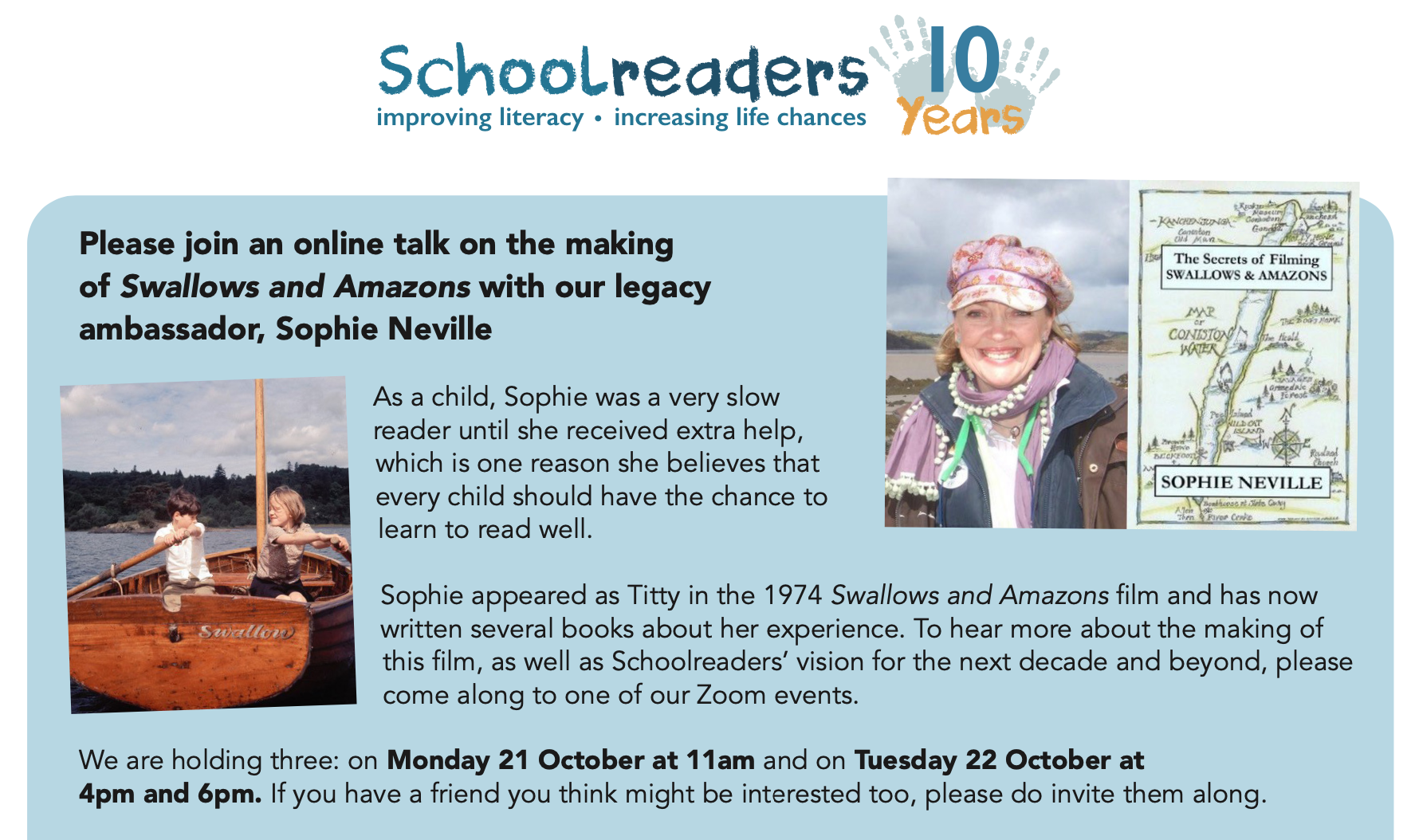
As an ambassador for the UK charity Schoolreaders I was invited to an amazing event at the House of Commons hosted by Giles Brandreth and gave three talks on Zoom.
Having spoken at the Royal Thames and Army & Navy clubs in London, Arnside Sailing Club in Morecambe Bay and Royal Southern Yacht Club earlier in the year, I gave an illustrated talk at Yarmouth Sailing Club on the Isle of Wight before going on a trip the Galapagos Islands.
I returned to news that my mother had collapsed and focused on aspects of life that weigh-lay us all: hospital visits, repairs and redecorating, general admin and clearing out my mother’s house. She’s made a remarkable recovery. I’m left exhausted but am looking towards the year ahead with hope.
“The smell is just the same.” Suzanna Hamilton began rowing me across Coniston Water from Bank Ground Farm, taking us back to childhood days.
“It sounds the same.” The colours, the landscape, the feeling of being out on the water was still magical.
Suzanna Hamilton and Sophie Neville at Coniston Water in the Lake District
As girls, Suzanna and I had appeared as Mate Susan and Able seaman Titty in Richard Pilbrow’s original film of Swallows and Amazons, adapted by David Wood and released in cinemas on 4th April 1974. It starred Dame Virginia McKenna and Ronald Fraser but it was the two of us who were invited to return to the film locations in 2003 to be interviewed by Ben Fogle for an episode of the long-running BBC series Country File. Thanks to sunshiny weather and the support of Geraint and Helen Lewis, his report proved so successful that it was repeated on Country Tracks and featured in the series Big Screen Britain alongside iconic landscape movies such as The Dam Busters and Whistle Down the Wind.
We had been talking about swimming off Peel Island soon after we began filming Swallows and Amazons in the Lake District in May 1973. The director, Claude Whatham, was fresh from making a BAFTA nominated adaptation of Cider With Rosie when he cast Sten Grendon as young Laurie Lee, and the rock-and-roll movie That’ll Be The Day starring David Essex and Ringo Starr. Although happy out on the water, he knew little about boats. The producer, Richard Pilbrow, had insisted on finding children who could sail well rather than audition young actors and teach them to sail, and advertised the opportunity in sailing clubs. This was pivotal. Simon West (who played John), Kit Seymour (Nancy) and Lesley Bennett (Peggy) all had experience with a natural feeling for the wind and emanated confidence. They were only given a couple of days to get used to sailing the little boats used as Swallow and Amazon before filming began and yet their skill ended up making the film a classic.
Farewell and adieu to you fair Spanish ladies
We had instruction from a sailing director in the form of a good looking actor called David Blagden. He’d recently crossed the Atlantic in a nineteen foot yacht called Willing Griffin but was unfamiliar with blustery Lakeland winds and did not know how to break down a script. Simon, aged eleven, ended up explaining to Claude how to get a decent shot. Suzanna took her lead from him and I clung to the gunwales, trying hard not to shiver in a costume designed by Emma Porteous that consisted of no more than a short yellow dress and enormous pair of navy blue gym knickers.
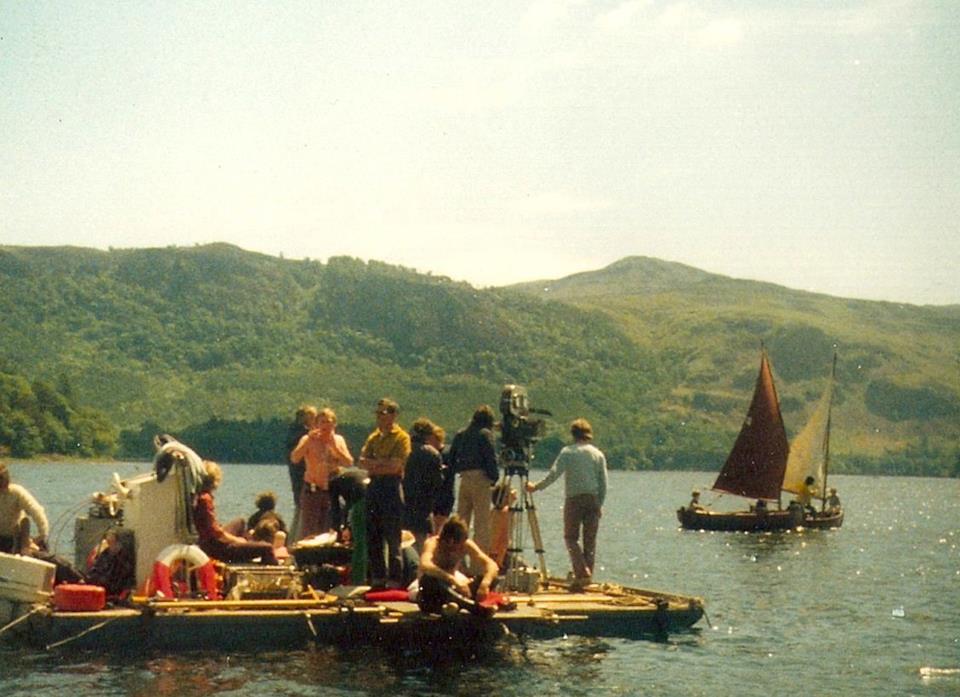
It was unusual for a movie to feature so many scenes set in two small boats. Mike Turk, whose family had been building boats since 1295, and Nick Newby of Nicol End Marine on Derwentwater, took up the challenge of constructing Claude a cross-shaped pontoon to act as a mobile camera mount so that our dialogue could be captured. This extraordinary vessel had two outboards but wasn’t easy to handle. The dinghies were wired to it with underwater cables but tended to pull away. The base to Swallow’s mast broke, proving safety was an issue, but the idea eventually worked.
Richard Pilbrow and his film crew on the camera pontoon
A grey punt was also used. I remember Simon West towing it as he rowed us into Rio. It was easy to transport from one lake to another but must have been tippy. Somehow David Cadwallader, the grip, managed to keep the horizon horizontal using no more than a spirit level. Shadows were lifted from our faces by using huge reflector boards apt to catch the wind. It must have been impossible to use filler lights out on the water, although they somehow managed to power a number of sets on Peel Island.
Sophie Neville in the Amazon with DOP Denis Lewiston, his 16mm camera and a reflector board ~ photo: Martin Neville
Richard Pilbrow kindly sent me Swallow’s pennant from his home in America. Unlike Ransome’s original sketch of the crossed flags, the bird flies away from the mast, which is technically incorrect, but I was thrilled to receive the genuine film prop used in vision. If you look closely you can see some of the stitches I made whilst in conversation with Mother, played by Virginia McKenna.
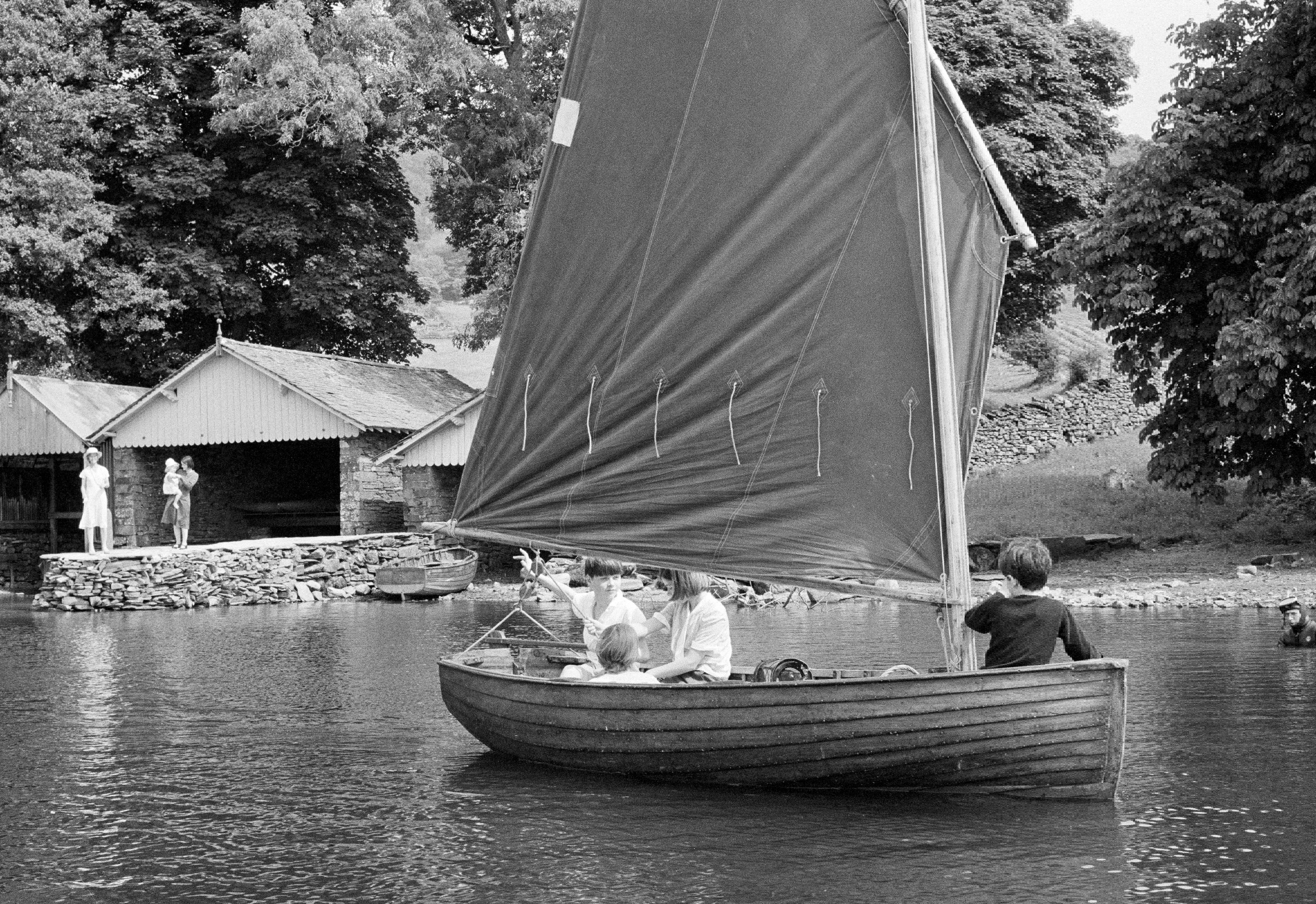
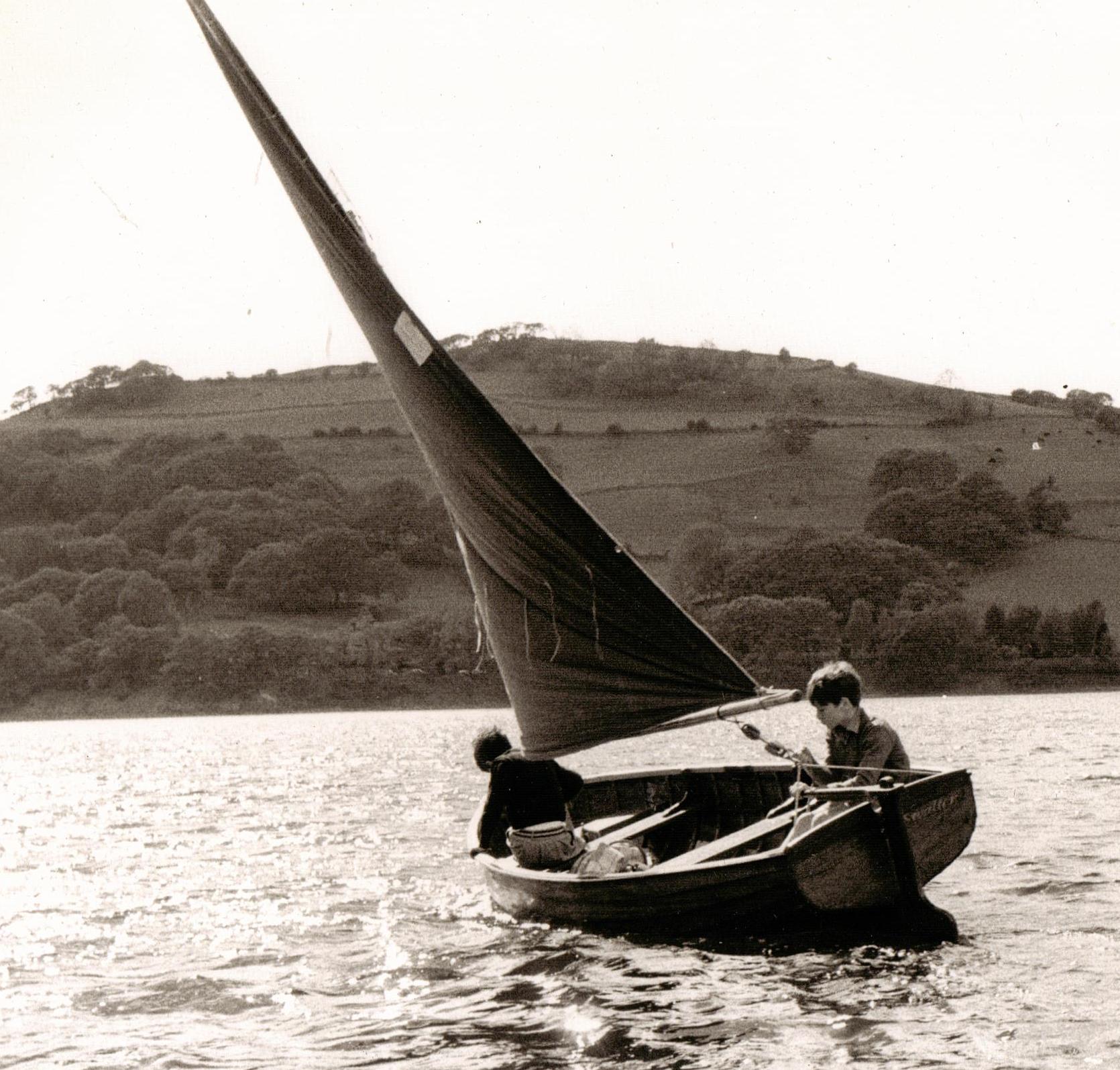
It would have been good if Swallow’s hull had been painted white in line with illustrations in the books. Her varnished planks are a nod to the 1970’s when everyone was busy stripping pine, but the important detail is that she has a keel rather than a centerboard. It makes her difficult to turn, and markedly slower than Amazon, but grants her stability. This feature may have saved us when we really did just miss colliding with the MV Tern on Windermere, which alarmed my father who was on the Tern’s deck. He knew how difficult Swallow would be to turn with the larger vessel taking our wind. We were fully laden with camping gear and yet totally lacking buoyancy of any kind.
Simon West as Captain John sailing Swallow. Sten Grendon plays the Boy Roger
One secret of filming Swallows and Amazons is that it was set on four different lakes, a smelly lily pond that served as Octopus Lagoon, and Mrs Batty’s barn where night sailing sequences were shot with Swallow mounted on a cradle. One challenging scene was when the Swallows were cast off from Wild Cat Island to sail north to the Amazon River, leaving Titty behind to light the lanterns. I slipped underwater whilst pushing her free of branches overhanging the landing place but regained my footing and waved them off. Simon caught ‘a fair wind’ but the boom swung so far out that Suzanna held the mainsheet by the figure-of-eight knot and Swallow sped up Coniston Water like a ‘pea in a peashooter’, as Ransome wrote in Winter Holiday. A gust hit them broadside as they cleared the island and Swallow gybed, but Simon calmly stood to catch the boom, scarified the wind and took her on up the lake. Watching the sequence still brings tears to my eyes.
Simon West and Suzanna Hamilton at the helm of Swallow with Stephen Grendon in the bows, while Sophie Neville looks on from the shore of Peel Island
No one had given much consideration to the rowing involved in the story. Built as a run-about boat by William King of Burnham-on-Crouch, Swallow has two sets of rowlocks but it was tricky to keep time when she was wired to the camera pontoon. The first scene attempted was when the Boy Roger and I had to row her back from the charcoal burners with Susan at the tiller.
Sophie Neville as Titty and Stephen Grendon as Roger rowing to Cormorant Island
We rowed again on Derwentwater, making our way out to Cormorant Island to look for the treasure. It took everything in me, but I later managed to row Amazon out of Secret Harbour in one take at the end of a long day filming. The action was repeated with Denis Lewiston, the lighting-cameraman, and his 35mm Panavision camera in the stern. Cold, with wet feet, I completed the scene but had to be carried ashore by a frogman acting as the safety officer. Titty later anchors Amazon off Cormorant Island on Derwentwater, but the shot of her wrapped in the sail, sleeping aboard, was taken in the darkened barn at Bank Ground Farm. The fishing scenes were recorded on Elterwater with Swallow moored near the reedbeds.
Sophie Neville as Titty and Simon West as John
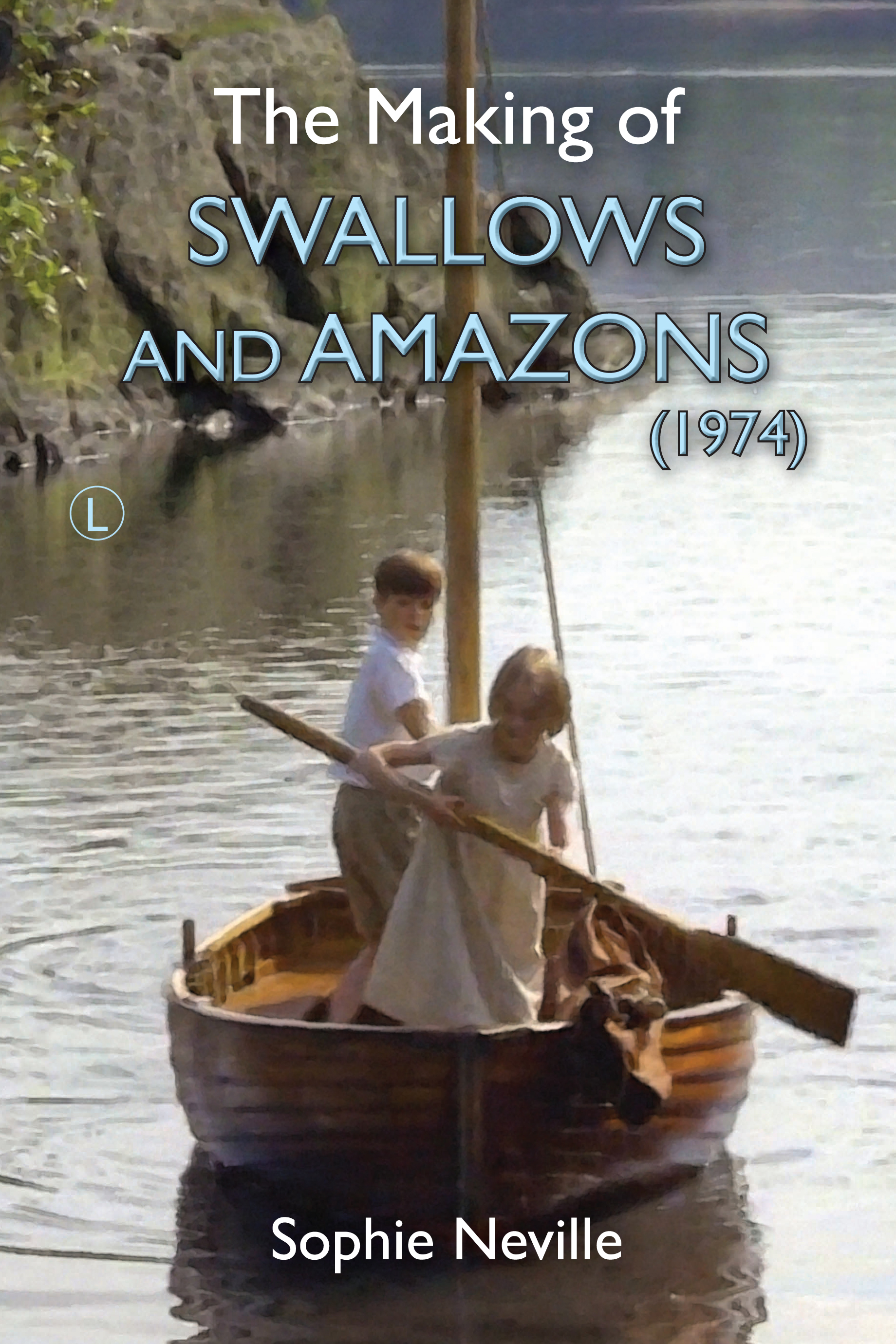
My one regret is that we didn’t follow the book when sailing the captured Amazon back to Wild Cat Island. The wind was up and Claude Whatham needed Simon to sail Swallow ahead of the Amazon which was lashed to the pontoon. I originally took the tiller as Titty is urged to in the story, but had trouble with the rudder and Susan is at the helm on the cover of the paperbacks brought out to accompany the film and a DVD distributed by the Daily Mail.
I was somewhat surprised to see Swallow outside Elstree Studios where we went to post-sync the film. They set up a tank on the sound stage so that Bill Rowe, the dubbing editor who was to win an Oscar for The Last Emperor, could capture the sounds so taken for granted and yet so evocative of handling wooden boats. I was concerned that she’d been given away (and she nearly was) but, as Richard Pilbrow made plans to adapt other Ransome books, she was sent to Mike Turk’s warehouse in Twickenham and stored with maritime props such as the Grand Turk, a replica of HMS Indefatigable, built in 1996 in Turkey for Hornblower.
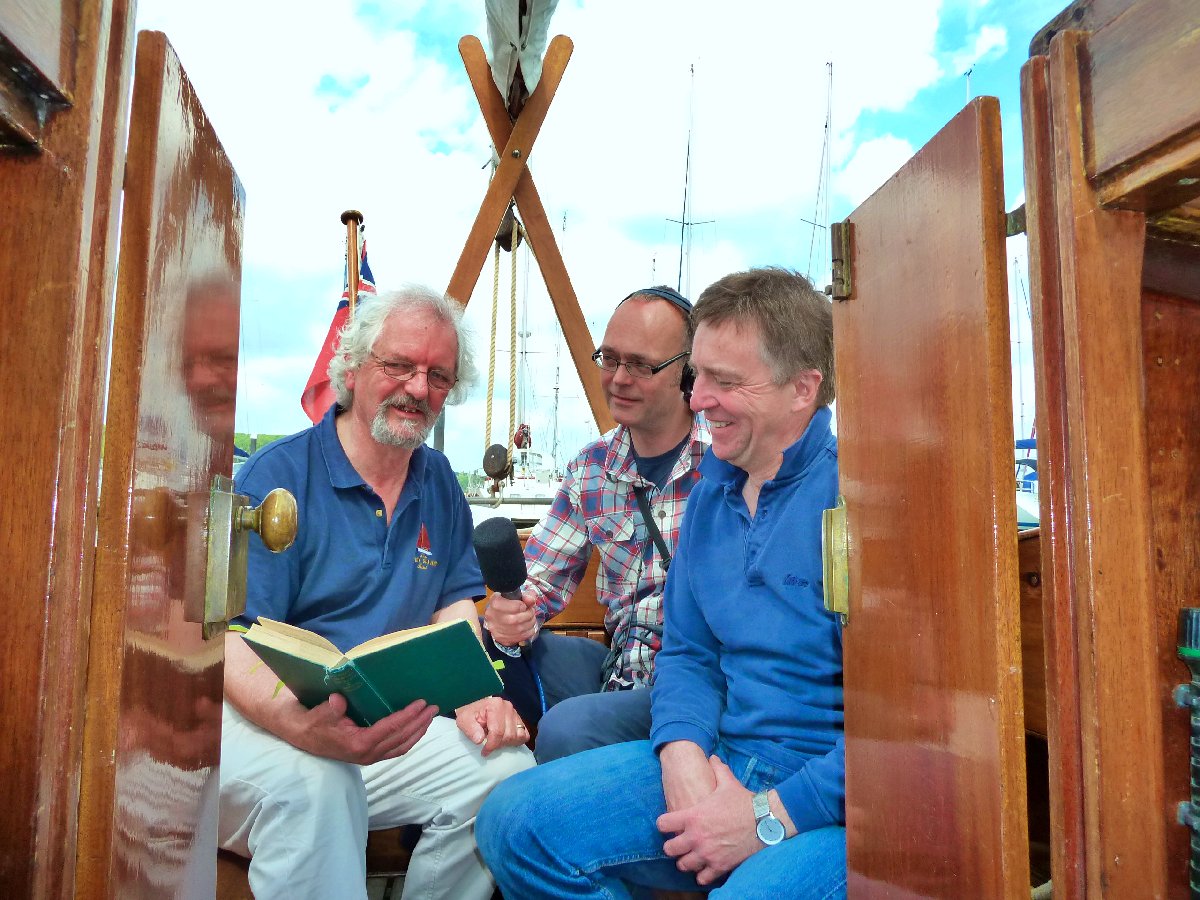
When Mike’s collection was eventually auctioned in 2010 I was alerted, first by my father, then by Magnus Smith. We found Swallow’s details online, took one look at the photos and clubbed together to purchase her, launching SailRansome at the 2011 London Boat Show. The idea that others could go out in her with an experienced skipper was greeted by John McCarthy who recorded the sounds of sailing Swallow for Paddling With Peter Duck, his programme made for BBC Radio 4.
Peter Willis in the Nancy Blackett with John McCarthy
The Arthur Ransome Society now own both historic dinghies. Rupert Maas valued Swallow highly when she appeared on BBC Antiques Roadshow in 2021.Everyone gasped but her true worth is akin to Captain Flint’s hidden treasure: instead of gold ingots his trunk contained precious memories that no doubt kept him on course when the storms of life blew in. Just as Arthur Ransome’s books grant us solace, my prayer is that many will be able to grab the chance of sailing the little boats that take us into the stories immortalized on film so long ago.
Back in 1974, none of us knew that Amazon had been used in the BBC adaptation of Swallows and Amazons made just eleven years previously and broadcast in 1963. I met the White family when they brought Amazon from Kent to Cumbria to feature in Country File. Ben Fogle had found their twin daughters on Peel Island, looking very much like Nancy and Peggy in damp bathing costumes having been swimming in the lake. It has been extremely generous of them to enable other families to sail such a precious boat.
Not so very long ago, a few TARS joined me at Keswick for a talk and screening of Swallows and Amazons at the Alhambra cinema when we grabbed the chance to go aboard the Lady Derwentwater. Nick Newby explained how she had been decommissioned in 1973 to appear as Captain Flint’s houseboat. Her temporary conversion was overseen by Ian Whittaker, the set dresser who went on to be nominated for a number of awards and won an Oscar in 1993 for his work on Howard’s End. The Lady Derwentwater has since been given a new stern but is in good shape, back in her role as a passenger launch.
The mfp Vinyl LP of ‘Swallows and Amazons’ with Sophie Neville and Simon West bringing Swallow into her harbour
Arthur Ransome was taught to sail on Coniston Water by the Collingwoods in a boat they kept below Lane Head, now known as Swallow I. People often ask if the original Swallow II, a sea-going dingy with a standing lugsail built by William Crossfield, and sailed by the Ransomes, is still around. After being kept on a mooring in Bowness Bay, where she was looked after by a boatman called John Walker, she was sold in September 1935 and sadly ‘vanished without a trace’.
The Amazon, originally named Mavis, and also sailed by the Altounyan family, now resides in the John Ruskin Museum at Coniston where she can be visited much like a great aunt. Ransome’s dinghy Coch-y-bonddhu or Cocky, the model for Scarab in his books, restored and owned by TARS, is on display at Windermere Jetty, the museum where the fourteen foot RNSA dinghies used in the 2016 movie of Swallows and Amazons have been moored. A few of the steamboats used to dress the scenes set at Bowness-on-Windermere or Rio in 1973, such as Osprey and George Pattinson’s launch Lady Elizabeth, may be in residence. They are currently restoring the SL Esperance used by Ransome as his model for the houseboat.
In 1983, I worked behind-the-scenes on the BBC drama serial of Coot Club and The Big Six (and wrote Extras for the DVD titled Swallows and Amazons Forever!) We spent three months filming on the Broads, using the four-berth gaff sloop Lullaby to play the Teasel, a vintage dinghy for Titmouse and a punt for Tom Dudgeon’s Dreadnaught. They have all been kept at Hunter’s Yard, near Ludham in Norfolk where you can hire classic boats. While exploring the Broads you can track down the Death and Glory, Janca, used to play the Hullabaloo’s Margoletta, and the wherry Albion used for Sir Garnet along with yachts like Pippa that were also featured in the serial. Hopefully, Arthur Ransome’s ‘good little ship’ the Nancy Blackett, bought with his ‘Spanish gold’ or royalties, will one day star as Goblin in a film adaptation of We Didn’t Mean To Go To Sea. Wouldn’t that be wonderful?
Arnaldo Putzu’s poster for the EMI film Swallows and Amazons (1974)
Half a century has passed since the original film Swallows and Amazons first came out in cinemas, the good little ships featured sailing improably on the poster. Thanks go to Magnus Smith, Rob Boden, Diana Wright, Marc Grimston, and all those who have looked after and lovingly restored the inspirational boats that appeared in the movie. They mean so much to so many. Three million cheers to those at The Arthur Ransome Society who are working with Hunters Yard in Ludham to make both little ships available for hire in 2025 .
Amazon will soon be available to hire at Hunter’s Yard, Ludham
If all goes to plan, you will be able to take them out. When you do, smell the freshness for me. Stroke the varnish, take in the feel of the ropes, the weight of the oars. It may be chilly, but that too is part of the experience of liaising with old boats out on the water.
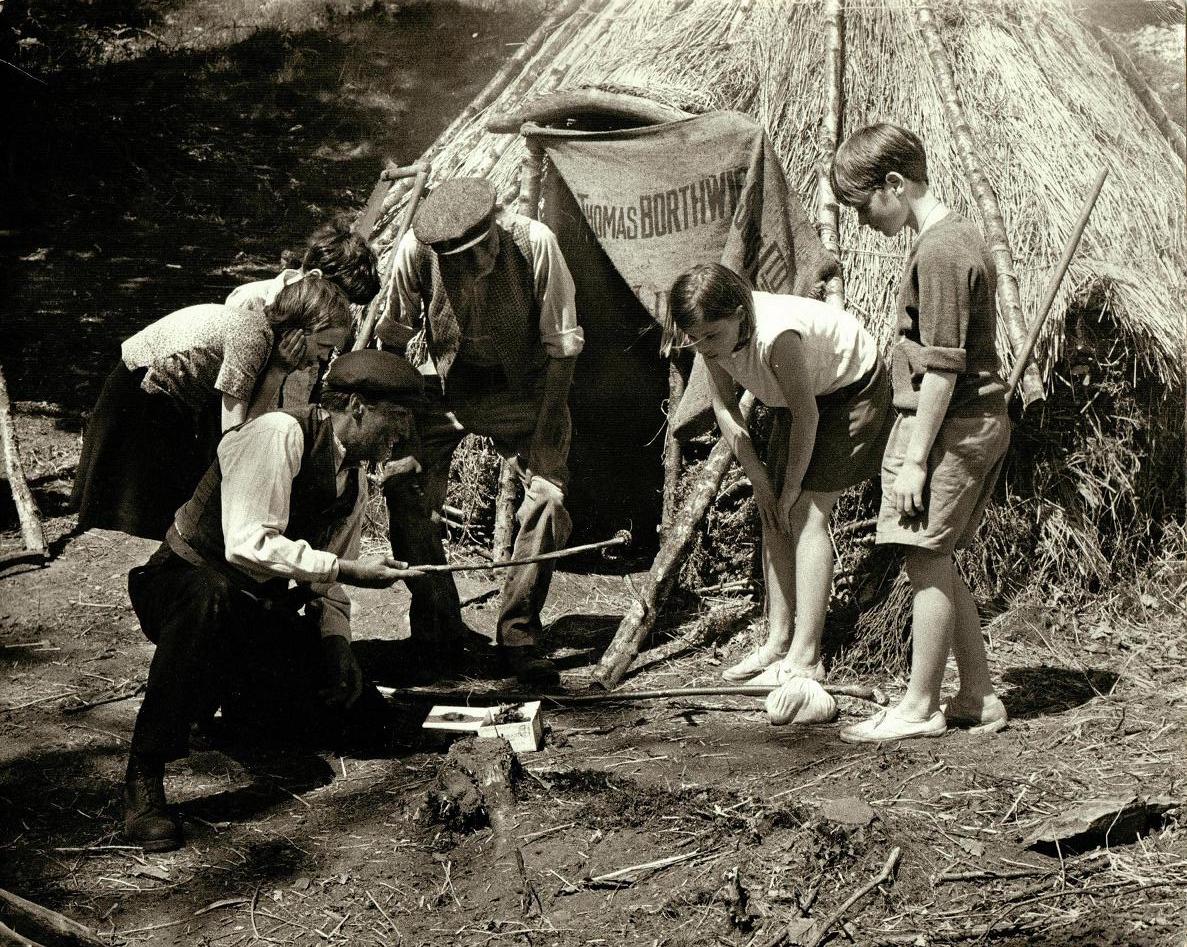
Sophie Neville, Sten Grendon, John Franklin-Robbins, Jack Wolgar, Suzanna Hamilton and Simon West looking at an adder in the original film ‘Swallows and Amazons’
In 2024 a ‘Swallows and Amazons’ festival at Windermere Jetty near Bowness-on-Windermere in Cumbria was organised by The Arthur Ransome Society and Lakeland Arts. Such was the publicity that I was contacted by a Lakeland charcoal burner who kindly sent me a report on his last talk:
‘I, Brian Crawley, am currently President of the Coppice Association North West. In our late 50s, my wife and I embarked on a career change into coppicing, principally making barbecue charcoal. This presentation is not about earthburns in general, it is about but a specific site for them.
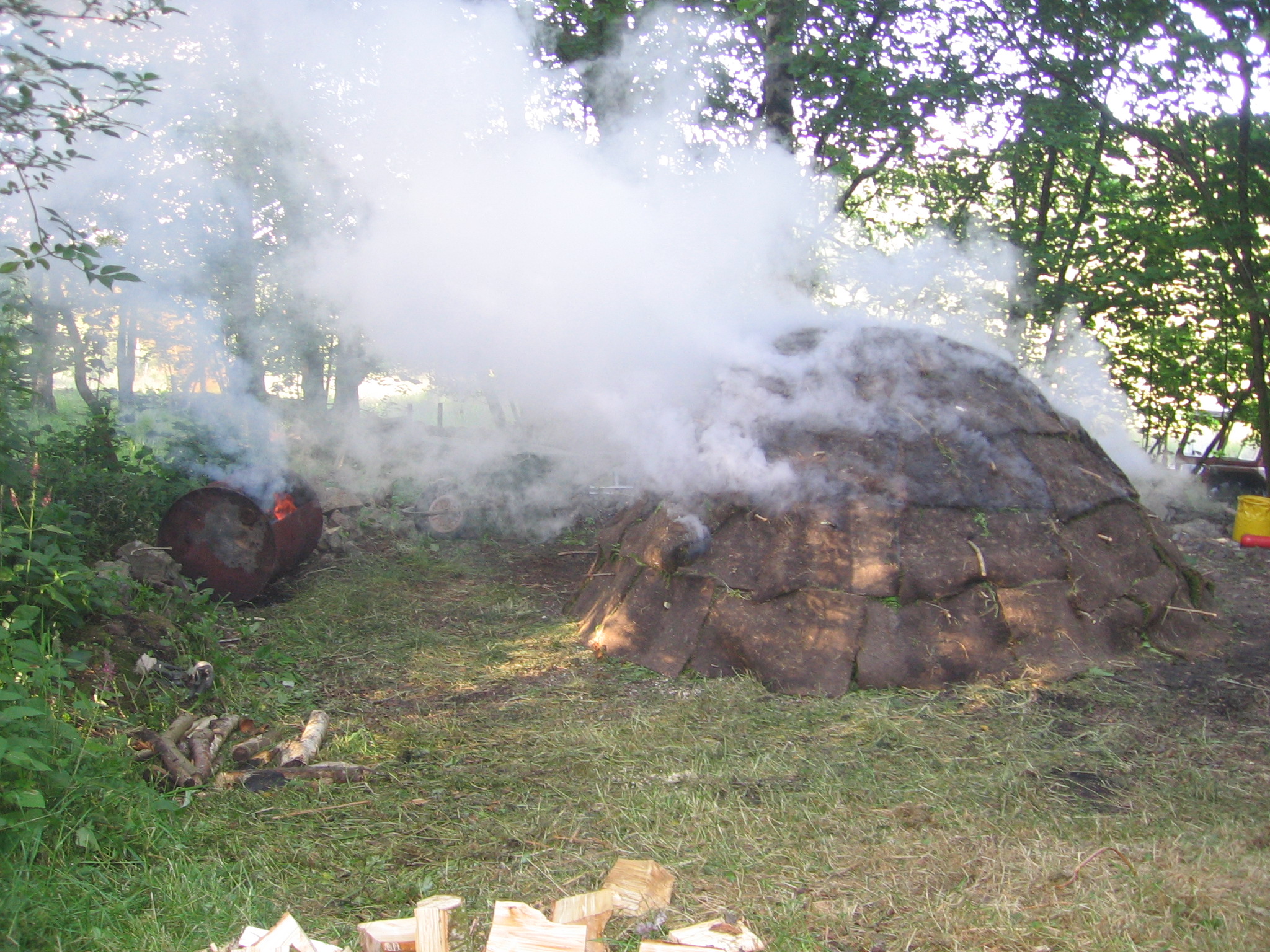
‘I had always been aware of the traditional way of making charcoal, ‘charcoal earthburns’ being a stack of wood covered with earth to limit the oxygen intake to the burn.
‘The receipt of a set of photographs of a charcoal earthburn from David Jones, who was a patient of my daughter’s, encouraged my interest in the subject. David’s photos were of an earthburn that had taken place in 1972 and were included in an extract from his book ‘A Lakeland Camera’.
‘I later discovered that the charcoal burn had taken place as a result of discussion between Mike Dow, who was Treasurer of Haybridge Nature Reserve in the Rusland Valley, and Mike Davies-Shiel, a prominent local archaeologist. They enticed local woodland worker Jack Allonby, who had a retired uncle Tyson Allonby, a charcoal burner, to do an earthburn. Jack was helped by Bill Norris who regularly helped local archaeologist Mike Davies-Shiel and lived in the same village as Jack. Mike Dow arranged that a film would be made of the burn and subsequently directed it. Bill Norris narrated it. I was put in touch with Mike Dow through our Coppice Association NW secretary Alan Shepley, who had worked with Mike Dow in earlier years, and I was given the “Charcoal Burners of High Furness” DVD, which I then played to the audience. It was not my way of doing earthburns, but was historically interesting. A photo of the charcoal burners of Furness is available on ebay here.
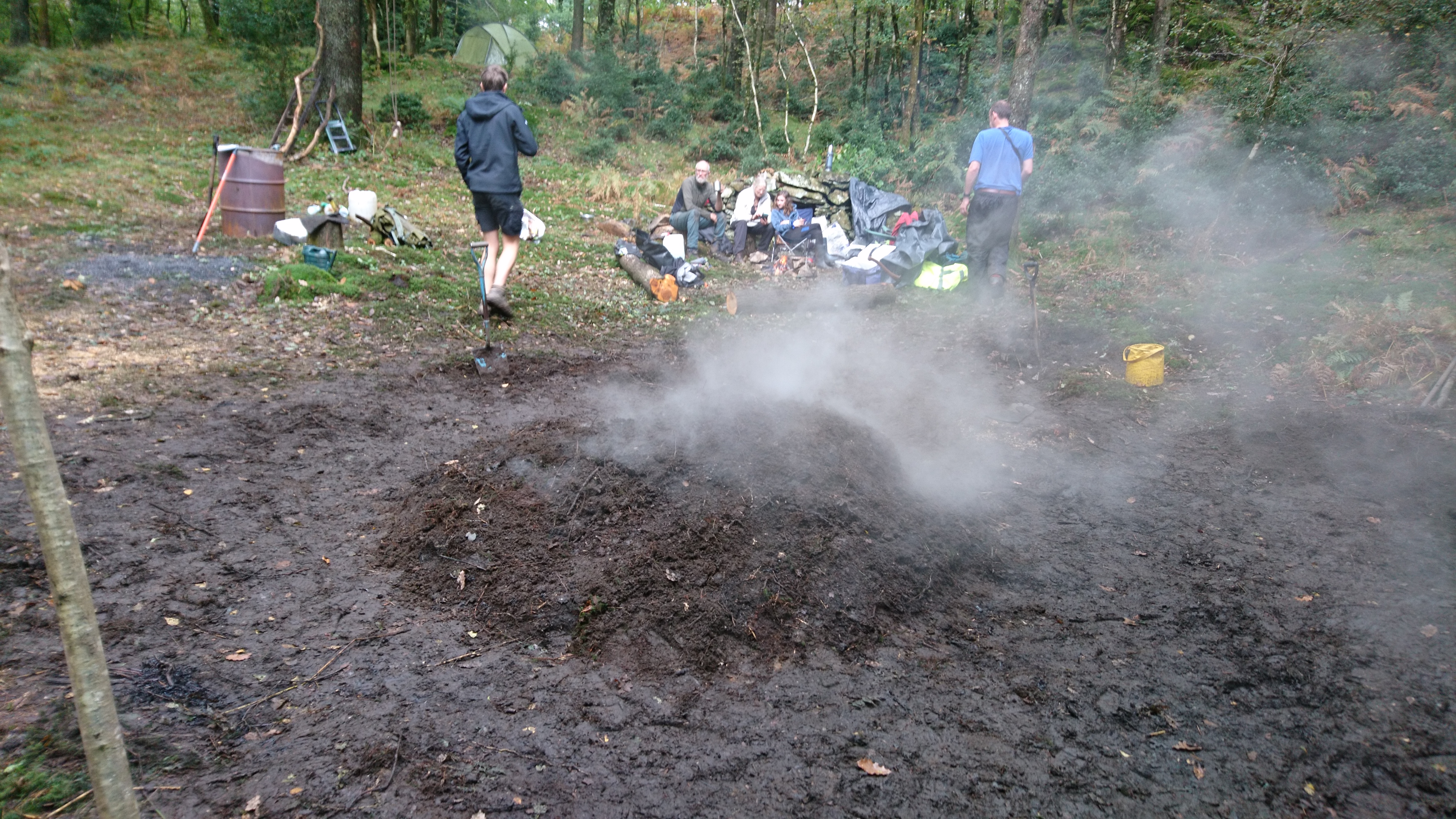
Our helper from Cumbria Woodlands with his 3 sons, John Allonby, Dan Sumner and June Norris with her husband
‘For many years I had been fascinated by the visit of the children in the movie Swallows and Amazons (1974) to the charcoal burners and had always wondered where it was filmed. A gentleman on a charcoal making course, which we ran, explained to us that he was there when it was made and took us to the site not far from where he lived at Ickenthwaite in the Rusland Valley. Myles Dickinson told us how amazed he was that they got a double decker bus up the lane to the site for the children’s classroom. However, our inspection of the site in Glass Knott wood on the very narrow, winding and steep Corker Lane up to Ickenthwaite, plus another look at the Mike Dow film and David Jones’s photos, convinced me that it was the correct location.
‘I can’t remember how I first got in touch with Sophie Neville, who played Titty in the 1974 film Swallows and Amazons, but she gives some interesting details about ‘The real Charcoal Burners – who we met whilst filming ‘Swallows and Amazons’.
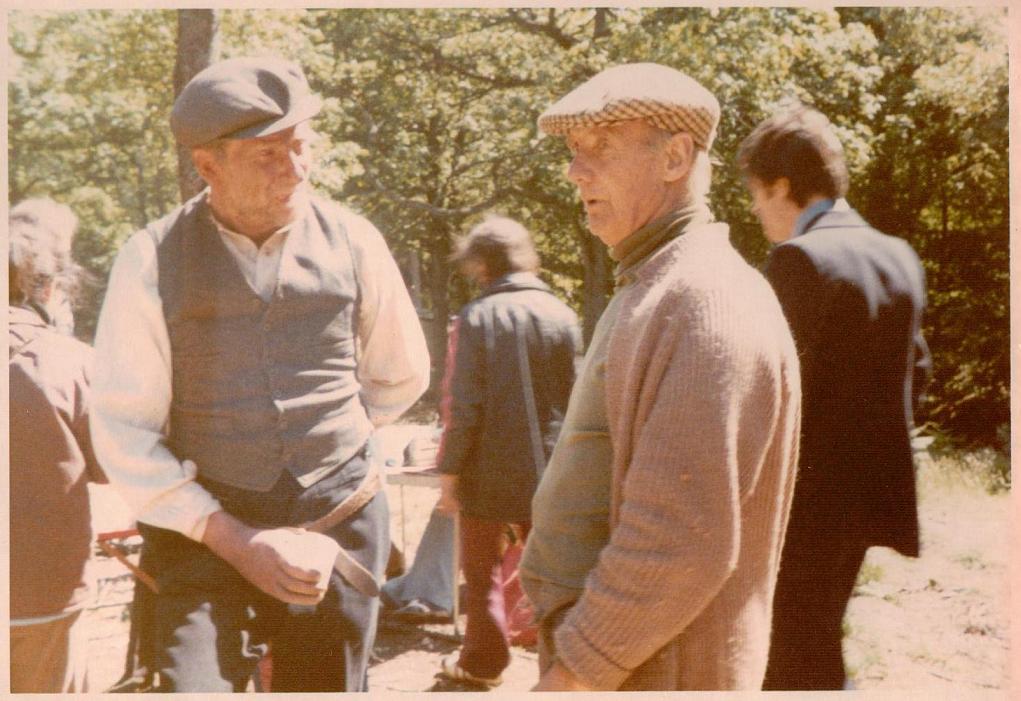
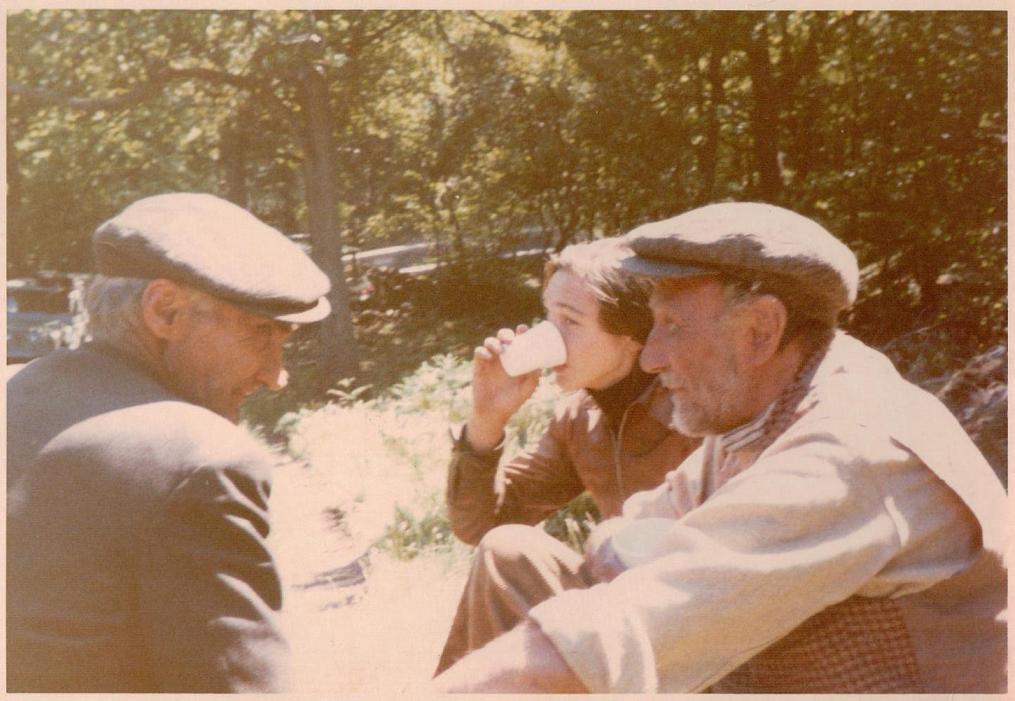
John Franklin-Robbins playing Young Billy chatting to the real charcoal burner during a coffee break on the set of ‘Swallows and Amazons’ ~ photo: Daphne Neville
‘I was able to make some extra comments to the blog as well as a photograph the site many years after the filming. I then played a clip of their visit from the Swallows and Amazons film, being shown by courtesy of Studiocanal who own the rights.
‘It became my obsession to carry out another charcoal burn on the site and became significant in 2023 when I realised that the original filming had been in 1973, 50 years previously. This year also turned out to be the visit to the North West of the National Coppice Federation annual gathering.
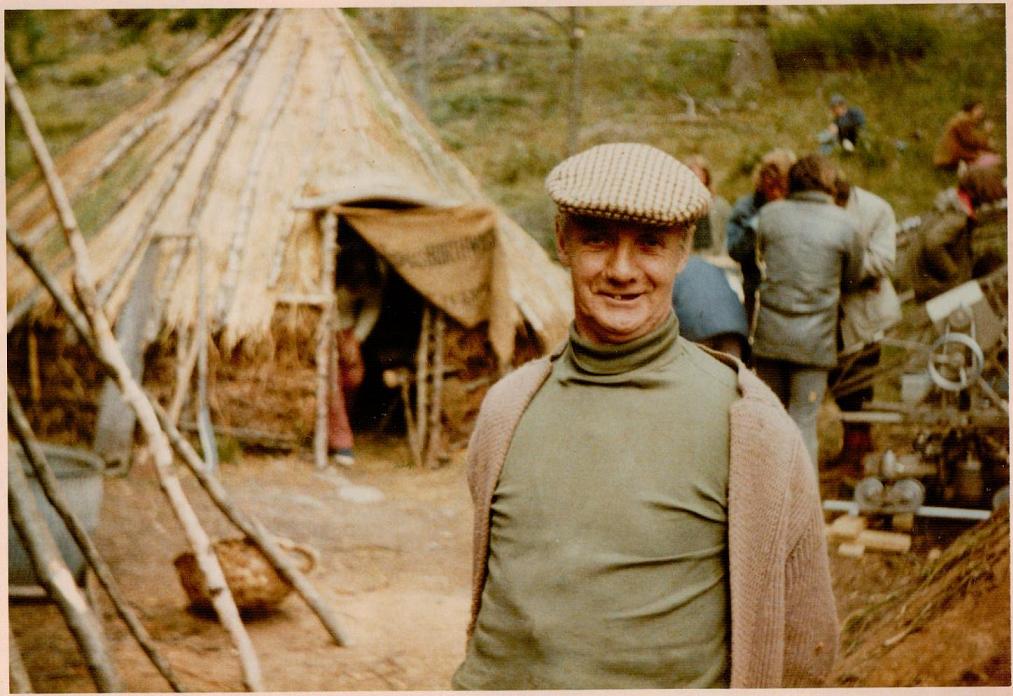
The real charcoal burner outside the hut. Behind him the 35mm Panasonic camera is being mounted on a short section of track ~ photo: Daphne Neville
‘Glass Knott wood is now owned by the Lake District National Park Authority. Permission to carry out the burn was requested and eventually approved with enthusiasm. At the same time Dan Sumner was looking for instruction on how to do an earthburn and we agreed that this was a good time for me to show him how, and for him to be responsible for the burn and provide the timber. The burn took place two weeks before the gathering and we had a fascinating visit to the site from Jack Allonby’s son John together with Bill Norris’s daughter June who had lived in the same small village, Spark Bridge, 50 years ago. A young John Allonby had been at the site with his father during both filmings. We also had a visit from Myles Dickinson who still lives nearby. We had a few very good helpers and some other visitors from LDNPA, Cumbria Woodlands, Coppice Association North West, The Arthur Ransome Society and Ruslands Horizons.
Jack Allonby talking to Jack Woolgar who was playing Old Billy ~ photo: Daphne Neville
‘I then showed some photographs of the weekend’s successful event and a few photos of Sophie Neville’s blog on the web.
Arriving at the Charcoal Burners’. Jack Woolgar with Simon West, Suzanna Hamilton, Sophie Neville and Stephen Grendon ~ photo: Daphne Neville
‘To finish, I then showed a DVD of the Millenium Burn, actually held in 2001, at which I learned earthburns from Arthur Barker, who was supported by Alan Waters and his friend Mark, at a site a bit further up the Rusland Valley where Jack Allonby had been filmed doing another earthburn by Sam Hanna, which can now be seen on the internet.’
Earthburns presentation by Brian Crawley, NCFed Gathering Oct 2023
John Franklin-Robbins playing Young Billy with Sophie Neville, Stephen Grendon and the adder.









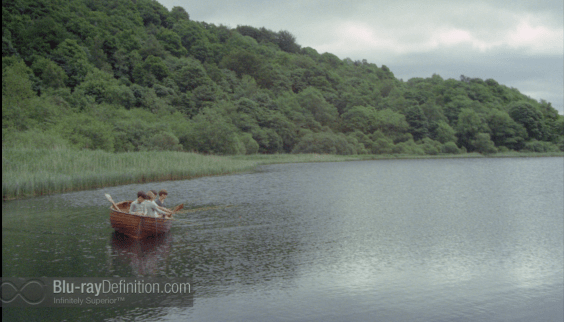


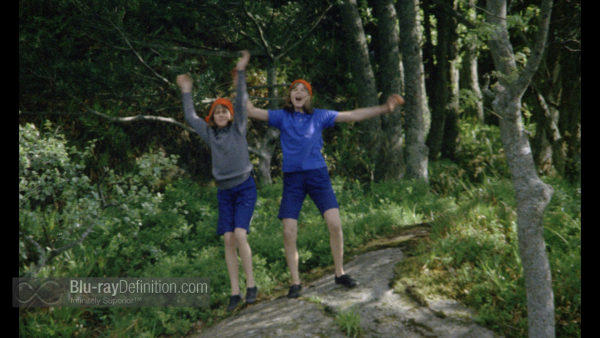


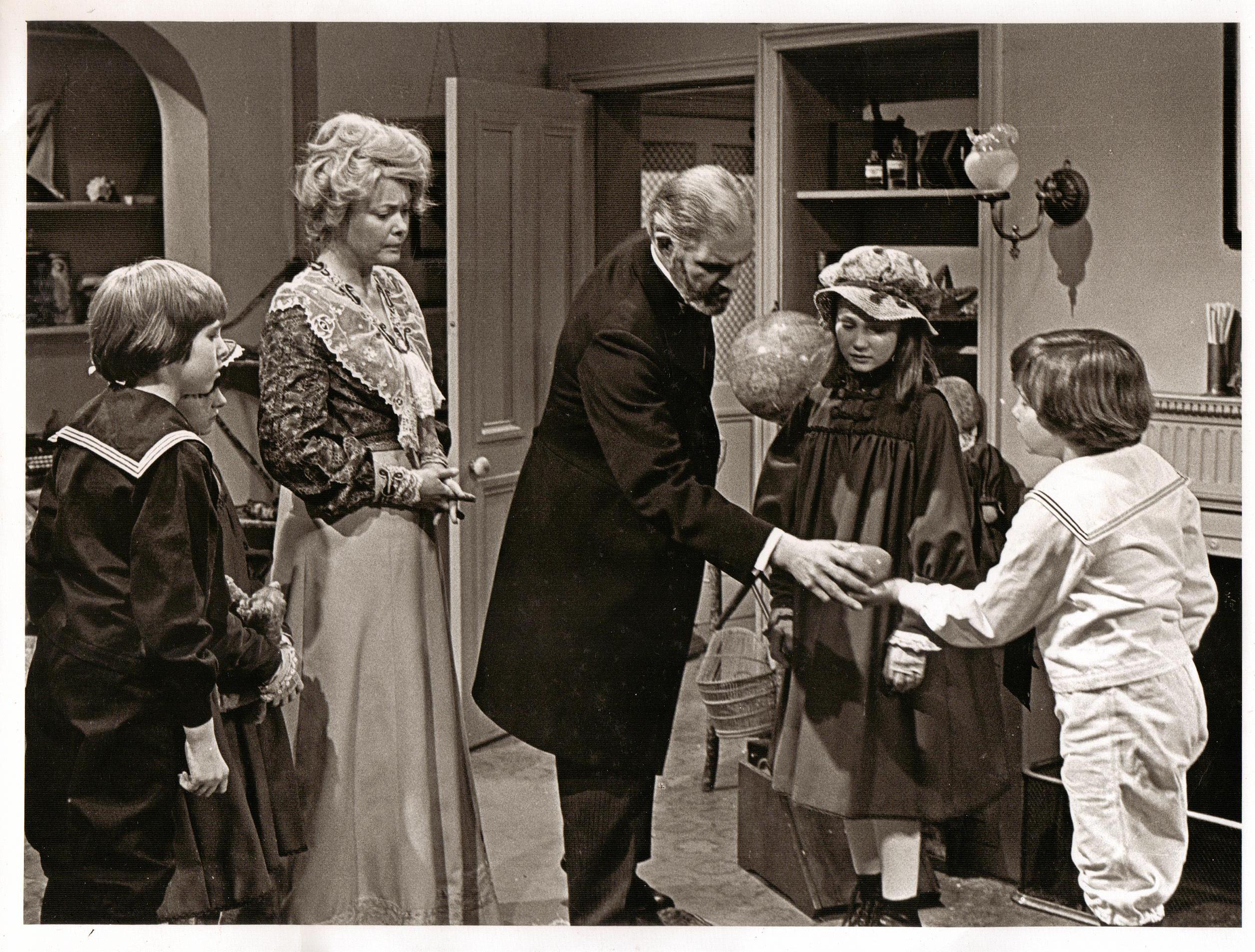




























 Sophie Neville