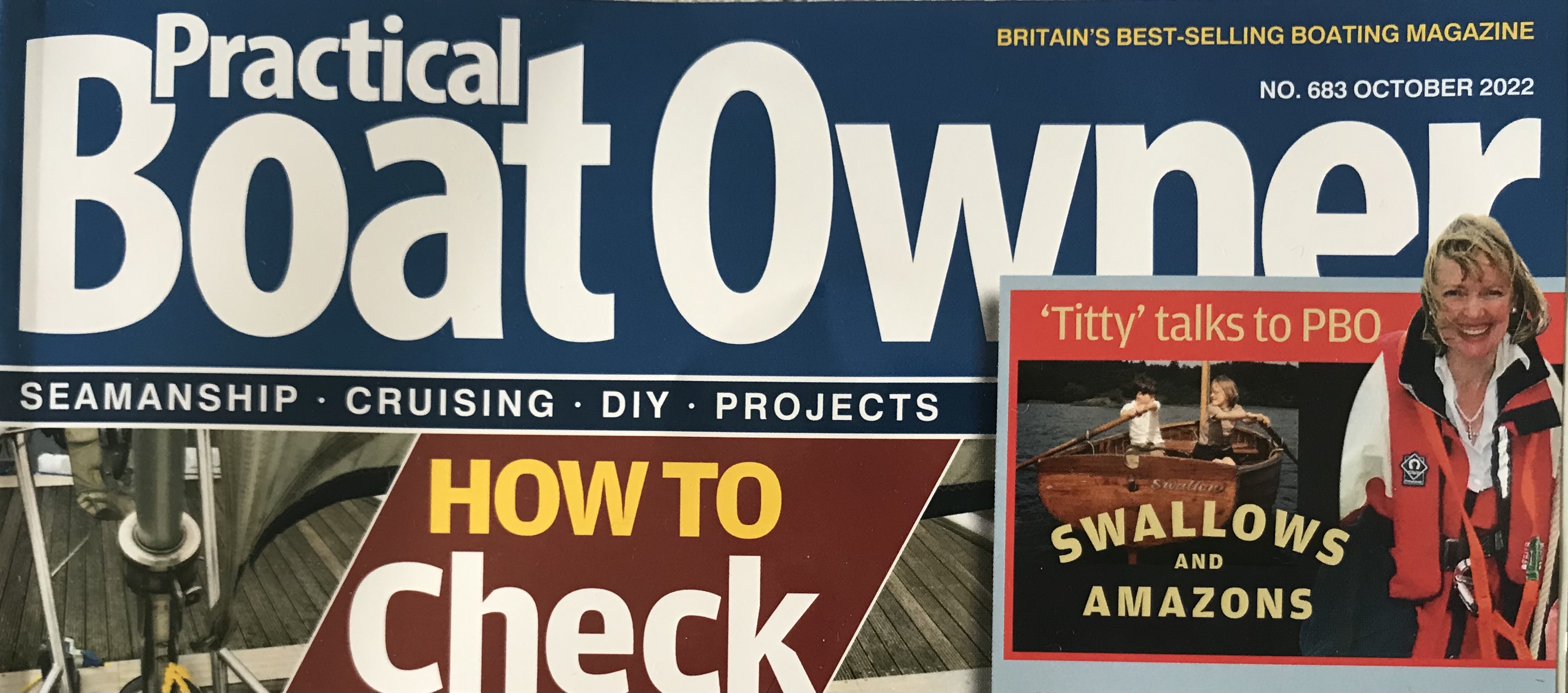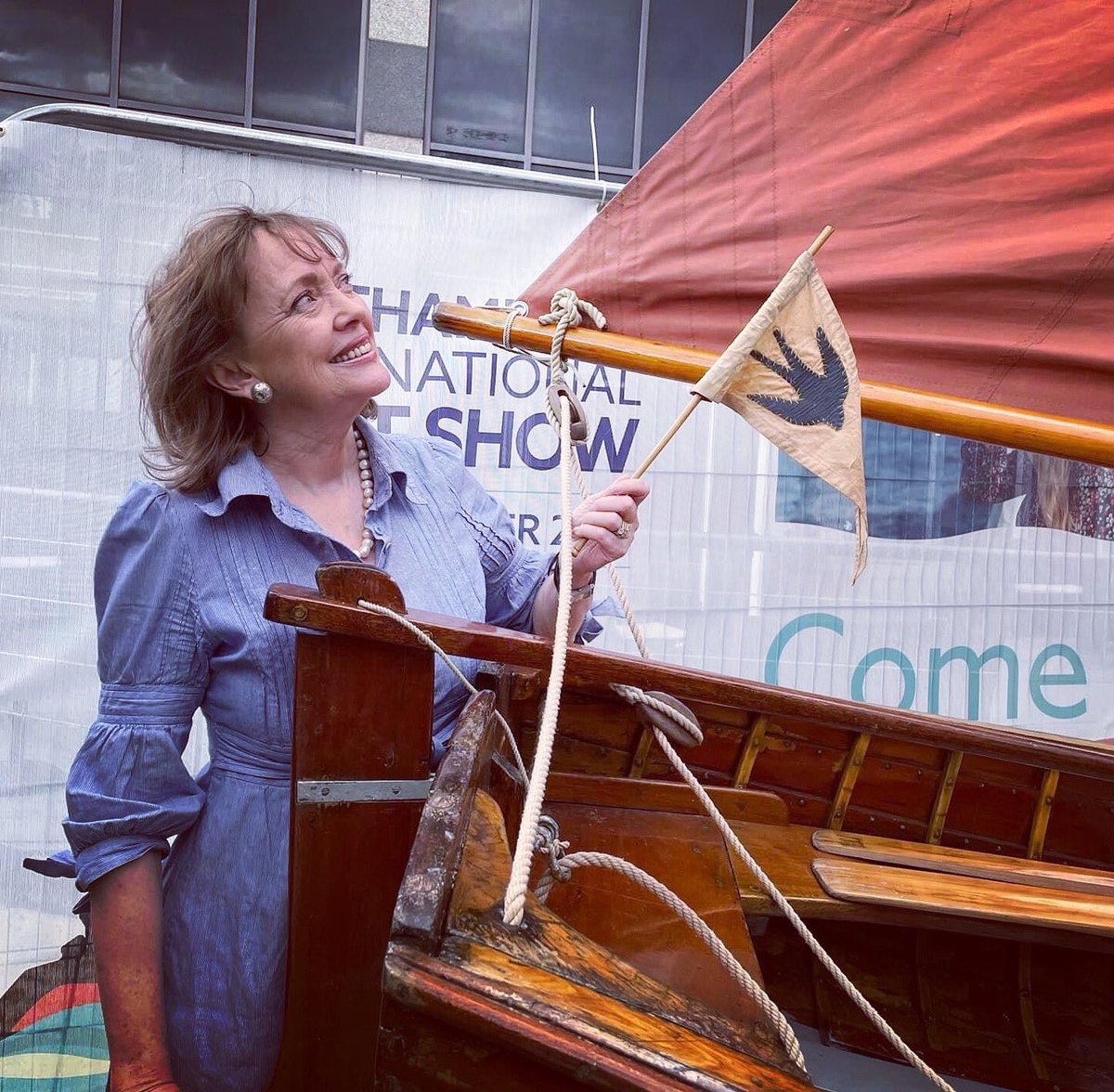
Writers and illustrators inspired by Swallows and Amazons

Tom Stoppard, the playwright, said he turned books over as a child hoping they might be ‘Swallows and Amazons’. (The Guardian) In Hermione Lee’s recent biography of Tom Stoppard, she notes that as an eight-year-old boy, ‘The first real book he picked up, soon after getting to England, was Arthur Ransome’s Peter Duck, the third in the Swallows and Amazons series, a 1930s epic of Atlantic Ocean travel, shipwreck, hostile pursuit and secret treasure. He spotted on the jacket that Ransome had written some other books too. ‘My method of searching for these books had a sort of pathos about it: I simply went around picking up any book I saw lying about to see if it was called Swallows and Amazons. But it never was.’ Luckily he found a full set of Arthur Ransome books at school. ‘Stoppard, that enchanting master of the English language, was a Czech refugee, and Ransome was therefore one of his early English-language influencers.’

Melanie Philips lists Swallows and Amazons as one of the ‘great childhood books’ that ‘stay with us for ever’. ‘Books that make a profound impression on us in childhood can form part of our mental scaffolding throughout our lives.’ The Times

When asked , “What was it that first gave you the reading bug,” author Sarah Moss said, “Arthur Ransome: Swallows and Amazons. I was an outdoor child — though not always by choice — and I knew and loved the landscapes where the series is set. I re-read them with my children and they are classics with strong, likeable, flawed characters, a family dynamic that’s in some ways more interesting to me as an adult (John has some serious issues with the patriarchy) and a satisfying interest in fruit cake and pork pies. (Daily Mail)

Tony Ross – illustrator of Horrid Henry and The Little Princess, said, “I absolutely loved this book as a boy. I read it when I was ill with the mumps. The simple line drawings were just wonderful; they gave the feeling of wide open spaces and freedom. When you’re bound up in bed, when your jaw is aching and your face is the size of a football, it’s nice to be wafted out into the water. Swallows and Amazons gave me a lifelong love of sailing. I’m a bad sailor, but I love messing about on boats.” Daily Telegraph

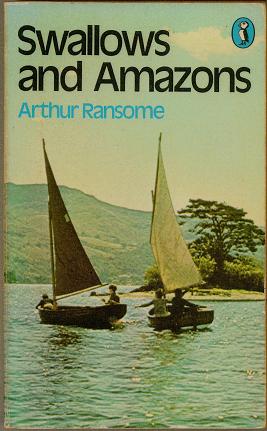
Puffin edition of Swallows and Amazons
1974 Puffin edition of ‘Swallows and Amazons’

Sir Antony Jay, the author and co-writer of Yes, Minister and Yes,Prime Minister, who was editor of the BBC Tonight programme and Head of Television Talk Features, was a fan. Janet Means of the Arthur Ransome Group said that when she was a child, and he was a very young BBC producer, that he used to lend her Swallows and Amazons books.

I had been asking if Agatha Christie referred to any of Arthur Ransome’s books. She didn’t, but I’ve been told that in the recent adaptation of Why Didn’t They Ask Evans? Frankie Derwent reads Swallows and Amazons aloud to a young boy who has had a traumatic experience that day, as he falls asleep. The passage she reads includes: “But the big hills up at the lake helped to make him feel that the houseboat man did not matter. The hills had been there before Captain Flint. They would be there for ever. That, somehow was comforting.” The book was adapted for television by Hugh Laurie.

Julian Fellowes acted in the BBC adaptation of Coot Club but I’m not sure if he has referred to Swallows and Amazons in any of his novels of screenplays.

Tony Collins, who brought out 1,400 books as a publisher, mentions that he grew up reading Swallows and Amazons in the first page of his new memoir How to Make Mistakes in Publishing.

Sometimes it’s the Swallows and Amazons lifestyle that people speak of. Santa Montefiore ~ ‘I had an idyllic Swallows and Amazons childhood growing up in a beautiful Jacobean house on a farm in Hampshire.’ Guardian 

Louise Minchin said, ‘I devoured Swallows and Amazons by Arthur Ransome. It gave me two things, a love of reading and a sense of adventure.’

It was the first time I was able to escape into a world that wasn’t my own and I felt like I was on board those tiny sailing boats in the Lake District having wild adventures.Daily Mail

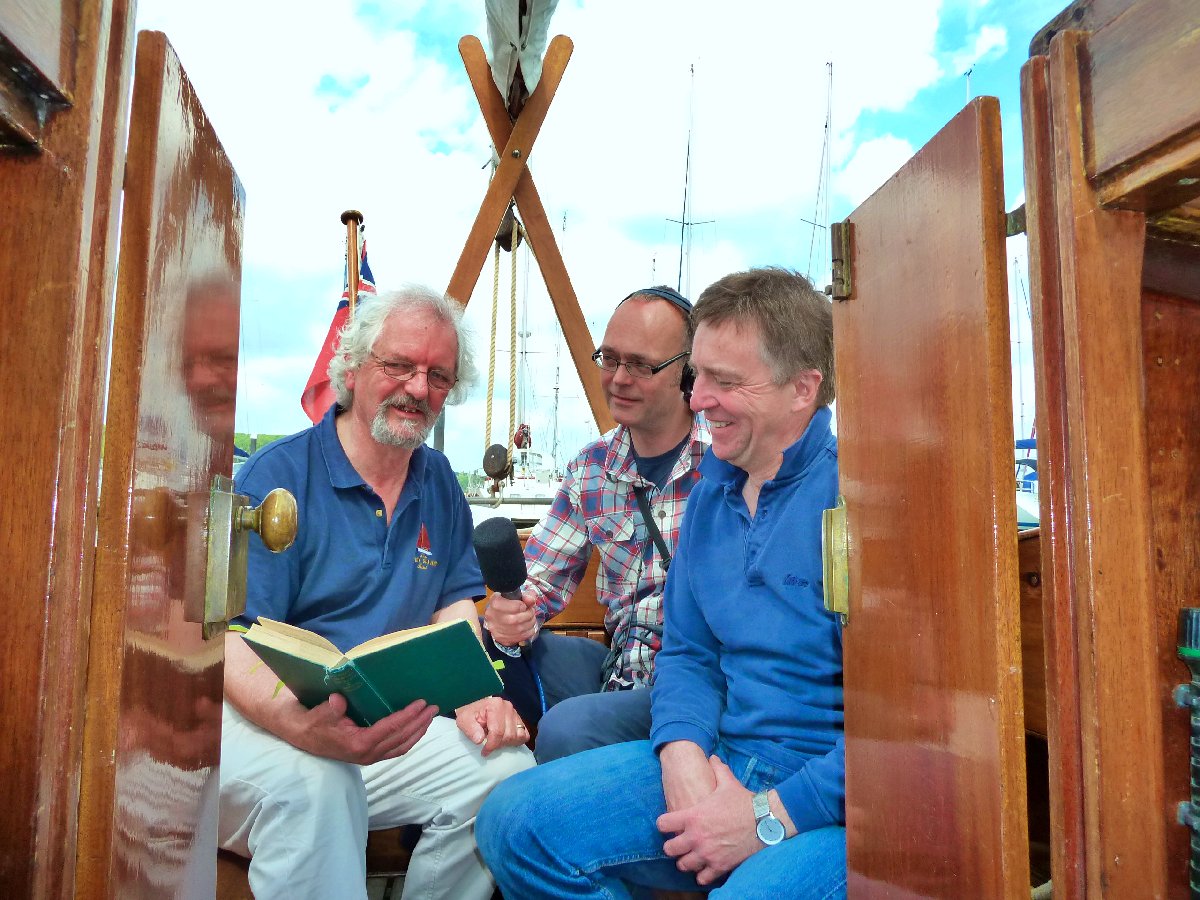
Frances Wheen who wrote the a-claimed biography of Karl Marx joined us at Pin Mill for a marathon reading of We Didn’t Mean To Go To Sea hosted by the Nancy Blackett Trust

Janet Mearns, of the Arthur Ransome Group on Facebook, spotted several references to Swallows and Amazons and Titty, ‘with the assumption that the Radio 4 audience would understand the reference’, in series 6 of the Radio 4 sitcom No Commitments written by Simon Brett.

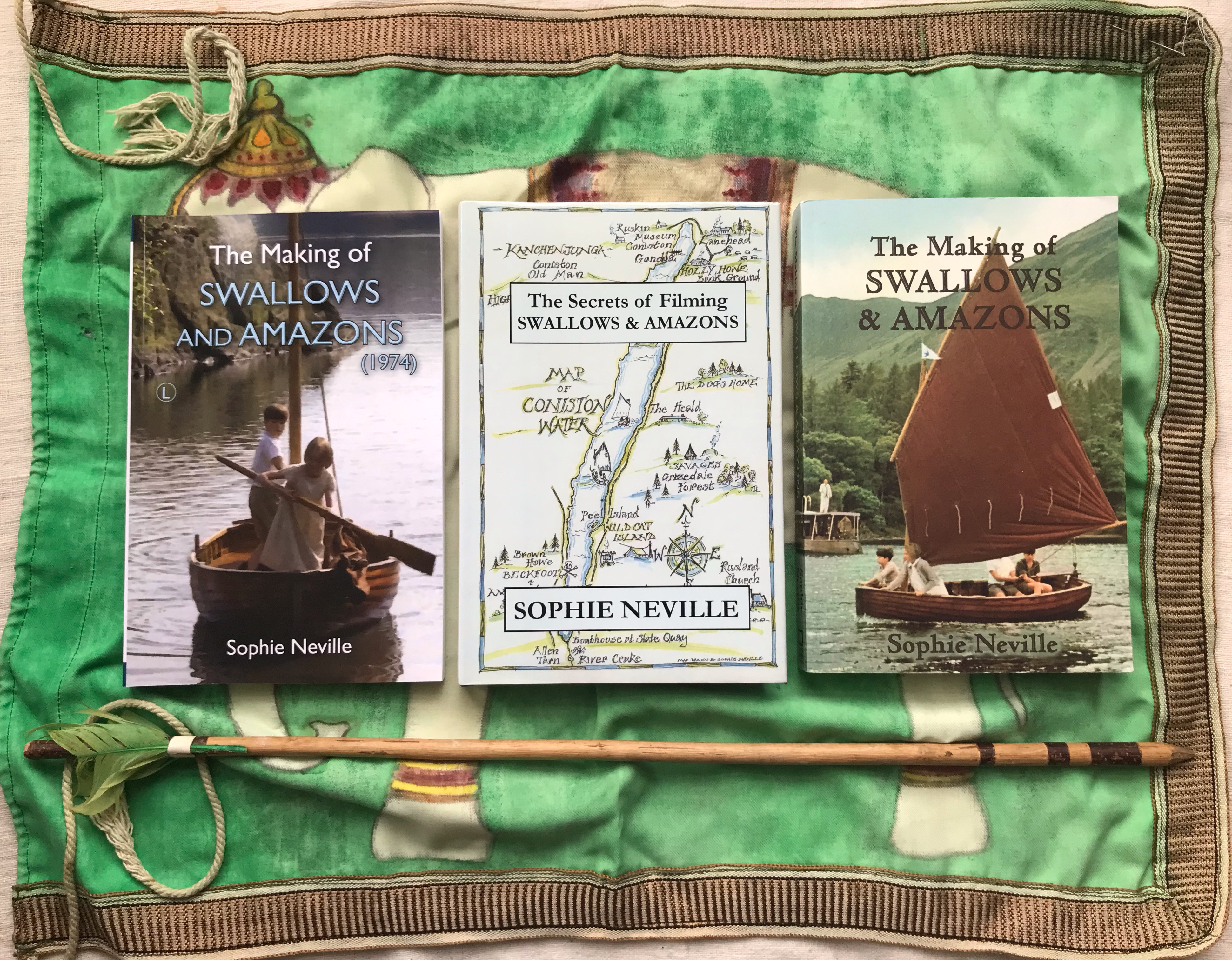
Brian Doyle, the publicist of many iconic movies including the original film of Swallows and Amazons, wrote about Arthur Ransome in his book, The Who’s Who of Children’s Literature, claiming that he launched a ‘new age’ in children’s literature by writing about his own childhood by the lakes he loved so much. He is featured in these books about making the film, available from all the usual sites online

'The Making of Swallows and Amazons (1974) by Sophie Neville'
Different editions of ‘The Making of Swallows and Amazons (1974) by Sophie Neville’

For a list of other well known writers who have been inspired by Arthur Ransome, please click here.

Well known authors and celebrities who love Swallows and Amazons

The Duke of Edinburgh is reputed to have spoken of a ‘Swallows and Amazons spirit’ or ‘the spirit of Swallows and Amazons’. The books are certainly loved by many.

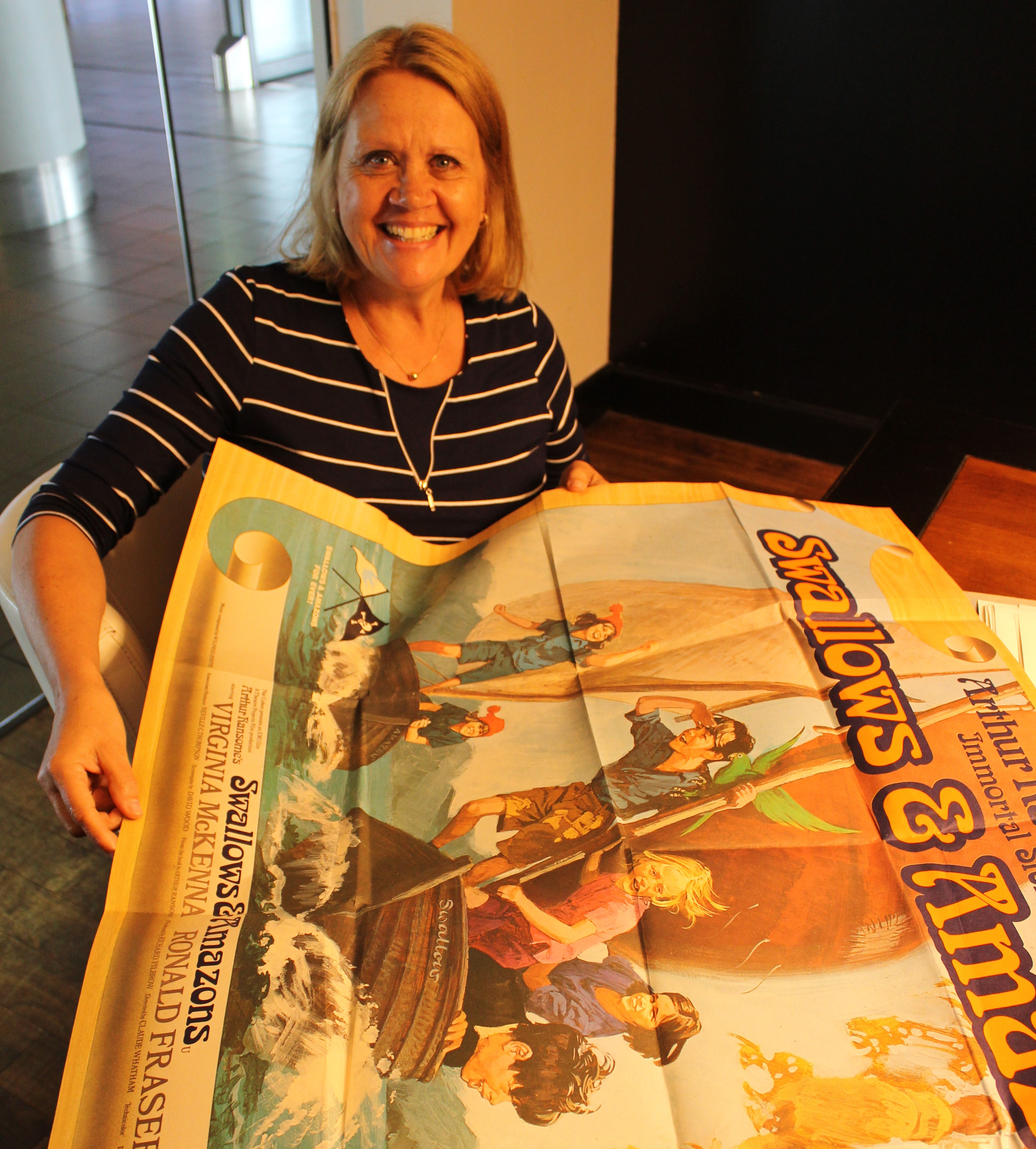
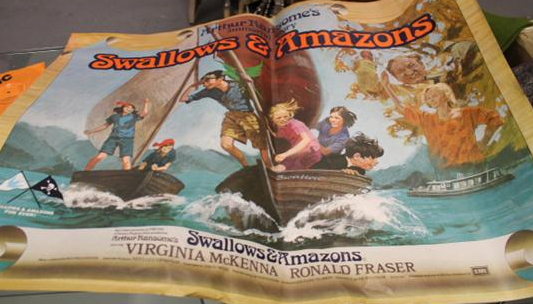
I was interviewed by the antiques expert Marc Allum who reckoned my collection of memorabilia from the 1974 film would be worth about £5,000. You can read more about this here. I have a feeling this episode recorded at Windermere Jetty might be repeated someday soon.

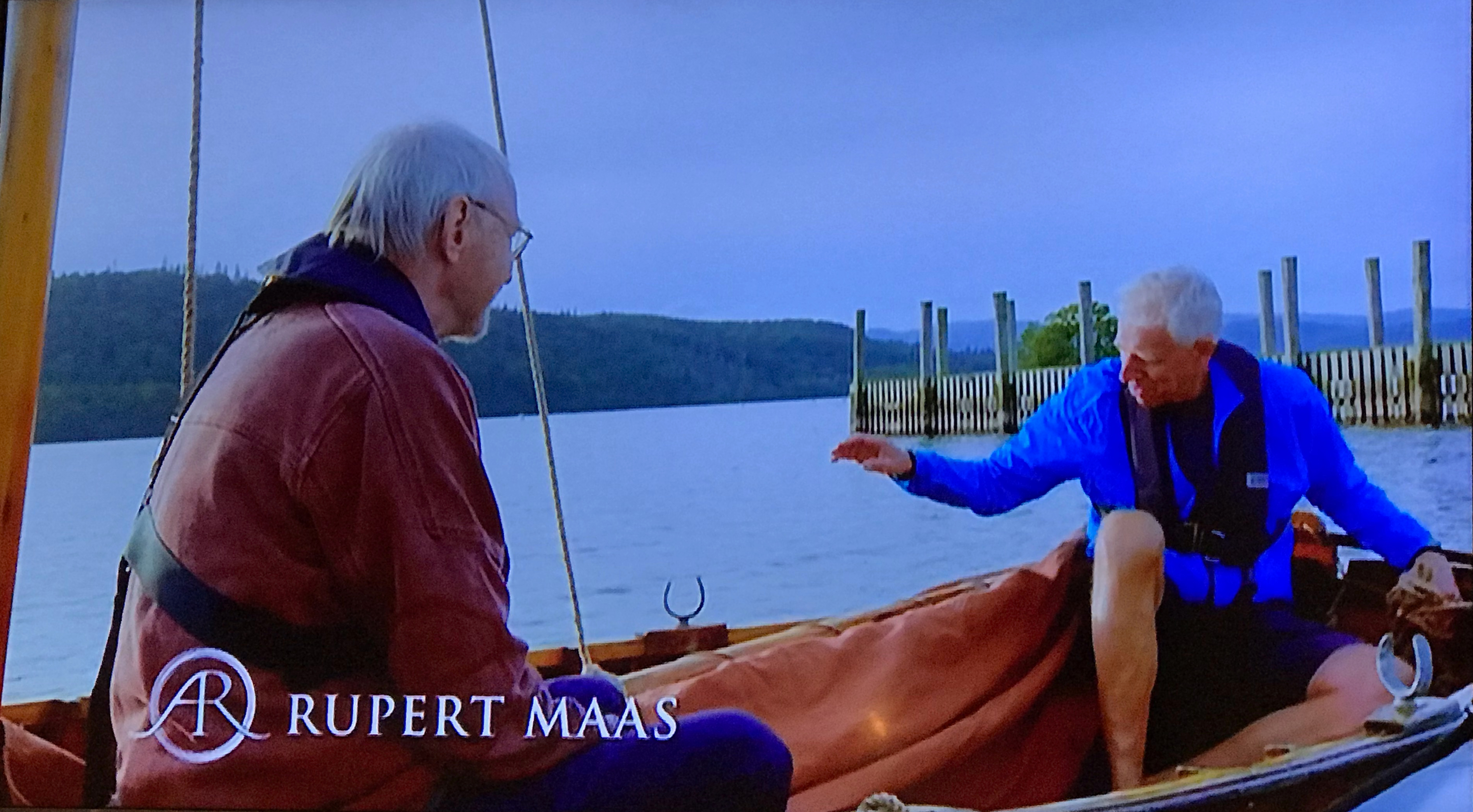
Rupert Maas the art expert on BBC Antiques Roadshow, who watched the film as a boy, said that the Arthur Ransome books inspired him to sail across the Atlantic. He valued Swallow, the dinghy we used in the movie at more than £10,000.

Rupert Maas on Windermere, valuing Swallow on BBC Antiques Roadshow in 2021

Salman Rushdie told of arriving at an English public school having learned about England from Arthur Ransome’s ‘Swallows and Amazons’. That school was Rugby where Ransome had been a reluctant pupil himself. (Radio 4’s ‘This Cultural Life’ broadcast on 22nd June 2024.) He told the Sunday Times, ‘If I was going to be posh, I’d say the book that made me a reader was Alice in Wonderland. But the real truth is Swallows and Amazons. Somehow in Bombay, all those Arthur Ransome books showed up in the local bookstore. I loved the enormous personal freedom the children had. They had boats and could go sailing in the Lake District with no grown-ups in sight. They could have adventures on islands with pirates. I was a child of the same age as these children and I was very attracted to this lifestyle of these kids messing about in boats.’ He moved to the UK at the age of twelve specifically to go to boarding school. When speaking on Desert Island Discs he said he was following “some spirit of adventure, I guess. I remember reading the Swallows and Amazons books. The amount of personal freedom those children had, I thought it was sensational.” I wonder what influence the books had on his writing? Does he mention any of Arthur Ransome’s books in his classic children’s novel ‘Haroun and the Sea of Stories’?

Jeffrey Archer was inspired by the book saying it was one he would take to a desert island. “I love Swallows and Amazons because it has the sense of children working together. It was very moral in that it made clear that individuals don’t matter.” (The Independent) “Swallows And Amazons was unputdownable – though I did not try to emulate their adventures.” (My Weekly) “It’s a story with enduring appeal” (The Express)

Kate Adie, the News correspondent, who, on ‘I’ve never seen Star Wars’ (BBC Radio 4 ), gave ‘Swallows and Amazons’ 10/10 a few years ago.

Labi Siffre, the singer-songwriter said on Great Lives that Arthur Ransome’s Swallows and Amazons books taught him responsibility and a morality that shaped and influenced his life.

Jane Garvey, of BBC Radio 4’s Woman’s Hour, chose We Didn’t Mean To Go To Sea as one of her five favorite books. “I’ve no idea why I loved this book so much, but I know I did. It’s one of the Swallows and Amazons series, and involves an accidental trip to Belgium. I found it absolutely hair-raising – I’m not exactly intrepid myself so it probably petrified me.” (The Week)

David Bellamy, the botanist and television presenter who lectured at my university ‘… said he was inspired in his love of nature as a boy by the books of Sir (sic) Arthur Ransome, author of Swallows and Amazons. “By the time I was 14 I’d read all his books and saved up so that I could go to the Lake District to camp and learn to sail. It tipped me towards natural history.”’ The Guardian

Norman Willis, former General Secretary of the Trades Union Congress and president of the European Union TUC, became President of The Arthur Ransome Society. It is still going from strength to strength.

AA Gill, the British journalist said, “Swallows and Amazons:- Being dyslexic, I started reading late and this was the first book without pictures that I read on my own. My Grandmother gave it to me for Christmas when I was nine. It took me about three months to read but I was gripped.”

Adam Hart-Davis, the cycling TV presenter, actually met Arthur Ransome as a boy. He has often spoken at The Arthur Ransome Society’s events and has written a number of non-fiction books on what the past has done for us.

Benjamin Britten who was born in Lowestoft had a well known love of Swallows and Amazons and was keen to base a children’s opera on one of the books. ‘So desperate was he for Ransome’s We Didn’t Mean to Go to Sea that at one point he swapped his composition draft of the newly completed cantata Saint Nicolas for a copy of the book!’ BrittenPears Arts

Hayao Miyazaki, hailed as ‘the animation legend’ lists Swallows and Amazons in his Top 50 Favourite Children’s Books.

Sarah Moss, the Sunday Times bestselling author told the Guardian, “I loved the Swallows and Amazons series, and especially Swallowdale in which a shipwreck is redeemed and the adults provide exactly the right support when the children mess up.”

Michael Frayn the award winning novelist, screenwriter and playwright’s first pick was Arthur Ransome on BBC Radio 4’s progamme ‘This Cultural Life’.

Dick Strawbridge, and Dr Alice Roberts the anthropologist, presented a documentary devoted to the landscapes that inspired Ransome as an author in both the Lake District and East Anglia, which was repeated on television recently. I think Dick Strawbridge may have stumbled on the drystone remains of the the charcoal burners’ hut that we used in the original film, without knowing it. You can watch their explorations here:

There are more enthusiasts listed in the previous post here.

You can read more about Oscar winners, actors and other well known people associated with the original film of Swallows and Amazons here:

Celebrities who love ‘Swallows and Amazons’

When Jonathan Cape first published Swallows and Amazons on 21st July 1930 for the price of 7/6d, it was eagerly received by numerous authors including JRR Tolkein and AA Milne. I’m often asked which well known people alive today have expressed an interest in Arthur Ransome’s series of books.

Griff Rhys Jones, who presented The Secret Life of Arthur Ransome using clips of the 1974 film of Swallows & Amazons in which I played Titty, joined me at Pin Mill in Suffolk for a marathon reading We Didn’t Mean To Go To Sea, Ransome’s novel that tells of the Swallows’ hair-raising voyage to Flushing. You can find Griff’s books here.

Griff Rhys Jones at Pin Mill for a reading of ‘We Didn’t Mean to Go To Sea’

John Sergeant, the veteran newscaster, has made a number of documentaries about Arthur Ransome, chatting to Griff on The Secret Life of Arthur Ransome, and The Secret Life of Books.

Geraint Lewis of The Arthur Ransome Trust sailing with John Sergeant

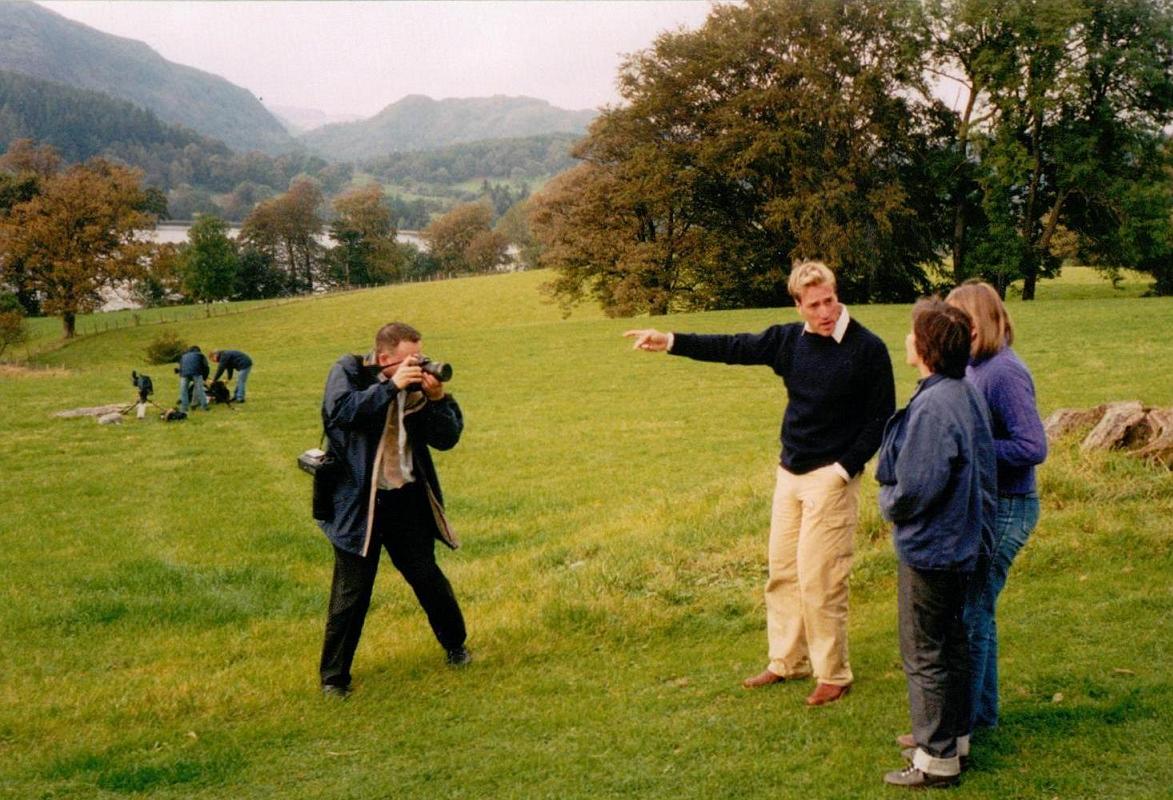
Ben Fogle interviewed Suzanna Hamilton and myself on Countryfile and Big Screen Britain after exploring the locations around Coniston Water. You can watch the episode here.

Ben Fogle interviewing Suzanna Hamilton and Sophie Neville on Countryfile

Libby Purves, author and broadcaster, is now President of The Arthur Ransome Society. She refers to Swallows and Amazons in at least one of her novels.

Libby Purves afloat

A keen sailor, she also took part in the marathon reading of We Didn’t Mean To Go To Sea organised by The Nancy Blackett Trust who own and look after the Goblin, the yacht portrayed in the story.

Libby Purves reading ‘We Didn’t Mean To Go To Sea’

Dame Ellen McArthur, yachtswoman and Patron of The Nancy Blackett Trust, claims that Arthur Ransome’s novels inspired her to sail. She gives Swallows and Amazons a good mention in her book Taking on the World. Ellen was portrayed by Suzanna Hamilton in a Stephen Sharkey play at a festival at the Southall Playhouse. Suzanna played Susan Walker in the 1974 film of Swalllows and Amazons.

Sir Richard Branson often says how much he loved the book as a boy, describing it as, “a lovely kids’ adventure book.” He told The New York Times: “As a very young kid, I loved the Arthur Ransome novel Swallows and Amazons. It’s about a group of children having adventures in England. Now I read it to my grandkids. It’s a beautiful book.” I met Richard years ago when I worked on The Russell Harty Show. To may amazement, he recognised me when I was filming in the street in Kensington months later, so perhaps he has watched the original film of Swallows and Amazons.

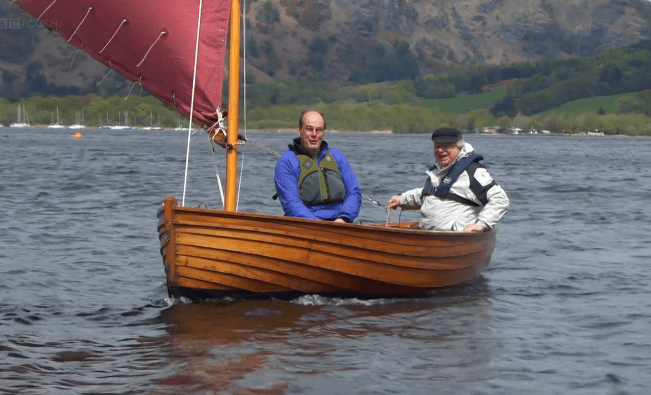
John McCarthy, the journalist and keen sailor, made a radio programme called Paddling with Peter Duck, sailing Swallow, the dinghy featured in the 1974 film. You can sail her yourself via SailRansome.com

Peter Willis on Ransome’s yacht Nancy Blackett with Kevin Dawson and John McCarthy

Theresa May said she loves Swallows and Amazons. ‘When she was young she appears to have enjoyed reading… listing… Swallows and Amazons among her favourites.’ Mirror and Daily Mail She gave a copy to Baroness Davidson, once leader of the Scottish Conservative Party.

David Dimbleby loves gaff-rigged boats and recently helped with PR at the London Boat Show. He visited us on the set of the BBC Drama serial Swallows and Amazons For Ever! filmed on location in Norfolk.

Sophie Neville with David Dimbleby on location in Norfolk back in 1983

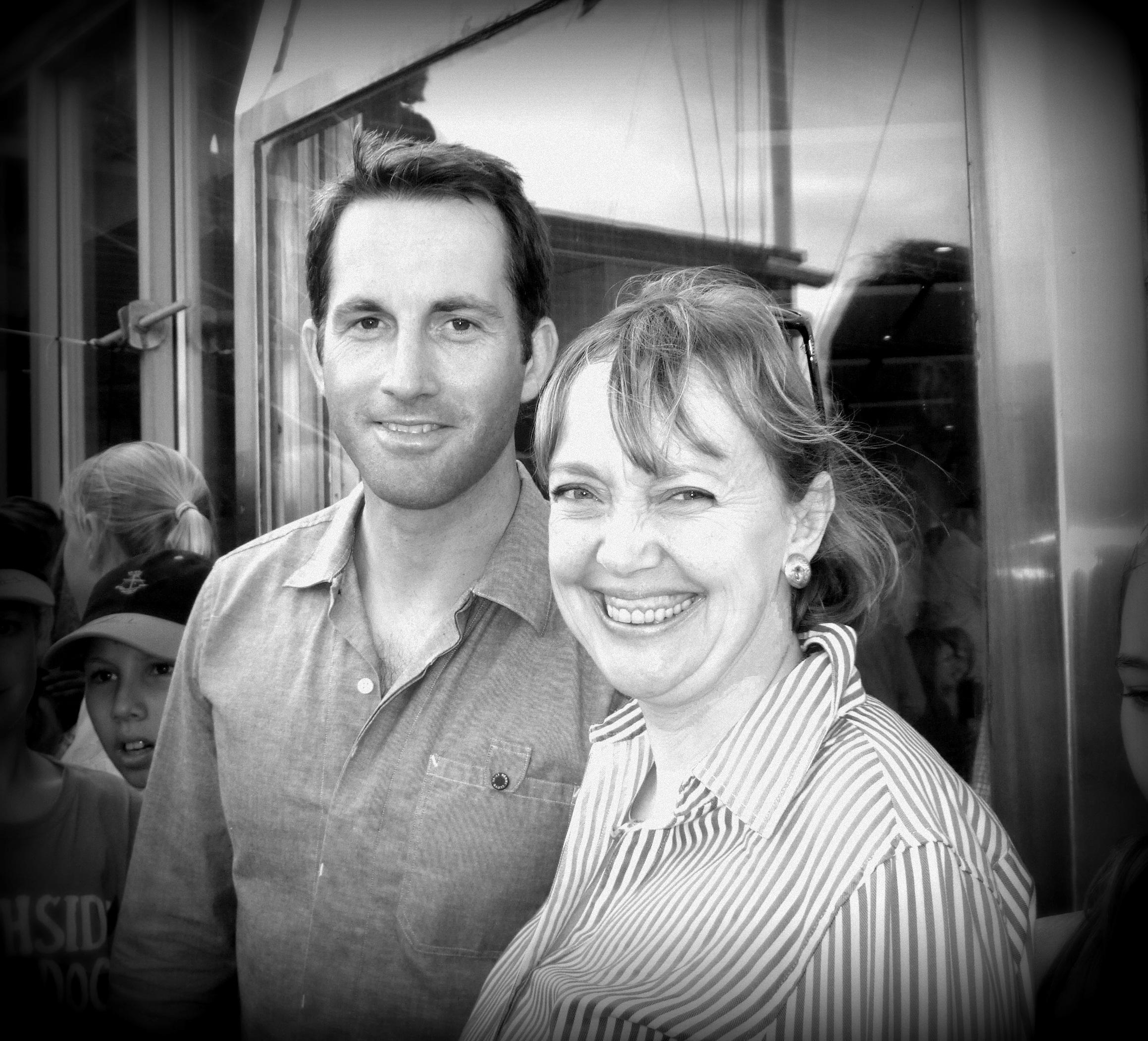
Sir Ben Ainslie ~ Steven Morris of the Guardian reports: “He recalled how he started sailing in Cornwall on the creeks around Falmouth as a boy. Ainslie has called it a Swallows and Amazons kind of childhood. He had friends on the other side of the creek so he sailed over to see them.”

Ben lived in Lymington – and came to our club to celebrate after the Olympics.  

Congratulating Ben Ainslie on his Olympic gold medal

Nikki Henderson, the youngest ever Clipper Around The World yachtswoman was inspired by the book Swallows and Amazons naming Swallow and one of the coolest sailing boats ever in Yachting World as reported by the Nancy Blackett Trust.

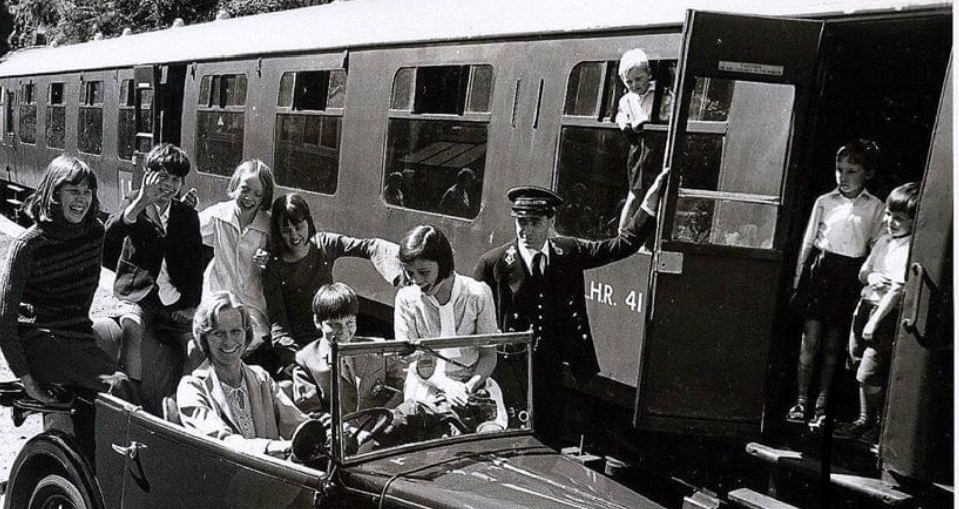
Alan Smith of BBC Radio 4, appeared as a boy in the scenes shot at Bowness. He was on location at the Haverthwaite Railway Station in May 1973 on the first day of filming Swallows and Amazons(1974) with Virginia McKenna who starred in the film as Mrs Walker. To read more, please click here.

Alan Smith in the doorway of the train with his friend John Eccles

Arthur Ransome might be amused to know that a number of politicians were inspired by his novels. Jess Asato, MP for Lowestoft, said, on Radio 4’s ‘The Week in Westmister’, that her favourite childhood reading was ‘Swallows and Amazons’. She is on the Education Committee which is accepting Reading for Pleasure submissions.

The list continues in the next post here.

The end-title theme music to ‘Swallows and Amazons’ composed by Wilfred Josephs

You can read about The Making of Swallows and Amazons in paperback or on Kindle. The Secrets of Filming Swallows and Amazons is available on all the ebook platforms. There is a review here.

The Making of Swallows and Amazons by Sophie Neville
Different editions of ‘The Making of Swallows and Amazons’ by Sophie Neville

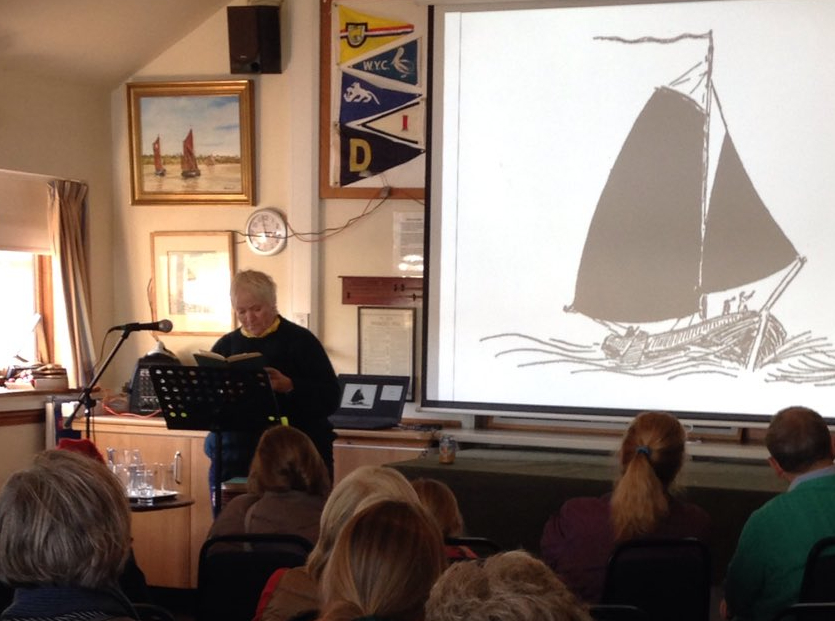
Sophie Neville interviewed by Jadzia Smeaton on The Making of Swallows and Amazons (1974)

Sophie Neville author of The Making of Swallows and Amazons
Sophie Neville

What is most memorable about the making of ‘Swallows and Amazons’ for you?

I love exploring the places Arthur Ransome features in his stories. We were privileged to live out the pages of the book on location in the Lake District, but sailing in nothing but a short cotton dress and a pair of navy blue gym knickers was decidedly chilly – we earned our passage.

Would you consider Susan to be an influence on Titty within the story?

Susan made camping on the island possible. Suzanna Hamilton, the remarkable British actress who played Susan in the original film of ‘Swallows and Amazons’, became our rock without becoming prim or losing the joy and excitement of adventure. She went on to play leading roles in a number of major movies including ‘Out of Africa’ opposite Meryl Streep and ‘1984’ with John Hurt and Richard Burton. She is still working on cutting edge productions and recently had a guest appearance in ‘Eastenders’.

Time Out – April 1974

Is there anything you think should always be included in different versions of ‘Swallows and Amazons’?

You must feature the green parrot! It’s vital to enter the world of a 9-12 year old child, capturing the trepidation. It would be interesting to adapt Arthur Ransome’s books without featuring adults, or only including them as shadowy facilitators.

How did you feel about playing a part where you were able to be the cunning and playful younger sister?

In real life, I was the elder of three sisters so took on the roles of both John and Susan. Playing Titty felt something of a release. I was freed from the responsibility of taking the helm.

Titty is well-read and bright, creative and imaginative but I wouldn’t call her cunning. She longs to be alone on the island to experience what it was like to be Robinson Crusoe, which is why she volunteers to stay behind to light the candles, but is that a cunning plot? She is an innocent.

What was your favourite line in Swallows and Amazons?

Titty’s lines are challenging and can only be uttered with humour and an acceleration of charm. I rather enjoyed, ‘X marks the spot where we ate six missionaries’, although I don’t think it can be found in the book. ‘Thank you so much for letting us see your lovely serpent’ would probably be disallowed these days.

Did you have a favourite scene?

Finding the lighthouse tree was a short sequence that worked well. We shot it on the banks of Derwentwater towards the end of the filming. But I most enjoyed our day with the charcoal burners. They were wonderful.

What did you enjoy most about filming in the Lake District?

We loved High Force, the waterfall, and exploring the mossy woodlands. Secret Harbour on Peel Island is very special, as is One Tree Island where we found the treasure.

Do you feel that you and your character influenced children?

Even now, nearly 48 years after the film was released, I receive correspondence from people telling me how the original film of ‘Swallows and Amazons’ influenced their lives or helped carry them through a tough patch. It is always wonderful to hear how Titty has inspired others.

Maurice Thomas who used to live in Cockermouth wrote: ‘My mum and my Auntie Gladys took me to see this little children’s flick in 1974/5 as it was a double bill with ‘The Railway Children‘. I remember ‘The Railway Children‘ reasonably fondly, but ‘Swallows & Amazons‘ had me utterly mesmerised.’

If you were to give any advice to actors wanting to perform in ‘Swallows and Amazons’ what would it be?

Visit the locations. Go to Bank Ground Farm and run, fast, down the field to dip your hands in the lake as Arthur Ransome did as a child. Capture that feeling and carry it with you as you sing out the lines.

And be prepared for the impact the story will have. It could follow you all your life.

To read another recent interview with Authors Reach please click here

If you would like to read more about the secrets of filming Swallows and Amazons, you can ‘Look inside’ the ebook free of charge here:

Diary of a Beachcomber – on a Solent beach clean

I was told the beach was free of litter. It took me ten minutes to fill my builder’s bucket with flotsam. Do people simply zone out sea plastic and litter?

Some was old, but how long have PPE masks like this been floating around the Solent? I found two, along with the usual plastic bottles. It is interesting to count and categorise what you find. The Marine Conservation Society list: litter, sewage and fishing gear but the reality can be hundreds of small pieces known collectively as micro-plastics.

Picnic litter is inexcusable.  With well-designed bins near the gate to the beach there is no excuse for this. Although some plastics, such as the straws and bottle-tops, have floated in on the tide, I found a neatly folded crisp packet tucked into the sea wall. Why?

Cotton bud stalks and plastic tampon applicators classify as ‘sewage’ since they are flushed down the loo – with things too revolting to photograph – and yet this is where our children play.

Fishing line makes up the majority of plastic pollution in the seas. We found an angler’s hook and line as well as commercial netting and floats. The fishhook, lying on the float, caught on my own finger.

We tried digging out one section of PVC rope but failed and had to bury it.

The reward for our work was finding a killer whale, a toy orca.

Since ‘Baby Shark’ has been popular in our family, this made our spirits soar, coming almost as a thank you from the sea.

We returned two days later to find half a bucketful of assorted detritus had either come in on the tide or been missed in earlier searches. Spotting a toy soldier amused me this time. I’ve found a couple of others further along the Solent coastline within the New Forest National Park.

For a list of really weird things found on previous beach cleans, click here

One thing is certain. I can no longer walk along the shore without collecting as much plastic pollution as I can carry. It always proves fun and gives us a sense of purpose higher than ourselves.

Speaking about filming ‘Coot Club’ and ‘The Big Six’ on the Norfolk Broads

Sophie Neville with Titmouse

~Sophie Neville with the star of ‘Coot Club’~

I was invited to talk about making the BBC TV classic serial ‘Coot Club’ and ‘The Big Six’ at the Norfolk Broads Yacht Club to help celebrate their 80th Anniversary. Titmouse, then 1930s dinghy owned by Hunter’s Yard had been brought down from Ludham for the occasion. The bonus was that I was able to go sailing in one of the classic boats gathered at the club for their Open Day.

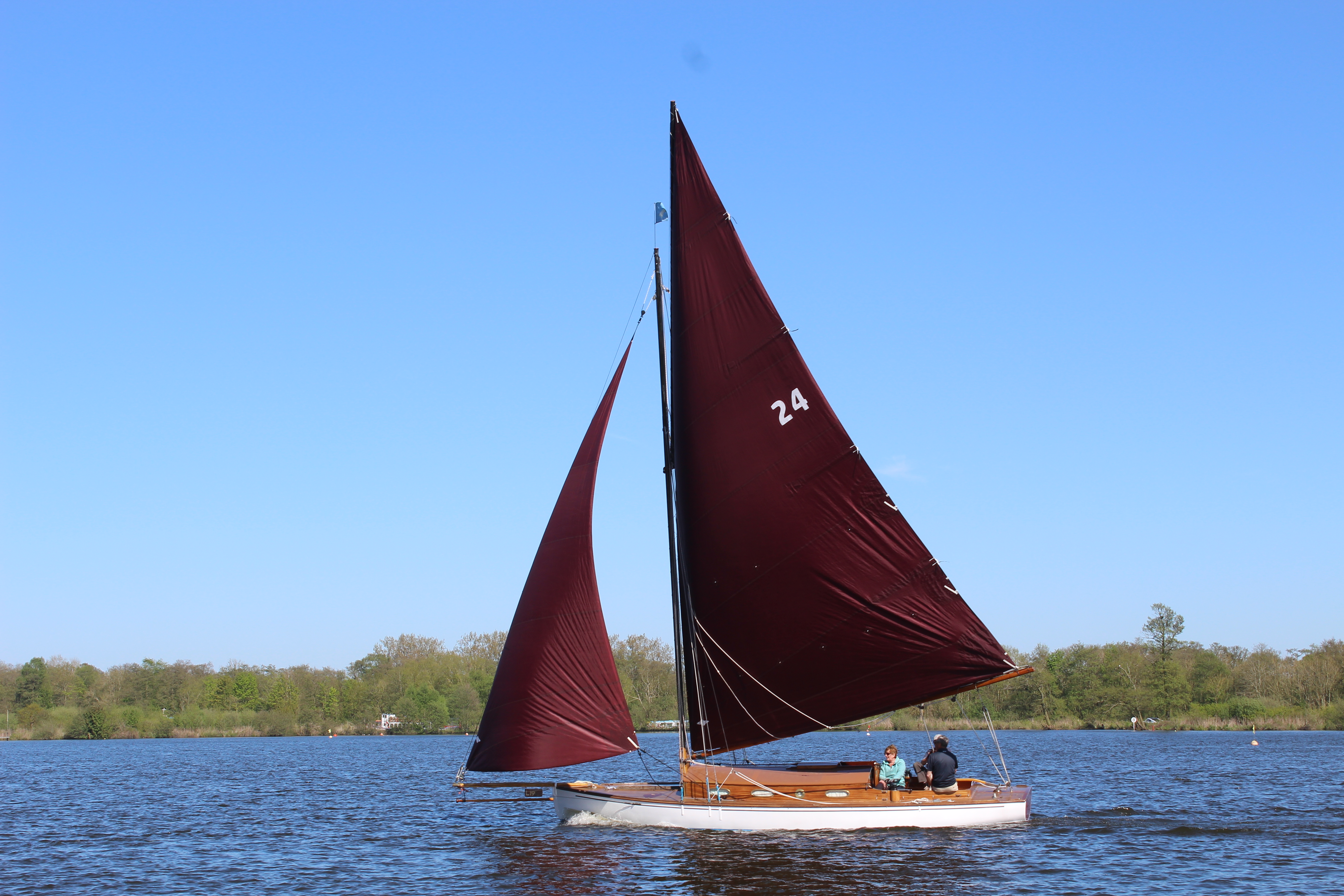
Geoff and Rose Angell kindly took me out on Pippa, their beautiful yacht with brown sails that appeared in ‘The Big Six’. I am sure Arthur Ransome would have loved her.

Back in 1983, I spent nine months working on the BBC production when it had been my job to cast the children and teenagers who appear in the drama, many of whom needed genuine Norfolk accents.

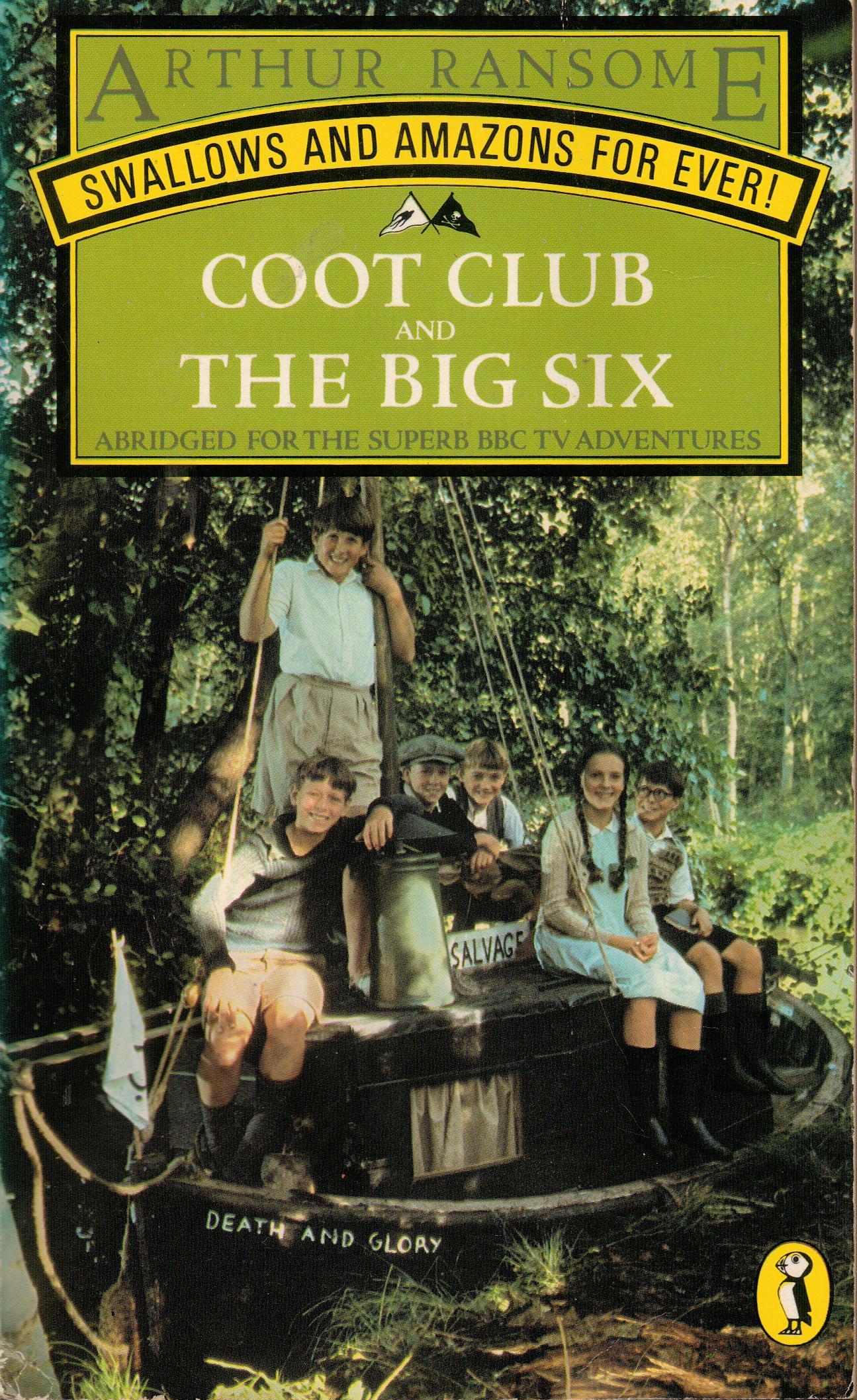
Coot Club - book cover

We had been looking for young actors who could swim well and were able handle boats. We then spent three months filming in East Anglia when I looked after the children and helped rehearse their lines. I set up this shot for the cover of the Puffin paperback that accompanied the series.

~Author Sophie Neville giving a talk at the Norfolk Broads Yacht Club~

At a forum organised after my talk, Pat Simpson from Stalham Yacht Services explained how he found one of the stars of the series – an old lifeboat suitable to play the Death and Glory. She had been brought from where she is kept at Belaugh for the evening. You can see more photographs of her in the previous blog post here.

'The Death and Glory'

Pat provided a number of other vessels for the series including Buttercup and support boats such as the safely boat, a large modern cruiser used as a school room along with another for the costume and make up personnel. He explained that this came as a god-send as boat rentals had not been good that summer. Working on the series was harder than he imagined, ‘We once had to take a boat from Regan to Horning Hall overnight’ but he was pleased that ‘after three months of concentrated work, we got it all done.’

~Robin Richardson~

Robin Richardson, who co-owned Pippa back in 1983, explained how the shot of her being cast adrift was achieved. This wasn’t as easy as first thought as even when Simon Hawes, who was playing George Owdon, flung her stem line on the deck, a gentle breeze was blowing her back against the staithe. ‘Pippa didn’t want to go anywhere’. Robin had to stage the action by throwing out a mud anchor, climbing under her awning and pulling on the line to create the effect of a boat drifting out of control into potential danger. Pippa’s white canvas cover is pulled back here, but you can imagine the scene.

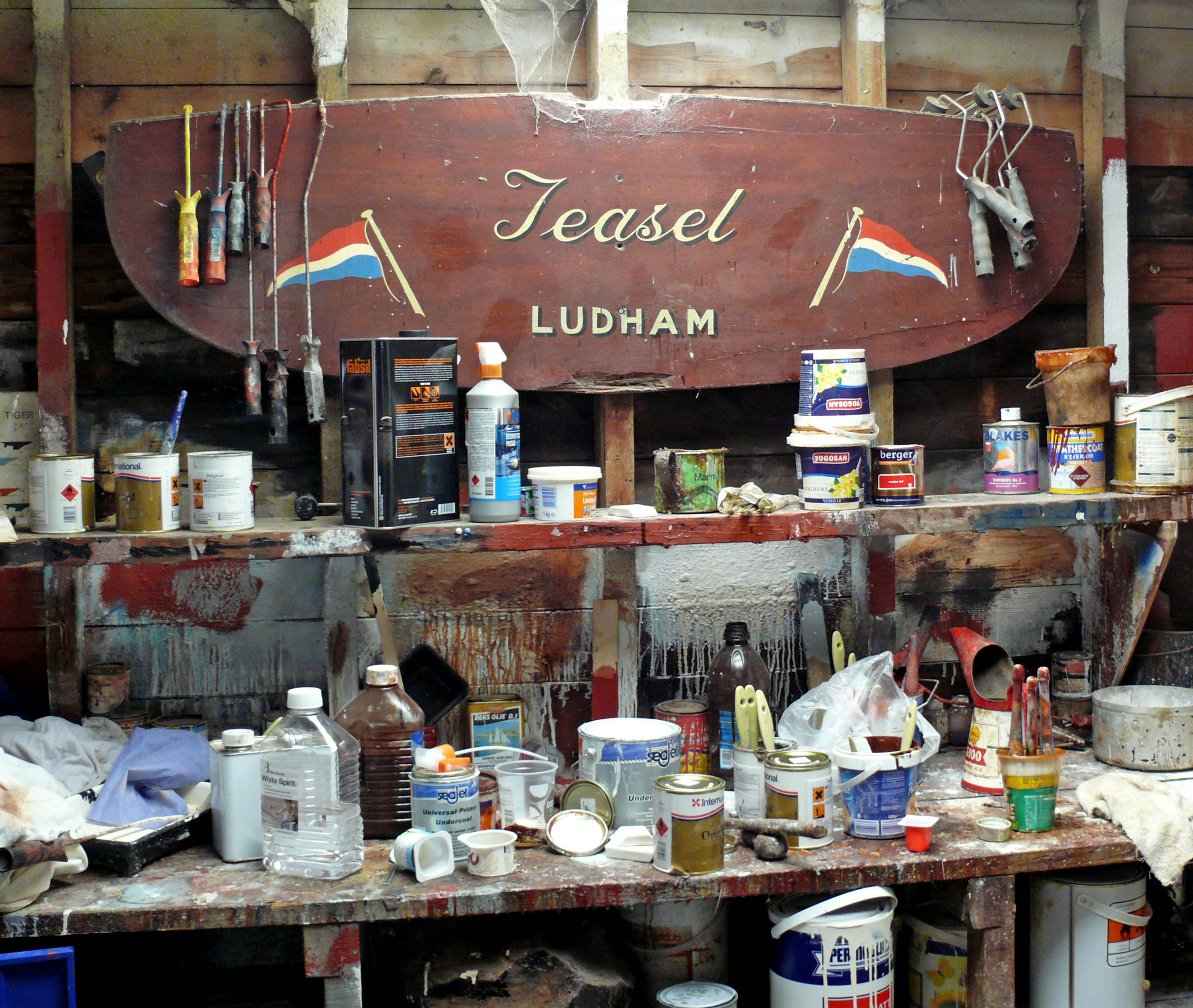
He was on location when Henry Dimbleby, who played Tom Dudgeon, was attempting to tow the Teasel under Potter Heigham bridge. He was rowing Titmouse, pulling hard on the oars but nothing was happening. ‘Stop for lunch,’ Robin advised the director, ‘and the tide will turn.’ This they did, and Henry we able to row under the bridge, towing the Teasel quite easily. Hunter’s Yard, who own Lullaby, who played the Teasle, could not bring her down for the weekend as she had been leased out with other boats, but they sent her transom, painted with her stage name.

'TEASEL'

Robin Richardson owns the ‘Slipstream’ class dinghy called Spindrift who played Shooting Star in the serial. She was built by her father but couldn’t be with us as they were not able to complete her winter maintenance in time but Richard Hattersley said she came tenth in this year’s Three Rivers race when only 15 of the 98 entries actually finished. It’s a 24 hour endurance challenge, which they completed despite light winds. He sent me this shot, ‘of her battling it out with much larger Thames A Raters.’

I was shown a wonderful black and white photograph of the vessel used to play the Cachalot. She was skippered in the series by the film actor Sam Kelly in the role of the unnamed pike fishermen who the Death and Glory boys simply called ‘Sir’. She is seen here with John Boswell, her real owner who has sadly passed away. His son, the artist Patrick Boswell, brought along an album of behind-the-scenes photos.

The theme of the weekend was ‘Boats of the 1930s’. I explained how Swallow, the dinghy used in the original film ‘Swallows and Amazons’ originally came from Burnham-on-Sea where she was made by W. King and Sons to be used as a run-a-round boat. She was stabilised by a keel that ran the length of the hull, as Ransome described. It makes her rather difficult to turn. You can sail her today and is in the Lake District right now. Please see Sailransome for details.

There was quite a bit of interest in memorabilia from the original movie ‘Swallows and Amazons’. I bought along the white elephant flag captured from Captain Flint’s houseboat in the 1974 film, which was approved by a young Amazon pirate.

After a celebratory dinner, David and Nicky Talbot invited me to spend the night in the comfortable for’ard cabin of Kingfisher, a 1970’s motor yacht moored at the club.

I woke early on the Sunday morning to find mist hanging above the water as the sun was rising on what proved to be another sunny day with a fair wind for sailing.

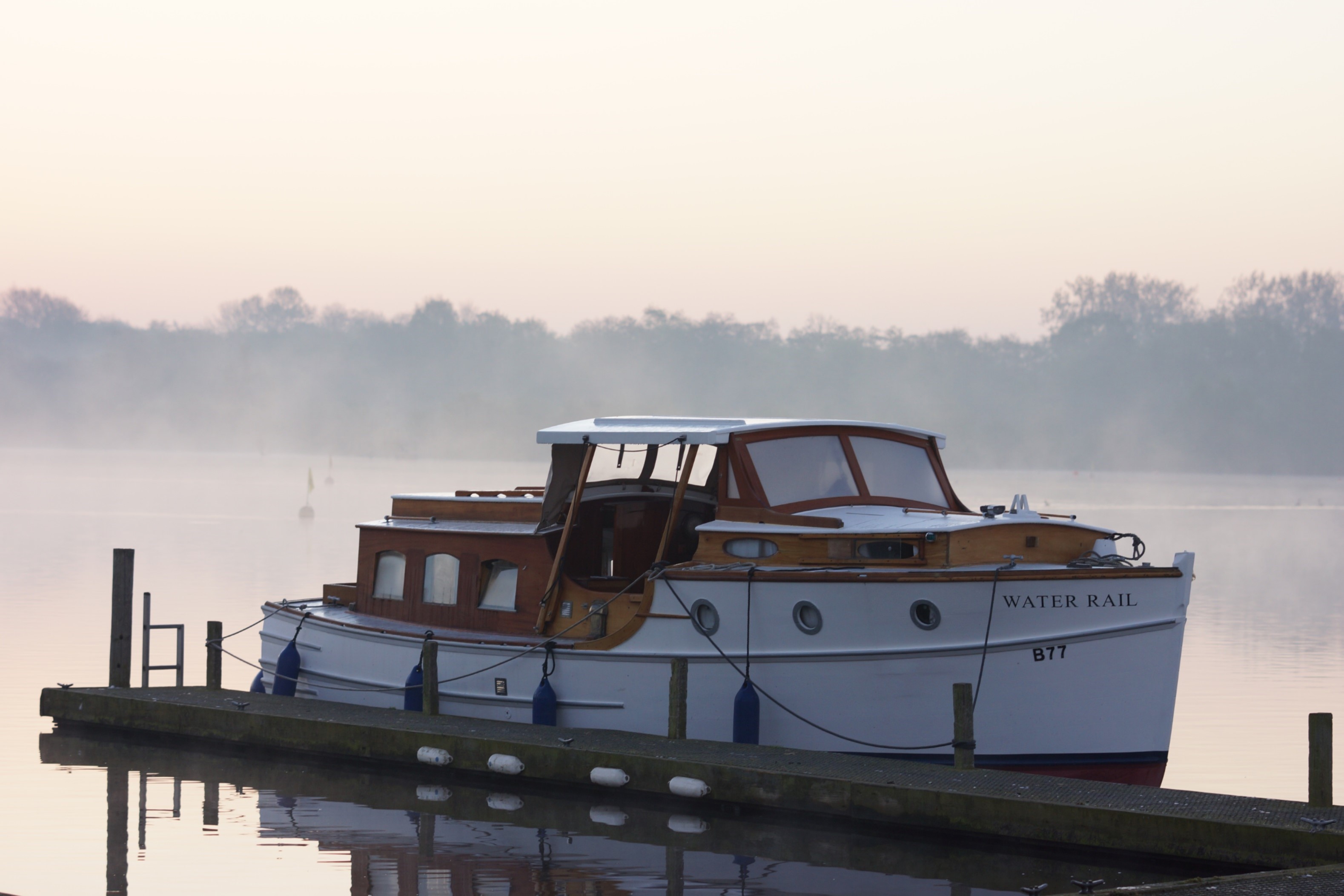
After breakfast aboard, I was invited out in the 1930s river cruiser ‘Water Rail’, who had also appeared in the serial. We took her down the River Bure to her mooring in Horning where she is still part of the scene.

It was wonderful to be out on the waterways of Norfolk, passing traditional buildings. This was a stretch of river never featured in the television drama as Rosemary Leach, who played Mrs Barrable, took Dick and Dorothea from Wroxham to Horning in a trap pulled by Rufus the pony. One reason for this was that in 1983 we had to use the North Norfolk Steam Railway, since Wroxham Station had been modernised but Joe Waters, the producer, said he wanted to add variety by featuring a pony rather than a motorboat.

IMG_6885

We encountered a number of period cruisers, although Janca, who we used to play the Hullabaloos’ Margoletta, sadly could not be with us, as she is still under repair.

IMG_6912

However, by motoring into Horning ourselves, we passed The Swan Inn and Horning Staithe where a number of scenes had been shot, including some that featured Julian Fellowes and Sarah Crowden, playing the hated Hullabaloos. You can see photographs of them in an earlier post here.

~Horning Staithe in Norfolk showing The Swan Inn~

Another vessel that interested me was a river launch that reminded me of the 1901 steamboat Daffodil, which I renovated with my father in 1978. I have photographs of her here.

IMG_6903

You can read more about the traditional boats used in the series by clicking here.

Gerry Spiller, has written from Woodbridge in Suffolk, to say that she has found an oar labelled TITMOUSE, bought at a boat jumble. Could this date from the early 1930? Does anyone have the pair?

Blade labelled TITMOUSE

The DVD of the serial is now available on a re-mastered DVD, available from Amazon here

(Do not be tempted by the old version with a more colourful cover as the image quality is very poor)

Swallows and Amazons Forever
Swallows And Amazons Forever! (Coot Club & The Big Six) SPECIAL EDITION [DVD]
Additional photographs by Richard Hattersly

The Arthur Ransome Jamboree at Pin Mill in Suffolk

Arthur Ransome Pin Mill Jamboree

One year, not so very long ago, members of the Nancy Blackett Trust hosted an Arthur Ransome Jamboree at Pin Mill in Suffolk. It was a day to remember.

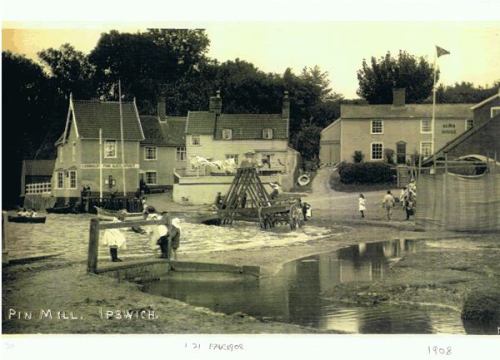
Pin Mill from the Water

Although Ransome is remembered for his ‘Swallows and Amazons’ books set in the Lake District, he moved to the east coast of Suffolk in 1935 where he set a number of other books in the series. It seemed fitting to mark the 80th anniversary of the publication of his inspirational sailing book ‘We Didn’t Mean to Go to Sea’ that begins at Pin Mill.

Sophie Neville with Nancy Blackett

It is possible go aboard the Goblin, since she was modelled on Ransome’s own favourite little yacht, the Nancy Blackett. I joined her at The Royal Harwich Yacht Club where she was moored alongside Peter Duck one of his other much-loved yachts, named after the adventurous book he wrote that begins in Lowestoft. I met up with Octavia Pollock, a feature writer from Country Life, and walked down the riverside to enjoy supper at the Butt and Oyster in Pin Mill where Ransome himself often ate.

Map of the Jamboree

Soon after leaving university, I worked behind the camera on the BBC TV adaptations of ‘Coot Club’ and ‘The Big Six’, Ransome’s two books set on the Norfolk Broads, in which the Coots also visit Beccles in Suffolk.

It was the Swallows who made it to Pin Mill. I first went there when The Arthur Ransome Society asked me to give a talk about making the BBC TV serial entitled, ‘Swallows and Amazons Forever!’ and signed copies of ‘The Making of SWALLOWS and AMAZONS – 1974’.

Pin Mill

~The Orwell at Low tide~

During the Jamboree celebrations, Arthur Ransome’s biographer Professor Hugh Brogan was interviewed by erstwhile BBC reporter Tim Fenton at the Pin Mill Sailing Club. 

the-life-of-arthur-ransome-by-hugh-broganHugh spoke eloquently, telling me that he was motivated by rage to write The Life of Arthur Ransome after a Fleet Street reviewer of the original film ‘Swallows & Amazons’ described him as ‘right-wing’.
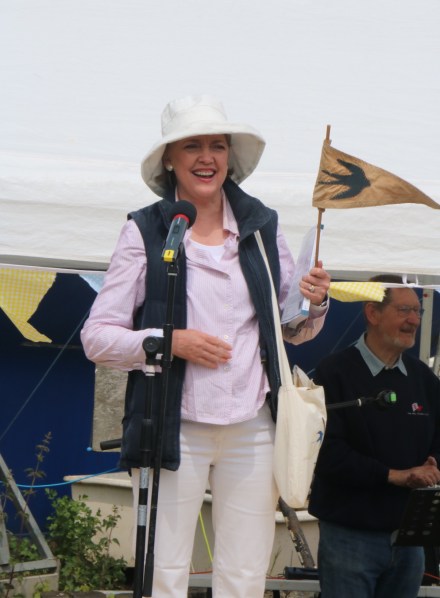
Sophie Neville opening the Arthur Ransome Jamboree at Pin Mill~ Sophie Neville ~

This VisitEngland event was great fun. There was a geo-caching route along the footpath from Shotley to Pin Mill. Marine artists Claudia Myatt and Christine Bryant hosted drop-in sessions on the riverside where visitors could also find the Rabble Chorus singing, while the author Julia Jones spoke about her children’s books set on the Orwell at the sailing club.

Nancy blackett product shop

~Mugs with artwork by Claudia Myatt sold in aid of the Nancy Blackett Trust~

There was an outdoor installation of old Pin Mill images enabling you to look back in time. These were taken by Arthur Ransome himself of the building of his boat Selina King at King’s boatyard nearby. It was the first public exhibition of these pictures ever seen and was appreciate by the hundreds of visitors who turned up.

Pin Mill archive photo

The Pin Mill Studio also hosted an exhibition of photographs from the restoration of Melissa, a barge restored to her former glory by Webb’s boatyard, with additional archive images of Pin Mill from the early 1900’s.

The Vintage Mobile Cinema, as seen on BBC Television’s Reel History of Britain, screened unique archive film of Pin Mill and Shotley.

The Nancy Blackett

~The Nancy Blackett in her 85th year~

A Pin Mill ‘Wooden Boat’ race was held along the stream leading down to the river and you could take a ride on the Victorian swing boats on the Common as in years gone by. There was a ‘pirates and seafarers’ fancy dress competition for children and an Arthur Ransome lookalike competition (pipe and moustache) along with stalls and sideshows from local groups, charities and organisations.

Live music, including shanties from Pin Mill favourites, High Water Mark and a performance of We Didn’t Mean to go to Sea by pupils from Holbrook Academy who entertained visitors while cream teas, a barbecue and refreshments were served at the Butt and Oyster and Pin Mill Sailing Club.

T-shirts celebrating this special anniversary were sold along with gifts to generate funds for The Nancy Blackett Trust, who celebrate their 20th anniversary this year.

Do let us know if you came along by leaving a comment!

To read more please visit the Nancy Blackett website by clicking here.

The Nancy Blackett by Claudia Myatt

You can read about the making of the original film of Swallows and Amazons here:

A ‘Swallows and Amazons’ sailing weekend in Aldeburgh


Sophie Neville with Lapwing kids

‘Unlike other films, ‘Swallows and Amazons’ is within children’s reach,’ I’ve been told. It’s true. Any child can pretend that their bed is a sailing dinghy taking them to a deserted island. And when you are a little bit older – it’s not impossible to join a sailing club or go camping.

Aldeburgh Junior LapwingsWe took Swallow to join the Aldeburgh Junior Lapwings on the River Alde in Suffolk.

Boys with their Lapwing

One intrepid sailor had bought her own Lapwing for £100, raising the money by busking in Aldeburgh High Street. Tilly renovated and varnished the clinker-built dinghy herself.

Owl hoots

She can be seen here teaching the younger children how to owl hoot, playing ‘What Shall We Do With The Drunken Sailor’ on her thumbs.

Learning how to owl hoot

The children went fishing for crabs, which they later raced down the slipway.

A crab

They went in search of treasure – if that is what you call a scavenger hunt –

Scavenger Huntbefore sailing back to camp by the mud flats, cooking out in the open and sleeping in tents.

Junior LapwingThey launched their dinghies, raised their red sails

Boys with their Lapwings

and headed off, catching the tide.

Sailing on the River Alde, Suffolk

Swallow, the dinghy used in the 1974 film ‘Swallows & Amazons’ acted as flag ship.

You can find ideas for Swallows and Amazons themed parties and presents here.

Swallow on the Alde

You can read about the adventures we had making the original movie of ‘Swallows and Amazons’ in these illustrated publications available online:

'The Making of Swallows and Amazons (1974) by Sophie Neville'
Different editions of ‘The Making of Swallows and Amazons (1974) by Sophie Neville’

1 error 2 many – notes for a third edition of ‘The Making of SWALLOWS & AMAZONS’

The Making of SWALLOWS & AMAZONS

Guy Willson, a reader from Papua New Guinea, has written to say: ‘I have read your book and I really liked it.  I could see behind the scenes and often read between your lines as well.’

‘When you were making the movie (in 1973) I was on my way to Norfolk Island as a starting point of my adventures in the South Seas; so I never knew of the release of your film until much later when I had children of my own that had reached the age to go ‘avasting’ and ‘timber shivering’, when we were living in Rye in the 1990’s.’

‘Some years ago I restored a 13ft clinker dinghy and after adding a false keel, added a standing lugsail and trailed her up to Coniston for my children to sail… I had in mind an article from Classic Boat on the Swallow, how the Altounyan children preferred Swallow as a boat because they could stow more things in her and she could still sail well.  I had noticed on a drawing in the article that Ransome had given her an extra 2 or 3 inches of false keel and this helped tremendously in reducing her leeway.  I added a piece of oak to do the same thing but gave her an extra 9” aft and planed it down to a feather edge forward so the she would go about a bit easier. Well, it worked and Eaglet would have done the original Swallow proud.’

Swallow on Coniston

Swallow – the 12′ dinghy used in the film

‘If you would permit me a little correction: you described the rig as being gaff rig, but this is not so.  Both the boats, originals and the ones you sailed were in fact luggers.  The nearest thing to a gaffer among the luggers is the Gunter Rig which has jaws at the front of the yard but is hauled up by a single halyard. You can see this in the Mirror dinghy (in truth it is about halfway between the two). However the lug rig of Swallow is known as a ‘standing lug’ and it can be used to go about freely.  After hauling up the sail on its traveller; the peak of the yard is raised by the downhaul line (usually attached to the bottom of the boom).  This tightens the luff of the sail and lifts the outer end of the boom as well giving the best efficiency to the sail.’

image005

A gaff rigged cutter

‘Lugsails were the working sails of England for most boats less than 60ft but they were usually rigged with a ‘dipping’ lug as the mail sail and a standing lug aft.  This dipping lug had to be dropped and the yard hauled round behind the mast every time they went about.  It was a powerful sail and they found their best expressions in the three masted Bisquines which used to raid British shipping in Napoleonic days.  You can still see them at the classic boat events at Douarnenez and Brests, where I took the gaff schooner Soteria in 2006.’

image002

Soteria at Douarnenez

‘If you had had a gaff rig you would most probably have needed a jib to balance it (unlike the American catboats which have their masts right up in the bow, not even a space for the Boy Roger on those! Thanks for writing a lovely book which I will pass on to my daughter.’

Blu-ray X marks the spot
“X marks the spot where they ate six missionaries”

‘You did such a grand job as Titty and I am not really surprised to find that you are a bit of a wordsmith. I am a missionary (uneaten) in Papua New Guinea and we are planning to sail back there in our steel schooner see www.livingwatermission.org  On our return we will be calling in at Erromanga in Vanuaatu where ‘x’ was the spot where two missionaries were eaten.  Recently the descendant of one of them, John Williams, went to Erromanga for a service of reconciliation.’

If you have noticed any errors in ‘The Making of SWALLOWS & AMAZONS’ please use the Comments box to let us know so that we can make corrections! We might be able to bring out a third edition. Readers who already have a Kindle edition will be able to update it free of charge.

'The Making of Swallows and Amazons (1974) by Sophie Neville'
Different editions of ‘The Making of Swallows and Amazons (1974) by Sophie Neville’

Sophie Nevilleova’s foreward to ‘Swallowdale’ by Arthur Ransome illustrated by Zdenek Burian

Albatros Media in the Czech Republic have re-published a hardback edition of ‘Swallowdale’ by Arthur Ransome, illustrated by the great Czech artist Zdenek Burian.

Sophie Nevilleova

The Foreword has been written by me, Sophie Nevilleová.

I was commissioned by Ondřej Müller, Fiction Program Director, thanks to an introduction by Petr Korbel, a feature writer in Prague. My somewhat daunting task was to introduce the well-loved story that comes with classic illustrations.

I took the opportunity to recommend that readers book a holiday in Cumbria. It’s always exciting to find the actual locations described in a novel, particularly one you know well, although I believe finding Swallowdale is quite a challenge.

Do tell any Czech friends or collectors of Ransome’s books about this publication. Click here for  the sales site.

Albatros Media bookmark

Here is the English version of my contribution:

Of all Arthur Ransome’s books, it was Swallowdale that inspired me to go camping. I have since pitched my tent all over the world from Papua New Guinea in the Pacific to Patagonia, which I crossed on horseback. I once spent six months driving down through Africa, sleeping in a tent and using all I had learnt from this beautifully written book. Not long after this expedition, I started to draw maps in the hope that I that might encourage others to travel and explore the world as the Swallows did.

Back in 1973 I had the great privilege of playing the part of Titty in the movie of ‘Swallows & Amazons’ that has been translated into Czech twice. Throughout my life I have received letters from people telling me how Arthur Ransome’s books have given them direction in life, encouraging them to set sail and explore unchartered waters.

If you ever visit the English Lake District take the charcoal burners’ advice and keep a good lookout for adders but in searching for Swallowdale one thing is for sure, you will be walking in Arthur Ransome’s footsteps. He was taken to the summit of Old Man Coniston, the mountain known in the book as Kanchenjunga, as a small baby and rowed into the secret harbour of Peel Island, or Wild Cat Island as the Swallows called it, when he was a boy.

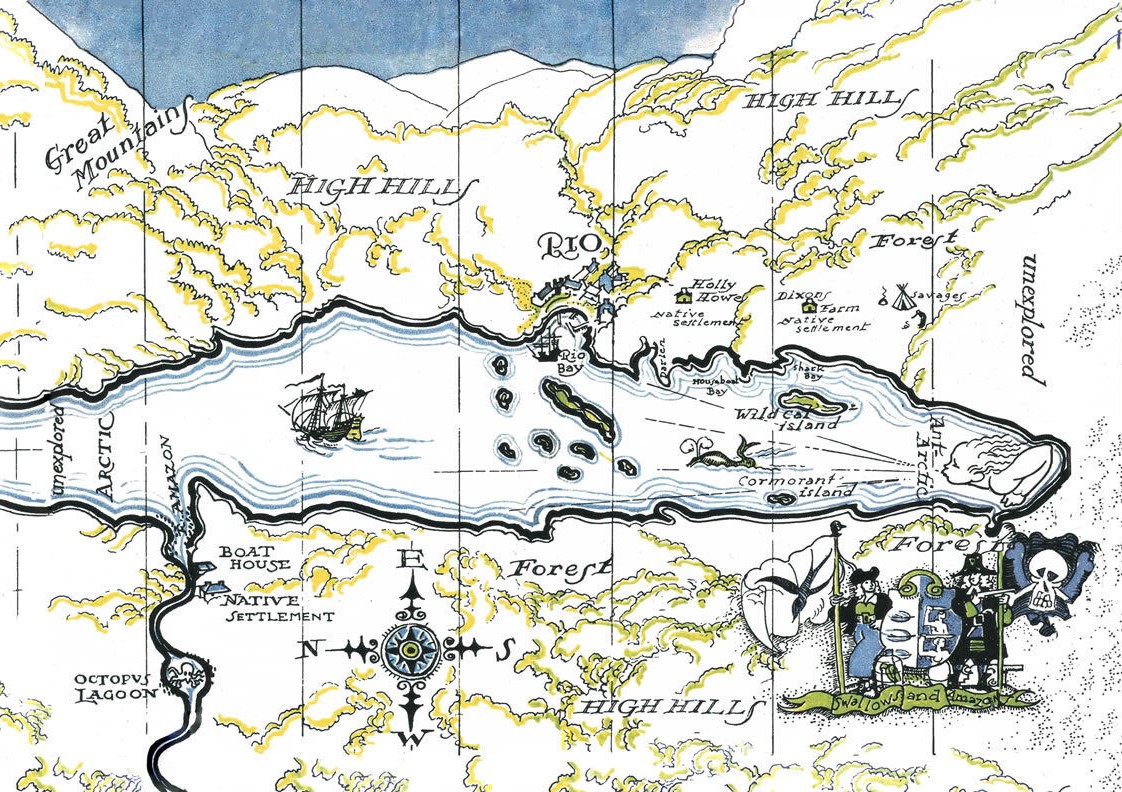
The people of Cumbria still welcome visitors, indeed you can stay at the farm known as Holly Howe and it is possible to take a boat out on the lake below it. Coniston Water is not an exact replica of the map in the book, but you can enjoy looking for Horseshoe Cove and the Amazon boathouse. Rio can be found on Windermere where you might also find the Peak of Darien along with native steamers. Titty would encourage you to let your imagination take you further and I am sure Roger would suggest you take a fishing rod.

Even if travelling does not appeal to you, ‘Swallowdale’ is such a vivid story that you will sail back in time to 1931 quite effortlessly. This classic book is a full of wonderful imagery from ‘black wretched thoughts…crowding in like cormorants coming to roost’, to potatoes being in bad mood. It is enjoyable on many levels. I laughed when Titty decided, ‘Miss Turner could hardly be dead if she was complaining of cold plates’ and was uplifted by her joy at discovering, ‘the most secret valley that ever there was in the world.’

I am so pleased that Albatros Media are able to bring you this beautifully illustrated edition, to read, enjoy and perhaps pass on to others. 

Czech skull logo

Burian’s version of the Swallows and Amazons flags

If you are in North America and are looking for a copy of ‘Swallowdale’ in English, Capital One have copies on sale for U$15.77.

Swallows & Amazons flags for book