News from the Charcoal Burners of Cumbria

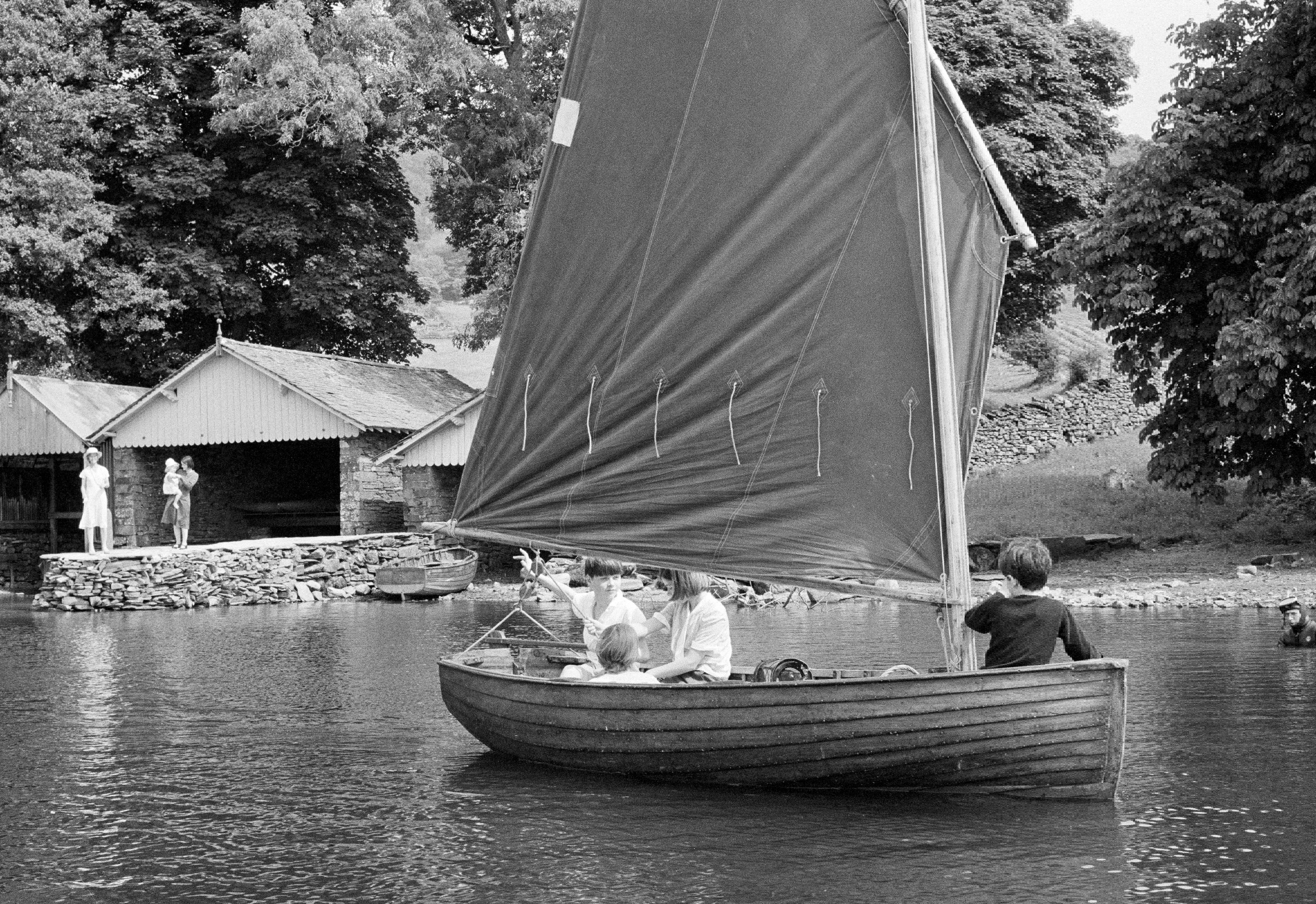
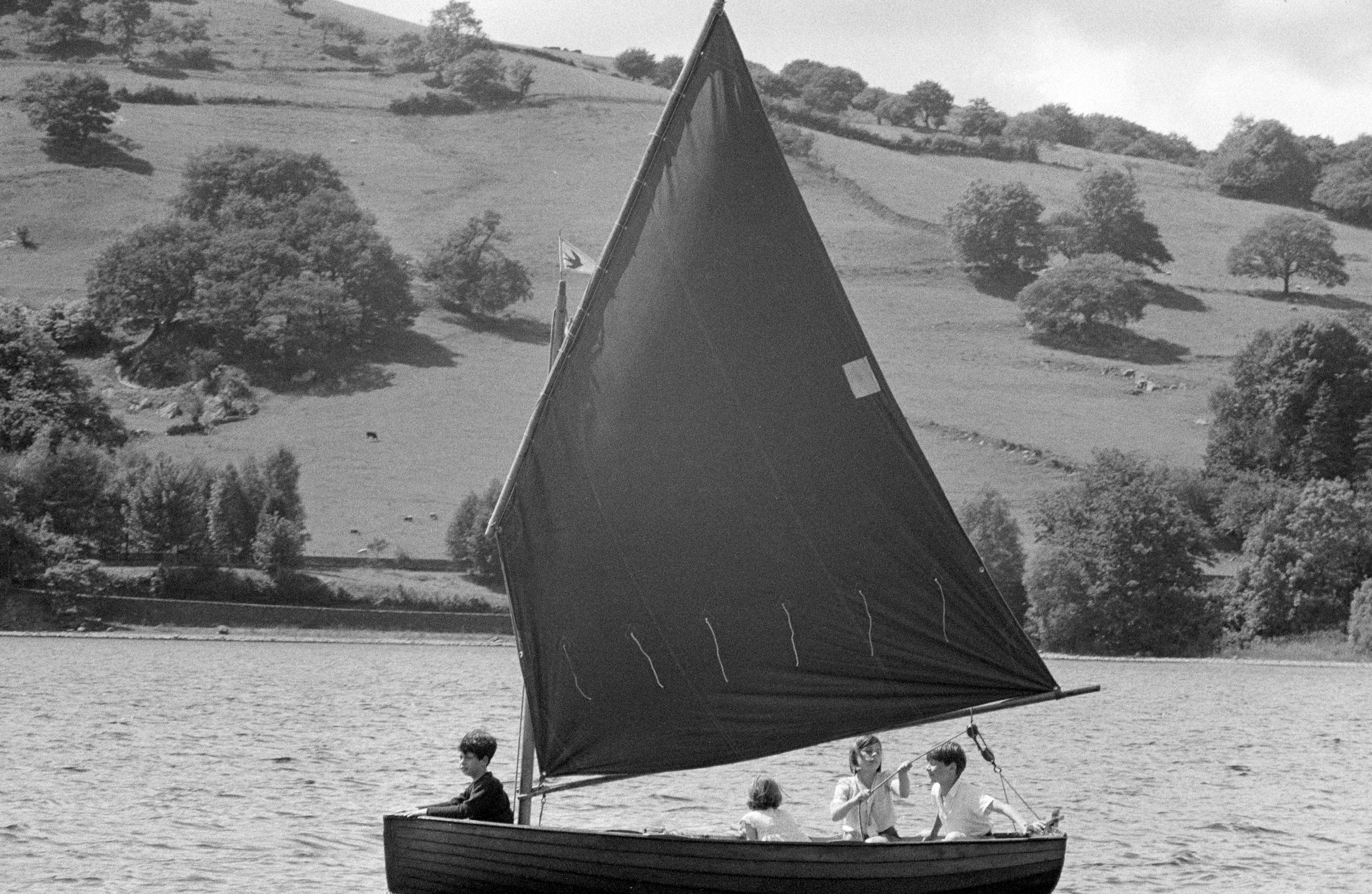
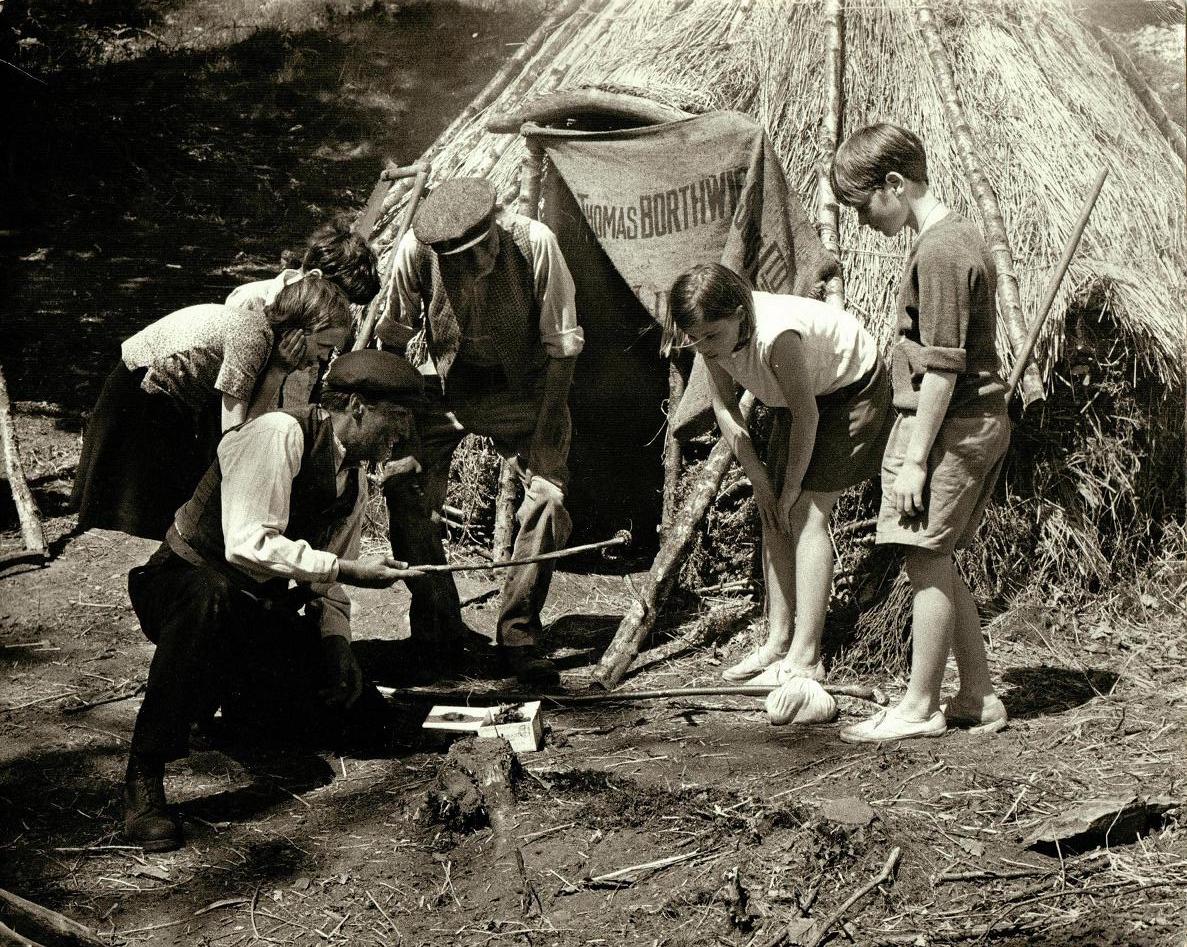
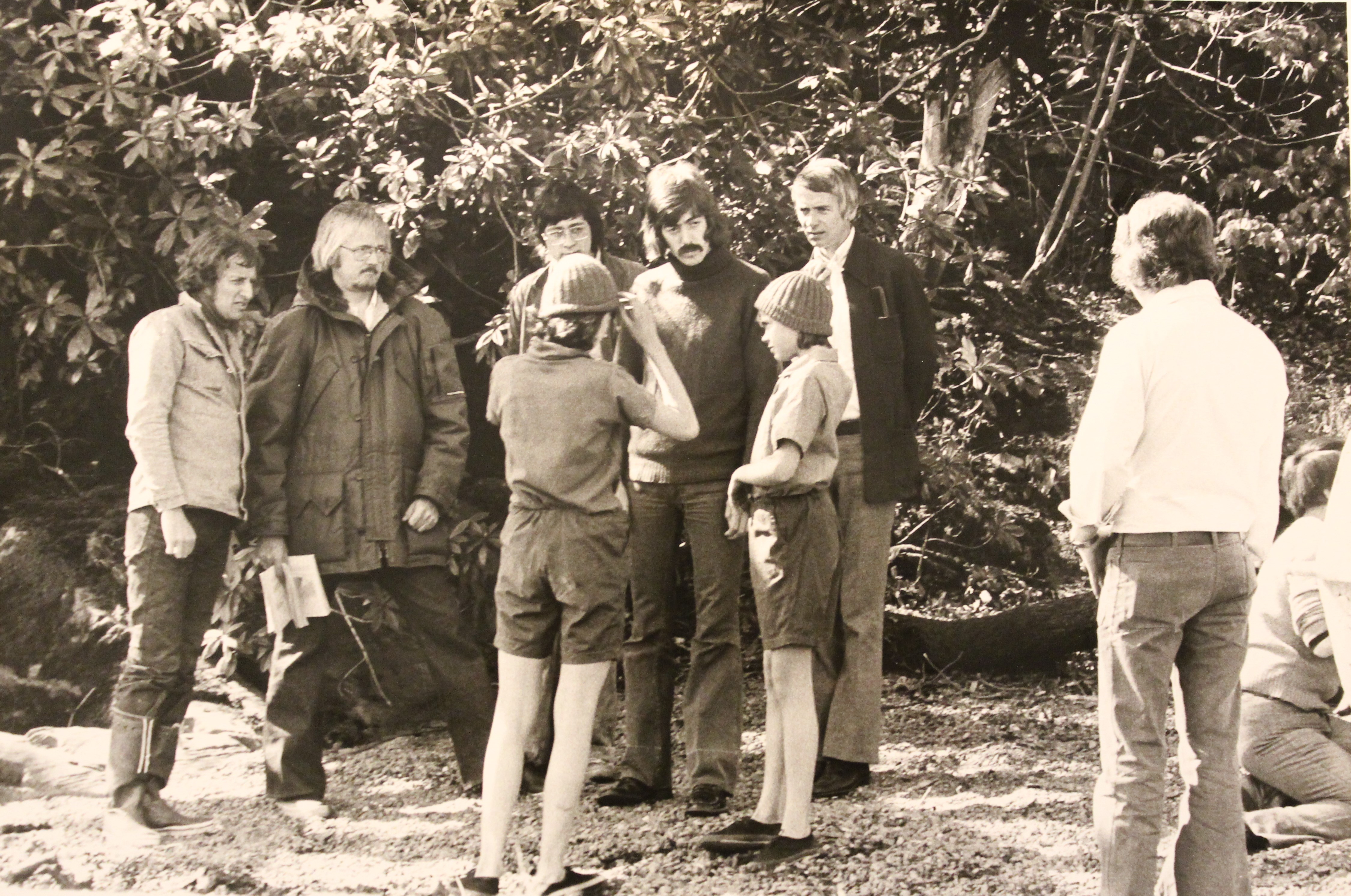
Sophie Neville, Sten Grendon, John Franklin-Robbins, Jack Wolgar, Suzanna Hamilton and Simon West in Swallows and Amazons (1974)
Sophie Neville, Sten Grendon, John Franklin-Robbins, Jack Wolgar, Suzanna Hamilton and Simon West looking at an adder in the original film ‘Swallows and Amazons’

In 2024 a ‘Swallows and Amazons’ festival at Windermere Jetty near Bowness-on-Windermere in Cumbria was organised by The Arthur Ransome Society and Lakeland Arts. Such was the publicity that I was contacted by a Lakeland charcoal burner who kindly sent me a report on his last talk:

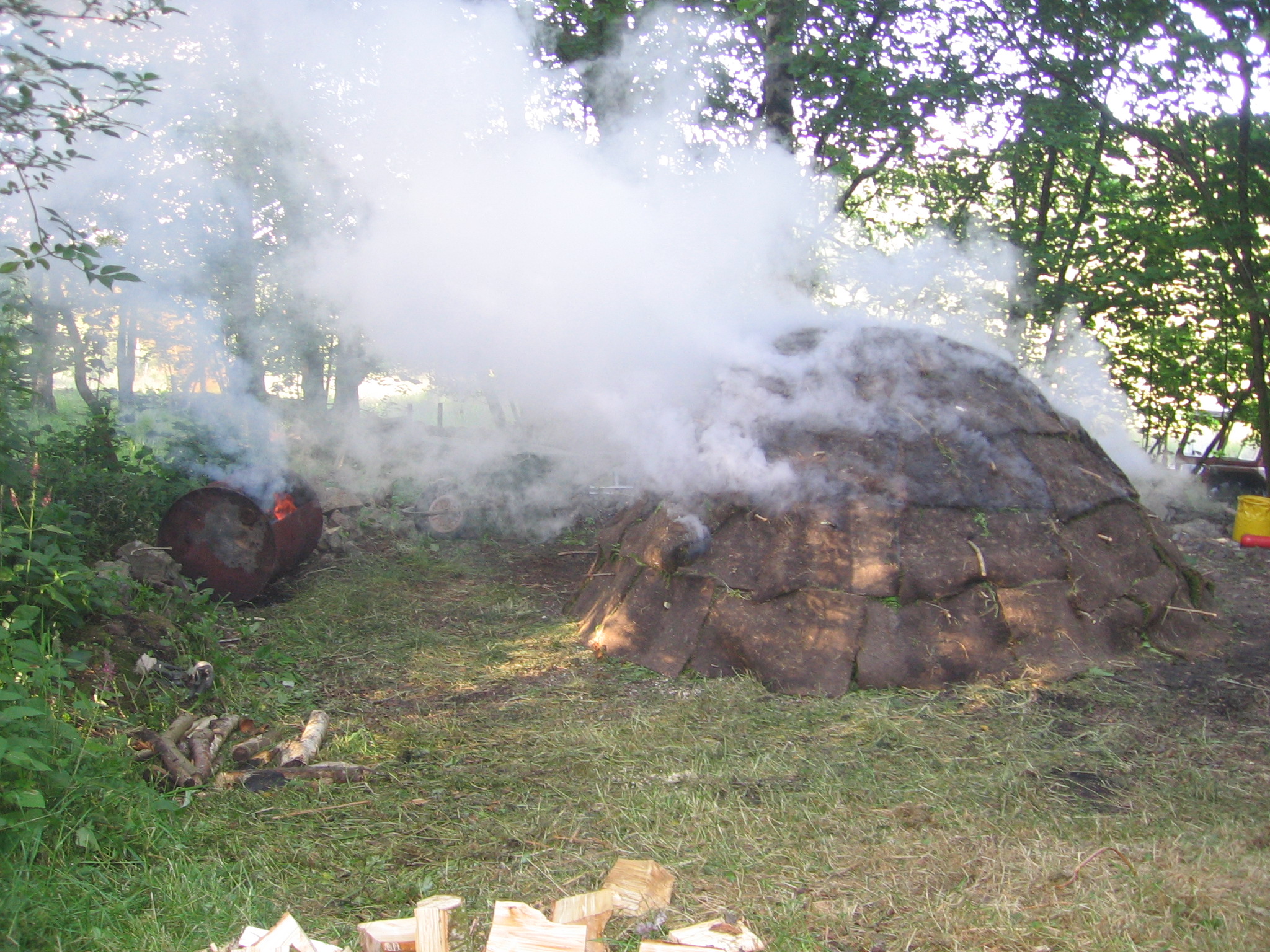
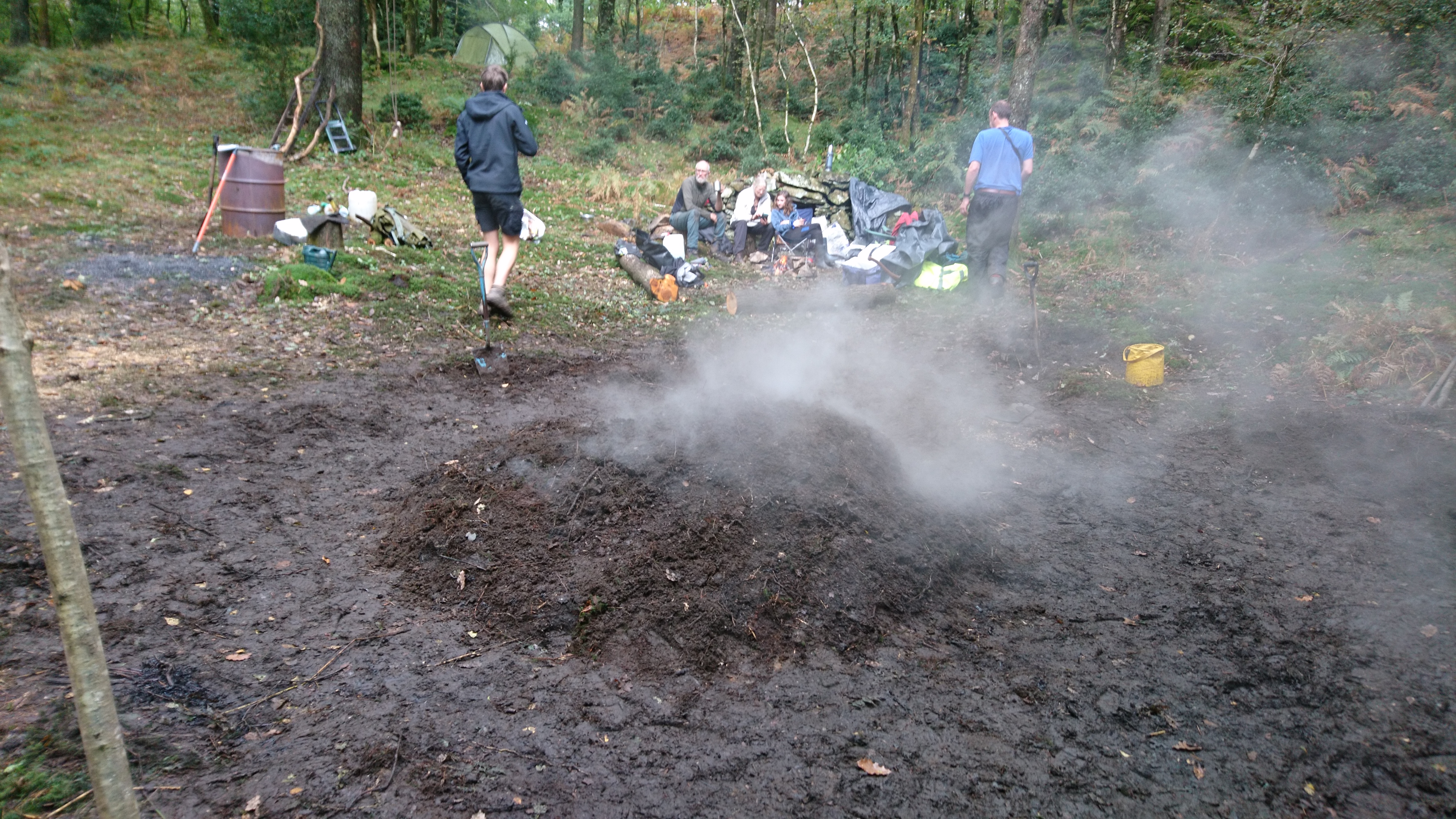
‘I, Brian Crawley, am currently President of the Coppice Association North West. In our late 50s, my wife and I embarked on a career change into coppicing, principally making barbecue charcoal. This presentation is not about earthburns in general, it is about but a specific site for them.

‘I had always been aware of the traditional way of making charcoal, ‘charcoal earthburns’ being a stack of wood covered with earth to limit the oxygen intake to the burn.

‘The receipt of a set of photographs of a charcoal earthburn from David Jones, who was a patient of my daughter’s, encouraged my interest in the subject. David’s photos were of an earthburn that had taken place in 1972 and were included in an extract from his book ‘A Lakeland Camera’.

‘I later discovered that the charcoal burn had taken place as a result of discussion between Mike Dow, who was Treasurer of Haybridge Nature Reserve in the Rusland Valley, and Mike Davies-Shiel, a prominent local archaeologist. They enticed local woodland worker Jack Allonby, who had a retired uncle Tyson Allonby, a charcoal burner, to do an earthburn. Jack was helped by Bill Norris who regularly helped local archaeologist Mike Davies-Shiel and lived in the same village as Jack.  Mike Dow arranged that a film would be made of the burn and subsequently directed it. Bill Norris narrated it. I was put in touch with Mike Dow through our Coppice Association NW secretary Alan Shepley, who had worked with Mike Dow in earlier years, and I was given the “Charcoal Burners of High Furness” DVD, which I then played to the audience. It was not my way of doing earthburns, but was historically interesting. A photo of the charcoal burners of Furness is available on ebay here.

Charcoal burning in Cumbria
Our helper from Cumbria Woodlands with his 3 sons, John Allonby, Dan Sumner and June Norris with her husband

‘For many years I had been fascinated by the visit of the children in the movie Swallows and Amazons (1974) to the charcoal burners and had always wondered where it was filmed. A gentleman on a charcoal making course, which we ran, explained to us that he was there when it was made and took us to the site not far from where he lived at Ickenthwaite in the Rusland Valley. Myles Dickinson told us how amazed he was that they got a double decker bus up the lane to the site for the children’s classroom. However, our inspection of the site in Glass Knott wood on the very narrow, winding and steep Corker Lane up to Ickenthwaite, plus another look at the Mike Dow film and David Jones’s photos, convinced me that it was the correct location.

‘I can’t remember how I first got in touch with Sophie Neville, who played Titty in the 1974 film Swallows and Amazons, but she gives some interesting details about ‘The real Charcoal Burners – who we met whilst filming ‘Swallows and Amazons’.

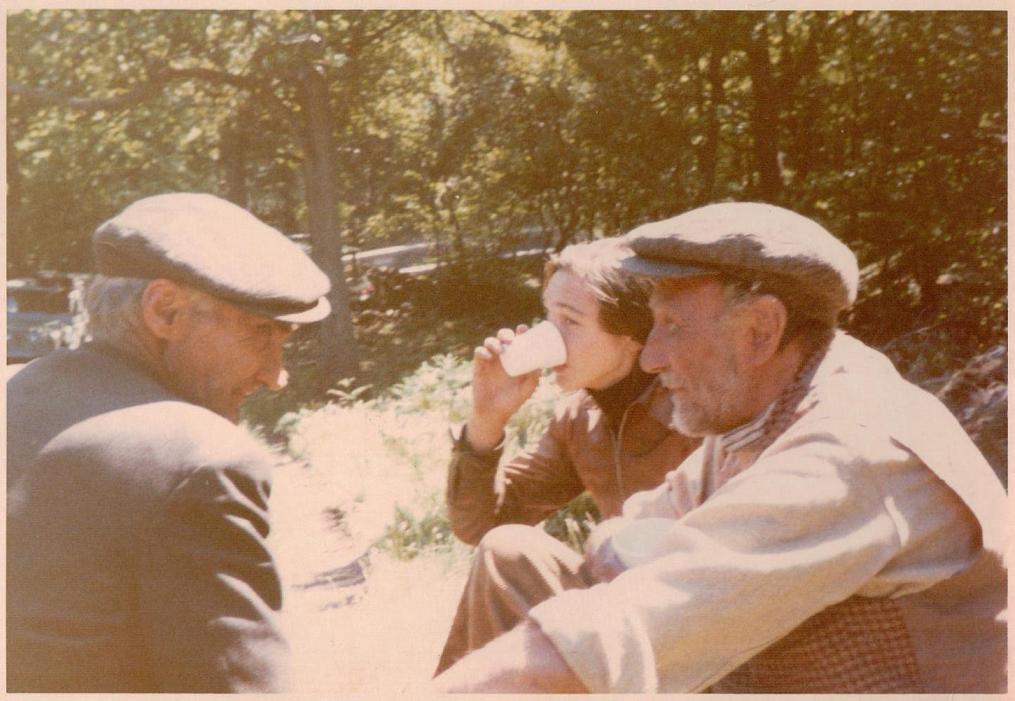
Charcoal Burners during the filming of Swallows and Amazons
John Franklin-Robbins playing Young Billy chatting to the real charcoal burner during a coffee break on the set of ‘Swallows and Amazons’ ~ photo: Daphne Neville

‘I was able to make some extra comments to the blog as well as a photograph the site many years after the filming. I then played a clip of their visit from the Swallows and Amazons film, being shown by courtesy of Studiocanal who own the rights.

‘It became my obsession to carry out another charcoal burn on the site and became significant in 2023 when I realised that the original filming had been in 1973, 50 years previously.  This year also turned out to be the visit to the North West of the National Coppice Federation annual gathering.

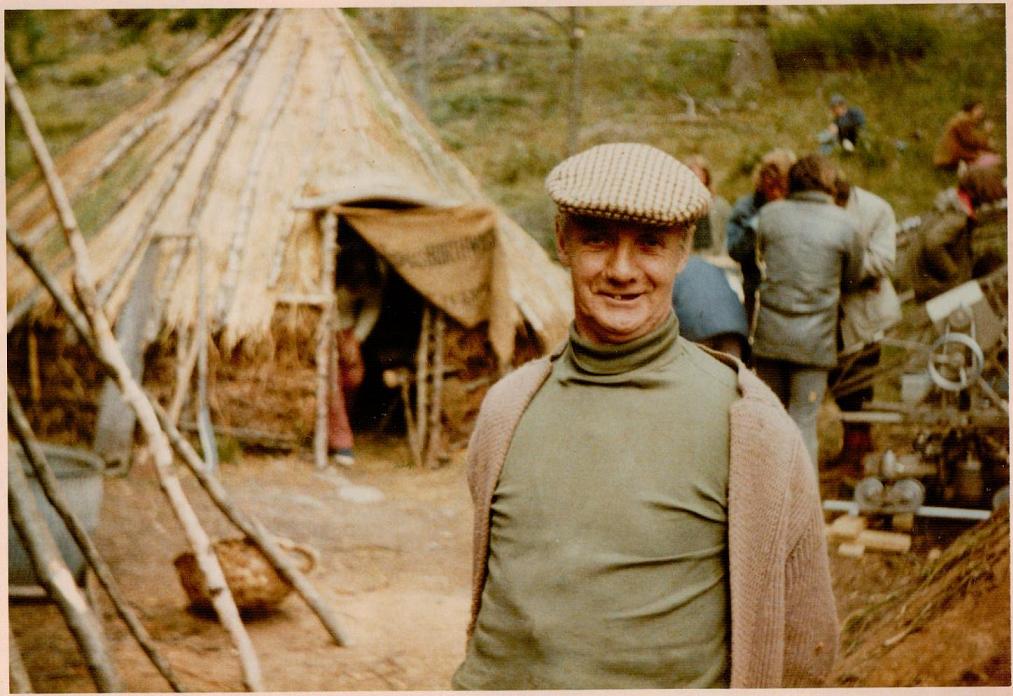
The real charcoal burner
The real charcoal burner outside the hut. Behind him the 35mm Panasonic camera is being mounted on a short section of track ~ photo: Daphne Neville

‘Glass Knott wood is now owned by the Lake District National Park Authority. Permission to carry out the burn was requested and eventually approved with enthusiasm. At the same time Dan Sumner was looking for instruction on how to do an earthburn and we agreed that this was a good time for me to show him how, and for him to be responsible for the burn and provide the timber. The burn took place two weeks before the gathering and we had a fascinating visit to the site from Jack Allonby’s son John together with Bill Norris’s daughter June who had lived in the same small village, Spark Bridge, 50 years ago. A young John Allonby had been at the site with his father during both filmings. We also had a visit from Myles Dickinson who still lives nearby. We had a few very good helpers and some other visitors from LDNPA, Cumbria Woodlands, Coppice Association North West, The Arthur Ransome Society and Ruslands Horizons.

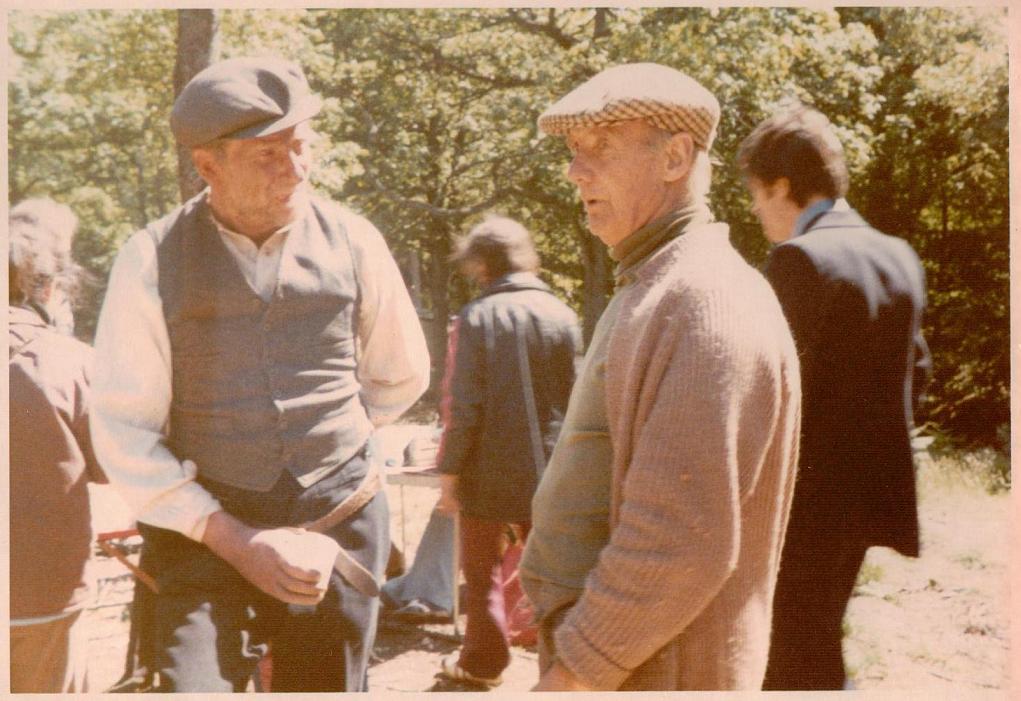
The real Charcoal Burner with the actor
Jack Allonby talking to Jack Woolgar who was playing Old Billy ~ photo: Daphne Neville

‘I then showed some photographs of the weekend’s successful event and a few photos of Sophie Neville’s blog on the web.

The Charcoal Burners - Swallows and Amazons
Arriving at the Charcoal Burners’. Jack Woolgar with Simon West, Suzanna Hamilton, Sophie Neville and Stephen Grendon ~ photo: Daphne Neville

‘To finish, I then showed a DVD of the Millenium Burn, actually held in 2001, at which I learned earthburns from Arthur Barker, who was supported by Alan Waters and his friend Mark, at a site a bit further up the Rusland Valley where Jack Allonby had been filmed doing another earthburn by Sam Hanna, which can now be seen on the internet.’

Earthburns presentation by Brian Crawley,  NCFed Gathering Oct 2023  

The Real Charcoal Burners 2
John Franklin-Robbins playing Young Billy with Sophie Neville, Stephen Grendon and the adder.

The LDNPA are keen to do another burn at the site. News can be found on the Coppice Association – North West website.

Evidence of ancient foundry works on Peel Island looks interesting. You can read more here

Brian found an American copy of Swallows and Amazons that I have never seen before, available online in US dollars.

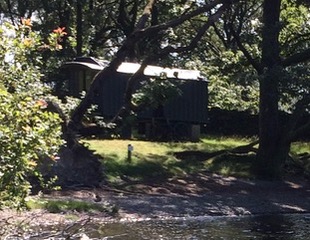
The green caravan opposite Peel Island and Coniston Water

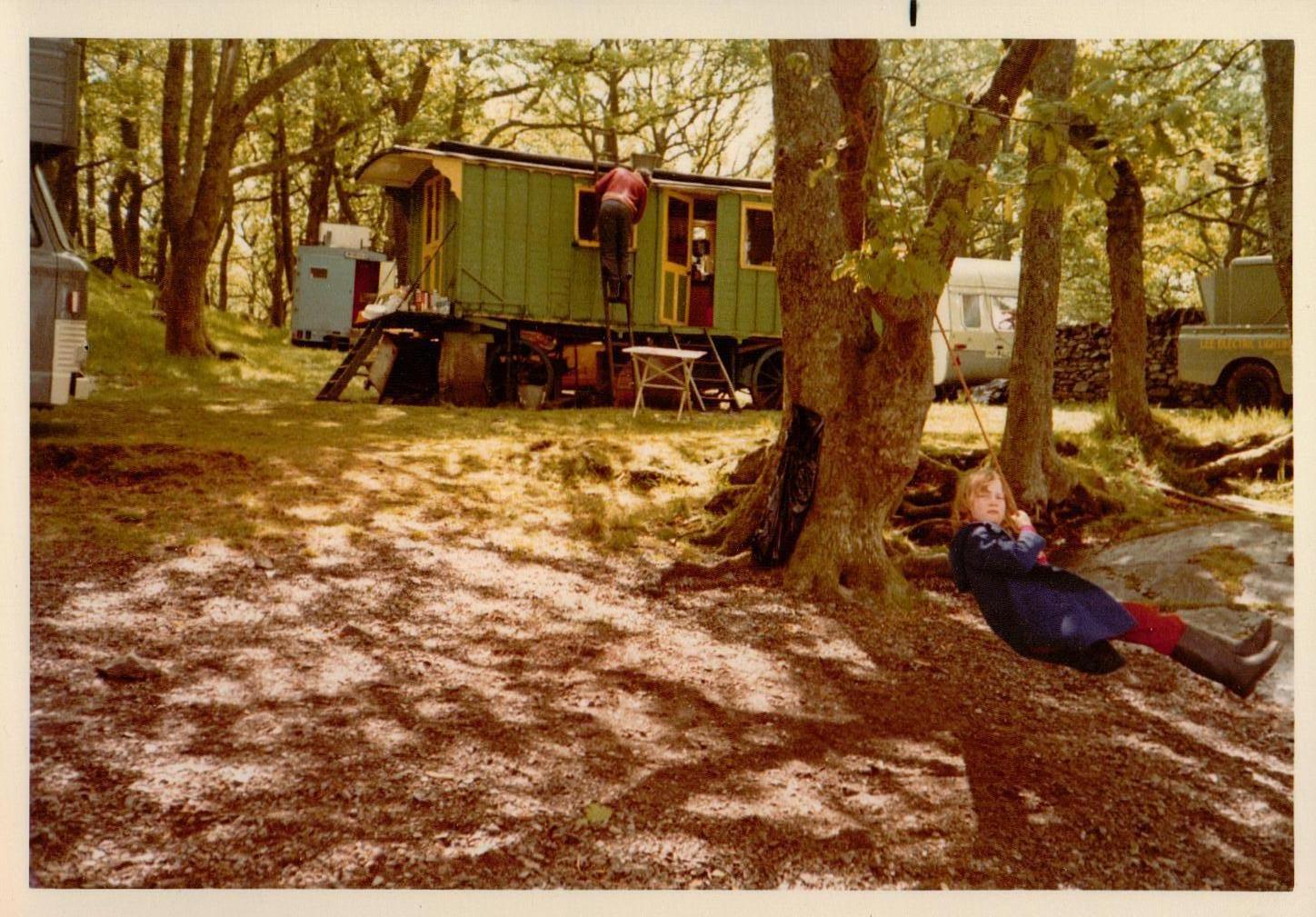
Readers often ask me about the green wooden caravan parked in the woodland opposite Peel Island where our unit vehicles were based when we made the original film of ‘Swallows and Amazons’ in the early 1970s.

My little sister on the swing at the unit base opposite Peel Island ~ photo: Martin Neville

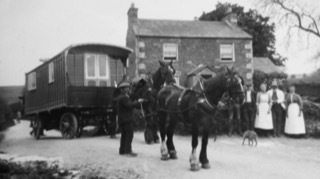
It is actually a postal surveyor’s van bought in Halifax by the Smithson family in 1913 and pulled by two horses to Coniston Water. John Smithson, now in his nineties, provided this photo:

Once it was in Coniston, John’s niece’s family the Bowmans, and his friend Charles Rothwell joined the venture, but the caravan was eventually left with Charles Rothwell’s descendants. It has been maintained, visited and used for holidays by members of his family ever since. They turned up during the May half-term whilst we were filming in 1973. 

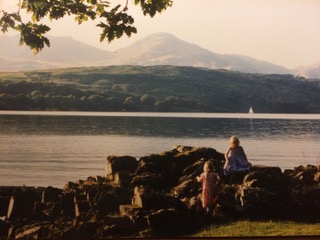
“I was one of those ‘gypsies’, aged 9 at the time,” writes Sarah Bennet. “We were about as surprised to see you as you were to see us – I remember driving into the field and unexpectedly there was a red double decker bus in front of us!  I also remember playing with your younger sisters on the promontory rock by the jetty whilst filming was going on.”

My father was given a short-back-and-sides haircut outside the caravan so he could appear in the film that was set in 1929 when Ransome wrote the book. You can see different angles of of the wooden exterior here after shots of the film crew our on the lake:

The green caravan is currently cherished and used by the 5th generation of Charles Rothwell’s family. “Unfortunately, the National Trust (‘landlords’ since 1932, long after the Caravan was placed in the field) have now given notice of terminating our licence to be there. If we cannot successfully challenge this, we will have to ‘remove’ the Caravan by January 31st 2025. Since the wheels rotted long ago, and it is resting on breeze blocks, this actually means its complete destruction.”

Green wooden caravan by Coniston Water, 1913
By Coniston Water in 1913

Since the wooden caravan has been positioned on the banks of Coniston Water for more than one hundred years, it must have been known to Arthur Ransome when he wrote Swallows and Amazons in 1929. “It is right opposite Peel Island and was then brightly painted in red and gold.” The trees would have been young at the time. “So he must have seen it, and it must have been part of the vision for his books.” It is still used for the sort of adventure holidays that he promoted – camping, boating, camp-fire cooking, exploring the woods and hills.

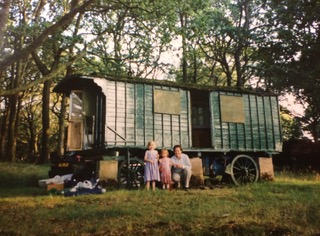
The postal surveyor's van today
The green postal surveyor’s van today

Could members of The Arthur Ransome Society and those who love heritage features of the area appeal to the National Trust and ask for the licence to be extended?

Sarah is happy to be contacted at sarah.bennet2@btinternet.com

The date 1913 is corroborated by a note from Agnes, Charles Smithson’s niece.  She spent a holiday at the caravan as a child in 1913 and mentions sleeping in red felt tents ‘on mattresses filled with bracken’ saying that that the caravan was originally painted green, yellow and purple. In 1928, Agnes married George Bowman.  She said that by then the caravan was in a bad state but that “G. mended it all up marvellously”, so it might have been repainted then.

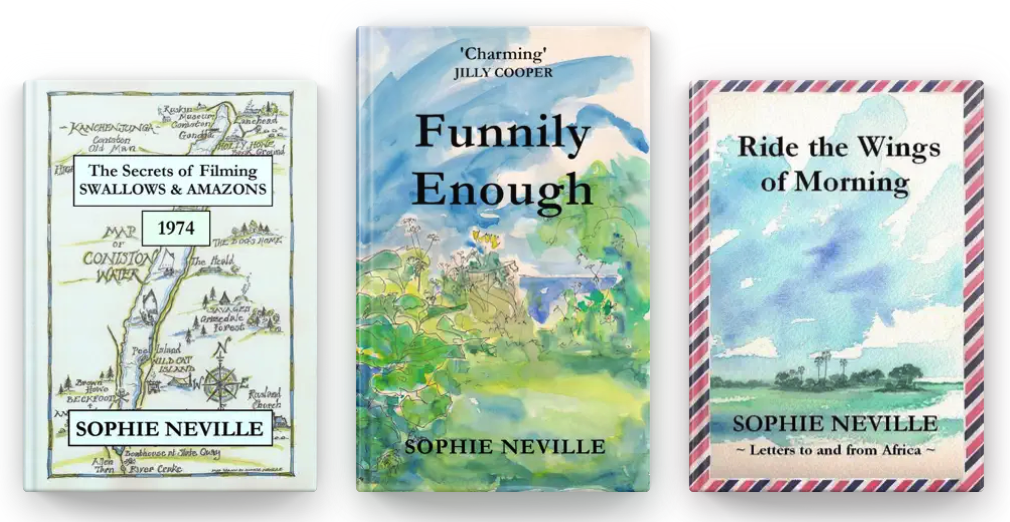
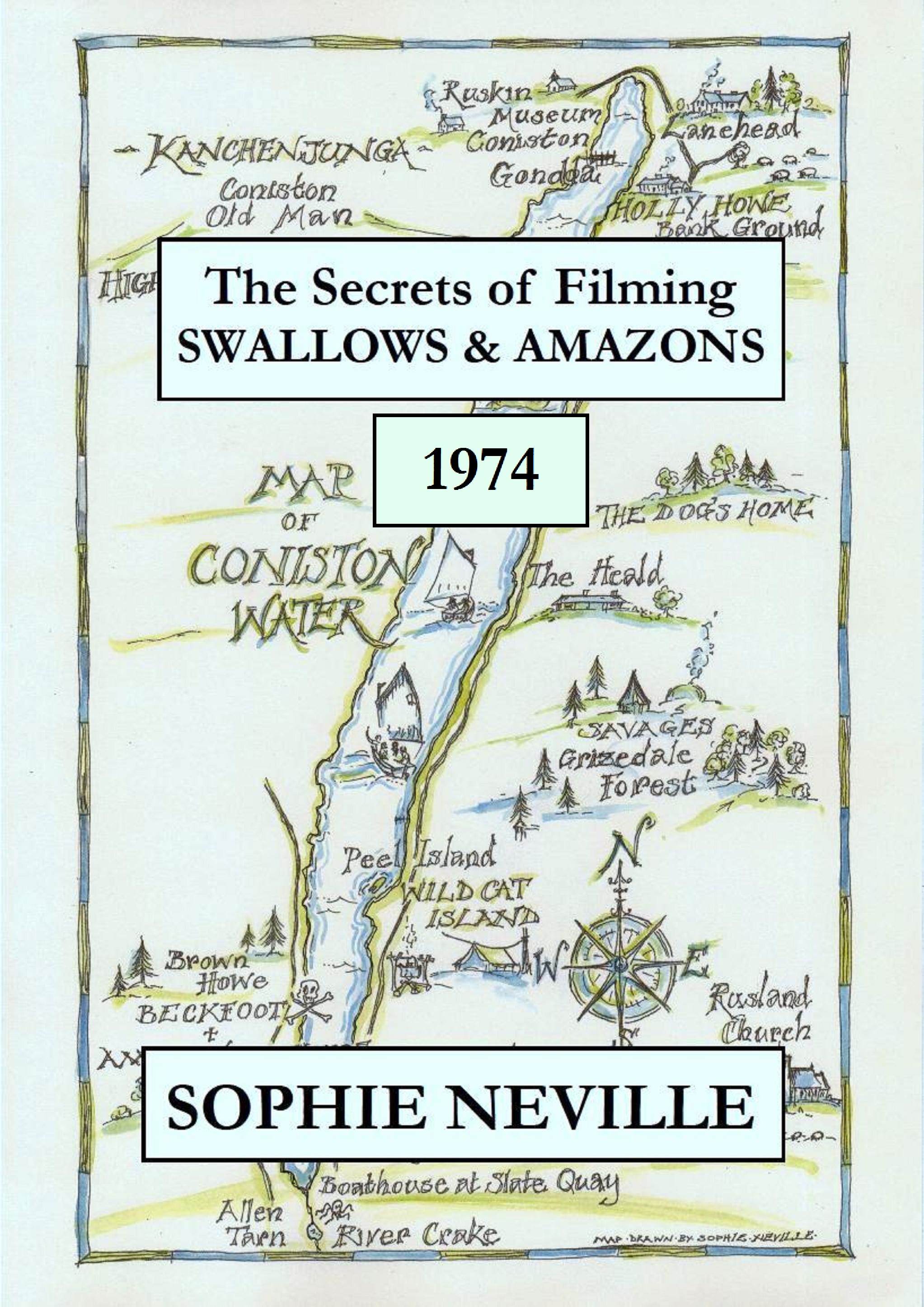
A signed and dedicated first edition hardback of ‘The secrets of filming Swallows & Amazons’ sold for £86 with funds going directly to BBC Children in Need, 2024

An original hardback copy of my book on how we made the 1974 film of Swallows and Amazons was sold in Paddy Heron’s online auction for £86 to raise funds for BBC Children in Need 2024.

It exceeded bids for the autobiographies of Theresa May, Michael Ball, Charles Spencer, Tim Peake, Lynda La Plante, Father Alex Frost and a number of amazing biographies.

An unframed print of a portrait of her playing Titty executed by C. Assheton was also sold in the online charity auction, which raised a total of £14,705 – which is fantastic.

Paperback and ebook editions of my same story are also available at Waterstones and online from all the usual stockists including Amazon

You can find readers’s reviews on my website here

Zoom talks on ‘The Making of Swallows and Amazons’ hosted by the charity Schoolreaders

On Wednesday 27th November at 3.00pm, I will be giving another talka about ‘The Making of Swallows and Amazons’ on a Zoom hosted by the national child literacy charity Schoolreaders.

You can join us by remailing s.glasgow-smith@schoolreaders.org

If you can’t make it, please contact Schoolreaders who can send you a link to the recording.

Since the original film of ‘Swallows and Amazons’ has been out for fifty years, and screened on television more than any other British film, it has a loyal fan base. Paddy Heron of the fundraising charity ‘Children in Read’ says, ‘I have seen that film I don’t know how many times through the decades, with my brother and sisters, with my own kids, and with my grandkids. That film will stand the test of time for ever.’

Jane Whitbread, who founded Schoolreaders ten years ago, tells me that a love of reading is a proven key to future success in life. Around a quarter of all children in England leave primary school unable to read well and yet good literacy improves all round academic achievement. Arthur Ransome’s series of twelve ‘Swallows and Amazons’ books is great for reluctant readers – those who learn to read but fail to develope an interest in books.

Although my handwriting outshone others, I was deeply embarrassed about not being able to read until the age of nine. I battled to crack the code but once through the barrier, soon gained fluency and was captivated by imaginary worlds. Like me, Andrew Harvey said that he was helped by the Arthur Ransome books, “which provided the inspiration to get me through my (undiagnosed) dyslexia.”

Since it was launched ten years ago, Schoolreaders has helped about 80,000 children to read fluently and develop an interest in books by giving them one-to-one support.

It’s clear that lives are transformed by reading. The author David Cooper says: ‘I found Ransome when I was six, and that was a revelation. He wrote with the same high standards as apply to writing for adults, which is why people of all ages are attracted to them. It only took a few chapters of Swallows and Amazons to make me want to be a writer.’

You can watch a precious talk with Schoolreaders on Youtube:

If you could volunteer to listen to children read in school for a year, think of contacting the charity Schoolreaders: www.schoolreaders.org

Points to add to the third edition of ‘The Secrets of Filming Swallows and Amazons’ part ten.

It’s fascinating to hear about links people have with the original film of ‘Swallows and Amazons’ made on location in the Lake District in the early 1970s.

Art Director Simon Holland
Art Director Simon Holland painting labels for cans of Pemican ~ photo: Daphne Neville

Amanda Currie wrote to say, ‘My family had quite a lot to do with the film. My cousin’s bro-in-law was the art director… My Dad was one of the Lake Wardens he had great fun keeping tourists away from the filming on the lake. Captain Flint stayed at our friends’ hotel and boy did they have some funny tales to tell. The couple who owned it were called Tim and Eileen, they would be in their eighties now I would think. Of course we were all extras.’

She added, ‘We were all massive Swallows and Amazons fans long before the film, as when my Grandma lived in Blackpool they used to stay at what was the Blackett’s house, and on occasion bumped into Arthur Ransome.’

Jean our driver and location nurse operating the radio with Sophie Neville ~ photo:Martin Neville

Jean McGill, our unit driver, used to pick up Ronald Fraser every morning, a difficult task as he was always drunk. “Dreadful man, swearing and shouting around the place,” she said. “Appalling behaviour.” Jean had been the Chief Air Stewardess and cabin services superintendent in Bahrain for what is now Gulf Air. “I had to leave because I wouldn’t marry the general manager, who was having a nervous breakdown.” She was going out with the Captain of the Sir Galahad, the ship that went down in the Falklands, “along with the coffee pot I’d given him.” She also told me that they had a known terrorist one of her flights, “who then got on the BOAC flight that landed in the desert.” He had wanted to free Lela Kallard.

Do you know where the Peak of Darien can be found?
photo: Roger Wardale (with permission)

The Arthur Ransome Group have been discussing the true model for the Peak at Darien. Mrs Ransome told the film producer Richard Pilbrow that you could find it on Windermere.

Paul Flint says that, ‘good contenders are Brathay Rocks and Gale Naze Crag on Windermere’, pointing out that both were well known to the Ransomes. It would be interesting to know what islands you can see from these.

Friar’s Crag on Derwent Water was used for the opening titles of ‘Swallows and Amazons’ (1974) Stuart Clague informed me that it  is a dolerite dyke intruded into softer Skiddaw slate, as mentioned in the book Lakeland Geology.

The Arthur Ransome Trust has an App to help you find locations detailed here

Lakeside and Haverthwaite Steam Railway

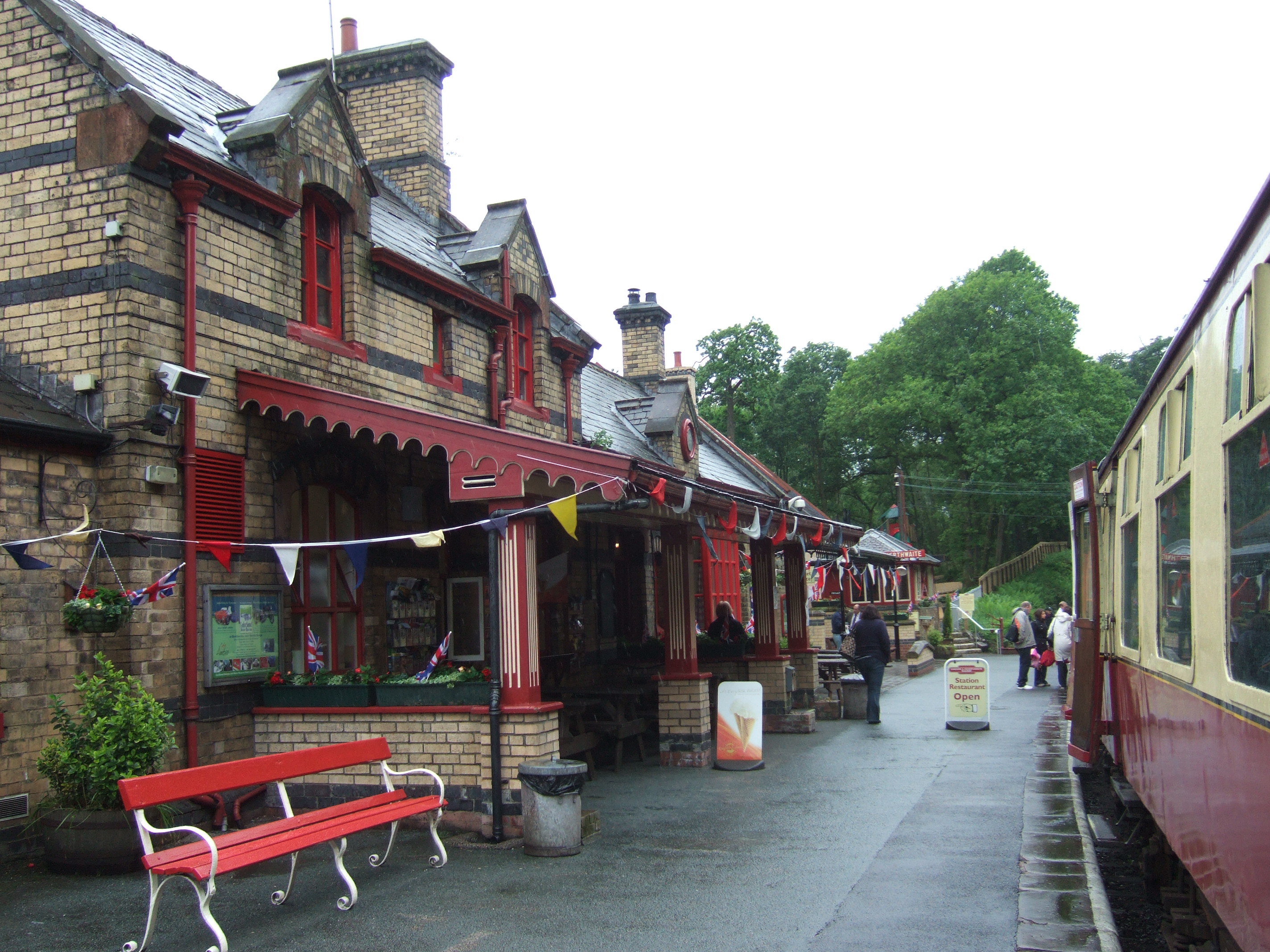
This is the platform at Haverthwaite station on the Lakeside & Haverthwaite Railway in Haverthwaite, Cumbria. Manuel Gurtner points out that the heritage railway also appears in ‘Without a Clue’ (1988), the witty movie starring Michael Caine as Sherlock Holmes and Ben Kingsley as Dr Watson. You can spot the carriages at scenes shot in the Lake District in the film trailer.

You can read more about how the original film was made back in 1973 in the ebook ‘The Secrets of Filming Swallows and Amazons’ or the paperback ‘The Making of Swallows and Amazons’ also available on Audible. There are a few pages about it in another memoir, ‘Funnily Enough’.

Speaking about 50th Anniversary of the classic film ‘Swallows and Amazons’ on Radio Calon this Thursday 29th August at 9.00pm

Sophie Neville spoke to Luke Durnell on Screen Facts, his hour of music from the big screen, on Thursday 29th August at 9.00pm.

Catch up on recent Radio Calon broadcasts via their website – with further details on how to listen here

The full ‘ship’s log’ relating to the adventures we had making the film can be found in the illustrated paperback published by The Lutterworth Press or ebook entitled ‘The Secrets of Filming Swallows and Amazons’. This can be downloaded this onto your phone and used as a guide book if you can grab a chance to visit the locations.

David Wood who wrote the screenplay of the classic film ‘Swallows & Amazons’ (1974) interviewed by Brian Sibley at the Cinema Museum

On 6th April 2024, the author and screenwriter Brian Sibley interviewed award-winning writer David Wood OBE at the Cinema Museum for the 50th Anniversary of the release of the classic film ‘Swallows and Amazons’. This can now be viewed on YouTube. I read a special letter from Dame Virginia McKenna towards the end.

Sophie Neville, Suzanna Hamilton & Sten Grendon with David Wood and Claude Whatham in 1973

Until I listened to this interview I didn’t know that Peter Hammond was originally going to direct the film or that Bernard Delfont was behind financing the movie at EMI. He also brought out ‘Murder on the Orient Express’ in 1974 and ‘The Deer Hunter’ in 1978.

Other secrets are revealed. Mrs Ransome (who held the rights) wanted all the Swallows to have blonde hair and blue eyes.

I’ll feature the Q&A with the cast on another blog in a few days time. Do sign up so you don’t miss it.

You can watch an excellent recording of Brian Sibley’s Q&A with the cast and David Wood on this website here and find photos of the event here.

Brian said he drew his knowledge from ‘The Making of Swallows and Amazons’, which is now available on audible.

The audiobook of 'The Making of Swallows and Amazons'
The audiobook narrated by Sophie Neville

A copy of the paperback is currently being auctioned to raise funds to help a little boy called Max who is very ill. You can see how the bidding is going on jumblebee

Being on BBC Breakfast

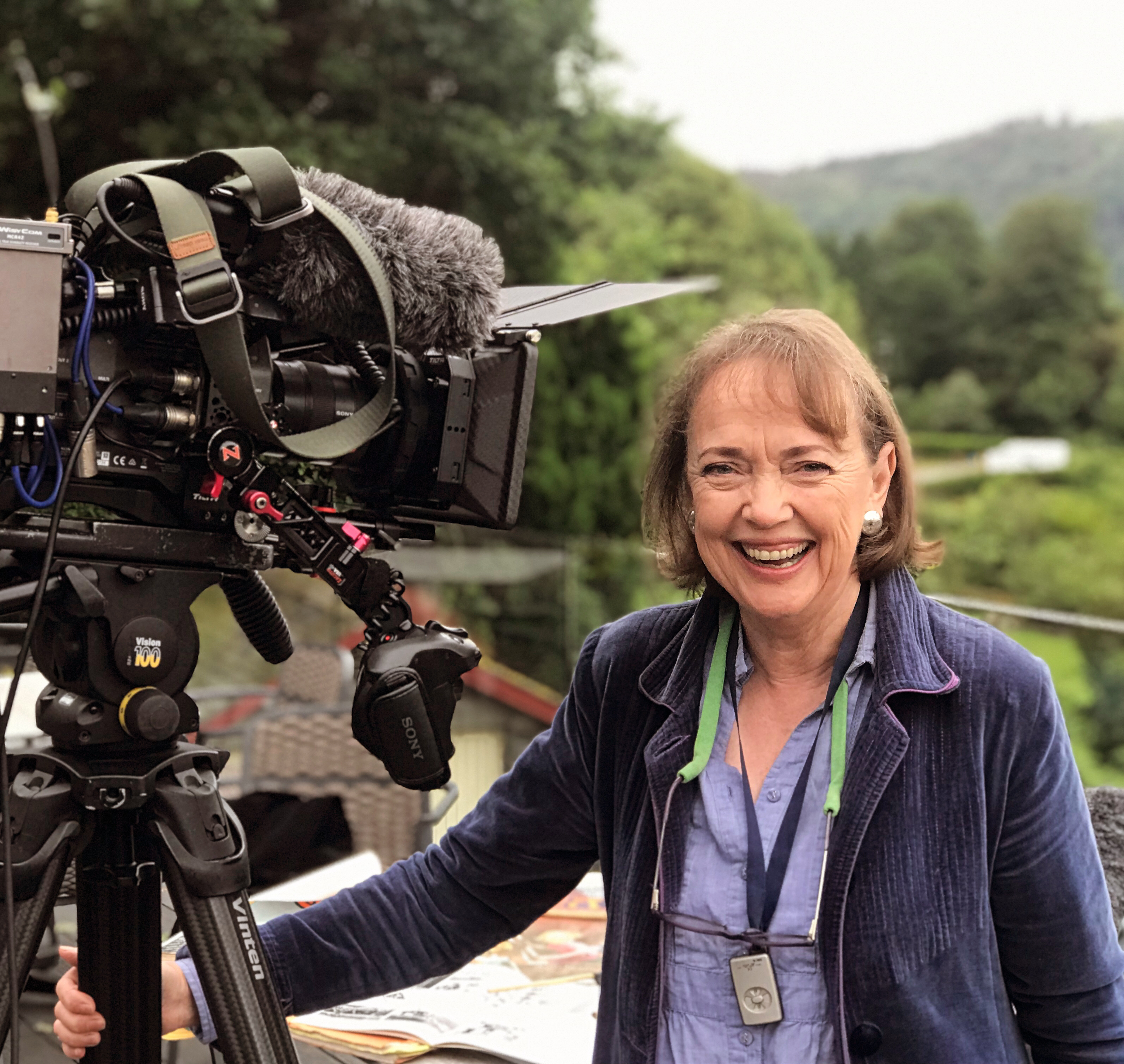
Sophie Neville, Suzanna Hamilton and Kit Seymour on BBC Breakfast

‘Can you speak to BBC Breakfast?’ I was asked. ‘They want to interview the cast on Zoom tomorrow morning.’

It was Saturday 29th June. We were at Windermere Jetty in Cumbria for the 50th Anniversary of ‘Swallows and Amazons’, the 1974 film was being screened in the room below us and a huge number of enthusiasts were eager to chat about how we’d made it. I had just come in from sailing Amazon, John Sergeant, president of The Arthur Ransome Society, was about to arrive and we had books to sign, but I knew it was important to act fast. The BBC would need time to contact StudioCanal in order to use the film trailer. I grabbed my lap-top and attempted to persuade the production team we had lots to talk about while finding a good signal. The best place was on a staircase, which was fun when Captain Nancy and Mate Susan rushed past, but a more interesting background was required.

‘What time do you want us on air?’

‘7.40am.’

‘Ah – the museum doesn’t open until 10.00am. Can we chat to you from the terrance of our hotel? It overlooks Windermere.’

‘It might be best if we send out an outside broadcast unit.’

I wasn’t told the item would also go out on Look North and North West News.

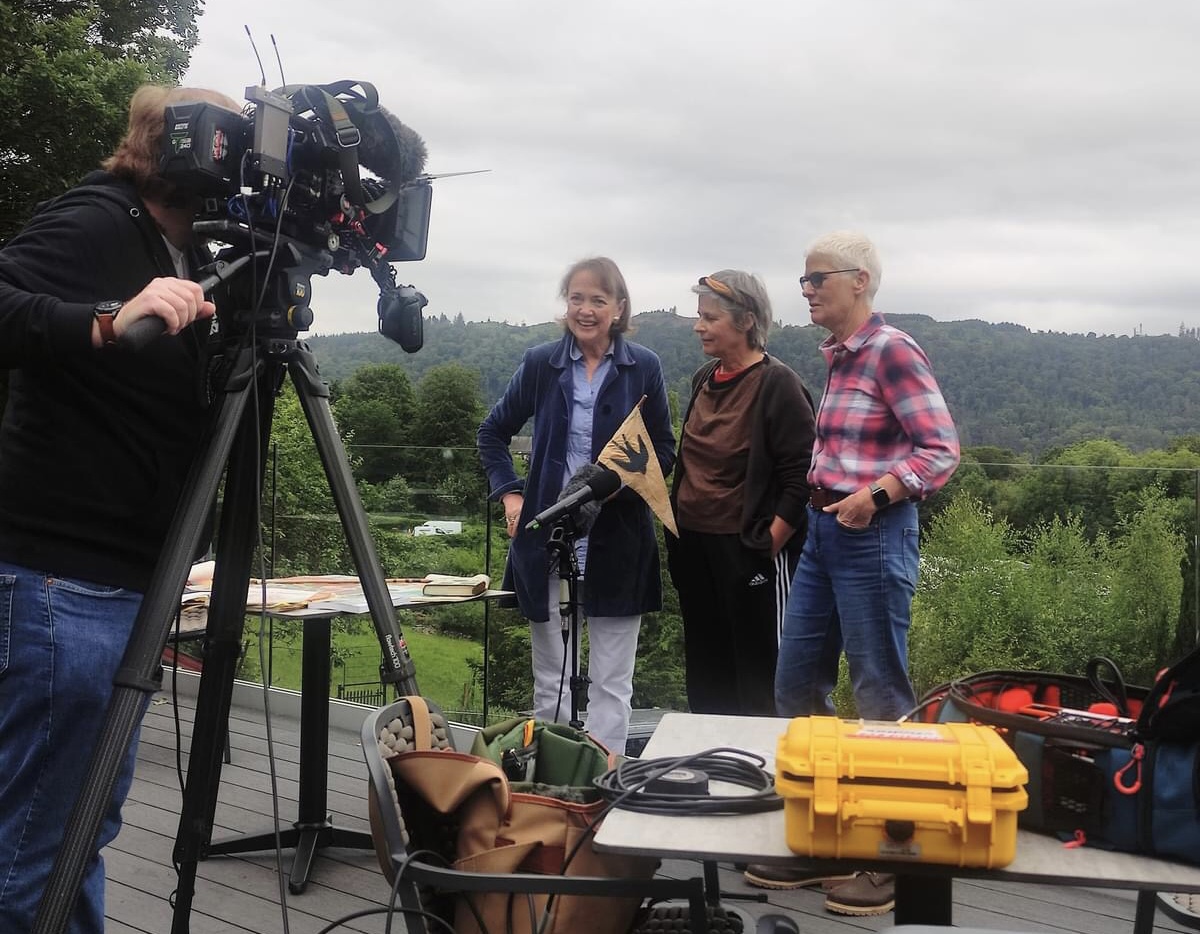
I woke early the next morning to find Keith, the BBC cameraman, setting up his equipment. Rain clouds cleared as I unrolled Arnaldo Putzu’s 1974 film poster and plonked David Wood’s screenplay on top of it with a few flags but worried about my hair, which was not behaving. We had Peter Robb-King, one of the greatest make up designers in the world with us. I should have asked for his help. All I did was remove a car key from around my neck.

Sadly, Simon West who’d played Captain John had already left, but Suzanna Hamilton and Kit Seymour emerged from their rooms and we lined up for the shot.

Was I organised? Did I tell them, ‘We need to get three points across!’ ?

No.

Someone quietly suggested I could mention The Arthur Ransome Society who had organised the weekend festival, which was free for all.

Sophie Neville, Suzanna Hamilton and Kit Seymour setting up for BBC Breakfast

Keith fitted us with earpieces and explained that there would be a delay between questions asked in the studio and our answers. We couldn’t see the presenters but could hear the film trailer being played. When we were asked us to introduce ourselves, I didn’t realise they needed to know which characters we’d played until I got to Kit Seymour, who had been Nancy. Straight forward and honest, she managed to answer the difficult question:

‘What’s it like… how does it feel?’

‘Listening to stories of how the film has changed people’s lives,’
she admitted, ‘was quite an emotional experience.’

Suzanna, explained in her beautiful voice, that since the the story was set in the 1930s it hasn’t dated, and we were able to chat naturally about our mission to encourage the next generation to get out on the water. We chatted about the movie memorabilia and David Wood’s script – that as children we were never allowed to read and the amazing time we were having at Windermere Jetty museum where one little girl arrived dressed as Titty Walker with a green parrot on her sholder.

I held Swallow’s flag and managed to speak about the acquisition and renovation of the dinghies, aware that there were no boats to be seen on the hotel terrace. However BBC Breakfast have brilliant vision mixers. The best film clips of Swallow and Amazon literally sailed over my words and I grabbed the chance to talk about The Arthur Ransome Society on national television before they bid us farewell.

When John Sergeant asked me how it had gone I had to admit that we tripped up on the time delays, but we celebrated the much loved film bringing news that Swallow and Amazon are being made available for anyone to sail and that grants are available for children to take part in outdoor activities mentioned in Arthur Ransome’s twelve books.

Many thanks to all those who left encouraging feedback on social media. I forwarded it to the production team.

Eileen Jones – This is fascinating , about the landscape more important than costume. Just introduced another generation.

Will Hawthorne – just watched it. Lovely.

Amanda Whatley – Great interview, congratulations on the reunion of the boats and people. 

Jon Porter – Fantastic

John Greenhough – Great memories of this film. 

David Elms – Delightful interview Sophie. 

Amanda Currie– I ‘m so sorry I didn’t get there Sophie, my stupid body keeps letting me down, I would have so loved to meet you all. 

Robin Jett – I love your delight about the boats. The boats are back! What fun! Great to see how ‘Susan’ and ‘Nancy’ have grown up too. I can see aspects of each character in each actress, but I expect, if you had all played different characters, that might still be true.

Did the Swallows wear hats – and should they have worn them in the films of ‘Swallows and Amazons’?

Sten Grendon (Roger), Simon West (John), Virginia McKenna (Mother), Suzanna Hamilton (Susan) and Sophie Neville (Titty) with their hats ~ photo: Daphne Neville

Arthur Ransome wrote ‘Swallows and Amazons’ in 1929 when hats were worn in England, certainly in north Lancashire where the book is set. Would members of the Walker family have been wearing them?

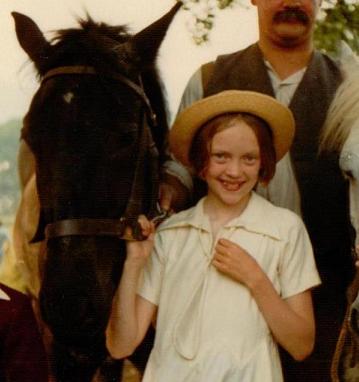
Sophie Neville as Titty in 1973

When I took part in Claude Whatham’s movie ‘Swallows and Amazons’, made in the early 1970s, we were given school hats to wear when we arrived at Holly Howe in the opening sequence. While the boys had caps, I was given a straw hat but found it blew off when we ran down the field to the Peak at Darien where I spotted the island of my dreams. It ended up being quite a useful thing to hold in my hands.

In later books in the series such as Peter Duck, Missee Lee and Great Northern Arthur Ransome depicts the Swallows wearing white linen sunhats but these do not appear in the Lakeland books until the hot summer of Pigeon Post. It only seems to be the Amazons who wore hats in Swallows and Amazons.

Sten Grendon, Simon West, Kit Seymour and Lesley Bennett in Secret Harbour

I rather envied the warmth these provided out on the water but they could get hot. This is possibly because in 1973, when they were sourced locally by the second assistant director, they could have been made of acrylic rather than Westmorland wool.

Claude Whatham, Richard Pilbrow, Gareth Tandy, Peter Robb-King, Ronnie Cogan and Neville C Thompson with Kit Seymour and Lesley Bennet trying on hats for Swallows and Amazons
Claude Whatham, Richard Pilbrow, Gareth Tandy, Peter Robb-King, Ronnie Cogan and Neville C Thompson with Kit Seymour and Lesley Bennet trying on hats

The first knitted hats that turned up on our film set were pink, and quite a bright pink at that. This photo shows them being tried and rejected, which is why Nancy and Peggy are not wearing hats in the scenes set at Beckfoot.

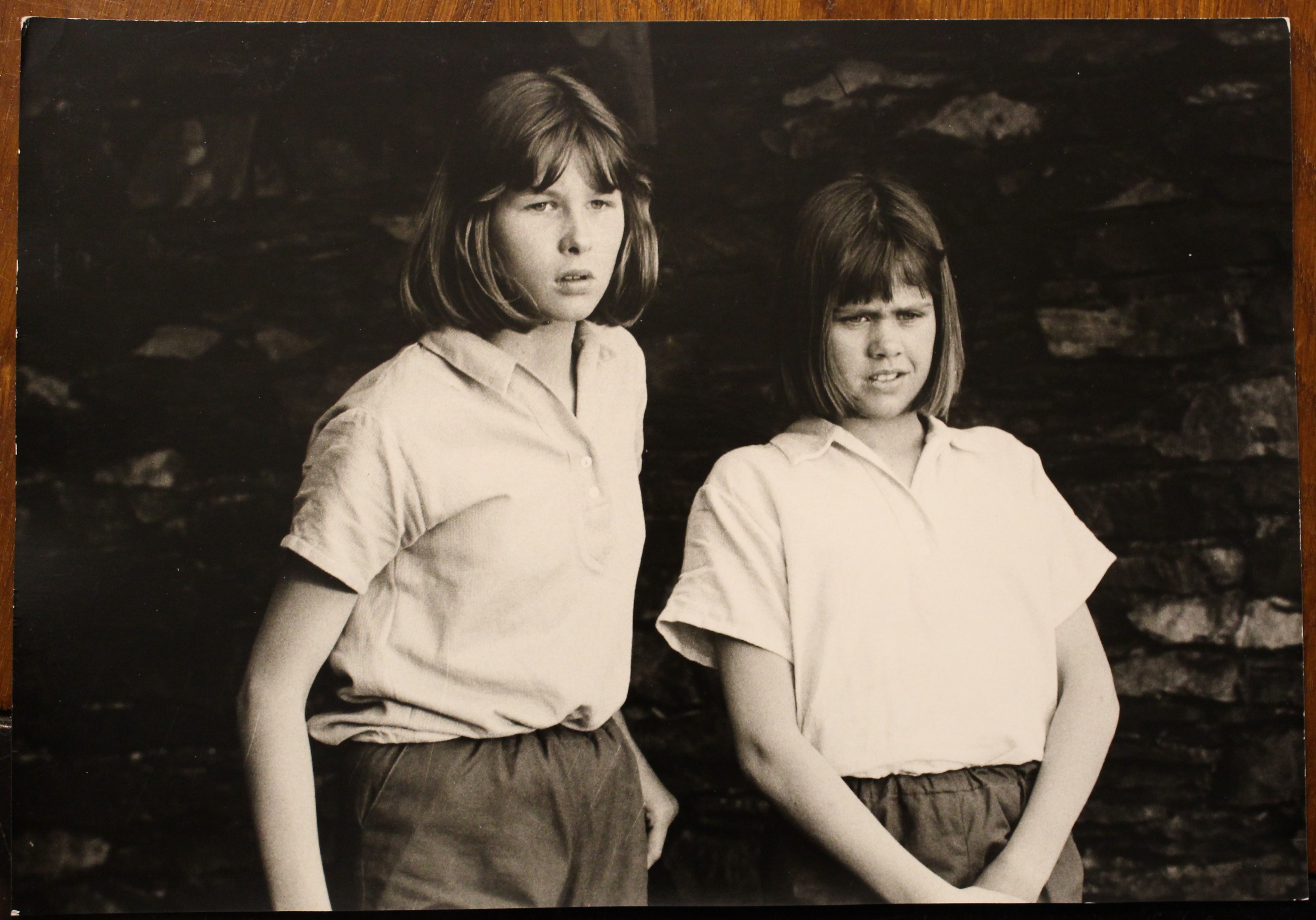
Kit Seymour and Lesely Bennett
Kit Seymour and Lesley Bennett playing the Amazons

It seems natural enough, shows them in a different light and works well when they are careening Amazon.

Kit Seymour with Claude Whatham, 1973
Kit Seymour with the director Claude Whatham, 1973

The second hats to arrived on set may not be have been exactly right in design but they weren’t too bad. Does anyone know if they were knitted specially and by whom?

Sophie Neville, Kit Seymour, Suzanna Hamilton, Sten Grendon, Simon West and Lesley Bennett in ‘Swallows and Amazons’ (1974)

Would the Amazons have removed their hats inside the houseboat? The great aunt would have certainly taken tea in her hat and this was a pirate feast.

Kit Seymour and Sophie Neville in 'Swallows and Amazons'
Kit Seymour as Nancy and Sophie Neville as Titty with the green parrot

Perhaps the fact that the Swallows don’t sail in hats adds accent to the Amazon pirates and Nancy triumphantly wearing hers.

Kit Seymour in 'Swallows and Amazons' (1974) by the film poster artist Arnaldo Putzu
Kit Seymour in ‘Swallows and Amazons’ (1974) by the film poster artist Arnaldo Putzu

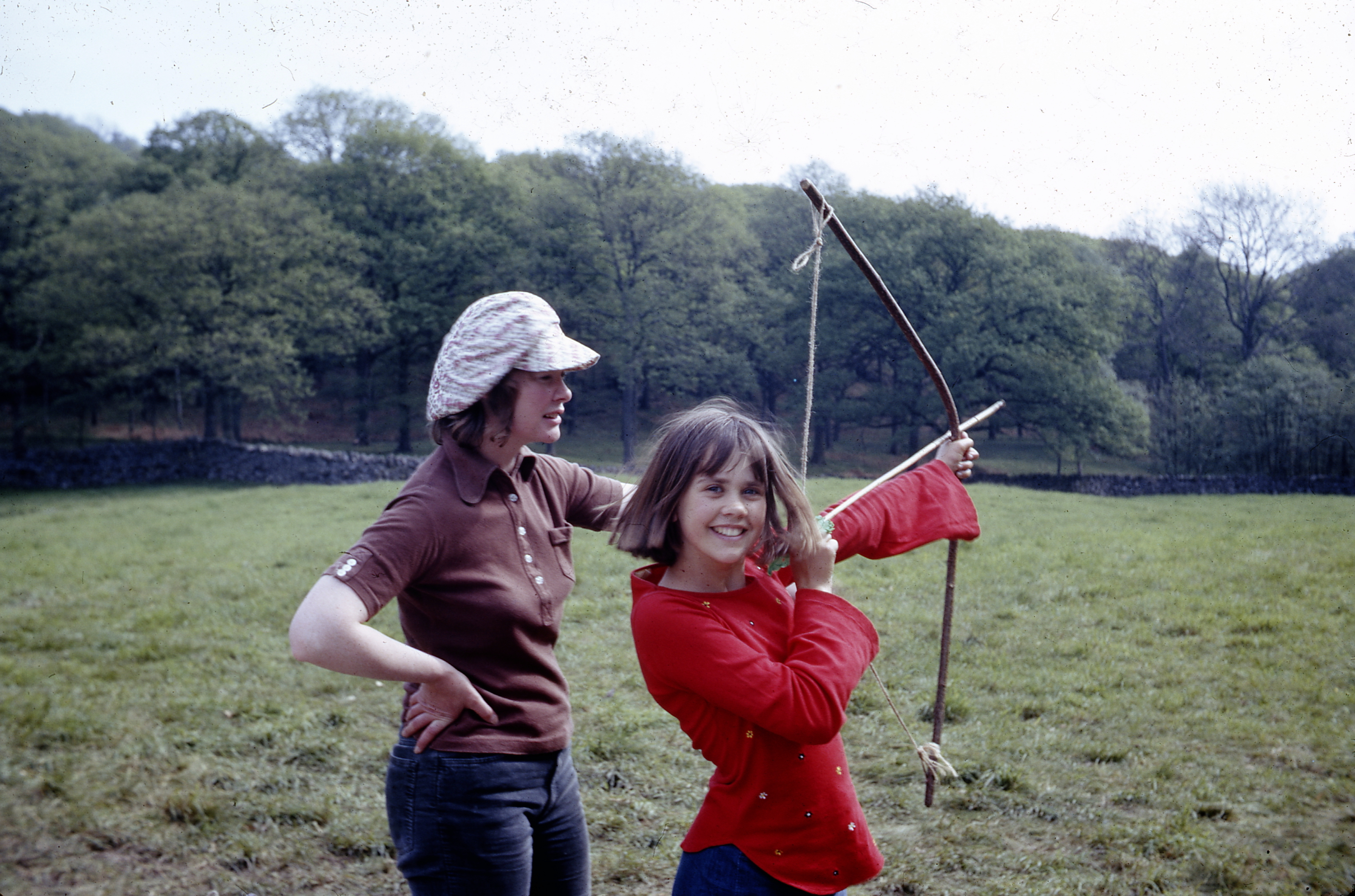
My mother was given one of the pink rejects but wore a huge floral Donny Osmond cap on set.

She made me wear both a hat and sunscreen behind the scenes in an attempt to stave off sunstroke.

There were not many very sunny days but it was I who wore a hat at Beckfoot. I now prefer something with a wider brim and a string under the chin to ensure it doesn’t blow off and sink to the bottom of Derwentwater as my mother’s did.

Sophie Neville at Beckfoot
Sophie Neville at Brown Howe, the location used for Beckfoot

You can listen to the audiobook on ‘The Making of Swallows and Amazons’ or find more behind-the-scenes stories in the paperback available online.

The audiobook of 'The Making of Swallows and Amazons'
The new audiobook

Channeling Titty’s unique style with the help of costumes designed by Emma Porteous.

Sophie Neville and Sten Grendon in Swallows and Amazons 1974

When I played Titty Walker in 1973, I tried to capture something of the style of the 1920s and portray her as the nine year-old girl in the illustrations Arthur Ransome’s drew in his book Swallows and Amazons. Although I shared the Scots/Irish/English ancestry of Titty Altounyan, a real little girl who the character had been based on, I lacked her Armenian heritage and dark, bobbed hair. However, Mrs Ransome had insisted that in the film Titty was to be played by ‘an English Rose’. Dame Virginia McKenna had accepted the part of our mother, who grew up in Australia, it seemed right that one of her children might have fair hair.

Virginia McKenna and Sophie Neville on Peel Island
Virginia McKenna and Sophie Neville on Peel Island ~ photo: Daphne Neville
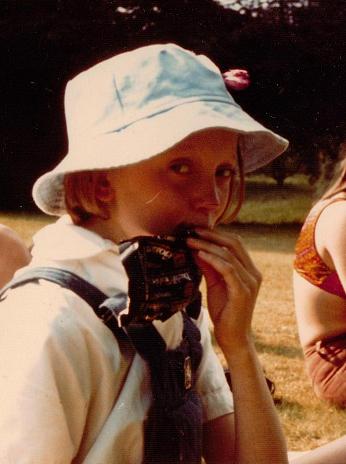
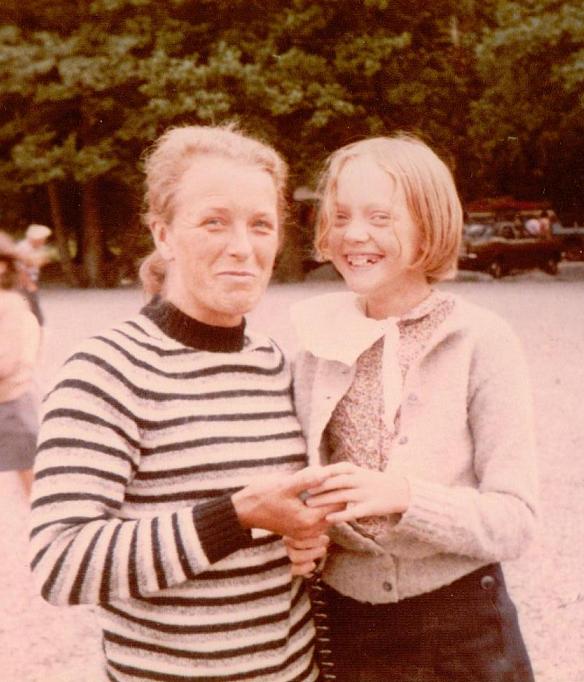
My Scottish grandmother would have been aged sixteen in 1929. She loved clothes and had great style. People say that I look like my mother but I bear a greater resemblance to Granny in her youth.

Joy

I’d inherited my father’s long legs, which made me a couple of inches taller than Simon West who played my elder brother, John. Since this would clearly look wrong on screen, I was encouraged to devise ways of disguising my height, but this was difficult to do in boats.

Sophie Neville as Titty and Simon West as John
We often had to sit on the ground in Swallows and Amazons. The long legs needed to be folded up, exposed as they were by the short dresses or divided skirts designed by Emma Porteous.

Sophie Neville as Titty

I remember meeting Emma at a fitting at Angels Costumes on Shaftesbury Avenue in London when I tried on the original silk dress worn for our arrival at Holly Howe. It came with a straw hat similar to one I’d worn as a child.

Simon West, Stephen Grendon, Suzanna Hamilton and Sophie Neville as the Walker children dressed as they arrived at Holly Howe at the start of their holiday in the Lake District
Simon West, Stephen Grendon, Suzanna Hamilton and Sophie Neville as the Walker children dressed as they arrived at Holly Howe at the start of their holiday in the Lake District ~ photo: Daphne Neville

I had no idea how well known Emma Porteous was to become. She designed the costumes for the James Bond movies, along with Aliens and Judge Dread. Finding the boy’s school uniforms must have been a bit dull for one so talented but she found elegant vintage dresses for Dame Virginia McKenna who looks elegant in every scene.

Stephen Grendon, Simon West, Virginia McKenna, Suzanna Hamilton and Sophie Neville, trying not to look as tall as she was in 1973 ~ photo: Daphne Neville

Emma had most of my clothes made up for me. These included a brushed cotton nighty, worn at Holly Howe, pajamas for camping, and a swimming costume with little legs. Mine was far from glamorous being red, wooly and apt to ride up in the most unflattering manner. I was given a smart yellow coat to wear in the train, but it was too hot in the compartment and, although pretty, it was never seen in the finished film. It had buttons in the shape of flowers and may have been an original garment from 1929.

Sten Grendon, Suzanna Hamilton and Sophie Neville

The silk dress revealed my ‘passion killers’. These navy blue elasticated gym knickers were an item of clothing requested by Claude Whatham, the film director, who remembered wearing long underwear himself. He insisted that I tucked my dress into these voluminous knickers, which the crew called ‘passion killers.’ This seemed natural as it was common practice. I’d done it myself, as had the Altounyan girls, but the tucking in became difficult to maintain and my legs were too gangly to warrant exposure. The knickers contained a hanky, used on two occasions. Growing up in the 1960’s – with a Scottish grandmother – I’d keep a hanky in my own over-knickers so found this quite natural. Even aged eleven my school uniform listed gym knickers (brown) and underpants.

Sophie Neville as Titty in 1973

Emma admitted to my mother that the dresses she’d had made for me would have been longer in 1929. She chose shorter, ‘out-grown’ hemlines as a nod to ‘Seventies fashion but these made my skinny legs look even more alarming.

Mum liked the pale yellow dress with scalloped detail. I didn’t then, but do now, although I don’t have the right colouring wear either yellow or green.

Simon West and Sophie Neville in Swallows and Amazons (1974)
Simon West and Sophie Neville on Peel Island in 1973

By the time I was pretending to be Robinson Crusoe, the yellow dress had been paired with a grey cardigan buttoned up to my neck for warmth. The quality of the material gave it a more natural, scruffy look than the white spotty dress with a Peter Pan collar. This looked a bit new for Titty, although it was much like the dresses Granny made for me, by hand, when I was aged nine. There was a little bit of smocking below the shoulders. I rather preferred Susan’s low-waisted gingham dress.

Simon West, Suzanna Hamilton and Sophie Neville reading BETTER DROWNED THAN DUFFERS IF NOT DUFFERS WONT DROWN
Simon West, Suzanna Hamilton and Sophie Neville

Did anyone find jackets for us to wear out on the water? No! We froze but the flimsy costumes we wore sailing to the island do give them impression of an idyllic summer holiday.

Sophie Neville, Suzanna Hamilton and Simon West sailing Swallow in 1973

Emma only ever made one visit to the location, early on when Dame Virginia McKenna was on set. Our clothes were looked after by the wardrobe master Terry Smith who kept them crumpled up in suitcases rather than on a costume rail. He had no assistant or dressers except for my mother who helped him fit the film extras with costumes and had me wriggling into mine.

Terry Smith, Sophie Neville and Daphne Neville on location in the Lake District
Wardrobe Master Terry Smith with Sophie Neville and her mother Daphne Neville outside the Make-up caravan on location near Keswick in Cumbria

Apart from the school shoes I arrived in, we wore white(ish) gym shoes, which were forever getting wet. I would have preferred gumboots but the Swallows wore ‘sand shoes’ in all the books, so that was that. Terry dried them with the help of a gas heater, which once leaked dangerously in the Routemaster bus that was used as our dressing room. There could have been an explosion.

Sophie Neville as Titty Walker

People often ask what my favourite costume was. This undoubtedly consisted of the floral blouse and dark divided skirt, which equated with the illustrations in the books. I went to such an old-fashioned convent so was used to wearing a tailored divided skirt on the school games field and found it always hung well. Mum buttoned up the collar so that I could wear a vest underneath when we were sailing. It was in this Tomboy-ish outfit that I discovered the treasure and bordered the houseboat. Ultimately this style sold the movie, although my blouse was painted an alarming shade of pink on the film poster designed by Arnaldo Putzu. I got away lightly. He depicted Virginia McKenna in orange.

Sophie Neville as Titty in 'Swallows and Amazons' (1974) by the film poster artist Arnaldo Putzu
Sophie Neville in ‘Swallows and Amazons’ (1974) by the film poster artist Arnaldo Putzu

I was asked recently if I was able to keep any of my costumes. I was told they would be used in other films and wonder if they could still be at Angels Costumes.

I do still have the dress I wore to the premier, along with a pink gingham prairie dress that my mother wore to the wrap party that has shot back into fashion.

The Neville girls off to the premier of Swallows and Amazons in 1974

My mother wore Donny Osmond caps on location. One of these sunk to the bottom of Derwentwater, but I wear a purple velvet one of the era. It should probably be on display at the V&A but I find it useful in the rain. The film producer, Richard Pilbrow, sent me Swallow’s flag. It is the very best of accessories anyone could wish for.

The navy blue woolen hat that I wore to the original sailing audition has been attacked by moths but was stuffed into a cupboard with other memorabilia from the film. I’ll bring as much as I can along to Windermere Jetty for the 50th Anniversary of ‘Swallows and Amazons’ on 29th and 30th June 2024. Join us there if you can.

The Secrets of Filming Swallows and Amazons‘ is available as an ebook here, while the audio book of The Making of Swallows and Amazons, narrated by me, Sophie Neville, can be found on all the usual online platforms. Let me know how you get on.

The audiobook of 'The Making of Swallows and Amazons'
The new audiobook