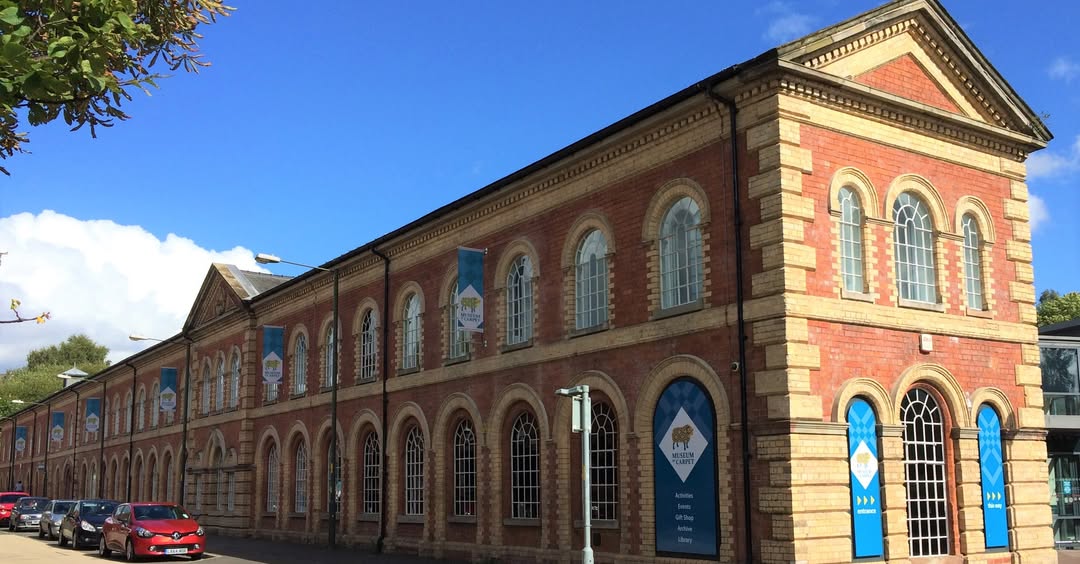
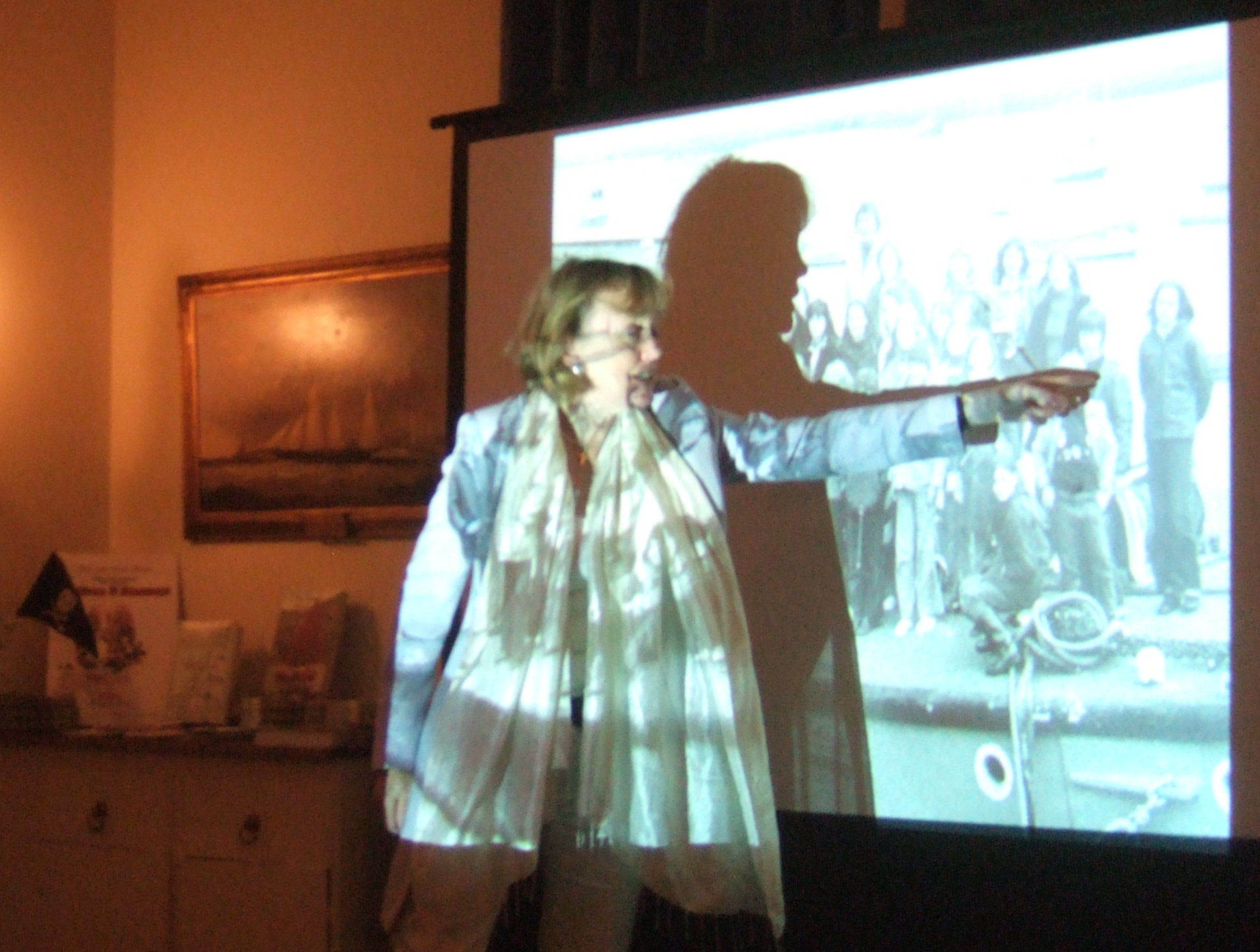
Sophie Neville, who played Titty in the original film ‘Swallows and Amazons’, gave a special talk on what is was like to take the lead part in a feature film at the Museum of Carpet in Kidderminster, on Saturday 21st February.
Richard Pilbrow, who produced the original film ‘Swallows and Amazons’ had been married to Vicky Brinton whose family donated many of the items on display at the former mill, along with a huge poster in the conference room.
Sophie was born in Worcestershire, seven miles from the venue. Her great-grandfather, Canon Hastings Neville, was a curate in Kidderminster and one of his ten sons, the Olympic athlete Dick Neville, pioneered the manufacture of woolen carpets in New Zealand, developing a crossbreed of sheep for the purpose. In 1960, he employed Richard Pugh-Cook who returned to the Midlands and founded the Museum of Carpet thirteen years ago.
About seventy people packed into the conference room to listen to the talk, which enjoyed a great response. “The degree of factual information contained in it is amazing…all those details of 50 years ago conveyed with such clarity and enthusiasm!”
“….such an inspiration to so many people especially younger people who have such different lives these days – another era then, it seems, but one we should not forget.”
“a great success – everyone seemed to have throughly enjoyed your talk, hearing about the other side of filming!”
Sophie signed copies of her books after the talk when she had a chance to meet ‘Swallows and Amazons’ enthusiasts and a little girl hoping to become a film actress. The event was covered in the local news.
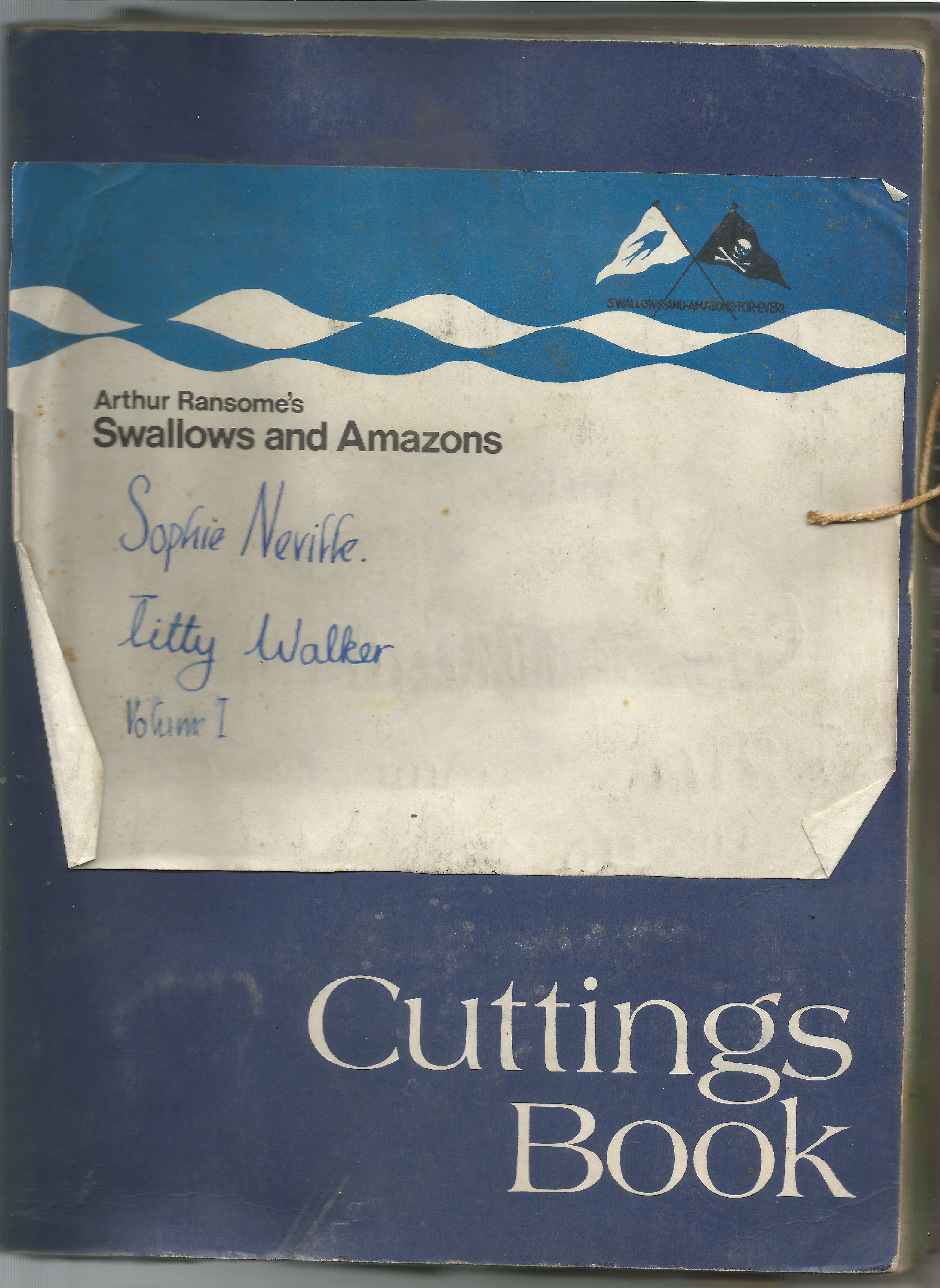
I thought I’d lost it! But, on clearing out our mother’s house, my sister found the cuttings book I kept whilst making the original movie ‘Swallows and Amazons’ in 1973.
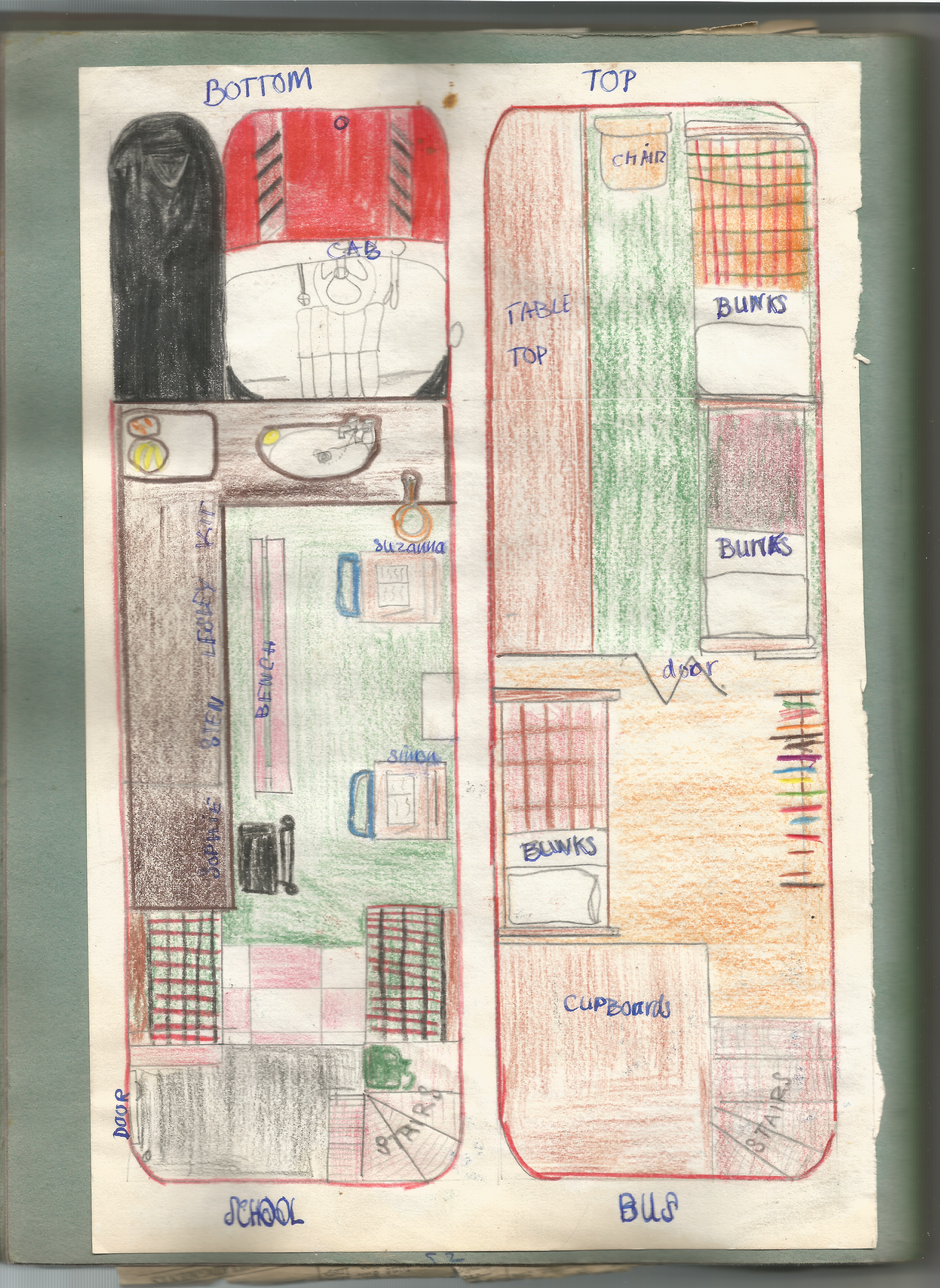
It includes a plan of the London double-decker bus where we received rudimentary lessons on location. Three bunkbeds on the top floor were meant to be used so we could rest after lunch. Mum said she forced me to lie down everyday but I can only remember a couple of occasion, once when I was reluctant, once when I was freezing cold after a swimming scene.
We changed into our costumes at the top of that bus, enjoying warmth from a gas stove that leaked rather alarmingly on one day necessitating an evacuation.
The exterior looked liked a conventional Routemaster with added curtains.
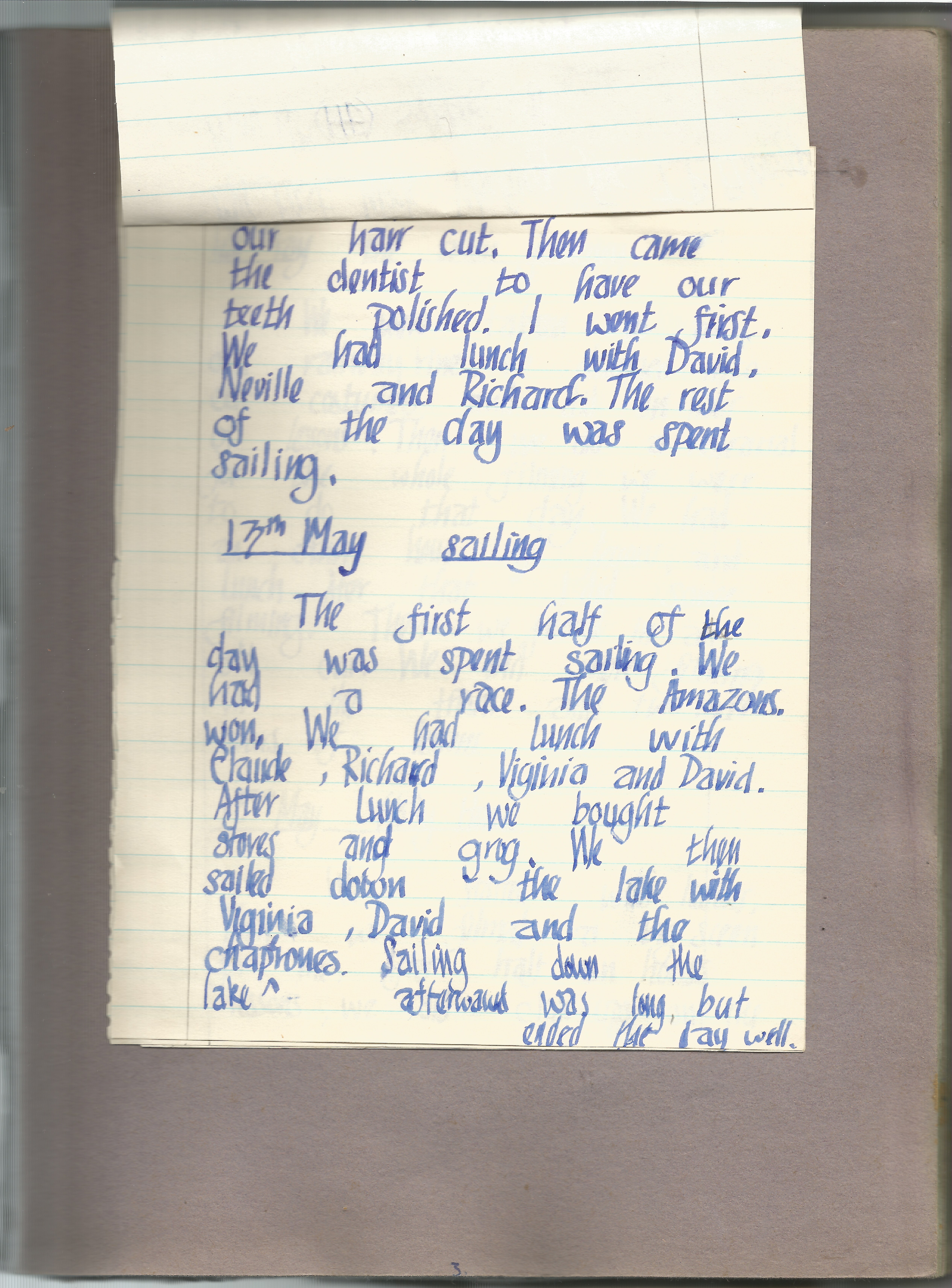
Once sitting at my desk, I found my italic fountain pen and began keeping a diary. One version of the first seven days spent in Cumbria is pasted into the scrap book. I later re-wrote a slightly more detailed and interesting version in a couple of notebooks and wrote about how I got the part of Titty, and the filming from different perspectives.
These pages describe the day spent travelling to Ambleside and a couple of days spent getting to know each other along with Dame Virginia McKenna, who played the Swallows’ mother, the producer Richard Pilbrow, David Blagden who was in charge of the sailing and the film director Cluade Whatham.
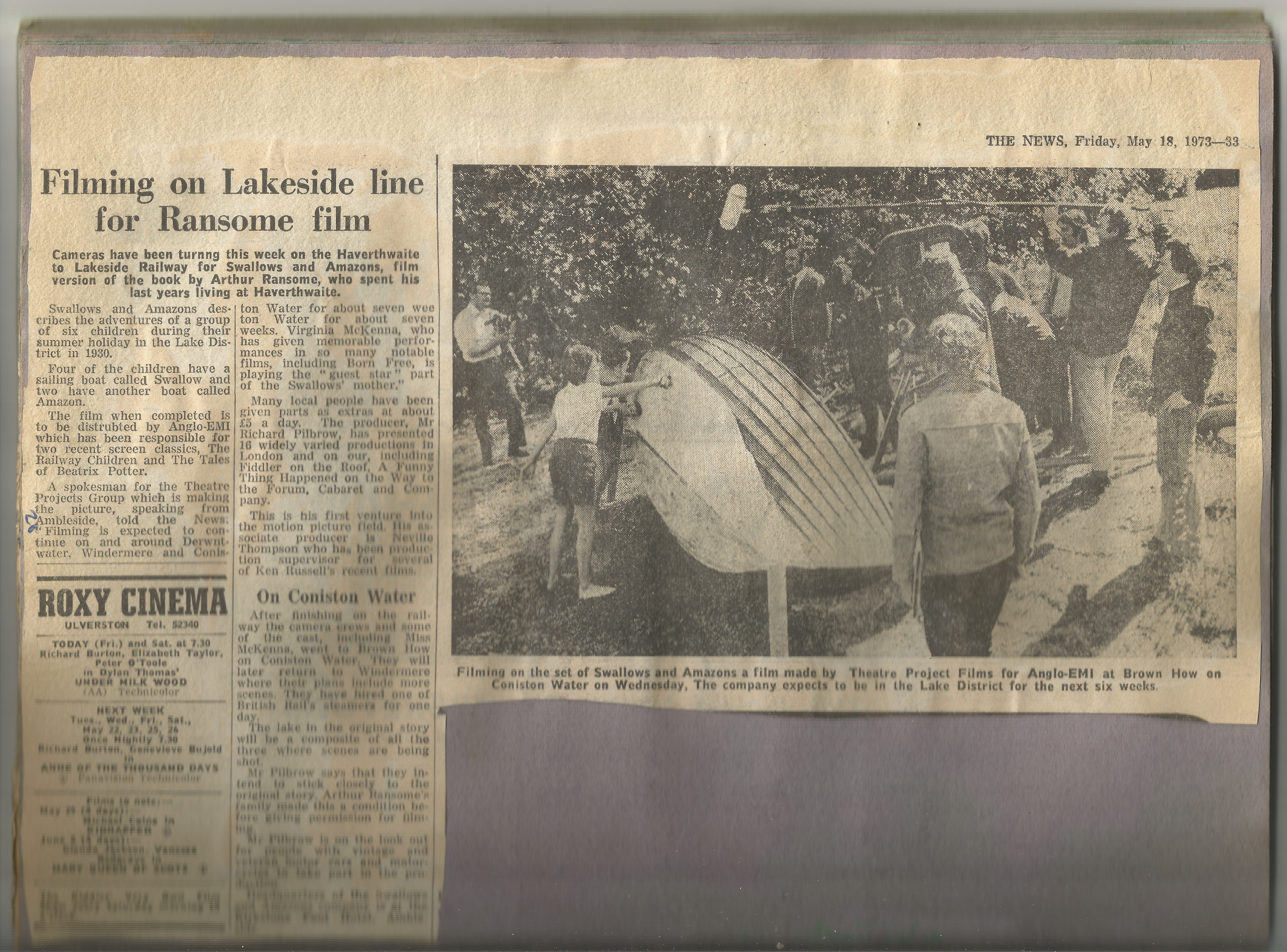
Encouraged by my mother, we began pasting in newspaper cuttings.
The Times and the Guardian were at Havethwaite Railway Station to take photographs on the first day of filming. The BBC Radio 4 newsreader, Alan Smith, who grew up in Cumbria, was a film extra that day and can be spotted standing in train doorway with his brother. He wrote to me with his memories of the day.
I began adding photos from contact sheets that Albert Clarke, the film’s stills photographer, took of the cast and crew. I wrote about the opening locations here.
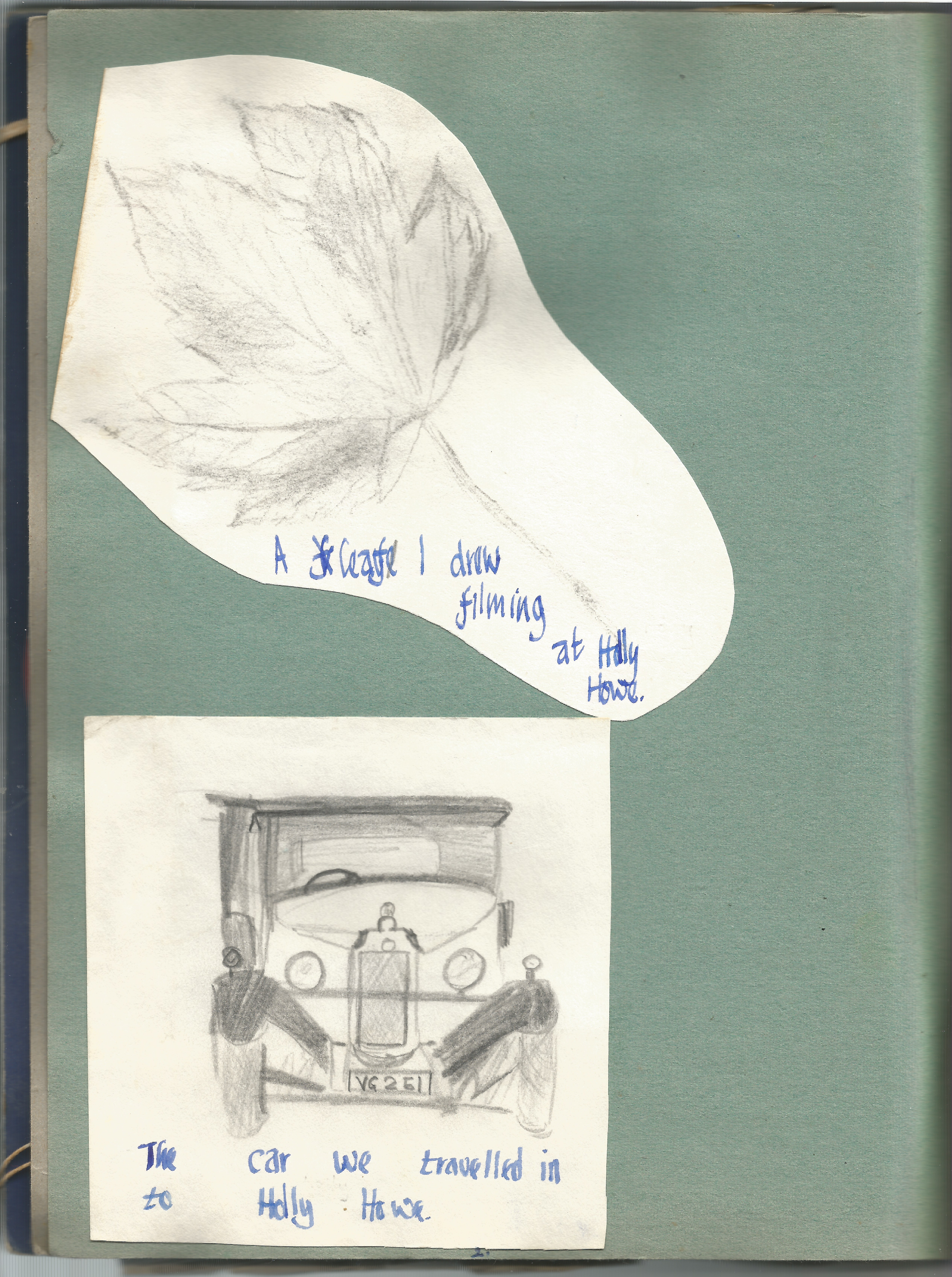
There are pages of dictation and a few sketches of the film props. I drew the yellow Austin ‘taxi’ we drove in at the station.
There were some cuttings that I hadn’t seen for years until until I opened the pages of this mislaid cuttings book. Others can be found on earlier posts.
I took pages of dictation, learning about the plants and geology of the Lake District, about Beatrix Potter and the National Trust, but it’s a wonder any schoolwork was accomplished at all. We spent so much time on set. I fell behind in French and Maths but gained respectable exam grades that summer, gaining 80% in Geography. Perhaps I wrote about glacial lakes.
You can read more about the adventures we had whilst filming ‘Swallows and Amazons’ in books detailed on this website.
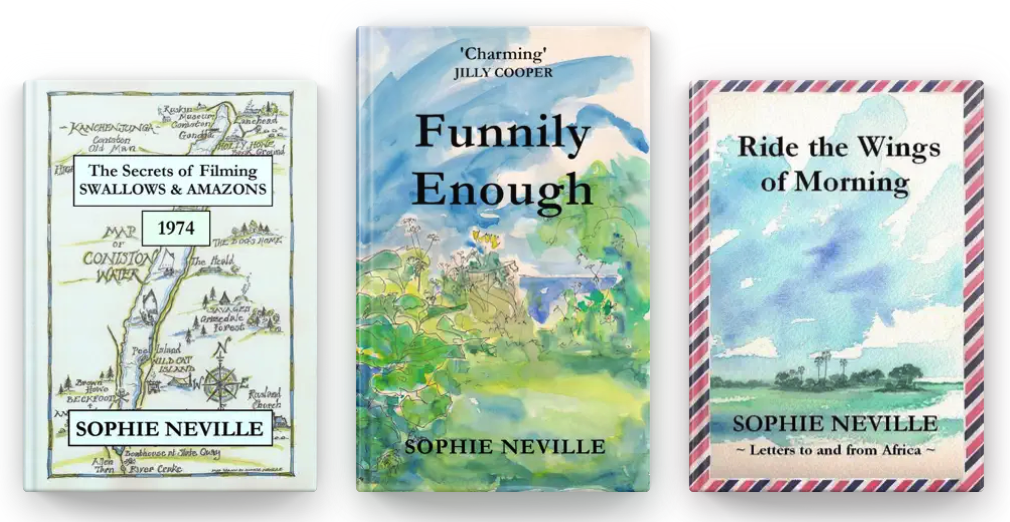
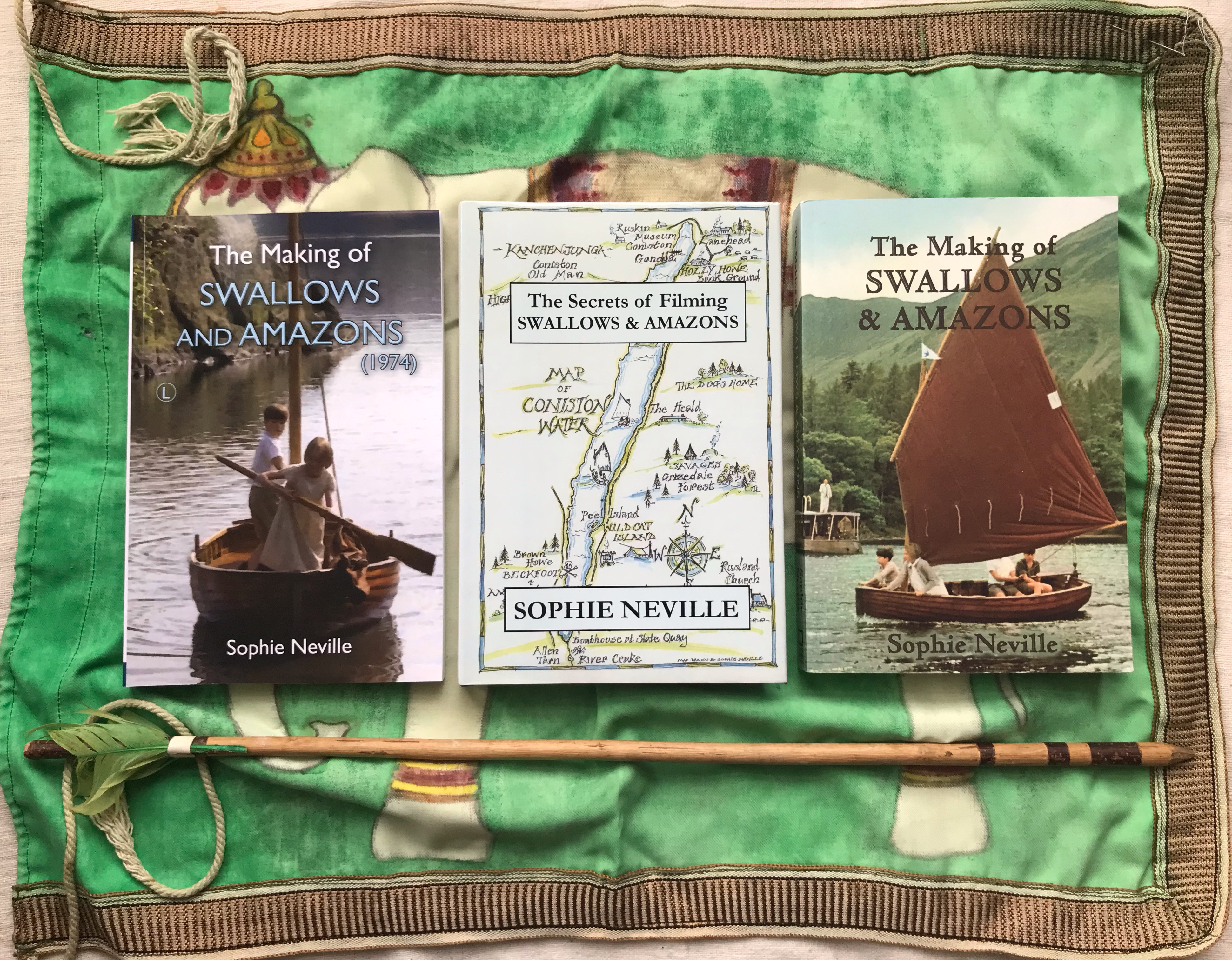
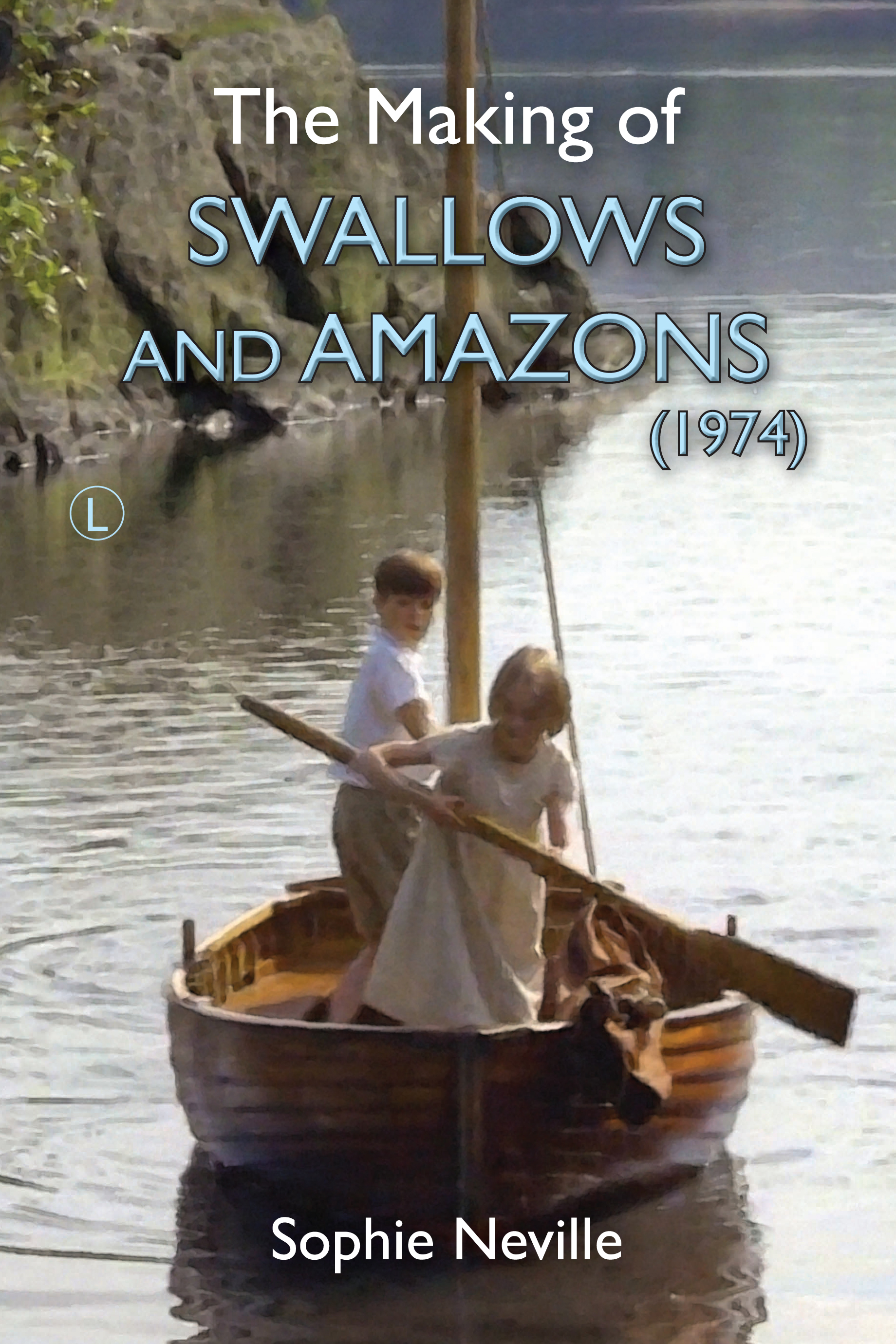
Different editions of ‘The Making of Swallows and Amazons (1974) by Sophie Neville’
There is now an audiobook on ‘The Making of Swallows and Amazons’ published by The Lutterworth Press and available on all online platforms including Audible.
I arrived two weeks early and was born at home, delivered by my great-grandmother in my parents’ cottage, the Old Bakery in the village of Clent in Worcestershire in 1960. Tell Laura I Love Her and Save the Last Dance For Me were top of the charts.
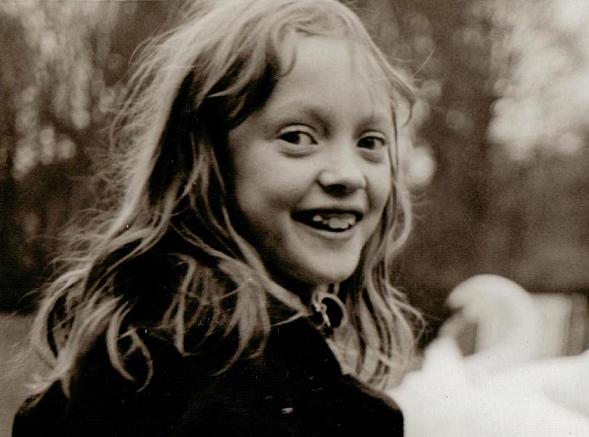
Sophie Neville as a child ~ photo: Martin Neville
Can you give us background on your parents and what they did for a living?
My father worked in Press and Publicity at BIP where he launched fibre glass boat manufacturing by setting up an experimental workshop in Covent Garden. My mother married on her 21st birthday just before graduating from RADA. She was in the same year as Susannah York and the playwright Hugh Whitmore, but took a break in her career to get married and have us children.
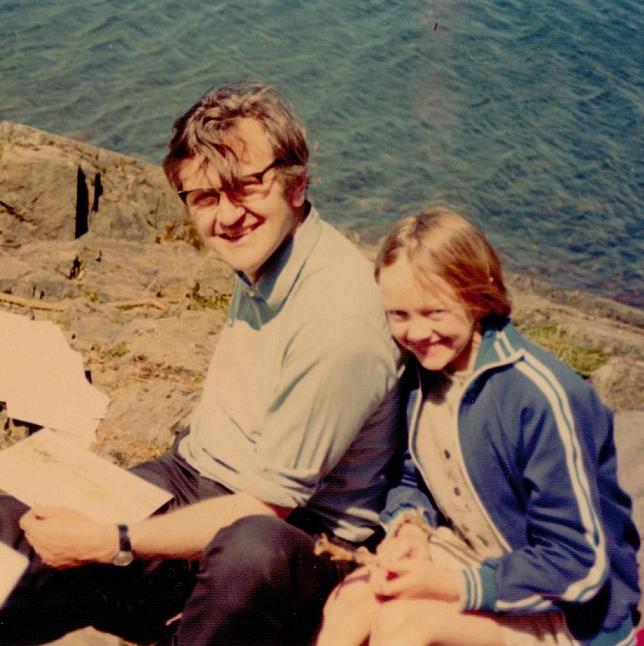
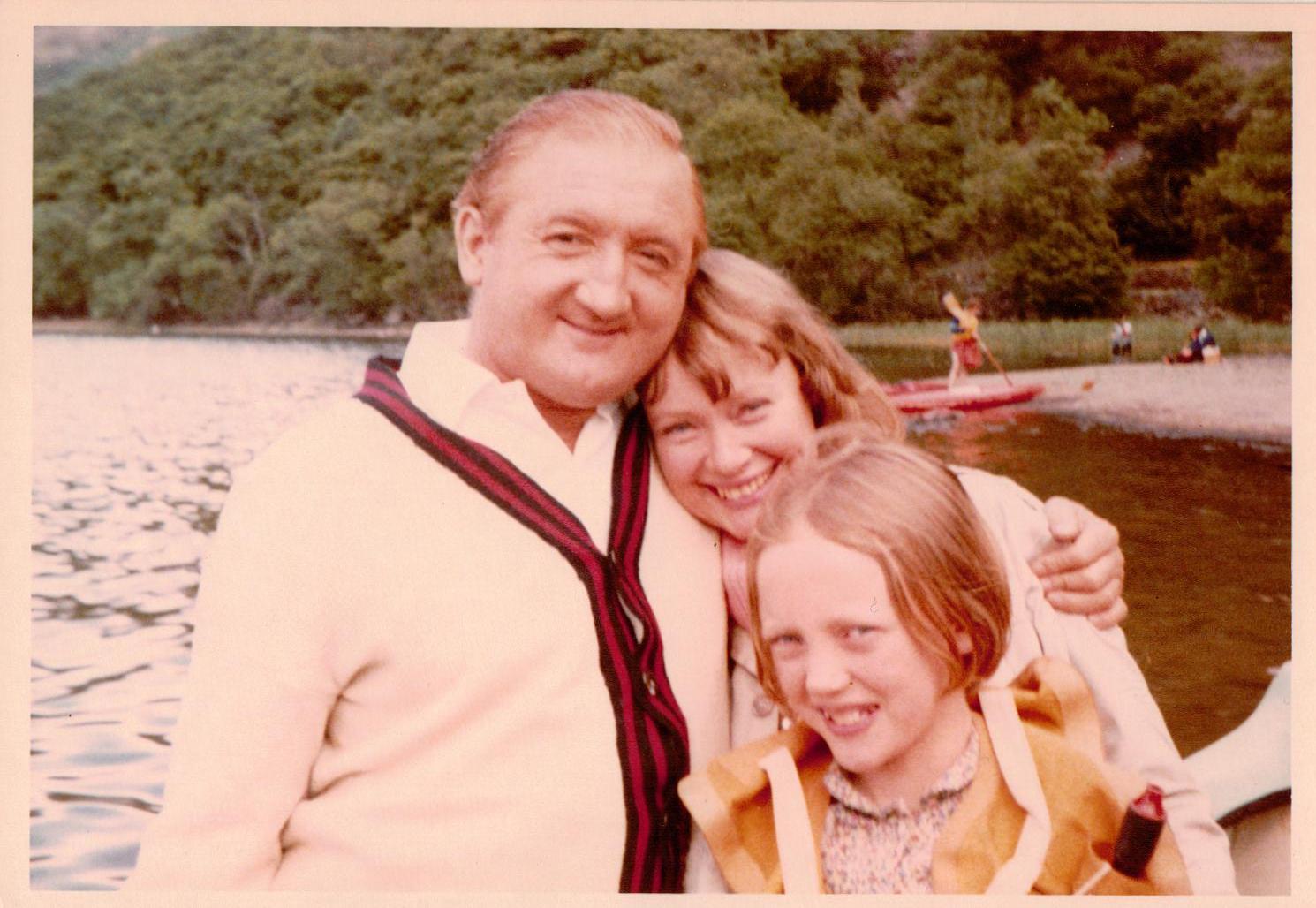
Painting with my father on the shore of Coniston Water
Do you have any siblings?
I have three little sisters, so I was never lonely. Perry had a small part in the classic HTV series Arthur of The Britains and later played the teacher in Bernard’s Watch. Tamzin had leading roles in six television productions playing Elka in Arthur of the Britons, Anthea in The Phoenix and the Carpet and Linda in Love in a Cold Climate with Judi Dench and Michael Aldridge playing her parents.
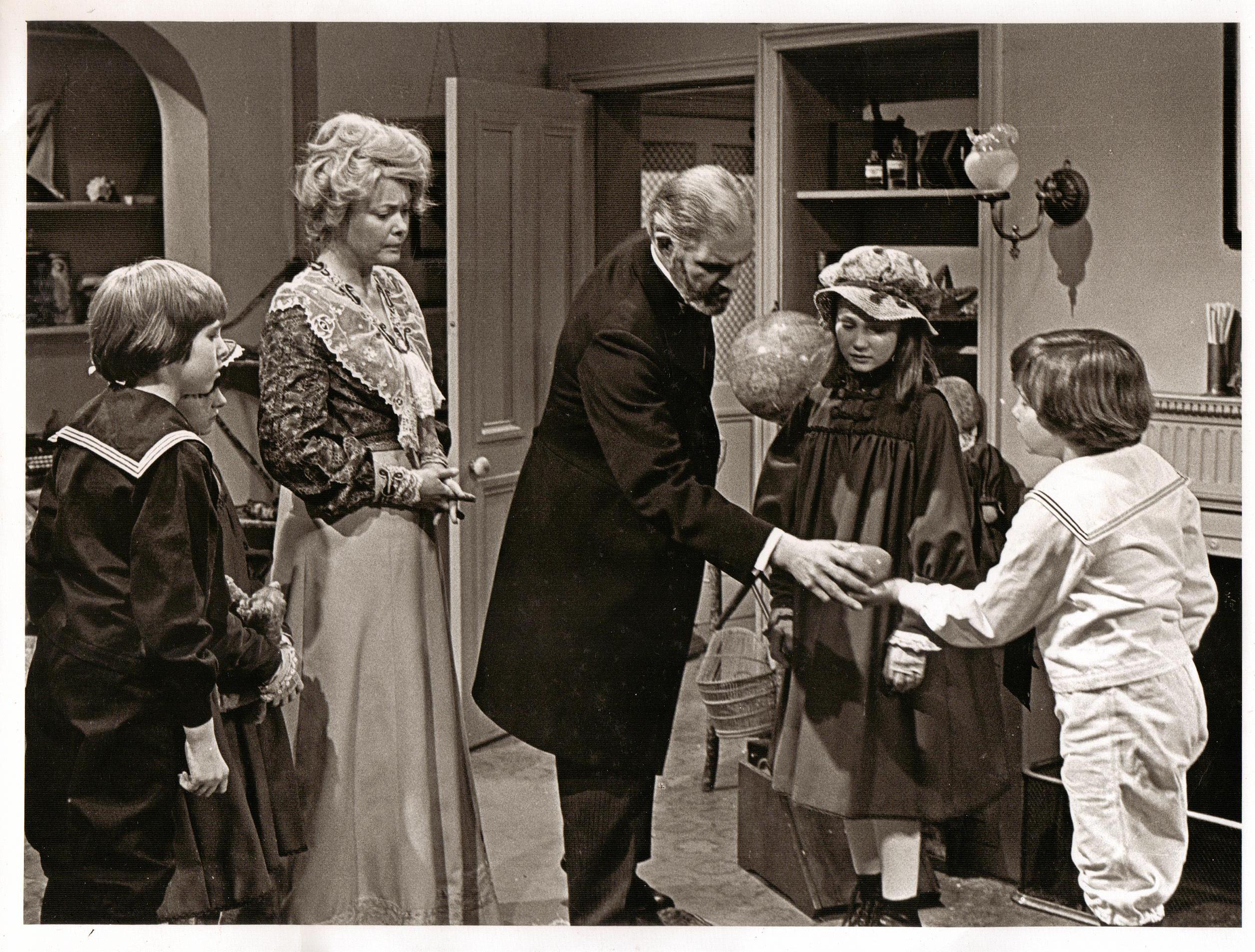
My mother playing mother and Tamzin as Anthea in The Phoenix and the Carpet
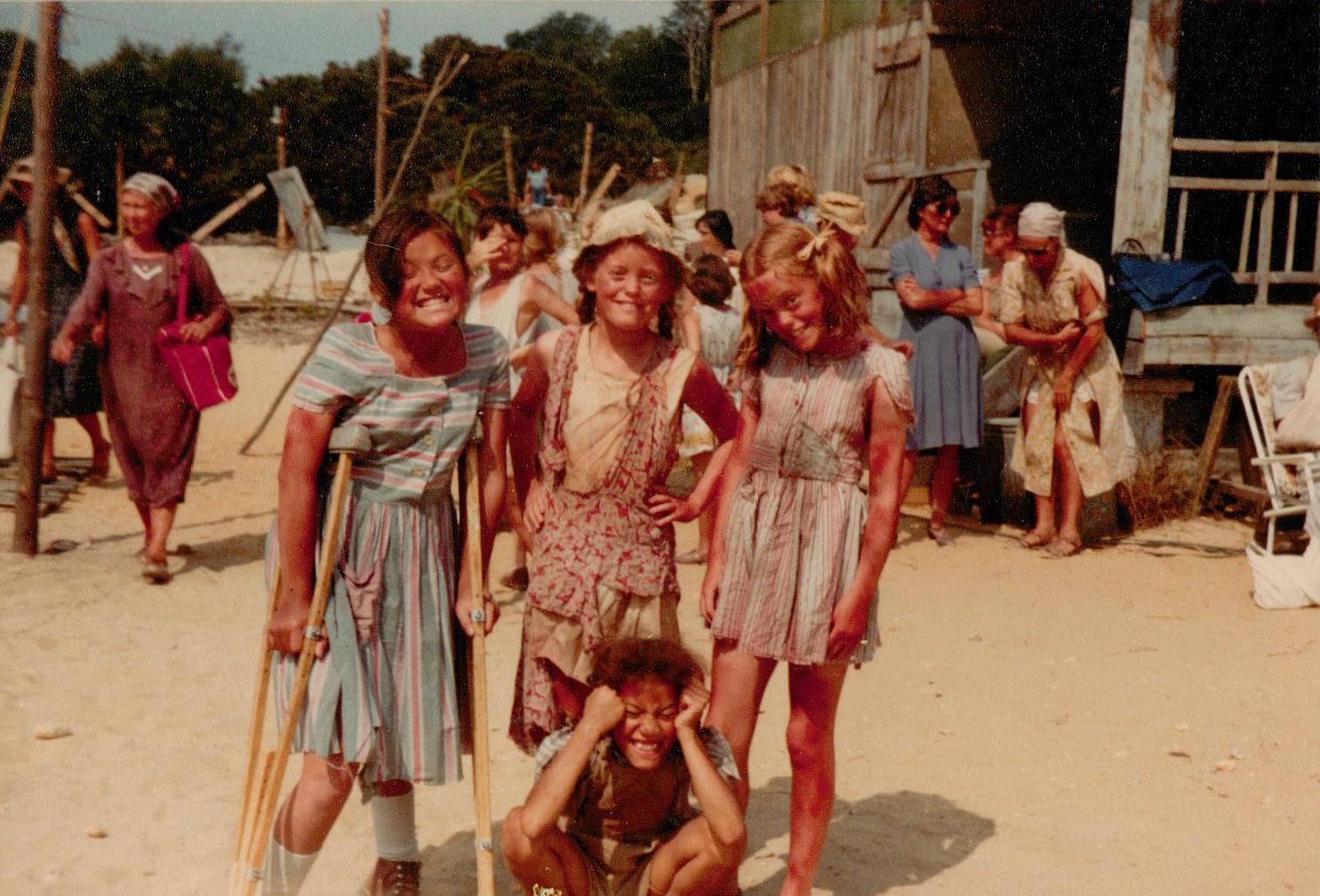
My adopted sister Mary-Dieu suffered from polio as a baby so was in hospital a lot or on crutches, but appeared as a film extra in Abide With Me and the wartime drama Tenko, which she enjoyed.
Appearing in the BBC drama serial Tenko
Where were you schooled and were you academic?
I am a visual learner and could have gone to art college but concentrated on English, history and geography, going on to read anthropology with ethnography and psychology, subjects I draw on continuously as a writer. The most useful subject I took at university was cartography. All the best books contain maps and I draw my own.
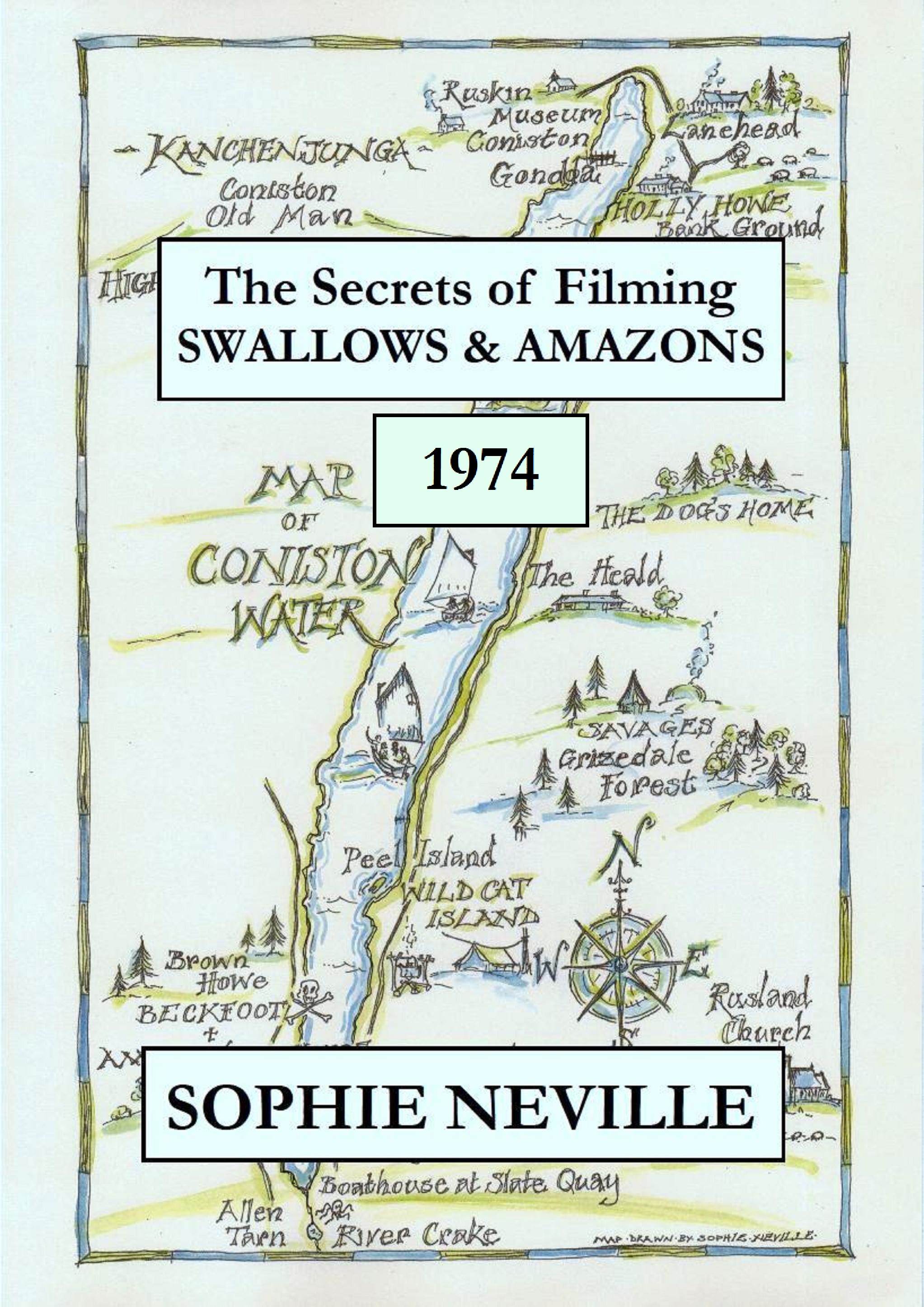
Swallows and Amazons map of Coniston Water
Did you have any early career aspirations and did you go onto further education?
I went to the University of Durham, where I made wonderful friends including Alastair Fothergill who produced Our Planet and most of Sir David Attenborough’s iconic serials, along with a number of wildlife movies for Disney. I missed my viva – an oral aspect of my Finals – because I opted to go filming in the Charmague, but would you turn down that opportunity? We went on to film in Kenya and recce locations in Zaire and Uganda.
Alastair Fothergill making ‘Wildlife on One’ at Lake Nakuru ~ photo: Sophie Neville
Where did your creative flair and love for acting and writing come from?
We are all born to create. There are times when I have been tempted to take a more managerial path but I feel called to write, so that’s what I do.
Sophie Neville with some of the books she has written
Did you come from a creative family?
My father loved design concepts and developed products with his team at work, notably the cable tie. You find them everywhere now. My mother has always held a burning desire to act and brought out a children’s book in the 1980s, which is still in print. I feel she has more talent as a writer than an actress but she loves the social aspect of filming. At the age of 85, she appeared in Top Boy and was involved in filming The Repair Shop when they visited Denville Hall, the actors’ retirement home in November 2025.
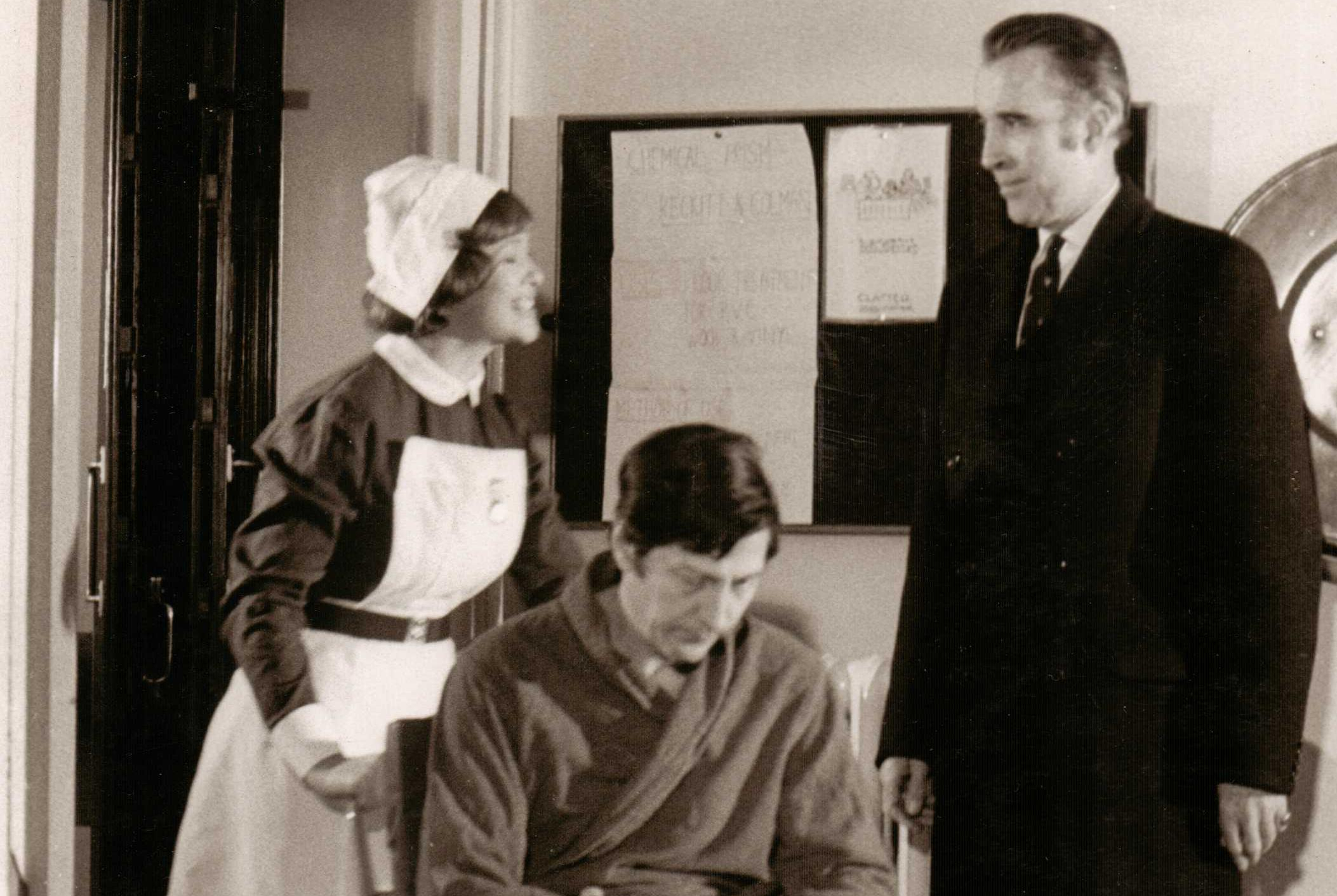
Daphne Neville with Christopher Lee in ‘Diagnosis Murder’
How did you manage to get your lucky break as an actress?
I was able to play the piano. I took my music along, practiced seven or eight hours a day, and did what I was told.
Sophie Neville playing Elieen Brown in the BBC adaptation of ‘Cider with Rosie’
Can you recall your first acting credit?
As a child, I appeared as a film extra in classic drama serials such as The Changes and Arthur of the Britons but gained my first acting credit as Eileen Brown in the BBC play Cider With Rosie, adapted by Hugh Whitmore. I had my hair chopped off for my first movie, and went on to act in a few more productions.
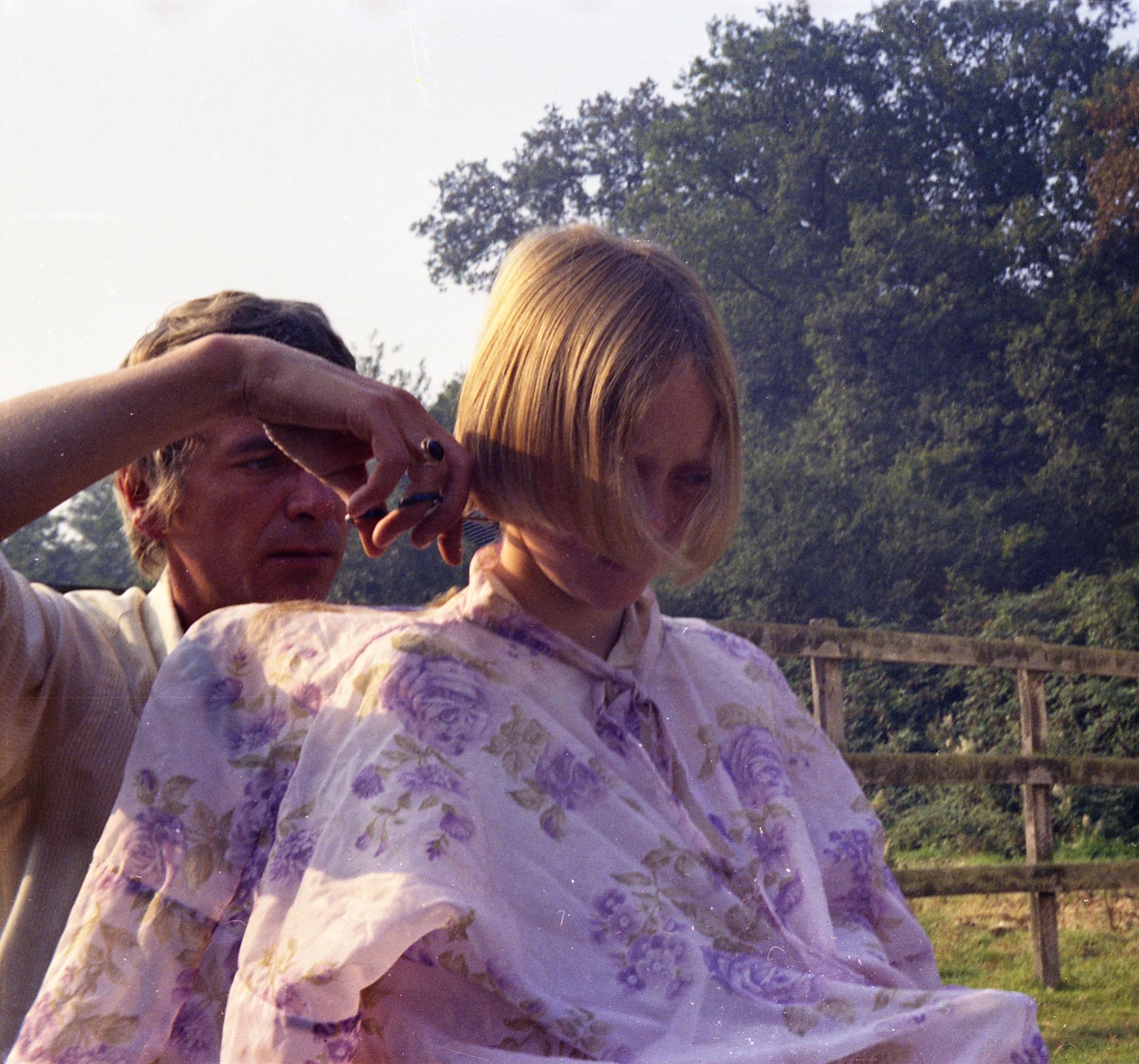
Sophie Neville having her hair cut on location for the part of Titty Walker in 1973
Your C.V. covers several areas including behind the scenes television and film related roles. Let’s start at the beginning of your career and find out what inspired you to become an actress and did you have any early influences?
I wasn’t so much inspired as simply offered an amazing opportunity, which is exceptionally rare. I was invited to an interview to appear in an adaptation of Arthur Ransome’s book, Swallows and Amazons when I was aged twelve. Of all the parts in all the books, I was asked if I would like to play Titty. How could I turn that down? I loved the Lake District, enjoyed camping and was happy in a boat. I did it for fun.
Sophie Neville as Titty
Swallows and Amazons is a classic family film released in 1974. Can you tell us about your experiences working on the film? What are your overriding memories and what does the film mean to you personally?
It proved hard work and involved a lot of hanging around in the cold, but I loved the period aspect and thrived spending time outdoors on location. Filming on Derwentwater was amazing. We had our own desert island, pine trees to climb and a houseboat to attack. Making Ronald Fraser walk the plank was fun. He did it rather well.
Sophie Neville as Titty on Cormorant Island ~ photo: Daphne Neville
You’ve written two books on your experiences of working on Swallows and Amazons: The Making of Swallows and Amazons and The Secrets of Filming Swallows and Amazons. What made you decide to write two books on the film and were your memories still fresh and vivid when recounting the stories?
I had the amazing cine footage that my parents took behind-the-scenes on location that they BBC put on a DVD when they made Countryfile and Big Screen Britain, presented by Ben Fogle. I’d already set up my own publishing company and was employing a formatter who suggested we brought The Secrets of Filming Swallows and Amazons as a multi-media ebook, including this unique footage and my parents photos (that you would never be allowed to take on location these days). This did so well as an ebook that it was picked up by the publisher Classic TV Press. They gained permission to add official stills from the film and brought it out as a large paperback with colour plates entitled The Making of Swallows and Amazons. It was then bought by The Lutterworth Press who re-designed it in 2017.
How were your books on Swallows and Amazons received by fans and critics?
Each edition had been received with huge enthusiasm. I had terrific publicity in the Times, Telegraph and Daily Mail and am hugely appreciative of all the book reviews left by readers online. I didn’t want to spoil the magic of the film but nearly fifty years have passed since it first came out and fans like to visit the locations. I’ve included maps and all the information needed to find them.
Can I ask your take on the film’s fanbase, how it’s regularly shown and embraced by new audiences? What do you think is the film’s overall appeal?
Being a family classic, as you say, it has become generational. People who originally watched it in the cinema in 1974 want their children and children’s children to see it. When an audience of 250 piles into a cinema to see the re-mastered version, you can appreciate what an amazing landscape movie it is. The humour is drawn out when you watch it with an audience, which is wonderful and you emerge from the auditorium feeling elated.
A recent cinema screening
You’ve appeared in several classic television serials and programmes: Crossroads, The Two Ronnies and Cider With Rosie. What are your memories from working on those shows and did that exposure lead to other opportunities?
I didn’t realise that Ronnie Baker directed the Two Ronnies, or at least the Charley Farley and Piggy Malone serial with in it. He inspired me to direct comedy. I adored working with him and only wish we’d done more together. He had me for an informal interview on location one lunchtime. I blew it, but did end up directing a bit of comedy at the BBC.
Ronnie Corbet with Sophie Neville filming ‘The Two Ronnies’
6. Who have you enjoyed working with the most in front and behind the camera? Have any of your colleagues acted as mentors and have you gained greater knowledge about the industry from any of them?
So many! Suzanna Hamilton and Anthony Calf are the actors I’d want to work with again. They brought out the best in me. Claude Whatham was the mentor who advised me before I went for my first interview to work in television production. He said, ‘Filming is all about using your time well.’ Writers are wonderful about sharing every tiny piece of knowledge but my own formatter Lisa Skullard mentored me on new technology, for which I am grateful.
Claude Whatham ~ photo: Daphne Neville
7. What made you decide to make the transition from an actress to a behind-the scenes member?
Even as a child I was more interested in the logistics and production side of making dramas.
Can you talk about some of the projects you’ve worked on including being an assistant floor manager of EastEnders, My Family and Other Animals, Bluebell, Doctor Who along with your directing and producing credits?
I was very fortunate to work in BBC Drama Series and Serials at the very zenith of production in the 1980s. It was such a privilege to work on My Family and Other Animals as it was made entirely on location in Corfu. I helped cast the little boy and did the research, interviewing Gerald Durrell, who came out on location with his lovely wife Lee Durrell. I carried out the historical and film research on Miss BlueBell’s life and met her in Paris where we filmed one summer. I also worked on the zoo vet series One by One, and became a location manager on Rockcliffe’s Babies. Producing my own series, INSET, shot in Cumbria, Wiltshire and Sheffield was unforgettable. I had such a good team and we were in a position to do ground-breaking work.
At Elstree Studios for the BBC Drama Directors’ studio course. I am wearing a green sweater.
You are an award-winning writer with several books to your credit. What made you decide to become a published author and of the books you’ve written, which are you most proud of and why?
Writing Funnily Enough was a huge challenge. I felt I was laying my whole life out before the world. It’s a dark comedy. As all the stories expose my friends and family, I opted to self publish so that I could make changes. My brother-in-law was working in Libya and I didn’t want him to be shot. In the end I was only asked to change the name of a town and the names of three characters. I’ve changed them back now. My brother-in-law now regularly talks about his book on Libya on Sky Television.
Funnily Enough – the paperback with black and white illustrations
9. How does the creative writing process work for you? How long does it take you to prepare and plan a book and do you have a set time for writing?
I need at least two years to write, edit and develop a novel, even though I put in about eight hours work a day. I often start at 6.30am and am a complete work-aholic. Only other writing, such as articles, and inevitable admin get in the way. My husband has to do the shopping.
A travel book with a difference
We’ve spoken about the many areas and capacities you’ve worked in: Acting, a floor manager, a researcher, producer, director and a published author. Do you have a favourite discipline and if so, why?
I loved every aspect of directing – felt as if I was flying – but you need huge stamina and total application. My husband needs me at home, so writing is an easier career path to follow although I travel quite a bit giving talks and conducting research.
Giving a talk in Cowes
11. Away from your creative endeavours, can we discuss some of your other loves and interests: Anthropology, your love of animals, charity work and archery.
My family have kept tame otters for almost forty years, hand-rearing abandoned babies and lecturing on conservation. I am now Patron of the UK Wild Otter Trust. I emigrated to southern Africa in 1992 and ended up volunteering on a number of projects, helping to set up a charity to combat the HIV/AIDS pandemic. One million people still die from AIDS every year. We continue to run HIV prevention and awareness in schools, employing a nurse to care for those on anti-retrovirals and keep an eye on the orphans, many of whom are in their teens.
I learnt to shoot with a long bow on the set of Swallows and Amazons. This was pivotable as it led to a leading role in an adventure movie, The Copter Kids, with Sophie Ward and Vic Armstrong. The sport also introduced me to my husband. He was Chairman of the archery society my parents belonged to.
Sophie with her husband on the coast of South Africa
Can I also ask you what made you decide to emigrate to South Africa and can you tell us about your 12-years living there?
You’ll have to read my books, ‘Funnily Enough’ and ‘Ride the Wings of Morning’. Every details lies within the pages.
Final Questions to Finish Interview
1. What’s your favourite past time? Walking along beaches
2. What’s your favourite film and why? I have to admit that Swallows and Amazons (1974) is a nostalgia trip for me. It’s been described as ‘mesmerizing’.
3. Who’s your favourite novelist? Karen Rosario Ingerslev
4. If you could have had a different profession what would it have been? Mother
5. Who has been your greatest inspiration in life? Jesus
6. Do you read a newspaper? If so which one? The Telegraph
7. What’s your favourite food? Black cherries
8. Who is your favourite cultural icon? Virginia McKenna
9. What’s your favourite curse word and why? I try not to swear
10. What’s your favourite place or holiday destination? The Okavango Delta
11. Who is your favourite music artist and what’s your favourite album? Cat Stevens greatest hits
12. What’s your greatest achievement to date? Publishing Funnily Enough and finishing my historical novels.
13. How do you wish to be remembered? As an inspiration to others.
Daphne Neville with Sophie Neville while filming ‘Swallows and Amazons’ in Cumbria in 1973
It wasn’t until we were making preparations for the 50th Anniversary of the EMI film ‘Swallows and Amazons’ that I began to list all the work my mother, Daphne Neville, accomplished behind-the-scenes.
Daphne Neville accompanying Suzanna Hamilton, Kit seymour, Sten Grendon, Simon West, Sophie Neville, and Lesley Bennett out to the houseboat on Derwent Water
When I was offered the part of Titty Walker, she’d been invited to work as a chaperone, along with Sten Grendon’s mother, Jane Grendon. This proved to be a pretty demanding job. Getting us ready and into the minibus every morning alone must have been challenging. We stayed at the Oaklands Guest House where there were only two bathrooms shared between twenty-three residents – the eight of us, various students from the Charlotte Mason College of Education and the five members of the Price family who owned the house. We had to move out over Whitsun when it had been booked by holiday makers.
Dressed for the Cumbrian weather: Daphne Neville with Liz Lomas ~ photo: Richard Pilbrow
Mum was pretty horrified by the spaghetti hoops, cuppa soups and pasties given to us for supper and asked if we could have a fruit bowl in our school bus. Location catering in 1973 was good but aimed at providing electricians with meat and two veg, rather than food for children. We enjoyed salads and chicken drumsticks but baked beans could ruin a take and sugared food made us over-active and probably annoying.
Suzanna Hamilton, in her red tracksuit top, seeing what the location caterers had for lunch on the set of ‘Swallows and Amazons’ by Coniston Water
On film sets you normally have female costume assistants or dressers to help change actresses into their costumes. On ‘Swallows and Amazons’ we had Terry Smith the wardrobe master and my mother. Whenever there was a scene with film extras, Mum helped him to fit them with shoes and hats, helping the ladies into costumes for the opening scene at the station.
Wardrobe Master Terry Smith with Sophie Neville and her mother Daphne Neville outside the Make-up caravan on location near Keswick in Cumbria
Our hair was cut and looked after by Ronnie Cogan but mine had to be washed every night by Mummy. She moved me into her bedroom, which was tiny, but had a basin. This seems a small thing, but watch the film and you see my hair flying around the whole time indicating the ever-present wind.
Daphne Neville and Richard Pilbrow on Peel Island on Coniston Water in 1973 Amazons
Mum tried to keep us warm on location, getting us into life jackets and sunhats before we were taken off to the set, which was often either a boat or island.
Daphne Neville with Sophie Neville and Simon West on Coniston Water
Having won prizes for archery, she taught the Amazons to shoot with a bow and arrow for their scene on Wild Cat Island.
Daphne Neville teaching Lesley Bennet, who played Peggy, how to shot with a long bow
She also took a vast collection of behind the scenes photos, some of which were very good.
Ronald Fraser with Daphne Neville and Sophie Neville on Derwentwater in 1973
I couldn’t bear it when Ronnie Fraser flirted, but Mum enjoyed every moment of being on set. She longed to appear in the film as a supporting artist. My father, Martin, appeared in five different shots but Mum missed the crowd scene at Bowness and sequences taken aboard the MV Tern the next dau.
Jane Grendon with other film extras on the original movie ‘Swallows and Amazons’
Back home, she had a part-time job working for HTV who had given her leave but called her back to Bristol to present an episode of Women Only and promote the channel at the annual Bath and West Show. You can read more about this on her website here.
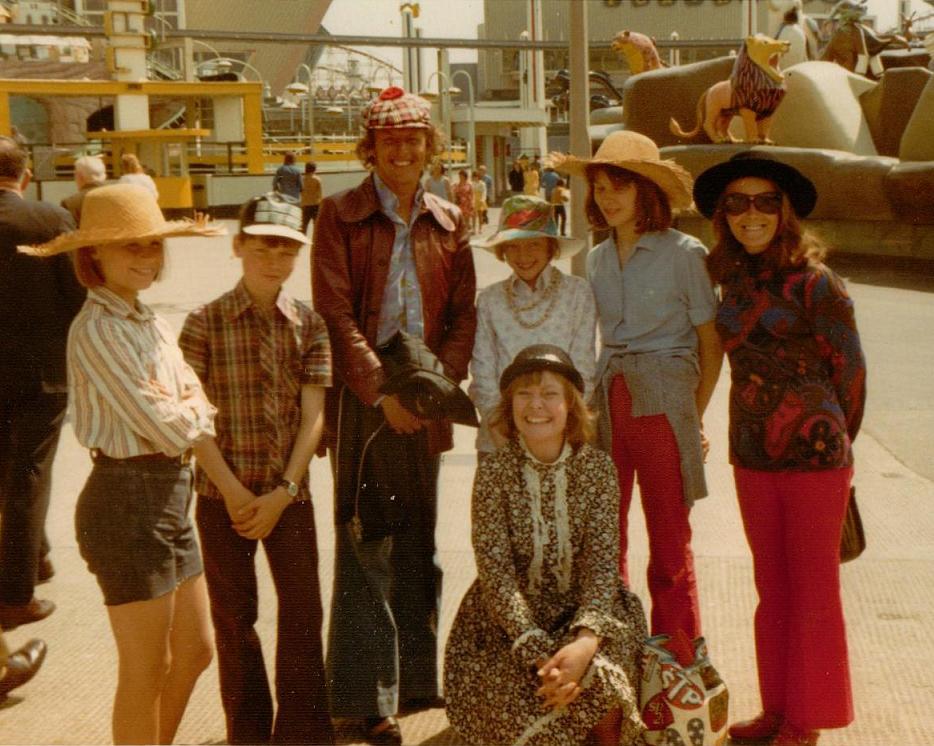
Suzanna Hamliton, Simon West, Claude Whatham Sophie Neville, Kit Seymour, Jean McGill with Daphne Neville kneeling at Blackpool funfair in 1973
While other members of the film crew were given one day off a week, our chaperones’ work never ended. Jane took us shopping or on walks up into the fells. Mum came with us on a trip to Blackpool.
Sophie Neville having her hair cut on location for the part of Titty Walker in 1973
She must have driven me to Epsom for a pick-up shot in September when members of the Walker family had more haircuts and enjoyed being reunited.
Daphne Neville with Stephen Grendon, Suzanna Hamilton, Sophie Neville, Jane Grendon and Simon West
While we hated the publicity that came with marketing the film, Mum embraced it to the full, collecting every newspaper and magazine article.
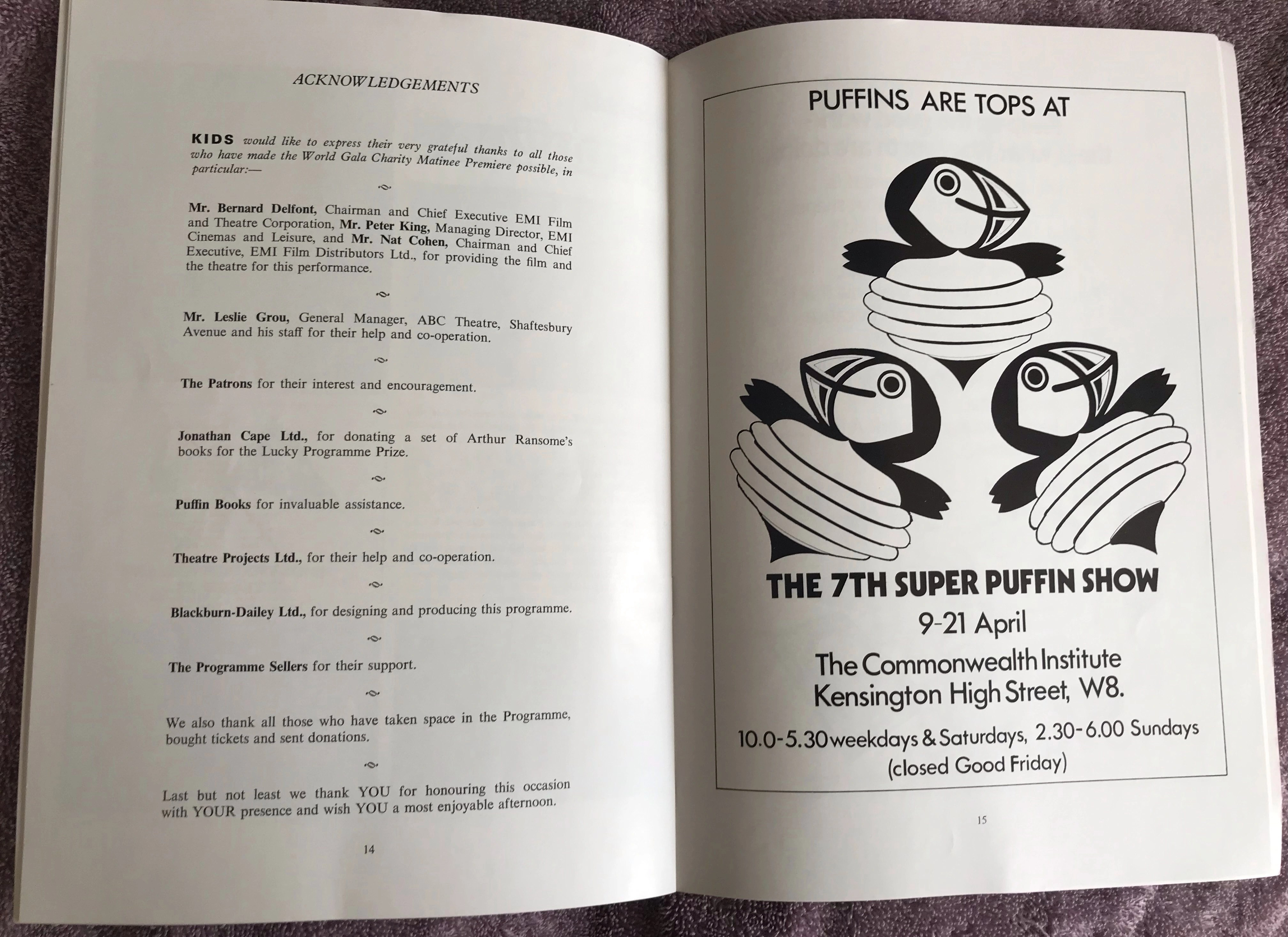
Sophie Neville, Suzanna Hamilton, Daphne Neville, Lesley Bennett, Kit Seymour, Sten Grendon and Simon West off to the Puffin Club Party at the Commonwealth Institute in London
She took us to London for a Puffin Club show at the Commonwealth Institute devised by Kaye Webb,
Kaye Webb’s Puffin Club Show – April 1974
and to the Lord Mayor’s Show when we rode on a float set up by EMI Films.
Suzanna Hamilton, Stephen Grendon, Leslie Bennett, Simon West and Kit Seymour sailing the streets of London in ‘Swallow’
Mum was thrilled when invitations to the film premier arrived and bought me a green dress to wear to the ABC Cinema in Shaftesbury Avenue where it was held.
Daphne Neville at the London premier of ‘Swallows and Amazons’ in Shaftesbury Avenue.
She framed a film poster and kept every photo, every scrap of paper related to the film along with the LP and other items of movie memorabilia.
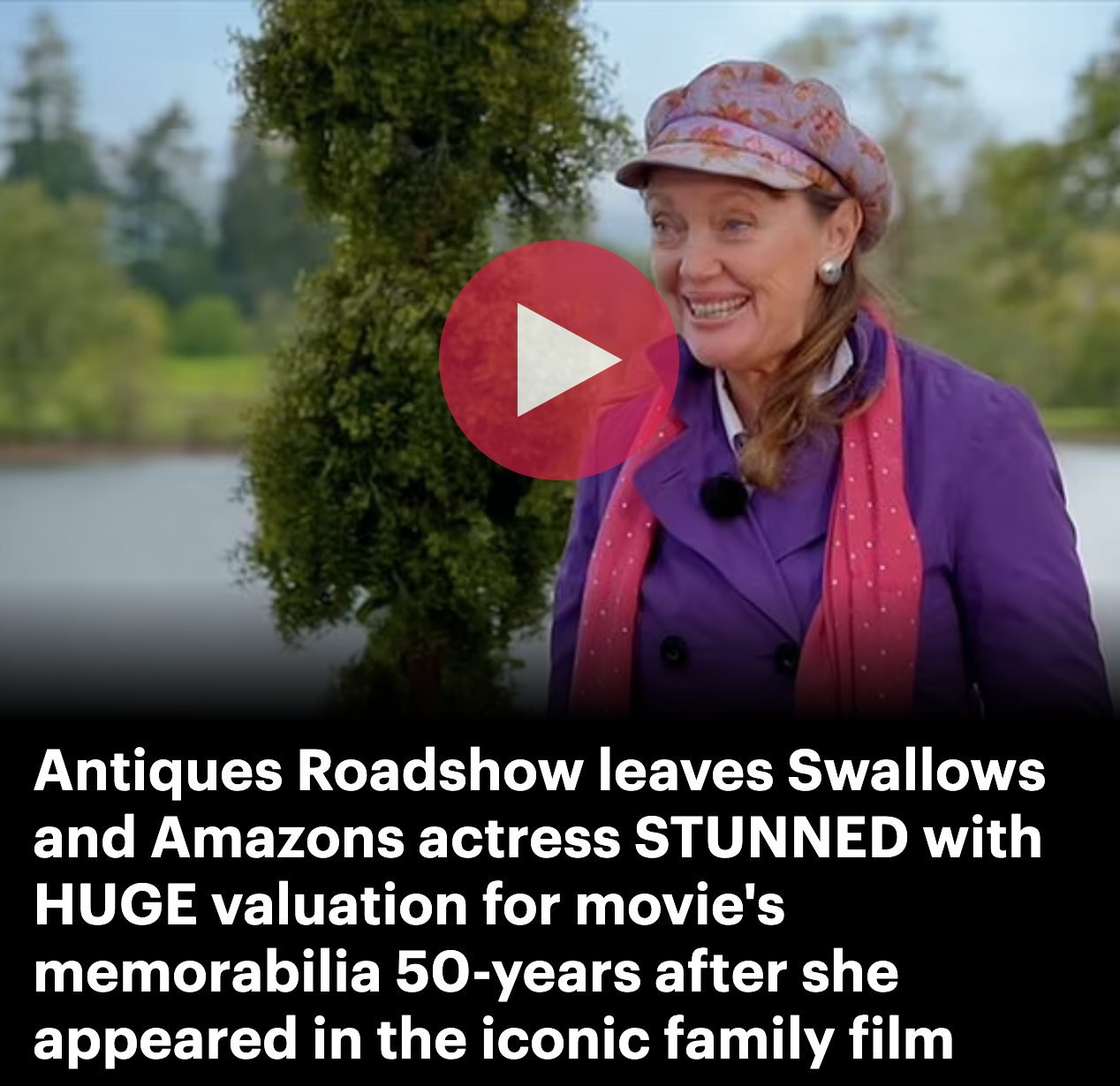
Fifty years later the items were valued on BBC Antiques Roadshow as being worth over £4,000.
To read Daphne Neville’s articles on being a chaperone, please find three earlier posts on this website beginning here.
The Saucepan and her mother on a scenic railway in Cumbria in 1973 ~ photo: Martin Neville
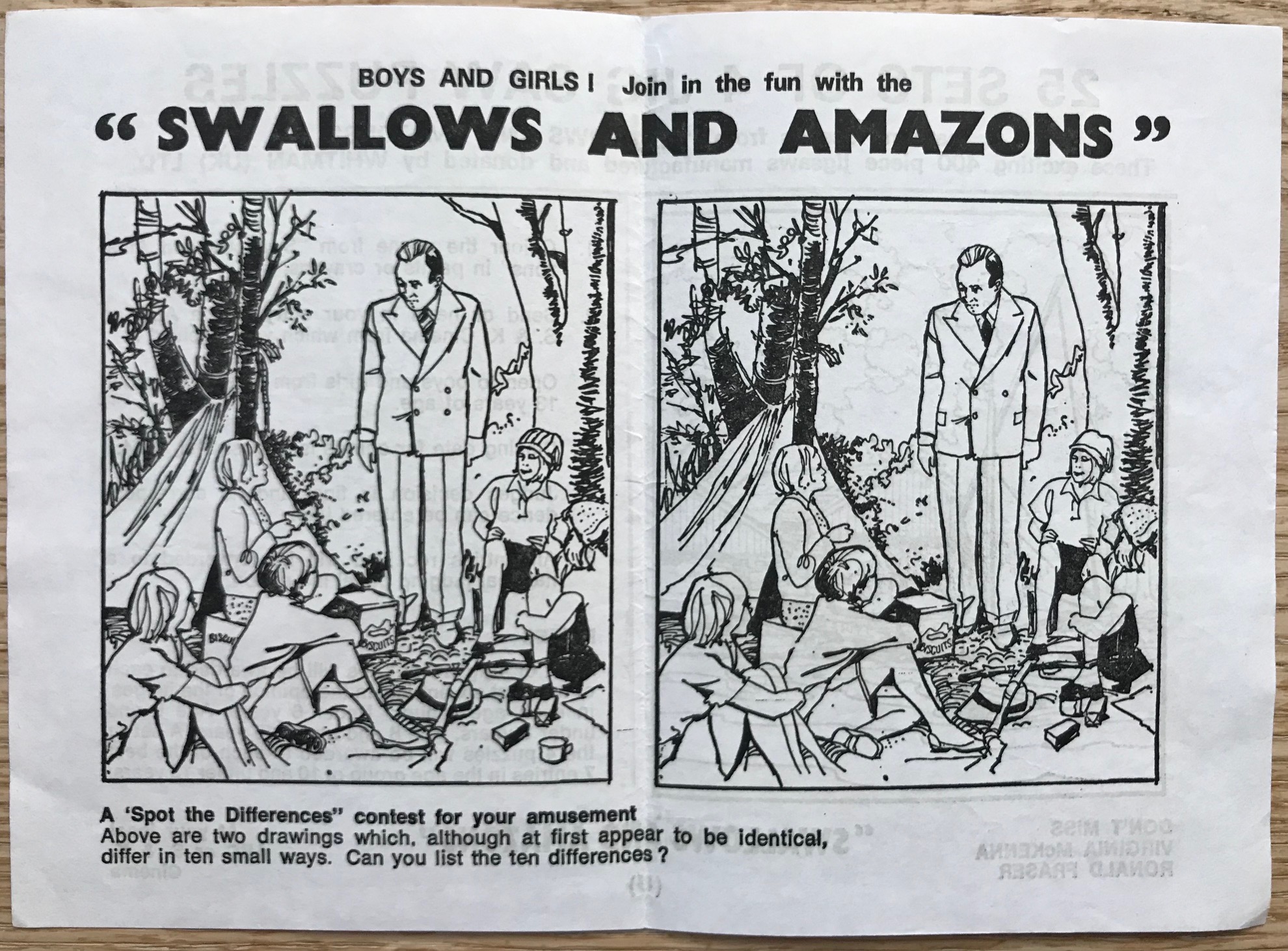
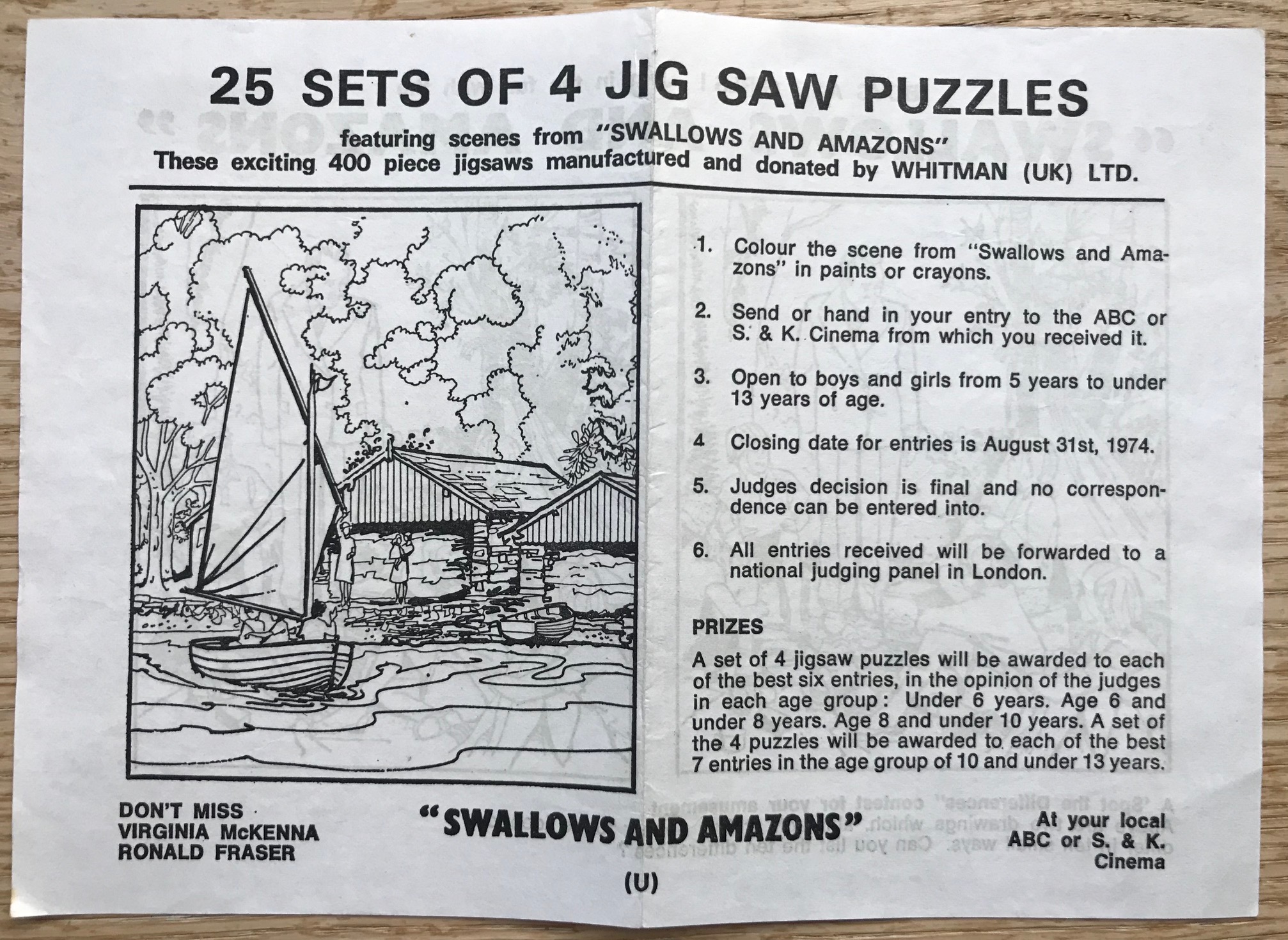
Having been released in cinemas in April 1974, the original movie ‘Swallows and Amazons’ was not accompanied by computer games but by puzzels, jigsaws and competitions. Here are a couple found recently whilst clearing out my mother’s house. You can see more on a post added to this website here.
Few films are set in 1929, and yet it was that period, nearly a hundred years ago that gave the first film adaptation a certain style.
Graham Potter wrote saying: “I have just finished a DVD of S & A and found how much easier it is to see the details on the TV than in a cinema having to look from side to side. I was surprised to see how little sailing was shown and how the Amazons were not seen much. I think you were 12 or 13 at the time but looked younger. I have to to admit to enjoying the glimpses of the navy blue knickers in the opening scenes.”
One of the set of four jigsaw puzzles made when ‘Swallows & Amazons’ was released in cinemas in 1974, along with a Puffin paperback
Graham goes on to say, “I was surprised to see how you carried all the exciting scenes: left alone on the island, finding the secret harbour , dealing with leading lights , capturing and hiding Amazon, dealing with Mother’s visit during the night sailing, giving Captain Flint a good telling off for blaming John for firework and not listening to his warning about potential theft at his houseboat. Then the great finale when you are able to present him with his stolen life’s work in the trunk. Perhaps it was planned that you didn’t have too many lines to remember, as it enabled a very young girl to contribute such a lot to the film.”
This is very kind but I believe the film was made by the fact that Simon West who played John and Kit Seymour who played Nancy were good sailors. You can tell when they are sitting in a moored boat. While Claude Whatham was an exceptional director, ahead of his time stylistically, the director of photography uplifted the film by insisting we waited for clouds to pass. What else? – a hardworking and talented crew put together by Nevill Thompson. Simple costumes that never dated. Natural, well cut hair and a lack of make up – all the facets of filmmaking that you are not meant to notice.
Maybe our spiritedness as children carries the original film on. We are all in our sixties now, but the characters we played have become imaginary friends to many. As Shakespeare wrote, ‘Our revels now are ended. These our actors, as I foretold you, were all spirits and are melted into air, into thin air.’ The Tempest Would Ransome have agreed? I only know he discussed Shakespeare with Karl Radek.
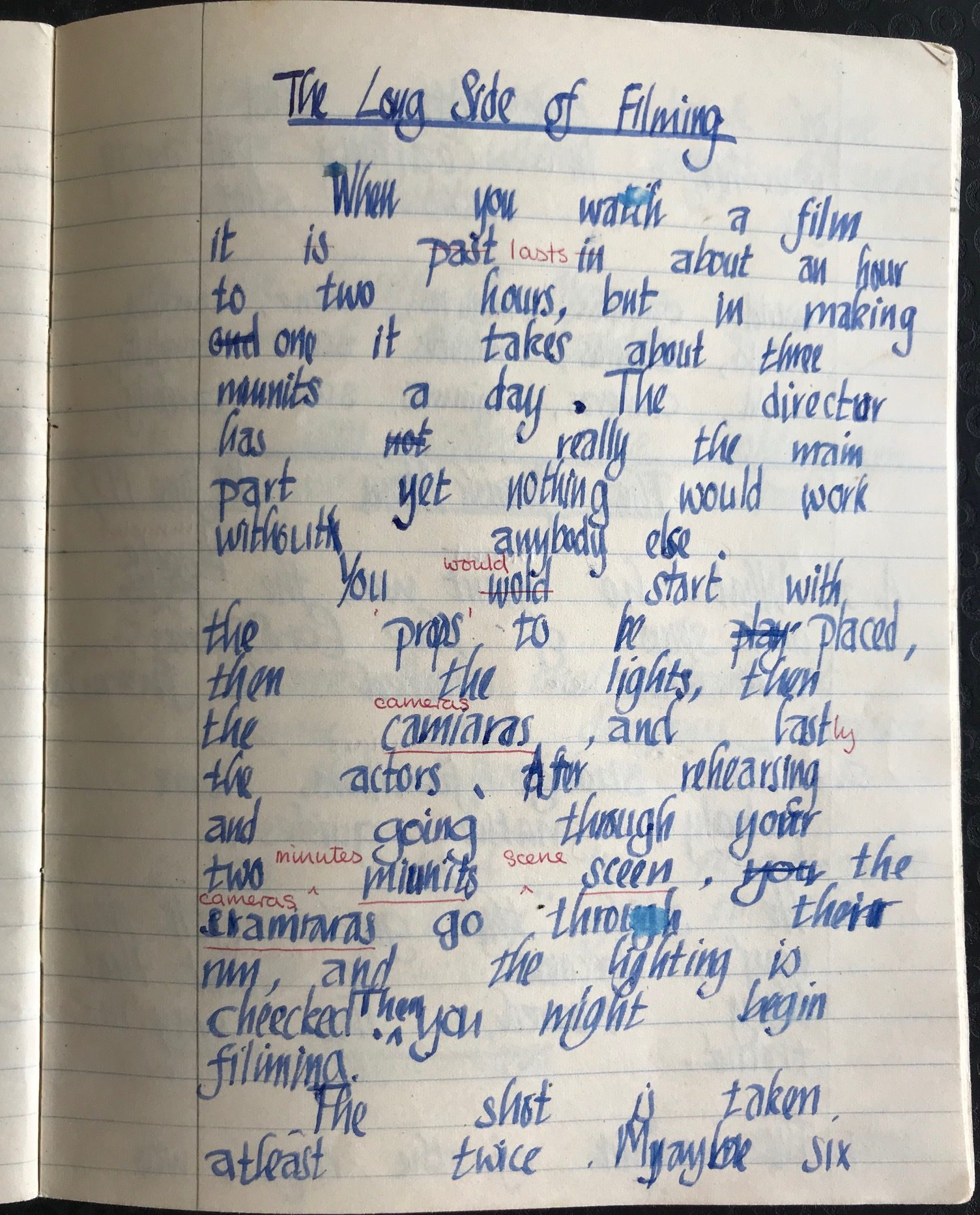
I came across an essay in one of my school exercise books that I must have written aged twelve whilst on location. I was trying to explain that only about three minutes of what will be the finished film are captured during a long day’s filming on location. The piece is not well written.
A school essay written in 1973.
We went on to learn about the Spanish Main, which may have been requested by Claude Whatham, the director of ‘Swallows and Amazons’ so that I would know what Titty was talking about. On 1st June 1973, I was on location in the Lake District filming in the capture of the Amazon in Secret Harbour on Peel Island.
Perhaps I should add these remenants to a future edition of ‘The Making of ‘Swallows and Amazons’ (1974)’. You can order the illustrated paperback from libraries, find it for sale online, or listen to the audiobook:
Chloe Williams has just written from Ontario in Canada, to say, “Some books entertain. Some enlighten. And some, like The Making of Swallows and Amazons and The Secrets of Filming Swallows & Amazons, manage to bottle something impossibly rare: the feeling of looking back through a child’s eyes and realizing it was all real; the lake, the sails, the laughter and somehow, you were part of it.”
“These aren’t just behind-the-scenes diaries. They’re sun-dappled time machines. Your voice, both in memory and in your original childhood notes, is a miracle of tone: witty, observant, buoyant, and deeply human.”
Of the original movie, she wrote: “What A Christmas Story is to snowglobes and childhood winters, Swallows and Amazons (1974) is to summers on the water and you’ve preserved that magic with charm, heart, and astonishing detail.
“What makes these books unforgettable isn’t just nostalgia. It’s how alive they are. We feel the smell of old sails and camera tape, the blur of location shoots, the uncertainty and excitement of being a child caught in a grown-up world of filmmaking yet utterly at home in it. We meet legends like Virginia McKenna not as distant stars, but as fellow travelers in the adventure. And it’s a joy.”
The Making of Swallows and Amazons seems to resonate with:
Readers of nostalgic memoirs that celebrate childhood, nature, and storytelling
Adults who are captivated by the lake-country magic of Arthur Ransome
Film lovers who cherish insider views of filmmaking
Educators and parents seeking real-life adventure stories for young readers
Fans of Call the Midwife, The Durrells, and 84, Charing Cross Road
“The joy and authenticity in your books mirror exactly why Swallows & Amazons (1974) still has such a hold on people’s hearts. The memoirs don’t just tell the story of making the film, they recreate it, letting readers smell the lake air and see the magic unfold through a child’s eyes.”
The new audiobook
I’m hoping the audiobook will also amuse readers. It’s now available on all the online platforms including Audible, where isis being offered for free on their membership trial.
I recall being contacted by a friend who had just passed his driving test, and wished to spend a lazy day in the Lake District where he’d insisted on hiring a rowing boat in Bowness on Windermere in order to ‘enjoy the beauty of the lake’. While heading out from the jetty towards the ‘Lily of the valley’ island in rather a clumsy fashion, I was asked. ‘Who do you want to be, the Swallows or the Amazons?’
At a later date I was given the book ‘Swallows and Amazons’ written by Arthur Ransome together with a video and an original vinyl of the music soundtrack. Turning the pages of the 1930 novel was like opening a door to several other worlds for suddenly the lakes swept in like the most refreshing breeze that kindled an inner passion for hills, mountains, lakes, sleepy streams and mists, early morning stillness on the water and sailing adventures.
Watching the film for the first time was a turning point in my rather dull experience of being at school in the north west of England with its drab corridors, gray walls and endless smoking chimneys out to the horizon.
Within a very short time I too have taken a seat on a train en route to the Lake District in 1929 that had a family travelling together in one of those wonderful old carriages consisting of four children and their mother who were to spend a holiday together in a beautiful farmhouse nestling in the trees by the lake.
For some reason William Wordsworth’s immortal words ran through my mind: ‘Beside the lake beneath the trees fluttering and dancing in the breeze.’
The story touches on many human aspects that we all learn to accept as a part of our evolvement into adulthood and which today seems to have got lost in the quest for an increasingly fast world understanding and a computer generated experience.
The joy of the family arriving at the farmhouse and standing there looking out over the glorious Lakeland towards their dream island where it’s hoped they will be able to embark on a camping holiday after receiving permission from their absent father.
The four children, John Susan Titty and Roger Walker, all displayed an individual aspect of evolvement, with Titty engrossed in the book ‘Robinson Crusoe’, using her vivid imagination to create the island realm and keeping a hand written diary, while John seemed to be moving towards a Naval leaning by spending his time learning the basics of Morse code, boat handling and navigation. Young Boy Roger enjoys stuffing himself with anything he can possibly eat, appears to be showing signs of enjoying the great outdoors, and wants more adventure. Susan comes across as the mother figure who thinks about the younger siblings and what they all will be eating while on their adventures.
The story unfolds as the children receive the go ahead in a telegram from their father to sail over to their island to camp in a borrowed dinghy called ‘Swallow’. A burgee is sewn up to fly from the mast depicting a swallow. This news is received with unadulterated delight by the children who immediately begin the preparations.
The lake and mountainous surroundings featured in the film begin to open up as the children undertake their journey to discover sailing rivals in Nancy and Peggy Blackett who live in one of the houses bordering the lake and own a dinghy named ‘Amazon’ that sports a ‘pirate’ burgee.
Initial rivalry erupts between the Walkers and Blacketts, which results in eventual harmony as the two sides join forces to capture a common enemy who just happens to be the Blacketts’ ‘Uncle Jim’ who owns a houseboat on the lake and is busy writing a book.
The Swallows and Amazons decide to host an expedition to capture Jim (‘Captain Flint’) and the houseboat, and, to determine who should be the leader, they make an attempt at capturing each other’s boats.
This requires sailing at night and some pretty shady manoeuvres, which are grievously frowned upon when discovered by the Walkers’ mother when she made a journey to the island to check up on the children and found Titty on her own. John has to confront his mother and explain his reasons to sail in the dark. She reluctantly accepts his explanations but with a proviso that no further actions of this sort will occur again for the remainder of the holiday.
Titty won the day by seizing an opportunity to capture the Amazon boat while the Blackett’s were on Wild Cat Island, making the Walkers the winners. This leads up to the finale where there is a sea battle as the Swallows and Amazons launch an assault on Captain Flint and the houseboat when he is captured and made to walk the plank. The end of the film sees Titty gifted with Flint’s pet parrot who seemed to have taken quite a shine to her, and everyone resolves to be kindred spirits for ever!
After watching this film my mind was transported to the lakes and sharing the beautiful sunny days, crispy clear water and blue skies with the backdrop of the mountains the wooden jetties and a sailing journey into Bowness for supplies. I could sense myself seated in the lugsail rig and feeling the tug on the main sail as the boat crept closer to the wind before going about and heading away onto another tack.
I was carried with the family into that other realm and other time where innocence and responsibility were coming to the fore, where family values were held dear and independence was something young people strove to achieve within the simplicity of their everyday existence. For the brothers and sisters to go camping on a small island in the middle of a lake away from any overseeing adult, and to arrived there by sailing over in a borrowed boat, leaves little to the imagination.
There was a sense of adventure with the children, and a wanting to show they could be responsible and look after themselves, something in today’s society we have to a degree lost touch with. That immortal sense of adventure within a landscape never changes, except within its own light that we know and love today as the Lake District.
This film is a journey into another dimension and another world steeped with love and belonging, adventure and moral understanding, which is shared between a family and accepted.
The characters are bought to life almost as if they are an infinite, integral part of the immortality of the story, each giving that picturesque understanding the viewer finds impossible to explain.
After watching this film one arrives back in real time with a resounding bang! We wonder why such a simple story can create such an iconic understanding, why watching this film can make you feel happy, totally complete and yearning to return again and savour that wonderful, eternal landscape we have all learned to grow and love as The Lakes.
Do think of leaving a review of this film on the International Movie Base site. The link for ‘Swallows and Amazons'(1974) is: https://www.imdb.com/title/tt0072233/
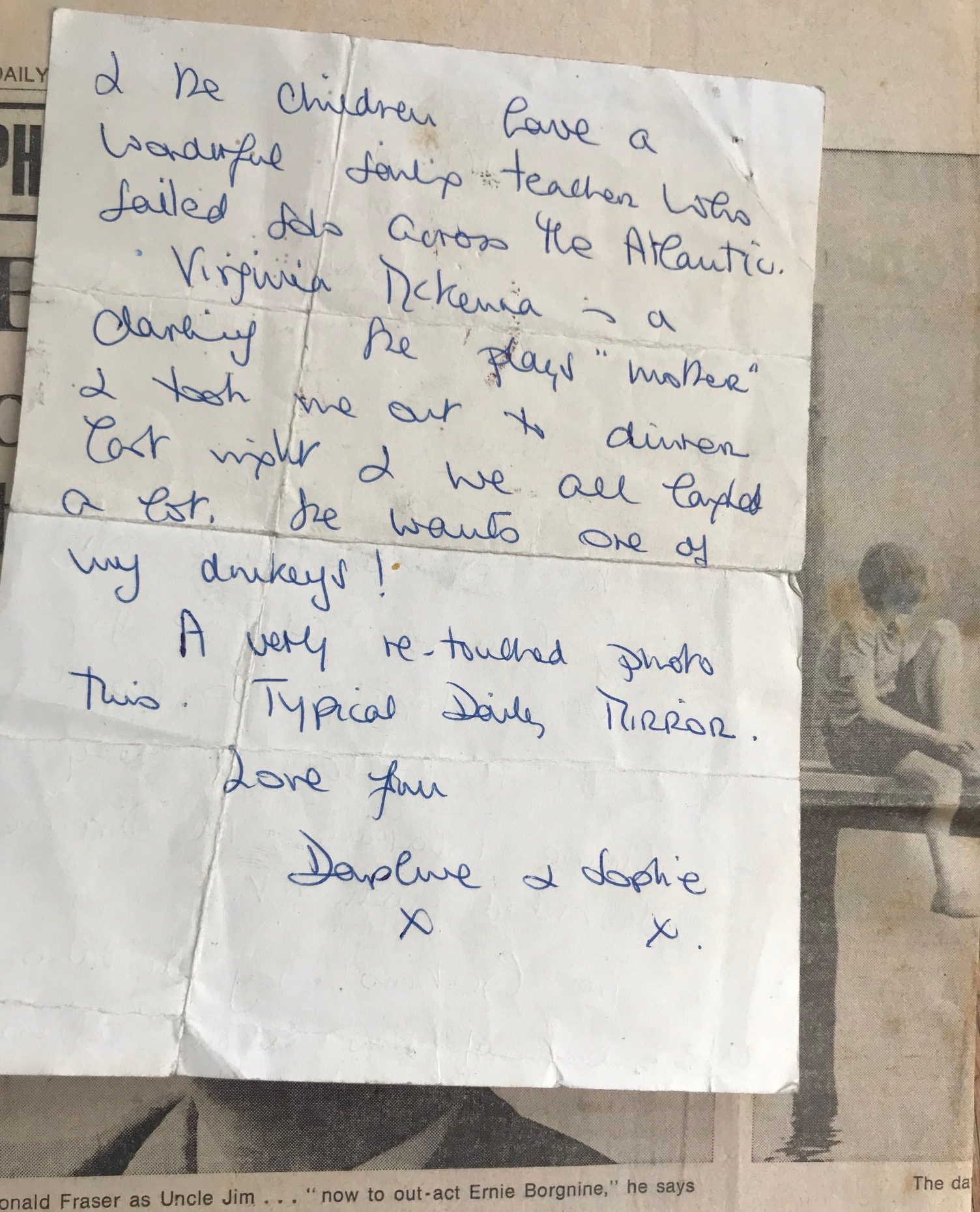
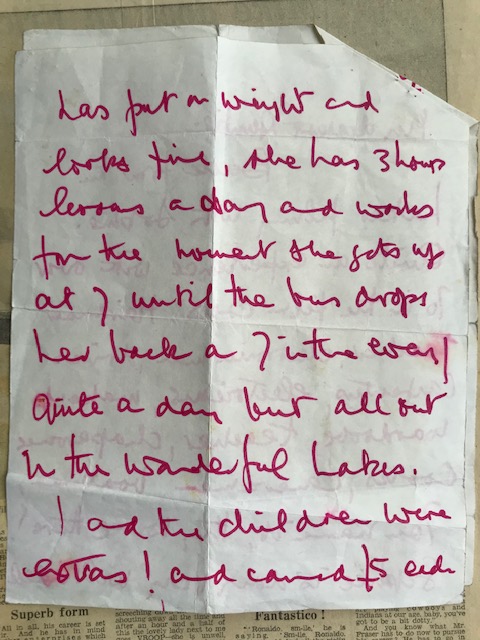
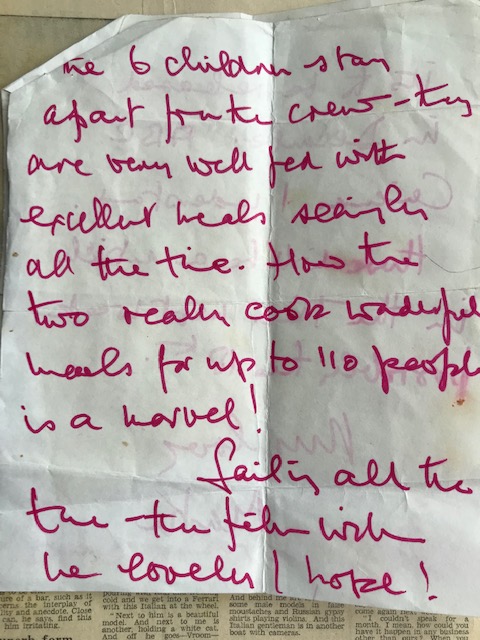
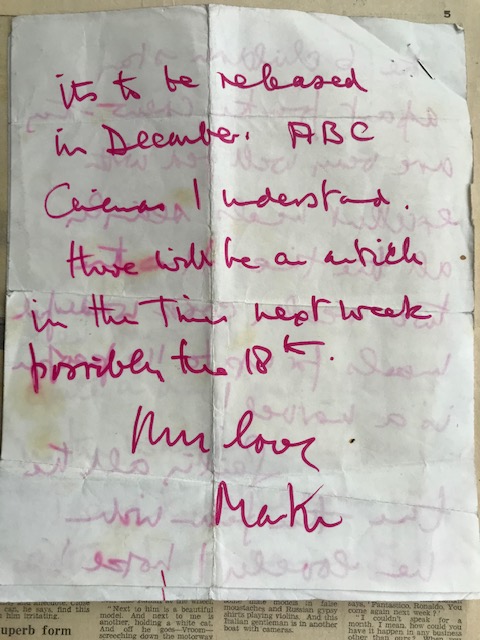
I’ve been asked to post the hand-written letters that my mother wrote on location while we were making the original film of ‘Swallows and Amazons’. It is amazing they have survived. This was sent to my great aunt who lived on the Solent and knew Buckler’s Hard where Arthur Ransome once moored.
Mum mentions Claude Whatham, the director, David Blagden our ‘sailing teacher’ who played Sammy the Policeman and Dame Virginia McKenna, the star of the movie who played my mother, Mary Walker.
This must be the cutting from the Daily Mail that I hadn’t seen for more than fifty years and yet remember the photos as being over-exposed. Mum marked me with an X, as in ‘X marks the spot.’
‘The Making of Swallows and Amazons’, narrated by Sophie Neville, is now available as an audiobook on all platforms, along with Audible where you can listen to a free sample.
Whilst clearing out my mother’s house recently we found a few letters written by my parents to my great aunt in June 1973. They report on the progress of making the original EMI movie of ‘Swallows and Amazons’ in the Lake District.
Stephen Grendon as the Boy Roger, Sophie Neville as Able-seaman Titty and Simon West playing Captain John Walker beside Derwentwater in 1973 ~ photo: Daphne Neville
My mother had been given headed writing paper designed for members of the production to use on location by Brian Doyle, who managed the film publicity.
It looks as if my father used his children’s felt pens.
It is interesting to learn how much my sisters earned as film extras when they appeared in the scenes shot at Rio (Bowness on Windermere).
Kit Seymour and Jane Grendon watch the filming on the jetty whilst Tamzin and Perry Neville eat ice creams with the one man in Cumbria willing to have a short-back-and-sides. You can just see the period cars parked in the background
They made £5 a day, which was the same amount as the green parrot. I calculated that those of us with leading parts, who he describes as ‘the 6 children’ earned £7.50 a day. This was probably because we were only meant to be on set for a couple of hours. As Dad mentions, I effectively worked twelve-hour days but seemed to be thriving.
Until reading this letter, I didn’t know that the movie (or ‘picture’ as Mum called it) was originally due to be released in time for the Christmas holidays. It was launched in ABC Cinemas but not until April. You can read about the film’s release and premiere at what was then the ABC in Shaftesbury Avenue on my website here.
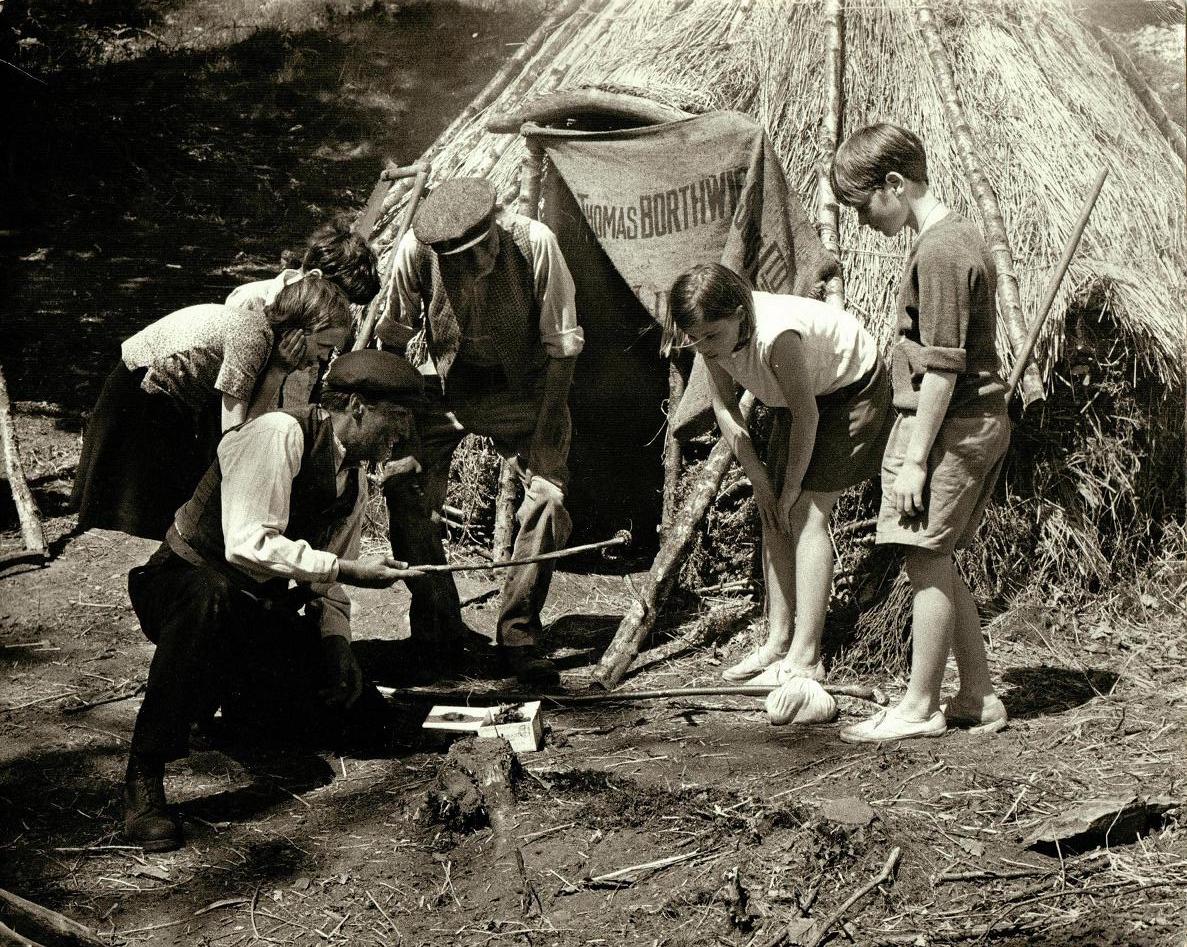
Sophie Neville, Sten Grendon, John Franklin-Robbins, Jack Wolgar, Suzanna Hamilton and Simon West looking at an adder in the original film ‘Swallows and Amazons’
In 2024 a ‘Swallows and Amazons’ festival at Windermere Jetty near Bowness-on-Windermere in Cumbria was organised by The Arthur Ransome Society and Lakeland Arts. Such was the publicity that I was contacted by a Lakeland charcoal burner who kindly sent me a report on his last talk:
‘I, Brian Crawley, am currently President of the Coppice Association North West. In our late 50s, my wife and I embarked on a career change into coppicing, principally making barbecue charcoal. This presentation is not about earthburns in general, it is about but a specific site for them.
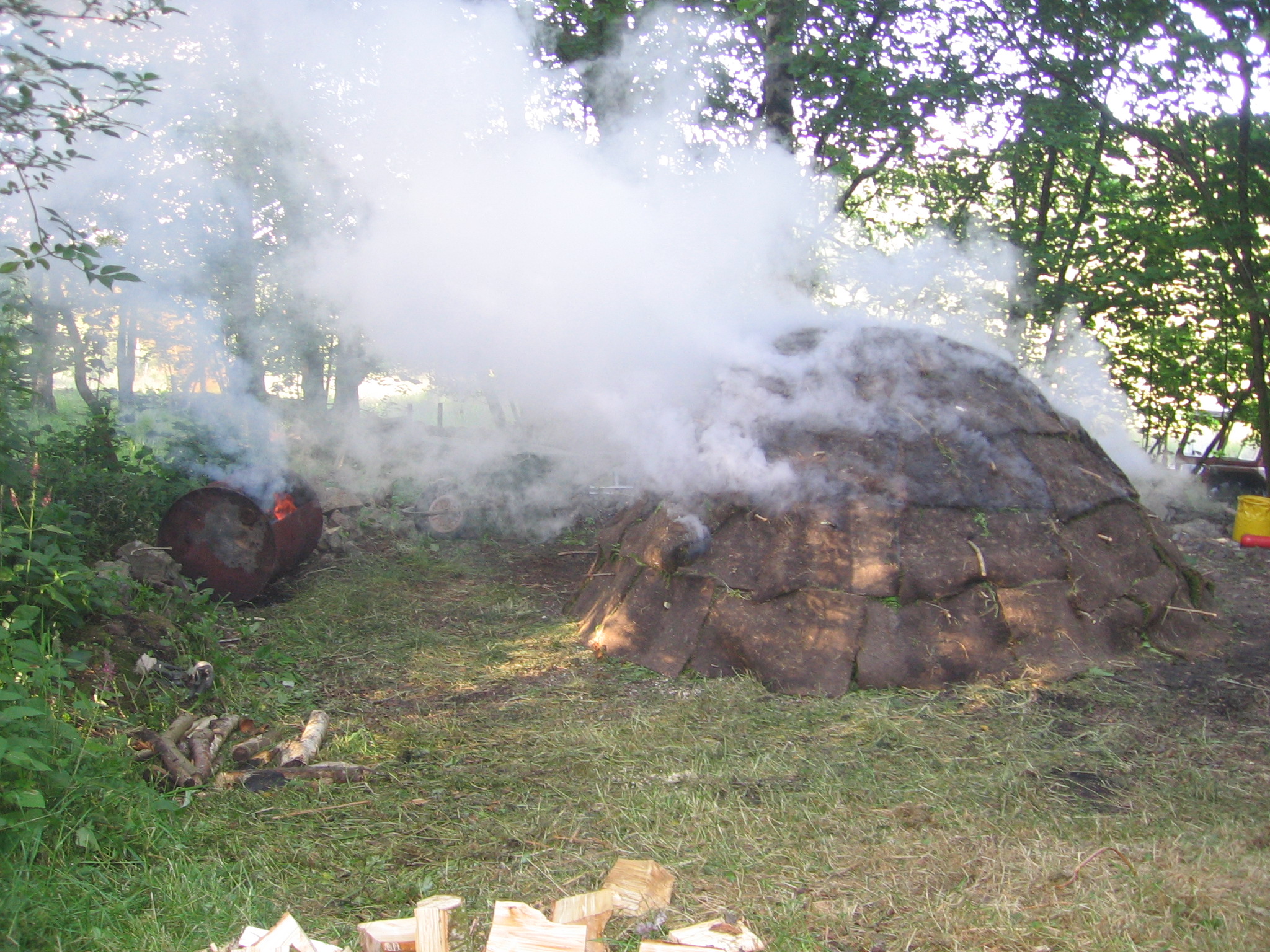
‘I had always been aware of the traditional way of making charcoal, ‘charcoal earthburns’ being a stack of wood covered with earth to limit the oxygen intake to the burn.
‘The receipt of a set of photographs of a charcoal earthburn from David Jones, who was a patient of my daughter’s, encouraged my interest in the subject. David’s photos were of an earthburn that had taken place in 1972 and were included in an extract from his book ‘A Lakeland Camera’.
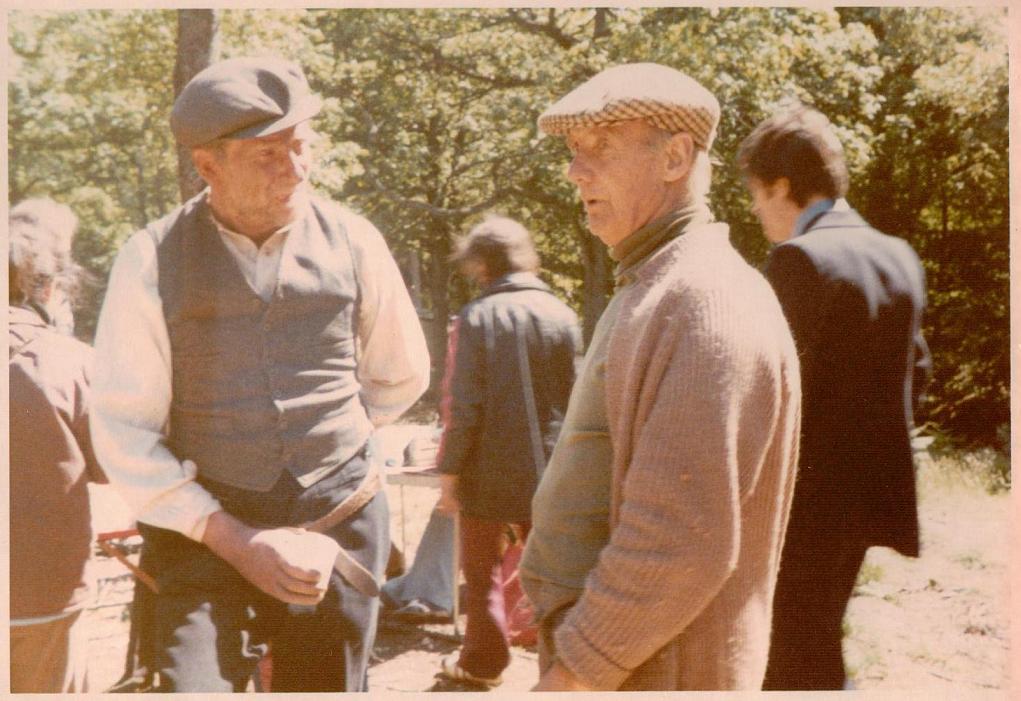
‘I later discovered that the charcoal burn had taken place as a result of discussion between Mike Dow, who was Treasurer of Haybridge Nature Reserve in the Rusland Valley, and Mike Davies-Shiel, a prominent local archaeologist. They enticed local woodland worker Jack Allonby, who had a retired uncle Tyson Allonby, a charcoal burner, to do an earthburn. Jack was helped by Bill Norris who regularly helped local archaeologist Mike Davies-Shiel and lived in the same village as Jack. Mike Dow arranged that a film would be made of the burn and subsequently directed it. Bill Norris narrated it. I was put in touch with Mike Dow through our Coppice Association NW secretary Alan Shepley, who had worked with Mike Dow in earlier years, and I was given the “Charcoal Burners of High Furness” DVD, which I then played to the audience. It was not my way of doing earthburns, but was historically interesting. A photo of the charcoal burners of Furness is available on ebay here.
Our helper from Cumbria Woodlands with his 3 sons, John Allonby, Dan Sumner and June Norris with her husband
‘For many years I had been fascinated by the visit of the children in the movie Swallows and Amazons (1974) to the charcoal burners and had always wondered where it was filmed. A gentleman on a charcoal making course, which we ran, explained to us that he was there when it was made and took us to the site not far from where he lived at Ickenthwaite in the Rusland Valley. Myles Dickinson told us how amazed he was that they got a double decker bus up the lane to the site for the children’s classroom. However, our inspection of the site in Glass Knott wood on the very narrow, winding and steep Corker Lane up to Ickenthwaite, plus another look at the Mike Dow film and David Jones’s photos, convinced me that it was the correct location.
‘I can’t remember how I first got in touch with Sophie Neville, who played Titty in the 1974 film Swallows and Amazons, but she gives some interesting details about ‘The real Charcoal Burners – who we met whilst filming ‘Swallows and Amazons’.
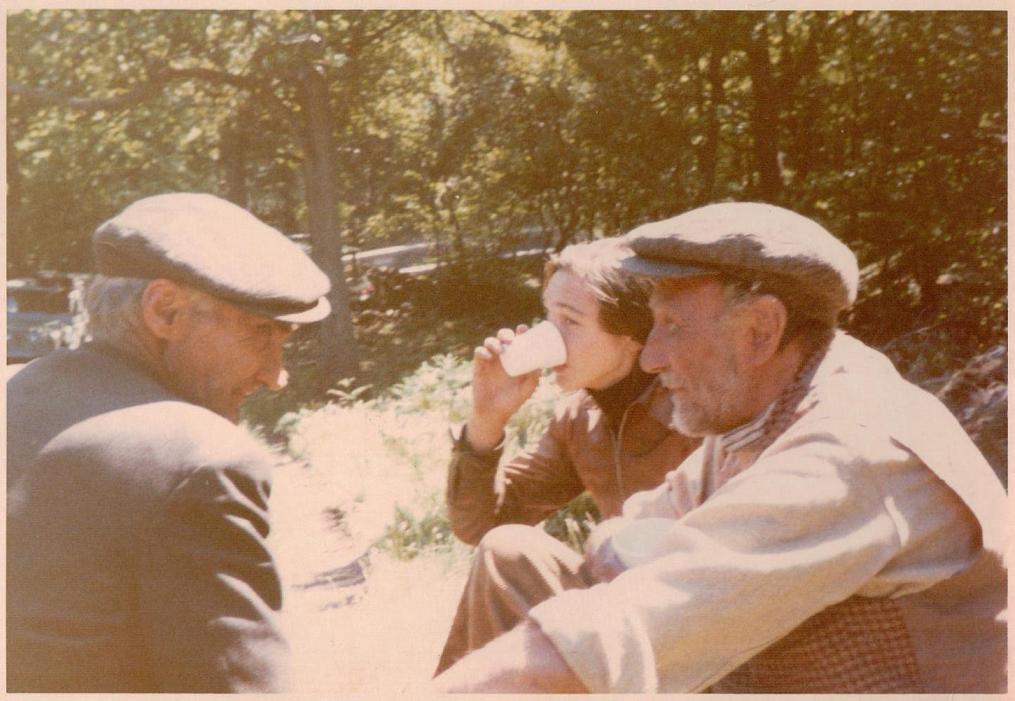
John Franklin-Robbins playing Young Billy chatting to the real charcoal burner during a coffee break on the set of ‘Swallows and Amazons’ ~ photo: Daphne Neville
‘I was able to make some extra comments to the blog as well as a photograph the site many years after the filming. I then played a clip of their visit from the Swallows and Amazons film, being shown by courtesy of Studiocanal who own the rights.
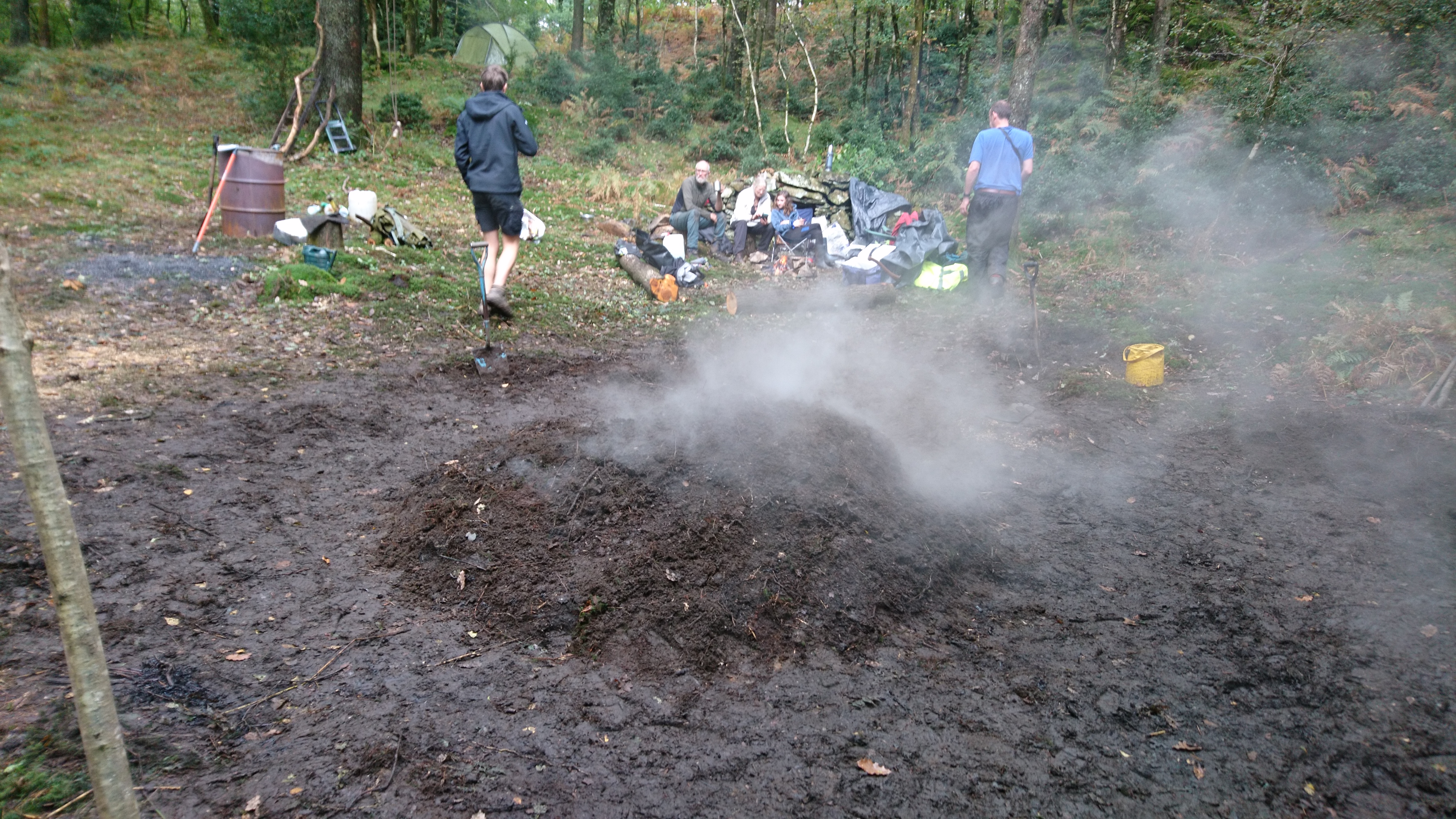
‘It became my obsession to carry out another charcoal burn on the site and became significant in 2023 when I realised that the original filming had been in 1973, 50 years previously. This year also turned out to be the visit to the North West of the National Coppice Federation annual gathering.
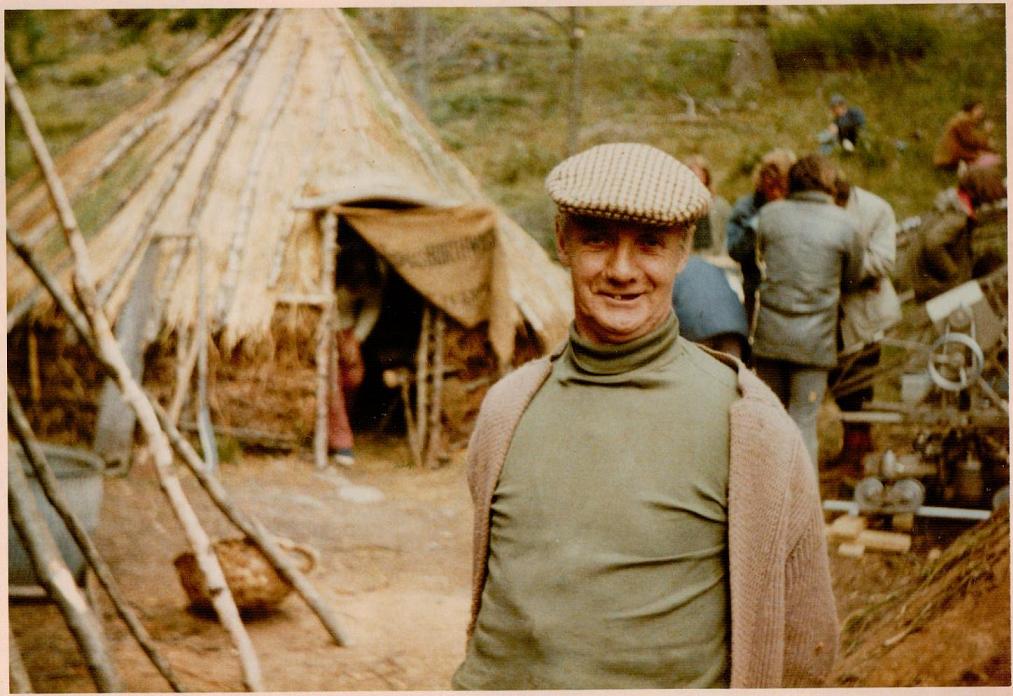
The real charcoal burner outside the hut. Behind him the 35mm Panasonic camera is being mounted on a short section of track ~ photo: Daphne Neville
‘Glass Knott wood is now owned by the Lake District National Park Authority. Permission to carry out the burn was requested and eventually approved with enthusiasm. At the same time Dan Sumner was looking for instruction on how to do an earthburn and we agreed that this was a good time for me to show him how, and for him to be responsible for the burn and provide the timber. The burn took place two weeks before the gathering and we had a fascinating visit to the site from Jack Allonby’s son John together with Bill Norris’s daughter June who had lived in the same small village, Spark Bridge, 50 years ago. A young John Allonby had been at the site with his father during both filmings. We also had a visit from Myles Dickinson who still lives nearby. We had a few very good helpers and some other visitors from LDNPA, Cumbria Woodlands, Coppice Association North West, The Arthur Ransome Society and Ruslands Horizons.
Jack Allonby talking to Jack Woolgar who was playing Old Billy ~ photo: Daphne Neville
‘I then showed some photographs of the weekend’s successful event and a few photos of Sophie Neville’s blog on the web.
Arriving at the Charcoal Burners’. Jack Woolgar with Simon West, Suzanna Hamilton, Sophie Neville and Stephen Grendon ~ photo: Daphne Neville
‘To finish, I then showed a DVD of the Millenium Burn, actually held in 2001, at which I learned earthburns from Arthur Barker, who was supported by Alan Waters and his friend Mark, at a site a bit further up the Rusland Valley where Jack Allonby had been filmed doing another earthburn by Sam Hanna, which can now be seen on the internet.’
Earthburns presentation by Brian Crawley, NCFed Gathering Oct 2023
John Franklin-Robbins playing Young Billy with Sophie Neville, Stephen Grendon and the adder.






































 Sophie Neville