Sophie Neville as Titty – a photo montage of put together by a fan of the film
Google my name and you will come across rather astonishing newspaper headlines ingrained in the internet’s listing system. They are remarkably popular articles. I woke one morning to a comment from Australia alerting me to a peTITTYon in the Daily Telegraph – you could cast your vote online ‘More support for Titty!’ was one cry.
Everyone, it seems, wants to know what it is like to be called Titty.
It is a titualar title in that I have no power. I can do little more than respond with good humour to those who see me as a living representative of ‘Swallows and Amazons’. Like it or not, letters, emails and messages keep arriving addressed to Titty. They are all wonderful, some so enchanting they have been kept along with the old black and white stills taken on location. I attempt to answer each one.
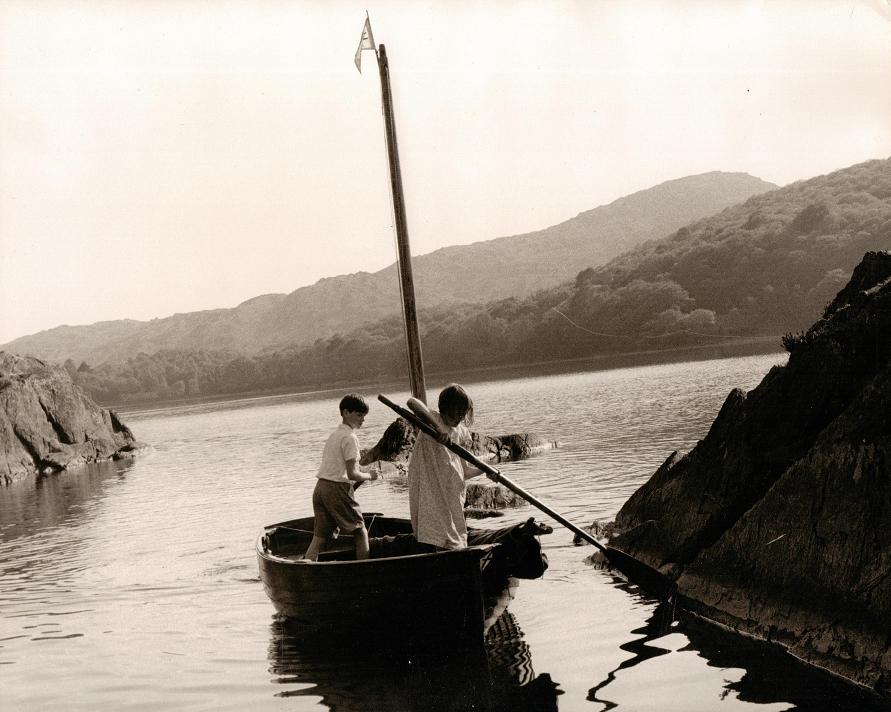
Simon West as John and Sophie Neville as Titty on location on Peel Island, 1973
Having been known as Titty since 1973, I automatically respond when the name is called and wave back, as I’m sure the Able-seaman would. It is quite fun seeing the reaction of passers-by if children call out ‘Titty!’ when they see me coming, but as one church warden pointed out, ‘At least your real name is not John Prescott.’
I found there was a Facebook group called ‘Titty from Swallows & Amazons is one hot cookie.’ When I asked to join the group, all the other members fled. You can see for yourself. It is still there. I am pretty sure they were a group of fashion students – or hope so.
Sophie Neville as Titty Walker
What creepy people don’t seem realise is that I can see the words typed into search engines that bring people to my own website. I’ve had some crackers. It was the navy blue gym knickers I wore to play the part of Titty that attracted quite a bit of unfortunate attention. I had to remove a few photographs featuring this particular item of my costume and talk about the green parrot instead. Children often ask if I still have one.
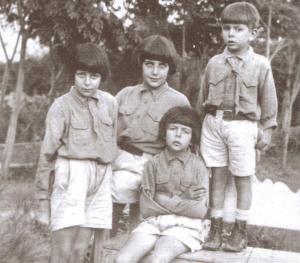
Susie, Taqui, Titty and Roger Altounyan in 1928
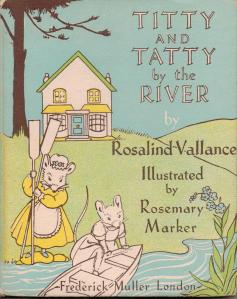
Although Titty Walker is a fictional character, with adventures of her own, she was inspired by a real child known to Arthur Ransome when he was writing ‘Swallows and Amazons’ back in 1929. I have written about her here and have more photos of her on this website. Titty Altounyan’s real name was Norah Mavis Altounyan but she preferred the nickname of Titty. Ransome explained in a note to Miss Joyce Cartmell that ‘Titty is short for Tittymouse which is what she was called when she was a baby. Nobody ever calls her anything but Titty now’. Tittymouse was a character in English folktale Titty Mouse and Tatty Mouse.
If anything, Titty Altounyan lived rather reluctantly with the fame that came along when the novel became a bestseller. Her descendants were upset to hear that the character’s name was changed to Tatty in the 2016 film adaptation of ‘Swallows and Amazons’. Her daughter was tearful about the lack of consultation and her niece outraged. They saw it as ‘history being re-written’. Ransome was a journalist but what he would have thought of the editor of the Guardian coining the ‘Titty Tatty’ story, which others called ‘Tittle-Tattle’ or the ‘Tittygate debate’, I do not know.
Simon West and Sophie Neville bring Swallow into the Secret Harbour on Wildcat Island
I learned that it wasn’t until after 1929, that the word ‘titty’ took on meaning as a mammary gland. The character’s name was changed to Kitty when the BBC made a black and white television serial of the book back in 1962 when Susan George played the part. Ransome was still living in the Lake District at the time. He seemed to accept the name change, but loathed additions to the story-line and the attitude of the director who had wanted to blast rocks from the entrance to Peel Island on Coniston Water. As you can see from an earlier post, I was contracted to play the part of ‘Titania’ in the movie made in 1973, but the name TITTY was typed throughout the screenplay. Mrs Ransome was the script editor.
Sophie Neville as Titty and Stephen Grendon as Roger rowing to Cormorant Island
Ransome’s brilliance was that he made Able-seaman Titty, the little sister into the heroine of ‘Swallows and Amazons’. CS Lewis did the same by making Lucy Pevensie heroine of ‘The Chronicles of Nania’. It is not surprising that most little girls reading the story want to ‘be Titty’. They find the syllables easy to pronounce and don’t give a second thought to an alternative meaning to the name. It is accepted as genuine, and they tend to regard jokers as immature. ‘May I call you Titty?’ one five-year-old asked. What could I say? She knows that her cat has titties on her tummy but that’s not rude and it’s no reason to change the name in her eyes. I am assured that girls in the US don’t bat an eyelid. Boys may snicker at first but are soon swept away by the story.
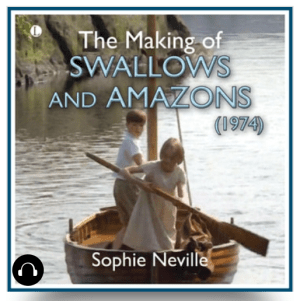
The new audiobook
You can read about how I came by the part and what it was like to be on location in ‘The Making of Swallows and Amazons’ now available as an audio book.
The crossed flags my publisher asked me to draw (with permission) that were later used on the call sheet of the 2016 movie.
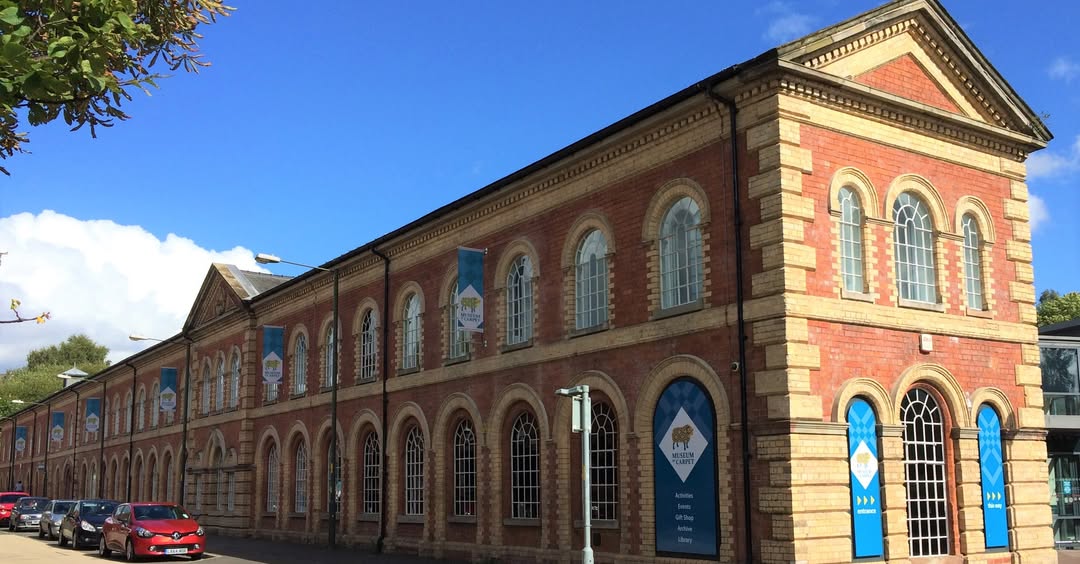
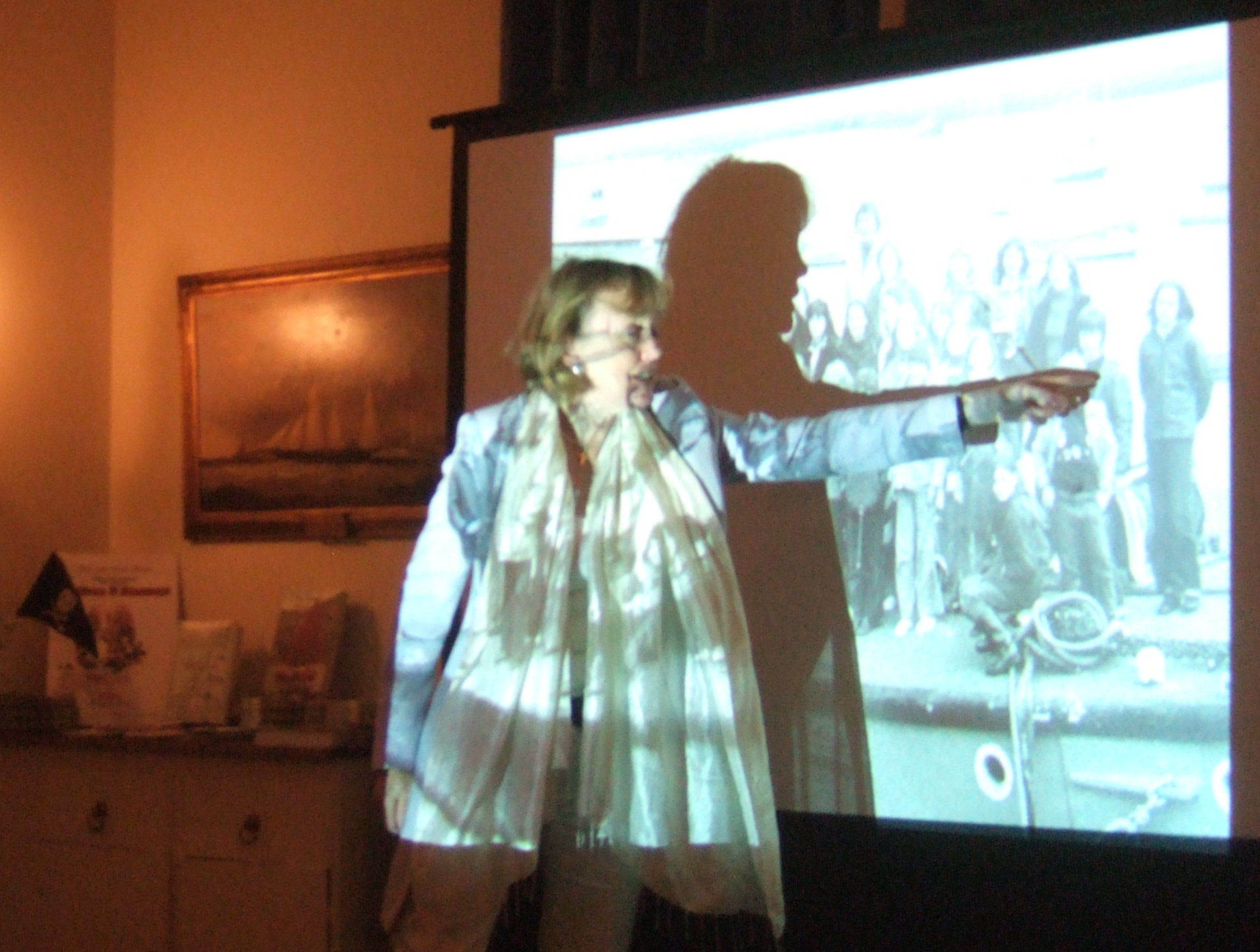
Sophie Neville, who played Titty in the original film ‘Swallows and Amazons’, gave a special talk on what is was like to take the lead part in a feature film at the Museum of Carpet in Kidderminster, on Saturday 21st February.
Richard Pilbrow, who produced the original film ‘Swallows and Amazons’ had been married to Vicky Brinton whose family donated many of the items on display at the former mill, along with a huge poster in the conference room.
Sophie was born in Worcestershire, seven miles from the venue. Her great-grandfather, Canon Hastings Neville, was a curate in Kidderminster and one of his ten sons, the Olympic athlete Dick Neville, pioneered the manufacture of woolen carpets in New Zealand, developing a crossbreed of sheep for the purpose. In 1960, he employed Richard Pugh-Cook who returned to the Midlands and founded the Museum of Carpet thirteen years ago.
About seventy people packed into the conference room to listen to the talk, which enjoyed a great response. “The degree of factual information contained in it is amazing…all those details of 50 years ago conveyed with such clarity and enthusiasm!”
“….such an inspiration to so many people especially younger people who have such different lives these days – another era then, it seems, but one we should not forget.”
“a great success – everyone seemed to have throughly enjoyed your talk, hearing about the other side of filming!”
Sophie signed copies of her books after the talk when she had a chance to meet ‘Swallows and Amazons’ enthusiasts and a little girl hoping to become a film actress. The event was covered in the local news.
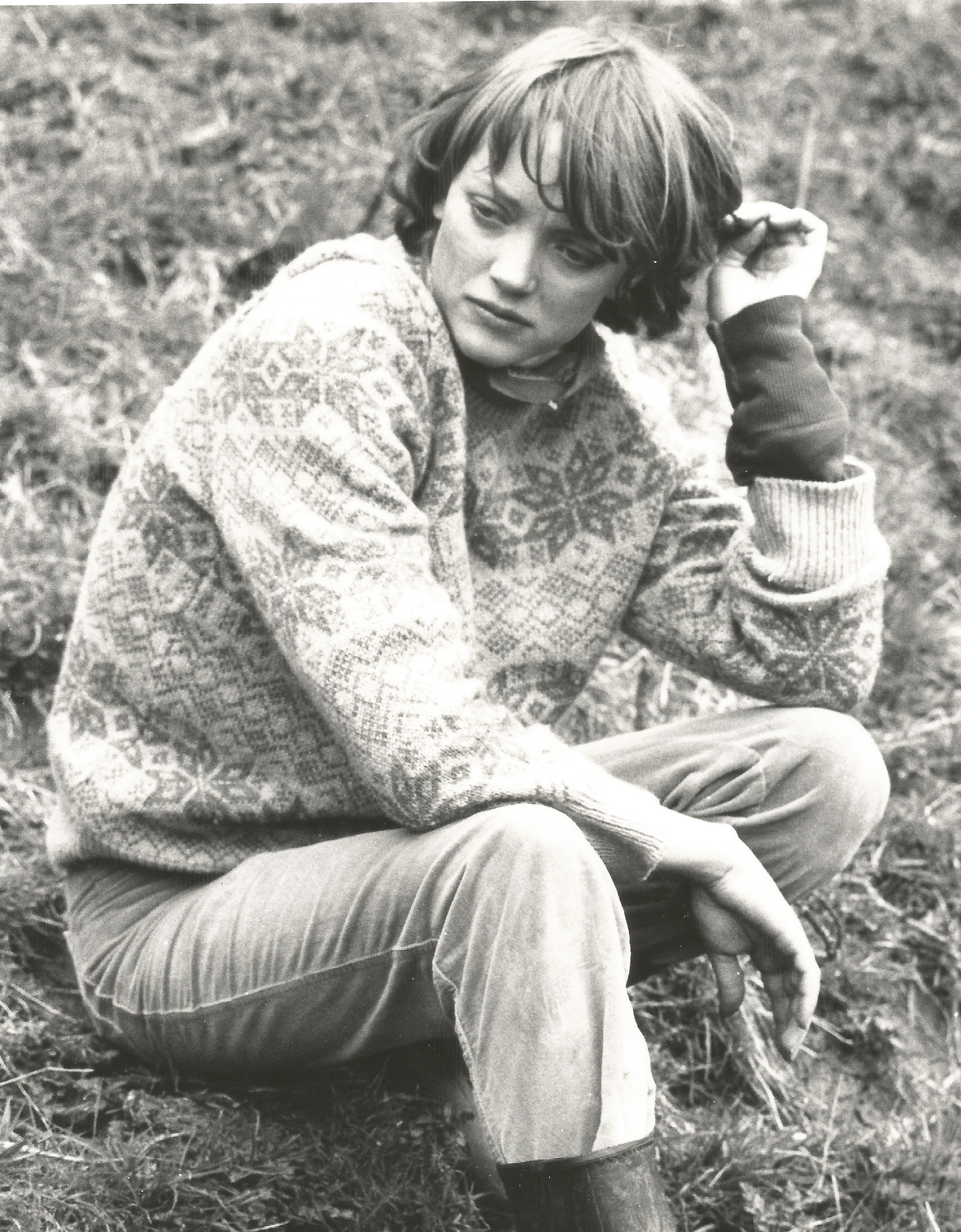
A long-forgotten photograph of Sophie Neville aged 21
I reached the end of 2025 wondering what on Earth I’d accomplished apart from clearing out my mother’s house – an irksome project as she’d lived there for sixty years, but I found a lot of photos, piles of hand-written letters and other relics from making the original film ‘Swallows and Amazons’, including a news cuttings book and other finds, which I added to this website. I came across more graphics only yesterday, so watch this space.
Sue Anstruther, Alex Moore and Sophie Neville signing books at Riverside Studios in Hammersmith
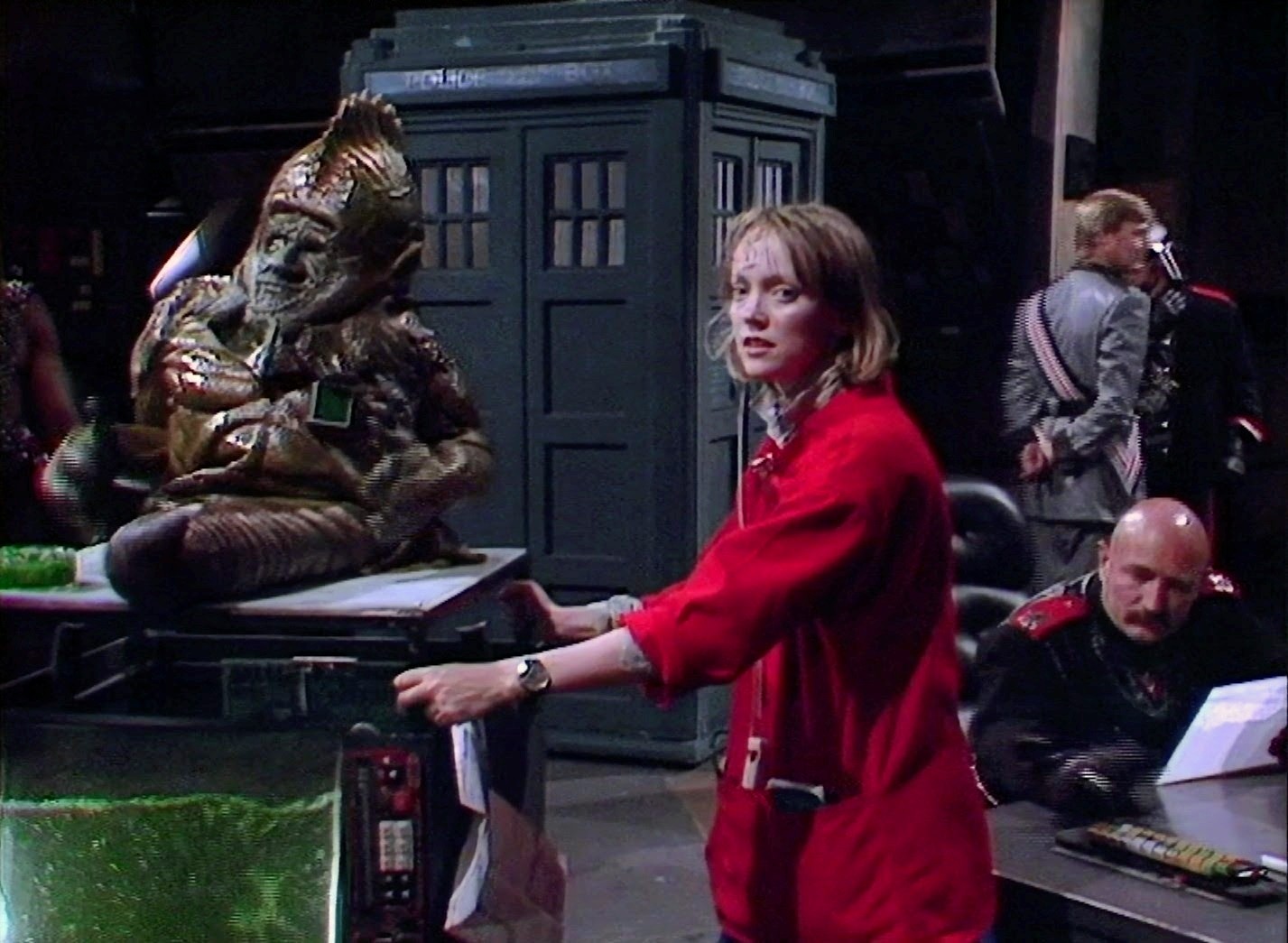
February 2025, marked my first Doctor Who convention, when I was invited to speak on the panel after a screening of ‘Vengeance on Varos’. Great fun!
The fans have worked out that those on the production team have lots of stories and I was made very welcome. I’d forgotten that I had invented Varian knitting or wore red in the studio. Sadly, Nabil Shaban, who played our monster, Sil, was too ill to join us and died in October 2025.
Sophie Neville working on ‘Doctor Who’ with Nibil Shaban, Martin Jarvis and Forbes Collins
However, it was great to be reunited with other members of the cast including Geraldine Alexander who rushed over from the set of ‘Bridgerton’, and Colin Baker who I’d also worked with on ‘Coot Club’. You can read more about the day on this website.
Rob with Sophie Neville, Geraldine Alexander, Nicola Bryant, Stephen Yardley, Colin Baker and Forbes Collins
As a member of a film crew you are busy but invisible until your name is worthy of a credit. As a writer you are invisible until you win an award. One of my screenplays written in 2024 reached the semi-finals of the Scriptwriters & Co International Festival, which was exciting.
I was awarded an Honourable Mention for excellence in screenwriting at the glitzy International Film Gala in London, when I was joined by Lucy Calcott who has been editing my work.
This script was one of ten finalists in the Pitch Now screenplay competition.
I won a Lonely Wolf screenplay award, was in the running for a Creative Worlds Award
Being nominated and winning a screenwriters award at the New Media Film Festival in Los Angeles was exciting. While in Spain, I took part in an onscreen Writer’s Block Q&A chaired by Dr. Maya Rockeymoore Cummings and was interviewed by Susan Johnston on what I’ve learnt as a writer. (I’ve learned that smelt is spelled smelled in America!)
The same WWII story won a genre award in the Page Turner Awards and another was shortlisted in their Culture Award.
Right at the end of the year, literally on 30th December, I won the Eyelands Book Award for an unpublished historical novel, which was encouraging. It’s the third award they have bestowed on me. I absolutely treasure the ceramic tree trophies.
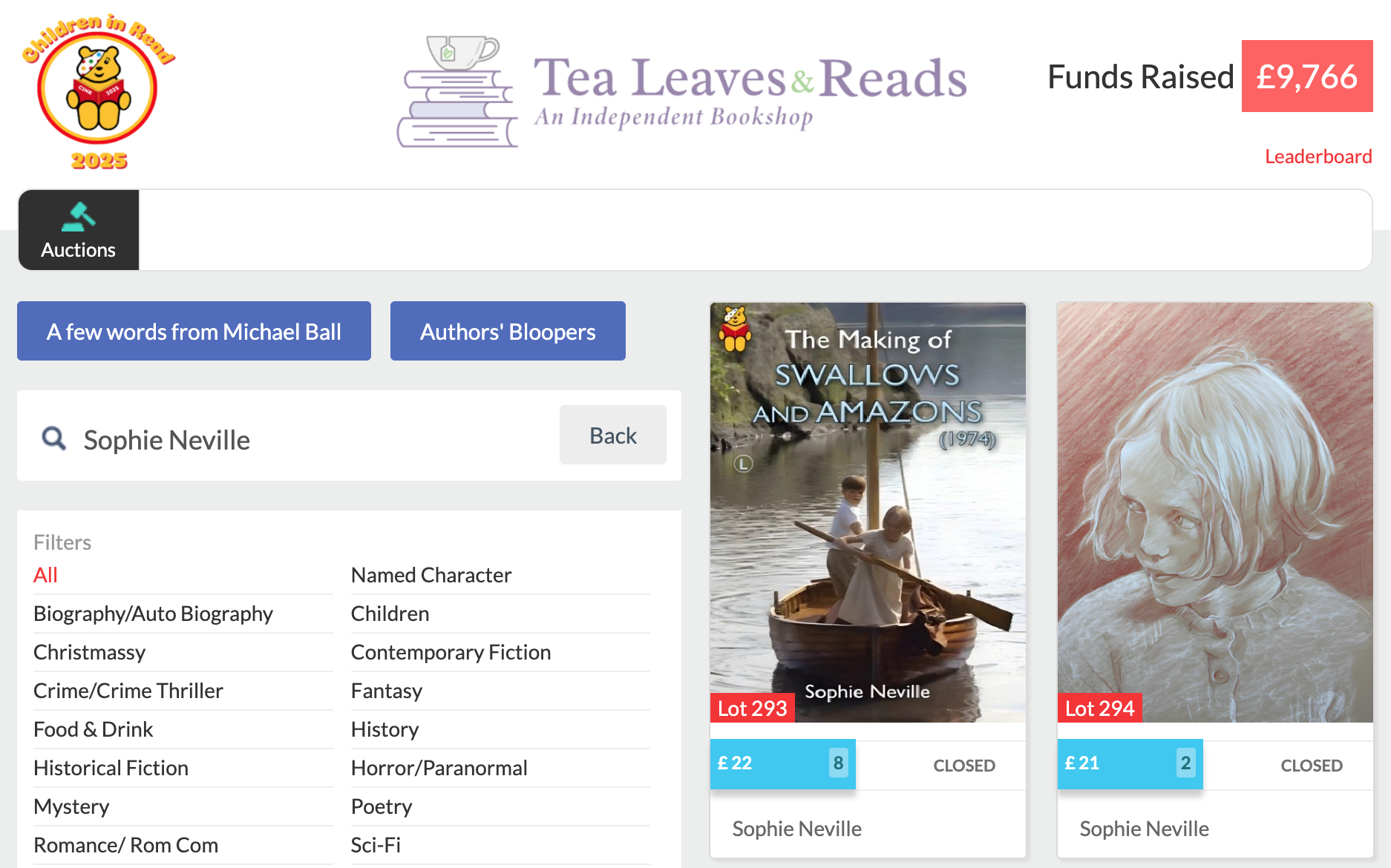
From August 2025 onwards, I helped Children in Read raise nearly £10,000 for BBC Children in Read by taking part in an online charity book auction, which was fun and involved dialogue with many amazing writers.
It was great to receiver this illustrated review of the film ‘Swallows and Amazons’. My non-fiction books received flattering online reviews, which is always appreciated and Resolute Books inspired me to bring out my memoires as a trilogy of life as a single girl. This is exciting but on the back burner for now.
The Gondola on Coniston Water today, re-built and restored by the National Trust.
Meanwhile the National Trust asked if they could use my ‘Swallows and Amazons’ map of Coniston Water to promote MY Gondola’s cruises.
Map showing film locations around Coniston Water
Items featuring this map and others can be purchased from Redbubble:
Mugs printed with maps used to illustrate Sophie’s books
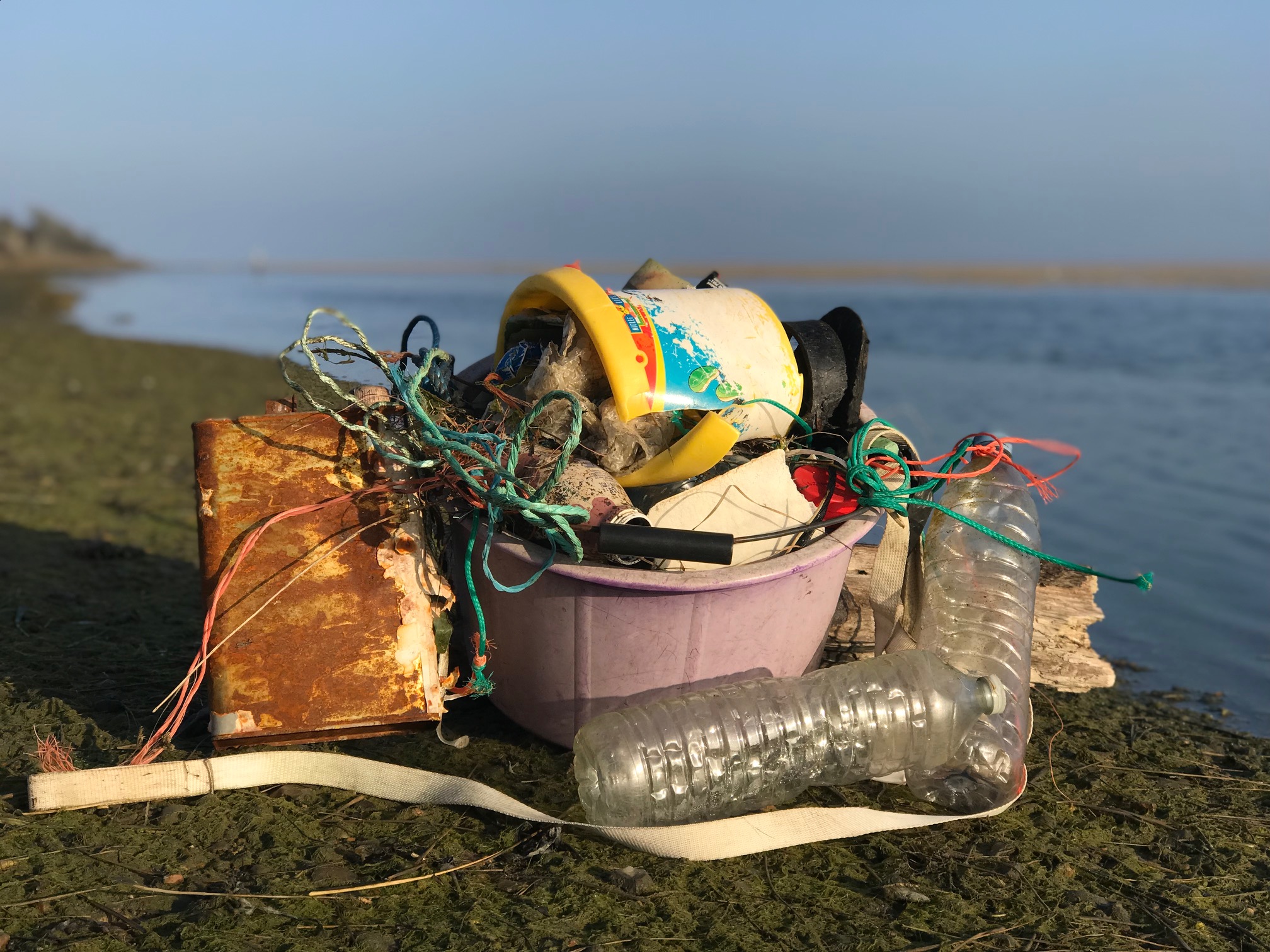
Meanwhile, real life continued to plung forward. We’ve had our house on the market and, whilst my mother was diagnosed with medium dementia, she refused to leave home. It made finding time for anything else tricky, but I managed a little litter picking.
We ploughed on with sorting through the vast number of letters and photographs Mum had stored all a-muddle.
What a task! As one friend said, ‘it’s bad enough finding homes in the house for things that come in use, let alone things that don’t!’
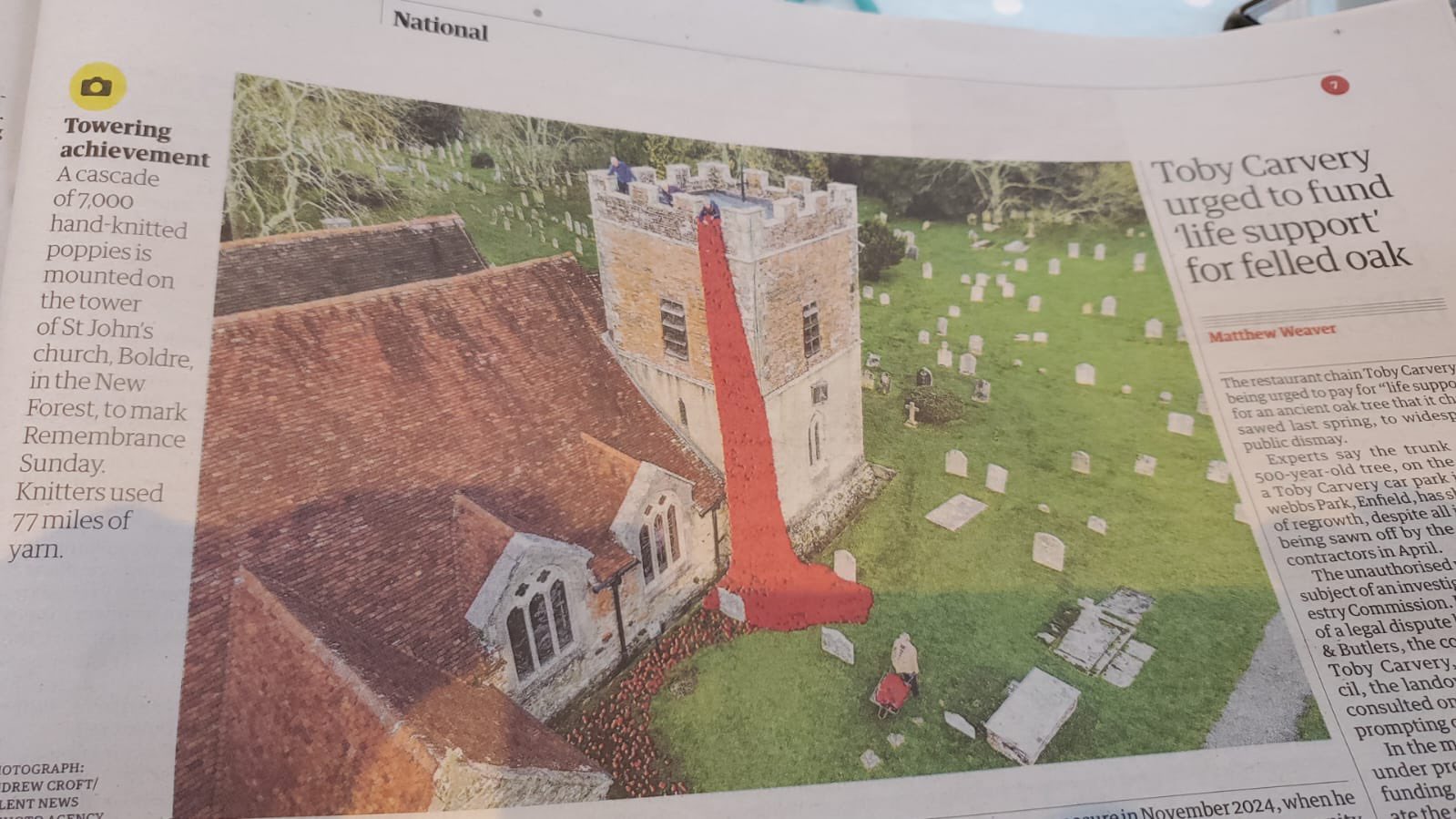
I was beginning to feel overwhelmed when I was asked to knit poppies for a commemorative installation at church. This was so calming that I made about 150 whilst watching dramas. My excuse for imbibing every crime serial available is that I need to examine script construction. I shot footage of our ‘towering achievement’ for BBC South Today and aided a drone photographer who took this shot for The Guardian and other national papers.
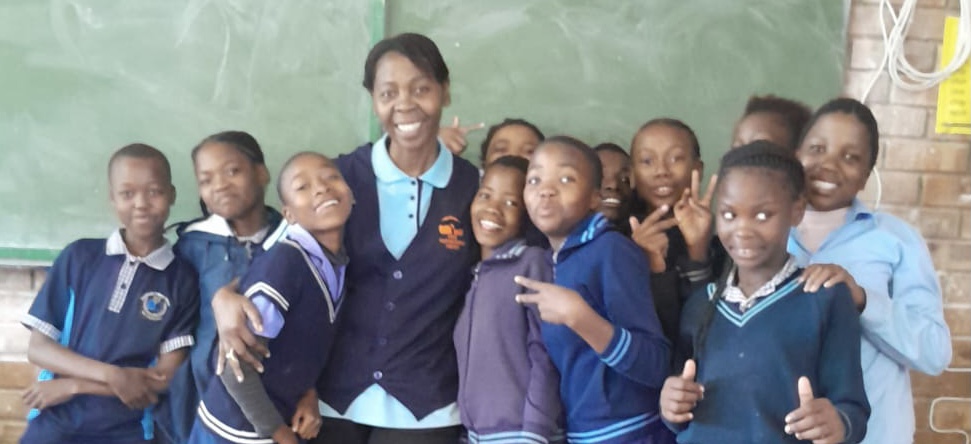
For some years now, I have been the webmaster for The Waterberg Trust, a UK registered charity supporting amazing projects in a corner of rural South Africa. We sponsor the role of the only school nurse working in the Limpopo Province. Along with caring for pupils, she has established four school vegetable gardens and distributes food parcels to those in need. I’ve started a project knitting hats to take them as an encouragement in 2026.
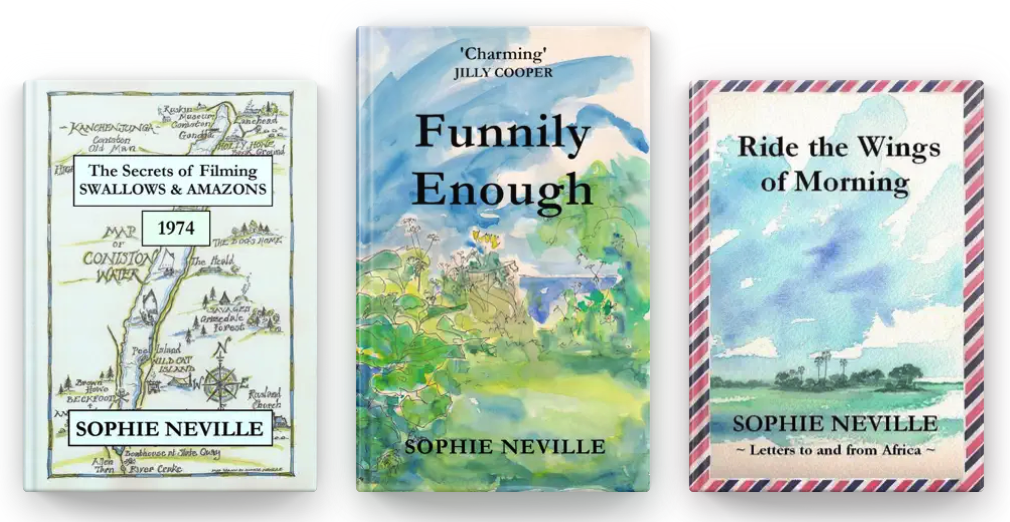
You can read about life at my parents’ house in my memoir ‘Funnily Enough’, which won a Rubery Book Award when it first came out and is now available as a paperback for £7.99, on Audible and other audiobook platforms. The illustrations look best on the ebook version. You can see a free sample here.
Funnily Enough – the paperback with black and white illustrations
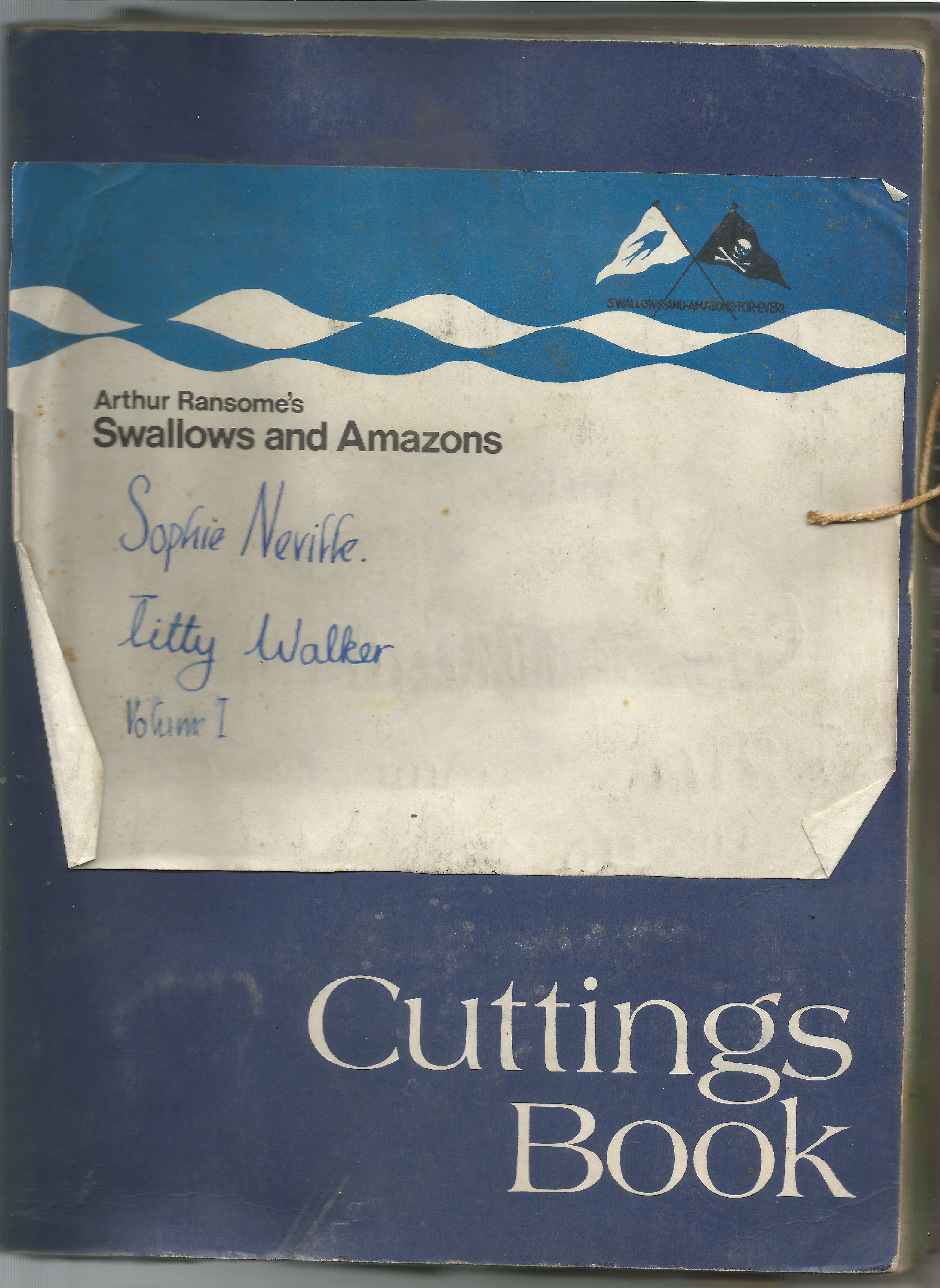
I thought I’d lost it! But, on clearing out our mother’s house, my sister found the cuttings book I kept whilst making the original movie ‘Swallows and Amazons’ in 1973.
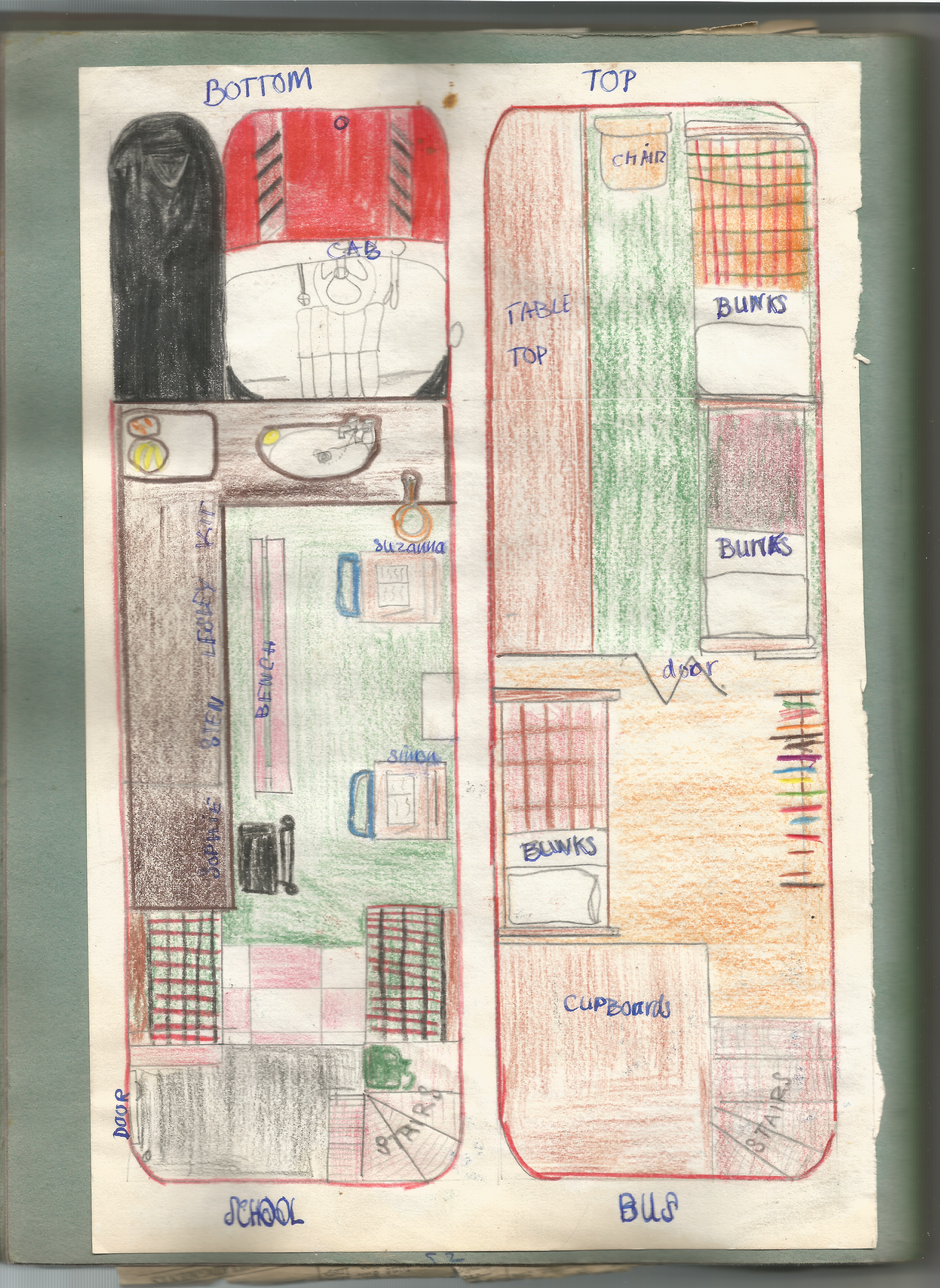
It includes a plan of the London double-decker bus where we received rudimentary lessons on location. Three bunkbeds on the top floor were meant to be used so we could rest after lunch. Mum said she forced me to lie down everyday but I can only remember a couple of occasion, once when I was reluctant, once when I was freezing cold after a swimming scene.
We changed into our costumes at the top of that bus, enjoying warmth from a gas stove that leaked rather alarmingly on one day necessitating an evacuation.
The exterior looked liked a conventional Routemaster with added curtains.
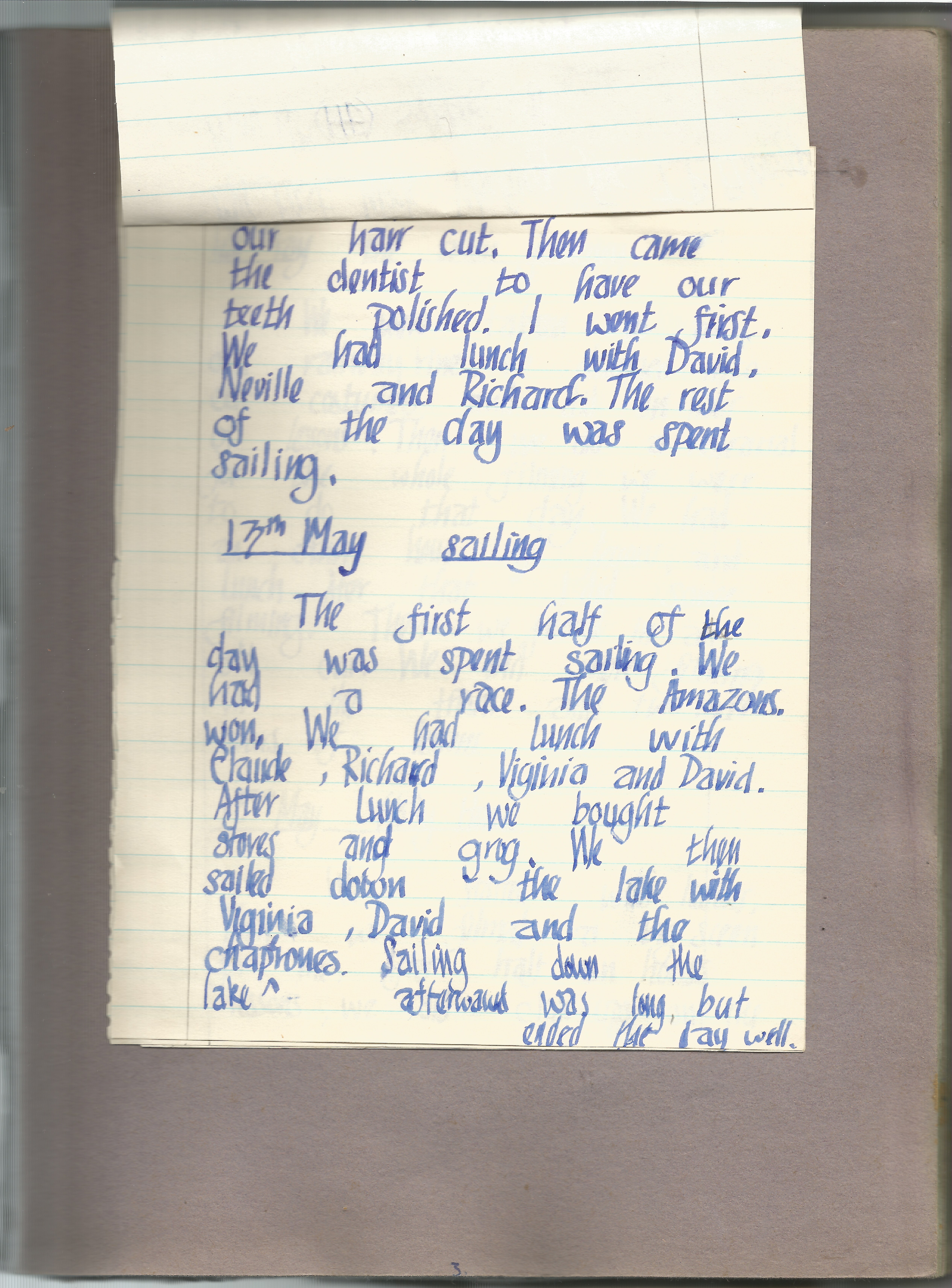
Once sitting at my desk, I found my italic fountain pen and began keeping a diary. One version of the first seven days spent in Cumbria is pasted into the scrap book. I later re-wrote a slightly more detailed and interesting version in a couple of notebooks and wrote about how I got the part of Titty, and the filming from different perspectives.
These pages describe the day spent travelling to Ambleside and a couple of days spent getting to know each other along with Dame Virginia McKenna, who played the Swallows’ mother, the producer Richard Pilbrow, David Blagden who was in charge of the sailing and the film director Cluade Whatham.
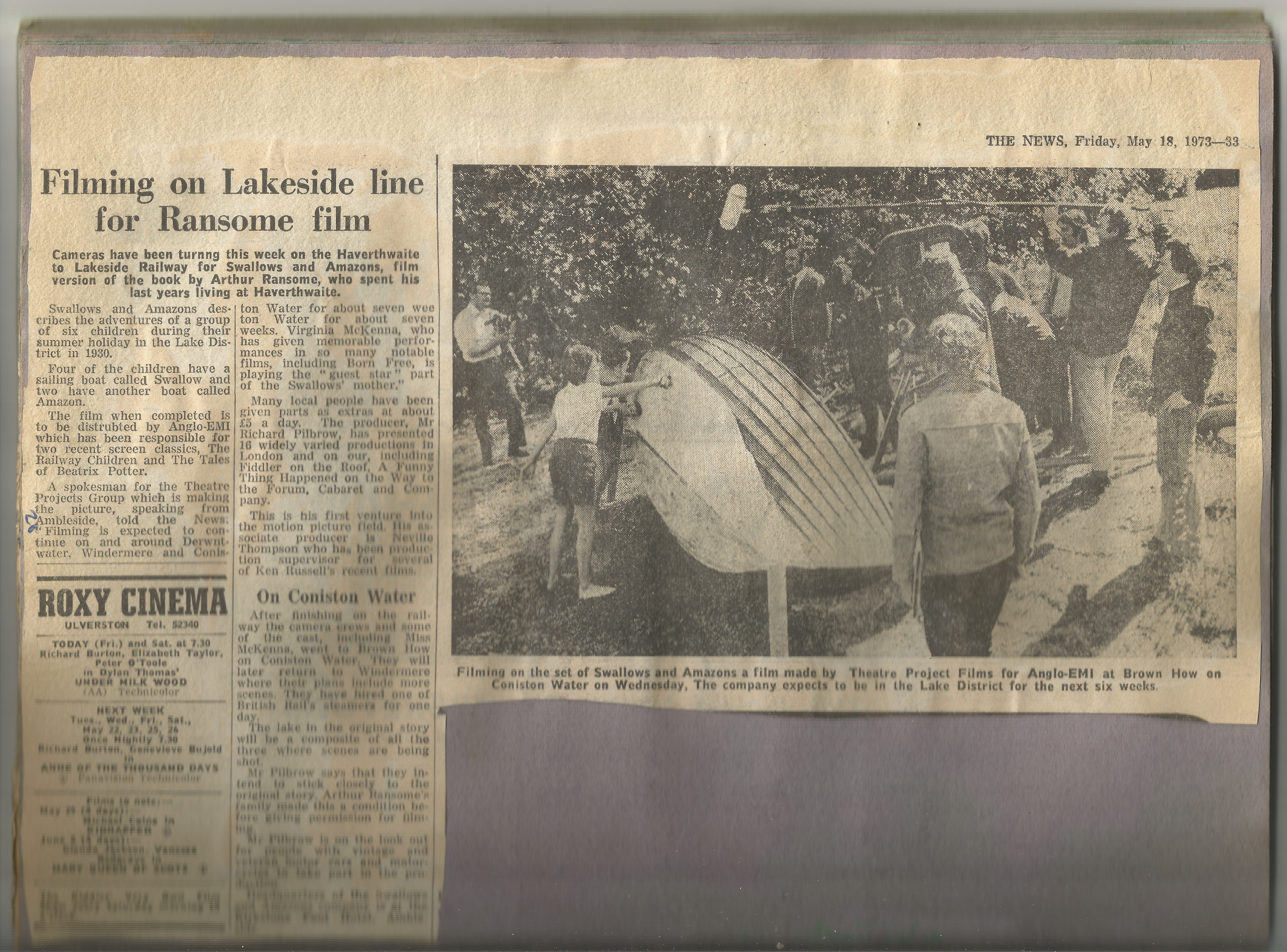
Encouraged by my mother, we began pasting in newspaper cuttings.
The Times and the Guardian were at Havethwaite Railway Station to take photographs on the first day of filming. The BBC Radio 4 newsreader, Alan Smith, who grew up in Cumbria, was a film extra that day and can be spotted standing in train doorway with his brother. He wrote to me with his memories of the day.
I began adding photos from contact sheets that Albert Clarke, the film’s stills photographer, took of the cast and crew. I wrote about the opening locations here.
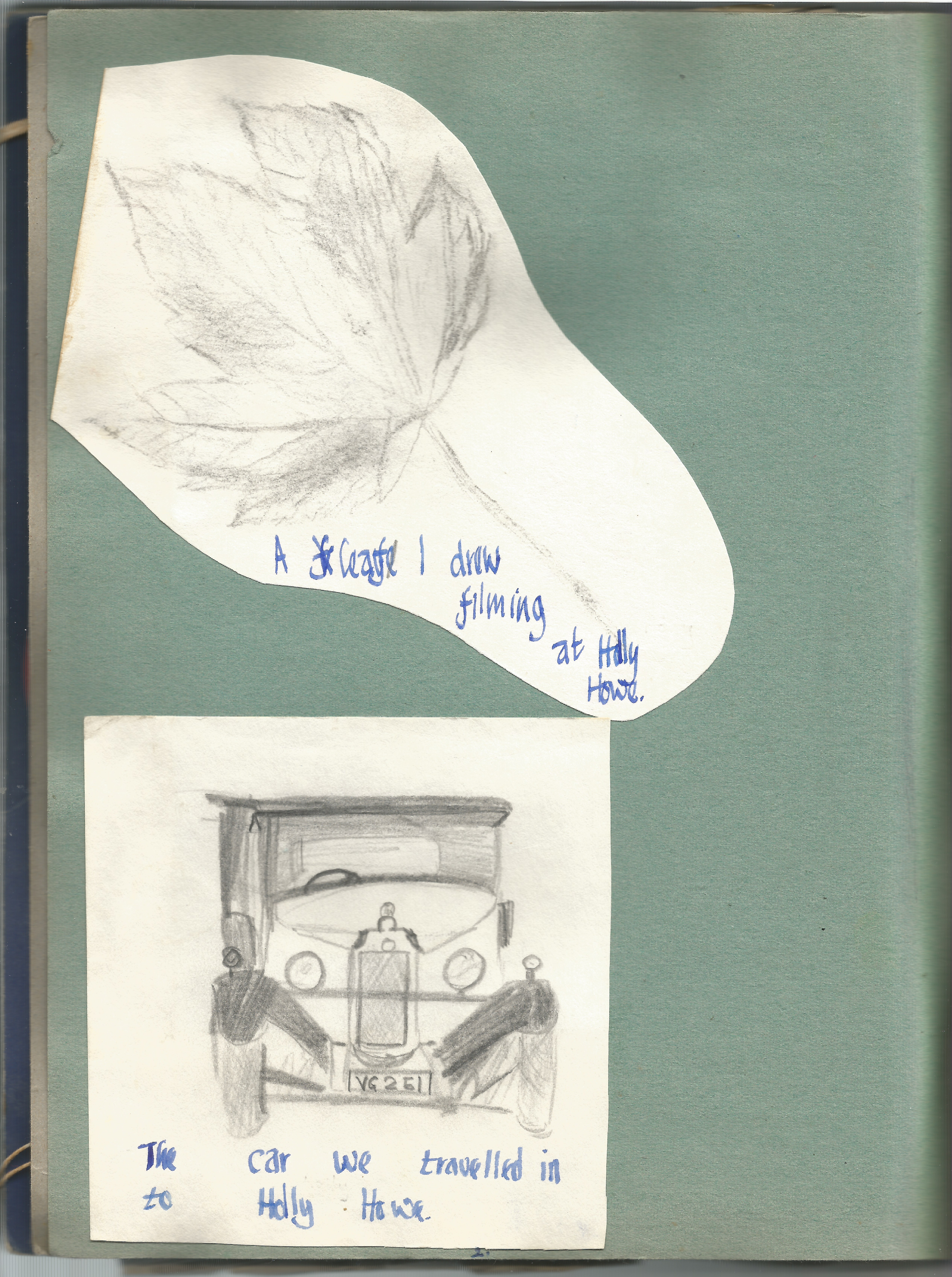
There are pages of dictation and a few sketches of the film props. I drew the yellow Austin ‘taxi’ we drove in at the station.
There were some cuttings that I hadn’t seen for years until until I opened the pages of this mislaid cuttings book. Others can be found on earlier posts.
I took pages of dictation, learning about the plants and geology of the Lake District, about Beatrix Potter and the National Trust, but it’s a wonder any schoolwork was accomplished at all. We spent so much time on set. I fell behind in French and Maths but gained respectable exam grades that summer, gaining 80% in Geography. Perhaps I wrote about glacial lakes.
You can read more about the adventures we had whilst filming ‘Swallows and Amazons’ in books detailed on this website.
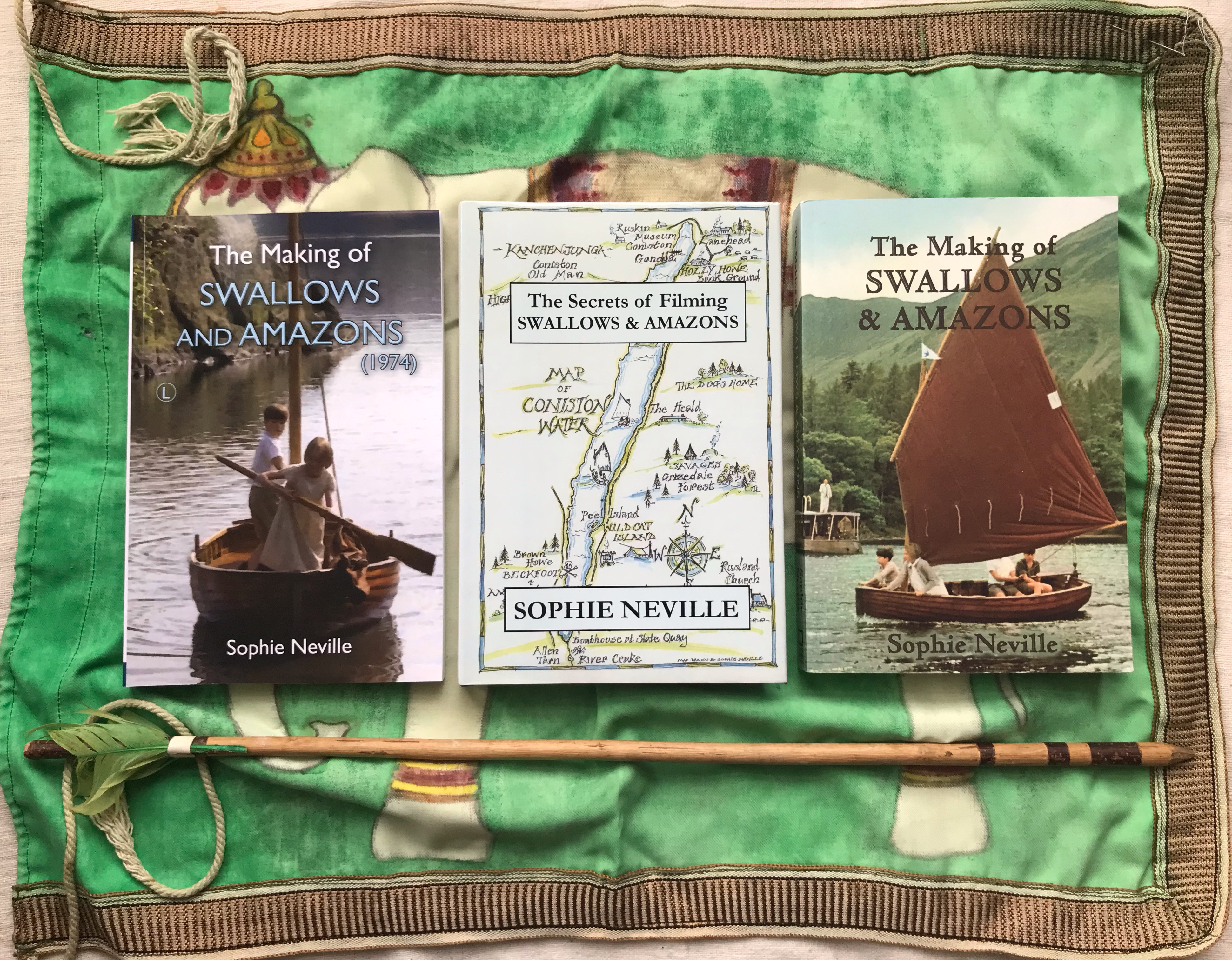
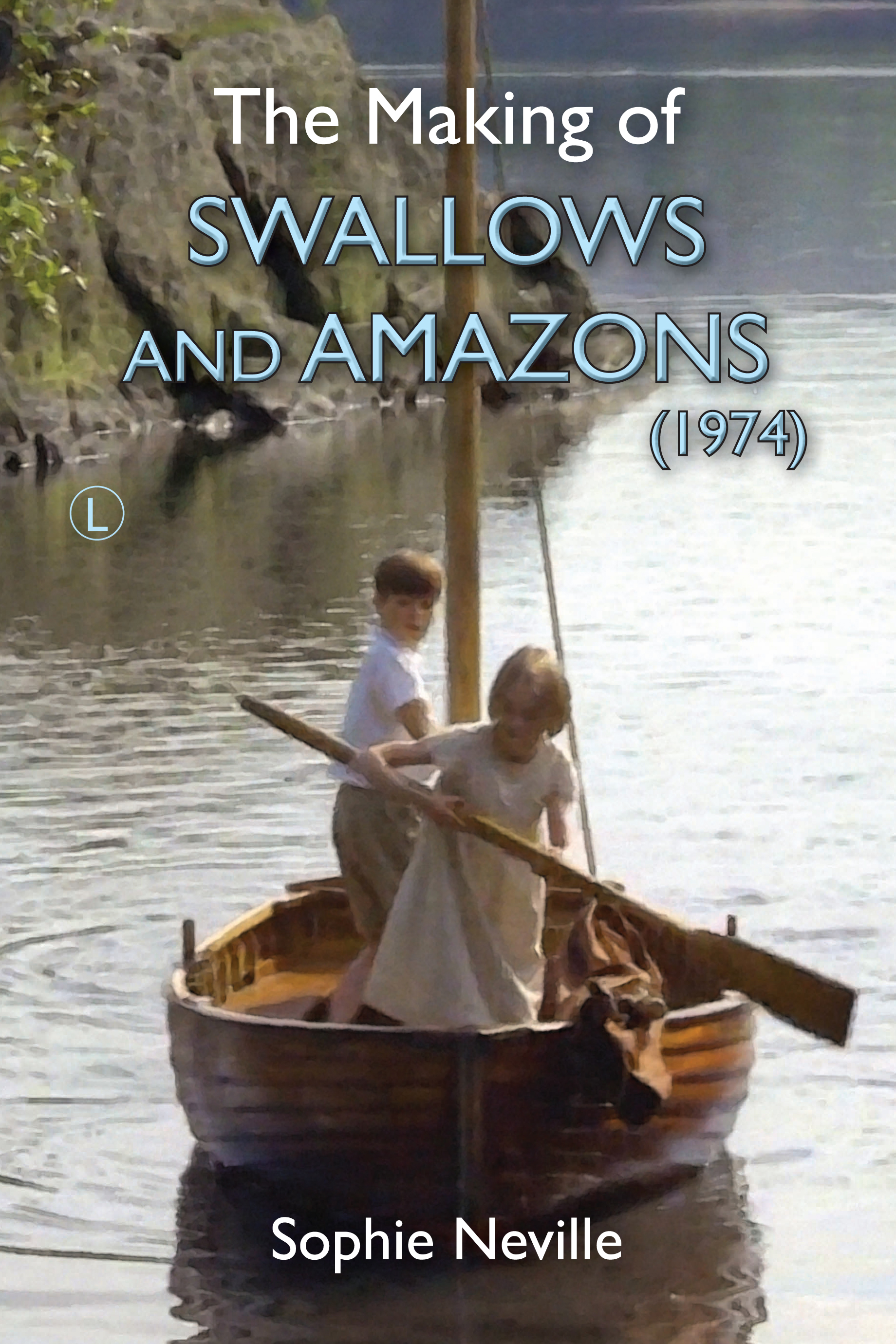
Different editions of ‘The Making of Swallows and Amazons (1974) by Sophie Neville’
There is now an audiobook on ‘The Making of Swallows and Amazons’ published by The Lutterworth Press and available on all online platforms including Audible.
I arrived two weeks early and was born at home, delivered by my great-grandmother in my parents’ cottage, the Old Bakery in the village of Clent in Worcestershire in 1960. Tell Laura I Love Her and Save the Last Dance For Me were top of the charts.
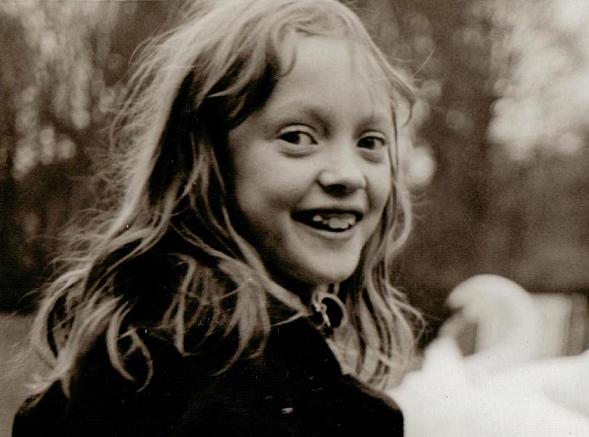
Sophie Neville as a child ~ photo: Martin Neville
Can you give us background on your parents and what they did for a living?
My father worked in Press and Publicity at BIP where he launched fibre glass boat manufacturing by setting up an experimental workshop in Covent Garden. My mother married on her 21st birthday just before graduating from RADA. She was in the same year as Susannah York and the playwright Hugh Whitmore, but took a break in her career to get married and have us children.
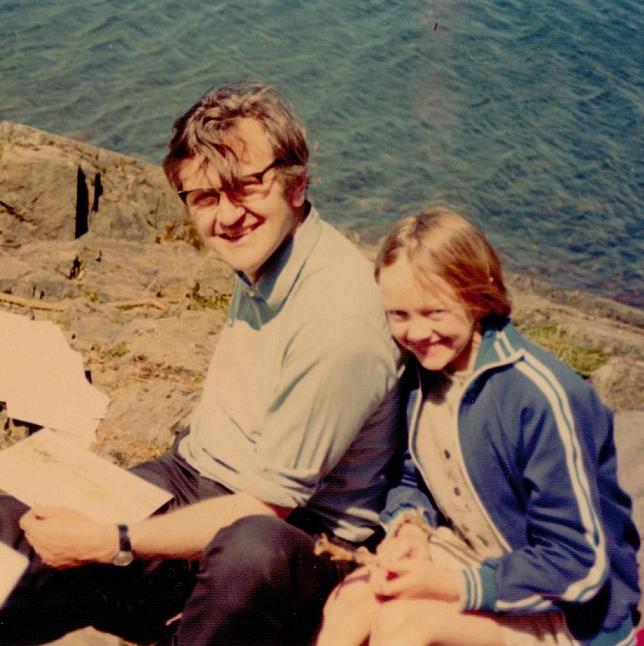
Painting with my father on the shore of Coniston Water
Do you have any siblings?
I have three little sisters, so I was never lonely. Perry had a small part in the classic HTV series Arthur of The Britains and later played the teacher in Bernard’s Watch. Tamzin had leading roles in six television productions playing Elka in Arthur of the Britons, Anthea in The Phoenix and the Carpet and Linda in Love in a Cold Climate with Judi Dench and Michael Aldridge playing her parents.
My mother playing mother and Tamzin as Anthea in The Phoenix and the Carpet
My adopted sister Mary-Dieu suffered from polio as a baby so was in hospital a lot or on crutches, but appeared as a film extra in Abide With Me and the wartime drama Tenko, which she enjoyed.
Appearing in the BBC drama serial Tenko
Where were you schooled and were you academic?
I am a visual learner and could have gone to art college but concentrated on English, history and geography, going on to read anthropology with ethnography and psychology, subjects I draw on continuously as a writer. The most useful subject I took at university was cartography. All the best books contain maps and I draw my own.
Swallows and Amazons map of Coniston Water
Did you have any early career aspirations and did you go onto further education?
I went to the University of Durham, where I made wonderful friends including Alastair Fothergill who produced Our Planet and most of Sir David Attenborough’s iconic serials, along with a number of wildlife movies for Disney. I missed my viva – an oral aspect of my Finals – because I opted to go filming in the Charmague, but would you turn down that opportunity? We went on to film in Kenya and recce locations in Zaire and Uganda.
Alastair Fothergill making ‘Wildlife on One’ at Lake Nakuru ~ photo: Sophie Neville
Where did your creative flair and love for acting and writing come from?
We are all born to create. There are times when I have been tempted to take a more managerial path but I feel called to write, so that’s what I do.
Sophie Neville with some of the books she has written
Did you come from a creative family?
My father loved design concepts and developed products with his team at work, notably the cable tie. You find them everywhere now. My mother has always held a burning desire to act and brought out a children’s book in the 1980s, which is still in print. I feel she has more talent as a writer than an actress but she loves the social aspect of filming. At the age of 85, she appeared in Top Boy and was involved in filming The Repair Shop when they visited Denville Hall, the actors’ retirement home in November 2025.
Daphne Neville with Christopher Lee in ‘Diagnosis Murder’
How did you manage to get your lucky break as an actress?
I was able to play the piano. I took my music along, practiced seven or eight hours a day, and did what I was told.
Sophie Neville playing Elieen Brown in the BBC adaptation of ‘Cider with Rosie’
Can you recall your first acting credit?
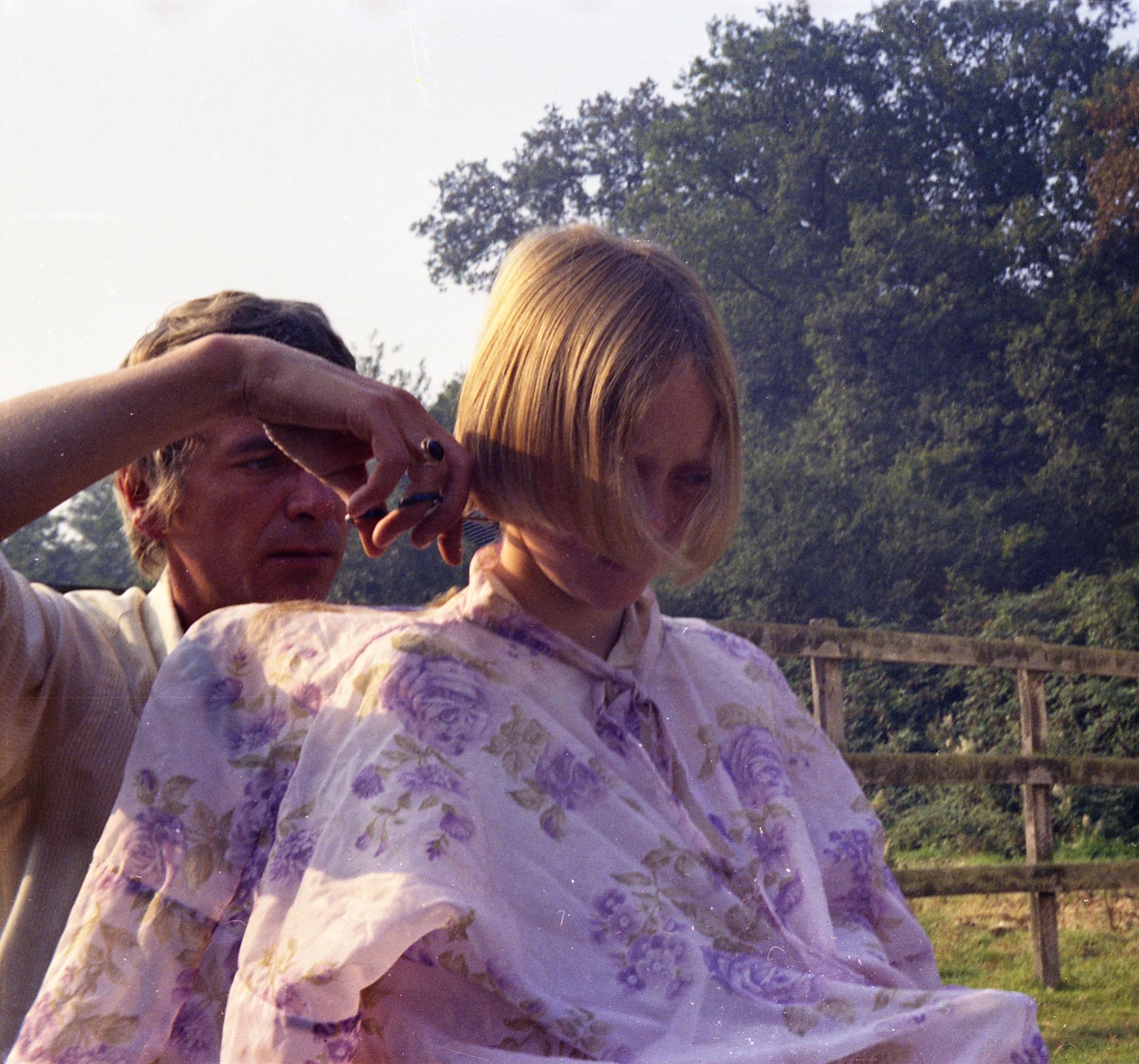
As a child, I appeared as a film extra in classic drama serials such as The Changes and Arthur of the Britons but gained my first acting credit as Eileen Brown in the BBC play Cider With Rosie, adapted by Hugh Whitmore. I had my hair chopped off for my first movie, and went on to act in a few more productions.
Sophie Neville having her hair cut on location for the part of Titty Walker in 1973
Your C.V. covers several areas including behind the scenes television and film related roles. Let’s start at the beginning of your career and find out what inspired you to become an actress and did you have any early influences?
I wasn’t so much inspired as simply offered an amazing opportunity, which is exceptionally rare. I was invited to an interview to appear in an adaptation of Arthur Ransome’s book, Swallows and Amazons when I was aged twelve. Of all the parts in all the books, I was asked if I would like to play Titty. How could I turn that down? I loved the Lake District, enjoyed camping and was happy in a boat. I did it for fun.
Sophie Neville as Titty
Swallows and Amazons is a classic family film released in 1974. Can you tell us about your experiences working on the film? What are your overriding memories and what does the film mean to you personally?
It proved hard work and involved a lot of hanging around in the cold, but I loved the period aspect and thrived spending time outdoors on location. Filming on Derwentwater was amazing. We had our own desert island, pine trees to climb and a houseboat to attack. Making Ronald Fraser walk the plank was fun. He did it rather well.
Sophie Neville as Titty on Cormorant Island ~ photo: Daphne Neville
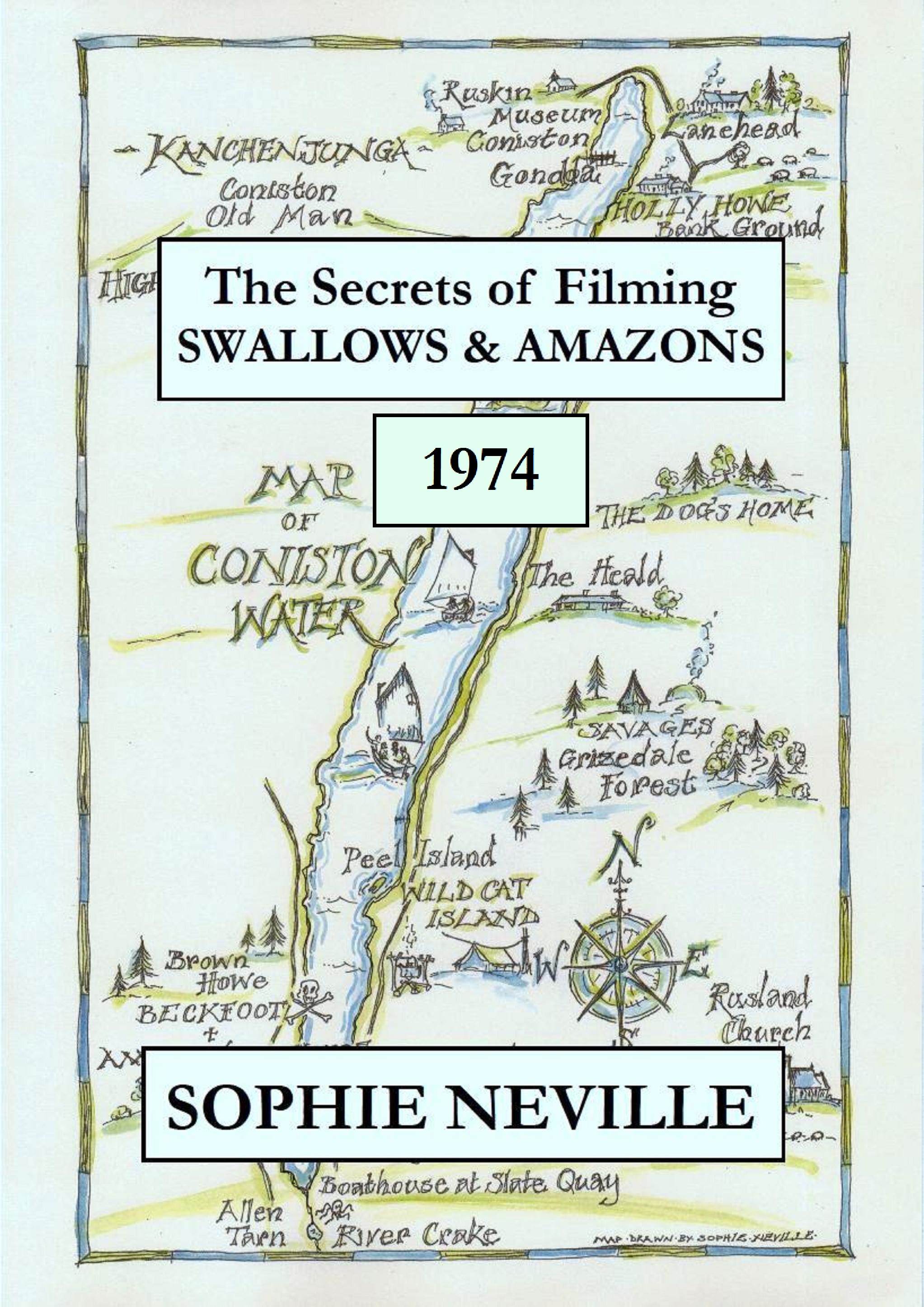
You’ve written two books on your experiences of working on Swallows and Amazons: The Making of Swallows and Amazons and The Secrets of Filming Swallows and Amazons. What made you decide to write two books on the film and were your memories still fresh and vivid when recounting the stories?
I had the amazing cine footage that my parents took behind-the-scenes on location that they BBC put on a DVD when they made Countryfile and Big Screen Britain, presented by Ben Fogle. I’d already set up my own publishing company and was employing a formatter who suggested we brought The Secrets of Filming Swallows and Amazons as a multi-media ebook, including this unique footage and my parents photos (that you would never be allowed to take on location these days). This did so well as an ebook that it was picked up by the publisher Classic TV Press. They gained permission to add official stills from the film and brought it out as a large paperback with colour plates entitled The Making of Swallows and Amazons. It was then bought by The Lutterworth Press who re-designed it in 2017.
How were your books on Swallows and Amazons received by fans and critics?
Each edition had been received with huge enthusiasm. I had terrific publicity in the Times, Telegraph and Daily Mail and am hugely appreciative of all the book reviews left by readers online. I didn’t want to spoil the magic of the film but nearly fifty years have passed since it first came out and fans like to visit the locations. I’ve included maps and all the information needed to find them.
Can I ask your take on the film’s fanbase, how it’s regularly shown and embraced by new audiences? What do you think is the film’s overall appeal?
Being a family classic, as you say, it has become generational. People who originally watched it in the cinema in 1974 want their children and children’s children to see it. When an audience of 250 piles into a cinema to see the re-mastered version, you can appreciate what an amazing landscape movie it is. The humour is drawn out when you watch it with an audience, which is wonderful and you emerge from the auditorium feeling elated.
A recent cinema screening
You’ve appeared in several classic television serials and programmes: Crossroads, The Two Ronnies and Cider With Rosie. What are your memories from working on those shows and did that exposure lead to other opportunities?
I didn’t realise that Ronnie Baker directed the Two Ronnies, or at least the Charley Farley and Piggy Malone serial with in it. He inspired me to direct comedy. I adored working with him and only wish we’d done more together. He had me for an informal interview on location one lunchtime. I blew it, but did end up directing a bit of comedy at the BBC.
Ronnie Corbet with Sophie Neville filming ‘The Two Ronnies’
6. Who have you enjoyed working with the most in front and behind the camera? Have any of your colleagues acted as mentors and have you gained greater knowledge about the industry from any of them?
So many! Suzanna Hamilton and Anthony Calf are the actors I’d want to work with again. They brought out the best in me. Claude Whatham was the mentor who advised me before I went for my first interview to work in television production. He said, ‘Filming is all about using your time well.’ Writers are wonderful about sharing every tiny piece of knowledge but my own formatter Lisa Skullard mentored me on new technology, for which I am grateful.
Claude Whatham ~ photo: Daphne Neville
7. What made you decide to make the transition from an actress to a behind-the scenes member?
Even as a child I was more interested in the logistics and production side of making dramas.
Can you talk about some of the projects you’ve worked on including being an assistant floor manager of EastEnders, My Family and Other Animals, Bluebell, Doctor Who along with your directing and producing credits?
I was very fortunate to work in BBC Drama Series and Serials at the very zenith of production in the 1980s. It was such a privilege to work on My Family and Other Animals as it was made entirely on location in Corfu. I helped cast the little boy and did the research, interviewing Gerald Durrell, who came out on location with his lovely wife Lee Durrell. I carried out the historical and film research on Miss BlueBell’s life and met her in Paris where we filmed one summer. I also worked on the zoo vet series One by One, and became a location manager on Rockcliffe’s Babies. Producing my own series, INSET, shot in Cumbria, Wiltshire and Sheffield was unforgettable. I had such a good team and we were in a position to do ground-breaking work.
At Elstree Studios for the BBC Drama Directors’ studio course. I am wearing a green sweater.
You are an award-winning writer with several books to your credit. What made you decide to become a published author and of the books you’ve written, which are you most proud of and why?
Writing Funnily Enough was a huge challenge. I felt I was laying my whole life out before the world. It’s a dark comedy. As all the stories expose my friends and family, I opted to self publish so that I could make changes. My brother-in-law was working in Libya and I didn’t want him to be shot. In the end I was only asked to change the name of a town and the names of three characters. I’ve changed them back now. My brother-in-law now regularly talks about his book on Libya on Sky Television.
Funnily Enough – the paperback with black and white illustrations
9. How does the creative writing process work for you? How long does it take you to prepare and plan a book and do you have a set time for writing?
I need at least two years to write, edit and develop a novel, even though I put in about eight hours work a day. I often start at 6.30am and am a complete work-aholic. Only other writing, such as articles, and inevitable admin get in the way. My husband has to do the shopping.
A travel book with a difference
We’ve spoken about the many areas and capacities you’ve worked in: Acting, a floor manager, a researcher, producer, director and a published author. Do you have a favourite discipline and if so, why?
I loved every aspect of directing – felt as if I was flying – but you need huge stamina and total application. My husband needs me at home, so writing is an easier career path to follow although I travel quite a bit giving talks and conducting research.
Giving a talk in Cowes
11. Away from your creative endeavours, can we discuss some of your other loves and interests: Anthropology, your love of animals, charity work and archery.
My family have kept tame otters for almost forty years, hand-rearing abandoned babies and lecturing on conservation. I am now Patron of the UK Wild Otter Trust. I emigrated to southern Africa in 1992 and ended up volunteering on a number of projects, helping to set up a charity to combat the HIV/AIDS pandemic. One million people still die from AIDS every year. We continue to run HIV prevention and awareness in schools, employing a nurse to care for those on anti-retrovirals and keep an eye on the orphans, many of whom are in their teens.
I learnt to shoot with a long bow on the set of Swallows and Amazons. This was pivotable as it led to a leading role in an adventure movie, The Copter Kids, with Sophie Ward and Vic Armstrong. The sport also introduced me to my husband. He was Chairman of the archery society my parents belonged to.
Sophie with her husband on the coast of South Africa
Can I also ask you what made you decide to emigrate to South Africa and can you tell us about your 12-years living there?
You’ll have to read my books, ‘Funnily Enough’ and ‘Ride the Wings of Morning’. Every details lies within the pages.
Final Questions to Finish Interview
1. What’s your favourite past time? Walking along beaches
2. What’s your favourite film and why? I have to admit that Swallows and Amazons (1974) is a nostalgia trip for me. It’s been described as ‘mesmerizing’.
3. Who’s your favourite novelist? Karen Rosario Ingerslev
4. If you could have had a different profession what would it have been? Mother
5. Who has been your greatest inspiration in life? Jesus
6. Do you read a newspaper? If so which one? The Telegraph
7. What’s your favourite food? Black cherries
8. Who is your favourite cultural icon? Virginia McKenna
9. What’s your favourite curse word and why? I try not to swear
10. What’s your favourite place or holiday destination? The Okavango Delta
11. Who is your favourite music artist and what’s your favourite album? Cat Stevens greatest hits
12. What’s your greatest achievement to date? Publishing Funnily Enough and finishing my historical novels.
13. How do you wish to be remembered? As an inspiration to others.
A book signed by the author always makes a good Christmas present. Each year, I take part in an annual online charity auction organised by Children in Read to raise funds for BBC Children in Need.
You can scroll through the site on Jumblebee. co.uk. and choose from an amazing selection of biographies and other books donated by contemporary authors.
Taking part is always great fun and offers authors a bit of publicity whilst presenting readers a choice of signed and dedicated books and illustrations.
In 2023, items in the Authors and Illustrators’ auction, raised a total of £24,061 for BBC Children in Need.
This year, authors and illustrators raised £9,766.
Over the eleven years that the annual event has been running a stunning total of £141,766 has been raised. I joined in 2020 and have raised a total of £616 for this cause.
Bidding has now closed but put the event in your diary for next year.
Daphne Neville with Sophie Neville while filming ‘Swallows and Amazons’ in Cumbria in 1973
It wasn’t until we were making preparations for the 50th Anniversary of the EMI film ‘Swallows and Amazons’ that I began to list all the work my mother, Daphne Neville, accomplished behind-the-scenes.
Daphne Neville accompanying Suzanna Hamilton, Kit seymour, Sten Grendon, Simon West, Sophie Neville, and Lesley Bennett out to the houseboat on Derwent Water
When I was offered the part of Titty Walker, she’d been invited to work as a chaperone, along with Sten Grendon’s mother, Jane Grendon. This proved to be a pretty demanding job. Getting us ready and into the minibus every morning alone must have been challenging. We stayed at the Oaklands Guest House where there were only two bathrooms shared between twenty-three residents – the eight of us, various students from the Charlotte Mason College of Education and the five members of the Price family who owned the house. We had to move out over Whitsun when it had been booked by holiday makers.
Dressed for the Cumbrian weather: Daphne Neville with Liz Lomas ~ photo: Richard Pilbrow
Mum was pretty horrified by the spaghetti hoops, cuppa soups and pasties given to us for supper and asked if we could have a fruit bowl in our school bus. Location catering in 1973 was good but aimed at providing electricians with meat and two veg, rather than food for children. We enjoyed salads and chicken drumsticks but baked beans could ruin a take and sugared food made us over-active and probably annoying.
Suzanna Hamilton, in her red tracksuit top, seeing what the location caterers had for lunch on the set of ‘Swallows and Amazons’ by Coniston Water
On film sets you normally have female costume assistants or dressers to help change actresses into their costumes. On ‘Swallows and Amazons’ we had Terry Smith the wardrobe master and my mother. Whenever there was a scene with film extras, Mum helped him to fit them with shoes and hats, helping the ladies into costumes for the opening scene at the station.
Wardrobe Master Terry Smith with Sophie Neville and her mother Daphne Neville outside the Make-up caravan on location near Keswick in Cumbria
Our hair was cut and looked after by Ronnie Cogan but mine had to be washed every night by Mummy. She moved me into her bedroom, which was tiny, but had a basin. This seems a small thing, but watch the film and you see my hair flying around the whole time indicating the ever-present wind.
Daphne Neville and Richard Pilbrow on Peel Island on Coniston Water in 1973 Amazons
Mum tried to keep us warm on location, getting us into life jackets and sunhats before we were taken off to the set, which was often either a boat or island.
Daphne Neville with Sophie Neville and Simon West on Coniston Water
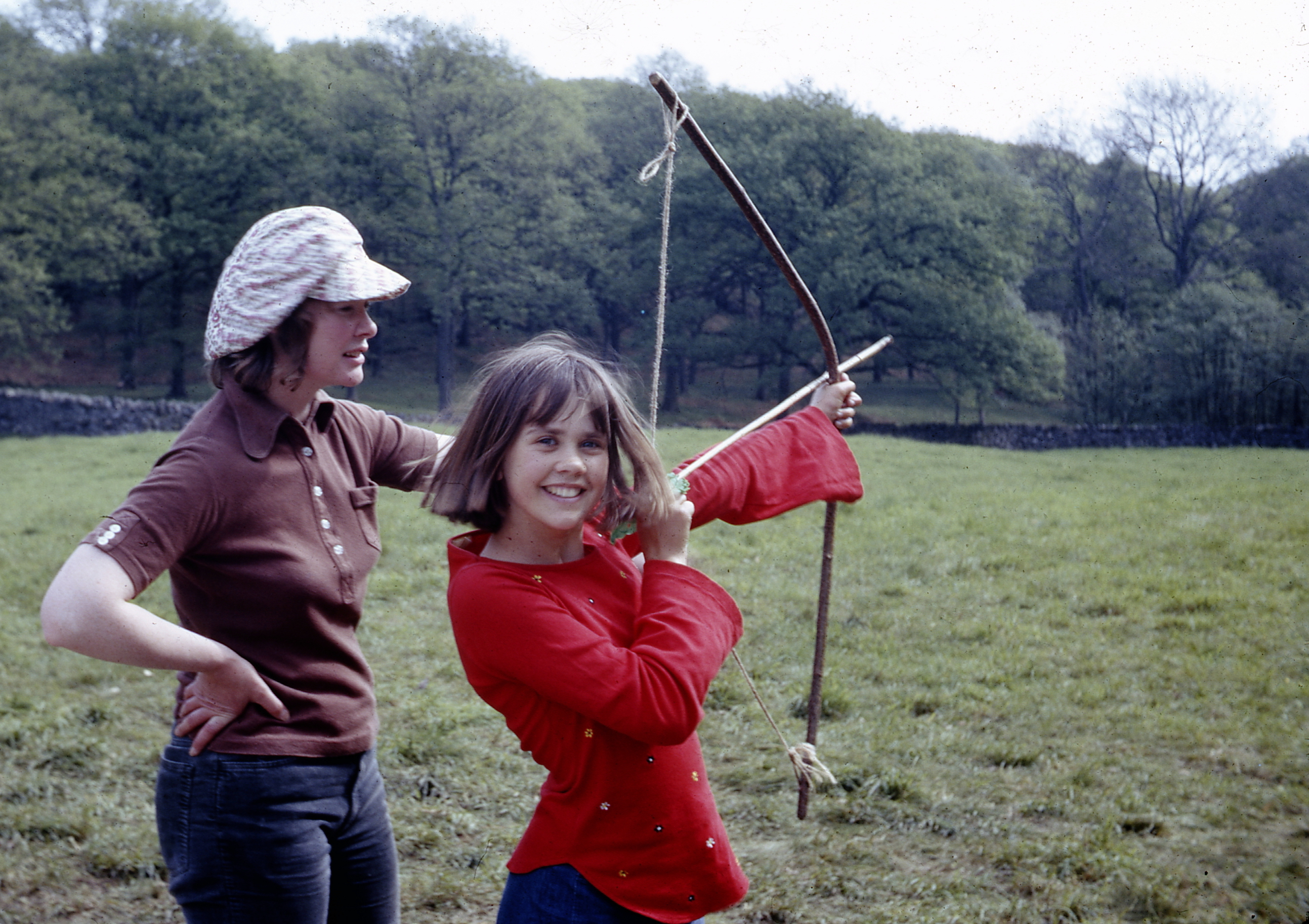
Having won prizes for archery, she taught the Amazons to shoot with a bow and arrow for their scene on Wild Cat Island.
Daphne Neville teaching Lesley Bennet, who played Peggy, how to shot with a long bow
She also took a vast collection of behind the scenes photos, some of which were very good.
Ronald Fraser with Daphne Neville and Sophie Neville on Derwentwater in 1973
I couldn’t bear it when Ronnie Fraser flirted, but Mum enjoyed every moment of being on set. She longed to appear in the film as a supporting artist. My father, Martin, appeared in five different shots but Mum missed the crowd scene at Bowness and sequences taken aboard the MV Tern the next dau.
Jane Grendon with other film extras on the original movie ‘Swallows and Amazons’
Back home, she had a part-time job working for HTV who had given her leave but called her back to Bristol to present an episode of Women Only and promote the channel at the annual Bath and West Show. You can read more about this on her website here.
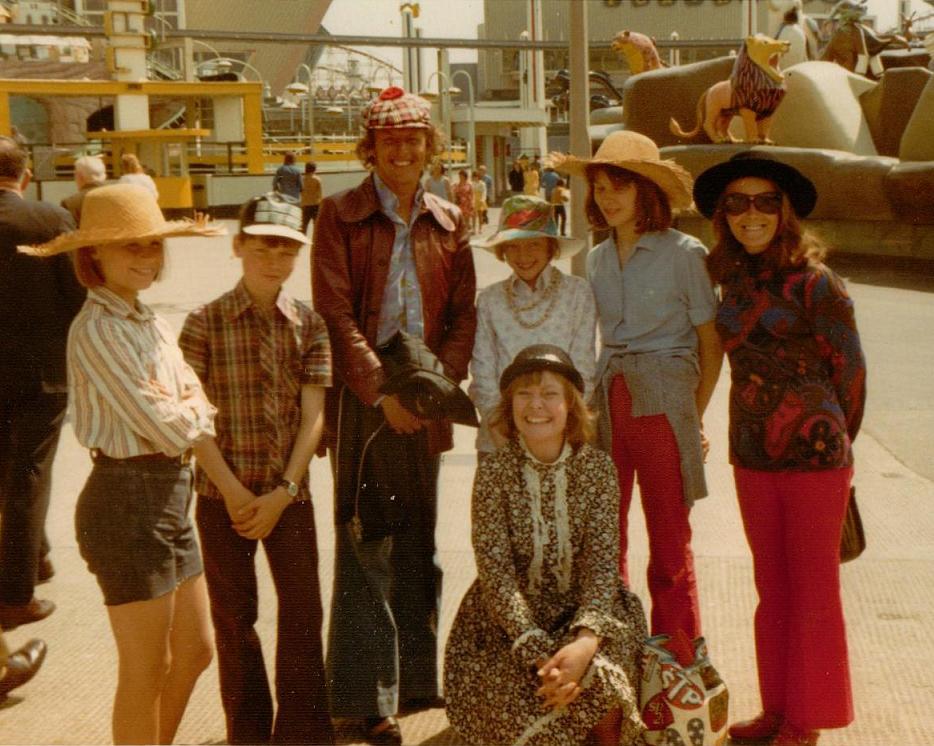
Suzanna Hamliton, Simon West, Claude Whatham Sophie Neville, Kit Seymour, Jean McGill with Daphne Neville kneeling at Blackpool funfair in 1973
While other members of the film crew were given one day off a week, our chaperones’ work never ended. Jane took us shopping or on walks up into the fells. Mum came with us on a trip to Blackpool.
Sophie Neville having her hair cut on location for the part of Titty Walker in 1973
She must have driven me to Epsom for a pick-up shot in September when members of the Walker family had more haircuts and enjoyed being reunited.
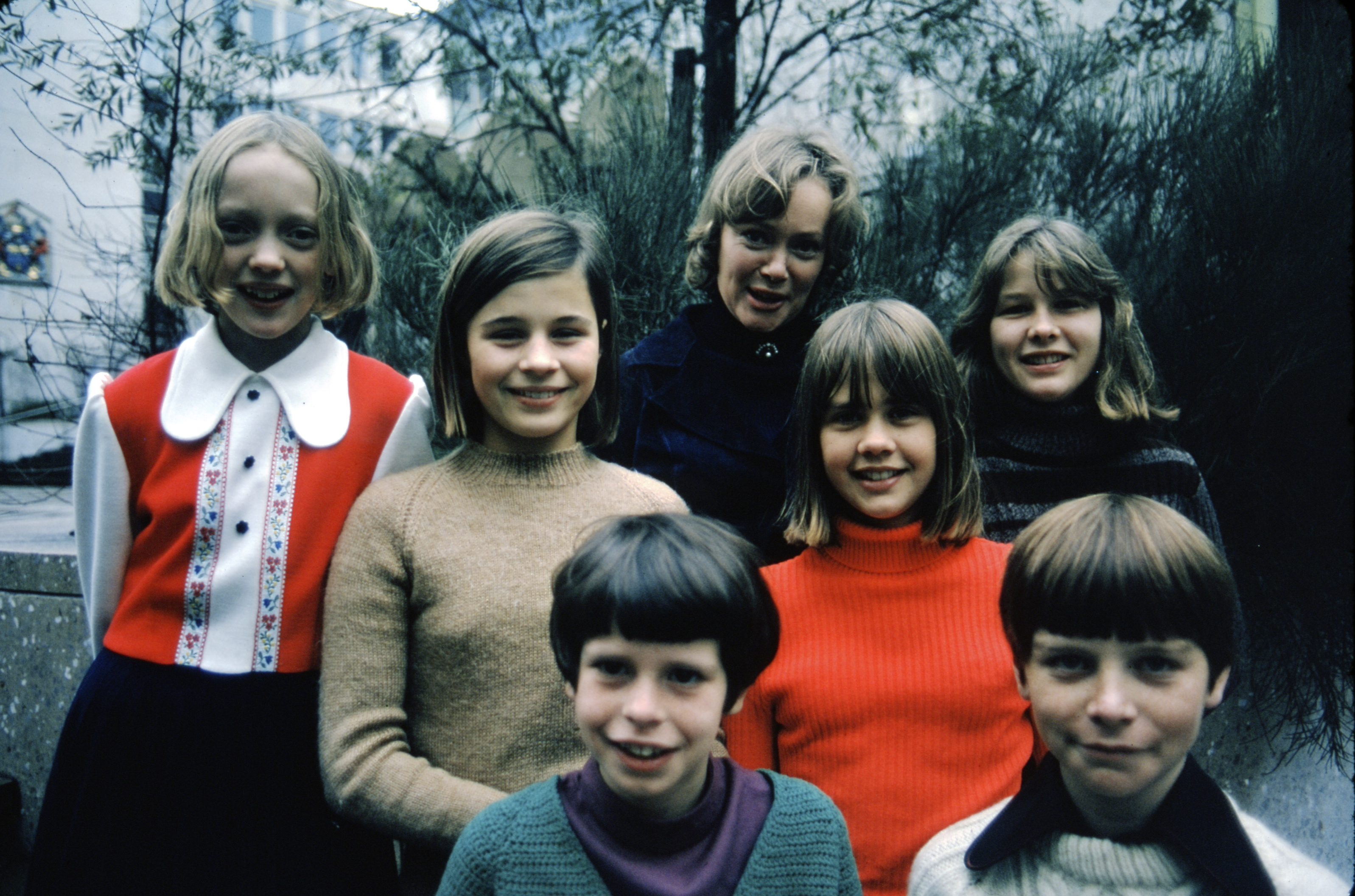
Daphne Neville with Stephen Grendon, Suzanna Hamilton, Sophie Neville, Jane Grendon and Simon West
While we hated the publicity that came with marketing the film, Mum embraced it to the full, collecting every newspaper and magazine article.
Sophie Neville, Suzanna Hamilton, Daphne Neville, Lesley Bennett, Kit Seymour, Sten Grendon and Simon West off to the Puffin Club Party at the Commonwealth Institute in London
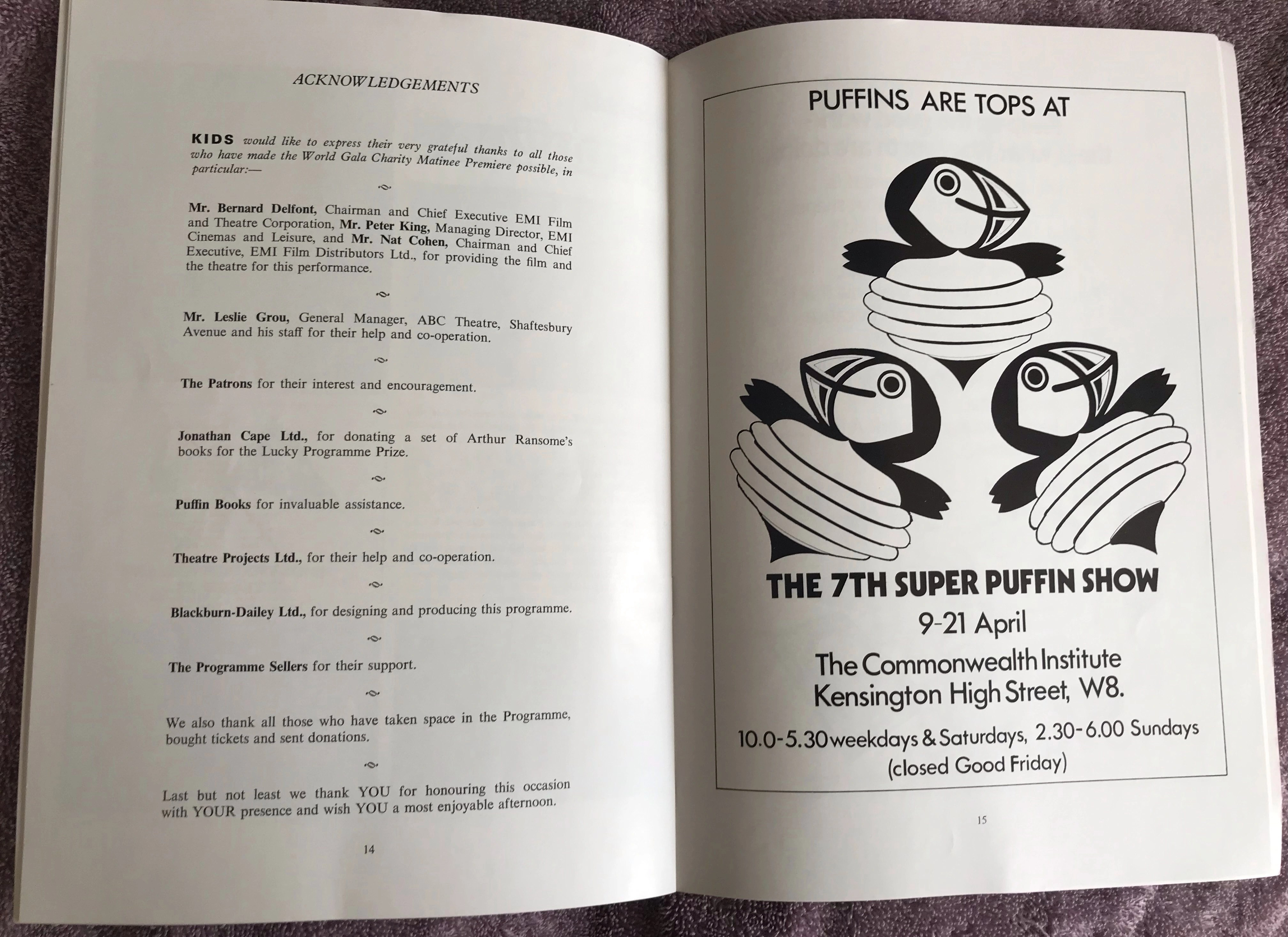
She took us to London for a Puffin Club show at the Commonwealth Institute devised by Kaye Webb,
Kaye Webb’s Puffin Club Show – April 1974
and to the Lord Mayor’s Show when we rode on a float set up by EMI Films.
Suzanna Hamilton, Stephen Grendon, Leslie Bennett, Simon West and Kit Seymour sailing the streets of London in ‘Swallow’
Mum was thrilled when invitations to the film premier arrived and bought me a green dress to wear to the ABC Cinema in Shaftesbury Avenue where it was held.
Daphne Neville at the London premier of ‘Swallows and Amazons’ in Shaftesbury Avenue.
She framed a film poster and kept every photo, every scrap of paper related to the film along with the LP and other items of movie memorabilia.
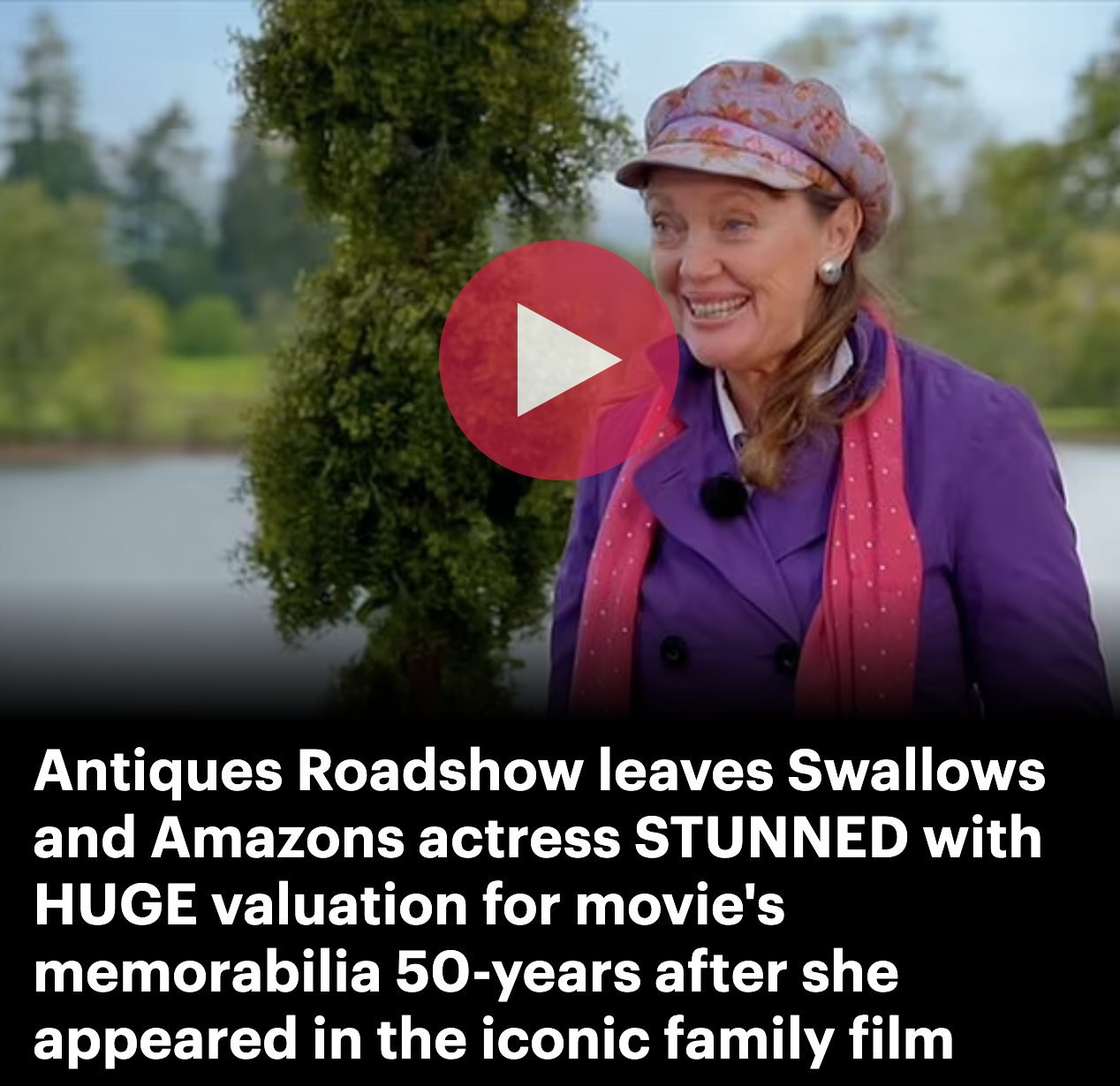
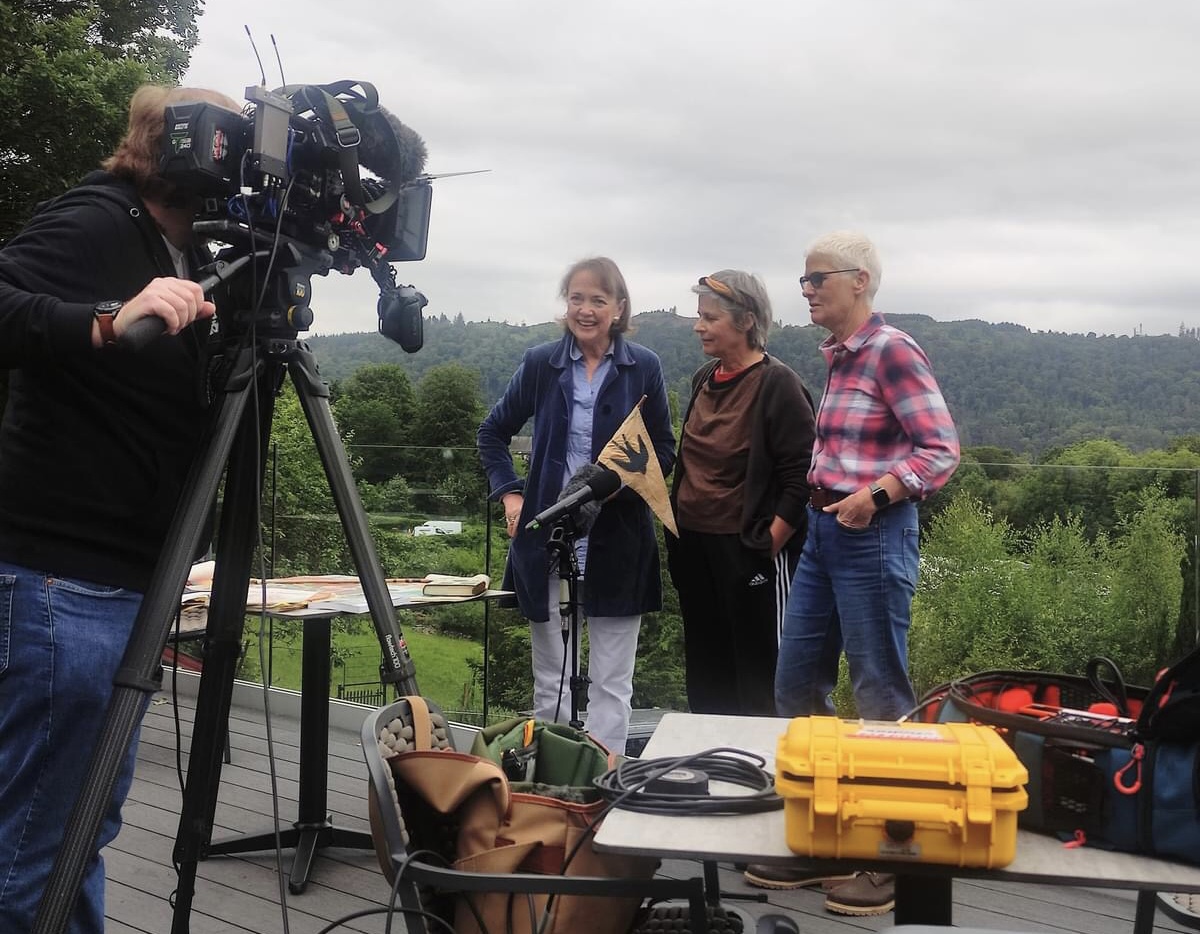
Fifty years later the items were valued on BBC Antiques Roadshow as being worth over £4,000.
To read Daphne Neville’s articles on being a chaperone, please find three earlier posts on this website beginning here.
The Saucepan and her mother on a scenic railway in Cumbria in 1973 ~ photo: Martin Neville
Having won a Top Three Scripts award at the New Media Film Festival in Los Angeles, Sophie was asked about her screenwriting.
Can you tell us a little about how you got started?
I began writing for BBC Television at the age of twenty-two. It was a disaster. Instead of presenting a polished script, I produced a rough draft that I thought we could develop in the rehearsal room. Developed it was – by Nicholas Parsons, one of the stars. He rewrote his own soliloquy, taking all the credit and a substantial fee. I’ve welcomed harsh feedback from beta readers ever since.
What was the biggest challenge you faced in your journey to becoming a writer? How did you overcome it? Can you share a story about that that other aspiring writers can learn from?
Instant success with my first book was challenging. My illustrated memoir FUNNILY ENOUGH was at number 1 in Humor on Amazon Kindle in the UK (after free copies had been downloading at the rate of 250 a minute) but I had self-published, and had no team support. Instead pressing the go-button with a PR firm and marketing team, I was weigh-laid by the small stuff. Writers need skilled networks in place, especially in the age of New Media.
Funnily Enough – the paperback has black & white illustrations
It has been said that our mistakes can be our greatest teachers. Can you share a story about the funniest mistake you made when you were first starting? Can you tell us what lesson you learned from that?
I began my career in television by working with children. I could see the potential and it gave me a niche, but the hazards were numerous.
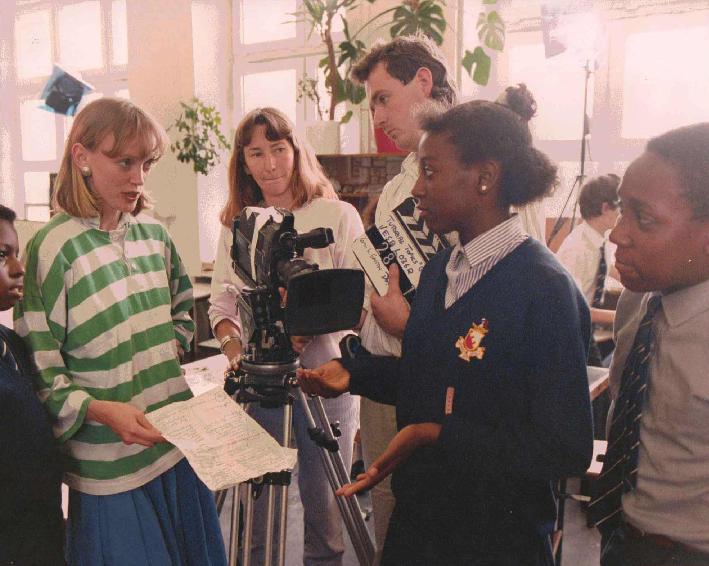
A teacher opened one scene for me by saying, ‘Some people believe the world is flat.’ A five-year-old called out, ‘No, but it’s not! It’s bumpy.’ The mistake was that we had too much camera judder – my cameraman had dissolved in hysterics. A lesson learned: I used a tripod when capturing the opinions of eleven-year-olds. The results were so amusing that they were repeatedly endlessly when Daytime TV was launched in the UK.
Sophie Neville directing a sequence with BBC cameraman Lorraine Smith
What are some of the most interesting or exciting projects you are working on now?
I felt compelled to write A BOY CALLED FREDDIE when I discovered Freddie Mercury, escaped from the violent 1964 Zanzibar revolution at the age of seventeen. If a year older, the man who became an international rock idol would have been forced into slave labour on coconut plantations. As it was, his family fled to London where his talent flourished and found stardom. Born Farrokh Bulsara, he became known as Freddie at school. The story of how he chose the name Mercury involves NASA but is only revealed in my screenplay – right at the end. Freddie’s father, Bomi, was a Parsee who worked as a cashier at the law courts where my Great-uncle Ronnie served as Chief Justice. I’ve been able to draw on my cousin’s stories of life in the heady days before a convicted rapist from Uganda brought mayhem to the archipelago of tropical islands, forcing the Sultan to escape by sea, along with my aunts and a plucky English women who had set up free and fair elections a month before mass murder broke out akin the movie HOTEL RWANDA (2004).
I’m also developing THE MEETING HOUSE, an exceptional true story from WWII about an East African serviceman I met who was airlifted out of a POW camp in Japan by his boyhood friend just before America bombed Tokyo. They landed in Silesia in the snow, which he’d only seen previously on the peak of Kilimanjaro, where he was born.
Can you share the most interesting story that occurred to you in the course of your career?
Film fans love to hear about disasters that befell us while making the EMI movie ‘Swallows and Amazons’ before the advent of CGI. I was persuaded to write THE MAKING of SWALLOWS and AMAZONS, now published by The Lutterworth Press.
Editions of ‘The Making of Swallows & Amazons (1974) by Sophie Neville’
Although it’s been screened on television more times than any other British movie, it remains a classic that some have never heard of. ‘Why are you here?’ I was asked at the 50th Anniversary screening.
‘I’m giving a couple of talks on how the film was made,’ I muttered.
‘How would you know how it was made?’
‘I was there.’ In almost every scene. ‘I worked on it.’
‘You couldn’t have been,’ the man insisted.
I could only take this as a compliment, but he looked aggrieved.
Sophie Neville, Suzanna Hamilton and Kit Seymour in Cumbria
StudioCanal also thought I was an imposter as Dame Virginia McKenna had the star billing. Then the marketing executives watched the movie. When the DVD was launched they had me hosting Q&As at twelve cinemas and provided footage for all manner of TV programmes from CINEMANICS with David Wood the screenwriter to BBC BREAKFAST with my co-star Suzanna Hamilton.
Sophie Neville, Suzanna Hamilton and Kit Seymour on BBC Breakfast
I’m currently working on an inspiring comic tale: BANANA MAN, THE TRUE STORY about Phil-the-Geek, a shy but good looking physicist, who increased the national consumption of bananas by 20% after exploiting a supermarket deal and making 8 pence on every bunch he bought – and gave away. His story hit international News headlines and won him the heart of a beautiful girl. I was her bridesmaid. Last week, their daughters have just graduated from Yale and Harvard, respectively. I intend to present the family with a fruit bowl.
Here is the main question of our interview. Based on your experience, what are the “5 Things You Need To Be A Successful Author or Writer”? Please share a story or example for each.
Focus, forbearance and a five am start to the writing day are key, but I often come up with vital twists while soaking in the bath tub. I guess this is because my brain works best at periods of least resistance. The problem is that I end up groping for a notebook with wet hands.
Please share a story or example for each.
Personality, productivity, perseverance, patience, and a broken heart. We need to touch the audience with humor, in small ways that are easily identifiable. I have a scene in one novel about a man on the cusp of falling in love who loses his car keys in the heat of the day and is left feeling a fool in front of the girl he wants to impress. It’s based on the time I found my ignition keys with my feet. They had fallen into sand beneath the door of my car when I was driving through Botswana. The relief following this small miracle is etched deep in my soul.
In your opinion, were you a “natural born writer” or did you develop that aptitude later on? Can you explain what you mean?
I would describe myself as a ‘natural born story-teller’. Having a visual brain, I became a television director, attracted to Mike Leigh’s emerging art of improvisation on film. When on the converted BBC Drama Director’s Studio Course, I gave my actors the task of flirting whilst erecting a tent. It worked exceptionally well, except that they enjoyed the exercise so much it went on a little long. I should have provided them with earpieces to bring the story to a timely end.
We all need to hone the craft of writing. I had the amazing opportunity of assisting on drama serials such as ‘Doctor Who’ and ‘Eastenders’. Looking back, I could have become a BBC script editor. Instead, I’ve spent the last twenty years attending Curtis Brown Creative novel writing courses and acquiring the art of writing about love under the Romantic Novelists Association’s New Writers’ Scheme. Entering writing competitions has proved an incentive and the wins help build my CV. The competition is such that we need to build a pedigree and provide consumer confidence.
Which literature do you draw inspiration from? Why?
I write true-life stories set in the 20th century, so draw on any memoirs or biographies I can find. I love amusing autobiographical novels, such as Fran Hill’s trilogy on life as a teenager in foster care. She is a master craftsman and a truly inspirational writer. I feed off her infectious humour poured out to the world on Substack.
You are a person of enormous influence. If you could start a movement that would bring the most amount of good to the most amount of people, what would that be? You never know what your idea can trigger. 🙂
Forced marriage needs to be recognized as conjugal slavery and made illegal worldwide. Female circumcision (FGM) needs to stop before more lives are lost to infection. I have no personal experience, but feel we must all speak out to support those unable to do so.
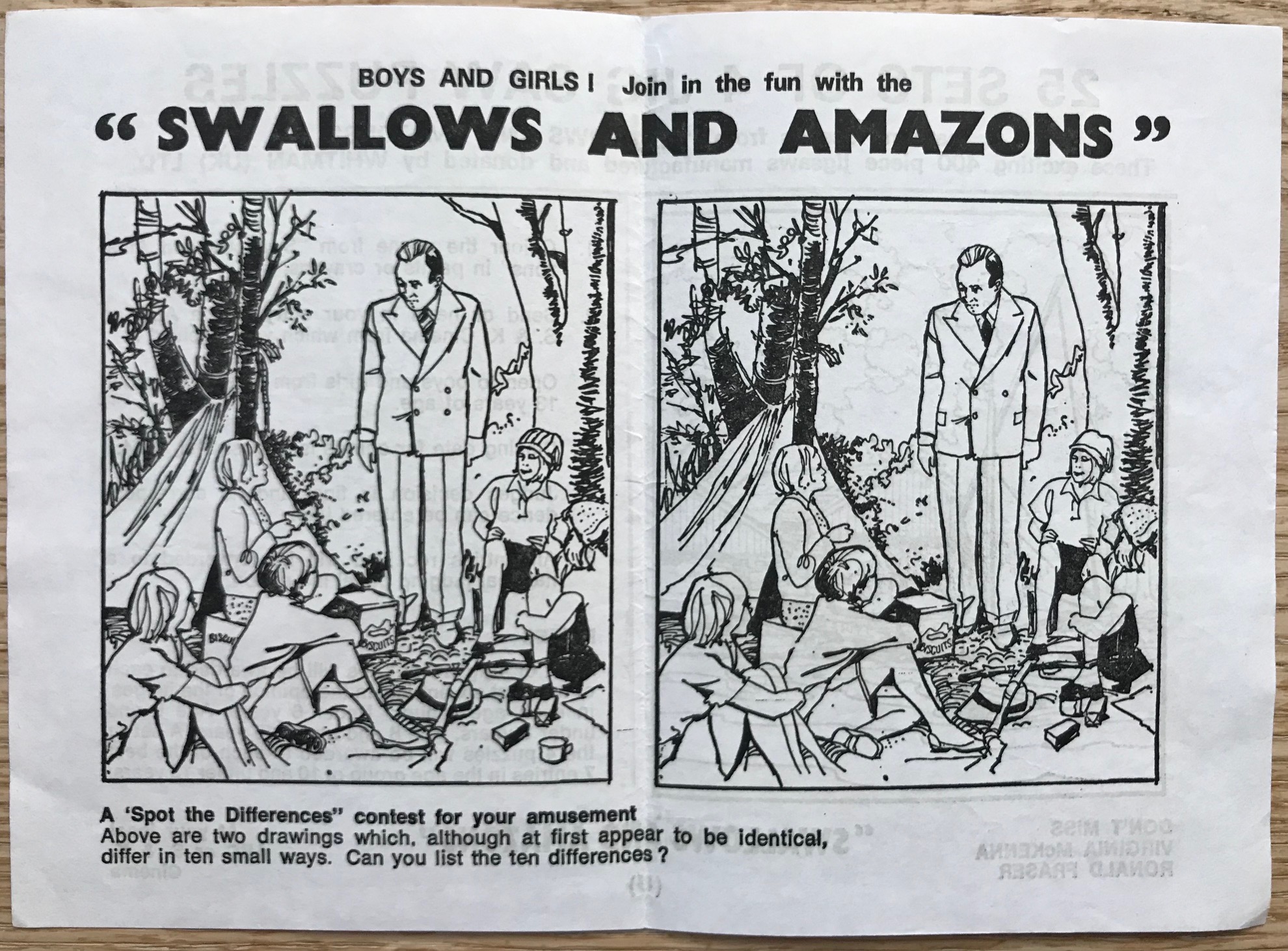
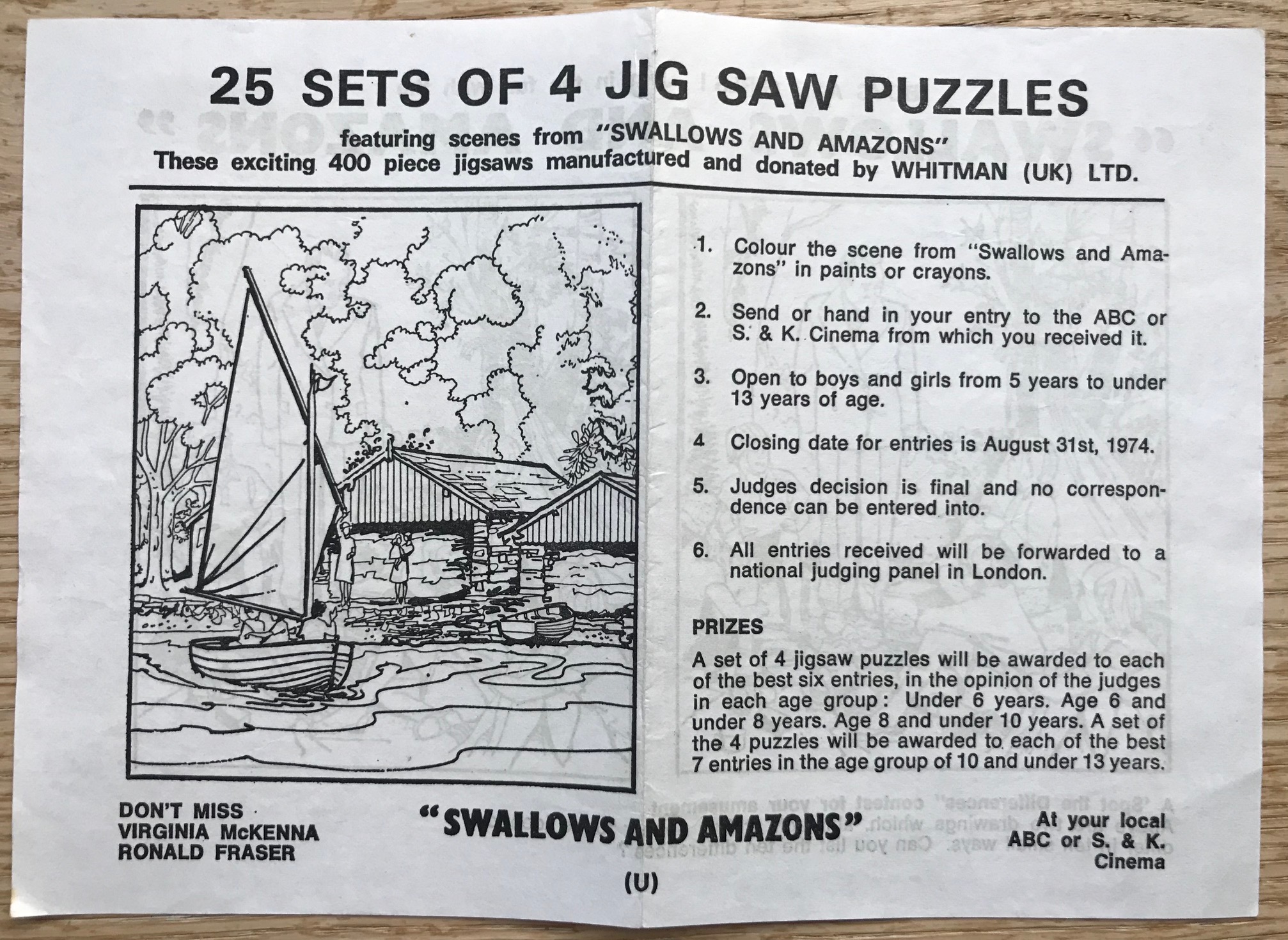
Having been released in cinemas in April 1974, the original movie ‘Swallows and Amazons’ was not accompanied by computer games but by puzzels, jigsaws and competitions. Here are a couple found recently whilst clearing out my mother’s house. You can see more on a post added to this website here.
Few films are set in 1929, and yet it was that period, nearly a hundred years ago that gave the first film adaptation a certain style.
Graham Potter wrote saying: “I have just finished a DVD of S & A and found how much easier it is to see the details on the TV than in a cinema having to look from side to side. I was surprised to see how little sailing was shown and how the Amazons were not seen much. I think you were 12 or 13 at the time but looked younger. I have to to admit to enjoying the glimpses of the navy blue knickers in the opening scenes.”
One of the set of four jigsaw puzzles made when ‘Swallows & Amazons’ was released in cinemas in 1974, along with a Puffin paperback
Graham goes on to say, “I was surprised to see how you carried all the exciting scenes: left alone on the island, finding the secret harbour , dealing with leading lights , capturing and hiding Amazon, dealing with Mother’s visit during the night sailing, giving Captain Flint a good telling off for blaming John for firework and not listening to his warning about potential theft at his houseboat. Then the great finale when you are able to present him with his stolen life’s work in the trunk. Perhaps it was planned that you didn’t have too many lines to remember, as it enabled a very young girl to contribute such a lot to the film.”
This is very kind but I believe the film was made by the fact that Simon West who played John and Kit Seymour who played Nancy were good sailors. You can tell when they are sitting in a moored boat. While Claude Whatham was an exceptional director, ahead of his time stylistically, the director of photography uplifted the film by insisting we waited for clouds to pass. What else? – a hardworking and talented crew put together by Nevill Thompson. Simple costumes that never dated. Natural, well cut hair and a lack of make up – all the facets of filmmaking that you are not meant to notice.
Maybe our spiritedness as children carries the original film on. We are all in our sixties now, but the characters we played have become imaginary friends to many. As Shakespeare wrote, ‘Our revels now are ended. These our actors, as I foretold you, were all spirits and are melted into air, into thin air.’ The Tempest Would Ransome have agreed? I only know he discussed Shakespeare with Karl Radek.
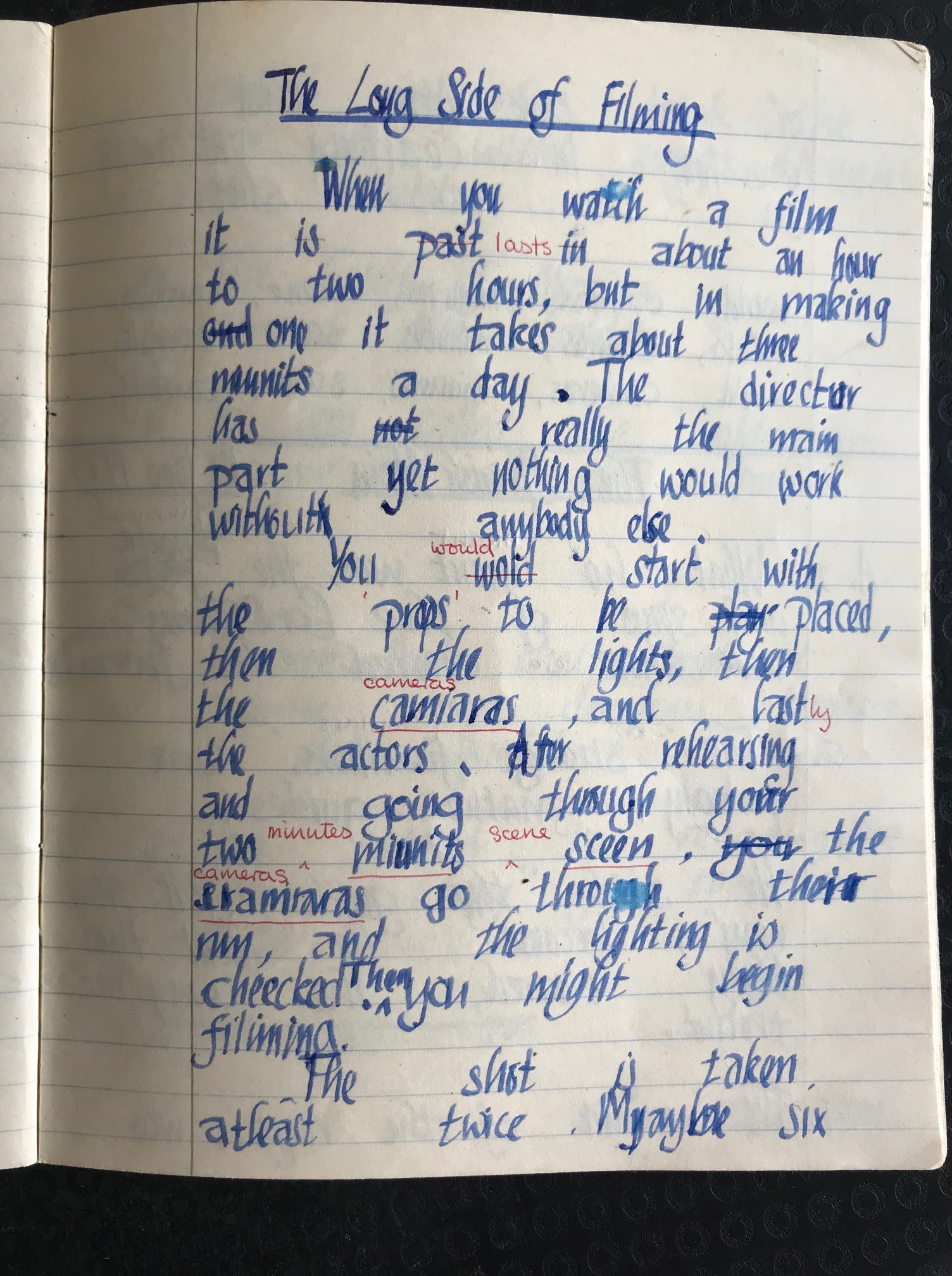
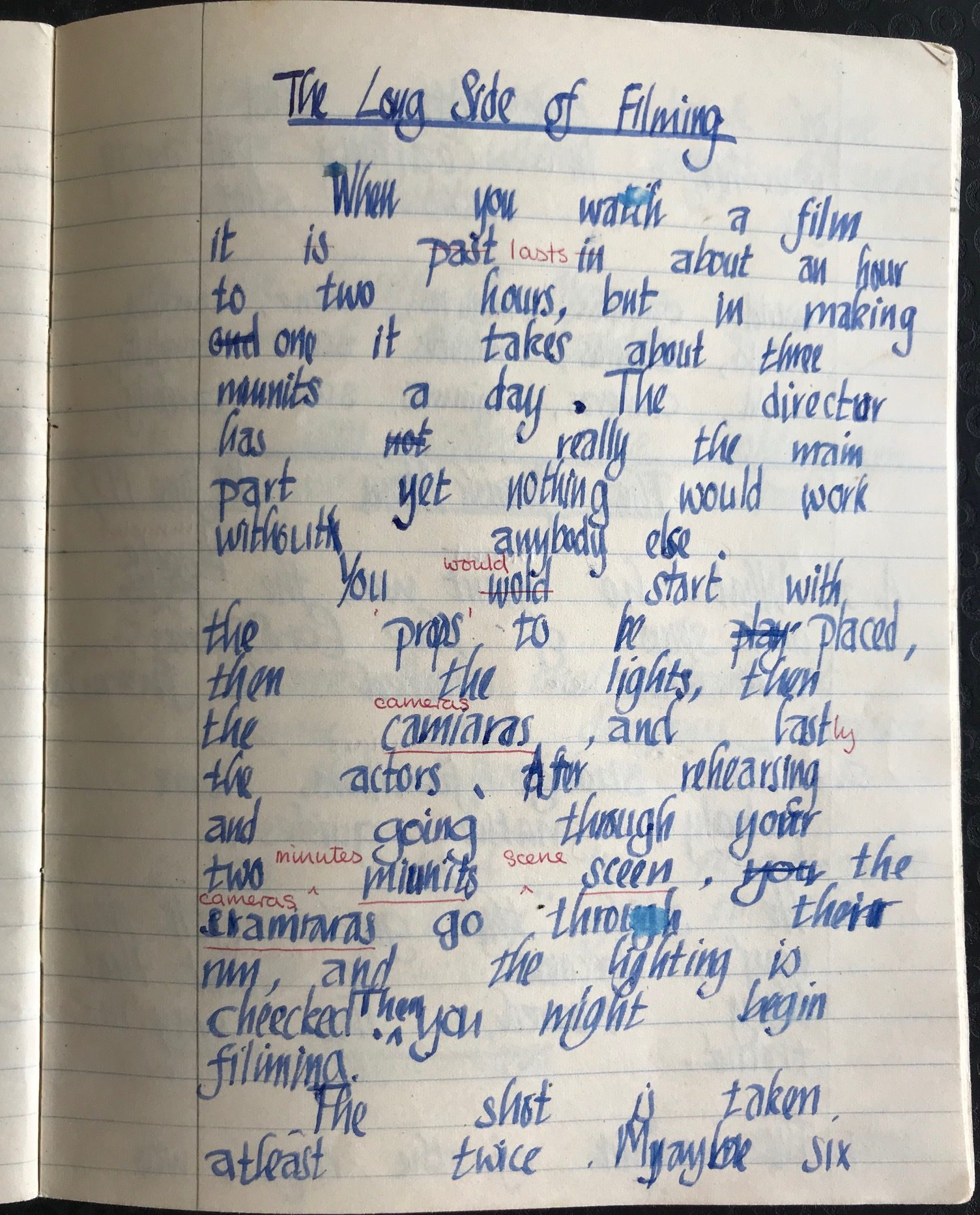
I came across an essay in one of my school exercise books that I must have written aged twelve whilst on location. I was trying to explain that only about three minutes of what will be the finished film are captured during a long day’s filming on location. The piece is not well written.
A school essay written in 1973.
We went on to learn about the Spanish Main, which may have been requested by Claude Whatham, the director of ‘Swallows and Amazons’ so that I would know what Titty was talking about. On 1st June 1973, I was on location in the Lake District filming in the capture of the Amazon in Secret Harbour on Peel Island.
Perhaps I should add these remenants to a future edition of ‘The Making of ‘Swallows and Amazons’ (1974)’. You can order the illustrated paperback from libraries, find it for sale online, or listen to the audiobook:
Chloe Williams has just written from Ontario in Canada, to say, “Some books entertain. Some enlighten. And some, like The Making of Swallows and Amazons and The Secrets of Filming Swallows & Amazons, manage to bottle something impossibly rare: the feeling of looking back through a child’s eyes and realizing it was all real; the lake, the sails, the laughter and somehow, you were part of it.”
“These aren’t just behind-the-scenes diaries. They’re sun-dappled time machines. Your voice, both in memory and in your original childhood notes, is a miracle of tone: witty, observant, buoyant, and deeply human.”
Of the original movie, she wrote: “What A Christmas Story is to snowglobes and childhood winters, Swallows and Amazons (1974) is to summers on the water and you’ve preserved that magic with charm, heart, and astonishing detail.
“What makes these books unforgettable isn’t just nostalgia. It’s how alive they are. We feel the smell of old sails and camera tape, the blur of location shoots, the uncertainty and excitement of being a child caught in a grown-up world of filmmaking yet utterly at home in it. We meet legends like Virginia McKenna not as distant stars, but as fellow travelers in the adventure. And it’s a joy.”
The Making of Swallows and Amazons seems to resonate with:
Readers of nostalgic memoirs that celebrate childhood, nature, and storytelling
Adults who are captivated by the lake-country magic of Arthur Ransome
Film lovers who cherish insider views of filmmaking
Educators and parents seeking real-life adventure stories for young readers
Fans of Call the Midwife, The Durrells, and 84, Charing Cross Road
“The joy and authenticity in your books mirror exactly why Swallows & Amazons (1974) still has such a hold on people’s hearts. The memoirs don’t just tell the story of making the film, they recreate it, letting readers smell the lake air and see the magic unfold through a child’s eyes.”
The new audiobook
I’m hoping the audiobook will also amuse readers. It’s now available on all the online platforms including Audible, where isis being offered for free on their membership trial.













































 Sophie Neville