

The Eternal Swallows and Amazons by Nigel H Seymour
I recall being contacted by a friend who had just passed his driving test, and wished to spend a lazy day in the Lake District where he’d insisted on hiring a rowing boat in Bowness on Windermere in order to ‘enjoy the beauty of the lake’. While heading out from the jetty towards the ‘Lily of the valley’ island in rather a clumsy fashion, I was asked. ‘Who do you want to be, the Swallows or the Amazons?’
At a later date I was given the book ‘Swallows and Amazons’ written by Arthur Ransome together with a video and an original vinyl of the music soundtrack. Turning the pages of the 1930 novel was like opening a door to several other worlds for suddenly the lakes swept in like the most refreshing breeze that kindled an inner passion for hills, mountains, lakes, sleepy streams and mists, early morning stillness on the water and sailing adventures.

Watching the film for the first time was a turning point in my rather dull experience of being at school in the north west of England with its drab corridors, gray walls and endless smoking chimneys out to the horizon.
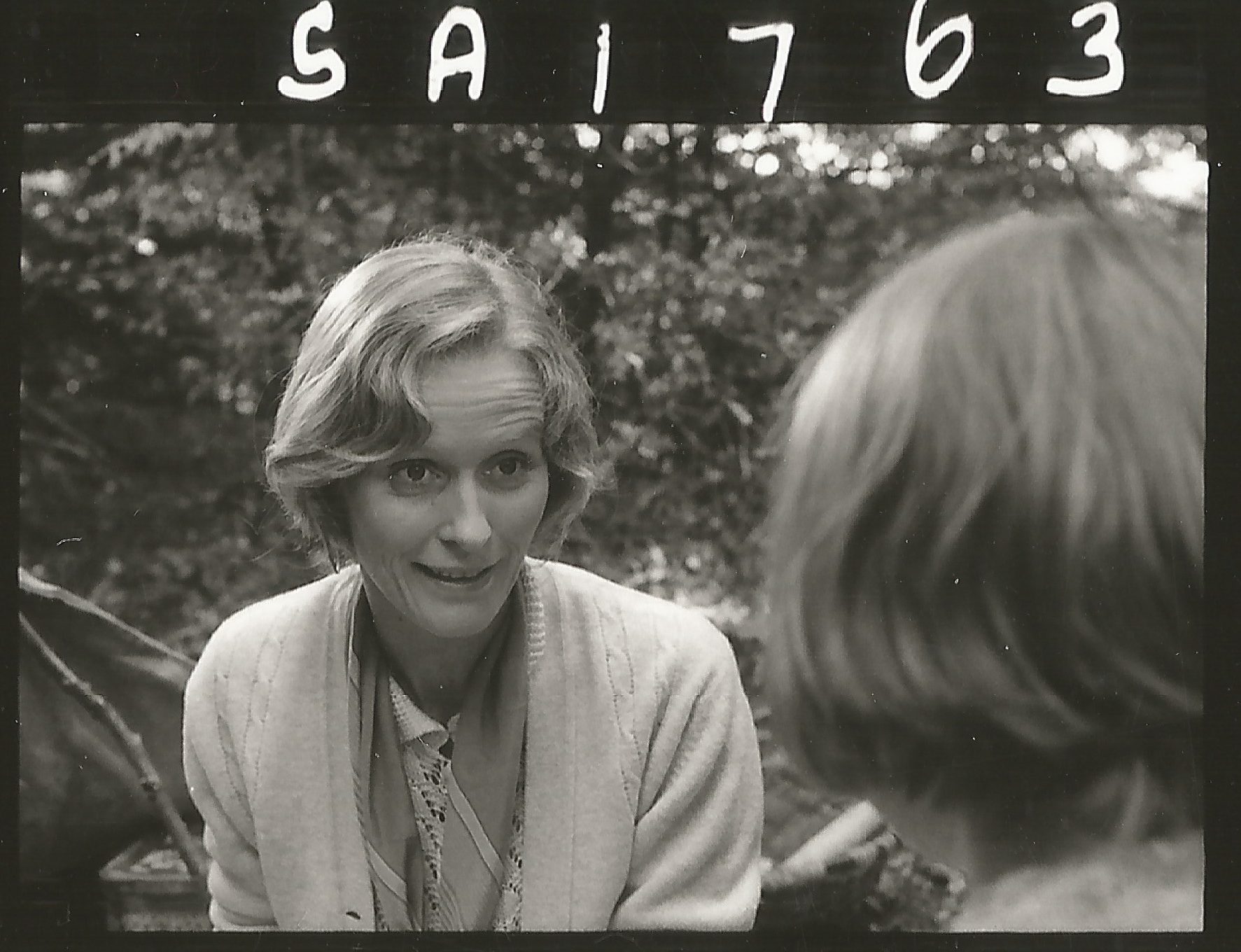
Within a very short time I too have taken a seat on a train en route to the Lake District in 1929 that had a family travelling together in one of those wonderful old carriages consisting of four children and their mother who were to spend a holiday together in a beautiful farmhouse nestling in the trees by the lake.
For some reason William Wordsworth’s immortal words ran through my mind: ‘Beside the lake beneath the trees fluttering and dancing in the breeze.’
The story touches on many human aspects that we all learn to accept as a part of our evolvement into adulthood and which today seems to have got lost in the quest for an increasingly fast world understanding and a computer generated experience.
The joy of the family arriving at the farmhouse and standing there looking out over the glorious Lakeland towards their dream island where it’s hoped they will be able to embark on a camping holiday after receiving permission from their absent father.
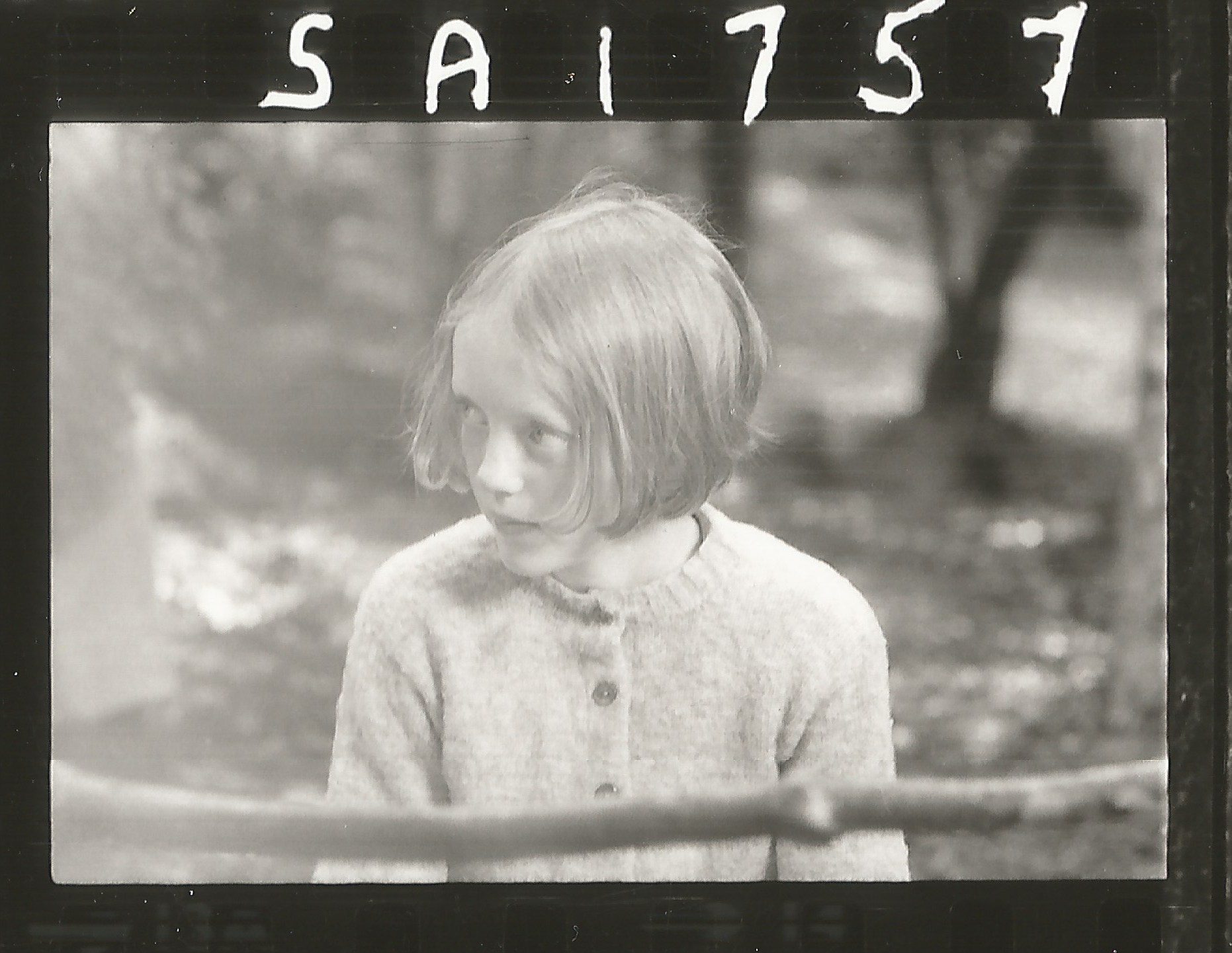
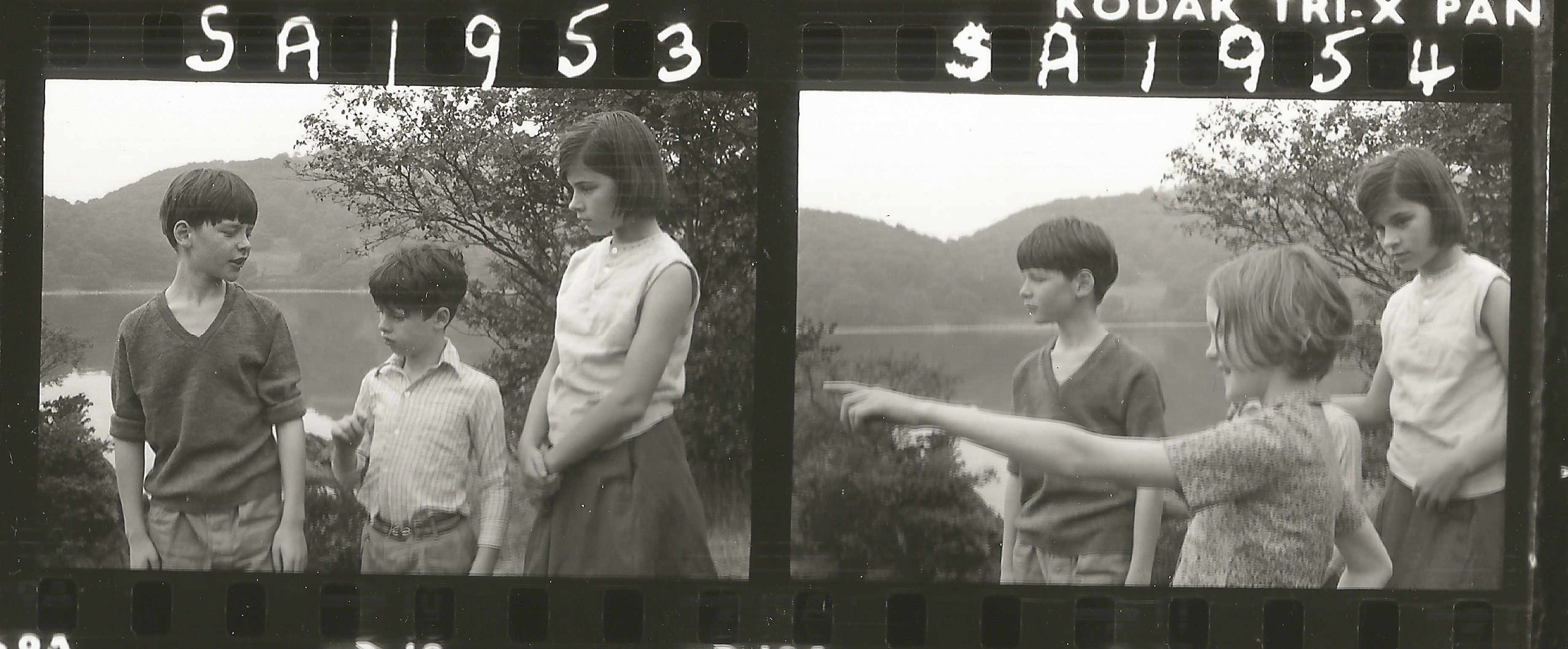
The four children, John Susan Titty and Roger Walker, all displayed an individual aspect of evolvement, with Titty engrossed in the book ‘Robinson Crusoe’, using her vivid imagination to create the island realm and keeping a hand written diary, while John seemed to be moving towards a Naval leaning by spending his time learning the basics of Morse code, boat handling and navigation. Young Boy Roger enjoys stuffing himself with anything he can possibly eat, appears to be showing signs of enjoying the great outdoors, and wants more adventure. Susan comes across as the mother figure who thinks about the younger siblings and what they all will be eating while on their adventures.
The story unfolds as the children receive the go ahead in a telegram from their father to sail over to their island to camp in a borrowed dinghy called ‘Swallow’. A burgee is sewn up to fly from the mast depicting a swallow. This news is received with unadulterated delight by the children who immediately begin the preparations.
The lake and mountainous surroundings featured in the film begin to open up as the children undertake their journey to discover sailing rivals in Nancy and Peggy Blackett who live in one of the houses bordering the lake and own a dinghy named ‘Amazon’ that sports a ‘pirate’ burgee.
Initial rivalry erupts between the Walkers and Blacketts, which results in eventual harmony as the two sides join forces to capture a common enemy who just happens to be the Blacketts’ ‘Uncle Jim’ who owns a houseboat on the lake and is busy writing a book.
The Swallows and Amazons decide to host an expedition to capture Jim (‘Captain Flint’) and the houseboat, and, to determine who should be the leader, they make an attempt at capturing each other’s boats.
This requires sailing at night and some pretty shady manoeuvres, which are grievously frowned upon when discovered by the Walkers’ mother when she made a journey to the island to check up on the children and found Titty on her own. John has to confront his mother and explain his reasons to sail in the dark. She reluctantly accepts his explanations but with a proviso that no further actions of this sort will occur again for the remainder of the holiday.
Titty won the day by seizing an opportunity to capture the Amazon boat while the Blackett’s were on Wild Cat Island, making the Walkers the winners. This leads up to the finale where there is a sea battle as the Swallows and Amazons launch an assault on Captain Flint and the houseboat when he is captured and made to walk the plank. The end of the film sees Titty gifted with Flint’s pet parrot who seemed to have taken quite a shine to her, and everyone resolves to be kindred spirits for ever!
After watching this film my mind was transported to the lakes and sharing the beautiful sunny days, crispy clear water and blue skies with the backdrop of the mountains the wooden jetties and a sailing journey into Bowness for supplies. I could sense myself seated in the lugsail rig and feeling the tug on the main sail as the boat crept closer to the wind before going about and heading away onto another tack.
I was carried with the family into that other realm and other time where innocence and responsibility were coming to the fore, where family values were held dear and independence was something young people strove to achieve within the simplicity of their everyday existence. For the brothers and sisters to go camping on a small island in the middle of a lake away from any overseeing adult, and to arrived there by sailing over in a borrowed boat, leaves little to the imagination.
There was a sense of adventure with the children, and a wanting to show they could be responsible and look after themselves, something in today’s society we have to a degree lost touch with. That immortal sense of adventure within a landscape never changes, except within its own light that we know and love today as the Lake District.
This film is a journey into another dimension and another world steeped with love and belonging, adventure and moral understanding, which is shared between a family and accepted.
The characters are bought to life almost as if they are an infinite, integral part of the immortality of the story, each giving that picturesque understanding the viewer finds impossible to explain.
After watching this film one arrives back in real time with a resounding bang! We wonder why such a simple story can create such an iconic understanding, why watching this film can make you feel happy, totally complete and yearning to return again and savour that wonderful, eternal landscape we have all learned to grow and love as The Lakes.

Do think of leaving a review of this film on the International Movie Base site. The link for ‘Swallows and Amazons'(1974) is: https://www.imdb.com/title/tt0072233/



 Sophie Neville