
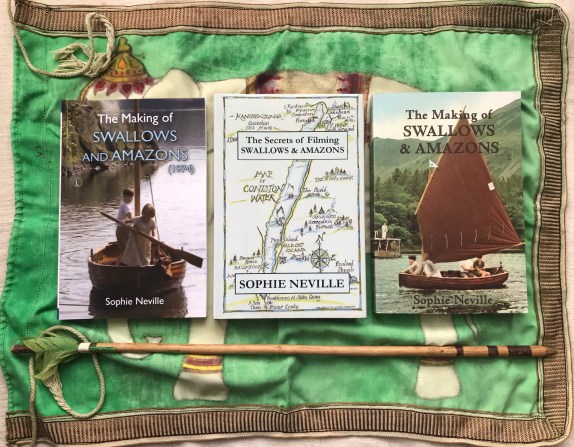
When I saw Simon West recently he told me that his father would love to see a copy of ‘The Secrets of Filming Swallows & Amazons’.
Nigel West soon wrote to say:
‘…it makes fascinating reading. Simon told me very little in the way of detail about his experiences when filming so your account is very welcome.Simon’s mother, Dorothy, and I only visited the Lake District once during that period and then we only saw Simon fairly briefly and saw nothing of the filming. Things that I can recall about the whole experience I will describe below.
.
‘Our family took up dinghy sailing when I built a Mirror dinghy in our dining room at home. It was built from a flat-pack and took nearly a year to construct, in my spare time, during which the family had to eat meals in the sitting room. I had been sailing on the Norfolk Broads with friends a few times in my college days, which had started my interest in boating. The family joined the Dorchester Sailing Club which was based on an old gravel pit not far from our home. Eventually we also acquired two children’s Optimist dinghies for Virginia and Simon, who spent many weekends racing their boats at open meetings around the country.’
.
.
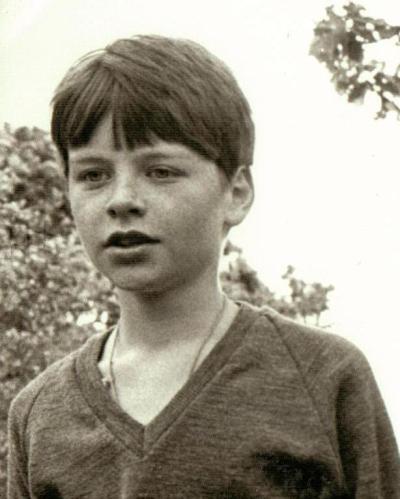
‘One day at the club a notice appeared on the notice board asking children with sailing experience to audition for acting parts in a film to be made of Swallows and Amazons. Virginia immediately expressed interest and pressured Dorothy and me to take her to the auditions in London. We were reluctant to agree because we thought her chance of success would be so slim with thousands of other applicants, many with acting experience, queueing up for parts. Then, to my surprise, Simon said he was also interested, with his eye on the part of John, but surely, I thought, he would be too young and too short for that part and he had pooh-poohed the idea of trying for Roger.
‘As it happened we were due to visit Dorothy’s sister, who lived south of London, in Sussex, on the Saturday of the auditions, so we decided that a small detour would allow the children to attend without too much problem. Sadly Virginia fell at the first interview while Simon, to our utter amazement, won through that and all the other stages of selection to win the part of John. How pleased we were for him and proud – and sorry for Virginia who took her disappointment so well. You should ask Simon about the later stages of selection that included a long weekend living on an old motor torpedo boat at Burnham-on-Crouch having, among other things, his sailing proficiency assessed.
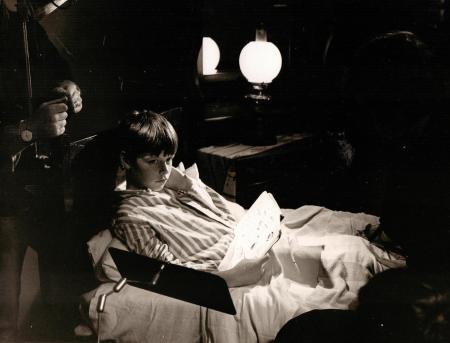
‘From the few things that Simon did tell us about the filming, I was extraordinarily impressed by the maturity he had so clearly gained in the whole experience. He explained how conscious he was of the crucial part he had to play in getting it right, in front of the camera, because the success of the whole project depended on that. With dozens of adults all working flat out as a team to a tight schedule meant that he had to concentrate on getting it right first time – a very maturing experience for an 11 year-old taking time out from his first year at secondary school.’
.
.
‘With Simon having no acting experience I was intrigued to know how Claude Watham had managed to get what he wanted from his young cast. Simon explained one technique that Claude had used to stop them looking wooden in front of the camera. He would make sure they knew their lines, send the children to run to some point and back again, then shoot the scene while they were still animated from the running.
‘One aspect of the production mentioned in your book is the studio post-sychronisation. I can remember taking Simon up to Elstree Studios in Borehamwood to re-record some of the dialogue, sometime after the filming had been completed. Maybe you did the same. Simon had to wear headphones to listen to the film dialogue, while watching a scene from the film, and to repeat to a microphone the dialogue in exact synchronism with what he heard in the headphones and saw on the film. He said it was an extremely difficult thing to do, to talk over one’s own voice, exactly, and then to give it the right expression. I imagine it needs a lot of practice to get it right. The object was, of course, to dub over recorded dialogue which had either been poorly recorded or which included extraneous noise.
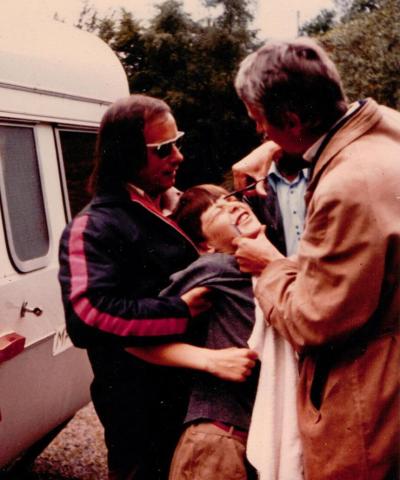
‘Finally, I did manage to watch one scene filmed, but from a great distance, which you do mention in your book, and that was the Darien scene shot at Runnymede sometime much later in the year. In 1973 it was the fashion for all schoolboys to wear their hair indecently long. At Simon’s school the rule was that the hair was just allowed to touch the collar but not an inch longer. Simon’s hair was no exception but he had had it shorn for and throughout the filming and it had just started to grow back when he was summoned to the Runnymede shoot. On our arrival at Runnymede Simon was immediately sat on a chair and had his locks shorn once again. I think he should have been paid a special indignity fee for that day’s work.’
.
.
‘I remember watching the S&A float in the Lord Mayor’s Show pass by but the float passed too quickly to let you all spot our family in the crowd.
‘I also remember attending the film’s premier at the cinema in Shaftesbury Avenue, also attended by some minor member of royalty. It was a grand event and brought home to me that this was not some trivial little children’s entertainment but was a full length feature film of some standing. It must have been shown on British TV a dozen times over the years, particularly at Christmas, so it has stood the test of time by anybody’s standards.
‘That reminds me that at one point we made a half-hearted attempt to get Simon into Equity but without success. The result was that Simon only got paid a daily fee for his work on the film, with no residual payments for TV showings, overseas viewings or video and DVD earnings, to say nothing of his image appearing on a number of jigsaws!

‘You probably know that Simon also acted in a film made for children’s television in 1974, when he took the title role in Sam and the River. This was recorded on film and was shown on BBC TV in the form of six 30 minute episodes. It was before the days of video recorders so we have only ever seen the original transmission. Fifteen years ago I approached the production company to see if I could obtain a copy, but they had been reorganised since the film was shot and had kept no copy, nor record, of the production. I then approached the BBC and they did a search for me but they drew a blank. At one stage the BBC had a Philistine in charge who infamously threw out masses of, now priceless, BBC archives as being a waste of space. One day I hope to put a name to him. Simon has since found that the BFI have an archive copy of Sam and the River so I will approach them, but they do emphasise that they have no authority to make or issue copies of archive films. Might, however, get them to show it to us one day perhaps.’
.
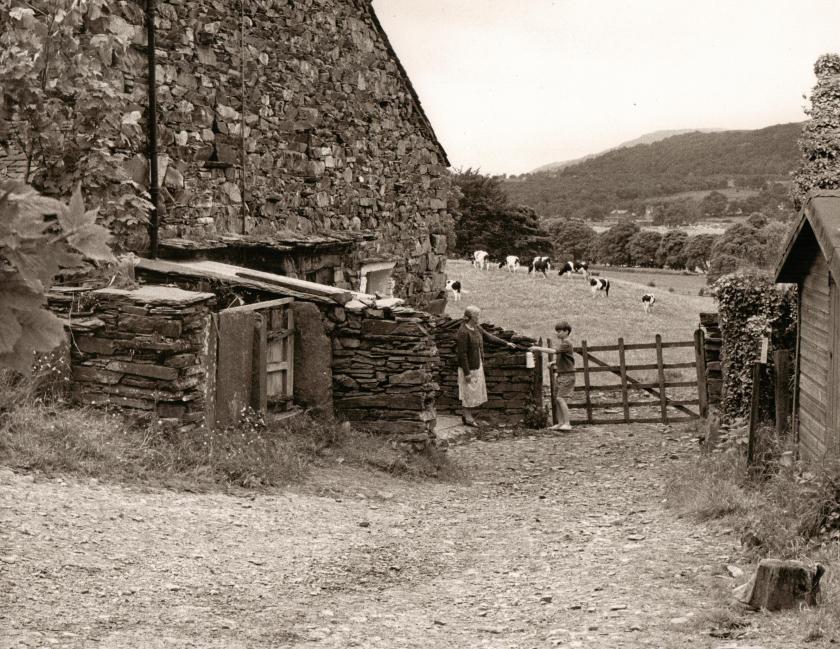
There were four jigsaws issued with the film. There is full image of the jigsaw above on an earlier post.
To read more about the adventures had during the filming, please click here
to read the first part of ‘The Making of Swallows and Amazons’



 Sophie Neville